User login
For MD-IQ use only
‘There’s Nothing Left to Try’: Oncologists on Managing Grief
Dr. Lewis was well acquainted with cancer grief long before he became an oncologist. Dr. Lewis’ father died of a rare, hereditary cancer syndrome when he was only 14. The condition, which causes tumors to grow in the endocrine glands, can be hard to identify and, if found late, deadly.
In some ways, Dr. Lewis’ career caring for patients with advanced cancers was born out of that first loss. He centered his practice around helping patients diagnosed at late stages, like his father.
But that comes at a cost. Many patients will die.
Dr. Lewis’ encounter with his colleague led him to inventory his practice. He found that well over half of his patients died within 2 years following their advanced cancer diagnosis.
To stave off the grief of so many losses, Dr. Lewis became an eternal optimist in the clinic, in search of the Hail Mary chemotherapy, any way to eke out a few more months only to be ambushed by grief when a patient did finally pass.
At funerals — which he made every effort to attend — Dr. Lewis couldn’t help but think, “If I had done my job better, none of us with be here.” His grief started to mingle with this sense of guilt.
It became a cycle: Denial shrouded in optimism, grief, then a toxic guilt. The pattern became untenable for his colleagues. And his partner finally called him out.
Few medical specialties draw physicians as close to their patients as oncology. The long courses of treatment-spanning years can foster an intimacy that is comforting for patients and fulfilling for physicians. But that closeness can also set doctors up for an acute grief when the end of life comes.
Experts agree that no amount of training in medical school prepares an oncologist to navigate the grief that comes with losing patients. Five oncologists spoke with this news organization about the boundaries they rely on to sustain their careers.
Don’t Go to Funerals
Don Dizon, MD, who specializes in women’s cancers, established an essential boundary 20 years ago: Never go to funerals. In his early days at Memorial Sloan Kettering Cancer Center, the death of each patient dealt him a crushing blow. He’d go to the funerals in search of closure, but that only added to the weight of his grief.
“When I started in oncology, I just remember the most tragic cases were the ones I was taking care of,” recalled Dr. Dizon, now director of the Pelvic Malignancies Program at Lifespan Cancer Institute in Lincoln, Rhode Island.
Dr. Dizon recalled one young mother who was diagnosed with ovarian cancer. She responded to treatment, but it was short-lived, and her cancer progressed, he said. Multiple treatments followed, but none were effective. Eventually, Dr. Dizon had to tell her that “there’s nothing left to try.”
At her funeral, watching her grieving husband with their daughter who had just started to walk, Dr. Dizon was overwhelmed with despair.
“When you have to do this multiple times a year,” the grief becomes untenable, he said. Sensing the difficulty I was having as a new attending, “my boss stopped sending me patients because he knew I was in trouble emotionally.”
That’s when Dr. Dizon started looking for other ways to get closure.
Today, he tries to say his goodbyes before a patient dies. After the final treatment or before hospice, Dr. Dizon has a parting conversation with his patients to express the privilege of caring for them and all he learned from them. These talks help him and his patient connect in their last moments together.
The Price of Wildly Happy Days
Molly Taylor, MD, MS, a pediatric oncologist in Seattle, sees the deeply sad days as the price an oncologist pays to be witness to the “wildly happy ones.”
Dr. Taylor has gone to patients’ funerals, has even been asked to speak at them, but she has also attended patients’ weddings.
To some degree, doctors get good at compartmentalizing, and they become accustomed to tragedy, she said. But there are some patients who stick with you, “and that is a whole other level of grief,” Dr. Taylor said.
Several years into her practice, one of Dr. Taylor’s patients, someone who reminded her of her own child, died. The death came as a surprise, and the finality of it took her breath away, she said. The sadness only deepened as days went by. “I felt that mother’s grief and still do,” she said.
The patient’s funeral was one of the most difficult moments in her career as an oncologist. Even weeks later, she caught herself picturing the family huddled together that day.
Taking long walks, commiserating with colleagues who get it, and watching the occasional cat video can help take the immediate sting away. But the pain of losing a patient can be long lasting and processing that grief can be a lonely endeavor.
“We need space to recognize grief for all providers, all the people that touch these patients’ lives — the nurses, the translators, the cleaning staff,” Dr. Taylor said. Otherwise, you start to believe you’re the only one feeling the weight of the loss.
While it doesn’t make the losses any less poignant, Dr. Taylor finds solace in the good moments: Patient graduations and weddings, survivors who now volunteer at the hospital, and a patient who had a baby of her own this past year. If facing grief daily has taught Dr. Taylor anything, it is to not let the good moments pass unnoticed.
Towing the Line
Ten years ago, Tina Rizack, MD, walked into the ICU to see a young mother holding her 6-year-old daughter. The mother had necrotizing fasciitis that had gone undiagnosed.
As Dr. Rizack stood in the doorway watching the embrace, she saw a grim future: A child without her mother. This realization hit too close to home, she said. “I still think about that case.”
In her training, Dr. Rizack, now medical director of hematology/oncology at St. Anne’s in Fall River, Massachusetts, worked with a social worker who taught her how to deal with these tough cases — most importantly, how to not take them home with her.
Over the years, Dr. Rizack learned how to build and sustain a firm barrier between work and outside work.
She doesn’t go to funerals or give out her cell phone number. If charts need to be done, she prefers to stay late at the clinic instead of bringing them home.
And she invests in the simple moments that help her detach from the day-to-day in the clinic — rooting for her kids at their games, carving out time for family meals most days, and having relaxed movie nights on the couch.
“It’s hard sometimes,” she said. But “I really do need the line.” Because without it, she can’t show up for her patients the way she wants and needs to.
Establishing the work-life boundary means that when at work, Dr. Rizack can be all in for her patients. Even after her patients’ treatment ends, she makes sure to check on them at home or in hospice. For her, sticking with patients over the long term offers some closure.
“I want to love work, and if I’m there all the time, I’m not going to love it,” she said.
Trading Funerals for the Bedside
Like many other oncologists, Charles Blanke, MD, finds that going to patients’ funerals makes the loss seem more profound. Being at the bedside when they die is not as painful, he said. In fact, being there when his patients die offers him some comfort. He rarely misses a patient’s death because now Dr. Blanke’s patients can schedule their departure.
An oncologist at the Knight Cancer Institute in Portland, Oregon, Dr. Blanke specializes in end-of-life care with an emphasis on death with dignity, also known as medical aid in dying. He admits it’s not a role every physician is comfortable with.
“If you’re paralyzed by grief, you can’t do this for a living,” he said. But he’s able to do the work because he genuinely feels he’s helping patients get “the relief they so strongly desire” in their last moments.
When cancer care can’t give them the life they wanted, he can give them control over when and how they die. And the ability to honor their last wishes offers him some closure as well.
“You know what kind of end they have. You know it was peaceful. You see them achieve the thing that was the most important to them,” he said.
Despite this process, he still encounters some circumstances utterly heart-wrenching — the very young patients who have advanced disease. Some of these patients choose to die because they can’t afford to continue treatment. Others don’t have a support system. In these instances, Dr. Blanke is often the only one in the room.
Believe it or not, he said, the paperwork — and there’s a lot of it in his line of work — helps remind Dr. Blanke that patients’ last wishes are being honored.
Making Changes
After Dr. Lewis was confronted by his partner, he began to face the shortcomings of his own coping strategies. His practice hired a social worker to help staff process difficult experiences. After the loss of every patient, the practice comes together to share and process the loss.
For him, funerals remain helpful, providing a sort of solace, so he continues to go when he can. But how to grieve is something each doctor has to figure out, he said.
Deaths still hit hard, especially the ones he doesn’t see coming. The patients who remind him of his dad can also be hard. They restart a cycle of grief from his teenage years.
The difference now is he has space to voice those concerns and someone objective to help his process.
“It’s a privilege to prepare [patients for death] and help them build their legacy,” he said. But it’s also an unrelenting challenge to navigate that grief, he said.
Still, the grief lets Dr. Lewis know he’s still engaged.
“The day I don’t feel something is probably the day I need to take a break or walk away.”
A version of this article appeared on Medscape.com.
Dr. Lewis was well acquainted with cancer grief long before he became an oncologist. Dr. Lewis’ father died of a rare, hereditary cancer syndrome when he was only 14. The condition, which causes tumors to grow in the endocrine glands, can be hard to identify and, if found late, deadly.
In some ways, Dr. Lewis’ career caring for patients with advanced cancers was born out of that first loss. He centered his practice around helping patients diagnosed at late stages, like his father.
But that comes at a cost. Many patients will die.
Dr. Lewis’ encounter with his colleague led him to inventory his practice. He found that well over half of his patients died within 2 years following their advanced cancer diagnosis.
To stave off the grief of so many losses, Dr. Lewis became an eternal optimist in the clinic, in search of the Hail Mary chemotherapy, any way to eke out a few more months only to be ambushed by grief when a patient did finally pass.
At funerals — which he made every effort to attend — Dr. Lewis couldn’t help but think, “If I had done my job better, none of us with be here.” His grief started to mingle with this sense of guilt.
It became a cycle: Denial shrouded in optimism, grief, then a toxic guilt. The pattern became untenable for his colleagues. And his partner finally called him out.
Few medical specialties draw physicians as close to their patients as oncology. The long courses of treatment-spanning years can foster an intimacy that is comforting for patients and fulfilling for physicians. But that closeness can also set doctors up for an acute grief when the end of life comes.
Experts agree that no amount of training in medical school prepares an oncologist to navigate the grief that comes with losing patients. Five oncologists spoke with this news organization about the boundaries they rely on to sustain their careers.
Don’t Go to Funerals
Don Dizon, MD, who specializes in women’s cancers, established an essential boundary 20 years ago: Never go to funerals. In his early days at Memorial Sloan Kettering Cancer Center, the death of each patient dealt him a crushing blow. He’d go to the funerals in search of closure, but that only added to the weight of his grief.
“When I started in oncology, I just remember the most tragic cases were the ones I was taking care of,” recalled Dr. Dizon, now director of the Pelvic Malignancies Program at Lifespan Cancer Institute in Lincoln, Rhode Island.
Dr. Dizon recalled one young mother who was diagnosed with ovarian cancer. She responded to treatment, but it was short-lived, and her cancer progressed, he said. Multiple treatments followed, but none were effective. Eventually, Dr. Dizon had to tell her that “there’s nothing left to try.”
At her funeral, watching her grieving husband with their daughter who had just started to walk, Dr. Dizon was overwhelmed with despair.
“When you have to do this multiple times a year,” the grief becomes untenable, he said. Sensing the difficulty I was having as a new attending, “my boss stopped sending me patients because he knew I was in trouble emotionally.”
That’s when Dr. Dizon started looking for other ways to get closure.
Today, he tries to say his goodbyes before a patient dies. After the final treatment or before hospice, Dr. Dizon has a parting conversation with his patients to express the privilege of caring for them and all he learned from them. These talks help him and his patient connect in their last moments together.
The Price of Wildly Happy Days
Molly Taylor, MD, MS, a pediatric oncologist in Seattle, sees the deeply sad days as the price an oncologist pays to be witness to the “wildly happy ones.”
Dr. Taylor has gone to patients’ funerals, has even been asked to speak at them, but she has also attended patients’ weddings.
To some degree, doctors get good at compartmentalizing, and they become accustomed to tragedy, she said. But there are some patients who stick with you, “and that is a whole other level of grief,” Dr. Taylor said.
Several years into her practice, one of Dr. Taylor’s patients, someone who reminded her of her own child, died. The death came as a surprise, and the finality of it took her breath away, she said. The sadness only deepened as days went by. “I felt that mother’s grief and still do,” she said.
The patient’s funeral was one of the most difficult moments in her career as an oncologist. Even weeks later, she caught herself picturing the family huddled together that day.
Taking long walks, commiserating with colleagues who get it, and watching the occasional cat video can help take the immediate sting away. But the pain of losing a patient can be long lasting and processing that grief can be a lonely endeavor.
“We need space to recognize grief for all providers, all the people that touch these patients’ lives — the nurses, the translators, the cleaning staff,” Dr. Taylor said. Otherwise, you start to believe you’re the only one feeling the weight of the loss.
While it doesn’t make the losses any less poignant, Dr. Taylor finds solace in the good moments: Patient graduations and weddings, survivors who now volunteer at the hospital, and a patient who had a baby of her own this past year. If facing grief daily has taught Dr. Taylor anything, it is to not let the good moments pass unnoticed.
Towing the Line
Ten years ago, Tina Rizack, MD, walked into the ICU to see a young mother holding her 6-year-old daughter. The mother had necrotizing fasciitis that had gone undiagnosed.
As Dr. Rizack stood in the doorway watching the embrace, she saw a grim future: A child without her mother. This realization hit too close to home, she said. “I still think about that case.”
In her training, Dr. Rizack, now medical director of hematology/oncology at St. Anne’s in Fall River, Massachusetts, worked with a social worker who taught her how to deal with these tough cases — most importantly, how to not take them home with her.
Over the years, Dr. Rizack learned how to build and sustain a firm barrier between work and outside work.
She doesn’t go to funerals or give out her cell phone number. If charts need to be done, she prefers to stay late at the clinic instead of bringing them home.
And she invests in the simple moments that help her detach from the day-to-day in the clinic — rooting for her kids at their games, carving out time for family meals most days, and having relaxed movie nights on the couch.
“It’s hard sometimes,” she said. But “I really do need the line.” Because without it, she can’t show up for her patients the way she wants and needs to.
Establishing the work-life boundary means that when at work, Dr. Rizack can be all in for her patients. Even after her patients’ treatment ends, she makes sure to check on them at home or in hospice. For her, sticking with patients over the long term offers some closure.
“I want to love work, and if I’m there all the time, I’m not going to love it,” she said.
Trading Funerals for the Bedside
Like many other oncologists, Charles Blanke, MD, finds that going to patients’ funerals makes the loss seem more profound. Being at the bedside when they die is not as painful, he said. In fact, being there when his patients die offers him some comfort. He rarely misses a patient’s death because now Dr. Blanke’s patients can schedule their departure.
An oncologist at the Knight Cancer Institute in Portland, Oregon, Dr. Blanke specializes in end-of-life care with an emphasis on death with dignity, also known as medical aid in dying. He admits it’s not a role every physician is comfortable with.
“If you’re paralyzed by grief, you can’t do this for a living,” he said. But he’s able to do the work because he genuinely feels he’s helping patients get “the relief they so strongly desire” in their last moments.
When cancer care can’t give them the life they wanted, he can give them control over when and how they die. And the ability to honor their last wishes offers him some closure as well.
“You know what kind of end they have. You know it was peaceful. You see them achieve the thing that was the most important to them,” he said.
Despite this process, he still encounters some circumstances utterly heart-wrenching — the very young patients who have advanced disease. Some of these patients choose to die because they can’t afford to continue treatment. Others don’t have a support system. In these instances, Dr. Blanke is often the only one in the room.
Believe it or not, he said, the paperwork — and there’s a lot of it in his line of work — helps remind Dr. Blanke that patients’ last wishes are being honored.
Making Changes
After Dr. Lewis was confronted by his partner, he began to face the shortcomings of his own coping strategies. His practice hired a social worker to help staff process difficult experiences. After the loss of every patient, the practice comes together to share and process the loss.
For him, funerals remain helpful, providing a sort of solace, so he continues to go when he can. But how to grieve is something each doctor has to figure out, he said.
Deaths still hit hard, especially the ones he doesn’t see coming. The patients who remind him of his dad can also be hard. They restart a cycle of grief from his teenage years.
The difference now is he has space to voice those concerns and someone objective to help his process.
“It’s a privilege to prepare [patients for death] and help them build their legacy,” he said. But it’s also an unrelenting challenge to navigate that grief, he said.
Still, the grief lets Dr. Lewis know he’s still engaged.
“The day I don’t feel something is probably the day I need to take a break or walk away.”
A version of this article appeared on Medscape.com.
Dr. Lewis was well acquainted with cancer grief long before he became an oncologist. Dr. Lewis’ father died of a rare, hereditary cancer syndrome when he was only 14. The condition, which causes tumors to grow in the endocrine glands, can be hard to identify and, if found late, deadly.
In some ways, Dr. Lewis’ career caring for patients with advanced cancers was born out of that first loss. He centered his practice around helping patients diagnosed at late stages, like his father.
But that comes at a cost. Many patients will die.
Dr. Lewis’ encounter with his colleague led him to inventory his practice. He found that well over half of his patients died within 2 years following their advanced cancer diagnosis.
To stave off the grief of so many losses, Dr. Lewis became an eternal optimist in the clinic, in search of the Hail Mary chemotherapy, any way to eke out a few more months only to be ambushed by grief when a patient did finally pass.
At funerals — which he made every effort to attend — Dr. Lewis couldn’t help but think, “If I had done my job better, none of us with be here.” His grief started to mingle with this sense of guilt.
It became a cycle: Denial shrouded in optimism, grief, then a toxic guilt. The pattern became untenable for his colleagues. And his partner finally called him out.
Few medical specialties draw physicians as close to their patients as oncology. The long courses of treatment-spanning years can foster an intimacy that is comforting for patients and fulfilling for physicians. But that closeness can also set doctors up for an acute grief when the end of life comes.
Experts agree that no amount of training in medical school prepares an oncologist to navigate the grief that comes with losing patients. Five oncologists spoke with this news organization about the boundaries they rely on to sustain their careers.
Don’t Go to Funerals
Don Dizon, MD, who specializes in women’s cancers, established an essential boundary 20 years ago: Never go to funerals. In his early days at Memorial Sloan Kettering Cancer Center, the death of each patient dealt him a crushing blow. He’d go to the funerals in search of closure, but that only added to the weight of his grief.
“When I started in oncology, I just remember the most tragic cases were the ones I was taking care of,” recalled Dr. Dizon, now director of the Pelvic Malignancies Program at Lifespan Cancer Institute in Lincoln, Rhode Island.
Dr. Dizon recalled one young mother who was diagnosed with ovarian cancer. She responded to treatment, but it was short-lived, and her cancer progressed, he said. Multiple treatments followed, but none were effective. Eventually, Dr. Dizon had to tell her that “there’s nothing left to try.”
At her funeral, watching her grieving husband with their daughter who had just started to walk, Dr. Dizon was overwhelmed with despair.
“When you have to do this multiple times a year,” the grief becomes untenable, he said. Sensing the difficulty I was having as a new attending, “my boss stopped sending me patients because he knew I was in trouble emotionally.”
That’s when Dr. Dizon started looking for other ways to get closure.
Today, he tries to say his goodbyes before a patient dies. After the final treatment or before hospice, Dr. Dizon has a parting conversation with his patients to express the privilege of caring for them and all he learned from them. These talks help him and his patient connect in their last moments together.
The Price of Wildly Happy Days
Molly Taylor, MD, MS, a pediatric oncologist in Seattle, sees the deeply sad days as the price an oncologist pays to be witness to the “wildly happy ones.”
Dr. Taylor has gone to patients’ funerals, has even been asked to speak at them, but she has also attended patients’ weddings.
To some degree, doctors get good at compartmentalizing, and they become accustomed to tragedy, she said. But there are some patients who stick with you, “and that is a whole other level of grief,” Dr. Taylor said.
Several years into her practice, one of Dr. Taylor’s patients, someone who reminded her of her own child, died. The death came as a surprise, and the finality of it took her breath away, she said. The sadness only deepened as days went by. “I felt that mother’s grief and still do,” she said.
The patient’s funeral was one of the most difficult moments in her career as an oncologist. Even weeks later, she caught herself picturing the family huddled together that day.
Taking long walks, commiserating with colleagues who get it, and watching the occasional cat video can help take the immediate sting away. But the pain of losing a patient can be long lasting and processing that grief can be a lonely endeavor.
“We need space to recognize grief for all providers, all the people that touch these patients’ lives — the nurses, the translators, the cleaning staff,” Dr. Taylor said. Otherwise, you start to believe you’re the only one feeling the weight of the loss.
While it doesn’t make the losses any less poignant, Dr. Taylor finds solace in the good moments: Patient graduations and weddings, survivors who now volunteer at the hospital, and a patient who had a baby of her own this past year. If facing grief daily has taught Dr. Taylor anything, it is to not let the good moments pass unnoticed.
Towing the Line
Ten years ago, Tina Rizack, MD, walked into the ICU to see a young mother holding her 6-year-old daughter. The mother had necrotizing fasciitis that had gone undiagnosed.
As Dr. Rizack stood in the doorway watching the embrace, she saw a grim future: A child without her mother. This realization hit too close to home, she said. “I still think about that case.”
In her training, Dr. Rizack, now medical director of hematology/oncology at St. Anne’s in Fall River, Massachusetts, worked with a social worker who taught her how to deal with these tough cases — most importantly, how to not take them home with her.
Over the years, Dr. Rizack learned how to build and sustain a firm barrier between work and outside work.
She doesn’t go to funerals or give out her cell phone number. If charts need to be done, she prefers to stay late at the clinic instead of bringing them home.
And she invests in the simple moments that help her detach from the day-to-day in the clinic — rooting for her kids at their games, carving out time for family meals most days, and having relaxed movie nights on the couch.
“It’s hard sometimes,” she said. But “I really do need the line.” Because without it, she can’t show up for her patients the way she wants and needs to.
Establishing the work-life boundary means that when at work, Dr. Rizack can be all in for her patients. Even after her patients’ treatment ends, she makes sure to check on them at home or in hospice. For her, sticking with patients over the long term offers some closure.
“I want to love work, and if I’m there all the time, I’m not going to love it,” she said.
Trading Funerals for the Bedside
Like many other oncologists, Charles Blanke, MD, finds that going to patients’ funerals makes the loss seem more profound. Being at the bedside when they die is not as painful, he said. In fact, being there when his patients die offers him some comfort. He rarely misses a patient’s death because now Dr. Blanke’s patients can schedule their departure.
An oncologist at the Knight Cancer Institute in Portland, Oregon, Dr. Blanke specializes in end-of-life care with an emphasis on death with dignity, also known as medical aid in dying. He admits it’s not a role every physician is comfortable with.
“If you’re paralyzed by grief, you can’t do this for a living,” he said. But he’s able to do the work because he genuinely feels he’s helping patients get “the relief they so strongly desire” in their last moments.
When cancer care can’t give them the life they wanted, he can give them control over when and how they die. And the ability to honor their last wishes offers him some closure as well.
“You know what kind of end they have. You know it was peaceful. You see them achieve the thing that was the most important to them,” he said.
Despite this process, he still encounters some circumstances utterly heart-wrenching — the very young patients who have advanced disease. Some of these patients choose to die because they can’t afford to continue treatment. Others don’t have a support system. In these instances, Dr. Blanke is often the only one in the room.
Believe it or not, he said, the paperwork — and there’s a lot of it in his line of work — helps remind Dr. Blanke that patients’ last wishes are being honored.
Making Changes
After Dr. Lewis was confronted by his partner, he began to face the shortcomings of his own coping strategies. His practice hired a social worker to help staff process difficult experiences. After the loss of every patient, the practice comes together to share and process the loss.
For him, funerals remain helpful, providing a sort of solace, so he continues to go when he can. But how to grieve is something each doctor has to figure out, he said.
Deaths still hit hard, especially the ones he doesn’t see coming. The patients who remind him of his dad can also be hard. They restart a cycle of grief from his teenage years.
The difference now is he has space to voice those concerns and someone objective to help his process.
“It’s a privilege to prepare [patients for death] and help them build their legacy,” he said. But it’s also an unrelenting challenge to navigate that grief, he said.
Still, the grief lets Dr. Lewis know he’s still engaged.
“The day I don’t feel something is probably the day I need to take a break or walk away.”
A version of this article appeared on Medscape.com.
Will 2024 Be Easier on the Eyes?
The burdens that monthly or every-other-month injections in the eye impose on patients with retinal diseases are well-known to be barriers to care for many people with these conditions. Making treatment less onerous has driven research into new treatments since the US Food and Drug Administration (FDA) approved ranibizumab (Lucentis) in 2006 as the first anti–vascular endothelial growth factor (VEGF) for the treatment of age-related macular degeneration (AMD) and other retinal diseases.
Those Several of those investigational therapies are poised to hit meaningful milestones in 2024.
Regular Eye Injections: How We Got Here
Ranibizumab originally received approval as a monthly injection. Since then, protocols have evolved to space those injections out to every other month in some, but not all, patients.
New drugs have emerged that require less frequent injections. In 2022, the anti-VEGF and angiopoietin-2 inhibitor faricimab (Vabysmo) was approved for dosing up to every 4 months. Last year, the FDA approved a high-dose formulation of the anti-VEGF treatment aflibercept 8 mg (Eylea HD) to be given every 2-4 months, as well.
But even these treatments require patients going to the office at least three or four times a year for injections, Reginald Sanders, MD, president of the American Society of Retina Specialist, Chicago, and a retina specialist in Washington, DC, told this news organization. “Now with injections, you have the anxiety of getting the injections, you have the inconvenience of coming in on a regular basis to get the injections, and you have mild discomfort — but you don’t go blind,” Dr. Sanders said.
Studies have shown patients with AMD or diabetic macular edema are better off getting more frequent injections, but still drug developers are seeking the holy grail of fewer injections. “How do we make these treatments last longer?” Dr. Sanders said. “Durability has become the catchword in our field. Instead of lasting a month or 2, can it last 3 months? Can it last 6 months? Or even a year? Can you get one injection and be done with it?”
Or, no injection at all?
“We’re looking for incremental improvements and longer-acting drugs, trying to lengthen the time between injections for wet AMD patients,” said David Boyer, MD, a retina specialist in Los Angeles.
Two Drugs May Be Better Than One
One combination treatment, sozinibercept, targets VEGF-C and D. The therapy is in two phase 3 trials: One in combination with aflibercept 2 mg (Eylea), which targets VEGF-A and B along with placental growth factor, and the other in combination with ranibizumab, which targets VEGF-A only. Data from one of those trials are expected this year, Dr. Boyer said.
A phase 2 trial last year reported that patients on combination sozinibercept-ranibizumab had significantly better visual acuity improvement than patients on ranibizumab only. The phase 3 trials ShORe with ranibizumab and COAST with aflibercept are evaluating improvements in visual acuity and retinal anatomy.
Two other combination therapies are in phase 2 trials, both with aflibercept: UBX1325 or foselutoclax, a small-molecule inhibitor of B-cell lymphoma extra-large, and umedaptanib pegol, an anti-fibroblast growth factor-2 aptamer. In the foselutoclax-aflibercept trial, 40% of patients didn’t need a supplemental anti-VEGF injection through 48 weeks, and 64% went treatment-free for more than 24 weeks.
Phase 2 trials of intravitreal umedaptanib pegol-aflibercept combination therapy in nAMD last year showed no superiority in vision and anatomical improvements over aflibercept alone but did find the combination halted disease progression, with “striking improvement” in previously untreated patients.
Novel Drug Delivery Systems
A host of novel drug delivery systems that could stretch out intervals between injections are in human trials. In 2021, the FDA approved one such system, the refillable port delivery system (PDS) implant with ranibizumab (Susvimo). PDS is a small cylinder implanted into the eye and filled with 100 mg/mL of ranibizumab, to be released for 6 months or so, then refilled in the physician’s office when it’s empty.
But new implants of PDS were halted in 2022 after the manufacturer, Genentech, received reports the device leaked. Genentech said it has fixed those problems and confirmed the device should again become available for implants this year.
The most advanced novel drug delivery system in clinical trials is EYP-1901, a depot that contains the tyrosine kinase inhibitor (TKI) vorolanib. The depot is inserted under the ocular surface, where it biodegrades over 6 months as it releases the drug. A phase 3 trial is due to start enrollment at midyear.
An intravitreal implant with the TKI axitinib (Axpaxli) is in a phase 3 trial in nAMD and is due to start a phase 3 trial in diabetic retinopathy this year. At least four other implants, some of which biodegrade as they release the active ingredient, are in phase 1 or 2 trials.
TKIs themselves are a drug class worth watching in retina, said Jennifer I. Lim, MD, director of the retina service at the University of Illinois Chicago and president of the Retina Society.
“With TKIs, which activate intracellularly, in combination with anti-VEGFs will result in enhanced durability and possibly more efficacy for AMD,” Dr. Lim said. “TKIs in the phase 2 studies showed a marked reduction in the need for anti-VEGF injections in previously difficult-to-treat, high-need patient.”
Potential for Orals and Topicals
Topical eye drops are commonly used for anti-glaucoma drugs and antibiotics and corticosteroids for eye infections and inflammation, but using them for retinal disease has been a challenge. By the time the drug reaches the back of the eye, it has lost much of its pharmacokinetic activity. Three drops are in clinical trials for diabetic eye disease, with one, OCS-01, a preservative-free formulation of the corticosteroid dexamethasone, scheduled this year to enter a phase 3 trial.
At least four oral tablets are in early-stage human trials for diabetic eye disease. Four others are in clinical trials to treat geographic atrophy or early-stage dry AMD. They include tinlarebant, which is in phase 3 trials for geographic atrophy and Stargardt disease, an inherited retinal disorder.
Two other oral tablets are in human trials for inherited retinal disease. Like tinlarebant, emixustat has been in a phase 3 trial for Stargardt disease but showed no clinically significant improvement in macular atrophy. An early readout of an ongoing phase 2 trial of glideuretinol, a modified form of vitamin A, demonstrated slowed growth of macular atrophy in Stargardt.
These new and emerging treatments may potentially enable retina specialists to manage a rapidly growing aging population more efficiently, Dr. Sanders said.
“We have to figure out, on one hand, how do we catch the disease earlier? Like in other fields of medicine, the earlier you treat someone, the better,” Dr. Sanders said. “And also, how do we efficiently see these patients earlier to get therapy? Using implants or more durable drugs may be able to help us to treat more people more efficiently.”
Dr. Lim disclosed financial relationships with AbbVie/Allergan, Adverum Biotechnologies, Alimera Sciences, Bausch + Lomb, Chengdu Kanghong Biotechnology, Eyepoint Pharmaceuticals, Genentech/ Roche, Graybug Vision, Iveric Bio, Janssen Pharmaceuticals, Novartis, Regeneron Pharmaceuticals, RegenxBio, Santen, SparingVision, Stealth BioTherapeutics, Unity Biotechnology, and Viridian.
Dr. Boyer disclosed financial relationships with 4D Molecular Therapeutics, AbbVie/Allergan, Adverum Biotechnologies, Aldeyra Therapeutics, Alimera Sciences, Alkahest, Allegro, Amgen, Annexon Biosciences, Apellis Pharmaceuticals, AsclepiX Therapeutics, Aviceda Therapeutics, Bausch + Lomb, Bayer, Belite Bio, Clearside Biomedical, Eyepoint Pharmaceuticals, Genentech/ Roche, Graybug Vision, Iveric Bio, Janssen Pharmaceuticals, Nano scope Therapeutics, Novartis, Ocugen, Oculist, Ocuphire Pharma, Opthea, Pfizer, Regeneron Pharmaceuticals, RegenxBio, Sanofi, Stilbite Zhuhai, Stealth BioTherapeutics, Thea Laboratories, and Unity Biotechnology. Dr. Sanders had no relevant disclosures.
A version of this article appeared on Medscape.com.
The burdens that monthly or every-other-month injections in the eye impose on patients with retinal diseases are well-known to be barriers to care for many people with these conditions. Making treatment less onerous has driven research into new treatments since the US Food and Drug Administration (FDA) approved ranibizumab (Lucentis) in 2006 as the first anti–vascular endothelial growth factor (VEGF) for the treatment of age-related macular degeneration (AMD) and other retinal diseases.
Those Several of those investigational therapies are poised to hit meaningful milestones in 2024.
Regular Eye Injections: How We Got Here
Ranibizumab originally received approval as a monthly injection. Since then, protocols have evolved to space those injections out to every other month in some, but not all, patients.
New drugs have emerged that require less frequent injections. In 2022, the anti-VEGF and angiopoietin-2 inhibitor faricimab (Vabysmo) was approved for dosing up to every 4 months. Last year, the FDA approved a high-dose formulation of the anti-VEGF treatment aflibercept 8 mg (Eylea HD) to be given every 2-4 months, as well.
But even these treatments require patients going to the office at least three or four times a year for injections, Reginald Sanders, MD, president of the American Society of Retina Specialist, Chicago, and a retina specialist in Washington, DC, told this news organization. “Now with injections, you have the anxiety of getting the injections, you have the inconvenience of coming in on a regular basis to get the injections, and you have mild discomfort — but you don’t go blind,” Dr. Sanders said.
Studies have shown patients with AMD or diabetic macular edema are better off getting more frequent injections, but still drug developers are seeking the holy grail of fewer injections. “How do we make these treatments last longer?” Dr. Sanders said. “Durability has become the catchword in our field. Instead of lasting a month or 2, can it last 3 months? Can it last 6 months? Or even a year? Can you get one injection and be done with it?”
Or, no injection at all?
“We’re looking for incremental improvements and longer-acting drugs, trying to lengthen the time between injections for wet AMD patients,” said David Boyer, MD, a retina specialist in Los Angeles.
Two Drugs May Be Better Than One
One combination treatment, sozinibercept, targets VEGF-C and D. The therapy is in two phase 3 trials: One in combination with aflibercept 2 mg (Eylea), which targets VEGF-A and B along with placental growth factor, and the other in combination with ranibizumab, which targets VEGF-A only. Data from one of those trials are expected this year, Dr. Boyer said.
A phase 2 trial last year reported that patients on combination sozinibercept-ranibizumab had significantly better visual acuity improvement than patients on ranibizumab only. The phase 3 trials ShORe with ranibizumab and COAST with aflibercept are evaluating improvements in visual acuity and retinal anatomy.
Two other combination therapies are in phase 2 trials, both with aflibercept: UBX1325 or foselutoclax, a small-molecule inhibitor of B-cell lymphoma extra-large, and umedaptanib pegol, an anti-fibroblast growth factor-2 aptamer. In the foselutoclax-aflibercept trial, 40% of patients didn’t need a supplemental anti-VEGF injection through 48 weeks, and 64% went treatment-free for more than 24 weeks.
Phase 2 trials of intravitreal umedaptanib pegol-aflibercept combination therapy in nAMD last year showed no superiority in vision and anatomical improvements over aflibercept alone but did find the combination halted disease progression, with “striking improvement” in previously untreated patients.
Novel Drug Delivery Systems
A host of novel drug delivery systems that could stretch out intervals between injections are in human trials. In 2021, the FDA approved one such system, the refillable port delivery system (PDS) implant with ranibizumab (Susvimo). PDS is a small cylinder implanted into the eye and filled with 100 mg/mL of ranibizumab, to be released for 6 months or so, then refilled in the physician’s office when it’s empty.
But new implants of PDS were halted in 2022 after the manufacturer, Genentech, received reports the device leaked. Genentech said it has fixed those problems and confirmed the device should again become available for implants this year.
The most advanced novel drug delivery system in clinical trials is EYP-1901, a depot that contains the tyrosine kinase inhibitor (TKI) vorolanib. The depot is inserted under the ocular surface, where it biodegrades over 6 months as it releases the drug. A phase 3 trial is due to start enrollment at midyear.
An intravitreal implant with the TKI axitinib (Axpaxli) is in a phase 3 trial in nAMD and is due to start a phase 3 trial in diabetic retinopathy this year. At least four other implants, some of which biodegrade as they release the active ingredient, are in phase 1 or 2 trials.
TKIs themselves are a drug class worth watching in retina, said Jennifer I. Lim, MD, director of the retina service at the University of Illinois Chicago and president of the Retina Society.
“With TKIs, which activate intracellularly, in combination with anti-VEGFs will result in enhanced durability and possibly more efficacy for AMD,” Dr. Lim said. “TKIs in the phase 2 studies showed a marked reduction in the need for anti-VEGF injections in previously difficult-to-treat, high-need patient.”
Potential for Orals and Topicals
Topical eye drops are commonly used for anti-glaucoma drugs and antibiotics and corticosteroids for eye infections and inflammation, but using them for retinal disease has been a challenge. By the time the drug reaches the back of the eye, it has lost much of its pharmacokinetic activity. Three drops are in clinical trials for diabetic eye disease, with one, OCS-01, a preservative-free formulation of the corticosteroid dexamethasone, scheduled this year to enter a phase 3 trial.
At least four oral tablets are in early-stage human trials for diabetic eye disease. Four others are in clinical trials to treat geographic atrophy or early-stage dry AMD. They include tinlarebant, which is in phase 3 trials for geographic atrophy and Stargardt disease, an inherited retinal disorder.
Two other oral tablets are in human trials for inherited retinal disease. Like tinlarebant, emixustat has been in a phase 3 trial for Stargardt disease but showed no clinically significant improvement in macular atrophy. An early readout of an ongoing phase 2 trial of glideuretinol, a modified form of vitamin A, demonstrated slowed growth of macular atrophy in Stargardt.
These new and emerging treatments may potentially enable retina specialists to manage a rapidly growing aging population more efficiently, Dr. Sanders said.
“We have to figure out, on one hand, how do we catch the disease earlier? Like in other fields of medicine, the earlier you treat someone, the better,” Dr. Sanders said. “And also, how do we efficiently see these patients earlier to get therapy? Using implants or more durable drugs may be able to help us to treat more people more efficiently.”
Dr. Lim disclosed financial relationships with AbbVie/Allergan, Adverum Biotechnologies, Alimera Sciences, Bausch + Lomb, Chengdu Kanghong Biotechnology, Eyepoint Pharmaceuticals, Genentech/ Roche, Graybug Vision, Iveric Bio, Janssen Pharmaceuticals, Novartis, Regeneron Pharmaceuticals, RegenxBio, Santen, SparingVision, Stealth BioTherapeutics, Unity Biotechnology, and Viridian.
Dr. Boyer disclosed financial relationships with 4D Molecular Therapeutics, AbbVie/Allergan, Adverum Biotechnologies, Aldeyra Therapeutics, Alimera Sciences, Alkahest, Allegro, Amgen, Annexon Biosciences, Apellis Pharmaceuticals, AsclepiX Therapeutics, Aviceda Therapeutics, Bausch + Lomb, Bayer, Belite Bio, Clearside Biomedical, Eyepoint Pharmaceuticals, Genentech/ Roche, Graybug Vision, Iveric Bio, Janssen Pharmaceuticals, Nano scope Therapeutics, Novartis, Ocugen, Oculist, Ocuphire Pharma, Opthea, Pfizer, Regeneron Pharmaceuticals, RegenxBio, Sanofi, Stilbite Zhuhai, Stealth BioTherapeutics, Thea Laboratories, and Unity Biotechnology. Dr. Sanders had no relevant disclosures.
A version of this article appeared on Medscape.com.
The burdens that monthly or every-other-month injections in the eye impose on patients with retinal diseases are well-known to be barriers to care for many people with these conditions. Making treatment less onerous has driven research into new treatments since the US Food and Drug Administration (FDA) approved ranibizumab (Lucentis) in 2006 as the first anti–vascular endothelial growth factor (VEGF) for the treatment of age-related macular degeneration (AMD) and other retinal diseases.
Those Several of those investigational therapies are poised to hit meaningful milestones in 2024.
Regular Eye Injections: How We Got Here
Ranibizumab originally received approval as a monthly injection. Since then, protocols have evolved to space those injections out to every other month in some, but not all, patients.
New drugs have emerged that require less frequent injections. In 2022, the anti-VEGF and angiopoietin-2 inhibitor faricimab (Vabysmo) was approved for dosing up to every 4 months. Last year, the FDA approved a high-dose formulation of the anti-VEGF treatment aflibercept 8 mg (Eylea HD) to be given every 2-4 months, as well.
But even these treatments require patients going to the office at least three or four times a year for injections, Reginald Sanders, MD, president of the American Society of Retina Specialist, Chicago, and a retina specialist in Washington, DC, told this news organization. “Now with injections, you have the anxiety of getting the injections, you have the inconvenience of coming in on a regular basis to get the injections, and you have mild discomfort — but you don’t go blind,” Dr. Sanders said.
Studies have shown patients with AMD or diabetic macular edema are better off getting more frequent injections, but still drug developers are seeking the holy grail of fewer injections. “How do we make these treatments last longer?” Dr. Sanders said. “Durability has become the catchword in our field. Instead of lasting a month or 2, can it last 3 months? Can it last 6 months? Or even a year? Can you get one injection and be done with it?”
Or, no injection at all?
“We’re looking for incremental improvements and longer-acting drugs, trying to lengthen the time between injections for wet AMD patients,” said David Boyer, MD, a retina specialist in Los Angeles.
Two Drugs May Be Better Than One
One combination treatment, sozinibercept, targets VEGF-C and D. The therapy is in two phase 3 trials: One in combination with aflibercept 2 mg (Eylea), which targets VEGF-A and B along with placental growth factor, and the other in combination with ranibizumab, which targets VEGF-A only. Data from one of those trials are expected this year, Dr. Boyer said.
A phase 2 trial last year reported that patients on combination sozinibercept-ranibizumab had significantly better visual acuity improvement than patients on ranibizumab only. The phase 3 trials ShORe with ranibizumab and COAST with aflibercept are evaluating improvements in visual acuity and retinal anatomy.
Two other combination therapies are in phase 2 trials, both with aflibercept: UBX1325 or foselutoclax, a small-molecule inhibitor of B-cell lymphoma extra-large, and umedaptanib pegol, an anti-fibroblast growth factor-2 aptamer. In the foselutoclax-aflibercept trial, 40% of patients didn’t need a supplemental anti-VEGF injection through 48 weeks, and 64% went treatment-free for more than 24 weeks.
Phase 2 trials of intravitreal umedaptanib pegol-aflibercept combination therapy in nAMD last year showed no superiority in vision and anatomical improvements over aflibercept alone but did find the combination halted disease progression, with “striking improvement” in previously untreated patients.
Novel Drug Delivery Systems
A host of novel drug delivery systems that could stretch out intervals between injections are in human trials. In 2021, the FDA approved one such system, the refillable port delivery system (PDS) implant with ranibizumab (Susvimo). PDS is a small cylinder implanted into the eye and filled with 100 mg/mL of ranibizumab, to be released for 6 months or so, then refilled in the physician’s office when it’s empty.
But new implants of PDS were halted in 2022 after the manufacturer, Genentech, received reports the device leaked. Genentech said it has fixed those problems and confirmed the device should again become available for implants this year.
The most advanced novel drug delivery system in clinical trials is EYP-1901, a depot that contains the tyrosine kinase inhibitor (TKI) vorolanib. The depot is inserted under the ocular surface, where it biodegrades over 6 months as it releases the drug. A phase 3 trial is due to start enrollment at midyear.
An intravitreal implant with the TKI axitinib (Axpaxli) is in a phase 3 trial in nAMD and is due to start a phase 3 trial in diabetic retinopathy this year. At least four other implants, some of which biodegrade as they release the active ingredient, are in phase 1 or 2 trials.
TKIs themselves are a drug class worth watching in retina, said Jennifer I. Lim, MD, director of the retina service at the University of Illinois Chicago and president of the Retina Society.
“With TKIs, which activate intracellularly, in combination with anti-VEGFs will result in enhanced durability and possibly more efficacy for AMD,” Dr. Lim said. “TKIs in the phase 2 studies showed a marked reduction in the need for anti-VEGF injections in previously difficult-to-treat, high-need patient.”
Potential for Orals and Topicals
Topical eye drops are commonly used for anti-glaucoma drugs and antibiotics and corticosteroids for eye infections and inflammation, but using them for retinal disease has been a challenge. By the time the drug reaches the back of the eye, it has lost much of its pharmacokinetic activity. Three drops are in clinical trials for diabetic eye disease, with one, OCS-01, a preservative-free formulation of the corticosteroid dexamethasone, scheduled this year to enter a phase 3 trial.
At least four oral tablets are in early-stage human trials for diabetic eye disease. Four others are in clinical trials to treat geographic atrophy or early-stage dry AMD. They include tinlarebant, which is in phase 3 trials for geographic atrophy and Stargardt disease, an inherited retinal disorder.
Two other oral tablets are in human trials for inherited retinal disease. Like tinlarebant, emixustat has been in a phase 3 trial for Stargardt disease but showed no clinically significant improvement in macular atrophy. An early readout of an ongoing phase 2 trial of glideuretinol, a modified form of vitamin A, demonstrated slowed growth of macular atrophy in Stargardt.
These new and emerging treatments may potentially enable retina specialists to manage a rapidly growing aging population more efficiently, Dr. Sanders said.
“We have to figure out, on one hand, how do we catch the disease earlier? Like in other fields of medicine, the earlier you treat someone, the better,” Dr. Sanders said. “And also, how do we efficiently see these patients earlier to get therapy? Using implants or more durable drugs may be able to help us to treat more people more efficiently.”
Dr. Lim disclosed financial relationships with AbbVie/Allergan, Adverum Biotechnologies, Alimera Sciences, Bausch + Lomb, Chengdu Kanghong Biotechnology, Eyepoint Pharmaceuticals, Genentech/ Roche, Graybug Vision, Iveric Bio, Janssen Pharmaceuticals, Novartis, Regeneron Pharmaceuticals, RegenxBio, Santen, SparingVision, Stealth BioTherapeutics, Unity Biotechnology, and Viridian.
Dr. Boyer disclosed financial relationships with 4D Molecular Therapeutics, AbbVie/Allergan, Adverum Biotechnologies, Aldeyra Therapeutics, Alimera Sciences, Alkahest, Allegro, Amgen, Annexon Biosciences, Apellis Pharmaceuticals, AsclepiX Therapeutics, Aviceda Therapeutics, Bausch + Lomb, Bayer, Belite Bio, Clearside Biomedical, Eyepoint Pharmaceuticals, Genentech/ Roche, Graybug Vision, Iveric Bio, Janssen Pharmaceuticals, Nano scope Therapeutics, Novartis, Ocugen, Oculist, Ocuphire Pharma, Opthea, Pfizer, Regeneron Pharmaceuticals, RegenxBio, Sanofi, Stilbite Zhuhai, Stealth BioTherapeutics, Thea Laboratories, and Unity Biotechnology. Dr. Sanders had no relevant disclosures.
A version of this article appeared on Medscape.com.
New Trials in Leukemia and Lymphoma: Could Your Patient Benefit?
Several clinical trials in leukemia and lymphoma have started enrolling recently. Maybe one of your patients could benefit from taking part?
run by the Center for International Blood and Bone Marrow Transplant Research.
The purpose of the study is to test whether cyclophosphamide, which is given to prevent a dreaded complication of stem cell transplantation called graft-versus-host disease, can be safely reduced without increasing infection or reducing protection. All participants will receive cyclophosphamide on days 3 and 4 post transplant. One group will receive a reduced dose of cyclophosphamide (25 mg/kg per dose), and the other will be given a usual dose (37.5 mg/kg).
Sites in Michigan, Missouri, Oregon, Virginia, and Washington started recruiting for 190 participants in December 2023. Study centers in Florida, Massachusetts, New York, and Wisconsin are also planned. Infection-free survival is the primary endpoint, and overall survival is a secondary measure. Quality of life (QoL) is not recorded. More details at clinicaltrials.gov.
Untreated chronic lymphocytic leukemia/small lymphocytic lymphoma (CLL/SLL). Adults who are newly diagnosed with this type of cancer and have active disease may wish to consider a randomized, open-label, phase 3 trial testing an experimental Bruton tyrosine kinase (BTK) inhibitor, nemtabrutinib (from Merck Sharp & Dohme), against standard-of-care BTK inhibitors ibrutinib (Imbruvica) and acalabrutinib (Calquence).
BTK inhibitors target B-cell proliferation in B-cell cancers such as CLL/SLL and allow for chemotherapy-free treatment of some hematological malignancies. In this study, until disease progression, unacceptable toxicity, or another reason for discontinuation occurs, participants will take daily oral nemtabrutinib, ibrutinib, or acalabrutinib.
The study opened in December 2023 in Pennsylvania, Washington, Taiwan, Israel, and the United Kingdom seeking 1200 participants. The primary outcomes are objective response rate and progression-free survival. Overall survival is a secondary outcome, and QoL is not measured. More details at clinicaltrials.gov.
Relapsed or refractory leukemia with a KMT2A-gene rearrangement (KMT2A-r). Children aged 1 month to younger than 6 years with this diagnosis may be able to join an open-label, nonrandomized, Children’s Oncology Group phase 2 study to determine the most tolerable and/or effective dose of an experimental oral drug called revumenib when added to chemotherapy.
KMT2A-gene alterations are associated with a poor prognosis in leukemia. These alterations cause blood cells to dedifferentiate and start proliferating uncontrollably as leukemia cells. The expression of the damaged KMT2A gene relies on a protein called menin. Revumenib, from Syndax Pharmaceuticals, blocks menin and prevents expression of KMT2A.
Children in the study will receive two different regimens of revumenib in combination with chemotherapy for up to a year, or until disease progression or unacceptable toxicity, and will then be followed for up to 5 years. Trial centers in 12 US states opened their doors in January 2024 looking for 78 participants. Toxicities and minimal residual disease are the primary outcomes; overall survival is a secondary outcome, and QoL is not assessed. More details at clinicaltrials.gov.
Previously untreated follicular lymphoma or diffuse large B-cell lymphoma. Adults with one of these types of lymphoma may be eligible for one of three open-label, randomized, phase 3 trials testing odronextamab (from Regeneron). This bispecific antibody is designed to ‘lock together’ CD20 on cancer cells with CD3-expressing cancer-killing T cells. It has shown anti-lymphoma activity in heavily pretreated patients.
Late in 2023, three phase 3 trials turned the spotlight on treatment-naive patients and started recruiting 2115 participants to assess odronextamab in this setting. The trial OLYMPIA-1 will compare odronextamab with standard-of-care rituximab (Rituxan) plus chemotherapy in follicular lymphoma. OLYMPIA-2 will test the drug in combination with chemotherapy, also in follicular lymphoma. OLYMPIA-3 will evaluate odronextamab plus chemotherapy against rituximab and chemotherapy in people with large B-cell lymphoma.
All study drugs, including odronextamab, will be administered by intravenous infusion, and participants will be followed for up to 5 years. Research centers across eight US states and Australia, Czechia, France, Italy, Poland, Spain, Turkey, and Thailand are currently accepting participants for the three trials. The primary outcomes are various measures of toxicity and complete response at 30 months in the follicular lymphoma studies and toxicity and progression-free survival in large B-cell lymphoma. All three trials are measuring overall survival and QoL as secondary endpoints.
Previously untreated stage II, III, or IV follicular lymphoma. Adults with this type of cancer may be eligible to participate in a randomized, open-label, phase 3 study testing whether an experimental therapy called epcoritamab (from AbbVie) improves disease response and is tolerable when added to standard therapy. For up to 120 weeks, one group of participants will receive a combination of intravenous rituximab and oral lenalidomide (Revlimid), while a second group will also receive subcutaneous injections of epcoritamab. Some participants may be offered investigators’ choice of chemotherapy as well.
Sites across Iowa, Maryland, Missouri, Ohio, Washington, and Montana started welcoming their 900 participants in February 2024. The primary outcome is complete response at 30 months. Overall survival and QoL are secondary outcomes. More details at clinicaltrials.gov.
Relapsed or refractory mantle cell lymphoma. Adults facing one of these clinical scenarios can join an Academic and Community Cancer Research United open label, phase 2 trial examining the effectiveness of combining tafasitamab (Monjuvi), lenalidomide, and venetoclax (Venclexta) for such patients.
Frontline therapy does not cure mantle cell lymphoma, and continued relapses are common. In this situation, treatments can include acalabrutinib, ibrutinib, stem cell transplantation, venetoclax, lenalidomide, and rituximab.
In this study, participants will take venetoclax and lenalidomide daily and receive intravenous tafasitamab every 2 weeks after an initial ramp-up period as per clinic standards. Participants will be followed for 5 years after entering the trial. The Mayo Clinic in Rochester, Minnesota, began recruiting the planned 100 trial participants in January 2024. The primary outcome is objective response rate; overall survival is a secondary outcome, and QoL will not be tracked. More details at clinicaltrials.gov.
All trial information is from the National Institutes of Health US National Library of Medicine (online at clinicaltrials.gov).
A version of this article appeared on Medscape.com .
Several clinical trials in leukemia and lymphoma have started enrolling recently. Maybe one of your patients could benefit from taking part?
run by the Center for International Blood and Bone Marrow Transplant Research.
The purpose of the study is to test whether cyclophosphamide, which is given to prevent a dreaded complication of stem cell transplantation called graft-versus-host disease, can be safely reduced without increasing infection or reducing protection. All participants will receive cyclophosphamide on days 3 and 4 post transplant. One group will receive a reduced dose of cyclophosphamide (25 mg/kg per dose), and the other will be given a usual dose (37.5 mg/kg).
Sites in Michigan, Missouri, Oregon, Virginia, and Washington started recruiting for 190 participants in December 2023. Study centers in Florida, Massachusetts, New York, and Wisconsin are also planned. Infection-free survival is the primary endpoint, and overall survival is a secondary measure. Quality of life (QoL) is not recorded. More details at clinicaltrials.gov.
Untreated chronic lymphocytic leukemia/small lymphocytic lymphoma (CLL/SLL). Adults who are newly diagnosed with this type of cancer and have active disease may wish to consider a randomized, open-label, phase 3 trial testing an experimental Bruton tyrosine kinase (BTK) inhibitor, nemtabrutinib (from Merck Sharp & Dohme), against standard-of-care BTK inhibitors ibrutinib (Imbruvica) and acalabrutinib (Calquence).
BTK inhibitors target B-cell proliferation in B-cell cancers such as CLL/SLL and allow for chemotherapy-free treatment of some hematological malignancies. In this study, until disease progression, unacceptable toxicity, or another reason for discontinuation occurs, participants will take daily oral nemtabrutinib, ibrutinib, or acalabrutinib.
The study opened in December 2023 in Pennsylvania, Washington, Taiwan, Israel, and the United Kingdom seeking 1200 participants. The primary outcomes are objective response rate and progression-free survival. Overall survival is a secondary outcome, and QoL is not measured. More details at clinicaltrials.gov.
Relapsed or refractory leukemia with a KMT2A-gene rearrangement (KMT2A-r). Children aged 1 month to younger than 6 years with this diagnosis may be able to join an open-label, nonrandomized, Children’s Oncology Group phase 2 study to determine the most tolerable and/or effective dose of an experimental oral drug called revumenib when added to chemotherapy.
KMT2A-gene alterations are associated with a poor prognosis in leukemia. These alterations cause blood cells to dedifferentiate and start proliferating uncontrollably as leukemia cells. The expression of the damaged KMT2A gene relies on a protein called menin. Revumenib, from Syndax Pharmaceuticals, blocks menin and prevents expression of KMT2A.
Children in the study will receive two different regimens of revumenib in combination with chemotherapy for up to a year, or until disease progression or unacceptable toxicity, and will then be followed for up to 5 years. Trial centers in 12 US states opened their doors in January 2024 looking for 78 participants. Toxicities and minimal residual disease are the primary outcomes; overall survival is a secondary outcome, and QoL is not assessed. More details at clinicaltrials.gov.
Previously untreated follicular lymphoma or diffuse large B-cell lymphoma. Adults with one of these types of lymphoma may be eligible for one of three open-label, randomized, phase 3 trials testing odronextamab (from Regeneron). This bispecific antibody is designed to ‘lock together’ CD20 on cancer cells with CD3-expressing cancer-killing T cells. It has shown anti-lymphoma activity in heavily pretreated patients.
Late in 2023, three phase 3 trials turned the spotlight on treatment-naive patients and started recruiting 2115 participants to assess odronextamab in this setting. The trial OLYMPIA-1 will compare odronextamab with standard-of-care rituximab (Rituxan) plus chemotherapy in follicular lymphoma. OLYMPIA-2 will test the drug in combination with chemotherapy, also in follicular lymphoma. OLYMPIA-3 will evaluate odronextamab plus chemotherapy against rituximab and chemotherapy in people with large B-cell lymphoma.
All study drugs, including odronextamab, will be administered by intravenous infusion, and participants will be followed for up to 5 years. Research centers across eight US states and Australia, Czechia, France, Italy, Poland, Spain, Turkey, and Thailand are currently accepting participants for the three trials. The primary outcomes are various measures of toxicity and complete response at 30 months in the follicular lymphoma studies and toxicity and progression-free survival in large B-cell lymphoma. All three trials are measuring overall survival and QoL as secondary endpoints.
Previously untreated stage II, III, or IV follicular lymphoma. Adults with this type of cancer may be eligible to participate in a randomized, open-label, phase 3 study testing whether an experimental therapy called epcoritamab (from AbbVie) improves disease response and is tolerable when added to standard therapy. For up to 120 weeks, one group of participants will receive a combination of intravenous rituximab and oral lenalidomide (Revlimid), while a second group will also receive subcutaneous injections of epcoritamab. Some participants may be offered investigators’ choice of chemotherapy as well.
Sites across Iowa, Maryland, Missouri, Ohio, Washington, and Montana started welcoming their 900 participants in February 2024. The primary outcome is complete response at 30 months. Overall survival and QoL are secondary outcomes. More details at clinicaltrials.gov.
Relapsed or refractory mantle cell lymphoma. Adults facing one of these clinical scenarios can join an Academic and Community Cancer Research United open label, phase 2 trial examining the effectiveness of combining tafasitamab (Monjuvi), lenalidomide, and venetoclax (Venclexta) for such patients.
Frontline therapy does not cure mantle cell lymphoma, and continued relapses are common. In this situation, treatments can include acalabrutinib, ibrutinib, stem cell transplantation, venetoclax, lenalidomide, and rituximab.
In this study, participants will take venetoclax and lenalidomide daily and receive intravenous tafasitamab every 2 weeks after an initial ramp-up period as per clinic standards. Participants will be followed for 5 years after entering the trial. The Mayo Clinic in Rochester, Minnesota, began recruiting the planned 100 trial participants in January 2024. The primary outcome is objective response rate; overall survival is a secondary outcome, and QoL will not be tracked. More details at clinicaltrials.gov.
All trial information is from the National Institutes of Health US National Library of Medicine (online at clinicaltrials.gov).
A version of this article appeared on Medscape.com .
Several clinical trials in leukemia and lymphoma have started enrolling recently. Maybe one of your patients could benefit from taking part?
run by the Center for International Blood and Bone Marrow Transplant Research.
The purpose of the study is to test whether cyclophosphamide, which is given to prevent a dreaded complication of stem cell transplantation called graft-versus-host disease, can be safely reduced without increasing infection or reducing protection. All participants will receive cyclophosphamide on days 3 and 4 post transplant. One group will receive a reduced dose of cyclophosphamide (25 mg/kg per dose), and the other will be given a usual dose (37.5 mg/kg).
Sites in Michigan, Missouri, Oregon, Virginia, and Washington started recruiting for 190 participants in December 2023. Study centers in Florida, Massachusetts, New York, and Wisconsin are also planned. Infection-free survival is the primary endpoint, and overall survival is a secondary measure. Quality of life (QoL) is not recorded. More details at clinicaltrials.gov.
Untreated chronic lymphocytic leukemia/small lymphocytic lymphoma (CLL/SLL). Adults who are newly diagnosed with this type of cancer and have active disease may wish to consider a randomized, open-label, phase 3 trial testing an experimental Bruton tyrosine kinase (BTK) inhibitor, nemtabrutinib (from Merck Sharp & Dohme), against standard-of-care BTK inhibitors ibrutinib (Imbruvica) and acalabrutinib (Calquence).
BTK inhibitors target B-cell proliferation in B-cell cancers such as CLL/SLL and allow for chemotherapy-free treatment of some hematological malignancies. In this study, until disease progression, unacceptable toxicity, or another reason for discontinuation occurs, participants will take daily oral nemtabrutinib, ibrutinib, or acalabrutinib.
The study opened in December 2023 in Pennsylvania, Washington, Taiwan, Israel, and the United Kingdom seeking 1200 participants. The primary outcomes are objective response rate and progression-free survival. Overall survival is a secondary outcome, and QoL is not measured. More details at clinicaltrials.gov.
Relapsed or refractory leukemia with a KMT2A-gene rearrangement (KMT2A-r). Children aged 1 month to younger than 6 years with this diagnosis may be able to join an open-label, nonrandomized, Children’s Oncology Group phase 2 study to determine the most tolerable and/or effective dose of an experimental oral drug called revumenib when added to chemotherapy.
KMT2A-gene alterations are associated with a poor prognosis in leukemia. These alterations cause blood cells to dedifferentiate and start proliferating uncontrollably as leukemia cells. The expression of the damaged KMT2A gene relies on a protein called menin. Revumenib, from Syndax Pharmaceuticals, blocks menin and prevents expression of KMT2A.
Children in the study will receive two different regimens of revumenib in combination with chemotherapy for up to a year, or until disease progression or unacceptable toxicity, and will then be followed for up to 5 years. Trial centers in 12 US states opened their doors in January 2024 looking for 78 participants. Toxicities and minimal residual disease are the primary outcomes; overall survival is a secondary outcome, and QoL is not assessed. More details at clinicaltrials.gov.
Previously untreated follicular lymphoma or diffuse large B-cell lymphoma. Adults with one of these types of lymphoma may be eligible for one of three open-label, randomized, phase 3 trials testing odronextamab (from Regeneron). This bispecific antibody is designed to ‘lock together’ CD20 on cancer cells with CD3-expressing cancer-killing T cells. It has shown anti-lymphoma activity in heavily pretreated patients.
Late in 2023, three phase 3 trials turned the spotlight on treatment-naive patients and started recruiting 2115 participants to assess odronextamab in this setting. The trial OLYMPIA-1 will compare odronextamab with standard-of-care rituximab (Rituxan) plus chemotherapy in follicular lymphoma. OLYMPIA-2 will test the drug in combination with chemotherapy, also in follicular lymphoma. OLYMPIA-3 will evaluate odronextamab plus chemotherapy against rituximab and chemotherapy in people with large B-cell lymphoma.
All study drugs, including odronextamab, will be administered by intravenous infusion, and participants will be followed for up to 5 years. Research centers across eight US states and Australia, Czechia, France, Italy, Poland, Spain, Turkey, and Thailand are currently accepting participants for the three trials. The primary outcomes are various measures of toxicity and complete response at 30 months in the follicular lymphoma studies and toxicity and progression-free survival in large B-cell lymphoma. All three trials are measuring overall survival and QoL as secondary endpoints.
Previously untreated stage II, III, or IV follicular lymphoma. Adults with this type of cancer may be eligible to participate in a randomized, open-label, phase 3 study testing whether an experimental therapy called epcoritamab (from AbbVie) improves disease response and is tolerable when added to standard therapy. For up to 120 weeks, one group of participants will receive a combination of intravenous rituximab and oral lenalidomide (Revlimid), while a second group will also receive subcutaneous injections of epcoritamab. Some participants may be offered investigators’ choice of chemotherapy as well.
Sites across Iowa, Maryland, Missouri, Ohio, Washington, and Montana started welcoming their 900 participants in February 2024. The primary outcome is complete response at 30 months. Overall survival and QoL are secondary outcomes. More details at clinicaltrials.gov.
Relapsed or refractory mantle cell lymphoma. Adults facing one of these clinical scenarios can join an Academic and Community Cancer Research United open label, phase 2 trial examining the effectiveness of combining tafasitamab (Monjuvi), lenalidomide, and venetoclax (Venclexta) for such patients.
Frontline therapy does not cure mantle cell lymphoma, and continued relapses are common. In this situation, treatments can include acalabrutinib, ibrutinib, stem cell transplantation, venetoclax, lenalidomide, and rituximab.
In this study, participants will take venetoclax and lenalidomide daily and receive intravenous tafasitamab every 2 weeks after an initial ramp-up period as per clinic standards. Participants will be followed for 5 years after entering the trial. The Mayo Clinic in Rochester, Minnesota, began recruiting the planned 100 trial participants in January 2024. The primary outcome is objective response rate; overall survival is a secondary outcome, and QoL will not be tracked. More details at clinicaltrials.gov.
All trial information is from the National Institutes of Health US National Library of Medicine (online at clinicaltrials.gov).
A version of this article appeared on Medscape.com .
Could EHR Pharmacy Errors Put Veterans at Risk?
Will the new US Department of Veterans Affairs (VA) pharmacy software be safe and effective? That was the topic when David Case, the VA Deputy Inspector General, spoke in the US House of Representatives Veterans Affairs Committee technology modernization subcommittee hearing on February 15.
Questions like that have dogged the project since 2018, when the VA began rolling out the Oracle Cerner electronic health record (EHR) system as the successor to ViSTA.
The Oracle system has been beset by one glitch after another since its arrival. And in that time, Case said, the VA Office of Inspector General (OIG) has been engaging with VA employees at sites in Washington, Oregon, Ohio, Illinois, and other locations where the modernization program has been piloted.
The most recent OIG investigation of pharmacy-related patient safety issues began with a review of an allegation of a prescription backlog at Columbus, Ohio, where the system went live on April 30, 2022. The OIG found that facility leaders took “timely and sustainable steps” to manage that issue. However, other unresolved patient safety issues came to light, such as medication inaccuracies, inaccurate medication data, and insufficient staffing. The OIG also found staff were creating “numerous work arounds” to provide patient care, and that the volume of staff educational materials for pharmacy-related functions was “overwhelming.”
Those problems were just the latest in a long queue. In May 2021, after the first VA deployment of the new EHR at the Mann-Grandstaff VA Medical Center in Spokane, Washington, a pharmacy patient safety team under the VA National Center for Patient Safety (NCPS) also had identified patient safety issues and “multiple” concerns regarding the system’s usability. For example, updates to a patient’s active medication list were not routinely reflected at the patient’s next appointment. Despite knowing about such challenges, Case noted in his report, VA leaders deployed the new EHR at 4 more VA medical centers.
Cerner/ViSTA Communication
One major cause of the current problems is the way the systems “talk” to each other. EHR information is communicated between VHA facilities through channels that include the Joint Longitudinal Viewer (JLV) and the Health Data Repository, which stores patient-specific clinical information from both the legacy and the new EHR systems. The JLV application allows clinicians to access a read only version of a patient’s EHR from both systems.
Every medication used in VHA has a VA Unique Identifier (VUID). When a patient is prescribed a medication at a new EHR site, that medication’s VUID is sent to the Health Data Repository. If that patient seeks care from a legacy health care practitioner (HCP), and that HCP enters a medication order, a software interface accesses the VUID from the Health Data Repository to verify that the medication being prescribed is safe and compatible with the medications and allergies previously documented in the patient’s record.
However, on March 31, 2023, staff from a ViSTA site found an incorrect medication order when prescribing a new medication to a patient who had received care and medications at a new EHR site. This in turn led to the discovery that an error in Oracle software coding had resulted in the “widespread transmission” of incorrect VUIDs from new EHR sites to legacy EHR sites, the OIG found. VA leaders and HCPs were notified of the potential clinical impact and were given specific instructions on how to mitigate the issue. They were asked to “please share widely.”
On top of that, days later, patient safety managers across the Veterans Health Administration (VHA) were told that drug-to-drug interactions, duplicate medication orders, and allergy checks were not functioning as expected, and they too were provided with remedial actions.
Oracle applied a successful software patch on in April 2023, to ensure accurate VUIDs were attached to all mail order pharmacy–processed prescriptions from that date forward. However, the OIG learned the incorrect VUIDs sent from new EHR sites and stored in the Health Data Repository from as far back as October 2020 had not been corrected. Case told the subcommittee that on November 29, 2023, the VHA Pharmacy Council reported withdrawing a request for Oracle to send corrected medication VUID data to the Health Data Repository, on the presumption that remaining inaccurate VUIDs would expire in early April 2024, and the data would be corrected at that time.
The OIG is concerned, Case said, that patient medication data remains inaccurate almost a year after VA learned of the issue. The mail order pharmacy-related data generated from approximately 120,000 patients served by new EHR sites are still incorrect. These patients face an ongoing risk of an adverse medication-related event if they receive care and medications from a VA medical center using the legacy EHR system.
The OIG also learned of other problems associated with transmission of medication and allergy information, which could have consequences such as:
- Patient medications being discontinued or stopped by new HCPs using Cerner that appear in ViSTA as active and current prescriptions;
- Allergy-warning messages not appearing when intended or inappropriately appearing for the wrong medication;
- Duplicate medication order checks not appearing when intended or inappropriately appearing for the wrong drug;
- Patient active medication lists having incomplete or inaccurate information, such as missing prescriptions, duplicate prescriptions, or incorrect medication order statuses.
The OIG warned VHA employees about the risks, although it wasn’t possible to determine who might actually be at risk. A VHA leader told the OIG that all patients who have been prescribed any medications or have medication allergies documented at a at a Cerner site are at risk. That could mean as many as 250,000 patients: As of September 2023, approximately 190,000 patients had a medication prescribed and 126,000 had an allergy documented at a new EHR site.
Case Example
Not surprisingly, “the OIG is not confident in [EHRM-Integration Office] leaders’ oversight and control of the new systems’ Health Data Repository interface programming,” Case said. He cited the case of a patient with posttraumatic stress disorder and traumatic brain injury with adrenal insufficiency. Four days prior to admission, a ViSTA site pharmacist used the EHR to perform a medication reconciliation for the patient. The data available did not include the patient’s most recent prednisone prescription, which had been ordered by an HCP at a facility using Cerner.
A nurse practitioner performed another reconciliation when the patient was admitted to the residential program, but the patient was unsure of all their medications. Because the most recent prednisone prescription was not visible in ViSTA, the prednisone appeared to have been completed at least 3 months prior to admission and was therefore not prescribed in the admission medication orders.
Five days into the residential program, the patient began exhibiting unusual behaviors associated with the lack of prednisone. The patient realized they needed more prednisone, but the nurse explained there was no prednisone on the patient’s medication list. Eventually, the patient found the active prednisone order on their personal cell phone and was transferred to a local emergency department for care.
Work Arounds
The VHA’s efforts to forestall or mitigate system errors have in some cases had a cascade effect. For example, HCPs must essentially back up what the automated software is intended to do, with “complex, time-consuming” multistep manual safety checks when prescribing new medications for patients previously cared for at a Cerner site. The OIG is concerned that this increased vigilance is “unsustainable” by pharmacists and frontline staff and could lead to burnout and medication-related patient safety events. After the new EHR launched, the OIG found, burnout symptoms for pharmacy staff increased. Nonetheless, Case told the committee, OIG staff “have observed [employees’] unwavering commitment to prioritizing the care of patients while mitigating implementation challenges.”
EHR-related workload burdens have necessitated other adjustments. Columbus, for instance, hired 9 full-time clinical pharmacists—a 62% staffing increase—to help reduce the backlog. Pharmacy leaders created approximately 29 additional work-arounds to support pharmacy staff and prevent delays. Facility pharmacy leaders also developed approximately 25 educational materials, such as tip sheets, reference guides, and job aids. The OIG’s concern—apart from the overwhelming amount of information for staff to implement—is that such prophylactic measures may in fact give rise to inconsistent practices, which increase risks to patient safety.
Committed to Working With the VA
Mike Sicilia, executive vice president of Oracle Corporation, told lawmakers in the hearing, “After the initial deployments, it became clear that the pharmacy system needed to be enhanced to better meet VA’s needs. To that end, in August 2022, shortly after Oracle completed its acquisition of Cerner, VA contracted with us for seven enhancements that overall would adapt the pharmacy system to a more bidirectional system between VA providers placing prescription orders and VA pharmacists fulfilling and dispensing them.” Those enhancements are all live for VA providers and pharmacists to use now, he said, except for one that is undergoing additional testing.
He added, “As with any healthcare technology system, there is a need for continuous improvements but that does not mean the system is not safe and effective in its current state. Oracle is committed to working with VA … throughout the reset period to identify workflows and other items that can be simplified or streamlined to improve the overall user and pharmacy experience.”
Standardizing workflows and ensuring training and communications to pharmacists about the latest updates will discourage use of work-arounds, Sicilia said, and “help with improving morale and satisfaction with the system.” During a visit in early February by VA and the Oracle team to the Lovell Federal Health Care Center in North Chicago, “feedback from pharmacists was positive about the training and readiness for using the new pharmacy system.”
The backlog, at least, may be resolved. Sicilia said on average more than 215,000 outpatient prescriptions are being filled each month. “The current live sites do not have a backlog in filling prescriptions. Recent data from this month show that three of the five live sites have zero prescriptions waiting to be processed that are older than seven days. The two other live sites have an average of two prescriptions older than seven days,” he said.
Although Oracle Health has since resolved some of the identified issues, the OIG is concerned that the new EHR will continue to be deployed at medical facilities despite “myriad” as-yet unresolved issues related to inaccurate medication ordering, reconciliation, and dispensing. The VHA has paused Cerner deployments multiple times.
“It is unclear whether identified problems are being adequately resolved before additional deployments,” Case said. “There is also the question of whether there is sufficient transparency and communication among EHRM-IO, VHA and facility leaders, VA leaders, and Oracle Health needed for quality control and critical coordination. Trust in VA is also dependent on patients being fully and quickly advised when issues affecting them are identified and addressed. As VA moves toward its deployment next month at a complex facility jointly operated with the Department of Defense, transparency, communication, and program management will be essential to getting it right. Failures in these areas risk cascading problems.”
Will the new US Department of Veterans Affairs (VA) pharmacy software be safe and effective? That was the topic when David Case, the VA Deputy Inspector General, spoke in the US House of Representatives Veterans Affairs Committee technology modernization subcommittee hearing on February 15.
Questions like that have dogged the project since 2018, when the VA began rolling out the Oracle Cerner electronic health record (EHR) system as the successor to ViSTA.
The Oracle system has been beset by one glitch after another since its arrival. And in that time, Case said, the VA Office of Inspector General (OIG) has been engaging with VA employees at sites in Washington, Oregon, Ohio, Illinois, and other locations where the modernization program has been piloted.
The most recent OIG investigation of pharmacy-related patient safety issues began with a review of an allegation of a prescription backlog at Columbus, Ohio, where the system went live on April 30, 2022. The OIG found that facility leaders took “timely and sustainable steps” to manage that issue. However, other unresolved patient safety issues came to light, such as medication inaccuracies, inaccurate medication data, and insufficient staffing. The OIG also found staff were creating “numerous work arounds” to provide patient care, and that the volume of staff educational materials for pharmacy-related functions was “overwhelming.”
Those problems were just the latest in a long queue. In May 2021, after the first VA deployment of the new EHR at the Mann-Grandstaff VA Medical Center in Spokane, Washington, a pharmacy patient safety team under the VA National Center for Patient Safety (NCPS) also had identified patient safety issues and “multiple” concerns regarding the system’s usability. For example, updates to a patient’s active medication list were not routinely reflected at the patient’s next appointment. Despite knowing about such challenges, Case noted in his report, VA leaders deployed the new EHR at 4 more VA medical centers.
Cerner/ViSTA Communication
One major cause of the current problems is the way the systems “talk” to each other. EHR information is communicated between VHA facilities through channels that include the Joint Longitudinal Viewer (JLV) and the Health Data Repository, which stores patient-specific clinical information from both the legacy and the new EHR systems. The JLV application allows clinicians to access a read only version of a patient’s EHR from both systems.
Every medication used in VHA has a VA Unique Identifier (VUID). When a patient is prescribed a medication at a new EHR site, that medication’s VUID is sent to the Health Data Repository. If that patient seeks care from a legacy health care practitioner (HCP), and that HCP enters a medication order, a software interface accesses the VUID from the Health Data Repository to verify that the medication being prescribed is safe and compatible with the medications and allergies previously documented in the patient’s record.
However, on March 31, 2023, staff from a ViSTA site found an incorrect medication order when prescribing a new medication to a patient who had received care and medications at a new EHR site. This in turn led to the discovery that an error in Oracle software coding had resulted in the “widespread transmission” of incorrect VUIDs from new EHR sites to legacy EHR sites, the OIG found. VA leaders and HCPs were notified of the potential clinical impact and were given specific instructions on how to mitigate the issue. They were asked to “please share widely.”
On top of that, days later, patient safety managers across the Veterans Health Administration (VHA) were told that drug-to-drug interactions, duplicate medication orders, and allergy checks were not functioning as expected, and they too were provided with remedial actions.
Oracle applied a successful software patch on in April 2023, to ensure accurate VUIDs were attached to all mail order pharmacy–processed prescriptions from that date forward. However, the OIG learned the incorrect VUIDs sent from new EHR sites and stored in the Health Data Repository from as far back as October 2020 had not been corrected. Case told the subcommittee that on November 29, 2023, the VHA Pharmacy Council reported withdrawing a request for Oracle to send corrected medication VUID data to the Health Data Repository, on the presumption that remaining inaccurate VUIDs would expire in early April 2024, and the data would be corrected at that time.
The OIG is concerned, Case said, that patient medication data remains inaccurate almost a year after VA learned of the issue. The mail order pharmacy-related data generated from approximately 120,000 patients served by new EHR sites are still incorrect. These patients face an ongoing risk of an adverse medication-related event if they receive care and medications from a VA medical center using the legacy EHR system.
The OIG also learned of other problems associated with transmission of medication and allergy information, which could have consequences such as:
- Patient medications being discontinued or stopped by new HCPs using Cerner that appear in ViSTA as active and current prescriptions;
- Allergy-warning messages not appearing when intended or inappropriately appearing for the wrong medication;
- Duplicate medication order checks not appearing when intended or inappropriately appearing for the wrong drug;
- Patient active medication lists having incomplete or inaccurate information, such as missing prescriptions, duplicate prescriptions, or incorrect medication order statuses.
The OIG warned VHA employees about the risks, although it wasn’t possible to determine who might actually be at risk. A VHA leader told the OIG that all patients who have been prescribed any medications or have medication allergies documented at a at a Cerner site are at risk. That could mean as many as 250,000 patients: As of September 2023, approximately 190,000 patients had a medication prescribed and 126,000 had an allergy documented at a new EHR site.
Case Example
Not surprisingly, “the OIG is not confident in [EHRM-Integration Office] leaders’ oversight and control of the new systems’ Health Data Repository interface programming,” Case said. He cited the case of a patient with posttraumatic stress disorder and traumatic brain injury with adrenal insufficiency. Four days prior to admission, a ViSTA site pharmacist used the EHR to perform a medication reconciliation for the patient. The data available did not include the patient’s most recent prednisone prescription, which had been ordered by an HCP at a facility using Cerner.
A nurse practitioner performed another reconciliation when the patient was admitted to the residential program, but the patient was unsure of all their medications. Because the most recent prednisone prescription was not visible in ViSTA, the prednisone appeared to have been completed at least 3 months prior to admission and was therefore not prescribed in the admission medication orders.
Five days into the residential program, the patient began exhibiting unusual behaviors associated with the lack of prednisone. The patient realized they needed more prednisone, but the nurse explained there was no prednisone on the patient’s medication list. Eventually, the patient found the active prednisone order on their personal cell phone and was transferred to a local emergency department for care.
Work Arounds
The VHA’s efforts to forestall or mitigate system errors have in some cases had a cascade effect. For example, HCPs must essentially back up what the automated software is intended to do, with “complex, time-consuming” multistep manual safety checks when prescribing new medications for patients previously cared for at a Cerner site. The OIG is concerned that this increased vigilance is “unsustainable” by pharmacists and frontline staff and could lead to burnout and medication-related patient safety events. After the new EHR launched, the OIG found, burnout symptoms for pharmacy staff increased. Nonetheless, Case told the committee, OIG staff “have observed [employees’] unwavering commitment to prioritizing the care of patients while mitigating implementation challenges.”
EHR-related workload burdens have necessitated other adjustments. Columbus, for instance, hired 9 full-time clinical pharmacists—a 62% staffing increase—to help reduce the backlog. Pharmacy leaders created approximately 29 additional work-arounds to support pharmacy staff and prevent delays. Facility pharmacy leaders also developed approximately 25 educational materials, such as tip sheets, reference guides, and job aids. The OIG’s concern—apart from the overwhelming amount of information for staff to implement—is that such prophylactic measures may in fact give rise to inconsistent practices, which increase risks to patient safety.
Committed to Working With the VA
Mike Sicilia, executive vice president of Oracle Corporation, told lawmakers in the hearing, “After the initial deployments, it became clear that the pharmacy system needed to be enhanced to better meet VA’s needs. To that end, in August 2022, shortly after Oracle completed its acquisition of Cerner, VA contracted with us for seven enhancements that overall would adapt the pharmacy system to a more bidirectional system between VA providers placing prescription orders and VA pharmacists fulfilling and dispensing them.” Those enhancements are all live for VA providers and pharmacists to use now, he said, except for one that is undergoing additional testing.
He added, “As with any healthcare technology system, there is a need for continuous improvements but that does not mean the system is not safe and effective in its current state. Oracle is committed to working with VA … throughout the reset period to identify workflows and other items that can be simplified or streamlined to improve the overall user and pharmacy experience.”
Standardizing workflows and ensuring training and communications to pharmacists about the latest updates will discourage use of work-arounds, Sicilia said, and “help with improving morale and satisfaction with the system.” During a visit in early February by VA and the Oracle team to the Lovell Federal Health Care Center in North Chicago, “feedback from pharmacists was positive about the training and readiness for using the new pharmacy system.”
The backlog, at least, may be resolved. Sicilia said on average more than 215,000 outpatient prescriptions are being filled each month. “The current live sites do not have a backlog in filling prescriptions. Recent data from this month show that three of the five live sites have zero prescriptions waiting to be processed that are older than seven days. The two other live sites have an average of two prescriptions older than seven days,” he said.
Although Oracle Health has since resolved some of the identified issues, the OIG is concerned that the new EHR will continue to be deployed at medical facilities despite “myriad” as-yet unresolved issues related to inaccurate medication ordering, reconciliation, and dispensing. The VHA has paused Cerner deployments multiple times.
“It is unclear whether identified problems are being adequately resolved before additional deployments,” Case said. “There is also the question of whether there is sufficient transparency and communication among EHRM-IO, VHA and facility leaders, VA leaders, and Oracle Health needed for quality control and critical coordination. Trust in VA is also dependent on patients being fully and quickly advised when issues affecting them are identified and addressed. As VA moves toward its deployment next month at a complex facility jointly operated with the Department of Defense, transparency, communication, and program management will be essential to getting it right. Failures in these areas risk cascading problems.”
Will the new US Department of Veterans Affairs (VA) pharmacy software be safe and effective? That was the topic when David Case, the VA Deputy Inspector General, spoke in the US House of Representatives Veterans Affairs Committee technology modernization subcommittee hearing on February 15.
Questions like that have dogged the project since 2018, when the VA began rolling out the Oracle Cerner electronic health record (EHR) system as the successor to ViSTA.
The Oracle system has been beset by one glitch after another since its arrival. And in that time, Case said, the VA Office of Inspector General (OIG) has been engaging with VA employees at sites in Washington, Oregon, Ohio, Illinois, and other locations where the modernization program has been piloted.
The most recent OIG investigation of pharmacy-related patient safety issues began with a review of an allegation of a prescription backlog at Columbus, Ohio, where the system went live on April 30, 2022. The OIG found that facility leaders took “timely and sustainable steps” to manage that issue. However, other unresolved patient safety issues came to light, such as medication inaccuracies, inaccurate medication data, and insufficient staffing. The OIG also found staff were creating “numerous work arounds” to provide patient care, and that the volume of staff educational materials for pharmacy-related functions was “overwhelming.”
Those problems were just the latest in a long queue. In May 2021, after the first VA deployment of the new EHR at the Mann-Grandstaff VA Medical Center in Spokane, Washington, a pharmacy patient safety team under the VA National Center for Patient Safety (NCPS) also had identified patient safety issues and “multiple” concerns regarding the system’s usability. For example, updates to a patient’s active medication list were not routinely reflected at the patient’s next appointment. Despite knowing about such challenges, Case noted in his report, VA leaders deployed the new EHR at 4 more VA medical centers.
Cerner/ViSTA Communication
One major cause of the current problems is the way the systems “talk” to each other. EHR information is communicated between VHA facilities through channels that include the Joint Longitudinal Viewer (JLV) and the Health Data Repository, which stores patient-specific clinical information from both the legacy and the new EHR systems. The JLV application allows clinicians to access a read only version of a patient’s EHR from both systems.
Every medication used in VHA has a VA Unique Identifier (VUID). When a patient is prescribed a medication at a new EHR site, that medication’s VUID is sent to the Health Data Repository. If that patient seeks care from a legacy health care practitioner (HCP), and that HCP enters a medication order, a software interface accesses the VUID from the Health Data Repository to verify that the medication being prescribed is safe and compatible with the medications and allergies previously documented in the patient’s record.
However, on March 31, 2023, staff from a ViSTA site found an incorrect medication order when prescribing a new medication to a patient who had received care and medications at a new EHR site. This in turn led to the discovery that an error in Oracle software coding had resulted in the “widespread transmission” of incorrect VUIDs from new EHR sites to legacy EHR sites, the OIG found. VA leaders and HCPs were notified of the potential clinical impact and were given specific instructions on how to mitigate the issue. They were asked to “please share widely.”
On top of that, days later, patient safety managers across the Veterans Health Administration (VHA) were told that drug-to-drug interactions, duplicate medication orders, and allergy checks were not functioning as expected, and they too were provided with remedial actions.
Oracle applied a successful software patch on in April 2023, to ensure accurate VUIDs were attached to all mail order pharmacy–processed prescriptions from that date forward. However, the OIG learned the incorrect VUIDs sent from new EHR sites and stored in the Health Data Repository from as far back as October 2020 had not been corrected. Case told the subcommittee that on November 29, 2023, the VHA Pharmacy Council reported withdrawing a request for Oracle to send corrected medication VUID data to the Health Data Repository, on the presumption that remaining inaccurate VUIDs would expire in early April 2024, and the data would be corrected at that time.
The OIG is concerned, Case said, that patient medication data remains inaccurate almost a year after VA learned of the issue. The mail order pharmacy-related data generated from approximately 120,000 patients served by new EHR sites are still incorrect. These patients face an ongoing risk of an adverse medication-related event if they receive care and medications from a VA medical center using the legacy EHR system.
The OIG also learned of other problems associated with transmission of medication and allergy information, which could have consequences such as:
- Patient medications being discontinued or stopped by new HCPs using Cerner that appear in ViSTA as active and current prescriptions;
- Allergy-warning messages not appearing when intended or inappropriately appearing for the wrong medication;
- Duplicate medication order checks not appearing when intended or inappropriately appearing for the wrong drug;
- Patient active medication lists having incomplete or inaccurate information, such as missing prescriptions, duplicate prescriptions, or incorrect medication order statuses.
The OIG warned VHA employees about the risks, although it wasn’t possible to determine who might actually be at risk. A VHA leader told the OIG that all patients who have been prescribed any medications or have medication allergies documented at a at a Cerner site are at risk. That could mean as many as 250,000 patients: As of September 2023, approximately 190,000 patients had a medication prescribed and 126,000 had an allergy documented at a new EHR site.
Case Example
Not surprisingly, “the OIG is not confident in [EHRM-Integration Office] leaders’ oversight and control of the new systems’ Health Data Repository interface programming,” Case said. He cited the case of a patient with posttraumatic stress disorder and traumatic brain injury with adrenal insufficiency. Four days prior to admission, a ViSTA site pharmacist used the EHR to perform a medication reconciliation for the patient. The data available did not include the patient’s most recent prednisone prescription, which had been ordered by an HCP at a facility using Cerner.
A nurse practitioner performed another reconciliation when the patient was admitted to the residential program, but the patient was unsure of all their medications. Because the most recent prednisone prescription was not visible in ViSTA, the prednisone appeared to have been completed at least 3 months prior to admission and was therefore not prescribed in the admission medication orders.
Five days into the residential program, the patient began exhibiting unusual behaviors associated with the lack of prednisone. The patient realized they needed more prednisone, but the nurse explained there was no prednisone on the patient’s medication list. Eventually, the patient found the active prednisone order on their personal cell phone and was transferred to a local emergency department for care.
Work Arounds
The VHA’s efforts to forestall or mitigate system errors have in some cases had a cascade effect. For example, HCPs must essentially back up what the automated software is intended to do, with “complex, time-consuming” multistep manual safety checks when prescribing new medications for patients previously cared for at a Cerner site. The OIG is concerned that this increased vigilance is “unsustainable” by pharmacists and frontline staff and could lead to burnout and medication-related patient safety events. After the new EHR launched, the OIG found, burnout symptoms for pharmacy staff increased. Nonetheless, Case told the committee, OIG staff “have observed [employees’] unwavering commitment to prioritizing the care of patients while mitigating implementation challenges.”
EHR-related workload burdens have necessitated other adjustments. Columbus, for instance, hired 9 full-time clinical pharmacists—a 62% staffing increase—to help reduce the backlog. Pharmacy leaders created approximately 29 additional work-arounds to support pharmacy staff and prevent delays. Facility pharmacy leaders also developed approximately 25 educational materials, such as tip sheets, reference guides, and job aids. The OIG’s concern—apart from the overwhelming amount of information for staff to implement—is that such prophylactic measures may in fact give rise to inconsistent practices, which increase risks to patient safety.
Committed to Working With the VA
Mike Sicilia, executive vice president of Oracle Corporation, told lawmakers in the hearing, “After the initial deployments, it became clear that the pharmacy system needed to be enhanced to better meet VA’s needs. To that end, in August 2022, shortly after Oracle completed its acquisition of Cerner, VA contracted with us for seven enhancements that overall would adapt the pharmacy system to a more bidirectional system between VA providers placing prescription orders and VA pharmacists fulfilling and dispensing them.” Those enhancements are all live for VA providers and pharmacists to use now, he said, except for one that is undergoing additional testing.
He added, “As with any healthcare technology system, there is a need for continuous improvements but that does not mean the system is not safe and effective in its current state. Oracle is committed to working with VA … throughout the reset period to identify workflows and other items that can be simplified or streamlined to improve the overall user and pharmacy experience.”
Standardizing workflows and ensuring training and communications to pharmacists about the latest updates will discourage use of work-arounds, Sicilia said, and “help with improving morale and satisfaction with the system.” During a visit in early February by VA and the Oracle team to the Lovell Federal Health Care Center in North Chicago, “feedback from pharmacists was positive about the training and readiness for using the new pharmacy system.”
The backlog, at least, may be resolved. Sicilia said on average more than 215,000 outpatient prescriptions are being filled each month. “The current live sites do not have a backlog in filling prescriptions. Recent data from this month show that three of the five live sites have zero prescriptions waiting to be processed that are older than seven days. The two other live sites have an average of two prescriptions older than seven days,” he said.
Although Oracle Health has since resolved some of the identified issues, the OIG is concerned that the new EHR will continue to be deployed at medical facilities despite “myriad” as-yet unresolved issues related to inaccurate medication ordering, reconciliation, and dispensing. The VHA has paused Cerner deployments multiple times.
“It is unclear whether identified problems are being adequately resolved before additional deployments,” Case said. “There is also the question of whether there is sufficient transparency and communication among EHRM-IO, VHA and facility leaders, VA leaders, and Oracle Health needed for quality control and critical coordination. Trust in VA is also dependent on patients being fully and quickly advised when issues affecting them are identified and addressed. As VA moves toward its deployment next month at a complex facility jointly operated with the Department of Defense, transparency, communication, and program management will be essential to getting it right. Failures in these areas risk cascading problems.”
Is Metformin a ‘Drug for All Diseases’?
In 2021 alone, clinicians wrote more than 91 million orders for the medication — up from 40 million 2004.
But is metformin just getting started? Emerging evidence suggests the drug may be effective for a much broader range of conditions beyond managing high blood glucose, including various cancers, obesity, liver disease, cardiovascular, neurodegenerative, and renal diseases. As the evidence for diverse uses accumulates, many trials have launched, with researchers looking to expand metformin’s indications and validate or explore new directions.
Metformin’s long history as a pharmaceutical includes an herbal ancestry, recognition in 1918 for its ability to lower blood glucose, being cast aside because of toxicity fears in the 1930s, rediscovery and synthesis in Europe in the 1940s, the first reported use for diabetes in 1957, and approval in the United States in 1994.
The drug has maintained its place as the preferred first-line treatment for type 2 diabetes since 2011, when it was first included in the World Health Organization’s essential medicines list.
“The focus hitherto has been primarily on its insulin sensitization effects,” Akshay Jain, MD, a clinical and research endocrinologist at TLC Diabetes and Endocrinology, in Surrey, British Columbia, Canada, told this news organization.
“The recent surge of renewed interest is in part related to its postulated effects on multiple other receptors,” he said. “In my mind, the metformin data on coronary artery disease reduction and cancer-protective effects have come farther along than other disease states.”
Cardiovascular Outcomes
Gregory G. Schwartz, MD, PhD, chief of the cardiology section at Rocky Mountain Regional VA Medical Center and professor of medicine at the University of Colorado School of Medicine in Aurora, is leading the VA-IMPACT trial. Despite metformin’s long history and widespread use, he said his study is the first placebo-controlled cardiovascular outcomes trial of the drug.
Launched in 2023, the study tests the hypothesis that metformin reduces the risk for death or nonfatal ischemic cardiovascular events in patients with prediabetes and established coronary, cerebrovascular, or peripheral artery disease, Dr. Schwartz said. The trial is being conducted at roughly 40 VA medical centers, with a planned enrollment of 7410 patients. The estimated completion date is March 2029.
“The principal mechanism of action of metformin is through activation of AMP [adenosine monophosphate]–activated protein kinase, a central pathway in metabolic regulation, cell protection, and survival,” Dr. Schwartz explained. “Experimental data have demonstrated attenuated development of atherosclerosis, reduced myocardial infarct size, improved endothelial function, and antiarrhythmic actions — none of those dependent on the presence of diabetes.”
Dr. Schwartz and his colleagues decided to test their hypothesis in people with prediabetes, rather than diabetes, to create a “true placebo-controlled comparison,” he said.
“If patients with type 2 diabetes had been chosen, there would be potential for confounding because a placebo group would require more treatment with other active antihyperglycemic medications to achieve the same degree of glycemic control as a metformin group,” Dr. Schwartz said.
“If proven efficacious in the VA-IMPACT trial, metformin could provide an inexpensive, generally safe, and well-tolerated approach to reduce cardiovascular morbidity and mortality in a large segment of the population,” Dr. Schwartz added. “Perhaps the old dog can learn some new tricks.”
Other recruiting trials looking at cardiovascular-related outcomes include Met-PEF, LIMIT, and Metformin as an Adjunctive Therapy to Catheter Ablation in Atrial Fibrillation.
Reducing Cancer Risks
Sai Yendamuri, MD, chair of the Department of Thoracic Surgery and director of the Thoracic Surgery Laboratory at Roswell Park Comprehensive Cancer Center in Buffalo, New York, is leading a phase 2 trial exploring whether metformin can prevent lung cancer in people with overweight or obesity who are at a high risk for the malignancy.
The study, which has accrued about 60% of its estimated enrollment, also will assess whether metformin can reprogram participants’ immune systems, with a view toward reducing the activity of regulatory T cells that are linked to development of tumors.
“In our preclinical and retrospective clinical data, we found that metformin had anticancer effects but only if the patients were overweight,” Dr. Yendamuri said. “In mice, we find that obesity increases regulatory T-cell function, which suppresses the immune system of the lungs. This effect is reversed by metformin.” The team is conducting the current study to examine if this happens in patients, as well. Results are expected next year.
Research is underway in other tumor types, including oral and endometrial, and brain cancers.
Preventing Alzheimer’s Disease
Cognitive function — or at least delaying its erosion — represents another front for metformin. José A. Luchsinger, MD, MPH, vice-chair for clinical and epidemiological research and director of the section on geriatrics, gerontology, and aging at Columbia University Irving Medical Center in New York City, is heading a phase 2/3 randomized controlled trial assessing the ability of the drug to prevent Alzheimer›s disease.
The study investigators hope to enroll 326 men and women aged 55-90 years with early and late mild cognitive impairment, overweight or obesity, and no diabetes.
“The hypothesis is that improving insulin and glucose levels can lead to lowering the risk of Alzheimer’s disease,” Dr. Luchsinger said. Recruitment should be complete by the end of 2024 and results are expected in late 2026.
Similar studies are underway in Europe and Asia.
Other areas of investigation, while tantalizing, are mostly in early stages, although bolstered by preclinical and mechanistic studies. The authors of a recent review on the potential mechanisms of action of metformin and existing evidence of the drug›s effectiveness — or lack thereof — in treating diseases other than diabetes, wrote: “Collectively, these data raise the question: Is metformin a drug for all diseases? It remains unclear as to whether all of these putative beneficial effects are secondary to its actions as an antihyperglycemic and insulin-sensitizing drug, or result from other cellular actions, including inhibition of mTOR (mammalian target for rapamycin), or direct antiviral actions.”
Off-Label Uses
Metformin currently is approved by the US Food and Drug Administration only for the treatment of type 2 diabetes, although it is also the only antidiabetic medication for prediabetes currently recommended by the American Diabetes Association.
Some studies currently are looking at its use in a variety of off-label indications, including obesity, gestational diabetes, weight gain from antipsychotics, and polycystic ovary syndrome.
For the most part, metformin is considered a safe drug, but it is not risk-free, Dr. Jain cautioned.
“Although it would certainly be helpful to see if this inexpensive medication that’s universally available can help in disease states, one shouldn’t overlook the potential risk of adverse effects, such as gastrointestinal, potential vitamin B12 deficiency, blunting of skeletal muscle development and the rare risk of lactic acidosis in those with kidney impairment,” he said.
“Similarly, with recent reports of the carcinogenic potential of certain formulations of long-acting metformin that contained NDMA [N-nitrosodimethylamine], it would be imperative that these kinks are removed before we incorporate metformin as the gift that keeps giving.”
Dr. Jain reported financial relationships with Abbott, Amgen, Boehringer Ingelheim, Dexcom, Eli Lilly, Janssen, Medtronic, Merck, and Novo Nordisk. Dr. Yendamuri disclosed serving on the scientific advisory board member of Karkinos Healthcare and research funding from Lumeda for the metformin study. Dr. Luchsinger reported receiving donated metformin and matching placebo from EMD Serono, a subsidiary of Merck, for the MAP study. Dr. Schwartz received research support from the US Department of Veterans Affairs as National Chair of the VA-IMPACT trial.
A version of this article appeared on Medscape.com.
In 2021 alone, clinicians wrote more than 91 million orders for the medication — up from 40 million 2004.
But is metformin just getting started? Emerging evidence suggests the drug may be effective for a much broader range of conditions beyond managing high blood glucose, including various cancers, obesity, liver disease, cardiovascular, neurodegenerative, and renal diseases. As the evidence for diverse uses accumulates, many trials have launched, with researchers looking to expand metformin’s indications and validate or explore new directions.
Metformin’s long history as a pharmaceutical includes an herbal ancestry, recognition in 1918 for its ability to lower blood glucose, being cast aside because of toxicity fears in the 1930s, rediscovery and synthesis in Europe in the 1940s, the first reported use for diabetes in 1957, and approval in the United States in 1994.
The drug has maintained its place as the preferred first-line treatment for type 2 diabetes since 2011, when it was first included in the World Health Organization’s essential medicines list.
“The focus hitherto has been primarily on its insulin sensitization effects,” Akshay Jain, MD, a clinical and research endocrinologist at TLC Diabetes and Endocrinology, in Surrey, British Columbia, Canada, told this news organization.
“The recent surge of renewed interest is in part related to its postulated effects on multiple other receptors,” he said. “In my mind, the metformin data on coronary artery disease reduction and cancer-protective effects have come farther along than other disease states.”
Cardiovascular Outcomes
Gregory G. Schwartz, MD, PhD, chief of the cardiology section at Rocky Mountain Regional VA Medical Center and professor of medicine at the University of Colorado School of Medicine in Aurora, is leading the VA-IMPACT trial. Despite metformin’s long history and widespread use, he said his study is the first placebo-controlled cardiovascular outcomes trial of the drug.
Launched in 2023, the study tests the hypothesis that metformin reduces the risk for death or nonfatal ischemic cardiovascular events in patients with prediabetes and established coronary, cerebrovascular, or peripheral artery disease, Dr. Schwartz said. The trial is being conducted at roughly 40 VA medical centers, with a planned enrollment of 7410 patients. The estimated completion date is March 2029.
“The principal mechanism of action of metformin is through activation of AMP [adenosine monophosphate]–activated protein kinase, a central pathway in metabolic regulation, cell protection, and survival,” Dr. Schwartz explained. “Experimental data have demonstrated attenuated development of atherosclerosis, reduced myocardial infarct size, improved endothelial function, and antiarrhythmic actions — none of those dependent on the presence of diabetes.”
Dr. Schwartz and his colleagues decided to test their hypothesis in people with prediabetes, rather than diabetes, to create a “true placebo-controlled comparison,” he said.
“If patients with type 2 diabetes had been chosen, there would be potential for confounding because a placebo group would require more treatment with other active antihyperglycemic medications to achieve the same degree of glycemic control as a metformin group,” Dr. Schwartz said.
“If proven efficacious in the VA-IMPACT trial, metformin could provide an inexpensive, generally safe, and well-tolerated approach to reduce cardiovascular morbidity and mortality in a large segment of the population,” Dr. Schwartz added. “Perhaps the old dog can learn some new tricks.”
Other recruiting trials looking at cardiovascular-related outcomes include Met-PEF, LIMIT, and Metformin as an Adjunctive Therapy to Catheter Ablation in Atrial Fibrillation.
Reducing Cancer Risks
Sai Yendamuri, MD, chair of the Department of Thoracic Surgery and director of the Thoracic Surgery Laboratory at Roswell Park Comprehensive Cancer Center in Buffalo, New York, is leading a phase 2 trial exploring whether metformin can prevent lung cancer in people with overweight or obesity who are at a high risk for the malignancy.
The study, which has accrued about 60% of its estimated enrollment, also will assess whether metformin can reprogram participants’ immune systems, with a view toward reducing the activity of regulatory T cells that are linked to development of tumors.
“In our preclinical and retrospective clinical data, we found that metformin had anticancer effects but only if the patients were overweight,” Dr. Yendamuri said. “In mice, we find that obesity increases regulatory T-cell function, which suppresses the immune system of the lungs. This effect is reversed by metformin.” The team is conducting the current study to examine if this happens in patients, as well. Results are expected next year.
Research is underway in other tumor types, including oral and endometrial, and brain cancers.
Preventing Alzheimer’s Disease
Cognitive function — or at least delaying its erosion — represents another front for metformin. José A. Luchsinger, MD, MPH, vice-chair for clinical and epidemiological research and director of the section on geriatrics, gerontology, and aging at Columbia University Irving Medical Center in New York City, is heading a phase 2/3 randomized controlled trial assessing the ability of the drug to prevent Alzheimer›s disease.
The study investigators hope to enroll 326 men and women aged 55-90 years with early and late mild cognitive impairment, overweight or obesity, and no diabetes.
“The hypothesis is that improving insulin and glucose levels can lead to lowering the risk of Alzheimer’s disease,” Dr. Luchsinger said. Recruitment should be complete by the end of 2024 and results are expected in late 2026.
Similar studies are underway in Europe and Asia.
Other areas of investigation, while tantalizing, are mostly in early stages, although bolstered by preclinical and mechanistic studies. The authors of a recent review on the potential mechanisms of action of metformin and existing evidence of the drug›s effectiveness — or lack thereof — in treating diseases other than diabetes, wrote: “Collectively, these data raise the question: Is metformin a drug for all diseases? It remains unclear as to whether all of these putative beneficial effects are secondary to its actions as an antihyperglycemic and insulin-sensitizing drug, or result from other cellular actions, including inhibition of mTOR (mammalian target for rapamycin), or direct antiviral actions.”
Off-Label Uses
Metformin currently is approved by the US Food and Drug Administration only for the treatment of type 2 diabetes, although it is also the only antidiabetic medication for prediabetes currently recommended by the American Diabetes Association.
Some studies currently are looking at its use in a variety of off-label indications, including obesity, gestational diabetes, weight gain from antipsychotics, and polycystic ovary syndrome.
For the most part, metformin is considered a safe drug, but it is not risk-free, Dr. Jain cautioned.
“Although it would certainly be helpful to see if this inexpensive medication that’s universally available can help in disease states, one shouldn’t overlook the potential risk of adverse effects, such as gastrointestinal, potential vitamin B12 deficiency, blunting of skeletal muscle development and the rare risk of lactic acidosis in those with kidney impairment,” he said.
“Similarly, with recent reports of the carcinogenic potential of certain formulations of long-acting metformin that contained NDMA [N-nitrosodimethylamine], it would be imperative that these kinks are removed before we incorporate metformin as the gift that keeps giving.”
Dr. Jain reported financial relationships with Abbott, Amgen, Boehringer Ingelheim, Dexcom, Eli Lilly, Janssen, Medtronic, Merck, and Novo Nordisk. Dr. Yendamuri disclosed serving on the scientific advisory board member of Karkinos Healthcare and research funding from Lumeda for the metformin study. Dr. Luchsinger reported receiving donated metformin and matching placebo from EMD Serono, a subsidiary of Merck, for the MAP study. Dr. Schwartz received research support from the US Department of Veterans Affairs as National Chair of the VA-IMPACT trial.
A version of this article appeared on Medscape.com.
In 2021 alone, clinicians wrote more than 91 million orders for the medication — up from 40 million 2004.
But is metformin just getting started? Emerging evidence suggests the drug may be effective for a much broader range of conditions beyond managing high blood glucose, including various cancers, obesity, liver disease, cardiovascular, neurodegenerative, and renal diseases. As the evidence for diverse uses accumulates, many trials have launched, with researchers looking to expand metformin’s indications and validate or explore new directions.
Metformin’s long history as a pharmaceutical includes an herbal ancestry, recognition in 1918 for its ability to lower blood glucose, being cast aside because of toxicity fears in the 1930s, rediscovery and synthesis in Europe in the 1940s, the first reported use for diabetes in 1957, and approval in the United States in 1994.
The drug has maintained its place as the preferred first-line treatment for type 2 diabetes since 2011, when it was first included in the World Health Organization’s essential medicines list.
“The focus hitherto has been primarily on its insulin sensitization effects,” Akshay Jain, MD, a clinical and research endocrinologist at TLC Diabetes and Endocrinology, in Surrey, British Columbia, Canada, told this news organization.
“The recent surge of renewed interest is in part related to its postulated effects on multiple other receptors,” he said. “In my mind, the metformin data on coronary artery disease reduction and cancer-protective effects have come farther along than other disease states.”
Cardiovascular Outcomes
Gregory G. Schwartz, MD, PhD, chief of the cardiology section at Rocky Mountain Regional VA Medical Center and professor of medicine at the University of Colorado School of Medicine in Aurora, is leading the VA-IMPACT trial. Despite metformin’s long history and widespread use, he said his study is the first placebo-controlled cardiovascular outcomes trial of the drug.
Launched in 2023, the study tests the hypothesis that metformin reduces the risk for death or nonfatal ischemic cardiovascular events in patients with prediabetes and established coronary, cerebrovascular, or peripheral artery disease, Dr. Schwartz said. The trial is being conducted at roughly 40 VA medical centers, with a planned enrollment of 7410 patients. The estimated completion date is March 2029.
“The principal mechanism of action of metformin is through activation of AMP [adenosine monophosphate]–activated protein kinase, a central pathway in metabolic regulation, cell protection, and survival,” Dr. Schwartz explained. “Experimental data have demonstrated attenuated development of atherosclerosis, reduced myocardial infarct size, improved endothelial function, and antiarrhythmic actions — none of those dependent on the presence of diabetes.”
Dr. Schwartz and his colleagues decided to test their hypothesis in people with prediabetes, rather than diabetes, to create a “true placebo-controlled comparison,” he said.
“If patients with type 2 diabetes had been chosen, there would be potential for confounding because a placebo group would require more treatment with other active antihyperglycemic medications to achieve the same degree of glycemic control as a metformin group,” Dr. Schwartz said.
“If proven efficacious in the VA-IMPACT trial, metformin could provide an inexpensive, generally safe, and well-tolerated approach to reduce cardiovascular morbidity and mortality in a large segment of the population,” Dr. Schwartz added. “Perhaps the old dog can learn some new tricks.”
Other recruiting trials looking at cardiovascular-related outcomes include Met-PEF, LIMIT, and Metformin as an Adjunctive Therapy to Catheter Ablation in Atrial Fibrillation.
Reducing Cancer Risks
Sai Yendamuri, MD, chair of the Department of Thoracic Surgery and director of the Thoracic Surgery Laboratory at Roswell Park Comprehensive Cancer Center in Buffalo, New York, is leading a phase 2 trial exploring whether metformin can prevent lung cancer in people with overweight or obesity who are at a high risk for the malignancy.
The study, which has accrued about 60% of its estimated enrollment, also will assess whether metformin can reprogram participants’ immune systems, with a view toward reducing the activity of regulatory T cells that are linked to development of tumors.
“In our preclinical and retrospective clinical data, we found that metformin had anticancer effects but only if the patients were overweight,” Dr. Yendamuri said. “In mice, we find that obesity increases regulatory T-cell function, which suppresses the immune system of the lungs. This effect is reversed by metformin.” The team is conducting the current study to examine if this happens in patients, as well. Results are expected next year.
Research is underway in other tumor types, including oral and endometrial, and brain cancers.
Preventing Alzheimer’s Disease
Cognitive function — or at least delaying its erosion — represents another front for metformin. José A. Luchsinger, MD, MPH, vice-chair for clinical and epidemiological research and director of the section on geriatrics, gerontology, and aging at Columbia University Irving Medical Center in New York City, is heading a phase 2/3 randomized controlled trial assessing the ability of the drug to prevent Alzheimer›s disease.
The study investigators hope to enroll 326 men and women aged 55-90 years with early and late mild cognitive impairment, overweight or obesity, and no diabetes.
“The hypothesis is that improving insulin and glucose levels can lead to lowering the risk of Alzheimer’s disease,” Dr. Luchsinger said. Recruitment should be complete by the end of 2024 and results are expected in late 2026.
Similar studies are underway in Europe and Asia.
Other areas of investigation, while tantalizing, are mostly in early stages, although bolstered by preclinical and mechanistic studies. The authors of a recent review on the potential mechanisms of action of metformin and existing evidence of the drug›s effectiveness — or lack thereof — in treating diseases other than diabetes, wrote: “Collectively, these data raise the question: Is metformin a drug for all diseases? It remains unclear as to whether all of these putative beneficial effects are secondary to its actions as an antihyperglycemic and insulin-sensitizing drug, or result from other cellular actions, including inhibition of mTOR (mammalian target for rapamycin), or direct antiviral actions.”
Off-Label Uses
Metformin currently is approved by the US Food and Drug Administration only for the treatment of type 2 diabetes, although it is also the only antidiabetic medication for prediabetes currently recommended by the American Diabetes Association.
Some studies currently are looking at its use in a variety of off-label indications, including obesity, gestational diabetes, weight gain from antipsychotics, and polycystic ovary syndrome.
For the most part, metformin is considered a safe drug, but it is not risk-free, Dr. Jain cautioned.
“Although it would certainly be helpful to see if this inexpensive medication that’s universally available can help in disease states, one shouldn’t overlook the potential risk of adverse effects, such as gastrointestinal, potential vitamin B12 deficiency, blunting of skeletal muscle development and the rare risk of lactic acidosis in those with kidney impairment,” he said.
“Similarly, with recent reports of the carcinogenic potential of certain formulations of long-acting metformin that contained NDMA [N-nitrosodimethylamine], it would be imperative that these kinks are removed before we incorporate metformin as the gift that keeps giving.”
Dr. Jain reported financial relationships with Abbott, Amgen, Boehringer Ingelheim, Dexcom, Eli Lilly, Janssen, Medtronic, Merck, and Novo Nordisk. Dr. Yendamuri disclosed serving on the scientific advisory board member of Karkinos Healthcare and research funding from Lumeda for the metformin study. Dr. Luchsinger reported receiving donated metformin and matching placebo from EMD Serono, a subsidiary of Merck, for the MAP study. Dr. Schwartz received research support from the US Department of Veterans Affairs as National Chair of the VA-IMPACT trial.
A version of this article appeared on Medscape.com.
The Ghost Research Haunting Nordic Medical Trials
Campaigners for greater transparency in medical science have reiterated calls for more to be done to avoid “medical research waste” after an investigation found that results from more than a fifth of clinical trials across five Nordic countries have never been made public.
Nonpublication of clinical trial results wastes public money, harms patients, and undermines public health, the researchers said.
There is already a well-defined ethical responsibility to publish trial results. Article 36 of the Declaration of Helsinki on Ethical Principles for Medical Research Involving Human Subjects states that “researchers have a duty to make publicly available the results of their research on human subjects,” and World Health Organization best practice protocols call for results to be uploaded onto trial registries within 12 months of trial completion.
Research Waste Is a ‘Pervasive Problem’
So, how and why do so many trials end up gathering dust in a drawer? The latest study, published February 5 as a preprint, evaluated the reporting outcomes of 2113 clinical trials at medical universities and university hospitals in Nordic countries between 2016 and 2019. It found that across the five countries, 22% of all clinical trial results had not been shared. Furthermore, only 27% of all trial results were made public, either on registries or in journals, within 12 months. Even 2 years after trials ended, only around half of results (51.7%) had been put into the public domain.
The authors concluded that missing and delayed results from academically-led clinical trials was a “pervasive problem” in Nordic countries and that institutions, funding bodies, and policymakers needed to ensure that regulations around reporting results were adhered to so that important findings are not lost.
Study first author, Gustav Nilsonne, MD, PHD, from the Department of Clinical Neuroscience at the Karolinska Institutet, Sweden, told this news organization: “Most people I talk to — most colleagues who are clinical scientists — tend to think that the main reason is that negative results are not as interesting to publish and therefore they get lower priority, and they get published later and sometimes not at all.”
Experts stressed that the problem is not confined to Nordic countries and that wasted medical research persists elsewhere in Europe and remains a global problem. For instance, a report published in the Journal of Clinical Epidemiology found that 30% of German trials completed between 2014 and 2017 remained unpublished 5 years after completion.
The Case for Laws, Monitoring, and Fines
Till Bruckner, PHD, from TranspariMED, which campaigns to end evidence distortion in medicine, told this news organization: “What is needed to comprehensively fix the problem is a national legal requirement to make all trial results public, coupled with effective monitoring, and followed by sanctions in the rare cases where institutions refuse to comply.”
Dr. Nilsonne added: “We have argued that the sponsors need to take greater responsibility, but also that there needs to be somebody whose job it is to monitor clinical trials reporting. It shouldn’t have to be that we do this as researchers on a shoestring with no dedicated resources. It should be somebody’s job.”
Since January 31, 2023, all initial clinical trial applications in the European Union must be submitted through the EU Clinical Trials Information System. Dr. Bruckner said that “the picture is not yet clear” in Europe, as the first trial results under the system are not expected until later this year. Even then, enforcement lies with regulators in individual countries. And while Denmark has already indicated it will enforce the regulations, he warned that other countries “might turn a blind eye.”
He pointed out that existing laws don’t apply to all types of trials. “That means that for many trials, nobody is legally responsible for ensuring that results are made public, and no government agency has any oversight or mandate,” he said.
Outside the EU, the United Kingdom has helped lead the way through the NHS Health Research Authority (HRA), which registers trials run in the country. One year after a trial has been completed, the HRA checks to see if the results have been uploaded to the registry and issues reminders if they haven’t.
In an update of its work in January, the authority said that compliance had hovered at just below 90% between 2018 and 2021 but that it was working to increase this to 100% by working with stakeholders across the research sector.
Dr. Nilsonne considers the UK system of central registration and follow-up an attractive option. “I would love to see something along those lines in other countries too,” he said.
‘Rampant Noncompliance’ in the United States
In the United States, a requirement to make trial results public is backed by law. Despite this, there’s evidence of “rampant noncompliance” and minimal government action, according to Megan Curtin from Universities Allied for Essential Medicines (UAEM), which has been tracking the issue in the United States and working to push universities and others to make their findings available.
The US Food and Drug Administration (FDA) shares responsibility with the National Institutes of Health for enforcement of clinical trial results reporting, but the UAEM says nearly 4000 trials are currently out of compliance with reporting requirements. In January last year, the UAEM copublished a report with the National Center for Health Research and TranspariMED, which found that 3627 American children participated in clinical trials whose results remain unreported.
The FDA can levy a fine of up to $10,000 USD for a violation of the law, but UAEM said that, as of January 2023, the FDA had sent only 92 preliminary notices of noncompliance and four notices of noncompliance. “A clear difference between the EU field of clinical trial operation and US clinical trials is that there are clear laws for reporting within 12 months, which can be enforced, but they’re not being enforced by the FDA,” Ms. Curtin told this news organization.
The UAEM is pushing the FDA to issue a minimum of 250 preliminary notices of noncompliance each year to noncompliant trial sponsors.
Dr. Nilsonne said: “I do believe we have a great responsibility to the patients that do contribute. We need to make sure that the harms and risks that a clinical trial entails are really balanced by knowledge gain, and if the results are never reported, then we can’t have a knowledge gain.”
A version of this article appeared on Medscape.com.
Campaigners for greater transparency in medical science have reiterated calls for more to be done to avoid “medical research waste” after an investigation found that results from more than a fifth of clinical trials across five Nordic countries have never been made public.
Nonpublication of clinical trial results wastes public money, harms patients, and undermines public health, the researchers said.
There is already a well-defined ethical responsibility to publish trial results. Article 36 of the Declaration of Helsinki on Ethical Principles for Medical Research Involving Human Subjects states that “researchers have a duty to make publicly available the results of their research on human subjects,” and World Health Organization best practice protocols call for results to be uploaded onto trial registries within 12 months of trial completion.
Research Waste Is a ‘Pervasive Problem’
So, how and why do so many trials end up gathering dust in a drawer? The latest study, published February 5 as a preprint, evaluated the reporting outcomes of 2113 clinical trials at medical universities and university hospitals in Nordic countries between 2016 and 2019. It found that across the five countries, 22% of all clinical trial results had not been shared. Furthermore, only 27% of all trial results were made public, either on registries or in journals, within 12 months. Even 2 years after trials ended, only around half of results (51.7%) had been put into the public domain.
The authors concluded that missing and delayed results from academically-led clinical trials was a “pervasive problem” in Nordic countries and that institutions, funding bodies, and policymakers needed to ensure that regulations around reporting results were adhered to so that important findings are not lost.
Study first author, Gustav Nilsonne, MD, PHD, from the Department of Clinical Neuroscience at the Karolinska Institutet, Sweden, told this news organization: “Most people I talk to — most colleagues who are clinical scientists — tend to think that the main reason is that negative results are not as interesting to publish and therefore they get lower priority, and they get published later and sometimes not at all.”
Experts stressed that the problem is not confined to Nordic countries and that wasted medical research persists elsewhere in Europe and remains a global problem. For instance, a report published in the Journal of Clinical Epidemiology found that 30% of German trials completed between 2014 and 2017 remained unpublished 5 years after completion.
The Case for Laws, Monitoring, and Fines
Till Bruckner, PHD, from TranspariMED, which campaigns to end evidence distortion in medicine, told this news organization: “What is needed to comprehensively fix the problem is a national legal requirement to make all trial results public, coupled with effective monitoring, and followed by sanctions in the rare cases where institutions refuse to comply.”
Dr. Nilsonne added: “We have argued that the sponsors need to take greater responsibility, but also that there needs to be somebody whose job it is to monitor clinical trials reporting. It shouldn’t have to be that we do this as researchers on a shoestring with no dedicated resources. It should be somebody’s job.”
Since January 31, 2023, all initial clinical trial applications in the European Union must be submitted through the EU Clinical Trials Information System. Dr. Bruckner said that “the picture is not yet clear” in Europe, as the first trial results under the system are not expected until later this year. Even then, enforcement lies with regulators in individual countries. And while Denmark has already indicated it will enforce the regulations, he warned that other countries “might turn a blind eye.”
He pointed out that existing laws don’t apply to all types of trials. “That means that for many trials, nobody is legally responsible for ensuring that results are made public, and no government agency has any oversight or mandate,” he said.
Outside the EU, the United Kingdom has helped lead the way through the NHS Health Research Authority (HRA), which registers trials run in the country. One year after a trial has been completed, the HRA checks to see if the results have been uploaded to the registry and issues reminders if they haven’t.
In an update of its work in January, the authority said that compliance had hovered at just below 90% between 2018 and 2021 but that it was working to increase this to 100% by working with stakeholders across the research sector.
Dr. Nilsonne considers the UK system of central registration and follow-up an attractive option. “I would love to see something along those lines in other countries too,” he said.
‘Rampant Noncompliance’ in the United States
In the United States, a requirement to make trial results public is backed by law. Despite this, there’s evidence of “rampant noncompliance” and minimal government action, according to Megan Curtin from Universities Allied for Essential Medicines (UAEM), which has been tracking the issue in the United States and working to push universities and others to make their findings available.
The US Food and Drug Administration (FDA) shares responsibility with the National Institutes of Health for enforcement of clinical trial results reporting, but the UAEM says nearly 4000 trials are currently out of compliance with reporting requirements. In January last year, the UAEM copublished a report with the National Center for Health Research and TranspariMED, which found that 3627 American children participated in clinical trials whose results remain unreported.
The FDA can levy a fine of up to $10,000 USD for a violation of the law, but UAEM said that, as of January 2023, the FDA had sent only 92 preliminary notices of noncompliance and four notices of noncompliance. “A clear difference between the EU field of clinical trial operation and US clinical trials is that there are clear laws for reporting within 12 months, which can be enforced, but they’re not being enforced by the FDA,” Ms. Curtin told this news organization.
The UAEM is pushing the FDA to issue a minimum of 250 preliminary notices of noncompliance each year to noncompliant trial sponsors.
Dr. Nilsonne said: “I do believe we have a great responsibility to the patients that do contribute. We need to make sure that the harms and risks that a clinical trial entails are really balanced by knowledge gain, and if the results are never reported, then we can’t have a knowledge gain.”
A version of this article appeared on Medscape.com.
Campaigners for greater transparency in medical science have reiterated calls for more to be done to avoid “medical research waste” after an investigation found that results from more than a fifth of clinical trials across five Nordic countries have never been made public.
Nonpublication of clinical trial results wastes public money, harms patients, and undermines public health, the researchers said.
There is already a well-defined ethical responsibility to publish trial results. Article 36 of the Declaration of Helsinki on Ethical Principles for Medical Research Involving Human Subjects states that “researchers have a duty to make publicly available the results of their research on human subjects,” and World Health Organization best practice protocols call for results to be uploaded onto trial registries within 12 months of trial completion.
Research Waste Is a ‘Pervasive Problem’
So, how and why do so many trials end up gathering dust in a drawer? The latest study, published February 5 as a preprint, evaluated the reporting outcomes of 2113 clinical trials at medical universities and university hospitals in Nordic countries between 2016 and 2019. It found that across the five countries, 22% of all clinical trial results had not been shared. Furthermore, only 27% of all trial results were made public, either on registries or in journals, within 12 months. Even 2 years after trials ended, only around half of results (51.7%) had been put into the public domain.
The authors concluded that missing and delayed results from academically-led clinical trials was a “pervasive problem” in Nordic countries and that institutions, funding bodies, and policymakers needed to ensure that regulations around reporting results were adhered to so that important findings are not lost.
Study first author, Gustav Nilsonne, MD, PHD, from the Department of Clinical Neuroscience at the Karolinska Institutet, Sweden, told this news organization: “Most people I talk to — most colleagues who are clinical scientists — tend to think that the main reason is that negative results are not as interesting to publish and therefore they get lower priority, and they get published later and sometimes not at all.”
Experts stressed that the problem is not confined to Nordic countries and that wasted medical research persists elsewhere in Europe and remains a global problem. For instance, a report published in the Journal of Clinical Epidemiology found that 30% of German trials completed between 2014 and 2017 remained unpublished 5 years after completion.
The Case for Laws, Monitoring, and Fines
Till Bruckner, PHD, from TranspariMED, which campaigns to end evidence distortion in medicine, told this news organization: “What is needed to comprehensively fix the problem is a national legal requirement to make all trial results public, coupled with effective monitoring, and followed by sanctions in the rare cases where institutions refuse to comply.”
Dr. Nilsonne added: “We have argued that the sponsors need to take greater responsibility, but also that there needs to be somebody whose job it is to monitor clinical trials reporting. It shouldn’t have to be that we do this as researchers on a shoestring with no dedicated resources. It should be somebody’s job.”
Since January 31, 2023, all initial clinical trial applications in the European Union must be submitted through the EU Clinical Trials Information System. Dr. Bruckner said that “the picture is not yet clear” in Europe, as the first trial results under the system are not expected until later this year. Even then, enforcement lies with regulators in individual countries. And while Denmark has already indicated it will enforce the regulations, he warned that other countries “might turn a blind eye.”
He pointed out that existing laws don’t apply to all types of trials. “That means that for many trials, nobody is legally responsible for ensuring that results are made public, and no government agency has any oversight or mandate,” he said.
Outside the EU, the United Kingdom has helped lead the way through the NHS Health Research Authority (HRA), which registers trials run in the country. One year after a trial has been completed, the HRA checks to see if the results have been uploaded to the registry and issues reminders if they haven’t.
In an update of its work in January, the authority said that compliance had hovered at just below 90% between 2018 and 2021 but that it was working to increase this to 100% by working with stakeholders across the research sector.
Dr. Nilsonne considers the UK system of central registration and follow-up an attractive option. “I would love to see something along those lines in other countries too,” he said.
‘Rampant Noncompliance’ in the United States
In the United States, a requirement to make trial results public is backed by law. Despite this, there’s evidence of “rampant noncompliance” and minimal government action, according to Megan Curtin from Universities Allied for Essential Medicines (UAEM), which has been tracking the issue in the United States and working to push universities and others to make their findings available.
The US Food and Drug Administration (FDA) shares responsibility with the National Institutes of Health for enforcement of clinical trial results reporting, but the UAEM says nearly 4000 trials are currently out of compliance with reporting requirements. In January last year, the UAEM copublished a report with the National Center for Health Research and TranspariMED, which found that 3627 American children participated in clinical trials whose results remain unreported.
The FDA can levy a fine of up to $10,000 USD for a violation of the law, but UAEM said that, as of January 2023, the FDA had sent only 92 preliminary notices of noncompliance and four notices of noncompliance. “A clear difference between the EU field of clinical trial operation and US clinical trials is that there are clear laws for reporting within 12 months, which can be enforced, but they’re not being enforced by the FDA,” Ms. Curtin told this news organization.
The UAEM is pushing the FDA to issue a minimum of 250 preliminary notices of noncompliance each year to noncompliant trial sponsors.
Dr. Nilsonne said: “I do believe we have a great responsibility to the patients that do contribute. We need to make sure that the harms and risks that a clinical trial entails are really balanced by knowledge gain, and if the results are never reported, then we can’t have a knowledge gain.”
A version of this article appeared on Medscape.com.
Use of Biologics for Psoriasis Found to Confer a Survival Benefit
Among patients with psoriasis, the risk of mortality was strongly associated with hepatic injury, cardiovascular disease, and psychiatric affective disorders, but was reduced among those who received systemic therapy with biologics, researchers from Canada report.
Those are key findings from a large retrospective registry study of patients with psoriasis, published in The Journal of the American Academy of Dermatology.
“Psoriasis, a chronic inflammatory condition affecting approximately 3% of the western populations, bears a higher risk of mortality compared to healthy individuals, possibly by inducing systemic inflammation associated with numerous comorbidities, especially cardiovascular diseases, metabolic syndrome, and others,” wrote corresponding author Robert Gniadecki, MD, PhD, of the division of dermatology at the University of Alberta, Canada, and colleagues. “It has been argued that the use of systemic immunomodulatory agents quenches systemic inflammation and potentially improves patient survival. However, the evidence to support this hypothesis is limited.”
To investigate the impact of comorbidities and systemic therapies on all-cause mortality in psoriasis, the researchers used the Alberta Health Services Data Repository of Reporting database from January 1, 2012, to June 1, 2019, which represents a population base of 4.47 million individuals. They extracted data on 18,618 psoriasis cases and 55,854 controls, stratified cases according to the Charlson Comorbidity Index (CCI), a surrogate measure for comorbidity burden, and by the type of therapy received, and conducted statistical analyses including Cox proportional hazards regression to determine absolute hazard ratios representing relative effects of specific demographic and comorbidity factors on mortality within groups.
The median age in both cohorts was 48 years, and 51% were male. The researchers observed that mortality in the psoriasis cohort was significantly higher than in the controls (5.7% vs. 3.8%, respectively; P < .05), with a median age at the time of death of 72 vs. 74.4 years.
The CCI and comorbidities strongly predicted mortality, especially drug-induced liver injury (hazard ratio [HR], 1.78), bipolar disorder and suicidal ideation (HR, 1.24-1.58), and major cardiovascular diseases, which included myocardial infarction (MI), congestive heart failure (CHF), and cerebrovascular disease (CVA) (HR, 1.2-1.4).
Among patients in the psoriasis cohort, survival of those treated with biologic agents was higher than in controls, even after matching for CCI (3.2% vs. 4.4%, respectively, P < .05). “These patients also exhibit reduced overall mortality compared to those treated with methotrexate or topical agents,” Dr. Gniadecki and colleagues wrote. “There was no difference in mortality between methotrexate patients and the topical therapy patients, but any of those treatment groups had superior survival compared to the no-treatment cohort.”
They added that despite better survival among patients treated with biologic agents, no significant improvements were detected in their comorbidity profiles. “Notably, the frequency of major cardiovascular disease (MI, CHF, CVA) was the same as in the controls, and overall, the frequency of diseases coded as cardiovascular was slightly increased,” they wrote.
The fact that some factors could not be measured, including the type and severity of psoriasis, response to treatment, smoking history, and alcohol intake, was a study limitation, they noted.
Joel M. Gelfand, MD, director of the psoriasis and phototherapy treatment center at the University of Pennsylvania, Philadelphia, who was asked to comment on the analysis, said the study confirms prior work indicating that having psoriasis is a predictor of mortality. In addition, “there is a strong healthy user affect among patients who take and stay on biologics for psoriasis,” he told this news organization.
“The results are encouraging but are not able to establish a causal relationship between treating psoriasis with biologics and lowering mortality risk. Ultimately, randomized comparative trials will be needed to determine which approach or approaches to treating psoriasis, if any, lower the risk of psoriatic arthritis, cardiovascular disease, and mortality,” said Dr. Gelfand, who was not involved with the study.
Asked to comment on the results, Adam Friedman, MD, professor and chair of dermatology at George Washington University, Washington, who was not involved with the study, said that “data such as these enable us to rationalize the cost of our fleet of biologics, as managing the outpatient/inpatient burden of many of these comorbidities will actually drain the healthcare system, more so than managing psoriasis in the first place. Certainly other interventions to address the well known comorbidities, such as cardiovascular and hepatic, are warranted, but what if you could prevent the problem in the first place? To be continued for that answer.”
The study was funded by Canadian Dermatology Foundation, Alberta Innovates, and by a Health Sciences TD Bank Studentship Award. Dr. Gniadecki reported conducting clinical trials for Bausch Health, AbbVie and Janssen, and he has received honoraria as consultant and/or speaker from AbbVie, Bausch Health, Eli Lilly, Janssen, Mallinckrodt, Novartis, Kyowa Kirin, Sun Pharma and Sanofi. The other authors had no disclosures. Dr. Gelfand reported serving as a consultant for AbbVie, Artax, Bristol-Myers Squibb, GlaxoSmithKline, and other companies. He is on the board of directors for the International Psoriasis Council and the Medical Dermatology Society. Dr. Friedman disclosed that he is a speaker for Janssen and Bristol Myers Squibb. He has received grants from Janssen, Pfizer, Bristol Myers Squibb, and Lilly, and has served as an advisor for Arcutis, Dermavant, and Janssen.
Among patients with psoriasis, the risk of mortality was strongly associated with hepatic injury, cardiovascular disease, and psychiatric affective disorders, but was reduced among those who received systemic therapy with biologics, researchers from Canada report.
Those are key findings from a large retrospective registry study of patients with psoriasis, published in The Journal of the American Academy of Dermatology.
“Psoriasis, a chronic inflammatory condition affecting approximately 3% of the western populations, bears a higher risk of mortality compared to healthy individuals, possibly by inducing systemic inflammation associated with numerous comorbidities, especially cardiovascular diseases, metabolic syndrome, and others,” wrote corresponding author Robert Gniadecki, MD, PhD, of the division of dermatology at the University of Alberta, Canada, and colleagues. “It has been argued that the use of systemic immunomodulatory agents quenches systemic inflammation and potentially improves patient survival. However, the evidence to support this hypothesis is limited.”
To investigate the impact of comorbidities and systemic therapies on all-cause mortality in psoriasis, the researchers used the Alberta Health Services Data Repository of Reporting database from January 1, 2012, to June 1, 2019, which represents a population base of 4.47 million individuals. They extracted data on 18,618 psoriasis cases and 55,854 controls, stratified cases according to the Charlson Comorbidity Index (CCI), a surrogate measure for comorbidity burden, and by the type of therapy received, and conducted statistical analyses including Cox proportional hazards regression to determine absolute hazard ratios representing relative effects of specific demographic and comorbidity factors on mortality within groups.
The median age in both cohorts was 48 years, and 51% were male. The researchers observed that mortality in the psoriasis cohort was significantly higher than in the controls (5.7% vs. 3.8%, respectively; P < .05), with a median age at the time of death of 72 vs. 74.4 years.
The CCI and comorbidities strongly predicted mortality, especially drug-induced liver injury (hazard ratio [HR], 1.78), bipolar disorder and suicidal ideation (HR, 1.24-1.58), and major cardiovascular diseases, which included myocardial infarction (MI), congestive heart failure (CHF), and cerebrovascular disease (CVA) (HR, 1.2-1.4).
Among patients in the psoriasis cohort, survival of those treated with biologic agents was higher than in controls, even after matching for CCI (3.2% vs. 4.4%, respectively, P < .05). “These patients also exhibit reduced overall mortality compared to those treated with methotrexate or topical agents,” Dr. Gniadecki and colleagues wrote. “There was no difference in mortality between methotrexate patients and the topical therapy patients, but any of those treatment groups had superior survival compared to the no-treatment cohort.”
They added that despite better survival among patients treated with biologic agents, no significant improvements were detected in their comorbidity profiles. “Notably, the frequency of major cardiovascular disease (MI, CHF, CVA) was the same as in the controls, and overall, the frequency of diseases coded as cardiovascular was slightly increased,” they wrote.
The fact that some factors could not be measured, including the type and severity of psoriasis, response to treatment, smoking history, and alcohol intake, was a study limitation, they noted.
Joel M. Gelfand, MD, director of the psoriasis and phototherapy treatment center at the University of Pennsylvania, Philadelphia, who was asked to comment on the analysis, said the study confirms prior work indicating that having psoriasis is a predictor of mortality. In addition, “there is a strong healthy user affect among patients who take and stay on biologics for psoriasis,” he told this news organization.
“The results are encouraging but are not able to establish a causal relationship between treating psoriasis with biologics and lowering mortality risk. Ultimately, randomized comparative trials will be needed to determine which approach or approaches to treating psoriasis, if any, lower the risk of psoriatic arthritis, cardiovascular disease, and mortality,” said Dr. Gelfand, who was not involved with the study.
Asked to comment on the results, Adam Friedman, MD, professor and chair of dermatology at George Washington University, Washington, who was not involved with the study, said that “data such as these enable us to rationalize the cost of our fleet of biologics, as managing the outpatient/inpatient burden of many of these comorbidities will actually drain the healthcare system, more so than managing psoriasis in the first place. Certainly other interventions to address the well known comorbidities, such as cardiovascular and hepatic, are warranted, but what if you could prevent the problem in the first place? To be continued for that answer.”
The study was funded by Canadian Dermatology Foundation, Alberta Innovates, and by a Health Sciences TD Bank Studentship Award. Dr. Gniadecki reported conducting clinical trials for Bausch Health, AbbVie and Janssen, and he has received honoraria as consultant and/or speaker from AbbVie, Bausch Health, Eli Lilly, Janssen, Mallinckrodt, Novartis, Kyowa Kirin, Sun Pharma and Sanofi. The other authors had no disclosures. Dr. Gelfand reported serving as a consultant for AbbVie, Artax, Bristol-Myers Squibb, GlaxoSmithKline, and other companies. He is on the board of directors for the International Psoriasis Council and the Medical Dermatology Society. Dr. Friedman disclosed that he is a speaker for Janssen and Bristol Myers Squibb. He has received grants from Janssen, Pfizer, Bristol Myers Squibb, and Lilly, and has served as an advisor for Arcutis, Dermavant, and Janssen.
Among patients with psoriasis, the risk of mortality was strongly associated with hepatic injury, cardiovascular disease, and psychiatric affective disorders, but was reduced among those who received systemic therapy with biologics, researchers from Canada report.
Those are key findings from a large retrospective registry study of patients with psoriasis, published in The Journal of the American Academy of Dermatology.
“Psoriasis, a chronic inflammatory condition affecting approximately 3% of the western populations, bears a higher risk of mortality compared to healthy individuals, possibly by inducing systemic inflammation associated with numerous comorbidities, especially cardiovascular diseases, metabolic syndrome, and others,” wrote corresponding author Robert Gniadecki, MD, PhD, of the division of dermatology at the University of Alberta, Canada, and colleagues. “It has been argued that the use of systemic immunomodulatory agents quenches systemic inflammation and potentially improves patient survival. However, the evidence to support this hypothesis is limited.”
To investigate the impact of comorbidities and systemic therapies on all-cause mortality in psoriasis, the researchers used the Alberta Health Services Data Repository of Reporting database from January 1, 2012, to June 1, 2019, which represents a population base of 4.47 million individuals. They extracted data on 18,618 psoriasis cases and 55,854 controls, stratified cases according to the Charlson Comorbidity Index (CCI), a surrogate measure for comorbidity burden, and by the type of therapy received, and conducted statistical analyses including Cox proportional hazards regression to determine absolute hazard ratios representing relative effects of specific demographic and comorbidity factors on mortality within groups.
The median age in both cohorts was 48 years, and 51% were male. The researchers observed that mortality in the psoriasis cohort was significantly higher than in the controls (5.7% vs. 3.8%, respectively; P < .05), with a median age at the time of death of 72 vs. 74.4 years.
The CCI and comorbidities strongly predicted mortality, especially drug-induced liver injury (hazard ratio [HR], 1.78), bipolar disorder and suicidal ideation (HR, 1.24-1.58), and major cardiovascular diseases, which included myocardial infarction (MI), congestive heart failure (CHF), and cerebrovascular disease (CVA) (HR, 1.2-1.4).
Among patients in the psoriasis cohort, survival of those treated with biologic agents was higher than in controls, even after matching for CCI (3.2% vs. 4.4%, respectively, P < .05). “These patients also exhibit reduced overall mortality compared to those treated with methotrexate or topical agents,” Dr. Gniadecki and colleagues wrote. “There was no difference in mortality between methotrexate patients and the topical therapy patients, but any of those treatment groups had superior survival compared to the no-treatment cohort.”
They added that despite better survival among patients treated with biologic agents, no significant improvements were detected in their comorbidity profiles. “Notably, the frequency of major cardiovascular disease (MI, CHF, CVA) was the same as in the controls, and overall, the frequency of diseases coded as cardiovascular was slightly increased,” they wrote.
The fact that some factors could not be measured, including the type and severity of psoriasis, response to treatment, smoking history, and alcohol intake, was a study limitation, they noted.
Joel M. Gelfand, MD, director of the psoriasis and phototherapy treatment center at the University of Pennsylvania, Philadelphia, who was asked to comment on the analysis, said the study confirms prior work indicating that having psoriasis is a predictor of mortality. In addition, “there is a strong healthy user affect among patients who take and stay on biologics for psoriasis,” he told this news organization.
“The results are encouraging but are not able to establish a causal relationship between treating psoriasis with biologics and lowering mortality risk. Ultimately, randomized comparative trials will be needed to determine which approach or approaches to treating psoriasis, if any, lower the risk of psoriatic arthritis, cardiovascular disease, and mortality,” said Dr. Gelfand, who was not involved with the study.
Asked to comment on the results, Adam Friedman, MD, professor and chair of dermatology at George Washington University, Washington, who was not involved with the study, said that “data such as these enable us to rationalize the cost of our fleet of biologics, as managing the outpatient/inpatient burden of many of these comorbidities will actually drain the healthcare system, more so than managing psoriasis in the first place. Certainly other interventions to address the well known comorbidities, such as cardiovascular and hepatic, are warranted, but what if you could prevent the problem in the first place? To be continued for that answer.”
The study was funded by Canadian Dermatology Foundation, Alberta Innovates, and by a Health Sciences TD Bank Studentship Award. Dr. Gniadecki reported conducting clinical trials for Bausch Health, AbbVie and Janssen, and he has received honoraria as consultant and/or speaker from AbbVie, Bausch Health, Eli Lilly, Janssen, Mallinckrodt, Novartis, Kyowa Kirin, Sun Pharma and Sanofi. The other authors had no disclosures. Dr. Gelfand reported serving as a consultant for AbbVie, Artax, Bristol-Myers Squibb, GlaxoSmithKline, and other companies. He is on the board of directors for the International Psoriasis Council and the Medical Dermatology Society. Dr. Friedman disclosed that he is a speaker for Janssen and Bristol Myers Squibb. He has received grants from Janssen, Pfizer, Bristol Myers Squibb, and Lilly, and has served as an advisor for Arcutis, Dermavant, and Janssen.
FROM THE JOURNAL OF THE AMERICAN ACADEMY OF DERMATOLOGY
Democratic Lawmakers Press Pfizer on Chemotherapy Drug Shortages
In a statement about their February 21 action, the legislators, led by Rep. Jamie Raskin (D-Md.), the committee’s ranking minority member, described their work as a follow up to an earlier investigation into price hikes of generic drugs. While the committee members queried Pfizer over the three oncology medications only, they also sent letters to drugmakers Teva and Sandoz with respect to shortages in other drug classes.
A representative for Pfizer confirmed to MDedge Oncology that the company had received the representatives’ letter but said “we have no further details to provide at this time.”
What is the basis for concern?
All three generic chemotherapy drugs are mainstay treatments used across a broad array of cancers. Though shortages have been reported for several years, they became especially acute after December 2022, when an inspection by the US Food and Drug Administration (FDA) led to regulatory action against an Indian manufacturer, Intas, that produced up to half of the platinum-based therapies supplied globally. The National Comprehensive Cancer Care Network reported in October 2023 that more than 90% of its member centers were struggling to maintain adequate supplies of carboplatin, and 70% had trouble obtaining cisplatin, while the American Society of Clinical Oncology published clinical guidance on alternative treatment strategies.
What has the government done in response to the recent shortages?
The White House and the FDA announced in September that they were working with several manufacturers to help increase supplies of the platinum-based chemotherapies and of methotrexate, and taking measures that included relaxing rules on imports. Recent guidance under a pandemic-era federal law, the 2020 CARES Act, strengthened manufacturer reporting requirements related to drug shortages, and other measures have been proposed. While federal regulators have many tools with which to address drug shortages, they cannot legally oblige a manufacturer to increase production of a drug.
What can the lawmakers expect to achieve with their letter?
By pressuring Pfizer publicly, the lawmakers may be able to nudge the company to take measures to assure more consistent supplies of the three drugs. The lawmakers also said they hoped to glean from Pfizer more insight into the root causes of the shortages and potential remedies. They noted that, in a May 2023 letter by Pfizer to customers, the company had warned of depleted and limited supplies of the three drugs and said it was “working diligently” to increase output. However, the lawmakers wrote, “the root cause is not yet resolved and carboplatin, cisplatin, and methotrexate continue to experience residual delays.”
Why did the committee target Pfizer specifically?
Pfizer and its subsidiaries are among the major manufacturers of the three generic chemotherapy agents mentioned in the letter. The legislators noted that “pharmaceutical companies may not be motivated to produce generic drugs like carboplatin, cisplatin, and methotrexate, because they are not as lucrative as producing patented brand name drugs,” and that “as a principal supplier of carboplatin, cisplatin, and methotrexate, it is critical that Pfizer continues to increase production of these life-sustaining cancer medications, even amidst potential lower profitability.”
The committee members also made reference to news reports of price-gouging with these medications, as smaller hospitals or oncology centers are forced to turn to unscrupulous third-party suppliers.
What is being demanded of Pfizer?
Pfizer was given until March 6 to respond, in writing and in a briefing with committee staff, to a six questions. These queries concern what specific steps the company has taken to increase supplies of the three generic oncology drugs, what Pfizer is doing to help avert price-gouging, whether further oncology drug shortages are anticipated, and how the company is working with the FDA on the matter.
In a statement about their February 21 action, the legislators, led by Rep. Jamie Raskin (D-Md.), the committee’s ranking minority member, described their work as a follow up to an earlier investigation into price hikes of generic drugs. While the committee members queried Pfizer over the three oncology medications only, they also sent letters to drugmakers Teva and Sandoz with respect to shortages in other drug classes.
A representative for Pfizer confirmed to MDedge Oncology that the company had received the representatives’ letter but said “we have no further details to provide at this time.”
What is the basis for concern?
All three generic chemotherapy drugs are mainstay treatments used across a broad array of cancers. Though shortages have been reported for several years, they became especially acute after December 2022, when an inspection by the US Food and Drug Administration (FDA) led to regulatory action against an Indian manufacturer, Intas, that produced up to half of the platinum-based therapies supplied globally. The National Comprehensive Cancer Care Network reported in October 2023 that more than 90% of its member centers were struggling to maintain adequate supplies of carboplatin, and 70% had trouble obtaining cisplatin, while the American Society of Clinical Oncology published clinical guidance on alternative treatment strategies.
What has the government done in response to the recent shortages?
The White House and the FDA announced in September that they were working with several manufacturers to help increase supplies of the platinum-based chemotherapies and of methotrexate, and taking measures that included relaxing rules on imports. Recent guidance under a pandemic-era federal law, the 2020 CARES Act, strengthened manufacturer reporting requirements related to drug shortages, and other measures have been proposed. While federal regulators have many tools with which to address drug shortages, they cannot legally oblige a manufacturer to increase production of a drug.
What can the lawmakers expect to achieve with their letter?
By pressuring Pfizer publicly, the lawmakers may be able to nudge the company to take measures to assure more consistent supplies of the three drugs. The lawmakers also said they hoped to glean from Pfizer more insight into the root causes of the shortages and potential remedies. They noted that, in a May 2023 letter by Pfizer to customers, the company had warned of depleted and limited supplies of the three drugs and said it was “working diligently” to increase output. However, the lawmakers wrote, “the root cause is not yet resolved and carboplatin, cisplatin, and methotrexate continue to experience residual delays.”
Why did the committee target Pfizer specifically?
Pfizer and its subsidiaries are among the major manufacturers of the three generic chemotherapy agents mentioned in the letter. The legislators noted that “pharmaceutical companies may not be motivated to produce generic drugs like carboplatin, cisplatin, and methotrexate, because they are not as lucrative as producing patented brand name drugs,” and that “as a principal supplier of carboplatin, cisplatin, and methotrexate, it is critical that Pfizer continues to increase production of these life-sustaining cancer medications, even amidst potential lower profitability.”
The committee members also made reference to news reports of price-gouging with these medications, as smaller hospitals or oncology centers are forced to turn to unscrupulous third-party suppliers.
What is being demanded of Pfizer?
Pfizer was given until March 6 to respond, in writing and in a briefing with committee staff, to a six questions. These queries concern what specific steps the company has taken to increase supplies of the three generic oncology drugs, what Pfizer is doing to help avert price-gouging, whether further oncology drug shortages are anticipated, and how the company is working with the FDA on the matter.
In a statement about their February 21 action, the legislators, led by Rep. Jamie Raskin (D-Md.), the committee’s ranking minority member, described their work as a follow up to an earlier investigation into price hikes of generic drugs. While the committee members queried Pfizer over the three oncology medications only, they also sent letters to drugmakers Teva and Sandoz with respect to shortages in other drug classes.
A representative for Pfizer confirmed to MDedge Oncology that the company had received the representatives’ letter but said “we have no further details to provide at this time.”
What is the basis for concern?
All three generic chemotherapy drugs are mainstay treatments used across a broad array of cancers. Though shortages have been reported for several years, they became especially acute after December 2022, when an inspection by the US Food and Drug Administration (FDA) led to regulatory action against an Indian manufacturer, Intas, that produced up to half of the platinum-based therapies supplied globally. The National Comprehensive Cancer Care Network reported in October 2023 that more than 90% of its member centers were struggling to maintain adequate supplies of carboplatin, and 70% had trouble obtaining cisplatin, while the American Society of Clinical Oncology published clinical guidance on alternative treatment strategies.
What has the government done in response to the recent shortages?
The White House and the FDA announced in September that they were working with several manufacturers to help increase supplies of the platinum-based chemotherapies and of methotrexate, and taking measures that included relaxing rules on imports. Recent guidance under a pandemic-era federal law, the 2020 CARES Act, strengthened manufacturer reporting requirements related to drug shortages, and other measures have been proposed. While federal regulators have many tools with which to address drug shortages, they cannot legally oblige a manufacturer to increase production of a drug.
What can the lawmakers expect to achieve with their letter?
By pressuring Pfizer publicly, the lawmakers may be able to nudge the company to take measures to assure more consistent supplies of the three drugs. The lawmakers also said they hoped to glean from Pfizer more insight into the root causes of the shortages and potential remedies. They noted that, in a May 2023 letter by Pfizer to customers, the company had warned of depleted and limited supplies of the three drugs and said it was “working diligently” to increase output. However, the lawmakers wrote, “the root cause is not yet resolved and carboplatin, cisplatin, and methotrexate continue to experience residual delays.”
Why did the committee target Pfizer specifically?
Pfizer and its subsidiaries are among the major manufacturers of the three generic chemotherapy agents mentioned in the letter. The legislators noted that “pharmaceutical companies may not be motivated to produce generic drugs like carboplatin, cisplatin, and methotrexate, because they are not as lucrative as producing patented brand name drugs,” and that “as a principal supplier of carboplatin, cisplatin, and methotrexate, it is critical that Pfizer continues to increase production of these life-sustaining cancer medications, even amidst potential lower profitability.”
The committee members also made reference to news reports of price-gouging with these medications, as smaller hospitals or oncology centers are forced to turn to unscrupulous third-party suppliers.
What is being demanded of Pfizer?
Pfizer was given until March 6 to respond, in writing and in a briefing with committee staff, to a six questions. These queries concern what specific steps the company has taken to increase supplies of the three generic oncology drugs, what Pfizer is doing to help avert price-gouging, whether further oncology drug shortages are anticipated, and how the company is working with the FDA on the matter.
Unleashing Our Immune Response to Quash Cancer
This article was originally published on February 10 in Eric Topol’s substack “Ground Truths.”
It’s astounding how devious cancer cells and tumor tissue can be. This week in Science we learned how certain lung cancer cells can function like “Catch Me If You Can” — changing their driver mutation and cell identity to escape targeted therapy. This histologic transformation, as seen in an experimental model, is just one of so many cancer tricks that we are learning about.
Recently, as shown by single-cell sequencing, cancer cells can steal the mitochondria from T cells, a double whammy that turbocharges cancer cells with the hijacked fuel supply and, at the same time, dismantles the immune response.
Last week, we saw how tumor cells can release a virus-like protein that unleashes a vicious autoimmune response.
And then there’s the finding that cancer cell spread predominantly is occurring while we sleep.
As I previously reviewed, the ability for cancer cells to hijack neurons and neural circuits is now well established, no less their ability to reprogram neurons to become adrenergic and stimulate tumor progression, and interfere with the immune response. Stay tuned on that for a new Ground Truths podcast with Prof Michelle Monje, a leader in cancer neuroscience, which will post soon.
Add advancing age’s immunosenescence as yet another challenge to the long and growing list of formidable ways that cancer cells, and the tumor microenvironment, evade our immune response.
An Ever-Expanding Armamentarium
Immune Checkpoint Inhibitors
The field of immunotherapies took off with the immune checkpoint inhibitors, first approved by the FDA in 2011, that take the brakes off of T cells, with the programmed death-1 (PD-1), PD-ligand1, and anti-CTLA-4 monoclonal antibodies.
But we’re clearly learning they are not enough to prevail over cancer with common recurrences, only short term success in most patients, with some notable exceptions. Adding other immune response strategies, such as a vaccine, or antibody-drug conjugates, or engineered T cells, are showing improved chances for success.
Therapeutic Cancer Vaccines
There are many therapeutic cancer vaccines in the works, as reviewed in depth here.
Here’s a list of ongoing clinical trials of cancer vaccines. You’ll note most of these are on top of a checkpoint inhibitor and use personalized neoantigens (cancer cell surface proteins) derived from sequencing (whole-exome or whole genome, RNA-sequencing and HLA-profiling) the patient’s tumor.
An example of positive findings is with the combination of an mRNA-nanoparticle vaccine with up to 34 personalized neoantigens and pembrolizumab (Keytruda) vs pembrolizumab alone in advanced melanoma after resection, with improved outcomes at 3-year follow-up, cutting death or relapse rate in half.
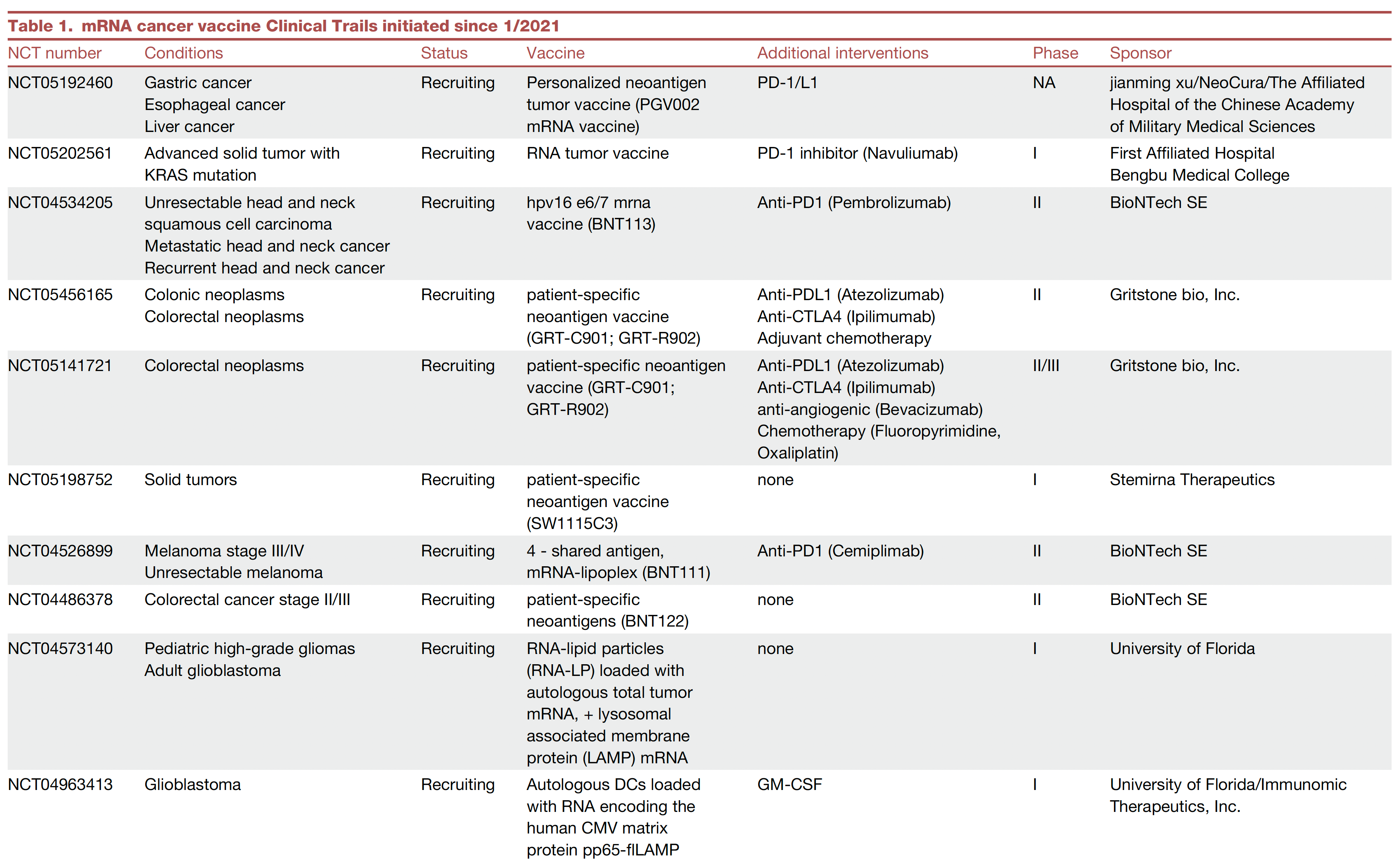
Antibody-Drug Conjugates (ADC)
There is considerable excitement about antibody-drug conjugates (ADC) whereby a linker is used to attach a chemotherapy agent to the checkpoint inhibitor antibody, specifically targeting the cancer cell and facilitating entry of the chemotherapy into the cell. Akin to these are bispecific antibodies (BiTEs, binding to a tumor antigen and T cell receptor simultaneously), both of these conjugates acting as “biologic” or “guided” missiles.
A very good example of the potency of an ADC was seen in a “HER2-low” breast cancer randomized trial. The absence or very low expression or amplification of the HER2 receptor is common in breast cancer and successful treatment has been elusive. A randomized trial of an ADC (trastuzumab deruxtecan) compared to physician’s choice therapy demonstrated a marked success for progression-free survival in HER2-low patients, which was characterized as “unheard-of success” by media coverage.
This strategy is being used to target some of the most difficult cancer driver mutations such as TP53 and KRAS.
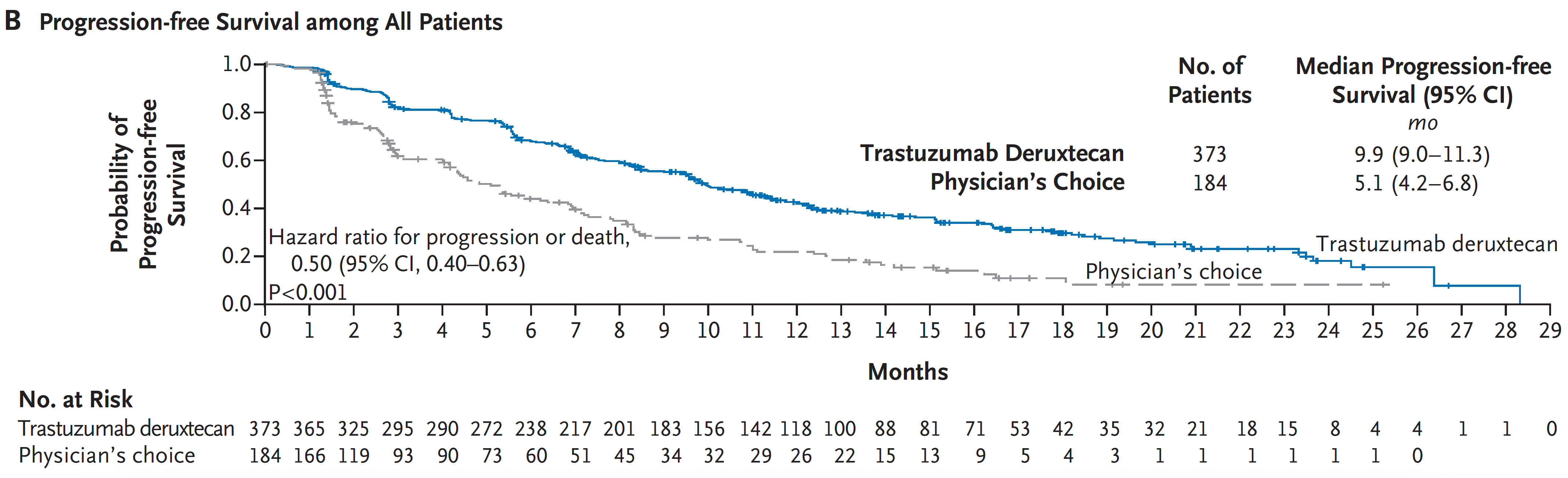
Oncolytic Viruses
Modifying viruses to infect the tumor and make it more visible to the immune system, potentiating anti-tumor responses, known as oncolytic viruses, have been proposed as a way to rev up the immune response for a long time but without positive Phase 3 clinical trials.
After decades of failure, a recent trial in refractory bladder cancer showed marked success, along with others, summarized here, now providing very encouraging results. It looks like oncolytic viruses are on a comeback path.
Engineering T Cells (Chimeric Antigen Receptor [CAR-T])
As I recently reviewed, there are over 500 ongoing clinical trials to build on the success of the first CAR-T approval for leukemia 7 years ago. I won’t go through that all again here, but to reiterate most of the success to date has been in “liquid” blood (leukemia and lymphoma) cancer tumors. This week in Nature is the discovery of a T cell cancer mutation, a gene fusion CARD11-PIK3R3, from a T cell lymphoma that can potentially be used to augment CAR-T efficacy. It has pronounced and prolonged effects in the experimental model. Instead of 1 million cells needed for treatment, even 20,000 were enough to melt the tumor. This is a noteworthy discovery since CAR-T work to date has largely not exploited such naturally occurring mutations, while instead concentrating on those seen in the patient’s set of key tumor mutations.
As currently conceived, CAR-T, and what is being referred to more broadly as adoptive cell therapies, involves removing T cells from the patient’s body and engineering their activation, then reintroducing them back to the patient. This is laborious, technically difficult, and very expensive. Recently, the idea of achieving all of this via an injection of virus that specifically infects T cells and inserts the genes needed, was advanced by two biotech companies with preclinical results, one in non-human primates.
Gearing up to meet the challenge of solid tumor CAR-T intervention, there’s more work using CRISPR genome editing of T cell receptors. A.I. is increasingly being exploited to process the data from sequencing and identify optimal neoantigens.
Instead of just CAR-T, we’re seeing the emergence of CAR-macrophage and CAR-natural killer (NK) cells strategies, and rapidly expanding potential combinations of all the strategies I’ve mentioned. No less, there’s been maturation of on-off suicide switches programmed in, to limit cytokine release and promote safety of these interventions. Overall, major side effects of immunotherapies are not only cytokine release syndromes, but also include interstitial pneumonitis and neurotoxicity.
Summary
Given the multitude of ways cancer cells and tumor tissue can evade our immune response, durably successful treatment remains a daunting challenge. But the ingenuity of so many different approaches to unleash our immune response, and their combinations, provides considerable hope that we’ll increasingly meet the challenge in the years ahead. We have clearly learned that combining different immunotherapy strategies will be essential for many patients with the most resilient solid tumors.
Of concern, as noted by a recent editorial in The Lancet, entitled “Cancer Research Equity: Innovations For The Many, Not The Few,” is that these individualized, sophisticated strategies are not scalable; they will have limited reach and benefit. The movement towards “off the shelf” CAR-T and inexpensive, orally active checkpoint inhibitors may help mitigate this issue.
Notwithstanding this important concern, we’re seeing an array of diverse and potent immunotherapy strategies that are providing highly encouraging results, engendering more excitement than we’ve seen in this space for some time. These should propel substantial improvements in outcomes for patients in the years ahead. It can’t happen soon enough.
Thanks for reading this edition of Ground Truths. If you found it informative, please share it with your colleagues.
Dr. Topol has disclosed the following relevant financial relationships: Serve(d) as a director, officer, partner, employee, advisor, consultant, or trustee for Dexcom; Illumina; Molecular Stethoscope; Quest Diagnostics; Blue Cross Blue Shield Association. Received research grant from National Institutes of Health.
A version of this article appeared on Medscape.com.
This article was originally published on February 10 in Eric Topol’s substack “Ground Truths.”
It’s astounding how devious cancer cells and tumor tissue can be. This week in Science we learned how certain lung cancer cells can function like “Catch Me If You Can” — changing their driver mutation and cell identity to escape targeted therapy. This histologic transformation, as seen in an experimental model, is just one of so many cancer tricks that we are learning about.
Recently, as shown by single-cell sequencing, cancer cells can steal the mitochondria from T cells, a double whammy that turbocharges cancer cells with the hijacked fuel supply and, at the same time, dismantles the immune response.
Last week, we saw how tumor cells can release a virus-like protein that unleashes a vicious autoimmune response.
And then there’s the finding that cancer cell spread predominantly is occurring while we sleep.
As I previously reviewed, the ability for cancer cells to hijack neurons and neural circuits is now well established, no less their ability to reprogram neurons to become adrenergic and stimulate tumor progression, and interfere with the immune response. Stay tuned on that for a new Ground Truths podcast with Prof Michelle Monje, a leader in cancer neuroscience, which will post soon.
Add advancing age’s immunosenescence as yet another challenge to the long and growing list of formidable ways that cancer cells, and the tumor microenvironment, evade our immune response.
An Ever-Expanding Armamentarium
Immune Checkpoint Inhibitors
The field of immunotherapies took off with the immune checkpoint inhibitors, first approved by the FDA in 2011, that take the brakes off of T cells, with the programmed death-1 (PD-1), PD-ligand1, and anti-CTLA-4 monoclonal antibodies.
But we’re clearly learning they are not enough to prevail over cancer with common recurrences, only short term success in most patients, with some notable exceptions. Adding other immune response strategies, such as a vaccine, or antibody-drug conjugates, or engineered T cells, are showing improved chances for success.
Therapeutic Cancer Vaccines
There are many therapeutic cancer vaccines in the works, as reviewed in depth here.
Here’s a list of ongoing clinical trials of cancer vaccines. You’ll note most of these are on top of a checkpoint inhibitor and use personalized neoantigens (cancer cell surface proteins) derived from sequencing (whole-exome or whole genome, RNA-sequencing and HLA-profiling) the patient’s tumor.
An example of positive findings is with the combination of an mRNA-nanoparticle vaccine with up to 34 personalized neoantigens and pembrolizumab (Keytruda) vs pembrolizumab alone in advanced melanoma after resection, with improved outcomes at 3-year follow-up, cutting death or relapse rate in half.
Antibody-Drug Conjugates (ADC)
There is considerable excitement about antibody-drug conjugates (ADC) whereby a linker is used to attach a chemotherapy agent to the checkpoint inhibitor antibody, specifically targeting the cancer cell and facilitating entry of the chemotherapy into the cell. Akin to these are bispecific antibodies (BiTEs, binding to a tumor antigen and T cell receptor simultaneously), both of these conjugates acting as “biologic” or “guided” missiles.
A very good example of the potency of an ADC was seen in a “HER2-low” breast cancer randomized trial. The absence or very low expression or amplification of the HER2 receptor is common in breast cancer and successful treatment has been elusive. A randomized trial of an ADC (trastuzumab deruxtecan) compared to physician’s choice therapy demonstrated a marked success for progression-free survival in HER2-low patients, which was characterized as “unheard-of success” by media coverage.
This strategy is being used to target some of the most difficult cancer driver mutations such as TP53 and KRAS.
Oncolytic Viruses
Modifying viruses to infect the tumor and make it more visible to the immune system, potentiating anti-tumor responses, known as oncolytic viruses, have been proposed as a way to rev up the immune response for a long time but without positive Phase 3 clinical trials.
After decades of failure, a recent trial in refractory bladder cancer showed marked success, along with others, summarized here, now providing very encouraging results. It looks like oncolytic viruses are on a comeback path.
Engineering T Cells (Chimeric Antigen Receptor [CAR-T])
As I recently reviewed, there are over 500 ongoing clinical trials to build on the success of the first CAR-T approval for leukemia 7 years ago. I won’t go through that all again here, but to reiterate most of the success to date has been in “liquid” blood (leukemia and lymphoma) cancer tumors. This week in Nature is the discovery of a T cell cancer mutation, a gene fusion CARD11-PIK3R3, from a T cell lymphoma that can potentially be used to augment CAR-T efficacy. It has pronounced and prolonged effects in the experimental model. Instead of 1 million cells needed for treatment, even 20,000 were enough to melt the tumor. This is a noteworthy discovery since CAR-T work to date has largely not exploited such naturally occurring mutations, while instead concentrating on those seen in the patient’s set of key tumor mutations.
As currently conceived, CAR-T, and what is being referred to more broadly as adoptive cell therapies, involves removing T cells from the patient’s body and engineering their activation, then reintroducing them back to the patient. This is laborious, technically difficult, and very expensive. Recently, the idea of achieving all of this via an injection of virus that specifically infects T cells and inserts the genes needed, was advanced by two biotech companies with preclinical results, one in non-human primates.
Gearing up to meet the challenge of solid tumor CAR-T intervention, there’s more work using CRISPR genome editing of T cell receptors. A.I. is increasingly being exploited to process the data from sequencing and identify optimal neoantigens.
Instead of just CAR-T, we’re seeing the emergence of CAR-macrophage and CAR-natural killer (NK) cells strategies, and rapidly expanding potential combinations of all the strategies I’ve mentioned. No less, there’s been maturation of on-off suicide switches programmed in, to limit cytokine release and promote safety of these interventions. Overall, major side effects of immunotherapies are not only cytokine release syndromes, but also include interstitial pneumonitis and neurotoxicity.
Summary
Given the multitude of ways cancer cells and tumor tissue can evade our immune response, durably successful treatment remains a daunting challenge. But the ingenuity of so many different approaches to unleash our immune response, and their combinations, provides considerable hope that we’ll increasingly meet the challenge in the years ahead. We have clearly learned that combining different immunotherapy strategies will be essential for many patients with the most resilient solid tumors.
Of concern, as noted by a recent editorial in The Lancet, entitled “Cancer Research Equity: Innovations For The Many, Not The Few,” is that these individualized, sophisticated strategies are not scalable; they will have limited reach and benefit. The movement towards “off the shelf” CAR-T and inexpensive, orally active checkpoint inhibitors may help mitigate this issue.
Notwithstanding this important concern, we’re seeing an array of diverse and potent immunotherapy strategies that are providing highly encouraging results, engendering more excitement than we’ve seen in this space for some time. These should propel substantial improvements in outcomes for patients in the years ahead. It can’t happen soon enough.
Thanks for reading this edition of Ground Truths. If you found it informative, please share it with your colleagues.
Dr. Topol has disclosed the following relevant financial relationships: Serve(d) as a director, officer, partner, employee, advisor, consultant, or trustee for Dexcom; Illumina; Molecular Stethoscope; Quest Diagnostics; Blue Cross Blue Shield Association. Received research grant from National Institutes of Health.
A version of this article appeared on Medscape.com.
This article was originally published on February 10 in Eric Topol’s substack “Ground Truths.”
It’s astounding how devious cancer cells and tumor tissue can be. This week in Science we learned how certain lung cancer cells can function like “Catch Me If You Can” — changing their driver mutation and cell identity to escape targeted therapy. This histologic transformation, as seen in an experimental model, is just one of so many cancer tricks that we are learning about.
Recently, as shown by single-cell sequencing, cancer cells can steal the mitochondria from T cells, a double whammy that turbocharges cancer cells with the hijacked fuel supply and, at the same time, dismantles the immune response.
Last week, we saw how tumor cells can release a virus-like protein that unleashes a vicious autoimmune response.
And then there’s the finding that cancer cell spread predominantly is occurring while we sleep.
As I previously reviewed, the ability for cancer cells to hijack neurons and neural circuits is now well established, no less their ability to reprogram neurons to become adrenergic and stimulate tumor progression, and interfere with the immune response. Stay tuned on that for a new Ground Truths podcast with Prof Michelle Monje, a leader in cancer neuroscience, which will post soon.
Add advancing age’s immunosenescence as yet another challenge to the long and growing list of formidable ways that cancer cells, and the tumor microenvironment, evade our immune response.
An Ever-Expanding Armamentarium
Immune Checkpoint Inhibitors
The field of immunotherapies took off with the immune checkpoint inhibitors, first approved by the FDA in 2011, that take the brakes off of T cells, with the programmed death-1 (PD-1), PD-ligand1, and anti-CTLA-4 monoclonal antibodies.
But we’re clearly learning they are not enough to prevail over cancer with common recurrences, only short term success in most patients, with some notable exceptions. Adding other immune response strategies, such as a vaccine, or antibody-drug conjugates, or engineered T cells, are showing improved chances for success.
Therapeutic Cancer Vaccines
There are many therapeutic cancer vaccines in the works, as reviewed in depth here.
Here’s a list of ongoing clinical trials of cancer vaccines. You’ll note most of these are on top of a checkpoint inhibitor and use personalized neoantigens (cancer cell surface proteins) derived from sequencing (whole-exome or whole genome, RNA-sequencing and HLA-profiling) the patient’s tumor.
An example of positive findings is with the combination of an mRNA-nanoparticle vaccine with up to 34 personalized neoantigens and pembrolizumab (Keytruda) vs pembrolizumab alone in advanced melanoma after resection, with improved outcomes at 3-year follow-up, cutting death or relapse rate in half.
Antibody-Drug Conjugates (ADC)
There is considerable excitement about antibody-drug conjugates (ADC) whereby a linker is used to attach a chemotherapy agent to the checkpoint inhibitor antibody, specifically targeting the cancer cell and facilitating entry of the chemotherapy into the cell. Akin to these are bispecific antibodies (BiTEs, binding to a tumor antigen and T cell receptor simultaneously), both of these conjugates acting as “biologic” or “guided” missiles.
A very good example of the potency of an ADC was seen in a “HER2-low” breast cancer randomized trial. The absence or very low expression or amplification of the HER2 receptor is common in breast cancer and successful treatment has been elusive. A randomized trial of an ADC (trastuzumab deruxtecan) compared to physician’s choice therapy demonstrated a marked success for progression-free survival in HER2-low patients, which was characterized as “unheard-of success” by media coverage.
This strategy is being used to target some of the most difficult cancer driver mutations such as TP53 and KRAS.
Oncolytic Viruses
Modifying viruses to infect the tumor and make it more visible to the immune system, potentiating anti-tumor responses, known as oncolytic viruses, have been proposed as a way to rev up the immune response for a long time but without positive Phase 3 clinical trials.
After decades of failure, a recent trial in refractory bladder cancer showed marked success, along with others, summarized here, now providing very encouraging results. It looks like oncolytic viruses are on a comeback path.
Engineering T Cells (Chimeric Antigen Receptor [CAR-T])
As I recently reviewed, there are over 500 ongoing clinical trials to build on the success of the first CAR-T approval for leukemia 7 years ago. I won’t go through that all again here, but to reiterate most of the success to date has been in “liquid” blood (leukemia and lymphoma) cancer tumors. This week in Nature is the discovery of a T cell cancer mutation, a gene fusion CARD11-PIK3R3, from a T cell lymphoma that can potentially be used to augment CAR-T efficacy. It has pronounced and prolonged effects in the experimental model. Instead of 1 million cells needed for treatment, even 20,000 were enough to melt the tumor. This is a noteworthy discovery since CAR-T work to date has largely not exploited such naturally occurring mutations, while instead concentrating on those seen in the patient’s set of key tumor mutations.
As currently conceived, CAR-T, and what is being referred to more broadly as adoptive cell therapies, involves removing T cells from the patient’s body and engineering their activation, then reintroducing them back to the patient. This is laborious, technically difficult, and very expensive. Recently, the idea of achieving all of this via an injection of virus that specifically infects T cells and inserts the genes needed, was advanced by two biotech companies with preclinical results, one in non-human primates.
Gearing up to meet the challenge of solid tumor CAR-T intervention, there’s more work using CRISPR genome editing of T cell receptors. A.I. is increasingly being exploited to process the data from sequencing and identify optimal neoantigens.
Instead of just CAR-T, we’re seeing the emergence of CAR-macrophage and CAR-natural killer (NK) cells strategies, and rapidly expanding potential combinations of all the strategies I’ve mentioned. No less, there’s been maturation of on-off suicide switches programmed in, to limit cytokine release and promote safety of these interventions. Overall, major side effects of immunotherapies are not only cytokine release syndromes, but also include interstitial pneumonitis and neurotoxicity.
Summary
Given the multitude of ways cancer cells and tumor tissue can evade our immune response, durably successful treatment remains a daunting challenge. But the ingenuity of so many different approaches to unleash our immune response, and their combinations, provides considerable hope that we’ll increasingly meet the challenge in the years ahead. We have clearly learned that combining different immunotherapy strategies will be essential for many patients with the most resilient solid tumors.
Of concern, as noted by a recent editorial in The Lancet, entitled “Cancer Research Equity: Innovations For The Many, Not The Few,” is that these individualized, sophisticated strategies are not scalable; they will have limited reach and benefit. The movement towards “off the shelf” CAR-T and inexpensive, orally active checkpoint inhibitors may help mitigate this issue.
Notwithstanding this important concern, we’re seeing an array of diverse and potent immunotherapy strategies that are providing highly encouraging results, engendering more excitement than we’ve seen in this space for some time. These should propel substantial improvements in outcomes for patients in the years ahead. It can’t happen soon enough.
Thanks for reading this edition of Ground Truths. If you found it informative, please share it with your colleagues.
Dr. Topol has disclosed the following relevant financial relationships: Serve(d) as a director, officer, partner, employee, advisor, consultant, or trustee for Dexcom; Illumina; Molecular Stethoscope; Quest Diagnostics; Blue Cross Blue Shield Association. Received research grant from National Institutes of Health.
A version of this article appeared on Medscape.com.
Balancing Patient Satisfaction With Saying No
Your patients come in wanting a script for the latest medication they saw on a television commercial (Ozempic anyone?), a request for a medical marijuana card for their shoulder ache, or any number of pleas for drugs, procedures, or tests that are medically inappropriate.
One of the toughest parts of the job as a physician is balancing patient requests with patient satisfaction.
Turns out, you can likely reroute those patient-driven requests if you can get to the heart of the issue the patient is looking to resolve, suggested Peter Lee, MD, a plastic surgeon at Wave Plastic Surgery in Los Angeles.
“The conversation between physicians and patients hinges less on the answer ‘no’ than it does on being a careful listener,” he said. “This includes focusing on the different available treatment options and then deciding which of these is most suitable to the particular situation facing that patient.”
Here are a few failsafe ways to say no — and why physicians think these approaches can make the difference between a contentious appointment and a positive one.
Hear Patients Out
When patients book an appointment with a physician to discuss a noncritical issue, they likely have a sense from Google of what they might need, which is why Dara Kass, MD, an emergency medicine physician in Hartford, Connecticut, always asks patients “why did you come in” and “what test do you think you need.”
“For example, they may say, ‘I came for a CT scan of my head because I’ve had a headache for 2 years, and it’s frustrating trying to find a neurologist,’” she said. “Maybe they don’t need a CT scan after all, but it’s up to me to figure that out, and letting them share what they think they need frames out a feeling that we’re making joint decisions.”
Help Patients Rethink Requests
The ubiquity of online searching is just one reason patients may tend to arrive at your office armed with “information.” This is especially true for patients seeking plastic surgery, said Dr. Lee. “A plastic surgeon’s reaction to such a request may be less about saying ‘no’ than taking the patient a few steps back in the decision-making process,” he said. “The goal should be to educate the patient, in the case of plastic surgery, about what is actually causing the appearance he or she is trying to correct.”
For something like a marijuana card for a slight ache, explaining that it may not be appropriate and “here’s what we can do instead” goes a long way in getting the patient to rethink and understand that their request may not be legitimate.
Use Safety Concerns as an Out
Often, a patient just isn’t a good candidate for a procedure, said Samuel Lin, MD, a plastic surgeon in Boston and an associate professor of surgery at Harvard Medical School, Boston. “They may think they need to have a procedure, but it might not be a safe thing for them to have it,” he said.
“I would lean heavily on the fact that it may not be medically safe for this patient to have this procedure due to elements of their medical history or the fact that they have had prior surgeries. Then, if you pivot to the more conservative things you can do, this can help you say no when a patient is seeking a certain procedure.”
Likewise, explaining that a weight loss drug may have more risks than benefits and isn’t appropriate for that 15 pounds they’re struggling with couched as a safety concern can ease the disappointment of a no.
Remind Patients That Tests Can Be Costly
It’s one thing for a patient to request certain tests, say an MRI or a CT scan, but those same patients may grumble when they get the bill for the tests. That said, it’s always a good idea to remind them of the costs of these tests, said Dr. Kass. Patients will get bills in the mail after their visit for those extra tests and scans. “They may not realize this until after they asked for it, and if they, for example, have $1000 in coinsurance, that bill may be a very upsetting surprise.”
You Can’t Always Prevent a Negative Patient Review
No matter how hard you try, a patient may still be unhappy that you’ve declined their request, and this may show up in the form of a negative review for all to see. However, it’s always best to keep these reviews in perspective. “The ‘no’ that might result in a bad review can happen for everything from waiting 15 minutes to see the doctor to not getting a discount at checkout and everything in between including being told they don’t need the drug, test, or procedure they requested.”
“I feel like people who write bad reviews want money back, or they have an alternative agenda. That’s why, I educate patients and empower them to make the right decisions,” said Jody A. Levine, MD, director of dermatology at Plastic Surgery & Dermatology of New York City.
Dr. Lee told this news organization that the fundamental pledge to “do no harm” is as good as any other credo when saying no to patients. “If we don’t believe there is a likely probability that a surgery will be safe to perform on a patient and leave the patient satisfied with the result, then it is our duty to decline to perform that surgery.”
Ultimately, being transparent leads to a happy doctor-patient relationship. “As long as you are clear and honest in explaining to a patient why you are declining to perform a procedure, most patients, rather than being angry with you, will thank you for your candor,” he said. “They’ll leave your office a little bit wiser, too.”
A version of this article appeared on Medscape.com.
Your patients come in wanting a script for the latest medication they saw on a television commercial (Ozempic anyone?), a request for a medical marijuana card for their shoulder ache, or any number of pleas for drugs, procedures, or tests that are medically inappropriate.
One of the toughest parts of the job as a physician is balancing patient requests with patient satisfaction.
Turns out, you can likely reroute those patient-driven requests if you can get to the heart of the issue the patient is looking to resolve, suggested Peter Lee, MD, a plastic surgeon at Wave Plastic Surgery in Los Angeles.
“The conversation between physicians and patients hinges less on the answer ‘no’ than it does on being a careful listener,” he said. “This includes focusing on the different available treatment options and then deciding which of these is most suitable to the particular situation facing that patient.”
Here are a few failsafe ways to say no — and why physicians think these approaches can make the difference between a contentious appointment and a positive one.
Hear Patients Out
When patients book an appointment with a physician to discuss a noncritical issue, they likely have a sense from Google of what they might need, which is why Dara Kass, MD, an emergency medicine physician in Hartford, Connecticut, always asks patients “why did you come in” and “what test do you think you need.”
“For example, they may say, ‘I came for a CT scan of my head because I’ve had a headache for 2 years, and it’s frustrating trying to find a neurologist,’” she said. “Maybe they don’t need a CT scan after all, but it’s up to me to figure that out, and letting them share what they think they need frames out a feeling that we’re making joint decisions.”
Help Patients Rethink Requests
The ubiquity of online searching is just one reason patients may tend to arrive at your office armed with “information.” This is especially true for patients seeking plastic surgery, said Dr. Lee. “A plastic surgeon’s reaction to such a request may be less about saying ‘no’ than taking the patient a few steps back in the decision-making process,” he said. “The goal should be to educate the patient, in the case of plastic surgery, about what is actually causing the appearance he or she is trying to correct.”
For something like a marijuana card for a slight ache, explaining that it may not be appropriate and “here’s what we can do instead” goes a long way in getting the patient to rethink and understand that their request may not be legitimate.
Use Safety Concerns as an Out
Often, a patient just isn’t a good candidate for a procedure, said Samuel Lin, MD, a plastic surgeon in Boston and an associate professor of surgery at Harvard Medical School, Boston. “They may think they need to have a procedure, but it might not be a safe thing for them to have it,” he said.
“I would lean heavily on the fact that it may not be medically safe for this patient to have this procedure due to elements of their medical history or the fact that they have had prior surgeries. Then, if you pivot to the more conservative things you can do, this can help you say no when a patient is seeking a certain procedure.”
Likewise, explaining that a weight loss drug may have more risks than benefits and isn’t appropriate for that 15 pounds they’re struggling with couched as a safety concern can ease the disappointment of a no.
Remind Patients That Tests Can Be Costly
It’s one thing for a patient to request certain tests, say an MRI or a CT scan, but those same patients may grumble when they get the bill for the tests. That said, it’s always a good idea to remind them of the costs of these tests, said Dr. Kass. Patients will get bills in the mail after their visit for those extra tests and scans. “They may not realize this until after they asked for it, and if they, for example, have $1000 in coinsurance, that bill may be a very upsetting surprise.”
You Can’t Always Prevent a Negative Patient Review
No matter how hard you try, a patient may still be unhappy that you’ve declined their request, and this may show up in the form of a negative review for all to see. However, it’s always best to keep these reviews in perspective. “The ‘no’ that might result in a bad review can happen for everything from waiting 15 minutes to see the doctor to not getting a discount at checkout and everything in between including being told they don’t need the drug, test, or procedure they requested.”
“I feel like people who write bad reviews want money back, or they have an alternative agenda. That’s why, I educate patients and empower them to make the right decisions,” said Jody A. Levine, MD, director of dermatology at Plastic Surgery & Dermatology of New York City.
Dr. Lee told this news organization that the fundamental pledge to “do no harm” is as good as any other credo when saying no to patients. “If we don’t believe there is a likely probability that a surgery will be safe to perform on a patient and leave the patient satisfied with the result, then it is our duty to decline to perform that surgery.”
Ultimately, being transparent leads to a happy doctor-patient relationship. “As long as you are clear and honest in explaining to a patient why you are declining to perform a procedure, most patients, rather than being angry with you, will thank you for your candor,” he said. “They’ll leave your office a little bit wiser, too.”
A version of this article appeared on Medscape.com.
Your patients come in wanting a script for the latest medication they saw on a television commercial (Ozempic anyone?), a request for a medical marijuana card for their shoulder ache, or any number of pleas for drugs, procedures, or tests that are medically inappropriate.
One of the toughest parts of the job as a physician is balancing patient requests with patient satisfaction.
Turns out, you can likely reroute those patient-driven requests if you can get to the heart of the issue the patient is looking to resolve, suggested Peter Lee, MD, a plastic surgeon at Wave Plastic Surgery in Los Angeles.
“The conversation between physicians and patients hinges less on the answer ‘no’ than it does on being a careful listener,” he said. “This includes focusing on the different available treatment options and then deciding which of these is most suitable to the particular situation facing that patient.”
Here are a few failsafe ways to say no — and why physicians think these approaches can make the difference between a contentious appointment and a positive one.
Hear Patients Out
When patients book an appointment with a physician to discuss a noncritical issue, they likely have a sense from Google of what they might need, which is why Dara Kass, MD, an emergency medicine physician in Hartford, Connecticut, always asks patients “why did you come in” and “what test do you think you need.”
“For example, they may say, ‘I came for a CT scan of my head because I’ve had a headache for 2 years, and it’s frustrating trying to find a neurologist,’” she said. “Maybe they don’t need a CT scan after all, but it’s up to me to figure that out, and letting them share what they think they need frames out a feeling that we’re making joint decisions.”
Help Patients Rethink Requests
The ubiquity of online searching is just one reason patients may tend to arrive at your office armed with “information.” This is especially true for patients seeking plastic surgery, said Dr. Lee. “A plastic surgeon’s reaction to such a request may be less about saying ‘no’ than taking the patient a few steps back in the decision-making process,” he said. “The goal should be to educate the patient, in the case of plastic surgery, about what is actually causing the appearance he or she is trying to correct.”
For something like a marijuana card for a slight ache, explaining that it may not be appropriate and “here’s what we can do instead” goes a long way in getting the patient to rethink and understand that their request may not be legitimate.
Use Safety Concerns as an Out
Often, a patient just isn’t a good candidate for a procedure, said Samuel Lin, MD, a plastic surgeon in Boston and an associate professor of surgery at Harvard Medical School, Boston. “They may think they need to have a procedure, but it might not be a safe thing for them to have it,” he said.
“I would lean heavily on the fact that it may not be medically safe for this patient to have this procedure due to elements of their medical history or the fact that they have had prior surgeries. Then, if you pivot to the more conservative things you can do, this can help you say no when a patient is seeking a certain procedure.”
Likewise, explaining that a weight loss drug may have more risks than benefits and isn’t appropriate for that 15 pounds they’re struggling with couched as a safety concern can ease the disappointment of a no.
Remind Patients That Tests Can Be Costly
It’s one thing for a patient to request certain tests, say an MRI or a CT scan, but those same patients may grumble when they get the bill for the tests. That said, it’s always a good idea to remind them of the costs of these tests, said Dr. Kass. Patients will get bills in the mail after their visit for those extra tests and scans. “They may not realize this until after they asked for it, and if they, for example, have $1000 in coinsurance, that bill may be a very upsetting surprise.”
You Can’t Always Prevent a Negative Patient Review
No matter how hard you try, a patient may still be unhappy that you’ve declined their request, and this may show up in the form of a negative review for all to see. However, it’s always best to keep these reviews in perspective. “The ‘no’ that might result in a bad review can happen for everything from waiting 15 minutes to see the doctor to not getting a discount at checkout and everything in between including being told they don’t need the drug, test, or procedure they requested.”
“I feel like people who write bad reviews want money back, or they have an alternative agenda. That’s why, I educate patients and empower them to make the right decisions,” said Jody A. Levine, MD, director of dermatology at Plastic Surgery & Dermatology of New York City.
Dr. Lee told this news organization that the fundamental pledge to “do no harm” is as good as any other credo when saying no to patients. “If we don’t believe there is a likely probability that a surgery will be safe to perform on a patient and leave the patient satisfied with the result, then it is our duty to decline to perform that surgery.”
Ultimately, being transparent leads to a happy doctor-patient relationship. “As long as you are clear and honest in explaining to a patient why you are declining to perform a procedure, most patients, rather than being angry with you, will thank you for your candor,” he said. “They’ll leave your office a little bit wiser, too.”
A version of this article appeared on Medscape.com.