User login
BMI z scores less accurate for teen obesity than new measure
A different measurement tool than body mass index (BMI) z scores was more accurate in assessing adolescents’ body fat percentage than BMI z scores, a study found.
More than twice as many adolescents aged 8-17 years were misclassified as overweight using BMI z scores than using triponderal mass index (TMI), which uses a formula for calculating a weight-to-height ratio, researchers reported. Obesity was similarly overreported with BMI z scores, compared with TMI scores.
They suggest that TMI therefore may be superior to BMI or BMI z scores in assessing adolescents’ weight at least among non-Hispanic whites, although further studies would need to assess TMI as an assessment tool in other racial/ethnic groups.
The standard formula for adult BMI – weight in kilograms divided by height in meters squared – has been known to be inappropriate for children and teens for more than a century because their proportions change with age. The currently established alternative of using youth’s BMI percentiles for their age in the BMI z system, however, “fails to take into account that both body proportions and body fat levels change during adolescent growth in a way that is inconsistent with BMI,” the authors wrote (JAMA Pediatrics. 2017 May 15. doi: 10.1001/jamapediatrics.2017.0460).
They therefore explored other methods of assessing appropriate weight ranges for adolescents and compared them with BMI, using dual-energy x-ray absorptiometry findings and anthropometric data collected from 4,398 non-Hispanic white participants, aged 8-29 years, in U.S. National Health and Nutrition Examination Surveys (NHANES) from 1999 to 2006.
Dr. Peterson’s team first evaluated the value of using BMI by looking at the following:
• How percent body fat influences the timing of the adolescent growth spurt in height.
• How percent body fat varies by age.
• How body proportions scale during adolescence.
Then they explored changing the exponent in the weight-to-height formula to see which alternatives might result in a measurement that’s more stable with an individuals’ age, more accurate in estimating body fat percentage, and more accurate in identifying which youths are overweight.
“In girls and women, percent body fat increased with age and reached a plateau by age 18 years, rising from a mean of 31.2% at age 8-9 years to 36.4% at ages 25-29 years (P less than .001),” the authors wrote. “By contrast, in boys and men, percent body fat decreased from a mean of 27.8%-23.0% between ages 12-13 years and 14-15 years (P less than .001) before stabilizing at approximately 25%-26% for ages 20 years and older.”
Because variations in body fat percentage occurred with both age and height in adolescence, Dr. Peterson and her associates concluded that the usual BMI weight-to-height formula is not ideal for assessing body fat in youth. The better alternative, they found, uses the formula of weight divided by height cubed (instead of squared), called triponderal mass index (TMI).
The threshold for overweight status with TMI was 16.0 kg/m3 for boys and 16.8 kg/m3 for girls. For obesity, the threshold was 18.8 kg/m3 for boys and 19.7 kg/m3 for girls. Using TMI instead of BMI resulted in improved stability with age and estimated percent body fat for those aged 8-17 years.
In addition, using BMI z scores misclassified 19.4% of adolescents as overweight instead of a healthy weight whereas TMI only misclassified 8.4% of youth as such in the same data set. BMI z scores also classified more youth as obese (11.3%), compared with TMI (8%).
The research was funded by the National Center for Advancing Translational Sciences and the Eunice Kennedy Shriver National Institute of Child Health and Human Development. One investigator serves on the medical advisory boards for Medifast and Rice Lake Weighing System, unrelated to this study. Another investigator helped develop a trademarked smartphone weight loss intervention app called SmartLoss, whose licensing could benefit that investigator and Montclair State University.
A different measurement tool than body mass index (BMI) z scores was more accurate in assessing adolescents’ body fat percentage than BMI z scores, a study found.
More than twice as many adolescents aged 8-17 years were misclassified as overweight using BMI z scores than using triponderal mass index (TMI), which uses a formula for calculating a weight-to-height ratio, researchers reported. Obesity was similarly overreported with BMI z scores, compared with TMI scores.
They suggest that TMI therefore may be superior to BMI or BMI z scores in assessing adolescents’ weight at least among non-Hispanic whites, although further studies would need to assess TMI as an assessment tool in other racial/ethnic groups.
The standard formula for adult BMI – weight in kilograms divided by height in meters squared – has been known to be inappropriate for children and teens for more than a century because their proportions change with age. The currently established alternative of using youth’s BMI percentiles for their age in the BMI z system, however, “fails to take into account that both body proportions and body fat levels change during adolescent growth in a way that is inconsistent with BMI,” the authors wrote (JAMA Pediatrics. 2017 May 15. doi: 10.1001/jamapediatrics.2017.0460).
They therefore explored other methods of assessing appropriate weight ranges for adolescents and compared them with BMI, using dual-energy x-ray absorptiometry findings and anthropometric data collected from 4,398 non-Hispanic white participants, aged 8-29 years, in U.S. National Health and Nutrition Examination Surveys (NHANES) from 1999 to 2006.
Dr. Peterson’s team first evaluated the value of using BMI by looking at the following:
• How percent body fat influences the timing of the adolescent growth spurt in height.
• How percent body fat varies by age.
• How body proportions scale during adolescence.
Then they explored changing the exponent in the weight-to-height formula to see which alternatives might result in a measurement that’s more stable with an individuals’ age, more accurate in estimating body fat percentage, and more accurate in identifying which youths are overweight.
“In girls and women, percent body fat increased with age and reached a plateau by age 18 years, rising from a mean of 31.2% at age 8-9 years to 36.4% at ages 25-29 years (P less than .001),” the authors wrote. “By contrast, in boys and men, percent body fat decreased from a mean of 27.8%-23.0% between ages 12-13 years and 14-15 years (P less than .001) before stabilizing at approximately 25%-26% for ages 20 years and older.”
Because variations in body fat percentage occurred with both age and height in adolescence, Dr. Peterson and her associates concluded that the usual BMI weight-to-height formula is not ideal for assessing body fat in youth. The better alternative, they found, uses the formula of weight divided by height cubed (instead of squared), called triponderal mass index (TMI).
The threshold for overweight status with TMI was 16.0 kg/m3 for boys and 16.8 kg/m3 for girls. For obesity, the threshold was 18.8 kg/m3 for boys and 19.7 kg/m3 for girls. Using TMI instead of BMI resulted in improved stability with age and estimated percent body fat for those aged 8-17 years.
In addition, using BMI z scores misclassified 19.4% of adolescents as overweight instead of a healthy weight whereas TMI only misclassified 8.4% of youth as such in the same data set. BMI z scores also classified more youth as obese (11.3%), compared with TMI (8%).
The research was funded by the National Center for Advancing Translational Sciences and the Eunice Kennedy Shriver National Institute of Child Health and Human Development. One investigator serves on the medical advisory boards for Medifast and Rice Lake Weighing System, unrelated to this study. Another investigator helped develop a trademarked smartphone weight loss intervention app called SmartLoss, whose licensing could benefit that investigator and Montclair State University.
A different measurement tool than body mass index (BMI) z scores was more accurate in assessing adolescents’ body fat percentage than BMI z scores, a study found.
More than twice as many adolescents aged 8-17 years were misclassified as overweight using BMI z scores than using triponderal mass index (TMI), which uses a formula for calculating a weight-to-height ratio, researchers reported. Obesity was similarly overreported with BMI z scores, compared with TMI scores.
They suggest that TMI therefore may be superior to BMI or BMI z scores in assessing adolescents’ weight at least among non-Hispanic whites, although further studies would need to assess TMI as an assessment tool in other racial/ethnic groups.
The standard formula for adult BMI – weight in kilograms divided by height in meters squared – has been known to be inappropriate for children and teens for more than a century because their proportions change with age. The currently established alternative of using youth’s BMI percentiles for their age in the BMI z system, however, “fails to take into account that both body proportions and body fat levels change during adolescent growth in a way that is inconsistent with BMI,” the authors wrote (JAMA Pediatrics. 2017 May 15. doi: 10.1001/jamapediatrics.2017.0460).
They therefore explored other methods of assessing appropriate weight ranges for adolescents and compared them with BMI, using dual-energy x-ray absorptiometry findings and anthropometric data collected from 4,398 non-Hispanic white participants, aged 8-29 years, in U.S. National Health and Nutrition Examination Surveys (NHANES) from 1999 to 2006.
Dr. Peterson’s team first evaluated the value of using BMI by looking at the following:
• How percent body fat influences the timing of the adolescent growth spurt in height.
• How percent body fat varies by age.
• How body proportions scale during adolescence.
Then they explored changing the exponent in the weight-to-height formula to see which alternatives might result in a measurement that’s more stable with an individuals’ age, more accurate in estimating body fat percentage, and more accurate in identifying which youths are overweight.
“In girls and women, percent body fat increased with age and reached a plateau by age 18 years, rising from a mean of 31.2% at age 8-9 years to 36.4% at ages 25-29 years (P less than .001),” the authors wrote. “By contrast, in boys and men, percent body fat decreased from a mean of 27.8%-23.0% between ages 12-13 years and 14-15 years (P less than .001) before stabilizing at approximately 25%-26% for ages 20 years and older.”
Because variations in body fat percentage occurred with both age and height in adolescence, Dr. Peterson and her associates concluded that the usual BMI weight-to-height formula is not ideal for assessing body fat in youth. The better alternative, they found, uses the formula of weight divided by height cubed (instead of squared), called triponderal mass index (TMI).
The threshold for overweight status with TMI was 16.0 kg/m3 for boys and 16.8 kg/m3 for girls. For obesity, the threshold was 18.8 kg/m3 for boys and 19.7 kg/m3 for girls. Using TMI instead of BMI resulted in improved stability with age and estimated percent body fat for those aged 8-17 years.
In addition, using BMI z scores misclassified 19.4% of adolescents as overweight instead of a healthy weight whereas TMI only misclassified 8.4% of youth as such in the same data set. BMI z scores also classified more youth as obese (11.3%), compared with TMI (8%).
The research was funded by the National Center for Advancing Translational Sciences and the Eunice Kennedy Shriver National Institute of Child Health and Human Development. One investigator serves on the medical advisory boards for Medifast and Rice Lake Weighing System, unrelated to this study. Another investigator helped develop a trademarked smartphone weight loss intervention app called SmartLoss, whose licensing could benefit that investigator and Montclair State University.
FROM JAMA PEDIATRICS
Key clinical point: TMI is more accurate at assessing adolescents’ body fat percentage than body mass index z scores in non-Hispanic whites.
Major finding: 19.4% of youth aged 8-17 were misclassified as overweight using BMI, compared with 8.4% using TMI.
Data source: The findings are based on an analysis of data on 4,398 non-Hispanic white participants, aged 8-29 years, surveyed in the U.S. National Health and Nutrition Examination Surveys from 1999 to 2006.
Disclosures: The research was funded by the National Center for Advancing Translational Sciences and the Eunice Kennedy Shriver National Institute of Child Health and Human Development. One investigator serves on the medical advisory boards for Medifast and Rice Lake Weighing System, unrelated to this study. Another investigator helped develop a trademarked smartphone weight loss intervention app called SmartLoss, whose licensing could benefit that investigator and Montclair State University.
Corticosteroids effective just hours before preterm delivery
Antenatal corticosteroids may significantly decrease neonatal mortality and morbidity even when they are given just hours before preterm delivery, according to a report published online May 15 in JAMA Pediatrics.
In women at risk of preterm delivery, antenatal corticosteroids given between 1 and 7 days before birth reduce infant mortality by an estimated 31%, respiratory distress syndrome by 34%, intraventricular hemorrhage by 46%, and necrotizing enterocolitis by 54%. But until now their effect when given less than 24 hours before preterm birth has been described as “suboptimal,” “partial,” or “incomplete,” said Mikael Norman, MD, PhD, of Karolinska Institutet in Stockholm, Sweden, and his associates.
“Our findings challenge current thinking about the optimal timing” of antenatal corticosteroids and encourage “a more proactive management of women at risk for imminent preterm birth, which may help reduce infant mortality and severe neonatal brain injury,” the investigators said.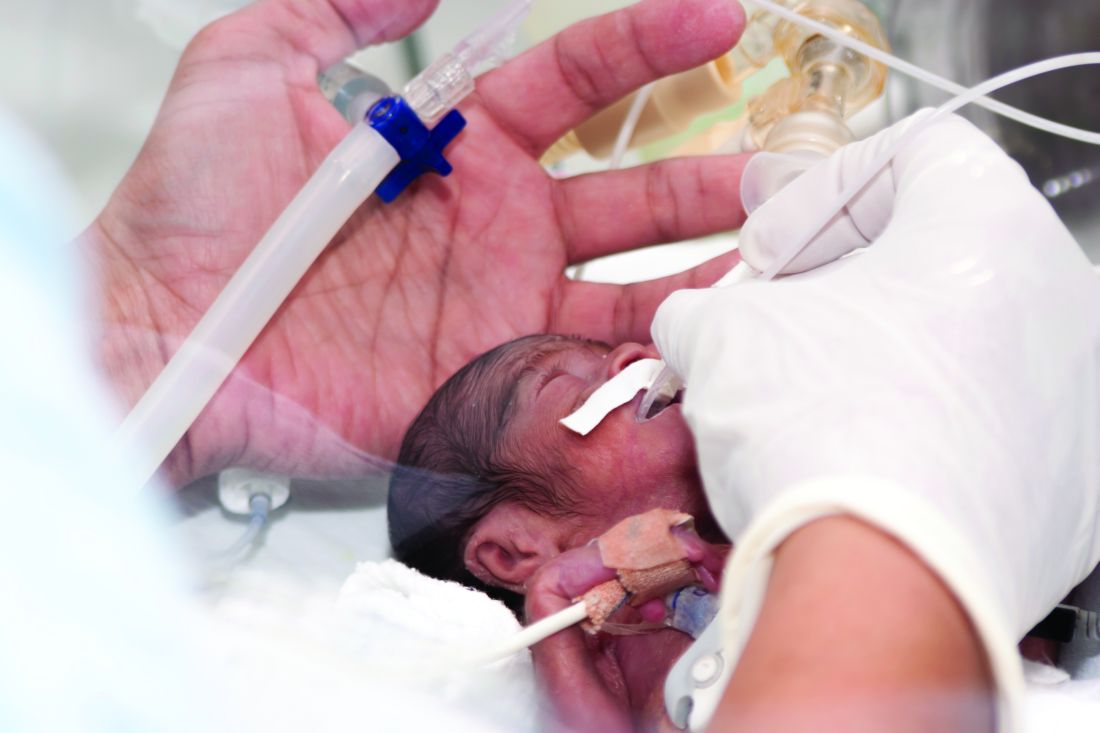
To further examine this issue, they assessed the effects of antenatal corticosteroids when given at different intervals before preterm birth, using data from a prospective cohort study of perinatal intensive care. That study involved 10,329 very preterm births throughout 11 countries in Europe during a 1-year period.
For their analysis, Dr. Norman and his associates focused on 4,594 singleton births at 24-31 weeks’ gestation. They classified the timing of antenatal corticosteroids into four categories: no injections (662 infants, or 14.4% of the study population), first injection at less than 24 hours before birth (1,111 infants, or 24.2%), first injection at the recommended 1-7 days before birth (1,871 infants, or 40.7%), and first injection more than 7 days before birth (950 infants, or 20.7%).
Receiving antenatal corticosteroids at any interval before preterm birth was associated with lower infant mortality, a lower rate of severe neonatal morbidity, and a lower rate of severe neonatal brain injury, compared with not receiving any antenatal corticosteroids. The largest reduction in risk (more than 50%) occurred at the recommended interval of 1-7 days before birth. However, receiving the treatment less than 24 hours before birth also significantly reduced these risks (JAMA Pediatr. 2017 May 15. doi: 10.1001/jamapediatrics.2017.0602).
Using their findings on treatment intervals and effectiveness, the investigators created a simulation model for the 661 infants in this cohort who did not receive any antenatal corticosteroids. Their model predicted that if these infants had received treatment at least 3 hours before delivery, overall mortality would have decreased by 26%. If they had received treatment 3-5 hours before delivery, mortality would have decreased by 37%, and if they had received treatment at 6-12 hours before delivery it would have decreased by 51%.
At the other end of the timing spectrum, infant mortality increased 40% when corticosteroids were given more than 7 days before delivery, compared with when they were given within the recommended 1-7 days. This represents a substantial number of infants – approximately 20% of the study cohort.
The study was supported by the European Union, the French Institute of Public Health, the Polish Ministry of Science and Higher Education, the Karolinska Institutet, and other nonindustry sources. Dr. Norman and his associates reported having no relevant financial disclosures.
Antenatal corticosteroids may significantly decrease neonatal mortality and morbidity even when they are given just hours before preterm delivery, according to a report published online May 15 in JAMA Pediatrics.
In women at risk of preterm delivery, antenatal corticosteroids given between 1 and 7 days before birth reduce infant mortality by an estimated 31%, respiratory distress syndrome by 34%, intraventricular hemorrhage by 46%, and necrotizing enterocolitis by 54%. But until now their effect when given less than 24 hours before preterm birth has been described as “suboptimal,” “partial,” or “incomplete,” said Mikael Norman, MD, PhD, of Karolinska Institutet in Stockholm, Sweden, and his associates.
“Our findings challenge current thinking about the optimal timing” of antenatal corticosteroids and encourage “a more proactive management of women at risk for imminent preterm birth, which may help reduce infant mortality and severe neonatal brain injury,” the investigators said.
To further examine this issue, they assessed the effects of antenatal corticosteroids when given at different intervals before preterm birth, using data from a prospective cohort study of perinatal intensive care. That study involved 10,329 very preterm births throughout 11 countries in Europe during a 1-year period.
For their analysis, Dr. Norman and his associates focused on 4,594 singleton births at 24-31 weeks’ gestation. They classified the timing of antenatal corticosteroids into four categories: no injections (662 infants, or 14.4% of the study population), first injection at less than 24 hours before birth (1,111 infants, or 24.2%), first injection at the recommended 1-7 days before birth (1,871 infants, or 40.7%), and first injection more than 7 days before birth (950 infants, or 20.7%).
Receiving antenatal corticosteroids at any interval before preterm birth was associated with lower infant mortality, a lower rate of severe neonatal morbidity, and a lower rate of severe neonatal brain injury, compared with not receiving any antenatal corticosteroids. The largest reduction in risk (more than 50%) occurred at the recommended interval of 1-7 days before birth. However, receiving the treatment less than 24 hours before birth also significantly reduced these risks (JAMA Pediatr. 2017 May 15. doi: 10.1001/jamapediatrics.2017.0602).
Using their findings on treatment intervals and effectiveness, the investigators created a simulation model for the 661 infants in this cohort who did not receive any antenatal corticosteroids. Their model predicted that if these infants had received treatment at least 3 hours before delivery, overall mortality would have decreased by 26%. If they had received treatment 3-5 hours before delivery, mortality would have decreased by 37%, and if they had received treatment at 6-12 hours before delivery it would have decreased by 51%.
At the other end of the timing spectrum, infant mortality increased 40% when corticosteroids were given more than 7 days before delivery, compared with when they were given within the recommended 1-7 days. This represents a substantial number of infants – approximately 20% of the study cohort.
The study was supported by the European Union, the French Institute of Public Health, the Polish Ministry of Science and Higher Education, the Karolinska Institutet, and other nonindustry sources. Dr. Norman and his associates reported having no relevant financial disclosures.
Antenatal corticosteroids may significantly decrease neonatal mortality and morbidity even when they are given just hours before preterm delivery, according to a report published online May 15 in JAMA Pediatrics.
In women at risk of preterm delivery, antenatal corticosteroids given between 1 and 7 days before birth reduce infant mortality by an estimated 31%, respiratory distress syndrome by 34%, intraventricular hemorrhage by 46%, and necrotizing enterocolitis by 54%. But until now their effect when given less than 24 hours before preterm birth has been described as “suboptimal,” “partial,” or “incomplete,” said Mikael Norman, MD, PhD, of Karolinska Institutet in Stockholm, Sweden, and his associates.
“Our findings challenge current thinking about the optimal timing” of antenatal corticosteroids and encourage “a more proactive management of women at risk for imminent preterm birth, which may help reduce infant mortality and severe neonatal brain injury,” the investigators said.
To further examine this issue, they assessed the effects of antenatal corticosteroids when given at different intervals before preterm birth, using data from a prospective cohort study of perinatal intensive care. That study involved 10,329 very preterm births throughout 11 countries in Europe during a 1-year period.
For their analysis, Dr. Norman and his associates focused on 4,594 singleton births at 24-31 weeks’ gestation. They classified the timing of antenatal corticosteroids into four categories: no injections (662 infants, or 14.4% of the study population), first injection at less than 24 hours before birth (1,111 infants, or 24.2%), first injection at the recommended 1-7 days before birth (1,871 infants, or 40.7%), and first injection more than 7 days before birth (950 infants, or 20.7%).
Receiving antenatal corticosteroids at any interval before preterm birth was associated with lower infant mortality, a lower rate of severe neonatal morbidity, and a lower rate of severe neonatal brain injury, compared with not receiving any antenatal corticosteroids. The largest reduction in risk (more than 50%) occurred at the recommended interval of 1-7 days before birth. However, receiving the treatment less than 24 hours before birth also significantly reduced these risks (JAMA Pediatr. 2017 May 15. doi: 10.1001/jamapediatrics.2017.0602).
Using their findings on treatment intervals and effectiveness, the investigators created a simulation model for the 661 infants in this cohort who did not receive any antenatal corticosteroids. Their model predicted that if these infants had received treatment at least 3 hours before delivery, overall mortality would have decreased by 26%. If they had received treatment 3-5 hours before delivery, mortality would have decreased by 37%, and if they had received treatment at 6-12 hours before delivery it would have decreased by 51%.
At the other end of the timing spectrum, infant mortality increased 40% when corticosteroids were given more than 7 days before delivery, compared with when they were given within the recommended 1-7 days. This represents a substantial number of infants – approximately 20% of the study cohort.
The study was supported by the European Union, the French Institute of Public Health, the Polish Ministry of Science and Higher Education, the Karolinska Institutet, and other nonindustry sources. Dr. Norman and his associates reported having no relevant financial disclosures.
Key clinical point:
Major finding: A simulation model predicted that if untreated infants had received antenatal corticosteroids 6-12 hours before delivery, overall mortality would have decreased by 51%.
Data source: A secondary analysis of data from a population-based cohort study of perinatal intensive care across Europe, involving 4,594 preterm singleton births.
Disclosures: The study was supported by the European Union, the French Institute of Public Health, the Polish Ministry of Science and Higher Education, the Karolinska Institutet, and other nonindustry sources. Dr. Norman and his associates reported having no relevant financial disclosures.
Aerosolized MMR vaccine showed good seropositivity
Aerosolized MMR vaccine can be used in booster campaigns in school-age children for measles and rubella, said José Luis Díaz Ortega, MD, of the Instituto Nacional de Salud Pública, Mexico, and his associates.
However, more studies of school-age children with longer follow-up of mumps antibody persistence are needed, they said.


Aerosolized vaccines are not available in the United States.
Read more in the journal Vaccine (2017 Apr 28. doi: 10.1016/j.vaccine.2017.04.027).
Aerosolized MMR vaccine can be used in booster campaigns in school-age children for measles and rubella, said José Luis Díaz Ortega, MD, of the Instituto Nacional de Salud Pública, Mexico, and his associates.
However, more studies of school-age children with longer follow-up of mumps antibody persistence are needed, they said.
Aerosolized vaccines are not available in the United States.
Read more in the journal Vaccine (2017 Apr 28. doi: 10.1016/j.vaccine.2017.04.027).
Aerosolized MMR vaccine can be used in booster campaigns in school-age children for measles and rubella, said José Luis Díaz Ortega, MD, of the Instituto Nacional de Salud Pública, Mexico, and his associates.
However, more studies of school-age children with longer follow-up of mumps antibody persistence are needed, they said.
Aerosolized vaccines are not available in the United States.
Read more in the journal Vaccine (2017 Apr 28. doi: 10.1016/j.vaccine.2017.04.027).
FROM VACCINE
Two-dose HPV vaccine trials in teens show effective immunological responses
, said Maddalena D’Addario of the University of Bern, Switzerland, and her associates.
In seven controlled trials in 11 countries that directly compared two-dose and three-dose HPV vaccine schedules, teen girls receiving two doses of HPV vaccine with a 6-month interval between them had noninferior antibody responses to HPV16 and HPV18 for at least 2 years, compared with girls receiving three doses.

Read more in the journal Vaccine (2017 May 19;35[22]:2892-901).
, said Maddalena D’Addario of the University of Bern, Switzerland, and her associates.
In seven controlled trials in 11 countries that directly compared two-dose and three-dose HPV vaccine schedules, teen girls receiving two doses of HPV vaccine with a 6-month interval between them had noninferior antibody responses to HPV16 and HPV18 for at least 2 years, compared with girls receiving three doses.
Read more in the journal Vaccine (2017 May 19;35[22]:2892-901).
, said Maddalena D’Addario of the University of Bern, Switzerland, and her associates.
In seven controlled trials in 11 countries that directly compared two-dose and three-dose HPV vaccine schedules, teen girls receiving two doses of HPV vaccine with a 6-month interval between them had noninferior antibody responses to HPV16 and HPV18 for at least 2 years, compared with girls receiving three doses.
Read more in the journal Vaccine (2017 May 19;35[22]:2892-901).
FROM VACCINE
Idle hands
If you consider yourself a busy pediatrician and haven’t seen a Fidget Spinner, you are either a neonatologist or have been on maternity leave for the last 3 months. Because I no longer see patients, my introduction to Fidget Spinners came via my 10-year-old grandson, Peter. Last week, I was tasked with meeting him after school and accompanying him on his bike ride to our house. Instead of a hi-grampy-smile he shouted, “Look what Jonah gave me!”
Peter held in his hand a collection of stainless steel nuts, a bolt, and a pair of roller blade wheel bearings that had been epoxified together so that they would spin with the flick of a finger. This was a homemade Fidget. This wasn’t a “gadget,” a term that would imply to me that it might have some function. No, this was a Fidget, and its sole purpose was to keep the user’s hands busy, usually by spinning it.

Of course ,within days of my enlightening, I discovered articles about the Fidget tsunami in several national newspapers. The most complete chronology of the Fidget’s trajectory from its unheralded birth in the 1990s to its explosive entry on grade school scene in the last 6 months appeared in the New York Times. (Alex Williams. “How Fidget Spinners Became the Hula-Hoop for Generation Z.” May 6, 2017).
For a brief period of time, Fidget Spinners were touted by some “experts” as calming devices for both adults and children who have been labeled with ADHD. I assume this unsubstantiated benefit was in part based on the aphorism attributed to St. Jerome that “idle hands are the Devil’s workshop.” However, when Fidgets escaped from their niche for the distractable and inattentive and entered the mainstream, educators and school administrators quickly realized that, what might have been a cure for some students, can become an intolerable distraction for the entire classroom. Not surprisingly, hastily enacted rules and restrictions have only made the spinners even more popular, must-have items.
While Fidget Spinners are the latest rage for the grade-school crowd, the attraction between palm-sized objects and young children has probably existed since the first Neanderthal infant picked up a shiny stream-polished pebble or a dried seed pod that rattled. I suspect that, if you begin keeping a record, you will discover that, on an average day, at least half of your patients under the age of 4 years have arrived with some temporarily treasured object clutched in their hands – a smooth stone, a matchbox truck, or a Lego or Playmobil figure. These treasures are not to be confused with the plushy and soft security or transition objects that are primarily sleep associated.
What I’m talking about are the recently found items that fulfill a primordial need of little hands to hold something ... anything. For the most part, they are ephemeral and will be replaced in a day or a week with another palm-sized tactile companion.
This compulsion to hold something seems to persist longer in boys and becomes stronger when they are exposed to objects that spin, roll, or make noise. Even Peter, at age 10, invariably shows up at a restaurant with a fidgetable item in his hand to help him endure the interminable wait for his pasta or pizza to arrive at the table. As distracting as it may be to his fellow diners, it certainly beats the alternative of kicking his sister under the table.
Dr. Wilkoff practiced primary care pediatrics in Brunswick, Maine, for nearly 40 years. He has authored several books on behavioral pediatrics, including “How to Say No to Your Toddler.” Email him at pdnews@frontlinemedcom.com.
If you consider yourself a busy pediatrician and haven’t seen a Fidget Spinner, you are either a neonatologist or have been on maternity leave for the last 3 months. Because I no longer see patients, my introduction to Fidget Spinners came via my 10-year-old grandson, Peter. Last week, I was tasked with meeting him after school and accompanying him on his bike ride to our house. Instead of a hi-grampy-smile he shouted, “Look what Jonah gave me!”
Peter held in his hand a collection of stainless steel nuts, a bolt, and a pair of roller blade wheel bearings that had been epoxified together so that they would spin with the flick of a finger. This was a homemade Fidget. This wasn’t a “gadget,” a term that would imply to me that it might have some function. No, this was a Fidget, and its sole purpose was to keep the user’s hands busy, usually by spinning it.
Of course ,within days of my enlightening, I discovered articles about the Fidget tsunami in several national newspapers. The most complete chronology of the Fidget’s trajectory from its unheralded birth in the 1990s to its explosive entry on grade school scene in the last 6 months appeared in the New York Times. (Alex Williams. “How Fidget Spinners Became the Hula-Hoop for Generation Z.” May 6, 2017).
For a brief period of time, Fidget Spinners were touted by some “experts” as calming devices for both adults and children who have been labeled with ADHD. I assume this unsubstantiated benefit was in part based on the aphorism attributed to St. Jerome that “idle hands are the Devil’s workshop.” However, when Fidgets escaped from their niche for the distractable and inattentive and entered the mainstream, educators and school administrators quickly realized that, what might have been a cure for some students, can become an intolerable distraction for the entire classroom. Not surprisingly, hastily enacted rules and restrictions have only made the spinners even more popular, must-have items.
While Fidget Spinners are the latest rage for the grade-school crowd, the attraction between palm-sized objects and young children has probably existed since the first Neanderthal infant picked up a shiny stream-polished pebble or a dried seed pod that rattled. I suspect that, if you begin keeping a record, you will discover that, on an average day, at least half of your patients under the age of 4 years have arrived with some temporarily treasured object clutched in their hands – a smooth stone, a matchbox truck, or a Lego or Playmobil figure. These treasures are not to be confused with the plushy and soft security or transition objects that are primarily sleep associated.
What I’m talking about are the recently found items that fulfill a primordial need of little hands to hold something ... anything. For the most part, they are ephemeral and will be replaced in a day or a week with another palm-sized tactile companion.
This compulsion to hold something seems to persist longer in boys and becomes stronger when they are exposed to objects that spin, roll, or make noise. Even Peter, at age 10, invariably shows up at a restaurant with a fidgetable item in his hand to help him endure the interminable wait for his pasta or pizza to arrive at the table. As distracting as it may be to his fellow diners, it certainly beats the alternative of kicking his sister under the table.
Dr. Wilkoff practiced primary care pediatrics in Brunswick, Maine, for nearly 40 years. He has authored several books on behavioral pediatrics, including “How to Say No to Your Toddler.” Email him at pdnews@frontlinemedcom.com.
If you consider yourself a busy pediatrician and haven’t seen a Fidget Spinner, you are either a neonatologist or have been on maternity leave for the last 3 months. Because I no longer see patients, my introduction to Fidget Spinners came via my 10-year-old grandson, Peter. Last week, I was tasked with meeting him after school and accompanying him on his bike ride to our house. Instead of a hi-grampy-smile he shouted, “Look what Jonah gave me!”
Peter held in his hand a collection of stainless steel nuts, a bolt, and a pair of roller blade wheel bearings that had been epoxified together so that they would spin with the flick of a finger. This was a homemade Fidget. This wasn’t a “gadget,” a term that would imply to me that it might have some function. No, this was a Fidget, and its sole purpose was to keep the user’s hands busy, usually by spinning it.
Of course ,within days of my enlightening, I discovered articles about the Fidget tsunami in several national newspapers. The most complete chronology of the Fidget’s trajectory from its unheralded birth in the 1990s to its explosive entry on grade school scene in the last 6 months appeared in the New York Times. (Alex Williams. “How Fidget Spinners Became the Hula-Hoop for Generation Z.” May 6, 2017).
For a brief period of time, Fidget Spinners were touted by some “experts” as calming devices for both adults and children who have been labeled with ADHD. I assume this unsubstantiated benefit was in part based on the aphorism attributed to St. Jerome that “idle hands are the Devil’s workshop.” However, when Fidgets escaped from their niche for the distractable and inattentive and entered the mainstream, educators and school administrators quickly realized that, what might have been a cure for some students, can become an intolerable distraction for the entire classroom. Not surprisingly, hastily enacted rules and restrictions have only made the spinners even more popular, must-have items.
While Fidget Spinners are the latest rage for the grade-school crowd, the attraction between palm-sized objects and young children has probably existed since the first Neanderthal infant picked up a shiny stream-polished pebble or a dried seed pod that rattled. I suspect that, if you begin keeping a record, you will discover that, on an average day, at least half of your patients under the age of 4 years have arrived with some temporarily treasured object clutched in their hands – a smooth stone, a matchbox truck, or a Lego or Playmobil figure. These treasures are not to be confused with the plushy and soft security or transition objects that are primarily sleep associated.
What I’m talking about are the recently found items that fulfill a primordial need of little hands to hold something ... anything. For the most part, they are ephemeral and will be replaced in a day or a week with another palm-sized tactile companion.
This compulsion to hold something seems to persist longer in boys and becomes stronger when they are exposed to objects that spin, roll, or make noise. Even Peter, at age 10, invariably shows up at a restaurant with a fidgetable item in his hand to help him endure the interminable wait for his pasta or pizza to arrive at the table. As distracting as it may be to his fellow diners, it certainly beats the alternative of kicking his sister under the table.
Dr. Wilkoff practiced primary care pediatrics in Brunswick, Maine, for nearly 40 years. He has authored several books on behavioral pediatrics, including “How to Say No to Your Toddler.” Email him at pdnews@frontlinemedcom.com.
Meningococcal B, C vaccines together lead to adequate immune response
and it demonstrated adequate immune response to MenB, according to Marco Aurelio P. Safadi, MD, of Santa Casa de São Paulo (Brazil) School of Medical Sciences, and his associates.
Of 117 healthy infants who received 4CMenB concomitantly with MenC CRM and 111 who received MenC CRM alone, 99%-100% of infants had serum bactericidal antibody assay using human complement (hSBA) titres 1:8 or greater against MenC after the second vaccination of the primary series (3 months, 5 months, and 12 months of age), and 100% of infants reached these titres after the booster vaccination.
There were more local reactions, such as tenderness, with the combination MenB and MenC vaccinations than with the MenC vaccine alone, as well as systemic adverse reactions such as unusual crying and fever.
Read more in the journal Vaccine (2017 Apr 11;35[16]:2052-9).
and it demonstrated adequate immune response to MenB, according to Marco Aurelio P. Safadi, MD, of Santa Casa de São Paulo (Brazil) School of Medical Sciences, and his associates.
Of 117 healthy infants who received 4CMenB concomitantly with MenC CRM and 111 who received MenC CRM alone, 99%-100% of infants had serum bactericidal antibody assay using human complement (hSBA) titres 1:8 or greater against MenC after the second vaccination of the primary series (3 months, 5 months, and 12 months of age), and 100% of infants reached these titres after the booster vaccination.
There were more local reactions, such as tenderness, with the combination MenB and MenC vaccinations than with the MenC vaccine alone, as well as systemic adverse reactions such as unusual crying and fever.
Read more in the journal Vaccine (2017 Apr 11;35[16]:2052-9).
and it demonstrated adequate immune response to MenB, according to Marco Aurelio P. Safadi, MD, of Santa Casa de São Paulo (Brazil) School of Medical Sciences, and his associates.
Of 117 healthy infants who received 4CMenB concomitantly with MenC CRM and 111 who received MenC CRM alone, 99%-100% of infants had serum bactericidal antibody assay using human complement (hSBA) titres 1:8 or greater against MenC after the second vaccination of the primary series (3 months, 5 months, and 12 months of age), and 100% of infants reached these titres after the booster vaccination.
There were more local reactions, such as tenderness, with the combination MenB and MenC vaccinations than with the MenC vaccine alone, as well as systemic adverse reactions such as unusual crying and fever.
Read more in the journal Vaccine (2017 Apr 11;35[16]:2052-9).
FROM VACCINE
Children’s asthma risk reduced with prenatal vitamin D supplementation
SAN FRANCISCO – Vitamin D supplementation during pregnancy may reduce the incidence of asthma or allergies in children at high risk for atopic disease, a study showed.
At age 3 years, asthma or recurrent wheeze occurred in 24% of children born to mothers with substantial vitamin D3 supplementation in pregnancy, compared with 30% of children whose mothers took a placebo during pregnancy.

However, observational study findings on vitamin D deficiency in pregnancy and asthma risk have been mixed, with no effect seen in research using measurements of 25OHD levels, despite protective effects seen in studies estimating vitamin D intake based on diet. Dr. Litonjua, therefore, led a randomized, controlled trial at three clinical centers to test whether vitamin D supplementation in pregnancy could prevent children at high risk of asthma from developing the condition. High-risk status was based on the presence of maternal and/or paternal asthma, allergic rhinitis, or eczema.
The 881 initial participants, enrolled between October 2009 and January 2015, were randomized to receive either 4,000 IU daily of vitamin D3 (440 women) or a placebo daily (436 women). Both groups took a multivitamin that contained 400 IU of vitamin D3. The participants included 43% black women, 26% white women, 14% Hispanic women, and 17% of other races/ethnicities.
The researchers collected maternal blood at the start of the study, between 32 and 38 weeks’ post partum, and at 1-year post partum. They collected cord blood at birth and then children’s blood at 1, 3, and 6 years old. At the third trimester, 87% of the women in the intervention group and 72% of the control group women had at least 50 nmol/L of 25OHD. Levels of at least 75 nmol/L were present in 75% of the intervention group and 35% of the control group in the third trimester.
Primary follow-up occurred at 3 years old with continuing follow-up through 6 years old, but data also were collected every 3 months regarding asthma and allergy symptoms and environmental exposures and diet. Stool was collected for microbiome analysis at 6 months, 1 year, and 3 years, and then annually after age 3 years. Children’s lung function was assessed with impulse oscillometry annually starting at age 4 years, with spirometry annually starting at age 5 years, and with bronchodilator response at age 6 years, Dr. Litonjua reported at the Pediatric Academic Societies meeting.
Just over one-quarter (27%) of the 806 children included in the final analysis had parental report of either an asthma diagnosis or recurrent wheeze, defined using any of five criteria involving multiple wheeze reports and/or use of an asthma controller. Rates of asthma or wheeze were significantly lower in children of women supplemented with 4,400 IU of vitamin D than in those born to women in the control group.
At age 1 year, the rate of asthma or wheeze among children from the intervention group was 9 percentage points lower than that of children from the control group, a 36% reduction. By age 2 years, the rate difference was 7%, a 25% reduced risk for intervention children, compared with control children. Children from the intervention group had a 20% lower risk of asthma or wheeze at age 3 years than those from the control group, with a rate difference of 6% (P = .051).
“Both maternal baseline 25OHD levels and third-trimester 25OHD levels were inversely associated with asthma/recurrent wheeze by age 3 years,” Dr. Litonjua reported, and relative risk at age 3 years was identical in black and white children. Maternal levels of 25OHD in the first trimester, however, “modified the effects of supplementation such that children born to women with higher levels and [who] were in the treatment arm had lowest risks for asthma/recurrent wheeze,” he said.
The greater reduction among women with higher baseline levels and supplementation suggests that higher levels than 30 ng/mL may be necessary for the prevention of asthma or allergies, Dr. Litonjua said. Personalized dosing or earlier supplementation may, therefore, be needed, he said.
“One of the main findings from our trial was that there were no serious adverse effects,” he said. Other trials, however, have found concerns with vitamin D toxicity. One challenge in the study was very low adherence: Only about half the women regularly took their vitamin D supplements at first, Dr. Litonjua said, although they were eventually able to raise adherence to around 80%.
The research was funded by the National Heart, Lung, and Blood Institute. Dr. Litonjua reported royalties from UpToDate and Springer Humana Press and consultation fees from AstraZeneca.
SAN FRANCISCO – Vitamin D supplementation during pregnancy may reduce the incidence of asthma or allergies in children at high risk for atopic disease, a study showed.
At age 3 years, asthma or recurrent wheeze occurred in 24% of children born to mothers with substantial vitamin D3 supplementation in pregnancy, compared with 30% of children whose mothers took a placebo during pregnancy.
However, observational study findings on vitamin D deficiency in pregnancy and asthma risk have been mixed, with no effect seen in research using measurements of 25OHD levels, despite protective effects seen in studies estimating vitamin D intake based on diet. Dr. Litonjua, therefore, led a randomized, controlled trial at three clinical centers to test whether vitamin D supplementation in pregnancy could prevent children at high risk of asthma from developing the condition. High-risk status was based on the presence of maternal and/or paternal asthma, allergic rhinitis, or eczema.
The 881 initial participants, enrolled between October 2009 and January 2015, were randomized to receive either 4,000 IU daily of vitamin D3 (440 women) or a placebo daily (436 women). Both groups took a multivitamin that contained 400 IU of vitamin D3. The participants included 43% black women, 26% white women, 14% Hispanic women, and 17% of other races/ethnicities.
The researchers collected maternal blood at the start of the study, between 32 and 38 weeks’ post partum, and at 1-year post partum. They collected cord blood at birth and then children’s blood at 1, 3, and 6 years old. At the third trimester, 87% of the women in the intervention group and 72% of the control group women had at least 50 nmol/L of 25OHD. Levels of at least 75 nmol/L were present in 75% of the intervention group and 35% of the control group in the third trimester.
Primary follow-up occurred at 3 years old with continuing follow-up through 6 years old, but data also were collected every 3 months regarding asthma and allergy symptoms and environmental exposures and diet. Stool was collected for microbiome analysis at 6 months, 1 year, and 3 years, and then annually after age 3 years. Children’s lung function was assessed with impulse oscillometry annually starting at age 4 years, with spirometry annually starting at age 5 years, and with bronchodilator response at age 6 years, Dr. Litonjua reported at the Pediatric Academic Societies meeting.
Just over one-quarter (27%) of the 806 children included in the final analysis had parental report of either an asthma diagnosis or recurrent wheeze, defined using any of five criteria involving multiple wheeze reports and/or use of an asthma controller. Rates of asthma or wheeze were significantly lower in children of women supplemented with 4,400 IU of vitamin D than in those born to women in the control group.
At age 1 year, the rate of asthma or wheeze among children from the intervention group was 9 percentage points lower than that of children from the control group, a 36% reduction. By age 2 years, the rate difference was 7%, a 25% reduced risk for intervention children, compared with control children. Children from the intervention group had a 20% lower risk of asthma or wheeze at age 3 years than those from the control group, with a rate difference of 6% (P = .051).
“Both maternal baseline 25OHD levels and third-trimester 25OHD levels were inversely associated with asthma/recurrent wheeze by age 3 years,” Dr. Litonjua reported, and relative risk at age 3 years was identical in black and white children. Maternal levels of 25OHD in the first trimester, however, “modified the effects of supplementation such that children born to women with higher levels and [who] were in the treatment arm had lowest risks for asthma/recurrent wheeze,” he said.
The greater reduction among women with higher baseline levels and supplementation suggests that higher levels than 30 ng/mL may be necessary for the prevention of asthma or allergies, Dr. Litonjua said. Personalized dosing or earlier supplementation may, therefore, be needed, he said.
“One of the main findings from our trial was that there were no serious adverse effects,” he said. Other trials, however, have found concerns with vitamin D toxicity. One challenge in the study was very low adherence: Only about half the women regularly took their vitamin D supplements at first, Dr. Litonjua said, although they were eventually able to raise adherence to around 80%.
The research was funded by the National Heart, Lung, and Blood Institute. Dr. Litonjua reported royalties from UpToDate and Springer Humana Press and consultation fees from AstraZeneca.
SAN FRANCISCO – Vitamin D supplementation during pregnancy may reduce the incidence of asthma or allergies in children at high risk for atopic disease, a study showed.
At age 3 years, asthma or recurrent wheeze occurred in 24% of children born to mothers with substantial vitamin D3 supplementation in pregnancy, compared with 30% of children whose mothers took a placebo during pregnancy.
However, observational study findings on vitamin D deficiency in pregnancy and asthma risk have been mixed, with no effect seen in research using measurements of 25OHD levels, despite protective effects seen in studies estimating vitamin D intake based on diet. Dr. Litonjua, therefore, led a randomized, controlled trial at three clinical centers to test whether vitamin D supplementation in pregnancy could prevent children at high risk of asthma from developing the condition. High-risk status was based on the presence of maternal and/or paternal asthma, allergic rhinitis, or eczema.
The 881 initial participants, enrolled between October 2009 and January 2015, were randomized to receive either 4,000 IU daily of vitamin D3 (440 women) or a placebo daily (436 women). Both groups took a multivitamin that contained 400 IU of vitamin D3. The participants included 43% black women, 26% white women, 14% Hispanic women, and 17% of other races/ethnicities.
The researchers collected maternal blood at the start of the study, between 32 and 38 weeks’ post partum, and at 1-year post partum. They collected cord blood at birth and then children’s blood at 1, 3, and 6 years old. At the third trimester, 87% of the women in the intervention group and 72% of the control group women had at least 50 nmol/L of 25OHD. Levels of at least 75 nmol/L were present in 75% of the intervention group and 35% of the control group in the third trimester.
Primary follow-up occurred at 3 years old with continuing follow-up through 6 years old, but data also were collected every 3 months regarding asthma and allergy symptoms and environmental exposures and diet. Stool was collected for microbiome analysis at 6 months, 1 year, and 3 years, and then annually after age 3 years. Children’s lung function was assessed with impulse oscillometry annually starting at age 4 years, with spirometry annually starting at age 5 years, and with bronchodilator response at age 6 years, Dr. Litonjua reported at the Pediatric Academic Societies meeting.
Just over one-quarter (27%) of the 806 children included in the final analysis had parental report of either an asthma diagnosis or recurrent wheeze, defined using any of five criteria involving multiple wheeze reports and/or use of an asthma controller. Rates of asthma or wheeze were significantly lower in children of women supplemented with 4,400 IU of vitamin D than in those born to women in the control group.
At age 1 year, the rate of asthma or wheeze among children from the intervention group was 9 percentage points lower than that of children from the control group, a 36% reduction. By age 2 years, the rate difference was 7%, a 25% reduced risk for intervention children, compared with control children. Children from the intervention group had a 20% lower risk of asthma or wheeze at age 3 years than those from the control group, with a rate difference of 6% (P = .051).
“Both maternal baseline 25OHD levels and third-trimester 25OHD levels were inversely associated with asthma/recurrent wheeze by age 3 years,” Dr. Litonjua reported, and relative risk at age 3 years was identical in black and white children. Maternal levels of 25OHD in the first trimester, however, “modified the effects of supplementation such that children born to women with higher levels and [who] were in the treatment arm had lowest risks for asthma/recurrent wheeze,” he said.
The greater reduction among women with higher baseline levels and supplementation suggests that higher levels than 30 ng/mL may be necessary for the prevention of asthma or allergies, Dr. Litonjua said. Personalized dosing or earlier supplementation may, therefore, be needed, he said.
“One of the main findings from our trial was that there were no serious adverse effects,” he said. Other trials, however, have found concerns with vitamin D toxicity. One challenge in the study was very low adherence: Only about half the women regularly took their vitamin D supplements at first, Dr. Litonjua said, although they were eventually able to raise adherence to around 80%.
The research was funded by the National Heart, Lung, and Blood Institute. Dr. Litonjua reported royalties from UpToDate and Springer Humana Press and consultation fees from AstraZeneca.
AT PAS 2017
Key clinical point: Higher levels of vitamin D3 in pregnancy led to a reduced risk of asthma or allergies in subsequent children at high risk for the condition.
Major finding: (P = .051).
Data source: A randomized controlled trial at three clinical centers from October 2009 through January 2015, involving 881 pregnant women whose children had a high risk of asthma or allergies and 806 subsequent children.
Disclosures: The research was funded by the National Heart, Lung, and Blood Institute. Dr. Litonjua reported royalties from UpToDate and Springer Humana Press, and consultation fees from AstraZeneca.
High allele level linked to lamotrigine-induced SCAR
, reported Byung-Keun Kim, MD, of Seoul National University and associates.
In a study of 18 Korean patients with lamotrigine-induced SCAR, a control group of Korean lamotrigine-tolerant patients, and a control group of the general Korean population, the frequency of the HLA-A*31:01 allele was significantly higher in the lamotrigine-induced SCAR patients than in the lamotrigine-tolerant patients (odds ratio, 11.43; P = .0037) or the other control group (OR, 7.27; P = .00034).
High levels of the HLA-A*31:01 allele also have been reported in Korean patients with carbamazepine-induced SCAR, suggesting an association with the HLA allele and drug-induced SCAR that is specific to ethnicity.
That idea is supported by reports that the HLA-B*15:02 allele is a well-known risk allele of carbamazepine-induced SCAR in Han Chinese and Southeast Asians and that other HLA alleles have been significantly associated with SCAR only with patients of European ancestry or only with patients of Mestizo Mexican ancestry, Dr. Kim and associates said.
The SCAR in this study were Stevens-Johnson syndrome, toxic epidermal necrolysis, and drug rash with eosinophilia and systemic syndrome, also known as DRESS.
Read more in the Annals of Allergy, Asthma & Immunology (2017 May;118[5]:629-30).
, reported Byung-Keun Kim, MD, of Seoul National University and associates.
In a study of 18 Korean patients with lamotrigine-induced SCAR, a control group of Korean lamotrigine-tolerant patients, and a control group of the general Korean population, the frequency of the HLA-A*31:01 allele was significantly higher in the lamotrigine-induced SCAR patients than in the lamotrigine-tolerant patients (odds ratio, 11.43; P = .0037) or the other control group (OR, 7.27; P = .00034).
High levels of the HLA-A*31:01 allele also have been reported in Korean patients with carbamazepine-induced SCAR, suggesting an association with the HLA allele and drug-induced SCAR that is specific to ethnicity.
That idea is supported by reports that the HLA-B*15:02 allele is a well-known risk allele of carbamazepine-induced SCAR in Han Chinese and Southeast Asians and that other HLA alleles have been significantly associated with SCAR only with patients of European ancestry or only with patients of Mestizo Mexican ancestry, Dr. Kim and associates said.
The SCAR in this study were Stevens-Johnson syndrome, toxic epidermal necrolysis, and drug rash with eosinophilia and systemic syndrome, also known as DRESS.
Read more in the Annals of Allergy, Asthma & Immunology (2017 May;118[5]:629-30).
, reported Byung-Keun Kim, MD, of Seoul National University and associates.
In a study of 18 Korean patients with lamotrigine-induced SCAR, a control group of Korean lamotrigine-tolerant patients, and a control group of the general Korean population, the frequency of the HLA-A*31:01 allele was significantly higher in the lamotrigine-induced SCAR patients than in the lamotrigine-tolerant patients (odds ratio, 11.43; P = .0037) or the other control group (OR, 7.27; P = .00034).
High levels of the HLA-A*31:01 allele also have been reported in Korean patients with carbamazepine-induced SCAR, suggesting an association with the HLA allele and drug-induced SCAR that is specific to ethnicity.
That idea is supported by reports that the HLA-B*15:02 allele is a well-known risk allele of carbamazepine-induced SCAR in Han Chinese and Southeast Asians and that other HLA alleles have been significantly associated with SCAR only with patients of European ancestry or only with patients of Mestizo Mexican ancestry, Dr. Kim and associates said.
The SCAR in this study were Stevens-Johnson syndrome, toxic epidermal necrolysis, and drug rash with eosinophilia and systemic syndrome, also known as DRESS.
Read more in the Annals of Allergy, Asthma & Immunology (2017 May;118[5]:629-30).
FROM THE ANNALS OF ALLERGY, ASTHMA & IMMUNOLOGY
Videos reduce need for anesthesia in kids undergoing radiotherapy
VIENNA, AUSTRIA—Children with cancer may not require general anesthesia prior to radiotherapy if they can watch videos during their treatment, according to research presented at the ESTRO 36 conference (abstract OC-0546).
Allowing children to watch videos during radiotherapy reduced but did not completely eliminate the use of anesthesia in this small study.
The use of videos proved less traumatic than anesthesia for children and their families, as well as making each treatment quicker and more cost-effective, according to study investigator Catia Aguas, of the Cliniques Universitaires Saint Luc in Brussels, Belgium.
“Being treated with radiotherapy means coming in for a treatment every weekday for 4 to 6 weeks,” Aguas noted. “The children need to remain motionless during treatment, and, on the whole, that means a general anesthesia. That, in turn, means they have to keep their stomach empty for 6 hours before the treatment.”
“We wanted to see if installing a projector and letting children watch a video of their choice would allow them to keep still enough that we would not need to give them anesthesia.”
The study included 12 children, ages 1.5 to 6 years, who were treated with radiotherapy using a Tomotherapy® treatment unit at the university hospital. Six children were treated before a video projector was installed in 2014, and 6 were treated after.
Before the video was available, general anesthesia was needed for 83.3% of children’s treatments. Once the projector was installed, anesthesia was needed in 33.3% of treatments.
“Radiotherapy can be very scary for children,” Aguas noted. “It’s a huge room full of machines and strange noises, and the worst part is that they’re in the room alone during their treatment. Before their radiotherapy treatment, they have already been through a series of tests and treatments, some of them painful, so when they arrive for radiotherapy, they don’t really feel very safe or confident.”
“Since we started using videos, children are a lot less anxious. Now they know that they’re going to watch a movie of their choice, they’re more relaxed, and, once the movie starts, it’s as though they travel to another world. Sponge Bob, Cars, and Barbie have been popular movie choices with our patients.”
The research also showed that treatments that used to take 1 hour or more now take around 15 to 20 minutes. This is partly because of the time saved by not having to prepare and administer anesthesia, but it is also because the children who know they are going to watch videos are more cooperative.
“Now, in our clinic, video has almost completely replaced anesthesia, resulting in reduced treatment times and reduction of stress for the young patients and their families,” Aguas said.
She also noted that the projector was inexpensive and simple to install.
“In radiotherapy, everything is usually very expensive, but, in this case, it was not,” Aguas said. “We bought a projector, and, with the help of college students, we created a support to fix the device to the patient couch. Using video is saving money and resources by reducing the need for anesthesia.”
Aguas and her colleagues continue to study children who have been treated since the projector was installed, and the team is extending the project to include adult patients who are claustrophobic or anxious. 
VIENNA, AUSTRIA—Children with cancer may not require general anesthesia prior to radiotherapy if they can watch videos during their treatment, according to research presented at the ESTRO 36 conference (abstract OC-0546).
Allowing children to watch videos during radiotherapy reduced but did not completely eliminate the use of anesthesia in this small study.
The use of videos proved less traumatic than anesthesia for children and their families, as well as making each treatment quicker and more cost-effective, according to study investigator Catia Aguas, of the Cliniques Universitaires Saint Luc in Brussels, Belgium.
“Being treated with radiotherapy means coming in for a treatment every weekday for 4 to 6 weeks,” Aguas noted. “The children need to remain motionless during treatment, and, on the whole, that means a general anesthesia. That, in turn, means they have to keep their stomach empty for 6 hours before the treatment.”
“We wanted to see if installing a projector and letting children watch a video of their choice would allow them to keep still enough that we would not need to give them anesthesia.”
The study included 12 children, ages 1.5 to 6 years, who were treated with radiotherapy using a Tomotherapy® treatment unit at the university hospital. Six children were treated before a video projector was installed in 2014, and 6 were treated after.
Before the video was available, general anesthesia was needed for 83.3% of children’s treatments. Once the projector was installed, anesthesia was needed in 33.3% of treatments.
“Radiotherapy can be very scary for children,” Aguas noted. “It’s a huge room full of machines and strange noises, and the worst part is that they’re in the room alone during their treatment. Before their radiotherapy treatment, they have already been through a series of tests and treatments, some of them painful, so when they arrive for radiotherapy, they don’t really feel very safe or confident.”
“Since we started using videos, children are a lot less anxious. Now they know that they’re going to watch a movie of their choice, they’re more relaxed, and, once the movie starts, it’s as though they travel to another world. Sponge Bob, Cars, and Barbie have been popular movie choices with our patients.”
The research also showed that treatments that used to take 1 hour or more now take around 15 to 20 minutes. This is partly because of the time saved by not having to prepare and administer anesthesia, but it is also because the children who know they are going to watch videos are more cooperative.
“Now, in our clinic, video has almost completely replaced anesthesia, resulting in reduced treatment times and reduction of stress for the young patients and their families,” Aguas said.
She also noted that the projector was inexpensive and simple to install.
“In radiotherapy, everything is usually very expensive, but, in this case, it was not,” Aguas said. “We bought a projector, and, with the help of college students, we created a support to fix the device to the patient couch. Using video is saving money and resources by reducing the need for anesthesia.”
Aguas and her colleagues continue to study children who have been treated since the projector was installed, and the team is extending the project to include adult patients who are claustrophobic or anxious.
VIENNA, AUSTRIA—Children with cancer may not require general anesthesia prior to radiotherapy if they can watch videos during their treatment, according to research presented at the ESTRO 36 conference (abstract OC-0546).
Allowing children to watch videos during radiotherapy reduced but did not completely eliminate the use of anesthesia in this small study.
The use of videos proved less traumatic than anesthesia for children and their families, as well as making each treatment quicker and more cost-effective, according to study investigator Catia Aguas, of the Cliniques Universitaires Saint Luc in Brussels, Belgium.
“Being treated with radiotherapy means coming in for a treatment every weekday for 4 to 6 weeks,” Aguas noted. “The children need to remain motionless during treatment, and, on the whole, that means a general anesthesia. That, in turn, means they have to keep their stomach empty for 6 hours before the treatment.”
“We wanted to see if installing a projector and letting children watch a video of their choice would allow them to keep still enough that we would not need to give them anesthesia.”
The study included 12 children, ages 1.5 to 6 years, who were treated with radiotherapy using a Tomotherapy® treatment unit at the university hospital. Six children were treated before a video projector was installed in 2014, and 6 were treated after.
Before the video was available, general anesthesia was needed for 83.3% of children’s treatments. Once the projector was installed, anesthesia was needed in 33.3% of treatments.
“Radiotherapy can be very scary for children,” Aguas noted. “It’s a huge room full of machines and strange noises, and the worst part is that they’re in the room alone during their treatment. Before their radiotherapy treatment, they have already been through a series of tests and treatments, some of them painful, so when they arrive for radiotherapy, they don’t really feel very safe or confident.”
“Since we started using videos, children are a lot less anxious. Now they know that they’re going to watch a movie of their choice, they’re more relaxed, and, once the movie starts, it’s as though they travel to another world. Sponge Bob, Cars, and Barbie have been popular movie choices with our patients.”
The research also showed that treatments that used to take 1 hour or more now take around 15 to 20 minutes. This is partly because of the time saved by not having to prepare and administer anesthesia, but it is also because the children who know they are going to watch videos are more cooperative.
“Now, in our clinic, video has almost completely replaced anesthesia, resulting in reduced treatment times and reduction of stress for the young patients and their families,” Aguas said.
She also noted that the projector was inexpensive and simple to install.
“In radiotherapy, everything is usually very expensive, but, in this case, it was not,” Aguas said. “We bought a projector, and, with the help of college students, we created a support to fix the device to the patient couch. Using video is saving money and resources by reducing the need for anesthesia.”
Aguas and her colleagues continue to study children who have been treated since the projector was installed, and the team is extending the project to include adult patients who are claustrophobic or anxious.
Changing ethics of pediatric health care: The last 50 years
The ethics of pediatric health care have changed radically in the past 50 years. “History,” they say, “is written by the victors.” So, if you are not careful, you will only get part of the story. Clinical ethicists learn to seek out, involve, and empower the voices of all stakeholders. To fully appreciate how much things have changed, you must learn more than one side of the story. Indeed, piecing together the history of medical ethics reminds me of the Indian story of five blind men describing an elephant, in which each can only describe a part of an ultimately much bigger animal.
If you ask philosophers about the history of medical ethics, they will point to events 50 years ago as the beginning of the modern era. In the 1960s, physicians tended to be paternalistic authoritarians. Some considered it best not to even tell a patient that he had cancer. There was minimal patient education provided. Medications were prescribed as orders for the patient to follow. Medical research had harmed volunteers, and new protections were needed.

In 1995, the American Academy of Pediatrics Section on Bioethics emphasized the importance of obtaining the child’s assent in addition to the parent’s consent.2 Most states have passed laws permitting minors to give consent for treatment for pregnancy, sexually transmitted diseases, drug addiction, and mental health care.
Technology alters ethics
At the same time, technology has been changing medicine. New life sustaining technologies in the 1960s – such as dialysis and ventilators – created new issues of extreme financial cost, allocation of scarce resources, and even the existential question of when life ends. In 1968, an ad hoc committee at Harvard created criteria for what is colloquially called “brain death.”3 Many landmark legal cases further developed the ethics of end-of-life care.

The boundaries were even less clear at the beginning of life. Technological advances in ventilators, improvements in nursing care by neonatal intensive care unit nurses, and the whole new subspecialty of neonatology progressively lowered the gestational age for survival. The distinction between clinical care and experimental care was again blurry as neonatologists sought to overcome previously unknown complications, like retinopathy of prematurity resulting from too much oxygen and bronchopulmonary dysplasia from the ventilator. Many babies survived with profound physical and neurological compromise. The ethical dilemmas were continuously present.

Change in the status of children
There is more to the story than philosophy, law, and technology. Pediatric ethics has been profoundly impacted by a change in the status of the children. One change from 50 years ago has been the social response to child abuse.4 Norms changed. Before, fathers pretty much could raise their children any way they saw fit, including corporal punishment. Neighbors didn’t intervene. The proverb was “spare the rod and spoil the child,” but abuse was not motivated by discipline. It was cruel, authoritarian, and demeaning. The landmark article describing the Battered Child Syndrome was published in 1962.5 By 1967, the local Society for the Prevention of Cruelty to Children had become nearly obsolete, but understaffed local government agencies were just beginning to respond. In 1974, federal action produced the Child Abuse Prevention and Treatment Act.6 Medical personnel became mandatory reporters, developed expertise, and, in 2009, child abuse became a boarded subspecialty in pediatrics.

Then, in 1971, a documentary “Who Should Survive?” explored the ethical decision making for babies with birth defects.7 The harms of institutionalization became recognized. The benefits of early intervention and special education have been established. Support for an Individual Education Plan has progressed through successive laws beginning in 1975 until the Individuals with Disabilities Education Improvement Act of 2004.
This is just another example of how ethics develops from a philosophical ideal to a change in social status, followed by consciousness raising, civil rights legislation, enabling legislation, funding, and program development and implementation.
It takes a village of philosophers, activists, lawyers, legislators, physicians, and other experts to implement ethics. There are also countervailing forces. The mainstreaming of children with disabilities is one factor in the movement of children into private schools and the pressure for a voucher system, as advocated by the new Secretary of Education, Betty DeVos.
There also has been a change in the status of children as future providers. Historically, children were relied upon to provide for the parents in their old age. With decreases in infant mortality, the availability of birth control, and legalized abortions, smaller families became the social norm. Worldwide, there has been a marked drop in fertility rates in developed nations. Governmental programs such as Social Security, particularly with the introduction of Medicare in 1965, meant that the elderly were less dependent on their descendants. China found that acceptance of the One Child policy was heavily dependent on convincing parents that the State would provide for them in their old age. The modern political state has assumed duties previously performed by the family.
More recent changes
Pediatric health care is strongly impacted by public health measures. Infant mortality has been reduced by improved nutrition and public health, not medication and surgery. Mass immunization programs were viewed as an appropriate function of civic government.
The introduction of polio vaccine in the 1950s made a large impact. Families lined up at any opportunity to get the vaccine. Polio went from hundreds of thousands of cases of paralysis each summer down to zero cases of wild polio transmitted within the western hemisphere. Measles cases went from 450,000 cases a year in the early 1960s down to zero, until a fraudulent link to autism led to a significant number of parents not immunizing their children. Vaccine refusal, previously a rare ethical issue related to religious liberty, became corrupted by efforts at boutique medicine and alternative facts. In modern America, the ethics of individualism and personal rights have eclipsed civic responsibility. With herd immunity compromised, a blip up to 100 cases of measles per year was histrionically described as a huge epidemic. That spin shows ignorance of the historical record, but the risk was enough for the liberal state of California in 2015 to ban philosophical exemptions to vaccination with one of the strictest state laws in the nation.
Ethics is about values. So, as I look at the changes over 50 years, the areas that have failed to make progress are illuminating. Mental health care for children has not made the same progress achieved with vaccines and cancer therapy. My most recent clinical ethics case involved a teenager who had made a suicidal gesture by taking a handful of pills. The nurses were caught between caring for their patient and meeting the demands of an upset, authoritarian parent in a world where customer satisfaction is critical. I spent much of the night exploring hospital policy and state law. I solicited and listened to widely disparate interpretations of law, medical ethics, and hospital policy from the floor nurse, the nursing supervisor, the nursing staff on the adult inpatient psychiatric unit, three ED docs, a social worker, a government agency, and a judge’s representative. The physician of 1967 was captain of the ship and would not recognize the chaotic teamwork of modern medicine. The exercise showed me how little progress we have made in mental health care for adolescents during my 25 years of practice.
It also reminded me that I have the luxury to debate ethical minutia like vaccine hesitancy and adolescent consent in a world with Syrian refugee camps and starvation in South Sudan. Mahatma Gandhi said, “There are people in the world so hungry that God cannot appear to them except in the form of bread.” That, unfortunately, has not changed in 50 years.
Dr. Powell is a pediatric hospitalist and clinical ethics consultant living in St. Louis. Email him at pdnews@frontlinemedcom.com.
References
1. www.hhs.gov/ohrp/regulations-and-policy/belmont-report/
2. Pediatrics 1995;95:314-7.
3. JAMA. 1968;205(6):337-40.
4. Family Law Quarterly. 2008 Fall;42(3):449-63.
5. JAMA. 1962;181(1):17-24.
6. National Child Abuse and Neglect Training and Publications Project (2014). The Child Abuse Prevention and Treatment Act: 40 years of safeguarding America’s children. Washington: U.S. Department of Health and Human Services, Children’s Bureau.
7. Kennedy Inst Ethics J. 2006 Sep;16(3):205-24.
The ethics of pediatric health care have changed radically in the past 50 years. “History,” they say, “is written by the victors.” So, if you are not careful, you will only get part of the story. Clinical ethicists learn to seek out, involve, and empower the voices of all stakeholders. To fully appreciate how much things have changed, you must learn more than one side of the story. Indeed, piecing together the history of medical ethics reminds me of the Indian story of five blind men describing an elephant, in which each can only describe a part of an ultimately much bigger animal.
If you ask philosophers about the history of medical ethics, they will point to events 50 years ago as the beginning of the modern era. In the 1960s, physicians tended to be paternalistic authoritarians. Some considered it best not to even tell a patient that he had cancer. There was minimal patient education provided. Medications were prescribed as orders for the patient to follow. Medical research had harmed volunteers, and new protections were needed.
In 1995, the American Academy of Pediatrics Section on Bioethics emphasized the importance of obtaining the child’s assent in addition to the parent’s consent.2 Most states have passed laws permitting minors to give consent for treatment for pregnancy, sexually transmitted diseases, drug addiction, and mental health care.
Technology alters ethics
At the same time, technology has been changing medicine. New life sustaining technologies in the 1960s – such as dialysis and ventilators – created new issues of extreme financial cost, allocation of scarce resources, and even the existential question of when life ends. In 1968, an ad hoc committee at Harvard created criteria for what is colloquially called “brain death.”3 Many landmark legal cases further developed the ethics of end-of-life care.
The boundaries were even less clear at the beginning of life. Technological advances in ventilators, improvements in nursing care by neonatal intensive care unit nurses, and the whole new subspecialty of neonatology progressively lowered the gestational age for survival. The distinction between clinical care and experimental care was again blurry as neonatologists sought to overcome previously unknown complications, like retinopathy of prematurity resulting from too much oxygen and bronchopulmonary dysplasia from the ventilator. Many babies survived with profound physical and neurological compromise. The ethical dilemmas were continuously present.
Change in the status of children
There is more to the story than philosophy, law, and technology. Pediatric ethics has been profoundly impacted by a change in the status of the children. One change from 50 years ago has been the social response to child abuse.4 Norms changed. Before, fathers pretty much could raise their children any way they saw fit, including corporal punishment. Neighbors didn’t intervene. The proverb was “spare the rod and spoil the child,” but abuse was not motivated by discipline. It was cruel, authoritarian, and demeaning. The landmark article describing the Battered Child Syndrome was published in 1962.5 By 1967, the local Society for the Prevention of Cruelty to Children had become nearly obsolete, but understaffed local government agencies were just beginning to respond. In 1974, federal action produced the Child Abuse Prevention and Treatment Act.6 Medical personnel became mandatory reporters, developed expertise, and, in 2009, child abuse became a boarded subspecialty in pediatrics.
Then, in 1971, a documentary “Who Should Survive?” explored the ethical decision making for babies with birth defects.7 The harms of institutionalization became recognized. The benefits of early intervention and special education have been established. Support for an Individual Education Plan has progressed through successive laws beginning in 1975 until the Individuals with Disabilities Education Improvement Act of 2004.
This is just another example of how ethics develops from a philosophical ideal to a change in social status, followed by consciousness raising, civil rights legislation, enabling legislation, funding, and program development and implementation.
It takes a village of philosophers, activists, lawyers, legislators, physicians, and other experts to implement ethics. There are also countervailing forces. The mainstreaming of children with disabilities is one factor in the movement of children into private schools and the pressure for a voucher system, as advocated by the new Secretary of Education, Betty DeVos.
There also has been a change in the status of children as future providers. Historically, children were relied upon to provide for the parents in their old age. With decreases in infant mortality, the availability of birth control, and legalized abortions, smaller families became the social norm. Worldwide, there has been a marked drop in fertility rates in developed nations. Governmental programs such as Social Security, particularly with the introduction of Medicare in 1965, meant that the elderly were less dependent on their descendants. China found that acceptance of the One Child policy was heavily dependent on convincing parents that the State would provide for them in their old age. The modern political state has assumed duties previously performed by the family.
More recent changes
Pediatric health care is strongly impacted by public health measures. Infant mortality has been reduced by improved nutrition and public health, not medication and surgery. Mass immunization programs were viewed as an appropriate function of civic government.
The introduction of polio vaccine in the 1950s made a large impact. Families lined up at any opportunity to get the vaccine. Polio went from hundreds of thousands of cases of paralysis each summer down to zero cases of wild polio transmitted within the western hemisphere. Measles cases went from 450,000 cases a year in the early 1960s down to zero, until a fraudulent link to autism led to a significant number of parents not immunizing their children. Vaccine refusal, previously a rare ethical issue related to religious liberty, became corrupted by efforts at boutique medicine and alternative facts. In modern America, the ethics of individualism and personal rights have eclipsed civic responsibility. With herd immunity compromised, a blip up to 100 cases of measles per year was histrionically described as a huge epidemic. That spin shows ignorance of the historical record, but the risk was enough for the liberal state of California in 2015 to ban philosophical exemptions to vaccination with one of the strictest state laws in the nation.
Ethics is about values. So, as I look at the changes over 50 years, the areas that have failed to make progress are illuminating. Mental health care for children has not made the same progress achieved with vaccines and cancer therapy. My most recent clinical ethics case involved a teenager who had made a suicidal gesture by taking a handful of pills. The nurses were caught between caring for their patient and meeting the demands of an upset, authoritarian parent in a world where customer satisfaction is critical. I spent much of the night exploring hospital policy and state law. I solicited and listened to widely disparate interpretations of law, medical ethics, and hospital policy from the floor nurse, the nursing supervisor, the nursing staff on the adult inpatient psychiatric unit, three ED docs, a social worker, a government agency, and a judge’s representative. The physician of 1967 was captain of the ship and would not recognize the chaotic teamwork of modern medicine. The exercise showed me how little progress we have made in mental health care for adolescents during my 25 years of practice.
It also reminded me that I have the luxury to debate ethical minutia like vaccine hesitancy and adolescent consent in a world with Syrian refugee camps and starvation in South Sudan. Mahatma Gandhi said, “There are people in the world so hungry that God cannot appear to them except in the form of bread.” That, unfortunately, has not changed in 50 years.
Dr. Powell is a pediatric hospitalist and clinical ethics consultant living in St. Louis. Email him at pdnews@frontlinemedcom.com.
References
1. www.hhs.gov/ohrp/regulations-and-policy/belmont-report/
2. Pediatrics 1995;95:314-7.
3. JAMA. 1968;205(6):337-40.
4. Family Law Quarterly. 2008 Fall;42(3):449-63.
5. JAMA. 1962;181(1):17-24.
6. National Child Abuse and Neglect Training and Publications Project (2014). The Child Abuse Prevention and Treatment Act: 40 years of safeguarding America’s children. Washington: U.S. Department of Health and Human Services, Children’s Bureau.
7. Kennedy Inst Ethics J. 2006 Sep;16(3):205-24.
The ethics of pediatric health care have changed radically in the past 50 years. “History,” they say, “is written by the victors.” So, if you are not careful, you will only get part of the story. Clinical ethicists learn to seek out, involve, and empower the voices of all stakeholders. To fully appreciate how much things have changed, you must learn more than one side of the story. Indeed, piecing together the history of medical ethics reminds me of the Indian story of five blind men describing an elephant, in which each can only describe a part of an ultimately much bigger animal.
If you ask philosophers about the history of medical ethics, they will point to events 50 years ago as the beginning of the modern era. In the 1960s, physicians tended to be paternalistic authoritarians. Some considered it best not to even tell a patient that he had cancer. There was minimal patient education provided. Medications were prescribed as orders for the patient to follow. Medical research had harmed volunteers, and new protections were needed.
In 1995, the American Academy of Pediatrics Section on Bioethics emphasized the importance of obtaining the child’s assent in addition to the parent’s consent.2 Most states have passed laws permitting minors to give consent for treatment for pregnancy, sexually transmitted diseases, drug addiction, and mental health care.
Technology alters ethics
At the same time, technology has been changing medicine. New life sustaining technologies in the 1960s – such as dialysis and ventilators – created new issues of extreme financial cost, allocation of scarce resources, and even the existential question of when life ends. In 1968, an ad hoc committee at Harvard created criteria for what is colloquially called “brain death.”3 Many landmark legal cases further developed the ethics of end-of-life care.
The boundaries were even less clear at the beginning of life. Technological advances in ventilators, improvements in nursing care by neonatal intensive care unit nurses, and the whole new subspecialty of neonatology progressively lowered the gestational age for survival. The distinction between clinical care and experimental care was again blurry as neonatologists sought to overcome previously unknown complications, like retinopathy of prematurity resulting from too much oxygen and bronchopulmonary dysplasia from the ventilator. Many babies survived with profound physical and neurological compromise. The ethical dilemmas were continuously present.
Change in the status of children
There is more to the story than philosophy, law, and technology. Pediatric ethics has been profoundly impacted by a change in the status of the children. One change from 50 years ago has been the social response to child abuse.4 Norms changed. Before, fathers pretty much could raise their children any way they saw fit, including corporal punishment. Neighbors didn’t intervene. The proverb was “spare the rod and spoil the child,” but abuse was not motivated by discipline. It was cruel, authoritarian, and demeaning. The landmark article describing the Battered Child Syndrome was published in 1962.5 By 1967, the local Society for the Prevention of Cruelty to Children had become nearly obsolete, but understaffed local government agencies were just beginning to respond. In 1974, federal action produced the Child Abuse Prevention and Treatment Act.6 Medical personnel became mandatory reporters, developed expertise, and, in 2009, child abuse became a boarded subspecialty in pediatrics.
Then, in 1971, a documentary “Who Should Survive?” explored the ethical decision making for babies with birth defects.7 The harms of institutionalization became recognized. The benefits of early intervention and special education have been established. Support for an Individual Education Plan has progressed through successive laws beginning in 1975 until the Individuals with Disabilities Education Improvement Act of 2004.
This is just another example of how ethics develops from a philosophical ideal to a change in social status, followed by consciousness raising, civil rights legislation, enabling legislation, funding, and program development and implementation.
It takes a village of philosophers, activists, lawyers, legislators, physicians, and other experts to implement ethics. There are also countervailing forces. The mainstreaming of children with disabilities is one factor in the movement of children into private schools and the pressure for a voucher system, as advocated by the new Secretary of Education, Betty DeVos.
There also has been a change in the status of children as future providers. Historically, children were relied upon to provide for the parents in their old age. With decreases in infant mortality, the availability of birth control, and legalized abortions, smaller families became the social norm. Worldwide, there has been a marked drop in fertility rates in developed nations. Governmental programs such as Social Security, particularly with the introduction of Medicare in 1965, meant that the elderly were less dependent on their descendants. China found that acceptance of the One Child policy was heavily dependent on convincing parents that the State would provide for them in their old age. The modern political state has assumed duties previously performed by the family.
More recent changes
Pediatric health care is strongly impacted by public health measures. Infant mortality has been reduced by improved nutrition and public health, not medication and surgery. Mass immunization programs were viewed as an appropriate function of civic government.
The introduction of polio vaccine in the 1950s made a large impact. Families lined up at any opportunity to get the vaccine. Polio went from hundreds of thousands of cases of paralysis each summer down to zero cases of wild polio transmitted within the western hemisphere. Measles cases went from 450,000 cases a year in the early 1960s down to zero, until a fraudulent link to autism led to a significant number of parents not immunizing their children. Vaccine refusal, previously a rare ethical issue related to religious liberty, became corrupted by efforts at boutique medicine and alternative facts. In modern America, the ethics of individualism and personal rights have eclipsed civic responsibility. With herd immunity compromised, a blip up to 100 cases of measles per year was histrionically described as a huge epidemic. That spin shows ignorance of the historical record, but the risk was enough for the liberal state of California in 2015 to ban philosophical exemptions to vaccination with one of the strictest state laws in the nation.
Ethics is about values. So, as I look at the changes over 50 years, the areas that have failed to make progress are illuminating. Mental health care for children has not made the same progress achieved with vaccines and cancer therapy. My most recent clinical ethics case involved a teenager who had made a suicidal gesture by taking a handful of pills. The nurses were caught between caring for their patient and meeting the demands of an upset, authoritarian parent in a world where customer satisfaction is critical. I spent much of the night exploring hospital policy and state law. I solicited and listened to widely disparate interpretations of law, medical ethics, and hospital policy from the floor nurse, the nursing supervisor, the nursing staff on the adult inpatient psychiatric unit, three ED docs, a social worker, a government agency, and a judge’s representative. The physician of 1967 was captain of the ship and would not recognize the chaotic teamwork of modern medicine. The exercise showed me how little progress we have made in mental health care for adolescents during my 25 years of practice.
It also reminded me that I have the luxury to debate ethical minutia like vaccine hesitancy and adolescent consent in a world with Syrian refugee camps and starvation in South Sudan. Mahatma Gandhi said, “There are people in the world so hungry that God cannot appear to them except in the form of bread.” That, unfortunately, has not changed in 50 years.
Dr. Powell is a pediatric hospitalist and clinical ethics consultant living in St. Louis. Email him at pdnews@frontlinemedcom.com.
References
1. www.hhs.gov/ohrp/regulations-and-policy/belmont-report/
2. Pediatrics 1995;95:314-7.
3. JAMA. 1968;205(6):337-40.
4. Family Law Quarterly. 2008 Fall;42(3):449-63.
5. JAMA. 1962;181(1):17-24.
6. National Child Abuse and Neglect Training and Publications Project (2014). The Child Abuse Prevention and Treatment Act: 40 years of safeguarding America’s children. Washington: U.S. Department of Health and Human Services, Children’s Bureau.
7. Kennedy Inst Ethics J. 2006 Sep;16(3):205-24.