User login
Race/ethnicity, other factors predict PTSD and depression after mild TBI
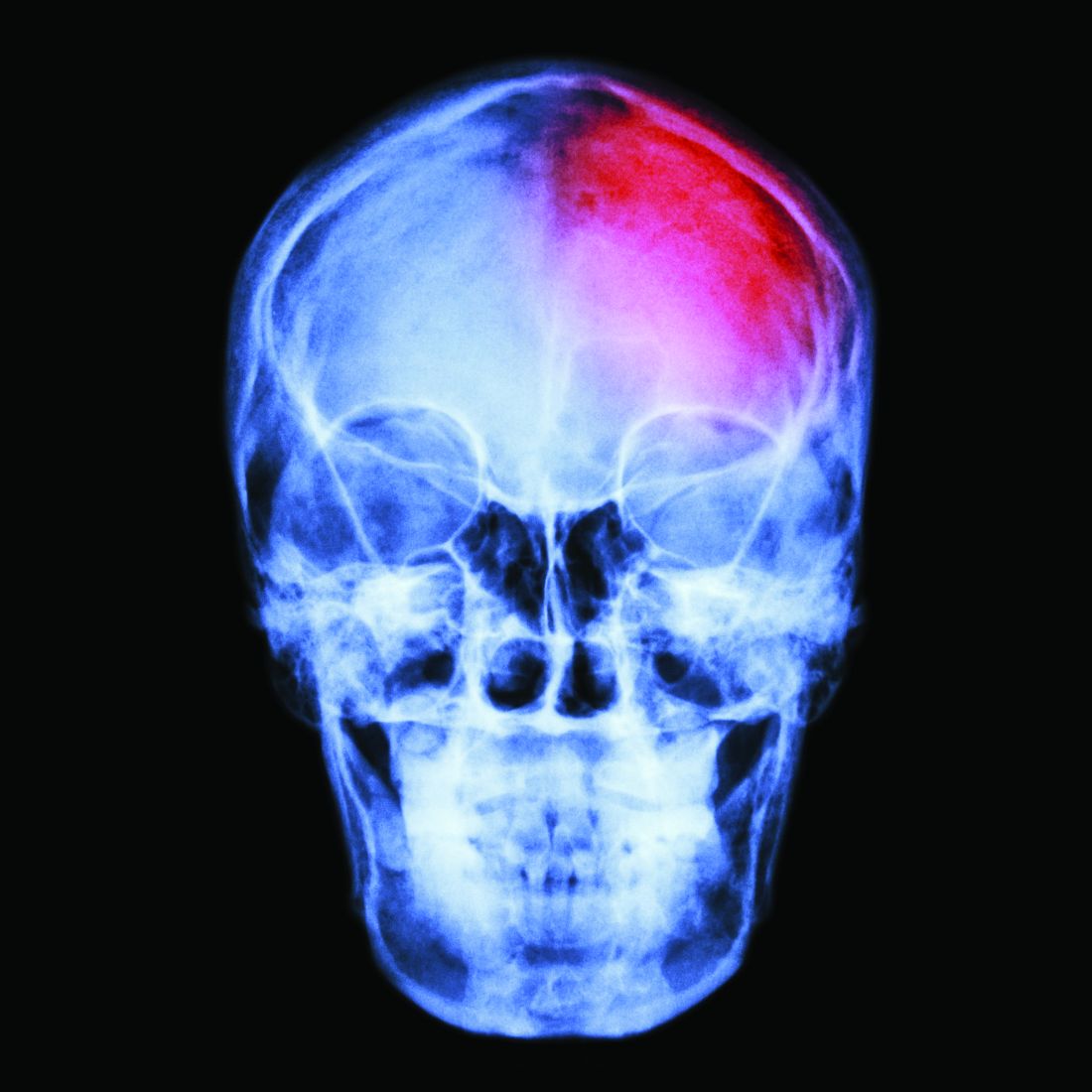
Civilian patients with mild traumatic brain injury (TBI) who are black, have psychiatric history or lower education, or whose injury was caused by assault might be at greater risk of developing posttraumatic stress disorder or major depression, a longitudinal study suggests.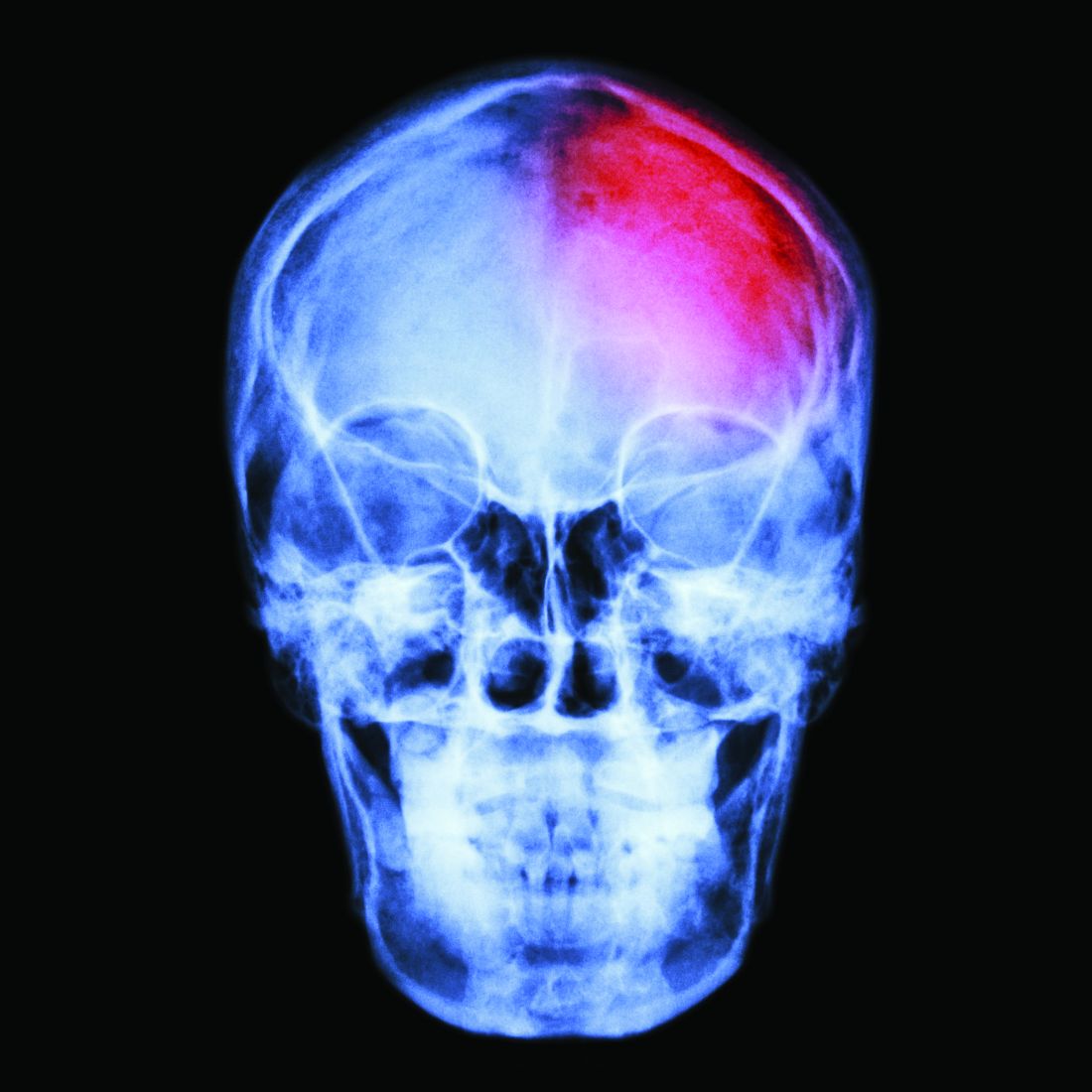
“Our findings may have implications for surveillance and treatment of mental disorders after TBI,” wrote Murray B. Stein, MD, MPH, and his associates. The study was published Jan. 30 in JAMA Psychiatry.
The researchers looked at the risk factors for and prevalence of posttraumatic stress disorder (PTSD) and major depressive disorder among 1,155 patients. The patients were enrolled at 11 level 1 trauma centers across the United States after they were evaluated for mild TBI in emergency departments as part of a prospective study called Transforming Research and Clinical Knowledge in Traumatic Brain Injury, or TRACK-TBI. The comparison group was 230 patients with nonhead orthopedic trauma injuries, wrote Dr. Stein, distinguished professor of psychiatry and family medicine and public health at the University of California, San Diego, and his associates.
They found that each additional year of education was associated with a significant 11% reduction in the risk of developing PTSD after mild TBI (P = .005). Also, black patients had a greater than fivefold higher risk of PTSD (P less than.001) than that of individuals who were not black.
Among patients with a history of mental illness and those who had experienced their injury as a result of assault or violence – as opposed to a motor vehicle accident or fall, for example – both had a greater than threefold higher risk of developing PTSD (odds ratio, 3.57 and 3.43 respectively). A prior TBI was nonsignificantly associated with an increased risk of developing PTSD.
Lower education duration, being black, or a history of mental illness also were all significantly associated with an increased risk of developing major depressive disorder after mild TBI.
However, duration of lost consciousness or posttraumatic amnesia, evidence of brain injury on CT, or hospitalization did not predict an increased risk of PTSD or major depression.
“Although MDD and PTSD are prevalent after TBI, little is known about which patients are at risk for developing them,” Dr. Stein and his associates wrote.
Noting that having a prior mental health problem was an “exceptionally strong” risk factor for PTSD and MDD after TBI, the authors said this could represent continuation or exacerbation of the prior mental health issue, or the triggering of a new episode in a person with a past history who had recovered.
“However, in either case this finding underscores the importance of clinicians being aware of the mental health history of their patients with [mild TBI], as this information is central to expectations regarding both short-term and long-term outcome,” they wrote.
Dr. Stein and his associates cited as a limitation their reliance on patient or family report. In addition, they said, the elevated risk for mental disorders among black individuals after mild TBI, which was independent of socioeconomic status or cause of injury, was not understood. “Unmeasured covariates may be part of the explanation; this is a topic needing further study,” they wrote.
The study was supported by the National Institutes of Health, the U.S. Department of Defense, Abbott Laboratories, and One Mind. Four authors declared consultancies, advisory board positions, speaking fees, and shares or stock options with the pharmaceutical and private industry. Two authors declared grants from the study sponsors.
SOURCE: Stein MB et al. JAMA Psychiatry. 2019. Jan 30. doi: 10.1001/jamapsychiatry.2018.4288.
Civilian patients with mild traumatic brain injury (TBI) who are black, have psychiatric history or lower education, or whose injury was caused by assault might be at greater risk of developing posttraumatic stress disorder or major depression, a longitudinal study suggests.
“Our findings may have implications for surveillance and treatment of mental disorders after TBI,” wrote Murray B. Stein, MD, MPH, and his associates. The study was published Jan. 30 in JAMA Psychiatry.
The researchers looked at the risk factors for and prevalence of posttraumatic stress disorder (PTSD) and major depressive disorder among 1,155 patients. The patients were enrolled at 11 level 1 trauma centers across the United States after they were evaluated for mild TBI in emergency departments as part of a prospective study called Transforming Research and Clinical Knowledge in Traumatic Brain Injury, or TRACK-TBI. The comparison group was 230 patients with nonhead orthopedic trauma injuries, wrote Dr. Stein, distinguished professor of psychiatry and family medicine and public health at the University of California, San Diego, and his associates.
They found that each additional year of education was associated with a significant 11% reduction in the risk of developing PTSD after mild TBI (P = .005). Also, black patients had a greater than fivefold higher risk of PTSD (P less than.001) than that of individuals who were not black.
Among patients with a history of mental illness and those who had experienced their injury as a result of assault or violence – as opposed to a motor vehicle accident or fall, for example – both had a greater than threefold higher risk of developing PTSD (odds ratio, 3.57 and 3.43 respectively). A prior TBI was nonsignificantly associated with an increased risk of developing PTSD.
Lower education duration, being black, or a history of mental illness also were all significantly associated with an increased risk of developing major depressive disorder after mild TBI.
However, duration of lost consciousness or posttraumatic amnesia, evidence of brain injury on CT, or hospitalization did not predict an increased risk of PTSD or major depression.
“Although MDD and PTSD are prevalent after TBI, little is known about which patients are at risk for developing them,” Dr. Stein and his associates wrote.
Noting that having a prior mental health problem was an “exceptionally strong” risk factor for PTSD and MDD after TBI, the authors said this could represent continuation or exacerbation of the prior mental health issue, or the triggering of a new episode in a person with a past history who had recovered.
“However, in either case this finding underscores the importance of clinicians being aware of the mental health history of their patients with [mild TBI], as this information is central to expectations regarding both short-term and long-term outcome,” they wrote.
Dr. Stein and his associates cited as a limitation their reliance on patient or family report. In addition, they said, the elevated risk for mental disorders among black individuals after mild TBI, which was independent of socioeconomic status or cause of injury, was not understood. “Unmeasured covariates may be part of the explanation; this is a topic needing further study,” they wrote.
The study was supported by the National Institutes of Health, the U.S. Department of Defense, Abbott Laboratories, and One Mind. Four authors declared consultancies, advisory board positions, speaking fees, and shares or stock options with the pharmaceutical and private industry. Two authors declared grants from the study sponsors.
SOURCE: Stein MB et al. JAMA Psychiatry. 2019. Jan 30. doi: 10.1001/jamapsychiatry.2018.4288.
Civilian patients with mild traumatic brain injury (TBI) who are black, have psychiatric history or lower education, or whose injury was caused by assault might be at greater risk of developing posttraumatic stress disorder or major depression, a longitudinal study suggests.
“Our findings may have implications for surveillance and treatment of mental disorders after TBI,” wrote Murray B. Stein, MD, MPH, and his associates. The study was published Jan. 30 in JAMA Psychiatry.
The researchers looked at the risk factors for and prevalence of posttraumatic stress disorder (PTSD) and major depressive disorder among 1,155 patients. The patients were enrolled at 11 level 1 trauma centers across the United States after they were evaluated for mild TBI in emergency departments as part of a prospective study called Transforming Research and Clinical Knowledge in Traumatic Brain Injury, or TRACK-TBI. The comparison group was 230 patients with nonhead orthopedic trauma injuries, wrote Dr. Stein, distinguished professor of psychiatry and family medicine and public health at the University of California, San Diego, and his associates.
They found that each additional year of education was associated with a significant 11% reduction in the risk of developing PTSD after mild TBI (P = .005). Also, black patients had a greater than fivefold higher risk of PTSD (P less than.001) than that of individuals who were not black.
Among patients with a history of mental illness and those who had experienced their injury as a result of assault or violence – as opposed to a motor vehicle accident or fall, for example – both had a greater than threefold higher risk of developing PTSD (odds ratio, 3.57 and 3.43 respectively). A prior TBI was nonsignificantly associated with an increased risk of developing PTSD.
Lower education duration, being black, or a history of mental illness also were all significantly associated with an increased risk of developing major depressive disorder after mild TBI.
However, duration of lost consciousness or posttraumatic amnesia, evidence of brain injury on CT, or hospitalization did not predict an increased risk of PTSD or major depression.
“Although MDD and PTSD are prevalent after TBI, little is known about which patients are at risk for developing them,” Dr. Stein and his associates wrote.
Noting that having a prior mental health problem was an “exceptionally strong” risk factor for PTSD and MDD after TBI, the authors said this could represent continuation or exacerbation of the prior mental health issue, or the triggering of a new episode in a person with a past history who had recovered.
“However, in either case this finding underscores the importance of clinicians being aware of the mental health history of their patients with [mild TBI], as this information is central to expectations regarding both short-term and long-term outcome,” they wrote.
Dr. Stein and his associates cited as a limitation their reliance on patient or family report. In addition, they said, the elevated risk for mental disorders among black individuals after mild TBI, which was independent of socioeconomic status or cause of injury, was not understood. “Unmeasured covariates may be part of the explanation; this is a topic needing further study,” they wrote.
The study was supported by the National Institutes of Health, the U.S. Department of Defense, Abbott Laboratories, and One Mind. Four authors declared consultancies, advisory board positions, speaking fees, and shares or stock options with the pharmaceutical and private industry. Two authors declared grants from the study sponsors.
SOURCE: Stein MB et al. JAMA Psychiatry. 2019. Jan 30. doi: 10.1001/jamapsychiatry.2018.4288.
FROM JAMA PSYCHIATRY
Key clinical point: The findings underscore “the importance of clinicians being aware of the mental health history of their patients with [mild TBI], as this information is central to expectations regarding both short-term and long-term outcome.”
Major finding: Black patients have fivefold higher risk of PTSD after brain injury.
Study details: Longitudinal cohort study of 1,155 patients with mild traumatic brain injury.
Disclosures: The study was supported by the National Institutes of Health, the U.S. Department of Defense, Abbott Laboratories, and One Mind. Four authors declared consultancies, advisory board positions, and speaking fees, shares, or stock options with the pharmaceutical and private industry. Two authors declared grants from the study sponsors.
Source: Stein MB et al. JAMA Psychiatry 2019. Jan 30. doi: 10.1001/jamapsychiatry.2018.4288.
Single-dose propranolol tied to ‘selective erasure’ of anxiety disorders
BARCELONA – A single 40-mg dose of oral propranolol, judiciously timed, constitutes an outside-the-box yet highly promising treatment for anxiety disorders, and perhaps for posttraumatic stress disorder as well, Marieke Soeter, PhD, said at the annual congress of the European College of Neuropsychopharmacology.

The concept here is that the beta-blocker, when given with a brief therapist-led reactivation of a fear memory, blocks beta-adrenergic receptors in the brain so as to interfere with the specific proteins required for reconsolidation of that memory, thereby disrupting the reconsolidation process and neutralizing subsequent expression of that memory in its toxic form. In effect, timely administration of one dose of propranolol, a drug that readily crosses the blood/brain barrier, achieves pharmacologically induced amnesia regarding the learned fear, explained Dr. Soeter, a clinical psychologist at TNO, the Netherlands Organization for Scientific Research, an independent nonprofit translational research organization.
“It looks like permanent fear erasure. You can never say that something is erased, but we have not been able to get it back,” she said. “Propranolol achieves selective erasure: It targets the emotional component, but knowledge is intact. They know what happened, but they aren’t scared anymore. The fear association is affected, but not the innate fear response to a threat stimulus, so it doesn’t alter reactions to potentially dangerous situations, which is important. If there is a bomb, they still know to run away from it.”
This single-session therapy addressing what psychologists call fear memory reconsolidation is totally outside the box relative to contemporary psychotherapy for anxiety disorders, which typically entails gradual fear extinction learning requiring multiple treatment sessions. But contemporary psychotherapy for anxiety disorders leaves much room for improvement, given that up to 60% of patients experience relapse. That’s probably because the original fear memory remains intact and resurfaces at some point despite initial treatment success, according to Dr. Soeter.
Nearly 2 decades ago, other investigators showed in animal studies that fear memories are not necessarily permanent. Rather, they are modifiable, and even erasable, during the vulnerable period that occurs when the memories are reactivated and become labile.
Later, Dr. Soeter – then at the University of Amsterdam – and her colleagues demonstrated the same phenomenon using Pavlovian fear-conditioning techniques involving pictures and electric shocks in healthy human volunteers. They showed that a dose of propranolol given before memory reactivation blocked the fear response, while nadolol, a beta-blocker that does not cross the blood/brain barrier, did not.
However, since the fear memories they could ethically induce in the psychology laboratory are far less intense than those experienced by patients with anxiety disorders, the researchers next conducted a randomized, double-blind clinical trial in 45 individuals with arachnophobia. Fifteen received 40 mg of propranolol after spending 2 minutes in proximity to a large tarantula, 15 got placebo, and another 15 received propranolol without exposure to a tarantula. One week later, all patients who received propranolol with spider exposure were able to approach and actually pet the tarantula. Pharmacologic disruption of reconsolidation and storage of their fear memory had turned avoidance behavior into approach behavior. This benefit was maintained for at least a year after the brief treatment session (Biol Psychiatry. 2015 Dec 15;78[12]:880-6).
“Interestingly, there was no direct effect of propranolol on spider beliefs. Therefore, do we need treatment that targets the cognitive level? These findings challenge one of the fundamental tenets of cognitive-behavioral therapy that emphasizes changes in cognition as central to behavioral modification,” Dr. Soeter said.
Most recently, she and a coinvestigator have been working to pin down the precise conditions under which memory reconsolidation can be targeted to extinguish fear memories. They have shown in a 30-subject study that the process is both time- and sleep-dependent. The propranolol must be given within roughly an hour before to 1 hour after therapeutic reactivation of the fear memory to be effective. And sleep is an absolute necessity: When subjects were rechallenged 12 hours after memory reactivation and administration of propranolol earlier on the same day, with no opportunity for sleep, there was no therapeutic effect: The disturbing fear memory was elicited. However, when subjects were rechallenged 12 hours after taking propranolol the previous day – that is, after a night’s sleep – the fear memory was gone (Nat Commun. 2018 Apr 3;9[1]:1316. doi: 10.1038/s41467-018-03659-1).
“Postretrieval amnesia requires sleep to happen. ,” Dr. Soeter said. It’s still unclear, however, how much sleep is required. Perhaps a nap will turn out to be sufficient, she said.
Colleagues at the University of Amsterdam are now using single-dose propranolol-based therapy in patients with a wide range of phobias.
“The effects are pretty amazing,” Dr. Soeter said. “Everything is treatable. It’s almost too good to be true, but these are our findings.”
Based upon her favorable anecdotal experience in treating a Dutch military veteran with severe combat-related PTSD of 10 years’ duration which had proved resistant to multiple conventional and unconventional interventions, a pilot study of single-dose propranolol with traumatic memory reactivation is now being planned in patients with war-related PTSD.
“After one pill and a 20-minute session, this veteran with severe chronic PTSD has no more nightmares, insomnia, or alcohol problems, and he now travels the world,” she said.
Her research met with an enthusiastic reception from other speakers at the ECNP session on PTSD. Eric Vermetten, MD, PhD, welcomed the concept that pharmacologic therapy upon reexposure to fearful cues can impede the molecular and cellular cascade required to reestablish fearful memories. This also is the basis for the extremely encouraging, albeit preliminary, clinical data on ketamine, an N-methyl-D-aspartate receptor antagonist, as well as 3,4-Methylenedioxymethamphetamine (MDMA) for therapeutic manipulation of trauma memories.
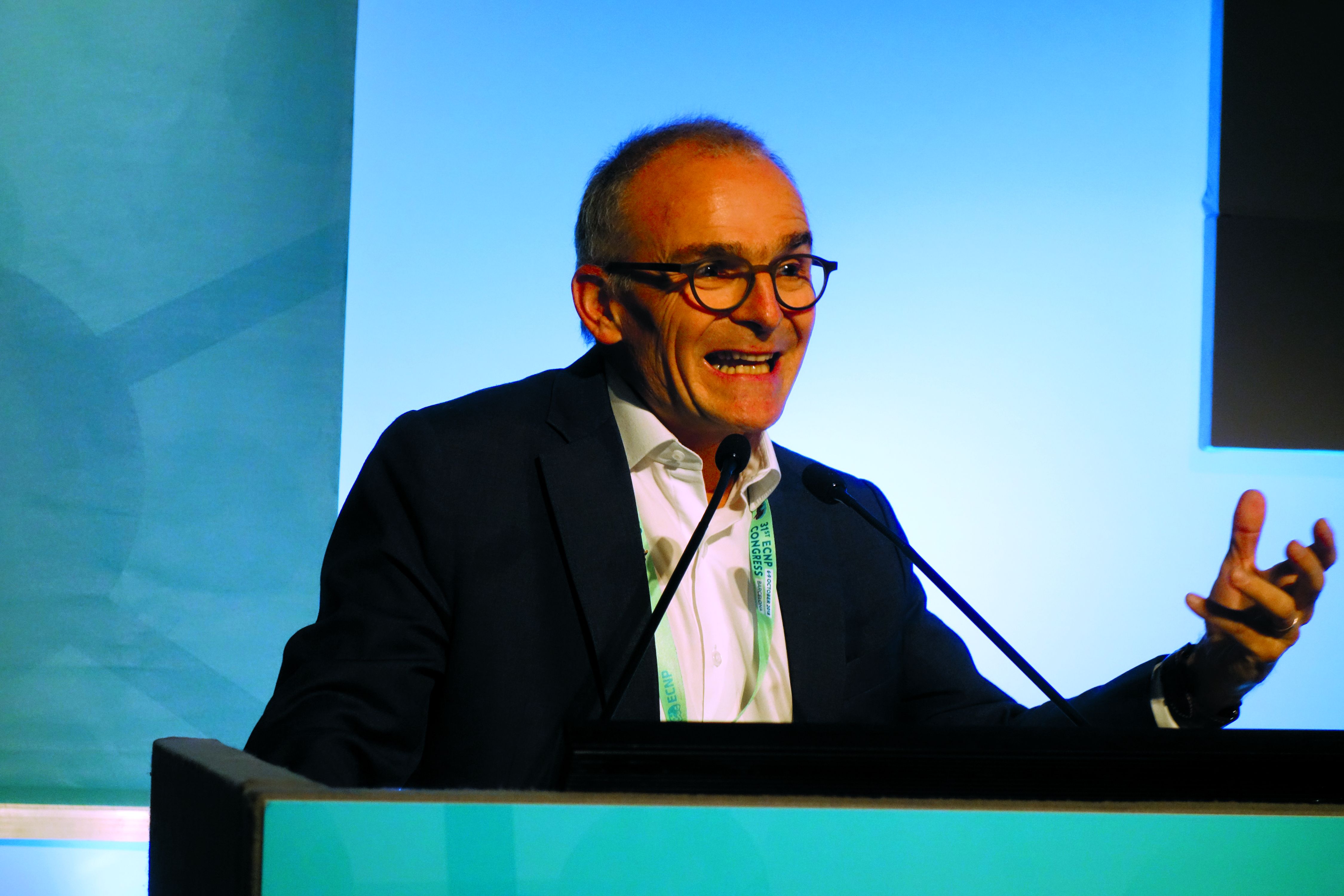
“Targeting reconsolidation of existing fear memories is worthy of looking into further,” declared Dr. Vermetten, professor of psychiatry at Leiden (the Netherlands) University and a military mental health researcher for the Dutch Ministry of Defense.
New thinking regarding pharmacotherapy for PTSD is sorely needed, he added. He endorsed a consensus statement by the PTSD Psychopharmacology Working Group that decried what was termed a crisis in pharmacotherapy of PTSD (Biol Psychiatry. 2017 Oct 1;82[7]:e51-e59. doi: 10.1016/j.biopsych.2017.03.007. Epub 2017 Mar 14).
“We only have two [Food and Drug Administration]-approved medications for PTSD – sertraline and paroxetine – and they were approved back in 2001,” Dr. Vermetten noted. “Research has stalled, and there is a void in new drug development.”
Dr. Soeter’s study of the time- and sleep-dependent nature of propranolol-induced amnesia was supported by the Netherlands Organization for Scientific Research, where she is employed.
BARCELONA – A single 40-mg dose of oral propranolol, judiciously timed, constitutes an outside-the-box yet highly promising treatment for anxiety disorders, and perhaps for posttraumatic stress disorder as well, Marieke Soeter, PhD, said at the annual congress of the European College of Neuropsychopharmacology.
The concept here is that the beta-blocker, when given with a brief therapist-led reactivation of a fear memory, blocks beta-adrenergic receptors in the brain so as to interfere with the specific proteins required for reconsolidation of that memory, thereby disrupting the reconsolidation process and neutralizing subsequent expression of that memory in its toxic form. In effect, timely administration of one dose of propranolol, a drug that readily crosses the blood/brain barrier, achieves pharmacologically induced amnesia regarding the learned fear, explained Dr. Soeter, a clinical psychologist at TNO, the Netherlands Organization for Scientific Research, an independent nonprofit translational research organization.
“It looks like permanent fear erasure. You can never say that something is erased, but we have not been able to get it back,” she said. “Propranolol achieves selective erasure: It targets the emotional component, but knowledge is intact. They know what happened, but they aren’t scared anymore. The fear association is affected, but not the innate fear response to a threat stimulus, so it doesn’t alter reactions to potentially dangerous situations, which is important. If there is a bomb, they still know to run away from it.”
This single-session therapy addressing what psychologists call fear memory reconsolidation is totally outside the box relative to contemporary psychotherapy for anxiety disorders, which typically entails gradual fear extinction learning requiring multiple treatment sessions. But contemporary psychotherapy for anxiety disorders leaves much room for improvement, given that up to 60% of patients experience relapse. That’s probably because the original fear memory remains intact and resurfaces at some point despite initial treatment success, according to Dr. Soeter.
Nearly 2 decades ago, other investigators showed in animal studies that fear memories are not necessarily permanent. Rather, they are modifiable, and even erasable, during the vulnerable period that occurs when the memories are reactivated and become labile.
Later, Dr. Soeter – then at the University of Amsterdam – and her colleagues demonstrated the same phenomenon using Pavlovian fear-conditioning techniques involving pictures and electric shocks in healthy human volunteers. They showed that a dose of propranolol given before memory reactivation blocked the fear response, while nadolol, a beta-blocker that does not cross the blood/brain barrier, did not.
However, since the fear memories they could ethically induce in the psychology laboratory are far less intense than those experienced by patients with anxiety disorders, the researchers next conducted a randomized, double-blind clinical trial in 45 individuals with arachnophobia. Fifteen received 40 mg of propranolol after spending 2 minutes in proximity to a large tarantula, 15 got placebo, and another 15 received propranolol without exposure to a tarantula. One week later, all patients who received propranolol with spider exposure were able to approach and actually pet the tarantula. Pharmacologic disruption of reconsolidation and storage of their fear memory had turned avoidance behavior into approach behavior. This benefit was maintained for at least a year after the brief treatment session (Biol Psychiatry. 2015 Dec 15;78[12]:880-6).
“Interestingly, there was no direct effect of propranolol on spider beliefs. Therefore, do we need treatment that targets the cognitive level? These findings challenge one of the fundamental tenets of cognitive-behavioral therapy that emphasizes changes in cognition as central to behavioral modification,” Dr. Soeter said.
Most recently, she and a coinvestigator have been working to pin down the precise conditions under which memory reconsolidation can be targeted to extinguish fear memories. They have shown in a 30-subject study that the process is both time- and sleep-dependent. The propranolol must be given within roughly an hour before to 1 hour after therapeutic reactivation of the fear memory to be effective. And sleep is an absolute necessity: When subjects were rechallenged 12 hours after memory reactivation and administration of propranolol earlier on the same day, with no opportunity for sleep, there was no therapeutic effect: The disturbing fear memory was elicited. However, when subjects were rechallenged 12 hours after taking propranolol the previous day – that is, after a night’s sleep – the fear memory was gone (Nat Commun. 2018 Apr 3;9[1]:1316. doi: 10.1038/s41467-018-03659-1).
“Postretrieval amnesia requires sleep to happen. ,” Dr. Soeter said. It’s still unclear, however, how much sleep is required. Perhaps a nap will turn out to be sufficient, she said.
Colleagues at the University of Amsterdam are now using single-dose propranolol-based therapy in patients with a wide range of phobias.
“The effects are pretty amazing,” Dr. Soeter said. “Everything is treatable. It’s almost too good to be true, but these are our findings.”
Based upon her favorable anecdotal experience in treating a Dutch military veteran with severe combat-related PTSD of 10 years’ duration which had proved resistant to multiple conventional and unconventional interventions, a pilot study of single-dose propranolol with traumatic memory reactivation is now being planned in patients with war-related PTSD.
“After one pill and a 20-minute session, this veteran with severe chronic PTSD has no more nightmares, insomnia, or alcohol problems, and he now travels the world,” she said.
Her research met with an enthusiastic reception from other speakers at the ECNP session on PTSD. Eric Vermetten, MD, PhD, welcomed the concept that pharmacologic therapy upon reexposure to fearful cues can impede the molecular and cellular cascade required to reestablish fearful memories. This also is the basis for the extremely encouraging, albeit preliminary, clinical data on ketamine, an N-methyl-D-aspartate receptor antagonist, as well as 3,4-Methylenedioxymethamphetamine (MDMA) for therapeutic manipulation of trauma memories.
“Targeting reconsolidation of existing fear memories is worthy of looking into further,” declared Dr. Vermetten, professor of psychiatry at Leiden (the Netherlands) University and a military mental health researcher for the Dutch Ministry of Defense.
New thinking regarding pharmacotherapy for PTSD is sorely needed, he added. He endorsed a consensus statement by the PTSD Psychopharmacology Working Group that decried what was termed a crisis in pharmacotherapy of PTSD (Biol Psychiatry. 2017 Oct 1;82[7]:e51-e59. doi: 10.1016/j.biopsych.2017.03.007. Epub 2017 Mar 14).
“We only have two [Food and Drug Administration]-approved medications for PTSD – sertraline and paroxetine – and they were approved back in 2001,” Dr. Vermetten noted. “Research has stalled, and there is a void in new drug development.”
Dr. Soeter’s study of the time- and sleep-dependent nature of propranolol-induced amnesia was supported by the Netherlands Organization for Scientific Research, where she is employed.
BARCELONA – A single 40-mg dose of oral propranolol, judiciously timed, constitutes an outside-the-box yet highly promising treatment for anxiety disorders, and perhaps for posttraumatic stress disorder as well, Marieke Soeter, PhD, said at the annual congress of the European College of Neuropsychopharmacology.
The concept here is that the beta-blocker, when given with a brief therapist-led reactivation of a fear memory, blocks beta-adrenergic receptors in the brain so as to interfere with the specific proteins required for reconsolidation of that memory, thereby disrupting the reconsolidation process and neutralizing subsequent expression of that memory in its toxic form. In effect, timely administration of one dose of propranolol, a drug that readily crosses the blood/brain barrier, achieves pharmacologically induced amnesia regarding the learned fear, explained Dr. Soeter, a clinical psychologist at TNO, the Netherlands Organization for Scientific Research, an independent nonprofit translational research organization.
“It looks like permanent fear erasure. You can never say that something is erased, but we have not been able to get it back,” she said. “Propranolol achieves selective erasure: It targets the emotional component, but knowledge is intact. They know what happened, but they aren’t scared anymore. The fear association is affected, but not the innate fear response to a threat stimulus, so it doesn’t alter reactions to potentially dangerous situations, which is important. If there is a bomb, they still know to run away from it.”
This single-session therapy addressing what psychologists call fear memory reconsolidation is totally outside the box relative to contemporary psychotherapy for anxiety disorders, which typically entails gradual fear extinction learning requiring multiple treatment sessions. But contemporary psychotherapy for anxiety disorders leaves much room for improvement, given that up to 60% of patients experience relapse. That’s probably because the original fear memory remains intact and resurfaces at some point despite initial treatment success, according to Dr. Soeter.
Nearly 2 decades ago, other investigators showed in animal studies that fear memories are not necessarily permanent. Rather, they are modifiable, and even erasable, during the vulnerable period that occurs when the memories are reactivated and become labile.
Later, Dr. Soeter – then at the University of Amsterdam – and her colleagues demonstrated the same phenomenon using Pavlovian fear-conditioning techniques involving pictures and electric shocks in healthy human volunteers. They showed that a dose of propranolol given before memory reactivation blocked the fear response, while nadolol, a beta-blocker that does not cross the blood/brain barrier, did not.
However, since the fear memories they could ethically induce in the psychology laboratory are far less intense than those experienced by patients with anxiety disorders, the researchers next conducted a randomized, double-blind clinical trial in 45 individuals with arachnophobia. Fifteen received 40 mg of propranolol after spending 2 minutes in proximity to a large tarantula, 15 got placebo, and another 15 received propranolol without exposure to a tarantula. One week later, all patients who received propranolol with spider exposure were able to approach and actually pet the tarantula. Pharmacologic disruption of reconsolidation and storage of their fear memory had turned avoidance behavior into approach behavior. This benefit was maintained for at least a year after the brief treatment session (Biol Psychiatry. 2015 Dec 15;78[12]:880-6).
“Interestingly, there was no direct effect of propranolol on spider beliefs. Therefore, do we need treatment that targets the cognitive level? These findings challenge one of the fundamental tenets of cognitive-behavioral therapy that emphasizes changes in cognition as central to behavioral modification,” Dr. Soeter said.
Most recently, she and a coinvestigator have been working to pin down the precise conditions under which memory reconsolidation can be targeted to extinguish fear memories. They have shown in a 30-subject study that the process is both time- and sleep-dependent. The propranolol must be given within roughly an hour before to 1 hour after therapeutic reactivation of the fear memory to be effective. And sleep is an absolute necessity: When subjects were rechallenged 12 hours after memory reactivation and administration of propranolol earlier on the same day, with no opportunity for sleep, there was no therapeutic effect: The disturbing fear memory was elicited. However, when subjects were rechallenged 12 hours after taking propranolol the previous day – that is, after a night’s sleep – the fear memory was gone (Nat Commun. 2018 Apr 3;9[1]:1316. doi: 10.1038/s41467-018-03659-1).
“Postretrieval amnesia requires sleep to happen. ,” Dr. Soeter said. It’s still unclear, however, how much sleep is required. Perhaps a nap will turn out to be sufficient, she said.
Colleagues at the University of Amsterdam are now using single-dose propranolol-based therapy in patients with a wide range of phobias.
“The effects are pretty amazing,” Dr. Soeter said. “Everything is treatable. It’s almost too good to be true, but these are our findings.”
Based upon her favorable anecdotal experience in treating a Dutch military veteran with severe combat-related PTSD of 10 years’ duration which had proved resistant to multiple conventional and unconventional interventions, a pilot study of single-dose propranolol with traumatic memory reactivation is now being planned in patients with war-related PTSD.
“After one pill and a 20-minute session, this veteran with severe chronic PTSD has no more nightmares, insomnia, or alcohol problems, and he now travels the world,” she said.
Her research met with an enthusiastic reception from other speakers at the ECNP session on PTSD. Eric Vermetten, MD, PhD, welcomed the concept that pharmacologic therapy upon reexposure to fearful cues can impede the molecular and cellular cascade required to reestablish fearful memories. This also is the basis for the extremely encouraging, albeit preliminary, clinical data on ketamine, an N-methyl-D-aspartate receptor antagonist, as well as 3,4-Methylenedioxymethamphetamine (MDMA) for therapeutic manipulation of trauma memories.
“Targeting reconsolidation of existing fear memories is worthy of looking into further,” declared Dr. Vermetten, professor of psychiatry at Leiden (the Netherlands) University and a military mental health researcher for the Dutch Ministry of Defense.
New thinking regarding pharmacotherapy for PTSD is sorely needed, he added. He endorsed a consensus statement by the PTSD Psychopharmacology Working Group that decried what was termed a crisis in pharmacotherapy of PTSD (Biol Psychiatry. 2017 Oct 1;82[7]:e51-e59. doi: 10.1016/j.biopsych.2017.03.007. Epub 2017 Mar 14).
“We only have two [Food and Drug Administration]-approved medications for PTSD – sertraline and paroxetine – and they were approved back in 2001,” Dr. Vermetten noted. “Research has stalled, and there is a void in new drug development.”
Dr. Soeter’s study of the time- and sleep-dependent nature of propranolol-induced amnesia was supported by the Netherlands Organization for Scientific Research, where she is employed.
REPORTING FROM THE ECNP CONGRESS
Key clinical point: A single 40-mg dose of oral propranolol, judiciously timed, is a highly promising novel treatment for anxiety disorders.
Major finding: The beta-blocker must be given within an hour before to an hour after therapist-facilitated reactivation of the fear memory.
Study details: This study included 30 healthy volunteers who underwent a cued Pavlovian fear-conditioning program.
Disclosures: Dr. Soeter’s study of the time- and sleep-dependent nature of propranolol-induced amnesia was supported by the Netherlands Organization for Scientific Research, where she is employed.
‘Walk and talk’ 3MDR psychotherapy for PTSD
BARCELONA – The therapeutic setting for individual psychotherapy has shifted over the years from the analytic couch, with the therapist discretely tucked out of sight, to facing chairs, a similarly sedentary format. The next evolutionary development might be to plop a patient with posttraumatic stress disorder on an exercise treadmill and don a virtual reality helmet to engage in an interactive motion-assisted form of psychotherapy in which the therapist stands alongside the walking patient while providing guidance on processing traumatic memories, Eric Vermetten, MD, PhD, said at the annual congress of the European College of Neuropsychopharmacology.
He and his colleagues have developed an innovative approach to delivering trauma-focused psychotherapy. They call it Multimodular Motion-Assisted Memory Desensitization and Reconsolidation (3MDR), or more informally, “walk and talk therapy,” explained Dr. Vermetten, professor of psychiatry at Leiden (the Netherlands) University and a military mental health researcher for the Dutch Ministry of Defense.
3MDR is a combination of personalized virtual reality using a headset, multisensory input using self-selected trauma-related pictures, and a dual-attention task borrowed from eye movement desensitization and reprocessing therapy, with treadmill walking throughout the treatment session.
3MDR is designed to boost this process of memory retrieval and reconsolidation by creating a more totally immersive patient experience intended to enhance treatment engagement and overcome behavioral avoidance. Through virtual reality, the PTSD patient literally walks toward his personal fear-related images.
Dr. Vermetten and his coinvestigators came up with 3MDR as a treatment designed for military veterans with chronic, combat-related, treatment-resistant PTSD. The impetus was the evident need for new and better forms of psychotherapy for such patients. Even though an array of evidence-based psychotherapies are available as guideline-recommended first-line treatments for PTSD, individuals with combat-related PTSD have a notoriously low response rate to these interventions, presumably because of the intensity and repetitive nature of their traumatic experiences. Indeed, up to two-thirds of veterans with PTSD experience substantial residual symptoms post treatment such that they still meet diagnostic criteria for the disorder.
3MDR is an amped up form of exposure-based therapy in which patients walk through a personalized virtual reality installation toward self-chosen trauma-related pictures of their deployment. The investigators developed this intensely immersive type of psychotherapy because they believe avoidance and lack of emotional engagement figure prominently in the low success rate of established forms of psychotherapy in combat-related PTSD. The treadmill walking aspect is considered key because of the large body of research showing that walking entails cognitive-motor interactions that facilitate problem solving, the psychiatrist explained.
The investigators recently published a detailed description of the therapeutic rationale for 3MDR and the nuts and bolts of the novel therapy (Front Psychiatry. 2018 May 4;9:176. doi: 10.3389/fpsyt.2018.00176). Early anecdotal experience has been positive. However, as cochair of the ECNP Traumatic Stress Network, Dr. Vermetten is acutely aware of the need to demonstrate efficacy in rigorous randomized controlled trials.
“This is a way psychotherapy can be shaped in the future. We’re collaborating with various centers across the globe now to see whether this is effective for treatment-resistant PTSD patients,” Dr. Vermetten said.
If those studies prove positive, it will be worthwhile to determine whether 3MDR also has a role as a first-line treatment for earlier-stage PTSD and for forms of the disorder unrelated to military combat, he added.
Funding for the project has been provided by the Dutch Ministry of Defense.
BARCELONA – The therapeutic setting for individual psychotherapy has shifted over the years from the analytic couch, with the therapist discretely tucked out of sight, to facing chairs, a similarly sedentary format. The next evolutionary development might be to plop a patient with posttraumatic stress disorder on an exercise treadmill and don a virtual reality helmet to engage in an interactive motion-assisted form of psychotherapy in which the therapist stands alongside the walking patient while providing guidance on processing traumatic memories, Eric Vermetten, MD, PhD, said at the annual congress of the European College of Neuropsychopharmacology.
He and his colleagues have developed an innovative approach to delivering trauma-focused psychotherapy. They call it Multimodular Motion-Assisted Memory Desensitization and Reconsolidation (3MDR), or more informally, “walk and talk therapy,” explained Dr. Vermetten, professor of psychiatry at Leiden (the Netherlands) University and a military mental health researcher for the Dutch Ministry of Defense.
3MDR is a combination of personalized virtual reality using a headset, multisensory input using self-selected trauma-related pictures, and a dual-attention task borrowed from eye movement desensitization and reprocessing therapy, with treadmill walking throughout the treatment session.
3MDR is designed to boost this process of memory retrieval and reconsolidation by creating a more totally immersive patient experience intended to enhance treatment engagement and overcome behavioral avoidance. Through virtual reality, the PTSD patient literally walks toward his personal fear-related images.
Dr. Vermetten and his coinvestigators came up with 3MDR as a treatment designed for military veterans with chronic, combat-related, treatment-resistant PTSD. The impetus was the evident need for new and better forms of psychotherapy for such patients. Even though an array of evidence-based psychotherapies are available as guideline-recommended first-line treatments for PTSD, individuals with combat-related PTSD have a notoriously low response rate to these interventions, presumably because of the intensity and repetitive nature of their traumatic experiences. Indeed, up to two-thirds of veterans with PTSD experience substantial residual symptoms post treatment such that they still meet diagnostic criteria for the disorder.
3MDR is an amped up form of exposure-based therapy in which patients walk through a personalized virtual reality installation toward self-chosen trauma-related pictures of their deployment. The investigators developed this intensely immersive type of psychotherapy because they believe avoidance and lack of emotional engagement figure prominently in the low success rate of established forms of psychotherapy in combat-related PTSD. The treadmill walking aspect is considered key because of the large body of research showing that walking entails cognitive-motor interactions that facilitate problem solving, the psychiatrist explained.
The investigators recently published a detailed description of the therapeutic rationale for 3MDR and the nuts and bolts of the novel therapy (Front Psychiatry. 2018 May 4;9:176. doi: 10.3389/fpsyt.2018.00176). Early anecdotal experience has been positive. However, as cochair of the ECNP Traumatic Stress Network, Dr. Vermetten is acutely aware of the need to demonstrate efficacy in rigorous randomized controlled trials.
“This is a way psychotherapy can be shaped in the future. We’re collaborating with various centers across the globe now to see whether this is effective for treatment-resistant PTSD patients,” Dr. Vermetten said.
If those studies prove positive, it will be worthwhile to determine whether 3MDR also has a role as a first-line treatment for earlier-stage PTSD and for forms of the disorder unrelated to military combat, he added.
Funding for the project has been provided by the Dutch Ministry of Defense.
BARCELONA – The therapeutic setting for individual psychotherapy has shifted over the years from the analytic couch, with the therapist discretely tucked out of sight, to facing chairs, a similarly sedentary format. The next evolutionary development might be to plop a patient with posttraumatic stress disorder on an exercise treadmill and don a virtual reality helmet to engage in an interactive motion-assisted form of psychotherapy in which the therapist stands alongside the walking patient while providing guidance on processing traumatic memories, Eric Vermetten, MD, PhD, said at the annual congress of the European College of Neuropsychopharmacology.
He and his colleagues have developed an innovative approach to delivering trauma-focused psychotherapy. They call it Multimodular Motion-Assisted Memory Desensitization and Reconsolidation (3MDR), or more informally, “walk and talk therapy,” explained Dr. Vermetten, professor of psychiatry at Leiden (the Netherlands) University and a military mental health researcher for the Dutch Ministry of Defense.
3MDR is a combination of personalized virtual reality using a headset, multisensory input using self-selected trauma-related pictures, and a dual-attention task borrowed from eye movement desensitization and reprocessing therapy, with treadmill walking throughout the treatment session.
3MDR is designed to boost this process of memory retrieval and reconsolidation by creating a more totally immersive patient experience intended to enhance treatment engagement and overcome behavioral avoidance. Through virtual reality, the PTSD patient literally walks toward his personal fear-related images.
Dr. Vermetten and his coinvestigators came up with 3MDR as a treatment designed for military veterans with chronic, combat-related, treatment-resistant PTSD. The impetus was the evident need for new and better forms of psychotherapy for such patients. Even though an array of evidence-based psychotherapies are available as guideline-recommended first-line treatments for PTSD, individuals with combat-related PTSD have a notoriously low response rate to these interventions, presumably because of the intensity and repetitive nature of their traumatic experiences. Indeed, up to two-thirds of veterans with PTSD experience substantial residual symptoms post treatment such that they still meet diagnostic criteria for the disorder.
3MDR is an amped up form of exposure-based therapy in which patients walk through a personalized virtual reality installation toward self-chosen trauma-related pictures of their deployment. The investigators developed this intensely immersive type of psychotherapy because they believe avoidance and lack of emotional engagement figure prominently in the low success rate of established forms of psychotherapy in combat-related PTSD. The treadmill walking aspect is considered key because of the large body of research showing that walking entails cognitive-motor interactions that facilitate problem solving, the psychiatrist explained.
The investigators recently published a detailed description of the therapeutic rationale for 3MDR and the nuts and bolts of the novel therapy (Front Psychiatry. 2018 May 4;9:176. doi: 10.3389/fpsyt.2018.00176). Early anecdotal experience has been positive. However, as cochair of the ECNP Traumatic Stress Network, Dr. Vermetten is acutely aware of the need to demonstrate efficacy in rigorous randomized controlled trials.
“This is a way psychotherapy can be shaped in the future. We’re collaborating with various centers across the globe now to see whether this is effective for treatment-resistant PTSD patients,” Dr. Vermetten said.
If those studies prove positive, it will be worthwhile to determine whether 3MDR also has a role as a first-line treatment for earlier-stage PTSD and for forms of the disorder unrelated to military combat, he added.
Funding for the project has been provided by the Dutch Ministry of Defense.
REPORTING FROM THE ECNP CONGRESS
Best of Psychopharmacology: Stimulants, ketamine, benzodiazapines
In this episode we go back to the summer for two master classes on ketamine and stimulants, respectively and we drop in on two conversations between Lorenzo Norris, MD on anxiety and comorbid ADHD as well as a conversation on benzodiazapines. The Psychcast will be back with new content in 2019.
Amazon
Apple
Google
Spotify
In this episode we go back to the summer for two master classes on ketamine and stimulants, respectively and we drop in on two conversations between Lorenzo Norris, MD on anxiety and comorbid ADHD as well as a conversation on benzodiazapines. The Psychcast will be back with new content in 2019.
Amazon
Apple
Google
Spotify
In this episode we go back to the summer for two master classes on ketamine and stimulants, respectively and we drop in on two conversations between Lorenzo Norris, MD on anxiety and comorbid ADHD as well as a conversation on benzodiazapines. The Psychcast will be back with new content in 2019.
Amazon
Apple
Google
Spotify

Overemphasizing Communities in the National Strategy for Preventing Veteran Suicide Could Undercut VA Successes
In June 2018, the US Department of Veterans Affairs (VA) issued its National Strategy for Preventing Veteran Suicide, 2018-2028. Its 14 goals—many highly innovative—are “to provide a framework for identifying priorities, organizing efforts, and contributing to a national focus on Veteran suicide prevention.”1
The National Strategy recognizes that suicide prevention requires a 3-pronged approach that includes universal, selective, and targeted strategies because “suicide cannot be prevented by any single strategy.”1 Even so, the National Strategy does not heed this core tenet. It focuses exclusively on universal, non-VA community-based priorities and efforts. That focus causes a problem because it neglects the other strategies. It also is precarious because in the current era of VA zero sum budgets, increases in 1 domain come from decreases in another. Thus, sole prioritizing of universal community components could divert funds from extant effective VA suicide prevention programs.
Community-based engagement is unquestionably necessary to prevent suicide among all veterans. Even so, a 10-year prospective strategy should build up, not compromise, VA initiatives. The plan would be improved by explicitly bolstering VA programs that are making a vital difference.
Undercutting VA Suicide Prevention
As my recent review in Federal Practitioner documented, VA’s multiple levels of evidenced-based suicide prevention practices are pre-eminent in the field.2 The VA’s innovative use of predictive analytics to identify and intervene with at-risk individuals is more advanced than anything available in the community. For older veterans who constitute the majority of veterans and the majority of veteran suicides, the VA has more comprehensive and integrated mental health care services than those found in community-based care systems. The embedding of suicide prevention coordinators at every VA facility is unparalleled.
But one would never know about such quality from the National Strategy document: The VA is barely mentioned. The report never advocates for strengthening—or even maintaining—VA’s resources, programs, and efforts. It never recommends that eligible veterans be connected to VA mental health services.
The strategy observes that employment and housing are keys that protect against suicide risk. It does not, however, call for boosting and resourcing VA’s integrated approach that wraps in social services better than does any other program. Similarly, it acknowledges the role of family involvement in mitigating risk but does not propose expanding VA treatments to improve relationship well-being, leaving these services to the private sector.
The National Strategy expands on the recent suicide prevention executive order (EO) for supporting veterans during their transition from military to civilian life. Yet the EO has no funding allocated to this critical initiative. The National Strategy has the same shortcoming. In failing to advocate for more funds to pay for vastly enhanced outreach and intervention, the plan could drain the VA of existing resources needed to maintain its high-quality, suicide prevention services.
First Step: Define the Problem
The National Strategy wisely specifies that the initial step in any suicide prevention effort should be to “define the problem. This involves collecting data to determine the ‘who,’ ‘what,’ ‘where,’ ‘when,’ and ‘how’ of suicide deaths.” Then, “identify risk and protective factors.”
Yet the report doesn’t follow its own advice. Although little is known about the 14 of 20 veterans who die by suicide daily who are not recent users of VA health services, the National Strategy foregoes the necessity of first ascertaining crucial factors, including whether those veterans were (a) eligible for VA care; (b) receiving any mental health or substance use treatment; and (c) going through life crises, etc. What’s needed before reallocating funds to community-based programs is for Congress to finance a post-suicide, case-by-case study of these veteran decedents who did not use VA.
Proceeding in this manner has 2 benefits. First, it would allow initiatives to be targeted. Second, it could preserve funds for successful VA programs that otherwise might be cut to pay for private sector programs.
A Positive Starting Point
There are many positive components of the National Strategy for Preventing Veteran Suicide that will make a difference. That said, they fall short of their potential. The following are suggestions that could strengthen the VA’s plan.
First, given the overwhelming use of firearms by veterans who die by suicide, the National Strategy acknowledges that an effective prevention policy must attend to this factor. It prudently calls for expansion of firearm safety/suicide prevention collaboration with firearm owners, firearm dealers, shooting clubs, and gun/hunting organizations. This will help ensure that lethal means safety counseling is culturally relevant, comes from a trusted source, and has no antifirearm bias.
Nothing would be more useful in diminishing suicide than correcting the false belief among many veterans that “the VA wants to take away our guns.” If that misperception were replaced with an accurate message, not only would more at-risk veterans seek out VA mental health care, more veterans/families/friends would adopt a new cultural norm akin to buddies talk to vets in crisis about safely storing guns. Establishing a workgroup with gun constituency collaborators could spearhead such a shift.
Second, although, the National Strategy emphasizes the benefits of using peer supports, peers currently express qualms that they have too little expertise intervening with this vulnerable population. Peers could be given extensive training and continued supervision in suicide prevention techniques.
Third, the National Strategy calls for expanded use of big data predictive analytics, whose initial implementation has shown great promise. However, it fails to mention that this approach depends on linked electronic health records and therefore best succeeds for at-risk veterans within VA but not in insulated community care.
Fourth, the National Strategy recognizes that reshaping media and entertainment portrayals could help prevent veteran suicide. Yet it ignores the importance of correcting the sullied narrative about the VA. The disproportionate negative image contributes to veterans’ reticence to seek VA health care. One simple solution would be to require that service members readying to transition to civilian life be informed about the superior nature of VA mental health care. Another is to provide the media with positive VA stories more routinely.
Fifth, the National Strategy suggests that enhanced community care guidelines be developed, but it never recommends that community partners should equal VA’s standards. Those providers should be mandated to conduct the same root cause analyses and comprehensive documentation of suicide risk assessments that VA does.
Conclusion
With zero sum department budgets, the National Strategy’s exclusive priority on public health, community-based initiatives could undercut VA successes. An amended plan that explicitly supports and further strengthens successful VA suicide prevention programs is warranted.
1. US Department of Veterans Affairs. National Strategy for Preventing Veteran Suicide, 2018-2028. https://www.mentalhealth.va.gov/suicide_prevention/docs/Office-of-Mental-Health-and-Suicide-Prevention-National-Strategy-for-Preventing-Veterans-Suicide.pdf Published June 2018. Accessed November 6, 2018.
2. Lemle RB. Choice program expansion jeopardizes high-quality VHA mental health Services. Fed Pract. 2018;35(3):18-24.
In June 2018, the US Department of Veterans Affairs (VA) issued its National Strategy for Preventing Veteran Suicide, 2018-2028. Its 14 goals—many highly innovative—are “to provide a framework for identifying priorities, organizing efforts, and contributing to a national focus on Veteran suicide prevention.”1
The National Strategy recognizes that suicide prevention requires a 3-pronged approach that includes universal, selective, and targeted strategies because “suicide cannot be prevented by any single strategy.”1 Even so, the National Strategy does not heed this core tenet. It focuses exclusively on universal, non-VA community-based priorities and efforts. That focus causes a problem because it neglects the other strategies. It also is precarious because in the current era of VA zero sum budgets, increases in 1 domain come from decreases in another. Thus, sole prioritizing of universal community components could divert funds from extant effective VA suicide prevention programs.
Community-based engagement is unquestionably necessary to prevent suicide among all veterans. Even so, a 10-year prospective strategy should build up, not compromise, VA initiatives. The plan would be improved by explicitly bolstering VA programs that are making a vital difference.
Undercutting VA Suicide Prevention
As my recent review in Federal Practitioner documented, VA’s multiple levels of evidenced-based suicide prevention practices are pre-eminent in the field.2 The VA’s innovative use of predictive analytics to identify and intervene with at-risk individuals is more advanced than anything available in the community. For older veterans who constitute the majority of veterans and the majority of veteran suicides, the VA has more comprehensive and integrated mental health care services than those found in community-based care systems. The embedding of suicide prevention coordinators at every VA facility is unparalleled.
But one would never know about such quality from the National Strategy document: The VA is barely mentioned. The report never advocates for strengthening—or even maintaining—VA’s resources, programs, and efforts. It never recommends that eligible veterans be connected to VA mental health services.
The strategy observes that employment and housing are keys that protect against suicide risk. It does not, however, call for boosting and resourcing VA’s integrated approach that wraps in social services better than does any other program. Similarly, it acknowledges the role of family involvement in mitigating risk but does not propose expanding VA treatments to improve relationship well-being, leaving these services to the private sector.
The National Strategy expands on the recent suicide prevention executive order (EO) for supporting veterans during their transition from military to civilian life. Yet the EO has no funding allocated to this critical initiative. The National Strategy has the same shortcoming. In failing to advocate for more funds to pay for vastly enhanced outreach and intervention, the plan could drain the VA of existing resources needed to maintain its high-quality, suicide prevention services.
First Step: Define the Problem
The National Strategy wisely specifies that the initial step in any suicide prevention effort should be to “define the problem. This involves collecting data to determine the ‘who,’ ‘what,’ ‘where,’ ‘when,’ and ‘how’ of suicide deaths.” Then, “identify risk and protective factors.”
Yet the report doesn’t follow its own advice. Although little is known about the 14 of 20 veterans who die by suicide daily who are not recent users of VA health services, the National Strategy foregoes the necessity of first ascertaining crucial factors, including whether those veterans were (a) eligible for VA care; (b) receiving any mental health or substance use treatment; and (c) going through life crises, etc. What’s needed before reallocating funds to community-based programs is for Congress to finance a post-suicide, case-by-case study of these veteran decedents who did not use VA.
Proceeding in this manner has 2 benefits. First, it would allow initiatives to be targeted. Second, it could preserve funds for successful VA programs that otherwise might be cut to pay for private sector programs.
A Positive Starting Point
There are many positive components of the National Strategy for Preventing Veteran Suicide that will make a difference. That said, they fall short of their potential. The following are suggestions that could strengthen the VA’s plan.
First, given the overwhelming use of firearms by veterans who die by suicide, the National Strategy acknowledges that an effective prevention policy must attend to this factor. It prudently calls for expansion of firearm safety/suicide prevention collaboration with firearm owners, firearm dealers, shooting clubs, and gun/hunting organizations. This will help ensure that lethal means safety counseling is culturally relevant, comes from a trusted source, and has no antifirearm bias.
Nothing would be more useful in diminishing suicide than correcting the false belief among many veterans that “the VA wants to take away our guns.” If that misperception were replaced with an accurate message, not only would more at-risk veterans seek out VA mental health care, more veterans/families/friends would adopt a new cultural norm akin to buddies talk to vets in crisis about safely storing guns. Establishing a workgroup with gun constituency collaborators could spearhead such a shift.
Second, although, the National Strategy emphasizes the benefits of using peer supports, peers currently express qualms that they have too little expertise intervening with this vulnerable population. Peers could be given extensive training and continued supervision in suicide prevention techniques.
Third, the National Strategy calls for expanded use of big data predictive analytics, whose initial implementation has shown great promise. However, it fails to mention that this approach depends on linked electronic health records and therefore best succeeds for at-risk veterans within VA but not in insulated community care.
Fourth, the National Strategy recognizes that reshaping media and entertainment portrayals could help prevent veteran suicide. Yet it ignores the importance of correcting the sullied narrative about the VA. The disproportionate negative image contributes to veterans’ reticence to seek VA health care. One simple solution would be to require that service members readying to transition to civilian life be informed about the superior nature of VA mental health care. Another is to provide the media with positive VA stories more routinely.
Fifth, the National Strategy suggests that enhanced community care guidelines be developed, but it never recommends that community partners should equal VA’s standards. Those providers should be mandated to conduct the same root cause analyses and comprehensive documentation of suicide risk assessments that VA does.
Conclusion
With zero sum department budgets, the National Strategy’s exclusive priority on public health, community-based initiatives could undercut VA successes. An amended plan that explicitly supports and further strengthens successful VA suicide prevention programs is warranted.
In June 2018, the US Department of Veterans Affairs (VA) issued its National Strategy for Preventing Veteran Suicide, 2018-2028. Its 14 goals—many highly innovative—are “to provide a framework for identifying priorities, organizing efforts, and contributing to a national focus on Veteran suicide prevention.”1
The National Strategy recognizes that suicide prevention requires a 3-pronged approach that includes universal, selective, and targeted strategies because “suicide cannot be prevented by any single strategy.”1 Even so, the National Strategy does not heed this core tenet. It focuses exclusively on universal, non-VA community-based priorities and efforts. That focus causes a problem because it neglects the other strategies. It also is precarious because in the current era of VA zero sum budgets, increases in 1 domain come from decreases in another. Thus, sole prioritizing of universal community components could divert funds from extant effective VA suicide prevention programs.
Community-based engagement is unquestionably necessary to prevent suicide among all veterans. Even so, a 10-year prospective strategy should build up, not compromise, VA initiatives. The plan would be improved by explicitly bolstering VA programs that are making a vital difference.
Undercutting VA Suicide Prevention
As my recent review in Federal Practitioner documented, VA’s multiple levels of evidenced-based suicide prevention practices are pre-eminent in the field.2 The VA’s innovative use of predictive analytics to identify and intervene with at-risk individuals is more advanced than anything available in the community. For older veterans who constitute the majority of veterans and the majority of veteran suicides, the VA has more comprehensive and integrated mental health care services than those found in community-based care systems. The embedding of suicide prevention coordinators at every VA facility is unparalleled.
But one would never know about such quality from the National Strategy document: The VA is barely mentioned. The report never advocates for strengthening—or even maintaining—VA’s resources, programs, and efforts. It never recommends that eligible veterans be connected to VA mental health services.
The strategy observes that employment and housing are keys that protect against suicide risk. It does not, however, call for boosting and resourcing VA’s integrated approach that wraps in social services better than does any other program. Similarly, it acknowledges the role of family involvement in mitigating risk but does not propose expanding VA treatments to improve relationship well-being, leaving these services to the private sector.
The National Strategy expands on the recent suicide prevention executive order (EO) for supporting veterans during their transition from military to civilian life. Yet the EO has no funding allocated to this critical initiative. The National Strategy has the same shortcoming. In failing to advocate for more funds to pay for vastly enhanced outreach and intervention, the plan could drain the VA of existing resources needed to maintain its high-quality, suicide prevention services.
First Step: Define the Problem
The National Strategy wisely specifies that the initial step in any suicide prevention effort should be to “define the problem. This involves collecting data to determine the ‘who,’ ‘what,’ ‘where,’ ‘when,’ and ‘how’ of suicide deaths.” Then, “identify risk and protective factors.”
Yet the report doesn’t follow its own advice. Although little is known about the 14 of 20 veterans who die by suicide daily who are not recent users of VA health services, the National Strategy foregoes the necessity of first ascertaining crucial factors, including whether those veterans were (a) eligible for VA care; (b) receiving any mental health or substance use treatment; and (c) going through life crises, etc. What’s needed before reallocating funds to community-based programs is for Congress to finance a post-suicide, case-by-case study of these veteran decedents who did not use VA.
Proceeding in this manner has 2 benefits. First, it would allow initiatives to be targeted. Second, it could preserve funds for successful VA programs that otherwise might be cut to pay for private sector programs.
A Positive Starting Point
There are many positive components of the National Strategy for Preventing Veteran Suicide that will make a difference. That said, they fall short of their potential. The following are suggestions that could strengthen the VA’s plan.
First, given the overwhelming use of firearms by veterans who die by suicide, the National Strategy acknowledges that an effective prevention policy must attend to this factor. It prudently calls for expansion of firearm safety/suicide prevention collaboration with firearm owners, firearm dealers, shooting clubs, and gun/hunting organizations. This will help ensure that lethal means safety counseling is culturally relevant, comes from a trusted source, and has no antifirearm bias.
Nothing would be more useful in diminishing suicide than correcting the false belief among many veterans that “the VA wants to take away our guns.” If that misperception were replaced with an accurate message, not only would more at-risk veterans seek out VA mental health care, more veterans/families/friends would adopt a new cultural norm akin to buddies talk to vets in crisis about safely storing guns. Establishing a workgroup with gun constituency collaborators could spearhead such a shift.
Second, although, the National Strategy emphasizes the benefits of using peer supports, peers currently express qualms that they have too little expertise intervening with this vulnerable population. Peers could be given extensive training and continued supervision in suicide prevention techniques.
Third, the National Strategy calls for expanded use of big data predictive analytics, whose initial implementation has shown great promise. However, it fails to mention that this approach depends on linked electronic health records and therefore best succeeds for at-risk veterans within VA but not in insulated community care.
Fourth, the National Strategy recognizes that reshaping media and entertainment portrayals could help prevent veteran suicide. Yet it ignores the importance of correcting the sullied narrative about the VA. The disproportionate negative image contributes to veterans’ reticence to seek VA health care. One simple solution would be to require that service members readying to transition to civilian life be informed about the superior nature of VA mental health care. Another is to provide the media with positive VA stories more routinely.
Fifth, the National Strategy suggests that enhanced community care guidelines be developed, but it never recommends that community partners should equal VA’s standards. Those providers should be mandated to conduct the same root cause analyses and comprehensive documentation of suicide risk assessments that VA does.
Conclusion
With zero sum department budgets, the National Strategy’s exclusive priority on public health, community-based initiatives could undercut VA successes. An amended plan that explicitly supports and further strengthens successful VA suicide prevention programs is warranted.
1. US Department of Veterans Affairs. National Strategy for Preventing Veteran Suicide, 2018-2028. https://www.mentalhealth.va.gov/suicide_prevention/docs/Office-of-Mental-Health-and-Suicide-Prevention-National-Strategy-for-Preventing-Veterans-Suicide.pdf Published June 2018. Accessed November 6, 2018.
2. Lemle RB. Choice program expansion jeopardizes high-quality VHA mental health Services. Fed Pract. 2018;35(3):18-24.
1. US Department of Veterans Affairs. National Strategy for Preventing Veteran Suicide, 2018-2028. https://www.mentalhealth.va.gov/suicide_prevention/docs/Office-of-Mental-Health-and-Suicide-Prevention-National-Strategy-for-Preventing-Veterans-Suicide.pdf Published June 2018. Accessed November 6, 2018.
2. Lemle RB. Choice program expansion jeopardizes high-quality VHA mental health Services. Fed Pract. 2018;35(3):18-24.
Myths debunked around guns, mental illness, and video games
For some Americans, fears surrounding random gun violence are all too common.

In fact, a poll of people aged 13-24 years released earlier this year showed that, for young Americans, fear of gun violence ranks higher than the fear of climate change, terrorism, and rising college costs.
After nearly every mass shooting, the specter of mental illness comes up as a possible explanation. America’s rate of gun-related deaths is eight times that found in the European Union, according to Fareed Zakaria of CNN. “Does America have eight times the rate of mental illness?” he asked in a recent special episode of his public affairs show, “Fareed Zakaria GPS.” “Where is the disconnect?”
Mr. Zakaria went on to examine the 1996 Port Arthur massacre, in which a 28-year-old gunman with no history of mental illness killed 35 people and injured 18. After that incident, Australia sponsored a buyback program and eliminated more than 600,000 weapons. Afterward, the rate of gun-related homicides and suicides in Australia reportedly fell.
He also explored possible ties between video games and gun violence by examining the video game phenomenon in Japan. He reported that in Japan, a country of about 127 million people, about 13 people died in gun-related murders in 2016. Meanwhile, that year in the United States, the per-capita gun homicide rate was 300 times higher.
Finally, he examined the gun culture in Switzerland, where there are about 28 guns per 100 people. The country has citizen militias, and soldiers take home their weapons – but not their ammunition.
“We in America have been remarkably passive when it comes to gun violence,” Mr. Zakaria said. “One of the most important tasks for a government is to keep its citizens – especially its children – safe. Every other developed country in the world is able to fulfill this mandate. America is not. And the greatest tragedy is we know how to do it.”
Veterans’ friendship “like family”
John Nordeen and Kay Lee are on the far side of 70. During their youth, some of which was spent serving together in the Vietnam War, the two men forged a friendship. But back stateside, they lost touch.
In 2015, after years of searching by Mr. Nordeen, they reconnected. In a recent interview with NPR, they described their experiences in Vietnam and its aftermath.
“Our platoon went from like 29 guys to 10 guys in 2 days. So, the guys that were left, we had even stronger bonds because we had survived this together,” Mr. Nordeen said. The intense feeling of togetherness was tempered by equally intense feeling of the loss of their platoon mates.
The loss lingered for Mr. Nordeen once he returned home. “When you lose friends, you develop a hard exterior, and you don’t want to make friends with anyone else. So I don’t have a big circle of friends. I think that’s just one of many hang-ups I brought home with me.”
Mr. Lee concurred. “When I got home, most of the time I tried to forget the whole experience and not think about it too much. And I didn’t try to contact anyone because I’m not sure if you guys wanted to be contacted.”
It took years, but the two reunited. The reconnection has been welcomed by both men.
“It’s hard to describe, but the friendship and the bond that you form during battle is different than most friendship,” Mr. Lee said. “It’s like family now, so I’m very grateful for your effort to find me.”
Mr. Nordeen agreed. “Well, I feel like I’m a treasure hunter, and I found the treasure when I found you.”
Changing “embedded attitudes”
Kyle Fraser, a former student at St. Michael’s College School in Toronto, said he left because of its “toxic environment.”
The elite private Catholic school for boys in grades 7-12 is in the midst of a controversy involving allegations of several incidents involving brutal hazing perpetrated by returning members of the school’s junior football team on rookie players. In an official statement, the school administrators profess they are “heartbroken,” and the school’s president and principal have both resigned. Yet, Mr. Fraser said, he is not surprised by what has occurred.
“That’s the culture at that school,” he said in an interview with CBC News. During his years at St. Michael’s, Mr. Fraser said, he was verbally harassed every day.
Margery Holman, PhD, said she is not surprised about the environment at St. Michael’s. “It’s those male-dominated environments,” said Dr. Holman, an associate professor emeritus at the University of Windsor (Ont.) and coeditor of the book “Making the Team: Inside the World of Sport Hazing and Initiations”. “This is part of a history and tradition that is tolerated and accepted, and people turn a blind eye to it. It’s happening everywhere, not just at St. Mike’s. These are embedded attitudes that are going to take a long time to change. It took a long time to build on them, and it escalates every year.”
Susan Lipkins, PhD, a New York–based psychologist, agreed that the turmoil at St. Michael’s is not unique. “It’s being accepted as a norm, as a rite of passage. It’s becoming normalized for the kids, and they are not really attending to how awful and usually how illegal these events are.”
“Drive-by activism” turns sour
Even in an era in which photos can be altered digitally and disagreeable news can be dubbed fictitious, many people are moved to act when they become aware of others’ misfortune. But altruism turns into something else entirely when con artists become involved.
An example reported by NBC News involved a scheme that played out on a crowdfunding site.
On the site, Mark D’Amico and Kate McClure described an encounter Ms. McClure had with Johnny Bobbit, in which she ran out of gas by a roadside in New Jersey. The homeless veteran trudged to a gas station and used his last $20 to pay for gas. Later, the couple launched a GoFundMe campaign to solicit money to allow Mr. Bobbit a place to live and some transportation.
The response was overwhelming; more than 14,000 people contributed more than $400,000 in a single month. But the fairy tale turned sour after Mr. Bobbit complained about receiving only a small portion of the money. The remainder, contended lawyers prosecuting the couple, was spent on a new car and trips.
The case is “a perfect example of the inherent risks and weaknesses of giving over a crowdfunding site,” said Stephanie Kalivas, an analyst for Charity Watch in Chicago. Donating anonymously is a way for many people to feel they are doing something good and then moving on with their day – “drive-by activism,” according to Adrienne Gonzalez, founder of the watchdog website GoFraudMe. “We give five dollars, move on, and forget about it.”
GoFundMe agreed to reimburse everyone who contributed, the report said.
Layoff leads to $500 million
Change can be scary, especially when it hits the wallet. But being able to recognize opportunities that have opened up and seizing the moment can turn out far better than the old job ever was.
As described in a recent article in the Atlantic, Tim Chen is the poster person for adversity as opportunity. Mr. Chen is founder and CEO of the NerdWallet personal finance website, which compares products available from banks and insurance companies. Each month, 10 million people use the site to help make financial decisions. Begun in 2009, the site is valued at more than $500 million.
And it started when Mr. Chen was laid off as a financial analyst in the bust times of 2008. “[I was] totally blindsided. Never in a million years would I have thought that the institutions that I worked for, or the banks themselves, would be worried about going out of business. In hindsight, I feel very fortunate that there was a recession, from a personal perspective, because I never would have gotten into entrepreneurship, even though it was an ambition of mine. It’s just too hard to take that risk when you have a stable job and you’re living in a really expensive city like New York,” Mr. Chen explained in the article.
The bust-to-boom journey has taught Mr. Chen “that you can’t just put your head down and work hard and do things. You have to communicate well what it is you’re trying to do – the vision behind what you’re trying to do – to get other people inspired to understand what you’re doing and help you out.”
In contrast to the “job-for-life” world of the mid-20th century, the present reality for millennials is a series of jobs, and Mr. Chen said he relishes this shift. “I really want to learn from the person I’m working for, and 3 or 4 years from now, I’m going to come out with a different set of skills. I think the best opportunities in 30 years, while we can’t anticipate them now, are going to go to the people who have picked up a lot of skills along the way.”
For some Americans, fears surrounding random gun violence are all too common.
In fact, a poll of people aged 13-24 years released earlier this year showed that, for young Americans, fear of gun violence ranks higher than the fear of climate change, terrorism, and rising college costs.
After nearly every mass shooting, the specter of mental illness comes up as a possible explanation. America’s rate of gun-related deaths is eight times that found in the European Union, according to Fareed Zakaria of CNN. “Does America have eight times the rate of mental illness?” he asked in a recent special episode of his public affairs show, “Fareed Zakaria GPS.” “Where is the disconnect?”
Mr. Zakaria went on to examine the 1996 Port Arthur massacre, in which a 28-year-old gunman with no history of mental illness killed 35 people and injured 18. After that incident, Australia sponsored a buyback program and eliminated more than 600,000 weapons. Afterward, the rate of gun-related homicides and suicides in Australia reportedly fell.
He also explored possible ties between video games and gun violence by examining the video game phenomenon in Japan. He reported that in Japan, a country of about 127 million people, about 13 people died in gun-related murders in 2016. Meanwhile, that year in the United States, the per-capita gun homicide rate was 300 times higher.
Finally, he examined the gun culture in Switzerland, where there are about 28 guns per 100 people. The country has citizen militias, and soldiers take home their weapons – but not their ammunition.
“We in America have been remarkably passive when it comes to gun violence,” Mr. Zakaria said. “One of the most important tasks for a government is to keep its citizens – especially its children – safe. Every other developed country in the world is able to fulfill this mandate. America is not. And the greatest tragedy is we know how to do it.”
Veterans’ friendship “like family”
John Nordeen and Kay Lee are on the far side of 70. During their youth, some of which was spent serving together in the Vietnam War, the two men forged a friendship. But back stateside, they lost touch.
In 2015, after years of searching by Mr. Nordeen, they reconnected. In a recent interview with NPR, they described their experiences in Vietnam and its aftermath.
“Our platoon went from like 29 guys to 10 guys in 2 days. So, the guys that were left, we had even stronger bonds because we had survived this together,” Mr. Nordeen said. The intense feeling of togetherness was tempered by equally intense feeling of the loss of their platoon mates.
The loss lingered for Mr. Nordeen once he returned home. “When you lose friends, you develop a hard exterior, and you don’t want to make friends with anyone else. So I don’t have a big circle of friends. I think that’s just one of many hang-ups I brought home with me.”
Mr. Lee concurred. “When I got home, most of the time I tried to forget the whole experience and not think about it too much. And I didn’t try to contact anyone because I’m not sure if you guys wanted to be contacted.”
It took years, but the two reunited. The reconnection has been welcomed by both men.
“It’s hard to describe, but the friendship and the bond that you form during battle is different than most friendship,” Mr. Lee said. “It’s like family now, so I’m very grateful for your effort to find me.”
Mr. Nordeen agreed. “Well, I feel like I’m a treasure hunter, and I found the treasure when I found you.”
Changing “embedded attitudes”
Kyle Fraser, a former student at St. Michael’s College School in Toronto, said he left because of its “toxic environment.”
The elite private Catholic school for boys in grades 7-12 is in the midst of a controversy involving allegations of several incidents involving brutal hazing perpetrated by returning members of the school’s junior football team on rookie players. In an official statement, the school administrators profess they are “heartbroken,” and the school’s president and principal have both resigned. Yet, Mr. Fraser said, he is not surprised by what has occurred.
“That’s the culture at that school,” he said in an interview with CBC News. During his years at St. Michael’s, Mr. Fraser said, he was verbally harassed every day.
Margery Holman, PhD, said she is not surprised about the environment at St. Michael’s. “It’s those male-dominated environments,” said Dr. Holman, an associate professor emeritus at the University of Windsor (Ont.) and coeditor of the book “Making the Team: Inside the World of Sport Hazing and Initiations”. “This is part of a history and tradition that is tolerated and accepted, and people turn a blind eye to it. It’s happening everywhere, not just at St. Mike’s. These are embedded attitudes that are going to take a long time to change. It took a long time to build on them, and it escalates every year.”
Susan Lipkins, PhD, a New York–based psychologist, agreed that the turmoil at St. Michael’s is not unique. “It’s being accepted as a norm, as a rite of passage. It’s becoming normalized for the kids, and they are not really attending to how awful and usually how illegal these events are.”
“Drive-by activism” turns sour
Even in an era in which photos can be altered digitally and disagreeable news can be dubbed fictitious, many people are moved to act when they become aware of others’ misfortune. But altruism turns into something else entirely when con artists become involved.
An example reported by NBC News involved a scheme that played out on a crowdfunding site.
On the site, Mark D’Amico and Kate McClure described an encounter Ms. McClure had with Johnny Bobbit, in which she ran out of gas by a roadside in New Jersey. The homeless veteran trudged to a gas station and used his last $20 to pay for gas. Later, the couple launched a GoFundMe campaign to solicit money to allow Mr. Bobbit a place to live and some transportation.
The response was overwhelming; more than 14,000 people contributed more than $400,000 in a single month. But the fairy tale turned sour after Mr. Bobbit complained about receiving only a small portion of the money. The remainder, contended lawyers prosecuting the couple, was spent on a new car and trips.
The case is “a perfect example of the inherent risks and weaknesses of giving over a crowdfunding site,” said Stephanie Kalivas, an analyst for Charity Watch in Chicago. Donating anonymously is a way for many people to feel they are doing something good and then moving on with their day – “drive-by activism,” according to Adrienne Gonzalez, founder of the watchdog website GoFraudMe. “We give five dollars, move on, and forget about it.”
GoFundMe agreed to reimburse everyone who contributed, the report said.
Layoff leads to $500 million
Change can be scary, especially when it hits the wallet. But being able to recognize opportunities that have opened up and seizing the moment can turn out far better than the old job ever was.
As described in a recent article in the Atlantic, Tim Chen is the poster person for adversity as opportunity. Mr. Chen is founder and CEO of the NerdWallet personal finance website, which compares products available from banks and insurance companies. Each month, 10 million people use the site to help make financial decisions. Begun in 2009, the site is valued at more than $500 million.
And it started when Mr. Chen was laid off as a financial analyst in the bust times of 2008. “[I was] totally blindsided. Never in a million years would I have thought that the institutions that I worked for, or the banks themselves, would be worried about going out of business. In hindsight, I feel very fortunate that there was a recession, from a personal perspective, because I never would have gotten into entrepreneurship, even though it was an ambition of mine. It’s just too hard to take that risk when you have a stable job and you’re living in a really expensive city like New York,” Mr. Chen explained in the article.
The bust-to-boom journey has taught Mr. Chen “that you can’t just put your head down and work hard and do things. You have to communicate well what it is you’re trying to do – the vision behind what you’re trying to do – to get other people inspired to understand what you’re doing and help you out.”
In contrast to the “job-for-life” world of the mid-20th century, the present reality for millennials is a series of jobs, and Mr. Chen said he relishes this shift. “I really want to learn from the person I’m working for, and 3 or 4 years from now, I’m going to come out with a different set of skills. I think the best opportunities in 30 years, while we can’t anticipate them now, are going to go to the people who have picked up a lot of skills along the way.”
For some Americans, fears surrounding random gun violence are all too common.
In fact, a poll of people aged 13-24 years released earlier this year showed that, for young Americans, fear of gun violence ranks higher than the fear of climate change, terrorism, and rising college costs.
After nearly every mass shooting, the specter of mental illness comes up as a possible explanation. America’s rate of gun-related deaths is eight times that found in the European Union, according to Fareed Zakaria of CNN. “Does America have eight times the rate of mental illness?” he asked in a recent special episode of his public affairs show, “Fareed Zakaria GPS.” “Where is the disconnect?”
Mr. Zakaria went on to examine the 1996 Port Arthur massacre, in which a 28-year-old gunman with no history of mental illness killed 35 people and injured 18. After that incident, Australia sponsored a buyback program and eliminated more than 600,000 weapons. Afterward, the rate of gun-related homicides and suicides in Australia reportedly fell.
He also explored possible ties between video games and gun violence by examining the video game phenomenon in Japan. He reported that in Japan, a country of about 127 million people, about 13 people died in gun-related murders in 2016. Meanwhile, that year in the United States, the per-capita gun homicide rate was 300 times higher.
Finally, he examined the gun culture in Switzerland, where there are about 28 guns per 100 people. The country has citizen militias, and soldiers take home their weapons – but not their ammunition.
“We in America have been remarkably passive when it comes to gun violence,” Mr. Zakaria said. “One of the most important tasks for a government is to keep its citizens – especially its children – safe. Every other developed country in the world is able to fulfill this mandate. America is not. And the greatest tragedy is we know how to do it.”
Veterans’ friendship “like family”
John Nordeen and Kay Lee are on the far side of 70. During their youth, some of which was spent serving together in the Vietnam War, the two men forged a friendship. But back stateside, they lost touch.
In 2015, after years of searching by Mr. Nordeen, they reconnected. In a recent interview with NPR, they described their experiences in Vietnam and its aftermath.
“Our platoon went from like 29 guys to 10 guys in 2 days. So, the guys that were left, we had even stronger bonds because we had survived this together,” Mr. Nordeen said. The intense feeling of togetherness was tempered by equally intense feeling of the loss of their platoon mates.
The loss lingered for Mr. Nordeen once he returned home. “When you lose friends, you develop a hard exterior, and you don’t want to make friends with anyone else. So I don’t have a big circle of friends. I think that’s just one of many hang-ups I brought home with me.”
Mr. Lee concurred. “When I got home, most of the time I tried to forget the whole experience and not think about it too much. And I didn’t try to contact anyone because I’m not sure if you guys wanted to be contacted.”
It took years, but the two reunited. The reconnection has been welcomed by both men.
“It’s hard to describe, but the friendship and the bond that you form during battle is different than most friendship,” Mr. Lee said. “It’s like family now, so I’m very grateful for your effort to find me.”
Mr. Nordeen agreed. “Well, I feel like I’m a treasure hunter, and I found the treasure when I found you.”
Changing “embedded attitudes”
Kyle Fraser, a former student at St. Michael’s College School in Toronto, said he left because of its “toxic environment.”
The elite private Catholic school for boys in grades 7-12 is in the midst of a controversy involving allegations of several incidents involving brutal hazing perpetrated by returning members of the school’s junior football team on rookie players. In an official statement, the school administrators profess they are “heartbroken,” and the school’s president and principal have both resigned. Yet, Mr. Fraser said, he is not surprised by what has occurred.
“That’s the culture at that school,” he said in an interview with CBC News. During his years at St. Michael’s, Mr. Fraser said, he was verbally harassed every day.
Margery Holman, PhD, said she is not surprised about the environment at St. Michael’s. “It’s those male-dominated environments,” said Dr. Holman, an associate professor emeritus at the University of Windsor (Ont.) and coeditor of the book “Making the Team: Inside the World of Sport Hazing and Initiations”. “This is part of a history and tradition that is tolerated and accepted, and people turn a blind eye to it. It’s happening everywhere, not just at St. Mike’s. These are embedded attitudes that are going to take a long time to change. It took a long time to build on them, and it escalates every year.”
Susan Lipkins, PhD, a New York–based psychologist, agreed that the turmoil at St. Michael’s is not unique. “It’s being accepted as a norm, as a rite of passage. It’s becoming normalized for the kids, and they are not really attending to how awful and usually how illegal these events are.”
“Drive-by activism” turns sour
Even in an era in which photos can be altered digitally and disagreeable news can be dubbed fictitious, many people are moved to act when they become aware of others’ misfortune. But altruism turns into something else entirely when con artists become involved.
An example reported by NBC News involved a scheme that played out on a crowdfunding site.
On the site, Mark D’Amico and Kate McClure described an encounter Ms. McClure had with Johnny Bobbit, in which she ran out of gas by a roadside in New Jersey. The homeless veteran trudged to a gas station and used his last $20 to pay for gas. Later, the couple launched a GoFundMe campaign to solicit money to allow Mr. Bobbit a place to live and some transportation.
The response was overwhelming; more than 14,000 people contributed more than $400,000 in a single month. But the fairy tale turned sour after Mr. Bobbit complained about receiving only a small portion of the money. The remainder, contended lawyers prosecuting the couple, was spent on a new car and trips.
The case is “a perfect example of the inherent risks and weaknesses of giving over a crowdfunding site,” said Stephanie Kalivas, an analyst for Charity Watch in Chicago. Donating anonymously is a way for many people to feel they are doing something good and then moving on with their day – “drive-by activism,” according to Adrienne Gonzalez, founder of the watchdog website GoFraudMe. “We give five dollars, move on, and forget about it.”
GoFundMe agreed to reimburse everyone who contributed, the report said.
Layoff leads to $500 million
Change can be scary, especially when it hits the wallet. But being able to recognize opportunities that have opened up and seizing the moment can turn out far better than the old job ever was.
As described in a recent article in the Atlantic, Tim Chen is the poster person for adversity as opportunity. Mr. Chen is founder and CEO of the NerdWallet personal finance website, which compares products available from banks and insurance companies. Each month, 10 million people use the site to help make financial decisions. Begun in 2009, the site is valued at more than $500 million.
And it started when Mr. Chen was laid off as a financial analyst in the bust times of 2008. “[I was] totally blindsided. Never in a million years would I have thought that the institutions that I worked for, or the banks themselves, would be worried about going out of business. In hindsight, I feel very fortunate that there was a recession, from a personal perspective, because I never would have gotten into entrepreneurship, even though it was an ambition of mine. It’s just too hard to take that risk when you have a stable job and you’re living in a really expensive city like New York,” Mr. Chen explained in the article.
The bust-to-boom journey has taught Mr. Chen “that you can’t just put your head down and work hard and do things. You have to communicate well what it is you’re trying to do – the vision behind what you’re trying to do – to get other people inspired to understand what you’re doing and help you out.”
In contrast to the “job-for-life” world of the mid-20th century, the present reality for millennials is a series of jobs, and Mr. Chen said he relishes this shift. “I really want to learn from the person I’m working for, and 3 or 4 years from now, I’m going to come out with a different set of skills. I think the best opportunities in 30 years, while we can’t anticipate them now, are going to go to the people who have picked up a lot of skills along the way.”
Sibling abuse more common than child, domestic abuse combined
AUSTIN, TEX. – Sibling violence is the most common form of family violence – more prevalent than child abuse and domestic abuse combined – according to new research.
A review of the literature shows that it occurs in anywhere from 42% to 80%-90% of families, according to an abstract by Peter S. Martin, MD, MPH, of the University of Buffalo, New York.
Nearly 50% of siblings engaged in severe violence in the past year, though emotional aggression is more common than is physical aggression, Dr. Martin shared at the annual meeting of the American Academy of Psychiatry and the Law.
“Both perpetrators and victims are at risk for poor outcomes,” Dr. Martin wrote, listing distress, low self-esteem, developmental delays, depression, anxiety, posttraumatic stress disorder, substance use disorders, eating disorders, and suicidality, sometimes reaching into adulthood. Those symptoms typically can be as severe as those experienced by victims of peer bullying, he wrote.
Males involved in sibling violence tend to show more aggression and delinquency, while females experience more difficulties with psychological adjustment, he wrote. Sibling violence also is a predictor for college dating violence.
Siblings – whether biological, half, step, adoptive, foster or even fictive (like chosen family) – spend more time with each other than anyone else growing up. Those relationships provide companionship, support, and opportunities for play and engagement against an adversary, but they remain unique from other family relationships.
Healthy sibling relationships are linked to increased social competence, independence, self-control, companionship, general life skills, support, and overall social, cognitive, and emotional growth, Dr. Martin noted in his abstract.
On the flip side, “,” he wrote.
Yet, despite the prevalence of sibling aggression and the commonness of having a sibling in general, studying sibling violence is challenging because neither the academic research nor legal realms have a standardized definition for it.
To better understand the phenomenon, Dr. Martin conduced a literature review using Medline, Web of Sciences, PsycINFO, and Google Scholar. He identified 158 articles from peer-reviewed journals or textbooks.
Dr. Martin described sibling rivalry and sibling aggression and abuse separately, though overlap certainly occurs. Sibling rivalry – conflict over something the other sibling wants or a lack of balance between them – generally stems from resentment related to birth order and competition.
Common sources include favoritism or preferential treatment that one child perceives a parent to grant another sibling, problems with sharing possessions, and “fair” or “even” division of household chores.
“Usually the biggest problems is an impaired sibling relationship,” Dr. Martin wrote. But the experience can contribute to low self-esteem into adulthood if individuals believe themselves to be their parents’ less favored children, and sibling rivalry often can develop into sibling abuse.
Sibling aggression often is unrecognized with poor measures of prevalence, frequently relying on recall from college students. Yet, when paired with peer violence, sibling violence increases the likelihood of worse mental health outcomes, Dr. Martin found. Further, youth who fight with their siblings are 2.5 times more likely to fight with their peers.
The frequency of sibling violence is highest before age 9, but its “severity peaks in adolescence,” Dr. Martin wrote. Clinicians evaluating someone as a perpetrator or victim of sibling violence need to consider perception, intention, and severity in their assessments.
“Psychological aggression is often a precursor to physical aggression and often more damaging,” Dr. Martin wrote. Older siblings are more likely to be the aggressors, and males and females are equally likely to be victims and perpetrators of less severe abuse.
But “presence of a male child increases the likelihood of violence between siblings,” Dr. Martin found, and males are more likely to be perpetrators of more severe abuse – with one exception: Females are more likely to be perpetrators of sexual abuse. Although sexual abuse often is excluded from discussions of sibling violence, it is the most common form of familial sexual abuse.
Many psychological schools of thought can be used to explore causes from a theoretical perspective, but the list of interacting factors is long. It includes factors related to the parent-child relationship as well as individuals and the family as a whole.
Among the parent-child factors Dr. Martin lists are “parental differential treatment (particularly by fathers), active and direct judgmental comparison by parents, negative and conflictual parent-child relationships, lack of parental reinforcement of prosocial behavior, polarized definitions of good and bad children,” and rejecting or overcontrolling mothers. Other factors include coercive parenting, inadequate parental supervision, parental child abuse, parental approval of physical aggression between siblings, and lack of acknowledgment of children’s concerns.
In terms of the family unit, sibling violence is linked to domestic partner violence, marital conflict, poor family cohesion, living with a stepfamily, and lack of family resources and/or “lack of clear and consistent family rules,” Dr. Martin found.
While a “perpetrator’s lack of empathy, low self-esteem, and aggressive temperament” all are risk factors for sibling violence, protective factors include greater warmth in family relationships.
Sibling murder accounts for 1% of all homicide arrests and 8%-10% of all familial murders. The majority of these, about 75%, are brothers killing brothers. The remaining quarter include, in decreasing prevalence, brothers killing sisters, sisters killing brothers, and sisters killing sisters.
Though no evidence-based treatments exist for sibling violence, prevention strategies might include “secondary prevention, including family and individual approaches,” and “primary prevention with parenting programs for those at risk to abuse,” such as Successful Parenting, Systematic Training for Effective Parenting, and Parent Effectiveness Training.
Clinicians also have the option to modify existing tools, address sibling conflict through mediation, work to improve all family members’ communication skills, and establish rules for appropriate behaviors. Other treatment approaches may include “structured family therapy, task-centered approaches, utilizing social learning theory or nonviolent resistance,” Dr. Martin reported.
AUSTIN, TEX. – Sibling violence is the most common form of family violence – more prevalent than child abuse and domestic abuse combined – according to new research.
A review of the literature shows that it occurs in anywhere from 42% to 80%-90% of families, according to an abstract by Peter S. Martin, MD, MPH, of the University of Buffalo, New York.
Nearly 50% of siblings engaged in severe violence in the past year, though emotional aggression is more common than is physical aggression, Dr. Martin shared at the annual meeting of the American Academy of Psychiatry and the Law.
“Both perpetrators and victims are at risk for poor outcomes,” Dr. Martin wrote, listing distress, low self-esteem, developmental delays, depression, anxiety, posttraumatic stress disorder, substance use disorders, eating disorders, and suicidality, sometimes reaching into adulthood. Those symptoms typically can be as severe as those experienced by victims of peer bullying, he wrote.
Males involved in sibling violence tend to show more aggression and delinquency, while females experience more difficulties with psychological adjustment, he wrote. Sibling violence also is a predictor for college dating violence.
Siblings – whether biological, half, step, adoptive, foster or even fictive (like chosen family) – spend more time with each other than anyone else growing up. Those relationships provide companionship, support, and opportunities for play and engagement against an adversary, but they remain unique from other family relationships.
Healthy sibling relationships are linked to increased social competence, independence, self-control, companionship, general life skills, support, and overall social, cognitive, and emotional growth, Dr. Martin noted in his abstract.
On the flip side, “,” he wrote.
Yet, despite the prevalence of sibling aggression and the commonness of having a sibling in general, studying sibling violence is challenging because neither the academic research nor legal realms have a standardized definition for it.
To better understand the phenomenon, Dr. Martin conduced a literature review using Medline, Web of Sciences, PsycINFO, and Google Scholar. He identified 158 articles from peer-reviewed journals or textbooks.
Dr. Martin described sibling rivalry and sibling aggression and abuse separately, though overlap certainly occurs. Sibling rivalry – conflict over something the other sibling wants or a lack of balance between them – generally stems from resentment related to birth order and competition.
Common sources include favoritism or preferential treatment that one child perceives a parent to grant another sibling, problems with sharing possessions, and “fair” or “even” division of household chores.
“Usually the biggest problems is an impaired sibling relationship,” Dr. Martin wrote. But the experience can contribute to low self-esteem into adulthood if individuals believe themselves to be their parents’ less favored children, and sibling rivalry often can develop into sibling abuse.
Sibling aggression often is unrecognized with poor measures of prevalence, frequently relying on recall from college students. Yet, when paired with peer violence, sibling violence increases the likelihood of worse mental health outcomes, Dr. Martin found. Further, youth who fight with their siblings are 2.5 times more likely to fight with their peers.
The frequency of sibling violence is highest before age 9, but its “severity peaks in adolescence,” Dr. Martin wrote. Clinicians evaluating someone as a perpetrator or victim of sibling violence need to consider perception, intention, and severity in their assessments.
“Psychological aggression is often a precursor to physical aggression and often more damaging,” Dr. Martin wrote. Older siblings are more likely to be the aggressors, and males and females are equally likely to be victims and perpetrators of less severe abuse.
But “presence of a male child increases the likelihood of violence between siblings,” Dr. Martin found, and males are more likely to be perpetrators of more severe abuse – with one exception: Females are more likely to be perpetrators of sexual abuse. Although sexual abuse often is excluded from discussions of sibling violence, it is the most common form of familial sexual abuse.
Many psychological schools of thought can be used to explore causes from a theoretical perspective, but the list of interacting factors is long. It includes factors related to the parent-child relationship as well as individuals and the family as a whole.
Among the parent-child factors Dr. Martin lists are “parental differential treatment (particularly by fathers), active and direct judgmental comparison by parents, negative and conflictual parent-child relationships, lack of parental reinforcement of prosocial behavior, polarized definitions of good and bad children,” and rejecting or overcontrolling mothers. Other factors include coercive parenting, inadequate parental supervision, parental child abuse, parental approval of physical aggression between siblings, and lack of acknowledgment of children’s concerns.
In terms of the family unit, sibling violence is linked to domestic partner violence, marital conflict, poor family cohesion, living with a stepfamily, and lack of family resources and/or “lack of clear and consistent family rules,” Dr. Martin found.
While a “perpetrator’s lack of empathy, low self-esteem, and aggressive temperament” all are risk factors for sibling violence, protective factors include greater warmth in family relationships.
Sibling murder accounts for 1% of all homicide arrests and 8%-10% of all familial murders. The majority of these, about 75%, are brothers killing brothers. The remaining quarter include, in decreasing prevalence, brothers killing sisters, sisters killing brothers, and sisters killing sisters.
Though no evidence-based treatments exist for sibling violence, prevention strategies might include “secondary prevention, including family and individual approaches,” and “primary prevention with parenting programs for those at risk to abuse,” such as Successful Parenting, Systematic Training for Effective Parenting, and Parent Effectiveness Training.
Clinicians also have the option to modify existing tools, address sibling conflict through mediation, work to improve all family members’ communication skills, and establish rules for appropriate behaviors. Other treatment approaches may include “structured family therapy, task-centered approaches, utilizing social learning theory or nonviolent resistance,” Dr. Martin reported.
AUSTIN, TEX. – Sibling violence is the most common form of family violence – more prevalent than child abuse and domestic abuse combined – according to new research.
A review of the literature shows that it occurs in anywhere from 42% to 80%-90% of families, according to an abstract by Peter S. Martin, MD, MPH, of the University of Buffalo, New York.
Nearly 50% of siblings engaged in severe violence in the past year, though emotional aggression is more common than is physical aggression, Dr. Martin shared at the annual meeting of the American Academy of Psychiatry and the Law.
“Both perpetrators and victims are at risk for poor outcomes,” Dr. Martin wrote, listing distress, low self-esteem, developmental delays, depression, anxiety, posttraumatic stress disorder, substance use disorders, eating disorders, and suicidality, sometimes reaching into adulthood. Those symptoms typically can be as severe as those experienced by victims of peer bullying, he wrote.
Males involved in sibling violence tend to show more aggression and delinquency, while females experience more difficulties with psychological adjustment, he wrote. Sibling violence also is a predictor for college dating violence.
Siblings – whether biological, half, step, adoptive, foster or even fictive (like chosen family) – spend more time with each other than anyone else growing up. Those relationships provide companionship, support, and opportunities for play and engagement against an adversary, but they remain unique from other family relationships.
Healthy sibling relationships are linked to increased social competence, independence, self-control, companionship, general life skills, support, and overall social, cognitive, and emotional growth, Dr. Martin noted in his abstract.
On the flip side, “,” he wrote.
Yet, despite the prevalence of sibling aggression and the commonness of having a sibling in general, studying sibling violence is challenging because neither the academic research nor legal realms have a standardized definition for it.
To better understand the phenomenon, Dr. Martin conduced a literature review using Medline, Web of Sciences, PsycINFO, and Google Scholar. He identified 158 articles from peer-reviewed journals or textbooks.
Dr. Martin described sibling rivalry and sibling aggression and abuse separately, though overlap certainly occurs. Sibling rivalry – conflict over something the other sibling wants or a lack of balance between them – generally stems from resentment related to birth order and competition.
Common sources include favoritism or preferential treatment that one child perceives a parent to grant another sibling, problems with sharing possessions, and “fair” or “even” division of household chores.
“Usually the biggest problems is an impaired sibling relationship,” Dr. Martin wrote. But the experience can contribute to low self-esteem into adulthood if individuals believe themselves to be their parents’ less favored children, and sibling rivalry often can develop into sibling abuse.
Sibling aggression often is unrecognized with poor measures of prevalence, frequently relying on recall from college students. Yet, when paired with peer violence, sibling violence increases the likelihood of worse mental health outcomes, Dr. Martin found. Further, youth who fight with their siblings are 2.5 times more likely to fight with their peers.
The frequency of sibling violence is highest before age 9, but its “severity peaks in adolescence,” Dr. Martin wrote. Clinicians evaluating someone as a perpetrator or victim of sibling violence need to consider perception, intention, and severity in their assessments.
“Psychological aggression is often a precursor to physical aggression and often more damaging,” Dr. Martin wrote. Older siblings are more likely to be the aggressors, and males and females are equally likely to be victims and perpetrators of less severe abuse.
But “presence of a male child increases the likelihood of violence between siblings,” Dr. Martin found, and males are more likely to be perpetrators of more severe abuse – with one exception: Females are more likely to be perpetrators of sexual abuse. Although sexual abuse often is excluded from discussions of sibling violence, it is the most common form of familial sexual abuse.
Many psychological schools of thought can be used to explore causes from a theoretical perspective, but the list of interacting factors is long. It includes factors related to the parent-child relationship as well as individuals and the family as a whole.
Among the parent-child factors Dr. Martin lists are “parental differential treatment (particularly by fathers), active and direct judgmental comparison by parents, negative and conflictual parent-child relationships, lack of parental reinforcement of prosocial behavior, polarized definitions of good and bad children,” and rejecting or overcontrolling mothers. Other factors include coercive parenting, inadequate parental supervision, parental child abuse, parental approval of physical aggression between siblings, and lack of acknowledgment of children’s concerns.
In terms of the family unit, sibling violence is linked to domestic partner violence, marital conflict, poor family cohesion, living with a stepfamily, and lack of family resources and/or “lack of clear and consistent family rules,” Dr. Martin found.
While a “perpetrator’s lack of empathy, low self-esteem, and aggressive temperament” all are risk factors for sibling violence, protective factors include greater warmth in family relationships.
Sibling murder accounts for 1% of all homicide arrests and 8%-10% of all familial murders. The majority of these, about 75%, are brothers killing brothers. The remaining quarter include, in decreasing prevalence, brothers killing sisters, sisters killing brothers, and sisters killing sisters.
Though no evidence-based treatments exist for sibling violence, prevention strategies might include “secondary prevention, including family and individual approaches,” and “primary prevention with parenting programs for those at risk to abuse,” such as Successful Parenting, Systematic Training for Effective Parenting, and Parent Effectiveness Training.
Clinicians also have the option to modify existing tools, address sibling conflict through mediation, work to improve all family members’ communication skills, and establish rules for appropriate behaviors. Other treatment approaches may include “structured family therapy, task-centered approaches, utilizing social learning theory or nonviolent resistance,” Dr. Martin reported.
REPORTING FROM THE AAPL ANNUAL MEETING
Veterans are not ‘ticking time bombs’
Like all of us, I was very troubled by the recent mass shooting in Thousand Oaks, Calif. This shooting was on top of the massacre at Pittsburgh’s Tree of Life synagogue, the shootings in a yoga studio ... the sickening list goes on and on.
As both a veteran and a psychiatrist with expertise in posttraumatic stress disorder, I was especially dismayed by the assumption that the Thousand Oaks shooter, who had served in the Marine Corps, had PTSD, and that the PTSD had led to the shooting.
The overall effect of these assumptions is to reinforce the stigma against veterans as “ticking time bombs.”
No question, there are plenty of other stereotypes to go around, especially those of Muslims as terrorists. In reality, as reports from the GAO and independent news sources show, most “terrorist” attacks in the United States have been carried out by right-wing extremists, mainly white, and born in this country.
Back to veterans. It is true that there have been several mass shootings by service members and veterans, including the massacre at Fort Hood, Tex., in 2009 by an Army major, the 2017 shooting up of a church in Texas by someone who had served in the Air Force, and this most recent one by a former Marine.
But there have been many other shootings and acts of political violence by numerous others, including those for whom “life is going down the toilet.” When you look at these situations, the driving factors are usually anger, irritability, and a sense of being wronged. Often, delusions and paranoia emerge.
It is true that there are many barriers to treatment for both veterans and nonveterans, including stigma, lack of insurance, and the dearth of mental health providers.
Those factors have nothing to do with being a veteran, who are normally very proud of both their country and their military service.
Let us celebrate those who have given so much to this country, America’s sons and daughters.
Dr. Ritchie is chief of psychiatry at MedStar Washington Hospital Center.
Like all of us, I was very troubled by the recent mass shooting in Thousand Oaks, Calif. This shooting was on top of the massacre at Pittsburgh’s Tree of Life synagogue, the shootings in a yoga studio ... the sickening list goes on and on.
As both a veteran and a psychiatrist with expertise in posttraumatic stress disorder, I was especially dismayed by the assumption that the Thousand Oaks shooter, who had served in the Marine Corps, had PTSD, and that the PTSD had led to the shooting.
The overall effect of these assumptions is to reinforce the stigma against veterans as “ticking time bombs.”
No question, there are plenty of other stereotypes to go around, especially those of Muslims as terrorists. In reality, as reports from the GAO and independent news sources show, most “terrorist” attacks in the United States have been carried out by right-wing extremists, mainly white, and born in this country.
Back to veterans. It is true that there have been several mass shootings by service members and veterans, including the massacre at Fort Hood, Tex., in 2009 by an Army major, the 2017 shooting up of a church in Texas by someone who had served in the Air Force, and this most recent one by a former Marine.
But there have been many other shootings and acts of political violence by numerous others, including those for whom “life is going down the toilet.” When you look at these situations, the driving factors are usually anger, irritability, and a sense of being wronged. Often, delusions and paranoia emerge.
It is true that there are many barriers to treatment for both veterans and nonveterans, including stigma, lack of insurance, and the dearth of mental health providers.
Those factors have nothing to do with being a veteran, who are normally very proud of both their country and their military service.
Let us celebrate those who have given so much to this country, America’s sons and daughters.
Dr. Ritchie is chief of psychiatry at MedStar Washington Hospital Center.
Like all of us, I was very troubled by the recent mass shooting in Thousand Oaks, Calif. This shooting was on top of the massacre at Pittsburgh’s Tree of Life synagogue, the shootings in a yoga studio ... the sickening list goes on and on.
As both a veteran and a psychiatrist with expertise in posttraumatic stress disorder, I was especially dismayed by the assumption that the Thousand Oaks shooter, who had served in the Marine Corps, had PTSD, and that the PTSD had led to the shooting.
The overall effect of these assumptions is to reinforce the stigma against veterans as “ticking time bombs.”
No question, there are plenty of other stereotypes to go around, especially those of Muslims as terrorists. In reality, as reports from the GAO and independent news sources show, most “terrorist” attacks in the United States have been carried out by right-wing extremists, mainly white, and born in this country.
Back to veterans. It is true that there have been several mass shootings by service members and veterans, including the massacre at Fort Hood, Tex., in 2009 by an Army major, the 2017 shooting up of a church in Texas by someone who had served in the Air Force, and this most recent one by a former Marine.
But there have been many other shootings and acts of political violence by numerous others, including those for whom “life is going down the toilet.” When you look at these situations, the driving factors are usually anger, irritability, and a sense of being wronged. Often, delusions and paranoia emerge.
It is true that there are many barriers to treatment for both veterans and nonveterans, including stigma, lack of insurance, and the dearth of mental health providers.
Those factors have nothing to do with being a veteran, who are normally very proud of both their country and their military service.
Let us celebrate those who have given so much to this country, America’s sons and daughters.
Dr. Ritchie is chief of psychiatry at MedStar Washington Hospital Center.
Childhood abuse linked with tripled adult SLE incidence
CHICAGO – , in a study of more than 67,000 American nurses.
The results also suggested that development of depression and post-traumatic stress disorder (PTSD) may have been intermediary steps between episodes of childhood abuse and later development of systemic lupus erythematosus (SLE), Candace H. Feldman, MD, said at the annual meeting of the American College of Rheumatology.
These findings suggest the “importance of screening for childhood abuse exposures as well as for depression and PTSD in routine practice,” although Dr. Feldman acknowledged that interventions aimed at treating depression and PTSD have as of now no proven role for mitigating SLE.
The analysis Dr. Feldman and her associates ran on data collected in the Nurses Health Study II also documented a “striking” number of the enrolled women who completed the survey in 2001 and reported a history of abuse when they were 11 years old or younger: 30% of the 67,516 respondents reported a moderate level of abuse, and 24% reported a high level of abuse. An additional 22% reported either no or a very low level of abuse. These numbers suggest that abuse of girls “is very common and probably underreported,” she said in a video interview.
The Nurses Health Study II enrolled more than 116,429 U.S. women in 1989 who were 25-42 years old and had no history of SLE. Recording of incident SLE cases began in 1991 and for this analysis continued for 24 years, through 2015, during which time 94 women developed SLE that was confirmed in a review by two rheumatologists applying the 1997 SLE classification criteria (Arthritis Rheum. 1997 Sept;40[9]:1725. The incidence of SLE was 2.57-fold more common among women who reported a high level of abuse, compared with those who had no or very low abuse, after adjustment for several demographic and clinical confounders, reported Dr. Feldman, a rheumatologist at Brigham and Women’s Hospital in Boston.
“To our knowledge this is the first study to prospectively look at exposure to different forms of childhood abuse and SLE incidence in a general population of women,” she said.
To make the analysis more prospective the researchers also ran a calculation that considered only SLE cases that appeared after completion of the 2001 abuse survey. Using this criterion the incidence was 3.11-fold higher among women who reported a high level of childhood abuse. Further analyses showed that statistically a diagnosis of PTSD accounted for about 23% of the risk for developing SLE, and depression appeared responsible for about 17% of the risk. The analysis also showed no statistically significant link between sexual abuse in childhood or as a teenager and later onset of SLE.
The findings are consistent with prior reports that linked stress to development of various autoimmune diseases, Dr. Feldman noted. She speculated that high childhood stress could cause changes in inflammation, immune function, epigenetics, the autonomic nervous system, and endocrine pathways that could play a role in triggering depression or PTSD, and eventually SLE.
mzoler@mdedge.com
On Twitter @mitchelzoler
SOURCE:Feldman C et al. Arthritis Rheumatol. 2018;70(suppl 10) Abstract 2807.
CHICAGO – , in a study of more than 67,000 American nurses.
The results also suggested that development of depression and post-traumatic stress disorder (PTSD) may have been intermediary steps between episodes of childhood abuse and later development of systemic lupus erythematosus (SLE), Candace H. Feldman, MD, said at the annual meeting of the American College of Rheumatology.
These findings suggest the “importance of screening for childhood abuse exposures as well as for depression and PTSD in routine practice,” although Dr. Feldman acknowledged that interventions aimed at treating depression and PTSD have as of now no proven role for mitigating SLE.
The analysis Dr. Feldman and her associates ran on data collected in the Nurses Health Study II also documented a “striking” number of the enrolled women who completed the survey in 2001 and reported a history of abuse when they were 11 years old or younger: 30% of the 67,516 respondents reported a moderate level of abuse, and 24% reported a high level of abuse. An additional 22% reported either no or a very low level of abuse. These numbers suggest that abuse of girls “is very common and probably underreported,” she said in a video interview.
The Nurses Health Study II enrolled more than 116,429 U.S. women in 1989 who were 25-42 years old and had no history of SLE. Recording of incident SLE cases began in 1991 and for this analysis continued for 24 years, through 2015, during which time 94 women developed SLE that was confirmed in a review by two rheumatologists applying the 1997 SLE classification criteria (Arthritis Rheum. 1997 Sept;40[9]:1725. The incidence of SLE was 2.57-fold more common among women who reported a high level of abuse, compared with those who had no or very low abuse, after adjustment for several demographic and clinical confounders, reported Dr. Feldman, a rheumatologist at Brigham and Women’s Hospital in Boston.
“To our knowledge this is the first study to prospectively look at exposure to different forms of childhood abuse and SLE incidence in a general population of women,” she said.
To make the analysis more prospective the researchers also ran a calculation that considered only SLE cases that appeared after completion of the 2001 abuse survey. Using this criterion the incidence was 3.11-fold higher among women who reported a high level of childhood abuse. Further analyses showed that statistically a diagnosis of PTSD accounted for about 23% of the risk for developing SLE, and depression appeared responsible for about 17% of the risk. The analysis also showed no statistically significant link between sexual abuse in childhood or as a teenager and later onset of SLE.
The findings are consistent with prior reports that linked stress to development of various autoimmune diseases, Dr. Feldman noted. She speculated that high childhood stress could cause changes in inflammation, immune function, epigenetics, the autonomic nervous system, and endocrine pathways that could play a role in triggering depression or PTSD, and eventually SLE.
mzoler@mdedge.com
On Twitter @mitchelzoler
SOURCE:Feldman C et al. Arthritis Rheumatol. 2018;70(suppl 10) Abstract 2807.
CHICAGO – , in a study of more than 67,000 American nurses.
The results also suggested that development of depression and post-traumatic stress disorder (PTSD) may have been intermediary steps between episodes of childhood abuse and later development of systemic lupus erythematosus (SLE), Candace H. Feldman, MD, said at the annual meeting of the American College of Rheumatology.
These findings suggest the “importance of screening for childhood abuse exposures as well as for depression and PTSD in routine practice,” although Dr. Feldman acknowledged that interventions aimed at treating depression and PTSD have as of now no proven role for mitigating SLE.
The analysis Dr. Feldman and her associates ran on data collected in the Nurses Health Study II also documented a “striking” number of the enrolled women who completed the survey in 2001 and reported a history of abuse when they were 11 years old or younger: 30% of the 67,516 respondents reported a moderate level of abuse, and 24% reported a high level of abuse. An additional 22% reported either no or a very low level of abuse. These numbers suggest that abuse of girls “is very common and probably underreported,” she said in a video interview.
The Nurses Health Study II enrolled more than 116,429 U.S. women in 1989 who were 25-42 years old and had no history of SLE. Recording of incident SLE cases began in 1991 and for this analysis continued for 24 years, through 2015, during which time 94 women developed SLE that was confirmed in a review by two rheumatologists applying the 1997 SLE classification criteria (Arthritis Rheum. 1997 Sept;40[9]:1725. The incidence of SLE was 2.57-fold more common among women who reported a high level of abuse, compared with those who had no or very low abuse, after adjustment for several demographic and clinical confounders, reported Dr. Feldman, a rheumatologist at Brigham and Women’s Hospital in Boston.
“To our knowledge this is the first study to prospectively look at exposure to different forms of childhood abuse and SLE incidence in a general population of women,” she said.
To make the analysis more prospective the researchers also ran a calculation that considered only SLE cases that appeared after completion of the 2001 abuse survey. Using this criterion the incidence was 3.11-fold higher among women who reported a high level of childhood abuse. Further analyses showed that statistically a diagnosis of PTSD accounted for about 23% of the risk for developing SLE, and depression appeared responsible for about 17% of the risk. The analysis also showed no statistically significant link between sexual abuse in childhood or as a teenager and later onset of SLE.
The findings are consistent with prior reports that linked stress to development of various autoimmune diseases, Dr. Feldman noted. She speculated that high childhood stress could cause changes in inflammation, immune function, epigenetics, the autonomic nervous system, and endocrine pathways that could play a role in triggering depression or PTSD, and eventually SLE.
mzoler@mdedge.com
On Twitter @mitchelzoler
SOURCE:Feldman C et al. Arthritis Rheumatol. 2018;70(suppl 10) Abstract 2807.
REPORTING FROM THE ACR ANNUAL MEETING
Key clinical point: A history of high childhood abuse linked with a nearly three-fold higher incidence of systemic lupus erythematosus during adulthood.
Major finding: The incidence of systemic lupus erythematosus was 2.57-fold higher among women with high childhood abuse compared with unabused women.
Study details: Data from 67,516 women enrolled in the Nurses Health Study II.
Disclosures: Dr. Feldman had no disclosures.
Source: Feldman C et al. Arthritis Rheumatol. 2018;70(suppl 10) Abstract 2807.
Interacting with horses helps veterans with PTSD; Identical twin battles anorexia
The things witnessed and actions taken during military service can lead to posttraumatic stress disorder and other debilitating illnesses.

Retired Command Sgt. Maj. Sam Rhodes, a nearly 30-year U.S. Army veteran, says he was scarred by nightmares of his combat experiences in Iraq upon returning home to Georgia. He also had depression, he says. Yet, Mr. Rhodes missed the camaraderie of his squad and felt lost when he returned home. For a time, he says, ending his life seemed the only way out.
Then he began to care for his stepdaughter’s horse. “Cleaning stalls, putting up fences; it made me feel like I had a purpose in life. It’s amazing how it really got me to calm down a little bit,” he relates in an interview with CNN.
Seeking to share the relief he felt, Mr. Rhodes built his own horse ranch and created Warrior Outreach, a nonprofit that, among other things, provides free access to horses for veterans, service members, and their families through its twice yearly Horsemanship Program. For Mr. Rhodes and the other veterans who frequent the ranch, there has been no miracle turnaround. .
“Guys can come out here, especially if they are having a rough go at it, and just kind of forget about what’s going on in the real world,” veteran Michael Christensen says. “The fact that we can network and just say, ‘Anytime you need something, here’s my number, call me’ ... It builds a network of veterans that can help each other.”
Two perspectives on anorexia
Identical twins often share many of the same interests, but they also can experience differences in how they view themselves.

Take the case of Bridget Yard, an identical twin and journalist who, in a CBC radio report, describes her life with an eating disorder and a twin sister who proved to be her savior.
“I sometimes thought I wouldn’t survive my teenage years, or early adulthood, because of my illness. But once I let Brianna in on my secrets, we began to deal with them together. She continues to be my greatest support as I enter recovery and work hard to live a healthy, full life. But we both still struggle with something. Why did I develop an eating disorder, and not Brianna? We were raised in the same environment, by the same loving parents. Our DNA is identical. I want to know what tipped the balance. Why me?”
The clues were there early on. Bridget was insecure and shy as a teen, and she says she was struggling to accept issues that included her feelings of bisexuality. Brianna was confident and outgoing. Hunger became a way for Bridget to quiet the demons of insecurity and establish some control. “I pushed my sexuality further back into the closet than my eating disorder,” she says. “That closet was full up, and it was killing me to continue the charade.”
Howard Steiger, PhD, tells Bridget Yard that the twin with anorexia nervosa often is found to be more perfectionistic and prone to being concerned with making errors and with others judgments. “Now we don’t know, is that a sort of a life experience thing that causes that to become more expressed? Or is that a secondary thing because of starvation and the effects of malnutrition? Or is it maybe a prenatal effect, that meant that one of the twins was programmed to be a little more perfectionistic than the other?” says Dr. Steiger, director of the Douglas Mental Health University Institute’s Eating Disorders Program at McGill University in Montreal.
Genetic changes, even before birth, might have a role. Whatever the causes, personal acceptance and recognition of her strengths and frailties have helped Bridget find a new path.
“Brianna has a phrase that we use a lot: ‘Nothing to it but to get through it.’ I used to hate that. It’s so cold, and things aren’t always so simple,” Bridget says in the interview. “But now, I embrace it. I know I will never have to do this alone. There’s nothing to it but to get through it – honestly, and together.”
Is that phone call real or robo?
In the few minutes it takes to read this column, some 400,000 Americans will have picked up the phone to hear a robotic voice harping a product or cause. If robocalling were a disease, it would be an epidemic.
Some robocalls are positive, reminding us of appointments and coming events. But about 40% are scams.
“Every time my phone rings it interrupts the work I’m doing,” says Hannah Donahue, a media strategist in Los Angeles. “Even if I don’t answer the phone, it’s disruptive.” She receives about six robocalls a day, starting as early as 7 a.m. and continuing into the evening.
And it might not be as easy as simply not answering a call when your business life depends on your phone. Missing a call can mean lost work.
Robocalling has been around for decades. But the frequency of use has skyrocketed in recent years. In 2018, the estimated number of monthly robocalls in the United States has risen from about 2.5 billion to 4.5 billion, as reported by NBC News.
The increased efforts by robo-scammers might reflect changing consumer behaviors. “The [telecommunications carriers] started to identify the bad guys,” says Alex Quilici, CEO of YouMail, a company that provides voicemail and call-blocking services to iPhone and Android users. “Call-blocking apps started to scale up and get publicity. What we figure is that bad guys started having to call more to get through.”
Technology is another driver. Setting up a robocall enterprise is easy and cheap.
The best advice for now is not to answer calls from unfamiliar phone numbers. “We still get a ton of spam, but Google and everyone has gotten so good at filtering email that you don’t notice,” Mr. Quilici says. For now, robocalling remains a frustration of a plugged-in life.
Work, ethics, and the millennials
A few months ago, several Google employees reportedly quit over the company’s involvement in a military project. Their decision might have come with the knowledge that their skills were transferable and that another job would not prove hard to find.
Still, the decision to resign might be a sign of how different generations approach work, according to a BBC article. For millennials, sometimes called the job-hopping generation, switching jobs for ethical reasons might be more common than it is for Generation Xers or Baby Boomers.
Then again, the article says, these ideas about millennials might not hold true for most young workers.
Part of this may be tied to the economics of the present. Research supports the view that gaps in employment, whether deliberate or not, are neither good for the bank account nor the likelihood of future job satisfaction.
“For all the lip service we pay to ‘making a difference,’ evidence shows the primary driver for selecting a job is still the payslip. The most recent Deloitte survey on millennials underlines that 63% of millennials consider the financial reward a very important factor in weighing up a job offer – the highest ranking one,” writes BBC correspondent José Luis Peñarredonda.
As in generations past, the main reason for choosing a job in 2018 remains the wage. Real-life necessities to support a family can blunt youthful passion to change things in a low-paying way. Still, headway is being made, as some companies realize the value of aligning corporate priorities with employees’ desire to have their work better reflect their ethics.
Finding ways to overcome setbacks
The end of a relationship, or loss of a loved one – or a job – are inevitable life events – and there are steps people can take to be resilient and find happiness, writes Arthur B. Markman, PhD.
First, Dr. Markman says, it is important to focus on steps that can be taken to improve a situation.
“As you engage in those actions, you will find that you feel better about your work and will also become more productive,” writes Dr. Markman, professor of psychology and marketing at the University of Texas, Austin.
A second strategy, he writes, is “surrounding yourself with people if you don’t feel like it.” This helps, he says, because sharing challenges with others can help people focus on what they need to do do. Third, Dr. Markman advises, it’s best to focus on small victories rather than long-term projects.
And finally, he says, it helps to interpret the actions of others through a positive lens. Why? Because this approach is more likely to create “positive reactions with others,” he writes.
Find Dr. Markman’s article in Fast Company.
The things witnessed and actions taken during military service can lead to posttraumatic stress disorder and other debilitating illnesses.
Retired Command Sgt. Maj. Sam Rhodes, a nearly 30-year U.S. Army veteran, says he was scarred by nightmares of his combat experiences in Iraq upon returning home to Georgia. He also had depression, he says. Yet, Mr. Rhodes missed the camaraderie of his squad and felt lost when he returned home. For a time, he says, ending his life seemed the only way out.
Then he began to care for his stepdaughter’s horse. “Cleaning stalls, putting up fences; it made me feel like I had a purpose in life. It’s amazing how it really got me to calm down a little bit,” he relates in an interview with CNN.
Seeking to share the relief he felt, Mr. Rhodes built his own horse ranch and created Warrior Outreach, a nonprofit that, among other things, provides free access to horses for veterans, service members, and their families through its twice yearly Horsemanship Program. For Mr. Rhodes and the other veterans who frequent the ranch, there has been no miracle turnaround. .
“Guys can come out here, especially if they are having a rough go at it, and just kind of forget about what’s going on in the real world,” veteran Michael Christensen says. “The fact that we can network and just say, ‘Anytime you need something, here’s my number, call me’ ... It builds a network of veterans that can help each other.”
Two perspectives on anorexia
Identical twins often share many of the same interests, but they also can experience differences in how they view themselves.
Take the case of Bridget Yard, an identical twin and journalist who, in a CBC radio report, describes her life with an eating disorder and a twin sister who proved to be her savior.
“I sometimes thought I wouldn’t survive my teenage years, or early adulthood, because of my illness. But once I let Brianna in on my secrets, we began to deal with them together. She continues to be my greatest support as I enter recovery and work hard to live a healthy, full life. But we both still struggle with something. Why did I develop an eating disorder, and not Brianna? We were raised in the same environment, by the same loving parents. Our DNA is identical. I want to know what tipped the balance. Why me?”
The clues were there early on. Bridget was insecure and shy as a teen, and she says she was struggling to accept issues that included her feelings of bisexuality. Brianna was confident and outgoing. Hunger became a way for Bridget to quiet the demons of insecurity and establish some control. “I pushed my sexuality further back into the closet than my eating disorder,” she says. “That closet was full up, and it was killing me to continue the charade.”
Howard Steiger, PhD, tells Bridget Yard that the twin with anorexia nervosa often is found to be more perfectionistic and prone to being concerned with making errors and with others judgments. “Now we don’t know, is that a sort of a life experience thing that causes that to become more expressed? Or is that a secondary thing because of starvation and the effects of malnutrition? Or is it maybe a prenatal effect, that meant that one of the twins was programmed to be a little more perfectionistic than the other?” says Dr. Steiger, director of the Douglas Mental Health University Institute’s Eating Disorders Program at McGill University in Montreal.
Genetic changes, even before birth, might have a role. Whatever the causes, personal acceptance and recognition of her strengths and frailties have helped Bridget find a new path.
“Brianna has a phrase that we use a lot: ‘Nothing to it but to get through it.’ I used to hate that. It’s so cold, and things aren’t always so simple,” Bridget says in the interview. “But now, I embrace it. I know I will never have to do this alone. There’s nothing to it but to get through it – honestly, and together.”
Is that phone call real or robo?
In the few minutes it takes to read this column, some 400,000 Americans will have picked up the phone to hear a robotic voice harping a product or cause. If robocalling were a disease, it would be an epidemic.
Some robocalls are positive, reminding us of appointments and coming events. But about 40% are scams.
“Every time my phone rings it interrupts the work I’m doing,” says Hannah Donahue, a media strategist in Los Angeles. “Even if I don’t answer the phone, it’s disruptive.” She receives about six robocalls a day, starting as early as 7 a.m. and continuing into the evening.
And it might not be as easy as simply not answering a call when your business life depends on your phone. Missing a call can mean lost work.
Robocalling has been around for decades. But the frequency of use has skyrocketed in recent years. In 2018, the estimated number of monthly robocalls in the United States has risen from about 2.5 billion to 4.5 billion, as reported by NBC News.
The increased efforts by robo-scammers might reflect changing consumer behaviors. “The [telecommunications carriers] started to identify the bad guys,” says Alex Quilici, CEO of YouMail, a company that provides voicemail and call-blocking services to iPhone and Android users. “Call-blocking apps started to scale up and get publicity. What we figure is that bad guys started having to call more to get through.”
Technology is another driver. Setting up a robocall enterprise is easy and cheap.
The best advice for now is not to answer calls from unfamiliar phone numbers. “We still get a ton of spam, but Google and everyone has gotten so good at filtering email that you don’t notice,” Mr. Quilici says. For now, robocalling remains a frustration of a plugged-in life.
Work, ethics, and the millennials
A few months ago, several Google employees reportedly quit over the company’s involvement in a military project. Their decision might have come with the knowledge that their skills were transferable and that another job would not prove hard to find.
Still, the decision to resign might be a sign of how different generations approach work, according to a BBC article. For millennials, sometimes called the job-hopping generation, switching jobs for ethical reasons might be more common than it is for Generation Xers or Baby Boomers.
Then again, the article says, these ideas about millennials might not hold true for most young workers.
Part of this may be tied to the economics of the present. Research supports the view that gaps in employment, whether deliberate or not, are neither good for the bank account nor the likelihood of future job satisfaction.
“For all the lip service we pay to ‘making a difference,’ evidence shows the primary driver for selecting a job is still the payslip. The most recent Deloitte survey on millennials underlines that 63% of millennials consider the financial reward a very important factor in weighing up a job offer – the highest ranking one,” writes BBC correspondent José Luis Peñarredonda.
As in generations past, the main reason for choosing a job in 2018 remains the wage. Real-life necessities to support a family can blunt youthful passion to change things in a low-paying way. Still, headway is being made, as some companies realize the value of aligning corporate priorities with employees’ desire to have their work better reflect their ethics.
Finding ways to overcome setbacks
The end of a relationship, or loss of a loved one – or a job – are inevitable life events – and there are steps people can take to be resilient and find happiness, writes Arthur B. Markman, PhD.
First, Dr. Markman says, it is important to focus on steps that can be taken to improve a situation.
“As you engage in those actions, you will find that you feel better about your work and will also become more productive,” writes Dr. Markman, professor of psychology and marketing at the University of Texas, Austin.
A second strategy, he writes, is “surrounding yourself with people if you don’t feel like it.” This helps, he says, because sharing challenges with others can help people focus on what they need to do do. Third, Dr. Markman advises, it’s best to focus on small victories rather than long-term projects.
And finally, he says, it helps to interpret the actions of others through a positive lens. Why? Because this approach is more likely to create “positive reactions with others,” he writes.
Find Dr. Markman’s article in Fast Company.
The things witnessed and actions taken during military service can lead to posttraumatic stress disorder and other debilitating illnesses.
Retired Command Sgt. Maj. Sam Rhodes, a nearly 30-year U.S. Army veteran, says he was scarred by nightmares of his combat experiences in Iraq upon returning home to Georgia. He also had depression, he says. Yet, Mr. Rhodes missed the camaraderie of his squad and felt lost when he returned home. For a time, he says, ending his life seemed the only way out.
Then he began to care for his stepdaughter’s horse. “Cleaning stalls, putting up fences; it made me feel like I had a purpose in life. It’s amazing how it really got me to calm down a little bit,” he relates in an interview with CNN.
Seeking to share the relief he felt, Mr. Rhodes built his own horse ranch and created Warrior Outreach, a nonprofit that, among other things, provides free access to horses for veterans, service members, and their families through its twice yearly Horsemanship Program. For Mr. Rhodes and the other veterans who frequent the ranch, there has been no miracle turnaround. .
“Guys can come out here, especially if they are having a rough go at it, and just kind of forget about what’s going on in the real world,” veteran Michael Christensen says. “The fact that we can network and just say, ‘Anytime you need something, here’s my number, call me’ ... It builds a network of veterans that can help each other.”
Two perspectives on anorexia
Identical twins often share many of the same interests, but they also can experience differences in how they view themselves.
Take the case of Bridget Yard, an identical twin and journalist who, in a CBC radio report, describes her life with an eating disorder and a twin sister who proved to be her savior.
“I sometimes thought I wouldn’t survive my teenage years, or early adulthood, because of my illness. But once I let Brianna in on my secrets, we began to deal with them together. She continues to be my greatest support as I enter recovery and work hard to live a healthy, full life. But we both still struggle with something. Why did I develop an eating disorder, and not Brianna? We were raised in the same environment, by the same loving parents. Our DNA is identical. I want to know what tipped the balance. Why me?”
The clues were there early on. Bridget was insecure and shy as a teen, and she says she was struggling to accept issues that included her feelings of bisexuality. Brianna was confident and outgoing. Hunger became a way for Bridget to quiet the demons of insecurity and establish some control. “I pushed my sexuality further back into the closet than my eating disorder,” she says. “That closet was full up, and it was killing me to continue the charade.”
Howard Steiger, PhD, tells Bridget Yard that the twin with anorexia nervosa often is found to be more perfectionistic and prone to being concerned with making errors and with others judgments. “Now we don’t know, is that a sort of a life experience thing that causes that to become more expressed? Or is that a secondary thing because of starvation and the effects of malnutrition? Or is it maybe a prenatal effect, that meant that one of the twins was programmed to be a little more perfectionistic than the other?” says Dr. Steiger, director of the Douglas Mental Health University Institute’s Eating Disorders Program at McGill University in Montreal.
Genetic changes, even before birth, might have a role. Whatever the causes, personal acceptance and recognition of her strengths and frailties have helped Bridget find a new path.
“Brianna has a phrase that we use a lot: ‘Nothing to it but to get through it.’ I used to hate that. It’s so cold, and things aren’t always so simple,” Bridget says in the interview. “But now, I embrace it. I know I will never have to do this alone. There’s nothing to it but to get through it – honestly, and together.”
Is that phone call real or robo?
In the few minutes it takes to read this column, some 400,000 Americans will have picked up the phone to hear a robotic voice harping a product or cause. If robocalling were a disease, it would be an epidemic.
Some robocalls are positive, reminding us of appointments and coming events. But about 40% are scams.
“Every time my phone rings it interrupts the work I’m doing,” says Hannah Donahue, a media strategist in Los Angeles. “Even if I don’t answer the phone, it’s disruptive.” She receives about six robocalls a day, starting as early as 7 a.m. and continuing into the evening.
And it might not be as easy as simply not answering a call when your business life depends on your phone. Missing a call can mean lost work.
Robocalling has been around for decades. But the frequency of use has skyrocketed in recent years. In 2018, the estimated number of monthly robocalls in the United States has risen from about 2.5 billion to 4.5 billion, as reported by NBC News.
The increased efforts by robo-scammers might reflect changing consumer behaviors. “The [telecommunications carriers] started to identify the bad guys,” says Alex Quilici, CEO of YouMail, a company that provides voicemail and call-blocking services to iPhone and Android users. “Call-blocking apps started to scale up and get publicity. What we figure is that bad guys started having to call more to get through.”
Technology is another driver. Setting up a robocall enterprise is easy and cheap.
The best advice for now is not to answer calls from unfamiliar phone numbers. “We still get a ton of spam, but Google and everyone has gotten so good at filtering email that you don’t notice,” Mr. Quilici says. For now, robocalling remains a frustration of a plugged-in life.
Work, ethics, and the millennials
A few months ago, several Google employees reportedly quit over the company’s involvement in a military project. Their decision might have come with the knowledge that their skills were transferable and that another job would not prove hard to find.
Still, the decision to resign might be a sign of how different generations approach work, according to a BBC article. For millennials, sometimes called the job-hopping generation, switching jobs for ethical reasons might be more common than it is for Generation Xers or Baby Boomers.
Then again, the article says, these ideas about millennials might not hold true for most young workers.
Part of this may be tied to the economics of the present. Research supports the view that gaps in employment, whether deliberate or not, are neither good for the bank account nor the likelihood of future job satisfaction.
“For all the lip service we pay to ‘making a difference,’ evidence shows the primary driver for selecting a job is still the payslip. The most recent Deloitte survey on millennials underlines that 63% of millennials consider the financial reward a very important factor in weighing up a job offer – the highest ranking one,” writes BBC correspondent José Luis Peñarredonda.
As in generations past, the main reason for choosing a job in 2018 remains the wage. Real-life necessities to support a family can blunt youthful passion to change things in a low-paying way. Still, headway is being made, as some companies realize the value of aligning corporate priorities with employees’ desire to have their work better reflect their ethics.
Finding ways to overcome setbacks
The end of a relationship, or loss of a loved one – or a job – are inevitable life events – and there are steps people can take to be resilient and find happiness, writes Arthur B. Markman, PhD.
First, Dr. Markman says, it is important to focus on steps that can be taken to improve a situation.
“As you engage in those actions, you will find that you feel better about your work and will also become more productive,” writes Dr. Markman, professor of psychology and marketing at the University of Texas, Austin.
A second strategy, he writes, is “surrounding yourself with people if you don’t feel like it.” This helps, he says, because sharing challenges with others can help people focus on what they need to do do. Third, Dr. Markman advises, it’s best to focus on small victories rather than long-term projects.
And finally, he says, it helps to interpret the actions of others through a positive lens. Why? Because this approach is more likely to create “positive reactions with others,” he writes.
Find Dr. Markman’s article in Fast Company.