User login
FDA approves Rebinyn for hemophilia B treatment
The Food and Drug Administration has approved Rebinyn (nonacog beta pegol, N9-GP) for the treatment of hemophilia B, according to a statement from Novo Nordisk.
Caused by deficient blood clotting factor IX activity, hemophilia B affects about 5,000 people in the United States. The disease is chronic and inherited and causes prolonged and spontaneous bleeding, particularly into muscles, joints, or internal organs. Rebinyn is intended to control and treat bleeding episodes, as well as provide perioperative management of bleeding.
Find the full statement about Rebinyn’s approval on the Novo Nordisk website.
The Food and Drug Administration has approved Rebinyn (nonacog beta pegol, N9-GP) for the treatment of hemophilia B, according to a statement from Novo Nordisk.
Caused by deficient blood clotting factor IX activity, hemophilia B affects about 5,000 people in the United States. The disease is chronic and inherited and causes prolonged and spontaneous bleeding, particularly into muscles, joints, or internal organs. Rebinyn is intended to control and treat bleeding episodes, as well as provide perioperative management of bleeding.
Find the full statement about Rebinyn’s approval on the Novo Nordisk website.
The Food and Drug Administration has approved Rebinyn (nonacog beta pegol, N9-GP) for the treatment of hemophilia B, according to a statement from Novo Nordisk.
Caused by deficient blood clotting factor IX activity, hemophilia B affects about 5,000 people in the United States. The disease is chronic and inherited and causes prolonged and spontaneous bleeding, particularly into muscles, joints, or internal organs. Rebinyn is intended to control and treat bleeding episodes, as well as provide perioperative management of bleeding.
Find the full statement about Rebinyn’s approval on the Novo Nordisk website.
Drainage, irrigation, and fibrinolytic therapy held safe, effective for PHVD
SAN FRANCISCO – The 10-year follow-up of neonates treated for posthemorrhagic ventricular dilatation (PHVD) has demonstrated the long-term success of drainage, irrigation, and fibrinolytic therapy (DRIFT), with a cognitive advantage in the now school-age children evident, compared with those neonates who had not received the therapy.
“Children in the DRIFT group had a 23-point cognitive quotient advantage and were nine times more likely to be alive without severe cognitive disability at 10 years,” presenter and DRIFT investigator Karen Luyt, MBChB, PhD, of the University of Bristol and St. Michael’s Hospital, Bristol, England, said at the Pediatric Academic Societies meeting.

PHVD carries a high risk of disabilities in cognition and movement. DRIFT was developed as a way to wash out the ventricles in the brain to clear the effects of bleeding, with the goal of reducing neurodevelopmental disability. In the technique, catheters are inserted into the affected ventricles and are used to deliver an anti-clotting agent (alteplase) and to drain the bloody fluid. The catheters remain in place for a time as a conduit for artificial cerebrospinal fluid (CSF) containing antibiotics.
In the DRIFT trial, 77 preterm infants were randomized to DRIFT (n = 39) or the standard treatment of siphoning off cerebrospinal fluid to restrict brain expansion (n = 38). At 2 years, the DRIFT group displayed fewer cases of severe disability and cognitive disability, and death (Pediatrics. 2010 Apr;125[4]:e852-8).
Dr. Luyt summarized the final 10-year data from 52 school-age children (28 treated using DRIFT and 24 treated in the standard manner). The primary outcomes in the school-age children were cognitive quotient (CQ) and survival without severe cognitive disability. Secondary outcomes included visual function, sensory and motor disabilities, and emotional or behavior problems.
The age at the time of treatment randomization was 19 days in the DRIFT group and 19 days in the standard group. The DRIFT group was composed of more males (79% vs. 63%) and newborns with lower birth weight (336 vs. 535 grams). The gestational age and the prevalence of grade 4 intraventricular hemorrhage were similar between the groups.
DRIFT increased cognitive ability at 10 years (P = .096). Adjustment for gender, birth weight, and grade of intraventricular hemorrhage strengthened this association, with the DRIFT group having an average advantage in CQ score of 23.5 points (P = .009), which translated to a 2.5-year advantage in cognitive ability. When the data was further adjusted by ruling out the three children (two in the DRIFT group and one in the standard treatment group) who died between the 2- and 10-year follow-ups, the CQ score advantage remained (20 points; P = .029).
The other primary outcome of survival without severe cognitive disability also favored DRIFT, with an unadjusted odds ratio (OR) of 3.3 (95% confidence interval [CI] 1.1-10.4 (P = .037) and adjusted (as above) OR of 8.9 (95% CI, 1.9-42.3; P = .006). Fewer children in the DRIFT group were attending schools with an expertise in special needs (OR, 0.27; 95% CI, 0.07-1.05; P = .059). No differences between the groups were evident for the secondary outcomes.
The number needed to treat to prevent death or severe cognitive disability was four.
Dr. Luyt’s recommendation that DRIFT become the standard of care for neonatal intraventricular hemorrhage comes with the caveat of increased secondary bleeding, which caused the trial to be halted after a planned external safety monitoring review. Children who already had been treated were followed up, with no further recruitment. In her response to a question from the audience regarding her endorsement of DRIFT despite the trial’s halt, Dr. Luyt pointed to the comparable safety profiles of the two groups, the superior outcomes in the DRIFT group, and the knowledge that modifications made to the technique in the intervening years have reduced the possibility of secondary bleeds.
The sponsor of study was Dr. Birgit Whitman of the University of Bristol. The study was funded by the National Institute of Health’s Health Technology Assessment Programme. Dr. Luyt disclosed the off-label use of alteplase.
SAN FRANCISCO – The 10-year follow-up of neonates treated for posthemorrhagic ventricular dilatation (PHVD) has demonstrated the long-term success of drainage, irrigation, and fibrinolytic therapy (DRIFT), with a cognitive advantage in the now school-age children evident, compared with those neonates who had not received the therapy.
“Children in the DRIFT group had a 23-point cognitive quotient advantage and were nine times more likely to be alive without severe cognitive disability at 10 years,” presenter and DRIFT investigator Karen Luyt, MBChB, PhD, of the University of Bristol and St. Michael’s Hospital, Bristol, England, said at the Pediatric Academic Societies meeting.
PHVD carries a high risk of disabilities in cognition and movement. DRIFT was developed as a way to wash out the ventricles in the brain to clear the effects of bleeding, with the goal of reducing neurodevelopmental disability. In the technique, catheters are inserted into the affected ventricles and are used to deliver an anti-clotting agent (alteplase) and to drain the bloody fluid. The catheters remain in place for a time as a conduit for artificial cerebrospinal fluid (CSF) containing antibiotics.
In the DRIFT trial, 77 preterm infants were randomized to DRIFT (n = 39) or the standard treatment of siphoning off cerebrospinal fluid to restrict brain expansion (n = 38). At 2 years, the DRIFT group displayed fewer cases of severe disability and cognitive disability, and death (Pediatrics. 2010 Apr;125[4]:e852-8).
Dr. Luyt summarized the final 10-year data from 52 school-age children (28 treated using DRIFT and 24 treated in the standard manner). The primary outcomes in the school-age children were cognitive quotient (CQ) and survival without severe cognitive disability. Secondary outcomes included visual function, sensory and motor disabilities, and emotional or behavior problems.
The age at the time of treatment randomization was 19 days in the DRIFT group and 19 days in the standard group. The DRIFT group was composed of more males (79% vs. 63%) and newborns with lower birth weight (336 vs. 535 grams). The gestational age and the prevalence of grade 4 intraventricular hemorrhage were similar between the groups.
DRIFT increased cognitive ability at 10 years (P = .096). Adjustment for gender, birth weight, and grade of intraventricular hemorrhage strengthened this association, with the DRIFT group having an average advantage in CQ score of 23.5 points (P = .009), which translated to a 2.5-year advantage in cognitive ability. When the data was further adjusted by ruling out the three children (two in the DRIFT group and one in the standard treatment group) who died between the 2- and 10-year follow-ups, the CQ score advantage remained (20 points; P = .029).
The other primary outcome of survival without severe cognitive disability also favored DRIFT, with an unadjusted odds ratio (OR) of 3.3 (95% confidence interval [CI] 1.1-10.4 (P = .037) and adjusted (as above) OR of 8.9 (95% CI, 1.9-42.3; P = .006). Fewer children in the DRIFT group were attending schools with an expertise in special needs (OR, 0.27; 95% CI, 0.07-1.05; P = .059). No differences between the groups were evident for the secondary outcomes.
The number needed to treat to prevent death or severe cognitive disability was four.
Dr. Luyt’s recommendation that DRIFT become the standard of care for neonatal intraventricular hemorrhage comes with the caveat of increased secondary bleeding, which caused the trial to be halted after a planned external safety monitoring review. Children who already had been treated were followed up, with no further recruitment. In her response to a question from the audience regarding her endorsement of DRIFT despite the trial’s halt, Dr. Luyt pointed to the comparable safety profiles of the two groups, the superior outcomes in the DRIFT group, and the knowledge that modifications made to the technique in the intervening years have reduced the possibility of secondary bleeds.
The sponsor of study was Dr. Birgit Whitman of the University of Bristol. The study was funded by the National Institute of Health’s Health Technology Assessment Programme. Dr. Luyt disclosed the off-label use of alteplase.
SAN FRANCISCO – The 10-year follow-up of neonates treated for posthemorrhagic ventricular dilatation (PHVD) has demonstrated the long-term success of drainage, irrigation, and fibrinolytic therapy (DRIFT), with a cognitive advantage in the now school-age children evident, compared with those neonates who had not received the therapy.
“Children in the DRIFT group had a 23-point cognitive quotient advantage and were nine times more likely to be alive without severe cognitive disability at 10 years,” presenter and DRIFT investigator Karen Luyt, MBChB, PhD, of the University of Bristol and St. Michael’s Hospital, Bristol, England, said at the Pediatric Academic Societies meeting.
PHVD carries a high risk of disabilities in cognition and movement. DRIFT was developed as a way to wash out the ventricles in the brain to clear the effects of bleeding, with the goal of reducing neurodevelopmental disability. In the technique, catheters are inserted into the affected ventricles and are used to deliver an anti-clotting agent (alteplase) and to drain the bloody fluid. The catheters remain in place for a time as a conduit for artificial cerebrospinal fluid (CSF) containing antibiotics.
In the DRIFT trial, 77 preterm infants were randomized to DRIFT (n = 39) or the standard treatment of siphoning off cerebrospinal fluid to restrict brain expansion (n = 38). At 2 years, the DRIFT group displayed fewer cases of severe disability and cognitive disability, and death (Pediatrics. 2010 Apr;125[4]:e852-8).
Dr. Luyt summarized the final 10-year data from 52 school-age children (28 treated using DRIFT and 24 treated in the standard manner). The primary outcomes in the school-age children were cognitive quotient (CQ) and survival without severe cognitive disability. Secondary outcomes included visual function, sensory and motor disabilities, and emotional or behavior problems.
The age at the time of treatment randomization was 19 days in the DRIFT group and 19 days in the standard group. The DRIFT group was composed of more males (79% vs. 63%) and newborns with lower birth weight (336 vs. 535 grams). The gestational age and the prevalence of grade 4 intraventricular hemorrhage were similar between the groups.
DRIFT increased cognitive ability at 10 years (P = .096). Adjustment for gender, birth weight, and grade of intraventricular hemorrhage strengthened this association, with the DRIFT group having an average advantage in CQ score of 23.5 points (P = .009), which translated to a 2.5-year advantage in cognitive ability. When the data was further adjusted by ruling out the three children (two in the DRIFT group and one in the standard treatment group) who died between the 2- and 10-year follow-ups, the CQ score advantage remained (20 points; P = .029).
The other primary outcome of survival without severe cognitive disability also favored DRIFT, with an unadjusted odds ratio (OR) of 3.3 (95% confidence interval [CI] 1.1-10.4 (P = .037) and adjusted (as above) OR of 8.9 (95% CI, 1.9-42.3; P = .006). Fewer children in the DRIFT group were attending schools with an expertise in special needs (OR, 0.27; 95% CI, 0.07-1.05; P = .059). No differences between the groups were evident for the secondary outcomes.
The number needed to treat to prevent death or severe cognitive disability was four.
Dr. Luyt’s recommendation that DRIFT become the standard of care for neonatal intraventricular hemorrhage comes with the caveat of increased secondary bleeding, which caused the trial to be halted after a planned external safety monitoring review. Children who already had been treated were followed up, with no further recruitment. In her response to a question from the audience regarding her endorsement of DRIFT despite the trial’s halt, Dr. Luyt pointed to the comparable safety profiles of the two groups, the superior outcomes in the DRIFT group, and the knowledge that modifications made to the technique in the intervening years have reduced the possibility of secondary bleeds.
The sponsor of study was Dr. Birgit Whitman of the University of Bristol. The study was funded by the National Institute of Health’s Health Technology Assessment Programme. Dr. Luyt disclosed the off-label use of alteplase.
AT PAS 17
Key clinical point: The 10-year follow-up data from the Drainage, Irrigation, and Fibrinolytic Therapy (DRIFT) study has confirmed the long-term safety and effectiveness of the intervention in treatment of preterm intraventricular hemorrhage.
Major finding: The DRIFT group had an average advantage in cognitive quotient score of 23.5 points (P = .009), translating to a 2.5 year advantage in cognitive ability.
Data source: Randomized controlled trial of 52 10-year-old children from the DRIFT study.
Disclosures: The sponsor of study was Dr. Birgit Whitman of the University of Bristol. The study was funded by the National Institute of Health’s Health Technology Assessment Programme. Dr. Luyt disclosed the off-label use of alteplase.
GI disorders more prevalent in children with poorly controlled asthma
SAN FRANCISCO – Pediatric patients who have asthma that is poorly controlled may be more likely to have functional gastrointestinal (GI) disorders, which feature chronic GI distress that has several causes, according to a study of patients treated at one hospital.
Female sex and increased anxiety were influential factors.
“This study suggests a high prevalence of functional GI disorders among patients with persistent asthma. Moreover, patients with functional GI disorders had poor asthma control and increased anxiety. Clinicians should consider functional GI disorders in patients with poor asthma control and assess for anxiety as indicated,” Ruben J. Colman, MD, a pediatric resident at SBH Health System, Bronx, N.Y., said at the Pediatric Academic Societies meeting.
Functional GI disorders including functional abdominal pain, irritable bowel syndrome, and functional dyspepsia were evaluated. The study was prompted by the knowledge that these conditions are a common cause of chronic GI symptoms in children, and from the findings of a retrospective study of 30,000 patients in Europe that reported a higher prevalence of asthma in those with functional GI disorders, compared with those without chronic GI distress (Aliment Pharmacol Ther. 2014 Aug;40[40]:382-91). Data are scarce in North America concerning asthma control and functional GI disorders in both pediatric and adult populations.
The validated Questionnaire on Pediatric Gastrointestinal Symptoms–Rome III version was used to assess functional GI disorders. Asthma control was assessed using the childhood Asthma Control Test (ACT) questionnaire, with scores exceeding 30, less than 19, and less than 14 indicating well-controlled, not well-controlled, and poorly controlled asthma, respectively. Anxiety was assessed using the Beck Anxiety Inventory, with increasing scores indicating increasing anxiety.
The 110 enrolled patients had a mean age of 10 years. Age was similar between the 18 patients with functional GI disorders – representing a prevalence rate of 16% – and the 92 without such disorders at 12 and 10 years, respectively. Those with functional GI disorders were predominantly female, compared with the patients without a functional GI disorder (72% vs 45%; P less than .03). The GI distress in the 18 patients comprised 10 cases of abdominal pain disorders and 13 cases of upper GI tract disorders, with 3 patients having an overlap of 2 to 3 functional GI disorders.
Patients with functional GI disorders had a lower mean ACT score, compared with those without (12 vs. 15; P = .03). Functional GI disorders also were associated with higher anxiety scores (34 vs. 14; P less than .01).
Asthma control significantly predicted the presence of functional GI disorders in univariate analysis (odds ratio, 0.9; 95% confidence interval, 0.80-0.99; P = .03). However, this significance was lost in a multivariate analysis that adjusted for asthma control, anxiety, and sex. The multivariate analysis revealed continued significant associations between functional GI disorders and anxiety (OR, 1.1; 95% CI, 1.01-1.10; P less than .01) and female sex (OR, 3.3; 95% CI, 1.00-10.56; P less than .05).
Dr. Colman speculated that the apparent association of asthma with chronic GI distress could reflect asthma-related inflammation that exacerbates the GI disorders. Future research should examine if improving the control of asthma and lessening anxiety can decrease symptoms of functional GI disorders.

SAN FRANCISCO – Pediatric patients who have asthma that is poorly controlled may be more likely to have functional gastrointestinal (GI) disorders, which feature chronic GI distress that has several causes, according to a study of patients treated at one hospital.
Female sex and increased anxiety were influential factors.
“This study suggests a high prevalence of functional GI disorders among patients with persistent asthma. Moreover, patients with functional GI disorders had poor asthma control and increased anxiety. Clinicians should consider functional GI disorders in patients with poor asthma control and assess for anxiety as indicated,” Ruben J. Colman, MD, a pediatric resident at SBH Health System, Bronx, N.Y., said at the Pediatric Academic Societies meeting.
Functional GI disorders including functional abdominal pain, irritable bowel syndrome, and functional dyspepsia were evaluated. The study was prompted by the knowledge that these conditions are a common cause of chronic GI symptoms in children, and from the findings of a retrospective study of 30,000 patients in Europe that reported a higher prevalence of asthma in those with functional GI disorders, compared with those without chronic GI distress (Aliment Pharmacol Ther. 2014 Aug;40[40]:382-91). Data are scarce in North America concerning asthma control and functional GI disorders in both pediatric and adult populations.
The validated Questionnaire on Pediatric Gastrointestinal Symptoms–Rome III version was used to assess functional GI disorders. Asthma control was assessed using the childhood Asthma Control Test (ACT) questionnaire, with scores exceeding 30, less than 19, and less than 14 indicating well-controlled, not well-controlled, and poorly controlled asthma, respectively. Anxiety was assessed using the Beck Anxiety Inventory, with increasing scores indicating increasing anxiety.
The 110 enrolled patients had a mean age of 10 years. Age was similar between the 18 patients with functional GI disorders – representing a prevalence rate of 16% – and the 92 without such disorders at 12 and 10 years, respectively. Those with functional GI disorders were predominantly female, compared with the patients without a functional GI disorder (72% vs 45%; P less than .03). The GI distress in the 18 patients comprised 10 cases of abdominal pain disorders and 13 cases of upper GI tract disorders, with 3 patients having an overlap of 2 to 3 functional GI disorders.
Patients with functional GI disorders had a lower mean ACT score, compared with those without (12 vs. 15; P = .03). Functional GI disorders also were associated with higher anxiety scores (34 vs. 14; P less than .01).
Asthma control significantly predicted the presence of functional GI disorders in univariate analysis (odds ratio, 0.9; 95% confidence interval, 0.80-0.99; P = .03). However, this significance was lost in a multivariate analysis that adjusted for asthma control, anxiety, and sex. The multivariate analysis revealed continued significant associations between functional GI disorders and anxiety (OR, 1.1; 95% CI, 1.01-1.10; P less than .01) and female sex (OR, 3.3; 95% CI, 1.00-10.56; P less than .05).
Dr. Colman speculated that the apparent association of asthma with chronic GI distress could reflect asthma-related inflammation that exacerbates the GI disorders. Future research should examine if improving the control of asthma and lessening anxiety can decrease symptoms of functional GI disorders.
SAN FRANCISCO – Pediatric patients who have asthma that is poorly controlled may be more likely to have functional gastrointestinal (GI) disorders, which feature chronic GI distress that has several causes, according to a study of patients treated at one hospital.
Female sex and increased anxiety were influential factors.
“This study suggests a high prevalence of functional GI disorders among patients with persistent asthma. Moreover, patients with functional GI disorders had poor asthma control and increased anxiety. Clinicians should consider functional GI disorders in patients with poor asthma control and assess for anxiety as indicated,” Ruben J. Colman, MD, a pediatric resident at SBH Health System, Bronx, N.Y., said at the Pediatric Academic Societies meeting.
Functional GI disorders including functional abdominal pain, irritable bowel syndrome, and functional dyspepsia were evaluated. The study was prompted by the knowledge that these conditions are a common cause of chronic GI symptoms in children, and from the findings of a retrospective study of 30,000 patients in Europe that reported a higher prevalence of asthma in those with functional GI disorders, compared with those without chronic GI distress (Aliment Pharmacol Ther. 2014 Aug;40[40]:382-91). Data are scarce in North America concerning asthma control and functional GI disorders in both pediatric and adult populations.
The validated Questionnaire on Pediatric Gastrointestinal Symptoms–Rome III version was used to assess functional GI disorders. Asthma control was assessed using the childhood Asthma Control Test (ACT) questionnaire, with scores exceeding 30, less than 19, and less than 14 indicating well-controlled, not well-controlled, and poorly controlled asthma, respectively. Anxiety was assessed using the Beck Anxiety Inventory, with increasing scores indicating increasing anxiety.
The 110 enrolled patients had a mean age of 10 years. Age was similar between the 18 patients with functional GI disorders – representing a prevalence rate of 16% – and the 92 without such disorders at 12 and 10 years, respectively. Those with functional GI disorders were predominantly female, compared with the patients without a functional GI disorder (72% vs 45%; P less than .03). The GI distress in the 18 patients comprised 10 cases of abdominal pain disorders and 13 cases of upper GI tract disorders, with 3 patients having an overlap of 2 to 3 functional GI disorders.
Patients with functional GI disorders had a lower mean ACT score, compared with those without (12 vs. 15; P = .03). Functional GI disorders also were associated with higher anxiety scores (34 vs. 14; P less than .01).
Asthma control significantly predicted the presence of functional GI disorders in univariate analysis (odds ratio, 0.9; 95% confidence interval, 0.80-0.99; P = .03). However, this significance was lost in a multivariate analysis that adjusted for asthma control, anxiety, and sex. The multivariate analysis revealed continued significant associations between functional GI disorders and anxiety (OR, 1.1; 95% CI, 1.01-1.10; P less than .01) and female sex (OR, 3.3; 95% CI, 1.00-10.56; P less than .05).
Dr. Colman speculated that the apparent association of asthma with chronic GI distress could reflect asthma-related inflammation that exacerbates the GI disorders. Future research should examine if improving the control of asthma and lessening anxiety can decrease symptoms of functional GI disorders.
AT PAS 17
Key clinical point: The prevalence of functional gastrointestinal disorders is high in pediatric patients with poorly controlled asthma.
Major finding:
Data source: Prospective cross-sectional study at one institution.
Disclosures: The sponsor of the study was SBH Health System. The study was not funded. Dr. Colman had no conflicts to report.
How to best evaluate children’s melanocytic lesions for melanoma
Children often present for evaluation of a melanocytic lesion that is new, evolving, or worrisome to parents and caregivers.
“In the pediatric health care system, malignant melanoma is considered an especially heinous crime. In San Diego, dedicated pediatric providers who identify this disease are members of an elite squad known as the mole patrol unit.” Dr. Sheila Fallon Friedlander opened her presentation on pediatric moles with this tongue-in-cheek statement, adapted from the popular TV show “Law and Order SVU,” at a pediatric dermatology meeting sponsored by Rady Children’s Hospital–San Diego and University of California, San Diego.

Only 104 cases were diagnosed in children aged less than 10 years, and the melanoma incidence in this age group was relatively unchanging from 1973 to 2009. Dr. Friedlander further emphasized, “Pediatric melanoma is extremely uncommon in patients less than 10 years of age, but more likely to be atypical.”
She continued by describing a group of surgical oncologists at MD Anderson Cancer Center in Houston, who conducted a retrospective review of children with cutaneous melanoma between 1988 and 2007 included in the SEER database, to determine the influence of age on disease presentation. Preadolescents younger than age 10 years were more ethnically diverse (nonwhite), more frequently presented with nontruncal primary melanocytic lesions, and increasingly were diagnosed with advanced disease, compared with their adolescent counterparts (J Pediatr Surg. 2013 Nov;48[11]:2207-13).
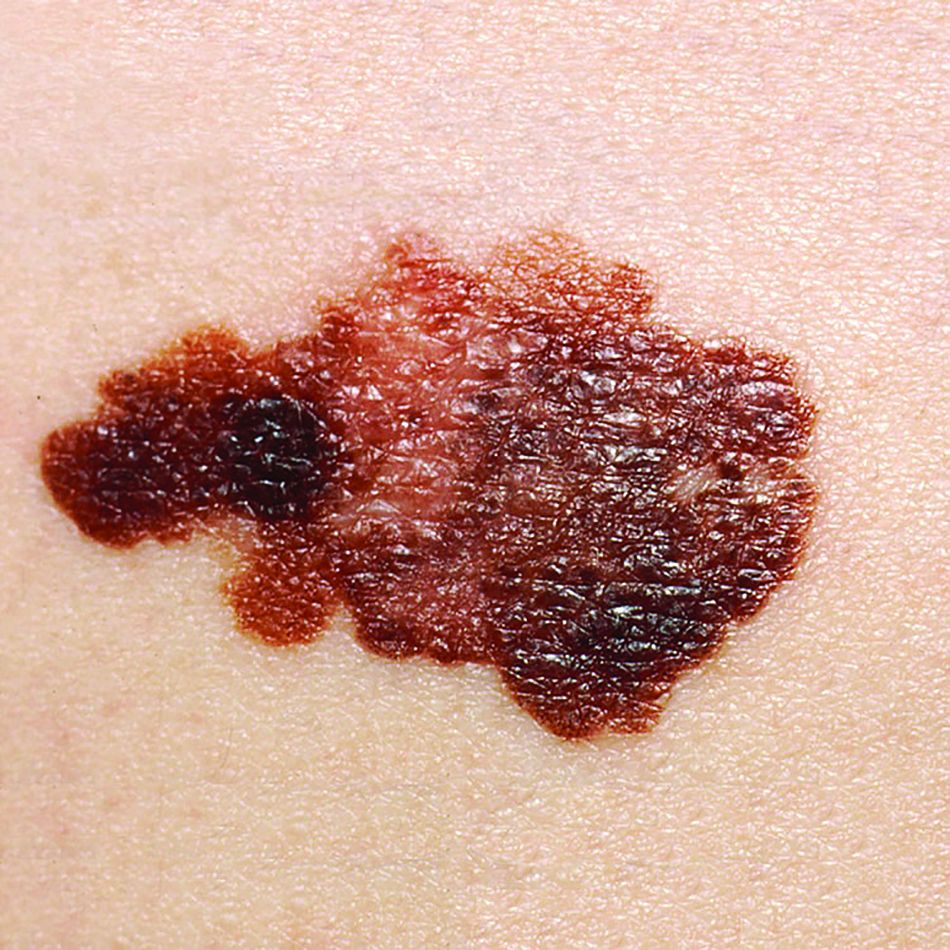
Congenital melanocytic nevi (CMN) may have increased risk for malignant potential, and can be challenging for pediatric providers to manage. Among all CMN, the increase in melanoma risk is estimated as less than 1%. The risk for malignant melanoma is further increased in individuals with large or giant CMN (greater than 20 cm diameter adult size), with an absolute risk of approximately 2%-5%. The number of satellite nevi also is considered in risk stratification. The presence of greater than 20 satellite nevi is associated with a greater than fivefold risk of neurocutaneous melanosis. There is no documented association between an increased quantity of satellite nevi and malignant melanoma.
“One particularly challenging pigmented lesion identified among pediatric patients is a Spitz nevus,” according to Dr. Friedlander. This lesion presents with greater cytologic atypia than other benign congenital and acquired nevi, and often clinically mimics malignant melanoma if identified in adults. There also exists a subset of atypical Spitz nevi, consisting of lesions with greater cytologic atypia than benign Spitz nevi. A retrospective review at Massachusetts General Hospital, Boston, of 157 cases of Spitz-type melanocytic lesions identified between 1987 and 2002 revealed increased melanoma risk, minimal mortality, and moderate risk of regional lymph node metastasis (Arch Dermatol. 2011;147[10]:1173-9).
“Classic pediatric Spitz nevi with typical clinical features and history may be managed conservatively with clinical monitoring alone, but those with concerning features such as bleeding, asymmetry, or ulceration should be excised with clear margins,” Dr. Friedlander emphasized. She discouraged sentinel lymph node biopsy, however, given the positive outcomes of 24 patients at Boston Children’s Hospital with atypical Spitz nevi treated with excision alone, published by Cerrato et al. (Pediatr Dermatol. 2011 Dec 30;29[4]:448-53).
“In light of the rising incidence of pediatric melanoma, we need to identify high-risk patients, educate about mole surveillance, and encourage sun protection,” Dr. Friedlander stressed. Children with phenotype of Fitzpatrick I (fair skin, blonde or red hair, and blue eye color) are at highest risk, as are those with a high density of freckles who burn easily and tan poorly. Further risk factors highlighted include excessive sun exposure, indoor tanning, use of phototoxic medications, immunosuppression, and genetics. The first and best line of defense against harmful ultraviolet radiation is covering up (clothing with a tight weave, wet suits, and hats).
The American Academy of Pediatrics encourages staying in the shade when possible, and limiting sun exposure during the peak sun intensity hours, between 10 a.m. and 4 p.m. When physical protection is not possible, the American Academy of Dermatology endorses the application of water resistant, broad spectrum SPF of greater than 30 at least every 2 hours.
Children often present for evaluation of a melanocytic lesion that is new, evolving, or worrisome to parents and caregivers.
“In the pediatric health care system, malignant melanoma is considered an especially heinous crime. In San Diego, dedicated pediatric providers who identify this disease are members of an elite squad known as the mole patrol unit.” Dr. Sheila Fallon Friedlander opened her presentation on pediatric moles with this tongue-in-cheek statement, adapted from the popular TV show “Law and Order SVU,” at a pediatric dermatology meeting sponsored by Rady Children’s Hospital–San Diego and University of California, San Diego.
Only 104 cases were diagnosed in children aged less than 10 years, and the melanoma incidence in this age group was relatively unchanging from 1973 to 2009. Dr. Friedlander further emphasized, “Pediatric melanoma is extremely uncommon in patients less than 10 years of age, but more likely to be atypical.”
She continued by describing a group of surgical oncologists at MD Anderson Cancer Center in Houston, who conducted a retrospective review of children with cutaneous melanoma between 1988 and 2007 included in the SEER database, to determine the influence of age on disease presentation. Preadolescents younger than age 10 years were more ethnically diverse (nonwhite), more frequently presented with nontruncal primary melanocytic lesions, and increasingly were diagnosed with advanced disease, compared with their adolescent counterparts (J Pediatr Surg. 2013 Nov;48[11]:2207-13).
Congenital melanocytic nevi (CMN) may have increased risk for malignant potential, and can be challenging for pediatric providers to manage. Among all CMN, the increase in melanoma risk is estimated as less than 1%. The risk for malignant melanoma is further increased in individuals with large or giant CMN (greater than 20 cm diameter adult size), with an absolute risk of approximately 2%-5%. The number of satellite nevi also is considered in risk stratification. The presence of greater than 20 satellite nevi is associated with a greater than fivefold risk of neurocutaneous melanosis. There is no documented association between an increased quantity of satellite nevi and malignant melanoma.
“One particularly challenging pigmented lesion identified among pediatric patients is a Spitz nevus,” according to Dr. Friedlander. This lesion presents with greater cytologic atypia than other benign congenital and acquired nevi, and often clinically mimics malignant melanoma if identified in adults. There also exists a subset of atypical Spitz nevi, consisting of lesions with greater cytologic atypia than benign Spitz nevi. A retrospective review at Massachusetts General Hospital, Boston, of 157 cases of Spitz-type melanocytic lesions identified between 1987 and 2002 revealed increased melanoma risk, minimal mortality, and moderate risk of regional lymph node metastasis (Arch Dermatol. 2011;147[10]:1173-9).
“Classic pediatric Spitz nevi with typical clinical features and history may be managed conservatively with clinical monitoring alone, but those with concerning features such as bleeding, asymmetry, or ulceration should be excised with clear margins,” Dr. Friedlander emphasized. She discouraged sentinel lymph node biopsy, however, given the positive outcomes of 24 patients at Boston Children’s Hospital with atypical Spitz nevi treated with excision alone, published by Cerrato et al. (Pediatr Dermatol. 2011 Dec 30;29[4]:448-53).
“In light of the rising incidence of pediatric melanoma, we need to identify high-risk patients, educate about mole surveillance, and encourage sun protection,” Dr. Friedlander stressed. Children with phenotype of Fitzpatrick I (fair skin, blonde or red hair, and blue eye color) are at highest risk, as are those with a high density of freckles who burn easily and tan poorly. Further risk factors highlighted include excessive sun exposure, indoor tanning, use of phototoxic medications, immunosuppression, and genetics. The first and best line of defense against harmful ultraviolet radiation is covering up (clothing with a tight weave, wet suits, and hats).
The American Academy of Pediatrics encourages staying in the shade when possible, and limiting sun exposure during the peak sun intensity hours, between 10 a.m. and 4 p.m. When physical protection is not possible, the American Academy of Dermatology endorses the application of water resistant, broad spectrum SPF of greater than 30 at least every 2 hours.
Children often present for evaluation of a melanocytic lesion that is new, evolving, or worrisome to parents and caregivers.
“In the pediatric health care system, malignant melanoma is considered an especially heinous crime. In San Diego, dedicated pediatric providers who identify this disease are members of an elite squad known as the mole patrol unit.” Dr. Sheila Fallon Friedlander opened her presentation on pediatric moles with this tongue-in-cheek statement, adapted from the popular TV show “Law and Order SVU,” at a pediatric dermatology meeting sponsored by Rady Children’s Hospital–San Diego and University of California, San Diego.
Only 104 cases were diagnosed in children aged less than 10 years, and the melanoma incidence in this age group was relatively unchanging from 1973 to 2009. Dr. Friedlander further emphasized, “Pediatric melanoma is extremely uncommon in patients less than 10 years of age, but more likely to be atypical.”
She continued by describing a group of surgical oncologists at MD Anderson Cancer Center in Houston, who conducted a retrospective review of children with cutaneous melanoma between 1988 and 2007 included in the SEER database, to determine the influence of age on disease presentation. Preadolescents younger than age 10 years were more ethnically diverse (nonwhite), more frequently presented with nontruncal primary melanocytic lesions, and increasingly were diagnosed with advanced disease, compared with their adolescent counterparts (J Pediatr Surg. 2013 Nov;48[11]:2207-13).
Congenital melanocytic nevi (CMN) may have increased risk for malignant potential, and can be challenging for pediatric providers to manage. Among all CMN, the increase in melanoma risk is estimated as less than 1%. The risk for malignant melanoma is further increased in individuals with large or giant CMN (greater than 20 cm diameter adult size), with an absolute risk of approximately 2%-5%. The number of satellite nevi also is considered in risk stratification. The presence of greater than 20 satellite nevi is associated with a greater than fivefold risk of neurocutaneous melanosis. There is no documented association between an increased quantity of satellite nevi and malignant melanoma.
“One particularly challenging pigmented lesion identified among pediatric patients is a Spitz nevus,” according to Dr. Friedlander. This lesion presents with greater cytologic atypia than other benign congenital and acquired nevi, and often clinically mimics malignant melanoma if identified in adults. There also exists a subset of atypical Spitz nevi, consisting of lesions with greater cytologic atypia than benign Spitz nevi. A retrospective review at Massachusetts General Hospital, Boston, of 157 cases of Spitz-type melanocytic lesions identified between 1987 and 2002 revealed increased melanoma risk, minimal mortality, and moderate risk of regional lymph node metastasis (Arch Dermatol. 2011;147[10]:1173-9).
“Classic pediatric Spitz nevi with typical clinical features and history may be managed conservatively with clinical monitoring alone, but those with concerning features such as bleeding, asymmetry, or ulceration should be excised with clear margins,” Dr. Friedlander emphasized. She discouraged sentinel lymph node biopsy, however, given the positive outcomes of 24 patients at Boston Children’s Hospital with atypical Spitz nevi treated with excision alone, published by Cerrato et al. (Pediatr Dermatol. 2011 Dec 30;29[4]:448-53).
“In light of the rising incidence of pediatric melanoma, we need to identify high-risk patients, educate about mole surveillance, and encourage sun protection,” Dr. Friedlander stressed. Children with phenotype of Fitzpatrick I (fair skin, blonde or red hair, and blue eye color) are at highest risk, as are those with a high density of freckles who burn easily and tan poorly. Further risk factors highlighted include excessive sun exposure, indoor tanning, use of phototoxic medications, immunosuppression, and genetics. The first and best line of defense against harmful ultraviolet radiation is covering up (clothing with a tight weave, wet suits, and hats).
The American Academy of Pediatrics encourages staying in the shade when possible, and limiting sun exposure during the peak sun intensity hours, between 10 a.m. and 4 p.m. When physical protection is not possible, the American Academy of Dermatology endorses the application of water resistant, broad spectrum SPF of greater than 30 at least every 2 hours.
Nusinersen for early spinal muscular atrophy: Final findings beat interim results
BOSTON – Last December, the Food and Drug Administration approved nusinersen (Spinraza) as the only treatment for spinal muscular atrophy (SMA) based in part on startling interim results from a study in infants that ended early so all participants could get access to the drug.
Now the final study results are in, and they’re even more impressive: Patients who took the drug were less than half as likely to die as were those in a sham control group, and motor function improved in more than half of infants who took the medication, compared with none in the sham group.
The findings are “incredibly exciting,” said Charlotte J. Sumner, MD, in a discussant presentation at the annual meeting of the American Academy of Neurology. “The data teaches us that this drug is efficacious.”
However, Dr. Sumner, professor of neurology and neuroscience at Johns Hopkins University, Baltimore, cautioned that the drug is tremendously expensive, challenging to administer, and there are several questions about its use that remain unanswered.
SMA is most often caused by mutations in the SMN1 gene, leading to a loss of the protein called survival motor neuron (SMN), which is essential for the survival of motor neurons, except for a small amount produced from the SMN2 gene. The loss of motor neurons in the spinal cord and brainstem leads to weakness and atrophy of muscles used for crawling, walking, sitting up, controlling head movement, and in severe cases, breathing and swallowing. It affects an estimated 1 in 6,000 newborns and is the most common genetic cause of death in infants. Nusinersen is a antisense oligonucleotide that promotes transcription of the full-length SMN protein from the SMN2 gene.
At the AAN meeting, investigators presented the final results of two nusinersen phase III studies as well as interim data from a separate phase II trial.
The ENDEAR trial, a randomized, double-blind, sham-procedure controlled study, assigned 80 patients to 12-mg scaled equivalent doses of nusinersen delivered intrathecally (four doses over 2 months, then one every 4 months) and 41 to a sham procedure (a needle prick in the lower back). The subjects, aged 30-252 days at first dose, underwent 13 months of treatment and follow-up.
Researchers presented an end-of-study analysis of 110 subjects. They found that 51% of those who received the drug were “motor milestone responders” – meaning they had more modified Hammersmith Infant Neurological Examination Section 2 categories with improvement than worsening – compared with 41% at the interim analysis (P less than .0001). None of the sham group patients improved.
The patients treated with nusinersen lived longer: 39% of those in the sham procedure group died, compared with 16% of those in the nusinersen group (hazard ratio, 0.372; P = .0041). Event-free survival (survival without permanent ventilation) was also better in those who received the drugs: 61% in those who took nusinersen, compared with 32% in those who did not (HR, 0.53; P = .0046)
Also, 71% of those treated with the drug were considered responders at day 183 onward based on an improvement of 4 or more points on the Children’s Hospital of Philadelphia Infant Test of Neuromuscular Disorders scale, whereas the response rate was only 3% in the sham group (P less than .0001).
The study authors report that nusinersen was well tolerated with adverse events that “were consistent with those expected in the general population of infants with SMA.” No adverse events were linked to the nusinersen treatment.
Researchers also presented the end-of-study results of the phase III CHERISH trial of 126 patients aged 2-12 years with later-onset SMA who could sit up but not walk. All participants were believed to have a life expectancy of at least 2 years.
The trial is a multicenter, randomized, double-blind, sham-procedure controlled study. The 84 subjects who received the drug improved an average of 3.9 points by the end of study (15 months) on the Hammersmith Functional Motor Scale Expanded score, a measurement of motor function in children with SMA (P = .0000001). The 42 children who received the sham treatment (a small needle prick on the lower back) declined by an average of 1.0 point.
Researchers report that children taking the drug had fewer adverse events, and most were not related to the drug itself.
All surviving participants who completed nusinersen investigational studies are being enrolled in the SHINE open-label extension trial.
Also at the AAN meeting, researchers released interim phase II results from the NURTURE trial, an open-label study of nusinersen in patients with diagnosed but presymptomatic SMA. The study, which is expected to be completed in 2022, recruited participants up to the age of 6 weeks.
The 20 enrolled infants were all alive at a median study period of 317.5 days, and none required assistance with respiration.
In terms of motor function and growth, most were making gains “generally consistent with normal development such as head control, independent sitting, standing and walking independently, as measured by validated scales,” according to a statement released by Biogen.
Three patients developed adverse events that may have been drug related, but the events were resolved and they remained in the trial.
In Dr. Sumner’s discussant presentation on the ENDEAR study, she cautioned that it’s still not known how much older patients with SMA will benefit from the drug treatment. It’s possible that younger patients may gain motor function while older patients will maintain what they have, she said.
In addition, it seems that “certain body segments may respond more robustly than some others. It’s possible that an infant may improve limb strength quite robustly but not lumbar strength.”
She pointed out other questions: Can the drug, which is difficult to administer, be stopped at some point? “We do think of SMA as a disease of development,” she said. “Maybe after development is finished we can withdraw the drug.”
Then there’s the issue of cost and whether insurers are willing to cover the drug. As Dr. Sumner pointed out, the drug is $125,000 per dose and $750,000 over the first year, then $325,000 a year.
It is clear, however, that “the early and efficient diagnosis of SMA is really important, particularly for infantile SMA,” she said. “Time is motor function.”
The studies were funded by Ionis Pharmaceuticals and Biogen. Dr. Sumner reports serving as a consultant for Biogen, Ionis, Avexis, and Roche. She has served on scientific advisory boards for the Cure SMA, SMA Foundation, and Muscular Dystrophy Association nonprofit foundations.
BOSTON – Last December, the Food and Drug Administration approved nusinersen (Spinraza) as the only treatment for spinal muscular atrophy (SMA) based in part on startling interim results from a study in infants that ended early so all participants could get access to the drug.
Now the final study results are in, and they’re even more impressive: Patients who took the drug were less than half as likely to die as were those in a sham control group, and motor function improved in more than half of infants who took the medication, compared with none in the sham group.
The findings are “incredibly exciting,” said Charlotte J. Sumner, MD, in a discussant presentation at the annual meeting of the American Academy of Neurology. “The data teaches us that this drug is efficacious.”
However, Dr. Sumner, professor of neurology and neuroscience at Johns Hopkins University, Baltimore, cautioned that the drug is tremendously expensive, challenging to administer, and there are several questions about its use that remain unanswered.
SMA is most often caused by mutations in the SMN1 gene, leading to a loss of the protein called survival motor neuron (SMN), which is essential for the survival of motor neurons, except for a small amount produced from the SMN2 gene. The loss of motor neurons in the spinal cord and brainstem leads to weakness and atrophy of muscles used for crawling, walking, sitting up, controlling head movement, and in severe cases, breathing and swallowing. It affects an estimated 1 in 6,000 newborns and is the most common genetic cause of death in infants. Nusinersen is a antisense oligonucleotide that promotes transcription of the full-length SMN protein from the SMN2 gene.
At the AAN meeting, investigators presented the final results of two nusinersen phase III studies as well as interim data from a separate phase II trial.
The ENDEAR trial, a randomized, double-blind, sham-procedure controlled study, assigned 80 patients to 12-mg scaled equivalent doses of nusinersen delivered intrathecally (four doses over 2 months, then one every 4 months) and 41 to a sham procedure (a needle prick in the lower back). The subjects, aged 30-252 days at first dose, underwent 13 months of treatment and follow-up.
Researchers presented an end-of-study analysis of 110 subjects. They found that 51% of those who received the drug were “motor milestone responders” – meaning they had more modified Hammersmith Infant Neurological Examination Section 2 categories with improvement than worsening – compared with 41% at the interim analysis (P less than .0001). None of the sham group patients improved.
The patients treated with nusinersen lived longer: 39% of those in the sham procedure group died, compared with 16% of those in the nusinersen group (hazard ratio, 0.372; P = .0041). Event-free survival (survival without permanent ventilation) was also better in those who received the drugs: 61% in those who took nusinersen, compared with 32% in those who did not (HR, 0.53; P = .0046)
Also, 71% of those treated with the drug were considered responders at day 183 onward based on an improvement of 4 or more points on the Children’s Hospital of Philadelphia Infant Test of Neuromuscular Disorders scale, whereas the response rate was only 3% in the sham group (P less than .0001).
The study authors report that nusinersen was well tolerated with adverse events that “were consistent with those expected in the general population of infants with SMA.” No adverse events were linked to the nusinersen treatment.
Researchers also presented the end-of-study results of the phase III CHERISH trial of 126 patients aged 2-12 years with later-onset SMA who could sit up but not walk. All participants were believed to have a life expectancy of at least 2 years.
The trial is a multicenter, randomized, double-blind, sham-procedure controlled study. The 84 subjects who received the drug improved an average of 3.9 points by the end of study (15 months) on the Hammersmith Functional Motor Scale Expanded score, a measurement of motor function in children with SMA (P = .0000001). The 42 children who received the sham treatment (a small needle prick on the lower back) declined by an average of 1.0 point.
Researchers report that children taking the drug had fewer adverse events, and most were not related to the drug itself.
All surviving participants who completed nusinersen investigational studies are being enrolled in the SHINE open-label extension trial.
Also at the AAN meeting, researchers released interim phase II results from the NURTURE trial, an open-label study of nusinersen in patients with diagnosed but presymptomatic SMA. The study, which is expected to be completed in 2022, recruited participants up to the age of 6 weeks.
The 20 enrolled infants were all alive at a median study period of 317.5 days, and none required assistance with respiration.
In terms of motor function and growth, most were making gains “generally consistent with normal development such as head control, independent sitting, standing and walking independently, as measured by validated scales,” according to a statement released by Biogen.
Three patients developed adverse events that may have been drug related, but the events were resolved and they remained in the trial.
In Dr. Sumner’s discussant presentation on the ENDEAR study, she cautioned that it’s still not known how much older patients with SMA will benefit from the drug treatment. It’s possible that younger patients may gain motor function while older patients will maintain what they have, she said.
In addition, it seems that “certain body segments may respond more robustly than some others. It’s possible that an infant may improve limb strength quite robustly but not lumbar strength.”
She pointed out other questions: Can the drug, which is difficult to administer, be stopped at some point? “We do think of SMA as a disease of development,” she said. “Maybe after development is finished we can withdraw the drug.”
Then there’s the issue of cost and whether insurers are willing to cover the drug. As Dr. Sumner pointed out, the drug is $125,000 per dose and $750,000 over the first year, then $325,000 a year.
It is clear, however, that “the early and efficient diagnosis of SMA is really important, particularly for infantile SMA,” she said. “Time is motor function.”
The studies were funded by Ionis Pharmaceuticals and Biogen. Dr. Sumner reports serving as a consultant for Biogen, Ionis, Avexis, and Roche. She has served on scientific advisory boards for the Cure SMA, SMA Foundation, and Muscular Dystrophy Association nonprofit foundations.
BOSTON – Last December, the Food and Drug Administration approved nusinersen (Spinraza) as the only treatment for spinal muscular atrophy (SMA) based in part on startling interim results from a study in infants that ended early so all participants could get access to the drug.
Now the final study results are in, and they’re even more impressive: Patients who took the drug were less than half as likely to die as were those in a sham control group, and motor function improved in more than half of infants who took the medication, compared with none in the sham group.
The findings are “incredibly exciting,” said Charlotte J. Sumner, MD, in a discussant presentation at the annual meeting of the American Academy of Neurology. “The data teaches us that this drug is efficacious.”
However, Dr. Sumner, professor of neurology and neuroscience at Johns Hopkins University, Baltimore, cautioned that the drug is tremendously expensive, challenging to administer, and there are several questions about its use that remain unanswered.
SMA is most often caused by mutations in the SMN1 gene, leading to a loss of the protein called survival motor neuron (SMN), which is essential for the survival of motor neurons, except for a small amount produced from the SMN2 gene. The loss of motor neurons in the spinal cord and brainstem leads to weakness and atrophy of muscles used for crawling, walking, sitting up, controlling head movement, and in severe cases, breathing and swallowing. It affects an estimated 1 in 6,000 newborns and is the most common genetic cause of death in infants. Nusinersen is a antisense oligonucleotide that promotes transcription of the full-length SMN protein from the SMN2 gene.
At the AAN meeting, investigators presented the final results of two nusinersen phase III studies as well as interim data from a separate phase II trial.
The ENDEAR trial, a randomized, double-blind, sham-procedure controlled study, assigned 80 patients to 12-mg scaled equivalent doses of nusinersen delivered intrathecally (four doses over 2 months, then one every 4 months) and 41 to a sham procedure (a needle prick in the lower back). The subjects, aged 30-252 days at first dose, underwent 13 months of treatment and follow-up.
Researchers presented an end-of-study analysis of 110 subjects. They found that 51% of those who received the drug were “motor milestone responders” – meaning they had more modified Hammersmith Infant Neurological Examination Section 2 categories with improvement than worsening – compared with 41% at the interim analysis (P less than .0001). None of the sham group patients improved.
The patients treated with nusinersen lived longer: 39% of those in the sham procedure group died, compared with 16% of those in the nusinersen group (hazard ratio, 0.372; P = .0041). Event-free survival (survival without permanent ventilation) was also better in those who received the drugs: 61% in those who took nusinersen, compared with 32% in those who did not (HR, 0.53; P = .0046)
Also, 71% of those treated with the drug were considered responders at day 183 onward based on an improvement of 4 or more points on the Children’s Hospital of Philadelphia Infant Test of Neuromuscular Disorders scale, whereas the response rate was only 3% in the sham group (P less than .0001).
The study authors report that nusinersen was well tolerated with adverse events that “were consistent with those expected in the general population of infants with SMA.” No adverse events were linked to the nusinersen treatment.
Researchers also presented the end-of-study results of the phase III CHERISH trial of 126 patients aged 2-12 years with later-onset SMA who could sit up but not walk. All participants were believed to have a life expectancy of at least 2 years.
The trial is a multicenter, randomized, double-blind, sham-procedure controlled study. The 84 subjects who received the drug improved an average of 3.9 points by the end of study (15 months) on the Hammersmith Functional Motor Scale Expanded score, a measurement of motor function in children with SMA (P = .0000001). The 42 children who received the sham treatment (a small needle prick on the lower back) declined by an average of 1.0 point.
Researchers report that children taking the drug had fewer adverse events, and most were not related to the drug itself.
All surviving participants who completed nusinersen investigational studies are being enrolled in the SHINE open-label extension trial.
Also at the AAN meeting, researchers released interim phase II results from the NURTURE trial, an open-label study of nusinersen in patients with diagnosed but presymptomatic SMA. The study, which is expected to be completed in 2022, recruited participants up to the age of 6 weeks.
The 20 enrolled infants were all alive at a median study period of 317.5 days, and none required assistance with respiration.
In terms of motor function and growth, most were making gains “generally consistent with normal development such as head control, independent sitting, standing and walking independently, as measured by validated scales,” according to a statement released by Biogen.
Three patients developed adverse events that may have been drug related, but the events were resolved and they remained in the trial.
In Dr. Sumner’s discussant presentation on the ENDEAR study, she cautioned that it’s still not known how much older patients with SMA will benefit from the drug treatment. It’s possible that younger patients may gain motor function while older patients will maintain what they have, she said.
In addition, it seems that “certain body segments may respond more robustly than some others. It’s possible that an infant may improve limb strength quite robustly but not lumbar strength.”
She pointed out other questions: Can the drug, which is difficult to administer, be stopped at some point? “We do think of SMA as a disease of development,” she said. “Maybe after development is finished we can withdraw the drug.”
Then there’s the issue of cost and whether insurers are willing to cover the drug. As Dr. Sumner pointed out, the drug is $125,000 per dose and $750,000 over the first year, then $325,000 a year.
It is clear, however, that “the early and efficient diagnosis of SMA is really important, particularly for infantile SMA,” she said. “Time is motor function.”
The studies were funded by Ionis Pharmaceuticals and Biogen. Dr. Sumner reports serving as a consultant for Biogen, Ionis, Avexis, and Roche. She has served on scientific advisory boards for the Cure SMA, SMA Foundation, and Muscular Dystrophy Association nonprofit foundations.
AT AAN 2017
Key clinical point:
Major finding: 51% of subjects who took the drug were judged to be “motor milestone responders”; none in the sham group improved (P less than .0001).
Data source: Randomized, double-blind, sham-controlled, 13-month study of 110 subjects with infantile-onset SMA aged 30-252 days at first dose. They received 12-mg scaled equivalent doses of nusinersen delivered intrathecally (four doses over 2 months then one every 4 months) or a sham procedure (needle prick).
Disclosures: The studies were funded by Ionis Pharmaceuticals and Biogen.
FDA approves generic Strattera for pediatric, adult ADHD patients
The Food and Drug Administration has approved the first generic versions of Strattera (atomoxetine) for the treatment of attention-deficit/hyperactivity disorder, the agency announced May 30.
Apotex, Teva Pharmaceuticals USA, Aurobindo Pharma, and Glenmark Pharmaceuticals all gained approval to market generic atomoxetine at various strengths. All versions must be sold with a patient medication guide describing the uses and risks of atomoxetine and must also include a boxed warning detailing the potential for increased risk of suicidal ideation in children and adolescents.
“Today’s approvals mark an important step forward in bringing consumers additional treatments that have met the FDA’s rigorous standards. Quickly bringing generics to market so patients have more options to treat their conditions is a top priority for the FDA,” Kathleen Uhl, MD, director of the Office of Generic Drugs in the FDA’s Center for Drug Evaluation and Research, said in a press release.
Find the full press release on the FDA website.
The Food and Drug Administration has approved the first generic versions of Strattera (atomoxetine) for the treatment of attention-deficit/hyperactivity disorder, the agency announced May 30.
Apotex, Teva Pharmaceuticals USA, Aurobindo Pharma, and Glenmark Pharmaceuticals all gained approval to market generic atomoxetine at various strengths. All versions must be sold with a patient medication guide describing the uses and risks of atomoxetine and must also include a boxed warning detailing the potential for increased risk of suicidal ideation in children and adolescents.
“Today’s approvals mark an important step forward in bringing consumers additional treatments that have met the FDA’s rigorous standards. Quickly bringing generics to market so patients have more options to treat their conditions is a top priority for the FDA,” Kathleen Uhl, MD, director of the Office of Generic Drugs in the FDA’s Center for Drug Evaluation and Research, said in a press release.
Find the full press release on the FDA website.
The Food and Drug Administration has approved the first generic versions of Strattera (atomoxetine) for the treatment of attention-deficit/hyperactivity disorder, the agency announced May 30.
Apotex, Teva Pharmaceuticals USA, Aurobindo Pharma, and Glenmark Pharmaceuticals all gained approval to market generic atomoxetine at various strengths. All versions must be sold with a patient medication guide describing the uses and risks of atomoxetine and must also include a boxed warning detailing the potential for increased risk of suicidal ideation in children and adolescents.
“Today’s approvals mark an important step forward in bringing consumers additional treatments that have met the FDA’s rigorous standards. Quickly bringing generics to market so patients have more options to treat their conditions is a top priority for the FDA,” Kathleen Uhl, MD, director of the Office of Generic Drugs in the FDA’s Center for Drug Evaluation and Research, said in a press release.
Find the full press release on the FDA website.
Adolescent sexuality and disclosure
Adolescence is a time of rapid growth and development both physically and emotionally. Some of the major tasks of adolescent development include developing a stable identity (this includes sexual and gender identity) and establishing independence from parents. This separation process from parents is often buffered by peer relationships. By the end of adolescence, those who are healthy and mature in their sexuality are able to:1,2,3
• Identify and live according to their own values and take responsibility for their behavior.
• Practice effective decision-making, and develop critical-thinking skills.
• Affirm that human development includes sexual development, which may or may not include reproduction or sexual experience.
• Seek further information about sexuality and reproduction as needed and make informed choices about family options and relationships.
• Interact with all genders in respectful and appropriate ways.
• Affirm their own gender identity and sexual orientation, and respect the gender identities and sexual orientations of others.
• Appreciate their body and enjoy their sexuality throughout life, expressing sexuality in ways that are congruent with their values.
• Express love and intimacy in appropriate ways.
• Develop and maintain meaningful relationships, avoiding exploitative or manipulative relationships.
• Exhibit skills and communication that enhance personal relationships with family, peers, and romantic partners.
Anywhere from 5% to 10% of teens identify as lesbian, gay, or bisexual (LGB).4 For these teens, the development of a sexual identity can add additional challenges to the development process, particularly if youth do not feel supported by family, peers, and their communities. Previous columns have addressed the role family acceptance can play in promoting the healthy development of sexual minority youth. Likewise, peer relationships also can play an important role in an adolescent’s development and health.

Some factors that can promote resilience and counteract stigma that LGB youth may face include:5
• Acceptance.
• Competence.
• Higher levels of self-esteem and psychological well-being.
• Strong sense of self and self-acceptance.
• Strong ethnic identification.
• Strong connections to family and school.
• Caring adult role models outside the family.
• Community involvement.
For some youth who may not be able receive acceptance from their families, peers and trusted adults may fill in this role and serve as a “chosen family.” A chosen family is commonly understood to mean a group of people who deliberately chose one another to play significant roles in each other’s lives even though they are not biologically or legally related. These relationships may be in addition to or in place of traditional family relationships. These connections can increase a youth’s sense of acceptance and connectedness and help promote resiliency.
Adolescents often may struggle on the decision of when to “come out” or disclose their sexual orientation to friends and family, and may ask their health care providers for advice. The number one consideration when making a decision about disclosure is safety. Unfortunately, some family members and peers may not react in a supportive manner to a youth’s disclosure, and disclosure may result in being kicked out, financial coercion, bullying, physical violence, or alienation. In these cases, youth may choose to delay disclosure until they are in a more supportive environment, and health care providers can play an important role in validating and affirming patients’ identities and maintaining confidentiality as appropriate. They also should plan for how they might deal with a negative or rejecting response. Some tips are included below.5
When
• You are ready.
• You are comfortable with your identity.
• You want to share information with people you trust and are close to.
• You have a plan for support if you are not accepted (particularly when coming out to family).
Who
• Someone you know well and expect to be supportive.
• Someone you trust, feel safe with, and who can keep information confidential if needed (may need to explore school’s privacy and confidentiality policies if disclosing to a teacher or school personnel).
• Be clear about who else information may be shared with and who NOT to share with.
How
• Be sure you are prepared. You may want to talk to other sexual minority youth or adults who have come out, attend LGBTQ groups/forums, or seek out Internet resources to learn about others’ coming out experiences. These sources may serve as a support for you should you experience any negative or rejecting responses.
• Make sure you have support resources in place prior to coming out.
• Coming out by letter allows you time to carefully word what you want to say, and allows the other person time and privacy to consider their response.
• If coming out in person, try to choose a quiet private space, and try to choose a time when everyone is relaxed and well-rested.
• If concerned about your safety, make sure other people are immediately accessible if needed.
• Plan what you are going to say, how you might end the conversation, and how you may want to talk about it later.
• Listen actively to what the other person has to say.
• Avoid any alcohol or drugs, as these may affect your mental and emotional state and responses.
• Avoid coming out because of pressure from others or because you are angry.
Youth should be reminded that people’s responses may not always be predictable. It is important to note that for many individuals, coming out may be a lifelong process and occur in stages, beginning with close friends or family members and progressing from there. In the age of social media, youth should be reminded that disclosures through social media may be widely accessible, are easily shared, and may be difficult to remove. For youth who do not have supportive peer groups, and may not be able to disclose their sexual identity, providing support resources can be helpful.
Dr. Chelvakumar is an attending physician in the division of adolescent medicine at Nationwide Children’s Hospital and an assistant professor of clinical pediatrics at the Ohio State University, both in Columbus. She has no relevant financial disclosures. Email her at pdnews@frontlinemedcom.com.
Resources for sexual minority youth and peers/families
Gay-Straight Alliance Network: gsanetwork.org
Gay Lesbian Straight Education Network: Information for Students: glsen.org/students
Sexuality Information and Education Council of the United States: www.siecus.org
The Trevor Project: Help and Suicide Prevention: www.thetrevorproject.org
It Gets Better Project: http://www.itgetsbetter.org/
Family and Ally Organization: PFLAG: https://www.pflag.org/
Advocates for Youth Parent Tips: http://www.advocatesforyouth.org/parents/173-parents
References
1. “Adolescent Sexuality,” by Michelle Forcier, MD, in Up to Date. Updated March 2017.
2. Pediatrics. 2016 Aug;138(2). pii: e20161348.
3. The Guidelines for Comprehensive Sexuality Education: Grades K-12 (Washington, D.C.: Sexuality Information and Education Council of the United States, 2004).
4. MMWR Surveillance Summaries, 2016, Aug 12;65(9):1-202.
5. “Sexual minority youth: Epidemiology and health concerns,” by Michelle Forcier, MD, and Johanna Olson-Kennedy, MD, in Up to Date.
Adolescence is a time of rapid growth and development both physically and emotionally. Some of the major tasks of adolescent development include developing a stable identity (this includes sexual and gender identity) and establishing independence from parents. This separation process from parents is often buffered by peer relationships. By the end of adolescence, those who are healthy and mature in their sexuality are able to:1,2,3
• Identify and live according to their own values and take responsibility for their behavior.
• Practice effective decision-making, and develop critical-thinking skills.
• Affirm that human development includes sexual development, which may or may not include reproduction or sexual experience.
• Seek further information about sexuality and reproduction as needed and make informed choices about family options and relationships.
• Interact with all genders in respectful and appropriate ways.
• Affirm their own gender identity and sexual orientation, and respect the gender identities and sexual orientations of others.
• Appreciate their body and enjoy their sexuality throughout life, expressing sexuality in ways that are congruent with their values.
• Express love and intimacy in appropriate ways.
• Develop and maintain meaningful relationships, avoiding exploitative or manipulative relationships.
• Exhibit skills and communication that enhance personal relationships with family, peers, and romantic partners.
Anywhere from 5% to 10% of teens identify as lesbian, gay, or bisexual (LGB).4 For these teens, the development of a sexual identity can add additional challenges to the development process, particularly if youth do not feel supported by family, peers, and their communities. Previous columns have addressed the role family acceptance can play in promoting the healthy development of sexual minority youth. Likewise, peer relationships also can play an important role in an adolescent’s development and health.
Some factors that can promote resilience and counteract stigma that LGB youth may face include:5
• Acceptance.
• Competence.
• Higher levels of self-esteem and psychological well-being.
• Strong sense of self and self-acceptance.
• Strong ethnic identification.
• Strong connections to family and school.
• Caring adult role models outside the family.
• Community involvement.
For some youth who may not be able receive acceptance from their families, peers and trusted adults may fill in this role and serve as a “chosen family.” A chosen family is commonly understood to mean a group of people who deliberately chose one another to play significant roles in each other’s lives even though they are not biologically or legally related. These relationships may be in addition to or in place of traditional family relationships. These connections can increase a youth’s sense of acceptance and connectedness and help promote resiliency.
Adolescents often may struggle on the decision of when to “come out” or disclose their sexual orientation to friends and family, and may ask their health care providers for advice. The number one consideration when making a decision about disclosure is safety. Unfortunately, some family members and peers may not react in a supportive manner to a youth’s disclosure, and disclosure may result in being kicked out, financial coercion, bullying, physical violence, or alienation. In these cases, youth may choose to delay disclosure until they are in a more supportive environment, and health care providers can play an important role in validating and affirming patients’ identities and maintaining confidentiality as appropriate. They also should plan for how they might deal with a negative or rejecting response. Some tips are included below.5
When
• You are ready.
• You are comfortable with your identity.
• You want to share information with people you trust and are close to.
• You have a plan for support if you are not accepted (particularly when coming out to family).
Who
• Someone you know well and expect to be supportive.
• Someone you trust, feel safe with, and who can keep information confidential if needed (may need to explore school’s privacy and confidentiality policies if disclosing to a teacher or school personnel).
• Be clear about who else information may be shared with and who NOT to share with.
How
• Be sure you are prepared. You may want to talk to other sexual minority youth or adults who have come out, attend LGBTQ groups/forums, or seek out Internet resources to learn about others’ coming out experiences. These sources may serve as a support for you should you experience any negative or rejecting responses.
• Make sure you have support resources in place prior to coming out.
• Coming out by letter allows you time to carefully word what you want to say, and allows the other person time and privacy to consider their response.
• If coming out in person, try to choose a quiet private space, and try to choose a time when everyone is relaxed and well-rested.
• If concerned about your safety, make sure other people are immediately accessible if needed.
• Plan what you are going to say, how you might end the conversation, and how you may want to talk about it later.
• Listen actively to what the other person has to say.
• Avoid any alcohol or drugs, as these may affect your mental and emotional state and responses.
• Avoid coming out because of pressure from others or because you are angry.
Youth should be reminded that people’s responses may not always be predictable. It is important to note that for many individuals, coming out may be a lifelong process and occur in stages, beginning with close friends or family members and progressing from there. In the age of social media, youth should be reminded that disclosures through social media may be widely accessible, are easily shared, and may be difficult to remove. For youth who do not have supportive peer groups, and may not be able to disclose their sexual identity, providing support resources can be helpful.
Dr. Chelvakumar is an attending physician in the division of adolescent medicine at Nationwide Children’s Hospital and an assistant professor of clinical pediatrics at the Ohio State University, both in Columbus. She has no relevant financial disclosures. Email her at pdnews@frontlinemedcom.com.
Resources for sexual minority youth and peers/families
Gay-Straight Alliance Network: gsanetwork.org
Gay Lesbian Straight Education Network: Information for Students: glsen.org/students
Sexuality Information and Education Council of the United States: www.siecus.org
The Trevor Project: Help and Suicide Prevention: www.thetrevorproject.org
It Gets Better Project: http://www.itgetsbetter.org/
Family and Ally Organization: PFLAG: https://www.pflag.org/
Advocates for Youth Parent Tips: http://www.advocatesforyouth.org/parents/173-parents
References
1. “Adolescent Sexuality,” by Michelle Forcier, MD, in Up to Date. Updated March 2017.
2. Pediatrics. 2016 Aug;138(2). pii: e20161348.
3. The Guidelines for Comprehensive Sexuality Education: Grades K-12 (Washington, D.C.: Sexuality Information and Education Council of the United States, 2004).
4. MMWR Surveillance Summaries, 2016, Aug 12;65(9):1-202.
5. “Sexual minority youth: Epidemiology and health concerns,” by Michelle Forcier, MD, and Johanna Olson-Kennedy, MD, in Up to Date.
Adolescence is a time of rapid growth and development both physically and emotionally. Some of the major tasks of adolescent development include developing a stable identity (this includes sexual and gender identity) and establishing independence from parents. This separation process from parents is often buffered by peer relationships. By the end of adolescence, those who are healthy and mature in their sexuality are able to:1,2,3
• Identify and live according to their own values and take responsibility for their behavior.
• Practice effective decision-making, and develop critical-thinking skills.
• Affirm that human development includes sexual development, which may or may not include reproduction or sexual experience.
• Seek further information about sexuality and reproduction as needed and make informed choices about family options and relationships.
• Interact with all genders in respectful and appropriate ways.
• Affirm their own gender identity and sexual orientation, and respect the gender identities and sexual orientations of others.
• Appreciate their body and enjoy their sexuality throughout life, expressing sexuality in ways that are congruent with their values.
• Express love and intimacy in appropriate ways.
• Develop and maintain meaningful relationships, avoiding exploitative or manipulative relationships.
• Exhibit skills and communication that enhance personal relationships with family, peers, and romantic partners.
Anywhere from 5% to 10% of teens identify as lesbian, gay, or bisexual (LGB).4 For these teens, the development of a sexual identity can add additional challenges to the development process, particularly if youth do not feel supported by family, peers, and their communities. Previous columns have addressed the role family acceptance can play in promoting the healthy development of sexual minority youth. Likewise, peer relationships also can play an important role in an adolescent’s development and health.
Some factors that can promote resilience and counteract stigma that LGB youth may face include:5
• Acceptance.
• Competence.
• Higher levels of self-esteem and psychological well-being.
• Strong sense of self and self-acceptance.
• Strong ethnic identification.
• Strong connections to family and school.
• Caring adult role models outside the family.
• Community involvement.
For some youth who may not be able receive acceptance from their families, peers and trusted adults may fill in this role and serve as a “chosen family.” A chosen family is commonly understood to mean a group of people who deliberately chose one another to play significant roles in each other’s lives even though they are not biologically or legally related. These relationships may be in addition to or in place of traditional family relationships. These connections can increase a youth’s sense of acceptance and connectedness and help promote resiliency.
Adolescents often may struggle on the decision of when to “come out” or disclose their sexual orientation to friends and family, and may ask their health care providers for advice. The number one consideration when making a decision about disclosure is safety. Unfortunately, some family members and peers may not react in a supportive manner to a youth’s disclosure, and disclosure may result in being kicked out, financial coercion, bullying, physical violence, or alienation. In these cases, youth may choose to delay disclosure until they are in a more supportive environment, and health care providers can play an important role in validating and affirming patients’ identities and maintaining confidentiality as appropriate. They also should plan for how they might deal with a negative or rejecting response. Some tips are included below.5
When
• You are ready.
• You are comfortable with your identity.
• You want to share information with people you trust and are close to.
• You have a plan for support if you are not accepted (particularly when coming out to family).
Who
• Someone you know well and expect to be supportive.
• Someone you trust, feel safe with, and who can keep information confidential if needed (may need to explore school’s privacy and confidentiality policies if disclosing to a teacher or school personnel).
• Be clear about who else information may be shared with and who NOT to share with.
How
• Be sure you are prepared. You may want to talk to other sexual minority youth or adults who have come out, attend LGBTQ groups/forums, or seek out Internet resources to learn about others’ coming out experiences. These sources may serve as a support for you should you experience any negative or rejecting responses.
• Make sure you have support resources in place prior to coming out.
• Coming out by letter allows you time to carefully word what you want to say, and allows the other person time and privacy to consider their response.
• If coming out in person, try to choose a quiet private space, and try to choose a time when everyone is relaxed and well-rested.
• If concerned about your safety, make sure other people are immediately accessible if needed.
• Plan what you are going to say, how you might end the conversation, and how you may want to talk about it later.
• Listen actively to what the other person has to say.
• Avoid any alcohol or drugs, as these may affect your mental and emotional state and responses.
• Avoid coming out because of pressure from others or because you are angry.
Youth should be reminded that people’s responses may not always be predictable. It is important to note that for many individuals, coming out may be a lifelong process and occur in stages, beginning with close friends or family members and progressing from there. In the age of social media, youth should be reminded that disclosures through social media may be widely accessible, are easily shared, and may be difficult to remove. For youth who do not have supportive peer groups, and may not be able to disclose their sexual identity, providing support resources can be helpful.
Dr. Chelvakumar is an attending physician in the division of adolescent medicine at Nationwide Children’s Hospital and an assistant professor of clinical pediatrics at the Ohio State University, both in Columbus. She has no relevant financial disclosures. Email her at pdnews@frontlinemedcom.com.
Resources for sexual minority youth and peers/families
Gay-Straight Alliance Network: gsanetwork.org
Gay Lesbian Straight Education Network: Information for Students: glsen.org/students
Sexuality Information and Education Council of the United States: www.siecus.org
The Trevor Project: Help and Suicide Prevention: www.thetrevorproject.org
It Gets Better Project: http://www.itgetsbetter.org/
Family and Ally Organization: PFLAG: https://www.pflag.org/
Advocates for Youth Parent Tips: http://www.advocatesforyouth.org/parents/173-parents
References
1. “Adolescent Sexuality,” by Michelle Forcier, MD, in Up to Date. Updated March 2017.
2. Pediatrics. 2016 Aug;138(2). pii: e20161348.
3. The Guidelines for Comprehensive Sexuality Education: Grades K-12 (Washington, D.C.: Sexuality Information and Education Council of the United States, 2004).
4. MMWR Surveillance Summaries, 2016, Aug 12;65(9):1-202.
5. “Sexual minority youth: Epidemiology and health concerns,” by Michelle Forcier, MD, and Johanna Olson-Kennedy, MD, in Up to Date.

Experts endorse routine screening for pediatric psoriasis comorbidities
Pediatric psoriasis patients should be screened regularly to identify risk factors for comorbidities including depression, gastrointestinal problems, diabetes, and dyslipidemia, according to the debut guidelines issued by an expert panel.
The National Psoriasis Foundation and the Pediatric Dermatology Research Alliance joined forces to assess the literature and develop recommendations for screening comorbidities for children with psoriasis. The National Psoriasis Foundation has guidelines for comorbidity screening in adults with psoriasis, but no guidelines previously existed for children, wrote Emily Osier, MD, of Eastern Virginia Medical School, Norfolk, and her colleagues (JAMA Dermatol 2017 May 17. doi: 10.1001/jamadermatol.2017.0499).
The panelists reviewed the literature on psoriasis and comorbidities published between 1999 and 2015 and identified 153 studies, 26 of which involved children.
“The screening recommendations derived are largely consistent with those endorsed by the AAP for the general pediatric patient,” the researchers noted.
Although many young children are screened for a range of comorbid conditions at annual checkups, preteens and teenagers may be less likely to receive preventive services in primary care, they said. “Thus, all health care providers caring for patients with pediatric psoriasis should help assess and ensure that appropriate screening has been performed,” they emphasized.
Some notable recommendations include the following:
• Screen children with psoriasis for overweight and obesity annually using body mass index percentiles.
• Screen for diabetes every 3 years starting at age 10 years.
• Perform universal lipid screening at ages 9-11 years and 17-21 years.
• Screen for nonalcoholic fatty liver disease every 2-3 years starting at age 9-11 years.
• Screen for hypertension annually starting at age 3 years.
• Screen for arthritis at the time of psoriasis diagnosis and periodically.
• Screen yearly for depression and anxiety at all ages, with yearly screening for substance abuse starting at age 11 years.
Uveitis screening is recommended only for children with psoriatic arthritis, the researchers said.
In addition, clinicians “should recognize the profound psychosocial ramifications of psoriasis and the potential significant impact on quality of life of patients and caregivers,” the researchers wrote. Clinicians may consider a formal quality of life measurement, such as the Children’s Dermatology Life Quality Index, or at least asking questions about the impact of psoriasis on the child’s life at home, at school, and during other activities.
Awareness of comorbidities also impacts potential psoriasis treatment, the researchers said. “Direct baseline screening and monitoring tests should be performed as indicated by each individual’s therapeutic plan,” they said.
The consensus statement is a starting point for screening that will be refined over time, and may include stratifying patients by age, disease subtype, or disease severity, the researchers noted.
“Communication and collaboration between dermatologists, primary care providers, and other pediatric specialists will be critical to accomplish the recommended screenings and to limit the sequelae of this disorder,” they wrote.
The National Psoriasis Foundation and the University of California, San Diego, Eczema and Inflammatory Skin Disease Center supported the study. Dr. Osier was supported in part by a Medical Dermatology Research Fellowship grant from the National Psoriasis Foundation in 2014-2016, but she had no financial conflicts to disclose.
Pediatric psoriasis patients should be screened regularly to identify risk factors for comorbidities including depression, gastrointestinal problems, diabetes, and dyslipidemia, according to the debut guidelines issued by an expert panel.
The National Psoriasis Foundation and the Pediatric Dermatology Research Alliance joined forces to assess the literature and develop recommendations for screening comorbidities for children with psoriasis. The National Psoriasis Foundation has guidelines for comorbidity screening in adults with psoriasis, but no guidelines previously existed for children, wrote Emily Osier, MD, of Eastern Virginia Medical School, Norfolk, and her colleagues (JAMA Dermatol 2017 May 17. doi: 10.1001/jamadermatol.2017.0499).
The panelists reviewed the literature on psoriasis and comorbidities published between 1999 and 2015 and identified 153 studies, 26 of which involved children.
“The screening recommendations derived are largely consistent with those endorsed by the AAP for the general pediatric patient,” the researchers noted.
Although many young children are screened for a range of comorbid conditions at annual checkups, preteens and teenagers may be less likely to receive preventive services in primary care, they said. “Thus, all health care providers caring for patients with pediatric psoriasis should help assess and ensure that appropriate screening has been performed,” they emphasized.
Some notable recommendations include the following:
• Screen children with psoriasis for overweight and obesity annually using body mass index percentiles.
• Screen for diabetes every 3 years starting at age 10 years.
• Perform universal lipid screening at ages 9-11 years and 17-21 years.
• Screen for nonalcoholic fatty liver disease every 2-3 years starting at age 9-11 years.
• Screen for hypertension annually starting at age 3 years.
• Screen for arthritis at the time of psoriasis diagnosis and periodically.
• Screen yearly for depression and anxiety at all ages, with yearly screening for substance abuse starting at age 11 years.
Uveitis screening is recommended only for children with psoriatic arthritis, the researchers said.
In addition, clinicians “should recognize the profound psychosocial ramifications of psoriasis and the potential significant impact on quality of life of patients and caregivers,” the researchers wrote. Clinicians may consider a formal quality of life measurement, such as the Children’s Dermatology Life Quality Index, or at least asking questions about the impact of psoriasis on the child’s life at home, at school, and during other activities.
Awareness of comorbidities also impacts potential psoriasis treatment, the researchers said. “Direct baseline screening and monitoring tests should be performed as indicated by each individual’s therapeutic plan,” they said.
The consensus statement is a starting point for screening that will be refined over time, and may include stratifying patients by age, disease subtype, or disease severity, the researchers noted.
“Communication and collaboration between dermatologists, primary care providers, and other pediatric specialists will be critical to accomplish the recommended screenings and to limit the sequelae of this disorder,” they wrote.
The National Psoriasis Foundation and the University of California, San Diego, Eczema and Inflammatory Skin Disease Center supported the study. Dr. Osier was supported in part by a Medical Dermatology Research Fellowship grant from the National Psoriasis Foundation in 2014-2016, but she had no financial conflicts to disclose.
Pediatric psoriasis patients should be screened regularly to identify risk factors for comorbidities including depression, gastrointestinal problems, diabetes, and dyslipidemia, according to the debut guidelines issued by an expert panel.
The National Psoriasis Foundation and the Pediatric Dermatology Research Alliance joined forces to assess the literature and develop recommendations for screening comorbidities for children with psoriasis. The National Psoriasis Foundation has guidelines for comorbidity screening in adults with psoriasis, but no guidelines previously existed for children, wrote Emily Osier, MD, of Eastern Virginia Medical School, Norfolk, and her colleagues (JAMA Dermatol 2017 May 17. doi: 10.1001/jamadermatol.2017.0499).
The panelists reviewed the literature on psoriasis and comorbidities published between 1999 and 2015 and identified 153 studies, 26 of which involved children.
“The screening recommendations derived are largely consistent with those endorsed by the AAP for the general pediatric patient,” the researchers noted.
Although many young children are screened for a range of comorbid conditions at annual checkups, preteens and teenagers may be less likely to receive preventive services in primary care, they said. “Thus, all health care providers caring for patients with pediatric psoriasis should help assess and ensure that appropriate screening has been performed,” they emphasized.
Some notable recommendations include the following:
• Screen children with psoriasis for overweight and obesity annually using body mass index percentiles.
• Screen for diabetes every 3 years starting at age 10 years.
• Perform universal lipid screening at ages 9-11 years and 17-21 years.
• Screen for nonalcoholic fatty liver disease every 2-3 years starting at age 9-11 years.
• Screen for hypertension annually starting at age 3 years.
• Screen for arthritis at the time of psoriasis diagnosis and periodically.
• Screen yearly for depression and anxiety at all ages, with yearly screening for substance abuse starting at age 11 years.
Uveitis screening is recommended only for children with psoriatic arthritis, the researchers said.
In addition, clinicians “should recognize the profound psychosocial ramifications of psoriasis and the potential significant impact on quality of life of patients and caregivers,” the researchers wrote. Clinicians may consider a formal quality of life measurement, such as the Children’s Dermatology Life Quality Index, or at least asking questions about the impact of psoriasis on the child’s life at home, at school, and during other activities.
Awareness of comorbidities also impacts potential psoriasis treatment, the researchers said. “Direct baseline screening and monitoring tests should be performed as indicated by each individual’s therapeutic plan,” they said.
The consensus statement is a starting point for screening that will be refined over time, and may include stratifying patients by age, disease subtype, or disease severity, the researchers noted.
“Communication and collaboration between dermatologists, primary care providers, and other pediatric specialists will be critical to accomplish the recommended screenings and to limit the sequelae of this disorder,” they wrote.
The National Psoriasis Foundation and the University of California, San Diego, Eczema and Inflammatory Skin Disease Center supported the study. Dr. Osier was supported in part by a Medical Dermatology Research Fellowship grant from the National Psoriasis Foundation in 2014-2016, but she had no financial conflicts to disclose.
FROM JAMA DERMATOLOGY
First trimester use of inactivated flu vaccine didn’t cause birth defects
, said Elyse Olshen Kharbanda, MD, of HealthPartners Institute, Minneapolis, and her associates.
Data from seven participating Vaccine Safety Datalink sites in six states were used to identify 52,856 women who received IIV in the first trimester of pregnancy (12% of the study total) and 373,088 not exposed to the flu vaccine in the first trimester (88%). A total of 865 women in the IIV-exposed group had an infant with 1 of the 50 selected major structural defects (1.6 per 100 live births), versus 5,730 in the unexposed group (1.5 per 100 live births).
Among the strengths of the study were the large population, which allowed the researchers to examine subgroups of major structural birth defects; their findings were consistent across all those subgroups. In addition, the investigators were able to exclude women at increased risk for major birth defects because of comorbidities such as diabetes, drug exposures, diagnosed chromosomal abnormalities, or congenital infections. Finally, the study authors were able to exclude women with potential exposure to teratogenic medications.
“Because IIV is currently recommended for all women who will be pregnant during periods of influenza circulation, these data should provide reassurance for women considering first trimester vaccination,” said Dr. Kharbanda and her associates.
Read more in the Journal of Pediatrics (2017 May 24. doi: 10.1016/j.jpeds.2017.04.039).
, said Elyse Olshen Kharbanda, MD, of HealthPartners Institute, Minneapolis, and her associates.
Data from seven participating Vaccine Safety Datalink sites in six states were used to identify 52,856 women who received IIV in the first trimester of pregnancy (12% of the study total) and 373,088 not exposed to the flu vaccine in the first trimester (88%). A total of 865 women in the IIV-exposed group had an infant with 1 of the 50 selected major structural defects (1.6 per 100 live births), versus 5,730 in the unexposed group (1.5 per 100 live births).
Among the strengths of the study were the large population, which allowed the researchers to examine subgroups of major structural birth defects; their findings were consistent across all those subgroups. In addition, the investigators were able to exclude women at increased risk for major birth defects because of comorbidities such as diabetes, drug exposures, diagnosed chromosomal abnormalities, or congenital infections. Finally, the study authors were able to exclude women with potential exposure to teratogenic medications.
“Because IIV is currently recommended for all women who will be pregnant during periods of influenza circulation, these data should provide reassurance for women considering first trimester vaccination,” said Dr. Kharbanda and her associates.
Read more in the Journal of Pediatrics (2017 May 24. doi: 10.1016/j.jpeds.2017.04.039).
, said Elyse Olshen Kharbanda, MD, of HealthPartners Institute, Minneapolis, and her associates.
Data from seven participating Vaccine Safety Datalink sites in six states were used to identify 52,856 women who received IIV in the first trimester of pregnancy (12% of the study total) and 373,088 not exposed to the flu vaccine in the first trimester (88%). A total of 865 women in the IIV-exposed group had an infant with 1 of the 50 selected major structural defects (1.6 per 100 live births), versus 5,730 in the unexposed group (1.5 per 100 live births).
Among the strengths of the study were the large population, which allowed the researchers to examine subgroups of major structural birth defects; their findings were consistent across all those subgroups. In addition, the investigators were able to exclude women at increased risk for major birth defects because of comorbidities such as diabetes, drug exposures, diagnosed chromosomal abnormalities, or congenital infections. Finally, the study authors were able to exclude women with potential exposure to teratogenic medications.
“Because IIV is currently recommended for all women who will be pregnant during periods of influenza circulation, these data should provide reassurance for women considering first trimester vaccination,” said Dr. Kharbanda and her associates.
Read more in the Journal of Pediatrics (2017 May 24. doi: 10.1016/j.jpeds.2017.04.039).
FROM THE JOURNAL OF PEDIATRICS
Extrapolation of AED Efficacy Data From Adults to Pediatric Patients
BOSTON—Across a likely spectrum of syndromes with generalized seizures, the effect of adjunctive antiepileptic drug (AED) treatment on primary generalized tonic-clonic seizures appears similar between adults and children, according to a report presented at the 69th Annual Meeting of the American Academy of Neurology.

The availability of new AEDs for pediatric patients has been delayed due to the challenges of conducting clinical trials in children. In response to this challenge, the feasibility of extrapolation of adjunctive efficacy results for partial-onset seizures has been previously shown by Pellock et al from adult to pediatric populations when the disease course and pharmacokinetics of drug effects are comparable between populations. In response to a request from the Pediatric Committee of the European Medicines Agency, Douglas Nordli Jr, MD, and colleagues explored the feasibility of extrapolating AED efficacy data from adults to pediatric patients with primary generalized tonic-clonic seizures. Dr. Nordli is the Chief of the Division of Pediatric Neurology and Codirector of the Neurosciences Institute at Children's Hospital Los Angeles.
Dr. Nordli and colleagues conducted literature searches in EMBASE, Medline, and the Cochrane Central Register of Controlled Trials for randomized, placebo-controlled clinical trials of adjunctive AED treatment for primary generalized tonic-clonic seizures in adults and children published from 1970 to 2015. Outcome data, expressed as median percent reduction in seizure frequency and greater than or equal to 50% responder rate, were extracted from eligible trials for adult and pediatric patients receiving adjunctive AEDs or placebo and used to determine the relative strength of baseline-subtracted efficacy measures.
Seven published trials of AED adjunctive therapy for primary generalized tonic-clonic seizures were eligible for quantitative analysis. Dr. Nordli and colleagues found that changes in efficacy measures were similar in adults and children with primary generalized tonic-clonic seizures and were not age-dependent. The 95% confidence intervals for the standardized mean difference in median percent reduction of seizure frequency and estimated risk ratios in greater than or equal to 50% responder rate were consistently in favor of the AED treatment and comparable between adult and pediatric groups.
Dr. Nordli's study was supported by Eisai.
Suggested Reading
Pellock JM, Carman WJ, Thyagarajan V, et al. Efficacy of antiepileptic drugs in adults predicts efficacy in children: a systematic review. Neurology. 2012;79(14):1482-1489.
BOSTON—Across a likely spectrum of syndromes with generalized seizures, the effect of adjunctive antiepileptic drug (AED) treatment on primary generalized tonic-clonic seizures appears similar between adults and children, according to a report presented at the 69th Annual Meeting of the American Academy of Neurology.
The availability of new AEDs for pediatric patients has been delayed due to the challenges of conducting clinical trials in children. In response to this challenge, the feasibility of extrapolation of adjunctive efficacy results for partial-onset seizures has been previously shown by Pellock et al from adult to pediatric populations when the disease course and pharmacokinetics of drug effects are comparable between populations. In response to a request from the Pediatric Committee of the European Medicines Agency, Douglas Nordli Jr, MD, and colleagues explored the feasibility of extrapolating AED efficacy data from adults to pediatric patients with primary generalized tonic-clonic seizures. Dr. Nordli is the Chief of the Division of Pediatric Neurology and Codirector of the Neurosciences Institute at Children's Hospital Los Angeles.
Dr. Nordli and colleagues conducted literature searches in EMBASE, Medline, and the Cochrane Central Register of Controlled Trials for randomized, placebo-controlled clinical trials of adjunctive AED treatment for primary generalized tonic-clonic seizures in adults and children published from 1970 to 2015. Outcome data, expressed as median percent reduction in seizure frequency and greater than or equal to 50% responder rate, were extracted from eligible trials for adult and pediatric patients receiving adjunctive AEDs or placebo and used to determine the relative strength of baseline-subtracted efficacy measures.
Seven published trials of AED adjunctive therapy for primary generalized tonic-clonic seizures were eligible for quantitative analysis. Dr. Nordli and colleagues found that changes in efficacy measures were similar in adults and children with primary generalized tonic-clonic seizures and were not age-dependent. The 95% confidence intervals for the standardized mean difference in median percent reduction of seizure frequency and estimated risk ratios in greater than or equal to 50% responder rate were consistently in favor of the AED treatment and comparable between adult and pediatric groups.
Dr. Nordli's study was supported by Eisai.
Suggested Reading
Pellock JM, Carman WJ, Thyagarajan V, et al. Efficacy of antiepileptic drugs in adults predicts efficacy in children: a systematic review. Neurology. 2012;79(14):1482-1489.
BOSTON—Across a likely spectrum of syndromes with generalized seizures, the effect of adjunctive antiepileptic drug (AED) treatment on primary generalized tonic-clonic seizures appears similar between adults and children, according to a report presented at the 69th Annual Meeting of the American Academy of Neurology.
The availability of new AEDs for pediatric patients has been delayed due to the challenges of conducting clinical trials in children. In response to this challenge, the feasibility of extrapolation of adjunctive efficacy results for partial-onset seizures has been previously shown by Pellock et al from adult to pediatric populations when the disease course and pharmacokinetics of drug effects are comparable between populations. In response to a request from the Pediatric Committee of the European Medicines Agency, Douglas Nordli Jr, MD, and colleagues explored the feasibility of extrapolating AED efficacy data from adults to pediatric patients with primary generalized tonic-clonic seizures. Dr. Nordli is the Chief of the Division of Pediatric Neurology and Codirector of the Neurosciences Institute at Children's Hospital Los Angeles.
Dr. Nordli and colleagues conducted literature searches in EMBASE, Medline, and the Cochrane Central Register of Controlled Trials for randomized, placebo-controlled clinical trials of adjunctive AED treatment for primary generalized tonic-clonic seizures in adults and children published from 1970 to 2015. Outcome data, expressed as median percent reduction in seizure frequency and greater than or equal to 50% responder rate, were extracted from eligible trials for adult and pediatric patients receiving adjunctive AEDs or placebo and used to determine the relative strength of baseline-subtracted efficacy measures.
Seven published trials of AED adjunctive therapy for primary generalized tonic-clonic seizures were eligible for quantitative analysis. Dr. Nordli and colleagues found that changes in efficacy measures were similar in adults and children with primary generalized tonic-clonic seizures and were not age-dependent. The 95% confidence intervals for the standardized mean difference in median percent reduction of seizure frequency and estimated risk ratios in greater than or equal to 50% responder rate were consistently in favor of the AED treatment and comparable between adult and pediatric groups.
Dr. Nordli's study was supported by Eisai.
Suggested Reading
Pellock JM, Carman WJ, Thyagarajan V, et al. Efficacy of antiepileptic drugs in adults predicts efficacy in children: a systematic review. Neurology. 2012;79(14):1482-1489.