User login
Recognizing and treating pediatric bug infestations
Pruritic bug infestations are a common problem among school-age children, Albert C. Yan, MD, said at a pediatric dermatology meeting sponsored by Rady Children’s Hospital-San Diego and UC San Diego School of Medicine.
– and it is essential for you to be able to recognize and treat these appropriately. You also need to know resistance patterns, and how to counsel patient on full treatment protocol.

Carpet beetle dermatitis presents in children with a history of spending lots of time on a carpet, presenting with nondescript itchy patches on skin areas that were in contact with the carpet. Carpet beetle dermatitis is becoming more common on the east coast. Patients can actually find these beetles, which have tiger-striped coloring and have little prickly hairs that stick out of them, in their carpets. The beetles do not bite; rather, the rash is a reaction from exposure to insect blood or the larval hairs. The adult beetles tend to feed on carpet fabrics, wool, grains of food products, animal material, or nectar and pollen in flowers. The treatment is to get rid of the beetles. To rid the house of the beetles, it is recommended to vacuum, remove contaminated food sources, freeze stuffed animals for 10-14 days, and have an exterminator visit the home. Bringing in fresh cut flowers from the garden without rinsing them may bring the beetles into the house.
Scabies tends to be an itchy, widespread dermatosis. It is associated with extensive small skin papules scattered across the body with linear or curvilinear burrows, and tends to present from the elbows or knees distally, and especially in webbed areas, such as between the fingers. Keeping these geographic locations in mind makes it easier to differentiate scabies from hand dermatitis and eczema, said Dr. Yan, chief of pediatric dermatology at Children’s Hospital of Philadelphia and professor of pediatrics and dermatology at the University of Pennsylvania, Philadelphia.
To help diagnose this infestation, scrape the lesion and visualize the mite, the scybala or mite feces, or the oval eggs under the microscope.
The treatment is a “permethrin party.” Luckily, the scabies mite has very little documented resistance to permethrin 5% cream. However, with recurrent treatment, resistance starts to develop, he said. Proper administration is critical in controlling the infestation. For an adult, use 3 ounces or one tube, and for a child, use about 1.5 ounces for a child or one-half a tube. Apply it to the skin from neck down, leave it on for 8 hours overnight. Treat the patient and family members or close contacts. Repeat this application in 1 week. Oral ivermectin is effective and is useful in older kids who may not adhere to the permethrin.
A commonly encountered problem is apparent treatment failure. The scabies may be identified, treated, and then they appear to recur. Some patients have persistent postscabetic itch – the patients are still itchy afterward, but the lesions look excoriated and different than the original scabies lesions. The patient does not need retreatment, Dr. Yan emphasized. Rather, use topical corticosteroids or antihistamines to treat the itch.
Another explanation is improper use of medication – for instance, only certain parts of the skin were treated or all family members had not been treated. In this case, everyone needs to be retreated, he said. Reinfection is possible, but resistance is unlikely. Patients with scabies sometimes develop scabetic nodules or hypersensitivity nodules. Often, these are leftover areas of inflammation that can remain for up to 1 year. Dr. Yan recommends treating these areas with low-dose topical steroids.
The last phenomena presents with recurrent crops of pustules in the acral area, which is acropustulosis of infancy or postscabetic pustulosis. This is a variant of acropustulosis of infancy, in that it is more likely to involve the torso than is traditional acropustulosis and tends to be cyclical in that it reappears every few weeks.

Recently, the Journal of Medical Entomology published study findings in which head lice genetics were assessed, raising the concern about the development of “super lice.” However, this information has not yet brought treatment changes.
The conventional treatments include Nix, Rid, Triple X, but there can be a fair amount of resistance with these OTC treatment. Other options include mayonnaise and olive oil, however, not much data support the efficacy of this treatment. There are three prescription medications available: benzyl alcohol lotion, spinosad topical suspension, and ivermectin lotion. Start with these treatments quickly when dealing with lice that are resistant. Oral ivermectin also is effective. Dr. Yan concluded his lecture with discussion of other techniques that have been Food and Drug Administration–cleared, such as blowing drying them off the head, if one is okay with them landing in the office!
Dr. Yan reported no relevant financial disclosures.
Pruritic bug infestations are a common problem among school-age children, Albert C. Yan, MD, said at a pediatric dermatology meeting sponsored by Rady Children’s Hospital-San Diego and UC San Diego School of Medicine.
– and it is essential for you to be able to recognize and treat these appropriately. You also need to know resistance patterns, and how to counsel patient on full treatment protocol.
Carpet beetle dermatitis presents in children with a history of spending lots of time on a carpet, presenting with nondescript itchy patches on skin areas that were in contact with the carpet. Carpet beetle dermatitis is becoming more common on the east coast. Patients can actually find these beetles, which have tiger-striped coloring and have little prickly hairs that stick out of them, in their carpets. The beetles do not bite; rather, the rash is a reaction from exposure to insect blood or the larval hairs. The adult beetles tend to feed on carpet fabrics, wool, grains of food products, animal material, or nectar and pollen in flowers. The treatment is to get rid of the beetles. To rid the house of the beetles, it is recommended to vacuum, remove contaminated food sources, freeze stuffed animals for 10-14 days, and have an exterminator visit the home. Bringing in fresh cut flowers from the garden without rinsing them may bring the beetles into the house.
Scabies tends to be an itchy, widespread dermatosis. It is associated with extensive small skin papules scattered across the body with linear or curvilinear burrows, and tends to present from the elbows or knees distally, and especially in webbed areas, such as between the fingers. Keeping these geographic locations in mind makes it easier to differentiate scabies from hand dermatitis and eczema, said Dr. Yan, chief of pediatric dermatology at Children’s Hospital of Philadelphia and professor of pediatrics and dermatology at the University of Pennsylvania, Philadelphia.
To help diagnose this infestation, scrape the lesion and visualize the mite, the scybala or mite feces, or the oval eggs under the microscope.
The treatment is a “permethrin party.” Luckily, the scabies mite has very little documented resistance to permethrin 5% cream. However, with recurrent treatment, resistance starts to develop, he said. Proper administration is critical in controlling the infestation. For an adult, use 3 ounces or one tube, and for a child, use about 1.5 ounces for a child or one-half a tube. Apply it to the skin from neck down, leave it on for 8 hours overnight. Treat the patient and family members or close contacts. Repeat this application in 1 week. Oral ivermectin is effective and is useful in older kids who may not adhere to the permethrin.
A commonly encountered problem is apparent treatment failure. The scabies may be identified, treated, and then they appear to recur. Some patients have persistent postscabetic itch – the patients are still itchy afterward, but the lesions look excoriated and different than the original scabies lesions. The patient does not need retreatment, Dr. Yan emphasized. Rather, use topical corticosteroids or antihistamines to treat the itch.
Another explanation is improper use of medication – for instance, only certain parts of the skin were treated or all family members had not been treated. In this case, everyone needs to be retreated, he said. Reinfection is possible, but resistance is unlikely. Patients with scabies sometimes develop scabetic nodules or hypersensitivity nodules. Often, these are leftover areas of inflammation that can remain for up to 1 year. Dr. Yan recommends treating these areas with low-dose topical steroids.
The last phenomena presents with recurrent crops of pustules in the acral area, which is acropustulosis of infancy or postscabetic pustulosis. This is a variant of acropustulosis of infancy, in that it is more likely to involve the torso than is traditional acropustulosis and tends to be cyclical in that it reappears every few weeks.
Recently, the Journal of Medical Entomology published study findings in which head lice genetics were assessed, raising the concern about the development of “super lice.” However, this information has not yet brought treatment changes.
The conventional treatments include Nix, Rid, Triple X, but there can be a fair amount of resistance with these OTC treatment. Other options include mayonnaise and olive oil, however, not much data support the efficacy of this treatment. There are three prescription medications available: benzyl alcohol lotion, spinosad topical suspension, and ivermectin lotion. Start with these treatments quickly when dealing with lice that are resistant. Oral ivermectin also is effective. Dr. Yan concluded his lecture with discussion of other techniques that have been Food and Drug Administration–cleared, such as blowing drying them off the head, if one is okay with them landing in the office!
Dr. Yan reported no relevant financial disclosures.
Pruritic bug infestations are a common problem among school-age children, Albert C. Yan, MD, said at a pediatric dermatology meeting sponsored by Rady Children’s Hospital-San Diego and UC San Diego School of Medicine.
– and it is essential for you to be able to recognize and treat these appropriately. You also need to know resistance patterns, and how to counsel patient on full treatment protocol.
Carpet beetle dermatitis presents in children with a history of spending lots of time on a carpet, presenting with nondescript itchy patches on skin areas that were in contact with the carpet. Carpet beetle dermatitis is becoming more common on the east coast. Patients can actually find these beetles, which have tiger-striped coloring and have little prickly hairs that stick out of them, in their carpets. The beetles do not bite; rather, the rash is a reaction from exposure to insect blood or the larval hairs. The adult beetles tend to feed on carpet fabrics, wool, grains of food products, animal material, or nectar and pollen in flowers. The treatment is to get rid of the beetles. To rid the house of the beetles, it is recommended to vacuum, remove contaminated food sources, freeze stuffed animals for 10-14 days, and have an exterminator visit the home. Bringing in fresh cut flowers from the garden without rinsing them may bring the beetles into the house.
Scabies tends to be an itchy, widespread dermatosis. It is associated with extensive small skin papules scattered across the body with linear or curvilinear burrows, and tends to present from the elbows or knees distally, and especially in webbed areas, such as between the fingers. Keeping these geographic locations in mind makes it easier to differentiate scabies from hand dermatitis and eczema, said Dr. Yan, chief of pediatric dermatology at Children’s Hospital of Philadelphia and professor of pediatrics and dermatology at the University of Pennsylvania, Philadelphia.
To help diagnose this infestation, scrape the lesion and visualize the mite, the scybala or mite feces, or the oval eggs under the microscope.
The treatment is a “permethrin party.” Luckily, the scabies mite has very little documented resistance to permethrin 5% cream. However, with recurrent treatment, resistance starts to develop, he said. Proper administration is critical in controlling the infestation. For an adult, use 3 ounces or one tube, and for a child, use about 1.5 ounces for a child or one-half a tube. Apply it to the skin from neck down, leave it on for 8 hours overnight. Treat the patient and family members or close contacts. Repeat this application in 1 week. Oral ivermectin is effective and is useful in older kids who may not adhere to the permethrin.
A commonly encountered problem is apparent treatment failure. The scabies may be identified, treated, and then they appear to recur. Some patients have persistent postscabetic itch – the patients are still itchy afterward, but the lesions look excoriated and different than the original scabies lesions. The patient does not need retreatment, Dr. Yan emphasized. Rather, use topical corticosteroids or antihistamines to treat the itch.
Another explanation is improper use of medication – for instance, only certain parts of the skin were treated or all family members had not been treated. In this case, everyone needs to be retreated, he said. Reinfection is possible, but resistance is unlikely. Patients with scabies sometimes develop scabetic nodules or hypersensitivity nodules. Often, these are leftover areas of inflammation that can remain for up to 1 year. Dr. Yan recommends treating these areas with low-dose topical steroids.
The last phenomena presents with recurrent crops of pustules in the acral area, which is acropustulosis of infancy or postscabetic pustulosis. This is a variant of acropustulosis of infancy, in that it is more likely to involve the torso than is traditional acropustulosis and tends to be cyclical in that it reappears every few weeks.
Recently, the Journal of Medical Entomology published study findings in which head lice genetics were assessed, raising the concern about the development of “super lice.” However, this information has not yet brought treatment changes.
The conventional treatments include Nix, Rid, Triple X, but there can be a fair amount of resistance with these OTC treatment. Other options include mayonnaise and olive oil, however, not much data support the efficacy of this treatment. There are three prescription medications available: benzyl alcohol lotion, spinosad topical suspension, and ivermectin lotion. Start with these treatments quickly when dealing with lice that are resistant. Oral ivermectin also is effective. Dr. Yan concluded his lecture with discussion of other techniques that have been Food and Drug Administration–cleared, such as blowing drying them off the head, if one is okay with them landing in the office!
Dr. Yan reported no relevant financial disclosures.
FDA advisory committee supports L-glutamine for SCD
The available data on the use of L-glutamine powder for treating sickle cell disease is favorable in terms of the agent’s overall benefit-risk profile, a majority of the Food and Drug Administration’s Oncologic Drugs Advisory Committee agreed during a meeting May 24.
L-glutamine powder, which is used as an oral solution for treating sickle cell disease, showed moderate benefit in a phase III study and a smaller phase II study, and if approved by the FDA – which usually follows the recommendations of its advisory committees – would be only the second treatment approved for the debilitating and sometimes deadly disease. The first, hydroxyurea, was approved for use in adults in 1998.
The committee voted 10-3 in favor of L-glutamate, after hearing from representatives of the new drug marketing applicant, Emmaus Medical, about the efficacy and safety data, as well as from FDA representatives who analyzed the data, physicians who treat sickle cell patients, patient advocates, and patients and their family members who gave emotional testimony in favor of approving this treatment.
“This is clearly a bad disease. It’s worse than cancer in many ways. I think probably mostly from a stigma standpoint it has a desperate need [for treatments],” said acting committee chair Brian I. Rini, MD, who voted in favor of the agent.
While there were some concerns about the data, including questions about methodologies, differential dropout rates between study arms, baseline characteristics that may have affected outcomes, and discrepancies between the Emmaus Medical data and the FDA’s analyses of the data, “all seemed to come down in favor of the agent,” Dr. Rini said, citing its “modest but consistent benefit” and low risk.
“I think one thing that’s strikingly clear is that even any sort of modest benefit in this community, given the sequelae of crises, is significant; it doesn’t take much to produce a clinical impact, and that should be motivation to study more drugs in this disease,” he said.
Another focus among those who voted “yes” was on the overwhelming need for treatment for sickle cell patients, who spend “a hugely disproportionate part of their life in the health care system, and who have had a tremendous burden imposed on them by their disease,” according to Harold J. Burstein, MD, PhD, of Dana-Farber Cancer Institute in Boston, who said he was swayed by the low risk of toxicity and the corroborating evidence in the phase II and III trials.
“What I took away was that one fewer hospital visit per year was a clinically compelling benefit for any individual or family or hospital that might be caring for patients with sickle cell disease,” he said, referencing a finding that treated patients had three visits, compared with four visits among patients in the placebo group, in the phase III study.
The data presented to the committee during the meeting by Yutaka Niihara, MD, of Emmaus Medical, included findings from a phase III randomized, placebo-controlled multicenter study (GLUSCC09-01) involving patients aged 5 years and older with sickle cell disease or beta-0 thalassemia who had at least two episodes of painful crises within the 12 months prior to screening. A total of 152 patients were randomized to receive oral L-glutamine at a dose of 0.3 mg/kg per day for 48 weeks followed by a 3-week tapering period, and 78 received placebo.
The Emmaus Medical analysis demonstrated a significant decrease in crisis events (median of 3 vs. 4) among treatment vs. placebo group patients, and the time to second crisis was delayed by 79 days in the treatment group (hazard ratio 0.68). The analysis, however, was complicated by the differential dropout rates (36% vs. 24% in the treatment and placebo arms, respectively), necessitating the use of imputation methods. Various methods were used to handle the missing data, and the findings with each of them favored L-glutamine, but each had important limitations, and while the FDA’s analysis of the various approaches showed that each favored L-glutamine over placebo with a range of reduction in the rates of crises from 0.4 to 0.9, this contributed to the decision by some panel member to vote against the agent.
The phase II study (Study 10478), which had a similar design, failed to meet its specified significance level for primary efficacy analysis, but showed a trend in favor of L-glutamine vs. placebo, Dr. Niihara said.
As for safety, Dr. Niihara reported that a safety population of 187 patients treated with L-glutamine and 111 treated with placebo in the phase II and III studies showed that most patients experienced a treatment-emergent adverse event – most often sickle cell anemia with crisis (66% and 72% in the groups, respectively) and acute chest syndrome (7% and 19%, respectively). Treatment-emergent adverse events led to withdrawal in 2.7% and 0.9% of patients, respectively. The most common adverse reactions were constipation, nausea, headache, cough, pain in the extremities, back pain, chest pain, and abdominal pain.
Bernard F. Cole, PhD, who was among the “no” votes, said he had concerns about “the limitations resulting from differential dropout” rates, which may have artificially shifted the risk profile.
“As a result of those limitations, it’s not clear whether patients at higher risk of a [sickle cell crisis] event might have disproportionately dropped out of the L-glutamine arm,” he explained. “My hope is that the sponsors can more thoroughly address the limitations of this pivotal trial with the FDA,” said Dr. Cole, a professor in the department of mathematics and statistics at the University of Vermont, Burlington.
Dr. Rini, despite his “yes” vote, agreed with the need for more data, noting that additional data analysis could help when it comes to clinical application of L-glutamine.
Specifically, more data regarding duration of therapy and quality data collection that “borrows from the cancer world ... in terms of rigor or data collection,” is needed, he said.
The committee members had no relevant conflicts of interests to disclose.
The available data on the use of L-glutamine powder for treating sickle cell disease is favorable in terms of the agent’s overall benefit-risk profile, a majority of the Food and Drug Administration’s Oncologic Drugs Advisory Committee agreed during a meeting May 24.
L-glutamine powder, which is used as an oral solution for treating sickle cell disease, showed moderate benefit in a phase III study and a smaller phase II study, and if approved by the FDA – which usually follows the recommendations of its advisory committees – would be only the second treatment approved for the debilitating and sometimes deadly disease. The first, hydroxyurea, was approved for use in adults in 1998.
The committee voted 10-3 in favor of L-glutamate, after hearing from representatives of the new drug marketing applicant, Emmaus Medical, about the efficacy and safety data, as well as from FDA representatives who analyzed the data, physicians who treat sickle cell patients, patient advocates, and patients and their family members who gave emotional testimony in favor of approving this treatment.
“This is clearly a bad disease. It’s worse than cancer in many ways. I think probably mostly from a stigma standpoint it has a desperate need [for treatments],” said acting committee chair Brian I. Rini, MD, who voted in favor of the agent.
While there were some concerns about the data, including questions about methodologies, differential dropout rates between study arms, baseline characteristics that may have affected outcomes, and discrepancies between the Emmaus Medical data and the FDA’s analyses of the data, “all seemed to come down in favor of the agent,” Dr. Rini said, citing its “modest but consistent benefit” and low risk.
“I think one thing that’s strikingly clear is that even any sort of modest benefit in this community, given the sequelae of crises, is significant; it doesn’t take much to produce a clinical impact, and that should be motivation to study more drugs in this disease,” he said.
Another focus among those who voted “yes” was on the overwhelming need for treatment for sickle cell patients, who spend “a hugely disproportionate part of their life in the health care system, and who have had a tremendous burden imposed on them by their disease,” according to Harold J. Burstein, MD, PhD, of Dana-Farber Cancer Institute in Boston, who said he was swayed by the low risk of toxicity and the corroborating evidence in the phase II and III trials.
“What I took away was that one fewer hospital visit per year was a clinically compelling benefit for any individual or family or hospital that might be caring for patients with sickle cell disease,” he said, referencing a finding that treated patients had three visits, compared with four visits among patients in the placebo group, in the phase III study.
The data presented to the committee during the meeting by Yutaka Niihara, MD, of Emmaus Medical, included findings from a phase III randomized, placebo-controlled multicenter study (GLUSCC09-01) involving patients aged 5 years and older with sickle cell disease or beta-0 thalassemia who had at least two episodes of painful crises within the 12 months prior to screening. A total of 152 patients were randomized to receive oral L-glutamine at a dose of 0.3 mg/kg per day for 48 weeks followed by a 3-week tapering period, and 78 received placebo.
The Emmaus Medical analysis demonstrated a significant decrease in crisis events (median of 3 vs. 4) among treatment vs. placebo group patients, and the time to second crisis was delayed by 79 days in the treatment group (hazard ratio 0.68). The analysis, however, was complicated by the differential dropout rates (36% vs. 24% in the treatment and placebo arms, respectively), necessitating the use of imputation methods. Various methods were used to handle the missing data, and the findings with each of them favored L-glutamine, but each had important limitations, and while the FDA’s analysis of the various approaches showed that each favored L-glutamine over placebo with a range of reduction in the rates of crises from 0.4 to 0.9, this contributed to the decision by some panel member to vote against the agent.
The phase II study (Study 10478), which had a similar design, failed to meet its specified significance level for primary efficacy analysis, but showed a trend in favor of L-glutamine vs. placebo, Dr. Niihara said.
As for safety, Dr. Niihara reported that a safety population of 187 patients treated with L-glutamine and 111 treated with placebo in the phase II and III studies showed that most patients experienced a treatment-emergent adverse event – most often sickle cell anemia with crisis (66% and 72% in the groups, respectively) and acute chest syndrome (7% and 19%, respectively). Treatment-emergent adverse events led to withdrawal in 2.7% and 0.9% of patients, respectively. The most common adverse reactions were constipation, nausea, headache, cough, pain in the extremities, back pain, chest pain, and abdominal pain.
Bernard F. Cole, PhD, who was among the “no” votes, said he had concerns about “the limitations resulting from differential dropout” rates, which may have artificially shifted the risk profile.
“As a result of those limitations, it’s not clear whether patients at higher risk of a [sickle cell crisis] event might have disproportionately dropped out of the L-glutamine arm,” he explained. “My hope is that the sponsors can more thoroughly address the limitations of this pivotal trial with the FDA,” said Dr. Cole, a professor in the department of mathematics and statistics at the University of Vermont, Burlington.
Dr. Rini, despite his “yes” vote, agreed with the need for more data, noting that additional data analysis could help when it comes to clinical application of L-glutamine.
Specifically, more data regarding duration of therapy and quality data collection that “borrows from the cancer world ... in terms of rigor or data collection,” is needed, he said.
The committee members had no relevant conflicts of interests to disclose.
The available data on the use of L-glutamine powder for treating sickle cell disease is favorable in terms of the agent’s overall benefit-risk profile, a majority of the Food and Drug Administration’s Oncologic Drugs Advisory Committee agreed during a meeting May 24.
L-glutamine powder, which is used as an oral solution for treating sickle cell disease, showed moderate benefit in a phase III study and a smaller phase II study, and if approved by the FDA – which usually follows the recommendations of its advisory committees – would be only the second treatment approved for the debilitating and sometimes deadly disease. The first, hydroxyurea, was approved for use in adults in 1998.
The committee voted 10-3 in favor of L-glutamate, after hearing from representatives of the new drug marketing applicant, Emmaus Medical, about the efficacy and safety data, as well as from FDA representatives who analyzed the data, physicians who treat sickle cell patients, patient advocates, and patients and their family members who gave emotional testimony in favor of approving this treatment.
“This is clearly a bad disease. It’s worse than cancer in many ways. I think probably mostly from a stigma standpoint it has a desperate need [for treatments],” said acting committee chair Brian I. Rini, MD, who voted in favor of the agent.
While there were some concerns about the data, including questions about methodologies, differential dropout rates between study arms, baseline characteristics that may have affected outcomes, and discrepancies between the Emmaus Medical data and the FDA’s analyses of the data, “all seemed to come down in favor of the agent,” Dr. Rini said, citing its “modest but consistent benefit” and low risk.
“I think one thing that’s strikingly clear is that even any sort of modest benefit in this community, given the sequelae of crises, is significant; it doesn’t take much to produce a clinical impact, and that should be motivation to study more drugs in this disease,” he said.
Another focus among those who voted “yes” was on the overwhelming need for treatment for sickle cell patients, who spend “a hugely disproportionate part of their life in the health care system, and who have had a tremendous burden imposed on them by their disease,” according to Harold J. Burstein, MD, PhD, of Dana-Farber Cancer Institute in Boston, who said he was swayed by the low risk of toxicity and the corroborating evidence in the phase II and III trials.
“What I took away was that one fewer hospital visit per year was a clinically compelling benefit for any individual or family or hospital that might be caring for patients with sickle cell disease,” he said, referencing a finding that treated patients had three visits, compared with four visits among patients in the placebo group, in the phase III study.
The data presented to the committee during the meeting by Yutaka Niihara, MD, of Emmaus Medical, included findings from a phase III randomized, placebo-controlled multicenter study (GLUSCC09-01) involving patients aged 5 years and older with sickle cell disease or beta-0 thalassemia who had at least two episodes of painful crises within the 12 months prior to screening. A total of 152 patients were randomized to receive oral L-glutamine at a dose of 0.3 mg/kg per day for 48 weeks followed by a 3-week tapering period, and 78 received placebo.
The Emmaus Medical analysis demonstrated a significant decrease in crisis events (median of 3 vs. 4) among treatment vs. placebo group patients, and the time to second crisis was delayed by 79 days in the treatment group (hazard ratio 0.68). The analysis, however, was complicated by the differential dropout rates (36% vs. 24% in the treatment and placebo arms, respectively), necessitating the use of imputation methods. Various methods were used to handle the missing data, and the findings with each of them favored L-glutamine, but each had important limitations, and while the FDA’s analysis of the various approaches showed that each favored L-glutamine over placebo with a range of reduction in the rates of crises from 0.4 to 0.9, this contributed to the decision by some panel member to vote against the agent.
The phase II study (Study 10478), which had a similar design, failed to meet its specified significance level for primary efficacy analysis, but showed a trend in favor of L-glutamine vs. placebo, Dr. Niihara said.
As for safety, Dr. Niihara reported that a safety population of 187 patients treated with L-glutamine and 111 treated with placebo in the phase II and III studies showed that most patients experienced a treatment-emergent adverse event – most often sickle cell anemia with crisis (66% and 72% in the groups, respectively) and acute chest syndrome (7% and 19%, respectively). Treatment-emergent adverse events led to withdrawal in 2.7% and 0.9% of patients, respectively. The most common adverse reactions were constipation, nausea, headache, cough, pain in the extremities, back pain, chest pain, and abdominal pain.
Bernard F. Cole, PhD, who was among the “no” votes, said he had concerns about “the limitations resulting from differential dropout” rates, which may have artificially shifted the risk profile.
“As a result of those limitations, it’s not clear whether patients at higher risk of a [sickle cell crisis] event might have disproportionately dropped out of the L-glutamine arm,” he explained. “My hope is that the sponsors can more thoroughly address the limitations of this pivotal trial with the FDA,” said Dr. Cole, a professor in the department of mathematics and statistics at the University of Vermont, Burlington.
Dr. Rini, despite his “yes” vote, agreed with the need for more data, noting that additional data analysis could help when it comes to clinical application of L-glutamine.
Specifically, more data regarding duration of therapy and quality data collection that “borrows from the cancer world ... in terms of rigor or data collection,” is needed, he said.
The committee members had no relevant conflicts of interests to disclose.
Key clinical point:
Major finding: In a phase III study, there was a significant decrease in crisis events (median of 3 vs. 4) among treatment vs. placebo group patients.
Data source: A total of 152 patients were randomized to receive oral L-glutamine at a dose of 0.3 mg/kg per day for 48 weeks followed by a 3-week tapering period, and 78 received placebo.
Disclosures: The committee members had no relevant conflicts of interests to disclose.
Foodborne illnesses of foreign, domestic origin: On the rise?
Are foodborne illness outbreaks more common now, or are we simply better at detection? Have the foods and sources associated with foodborne illness changed? Two recent Centers for Disease Control & Prevention reports provide insight.1,2 In 2016, the Foodborne Diseases Active Surveillance Network (FoodNet) detected 24,029 infections, 5,212 hospitalizations, and 98 fatalities.1 FoodNet has 10 sites serving 49 million people (15% of the U.S. population). These 2016 numbers changed only modestly from the 3 prior years.
The big two
, detected by traditional cultures or culture-independent diagnostic tests (CIDTs). (See table.) CIDTs are relatively new molecular-based, mostly multiplex assays that test for more than a dozen pathogens in one assay.

Overall, Salmonella originated from diverse sources (eggs, poultry, meat, unpasteurized milk/juice/cheese, or raw fruits/vegetables/spices/nuts). But, in 2016, U.S. Salmonella outbreaks were from eggs, alfalfa sprouts, poultry, pistachios, and organic shake/meal products.
The runners-up
Most of the remainder of the 2016 foodborne illnesses were caused by Shigella, with nearly 3,000 cases; shigatoxin-producing Escherichia coli (STEC), with nearly 2,000 cases; and Cryptosporidium, also with nearly 2,000 cases. (See table.)
Hemolytic uremic syndrome (HUS)
HUS rates, mostly resulting from E. coli 0157 H7 in meat, did not vary from 2013 to 2016, with a total 62 pediatric HUS cases in FoodNet (0.56 /100,000 population). Slightly over half (56%) occurred in children under 5 years old at 1.18 per 100,000 population.
Does CIDT increase detection rates?
Detection of the “big two” did not change from 2013 to 2016 or over the past 2 decades. That said, Campylobacter detection was actually down 11% if considering only culture-confirmed cases. That is, if we do not count detections made exclusively by CIDT.
This is important because CIDT – now supplanting culture in many laboratories – identifies pathogens not likely detected by standard culture because culture is generally selective and CIDT is more sensitive. CIDT can increase detection rates (solo and multiple pathogens), even if illnesses do not really increase. The CDC suggested that this contributed to increased STEC and Yersinia detection in 2016. Some would not have been detected if only culture had been utilized.
Viable bacterial/viral isolates are not available from CIDT. A replicating pathogen is needed to characterize shifting/emerging pathogen strains (for example, analysis for mutations or new pathogens via sequencing or antimicrobial susceptibility testing).
To compensate, some CIDT-using laboratories perform “reflex cultures.” CIDT positive specimens also are cultured to provide viable isolates. However, this adds cost to an already costly CIDT test.
The role of imported food
Surveillance systems, such as the Foodborne Disease Outbreak Surveillance System, also track imported foodborne illness. Despite an approximately 50% decrease in overall U.S. foodborne outbreaks since 2000, imported food-related outbreaks increased to 195 during 2006-2014 from 54 during 1996-2004, with 10,685 illnesses, 1,017 hospitalizations, and 19 deaths since 2009. Also, imported food-related outbreaks rose from a mean 3 per year pre-2000 to a mean 18 per year during 2009-2014. Most imported food outbreaks (86% of total) had three causes: scombroid toxin (42% of total), Salmonella (33%), and hepatitis A virus (11%).

Most imported food illnesses were from Salmonella (4,421 from 52 outbreaks), Cyclospora (2,533 from 33 outbreaks), hepatitis A virus (1,150 from 11 outbreaks), and Shigella (625 from 6 outbreaks). While eggs, ice cream, and poultry are notorious origins for Salmonella in domestic food, most imported Salmonella were from produce: fruits (26%), seeded vegetables (20%), sprouts (11%), nuts/seeds (10%), spices (7%), and herbs (2%).
Seafood/fish caused 55% of outbreaks but few illnesses per outbreak (median 3 illnesses/outbreak), so only 11% of total illnesses were caused by seafood/fish. In contrast, fresh produce caused only 33% of outbreaks but 84% of illnesses (median 40 illnesses/outbreak).
Geographic source, outbreak locations
The origin was known in 91% of outbreaks. Latin America and the Caribbean were most common, followed by Asia.3 Main contributing countries were Mexico (42 outbreaks), Indonesia (17) and Canada (11).
Contaminated fish/shellfish originated from all regions except Europe, most commonly from Asia (the majority of fish/shellfish outbreaks were from Indonesia, Vietnam, China, Philippines, Taiwan, and Thailand) with smaller contributions from the Bahamas and Ecuador.
Contaminated produce originated from all regions, mostly (64%) from Mexico and the Americas (Chile, Guatemala, and Honduras). All but one dairy outbreak originated in Latin America/the Caribbean.3 Outbreaks occurred in 31 states, most commonly California (30), Florida (25), and New York (16). Additionally, 43 (22%) were multistate outbreaks.
Conclusions
Outbreaks from domestic foods decreased, but those from imported foods increased. This makes sense given recent increases in outbreak-prone food imports, such as seafood/fish and produce.
To reduce overall foodborne illness outbreaks, governmental agencies need to:
- Develop/enforce regulations that promote proper growing, handling, and processing of foods.
- Strengthen surveillance networks and share standard culture and molecular detection/characterization protocols to identify outbreaks as close to real time as possible.
- Ensure rapid traceability not only to country of origin but to an exact farm or seafood/fish harvesting entity.
- Provide rapid public knowledge of outbreaks and origins, plus outbreak-specific recommendations to control/minimize resultant illnesses.
Individuals can help protect themselves by avoiding inadequately washed or incompletely cooked foods or foods of uncertain origin.
Dr. Harrison is professor of pediatrics and pediatric infectious diseases at Children’s Mercy Hospitals and Clinics, Kansas City, Mo. He said he had no relevant financial disclosures. Email him at pdnews@frontlinemedcom.com.
References
1. MMWR. 2017 Apr 21;66(15):397-403.
2. Emerg Infect Dis. 2017 Mar;23(3):525-8.
3. Technical appendix in Emerg Infect Dis. 2017 Mar;23(3):525-8.
Are foodborne illness outbreaks more common now, or are we simply better at detection? Have the foods and sources associated with foodborne illness changed? Two recent Centers for Disease Control & Prevention reports provide insight.1,2 In 2016, the Foodborne Diseases Active Surveillance Network (FoodNet) detected 24,029 infections, 5,212 hospitalizations, and 98 fatalities.1 FoodNet has 10 sites serving 49 million people (15% of the U.S. population). These 2016 numbers changed only modestly from the 3 prior years.
The big two
, detected by traditional cultures or culture-independent diagnostic tests (CIDTs). (See table.) CIDTs are relatively new molecular-based, mostly multiplex assays that test for more than a dozen pathogens in one assay.
Overall, Salmonella originated from diverse sources (eggs, poultry, meat, unpasteurized milk/juice/cheese, or raw fruits/vegetables/spices/nuts). But, in 2016, U.S. Salmonella outbreaks were from eggs, alfalfa sprouts, poultry, pistachios, and organic shake/meal products.
The runners-up
Most of the remainder of the 2016 foodborne illnesses were caused by Shigella, with nearly 3,000 cases; shigatoxin-producing Escherichia coli (STEC), with nearly 2,000 cases; and Cryptosporidium, also with nearly 2,000 cases. (See table.)
Hemolytic uremic syndrome (HUS)
HUS rates, mostly resulting from E. coli 0157 H7 in meat, did not vary from 2013 to 2016, with a total 62 pediatric HUS cases in FoodNet (0.56 /100,000 population). Slightly over half (56%) occurred in children under 5 years old at 1.18 per 100,000 population.
Does CIDT increase detection rates?
Detection of the “big two” did not change from 2013 to 2016 or over the past 2 decades. That said, Campylobacter detection was actually down 11% if considering only culture-confirmed cases. That is, if we do not count detections made exclusively by CIDT.
This is important because CIDT – now supplanting culture in many laboratories – identifies pathogens not likely detected by standard culture because culture is generally selective and CIDT is more sensitive. CIDT can increase detection rates (solo and multiple pathogens), even if illnesses do not really increase. The CDC suggested that this contributed to increased STEC and Yersinia detection in 2016. Some would not have been detected if only culture had been utilized.
Viable bacterial/viral isolates are not available from CIDT. A replicating pathogen is needed to characterize shifting/emerging pathogen strains (for example, analysis for mutations or new pathogens via sequencing or antimicrobial susceptibility testing).
To compensate, some CIDT-using laboratories perform “reflex cultures.” CIDT positive specimens also are cultured to provide viable isolates. However, this adds cost to an already costly CIDT test.
The role of imported food
Surveillance systems, such as the Foodborne Disease Outbreak Surveillance System, also track imported foodborne illness. Despite an approximately 50% decrease in overall U.S. foodborne outbreaks since 2000, imported food-related outbreaks increased to 195 during 2006-2014 from 54 during 1996-2004, with 10,685 illnesses, 1,017 hospitalizations, and 19 deaths since 2009. Also, imported food-related outbreaks rose from a mean 3 per year pre-2000 to a mean 18 per year during 2009-2014. Most imported food outbreaks (86% of total) had three causes: scombroid toxin (42% of total), Salmonella (33%), and hepatitis A virus (11%).
Most imported food illnesses were from Salmonella (4,421 from 52 outbreaks), Cyclospora (2,533 from 33 outbreaks), hepatitis A virus (1,150 from 11 outbreaks), and Shigella (625 from 6 outbreaks). While eggs, ice cream, and poultry are notorious origins for Salmonella in domestic food, most imported Salmonella were from produce: fruits (26%), seeded vegetables (20%), sprouts (11%), nuts/seeds (10%), spices (7%), and herbs (2%).
Seafood/fish caused 55% of outbreaks but few illnesses per outbreak (median 3 illnesses/outbreak), so only 11% of total illnesses were caused by seafood/fish. In contrast, fresh produce caused only 33% of outbreaks but 84% of illnesses (median 40 illnesses/outbreak).
Geographic source, outbreak locations
The origin was known in 91% of outbreaks. Latin America and the Caribbean were most common, followed by Asia.3 Main contributing countries were Mexico (42 outbreaks), Indonesia (17) and Canada (11).
Contaminated fish/shellfish originated from all regions except Europe, most commonly from Asia (the majority of fish/shellfish outbreaks were from Indonesia, Vietnam, China, Philippines, Taiwan, and Thailand) with smaller contributions from the Bahamas and Ecuador.
Contaminated produce originated from all regions, mostly (64%) from Mexico and the Americas (Chile, Guatemala, and Honduras). All but one dairy outbreak originated in Latin America/the Caribbean.3 Outbreaks occurred in 31 states, most commonly California (30), Florida (25), and New York (16). Additionally, 43 (22%) were multistate outbreaks.
Conclusions
Outbreaks from domestic foods decreased, but those from imported foods increased. This makes sense given recent increases in outbreak-prone food imports, such as seafood/fish and produce.
To reduce overall foodborne illness outbreaks, governmental agencies need to:
- Develop/enforce regulations that promote proper growing, handling, and processing of foods.
- Strengthen surveillance networks and share standard culture and molecular detection/characterization protocols to identify outbreaks as close to real time as possible.
- Ensure rapid traceability not only to country of origin but to an exact farm or seafood/fish harvesting entity.
- Provide rapid public knowledge of outbreaks and origins, plus outbreak-specific recommendations to control/minimize resultant illnesses.
Individuals can help protect themselves by avoiding inadequately washed or incompletely cooked foods or foods of uncertain origin.
Dr. Harrison is professor of pediatrics and pediatric infectious diseases at Children’s Mercy Hospitals and Clinics, Kansas City, Mo. He said he had no relevant financial disclosures. Email him at pdnews@frontlinemedcom.com.
References
1. MMWR. 2017 Apr 21;66(15):397-403.
2. Emerg Infect Dis. 2017 Mar;23(3):525-8.
3. Technical appendix in Emerg Infect Dis. 2017 Mar;23(3):525-8.
Are foodborne illness outbreaks more common now, or are we simply better at detection? Have the foods and sources associated with foodborne illness changed? Two recent Centers for Disease Control & Prevention reports provide insight.1,2 In 2016, the Foodborne Diseases Active Surveillance Network (FoodNet) detected 24,029 infections, 5,212 hospitalizations, and 98 fatalities.1 FoodNet has 10 sites serving 49 million people (15% of the U.S. population). These 2016 numbers changed only modestly from the 3 prior years.
The big two
, detected by traditional cultures or culture-independent diagnostic tests (CIDTs). (See table.) CIDTs are relatively new molecular-based, mostly multiplex assays that test for more than a dozen pathogens in one assay.
Overall, Salmonella originated from diverse sources (eggs, poultry, meat, unpasteurized milk/juice/cheese, or raw fruits/vegetables/spices/nuts). But, in 2016, U.S. Salmonella outbreaks were from eggs, alfalfa sprouts, poultry, pistachios, and organic shake/meal products.
The runners-up
Most of the remainder of the 2016 foodborne illnesses were caused by Shigella, with nearly 3,000 cases; shigatoxin-producing Escherichia coli (STEC), with nearly 2,000 cases; and Cryptosporidium, also with nearly 2,000 cases. (See table.)
Hemolytic uremic syndrome (HUS)
HUS rates, mostly resulting from E. coli 0157 H7 in meat, did not vary from 2013 to 2016, with a total 62 pediatric HUS cases in FoodNet (0.56 /100,000 population). Slightly over half (56%) occurred in children under 5 years old at 1.18 per 100,000 population.
Does CIDT increase detection rates?
Detection of the “big two” did not change from 2013 to 2016 or over the past 2 decades. That said, Campylobacter detection was actually down 11% if considering only culture-confirmed cases. That is, if we do not count detections made exclusively by CIDT.
This is important because CIDT – now supplanting culture in many laboratories – identifies pathogens not likely detected by standard culture because culture is generally selective and CIDT is more sensitive. CIDT can increase detection rates (solo and multiple pathogens), even if illnesses do not really increase. The CDC suggested that this contributed to increased STEC and Yersinia detection in 2016. Some would not have been detected if only culture had been utilized.
Viable bacterial/viral isolates are not available from CIDT. A replicating pathogen is needed to characterize shifting/emerging pathogen strains (for example, analysis for mutations or new pathogens via sequencing or antimicrobial susceptibility testing).
To compensate, some CIDT-using laboratories perform “reflex cultures.” CIDT positive specimens also are cultured to provide viable isolates. However, this adds cost to an already costly CIDT test.
The role of imported food
Surveillance systems, such as the Foodborne Disease Outbreak Surveillance System, also track imported foodborne illness. Despite an approximately 50% decrease in overall U.S. foodborne outbreaks since 2000, imported food-related outbreaks increased to 195 during 2006-2014 from 54 during 1996-2004, with 10,685 illnesses, 1,017 hospitalizations, and 19 deaths since 2009. Also, imported food-related outbreaks rose from a mean 3 per year pre-2000 to a mean 18 per year during 2009-2014. Most imported food outbreaks (86% of total) had three causes: scombroid toxin (42% of total), Salmonella (33%), and hepatitis A virus (11%).
Most imported food illnesses were from Salmonella (4,421 from 52 outbreaks), Cyclospora (2,533 from 33 outbreaks), hepatitis A virus (1,150 from 11 outbreaks), and Shigella (625 from 6 outbreaks). While eggs, ice cream, and poultry are notorious origins for Salmonella in domestic food, most imported Salmonella were from produce: fruits (26%), seeded vegetables (20%), sprouts (11%), nuts/seeds (10%), spices (7%), and herbs (2%).
Seafood/fish caused 55% of outbreaks but few illnesses per outbreak (median 3 illnesses/outbreak), so only 11% of total illnesses were caused by seafood/fish. In contrast, fresh produce caused only 33% of outbreaks but 84% of illnesses (median 40 illnesses/outbreak).
Geographic source, outbreak locations
The origin was known in 91% of outbreaks. Latin America and the Caribbean were most common, followed by Asia.3 Main contributing countries were Mexico (42 outbreaks), Indonesia (17) and Canada (11).
Contaminated fish/shellfish originated from all regions except Europe, most commonly from Asia (the majority of fish/shellfish outbreaks were from Indonesia, Vietnam, China, Philippines, Taiwan, and Thailand) with smaller contributions from the Bahamas and Ecuador.
Contaminated produce originated from all regions, mostly (64%) from Mexico and the Americas (Chile, Guatemala, and Honduras). All but one dairy outbreak originated in Latin America/the Caribbean.3 Outbreaks occurred in 31 states, most commonly California (30), Florida (25), and New York (16). Additionally, 43 (22%) were multistate outbreaks.
Conclusions
Outbreaks from domestic foods decreased, but those from imported foods increased. This makes sense given recent increases in outbreak-prone food imports, such as seafood/fish and produce.
To reduce overall foodborne illness outbreaks, governmental agencies need to:
- Develop/enforce regulations that promote proper growing, handling, and processing of foods.
- Strengthen surveillance networks and share standard culture and molecular detection/characterization protocols to identify outbreaks as close to real time as possible.
- Ensure rapid traceability not only to country of origin but to an exact farm or seafood/fish harvesting entity.
- Provide rapid public knowledge of outbreaks and origins, plus outbreak-specific recommendations to control/minimize resultant illnesses.
Individuals can help protect themselves by avoiding inadequately washed or incompletely cooked foods or foods of uncertain origin.
Dr. Harrison is professor of pediatrics and pediatric infectious diseases at Children’s Mercy Hospitals and Clinics, Kansas City, Mo. He said he had no relevant financial disclosures. Email him at pdnews@frontlinemedcom.com.
References
1. MMWR. 2017 Apr 21;66(15):397-403.
2. Emerg Infect Dis. 2017 Mar;23(3):525-8.
3. Technical appendix in Emerg Infect Dis. 2017 Mar;23(3):525-8.
AAP advises against giving fruit juice to children under 1 year
according to a 2017 policy statement by the American Academy of Pediatrics Section on Gastroenterology, Hepatology, and Nutrition and the Committee on Nutrition.
In addition, no more than 4 ounces of fruit juice per day should be given to toddlers aged 1-3 years, and no more than 4-6 ounces to children aged 4-6 years. For children aged 7-18 years, fruit juice intake should be limited to 8 ounces (Pediatrics. 2017 Jun;139[6]:e20170967).
In fact, the AAP recommends that human milk be the only nutrient for infants up to 6 months of age, or a prepared infant formula for mothers who cannot breastfeed or choose not to breastfeed their infants. In a study of 168 children aged either 2 years or 5 years, consumption of 12 fluid ounces or more per day of fruit juice was associated with short stature and with obesity (Pediatrics. 1997 Jan;99[1]:15-22).
If toddlers are given fruit juice, it should be in a cup rather that a bottle, sippy cup, or box of juice that they can carry around for long periods. Also, infants and toddlers should not be put to bed with a bottle of fruit juice, according to the statement. Prolonged exposure of the teeth to the sugars in juice can result in dental caries.
Fruit juice is sometime erroneously used instead of oral electrolyte solutions to rehydrate infants and young children with gastroenteritis or diarrhea, but the high carbohydrate content of fruit juice “may exceed the intestine’s ability to absorb carbohydrate, resulting in carbohydrate malabsorption. Carbohydrate malabsorption causes osmotic diarrhea, increasing the severity of the diarrhea already present,” according to the statement. Also, if fruit juice is used to replace fluid losses in infants, it may cause hyponatremia.
There are several medical conditions in which it is prudent to determine how much fruit juice is being consumed:
- Overnutrition or undernutrition.
- Chronic diarrhea, excessive flatulence, abdominal pain, and bloating.
- Dental caries.
- Poor or excessive weight gain.
Fruit juice is viewed by parents as nutritious, but toddlers and young children should be encouraged to eat whole fruit instead.
“We know that excessive fruit juice can lead to excessive weight gain and tooth decay,” coauthor Steven A. Abrams, MD, of the University of Texas, Austin, said in a press release. “Pediatricians have a lot of information to share with families on how to provide the proper balance of fresh fruit within their child’s diet.”
The authors said they had no relevant financial conflicts.
The AAP’s new policy statement regarding limiting juice consumption has potential to make a big difference in the prevention of two largely preventable diseases – obesity and dental caries. Recognizing that obesity and dental caries are silent epidemics in the United States, and that overconsumption of sugar is a common risk factor for both of these diseases, the AAP’s new policy statement is overdue. Fruit juice has as much sugar as soda drinks, yet parents feel it is a healthy drink alternative because juice comes from fruit. Parents often introduce juice to their children at a very young age and serve them more juice than is needed. Also, young children commonly consume juice in a sippy cup or bottle, which can lead to dental decay, because the frequent sipping of the juice fuels the acid-producing bacteria that contribute to enamel erosion.

As pediatricians, my colleagues and I are challenged to help children maintain a healthy weight and healthy mouths, and we have long battled the early introduction and overconsumption of juice. Medical and dental health care professionals, along with public health programs, can rally around this new policy statement.
Patricia Braun, MD, is a professor of pediatrics at the University of Colorado, Denver, and a practicing pediatrician at Denver Health. She had no conflicts of interest.
The AAP’s new policy statement regarding limiting juice consumption has potential to make a big difference in the prevention of two largely preventable diseases – obesity and dental caries. Recognizing that obesity and dental caries are silent epidemics in the United States, and that overconsumption of sugar is a common risk factor for both of these diseases, the AAP’s new policy statement is overdue. Fruit juice has as much sugar as soda drinks, yet parents feel it is a healthy drink alternative because juice comes from fruit. Parents often introduce juice to their children at a very young age and serve them more juice than is needed. Also, young children commonly consume juice in a sippy cup or bottle, which can lead to dental decay, because the frequent sipping of the juice fuels the acid-producing bacteria that contribute to enamel erosion.
As pediatricians, my colleagues and I are challenged to help children maintain a healthy weight and healthy mouths, and we have long battled the early introduction and overconsumption of juice. Medical and dental health care professionals, along with public health programs, can rally around this new policy statement.
Patricia Braun, MD, is a professor of pediatrics at the University of Colorado, Denver, and a practicing pediatrician at Denver Health. She had no conflicts of interest.
The AAP’s new policy statement regarding limiting juice consumption has potential to make a big difference in the prevention of two largely preventable diseases – obesity and dental caries. Recognizing that obesity and dental caries are silent epidemics in the United States, and that overconsumption of sugar is a common risk factor for both of these diseases, the AAP’s new policy statement is overdue. Fruit juice has as much sugar as soda drinks, yet parents feel it is a healthy drink alternative because juice comes from fruit. Parents often introduce juice to their children at a very young age and serve them more juice than is needed. Also, young children commonly consume juice in a sippy cup or bottle, which can lead to dental decay, because the frequent sipping of the juice fuels the acid-producing bacteria that contribute to enamel erosion.
As pediatricians, my colleagues and I are challenged to help children maintain a healthy weight and healthy mouths, and we have long battled the early introduction and overconsumption of juice. Medical and dental health care professionals, along with public health programs, can rally around this new policy statement.
Patricia Braun, MD, is a professor of pediatrics at the University of Colorado, Denver, and a practicing pediatrician at Denver Health. She had no conflicts of interest.
according to a 2017 policy statement by the American Academy of Pediatrics Section on Gastroenterology, Hepatology, and Nutrition and the Committee on Nutrition.
In addition, no more than 4 ounces of fruit juice per day should be given to toddlers aged 1-3 years, and no more than 4-6 ounces to children aged 4-6 years. For children aged 7-18 years, fruit juice intake should be limited to 8 ounces (Pediatrics. 2017 Jun;139[6]:e20170967).
In fact, the AAP recommends that human milk be the only nutrient for infants up to 6 months of age, or a prepared infant formula for mothers who cannot breastfeed or choose not to breastfeed their infants. In a study of 168 children aged either 2 years or 5 years, consumption of 12 fluid ounces or more per day of fruit juice was associated with short stature and with obesity (Pediatrics. 1997 Jan;99[1]:15-22).
If toddlers are given fruit juice, it should be in a cup rather that a bottle, sippy cup, or box of juice that they can carry around for long periods. Also, infants and toddlers should not be put to bed with a bottle of fruit juice, according to the statement. Prolonged exposure of the teeth to the sugars in juice can result in dental caries.
Fruit juice is sometime erroneously used instead of oral electrolyte solutions to rehydrate infants and young children with gastroenteritis or diarrhea, but the high carbohydrate content of fruit juice “may exceed the intestine’s ability to absorb carbohydrate, resulting in carbohydrate malabsorption. Carbohydrate malabsorption causes osmotic diarrhea, increasing the severity of the diarrhea already present,” according to the statement. Also, if fruit juice is used to replace fluid losses in infants, it may cause hyponatremia.
There are several medical conditions in which it is prudent to determine how much fruit juice is being consumed:
- Overnutrition or undernutrition.
- Chronic diarrhea, excessive flatulence, abdominal pain, and bloating.
- Dental caries.
- Poor or excessive weight gain.
Fruit juice is viewed by parents as nutritious, but toddlers and young children should be encouraged to eat whole fruit instead.
“We know that excessive fruit juice can lead to excessive weight gain and tooth decay,” coauthor Steven A. Abrams, MD, of the University of Texas, Austin, said in a press release. “Pediatricians have a lot of information to share with families on how to provide the proper balance of fresh fruit within their child’s diet.”
The authors said they had no relevant financial conflicts.
according to a 2017 policy statement by the American Academy of Pediatrics Section on Gastroenterology, Hepatology, and Nutrition and the Committee on Nutrition.
In addition, no more than 4 ounces of fruit juice per day should be given to toddlers aged 1-3 years, and no more than 4-6 ounces to children aged 4-6 years. For children aged 7-18 years, fruit juice intake should be limited to 8 ounces (Pediatrics. 2017 Jun;139[6]:e20170967).
In fact, the AAP recommends that human milk be the only nutrient for infants up to 6 months of age, or a prepared infant formula for mothers who cannot breastfeed or choose not to breastfeed their infants. In a study of 168 children aged either 2 years or 5 years, consumption of 12 fluid ounces or more per day of fruit juice was associated with short stature and with obesity (Pediatrics. 1997 Jan;99[1]:15-22).
If toddlers are given fruit juice, it should be in a cup rather that a bottle, sippy cup, or box of juice that they can carry around for long periods. Also, infants and toddlers should not be put to bed with a bottle of fruit juice, according to the statement. Prolonged exposure of the teeth to the sugars in juice can result in dental caries.
Fruit juice is sometime erroneously used instead of oral electrolyte solutions to rehydrate infants and young children with gastroenteritis or diarrhea, but the high carbohydrate content of fruit juice “may exceed the intestine’s ability to absorb carbohydrate, resulting in carbohydrate malabsorption. Carbohydrate malabsorption causes osmotic diarrhea, increasing the severity of the diarrhea already present,” according to the statement. Also, if fruit juice is used to replace fluid losses in infants, it may cause hyponatremia.
There are several medical conditions in which it is prudent to determine how much fruit juice is being consumed:
- Overnutrition or undernutrition.
- Chronic diarrhea, excessive flatulence, abdominal pain, and bloating.
- Dental caries.
- Poor or excessive weight gain.
Fruit juice is viewed by parents as nutritious, but toddlers and young children should be encouraged to eat whole fruit instead.
“We know that excessive fruit juice can lead to excessive weight gain and tooth decay,” coauthor Steven A. Abrams, MD, of the University of Texas, Austin, said in a press release. “Pediatricians have a lot of information to share with families on how to provide the proper balance of fresh fruit within their child’s diet.”
The authors said they had no relevant financial conflicts.
Mindful kids, part 1: Origins and evidence
Open a magazine or turn on the radio and you are likely to hear someone extolling the benefits of mindfulness for any number of purposes, conditions, or age groups. Businesses, schools, and health care organizations are incorporating mindfulness techniques to boost employee, student, and patient well-being and engagement, as well as to help employers, teachers, and providers to thrive. In this two-part series, part 1 will attempt to distill some of the fundamentals with regard to the following questions: 1. What is mindfulness? 2. What is the evidence for mindfulness, particularly in youth? and 3. How would you apply mindfulness techniques in your office setting?
Mindfulness was largely brought into the mainstream health care world by Jon Kabat-Zinn, PhD, of the University of Massachusetts Medical Center, Worcester. Drawing on Buddhist traditions, he created a secularized version of meditative and movement techniques used for thousands of years to promote healthy living. A growing evidence base showed that these practices, combined in a formal curriculum dubbed mindfulness-based stress reduction (MBSR), could alleviate symptoms and distress in conditions as diverse as chronic pain, psoriasis, and anxiety. This has spawned numerous research programs and spin-offs, and remains a foundational approach to utilizing mindfulness in medical care. Dr. Kabat-Zinn’s definition of the term is thus worth noting – mindfulness is “the awareness that arises by paying attention on purpose, in the present moment, and nonjudgmentally.”1 Put simply, mindfulness means having your mind and your body in the same place at the same time. If your mind is wandering to what happened yesterday or planning for what might happen later today, then your mind and body are not in the same time. If your mind is thinking about what is going on at home while you are at work, or what your friends are doing, your mind and body are not in the same place.

A study of a modified version of Dr. Kabat-Zinn’s MBSR in middle schoolers in an inner city environment compared 12 weeks of mindfulness training versus a typical health curriculum discussing adolescence, stress, and puberty. In this inner city environment, students randomized to mindfulness training reported less depression, less hostility, fewer ruminations, and fewer PTSD symptoms as well as fewer physical complaints.10 Regarding clinical populations, mindfulness training in adolescents has shown promise for ADHD, with improvement in both core symptoms and functionality.11 This especially seems pronounced when caregivers are supported in learning mindful parenting techniques alongside their teens’ mindfulness training.12
In a general psychiatry clinic, an 8-week adolescent MBSR program was added to supplement treatment as usual – psychotherapy and medication management. Those randomized to mindfulness showed improvements in sleep and self-esteem, as well as a decline in depressive and anxiety symptoms, perceived stress, and interpersonal problems.13 Perhaps most impressively, half of the MBSR group dropped at least one diagnosis after the 8-week program, whereas none of those in the wait list group, receiving psychiatric specialty care as usual, decreased their diagnosis count.
While the sum of such research in adults and children builds a strong case for the value of mindfulness at both the universal (well-child check) and problem-focused levels, there are limitations to our knowledge base. The number of studies and total number of children and adolescents enrolled in mindfulness research is far fewer than in studies with adults. A variety of mindfulness practices have been incorporated into study interventions such that results are not always comparable and distinguishing the mechanism of action is difficult. Additionally, double-blind and placebo-controlled studies are harder to accomplish with such active interventions, although headway is being made.14
Despite what remains to be discovered, bringing mindfulness into the lives of children and adolescents seems increasingly sensible, given the growing body of scientific support for the benefits of mindfulness practices at the behavioral and functional neuroanatomic levels. As is the case with recommending healthy diets, exercise, and other universal health-promoting behaviors, the knowledge that mindfulness practices are beneficial may not be enough to get patients and their families engaged in these methods. The second article in this series will address some nuts and bolts of prescribing mindfulness in a pediatric health care setting.
Dr. Rosenfeld is an assistant professor in the departments of psychiatry and pediatrics at the University of Vermont Medical Center, Robert Larner College of Medicine, Burlington. He said he has no relevant disclosures.
References
1. Full Catastrophe Living: Using the Wisdom of Your Body and Mind to Face Stress, Pain, and Illness (New York: Bantam Books, Penguin Random House, 2013).
2. J Pers Soc Psychol. 2003 Apr;84(4):822-48.
3. Gen Hosp Psychiatry. 1982 Apr;4(1):33-47.
4. Am J Psychiatry. 1992 Jul;149(7):936-43.
5. Clin Psychol Rev. 2011 Aug;31(6):1041-56.
6. Neuroreport. 2005 Nov 28;16(17):1893-7.
7. Soc Cogn Affect Neurosci. 2010 Mar;5(1):11-7.
8. Neuroimage. 2009 Apr 15;45(3):672-8.
9. Psychiatry Res. 2011 Jan 30;191(1):36-43.
10. Pediatrics. 2016 Jan;137(1):e20152532.
11. J Atten Disord. 2008 May;11(6):737-46.
12. J Child Fam Stud. 2012 Oct;21(5):775-87.
13. J Consult Clin Psychol. 2009 Oct;77(5):855-66.
14. Biol Psychiatry. 2016 Jul 1;80(1):53-61.
Open a magazine or turn on the radio and you are likely to hear someone extolling the benefits of mindfulness for any number of purposes, conditions, or age groups. Businesses, schools, and health care organizations are incorporating mindfulness techniques to boost employee, student, and patient well-being and engagement, as well as to help employers, teachers, and providers to thrive. In this two-part series, part 1 will attempt to distill some of the fundamentals with regard to the following questions: 1. What is mindfulness? 2. What is the evidence for mindfulness, particularly in youth? and 3. How would you apply mindfulness techniques in your office setting?
Mindfulness was largely brought into the mainstream health care world by Jon Kabat-Zinn, PhD, of the University of Massachusetts Medical Center, Worcester. Drawing on Buddhist traditions, he created a secularized version of meditative and movement techniques used for thousands of years to promote healthy living. A growing evidence base showed that these practices, combined in a formal curriculum dubbed mindfulness-based stress reduction (MBSR), could alleviate symptoms and distress in conditions as diverse as chronic pain, psoriasis, and anxiety. This has spawned numerous research programs and spin-offs, and remains a foundational approach to utilizing mindfulness in medical care. Dr. Kabat-Zinn’s definition of the term is thus worth noting – mindfulness is “the awareness that arises by paying attention on purpose, in the present moment, and nonjudgmentally.”1 Put simply, mindfulness means having your mind and your body in the same place at the same time. If your mind is wandering to what happened yesterday or planning for what might happen later today, then your mind and body are not in the same time. If your mind is thinking about what is going on at home while you are at work, or what your friends are doing, your mind and body are not in the same place.
A study of a modified version of Dr. Kabat-Zinn’s MBSR in middle schoolers in an inner city environment compared 12 weeks of mindfulness training versus a typical health curriculum discussing adolescence, stress, and puberty. In this inner city environment, students randomized to mindfulness training reported less depression, less hostility, fewer ruminations, and fewer PTSD symptoms as well as fewer physical complaints.10 Regarding clinical populations, mindfulness training in adolescents has shown promise for ADHD, with improvement in both core symptoms and functionality.11 This especially seems pronounced when caregivers are supported in learning mindful parenting techniques alongside their teens’ mindfulness training.12
In a general psychiatry clinic, an 8-week adolescent MBSR program was added to supplement treatment as usual – psychotherapy and medication management. Those randomized to mindfulness showed improvements in sleep and self-esteem, as well as a decline in depressive and anxiety symptoms, perceived stress, and interpersonal problems.13 Perhaps most impressively, half of the MBSR group dropped at least one diagnosis after the 8-week program, whereas none of those in the wait list group, receiving psychiatric specialty care as usual, decreased their diagnosis count.
While the sum of such research in adults and children builds a strong case for the value of mindfulness at both the universal (well-child check) and problem-focused levels, there are limitations to our knowledge base. The number of studies and total number of children and adolescents enrolled in mindfulness research is far fewer than in studies with adults. A variety of mindfulness practices have been incorporated into study interventions such that results are not always comparable and distinguishing the mechanism of action is difficult. Additionally, double-blind and placebo-controlled studies are harder to accomplish with such active interventions, although headway is being made.14
Despite what remains to be discovered, bringing mindfulness into the lives of children and adolescents seems increasingly sensible, given the growing body of scientific support for the benefits of mindfulness practices at the behavioral and functional neuroanatomic levels. As is the case with recommending healthy diets, exercise, and other universal health-promoting behaviors, the knowledge that mindfulness practices are beneficial may not be enough to get patients and their families engaged in these methods. The second article in this series will address some nuts and bolts of prescribing mindfulness in a pediatric health care setting.
Dr. Rosenfeld is an assistant professor in the departments of psychiatry and pediatrics at the University of Vermont Medical Center, Robert Larner College of Medicine, Burlington. He said he has no relevant disclosures.
References
1. Full Catastrophe Living: Using the Wisdom of Your Body and Mind to Face Stress, Pain, and Illness (New York: Bantam Books, Penguin Random House, 2013).
2. J Pers Soc Psychol. 2003 Apr;84(4):822-48.
3. Gen Hosp Psychiatry. 1982 Apr;4(1):33-47.
4. Am J Psychiatry. 1992 Jul;149(7):936-43.
5. Clin Psychol Rev. 2011 Aug;31(6):1041-56.
6. Neuroreport. 2005 Nov 28;16(17):1893-7.
7. Soc Cogn Affect Neurosci. 2010 Mar;5(1):11-7.
8. Neuroimage. 2009 Apr 15;45(3):672-8.
9. Psychiatry Res. 2011 Jan 30;191(1):36-43.
10. Pediatrics. 2016 Jan;137(1):e20152532.
11. J Atten Disord. 2008 May;11(6):737-46.
12. J Child Fam Stud. 2012 Oct;21(5):775-87.
13. J Consult Clin Psychol. 2009 Oct;77(5):855-66.
14. Biol Psychiatry. 2016 Jul 1;80(1):53-61.
Open a magazine or turn on the radio and you are likely to hear someone extolling the benefits of mindfulness for any number of purposes, conditions, or age groups. Businesses, schools, and health care organizations are incorporating mindfulness techniques to boost employee, student, and patient well-being and engagement, as well as to help employers, teachers, and providers to thrive. In this two-part series, part 1 will attempt to distill some of the fundamentals with regard to the following questions: 1. What is mindfulness? 2. What is the evidence for mindfulness, particularly in youth? and 3. How would you apply mindfulness techniques in your office setting?
Mindfulness was largely brought into the mainstream health care world by Jon Kabat-Zinn, PhD, of the University of Massachusetts Medical Center, Worcester. Drawing on Buddhist traditions, he created a secularized version of meditative and movement techniques used for thousands of years to promote healthy living. A growing evidence base showed that these practices, combined in a formal curriculum dubbed mindfulness-based stress reduction (MBSR), could alleviate symptoms and distress in conditions as diverse as chronic pain, psoriasis, and anxiety. This has spawned numerous research programs and spin-offs, and remains a foundational approach to utilizing mindfulness in medical care. Dr. Kabat-Zinn’s definition of the term is thus worth noting – mindfulness is “the awareness that arises by paying attention on purpose, in the present moment, and nonjudgmentally.”1 Put simply, mindfulness means having your mind and your body in the same place at the same time. If your mind is wandering to what happened yesterday or planning for what might happen later today, then your mind and body are not in the same time. If your mind is thinking about what is going on at home while you are at work, or what your friends are doing, your mind and body are not in the same place.
A study of a modified version of Dr. Kabat-Zinn’s MBSR in middle schoolers in an inner city environment compared 12 weeks of mindfulness training versus a typical health curriculum discussing adolescence, stress, and puberty. In this inner city environment, students randomized to mindfulness training reported less depression, less hostility, fewer ruminations, and fewer PTSD symptoms as well as fewer physical complaints.10 Regarding clinical populations, mindfulness training in adolescents has shown promise for ADHD, with improvement in both core symptoms and functionality.11 This especially seems pronounced when caregivers are supported in learning mindful parenting techniques alongside their teens’ mindfulness training.12
In a general psychiatry clinic, an 8-week adolescent MBSR program was added to supplement treatment as usual – psychotherapy and medication management. Those randomized to mindfulness showed improvements in sleep and self-esteem, as well as a decline in depressive and anxiety symptoms, perceived stress, and interpersonal problems.13 Perhaps most impressively, half of the MBSR group dropped at least one diagnosis after the 8-week program, whereas none of those in the wait list group, receiving psychiatric specialty care as usual, decreased their diagnosis count.
While the sum of such research in adults and children builds a strong case for the value of mindfulness at both the universal (well-child check) and problem-focused levels, there are limitations to our knowledge base. The number of studies and total number of children and adolescents enrolled in mindfulness research is far fewer than in studies with adults. A variety of mindfulness practices have been incorporated into study interventions such that results are not always comparable and distinguishing the mechanism of action is difficult. Additionally, double-blind and placebo-controlled studies are harder to accomplish with such active interventions, although headway is being made.14
Despite what remains to be discovered, bringing mindfulness into the lives of children and adolescents seems increasingly sensible, given the growing body of scientific support for the benefits of mindfulness practices at the behavioral and functional neuroanatomic levels. As is the case with recommending healthy diets, exercise, and other universal health-promoting behaviors, the knowledge that mindfulness practices are beneficial may not be enough to get patients and their families engaged in these methods. The second article in this series will address some nuts and bolts of prescribing mindfulness in a pediatric health care setting.
Dr. Rosenfeld is an assistant professor in the departments of psychiatry and pediatrics at the University of Vermont Medical Center, Robert Larner College of Medicine, Burlington. He said he has no relevant disclosures.
References
1. Full Catastrophe Living: Using the Wisdom of Your Body and Mind to Face Stress, Pain, and Illness (New York: Bantam Books, Penguin Random House, 2013).
2. J Pers Soc Psychol. 2003 Apr;84(4):822-48.
3. Gen Hosp Psychiatry. 1982 Apr;4(1):33-47.
4. Am J Psychiatry. 1992 Jul;149(7):936-43.
5. Clin Psychol Rev. 2011 Aug;31(6):1041-56.
6. Neuroreport. 2005 Nov 28;16(17):1893-7.
7. Soc Cogn Affect Neurosci. 2010 Mar;5(1):11-7.
8. Neuroimage. 2009 Apr 15;45(3):672-8.
9. Psychiatry Res. 2011 Jan 30;191(1):36-43.
10. Pediatrics. 2016 Jan;137(1):e20152532.
11. J Atten Disord. 2008 May;11(6):737-46.
12. J Child Fam Stud. 2012 Oct;21(5):775-87.
13. J Consult Clin Psychol. 2009 Oct;77(5):855-66.
14. Biol Psychiatry. 2016 Jul 1;80(1):53-61.
Mindful kids, part 2: Integration into practice
In this follow-up to last month’s column on mindfulness, in which the evidence base makes a compelling argument for incorporating mindfulness into our list of healthy practices for youth brain development, the challenge of implementing mindfulness “prescriptions” in practice is considered in more depth. As a reminder, a working definition of mindfulness was offered as, “the awareness that arises by paying attention on purpose, in the present moment, and nonjudgmentally.”1
An important piece of prescribing, either pharmaceuticals or health-promoting practices, is sharing the risks, benefits, and alternatives to the recommended treatment. Last month’s article considered the potential benefits of cultivating a mindfulness practice. Few risks have been well-documented, particularly in the pediatric population. While some case reports describe adults having profoundly disturbing emotional reactions,these are in the context of intensive meditation experiences (think 10-day silent retreat).2 While there is not evidence of harm in youth, the lesson to be learned from adult experiences may be to consult with an advanced teacher if a patient chooses to become intensely involved in any meditative practice.
Bringing mindfulness practices to your office practice could occur anywhere along the spectrum from integrating some mindfulness moments into your standard physical exam to collaborating with an experienced mindfulness or yoga instructor to offer individual and group support to patients and families. My focus here is on simple practices and tools to begin introducing mindfulness to families.
A key component is clinician and caregiver buy-in. Developing your own practice, even if it’s simply three mindful breaths before entering each patient exam room, goes miles in terms of your being able to speak genuinely about the benefits and challenges of mindfulness in a relatable way. Similarly, the more kids see their families practicing and supporting mindfulness, the more likely they are to develop their own routines.
Legitimizing mindfulness practices with a “prescription” also can add to success rates. Considering diaphragmatic breathing as a foundational technique, the following prescription can be printed on cards and reviewed briefly in a visit:
- Show me how you breathe. Now let’s practice belly (abdominal/diaphragmatic) breathing.
- Move both hands to your belly. Imagine you are breathing behind your belly button. Feel your belly rise like a balloon.
- As you breathe out, feel your belly drop as you let air out.
- Bonus: Now breathe through your nose only as you continue belly breathing. Next, notice your belly rising and falling without placing your hands on it.
In a physical exam, the following might work: When you place your stethoscope on the chest and back to auscultate the lungs, instruct the child to “place a hand on your belly and take a deep breath into your belly button so that your hand moves out. Keep taking slow, deep belly breaths while I listen.”
This breathing technique activates the parasympathetic nervous system, quelling the fight-or-flight response that may contribute to anxiety, aggressive reactivity, and interfere with sleep. Prescribing five of these belly breaths before bedtime is a good beginning, increasing frequency and duration over time as the practice becomes routine, then adding the “bonus” techniques. Introducing abdominal breathing also makes a good opportunity to ask the child about sources of stress in their lives.
For the distracted or stressed-out youth, focus is key. Those children who seem to be always multitasking or never sit still may benefit from cultivating a focus practice. It also may help still the mind before bedtime. A mindfulness prescription for focus is as follows:
- The rays of the sun are much more powerful when they are brought into focus. Just like building a muscle, focus can be built up to be stronger. Let’s practice focusing.
- As you breathe in, count slowly to 5, raising one finger for each count. As you breathe out, count down to 0, lowering each finger.
- Notice when you get distracted during the counting. Exercise your focus by coming back to counting your breath.
- Let your hands rest in your lap. Then, move to counting silently in your head.
Alternative options for focus objects include watching the secondhand on a clock, balancing a peacock feather on a fingertip, listening to a bell or chime until it can no longer be heard, watching a sand timer until every grain falls.
In a physical exam, the following might work: During the neurologic exam for cranial nerves (eye movements), direct the child to focus on your finger. Hold it still for 10 seconds, gently reminding them to keep their focus on your finger if needed. Then, as you move to each quadrant, move slowly and stay in each quadrant for 5 seconds. Encourage them to “keep your focus on my finger.”
After practicing a focus exercise, inquire about the patient’s focus during school, homework, and activities. Suggest making the focused breathing, or an alternative focus activity, part of the daily routine. Parents are encouraged to participate alongside their children.
Depending on the amount of time you have in the visit, your mindfulness intervention may simply be how you conduct the physical exam. With more time or a child or family who seems to have an indication for prescribing mindfulness (stress, anxiety, inattention, insomnia, etc.), a more didactic approach toward mindfulness techniques accompanied by a specific prescription may be in order. Developmentally, clinicians in our practice have found that hands-on activities and games can help involve younger children, while teens can get into one of the apps developed to facilitate mindful practices. (See Online resources.) Diagnostically, more hyperactive or distractible children may mesh better with movement-based practices. Depressed or anxious children may enjoy quieter activities or benefit from small incentives to increase motivation. Children with traumatic histories may benefit from a slow pace, keeping their eyes open and looking at the floor rather than eyes closed and avoiding physical contact initially.
Methods of meditation and mindfulness exist in most every philosophical and religious tradition, but the neuroscientific value of these practices is a more recent take on these wisdom traditions. As we follow the growing research literature on mindfulness, consider incorporating this “new” prescription into your toolbox of healthy practices for the developing brain.
Dr. Rosenfeld is assistant professor in the departments of psychiatry and pediatrics at the University of Vermont Medical Center and the university’s Robert Larner College of Medicine, Burlington. He reported no relevant disclosures. Email him at pdnews@frontlinemedcom.com.
Online resources:
- A Sesame Street video on belly breathing (for younger children): “Belly Breathe” with Elmo at www.youtube.com/watch?v=_mZbzDOpylA.
- Card decks: Growing Mindful: Mindfulness Practices for All Ages; Be Mindful Card Deck for Teens; Yoga 4 Classrooms Activity Card Deck.
- Apps: Smiling Mind (differentiated by age); Calm; Breathe; Breathe2Relax; Insight Timer; Grow (mindfulness for teens).
- Props: peacock feathers; sand timers; clock with secondhand; Tibetan singing bell or other; Hoberman spheres (“breathing balls”) to visualize belly breathing.
References
1. Full Catastrophe Living: Using the Wisdom of Your Body and Mind to Face Stress, Pain, and Illness. (New York: Bantam Books, Penguin Random House, 2013).
2. Rocha, Tomas. “The Dark Knight of the Soul.” The Atlantic. June 25, 2014.
In this follow-up to last month’s column on mindfulness, in which the evidence base makes a compelling argument for incorporating mindfulness into our list of healthy practices for youth brain development, the challenge of implementing mindfulness “prescriptions” in practice is considered in more depth. As a reminder, a working definition of mindfulness was offered as, “the awareness that arises by paying attention on purpose, in the present moment, and nonjudgmentally.”1
An important piece of prescribing, either pharmaceuticals or health-promoting practices, is sharing the risks, benefits, and alternatives to the recommended treatment. Last month’s article considered the potential benefits of cultivating a mindfulness practice. Few risks have been well-documented, particularly in the pediatric population. While some case reports describe adults having profoundly disturbing emotional reactions,these are in the context of intensive meditation experiences (think 10-day silent retreat).2 While there is not evidence of harm in youth, the lesson to be learned from adult experiences may be to consult with an advanced teacher if a patient chooses to become intensely involved in any meditative practice.
Bringing mindfulness practices to your office practice could occur anywhere along the spectrum from integrating some mindfulness moments into your standard physical exam to collaborating with an experienced mindfulness or yoga instructor to offer individual and group support to patients and families. My focus here is on simple practices and tools to begin introducing mindfulness to families.
A key component is clinician and caregiver buy-in. Developing your own practice, even if it’s simply three mindful breaths before entering each patient exam room, goes miles in terms of your being able to speak genuinely about the benefits and challenges of mindfulness in a relatable way. Similarly, the more kids see their families practicing and supporting mindfulness, the more likely they are to develop their own routines.
Legitimizing mindfulness practices with a “prescription” also can add to success rates. Considering diaphragmatic breathing as a foundational technique, the following prescription can be printed on cards and reviewed briefly in a visit:
- Show me how you breathe. Now let’s practice belly (abdominal/diaphragmatic) breathing.
- Move both hands to your belly. Imagine you are breathing behind your belly button. Feel your belly rise like a balloon.
- As you breathe out, feel your belly drop as you let air out.
- Bonus: Now breathe through your nose only as you continue belly breathing. Next, notice your belly rising and falling without placing your hands on it.
In a physical exam, the following might work: When you place your stethoscope on the chest and back to auscultate the lungs, instruct the child to “place a hand on your belly and take a deep breath into your belly button so that your hand moves out. Keep taking slow, deep belly breaths while I listen.”
This breathing technique activates the parasympathetic nervous system, quelling the fight-or-flight response that may contribute to anxiety, aggressive reactivity, and interfere with sleep. Prescribing five of these belly breaths before bedtime is a good beginning, increasing frequency and duration over time as the practice becomes routine, then adding the “bonus” techniques. Introducing abdominal breathing also makes a good opportunity to ask the child about sources of stress in their lives.
For the distracted or stressed-out youth, focus is key. Those children who seem to be always multitasking or never sit still may benefit from cultivating a focus practice. It also may help still the mind before bedtime. A mindfulness prescription for focus is as follows:
- The rays of the sun are much more powerful when they are brought into focus. Just like building a muscle, focus can be built up to be stronger. Let’s practice focusing.
- As you breathe in, count slowly to 5, raising one finger for each count. As you breathe out, count down to 0, lowering each finger.
- Notice when you get distracted during the counting. Exercise your focus by coming back to counting your breath.
- Let your hands rest in your lap. Then, move to counting silently in your head.
Alternative options for focus objects include watching the secondhand on a clock, balancing a peacock feather on a fingertip, listening to a bell or chime until it can no longer be heard, watching a sand timer until every grain falls.
In a physical exam, the following might work: During the neurologic exam for cranial nerves (eye movements), direct the child to focus on your finger. Hold it still for 10 seconds, gently reminding them to keep their focus on your finger if needed. Then, as you move to each quadrant, move slowly and stay in each quadrant for 5 seconds. Encourage them to “keep your focus on my finger.”
After practicing a focus exercise, inquire about the patient’s focus during school, homework, and activities. Suggest making the focused breathing, or an alternative focus activity, part of the daily routine. Parents are encouraged to participate alongside their children.
Depending on the amount of time you have in the visit, your mindfulness intervention may simply be how you conduct the physical exam. With more time or a child or family who seems to have an indication for prescribing mindfulness (stress, anxiety, inattention, insomnia, etc.), a more didactic approach toward mindfulness techniques accompanied by a specific prescription may be in order. Developmentally, clinicians in our practice have found that hands-on activities and games can help involve younger children, while teens can get into one of the apps developed to facilitate mindful practices. (See Online resources.) Diagnostically, more hyperactive or distractible children may mesh better with movement-based practices. Depressed or anxious children may enjoy quieter activities or benefit from small incentives to increase motivation. Children with traumatic histories may benefit from a slow pace, keeping their eyes open and looking at the floor rather than eyes closed and avoiding physical contact initially.
Methods of meditation and mindfulness exist in most every philosophical and religious tradition, but the neuroscientific value of these practices is a more recent take on these wisdom traditions. As we follow the growing research literature on mindfulness, consider incorporating this “new” prescription into your toolbox of healthy practices for the developing brain.
Dr. Rosenfeld is assistant professor in the departments of psychiatry and pediatrics at the University of Vermont Medical Center and the university’s Robert Larner College of Medicine, Burlington. He reported no relevant disclosures. Email him at pdnews@frontlinemedcom.com.
Online resources:
- A Sesame Street video on belly breathing (for younger children): “Belly Breathe” with Elmo at www.youtube.com/watch?v=_mZbzDOpylA.
- Card decks: Growing Mindful: Mindfulness Practices for All Ages; Be Mindful Card Deck for Teens; Yoga 4 Classrooms Activity Card Deck.
- Apps: Smiling Mind (differentiated by age); Calm; Breathe; Breathe2Relax; Insight Timer; Grow (mindfulness for teens).
- Props: peacock feathers; sand timers; clock with secondhand; Tibetan singing bell or other; Hoberman spheres (“breathing balls”) to visualize belly breathing.
References
1. Full Catastrophe Living: Using the Wisdom of Your Body and Mind to Face Stress, Pain, and Illness. (New York: Bantam Books, Penguin Random House, 2013).
2. Rocha, Tomas. “The Dark Knight of the Soul.” The Atlantic. June 25, 2014.
In this follow-up to last month’s column on mindfulness, in which the evidence base makes a compelling argument for incorporating mindfulness into our list of healthy practices for youth brain development, the challenge of implementing mindfulness “prescriptions” in practice is considered in more depth. As a reminder, a working definition of mindfulness was offered as, “the awareness that arises by paying attention on purpose, in the present moment, and nonjudgmentally.”1
An important piece of prescribing, either pharmaceuticals or health-promoting practices, is sharing the risks, benefits, and alternatives to the recommended treatment. Last month’s article considered the potential benefits of cultivating a mindfulness practice. Few risks have been well-documented, particularly in the pediatric population. While some case reports describe adults having profoundly disturbing emotional reactions,these are in the context of intensive meditation experiences (think 10-day silent retreat).2 While there is not evidence of harm in youth, the lesson to be learned from adult experiences may be to consult with an advanced teacher if a patient chooses to become intensely involved in any meditative practice.
Bringing mindfulness practices to your office practice could occur anywhere along the spectrum from integrating some mindfulness moments into your standard physical exam to collaborating with an experienced mindfulness or yoga instructor to offer individual and group support to patients and families. My focus here is on simple practices and tools to begin introducing mindfulness to families.
A key component is clinician and caregiver buy-in. Developing your own practice, even if it’s simply three mindful breaths before entering each patient exam room, goes miles in terms of your being able to speak genuinely about the benefits and challenges of mindfulness in a relatable way. Similarly, the more kids see their families practicing and supporting mindfulness, the more likely they are to develop their own routines.
Legitimizing mindfulness practices with a “prescription” also can add to success rates. Considering diaphragmatic breathing as a foundational technique, the following prescription can be printed on cards and reviewed briefly in a visit:
- Show me how you breathe. Now let’s practice belly (abdominal/diaphragmatic) breathing.
- Move both hands to your belly. Imagine you are breathing behind your belly button. Feel your belly rise like a balloon.
- As you breathe out, feel your belly drop as you let air out.
- Bonus: Now breathe through your nose only as you continue belly breathing. Next, notice your belly rising and falling without placing your hands on it.
In a physical exam, the following might work: When you place your stethoscope on the chest and back to auscultate the lungs, instruct the child to “place a hand on your belly and take a deep breath into your belly button so that your hand moves out. Keep taking slow, deep belly breaths while I listen.”
This breathing technique activates the parasympathetic nervous system, quelling the fight-or-flight response that may contribute to anxiety, aggressive reactivity, and interfere with sleep. Prescribing five of these belly breaths before bedtime is a good beginning, increasing frequency and duration over time as the practice becomes routine, then adding the “bonus” techniques. Introducing abdominal breathing also makes a good opportunity to ask the child about sources of stress in their lives.
For the distracted or stressed-out youth, focus is key. Those children who seem to be always multitasking or never sit still may benefit from cultivating a focus practice. It also may help still the mind before bedtime. A mindfulness prescription for focus is as follows:
- The rays of the sun are much more powerful when they are brought into focus. Just like building a muscle, focus can be built up to be stronger. Let’s practice focusing.
- As you breathe in, count slowly to 5, raising one finger for each count. As you breathe out, count down to 0, lowering each finger.
- Notice when you get distracted during the counting. Exercise your focus by coming back to counting your breath.
- Let your hands rest in your lap. Then, move to counting silently in your head.
Alternative options for focus objects include watching the secondhand on a clock, balancing a peacock feather on a fingertip, listening to a bell or chime until it can no longer be heard, watching a sand timer until every grain falls.
In a physical exam, the following might work: During the neurologic exam for cranial nerves (eye movements), direct the child to focus on your finger. Hold it still for 10 seconds, gently reminding them to keep their focus on your finger if needed. Then, as you move to each quadrant, move slowly and stay in each quadrant for 5 seconds. Encourage them to “keep your focus on my finger.”
After practicing a focus exercise, inquire about the patient’s focus during school, homework, and activities. Suggest making the focused breathing, or an alternative focus activity, part of the daily routine. Parents are encouraged to participate alongside their children.
Depending on the amount of time you have in the visit, your mindfulness intervention may simply be how you conduct the physical exam. With more time or a child or family who seems to have an indication for prescribing mindfulness (stress, anxiety, inattention, insomnia, etc.), a more didactic approach toward mindfulness techniques accompanied by a specific prescription may be in order. Developmentally, clinicians in our practice have found that hands-on activities and games can help involve younger children, while teens can get into one of the apps developed to facilitate mindful practices. (See Online resources.) Diagnostically, more hyperactive or distractible children may mesh better with movement-based practices. Depressed or anxious children may enjoy quieter activities or benefit from small incentives to increase motivation. Children with traumatic histories may benefit from a slow pace, keeping their eyes open and looking at the floor rather than eyes closed and avoiding physical contact initially.
Methods of meditation and mindfulness exist in most every philosophical and religious tradition, but the neuroscientific value of these practices is a more recent take on these wisdom traditions. As we follow the growing research literature on mindfulness, consider incorporating this “new” prescription into your toolbox of healthy practices for the developing brain.
Dr. Rosenfeld is assistant professor in the departments of psychiatry and pediatrics at the University of Vermont Medical Center and the university’s Robert Larner College of Medicine, Burlington. He reported no relevant disclosures. Email him at pdnews@frontlinemedcom.com.
Online resources:
- A Sesame Street video on belly breathing (for younger children): “Belly Breathe” with Elmo at www.youtube.com/watch?v=_mZbzDOpylA.
- Card decks: Growing Mindful: Mindfulness Practices for All Ages; Be Mindful Card Deck for Teens; Yoga 4 Classrooms Activity Card Deck.
- Apps: Smiling Mind (differentiated by age); Calm; Breathe; Breathe2Relax; Insight Timer; Grow (mindfulness for teens).
- Props: peacock feathers; sand timers; clock with secondhand; Tibetan singing bell or other; Hoberman spheres (“breathing balls”) to visualize belly breathing.
References
1. Full Catastrophe Living: Using the Wisdom of Your Body and Mind to Face Stress, Pain, and Illness. (New York: Bantam Books, Penguin Random House, 2013).
2. Rocha, Tomas. “The Dark Knight of the Soul.” The Atlantic. June 25, 2014.
Oral HPV infections sharply lower for vaccinated youth
Vaccination against human papillomavirus (HPV) appears to be highly effective at preventing oral infection with oncogenic types of the virus, based on the results of a cohort study of a nationally representative sample of more than 2,600 U.S. young adults.
“HPV-positive oropharynx cancer is the fastest rising cancer among young white men in the United States. Over 90% of these cancers are caused by HPV type 16,” said senior study author Maura L. Gillison, MD, PhD, who conducted the research at Ohio State University, Columbus. “HPV 16 is one of the types covered in currently recommended HPV vaccines that have been shown to be safe and effective in the prevention of anogenital infections and associated cancers.
Results of the study showed that only about a sixth of the young adults surveyed between 2011 and 2014 had received at least one dose of an HPV vaccine. But relative to peers who had not received any doses, these young adults had an 88% lower prevalence of oral infection with HPV types 16, 18, 6, and 11, which are covered by vaccines; in particular, prevalence was 100% lower, with complete absence of these infections, in vaccinated young men, compared with unvaccinated young men, Dr. Gillison said in a presscast leading up to the annual meeting of the American Society of Clinical Oncology.
Analyses further suggested that based on levels of vaccine uptake seen in 2014 in the population, the vaccine was preventing only about 17% of the total of approximately 927,000 preventable oral infections with these virus types in that year.
“Our data indicate that HPV vaccines have tremendous potential to prevent oral infection,” said Dr. Gillison, noting that they are already strongly recommended by numerous health and medical organizations. Unfortunately, at the time of the study, “low vaccine uptake limited the population impact of the vaccine.”
However, there is now “considerable optimism,” she said, because recent data have shown that 60% of girls and 40% of boys younger than 18 have received at least one dose of HPV vaccine, marking a major increase in uptake.
“We can’t say that this is cause effect, the impact of these vaccines on infection, because this isn’t a prospective clinical trial,” she acknowledged. “Nevertheless, we can conclude that HPV vaccination may have additional benefits beyond prevention of anogenital cancers.”
The findings are encouraging in that they suggest it will be possible to avert infection-induced oropharyngeal cancer, according to ASCO President-Elect Bruce E. Johnson, MD, who is also chief clinical research officer at the Dana-Farber Cancer Institute and professor of medicine at Harvard Medical School, both in Boston.
“This certainly shows that in the target population to get vaccination, you can indeed prevent the infection, which is one of the first steps that would eventually potentially lead to cancer,” he said.
In the study, Dr. Gillison and her colleagues analyzed data from 2,627 men and women aged 18-33 years who participated in the National Health and Nutrition Examination Survey in the years 2011-2014. Oral rinses were collected as part of the survey to assess HPV infection.
The results showed that 18% of the young adults overall reported having received at least one dose of HPV vaccine, although receipt was much higher among young women than among young men (29% vs. 7%).
The prevalence of oral infection with HPV types 16/18/6/11 was sharply lower for these vaccinated young adults, compared with unvaccinated peers in the cohort as a whole (0.11% vs. 1.6%; P = .008). In a sex-stratified analysis, the reduction was especially striking among men (0% vs. 2%, P = .007), reported Dr. Gillison, who is now professor of thoracic/head and neck medical oncology at the University of Texas MD Anderson Cancer Center, Houston.
The vaccinated and unvaccinated groups did not differ significantly with respect to the combined prevalence of oral infection with 33 types of HPV that are not covered by vaccines.
When HPV vaccine uptake in the population in 2014 was considered, estimates suggested that vaccination was preventing only 17% of all vaccine-preventable oral HPV 16/18/6/11 infections in that year (25% in women and 7% in men).
Research on anogenital HPV infection, especially cervical HPV infection, suggests that most individuals will clear the infection on their own naturally, without any intervention, Dr. Gillison said. However, research has failed to identify good predictors of clearance or persistence.
“That’s why there is the current recommendation for universal vaccination of young boys and girls, because we don’t know how to distinguish someone who, like the overwhelming majority of individuals, is going to clear their infection with their own immune system, versus those who don’t have that capability and could progress to cancer,” she said.
Dr. Gillison disclosed that she has a consulting or advisory role with GlaxoSmithKline, Lilly, Bristol-Myers Squibb, AstraZeneca, Merck, and Celgene, and that she receives research funding (institutional) from Bristol-Myers Squibb, Kyowa Hakko Kirin, AstraZeneca, and Merck.
Vaccination against human papillomavirus (HPV) appears to be highly effective at preventing oral infection with oncogenic types of the virus, based on the results of a cohort study of a nationally representative sample of more than 2,600 U.S. young adults.
“HPV-positive oropharynx cancer is the fastest rising cancer among young white men in the United States. Over 90% of these cancers are caused by HPV type 16,” said senior study author Maura L. Gillison, MD, PhD, who conducted the research at Ohio State University, Columbus. “HPV 16 is one of the types covered in currently recommended HPV vaccines that have been shown to be safe and effective in the prevention of anogenital infections and associated cancers.
Results of the study showed that only about a sixth of the young adults surveyed between 2011 and 2014 had received at least one dose of an HPV vaccine. But relative to peers who had not received any doses, these young adults had an 88% lower prevalence of oral infection with HPV types 16, 18, 6, and 11, which are covered by vaccines; in particular, prevalence was 100% lower, with complete absence of these infections, in vaccinated young men, compared with unvaccinated young men, Dr. Gillison said in a presscast leading up to the annual meeting of the American Society of Clinical Oncology.
Analyses further suggested that based on levels of vaccine uptake seen in 2014 in the population, the vaccine was preventing only about 17% of the total of approximately 927,000 preventable oral infections with these virus types in that year.
“Our data indicate that HPV vaccines have tremendous potential to prevent oral infection,” said Dr. Gillison, noting that they are already strongly recommended by numerous health and medical organizations. Unfortunately, at the time of the study, “low vaccine uptake limited the population impact of the vaccine.”
However, there is now “considerable optimism,” she said, because recent data have shown that 60% of girls and 40% of boys younger than 18 have received at least one dose of HPV vaccine, marking a major increase in uptake.
“We can’t say that this is cause effect, the impact of these vaccines on infection, because this isn’t a prospective clinical trial,” she acknowledged. “Nevertheless, we can conclude that HPV vaccination may have additional benefits beyond prevention of anogenital cancers.”
The findings are encouraging in that they suggest it will be possible to avert infection-induced oropharyngeal cancer, according to ASCO President-Elect Bruce E. Johnson, MD, who is also chief clinical research officer at the Dana-Farber Cancer Institute and professor of medicine at Harvard Medical School, both in Boston.
“This certainly shows that in the target population to get vaccination, you can indeed prevent the infection, which is one of the first steps that would eventually potentially lead to cancer,” he said.
In the study, Dr. Gillison and her colleagues analyzed data from 2,627 men and women aged 18-33 years who participated in the National Health and Nutrition Examination Survey in the years 2011-2014. Oral rinses were collected as part of the survey to assess HPV infection.
The results showed that 18% of the young adults overall reported having received at least one dose of HPV vaccine, although receipt was much higher among young women than among young men (29% vs. 7%).
The prevalence of oral infection with HPV types 16/18/6/11 was sharply lower for these vaccinated young adults, compared with unvaccinated peers in the cohort as a whole (0.11% vs. 1.6%; P = .008). In a sex-stratified analysis, the reduction was especially striking among men (0% vs. 2%, P = .007), reported Dr. Gillison, who is now professor of thoracic/head and neck medical oncology at the University of Texas MD Anderson Cancer Center, Houston.
The vaccinated and unvaccinated groups did not differ significantly with respect to the combined prevalence of oral infection with 33 types of HPV that are not covered by vaccines.
When HPV vaccine uptake in the population in 2014 was considered, estimates suggested that vaccination was preventing only 17% of all vaccine-preventable oral HPV 16/18/6/11 infections in that year (25% in women and 7% in men).
Research on anogenital HPV infection, especially cervical HPV infection, suggests that most individuals will clear the infection on their own naturally, without any intervention, Dr. Gillison said. However, research has failed to identify good predictors of clearance or persistence.
“That’s why there is the current recommendation for universal vaccination of young boys and girls, because we don’t know how to distinguish someone who, like the overwhelming majority of individuals, is going to clear their infection with their own immune system, versus those who don’t have that capability and could progress to cancer,” she said.
Dr. Gillison disclosed that she has a consulting or advisory role with GlaxoSmithKline, Lilly, Bristol-Myers Squibb, AstraZeneca, Merck, and Celgene, and that she receives research funding (institutional) from Bristol-Myers Squibb, Kyowa Hakko Kirin, AstraZeneca, and Merck.
Vaccination against human papillomavirus (HPV) appears to be highly effective at preventing oral infection with oncogenic types of the virus, based on the results of a cohort study of a nationally representative sample of more than 2,600 U.S. young adults.
“HPV-positive oropharynx cancer is the fastest rising cancer among young white men in the United States. Over 90% of these cancers are caused by HPV type 16,” said senior study author Maura L. Gillison, MD, PhD, who conducted the research at Ohio State University, Columbus. “HPV 16 is one of the types covered in currently recommended HPV vaccines that have been shown to be safe and effective in the prevention of anogenital infections and associated cancers.
Results of the study showed that only about a sixth of the young adults surveyed between 2011 and 2014 had received at least one dose of an HPV vaccine. But relative to peers who had not received any doses, these young adults had an 88% lower prevalence of oral infection with HPV types 16, 18, 6, and 11, which are covered by vaccines; in particular, prevalence was 100% lower, with complete absence of these infections, in vaccinated young men, compared with unvaccinated young men, Dr. Gillison said in a presscast leading up to the annual meeting of the American Society of Clinical Oncology.
Analyses further suggested that based on levels of vaccine uptake seen in 2014 in the population, the vaccine was preventing only about 17% of the total of approximately 927,000 preventable oral infections with these virus types in that year.
“Our data indicate that HPV vaccines have tremendous potential to prevent oral infection,” said Dr. Gillison, noting that they are already strongly recommended by numerous health and medical organizations. Unfortunately, at the time of the study, “low vaccine uptake limited the population impact of the vaccine.”
However, there is now “considerable optimism,” she said, because recent data have shown that 60% of girls and 40% of boys younger than 18 have received at least one dose of HPV vaccine, marking a major increase in uptake.
“We can’t say that this is cause effect, the impact of these vaccines on infection, because this isn’t a prospective clinical trial,” she acknowledged. “Nevertheless, we can conclude that HPV vaccination may have additional benefits beyond prevention of anogenital cancers.”
The findings are encouraging in that they suggest it will be possible to avert infection-induced oropharyngeal cancer, according to ASCO President-Elect Bruce E. Johnson, MD, who is also chief clinical research officer at the Dana-Farber Cancer Institute and professor of medicine at Harvard Medical School, both in Boston.
“This certainly shows that in the target population to get vaccination, you can indeed prevent the infection, which is one of the first steps that would eventually potentially lead to cancer,” he said.
In the study, Dr. Gillison and her colleagues analyzed data from 2,627 men and women aged 18-33 years who participated in the National Health and Nutrition Examination Survey in the years 2011-2014. Oral rinses were collected as part of the survey to assess HPV infection.
The results showed that 18% of the young adults overall reported having received at least one dose of HPV vaccine, although receipt was much higher among young women than among young men (29% vs. 7%).
The prevalence of oral infection with HPV types 16/18/6/11 was sharply lower for these vaccinated young adults, compared with unvaccinated peers in the cohort as a whole (0.11% vs. 1.6%; P = .008). In a sex-stratified analysis, the reduction was especially striking among men (0% vs. 2%, P = .007), reported Dr. Gillison, who is now professor of thoracic/head and neck medical oncology at the University of Texas MD Anderson Cancer Center, Houston.
The vaccinated and unvaccinated groups did not differ significantly with respect to the combined prevalence of oral infection with 33 types of HPV that are not covered by vaccines.
When HPV vaccine uptake in the population in 2014 was considered, estimates suggested that vaccination was preventing only 17% of all vaccine-preventable oral HPV 16/18/6/11 infections in that year (25% in women and 7% in men).
Research on anogenital HPV infection, especially cervical HPV infection, suggests that most individuals will clear the infection on their own naturally, without any intervention, Dr. Gillison said. However, research has failed to identify good predictors of clearance or persistence.
“That’s why there is the current recommendation for universal vaccination of young boys and girls, because we don’t know how to distinguish someone who, like the overwhelming majority of individuals, is going to clear their infection with their own immune system, versus those who don’t have that capability and could progress to cancer,” she said.
Dr. Gillison disclosed that she has a consulting or advisory role with GlaxoSmithKline, Lilly, Bristol-Myers Squibb, AstraZeneca, Merck, and Celgene, and that she receives research funding (institutional) from Bristol-Myers Squibb, Kyowa Hakko Kirin, AstraZeneca, and Merck.
FROM THE 2017 ASCO ANNUAL MEETING
Key clinical point:
Major finding: Compared with unvaccinated peers, young adults who had received at least one dose of HPV vaccine had an 88% lower prevalence of oral infection with HPV types 16/18/6/11.
Data source: A cross-sectional cohort study of 2,627 men and women aged 18-33 years who participated in the National Health and Nutrition Examination Survey during 2011-2014.
Disclosures: Dr. Gillison disclosed that she has a consulting or advisory role with GlaxoSmithKline, Lilly, Bristol-Myers Squibb, AstraZeneca, Merck, and Celgene, and that she receives research funding (institutional) from Bristol-Myers Squibb, Kyowa Hakko Kirin, AstraZeneca, and Merck.
Adolescents and sleep, or the lack thereof
Every parent will attest that bright-eyed children grow into sleepy adolescents, and the science confirms their observations. There are multiple factors that prevent adolescents from getting the sleep they need, and inadequate sleep has serious consequences – from impaired learning to depressive symptoms, obesity to deadly accidents – all of which are potentially preventable with some practical strategies to promote adequate sleep.
Adolescence is a period of intense growth and development, so it is no surprise that adolescents require a lot of sleep, over 9 hours nightly. But surveys have shown that only 3% of American adolescents get 9 hours of sleep nightly, and the average amount of weeknight sleep is only 6 hours.1 Sleep deprivation is not a problem in childhood, so why can’t adolescents get enough sleep?

Over the last 15 years, a new factor – screen time – has worsened the adolescent sleep situation. Most teens have an electronic device in their bedroom and use it for homework, entertainment, and socializing well into the night. Multiple studies have confirmed that electronic exposure in the evening is associated with less sleep at night and more day time sleepiness,by competing with sleep and suppression of nocturnal melatonin release, which can delay the onset of sleep.2
It is ironic that many teens are staying up late for homework, when their lack of sleep can interfere with consolidation of learning. It also has powerful effects on working memory and reaction time, making both academic and athletic performance suffer. Chronically sleep-deprived teenagers often complain of difficulty with initiating and sustaining attention, which may lead to a mistaken diagnosis of ADHD, and stimulant treatment may further complicate sleep.

Good mental health is not the only casualty of inadequate sleep. A growing body of evidence links short sleep duration with an increased risk of obesity. This appears to be mediated by alterations in neurohormones associated with sleep, leading to higher carbohydrate and fat intake, more snacking and insulin resistance.
Anything that compromises attention and reaction time, including sleep deprivation, adds risk to driving, particularly for inexperienced and impulsive adolescent drivers. The National Highway Transportation Safety Administration estimates that drivers 25 and younger cause more than half of all “fall asleep” crashes.
Teenagers generally know that they are exhausted, but the strategies they might use to manage their fatigue can actually make things worse. Sleepy teenagers often consume large amounts of caffeine to get through their days and their homework at night. Caffeine, in turn, interferes with both the onset and quality of sleep, perpetuating the cycle. Even “catch-up” sleep on weekends is a strategy that can contribute to the problem, as it can lead to more disrupted sleep by pushing the onset of school night sleepiness even later.
While growing autonomy is part of why teenagers are sleep deprived, they will consider the caring and informed guidance of their pediatricians about their health. Ask your teenage patients how much sleep they usually get on a school night. It can be validating to show them how sleep deprived they are, and point out how strategies like caffeine and oversleeping might be making it worse. Explain that people (adults, too!) need to make time for sleep just as they might for exercise or friends. Tell them about “good sleep hygiene,” the practice of having consistent sleep times and routines that are conducive to restful sleep. This can include a hot shower before bed, reading for the last 30 minutes before lights out, and no screen time for at least 1 hour before bed. Indeed, it can be powerful to urge that everyone in the family takes screens out of their bedrooms.
Additionally, while they might sleep in on weekends, it shouldn’t be much more than an hour longer than on weekdays. And no naps after school! It is common for teens to feel overwhelmed by their commitments and that sleep must be the first thing to go. Use their growing sense of autonomy to remind them that they get to choose how to use their time, and balance will pay off much more than sacrificing sleep. A practical conversation about sleep can help them to make informed choices and thoughtfully take care of themselves before they head off to college.
Dr. Swick is an attending psychiatrist in the division of child psychiatry at Massachusetts General Hospital, Boston, and director of the Parenting at a Challenging Time (PACT) Program at the Vernon Cancer Center at Newton Wellesley Hospital, also in Boston. Dr. Jellinek is professor emeritus of psychiatry and pediatrics, Harvard Medical School, Boston. Email them at pdnews@frontlinemedcom.com.
Resources
1. “Adolescent Sleep Needs and Patterns: Research Report and Resource Guide.” (Arlington, Va.: National Sleep Foundation, 2000.)
2. Pediatrics. 2014 Sep;134(3):e921-32.
3. Sleep. 2004 Nov 1;27(7):1351-8.
Every parent will attest that bright-eyed children grow into sleepy adolescents, and the science confirms their observations. There are multiple factors that prevent adolescents from getting the sleep they need, and inadequate sleep has serious consequences – from impaired learning to depressive symptoms, obesity to deadly accidents – all of which are potentially preventable with some practical strategies to promote adequate sleep.
Adolescence is a period of intense growth and development, so it is no surprise that adolescents require a lot of sleep, over 9 hours nightly. But surveys have shown that only 3% of American adolescents get 9 hours of sleep nightly, and the average amount of weeknight sleep is only 6 hours.1 Sleep deprivation is not a problem in childhood, so why can’t adolescents get enough sleep?
Over the last 15 years, a new factor – screen time – has worsened the adolescent sleep situation. Most teens have an electronic device in their bedroom and use it for homework, entertainment, and socializing well into the night. Multiple studies have confirmed that electronic exposure in the evening is associated with less sleep at night and more day time sleepiness,by competing with sleep and suppression of nocturnal melatonin release, which can delay the onset of sleep.2
It is ironic that many teens are staying up late for homework, when their lack of sleep can interfere with consolidation of learning. It also has powerful effects on working memory and reaction time, making both academic and athletic performance suffer. Chronically sleep-deprived teenagers often complain of difficulty with initiating and sustaining attention, which may lead to a mistaken diagnosis of ADHD, and stimulant treatment may further complicate sleep.
Good mental health is not the only casualty of inadequate sleep. A growing body of evidence links short sleep duration with an increased risk of obesity. This appears to be mediated by alterations in neurohormones associated with sleep, leading to higher carbohydrate and fat intake, more snacking and insulin resistance.
Anything that compromises attention and reaction time, including sleep deprivation, adds risk to driving, particularly for inexperienced and impulsive adolescent drivers. The National Highway Transportation Safety Administration estimates that drivers 25 and younger cause more than half of all “fall asleep” crashes.
Teenagers generally know that they are exhausted, but the strategies they might use to manage their fatigue can actually make things worse. Sleepy teenagers often consume large amounts of caffeine to get through their days and their homework at night. Caffeine, in turn, interferes with both the onset and quality of sleep, perpetuating the cycle. Even “catch-up” sleep on weekends is a strategy that can contribute to the problem, as it can lead to more disrupted sleep by pushing the onset of school night sleepiness even later.
While growing autonomy is part of why teenagers are sleep deprived, they will consider the caring and informed guidance of their pediatricians about their health. Ask your teenage patients how much sleep they usually get on a school night. It can be validating to show them how sleep deprived they are, and point out how strategies like caffeine and oversleeping might be making it worse. Explain that people (adults, too!) need to make time for sleep just as they might for exercise or friends. Tell them about “good sleep hygiene,” the practice of having consistent sleep times and routines that are conducive to restful sleep. This can include a hot shower before bed, reading for the last 30 minutes before lights out, and no screen time for at least 1 hour before bed. Indeed, it can be powerful to urge that everyone in the family takes screens out of their bedrooms.
Additionally, while they might sleep in on weekends, it shouldn’t be much more than an hour longer than on weekdays. And no naps after school! It is common for teens to feel overwhelmed by their commitments and that sleep must be the first thing to go. Use their growing sense of autonomy to remind them that they get to choose how to use their time, and balance will pay off much more than sacrificing sleep. A practical conversation about sleep can help them to make informed choices and thoughtfully take care of themselves before they head off to college.
Dr. Swick is an attending psychiatrist in the division of child psychiatry at Massachusetts General Hospital, Boston, and director of the Parenting at a Challenging Time (PACT) Program at the Vernon Cancer Center at Newton Wellesley Hospital, also in Boston. Dr. Jellinek is professor emeritus of psychiatry and pediatrics, Harvard Medical School, Boston. Email them at pdnews@frontlinemedcom.com.
Resources
1. “Adolescent Sleep Needs and Patterns: Research Report and Resource Guide.” (Arlington, Va.: National Sleep Foundation, 2000.)
2. Pediatrics. 2014 Sep;134(3):e921-32.
3. Sleep. 2004 Nov 1;27(7):1351-8.
Every parent will attest that bright-eyed children grow into sleepy adolescents, and the science confirms their observations. There are multiple factors that prevent adolescents from getting the sleep they need, and inadequate sleep has serious consequences – from impaired learning to depressive symptoms, obesity to deadly accidents – all of which are potentially preventable with some practical strategies to promote adequate sleep.
Adolescence is a period of intense growth and development, so it is no surprise that adolescents require a lot of sleep, over 9 hours nightly. But surveys have shown that only 3% of American adolescents get 9 hours of sleep nightly, and the average amount of weeknight sleep is only 6 hours.1 Sleep deprivation is not a problem in childhood, so why can’t adolescents get enough sleep?
Over the last 15 years, a new factor – screen time – has worsened the adolescent sleep situation. Most teens have an electronic device in their bedroom and use it for homework, entertainment, and socializing well into the night. Multiple studies have confirmed that electronic exposure in the evening is associated with less sleep at night and more day time sleepiness,by competing with sleep and suppression of nocturnal melatonin release, which can delay the onset of sleep.2
It is ironic that many teens are staying up late for homework, when their lack of sleep can interfere with consolidation of learning. It also has powerful effects on working memory and reaction time, making both academic and athletic performance suffer. Chronically sleep-deprived teenagers often complain of difficulty with initiating and sustaining attention, which may lead to a mistaken diagnosis of ADHD, and stimulant treatment may further complicate sleep.
Good mental health is not the only casualty of inadequate sleep. A growing body of evidence links short sleep duration with an increased risk of obesity. This appears to be mediated by alterations in neurohormones associated with sleep, leading to higher carbohydrate and fat intake, more snacking and insulin resistance.
Anything that compromises attention and reaction time, including sleep deprivation, adds risk to driving, particularly for inexperienced and impulsive adolescent drivers. The National Highway Transportation Safety Administration estimates that drivers 25 and younger cause more than half of all “fall asleep” crashes.
Teenagers generally know that they are exhausted, but the strategies they might use to manage their fatigue can actually make things worse. Sleepy teenagers often consume large amounts of caffeine to get through their days and their homework at night. Caffeine, in turn, interferes with both the onset and quality of sleep, perpetuating the cycle. Even “catch-up” sleep on weekends is a strategy that can contribute to the problem, as it can lead to more disrupted sleep by pushing the onset of school night sleepiness even later.
While growing autonomy is part of why teenagers are sleep deprived, they will consider the caring and informed guidance of their pediatricians about their health. Ask your teenage patients how much sleep they usually get on a school night. It can be validating to show them how sleep deprived they are, and point out how strategies like caffeine and oversleeping might be making it worse. Explain that people (adults, too!) need to make time for sleep just as they might for exercise or friends. Tell them about “good sleep hygiene,” the practice of having consistent sleep times and routines that are conducive to restful sleep. This can include a hot shower before bed, reading for the last 30 minutes before lights out, and no screen time for at least 1 hour before bed. Indeed, it can be powerful to urge that everyone in the family takes screens out of their bedrooms.
Additionally, while they might sleep in on weekends, it shouldn’t be much more than an hour longer than on weekdays. And no naps after school! It is common for teens to feel overwhelmed by their commitments and that sleep must be the first thing to go. Use their growing sense of autonomy to remind them that they get to choose how to use their time, and balance will pay off much more than sacrificing sleep. A practical conversation about sleep can help them to make informed choices and thoughtfully take care of themselves before they head off to college.
Dr. Swick is an attending psychiatrist in the division of child psychiatry at Massachusetts General Hospital, Boston, and director of the Parenting at a Challenging Time (PACT) Program at the Vernon Cancer Center at Newton Wellesley Hospital, also in Boston. Dr. Jellinek is professor emeritus of psychiatry and pediatrics, Harvard Medical School, Boston. Email them at pdnews@frontlinemedcom.com.
Resources
1. “Adolescent Sleep Needs and Patterns: Research Report and Resource Guide.” (Arlington, Va.: National Sleep Foundation, 2000.)
2. Pediatrics. 2014 Sep;134(3):e921-32.
3. Sleep. 2004 Nov 1;27(7):1351-8.
PCV10 vaccination in Brazil nearly eliminated serotypes
The effect of 10-valent pneumococcal conjugate vaccine (PCV10) after 4 years of routine childhood vaccination in Brazil was near elimination of PCV10 serotypes in a study of over 500 children, said Felipe P.G. Neves, PhD, of the University of California, Berkeley, and his associates.
The emergence of multidrug-resistant (MDR) serotype 6C isolates, however, is of concern, they said.
Of the 284 children who attended a public clinic and 238 children who went to two private clinics in the greater Rio de Janeiro metropolitan area between Sept. 29 and Dec. 5, 2014, 118 (23%) were pneumococcal carriers. Their median age was 2 years and all were under age 6 years. All 118 isolates were susceptible to levofloxacin, rifampicin, and vancomycin; 26 (22%) isolates were MDR, and 14 of the 18 serotype 6C isolates were MDR.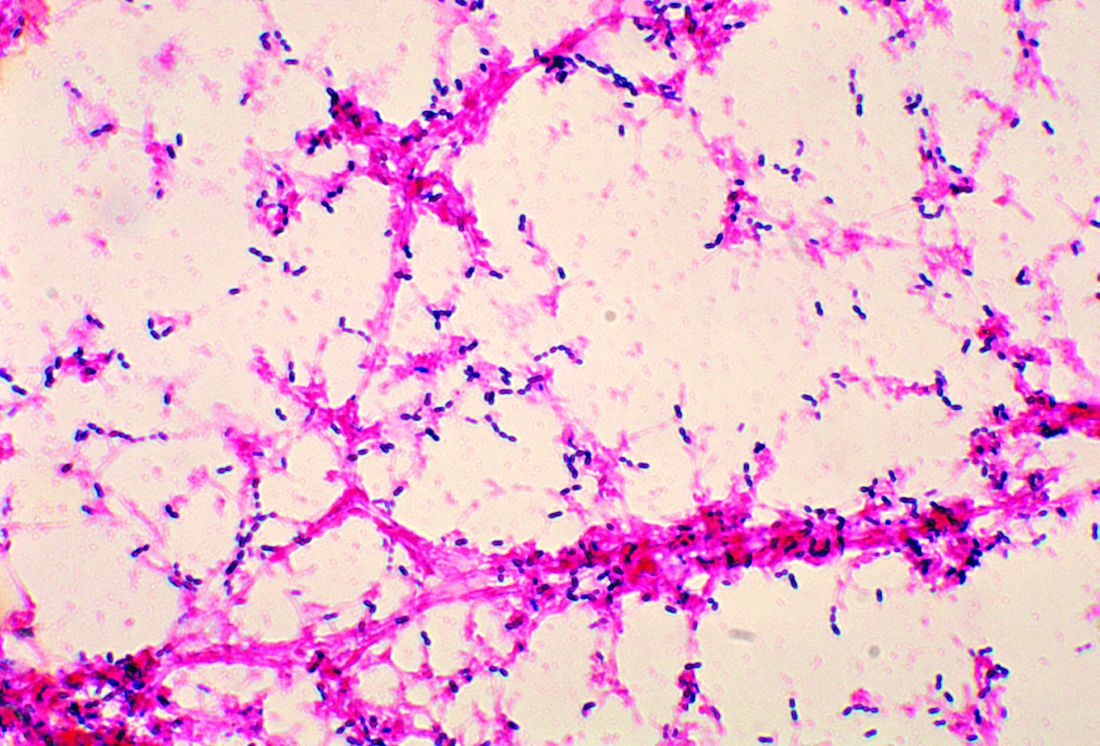
“Serotype 6C has already been reported as having caused meningitis in the pre-PCV10 era in northeastern Brazil. Additionally, following PCV7 implementation, carriage with serotype 6C emerged worldwide and reflected in an increase in IPD [invasive pneumococcal disease] cases,” Dr. Neves and his associates said. “Considering the apparent consistency of MDR 6C as the most common serotype associated with colonization in Brazil after PCV10 universal use, ongoing surveillance to monitor its increase in invasive diseases in Brazil is warranted.”
Read more in Vaccine (2017 May 15;35[21]:2794-800).
The effect of 10-valent pneumococcal conjugate vaccine (PCV10) after 4 years of routine childhood vaccination in Brazil was near elimination of PCV10 serotypes in a study of over 500 children, said Felipe P.G. Neves, PhD, of the University of California, Berkeley, and his associates.
The emergence of multidrug-resistant (MDR) serotype 6C isolates, however, is of concern, they said.
Of the 284 children who attended a public clinic and 238 children who went to two private clinics in the greater Rio de Janeiro metropolitan area between Sept. 29 and Dec. 5, 2014, 118 (23%) were pneumococcal carriers. Their median age was 2 years and all were under age 6 years. All 118 isolates were susceptible to levofloxacin, rifampicin, and vancomycin; 26 (22%) isolates were MDR, and 14 of the 18 serotype 6C isolates were MDR.
“Serotype 6C has already been reported as having caused meningitis in the pre-PCV10 era in northeastern Brazil. Additionally, following PCV7 implementation, carriage with serotype 6C emerged worldwide and reflected in an increase in IPD [invasive pneumococcal disease] cases,” Dr. Neves and his associates said. “Considering the apparent consistency of MDR 6C as the most common serotype associated with colonization in Brazil after PCV10 universal use, ongoing surveillance to monitor its increase in invasive diseases in Brazil is warranted.”
Read more in Vaccine (2017 May 15;35[21]:2794-800).
The effect of 10-valent pneumococcal conjugate vaccine (PCV10) after 4 years of routine childhood vaccination in Brazil was near elimination of PCV10 serotypes in a study of over 500 children, said Felipe P.G. Neves, PhD, of the University of California, Berkeley, and his associates.
The emergence of multidrug-resistant (MDR) serotype 6C isolates, however, is of concern, they said.
Of the 284 children who attended a public clinic and 238 children who went to two private clinics in the greater Rio de Janeiro metropolitan area between Sept. 29 and Dec. 5, 2014, 118 (23%) were pneumococcal carriers. Their median age was 2 years and all were under age 6 years. All 118 isolates were susceptible to levofloxacin, rifampicin, and vancomycin; 26 (22%) isolates were MDR, and 14 of the 18 serotype 6C isolates were MDR.
“Serotype 6C has already been reported as having caused meningitis in the pre-PCV10 era in northeastern Brazil. Additionally, following PCV7 implementation, carriage with serotype 6C emerged worldwide and reflected in an increase in IPD [invasive pneumococcal disease] cases,” Dr. Neves and his associates said. “Considering the apparent consistency of MDR 6C as the most common serotype associated with colonization in Brazil after PCV10 universal use, ongoing surveillance to monitor its increase in invasive diseases in Brazil is warranted.”
Read more in Vaccine (2017 May 15;35[21]:2794-800).
FROM VACCINE
Declines in frequent binge drinking vary in some teen subgroups
The drop in frequent binge drinking (FBD) among adolescents can be attributed to age, period, and cohort effects, but there are variations in certain subgroups of teens, said Joy Bohyun Jang, PhD, and her associates.
The decline in FBD is not as great in teen girls, African American youth, and youth from low socioeconomic backgrounds, so those groups deserve close attention by researchers and clinicians, they said.
The study used an age-period-cohort analysis to examine how these variables affected drinking trends among adolescents, with a particular focus on FBD, which was defined as two or more occasions of consuming at least five alcoholic drinks in a row in the past 2 weeks.
FBD decreased in recent years in all ages during adolescence, suggesting that declines in teen FBD in the past 25 years were “driven by factors influencing all age groups simultaneously as well as influences on particular birth cohorts,” the researchers said. These factors might include greater public efforts to lessen the risk of underage drinking and disapproval of heavy alcohol use among the recent cohorts of teens. “Those born around 1990 had the highest decline of FBD compared with those in the preceding and subsequent cohorts of adolescents.”
But there are variations in FBD among teens by demographics. Boys and those of higher socioeconomic status (SES) showed rapid increases in FBD by age, compared with girls and teens of lower SES, respectively. However, there also has been a convergence in FBD by sex in the more recent time periods because of greater declines in FBD among boys than in girls. Likewise, there is a growing discrepancy by SES in FBD in U.S. teens because higher SES teens were less likely than those from a lower SES to engage in FBD and “the strength of the association is growing in more recent time periods.”
African American youth had the lowest rates of FBD for all the racial groups, yet declines in FBD have been slower among African American youth, compared with white adolescents, since 2007, reported Dr. Jang of the University of Michigan, Ann Arbor, and her associates.
The study was supported by grants from the National Institute on Alcohol Abuse and Alcoholism, the National Institute on Drug Abuse, and was funded by the National Institutes of Health. Dr. Jang and her associates said they had no relevant financial disclosures.
cnellist@frontlinemedcom.com
Teens who drink heavily are more likely to have unprotected sex, perform poorly at school or work, and have problems with their parents. Monitoring the Future data previously have shown that since the late 1990s, the prevalence of binge drinking has dropped to lows of 3%, 10%, and 16% among 8th, 10th, and 12th graders, respectively.
Dr. Jang et al. took a look at Monitoring the Future data to see how age, period, and cohort effects might alter FBD patterns among teens. There was an overall decrease in FBD since the 1990s, with the greatest decline among teens born between 1985 and 1990. It appeared that period and cohort effects drove this decline.
However, some subgroups exhibited differences. “The decline in frequent heavy drinking is not uniform, with female adolescents, black youth, and youth from low-SES backgrounds experiencing a less steep decline.”
“Pediatric primary care providers have an opportunity to screen all adolescents for alcohol use as part of routine annual care and to provide brief prevention and early intervention strategies. Despite the reassuring decline in frequent heavy drinking, it is critical that ongoing efforts address differences in declining rates to avoid exacerbating disparities.”
Justine Wittenauer Welsh, MD, of Emory Adolescent Substance Abuse Treatment Services, Emory University, Atlanta; John Rogers Knight, MD, at the Center for Adolescent Substance Abuse Research, Boston Children’s Hospital; and Scott Evan Hadland, MD, MPH, of Boston University, made these comments in an accompanying editorial (Pediatrics. 2017 May 22;139[6]:e20170932). The authors said they received no funding and have no relevant financial disclosures.
Teens who drink heavily are more likely to have unprotected sex, perform poorly at school or work, and have problems with their parents. Monitoring the Future data previously have shown that since the late 1990s, the prevalence of binge drinking has dropped to lows of 3%, 10%, and 16% among 8th, 10th, and 12th graders, respectively.
Dr. Jang et al. took a look at Monitoring the Future data to see how age, period, and cohort effects might alter FBD patterns among teens. There was an overall decrease in FBD since the 1990s, with the greatest decline among teens born between 1985 and 1990. It appeared that period and cohort effects drove this decline.
However, some subgroups exhibited differences. “The decline in frequent heavy drinking is not uniform, with female adolescents, black youth, and youth from low-SES backgrounds experiencing a less steep decline.”
“Pediatric primary care providers have an opportunity to screen all adolescents for alcohol use as part of routine annual care and to provide brief prevention and early intervention strategies. Despite the reassuring decline in frequent heavy drinking, it is critical that ongoing efforts address differences in declining rates to avoid exacerbating disparities.”
Justine Wittenauer Welsh, MD, of Emory Adolescent Substance Abuse Treatment Services, Emory University, Atlanta; John Rogers Knight, MD, at the Center for Adolescent Substance Abuse Research, Boston Children’s Hospital; and Scott Evan Hadland, MD, MPH, of Boston University, made these comments in an accompanying editorial (Pediatrics. 2017 May 22;139[6]:e20170932). The authors said they received no funding and have no relevant financial disclosures.
Teens who drink heavily are more likely to have unprotected sex, perform poorly at school or work, and have problems with their parents. Monitoring the Future data previously have shown that since the late 1990s, the prevalence of binge drinking has dropped to lows of 3%, 10%, and 16% among 8th, 10th, and 12th graders, respectively.
Dr. Jang et al. took a look at Monitoring the Future data to see how age, period, and cohort effects might alter FBD patterns among teens. There was an overall decrease in FBD since the 1990s, with the greatest decline among teens born between 1985 and 1990. It appeared that period and cohort effects drove this decline.
However, some subgroups exhibited differences. “The decline in frequent heavy drinking is not uniform, with female adolescents, black youth, and youth from low-SES backgrounds experiencing a less steep decline.”
“Pediatric primary care providers have an opportunity to screen all adolescents for alcohol use as part of routine annual care and to provide brief prevention and early intervention strategies. Despite the reassuring decline in frequent heavy drinking, it is critical that ongoing efforts address differences in declining rates to avoid exacerbating disparities.”
Justine Wittenauer Welsh, MD, of Emory Adolescent Substance Abuse Treatment Services, Emory University, Atlanta; John Rogers Knight, MD, at the Center for Adolescent Substance Abuse Research, Boston Children’s Hospital; and Scott Evan Hadland, MD, MPH, of Boston University, made these comments in an accompanying editorial (Pediatrics. 2017 May 22;139[6]:e20170932). The authors said they received no funding and have no relevant financial disclosures.
The drop in frequent binge drinking (FBD) among adolescents can be attributed to age, period, and cohort effects, but there are variations in certain subgroups of teens, said Joy Bohyun Jang, PhD, and her associates.
The decline in FBD is not as great in teen girls, African American youth, and youth from low socioeconomic backgrounds, so those groups deserve close attention by researchers and clinicians, they said.
The study used an age-period-cohort analysis to examine how these variables affected drinking trends among adolescents, with a particular focus on FBD, which was defined as two or more occasions of consuming at least five alcoholic drinks in a row in the past 2 weeks.
FBD decreased in recent years in all ages during adolescence, suggesting that declines in teen FBD in the past 25 years were “driven by factors influencing all age groups simultaneously as well as influences on particular birth cohorts,” the researchers said. These factors might include greater public efforts to lessen the risk of underage drinking and disapproval of heavy alcohol use among the recent cohorts of teens. “Those born around 1990 had the highest decline of FBD compared with those in the preceding and subsequent cohorts of adolescents.”
But there are variations in FBD among teens by demographics. Boys and those of higher socioeconomic status (SES) showed rapid increases in FBD by age, compared with girls and teens of lower SES, respectively. However, there also has been a convergence in FBD by sex in the more recent time periods because of greater declines in FBD among boys than in girls. Likewise, there is a growing discrepancy by SES in FBD in U.S. teens because higher SES teens were less likely than those from a lower SES to engage in FBD and “the strength of the association is growing in more recent time periods.”
African American youth had the lowest rates of FBD for all the racial groups, yet declines in FBD have been slower among African American youth, compared with white adolescents, since 2007, reported Dr. Jang of the University of Michigan, Ann Arbor, and her associates.
The study was supported by grants from the National Institute on Alcohol Abuse and Alcoholism, the National Institute on Drug Abuse, and was funded by the National Institutes of Health. Dr. Jang and her associates said they had no relevant financial disclosures.
cnellist@frontlinemedcom.com
The drop in frequent binge drinking (FBD) among adolescents can be attributed to age, period, and cohort effects, but there are variations in certain subgroups of teens, said Joy Bohyun Jang, PhD, and her associates.
The decline in FBD is not as great in teen girls, African American youth, and youth from low socioeconomic backgrounds, so those groups deserve close attention by researchers and clinicians, they said.
The study used an age-period-cohort analysis to examine how these variables affected drinking trends among adolescents, with a particular focus on FBD, which was defined as two or more occasions of consuming at least five alcoholic drinks in a row in the past 2 weeks.
FBD decreased in recent years in all ages during adolescence, suggesting that declines in teen FBD in the past 25 years were “driven by factors influencing all age groups simultaneously as well as influences on particular birth cohorts,” the researchers said. These factors might include greater public efforts to lessen the risk of underage drinking and disapproval of heavy alcohol use among the recent cohorts of teens. “Those born around 1990 had the highest decline of FBD compared with those in the preceding and subsequent cohorts of adolescents.”
But there are variations in FBD among teens by demographics. Boys and those of higher socioeconomic status (SES) showed rapid increases in FBD by age, compared with girls and teens of lower SES, respectively. However, there also has been a convergence in FBD by sex in the more recent time periods because of greater declines in FBD among boys than in girls. Likewise, there is a growing discrepancy by SES in FBD in U.S. teens because higher SES teens were less likely than those from a lower SES to engage in FBD and “the strength of the association is growing in more recent time periods.”
African American youth had the lowest rates of FBD for all the racial groups, yet declines in FBD have been slower among African American youth, compared with white adolescents, since 2007, reported Dr. Jang of the University of Michigan, Ann Arbor, and her associates.
The study was supported by grants from the National Institute on Alcohol Abuse and Alcoholism, the National Institute on Drug Abuse, and was funded by the National Institutes of Health. Dr. Jang and her associates said they had no relevant financial disclosures.
cnellist@frontlinemedcom.com
FROM PEDIATRICS
Key clinical point: The drop in frequent binge drinking (FBD) among U.S. teens can be attributed to age, period, and cohort effects, but there are variations in certain teen subgroups.
Major finding: FBD decreased in recent years among all ages during adolescence, suggesting that decreases in teen FBD in the past 25 years were “driven by factors influencing all age groups simultaneously as well as influences on particular birth cohorts.”
Data source: A Monitoring the Future study involved 1,065,022 student responses on self-administered questionnaires during 1991-2015 regarding binge drinking.
Disclosures: The study was supported by grants from the National Institutes of Health. Dr. Jang and her associates said they had no relevant financial disclosures.