User login
Children With ASD May Have Earlier Onset of Suicidal Thoughts, Behaviors
, according to a research letter in JAMA Pediatrics.
Suicide rates among all US children ages 10-14 years tripled between 2007 and 2021, becoming the second leading cause of death for this age bracket. Between 2018 and 2021, 315 suicides were reported among US children ages 5 to 11 years.
People with ASD show increased rates of STB, although prevalence estimates vary by study, which led the authors to study the issue.
Lead author Benjamin Joffe Schindel, MD, MPH, a fellow in neurodevelopmental medicine at the Kennedy Krieger Institute in Columbia, Maryland, and colleagues, analyzed responses from 968 caregivers of children ages 8-25 with ASD.
They found the following reported lifetime STB incidence:
- 392 (40.5%) reported wanting to die
- 187 (19.3%) reported wanting to end their own lives
- 72 (7.4%) reported having a suicide plan
Among those answering affirmatively to each of the above questions regarding STB, onset at 8 years or younger was reported in 142 (36.2%); 66 (35.3%); and 13 (18.1%) of the children, respectively. Included in the findings was one suicide attempt by cutting in an 8-year-old child.
Dr. Schindel said though there is no direct comparison with age of these thoughts among the general population, a previous study in 2013 showed that through age 10 prevalence of suicide ideation is very low (< 1%), then increases slowly through age 12 and then more rapidly until age 17.
Disturbing Findings
“The unexpectedly high frequency of STBs among children with ASD who were 8 years or younger is particularly disturbing given the lack of validated suicide risk screening tools and interventions for this age group,” the authors wrote. They added that early start of STB in children with ASD is important as this population has been underrepresented in suicide research and prevention efforts.
The average child age in this study was 13.4; 84.8% were White; and 81% were male. More than half of the children (54.8%) were taking medications for emotional, behavioral, or mood-related issues.
Data were collected from May to October 2017 from responses to the Mental Health and Suicidal Behaviors Questionnaire, an online caregiver-answered survey. The survey was created and distributed by the Interactive Autism Network (IAN), an international autism registry, from 2006 to 2019 with approximately 55, 000 participating families.
Thoughts Come at a ‘Shockingly Young Age’
Suzanne Rybczynski, MD, chief medical officer at East Tennessee Children’s Hospital in Knoxville, who was not part of the research, said the study was small but will help get the message out that “kids start thinking about suicide, especially kids with autism,” at a “shockingly young age.”
The results demonstrate the great demand for studying thoughts and behaviors especially in younger children and in children with neurodiversity — autism or other neurodevelopmental disabilities.
Studying children with ASD in relation to suicidal thoughts is difficult, Dr. Rybczynski said, because the way they think about death and how much is understood about the finality of suicide has not been well studied. It’s also uncertain how well the children understood the questions in this study, she added.
This retrospective study also asked for responses from caregivers who may remember or interpret a child’s thoughts and words differently from the child’s true intent, Dr. Rybczynski said.
“We need more studies like this asking questions to kids directly,” she said, so researchers can figure what children think it means to die.
Current Screening Recommendations
Current recommendations from the American Academy of Pediatrics (AAP) are to screen children universally for suicide risk at age 12 using a validated tool and if there are behavioral health concerns, screen as needed from ages 8 to 12.
This study suggests that screening needs to start earlier, Dr. Rybczynski said. “But we also need to know that we’re asking the right questions” and whether questions might be different for children with different abilities.
Children who are less verbal are often not included in screening. Screening studies often specifically exclude children with neurodisabilities, she explained. Getting these youngsters involved and making appropriate screening available “would be lifesaving,” she said.
“There are no validated (screening) tools down to age 8, which is not to say that some organizations don’t use them, but they’re not validated,” she said.
Dr. Rybczynski pointed out that most of the children were White and male and future work investigating these thoughts in girls and other racial/ethnic groups with ASD will be important as well. In addition, it will be important to revisit the issue post-pandemic with the rise in mental health issues with COVID-19.
Identifying children struggling with thoughts of suicide is the key to preventing tragedy, Dr. Rybczynski said, adding, “All those deaths are avoidable.”
Various study coauthors disclosed ties to the Simons Foundation, the Patient-Centered Outcomes Research Institute, the US Social Security Administration, American Foundation for Suicide Prevention, and Sarepta. No other disclosures were reported. Dr. Rybczynski, who provided commentary on the study, has no relevant financial relationships.
, according to a research letter in JAMA Pediatrics.
Suicide rates among all US children ages 10-14 years tripled between 2007 and 2021, becoming the second leading cause of death for this age bracket. Between 2018 and 2021, 315 suicides were reported among US children ages 5 to 11 years.
People with ASD show increased rates of STB, although prevalence estimates vary by study, which led the authors to study the issue.
Lead author Benjamin Joffe Schindel, MD, MPH, a fellow in neurodevelopmental medicine at the Kennedy Krieger Institute in Columbia, Maryland, and colleagues, analyzed responses from 968 caregivers of children ages 8-25 with ASD.
They found the following reported lifetime STB incidence:
- 392 (40.5%) reported wanting to die
- 187 (19.3%) reported wanting to end their own lives
- 72 (7.4%) reported having a suicide plan
Among those answering affirmatively to each of the above questions regarding STB, onset at 8 years or younger was reported in 142 (36.2%); 66 (35.3%); and 13 (18.1%) of the children, respectively. Included in the findings was one suicide attempt by cutting in an 8-year-old child.
Dr. Schindel said though there is no direct comparison with age of these thoughts among the general population, a previous study in 2013 showed that through age 10 prevalence of suicide ideation is very low (< 1%), then increases slowly through age 12 and then more rapidly until age 17.
Disturbing Findings
“The unexpectedly high frequency of STBs among children with ASD who were 8 years or younger is particularly disturbing given the lack of validated suicide risk screening tools and interventions for this age group,” the authors wrote. They added that early start of STB in children with ASD is important as this population has been underrepresented in suicide research and prevention efforts.
The average child age in this study was 13.4; 84.8% were White; and 81% were male. More than half of the children (54.8%) were taking medications for emotional, behavioral, or mood-related issues.
Data were collected from May to October 2017 from responses to the Mental Health and Suicidal Behaviors Questionnaire, an online caregiver-answered survey. The survey was created and distributed by the Interactive Autism Network (IAN), an international autism registry, from 2006 to 2019 with approximately 55, 000 participating families.
Thoughts Come at a ‘Shockingly Young Age’
Suzanne Rybczynski, MD, chief medical officer at East Tennessee Children’s Hospital in Knoxville, who was not part of the research, said the study was small but will help get the message out that “kids start thinking about suicide, especially kids with autism,” at a “shockingly young age.”
The results demonstrate the great demand for studying thoughts and behaviors especially in younger children and in children with neurodiversity — autism or other neurodevelopmental disabilities.
Studying children with ASD in relation to suicidal thoughts is difficult, Dr. Rybczynski said, because the way they think about death and how much is understood about the finality of suicide has not been well studied. It’s also uncertain how well the children understood the questions in this study, she added.
This retrospective study also asked for responses from caregivers who may remember or interpret a child’s thoughts and words differently from the child’s true intent, Dr. Rybczynski said.
“We need more studies like this asking questions to kids directly,” she said, so researchers can figure what children think it means to die.
Current Screening Recommendations
Current recommendations from the American Academy of Pediatrics (AAP) are to screen children universally for suicide risk at age 12 using a validated tool and if there are behavioral health concerns, screen as needed from ages 8 to 12.
This study suggests that screening needs to start earlier, Dr. Rybczynski said. “But we also need to know that we’re asking the right questions” and whether questions might be different for children with different abilities.
Children who are less verbal are often not included in screening. Screening studies often specifically exclude children with neurodisabilities, she explained. Getting these youngsters involved and making appropriate screening available “would be lifesaving,” she said.
“There are no validated (screening) tools down to age 8, which is not to say that some organizations don’t use them, but they’re not validated,” she said.
Dr. Rybczynski pointed out that most of the children were White and male and future work investigating these thoughts in girls and other racial/ethnic groups with ASD will be important as well. In addition, it will be important to revisit the issue post-pandemic with the rise in mental health issues with COVID-19.
Identifying children struggling with thoughts of suicide is the key to preventing tragedy, Dr. Rybczynski said, adding, “All those deaths are avoidable.”
Various study coauthors disclosed ties to the Simons Foundation, the Patient-Centered Outcomes Research Institute, the US Social Security Administration, American Foundation for Suicide Prevention, and Sarepta. No other disclosures were reported. Dr. Rybczynski, who provided commentary on the study, has no relevant financial relationships.
, according to a research letter in JAMA Pediatrics.
Suicide rates among all US children ages 10-14 years tripled between 2007 and 2021, becoming the second leading cause of death for this age bracket. Between 2018 and 2021, 315 suicides were reported among US children ages 5 to 11 years.
People with ASD show increased rates of STB, although prevalence estimates vary by study, which led the authors to study the issue.
Lead author Benjamin Joffe Schindel, MD, MPH, a fellow in neurodevelopmental medicine at the Kennedy Krieger Institute in Columbia, Maryland, and colleagues, analyzed responses from 968 caregivers of children ages 8-25 with ASD.
They found the following reported lifetime STB incidence:
- 392 (40.5%) reported wanting to die
- 187 (19.3%) reported wanting to end their own lives
- 72 (7.4%) reported having a suicide plan
Among those answering affirmatively to each of the above questions regarding STB, onset at 8 years or younger was reported in 142 (36.2%); 66 (35.3%); and 13 (18.1%) of the children, respectively. Included in the findings was one suicide attempt by cutting in an 8-year-old child.
Dr. Schindel said though there is no direct comparison with age of these thoughts among the general population, a previous study in 2013 showed that through age 10 prevalence of suicide ideation is very low (< 1%), then increases slowly through age 12 and then more rapidly until age 17.
Disturbing Findings
“The unexpectedly high frequency of STBs among children with ASD who were 8 years or younger is particularly disturbing given the lack of validated suicide risk screening tools and interventions for this age group,” the authors wrote. They added that early start of STB in children with ASD is important as this population has been underrepresented in suicide research and prevention efforts.
The average child age in this study was 13.4; 84.8% were White; and 81% were male. More than half of the children (54.8%) were taking medications for emotional, behavioral, or mood-related issues.
Data were collected from May to October 2017 from responses to the Mental Health and Suicidal Behaviors Questionnaire, an online caregiver-answered survey. The survey was created and distributed by the Interactive Autism Network (IAN), an international autism registry, from 2006 to 2019 with approximately 55, 000 participating families.
Thoughts Come at a ‘Shockingly Young Age’
Suzanne Rybczynski, MD, chief medical officer at East Tennessee Children’s Hospital in Knoxville, who was not part of the research, said the study was small but will help get the message out that “kids start thinking about suicide, especially kids with autism,” at a “shockingly young age.”
The results demonstrate the great demand for studying thoughts and behaviors especially in younger children and in children with neurodiversity — autism or other neurodevelopmental disabilities.
Studying children with ASD in relation to suicidal thoughts is difficult, Dr. Rybczynski said, because the way they think about death and how much is understood about the finality of suicide has not been well studied. It’s also uncertain how well the children understood the questions in this study, she added.
This retrospective study also asked for responses from caregivers who may remember or interpret a child’s thoughts and words differently from the child’s true intent, Dr. Rybczynski said.
“We need more studies like this asking questions to kids directly,” she said, so researchers can figure what children think it means to die.
Current Screening Recommendations
Current recommendations from the American Academy of Pediatrics (AAP) are to screen children universally for suicide risk at age 12 using a validated tool and if there are behavioral health concerns, screen as needed from ages 8 to 12.
This study suggests that screening needs to start earlier, Dr. Rybczynski said. “But we also need to know that we’re asking the right questions” and whether questions might be different for children with different abilities.
Children who are less verbal are often not included in screening. Screening studies often specifically exclude children with neurodisabilities, she explained. Getting these youngsters involved and making appropriate screening available “would be lifesaving,” she said.
“There are no validated (screening) tools down to age 8, which is not to say that some organizations don’t use them, but they’re not validated,” she said.
Dr. Rybczynski pointed out that most of the children were White and male and future work investigating these thoughts in girls and other racial/ethnic groups with ASD will be important as well. In addition, it will be important to revisit the issue post-pandemic with the rise in mental health issues with COVID-19.
Identifying children struggling with thoughts of suicide is the key to preventing tragedy, Dr. Rybczynski said, adding, “All those deaths are avoidable.”
Various study coauthors disclosed ties to the Simons Foundation, the Patient-Centered Outcomes Research Institute, the US Social Security Administration, American Foundation for Suicide Prevention, and Sarepta. No other disclosures were reported. Dr. Rybczynski, who provided commentary on the study, has no relevant financial relationships.
FROM JAMA PEDIATRICS
The Rise of Positive Psychiatry (and How Pediatrics Can Join the Effort)
Psychiatry, like all medical disciplines, changes over time. For many decades, psychiatrists were primarily psychotherapists. As medications slowly became available, these became a second tool for treatment — so much so that by the 21st century many, if not most, psychiatrists saw themselves primarily as psychopharmacologists and diagnosticians who were skilled at identifying various forms of mental illness and using medications in the hopes of inducing a clinically meaningful “response” in symptoms. While still belonging to the umbrella category of a mental health professional, more and more psychiatrists trained and practiced as mental illness professionals.
Slowly, however, there have been stirrings within the field by many who have found the identity of the psychiatrist as a “prescriber” to be too narrow, and the current “med check” model of treatment too confining. This change was partly inspired by our colleagues in clinical psychology who were challenged in the 1990s by then American Psychological Association President Martin Seligman, PhD, to develop knowledge and expertise not only in alleviating mental suffering but also in promoting true mental well-being, a construct that still was often vaguely defined. One framework of well-being that was advanced at the time was the PERMA model, representing the five well-being dimensions of Positive emotions, Engagement, Relationships, Meaning, and Accomplishment.1

While there have always been those in psychiatry who have advocated for a broad emphasis that incorporates the full spectrum of mental health, there has been a surge of interest in the past 10-15 years, urging a focus on well-being and the tools that can help a person achieve it. This trend has variably been referred to as positive psychiatry, lifestyle psychiatry, and other terms.2 As one might expect, child and adolescent psychiatry has been particularly fertile ground for such principles, and models such as the Vermont Family Based Approach have expanded the concept beyond the individual to the family and even community.3
It is important to note here that embracing the concept of well-being in treatment does not in any way require one to abandon the idea that genetic or environmental factors can lead to negative outcomes in brain development, nor does it mandate that one leaves behind important treatment modalities such as traditional psychotherapy and medication treatment. Further, this approach should not be confused with some “wellness” activities that offer quick fixes and lack scientific rigor. Positive psychiatry does, however, offer a third pathway to advance positive emotional behavioral growth, namely through health promotion activities ranging from exercise to good nutrition to positive parenting in ways that have been shown to benefit both those who are already doing fairly well as well as those who are actively struggling with significant psychiatric disorders.4
Primary care clinicians already have extensive familiarity talking about these kinds of health promoting activities with families. That said, it’s been my observation from many years of doing consultations and reviewing notes that these conversations happen almost exclusively during well-check visits and can get forgotten when a child presents with emotional behavioral challenges.
So how can the primary care clinician who is interested in more fully incorporating the burgeoning science on well-being work these principles into routine practice? Here are three suggestions.
Ask Some New Questions
It’s difficult to treat things that aren’t assessed. To best incorporate true mental health within one’s work with families, it can be very helpful to expand the regular questions one asks to include those that address some of the PERMA and health promotion areas described above. Some examples could include the following:
- Hopes. What would a perfect life look like for you when you’re older?
- Connection. Is there anything that you just love doing, so much so that time sometimes just seems to go away?
- Strengths. What are you good at? What good things would your friends say about you?
- Parenting. What are you most proud of as a parent, and where are your biggest challenges?
- Nutrition. What does a typical school day breakfast look like for you?
- Screens. Do you have any restrictions related to what you do on screens?
- Sleep. Tell me about your typical bedtime routine.
Add Some New Interventions
Counseling and medications can be powerful ways to bring improvement in a child’s life, but thinking about health promotion opens up a whole new avenue for intervention. This domain includes areas like physical activity, nutrition, sleep practices, parenting, participation in music and the arts, practicing kindness towards others, and mindfulness, among others.
For someone newly diagnosed with ADHD, for example, consider expanding your treatment plan to include not only medications but also specific guidance to exercise more, limit screen usage, practice good bedtime routines, eat a real breakfast, and reduce the helicopter parenting. Monitor these areas over time.
Another example relates to common sleep problems. Before making that melatonin recommendation, ask yourself if you understand what is happening in that child’s environment at night. Are they allowed to play video games until 2 a.m.? Are they taking naps during the day because they have nothing to do? Are they downing caffeinated drinks with dinner? Does the child get zero physical activity outside of the PE class? Maybe you still will need the melatonin, but perhaps other areas need to be addressed first.
Find Some New Colleagues
While it can be challenging sometimes to find anyone in mental health who sees new patients, there is value is finding out the approach and methodology that psychiatric clinicians and therapists apply in their practice. Working collaboratively with those who value a well-being orientation and who can work productively with the whole family to increase health promotion can yield benefits for a patient’s long-term physical and mental health.
The renewed interest and attention on well-being and health promotion activities that can optimize brain growth are a welcome and overdue development in mental health treatment. Pediatricians and other primary care clinicians can be a critical part of this growing initiative by gaining knowledge about youth well-being, applying this knowledge in day-to-day practice, and working collaboratively with those who share a similar perspective.
Dr. Rettew is a child & adolescent psychiatrist and medical director of Lane County Behavioral Health in Eugene, Oregon. He is on the psychiatry faculty at Oregon Health & Science University. You can follow him on Facebook and X @PediPsych. His latest book is Parenting Made Complicated: What Science Really Knows about the Greatest Debates of Early Childhood.
References
1. Seligman, MEP. Flourish: a visionary new understanding of happiness and well-being. New York: Simon & Schuster; 2011.
2. Jeste DV, Palmer BW. (Eds.). Positive psychiatry: a clinical handbook. Washington DC: American Psychiatric Publishing; 2015. doi: 10.1176/appi.books.9781615370818.
3. Hudziak J, Ivanova MY. The Vermont family based approach: Family based health promotion, illness prevention, and intervention. Child Adolesc Psychiatr Clin N Am. 2016 Apr;25(2):167-78. doi: 10.1016/j.chc.2015.11.002.
4. Rettew DC. Incorporating positive psychiatry with children and adolescents. Current Psychiatry. 2022 November;21(11):12-16,45. doi: 10.12788/cp.0303.
Psychiatry, like all medical disciplines, changes over time. For many decades, psychiatrists were primarily psychotherapists. As medications slowly became available, these became a second tool for treatment — so much so that by the 21st century many, if not most, psychiatrists saw themselves primarily as psychopharmacologists and diagnosticians who were skilled at identifying various forms of mental illness and using medications in the hopes of inducing a clinically meaningful “response” in symptoms. While still belonging to the umbrella category of a mental health professional, more and more psychiatrists trained and practiced as mental illness professionals.
Slowly, however, there have been stirrings within the field by many who have found the identity of the psychiatrist as a “prescriber” to be too narrow, and the current “med check” model of treatment too confining. This change was partly inspired by our colleagues in clinical psychology who were challenged in the 1990s by then American Psychological Association President Martin Seligman, PhD, to develop knowledge and expertise not only in alleviating mental suffering but also in promoting true mental well-being, a construct that still was often vaguely defined. One framework of well-being that was advanced at the time was the PERMA model, representing the five well-being dimensions of Positive emotions, Engagement, Relationships, Meaning, and Accomplishment.1
While there have always been those in psychiatry who have advocated for a broad emphasis that incorporates the full spectrum of mental health, there has been a surge of interest in the past 10-15 years, urging a focus on well-being and the tools that can help a person achieve it. This trend has variably been referred to as positive psychiatry, lifestyle psychiatry, and other terms.2 As one might expect, child and adolescent psychiatry has been particularly fertile ground for such principles, and models such as the Vermont Family Based Approach have expanded the concept beyond the individual to the family and even community.3
It is important to note here that embracing the concept of well-being in treatment does not in any way require one to abandon the idea that genetic or environmental factors can lead to negative outcomes in brain development, nor does it mandate that one leaves behind important treatment modalities such as traditional psychotherapy and medication treatment. Further, this approach should not be confused with some “wellness” activities that offer quick fixes and lack scientific rigor. Positive psychiatry does, however, offer a third pathway to advance positive emotional behavioral growth, namely through health promotion activities ranging from exercise to good nutrition to positive parenting in ways that have been shown to benefit both those who are already doing fairly well as well as those who are actively struggling with significant psychiatric disorders.4
Primary care clinicians already have extensive familiarity talking about these kinds of health promoting activities with families. That said, it’s been my observation from many years of doing consultations and reviewing notes that these conversations happen almost exclusively during well-check visits and can get forgotten when a child presents with emotional behavioral challenges.
So how can the primary care clinician who is interested in more fully incorporating the burgeoning science on well-being work these principles into routine practice? Here are three suggestions.
Ask Some New Questions
It’s difficult to treat things that aren’t assessed. To best incorporate true mental health within one’s work with families, it can be very helpful to expand the regular questions one asks to include those that address some of the PERMA and health promotion areas described above. Some examples could include the following:
- Hopes. What would a perfect life look like for you when you’re older?
- Connection. Is there anything that you just love doing, so much so that time sometimes just seems to go away?
- Strengths. What are you good at? What good things would your friends say about you?
- Parenting. What are you most proud of as a parent, and where are your biggest challenges?
- Nutrition. What does a typical school day breakfast look like for you?
- Screens. Do you have any restrictions related to what you do on screens?
- Sleep. Tell me about your typical bedtime routine.
Add Some New Interventions
Counseling and medications can be powerful ways to bring improvement in a child’s life, but thinking about health promotion opens up a whole new avenue for intervention. This domain includes areas like physical activity, nutrition, sleep practices, parenting, participation in music and the arts, practicing kindness towards others, and mindfulness, among others.
For someone newly diagnosed with ADHD, for example, consider expanding your treatment plan to include not only medications but also specific guidance to exercise more, limit screen usage, practice good bedtime routines, eat a real breakfast, and reduce the helicopter parenting. Monitor these areas over time.
Another example relates to common sleep problems. Before making that melatonin recommendation, ask yourself if you understand what is happening in that child’s environment at night. Are they allowed to play video games until 2 a.m.? Are they taking naps during the day because they have nothing to do? Are they downing caffeinated drinks with dinner? Does the child get zero physical activity outside of the PE class? Maybe you still will need the melatonin, but perhaps other areas need to be addressed first.
Find Some New Colleagues
While it can be challenging sometimes to find anyone in mental health who sees new patients, there is value is finding out the approach and methodology that psychiatric clinicians and therapists apply in their practice. Working collaboratively with those who value a well-being orientation and who can work productively with the whole family to increase health promotion can yield benefits for a patient’s long-term physical and mental health.
The renewed interest and attention on well-being and health promotion activities that can optimize brain growth are a welcome and overdue development in mental health treatment. Pediatricians and other primary care clinicians can be a critical part of this growing initiative by gaining knowledge about youth well-being, applying this knowledge in day-to-day practice, and working collaboratively with those who share a similar perspective.
Dr. Rettew is a child & adolescent psychiatrist and medical director of Lane County Behavioral Health in Eugene, Oregon. He is on the psychiatry faculty at Oregon Health & Science University. You can follow him on Facebook and X @PediPsych. His latest book is Parenting Made Complicated: What Science Really Knows about the Greatest Debates of Early Childhood.
References
1. Seligman, MEP. Flourish: a visionary new understanding of happiness and well-being. New York: Simon & Schuster; 2011.
2. Jeste DV, Palmer BW. (Eds.). Positive psychiatry: a clinical handbook. Washington DC: American Psychiatric Publishing; 2015. doi: 10.1176/appi.books.9781615370818.
3. Hudziak J, Ivanova MY. The Vermont family based approach: Family based health promotion, illness prevention, and intervention. Child Adolesc Psychiatr Clin N Am. 2016 Apr;25(2):167-78. doi: 10.1016/j.chc.2015.11.002.
4. Rettew DC. Incorporating positive psychiatry with children and adolescents. Current Psychiatry. 2022 November;21(11):12-16,45. doi: 10.12788/cp.0303.
Psychiatry, like all medical disciplines, changes over time. For many decades, psychiatrists were primarily psychotherapists. As medications slowly became available, these became a second tool for treatment — so much so that by the 21st century many, if not most, psychiatrists saw themselves primarily as psychopharmacologists and diagnosticians who were skilled at identifying various forms of mental illness and using medications in the hopes of inducing a clinically meaningful “response” in symptoms. While still belonging to the umbrella category of a mental health professional, more and more psychiatrists trained and practiced as mental illness professionals.
Slowly, however, there have been stirrings within the field by many who have found the identity of the psychiatrist as a “prescriber” to be too narrow, and the current “med check” model of treatment too confining. This change was partly inspired by our colleagues in clinical psychology who were challenged in the 1990s by then American Psychological Association President Martin Seligman, PhD, to develop knowledge and expertise not only in alleviating mental suffering but also in promoting true mental well-being, a construct that still was often vaguely defined. One framework of well-being that was advanced at the time was the PERMA model, representing the five well-being dimensions of Positive emotions, Engagement, Relationships, Meaning, and Accomplishment.1
While there have always been those in psychiatry who have advocated for a broad emphasis that incorporates the full spectrum of mental health, there has been a surge of interest in the past 10-15 years, urging a focus on well-being and the tools that can help a person achieve it. This trend has variably been referred to as positive psychiatry, lifestyle psychiatry, and other terms.2 As one might expect, child and adolescent psychiatry has been particularly fertile ground for such principles, and models such as the Vermont Family Based Approach have expanded the concept beyond the individual to the family and even community.3
It is important to note here that embracing the concept of well-being in treatment does not in any way require one to abandon the idea that genetic or environmental factors can lead to negative outcomes in brain development, nor does it mandate that one leaves behind important treatment modalities such as traditional psychotherapy and medication treatment. Further, this approach should not be confused with some “wellness” activities that offer quick fixes and lack scientific rigor. Positive psychiatry does, however, offer a third pathway to advance positive emotional behavioral growth, namely through health promotion activities ranging from exercise to good nutrition to positive parenting in ways that have been shown to benefit both those who are already doing fairly well as well as those who are actively struggling with significant psychiatric disorders.4
Primary care clinicians already have extensive familiarity talking about these kinds of health promoting activities with families. That said, it’s been my observation from many years of doing consultations and reviewing notes that these conversations happen almost exclusively during well-check visits and can get forgotten when a child presents with emotional behavioral challenges.
So how can the primary care clinician who is interested in more fully incorporating the burgeoning science on well-being work these principles into routine practice? Here are three suggestions.
Ask Some New Questions
It’s difficult to treat things that aren’t assessed. To best incorporate true mental health within one’s work with families, it can be very helpful to expand the regular questions one asks to include those that address some of the PERMA and health promotion areas described above. Some examples could include the following:
- Hopes. What would a perfect life look like for you when you’re older?
- Connection. Is there anything that you just love doing, so much so that time sometimes just seems to go away?
- Strengths. What are you good at? What good things would your friends say about you?
- Parenting. What are you most proud of as a parent, and where are your biggest challenges?
- Nutrition. What does a typical school day breakfast look like for you?
- Screens. Do you have any restrictions related to what you do on screens?
- Sleep. Tell me about your typical bedtime routine.
Add Some New Interventions
Counseling and medications can be powerful ways to bring improvement in a child’s life, but thinking about health promotion opens up a whole new avenue for intervention. This domain includes areas like physical activity, nutrition, sleep practices, parenting, participation in music and the arts, practicing kindness towards others, and mindfulness, among others.
For someone newly diagnosed with ADHD, for example, consider expanding your treatment plan to include not only medications but also specific guidance to exercise more, limit screen usage, practice good bedtime routines, eat a real breakfast, and reduce the helicopter parenting. Monitor these areas over time.
Another example relates to common sleep problems. Before making that melatonin recommendation, ask yourself if you understand what is happening in that child’s environment at night. Are they allowed to play video games until 2 a.m.? Are they taking naps during the day because they have nothing to do? Are they downing caffeinated drinks with dinner? Does the child get zero physical activity outside of the PE class? Maybe you still will need the melatonin, but perhaps other areas need to be addressed first.
Find Some New Colleagues
While it can be challenging sometimes to find anyone in mental health who sees new patients, there is value is finding out the approach and methodology that psychiatric clinicians and therapists apply in their practice. Working collaboratively with those who value a well-being orientation and who can work productively with the whole family to increase health promotion can yield benefits for a patient’s long-term physical and mental health.
The renewed interest and attention on well-being and health promotion activities that can optimize brain growth are a welcome and overdue development in mental health treatment. Pediatricians and other primary care clinicians can be a critical part of this growing initiative by gaining knowledge about youth well-being, applying this knowledge in day-to-day practice, and working collaboratively with those who share a similar perspective.
Dr. Rettew is a child & adolescent psychiatrist and medical director of Lane County Behavioral Health in Eugene, Oregon. He is on the psychiatry faculty at Oregon Health & Science University. You can follow him on Facebook and X @PediPsych. His latest book is Parenting Made Complicated: What Science Really Knows about the Greatest Debates of Early Childhood.
References
1. Seligman, MEP. Flourish: a visionary new understanding of happiness and well-being. New York: Simon & Schuster; 2011.
2. Jeste DV, Palmer BW. (Eds.). Positive psychiatry: a clinical handbook. Washington DC: American Psychiatric Publishing; 2015. doi: 10.1176/appi.books.9781615370818.
3. Hudziak J, Ivanova MY. The Vermont family based approach: Family based health promotion, illness prevention, and intervention. Child Adolesc Psychiatr Clin N Am. 2016 Apr;25(2):167-78. doi: 10.1016/j.chc.2015.11.002.
4. Rettew DC. Incorporating positive psychiatry with children and adolescents. Current Psychiatry. 2022 November;21(11):12-16,45. doi: 10.12788/cp.0303.
Positive Results for Intranasal Oxytocin in Adults With Autism
BUDAPEST, HUNGARY — Twice daily intranasal oxytocin has been associated with improved social functioning, quality of life, and overall symptoms in adults with autism spectrum disorder (ASD), results of a small randomized control trial showed.
“One of the challenges for adults with autism is experiencing poor social interactions and difficulties in making friends. Insufficient social support from peers, friends, and family members can contribute to loneliness in adolescents with ASD, which in turn leads to anxiety, sadness, and social isolation,” said study investigator Saba Faraji Niri, MD, assistant professor of psychiatry, Tehran University of Medical Sciences in Iran.
Recent US data show it is relatively common. In addition, previous research suggests intranasal oxytocin significantly increases activity in brain regions that play a role in establishing social interactions.
To evaluate the therapeutic effects and safety of intranasal oxytocin the researchers randomly assigned 39 adult patients with ASD to receive intranasal oxytocin or placebo with 24 units administered every 12 hours for 8 weeks.
Dr. Faraji Niri said study participants were required to stop all psychotropic medications for at least 8 weeks prior to study entry.
Participants were assessed at baseline and weeks 4 and 8 using the Autism Quotient, Ritvo Autism Asperger Diagnostic Scale — Revised (RAADS-R), Social Responsiveness Scale (SRS), Clinical Global Impression (CGI) scale, and the World Health Organization Quality of Life-BREF (WHOQL-BREF) questionnaire. Adverse events were also evaluated.
Dr. Faraji Niri said that those receiving intranasal oxytocin showed clinical improvement on RAADS-R scores (P = .010), as well as on the social communication subscale of the SRS (P = .002), the CGI scale (P = .000), and the physical (P = .004), psychological (P = .006), and social relationships (P = .046) domains of the WHOQL-BREF.
However, although the findings were positive, she said at this point it’s not possible to draw any definitive conclusions. She noted the study had several potential confounders. These included differences in baseline levels of endogenous oxytocin among study participants individuals, as well as difference in required treatment doses, which were adjusted by age and sex. The presence of comorbidities and interactions with other treatments could also affect the results.
Commenting on the findings for this news organization, session chair Szabolcs Kéri, PhD, Professor, Sztárai Institute, University of Tokaj, Sárospatak, Hungary, said the use of oxytocin for ASD is controversial. He said that, while the research contributes to the scientific debate, the clinical significance of the findings is unclear.
The investigators and Dr Keri reported no relevant financial disclosures.
A version of this article appeared on Medscape.com .
BUDAPEST, HUNGARY — Twice daily intranasal oxytocin has been associated with improved social functioning, quality of life, and overall symptoms in adults with autism spectrum disorder (ASD), results of a small randomized control trial showed.
“One of the challenges for adults with autism is experiencing poor social interactions and difficulties in making friends. Insufficient social support from peers, friends, and family members can contribute to loneliness in adolescents with ASD, which in turn leads to anxiety, sadness, and social isolation,” said study investigator Saba Faraji Niri, MD, assistant professor of psychiatry, Tehran University of Medical Sciences in Iran.
Recent US data show it is relatively common. In addition, previous research suggests intranasal oxytocin significantly increases activity in brain regions that play a role in establishing social interactions.
To evaluate the therapeutic effects and safety of intranasal oxytocin the researchers randomly assigned 39 adult patients with ASD to receive intranasal oxytocin or placebo with 24 units administered every 12 hours for 8 weeks.
Dr. Faraji Niri said study participants were required to stop all psychotropic medications for at least 8 weeks prior to study entry.
Participants were assessed at baseline and weeks 4 and 8 using the Autism Quotient, Ritvo Autism Asperger Diagnostic Scale — Revised (RAADS-R), Social Responsiveness Scale (SRS), Clinical Global Impression (CGI) scale, and the World Health Organization Quality of Life-BREF (WHOQL-BREF) questionnaire. Adverse events were also evaluated.
Dr. Faraji Niri said that those receiving intranasal oxytocin showed clinical improvement on RAADS-R scores (P = .010), as well as on the social communication subscale of the SRS (P = .002), the CGI scale (P = .000), and the physical (P = .004), psychological (P = .006), and social relationships (P = .046) domains of the WHOQL-BREF.
However, although the findings were positive, she said at this point it’s not possible to draw any definitive conclusions. She noted the study had several potential confounders. These included differences in baseline levels of endogenous oxytocin among study participants individuals, as well as difference in required treatment doses, which were adjusted by age and sex. The presence of comorbidities and interactions with other treatments could also affect the results.
Commenting on the findings for this news organization, session chair Szabolcs Kéri, PhD, Professor, Sztárai Institute, University of Tokaj, Sárospatak, Hungary, said the use of oxytocin for ASD is controversial. He said that, while the research contributes to the scientific debate, the clinical significance of the findings is unclear.
The investigators and Dr Keri reported no relevant financial disclosures.
A version of this article appeared on Medscape.com .
BUDAPEST, HUNGARY — Twice daily intranasal oxytocin has been associated with improved social functioning, quality of life, and overall symptoms in adults with autism spectrum disorder (ASD), results of a small randomized control trial showed.
“One of the challenges for adults with autism is experiencing poor social interactions and difficulties in making friends. Insufficient social support from peers, friends, and family members can contribute to loneliness in adolescents with ASD, which in turn leads to anxiety, sadness, and social isolation,” said study investigator Saba Faraji Niri, MD, assistant professor of psychiatry, Tehran University of Medical Sciences in Iran.
Recent US data show it is relatively common. In addition, previous research suggests intranasal oxytocin significantly increases activity in brain regions that play a role in establishing social interactions.
To evaluate the therapeutic effects and safety of intranasal oxytocin the researchers randomly assigned 39 adult patients with ASD to receive intranasal oxytocin or placebo with 24 units administered every 12 hours for 8 weeks.
Dr. Faraji Niri said study participants were required to stop all psychotropic medications for at least 8 weeks prior to study entry.
Participants were assessed at baseline and weeks 4 and 8 using the Autism Quotient, Ritvo Autism Asperger Diagnostic Scale — Revised (RAADS-R), Social Responsiveness Scale (SRS), Clinical Global Impression (CGI) scale, and the World Health Organization Quality of Life-BREF (WHOQL-BREF) questionnaire. Adverse events were also evaluated.
Dr. Faraji Niri said that those receiving intranasal oxytocin showed clinical improvement on RAADS-R scores (P = .010), as well as on the social communication subscale of the SRS (P = .002), the CGI scale (P = .000), and the physical (P = .004), psychological (P = .006), and social relationships (P = .046) domains of the WHOQL-BREF.
However, although the findings were positive, she said at this point it’s not possible to draw any definitive conclusions. She noted the study had several potential confounders. These included differences in baseline levels of endogenous oxytocin among study participants individuals, as well as difference in required treatment doses, which were adjusted by age and sex. The presence of comorbidities and interactions with other treatments could also affect the results.
Commenting on the findings for this news organization, session chair Szabolcs Kéri, PhD, Professor, Sztárai Institute, University of Tokaj, Sárospatak, Hungary, said the use of oxytocin for ASD is controversial. He said that, while the research contributes to the scientific debate, the clinical significance of the findings is unclear.
The investigators and Dr Keri reported no relevant financial disclosures.
A version of this article appeared on Medscape.com .
Can a Blood Test Diagnose Depression and Bipolar Disorder?
SYNLAB and ALCEDIAG recently launched the first blood test to assist in mental health diagnosis in France. The test is aimed at differentiating bipolar disorders from depression. The news may be surprising, given the challenges in diagnosing psychiatric conditions, especially when they share common symptoms such as recurrent depression and bipolar disorder.
Psychiatrists’ reactions to the new test are cautious. Many have echoed the sentiments of the French Association of Biological Psychiatry and Neuropsychopharmacology (AFPBN) and Stéphane Jamain, PhD, director of translational neuropsychiatry research (Inserm U955, Mondor Institute of Biomedical Research), who spoke with this news organization.
Early Diagnosis
Depression and bipolar disorders are two distinct psychiatric illnesses requiring different treatments. Early and accurate diagnosis and appropriate treatment are major challenges for clinicians, especially since untreated or inadequately treated bipolar disorder can lead to significant mental and physical health consequences for patients and their families.
Early and accurate diagnosis of bipolar disorders that allows for appropriate treatment would be a significant advance for patients and their families. This is what the French laboratories SYNLAB, in partnership with ALCEDIAG, propose through myEDIT-B, a blood test described as “the first validated diagnostic aid test to differentiate depression and bipolar disorders.”
Whether this test, the availability of which has somewhat surprised the psychiatric medical and scientific community, will attract psychiatrists remains to be seen.
The AFPBN stated in a press release that “to date, no test meets conditions for clinical use.” For a diagnostic test to be scientifically valid, ethical, and usable in clinical practice, its development must meet strict criteria, as highlighted by the AFPBN. The approximately 10 criteria include the validation of the scientific results in at least two independent clinical studies or cohorts, satisfactory sensitivity (detection of true positives) and specificity (detection of false negatives), and cost that is ethically responsible and allows patient access, independent of commercial interests.
ALCEDIAG has reported two clinical studies, but only one has been published so far (in Translational Psychiatry) involving 400 patients. In this case, “these patients already had a well-established psychiatric condition, did not quite present the same symptoms between patients with recurrent depression and those with bipolar disorder and were not taking the same treatments,” noted Dr. Jamain.
Differentiating between bipolar disorder and depression is crucial, especially regarding treatments, because antidepressants given to a patient with bipolar disorder can induce a manic shift if they are not accompanied by mood stabilizers, Dr. Jamain acknowledged. Nevertheless, he believes that based on what the laboratory has published, it is difficult to comment on the test at this time.
RNA Editing
Moreover, myEDIT-B is based on a technique that measures RNA editing modifications of specific markers in patients’ blood, which could lead to differences in amino acids within proteins. The technique is unique to the ALCEDIAG laboratory, which coupled it with an artificial intelligence tool that specifically selected 8 RNA sequences for analysis from thousands of edited sequences to obtain a differential signature for unipolar and bipolar depressions. “This method is niche, the trademark of ALCEDIAG,” said Dr. Jamain, who questions the significance of this “editing” on the periphery of the CNS.
“This technique differs from that adopted by most international consortia, which are very active in this research field. The latter technique compares differences in genome [DNA] nucleotides between individuals in large cohorts involving tens of thousands of people and identifies the most frequently occurring patterns associated with a pathology to deduce a risk of developing a psychiatric illness,” said Jamain. “However, the information provided by these large-scale studies does not allow us to define who is at risk for developing the disease any more than the simple observation of the familial recurrence [heritability] of it does.”
Scientific Validation
While ALCEDIAG boasts a sensitivity and specificity of more than 80% for its test, the psychiatric world remains cautious. Interviewed by France Info TV, Marion Leboyer, PhD, general director of the FondaMental Foundation, psychiatrist, and researcher (at AP-HP, Inserm in Créteil, France), highlighted the importance of encouraging research on psychiatric illnesses, especially that which will contribute to the understanding and treatment of patients with bipolar disorders. But she expressed caution regarding the test because of the absence of rigorous scientific validation through clinical trials.
Regarding “ALCEDIAG’s test and its commercial aspect, caution is warranted,” said Dr. Jamain. Only time will tell if psychiatrists will prescribe this €899 test, which currently is not reimbursed by social security (see box below). ALCEDIAG plans to submit a validation dossier to the US Food and Drug Administration.
Test Not Reimbursed by Social Security
The ALCEDIAG test will be available beginning in April 2024, by prescription, in SYNLAB France network laboratories. It is intended for patients aged 18 years and older who are being treated for a moderate or severe depressive episode. Test results are transmitted within 4 weeks to the prescribing psychiatrist, who will confirm the diagnosis to the patient during a consultation. Already available in Italy, this in vitro medical device has a CE-IVD marking. In France, however, it costs €899 and is not reimbursed by social security because of insufficient clinical evidence.
This story was translated from the Medscape French edition using several editorial tools, including AI, as part of the process. Human editors reviewed this content before publication. A version of this article appeared on Medscape.com.
SYNLAB and ALCEDIAG recently launched the first blood test to assist in mental health diagnosis in France. The test is aimed at differentiating bipolar disorders from depression. The news may be surprising, given the challenges in diagnosing psychiatric conditions, especially when they share common symptoms such as recurrent depression and bipolar disorder.
Psychiatrists’ reactions to the new test are cautious. Many have echoed the sentiments of the French Association of Biological Psychiatry and Neuropsychopharmacology (AFPBN) and Stéphane Jamain, PhD, director of translational neuropsychiatry research (Inserm U955, Mondor Institute of Biomedical Research), who spoke with this news organization.
Early Diagnosis
Depression and bipolar disorders are two distinct psychiatric illnesses requiring different treatments. Early and accurate diagnosis and appropriate treatment are major challenges for clinicians, especially since untreated or inadequately treated bipolar disorder can lead to significant mental and physical health consequences for patients and their families.
Early and accurate diagnosis of bipolar disorders that allows for appropriate treatment would be a significant advance for patients and their families. This is what the French laboratories SYNLAB, in partnership with ALCEDIAG, propose through myEDIT-B, a blood test described as “the first validated diagnostic aid test to differentiate depression and bipolar disorders.”
Whether this test, the availability of which has somewhat surprised the psychiatric medical and scientific community, will attract psychiatrists remains to be seen.
The AFPBN stated in a press release that “to date, no test meets conditions for clinical use.” For a diagnostic test to be scientifically valid, ethical, and usable in clinical practice, its development must meet strict criteria, as highlighted by the AFPBN. The approximately 10 criteria include the validation of the scientific results in at least two independent clinical studies or cohorts, satisfactory sensitivity (detection of true positives) and specificity (detection of false negatives), and cost that is ethically responsible and allows patient access, independent of commercial interests.
ALCEDIAG has reported two clinical studies, but only one has been published so far (in Translational Psychiatry) involving 400 patients. In this case, “these patients already had a well-established psychiatric condition, did not quite present the same symptoms between patients with recurrent depression and those with bipolar disorder and were not taking the same treatments,” noted Dr. Jamain.
Differentiating between bipolar disorder and depression is crucial, especially regarding treatments, because antidepressants given to a patient with bipolar disorder can induce a manic shift if they are not accompanied by mood stabilizers, Dr. Jamain acknowledged. Nevertheless, he believes that based on what the laboratory has published, it is difficult to comment on the test at this time.
RNA Editing
Moreover, myEDIT-B is based on a technique that measures RNA editing modifications of specific markers in patients’ blood, which could lead to differences in amino acids within proteins. The technique is unique to the ALCEDIAG laboratory, which coupled it with an artificial intelligence tool that specifically selected 8 RNA sequences for analysis from thousands of edited sequences to obtain a differential signature for unipolar and bipolar depressions. “This method is niche, the trademark of ALCEDIAG,” said Dr. Jamain, who questions the significance of this “editing” on the periphery of the CNS.
“This technique differs from that adopted by most international consortia, which are very active in this research field. The latter technique compares differences in genome [DNA] nucleotides between individuals in large cohorts involving tens of thousands of people and identifies the most frequently occurring patterns associated with a pathology to deduce a risk of developing a psychiatric illness,” said Jamain. “However, the information provided by these large-scale studies does not allow us to define who is at risk for developing the disease any more than the simple observation of the familial recurrence [heritability] of it does.”
Scientific Validation
While ALCEDIAG boasts a sensitivity and specificity of more than 80% for its test, the psychiatric world remains cautious. Interviewed by France Info TV, Marion Leboyer, PhD, general director of the FondaMental Foundation, psychiatrist, and researcher (at AP-HP, Inserm in Créteil, France), highlighted the importance of encouraging research on psychiatric illnesses, especially that which will contribute to the understanding and treatment of patients with bipolar disorders. But she expressed caution regarding the test because of the absence of rigorous scientific validation through clinical trials.
Regarding “ALCEDIAG’s test and its commercial aspect, caution is warranted,” said Dr. Jamain. Only time will tell if psychiatrists will prescribe this €899 test, which currently is not reimbursed by social security (see box below). ALCEDIAG plans to submit a validation dossier to the US Food and Drug Administration.
Test Not Reimbursed by Social Security
The ALCEDIAG test will be available beginning in April 2024, by prescription, in SYNLAB France network laboratories. It is intended for patients aged 18 years and older who are being treated for a moderate or severe depressive episode. Test results are transmitted within 4 weeks to the prescribing psychiatrist, who will confirm the diagnosis to the patient during a consultation. Already available in Italy, this in vitro medical device has a CE-IVD marking. In France, however, it costs €899 and is not reimbursed by social security because of insufficient clinical evidence.
This story was translated from the Medscape French edition using several editorial tools, including AI, as part of the process. Human editors reviewed this content before publication. A version of this article appeared on Medscape.com.
SYNLAB and ALCEDIAG recently launched the first blood test to assist in mental health diagnosis in France. The test is aimed at differentiating bipolar disorders from depression. The news may be surprising, given the challenges in diagnosing psychiatric conditions, especially when they share common symptoms such as recurrent depression and bipolar disorder.
Psychiatrists’ reactions to the new test are cautious. Many have echoed the sentiments of the French Association of Biological Psychiatry and Neuropsychopharmacology (AFPBN) and Stéphane Jamain, PhD, director of translational neuropsychiatry research (Inserm U955, Mondor Institute of Biomedical Research), who spoke with this news organization.
Early Diagnosis
Depression and bipolar disorders are two distinct psychiatric illnesses requiring different treatments. Early and accurate diagnosis and appropriate treatment are major challenges for clinicians, especially since untreated or inadequately treated bipolar disorder can lead to significant mental and physical health consequences for patients and their families.
Early and accurate diagnosis of bipolar disorders that allows for appropriate treatment would be a significant advance for patients and their families. This is what the French laboratories SYNLAB, in partnership with ALCEDIAG, propose through myEDIT-B, a blood test described as “the first validated diagnostic aid test to differentiate depression and bipolar disorders.”
Whether this test, the availability of which has somewhat surprised the psychiatric medical and scientific community, will attract psychiatrists remains to be seen.
The AFPBN stated in a press release that “to date, no test meets conditions for clinical use.” For a diagnostic test to be scientifically valid, ethical, and usable in clinical practice, its development must meet strict criteria, as highlighted by the AFPBN. The approximately 10 criteria include the validation of the scientific results in at least two independent clinical studies or cohorts, satisfactory sensitivity (detection of true positives) and specificity (detection of false negatives), and cost that is ethically responsible and allows patient access, independent of commercial interests.
ALCEDIAG has reported two clinical studies, but only one has been published so far (in Translational Psychiatry) involving 400 patients. In this case, “these patients already had a well-established psychiatric condition, did not quite present the same symptoms between patients with recurrent depression and those with bipolar disorder and were not taking the same treatments,” noted Dr. Jamain.
Differentiating between bipolar disorder and depression is crucial, especially regarding treatments, because antidepressants given to a patient with bipolar disorder can induce a manic shift if they are not accompanied by mood stabilizers, Dr. Jamain acknowledged. Nevertheless, he believes that based on what the laboratory has published, it is difficult to comment on the test at this time.
RNA Editing
Moreover, myEDIT-B is based on a technique that measures RNA editing modifications of specific markers in patients’ blood, which could lead to differences in amino acids within proteins. The technique is unique to the ALCEDIAG laboratory, which coupled it with an artificial intelligence tool that specifically selected 8 RNA sequences for analysis from thousands of edited sequences to obtain a differential signature for unipolar and bipolar depressions. “This method is niche, the trademark of ALCEDIAG,” said Dr. Jamain, who questions the significance of this “editing” on the periphery of the CNS.
“This technique differs from that adopted by most international consortia, which are very active in this research field. The latter technique compares differences in genome [DNA] nucleotides between individuals in large cohorts involving tens of thousands of people and identifies the most frequently occurring patterns associated with a pathology to deduce a risk of developing a psychiatric illness,” said Jamain. “However, the information provided by these large-scale studies does not allow us to define who is at risk for developing the disease any more than the simple observation of the familial recurrence [heritability] of it does.”
Scientific Validation
While ALCEDIAG boasts a sensitivity and specificity of more than 80% for its test, the psychiatric world remains cautious. Interviewed by France Info TV, Marion Leboyer, PhD, general director of the FondaMental Foundation, psychiatrist, and researcher (at AP-HP, Inserm in Créteil, France), highlighted the importance of encouraging research on psychiatric illnesses, especially that which will contribute to the understanding and treatment of patients with bipolar disorders. But she expressed caution regarding the test because of the absence of rigorous scientific validation through clinical trials.
Regarding “ALCEDIAG’s test and its commercial aspect, caution is warranted,” said Dr. Jamain. Only time will tell if psychiatrists will prescribe this €899 test, which currently is not reimbursed by social security (see box below). ALCEDIAG plans to submit a validation dossier to the US Food and Drug Administration.
Test Not Reimbursed by Social Security
The ALCEDIAG test will be available beginning in April 2024, by prescription, in SYNLAB France network laboratories. It is intended for patients aged 18 years and older who are being treated for a moderate or severe depressive episode. Test results are transmitted within 4 weeks to the prescribing psychiatrist, who will confirm the diagnosis to the patient during a consultation. Already available in Italy, this in vitro medical device has a CE-IVD marking. In France, however, it costs €899 and is not reimbursed by social security because of insufficient clinical evidence.
This story was translated from the Medscape French edition using several editorial tools, including AI, as part of the process. Human editors reviewed this content before publication. A version of this article appeared on Medscape.com.
Vocal Biomarkers a Tell for Mental Health Status?
A smartphone-based tool that tracks mental health status by detecting changes in voice may complement traditional psychiatric assessments and improve an individual’s ability to self-monitor depressive and other mental health symptoms, new research suggested.
Investigators used the Mental Fitness Vocal Biomarker (MFVB) scoring algorithm, which is incorporated into a smartphone voice journaling application, to detect increased or decreased risk for elevated mental health symptom severity by analyzing 30-second free speech voice recordings for specific vocal patterns previously linked to mental health.
“While the MFVB tool is not intended to diagnose or treat mental health conditions, these findings provide a robust initial foundation upon which to further explore its potential in personalized wellness tracking, which has so far not yet been able to extend measurement of physical health to mental wellbeing,” reported the researchers, led by Erik Larsen, PhD, with Boston-based Sonde Health, which developed the tool.
The study was published online in Frontiers in Psychiatry.
Eight Vocal Features
The potential value of vocal biomarkers for mental health assessment has gained increasing attention.
“Somebody that is depressed often sounds more monotone; they may have less inflection in their voice and speak slower with less energy, which can be recognized in voice recordings,” Dr. Larsen told this news organization.
“This is an area which has received quite a bit of research in the last few decades to find out what specific aspects of acoustics and rhythm of speech could point to conditions like depression,” Dr. Larsen said.
In the current study, the researchers set out to validate the ability of the MFVB platform to detect mental health symptoms.
With the tool, users record their thoughts and feelings as a 30-second voice journal. The tool analyzes the recordings for eight vocal features previously shown to be relevant to mental health. These include jitter, shimmer, pitch variability, energy variability, vowel space, phonation duration, speech rate, and pause duration.
The tool calculates a real-time MFVB score ranging from 0 to 100. A score of 80-100 is defined as “excellent” and 70-79 as “good,” while a score of 0-69 is categorized as “pay attention.” It was trained on more than 1 million voice samples to optimize performance across a diverse range of cultures, languages, and socioeconomic groups.
The current study included 104 outpatient psychiatric patients (73% women) with anxiety-related diagnoses, trauma, and stress-related disorders or depressive disorders. The cohort was mostly made up of White, non-Hispanic young adults. Patients with a history of substance abuse or who were taking psychiatric medications that may affect voice and speech were excluded.
During the 4-week study period, participants conducted 1336 app sessions with voice recordings, resulting in an average of 12.8 sessions per participant, or 3.2 per week.
MFVB scores were cross-referenced against the results of participants’ M3 Checklist, a clinically validated mental health assessment tool.
Over a period of 2 weeks, participants were twice as likely to report elevated mental health symptoms if their MFVB scores remained in the “pay attention” range vs in the “excellent” range, the researchers found.
The effect was more pronounced in those who used the app more frequently, with frequent users 8.5 times more likely to show elevated symptoms.
The correlation between MFVB scores and established mental health assessments was “not only statistically significant but also meaningful for participants,” researchers wrote. Subgroup analyses suggest the app works best for depression and stress- and trauma-related disorders.
The tool provides psychiatric outpatients with “immediate quantitative feedback on their mental health symptom severity,” the researchers noted.
In their paper, the investigators caution that the results highlight the “general ability” of MFVB score categories to differentiate mental health symptom severity levels but do not distinguish what type of symptoms these may be, such as depression, anxiety, or posttraumatic stress disorder.
In a statement, study investigator Lindsey Venesky, PhD, psychologist and clinical director at the Cognitive Behavior Institute in Pittsburgh, noted that the ability to collect mental health data from patients between clinic visits “could transform how we monitor symptoms and optimize treatment plans.”
“Voice-based health tracking technology can provide accurate insights into a client’s mental health status over time and can do so seamlessly and unobtrusively, with little added effort for clients,” Dr. Venesky said.
Need for Replication, Validation
Commenting on the findings, John Torous, MD, director of the division of digital psychiatry at Beth Israel Deaconess Medical Center, Boston, noted that “over the last 20 years, there has been a lot of interest in voice biomarkers, yet somehow that research has never been translated into mainstream clinical care.”
Voice biomarkers are “relevant and have potential” in mental health, he noted. The findings in this study are “interesting, but they need to be thoroughly externally replicated and validated to show that these biomarkers are valid and reliable,” Dr. Torous added.
Changes in voice are part of the mental status exam, Dr. Torous said, “but it’s only one piece of information that we collect in a clinical assessment of many pieces of information.”
Dr. Torous also cautioned that “as a practicing psychiatrist, it can be tricky to be given new data if you don’t know how to interpret it or what it means. An important step would be education, outreach, and resources for physicians to learn about potential voice biomarkers.”
The authors received internal financial support for the research, authorship, and/or publication of this article. The pilot phase of the study at St. Joseph’s Healthcare Hamilton was partially supported through Mitacs Accelerate International, Canada. Dr. Larsen and three coauthors are employed by Sonde Health. Dr. Torous had no relevant conflicts of interest.
A version of this article appeared on Medscape.com.
A smartphone-based tool that tracks mental health status by detecting changes in voice may complement traditional psychiatric assessments and improve an individual’s ability to self-monitor depressive and other mental health symptoms, new research suggested.
Investigators used the Mental Fitness Vocal Biomarker (MFVB) scoring algorithm, which is incorporated into a smartphone voice journaling application, to detect increased or decreased risk for elevated mental health symptom severity by analyzing 30-second free speech voice recordings for specific vocal patterns previously linked to mental health.
“While the MFVB tool is not intended to diagnose or treat mental health conditions, these findings provide a robust initial foundation upon which to further explore its potential in personalized wellness tracking, which has so far not yet been able to extend measurement of physical health to mental wellbeing,” reported the researchers, led by Erik Larsen, PhD, with Boston-based Sonde Health, which developed the tool.
The study was published online in Frontiers in Psychiatry.
Eight Vocal Features
The potential value of vocal biomarkers for mental health assessment has gained increasing attention.
“Somebody that is depressed often sounds more monotone; they may have less inflection in their voice and speak slower with less energy, which can be recognized in voice recordings,” Dr. Larsen told this news organization.
“This is an area which has received quite a bit of research in the last few decades to find out what specific aspects of acoustics and rhythm of speech could point to conditions like depression,” Dr. Larsen said.
In the current study, the researchers set out to validate the ability of the MFVB platform to detect mental health symptoms.
With the tool, users record their thoughts and feelings as a 30-second voice journal. The tool analyzes the recordings for eight vocal features previously shown to be relevant to mental health. These include jitter, shimmer, pitch variability, energy variability, vowel space, phonation duration, speech rate, and pause duration.
The tool calculates a real-time MFVB score ranging from 0 to 100. A score of 80-100 is defined as “excellent” and 70-79 as “good,” while a score of 0-69 is categorized as “pay attention.” It was trained on more than 1 million voice samples to optimize performance across a diverse range of cultures, languages, and socioeconomic groups.
The current study included 104 outpatient psychiatric patients (73% women) with anxiety-related diagnoses, trauma, and stress-related disorders or depressive disorders. The cohort was mostly made up of White, non-Hispanic young adults. Patients with a history of substance abuse or who were taking psychiatric medications that may affect voice and speech were excluded.
During the 4-week study period, participants conducted 1336 app sessions with voice recordings, resulting in an average of 12.8 sessions per participant, or 3.2 per week.
MFVB scores were cross-referenced against the results of participants’ M3 Checklist, a clinically validated mental health assessment tool.
Over a period of 2 weeks, participants were twice as likely to report elevated mental health symptoms if their MFVB scores remained in the “pay attention” range vs in the “excellent” range, the researchers found.
The effect was more pronounced in those who used the app more frequently, with frequent users 8.5 times more likely to show elevated symptoms.
The correlation between MFVB scores and established mental health assessments was “not only statistically significant but also meaningful for participants,” researchers wrote. Subgroup analyses suggest the app works best for depression and stress- and trauma-related disorders.
The tool provides psychiatric outpatients with “immediate quantitative feedback on their mental health symptom severity,” the researchers noted.
In their paper, the investigators caution that the results highlight the “general ability” of MFVB score categories to differentiate mental health symptom severity levels but do not distinguish what type of symptoms these may be, such as depression, anxiety, or posttraumatic stress disorder.
In a statement, study investigator Lindsey Venesky, PhD, psychologist and clinical director at the Cognitive Behavior Institute in Pittsburgh, noted that the ability to collect mental health data from patients between clinic visits “could transform how we monitor symptoms and optimize treatment plans.”
“Voice-based health tracking technology can provide accurate insights into a client’s mental health status over time and can do so seamlessly and unobtrusively, with little added effort for clients,” Dr. Venesky said.
Need for Replication, Validation
Commenting on the findings, John Torous, MD, director of the division of digital psychiatry at Beth Israel Deaconess Medical Center, Boston, noted that “over the last 20 years, there has been a lot of interest in voice biomarkers, yet somehow that research has never been translated into mainstream clinical care.”
Voice biomarkers are “relevant and have potential” in mental health, he noted. The findings in this study are “interesting, but they need to be thoroughly externally replicated and validated to show that these biomarkers are valid and reliable,” Dr. Torous added.
Changes in voice are part of the mental status exam, Dr. Torous said, “but it’s only one piece of information that we collect in a clinical assessment of many pieces of information.”
Dr. Torous also cautioned that “as a practicing psychiatrist, it can be tricky to be given new data if you don’t know how to interpret it or what it means. An important step would be education, outreach, and resources for physicians to learn about potential voice biomarkers.”
The authors received internal financial support for the research, authorship, and/or publication of this article. The pilot phase of the study at St. Joseph’s Healthcare Hamilton was partially supported through Mitacs Accelerate International, Canada. Dr. Larsen and three coauthors are employed by Sonde Health. Dr. Torous had no relevant conflicts of interest.
A version of this article appeared on Medscape.com.
A smartphone-based tool that tracks mental health status by detecting changes in voice may complement traditional psychiatric assessments and improve an individual’s ability to self-monitor depressive and other mental health symptoms, new research suggested.
Investigators used the Mental Fitness Vocal Biomarker (MFVB) scoring algorithm, which is incorporated into a smartphone voice journaling application, to detect increased or decreased risk for elevated mental health symptom severity by analyzing 30-second free speech voice recordings for specific vocal patterns previously linked to mental health.
“While the MFVB tool is not intended to diagnose or treat mental health conditions, these findings provide a robust initial foundation upon which to further explore its potential in personalized wellness tracking, which has so far not yet been able to extend measurement of physical health to mental wellbeing,” reported the researchers, led by Erik Larsen, PhD, with Boston-based Sonde Health, which developed the tool.
The study was published online in Frontiers in Psychiatry.
Eight Vocal Features
The potential value of vocal biomarkers for mental health assessment has gained increasing attention.
“Somebody that is depressed often sounds more monotone; they may have less inflection in their voice and speak slower with less energy, which can be recognized in voice recordings,” Dr. Larsen told this news organization.
“This is an area which has received quite a bit of research in the last few decades to find out what specific aspects of acoustics and rhythm of speech could point to conditions like depression,” Dr. Larsen said.
In the current study, the researchers set out to validate the ability of the MFVB platform to detect mental health symptoms.
With the tool, users record their thoughts and feelings as a 30-second voice journal. The tool analyzes the recordings for eight vocal features previously shown to be relevant to mental health. These include jitter, shimmer, pitch variability, energy variability, vowel space, phonation duration, speech rate, and pause duration.
The tool calculates a real-time MFVB score ranging from 0 to 100. A score of 80-100 is defined as “excellent” and 70-79 as “good,” while a score of 0-69 is categorized as “pay attention.” It was trained on more than 1 million voice samples to optimize performance across a diverse range of cultures, languages, and socioeconomic groups.
The current study included 104 outpatient psychiatric patients (73% women) with anxiety-related diagnoses, trauma, and stress-related disorders or depressive disorders. The cohort was mostly made up of White, non-Hispanic young adults. Patients with a history of substance abuse or who were taking psychiatric medications that may affect voice and speech were excluded.
During the 4-week study period, participants conducted 1336 app sessions with voice recordings, resulting in an average of 12.8 sessions per participant, or 3.2 per week.
MFVB scores were cross-referenced against the results of participants’ M3 Checklist, a clinically validated mental health assessment tool.
Over a period of 2 weeks, participants were twice as likely to report elevated mental health symptoms if their MFVB scores remained in the “pay attention” range vs in the “excellent” range, the researchers found.
The effect was more pronounced in those who used the app more frequently, with frequent users 8.5 times more likely to show elevated symptoms.
The correlation between MFVB scores and established mental health assessments was “not only statistically significant but also meaningful for participants,” researchers wrote. Subgroup analyses suggest the app works best for depression and stress- and trauma-related disorders.
The tool provides psychiatric outpatients with “immediate quantitative feedback on their mental health symptom severity,” the researchers noted.
In their paper, the investigators caution that the results highlight the “general ability” of MFVB score categories to differentiate mental health symptom severity levels but do not distinguish what type of symptoms these may be, such as depression, anxiety, or posttraumatic stress disorder.
In a statement, study investigator Lindsey Venesky, PhD, psychologist and clinical director at the Cognitive Behavior Institute in Pittsburgh, noted that the ability to collect mental health data from patients between clinic visits “could transform how we monitor symptoms and optimize treatment plans.”
“Voice-based health tracking technology can provide accurate insights into a client’s mental health status over time and can do so seamlessly and unobtrusively, with little added effort for clients,” Dr. Venesky said.
Need for Replication, Validation
Commenting on the findings, John Torous, MD, director of the division of digital psychiatry at Beth Israel Deaconess Medical Center, Boston, noted that “over the last 20 years, there has been a lot of interest in voice biomarkers, yet somehow that research has never been translated into mainstream clinical care.”
Voice biomarkers are “relevant and have potential” in mental health, he noted. The findings in this study are “interesting, but they need to be thoroughly externally replicated and validated to show that these biomarkers are valid and reliable,” Dr. Torous added.
Changes in voice are part of the mental status exam, Dr. Torous said, “but it’s only one piece of information that we collect in a clinical assessment of many pieces of information.”
Dr. Torous also cautioned that “as a practicing psychiatrist, it can be tricky to be given new data if you don’t know how to interpret it or what it means. An important step would be education, outreach, and resources for physicians to learn about potential voice biomarkers.”
The authors received internal financial support for the research, authorship, and/or publication of this article. The pilot phase of the study at St. Joseph’s Healthcare Hamilton was partially supported through Mitacs Accelerate International, Canada. Dr. Larsen and three coauthors are employed by Sonde Health. Dr. Torous had no relevant conflicts of interest.
A version of this article appeared on Medscape.com.
First US Adult ADHD Guidelines Finally on the Way?
The first US clinical guidelines to diagnose and treat attention-deficit/hyperactivity disorder (ADHD) in adults are expected to be released this fall, providing patients, clinicians, insurers, and policymakers with a long overdue and much-needed standardized framework.
The initiative comes under the auspices of the American Professional Society of ADHD and Related Disorders (APSARD). David Goodman, MD, a member of the APSARD guidelines executive committee and assistant professor in the Department of Psychiatry and Behavioral Sciences at Johns Hopkins School of Medicine in Baltimore, Maryland, noted that the US lags behind several other nations, including Canada, the United Kingdom, Australia, and New Zealand who already have guidelines in place.
Dr. Goodman would not go into any detail as to why the country has been so slow off the mark but told this news organization that in part it has been due to a lack of specific funding. In addition, he said, “adult psychiatry abdicated responsibility for ADHD in adults.”
The American Psychiatric Association (APA) would not comment, although a spokesperson said two of its members are working with APSARD on the guidelines.
Estimates show that there are 10-11 million American adults (4.4%) with ADHD, making it the second most common psychiatric disorder in adults.
Surveys show that mental health professionals, including psychiatrists, report a lack of familiarity with ADHD in adults, said Margaret Sibley, PhD, professor of psychiatry and behavioral sciences at the University of Washington School of Medicine in Seattle and chair of the APSARD guidelines diagnostic and screening committee.
Many don’t consider an ADHD diagnosis in adults “because they were always trained to conceptualize it as something that’s relevant only in childhood,” Dr. Sibley told this new organization. However, research shows that people with ADHD do not outgrow the disorder.
“ADHD itself is still present and has unique problems associated with it in adults,” Dr. Sibley said.
Filling the Leadership Gap
Laurie Kulikosky, CEO of the advocacy group CHADD, said that the organization views the development of guidelines “as a huge step forward in the ability for more people to understand ADHD, particularly on the adult side.”
Oren Mason, MD, a primary care physician who specializes in ADHD at his Grand Rapids, Michigan-based practice, said “there hasn’t been a single specialty that has taken lead responsibility in adult ADHD,” which has contributed to the lag in guideline development.
In addition, Dr. Mason said, “trying to come up with adult guidelines even 5 or 10 years ago wouldn’t have yielded nearly as robust a set of guidelines because it’s taken awhile to have the evidence base to be able to make a few pronouncements really confidently.”
Not only has the evidence base grown but so has telehealth, especially during the height of the COVID-19 pandemic. That led to concerns that ADHD was not rigorously evaluated and that stimulants were prescribed too easily, said Dr. Goodman.
Several telehealth providers came under federal scrutiny, with the DEA accusing Cerebral’s pharmacy of dispensing stimulants for nonmedical reasons. The agency said that some 72,000 prescriptions for controlled substances, mostly stimulants, were written between 2020 and 2022.
APSARD felt it was time to act, said Dr. Goodman.
“We could not allow entrepreneurs who felt there was a business opportunity here to, under the auspices of advocating for mental health, increase the distribution of potentially addictive medications in the community,” he said
Ensuring Psychiatrist Buy-In
Development of the APSARD guidelines is led by Thomas Spencer, MD, a retired associate professor of psychiatry at Harvard Medical School, and Frances Rudnick Levin, MD, the Kennedy-Leavy Professor of Psychiatry at Columbia University, both of whom have decades of experience and clinical work in adults with ADHD.
Dr. Goodman is joined on the executive committee by Lenard Adler, MD (NYU Grossman School of Medicine), and Stephen Faraone, PhD (SUNY Upstate Medical University), along with 30 others who have expertise in psychiatry, psychology, primary care, and other health professions.
To participate in the development of the guidelines, experts had to agree to disengage from any potential conflicts and devote themselves — unpaid — to the process, said Dr. Goodman. The goal is to head off any charges of conflicts or biases, he said.
Three subcommittees — diagnosis and assessment, medical treatment, and nonmedical treatment — will review the literature, grade the evidence base, and use the Delphi consensus method to write the draft guidelines.
The draft will go out to the public and to medical specialties for comment, which will be considered for inclusion in the final publication, said Dr. Goodman.
The guidelines panel has been working closely with the APA and following the APA guideline development process in an effort to get buy-in from psychiatrists, he said.
Critical Educational Tool
“Doctors are often surprised to hear that there are no guidelines for adult ADHD in the US,” said Ann Childress, MD, APSARD president, when the group announced its effort in 2023. “Whether diagnosis and treatment are provided in office or online, the standard of care should be the same throughout the country,” she said.
Guidelines will “reduce mythology and error or at least when we run into mythology and error we can say no, there’s a giant consensus with hundreds of experts that disagree with that and so if you want to counter that you better bring some heavy machinery, you can’t just throw out an opinion and leave it unsupported,” said Dr. Mason.
Dr. Sibley said that, although there are no good data, anecdotally it appears many clinicians rely on the Diagnostic and Statistical Manual of Mental Disorders (DSM) when treating adults with ADHD.
The DSM “tells people what they should do but it doesn’t exactly tell them what’s the best way to do it,” she said, adding that often physicians follow what they learned from whoever they were trained by.
“Some people have been trained by people who are well versed in best practices and so they might be doing things that we would say have a research support to them, and other people might be doing things based on people who developed their own opinions about the best way to diagnose ADHD based on lived experience which may or may not be best practices,” Dr. Sibley said.
Her subcommittee aims to offer guidance on screening “that will be helpful in primary care, in terms of what are the most efficient ways to do it” and to help with accuracy, she said. Currently, there are likely some clinicians who are making too liberal a diagnosis and others who are making too conservative a diagnosis, she said.
With so many clinicians — especially in primary care — having a lack of experience, the guidelines could increase “the ability for more different kinds of providers to help,” said Dr. Kulikosky.
Guidelines should also provide a template for ongoing education, especially for clinicians who have never received any training in ADHD.
Dr. Goodman said it is increasingly likely that primary care physicians will be writing more prescriptions for ADHD medications than psychiatrists. “If that is the trajectory, the education of those providers seeing these patients is critical,” he said.
Offering Standards, Dispelling Myths
Guidelines can also help “shorten the learning curve,” said Dr. Mason, who said that he’s had to piece together evidence over the last few decades. Once published, the standards can be used in residency, for board exams, and continuing medical education, he said.
Not only do they offer a “kind of a shortcut to what we all know and agree on,” they also specify where the edges of knowledge are, he said.
Guidelines can also dissuade clinicians from practices that have no evidence to support them, such as “medication holidays,” said Dr. Mason. That has been employed to give children, especially, a break from side effects, but studies have shown that it actually increases side effects, he said.
Dr. Goodman and Dr. Sibley expect the guidelines to help with the challenge of diagnosis. Approximately 38% of adults with ADHD have a mood disorder and 48% have anxiety, said Dr. Goodman. Many others have coexisting posttraumatic stress disorder, substance use disorders, or medical illnesses that compound cognitive problems.
If an individual has several psychiatric conditions, “the question is how do you diagnostically prioritize which you treat first, second, and third, with the goal of treating one without making the others worse,” said Dr. Goodman.
“ADHD takes more detective work than other disorders,” said Dr. Sibley, adding that without an objective diagnostic and with overlaps with other comorbid disorders, “there are very complex issues that all of us wrestle with.”
While the guidelines will not provide algorithms, they will provide information that “will help guide them in the tougher diagnostic context,” she said.
Dr. Mason agreed. “It’s a complicated disorder to diagnose and treat. It’s hard for somebody to jump into it. [The guidelines] are going to give us — here’s what you really have to know, here’s what you have to do,” he said.
And it won’t just be clinicians who look to the guidelines. Calls to National Resource Center on ADHD — which CHADD runs for the federal government — from adults wanting to know more about their own condition “have increased exponentially” in the last few years, said Dr. Kulikosky. “We know adults are seeking out information, they are seeking out diagnosis and treatment,” she said.
Dr. Goodman and Dr. Sibley reported no relevant financial relationships. Dr. Mason reported that he consults for Otsuka and is a speaker for Iron Shore.
A version of this article first appeared on Medscape.com.
The first US clinical guidelines to diagnose and treat attention-deficit/hyperactivity disorder (ADHD) in adults are expected to be released this fall, providing patients, clinicians, insurers, and policymakers with a long overdue and much-needed standardized framework.
The initiative comes under the auspices of the American Professional Society of ADHD and Related Disorders (APSARD). David Goodman, MD, a member of the APSARD guidelines executive committee and assistant professor in the Department of Psychiatry and Behavioral Sciences at Johns Hopkins School of Medicine in Baltimore, Maryland, noted that the US lags behind several other nations, including Canada, the United Kingdom, Australia, and New Zealand who already have guidelines in place.
Dr. Goodman would not go into any detail as to why the country has been so slow off the mark but told this news organization that in part it has been due to a lack of specific funding. In addition, he said, “adult psychiatry abdicated responsibility for ADHD in adults.”
The American Psychiatric Association (APA) would not comment, although a spokesperson said two of its members are working with APSARD on the guidelines.
Estimates show that there are 10-11 million American adults (4.4%) with ADHD, making it the second most common psychiatric disorder in adults.
Surveys show that mental health professionals, including psychiatrists, report a lack of familiarity with ADHD in adults, said Margaret Sibley, PhD, professor of psychiatry and behavioral sciences at the University of Washington School of Medicine in Seattle and chair of the APSARD guidelines diagnostic and screening committee.
Many don’t consider an ADHD diagnosis in adults “because they were always trained to conceptualize it as something that’s relevant only in childhood,” Dr. Sibley told this new organization. However, research shows that people with ADHD do not outgrow the disorder.
“ADHD itself is still present and has unique problems associated with it in adults,” Dr. Sibley said.
Filling the Leadership Gap
Laurie Kulikosky, CEO of the advocacy group CHADD, said that the organization views the development of guidelines “as a huge step forward in the ability for more people to understand ADHD, particularly on the adult side.”
Oren Mason, MD, a primary care physician who specializes in ADHD at his Grand Rapids, Michigan-based practice, said “there hasn’t been a single specialty that has taken lead responsibility in adult ADHD,” which has contributed to the lag in guideline development.
In addition, Dr. Mason said, “trying to come up with adult guidelines even 5 or 10 years ago wouldn’t have yielded nearly as robust a set of guidelines because it’s taken awhile to have the evidence base to be able to make a few pronouncements really confidently.”
Not only has the evidence base grown but so has telehealth, especially during the height of the COVID-19 pandemic. That led to concerns that ADHD was not rigorously evaluated and that stimulants were prescribed too easily, said Dr. Goodman.
Several telehealth providers came under federal scrutiny, with the DEA accusing Cerebral’s pharmacy of dispensing stimulants for nonmedical reasons. The agency said that some 72,000 prescriptions for controlled substances, mostly stimulants, were written between 2020 and 2022.
APSARD felt it was time to act, said Dr. Goodman.
“We could not allow entrepreneurs who felt there was a business opportunity here to, under the auspices of advocating for mental health, increase the distribution of potentially addictive medications in the community,” he said
Ensuring Psychiatrist Buy-In
Development of the APSARD guidelines is led by Thomas Spencer, MD, a retired associate professor of psychiatry at Harvard Medical School, and Frances Rudnick Levin, MD, the Kennedy-Leavy Professor of Psychiatry at Columbia University, both of whom have decades of experience and clinical work in adults with ADHD.
Dr. Goodman is joined on the executive committee by Lenard Adler, MD (NYU Grossman School of Medicine), and Stephen Faraone, PhD (SUNY Upstate Medical University), along with 30 others who have expertise in psychiatry, psychology, primary care, and other health professions.
To participate in the development of the guidelines, experts had to agree to disengage from any potential conflicts and devote themselves — unpaid — to the process, said Dr. Goodman. The goal is to head off any charges of conflicts or biases, he said.
Three subcommittees — diagnosis and assessment, medical treatment, and nonmedical treatment — will review the literature, grade the evidence base, and use the Delphi consensus method to write the draft guidelines.
The draft will go out to the public and to medical specialties for comment, which will be considered for inclusion in the final publication, said Dr. Goodman.
The guidelines panel has been working closely with the APA and following the APA guideline development process in an effort to get buy-in from psychiatrists, he said.
Critical Educational Tool
“Doctors are often surprised to hear that there are no guidelines for adult ADHD in the US,” said Ann Childress, MD, APSARD president, when the group announced its effort in 2023. “Whether diagnosis and treatment are provided in office or online, the standard of care should be the same throughout the country,” she said.
Guidelines will “reduce mythology and error or at least when we run into mythology and error we can say no, there’s a giant consensus with hundreds of experts that disagree with that and so if you want to counter that you better bring some heavy machinery, you can’t just throw out an opinion and leave it unsupported,” said Dr. Mason.
Dr. Sibley said that, although there are no good data, anecdotally it appears many clinicians rely on the Diagnostic and Statistical Manual of Mental Disorders (DSM) when treating adults with ADHD.
The DSM “tells people what they should do but it doesn’t exactly tell them what’s the best way to do it,” she said, adding that often physicians follow what they learned from whoever they were trained by.
“Some people have been trained by people who are well versed in best practices and so they might be doing things that we would say have a research support to them, and other people might be doing things based on people who developed their own opinions about the best way to diagnose ADHD based on lived experience which may or may not be best practices,” Dr. Sibley said.
Her subcommittee aims to offer guidance on screening “that will be helpful in primary care, in terms of what are the most efficient ways to do it” and to help with accuracy, she said. Currently, there are likely some clinicians who are making too liberal a diagnosis and others who are making too conservative a diagnosis, she said.
With so many clinicians — especially in primary care — having a lack of experience, the guidelines could increase “the ability for more different kinds of providers to help,” said Dr. Kulikosky.
Guidelines should also provide a template for ongoing education, especially for clinicians who have never received any training in ADHD.
Dr. Goodman said it is increasingly likely that primary care physicians will be writing more prescriptions for ADHD medications than psychiatrists. “If that is the trajectory, the education of those providers seeing these patients is critical,” he said.
Offering Standards, Dispelling Myths
Guidelines can also help “shorten the learning curve,” said Dr. Mason, who said that he’s had to piece together evidence over the last few decades. Once published, the standards can be used in residency, for board exams, and continuing medical education, he said.
Not only do they offer a “kind of a shortcut to what we all know and agree on,” they also specify where the edges of knowledge are, he said.
Guidelines can also dissuade clinicians from practices that have no evidence to support them, such as “medication holidays,” said Dr. Mason. That has been employed to give children, especially, a break from side effects, but studies have shown that it actually increases side effects, he said.
Dr. Goodman and Dr. Sibley expect the guidelines to help with the challenge of diagnosis. Approximately 38% of adults with ADHD have a mood disorder and 48% have anxiety, said Dr. Goodman. Many others have coexisting posttraumatic stress disorder, substance use disorders, or medical illnesses that compound cognitive problems.
If an individual has several psychiatric conditions, “the question is how do you diagnostically prioritize which you treat first, second, and third, with the goal of treating one without making the others worse,” said Dr. Goodman.
“ADHD takes more detective work than other disorders,” said Dr. Sibley, adding that without an objective diagnostic and with overlaps with other comorbid disorders, “there are very complex issues that all of us wrestle with.”
While the guidelines will not provide algorithms, they will provide information that “will help guide them in the tougher diagnostic context,” she said.
Dr. Mason agreed. “It’s a complicated disorder to diagnose and treat. It’s hard for somebody to jump into it. [The guidelines] are going to give us — here’s what you really have to know, here’s what you have to do,” he said.
And it won’t just be clinicians who look to the guidelines. Calls to National Resource Center on ADHD — which CHADD runs for the federal government — from adults wanting to know more about their own condition “have increased exponentially” in the last few years, said Dr. Kulikosky. “We know adults are seeking out information, they are seeking out diagnosis and treatment,” she said.
Dr. Goodman and Dr. Sibley reported no relevant financial relationships. Dr. Mason reported that he consults for Otsuka and is a speaker for Iron Shore.
A version of this article first appeared on Medscape.com.
The first US clinical guidelines to diagnose and treat attention-deficit/hyperactivity disorder (ADHD) in adults are expected to be released this fall, providing patients, clinicians, insurers, and policymakers with a long overdue and much-needed standardized framework.
The initiative comes under the auspices of the American Professional Society of ADHD and Related Disorders (APSARD). David Goodman, MD, a member of the APSARD guidelines executive committee and assistant professor in the Department of Psychiatry and Behavioral Sciences at Johns Hopkins School of Medicine in Baltimore, Maryland, noted that the US lags behind several other nations, including Canada, the United Kingdom, Australia, and New Zealand who already have guidelines in place.
Dr. Goodman would not go into any detail as to why the country has been so slow off the mark but told this news organization that in part it has been due to a lack of specific funding. In addition, he said, “adult psychiatry abdicated responsibility for ADHD in adults.”
The American Psychiatric Association (APA) would not comment, although a spokesperson said two of its members are working with APSARD on the guidelines.
Estimates show that there are 10-11 million American adults (4.4%) with ADHD, making it the second most common psychiatric disorder in adults.
Surveys show that mental health professionals, including psychiatrists, report a lack of familiarity with ADHD in adults, said Margaret Sibley, PhD, professor of psychiatry and behavioral sciences at the University of Washington School of Medicine in Seattle and chair of the APSARD guidelines diagnostic and screening committee.
Many don’t consider an ADHD diagnosis in adults “because they were always trained to conceptualize it as something that’s relevant only in childhood,” Dr. Sibley told this new organization. However, research shows that people with ADHD do not outgrow the disorder.
“ADHD itself is still present and has unique problems associated with it in adults,” Dr. Sibley said.
Filling the Leadership Gap
Laurie Kulikosky, CEO of the advocacy group CHADD, said that the organization views the development of guidelines “as a huge step forward in the ability for more people to understand ADHD, particularly on the adult side.”
Oren Mason, MD, a primary care physician who specializes in ADHD at his Grand Rapids, Michigan-based practice, said “there hasn’t been a single specialty that has taken lead responsibility in adult ADHD,” which has contributed to the lag in guideline development.
In addition, Dr. Mason said, “trying to come up with adult guidelines even 5 or 10 years ago wouldn’t have yielded nearly as robust a set of guidelines because it’s taken awhile to have the evidence base to be able to make a few pronouncements really confidently.”
Not only has the evidence base grown but so has telehealth, especially during the height of the COVID-19 pandemic. That led to concerns that ADHD was not rigorously evaluated and that stimulants were prescribed too easily, said Dr. Goodman.
Several telehealth providers came under federal scrutiny, with the DEA accusing Cerebral’s pharmacy of dispensing stimulants for nonmedical reasons. The agency said that some 72,000 prescriptions for controlled substances, mostly stimulants, were written between 2020 and 2022.
APSARD felt it was time to act, said Dr. Goodman.
“We could not allow entrepreneurs who felt there was a business opportunity here to, under the auspices of advocating for mental health, increase the distribution of potentially addictive medications in the community,” he said
Ensuring Psychiatrist Buy-In
Development of the APSARD guidelines is led by Thomas Spencer, MD, a retired associate professor of psychiatry at Harvard Medical School, and Frances Rudnick Levin, MD, the Kennedy-Leavy Professor of Psychiatry at Columbia University, both of whom have decades of experience and clinical work in adults with ADHD.
Dr. Goodman is joined on the executive committee by Lenard Adler, MD (NYU Grossman School of Medicine), and Stephen Faraone, PhD (SUNY Upstate Medical University), along with 30 others who have expertise in psychiatry, psychology, primary care, and other health professions.
To participate in the development of the guidelines, experts had to agree to disengage from any potential conflicts and devote themselves — unpaid — to the process, said Dr. Goodman. The goal is to head off any charges of conflicts or biases, he said.
Three subcommittees — diagnosis and assessment, medical treatment, and nonmedical treatment — will review the literature, grade the evidence base, and use the Delphi consensus method to write the draft guidelines.
The draft will go out to the public and to medical specialties for comment, which will be considered for inclusion in the final publication, said Dr. Goodman.
The guidelines panel has been working closely with the APA and following the APA guideline development process in an effort to get buy-in from psychiatrists, he said.
Critical Educational Tool
“Doctors are often surprised to hear that there are no guidelines for adult ADHD in the US,” said Ann Childress, MD, APSARD president, when the group announced its effort in 2023. “Whether diagnosis and treatment are provided in office or online, the standard of care should be the same throughout the country,” she said.
Guidelines will “reduce mythology and error or at least when we run into mythology and error we can say no, there’s a giant consensus with hundreds of experts that disagree with that and so if you want to counter that you better bring some heavy machinery, you can’t just throw out an opinion and leave it unsupported,” said Dr. Mason.
Dr. Sibley said that, although there are no good data, anecdotally it appears many clinicians rely on the Diagnostic and Statistical Manual of Mental Disorders (DSM) when treating adults with ADHD.
The DSM “tells people what they should do but it doesn’t exactly tell them what’s the best way to do it,” she said, adding that often physicians follow what they learned from whoever they were trained by.
“Some people have been trained by people who are well versed in best practices and so they might be doing things that we would say have a research support to them, and other people might be doing things based on people who developed their own opinions about the best way to diagnose ADHD based on lived experience which may or may not be best practices,” Dr. Sibley said.
Her subcommittee aims to offer guidance on screening “that will be helpful in primary care, in terms of what are the most efficient ways to do it” and to help with accuracy, she said. Currently, there are likely some clinicians who are making too liberal a diagnosis and others who are making too conservative a diagnosis, she said.
With so many clinicians — especially in primary care — having a lack of experience, the guidelines could increase “the ability for more different kinds of providers to help,” said Dr. Kulikosky.
Guidelines should also provide a template for ongoing education, especially for clinicians who have never received any training in ADHD.
Dr. Goodman said it is increasingly likely that primary care physicians will be writing more prescriptions for ADHD medications than psychiatrists. “If that is the trajectory, the education of those providers seeing these patients is critical,” he said.
Offering Standards, Dispelling Myths
Guidelines can also help “shorten the learning curve,” said Dr. Mason, who said that he’s had to piece together evidence over the last few decades. Once published, the standards can be used in residency, for board exams, and continuing medical education, he said.
Not only do they offer a “kind of a shortcut to what we all know and agree on,” they also specify where the edges of knowledge are, he said.
Guidelines can also dissuade clinicians from practices that have no evidence to support them, such as “medication holidays,” said Dr. Mason. That has been employed to give children, especially, a break from side effects, but studies have shown that it actually increases side effects, he said.
Dr. Goodman and Dr. Sibley expect the guidelines to help with the challenge of diagnosis. Approximately 38% of adults with ADHD have a mood disorder and 48% have anxiety, said Dr. Goodman. Many others have coexisting posttraumatic stress disorder, substance use disorders, or medical illnesses that compound cognitive problems.
If an individual has several psychiatric conditions, “the question is how do you diagnostically prioritize which you treat first, second, and third, with the goal of treating one without making the others worse,” said Dr. Goodman.
“ADHD takes more detective work than other disorders,” said Dr. Sibley, adding that without an objective diagnostic and with overlaps with other comorbid disorders, “there are very complex issues that all of us wrestle with.”
While the guidelines will not provide algorithms, they will provide information that “will help guide them in the tougher diagnostic context,” she said.
Dr. Mason agreed. “It’s a complicated disorder to diagnose and treat. It’s hard for somebody to jump into it. [The guidelines] are going to give us — here’s what you really have to know, here’s what you have to do,” he said.
And it won’t just be clinicians who look to the guidelines. Calls to National Resource Center on ADHD — which CHADD runs for the federal government — from adults wanting to know more about their own condition “have increased exponentially” in the last few years, said Dr. Kulikosky. “We know adults are seeking out information, they are seeking out diagnosis and treatment,” she said.
Dr. Goodman and Dr. Sibley reported no relevant financial relationships. Dr. Mason reported that he consults for Otsuka and is a speaker for Iron Shore.
A version of this article first appeared on Medscape.com.
Esketamine Linked to Reduced Postpartum Depression Risk
BUDAPEST, Hungary — A single dose of intravenous esketamine during delivery or cesarean section appears to reduce the risk for postpartum depression (PPD) by more than 50% in the first 6 weeks, a new meta-analysis suggested. However, the long-term safety and efficacy of the drug are still unclear.
Study investigator Angelina Kozhokar, MD, Department of Medicine, Universitat Internacional de Catalunya, Barcelona, Sant Cugat del Valles, Spain, told this news organization she was “surprised” by the size of the PPD risk reduction associated with the drug.
However, she added, “it’s important to consider that preliminary studies on a lot of medications used for postpartum depression have also shown very big effect sizes.”
Dr. Kozhokar believes that as more studies examining esketamine for PPD are conducted, “we will see more definitive effect sizes, and the safety profile for this new treatment” will become clearer.
The findings were presented at the European Psychiatric Association (EPA) Congress.
Significant Reduction
As previously reported by this news organization, intranasal esketamine (Spravato, Janssen) was shown to be superior to extended-release quetiapine (Seroquel, AstraZeneca), an atypical antipsychotic, for treatment-resistant depression.
With up to 13% of women experiencing PPD in the perinatal period, the researchers sought to examine the impact of esketamine administered prophylactically during labor or cesarean section on the incidence of the disorder.
They searched the PubMed, Scopus, and Google Scholar databases for randomized controlled trials examining the efficacy of esketamine and screened for PPD using the Edinburgh Postpartum Depression Scale (EPDS).
While the intranasal spray is the only form of esketamine approved by the US Food and Drug Administration, an injectable solution is also available. The researchers identified seven eligible trials that included a total of 1287 women. Of these participants, 635 (49.3%) received esketamine. Esketamine was delivered as either patient-controlled intravenous analgesia or a single intravenous dose during delivery or cesarean section.
Across the seven trials, esketamine was associated with a significant reduction in PPD at 1 week after delivery at a risk ratio vs placebo of 0.459 (P < .05). At 6 weeks, the reduction in PPD incidence was maintained, at a risk ratio of 0.470 (P < .01).
However, Dr. Kozhokar pointed out that the EPDS is a subjective measure of PPD, and the studies used different cutoff scores for depression, ranging from 9 to 13 points.
Unanswered Questions
She also cautioned that the adverse effects of esketamine on maternal and neonatal health need to be assessed, as well as the long-term cost/benefit ratio of prophylactic treatment.
All seven studies included in the meta-analysis were conducted in China, which limits the generalizability of the findings.
“I suppose they were quicker to get to the topic than the rest of the world,” Dr. Kozhokar said, while also suggesting that, potentially, “we are more regulated here in Europe.”
She pointed out that there is “an important safety concern about the use of medications such as ketamine and esketamine” in terms of the potential for addiction and the effect on babies over the long term, which is currently unknown.
Session chair Linda Rubene, MD, a psychiatrist in the Department of Psychiatry and Narcology at Riga Stradinš University, Riga, Latvia, welcomed the study.
“If we had more options to treat postpartum depression and to treat depression during pregnancy, it would be a great improvement,” she said.
However, she noted, because there are no long-term outcome data for esketamine in PPD, more study is needed. It is possible, said Dr. Rubene, that esketamine may not work for all women.
The investigators and Dr. Rubene reported no relevant financial disclosures.
A version of this article first appeared on Medscape.com .
BUDAPEST, Hungary — A single dose of intravenous esketamine during delivery or cesarean section appears to reduce the risk for postpartum depression (PPD) by more than 50% in the first 6 weeks, a new meta-analysis suggested. However, the long-term safety and efficacy of the drug are still unclear.
Study investigator Angelina Kozhokar, MD, Department of Medicine, Universitat Internacional de Catalunya, Barcelona, Sant Cugat del Valles, Spain, told this news organization she was “surprised” by the size of the PPD risk reduction associated with the drug.
However, she added, “it’s important to consider that preliminary studies on a lot of medications used for postpartum depression have also shown very big effect sizes.”
Dr. Kozhokar believes that as more studies examining esketamine for PPD are conducted, “we will see more definitive effect sizes, and the safety profile for this new treatment” will become clearer.
The findings were presented at the European Psychiatric Association (EPA) Congress.
Significant Reduction
As previously reported by this news organization, intranasal esketamine (Spravato, Janssen) was shown to be superior to extended-release quetiapine (Seroquel, AstraZeneca), an atypical antipsychotic, for treatment-resistant depression.
With up to 13% of women experiencing PPD in the perinatal period, the researchers sought to examine the impact of esketamine administered prophylactically during labor or cesarean section on the incidence of the disorder.
They searched the PubMed, Scopus, and Google Scholar databases for randomized controlled trials examining the efficacy of esketamine and screened for PPD using the Edinburgh Postpartum Depression Scale (EPDS).
While the intranasal spray is the only form of esketamine approved by the US Food and Drug Administration, an injectable solution is also available. The researchers identified seven eligible trials that included a total of 1287 women. Of these participants, 635 (49.3%) received esketamine. Esketamine was delivered as either patient-controlled intravenous analgesia or a single intravenous dose during delivery or cesarean section.
Across the seven trials, esketamine was associated with a significant reduction in PPD at 1 week after delivery at a risk ratio vs placebo of 0.459 (P < .05). At 6 weeks, the reduction in PPD incidence was maintained, at a risk ratio of 0.470 (P < .01).
However, Dr. Kozhokar pointed out that the EPDS is a subjective measure of PPD, and the studies used different cutoff scores for depression, ranging from 9 to 13 points.
Unanswered Questions
She also cautioned that the adverse effects of esketamine on maternal and neonatal health need to be assessed, as well as the long-term cost/benefit ratio of prophylactic treatment.
All seven studies included in the meta-analysis were conducted in China, which limits the generalizability of the findings.
“I suppose they were quicker to get to the topic than the rest of the world,” Dr. Kozhokar said, while also suggesting that, potentially, “we are more regulated here in Europe.”
She pointed out that there is “an important safety concern about the use of medications such as ketamine and esketamine” in terms of the potential for addiction and the effect on babies over the long term, which is currently unknown.
Session chair Linda Rubene, MD, a psychiatrist in the Department of Psychiatry and Narcology at Riga Stradinš University, Riga, Latvia, welcomed the study.
“If we had more options to treat postpartum depression and to treat depression during pregnancy, it would be a great improvement,” she said.
However, she noted, because there are no long-term outcome data for esketamine in PPD, more study is needed. It is possible, said Dr. Rubene, that esketamine may not work for all women.
The investigators and Dr. Rubene reported no relevant financial disclosures.
A version of this article first appeared on Medscape.com .
BUDAPEST, Hungary — A single dose of intravenous esketamine during delivery or cesarean section appears to reduce the risk for postpartum depression (PPD) by more than 50% in the first 6 weeks, a new meta-analysis suggested. However, the long-term safety and efficacy of the drug are still unclear.
Study investigator Angelina Kozhokar, MD, Department of Medicine, Universitat Internacional de Catalunya, Barcelona, Sant Cugat del Valles, Spain, told this news organization she was “surprised” by the size of the PPD risk reduction associated with the drug.
However, she added, “it’s important to consider that preliminary studies on a lot of medications used for postpartum depression have also shown very big effect sizes.”
Dr. Kozhokar believes that as more studies examining esketamine for PPD are conducted, “we will see more definitive effect sizes, and the safety profile for this new treatment” will become clearer.
The findings were presented at the European Psychiatric Association (EPA) Congress.
Significant Reduction
As previously reported by this news organization, intranasal esketamine (Spravato, Janssen) was shown to be superior to extended-release quetiapine (Seroquel, AstraZeneca), an atypical antipsychotic, for treatment-resistant depression.
With up to 13% of women experiencing PPD in the perinatal period, the researchers sought to examine the impact of esketamine administered prophylactically during labor or cesarean section on the incidence of the disorder.
They searched the PubMed, Scopus, and Google Scholar databases for randomized controlled trials examining the efficacy of esketamine and screened for PPD using the Edinburgh Postpartum Depression Scale (EPDS).
While the intranasal spray is the only form of esketamine approved by the US Food and Drug Administration, an injectable solution is also available. The researchers identified seven eligible trials that included a total of 1287 women. Of these participants, 635 (49.3%) received esketamine. Esketamine was delivered as either patient-controlled intravenous analgesia or a single intravenous dose during delivery or cesarean section.
Across the seven trials, esketamine was associated with a significant reduction in PPD at 1 week after delivery at a risk ratio vs placebo of 0.459 (P < .05). At 6 weeks, the reduction in PPD incidence was maintained, at a risk ratio of 0.470 (P < .01).
However, Dr. Kozhokar pointed out that the EPDS is a subjective measure of PPD, and the studies used different cutoff scores for depression, ranging from 9 to 13 points.
Unanswered Questions
She also cautioned that the adverse effects of esketamine on maternal and neonatal health need to be assessed, as well as the long-term cost/benefit ratio of prophylactic treatment.
All seven studies included in the meta-analysis were conducted in China, which limits the generalizability of the findings.
“I suppose they were quicker to get to the topic than the rest of the world,” Dr. Kozhokar said, while also suggesting that, potentially, “we are more regulated here in Europe.”
She pointed out that there is “an important safety concern about the use of medications such as ketamine and esketamine” in terms of the potential for addiction and the effect on babies over the long term, which is currently unknown.
Session chair Linda Rubene, MD, a psychiatrist in the Department of Psychiatry and Narcology at Riga Stradinš University, Riga, Latvia, welcomed the study.
“If we had more options to treat postpartum depression and to treat depression during pregnancy, it would be a great improvement,” she said.
However, she noted, because there are no long-term outcome data for esketamine in PPD, more study is needed. It is possible, said Dr. Rubene, that esketamine may not work for all women.
The investigators and Dr. Rubene reported no relevant financial disclosures.
A version of this article first appeared on Medscape.com .
FROM EPA 2024
Premenstrual Disorders and Perinatal Depression: A Two-Way Street
Premenstrual disorders (PMDs) and perinatal depression (PND) appear to have a bidirectional association, a Swedish national registry-based analysis found.
In women with PND, 2.9% had PMDs before pregnancy vs 0.6% in a matched cohort of unaffected women, according to an international team led by Quian Yang, MD, PhD, of the Institute of Environmental Medicine at the Karolinska Institutet in Stockholm, Sweden. Their study appears in PLoS Medicine.
“Preconception and maternity care providers should be aware of the risk of developing perinatal depression among women with a history of PMDs,” Dr. Yang said in an interview. “Healthcare providers may inform women with perinatal depression about the potential risk of PMDs when menstruation returns after childbirth.” She recommended screening as part of routine perinatal care to identify and treat the condition at an early stage. Counseling and medication may help prevent adverse consequences.
In other findings, the correlation with PMDs held for both prenatal and postnatal depression, regardless of any history of psychiatric disorders and also in full-sister comparisons, the authors noted, with a stronger correlation in the absence of psychiatric disorders (P for interaction <.001).
“Interestingly, we noted a stronger association between PMDs and subsequent PND than the association in the other direction, Dr. Yang said. And although many experience PMD symptom onset in adolescence, symptom worsening has been reported with increasing age and parity. “It is possible that women with milder premenstrual symptoms experienced worse symptoms after pregnancy and are therefore first diagnosed with PMD after pregnancy,” the authors hypothesized.
Both PMDs and PND share depressive symptomatology and onset coinciding with hormonal fluctuations, particularly estrogen and progesterone, suggesting a shared etiology, Dr. Yang explained. “It’s plausible that an abnormal response to natural hormone fluctuations predisposes women to both PMDs and PND. However, the underlying mechanism is complex, and future research is needed to reveal the underlying etiology.”
Affecting a majority of women of reproductive age to some degree, PMDs in certain women can cause significant functional impairment and, when severe, have been linked to increased risks of accidents and suicidal behavior. The psychological symptoms of the more serious form, premenstrual dysphoric disorder, for example, are associated with a 50%-78% lifetime risk for psychiatric disorders, including major depressive, dysthymic, seasonal affective, and generalized anxiety disorders, as well as suicidality.
Mood disorders are common in pregnancy and the postpartum period.
The Swedish Study
In 1.8 million singleton pregnancies in Sweden during 2001-2018, the investigators identified 84,949 women with PND and 849,482 unaffected women and individually matched them 10:1 by age and calendar year. Incident PND and PMDs were identified through clinical diagnoses or prescribed medications, and adjustment was made for such demographics as country of birth, educational level, region of residency, and cohabitation status.
In an initial matched-cohort case-control study with a mean follow-up of 6.9 years, PMDs were associated with a nearly five times higher risk of subsequent PND (odds ratio, 4.76; 95% CI, 4.52-5.01; P <.001).
In another matched cohort with a mean follow-up of 7.0 years, there were 4227 newly diagnosed PMDs in women with PND (incidence rate [IR], 7.6/1000 person-years) and 21,326 among controls (IR, 3.8/1000). Compared with matched controls, women with PND were at almost twice the risk of subsequent PMDs (hazard ratio, 1.81; 95% CI, 1.74-1.88; P <.001).

Commenting on the study but not involved in it, Bernard L. Harlow, PhD, a professor of epidemiology at Boston University School of Public Health in Massachusetts who specializes in epidemiologic studies of female reproductive disorders, said he was not surprised at these findings, which clearly support the need for PMD screening in mothers-to-be. “Anything that is easy to measure and noninvasive that will minimize the risk of postpartum depression should be part of the standard of care during the prenatal period.” As to safety: If treatment is indicated, he added, “studies have shown that the risk to the mother and child is much greater if the mother’s mood disorder is not controlled than any risk to the baby due to depression treatment.” But though PMDs may be predictive of PND, there are still barriers to actual PND care. A 2023 analysis reported that 65% of mothers-to-be who screened positive for metal health comorbidities were not referred for treatment.
Dr. Yang and colleagues acknowledged that their findings may not be generalizable to mild forms of these disorders since the data were based on clinical diagnoses and prescriptions.
The study was supported by the Chinese Scholarship Council, the Swedish Research Council for Health, Working Life and Welfare, the Karolinska Institutet, and the Icelandic Research Fund. The authors and Dr. Harlow had no relevant competing interests to disclose.
Premenstrual disorders (PMDs) and perinatal depression (PND) appear to have a bidirectional association, a Swedish national registry-based analysis found.
In women with PND, 2.9% had PMDs before pregnancy vs 0.6% in a matched cohort of unaffected women, according to an international team led by Quian Yang, MD, PhD, of the Institute of Environmental Medicine at the Karolinska Institutet in Stockholm, Sweden. Their study appears in PLoS Medicine.
“Preconception and maternity care providers should be aware of the risk of developing perinatal depression among women with a history of PMDs,” Dr. Yang said in an interview. “Healthcare providers may inform women with perinatal depression about the potential risk of PMDs when menstruation returns after childbirth.” She recommended screening as part of routine perinatal care to identify and treat the condition at an early stage. Counseling and medication may help prevent adverse consequences.
In other findings, the correlation with PMDs held for both prenatal and postnatal depression, regardless of any history of psychiatric disorders and also in full-sister comparisons, the authors noted, with a stronger correlation in the absence of psychiatric disorders (P for interaction <.001).
“Interestingly, we noted a stronger association between PMDs and subsequent PND than the association in the other direction, Dr. Yang said. And although many experience PMD symptom onset in adolescence, symptom worsening has been reported with increasing age and parity. “It is possible that women with milder premenstrual symptoms experienced worse symptoms after pregnancy and are therefore first diagnosed with PMD after pregnancy,” the authors hypothesized.
Both PMDs and PND share depressive symptomatology and onset coinciding with hormonal fluctuations, particularly estrogen and progesterone, suggesting a shared etiology, Dr. Yang explained. “It’s plausible that an abnormal response to natural hormone fluctuations predisposes women to both PMDs and PND. However, the underlying mechanism is complex, and future research is needed to reveal the underlying etiology.”
Affecting a majority of women of reproductive age to some degree, PMDs in certain women can cause significant functional impairment and, when severe, have been linked to increased risks of accidents and suicidal behavior. The psychological symptoms of the more serious form, premenstrual dysphoric disorder, for example, are associated with a 50%-78% lifetime risk for psychiatric disorders, including major depressive, dysthymic, seasonal affective, and generalized anxiety disorders, as well as suicidality.
Mood disorders are common in pregnancy and the postpartum period.
The Swedish Study
In 1.8 million singleton pregnancies in Sweden during 2001-2018, the investigators identified 84,949 women with PND and 849,482 unaffected women and individually matched them 10:1 by age and calendar year. Incident PND and PMDs were identified through clinical diagnoses or prescribed medications, and adjustment was made for such demographics as country of birth, educational level, region of residency, and cohabitation status.
In an initial matched-cohort case-control study with a mean follow-up of 6.9 years, PMDs were associated with a nearly five times higher risk of subsequent PND (odds ratio, 4.76; 95% CI, 4.52-5.01; P <.001).
In another matched cohort with a mean follow-up of 7.0 years, there were 4227 newly diagnosed PMDs in women with PND (incidence rate [IR], 7.6/1000 person-years) and 21,326 among controls (IR, 3.8/1000). Compared with matched controls, women with PND were at almost twice the risk of subsequent PMDs (hazard ratio, 1.81; 95% CI, 1.74-1.88; P <.001).
Commenting on the study but not involved in it, Bernard L. Harlow, PhD, a professor of epidemiology at Boston University School of Public Health in Massachusetts who specializes in epidemiologic studies of female reproductive disorders, said he was not surprised at these findings, which clearly support the need for PMD screening in mothers-to-be. “Anything that is easy to measure and noninvasive that will minimize the risk of postpartum depression should be part of the standard of care during the prenatal period.” As to safety: If treatment is indicated, he added, “studies have shown that the risk to the mother and child is much greater if the mother’s mood disorder is not controlled than any risk to the baby due to depression treatment.” But though PMDs may be predictive of PND, there are still barriers to actual PND care. A 2023 analysis reported that 65% of mothers-to-be who screened positive for metal health comorbidities were not referred for treatment.
Dr. Yang and colleagues acknowledged that their findings may not be generalizable to mild forms of these disorders since the data were based on clinical diagnoses and prescriptions.
The study was supported by the Chinese Scholarship Council, the Swedish Research Council for Health, Working Life and Welfare, the Karolinska Institutet, and the Icelandic Research Fund. The authors and Dr. Harlow had no relevant competing interests to disclose.
Premenstrual disorders (PMDs) and perinatal depression (PND) appear to have a bidirectional association, a Swedish national registry-based analysis found.
In women with PND, 2.9% had PMDs before pregnancy vs 0.6% in a matched cohort of unaffected women, according to an international team led by Quian Yang, MD, PhD, of the Institute of Environmental Medicine at the Karolinska Institutet in Stockholm, Sweden. Their study appears in PLoS Medicine.
“Preconception and maternity care providers should be aware of the risk of developing perinatal depression among women with a history of PMDs,” Dr. Yang said in an interview. “Healthcare providers may inform women with perinatal depression about the potential risk of PMDs when menstruation returns after childbirth.” She recommended screening as part of routine perinatal care to identify and treat the condition at an early stage. Counseling and medication may help prevent adverse consequences.
In other findings, the correlation with PMDs held for both prenatal and postnatal depression, regardless of any history of psychiatric disorders and also in full-sister comparisons, the authors noted, with a stronger correlation in the absence of psychiatric disorders (P for interaction <.001).
“Interestingly, we noted a stronger association between PMDs and subsequent PND than the association in the other direction, Dr. Yang said. And although many experience PMD symptom onset in adolescence, symptom worsening has been reported with increasing age and parity. “It is possible that women with milder premenstrual symptoms experienced worse symptoms after pregnancy and are therefore first diagnosed with PMD after pregnancy,” the authors hypothesized.
Both PMDs and PND share depressive symptomatology and onset coinciding with hormonal fluctuations, particularly estrogen and progesterone, suggesting a shared etiology, Dr. Yang explained. “It’s plausible that an abnormal response to natural hormone fluctuations predisposes women to both PMDs and PND. However, the underlying mechanism is complex, and future research is needed to reveal the underlying etiology.”
Affecting a majority of women of reproductive age to some degree, PMDs in certain women can cause significant functional impairment and, when severe, have been linked to increased risks of accidents and suicidal behavior. The psychological symptoms of the more serious form, premenstrual dysphoric disorder, for example, are associated with a 50%-78% lifetime risk for psychiatric disorders, including major depressive, dysthymic, seasonal affective, and generalized anxiety disorders, as well as suicidality.
Mood disorders are common in pregnancy and the postpartum period.
The Swedish Study
In 1.8 million singleton pregnancies in Sweden during 2001-2018, the investigators identified 84,949 women with PND and 849,482 unaffected women and individually matched them 10:1 by age and calendar year. Incident PND and PMDs were identified through clinical diagnoses or prescribed medications, and adjustment was made for such demographics as country of birth, educational level, region of residency, and cohabitation status.
In an initial matched-cohort case-control study with a mean follow-up of 6.9 years, PMDs were associated with a nearly five times higher risk of subsequent PND (odds ratio, 4.76; 95% CI, 4.52-5.01; P <.001).
In another matched cohort with a mean follow-up of 7.0 years, there were 4227 newly diagnosed PMDs in women with PND (incidence rate [IR], 7.6/1000 person-years) and 21,326 among controls (IR, 3.8/1000). Compared with matched controls, women with PND were at almost twice the risk of subsequent PMDs (hazard ratio, 1.81; 95% CI, 1.74-1.88; P <.001).
Commenting on the study but not involved in it, Bernard L. Harlow, PhD, a professor of epidemiology at Boston University School of Public Health in Massachusetts who specializes in epidemiologic studies of female reproductive disorders, said he was not surprised at these findings, which clearly support the need for PMD screening in mothers-to-be. “Anything that is easy to measure and noninvasive that will minimize the risk of postpartum depression should be part of the standard of care during the prenatal period.” As to safety: If treatment is indicated, he added, “studies have shown that the risk to the mother and child is much greater if the mother’s mood disorder is not controlled than any risk to the baby due to depression treatment.” But though PMDs may be predictive of PND, there are still barriers to actual PND care. A 2023 analysis reported that 65% of mothers-to-be who screened positive for metal health comorbidities were not referred for treatment.
Dr. Yang and colleagues acknowledged that their findings may not be generalizable to mild forms of these disorders since the data were based on clinical diagnoses and prescriptions.
The study was supported by the Chinese Scholarship Council, the Swedish Research Council for Health, Working Life and Welfare, the Karolinska Institutet, and the Icelandic Research Fund. The authors and Dr. Harlow had no relevant competing interests to disclose.
FROM PLOS MEDICINE

Moral Injury in Health Care: A Unified Definition and its Relationship to Burnout
Moral injury was identified by health care professionals (HCPs) as a driver of occupational distress prior to the COVID-19 pandemic, but the crisis expanded the appeal and investigation of the term.1 HCPs now consider moral injury an essential component of the framework to describe their distress, because using the term burnout alone fails to capture their full experience and has proven resistant to interventions.2 Moral injury goes beyond the transdiagnostic symptoms of exhaustion and cynicism and beyond operational, demand-resource mismatches that characterize burnout. It describes the frustration, anger, and helplessness associated with relational ruptures and the existential threats to a clinician’s professional identity as business interests erode their ability to put their patients’ needs ahead of corporate and health care system obligations.3
Proper characterization of moral injury in health care—separate from the military environments where it originated—is stymied by an ill-defined relationship between 2 definitions of the term and by an unclear relationship between moral injury and the long-standing body of scholarship in burnout. To clarify the concept, inform research agendas, and open avenues for more effective solutions to the crisis of HCP distress, we propose a unified conceptualization of moral injury and its association with burnout in health care.
CONTEXTUAL DISTINCTIONS
It is important to properly distinguish between the original use of moral injury in the military and its expanded use in civilian circumstances. Health care and the military are both professions whereupon donning the “uniform” of a physician—or soldier, sailor, airman, or marine—members must comport with strict expectations of behavior, including the refusal to engage in illegal actions or those contrary to professional ethics. Individuals in both professions acquire a highly specialized body of knowledge and enter an implied contract to provide critical services to society, specifically healing and protection, respectively. Members of both professions are trained to make complex judgments with integrity under conditions of technical and ethical uncertainty, upon which they take highly skilled action. Medical and military professionals must be free to act on their ethical principles, without confounding demands.4 However, the context of each profession’s commitment to society carries different moral implications.
The risk of moral injury is inherent in military service. The military promises protection with an implicit acknowledgment of the need to use lethal force to uphold the agreement. In contrast, HCPs promise healing and care. The military promises to protect our society, with an implicit acknowledgment of the need to use lethal force to uphold the agreement. Some military actions may inflict harm without the hope of benefitting an individual, and are therefore potentially morally injurious. The health care contract with society, promising healing and care, is devoid of inherent moral injury due to harm without potential individual benefit. Therefore, the presence of moral injury in health care settings are warning signs of a dysfunctional environment.
One complex example of the dysfunctional environments is illustrative. The military and health care are among the few industries where supply creates demand. For example, the more bad state actors there are, the more demand for the military. As we have seen since the 1950s, the more technology and therapeutics we create in health care, coupled with a larger share paid for by third parties, the greater the demand for and use of them.5 In a fee for service environment, corporate greed feeds on this reality. In most other environments, more technological and therapeutic options inevitably pit clinicians against multiple other factions: payers, who do not want to underwrite them; patients, who sometimes demand them without justification or later rail against spiraling health care costs; and administrators, especially in capitated systems, who watch their bottom lines erode. The moral injury risk in this instance demands a collective conversation among stakeholders regarding the structural determinants of health—how we choose to distribute limited resources. The intermediary of moral injury is a useful measure of the harm that results from ignoring or avoiding such challenges.
HARMONIZING DEFINITIONS
Moral injury is inherently nuanced. The 2 dominant definitions arise from work with combat veterans and create additional and perhaps unnecessary complexity. Unifying these 2 definitions eliminates inadvertent confusion, preventing the risk of unbridled interdisciplinary investigation which leads to a lack of precision in the meaning of moral injury and other related concepts, such as burnout.6
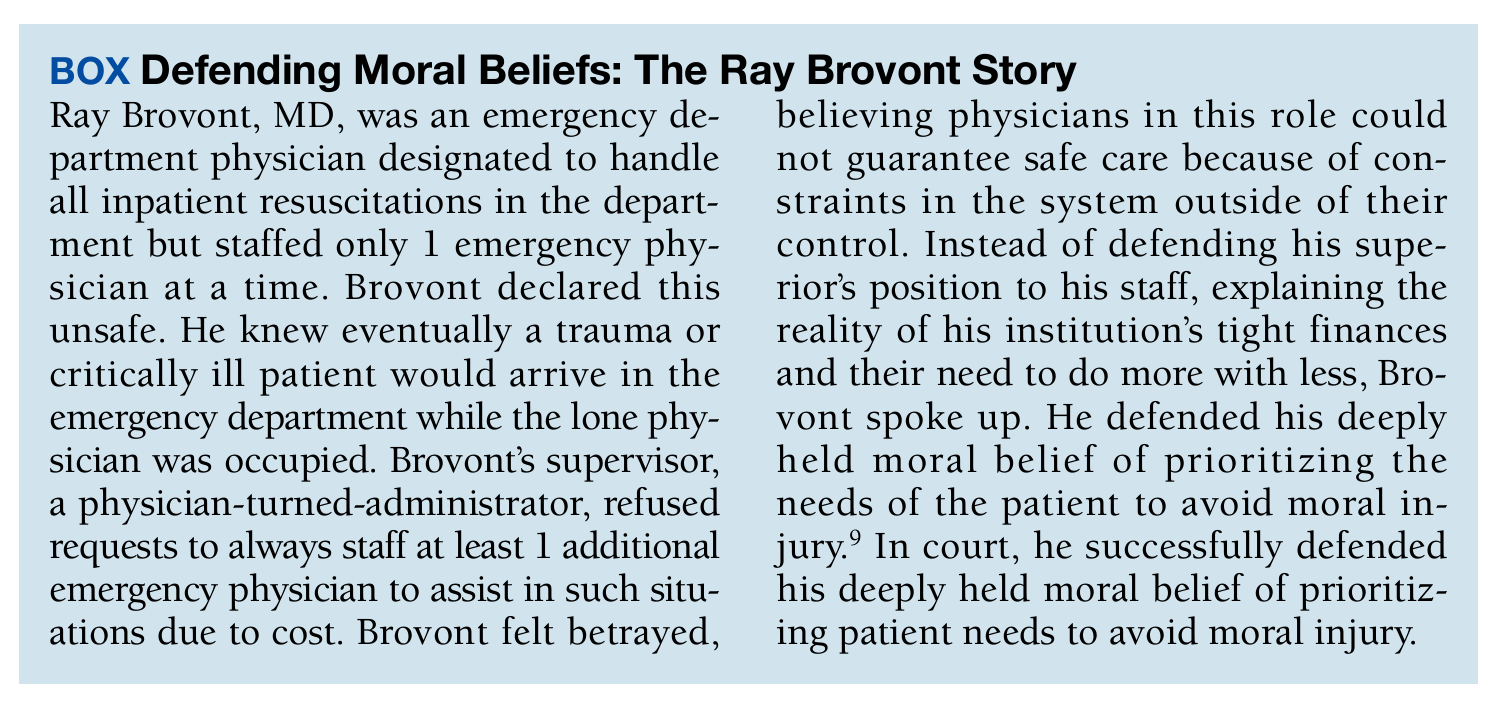
The first definition was developed by Jonathan Shay in 1994 and outlines 3 necessarycomponents, viewing the violator as a powerholder: (1) betrayal of what is right, (2) by someone who holds legitimate authority, (3) in a high stakes situation.7 Litz and colleagues describe moral injury another way: “Perpetrating, failing to prevent, bearing witness to, or learning about acts that transgress deeply held moral beliefs and expectations.”8 The violator is posited to be either the self or others.
Rather than representing “self” or “other” imposed moral injury, we propose the 2 definitions are related as exposure (ie, the perceived betrayal) and response (ie, the resulting transgression). An individual who experiences a betrayal by a legitimate authority has an opportunity to choose their response. They may acquiesce and transgress their moral beliefs (eg, their oath to provide ethical health care), or they could refuse, by speaking out, or in some way resisting the authority’s betrayal. The case of Ray Brovont is a useful illustration of reconciling the definitions (Box).9
Myriad factors—known as potentially morally injurious events—drive moral injury, such as resource-constrained decision making, witnessing the behaviors of colleagues that violate deeply held moral beliefs, questionable billing practices, and more. Each begins with a betrayal. Spotlighting the betrayal, refusing to perpetuate it, or taking actions toward change, may reduce the risk of experiencing moral injury.9 Conversely, acquiescing and transgressing one’s oath, the profession’s covenant with society, increases the risk of experiencing moral injury.8
Many HCPs believe they are not always free to resist betrayal, fearing retaliation, job loss, blacklisting, or worse. They feel constrained by debt accrued while receiving their education, being their household’s primary earner, community ties, practicing a niche specialty that requires working for a tertiary referral center, or perhaps believing the situation will be the same elsewhere. To not stand up or speak out is to choose complicity with corporate greed that uses HCPs to undermine their professional duties, which significantly increases the risk of experiencing moral injury.
MORAL INJURY AND BURNOUT
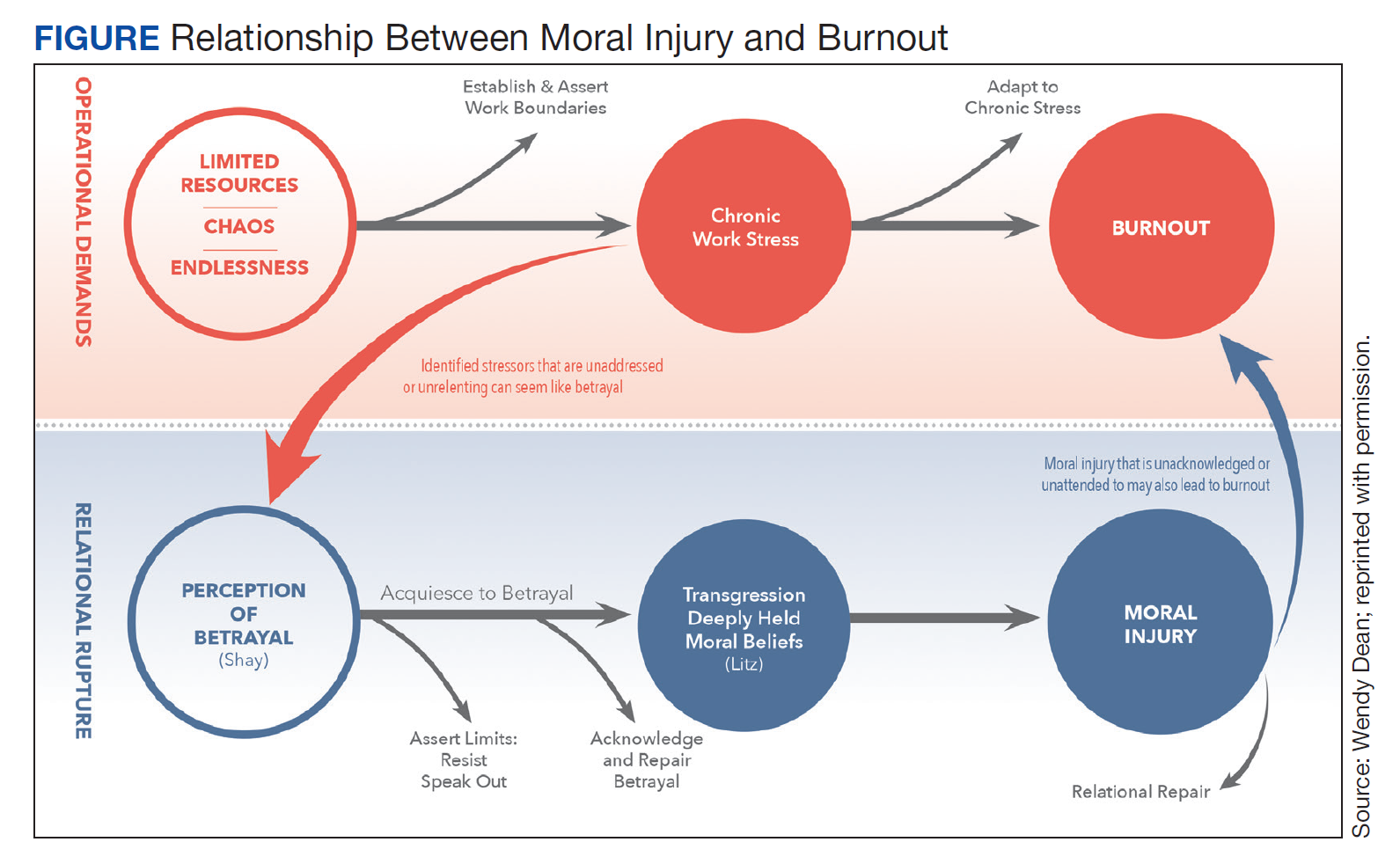
In addition to reconciling the definitions of moral injury, the relationship between moral injury and burnout are still being elucidated. We suggest that moral injury and burnout represent independent and potentially interrelated pathways to distress (Figure). Exposure to chronic, inconsonant, and transactional demands, which things like shorter work hours, better self-care, or improved health system operations might mitigate, manifests as burnout. In contrast, moral injury arises when a superior’s actions or a system’s policies and practices—such as justifiable but unnecessary testing, or referral restrictions to prevent revenue leakage—undermine one’s professional obligations to prioritize the patient’s best interest.
If concerns from HCPs about transactional demands are persistently dismissed, such inaction may be perceived as a betrayal, raising the risk of moral injury. Additionally, the resignation or helplessness of moral injury perceived as inescapable may present with emotional exhaustion, ineffectiveness, and depersonalization, all hallmarks of burnout. Both conditions can mediate and moderate the relationship between triggers for workplace distress and resulting psychological, physical, and existential harm.
CONCLUSIONS
Moral injury is increasingly recognized as a source of distress among HCPs, resulting from structural constraints on their ability to deliver optimal care and their own unwillingness to stand up for their patients, their oaths, and their professions.1 Unlike the military, where moral injury is inherent in the contract with society, moral injury in health care (and the relational rupture it connotes) is a signal of systemic dysfunction, fractured trust, and the need for relational repair.
Health care is at a crossroads, experiencing a workforce retention crisis while simultaneously predicting a significant increase in care needs by Baby Boomers over the next 3 decades.
Health care does not have the luxury of experimenting another 30 years with interventions that have limited impact. We must design a new generation of approaches, shaped by lessons learned from the pandemic while acknowledging that prepandemic standards were already failing the workforce. A unified definition of moral injury must be integrated to frame clinician distress alongside burnout, recentering ethical decision making, rather than profit, at the heart of health care. Harmonizing the definitions of moral injury and clarifying the relationship of moral injury with burnout reduces the need for further reinterpretations, allowing for more robust, easily comparable studies focused on identifying risk factors, as well as rapidly implementing effective mitigation strategies.
1. Griffin BJ, Weber MC, Hinkson KD, et al. Toward a dimensional contextual model of moral injury: a scoping review on healthcare workers. Curr Treat Options Psych. 2023;10:199-216. doi:10.1007/s40501-023-00296-4
2. National Academies of Sciences, Engineering, and Medicine; National Academy of Medicine; Committee on Systems Approaches to Improve Patient Care by Supporting Clinician Well-Being. Taking Action Against Clinician Burnout: A Systems Approach to Professional Well-Being. The National Academies Press; 2019. doi:10.17226/25521
3. Dean W, Talbot S, Dean A. Reframing clinician distress: moral injury not burnout. Fed Pract. 2019;36(9):400-402.
4. Gardner HE, Schulman LS. The professions in America today: crucial but fragile. Daedalus. 2005;134(3):13-18. doi:10.1162/0011526054622132
5. Fuchs VR. Major trends in the U.S. health economy since 1950. N Engl J Med. 2012;366(11):973-977. doi:10.1056/NEJMp1200478
6. Molendijk T. Warnings against romanticising moral injury. Br J Psychiatry. 2022;220(1):1-3. doi:10.1192/bjp.2021.114
7. Shay J. Moral injury. Psychoanalytic Psychol. 2014;31(2):182-191. doi:10.1037/a0036090
8. Litz BT, Stein N, Delaney E, et al. Moral injury and moral repair in war veterans: a preliminary model and intervention strategy. Clin Psychol Rev. 2009;29(8):695-706. doi:10.1016/j.cpr.2009.07.003
9. Brovont v KS-I Med. Servs., P.A., 622 SW3d 671 (Mo Ct App 2020).
Wendy Dean, MDa; Deborah Morris, DClinPsychb,c; Mustfa K. Manzur, MD, MPH, MSd,e,f; Simon Talbot, MDg.h
Correspondence: Wendy Dean (wdean@moralinjury. healthcare)
aMoral Injury of Healthcare, Carlisle, Pennsylvania
bCentre for Developmental and Complex Trauma, St. Andrew’s Healthcare, Northampton, United Kingdom
cThe University of Buckingham, United Kingdom
dAlbert Einstein College of Medicine, Bronx, New York
eMontefiore Medical Center, Bronx, New York
fJacobi Medical Center, Bronx, New York
gBrigham and Women’s Hospital, Boston, Massachusetts
hHarvard Medical School, Boston, Massachusetts
Author disclosures
Wendy Dean and Simon Talbot are cofounders of Moral Injury of Healthcare, a nonprofit organization. Dean is a speaker for LeighHealth Speakers Bureau. The University of Florida and Rothman Orthopedic Institute have made payments to Moral Injury of Healthcare.

Disclaimer
The opinions expressed herein are those of the authors and do not necessarily reflect those of Federal Practitioner, Frontline Medical Communications Inc., the US Government, or any of its agencies.
Ethics and consent
The Veterans Affairs Greater Los Angeles Healthcare System institutional review board determined that this study was exempt. The datasets generated and/or analyzed during the current study are not publicly available but may be available from the corresponding author on reasonable request.
Wendy Dean, MDa; Deborah Morris, DClinPsychb,c; Mustfa K. Manzur, MD, MPH, MSd,e,f; Simon Talbot, MDg.h
Correspondence: Wendy Dean (wdean@moralinjury. healthcare)
aMoral Injury of Healthcare, Carlisle, Pennsylvania
bCentre for Developmental and Complex Trauma, St. Andrew’s Healthcare, Northampton, United Kingdom
cThe University of Buckingham, United Kingdom
dAlbert Einstein College of Medicine, Bronx, New York
eMontefiore Medical Center, Bronx, New York
fJacobi Medical Center, Bronx, New York
gBrigham and Women’s Hospital, Boston, Massachusetts
hHarvard Medical School, Boston, Massachusetts
Author disclosures
Wendy Dean and Simon Talbot are cofounders of Moral Injury of Healthcare, a nonprofit organization. Dean is a speaker for LeighHealth Speakers Bureau. The University of Florida and Rothman Orthopedic Institute have made payments to Moral Injury of Healthcare.
Disclaimer
The opinions expressed herein are those of the authors and do not necessarily reflect those of Federal Practitioner, Frontline Medical Communications Inc., the US Government, or any of its agencies.
Ethics and consent
The Veterans Affairs Greater Los Angeles Healthcare System institutional review board determined that this study was exempt. The datasets generated and/or analyzed during the current study are not publicly available but may be available from the corresponding author on reasonable request.
Wendy Dean, MDa; Deborah Morris, DClinPsychb,c; Mustfa K. Manzur, MD, MPH, MSd,e,f; Simon Talbot, MDg.h
Correspondence: Wendy Dean (wdean@moralinjury. healthcare)
aMoral Injury of Healthcare, Carlisle, Pennsylvania
bCentre for Developmental and Complex Trauma, St. Andrew’s Healthcare, Northampton, United Kingdom
cThe University of Buckingham, United Kingdom
dAlbert Einstein College of Medicine, Bronx, New York
eMontefiore Medical Center, Bronx, New York
fJacobi Medical Center, Bronx, New York
gBrigham and Women’s Hospital, Boston, Massachusetts
hHarvard Medical School, Boston, Massachusetts
Author disclosures
Wendy Dean and Simon Talbot are cofounders of Moral Injury of Healthcare, a nonprofit organization. Dean is a speaker for LeighHealth Speakers Bureau. The University of Florida and Rothman Orthopedic Institute have made payments to Moral Injury of Healthcare.
Disclaimer
The opinions expressed herein are those of the authors and do not necessarily reflect those of Federal Practitioner, Frontline Medical Communications Inc., the US Government, or any of its agencies.
Ethics and consent
The Veterans Affairs Greater Los Angeles Healthcare System institutional review board determined that this study was exempt. The datasets generated and/or analyzed during the current study are not publicly available but may be available from the corresponding author on reasonable request.
Moral injury was identified by health care professionals (HCPs) as a driver of occupational distress prior to the COVID-19 pandemic, but the crisis expanded the appeal and investigation of the term.1 HCPs now consider moral injury an essential component of the framework to describe their distress, because using the term burnout alone fails to capture their full experience and has proven resistant to interventions.2 Moral injury goes beyond the transdiagnostic symptoms of exhaustion and cynicism and beyond operational, demand-resource mismatches that characterize burnout. It describes the frustration, anger, and helplessness associated with relational ruptures and the existential threats to a clinician’s professional identity as business interests erode their ability to put their patients’ needs ahead of corporate and health care system obligations.3
Proper characterization of moral injury in health care—separate from the military environments where it originated—is stymied by an ill-defined relationship between 2 definitions of the term and by an unclear relationship between moral injury and the long-standing body of scholarship in burnout. To clarify the concept, inform research agendas, and open avenues for more effective solutions to the crisis of HCP distress, we propose a unified conceptualization of moral injury and its association with burnout in health care.
CONTEXTUAL DISTINCTIONS
It is important to properly distinguish between the original use of moral injury in the military and its expanded use in civilian circumstances. Health care and the military are both professions whereupon donning the “uniform” of a physician—or soldier, sailor, airman, or marine—members must comport with strict expectations of behavior, including the refusal to engage in illegal actions or those contrary to professional ethics. Individuals in both professions acquire a highly specialized body of knowledge and enter an implied contract to provide critical services to society, specifically healing and protection, respectively. Members of both professions are trained to make complex judgments with integrity under conditions of technical and ethical uncertainty, upon which they take highly skilled action. Medical and military professionals must be free to act on their ethical principles, without confounding demands.4 However, the context of each profession’s commitment to society carries different moral implications.
The risk of moral injury is inherent in military service. The military promises protection with an implicit acknowledgment of the need to use lethal force to uphold the agreement. In contrast, HCPs promise healing and care. The military promises to protect our society, with an implicit acknowledgment of the need to use lethal force to uphold the agreement. Some military actions may inflict harm without the hope of benefitting an individual, and are therefore potentially morally injurious. The health care contract with society, promising healing and care, is devoid of inherent moral injury due to harm without potential individual benefit. Therefore, the presence of moral injury in health care settings are warning signs of a dysfunctional environment.
One complex example of the dysfunctional environments is illustrative. The military and health care are among the few industries where supply creates demand. For example, the more bad state actors there are, the more demand for the military. As we have seen since the 1950s, the more technology and therapeutics we create in health care, coupled with a larger share paid for by third parties, the greater the demand for and use of them.5 In a fee for service environment, corporate greed feeds on this reality. In most other environments, more technological and therapeutic options inevitably pit clinicians against multiple other factions: payers, who do not want to underwrite them; patients, who sometimes demand them without justification or later rail against spiraling health care costs; and administrators, especially in capitated systems, who watch their bottom lines erode. The moral injury risk in this instance demands a collective conversation among stakeholders regarding the structural determinants of health—how we choose to distribute limited resources. The intermediary of moral injury is a useful measure of the harm that results from ignoring or avoiding such challenges.
HARMONIZING DEFINITIONS
Moral injury is inherently nuanced. The 2 dominant definitions arise from work with combat veterans and create additional and perhaps unnecessary complexity. Unifying these 2 definitions eliminates inadvertent confusion, preventing the risk of unbridled interdisciplinary investigation which leads to a lack of precision in the meaning of moral injury and other related concepts, such as burnout.6
The first definition was developed by Jonathan Shay in 1994 and outlines 3 necessarycomponents, viewing the violator as a powerholder: (1) betrayal of what is right, (2) by someone who holds legitimate authority, (3) in a high stakes situation.7 Litz and colleagues describe moral injury another way: “Perpetrating, failing to prevent, bearing witness to, or learning about acts that transgress deeply held moral beliefs and expectations.”8 The violator is posited to be either the self or others.
Rather than representing “self” or “other” imposed moral injury, we propose the 2 definitions are related as exposure (ie, the perceived betrayal) and response (ie, the resulting transgression). An individual who experiences a betrayal by a legitimate authority has an opportunity to choose their response. They may acquiesce and transgress their moral beliefs (eg, their oath to provide ethical health care), or they could refuse, by speaking out, or in some way resisting the authority’s betrayal. The case of Ray Brovont is a useful illustration of reconciling the definitions (Box).9
Myriad factors—known as potentially morally injurious events—drive moral injury, such as resource-constrained decision making, witnessing the behaviors of colleagues that violate deeply held moral beliefs, questionable billing practices, and more. Each begins with a betrayal. Spotlighting the betrayal, refusing to perpetuate it, or taking actions toward change, may reduce the risk of experiencing moral injury.9 Conversely, acquiescing and transgressing one’s oath, the profession’s covenant with society, increases the risk of experiencing moral injury.8
Many HCPs believe they are not always free to resist betrayal, fearing retaliation, job loss, blacklisting, or worse. They feel constrained by debt accrued while receiving their education, being their household’s primary earner, community ties, practicing a niche specialty that requires working for a tertiary referral center, or perhaps believing the situation will be the same elsewhere. To not stand up or speak out is to choose complicity with corporate greed that uses HCPs to undermine their professional duties, which significantly increases the risk of experiencing moral injury.
MORAL INJURY AND BURNOUT
In addition to reconciling the definitions of moral injury, the relationship between moral injury and burnout are still being elucidated. We suggest that moral injury and burnout represent independent and potentially interrelated pathways to distress (Figure). Exposure to chronic, inconsonant, and transactional demands, which things like shorter work hours, better self-care, or improved health system operations might mitigate, manifests as burnout. In contrast, moral injury arises when a superior’s actions or a system’s policies and practices—such as justifiable but unnecessary testing, or referral restrictions to prevent revenue leakage—undermine one’s professional obligations to prioritize the patient’s best interest.
If concerns from HCPs about transactional demands are persistently dismissed, such inaction may be perceived as a betrayal, raising the risk of moral injury. Additionally, the resignation or helplessness of moral injury perceived as inescapable may present with emotional exhaustion, ineffectiveness, and depersonalization, all hallmarks of burnout. Both conditions can mediate and moderate the relationship between triggers for workplace distress and resulting psychological, physical, and existential harm.
CONCLUSIONS
Moral injury is increasingly recognized as a source of distress among HCPs, resulting from structural constraints on their ability to deliver optimal care and their own unwillingness to stand up for their patients, their oaths, and their professions.1 Unlike the military, where moral injury is inherent in the contract with society, moral injury in health care (and the relational rupture it connotes) is a signal of systemic dysfunction, fractured trust, and the need for relational repair.
Health care is at a crossroads, experiencing a workforce retention crisis while simultaneously predicting a significant increase in care needs by Baby Boomers over the next 3 decades.
Health care does not have the luxury of experimenting another 30 years with interventions that have limited impact. We must design a new generation of approaches, shaped by lessons learned from the pandemic while acknowledging that prepandemic standards were already failing the workforce. A unified definition of moral injury must be integrated to frame clinician distress alongside burnout, recentering ethical decision making, rather than profit, at the heart of health care. Harmonizing the definitions of moral injury and clarifying the relationship of moral injury with burnout reduces the need for further reinterpretations, allowing for more robust, easily comparable studies focused on identifying risk factors, as well as rapidly implementing effective mitigation strategies.
Moral injury was identified by health care professionals (HCPs) as a driver of occupational distress prior to the COVID-19 pandemic, but the crisis expanded the appeal and investigation of the term.1 HCPs now consider moral injury an essential component of the framework to describe their distress, because using the term burnout alone fails to capture their full experience and has proven resistant to interventions.2 Moral injury goes beyond the transdiagnostic symptoms of exhaustion and cynicism and beyond operational, demand-resource mismatches that characterize burnout. It describes the frustration, anger, and helplessness associated with relational ruptures and the existential threats to a clinician’s professional identity as business interests erode their ability to put their patients’ needs ahead of corporate and health care system obligations.3
Proper characterization of moral injury in health care—separate from the military environments where it originated—is stymied by an ill-defined relationship between 2 definitions of the term and by an unclear relationship between moral injury and the long-standing body of scholarship in burnout. To clarify the concept, inform research agendas, and open avenues for more effective solutions to the crisis of HCP distress, we propose a unified conceptualization of moral injury and its association with burnout in health care.
CONTEXTUAL DISTINCTIONS
It is important to properly distinguish between the original use of moral injury in the military and its expanded use in civilian circumstances. Health care and the military are both professions whereupon donning the “uniform” of a physician—or soldier, sailor, airman, or marine—members must comport with strict expectations of behavior, including the refusal to engage in illegal actions or those contrary to professional ethics. Individuals in both professions acquire a highly specialized body of knowledge and enter an implied contract to provide critical services to society, specifically healing and protection, respectively. Members of both professions are trained to make complex judgments with integrity under conditions of technical and ethical uncertainty, upon which they take highly skilled action. Medical and military professionals must be free to act on their ethical principles, without confounding demands.4 However, the context of each profession’s commitment to society carries different moral implications.
The risk of moral injury is inherent in military service. The military promises protection with an implicit acknowledgment of the need to use lethal force to uphold the agreement. In contrast, HCPs promise healing and care. The military promises to protect our society, with an implicit acknowledgment of the need to use lethal force to uphold the agreement. Some military actions may inflict harm without the hope of benefitting an individual, and are therefore potentially morally injurious. The health care contract with society, promising healing and care, is devoid of inherent moral injury due to harm without potential individual benefit. Therefore, the presence of moral injury in health care settings are warning signs of a dysfunctional environment.
One complex example of the dysfunctional environments is illustrative. The military and health care are among the few industries where supply creates demand. For example, the more bad state actors there are, the more demand for the military. As we have seen since the 1950s, the more technology and therapeutics we create in health care, coupled with a larger share paid for by third parties, the greater the demand for and use of them.5 In a fee for service environment, corporate greed feeds on this reality. In most other environments, more technological and therapeutic options inevitably pit clinicians against multiple other factions: payers, who do not want to underwrite them; patients, who sometimes demand them without justification or later rail against spiraling health care costs; and administrators, especially in capitated systems, who watch their bottom lines erode. The moral injury risk in this instance demands a collective conversation among stakeholders regarding the structural determinants of health—how we choose to distribute limited resources. The intermediary of moral injury is a useful measure of the harm that results from ignoring or avoiding such challenges.
HARMONIZING DEFINITIONS
Moral injury is inherently nuanced. The 2 dominant definitions arise from work with combat veterans and create additional and perhaps unnecessary complexity. Unifying these 2 definitions eliminates inadvertent confusion, preventing the risk of unbridled interdisciplinary investigation which leads to a lack of precision in the meaning of moral injury and other related concepts, such as burnout.6
The first definition was developed by Jonathan Shay in 1994 and outlines 3 necessarycomponents, viewing the violator as a powerholder: (1) betrayal of what is right, (2) by someone who holds legitimate authority, (3) in a high stakes situation.7 Litz and colleagues describe moral injury another way: “Perpetrating, failing to prevent, bearing witness to, or learning about acts that transgress deeply held moral beliefs and expectations.”8 The violator is posited to be either the self or others.
Rather than representing “self” or “other” imposed moral injury, we propose the 2 definitions are related as exposure (ie, the perceived betrayal) and response (ie, the resulting transgression). An individual who experiences a betrayal by a legitimate authority has an opportunity to choose their response. They may acquiesce and transgress their moral beliefs (eg, their oath to provide ethical health care), or they could refuse, by speaking out, or in some way resisting the authority’s betrayal. The case of Ray Brovont is a useful illustration of reconciling the definitions (Box).9
Myriad factors—known as potentially morally injurious events—drive moral injury, such as resource-constrained decision making, witnessing the behaviors of colleagues that violate deeply held moral beliefs, questionable billing practices, and more. Each begins with a betrayal. Spotlighting the betrayal, refusing to perpetuate it, or taking actions toward change, may reduce the risk of experiencing moral injury.9 Conversely, acquiescing and transgressing one’s oath, the profession’s covenant with society, increases the risk of experiencing moral injury.8
Many HCPs believe they are not always free to resist betrayal, fearing retaliation, job loss, blacklisting, or worse. They feel constrained by debt accrued while receiving their education, being their household’s primary earner, community ties, practicing a niche specialty that requires working for a tertiary referral center, or perhaps believing the situation will be the same elsewhere. To not stand up or speak out is to choose complicity with corporate greed that uses HCPs to undermine their professional duties, which significantly increases the risk of experiencing moral injury.
MORAL INJURY AND BURNOUT
In addition to reconciling the definitions of moral injury, the relationship between moral injury and burnout are still being elucidated. We suggest that moral injury and burnout represent independent and potentially interrelated pathways to distress (Figure). Exposure to chronic, inconsonant, and transactional demands, which things like shorter work hours, better self-care, or improved health system operations might mitigate, manifests as burnout. In contrast, moral injury arises when a superior’s actions or a system’s policies and practices—such as justifiable but unnecessary testing, or referral restrictions to prevent revenue leakage—undermine one’s professional obligations to prioritize the patient’s best interest.
If concerns from HCPs about transactional demands are persistently dismissed, such inaction may be perceived as a betrayal, raising the risk of moral injury. Additionally, the resignation or helplessness of moral injury perceived as inescapable may present with emotional exhaustion, ineffectiveness, and depersonalization, all hallmarks of burnout. Both conditions can mediate and moderate the relationship between triggers for workplace distress and resulting psychological, physical, and existential harm.
CONCLUSIONS
Moral injury is increasingly recognized as a source of distress among HCPs, resulting from structural constraints on their ability to deliver optimal care and their own unwillingness to stand up for their patients, their oaths, and their professions.1 Unlike the military, where moral injury is inherent in the contract with society, moral injury in health care (and the relational rupture it connotes) is a signal of systemic dysfunction, fractured trust, and the need for relational repair.
Health care is at a crossroads, experiencing a workforce retention crisis while simultaneously predicting a significant increase in care needs by Baby Boomers over the next 3 decades.
Health care does not have the luxury of experimenting another 30 years with interventions that have limited impact. We must design a new generation of approaches, shaped by lessons learned from the pandemic while acknowledging that prepandemic standards were already failing the workforce. A unified definition of moral injury must be integrated to frame clinician distress alongside burnout, recentering ethical decision making, rather than profit, at the heart of health care. Harmonizing the definitions of moral injury and clarifying the relationship of moral injury with burnout reduces the need for further reinterpretations, allowing for more robust, easily comparable studies focused on identifying risk factors, as well as rapidly implementing effective mitigation strategies.
1. Griffin BJ, Weber MC, Hinkson KD, et al. Toward a dimensional contextual model of moral injury: a scoping review on healthcare workers. Curr Treat Options Psych. 2023;10:199-216. doi:10.1007/s40501-023-00296-4
2. National Academies of Sciences, Engineering, and Medicine; National Academy of Medicine; Committee on Systems Approaches to Improve Patient Care by Supporting Clinician Well-Being. Taking Action Against Clinician Burnout: A Systems Approach to Professional Well-Being. The National Academies Press; 2019. doi:10.17226/25521
3. Dean W, Talbot S, Dean A. Reframing clinician distress: moral injury not burnout. Fed Pract. 2019;36(9):400-402.
4. Gardner HE, Schulman LS. The professions in America today: crucial but fragile. Daedalus. 2005;134(3):13-18. doi:10.1162/0011526054622132
5. Fuchs VR. Major trends in the U.S. health economy since 1950. N Engl J Med. 2012;366(11):973-977. doi:10.1056/NEJMp1200478
6. Molendijk T. Warnings against romanticising moral injury. Br J Psychiatry. 2022;220(1):1-3. doi:10.1192/bjp.2021.114
7. Shay J. Moral injury. Psychoanalytic Psychol. 2014;31(2):182-191. doi:10.1037/a0036090
8. Litz BT, Stein N, Delaney E, et al. Moral injury and moral repair in war veterans: a preliminary model and intervention strategy. Clin Psychol Rev. 2009;29(8):695-706. doi:10.1016/j.cpr.2009.07.003
9. Brovont v KS-I Med. Servs., P.A., 622 SW3d 671 (Mo Ct App 2020).
1. Griffin BJ, Weber MC, Hinkson KD, et al. Toward a dimensional contextual model of moral injury: a scoping review on healthcare workers. Curr Treat Options Psych. 2023;10:199-216. doi:10.1007/s40501-023-00296-4
2. National Academies of Sciences, Engineering, and Medicine; National Academy of Medicine; Committee on Systems Approaches to Improve Patient Care by Supporting Clinician Well-Being. Taking Action Against Clinician Burnout: A Systems Approach to Professional Well-Being. The National Academies Press; 2019. doi:10.17226/25521
3. Dean W, Talbot S, Dean A. Reframing clinician distress: moral injury not burnout. Fed Pract. 2019;36(9):400-402.
4. Gardner HE, Schulman LS. The professions in America today: crucial but fragile. Daedalus. 2005;134(3):13-18. doi:10.1162/0011526054622132
5. Fuchs VR. Major trends in the U.S. health economy since 1950. N Engl J Med. 2012;366(11):973-977. doi:10.1056/NEJMp1200478
6. Molendijk T. Warnings against romanticising moral injury. Br J Psychiatry. 2022;220(1):1-3. doi:10.1192/bjp.2021.114
7. Shay J. Moral injury. Psychoanalytic Psychol. 2014;31(2):182-191. doi:10.1037/a0036090
8. Litz BT, Stein N, Delaney E, et al. Moral injury and moral repair in war veterans: a preliminary model and intervention strategy. Clin Psychol Rev. 2009;29(8):695-706. doi:10.1016/j.cpr.2009.07.003
9. Brovont v KS-I Med. Servs., P.A., 622 SW3d 671 (Mo Ct App 2020).
Trauma, Racism Linked to Increased Suicide Risk in Black Men
One in three Black men in rural America experienced suicidal or death ideation (SDI) in the past week, new research showed.
A developmental model used in the study showed a direct association between experiences pertaining to threat, deprivation, and racial discrimination during childhood and suicide risk in adulthood, suggesting that a broad range of adverse experiences in early life may affect SDI risk among Black men.
“During the past 20-30 years, young Black men have evinced increasing levels of suicidal behavior and related cognitions,” lead author Steven Kogan, PhD, professor of family and consumer sciences at the University of Georgia, Athens, Georgia, and colleagues wrote.
“By controlling for depressive symptoms in assessing increases in SDI over time, our study’s design directly informed the extent to which social adversities affect SDI independent of other depressive problems,” they added.
The findings were published online in Cultural Diversity and Ethnic Minority Psychology.
Second Leading Cause of Death
Suicide is the second leading cause of death for Black Americans ages 15-24, according to the Centers for Disease Control and Prevention. The outlook is worse for Black men, whose death rate from suicide is about four times greater than for Black women.
Previous research suggests Black men are disproportionately exposed to social adversity, including poverty and discrimination, which may increase the risk for SDI. In addition, racial discrimination has been shown to increase the risks for depression, anxiety, and psychological distress among Black youth and adults.
But little research exists to better understand how these negative experiences affect vulnerability to SDI. The new study tested a model linking adversity during childhood and emerging exposure to racial discrimination to increases in suicidal thoughts.
Researchers analyzed data from 504 participants in the African American Men’s Project, which included a series of surveys completed by young men in rural Georgia at three different time points over a period of about 3 years.
Composite scores for childhood threat and deprivation were developed using the Adverse Childhood Experiences Scale and Childhood Trauma Questionnaire. Everyday discrimination was measured on the Schedule of Racist Events response scale.
To assess their experience with childhood threats, the men in the study, who were about 21 years old on average when they enrolled, were asked if they experienced a series of adverse childhood experiences and deprivation through age 16. Questions explored issues such as directly experiencing physical violence or witnessing abuse in the home and whether the men felt loved and “important or special” as children.
The investigators also asked the men about their experiences of racial discrimination, the quality of their relationships, their belief that aggression is a means of gaining respect, and their cynicism regarding romantic relationships.
Targeted Prevention
Overall, 33.6% of participants reported SDI in the previous week. A history of childhood threats and deprivation was associated with an increased likelihood of SDI (P < .001).
Researchers also found that a history of racial discrimination was significantly associated with the development of negative relational schemas, which are characterized by beliefs that other people are untrustworthy, uncaring, and/or hostile. Negative schemas were in turn associated with an increased risk for suicidal thoughts (P = .03).
“Clinical and preventive interventions for suicidality should target the influence of racism and adverse experiences and the negative relational schemas they induce,” the investigators noted.
“Policy efforts designed to dismantle systemic racism are critically needed. Interventions that address SDI, including programming designed to support Black men through their experiences with racial discrimination and processing of childhood experiences of adversity, may help young Black men resist the psychological impacts of racism, expand their positive support networks, and decrease their risk of SDI,” they added.
The study authors reported no funding sources or relevant financial relationships.
A version of this article appeared on Medscape.com.
One in three Black men in rural America experienced suicidal or death ideation (SDI) in the past week, new research showed.
A developmental model used in the study showed a direct association between experiences pertaining to threat, deprivation, and racial discrimination during childhood and suicide risk in adulthood, suggesting that a broad range of adverse experiences in early life may affect SDI risk among Black men.
“During the past 20-30 years, young Black men have evinced increasing levels of suicidal behavior and related cognitions,” lead author Steven Kogan, PhD, professor of family and consumer sciences at the University of Georgia, Athens, Georgia, and colleagues wrote.
“By controlling for depressive symptoms in assessing increases in SDI over time, our study’s design directly informed the extent to which social adversities affect SDI independent of other depressive problems,” they added.
The findings were published online in Cultural Diversity and Ethnic Minority Psychology.
Second Leading Cause of Death
Suicide is the second leading cause of death for Black Americans ages 15-24, according to the Centers for Disease Control and Prevention. The outlook is worse for Black men, whose death rate from suicide is about four times greater than for Black women.
Previous research suggests Black men are disproportionately exposed to social adversity, including poverty and discrimination, which may increase the risk for SDI. In addition, racial discrimination has been shown to increase the risks for depression, anxiety, and psychological distress among Black youth and adults.
But little research exists to better understand how these negative experiences affect vulnerability to SDI. The new study tested a model linking adversity during childhood and emerging exposure to racial discrimination to increases in suicidal thoughts.
Researchers analyzed data from 504 participants in the African American Men’s Project, which included a series of surveys completed by young men in rural Georgia at three different time points over a period of about 3 years.
Composite scores for childhood threat and deprivation were developed using the Adverse Childhood Experiences Scale and Childhood Trauma Questionnaire. Everyday discrimination was measured on the Schedule of Racist Events response scale.
To assess their experience with childhood threats, the men in the study, who were about 21 years old on average when they enrolled, were asked if they experienced a series of adverse childhood experiences and deprivation through age 16. Questions explored issues such as directly experiencing physical violence or witnessing abuse in the home and whether the men felt loved and “important or special” as children.
The investigators also asked the men about their experiences of racial discrimination, the quality of their relationships, their belief that aggression is a means of gaining respect, and their cynicism regarding romantic relationships.
Targeted Prevention
Overall, 33.6% of participants reported SDI in the previous week. A history of childhood threats and deprivation was associated with an increased likelihood of SDI (P < .001).
Researchers also found that a history of racial discrimination was significantly associated with the development of negative relational schemas, which are characterized by beliefs that other people are untrustworthy, uncaring, and/or hostile. Negative schemas were in turn associated with an increased risk for suicidal thoughts (P = .03).
“Clinical and preventive interventions for suicidality should target the influence of racism and adverse experiences and the negative relational schemas they induce,” the investigators noted.
“Policy efforts designed to dismantle systemic racism are critically needed. Interventions that address SDI, including programming designed to support Black men through their experiences with racial discrimination and processing of childhood experiences of adversity, may help young Black men resist the psychological impacts of racism, expand their positive support networks, and decrease their risk of SDI,” they added.
The study authors reported no funding sources or relevant financial relationships.
A version of this article appeared on Medscape.com.
One in three Black men in rural America experienced suicidal or death ideation (SDI) in the past week, new research showed.
A developmental model used in the study showed a direct association between experiences pertaining to threat, deprivation, and racial discrimination during childhood and suicide risk in adulthood, suggesting that a broad range of adverse experiences in early life may affect SDI risk among Black men.
“During the past 20-30 years, young Black men have evinced increasing levels of suicidal behavior and related cognitions,” lead author Steven Kogan, PhD, professor of family and consumer sciences at the University of Georgia, Athens, Georgia, and colleagues wrote.
“By controlling for depressive symptoms in assessing increases in SDI over time, our study’s design directly informed the extent to which social adversities affect SDI independent of other depressive problems,” they added.
The findings were published online in Cultural Diversity and Ethnic Minority Psychology.
Second Leading Cause of Death
Suicide is the second leading cause of death for Black Americans ages 15-24, according to the Centers for Disease Control and Prevention. The outlook is worse for Black men, whose death rate from suicide is about four times greater than for Black women.
Previous research suggests Black men are disproportionately exposed to social adversity, including poverty and discrimination, which may increase the risk for SDI. In addition, racial discrimination has been shown to increase the risks for depression, anxiety, and psychological distress among Black youth and adults.
But little research exists to better understand how these negative experiences affect vulnerability to SDI. The new study tested a model linking adversity during childhood and emerging exposure to racial discrimination to increases in suicidal thoughts.
Researchers analyzed data from 504 participants in the African American Men’s Project, which included a series of surveys completed by young men in rural Georgia at three different time points over a period of about 3 years.
Composite scores for childhood threat and deprivation were developed using the Adverse Childhood Experiences Scale and Childhood Trauma Questionnaire. Everyday discrimination was measured on the Schedule of Racist Events response scale.
To assess their experience with childhood threats, the men in the study, who were about 21 years old on average when they enrolled, were asked if they experienced a series of adverse childhood experiences and deprivation through age 16. Questions explored issues such as directly experiencing physical violence or witnessing abuse in the home and whether the men felt loved and “important or special” as children.
The investigators also asked the men about their experiences of racial discrimination, the quality of their relationships, their belief that aggression is a means of gaining respect, and their cynicism regarding romantic relationships.
Targeted Prevention
Overall, 33.6% of participants reported SDI in the previous week. A history of childhood threats and deprivation was associated with an increased likelihood of SDI (P < .001).
Researchers also found that a history of racial discrimination was significantly associated with the development of negative relational schemas, which are characterized by beliefs that other people are untrustworthy, uncaring, and/or hostile. Negative schemas were in turn associated with an increased risk for suicidal thoughts (P = .03).
“Clinical and preventive interventions for suicidality should target the influence of racism and adverse experiences and the negative relational schemas they induce,” the investigators noted.
“Policy efforts designed to dismantle systemic racism are critically needed. Interventions that address SDI, including programming designed to support Black men through their experiences with racial discrimination and processing of childhood experiences of adversity, may help young Black men resist the psychological impacts of racism, expand their positive support networks, and decrease their risk of SDI,” they added.
The study authors reported no funding sources or relevant financial relationships.
A version of this article appeared on Medscape.com.
FROM CULTURAL DIVERSITY AND ETHNIC MINORITY PSYCHOLOGY