User login
Detection of Physiologic Deterioration
Patients in general medicalsurgical wards who experience unplanned transfer to the intensive care unit (ICU) have increased mortality and morbidity.13 Using an externally validated methodology permitting assessment of illness severity and mortality risk among all hospitalized patients,4, 5 we recently documented observed‐to‐expected mortality ratios >3.0 and excess length of stay of 10 days among patients who experienced such transfers.6
It is possible to predict adverse outcomes among monitored patients (eg, patients in the ICU or undergoing continuous electronic monitoring).7, 8 However, prediction of unplanned transfers among medicalsurgical ward patients presents challenges. Data collection (vital signs and laboratory tests) is relatively infrequent. The event rate (3% of hospital admissions) is low, and the rate in narrow time periods (eg, 12 hours) is extremely low: a hospital with 4000 admissions per year might experience 1 unplanned transfer to the ICU every 3 days. Not surprisingly, performance of models suitable for predicting ward patients' need for intensive care within narrow time frames have been disappointing.9 The Modified Early Warning Score (MEWS), has a c‐statistic, or area under the receiver operator characteristic of 0.67,1012 and our own model incorporating 14 laboratory tests, but no vital signs, has excellent performance with respect to predicting inpatient mortality, but poor performance with respect to unplanned transfer.6
In this report, we describe the development and validation of a complex predictive model suitable for use with ward patients. Our objective for this work was to develop a predictive model based on clinical and physiologic data available in real time from a comprehensive electronic medical record (EMR), not a clinically intuitive, manually assigned tool. The outcome of interest was unplanned transfer from the ward to the ICU, or death on the ward in a patient who was full code. This model has been developed as part of a regional effort to decrease preventable mortality in the Northern California Kaiser Permanente Medical Care Program (KPMCP), an integrated healthcare delivery system with 22 hospitals.
MATERIALS AND METHODS
For additional details, see the Supporting Information, Appendices 112, in the online version of this article.
This project was approved by the KPMCP Institutional Board for the Protection of Human Subjects.
The Northern California KPMCP serves a total population of approximately 3.3 million members. All Northern California KPMCP hospitals and clinics employ the same information systems with a common medical record number and can track care covered by the plan but delivered elsewhere. Databases maintained by the KPMCP capture admission and discharge times, admission and discharge diagnoses and procedures (assigned by professional coders), bed histories permitting quantification of intra‐hospital transfers, inter‐hospital transfers, as well as the results of all inpatient and outpatient laboratory tests. In July 2006, the KPMCP began deployment of the EMR developed by Epic Systems Corporation (
Our setting consisted of 14 hospitals in which the KPHC inpatient EMR had been running for at least 3 months (the KPMCP Antioch, Fremont, Hayward, Manteca, Modesto, Roseville, Sacramento, Santa Clara, San Francisco, Santa Rosa, South Sacramento, South San Francisco, Santa Teresa, and Walnut Creek hospitals). We have described the general characteristics of KPMCP hospitals elsewhere.4, 6 Our initial study population consisted of all patients admitted to these hospitals who met the following criteria: hospitalization began from November 1, 2006 through December 31, 2009; initial hospitalization occurred at a Northern California KPMCP hospital (ie, for inter‐hospital transfers, the first hospital stay occurred within the KPMCP); age 18 years; hospitalization was not for childbirth; and KPHC had been operational at the hospital for at least 3 months.
Analytic Approach
The primary outcome for this study was transfer to the ICU after admission to the hospital among patients residing either in a general medicalsurgical ward (ward) or transitional care unit (TCU), or death in the ward or TCU in a patient who was full code at the time of death (ie, had the patient survived, s/he would have been transferred to the ICU). The unit of analysis for this study was a 12‐hour patient shift, which could begin with a 7 AM T0 (henceforth, day shift) or a 7 PM T0 (night shift); in other words, we aimed to predict the occurrence of an event within 12 hours of T0 using only data available prior to T0. A shift in which a patient experienced the primary study outcome is an event shift, while one in which a patient did not experience the primary outcome is a comparison shift. Using this approach, an individual patient record could consist of both event and comparison shifts, since some patients might have multiple unplanned transfers and some patients might have none. Our basic analytic approach consisted of creating a cohort of event and comparison shifts (10 comparison shifts were randomly selected for each event shift), splitting the cohort into a derivation dataset (50%) and validation dataset (50%), developing a model using the derivation dataset, then applying the coefficients of the derivation dataset to the validation dataset. Because some event shifts were excluded due to the minimum 4‐hour length‐of‐stay requirement, we also applied model coefficients to these excluded shifts and a set of randomly selected comparison shifts.
Since the purpose of these analyses was to develop models with maximal signal extraction from sparsely collected predictors, we did not block a time period after the T0 to allow for a reaction time to the alarm. Thus, since some events could occur immediately after the T0 (as can be seen in the Supporting Information, Appendices, in the online version of this article), our models would need to be run at intervals that are more frequent than 2 times a day.
Independent Variables
In addition to patients' age and sex, we tested the following candidate independent variables. Some of these variables are part of the KPMCP risk adjustment model4, 5 and were available electronically for all patients in the cohort. We grouped admission diagnoses into 44 broad diagnostic categories (primary conditions), and admission types into 4 groups (emergency medical, emergency surgical, elective medical, and elective surgical). We quantified patients' degree of physiologic derangement in the 72 hours preceding hospitalization with a Laboratory‐based Acute Physiology Score (LAPS) using 14 laboratory test results prior to hospitalization; we also tested individual laboratory test results obtained after admission to the hospital. We quantified patients' comorbid illness burden using a COmorbidity Point Score (COPS) based on patients' preexisting diagnoses over the 12‐month period preceding hospitalization.4 We extracted temperature, heart rate, respiratory rate, systolic blood pressure, diastolic blood pressure, oxygen saturation, and neurological status from the EMR. We also tested the following variables based on specific information extracted from the EMR: shock index (heart rate divided by systolic blood pressure)13; care directive status (patients were placed into 4 groups: full code, partial code, do not resuscitate [DNR], and no care directive in place); and a proxy for measured lactate (PML; anion gap/serum bicarbonate 100).1416 For comparison purposes, we also created a retrospective electronically assigned MEWS, which we refer to as the MEWS(re), and we assigned this score to patient records electronically using data from KP HealthConnect.
Statistical Methods
Analyses were performed in SAS 9.1, Stata 10, and R 2.12. Final validation was performed using SAS (SAS Institute Inc., Carey, North Carolina). Since we did not limit ourselves to traditional severity‐scoring approaches (eg, selecting the worst heart rate in a given time interval), but also included trend terms (eg, change in heart rate over the 24 hours preceding T0), the number of potential variables to test was very large. Detailed description of the statistical strategies employed for variable selection is provided in the Supporting Information, Appendices, in the online version of this article. Once variables were selected, our basic approach was to test a series of diagnosis‐specific logistic regression submodels using a variety of predictors that included vital signs, vital signs trends (eg, most recent heart rate minus earliest heart rate, heart rate over preceding 24 hours), and other above‐mentioned variables.
We assessed the ability of a submodel to correctly distinguish patients who died, from survivors, using the c‐statistic, as well as other metrics recommended by Cook.17 At the end of the modeling process, we pooled the results across all submodels. For vital signs, where the rate of missing data was <3%, we tested submodels in which we dropped shifts with missing data, as well as submodels in which we imputed missing vital signs to a normal value. For laboratory data, where the rate of missing data for a given shift was much greater, we employed a probabilistic imputation method that included consideration of when a laboratory test result became available.
RESULTS
During the study period, a total of 102,488 patients experienced 145,335 hospitalizations at the study hospitals. We removed 66 patients with 138 hospitalizations for data quality reasons, leaving us with our initial study sample of 102,422 patients whose characteristics are summarized in Table 1. Table 1, in which the unit of analysis is an individual patient, shows that patients who experienced the primary outcome were similar to those patients described in our previous report, in terms of their characteristics on admission as well as in experiencing excess morbidity and mortality.6
| Never Admitted to ICU | Direct Admit to ICU From ED | Unplanned Transfer to ICU* | Other ICU Admission | |
|---|---|---|---|---|
| ||||
| N | 89,269 | 5963 | 2880 | 4310 |
| Age (mean SD) | 61.26 18.62 | 62.25 18.13 | 66.12 16.20 | 64.45 15.91 |
| Male (n, %) | 37,228 (41.70%) | 3091 (51.84%) | 1416 (49.17%) | 2378 (55.17%) |
| LAPS (mean SD) | 13.02 15.79 | 32.72 24.85 | 24.83 21.53 | 11.79 18.16 |
| COPS(mean SD) | 67.25 51.42 | 73.88 57.42 | 86.33 59.33 | 78.44 52.49 |
| % Predicted mortality risk (mean SD) | 1.93% 3.98% | 7.69% 12.59% | 5.23% 7.70% | 3.66% 6.81% |
| Survived first hospitalization to discharge∥ | 88,479 (99.12%) | 5336 (89.49%) | 2316 (80.42%) | 4063 (94.27%) |
| Care order on admission | ||||
| Full code | 78,877 (88.36%) | 5198 (87.17%) | 2598 (90.21%) | 4097 (95.06%) |
| Partial code | 664 (0.74%) | 156 (2.62%) | 50 (1.74%) | 27 (0.63%) |
| Comfort care | 21 (0.02%) | 2 (0.03%) | 0 (0%) | 0 (0%) |
| DNR | 8227 (9.22%) | 539 (9.04%) | 219 (7.60%) | 161 (3.74%) |
| Comfort care and DNR | 229 (0.26%) | 9 (0.15%) | 2 (0.07%) | 2 (0.05%) |
| No order | 1251 (1.40%) | 59 (0.99%) | 11 (0.38%) | 23 (0.53%) |
| Admission diagnosis (n, %) | ||||
| Pneumonia | 2385 (2.67%) | 258 (4.33%) | 242 (8.40%) | 68 (1.58%) |
| Sepsis | 5822 (6.52%) | 503 (8.44%) | 279 (9.69%) | 169 (3.92%) |
| GI bleeding | 9938 (11.13%) | 616 (10.33%) | 333 (11.56%) | 290 (6.73%) |
| Cancer | 2845 (3.19%) | 14 (0.23%) | 95 (3.30%) | 492 (11.42%) |
| Total hospital length of stay (days SD) | 3.08 3.29 | 5.37 7.50 | 12.16 13.12 | 8.06 9.53 |
Figure 1shows how we developed the analysis cohort, by removing patients with a comfort‐care‐only order placed within 4 hours after admission (369 patients/744 hospitalizations) and patients who were never admitted to the ward or TCU (7,220/10,574). This left a cohort consisting of 94,833 patients who experienced 133,879 hospitalizations spanning a total of 1,079,062 shifts. We then removed shifts where: 1) a patient was not on the ward at the start of a shift, or was on the ward for <4 hours of a shift; 2) the patient had a comfort‐care order in place at the start of the shift; and 3) the patient died and was ineligible to be a case (the patient had a DNR order in place or died in the ICU). The final cohort eligible for sampling consisted of 846,907 shifts, which involved a total of 92,797 patients and 130,627 hospitalizations. There were a total of 4,036 event shifts, which included 3,224 where a patient was transferred from the ward to the ICU, 717 from the TCU to the ICU, and 95 where a patient died on the ward or TCU without a DNR order in place. We then randomly selected 39,782 comparison shifts. Thus, our final cohort for analysis included 4,036 event shifts (1,979 derivation/2,057 validation and 39,782 comparison shifts (19,509/20,273). As a secondary validation, we also applied model coefficients to the 429 event shifts excluded due to the <4‐hour length‐of‐stay requirement.
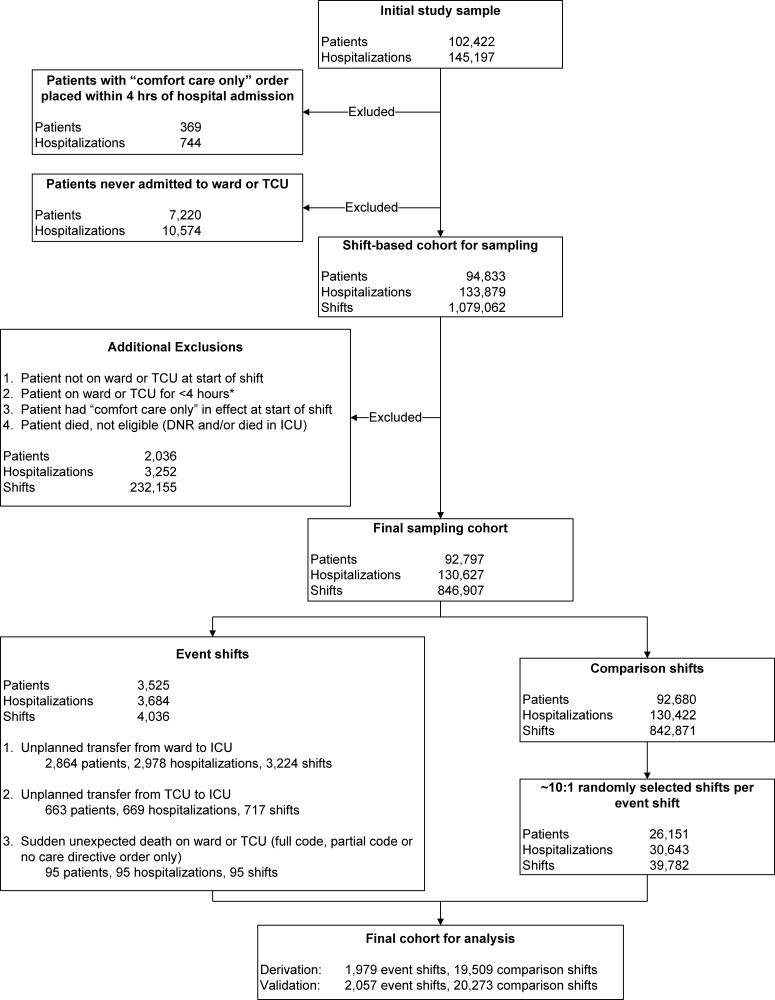
Table 2 compares event shifts with comparison shifts. In the 24 hours preceding ICU transfer, patients who were subsequently transferred had statistically significant, but not necessarily clinically significant, differences in terms of these variables. However, missing laboratory data were more common, ranging from 18% to 31% of all shifts (we did not incorporate laboratory tests where 35% of the shifts had missing data for that test).
| Predictor | Event Shifts | Comparison Shifts | P |
|---|---|---|---|
| |||
| Number | 4036 | 39,782 | |
| Age (mean SD) | 67.19 15.25 | 65.41 17.40 | <0.001 |
| Male (n, %) | 2007 (49.73%) | 17,709 (44.52%) | <0.001 |
| Day shift | 1364 (33.80%) | 17,714 (44.53%) | <0.001 |
| LAPS* | 27.89 22.10 | 20.49 20.16 | <0.001 |
| COPS | 116.33 72.31 | 100.81 68.44 | <0.001 |
| Full code (n, %) | 3496 (86.2%) | 32,156 (80.8%) | <0.001 |
| ICU shift during hospitalization | 3964 (98.22%) | 7197 (18.09%) | <0.001 |
| Unplanned transfer to ICU during hospitalization∥ | 353 (8.8%) | 1466 (3.7%) | <0.001 |
| Temperature (mean SD) | 98.15 (1.13) | 98.10 (0.85) | 0.009 |
| Heart rate (mean SD) | 90.30 (20.48) | 79.86 (5.27) | <0.001 |
| Respiratory rate (mean SD) | 20.36 (3.70) | 18.87 (1.79) | <0.001 |
| Systolic blood pressure (mean SD) | 123.65 (23.26) | 126.21 (19.88) | <0.001 |
| Diastolic blood pressure (mean SD) | 68.38 (14.49) | 69.46 (11.95) | <0.001 |
| Oxygen saturation (mean SD) | 95.72% (3.00) | 96.47 % (2.26) | <0.001 |
| MEWS(re) (mean SD) | 3.64 (2.02) | 2.34 (1.61) | <0.001 |
| % <5 | 74.86% | 92.79% | |
| % 5 | 25.14% | 7.21% | <0.001 |
| Proxy for measured lactate# (mean SD) | 36.85 (28.24) | 28.73 (16.74) | <0.001 |
| % Missing in 24 hr before start of shift** | 17.91% | 28.78% | <0.001 |
| Blood urea nitrogen (mean SD) | 32.03 (25.39) | 22.72 (18.9) | <0.001 |
| % Missing in 24 hr before start of shift | 19.67% | 20.90% | <0.001 |
| White blood cell count 1000 (mean SD) | 12.33 (11.42) | 9.83 (6.58) | <0.001 |
| % Missing in 24 hr before start of shift | 21.43% | 30.98% | <0.001 |
| Hematocrit (mean SD) | 33.08 (6.28) | 33.07 (5.25) | 0.978 |
| % Missing in 24 hr before start of shift | 19.87% | 29.55% | <0.001 |
After conducting multiple analyses using the derivation dataset, we developed 24 submodels, a compromise between our finding that primary‐condition‐specific models showed better performance and the fact that we had very few events among patients with certain primary conditions (eg, pericarditis/valvular heart disease), which forced us to create composite categories (eg, a category pooling patients with pericarditis, atherosclerosis, and peripheral vascular disease). Table 3 lists variables included in our final submodels.
| Variable | Description |
|---|---|
| |
| Directive status | Full code or not full code |
| LAPS* | Admission physiologic severity of illness score (continuous variable ranging from 0 to 256). Standardized and included as LAPS and LAPS squared |
| COPS | Comorbidity burden score (continuous variable ranging from 0 to 701). Standardized and included as COPS and COPS squared. |
| COPS status | Indicator for absent comorbidity data |
| LOS at T0 | Length of stay in the hospital (total time in hours) at the T0; standardized. |
| T0 time of day | 7 AM or 7 PM |
| Temperature | Worst (highest) temperature in 24 hr preceding T0; variability in temperature in 24 hr preceding T0. |
| Heart rate | Most recent heart rate in 24 hr preceding T0; variability in heart rate in 24 hr preceding T0. |
| Respiratory rate | Most recent respiratory rate in 24 hr preceding T0; worst (highest) respiratory rate in 24 hr preceding T0; variability in respiratory rate in 24 hr preceding T0. |
| Diastolic blood pressure | Most recent diastolic blood pressure in 24 hr preceding T0 transformed by subtracting 70 from the actual value and squaring the result. Any value above 2000 is subsequently then set to 2000, yielding a continuous variable ranging from 0 to 2000. |
| Systolic pressure | Variability in systolic blood pressure in 24 hr preceding T0. |
| Pulse oximetry | Worst (lowest) oxygen saturation in 24 hr preceding T0; variability in oxygen saturation in 24 hr preceding T0. |
| Neurological status | Most recent neurological status check in 24 hr preceding T0. |
| Laboratory tests | Blood urea nitrogen |
| Proxy for measured lactate = (anion gap serum bicarbonate) 100 | |
| Hematocrit | |
| Total white blood cell count | |
Table 4 summarizes key results in the validation dataset. Across all diagnoses, the MEWS(re) had c‐statistic of 0.709 (95% confidence interval, 0.6970.721) in the derivation dataset and 0.698 (0.6860.710) in the validation dataset. In the validation dataset, the MEWS(re) performed best among patients with a set of gastrointestinal diagnoses (c = 0.792; 0.7260.857) and worst among patients with congestive heart failure (0.541; 0.5000.620). In contrast, across all primary conditions, the EMR‐based models had a c‐statistic of 0.845 (0.8260.863) in the derivation dataset and 0.775 (0.7530.797) in the validation dataset. In the validation dataset, the EMR‐based models also performed best among patients with a set of gastrointestinal diagnoses (0.841; 0.7830.897) and worst among patients with congestive heart failure (0.683; 0.6100.755). A negative correlation (R = 0.63) was evident between the number of event shifts in a submodel and the drop in the c‐statistic seen in the validation dataset.
| No. of Shifts in Validation Dataset | c‐Statistic | |||
|---|---|---|---|---|
| Diagnoses Group* | Event | Comparison | MEWS(re) | EMR Model |
| ||||
| Acute myocardial infarction | 36 | 169 | 0.541 | 0.572 |
| Diseases of pulmonary circulation and cardiac dysrhythmias | 40 | 329 | 0.565 | 0.645 |
| Seizure disorders | 45 | 497 | 0.594 | 0.647 |
| Rule out myocardial infarction | 77 | 727 | 0.602 | 0.648 |
| Pneumonia | 163 | 847 | 0.741 | 0.801 |
| GI diagnoses, set A | 58 | 942 | 0.755 | 0.803 |
| GI diagnoses, set B∥ | 256 | 2,610 | 0.772 | 0.806 |
| GI diagnoses, set C | 46 | 520 | 0.792 | 0.841 |
| All diagnosis | 2,032 | 20,106 | 0.698 | 0.775 |
We also compared model performance when our datasets were restricted to 1 randomly selected observation per patient; in these analyses, the total number of event shifts was 3,647 and the number of comparison shifts was 29,052. The c‐statistic for the MEWS(re) in the derivation dataset was 0.709 (0.6940.725); in the validation dataset, it was 0.698 (0.6920.714). The corresponding values for the EMR‐based models were 0.856 (0.8350.877) and 0.780 (0.7560.804). We also tested models in which, instead of dropping shifts with missing vital signs, we imputed missing vital signs to their normal value. The c‐statistic for the EMR‐based model with imputed vital sign values was 0.842 (0.8230.861) in the derivation dataset and 0.773 (0.7520.794) in the validation dataset. Lastly, we applied model coefficients to a dataset consisting of 4,290 randomly selected comparison shifts plus the 429 shifts excluded because of the 4‐hour length‐of‐stay criterion. The c‐statistic for this analysis was 0.756 (0.7030.809).
As a general rule, the EMR‐based models were more than twice as efficient as the MEWS(re). For example, a MEWS(re) threshold of 6 as the trigger for an alarm would identify 15% of all transfers to the ICU, with 34.4 false alarms for each transfer; in contrast, using the EMR‐based approach to identify 15% of all transfers, there were 14.5 false alarms for each transfer. Applied to the entire KPMCP Northern California Region, using the MEWS(re), a total of 52 patients per day would need to be evaluated, but only 22 per day using the EMR‐based approach. If one employed a MEWS(re) threshold of 4, this would lead to identification of 44% of all transfers, with a ratio of 69 false alarms for each transfer; using the EMR, the ratio would be 34 to 1. Across the entire KPMCP, a total of 276 patients per day (or about 19.5 a day per hospital) would need to be evaluated using the MEWS(re), but only 136 (or about 9.5 per hospital per day) using the EMR.
DISCUSSION
Using data from a large hospital cohort, we have developed a predictive model suitable for use in non‐ICU populations cared for in integrated healthcare settings with fully automated EMRs. The overall performance of our model, which incorporates acute physiology, diagnosis, and longitudinal data, is superior to the predictive ability of a model that can be assigned manually. This is not surprising, given that scoring systems such as the MEWS make an explicit tradeoff losing information found in multiple variables in exchange for ease of manual assignment. Currently, the model described in this report is being implemented in a simulated environment, a final safety test prior to piloting real‐time provision of probability estimates to clinicians and nurses. Though not yet ready for real‐time use, it is reasonable for our model to be tested using the KPHC shadow server, since evaluation in a simulated environment constitutes a critical evaluation step prior to deployment for clinical use. We also anticipate further refinement and revalidation to occur as more inpatient data become available in the KPMCP and elsewhere.
A number of limitations to our approach must be emphasized. In developing our models, we determined that, while modeling by clinical condition was important, the study outcome was rare for some primary conditions. In these diagnostic groups, which accounted for 12.5% of the event shifts and 10.6% of the comparison shifts, the c‐statistic in the validation dataset was <0.70. Since all 22 KPMCP hospitals are now online and will generate an additional 150,000 adult hospitalizations per year, we expect to be able to correct this problem prior to deployment of these models for clinical use. Having additional data will permit us to improve model discrimination and thus decrease the evaluation‐to‐detection ratio. In future iterations of these models, more experimentation with grouping of International Classification of Diseases (ICD) codes may be required. The problem of grouping ICD codes is not an easy one to resolve, in that diagnoses in the grouping must share common pathophysiology while having a grouping with a sufficient number of adverse events for stable statistical models.
Ideally, it would have been desirable to employ a more objective measure of deterioration, since the decision to transfer a patient to the ICU is discretionary. However, we have found that key data points needed to define such a measure (eg, vital signs) are not consistently charted when a patient deterioratesthis is not surprising outside the research setting, given that nurses and physicians involved in a transfer may be focusing on caring for the patient rather than immediately charting. Given the complexities of end‐of‐life‐care decision‐making, we could not employ death as the outcome of interest. A related issue is that our model does not differentiate between reasons for needing transfer to the ICU, an issue recently discussed by Bapoje et al.18
Our model does not address an important issue raised by Bapoje et al18 and Litvak, Pronovost, and others,19, 20 namely, whether a patient should have been admitted to a non‐ICU setting in the first place. Our team is currently developing a model for doing exactly this (providing decision support for triage in the emergency department), but discussion of this methodology is outside the scope of this article.
Because of resource and data limitations, our model also does not include newborns, children, women admitted for childbirth, or patients transferred from non‐KPMCP hospitals. However, the approach described here could serve as a starting point for developing models for these other populations.
The generalizability of our model must also be considered. The Northern California KPMCP is unusual in having large electronic databases that include physiologic as well as longitudinal patient data. Many hospitals cannot take advantage of all the methods described here. However, the methods we employed could be modified for use by hospital systems in countries such as Great Britain and Canada, and entities such as the Veterans Administration Hospital System in the United States. The KPMCP population, an insured population with few barriers to access, is healthier than the general population, and some population subsets are underrepresented in our cohort. Practice patterns may also vary. Nonetheless, the model described here could serve as a good starting point for future collaborative studies, and it would be possible to develop models suitable for use by stand‐alone hospitals (eg, recalibrating so that one used a Charlson comorbidity21 score based on present on‐admission codes rather than the COPS).
The need for early detection of patient deterioration has played a major role in the development of rapid response teams, as well as scores such as the MEWS. In particular, entities such as the Institute for Healthcare Improvement have advocated the use of early warning systems.22 However, having a statistically robust model to support an early warning system is only part of the solution, and a number of new challenges must then be addressed. The first is actual electronic deployment. Existing inpatient EMRs were not designed with complex calculations in mind, and we anticipate that some degradation in performance will occur when we test our models using real‐time data capture. As Bapoje et al point out, simply having an alert may be insufficient, since not all transfers are preventable.18 Early warning systems also raise ethical issues (for example, what should be done if an alert leads a clinician to confront the fact that an end‐of‐life‐care discussion needs to occur?). From a research perspective, if one were to formally test the benefits of such models, it would be critical to define outcome measures other than death (which is strongly affected by end‐of‐life‐care decisions) or ICU transfer (which is often desirable).
In conclusion, we have developed an approach for predicting impending physiologic deterioration of hospitalized adults outside the ICU. Our approach illustrates how organizations can take maximal advantage of EMRs in a manner that exceeds meaningful use specifications.23, 24 Our study highlights the possibility of using fully automated EMR data for building and applying sophisticated statistical models in settings other than the highly monitored ICU without the need for additional equipment. It also expands the universe of severity scoring to one in which probability estimates are provided in real time and throughout an entire hospitalization. Model performance will undoubtedly improve over time, as more patient data become available. Although our approach has important limitations, it is suitable for testing using real‐time data in a simulated environment. Such testing would permit identification of unanticipated problems and quantification of the degradation of model performance due to real life factors, such as delays in vital signs charting or EMR system brownouts. It could also serve as the springboard for future collaborative studies, with a broader population base, in which the EMR becomes a tool for care, not just documentation.
Acknowledgements
We thank Ms Marla Gardner and Mr John Greene for their work in the development phase of this project. We are grateful to Brian Hoberman, Andrew Hwang, and Marc Flagg from the RIMS group; to Colin Stobbs, Sriram Thiruvenkatachari, and Sundeep Sood from KP IT, Inc; and to Dennis Andaya, Linda Gliner, and Cyndi Vasallo for their assistance with data‐quality audits. We are also grateful to Dr Philip Madvig, Dr Paul Feigenbaum, Dr Alan Whippy, Mr Gregory Adams, Ms Barbara Crawford, and Dr Marybeth Sharpe for their administrative support and encouragement; and to Dr Alan S. Go, Acting Director of the Kaiser Permanente Division of Research, for reviewing the manuscript.
- ,,,.Day of the week of intensive care admission and patient outcomes: a multisite regional evaluation.Med Care.2002;40(6):530–539.
- ,,, et al.The hospital mortality of patients admitted to the ICU on weekends.Chest.2004;126(4):1292–1298.
- ,,, et al.Mortality among patients admitted to intensive care units during weekday day shifts compared with “off” hours.Crit Care Med.2007;35(1):3–11.
- ,,,,,.Risk adjusting hospital inpatient mortality using automated inpatient, outpatient, and laboratory databases.Med Care.2008;46(3):232–239.
- ,,,.The Kaiser Permanente inpatient risk adjustment methodology was valid in an external patient population.J Clin Epidemiol.2010;63(7):798–803.
- ,,,,,.Intra‐hospital transfers to a higher level of care: contribution to total hospital and intensive care unit (ICU) mortality and length of stay (LOS).J Hosp Med.2011;6(2):74–80.
- ,,,,,.Multicentric study of monitoring alarms in the adult intensive care unit (ICU): a descriptive analysis.Intensive Care Med.1999;25(12):1360–1366.
- ,,,,.Integration of early physiological responses predicts later illness severity in preterm infants.Sci Transl Med.2010;2(48):48ra65.
- ,,.Reproducibility of physiological track‐and‐trigger warning systems for identifying at‐risk patients on the ward.Intensive Care Med.2007;33(4):619–624.
- ,,,.Validation of a Modified Early Warning Score in medical admissions.Q J Med.2001;94:521–526.
- ,,,,.Effect of introducing the Modified Early Warning score on clinical outcomes, cardio‐pulmonary arrests and intensive care utilisation in acute medical admissions.Anaesthesia.2003;58(8):797–802.
- MERIT Study Investigators.Introduction of the medical emergency team (MET) system: a cluster‐randomized controlled trial.Lancet.2005;365(9477):2091–2097.
- ,,,,,.Unplanned transfers to the intensive care unit: the role of the shock index.J Hosp Med.2010;5(8):460–465.
- .The delta (delta) gap: an approach to mixed acid‐base disorders.Ann Emerg Med.1990;19(11):1310–1313.
- .Acid‐base disorders: classification and management strategies.Am Fam Physician.1995;52(2):584–590.
- ,,,.Unmeasured anions in critically ill patients: can they predict mortality?Crit Care Med.2003;31(8):2131–2136.
- .Use and misuse of the receiver operating characteristic curve in risk prediction.Circulation.2007;115(7):928–935.
- ,,,.Unplanned transfers to a medical intensive care unit: causes and relationship to preventable errors in care.J Hosp Med.2011;6(2):68–72.
- ,.Rethinking rapid response teams.JAMA.2010;304(12):1375–1376.
- ,,.Rapid response teams—walk, don't run.JAMA.2006;296(13):1645–1647.
- ,,,.A new method of classifying prognostic comorbidity in longitudinal populations: development and validation.J Chronic Dis.1987;40:373–383.
- Institute for Healthcare Improvement.Early Warning Systems:The Next Level of Rapid Response.2011. http://www.ihi.org/IHI/Programs/AudioAndWebPrograms/ExpeditionEarlyWarningSystemsTheNextLevelofRapidResponse.htm?player=wmp. Accessed 4/6/11.
- .Assessing readiness for meeting meaningful use: identifying electronic health record functionality and measuring levels of adoption.AMIA Annu Symp Proc.2010;2010:66–70.
- Medicare and Medicaid Programs;Electronic Health Record Incentive Program. Final Rule.Fed Reg.2010;75(144):44313–44588.
Patients in general medicalsurgical wards who experience unplanned transfer to the intensive care unit (ICU) have increased mortality and morbidity.13 Using an externally validated methodology permitting assessment of illness severity and mortality risk among all hospitalized patients,4, 5 we recently documented observed‐to‐expected mortality ratios >3.0 and excess length of stay of 10 days among patients who experienced such transfers.6
It is possible to predict adverse outcomes among monitored patients (eg, patients in the ICU or undergoing continuous electronic monitoring).7, 8 However, prediction of unplanned transfers among medicalsurgical ward patients presents challenges. Data collection (vital signs and laboratory tests) is relatively infrequent. The event rate (3% of hospital admissions) is low, and the rate in narrow time periods (eg, 12 hours) is extremely low: a hospital with 4000 admissions per year might experience 1 unplanned transfer to the ICU every 3 days. Not surprisingly, performance of models suitable for predicting ward patients' need for intensive care within narrow time frames have been disappointing.9 The Modified Early Warning Score (MEWS), has a c‐statistic, or area under the receiver operator characteristic of 0.67,1012 and our own model incorporating 14 laboratory tests, but no vital signs, has excellent performance with respect to predicting inpatient mortality, but poor performance with respect to unplanned transfer.6
In this report, we describe the development and validation of a complex predictive model suitable for use with ward patients. Our objective for this work was to develop a predictive model based on clinical and physiologic data available in real time from a comprehensive electronic medical record (EMR), not a clinically intuitive, manually assigned tool. The outcome of interest was unplanned transfer from the ward to the ICU, or death on the ward in a patient who was full code. This model has been developed as part of a regional effort to decrease preventable mortality in the Northern California Kaiser Permanente Medical Care Program (KPMCP), an integrated healthcare delivery system with 22 hospitals.
MATERIALS AND METHODS
For additional details, see the Supporting Information, Appendices 112, in the online version of this article.
This project was approved by the KPMCP Institutional Board for the Protection of Human Subjects.
The Northern California KPMCP serves a total population of approximately 3.3 million members. All Northern California KPMCP hospitals and clinics employ the same information systems with a common medical record number and can track care covered by the plan but delivered elsewhere. Databases maintained by the KPMCP capture admission and discharge times, admission and discharge diagnoses and procedures (assigned by professional coders), bed histories permitting quantification of intra‐hospital transfers, inter‐hospital transfers, as well as the results of all inpatient and outpatient laboratory tests. In July 2006, the KPMCP began deployment of the EMR developed by Epic Systems Corporation (
Our setting consisted of 14 hospitals in which the KPHC inpatient EMR had been running for at least 3 months (the KPMCP Antioch, Fremont, Hayward, Manteca, Modesto, Roseville, Sacramento, Santa Clara, San Francisco, Santa Rosa, South Sacramento, South San Francisco, Santa Teresa, and Walnut Creek hospitals). We have described the general characteristics of KPMCP hospitals elsewhere.4, 6 Our initial study population consisted of all patients admitted to these hospitals who met the following criteria: hospitalization began from November 1, 2006 through December 31, 2009; initial hospitalization occurred at a Northern California KPMCP hospital (ie, for inter‐hospital transfers, the first hospital stay occurred within the KPMCP); age 18 years; hospitalization was not for childbirth; and KPHC had been operational at the hospital for at least 3 months.
Analytic Approach
The primary outcome for this study was transfer to the ICU after admission to the hospital among patients residing either in a general medicalsurgical ward (ward) or transitional care unit (TCU), or death in the ward or TCU in a patient who was full code at the time of death (ie, had the patient survived, s/he would have been transferred to the ICU). The unit of analysis for this study was a 12‐hour patient shift, which could begin with a 7 AM T0 (henceforth, day shift) or a 7 PM T0 (night shift); in other words, we aimed to predict the occurrence of an event within 12 hours of T0 using only data available prior to T0. A shift in which a patient experienced the primary study outcome is an event shift, while one in which a patient did not experience the primary outcome is a comparison shift. Using this approach, an individual patient record could consist of both event and comparison shifts, since some patients might have multiple unplanned transfers and some patients might have none. Our basic analytic approach consisted of creating a cohort of event and comparison shifts (10 comparison shifts were randomly selected for each event shift), splitting the cohort into a derivation dataset (50%) and validation dataset (50%), developing a model using the derivation dataset, then applying the coefficients of the derivation dataset to the validation dataset. Because some event shifts were excluded due to the minimum 4‐hour length‐of‐stay requirement, we also applied model coefficients to these excluded shifts and a set of randomly selected comparison shifts.
Since the purpose of these analyses was to develop models with maximal signal extraction from sparsely collected predictors, we did not block a time period after the T0 to allow for a reaction time to the alarm. Thus, since some events could occur immediately after the T0 (as can be seen in the Supporting Information, Appendices, in the online version of this article), our models would need to be run at intervals that are more frequent than 2 times a day.
Independent Variables
In addition to patients' age and sex, we tested the following candidate independent variables. Some of these variables are part of the KPMCP risk adjustment model4, 5 and were available electronically for all patients in the cohort. We grouped admission diagnoses into 44 broad diagnostic categories (primary conditions), and admission types into 4 groups (emergency medical, emergency surgical, elective medical, and elective surgical). We quantified patients' degree of physiologic derangement in the 72 hours preceding hospitalization with a Laboratory‐based Acute Physiology Score (LAPS) using 14 laboratory test results prior to hospitalization; we also tested individual laboratory test results obtained after admission to the hospital. We quantified patients' comorbid illness burden using a COmorbidity Point Score (COPS) based on patients' preexisting diagnoses over the 12‐month period preceding hospitalization.4 We extracted temperature, heart rate, respiratory rate, systolic blood pressure, diastolic blood pressure, oxygen saturation, and neurological status from the EMR. We also tested the following variables based on specific information extracted from the EMR: shock index (heart rate divided by systolic blood pressure)13; care directive status (patients were placed into 4 groups: full code, partial code, do not resuscitate [DNR], and no care directive in place); and a proxy for measured lactate (PML; anion gap/serum bicarbonate 100).1416 For comparison purposes, we also created a retrospective electronically assigned MEWS, which we refer to as the MEWS(re), and we assigned this score to patient records electronically using data from KP HealthConnect.
Statistical Methods
Analyses were performed in SAS 9.1, Stata 10, and R 2.12. Final validation was performed using SAS (SAS Institute Inc., Carey, North Carolina). Since we did not limit ourselves to traditional severity‐scoring approaches (eg, selecting the worst heart rate in a given time interval), but also included trend terms (eg, change in heart rate over the 24 hours preceding T0), the number of potential variables to test was very large. Detailed description of the statistical strategies employed for variable selection is provided in the Supporting Information, Appendices, in the online version of this article. Once variables were selected, our basic approach was to test a series of diagnosis‐specific logistic regression submodels using a variety of predictors that included vital signs, vital signs trends (eg, most recent heart rate minus earliest heart rate, heart rate over preceding 24 hours), and other above‐mentioned variables.
We assessed the ability of a submodel to correctly distinguish patients who died, from survivors, using the c‐statistic, as well as other metrics recommended by Cook.17 At the end of the modeling process, we pooled the results across all submodels. For vital signs, where the rate of missing data was <3%, we tested submodels in which we dropped shifts with missing data, as well as submodels in which we imputed missing vital signs to a normal value. For laboratory data, where the rate of missing data for a given shift was much greater, we employed a probabilistic imputation method that included consideration of when a laboratory test result became available.
RESULTS
During the study period, a total of 102,488 patients experienced 145,335 hospitalizations at the study hospitals. We removed 66 patients with 138 hospitalizations for data quality reasons, leaving us with our initial study sample of 102,422 patients whose characteristics are summarized in Table 1. Table 1, in which the unit of analysis is an individual patient, shows that patients who experienced the primary outcome were similar to those patients described in our previous report, in terms of their characteristics on admission as well as in experiencing excess morbidity and mortality.6
| Never Admitted to ICU | Direct Admit to ICU From ED | Unplanned Transfer to ICU* | Other ICU Admission | |
|---|---|---|---|---|
| ||||
| N | 89,269 | 5963 | 2880 | 4310 |
| Age (mean SD) | 61.26 18.62 | 62.25 18.13 | 66.12 16.20 | 64.45 15.91 |
| Male (n, %) | 37,228 (41.70%) | 3091 (51.84%) | 1416 (49.17%) | 2378 (55.17%) |
| LAPS (mean SD) | 13.02 15.79 | 32.72 24.85 | 24.83 21.53 | 11.79 18.16 |
| COPS(mean SD) | 67.25 51.42 | 73.88 57.42 | 86.33 59.33 | 78.44 52.49 |
| % Predicted mortality risk (mean SD) | 1.93% 3.98% | 7.69% 12.59% | 5.23% 7.70% | 3.66% 6.81% |
| Survived first hospitalization to discharge∥ | 88,479 (99.12%) | 5336 (89.49%) | 2316 (80.42%) | 4063 (94.27%) |
| Care order on admission | ||||
| Full code | 78,877 (88.36%) | 5198 (87.17%) | 2598 (90.21%) | 4097 (95.06%) |
| Partial code | 664 (0.74%) | 156 (2.62%) | 50 (1.74%) | 27 (0.63%) |
| Comfort care | 21 (0.02%) | 2 (0.03%) | 0 (0%) | 0 (0%) |
| DNR | 8227 (9.22%) | 539 (9.04%) | 219 (7.60%) | 161 (3.74%) |
| Comfort care and DNR | 229 (0.26%) | 9 (0.15%) | 2 (0.07%) | 2 (0.05%) |
| No order | 1251 (1.40%) | 59 (0.99%) | 11 (0.38%) | 23 (0.53%) |
| Admission diagnosis (n, %) | ||||
| Pneumonia | 2385 (2.67%) | 258 (4.33%) | 242 (8.40%) | 68 (1.58%) |
| Sepsis | 5822 (6.52%) | 503 (8.44%) | 279 (9.69%) | 169 (3.92%) |
| GI bleeding | 9938 (11.13%) | 616 (10.33%) | 333 (11.56%) | 290 (6.73%) |
| Cancer | 2845 (3.19%) | 14 (0.23%) | 95 (3.30%) | 492 (11.42%) |
| Total hospital length of stay (days SD) | 3.08 3.29 | 5.37 7.50 | 12.16 13.12 | 8.06 9.53 |
Figure 1shows how we developed the analysis cohort, by removing patients with a comfort‐care‐only order placed within 4 hours after admission (369 patients/744 hospitalizations) and patients who were never admitted to the ward or TCU (7,220/10,574). This left a cohort consisting of 94,833 patients who experienced 133,879 hospitalizations spanning a total of 1,079,062 shifts. We then removed shifts where: 1) a patient was not on the ward at the start of a shift, or was on the ward for <4 hours of a shift; 2) the patient had a comfort‐care order in place at the start of the shift; and 3) the patient died and was ineligible to be a case (the patient had a DNR order in place or died in the ICU). The final cohort eligible for sampling consisted of 846,907 shifts, which involved a total of 92,797 patients and 130,627 hospitalizations. There were a total of 4,036 event shifts, which included 3,224 where a patient was transferred from the ward to the ICU, 717 from the TCU to the ICU, and 95 where a patient died on the ward or TCU without a DNR order in place. We then randomly selected 39,782 comparison shifts. Thus, our final cohort for analysis included 4,036 event shifts (1,979 derivation/2,057 validation and 39,782 comparison shifts (19,509/20,273). As a secondary validation, we also applied model coefficients to the 429 event shifts excluded due to the <4‐hour length‐of‐stay requirement.
Table 2 compares event shifts with comparison shifts. In the 24 hours preceding ICU transfer, patients who were subsequently transferred had statistically significant, but not necessarily clinically significant, differences in terms of these variables. However, missing laboratory data were more common, ranging from 18% to 31% of all shifts (we did not incorporate laboratory tests where 35% of the shifts had missing data for that test).
| Predictor | Event Shifts | Comparison Shifts | P |
|---|---|---|---|
| |||
| Number | 4036 | 39,782 | |
| Age (mean SD) | 67.19 15.25 | 65.41 17.40 | <0.001 |
| Male (n, %) | 2007 (49.73%) | 17,709 (44.52%) | <0.001 |
| Day shift | 1364 (33.80%) | 17,714 (44.53%) | <0.001 |
| LAPS* | 27.89 22.10 | 20.49 20.16 | <0.001 |
| COPS | 116.33 72.31 | 100.81 68.44 | <0.001 |
| Full code (n, %) | 3496 (86.2%) | 32,156 (80.8%) | <0.001 |
| ICU shift during hospitalization | 3964 (98.22%) | 7197 (18.09%) | <0.001 |
| Unplanned transfer to ICU during hospitalization∥ | 353 (8.8%) | 1466 (3.7%) | <0.001 |
| Temperature (mean SD) | 98.15 (1.13) | 98.10 (0.85) | 0.009 |
| Heart rate (mean SD) | 90.30 (20.48) | 79.86 (5.27) | <0.001 |
| Respiratory rate (mean SD) | 20.36 (3.70) | 18.87 (1.79) | <0.001 |
| Systolic blood pressure (mean SD) | 123.65 (23.26) | 126.21 (19.88) | <0.001 |
| Diastolic blood pressure (mean SD) | 68.38 (14.49) | 69.46 (11.95) | <0.001 |
| Oxygen saturation (mean SD) | 95.72% (3.00) | 96.47 % (2.26) | <0.001 |
| MEWS(re) (mean SD) | 3.64 (2.02) | 2.34 (1.61) | <0.001 |
| % <5 | 74.86% | 92.79% | |
| % 5 | 25.14% | 7.21% | <0.001 |
| Proxy for measured lactate# (mean SD) | 36.85 (28.24) | 28.73 (16.74) | <0.001 |
| % Missing in 24 hr before start of shift** | 17.91% | 28.78% | <0.001 |
| Blood urea nitrogen (mean SD) | 32.03 (25.39) | 22.72 (18.9) | <0.001 |
| % Missing in 24 hr before start of shift | 19.67% | 20.90% | <0.001 |
| White blood cell count 1000 (mean SD) | 12.33 (11.42) | 9.83 (6.58) | <0.001 |
| % Missing in 24 hr before start of shift | 21.43% | 30.98% | <0.001 |
| Hematocrit (mean SD) | 33.08 (6.28) | 33.07 (5.25) | 0.978 |
| % Missing in 24 hr before start of shift | 19.87% | 29.55% | <0.001 |
After conducting multiple analyses using the derivation dataset, we developed 24 submodels, a compromise between our finding that primary‐condition‐specific models showed better performance and the fact that we had very few events among patients with certain primary conditions (eg, pericarditis/valvular heart disease), which forced us to create composite categories (eg, a category pooling patients with pericarditis, atherosclerosis, and peripheral vascular disease). Table 3 lists variables included in our final submodels.
| Variable | Description |
|---|---|
| |
| Directive status | Full code or not full code |
| LAPS* | Admission physiologic severity of illness score (continuous variable ranging from 0 to 256). Standardized and included as LAPS and LAPS squared |
| COPS | Comorbidity burden score (continuous variable ranging from 0 to 701). Standardized and included as COPS and COPS squared. |
| COPS status | Indicator for absent comorbidity data |
| LOS at T0 | Length of stay in the hospital (total time in hours) at the T0; standardized. |
| T0 time of day | 7 AM or 7 PM |
| Temperature | Worst (highest) temperature in 24 hr preceding T0; variability in temperature in 24 hr preceding T0. |
| Heart rate | Most recent heart rate in 24 hr preceding T0; variability in heart rate in 24 hr preceding T0. |
| Respiratory rate | Most recent respiratory rate in 24 hr preceding T0; worst (highest) respiratory rate in 24 hr preceding T0; variability in respiratory rate in 24 hr preceding T0. |
| Diastolic blood pressure | Most recent diastolic blood pressure in 24 hr preceding T0 transformed by subtracting 70 from the actual value and squaring the result. Any value above 2000 is subsequently then set to 2000, yielding a continuous variable ranging from 0 to 2000. |
| Systolic pressure | Variability in systolic blood pressure in 24 hr preceding T0. |
| Pulse oximetry | Worst (lowest) oxygen saturation in 24 hr preceding T0; variability in oxygen saturation in 24 hr preceding T0. |
| Neurological status | Most recent neurological status check in 24 hr preceding T0. |
| Laboratory tests | Blood urea nitrogen |
| Proxy for measured lactate = (anion gap serum bicarbonate) 100 | |
| Hematocrit | |
| Total white blood cell count | |
Table 4 summarizes key results in the validation dataset. Across all diagnoses, the MEWS(re) had c‐statistic of 0.709 (95% confidence interval, 0.6970.721) in the derivation dataset and 0.698 (0.6860.710) in the validation dataset. In the validation dataset, the MEWS(re) performed best among patients with a set of gastrointestinal diagnoses (c = 0.792; 0.7260.857) and worst among patients with congestive heart failure (0.541; 0.5000.620). In contrast, across all primary conditions, the EMR‐based models had a c‐statistic of 0.845 (0.8260.863) in the derivation dataset and 0.775 (0.7530.797) in the validation dataset. In the validation dataset, the EMR‐based models also performed best among patients with a set of gastrointestinal diagnoses (0.841; 0.7830.897) and worst among patients with congestive heart failure (0.683; 0.6100.755). A negative correlation (R = 0.63) was evident between the number of event shifts in a submodel and the drop in the c‐statistic seen in the validation dataset.
| No. of Shifts in Validation Dataset | c‐Statistic | |||
|---|---|---|---|---|
| Diagnoses Group* | Event | Comparison | MEWS(re) | EMR Model |
| ||||
| Acute myocardial infarction | 36 | 169 | 0.541 | 0.572 |
| Diseases of pulmonary circulation and cardiac dysrhythmias | 40 | 329 | 0.565 | 0.645 |
| Seizure disorders | 45 | 497 | 0.594 | 0.647 |
| Rule out myocardial infarction | 77 | 727 | 0.602 | 0.648 |
| Pneumonia | 163 | 847 | 0.741 | 0.801 |
| GI diagnoses, set A | 58 | 942 | 0.755 | 0.803 |
| GI diagnoses, set B∥ | 256 | 2,610 | 0.772 | 0.806 |
| GI diagnoses, set C | 46 | 520 | 0.792 | 0.841 |
| All diagnosis | 2,032 | 20,106 | 0.698 | 0.775 |
We also compared model performance when our datasets were restricted to 1 randomly selected observation per patient; in these analyses, the total number of event shifts was 3,647 and the number of comparison shifts was 29,052. The c‐statistic for the MEWS(re) in the derivation dataset was 0.709 (0.6940.725); in the validation dataset, it was 0.698 (0.6920.714). The corresponding values for the EMR‐based models were 0.856 (0.8350.877) and 0.780 (0.7560.804). We also tested models in which, instead of dropping shifts with missing vital signs, we imputed missing vital signs to their normal value. The c‐statistic for the EMR‐based model with imputed vital sign values was 0.842 (0.8230.861) in the derivation dataset and 0.773 (0.7520.794) in the validation dataset. Lastly, we applied model coefficients to a dataset consisting of 4,290 randomly selected comparison shifts plus the 429 shifts excluded because of the 4‐hour length‐of‐stay criterion. The c‐statistic for this analysis was 0.756 (0.7030.809).
As a general rule, the EMR‐based models were more than twice as efficient as the MEWS(re). For example, a MEWS(re) threshold of 6 as the trigger for an alarm would identify 15% of all transfers to the ICU, with 34.4 false alarms for each transfer; in contrast, using the EMR‐based approach to identify 15% of all transfers, there were 14.5 false alarms for each transfer. Applied to the entire KPMCP Northern California Region, using the MEWS(re), a total of 52 patients per day would need to be evaluated, but only 22 per day using the EMR‐based approach. If one employed a MEWS(re) threshold of 4, this would lead to identification of 44% of all transfers, with a ratio of 69 false alarms for each transfer; using the EMR, the ratio would be 34 to 1. Across the entire KPMCP, a total of 276 patients per day (or about 19.5 a day per hospital) would need to be evaluated using the MEWS(re), but only 136 (or about 9.5 per hospital per day) using the EMR.
DISCUSSION
Using data from a large hospital cohort, we have developed a predictive model suitable for use in non‐ICU populations cared for in integrated healthcare settings with fully automated EMRs. The overall performance of our model, which incorporates acute physiology, diagnosis, and longitudinal data, is superior to the predictive ability of a model that can be assigned manually. This is not surprising, given that scoring systems such as the MEWS make an explicit tradeoff losing information found in multiple variables in exchange for ease of manual assignment. Currently, the model described in this report is being implemented in a simulated environment, a final safety test prior to piloting real‐time provision of probability estimates to clinicians and nurses. Though not yet ready for real‐time use, it is reasonable for our model to be tested using the KPHC shadow server, since evaluation in a simulated environment constitutes a critical evaluation step prior to deployment for clinical use. We also anticipate further refinement and revalidation to occur as more inpatient data become available in the KPMCP and elsewhere.
A number of limitations to our approach must be emphasized. In developing our models, we determined that, while modeling by clinical condition was important, the study outcome was rare for some primary conditions. In these diagnostic groups, which accounted for 12.5% of the event shifts and 10.6% of the comparison shifts, the c‐statistic in the validation dataset was <0.70. Since all 22 KPMCP hospitals are now online and will generate an additional 150,000 adult hospitalizations per year, we expect to be able to correct this problem prior to deployment of these models for clinical use. Having additional data will permit us to improve model discrimination and thus decrease the evaluation‐to‐detection ratio. In future iterations of these models, more experimentation with grouping of International Classification of Diseases (ICD) codes may be required. The problem of grouping ICD codes is not an easy one to resolve, in that diagnoses in the grouping must share common pathophysiology while having a grouping with a sufficient number of adverse events for stable statistical models.
Ideally, it would have been desirable to employ a more objective measure of deterioration, since the decision to transfer a patient to the ICU is discretionary. However, we have found that key data points needed to define such a measure (eg, vital signs) are not consistently charted when a patient deterioratesthis is not surprising outside the research setting, given that nurses and physicians involved in a transfer may be focusing on caring for the patient rather than immediately charting. Given the complexities of end‐of‐life‐care decision‐making, we could not employ death as the outcome of interest. A related issue is that our model does not differentiate between reasons for needing transfer to the ICU, an issue recently discussed by Bapoje et al.18
Our model does not address an important issue raised by Bapoje et al18 and Litvak, Pronovost, and others,19, 20 namely, whether a patient should have been admitted to a non‐ICU setting in the first place. Our team is currently developing a model for doing exactly this (providing decision support for triage in the emergency department), but discussion of this methodology is outside the scope of this article.
Because of resource and data limitations, our model also does not include newborns, children, women admitted for childbirth, or patients transferred from non‐KPMCP hospitals. However, the approach described here could serve as a starting point for developing models for these other populations.
The generalizability of our model must also be considered. The Northern California KPMCP is unusual in having large electronic databases that include physiologic as well as longitudinal patient data. Many hospitals cannot take advantage of all the methods described here. However, the methods we employed could be modified for use by hospital systems in countries such as Great Britain and Canada, and entities such as the Veterans Administration Hospital System in the United States. The KPMCP population, an insured population with few barriers to access, is healthier than the general population, and some population subsets are underrepresented in our cohort. Practice patterns may also vary. Nonetheless, the model described here could serve as a good starting point for future collaborative studies, and it would be possible to develop models suitable for use by stand‐alone hospitals (eg, recalibrating so that one used a Charlson comorbidity21 score based on present on‐admission codes rather than the COPS).
The need for early detection of patient deterioration has played a major role in the development of rapid response teams, as well as scores such as the MEWS. In particular, entities such as the Institute for Healthcare Improvement have advocated the use of early warning systems.22 However, having a statistically robust model to support an early warning system is only part of the solution, and a number of new challenges must then be addressed. The first is actual electronic deployment. Existing inpatient EMRs were not designed with complex calculations in mind, and we anticipate that some degradation in performance will occur when we test our models using real‐time data capture. As Bapoje et al point out, simply having an alert may be insufficient, since not all transfers are preventable.18 Early warning systems also raise ethical issues (for example, what should be done if an alert leads a clinician to confront the fact that an end‐of‐life‐care discussion needs to occur?). From a research perspective, if one were to formally test the benefits of such models, it would be critical to define outcome measures other than death (which is strongly affected by end‐of‐life‐care decisions) or ICU transfer (which is often desirable).
In conclusion, we have developed an approach for predicting impending physiologic deterioration of hospitalized adults outside the ICU. Our approach illustrates how organizations can take maximal advantage of EMRs in a manner that exceeds meaningful use specifications.23, 24 Our study highlights the possibility of using fully automated EMR data for building and applying sophisticated statistical models in settings other than the highly monitored ICU without the need for additional equipment. It also expands the universe of severity scoring to one in which probability estimates are provided in real time and throughout an entire hospitalization. Model performance will undoubtedly improve over time, as more patient data become available. Although our approach has important limitations, it is suitable for testing using real‐time data in a simulated environment. Such testing would permit identification of unanticipated problems and quantification of the degradation of model performance due to real life factors, such as delays in vital signs charting or EMR system brownouts. It could also serve as the springboard for future collaborative studies, with a broader population base, in which the EMR becomes a tool for care, not just documentation.
Acknowledgements
We thank Ms Marla Gardner and Mr John Greene for their work in the development phase of this project. We are grateful to Brian Hoberman, Andrew Hwang, and Marc Flagg from the RIMS group; to Colin Stobbs, Sriram Thiruvenkatachari, and Sundeep Sood from KP IT, Inc; and to Dennis Andaya, Linda Gliner, and Cyndi Vasallo for their assistance with data‐quality audits. We are also grateful to Dr Philip Madvig, Dr Paul Feigenbaum, Dr Alan Whippy, Mr Gregory Adams, Ms Barbara Crawford, and Dr Marybeth Sharpe for their administrative support and encouragement; and to Dr Alan S. Go, Acting Director of the Kaiser Permanente Division of Research, for reviewing the manuscript.
Patients in general medicalsurgical wards who experience unplanned transfer to the intensive care unit (ICU) have increased mortality and morbidity.13 Using an externally validated methodology permitting assessment of illness severity and mortality risk among all hospitalized patients,4, 5 we recently documented observed‐to‐expected mortality ratios >3.0 and excess length of stay of 10 days among patients who experienced such transfers.6
It is possible to predict adverse outcomes among monitored patients (eg, patients in the ICU or undergoing continuous electronic monitoring).7, 8 However, prediction of unplanned transfers among medicalsurgical ward patients presents challenges. Data collection (vital signs and laboratory tests) is relatively infrequent. The event rate (3% of hospital admissions) is low, and the rate in narrow time periods (eg, 12 hours) is extremely low: a hospital with 4000 admissions per year might experience 1 unplanned transfer to the ICU every 3 days. Not surprisingly, performance of models suitable for predicting ward patients' need for intensive care within narrow time frames have been disappointing.9 The Modified Early Warning Score (MEWS), has a c‐statistic, or area under the receiver operator characteristic of 0.67,1012 and our own model incorporating 14 laboratory tests, but no vital signs, has excellent performance with respect to predicting inpatient mortality, but poor performance with respect to unplanned transfer.6
In this report, we describe the development and validation of a complex predictive model suitable for use with ward patients. Our objective for this work was to develop a predictive model based on clinical and physiologic data available in real time from a comprehensive electronic medical record (EMR), not a clinically intuitive, manually assigned tool. The outcome of interest was unplanned transfer from the ward to the ICU, or death on the ward in a patient who was full code. This model has been developed as part of a regional effort to decrease preventable mortality in the Northern California Kaiser Permanente Medical Care Program (KPMCP), an integrated healthcare delivery system with 22 hospitals.
MATERIALS AND METHODS
For additional details, see the Supporting Information, Appendices 112, in the online version of this article.
This project was approved by the KPMCP Institutional Board for the Protection of Human Subjects.
The Northern California KPMCP serves a total population of approximately 3.3 million members. All Northern California KPMCP hospitals and clinics employ the same information systems with a common medical record number and can track care covered by the plan but delivered elsewhere. Databases maintained by the KPMCP capture admission and discharge times, admission and discharge diagnoses and procedures (assigned by professional coders), bed histories permitting quantification of intra‐hospital transfers, inter‐hospital transfers, as well as the results of all inpatient and outpatient laboratory tests. In July 2006, the KPMCP began deployment of the EMR developed by Epic Systems Corporation (
Our setting consisted of 14 hospitals in which the KPHC inpatient EMR had been running for at least 3 months (the KPMCP Antioch, Fremont, Hayward, Manteca, Modesto, Roseville, Sacramento, Santa Clara, San Francisco, Santa Rosa, South Sacramento, South San Francisco, Santa Teresa, and Walnut Creek hospitals). We have described the general characteristics of KPMCP hospitals elsewhere.4, 6 Our initial study population consisted of all patients admitted to these hospitals who met the following criteria: hospitalization began from November 1, 2006 through December 31, 2009; initial hospitalization occurred at a Northern California KPMCP hospital (ie, for inter‐hospital transfers, the first hospital stay occurred within the KPMCP); age 18 years; hospitalization was not for childbirth; and KPHC had been operational at the hospital for at least 3 months.
Analytic Approach
The primary outcome for this study was transfer to the ICU after admission to the hospital among patients residing either in a general medicalsurgical ward (ward) or transitional care unit (TCU), or death in the ward or TCU in a patient who was full code at the time of death (ie, had the patient survived, s/he would have been transferred to the ICU). The unit of analysis for this study was a 12‐hour patient shift, which could begin with a 7 AM T0 (henceforth, day shift) or a 7 PM T0 (night shift); in other words, we aimed to predict the occurrence of an event within 12 hours of T0 using only data available prior to T0. A shift in which a patient experienced the primary study outcome is an event shift, while one in which a patient did not experience the primary outcome is a comparison shift. Using this approach, an individual patient record could consist of both event and comparison shifts, since some patients might have multiple unplanned transfers and some patients might have none. Our basic analytic approach consisted of creating a cohort of event and comparison shifts (10 comparison shifts were randomly selected for each event shift), splitting the cohort into a derivation dataset (50%) and validation dataset (50%), developing a model using the derivation dataset, then applying the coefficients of the derivation dataset to the validation dataset. Because some event shifts were excluded due to the minimum 4‐hour length‐of‐stay requirement, we also applied model coefficients to these excluded shifts and a set of randomly selected comparison shifts.
Since the purpose of these analyses was to develop models with maximal signal extraction from sparsely collected predictors, we did not block a time period after the T0 to allow for a reaction time to the alarm. Thus, since some events could occur immediately after the T0 (as can be seen in the Supporting Information, Appendices, in the online version of this article), our models would need to be run at intervals that are more frequent than 2 times a day.
Independent Variables
In addition to patients' age and sex, we tested the following candidate independent variables. Some of these variables are part of the KPMCP risk adjustment model4, 5 and were available electronically for all patients in the cohort. We grouped admission diagnoses into 44 broad diagnostic categories (primary conditions), and admission types into 4 groups (emergency medical, emergency surgical, elective medical, and elective surgical). We quantified patients' degree of physiologic derangement in the 72 hours preceding hospitalization with a Laboratory‐based Acute Physiology Score (LAPS) using 14 laboratory test results prior to hospitalization; we also tested individual laboratory test results obtained after admission to the hospital. We quantified patients' comorbid illness burden using a COmorbidity Point Score (COPS) based on patients' preexisting diagnoses over the 12‐month period preceding hospitalization.4 We extracted temperature, heart rate, respiratory rate, systolic blood pressure, diastolic blood pressure, oxygen saturation, and neurological status from the EMR. We also tested the following variables based on specific information extracted from the EMR: shock index (heart rate divided by systolic blood pressure)13; care directive status (patients were placed into 4 groups: full code, partial code, do not resuscitate [DNR], and no care directive in place); and a proxy for measured lactate (PML; anion gap/serum bicarbonate 100).1416 For comparison purposes, we also created a retrospective electronically assigned MEWS, which we refer to as the MEWS(re), and we assigned this score to patient records electronically using data from KP HealthConnect.
Statistical Methods
Analyses were performed in SAS 9.1, Stata 10, and R 2.12. Final validation was performed using SAS (SAS Institute Inc., Carey, North Carolina). Since we did not limit ourselves to traditional severity‐scoring approaches (eg, selecting the worst heart rate in a given time interval), but also included trend terms (eg, change in heart rate over the 24 hours preceding T0), the number of potential variables to test was very large. Detailed description of the statistical strategies employed for variable selection is provided in the Supporting Information, Appendices, in the online version of this article. Once variables were selected, our basic approach was to test a series of diagnosis‐specific logistic regression submodels using a variety of predictors that included vital signs, vital signs trends (eg, most recent heart rate minus earliest heart rate, heart rate over preceding 24 hours), and other above‐mentioned variables.
We assessed the ability of a submodel to correctly distinguish patients who died, from survivors, using the c‐statistic, as well as other metrics recommended by Cook.17 At the end of the modeling process, we pooled the results across all submodels. For vital signs, where the rate of missing data was <3%, we tested submodels in which we dropped shifts with missing data, as well as submodels in which we imputed missing vital signs to a normal value. For laboratory data, where the rate of missing data for a given shift was much greater, we employed a probabilistic imputation method that included consideration of when a laboratory test result became available.
RESULTS
During the study period, a total of 102,488 patients experienced 145,335 hospitalizations at the study hospitals. We removed 66 patients with 138 hospitalizations for data quality reasons, leaving us with our initial study sample of 102,422 patients whose characteristics are summarized in Table 1. Table 1, in which the unit of analysis is an individual patient, shows that patients who experienced the primary outcome were similar to those patients described in our previous report, in terms of their characteristics on admission as well as in experiencing excess morbidity and mortality.6
| Never Admitted to ICU | Direct Admit to ICU From ED | Unplanned Transfer to ICU* | Other ICU Admission | |
|---|---|---|---|---|
| ||||
| N | 89,269 | 5963 | 2880 | 4310 |
| Age (mean SD) | 61.26 18.62 | 62.25 18.13 | 66.12 16.20 | 64.45 15.91 |
| Male (n, %) | 37,228 (41.70%) | 3091 (51.84%) | 1416 (49.17%) | 2378 (55.17%) |
| LAPS (mean SD) | 13.02 15.79 | 32.72 24.85 | 24.83 21.53 | 11.79 18.16 |
| COPS(mean SD) | 67.25 51.42 | 73.88 57.42 | 86.33 59.33 | 78.44 52.49 |
| % Predicted mortality risk (mean SD) | 1.93% 3.98% | 7.69% 12.59% | 5.23% 7.70% | 3.66% 6.81% |
| Survived first hospitalization to discharge∥ | 88,479 (99.12%) | 5336 (89.49%) | 2316 (80.42%) | 4063 (94.27%) |
| Care order on admission | ||||
| Full code | 78,877 (88.36%) | 5198 (87.17%) | 2598 (90.21%) | 4097 (95.06%) |
| Partial code | 664 (0.74%) | 156 (2.62%) | 50 (1.74%) | 27 (0.63%) |
| Comfort care | 21 (0.02%) | 2 (0.03%) | 0 (0%) | 0 (0%) |
| DNR | 8227 (9.22%) | 539 (9.04%) | 219 (7.60%) | 161 (3.74%) |
| Comfort care and DNR | 229 (0.26%) | 9 (0.15%) | 2 (0.07%) | 2 (0.05%) |
| No order | 1251 (1.40%) | 59 (0.99%) | 11 (0.38%) | 23 (0.53%) |
| Admission diagnosis (n, %) | ||||
| Pneumonia | 2385 (2.67%) | 258 (4.33%) | 242 (8.40%) | 68 (1.58%) |
| Sepsis | 5822 (6.52%) | 503 (8.44%) | 279 (9.69%) | 169 (3.92%) |
| GI bleeding | 9938 (11.13%) | 616 (10.33%) | 333 (11.56%) | 290 (6.73%) |
| Cancer | 2845 (3.19%) | 14 (0.23%) | 95 (3.30%) | 492 (11.42%) |
| Total hospital length of stay (days SD) | 3.08 3.29 | 5.37 7.50 | 12.16 13.12 | 8.06 9.53 |
Figure 1shows how we developed the analysis cohort, by removing patients with a comfort‐care‐only order placed within 4 hours after admission (369 patients/744 hospitalizations) and patients who were never admitted to the ward or TCU (7,220/10,574). This left a cohort consisting of 94,833 patients who experienced 133,879 hospitalizations spanning a total of 1,079,062 shifts. We then removed shifts where: 1) a patient was not on the ward at the start of a shift, or was on the ward for <4 hours of a shift; 2) the patient had a comfort‐care order in place at the start of the shift; and 3) the patient died and was ineligible to be a case (the patient had a DNR order in place or died in the ICU). The final cohort eligible for sampling consisted of 846,907 shifts, which involved a total of 92,797 patients and 130,627 hospitalizations. There were a total of 4,036 event shifts, which included 3,224 where a patient was transferred from the ward to the ICU, 717 from the TCU to the ICU, and 95 where a patient died on the ward or TCU without a DNR order in place. We then randomly selected 39,782 comparison shifts. Thus, our final cohort for analysis included 4,036 event shifts (1,979 derivation/2,057 validation and 39,782 comparison shifts (19,509/20,273). As a secondary validation, we also applied model coefficients to the 429 event shifts excluded due to the <4‐hour length‐of‐stay requirement.
Table 2 compares event shifts with comparison shifts. In the 24 hours preceding ICU transfer, patients who were subsequently transferred had statistically significant, but not necessarily clinically significant, differences in terms of these variables. However, missing laboratory data were more common, ranging from 18% to 31% of all shifts (we did not incorporate laboratory tests where 35% of the shifts had missing data for that test).
| Predictor | Event Shifts | Comparison Shifts | P |
|---|---|---|---|
| |||
| Number | 4036 | 39,782 | |
| Age (mean SD) | 67.19 15.25 | 65.41 17.40 | <0.001 |
| Male (n, %) | 2007 (49.73%) | 17,709 (44.52%) | <0.001 |
| Day shift | 1364 (33.80%) | 17,714 (44.53%) | <0.001 |
| LAPS* | 27.89 22.10 | 20.49 20.16 | <0.001 |
| COPS | 116.33 72.31 | 100.81 68.44 | <0.001 |
| Full code (n, %) | 3496 (86.2%) | 32,156 (80.8%) | <0.001 |
| ICU shift during hospitalization | 3964 (98.22%) | 7197 (18.09%) | <0.001 |
| Unplanned transfer to ICU during hospitalization∥ | 353 (8.8%) | 1466 (3.7%) | <0.001 |
| Temperature (mean SD) | 98.15 (1.13) | 98.10 (0.85) | 0.009 |
| Heart rate (mean SD) | 90.30 (20.48) | 79.86 (5.27) | <0.001 |
| Respiratory rate (mean SD) | 20.36 (3.70) | 18.87 (1.79) | <0.001 |
| Systolic blood pressure (mean SD) | 123.65 (23.26) | 126.21 (19.88) | <0.001 |
| Diastolic blood pressure (mean SD) | 68.38 (14.49) | 69.46 (11.95) | <0.001 |
| Oxygen saturation (mean SD) | 95.72% (3.00) | 96.47 % (2.26) | <0.001 |
| MEWS(re) (mean SD) | 3.64 (2.02) | 2.34 (1.61) | <0.001 |
| % <5 | 74.86% | 92.79% | |
| % 5 | 25.14% | 7.21% | <0.001 |
| Proxy for measured lactate# (mean SD) | 36.85 (28.24) | 28.73 (16.74) | <0.001 |
| % Missing in 24 hr before start of shift** | 17.91% | 28.78% | <0.001 |
| Blood urea nitrogen (mean SD) | 32.03 (25.39) | 22.72 (18.9) | <0.001 |
| % Missing in 24 hr before start of shift | 19.67% | 20.90% | <0.001 |
| White blood cell count 1000 (mean SD) | 12.33 (11.42) | 9.83 (6.58) | <0.001 |
| % Missing in 24 hr before start of shift | 21.43% | 30.98% | <0.001 |
| Hematocrit (mean SD) | 33.08 (6.28) | 33.07 (5.25) | 0.978 |
| % Missing in 24 hr before start of shift | 19.87% | 29.55% | <0.001 |
After conducting multiple analyses using the derivation dataset, we developed 24 submodels, a compromise between our finding that primary‐condition‐specific models showed better performance and the fact that we had very few events among patients with certain primary conditions (eg, pericarditis/valvular heart disease), which forced us to create composite categories (eg, a category pooling patients with pericarditis, atherosclerosis, and peripheral vascular disease). Table 3 lists variables included in our final submodels.
| Variable | Description |
|---|---|
| |
| Directive status | Full code or not full code |
| LAPS* | Admission physiologic severity of illness score (continuous variable ranging from 0 to 256). Standardized and included as LAPS and LAPS squared |
| COPS | Comorbidity burden score (continuous variable ranging from 0 to 701). Standardized and included as COPS and COPS squared. |
| COPS status | Indicator for absent comorbidity data |
| LOS at T0 | Length of stay in the hospital (total time in hours) at the T0; standardized. |
| T0 time of day | 7 AM or 7 PM |
| Temperature | Worst (highest) temperature in 24 hr preceding T0; variability in temperature in 24 hr preceding T0. |
| Heart rate | Most recent heart rate in 24 hr preceding T0; variability in heart rate in 24 hr preceding T0. |
| Respiratory rate | Most recent respiratory rate in 24 hr preceding T0; worst (highest) respiratory rate in 24 hr preceding T0; variability in respiratory rate in 24 hr preceding T0. |
| Diastolic blood pressure | Most recent diastolic blood pressure in 24 hr preceding T0 transformed by subtracting 70 from the actual value and squaring the result. Any value above 2000 is subsequently then set to 2000, yielding a continuous variable ranging from 0 to 2000. |
| Systolic pressure | Variability in systolic blood pressure in 24 hr preceding T0. |
| Pulse oximetry | Worst (lowest) oxygen saturation in 24 hr preceding T0; variability in oxygen saturation in 24 hr preceding T0. |
| Neurological status | Most recent neurological status check in 24 hr preceding T0. |
| Laboratory tests | Blood urea nitrogen |
| Proxy for measured lactate = (anion gap serum bicarbonate) 100 | |
| Hematocrit | |
| Total white blood cell count | |
Table 4 summarizes key results in the validation dataset. Across all diagnoses, the MEWS(re) had c‐statistic of 0.709 (95% confidence interval, 0.6970.721) in the derivation dataset and 0.698 (0.6860.710) in the validation dataset. In the validation dataset, the MEWS(re) performed best among patients with a set of gastrointestinal diagnoses (c = 0.792; 0.7260.857) and worst among patients with congestive heart failure (0.541; 0.5000.620). In contrast, across all primary conditions, the EMR‐based models had a c‐statistic of 0.845 (0.8260.863) in the derivation dataset and 0.775 (0.7530.797) in the validation dataset. In the validation dataset, the EMR‐based models also performed best among patients with a set of gastrointestinal diagnoses (0.841; 0.7830.897) and worst among patients with congestive heart failure (0.683; 0.6100.755). A negative correlation (R = 0.63) was evident between the number of event shifts in a submodel and the drop in the c‐statistic seen in the validation dataset.
| No. of Shifts in Validation Dataset | c‐Statistic | |||
|---|---|---|---|---|
| Diagnoses Group* | Event | Comparison | MEWS(re) | EMR Model |
| ||||
| Acute myocardial infarction | 36 | 169 | 0.541 | 0.572 |
| Diseases of pulmonary circulation and cardiac dysrhythmias | 40 | 329 | 0.565 | 0.645 |
| Seizure disorders | 45 | 497 | 0.594 | 0.647 |
| Rule out myocardial infarction | 77 | 727 | 0.602 | 0.648 |
| Pneumonia | 163 | 847 | 0.741 | 0.801 |
| GI diagnoses, set A | 58 | 942 | 0.755 | 0.803 |
| GI diagnoses, set B∥ | 256 | 2,610 | 0.772 | 0.806 |
| GI diagnoses, set C | 46 | 520 | 0.792 | 0.841 |
| All diagnosis | 2,032 | 20,106 | 0.698 | 0.775 |
We also compared model performance when our datasets were restricted to 1 randomly selected observation per patient; in these analyses, the total number of event shifts was 3,647 and the number of comparison shifts was 29,052. The c‐statistic for the MEWS(re) in the derivation dataset was 0.709 (0.6940.725); in the validation dataset, it was 0.698 (0.6920.714). The corresponding values for the EMR‐based models were 0.856 (0.8350.877) and 0.780 (0.7560.804). We also tested models in which, instead of dropping shifts with missing vital signs, we imputed missing vital signs to their normal value. The c‐statistic for the EMR‐based model with imputed vital sign values was 0.842 (0.8230.861) in the derivation dataset and 0.773 (0.7520.794) in the validation dataset. Lastly, we applied model coefficients to a dataset consisting of 4,290 randomly selected comparison shifts plus the 429 shifts excluded because of the 4‐hour length‐of‐stay criterion. The c‐statistic for this analysis was 0.756 (0.7030.809).
As a general rule, the EMR‐based models were more than twice as efficient as the MEWS(re). For example, a MEWS(re) threshold of 6 as the trigger for an alarm would identify 15% of all transfers to the ICU, with 34.4 false alarms for each transfer; in contrast, using the EMR‐based approach to identify 15% of all transfers, there were 14.5 false alarms for each transfer. Applied to the entire KPMCP Northern California Region, using the MEWS(re), a total of 52 patients per day would need to be evaluated, but only 22 per day using the EMR‐based approach. If one employed a MEWS(re) threshold of 4, this would lead to identification of 44% of all transfers, with a ratio of 69 false alarms for each transfer; using the EMR, the ratio would be 34 to 1. Across the entire KPMCP, a total of 276 patients per day (or about 19.5 a day per hospital) would need to be evaluated using the MEWS(re), but only 136 (or about 9.5 per hospital per day) using the EMR.
DISCUSSION
Using data from a large hospital cohort, we have developed a predictive model suitable for use in non‐ICU populations cared for in integrated healthcare settings with fully automated EMRs. The overall performance of our model, which incorporates acute physiology, diagnosis, and longitudinal data, is superior to the predictive ability of a model that can be assigned manually. This is not surprising, given that scoring systems such as the MEWS make an explicit tradeoff losing information found in multiple variables in exchange for ease of manual assignment. Currently, the model described in this report is being implemented in a simulated environment, a final safety test prior to piloting real‐time provision of probability estimates to clinicians and nurses. Though not yet ready for real‐time use, it is reasonable for our model to be tested using the KPHC shadow server, since evaluation in a simulated environment constitutes a critical evaluation step prior to deployment for clinical use. We also anticipate further refinement and revalidation to occur as more inpatient data become available in the KPMCP and elsewhere.
A number of limitations to our approach must be emphasized. In developing our models, we determined that, while modeling by clinical condition was important, the study outcome was rare for some primary conditions. In these diagnostic groups, which accounted for 12.5% of the event shifts and 10.6% of the comparison shifts, the c‐statistic in the validation dataset was <0.70. Since all 22 KPMCP hospitals are now online and will generate an additional 150,000 adult hospitalizations per year, we expect to be able to correct this problem prior to deployment of these models for clinical use. Having additional data will permit us to improve model discrimination and thus decrease the evaluation‐to‐detection ratio. In future iterations of these models, more experimentation with grouping of International Classification of Diseases (ICD) codes may be required. The problem of grouping ICD codes is not an easy one to resolve, in that diagnoses in the grouping must share common pathophysiology while having a grouping with a sufficient number of adverse events for stable statistical models.
Ideally, it would have been desirable to employ a more objective measure of deterioration, since the decision to transfer a patient to the ICU is discretionary. However, we have found that key data points needed to define such a measure (eg, vital signs) are not consistently charted when a patient deterioratesthis is not surprising outside the research setting, given that nurses and physicians involved in a transfer may be focusing on caring for the patient rather than immediately charting. Given the complexities of end‐of‐life‐care decision‐making, we could not employ death as the outcome of interest. A related issue is that our model does not differentiate between reasons for needing transfer to the ICU, an issue recently discussed by Bapoje et al.18
Our model does not address an important issue raised by Bapoje et al18 and Litvak, Pronovost, and others,19, 20 namely, whether a patient should have been admitted to a non‐ICU setting in the first place. Our team is currently developing a model for doing exactly this (providing decision support for triage in the emergency department), but discussion of this methodology is outside the scope of this article.
Because of resource and data limitations, our model also does not include newborns, children, women admitted for childbirth, or patients transferred from non‐KPMCP hospitals. However, the approach described here could serve as a starting point for developing models for these other populations.
The generalizability of our model must also be considered. The Northern California KPMCP is unusual in having large electronic databases that include physiologic as well as longitudinal patient data. Many hospitals cannot take advantage of all the methods described here. However, the methods we employed could be modified for use by hospital systems in countries such as Great Britain and Canada, and entities such as the Veterans Administration Hospital System in the United States. The KPMCP population, an insured population with few barriers to access, is healthier than the general population, and some population subsets are underrepresented in our cohort. Practice patterns may also vary. Nonetheless, the model described here could serve as a good starting point for future collaborative studies, and it would be possible to develop models suitable for use by stand‐alone hospitals (eg, recalibrating so that one used a Charlson comorbidity21 score based on present on‐admission codes rather than the COPS).
The need for early detection of patient deterioration has played a major role in the development of rapid response teams, as well as scores such as the MEWS. In particular, entities such as the Institute for Healthcare Improvement have advocated the use of early warning systems.22 However, having a statistically robust model to support an early warning system is only part of the solution, and a number of new challenges must then be addressed. The first is actual electronic deployment. Existing inpatient EMRs were not designed with complex calculations in mind, and we anticipate that some degradation in performance will occur when we test our models using real‐time data capture. As Bapoje et al point out, simply having an alert may be insufficient, since not all transfers are preventable.18 Early warning systems also raise ethical issues (for example, what should be done if an alert leads a clinician to confront the fact that an end‐of‐life‐care discussion needs to occur?). From a research perspective, if one were to formally test the benefits of such models, it would be critical to define outcome measures other than death (which is strongly affected by end‐of‐life‐care decisions) or ICU transfer (which is often desirable).
In conclusion, we have developed an approach for predicting impending physiologic deterioration of hospitalized adults outside the ICU. Our approach illustrates how organizations can take maximal advantage of EMRs in a manner that exceeds meaningful use specifications.23, 24 Our study highlights the possibility of using fully automated EMR data for building and applying sophisticated statistical models in settings other than the highly monitored ICU without the need for additional equipment. It also expands the universe of severity scoring to one in which probability estimates are provided in real time and throughout an entire hospitalization. Model performance will undoubtedly improve over time, as more patient data become available. Although our approach has important limitations, it is suitable for testing using real‐time data in a simulated environment. Such testing would permit identification of unanticipated problems and quantification of the degradation of model performance due to real life factors, such as delays in vital signs charting or EMR system brownouts. It could also serve as the springboard for future collaborative studies, with a broader population base, in which the EMR becomes a tool for care, not just documentation.
Acknowledgements
We thank Ms Marla Gardner and Mr John Greene for their work in the development phase of this project. We are grateful to Brian Hoberman, Andrew Hwang, and Marc Flagg from the RIMS group; to Colin Stobbs, Sriram Thiruvenkatachari, and Sundeep Sood from KP IT, Inc; and to Dennis Andaya, Linda Gliner, and Cyndi Vasallo for their assistance with data‐quality audits. We are also grateful to Dr Philip Madvig, Dr Paul Feigenbaum, Dr Alan Whippy, Mr Gregory Adams, Ms Barbara Crawford, and Dr Marybeth Sharpe for their administrative support and encouragement; and to Dr Alan S. Go, Acting Director of the Kaiser Permanente Division of Research, for reviewing the manuscript.
- ,,,.Day of the week of intensive care admission and patient outcomes: a multisite regional evaluation.Med Care.2002;40(6):530–539.
- ,,, et al.The hospital mortality of patients admitted to the ICU on weekends.Chest.2004;126(4):1292–1298.
- ,,, et al.Mortality among patients admitted to intensive care units during weekday day shifts compared with “off” hours.Crit Care Med.2007;35(1):3–11.
- ,,,,,.Risk adjusting hospital inpatient mortality using automated inpatient, outpatient, and laboratory databases.Med Care.2008;46(3):232–239.
- ,,,.The Kaiser Permanente inpatient risk adjustment methodology was valid in an external patient population.J Clin Epidemiol.2010;63(7):798–803.
- ,,,,,.Intra‐hospital transfers to a higher level of care: contribution to total hospital and intensive care unit (ICU) mortality and length of stay (LOS).J Hosp Med.2011;6(2):74–80.
- ,,,,,.Multicentric study of monitoring alarms in the adult intensive care unit (ICU): a descriptive analysis.Intensive Care Med.1999;25(12):1360–1366.
- ,,,,.Integration of early physiological responses predicts later illness severity in preterm infants.Sci Transl Med.2010;2(48):48ra65.
- ,,.Reproducibility of physiological track‐and‐trigger warning systems for identifying at‐risk patients on the ward.Intensive Care Med.2007;33(4):619–624.
- ,,,.Validation of a Modified Early Warning Score in medical admissions.Q J Med.2001;94:521–526.
- ,,,,.Effect of introducing the Modified Early Warning score on clinical outcomes, cardio‐pulmonary arrests and intensive care utilisation in acute medical admissions.Anaesthesia.2003;58(8):797–802.
- MERIT Study Investigators.Introduction of the medical emergency team (MET) system: a cluster‐randomized controlled trial.Lancet.2005;365(9477):2091–2097.
- ,,,,,.Unplanned transfers to the intensive care unit: the role of the shock index.J Hosp Med.2010;5(8):460–465.
- .The delta (delta) gap: an approach to mixed acid‐base disorders.Ann Emerg Med.1990;19(11):1310–1313.
- .Acid‐base disorders: classification and management strategies.Am Fam Physician.1995;52(2):584–590.
- ,,,.Unmeasured anions in critically ill patients: can they predict mortality?Crit Care Med.2003;31(8):2131–2136.
- .Use and misuse of the receiver operating characteristic curve in risk prediction.Circulation.2007;115(7):928–935.
- ,,,.Unplanned transfers to a medical intensive care unit: causes and relationship to preventable errors in care.J Hosp Med.2011;6(2):68–72.
- ,.Rethinking rapid response teams.JAMA.2010;304(12):1375–1376.
- ,,.Rapid response teams—walk, don't run.JAMA.2006;296(13):1645–1647.
- ,,,.A new method of classifying prognostic comorbidity in longitudinal populations: development and validation.J Chronic Dis.1987;40:373–383.
- Institute for Healthcare Improvement.Early Warning Systems:The Next Level of Rapid Response.2011. http://www.ihi.org/IHI/Programs/AudioAndWebPrograms/ExpeditionEarlyWarningSystemsTheNextLevelofRapidResponse.htm?player=wmp. Accessed 4/6/11.
- .Assessing readiness for meeting meaningful use: identifying electronic health record functionality and measuring levels of adoption.AMIA Annu Symp Proc.2010;2010:66–70.
- Medicare and Medicaid Programs;Electronic Health Record Incentive Program. Final Rule.Fed Reg.2010;75(144):44313–44588.
- ,,,.Day of the week of intensive care admission and patient outcomes: a multisite regional evaluation.Med Care.2002;40(6):530–539.
- ,,, et al.The hospital mortality of patients admitted to the ICU on weekends.Chest.2004;126(4):1292–1298.
- ,,, et al.Mortality among patients admitted to intensive care units during weekday day shifts compared with “off” hours.Crit Care Med.2007;35(1):3–11.
- ,,,,,.Risk adjusting hospital inpatient mortality using automated inpatient, outpatient, and laboratory databases.Med Care.2008;46(3):232–239.
- ,,,.The Kaiser Permanente inpatient risk adjustment methodology was valid in an external patient population.J Clin Epidemiol.2010;63(7):798–803.
- ,,,,,.Intra‐hospital transfers to a higher level of care: contribution to total hospital and intensive care unit (ICU) mortality and length of stay (LOS).J Hosp Med.2011;6(2):74–80.
- ,,,,,.Multicentric study of monitoring alarms in the adult intensive care unit (ICU): a descriptive analysis.Intensive Care Med.1999;25(12):1360–1366.
- ,,,,.Integration of early physiological responses predicts later illness severity in preterm infants.Sci Transl Med.2010;2(48):48ra65.
- ,,.Reproducibility of physiological track‐and‐trigger warning systems for identifying at‐risk patients on the ward.Intensive Care Med.2007;33(4):619–624.
- ,,,.Validation of a Modified Early Warning Score in medical admissions.Q J Med.2001;94:521–526.
- ,,,,.Effect of introducing the Modified Early Warning score on clinical outcomes, cardio‐pulmonary arrests and intensive care utilisation in acute medical admissions.Anaesthesia.2003;58(8):797–802.
- MERIT Study Investigators.Introduction of the medical emergency team (MET) system: a cluster‐randomized controlled trial.Lancet.2005;365(9477):2091–2097.
- ,,,,,.Unplanned transfers to the intensive care unit: the role of the shock index.J Hosp Med.2010;5(8):460–465.
- .The delta (delta) gap: an approach to mixed acid‐base disorders.Ann Emerg Med.1990;19(11):1310–1313.
- .Acid‐base disorders: classification and management strategies.Am Fam Physician.1995;52(2):584–590.
- ,,,.Unmeasured anions in critically ill patients: can they predict mortality?Crit Care Med.2003;31(8):2131–2136.
- .Use and misuse of the receiver operating characteristic curve in risk prediction.Circulation.2007;115(7):928–935.
- ,,,.Unplanned transfers to a medical intensive care unit: causes and relationship to preventable errors in care.J Hosp Med.2011;6(2):68–72.
- ,.Rethinking rapid response teams.JAMA.2010;304(12):1375–1376.
- ,,.Rapid response teams—walk, don't run.JAMA.2006;296(13):1645–1647.
- ,,,.A new method of classifying prognostic comorbidity in longitudinal populations: development and validation.J Chronic Dis.1987;40:373–383.
- Institute for Healthcare Improvement.Early Warning Systems:The Next Level of Rapid Response.2011. http://www.ihi.org/IHI/Programs/AudioAndWebPrograms/ExpeditionEarlyWarningSystemsTheNextLevelofRapidResponse.htm?player=wmp. Accessed 4/6/11.
- .Assessing readiness for meeting meaningful use: identifying electronic health record functionality and measuring levels of adoption.AMIA Annu Symp Proc.2010;2010:66–70.
- Medicare and Medicaid Programs;Electronic Health Record Incentive Program. Final Rule.Fed Reg.2010;75(144):44313–44588.
Copyright © 2012 Society of Hospital Medicine
FDA Advisers Back Marqibo for Ph-Negative ALL
SILVER SPRING, MD. – A Food and Drug Administration advisory committee voted 7-4 on March 21 to recommend accelerated approval of Marqibo, a liposomal-encapsulated version of vincristine, for adult patients with relapsed or refractory Philadelphia-negative acute lymphoblastic leukemia.
Under accelerated approval regulations, a drug can only be approved if it is superior to what is currently available and eventually is proven superior by a confirmatory trial, said Dr. Richard Pazdur, director of the Office of Hematology and Oncology Products in the FDA’s Office of New Drugs.

That sets a high bar for Marqibo, which according to its maker, Talon Therapeutics, is vincristine sulfate "encapsulated in the aqueous core of proprietary, sphingomyelin-based liposomes."
The encapsulated form offers "prolonged plasma circulation, enhanced target tissue delivery, and increased tissue concentration," along with extended release of vincristine, according to Talon. But the advisory panel’s pharmacology experts said the company had not offered enough evidence to support those theoretical advantages.
The panel – the Oncologic Drugs Advisory Committee (ODAC) – was less than enthusiastic in urging approval of Marqibo. Even some of those who voted in favor said they had done so somewhat unwillingly.
Dr. Wyndham H. Wilson, ODAC chairperson and chief of the lymphoma therapeutics section at the National Cancer Institute, said, "I was more voting against the lack of other things than voting for the efficacy of this agent." Dr. Wilson said that although the drug did appear to induce remissions in some patients, there were open questions about toxicity. "I am not at all convinced it is going to be that much more active than vincristine," he added.

"This was a difficult decision," said Dr. Antoinette J. Wozniak, a panelist from the Karmanos Cancer Institute at Wayne State University, Detroit.
Panelist Dr. Mikkael Sekeres of the Cleveland Clinic Taussig Cancer Institute was more sanguine. "I felt that this drug was able to convert patients who were in a palliative setting into a potentially curative setting," he said.
But Dr. Sekeres and other panelists said they hoped the agency would subsequently remove approval if Marqibo did not pan out in a planned phase III confirmatory study.
Some were openly skeptical that the phase III trial – TTX404 – would prove anything. Talon reached an agreement with the FDA in August 2011 on the conduct of that study, said Dr. Steven R. Deitcher, Talon’s president, CEO, and chief medical officer. The randomized two-arm study has a planned enrollment of 348 newly diagnosed patients, which he said will likely take 48 months. The trial is a superiority study with overall survival as the primary end point, and will compare standard vincristine with Marqibo in a five-course regimen known as the Larson regimen.
So far, not a single patient has been enrolled, but Dr. Deitcher said that three trial sites are open, and an additional 14 sites are "ready to be activated."
If the FDA follows its panel’s advice, Marqibo would be approved this spring for a very small patient population with Philadelphia chromosome (Ph)-negative acute lymphoblastic leukemia (ALL) in second or greater relapse or whose disease has progressed following two or more treatment lines of antileukemia therapy. Talon estimated that out of some 1,400 adult patients with Ph-negative ALL, only about 458 a year would be eligible for Marqibo.
Talon, however, has its sights set on bigger markets. Dr. Deitcher said the company is currently enrolling or already beginning trials in newly diagnosed Ph-negative ALL; as a front-line therapy for aggressive non-Hodgkin’s lymphoma (NHL); in child and adolescent cancers; and in newly diagnosed Ph-positive ALL.

It is not Marqibo’s first time before ODAC. The committee unanimously voted against accelerated approval of the agent for aggressive NHL in 2004. That application had been submitted by Inex Pharmaceuticals, which later sold its rights to Talon.
In seeking approval this time, Talon submitted data from a pivotal, single-arm, 68-patient phase II trial. The median age was 31 years, and 48% of the patients had a prior hematopoietic stem cell transplant. Fifty-one percent had failed three or more prior lines of treatment. The median bone marrow blast percentage was 84%. All had previous vincristine exposure, which made it not surprising that 80% had neuropathy at baseline.
The FDA allowed the company to use a surrogate end point, complete response (CR) plus CRi (defined as a CR with incomplete blood count recovery, as determined by the principal investigator). Talon determined that the response rate was 17% (11 responders) of the 65 patients who underwent treatment. The FDA reviewers, however, said that the response rate was 15%, or 10 of the 65 patients.
Talon posited that patients who went on to bone marrow transplant after treatment should be counted as responders, but the agency noted that of the 12 patients who had transplants, only 5 were actually responders.
The agency’s reviewers also raised questions about Marqibo’s safety, which was judged on an 83-patient database. A third of patients (27 of 83) had a grade 3 or greater adverse event. Twenty percent (17) missed a dose, and 22% (18) had a dose reduction. Twenty-three percent of patients died on study.
Talon said that adverse events and patient deaths were in line with what would be expected for the ALL population, especially one with so much prior vincristine exposure.
By law, the FDA must act on Talon’s accelerated approval application by May 13.
SILVER SPRING, MD. – A Food and Drug Administration advisory committee voted 7-4 on March 21 to recommend accelerated approval of Marqibo, a liposomal-encapsulated version of vincristine, for adult patients with relapsed or refractory Philadelphia-negative acute lymphoblastic leukemia.
Under accelerated approval regulations, a drug can only be approved if it is superior to what is currently available and eventually is proven superior by a confirmatory trial, said Dr. Richard Pazdur, director of the Office of Hematology and Oncology Products in the FDA’s Office of New Drugs.
That sets a high bar for Marqibo, which according to its maker, Talon Therapeutics, is vincristine sulfate "encapsulated in the aqueous core of proprietary, sphingomyelin-based liposomes."
The encapsulated form offers "prolonged plasma circulation, enhanced target tissue delivery, and increased tissue concentration," along with extended release of vincristine, according to Talon. But the advisory panel’s pharmacology experts said the company had not offered enough evidence to support those theoretical advantages.
The panel – the Oncologic Drugs Advisory Committee (ODAC) – was less than enthusiastic in urging approval of Marqibo. Even some of those who voted in favor said they had done so somewhat unwillingly.
Dr. Wyndham H. Wilson, ODAC chairperson and chief of the lymphoma therapeutics section at the National Cancer Institute, said, "I was more voting against the lack of other things than voting for the efficacy of this agent." Dr. Wilson said that although the drug did appear to induce remissions in some patients, there were open questions about toxicity. "I am not at all convinced it is going to be that much more active than vincristine," he added.
"This was a difficult decision," said Dr. Antoinette J. Wozniak, a panelist from the Karmanos Cancer Institute at Wayne State University, Detroit.
Panelist Dr. Mikkael Sekeres of the Cleveland Clinic Taussig Cancer Institute was more sanguine. "I felt that this drug was able to convert patients who were in a palliative setting into a potentially curative setting," he said.
But Dr. Sekeres and other panelists said they hoped the agency would subsequently remove approval if Marqibo did not pan out in a planned phase III confirmatory study.
Some were openly skeptical that the phase III trial – TTX404 – would prove anything. Talon reached an agreement with the FDA in August 2011 on the conduct of that study, said Dr. Steven R. Deitcher, Talon’s president, CEO, and chief medical officer. The randomized two-arm study has a planned enrollment of 348 newly diagnosed patients, which he said will likely take 48 months. The trial is a superiority study with overall survival as the primary end point, and will compare standard vincristine with Marqibo in a five-course regimen known as the Larson regimen.
So far, not a single patient has been enrolled, but Dr. Deitcher said that three trial sites are open, and an additional 14 sites are "ready to be activated."
If the FDA follows its panel’s advice, Marqibo would be approved this spring for a very small patient population with Philadelphia chromosome (Ph)-negative acute lymphoblastic leukemia (ALL) in second or greater relapse or whose disease has progressed following two or more treatment lines of antileukemia therapy. Talon estimated that out of some 1,400 adult patients with Ph-negative ALL, only about 458 a year would be eligible for Marqibo.
Talon, however, has its sights set on bigger markets. Dr. Deitcher said the company is currently enrolling or already beginning trials in newly diagnosed Ph-negative ALL; as a front-line therapy for aggressive non-Hodgkin’s lymphoma (NHL); in child and adolescent cancers; and in newly diagnosed Ph-positive ALL.
It is not Marqibo’s first time before ODAC. The committee unanimously voted against accelerated approval of the agent for aggressive NHL in 2004. That application had been submitted by Inex Pharmaceuticals, which later sold its rights to Talon.
In seeking approval this time, Talon submitted data from a pivotal, single-arm, 68-patient phase II trial. The median age was 31 years, and 48% of the patients had a prior hematopoietic stem cell transplant. Fifty-one percent had failed three or more prior lines of treatment. The median bone marrow blast percentage was 84%. All had previous vincristine exposure, which made it not surprising that 80% had neuropathy at baseline.
The FDA allowed the company to use a surrogate end point, complete response (CR) plus CRi (defined as a CR with incomplete blood count recovery, as determined by the principal investigator). Talon determined that the response rate was 17% (11 responders) of the 65 patients who underwent treatment. The FDA reviewers, however, said that the response rate was 15%, or 10 of the 65 patients.
Talon posited that patients who went on to bone marrow transplant after treatment should be counted as responders, but the agency noted that of the 12 patients who had transplants, only 5 were actually responders.
The agency’s reviewers also raised questions about Marqibo’s safety, which was judged on an 83-patient database. A third of patients (27 of 83) had a grade 3 or greater adverse event. Twenty percent (17) missed a dose, and 22% (18) had a dose reduction. Twenty-three percent of patients died on study.
Talon said that adverse events and patient deaths were in line with what would be expected for the ALL population, especially one with so much prior vincristine exposure.
By law, the FDA must act on Talon’s accelerated approval application by May 13.
SILVER SPRING, MD. – A Food and Drug Administration advisory committee voted 7-4 on March 21 to recommend accelerated approval of Marqibo, a liposomal-encapsulated version of vincristine, for adult patients with relapsed or refractory Philadelphia-negative acute lymphoblastic leukemia.
Under accelerated approval regulations, a drug can only be approved if it is superior to what is currently available and eventually is proven superior by a confirmatory trial, said Dr. Richard Pazdur, director of the Office of Hematology and Oncology Products in the FDA’s Office of New Drugs.
That sets a high bar for Marqibo, which according to its maker, Talon Therapeutics, is vincristine sulfate "encapsulated in the aqueous core of proprietary, sphingomyelin-based liposomes."
The encapsulated form offers "prolonged plasma circulation, enhanced target tissue delivery, and increased tissue concentration," along with extended release of vincristine, according to Talon. But the advisory panel’s pharmacology experts said the company had not offered enough evidence to support those theoretical advantages.
The panel – the Oncologic Drugs Advisory Committee (ODAC) – was less than enthusiastic in urging approval of Marqibo. Even some of those who voted in favor said they had done so somewhat unwillingly.
Dr. Wyndham H. Wilson, ODAC chairperson and chief of the lymphoma therapeutics section at the National Cancer Institute, said, "I was more voting against the lack of other things than voting for the efficacy of this agent." Dr. Wilson said that although the drug did appear to induce remissions in some patients, there were open questions about toxicity. "I am not at all convinced it is going to be that much more active than vincristine," he added.
"This was a difficult decision," said Dr. Antoinette J. Wozniak, a panelist from the Karmanos Cancer Institute at Wayne State University, Detroit.
Panelist Dr. Mikkael Sekeres of the Cleveland Clinic Taussig Cancer Institute was more sanguine. "I felt that this drug was able to convert patients who were in a palliative setting into a potentially curative setting," he said.
But Dr. Sekeres and other panelists said they hoped the agency would subsequently remove approval if Marqibo did not pan out in a planned phase III confirmatory study.
Some were openly skeptical that the phase III trial – TTX404 – would prove anything. Talon reached an agreement with the FDA in August 2011 on the conduct of that study, said Dr. Steven R. Deitcher, Talon’s president, CEO, and chief medical officer. The randomized two-arm study has a planned enrollment of 348 newly diagnosed patients, which he said will likely take 48 months. The trial is a superiority study with overall survival as the primary end point, and will compare standard vincristine with Marqibo in a five-course regimen known as the Larson regimen.
So far, not a single patient has been enrolled, but Dr. Deitcher said that three trial sites are open, and an additional 14 sites are "ready to be activated."
If the FDA follows its panel’s advice, Marqibo would be approved this spring for a very small patient population with Philadelphia chromosome (Ph)-negative acute lymphoblastic leukemia (ALL) in second or greater relapse or whose disease has progressed following two or more treatment lines of antileukemia therapy. Talon estimated that out of some 1,400 adult patients with Ph-negative ALL, only about 458 a year would be eligible for Marqibo.
Talon, however, has its sights set on bigger markets. Dr. Deitcher said the company is currently enrolling or already beginning trials in newly diagnosed Ph-negative ALL; as a front-line therapy for aggressive non-Hodgkin’s lymphoma (NHL); in child and adolescent cancers; and in newly diagnosed Ph-positive ALL.
It is not Marqibo’s first time before ODAC. The committee unanimously voted against accelerated approval of the agent for aggressive NHL in 2004. That application had been submitted by Inex Pharmaceuticals, which later sold its rights to Talon.
In seeking approval this time, Talon submitted data from a pivotal, single-arm, 68-patient phase II trial. The median age was 31 years, and 48% of the patients had a prior hematopoietic stem cell transplant. Fifty-one percent had failed three or more prior lines of treatment. The median bone marrow blast percentage was 84%. All had previous vincristine exposure, which made it not surprising that 80% had neuropathy at baseline.
The FDA allowed the company to use a surrogate end point, complete response (CR) plus CRi (defined as a CR with incomplete blood count recovery, as determined by the principal investigator). Talon determined that the response rate was 17% (11 responders) of the 65 patients who underwent treatment. The FDA reviewers, however, said that the response rate was 15%, or 10 of the 65 patients.
Talon posited that patients who went on to bone marrow transplant after treatment should be counted as responders, but the agency noted that of the 12 patients who had transplants, only 5 were actually responders.
The agency’s reviewers also raised questions about Marqibo’s safety, which was judged on an 83-patient database. A third of patients (27 of 83) had a grade 3 or greater adverse event. Twenty percent (17) missed a dose, and 22% (18) had a dose reduction. Twenty-three percent of patients died on study.
Talon said that adverse events and patient deaths were in line with what would be expected for the ALL population, especially one with so much prior vincristine exposure.
By law, the FDA must act on Talon’s accelerated approval application by May 13.
FROM A MEETING OF THE FOOD AND DRUG ADMINISTRATION'S ONCOLOGIC DRUGS ADVISORY COMMITTEE
Dealing With Deadbeats
My last few columns have covered various techniques for assuring that you are paid for what you do. However, despite your best efforts, there will always be a few deadbeats whom you will need to pursue. For the record, I’m speaking not about patients who fall on hard times and are unable to pay, but those who are able to pay and do not.
The worst kinds of deadbeats are the ones who rob you twice; they accept payments from insurance companies and then spend the money themselves. Such crooks must be pursued aggressively, with all the means at your disposal; but to reiterate the point I’ve tried to drive home recently, the best cure is prevention.
You already know that you should collect as many fees as possible at the time of service. For cosmetic procedures you should require a substantial deposit in advance, with the balance due at the time of service. When that is impossible, maximize the chances you will be paid by making sure all available payment mechanisms are in place.
In the last several columns (click here to access them), I described my credit-card-on-file system; patients who fail to pay their credit card bill are the credit card company’s problem, not yours. In cases in which you suspect fees might exceed credit card limits, you can arrange a realistic payment schedule in advance and have the patient fill out a credit application. You can find forms for this online at allbusiness.com, lawdog.com, and other sites.
In some cases, it may be worth the trouble to run a background check. There are easy and affordable ways to do this. Dunn & Bradstreet, for example, will furnish a report containing payment records and details of any lawsuits, liens, and other legal actions for as little as $30. The more financial information you have on file, the more leverage you have if a patient later balks at paying the balance.

For cosmetic work, always take before and after photos and have all patients sign a written consent giving permission for the procedure, assuming full financial responsibility, and acknowledging that no guarantees have been given or implied. This defuses the common deadbeat tactics of professing ignorance of personal financial obligation and/or dissatisfaction with results.
Despite all your precautions, a deadbeat will inevitably slip through on occasion; but even then, you have options for extracting payment. Collection agencies are the traditional first line of attack for most medical practices. Ideally, your agency should specialize in handling medical accounts, so it will know exactly how much pressure to exert to avoid charges of harassment. Delinquent accounts should be submitted earlier rather than later to maximize the chances of success; my manager never allows an account to age more than 90 days, and if circumstances dictate, she refers them sooner than that.
When collection agencies fail, think about small claims court. You’ll need to learn the rules for filing in your state, but most charge a nominal fee and place a limit of $5,000 or so on claims. No attorneys are involved. If your paperwork is in order, the court will nearly always rule in your favor, but it will not provide the means for actual collection. In other words, you’ll still have to persuade the deadbeat to pay up. However, in many states, a court order will give you the authority to attach a lien to property or garnish wages, which often provides enough leverage to force payment.
What about those double deadbeats who steal the insurance checks? First, check your third-party contract; sometimes, the insurance company or HMO will be compelled to pay you directly and then will go after the patient itself to get back its money. (They won’t volunteer this service, however – you’ll have to ask for it.)
If that’s not an option, consider reporting the misdirected payment to the Internal Revenue Service as income to the patient, by submitting a 1099-Miscellaneous Income form. Be sure to notify the deadbeat that you will be doing this. Sometimes, the threat of such action will convince the crook to pay up; but if not, at least you’ll have the satisfaction of knowing he or she will have to pay taxes on the money.
Dr. Eastern practices dermatology and dermatologic surgery in Bellevue, N.J.
My last few columns have covered various techniques for assuring that you are paid for what you do. However, despite your best efforts, there will always be a few deadbeats whom you will need to pursue. For the record, I’m speaking not about patients who fall on hard times and are unable to pay, but those who are able to pay and do not.
The worst kinds of deadbeats are the ones who rob you twice; they accept payments from insurance companies and then spend the money themselves. Such crooks must be pursued aggressively, with all the means at your disposal; but to reiterate the point I’ve tried to drive home recently, the best cure is prevention.
You already know that you should collect as many fees as possible at the time of service. For cosmetic procedures you should require a substantial deposit in advance, with the balance due at the time of service. When that is impossible, maximize the chances you will be paid by making sure all available payment mechanisms are in place.
In the last several columns (click here to access them), I described my credit-card-on-file system; patients who fail to pay their credit card bill are the credit card company’s problem, not yours. In cases in which you suspect fees might exceed credit card limits, you can arrange a realistic payment schedule in advance and have the patient fill out a credit application. You can find forms for this online at allbusiness.com, lawdog.com, and other sites.
In some cases, it may be worth the trouble to run a background check. There are easy and affordable ways to do this. Dunn & Bradstreet, for example, will furnish a report containing payment records and details of any lawsuits, liens, and other legal actions for as little as $30. The more financial information you have on file, the more leverage you have if a patient later balks at paying the balance.
For cosmetic work, always take before and after photos and have all patients sign a written consent giving permission for the procedure, assuming full financial responsibility, and acknowledging that no guarantees have been given or implied. This defuses the common deadbeat tactics of professing ignorance of personal financial obligation and/or dissatisfaction with results.
Despite all your precautions, a deadbeat will inevitably slip through on occasion; but even then, you have options for extracting payment. Collection agencies are the traditional first line of attack for most medical practices. Ideally, your agency should specialize in handling medical accounts, so it will know exactly how much pressure to exert to avoid charges of harassment. Delinquent accounts should be submitted earlier rather than later to maximize the chances of success; my manager never allows an account to age more than 90 days, and if circumstances dictate, she refers them sooner than that.
When collection agencies fail, think about small claims court. You’ll need to learn the rules for filing in your state, but most charge a nominal fee and place a limit of $5,000 or so on claims. No attorneys are involved. If your paperwork is in order, the court will nearly always rule in your favor, but it will not provide the means for actual collection. In other words, you’ll still have to persuade the deadbeat to pay up. However, in many states, a court order will give you the authority to attach a lien to property or garnish wages, which often provides enough leverage to force payment.
What about those double deadbeats who steal the insurance checks? First, check your third-party contract; sometimes, the insurance company or HMO will be compelled to pay you directly and then will go after the patient itself to get back its money. (They won’t volunteer this service, however – you’ll have to ask for it.)
If that’s not an option, consider reporting the misdirected payment to the Internal Revenue Service as income to the patient, by submitting a 1099-Miscellaneous Income form. Be sure to notify the deadbeat that you will be doing this. Sometimes, the threat of such action will convince the crook to pay up; but if not, at least you’ll have the satisfaction of knowing he or she will have to pay taxes on the money.
Dr. Eastern practices dermatology and dermatologic surgery in Bellevue, N.J.
My last few columns have covered various techniques for assuring that you are paid for what you do. However, despite your best efforts, there will always be a few deadbeats whom you will need to pursue. For the record, I’m speaking not about patients who fall on hard times and are unable to pay, but those who are able to pay and do not.
The worst kinds of deadbeats are the ones who rob you twice; they accept payments from insurance companies and then spend the money themselves. Such crooks must be pursued aggressively, with all the means at your disposal; but to reiterate the point I’ve tried to drive home recently, the best cure is prevention.
You already know that you should collect as many fees as possible at the time of service. For cosmetic procedures you should require a substantial deposit in advance, with the balance due at the time of service. When that is impossible, maximize the chances you will be paid by making sure all available payment mechanisms are in place.
In the last several columns (click here to access them), I described my credit-card-on-file system; patients who fail to pay their credit card bill are the credit card company’s problem, not yours. In cases in which you suspect fees might exceed credit card limits, you can arrange a realistic payment schedule in advance and have the patient fill out a credit application. You can find forms for this online at allbusiness.com, lawdog.com, and other sites.
In some cases, it may be worth the trouble to run a background check. There are easy and affordable ways to do this. Dunn & Bradstreet, for example, will furnish a report containing payment records and details of any lawsuits, liens, and other legal actions for as little as $30. The more financial information you have on file, the more leverage you have if a patient later balks at paying the balance.
For cosmetic work, always take before and after photos and have all patients sign a written consent giving permission for the procedure, assuming full financial responsibility, and acknowledging that no guarantees have been given or implied. This defuses the common deadbeat tactics of professing ignorance of personal financial obligation and/or dissatisfaction with results.
Despite all your precautions, a deadbeat will inevitably slip through on occasion; but even then, you have options for extracting payment. Collection agencies are the traditional first line of attack for most medical practices. Ideally, your agency should specialize in handling medical accounts, so it will know exactly how much pressure to exert to avoid charges of harassment. Delinquent accounts should be submitted earlier rather than later to maximize the chances of success; my manager never allows an account to age more than 90 days, and if circumstances dictate, she refers them sooner than that.
When collection agencies fail, think about small claims court. You’ll need to learn the rules for filing in your state, but most charge a nominal fee and place a limit of $5,000 or so on claims. No attorneys are involved. If your paperwork is in order, the court will nearly always rule in your favor, but it will not provide the means for actual collection. In other words, you’ll still have to persuade the deadbeat to pay up. However, in many states, a court order will give you the authority to attach a lien to property or garnish wages, which often provides enough leverage to force payment.
What about those double deadbeats who steal the insurance checks? First, check your third-party contract; sometimes, the insurance company or HMO will be compelled to pay you directly and then will go after the patient itself to get back its money. (They won’t volunteer this service, however – you’ll have to ask for it.)
If that’s not an option, consider reporting the misdirected payment to the Internal Revenue Service as income to the patient, by submitting a 1099-Miscellaneous Income form. Be sure to notify the deadbeat that you will be doing this. Sometimes, the threat of such action will convince the crook to pay up; but if not, at least you’ll have the satisfaction of knowing he or she will have to pay taxes on the money.
Dr. Eastern practices dermatology and dermatologic surgery in Bellevue, N.J.
New Report Highlights Importance of Physician Communication Training
A new report shows that not all physicians agree on how forthcoming they should be with patients, but this should not be viewed by the public as evidence that most doctors lie, according to a senior clinical ethicist.
Evan DeRenzo, PhD, of the Center for Ethics at Washington Hospital Center in Washington, D.C., says the report, "Survey Shows that at Least Some Physicians are not Always Open or Honest With Patients," published last month in Health Affairs, is useful for sparking discussion of professional ethics, but adds that medicine is an art, and communication with patients is a subjective topic.
Physicians should ask themselves, "How much information is the right amount of information for this particular patient to grasp the most important parts of the panoply of information?" she says.
Dr. DeRenzo says that fraud or abuse is both illegal and unethical but, in most situations, what and how to communicate with patients or colleagues is "not black and white." The Health Affairs report surveyed 1,891 physicians nationwide and found that about one-third of doctors don’t “completely agree” that they should “disclose all significant medical errors to affected patients.” More than 35% of respondents did not completely agree they should disclose to patients financial relationships with pharmaceutical companies or medical device firms, and 11% reported that they had told patients something false.
Dr. DeRenzo believes that a stronger focus on training physicians to communicate with patients and colleagues would help instill a sense of how best to ethically handle discussions. She adds that the construct on how to best communicate is not dependent on specialties, but on common sense.
"I don't see any difference whether [the communication is] hospital to community, surgery to medicine," she says. "I don't see any difference at all because you're talking about how do we communicate with patients, what are the optimal ways to convey and exchange information, and how ought physicians—hospitalist, surgeon, community doctor, it doesn’t matter—act in the best interest of their patient."
A new report shows that not all physicians agree on how forthcoming they should be with patients, but this should not be viewed by the public as evidence that most doctors lie, according to a senior clinical ethicist.
Evan DeRenzo, PhD, of the Center for Ethics at Washington Hospital Center in Washington, D.C., says the report, "Survey Shows that at Least Some Physicians are not Always Open or Honest With Patients," published last month in Health Affairs, is useful for sparking discussion of professional ethics, but adds that medicine is an art, and communication with patients is a subjective topic.
Physicians should ask themselves, "How much information is the right amount of information for this particular patient to grasp the most important parts of the panoply of information?" she says.
Dr. DeRenzo says that fraud or abuse is both illegal and unethical but, in most situations, what and how to communicate with patients or colleagues is "not black and white." The Health Affairs report surveyed 1,891 physicians nationwide and found that about one-third of doctors don’t “completely agree” that they should “disclose all significant medical errors to affected patients.” More than 35% of respondents did not completely agree they should disclose to patients financial relationships with pharmaceutical companies or medical device firms, and 11% reported that they had told patients something false.
Dr. DeRenzo believes that a stronger focus on training physicians to communicate with patients and colleagues would help instill a sense of how best to ethically handle discussions. She adds that the construct on how to best communicate is not dependent on specialties, but on common sense.
"I don't see any difference whether [the communication is] hospital to community, surgery to medicine," she says. "I don't see any difference at all because you're talking about how do we communicate with patients, what are the optimal ways to convey and exchange information, and how ought physicians—hospitalist, surgeon, community doctor, it doesn’t matter—act in the best interest of their patient."
A new report shows that not all physicians agree on how forthcoming they should be with patients, but this should not be viewed by the public as evidence that most doctors lie, according to a senior clinical ethicist.
Evan DeRenzo, PhD, of the Center for Ethics at Washington Hospital Center in Washington, D.C., says the report, "Survey Shows that at Least Some Physicians are not Always Open or Honest With Patients," published last month in Health Affairs, is useful for sparking discussion of professional ethics, but adds that medicine is an art, and communication with patients is a subjective topic.
Physicians should ask themselves, "How much information is the right amount of information for this particular patient to grasp the most important parts of the panoply of information?" she says.
Dr. DeRenzo says that fraud or abuse is both illegal and unethical but, in most situations, what and how to communicate with patients or colleagues is "not black and white." The Health Affairs report surveyed 1,891 physicians nationwide and found that about one-third of doctors don’t “completely agree” that they should “disclose all significant medical errors to affected patients.” More than 35% of respondents did not completely agree they should disclose to patients financial relationships with pharmaceutical companies or medical device firms, and 11% reported that they had told patients something false.
Dr. DeRenzo believes that a stronger focus on training physicians to communicate with patients and colleagues would help instill a sense of how best to ethically handle discussions. She adds that the construct on how to best communicate is not dependent on specialties, but on common sense.
"I don't see any difference whether [the communication is] hospital to community, surgery to medicine," she says. "I don't see any difference at all because you're talking about how do we communicate with patients, what are the optimal ways to convey and exchange information, and how ought physicians—hospitalist, surgeon, community doctor, it doesn’t matter—act in the best interest of their patient."
Defensive Medicine Enters Med Student Curriculum
A recent article in Academic Medicine examines medical students' and residents' experiences learning the practice of defensive medicine, which the authors define as deviation from sound medical practice due to a perceived threat of malpractice liability. The authors found that while defensive medicine may not be written into the curriculum, it is still being taught.
"We hope this study sheds light on the fact that defensive medicine practices are frequently recommended by faculty as part of the informal curriculum," says Kevin O'Leary, MD, MS, associate chief of hospital medicine at Northwestern University Feinberg School of Medicine in Chicago and lead author of the study. Better, he says, for medical training to reframe the discussion on the risk for preventable adverse events or injuries to patients and the provision of safer patient care, which is not only more ethical but also more likely to reduce malpractice exposure.
A cross-section of 126 fourth-year medical students and 76 third-year residents at Northwestern were asked how often their attendings explicitly recommended taking liability concerns into account when making medical decisions. Forty-one percent of med students and 53% of residents responded that this occurred sometimes or often. Ninety-two percent of medical students and 96% of residents reported encountering the provision of additional services of little clinical value. Withholding necessary procedures out of malpractice concerns was less common.
One student surveyed said, "All the time in the outpatient setting, [my] attending reminds us that we're in a service industry dealing with litigious people and that sometimes you have to do the extra scan or prescribe the antibiotics that are unnecessary to keep people from suing you."
A recent article in Academic Medicine examines medical students' and residents' experiences learning the practice of defensive medicine, which the authors define as deviation from sound medical practice due to a perceived threat of malpractice liability. The authors found that while defensive medicine may not be written into the curriculum, it is still being taught.
"We hope this study sheds light on the fact that defensive medicine practices are frequently recommended by faculty as part of the informal curriculum," says Kevin O'Leary, MD, MS, associate chief of hospital medicine at Northwestern University Feinberg School of Medicine in Chicago and lead author of the study. Better, he says, for medical training to reframe the discussion on the risk for preventable adverse events or injuries to patients and the provision of safer patient care, which is not only more ethical but also more likely to reduce malpractice exposure.
A cross-section of 126 fourth-year medical students and 76 third-year residents at Northwestern were asked how often their attendings explicitly recommended taking liability concerns into account when making medical decisions. Forty-one percent of med students and 53% of residents responded that this occurred sometimes or often. Ninety-two percent of medical students and 96% of residents reported encountering the provision of additional services of little clinical value. Withholding necessary procedures out of malpractice concerns was less common.
One student surveyed said, "All the time in the outpatient setting, [my] attending reminds us that we're in a service industry dealing with litigious people and that sometimes you have to do the extra scan or prescribe the antibiotics that are unnecessary to keep people from suing you."
A recent article in Academic Medicine examines medical students' and residents' experiences learning the practice of defensive medicine, which the authors define as deviation from sound medical practice due to a perceived threat of malpractice liability. The authors found that while defensive medicine may not be written into the curriculum, it is still being taught.
"We hope this study sheds light on the fact that defensive medicine practices are frequently recommended by faculty as part of the informal curriculum," says Kevin O'Leary, MD, MS, associate chief of hospital medicine at Northwestern University Feinberg School of Medicine in Chicago and lead author of the study. Better, he says, for medical training to reframe the discussion on the risk for preventable adverse events or injuries to patients and the provision of safer patient care, which is not only more ethical but also more likely to reduce malpractice exposure.
A cross-section of 126 fourth-year medical students and 76 third-year residents at Northwestern were asked how often their attendings explicitly recommended taking liability concerns into account when making medical decisions. Forty-one percent of med students and 53% of residents responded that this occurred sometimes or often. Ninety-two percent of medical students and 96% of residents reported encountering the provision of additional services of little clinical value. Withholding necessary procedures out of malpractice concerns was less common.
One student surveyed said, "All the time in the outpatient setting, [my] attending reminds us that we're in a service industry dealing with litigious people and that sometimes you have to do the extra scan or prescribe the antibiotics that are unnecessary to keep people from suing you."
Arthritis Plus Hypothyroidism Ups Women's CVD Risk
Women with both hypothyroidism and inflammatory arthritis have a nearly fourfold greater risk of developing heart disease, compared with controls.
The finding adds to "sparse" data on the long-hypothesized association between hypothyroidism and inflammatory arthritis, and also "emphasizes the need for cardiovascular risk management in this case," wrote Dr. Hennie G. Raterman and colleagues in Annals of the Rheumatic Diseases, published online March 14.

Dr. Raterman of the department of rheumatology at the VU University Medical Center in Amsterdam and colleagues looked at more than 175,000 patients from the Netherlands Information Network of General Practice, retrieved from the electronic medical records of a representative sample of 69 general practices with 360,000 registered patients in 2006 (Ann. Rheum. Dis. 2012 [doi: 10.1136/annrheumdis-2011-200836]).
Patients younger than 30 years of age were excluded, given that cardiovascular disease is uncommon in this population. Morbidity data were derived from diagnostic coding, with codes for myocardial infarction, transient ischemic attack, and stroke/cerebrovascular accident indicating cardiovascular disease.
Overall, 1,518 (0.9%) of patients had inflammatory arthritis (including 973 females).
"In both male and female patients with inflammatory arthritis, hypothyroidism prevalence rates were significantly higher than in controls: 2.4% vs. 0.8% in male patients and 6.5% vs. 3.9% in female patients," wrote the authors, with an overall prevalence of hypothyroidism among inflammatory arthritis patients of 5.01% (vs. an overall 2.39 in controls, with P less than .0005).
The authors then calculated the prevalence of cardiovascular disease in this cohort. The analysis was restricted to female patients, however, "as there were too few men with both hypothyroidism and inflammatory arthritis to yield meaningful estimates."
They found that, after adjustment for age, hypertension, diabetes, and hypercholesterolemia, women with hypothyroidism plus inflammatory arthritis had an odds ratio of 3.72 for heart disease, compared with controls (95% confidence interval, 1.74-7.95).
That compared with an odds ratio of 1.48 for inflammatory arthritis alone (95% CI, 1.10-2.00) and 1.19 for patients with only hypothyroid (95% CI, 0.99-1.43).
According to Dr. Raterman, hypothyroidism acts on the cardiovascular system in several ways: by increasing oxidative stress and deteriorating endothelial function; and by decreasing nitric oxide production while increasing platelet activity, stimulating atherogenesis.
Additionally, "it is noteworthy that functional polymorphisms of protein tyrosine phosphatase N22 – a susceptibility factor for several autoimmune diseases such as hypothyroidism, inflammatory arthritis, and diabetes – accelerate atherosclerosis," wrote Dr. Raterman and his associates.
The authors cautioned that their study included several important limitations.
For one, "several CVD risk factors, such as lifestyle factors, family history of CVD, socioeconomic status, and ethnic background, were unavailable and could not be adjusted for in this study," they wrote.
Moreover, "we cannot exclude that part of our observed findings may be explained by an increased frequency of testing for thyroid disorders, as we and others previously described an increased prevalence of hypothyroidism in secondary care patients with RA."
Finally, they pointed out that the coding system used to identify inflammatory arthritis was unable to distinguish between different types, including rheumatoid arthritis, psoriatic arthritis, or ankylosing spondylitis.
"This association needs further elaboration in prospective studies."
The authors stated that they had no competing interests and no outside funding to disclose.
The investigators stated that they had no competing interests in relation to this study and received no outside funding.
Women with both hypothyroidism and inflammatory arthritis have a nearly fourfold greater risk of developing heart disease, compared with controls.
The finding adds to "sparse" data on the long-hypothesized association between hypothyroidism and inflammatory arthritis, and also "emphasizes the need for cardiovascular risk management in this case," wrote Dr. Hennie G. Raterman and colleagues in Annals of the Rheumatic Diseases, published online March 14.
Dr. Raterman of the department of rheumatology at the VU University Medical Center in Amsterdam and colleagues looked at more than 175,000 patients from the Netherlands Information Network of General Practice, retrieved from the electronic medical records of a representative sample of 69 general practices with 360,000 registered patients in 2006 (Ann. Rheum. Dis. 2012 [doi: 10.1136/annrheumdis-2011-200836]).
Patients younger than 30 years of age were excluded, given that cardiovascular disease is uncommon in this population. Morbidity data were derived from diagnostic coding, with codes for myocardial infarction, transient ischemic attack, and stroke/cerebrovascular accident indicating cardiovascular disease.
Overall, 1,518 (0.9%) of patients had inflammatory arthritis (including 973 females).
"In both male and female patients with inflammatory arthritis, hypothyroidism prevalence rates were significantly higher than in controls: 2.4% vs. 0.8% in male patients and 6.5% vs. 3.9% in female patients," wrote the authors, with an overall prevalence of hypothyroidism among inflammatory arthritis patients of 5.01% (vs. an overall 2.39 in controls, with P less than .0005).
The authors then calculated the prevalence of cardiovascular disease in this cohort. The analysis was restricted to female patients, however, "as there were too few men with both hypothyroidism and inflammatory arthritis to yield meaningful estimates."
They found that, after adjustment for age, hypertension, diabetes, and hypercholesterolemia, women with hypothyroidism plus inflammatory arthritis had an odds ratio of 3.72 for heart disease, compared with controls (95% confidence interval, 1.74-7.95).
That compared with an odds ratio of 1.48 for inflammatory arthritis alone (95% CI, 1.10-2.00) and 1.19 for patients with only hypothyroid (95% CI, 0.99-1.43).
According to Dr. Raterman, hypothyroidism acts on the cardiovascular system in several ways: by increasing oxidative stress and deteriorating endothelial function; and by decreasing nitric oxide production while increasing platelet activity, stimulating atherogenesis.
Additionally, "it is noteworthy that functional polymorphisms of protein tyrosine phosphatase N22 – a susceptibility factor for several autoimmune diseases such as hypothyroidism, inflammatory arthritis, and diabetes – accelerate atherosclerosis," wrote Dr. Raterman and his associates.
The authors cautioned that their study included several important limitations.
For one, "several CVD risk factors, such as lifestyle factors, family history of CVD, socioeconomic status, and ethnic background, were unavailable and could not be adjusted for in this study," they wrote.
Moreover, "we cannot exclude that part of our observed findings may be explained by an increased frequency of testing for thyroid disorders, as we and others previously described an increased prevalence of hypothyroidism in secondary care patients with RA."
Finally, they pointed out that the coding system used to identify inflammatory arthritis was unable to distinguish between different types, including rheumatoid arthritis, psoriatic arthritis, or ankylosing spondylitis.
"This association needs further elaboration in prospective studies."
The authors stated that they had no competing interests and no outside funding to disclose.
The investigators stated that they had no competing interests in relation to this study and received no outside funding.
Women with both hypothyroidism and inflammatory arthritis have a nearly fourfold greater risk of developing heart disease, compared with controls.
The finding adds to "sparse" data on the long-hypothesized association between hypothyroidism and inflammatory arthritis, and also "emphasizes the need for cardiovascular risk management in this case," wrote Dr. Hennie G. Raterman and colleagues in Annals of the Rheumatic Diseases, published online March 14.
Dr. Raterman of the department of rheumatology at the VU University Medical Center in Amsterdam and colleagues looked at more than 175,000 patients from the Netherlands Information Network of General Practice, retrieved from the electronic medical records of a representative sample of 69 general practices with 360,000 registered patients in 2006 (Ann. Rheum. Dis. 2012 [doi: 10.1136/annrheumdis-2011-200836]).
Patients younger than 30 years of age were excluded, given that cardiovascular disease is uncommon in this population. Morbidity data were derived from diagnostic coding, with codes for myocardial infarction, transient ischemic attack, and stroke/cerebrovascular accident indicating cardiovascular disease.
Overall, 1,518 (0.9%) of patients had inflammatory arthritis (including 973 females).
"In both male and female patients with inflammatory arthritis, hypothyroidism prevalence rates were significantly higher than in controls: 2.4% vs. 0.8% in male patients and 6.5% vs. 3.9% in female patients," wrote the authors, with an overall prevalence of hypothyroidism among inflammatory arthritis patients of 5.01% (vs. an overall 2.39 in controls, with P less than .0005).
The authors then calculated the prevalence of cardiovascular disease in this cohort. The analysis was restricted to female patients, however, "as there were too few men with both hypothyroidism and inflammatory arthritis to yield meaningful estimates."
They found that, after adjustment for age, hypertension, diabetes, and hypercholesterolemia, women with hypothyroidism plus inflammatory arthritis had an odds ratio of 3.72 for heart disease, compared with controls (95% confidence interval, 1.74-7.95).
That compared with an odds ratio of 1.48 for inflammatory arthritis alone (95% CI, 1.10-2.00) and 1.19 for patients with only hypothyroid (95% CI, 0.99-1.43).
According to Dr. Raterman, hypothyroidism acts on the cardiovascular system in several ways: by increasing oxidative stress and deteriorating endothelial function; and by decreasing nitric oxide production while increasing platelet activity, stimulating atherogenesis.
Additionally, "it is noteworthy that functional polymorphisms of protein tyrosine phosphatase N22 – a susceptibility factor for several autoimmune diseases such as hypothyroidism, inflammatory arthritis, and diabetes – accelerate atherosclerosis," wrote Dr. Raterman and his associates.
The authors cautioned that their study included several important limitations.
For one, "several CVD risk factors, such as lifestyle factors, family history of CVD, socioeconomic status, and ethnic background, were unavailable and could not be adjusted for in this study," they wrote.
Moreover, "we cannot exclude that part of our observed findings may be explained by an increased frequency of testing for thyroid disorders, as we and others previously described an increased prevalence of hypothyroidism in secondary care patients with RA."
Finally, they pointed out that the coding system used to identify inflammatory arthritis was unable to distinguish between different types, including rheumatoid arthritis, psoriatic arthritis, or ankylosing spondylitis.
"This association needs further elaboration in prospective studies."
The authors stated that they had no competing interests and no outside funding to disclose.
The investigators stated that they had no competing interests in relation to this study and received no outside funding.
FROM ANNALS OF THE RHEUMATIC DISEASES
Major Finding: Women who have both inflammatory arthritis plus hypothyroidism have 3.72-fold greater odds of developing cardiovascular disease, compared with women with neither condition.
Data Source: Researchers used the Netherlands Information Network of General Practice, a database of more than 360,000 Dutch patients in general practice.
Disclosures: The investigators stated that they had no competing interests in relation to this study and received no outside funding.
NATIONAL RECOGNITION: Society of Hospital Medicine (SHM) Earns Prestigious Award for Mentored Implementation Programs
Hospitalist Jordan Messler, MD, SFHM, has experienced SHM’s mentored-implementation program as both mentee and mentor. So when he heard that the mentored-implementation model was named the winner of the 2011 John M. Eisenberg Innovation in Patient Safety and Quality at the National Level Award, he knew it was well-earned.

—Joseph Ming-Wah Li, MD, SFHM, SHM president
“The biggest aspect of these programs has been the collegiality and the learning from others,” says Dr. Messler, medical director at Morton Plant Hospital in Clearwater, Fla. “That’s really the core of this. We’ve all felt that we’re out on an island and we’re all building these projects from the ground up. We all probably at one point in a meeting say, ‘Someone else must have solved this.’ ... These mentored-implementation programs say, ‘Yes, of course other folks have solved this.’”
SHM is the first professional society to earn the award, bestowed by the National Quality Forum (NQF) and The Joint Commission. The model has helped propel SHM’s Glycemic Control Mentored Implementation (GCMI) Program, Project BOOST (Better Outcomes for Older Adults through Safe Transitions), and the VTE Prevention Collaborative.
Mentors have been put in place in more than 300 hospitals in the U.S. and Canada, according to an announcement.
“There are significant congratulations [due] to the profession and all the people at the society who have done all the work on this,” says SHM president Joseph Ming-Wah Li, MD, SFHM. “Part of what we’ve been saying all along is that quality is important. In terms of teaching quality—it’s a real team effort.”
NQF president and chief executive Janet Corrigan, PhD, MBA, says that one of the hallmarks of SHM’s program is its ability to be applied to different quality initiatives. Corrigan adds that while a professional society had never previously won the national award, SHM’s execution in creating, implementing, and providing follow-up resources helped differentiate the construct.
“We want to shed light on the kinds of things that are working and encourage others to emulate them, to build on them, and to reinvent them in new and even better ways,” Corrigan says. “It is a whole process of quality improvement.”
2011—SHM, Philadelphia
2010—Washington State Hospital Association, Seattle
2009—Michigan Health & Hospital Association Keystone Center for Patient Safety & Quality
2008—National Coordinating Council for Medication Error Reporting and Prevention, Washington, D.C.
Dr. Li says the honor is a milestone for SHM, but the society must not rest on its laurels because it “hit a home run.” Instead, the society should use the momentum of the award to push for and apply for more QI programs. The more successful programs the society and its members launch and successfully implement, the more HM as a field will be considered a leader in quality improvement, he adds.
“We’re an absolute infant compared to many other medical organizations and other medical societies,” Dr. Li says. “Hospitalists and SHM should be very proud that NQF and The Joint Commission chose to bestow this award onto SHM. But at the end of the day, we at SHM also recognize that this is an award.
"We’re going to celebrate in San Diego with everybody, but once the [annual] meeting is over, we’re going to roll up our sleeves. There’s a heck of a lot more work to get done.”
Richard Quinn is a freelance writer based in New Jersey.
Who is John M. Eisenberg?
NQF and The Joint Commission launched the John M. Eisenberg Patient Safety Awards in 2002. Dr. Eisenberg, MD, MBS, was a former administrator of the Agency for Healthcare Research and Quality (AHRQ) and one of NQF’s founding leaders. He championed patient safety and healthcare quality until his death in 2002.—RQ
Hospitalist Jordan Messler, MD, SFHM, has experienced SHM’s mentored-implementation program as both mentee and mentor. So when he heard that the mentored-implementation model was named the winner of the 2011 John M. Eisenberg Innovation in Patient Safety and Quality at the National Level Award, he knew it was well-earned.
—Joseph Ming-Wah Li, MD, SFHM, SHM president
“The biggest aspect of these programs has been the collegiality and the learning from others,” says Dr. Messler, medical director at Morton Plant Hospital in Clearwater, Fla. “That’s really the core of this. We’ve all felt that we’re out on an island and we’re all building these projects from the ground up. We all probably at one point in a meeting say, ‘Someone else must have solved this.’ ... These mentored-implementation programs say, ‘Yes, of course other folks have solved this.’”
SHM is the first professional society to earn the award, bestowed by the National Quality Forum (NQF) and The Joint Commission. The model has helped propel SHM’s Glycemic Control Mentored Implementation (GCMI) Program, Project BOOST (Better Outcomes for Older Adults through Safe Transitions), and the VTE Prevention Collaborative.
Mentors have been put in place in more than 300 hospitals in the U.S. and Canada, according to an announcement.
“There are significant congratulations [due] to the profession and all the people at the society who have done all the work on this,” says SHM president Joseph Ming-Wah Li, MD, SFHM. “Part of what we’ve been saying all along is that quality is important. In terms of teaching quality—it’s a real team effort.”
NQF president and chief executive Janet Corrigan, PhD, MBA, says that one of the hallmarks of SHM’s program is its ability to be applied to different quality initiatives. Corrigan adds that while a professional society had never previously won the national award, SHM’s execution in creating, implementing, and providing follow-up resources helped differentiate the construct.
“We want to shed light on the kinds of things that are working and encourage others to emulate them, to build on them, and to reinvent them in new and even better ways,” Corrigan says. “It is a whole process of quality improvement.”
2011—SHM, Philadelphia
2010—Washington State Hospital Association, Seattle
2009—Michigan Health & Hospital Association Keystone Center for Patient Safety & Quality
2008—National Coordinating Council for Medication Error Reporting and Prevention, Washington, D.C.
Dr. Li says the honor is a milestone for SHM, but the society must not rest on its laurels because it “hit a home run.” Instead, the society should use the momentum of the award to push for and apply for more QI programs. The more successful programs the society and its members launch and successfully implement, the more HM as a field will be considered a leader in quality improvement, he adds.
“We’re an absolute infant compared to many other medical organizations and other medical societies,” Dr. Li says. “Hospitalists and SHM should be very proud that NQF and The Joint Commission chose to bestow this award onto SHM. But at the end of the day, we at SHM also recognize that this is an award.
"We’re going to celebrate in San Diego with everybody, but once the [annual] meeting is over, we’re going to roll up our sleeves. There’s a heck of a lot more work to get done.”
Richard Quinn is a freelance writer based in New Jersey.
Who is John M. Eisenberg?
NQF and The Joint Commission launched the John M. Eisenberg Patient Safety Awards in 2002. Dr. Eisenberg, MD, MBS, was a former administrator of the Agency for Healthcare Research and Quality (AHRQ) and one of NQF’s founding leaders. He championed patient safety and healthcare quality until his death in 2002.—RQ
Hospitalist Jordan Messler, MD, SFHM, has experienced SHM’s mentored-implementation program as both mentee and mentor. So when he heard that the mentored-implementation model was named the winner of the 2011 John M. Eisenberg Innovation in Patient Safety and Quality at the National Level Award, he knew it was well-earned.
—Joseph Ming-Wah Li, MD, SFHM, SHM president
“The biggest aspect of these programs has been the collegiality and the learning from others,” says Dr. Messler, medical director at Morton Plant Hospital in Clearwater, Fla. “That’s really the core of this. We’ve all felt that we’re out on an island and we’re all building these projects from the ground up. We all probably at one point in a meeting say, ‘Someone else must have solved this.’ ... These mentored-implementation programs say, ‘Yes, of course other folks have solved this.’”
SHM is the first professional society to earn the award, bestowed by the National Quality Forum (NQF) and The Joint Commission. The model has helped propel SHM’s Glycemic Control Mentored Implementation (GCMI) Program, Project BOOST (Better Outcomes for Older Adults through Safe Transitions), and the VTE Prevention Collaborative.
Mentors have been put in place in more than 300 hospitals in the U.S. and Canada, according to an announcement.
“There are significant congratulations [due] to the profession and all the people at the society who have done all the work on this,” says SHM president Joseph Ming-Wah Li, MD, SFHM. “Part of what we’ve been saying all along is that quality is important. In terms of teaching quality—it’s a real team effort.”
NQF president and chief executive Janet Corrigan, PhD, MBA, says that one of the hallmarks of SHM’s program is its ability to be applied to different quality initiatives. Corrigan adds that while a professional society had never previously won the national award, SHM’s execution in creating, implementing, and providing follow-up resources helped differentiate the construct.
“We want to shed light on the kinds of things that are working and encourage others to emulate them, to build on them, and to reinvent them in new and even better ways,” Corrigan says. “It is a whole process of quality improvement.”
2011—SHM, Philadelphia
2010—Washington State Hospital Association, Seattle
2009—Michigan Health & Hospital Association Keystone Center for Patient Safety & Quality
2008—National Coordinating Council for Medication Error Reporting and Prevention, Washington, D.C.
Dr. Li says the honor is a milestone for SHM, but the society must not rest on its laurels because it “hit a home run.” Instead, the society should use the momentum of the award to push for and apply for more QI programs. The more successful programs the society and its members launch and successfully implement, the more HM as a field will be considered a leader in quality improvement, he adds.
“We’re an absolute infant compared to many other medical organizations and other medical societies,” Dr. Li says. “Hospitalists and SHM should be very proud that NQF and The Joint Commission chose to bestow this award onto SHM. But at the end of the day, we at SHM also recognize that this is an award.
"We’re going to celebrate in San Diego with everybody, but once the [annual] meeting is over, we’re going to roll up our sleeves. There’s a heck of a lot more work to get done.”
Richard Quinn is a freelance writer based in New Jersey.
Who is John M. Eisenberg?
NQF and The Joint Commission launched the John M. Eisenberg Patient Safety Awards in 2002. Dr. Eisenberg, MD, MBS, was a former administrator of the Agency for Healthcare Research and Quality (AHRQ) and one of NQF’s founding leaders. He championed patient safety and healthcare quality until his death in 2002.—RQ
More Extensive Gene Profiling Urged in AML, MDS
More detailed genetic profiling of patients with acute myeloid leukemia and of those with precursor myelodysplastic syndromes is likely to improve prognostic and therapeutic decision making, according to two separate studies published online March 14 in the New England Journal of Medicine.
In one study, investigators found that the presence of DNMT3A and NPM1 mutations and MLL translocations predicted an improved outcome when patients received high-dose daunorubicin instead of the standard dose in induction chemotherapy for acute myeloid leukemia (AML).
The results suggest that "mutational profiling can be used to determine which patients will benefit from dose-intensive induction therapy," wrote Jay P. Patel of the human oncology and pathogenesis program at Memorial Sloan-Kettering Cancer Center, New York, and his associates.
In the other study, researchers reported that "nearly all" of the bone marrow cells were clonally derived in paired samples of skin and bone marrow from seven patients with myelodysplastic syndromes (MDS) and secondary AML. Founding clones and daughter subclones in all seven paired samples had recurrent gene mutations, including at least one mutation in a coding gene.
"Although clonality is not sufficient to define malignant transformation, it is a cardinal manifestation of most human cancers, and our findings suggest that the myelodysplastic syndromes and secondary AML are both highly clonal hematologic cancers," said Dr. Matthew J. Walter of the departments of internal medicine and genetics at the Siteman Cancer Center, Washington University, St. Louis, and his associates.
Mutational Analysis of Trial Results
In the first study, researchers performed a more-extensive mutational analysis than is typically done to better discriminate among patients with different prognoses.
"Previous studies have suggested that mutational analysis of [the genes] CEBPA, NPM1, and FLT3-ITD can be used to stratify risk among patients with intermediate-risk AML," wrote Mr. Patel and his colleagues.
"We hypothesized that integrated mutational analysis of all known molecular alterations occurring in more than 5% of patients with AML would allow us to identify novel molecular markers of outcome ... and to identify molecularly defined subgroups of patients who would benefit from dose-intensified induction therapy."
For DNA extraction and profiling, the investigators used diagnostic samples of bone marrow and peripheral blood from 398 patients who were participating in the phase III ECOG (Eastern Cooperative Oncology Group) E1900 clinical trial in which two doses of induction therapy were tested. They found that 97.3% of the study subjects had mutations in 18 genes, and performed extensive mutational analysis of these 18 candidate genes.
The results led them to identify three distinct risk groups. Patients with favorable genetic profiles had a 3-year overall survival of 64% and had not yet reached a median survival; those with intermediate-risk genetic profiles had a 3-year survival of 42% and a median survival of 25 months; and those with unfavorable genetic profiles had a 3-year overall survival of 12% and a median survival of 10 months.
These findings were then validated in a separate group of 104 patients from the same clinical trial. The value of the genetic risk profiles was confirmed, with the favorable, intermediate, and unfavorable profiles accurately predicting patient outcomes independently of patient age, white cell count, induction dose, transplantation status, and type of postremission therapy, Mr. Patel and his colleagues said (N. Engl. J. Med. 2012 March 14 [doi:10.1056/NEJMoa1112304]).
Moreover, the 3-year overall survival rate in patients with a mutation in the DNMT3A or NPM1 genes or a MLL translocation was 44% with high-dose chemotherapy vs. 25% with the standard dose. In patients with other genotypes, it was 35% with the high-dose regimen and 39% with the standard dose.
"These data indicate that more detailed genetic analysis may lead to improved risk stratification and identification of patients who can benefit from more intensive induction chemotherapy. The challenge is to provide genetic information in a timely and affordable way and show that this information could prospectively influence treatment decisions," they noted.
Founding MDS Clones Persist in AML
In the second study, Dr. Walter and his associates used bone marrow biopsy specimens from seven patients who progressed from MDS to AML to define changes in the proportion of clonal cells and the genetic architecture that took place during that progression.
Several genes have already been identified that show recurrent mutations during this process, "but our understanding of the total number and clonal distribution of mutations in this disease is limited," they noted.
For each subject, DNA sequences were obtained from samples of normal skin, bone marrow obtained during the MDS stage, and bone marrow obtained during the secondary AML stage, to analyze mutations. In all seven samples, the founding clones (containing 182-660 mutations) persisted in the secondary samples, while acquiring at least one new mutation predicting translational consequences.
"We have found that the proportion of neoplastic bone marrow cells is indistinguishable [between] myelodysplastic-syndrome and secondary-AML samples, suggesting that the myelodysplastic syndromes are as clonal as secondary AML," Dr. Walter and his colleagues said (N. Engl. J. Med. 2012 March 14 [doi:10.1056/NEJMoa1106968]).
There are three major clinical implications, according to the authors.
First, MDS is currently distinguished from secondary AML based on hand counting of bone marrow myeloblasts – a method prone to inaccuracy but nonetheless relied upon to drive major treatment decisions. "Ultimately, identifying the patterns of pathogenic mutations and their clonality in bone marrow samples ... should lead to greater diagnostic certainty and improved prognostic algorithms," the investigators said.
Second, the dominant AML clone was derived from a founding MDS clone in every case, suggesting that "therapies targeted to these early mutations might be the most effective strategy for eliminating disease-propagating cells and improving the rate of response to traditional chemotherapy."
Third, it is possible that progression from MDS to AML "is driven not only by the presence of recurrent mutations ... but also by the clone ([that is], founding vs. daughter) in which they arise." Combining genotyping of samples with analysis of the clonal architecture "may yield more informative biomarkers and a better understanding of the pathogenesis of the myelodysplastic syndrome," Dr. Walter and his associates said.
Dr. Patel’s study was supported by the National Cancer Institute Physical Sciences Oncology Center, Gabrielle’s Angel Fund, the Starr Cancer Consortium, the Peter Solomon Fund, the American Society of Hematology, the Leukemia and Lymphoma Society, the Fund for Scientific Research Flanders, Burroughs Wellcome, the Sackler Center for Biomedical and Research Sciences, and the Howard Hughes Medical Institute. One of Dr. Patel’s associates reported ties to Agios, Incyte, and Novartis. Dr. Walter’s study was supported by the National Institutes of Health, the Howard Hughes Medical Institute, and the National Center for Research Resources. He and his associates reported no financial conflicts of interest.
The findings of Dr. Patel and colleagues "are sufficient to justify the expansion of the number of genetic mutations being examined in patients with AML at presentation, beyond the current analysis of [the] FLT3, NPM1, and CEBPA [genes]." These results also "challenge the field to address at what point data are compelling enough to change routine practice," said Dr. Lucy A. Godley.
The findings of Dr. Walter and colleagues also are challenging, since "it may be overwhelming for clinicians to receive a report with hundreds of gene mutations and expect them to make rational clinical decisions. An approach in which a fixed panel of genes was examined for mutations of particular clinical significance might be more affordable and the results easier to understand," she said.
Dr. Godley is in the section of hematology-oncology in the department of medicine at the University of Chicago. She reported ties to Celgene. These remarks were adapted from her editorial accompanying the two reports (N. Engl. J. Med. 2012 March 14 [doi:10.1056/NEJMe1200409]).
The findings of Dr. Patel and colleagues "are sufficient to justify the expansion of the number of genetic mutations being examined in patients with AML at presentation, beyond the current analysis of [the] FLT3, NPM1, and CEBPA [genes]." These results also "challenge the field to address at what point data are compelling enough to change routine practice," said Dr. Lucy A. Godley.
The findings of Dr. Walter and colleagues also are challenging, since "it may be overwhelming for clinicians to receive a report with hundreds of gene mutations and expect them to make rational clinical decisions. An approach in which a fixed panel of genes was examined for mutations of particular clinical significance might be more affordable and the results easier to understand," she said.
Dr. Godley is in the section of hematology-oncology in the department of medicine at the University of Chicago. She reported ties to Celgene. These remarks were adapted from her editorial accompanying the two reports (N. Engl. J. Med. 2012 March 14 [doi:10.1056/NEJMe1200409]).
The findings of Dr. Patel and colleagues "are sufficient to justify the expansion of the number of genetic mutations being examined in patients with AML at presentation, beyond the current analysis of [the] FLT3, NPM1, and CEBPA [genes]." These results also "challenge the field to address at what point data are compelling enough to change routine practice," said Dr. Lucy A. Godley.
The findings of Dr. Walter and colleagues also are challenging, since "it may be overwhelming for clinicians to receive a report with hundreds of gene mutations and expect them to make rational clinical decisions. An approach in which a fixed panel of genes was examined for mutations of particular clinical significance might be more affordable and the results easier to understand," she said.
Dr. Godley is in the section of hematology-oncology in the department of medicine at the University of Chicago. She reported ties to Celgene. These remarks were adapted from her editorial accompanying the two reports (N. Engl. J. Med. 2012 March 14 [doi:10.1056/NEJMe1200409]).
More detailed genetic profiling of patients with acute myeloid leukemia and of those with precursor myelodysplastic syndromes is likely to improve prognostic and therapeutic decision making, according to two separate studies published online March 14 in the New England Journal of Medicine.
In one study, investigators found that the presence of DNMT3A and NPM1 mutations and MLL translocations predicted an improved outcome when patients received high-dose daunorubicin instead of the standard dose in induction chemotherapy for acute myeloid leukemia (AML).
The results suggest that "mutational profiling can be used to determine which patients will benefit from dose-intensive induction therapy," wrote Jay P. Patel of the human oncology and pathogenesis program at Memorial Sloan-Kettering Cancer Center, New York, and his associates.
In the other study, researchers reported that "nearly all" of the bone marrow cells were clonally derived in paired samples of skin and bone marrow from seven patients with myelodysplastic syndromes (MDS) and secondary AML. Founding clones and daughter subclones in all seven paired samples had recurrent gene mutations, including at least one mutation in a coding gene.
"Although clonality is not sufficient to define malignant transformation, it is a cardinal manifestation of most human cancers, and our findings suggest that the myelodysplastic syndromes and secondary AML are both highly clonal hematologic cancers," said Dr. Matthew J. Walter of the departments of internal medicine and genetics at the Siteman Cancer Center, Washington University, St. Louis, and his associates.
Mutational Analysis of Trial Results
In the first study, researchers performed a more-extensive mutational analysis than is typically done to better discriminate among patients with different prognoses.
"Previous studies have suggested that mutational analysis of [the genes] CEBPA, NPM1, and FLT3-ITD can be used to stratify risk among patients with intermediate-risk AML," wrote Mr. Patel and his colleagues.
"We hypothesized that integrated mutational analysis of all known molecular alterations occurring in more than 5% of patients with AML would allow us to identify novel molecular markers of outcome ... and to identify molecularly defined subgroups of patients who would benefit from dose-intensified induction therapy."
For DNA extraction and profiling, the investigators used diagnostic samples of bone marrow and peripheral blood from 398 patients who were participating in the phase III ECOG (Eastern Cooperative Oncology Group) E1900 clinical trial in which two doses of induction therapy were tested. They found that 97.3% of the study subjects had mutations in 18 genes, and performed extensive mutational analysis of these 18 candidate genes.
The results led them to identify three distinct risk groups. Patients with favorable genetic profiles had a 3-year overall survival of 64% and had not yet reached a median survival; those with intermediate-risk genetic profiles had a 3-year survival of 42% and a median survival of 25 months; and those with unfavorable genetic profiles had a 3-year overall survival of 12% and a median survival of 10 months.
These findings were then validated in a separate group of 104 patients from the same clinical trial. The value of the genetic risk profiles was confirmed, with the favorable, intermediate, and unfavorable profiles accurately predicting patient outcomes independently of patient age, white cell count, induction dose, transplantation status, and type of postremission therapy, Mr. Patel and his colleagues said (N. Engl. J. Med. 2012 March 14 [doi:10.1056/NEJMoa1112304]).
Moreover, the 3-year overall survival rate in patients with a mutation in the DNMT3A or NPM1 genes or a MLL translocation was 44% with high-dose chemotherapy vs. 25% with the standard dose. In patients with other genotypes, it was 35% with the high-dose regimen and 39% with the standard dose.
"These data indicate that more detailed genetic analysis may lead to improved risk stratification and identification of patients who can benefit from more intensive induction chemotherapy. The challenge is to provide genetic information in a timely and affordable way and show that this information could prospectively influence treatment decisions," they noted.
Founding MDS Clones Persist in AML
In the second study, Dr. Walter and his associates used bone marrow biopsy specimens from seven patients who progressed from MDS to AML to define changes in the proportion of clonal cells and the genetic architecture that took place during that progression.
Several genes have already been identified that show recurrent mutations during this process, "but our understanding of the total number and clonal distribution of mutations in this disease is limited," they noted.
For each subject, DNA sequences were obtained from samples of normal skin, bone marrow obtained during the MDS stage, and bone marrow obtained during the secondary AML stage, to analyze mutations. In all seven samples, the founding clones (containing 182-660 mutations) persisted in the secondary samples, while acquiring at least one new mutation predicting translational consequences.
"We have found that the proportion of neoplastic bone marrow cells is indistinguishable [between] myelodysplastic-syndrome and secondary-AML samples, suggesting that the myelodysplastic syndromes are as clonal as secondary AML," Dr. Walter and his colleagues said (N. Engl. J. Med. 2012 March 14 [doi:10.1056/NEJMoa1106968]).
There are three major clinical implications, according to the authors.
First, MDS is currently distinguished from secondary AML based on hand counting of bone marrow myeloblasts – a method prone to inaccuracy but nonetheless relied upon to drive major treatment decisions. "Ultimately, identifying the patterns of pathogenic mutations and their clonality in bone marrow samples ... should lead to greater diagnostic certainty and improved prognostic algorithms," the investigators said.
Second, the dominant AML clone was derived from a founding MDS clone in every case, suggesting that "therapies targeted to these early mutations might be the most effective strategy for eliminating disease-propagating cells and improving the rate of response to traditional chemotherapy."
Third, it is possible that progression from MDS to AML "is driven not only by the presence of recurrent mutations ... but also by the clone ([that is], founding vs. daughter) in which they arise." Combining genotyping of samples with analysis of the clonal architecture "may yield more informative biomarkers and a better understanding of the pathogenesis of the myelodysplastic syndrome," Dr. Walter and his associates said.
Dr. Patel’s study was supported by the National Cancer Institute Physical Sciences Oncology Center, Gabrielle’s Angel Fund, the Starr Cancer Consortium, the Peter Solomon Fund, the American Society of Hematology, the Leukemia and Lymphoma Society, the Fund for Scientific Research Flanders, Burroughs Wellcome, the Sackler Center for Biomedical and Research Sciences, and the Howard Hughes Medical Institute. One of Dr. Patel’s associates reported ties to Agios, Incyte, and Novartis. Dr. Walter’s study was supported by the National Institutes of Health, the Howard Hughes Medical Institute, and the National Center for Research Resources. He and his associates reported no financial conflicts of interest.
More detailed genetic profiling of patients with acute myeloid leukemia and of those with precursor myelodysplastic syndromes is likely to improve prognostic and therapeutic decision making, according to two separate studies published online March 14 in the New England Journal of Medicine.
In one study, investigators found that the presence of DNMT3A and NPM1 mutations and MLL translocations predicted an improved outcome when patients received high-dose daunorubicin instead of the standard dose in induction chemotherapy for acute myeloid leukemia (AML).
The results suggest that "mutational profiling can be used to determine which patients will benefit from dose-intensive induction therapy," wrote Jay P. Patel of the human oncology and pathogenesis program at Memorial Sloan-Kettering Cancer Center, New York, and his associates.
In the other study, researchers reported that "nearly all" of the bone marrow cells were clonally derived in paired samples of skin and bone marrow from seven patients with myelodysplastic syndromes (MDS) and secondary AML. Founding clones and daughter subclones in all seven paired samples had recurrent gene mutations, including at least one mutation in a coding gene.
"Although clonality is not sufficient to define malignant transformation, it is a cardinal manifestation of most human cancers, and our findings suggest that the myelodysplastic syndromes and secondary AML are both highly clonal hematologic cancers," said Dr. Matthew J. Walter of the departments of internal medicine and genetics at the Siteman Cancer Center, Washington University, St. Louis, and his associates.
Mutational Analysis of Trial Results
In the first study, researchers performed a more-extensive mutational analysis than is typically done to better discriminate among patients with different prognoses.
"Previous studies have suggested that mutational analysis of [the genes] CEBPA, NPM1, and FLT3-ITD can be used to stratify risk among patients with intermediate-risk AML," wrote Mr. Patel and his colleagues.
"We hypothesized that integrated mutational analysis of all known molecular alterations occurring in more than 5% of patients with AML would allow us to identify novel molecular markers of outcome ... and to identify molecularly defined subgroups of patients who would benefit from dose-intensified induction therapy."
For DNA extraction and profiling, the investigators used diagnostic samples of bone marrow and peripheral blood from 398 patients who were participating in the phase III ECOG (Eastern Cooperative Oncology Group) E1900 clinical trial in which two doses of induction therapy were tested. They found that 97.3% of the study subjects had mutations in 18 genes, and performed extensive mutational analysis of these 18 candidate genes.
The results led them to identify three distinct risk groups. Patients with favorable genetic profiles had a 3-year overall survival of 64% and had not yet reached a median survival; those with intermediate-risk genetic profiles had a 3-year survival of 42% and a median survival of 25 months; and those with unfavorable genetic profiles had a 3-year overall survival of 12% and a median survival of 10 months.
These findings were then validated in a separate group of 104 patients from the same clinical trial. The value of the genetic risk profiles was confirmed, with the favorable, intermediate, and unfavorable profiles accurately predicting patient outcomes independently of patient age, white cell count, induction dose, transplantation status, and type of postremission therapy, Mr. Patel and his colleagues said (N. Engl. J. Med. 2012 March 14 [doi:10.1056/NEJMoa1112304]).
Moreover, the 3-year overall survival rate in patients with a mutation in the DNMT3A or NPM1 genes or a MLL translocation was 44% with high-dose chemotherapy vs. 25% with the standard dose. In patients with other genotypes, it was 35% with the high-dose regimen and 39% with the standard dose.
"These data indicate that more detailed genetic analysis may lead to improved risk stratification and identification of patients who can benefit from more intensive induction chemotherapy. The challenge is to provide genetic information in a timely and affordable way and show that this information could prospectively influence treatment decisions," they noted.
Founding MDS Clones Persist in AML
In the second study, Dr. Walter and his associates used bone marrow biopsy specimens from seven patients who progressed from MDS to AML to define changes in the proportion of clonal cells and the genetic architecture that took place during that progression.
Several genes have already been identified that show recurrent mutations during this process, "but our understanding of the total number and clonal distribution of mutations in this disease is limited," they noted.
For each subject, DNA sequences were obtained from samples of normal skin, bone marrow obtained during the MDS stage, and bone marrow obtained during the secondary AML stage, to analyze mutations. In all seven samples, the founding clones (containing 182-660 mutations) persisted in the secondary samples, while acquiring at least one new mutation predicting translational consequences.
"We have found that the proportion of neoplastic bone marrow cells is indistinguishable [between] myelodysplastic-syndrome and secondary-AML samples, suggesting that the myelodysplastic syndromes are as clonal as secondary AML," Dr. Walter and his colleagues said (N. Engl. J. Med. 2012 March 14 [doi:10.1056/NEJMoa1106968]).
There are three major clinical implications, according to the authors.
First, MDS is currently distinguished from secondary AML based on hand counting of bone marrow myeloblasts – a method prone to inaccuracy but nonetheless relied upon to drive major treatment decisions. "Ultimately, identifying the patterns of pathogenic mutations and their clonality in bone marrow samples ... should lead to greater diagnostic certainty and improved prognostic algorithms," the investigators said.
Second, the dominant AML clone was derived from a founding MDS clone in every case, suggesting that "therapies targeted to these early mutations might be the most effective strategy for eliminating disease-propagating cells and improving the rate of response to traditional chemotherapy."
Third, it is possible that progression from MDS to AML "is driven not only by the presence of recurrent mutations ... but also by the clone ([that is], founding vs. daughter) in which they arise." Combining genotyping of samples with analysis of the clonal architecture "may yield more informative biomarkers and a better understanding of the pathogenesis of the myelodysplastic syndrome," Dr. Walter and his associates said.
Dr. Patel’s study was supported by the National Cancer Institute Physical Sciences Oncology Center, Gabrielle’s Angel Fund, the Starr Cancer Consortium, the Peter Solomon Fund, the American Society of Hematology, the Leukemia and Lymphoma Society, the Fund for Scientific Research Flanders, Burroughs Wellcome, the Sackler Center for Biomedical and Research Sciences, and the Howard Hughes Medical Institute. One of Dr. Patel’s associates reported ties to Agios, Incyte, and Novartis. Dr. Walter’s study was supported by the National Institutes of Health, the Howard Hughes Medical Institute, and the National Center for Research Resources. He and his associates reported no financial conflicts of interest.
FROM THE NEW ENGLAND JOURNAL OF MEDICINE
Major Finding: In one study 97.3% of samples from patients with AML had mutations in 18 genes. In the other, the founding clone in seven MDS samples persisted in all seven samples of secondary AML from the same patients.
Data Source: The first study was an extensive mutational analysis of 398 patients with AML, with findings confirmed in a validation cohort of 104 patients. The second was a whole-genome sequencing of paired samples of skin and bone marrow from seven patients who had MDS that progressed to secondary AML.
Disclosures: Dr. Patel’s study was supported by the National Cancer Institute Physical Sciences Oncology Center, Gabrielle’s Angel Fund, the Starr Cancer Consortium, the Peter Solomon Fund, the American Society of Hematology, the Leukemia and Lymphoma Society, the Fund for Scientific Research Flanders, Burroughs Wellcome, the Sackler Center for Biomedical and Research Sciences, and the Howard Hughes Medical Institute. One of Dr. Patel’s associates reported ties to Agios, Incyte, and Novartis. Dr. Walter’s study was supported by the National Institutes of Health, the Howard Hughes Medical Institute, and the National Center for Research Resources. He and his associates reported no financial conflicts of interest.
Society of Hospital Medicine (SHM) Earns National Quality Award for Mentored Implementation Programs
SHM has been tapped for the 2011 John M. Eisenberg Innovation in Patient Safety and Quality at the National Level award for its mentored-implementation model.
The award, given by the National Quality Forum and the Joint Commission marks the first time a professional society has been given the honor, according to an NQF spokeswoman.
The model links mentors with constituent hospitals to help push quality improvement models tied to transitional care, glycemic control, and VTE prevention. Mentors have been put in place in more than 300 hospitals in the U.S. and Canada, according to the award announcement.
“There are significant congratulations [due] to the profession and all the people at the society who have done all the work on this,” says SHM President Joseph Ming-Wah Li, MD, SFHM. “Part of what we’ve been saying all along is that quality is important. In terms of teaching quality—it’s a real team effort."
SHM has been tapped for the 2011 John M. Eisenberg Innovation in Patient Safety and Quality at the National Level award for its mentored-implementation model.
The award, given by the National Quality Forum and the Joint Commission marks the first time a professional society has been given the honor, according to an NQF spokeswoman.
The model links mentors with constituent hospitals to help push quality improvement models tied to transitional care, glycemic control, and VTE prevention. Mentors have been put in place in more than 300 hospitals in the U.S. and Canada, according to the award announcement.
“There are significant congratulations [due] to the profession and all the people at the society who have done all the work on this,” says SHM President Joseph Ming-Wah Li, MD, SFHM. “Part of what we’ve been saying all along is that quality is important. In terms of teaching quality—it’s a real team effort."
SHM has been tapped for the 2011 John M. Eisenberg Innovation in Patient Safety and Quality at the National Level award for its mentored-implementation model.
The award, given by the National Quality Forum and the Joint Commission marks the first time a professional society has been given the honor, according to an NQF spokeswoman.
The model links mentors with constituent hospitals to help push quality improvement models tied to transitional care, glycemic control, and VTE prevention. Mentors have been put in place in more than 300 hospitals in the U.S. and Canada, according to the award announcement.
“There are significant congratulations [due] to the profession and all the people at the society who have done all the work on this,” says SHM President Joseph Ming-Wah Li, MD, SFHM. “Part of what we’ve been saying all along is that quality is important. In terms of teaching quality—it’s a real team effort."
ACP Weighs in on Medical Test Overuse
Hospitalists should view a new American College of Physicians (ACP) list of three dozen commonly overused clinical tests that offer lower value as an opportunity to review their use of screening and diagnostic tools, according to one of the list's authors.
Jeff Wiese, MD, SFHM, professor of medicine and residency program director at Tulane University Health Sciences Center in New Orleans, coauthored research published in January in the Annals of Internal Medicine that he says represents clinical situations in which tests have historically been administered but, upon further review, do not reflect "high-value care."
"Nobody is trying to waste money," says Dr. Wiese, a former president of SHM who adds that physicians over time might learn that tests that once offered higher value may no longer do so. "Only by critically reviewing our habits are we able to make the necessary adjustments to ensure we are delivering high-value, cost-conscious care."
ACP convened an ad hoc workgroup of internal-medicine specialists to review lower-value tests; the list that the team came up with includes:
- Repeat screening ultrasonography for abdominal aortic aneurysm following a negative study;
- Screening for prostate cancer in men older than 75 or with a life expectancy of less than 10 years; and
- Performing serologic testing for suspected early Lyme disease.
Dr. Wiese emphasizes that decisions regarding "cost-conscious care" must be interpreted in the context of the specific patient in front of them.
"There is no decision rule that applies to all patients," he says. "The tests addressed in the article are examples of tests that do not routinely offer high value, but this is not to say that there are not specific circumstances when they might be useful."
Hospitalists should view a new American College of Physicians (ACP) list of three dozen commonly overused clinical tests that offer lower value as an opportunity to review their use of screening and diagnostic tools, according to one of the list's authors.
Jeff Wiese, MD, SFHM, professor of medicine and residency program director at Tulane University Health Sciences Center in New Orleans, coauthored research published in January in the Annals of Internal Medicine that he says represents clinical situations in which tests have historically been administered but, upon further review, do not reflect "high-value care."
"Nobody is trying to waste money," says Dr. Wiese, a former president of SHM who adds that physicians over time might learn that tests that once offered higher value may no longer do so. "Only by critically reviewing our habits are we able to make the necessary adjustments to ensure we are delivering high-value, cost-conscious care."
ACP convened an ad hoc workgroup of internal-medicine specialists to review lower-value tests; the list that the team came up with includes:
- Repeat screening ultrasonography for abdominal aortic aneurysm following a negative study;
- Screening for prostate cancer in men older than 75 or with a life expectancy of less than 10 years; and
- Performing serologic testing for suspected early Lyme disease.
Dr. Wiese emphasizes that decisions regarding "cost-conscious care" must be interpreted in the context of the specific patient in front of them.
"There is no decision rule that applies to all patients," he says. "The tests addressed in the article are examples of tests that do not routinely offer high value, but this is not to say that there are not specific circumstances when they might be useful."
Hospitalists should view a new American College of Physicians (ACP) list of three dozen commonly overused clinical tests that offer lower value as an opportunity to review their use of screening and diagnostic tools, according to one of the list's authors.
Jeff Wiese, MD, SFHM, professor of medicine and residency program director at Tulane University Health Sciences Center in New Orleans, coauthored research published in January in the Annals of Internal Medicine that he says represents clinical situations in which tests have historically been administered but, upon further review, do not reflect "high-value care."
"Nobody is trying to waste money," says Dr. Wiese, a former president of SHM who adds that physicians over time might learn that tests that once offered higher value may no longer do so. "Only by critically reviewing our habits are we able to make the necessary adjustments to ensure we are delivering high-value, cost-conscious care."
ACP convened an ad hoc workgroup of internal-medicine specialists to review lower-value tests; the list that the team came up with includes:
- Repeat screening ultrasonography for abdominal aortic aneurysm following a negative study;
- Screening for prostate cancer in men older than 75 or with a life expectancy of less than 10 years; and
- Performing serologic testing for suspected early Lyme disease.
Dr. Wiese emphasizes that decisions regarding "cost-conscious care" must be interpreted in the context of the specific patient in front of them.
"There is no decision rule that applies to all patients," he says. "The tests addressed in the article are examples of tests that do not routinely offer high value, but this is not to say that there are not specific circumstances when they might be useful."