User login
Integrating behavioral health and primary care
This is the fourth in a series of articles from the National Center for Excellence in Primary Care Research (NCEPCR) in the Agency for Healthcare Research and Quality (AHRQ). This series introduces sets of tools and resources designed to help your practice.
Many patients with anxiety, depression, behavioral problems, substance abuse, and other mental and behavioral health conditions turn to their primary care providers as their first, and often only, source of mental health care. Unfortunately, this care may not be as effective as patients and primary care personnel would hope or expect it to be. Problems exist with missed or inaccurate diagnoses, referrals and coordination of care, and other failures in detection and treatment (NIMH Integrated Care Web site, accessed Oct. 1, 2017).

Through the Academy’s web portal interested clinicians, health care administrators, quality improvement specialists, and others can access a wide range of resources related to behavioral health integration. A hallmark of the site is the Integration Playbook, developed as a guide to integrating behavioral health in primary care and other ambulatory care settings. The Playbook assists the growing number of primary care practices and health systems that are beginning to design and implement integrated behavioral health services. The Playbook’s implementation framework is designed to be meaningful at any level of integration development.

One challenge in implementing primary care and behavioral health integration is connecting the community engaged in integrated health care. Often behavioral health and primary care providers operate within the same building or organization but are not be aware of each other’s presence. One goal of the Academy is to unite these disparate efforts and direct providers towards one another in an attempt to facilitate collaboration. In the same vein, the Academy aims to offer resources to patients and the community on integration, including the identification of integrated practices they can access.
In addition, in order to measure quality of care in this new approach to health care delivery, the Academy created the Atlas of Integrated Behavioral Health Care Quality Measures. Intended for practices and teams that wish to understand whether they are providing high-quality integrated behavioral health care or are preparing to implement integrated care, the Atlas aims to support the field of integrated behavioral health care measurement by 1) presenting a framework for understanding measurement of integrated care; 2) providing a list of existing measures relevant to integrated behavioral health care; and 3) organizing the measures by the framework and by user goals to facilitate selection of measures.
Links from the NCEPCR site:
Tools and Resources for Research, Quality Improvement, and Practice
https://www.ahrq.gov/ncepcr/research-qi-practice/practice-transformation-qi.html
Academy Web Portal: https://www.integrationacademy.ahrq.gov
The Integration Playbook: https://integrationacademy.ahrq.gov/playbook/about-playbook
Lexicon: https://integrationacademy.ahrq.gov/lexicon
Atlas of Integrated Behavioral Health Care Quality Measures: https://integrationacademy.ahrq.gov/resources/ibhc-measures-atlas
These and other tools can be found at the NCEPCR Web site: https://www.ahrq.gov/ncepcr.
Dr. Genevro is a health scientist at AHRQ. Dr. Ganiats is director, National Center for Excellence in Primary Care Research, AHRQ.
This is the fourth in a series of articles from the National Center for Excellence in Primary Care Research (NCEPCR) in the Agency for Healthcare Research and Quality (AHRQ). This series introduces sets of tools and resources designed to help your practice.
Many patients with anxiety, depression, behavioral problems, substance abuse, and other mental and behavioral health conditions turn to their primary care providers as their first, and often only, source of mental health care. Unfortunately, this care may not be as effective as patients and primary care personnel would hope or expect it to be. Problems exist with missed or inaccurate diagnoses, referrals and coordination of care, and other failures in detection and treatment (NIMH Integrated Care Web site, accessed Oct. 1, 2017).
Through the Academy’s web portal interested clinicians, health care administrators, quality improvement specialists, and others can access a wide range of resources related to behavioral health integration. A hallmark of the site is the Integration Playbook, developed as a guide to integrating behavioral health in primary care and other ambulatory care settings. The Playbook assists the growing number of primary care practices and health systems that are beginning to design and implement integrated behavioral health services. The Playbook’s implementation framework is designed to be meaningful at any level of integration development.
One challenge in implementing primary care and behavioral health integration is connecting the community engaged in integrated health care. Often behavioral health and primary care providers operate within the same building or organization but are not be aware of each other’s presence. One goal of the Academy is to unite these disparate efforts and direct providers towards one another in an attempt to facilitate collaboration. In the same vein, the Academy aims to offer resources to patients and the community on integration, including the identification of integrated practices they can access.
In addition, in order to measure quality of care in this new approach to health care delivery, the Academy created the Atlas of Integrated Behavioral Health Care Quality Measures. Intended for practices and teams that wish to understand whether they are providing high-quality integrated behavioral health care or are preparing to implement integrated care, the Atlas aims to support the field of integrated behavioral health care measurement by 1) presenting a framework for understanding measurement of integrated care; 2) providing a list of existing measures relevant to integrated behavioral health care; and 3) organizing the measures by the framework and by user goals to facilitate selection of measures.
Links from the NCEPCR site:
Tools and Resources for Research, Quality Improvement, and Practice
https://www.ahrq.gov/ncepcr/research-qi-practice/practice-transformation-qi.html
Academy Web Portal: https://www.integrationacademy.ahrq.gov
The Integration Playbook: https://integrationacademy.ahrq.gov/playbook/about-playbook
Lexicon: https://integrationacademy.ahrq.gov/lexicon
Atlas of Integrated Behavioral Health Care Quality Measures: https://integrationacademy.ahrq.gov/resources/ibhc-measures-atlas
These and other tools can be found at the NCEPCR Web site: https://www.ahrq.gov/ncepcr.
Dr. Genevro is a health scientist at AHRQ. Dr. Ganiats is director, National Center for Excellence in Primary Care Research, AHRQ.
This is the fourth in a series of articles from the National Center for Excellence in Primary Care Research (NCEPCR) in the Agency for Healthcare Research and Quality (AHRQ). This series introduces sets of tools and resources designed to help your practice.
Many patients with anxiety, depression, behavioral problems, substance abuse, and other mental and behavioral health conditions turn to their primary care providers as their first, and often only, source of mental health care. Unfortunately, this care may not be as effective as patients and primary care personnel would hope or expect it to be. Problems exist with missed or inaccurate diagnoses, referrals and coordination of care, and other failures in detection and treatment (NIMH Integrated Care Web site, accessed Oct. 1, 2017).
Through the Academy’s web portal interested clinicians, health care administrators, quality improvement specialists, and others can access a wide range of resources related to behavioral health integration. A hallmark of the site is the Integration Playbook, developed as a guide to integrating behavioral health in primary care and other ambulatory care settings. The Playbook assists the growing number of primary care practices and health systems that are beginning to design and implement integrated behavioral health services. The Playbook’s implementation framework is designed to be meaningful at any level of integration development.
One challenge in implementing primary care and behavioral health integration is connecting the community engaged in integrated health care. Often behavioral health and primary care providers operate within the same building or organization but are not be aware of each other’s presence. One goal of the Academy is to unite these disparate efforts and direct providers towards one another in an attempt to facilitate collaboration. In the same vein, the Academy aims to offer resources to patients and the community on integration, including the identification of integrated practices they can access.
In addition, in order to measure quality of care in this new approach to health care delivery, the Academy created the Atlas of Integrated Behavioral Health Care Quality Measures. Intended for practices and teams that wish to understand whether they are providing high-quality integrated behavioral health care or are preparing to implement integrated care, the Atlas aims to support the field of integrated behavioral health care measurement by 1) presenting a framework for understanding measurement of integrated care; 2) providing a list of existing measures relevant to integrated behavioral health care; and 3) organizing the measures by the framework and by user goals to facilitate selection of measures.
Links from the NCEPCR site:
Tools and Resources for Research, Quality Improvement, and Practice
https://www.ahrq.gov/ncepcr/research-qi-practice/practice-transformation-qi.html
Academy Web Portal: https://www.integrationacademy.ahrq.gov
The Integration Playbook: https://integrationacademy.ahrq.gov/playbook/about-playbook
Lexicon: https://integrationacademy.ahrq.gov/lexicon
Atlas of Integrated Behavioral Health Care Quality Measures: https://integrationacademy.ahrq.gov/resources/ibhc-measures-atlas
These and other tools can be found at the NCEPCR Web site: https://www.ahrq.gov/ncepcr.
Dr. Genevro is a health scientist at AHRQ. Dr. Ganiats is director, National Center for Excellence in Primary Care Research, AHRQ.
Journal of Hospital Medicine – Nov. 2017
BACKGROUND AND OBJECTIVES: Adherence to American Academy of Pediatrics (AAP) bronchiolitis clinical practice guideline recommendations improved significantly through the AAP’s multi-institutional collaborative the Bronchiolitis Quality Improvement Project (BQIP). We assessed sustainability of improvements at participating institutions for 1 year following completion of the collaborative.
METHODS: Twenty-one multidisciplinary hospital-based teams provided monthly data for key inpatient bronchiolitis measures during baseline and intervention bronchiolitis seasons. Nine sites provided data in the season following completion of the collaborative. Encounters included children younger than 24 months who were hospitalized for bronchiolitis without comorbid chronic illness, prematurity, or intensive care. Changes between baseline-, intervention-, and sustainability-season data were assessed using generalized linear mixed-effects models with site-specific random effects. Differences between hospital characteristics, baseline performance, and initial improvement among sites that did and did not participate in the sustainability season were compared.
RESULTS: A total of 2,275 discharges were reviewed, comprising 995 baseline, 877 intervention, and 403 sustainability-season encounters. Improvements in all key bronchiolitis quality measures achieved during the intervention season were maintained during the sustainability season, and orders for intermittent pulse oximetry increased from 40.6% (95% confidence interval, 22.8-61.1) to 79.2% (95% CI, 58.0-91.3). Sites that did and did not participate in the sustainability season had similar characteristics.
DISCUSSION: BQIP participating sites maintained improvements in key bronchiolitis quality measures for 1 year following the project’s completion. This approach, which provided an evidence-based best-practice toolkit while building the quality-improvement capacity of local interdisciplinary teams, may support performance gains that persist beyond the active phase of the collaborative.
Also in JHM this month
The effect of an inpatient smoking cessation treatment program on hospital readmissions and length of stayAUTHORS: Eline M. van den Broek-Altenburg, MS, MA, Adam J. Atherly, PhD
Treatment trends and outcomes in healthcare-associated pneumoniaAUTHORS: Sarah Haessler, MD; Tara Lagu, MD, MPH; Peter K. Lindenauer, MD, MSc; Daniel J. Skiest, MD; Aruna Priya, MA, MSc; Penelope S. Pekow, PhD; Marya D. Zilberberg, MD, MPH; Thomas L. Higgins, MD, MBA; Michael B. Rothberg, MD, MPH
What’s the purpose of rounds? A qualitative study examining the perceptions of faculty and studentsAUTHORS: Oliver Hulland; Jeanne Farnan, MD, MHPE; Raphael Rabinowitz; Lisa Kearns, MD, MS; Michele Long, MD; Bradley Monash, MD; Priti Bhansali, MD; H. Barrett Fromme, MD, MHPE
Association between anemia and fatigue in hospitalized patients: does the measure of anemia matter?AUTHORS: Micah T. Prochaska, MD, MS; Richard Newcomb, BA; Graham Block, BA; Brian Park, BA; David O. Meltzer MD, PhD
Helping seniors plan for posthospital discharge needs before a hospitalization occurs: Results from the randomized control trial of planyourlifespan.orgAUTHORS: Lee A. Lindquist, MD, MPH, MBA; Vanessa Ramirez-Zohfeld, MPH; Priya D. Sunkara, MA; Chris Forcucci, RN, BSN; Dianne S. Campbell, BS; Phyllis Mitzen, MA; Jody D. Ciolino, PhD; Gayle Kricke, MSW; Anne Seltzer, LSW; Ana V. Ramirez, BA; Kenzie A. Cameron, PhD, MPH
BACKGROUND AND OBJECTIVES: Adherence to American Academy of Pediatrics (AAP) bronchiolitis clinical practice guideline recommendations improved significantly through the AAP’s multi-institutional collaborative the Bronchiolitis Quality Improvement Project (BQIP). We assessed sustainability of improvements at participating institutions for 1 year following completion of the collaborative.
METHODS: Twenty-one multidisciplinary hospital-based teams provided monthly data for key inpatient bronchiolitis measures during baseline and intervention bronchiolitis seasons. Nine sites provided data in the season following completion of the collaborative. Encounters included children younger than 24 months who were hospitalized for bronchiolitis without comorbid chronic illness, prematurity, or intensive care. Changes between baseline-, intervention-, and sustainability-season data were assessed using generalized linear mixed-effects models with site-specific random effects. Differences between hospital characteristics, baseline performance, and initial improvement among sites that did and did not participate in the sustainability season were compared.
RESULTS: A total of 2,275 discharges were reviewed, comprising 995 baseline, 877 intervention, and 403 sustainability-season encounters. Improvements in all key bronchiolitis quality measures achieved during the intervention season were maintained during the sustainability season, and orders for intermittent pulse oximetry increased from 40.6% (95% confidence interval, 22.8-61.1) to 79.2% (95% CI, 58.0-91.3). Sites that did and did not participate in the sustainability season had similar characteristics.
DISCUSSION: BQIP participating sites maintained improvements in key bronchiolitis quality measures for 1 year following the project’s completion. This approach, which provided an evidence-based best-practice toolkit while building the quality-improvement capacity of local interdisciplinary teams, may support performance gains that persist beyond the active phase of the collaborative.
Also in JHM this month
The effect of an inpatient smoking cessation treatment program on hospital readmissions and length of stayAUTHORS: Eline M. van den Broek-Altenburg, MS, MA, Adam J. Atherly, PhD
Treatment trends and outcomes in healthcare-associated pneumoniaAUTHORS: Sarah Haessler, MD; Tara Lagu, MD, MPH; Peter K. Lindenauer, MD, MSc; Daniel J. Skiest, MD; Aruna Priya, MA, MSc; Penelope S. Pekow, PhD; Marya D. Zilberberg, MD, MPH; Thomas L. Higgins, MD, MBA; Michael B. Rothberg, MD, MPH
What’s the purpose of rounds? A qualitative study examining the perceptions of faculty and studentsAUTHORS: Oliver Hulland; Jeanne Farnan, MD, MHPE; Raphael Rabinowitz; Lisa Kearns, MD, MS; Michele Long, MD; Bradley Monash, MD; Priti Bhansali, MD; H. Barrett Fromme, MD, MHPE
Association between anemia and fatigue in hospitalized patients: does the measure of anemia matter?AUTHORS: Micah T. Prochaska, MD, MS; Richard Newcomb, BA; Graham Block, BA; Brian Park, BA; David O. Meltzer MD, PhD
Helping seniors plan for posthospital discharge needs before a hospitalization occurs: Results from the randomized control trial of planyourlifespan.orgAUTHORS: Lee A. Lindquist, MD, MPH, MBA; Vanessa Ramirez-Zohfeld, MPH; Priya D. Sunkara, MA; Chris Forcucci, RN, BSN; Dianne S. Campbell, BS; Phyllis Mitzen, MA; Jody D. Ciolino, PhD; Gayle Kricke, MSW; Anne Seltzer, LSW; Ana V. Ramirez, BA; Kenzie A. Cameron, PhD, MPH
BACKGROUND AND OBJECTIVES: Adherence to American Academy of Pediatrics (AAP) bronchiolitis clinical practice guideline recommendations improved significantly through the AAP’s multi-institutional collaborative the Bronchiolitis Quality Improvement Project (BQIP). We assessed sustainability of improvements at participating institutions for 1 year following completion of the collaborative.
METHODS: Twenty-one multidisciplinary hospital-based teams provided monthly data for key inpatient bronchiolitis measures during baseline and intervention bronchiolitis seasons. Nine sites provided data in the season following completion of the collaborative. Encounters included children younger than 24 months who were hospitalized for bronchiolitis without comorbid chronic illness, prematurity, or intensive care. Changes between baseline-, intervention-, and sustainability-season data were assessed using generalized linear mixed-effects models with site-specific random effects. Differences between hospital characteristics, baseline performance, and initial improvement among sites that did and did not participate in the sustainability season were compared.
RESULTS: A total of 2,275 discharges were reviewed, comprising 995 baseline, 877 intervention, and 403 sustainability-season encounters. Improvements in all key bronchiolitis quality measures achieved during the intervention season were maintained during the sustainability season, and orders for intermittent pulse oximetry increased from 40.6% (95% confidence interval, 22.8-61.1) to 79.2% (95% CI, 58.0-91.3). Sites that did and did not participate in the sustainability season had similar characteristics.
DISCUSSION: BQIP participating sites maintained improvements in key bronchiolitis quality measures for 1 year following the project’s completion. This approach, which provided an evidence-based best-practice toolkit while building the quality-improvement capacity of local interdisciplinary teams, may support performance gains that persist beyond the active phase of the collaborative.
Also in JHM this month
The effect of an inpatient smoking cessation treatment program on hospital readmissions and length of stayAUTHORS: Eline M. van den Broek-Altenburg, MS, MA, Adam J. Atherly, PhD
Treatment trends and outcomes in healthcare-associated pneumoniaAUTHORS: Sarah Haessler, MD; Tara Lagu, MD, MPH; Peter K. Lindenauer, MD, MSc; Daniel J. Skiest, MD; Aruna Priya, MA, MSc; Penelope S. Pekow, PhD; Marya D. Zilberberg, MD, MPH; Thomas L. Higgins, MD, MBA; Michael B. Rothberg, MD, MPH
What’s the purpose of rounds? A qualitative study examining the perceptions of faculty and studentsAUTHORS: Oliver Hulland; Jeanne Farnan, MD, MHPE; Raphael Rabinowitz; Lisa Kearns, MD, MS; Michele Long, MD; Bradley Monash, MD; Priti Bhansali, MD; H. Barrett Fromme, MD, MHPE
Association between anemia and fatigue in hospitalized patients: does the measure of anemia matter?AUTHORS: Micah T. Prochaska, MD, MS; Richard Newcomb, BA; Graham Block, BA; Brian Park, BA; David O. Meltzer MD, PhD
Helping seniors plan for posthospital discharge needs before a hospitalization occurs: Results from the randomized control trial of planyourlifespan.orgAUTHORS: Lee A. Lindquist, MD, MPH, MBA; Vanessa Ramirez-Zohfeld, MPH; Priya D. Sunkara, MA; Chris Forcucci, RN, BSN; Dianne S. Campbell, BS; Phyllis Mitzen, MA; Jody D. Ciolino, PhD; Gayle Kricke, MSW; Anne Seltzer, LSW; Ana V. Ramirez, BA; Kenzie A. Cameron, PhD, MPH
Female family physicians come up short in burnout gender divide
MONTREAL – Female family physicians report more burnout and fewer self-care activities than their male colleagues, according to the results of a survey that found a significant gender divide in physician wellness.
Female respondents to the Texas-wide electronic survey of practicing physicians and residents reported more emotional exhaustion (P = .004) and higher levels of work stress (P = .009) than their male colleagues. Additionally, they reported sleeping less (P = .009), exercising less (P = .001), and eating healthy food less often (P = .005).
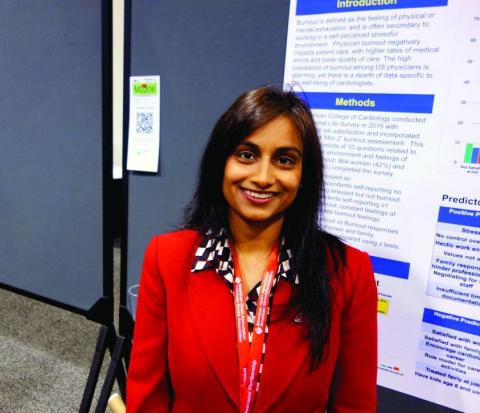
In an interview, Dr. Holder said she and her colleagues sent electronic surveys to family physicians, using the Residency Research Network of Texas champion at each of 11 family medicine residency sites. The champion helped with administration to residents, and also engaged community-based physicians in their region to complete the survey.
A total of 324 physicians completed the survey; 54% were female. The female respondents were younger (P = .001) and less likely to be married (P = .019) than the male physicians who responded.
A high level of emotional exhaustion, as assessed by responses on the Maslach Burnout Inventory, was reported by more than a third of physician respondents. Male respondents, however, were more likely to endorse factors protective against burnout, including feeling a higher level of personal accomplishment (P = .004) and having more resilience (P = .002). They also were more likely to participate in activities outside of work (P = .007).
Dr. Holder said she was surprised by the pervasively higher rates of burnout and lower levels of self-care the survey revealed among family physicians in Texas. She would have been less surprised to see the association in female physicians with children, but, she said, unpublished data didn’t bear that association out.
“Creating wellness programs during residency that are aimed at teaching physicians to incorporate self-care into their routines, especially females, may lead to decreased rates of burnout later in physicians’ careers,” said Dr. Holder.
In a discussion during the poster session, Dr. Holder, who is the associate program director for the Baylor Family Medicine residency program in Garland, Tex., said that she herself tries to make room for exercise in a busy schedule and eats so healthily that her residents tease her about it. It’s important to provide positive role modeling for residents, both male and female alike, during their training years, she said.
Dr. Holder reported no relevant financial conflicts of interest.
koakes@frontlinemedcom.com
On Twitter @karioakes
MONTREAL – Female family physicians report more burnout and fewer self-care activities than their male colleagues, according to the results of a survey that found a significant gender divide in physician wellness.
Female respondents to the Texas-wide electronic survey of practicing physicians and residents reported more emotional exhaustion (P = .004) and higher levels of work stress (P = .009) than their male colleagues. Additionally, they reported sleeping less (P = .009), exercising less (P = .001), and eating healthy food less often (P = .005).
In an interview, Dr. Holder said she and her colleagues sent electronic surveys to family physicians, using the Residency Research Network of Texas champion at each of 11 family medicine residency sites. The champion helped with administration to residents, and also engaged community-based physicians in their region to complete the survey.
A total of 324 physicians completed the survey; 54% were female. The female respondents were younger (P = .001) and less likely to be married (P = .019) than the male physicians who responded.
A high level of emotional exhaustion, as assessed by responses on the Maslach Burnout Inventory, was reported by more than a third of physician respondents. Male respondents, however, were more likely to endorse factors protective against burnout, including feeling a higher level of personal accomplishment (P = .004) and having more resilience (P = .002). They also were more likely to participate in activities outside of work (P = .007).
Dr. Holder said she was surprised by the pervasively higher rates of burnout and lower levels of self-care the survey revealed among family physicians in Texas. She would have been less surprised to see the association in female physicians with children, but, she said, unpublished data didn’t bear that association out.
“Creating wellness programs during residency that are aimed at teaching physicians to incorporate self-care into their routines, especially females, may lead to decreased rates of burnout later in physicians’ careers,” said Dr. Holder.
In a discussion during the poster session, Dr. Holder, who is the associate program director for the Baylor Family Medicine residency program in Garland, Tex., said that she herself tries to make room for exercise in a busy schedule and eats so healthily that her residents tease her about it. It’s important to provide positive role modeling for residents, both male and female alike, during their training years, she said.
Dr. Holder reported no relevant financial conflicts of interest.
koakes@frontlinemedcom.com
On Twitter @karioakes
MONTREAL – Female family physicians report more burnout and fewer self-care activities than their male colleagues, according to the results of a survey that found a significant gender divide in physician wellness.
Female respondents to the Texas-wide electronic survey of practicing physicians and residents reported more emotional exhaustion (P = .004) and higher levels of work stress (P = .009) than their male colleagues. Additionally, they reported sleeping less (P = .009), exercising less (P = .001), and eating healthy food less often (P = .005).
In an interview, Dr. Holder said she and her colleagues sent electronic surveys to family physicians, using the Residency Research Network of Texas champion at each of 11 family medicine residency sites. The champion helped with administration to residents, and also engaged community-based physicians in their region to complete the survey.
A total of 324 physicians completed the survey; 54% were female. The female respondents were younger (P = .001) and less likely to be married (P = .019) than the male physicians who responded.
A high level of emotional exhaustion, as assessed by responses on the Maslach Burnout Inventory, was reported by more than a third of physician respondents. Male respondents, however, were more likely to endorse factors protective against burnout, including feeling a higher level of personal accomplishment (P = .004) and having more resilience (P = .002). They also were more likely to participate in activities outside of work (P = .007).
Dr. Holder said she was surprised by the pervasively higher rates of burnout and lower levels of self-care the survey revealed among family physicians in Texas. She would have been less surprised to see the association in female physicians with children, but, she said, unpublished data didn’t bear that association out.
“Creating wellness programs during residency that are aimed at teaching physicians to incorporate self-care into their routines, especially females, may lead to decreased rates of burnout later in physicians’ careers,” said Dr. Holder.
In a discussion during the poster session, Dr. Holder, who is the associate program director for the Baylor Family Medicine residency program in Garland, Tex., said that she herself tries to make room for exercise in a busy schedule and eats so healthily that her residents tease her about it. It’s important to provide positive role modeling for residents, both male and female alike, during their training years, she said.
Dr. Holder reported no relevant financial conflicts of interest.
koakes@frontlinemedcom.com
On Twitter @karioakes
AT NAPCRG 2017
Key clinical point:
Major finding: Female family physicians are more likely to experience emotional exhaustion than their male counterparts (P = .009).
Data source: A survey of 324 family physicians in Texas.
Disclosures: Dr. Holder reported no relevant financial conflicts of interest.

Mayo experts outline Waldenström macroglobulinemia management
, especially when rapid control is needed for bulky disease, according to treatment guidelines from a multidisciplinary expert panel.
The Mayo Clinic Cancer Center Myeloma, Amyloidosis, and Dysproteinemia and Lymphoma Disease-Oriented Groups, composed of experts who have collectively treated hundreds of patients with Waldenström macroglobulinemia, updated their recommendations for management of the condition in JAMA Oncology. It’s the first update from the group since 2010. The new treatment approaches are based on clinical and observational studies published or presented through December 2015 and consensus recommendations.
The Mayo group said dexamethasone-rituximab-cyclophosphamide can be an alternative treatment for patients with symptomatic Waldenström macroglobulinemia with a low disease burden. But because of an absence of data, the group said rituximab maintenance therapy is not recommended for routine use outside of clinical trials.
Rituximab monotherapy is contraindicated if patients have symptomatic hyperviscosity; without preemptive plasmapheresis, this treatment should be avoided in those with very high serum IgM. They recommended a prompt start of therapeutic plasma exchange for hyperviscosity syndrome, before starting cytoreductive treatment. But rituximab is indicated when patients have symptomatic mild to moderate anemia, symptomatic cryoglobulinemia (in combination with steroids), or hemolytic anemia that does not respond to corticosteroids.
In cases of first or second relapse, autologous stem cell transplantation should be considered in patients with chemosensitive disease who are eligible for transplant, especially when the first remission duration was less than 2 years. Patients with refractory Waldenström macroglobulinemia should not be offered autologous stem cell transplantation.
Read the full set of recommendations in JAMA Oncology (2017 Sep 1;3[9]:1257-65).
mschneider@frontlinemedcom.com
On Twitter @maryellenny
, especially when rapid control is needed for bulky disease, according to treatment guidelines from a multidisciplinary expert panel.
The Mayo Clinic Cancer Center Myeloma, Amyloidosis, and Dysproteinemia and Lymphoma Disease-Oriented Groups, composed of experts who have collectively treated hundreds of patients with Waldenström macroglobulinemia, updated their recommendations for management of the condition in JAMA Oncology. It’s the first update from the group since 2010. The new treatment approaches are based on clinical and observational studies published or presented through December 2015 and consensus recommendations.
The Mayo group said dexamethasone-rituximab-cyclophosphamide can be an alternative treatment for patients with symptomatic Waldenström macroglobulinemia with a low disease burden. But because of an absence of data, the group said rituximab maintenance therapy is not recommended for routine use outside of clinical trials.
Rituximab monotherapy is contraindicated if patients have symptomatic hyperviscosity; without preemptive plasmapheresis, this treatment should be avoided in those with very high serum IgM. They recommended a prompt start of therapeutic plasma exchange for hyperviscosity syndrome, before starting cytoreductive treatment. But rituximab is indicated when patients have symptomatic mild to moderate anemia, symptomatic cryoglobulinemia (in combination with steroids), or hemolytic anemia that does not respond to corticosteroids.
In cases of first or second relapse, autologous stem cell transplantation should be considered in patients with chemosensitive disease who are eligible for transplant, especially when the first remission duration was less than 2 years. Patients with refractory Waldenström macroglobulinemia should not be offered autologous stem cell transplantation.
Read the full set of recommendations in JAMA Oncology (2017 Sep 1;3[9]:1257-65).
mschneider@frontlinemedcom.com
On Twitter @maryellenny
, especially when rapid control is needed for bulky disease, according to treatment guidelines from a multidisciplinary expert panel.
The Mayo Clinic Cancer Center Myeloma, Amyloidosis, and Dysproteinemia and Lymphoma Disease-Oriented Groups, composed of experts who have collectively treated hundreds of patients with Waldenström macroglobulinemia, updated their recommendations for management of the condition in JAMA Oncology. It’s the first update from the group since 2010. The new treatment approaches are based on clinical and observational studies published or presented through December 2015 and consensus recommendations.
The Mayo group said dexamethasone-rituximab-cyclophosphamide can be an alternative treatment for patients with symptomatic Waldenström macroglobulinemia with a low disease burden. But because of an absence of data, the group said rituximab maintenance therapy is not recommended for routine use outside of clinical trials.
Rituximab monotherapy is contraindicated if patients have symptomatic hyperviscosity; without preemptive plasmapheresis, this treatment should be avoided in those with very high serum IgM. They recommended a prompt start of therapeutic plasma exchange for hyperviscosity syndrome, before starting cytoreductive treatment. But rituximab is indicated when patients have symptomatic mild to moderate anemia, symptomatic cryoglobulinemia (in combination with steroids), or hemolytic anemia that does not respond to corticosteroids.
In cases of first or second relapse, autologous stem cell transplantation should be considered in patients with chemosensitive disease who are eligible for transplant, especially when the first remission duration was less than 2 years. Patients with refractory Waldenström macroglobulinemia should not be offered autologous stem cell transplantation.
Read the full set of recommendations in JAMA Oncology (2017 Sep 1;3[9]:1257-65).
mschneider@frontlinemedcom.com
On Twitter @maryellenny
FROM JAMA ONCOLOGY
Screening for postpartum depression is essential
CHICAGO – according to Nerissa S. Bauer, MD, MPH.
Postpartum depression is the best known mood disorder related to pregnancy, but it’s not the only one. Perinatal mood and anxiety disorders exist along a spectrum, she told attendees at the American Academy of Pediatrics annual meeting. That spectrum includes prenatal depression, prenatal anxiety, “baby blues,” postpartum depression, posttraumatic stress disorder (PSTD), and postpartum anxiety with panic attacks and/or obsessive-compulsive disorder (OCD).
Postpartum mood disorders
Postpartum depression (PPD), however, is serious and requires intervention. An estimated 10%-20% of new mothers experience PPD, but the numbers are much higher in at-risk communities. Up to 48% of mothers in low-income households and 40%-60% of adolescent mothers in low-income households experience it. Yet only about 15% of these higher-risk women seek treatment for PPD (Pediatrics. 2010 Nov;126[5]:1032-9).
PPD symptoms are similar to the usual symptoms of a depressive disorder: depressed mood, irritability, changes in sleep and/or appetite, fatigue, sleepiness, loss of interest in activities, inability to feel pleasure in everyday life, guilt, difficulty concentrating, indecisiveness, low energy, despair, and feelings of worthlessness. The biggest difference – and most important symptom – is that women with PPD may have thoughts about harming not only themselves but also their child. This symptom calls for immediate intervention and sometimes can be a sign of postpartum psychosis.
Postpartum psychosis is rare, occurring in about 1-3 out of 1,000 women, but its seriousness requires immediate medical attention, including hospitalization in most cases. The best established risk factor is preexisting bipolar disorder. Postpartum psychosis usually occurs in the first 4 weeks after delivery, with symptoms that include paranoia, severe mood shifts, hallucinations, delusions, and suicidal and/or homicidal thoughts.
Fathers also can experience depression after a baby’s birth: An estimated 6% of fathers develop paternal depression, but the numbers are triple that among fathers whose children are enrolled in Early Head Start programs, Dr. Bauer said. Paternal depression often co-occurs with postpartum maternal depression, particularly when poverty and substance abuse are contributing factors.
Fewer practitioners may be aware of postpartum anxiety disorders, even though they affect 9%-30% of women. These disorders include generalized anxiety disorder, OCD, and PTSD, either as a preexisting diagnosis or occurring after delivery. Women develop an intensive fear about their child’s well-being and worry that they aren’t able to parent adequately or effectively (Zero to Three. 2009 May:1-6).
Your role in screening mothers
It’s essential that you screen parents for depression, particularly mothers for PPD, because of the potential negative consequences for the child. Research has shown that children of mothers with PPD are at risk for failure to thrive, and have a greater likelihood of mental health conditions, developmental delays, lower IQ scores, sleep problems, and difficulties at school (Infant Behav Dev. 2011 Feb;34[1]:1-14). Further, mothers with PPD are less likely to breastfeed and more likely to stop breastfeeding early, studies have shown (Arch Pediatr Adolesc Med. 2006 Mar;160[3]:279-84).
The risk factors for PPD often occur together, with each additional one adding to the overall risk. As incidence estimates show, teens and those with low income are at higher risk, as are those with less education and any type of additional financial hardship. Other factors that increase women’s risk include interpersonal violence, a lack of social support, a history or family history of anxiety or depression, poor physical or mental health in general, and substance abuse (Depress Anxiety. 2017 Feb;34[2]:178-87).

“Early treatment shows best results,” Dr. Bauer said. Yet less than half of mothers experiencing PPD seek treatment for it.
“Mothers may feel they ‘are strong enough’ and do not need help,” Dr. Bauer said. Or they feel they have to use what limited energy they have on their baby, or they worry about being “labeled as crazy or unable to care for their baby,” she said. Cultural factors also can play a role in this reticence to seek help (Qual Health Res. 2008 Sep;18[9]:1161-73).
“However, mothers are receptive to communication with their child’s pediatrician,” Dr. Bauer said, creating an opportunity for screening that mothers may not otherwise get.
Screening tools and procedures
Despite the risks to infants from maternal depression, less than half of pediatricians screen mothers for PPD, Dr. Bauer said. American Academy of Pediatrics surveys of 778 pediatricians in 2004 and 2013 found that the proportion of pediatricians screening or asking mothers about depression increased from 33% to 44% during that decade, driven partly by the “belief that family screening is in the scope of practice,” she explained. Physicians who asked about the child’s mood were more likely to ask mothers about their mood too, the surveys found (J Dev Behav Pediatr. 2016 Feb-Mar;37[2]:113-20).
Medical organizations differ in their screening recommendations, although all agree screening is important. The American College of Obstetricians and Gynecologists and the U.S. Preventive Services Task Force recommend screening mothers at least once in the perinatal period (Obstet Gynecol. 2015;125:1268–71; JAMA. 2016;315[4]:388-406). The AAP advocates a more aggressive approach, recommending screening at each of the 1, 2, 4, and 6-month child well-visits (“Bright Futures: Guidelines for Health Supervision of Infants, Children, and Adolescents,” 4th Edition [Elk Grove Village, Ill.: American Academy of Pediatrics Publishing, 2017]).
The two preferred screening tools for PPD are the Edinburgh Postpartum Depression Scale (EPDS) and the Patient Health Questionnaire (PHQ).
The former is fast and simple, requiring less than 5 minutes for mothers to answer 10 items about their symptoms in the previous 7 days. The EPDS has a maximum score of 30; anything above 12-13 should prompt further examination or referral. Women scoring a 10 should be reassessed 2 weeks later, unless they answer affirmatively to item 10 on suicidal ideation, in which case they should be referred immediately.
You also can use a shortened form of the EPDS as a first step, asking about the three EPDS items related to anxiety: “self-blame, feeling panicky, and [feeling] anxious or worried for no good reason,” Dr. Bauer said, explaining “the score should be multiplied by 10 and divided by 3, so the cutoff is greater than or equal to 10.”
The PHQ-9 asks about symptoms in the previous 2 weeks. Scores of 10-14 indicate minor depression or mild major depression, and scores of 15-19 indicate moderate depression. Mothers require intervention if they score at least 20, or in the case of teenage mothers, if they score at least 11 or have suicidal thoughts. Like the shortened EPDS-3, the PHQ has a shortened two-question option you can use as surveillance before fully screening mothers: 1. Have you felt down, depressed, or hopeless in the past 2 weeks? 2. Have you felt little interest or pleasure in doing things in the past 2 weeks?
If mothers have a positive screen, Dr. Bauer recommended that practices document it, according to protocols they’ve already set up.
“It’s not unlike domestic violence, maternal substance abuse, or parental smoking habits,” she said. “The score need not be noted, but [should] include details such as the name of the screener used, interpretation of the results, and when a referral was made.”
After making a referral to her ob.gyn. or a mental health professional, you can continue to help mothers by offering support and reassurance, reminding them that they are not alone and not to blame for depression, and that treatment can help them. Encourage parents to seek your advice and support as a pediatrician and use you as a resource to refer them to services that can help, such as lactation consultants and home-visiting programs.
Dr. Bauer offerred the following recommendations for clinical practice:
- Choose a validated screener for postpartum depression.
- Share the tool with everyone in your practice.
- Identify ways to integrate the screening tool into daily work flow.
- Collect data.
- Implement and assess how it went after a short time, using plan-do-study-act cycles.
Dr. Bauer advised consulting the following websites for information regarding postpartum depression:
- AAP Screening and Technical Assistance and Resource (STAR) Center. This AAP website recommends validated screening tools for maternal depression and has them available on the site ().
- Postpartum Support International (PSI). This website offers information and resources for women, family, and professionals (). PSI can also be reached by calling 800-944-4773.
- PSI Support Coordinator Network. This network can provide referrals for specialized support, such as for members of the military, for fathers, when there are legal concerns, or when psychosis is present, and serves all 50 states and 40 countries ().
- PostpartumDads. This website has recommendations for partners of women with postpartum depression, offering recommendations on how dads can help themselves and the mothers ().
Dr. Bauer said she had no relevant financial disclosures. She reported that her spouse is an employee of Anthem and holds Anthem stocks/bonds. No external funding was used for the presentation.
CHICAGO – according to Nerissa S. Bauer, MD, MPH.
Postpartum depression is the best known mood disorder related to pregnancy, but it’s not the only one. Perinatal mood and anxiety disorders exist along a spectrum, she told attendees at the American Academy of Pediatrics annual meeting. That spectrum includes prenatal depression, prenatal anxiety, “baby blues,” postpartum depression, posttraumatic stress disorder (PSTD), and postpartum anxiety with panic attacks and/or obsessive-compulsive disorder (OCD).
Postpartum mood disorders
Postpartum depression (PPD), however, is serious and requires intervention. An estimated 10%-20% of new mothers experience PPD, but the numbers are much higher in at-risk communities. Up to 48% of mothers in low-income households and 40%-60% of adolescent mothers in low-income households experience it. Yet only about 15% of these higher-risk women seek treatment for PPD (Pediatrics. 2010 Nov;126[5]:1032-9).
PPD symptoms are similar to the usual symptoms of a depressive disorder: depressed mood, irritability, changes in sleep and/or appetite, fatigue, sleepiness, loss of interest in activities, inability to feel pleasure in everyday life, guilt, difficulty concentrating, indecisiveness, low energy, despair, and feelings of worthlessness. The biggest difference – and most important symptom – is that women with PPD may have thoughts about harming not only themselves but also their child. This symptom calls for immediate intervention and sometimes can be a sign of postpartum psychosis.
Postpartum psychosis is rare, occurring in about 1-3 out of 1,000 women, but its seriousness requires immediate medical attention, including hospitalization in most cases. The best established risk factor is preexisting bipolar disorder. Postpartum psychosis usually occurs in the first 4 weeks after delivery, with symptoms that include paranoia, severe mood shifts, hallucinations, delusions, and suicidal and/or homicidal thoughts.
Fathers also can experience depression after a baby’s birth: An estimated 6% of fathers develop paternal depression, but the numbers are triple that among fathers whose children are enrolled in Early Head Start programs, Dr. Bauer said. Paternal depression often co-occurs with postpartum maternal depression, particularly when poverty and substance abuse are contributing factors.
Fewer practitioners may be aware of postpartum anxiety disorders, even though they affect 9%-30% of women. These disorders include generalized anxiety disorder, OCD, and PTSD, either as a preexisting diagnosis or occurring after delivery. Women develop an intensive fear about their child’s well-being and worry that they aren’t able to parent adequately or effectively (Zero to Three. 2009 May:1-6).
Your role in screening mothers
It’s essential that you screen parents for depression, particularly mothers for PPD, because of the potential negative consequences for the child. Research has shown that children of mothers with PPD are at risk for failure to thrive, and have a greater likelihood of mental health conditions, developmental delays, lower IQ scores, sleep problems, and difficulties at school (Infant Behav Dev. 2011 Feb;34[1]:1-14). Further, mothers with PPD are less likely to breastfeed and more likely to stop breastfeeding early, studies have shown (Arch Pediatr Adolesc Med. 2006 Mar;160[3]:279-84).
The risk factors for PPD often occur together, with each additional one adding to the overall risk. As incidence estimates show, teens and those with low income are at higher risk, as are those with less education and any type of additional financial hardship. Other factors that increase women’s risk include interpersonal violence, a lack of social support, a history or family history of anxiety or depression, poor physical or mental health in general, and substance abuse (Depress Anxiety. 2017 Feb;34[2]:178-87).
“Early treatment shows best results,” Dr. Bauer said. Yet less than half of mothers experiencing PPD seek treatment for it.
“Mothers may feel they ‘are strong enough’ and do not need help,” Dr. Bauer said. Or they feel they have to use what limited energy they have on their baby, or they worry about being “labeled as crazy or unable to care for their baby,” she said. Cultural factors also can play a role in this reticence to seek help (Qual Health Res. 2008 Sep;18[9]:1161-73).
“However, mothers are receptive to communication with their child’s pediatrician,” Dr. Bauer said, creating an opportunity for screening that mothers may not otherwise get.
Screening tools and procedures
Despite the risks to infants from maternal depression, less than half of pediatricians screen mothers for PPD, Dr. Bauer said. American Academy of Pediatrics surveys of 778 pediatricians in 2004 and 2013 found that the proportion of pediatricians screening or asking mothers about depression increased from 33% to 44% during that decade, driven partly by the “belief that family screening is in the scope of practice,” she explained. Physicians who asked about the child’s mood were more likely to ask mothers about their mood too, the surveys found (J Dev Behav Pediatr. 2016 Feb-Mar;37[2]:113-20).
Medical organizations differ in their screening recommendations, although all agree screening is important. The American College of Obstetricians and Gynecologists and the U.S. Preventive Services Task Force recommend screening mothers at least once in the perinatal period (Obstet Gynecol. 2015;125:1268–71; JAMA. 2016;315[4]:388-406). The AAP advocates a more aggressive approach, recommending screening at each of the 1, 2, 4, and 6-month child well-visits (“Bright Futures: Guidelines for Health Supervision of Infants, Children, and Adolescents,” 4th Edition [Elk Grove Village, Ill.: American Academy of Pediatrics Publishing, 2017]).
The two preferred screening tools for PPD are the Edinburgh Postpartum Depression Scale (EPDS) and the Patient Health Questionnaire (PHQ).
The former is fast and simple, requiring less than 5 minutes for mothers to answer 10 items about their symptoms in the previous 7 days. The EPDS has a maximum score of 30; anything above 12-13 should prompt further examination or referral. Women scoring a 10 should be reassessed 2 weeks later, unless they answer affirmatively to item 10 on suicidal ideation, in which case they should be referred immediately.
You also can use a shortened form of the EPDS as a first step, asking about the three EPDS items related to anxiety: “self-blame, feeling panicky, and [feeling] anxious or worried for no good reason,” Dr. Bauer said, explaining “the score should be multiplied by 10 and divided by 3, so the cutoff is greater than or equal to 10.”
The PHQ-9 asks about symptoms in the previous 2 weeks. Scores of 10-14 indicate minor depression or mild major depression, and scores of 15-19 indicate moderate depression. Mothers require intervention if they score at least 20, or in the case of teenage mothers, if they score at least 11 or have suicidal thoughts. Like the shortened EPDS-3, the PHQ has a shortened two-question option you can use as surveillance before fully screening mothers: 1. Have you felt down, depressed, or hopeless in the past 2 weeks? 2. Have you felt little interest or pleasure in doing things in the past 2 weeks?
If mothers have a positive screen, Dr. Bauer recommended that practices document it, according to protocols they’ve already set up.
“It’s not unlike domestic violence, maternal substance abuse, or parental smoking habits,” she said. “The score need not be noted, but [should] include details such as the name of the screener used, interpretation of the results, and when a referral was made.”
After making a referral to her ob.gyn. or a mental health professional, you can continue to help mothers by offering support and reassurance, reminding them that they are not alone and not to blame for depression, and that treatment can help them. Encourage parents to seek your advice and support as a pediatrician and use you as a resource to refer them to services that can help, such as lactation consultants and home-visiting programs.
Dr. Bauer offerred the following recommendations for clinical practice:
- Choose a validated screener for postpartum depression.
- Share the tool with everyone in your practice.
- Identify ways to integrate the screening tool into daily work flow.
- Collect data.
- Implement and assess how it went after a short time, using plan-do-study-act cycles.
Dr. Bauer advised consulting the following websites for information regarding postpartum depression:
- AAP Screening and Technical Assistance and Resource (STAR) Center. This AAP website recommends validated screening tools for maternal depression and has them available on the site ().
- Postpartum Support International (PSI). This website offers information and resources for women, family, and professionals (). PSI can also be reached by calling 800-944-4773.
- PSI Support Coordinator Network. This network can provide referrals for specialized support, such as for members of the military, for fathers, when there are legal concerns, or when psychosis is present, and serves all 50 states and 40 countries ().
- PostpartumDads. This website has recommendations for partners of women with postpartum depression, offering recommendations on how dads can help themselves and the mothers ().
Dr. Bauer said she had no relevant financial disclosures. She reported that her spouse is an employee of Anthem and holds Anthem stocks/bonds. No external funding was used for the presentation.
CHICAGO – according to Nerissa S. Bauer, MD, MPH.
Postpartum depression is the best known mood disorder related to pregnancy, but it’s not the only one. Perinatal mood and anxiety disorders exist along a spectrum, she told attendees at the American Academy of Pediatrics annual meeting. That spectrum includes prenatal depression, prenatal anxiety, “baby blues,” postpartum depression, posttraumatic stress disorder (PSTD), and postpartum anxiety with panic attacks and/or obsessive-compulsive disorder (OCD).
Postpartum mood disorders
Postpartum depression (PPD), however, is serious and requires intervention. An estimated 10%-20% of new mothers experience PPD, but the numbers are much higher in at-risk communities. Up to 48% of mothers in low-income households and 40%-60% of adolescent mothers in low-income households experience it. Yet only about 15% of these higher-risk women seek treatment for PPD (Pediatrics. 2010 Nov;126[5]:1032-9).
PPD symptoms are similar to the usual symptoms of a depressive disorder: depressed mood, irritability, changes in sleep and/or appetite, fatigue, sleepiness, loss of interest in activities, inability to feel pleasure in everyday life, guilt, difficulty concentrating, indecisiveness, low energy, despair, and feelings of worthlessness. The biggest difference – and most important symptom – is that women with PPD may have thoughts about harming not only themselves but also their child. This symptom calls for immediate intervention and sometimes can be a sign of postpartum psychosis.
Postpartum psychosis is rare, occurring in about 1-3 out of 1,000 women, but its seriousness requires immediate medical attention, including hospitalization in most cases. The best established risk factor is preexisting bipolar disorder. Postpartum psychosis usually occurs in the first 4 weeks after delivery, with symptoms that include paranoia, severe mood shifts, hallucinations, delusions, and suicidal and/or homicidal thoughts.
Fathers also can experience depression after a baby’s birth: An estimated 6% of fathers develop paternal depression, but the numbers are triple that among fathers whose children are enrolled in Early Head Start programs, Dr. Bauer said. Paternal depression often co-occurs with postpartum maternal depression, particularly when poverty and substance abuse are contributing factors.
Fewer practitioners may be aware of postpartum anxiety disorders, even though they affect 9%-30% of women. These disorders include generalized anxiety disorder, OCD, and PTSD, either as a preexisting diagnosis or occurring after delivery. Women develop an intensive fear about their child’s well-being and worry that they aren’t able to parent adequately or effectively (Zero to Three. 2009 May:1-6).
Your role in screening mothers
It’s essential that you screen parents for depression, particularly mothers for PPD, because of the potential negative consequences for the child. Research has shown that children of mothers with PPD are at risk for failure to thrive, and have a greater likelihood of mental health conditions, developmental delays, lower IQ scores, sleep problems, and difficulties at school (Infant Behav Dev. 2011 Feb;34[1]:1-14). Further, mothers with PPD are less likely to breastfeed and more likely to stop breastfeeding early, studies have shown (Arch Pediatr Adolesc Med. 2006 Mar;160[3]:279-84).
The risk factors for PPD often occur together, with each additional one adding to the overall risk. As incidence estimates show, teens and those with low income are at higher risk, as are those with less education and any type of additional financial hardship. Other factors that increase women’s risk include interpersonal violence, a lack of social support, a history or family history of anxiety or depression, poor physical or mental health in general, and substance abuse (Depress Anxiety. 2017 Feb;34[2]:178-87).
“Early treatment shows best results,” Dr. Bauer said. Yet less than half of mothers experiencing PPD seek treatment for it.
“Mothers may feel they ‘are strong enough’ and do not need help,” Dr. Bauer said. Or they feel they have to use what limited energy they have on their baby, or they worry about being “labeled as crazy or unable to care for their baby,” she said. Cultural factors also can play a role in this reticence to seek help (Qual Health Res. 2008 Sep;18[9]:1161-73).
“However, mothers are receptive to communication with their child’s pediatrician,” Dr. Bauer said, creating an opportunity for screening that mothers may not otherwise get.
Screening tools and procedures
Despite the risks to infants from maternal depression, less than half of pediatricians screen mothers for PPD, Dr. Bauer said. American Academy of Pediatrics surveys of 778 pediatricians in 2004 and 2013 found that the proportion of pediatricians screening or asking mothers about depression increased from 33% to 44% during that decade, driven partly by the “belief that family screening is in the scope of practice,” she explained. Physicians who asked about the child’s mood were more likely to ask mothers about their mood too, the surveys found (J Dev Behav Pediatr. 2016 Feb-Mar;37[2]:113-20).
Medical organizations differ in their screening recommendations, although all agree screening is important. The American College of Obstetricians and Gynecologists and the U.S. Preventive Services Task Force recommend screening mothers at least once in the perinatal period (Obstet Gynecol. 2015;125:1268–71; JAMA. 2016;315[4]:388-406). The AAP advocates a more aggressive approach, recommending screening at each of the 1, 2, 4, and 6-month child well-visits (“Bright Futures: Guidelines for Health Supervision of Infants, Children, and Adolescents,” 4th Edition [Elk Grove Village, Ill.: American Academy of Pediatrics Publishing, 2017]).
The two preferred screening tools for PPD are the Edinburgh Postpartum Depression Scale (EPDS) and the Patient Health Questionnaire (PHQ).
The former is fast and simple, requiring less than 5 minutes for mothers to answer 10 items about their symptoms in the previous 7 days. The EPDS has a maximum score of 30; anything above 12-13 should prompt further examination or referral. Women scoring a 10 should be reassessed 2 weeks later, unless they answer affirmatively to item 10 on suicidal ideation, in which case they should be referred immediately.
You also can use a shortened form of the EPDS as a first step, asking about the three EPDS items related to anxiety: “self-blame, feeling panicky, and [feeling] anxious or worried for no good reason,” Dr. Bauer said, explaining “the score should be multiplied by 10 and divided by 3, so the cutoff is greater than or equal to 10.”
The PHQ-9 asks about symptoms in the previous 2 weeks. Scores of 10-14 indicate minor depression or mild major depression, and scores of 15-19 indicate moderate depression. Mothers require intervention if they score at least 20, or in the case of teenage mothers, if they score at least 11 or have suicidal thoughts. Like the shortened EPDS-3, the PHQ has a shortened two-question option you can use as surveillance before fully screening mothers: 1. Have you felt down, depressed, or hopeless in the past 2 weeks? 2. Have you felt little interest or pleasure in doing things in the past 2 weeks?
If mothers have a positive screen, Dr. Bauer recommended that practices document it, according to protocols they’ve already set up.
“It’s not unlike domestic violence, maternal substance abuse, or parental smoking habits,” she said. “The score need not be noted, but [should] include details such as the name of the screener used, interpretation of the results, and when a referral was made.”
After making a referral to her ob.gyn. or a mental health professional, you can continue to help mothers by offering support and reassurance, reminding them that they are not alone and not to blame for depression, and that treatment can help them. Encourage parents to seek your advice and support as a pediatrician and use you as a resource to refer them to services that can help, such as lactation consultants and home-visiting programs.
Dr. Bauer offerred the following recommendations for clinical practice:
- Choose a validated screener for postpartum depression.
- Share the tool with everyone in your practice.
- Identify ways to integrate the screening tool into daily work flow.
- Collect data.
- Implement and assess how it went after a short time, using plan-do-study-act cycles.
Dr. Bauer advised consulting the following websites for information regarding postpartum depression:
- AAP Screening and Technical Assistance and Resource (STAR) Center. This AAP website recommends validated screening tools for maternal depression and has them available on the site ().
- Postpartum Support International (PSI). This website offers information and resources for women, family, and professionals (). PSI can also be reached by calling 800-944-4773.
- PSI Support Coordinator Network. This network can provide referrals for specialized support, such as for members of the military, for fathers, when there are legal concerns, or when psychosis is present, and serves all 50 states and 40 countries ().
- PostpartumDads. This website has recommendations for partners of women with postpartum depression, offering recommendations on how dads can help themselves and the mothers ().
Dr. Bauer said she had no relevant financial disclosures. She reported that her spouse is an employee of Anthem and holds Anthem stocks/bonds. No external funding was used for the presentation.
EXPERT ANALYSIS FROM AAP 2017

CAR T-cell therapy: Moving from cost to value
Chimeric antigen receptor (CAR) T-cell therapy has generated a great deal of excitement in recent months with the approval of Novartis’ Kymriah (tisagenlecleucel) for pediatric acute lymphoblastic leukemia and Kite Pharma’s Yescarta (axicabtagene ciloleucel) for relapsed/refractory large B-cell lymphoma in adults, and experts in the field foresee a wave of approvals for additional indications in the coming months.
“CAR T is coming unbelievably fast,” Richard Maziarz, MD, professor of medicine at Oregon Health and Science University, Portland, said in an interview.
In fact, a search of clinicaltrials.gov revealed 120 open CAR T-cell–based therapy trials for cancer and other conditions such as autoimmune diseases, he said.
Price tag pressure
During a plenary session on genetically modified cell therapies at the annual meeting of the Society for Immunotherapy of Cancer, experts and investigators provided a glimpse of what’s in store, including new targets and smarter targeting and combinations that incorporate CAR T-cell therapy to treat solid tumors.
The “list price” for tisagenlecleucel is $475,000, and the potential patient pool is in the hundreds. The price for axicabtagene ciloleucel is $373,000, with a potential market in the thousands. Taking this into account, the global CAR T market is estimated at about $72 million and is projected to expand to nearly $3.5 billion in the next decade, said Dr. Maziarz, who is also chair of the Value and Health Economics Interest Group of the American Society for Blood and Marrow Transplantation.
The market for adoptive cell therapy overall – including transplant, CAR T, natural killer cells, and cell vaccines – is projected by some individuals to be worth $30 billion by 2030, he added, noting, for the sake of comparison, that the total estimated U.S. expenditure for all cancer care in the United States in 2010 was $125 billion.
At the heart of the issue of cost is the matter of value, he said.
“You can talk about price, and you can talk about cost, but … what we want to do with our dollars is buy value – and quality and value are very hard to measure,” he said, noting that he expects public and governmental backlash, as was seen with prior high-cost treatments such as Sovaldi for hepatitis C and Glybera for lipoprotein lipase deficiency.
Value-based payment is a recurrent theme in medicine, and these treatments came under intense scrutiny for their high costs. Sovaldi, for example, costs approximately $90,000 for a treatment course. That sounds like a lot of money, but it cures the disease and can prevent long-term complications, Dr. Maziarz said. Still, it received a lot of negative press, and the backlash was severe.
“People do respond to price,” he said, noting that he predicts the same for CAR T-cell therapies.
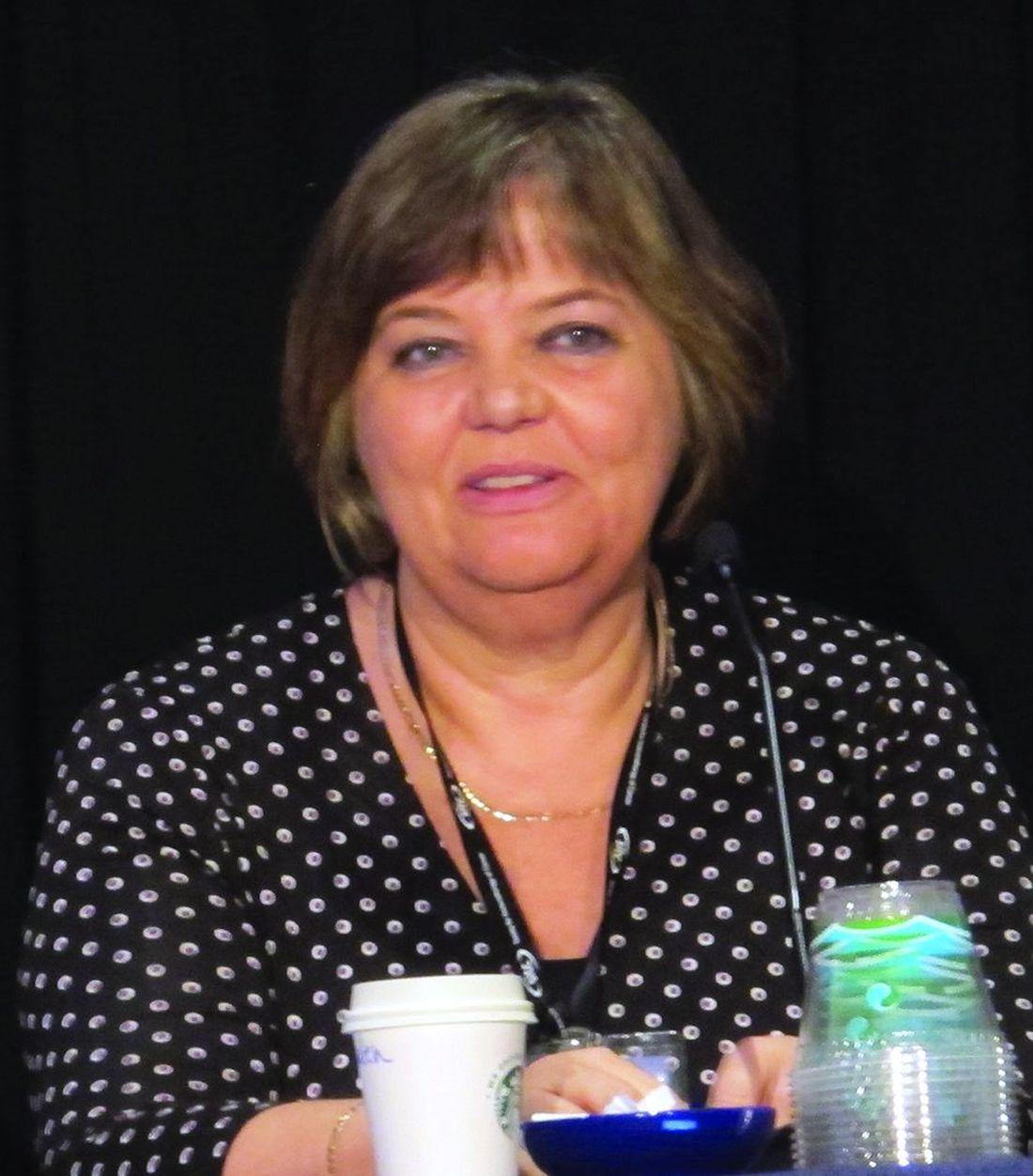
The costs of CAR T-cell therapy, particularly when taking into consideration the costs that hospitals will incur given the lymphodepletion that patients experience and the after-care required, will likely exceed those of most stem cell transplants and could easily reach the $1 million-plus estimates, Helen Heslop, MD, professor of medicine and pediatrics and director of the Center for Cell and Gene Therapy at Baylor College of Medicine, Houston, said in an interview.
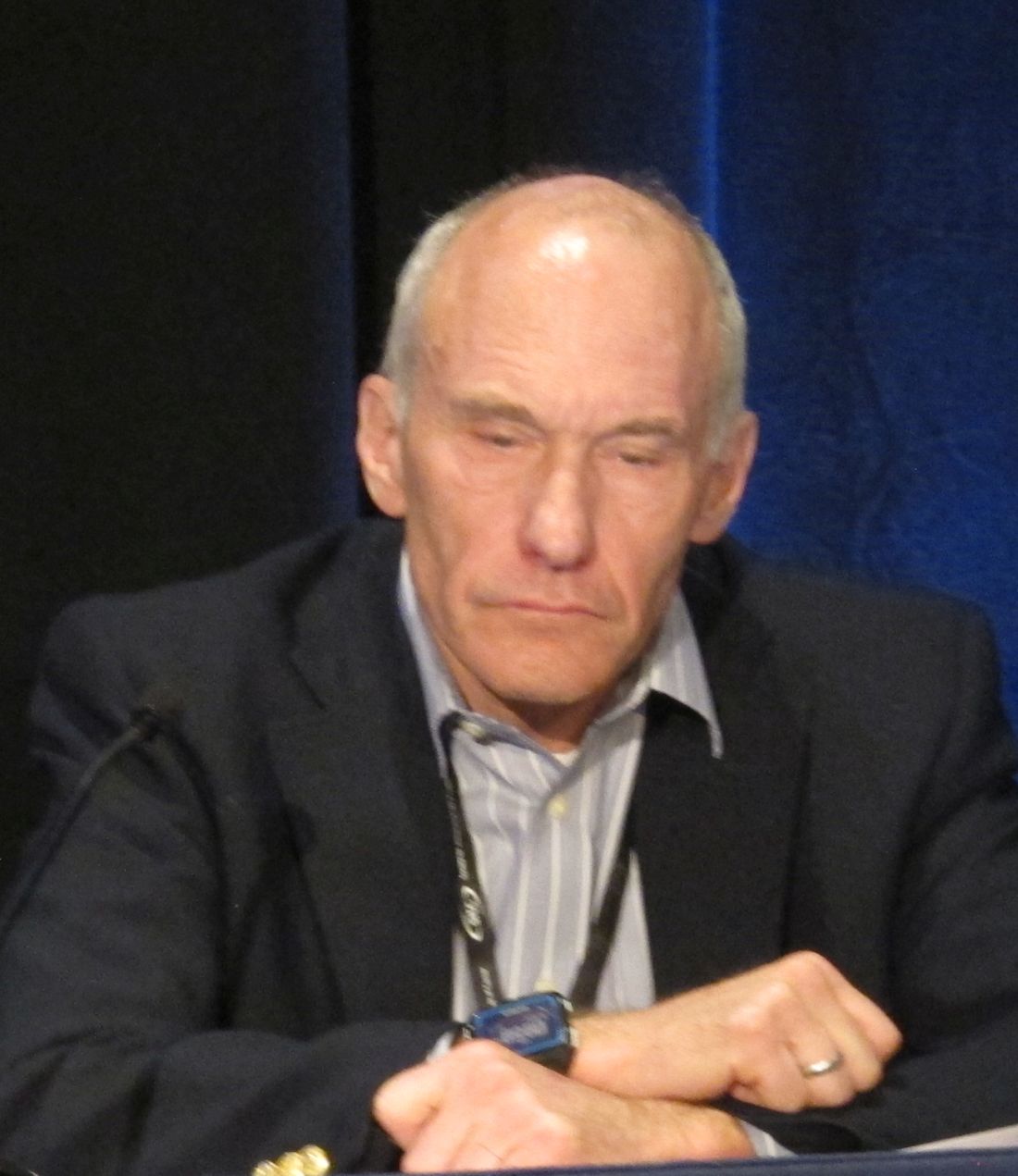
Aside from the research and development costs, these treatments also cost more to make than any others previously made, according to Carl H. June, MD, the Richard W. Vague Professor In Immunotherapy at the University of Pennsylvania, Philadelphia, and a pioneer in CAR T-cell research.
Dr. June predicted that costs will be forced down over time because of process improvements and competition. “What’s unknown is the time span on how long it will take,” he said in an interview.
Groups like the United Kingdom’s National Institute for Health and Care Excellence (NICE) are already looking at value-based approaches to providing CAR T-cell therapy, Dr. Heslop said.
“I think there will need to be a lot more comparative effectiveness analyses done,” she said. “I know my institution started to look at the cost in a child with ALL once they relapse, and when you look at all the downstream cost, even though [CAR T-cell therapy] sounds very expensive, as a one-time therapy versus much longer treatment, it may actually be value based,” she said.
When it comes to improving access, one of the approaches being studied is the use of universal cell banks as opposed to autologous cells for therapy. This “off-the-shelf” approach, much like the approach used in transfusion medicine, would allow for quicker availability of the cells to a greater number of patients, she said.
Dr. June who, along with Dr. Heslop, cochaired the SITC plenary session on genetically modified cell therapy, agreed, saying that if this approach works with T cells, it would radically change the CAR T landscape in terms of availability and, perhaps – eventually – cost.
Preliminary results from phase I studies (CALM and PALL) of this approach will be presented at the upcoming annual meeting of the American Society of Hematology. The studies are a joint effort by Servier and Cellectis, which joined forces in the development of UCART19, an allogeneic CAR-T product for the treatment of CD19-expressing B-cell acute lymphoblastic leukemia.
Still, value remains an important consideration. If a therapy is expected to extend a pancreatic cancer patient’s life by a month, it’s probably valid to ask if that is cost effective, but if it is potentially curative for a patient with hematologic malignancy, it’s very hard to say they can’t access it, Dr. Heslop said.
Cost-saving proposals
Efforts to address the cost concerns, including proposals for novel payment strategies, are already emerging. One example involves an offer by Novartis to charge for Kymriah only if treated patients go into remission within 1 month. Details of the plan haven’t been released.
Another approach is being considered in Europe and involves a graduated payment system for an investigational regulatory T cell therapy for autoimmune disease, Dr. Maziarz said. For example, if the drug costs $1 million, the government might pay $200,000 the first year and then $100,000 per year if the patient is cured. “If the patient relapses, they can stop their payment, as cure was not achieved,” he explained.
In many discussions about value, the definition is based on quality-adjusted life years (QALY) gained, he said. A recent statement from the American College of Cardiology and the American Heart Association on cost/value methodology, for example, used $50,000 per QALY gained as the cut-off for a good investment. Costs of $50,000 to less than $150,000 per QALY were considered to be of intermediate value, and costs of $150,000 or greater per QALY gained were considered to be of low value.
“A number of payers are using these guidelines to determine what drugs they will put on their portfolio and make available to enrollees,” Dr. Maziarz said.
In anticipation of cost-related issues with CAR T-cell therapy, the Institute for Clinical and Economic Review (ICER) and its California Technology Assessment Forum (CTAP) put out a request for information and input regarding their intent to collaboratively initiate an assessment of CAR T-cell effectiveness and value, he said.
In the meantime, Dr. Maziarz said that most private insurers he’s been in contact with are planning coverage of CAR T-cell therapy but are working out the details of how to do it.
“It’s typically going to involve very, very strict guidelines for the patients who go on therapy – it’s not going to be a liberal use of the product. It will involve strict adherence to the label,” he said.
The real challenge, however, will be in the Medicare and Medicaid programs, because of the current nature of the reimbursement structures and lack of clear procedural codes to define the effort and cost of care associated with the application of these novel cell therapies.
Walid F. Gellad, MD, and Aaron S. Kesselheim, MD, anticipated some of these challenges in light of accelerated approval processes for expensive drugs and proposed in a May 2017 paper that government payers reimburse only the cost of manufacturing and some predetermined mark-up for such drugs until confirmatory trials demonstrate clinical benefit (N Engl J Med. 2017;376[21]:2001-04).
“Both Yescarta and Kymriah are approved with very, very, very limited data – 100 patients, 80 patients. They absolutely look promising. I was part of those studies, so I’m a believer, but the classic approach to determining success in the medical community is a randomized controlled trial,” Dr. Maziarz said.
The proposal by Dr. Gellad and Dr. Kesselheim acknowledged this, and said perhaps full payment isn’t warranted while the drugs remain in development and until they are proven to be a good investment.
Their proposal also calls for an economic impact analysis after 1-2 years on the market for all accelerated-approval pathway drugs that cost over a predetermined amount, timely and optimally designed confirmatory trials following accelerated approval to limit the period of uncertainty about the true clinical effect of the drug, and additional price concessions to public insurance programs for such drugs until the confirmatory trials are completed. Under this proposal, the unpaid portion of drug costs would be held in escrow until the drug’s efficacy is confirmed.
“I think what’s going to happen is that, as prices and costs go up for any therapy, that backlash will occur. These types of proposals to create solutions will come not from individual companies, but from the government,” Dr. Maziarz said. “I’m 100% excited about the work. I’m extremely excited to be part of the explorations. … I just still think we have to at least try to be aware and cognizant of the issues that we’ll be facing.”
Dr. Maziarz has received consulting fees from Novartis, Juno Therapeutics, and Kite Pharma. Dr. Heslop has received consulting fees from Novartis, has conducted research for Cell Medica and holds intellectual property rights/patent from Cell Medica, and has ownership interest in ViraCyte and Marker Therapeutics. Dr. June received royalties from Novartis, has conducted research for Novartis, and has ownership interest in Tmunity Therapeutics.
Chimeric antigen receptor (CAR) T-cell therapy has generated a great deal of excitement in recent months with the approval of Novartis’ Kymriah (tisagenlecleucel) for pediatric acute lymphoblastic leukemia and Kite Pharma’s Yescarta (axicabtagene ciloleucel) for relapsed/refractory large B-cell lymphoma in adults, and experts in the field foresee a wave of approvals for additional indications in the coming months.
“CAR T is coming unbelievably fast,” Richard Maziarz, MD, professor of medicine at Oregon Health and Science University, Portland, said in an interview.
In fact, a search of clinicaltrials.gov revealed 120 open CAR T-cell–based therapy trials for cancer and other conditions such as autoimmune diseases, he said.
Price tag pressure
During a plenary session on genetically modified cell therapies at the annual meeting of the Society for Immunotherapy of Cancer, experts and investigators provided a glimpse of what’s in store, including new targets and smarter targeting and combinations that incorporate CAR T-cell therapy to treat solid tumors.
The “list price” for tisagenlecleucel is $475,000, and the potential patient pool is in the hundreds. The price for axicabtagene ciloleucel is $373,000, with a potential market in the thousands. Taking this into account, the global CAR T market is estimated at about $72 million and is projected to expand to nearly $3.5 billion in the next decade, said Dr. Maziarz, who is also chair of the Value and Health Economics Interest Group of the American Society for Blood and Marrow Transplantation.
The market for adoptive cell therapy overall – including transplant, CAR T, natural killer cells, and cell vaccines – is projected by some individuals to be worth $30 billion by 2030, he added, noting, for the sake of comparison, that the total estimated U.S. expenditure for all cancer care in the United States in 2010 was $125 billion.
At the heart of the issue of cost is the matter of value, he said.
“You can talk about price, and you can talk about cost, but … what we want to do with our dollars is buy value – and quality and value are very hard to measure,” he said, noting that he expects public and governmental backlash, as was seen with prior high-cost treatments such as Sovaldi for hepatitis C and Glybera for lipoprotein lipase deficiency.
Value-based payment is a recurrent theme in medicine, and these treatments came under intense scrutiny for their high costs. Sovaldi, for example, costs approximately $90,000 for a treatment course. That sounds like a lot of money, but it cures the disease and can prevent long-term complications, Dr. Maziarz said. Still, it received a lot of negative press, and the backlash was severe.
“People do respond to price,” he said, noting that he predicts the same for CAR T-cell therapies.
The costs of CAR T-cell therapy, particularly when taking into consideration the costs that hospitals will incur given the lymphodepletion that patients experience and the after-care required, will likely exceed those of most stem cell transplants and could easily reach the $1 million-plus estimates, Helen Heslop, MD, professor of medicine and pediatrics and director of the Center for Cell and Gene Therapy at Baylor College of Medicine, Houston, said in an interview.
Aside from the research and development costs, these treatments also cost more to make than any others previously made, according to Carl H. June, MD, the Richard W. Vague Professor In Immunotherapy at the University of Pennsylvania, Philadelphia, and a pioneer in CAR T-cell research.
Dr. June predicted that costs will be forced down over time because of process improvements and competition. “What’s unknown is the time span on how long it will take,” he said in an interview.
Groups like the United Kingdom’s National Institute for Health and Care Excellence (NICE) are already looking at value-based approaches to providing CAR T-cell therapy, Dr. Heslop said.
“I think there will need to be a lot more comparative effectiveness analyses done,” she said. “I know my institution started to look at the cost in a child with ALL once they relapse, and when you look at all the downstream cost, even though [CAR T-cell therapy] sounds very expensive, as a one-time therapy versus much longer treatment, it may actually be value based,” she said.
When it comes to improving access, one of the approaches being studied is the use of universal cell banks as opposed to autologous cells for therapy. This “off-the-shelf” approach, much like the approach used in transfusion medicine, would allow for quicker availability of the cells to a greater number of patients, she said.
Dr. June who, along with Dr. Heslop, cochaired the SITC plenary session on genetically modified cell therapy, agreed, saying that if this approach works with T cells, it would radically change the CAR T landscape in terms of availability and, perhaps – eventually – cost.
Preliminary results from phase I studies (CALM and PALL) of this approach will be presented at the upcoming annual meeting of the American Society of Hematology. The studies are a joint effort by Servier and Cellectis, which joined forces in the development of UCART19, an allogeneic CAR-T product for the treatment of CD19-expressing B-cell acute lymphoblastic leukemia.
Still, value remains an important consideration. If a therapy is expected to extend a pancreatic cancer patient’s life by a month, it’s probably valid to ask if that is cost effective, but if it is potentially curative for a patient with hematologic malignancy, it’s very hard to say they can’t access it, Dr. Heslop said.
Cost-saving proposals
Efforts to address the cost concerns, including proposals for novel payment strategies, are already emerging. One example involves an offer by Novartis to charge for Kymriah only if treated patients go into remission within 1 month. Details of the plan haven’t been released.
Another approach is being considered in Europe and involves a graduated payment system for an investigational regulatory T cell therapy for autoimmune disease, Dr. Maziarz said. For example, if the drug costs $1 million, the government might pay $200,000 the first year and then $100,000 per year if the patient is cured. “If the patient relapses, they can stop their payment, as cure was not achieved,” he explained.
In many discussions about value, the definition is based on quality-adjusted life years (QALY) gained, he said. A recent statement from the American College of Cardiology and the American Heart Association on cost/value methodology, for example, used $50,000 per QALY gained as the cut-off for a good investment. Costs of $50,000 to less than $150,000 per QALY were considered to be of intermediate value, and costs of $150,000 or greater per QALY gained were considered to be of low value.
“A number of payers are using these guidelines to determine what drugs they will put on their portfolio and make available to enrollees,” Dr. Maziarz said.
In anticipation of cost-related issues with CAR T-cell therapy, the Institute for Clinical and Economic Review (ICER) and its California Technology Assessment Forum (CTAP) put out a request for information and input regarding their intent to collaboratively initiate an assessment of CAR T-cell effectiveness and value, he said.
In the meantime, Dr. Maziarz said that most private insurers he’s been in contact with are planning coverage of CAR T-cell therapy but are working out the details of how to do it.
“It’s typically going to involve very, very strict guidelines for the patients who go on therapy – it’s not going to be a liberal use of the product. It will involve strict adherence to the label,” he said.
The real challenge, however, will be in the Medicare and Medicaid programs, because of the current nature of the reimbursement structures and lack of clear procedural codes to define the effort and cost of care associated with the application of these novel cell therapies.
Walid F. Gellad, MD, and Aaron S. Kesselheim, MD, anticipated some of these challenges in light of accelerated approval processes for expensive drugs and proposed in a May 2017 paper that government payers reimburse only the cost of manufacturing and some predetermined mark-up for such drugs until confirmatory trials demonstrate clinical benefit (N Engl J Med. 2017;376[21]:2001-04).
“Both Yescarta and Kymriah are approved with very, very, very limited data – 100 patients, 80 patients. They absolutely look promising. I was part of those studies, so I’m a believer, but the classic approach to determining success in the medical community is a randomized controlled trial,” Dr. Maziarz said.
The proposal by Dr. Gellad and Dr. Kesselheim acknowledged this, and said perhaps full payment isn’t warranted while the drugs remain in development and until they are proven to be a good investment.
Their proposal also calls for an economic impact analysis after 1-2 years on the market for all accelerated-approval pathway drugs that cost over a predetermined amount, timely and optimally designed confirmatory trials following accelerated approval to limit the period of uncertainty about the true clinical effect of the drug, and additional price concessions to public insurance programs for such drugs until the confirmatory trials are completed. Under this proposal, the unpaid portion of drug costs would be held in escrow until the drug’s efficacy is confirmed.
“I think what’s going to happen is that, as prices and costs go up for any therapy, that backlash will occur. These types of proposals to create solutions will come not from individual companies, but from the government,” Dr. Maziarz said. “I’m 100% excited about the work. I’m extremely excited to be part of the explorations. … I just still think we have to at least try to be aware and cognizant of the issues that we’ll be facing.”
Dr. Maziarz has received consulting fees from Novartis, Juno Therapeutics, and Kite Pharma. Dr. Heslop has received consulting fees from Novartis, has conducted research for Cell Medica and holds intellectual property rights/patent from Cell Medica, and has ownership interest in ViraCyte and Marker Therapeutics. Dr. June received royalties from Novartis, has conducted research for Novartis, and has ownership interest in Tmunity Therapeutics.
Chimeric antigen receptor (CAR) T-cell therapy has generated a great deal of excitement in recent months with the approval of Novartis’ Kymriah (tisagenlecleucel) for pediatric acute lymphoblastic leukemia and Kite Pharma’s Yescarta (axicabtagene ciloleucel) for relapsed/refractory large B-cell lymphoma in adults, and experts in the field foresee a wave of approvals for additional indications in the coming months.
“CAR T is coming unbelievably fast,” Richard Maziarz, MD, professor of medicine at Oregon Health and Science University, Portland, said in an interview.
In fact, a search of clinicaltrials.gov revealed 120 open CAR T-cell–based therapy trials for cancer and other conditions such as autoimmune diseases, he said.
Price tag pressure
During a plenary session on genetically modified cell therapies at the annual meeting of the Society for Immunotherapy of Cancer, experts and investigators provided a glimpse of what’s in store, including new targets and smarter targeting and combinations that incorporate CAR T-cell therapy to treat solid tumors.
The “list price” for tisagenlecleucel is $475,000, and the potential patient pool is in the hundreds. The price for axicabtagene ciloleucel is $373,000, with a potential market in the thousands. Taking this into account, the global CAR T market is estimated at about $72 million and is projected to expand to nearly $3.5 billion in the next decade, said Dr. Maziarz, who is also chair of the Value and Health Economics Interest Group of the American Society for Blood and Marrow Transplantation.
The market for adoptive cell therapy overall – including transplant, CAR T, natural killer cells, and cell vaccines – is projected by some individuals to be worth $30 billion by 2030, he added, noting, for the sake of comparison, that the total estimated U.S. expenditure for all cancer care in the United States in 2010 was $125 billion.
At the heart of the issue of cost is the matter of value, he said.
“You can talk about price, and you can talk about cost, but … what we want to do with our dollars is buy value – and quality and value are very hard to measure,” he said, noting that he expects public and governmental backlash, as was seen with prior high-cost treatments such as Sovaldi for hepatitis C and Glybera for lipoprotein lipase deficiency.
Value-based payment is a recurrent theme in medicine, and these treatments came under intense scrutiny for their high costs. Sovaldi, for example, costs approximately $90,000 for a treatment course. That sounds like a lot of money, but it cures the disease and can prevent long-term complications, Dr. Maziarz said. Still, it received a lot of negative press, and the backlash was severe.
“People do respond to price,” he said, noting that he predicts the same for CAR T-cell therapies.
The costs of CAR T-cell therapy, particularly when taking into consideration the costs that hospitals will incur given the lymphodepletion that patients experience and the after-care required, will likely exceed those of most stem cell transplants and could easily reach the $1 million-plus estimates, Helen Heslop, MD, professor of medicine and pediatrics and director of the Center for Cell and Gene Therapy at Baylor College of Medicine, Houston, said in an interview.
Aside from the research and development costs, these treatments also cost more to make than any others previously made, according to Carl H. June, MD, the Richard W. Vague Professor In Immunotherapy at the University of Pennsylvania, Philadelphia, and a pioneer in CAR T-cell research.
Dr. June predicted that costs will be forced down over time because of process improvements and competition. “What’s unknown is the time span on how long it will take,” he said in an interview.
Groups like the United Kingdom’s National Institute for Health and Care Excellence (NICE) are already looking at value-based approaches to providing CAR T-cell therapy, Dr. Heslop said.
“I think there will need to be a lot more comparative effectiveness analyses done,” she said. “I know my institution started to look at the cost in a child with ALL once they relapse, and when you look at all the downstream cost, even though [CAR T-cell therapy] sounds very expensive, as a one-time therapy versus much longer treatment, it may actually be value based,” she said.
When it comes to improving access, one of the approaches being studied is the use of universal cell banks as opposed to autologous cells for therapy. This “off-the-shelf” approach, much like the approach used in transfusion medicine, would allow for quicker availability of the cells to a greater number of patients, she said.
Dr. June who, along with Dr. Heslop, cochaired the SITC plenary session on genetically modified cell therapy, agreed, saying that if this approach works with T cells, it would radically change the CAR T landscape in terms of availability and, perhaps – eventually – cost.
Preliminary results from phase I studies (CALM and PALL) of this approach will be presented at the upcoming annual meeting of the American Society of Hematology. The studies are a joint effort by Servier and Cellectis, which joined forces in the development of UCART19, an allogeneic CAR-T product for the treatment of CD19-expressing B-cell acute lymphoblastic leukemia.
Still, value remains an important consideration. If a therapy is expected to extend a pancreatic cancer patient’s life by a month, it’s probably valid to ask if that is cost effective, but if it is potentially curative for a patient with hematologic malignancy, it’s very hard to say they can’t access it, Dr. Heslop said.
Cost-saving proposals
Efforts to address the cost concerns, including proposals for novel payment strategies, are already emerging. One example involves an offer by Novartis to charge for Kymriah only if treated patients go into remission within 1 month. Details of the plan haven’t been released.
Another approach is being considered in Europe and involves a graduated payment system for an investigational regulatory T cell therapy for autoimmune disease, Dr. Maziarz said. For example, if the drug costs $1 million, the government might pay $200,000 the first year and then $100,000 per year if the patient is cured. “If the patient relapses, they can stop their payment, as cure was not achieved,” he explained.
In many discussions about value, the definition is based on quality-adjusted life years (QALY) gained, he said. A recent statement from the American College of Cardiology and the American Heart Association on cost/value methodology, for example, used $50,000 per QALY gained as the cut-off for a good investment. Costs of $50,000 to less than $150,000 per QALY were considered to be of intermediate value, and costs of $150,000 or greater per QALY gained were considered to be of low value.
“A number of payers are using these guidelines to determine what drugs they will put on their portfolio and make available to enrollees,” Dr. Maziarz said.
In anticipation of cost-related issues with CAR T-cell therapy, the Institute for Clinical and Economic Review (ICER) and its California Technology Assessment Forum (CTAP) put out a request for information and input regarding their intent to collaboratively initiate an assessment of CAR T-cell effectiveness and value, he said.
In the meantime, Dr. Maziarz said that most private insurers he’s been in contact with are planning coverage of CAR T-cell therapy but are working out the details of how to do it.
“It’s typically going to involve very, very strict guidelines for the patients who go on therapy – it’s not going to be a liberal use of the product. It will involve strict adherence to the label,” he said.
The real challenge, however, will be in the Medicare and Medicaid programs, because of the current nature of the reimbursement structures and lack of clear procedural codes to define the effort and cost of care associated with the application of these novel cell therapies.
Walid F. Gellad, MD, and Aaron S. Kesselheim, MD, anticipated some of these challenges in light of accelerated approval processes for expensive drugs and proposed in a May 2017 paper that government payers reimburse only the cost of manufacturing and some predetermined mark-up for such drugs until confirmatory trials demonstrate clinical benefit (N Engl J Med. 2017;376[21]:2001-04).
“Both Yescarta and Kymriah are approved with very, very, very limited data – 100 patients, 80 patients. They absolutely look promising. I was part of those studies, so I’m a believer, but the classic approach to determining success in the medical community is a randomized controlled trial,” Dr. Maziarz said.
The proposal by Dr. Gellad and Dr. Kesselheim acknowledged this, and said perhaps full payment isn’t warranted while the drugs remain in development and until they are proven to be a good investment.
Their proposal also calls for an economic impact analysis after 1-2 years on the market for all accelerated-approval pathway drugs that cost over a predetermined amount, timely and optimally designed confirmatory trials following accelerated approval to limit the period of uncertainty about the true clinical effect of the drug, and additional price concessions to public insurance programs for such drugs until the confirmatory trials are completed. Under this proposal, the unpaid portion of drug costs would be held in escrow until the drug’s efficacy is confirmed.
“I think what’s going to happen is that, as prices and costs go up for any therapy, that backlash will occur. These types of proposals to create solutions will come not from individual companies, but from the government,” Dr. Maziarz said. “I’m 100% excited about the work. I’m extremely excited to be part of the explorations. … I just still think we have to at least try to be aware and cognizant of the issues that we’ll be facing.”
Dr. Maziarz has received consulting fees from Novartis, Juno Therapeutics, and Kite Pharma. Dr. Heslop has received consulting fees from Novartis, has conducted research for Cell Medica and holds intellectual property rights/patent from Cell Medica, and has ownership interest in ViraCyte and Marker Therapeutics. Dr. June received royalties from Novartis, has conducted research for Novartis, and has ownership interest in Tmunity Therapeutics.
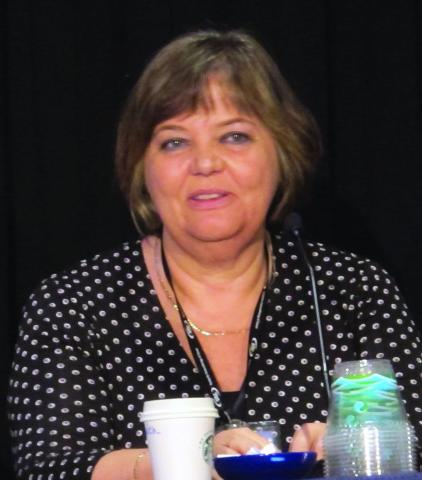
Can increased scope of practice protect against family physician burnout?
MONTREAL – Have restrictions on scope of practice contributed to primary care physician burnout?
Perhaps they have, according to a recent survey that saw less burnout among recently graduated family physicians who retained inpatient or obstetrics work.
Of the 1,167 family practice physicians surveyed, 42% reported that they felt burned out once per week or more, said Amanda Weidner, MPH, of the University of Washington Family Medicine Residency Network in Seattle. However, some physicians were significantly less likely to experience burnout: those whose practice included adult inpatient medicine (P less than .0001), those currently delivering babies (P = .0007), and those who routinely saw their patients at the hospital or in patients’ homes (P = .0016 and P = .02, respectively).
Surveys of family practice physicians have reported varying levels of burnout, ranging from as low as 24% to as high as 65%. “Either way, we can probably agree that even one quarter of physicians saying they’re burned out is too many,” said Ms. Weidner during a presentation at the annual meeting of the National Association of Primary Care Research Groups.
Ms. Weidner and her colleagues polled young family practice physicians about their feelings of burnout and about their practice scope. She said she and her colleagues wondered about the association between those factors because the scope of primary care practice has been narrowing while primary care physicians have been reporting increasing levels of burnout – and at a higher rate than many other specialties.
Their survey, mailed in 2016, was sent to American Board of Family Medicine (ABFM) diplomates who were 2013 graduates of family practice residencies. Overall, 67% responded to the survey. Ms. Weidner and her colleagues used responses from the 78% of respondents who reported providing outpatient continuity care, rather than those who were hospitalists or who practiced in noncontinuity care areas, such as urgent care or emergency medicine.
Participants were asked to indicate how often they felt burned out in their work, with seven choices that ranged from “every day” to “never.” This single question from the Maslach Burnout Inventory, said Ms. Weidner, has been shown to correlate well with the emotional exhaustion domain of the inventory: Any response indicating feeling burned out at least once a week correlates with burnout.
In addition to asking physicians about the scope of their practice and their practice setting, the investigators assessed their work effort by asking about the number of patient encounters per day and whether respondents had after-hours calls and saw patients on weekends and evenings.
Respondents were, on average, about 36 years old, 58.6% were female, and 84.7% held an MD (rather than a DO). Two-thirds were graduates of U.S. medical schools.
Maintaining a broad scope of practice for family physicians can help fulfill the “triple aims” (enhancing patient experience, improving population health, and reducing costs) – now sometimes characterized as the “quadruple aims”with the addition of preventing burnout – of health system performance, said Ms. Weidner. In addition to proven cost reduction, she said, maintaining a broad scope of practice in family practice can enhance the patient experience and improve population health. If increased scope of practice also is associated with improved physician satisfaction, then it will also contribute to the fourth aim, she said.
Questioners in the audience asked Ms. Weidner and her collaborators to dive a little deeper into the data. One audience member remarked that she sees colleagues scheduling themselves for inpatient coverage or an afternoon of endometrial biopsies and other procedures as a strategy to avoid clinic time. She asked whether it’s the practice variety or the reduced number of clinic hours per week that’s driving the lower burnout rates.
Ms. Weidner acknowledged the possibility that working in other practice settings might reduce workload in terms of paperwork and patient communication. However, she pointed out that the number of hours worked per week was not associated with burnout; additionally, she said, both physicians who reported burnout and those who did not saw about the same number of patients per day.
Another audience member wondered whether some of the burnout – and practice restriction – is related to the fact that fewer physicians own their own practices. Maybe, he said, “There’s less of an obligation to be there to take people through all phases of life.”
Some practice restriction may be self-imposed, as may be the case when physicians don’t want the call obligations associated with obstetrics, but some of it is imposed by the system as an attempt to increase clinic throughput, Ms. Weidner said. “This is something for health systems to pay attention to. It’s less of an individual issue and more of a health system issue.”
Ms. Weidner reported that her work was supported by an ABFM Foundation grant while she was a visiting ABFM scholar.
koakes@frontlinemedcom.com
On Twitter @karioakes
MONTREAL – Have restrictions on scope of practice contributed to primary care physician burnout?
Perhaps they have, according to a recent survey that saw less burnout among recently graduated family physicians who retained inpatient or obstetrics work.
Of the 1,167 family practice physicians surveyed, 42% reported that they felt burned out once per week or more, said Amanda Weidner, MPH, of the University of Washington Family Medicine Residency Network in Seattle. However, some physicians were significantly less likely to experience burnout: those whose practice included adult inpatient medicine (P less than .0001), those currently delivering babies (P = .0007), and those who routinely saw their patients at the hospital or in patients’ homes (P = .0016 and P = .02, respectively).
Surveys of family practice physicians have reported varying levels of burnout, ranging from as low as 24% to as high as 65%. “Either way, we can probably agree that even one quarter of physicians saying they’re burned out is too many,” said Ms. Weidner during a presentation at the annual meeting of the National Association of Primary Care Research Groups.
Ms. Weidner and her colleagues polled young family practice physicians about their feelings of burnout and about their practice scope. She said she and her colleagues wondered about the association between those factors because the scope of primary care practice has been narrowing while primary care physicians have been reporting increasing levels of burnout – and at a higher rate than many other specialties.
Their survey, mailed in 2016, was sent to American Board of Family Medicine (ABFM) diplomates who were 2013 graduates of family practice residencies. Overall, 67% responded to the survey. Ms. Weidner and her colleagues used responses from the 78% of respondents who reported providing outpatient continuity care, rather than those who were hospitalists or who practiced in noncontinuity care areas, such as urgent care or emergency medicine.
Participants were asked to indicate how often they felt burned out in their work, with seven choices that ranged from “every day” to “never.” This single question from the Maslach Burnout Inventory, said Ms. Weidner, has been shown to correlate well with the emotional exhaustion domain of the inventory: Any response indicating feeling burned out at least once a week correlates with burnout.
In addition to asking physicians about the scope of their practice and their practice setting, the investigators assessed their work effort by asking about the number of patient encounters per day and whether respondents had after-hours calls and saw patients on weekends and evenings.
Respondents were, on average, about 36 years old, 58.6% were female, and 84.7% held an MD (rather than a DO). Two-thirds were graduates of U.S. medical schools.
Maintaining a broad scope of practice for family physicians can help fulfill the “triple aims” (enhancing patient experience, improving population health, and reducing costs) – now sometimes characterized as the “quadruple aims”with the addition of preventing burnout – of health system performance, said Ms. Weidner. In addition to proven cost reduction, she said, maintaining a broad scope of practice in family practice can enhance the patient experience and improve population health. If increased scope of practice also is associated with improved physician satisfaction, then it will also contribute to the fourth aim, she said.
Questioners in the audience asked Ms. Weidner and her collaborators to dive a little deeper into the data. One audience member remarked that she sees colleagues scheduling themselves for inpatient coverage or an afternoon of endometrial biopsies and other procedures as a strategy to avoid clinic time. She asked whether it’s the practice variety or the reduced number of clinic hours per week that’s driving the lower burnout rates.
Ms. Weidner acknowledged the possibility that working in other practice settings might reduce workload in terms of paperwork and patient communication. However, she pointed out that the number of hours worked per week was not associated with burnout; additionally, she said, both physicians who reported burnout and those who did not saw about the same number of patients per day.
Another audience member wondered whether some of the burnout – and practice restriction – is related to the fact that fewer physicians own their own practices. Maybe, he said, “There’s less of an obligation to be there to take people through all phases of life.”
Some practice restriction may be self-imposed, as may be the case when physicians don’t want the call obligations associated with obstetrics, but some of it is imposed by the system as an attempt to increase clinic throughput, Ms. Weidner said. “This is something for health systems to pay attention to. It’s less of an individual issue and more of a health system issue.”
Ms. Weidner reported that her work was supported by an ABFM Foundation grant while she was a visiting ABFM scholar.
koakes@frontlinemedcom.com
On Twitter @karioakes
MONTREAL – Have restrictions on scope of practice contributed to primary care physician burnout?
Perhaps they have, according to a recent survey that saw less burnout among recently graduated family physicians who retained inpatient or obstetrics work.
Of the 1,167 family practice physicians surveyed, 42% reported that they felt burned out once per week or more, said Amanda Weidner, MPH, of the University of Washington Family Medicine Residency Network in Seattle. However, some physicians were significantly less likely to experience burnout: those whose practice included adult inpatient medicine (P less than .0001), those currently delivering babies (P = .0007), and those who routinely saw their patients at the hospital or in patients’ homes (P = .0016 and P = .02, respectively).
Surveys of family practice physicians have reported varying levels of burnout, ranging from as low as 24% to as high as 65%. “Either way, we can probably agree that even one quarter of physicians saying they’re burned out is too many,” said Ms. Weidner during a presentation at the annual meeting of the National Association of Primary Care Research Groups.
Ms. Weidner and her colleagues polled young family practice physicians about their feelings of burnout and about their practice scope. She said she and her colleagues wondered about the association between those factors because the scope of primary care practice has been narrowing while primary care physicians have been reporting increasing levels of burnout – and at a higher rate than many other specialties.
Their survey, mailed in 2016, was sent to American Board of Family Medicine (ABFM) diplomates who were 2013 graduates of family practice residencies. Overall, 67% responded to the survey. Ms. Weidner and her colleagues used responses from the 78% of respondents who reported providing outpatient continuity care, rather than those who were hospitalists or who practiced in noncontinuity care areas, such as urgent care or emergency medicine.
Participants were asked to indicate how often they felt burned out in their work, with seven choices that ranged from “every day” to “never.” This single question from the Maslach Burnout Inventory, said Ms. Weidner, has been shown to correlate well with the emotional exhaustion domain of the inventory: Any response indicating feeling burned out at least once a week correlates with burnout.
In addition to asking physicians about the scope of their practice and their practice setting, the investigators assessed their work effort by asking about the number of patient encounters per day and whether respondents had after-hours calls and saw patients on weekends and evenings.
Respondents were, on average, about 36 years old, 58.6% were female, and 84.7% held an MD (rather than a DO). Two-thirds were graduates of U.S. medical schools.
Maintaining a broad scope of practice for family physicians can help fulfill the “triple aims” (enhancing patient experience, improving population health, and reducing costs) – now sometimes characterized as the “quadruple aims”with the addition of preventing burnout – of health system performance, said Ms. Weidner. In addition to proven cost reduction, she said, maintaining a broad scope of practice in family practice can enhance the patient experience and improve population health. If increased scope of practice also is associated with improved physician satisfaction, then it will also contribute to the fourth aim, she said.
Questioners in the audience asked Ms. Weidner and her collaborators to dive a little deeper into the data. One audience member remarked that she sees colleagues scheduling themselves for inpatient coverage or an afternoon of endometrial biopsies and other procedures as a strategy to avoid clinic time. She asked whether it’s the practice variety or the reduced number of clinic hours per week that’s driving the lower burnout rates.
Ms. Weidner acknowledged the possibility that working in other practice settings might reduce workload in terms of paperwork and patient communication. However, she pointed out that the number of hours worked per week was not associated with burnout; additionally, she said, both physicians who reported burnout and those who did not saw about the same number of patients per day.
Another audience member wondered whether some of the burnout – and practice restriction – is related to the fact that fewer physicians own their own practices. Maybe, he said, “There’s less of an obligation to be there to take people through all phases of life.”
Some practice restriction may be self-imposed, as may be the case when physicians don’t want the call obligations associated with obstetrics, but some of it is imposed by the system as an attempt to increase clinic throughput, Ms. Weidner said. “This is something for health systems to pay attention to. It’s less of an individual issue and more of a health system issue.”
Ms. Weidner reported that her work was supported by an ABFM Foundation grant while she was a visiting ABFM scholar.
koakes@frontlinemedcom.com
On Twitter @karioakes
AT NAPCRG 2017
Key clinical point:
Major finding: Doing inpatient work and delivering babies was associated with less burnout for recent graduates (P less than .0001 and P = .007).
Data source: A 2016 survey of American Board of Family Medicine (ABFM) diplomates who were 2013 graduates of residency programs; 1,167 physicians’ practices met inclusion criteria.
Disclosures: Ms. Weidner reported that her work was supported by an ABFM Foundation grant while she was a visiting ABFM scholar.
ADHD and the role of wellness
ADHD is a very common disorder with several medication treatment options. There also are wellness and parenting strategies that can address aspects of the challenges of ADHD that are not perfectly covered by medication, such as excess symptoms, times of day that are not covered, or oppositional behavior that often develops secondarily.
Case summary
James is a 6-year-old boy who has been an active, high-energy child since preschool. He has had difficulty with wiggling around in kindergarten and preschool, talking excessively, and being unable to follow directions and pay attention. He is impulsive, disruptive, and frequently doesn’t listen to what his parents tell him to do. Parents and teachers rank him in the clinical range for hyperactivity, impulsivity, and attention problems on standardized rating scales.
Discussion
When we first discuss a new diagnosis with a family, we have the opportunity to shape the family’s expectations about that diagnosis and how it should be addressed. When I discuss ADHD with a new family, I want them to understand the symptoms of inattention, hyperactivity, and impulsiveness, and that these symptoms are not the child’s fault, but rather related to the way his brain is connected. At the same time, I also emphasize that these connections are not entirely fixed, that they mature over time, and that they are affected by experiences in life. In particular, I stress that positive experiences and wellness activities can influence the brain in a positive way. While, of course, I discuss the range of medications that can address these issues, I also deal with wellness in the treatment plan.

Exercise
Studies in humans and animals have provided background evidence that exercise increases the release of neurotransmitters such as dopamine and norepinephrine that are important in the pathophysiology of ADHD. Cerillo-Urbina et al. did a meta-analysis in 2015 of randomized controlled trials and found medium to large effect sizes for a variety of physical activity programs with respect to attention, hyperactivity, and impulsivity, although the study quality was generally low.1 Clearly we need additional more rigorous studies, but given the positive direction of outcomes, the lack of side effects, and the many other positive effects of exercise, it does not seem too soon to add exercise as a prescription for our patients with ADHD. I review this evidence with families, ask them about physical activity they like, and ask if they are willing to work toward an hour of exercise a day.
Sleep
Many children with ADHD have problems with sleep even before they start on stimulant medications, which can further affect sleep. Addressing sleep early on can improve ADHD symptoms, as well as help parents change or avoid patterns like having children fall asleep to the sound of a television. Brief sleep hygiene and cognitive-behavioral therapy interventions over three visits were demonstrated in a randomized controlled trial by Hisock et al. to improve ADHD symptoms and behavioral function.2 These psychosocial interventions clearly are the first line in addressing sleep problems in ADHD, and can benefit even sleep problems connected to medication.
Parent training
Treatment plan
1. Have the child exercise 1 hour every day. Have fun!
2. Establish a nightly bedtime routine, with a bath at 7:30 p.m., brushing of teeth, a story, and lights out at 8 with no TV in the room.
3. Check out the CHADD website for Parent to Parent.
4. Start a trial of stimulant medication.
5. Return in 2 weeks to monitor these interventions, adjust goals, and adjust medications.
When to refer
Many parents will be able to put such a plan in motion with your support and that of other parents. If they are struggling, therapists, psychologists, and psychiatrists trained in motivational and behavioral methods can provide more individualized parent training. Also consider whether the parents themselves may have ADHD and could use referral and treatment.
Dr. Hall is assistant professor of psychiatry and pediatrics at the University of Vermont, Burlington. She said she had no relevant financial disclosures.
References
1. Child Care Health Dev. 2015 Nov;41(6):779-88.
2. BMJ. 2015. doi: 10.1136/bmj.h68.
ADHD is a very common disorder with several medication treatment options. There also are wellness and parenting strategies that can address aspects of the challenges of ADHD that are not perfectly covered by medication, such as excess symptoms, times of day that are not covered, or oppositional behavior that often develops secondarily.
Case summary
James is a 6-year-old boy who has been an active, high-energy child since preschool. He has had difficulty with wiggling around in kindergarten and preschool, talking excessively, and being unable to follow directions and pay attention. He is impulsive, disruptive, and frequently doesn’t listen to what his parents tell him to do. Parents and teachers rank him in the clinical range for hyperactivity, impulsivity, and attention problems on standardized rating scales.
Discussion
When we first discuss a new diagnosis with a family, we have the opportunity to shape the family’s expectations about that diagnosis and how it should be addressed. When I discuss ADHD with a new family, I want them to understand the symptoms of inattention, hyperactivity, and impulsiveness, and that these symptoms are not the child’s fault, but rather related to the way his brain is connected. At the same time, I also emphasize that these connections are not entirely fixed, that they mature over time, and that they are affected by experiences in life. In particular, I stress that positive experiences and wellness activities can influence the brain in a positive way. While, of course, I discuss the range of medications that can address these issues, I also deal with wellness in the treatment plan.
Exercise
Studies in humans and animals have provided background evidence that exercise increases the release of neurotransmitters such as dopamine and norepinephrine that are important in the pathophysiology of ADHD. Cerillo-Urbina et al. did a meta-analysis in 2015 of randomized controlled trials and found medium to large effect sizes for a variety of physical activity programs with respect to attention, hyperactivity, and impulsivity, although the study quality was generally low.1 Clearly we need additional more rigorous studies, but given the positive direction of outcomes, the lack of side effects, and the many other positive effects of exercise, it does not seem too soon to add exercise as a prescription for our patients with ADHD. I review this evidence with families, ask them about physical activity they like, and ask if they are willing to work toward an hour of exercise a day.
Sleep
Many children with ADHD have problems with sleep even before they start on stimulant medications, which can further affect sleep. Addressing sleep early on can improve ADHD symptoms, as well as help parents change or avoid patterns like having children fall asleep to the sound of a television. Brief sleep hygiene and cognitive-behavioral therapy interventions over three visits were demonstrated in a randomized controlled trial by Hisock et al. to improve ADHD symptoms and behavioral function.2 These psychosocial interventions clearly are the first line in addressing sleep problems in ADHD, and can benefit even sleep problems connected to medication.
Parent training
Treatment plan
1. Have the child exercise 1 hour every day. Have fun!
2. Establish a nightly bedtime routine, with a bath at 7:30 p.m., brushing of teeth, a story, and lights out at 8 with no TV in the room.
3. Check out the CHADD website for Parent to Parent.
4. Start a trial of stimulant medication.
5. Return in 2 weeks to monitor these interventions, adjust goals, and adjust medications.
When to refer
Many parents will be able to put such a plan in motion with your support and that of other parents. If they are struggling, therapists, psychologists, and psychiatrists trained in motivational and behavioral methods can provide more individualized parent training. Also consider whether the parents themselves may have ADHD and could use referral and treatment.
Dr. Hall is assistant professor of psychiatry and pediatrics at the University of Vermont, Burlington. She said she had no relevant financial disclosures.
References
1. Child Care Health Dev. 2015 Nov;41(6):779-88.
2. BMJ. 2015. doi: 10.1136/bmj.h68.
ADHD is a very common disorder with several medication treatment options. There also are wellness and parenting strategies that can address aspects of the challenges of ADHD that are not perfectly covered by medication, such as excess symptoms, times of day that are not covered, or oppositional behavior that often develops secondarily.
Case summary
James is a 6-year-old boy who has been an active, high-energy child since preschool. He has had difficulty with wiggling around in kindergarten and preschool, talking excessively, and being unable to follow directions and pay attention. He is impulsive, disruptive, and frequently doesn’t listen to what his parents tell him to do. Parents and teachers rank him in the clinical range for hyperactivity, impulsivity, and attention problems on standardized rating scales.
Discussion
When we first discuss a new diagnosis with a family, we have the opportunity to shape the family’s expectations about that diagnosis and how it should be addressed. When I discuss ADHD with a new family, I want them to understand the symptoms of inattention, hyperactivity, and impulsiveness, and that these symptoms are not the child’s fault, but rather related to the way his brain is connected. At the same time, I also emphasize that these connections are not entirely fixed, that they mature over time, and that they are affected by experiences in life. In particular, I stress that positive experiences and wellness activities can influence the brain in a positive way. While, of course, I discuss the range of medications that can address these issues, I also deal with wellness in the treatment plan.
Exercise
Studies in humans and animals have provided background evidence that exercise increases the release of neurotransmitters such as dopamine and norepinephrine that are important in the pathophysiology of ADHD. Cerillo-Urbina et al. did a meta-analysis in 2015 of randomized controlled trials and found medium to large effect sizes for a variety of physical activity programs with respect to attention, hyperactivity, and impulsivity, although the study quality was generally low.1 Clearly we need additional more rigorous studies, but given the positive direction of outcomes, the lack of side effects, and the many other positive effects of exercise, it does not seem too soon to add exercise as a prescription for our patients with ADHD. I review this evidence with families, ask them about physical activity they like, and ask if they are willing to work toward an hour of exercise a day.
Sleep
Many children with ADHD have problems with sleep even before they start on stimulant medications, which can further affect sleep. Addressing sleep early on can improve ADHD symptoms, as well as help parents change or avoid patterns like having children fall asleep to the sound of a television. Brief sleep hygiene and cognitive-behavioral therapy interventions over three visits were demonstrated in a randomized controlled trial by Hisock et al. to improve ADHD symptoms and behavioral function.2 These psychosocial interventions clearly are the first line in addressing sleep problems in ADHD, and can benefit even sleep problems connected to medication.
Parent training
Treatment plan
1. Have the child exercise 1 hour every day. Have fun!
2. Establish a nightly bedtime routine, with a bath at 7:30 p.m., brushing of teeth, a story, and lights out at 8 with no TV in the room.
3. Check out the CHADD website for Parent to Parent.
4. Start a trial of stimulant medication.
5. Return in 2 weeks to monitor these interventions, adjust goals, and adjust medications.
When to refer
Many parents will be able to put such a plan in motion with your support and that of other parents. If they are struggling, therapists, psychologists, and psychiatrists trained in motivational and behavioral methods can provide more individualized parent training. Also consider whether the parents themselves may have ADHD and could use referral and treatment.
Dr. Hall is assistant professor of psychiatry and pediatrics at the University of Vermont, Burlington. She said she had no relevant financial disclosures.
References
1. Child Care Health Dev. 2015 Nov;41(6):779-88.
2. BMJ. 2015. doi: 10.1136/bmj.h68.

Emerging sickle cell agents target new pathways
CONCORD, N.C. – Approved treatments for sickle cell disease have been extremely limited, but there are several therapies in the research pipeline that use new pathways to target the disease.
“We do have much better understanding of the pathophysiology, which is getting us a few more targets to aim at,” Julie Kanter, MD, director of sickle cell research at the Medical University of South Carolina, Charleston, said at Sickle Cell Disease Symposium held by Carolinas Health Care System. These targets include influencing how cells interact with the vascular endothelium, inhibiting platelets, and preventing cell sickling and inflammation.

“I’m waiting to see who’s willing to take it just because it is a lot of powder that the patient has to mix and drink twice a day, but it does look promising to reduce inflammation,” Dr. Kanter said.
SCD pipeline
Deeper in the sickle cell pipeline is a class of antisickling agents known as hemoglobin modifiers. “We’re tying to change the way hemoglobin binds to oxygen, and if we can keep hemoglobin binding to oxygen longer, it actually decreases the risk of hemoglobin sickling and polymerizing in the cell,” Dr. Kanter explained.
One hemoglobin modifier is voxelotor (previously called GBT440), a once-daily oral agent that Global Blood Therapeutics has in development.
Another category of antisickling agents that researchers are looking at is anti-inflammatory moderators, Dr. Kanter said. These include nitric oxide donors like sildenafil, which did not “quite work” in SCD, and arginine and glutamine, which increase the amount of nitric oxide once in the body “and hopefully reduce the risk of sickling,” she said. “If we can improve inflammation, we might be able to improve the risk of crisis.”
Cell adhesion modifiers are a drug class that aims to prevent cells from binding to each other. These include platelet inhibitors and endothelial blockers. “There are several antiplatelet agents that are approved really for stroke prevention or heart attack prevention, and we’re trying to see if we can repurpose these in sickle cell disease in a specific pathway that allows the platelet to stick to the endothelium, but if we only inhibit one pathway it should not increase the risk of bleeding,” Dr. Kanter said.
One platelet inhibition pathway that researchers are focused on is the P2Y12 adenosine diphosphate blockade, which the platelet inhibitor prasugrel (Effient) acts on. A 2016 study of this pathway in SCD “wasn’t successful,” Dr. Kanter said, “but it had some interesting results” – namely that the drug may be most effective in adolescents (N Engl J Med. 2016 Feb 18;374[7]:625-35).
Selectin-blocking medications are a drug class that act on white blood cell adhesion to, and movement through, the endothelium, Dr. Kanter said. “Neutrophils can instigate a sickle cell crisis, so if we can interrupt some of this rolling or sticking, could we decrease the risk of a sickle cell crisis?” The drug GMI-1070 is currently being studied in a phase III trial and so far has shown “a significant decrease in the amount of opioids used by those individuals who received the study drug,” she said.
Crizanlizumab (also known as SelG1) is a humanized monoclonal antibody with an affinity to P-selectin and is the subject of the phase II SUSTAIN trial, which included a cohort that also was taking hydroxyurea. Treatment with high-dose crizanlizumab resulted in an annual rate of sickle cell–related pain crises that was more than 45% lower than with placebo (N Engl J Med. 2017 Feb 2;376[5]:429-39).
Stem cell transplants
Besides drugs, stem cell transplants to treat SCD have advanced in recent years to the point where cure rates are exceeding 90%, Dr. Kanter noted. “However, the real issue with stem cells is that patients still don’t have enough donors,” she said.
SCD is also potentially amenable to gene therapy, Dr. Kanter said, noting that SCD gene therapy trials in progress are looking at harvesting patients’ own bone marrow, using the lentivirus viral vector, inserting a gene to increase production of nonsickle hemoglobin, and using myeloablative chemotherapy to remove old marrow and replace it with new, manipulated bone marrow.
Several programs are investigating using a gene editing technique, known as CRISPR/Cas9, to alter the BCL11A gene to maintain fetal hemoglobin production.
“We all make fetal hemoglobin at birth, and then over 6 months to 1 year of life, our bodies convert fetal hemoglobin to adult hemoglobin,” she said. “In sickle cell disease, it converts to sickle hemoglobin. What if we could prevent that conversion and keep the fetal hemoglobin turned on?” That could potentially eradicate the complications of SCD starting at an early age, Dr. Kanter said.
Dr. Kanter, who has been involved in several of the SCD trials, reported relationships with Pfizer, AstraZeneca, Bluebird Bio, Global Blood Therapeutics, Novartis, Guidepoint, GLG, ApoPharma, and Purdue Pharma.
CONCORD, N.C. – Approved treatments for sickle cell disease have been extremely limited, but there are several therapies in the research pipeline that use new pathways to target the disease.
“We do have much better understanding of the pathophysiology, which is getting us a few more targets to aim at,” Julie Kanter, MD, director of sickle cell research at the Medical University of South Carolina, Charleston, said at Sickle Cell Disease Symposium held by Carolinas Health Care System. These targets include influencing how cells interact with the vascular endothelium, inhibiting platelets, and preventing cell sickling and inflammation.
“I’m waiting to see who’s willing to take it just because it is a lot of powder that the patient has to mix and drink twice a day, but it does look promising to reduce inflammation,” Dr. Kanter said.
SCD pipeline
Deeper in the sickle cell pipeline is a class of antisickling agents known as hemoglobin modifiers. “We’re tying to change the way hemoglobin binds to oxygen, and if we can keep hemoglobin binding to oxygen longer, it actually decreases the risk of hemoglobin sickling and polymerizing in the cell,” Dr. Kanter explained.
One hemoglobin modifier is voxelotor (previously called GBT440), a once-daily oral agent that Global Blood Therapeutics has in development.
Another category of antisickling agents that researchers are looking at is anti-inflammatory moderators, Dr. Kanter said. These include nitric oxide donors like sildenafil, which did not “quite work” in SCD, and arginine and glutamine, which increase the amount of nitric oxide once in the body “and hopefully reduce the risk of sickling,” she said. “If we can improve inflammation, we might be able to improve the risk of crisis.”
Cell adhesion modifiers are a drug class that aims to prevent cells from binding to each other. These include platelet inhibitors and endothelial blockers. “There are several antiplatelet agents that are approved really for stroke prevention or heart attack prevention, and we’re trying to see if we can repurpose these in sickle cell disease in a specific pathway that allows the platelet to stick to the endothelium, but if we only inhibit one pathway it should not increase the risk of bleeding,” Dr. Kanter said.
One platelet inhibition pathway that researchers are focused on is the P2Y12 adenosine diphosphate blockade, which the platelet inhibitor prasugrel (Effient) acts on. A 2016 study of this pathway in SCD “wasn’t successful,” Dr. Kanter said, “but it had some interesting results” – namely that the drug may be most effective in adolescents (N Engl J Med. 2016 Feb 18;374[7]:625-35).
Selectin-blocking medications are a drug class that act on white blood cell adhesion to, and movement through, the endothelium, Dr. Kanter said. “Neutrophils can instigate a sickle cell crisis, so if we can interrupt some of this rolling or sticking, could we decrease the risk of a sickle cell crisis?” The drug GMI-1070 is currently being studied in a phase III trial and so far has shown “a significant decrease in the amount of opioids used by those individuals who received the study drug,” she said.
Crizanlizumab (also known as SelG1) is a humanized monoclonal antibody with an affinity to P-selectin and is the subject of the phase II SUSTAIN trial, which included a cohort that also was taking hydroxyurea. Treatment with high-dose crizanlizumab resulted in an annual rate of sickle cell–related pain crises that was more than 45% lower than with placebo (N Engl J Med. 2017 Feb 2;376[5]:429-39).
Stem cell transplants
Besides drugs, stem cell transplants to treat SCD have advanced in recent years to the point where cure rates are exceeding 90%, Dr. Kanter noted. “However, the real issue with stem cells is that patients still don’t have enough donors,” she said.
SCD is also potentially amenable to gene therapy, Dr. Kanter said, noting that SCD gene therapy trials in progress are looking at harvesting patients’ own bone marrow, using the lentivirus viral vector, inserting a gene to increase production of nonsickle hemoglobin, and using myeloablative chemotherapy to remove old marrow and replace it with new, manipulated bone marrow.
Several programs are investigating using a gene editing technique, known as CRISPR/Cas9, to alter the BCL11A gene to maintain fetal hemoglobin production.
“We all make fetal hemoglobin at birth, and then over 6 months to 1 year of life, our bodies convert fetal hemoglobin to adult hemoglobin,” she said. “In sickle cell disease, it converts to sickle hemoglobin. What if we could prevent that conversion and keep the fetal hemoglobin turned on?” That could potentially eradicate the complications of SCD starting at an early age, Dr. Kanter said.
Dr. Kanter, who has been involved in several of the SCD trials, reported relationships with Pfizer, AstraZeneca, Bluebird Bio, Global Blood Therapeutics, Novartis, Guidepoint, GLG, ApoPharma, and Purdue Pharma.
CONCORD, N.C. – Approved treatments for sickle cell disease have been extremely limited, but there are several therapies in the research pipeline that use new pathways to target the disease.
“We do have much better understanding of the pathophysiology, which is getting us a few more targets to aim at,” Julie Kanter, MD, director of sickle cell research at the Medical University of South Carolina, Charleston, said at Sickle Cell Disease Symposium held by Carolinas Health Care System. These targets include influencing how cells interact with the vascular endothelium, inhibiting platelets, and preventing cell sickling and inflammation.
“I’m waiting to see who’s willing to take it just because it is a lot of powder that the patient has to mix and drink twice a day, but it does look promising to reduce inflammation,” Dr. Kanter said.
SCD pipeline
Deeper in the sickle cell pipeline is a class of antisickling agents known as hemoglobin modifiers. “We’re tying to change the way hemoglobin binds to oxygen, and if we can keep hemoglobin binding to oxygen longer, it actually decreases the risk of hemoglobin sickling and polymerizing in the cell,” Dr. Kanter explained.
One hemoglobin modifier is voxelotor (previously called GBT440), a once-daily oral agent that Global Blood Therapeutics has in development.
Another category of antisickling agents that researchers are looking at is anti-inflammatory moderators, Dr. Kanter said. These include nitric oxide donors like sildenafil, which did not “quite work” in SCD, and arginine and glutamine, which increase the amount of nitric oxide once in the body “and hopefully reduce the risk of sickling,” she said. “If we can improve inflammation, we might be able to improve the risk of crisis.”
Cell adhesion modifiers are a drug class that aims to prevent cells from binding to each other. These include platelet inhibitors and endothelial blockers. “There are several antiplatelet agents that are approved really for stroke prevention or heart attack prevention, and we’re trying to see if we can repurpose these in sickle cell disease in a specific pathway that allows the platelet to stick to the endothelium, but if we only inhibit one pathway it should not increase the risk of bleeding,” Dr. Kanter said.
One platelet inhibition pathway that researchers are focused on is the P2Y12 adenosine diphosphate blockade, which the platelet inhibitor prasugrel (Effient) acts on. A 2016 study of this pathway in SCD “wasn’t successful,” Dr. Kanter said, “but it had some interesting results” – namely that the drug may be most effective in adolescents (N Engl J Med. 2016 Feb 18;374[7]:625-35).
Selectin-blocking medications are a drug class that act on white blood cell adhesion to, and movement through, the endothelium, Dr. Kanter said. “Neutrophils can instigate a sickle cell crisis, so if we can interrupt some of this rolling or sticking, could we decrease the risk of a sickle cell crisis?” The drug GMI-1070 is currently being studied in a phase III trial and so far has shown “a significant decrease in the amount of opioids used by those individuals who received the study drug,” she said.
Crizanlizumab (also known as SelG1) is a humanized monoclonal antibody with an affinity to P-selectin and is the subject of the phase II SUSTAIN trial, which included a cohort that also was taking hydroxyurea. Treatment with high-dose crizanlizumab resulted in an annual rate of sickle cell–related pain crises that was more than 45% lower than with placebo (N Engl J Med. 2017 Feb 2;376[5]:429-39).
Stem cell transplants
Besides drugs, stem cell transplants to treat SCD have advanced in recent years to the point where cure rates are exceeding 90%, Dr. Kanter noted. “However, the real issue with stem cells is that patients still don’t have enough donors,” she said.
SCD is also potentially amenable to gene therapy, Dr. Kanter said, noting that SCD gene therapy trials in progress are looking at harvesting patients’ own bone marrow, using the lentivirus viral vector, inserting a gene to increase production of nonsickle hemoglobin, and using myeloablative chemotherapy to remove old marrow and replace it with new, manipulated bone marrow.
Several programs are investigating using a gene editing technique, known as CRISPR/Cas9, to alter the BCL11A gene to maintain fetal hemoglobin production.
“We all make fetal hemoglobin at birth, and then over 6 months to 1 year of life, our bodies convert fetal hemoglobin to adult hemoglobin,” she said. “In sickle cell disease, it converts to sickle hemoglobin. What if we could prevent that conversion and keep the fetal hemoglobin turned on?” That could potentially eradicate the complications of SCD starting at an early age, Dr. Kanter said.
Dr. Kanter, who has been involved in several of the SCD trials, reported relationships with Pfizer, AstraZeneca, Bluebird Bio, Global Blood Therapeutics, Novartis, Guidepoint, GLG, ApoPharma, and Purdue Pharma.
EXPERT ANALYSIS FROM A MEETING ON SICKLE CELL DISEASE
ACC survey: Burnout pervasive in cardiologists
ANAHEIM, CALIF. – A disturbingly high 27% of U.S. cardiologists reported currently feeling burnout in the American College of Cardiology’s third Professional Life Survey, Laxmi S. Mehta, MD, said at the American Heart Association scientific sessions.
A gender gap existed: The prevalence of burnout was 29% greater among female cardiologists than their male counterparts, by a margin of 31%-24%.
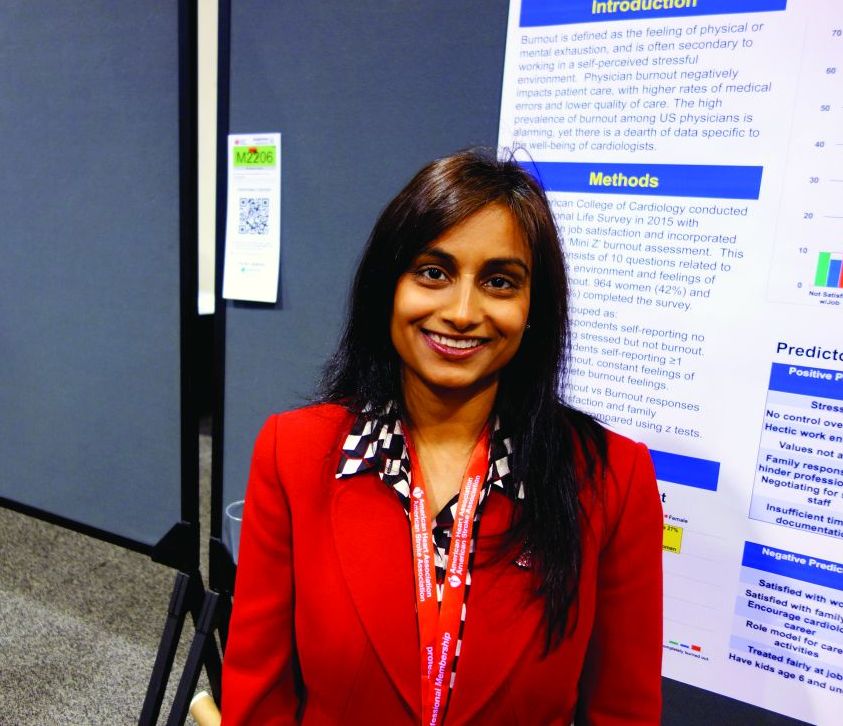
“These are the doctors who are taking care of people’s hearts, and we know that when you’re burned out, there are higher rates of medical errors and the quality of care is poorer. So this is problematic,” she said in an interview.
Burnout had a negative effect on career satisfaction: While 94% of cardiologists in the nonburnout group professed they were satisfied with their career, that was the case for only 74% of cardiologists who felt burnout. Just 56% percent of the burnout group said they would recommend cardiology as a career, compared with 80% of the practitioners who felt no burnout.
The 2015 ACC survey was completed by 2,313 U.S. cardiologists, 964 of whom were women. The first round of results, which focused on career satisfaction and racial and gender discrimination in the workplace, have been published (J Am Coll Cardiol. 2017 Jan 31;69[4]:452-62). The survey included the validated 10-question Mini Z burnout assessment, the results of which were the focus of the new analysis.
The 27% of cardiologists in the burnout group fell into three subcategories, the largest of which comprised those who reported feeling at least one burnout symptom of physical or mental exhaustion. Those who said their burnout symptoms don’t go away and that they think about their work frustrations frequently made up a smaller group. Just a few percent of survey participants fell into the completely burned out category.
Only 51% of the burnout group were satisfied with their financial compensation, compared with 68% of the nonburnout group. Sixty-one percent of the burnout group felt they were treated fairly at their job, as did 86% of the cardiologists who felt burnout. Half of the cardiologists with burnout reported experiencing past discrimination, compared with 37% of the nonburnout group. And 40% of the burnout group felt their family responsibilities hindered career advancement, a sentiment expressed by 22% of the nonburnout group.
EMR “pajama time” cited as a major burden
Two-thirds of cardiologists with constant burnout symptoms or complete burnout cited excessive time spent completing their electronic medical records as a significant contributing factor.
“The electronic medical record ends up taking over our personal time,” according to Dr. Mehta. “We call it ‘pajama time’ because many of us are doing the charts or responding to patients at midnight, on vacation, at meetings like this. There is no separation, and that’s a problem.”
What can be done to reduce burnout
The 2015 Professional Life Survey was the third one in 20 years. Compared with the earlier two, the most recent survey painted a picture of an aging workforce that is less likely to be in private practice. The survey – the first one to assess burnout within the specialty – was carried out by the ACC Women in Cardiology Leadership Council. Armed with the survey results, the ACC leadership is now in the process of redefining the organization’s mission statement to incorporate a new emphasis on providing for physician health and well-being in addition to the more traditional goals of improving the quality and reducing the cost of care.
“Many cardiologists are working a lot harder than they used to, with less personal time. We need to work on mechanisms to reduce burnout by reducing the burdens put on them. The survey data help because they show the cardiology profession, and hopefully hospital administrators, the importance of making a better work environment. That’s the hope,” Dr. Mehta said.
She reported having no financial conflicts of interest regarding the survey.
ANAHEIM, CALIF. – A disturbingly high 27% of U.S. cardiologists reported currently feeling burnout in the American College of Cardiology’s third Professional Life Survey, Laxmi S. Mehta, MD, said at the American Heart Association scientific sessions.
A gender gap existed: The prevalence of burnout was 29% greater among female cardiologists than their male counterparts, by a margin of 31%-24%.
“These are the doctors who are taking care of people’s hearts, and we know that when you’re burned out, there are higher rates of medical errors and the quality of care is poorer. So this is problematic,” she said in an interview.
Burnout had a negative effect on career satisfaction: While 94% of cardiologists in the nonburnout group professed they were satisfied with their career, that was the case for only 74% of cardiologists who felt burnout. Just 56% percent of the burnout group said they would recommend cardiology as a career, compared with 80% of the practitioners who felt no burnout.
The 2015 ACC survey was completed by 2,313 U.S. cardiologists, 964 of whom were women. The first round of results, which focused on career satisfaction and racial and gender discrimination in the workplace, have been published (J Am Coll Cardiol. 2017 Jan 31;69[4]:452-62). The survey included the validated 10-question Mini Z burnout assessment, the results of which were the focus of the new analysis.
The 27% of cardiologists in the burnout group fell into three subcategories, the largest of which comprised those who reported feeling at least one burnout symptom of physical or mental exhaustion. Those who said their burnout symptoms don’t go away and that they think about their work frustrations frequently made up a smaller group. Just a few percent of survey participants fell into the completely burned out category.
Only 51% of the burnout group were satisfied with their financial compensation, compared with 68% of the nonburnout group. Sixty-one percent of the burnout group felt they were treated fairly at their job, as did 86% of the cardiologists who felt burnout. Half of the cardiologists with burnout reported experiencing past discrimination, compared with 37% of the nonburnout group. And 40% of the burnout group felt their family responsibilities hindered career advancement, a sentiment expressed by 22% of the nonburnout group.
EMR “pajama time” cited as a major burden
Two-thirds of cardiologists with constant burnout symptoms or complete burnout cited excessive time spent completing their electronic medical records as a significant contributing factor.
“The electronic medical record ends up taking over our personal time,” according to Dr. Mehta. “We call it ‘pajama time’ because many of us are doing the charts or responding to patients at midnight, on vacation, at meetings like this. There is no separation, and that’s a problem.”
What can be done to reduce burnout
The 2015 Professional Life Survey was the third one in 20 years. Compared with the earlier two, the most recent survey painted a picture of an aging workforce that is less likely to be in private practice. The survey – the first one to assess burnout within the specialty – was carried out by the ACC Women in Cardiology Leadership Council. Armed with the survey results, the ACC leadership is now in the process of redefining the organization’s mission statement to incorporate a new emphasis on providing for physician health and well-being in addition to the more traditional goals of improving the quality and reducing the cost of care.
“Many cardiologists are working a lot harder than they used to, with less personal time. We need to work on mechanisms to reduce burnout by reducing the burdens put on them. The survey data help because they show the cardiology profession, and hopefully hospital administrators, the importance of making a better work environment. That’s the hope,” Dr. Mehta said.
She reported having no financial conflicts of interest regarding the survey.
ANAHEIM, CALIF. – A disturbingly high 27% of U.S. cardiologists reported currently feeling burnout in the American College of Cardiology’s third Professional Life Survey, Laxmi S. Mehta, MD, said at the American Heart Association scientific sessions.
A gender gap existed: The prevalence of burnout was 29% greater among female cardiologists than their male counterparts, by a margin of 31%-24%.
“These are the doctors who are taking care of people’s hearts, and we know that when you’re burned out, there are higher rates of medical errors and the quality of care is poorer. So this is problematic,” she said in an interview.
Burnout had a negative effect on career satisfaction: While 94% of cardiologists in the nonburnout group professed they were satisfied with their career, that was the case for only 74% of cardiologists who felt burnout. Just 56% percent of the burnout group said they would recommend cardiology as a career, compared with 80% of the practitioners who felt no burnout.
The 2015 ACC survey was completed by 2,313 U.S. cardiologists, 964 of whom were women. The first round of results, which focused on career satisfaction and racial and gender discrimination in the workplace, have been published (J Am Coll Cardiol. 2017 Jan 31;69[4]:452-62). The survey included the validated 10-question Mini Z burnout assessment, the results of which were the focus of the new analysis.
The 27% of cardiologists in the burnout group fell into three subcategories, the largest of which comprised those who reported feeling at least one burnout symptom of physical or mental exhaustion. Those who said their burnout symptoms don’t go away and that they think about their work frustrations frequently made up a smaller group. Just a few percent of survey participants fell into the completely burned out category.
Only 51% of the burnout group were satisfied with their financial compensation, compared with 68% of the nonburnout group. Sixty-one percent of the burnout group felt they were treated fairly at their job, as did 86% of the cardiologists who felt burnout. Half of the cardiologists with burnout reported experiencing past discrimination, compared with 37% of the nonburnout group. And 40% of the burnout group felt their family responsibilities hindered career advancement, a sentiment expressed by 22% of the nonburnout group.
EMR “pajama time” cited as a major burden
Two-thirds of cardiologists with constant burnout symptoms or complete burnout cited excessive time spent completing their electronic medical records as a significant contributing factor.
“The electronic medical record ends up taking over our personal time,” according to Dr. Mehta. “We call it ‘pajama time’ because many of us are doing the charts or responding to patients at midnight, on vacation, at meetings like this. There is no separation, and that’s a problem.”
What can be done to reduce burnout
The 2015 Professional Life Survey was the third one in 20 years. Compared with the earlier two, the most recent survey painted a picture of an aging workforce that is less likely to be in private practice. The survey – the first one to assess burnout within the specialty – was carried out by the ACC Women in Cardiology Leadership Council. Armed with the survey results, the ACC leadership is now in the process of redefining the organization’s mission statement to incorporate a new emphasis on providing for physician health and well-being in addition to the more traditional goals of improving the quality and reducing the cost of care.
“Many cardiologists are working a lot harder than they used to, with less personal time. We need to work on mechanisms to reduce burnout by reducing the burdens put on them. The survey data help because they show the cardiology profession, and hopefully hospital administrators, the importance of making a better work environment. That’s the hope,” Dr. Mehta said.
She reported having no financial conflicts of interest regarding the survey.
AT THE AHA SCIENTIFIC SESSIONS
Key clinical point:
Major finding: There is a noticeable gender gap in U.S. cardiologist burnout.
Data source: This survey of 2,313 U.S. cardiologists addressed burnout and career satisfaction within the profession.
Disclosures: The presenter reported having no financial conflicts of interest regarding the survey, conducted by the American College of Cardiology.