User login
About sex, adults aren’t talking or kids aren’t listening
TORONTO – Almost half of adolescents (45%) reported that their primary care providers (PCPs) do not routinely ask them about sex, and only 13% report they’ve been offered screening for sexually transmitted infections (STIs), according to a survey study presented at the Pediatric Academic Societies meeting.
And it appears the teenagers aren’t even listening to much of what their parents are saying on the subject: The survey also found that 90% of parents reported that they talk to their adolescents about sex, but only 39% of adolescents reported the same.
Regarding the discrepancy between the parents’ and adolescents’ responses, “Our best guess is that parents may have mentioned sex with their adolescents at some point, but the conversation was not meaningful enough to register on the adolescents’ radars! That type of discussion is probably best had more than once and in more than one way,”she said in an interview.
The adolescents, aged 13-17 years, and parents of adolescents attending the 2017 Minnesota State Fair were invited to complete an 18-question anonymous survey. The teens were queried whether they had seen a PCP in the last year and asked about their discussions about sexual activity and STIs with their physicians and parents. Parents were asked about their knowledge of discussions the teens had with their PCPs and their own discussions with their children. A total of 582 adolescents and 516 parents completed the survey.

One-quarter of parents who completed the survey felt that PCPs should not discuss sex with their teens.
“I think that primary care physicians have a lot to cover when doing preventive health visits with adolescents, and talking about sex is not necessarily an easy or comfortable thing to do and so may be something that falls to a lower priority. And it certainly doesn’t help if parents are not supportive of the concept of confidential adolescent care,” Dr. Schneider related.
“We were very surprised to see that 25% of parents did not feel that PCPs should be discussing sex with their child. I think that we need to next work on getting the parents on board and building an expectation that adolescents, when visiting their PCP, will have confidential discussions about sexual health,” she said.
TORONTO – Almost half of adolescents (45%) reported that their primary care providers (PCPs) do not routinely ask them about sex, and only 13% report they’ve been offered screening for sexually transmitted infections (STIs), according to a survey study presented at the Pediatric Academic Societies meeting.
And it appears the teenagers aren’t even listening to much of what their parents are saying on the subject: The survey also found that 90% of parents reported that they talk to their adolescents about sex, but only 39% of adolescents reported the same.
Regarding the discrepancy between the parents’ and adolescents’ responses, “Our best guess is that parents may have mentioned sex with their adolescents at some point, but the conversation was not meaningful enough to register on the adolescents’ radars! That type of discussion is probably best had more than once and in more than one way,”she said in an interview.
The adolescents, aged 13-17 years, and parents of adolescents attending the 2017 Minnesota State Fair were invited to complete an 18-question anonymous survey. The teens were queried whether they had seen a PCP in the last year and asked about their discussions about sexual activity and STIs with their physicians and parents. Parents were asked about their knowledge of discussions the teens had with their PCPs and their own discussions with their children. A total of 582 adolescents and 516 parents completed the survey.
One-quarter of parents who completed the survey felt that PCPs should not discuss sex with their teens.
“I think that primary care physicians have a lot to cover when doing preventive health visits with adolescents, and talking about sex is not necessarily an easy or comfortable thing to do and so may be something that falls to a lower priority. And it certainly doesn’t help if parents are not supportive of the concept of confidential adolescent care,” Dr. Schneider related.
“We were very surprised to see that 25% of parents did not feel that PCPs should be discussing sex with their child. I think that we need to next work on getting the parents on board and building an expectation that adolescents, when visiting their PCP, will have confidential discussions about sexual health,” she said.
TORONTO – Almost half of adolescents (45%) reported that their primary care providers (PCPs) do not routinely ask them about sex, and only 13% report they’ve been offered screening for sexually transmitted infections (STIs), according to a survey study presented at the Pediatric Academic Societies meeting.
And it appears the teenagers aren’t even listening to much of what their parents are saying on the subject: The survey also found that 90% of parents reported that they talk to their adolescents about sex, but only 39% of adolescents reported the same.
Regarding the discrepancy between the parents’ and adolescents’ responses, “Our best guess is that parents may have mentioned sex with their adolescents at some point, but the conversation was not meaningful enough to register on the adolescents’ radars! That type of discussion is probably best had more than once and in more than one way,”she said in an interview.
The adolescents, aged 13-17 years, and parents of adolescents attending the 2017 Minnesota State Fair were invited to complete an 18-question anonymous survey. The teens were queried whether they had seen a PCP in the last year and asked about their discussions about sexual activity and STIs with their physicians and parents. Parents were asked about their knowledge of discussions the teens had with their PCPs and their own discussions with their children. A total of 582 adolescents and 516 parents completed the survey.
One-quarter of parents who completed the survey felt that PCPs should not discuss sex with their teens.
“I think that primary care physicians have a lot to cover when doing preventive health visits with adolescents, and talking about sex is not necessarily an easy or comfortable thing to do and so may be something that falls to a lower priority. And it certainly doesn’t help if parents are not supportive of the concept of confidential adolescent care,” Dr. Schneider related.
“We were very surprised to see that 25% of parents did not feel that PCPs should be discussing sex with their child. I think that we need to next work on getting the parents on board and building an expectation that adolescents, when visiting their PCP, will have confidential discussions about sexual health,” she said.
Key clinical point:
Major finding: Of the adolescents who responded to the survey, 45% said their PCPs don’t routinely discuss sex with them, and only 13% reported being offered screening for STIs.
Study details: Survey study including 582 adolescents aged 13-17 years and 516 parents of adolescents.
Disclosures: Dr. Schneider reported no financial conflicts of interest.

Consider heterogeneous experiences among veteran cohorts when treating PTSD
The video associated with this article is no longer available on this site. Please view all of our videos on the MDedge YouTube channel
NEW YORK – Veterans are not a homogeneous group, and when treating them for posttraumatic stress, it helps to consider their specific cohort, according to Elspeth Cameron Ritchie, MD.
Veterans from the first Gulf War, for example, have lingering concerns regarding medical illness (Gulf War syndrome); those from Vietnam are aging and might have medical problems or find that while they did well while working, now they are experiencing PTSD symptoms for the first time; and those returning from the conflicts in Iraq and Afghanistan might have physical injuries from blasts – the “signature weapon” of those wars. Such blasts can cause amputations, genital injuries, head trauma, and PTSD, said Dr. Ritchie, of the Uniformed Services University of the Health Sciences, Bethesda, Md.
In this video interview, Dr. Ritchie discusses these and other issues related to the treatment of PTSD among veterans as presented during a workshop entitled “Psychiatry and U.S. Veterans,” which she chaired at the annual meeting of the American Psychiatric Association.
The workshop covered the spectrum of treatments that might be helpful for veterans.
“ They don’t want it to just be the doctor giving them a pill,” she said. “Veterans are resilient; they’re tough; they don’t like to be thought of as victims ... and when you’re working with them, it’s very important to link into that dynamic resilient piece and capitalize on their strengths.”
Dr. Ritchie reported having no disclosures.
SOURCE: Ritchie EC et al. APA Workshop.
The video associated with this article is no longer available on this site. Please view all of our videos on the MDedge YouTube channel
NEW YORK – Veterans are not a homogeneous group, and when treating them for posttraumatic stress, it helps to consider their specific cohort, according to Elspeth Cameron Ritchie, MD.
Veterans from the first Gulf War, for example, have lingering concerns regarding medical illness (Gulf War syndrome); those from Vietnam are aging and might have medical problems or find that while they did well while working, now they are experiencing PTSD symptoms for the first time; and those returning from the conflicts in Iraq and Afghanistan might have physical injuries from blasts – the “signature weapon” of those wars. Such blasts can cause amputations, genital injuries, head trauma, and PTSD, said Dr. Ritchie, of the Uniformed Services University of the Health Sciences, Bethesda, Md.
In this video interview, Dr. Ritchie discusses these and other issues related to the treatment of PTSD among veterans as presented during a workshop entitled “Psychiatry and U.S. Veterans,” which she chaired at the annual meeting of the American Psychiatric Association.
The workshop covered the spectrum of treatments that might be helpful for veterans.
“ They don’t want it to just be the doctor giving them a pill,” she said. “Veterans are resilient; they’re tough; they don’t like to be thought of as victims ... and when you’re working with them, it’s very important to link into that dynamic resilient piece and capitalize on their strengths.”
Dr. Ritchie reported having no disclosures.
SOURCE: Ritchie EC et al. APA Workshop.
The video associated with this article is no longer available on this site. Please view all of our videos on the MDedge YouTube channel
NEW YORK – Veterans are not a homogeneous group, and when treating them for posttraumatic stress, it helps to consider their specific cohort, according to Elspeth Cameron Ritchie, MD.
Veterans from the first Gulf War, for example, have lingering concerns regarding medical illness (Gulf War syndrome); those from Vietnam are aging and might have medical problems or find that while they did well while working, now they are experiencing PTSD symptoms for the first time; and those returning from the conflicts in Iraq and Afghanistan might have physical injuries from blasts – the “signature weapon” of those wars. Such blasts can cause amputations, genital injuries, head trauma, and PTSD, said Dr. Ritchie, of the Uniformed Services University of the Health Sciences, Bethesda, Md.
In this video interview, Dr. Ritchie discusses these and other issues related to the treatment of PTSD among veterans as presented during a workshop entitled “Psychiatry and U.S. Veterans,” which she chaired at the annual meeting of the American Psychiatric Association.
The workshop covered the spectrum of treatments that might be helpful for veterans.
“ They don’t want it to just be the doctor giving them a pill,” she said. “Veterans are resilient; they’re tough; they don’t like to be thought of as victims ... and when you’re working with them, it’s very important to link into that dynamic resilient piece and capitalize on their strengths.”
Dr. Ritchie reported having no disclosures.
SOURCE: Ritchie EC et al. APA Workshop.
REPORTING FROM APA
Ivacaftor reduced hospitalizations in CF
with a variety of mutations, according to results published May 7 in Health Affairs.
The study involved 143 patients being treated with ivacaftor between February 2012 and February 2015. In 2014, the FDA expanded its approval for the use of ivacaftor by cystic fibrosis patients to include nine additional mutations, and patients with these mutations were included in this study.
Ms. Feng, who is senior director for policy and advocacy at the Cystic Fibrosis Foundation and her colleagues analyzed administrative claims data from the Truven Health Analytics Market Scan Commercial Research Database. All of the claims were for patients from the United States with employer-sponsored insurance plans. Eligibility criteria included an ICD-9 CM diagnosis of cystic fibrosis on one or more inpatient claims or two or more outpatient claims at least 30 days apart, a prescription claim for ivacaftor monotherapy, being at least 6 years of age at the time of the first filled prescription, and 12 months of continuous enrollment before and after the first filled prescription.
The “pre-ivacaftor” period was defined as the 12 months before the first filled prescription. The “post-ivacaftor” period was defined as the 12 months after the first filled prescription. For each period, the numbers and percentages of patients hospitalized were calculated, for any reason and for cystic fibrosis–related reasons. Hospitalization rates also were calculated as numbers of admissions per person-year, the authors said.
Data also were analyzed for two subcohorts: the 86 patients who started using ivacaftor between Feb. 6, 2012, and Feb. 21, 2014, under the initial Food and Drug Administration label; and the 57 patients who initiated use between Feb. 22, 2014, and Dec. 31, 2015, under the expanded FDA label, which included nine additional genetic mutations.
Of the 143 patients who had filled prescriptions for ivacaftor, 63% were aged 18 years or older. The rate of overall inpatient admissions decreased 55%, from 0.57 admissions per person-year in the pre-ivacaftor period to 0.26 admissions per person-year in the post-ivacaftor period, the investigators reported.
The declines in hospital admissions also were similar between the initial label and the expanded FDA label groups, with declines in overall admissions of 59% and 57%, respectively.
Hospital admissions related to cystic fibrosis also decreased significantly, by 78%. Admissions with principal diagnosis codes for cystic fibrosis decreased from 42 in the preprescription period, to 8 after filling the prescription. Rates per person per year decreased by 82% in patients aged 6-17 years and 80% among adults aged 18 years and older. Additionally, patients who filled at least 10 prescriptions during the study period experienced a 68% reduction in inpatient admissions, compared with 45% for those with three to nine prescriptions filled.
Ivacaftor also was associated with 60% lower per-person inpatient spending overall, with a greater proportional reduction in hospital costs for adults (68%) than for children (45%), and an absolute per-person reduction of $10,567, the authors reported.
“Treatments that target the protein defect that causes cystic fibrosis illustrate the promise of precision medicine,” the authors wrote. “To deliver the right care to the right patient, cystic fibrosis care must continue to account for other aspects unique to individuals such as environment, physiology, patients’ preferences, and lifestyle,” they concluded.
Ivacaftor (Kalydeco) is manufactured for Vertex Pharmaceuticals. No disclosures or conflicts of interest were reported.
SOURCE: Feng LB et al. Health Aff. 2018 May 8. doi: 10.1377/hlthaff.2017.1554
with a variety of mutations, according to results published May 7 in Health Affairs.
The study involved 143 patients being treated with ivacaftor between February 2012 and February 2015. In 2014, the FDA expanded its approval for the use of ivacaftor by cystic fibrosis patients to include nine additional mutations, and patients with these mutations were included in this study.
Ms. Feng, who is senior director for policy and advocacy at the Cystic Fibrosis Foundation and her colleagues analyzed administrative claims data from the Truven Health Analytics Market Scan Commercial Research Database. All of the claims were for patients from the United States with employer-sponsored insurance plans. Eligibility criteria included an ICD-9 CM diagnosis of cystic fibrosis on one or more inpatient claims or two or more outpatient claims at least 30 days apart, a prescription claim for ivacaftor monotherapy, being at least 6 years of age at the time of the first filled prescription, and 12 months of continuous enrollment before and after the first filled prescription.
The “pre-ivacaftor” period was defined as the 12 months before the first filled prescription. The “post-ivacaftor” period was defined as the 12 months after the first filled prescription. For each period, the numbers and percentages of patients hospitalized were calculated, for any reason and for cystic fibrosis–related reasons. Hospitalization rates also were calculated as numbers of admissions per person-year, the authors said.
Data also were analyzed for two subcohorts: the 86 patients who started using ivacaftor between Feb. 6, 2012, and Feb. 21, 2014, under the initial Food and Drug Administration label; and the 57 patients who initiated use between Feb. 22, 2014, and Dec. 31, 2015, under the expanded FDA label, which included nine additional genetic mutations.
Of the 143 patients who had filled prescriptions for ivacaftor, 63% were aged 18 years or older. The rate of overall inpatient admissions decreased 55%, from 0.57 admissions per person-year in the pre-ivacaftor period to 0.26 admissions per person-year in the post-ivacaftor period, the investigators reported.
The declines in hospital admissions also were similar between the initial label and the expanded FDA label groups, with declines in overall admissions of 59% and 57%, respectively.
Hospital admissions related to cystic fibrosis also decreased significantly, by 78%. Admissions with principal diagnosis codes for cystic fibrosis decreased from 42 in the preprescription period, to 8 after filling the prescription. Rates per person per year decreased by 82% in patients aged 6-17 years and 80% among adults aged 18 years and older. Additionally, patients who filled at least 10 prescriptions during the study period experienced a 68% reduction in inpatient admissions, compared with 45% for those with three to nine prescriptions filled.
Ivacaftor also was associated with 60% lower per-person inpatient spending overall, with a greater proportional reduction in hospital costs for adults (68%) than for children (45%), and an absolute per-person reduction of $10,567, the authors reported.
“Treatments that target the protein defect that causes cystic fibrosis illustrate the promise of precision medicine,” the authors wrote. “To deliver the right care to the right patient, cystic fibrosis care must continue to account for other aspects unique to individuals such as environment, physiology, patients’ preferences, and lifestyle,” they concluded.
Ivacaftor (Kalydeco) is manufactured for Vertex Pharmaceuticals. No disclosures or conflicts of interest were reported.
SOURCE: Feng LB et al. Health Aff. 2018 May 8. doi: 10.1377/hlthaff.2017.1554
with a variety of mutations, according to results published May 7 in Health Affairs.
The study involved 143 patients being treated with ivacaftor between February 2012 and February 2015. In 2014, the FDA expanded its approval for the use of ivacaftor by cystic fibrosis patients to include nine additional mutations, and patients with these mutations were included in this study.
Ms. Feng, who is senior director for policy and advocacy at the Cystic Fibrosis Foundation and her colleagues analyzed administrative claims data from the Truven Health Analytics Market Scan Commercial Research Database. All of the claims were for patients from the United States with employer-sponsored insurance plans. Eligibility criteria included an ICD-9 CM diagnosis of cystic fibrosis on one or more inpatient claims or two or more outpatient claims at least 30 days apart, a prescription claim for ivacaftor monotherapy, being at least 6 years of age at the time of the first filled prescription, and 12 months of continuous enrollment before and after the first filled prescription.
The “pre-ivacaftor” period was defined as the 12 months before the first filled prescription. The “post-ivacaftor” period was defined as the 12 months after the first filled prescription. For each period, the numbers and percentages of patients hospitalized were calculated, for any reason and for cystic fibrosis–related reasons. Hospitalization rates also were calculated as numbers of admissions per person-year, the authors said.
Data also were analyzed for two subcohorts: the 86 patients who started using ivacaftor between Feb. 6, 2012, and Feb. 21, 2014, under the initial Food and Drug Administration label; and the 57 patients who initiated use between Feb. 22, 2014, and Dec. 31, 2015, under the expanded FDA label, which included nine additional genetic mutations.
Of the 143 patients who had filled prescriptions for ivacaftor, 63% were aged 18 years or older. The rate of overall inpatient admissions decreased 55%, from 0.57 admissions per person-year in the pre-ivacaftor period to 0.26 admissions per person-year in the post-ivacaftor period, the investigators reported.
The declines in hospital admissions also were similar between the initial label and the expanded FDA label groups, with declines in overall admissions of 59% and 57%, respectively.
Hospital admissions related to cystic fibrosis also decreased significantly, by 78%. Admissions with principal diagnosis codes for cystic fibrosis decreased from 42 in the preprescription period, to 8 after filling the prescription. Rates per person per year decreased by 82% in patients aged 6-17 years and 80% among adults aged 18 years and older. Additionally, patients who filled at least 10 prescriptions during the study period experienced a 68% reduction in inpatient admissions, compared with 45% for those with three to nine prescriptions filled.
Ivacaftor also was associated with 60% lower per-person inpatient spending overall, with a greater proportional reduction in hospital costs for adults (68%) than for children (45%), and an absolute per-person reduction of $10,567, the authors reported.
“Treatments that target the protein defect that causes cystic fibrosis illustrate the promise of precision medicine,” the authors wrote. “To deliver the right care to the right patient, cystic fibrosis care must continue to account for other aspects unique to individuals such as environment, physiology, patients’ preferences, and lifestyle,” they concluded.
Ivacaftor (Kalydeco) is manufactured for Vertex Pharmaceuticals. No disclosures or conflicts of interest were reported.
SOURCE: Feng LB et al. Health Aff. 2018 May 8. doi: 10.1377/hlthaff.2017.1554
FROM HEALTH AFFAIRS
Key clinical point: Ivacaftor significantly reduced hospital admission rates in patients with cystic fibrosis.
Major finding: Overall rate of inpatient admissions dropped by 55% and cystic fibrosis related admissions rates by 78% (P less than .0001).
Study details: A study of 143 patients treated with ivacaftor between February 2012 and February 2015.
Disclosures: No disclosures or conflicts of interest were reported.
Source: Feng LB et al. Health Aff. 2018 May 8. doi: 10.1377/hlthaff.2017.1554.

New trial to assess HIV+/HIV+ kidney transplants
The HOPE in Action Multicenter Kidney Study, the first large-scale clinical trial to study kidney transplantations between people with HIV, has begun at clinical centers across the United States, according to an announcement by the National Institutes of Health. The study, sponsored by the National Institute of Allergy and Infectious Diseases and NIH, will assess the safety of HIV-positive donor to HIV-positive recipient kidney transplantation. This form of transplantation was made legal by the passage of the HOPE (HIV Organ Policy Equity) Act, which permits the transplantation of organs from donors with HIV into qualified HIV-positive recipients with end-stage organ failure.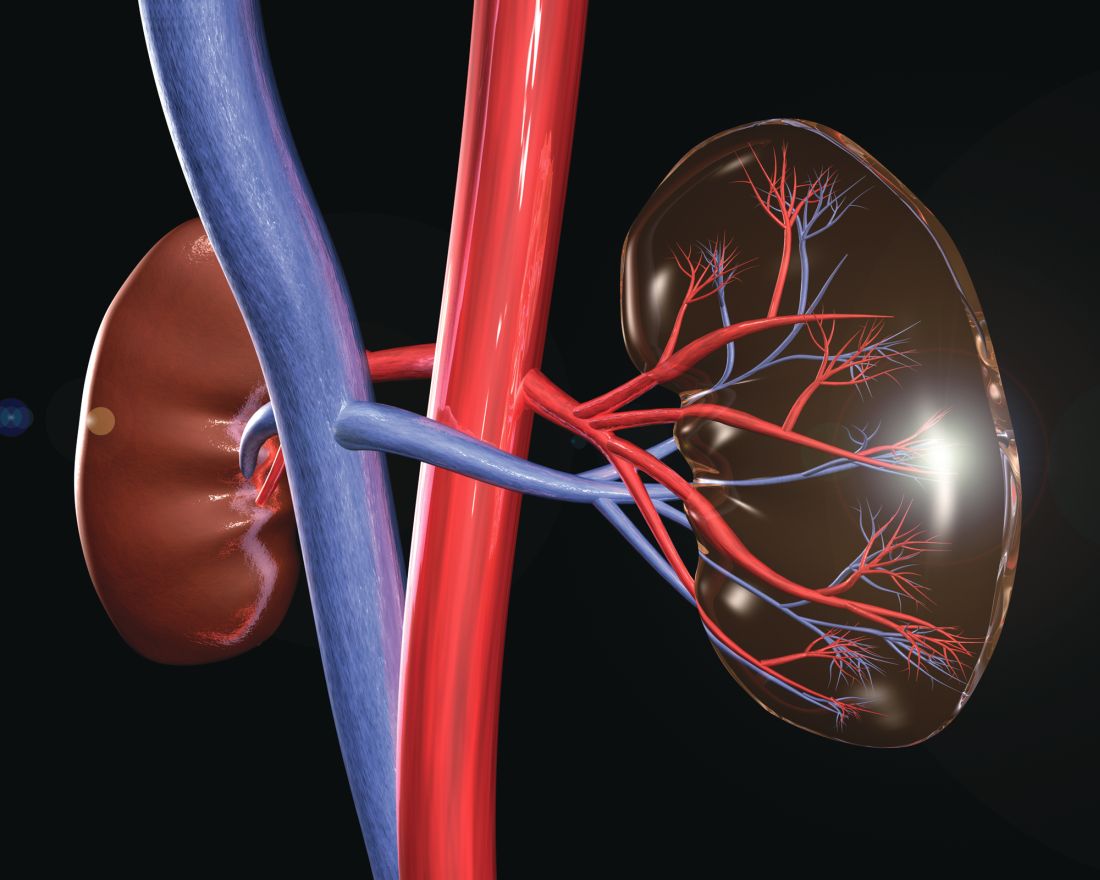
Outcomes to be studied in the multicenter trial will include potential transplant-related and HIV-related complications following surgery, as well as organ rejection, organ failure, and failure of previously effective HIV medications. The study is currently enrolling and is expected to include 360 participants, with an estimated completion date of Aug. 1, 2022.
“The HOPE Act of 2013 opened the door for researchers to explore a potential new source of donor organs for those living with HIV – a population with a significant and growing need for transplants. This study offers a chance to improve the health of those living with HIV, and increase the overall supply of transplantable organs,” said NIAID Director Anthony S. Fauci, MD, in the NIH news release. Transplantation of organs from HIV-positive donors to HIV-negative recipients remains illegal in the United States.
More information about the study can be found at ClinicalTrials.gov using the identifier NCT03500315. A similar trial to examine liver transplantation, the HOPE in Action Multicenter Liver Study, is expected to launch later in 2018.
The HOPE in Action Multicenter Kidney Study, the first large-scale clinical trial to study kidney transplantations between people with HIV, has begun at clinical centers across the United States, according to an announcement by the National Institutes of Health. The study, sponsored by the National Institute of Allergy and Infectious Diseases and NIH, will assess the safety of HIV-positive donor to HIV-positive recipient kidney transplantation. This form of transplantation was made legal by the passage of the HOPE (HIV Organ Policy Equity) Act, which permits the transplantation of organs from donors with HIV into qualified HIV-positive recipients with end-stage organ failure.
Outcomes to be studied in the multicenter trial will include potential transplant-related and HIV-related complications following surgery, as well as organ rejection, organ failure, and failure of previously effective HIV medications. The study is currently enrolling and is expected to include 360 participants, with an estimated completion date of Aug. 1, 2022.
“The HOPE Act of 2013 opened the door for researchers to explore a potential new source of donor organs for those living with HIV – a population with a significant and growing need for transplants. This study offers a chance to improve the health of those living with HIV, and increase the overall supply of transplantable organs,” said NIAID Director Anthony S. Fauci, MD, in the NIH news release. Transplantation of organs from HIV-positive donors to HIV-negative recipients remains illegal in the United States.
More information about the study can be found at ClinicalTrials.gov using the identifier NCT03500315. A similar trial to examine liver transplantation, the HOPE in Action Multicenter Liver Study, is expected to launch later in 2018.
The HOPE in Action Multicenter Kidney Study, the first large-scale clinical trial to study kidney transplantations between people with HIV, has begun at clinical centers across the United States, according to an announcement by the National Institutes of Health. The study, sponsored by the National Institute of Allergy and Infectious Diseases and NIH, will assess the safety of HIV-positive donor to HIV-positive recipient kidney transplantation. This form of transplantation was made legal by the passage of the HOPE (HIV Organ Policy Equity) Act, which permits the transplantation of organs from donors with HIV into qualified HIV-positive recipients with end-stage organ failure.
Outcomes to be studied in the multicenter trial will include potential transplant-related and HIV-related complications following surgery, as well as organ rejection, organ failure, and failure of previously effective HIV medications. The study is currently enrolling and is expected to include 360 participants, with an estimated completion date of Aug. 1, 2022.
“The HOPE Act of 2013 opened the door for researchers to explore a potential new source of donor organs for those living with HIV – a population with a significant and growing need for transplants. This study offers a chance to improve the health of those living with HIV, and increase the overall supply of transplantable organs,” said NIAID Director Anthony S. Fauci, MD, in the NIH news release. Transplantation of organs from HIV-positive donors to HIV-negative recipients remains illegal in the United States.
More information about the study can be found at ClinicalTrials.gov using the identifier NCT03500315. A similar trial to examine liver transplantation, the HOPE in Action Multicenter Liver Study, is expected to launch later in 2018.
In PAH trials, clinical worsening risk rose with time
Current clinical trials evaluating combination therapy for pulmonary artery hypertension (PAH) may be longer than what is needed to demonstrate treatment benefit, results of a recent meta-analysis suggest.
, according to results of the study published in the May issue of the journal Chest®.
The meta-analysis by Dr. Lajoie and her colleagues included 3,801 patients enrolled in one of 15 previously published randomized clinical trials. Of those trials, four were long-term, event driven studies, with a mean duration of 87 weeks, while the remainder were shorter studies with a mean duration of 15 weeks.
For the long-term, event-driven trials, the mean number needed to treat (NNT) was 17.4 at week 16, gradually decreasing to 8.8 at 52 weeks of follow-up, remaining stable after that, according to investigators.
Consistent with that finding, the mean relative risk of clinical worsening was 0.38 at 16 weeks, and similarly, 0.41 at 26 weeks, investigators reported. After that, the relative risk progressively increased to 0.54 at 52 weeks and 0.68 at 104 weeks.
Looking at all trials combined, Dr. Lajoie and her colleagues observed that longer trial duration had a positive correlation with relative risk of clinical worsening (P = .0002).
Pragmatically, these results raise the possibility that PAH combination therapy trials could be shorter in duration. Some recent event-driven studies have lasted up to 6 years, with patients on treatment for about 2 of those years, investigators noted.
“In the context of an orphan disease with limited and competing recruitment for trials and the rapidly changing treatment paradigm in PAH, the optimal duration of future trials should be revisited,” Dr. Lajoie and her colleagues wrote in a discussion of their findings.
They also cautioned that NNT, a measure of how many patient treatments are needed to prevent one additional adverse event, could be “misleading” despite its value as a simple measure of treatment impact.
Likewise, relative risk can be misleading; for example, a treatment reducing event risk from 30% to 20% represents a relative risk reduction of approximately 35%, but so does a treatment reducing event risk from 3% to 2%, the researchers noted.
“Multiple factors, in addition to the efficacy of the therapy and the comparator, may directly influence the NNT and relative risk and should be taken into account in their interpretation,” they said in their report.
Dr. Lajoie had no disclosures related to the study. Her coauthors had disclosures related to Actelion Pharmaceuticals, Bayer, and GlaxoSmithKline, among others.
SOURCE: Lajoie AC et al. Chest. 2017 May;153(5):1142-52.
Key clinical point: A meta-analysis calls into question the need to perform pulmonary arterial hypertension (PAH) trials beyond 6 to 12 months of treatment in the future.
Major finding: The mean number needed to treat was stable at 52 weeks of follow-up and thereafter, while the mean relative risk of clinical worsening progressively increased from approximately 0.38 at week 16 to 0.68 at week 104.
Study details: A systematic review of 3,801 patients enrolled in 15 randomized clinical trials.
Disclosures: The authors reported disclosures related to Actelion Pharmaceuticals, Bayer, and GlaxoSmithKline, among other entities.
Source: Lajoie AC et al. Chest. 2017 May;153(5):1142-52.
Key clinical point: A meta-analysis calls into question the need to perform pulmonary arterial hypertension (PAH) trials beyond 6 to 12 months of treatment in the future.
Major finding: The mean number needed to treat was stable at 52 weeks of follow-up and thereafter, while the mean relative risk of clinical worsening progressively increased from approximately 0.38 at week 16 to 0.68 at week 104.
Study details: A systematic review of 3,801 patients enrolled in 15 randomized clinical trials.
Disclosures: The authors reported disclosures related to Actelion Pharmaceuticals, Bayer, and GlaxoSmithKline, among other entities.
Source: Lajoie AC et al. Chest. 2017 May;153(5):1142-52.
Key clinical point: A meta-analysis calls into question the need to perform pulmonary arterial hypertension (PAH) trials beyond 6 to 12 months of treatment in the future.
Major finding: The mean number needed to treat was stable at 52 weeks of follow-up and thereafter, while the mean relative risk of clinical worsening progressively increased from approximately 0.38 at week 16 to 0.68 at week 104.
Study details: A systematic review of 3,801 patients enrolled in 15 randomized clinical trials.
Disclosures: The authors reported disclosures related to Actelion Pharmaceuticals, Bayer, and GlaxoSmithKline, among other entities.
Source: Lajoie AC et al. Chest. 2017 May;153(5):1142-52.
Current clinical trials evaluating combination therapy for pulmonary artery hypertension (PAH) may be longer than what is needed to demonstrate treatment benefit, results of a recent meta-analysis suggest.
, according to results of the study published in the May issue of the journal Chest®.
The meta-analysis by Dr. Lajoie and her colleagues included 3,801 patients enrolled in one of 15 previously published randomized clinical trials. Of those trials, four were long-term, event driven studies, with a mean duration of 87 weeks, while the remainder were shorter studies with a mean duration of 15 weeks.
For the long-term, event-driven trials, the mean number needed to treat (NNT) was 17.4 at week 16, gradually decreasing to 8.8 at 52 weeks of follow-up, remaining stable after that, according to investigators.
Consistent with that finding, the mean relative risk of clinical worsening was 0.38 at 16 weeks, and similarly, 0.41 at 26 weeks, investigators reported. After that, the relative risk progressively increased to 0.54 at 52 weeks and 0.68 at 104 weeks.
Looking at all trials combined, Dr. Lajoie and her colleagues observed that longer trial duration had a positive correlation with relative risk of clinical worsening (P = .0002).
Pragmatically, these results raise the possibility that PAH combination therapy trials could be shorter in duration. Some recent event-driven studies have lasted up to 6 years, with patients on treatment for about 2 of those years, investigators noted.
“In the context of an orphan disease with limited and competing recruitment for trials and the rapidly changing treatment paradigm in PAH, the optimal duration of future trials should be revisited,” Dr. Lajoie and her colleagues wrote in a discussion of their findings.
They also cautioned that NNT, a measure of how many patient treatments are needed to prevent one additional adverse event, could be “misleading” despite its value as a simple measure of treatment impact.
Likewise, relative risk can be misleading; for example, a treatment reducing event risk from 30% to 20% represents a relative risk reduction of approximately 35%, but so does a treatment reducing event risk from 3% to 2%, the researchers noted.
“Multiple factors, in addition to the efficacy of the therapy and the comparator, may directly influence the NNT and relative risk and should be taken into account in their interpretation,” they said in their report.
Dr. Lajoie had no disclosures related to the study. Her coauthors had disclosures related to Actelion Pharmaceuticals, Bayer, and GlaxoSmithKline, among others.
SOURCE: Lajoie AC et al. Chest. 2017 May;153(5):1142-52.
Current clinical trials evaluating combination therapy for pulmonary artery hypertension (PAH) may be longer than what is needed to demonstrate treatment benefit, results of a recent meta-analysis suggest.
, according to results of the study published in the May issue of the journal Chest®.
The meta-analysis by Dr. Lajoie and her colleagues included 3,801 patients enrolled in one of 15 previously published randomized clinical trials. Of those trials, four were long-term, event driven studies, with a mean duration of 87 weeks, while the remainder were shorter studies with a mean duration of 15 weeks.
For the long-term, event-driven trials, the mean number needed to treat (NNT) was 17.4 at week 16, gradually decreasing to 8.8 at 52 weeks of follow-up, remaining stable after that, according to investigators.
Consistent with that finding, the mean relative risk of clinical worsening was 0.38 at 16 weeks, and similarly, 0.41 at 26 weeks, investigators reported. After that, the relative risk progressively increased to 0.54 at 52 weeks and 0.68 at 104 weeks.
Looking at all trials combined, Dr. Lajoie and her colleagues observed that longer trial duration had a positive correlation with relative risk of clinical worsening (P = .0002).
Pragmatically, these results raise the possibility that PAH combination therapy trials could be shorter in duration. Some recent event-driven studies have lasted up to 6 years, with patients on treatment for about 2 of those years, investigators noted.
“In the context of an orphan disease with limited and competing recruitment for trials and the rapidly changing treatment paradigm in PAH, the optimal duration of future trials should be revisited,” Dr. Lajoie and her colleagues wrote in a discussion of their findings.
They also cautioned that NNT, a measure of how many patient treatments are needed to prevent one additional adverse event, could be “misleading” despite its value as a simple measure of treatment impact.
Likewise, relative risk can be misleading; for example, a treatment reducing event risk from 30% to 20% represents a relative risk reduction of approximately 35%, but so does a treatment reducing event risk from 3% to 2%, the researchers noted.
“Multiple factors, in addition to the efficacy of the therapy and the comparator, may directly influence the NNT and relative risk and should be taken into account in their interpretation,” they said in their report.
Dr. Lajoie had no disclosures related to the study. Her coauthors had disclosures related to Actelion Pharmaceuticals, Bayer, and GlaxoSmithKline, among others.
SOURCE: Lajoie AC et al. Chest. 2017 May;153(5):1142-52.
FROM CHEST®

When and how to suspect asthma misdiagnosis
NEW ORLEANS – Kyle I. Happel, MD, said at the annual meeting of the American College of Physicians.
“Asthma is a disease whose symptoms are caused by variable airflow obstruction. It varies throughout the day, usually, and certainly by the week or by the month. I want you to think about the variability of a patient’s disease symptoms in forming your index of suspicion for this disease,” urged Dr. Happel, of the section of pulmonary, critical care, and allergy/immunology at Louisiana State University Medical Center in New Orleans.

These phenomena occur often. In a Canadian multicenter study of more than 700 patients with a history of physician-diagnosed asthma within the past 5 years, current asthma was ruled out in fully 33% of them on the basis of no deterioration of asthma symptoms, no evidence of reversible airway obstruction, and no bronchial hyperresponsiveness after all asthma drugs were tapered off (JAMA. 2017 Jan 17;317[3]:269-79).
Wheezing is the most specific symptom of asthma, although it is not, in fact, terribly specific. In descending order, the next most specific symptoms are breathlessness, chest tightness, and cough.
The top seven diseases that mimic asthma symptoms are chronic obstructive pulmonary disease, rhinosinusitis, heart failure with preserved or reduced ejection fraction, gastroesophageal reflux disease, angina, anxiety, and vocal cord dysfunction syndrome.
Strike two for an asthma diagnosis is a patient’s report that albuterol doesn’t improve the symptoms. That definitely raises questions about the diagnosis.
“Most asthmatics get symptomatic relief from their disease,” Dr. Happel observed.
And, if there is no indication in the patient’s chart that the asthma diagnosis was based upon demonstration of airflow obstruction on spirometry, the diagnosis is thrown further into doubt. In the recent Canadian study, patients who didn’t undergo pulmonary function testing (PFT) to establish airflow limitation at their time of diagnosis were significantly less likely to have current asthma.
“I would strongly suggest everyone with the diagnosis of asthma get spirometry with bronchodilator testing,” Dr. Happel said. “Good-quality PFTs are critical in forming a solid diagnosis of asthma.”
In a patient who has symptoms consistent with asthma, a 200-cc and 12% or more improvement in forced expiratory volume in 1 second (FEV1) in response to bronchodilator challenge is supportive of the diagnosis. However, absence of reversible airway obstruction doesn’t exclude the possibility of asthma.
In the setting of low to-moderate clinical suspicion of asthma plus no demonstrable obstruction on spirometry, Dr. Happel recommends moving on to bronchial hyperreactivity testing via a methacholine challenge.
“The beauty of a methacholine challenge is that is has a high negative predictive value to help exclude the diagnosis of asthma, particularly in people who are having symptoms suggestive of asthma,” Dr. Happel explained. “If it takes more than 8 mg/mL of methacholine to elicit a 20% or greater decrease in FEV1, it’s probably something else. It’s not a particularly specific test, though; you can get false positives from a methacholine challenge.”
NEW ORLEANS – Kyle I. Happel, MD, said at the annual meeting of the American College of Physicians.
“Asthma is a disease whose symptoms are caused by variable airflow obstruction. It varies throughout the day, usually, and certainly by the week or by the month. I want you to think about the variability of a patient’s disease symptoms in forming your index of suspicion for this disease,” urged Dr. Happel, of the section of pulmonary, critical care, and allergy/immunology at Louisiana State University Medical Center in New Orleans.
These phenomena occur often. In a Canadian multicenter study of more than 700 patients with a history of physician-diagnosed asthma within the past 5 years, current asthma was ruled out in fully 33% of them on the basis of no deterioration of asthma symptoms, no evidence of reversible airway obstruction, and no bronchial hyperresponsiveness after all asthma drugs were tapered off (JAMA. 2017 Jan 17;317[3]:269-79).
Wheezing is the most specific symptom of asthma, although it is not, in fact, terribly specific. In descending order, the next most specific symptoms are breathlessness, chest tightness, and cough.
The top seven diseases that mimic asthma symptoms are chronic obstructive pulmonary disease, rhinosinusitis, heart failure with preserved or reduced ejection fraction, gastroesophageal reflux disease, angina, anxiety, and vocal cord dysfunction syndrome.
Strike two for an asthma diagnosis is a patient’s report that albuterol doesn’t improve the symptoms. That definitely raises questions about the diagnosis.
“Most asthmatics get symptomatic relief from their disease,” Dr. Happel observed.
And, if there is no indication in the patient’s chart that the asthma diagnosis was based upon demonstration of airflow obstruction on spirometry, the diagnosis is thrown further into doubt. In the recent Canadian study, patients who didn’t undergo pulmonary function testing (PFT) to establish airflow limitation at their time of diagnosis were significantly less likely to have current asthma.
“I would strongly suggest everyone with the diagnosis of asthma get spirometry with bronchodilator testing,” Dr. Happel said. “Good-quality PFTs are critical in forming a solid diagnosis of asthma.”
In a patient who has symptoms consistent with asthma, a 200-cc and 12% or more improvement in forced expiratory volume in 1 second (FEV1) in response to bronchodilator challenge is supportive of the diagnosis. However, absence of reversible airway obstruction doesn’t exclude the possibility of asthma.
In the setting of low to-moderate clinical suspicion of asthma plus no demonstrable obstruction on spirometry, Dr. Happel recommends moving on to bronchial hyperreactivity testing via a methacholine challenge.
“The beauty of a methacholine challenge is that is has a high negative predictive value to help exclude the diagnosis of asthma, particularly in people who are having symptoms suggestive of asthma,” Dr. Happel explained. “If it takes more than 8 mg/mL of methacholine to elicit a 20% or greater decrease in FEV1, it’s probably something else. It’s not a particularly specific test, though; you can get false positives from a methacholine challenge.”
NEW ORLEANS – Kyle I. Happel, MD, said at the annual meeting of the American College of Physicians.
“Asthma is a disease whose symptoms are caused by variable airflow obstruction. It varies throughout the day, usually, and certainly by the week or by the month. I want you to think about the variability of a patient’s disease symptoms in forming your index of suspicion for this disease,” urged Dr. Happel, of the section of pulmonary, critical care, and allergy/immunology at Louisiana State University Medical Center in New Orleans.
These phenomena occur often. In a Canadian multicenter study of more than 700 patients with a history of physician-diagnosed asthma within the past 5 years, current asthma was ruled out in fully 33% of them on the basis of no deterioration of asthma symptoms, no evidence of reversible airway obstruction, and no bronchial hyperresponsiveness after all asthma drugs were tapered off (JAMA. 2017 Jan 17;317[3]:269-79).
Wheezing is the most specific symptom of asthma, although it is not, in fact, terribly specific. In descending order, the next most specific symptoms are breathlessness, chest tightness, and cough.
The top seven diseases that mimic asthma symptoms are chronic obstructive pulmonary disease, rhinosinusitis, heart failure with preserved or reduced ejection fraction, gastroesophageal reflux disease, angina, anxiety, and vocal cord dysfunction syndrome.
Strike two for an asthma diagnosis is a patient’s report that albuterol doesn’t improve the symptoms. That definitely raises questions about the diagnosis.
“Most asthmatics get symptomatic relief from their disease,” Dr. Happel observed.
And, if there is no indication in the patient’s chart that the asthma diagnosis was based upon demonstration of airflow obstruction on spirometry, the diagnosis is thrown further into doubt. In the recent Canadian study, patients who didn’t undergo pulmonary function testing (PFT) to establish airflow limitation at their time of diagnosis were significantly less likely to have current asthma.
“I would strongly suggest everyone with the diagnosis of asthma get spirometry with bronchodilator testing,” Dr. Happel said. “Good-quality PFTs are critical in forming a solid diagnosis of asthma.”
In a patient who has symptoms consistent with asthma, a 200-cc and 12% or more improvement in forced expiratory volume in 1 second (FEV1) in response to bronchodilator challenge is supportive of the diagnosis. However, absence of reversible airway obstruction doesn’t exclude the possibility of asthma.
In the setting of low to-moderate clinical suspicion of asthma plus no demonstrable obstruction on spirometry, Dr. Happel recommends moving on to bronchial hyperreactivity testing via a methacholine challenge.
“The beauty of a methacholine challenge is that is has a high negative predictive value to help exclude the diagnosis of asthma, particularly in people who are having symptoms suggestive of asthma,” Dr. Happel explained. “If it takes more than 8 mg/mL of methacholine to elicit a 20% or greater decrease in FEV1, it’s probably something else. It’s not a particularly specific test, though; you can get false positives from a methacholine challenge.”
REPORTING FROM ACP INTERNAL MEDICINE

Physician learning must evolve as industry transforms
Editor’s Note: This column was provided by the Doctors Company, the exclusively endorsed medical malpractice carrier for the Society of Hospital Medicine. Neither SHM nor Frontline Medical Communications was involved in its production.
In medical school, students are trained on skills that will make them better future physicians, team members, and care givers. It’s a curious thing: Once we make headway into our medical careers and our days are filled with patient visits and paperwork, we rarely have the opportunity to assess our skill sets in the same way, despite the fact that new technologies and approaches to treatment have emerged since many of us attended medical school.
That’s why I was so excited when I had the chance to participate in three standardized patient encounters training scenarios designed for me and my 22 hospitalist colleagues to improve our communication skills; this training was funded by a grant from the Doctors Company Foundation. A standardized patient encounter is essentially a live simulation in a clinical setting with trained actors.
To start the simulation, a physician is given a short prompt about the patient scenario. They may also be provided with some basic information, such as a diagnosis or a relevant imaging study, prior to entering the room. Once the testing center provides a signal, physicians are allowed to enter the room. An introduction of our role on the medical team is provided, and a discussion ensues. The actors provide relevant history, incorporate true emotional response to questioning, and display any behavioral or physical prompts that a real patient would. This allows physicians to react in real time to the needs of the patient. The use of standardized patients can also be adapted to desired testing scenarios, which might deal with issues like communication, clinical reasoning, or establishing a differential diagnosis.
Like many hospitals, we have a program in place aimed at assessing how we educate students and younger physicians. But Mount Sinai is the first hospital in New York that has established a program designed specifically to assess and address some of the unique communication challenges we face as hospitalists to improve patient care.
As hospitalists, we’ve never met patients or families before beginning conversations at critical points of care. It takes sensitivity and particular thoughtfulness to create rapport and share substantial information with a patient even without having a prior relationship.
During the training, my colleagues and I each encountered three different standardized patients in key scenarios: one at daily rounds, one upset over a missed diagnosis, and one at discharge, when the potential for errors and miscommunication is greatest. We were videotaped during the encounters for our personal review, and we received direct feedback afterward from the patient.
We discovered that we as physicians have become great at taking care of patients, but we also discovered that we don’t have enough opportunities to investigate which elements of our day-to-day communication need adjustment – or what good behaviors need reinforcing.
It was extremely helpful to be able to watch the videos and ask ourselves, “Do I use medical jargon that’s hard for the patient to understand? Do I say things that aren’t warm and welcoming to the patient?” Then, by adding in patient feedback, we learned how we performed across core domains, such as treating patients with courtesy and respect, using listening skills, and explaining complex topics in an understandable way.
Strengthening these individual communication skills is paramount to improving patient comprehension, which in turn can improve patient follow-though on discharge instructions and reduce risk of readmission. And as educators, our takeaways from the training can empower others in the health care system at large to better communicate with their patients.
Mount Sinai is proud to spearhead this innovative training effort in New York. In fact, since the initial date of the training, the three modules have expanded into a program run by the Morchand Center for Clinical Competence at the Icahn School of Medicine at Mount Sinai. So far, the Morchand Center has adapted the standardized patient methodology used for hospitalists to train 1,845 additional residents in various specialties across New York.
Nationwide, the entire medical community stands to benefit from continuous physician learning and the partnerships that facilitate it, such as the Doctors Company, which make trainings like this possible. At a time of tremendous change for health care, having a well-trained physician workforce is more important than ever before. Our patients deserve to be cared for by physicians whose knowledge evolves alongside the transformation of care delivery.
Physician learning must keep pace with our industry’s transformation. By setting the bar higher for what patients should expect on a patient communication level, we increase patient safety, raise levels of patient satisfaction, and drive quality care – no matter what the future of health care delivery looks like.
Dr. Barna is an associate residency program director for inpatient medicine in the Division of Hospital Medicine/Samuel Bronfman Department of Medicine in the Icahn School of Medicine at Mount Sinai, New York.
Editor’s Note: This column was provided by the Doctors Company, the exclusively endorsed medical malpractice carrier for the Society of Hospital Medicine. Neither SHM nor Frontline Medical Communications was involved in its production.
In medical school, students are trained on skills that will make them better future physicians, team members, and care givers. It’s a curious thing: Once we make headway into our medical careers and our days are filled with patient visits and paperwork, we rarely have the opportunity to assess our skill sets in the same way, despite the fact that new technologies and approaches to treatment have emerged since many of us attended medical school.
That’s why I was so excited when I had the chance to participate in three standardized patient encounters training scenarios designed for me and my 22 hospitalist colleagues to improve our communication skills; this training was funded by a grant from the Doctors Company Foundation. A standardized patient encounter is essentially a live simulation in a clinical setting with trained actors.
To start the simulation, a physician is given a short prompt about the patient scenario. They may also be provided with some basic information, such as a diagnosis or a relevant imaging study, prior to entering the room. Once the testing center provides a signal, physicians are allowed to enter the room. An introduction of our role on the medical team is provided, and a discussion ensues. The actors provide relevant history, incorporate true emotional response to questioning, and display any behavioral or physical prompts that a real patient would. This allows physicians to react in real time to the needs of the patient. The use of standardized patients can also be adapted to desired testing scenarios, which might deal with issues like communication, clinical reasoning, or establishing a differential diagnosis.
Like many hospitals, we have a program in place aimed at assessing how we educate students and younger physicians. But Mount Sinai is the first hospital in New York that has established a program designed specifically to assess and address some of the unique communication challenges we face as hospitalists to improve patient care.
As hospitalists, we’ve never met patients or families before beginning conversations at critical points of care. It takes sensitivity and particular thoughtfulness to create rapport and share substantial information with a patient even without having a prior relationship.
During the training, my colleagues and I each encountered three different standardized patients in key scenarios: one at daily rounds, one upset over a missed diagnosis, and one at discharge, when the potential for errors and miscommunication is greatest. We were videotaped during the encounters for our personal review, and we received direct feedback afterward from the patient.
We discovered that we as physicians have become great at taking care of patients, but we also discovered that we don’t have enough opportunities to investigate which elements of our day-to-day communication need adjustment – or what good behaviors need reinforcing.
It was extremely helpful to be able to watch the videos and ask ourselves, “Do I use medical jargon that’s hard for the patient to understand? Do I say things that aren’t warm and welcoming to the patient?” Then, by adding in patient feedback, we learned how we performed across core domains, such as treating patients with courtesy and respect, using listening skills, and explaining complex topics in an understandable way.
Strengthening these individual communication skills is paramount to improving patient comprehension, which in turn can improve patient follow-though on discharge instructions and reduce risk of readmission. And as educators, our takeaways from the training can empower others in the health care system at large to better communicate with their patients.
Mount Sinai is proud to spearhead this innovative training effort in New York. In fact, since the initial date of the training, the three modules have expanded into a program run by the Morchand Center for Clinical Competence at the Icahn School of Medicine at Mount Sinai. So far, the Morchand Center has adapted the standardized patient methodology used for hospitalists to train 1,845 additional residents in various specialties across New York.
Nationwide, the entire medical community stands to benefit from continuous physician learning and the partnerships that facilitate it, such as the Doctors Company, which make trainings like this possible. At a time of tremendous change for health care, having a well-trained physician workforce is more important than ever before. Our patients deserve to be cared for by physicians whose knowledge evolves alongside the transformation of care delivery.
Physician learning must keep pace with our industry’s transformation. By setting the bar higher for what patients should expect on a patient communication level, we increase patient safety, raise levels of patient satisfaction, and drive quality care – no matter what the future of health care delivery looks like.
Dr. Barna is an associate residency program director for inpatient medicine in the Division of Hospital Medicine/Samuel Bronfman Department of Medicine in the Icahn School of Medicine at Mount Sinai, New York.
Editor’s Note: This column was provided by the Doctors Company, the exclusively endorsed medical malpractice carrier for the Society of Hospital Medicine. Neither SHM nor Frontline Medical Communications was involved in its production.
In medical school, students are trained on skills that will make them better future physicians, team members, and care givers. It’s a curious thing: Once we make headway into our medical careers and our days are filled with patient visits and paperwork, we rarely have the opportunity to assess our skill sets in the same way, despite the fact that new technologies and approaches to treatment have emerged since many of us attended medical school.
That’s why I was so excited when I had the chance to participate in three standardized patient encounters training scenarios designed for me and my 22 hospitalist colleagues to improve our communication skills; this training was funded by a grant from the Doctors Company Foundation. A standardized patient encounter is essentially a live simulation in a clinical setting with trained actors.
To start the simulation, a physician is given a short prompt about the patient scenario. They may also be provided with some basic information, such as a diagnosis or a relevant imaging study, prior to entering the room. Once the testing center provides a signal, physicians are allowed to enter the room. An introduction of our role on the medical team is provided, and a discussion ensues. The actors provide relevant history, incorporate true emotional response to questioning, and display any behavioral or physical prompts that a real patient would. This allows physicians to react in real time to the needs of the patient. The use of standardized patients can also be adapted to desired testing scenarios, which might deal with issues like communication, clinical reasoning, or establishing a differential diagnosis.
Like many hospitals, we have a program in place aimed at assessing how we educate students and younger physicians. But Mount Sinai is the first hospital in New York that has established a program designed specifically to assess and address some of the unique communication challenges we face as hospitalists to improve patient care.
As hospitalists, we’ve never met patients or families before beginning conversations at critical points of care. It takes sensitivity and particular thoughtfulness to create rapport and share substantial information with a patient even without having a prior relationship.
During the training, my colleagues and I each encountered three different standardized patients in key scenarios: one at daily rounds, one upset over a missed diagnosis, and one at discharge, when the potential for errors and miscommunication is greatest. We were videotaped during the encounters for our personal review, and we received direct feedback afterward from the patient.
We discovered that we as physicians have become great at taking care of patients, but we also discovered that we don’t have enough opportunities to investigate which elements of our day-to-day communication need adjustment – or what good behaviors need reinforcing.
It was extremely helpful to be able to watch the videos and ask ourselves, “Do I use medical jargon that’s hard for the patient to understand? Do I say things that aren’t warm and welcoming to the patient?” Then, by adding in patient feedback, we learned how we performed across core domains, such as treating patients with courtesy and respect, using listening skills, and explaining complex topics in an understandable way.
Strengthening these individual communication skills is paramount to improving patient comprehension, which in turn can improve patient follow-though on discharge instructions and reduce risk of readmission. And as educators, our takeaways from the training can empower others in the health care system at large to better communicate with their patients.
Mount Sinai is proud to spearhead this innovative training effort in New York. In fact, since the initial date of the training, the three modules have expanded into a program run by the Morchand Center for Clinical Competence at the Icahn School of Medicine at Mount Sinai. So far, the Morchand Center has adapted the standardized patient methodology used for hospitalists to train 1,845 additional residents in various specialties across New York.
Nationwide, the entire medical community stands to benefit from continuous physician learning and the partnerships that facilitate it, such as the Doctors Company, which make trainings like this possible. At a time of tremendous change for health care, having a well-trained physician workforce is more important than ever before. Our patients deserve to be cared for by physicians whose knowledge evolves alongside the transformation of care delivery.
Physician learning must keep pace with our industry’s transformation. By setting the bar higher for what patients should expect on a patient communication level, we increase patient safety, raise levels of patient satisfaction, and drive quality care – no matter what the future of health care delivery looks like.
Dr. Barna is an associate residency program director for inpatient medicine in the Division of Hospital Medicine/Samuel Bronfman Department of Medicine in the Icahn School of Medicine at Mount Sinai, New York.
Climate change expected to impose major burden on mental health
NEW YORK – Of the broad range of direct and indirect threats to public health anticipated from climate change, those involving mental health will place psychiatrists on the front lines of efforts to mitigate the impact, a member of the Climate Psychiatry Alliance said at the annual meeting of the American Psychiatric Association.
“One thing climate changes mean for us in psychiatry is more work,” reported Janet L. Lewis, MD, an assistant clinical professor of psychiatry at the University of Rochester (N.Y.).
Mental health is sensitive to climate. “Psychiatric patients can be particularly vulnerable to the medical effects of climate change,” Dr. Lewis said. “People with schizophrenia exhibit impaired thermoregulatory functioning, and many of our medications can impair the body’s normal heat regulation.”
The evidence of increased death rates among schizophrenia patients during heat waves has been attributed to this phenomenon as well as to the failure of patients with mental disorders to seek or obtain relief from heat, according to Dr. Lewis, but she noted that These links are true for the individual, and they affect trends in communities.
As a cause of societal stresses, such as food and water insecurity, climate change also has the very real potential of producing traumatic disruptions commensurate with disasters such as hurricanes or earthquakes. Noting that the rate of PTSD after such natural disasters typically runs at around 30%, Dr. Lewis suggested that psychiatrists might face large challenges from major upheavals induced by climate change.
However, even in the absence of catastrophic consequences, significant psychiatric morbidity may be generated by climate change in the form of “ecoanxieties” or “solastalgia,” a term coined about 10 years ago to describe psychic anxiety induced by environmental change. While many individuals continue to function normally despite fear or anxiety about climate change, Dr. Lewis said that there are many reports in the literature now show that psychoterratic illness, another term for this phenomenon, is associated with degraded or threatened environments linked to climate change.
The Climate Psychiatry Alliance is one of several professional psychiatry groups that is engaged in evaluating how psychiatry as a profession should react to climate change. The Climate Psychiatry committee of the Group for the Advancement of Psychiatry is another. Dr. Lewis, addressing the potential criticism that climate is a political issue, said that “we bring some very particular things to this 21st-century disaster … hopefully, everything I have said about the mental effects of climate change convinces you that it is not just a political problem.”
It is, however, a problem that is complex. Differentiating complex problems from complicated problems – which can be solved eventually with sufficient information – Dr. Lewis explained that complex problems are dynamic with an interplay between components that make solutions uncertain without experimentation and continual reassessment. She believes both mitigation of the problem and adaption to the inevitability of rising temperatures will be necessary.
This is relevant for psychiatrists who also must adapt to the environmental changes and develop resilience that will help them deal objectively with the mental health consequences of climate change. She noted that environmentalists recognize two traps in approaching solutions to climate change. The first is proposing overly simplistic solutions that fail to address the profound implications of climate change. The second is being rendered inactive by the overwhelming complexity of this growing problem.
Ultimately, Dr. Lewis called for psychiatrists to be proactive in dealing the mental health consequences of climate change. She noted that the APA issued a position statement in 2017, which emphasized that individuals with mental health disorders are disproportionately affected by climate change.
“We as psychiatrists know what it is to deal with complex systems, and we understand through our own work with traumatized patients how to manage patients with trauma responses and how to get empowered and engaged in the rebuilding of realistic lives,” Dr. Lewis said. She believes those skills will be important as the impact of climate change on mental health unfolds.
NEW YORK – Of the broad range of direct and indirect threats to public health anticipated from climate change, those involving mental health will place psychiatrists on the front lines of efforts to mitigate the impact, a member of the Climate Psychiatry Alliance said at the annual meeting of the American Psychiatric Association.
“One thing climate changes mean for us in psychiatry is more work,” reported Janet L. Lewis, MD, an assistant clinical professor of psychiatry at the University of Rochester (N.Y.).
Mental health is sensitive to climate. “Psychiatric patients can be particularly vulnerable to the medical effects of climate change,” Dr. Lewis said. “People with schizophrenia exhibit impaired thermoregulatory functioning, and many of our medications can impair the body’s normal heat regulation.”
The evidence of increased death rates among schizophrenia patients during heat waves has been attributed to this phenomenon as well as to the failure of patients with mental disorders to seek or obtain relief from heat, according to Dr. Lewis, but she noted that These links are true for the individual, and they affect trends in communities.
As a cause of societal stresses, such as food and water insecurity, climate change also has the very real potential of producing traumatic disruptions commensurate with disasters such as hurricanes or earthquakes. Noting that the rate of PTSD after such natural disasters typically runs at around 30%, Dr. Lewis suggested that psychiatrists might face large challenges from major upheavals induced by climate change.
However, even in the absence of catastrophic consequences, significant psychiatric morbidity may be generated by climate change in the form of “ecoanxieties” or “solastalgia,” a term coined about 10 years ago to describe psychic anxiety induced by environmental change. While many individuals continue to function normally despite fear or anxiety about climate change, Dr. Lewis said that there are many reports in the literature now show that psychoterratic illness, another term for this phenomenon, is associated with degraded or threatened environments linked to climate change.
The Climate Psychiatry Alliance is one of several professional psychiatry groups that is engaged in evaluating how psychiatry as a profession should react to climate change. The Climate Psychiatry committee of the Group for the Advancement of Psychiatry is another. Dr. Lewis, addressing the potential criticism that climate is a political issue, said that “we bring some very particular things to this 21st-century disaster … hopefully, everything I have said about the mental effects of climate change convinces you that it is not just a political problem.”
It is, however, a problem that is complex. Differentiating complex problems from complicated problems – which can be solved eventually with sufficient information – Dr. Lewis explained that complex problems are dynamic with an interplay between components that make solutions uncertain without experimentation and continual reassessment. She believes both mitigation of the problem and adaption to the inevitability of rising temperatures will be necessary.
This is relevant for psychiatrists who also must adapt to the environmental changes and develop resilience that will help them deal objectively with the mental health consequences of climate change. She noted that environmentalists recognize two traps in approaching solutions to climate change. The first is proposing overly simplistic solutions that fail to address the profound implications of climate change. The second is being rendered inactive by the overwhelming complexity of this growing problem.
Ultimately, Dr. Lewis called for psychiatrists to be proactive in dealing the mental health consequences of climate change. She noted that the APA issued a position statement in 2017, which emphasized that individuals with mental health disorders are disproportionately affected by climate change.
“We as psychiatrists know what it is to deal with complex systems, and we understand through our own work with traumatized patients how to manage patients with trauma responses and how to get empowered and engaged in the rebuilding of realistic lives,” Dr. Lewis said. She believes those skills will be important as the impact of climate change on mental health unfolds.
NEW YORK – Of the broad range of direct and indirect threats to public health anticipated from climate change, those involving mental health will place psychiatrists on the front lines of efforts to mitigate the impact, a member of the Climate Psychiatry Alliance said at the annual meeting of the American Psychiatric Association.
“One thing climate changes mean for us in psychiatry is more work,” reported Janet L. Lewis, MD, an assistant clinical professor of psychiatry at the University of Rochester (N.Y.).
Mental health is sensitive to climate. “Psychiatric patients can be particularly vulnerable to the medical effects of climate change,” Dr. Lewis said. “People with schizophrenia exhibit impaired thermoregulatory functioning, and many of our medications can impair the body’s normal heat regulation.”
The evidence of increased death rates among schizophrenia patients during heat waves has been attributed to this phenomenon as well as to the failure of patients with mental disorders to seek or obtain relief from heat, according to Dr. Lewis, but she noted that These links are true for the individual, and they affect trends in communities.
As a cause of societal stresses, such as food and water insecurity, climate change also has the very real potential of producing traumatic disruptions commensurate with disasters such as hurricanes or earthquakes. Noting that the rate of PTSD after such natural disasters typically runs at around 30%, Dr. Lewis suggested that psychiatrists might face large challenges from major upheavals induced by climate change.
However, even in the absence of catastrophic consequences, significant psychiatric morbidity may be generated by climate change in the form of “ecoanxieties” or “solastalgia,” a term coined about 10 years ago to describe psychic anxiety induced by environmental change. While many individuals continue to function normally despite fear or anxiety about climate change, Dr. Lewis said that there are many reports in the literature now show that psychoterratic illness, another term for this phenomenon, is associated with degraded or threatened environments linked to climate change.
The Climate Psychiatry Alliance is one of several professional psychiatry groups that is engaged in evaluating how psychiatry as a profession should react to climate change. The Climate Psychiatry committee of the Group for the Advancement of Psychiatry is another. Dr. Lewis, addressing the potential criticism that climate is a political issue, said that “we bring some very particular things to this 21st-century disaster … hopefully, everything I have said about the mental effects of climate change convinces you that it is not just a political problem.”
It is, however, a problem that is complex. Differentiating complex problems from complicated problems – which can be solved eventually with sufficient information – Dr. Lewis explained that complex problems are dynamic with an interplay between components that make solutions uncertain without experimentation and continual reassessment. She believes both mitigation of the problem and adaption to the inevitability of rising temperatures will be necessary.
This is relevant for psychiatrists who also must adapt to the environmental changes and develop resilience that will help them deal objectively with the mental health consequences of climate change. She noted that environmentalists recognize two traps in approaching solutions to climate change. The first is proposing overly simplistic solutions that fail to address the profound implications of climate change. The second is being rendered inactive by the overwhelming complexity of this growing problem.
Ultimately, Dr. Lewis called for psychiatrists to be proactive in dealing the mental health consequences of climate change. She noted that the APA issued a position statement in 2017, which emphasized that individuals with mental health disorders are disproportionately affected by climate change.
“We as psychiatrists know what it is to deal with complex systems, and we understand through our own work with traumatized patients how to manage patients with trauma responses and how to get empowered and engaged in the rebuilding of realistic lives,” Dr. Lewis said. She believes those skills will be important as the impact of climate change on mental health unfolds.
VIDEO: Consider unique stressors when treating members of peacekeeping operations
NEW YORK – Sustained peacekeeping operations are associated with unique psychological stressors, and understanding of these stressors on the part of both community and military psychiatrists can help make a difference at each stage of a deployment cycle, according to Elspeth Cameron Ritchie, MD.
The video associated with this article is no longer available on this site. Please view all of our videos on the MDedge YouTube channel
During a workshop at the annual meeting of the American Psychiatric Association entitled “War and Peace: Understanding the Psychological Stressors Associated with Sustained Peacekeeping Operations (PKOs),” chaired by Dr. Ritchie of the Uniformed Services University of the Health Sciences, Bethesda, Md., various dimensions of salient psychological stress were discussed, as were approaches for minimizing any resultant impact on the psychological health of peacekeepers.
In this video interview, Dr. Ritchie discussed the differences and similarities between peacekeeping operations and military operations with respect to stressors and their effects, and the risk of posttraumatic stress disorder among peacekeepers.
Although treatment for PTSD is “pretty much the same,” it is important to “tailor the treatment for the situation,” she said.
“Lay out the different options, explain them to the patient, and partner with the patient in terms of what is the best option for them,” she said.
Dr. Ritchie reported having no relevant disclosures.
SOURCE: Ritchie EC et al. APA Workshop
NEW YORK – Sustained peacekeeping operations are associated with unique psychological stressors, and understanding of these stressors on the part of both community and military psychiatrists can help make a difference at each stage of a deployment cycle, according to Elspeth Cameron Ritchie, MD.
The video associated with this article is no longer available on this site. Please view all of our videos on the MDedge YouTube channel
During a workshop at the annual meeting of the American Psychiatric Association entitled “War and Peace: Understanding the Psychological Stressors Associated with Sustained Peacekeeping Operations (PKOs),” chaired by Dr. Ritchie of the Uniformed Services University of the Health Sciences, Bethesda, Md., various dimensions of salient psychological stress were discussed, as were approaches for minimizing any resultant impact on the psychological health of peacekeepers.
In this video interview, Dr. Ritchie discussed the differences and similarities between peacekeeping operations and military operations with respect to stressors and their effects, and the risk of posttraumatic stress disorder among peacekeepers.
Although treatment for PTSD is “pretty much the same,” it is important to “tailor the treatment for the situation,” she said.
“Lay out the different options, explain them to the patient, and partner with the patient in terms of what is the best option for them,” she said.
Dr. Ritchie reported having no relevant disclosures.
SOURCE: Ritchie EC et al. APA Workshop
NEW YORK – Sustained peacekeeping operations are associated with unique psychological stressors, and understanding of these stressors on the part of both community and military psychiatrists can help make a difference at each stage of a deployment cycle, according to Elspeth Cameron Ritchie, MD.
The video associated with this article is no longer available on this site. Please view all of our videos on the MDedge YouTube channel
During a workshop at the annual meeting of the American Psychiatric Association entitled “War and Peace: Understanding the Psychological Stressors Associated with Sustained Peacekeeping Operations (PKOs),” chaired by Dr. Ritchie of the Uniformed Services University of the Health Sciences, Bethesda, Md., various dimensions of salient psychological stress were discussed, as were approaches for minimizing any resultant impact on the psychological health of peacekeepers.
In this video interview, Dr. Ritchie discussed the differences and similarities between peacekeeping operations and military operations with respect to stressors and their effects, and the risk of posttraumatic stress disorder among peacekeepers.
Although treatment for PTSD is “pretty much the same,” it is important to “tailor the treatment for the situation,” she said.
“Lay out the different options, explain them to the patient, and partner with the patient in terms of what is the best option for them,” she said.
Dr. Ritchie reported having no relevant disclosures.
SOURCE: Ritchie EC et al. APA Workshop

Experts explore issues, controversies around medical marijuana use
I live and work in Maryland, where medical marijuana dispensaries are just beginning to open. So far, my patients have been content to smoke illegal marijuana, even after my admonishments. Last week, however, a patient who suffers from chronic pain told me that one of her doctors suggested she try medical marijuana. What did I think? The patient is in her 70s, and she has not tolerated opiates. She lives an active life, and she drives. I didn’t know what to think and was left to tell her that I had no experience and would not object if she wanted to try it. The timing was right for “Issues and Controversies Around Marijuana Use: What’s the Buzz?” at the American Psychiatric Association’s annual meeting in New York this week.

William Iacono, PhD, a professor of psychiatry at the University of Minnesota, Minneapolis, started with a session called “Does Adolescent Marijuana Use Cause Cognitive Decline?” Dr. Iacono and all the speakers who followed him pointed out how difficult it is to research these issues. The research is largely retrospective, and the questions are complex. The degree of use is determined by self-report, and there are questions about acute versus chronic use, whether cognitive decline is temporary or permanent, whether the age of initiating drug use is important, and finally, which tests are used to measure cognitive abilities. Dr. Iacono noted that results are inconsistent and mentioned a large population study done in Dunedin, New Zealand, which measured a decrease in verbal IQ and vocabulary measures at age 38 years if the user began smoking cannabis as an adolescent. Dr. Iacono’s twin studies showed that marijuana users scored lower on these measures in childhood, well before they began smoking, and poor academic performance predisposes to marijuana use.
“Adolescents who use cannabis are not the same as those who don’t,” Dr. Iacono said, “and heavy or daily use does not cause cognitive decline in those who begin smoking as adults.”
Dr. Pearlson introduced the second speaker by saying, “It’s easier to get funding to show the ill effects of cannabis than to show medicinal effects.” Sue Sisley, MD, director of Midtown Roots, a medical marijuana dispensary in Phoenix, conducts cannabis trials for the treatment of PTSD in veterans and noted that she has had a long and difficult road with marijuana research, and hers is the only controlled trial on cannabis for PTSD. When her Schedule I license was approved by the Food and Drug Administration, she was able to receive marijuana from the National Institute on Drug Abuse that was grown by the University of Mississippi in Oxford – the only federal growing facility. The marijuana was delivered by FedEx, and the drug was the consistency of talcum powder. It was a challenge to find a lab that could verify the components of the test drug, and when she did, she found the tetrahydrocannabinol content was considerably lower than marijuana sold on the black market. Also, the product contained both mold and lead. “As a physician, how do you hand out mold weed to our veterans?”
Her trials are still in progress, and more veterans are needed. Anecdotally, she says, a decrease has been seen in the use of both opiates and Viagra by the research subjects.
Michael Stevens, PhD, adjunct professor of psychiatry at Yale University, New Haven, Conn., discussed the risk of motor vehicle accidents in marijuana smokers and the logistical issues enforcement poses for law enforcement officials. “There is evidence that marijuana increases the risk for accidents.” Dr. Stevens went on to say that the elevated risk is notably less than that associated with the use of alcohol or stimulants. Studying the effects of marijuana on driving is difficult, as driving simulators do not necessarily reflect on-road experiences, and cognitive testing does not always translate into impairment. “We can’t give marijuana to teens and test them, and you can’t tell people who smoke every day that you’ll check in with them in a few years and check their driving records.”
In terms of law enforcement issues, roadside sobriety tests have not been validated for marijuana use, and plasma levels of the drug drop within minutes of use. “The alcohol model works well with alcohol, but cannabis is not alcohol.”
Deborah Hasin, PhD, professor of epidemiology (psychiatry) at Columbia University, New York, talked about trends of cannabis use in the United States. “Looking at states before and after legalization, we see that there is an increase in both cannabis use and cannabis disorders in adults.” Adolescents, however, are not smoking more, and “Kids are just not socializing; they are in their bedrooms with their smartphones. Depression is increasing in teens, but substance abuse is not.”
The last speaker was Deepak Cyril D’Souza, MD, a professor of psychiatry at Yale University, who talked about cannabis and psychosis. He defined three distinct relationships: acute transient psychosis that resolves fairly quickly, acute persistent psychosis that takes days or weeks to resolve, and psychotic reactions that are associated with recurrent psychotic symptoms. Studies suggest that those who have a psychotic reaction to marijuana are at elevated risk of being diagnosed with schizophrenia later, and that timing of exposure to marijuana may be important.

With regard to the important question of whether marijuana causes schizophrenia, Dr. D’Souza noted that “it’s neither a necessary nor sufficient component, but it does appear it hastens psychosis in schizophrenia and earlier symptoms are associated with a worse prognosis.”
I’ll see what happens with my patient. A Canadian physician in the audience noted that he has treated thousands of patients, and most find medical marijuana to be helpful. In our country, marijuana continues to be a controversial topic with strong opinions about its usefulness and a conversation that is limited by our lack of research.
Dr. Miller is coauthor of “Committed: The Battle Over Involuntary Psychiatric Care,” (Baltimore: Johns Hopkins University Press, 2016). She practices in Baltimore.
I live and work in Maryland, where medical marijuana dispensaries are just beginning to open. So far, my patients have been content to smoke illegal marijuana, even after my admonishments. Last week, however, a patient who suffers from chronic pain told me that one of her doctors suggested she try medical marijuana. What did I think? The patient is in her 70s, and she has not tolerated opiates. She lives an active life, and she drives. I didn’t know what to think and was left to tell her that I had no experience and would not object if she wanted to try it. The timing was right for “Issues and Controversies Around Marijuana Use: What’s the Buzz?” at the American Psychiatric Association’s annual meeting in New York this week.
William Iacono, PhD, a professor of psychiatry at the University of Minnesota, Minneapolis, started with a session called “Does Adolescent Marijuana Use Cause Cognitive Decline?” Dr. Iacono and all the speakers who followed him pointed out how difficult it is to research these issues. The research is largely retrospective, and the questions are complex. The degree of use is determined by self-report, and there are questions about acute versus chronic use, whether cognitive decline is temporary or permanent, whether the age of initiating drug use is important, and finally, which tests are used to measure cognitive abilities. Dr. Iacono noted that results are inconsistent and mentioned a large population study done in Dunedin, New Zealand, which measured a decrease in verbal IQ and vocabulary measures at age 38 years if the user began smoking cannabis as an adolescent. Dr. Iacono’s twin studies showed that marijuana users scored lower on these measures in childhood, well before they began smoking, and poor academic performance predisposes to marijuana use.
“Adolescents who use cannabis are not the same as those who don’t,” Dr. Iacono said, “and heavy or daily use does not cause cognitive decline in those who begin smoking as adults.”
Dr. Pearlson introduced the second speaker by saying, “It’s easier to get funding to show the ill effects of cannabis than to show medicinal effects.” Sue Sisley, MD, director of Midtown Roots, a medical marijuana dispensary in Phoenix, conducts cannabis trials for the treatment of PTSD in veterans and noted that she has had a long and difficult road with marijuana research, and hers is the only controlled trial on cannabis for PTSD. When her Schedule I license was approved by the Food and Drug Administration, she was able to receive marijuana from the National Institute on Drug Abuse that was grown by the University of Mississippi in Oxford – the only federal growing facility. The marijuana was delivered by FedEx, and the drug was the consistency of talcum powder. It was a challenge to find a lab that could verify the components of the test drug, and when she did, she found the tetrahydrocannabinol content was considerably lower than marijuana sold on the black market. Also, the product contained both mold and lead. “As a physician, how do you hand out mold weed to our veterans?”
Her trials are still in progress, and more veterans are needed. Anecdotally, she says, a decrease has been seen in the use of both opiates and Viagra by the research subjects.
Michael Stevens, PhD, adjunct professor of psychiatry at Yale University, New Haven, Conn., discussed the risk of motor vehicle accidents in marijuana smokers and the logistical issues enforcement poses for law enforcement officials. “There is evidence that marijuana increases the risk for accidents.” Dr. Stevens went on to say that the elevated risk is notably less than that associated with the use of alcohol or stimulants. Studying the effects of marijuana on driving is difficult, as driving simulators do not necessarily reflect on-road experiences, and cognitive testing does not always translate into impairment. “We can’t give marijuana to teens and test them, and you can’t tell people who smoke every day that you’ll check in with them in a few years and check their driving records.”
In terms of law enforcement issues, roadside sobriety tests have not been validated for marijuana use, and plasma levels of the drug drop within minutes of use. “The alcohol model works well with alcohol, but cannabis is not alcohol.”
Deborah Hasin, PhD, professor of epidemiology (psychiatry) at Columbia University, New York, talked about trends of cannabis use in the United States. “Looking at states before and after legalization, we see that there is an increase in both cannabis use and cannabis disorders in adults.” Adolescents, however, are not smoking more, and “Kids are just not socializing; they are in their bedrooms with their smartphones. Depression is increasing in teens, but substance abuse is not.”
The last speaker was Deepak Cyril D’Souza, MD, a professor of psychiatry at Yale University, who talked about cannabis and psychosis. He defined three distinct relationships: acute transient psychosis that resolves fairly quickly, acute persistent psychosis that takes days or weeks to resolve, and psychotic reactions that are associated with recurrent psychotic symptoms. Studies suggest that those who have a psychotic reaction to marijuana are at elevated risk of being diagnosed with schizophrenia later, and that timing of exposure to marijuana may be important.
With regard to the important question of whether marijuana causes schizophrenia, Dr. D’Souza noted that “it’s neither a necessary nor sufficient component, but it does appear it hastens psychosis in schizophrenia and earlier symptoms are associated with a worse prognosis.”
I’ll see what happens with my patient. A Canadian physician in the audience noted that he has treated thousands of patients, and most find medical marijuana to be helpful. In our country, marijuana continues to be a controversial topic with strong opinions about its usefulness and a conversation that is limited by our lack of research.
Dr. Miller is coauthor of “Committed: The Battle Over Involuntary Psychiatric Care,” (Baltimore: Johns Hopkins University Press, 2016). She practices in Baltimore.
I live and work in Maryland, where medical marijuana dispensaries are just beginning to open. So far, my patients have been content to smoke illegal marijuana, even after my admonishments. Last week, however, a patient who suffers from chronic pain told me that one of her doctors suggested she try medical marijuana. What did I think? The patient is in her 70s, and she has not tolerated opiates. She lives an active life, and she drives. I didn’t know what to think and was left to tell her that I had no experience and would not object if she wanted to try it. The timing was right for “Issues and Controversies Around Marijuana Use: What’s the Buzz?” at the American Psychiatric Association’s annual meeting in New York this week.
William Iacono, PhD, a professor of psychiatry at the University of Minnesota, Minneapolis, started with a session called “Does Adolescent Marijuana Use Cause Cognitive Decline?” Dr. Iacono and all the speakers who followed him pointed out how difficult it is to research these issues. The research is largely retrospective, and the questions are complex. The degree of use is determined by self-report, and there are questions about acute versus chronic use, whether cognitive decline is temporary or permanent, whether the age of initiating drug use is important, and finally, which tests are used to measure cognitive abilities. Dr. Iacono noted that results are inconsistent and mentioned a large population study done in Dunedin, New Zealand, which measured a decrease in verbal IQ and vocabulary measures at age 38 years if the user began smoking cannabis as an adolescent. Dr. Iacono’s twin studies showed that marijuana users scored lower on these measures in childhood, well before they began smoking, and poor academic performance predisposes to marijuana use.
“Adolescents who use cannabis are not the same as those who don’t,” Dr. Iacono said, “and heavy or daily use does not cause cognitive decline in those who begin smoking as adults.”
Dr. Pearlson introduced the second speaker by saying, “It’s easier to get funding to show the ill effects of cannabis than to show medicinal effects.” Sue Sisley, MD, director of Midtown Roots, a medical marijuana dispensary in Phoenix, conducts cannabis trials for the treatment of PTSD in veterans and noted that she has had a long and difficult road with marijuana research, and hers is the only controlled trial on cannabis for PTSD. When her Schedule I license was approved by the Food and Drug Administration, she was able to receive marijuana from the National Institute on Drug Abuse that was grown by the University of Mississippi in Oxford – the only federal growing facility. The marijuana was delivered by FedEx, and the drug was the consistency of talcum powder. It was a challenge to find a lab that could verify the components of the test drug, and when she did, she found the tetrahydrocannabinol content was considerably lower than marijuana sold on the black market. Also, the product contained both mold and lead. “As a physician, how do you hand out mold weed to our veterans?”
Her trials are still in progress, and more veterans are needed. Anecdotally, she says, a decrease has been seen in the use of both opiates and Viagra by the research subjects.
Michael Stevens, PhD, adjunct professor of psychiatry at Yale University, New Haven, Conn., discussed the risk of motor vehicle accidents in marijuana smokers and the logistical issues enforcement poses for law enforcement officials. “There is evidence that marijuana increases the risk for accidents.” Dr. Stevens went on to say that the elevated risk is notably less than that associated with the use of alcohol or stimulants. Studying the effects of marijuana on driving is difficult, as driving simulators do not necessarily reflect on-road experiences, and cognitive testing does not always translate into impairment. “We can’t give marijuana to teens and test them, and you can’t tell people who smoke every day that you’ll check in with them in a few years and check their driving records.”
In terms of law enforcement issues, roadside sobriety tests have not been validated for marijuana use, and plasma levels of the drug drop within minutes of use. “The alcohol model works well with alcohol, but cannabis is not alcohol.”
Deborah Hasin, PhD, professor of epidemiology (psychiatry) at Columbia University, New York, talked about trends of cannabis use in the United States. “Looking at states before and after legalization, we see that there is an increase in both cannabis use and cannabis disorders in adults.” Adolescents, however, are not smoking more, and “Kids are just not socializing; they are in their bedrooms with their smartphones. Depression is increasing in teens, but substance abuse is not.”
The last speaker was Deepak Cyril D’Souza, MD, a professor of psychiatry at Yale University, who talked about cannabis and psychosis. He defined three distinct relationships: acute transient psychosis that resolves fairly quickly, acute persistent psychosis that takes days or weeks to resolve, and psychotic reactions that are associated with recurrent psychotic symptoms. Studies suggest that those who have a psychotic reaction to marijuana are at elevated risk of being diagnosed with schizophrenia later, and that timing of exposure to marijuana may be important.
With regard to the important question of whether marijuana causes schizophrenia, Dr. D’Souza noted that “it’s neither a necessary nor sufficient component, but it does appear it hastens psychosis in schizophrenia and earlier symptoms are associated with a worse prognosis.”
I’ll see what happens with my patient. A Canadian physician in the audience noted that he has treated thousands of patients, and most find medical marijuana to be helpful. In our country, marijuana continues to be a controversial topic with strong opinions about its usefulness and a conversation that is limited by our lack of research.
Dr. Miller is coauthor of “Committed: The Battle Over Involuntary Psychiatric Care,” (Baltimore: Johns Hopkins University Press, 2016). She practices in Baltimore.