User login
Many ED visits may be preventable for NSCLC patients
The leading cause of ED visits in the study was the cancer itself, although many visits were unrelated to non–small cell lung cancer (NSCLC) or cancer therapy.
Less than 10% of ED visits were related to cancer therapy, but visits were much more common among patients receiving chemotherapy than among those receiving immunotherapy or tyrosine kinase inhibitors (TKIs).
Manan P. Shah, MD, and Joel W. Neal, MD, PhD, both of Stanford (Calif. ) University, reported these results in JCO Oncology Practice.
The authors noted that, in the United States, care of patients with cancer, among all diseases, leads to the highest per-person cost. Unplanned hospital visits are among the largest drivers of increased spending in advanced cancer care, accounting for 48% of spending. However, that spending may not be indicative of better quality care, but rather of inefficiency, according to the authors.
One registry spanning 2009-2012 and including more than 400,000 newly diagnosed cancer patients found lung cancer to have the third-highest rate of unplanned hospitalizations (after hepatobiliary and pancreatic cancer). Those findings were published in JCO Oncology Practice in 2018.
While the reason for presentation to the ED is often the cancer or its therapy in this population, there is a paucity of research on the relative contribution of factors leading to unplanned hospital visits.
Common precipitants of medical emergencies in advanced stages of lung cancer include pulmonary embolism, obstructive pneumonia, spinal cord compression caused by metastasis, and tumor progression or pleural effusion leading to respiratory failure.
Lung cancer therapies, such as TKIs, immunotherapy, and cytotoxic chemotherapy, can also cause various medical emergencies arising out of skin reactions, gastrointestinal dysfunction, organ inflammatory processes, and bone marrow suppression.
Identifying drivers of unplanned ED visits
The primary goals of Dr. Shah and Dr. Neal’s study were to understand the drivers of unplanned ED visits and identify potential strategies to prevent them.
Drawing from the Stanford Medicine Research Data Repository, the authors identified 97 NSCLC patients with 173 ED visits at Stanford.
Patients were sorted according to which of the three therapies they had been receiving in the 3 months prior to the unplanned visit – TKIs (n = 47), immunotherapy (n = 24), or chemotherapy (n = 26). Patients receiving a combination of chemotherapy and immunotherapy were classified under the immunotherapy category.
ED visits were divided into four categories: cancer related, therapy related, unrelated to cancer or therapy, and rule-out (when an outpatient provider sent the patient to rule out medico-oncologic emergencies such as pulmonary embolism or cord compression).
If the patient’s main complaint(s) began 2 or more days before presentation, the diagnostics or therapeutics could have been provided in an outpatient setting (e.g., in clinic or urgent care), and the patient was discharged directly from the ED, the encounter was classified as potentially preventable. Among these preventable encounters, those made during business hours were also labeled unnecessary because they could have been managed through the Stanford sick call system for same-day urgent visits.
Leading cause is cancer
Overall, the leading cause of ED visits was NSCLC itself (54%). The patient’s cancer contributed to 61% of ED visits in the TKI group, 49% in the immunotherapy group, and 42% in the chemotherapy group.
Many ED visits were deemed unrelated to cancer or its therapies – 30% in the TKI group, 26% in the immunotherapy group, and 32% in the chemotherapy group.
Rule-out cases contributed to 7% of ED visits in the TKI group, 14% in the immunotherapy group, and 5% in the chemotherapy group.
Overall, 9% of ED visits were therapy related. The smallest proportion of these was observed in the TKI group (2%), which was significantly smaller than in the immunotherapy group (12%), a rate also significantly smaller than in the chemotherapy group (21%, P < .001).
Most unplanned ED visits did not lead to admissions (55%), were for complaints that began 2 or more days prior to presentation (53%), led to diagnostics or therapeutics that could have been administered in an outpatient setting (48%), and were during business hours (52%).
As a result, 24% of visits were classified as preventable, and 10% were deemed unnecessary.
Preventive strategies
“Our study suggests that TKIs lead to fewer emergency room visits than immunotherapy and chemotherapy,” Dr. Shah said in an interview.
“Overall, this may not necessarily change which therapy we prescribe,” he added, “as TKI therapy is often first line for patients with targeted mutations. However, recognizing that those on chemotherapy or immunotherapy are at higher risk for emergency room visits, we may target preventative strategies, for example, nursing phone calls, telemonitoring of symptoms, and frequent video visits toward this high-risk population.”
Dr. Shah and Dr. Neal said it’s “reassuring” that TKIs and immunotherapy are small drivers of unplanned hospital care. However, they also said efforts aimed at reducing chemotherapy-related ED visits are warranted.
The authors speculated that early intervention, extension of ambulatory care, and patient education about outpatient avenues of care could eliminate a significant proportion (at least 20%) of unplanned ED visits by NSCLC patients.
There was no specific funding for this study. Dr. Shah disclosed no conflicts of interest. Dr. Neal disclosed relationships with many companies, including this news organization.
The leading cause of ED visits in the study was the cancer itself, although many visits were unrelated to non–small cell lung cancer (NSCLC) or cancer therapy.
Less than 10% of ED visits were related to cancer therapy, but visits were much more common among patients receiving chemotherapy than among those receiving immunotherapy or tyrosine kinase inhibitors (TKIs).
Manan P. Shah, MD, and Joel W. Neal, MD, PhD, both of Stanford (Calif. ) University, reported these results in JCO Oncology Practice.
The authors noted that, in the United States, care of patients with cancer, among all diseases, leads to the highest per-person cost. Unplanned hospital visits are among the largest drivers of increased spending in advanced cancer care, accounting for 48% of spending. However, that spending may not be indicative of better quality care, but rather of inefficiency, according to the authors.
One registry spanning 2009-2012 and including more than 400,000 newly diagnosed cancer patients found lung cancer to have the third-highest rate of unplanned hospitalizations (after hepatobiliary and pancreatic cancer). Those findings were published in JCO Oncology Practice in 2018.
While the reason for presentation to the ED is often the cancer or its therapy in this population, there is a paucity of research on the relative contribution of factors leading to unplanned hospital visits.
Common precipitants of medical emergencies in advanced stages of lung cancer include pulmonary embolism, obstructive pneumonia, spinal cord compression caused by metastasis, and tumor progression or pleural effusion leading to respiratory failure.
Lung cancer therapies, such as TKIs, immunotherapy, and cytotoxic chemotherapy, can also cause various medical emergencies arising out of skin reactions, gastrointestinal dysfunction, organ inflammatory processes, and bone marrow suppression.
Identifying drivers of unplanned ED visits
The primary goals of Dr. Shah and Dr. Neal’s study were to understand the drivers of unplanned ED visits and identify potential strategies to prevent them.
Drawing from the Stanford Medicine Research Data Repository, the authors identified 97 NSCLC patients with 173 ED visits at Stanford.
Patients were sorted according to which of the three therapies they had been receiving in the 3 months prior to the unplanned visit – TKIs (n = 47), immunotherapy (n = 24), or chemotherapy (n = 26). Patients receiving a combination of chemotherapy and immunotherapy were classified under the immunotherapy category.
ED visits were divided into four categories: cancer related, therapy related, unrelated to cancer or therapy, and rule-out (when an outpatient provider sent the patient to rule out medico-oncologic emergencies such as pulmonary embolism or cord compression).
If the patient’s main complaint(s) began 2 or more days before presentation, the diagnostics or therapeutics could have been provided in an outpatient setting (e.g., in clinic or urgent care), and the patient was discharged directly from the ED, the encounter was classified as potentially preventable. Among these preventable encounters, those made during business hours were also labeled unnecessary because they could have been managed through the Stanford sick call system for same-day urgent visits.
Leading cause is cancer
Overall, the leading cause of ED visits was NSCLC itself (54%). The patient’s cancer contributed to 61% of ED visits in the TKI group, 49% in the immunotherapy group, and 42% in the chemotherapy group.
Many ED visits were deemed unrelated to cancer or its therapies – 30% in the TKI group, 26% in the immunotherapy group, and 32% in the chemotherapy group.
Rule-out cases contributed to 7% of ED visits in the TKI group, 14% in the immunotherapy group, and 5% in the chemotherapy group.
Overall, 9% of ED visits were therapy related. The smallest proportion of these was observed in the TKI group (2%), which was significantly smaller than in the immunotherapy group (12%), a rate also significantly smaller than in the chemotherapy group (21%, P < .001).
Most unplanned ED visits did not lead to admissions (55%), were for complaints that began 2 or more days prior to presentation (53%), led to diagnostics or therapeutics that could have been administered in an outpatient setting (48%), and were during business hours (52%).
As a result, 24% of visits were classified as preventable, and 10% were deemed unnecessary.
Preventive strategies
“Our study suggests that TKIs lead to fewer emergency room visits than immunotherapy and chemotherapy,” Dr. Shah said in an interview.
“Overall, this may not necessarily change which therapy we prescribe,” he added, “as TKI therapy is often first line for patients with targeted mutations. However, recognizing that those on chemotherapy or immunotherapy are at higher risk for emergency room visits, we may target preventative strategies, for example, nursing phone calls, telemonitoring of symptoms, and frequent video visits toward this high-risk population.”
Dr. Shah and Dr. Neal said it’s “reassuring” that TKIs and immunotherapy are small drivers of unplanned hospital care. However, they also said efforts aimed at reducing chemotherapy-related ED visits are warranted.
The authors speculated that early intervention, extension of ambulatory care, and patient education about outpatient avenues of care could eliminate a significant proportion (at least 20%) of unplanned ED visits by NSCLC patients.
There was no specific funding for this study. Dr. Shah disclosed no conflicts of interest. Dr. Neal disclosed relationships with many companies, including this news organization.
The leading cause of ED visits in the study was the cancer itself, although many visits were unrelated to non–small cell lung cancer (NSCLC) or cancer therapy.
Less than 10% of ED visits were related to cancer therapy, but visits were much more common among patients receiving chemotherapy than among those receiving immunotherapy or tyrosine kinase inhibitors (TKIs).
Manan P. Shah, MD, and Joel W. Neal, MD, PhD, both of Stanford (Calif. ) University, reported these results in JCO Oncology Practice.
The authors noted that, in the United States, care of patients with cancer, among all diseases, leads to the highest per-person cost. Unplanned hospital visits are among the largest drivers of increased spending in advanced cancer care, accounting for 48% of spending. However, that spending may not be indicative of better quality care, but rather of inefficiency, according to the authors.
One registry spanning 2009-2012 and including more than 400,000 newly diagnosed cancer patients found lung cancer to have the third-highest rate of unplanned hospitalizations (after hepatobiliary and pancreatic cancer). Those findings were published in JCO Oncology Practice in 2018.
While the reason for presentation to the ED is often the cancer or its therapy in this population, there is a paucity of research on the relative contribution of factors leading to unplanned hospital visits.
Common precipitants of medical emergencies in advanced stages of lung cancer include pulmonary embolism, obstructive pneumonia, spinal cord compression caused by metastasis, and tumor progression or pleural effusion leading to respiratory failure.
Lung cancer therapies, such as TKIs, immunotherapy, and cytotoxic chemotherapy, can also cause various medical emergencies arising out of skin reactions, gastrointestinal dysfunction, organ inflammatory processes, and bone marrow suppression.
Identifying drivers of unplanned ED visits
The primary goals of Dr. Shah and Dr. Neal’s study were to understand the drivers of unplanned ED visits and identify potential strategies to prevent them.
Drawing from the Stanford Medicine Research Data Repository, the authors identified 97 NSCLC patients with 173 ED visits at Stanford.
Patients were sorted according to which of the three therapies they had been receiving in the 3 months prior to the unplanned visit – TKIs (n = 47), immunotherapy (n = 24), or chemotherapy (n = 26). Patients receiving a combination of chemotherapy and immunotherapy were classified under the immunotherapy category.
ED visits were divided into four categories: cancer related, therapy related, unrelated to cancer or therapy, and rule-out (when an outpatient provider sent the patient to rule out medico-oncologic emergencies such as pulmonary embolism or cord compression).
If the patient’s main complaint(s) began 2 or more days before presentation, the diagnostics or therapeutics could have been provided in an outpatient setting (e.g., in clinic or urgent care), and the patient was discharged directly from the ED, the encounter was classified as potentially preventable. Among these preventable encounters, those made during business hours were also labeled unnecessary because they could have been managed through the Stanford sick call system for same-day urgent visits.
Leading cause is cancer
Overall, the leading cause of ED visits was NSCLC itself (54%). The patient’s cancer contributed to 61% of ED visits in the TKI group, 49% in the immunotherapy group, and 42% in the chemotherapy group.
Many ED visits were deemed unrelated to cancer or its therapies – 30% in the TKI group, 26% in the immunotherapy group, and 32% in the chemotherapy group.
Rule-out cases contributed to 7% of ED visits in the TKI group, 14% in the immunotherapy group, and 5% in the chemotherapy group.
Overall, 9% of ED visits were therapy related. The smallest proportion of these was observed in the TKI group (2%), which was significantly smaller than in the immunotherapy group (12%), a rate also significantly smaller than in the chemotherapy group (21%, P < .001).
Most unplanned ED visits did not lead to admissions (55%), were for complaints that began 2 or more days prior to presentation (53%), led to diagnostics or therapeutics that could have been administered in an outpatient setting (48%), and were during business hours (52%).
As a result, 24% of visits were classified as preventable, and 10% were deemed unnecessary.
Preventive strategies
“Our study suggests that TKIs lead to fewer emergency room visits than immunotherapy and chemotherapy,” Dr. Shah said in an interview.
“Overall, this may not necessarily change which therapy we prescribe,” he added, “as TKI therapy is often first line for patients with targeted mutations. However, recognizing that those on chemotherapy or immunotherapy are at higher risk for emergency room visits, we may target preventative strategies, for example, nursing phone calls, telemonitoring of symptoms, and frequent video visits toward this high-risk population.”
Dr. Shah and Dr. Neal said it’s “reassuring” that TKIs and immunotherapy are small drivers of unplanned hospital care. However, they also said efforts aimed at reducing chemotherapy-related ED visits are warranted.
The authors speculated that early intervention, extension of ambulatory care, and patient education about outpatient avenues of care could eliminate a significant proportion (at least 20%) of unplanned ED visits by NSCLC patients.
There was no specific funding for this study. Dr. Shah disclosed no conflicts of interest. Dr. Neal disclosed relationships with many companies, including this news organization.
FROM JCO ONCOLOGY PRACTICE
Case study: Maternal cervical cancer linked to neonate lung cancer
That’s the conclusion of two ground-breaking cases from Japan in which investigators describe lung cancer in two boys that “probably developed” from their respective mothers via vaginal transmission during birth.
“Transmission of maternal cancer to offspring is extremely rare and is estimated to occur in approximately 1 infant per every 500,000 mothers with cancer,” wrote Ayumu Arakawa, MD, of the National Cancer Center Hospital in Japan, and colleagues, in a paper published Jan. 7 in The New England Journal of Medicine.
Previous cases, of which only 18 have been recorded, have been presumed to occur via transplacental transmission, they said.
In the two new cases, genetic analyses and other evidence suggest that both boys’ lung cancers developed after aspirating uterine cervical cancer tumor cells into their lungs during passage through the birth canal.
Tragically, both mothers, each of whom was diagnosed with cervical cancer after the births, died while their boys were still infants.
“Most of the maternal-to-infant cases reported have been leukemia or melanoma,” said Mel Greaves, PhD, of the Institute of Cancer Research, London, who was asked for comment. In 2009, Dr. Greaves and colleagues published a case study of maternal-to-infant cancer transmission (presumably via the placenta). “It attracted an enormous amount of publicity and no doubt some alarm,” he said in an interview. He emphasized that the phenomenon is “incredibly rare.”
Dr. Greaves explains why such transmission is so rare. “We suspect that cancer cells do transit from mum to unborn child more often, but the foreign (aka paternal) antigens (HLA) on the tumor cells prompt immunological rejection. The extremely rare cases of successful transmission probably do depend on the fortuitous loss of paternal HLA.”
Advances in genetic technology may allow such cases, which have been recorded since 1950, to be rapidly identified now, he said.
“Where there is an adult-type cancer in an infant or child whose mother carried cancer when pregnant, then whole-genome sequencing should quickly tell if the infant’s tumor was of maternal origin,” Dr. Greaves explained.
“I think we will be seeing more reports like this in the future, now that this phenomenon has been described and next-generation sequencing is more readily available,” added Mae Zakhour, MD, of the University of California, Los Angeles, Jonsson Comprehensive Cancer Center, when asked for comment.
In the case of the Japanese boys, both cases were discovered incidentally during an analysis of the results of routine next-generation sequencing testing in a prospective gene-profiling trial in cancer patients, known as TOP-GEAR.
How do the investigators know that the spread happened vaginally and not via the placenta?
They explained that, in other cases of mother-to-fetus transmission, the offspring presented with multiple metastases in the brain, bones, liver, lungs, and soft tissues, which were “consistent with presumed hematogenous spread from the placenta.” However, in the two boys, tumors were observed only in the lungs and were localized along the bronchi.
That peribronchial pattern of tumor growth “suggested that the tumors arose from mother-to-infant vaginal transmission through aspiration of tumor-contaminated vaginal fluids during birth.”
In addition, the tumors in both boys lacked the Y chromosome and shared multiple somatic mutations, an HPV genome, and SNP alleles with tumors from the mothers.
“The identical molecular profiles of maternal and pediatric tumors demonstrated by next-generation sequencing, as well as the location of the tumors in the children, provides strong evidence for cancer transmission during delivery,” Dr. Zakhour summarized.
C-section question
The first of the cases reported by the Japanese team was a toddler (23 months) who presented to a local hospital with a 2-week history of a productive cough. Computed tomography revealed multiple masses scattered along the bronchi in both lungs, and a biopsy revealed neuroendocrine carcinoma of the lung.
Notably, the mother’s cervical cancer was not diagnosed during her pregnancy. A cervical cytologic test performed in the mother 7 months before the birth was negative. The infant was delivered transvaginally at 39 weeks of gestation.
It was only 3 months after the birth that the 35-year-old mother received a diagnosis of squamous cell carcinoma of the cervix. She then underwent radical hysterectomy with pelvic lymphadenectomy, followed by chemotherapy.
Had it been known that she had cervical cancer, she may have been advised to have a cesarean section.
The study authors propose, on the basis of their paper, that all women with cervical cancer should have a cesarean section.
But a U.S. expert questioned this, and said the situation is “a bit nuanced.”
William Grobman, MD, of Northwestern University in Chicago, said the current standard recommendation for many pregnant women known to have cervical cancer is to have a cesarean section and that “the strength of the recommendation is dependent on factors such as stage and size.”
However, in an interview, he added that “it may be premature to make a blanket recommendation for all people based on two reports without any idea of the frequency of this event, and with such uncertainty, it seems that disclosure of all information and shared decision-making would be a key approach.”
In this case report, the authors also noted that the cancer found in the toddler looked similar to the cancer in the mother.
“Histologic similarities between the tumor samples from the mother and child prompted us to compare the results of their next-generation sequencing tests,” they said.
The result? “The comparison of the gene profiles in the samples of tumor and normal tissue confirmed that transmission of maternal tumor to the child had occurred.”
The lung cancer in the toddler progressed despite two chemotherapy regimens, so he was enrolled in a clinical trial of nivolumab therapy. He had a response that continued for 7 months, with no appearance of new lesions. Lobectomy was performed to resect a single remaining nodule. The boy had no evidence of disease recurrence at 12 months after lobectomy.
His mother was also enrolled in a nivolumab trial, but her cervical cancer had spread, and she died 5 months after disease progression.
Second case
In the second reported case, a 6-year-old boy presented to a local hospital with chest pain on the left side. Computed tomography revealed a mass in the left lung, and mucinous adenocarcinoma was eventually diagnosed.
In this case, the mother had a cervical polypoid tumor detected during pregnancy. But, as in the other case, cervical cytologic analysis was negative. Because the tumor was stable without any intervention, the mother delivered the boy vaginally at 38 weeks of gestation.
However, after the delivery, biopsy of the cervical lesion revealed adenocarcinoma. The mother underwent radical hysterectomy and bilateral salpingo-oophorectomy 3 months after delivery. She died of the disease 2 years after the surgery.
The boy received chemotherapy and had a partial response, with a reduction in levels of the tumor marker CA19-9 to normal levels. But 3 months later, the disease recurred in the left lung. After more chemotherapy, he underwent total left pneumonectomy and was subsequently free of disease.
The study authors said that they did not suspect maternal transmission of the cancer when her child received a diagnosis at 6 years of age. They explained that metastatic cervical cancer is typically a fast-growing tumor and the slow growth in the child seemed inconsistent with the idea that the cancer had been transmitted to him.
However, the pathology exam showed that the boy had mucinous adenocarcinoma, “which is an unusual morphologic finding for a primary lung tumor, but it was similar to the uterine cervical tumor in the mother,” the authors reported.
Samples of the cervical tumor from the mother and from the lung tumor of the child were submitted for next-generation sequencing tests and, said the authors, indicated mother-to-infant transmission.
The study was supported by grants from the Japan Agency for Medical Research and Development; the National Cancer Center Research and Development Fund; and the Ministry of Education, Culture, Sports, Science and Technology; and funding from Ono Pharmaceutical.
A version of this article first appeared on Medscape.com.
That’s the conclusion of two ground-breaking cases from Japan in which investigators describe lung cancer in two boys that “probably developed” from their respective mothers via vaginal transmission during birth.
“Transmission of maternal cancer to offspring is extremely rare and is estimated to occur in approximately 1 infant per every 500,000 mothers with cancer,” wrote Ayumu Arakawa, MD, of the National Cancer Center Hospital in Japan, and colleagues, in a paper published Jan. 7 in The New England Journal of Medicine.
Previous cases, of which only 18 have been recorded, have been presumed to occur via transplacental transmission, they said.
In the two new cases, genetic analyses and other evidence suggest that both boys’ lung cancers developed after aspirating uterine cervical cancer tumor cells into their lungs during passage through the birth canal.
Tragically, both mothers, each of whom was diagnosed with cervical cancer after the births, died while their boys were still infants.
“Most of the maternal-to-infant cases reported have been leukemia or melanoma,” said Mel Greaves, PhD, of the Institute of Cancer Research, London, who was asked for comment. In 2009, Dr. Greaves and colleagues published a case study of maternal-to-infant cancer transmission (presumably via the placenta). “It attracted an enormous amount of publicity and no doubt some alarm,” he said in an interview. He emphasized that the phenomenon is “incredibly rare.”
Dr. Greaves explains why such transmission is so rare. “We suspect that cancer cells do transit from mum to unborn child more often, but the foreign (aka paternal) antigens (HLA) on the tumor cells prompt immunological rejection. The extremely rare cases of successful transmission probably do depend on the fortuitous loss of paternal HLA.”
Advances in genetic technology may allow such cases, which have been recorded since 1950, to be rapidly identified now, he said.
“Where there is an adult-type cancer in an infant or child whose mother carried cancer when pregnant, then whole-genome sequencing should quickly tell if the infant’s tumor was of maternal origin,” Dr. Greaves explained.
“I think we will be seeing more reports like this in the future, now that this phenomenon has been described and next-generation sequencing is more readily available,” added Mae Zakhour, MD, of the University of California, Los Angeles, Jonsson Comprehensive Cancer Center, when asked for comment.
In the case of the Japanese boys, both cases were discovered incidentally during an analysis of the results of routine next-generation sequencing testing in a prospective gene-profiling trial in cancer patients, known as TOP-GEAR.
How do the investigators know that the spread happened vaginally and not via the placenta?
They explained that, in other cases of mother-to-fetus transmission, the offspring presented with multiple metastases in the brain, bones, liver, lungs, and soft tissues, which were “consistent with presumed hematogenous spread from the placenta.” However, in the two boys, tumors were observed only in the lungs and were localized along the bronchi.
That peribronchial pattern of tumor growth “suggested that the tumors arose from mother-to-infant vaginal transmission through aspiration of tumor-contaminated vaginal fluids during birth.”
In addition, the tumors in both boys lacked the Y chromosome and shared multiple somatic mutations, an HPV genome, and SNP alleles with tumors from the mothers.
“The identical molecular profiles of maternal and pediatric tumors demonstrated by next-generation sequencing, as well as the location of the tumors in the children, provides strong evidence for cancer transmission during delivery,” Dr. Zakhour summarized.
C-section question
The first of the cases reported by the Japanese team was a toddler (23 months) who presented to a local hospital with a 2-week history of a productive cough. Computed tomography revealed multiple masses scattered along the bronchi in both lungs, and a biopsy revealed neuroendocrine carcinoma of the lung.
Notably, the mother’s cervical cancer was not diagnosed during her pregnancy. A cervical cytologic test performed in the mother 7 months before the birth was negative. The infant was delivered transvaginally at 39 weeks of gestation.
It was only 3 months after the birth that the 35-year-old mother received a diagnosis of squamous cell carcinoma of the cervix. She then underwent radical hysterectomy with pelvic lymphadenectomy, followed by chemotherapy.
Had it been known that she had cervical cancer, she may have been advised to have a cesarean section.
The study authors propose, on the basis of their paper, that all women with cervical cancer should have a cesarean section.
But a U.S. expert questioned this, and said the situation is “a bit nuanced.”
William Grobman, MD, of Northwestern University in Chicago, said the current standard recommendation for many pregnant women known to have cervical cancer is to have a cesarean section and that “the strength of the recommendation is dependent on factors such as stage and size.”
However, in an interview, he added that “it may be premature to make a blanket recommendation for all people based on two reports without any idea of the frequency of this event, and with such uncertainty, it seems that disclosure of all information and shared decision-making would be a key approach.”
In this case report, the authors also noted that the cancer found in the toddler looked similar to the cancer in the mother.
“Histologic similarities between the tumor samples from the mother and child prompted us to compare the results of their next-generation sequencing tests,” they said.
The result? “The comparison of the gene profiles in the samples of tumor and normal tissue confirmed that transmission of maternal tumor to the child had occurred.”
The lung cancer in the toddler progressed despite two chemotherapy regimens, so he was enrolled in a clinical trial of nivolumab therapy. He had a response that continued for 7 months, with no appearance of new lesions. Lobectomy was performed to resect a single remaining nodule. The boy had no evidence of disease recurrence at 12 months after lobectomy.
His mother was also enrolled in a nivolumab trial, but her cervical cancer had spread, and she died 5 months after disease progression.
Second case
In the second reported case, a 6-year-old boy presented to a local hospital with chest pain on the left side. Computed tomography revealed a mass in the left lung, and mucinous adenocarcinoma was eventually diagnosed.
In this case, the mother had a cervical polypoid tumor detected during pregnancy. But, as in the other case, cervical cytologic analysis was negative. Because the tumor was stable without any intervention, the mother delivered the boy vaginally at 38 weeks of gestation.
However, after the delivery, biopsy of the cervical lesion revealed adenocarcinoma. The mother underwent radical hysterectomy and bilateral salpingo-oophorectomy 3 months after delivery. She died of the disease 2 years after the surgery.
The boy received chemotherapy and had a partial response, with a reduction in levels of the tumor marker CA19-9 to normal levels. But 3 months later, the disease recurred in the left lung. After more chemotherapy, he underwent total left pneumonectomy and was subsequently free of disease.
The study authors said that they did not suspect maternal transmission of the cancer when her child received a diagnosis at 6 years of age. They explained that metastatic cervical cancer is typically a fast-growing tumor and the slow growth in the child seemed inconsistent with the idea that the cancer had been transmitted to him.
However, the pathology exam showed that the boy had mucinous adenocarcinoma, “which is an unusual morphologic finding for a primary lung tumor, but it was similar to the uterine cervical tumor in the mother,” the authors reported.
Samples of the cervical tumor from the mother and from the lung tumor of the child were submitted for next-generation sequencing tests and, said the authors, indicated mother-to-infant transmission.
The study was supported by grants from the Japan Agency for Medical Research and Development; the National Cancer Center Research and Development Fund; and the Ministry of Education, Culture, Sports, Science and Technology; and funding from Ono Pharmaceutical.
A version of this article first appeared on Medscape.com.
That’s the conclusion of two ground-breaking cases from Japan in which investigators describe lung cancer in two boys that “probably developed” from their respective mothers via vaginal transmission during birth.
“Transmission of maternal cancer to offspring is extremely rare and is estimated to occur in approximately 1 infant per every 500,000 mothers with cancer,” wrote Ayumu Arakawa, MD, of the National Cancer Center Hospital in Japan, and colleagues, in a paper published Jan. 7 in The New England Journal of Medicine.
Previous cases, of which only 18 have been recorded, have been presumed to occur via transplacental transmission, they said.
In the two new cases, genetic analyses and other evidence suggest that both boys’ lung cancers developed after aspirating uterine cervical cancer tumor cells into their lungs during passage through the birth canal.
Tragically, both mothers, each of whom was diagnosed with cervical cancer after the births, died while their boys were still infants.
“Most of the maternal-to-infant cases reported have been leukemia or melanoma,” said Mel Greaves, PhD, of the Institute of Cancer Research, London, who was asked for comment. In 2009, Dr. Greaves and colleagues published a case study of maternal-to-infant cancer transmission (presumably via the placenta). “It attracted an enormous amount of publicity and no doubt some alarm,” he said in an interview. He emphasized that the phenomenon is “incredibly rare.”
Dr. Greaves explains why such transmission is so rare. “We suspect that cancer cells do transit from mum to unborn child more often, but the foreign (aka paternal) antigens (HLA) on the tumor cells prompt immunological rejection. The extremely rare cases of successful transmission probably do depend on the fortuitous loss of paternal HLA.”
Advances in genetic technology may allow such cases, which have been recorded since 1950, to be rapidly identified now, he said.
“Where there is an adult-type cancer in an infant or child whose mother carried cancer when pregnant, then whole-genome sequencing should quickly tell if the infant’s tumor was of maternal origin,” Dr. Greaves explained.
“I think we will be seeing more reports like this in the future, now that this phenomenon has been described and next-generation sequencing is more readily available,” added Mae Zakhour, MD, of the University of California, Los Angeles, Jonsson Comprehensive Cancer Center, when asked for comment.
In the case of the Japanese boys, both cases were discovered incidentally during an analysis of the results of routine next-generation sequencing testing in a prospective gene-profiling trial in cancer patients, known as TOP-GEAR.
How do the investigators know that the spread happened vaginally and not via the placenta?
They explained that, in other cases of mother-to-fetus transmission, the offspring presented with multiple metastases in the brain, bones, liver, lungs, and soft tissues, which were “consistent with presumed hematogenous spread from the placenta.” However, in the two boys, tumors were observed only in the lungs and were localized along the bronchi.
That peribronchial pattern of tumor growth “suggested that the tumors arose from mother-to-infant vaginal transmission through aspiration of tumor-contaminated vaginal fluids during birth.”
In addition, the tumors in both boys lacked the Y chromosome and shared multiple somatic mutations, an HPV genome, and SNP alleles with tumors from the mothers.
“The identical molecular profiles of maternal and pediatric tumors demonstrated by next-generation sequencing, as well as the location of the tumors in the children, provides strong evidence for cancer transmission during delivery,” Dr. Zakhour summarized.
C-section question
The first of the cases reported by the Japanese team was a toddler (23 months) who presented to a local hospital with a 2-week history of a productive cough. Computed tomography revealed multiple masses scattered along the bronchi in both lungs, and a biopsy revealed neuroendocrine carcinoma of the lung.
Notably, the mother’s cervical cancer was not diagnosed during her pregnancy. A cervical cytologic test performed in the mother 7 months before the birth was negative. The infant was delivered transvaginally at 39 weeks of gestation.
It was only 3 months after the birth that the 35-year-old mother received a diagnosis of squamous cell carcinoma of the cervix. She then underwent radical hysterectomy with pelvic lymphadenectomy, followed by chemotherapy.
Had it been known that she had cervical cancer, she may have been advised to have a cesarean section.
The study authors propose, on the basis of their paper, that all women with cervical cancer should have a cesarean section.
But a U.S. expert questioned this, and said the situation is “a bit nuanced.”
William Grobman, MD, of Northwestern University in Chicago, said the current standard recommendation for many pregnant women known to have cervical cancer is to have a cesarean section and that “the strength of the recommendation is dependent on factors such as stage and size.”
However, in an interview, he added that “it may be premature to make a blanket recommendation for all people based on two reports without any idea of the frequency of this event, and with such uncertainty, it seems that disclosure of all information and shared decision-making would be a key approach.”
In this case report, the authors also noted that the cancer found in the toddler looked similar to the cancer in the mother.
“Histologic similarities between the tumor samples from the mother and child prompted us to compare the results of their next-generation sequencing tests,” they said.
The result? “The comparison of the gene profiles in the samples of tumor and normal tissue confirmed that transmission of maternal tumor to the child had occurred.”
The lung cancer in the toddler progressed despite two chemotherapy regimens, so he was enrolled in a clinical trial of nivolumab therapy. He had a response that continued for 7 months, with no appearance of new lesions. Lobectomy was performed to resect a single remaining nodule. The boy had no evidence of disease recurrence at 12 months after lobectomy.
His mother was also enrolled in a nivolumab trial, but her cervical cancer had spread, and she died 5 months after disease progression.
Second case
In the second reported case, a 6-year-old boy presented to a local hospital with chest pain on the left side. Computed tomography revealed a mass in the left lung, and mucinous adenocarcinoma was eventually diagnosed.
In this case, the mother had a cervical polypoid tumor detected during pregnancy. But, as in the other case, cervical cytologic analysis was negative. Because the tumor was stable without any intervention, the mother delivered the boy vaginally at 38 weeks of gestation.
However, after the delivery, biopsy of the cervical lesion revealed adenocarcinoma. The mother underwent radical hysterectomy and bilateral salpingo-oophorectomy 3 months after delivery. She died of the disease 2 years after the surgery.
The boy received chemotherapy and had a partial response, with a reduction in levels of the tumor marker CA19-9 to normal levels. But 3 months later, the disease recurred in the left lung. After more chemotherapy, he underwent total left pneumonectomy and was subsequently free of disease.
The study authors said that they did not suspect maternal transmission of the cancer when her child received a diagnosis at 6 years of age. They explained that metastatic cervical cancer is typically a fast-growing tumor and the slow growth in the child seemed inconsistent with the idea that the cancer had been transmitted to him.
However, the pathology exam showed that the boy had mucinous adenocarcinoma, “which is an unusual morphologic finding for a primary lung tumor, but it was similar to the uterine cervical tumor in the mother,” the authors reported.
Samples of the cervical tumor from the mother and from the lung tumor of the child were submitted for next-generation sequencing tests and, said the authors, indicated mother-to-infant transmission.
The study was supported by grants from the Japan Agency for Medical Research and Development; the National Cancer Center Research and Development Fund; and the Ministry of Education, Culture, Sports, Science and Technology; and funding from Ono Pharmaceutical.
A version of this article first appeared on Medscape.com.
U.S. cancer death rates drop for second year in a row
The study was published online Jan. 12 in CA: A Cancer Journal for Clinicians.
“Mortality rates are a better indicator of progress against cancer than incidence or survival because they are less affected by biases resulting from changes in detection practices,” wrote the authors, led by Rebecca Siegel, MPH, American Cancer Society, Atlanta.
“The overall drop of 31% as of 2018 [since the early 1990s] translates to an estimated 3,188,500 fewer cancer deaths (2,170,700 in men and 1,017,800 in women) than what would have occurred if mortality rates had remained at their peak,” the researchers added.
Lung cancer accounted for 46% of the total decline in cancer mortality in the past 5 years, with a record, single-year drop of 2.4% between 2017 and 2018.
The recent and rapid reductions in lung cancer mortality reflect better treatments for NSCLC, the authors suggested. For example, survival rates at 2 years have increased from 34% for patients diagnosed with NSCLC between 2009 and 2010 to 42% for those diagnosed during 2015 and 2016 – an absolute gain of 5%-6% in survival odds for every stage of diagnosis.
On a more somber note, the authors warned that COVID-19 is predicted to have a negative impact on both the diagnosis and outcomes of patients with cancer in the near future.
“We anticipate that disruptions in access to cancer care in 2020 will lead to downstream increases in advanced stage diagnoses that may impede progress in reducing cancer mortality rates in the years to come,” Ms. Siegel said in a statement.
New cancer cases
The report provides an estimated number of new cancer cases and deaths in 2021 in the United States (nationally and state-by-state) based on the most current population-based data for cancer incidence through 2017 and for mortality through 2018. “An estimated 608,570 Americans will die from cancer in 2021, corresponding to more than 1600 deaths per day,” Ms. Siegel and colleagues reported.
The greatest number of deaths are predicted to be from the most common cancers: Lung, prostate, and colorectal cancer in men and lung, breast, and colorectal cancer in women, they added. However, the mortality rates for all four cancers are continuing to fall.
As of 2018, the death rate from lung cancer had dropped by 54% among males and by 30% among females over the past few decades, the investigators noted.
Mortality from female breast cancer has dropped by 41% since 1989; by 52% for prostate cancer since 1993; and by 53% and 59% for colorectal cancer for men (since 1980) and women (since 1969), respectively.
“However, in recent years, mortality declines have slowed for breast cancer and [colorectal cancer] and have halted for prostate cancer,” the researchers noted.
In contrast, the pace of the annual decline in lung cancer mortality doubled among men from 3.1% between 2009 and 2013 to 5.5% between 2014 and 2018, and from 1.8% to 4.4% among women during the same time intervals.
Increase in incidence at common sites
Despite the steady progress in mortality for most cancers, “rates continue to increase for some common sites,” Ms. Siegel and colleagues reported.
For example, death rates from uterine corpus cancer have accelerated from the late 1990s at twice the pace of the increase in its incidence. Death rates also have increased for cancers of the oral cavity and pharynx – although in this cancer, increases in mortality parallel an increase in its incidence.
“Pancreatic cancer death rates [in turn] continued to increase slowly in men ... but remained stable in women, despite incidence [rates] rising by about 1% per year in both sexes,” the authors observed.
Meanwhile, the incidence of cervical cancer, although declining for decades overall, is increasing for patients who present with more distant-stage disease as well as cervical adenocarcinoma, both of which are often undetected by cytology.
“These findings underscore the need for more targeted efforts to increase both HPV [human papillomavirus] vaccination among all individuals aged [26 and younger] and primary HPV testing or HPV/cytology co-testing every 5 years among women beginning at age 25,” the authors emphasized.
On a more positive note, the long-term increase in mortality from liver cancer has recently slowed among women and has stabilized among men, they added.
Once again, disparities in both cancer occurrence and outcomes varied considerably between racial and ethnic groups. For example, cancer is the leading cause of death in people who are Hispanic, Asian American, and Alaska Native. Survival rates at 5 years for almost all cancers are still higher for White patients than for Black patients, although the disparity in cancer mortality between Black persons and White persons has declined to 13% from a peak of 33% in 1993.
Geographic disparities in cancer mortality rates still prevail; the rates are largest for preventable cancers such as lung and cervical cancer, for which mortality varies by as much as fivefold across states.
And although cancer remains the second most common cause of death among children, death rates from cancer have continuously declined over time among both children and adolescents, largely the result of dramatic declines in death rates from leukemia in both age groups.
The study authors have disclosed no relevant financial relationships.
A version of this article first appeared on Medscape.com.
The study was published online Jan. 12 in CA: A Cancer Journal for Clinicians.
“Mortality rates are a better indicator of progress against cancer than incidence or survival because they are less affected by biases resulting from changes in detection practices,” wrote the authors, led by Rebecca Siegel, MPH, American Cancer Society, Atlanta.
“The overall drop of 31% as of 2018 [since the early 1990s] translates to an estimated 3,188,500 fewer cancer deaths (2,170,700 in men and 1,017,800 in women) than what would have occurred if mortality rates had remained at their peak,” the researchers added.
Lung cancer accounted for 46% of the total decline in cancer mortality in the past 5 years, with a record, single-year drop of 2.4% between 2017 and 2018.
The recent and rapid reductions in lung cancer mortality reflect better treatments for NSCLC, the authors suggested. For example, survival rates at 2 years have increased from 34% for patients diagnosed with NSCLC between 2009 and 2010 to 42% for those diagnosed during 2015 and 2016 – an absolute gain of 5%-6% in survival odds for every stage of diagnosis.
On a more somber note, the authors warned that COVID-19 is predicted to have a negative impact on both the diagnosis and outcomes of patients with cancer in the near future.
“We anticipate that disruptions in access to cancer care in 2020 will lead to downstream increases in advanced stage diagnoses that may impede progress in reducing cancer mortality rates in the years to come,” Ms. Siegel said in a statement.
New cancer cases
The report provides an estimated number of new cancer cases and deaths in 2021 in the United States (nationally and state-by-state) based on the most current population-based data for cancer incidence through 2017 and for mortality through 2018. “An estimated 608,570 Americans will die from cancer in 2021, corresponding to more than 1600 deaths per day,” Ms. Siegel and colleagues reported.
The greatest number of deaths are predicted to be from the most common cancers: Lung, prostate, and colorectal cancer in men and lung, breast, and colorectal cancer in women, they added. However, the mortality rates for all four cancers are continuing to fall.
As of 2018, the death rate from lung cancer had dropped by 54% among males and by 30% among females over the past few decades, the investigators noted.
Mortality from female breast cancer has dropped by 41% since 1989; by 52% for prostate cancer since 1993; and by 53% and 59% for colorectal cancer for men (since 1980) and women (since 1969), respectively.
“However, in recent years, mortality declines have slowed for breast cancer and [colorectal cancer] and have halted for prostate cancer,” the researchers noted.
In contrast, the pace of the annual decline in lung cancer mortality doubled among men from 3.1% between 2009 and 2013 to 5.5% between 2014 and 2018, and from 1.8% to 4.4% among women during the same time intervals.
Increase in incidence at common sites
Despite the steady progress in mortality for most cancers, “rates continue to increase for some common sites,” Ms. Siegel and colleagues reported.
For example, death rates from uterine corpus cancer have accelerated from the late 1990s at twice the pace of the increase in its incidence. Death rates also have increased for cancers of the oral cavity and pharynx – although in this cancer, increases in mortality parallel an increase in its incidence.
“Pancreatic cancer death rates [in turn] continued to increase slowly in men ... but remained stable in women, despite incidence [rates] rising by about 1% per year in both sexes,” the authors observed.
Meanwhile, the incidence of cervical cancer, although declining for decades overall, is increasing for patients who present with more distant-stage disease as well as cervical adenocarcinoma, both of which are often undetected by cytology.
“These findings underscore the need for more targeted efforts to increase both HPV [human papillomavirus] vaccination among all individuals aged [26 and younger] and primary HPV testing or HPV/cytology co-testing every 5 years among women beginning at age 25,” the authors emphasized.
On a more positive note, the long-term increase in mortality from liver cancer has recently slowed among women and has stabilized among men, they added.
Once again, disparities in both cancer occurrence and outcomes varied considerably between racial and ethnic groups. For example, cancer is the leading cause of death in people who are Hispanic, Asian American, and Alaska Native. Survival rates at 5 years for almost all cancers are still higher for White patients than for Black patients, although the disparity in cancer mortality between Black persons and White persons has declined to 13% from a peak of 33% in 1993.
Geographic disparities in cancer mortality rates still prevail; the rates are largest for preventable cancers such as lung and cervical cancer, for which mortality varies by as much as fivefold across states.
And although cancer remains the second most common cause of death among children, death rates from cancer have continuously declined over time among both children and adolescents, largely the result of dramatic declines in death rates from leukemia in both age groups.
The study authors have disclosed no relevant financial relationships.
A version of this article first appeared on Medscape.com.
The study was published online Jan. 12 in CA: A Cancer Journal for Clinicians.
“Mortality rates are a better indicator of progress against cancer than incidence or survival because they are less affected by biases resulting from changes in detection practices,” wrote the authors, led by Rebecca Siegel, MPH, American Cancer Society, Atlanta.
“The overall drop of 31% as of 2018 [since the early 1990s] translates to an estimated 3,188,500 fewer cancer deaths (2,170,700 in men and 1,017,800 in women) than what would have occurred if mortality rates had remained at their peak,” the researchers added.
Lung cancer accounted for 46% of the total decline in cancer mortality in the past 5 years, with a record, single-year drop of 2.4% between 2017 and 2018.
The recent and rapid reductions in lung cancer mortality reflect better treatments for NSCLC, the authors suggested. For example, survival rates at 2 years have increased from 34% for patients diagnosed with NSCLC between 2009 and 2010 to 42% for those diagnosed during 2015 and 2016 – an absolute gain of 5%-6% in survival odds for every stage of diagnosis.
On a more somber note, the authors warned that COVID-19 is predicted to have a negative impact on both the diagnosis and outcomes of patients with cancer in the near future.
“We anticipate that disruptions in access to cancer care in 2020 will lead to downstream increases in advanced stage diagnoses that may impede progress in reducing cancer mortality rates in the years to come,” Ms. Siegel said in a statement.
New cancer cases
The report provides an estimated number of new cancer cases and deaths in 2021 in the United States (nationally and state-by-state) based on the most current population-based data for cancer incidence through 2017 and for mortality through 2018. “An estimated 608,570 Americans will die from cancer in 2021, corresponding to more than 1600 deaths per day,” Ms. Siegel and colleagues reported.
The greatest number of deaths are predicted to be from the most common cancers: Lung, prostate, and colorectal cancer in men and lung, breast, and colorectal cancer in women, they added. However, the mortality rates for all four cancers are continuing to fall.
As of 2018, the death rate from lung cancer had dropped by 54% among males and by 30% among females over the past few decades, the investigators noted.
Mortality from female breast cancer has dropped by 41% since 1989; by 52% for prostate cancer since 1993; and by 53% and 59% for colorectal cancer for men (since 1980) and women (since 1969), respectively.
“However, in recent years, mortality declines have slowed for breast cancer and [colorectal cancer] and have halted for prostate cancer,” the researchers noted.
In contrast, the pace of the annual decline in lung cancer mortality doubled among men from 3.1% between 2009 and 2013 to 5.5% between 2014 and 2018, and from 1.8% to 4.4% among women during the same time intervals.
Increase in incidence at common sites
Despite the steady progress in mortality for most cancers, “rates continue to increase for some common sites,” Ms. Siegel and colleagues reported.
For example, death rates from uterine corpus cancer have accelerated from the late 1990s at twice the pace of the increase in its incidence. Death rates also have increased for cancers of the oral cavity and pharynx – although in this cancer, increases in mortality parallel an increase in its incidence.
“Pancreatic cancer death rates [in turn] continued to increase slowly in men ... but remained stable in women, despite incidence [rates] rising by about 1% per year in both sexes,” the authors observed.
Meanwhile, the incidence of cervical cancer, although declining for decades overall, is increasing for patients who present with more distant-stage disease as well as cervical adenocarcinoma, both of which are often undetected by cytology.
“These findings underscore the need for more targeted efforts to increase both HPV [human papillomavirus] vaccination among all individuals aged [26 and younger] and primary HPV testing or HPV/cytology co-testing every 5 years among women beginning at age 25,” the authors emphasized.
On a more positive note, the long-term increase in mortality from liver cancer has recently slowed among women and has stabilized among men, they added.
Once again, disparities in both cancer occurrence and outcomes varied considerably between racial and ethnic groups. For example, cancer is the leading cause of death in people who are Hispanic, Asian American, and Alaska Native. Survival rates at 5 years for almost all cancers are still higher for White patients than for Black patients, although the disparity in cancer mortality between Black persons and White persons has declined to 13% from a peak of 33% in 1993.
Geographic disparities in cancer mortality rates still prevail; the rates are largest for preventable cancers such as lung and cervical cancer, for which mortality varies by as much as fivefold across states.
And although cancer remains the second most common cause of death among children, death rates from cancer have continuously declined over time among both children and adolescents, largely the result of dramatic declines in death rates from leukemia in both age groups.
The study authors have disclosed no relevant financial relationships.
A version of this article first appeared on Medscape.com.
Liquid Biopsies in a Veteran Patient Population With Advanced Prostate and Lung Non-Small Cell Carcinomas: A New Paradigm and Unique Challenge in Personalized Medicine
The advent of liquid biopsies targeting genetic mutations in solid tumors is a major milestone in the field of precision oncology.1 Conventional methods of obtaining tissue for molecular studies are limited by sample size and often do not represent the entire bulk of the tumor.2 This newer minimally invasive, revolutionary technique analyzes circulating cell-free DNA carrying tumor-specific alterations (circulating tumor DNA [ctDNA]) in peripheral blood and detects signature genomic alterations.1 Tp53 mutations have been reported in 25 to 40% of prostatic cancers and > 50% of non-small cell lung cancers (NSCLC), being more common in late-stage and hormone refractory prostate cancers.3,4 Tp53 mutation has been found to be associated with poor prognosis and increased germline mutations.5
The veteran patient population has distinct demographic characteristics that make veterans more vulnerable to genetic mutations and malignancies, including risk of exposure to Agent Orange, smoking, substance abuse, and asbestos. This area is understudied and extremely sparse in the literature for frequency of genetic mutations, risk factors in solid malignancies occurring in the veteran patient population, and the clinical impact of these risk factors. We herein present a quality assurance study for the utility of liquid biopsies regarding the frequency of DNA damage repair (DDR) gene, Tp53, and androgen receptor (AR) mutations. The clinical impact in advanced lung and prostate cancers in the veteran patient population and frequency are the quality assurance observations that are the study endpoints.
Methods
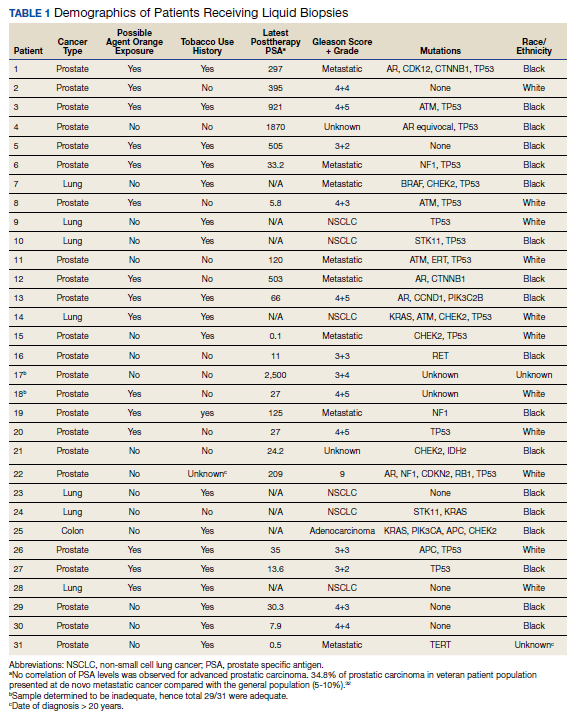
We reviewed for quality assurance documentation from the Foundation Medicine (www.foundationmedicine.com) cancer biomarker tests on liquid biopsies performed at the Corporal Michael J. Crescenz Veteran Affairs Medical Center in Philadelphia, Pennsylvania from May 2019 to April 15, 2020. All biopsies were performed on cancers with biochemical, imaging or tissue evidence of advanced tumor progression. The testing was performed on advanced solid malignancies, including NSCLC, prostate adenocarcinoma, and metastatic colon cancer. Statistical data for adequacy; cases with notable mutations; frequency; and type of mutations of AR, DDR, and Tp53 were noted. General and specific risk factors associated with the veteran patient population were studied and matched with the type of mutations (Table 1).
Results
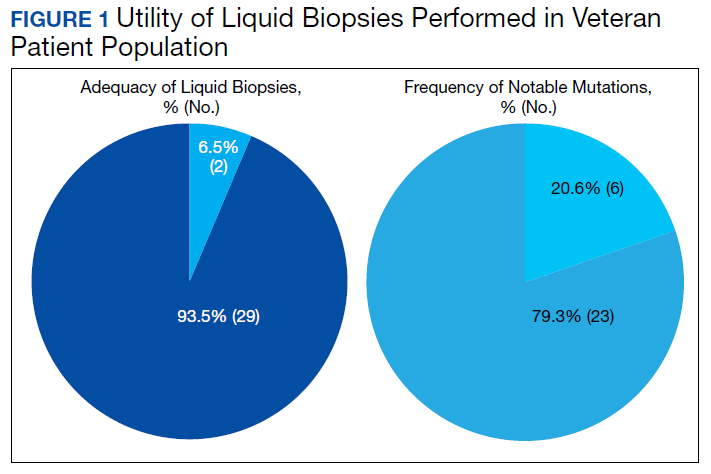
Thirty-one liquid biopsies were performed over this period—23 for prostate cancer, 7 for patients with lung cancer patients, and 1 for a patient with colon cancer. Of 31 cases, sensitivity/adequacy of liquid biopsy for genetic mutation was detected in 29 (93.5%) cases (Figure 1). Two inadequate biopsies (both from patients with prostate cancer) were excluded from the study, leaving 29 liquid biopsies with adequate ctDNA for analysis that were considered for further statistical purpose—21 prostate, 7 lung, and 1 colon cancer.
Multiple (common and different) genetic mutations were identified; however, our study subcategorized the mutations into the those that were related to prostate cancer, lung cancer, and some common mutations that occur in both cancers. Only the significant ones will be discussed in this review and equivocal result for AR is excluded from this study. Of the 21 prostate cancers, 4 (19.0%) had directed the targeted therapy to driver mutation (AR being most common in prostate cancer), while KRAS mutation, which was more common in lung cancer, was detected in 2/7 (28.6%) lung cancers. Mutations common to both cancer types were DDR gene mutations, which is a broad name for numerous genes including CDK12, ATM, and CHEK2.
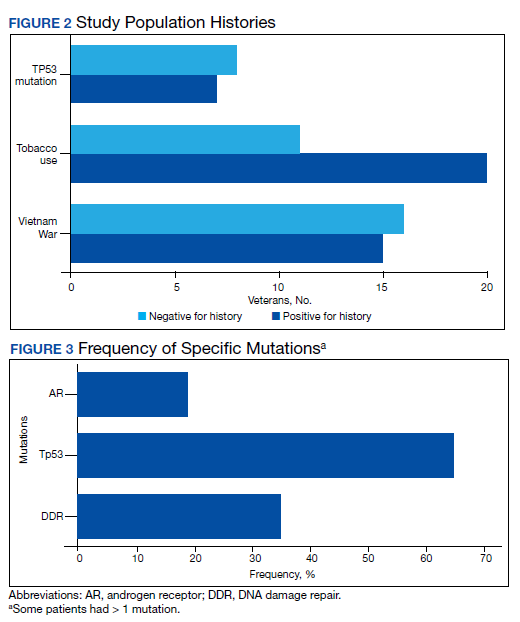
Of all cases irrespective of the cancer type, 23/29 (79.3%) showed notable mutations. DDR gene mutations were found in 6 of 21 (28.5%) patients with prostate cancer and 8 of 23 (34.7%) patients with advanced prostate and lung cancers, indicating poor outcome and possible resistance to the current therapy. Of 23 patients showing mutations irrespective of the cancer type, 15 (65.2%) harbored Tp53 mutations, which is much more frequent in veteran patient population when compared with the literature. Fifteen of the 31 (48.4%) total patients were Vietnam War-era veterans who were potentially exposed to Agent Orange and 20 (64.5%) patients who were not Vietnam War-era veterans had a history that included smoking (Figure 2).
Discussion
The veteran patient population is a unique cohort due to its distinct demographic characteristics with a high volume of cancer cases diagnosed each year. According to data from VA Central Cancer Registry (VACCR), the most frequently diagnosed cancers are prostate (29%) and lung (18%).6
Liquid biopsy is a novel, promising technology that uses ctDNA and circulating tumor cells in peripheral blood for detecting genetic alterations through next generation sequencing.7-9 The advent of this minimally invasive, revolutionary technology has been a breakthrough in the field of precision oncology for prognosis, to monitor treatment response or resistance to therapy and further personalize cancer therapy.9,10
Comprehensive genomic profiling by liquid biopsy has many advantages over the molecular studies performed on tissue biopsy. Due to the tumor heterogeneity, tissue samples may not represent the full profile of the tumor genomics of cancer, while liquid biopsy has full presentation of the disease.11,12 Many times, tissue biopsy may be limited by a sample size that precludes full genetic profiling in addition to higher total cost, potential technical issues during processing, and possible side effects of the biopsy procedure.7,13 Additionally, as the tumor progresses, new driver mutations other than the ones previously detected on the primary tissue may emerge, which can confer resistance to the existing therapy.7,13
Advanced prostatic and lung carcinomas with biochemical, distant organ, or bony progression harbor unique signature genetic mutations indicating poor prognosis, lack of response or resistance to the existing therapy, and high risk of relapse.14,15 Some of the unique characteristics of the veteran patient population include a more aged patient population multiple comorbidities, higher frequency of > 1 type of cancer, advanced cancer stage at presentation, and specific risks factors such as exposure to Agent Orange in veterans who served during the Vietnam War era.16,17 We studied the utility of liquid biopsy in cancer care, including type and incidence of genomic alterations associated with advanced prostate and lung cancers, in this unique patient population.
The amount of cell-free DNA (cfDNA), also known as ctDNA varies widely in cancer patients. Some of the factors associated with low concentration of cfDNA are disease stage, intervening therapy, proliferation rates, and tumor vascularization.18,19 In the peripheral blood, of the total cfDNA, fractions of cfDNA varies from 0.01 to 90%.18,19 All samples containing ≥ 20 ng cfDNA (20 - 100 ng) were subjected to the hybrid capture-based NGS FoundationACT assay.20 In our study, 2 specimens did not meet the minimum criteria of adequacy (20 ng cfDNA); however, the overall adequacy rate for the detection of mutation, irrespective of the cancer type was 29 of 31 (93.5%) with only 2 inadequate samples. This rate is higher than the rate reported in the literature, which is about 70%.20
Significant differences were encountered in the incidence of DNA damage repair genes including Tp53 mutations when compared with those in the general patient population (Table 2). According to recent National Comprehensive Cancer Network (NCCN) guidelines, all prostate cancers should be screened for DDR gene mutations as these genes are common in aggressive prostate cancers and strongly associated with poor outcomes and shortened survival. Due to relatively high frequency of DDR gene mutations in advanced prostatic cancers, liquid biopsy in patients with these advanced stage prostate cancers may be a useful tool in clinical decision making and exploring targeted therapy.20
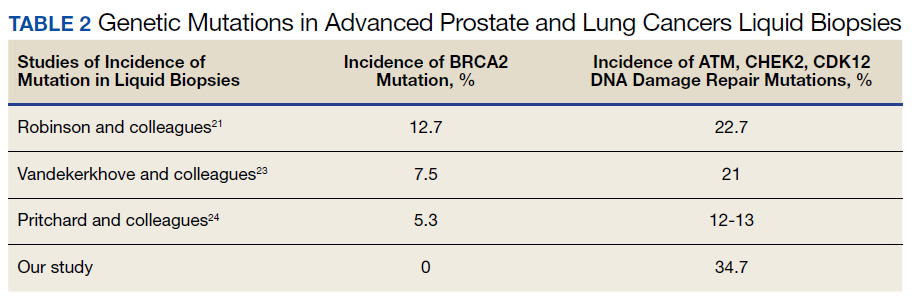
Mutations in BRCA2, ATM, CDK12, and CHEK2 (DDR gene family) are common. Incidence of ATM and CDK12 mutations in the literature is 3 to 6% of cases.21 Of 21 liquid biopsies of advanced prostate cancer patients, we found combined DDR gene mutation of ATM, CHEK2, and CDK12 genes in 6 (28.5%) cases, which is substantially higher than the 3 to 6% rate reported in the literature.21-24 Of the 23 patients who had notable mutations in our liquid biopsies, including both advanced prostate and lung cancer cases, 8 (34.7%) also showed mutation of the genes of DDR family. Our study did not show BRCA2 mutation, which is otherwise common in the literature.
We also evaluated the frequency of the most commonly occurring genetic mutations, Tp53 in advanced solid malignancies, especially advanced prostate and NSCLC. Previous studies have reported Tp53 mutation in association with risk factors (carcinogens) of cancer and have been a surrogate marker of poor survival or lack of response of therapy.25 Knowledge of Tp53 mutation is crucial for closer disease monitoring, preparing the patient for rapid progression, and encouraging the physician to prepare future lines of therapy.25-27 Although Tp53 mutation varies with histologic type and tissue of origin, Beltran and colleagues reported it in 30 to 40% of tumors, while Robles and colleagues reported about 40 to 42% incidence.25,27
Our study showed notable mutations in 23 of 29 adequate cases. Further, our study showed a high frequency of mutated Tp53 in 65.2% of combined advanced prostate and NSCLC cases. We then correlated cases of Vietnam War-era veterans with risk potential of Agent Orange exposure and Tp53 mutation. We found 7 of 15 Vietnam War-era veterans were positive for Tp53 mutations irrespective of the cancer type. The high incidence of Tp53 mutations in advanced prostate and lung carcinomas in the veteran patient population makes this tumor marker an aspiration not only as a surrogate of aggressive disease and tumor progression, but also as a key marker for targeted therapy in advanced prostate and lung cancers with loss of Tp53 function (Figure 3).
Mutations and amplifications in the AR gene are fundamental to progression of prostate cancer associated with advanced, hormone-refractory prostate cancer with the potential for targeted therapy with AR inhibitors. In our study, AR amplification was detected in 4 of 21 (19%) advanced prostate cancer cases, which is significantly lower than the 30 to 50% previously reported in the literature.28-32 Neither AR amplification or mutation was noted in advanced NSCLC in our study as previously reported in literature by Brennan and colleagues and Wang and colleagues.33-35 This is significant as it provides a pathway for future studies to focus on additional driver mutations for targeted therapies in advanced prostate carcinoma. To date, AR gene mutation does not play a role for personalized therapy in advanced NSCLC. Perhaps, a large cohort study with longitudinal analysis is needed for absolutely ruling out the possibility of personalized medicine in advanced lung cancer using this biomarker.
Conclusions
Liquid biopsy successfully provides precision-based oncology and information for decision making in this unique population of veterans. Difference in frequency of the genetic mutations in this cohort can provide future insight into disease progression, lack of response, and mechanism of resistance to the implemented therapy. Future studies focused on this veteran patient population are needed for developing targeted therapies and patient tailored oncologic therapy. ctDNA has a high potential for monitoring clinically relevant cancer-related genetic and epigenetic modifications for discovering more detailed information on the tumor characterization. Although larger cohort trial with longitudinal analyses are needed, high prevalence of DDR gene and Tp53 mutation in our study instills promising hope for therapeutic interventions in this unique cohort.
The minimally invasive liquid biopsy shows a great promise as both diagnostic and prognostic tool in the personalized clinical management of advanced prostate, and NSCLC in the veteran patient population with unique demographic characteristics. De novo metastatic prostate cancer is more common in veterans when compared with the general population, and therefore veterans may benefit by liquid biopsy. Differences in the frequency of genetic mutations (DDR, TP53, AR) in this cohort provides valuable information for disease progression, lack of response, mechanism of resistance to the implemented therapy and clinical decision making. Precision oncology can be further tailored for this cohort by focusing on DNA repair genes and Tp53 mutations for future targeted therapy.
1
9
16. Institute of Medicine (US) Committee to Review the Health Effects in Vietnam Veterans of Exposure to Herbicides (Fourth Biennial Update). Veterans and Agent Orange: Update 2002. National Academies Press (US); 2003.
17. Eibner C, Krull H, Brown KM, et al. Current and projected characteristics and unique health care needs of the patient population served by the Department of Veterans Affairs. Rand Health Q. 2016;5(4):13. Published 2016 May 9.
18. Saarenheimo J, Eigeliene N, Andersen H, Tiirola M, Jekunen A. The value of liquid biopsies for guiding therapy decisions in non-small cell lung cancer. Front Oncol. 2019;9:129. Published 2019 Mar 5.doi:10.3389/fonc.2019.00129
19
20
21
22
23
24
25
26
27
28
29
30
31. Antonarakis ES, Lu C, Luber B, et al. Clinical significance of androgen receptor splice variant-7 mRNA detection in circulating tumor cells of men with metastatic castration-resistant prostate cancer treated with first- and second-line abiraterone and enzalutamide. J Clin Oncol. 2017;35(19):2149-2156. doi:10.1200/JCO.2016.70.1961
32

33. Jung A, Kirchner T. Liquid biopsy in tumor genetic diagnosis. Dtsch Arztebl Int. 2018;115(10):169-174. doi:10.3238/arztebl.2018.0169
34. Brennan S, Wang AR, Beyer H, et al. Androgen receptor as a potential target in non-small cell lung cancer. Cancer Res. 2017;77(Suppl13): abstract nr 4121. doi:10.1158/1538-7445.AM2017-4121
35. Wang AR, Beyer H, Brennan S, et al. Androgen receptor drives differential gene expression in KRAS-mediated non-small cell lung cancer. Cancer Res. 2018;78(Suppl 13): abstract nr 3946. doi:10.1158/1538-7445.AM2018-3946
The advent of liquid biopsies targeting genetic mutations in solid tumors is a major milestone in the field of precision oncology.1 Conventional methods of obtaining tissue for molecular studies are limited by sample size and often do not represent the entire bulk of the tumor.2 This newer minimally invasive, revolutionary technique analyzes circulating cell-free DNA carrying tumor-specific alterations (circulating tumor DNA [ctDNA]) in peripheral blood and detects signature genomic alterations.1 Tp53 mutations have been reported in 25 to 40% of prostatic cancers and > 50% of non-small cell lung cancers (NSCLC), being more common in late-stage and hormone refractory prostate cancers.3,4 Tp53 mutation has been found to be associated with poor prognosis and increased germline mutations.5
The veteran patient population has distinct demographic characteristics that make veterans more vulnerable to genetic mutations and malignancies, including risk of exposure to Agent Orange, smoking, substance abuse, and asbestos. This area is understudied and extremely sparse in the literature for frequency of genetic mutations, risk factors in solid malignancies occurring in the veteran patient population, and the clinical impact of these risk factors. We herein present a quality assurance study for the utility of liquid biopsies regarding the frequency of DNA damage repair (DDR) gene, Tp53, and androgen receptor (AR) mutations. The clinical impact in advanced lung and prostate cancers in the veteran patient population and frequency are the quality assurance observations that are the study endpoints.
Methods
We reviewed for quality assurance documentation from the Foundation Medicine (www.foundationmedicine.com) cancer biomarker tests on liquid biopsies performed at the Corporal Michael J. Crescenz Veteran Affairs Medical Center in Philadelphia, Pennsylvania from May 2019 to April 15, 2020. All biopsies were performed on cancers with biochemical, imaging or tissue evidence of advanced tumor progression. The testing was performed on advanced solid malignancies, including NSCLC, prostate adenocarcinoma, and metastatic colon cancer. Statistical data for adequacy; cases with notable mutations; frequency; and type of mutations of AR, DDR, and Tp53 were noted. General and specific risk factors associated with the veteran patient population were studied and matched with the type of mutations (Table 1).
Results
Thirty-one liquid biopsies were performed over this period—23 for prostate cancer, 7 for patients with lung cancer patients, and 1 for a patient with colon cancer. Of 31 cases, sensitivity/adequacy of liquid biopsy for genetic mutation was detected in 29 (93.5%) cases (Figure 1). Two inadequate biopsies (both from patients with prostate cancer) were excluded from the study, leaving 29 liquid biopsies with adequate ctDNA for analysis that were considered for further statistical purpose—21 prostate, 7 lung, and 1 colon cancer.
Multiple (common and different) genetic mutations were identified; however, our study subcategorized the mutations into the those that were related to prostate cancer, lung cancer, and some common mutations that occur in both cancers. Only the significant ones will be discussed in this review and equivocal result for AR is excluded from this study. Of the 21 prostate cancers, 4 (19.0%) had directed the targeted therapy to driver mutation (AR being most common in prostate cancer), while KRAS mutation, which was more common in lung cancer, was detected in 2/7 (28.6%) lung cancers. Mutations common to both cancer types were DDR gene mutations, which is a broad name for numerous genes including CDK12, ATM, and CHEK2.
Of all cases irrespective of the cancer type, 23/29 (79.3%) showed notable mutations. DDR gene mutations were found in 6 of 21 (28.5%) patients with prostate cancer and 8 of 23 (34.7%) patients with advanced prostate and lung cancers, indicating poor outcome and possible resistance to the current therapy. Of 23 patients showing mutations irrespective of the cancer type, 15 (65.2%) harbored Tp53 mutations, which is much more frequent in veteran patient population when compared with the literature. Fifteen of the 31 (48.4%) total patients were Vietnam War-era veterans who were potentially exposed to Agent Orange and 20 (64.5%) patients who were not Vietnam War-era veterans had a history that included smoking (Figure 2).
Discussion
The veteran patient population is a unique cohort due to its distinct demographic characteristics with a high volume of cancer cases diagnosed each year. According to data from VA Central Cancer Registry (VACCR), the most frequently diagnosed cancers are prostate (29%) and lung (18%).6
Liquid biopsy is a novel, promising technology that uses ctDNA and circulating tumor cells in peripheral blood for detecting genetic alterations through next generation sequencing.7-9 The advent of this minimally invasive, revolutionary technology has been a breakthrough in the field of precision oncology for prognosis, to monitor treatment response or resistance to therapy and further personalize cancer therapy.9,10
Comprehensive genomic profiling by liquid biopsy has many advantages over the molecular studies performed on tissue biopsy. Due to the tumor heterogeneity, tissue samples may not represent the full profile of the tumor genomics of cancer, while liquid biopsy has full presentation of the disease.11,12 Many times, tissue biopsy may be limited by a sample size that precludes full genetic profiling in addition to higher total cost, potential technical issues during processing, and possible side effects of the biopsy procedure.7,13 Additionally, as the tumor progresses, new driver mutations other than the ones previously detected on the primary tissue may emerge, which can confer resistance to the existing therapy.7,13
Advanced prostatic and lung carcinomas with biochemical, distant organ, or bony progression harbor unique signature genetic mutations indicating poor prognosis, lack of response or resistance to the existing therapy, and high risk of relapse.14,15 Some of the unique characteristics of the veteran patient population include a more aged patient population multiple comorbidities, higher frequency of > 1 type of cancer, advanced cancer stage at presentation, and specific risks factors such as exposure to Agent Orange in veterans who served during the Vietnam War era.16,17 We studied the utility of liquid biopsy in cancer care, including type and incidence of genomic alterations associated with advanced prostate and lung cancers, in this unique patient population.
The amount of cell-free DNA (cfDNA), also known as ctDNA varies widely in cancer patients. Some of the factors associated with low concentration of cfDNA are disease stage, intervening therapy, proliferation rates, and tumor vascularization.18,19 In the peripheral blood, of the total cfDNA, fractions of cfDNA varies from 0.01 to 90%.18,19 All samples containing ≥ 20 ng cfDNA (20 - 100 ng) were subjected to the hybrid capture-based NGS FoundationACT assay.20 In our study, 2 specimens did not meet the minimum criteria of adequacy (20 ng cfDNA); however, the overall adequacy rate for the detection of mutation, irrespective of the cancer type was 29 of 31 (93.5%) with only 2 inadequate samples. This rate is higher than the rate reported in the literature, which is about 70%.20
Significant differences were encountered in the incidence of DNA damage repair genes including Tp53 mutations when compared with those in the general patient population (Table 2). According to recent National Comprehensive Cancer Network (NCCN) guidelines, all prostate cancers should be screened for DDR gene mutations as these genes are common in aggressive prostate cancers and strongly associated with poor outcomes and shortened survival. Due to relatively high frequency of DDR gene mutations in advanced prostatic cancers, liquid biopsy in patients with these advanced stage prostate cancers may be a useful tool in clinical decision making and exploring targeted therapy.20
Mutations in BRCA2, ATM, CDK12, and CHEK2 (DDR gene family) are common. Incidence of ATM and CDK12 mutations in the literature is 3 to 6% of cases.21 Of 21 liquid biopsies of advanced prostate cancer patients, we found combined DDR gene mutation of ATM, CHEK2, and CDK12 genes in 6 (28.5%) cases, which is substantially higher than the 3 to 6% rate reported in the literature.21-24 Of the 23 patients who had notable mutations in our liquid biopsies, including both advanced prostate and lung cancer cases, 8 (34.7%) also showed mutation of the genes of DDR family. Our study did not show BRCA2 mutation, which is otherwise common in the literature.
We also evaluated the frequency of the most commonly occurring genetic mutations, Tp53 in advanced solid malignancies, especially advanced prostate and NSCLC. Previous studies have reported Tp53 mutation in association with risk factors (carcinogens) of cancer and have been a surrogate marker of poor survival or lack of response of therapy.25 Knowledge of Tp53 mutation is crucial for closer disease monitoring, preparing the patient for rapid progression, and encouraging the physician to prepare future lines of therapy.25-27 Although Tp53 mutation varies with histologic type and tissue of origin, Beltran and colleagues reported it in 30 to 40% of tumors, while Robles and colleagues reported about 40 to 42% incidence.25,27
Our study showed notable mutations in 23 of 29 adequate cases. Further, our study showed a high frequency of mutated Tp53 in 65.2% of combined advanced prostate and NSCLC cases. We then correlated cases of Vietnam War-era veterans with risk potential of Agent Orange exposure and Tp53 mutation. We found 7 of 15 Vietnam War-era veterans were positive for Tp53 mutations irrespective of the cancer type. The high incidence of Tp53 mutations in advanced prostate and lung carcinomas in the veteran patient population makes this tumor marker an aspiration not only as a surrogate of aggressive disease and tumor progression, but also as a key marker for targeted therapy in advanced prostate and lung cancers with loss of Tp53 function (Figure 3).
Mutations and amplifications in the AR gene are fundamental to progression of prostate cancer associated with advanced, hormone-refractory prostate cancer with the potential for targeted therapy with AR inhibitors. In our study, AR amplification was detected in 4 of 21 (19%) advanced prostate cancer cases, which is significantly lower than the 30 to 50% previously reported in the literature.28-32 Neither AR amplification or mutation was noted in advanced NSCLC in our study as previously reported in literature by Brennan and colleagues and Wang and colleagues.33-35 This is significant as it provides a pathway for future studies to focus on additional driver mutations for targeted therapies in advanced prostate carcinoma. To date, AR gene mutation does not play a role for personalized therapy in advanced NSCLC. Perhaps, a large cohort study with longitudinal analysis is needed for absolutely ruling out the possibility of personalized medicine in advanced lung cancer using this biomarker.
Conclusions
Liquid biopsy successfully provides precision-based oncology and information for decision making in this unique population of veterans. Difference in frequency of the genetic mutations in this cohort can provide future insight into disease progression, lack of response, and mechanism of resistance to the implemented therapy. Future studies focused on this veteran patient population are needed for developing targeted therapies and patient tailored oncologic therapy. ctDNA has a high potential for monitoring clinically relevant cancer-related genetic and epigenetic modifications for discovering more detailed information on the tumor characterization. Although larger cohort trial with longitudinal analyses are needed, high prevalence of DDR gene and Tp53 mutation in our study instills promising hope for therapeutic interventions in this unique cohort.
The minimally invasive liquid biopsy shows a great promise as both diagnostic and prognostic tool in the personalized clinical management of advanced prostate, and NSCLC in the veteran patient population with unique demographic characteristics. De novo metastatic prostate cancer is more common in veterans when compared with the general population, and therefore veterans may benefit by liquid biopsy. Differences in the frequency of genetic mutations (DDR, TP53, AR) in this cohort provides valuable information for disease progression, lack of response, mechanism of resistance to the implemented therapy and clinical decision making. Precision oncology can be further tailored for this cohort by focusing on DNA repair genes and Tp53 mutations for future targeted therapy.
The advent of liquid biopsies targeting genetic mutations in solid tumors is a major milestone in the field of precision oncology.1 Conventional methods of obtaining tissue for molecular studies are limited by sample size and often do not represent the entire bulk of the tumor.2 This newer minimally invasive, revolutionary technique analyzes circulating cell-free DNA carrying tumor-specific alterations (circulating tumor DNA [ctDNA]) in peripheral blood and detects signature genomic alterations.1 Tp53 mutations have been reported in 25 to 40% of prostatic cancers and > 50% of non-small cell lung cancers (NSCLC), being more common in late-stage and hormone refractory prostate cancers.3,4 Tp53 mutation has been found to be associated with poor prognosis and increased germline mutations.5
The veteran patient population has distinct demographic characteristics that make veterans more vulnerable to genetic mutations and malignancies, including risk of exposure to Agent Orange, smoking, substance abuse, and asbestos. This area is understudied and extremely sparse in the literature for frequency of genetic mutations, risk factors in solid malignancies occurring in the veteran patient population, and the clinical impact of these risk factors. We herein present a quality assurance study for the utility of liquid biopsies regarding the frequency of DNA damage repair (DDR) gene, Tp53, and androgen receptor (AR) mutations. The clinical impact in advanced lung and prostate cancers in the veteran patient population and frequency are the quality assurance observations that are the study endpoints.
Methods
We reviewed for quality assurance documentation from the Foundation Medicine (www.foundationmedicine.com) cancer biomarker tests on liquid biopsies performed at the Corporal Michael J. Crescenz Veteran Affairs Medical Center in Philadelphia, Pennsylvania from May 2019 to April 15, 2020. All biopsies were performed on cancers with biochemical, imaging or tissue evidence of advanced tumor progression. The testing was performed on advanced solid malignancies, including NSCLC, prostate adenocarcinoma, and metastatic colon cancer. Statistical data for adequacy; cases with notable mutations; frequency; and type of mutations of AR, DDR, and Tp53 were noted. General and specific risk factors associated with the veteran patient population were studied and matched with the type of mutations (Table 1).
Results
Thirty-one liquid biopsies were performed over this period—23 for prostate cancer, 7 for patients with lung cancer patients, and 1 for a patient with colon cancer. Of 31 cases, sensitivity/adequacy of liquid biopsy for genetic mutation was detected in 29 (93.5%) cases (Figure 1). Two inadequate biopsies (both from patients with prostate cancer) were excluded from the study, leaving 29 liquid biopsies with adequate ctDNA for analysis that were considered for further statistical purpose—21 prostate, 7 lung, and 1 colon cancer.
Multiple (common and different) genetic mutations were identified; however, our study subcategorized the mutations into the those that were related to prostate cancer, lung cancer, and some common mutations that occur in both cancers. Only the significant ones will be discussed in this review and equivocal result for AR is excluded from this study. Of the 21 prostate cancers, 4 (19.0%) had directed the targeted therapy to driver mutation (AR being most common in prostate cancer), while KRAS mutation, which was more common in lung cancer, was detected in 2/7 (28.6%) lung cancers. Mutations common to both cancer types were DDR gene mutations, which is a broad name for numerous genes including CDK12, ATM, and CHEK2.
Of all cases irrespective of the cancer type, 23/29 (79.3%) showed notable mutations. DDR gene mutations were found in 6 of 21 (28.5%) patients with prostate cancer and 8 of 23 (34.7%) patients with advanced prostate and lung cancers, indicating poor outcome and possible resistance to the current therapy. Of 23 patients showing mutations irrespective of the cancer type, 15 (65.2%) harbored Tp53 mutations, which is much more frequent in veteran patient population when compared with the literature. Fifteen of the 31 (48.4%) total patients were Vietnam War-era veterans who were potentially exposed to Agent Orange and 20 (64.5%) patients who were not Vietnam War-era veterans had a history that included smoking (Figure 2).
Discussion
The veteran patient population is a unique cohort due to its distinct demographic characteristics with a high volume of cancer cases diagnosed each year. According to data from VA Central Cancer Registry (VACCR), the most frequently diagnosed cancers are prostate (29%) and lung (18%).6
Liquid biopsy is a novel, promising technology that uses ctDNA and circulating tumor cells in peripheral blood for detecting genetic alterations through next generation sequencing.7-9 The advent of this minimally invasive, revolutionary technology has been a breakthrough in the field of precision oncology for prognosis, to monitor treatment response or resistance to therapy and further personalize cancer therapy.9,10
Comprehensive genomic profiling by liquid biopsy has many advantages over the molecular studies performed on tissue biopsy. Due to the tumor heterogeneity, tissue samples may not represent the full profile of the tumor genomics of cancer, while liquid biopsy has full presentation of the disease.11,12 Many times, tissue biopsy may be limited by a sample size that precludes full genetic profiling in addition to higher total cost, potential technical issues during processing, and possible side effects of the biopsy procedure.7,13 Additionally, as the tumor progresses, new driver mutations other than the ones previously detected on the primary tissue may emerge, which can confer resistance to the existing therapy.7,13
Advanced prostatic and lung carcinomas with biochemical, distant organ, or bony progression harbor unique signature genetic mutations indicating poor prognosis, lack of response or resistance to the existing therapy, and high risk of relapse.14,15 Some of the unique characteristics of the veteran patient population include a more aged patient population multiple comorbidities, higher frequency of > 1 type of cancer, advanced cancer stage at presentation, and specific risks factors such as exposure to Agent Orange in veterans who served during the Vietnam War era.16,17 We studied the utility of liquid biopsy in cancer care, including type and incidence of genomic alterations associated with advanced prostate and lung cancers, in this unique patient population.
The amount of cell-free DNA (cfDNA), also known as ctDNA varies widely in cancer patients. Some of the factors associated with low concentration of cfDNA are disease stage, intervening therapy, proliferation rates, and tumor vascularization.18,19 In the peripheral blood, of the total cfDNA, fractions of cfDNA varies from 0.01 to 90%.18,19 All samples containing ≥ 20 ng cfDNA (20 - 100 ng) were subjected to the hybrid capture-based NGS FoundationACT assay.20 In our study, 2 specimens did not meet the minimum criteria of adequacy (20 ng cfDNA); however, the overall adequacy rate for the detection of mutation, irrespective of the cancer type was 29 of 31 (93.5%) with only 2 inadequate samples. This rate is higher than the rate reported in the literature, which is about 70%.20
Significant differences were encountered in the incidence of DNA damage repair genes including Tp53 mutations when compared with those in the general patient population (Table 2). According to recent National Comprehensive Cancer Network (NCCN) guidelines, all prostate cancers should be screened for DDR gene mutations as these genes are common in aggressive prostate cancers and strongly associated with poor outcomes and shortened survival. Due to relatively high frequency of DDR gene mutations in advanced prostatic cancers, liquid biopsy in patients with these advanced stage prostate cancers may be a useful tool in clinical decision making and exploring targeted therapy.20
Mutations in BRCA2, ATM, CDK12, and CHEK2 (DDR gene family) are common. Incidence of ATM and CDK12 mutations in the literature is 3 to 6% of cases.21 Of 21 liquid biopsies of advanced prostate cancer patients, we found combined DDR gene mutation of ATM, CHEK2, and CDK12 genes in 6 (28.5%) cases, which is substantially higher than the 3 to 6% rate reported in the literature.21-24 Of the 23 patients who had notable mutations in our liquid biopsies, including both advanced prostate and lung cancer cases, 8 (34.7%) also showed mutation of the genes of DDR family. Our study did not show BRCA2 mutation, which is otherwise common in the literature.
We also evaluated the frequency of the most commonly occurring genetic mutations, Tp53 in advanced solid malignancies, especially advanced prostate and NSCLC. Previous studies have reported Tp53 mutation in association with risk factors (carcinogens) of cancer and have been a surrogate marker of poor survival or lack of response of therapy.25 Knowledge of Tp53 mutation is crucial for closer disease monitoring, preparing the patient for rapid progression, and encouraging the physician to prepare future lines of therapy.25-27 Although Tp53 mutation varies with histologic type and tissue of origin, Beltran and colleagues reported it in 30 to 40% of tumors, while Robles and colleagues reported about 40 to 42% incidence.25,27
Our study showed notable mutations in 23 of 29 adequate cases. Further, our study showed a high frequency of mutated Tp53 in 65.2% of combined advanced prostate and NSCLC cases. We then correlated cases of Vietnam War-era veterans with risk potential of Agent Orange exposure and Tp53 mutation. We found 7 of 15 Vietnam War-era veterans were positive for Tp53 mutations irrespective of the cancer type. The high incidence of Tp53 mutations in advanced prostate and lung carcinomas in the veteran patient population makes this tumor marker an aspiration not only as a surrogate of aggressive disease and tumor progression, but also as a key marker for targeted therapy in advanced prostate and lung cancers with loss of Tp53 function (Figure 3).
Mutations and amplifications in the AR gene are fundamental to progression of prostate cancer associated with advanced, hormone-refractory prostate cancer with the potential for targeted therapy with AR inhibitors. In our study, AR amplification was detected in 4 of 21 (19%) advanced prostate cancer cases, which is significantly lower than the 30 to 50% previously reported in the literature.28-32 Neither AR amplification or mutation was noted in advanced NSCLC in our study as previously reported in literature by Brennan and colleagues and Wang and colleagues.33-35 This is significant as it provides a pathway for future studies to focus on additional driver mutations for targeted therapies in advanced prostate carcinoma. To date, AR gene mutation does not play a role for personalized therapy in advanced NSCLC. Perhaps, a large cohort study with longitudinal analysis is needed for absolutely ruling out the possibility of personalized medicine in advanced lung cancer using this biomarker.
Conclusions
Liquid biopsy successfully provides precision-based oncology and information for decision making in this unique population of veterans. Difference in frequency of the genetic mutations in this cohort can provide future insight into disease progression, lack of response, and mechanism of resistance to the implemented therapy. Future studies focused on this veteran patient population are needed for developing targeted therapies and patient tailored oncologic therapy. ctDNA has a high potential for monitoring clinically relevant cancer-related genetic and epigenetic modifications for discovering more detailed information on the tumor characterization. Although larger cohort trial with longitudinal analyses are needed, high prevalence of DDR gene and Tp53 mutation in our study instills promising hope for therapeutic interventions in this unique cohort.
The minimally invasive liquid biopsy shows a great promise as both diagnostic and prognostic tool in the personalized clinical management of advanced prostate, and NSCLC in the veteran patient population with unique demographic characteristics. De novo metastatic prostate cancer is more common in veterans when compared with the general population, and therefore veterans may benefit by liquid biopsy. Differences in the frequency of genetic mutations (DDR, TP53, AR) in this cohort provides valuable information for disease progression, lack of response, mechanism of resistance to the implemented therapy and clinical decision making. Precision oncology can be further tailored for this cohort by focusing on DNA repair genes and Tp53 mutations for future targeted therapy.
1
9
16. Institute of Medicine (US) Committee to Review the Health Effects in Vietnam Veterans of Exposure to Herbicides (Fourth Biennial Update). Veterans and Agent Orange: Update 2002. National Academies Press (US); 2003.
17. Eibner C, Krull H, Brown KM, et al. Current and projected characteristics and unique health care needs of the patient population served by the Department of Veterans Affairs. Rand Health Q. 2016;5(4):13. Published 2016 May 9.
18. Saarenheimo J, Eigeliene N, Andersen H, Tiirola M, Jekunen A. The value of liquid biopsies for guiding therapy decisions in non-small cell lung cancer. Front Oncol. 2019;9:129. Published 2019 Mar 5.doi:10.3389/fonc.2019.00129
19
20
21
22
23
24
25
26
27
28
29
30
31. Antonarakis ES, Lu C, Luber B, et al. Clinical significance of androgen receptor splice variant-7 mRNA detection in circulating tumor cells of men with metastatic castration-resistant prostate cancer treated with first- and second-line abiraterone and enzalutamide. J Clin Oncol. 2017;35(19):2149-2156. doi:10.1200/JCO.2016.70.1961
32
33. Jung A, Kirchner T. Liquid biopsy in tumor genetic diagnosis. Dtsch Arztebl Int. 2018;115(10):169-174. doi:10.3238/arztebl.2018.0169
34. Brennan S, Wang AR, Beyer H, et al. Androgen receptor as a potential target in non-small cell lung cancer. Cancer Res. 2017;77(Suppl13): abstract nr 4121. doi:10.1158/1538-7445.AM2017-4121
35. Wang AR, Beyer H, Brennan S, et al. Androgen receptor drives differential gene expression in KRAS-mediated non-small cell lung cancer. Cancer Res. 2018;78(Suppl 13): abstract nr 3946. doi:10.1158/1538-7445.AM2018-3946
1
9
16. Institute of Medicine (US) Committee to Review the Health Effects in Vietnam Veterans of Exposure to Herbicides (Fourth Biennial Update). Veterans and Agent Orange: Update 2002. National Academies Press (US); 2003.
17. Eibner C, Krull H, Brown KM, et al. Current and projected characteristics and unique health care needs of the patient population served by the Department of Veterans Affairs. Rand Health Q. 2016;5(4):13. Published 2016 May 9.
18. Saarenheimo J, Eigeliene N, Andersen H, Tiirola M, Jekunen A. The value of liquid biopsies for guiding therapy decisions in non-small cell lung cancer. Front Oncol. 2019;9:129. Published 2019 Mar 5.doi:10.3389/fonc.2019.00129
19
20
21
22
23
24
25
26
27
28
29
30
31. Antonarakis ES, Lu C, Luber B, et al. Clinical significance of androgen receptor splice variant-7 mRNA detection in circulating tumor cells of men with metastatic castration-resistant prostate cancer treated with first- and second-line abiraterone and enzalutamide. J Clin Oncol. 2017;35(19):2149-2156. doi:10.1200/JCO.2016.70.1961
32
33. Jung A, Kirchner T. Liquid biopsy in tumor genetic diagnosis. Dtsch Arztebl Int. 2018;115(10):169-174. doi:10.3238/arztebl.2018.0169
34. Brennan S, Wang AR, Beyer H, et al. Androgen receptor as a potential target in non-small cell lung cancer. Cancer Res. 2017;77(Suppl13): abstract nr 4121. doi:10.1158/1538-7445.AM2017-4121
35. Wang AR, Beyer H, Brennan S, et al. Androgen receptor drives differential gene expression in KRAS-mediated non-small cell lung cancer. Cancer Res. 2018;78(Suppl 13): abstract nr 3946. doi:10.1158/1538-7445.AM2018-3946
‘Contrary’ to wide belief, abscopal effect is rare in cancer
The phase 2, single-center study was conducted in 62 patients with head and neck cancer and at least two metastatic lesions. They were randomly assigned to receive nivolumab with or without additional radiation, delivered as stereotactic body radiation therapy (SBRT), but directed at only one of the metastatic lesions.
The results showed a similar rate of tumor shrinkage and disappearance in both groups (34.5% for nivolumab vs. 29.0% for the combination; P = .86) reported Sean McBride, MD, MPH, Memorial Sloan Kettering Cancer Center, New York, and colleagues in a paper published online in the Journal of Clinical Oncology.
The finding indicates that there was no abscopal effect, the team concluded.
The abscopal (from the Latin ab “away from” and scopus “target”) effect, first described in the 1950s, is a hypothetical result of radiation, whereby tumors situated outside the radiation field are reduced or eliminated by an assumed reaction mediated by the immune system.
This study is only the second randomized controlled trial to look at this effect. A previous trial in lung cancer (JAMA Oncol. 2019;5:1276) also failed to show a significant difference in objective response rate, the primary outcome.
In both studies, there was also no improvement in progression-free survival (PFS) or overall survival (OS) with the addition of radiation.
“There are still die-hard proponents of the existence of an abscopal response, but it is clear from our data – there is no abscopal response,” lead study author Nancy Lee, MD, said in an interview.
Dr. Lee, also from Memorial Sloan Kettering, was referring to this trial in head and neck cancer specifically. But previous nonrandomized studies have also reported response rates for the combination of SBRT and immunotherapy that are similar to monotherapy, the authors point out. Overall, the collective data in oncology suggest that the abscopal response is “relatively rare,” the team comments.
A more emphatic statement comes from a pair of oncologists in an accompanying editorial.
The new study “provides the clearest evidence so far that the abscopal effect, contrary to widely held perception in the field, remains exceedingly rare,” wrote Tanguy Seiwert, MD, medical oncologist, and Ana Kiess, MD, PhD, radiation oncologist, both at Johns Hopkins University, Baltimore.
This is a “well-executed study that has broader implications beyond head and neck cancer and speaks to larger issues of combination therapies in the era of cancer immunotherapy,” they also wrote.
The practice of using limited SBRT on any tumor type – along with anti–PD-1/PD-L1 therapy – “should not be pursued for the sole purpose of induction of an abscopal effect until we have better data to support any benefit,” the editorialists added.
It’s time to put the abscopal effect to rest, suggested Dr. Lee.
“Instead of focusing on whether an abscopal response exists or not, as it clearly did not in our phase 2 study, our focus should shift to the broader picture. What is the optimal timing of PD-1 or PD-L1 therapy in relation to radiotherapy?” she said.
The answer appears to be sequentially – and not concurrently, which is how radiation has been used to induce the would-be abscopal effect, she explained. “I personally feel that immunotherapy should not be given concurrently with radiation therapy.”
Damning data for the concurrent approach come from the phase 3 Javelin Head and Neck 100 trial, she said. In March, trial sponsors announced that the trial was terminated as it was unlikely to meet its primary endpoint. Specifically, adding an anti–PD-L1 therapy to chemoradiotherapy was not superior to chemoradiotherapy alone.
On the other hand, in the phase 3 lung cancer study known as PACIFIC, chemoradiotherapy followed by sequential anti–PD-L1 therapy showed “dramatic” improvements in PFS and OS, the editorialists pointed out.
Radiation and immunotherapy combinations
Despite the failure of this trial, radiation has “significant potential for combination with immunotherapy,” observed Dr. Seiwert and Dr. Kiess.
There are at least three potential roles of radiation therapy in combination with anti–PD-1/PD-L1 therapy, they wrote.
They explained that the first is single-site palliative radiation therapy/SBRT, which can control local symptoms. The second is “consolidation” of all tumor sites with radiation therapy/SBRT, which may decrease tumor burden and heterogeneity. And the third potential role is definitive locoregional radiation therapy to achieve long-term locoregional tumor control.
Thus, the editorialists, like Dr. Lee, believed the question of concurrent versus sequential immunotherapy is “important.” But the field of oncology has an abundance of treatments that can now be aimed at a cancer, in a variety of potential combinations, they observed.
The editorialists concluded their commentary with a long list of needed work: “We should take this study to guide us to explore promising approaches in rigorous clinical trials, with a focus on sequential approaches such as definitive RT followed by immunotherapy, consolidative SBRT of all tumor sites in combination with immunotherapy, and trials that incorporate surrogate immunotherapy-relevant biomarkers to assess earlier and more efficiently the impact of an intervention.”
The study was partly supported by a grant from the National Cancer Institute. Bristol-Myers Squibb provided the study drug and funded tumor staining.
Multiple study authors have financial ties to industry, including two with ties to Bristol-Myers Squibb. Both editorialists have ties to industry, including Dr. Seiwert’s ties to Bristol-Myers Squibb.
A version of this article first appeared on Medscape.com.
The phase 2, single-center study was conducted in 62 patients with head and neck cancer and at least two metastatic lesions. They were randomly assigned to receive nivolumab with or without additional radiation, delivered as stereotactic body radiation therapy (SBRT), but directed at only one of the metastatic lesions.
The results showed a similar rate of tumor shrinkage and disappearance in both groups (34.5% for nivolumab vs. 29.0% for the combination; P = .86) reported Sean McBride, MD, MPH, Memorial Sloan Kettering Cancer Center, New York, and colleagues in a paper published online in the Journal of Clinical Oncology.
The finding indicates that there was no abscopal effect, the team concluded.
The abscopal (from the Latin ab “away from” and scopus “target”) effect, first described in the 1950s, is a hypothetical result of radiation, whereby tumors situated outside the radiation field are reduced or eliminated by an assumed reaction mediated by the immune system.
This study is only the second randomized controlled trial to look at this effect. A previous trial in lung cancer (JAMA Oncol. 2019;5:1276) also failed to show a significant difference in objective response rate, the primary outcome.
In both studies, there was also no improvement in progression-free survival (PFS) or overall survival (OS) with the addition of radiation.
“There are still die-hard proponents of the existence of an abscopal response, but it is clear from our data – there is no abscopal response,” lead study author Nancy Lee, MD, said in an interview.
Dr. Lee, also from Memorial Sloan Kettering, was referring to this trial in head and neck cancer specifically. But previous nonrandomized studies have also reported response rates for the combination of SBRT and immunotherapy that are similar to monotherapy, the authors point out. Overall, the collective data in oncology suggest that the abscopal response is “relatively rare,” the team comments.
A more emphatic statement comes from a pair of oncologists in an accompanying editorial.
The new study “provides the clearest evidence so far that the abscopal effect, contrary to widely held perception in the field, remains exceedingly rare,” wrote Tanguy Seiwert, MD, medical oncologist, and Ana Kiess, MD, PhD, radiation oncologist, both at Johns Hopkins University, Baltimore.
This is a “well-executed study that has broader implications beyond head and neck cancer and speaks to larger issues of combination therapies in the era of cancer immunotherapy,” they also wrote.
The practice of using limited SBRT on any tumor type – along with anti–PD-1/PD-L1 therapy – “should not be pursued for the sole purpose of induction of an abscopal effect until we have better data to support any benefit,” the editorialists added.
It’s time to put the abscopal effect to rest, suggested Dr. Lee.
“Instead of focusing on whether an abscopal response exists or not, as it clearly did not in our phase 2 study, our focus should shift to the broader picture. What is the optimal timing of PD-1 or PD-L1 therapy in relation to radiotherapy?” she said.
The answer appears to be sequentially – and not concurrently, which is how radiation has been used to induce the would-be abscopal effect, she explained. “I personally feel that immunotherapy should not be given concurrently with radiation therapy.”
Damning data for the concurrent approach come from the phase 3 Javelin Head and Neck 100 trial, she said. In March, trial sponsors announced that the trial was terminated as it was unlikely to meet its primary endpoint. Specifically, adding an anti–PD-L1 therapy to chemoradiotherapy was not superior to chemoradiotherapy alone.
On the other hand, in the phase 3 lung cancer study known as PACIFIC, chemoradiotherapy followed by sequential anti–PD-L1 therapy showed “dramatic” improvements in PFS and OS, the editorialists pointed out.
Radiation and immunotherapy combinations
Despite the failure of this trial, radiation has “significant potential for combination with immunotherapy,” observed Dr. Seiwert and Dr. Kiess.
There are at least three potential roles of radiation therapy in combination with anti–PD-1/PD-L1 therapy, they wrote.
They explained that the first is single-site palliative radiation therapy/SBRT, which can control local symptoms. The second is “consolidation” of all tumor sites with radiation therapy/SBRT, which may decrease tumor burden and heterogeneity. And the third potential role is definitive locoregional radiation therapy to achieve long-term locoregional tumor control.
Thus, the editorialists, like Dr. Lee, believed the question of concurrent versus sequential immunotherapy is “important.” But the field of oncology has an abundance of treatments that can now be aimed at a cancer, in a variety of potential combinations, they observed.
The editorialists concluded their commentary with a long list of needed work: “We should take this study to guide us to explore promising approaches in rigorous clinical trials, with a focus on sequential approaches such as definitive RT followed by immunotherapy, consolidative SBRT of all tumor sites in combination with immunotherapy, and trials that incorporate surrogate immunotherapy-relevant biomarkers to assess earlier and more efficiently the impact of an intervention.”
The study was partly supported by a grant from the National Cancer Institute. Bristol-Myers Squibb provided the study drug and funded tumor staining.
Multiple study authors have financial ties to industry, including two with ties to Bristol-Myers Squibb. Both editorialists have ties to industry, including Dr. Seiwert’s ties to Bristol-Myers Squibb.
A version of this article first appeared on Medscape.com.
The phase 2, single-center study was conducted in 62 patients with head and neck cancer and at least two metastatic lesions. They were randomly assigned to receive nivolumab with or without additional radiation, delivered as stereotactic body radiation therapy (SBRT), but directed at only one of the metastatic lesions.
The results showed a similar rate of tumor shrinkage and disappearance in both groups (34.5% for nivolumab vs. 29.0% for the combination; P = .86) reported Sean McBride, MD, MPH, Memorial Sloan Kettering Cancer Center, New York, and colleagues in a paper published online in the Journal of Clinical Oncology.
The finding indicates that there was no abscopal effect, the team concluded.
The abscopal (from the Latin ab “away from” and scopus “target”) effect, first described in the 1950s, is a hypothetical result of radiation, whereby tumors situated outside the radiation field are reduced or eliminated by an assumed reaction mediated by the immune system.
This study is only the second randomized controlled trial to look at this effect. A previous trial in lung cancer (JAMA Oncol. 2019;5:1276) also failed to show a significant difference in objective response rate, the primary outcome.
In both studies, there was also no improvement in progression-free survival (PFS) or overall survival (OS) with the addition of radiation.
“There are still die-hard proponents of the existence of an abscopal response, but it is clear from our data – there is no abscopal response,” lead study author Nancy Lee, MD, said in an interview.
Dr. Lee, also from Memorial Sloan Kettering, was referring to this trial in head and neck cancer specifically. But previous nonrandomized studies have also reported response rates for the combination of SBRT and immunotherapy that are similar to monotherapy, the authors point out. Overall, the collective data in oncology suggest that the abscopal response is “relatively rare,” the team comments.
A more emphatic statement comes from a pair of oncologists in an accompanying editorial.
The new study “provides the clearest evidence so far that the abscopal effect, contrary to widely held perception in the field, remains exceedingly rare,” wrote Tanguy Seiwert, MD, medical oncologist, and Ana Kiess, MD, PhD, radiation oncologist, both at Johns Hopkins University, Baltimore.
This is a “well-executed study that has broader implications beyond head and neck cancer and speaks to larger issues of combination therapies in the era of cancer immunotherapy,” they also wrote.
The practice of using limited SBRT on any tumor type – along with anti–PD-1/PD-L1 therapy – “should not be pursued for the sole purpose of induction of an abscopal effect until we have better data to support any benefit,” the editorialists added.
It’s time to put the abscopal effect to rest, suggested Dr. Lee.
“Instead of focusing on whether an abscopal response exists or not, as it clearly did not in our phase 2 study, our focus should shift to the broader picture. What is the optimal timing of PD-1 or PD-L1 therapy in relation to radiotherapy?” she said.
The answer appears to be sequentially – and not concurrently, which is how radiation has been used to induce the would-be abscopal effect, she explained. “I personally feel that immunotherapy should not be given concurrently with radiation therapy.”
Damning data for the concurrent approach come from the phase 3 Javelin Head and Neck 100 trial, she said. In March, trial sponsors announced that the trial was terminated as it was unlikely to meet its primary endpoint. Specifically, adding an anti–PD-L1 therapy to chemoradiotherapy was not superior to chemoradiotherapy alone.
On the other hand, in the phase 3 lung cancer study known as PACIFIC, chemoradiotherapy followed by sequential anti–PD-L1 therapy showed “dramatic” improvements in PFS and OS, the editorialists pointed out.
Radiation and immunotherapy combinations
Despite the failure of this trial, radiation has “significant potential for combination with immunotherapy,” observed Dr. Seiwert and Dr. Kiess.
There are at least three potential roles of radiation therapy in combination with anti–PD-1/PD-L1 therapy, they wrote.
They explained that the first is single-site palliative radiation therapy/SBRT, which can control local symptoms. The second is “consolidation” of all tumor sites with radiation therapy/SBRT, which may decrease tumor burden and heterogeneity. And the third potential role is definitive locoregional radiation therapy to achieve long-term locoregional tumor control.
Thus, the editorialists, like Dr. Lee, believed the question of concurrent versus sequential immunotherapy is “important.” But the field of oncology has an abundance of treatments that can now be aimed at a cancer, in a variety of potential combinations, they observed.
The editorialists concluded their commentary with a long list of needed work: “We should take this study to guide us to explore promising approaches in rigorous clinical trials, with a focus on sequential approaches such as definitive RT followed by immunotherapy, consolidative SBRT of all tumor sites in combination with immunotherapy, and trials that incorporate surrogate immunotherapy-relevant biomarkers to assess earlier and more efficiently the impact of an intervention.”
The study was partly supported by a grant from the National Cancer Institute. Bristol-Myers Squibb provided the study drug and funded tumor staining.
Multiple study authors have financial ties to industry, including two with ties to Bristol-Myers Squibb. Both editorialists have ties to industry, including Dr. Seiwert’s ties to Bristol-Myers Squibb.
A version of this article first appeared on Medscape.com.
Two different radiation boost strategies reduce local failures in NSCLC
The European PET-Boost trial finds that both of two strategies for delivering a radiation boost to locally advanced non–small cell lung cancer (NSCLC) tumors improve local control relative to that seen historically. Results were reported at the European Society for Radiology and Oncology 2020 Online Congress.

“From previous studies, we know that local recurrences have an important negative impact on survival,” said presenting author Saskia A. Cooke, an MD, PhD candidate in the department of Radiation Oncology Research, the Netherlands Cancer Institute, Amsterdam.
In addition, research shows that, despite advances in drug therapy, the most common site of progression in this population is intrathoracic.
“These results further underline the need to develop treatment strategies which effectively prevent intrathoracic and local recurrences,” Ms. Cooke said.
PET-Boost is a multicenter, randomized trial that enrolled patients with inoperable stage II or III NSCLC and a primary tumor measuring 4 cm or greater.
“The study was a phase 2 ‘pick the winner’ trial, which, by design, does not compare the two arms to one another but to a historic rate of outcome,” Ms. Cooke explained.
The patients were randomized evenly to receive the standard 66 Gy of radiotherapy given in 24 fractions of 2.75 Gy with one of two dose-escalation strategies: a boost to the whole primary tumor or a boost to only the tumor area having high metabolic activity, with a maximum standard uptake value (SUVmax) of at least 50% on the pretreatment FDG-PET scan.
For each patient, both plans were created before randomization, with the dose escalated as high as possible up to an organ-at-risk constraint, Ms. Cooke noted.
“A key element is that the two plans were made isotoxic by equaling the mean lung dose, and in both arms, the dose was delivered integrated into the 24 fractions, so without prolongation of the overall treatment time,” she said.
The trial’s goal was to improve the 1-year rate of freedom from local failure from the 70% seen historically with conventional chemoradiotherapy to 85%.
The trial was stopped early because of slow accrual, after enrollment of 107 patients, Ms. Cooke reported. The large majority received concurrent or sequential chemotherapy with their radiotherapy.
With a median follow-up of 12.6 months for the endpoint, the 1-year rate of freedom from local failure as determined on centrally reviewed CT scans was 97% with the whole-tumor boost and 91% with the PET-directed boost. The 2-year rates were 89% and 82%, respectively.
With a median follow-up of 61 months for the endpoint, the 1-year rate of overall survival was 77% with the whole-tumor boost and 62% with the PET-directed boost. The 2-year rates were 46% and 43%, respectively.
The two boost strategies increased acute and late toxicity over that seen historically, but not to unacceptable levels, as reported previously (Radiother Oncol. 2019;131:166-73).
“In this PET-Boost trial, using hypofractionated personalized dose escalation led to a very good local control rate, which, in both arms, was more than 90% at 1 year,” Ms. Cooke summarized.
In fact, values compare favorably with those seen in the phase 3 RTOG 0617 trial using conventional chemoradiotherapy and dose escalation, even though patients in that trial had smaller tumors.
“Survival, especially in the group treated with the homogeneous boost, was actually similar to the RTOG 0617 high-dose arm and also quite similar to the 1-year survival in the placebo arm of the PACIFIC trial,” she added. The somewhat poorer survival at 2 years in PET-Boost was likely related, in part, to the large tumor volumes and the mediastinal radiation dose, she speculated.
The investigators are now evaluating specific sites of failure and extrathoracic recurrences, as well as assessing associations of toxicity with organ-at-risk doses and quality of life.
“While further results of the trial are awaited, so far, we do believe that in selected patients with locally advanced NSCLC, hypofractionated dose escalation to the tumor is a very important subject for future research,” Ms. Cooke said.
The investigators plan to carry the whole-tumor boost strategy forward because it yields similar efficacy but is easier to plan.
Not ready for prime time
“Overall, this study conceptually is well designed as it is forward thinking and uses imaging to personalize radiation treatment, going to higher doses to active areas of disease based on FDG-PET imaging,” Arya Amini, MD, assistant clinical professor in the department of radiation oncology, City of Hope Comprehensive Cancer Center, Duarte, Calif., said in an interview.

However, he cautioned, local failure is challenging to assess at 1 year because of radiation-induced changes. In fact, more than a quarter of study patients had scans that were not evaluable for this reason. Furthermore, rates of late cardiac toxicity and esophageal stenosis are unknown.
“Longer-term follow-up is needed as the current data does not support dose escalation in unresectable lung cancer, specifically stage III NSCLC, based on RTOG 0617,” Dr. Amini said. “However, the overall survival detriment from dose escalation in RTOG 0617 could have been due to poor radiation techniques and toxicities including cardiac side effects, which we now better understand. The PET-Boost trial focuses on delivering higher doses of hypofractionated radiation based on PET, which essentially leads to a smaller area getting a radiation boost, which, in turn, should have less side effects.”
“This area of work will continue to be more exciting as more tumor-targeting radiotracers can be utilized with PET,” he predicted. “One of the future avenues in radiation oncology is incorporating novel imaging modalities including tumor-specific radiotracers with PET scans, for example, to dose-paint disease, delivering higher doses to more active parts of the primary and lymph nodes, while reducing doses to less active areas, which potentially could lead to higher rates of local control with minimal side effects.”
The trial was sponsored by The Netherlands Cancer Institute. Ms. Cooke and Dr. Amini disclosed no conflicts of interest.
SOURCE: Lalezari F et al. ESTRO 2020. Abstract OC-0609.
The European PET-Boost trial finds that both of two strategies for delivering a radiation boost to locally advanced non–small cell lung cancer (NSCLC) tumors improve local control relative to that seen historically. Results were reported at the European Society for Radiology and Oncology 2020 Online Congress.
“From previous studies, we know that local recurrences have an important negative impact on survival,” said presenting author Saskia A. Cooke, an MD, PhD candidate in the department of Radiation Oncology Research, the Netherlands Cancer Institute, Amsterdam.
In addition, research shows that, despite advances in drug therapy, the most common site of progression in this population is intrathoracic.
“These results further underline the need to develop treatment strategies which effectively prevent intrathoracic and local recurrences,” Ms. Cooke said.
PET-Boost is a multicenter, randomized trial that enrolled patients with inoperable stage II or III NSCLC and a primary tumor measuring 4 cm or greater.
“The study was a phase 2 ‘pick the winner’ trial, which, by design, does not compare the two arms to one another but to a historic rate of outcome,” Ms. Cooke explained.
The patients were randomized evenly to receive the standard 66 Gy of radiotherapy given in 24 fractions of 2.75 Gy with one of two dose-escalation strategies: a boost to the whole primary tumor or a boost to only the tumor area having high metabolic activity, with a maximum standard uptake value (SUVmax) of at least 50% on the pretreatment FDG-PET scan.
For each patient, both plans were created before randomization, with the dose escalated as high as possible up to an organ-at-risk constraint, Ms. Cooke noted.
“A key element is that the two plans were made isotoxic by equaling the mean lung dose, and in both arms, the dose was delivered integrated into the 24 fractions, so without prolongation of the overall treatment time,” she said.
The trial’s goal was to improve the 1-year rate of freedom from local failure from the 70% seen historically with conventional chemoradiotherapy to 85%.
The trial was stopped early because of slow accrual, after enrollment of 107 patients, Ms. Cooke reported. The large majority received concurrent or sequential chemotherapy with their radiotherapy.
With a median follow-up of 12.6 months for the endpoint, the 1-year rate of freedom from local failure as determined on centrally reviewed CT scans was 97% with the whole-tumor boost and 91% with the PET-directed boost. The 2-year rates were 89% and 82%, respectively.
With a median follow-up of 61 months for the endpoint, the 1-year rate of overall survival was 77% with the whole-tumor boost and 62% with the PET-directed boost. The 2-year rates were 46% and 43%, respectively.
The two boost strategies increased acute and late toxicity over that seen historically, but not to unacceptable levels, as reported previously (Radiother Oncol. 2019;131:166-73).
“In this PET-Boost trial, using hypofractionated personalized dose escalation led to a very good local control rate, which, in both arms, was more than 90% at 1 year,” Ms. Cooke summarized.
In fact, values compare favorably with those seen in the phase 3 RTOG 0617 trial using conventional chemoradiotherapy and dose escalation, even though patients in that trial had smaller tumors.
“Survival, especially in the group treated with the homogeneous boost, was actually similar to the RTOG 0617 high-dose arm and also quite similar to the 1-year survival in the placebo arm of the PACIFIC trial,” she added. The somewhat poorer survival at 2 years in PET-Boost was likely related, in part, to the large tumor volumes and the mediastinal radiation dose, she speculated.
The investigators are now evaluating specific sites of failure and extrathoracic recurrences, as well as assessing associations of toxicity with organ-at-risk doses and quality of life.
“While further results of the trial are awaited, so far, we do believe that in selected patients with locally advanced NSCLC, hypofractionated dose escalation to the tumor is a very important subject for future research,” Ms. Cooke said.
The investigators plan to carry the whole-tumor boost strategy forward because it yields similar efficacy but is easier to plan.
Not ready for prime time
“Overall, this study conceptually is well designed as it is forward thinking and uses imaging to personalize radiation treatment, going to higher doses to active areas of disease based on FDG-PET imaging,” Arya Amini, MD, assistant clinical professor in the department of radiation oncology, City of Hope Comprehensive Cancer Center, Duarte, Calif., said in an interview.
However, he cautioned, local failure is challenging to assess at 1 year because of radiation-induced changes. In fact, more than a quarter of study patients had scans that were not evaluable for this reason. Furthermore, rates of late cardiac toxicity and esophageal stenosis are unknown.
“Longer-term follow-up is needed as the current data does not support dose escalation in unresectable lung cancer, specifically stage III NSCLC, based on RTOG 0617,” Dr. Amini said. “However, the overall survival detriment from dose escalation in RTOG 0617 could have been due to poor radiation techniques and toxicities including cardiac side effects, which we now better understand. The PET-Boost trial focuses on delivering higher doses of hypofractionated radiation based on PET, which essentially leads to a smaller area getting a radiation boost, which, in turn, should have less side effects.”
“This area of work will continue to be more exciting as more tumor-targeting radiotracers can be utilized with PET,” he predicted. “One of the future avenues in radiation oncology is incorporating novel imaging modalities including tumor-specific radiotracers with PET scans, for example, to dose-paint disease, delivering higher doses to more active parts of the primary and lymph nodes, while reducing doses to less active areas, which potentially could lead to higher rates of local control with minimal side effects.”
The trial was sponsored by The Netherlands Cancer Institute. Ms. Cooke and Dr. Amini disclosed no conflicts of interest.
SOURCE: Lalezari F et al. ESTRO 2020. Abstract OC-0609.
The European PET-Boost trial finds that both of two strategies for delivering a radiation boost to locally advanced non–small cell lung cancer (NSCLC) tumors improve local control relative to that seen historically. Results were reported at the European Society for Radiology and Oncology 2020 Online Congress.
“From previous studies, we know that local recurrences have an important negative impact on survival,” said presenting author Saskia A. Cooke, an MD, PhD candidate in the department of Radiation Oncology Research, the Netherlands Cancer Institute, Amsterdam.
In addition, research shows that, despite advances in drug therapy, the most common site of progression in this population is intrathoracic.
“These results further underline the need to develop treatment strategies which effectively prevent intrathoracic and local recurrences,” Ms. Cooke said.
PET-Boost is a multicenter, randomized trial that enrolled patients with inoperable stage II or III NSCLC and a primary tumor measuring 4 cm or greater.
“The study was a phase 2 ‘pick the winner’ trial, which, by design, does not compare the two arms to one another but to a historic rate of outcome,” Ms. Cooke explained.
The patients were randomized evenly to receive the standard 66 Gy of radiotherapy given in 24 fractions of 2.75 Gy with one of two dose-escalation strategies: a boost to the whole primary tumor or a boost to only the tumor area having high metabolic activity, with a maximum standard uptake value (SUVmax) of at least 50% on the pretreatment FDG-PET scan.
For each patient, both plans were created before randomization, with the dose escalated as high as possible up to an organ-at-risk constraint, Ms. Cooke noted.
“A key element is that the two plans were made isotoxic by equaling the mean lung dose, and in both arms, the dose was delivered integrated into the 24 fractions, so without prolongation of the overall treatment time,” she said.
The trial’s goal was to improve the 1-year rate of freedom from local failure from the 70% seen historically with conventional chemoradiotherapy to 85%.
The trial was stopped early because of slow accrual, after enrollment of 107 patients, Ms. Cooke reported. The large majority received concurrent or sequential chemotherapy with their radiotherapy.
With a median follow-up of 12.6 months for the endpoint, the 1-year rate of freedom from local failure as determined on centrally reviewed CT scans was 97% with the whole-tumor boost and 91% with the PET-directed boost. The 2-year rates were 89% and 82%, respectively.
With a median follow-up of 61 months for the endpoint, the 1-year rate of overall survival was 77% with the whole-tumor boost and 62% with the PET-directed boost. The 2-year rates were 46% and 43%, respectively.
The two boost strategies increased acute and late toxicity over that seen historically, but not to unacceptable levels, as reported previously (Radiother Oncol. 2019;131:166-73).
“In this PET-Boost trial, using hypofractionated personalized dose escalation led to a very good local control rate, which, in both arms, was more than 90% at 1 year,” Ms. Cooke summarized.
In fact, values compare favorably with those seen in the phase 3 RTOG 0617 trial using conventional chemoradiotherapy and dose escalation, even though patients in that trial had smaller tumors.
“Survival, especially in the group treated with the homogeneous boost, was actually similar to the RTOG 0617 high-dose arm and also quite similar to the 1-year survival in the placebo arm of the PACIFIC trial,” she added. The somewhat poorer survival at 2 years in PET-Boost was likely related, in part, to the large tumor volumes and the mediastinal radiation dose, she speculated.
The investigators are now evaluating specific sites of failure and extrathoracic recurrences, as well as assessing associations of toxicity with organ-at-risk doses and quality of life.
“While further results of the trial are awaited, so far, we do believe that in selected patients with locally advanced NSCLC, hypofractionated dose escalation to the tumor is a very important subject for future research,” Ms. Cooke said.
The investigators plan to carry the whole-tumor boost strategy forward because it yields similar efficacy but is easier to plan.
Not ready for prime time
“Overall, this study conceptually is well designed as it is forward thinking and uses imaging to personalize radiation treatment, going to higher doses to active areas of disease based on FDG-PET imaging,” Arya Amini, MD, assistant clinical professor in the department of radiation oncology, City of Hope Comprehensive Cancer Center, Duarte, Calif., said in an interview.
However, he cautioned, local failure is challenging to assess at 1 year because of radiation-induced changes. In fact, more than a quarter of study patients had scans that were not evaluable for this reason. Furthermore, rates of late cardiac toxicity and esophageal stenosis are unknown.
“Longer-term follow-up is needed as the current data does not support dose escalation in unresectable lung cancer, specifically stage III NSCLC, based on RTOG 0617,” Dr. Amini said. “However, the overall survival detriment from dose escalation in RTOG 0617 could have been due to poor radiation techniques and toxicities including cardiac side effects, which we now better understand. The PET-Boost trial focuses on delivering higher doses of hypofractionated radiation based on PET, which essentially leads to a smaller area getting a radiation boost, which, in turn, should have less side effects.”
“This area of work will continue to be more exciting as more tumor-targeting radiotracers can be utilized with PET,” he predicted. “One of the future avenues in radiation oncology is incorporating novel imaging modalities including tumor-specific radiotracers with PET scans, for example, to dose-paint disease, delivering higher doses to more active parts of the primary and lymph nodes, while reducing doses to less active areas, which potentially could lead to higher rates of local control with minimal side effects.”
The trial was sponsored by The Netherlands Cancer Institute. Ms. Cooke and Dr. Amini disclosed no conflicts of interest.
SOURCE: Lalezari F et al. ESTRO 2020. Abstract OC-0609.
FROM ESTRO 2020
FDA OKs osimertinib as first adjuvant drug for NSCLC
Osimertinib was first approved in the US in 2018 for the first-line treatment of patients with metastatic EGFR-mutated NSCLC.
With this new indication, “patients may be treated with this targeted therapy in an earlier and potentially more curative stage of non-small cell lung cancer,” Richard Pazdur, MD, director of the FDA’s Oncology Center of Excellence and acting director of the Office of Oncologic Diseases in the FDA’s Center for Drug Evaluation and Research, said in a news release.
The expanded indication is based on results of the ADAURA clinical trial, which compared osimertinib with placebo following complete resection of localized or locally advanced NSCLC with negative margins.
In the trial, adjuvant osimertinib reduced the relative risk of disease recurrence or death by 83% in patients with stage II and IIIA disease (hazard ratio [HR], 0.17; 95% CI, 0.12 - 0.23; P < .0001).
Disease-free survival (DFS) in the overall trial population of patients with stage IB-IIIA disease showed osimertinib reduced the risk of disease recurrence or death by 80% (HR, 0.20; 95% CI, 0.15 - 0.27; P < .0001).
At 2 years, 89% of patients treated with the targeted agent remained alive and disease free vs 52% on placebo after surgery. The safety and tolerability of osimertinib in the adjuvant setting was consistent with previous trials in the metastatic setting.
The trial of 682 patients was unblinded early and halted on the recommendation of the independent data-monitoring committee, because of the efficacy of osimertinib.
“If I were on the committee, I would have done the same thing. These are extraordinary results,” study investigator Roy S. Herbst, MD, PhD, chief of medical oncology at the Yale Cancer Center, New Haven, Connecticut, said at a press briefing prior to the study presentation at the American Society of Clinical Oncology’s (ASCO) virtual scientific program last spring.
In a Medscape commentary, Mark Kris, MD, of Memorial Sloan Kettering Cancer Center in New York City, said the data with osimertinib in the adjuvant setting are “important and practice-changing.”
“The potential for this drug to improve outcomes has been there for a long time. This phase 3 randomized trial presented at the plenary session of ASCO showed a more than doubling of disease-free survival at 2 years. It shows that we can use therapies in the earlier stages of disease,” Kris noted.
“This approval dispels the notion that treatment is over after surgery and chemotherapy, as the ADAURA results show that Tagrisso can dramatically change the course of this disease,” Dave Fredrickson, executive vice president, AstraZeneca oncology business unit, said in a news release.
Osimertinib had orphan drug status and breakthrough therapy designation for treatment of EGFR mutation-positive NSCLC.
A version of this article first appeared on Medscape.com.
Osimertinib was first approved in the US in 2018 for the first-line treatment of patients with metastatic EGFR-mutated NSCLC.
With this new indication, “patients may be treated with this targeted therapy in an earlier and potentially more curative stage of non-small cell lung cancer,” Richard Pazdur, MD, director of the FDA’s Oncology Center of Excellence and acting director of the Office of Oncologic Diseases in the FDA’s Center for Drug Evaluation and Research, said in a news release.
The expanded indication is based on results of the ADAURA clinical trial, which compared osimertinib with placebo following complete resection of localized or locally advanced NSCLC with negative margins.
In the trial, adjuvant osimertinib reduced the relative risk of disease recurrence or death by 83% in patients with stage II and IIIA disease (hazard ratio [HR], 0.17; 95% CI, 0.12 - 0.23; P < .0001).
Disease-free survival (DFS) in the overall trial population of patients with stage IB-IIIA disease showed osimertinib reduced the risk of disease recurrence or death by 80% (HR, 0.20; 95% CI, 0.15 - 0.27; P < .0001).
At 2 years, 89% of patients treated with the targeted agent remained alive and disease free vs 52% on placebo after surgery. The safety and tolerability of osimertinib in the adjuvant setting was consistent with previous trials in the metastatic setting.
The trial of 682 patients was unblinded early and halted on the recommendation of the independent data-monitoring committee, because of the efficacy of osimertinib.
“If I were on the committee, I would have done the same thing. These are extraordinary results,” study investigator Roy S. Herbst, MD, PhD, chief of medical oncology at the Yale Cancer Center, New Haven, Connecticut, said at a press briefing prior to the study presentation at the American Society of Clinical Oncology’s (ASCO) virtual scientific program last spring.
In a Medscape commentary, Mark Kris, MD, of Memorial Sloan Kettering Cancer Center in New York City, said the data with osimertinib in the adjuvant setting are “important and practice-changing.”
“The potential for this drug to improve outcomes has been there for a long time. This phase 3 randomized trial presented at the plenary session of ASCO showed a more than doubling of disease-free survival at 2 years. It shows that we can use therapies in the earlier stages of disease,” Kris noted.
“This approval dispels the notion that treatment is over after surgery and chemotherapy, as the ADAURA results show that Tagrisso can dramatically change the course of this disease,” Dave Fredrickson, executive vice president, AstraZeneca oncology business unit, said in a news release.
Osimertinib had orphan drug status and breakthrough therapy designation for treatment of EGFR mutation-positive NSCLC.
A version of this article first appeared on Medscape.com.
Osimertinib was first approved in the US in 2018 for the first-line treatment of patients with metastatic EGFR-mutated NSCLC.
With this new indication, “patients may be treated with this targeted therapy in an earlier and potentially more curative stage of non-small cell lung cancer,” Richard Pazdur, MD, director of the FDA’s Oncology Center of Excellence and acting director of the Office of Oncologic Diseases in the FDA’s Center for Drug Evaluation and Research, said in a news release.
The expanded indication is based on results of the ADAURA clinical trial, which compared osimertinib with placebo following complete resection of localized or locally advanced NSCLC with negative margins.
In the trial, adjuvant osimertinib reduced the relative risk of disease recurrence or death by 83% in patients with stage II and IIIA disease (hazard ratio [HR], 0.17; 95% CI, 0.12 - 0.23; P < .0001).
Disease-free survival (DFS) in the overall trial population of patients with stage IB-IIIA disease showed osimertinib reduced the risk of disease recurrence or death by 80% (HR, 0.20; 95% CI, 0.15 - 0.27; P < .0001).
At 2 years, 89% of patients treated with the targeted agent remained alive and disease free vs 52% on placebo after surgery. The safety and tolerability of osimertinib in the adjuvant setting was consistent with previous trials in the metastatic setting.
The trial of 682 patients was unblinded early and halted on the recommendation of the independent data-monitoring committee, because of the efficacy of osimertinib.
“If I were on the committee, I would have done the same thing. These are extraordinary results,” study investigator Roy S. Herbst, MD, PhD, chief of medical oncology at the Yale Cancer Center, New Haven, Connecticut, said at a press briefing prior to the study presentation at the American Society of Clinical Oncology’s (ASCO) virtual scientific program last spring.
In a Medscape commentary, Mark Kris, MD, of Memorial Sloan Kettering Cancer Center in New York City, said the data with osimertinib in the adjuvant setting are “important and practice-changing.”
“The potential for this drug to improve outcomes has been there for a long time. This phase 3 randomized trial presented at the plenary session of ASCO showed a more than doubling of disease-free survival at 2 years. It shows that we can use therapies in the earlier stages of disease,” Kris noted.
“This approval dispels the notion that treatment is over after surgery and chemotherapy, as the ADAURA results show that Tagrisso can dramatically change the course of this disease,” Dave Fredrickson, executive vice president, AstraZeneca oncology business unit, said in a news release.
Osimertinib had orphan drug status and breakthrough therapy designation for treatment of EGFR mutation-positive NSCLC.
A version of this article first appeared on Medscape.com.
COVID-19 vaccines and cancer patients: 4 things to know
Earlier this week, Medscape spoke with Nora Disis, MD, about vaccinating cancer patients. Disis is a medical oncologist and director of both the Institute of Translational Health Sciences and the Cancer Vaccine Institute, the University of Washington, Seattle, Washington. As editor-in-chief of JAMA Oncology, she has watched COVID-19 developments in the oncology community over the past year.
Here are a few themes that Disis said oncologists should be aware of as vaccines eventually begin reaching cancer patients.
We should expect cancer patients to respond to vaccines. Historically, some believed that cancer patients would be unable to mount an immune response to vaccines. Data on other viral vaccines have shown otherwise. For example, there has been a long history of studies of flu vaccination in cancer patients, and in general, those vaccines confer protection. Likewise for pneumococcal vaccine, which, generally speaking, cancer patients should receive.
Special cases may include hematologic malignancies in which the immune system has been destroyed and profound immunosuppression occurs. Data on immunization during this immunosuppressed period are scarce, but what data are available suggest that once cancer patients are through this immunosuppressed period, they can be vaccinated successfully.
The type of vaccine will probably be important for cancer patients. Currently, there are 61 coronavirus vaccines in human clinical trials, and 17 have reached the final stages of testing. At least 85 preclinical vaccines are under active investigation in animals.
Both the Pfizer-BioNTech and Moderna COVID vaccines are mRNA type. There are many other types, including protein-based vaccines, viral vector vaccines based on adenoviruses, and inactivated or attenuated coronavirus vaccines.
The latter vaccines, particularly attenuated live virus vaccines, may not be a good choice for cancer patients. Especially in those with rapidly progressing disease or on chemotherapy, attenuated live viruses may cause a low-grade infection.
Incidentally, the technology used in the genetic, or mRNA, vaccines developed by both Pfizer-BioNTech and Moderna was initially developed for fighting cancer, and studies have shown that patients can generate immune responses to cancer-associated proteins with this type of vaccine.
These genetic vaccines could turn out to be the most effective for cancer patients, especially those with solid tumors.
Our understanding is very limited right now. Neither the Pfizer-BioNTech nor the Moderna early data discuss cancer patients. Two of the most important questions for cancer patients are dosing and booster scheduling. Potential defects in lymphocyte function among cancer patients may require unique initial dosing and booster schedules. In terms of timing, it is unclear how active therapy might affect a patient’s immune response to vaccination and whether vaccines should be timed with therapy cycles.
Vaccine access may depend on whether cancer patients are viewed as a vulnerable population. Those at higher risk for severe COVID-19 clearly have a greater need for vaccination. While there are data suggesting that cancer patients are at higher risk, they are a bit murky, in part because cancer patients are a heterogeneous group. For example, there are data suggesting that lung and blood cancer patients fare worse. There is also a suggestion that, like in the general population, COVID risk in cancer patients remains driven by comorbidities.
It is likely, then, that personalized risk factors such as type of cancer therapy, site of disease, and comorbidities will shape individual choices about vaccination among cancer patients.
A version of this article first appeared on Medscape.com.
Earlier this week, Medscape spoke with Nora Disis, MD, about vaccinating cancer patients. Disis is a medical oncologist and director of both the Institute of Translational Health Sciences and the Cancer Vaccine Institute, the University of Washington, Seattle, Washington. As editor-in-chief of JAMA Oncology, she has watched COVID-19 developments in the oncology community over the past year.
Here are a few themes that Disis said oncologists should be aware of as vaccines eventually begin reaching cancer patients.
We should expect cancer patients to respond to vaccines. Historically, some believed that cancer patients would be unable to mount an immune response to vaccines. Data on other viral vaccines have shown otherwise. For example, there has been a long history of studies of flu vaccination in cancer patients, and in general, those vaccines confer protection. Likewise for pneumococcal vaccine, which, generally speaking, cancer patients should receive.
Special cases may include hematologic malignancies in which the immune system has been destroyed and profound immunosuppression occurs. Data on immunization during this immunosuppressed period are scarce, but what data are available suggest that once cancer patients are through this immunosuppressed period, they can be vaccinated successfully.
The type of vaccine will probably be important for cancer patients. Currently, there are 61 coronavirus vaccines in human clinical trials, and 17 have reached the final stages of testing. At least 85 preclinical vaccines are under active investigation in animals.
Both the Pfizer-BioNTech and Moderna COVID vaccines are mRNA type. There are many other types, including protein-based vaccines, viral vector vaccines based on adenoviruses, and inactivated or attenuated coronavirus vaccines.
The latter vaccines, particularly attenuated live virus vaccines, may not be a good choice for cancer patients. Especially in those with rapidly progressing disease or on chemotherapy, attenuated live viruses may cause a low-grade infection.
Incidentally, the technology used in the genetic, or mRNA, vaccines developed by both Pfizer-BioNTech and Moderna was initially developed for fighting cancer, and studies have shown that patients can generate immune responses to cancer-associated proteins with this type of vaccine.
These genetic vaccines could turn out to be the most effective for cancer patients, especially those with solid tumors.
Our understanding is very limited right now. Neither the Pfizer-BioNTech nor the Moderna early data discuss cancer patients. Two of the most important questions for cancer patients are dosing and booster scheduling. Potential defects in lymphocyte function among cancer patients may require unique initial dosing and booster schedules. In terms of timing, it is unclear how active therapy might affect a patient’s immune response to vaccination and whether vaccines should be timed with therapy cycles.
Vaccine access may depend on whether cancer patients are viewed as a vulnerable population. Those at higher risk for severe COVID-19 clearly have a greater need for vaccination. While there are data suggesting that cancer patients are at higher risk, they are a bit murky, in part because cancer patients are a heterogeneous group. For example, there are data suggesting that lung and blood cancer patients fare worse. There is also a suggestion that, like in the general population, COVID risk in cancer patients remains driven by comorbidities.
It is likely, then, that personalized risk factors such as type of cancer therapy, site of disease, and comorbidities will shape individual choices about vaccination among cancer patients.
A version of this article first appeared on Medscape.com.
Earlier this week, Medscape spoke with Nora Disis, MD, about vaccinating cancer patients. Disis is a medical oncologist and director of both the Institute of Translational Health Sciences and the Cancer Vaccine Institute, the University of Washington, Seattle, Washington. As editor-in-chief of JAMA Oncology, she has watched COVID-19 developments in the oncology community over the past year.
Here are a few themes that Disis said oncologists should be aware of as vaccines eventually begin reaching cancer patients.
We should expect cancer patients to respond to vaccines. Historically, some believed that cancer patients would be unable to mount an immune response to vaccines. Data on other viral vaccines have shown otherwise. For example, there has been a long history of studies of flu vaccination in cancer patients, and in general, those vaccines confer protection. Likewise for pneumococcal vaccine, which, generally speaking, cancer patients should receive.
Special cases may include hematologic malignancies in which the immune system has been destroyed and profound immunosuppression occurs. Data on immunization during this immunosuppressed period are scarce, but what data are available suggest that once cancer patients are through this immunosuppressed period, they can be vaccinated successfully.
The type of vaccine will probably be important for cancer patients. Currently, there are 61 coronavirus vaccines in human clinical trials, and 17 have reached the final stages of testing. At least 85 preclinical vaccines are under active investigation in animals.
Both the Pfizer-BioNTech and Moderna COVID vaccines are mRNA type. There are many other types, including protein-based vaccines, viral vector vaccines based on adenoviruses, and inactivated or attenuated coronavirus vaccines.
The latter vaccines, particularly attenuated live virus vaccines, may not be a good choice for cancer patients. Especially in those with rapidly progressing disease or on chemotherapy, attenuated live viruses may cause a low-grade infection.
Incidentally, the technology used in the genetic, or mRNA, vaccines developed by both Pfizer-BioNTech and Moderna was initially developed for fighting cancer, and studies have shown that patients can generate immune responses to cancer-associated proteins with this type of vaccine.
These genetic vaccines could turn out to be the most effective for cancer patients, especially those with solid tumors.
Our understanding is very limited right now. Neither the Pfizer-BioNTech nor the Moderna early data discuss cancer patients. Two of the most important questions for cancer patients are dosing and booster scheduling. Potential defects in lymphocyte function among cancer patients may require unique initial dosing and booster schedules. In terms of timing, it is unclear how active therapy might affect a patient’s immune response to vaccination and whether vaccines should be timed with therapy cycles.
Vaccine access may depend on whether cancer patients are viewed as a vulnerable population. Those at higher risk for severe COVID-19 clearly have a greater need for vaccination. While there are data suggesting that cancer patients are at higher risk, they are a bit murky, in part because cancer patients are a heterogeneous group. For example, there are data suggesting that lung and blood cancer patients fare worse. There is also a suggestion that, like in the general population, COVID risk in cancer patients remains driven by comorbidities.
It is likely, then, that personalized risk factors such as type of cancer therapy, site of disease, and comorbidities will shape individual choices about vaccination among cancer patients.
A version of this article first appeared on Medscape.com.
Most common cancer diagnosis globally: Breast surpasses lung
Breast cancer now tops the list of the most commonly diagnosed cancers worldwide, surpassing lung cancer for the first time, according to the latest global cancer burden estimates from the International Agency for Research on Cancer (IARC).
Breast cancer among women accounted for 11.7% of the estimated 19.3 million new cancer cases in 2020 ― and about 25% of all cancer cases among women. Lung cancer accounted for 11.4% of new cases, reports the IARC, part of the World Health Organization.
However, lung cancer remains the leading overall cause of cancer mortality, accounting for 18.0% of 10 million cancer deaths. Breast cancer ranks fifth as a cause of cancer mortality, accounting for 1 of every 6 cancer deaths in women and 685,000 deaths overall (6.9%) in 2020, but it ranks first in incidence in 159 countries and first in mortality in 110 countries, the data show.
The increase in breast cancer cases is likely attributable to the effects of “marked changes in lifestyle, sociocultural contexts, and built environments” in many countries, says the IACR. These include delayed childbearing, having fewer children, increased rates of overweight and obesity, and decreasing levels of physical activity, the IACR explains in a press release.
These new data underscore the importance of focusing on cancer prevention, IARC Director Elisabete Weiderpass, MD, states in the press release.
“Effective interventions for prevention and early detection are available and must be integrated into cancer planning to control the predicted upsurge of this devastating disease,” she said.
Weiderpass also notes that the “overwhelming need for evidence-based and resource-stratified guidelines that support the phased implementation of breast cancer early detection and treatment into real-world practice.”
To that end, the WHO and the IARC will launch a global breast cancer initiative in 2021 to improve population-level outcomes through a focus on more timely diagnosis and comprehensive treatment, she adds.
The most common cancer diagnoses worldwide after breast cancer and lung cancer are colorectal cancer (10.0%), prostate cancer (7.3%), and stomach cancer (5.6%).
The leading causes of cancer deaths after lung cancer are colorectal cancer (9.4%), liver cancer (8.3%), stomach cancer (7.7%), and breast cancer among women.
One in five people will develop cancer
The IACR estimates that 1 in 5 people will develop cancer in their lifetime and that 1 in 8 men and 1 in 11 women will die from it.
Among women, breast cancer is the most common cancer type and the most common cause of cancer death. Colorectal cancer and lung cancer are the second and third most common cancer types and the third and second most common causes of cancer death, respectively.
Among men, lung cancer is the most common cancer type and the most common cause of cancer death. Prostate cancer and colorectal cancer are the second and third most common cancer types, and liver cancer and colorectal cancer are the second and third most common causes of cancer death.
“Worldwide, an estimated 28.4 million new cancer cases are projected to occur in 2040, a 47% increase from the estimated 19.3 million cases in 2020,” the IARC notes.
The agency derives its estimates from the GLOBOCAN 2020 database, which tracks 185 countries and 36 types of cancer and is accessible through the IARC Global Cancer Observatory.
A version of this article first appeared on Medscape.com.
Breast cancer now tops the list of the most commonly diagnosed cancers worldwide, surpassing lung cancer for the first time, according to the latest global cancer burden estimates from the International Agency for Research on Cancer (IARC).
Breast cancer among women accounted for 11.7% of the estimated 19.3 million new cancer cases in 2020 ― and about 25% of all cancer cases among women. Lung cancer accounted for 11.4% of new cases, reports the IARC, part of the World Health Organization.
However, lung cancer remains the leading overall cause of cancer mortality, accounting for 18.0% of 10 million cancer deaths. Breast cancer ranks fifth as a cause of cancer mortality, accounting for 1 of every 6 cancer deaths in women and 685,000 deaths overall (6.9%) in 2020, but it ranks first in incidence in 159 countries and first in mortality in 110 countries, the data show.
The increase in breast cancer cases is likely attributable to the effects of “marked changes in lifestyle, sociocultural contexts, and built environments” in many countries, says the IACR. These include delayed childbearing, having fewer children, increased rates of overweight and obesity, and decreasing levels of physical activity, the IACR explains in a press release.
These new data underscore the importance of focusing on cancer prevention, IARC Director Elisabete Weiderpass, MD, states in the press release.
“Effective interventions for prevention and early detection are available and must be integrated into cancer planning to control the predicted upsurge of this devastating disease,” she said.
Weiderpass also notes that the “overwhelming need for evidence-based and resource-stratified guidelines that support the phased implementation of breast cancer early detection and treatment into real-world practice.”
To that end, the WHO and the IARC will launch a global breast cancer initiative in 2021 to improve population-level outcomes through a focus on more timely diagnosis and comprehensive treatment, she adds.
The most common cancer diagnoses worldwide after breast cancer and lung cancer are colorectal cancer (10.0%), prostate cancer (7.3%), and stomach cancer (5.6%).
The leading causes of cancer deaths after lung cancer are colorectal cancer (9.4%), liver cancer (8.3%), stomach cancer (7.7%), and breast cancer among women.
One in five people will develop cancer
The IACR estimates that 1 in 5 people will develop cancer in their lifetime and that 1 in 8 men and 1 in 11 women will die from it.
Among women, breast cancer is the most common cancer type and the most common cause of cancer death. Colorectal cancer and lung cancer are the second and third most common cancer types and the third and second most common causes of cancer death, respectively.
Among men, lung cancer is the most common cancer type and the most common cause of cancer death. Prostate cancer and colorectal cancer are the second and third most common cancer types, and liver cancer and colorectal cancer are the second and third most common causes of cancer death.
“Worldwide, an estimated 28.4 million new cancer cases are projected to occur in 2040, a 47% increase from the estimated 19.3 million cases in 2020,” the IARC notes.
The agency derives its estimates from the GLOBOCAN 2020 database, which tracks 185 countries and 36 types of cancer and is accessible through the IARC Global Cancer Observatory.
A version of this article first appeared on Medscape.com.
Breast cancer now tops the list of the most commonly diagnosed cancers worldwide, surpassing lung cancer for the first time, according to the latest global cancer burden estimates from the International Agency for Research on Cancer (IARC).
Breast cancer among women accounted for 11.7% of the estimated 19.3 million new cancer cases in 2020 ― and about 25% of all cancer cases among women. Lung cancer accounted for 11.4% of new cases, reports the IARC, part of the World Health Organization.
However, lung cancer remains the leading overall cause of cancer mortality, accounting for 18.0% of 10 million cancer deaths. Breast cancer ranks fifth as a cause of cancer mortality, accounting for 1 of every 6 cancer deaths in women and 685,000 deaths overall (6.9%) in 2020, but it ranks first in incidence in 159 countries and first in mortality in 110 countries, the data show.
The increase in breast cancer cases is likely attributable to the effects of “marked changes in lifestyle, sociocultural contexts, and built environments” in many countries, says the IACR. These include delayed childbearing, having fewer children, increased rates of overweight and obesity, and decreasing levels of physical activity, the IACR explains in a press release.
These new data underscore the importance of focusing on cancer prevention, IARC Director Elisabete Weiderpass, MD, states in the press release.
“Effective interventions for prevention and early detection are available and must be integrated into cancer planning to control the predicted upsurge of this devastating disease,” she said.
Weiderpass also notes that the “overwhelming need for evidence-based and resource-stratified guidelines that support the phased implementation of breast cancer early detection and treatment into real-world practice.”
To that end, the WHO and the IARC will launch a global breast cancer initiative in 2021 to improve population-level outcomes through a focus on more timely diagnosis and comprehensive treatment, she adds.
The most common cancer diagnoses worldwide after breast cancer and lung cancer are colorectal cancer (10.0%), prostate cancer (7.3%), and stomach cancer (5.6%).
The leading causes of cancer deaths after lung cancer are colorectal cancer (9.4%), liver cancer (8.3%), stomach cancer (7.7%), and breast cancer among women.
One in five people will develop cancer
The IACR estimates that 1 in 5 people will develop cancer in their lifetime and that 1 in 8 men and 1 in 11 women will die from it.
Among women, breast cancer is the most common cancer type and the most common cause of cancer death. Colorectal cancer and lung cancer are the second and third most common cancer types and the third and second most common causes of cancer death, respectively.
Among men, lung cancer is the most common cancer type and the most common cause of cancer death. Prostate cancer and colorectal cancer are the second and third most common cancer types, and liver cancer and colorectal cancer are the second and third most common causes of cancer death.
“Worldwide, an estimated 28.4 million new cancer cases are projected to occur in 2040, a 47% increase from the estimated 19.3 million cases in 2020,” the IARC notes.
The agency derives its estimates from the GLOBOCAN 2020 database, which tracks 185 countries and 36 types of cancer and is accessible through the IARC Global Cancer Observatory.
A version of this article first appeared on Medscape.com.
Patients with lung and blood cancers most vulnerable to COVID-19
Patients with cancer are at significantly increased risk for COVID-19 and worse outcomes, a new review confirms. It also found that patients with leukemia, non-Hodgkin lymphoma, and lung cancer are at greatest risk.
Blacks with cancer are at even higher risk, and for patients with colorectal cancer and non-Hodgkin lymphoma, the risk is higher for women than for men. (This contrasts with findings in noncancer populations, where men are more at risk from COVID-19 and severe outcomes than women.)
These findings come from a huge review of electronic health records of 73.4 million patients in the United States. They “highlight the need to protect and monitor patients with cancer as part of the strategy to control the pandemic,” the authors wrote.
The review was published online Dec. 10 in JAMA Oncology.
The greater risk for COVID-19 among patients with cancer is well known, but breaking the risk down by cancer type is novel, wrote the investigators, led by Quanqiu Wang, MS, Center for Artificial Intelligence in Drug Discovery, Case Western Reserve University, Cleveland.
Cancer patients are immunocompromised and have more contact with the health care system, which increases their risk for COVID-19. But which bodily systems are affected by cancer seems to matter. In patients with blood cancer, for example, COVID-19 is probably more dangerous, because blood cancer weakens the immune system directly, the authors suggested.
The increased risk for infection and hospitalization with SARS-CoV-2 among Black patients with cancer might be because of biology, but it is more likely because of factors that weren’t captured in the database review. Such factors include social adversity, economic status, access to health care, and lifestyle, the researchers noted.
For this study, the investigators analyzed electronic health records held in the IBM Watson Health Explorys system, which captures about 15% of new cancer diagnoses in the United States.
The analysis found that, as of Aug. 14, 2020, 16,570 patients (0.02%) had been diagnosed with COVID-19; about 1,200 also had been diagnosed with cancer. Of those, 690 were diagnosed with cancer in the previous year, which counted as a recent cancer diagnosis in the analysis. The study included 13 common cancers, including endometrial, kidney, liver, lung, gastrointestinal, prostate, skin, and thyroid cancers, among others.
Patients with any cancer diagnosis (adjusted odds ratio, 1.46) as well as those with a recent cancer diagnosis (aOR, 7.14) had a significantly higher risk for COVID-19 than those without cancer, after adjusting for asthma, cardiovascular diseases, nursing home stays, and other risk factors.
The risk for COVID-19 was highest among patients recently diagnosed with leukemia (aOR, 12.16), non-Hodgkin lymphoma (aOR, 8.54), and lung cancer (aOR 7.66). The risk for COVID-19 was lower for patients with cancers associated with worse prognoses, including pancreatic (aOR, 6.26) and liver (aOR, 6.49) cancer. It was weakest for patients with thyroid cancer (aOR, 3.10; P for all < .001).
Hospitalization was more common in recent cancer patients with COVID-19 than in COVID-19 patients without cancer (47.46% vs. 24.6%), as was COVID-19–related death (14.93% vs. 5.26%). Among cancer patients who did not have COVID-19, 12.39% were hospitalized, and 4.03% died. The findings suggest a synergistic effect between the COVID-19 and cancer, the team noted.
Among patients recently diagnosed with cancer, Black patients – 10.3% of the overall study population – had a significantly higher risk for COVID-19 than White patients. The racial disparity was largest for patients with breast cancer (aOR, 5.44), followed by patients with prostate cancer (aOR, 5.10), colorectal cancer (aOR, 3.30), and lung cancer (aOR, 2.53; P for all < .001).
Hospitalizations were more common among Black patients with cancer and COVID-19 than White patients. There was also a trend toward higher mortality among Black patients (18.52% vs. 13.51%; P = .11)
However, these differences may not be related to race, oncologist Aakash Desai, MBBS, of the Mayo Clinic, Rochester, Minn., and colleagues noted in an accompanying commentary. “Interestingly, a previous study of hospitalized patients with COVID-19 without cancer demonstrated that mortality rates for Black patients were comparable to those for White patients after adjustment for both comorbidities and deprivation index, suggesting that observed differences are mainly owing to societal disparities rather than biology.”
The editorialists also noted that the finding that Black patients with cancer are at greater risk for COVID-19 (aOR, 1.58-5.44, depending on cancer) echoes the findings in the general population. The Centers for Disease Control and Prevention estimates a severalfold increased risk among Black patients. These higher rates may largely be explained by social determinants, they suggested. Such factors include increased burden of comorbidities, crowded living conditions (inner cities, multigenerational homes, etc.), dependence on public transportation or child care, and higher work-related exposures. “Until such societal disparities are accounted for, we cannot presume these findings are caused by any inherent differences among racial groups,” the editorialists wrote.
“Clearly, the haunting spotlight of COVID-19 has dramatically illuminated known U.S. health care and societal disparities,” Dr. Desai and colleagues wrote. “This situation should be a wake-up call that brings much-needed improvements in U.S. equity policies, including but not limited to better health care access. Nothing appears more critical for alleviating these disparate clinical outcomes in this time of crisis and beyond,” they declared.
The study was funded by the National Institutes of Health, the American Cancer Society, and other organizations. The investigators disclosed having no relevant financial relationships.
A version of this article originally appeared on Medscape.com.
Patients with cancer are at significantly increased risk for COVID-19 and worse outcomes, a new review confirms. It also found that patients with leukemia, non-Hodgkin lymphoma, and lung cancer are at greatest risk.
Blacks with cancer are at even higher risk, and for patients with colorectal cancer and non-Hodgkin lymphoma, the risk is higher for women than for men. (This contrasts with findings in noncancer populations, where men are more at risk from COVID-19 and severe outcomes than women.)
These findings come from a huge review of electronic health records of 73.4 million patients in the United States. They “highlight the need to protect and monitor patients with cancer as part of the strategy to control the pandemic,” the authors wrote.
The review was published online Dec. 10 in JAMA Oncology.
The greater risk for COVID-19 among patients with cancer is well known, but breaking the risk down by cancer type is novel, wrote the investigators, led by Quanqiu Wang, MS, Center for Artificial Intelligence in Drug Discovery, Case Western Reserve University, Cleveland.
Cancer patients are immunocompromised and have more contact with the health care system, which increases their risk for COVID-19. But which bodily systems are affected by cancer seems to matter. In patients with blood cancer, for example, COVID-19 is probably more dangerous, because blood cancer weakens the immune system directly, the authors suggested.
The increased risk for infection and hospitalization with SARS-CoV-2 among Black patients with cancer might be because of biology, but it is more likely because of factors that weren’t captured in the database review. Such factors include social adversity, economic status, access to health care, and lifestyle, the researchers noted.
For this study, the investigators analyzed electronic health records held in the IBM Watson Health Explorys system, which captures about 15% of new cancer diagnoses in the United States.
The analysis found that, as of Aug. 14, 2020, 16,570 patients (0.02%) had been diagnosed with COVID-19; about 1,200 also had been diagnosed with cancer. Of those, 690 were diagnosed with cancer in the previous year, which counted as a recent cancer diagnosis in the analysis. The study included 13 common cancers, including endometrial, kidney, liver, lung, gastrointestinal, prostate, skin, and thyroid cancers, among others.
Patients with any cancer diagnosis (adjusted odds ratio, 1.46) as well as those with a recent cancer diagnosis (aOR, 7.14) had a significantly higher risk for COVID-19 than those without cancer, after adjusting for asthma, cardiovascular diseases, nursing home stays, and other risk factors.
The risk for COVID-19 was highest among patients recently diagnosed with leukemia (aOR, 12.16), non-Hodgkin lymphoma (aOR, 8.54), and lung cancer (aOR 7.66). The risk for COVID-19 was lower for patients with cancers associated with worse prognoses, including pancreatic (aOR, 6.26) and liver (aOR, 6.49) cancer. It was weakest for patients with thyroid cancer (aOR, 3.10; P for all < .001).
Hospitalization was more common in recent cancer patients with COVID-19 than in COVID-19 patients without cancer (47.46% vs. 24.6%), as was COVID-19–related death (14.93% vs. 5.26%). Among cancer patients who did not have COVID-19, 12.39% were hospitalized, and 4.03% died. The findings suggest a synergistic effect between the COVID-19 and cancer, the team noted.
Among patients recently diagnosed with cancer, Black patients – 10.3% of the overall study population – had a significantly higher risk for COVID-19 than White patients. The racial disparity was largest for patients with breast cancer (aOR, 5.44), followed by patients with prostate cancer (aOR, 5.10), colorectal cancer (aOR, 3.30), and lung cancer (aOR, 2.53; P for all < .001).
Hospitalizations were more common among Black patients with cancer and COVID-19 than White patients. There was also a trend toward higher mortality among Black patients (18.52% vs. 13.51%; P = .11)
However, these differences may not be related to race, oncologist Aakash Desai, MBBS, of the Mayo Clinic, Rochester, Minn., and colleagues noted in an accompanying commentary. “Interestingly, a previous study of hospitalized patients with COVID-19 without cancer demonstrated that mortality rates for Black patients were comparable to those for White patients after adjustment for both comorbidities and deprivation index, suggesting that observed differences are mainly owing to societal disparities rather than biology.”
The editorialists also noted that the finding that Black patients with cancer are at greater risk for COVID-19 (aOR, 1.58-5.44, depending on cancer) echoes the findings in the general population. The Centers for Disease Control and Prevention estimates a severalfold increased risk among Black patients. These higher rates may largely be explained by social determinants, they suggested. Such factors include increased burden of comorbidities, crowded living conditions (inner cities, multigenerational homes, etc.), dependence on public transportation or child care, and higher work-related exposures. “Until such societal disparities are accounted for, we cannot presume these findings are caused by any inherent differences among racial groups,” the editorialists wrote.
“Clearly, the haunting spotlight of COVID-19 has dramatically illuminated known U.S. health care and societal disparities,” Dr. Desai and colleagues wrote. “This situation should be a wake-up call that brings much-needed improvements in U.S. equity policies, including but not limited to better health care access. Nothing appears more critical for alleviating these disparate clinical outcomes in this time of crisis and beyond,” they declared.
The study was funded by the National Institutes of Health, the American Cancer Society, and other organizations. The investigators disclosed having no relevant financial relationships.
A version of this article originally appeared on Medscape.com.
Patients with cancer are at significantly increased risk for COVID-19 and worse outcomes, a new review confirms. It also found that patients with leukemia, non-Hodgkin lymphoma, and lung cancer are at greatest risk.
Blacks with cancer are at even higher risk, and for patients with colorectal cancer and non-Hodgkin lymphoma, the risk is higher for women than for men. (This contrasts with findings in noncancer populations, where men are more at risk from COVID-19 and severe outcomes than women.)
These findings come from a huge review of electronic health records of 73.4 million patients in the United States. They “highlight the need to protect and monitor patients with cancer as part of the strategy to control the pandemic,” the authors wrote.
The review was published online Dec. 10 in JAMA Oncology.
The greater risk for COVID-19 among patients with cancer is well known, but breaking the risk down by cancer type is novel, wrote the investigators, led by Quanqiu Wang, MS, Center for Artificial Intelligence in Drug Discovery, Case Western Reserve University, Cleveland.
Cancer patients are immunocompromised and have more contact with the health care system, which increases their risk for COVID-19. But which bodily systems are affected by cancer seems to matter. In patients with blood cancer, for example, COVID-19 is probably more dangerous, because blood cancer weakens the immune system directly, the authors suggested.
The increased risk for infection and hospitalization with SARS-CoV-2 among Black patients with cancer might be because of biology, but it is more likely because of factors that weren’t captured in the database review. Such factors include social adversity, economic status, access to health care, and lifestyle, the researchers noted.
For this study, the investigators analyzed electronic health records held in the IBM Watson Health Explorys system, which captures about 15% of new cancer diagnoses in the United States.
The analysis found that, as of Aug. 14, 2020, 16,570 patients (0.02%) had been diagnosed with COVID-19; about 1,200 also had been diagnosed with cancer. Of those, 690 were diagnosed with cancer in the previous year, which counted as a recent cancer diagnosis in the analysis. The study included 13 common cancers, including endometrial, kidney, liver, lung, gastrointestinal, prostate, skin, and thyroid cancers, among others.
Patients with any cancer diagnosis (adjusted odds ratio, 1.46) as well as those with a recent cancer diagnosis (aOR, 7.14) had a significantly higher risk for COVID-19 than those without cancer, after adjusting for asthma, cardiovascular diseases, nursing home stays, and other risk factors.
The risk for COVID-19 was highest among patients recently diagnosed with leukemia (aOR, 12.16), non-Hodgkin lymphoma (aOR, 8.54), and lung cancer (aOR 7.66). The risk for COVID-19 was lower for patients with cancers associated with worse prognoses, including pancreatic (aOR, 6.26) and liver (aOR, 6.49) cancer. It was weakest for patients with thyroid cancer (aOR, 3.10; P for all < .001).
Hospitalization was more common in recent cancer patients with COVID-19 than in COVID-19 patients without cancer (47.46% vs. 24.6%), as was COVID-19–related death (14.93% vs. 5.26%). Among cancer patients who did not have COVID-19, 12.39% were hospitalized, and 4.03% died. The findings suggest a synergistic effect between the COVID-19 and cancer, the team noted.
Among patients recently diagnosed with cancer, Black patients – 10.3% of the overall study population – had a significantly higher risk for COVID-19 than White patients. The racial disparity was largest for patients with breast cancer (aOR, 5.44), followed by patients with prostate cancer (aOR, 5.10), colorectal cancer (aOR, 3.30), and lung cancer (aOR, 2.53; P for all < .001).
Hospitalizations were more common among Black patients with cancer and COVID-19 than White patients. There was also a trend toward higher mortality among Black patients (18.52% vs. 13.51%; P = .11)
However, these differences may not be related to race, oncologist Aakash Desai, MBBS, of the Mayo Clinic, Rochester, Minn., and colleagues noted in an accompanying commentary. “Interestingly, a previous study of hospitalized patients with COVID-19 without cancer demonstrated that mortality rates for Black patients were comparable to those for White patients after adjustment for both comorbidities and deprivation index, suggesting that observed differences are mainly owing to societal disparities rather than biology.”
The editorialists also noted that the finding that Black patients with cancer are at greater risk for COVID-19 (aOR, 1.58-5.44, depending on cancer) echoes the findings in the general population. The Centers for Disease Control and Prevention estimates a severalfold increased risk among Black patients. These higher rates may largely be explained by social determinants, they suggested. Such factors include increased burden of comorbidities, crowded living conditions (inner cities, multigenerational homes, etc.), dependence on public transportation or child care, and higher work-related exposures. “Until such societal disparities are accounted for, we cannot presume these findings are caused by any inherent differences among racial groups,” the editorialists wrote.
“Clearly, the haunting spotlight of COVID-19 has dramatically illuminated known U.S. health care and societal disparities,” Dr. Desai and colleagues wrote. “This situation should be a wake-up call that brings much-needed improvements in U.S. equity policies, including but not limited to better health care access. Nothing appears more critical for alleviating these disparate clinical outcomes in this time of crisis and beyond,” they declared.
The study was funded by the National Institutes of Health, the American Cancer Society, and other organizations. The investigators disclosed having no relevant financial relationships.
A version of this article originally appeared on Medscape.com.