User login
Aunt Tillie and electronic health records
I’m lost, but I’m making record time.
– A pilot, somewhere over the Pacific Ocean
The other day I was reading the printout of an electronic medical record of a patient transferred to our practice. The record reminded me a lot of my Aunt Tillie. Aunt Tillie was the aunt whom everyone would avoid at family gatherings when I was young because the minute she started talking you could be sure of two things: first, that it would be a long time till she stopped talking, and second, that most of what she had to say simply was not relevant to what anyone was interested in hearing. She was interested in what she was interested in and seemed to care little about the needs of anyone else in the room.
The patient in question was 32 years old and had gone to an emergency room for headache and chest pain. Headache and chest pain can be challenging problems, but there are still certain things in both the history and on physical exam that are relevant and informative. It was hard to find those things in this medical record. After a relatively short history of present illness (HPI) that said my patient had presented with 1 day of headache and chest pain. The HPI on this record took up less than three lines. The assessment scales went on for over two pages. When we see records like this, driven by a system that desires to document every question or scale that every possible insurer might be looking for on every possible patient, we fear that common sense has died.
Among the extraneous information in the EHR was a Morse Fall Scale score. The Morse scale and point system were carefully laid out with the actions to be taken at various levels of risk, from bed in the lowest position to when to use skid-proof slipper socks. Then the Braden Scale for Predicting Pressure Sore Risk was recorded, followed by the Domestic Violence Score, complete with indication of whether the patient was under immediate threat and whether police, social services, and mental health professionals were notified. There also was a pain assessment that was filled out with an area indicating that the patient and her family were instructed to tell someone if her level of pain changed. Seriously. The pain assessment scale was located right after the suicide risk assessment and the depression scale, presumably because if the depression assessment occurred any later in the visit the patient might have scored higher out of desperation.
The death of common sense is neither pretty nor fast. As we fill out scales that answer neither evidence-based preventive health interventions nor meet the current needs of the patient, we have become concerned that we, as physicians, have chosen a path that seems to be the clearest – including all possible questions on all possible patients – but is actually fraught with peril.
We have become so concerned about not missing any potential source of reimbursement and protecting ourselves from any source of liability that our visits take longer and our focus has become distracted from the real problems that patients bring to us. By so doing we end up not accomplishing our goal of maximizing reimbursement because we move slower through our visits, filling out information that is not meaningful to either patient or physician. We also do not protect ourselves from liability when we are distracted by the need to fill out irrelevant information and are subsequently left with less time to get through the important parts of our visit, leaving us to take a less detailed history than we might otherwise have performed.
In 1995, Phillip K. Howard wrote a book about the legal system, The Death of Common Sense (Random House). In it, he argues that the desire to have clear rules that allow uniformity in the operation of law has resulted in a system that is inefficient and “precludes the exercise of judgment.” Mr. Howard argues that, no matter how detailed, laws cannot anticipate all of society’s needs. He goes on to state that “law can’t think, and so law must be entrusted to humans and they must take responsibility for their interpretation of it.”
We find a similar case to what Mr. Howard described to be occurring in medicine today. Patients present as individuals, with complex problems that require well-trained clinicians who can prioritize among the many concerns and determine which algorithms of diagnosis and treatment are appropriate to a given visit on a given day. When each visit follows a rote format, no visit follows the format that best serves the patient.
The argument that each visit is unique is not an argument for chaos in the organization of our visits and record – the visits need to be organized and recorded in a standard fashion. It is, rather, recognition that patients typically present with atypical symptoms and that all patients and visits are different from one another. To provide excellent medical care requires that well-trained clinicians make choices about what should be addressed at any given visit and that our charts and electronic record systems must be driven by patient needs and outcomes, not checkboxes derived from potential needs that are divorced from common sense for the visit at hand.
As we reflect further on this issue, we have come to the conclusion that the difference between our EHR systems and Aunt Tillie is that, when Thanksgiving came, we could avoid Aunt Tillie.
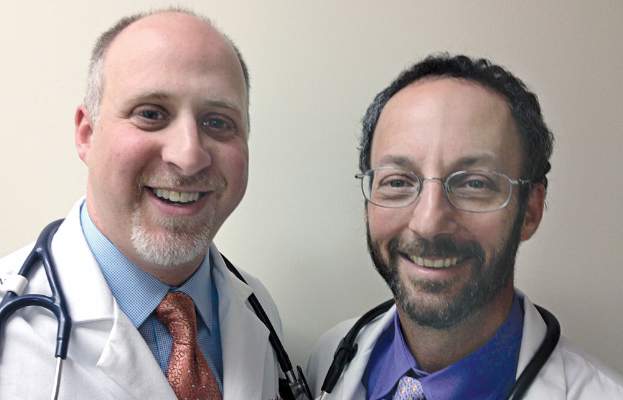
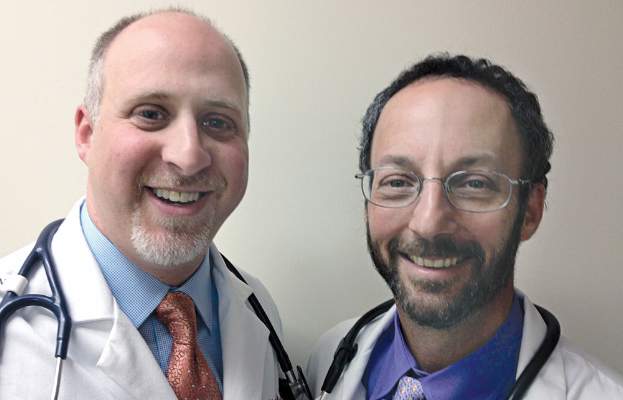
Dr. Notte is a family physician and clinical informaticist for Abington (Pa.) Memorial Hospital. He is a partner in EHR Practice Consultants, a firm that aids physicians in adopting electronic health records. Dr. Skolnik is associate director of the family medicine residency program at Abington Memorial Hospital and professor of family and community medicine at Temple University in Philadelphia.
I’m lost, but I’m making record time.
– A pilot, somewhere over the Pacific Ocean
The other day I was reading the printout of an electronic medical record of a patient transferred to our practice. The record reminded me a lot of my Aunt Tillie. Aunt Tillie was the aunt whom everyone would avoid at family gatherings when I was young because the minute she started talking you could be sure of two things: first, that it would be a long time till she stopped talking, and second, that most of what she had to say simply was not relevant to what anyone was interested in hearing. She was interested in what she was interested in and seemed to care little about the needs of anyone else in the room.
The patient in question was 32 years old and had gone to an emergency room for headache and chest pain. Headache and chest pain can be challenging problems, but there are still certain things in both the history and on physical exam that are relevant and informative. It was hard to find those things in this medical record. After a relatively short history of present illness (HPI) that said my patient had presented with 1 day of headache and chest pain. The HPI on this record took up less than three lines. The assessment scales went on for over two pages. When we see records like this, driven by a system that desires to document every question or scale that every possible insurer might be looking for on every possible patient, we fear that common sense has died.
Among the extraneous information in the EHR was a Morse Fall Scale score. The Morse scale and point system were carefully laid out with the actions to be taken at various levels of risk, from bed in the lowest position to when to use skid-proof slipper socks. Then the Braden Scale for Predicting Pressure Sore Risk was recorded, followed by the Domestic Violence Score, complete with indication of whether the patient was under immediate threat and whether police, social services, and mental health professionals were notified. There also was a pain assessment that was filled out with an area indicating that the patient and her family were instructed to tell someone if her level of pain changed. Seriously. The pain assessment scale was located right after the suicide risk assessment and the depression scale, presumably because if the depression assessment occurred any later in the visit the patient might have scored higher out of desperation.
The death of common sense is neither pretty nor fast. As we fill out scales that answer neither evidence-based preventive health interventions nor meet the current needs of the patient, we have become concerned that we, as physicians, have chosen a path that seems to be the clearest – including all possible questions on all possible patients – but is actually fraught with peril.
We have become so concerned about not missing any potential source of reimbursement and protecting ourselves from any source of liability that our visits take longer and our focus has become distracted from the real problems that patients bring to us. By so doing we end up not accomplishing our goal of maximizing reimbursement because we move slower through our visits, filling out information that is not meaningful to either patient or physician. We also do not protect ourselves from liability when we are distracted by the need to fill out irrelevant information and are subsequently left with less time to get through the important parts of our visit, leaving us to take a less detailed history than we might otherwise have performed.
In 1995, Phillip K. Howard wrote a book about the legal system, The Death of Common Sense (Random House). In it, he argues that the desire to have clear rules that allow uniformity in the operation of law has resulted in a system that is inefficient and “precludes the exercise of judgment.” Mr. Howard argues that, no matter how detailed, laws cannot anticipate all of society’s needs. He goes on to state that “law can’t think, and so law must be entrusted to humans and they must take responsibility for their interpretation of it.”
We find a similar case to what Mr. Howard described to be occurring in medicine today. Patients present as individuals, with complex problems that require well-trained clinicians who can prioritize among the many concerns and determine which algorithms of diagnosis and treatment are appropriate to a given visit on a given day. When each visit follows a rote format, no visit follows the format that best serves the patient.
The argument that each visit is unique is not an argument for chaos in the organization of our visits and record – the visits need to be organized and recorded in a standard fashion. It is, rather, recognition that patients typically present with atypical symptoms and that all patients and visits are different from one another. To provide excellent medical care requires that well-trained clinicians make choices about what should be addressed at any given visit and that our charts and electronic record systems must be driven by patient needs and outcomes, not checkboxes derived from potential needs that are divorced from common sense for the visit at hand.
As we reflect further on this issue, we have come to the conclusion that the difference between our EHR systems and Aunt Tillie is that, when Thanksgiving came, we could avoid Aunt Tillie.
Dr. Notte is a family physician and clinical informaticist for Abington (Pa.) Memorial Hospital. He is a partner in EHR Practice Consultants, a firm that aids physicians in adopting electronic health records. Dr. Skolnik is associate director of the family medicine residency program at Abington Memorial Hospital and professor of family and community medicine at Temple University in Philadelphia.
I’m lost, but I’m making record time.
– A pilot, somewhere over the Pacific Ocean
The other day I was reading the printout of an electronic medical record of a patient transferred to our practice. The record reminded me a lot of my Aunt Tillie. Aunt Tillie was the aunt whom everyone would avoid at family gatherings when I was young because the minute she started talking you could be sure of two things: first, that it would be a long time till she stopped talking, and second, that most of what she had to say simply was not relevant to what anyone was interested in hearing. She was interested in what she was interested in and seemed to care little about the needs of anyone else in the room.
The patient in question was 32 years old and had gone to an emergency room for headache and chest pain. Headache and chest pain can be challenging problems, but there are still certain things in both the history and on physical exam that are relevant and informative. It was hard to find those things in this medical record. After a relatively short history of present illness (HPI) that said my patient had presented with 1 day of headache and chest pain. The HPI on this record took up less than three lines. The assessment scales went on for over two pages. When we see records like this, driven by a system that desires to document every question or scale that every possible insurer might be looking for on every possible patient, we fear that common sense has died.
Among the extraneous information in the EHR was a Morse Fall Scale score. The Morse scale and point system were carefully laid out with the actions to be taken at various levels of risk, from bed in the lowest position to when to use skid-proof slipper socks. Then the Braden Scale for Predicting Pressure Sore Risk was recorded, followed by the Domestic Violence Score, complete with indication of whether the patient was under immediate threat and whether police, social services, and mental health professionals were notified. There also was a pain assessment that was filled out with an area indicating that the patient and her family were instructed to tell someone if her level of pain changed. Seriously. The pain assessment scale was located right after the suicide risk assessment and the depression scale, presumably because if the depression assessment occurred any later in the visit the patient might have scored higher out of desperation.
The death of common sense is neither pretty nor fast. As we fill out scales that answer neither evidence-based preventive health interventions nor meet the current needs of the patient, we have become concerned that we, as physicians, have chosen a path that seems to be the clearest – including all possible questions on all possible patients – but is actually fraught with peril.
We have become so concerned about not missing any potential source of reimbursement and protecting ourselves from any source of liability that our visits take longer and our focus has become distracted from the real problems that patients bring to us. By so doing we end up not accomplishing our goal of maximizing reimbursement because we move slower through our visits, filling out information that is not meaningful to either patient or physician. We also do not protect ourselves from liability when we are distracted by the need to fill out irrelevant information and are subsequently left with less time to get through the important parts of our visit, leaving us to take a less detailed history than we might otherwise have performed.
In 1995, Phillip K. Howard wrote a book about the legal system, The Death of Common Sense (Random House). In it, he argues that the desire to have clear rules that allow uniformity in the operation of law has resulted in a system that is inefficient and “precludes the exercise of judgment.” Mr. Howard argues that, no matter how detailed, laws cannot anticipate all of society’s needs. He goes on to state that “law can’t think, and so law must be entrusted to humans and they must take responsibility for their interpretation of it.”
We find a similar case to what Mr. Howard described to be occurring in medicine today. Patients present as individuals, with complex problems that require well-trained clinicians who can prioritize among the many concerns and determine which algorithms of diagnosis and treatment are appropriate to a given visit on a given day. When each visit follows a rote format, no visit follows the format that best serves the patient.
The argument that each visit is unique is not an argument for chaos in the organization of our visits and record – the visits need to be organized and recorded in a standard fashion. It is, rather, recognition that patients typically present with atypical symptoms and that all patients and visits are different from one another. To provide excellent medical care requires that well-trained clinicians make choices about what should be addressed at any given visit and that our charts and electronic record systems must be driven by patient needs and outcomes, not checkboxes derived from potential needs that are divorced from common sense for the visit at hand.
As we reflect further on this issue, we have come to the conclusion that the difference between our EHR systems and Aunt Tillie is that, when Thanksgiving came, we could avoid Aunt Tillie.
Dr. Notte is a family physician and clinical informaticist for Abington (Pa.) Memorial Hospital. He is a partner in EHR Practice Consultants, a firm that aids physicians in adopting electronic health records. Dr. Skolnik is associate director of the family medicine residency program at Abington Memorial Hospital and professor of family and community medicine at Temple University in Philadelphia.
Drinking while pregnant: Not worth the risk
Recent findings by the American Academy of Pediatrics (AAP) regarding alcohol consumption during pregnancy are quite clear: Don’t drink at all while pregnant. This warning from the AAP is consistent with advice from the American College of Obstetricians and Gynecologists (ACOG) and the Centers for Disease Control and Prevention: No safe level of alcohol consumption during pregnancy has been identified, and no period during pregnancy appears to be safe for alcohol consumption.
In fact, ACOG has recommended screening for alcohol use early in pregnancy since 1977. However, the CDC reports that 1 in 10 pregnant women aged 18-44 years has consumed alcohol in the past 30 days. Some recent studies claim that a small number of drinks during pregnancy could be safe, and I’ve even seen some reports of ob.gyns. allowing alcohol use during pregnancy.

With such disparities between recommendations and patient behavior, the role of the obstetrician is more crucial than ever. Education, prevention, and intervention are essential to good health for mother and baby.
It has long been recognized that heavy drinking during pregnancy is associated with Fetal Alcohol Syndrome, but there are more subtle effects that fall under the umbrella of Fetal Alcohol Spectrum Disorders. These effects may include physical, mental, behavioral, and learning disabilities with lifelong implications and may not be detected until a child starts school.
Screening for alcohol use is of the utmost importance. Three simple steps have been proven effective in identifying women who drink at risky levels and engage them in changing behavior to reduce their risk for an alcohol-exposed pregnancy. These steps include asking about alcohol use, providing brief motivation-enhancing interventions, and follow-up for women who engage in risky drinking. See ACOG’s Fetal Alcohol Syndrome Prevention Tool Kit for more detail.
It is worth noting that a positive screen does not always mean a woman needs to be referred to treatment. Brief intervention by an ob.gyn. is effective and has been shown to reduce risky behavior by 70%. Randomized studies reported significant reductions in alcohol use and improved newborn outcomes after intervention.
Prenatal exposure to alcohol is one of the leading preventable causes of birth defects. With so many risk factors out of a mother’s control during pregnancy, why risk it?
Dr. Conry is assistant physician in chief at the Permanente Medical Group in Roseville, Calif., and associate clinical professor of ob.gyn. at the University of California, Davis. She has been a practicing ob.gyn. with the Permanente Medical Group for more than 20 years. She is a past president of the American College of Obstetricians and Gynecologists.
Recent findings by the American Academy of Pediatrics (AAP) regarding alcohol consumption during pregnancy are quite clear: Don’t drink at all while pregnant. This warning from the AAP is consistent with advice from the American College of Obstetricians and Gynecologists (ACOG) and the Centers for Disease Control and Prevention: No safe level of alcohol consumption during pregnancy has been identified, and no period during pregnancy appears to be safe for alcohol consumption.
In fact, ACOG has recommended screening for alcohol use early in pregnancy since 1977. However, the CDC reports that 1 in 10 pregnant women aged 18-44 years has consumed alcohol in the past 30 days. Some recent studies claim that a small number of drinks during pregnancy could be safe, and I’ve even seen some reports of ob.gyns. allowing alcohol use during pregnancy.
With such disparities between recommendations and patient behavior, the role of the obstetrician is more crucial than ever. Education, prevention, and intervention are essential to good health for mother and baby.
It has long been recognized that heavy drinking during pregnancy is associated with Fetal Alcohol Syndrome, but there are more subtle effects that fall under the umbrella of Fetal Alcohol Spectrum Disorders. These effects may include physical, mental, behavioral, and learning disabilities with lifelong implications and may not be detected until a child starts school.
Screening for alcohol use is of the utmost importance. Three simple steps have been proven effective in identifying women who drink at risky levels and engage them in changing behavior to reduce their risk for an alcohol-exposed pregnancy. These steps include asking about alcohol use, providing brief motivation-enhancing interventions, and follow-up for women who engage in risky drinking. See ACOG’s Fetal Alcohol Syndrome Prevention Tool Kit for more detail.
It is worth noting that a positive screen does not always mean a woman needs to be referred to treatment. Brief intervention by an ob.gyn. is effective and has been shown to reduce risky behavior by 70%. Randomized studies reported significant reductions in alcohol use and improved newborn outcomes after intervention.
Prenatal exposure to alcohol is one of the leading preventable causes of birth defects. With so many risk factors out of a mother’s control during pregnancy, why risk it?
Dr. Conry is assistant physician in chief at the Permanente Medical Group in Roseville, Calif., and associate clinical professor of ob.gyn. at the University of California, Davis. She has been a practicing ob.gyn. with the Permanente Medical Group for more than 20 years. She is a past president of the American College of Obstetricians and Gynecologists.
Recent findings by the American Academy of Pediatrics (AAP) regarding alcohol consumption during pregnancy are quite clear: Don’t drink at all while pregnant. This warning from the AAP is consistent with advice from the American College of Obstetricians and Gynecologists (ACOG) and the Centers for Disease Control and Prevention: No safe level of alcohol consumption during pregnancy has been identified, and no period during pregnancy appears to be safe for alcohol consumption.
In fact, ACOG has recommended screening for alcohol use early in pregnancy since 1977. However, the CDC reports that 1 in 10 pregnant women aged 18-44 years has consumed alcohol in the past 30 days. Some recent studies claim that a small number of drinks during pregnancy could be safe, and I’ve even seen some reports of ob.gyns. allowing alcohol use during pregnancy.
With such disparities between recommendations and patient behavior, the role of the obstetrician is more crucial than ever. Education, prevention, and intervention are essential to good health for mother and baby.
It has long been recognized that heavy drinking during pregnancy is associated with Fetal Alcohol Syndrome, but there are more subtle effects that fall under the umbrella of Fetal Alcohol Spectrum Disorders. These effects may include physical, mental, behavioral, and learning disabilities with lifelong implications and may not be detected until a child starts school.
Screening for alcohol use is of the utmost importance. Three simple steps have been proven effective in identifying women who drink at risky levels and engage them in changing behavior to reduce their risk for an alcohol-exposed pregnancy. These steps include asking about alcohol use, providing brief motivation-enhancing interventions, and follow-up for women who engage in risky drinking. See ACOG’s Fetal Alcohol Syndrome Prevention Tool Kit for more detail.
It is worth noting that a positive screen does not always mean a woman needs to be referred to treatment. Brief intervention by an ob.gyn. is effective and has been shown to reduce risky behavior by 70%. Randomized studies reported significant reductions in alcohol use and improved newborn outcomes after intervention.
Prenatal exposure to alcohol is one of the leading preventable causes of birth defects. With so many risk factors out of a mother’s control during pregnancy, why risk it?
Dr. Conry is assistant physician in chief at the Permanente Medical Group in Roseville, Calif., and associate clinical professor of ob.gyn. at the University of California, Davis. She has been a practicing ob.gyn. with the Permanente Medical Group for more than 20 years. She is a past president of the American College of Obstetricians and Gynecologists.

Providing ambivalent medical advice
When did some doctors become so wishy-washy?
A large part of what we do is guide people through an often-confusing maze of test results and treatment options. I respect patients’ right to make their own decisions, but it came as a surprise to me to find that some doctors are turning such things over to the patients. After all, doctors are the ones who went through over a decade of training to understand the risks, benefits, and goals of each step for them. Granted, I live in Arizona, where you don’t need a doctor’s order to have labs done. You can research whatever you want on Google, decide what work-up you need, and go get whatever labs you want done.
But back to my original point. Recently, one of my patients was admitted to the hospital, then followed up with me in the office. I looked through his test results and told him what I felt the next step should be, ordered a few things, and wrote an instruction sheet to start daily aspirin. I commented that it surprised me the last hadn’t been done as an inpatient.
His answer? “They said I could if I wanted to, but didn’t make a clear suggestion.” I figured this was a simple miscommunication, so I pulled up the hospital chart on my computer. There I found a note from the attending that said, “The patient was told he may or may not want to take a daily aspirin, and that doing so might or might not be to his benefit.” What on Earth?
I understand there are no guarantees in this job. There’s no crystal ball to know for sure that what we’re doing is right. Any drug can cause serious and unexpected complications. We take calculated risks and hope we come out ahead. But to phrase it like this? Where the patient isn’t given the guidance we’re supposed to provide? What’s the point of even being a doctor?
Since then, I’ve noticed similar phrasing in other charts: “We discussed doing a brain MRI, and she’ll let me know what she decides” and “I told her that starting Lamictal may or may not prevent seizures, and to consider it as something she should or shouldn’t do.”
I’m sure some of it is part of the hurried flight-of-ideas dictations we all do when we’re busy at the hospital. There’s also a component of legalese to make sure that we documented discussing risks with the patient.
But I still don’t get the ambivalence. In similar situations, I provide guidance and advice and tell people what I think they should do. I’m not going to force anyone to do anything they don’t want to. If they disagree, I note it and make whatever suggestions I think will help. In the end, it’s their decision. I get that.
When I take my car to get fixed, I don’t want the mechanic to tell me what may or may not need to be repaired, and I hope patients see me the same way.
Dr. Block has a solo neurology practice in Scottsdale, Ariz.
When did some doctors become so wishy-washy?
A large part of what we do is guide people through an often-confusing maze of test results and treatment options. I respect patients’ right to make their own decisions, but it came as a surprise to me to find that some doctors are turning such things over to the patients. After all, doctors are the ones who went through over a decade of training to understand the risks, benefits, and goals of each step for them. Granted, I live in Arizona, where you don’t need a doctor’s order to have labs done. You can research whatever you want on Google, decide what work-up you need, and go get whatever labs you want done.
But back to my original point. Recently, one of my patients was admitted to the hospital, then followed up with me in the office. I looked through his test results and told him what I felt the next step should be, ordered a few things, and wrote an instruction sheet to start daily aspirin. I commented that it surprised me the last hadn’t been done as an inpatient.
His answer? “They said I could if I wanted to, but didn’t make a clear suggestion.” I figured this was a simple miscommunication, so I pulled up the hospital chart on my computer. There I found a note from the attending that said, “The patient was told he may or may not want to take a daily aspirin, and that doing so might or might not be to his benefit.” What on Earth?
I understand there are no guarantees in this job. There’s no crystal ball to know for sure that what we’re doing is right. Any drug can cause serious and unexpected complications. We take calculated risks and hope we come out ahead. But to phrase it like this? Where the patient isn’t given the guidance we’re supposed to provide? What’s the point of even being a doctor?
Since then, I’ve noticed similar phrasing in other charts: “We discussed doing a brain MRI, and she’ll let me know what she decides” and “I told her that starting Lamictal may or may not prevent seizures, and to consider it as something she should or shouldn’t do.”
I’m sure some of it is part of the hurried flight-of-ideas dictations we all do when we’re busy at the hospital. There’s also a component of legalese to make sure that we documented discussing risks with the patient.
But I still don’t get the ambivalence. In similar situations, I provide guidance and advice and tell people what I think they should do. I’m not going to force anyone to do anything they don’t want to. If they disagree, I note it and make whatever suggestions I think will help. In the end, it’s their decision. I get that.
When I take my car to get fixed, I don’t want the mechanic to tell me what may or may not need to be repaired, and I hope patients see me the same way.
Dr. Block has a solo neurology practice in Scottsdale, Ariz.
When did some doctors become so wishy-washy?
A large part of what we do is guide people through an often-confusing maze of test results and treatment options. I respect patients’ right to make their own decisions, but it came as a surprise to me to find that some doctors are turning such things over to the patients. After all, doctors are the ones who went through over a decade of training to understand the risks, benefits, and goals of each step for them. Granted, I live in Arizona, where you don’t need a doctor’s order to have labs done. You can research whatever you want on Google, decide what work-up you need, and go get whatever labs you want done.
But back to my original point. Recently, one of my patients was admitted to the hospital, then followed up with me in the office. I looked through his test results and told him what I felt the next step should be, ordered a few things, and wrote an instruction sheet to start daily aspirin. I commented that it surprised me the last hadn’t been done as an inpatient.
His answer? “They said I could if I wanted to, but didn’t make a clear suggestion.” I figured this was a simple miscommunication, so I pulled up the hospital chart on my computer. There I found a note from the attending that said, “The patient was told he may or may not want to take a daily aspirin, and that doing so might or might not be to his benefit.” What on Earth?
I understand there are no guarantees in this job. There’s no crystal ball to know for sure that what we’re doing is right. Any drug can cause serious and unexpected complications. We take calculated risks and hope we come out ahead. But to phrase it like this? Where the patient isn’t given the guidance we’re supposed to provide? What’s the point of even being a doctor?
Since then, I’ve noticed similar phrasing in other charts: “We discussed doing a brain MRI, and she’ll let me know what she decides” and “I told her that starting Lamictal may or may not prevent seizures, and to consider it as something she should or shouldn’t do.”
I’m sure some of it is part of the hurried flight-of-ideas dictations we all do when we’re busy at the hospital. There’s also a component of legalese to make sure that we documented discussing risks with the patient.
But I still don’t get the ambivalence. In similar situations, I provide guidance and advice and tell people what I think they should do. I’m not going to force anyone to do anything they don’t want to. If they disagree, I note it and make whatever suggestions I think will help. In the end, it’s their decision. I get that.
When I take my car to get fixed, I don’t want the mechanic to tell me what may or may not need to be repaired, and I hope patients see me the same way.
Dr. Block has a solo neurology practice in Scottsdale, Ariz.

Antidepressants for functional dyspepsia
Functional, a.k.a. “nonulcer,” dyspepsia is a challenging diagnosis and likely afflicts many more patients than we have identified in our practices. Functional dyspepsia (FD) is defined by the presence of postprandial fullness, early satiety, epigastric pain or burning, and no evidence of structural disease. These are the patients who do not get better with proton pump inhibitors or feel better after a bowel movement.
After a negative upper endoscopy and Helicobacter pylori stool antigen test, the task turns to symptom control. But what’s the best treatment?
Dr. Nicholas J. Talley of the University of Newcastle in Callaghan, Australia, and colleagues conducted a multicenter, randomized trial evaluating the comparative efficacy of amitriptyline or escitalopram for symptom control, gastric emptying, and meal-induced satiety in patients with FD (Gastroenterology. 2015;149(2):340-9.e2).
Participants were enrolled if they met Rome II criteria for FD requiring that folks in the preceding 12 months have at least 12 weeks of dyspepsia, absence of organic disease, and no relationship to defecation. Patients were randomized to placebo, amitriptyline 50 mg (titrated), or escitalopram 10 mg. Medication was given for 10 weeks. The primary endpoint was adequate relief of symptoms for at least 5 weeks.
A total of 292 patients (most of whom [75%] were female) with an average age of 44 years were randomized. Seventy percent had dysmotility-like FD and 30% had ulcer-like FD.
Patients with ulcer-like FD receiving amitriptyline were more likely to report adequate relief (odds ratio, 3.1; 95% confidence interval, 1.1-9.0). Neither medication affected gastric emptying or meal-induced satiety. Both medications improved overall quality of life.
The data support the use of amitriptyline for ulcer-like FD. Some of these patients may have comorbid psychiatric illness that may be improved with escitalopram. Perhaps this is what is impacting the quality-of-life metric that taps into dimensions above and beyond relief of symptoms (such as sleep disturbance or work/study).
Proton pump inhibitors tend to be overused, and many of our patients take them indefinitely without trying to see how they do off of them. Some patients for whom we have not considered a diagnosis of FD may be on PPIs because we have had nothing else to offer them. Maybe they felt better because of a PPI placebo effect and we have continued them.
If we can, we should review the diagnosis of dyspepsia, consider FD as a possibility etiology for gastrointestinal distress, stop the PPIs, and try amitriptyline.
Dr. Ebbert is professor of medicine, a general internist at the Mayo Clinic in Rochester, Minn., and a diplomate of the American Board of Addiction Medicine. The opinions expressed are those of the author and do not necessarily represent the views and opinions of the Mayo Clinic. The opinions expressed in this article should not be used to diagnose or treat any medical condition nor should they be used as a substitute for medical advice from a qualified, board-certified practicing clinician. Dr. Ebbert has no relevant financial disclosures about this article. Follow him on Twitter @jonebbert.
Functional, a.k.a. “nonulcer,” dyspepsia is a challenging diagnosis and likely afflicts many more patients than we have identified in our practices. Functional dyspepsia (FD) is defined by the presence of postprandial fullness, early satiety, epigastric pain or burning, and no evidence of structural disease. These are the patients who do not get better with proton pump inhibitors or feel better after a bowel movement.
After a negative upper endoscopy and Helicobacter pylori stool antigen test, the task turns to symptom control. But what’s the best treatment?
Dr. Nicholas J. Talley of the University of Newcastle in Callaghan, Australia, and colleagues conducted a multicenter, randomized trial evaluating the comparative efficacy of amitriptyline or escitalopram for symptom control, gastric emptying, and meal-induced satiety in patients with FD (Gastroenterology. 2015;149(2):340-9.e2).
Participants were enrolled if they met Rome II criteria for FD requiring that folks in the preceding 12 months have at least 12 weeks of dyspepsia, absence of organic disease, and no relationship to defecation. Patients were randomized to placebo, amitriptyline 50 mg (titrated), or escitalopram 10 mg. Medication was given for 10 weeks. The primary endpoint was adequate relief of symptoms for at least 5 weeks.
A total of 292 patients (most of whom [75%] were female) with an average age of 44 years were randomized. Seventy percent had dysmotility-like FD and 30% had ulcer-like FD.
Patients with ulcer-like FD receiving amitriptyline were more likely to report adequate relief (odds ratio, 3.1; 95% confidence interval, 1.1-9.0). Neither medication affected gastric emptying or meal-induced satiety. Both medications improved overall quality of life.
The data support the use of amitriptyline for ulcer-like FD. Some of these patients may have comorbid psychiatric illness that may be improved with escitalopram. Perhaps this is what is impacting the quality-of-life metric that taps into dimensions above and beyond relief of symptoms (such as sleep disturbance or work/study).
Proton pump inhibitors tend to be overused, and many of our patients take them indefinitely without trying to see how they do off of them. Some patients for whom we have not considered a diagnosis of FD may be on PPIs because we have had nothing else to offer them. Maybe they felt better because of a PPI placebo effect and we have continued them.
If we can, we should review the diagnosis of dyspepsia, consider FD as a possibility etiology for gastrointestinal distress, stop the PPIs, and try amitriptyline.
Dr. Ebbert is professor of medicine, a general internist at the Mayo Clinic in Rochester, Minn., and a diplomate of the American Board of Addiction Medicine. The opinions expressed are those of the author and do not necessarily represent the views and opinions of the Mayo Clinic. The opinions expressed in this article should not be used to diagnose or treat any medical condition nor should they be used as a substitute for medical advice from a qualified, board-certified practicing clinician. Dr. Ebbert has no relevant financial disclosures about this article. Follow him on Twitter @jonebbert.
Functional, a.k.a. “nonulcer,” dyspepsia is a challenging diagnosis and likely afflicts many more patients than we have identified in our practices. Functional dyspepsia (FD) is defined by the presence of postprandial fullness, early satiety, epigastric pain or burning, and no evidence of structural disease. These are the patients who do not get better with proton pump inhibitors or feel better after a bowel movement.
After a negative upper endoscopy and Helicobacter pylori stool antigen test, the task turns to symptom control. But what’s the best treatment?
Dr. Nicholas J. Talley of the University of Newcastle in Callaghan, Australia, and colleagues conducted a multicenter, randomized trial evaluating the comparative efficacy of amitriptyline or escitalopram for symptom control, gastric emptying, and meal-induced satiety in patients with FD (Gastroenterology. 2015;149(2):340-9.e2).
Participants were enrolled if they met Rome II criteria for FD requiring that folks in the preceding 12 months have at least 12 weeks of dyspepsia, absence of organic disease, and no relationship to defecation. Patients were randomized to placebo, amitriptyline 50 mg (titrated), or escitalopram 10 mg. Medication was given for 10 weeks. The primary endpoint was adequate relief of symptoms for at least 5 weeks.
A total of 292 patients (most of whom [75%] were female) with an average age of 44 years were randomized. Seventy percent had dysmotility-like FD and 30% had ulcer-like FD.
Patients with ulcer-like FD receiving amitriptyline were more likely to report adequate relief (odds ratio, 3.1; 95% confidence interval, 1.1-9.0). Neither medication affected gastric emptying or meal-induced satiety. Both medications improved overall quality of life.
The data support the use of amitriptyline for ulcer-like FD. Some of these patients may have comorbid psychiatric illness that may be improved with escitalopram. Perhaps this is what is impacting the quality-of-life metric that taps into dimensions above and beyond relief of symptoms (such as sleep disturbance or work/study).
Proton pump inhibitors tend to be overused, and many of our patients take them indefinitely without trying to see how they do off of them. Some patients for whom we have not considered a diagnosis of FD may be on PPIs because we have had nothing else to offer them. Maybe they felt better because of a PPI placebo effect and we have continued them.
If we can, we should review the diagnosis of dyspepsia, consider FD as a possibility etiology for gastrointestinal distress, stop the PPIs, and try amitriptyline.
Dr. Ebbert is professor of medicine, a general internist at the Mayo Clinic in Rochester, Minn., and a diplomate of the American Board of Addiction Medicine. The opinions expressed are those of the author and do not necessarily represent the views and opinions of the Mayo Clinic. The opinions expressed in this article should not be used to diagnose or treat any medical condition nor should they be used as a substitute for medical advice from a qualified, board-certified practicing clinician. Dr. Ebbert has no relevant financial disclosures about this article. Follow him on Twitter @jonebbert.

Commentary: Red meat and cancer risk – what your patients should know
It may have come as a surprise to the approximately 60% of Americans who consume red or processed meat that the International Agency for Research on Cancer (IARC), a part of the World Health Organization, recently reported that processed meat is a carcinogen, and red meat is probably a carcinogen to humans.2
This report was based on a review of the world’s body of human and laboratory research by an international working group of experts convened for the IARC Monographs Programme. Since 1971, the IARC Monographs Programme has specifically sought to evaluate the potential carcinogenic effects of a range of exposures – from specific chemicals, complex chemical mixtures, and occupational exposures to physical and biological agents – and lifestyle factors, including dietary factors.

Because of the growing evidence on the potential carcinogenic effects of processed meat and red meat intake, it was not surprising that in 2014, an IARC advisory committee recommended the evaluation of processed and red meat.
While the new report has generated considerable media attention, and many questions about whether or not it is safe to consume processed meat (for example, hot dogs, bacon, sausage, deli meats, etc.) and red meat (e.g., mammalian muscle meat such as beef, pork, and lamb), the working group’s conclusions were not unexpected.
Based on review of earlier studies, the American Cancer Society first recommended limiting consumption of red and processed meat in 20023 and has maintained this recommendation in its latest (2012) Guidelines on Nutrition and Physical Activity for Cancer Prevention.4
The conclusions also are consistent with the World Cancer Research Fund (WCRF)/American Institute for Cancer Research (AICR) Continuous Update Project,5 which found the evidence “convincing” that diets high in red meat and processed meat are associated with increased risk of colorectal cancer.5 Moreover, the IARC conclusions support the United States 2015 Dietary Guidelines for Americans Advisory Committee’s recommendation to consume a healthful dietary pattern that is “lower in red and processed meat.”6
The classifications for both red and processed meats are based primarily on evidence showing an increased risk of colorectal cancer, the third most commonly diagnosed cancer among men and among women in the United States.
In the IARC report, it was noted that a meta-analysis of 10 prospective studies showed a statistically significant 18% (95% confidence interval, 1.10-1.28) increased risk of colorectal cancer per 50 g (about 1.75 ounces) per day of processed meat consumption, and a 17% (95% CI, 1.05-1.31) increased risk of colorectal cancer per 100 g (about 3.5 ounces) per day of red meat.7
In terms of lifetime risk, this means that eating an extra 50 g of processed meat per day would be expected to increase the average person’s risk of ever developing colorectal cancer from about 5% to about 6%. A similar excess risk would be observed for 100 g of red meat consumption.
While this increased risk is modest, for heavy meat eaters and for those at high risk of colorectal cancer, limiting processed and red meat consumption is one way to help reduce their risk of colorectal cancer.
Some mechanisms thought to be responsible include consumption of N-nitroso compounds formed during meat processing, and the endogenous formation of N-nitroso compounds in the gut, which can be catalyzed by heme iron in red meat. High-heat cooking methods such as pan frying or barbecuing produce high concentrations of known or suspected carcinogens, including heterocyclic amines and polycyclic aromatic hydrocarbons.8,9
The data for other cancers are more limited, but positive associations were also seen for processed meat consumption and stomach cancer, and for red meat and cancers of the pancreas and prostate (advanced prostate cancer in particular).2
It is worth keeping in mind that preventing smoking initiation and improving smoking cessation rates remain the most important ways to reduce cancer mortality rates worldwide. In addition, there is considerable evidence that other healthful lifestyle habits also are important for minimizing cancer risk, including limiting alcohol consumption, maintaining a healthy body weight throughout adulthood, being physically active, and consuming a mostly plant-based diet.
Our own research,10 using data from the Cancer Prevention Study II and that of others,11,12 has shown that a lifestyle most consistent with following the American Cancer Society’s Guidelines on Nutrition and Physical Activity for Cancer Prevention13 has marked impact on reducing the risk of developing many types of cancer, as well as dying from cancer, cardiovascular disease, and all causes.
In terms of meat consumption, the American Cancer Society’s guidelines emphasize choosing fish, poultry, or beans as alternatives to processed and red meat. For those who choose to eat red meat, selecting lean cuts and eating smaller portions are recommended.4 The guidelines also recommend preparing meat, poultry, and fish by baking, broiling, or poaching, rather than frying or charbroiling, to reduce the formation of carcinogens during the cooking process.
When discussing behavioral approaches to reduce cancer risk with their patients, physicians, dietitians, and other health care providers may find the WHO classification of processed meat as a carcinogen and red meat as a probable carcinogen helpful in motivating patients to make healthier dietary choices.
References
1. Public Health Nutr. 2011 Apr;14(4):575-83.
2. Lancet Oncol. 2015 Oct 26(doi:10.1016/S1470-2045(15)00444-1).
3. CA Cancer J Clin. 2002 Mar-Apr;52(2):92-119.
4. CA Cancer J Clin. 2012 Jan-Feb;62(1):30-67.
5. World Cancer Research Fund, American Institute for Cancer Research. Colorectal Cancer 2011 Continuous Update Project Report WCRF/AICR;2011.
6. 2015 Dietary Guidelines Scientific Advisory Committee. Scientific Report of the 2015 Dietary Guidelines Advisory Committee. USDA;2015.
7. PLoS One. 2011;6(6):e20456.
8. Meat Sci. 2014 Aug;97(4):583-96.
9. Nutr Res. 2013 Dec;33(12):983-94.
10. Cancer Epidemiol Biomarkers Prev. 2011 Jun;20(6):1089-97.
11. Cancer Prev Res (Phila). 2014 Jan;7(1):42-53.
12. Am J Clin Nutr. 2015 Mar;101(3):558-69.
13. CA Cancer J Clin. 2006 Sep-Oct;56(5):254-81; quiz 313-4.
Dr. Gapstur is the American Cancer Society’s vice president of epidemiology. Dr. McCullough is the American Cancer Society’s strategic director of nutritional epidemiology. Dr. McCullough attended the IARC evaluation as an observer.
It may have come as a surprise to the approximately 60% of Americans who consume red or processed meat that the International Agency for Research on Cancer (IARC), a part of the World Health Organization, recently reported that processed meat is a carcinogen, and red meat is probably a carcinogen to humans.2
This report was based on a review of the world’s body of human and laboratory research by an international working group of experts convened for the IARC Monographs Programme. Since 1971, the IARC Monographs Programme has specifically sought to evaluate the potential carcinogenic effects of a range of exposures – from specific chemicals, complex chemical mixtures, and occupational exposures to physical and biological agents – and lifestyle factors, including dietary factors.
Because of the growing evidence on the potential carcinogenic effects of processed meat and red meat intake, it was not surprising that in 2014, an IARC advisory committee recommended the evaluation of processed and red meat.
While the new report has generated considerable media attention, and many questions about whether or not it is safe to consume processed meat (for example, hot dogs, bacon, sausage, deli meats, etc.) and red meat (e.g., mammalian muscle meat such as beef, pork, and lamb), the working group’s conclusions were not unexpected.
Based on review of earlier studies, the American Cancer Society first recommended limiting consumption of red and processed meat in 20023 and has maintained this recommendation in its latest (2012) Guidelines on Nutrition and Physical Activity for Cancer Prevention.4
The conclusions also are consistent with the World Cancer Research Fund (WCRF)/American Institute for Cancer Research (AICR) Continuous Update Project,5 which found the evidence “convincing” that diets high in red meat and processed meat are associated with increased risk of colorectal cancer.5 Moreover, the IARC conclusions support the United States 2015 Dietary Guidelines for Americans Advisory Committee’s recommendation to consume a healthful dietary pattern that is “lower in red and processed meat.”6
The classifications for both red and processed meats are based primarily on evidence showing an increased risk of colorectal cancer, the third most commonly diagnosed cancer among men and among women in the United States.
In the IARC report, it was noted that a meta-analysis of 10 prospective studies showed a statistically significant 18% (95% confidence interval, 1.10-1.28) increased risk of colorectal cancer per 50 g (about 1.75 ounces) per day of processed meat consumption, and a 17% (95% CI, 1.05-1.31) increased risk of colorectal cancer per 100 g (about 3.5 ounces) per day of red meat.7
In terms of lifetime risk, this means that eating an extra 50 g of processed meat per day would be expected to increase the average person’s risk of ever developing colorectal cancer from about 5% to about 6%. A similar excess risk would be observed for 100 g of red meat consumption.
While this increased risk is modest, for heavy meat eaters and for those at high risk of colorectal cancer, limiting processed and red meat consumption is one way to help reduce their risk of colorectal cancer.
Some mechanisms thought to be responsible include consumption of N-nitroso compounds formed during meat processing, and the endogenous formation of N-nitroso compounds in the gut, which can be catalyzed by heme iron in red meat. High-heat cooking methods such as pan frying or barbecuing produce high concentrations of known or suspected carcinogens, including heterocyclic amines and polycyclic aromatic hydrocarbons.8,9
The data for other cancers are more limited, but positive associations were also seen for processed meat consumption and stomach cancer, and for red meat and cancers of the pancreas and prostate (advanced prostate cancer in particular).2
It is worth keeping in mind that preventing smoking initiation and improving smoking cessation rates remain the most important ways to reduce cancer mortality rates worldwide. In addition, there is considerable evidence that other healthful lifestyle habits also are important for minimizing cancer risk, including limiting alcohol consumption, maintaining a healthy body weight throughout adulthood, being physically active, and consuming a mostly plant-based diet.
Our own research,10 using data from the Cancer Prevention Study II and that of others,11,12 has shown that a lifestyle most consistent with following the American Cancer Society’s Guidelines on Nutrition and Physical Activity for Cancer Prevention13 has marked impact on reducing the risk of developing many types of cancer, as well as dying from cancer, cardiovascular disease, and all causes.
In terms of meat consumption, the American Cancer Society’s guidelines emphasize choosing fish, poultry, or beans as alternatives to processed and red meat. For those who choose to eat red meat, selecting lean cuts and eating smaller portions are recommended.4 The guidelines also recommend preparing meat, poultry, and fish by baking, broiling, or poaching, rather than frying or charbroiling, to reduce the formation of carcinogens during the cooking process.
When discussing behavioral approaches to reduce cancer risk with their patients, physicians, dietitians, and other health care providers may find the WHO classification of processed meat as a carcinogen and red meat as a probable carcinogen helpful in motivating patients to make healthier dietary choices.
References
1. Public Health Nutr. 2011 Apr;14(4):575-83.
2. Lancet Oncol. 2015 Oct 26(doi:10.1016/S1470-2045(15)00444-1).
3. CA Cancer J Clin. 2002 Mar-Apr;52(2):92-119.
4. CA Cancer J Clin. 2012 Jan-Feb;62(1):30-67.
5. World Cancer Research Fund, American Institute for Cancer Research. Colorectal Cancer 2011 Continuous Update Project Report WCRF/AICR;2011.
6. 2015 Dietary Guidelines Scientific Advisory Committee. Scientific Report of the 2015 Dietary Guidelines Advisory Committee. USDA;2015.
7. PLoS One. 2011;6(6):e20456.
8. Meat Sci. 2014 Aug;97(4):583-96.
9. Nutr Res. 2013 Dec;33(12):983-94.
10. Cancer Epidemiol Biomarkers Prev. 2011 Jun;20(6):1089-97.
11. Cancer Prev Res (Phila). 2014 Jan;7(1):42-53.
12. Am J Clin Nutr. 2015 Mar;101(3):558-69.
13. CA Cancer J Clin. 2006 Sep-Oct;56(5):254-81; quiz 313-4.
Dr. Gapstur is the American Cancer Society’s vice president of epidemiology. Dr. McCullough is the American Cancer Society’s strategic director of nutritional epidemiology. Dr. McCullough attended the IARC evaluation as an observer.
It may have come as a surprise to the approximately 60% of Americans who consume red or processed meat that the International Agency for Research on Cancer (IARC), a part of the World Health Organization, recently reported that processed meat is a carcinogen, and red meat is probably a carcinogen to humans.2
This report was based on a review of the world’s body of human and laboratory research by an international working group of experts convened for the IARC Monographs Programme. Since 1971, the IARC Monographs Programme has specifically sought to evaluate the potential carcinogenic effects of a range of exposures – from specific chemicals, complex chemical mixtures, and occupational exposures to physical and biological agents – and lifestyle factors, including dietary factors.
Because of the growing evidence on the potential carcinogenic effects of processed meat and red meat intake, it was not surprising that in 2014, an IARC advisory committee recommended the evaluation of processed and red meat.
While the new report has generated considerable media attention, and many questions about whether or not it is safe to consume processed meat (for example, hot dogs, bacon, sausage, deli meats, etc.) and red meat (e.g., mammalian muscle meat such as beef, pork, and lamb), the working group’s conclusions were not unexpected.
Based on review of earlier studies, the American Cancer Society first recommended limiting consumption of red and processed meat in 20023 and has maintained this recommendation in its latest (2012) Guidelines on Nutrition and Physical Activity for Cancer Prevention.4
The conclusions also are consistent with the World Cancer Research Fund (WCRF)/American Institute for Cancer Research (AICR) Continuous Update Project,5 which found the evidence “convincing” that diets high in red meat and processed meat are associated with increased risk of colorectal cancer.5 Moreover, the IARC conclusions support the United States 2015 Dietary Guidelines for Americans Advisory Committee’s recommendation to consume a healthful dietary pattern that is “lower in red and processed meat.”6
The classifications for both red and processed meats are based primarily on evidence showing an increased risk of colorectal cancer, the third most commonly diagnosed cancer among men and among women in the United States.
In the IARC report, it was noted that a meta-analysis of 10 prospective studies showed a statistically significant 18% (95% confidence interval, 1.10-1.28) increased risk of colorectal cancer per 50 g (about 1.75 ounces) per day of processed meat consumption, and a 17% (95% CI, 1.05-1.31) increased risk of colorectal cancer per 100 g (about 3.5 ounces) per day of red meat.7
In terms of lifetime risk, this means that eating an extra 50 g of processed meat per day would be expected to increase the average person’s risk of ever developing colorectal cancer from about 5% to about 6%. A similar excess risk would be observed for 100 g of red meat consumption.
While this increased risk is modest, for heavy meat eaters and for those at high risk of colorectal cancer, limiting processed and red meat consumption is one way to help reduce their risk of colorectal cancer.
Some mechanisms thought to be responsible include consumption of N-nitroso compounds formed during meat processing, and the endogenous formation of N-nitroso compounds in the gut, which can be catalyzed by heme iron in red meat. High-heat cooking methods such as pan frying or barbecuing produce high concentrations of known or suspected carcinogens, including heterocyclic amines and polycyclic aromatic hydrocarbons.8,9
The data for other cancers are more limited, but positive associations were also seen for processed meat consumption and stomach cancer, and for red meat and cancers of the pancreas and prostate (advanced prostate cancer in particular).2
It is worth keeping in mind that preventing smoking initiation and improving smoking cessation rates remain the most important ways to reduce cancer mortality rates worldwide. In addition, there is considerable evidence that other healthful lifestyle habits also are important for minimizing cancer risk, including limiting alcohol consumption, maintaining a healthy body weight throughout adulthood, being physically active, and consuming a mostly plant-based diet.
Our own research,10 using data from the Cancer Prevention Study II and that of others,11,12 has shown that a lifestyle most consistent with following the American Cancer Society’s Guidelines on Nutrition and Physical Activity for Cancer Prevention13 has marked impact on reducing the risk of developing many types of cancer, as well as dying from cancer, cardiovascular disease, and all causes.
In terms of meat consumption, the American Cancer Society’s guidelines emphasize choosing fish, poultry, or beans as alternatives to processed and red meat. For those who choose to eat red meat, selecting lean cuts and eating smaller portions are recommended.4 The guidelines also recommend preparing meat, poultry, and fish by baking, broiling, or poaching, rather than frying or charbroiling, to reduce the formation of carcinogens during the cooking process.
When discussing behavioral approaches to reduce cancer risk with their patients, physicians, dietitians, and other health care providers may find the WHO classification of processed meat as a carcinogen and red meat as a probable carcinogen helpful in motivating patients to make healthier dietary choices.
References
1. Public Health Nutr. 2011 Apr;14(4):575-83.
2. Lancet Oncol. 2015 Oct 26(doi:10.1016/S1470-2045(15)00444-1).
3. CA Cancer J Clin. 2002 Mar-Apr;52(2):92-119.
4. CA Cancer J Clin. 2012 Jan-Feb;62(1):30-67.
5. World Cancer Research Fund, American Institute for Cancer Research. Colorectal Cancer 2011 Continuous Update Project Report WCRF/AICR;2011.
6. 2015 Dietary Guidelines Scientific Advisory Committee. Scientific Report of the 2015 Dietary Guidelines Advisory Committee. USDA;2015.
7. PLoS One. 2011;6(6):e20456.
8. Meat Sci. 2014 Aug;97(4):583-96.
9. Nutr Res. 2013 Dec;33(12):983-94.
10. Cancer Epidemiol Biomarkers Prev. 2011 Jun;20(6):1089-97.
11. Cancer Prev Res (Phila). 2014 Jan;7(1):42-53.
12. Am J Clin Nutr. 2015 Mar;101(3):558-69.
13. CA Cancer J Clin. 2006 Sep-Oct;56(5):254-81; quiz 313-4.
Dr. Gapstur is the American Cancer Society’s vice president of epidemiology. Dr. McCullough is the American Cancer Society’s strategic director of nutritional epidemiology. Dr. McCullough attended the IARC evaluation as an observer.

Primum Non Nocere
In 1995, because of an inadvertent overdose of chemotherapy, a mother of two and beloved Boston Globe health reporter died.1 In 2001, an 18-month-old daughter and sister died of dehydration and an erroneously administered narcotic.2 In 2003, a father of two and award-winning producer for CBS died from a potentially deadly mix of drugs given with dangerous frequency.3
These are a mere representation of the number of medication errors that occur daily. In fact, on average, a hospitalized patient is subject to at least one medication error per day, which is a sobering statistic.1 These events and well-documented evidence of inadequate treatments have fueled research on prevention of medication errors—but those are but one component of the ongoing issue of patient safety in health care.
Patient safety has been on the agenda of the Institute of Medicine (IOM) for decades. Since the initial publication in 2000, the focus of To Err Is Human: Building a Safer Health System and the subsequent Quality Chasm series has been on how health care organizations emphasize patient safety, prevent medical errors, mitigate health care–associated infections and postoperative complications, and tackle breaches in safety when they occur. All these efforts concentrated primarily on medication-use processes, prescribing, packaging and education, and improving the “processes of care to ensure that patients are safe from accidental injury.”4 However, we have consistently overlooked another major problem in patient safety: diagnostic errors.
One aim of the Harvard Medical Practice Study I (1991) was developing contemporary and more reliable estimates of adverse events and negligence in hospitalized patients. The researchers defined negligence as “care that fell below the standard expected of physicians in their community.”5 In that study, the rate of adverse events due to negligence was 27.6%. In the subsequent Harvard Medical Practice Study II, researchers identified 1,276 adverse events and noted that 13.8% of them were the result of diagnostic errors.6 Further, in a systematic review of autopsy studies conducted over 40 years, data revealed that roughly 9% of subjects had a major health problem that went undetected while they were alive.6
The results of these studies are evidence that thousands of hospitalized patients die every year due to diagnostic errors. Despite data from autopsy and malpractice claims that identify diagnostic errors as preventable causes of morbidity and mortality, and the frequency with which misdiagnosis occurs, this matter has not received much consideration.7
In 2009, Newman-Toker and colleagues called attention to this oversight, recommending that diagnostic errors become the next focus of patient safety initiatives.7 Sadly, in a recent report from the IOM, we read that “most Americans will encounter at least one diagnostic error in their lifetime, sometimes with severe consequences for their physical and mental health.”8
And so we again turn our attention to improving how we deliver health care. The latest IOM report in the Quality Chasm series, Improving Diagnosis in Health Care, emphasizes the grave category of medical errors: errors of diagnosis, which include inaccurate or delayed diagnoses.8 We all know that correct and timely diagnosis is crucial to the ability to clarify a health problem, and it provides the basis for all decisions on how to solve that problem. While cure may not be possible in every situation, at the very least, our plan of care should not result in harm. What we also know is that we are members of a team, and it is within that team that we can take up the gauntlet of improving diagnosis and reducing the incidence of diagnostic errors.
The IOM Committee members who developed this report provided the following eight goals to achieve the outcome of improved diagnosis and reduced errors:
• Facilitate more effective teamwork in the diagnostic process among health care professionals, patients, and their families
• Enhance health care professional education and training in the diagnostic process
• Ensure that health information technologies support patients and health care professionals in the diagnostic process
• Develop and deploy approaches to identify, learn from, and reduce diagnostic errors and near misses in clinical practice
• Establish a work system and culture that supports the diagnostic process and improvements in diagnostic performance
• Develop a reporting environment and medical liability system that facilitates improved diagnosis through learning from diagnostic errors and near misses
• Design a payment and care delivery environment that supports the diagnostic process
• Provide dedicated funding for research on the diagnostic process and diagnostic errors.8
NPs and PAs are integral to the success of this initiative. Our responsibility, as key stakeholders in our health care system, is to identify situations that might result in these types of errors and be proactive in mitigating them. Moreover, it is our professional and moral obligation to take an active, even a leadership, role in this critical endeavor.
Read the report (available at www.nap.edu/21794) and lead the charge in your setting. I am interested in how you think this initiative will evolve, and what role you will take in advancing it as a priority in your setting; let me know by writing to NPEditor@frontlinemedcom.com.
REFERENCES
1. Aspden P, Wolcott J, Bootman JL, Cronenwett LR, eds; Committee on Identifying and Preventing Medication Errors, Institute of Medicine. Preventing Medication Errors: Quality Chasm Series. Washington, DC: National Academies Press; 2007:27.
2. Institute for Healthcare Improvement. What happened to Josie? www.ihi.org/education/IHIOpenSchool/resources/Pages/Activities/WhatHappenedtoJosieKing.aspx. Accessed October 5, 2015.
3. Andrzejczak OV. “60 Minutes” ace’s death echoes his own investigations. Houston Chronicle. July 30, 2009. www.chron.com/news/article/60-Minutes-ace-s-death-echoes-his-own-1747718.php. Accessed October 5, 2015.
4. Kohn LT, Corrigan JM, Donaldson MS, eds; Committee on Quality of Health Care in America, Institute of Medicine. To Err Is Human: Building a Safer Health System. Washington, DC: National Academies Press; 2000.
5. Brennan TA, Leape LL, Laird NM, et al. Incidence of adverse events and negligence in hospitalized patients—results of the Harvard Medical Practice Study I. N Engl J Med. 1991; 324:370-376.
6. Leape LL, Brennan TA, Laird N, et al. The nature of adverse events in hospitalized patients—results of the Harvard Medical Practice Study II. N Engl J Med. 1991;324: 377-384.
7. Newman-Toker DE, Pronovost PJ. Diagnostic errors—the next frontier for patient safety. JAMA. 2009;301(10):1060-1062.
8. Balogh EP, Miller BT, Ball JR, eds; Committee on Diagnostic Error in Health Care, Institute of Medicine. Improving Diagnosis in Health Care. Washington, DC: The National Academies Press; 2015.
In 1995, because of an inadvertent overdose of chemotherapy, a mother of two and beloved Boston Globe health reporter died.1 In 2001, an 18-month-old daughter and sister died of dehydration and an erroneously administered narcotic.2 In 2003, a father of two and award-winning producer for CBS died from a potentially deadly mix of drugs given with dangerous frequency.3
These are a mere representation of the number of medication errors that occur daily. In fact, on average, a hospitalized patient is subject to at least one medication error per day, which is a sobering statistic.1 These events and well-documented evidence of inadequate treatments have fueled research on prevention of medication errors—but those are but one component of the ongoing issue of patient safety in health care.
Patient safety has been on the agenda of the Institute of Medicine (IOM) for decades. Since the initial publication in 2000, the focus of To Err Is Human: Building a Safer Health System and the subsequent Quality Chasm series has been on how health care organizations emphasize patient safety, prevent medical errors, mitigate health care–associated infections and postoperative complications, and tackle breaches in safety when they occur. All these efforts concentrated primarily on medication-use processes, prescribing, packaging and education, and improving the “processes of care to ensure that patients are safe from accidental injury.”4 However, we have consistently overlooked another major problem in patient safety: diagnostic errors.
One aim of the Harvard Medical Practice Study I (1991) was developing contemporary and more reliable estimates of adverse events and negligence in hospitalized patients. The researchers defined negligence as “care that fell below the standard expected of physicians in their community.”5 In that study, the rate of adverse events due to negligence was 27.6%. In the subsequent Harvard Medical Practice Study II, researchers identified 1,276 adverse events and noted that 13.8% of them were the result of diagnostic errors.6 Further, in a systematic review of autopsy studies conducted over 40 years, data revealed that roughly 9% of subjects had a major health problem that went undetected while they were alive.6
The results of these studies are evidence that thousands of hospitalized patients die every year due to diagnostic errors. Despite data from autopsy and malpractice claims that identify diagnostic errors as preventable causes of morbidity and mortality, and the frequency with which misdiagnosis occurs, this matter has not received much consideration.7
In 2009, Newman-Toker and colleagues called attention to this oversight, recommending that diagnostic errors become the next focus of patient safety initiatives.7 Sadly, in a recent report from the IOM, we read that “most Americans will encounter at least one diagnostic error in their lifetime, sometimes with severe consequences for their physical and mental health.”8
And so we again turn our attention to improving how we deliver health care. The latest IOM report in the Quality Chasm series, Improving Diagnosis in Health Care, emphasizes the grave category of medical errors: errors of diagnosis, which include inaccurate or delayed diagnoses.8 We all know that correct and timely diagnosis is crucial to the ability to clarify a health problem, and it provides the basis for all decisions on how to solve that problem. While cure may not be possible in every situation, at the very least, our plan of care should not result in harm. What we also know is that we are members of a team, and it is within that team that we can take up the gauntlet of improving diagnosis and reducing the incidence of diagnostic errors.
The IOM Committee members who developed this report provided the following eight goals to achieve the outcome of improved diagnosis and reduced errors:
• Facilitate more effective teamwork in the diagnostic process among health care professionals, patients, and their families
• Enhance health care professional education and training in the diagnostic process
• Ensure that health information technologies support patients and health care professionals in the diagnostic process
• Develop and deploy approaches to identify, learn from, and reduce diagnostic errors and near misses in clinical practice
• Establish a work system and culture that supports the diagnostic process and improvements in diagnostic performance
• Develop a reporting environment and medical liability system that facilitates improved diagnosis through learning from diagnostic errors and near misses
• Design a payment and care delivery environment that supports the diagnostic process
• Provide dedicated funding for research on the diagnostic process and diagnostic errors.8
NPs and PAs are integral to the success of this initiative. Our responsibility, as key stakeholders in our health care system, is to identify situations that might result in these types of errors and be proactive in mitigating them. Moreover, it is our professional and moral obligation to take an active, even a leadership, role in this critical endeavor.
Read the report (available at www.nap.edu/21794) and lead the charge in your setting. I am interested in how you think this initiative will evolve, and what role you will take in advancing it as a priority in your setting; let me know by writing to NPEditor@frontlinemedcom.com.
REFERENCES
1. Aspden P, Wolcott J, Bootman JL, Cronenwett LR, eds; Committee on Identifying and Preventing Medication Errors, Institute of Medicine. Preventing Medication Errors: Quality Chasm Series. Washington, DC: National Academies Press; 2007:27.
2. Institute for Healthcare Improvement. What happened to Josie? www.ihi.org/education/IHIOpenSchool/resources/Pages/Activities/WhatHappenedtoJosieKing.aspx. Accessed October 5, 2015.
3. Andrzejczak OV. “60 Minutes” ace’s death echoes his own investigations. Houston Chronicle. July 30, 2009. www.chron.com/news/article/60-Minutes-ace-s-death-echoes-his-own-1747718.php. Accessed October 5, 2015.
4. Kohn LT, Corrigan JM, Donaldson MS, eds; Committee on Quality of Health Care in America, Institute of Medicine. To Err Is Human: Building a Safer Health System. Washington, DC: National Academies Press; 2000.
5. Brennan TA, Leape LL, Laird NM, et al. Incidence of adverse events and negligence in hospitalized patients—results of the Harvard Medical Practice Study I. N Engl J Med. 1991; 324:370-376.
6. Leape LL, Brennan TA, Laird N, et al. The nature of adverse events in hospitalized patients—results of the Harvard Medical Practice Study II. N Engl J Med. 1991;324: 377-384.
7. Newman-Toker DE, Pronovost PJ. Diagnostic errors—the next frontier for patient safety. JAMA. 2009;301(10):1060-1062.
8. Balogh EP, Miller BT, Ball JR, eds; Committee on Diagnostic Error in Health Care, Institute of Medicine. Improving Diagnosis in Health Care. Washington, DC: The National Academies Press; 2015.
In 1995, because of an inadvertent overdose of chemotherapy, a mother of two and beloved Boston Globe health reporter died.1 In 2001, an 18-month-old daughter and sister died of dehydration and an erroneously administered narcotic.2 In 2003, a father of two and award-winning producer for CBS died from a potentially deadly mix of drugs given with dangerous frequency.3
These are a mere representation of the number of medication errors that occur daily. In fact, on average, a hospitalized patient is subject to at least one medication error per day, which is a sobering statistic.1 These events and well-documented evidence of inadequate treatments have fueled research on prevention of medication errors—but those are but one component of the ongoing issue of patient safety in health care.
Patient safety has been on the agenda of the Institute of Medicine (IOM) for decades. Since the initial publication in 2000, the focus of To Err Is Human: Building a Safer Health System and the subsequent Quality Chasm series has been on how health care organizations emphasize patient safety, prevent medical errors, mitigate health care–associated infections and postoperative complications, and tackle breaches in safety when they occur. All these efforts concentrated primarily on medication-use processes, prescribing, packaging and education, and improving the “processes of care to ensure that patients are safe from accidental injury.”4 However, we have consistently overlooked another major problem in patient safety: diagnostic errors.
One aim of the Harvard Medical Practice Study I (1991) was developing contemporary and more reliable estimates of adverse events and negligence in hospitalized patients. The researchers defined negligence as “care that fell below the standard expected of physicians in their community.”5 In that study, the rate of adverse events due to negligence was 27.6%. In the subsequent Harvard Medical Practice Study II, researchers identified 1,276 adverse events and noted that 13.8% of them were the result of diagnostic errors.6 Further, in a systematic review of autopsy studies conducted over 40 years, data revealed that roughly 9% of subjects had a major health problem that went undetected while they were alive.6
The results of these studies are evidence that thousands of hospitalized patients die every year due to diagnostic errors. Despite data from autopsy and malpractice claims that identify diagnostic errors as preventable causes of morbidity and mortality, and the frequency with which misdiagnosis occurs, this matter has not received much consideration.7
In 2009, Newman-Toker and colleagues called attention to this oversight, recommending that diagnostic errors become the next focus of patient safety initiatives.7 Sadly, in a recent report from the IOM, we read that “most Americans will encounter at least one diagnostic error in their lifetime, sometimes with severe consequences for their physical and mental health.”8
And so we again turn our attention to improving how we deliver health care. The latest IOM report in the Quality Chasm series, Improving Diagnosis in Health Care, emphasizes the grave category of medical errors: errors of diagnosis, which include inaccurate or delayed diagnoses.8 We all know that correct and timely diagnosis is crucial to the ability to clarify a health problem, and it provides the basis for all decisions on how to solve that problem. While cure may not be possible in every situation, at the very least, our plan of care should not result in harm. What we also know is that we are members of a team, and it is within that team that we can take up the gauntlet of improving diagnosis and reducing the incidence of diagnostic errors.
The IOM Committee members who developed this report provided the following eight goals to achieve the outcome of improved diagnosis and reduced errors:
• Facilitate more effective teamwork in the diagnostic process among health care professionals, patients, and their families
• Enhance health care professional education and training in the diagnostic process
• Ensure that health information technologies support patients and health care professionals in the diagnostic process
• Develop and deploy approaches to identify, learn from, and reduce diagnostic errors and near misses in clinical practice
• Establish a work system and culture that supports the diagnostic process and improvements in diagnostic performance
• Develop a reporting environment and medical liability system that facilitates improved diagnosis through learning from diagnostic errors and near misses
• Design a payment and care delivery environment that supports the diagnostic process
• Provide dedicated funding for research on the diagnostic process and diagnostic errors.8
NPs and PAs are integral to the success of this initiative. Our responsibility, as key stakeholders in our health care system, is to identify situations that might result in these types of errors and be proactive in mitigating them. Moreover, it is our professional and moral obligation to take an active, even a leadership, role in this critical endeavor.
Read the report (available at www.nap.edu/21794) and lead the charge in your setting. I am interested in how you think this initiative will evolve, and what role you will take in advancing it as a priority in your setting; let me know by writing to NPEditor@frontlinemedcom.com.
REFERENCES
1. Aspden P, Wolcott J, Bootman JL, Cronenwett LR, eds; Committee on Identifying and Preventing Medication Errors, Institute of Medicine. Preventing Medication Errors: Quality Chasm Series. Washington, DC: National Academies Press; 2007:27.
2. Institute for Healthcare Improvement. What happened to Josie? www.ihi.org/education/IHIOpenSchool/resources/Pages/Activities/WhatHappenedtoJosieKing.aspx. Accessed October 5, 2015.
3. Andrzejczak OV. “60 Minutes” ace’s death echoes his own investigations. Houston Chronicle. July 30, 2009. www.chron.com/news/article/60-Minutes-ace-s-death-echoes-his-own-1747718.php. Accessed October 5, 2015.
4. Kohn LT, Corrigan JM, Donaldson MS, eds; Committee on Quality of Health Care in America, Institute of Medicine. To Err Is Human: Building a Safer Health System. Washington, DC: National Academies Press; 2000.
5. Brennan TA, Leape LL, Laird NM, et al. Incidence of adverse events and negligence in hospitalized patients—results of the Harvard Medical Practice Study I. N Engl J Med. 1991; 324:370-376.
6. Leape LL, Brennan TA, Laird N, et al. The nature of adverse events in hospitalized patients—results of the Harvard Medical Practice Study II. N Engl J Med. 1991;324: 377-384.
7. Newman-Toker DE, Pronovost PJ. Diagnostic errors—the next frontier for patient safety. JAMA. 2009;301(10):1060-1062.
8. Balogh EP, Miller BT, Ball JR, eds; Committee on Diagnostic Error in Health Care, Institute of Medicine. Improving Diagnosis in Health Care. Washington, DC: The National Academies Press; 2015.
Time or content?
In May 2015, the American Academy of Pediatrics convened an invitation-only symposium titled Growing Up Digital. Its goal was to reconsider the Academy’s advice on “screen time” and make sure that its policies were “science-driven, not based merely on the precautionary principle.” (“Beyond ‘turn it off’: How to advice families on media use,” Brown et al. AAP News, October 2015). Driven by the concern that the current AAP advice was becoming obsolete and as a result likely to be ignored by parents faced with the realities of our digital culture, the participants investigated the available data on “early learning, game-based learning, social/emotional and developmental concerns, and strategies to foster digital citizenship.”
Their findings have been distilled into a collection of “key messages” for parents published in the October, 2015 AAP News. It’s hard to argue with most of the common sense advice that includes “Role modeling is critical; playtime is important; co-engagement counts; set limits; and create tech-free zones.” A set of formal recommendations is in the works and will be published at a later date.

It is comforting to learn of the academy’s concern to keep its advice current and evidence-based. It is frustrating for those of us expected to deliver the party line when we suspect that parents are muttering to themselves, “Really?” I assume that most pediatricians at the parent/doctor interface will join me in welcoming much of the more nuanced advice in the final recommendations, particularly those for older children and adolescents.
However, if the new document is not carefully worded and promoted, I fear that the potent message of “no screen time under age 2” will be lost or diluted. While the symposium participants may have uncovered some evidence of benefit or at least no serious harm from some digital platforms, does this warrant softening the catchy and clear advice of “no screen time under 2?” I have to ask myself when would a child under the age of 2 being raised in a healthy environment have time for electronic distraction?
As Dr. Ari Brown, Dr. Donald L. Shifrin, and Dr. David L. Hill ask parents in their AAP News piece, “Does your child’s technology use help or hinder participation in other activities?” Just doing a little quick math: Wake up at 7 a.m., breakfast, playground time, maybe a midmorning nap, snack, lunch, afternoon nap, afternoon playground time, maybe another snack, dinner, bedtime story and lights out at 7 p.m. I don’t see a spot to shoehorn in some screen time without eliminating a developmentally and socially important activity. You could replace the hard cover book at bedtime with an electronic one on a tablet, but in my experience that runs the risk of replacing a soporific activity with one that is too visually stimulating.
One could argue that depriving a young child of screen time is going to put him behind his peers who have become masterful web navigators by the time they are 18 months. Rubbish. The learning curve for most electronic devices is so short that the “deprived” child will catch up in a couple of dozen clicks. However, screens require little more than a moving and tapping index finger. What about those other manipulative skills and the strength and coordination of the muscles sitting unused during screen time?
Unfortunately, the crafters of these new guidelines have repeated the same mistake the academy has made before when they observe, “The quality of the content is more important than the platform or time spent with media.” In my opinion, if the time spent on a screen is kept sufficiently short, children won’t squander it on bad stuff for very long nor will what they see be that harmful. Burdening parents with the task of determining quality is unrealistic. However, setting a time limit is far more workable and enforceable.
Finally, when it comes to parents enforcing no screen time under 2, everyone knows that Skyping with Grandma and Grandpa gets a free pass.
Dr. Wilkoff practiced primary care pediatrics in Brunswick, Maine, for nearly 40 years. He has authored several books on behavioral pediatrics, including “Coping With a Picky Eater.” Email him at pdnews@frontlinemedcom.com.
In May 2015, the American Academy of Pediatrics convened an invitation-only symposium titled Growing Up Digital. Its goal was to reconsider the Academy’s advice on “screen time” and make sure that its policies were “science-driven, not based merely on the precautionary principle.” (“Beyond ‘turn it off’: How to advice families on media use,” Brown et al. AAP News, October 2015). Driven by the concern that the current AAP advice was becoming obsolete and as a result likely to be ignored by parents faced with the realities of our digital culture, the participants investigated the available data on “early learning, game-based learning, social/emotional and developmental concerns, and strategies to foster digital citizenship.”
Their findings have been distilled into a collection of “key messages” for parents published in the October, 2015 AAP News. It’s hard to argue with most of the common sense advice that includes “Role modeling is critical; playtime is important; co-engagement counts; set limits; and create tech-free zones.” A set of formal recommendations is in the works and will be published at a later date.
It is comforting to learn of the academy’s concern to keep its advice current and evidence-based. It is frustrating for those of us expected to deliver the party line when we suspect that parents are muttering to themselves, “Really?” I assume that most pediatricians at the parent/doctor interface will join me in welcoming much of the more nuanced advice in the final recommendations, particularly those for older children and adolescents.
However, if the new document is not carefully worded and promoted, I fear that the potent message of “no screen time under age 2” will be lost or diluted. While the symposium participants may have uncovered some evidence of benefit or at least no serious harm from some digital platforms, does this warrant softening the catchy and clear advice of “no screen time under 2?” I have to ask myself when would a child under the age of 2 being raised in a healthy environment have time for electronic distraction?
As Dr. Ari Brown, Dr. Donald L. Shifrin, and Dr. David L. Hill ask parents in their AAP News piece, “Does your child’s technology use help or hinder participation in other activities?” Just doing a little quick math: Wake up at 7 a.m., breakfast, playground time, maybe a midmorning nap, snack, lunch, afternoon nap, afternoon playground time, maybe another snack, dinner, bedtime story and lights out at 7 p.m. I don’t see a spot to shoehorn in some screen time without eliminating a developmentally and socially important activity. You could replace the hard cover book at bedtime with an electronic one on a tablet, but in my experience that runs the risk of replacing a soporific activity with one that is too visually stimulating.
One could argue that depriving a young child of screen time is going to put him behind his peers who have become masterful web navigators by the time they are 18 months. Rubbish. The learning curve for most electronic devices is so short that the “deprived” child will catch up in a couple of dozen clicks. However, screens require little more than a moving and tapping index finger. What about those other manipulative skills and the strength and coordination of the muscles sitting unused during screen time?
Unfortunately, the crafters of these new guidelines have repeated the same mistake the academy has made before when they observe, “The quality of the content is more important than the platform or time spent with media.” In my opinion, if the time spent on a screen is kept sufficiently short, children won’t squander it on bad stuff for very long nor will what they see be that harmful. Burdening parents with the task of determining quality is unrealistic. However, setting a time limit is far more workable and enforceable.
Finally, when it comes to parents enforcing no screen time under 2, everyone knows that Skyping with Grandma and Grandpa gets a free pass.
Dr. Wilkoff practiced primary care pediatrics in Brunswick, Maine, for nearly 40 years. He has authored several books on behavioral pediatrics, including “Coping With a Picky Eater.” Email him at pdnews@frontlinemedcom.com.
In May 2015, the American Academy of Pediatrics convened an invitation-only symposium titled Growing Up Digital. Its goal was to reconsider the Academy’s advice on “screen time” and make sure that its policies were “science-driven, not based merely on the precautionary principle.” (“Beyond ‘turn it off’: How to advice families on media use,” Brown et al. AAP News, October 2015). Driven by the concern that the current AAP advice was becoming obsolete and as a result likely to be ignored by parents faced with the realities of our digital culture, the participants investigated the available data on “early learning, game-based learning, social/emotional and developmental concerns, and strategies to foster digital citizenship.”
Their findings have been distilled into a collection of “key messages” for parents published in the October, 2015 AAP News. It’s hard to argue with most of the common sense advice that includes “Role modeling is critical; playtime is important; co-engagement counts; set limits; and create tech-free zones.” A set of formal recommendations is in the works and will be published at a later date.
It is comforting to learn of the academy’s concern to keep its advice current and evidence-based. It is frustrating for those of us expected to deliver the party line when we suspect that parents are muttering to themselves, “Really?” I assume that most pediatricians at the parent/doctor interface will join me in welcoming much of the more nuanced advice in the final recommendations, particularly those for older children and adolescents.
However, if the new document is not carefully worded and promoted, I fear that the potent message of “no screen time under age 2” will be lost or diluted. While the symposium participants may have uncovered some evidence of benefit or at least no serious harm from some digital platforms, does this warrant softening the catchy and clear advice of “no screen time under 2?” I have to ask myself when would a child under the age of 2 being raised in a healthy environment have time for electronic distraction?
As Dr. Ari Brown, Dr. Donald L. Shifrin, and Dr. David L. Hill ask parents in their AAP News piece, “Does your child’s technology use help or hinder participation in other activities?” Just doing a little quick math: Wake up at 7 a.m., breakfast, playground time, maybe a midmorning nap, snack, lunch, afternoon nap, afternoon playground time, maybe another snack, dinner, bedtime story and lights out at 7 p.m. I don’t see a spot to shoehorn in some screen time without eliminating a developmentally and socially important activity. You could replace the hard cover book at bedtime with an electronic one on a tablet, but in my experience that runs the risk of replacing a soporific activity with one that is too visually stimulating.
One could argue that depriving a young child of screen time is going to put him behind his peers who have become masterful web navigators by the time they are 18 months. Rubbish. The learning curve for most electronic devices is so short that the “deprived” child will catch up in a couple of dozen clicks. However, screens require little more than a moving and tapping index finger. What about those other manipulative skills and the strength and coordination of the muscles sitting unused during screen time?
Unfortunately, the crafters of these new guidelines have repeated the same mistake the academy has made before when they observe, “The quality of the content is more important than the platform or time spent with media.” In my opinion, if the time spent on a screen is kept sufficiently short, children won’t squander it on bad stuff for very long nor will what they see be that harmful. Burdening parents with the task of determining quality is unrealistic. However, setting a time limit is far more workable and enforceable.
Finally, when it comes to parents enforcing no screen time under 2, everyone knows that Skyping with Grandma and Grandpa gets a free pass.
Dr. Wilkoff practiced primary care pediatrics in Brunswick, Maine, for nearly 40 years. He has authored several books on behavioral pediatrics, including “Coping With a Picky Eater.” Email him at pdnews@frontlinemedcom.com.

What does the evidence really say about acupuncture for IBS?
Dr. Hickner’s conclusion from his editorial, “The mainstreaming of alternative therapies” (J Fam Pract. 2015;64:451) that acupuncture “can relieve symptoms” of irritable bowel syndrome (IBS) is not based on “solid evidence.” I read the same abstract from the Cochrane database on acupuncture for IBS that he cited in his editorial but came to a different conclusion.
According to the Cochrane authors’ conclusions, “Sham-controlled RCTs have found no benefits of acupuncture…for IBS symptom severity or IBS-related quality of life.” The authors noted a risk of “high” bias in all of the other studies in the Cochrane database. This important caveat should serve as a caution to any physician seeking to draw a conclusion from those other studies.
Paul D. Fuchs, MD
Laurel Hill, NC
Author’s response:
Dr. Fuchs is right in calling me to task on this particular meta-analysis. I based my comment on the finding that acupuncture was better than 2 pharmacologic therapies that have shown benefit for patients with IBS, but the quality of the studies was not high, as Dr. Fuchs points out.
John Hickner, MD, MSc
Editor-in-chief, The Journal of Family Practice
Dr. Hickner’s conclusion from his editorial, “The mainstreaming of alternative therapies” (J Fam Pract. 2015;64:451) that acupuncture “can relieve symptoms” of irritable bowel syndrome (IBS) is not based on “solid evidence.” I read the same abstract from the Cochrane database on acupuncture for IBS that he cited in his editorial but came to a different conclusion.
According to the Cochrane authors’ conclusions, “Sham-controlled RCTs have found no benefits of acupuncture…for IBS symptom severity or IBS-related quality of life.” The authors noted a risk of “high” bias in all of the other studies in the Cochrane database. This important caveat should serve as a caution to any physician seeking to draw a conclusion from those other studies.
Paul D. Fuchs, MD
Laurel Hill, NC
Author’s response:
Dr. Fuchs is right in calling me to task on this particular meta-analysis. I based my comment on the finding that acupuncture was better than 2 pharmacologic therapies that have shown benefit for patients with IBS, but the quality of the studies was not high, as Dr. Fuchs points out.
John Hickner, MD, MSc
Editor-in-chief, The Journal of Family Practice
Dr. Hickner’s conclusion from his editorial, “The mainstreaming of alternative therapies” (J Fam Pract. 2015;64:451) that acupuncture “can relieve symptoms” of irritable bowel syndrome (IBS) is not based on “solid evidence.” I read the same abstract from the Cochrane database on acupuncture for IBS that he cited in his editorial but came to a different conclusion.
According to the Cochrane authors’ conclusions, “Sham-controlled RCTs have found no benefits of acupuncture…for IBS symptom severity or IBS-related quality of life.” The authors noted a risk of “high” bias in all of the other studies in the Cochrane database. This important caveat should serve as a caution to any physician seeking to draw a conclusion from those other studies.
Paul D. Fuchs, MD
Laurel Hill, NC
Author’s response:
Dr. Fuchs is right in calling me to task on this particular meta-analysis. I based my comment on the finding that acupuncture was better than 2 pharmacologic therapies that have shown benefit for patients with IBS, but the quality of the studies was not high, as Dr. Fuchs points out.
John Hickner, MD, MSc
Editor-in-chief, The Journal of Family Practice
Sizing up EMRs and patient care from the other side of the bed rail
Dr. Unger’s guest editorial, “Med students: Look up from your EMRs” (J Fam Pract. 2015;64:517-518), vividly describes what those who have been paying attention see quite clearly: Not only has the widespread implementation of electronic medical records (EMRs) failed to deliver all it has promised, but it has made patient care worse. Many students and members of the health care team spend as little time as possible talking and listening to patients. Instead, the goal is to complete every box in our EMRs to qualify for meaningful use payments and whatever “quality” incentives are available in our local environment.
That said, I believe EMRs are very good at doing the things computers do well, and I hope I never again have to rifle through a paper chart the size of a phone book to find a critical piece of information. The problem lies in the myriad inappropriate ways the EMR is used in place of accurately telling the patient’s story, and the resulting diversion of the entire health care team away from caring for the patients we are supposedly here to serve.
I am tired of complaining to my patients, partners, family, friends, and anyone else who will listen. It is time for family medicine to reclaim its role as “counterculture” and lead the charge for comprehensive, continuous, compassionate care—whose centerpiece is actually talking to, listening to, and examining patients.
David A. Silverstein, MD
Buffalo, NY
While I agree with Dr. Unger about EMRs, I respectfully disagree with his approach when he suspected he had appendicitis. When he initially ordered his own computed tomography scan, rather than seeing his own doctor or going to the emergency department, he (inadvertently) “assigned” himself as his own doctor. He then should have at least offered his history in the hospital, rather than making it a test for the student and the hospital. It sounds like an adversarial situation developed, which did not help matters. Good that he’s doing OK!
Michael Kelly, MD
Minneapolis, Minn
Dr. Unger’s guest editorial, “Med students: Look up from your EMRs” (J Fam Pract. 2015;64:517-518), vividly describes what those who have been paying attention see quite clearly: Not only has the widespread implementation of electronic medical records (EMRs) failed to deliver all it has promised, but it has made patient care worse. Many students and members of the health care team spend as little time as possible talking and listening to patients. Instead, the goal is to complete every box in our EMRs to qualify for meaningful use payments and whatever “quality” incentives are available in our local environment.
That said, I believe EMRs are very good at doing the things computers do well, and I hope I never again have to rifle through a paper chart the size of a phone book to find a critical piece of information. The problem lies in the myriad inappropriate ways the EMR is used in place of accurately telling the patient’s story, and the resulting diversion of the entire health care team away from caring for the patients we are supposedly here to serve.
I am tired of complaining to my patients, partners, family, friends, and anyone else who will listen. It is time for family medicine to reclaim its role as “counterculture” and lead the charge for comprehensive, continuous, compassionate care—whose centerpiece is actually talking to, listening to, and examining patients.
David A. Silverstein, MD
Buffalo, NY
While I agree with Dr. Unger about EMRs, I respectfully disagree with his approach when he suspected he had appendicitis. When he initially ordered his own computed tomography scan, rather than seeing his own doctor or going to the emergency department, he (inadvertently) “assigned” himself as his own doctor. He then should have at least offered his history in the hospital, rather than making it a test for the student and the hospital. It sounds like an adversarial situation developed, which did not help matters. Good that he’s doing OK!
Michael Kelly, MD
Minneapolis, Minn
Dr. Unger’s guest editorial, “Med students: Look up from your EMRs” (J Fam Pract. 2015;64:517-518), vividly describes what those who have been paying attention see quite clearly: Not only has the widespread implementation of electronic medical records (EMRs) failed to deliver all it has promised, but it has made patient care worse. Many students and members of the health care team spend as little time as possible talking and listening to patients. Instead, the goal is to complete every box in our EMRs to qualify for meaningful use payments and whatever “quality” incentives are available in our local environment.
That said, I believe EMRs are very good at doing the things computers do well, and I hope I never again have to rifle through a paper chart the size of a phone book to find a critical piece of information. The problem lies in the myriad inappropriate ways the EMR is used in place of accurately telling the patient’s story, and the resulting diversion of the entire health care team away from caring for the patients we are supposedly here to serve.
I am tired of complaining to my patients, partners, family, friends, and anyone else who will listen. It is time for family medicine to reclaim its role as “counterculture” and lead the charge for comprehensive, continuous, compassionate care—whose centerpiece is actually talking to, listening to, and examining patients.
David A. Silverstein, MD
Buffalo, NY
While I agree with Dr. Unger about EMRs, I respectfully disagree with his approach when he suspected he had appendicitis. When he initially ordered his own computed tomography scan, rather than seeing his own doctor or going to the emergency department, he (inadvertently) “assigned” himself as his own doctor. He then should have at least offered his history in the hospital, rather than making it a test for the student and the hospital. It sounds like an adversarial situation developed, which did not help matters. Good that he’s doing OK!
Michael Kelly, MD
Minneapolis, Minn
Seeing eye to eye

It seems like every time I ask a family physician how things are going, the electronic medical record (EMR) inevitably rears its ugly face. At the annual Illinois Academy of Family Physicians business meeting last month, one of the physicians lamented the evenings he spends finishing his charting. A family physician I consider a master user of EMRs e-mailed me recently, saying he is fed up with documentation expectations for coding, billing, meaningful use, and quality measures. He wrote, “We are challenged by good intentions but crushingly poor execution … and it is taking its toll.”
At the 2015 American Academy of Family Physicians Family Medicine Expo, keynote speaker, general internist, and bestselling author Abraham Verghese, MD, talked about the “iPatient.” He said, “The patient in the bed has become a mere icon for the ‘real patient’ who is in the computer. The iPatient is getting wonderful care all across America. The real patient is wondering where the heck is everyone and when are they going to tell me what is going on.”
He had received this comment from a patient: “When I go to my doctor’s office, I have to remind him that I am hard of hearing and need him to look at me when I talk. But it only lasts about 30 seconds until he needs to shift back to the competing screen.”
Patients don’t like us attending to the screen instead of to them. The observational study of 126 primary care encounters by Farber et al in this issue supports this assertion. Although Farber et al found that patients’ satisfaction with their primary care physician or nurse practitioner was high overall, patients were even more satisfied with their office visit when the clinician spent more time looking at them. Patients want to engage in a face-to-face conversation, not face-to-back or face-to-side-of-head.
Until clever innovators figure out a much better way to document patient visits, there are ways to overcome this patient-physician-computer screen triangle. Take my optometrist, for example. He opens my EMR at the beginning of the visit to take a quick look, but doesn’t return to the computer until the end of the visit. When he does the charting, he excuses himself and says, “I need to enter some information in the computer. It will take me a few minutes.” I pull out my cell phone to check e-mails while he types.
I follow his example, and patients regularly thank me for truly listening to them.
It seems like every time I ask a family physician how things are going, the electronic medical record (EMR) inevitably rears its ugly face. At the annual Illinois Academy of Family Physicians business meeting last month, one of the physicians lamented the evenings he spends finishing his charting. A family physician I consider a master user of EMRs e-mailed me recently, saying he is fed up with documentation expectations for coding, billing, meaningful use, and quality measures. He wrote, “We are challenged by good intentions but crushingly poor execution … and it is taking its toll.”
At the 2015 American Academy of Family Physicians Family Medicine Expo, keynote speaker, general internist, and bestselling author Abraham Verghese, MD, talked about the “iPatient.” He said, “The patient in the bed has become a mere icon for the ‘real patient’ who is in the computer. The iPatient is getting wonderful care all across America. The real patient is wondering where the heck is everyone and when are they going to tell me what is going on.”
He had received this comment from a patient: “When I go to my doctor’s office, I have to remind him that I am hard of hearing and need him to look at me when I talk. But it only lasts about 30 seconds until he needs to shift back to the competing screen.”
Patients don’t like us attending to the screen instead of to them. The observational study of 126 primary care encounters by Farber et al in this issue supports this assertion. Although Farber et al found that patients’ satisfaction with their primary care physician or nurse practitioner was high overall, patients were even more satisfied with their office visit when the clinician spent more time looking at them. Patients want to engage in a face-to-face conversation, not face-to-back or face-to-side-of-head.
Until clever innovators figure out a much better way to document patient visits, there are ways to overcome this patient-physician-computer screen triangle. Take my optometrist, for example. He opens my EMR at the beginning of the visit to take a quick look, but doesn’t return to the computer until the end of the visit. When he does the charting, he excuses himself and says, “I need to enter some information in the computer. It will take me a few minutes.” I pull out my cell phone to check e-mails while he types.
I follow his example, and patients regularly thank me for truly listening to them.
It seems like every time I ask a family physician how things are going, the electronic medical record (EMR) inevitably rears its ugly face. At the annual Illinois Academy of Family Physicians business meeting last month, one of the physicians lamented the evenings he spends finishing his charting. A family physician I consider a master user of EMRs e-mailed me recently, saying he is fed up with documentation expectations for coding, billing, meaningful use, and quality measures. He wrote, “We are challenged by good intentions but crushingly poor execution … and it is taking its toll.”
At the 2015 American Academy of Family Physicians Family Medicine Expo, keynote speaker, general internist, and bestselling author Abraham Verghese, MD, talked about the “iPatient.” He said, “The patient in the bed has become a mere icon for the ‘real patient’ who is in the computer. The iPatient is getting wonderful care all across America. The real patient is wondering where the heck is everyone and when are they going to tell me what is going on.”
He had received this comment from a patient: “When I go to my doctor’s office, I have to remind him that I am hard of hearing and need him to look at me when I talk. But it only lasts about 30 seconds until he needs to shift back to the competing screen.”
Patients don’t like us attending to the screen instead of to them. The observational study of 126 primary care encounters by Farber et al in this issue supports this assertion. Although Farber et al found that patients’ satisfaction with their primary care physician or nurse practitioner was high overall, patients were even more satisfied with their office visit when the clinician spent more time looking at them. Patients want to engage in a face-to-face conversation, not face-to-back or face-to-side-of-head.
Until clever innovators figure out a much better way to document patient visits, there are ways to overcome this patient-physician-computer screen triangle. Take my optometrist, for example. He opens my EMR at the beginning of the visit to take a quick look, but doesn’t return to the computer until the end of the visit. When he does the charting, he excuses himself and says, “I need to enter some information in the computer. It will take me a few minutes.” I pull out my cell phone to check e-mails while he types.
I follow his example, and patients regularly thank me for truly listening to them.