User login
Supporting siblings of children with special needs
Even the name “special needs” gives a clue about what it can be like to be a sibling of a child with a chronic condition. When a sibling has special needs, from a child’s perspective, that sibling can seem to be regarded as more special than me!
Whether parents are caring for a child with a physical or mental condition, the amount of attention required almost inevitably consumes some of the time the siblings might otherwise access. There are more visits to doctors and other professionals, hospitalizations with one parent staying overnight, more tests, and sometimes even therapists coming into the family’s home for monitoring or care giving. If the primary issue is mental health that takes attention, too! Sometimes even routine health care for the sibling falls behind.

When the special needs child is acutely ill, or a time-sensitive need or crisis occurs, everything planned for the family that day can go out the window. There is hardly an adult who would not resent always being second fiddle, much less a child with less maturity.
There are more subtle reasons for potential resentment that come from having a special sibling. Although federal regulations now mandate accessibility, often the kinds of outings typical families enjoy are too much hassle to arrange when there is equipment to haul, there are medicines to refrigerate, or there are toileting requirements such as for catheter care. Travel team soccer is out. So these events just don’t happen for the family as a whole.
Even with greater community awareness of different special needs conditions such as autism, stigma still exists. Siblings already are embarrassed about behaviors of typically developing children who pick their noses, laugh too loudly, or slurp their milkshake! It is not hard to see how being in public with a sibling who is shouting, rocking, or having tantrums could be mortifying. Children often choose playdates at someone else’s house to avoid having to explain or deal with their special sibling. This creates a kind of uneven relationship with peers and also deprives parents from being involved.
Siblings of children with special needs are often asked to help out. They have to answer the door when the parent is suctioning, babysit that child or siblings, feed them, or even provide direct care for the child’s medical needs. Household chores that would have been shared with a typically developing child may fall on the sibling.
Finances often add another constraint on the opportunities for a sibling of a child with special needs. Even really good insurance does not cover all the extra costs associated with chronic conditions. Babysitters may need extra skills; vehicles may need lifts or extra space; the home may need structural changes. Paying all these costs means other things don’t fit the budget. Even for a family of means, for the sibling this may result in public school rather than an elite private school, no music lessons, or no overnight camp. For families of lesser means, even life’s basics are hard to afford.
As children get older, they begin to worry about their future options. Will there be enough money for college? Will I have to live at home to help out? What if my parents die and I am the only one left to care for my special sibling? How will I ever get a date or get married?
While all of these factors are stresses, studies have shown being a sibling of a special needs child promotes greater compassion and maturity. Being of real help in the family and to a beloved sibling gives meaning to a child’s life that may be hard to come by during more typical circumstances of growing up. Certainly you have seen in your practice how siblings of special needs children disproportionately aim for careers in health care, psychology, social work, or other helping professions. This may even have been a factor in your own life.
But some siblings of children with special needs become depressed, develop hardened resentment, or take a defiant, acting-out stance. How can you support siblings so that this is not the outcome?
The first step is to ask about their well-being at every visit for the child with special needs. When parents respond with a balanced expression of the positive and the problematic, you can be reassured. If they seem immune to the difficulties the sibling must be experiencing or interpret jealous or attention-seeking behaviors as being solely “bad,” then more discussion or even referral for counseling may be needed. A parent who ordinarily might have understood may not when overburdened or depressed. The siblings with greater maturity and compassion were likely raised by parents who made sure that the point of view and positive attributes of every child in the family were voiced, and that each had opportunities to contribute to the family in meaningful ways as well as express themselves.
“Strong empathic talk” about the sibling’s feelings has been shown to be one of the best ways to build all positive sibling relationships starting in infancy. Acknowledging jealousy and providing individual attention come next. When things aren’t “fair” (which they often cannot be), token fairness helps. For the sake of the sibling, a child with special needs should still have “chores” (such as pulling sheets out of the dryer) and consequences for misbehavior (such as time out), whether the child understands or not.
At their own health supervision visit, I ask siblings about their relationship with the child with special needs, what is fun for them together and what is the hardest part about living with them. The aim is to assess their attitudes and also give them permission to complain. I almost always do this interview with the parents present, giving them a chance to hear those views (although private time may be needed as well). It often is hard for parents and the child himself or herself to express negative feelings because the special needs situation was no one’s fault and everyone has to work hard to be optimistic and to cope. You can then model a sympathetic ear plus assist in coming up with solutions, when possible. The interventions I suggest are often “tokens” to address the family dynamics rather than solutions to the problem. For example, a teen sibling of a child with autism under my care showed depression. Although for fun he played video games with his brother with autism, the hardest part was the lack of an age-appropriate social life. He had to make breakfast and get the special needs sibling off to school every morning as well as care for him after school while their single mother worked. We discussed this, and their mother determined to pay the teen for child care plus loosen her restrictions on his bedtime so that he could go out with friends.
Simply allowing the sibling expression that it can be hard is helpful. Many times stress is denied. To open up discussion, ask such questions as, “How is it having friends over?” or “Do you get enough time with your mom, just you and her?” or “Are there things you miss out on because you have a sister with special needs?”. These same topics are relevant for the parents themselves, too. Protecting the sibling’s privacy during playdates, having 10 minutes daily alone with the sibling to talk or play cards, or setting some family savings goals for the missing privileges are possible solutions that parents could implement. I suggest regular family meetings at home to ensure that these discussions occur and that the solutions are maintained or refined over time.
There are services available for some special needs conditions that are helpful in supporting siblings. Wraparound services may include respite care to allow family vacations, babysitters with needed skills, or payment for summer camp for children with special needs. Summer camps specific to siblings of children with special needs exist as well.
When free services are not available or finances are tight, you can encourage families to think outside the box. Maybe they can trade child care with another family with a child with special needs – each taking both kids for weekly breaks for the other family. Both condition-specific and general parent support groups often are helpful for coming up with ideas and making friendships that can lead to this kind of exchange.
When parents do not have a sitter they trust to manage care for the child with special needs, I often suggest getting a less-skilled (and less expensive) sitter (an 11-year old-works) to mind the child, but then the parent can stay in the house or yard to allow for individual time with the sibling without having to worry. (This is a good tip for time alone for spouses, too!)
The long-term questions that older siblings will have are best addressed by making a plan with a financial adviser. Organizations such as the Arc of the United States (www.thearc.org) and lawyers specializing in disabilities can provide this kind of advice. A trust fund, an up-to-date will, and a written plan for care giving long term are important to reduce worries parents have and can be communicated to the siblings when the time is right.
Dr. Howard is assistant professor of pediatrics at the Johns Hopkins University, Baltimore, and creator of CHADIS (www.CHADIS.com). She had no other relevant disclosures. Dr. Howard’s contribution to this publication was as a paid expert to Frontline.
Even the name “special needs” gives a clue about what it can be like to be a sibling of a child with a chronic condition. When a sibling has special needs, from a child’s perspective, that sibling can seem to be regarded as more special than me!
Whether parents are caring for a child with a physical or mental condition, the amount of attention required almost inevitably consumes some of the time the siblings might otherwise access. There are more visits to doctors and other professionals, hospitalizations with one parent staying overnight, more tests, and sometimes even therapists coming into the family’s home for monitoring or care giving. If the primary issue is mental health that takes attention, too! Sometimes even routine health care for the sibling falls behind.
When the special needs child is acutely ill, or a time-sensitive need or crisis occurs, everything planned for the family that day can go out the window. There is hardly an adult who would not resent always being second fiddle, much less a child with less maturity.
There are more subtle reasons for potential resentment that come from having a special sibling. Although federal regulations now mandate accessibility, often the kinds of outings typical families enjoy are too much hassle to arrange when there is equipment to haul, there are medicines to refrigerate, or there are toileting requirements such as for catheter care. Travel team soccer is out. So these events just don’t happen for the family as a whole.
Even with greater community awareness of different special needs conditions such as autism, stigma still exists. Siblings already are embarrassed about behaviors of typically developing children who pick their noses, laugh too loudly, or slurp their milkshake! It is not hard to see how being in public with a sibling who is shouting, rocking, or having tantrums could be mortifying. Children often choose playdates at someone else’s house to avoid having to explain or deal with their special sibling. This creates a kind of uneven relationship with peers and also deprives parents from being involved.
Siblings of children with special needs are often asked to help out. They have to answer the door when the parent is suctioning, babysit that child or siblings, feed them, or even provide direct care for the child’s medical needs. Household chores that would have been shared with a typically developing child may fall on the sibling.
Finances often add another constraint on the opportunities for a sibling of a child with special needs. Even really good insurance does not cover all the extra costs associated with chronic conditions. Babysitters may need extra skills; vehicles may need lifts or extra space; the home may need structural changes. Paying all these costs means other things don’t fit the budget. Even for a family of means, for the sibling this may result in public school rather than an elite private school, no music lessons, or no overnight camp. For families of lesser means, even life’s basics are hard to afford.
As children get older, they begin to worry about their future options. Will there be enough money for college? Will I have to live at home to help out? What if my parents die and I am the only one left to care for my special sibling? How will I ever get a date or get married?
While all of these factors are stresses, studies have shown being a sibling of a special needs child promotes greater compassion and maturity. Being of real help in the family and to a beloved sibling gives meaning to a child’s life that may be hard to come by during more typical circumstances of growing up. Certainly you have seen in your practice how siblings of special needs children disproportionately aim for careers in health care, psychology, social work, or other helping professions. This may even have been a factor in your own life.
But some siblings of children with special needs become depressed, develop hardened resentment, or take a defiant, acting-out stance. How can you support siblings so that this is not the outcome?
The first step is to ask about their well-being at every visit for the child with special needs. When parents respond with a balanced expression of the positive and the problematic, you can be reassured. If they seem immune to the difficulties the sibling must be experiencing or interpret jealous or attention-seeking behaviors as being solely “bad,” then more discussion or even referral for counseling may be needed. A parent who ordinarily might have understood may not when overburdened or depressed. The siblings with greater maturity and compassion were likely raised by parents who made sure that the point of view and positive attributes of every child in the family were voiced, and that each had opportunities to contribute to the family in meaningful ways as well as express themselves.
“Strong empathic talk” about the sibling’s feelings has been shown to be one of the best ways to build all positive sibling relationships starting in infancy. Acknowledging jealousy and providing individual attention come next. When things aren’t “fair” (which they often cannot be), token fairness helps. For the sake of the sibling, a child with special needs should still have “chores” (such as pulling sheets out of the dryer) and consequences for misbehavior (such as time out), whether the child understands or not.
At their own health supervision visit, I ask siblings about their relationship with the child with special needs, what is fun for them together and what is the hardest part about living with them. The aim is to assess their attitudes and also give them permission to complain. I almost always do this interview with the parents present, giving them a chance to hear those views (although private time may be needed as well). It often is hard for parents and the child himself or herself to express negative feelings because the special needs situation was no one’s fault and everyone has to work hard to be optimistic and to cope. You can then model a sympathetic ear plus assist in coming up with solutions, when possible. The interventions I suggest are often “tokens” to address the family dynamics rather than solutions to the problem. For example, a teen sibling of a child with autism under my care showed depression. Although for fun he played video games with his brother with autism, the hardest part was the lack of an age-appropriate social life. He had to make breakfast and get the special needs sibling off to school every morning as well as care for him after school while their single mother worked. We discussed this, and their mother determined to pay the teen for child care plus loosen her restrictions on his bedtime so that he could go out with friends.
Simply allowing the sibling expression that it can be hard is helpful. Many times stress is denied. To open up discussion, ask such questions as, “How is it having friends over?” or “Do you get enough time with your mom, just you and her?” or “Are there things you miss out on because you have a sister with special needs?”. These same topics are relevant for the parents themselves, too. Protecting the sibling’s privacy during playdates, having 10 minutes daily alone with the sibling to talk or play cards, or setting some family savings goals for the missing privileges are possible solutions that parents could implement. I suggest regular family meetings at home to ensure that these discussions occur and that the solutions are maintained or refined over time.
There are services available for some special needs conditions that are helpful in supporting siblings. Wraparound services may include respite care to allow family vacations, babysitters with needed skills, or payment for summer camp for children with special needs. Summer camps specific to siblings of children with special needs exist as well.
When free services are not available or finances are tight, you can encourage families to think outside the box. Maybe they can trade child care with another family with a child with special needs – each taking both kids for weekly breaks for the other family. Both condition-specific and general parent support groups often are helpful for coming up with ideas and making friendships that can lead to this kind of exchange.
When parents do not have a sitter they trust to manage care for the child with special needs, I often suggest getting a less-skilled (and less expensive) sitter (an 11-year old-works) to mind the child, but then the parent can stay in the house or yard to allow for individual time with the sibling without having to worry. (This is a good tip for time alone for spouses, too!)
The long-term questions that older siblings will have are best addressed by making a plan with a financial adviser. Organizations such as the Arc of the United States (www.thearc.org) and lawyers specializing in disabilities can provide this kind of advice. A trust fund, an up-to-date will, and a written plan for care giving long term are important to reduce worries parents have and can be communicated to the siblings when the time is right.
Dr. Howard is assistant professor of pediatrics at the Johns Hopkins University, Baltimore, and creator of CHADIS (www.CHADIS.com). She had no other relevant disclosures. Dr. Howard’s contribution to this publication was as a paid expert to Frontline.
Even the name “special needs” gives a clue about what it can be like to be a sibling of a child with a chronic condition. When a sibling has special needs, from a child’s perspective, that sibling can seem to be regarded as more special than me!
Whether parents are caring for a child with a physical or mental condition, the amount of attention required almost inevitably consumes some of the time the siblings might otherwise access. There are more visits to doctors and other professionals, hospitalizations with one parent staying overnight, more tests, and sometimes even therapists coming into the family’s home for monitoring or care giving. If the primary issue is mental health that takes attention, too! Sometimes even routine health care for the sibling falls behind.
When the special needs child is acutely ill, or a time-sensitive need or crisis occurs, everything planned for the family that day can go out the window. There is hardly an adult who would not resent always being second fiddle, much less a child with less maturity.
There are more subtle reasons for potential resentment that come from having a special sibling. Although federal regulations now mandate accessibility, often the kinds of outings typical families enjoy are too much hassle to arrange when there is equipment to haul, there are medicines to refrigerate, or there are toileting requirements such as for catheter care. Travel team soccer is out. So these events just don’t happen for the family as a whole.
Even with greater community awareness of different special needs conditions such as autism, stigma still exists. Siblings already are embarrassed about behaviors of typically developing children who pick their noses, laugh too loudly, or slurp their milkshake! It is not hard to see how being in public with a sibling who is shouting, rocking, or having tantrums could be mortifying. Children often choose playdates at someone else’s house to avoid having to explain or deal with their special sibling. This creates a kind of uneven relationship with peers and also deprives parents from being involved.
Siblings of children with special needs are often asked to help out. They have to answer the door when the parent is suctioning, babysit that child or siblings, feed them, or even provide direct care for the child’s medical needs. Household chores that would have been shared with a typically developing child may fall on the sibling.
Finances often add another constraint on the opportunities for a sibling of a child with special needs. Even really good insurance does not cover all the extra costs associated with chronic conditions. Babysitters may need extra skills; vehicles may need lifts or extra space; the home may need structural changes. Paying all these costs means other things don’t fit the budget. Even for a family of means, for the sibling this may result in public school rather than an elite private school, no music lessons, or no overnight camp. For families of lesser means, even life’s basics are hard to afford.
As children get older, they begin to worry about their future options. Will there be enough money for college? Will I have to live at home to help out? What if my parents die and I am the only one left to care for my special sibling? How will I ever get a date or get married?
While all of these factors are stresses, studies have shown being a sibling of a special needs child promotes greater compassion and maturity. Being of real help in the family and to a beloved sibling gives meaning to a child’s life that may be hard to come by during more typical circumstances of growing up. Certainly you have seen in your practice how siblings of special needs children disproportionately aim for careers in health care, psychology, social work, or other helping professions. This may even have been a factor in your own life.
But some siblings of children with special needs become depressed, develop hardened resentment, or take a defiant, acting-out stance. How can you support siblings so that this is not the outcome?
The first step is to ask about their well-being at every visit for the child with special needs. When parents respond with a balanced expression of the positive and the problematic, you can be reassured. If they seem immune to the difficulties the sibling must be experiencing or interpret jealous or attention-seeking behaviors as being solely “bad,” then more discussion or even referral for counseling may be needed. A parent who ordinarily might have understood may not when overburdened or depressed. The siblings with greater maturity and compassion were likely raised by parents who made sure that the point of view and positive attributes of every child in the family were voiced, and that each had opportunities to contribute to the family in meaningful ways as well as express themselves.
“Strong empathic talk” about the sibling’s feelings has been shown to be one of the best ways to build all positive sibling relationships starting in infancy. Acknowledging jealousy and providing individual attention come next. When things aren’t “fair” (which they often cannot be), token fairness helps. For the sake of the sibling, a child with special needs should still have “chores” (such as pulling sheets out of the dryer) and consequences for misbehavior (such as time out), whether the child understands or not.
At their own health supervision visit, I ask siblings about their relationship with the child with special needs, what is fun for them together and what is the hardest part about living with them. The aim is to assess their attitudes and also give them permission to complain. I almost always do this interview with the parents present, giving them a chance to hear those views (although private time may be needed as well). It often is hard for parents and the child himself or herself to express negative feelings because the special needs situation was no one’s fault and everyone has to work hard to be optimistic and to cope. You can then model a sympathetic ear plus assist in coming up with solutions, when possible. The interventions I suggest are often “tokens” to address the family dynamics rather than solutions to the problem. For example, a teen sibling of a child with autism under my care showed depression. Although for fun he played video games with his brother with autism, the hardest part was the lack of an age-appropriate social life. He had to make breakfast and get the special needs sibling off to school every morning as well as care for him after school while their single mother worked. We discussed this, and their mother determined to pay the teen for child care plus loosen her restrictions on his bedtime so that he could go out with friends.
Simply allowing the sibling expression that it can be hard is helpful. Many times stress is denied. To open up discussion, ask such questions as, “How is it having friends over?” or “Do you get enough time with your mom, just you and her?” or “Are there things you miss out on because you have a sister with special needs?”. These same topics are relevant for the parents themselves, too. Protecting the sibling’s privacy during playdates, having 10 minutes daily alone with the sibling to talk or play cards, or setting some family savings goals for the missing privileges are possible solutions that parents could implement. I suggest regular family meetings at home to ensure that these discussions occur and that the solutions are maintained or refined over time.
There are services available for some special needs conditions that are helpful in supporting siblings. Wraparound services may include respite care to allow family vacations, babysitters with needed skills, or payment for summer camp for children with special needs. Summer camps specific to siblings of children with special needs exist as well.
When free services are not available or finances are tight, you can encourage families to think outside the box. Maybe they can trade child care with another family with a child with special needs – each taking both kids for weekly breaks for the other family. Both condition-specific and general parent support groups often are helpful for coming up with ideas and making friendships that can lead to this kind of exchange.
When parents do not have a sitter they trust to manage care for the child with special needs, I often suggest getting a less-skilled (and less expensive) sitter (an 11-year old-works) to mind the child, but then the parent can stay in the house or yard to allow for individual time with the sibling without having to worry. (This is a good tip for time alone for spouses, too!)
The long-term questions that older siblings will have are best addressed by making a plan with a financial adviser. Organizations such as the Arc of the United States (www.thearc.org) and lawyers specializing in disabilities can provide this kind of advice. A trust fund, an up-to-date will, and a written plan for care giving long term are important to reduce worries parents have and can be communicated to the siblings when the time is right.
Dr. Howard is assistant professor of pediatrics at the Johns Hopkins University, Baltimore, and creator of CHADIS (www.CHADIS.com). She had no other relevant disclosures. Dr. Howard’s contribution to this publication was as a paid expert to Frontline.

American Cancer Society recommendations for breast cancer screening
Breast cancer is the most common cancer in women and ranks second, after lung cancer, as a cause of cancer-related death in women.
In the United States alone, an estimated 231,840 women will be diagnosed with breast cancer in 2015. Largely as a result of screening mammography and early detection, associated mortality has been steadily declining since 1990. Still, the American Cancer Society has estimated that 40,290 U.S. women will die of breast cancer in 2015.
Specific recommendations for breast cancer screening vary significantly between two major guidelines: the U.S. Preventive Services Task Force (USPSTF) and the American Cancer Society (ACS). In 2003, the ACS recommended annual screening with mammography for women beginning at age 40, stopping only when a woman’s health would preclude her from cancer treatment. Furthermore, the ACS recommended a clinical breast examination (CBE) at least every 3 years for women in their 20s and 30s and then annually starting at age 40. Current USPSTF guidelines recommend mammograms biennially from age 50 to age 74, finding insufficient evidence to recommend CBE.
Gaps between these two organizations are shrinking, however, as the ACS released its new 2015 guidelines, updating the 2003 recommendations for breast cancer screening for women at average risk. The ACS defined average risk broadly: women without a personal history of breast cancer, a confirmed or suspected genetic mutation known to increase risk of breast cancer (e.g., BRCA), or a history of previous radiotherapy to the chest at a young age. These guidelines include the following recommendations:
1. Women with an average risk of breast cancer should undergo regular screening mammography starting at age 45 years. (Strong Recommendation)
1a. Women aged 45-54 years should be screening annually. (Qualified Recommendation)
1b. Women 55 years and older should transition to biennial screening or have the opportunity to continue screening annually. (Qualified Recommendation)
1c. Women should have the opportunity to begin annual screening between the ages of 40 and 44 years. (Qualified Recommendation)
2. Women should continue screening mammography as long as their overall health is good and they have a life expectancy of 10 years or longer. (Qualified Recommendation)
3. The ACS does not recommend CBE for breast cancer screening among average-risk women at any age. (Qualified Recommendation)
These new guidelines bring the USPSTF and ACS recommendation closer to one another; they provide a clear step toward consensus. Both guidelines now agree that for average-risk women who are younger than 45 years, the harms of screening mammography likely outweigh the benefits. They are also consistent in their position that for women older than 55 years, biennial mammography is likely to provide the best balance of benefits to harms. Finally, they both recommend decisions to be individualized to reflect a woman’s preferences and her underlying risk of breast cancer.
Differences between the two guidelines originate from several methodological decisions made by the group responsible for the new ACS guidelines. In addition to randomized controlled trials and mathematic modeling, the group reviewed and utilized results from recent observational studies. The group also decided to analyze the benefits and harms of mammography using 5-year age groups, rather than the conventional 10 years. Also, it assessed annual vs. biennial screening, finding that the proportion of tumors that were stage IIB or higher and larger than 15 mm was greater for premenopausal women undergoing biennial screening but not for postmenopausal women.
Several messages are worth emphasizing as clinicians continue to review these new guidelines and decide whether or not to incorporate them into practice. First, thanks to breakthroughs in breast cancer treatment, the majority of women who are diagnosed with breast cancer will do well regardless of whether their cancer was found by mammography. Evidence from randomized trials of women in their 40s and 50s suggests that screening mammography only decreases breast cancer mortality by approximately 15%. Thus, about 85% of women in their 40s and 50s who die of breast cancer would have died regardless of mammography screening. Furthermore, because of the low risk of breast cancer for women in their 40s, this relative benefit of 15% translates to a small absolute benefit of around 5 of 10,000 women likely to have a breast cancer death prevented by mammography. Obviously the absolute benefit is higher for women with an increased risk of breast cancer, highlighting the importance of identifying higher-risk women. The lifetime risk of dying from breast cancer with no screening is 2.7%. Using the screening guidelines of the USPSTF that risk decreases to 2% with a total of 13 mammograms by 74 years of age. Using the new screening guidelines from the ACS, the calculated risk of dying from breast cancer is 1.8%-1.9% with 20 mammograms by 74 years of age. This is a significant departure from the 35 mammograms that were recommended by the older 2003 ACS guidelines.
Bottom line
The American Cancer Society has released a 2015 update to its breast cancer screening guidelines for women at average risk. The new guidelines recommend against clinical breast exams and in favor of annual mammograms between ages 45 and 54 years, followed by biennial mammograms starting at age 55 years and ending when life expectancy is less than 10 years. These guidelines also allow for patient preference or clinical judgment to opt in for annual mammography from 40 to 44 years of age and to continue with annual screening beyond age 55.
References
1. Keating NL, Pace LE. New guidelines for breast cancer screening in U.S. women. JAMA. 2015;314(15)1658.
2. Kerlikowske K. Progress toward consensus on breast cancer screening guidelines and reducing screening harms. JAMA Intern Med. 2015 Oct 20. doi:10.1001/jamainternmed.2015.6466.
3. Oeffinger KC, Fontham ETH, Etzioni R, et al. Breast cancer screening for women at average risk. JAMA. 2015;314(15):1599-614. doi:10/1001/jama.2015.12783.
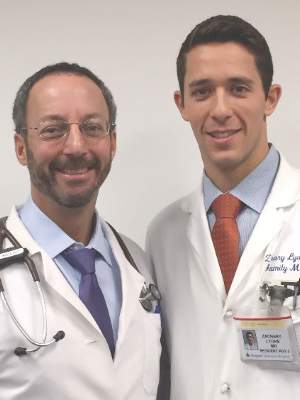
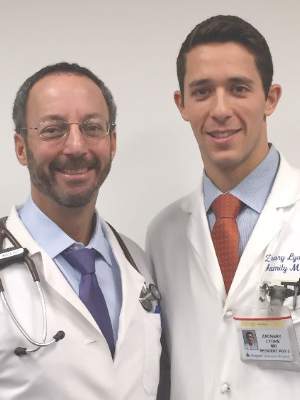
Dr. Skolnik is associate director of the family medicine residency program at Abington (Pa.) Memorial Hospital. Dr. Lyons is a third-year resident in the program.
Breast cancer is the most common cancer in women and ranks second, after lung cancer, as a cause of cancer-related death in women.
In the United States alone, an estimated 231,840 women will be diagnosed with breast cancer in 2015. Largely as a result of screening mammography and early detection, associated mortality has been steadily declining since 1990. Still, the American Cancer Society has estimated that 40,290 U.S. women will die of breast cancer in 2015.
Specific recommendations for breast cancer screening vary significantly between two major guidelines: the U.S. Preventive Services Task Force (USPSTF) and the American Cancer Society (ACS). In 2003, the ACS recommended annual screening with mammography for women beginning at age 40, stopping only when a woman’s health would preclude her from cancer treatment. Furthermore, the ACS recommended a clinical breast examination (CBE) at least every 3 years for women in their 20s and 30s and then annually starting at age 40. Current USPSTF guidelines recommend mammograms biennially from age 50 to age 74, finding insufficient evidence to recommend CBE.
Gaps between these two organizations are shrinking, however, as the ACS released its new 2015 guidelines, updating the 2003 recommendations for breast cancer screening for women at average risk. The ACS defined average risk broadly: women without a personal history of breast cancer, a confirmed or suspected genetic mutation known to increase risk of breast cancer (e.g., BRCA), or a history of previous radiotherapy to the chest at a young age. These guidelines include the following recommendations:
1. Women with an average risk of breast cancer should undergo regular screening mammography starting at age 45 years. (Strong Recommendation)
1a. Women aged 45-54 years should be screening annually. (Qualified Recommendation)
1b. Women 55 years and older should transition to biennial screening or have the opportunity to continue screening annually. (Qualified Recommendation)
1c. Women should have the opportunity to begin annual screening between the ages of 40 and 44 years. (Qualified Recommendation)
2. Women should continue screening mammography as long as their overall health is good and they have a life expectancy of 10 years or longer. (Qualified Recommendation)
3. The ACS does not recommend CBE for breast cancer screening among average-risk women at any age. (Qualified Recommendation)
These new guidelines bring the USPSTF and ACS recommendation closer to one another; they provide a clear step toward consensus. Both guidelines now agree that for average-risk women who are younger than 45 years, the harms of screening mammography likely outweigh the benefits. They are also consistent in their position that for women older than 55 years, biennial mammography is likely to provide the best balance of benefits to harms. Finally, they both recommend decisions to be individualized to reflect a woman’s preferences and her underlying risk of breast cancer.
Differences between the two guidelines originate from several methodological decisions made by the group responsible for the new ACS guidelines. In addition to randomized controlled trials and mathematic modeling, the group reviewed and utilized results from recent observational studies. The group also decided to analyze the benefits and harms of mammography using 5-year age groups, rather than the conventional 10 years. Also, it assessed annual vs. biennial screening, finding that the proportion of tumors that were stage IIB or higher and larger than 15 mm was greater for premenopausal women undergoing biennial screening but not for postmenopausal women.
Several messages are worth emphasizing as clinicians continue to review these new guidelines and decide whether or not to incorporate them into practice. First, thanks to breakthroughs in breast cancer treatment, the majority of women who are diagnosed with breast cancer will do well regardless of whether their cancer was found by mammography. Evidence from randomized trials of women in their 40s and 50s suggests that screening mammography only decreases breast cancer mortality by approximately 15%. Thus, about 85% of women in their 40s and 50s who die of breast cancer would have died regardless of mammography screening. Furthermore, because of the low risk of breast cancer for women in their 40s, this relative benefit of 15% translates to a small absolute benefit of around 5 of 10,000 women likely to have a breast cancer death prevented by mammography. Obviously the absolute benefit is higher for women with an increased risk of breast cancer, highlighting the importance of identifying higher-risk women. The lifetime risk of dying from breast cancer with no screening is 2.7%. Using the screening guidelines of the USPSTF that risk decreases to 2% with a total of 13 mammograms by 74 years of age. Using the new screening guidelines from the ACS, the calculated risk of dying from breast cancer is 1.8%-1.9% with 20 mammograms by 74 years of age. This is a significant departure from the 35 mammograms that were recommended by the older 2003 ACS guidelines.
Bottom line
The American Cancer Society has released a 2015 update to its breast cancer screening guidelines for women at average risk. The new guidelines recommend against clinical breast exams and in favor of annual mammograms between ages 45 and 54 years, followed by biennial mammograms starting at age 55 years and ending when life expectancy is less than 10 years. These guidelines also allow for patient preference or clinical judgment to opt in for annual mammography from 40 to 44 years of age and to continue with annual screening beyond age 55.
References
1. Keating NL, Pace LE. New guidelines for breast cancer screening in U.S. women. JAMA. 2015;314(15)1658.
2. Kerlikowske K. Progress toward consensus on breast cancer screening guidelines and reducing screening harms. JAMA Intern Med. 2015 Oct 20. doi:10.1001/jamainternmed.2015.6466.
3. Oeffinger KC, Fontham ETH, Etzioni R, et al. Breast cancer screening for women at average risk. JAMA. 2015;314(15):1599-614. doi:10/1001/jama.2015.12783.
Dr. Skolnik is associate director of the family medicine residency program at Abington (Pa.) Memorial Hospital. Dr. Lyons is a third-year resident in the program.
Breast cancer is the most common cancer in women and ranks second, after lung cancer, as a cause of cancer-related death in women.
In the United States alone, an estimated 231,840 women will be diagnosed with breast cancer in 2015. Largely as a result of screening mammography and early detection, associated mortality has been steadily declining since 1990. Still, the American Cancer Society has estimated that 40,290 U.S. women will die of breast cancer in 2015.
Specific recommendations for breast cancer screening vary significantly between two major guidelines: the U.S. Preventive Services Task Force (USPSTF) and the American Cancer Society (ACS). In 2003, the ACS recommended annual screening with mammography for women beginning at age 40, stopping only when a woman’s health would preclude her from cancer treatment. Furthermore, the ACS recommended a clinical breast examination (CBE) at least every 3 years for women in their 20s and 30s and then annually starting at age 40. Current USPSTF guidelines recommend mammograms biennially from age 50 to age 74, finding insufficient evidence to recommend CBE.
Gaps between these two organizations are shrinking, however, as the ACS released its new 2015 guidelines, updating the 2003 recommendations for breast cancer screening for women at average risk. The ACS defined average risk broadly: women without a personal history of breast cancer, a confirmed or suspected genetic mutation known to increase risk of breast cancer (e.g., BRCA), or a history of previous radiotherapy to the chest at a young age. These guidelines include the following recommendations:
1. Women with an average risk of breast cancer should undergo regular screening mammography starting at age 45 years. (Strong Recommendation)
1a. Women aged 45-54 years should be screening annually. (Qualified Recommendation)
1b. Women 55 years and older should transition to biennial screening or have the opportunity to continue screening annually. (Qualified Recommendation)
1c. Women should have the opportunity to begin annual screening between the ages of 40 and 44 years. (Qualified Recommendation)
2. Women should continue screening mammography as long as their overall health is good and they have a life expectancy of 10 years or longer. (Qualified Recommendation)
3. The ACS does not recommend CBE for breast cancer screening among average-risk women at any age. (Qualified Recommendation)
These new guidelines bring the USPSTF and ACS recommendation closer to one another; they provide a clear step toward consensus. Both guidelines now agree that for average-risk women who are younger than 45 years, the harms of screening mammography likely outweigh the benefits. They are also consistent in their position that for women older than 55 years, biennial mammography is likely to provide the best balance of benefits to harms. Finally, they both recommend decisions to be individualized to reflect a woman’s preferences and her underlying risk of breast cancer.
Differences between the two guidelines originate from several methodological decisions made by the group responsible for the new ACS guidelines. In addition to randomized controlled trials and mathematic modeling, the group reviewed and utilized results from recent observational studies. The group also decided to analyze the benefits and harms of mammography using 5-year age groups, rather than the conventional 10 years. Also, it assessed annual vs. biennial screening, finding that the proportion of tumors that were stage IIB or higher and larger than 15 mm was greater for premenopausal women undergoing biennial screening but not for postmenopausal women.
Several messages are worth emphasizing as clinicians continue to review these new guidelines and decide whether or not to incorporate them into practice. First, thanks to breakthroughs in breast cancer treatment, the majority of women who are diagnosed with breast cancer will do well regardless of whether their cancer was found by mammography. Evidence from randomized trials of women in their 40s and 50s suggests that screening mammography only decreases breast cancer mortality by approximately 15%. Thus, about 85% of women in their 40s and 50s who die of breast cancer would have died regardless of mammography screening. Furthermore, because of the low risk of breast cancer for women in their 40s, this relative benefit of 15% translates to a small absolute benefit of around 5 of 10,000 women likely to have a breast cancer death prevented by mammography. Obviously the absolute benefit is higher for women with an increased risk of breast cancer, highlighting the importance of identifying higher-risk women. The lifetime risk of dying from breast cancer with no screening is 2.7%. Using the screening guidelines of the USPSTF that risk decreases to 2% with a total of 13 mammograms by 74 years of age. Using the new screening guidelines from the ACS, the calculated risk of dying from breast cancer is 1.8%-1.9% with 20 mammograms by 74 years of age. This is a significant departure from the 35 mammograms that were recommended by the older 2003 ACS guidelines.
Bottom line
The American Cancer Society has released a 2015 update to its breast cancer screening guidelines for women at average risk. The new guidelines recommend against clinical breast exams and in favor of annual mammograms between ages 45 and 54 years, followed by biennial mammograms starting at age 55 years and ending when life expectancy is less than 10 years. These guidelines also allow for patient preference or clinical judgment to opt in for annual mammography from 40 to 44 years of age and to continue with annual screening beyond age 55.
References
1. Keating NL, Pace LE. New guidelines for breast cancer screening in U.S. women. JAMA. 2015;314(15)1658.
2. Kerlikowske K. Progress toward consensus on breast cancer screening guidelines and reducing screening harms. JAMA Intern Med. 2015 Oct 20. doi:10.1001/jamainternmed.2015.6466.
3. Oeffinger KC, Fontham ETH, Etzioni R, et al. Breast cancer screening for women at average risk. JAMA. 2015;314(15):1599-614. doi:10/1001/jama.2015.12783.
Dr. Skolnik is associate director of the family medicine residency program at Abington (Pa.) Memorial Hospital. Dr. Lyons is a third-year resident in the program.
The high price of drugs
As I listened to Dr. Jackson T. Wright, one of the investigators of the SPRINT Trial, emphasize the importance of treating systolic blood pressure to the target of 120 mm Hg, I thought about the difficulty in treating blood pressure in the elderly.
Successfully lowering blood pressure even to the current target of 140 mm Hg systolic is one of the most difficult therapeutic tasks that I face. But, to my mind, the worldwide success achieved by hypertension therapy has had the most profound effect on cardiovascular medicine in the last half century. I am no epidemiologist, but the striking decrease in cardiovascular mortality in the United States associated with the introduction of the hypertension therapy is undeniable.

The pharmaceutical companies that developed of these drugs, some of which are still around and some that have merged with other entities, never priced these drugs at the potential benefit of decreasing the cost of hypertension to society. If they had, their price would be so exorbitant that their universal benefit to mankind would never have been seen. They were doing their job and returning significant benefit both to humanity and their investors. They priced the drugs so that we could afford to pay for them. All of these drugs – ACE inhibitors, calcium- and beta-blockers, and diuretics – are now available as generics and as a class have had a lasting and continuing impact on the societal cost and benefit.
Yet somehow, the world has changed. I am not the first to notice it. We now have drugs that can cost thousands of dollars a month and none of us can afford to pay for them. Because we now all share in the cost of drug therapy in one way or another, we all pay the cost. The justification for the high price is not based solely on their development cost, which in many instances were developed decades if not centuries ago, but on the presumed net expense of the untreated disease to society or to the achievement of entrepreneurial profits. Hepatitis C was one of the first in which the cost of new drug therapy was based on the net savings associated with the prevention of the chronic liver disease and its subsequent long-term societal expense. Since I am not a hepatologist, it took me a little leap of faith to accept the potential economic benefit of this therapy, but at least the current data suggest that indeed this therapy works. I remain dubious about the calculations of their societal net benefit cost.
Now move forward. We now have two drugs that can lower cholesterol, potentially to levels beyond our imagination, that are now on the high-expense list. According to recent rumors, evolocumab (Repatha, Amgen) and alirocumab (Praluent, Sanofi/Regeneron) will cost someone $12,000-$14,000 a year to lower serum cholesterol almost to immeasurable levels without any evidence of benefit in decreasing cardiovascular disease. (For those of you with short-term memory deficits, we just tried to pump up HDL cholesterol only to find that when successful, it increased mortality.) Now, if these drugs are successful in preventing the development and progression of atherosclerotic disease, as in the example of hepatitis C, I may change my mind and write the script for it.
Meanwhile, drug prices have escalated as a result of speculation in the pharmaceutical market by Wall Street entrepreneurs who buy up the drug patents that have been available for years like isoproterenol and digitalis, for the sole purpose of a creating a monopoly to inflate the price and return large profits to their investors. When questioned about the 20-fold increase in the cost of isoproterenol, a representative of one of the pharmaceutical companies stated, “that the price was based on many factors, including clinical benefits and the value they bring to the patients, physicians, payers, and society” (New York Times 2015 Oct 4 p. BU1, “Side Effects of Hijacking Drug Prices”). The audacity of drug company executives to presume that they are in a position to make that judgment is outrageous. And yet the U.S. Congress makes it illegal for Medicare and Medicaid to bargain for the best drug prices, while European and Asian pay a fraction of what we pay here.
These ruminations only suggest that madness in the pharmaceutical world is not limited to Wall Street but reaches even the higher levels of government. Get your checkbooks out everyone; the best is yet to come.
Dr. Goldstein, medical editor of Cardiology News, is professor of medicine at Wayne State University and division head emeritus of cardiovascular medicine at Henry Ford Hospital, both in Detroit. He is on data safety monitoring committees for the National Institutes of Health and several pharmaceutical companies.
As I listened to Dr. Jackson T. Wright, one of the investigators of the SPRINT Trial, emphasize the importance of treating systolic blood pressure to the target of 120 mm Hg, I thought about the difficulty in treating blood pressure in the elderly.
Successfully lowering blood pressure even to the current target of 140 mm Hg systolic is one of the most difficult therapeutic tasks that I face. But, to my mind, the worldwide success achieved by hypertension therapy has had the most profound effect on cardiovascular medicine in the last half century. I am no epidemiologist, but the striking decrease in cardiovascular mortality in the United States associated with the introduction of the hypertension therapy is undeniable.
The pharmaceutical companies that developed of these drugs, some of which are still around and some that have merged with other entities, never priced these drugs at the potential benefit of decreasing the cost of hypertension to society. If they had, their price would be so exorbitant that their universal benefit to mankind would never have been seen. They were doing their job and returning significant benefit both to humanity and their investors. They priced the drugs so that we could afford to pay for them. All of these drugs – ACE inhibitors, calcium- and beta-blockers, and diuretics – are now available as generics and as a class have had a lasting and continuing impact on the societal cost and benefit.
Yet somehow, the world has changed. I am not the first to notice it. We now have drugs that can cost thousands of dollars a month and none of us can afford to pay for them. Because we now all share in the cost of drug therapy in one way or another, we all pay the cost. The justification for the high price is not based solely on their development cost, which in many instances were developed decades if not centuries ago, but on the presumed net expense of the untreated disease to society or to the achievement of entrepreneurial profits. Hepatitis C was one of the first in which the cost of new drug therapy was based on the net savings associated with the prevention of the chronic liver disease and its subsequent long-term societal expense. Since I am not a hepatologist, it took me a little leap of faith to accept the potential economic benefit of this therapy, but at least the current data suggest that indeed this therapy works. I remain dubious about the calculations of their societal net benefit cost.
Now move forward. We now have two drugs that can lower cholesterol, potentially to levels beyond our imagination, that are now on the high-expense list. According to recent rumors, evolocumab (Repatha, Amgen) and alirocumab (Praluent, Sanofi/Regeneron) will cost someone $12,000-$14,000 a year to lower serum cholesterol almost to immeasurable levels without any evidence of benefit in decreasing cardiovascular disease. (For those of you with short-term memory deficits, we just tried to pump up HDL cholesterol only to find that when successful, it increased mortality.) Now, if these drugs are successful in preventing the development and progression of atherosclerotic disease, as in the example of hepatitis C, I may change my mind and write the script for it.
Meanwhile, drug prices have escalated as a result of speculation in the pharmaceutical market by Wall Street entrepreneurs who buy up the drug patents that have been available for years like isoproterenol and digitalis, for the sole purpose of a creating a monopoly to inflate the price and return large profits to their investors. When questioned about the 20-fold increase in the cost of isoproterenol, a representative of one of the pharmaceutical companies stated, “that the price was based on many factors, including clinical benefits and the value they bring to the patients, physicians, payers, and society” (New York Times 2015 Oct 4 p. BU1, “Side Effects of Hijacking Drug Prices”). The audacity of drug company executives to presume that they are in a position to make that judgment is outrageous. And yet the U.S. Congress makes it illegal for Medicare and Medicaid to bargain for the best drug prices, while European and Asian pay a fraction of what we pay here.
These ruminations only suggest that madness in the pharmaceutical world is not limited to Wall Street but reaches even the higher levels of government. Get your checkbooks out everyone; the best is yet to come.
Dr. Goldstein, medical editor of Cardiology News, is professor of medicine at Wayne State University and division head emeritus of cardiovascular medicine at Henry Ford Hospital, both in Detroit. He is on data safety monitoring committees for the National Institutes of Health and several pharmaceutical companies.
As I listened to Dr. Jackson T. Wright, one of the investigators of the SPRINT Trial, emphasize the importance of treating systolic blood pressure to the target of 120 mm Hg, I thought about the difficulty in treating blood pressure in the elderly.
Successfully lowering blood pressure even to the current target of 140 mm Hg systolic is one of the most difficult therapeutic tasks that I face. But, to my mind, the worldwide success achieved by hypertension therapy has had the most profound effect on cardiovascular medicine in the last half century. I am no epidemiologist, but the striking decrease in cardiovascular mortality in the United States associated with the introduction of the hypertension therapy is undeniable.
The pharmaceutical companies that developed of these drugs, some of which are still around and some that have merged with other entities, never priced these drugs at the potential benefit of decreasing the cost of hypertension to society. If they had, their price would be so exorbitant that their universal benefit to mankind would never have been seen. They were doing their job and returning significant benefit both to humanity and their investors. They priced the drugs so that we could afford to pay for them. All of these drugs – ACE inhibitors, calcium- and beta-blockers, and diuretics – are now available as generics and as a class have had a lasting and continuing impact on the societal cost and benefit.
Yet somehow, the world has changed. I am not the first to notice it. We now have drugs that can cost thousands of dollars a month and none of us can afford to pay for them. Because we now all share in the cost of drug therapy in one way or another, we all pay the cost. The justification for the high price is not based solely on their development cost, which in many instances were developed decades if not centuries ago, but on the presumed net expense of the untreated disease to society or to the achievement of entrepreneurial profits. Hepatitis C was one of the first in which the cost of new drug therapy was based on the net savings associated with the prevention of the chronic liver disease and its subsequent long-term societal expense. Since I am not a hepatologist, it took me a little leap of faith to accept the potential economic benefit of this therapy, but at least the current data suggest that indeed this therapy works. I remain dubious about the calculations of their societal net benefit cost.
Now move forward. We now have two drugs that can lower cholesterol, potentially to levels beyond our imagination, that are now on the high-expense list. According to recent rumors, evolocumab (Repatha, Amgen) and alirocumab (Praluent, Sanofi/Regeneron) will cost someone $12,000-$14,000 a year to lower serum cholesterol almost to immeasurable levels without any evidence of benefit in decreasing cardiovascular disease. (For those of you with short-term memory deficits, we just tried to pump up HDL cholesterol only to find that when successful, it increased mortality.) Now, if these drugs are successful in preventing the development and progression of atherosclerotic disease, as in the example of hepatitis C, I may change my mind and write the script for it.
Meanwhile, drug prices have escalated as a result of speculation in the pharmaceutical market by Wall Street entrepreneurs who buy up the drug patents that have been available for years like isoproterenol and digitalis, for the sole purpose of a creating a monopoly to inflate the price and return large profits to their investors. When questioned about the 20-fold increase in the cost of isoproterenol, a representative of one of the pharmaceutical companies stated, “that the price was based on many factors, including clinical benefits and the value they bring to the patients, physicians, payers, and society” (New York Times 2015 Oct 4 p. BU1, “Side Effects of Hijacking Drug Prices”). The audacity of drug company executives to presume that they are in a position to make that judgment is outrageous. And yet the U.S. Congress makes it illegal for Medicare and Medicaid to bargain for the best drug prices, while European and Asian pay a fraction of what we pay here.
These ruminations only suggest that madness in the pharmaceutical world is not limited to Wall Street but reaches even the higher levels of government. Get your checkbooks out everyone; the best is yet to come.
Dr. Goldstein, medical editor of Cardiology News, is professor of medicine at Wayne State University and division head emeritus of cardiovascular medicine at Henry Ford Hospital, both in Detroit. He is on data safety monitoring committees for the National Institutes of Health and several pharmaceutical companies.

A closing column
As the year comes to an end, I have decided – after 9 years of writing for Pediatric News – to bring my column to a close. It has been a great joy to be a part of the pediatric community in this way, and I have been grateful for those of you who approach me at meetings, saying, “Hey, I recognize you – I really like your column!” or tell me you appreciated a particular topic or piece of advice.
As I reflected on the columns I have written, I realized there were two themes that repeatedly emerged as most meaningful to me. While these thoughts are nothing new, I thought they would be a fitting way to sum up my writings over the years.

First, and most important, is that patients and families are the best partners we have in the care we give. When we take the time to listen to them, involve them in decision making and think past what we see on the surface, kids are healthier. This is just as true for preventative “well-baby” care as it is for acute and specialty care. Understanding a family’s priorities, values, and the context in which they live is just as important as our medical knowledge and skills when taking care of patients. Pediatricians are expert at bringing all of these things together, grounded in the best and most up-to-date evidence available, and in doing so elevate the care of children.
Which leads me to the second theme – pediatricians are a strong and important voice for children, and it is important for us to learn to lead. Through our work, we have a window into the lives of children, both when they are healthy and when they are sick. That is a great privilege but also a great responsibility. We see the things that work well in our systems and the things that do not. We see the amazing things children are capable of, but also troubling and pervasive inequities in care, access, and education. We see children who aren’t having their basic needs met – things like food, shelter, and a safe place to play. We see how these inequities impact health and wellness – both now and as children grow into adults. These observations, and the things we learn by caring for children and families day in and day out, can be translated into action. For each of us that will mean something different, but it is imperative that we develop our talents as advocates and leaders so that we can catalyze change. Our best hope for making things better is if we each do our part to create solutions. And when that happens, children – a lot of children – are healthier.
Since I began my first column 9 years ago, a lot has changed for me, and I suspect for many of you. When I first began writing, my now tall, confident tween (who already wears the same shoe size as me!) was barely walking. Thank you to all who have listened and encouraged me along the way – it has been a fun journey, and I’ve appreciated your time.
Dr. Beers is assistant professor of pediatrics at Children’s National Medical Center and the George Washington University Medical Center, both in Washington. She is chair of the American Academy of Pediatrics Committee on Residency Scholarships and immediate past president of the District of Columbia chapter of the American Academy of Pediatrics.
As the year comes to an end, I have decided – after 9 years of writing for Pediatric News – to bring my column to a close. It has been a great joy to be a part of the pediatric community in this way, and I have been grateful for those of you who approach me at meetings, saying, “Hey, I recognize you – I really like your column!” or tell me you appreciated a particular topic or piece of advice.
As I reflected on the columns I have written, I realized there were two themes that repeatedly emerged as most meaningful to me. While these thoughts are nothing new, I thought they would be a fitting way to sum up my writings over the years.
First, and most important, is that patients and families are the best partners we have in the care we give. When we take the time to listen to them, involve them in decision making and think past what we see on the surface, kids are healthier. This is just as true for preventative “well-baby” care as it is for acute and specialty care. Understanding a family’s priorities, values, and the context in which they live is just as important as our medical knowledge and skills when taking care of patients. Pediatricians are expert at bringing all of these things together, grounded in the best and most up-to-date evidence available, and in doing so elevate the care of children.
Which leads me to the second theme – pediatricians are a strong and important voice for children, and it is important for us to learn to lead. Through our work, we have a window into the lives of children, both when they are healthy and when they are sick. That is a great privilege but also a great responsibility. We see the things that work well in our systems and the things that do not. We see the amazing things children are capable of, but also troubling and pervasive inequities in care, access, and education. We see children who aren’t having their basic needs met – things like food, shelter, and a safe place to play. We see how these inequities impact health and wellness – both now and as children grow into adults. These observations, and the things we learn by caring for children and families day in and day out, can be translated into action. For each of us that will mean something different, but it is imperative that we develop our talents as advocates and leaders so that we can catalyze change. Our best hope for making things better is if we each do our part to create solutions. And when that happens, children – a lot of children – are healthier.
Since I began my first column 9 years ago, a lot has changed for me, and I suspect for many of you. When I first began writing, my now tall, confident tween (who already wears the same shoe size as me!) was barely walking. Thank you to all who have listened and encouraged me along the way – it has been a fun journey, and I’ve appreciated your time.
Dr. Beers is assistant professor of pediatrics at Children’s National Medical Center and the George Washington University Medical Center, both in Washington. She is chair of the American Academy of Pediatrics Committee on Residency Scholarships and immediate past president of the District of Columbia chapter of the American Academy of Pediatrics.
As the year comes to an end, I have decided – after 9 years of writing for Pediatric News – to bring my column to a close. It has been a great joy to be a part of the pediatric community in this way, and I have been grateful for those of you who approach me at meetings, saying, “Hey, I recognize you – I really like your column!” or tell me you appreciated a particular topic or piece of advice.
As I reflected on the columns I have written, I realized there were two themes that repeatedly emerged as most meaningful to me. While these thoughts are nothing new, I thought they would be a fitting way to sum up my writings over the years.
First, and most important, is that patients and families are the best partners we have in the care we give. When we take the time to listen to them, involve them in decision making and think past what we see on the surface, kids are healthier. This is just as true for preventative “well-baby” care as it is for acute and specialty care. Understanding a family’s priorities, values, and the context in which they live is just as important as our medical knowledge and skills when taking care of patients. Pediatricians are expert at bringing all of these things together, grounded in the best and most up-to-date evidence available, and in doing so elevate the care of children.
Which leads me to the second theme – pediatricians are a strong and important voice for children, and it is important for us to learn to lead. Through our work, we have a window into the lives of children, both when they are healthy and when they are sick. That is a great privilege but also a great responsibility. We see the things that work well in our systems and the things that do not. We see the amazing things children are capable of, but also troubling and pervasive inequities in care, access, and education. We see children who aren’t having their basic needs met – things like food, shelter, and a safe place to play. We see how these inequities impact health and wellness – both now and as children grow into adults. These observations, and the things we learn by caring for children and families day in and day out, can be translated into action. For each of us that will mean something different, but it is imperative that we develop our talents as advocates and leaders so that we can catalyze change. Our best hope for making things better is if we each do our part to create solutions. And when that happens, children – a lot of children – are healthier.
Since I began my first column 9 years ago, a lot has changed for me, and I suspect for many of you. When I first began writing, my now tall, confident tween (who already wears the same shoe size as me!) was barely walking. Thank you to all who have listened and encouraged me along the way – it has been a fun journey, and I’ve appreciated your time.
Dr. Beers is assistant professor of pediatrics at Children’s National Medical Center and the George Washington University Medical Center, both in Washington. She is chair of the American Academy of Pediatrics Committee on Residency Scholarships and immediate past president of the District of Columbia chapter of the American Academy of Pediatrics.

The Optum termination thunderbolt
One afternoon, after seeing your last patient, you’re doing the old-school thing, with your feet up, opening and reading your paper mail after a hard day’s work at the dermatology ranch. You see an odd form letter – a green sticker on the outside, certified mail – stating that you have been terminated from a Medicare advantage plan, no reason given.
At first, you don’t care so much. After all, this plan pays you only 95% of Medicare. Then you think about it and realize that this plan represents 50% of all Medicare beneficiaries in your area. You start to freak out, and you immediately go to the American Academy of Dermatology website where you read Rob Portman’s article about how to fight a termination notice and respond expeditiously.
Later that night, your spouse asks why you were singled out. “Are you a bad doctor? What did you do wrong? Can the kids still go to college?
The answer, most often, is that you did nothing wrong. You’ve just been caught up in the insurer’s network management software, Optum 360.
Optum 360 is a large health care information and management subsidiary of UnitedHealthcare. It was created as a joint venture by the Optum insight (health technology) unit of UnitedHealthcare, and Dignity Health (claims processing), forming Optum 360.
Optum claims that its software measures the efficiency of providers, saving insurers money and improving the quality of care – the Valhalla of health care managers everywhere. Unfortunately, Optum doesn’t deliver this vision of heaven on earth, at least not for dermatology.
Optum 360does little more than aggregate and average the costs of individual providers with no recognition of severity of disease or case mix. The physician with the most reimbursement during an episode of care for a given ICD-9 code (now for a group of ICD-10 codes) gets credited with all the expenses under that code. For example, you do two stages of Mohs surgery on a big basal cell on the nose that you send to plastics for repair. If the reimbursement for the Mohs surgery exceeds the plastics reimbursement, the Optum software designates you as the responsible provider. The cost of the plastics repair accrues to you; the hospital OR facility charges accrue to you (facilities are not considered a provider); and the anesthesiologist charges are credited to you. In addition, the superficial basal cell carcinoma on the patient’s back, treated a week later by the referring doctor, is also attributed to you as part of the original episode of care. There are no quality parameters and no subspecialty recognition.
If your patient load regularly includes patients who have Mohs surgery, the dermatologist down the street who does Mohs only once a week looks much better to Optum than you do. The referral-only medical dermatologist in town, who treats very sick patients and routinely prescribes biologics, and (heaven forbid) intravenous immunoglobulin, is similarly tagged for termination from the insurer’s network.
So it looks as though dermatologists who handle the toughest patients lose out. But who really loses the most? The sickest patients! The dermatologist can always fill the schedule with patients with other insurance coverage and reduce the backlog or, if worse comes to worse, he can take the Canadian cure and go on vacation. The sickest patients, however, get eliminated from the system when their doctors get eliminated by UnitedHealthcare’s software. Then patients often cannot find another doctor because most insurer’s physician rosters are 70% inaccurate (JAMA Dermatol. 2014 Dec;150[12]:1290-7).
In some circumstances, the sickest patients have reported either being unable to find other dermatologists willing to provide the special service they need or having to wait up to 6 months for an open appointment. These patients then try to drop back into fee-for-service Medicare, only to find they cannot afford the gap insurance, which costs five times as much. Why? Because those patients now have a preexisting condition. Yes, preexisting conditions still apply in the world of gap insurance.
This is obviously not optimal nor even acceptable. To quote Michael Keaton from the 1982 movie “Night Shift”: “Is this a great country or what?” The answer is a resounding “yes” for medical insurance companies who are booking record profits, but “no” for the sickest patients.
Dr. Coldiron is a past president of the American Academy of Dermatology. He is currently in private practice, but maintains a clinical assistant professorship at the University of Cincinnati. He cares for patients, teaches medical students and residents, and has several active clinical research projects. Dr. Coldiron is the author of more than 80 scientific letters, papers, and several book chapters, and he speaks frequently on a variety of topics. Reach him at dermnews@frontlinemedcom.com.
One afternoon, after seeing your last patient, you’re doing the old-school thing, with your feet up, opening and reading your paper mail after a hard day’s work at the dermatology ranch. You see an odd form letter – a green sticker on the outside, certified mail – stating that you have been terminated from a Medicare advantage plan, no reason given.
At first, you don’t care so much. After all, this plan pays you only 95% of Medicare. Then you think about it and realize that this plan represents 50% of all Medicare beneficiaries in your area. You start to freak out, and you immediately go to the American Academy of Dermatology website where you read Rob Portman’s article about how to fight a termination notice and respond expeditiously.
Later that night, your spouse asks why you were singled out. “Are you a bad doctor? What did you do wrong? Can the kids still go to college?
The answer, most often, is that you did nothing wrong. You’ve just been caught up in the insurer’s network management software, Optum 360.
Optum 360 is a large health care information and management subsidiary of UnitedHealthcare. It was created as a joint venture by the Optum insight (health technology) unit of UnitedHealthcare, and Dignity Health (claims processing), forming Optum 360.
Optum claims that its software measures the efficiency of providers, saving insurers money and improving the quality of care – the Valhalla of health care managers everywhere. Unfortunately, Optum doesn’t deliver this vision of heaven on earth, at least not for dermatology.
Optum 360does little more than aggregate and average the costs of individual providers with no recognition of severity of disease or case mix. The physician with the most reimbursement during an episode of care for a given ICD-9 code (now for a group of ICD-10 codes) gets credited with all the expenses under that code. For example, you do two stages of Mohs surgery on a big basal cell on the nose that you send to plastics for repair. If the reimbursement for the Mohs surgery exceeds the plastics reimbursement, the Optum software designates you as the responsible provider. The cost of the plastics repair accrues to you; the hospital OR facility charges accrue to you (facilities are not considered a provider); and the anesthesiologist charges are credited to you. In addition, the superficial basal cell carcinoma on the patient’s back, treated a week later by the referring doctor, is also attributed to you as part of the original episode of care. There are no quality parameters and no subspecialty recognition.
If your patient load regularly includes patients who have Mohs surgery, the dermatologist down the street who does Mohs only once a week looks much better to Optum than you do. The referral-only medical dermatologist in town, who treats very sick patients and routinely prescribes biologics, and (heaven forbid) intravenous immunoglobulin, is similarly tagged for termination from the insurer’s network.
So it looks as though dermatologists who handle the toughest patients lose out. But who really loses the most? The sickest patients! The dermatologist can always fill the schedule with patients with other insurance coverage and reduce the backlog or, if worse comes to worse, he can take the Canadian cure and go on vacation. The sickest patients, however, get eliminated from the system when their doctors get eliminated by UnitedHealthcare’s software. Then patients often cannot find another doctor because most insurer’s physician rosters are 70% inaccurate (JAMA Dermatol. 2014 Dec;150[12]:1290-7).
In some circumstances, the sickest patients have reported either being unable to find other dermatologists willing to provide the special service they need or having to wait up to 6 months for an open appointment. These patients then try to drop back into fee-for-service Medicare, only to find they cannot afford the gap insurance, which costs five times as much. Why? Because those patients now have a preexisting condition. Yes, preexisting conditions still apply in the world of gap insurance.
This is obviously not optimal nor even acceptable. To quote Michael Keaton from the 1982 movie “Night Shift”: “Is this a great country or what?” The answer is a resounding “yes” for medical insurance companies who are booking record profits, but “no” for the sickest patients.
Dr. Coldiron is a past president of the American Academy of Dermatology. He is currently in private practice, but maintains a clinical assistant professorship at the University of Cincinnati. He cares for patients, teaches medical students and residents, and has several active clinical research projects. Dr. Coldiron is the author of more than 80 scientific letters, papers, and several book chapters, and he speaks frequently on a variety of topics. Reach him at dermnews@frontlinemedcom.com.
One afternoon, after seeing your last patient, you’re doing the old-school thing, with your feet up, opening and reading your paper mail after a hard day’s work at the dermatology ranch. You see an odd form letter – a green sticker on the outside, certified mail – stating that you have been terminated from a Medicare advantage plan, no reason given.
At first, you don’t care so much. After all, this plan pays you only 95% of Medicare. Then you think about it and realize that this plan represents 50% of all Medicare beneficiaries in your area. You start to freak out, and you immediately go to the American Academy of Dermatology website where you read Rob Portman’s article about how to fight a termination notice and respond expeditiously.
Later that night, your spouse asks why you were singled out. “Are you a bad doctor? What did you do wrong? Can the kids still go to college?
The answer, most often, is that you did nothing wrong. You’ve just been caught up in the insurer’s network management software, Optum 360.
Optum 360 is a large health care information and management subsidiary of UnitedHealthcare. It was created as a joint venture by the Optum insight (health technology) unit of UnitedHealthcare, and Dignity Health (claims processing), forming Optum 360.
Optum claims that its software measures the efficiency of providers, saving insurers money and improving the quality of care – the Valhalla of health care managers everywhere. Unfortunately, Optum doesn’t deliver this vision of heaven on earth, at least not for dermatology.
Optum 360does little more than aggregate and average the costs of individual providers with no recognition of severity of disease or case mix. The physician with the most reimbursement during an episode of care for a given ICD-9 code (now for a group of ICD-10 codes) gets credited with all the expenses under that code. For example, you do two stages of Mohs surgery on a big basal cell on the nose that you send to plastics for repair. If the reimbursement for the Mohs surgery exceeds the plastics reimbursement, the Optum software designates you as the responsible provider. The cost of the plastics repair accrues to you; the hospital OR facility charges accrue to you (facilities are not considered a provider); and the anesthesiologist charges are credited to you. In addition, the superficial basal cell carcinoma on the patient’s back, treated a week later by the referring doctor, is also attributed to you as part of the original episode of care. There are no quality parameters and no subspecialty recognition.
If your patient load regularly includes patients who have Mohs surgery, the dermatologist down the street who does Mohs only once a week looks much better to Optum than you do. The referral-only medical dermatologist in town, who treats very sick patients and routinely prescribes biologics, and (heaven forbid) intravenous immunoglobulin, is similarly tagged for termination from the insurer’s network.
So it looks as though dermatologists who handle the toughest patients lose out. But who really loses the most? The sickest patients! The dermatologist can always fill the schedule with patients with other insurance coverage and reduce the backlog or, if worse comes to worse, he can take the Canadian cure and go on vacation. The sickest patients, however, get eliminated from the system when their doctors get eliminated by UnitedHealthcare’s software. Then patients often cannot find another doctor because most insurer’s physician rosters are 70% inaccurate (JAMA Dermatol. 2014 Dec;150[12]:1290-7).
In some circumstances, the sickest patients have reported either being unable to find other dermatologists willing to provide the special service they need or having to wait up to 6 months for an open appointment. These patients then try to drop back into fee-for-service Medicare, only to find they cannot afford the gap insurance, which costs five times as much. Why? Because those patients now have a preexisting condition. Yes, preexisting conditions still apply in the world of gap insurance.
This is obviously not optimal nor even acceptable. To quote Michael Keaton from the 1982 movie “Night Shift”: “Is this a great country or what?” The answer is a resounding “yes” for medical insurance companies who are booking record profits, but “no” for the sickest patients.
Dr. Coldiron is a past president of the American Academy of Dermatology. He is currently in private practice, but maintains a clinical assistant professorship at the University of Cincinnati. He cares for patients, teaches medical students and residents, and has several active clinical research projects. Dr. Coldiron is the author of more than 80 scientific letters, papers, and several book chapters, and he speaks frequently on a variety of topics. Reach him at dermnews@frontlinemedcom.com.

Career Development: A Focused Plan or Serendipity?
Fifth grade is a wonderful school year and fifth graders are interesting, enthusiastic, and busy people, but conflicts can arise amidst their many activities. We discovered that our fifth grader could not finish his homework, play on 3 sports teams, take bass lessons (and practice), join the city chorus, play outside with his friends, walk his dog, spend quality time with his parents, and do his chores—much less eat and sleep. Choices needed to be made. Unfortunately, in our community dropping out of the premier soccer club probably limits future possibilities in the sport; nevertheless, it would entail 6 to 8 hours of game and practice time per week (plus travel), as well as multiple 3-day tournaments. Therefore our son dropped soccer, as we decided the best strategy for our fifth grader to develop and mature was to do his personal best at his schoolwork while also exploring a greater variety of less intensive extracurricular experiences.
Most dermatologists appropriately adopt a different strategy during medical school and dermatology training. An intensive, single-minded focus gets us through hours in the anatomy laboratory, the first difficult clinical rotations, sleepless nights, grand rounds quizzing, and board examinations. Completion of our training does not, however, signal that development and maturation are complete; rather, we must then choose among a new set of options, such as the basic questions of whether to practice in an academic setting or group or solo practice and whether to emphasize a subspecialty. These choices involve some mutually exclusive options and exist in a milieu of adult (ie, nonacademic) dilemmas concerning family life, community and spiritual life, avocations, exercise regimens, housing and material goods, and other routine aspects of life. The professional options that are available may be limited by the lack of community opportunities, geographic need, or job availability in a preferred location or institution.
So how do dermatologists manage to start their careers, then develop and maintain them? A best practice is to be both introspective as well as aware of our external environments. Good questions to ask ourselves periodically (having different answers at different stages is highly recommended!) include: What are my core values and what do I want to accomplish? Pay attention to your gut. When do you lose track of time and what makes you want to scream in frustration? Regularly take an inventory of your strengths and find opportunities to acquire the competencies that can take you to the next level. What skill do I need to finesse and how do I finesse it? Do an external scan and understand limiting factors such as geographic saturation in your desired practice type or the lack of appropriate collaborators in your preferred area of interest. Search out people who are doing what you’d like to do and then identify their paths and what you can use from their experiences to help with your career development.
Once you have identified a few professional goals to pursue, utilize all the resources you can find. You might find helpful seminars at an academic institution or at conferences. Do you want to become the regional expert in sarcoidosis? Check out what has been written and find other experts in the subject and where they are speaking. Many organizations have practice management or leadership development courses and seminars. There also are books for everything—those that I have found most useful include Douglas Stone’s Difficult Conversations: How to Discuss What Matters Most1 and William L. Fisher and Roger Ury’s classic, Getting to Yes: Negotiating Agreement Without Giving In.2 Have to give a talk? There is a PowerPoint 2016 for Dummies.3 The same series also includes a book on the Microsoft® Excel spreadsheet. Also check out my all-time favorite—Brian Tracy’s Eat That Frog! 21 Ways to Stop Procrastinating and Get More Done in Less Time.4
It is important to experiment with different professional experiences and have an open mind when a new activity presents itself. Look for opportunities for new side ventures or interesting projects that will not take up much time so you can continue to do your best at your daily work. When I was a senior resident, a dermatologist from Maine asked me if I would help him find a dermatologist who would work regularly at a rural clinic in the northern part of the state. My answer was, why not me? For 8 years I worked in that clinic once to twice per month, seeing as many patients as I could for 8 to 12 hours a day on Friday, Saturday, and Sunday, and then returning to Boston, Massachusetts, for my normal work week. I even took my 2 youngest children (who were born during that time) with me and found a family there who took excellent care of them while I worked. It ended up being one of the most important experiences, both intellectually and emotionally, of my professional career. I learned how to diagnose difficult and complex dermatology problems by myself in an environment with few resources (the closest dermatologist was 150 miles away), how to use primary care providers to manage patients remotely, how to set up a clinic and manage staff (I hired other part-time staff to help me), and how to lead an effort that I felt passionate about. I sometimes even took on residents, which helped me finesse my teaching and supervision style.
Unlike the achievement of becoming a board-certified dermatologist, a dermatology career does not develop in a straight line, and rarely at a steady pace. It seems to me that a shift from a single-minded focus during residency to the fifth-grade strategy of doing our personal best at the main tasks of everyday work as well as participating in a variety of other experiences successfully develops a career that encompasses excellence, enthusiasm, and the fulfillment of personal needs along with those of our practice or institution. When we do our personal best on the day-to-day matters, people will be beating down the doors to offer other valuable experiences. To paraphrase an old truism, if you want something done well, find a busy person who does other things well. Some of the experiences presented to us may question our basic assumptions and redirect our careers; others will fizzle out, but not before they garner self-confidence or even indirectly lead to something more substantial in our careers. Sometimes all that an experience teaches us is that we do not want to continue down that path.
Career development is a dynamic process. Strive for excellence in everything that you do, keep your eyes open for broadening experiences, and maintain your fifth-grade enthusiasm! I am not sure what I will be doing in 5 years, but I hope it will be fresh, varied, and exciting. Do dermatology careers develop through a focused plan or serendipity? At my mature age, with a well-developed career, my answer is mostly serendipity.
1. Stone D, Patton B, Heen S. Difficult Conversations: How to Discuss What Matters Most. New York, NY: Penguin Books; 2010.
2. Fisher R, Ury W, Patton B. Getting to Yes: Negotiating Agreement Without Giving In. New York, NY: Penguin Books; 2011.
3. Lowe D. PowerPoint 2016 for Dummies. Hoboken, NJ: John Wiley & Sons; 2015.
4. Tracy B. Eat That Frog! 21 Ways to Stop Procrastinating and Get More Done in Less Time. 2nd ed. San Francisco, CA: Berrett-Koehler Publishers; 2007.
Fifth grade is a wonderful school year and fifth graders are interesting, enthusiastic, and busy people, but conflicts can arise amidst their many activities. We discovered that our fifth grader could not finish his homework, play on 3 sports teams, take bass lessons (and practice), join the city chorus, play outside with his friends, walk his dog, spend quality time with his parents, and do his chores—much less eat and sleep. Choices needed to be made. Unfortunately, in our community dropping out of the premier soccer club probably limits future possibilities in the sport; nevertheless, it would entail 6 to 8 hours of game and practice time per week (plus travel), as well as multiple 3-day tournaments. Therefore our son dropped soccer, as we decided the best strategy for our fifth grader to develop and mature was to do his personal best at his schoolwork while also exploring a greater variety of less intensive extracurricular experiences.
Most dermatologists appropriately adopt a different strategy during medical school and dermatology training. An intensive, single-minded focus gets us through hours in the anatomy laboratory, the first difficult clinical rotations, sleepless nights, grand rounds quizzing, and board examinations. Completion of our training does not, however, signal that development and maturation are complete; rather, we must then choose among a new set of options, such as the basic questions of whether to practice in an academic setting or group or solo practice and whether to emphasize a subspecialty. These choices involve some mutually exclusive options and exist in a milieu of adult (ie, nonacademic) dilemmas concerning family life, community and spiritual life, avocations, exercise regimens, housing and material goods, and other routine aspects of life. The professional options that are available may be limited by the lack of community opportunities, geographic need, or job availability in a preferred location or institution.
So how do dermatologists manage to start their careers, then develop and maintain them? A best practice is to be both introspective as well as aware of our external environments. Good questions to ask ourselves periodically (having different answers at different stages is highly recommended!) include: What are my core values and what do I want to accomplish? Pay attention to your gut. When do you lose track of time and what makes you want to scream in frustration? Regularly take an inventory of your strengths and find opportunities to acquire the competencies that can take you to the next level. What skill do I need to finesse and how do I finesse it? Do an external scan and understand limiting factors such as geographic saturation in your desired practice type or the lack of appropriate collaborators in your preferred area of interest. Search out people who are doing what you’d like to do and then identify their paths and what you can use from their experiences to help with your career development.
Once you have identified a few professional goals to pursue, utilize all the resources you can find. You might find helpful seminars at an academic institution or at conferences. Do you want to become the regional expert in sarcoidosis? Check out what has been written and find other experts in the subject and where they are speaking. Many organizations have practice management or leadership development courses and seminars. There also are books for everything—those that I have found most useful include Douglas Stone’s Difficult Conversations: How to Discuss What Matters Most1 and William L. Fisher and Roger Ury’s classic, Getting to Yes: Negotiating Agreement Without Giving In.2 Have to give a talk? There is a PowerPoint 2016 for Dummies.3 The same series also includes a book on the Microsoft® Excel spreadsheet. Also check out my all-time favorite—Brian Tracy’s Eat That Frog! 21 Ways to Stop Procrastinating and Get More Done in Less Time.4
It is important to experiment with different professional experiences and have an open mind when a new activity presents itself. Look for opportunities for new side ventures or interesting projects that will not take up much time so you can continue to do your best at your daily work. When I was a senior resident, a dermatologist from Maine asked me if I would help him find a dermatologist who would work regularly at a rural clinic in the northern part of the state. My answer was, why not me? For 8 years I worked in that clinic once to twice per month, seeing as many patients as I could for 8 to 12 hours a day on Friday, Saturday, and Sunday, and then returning to Boston, Massachusetts, for my normal work week. I even took my 2 youngest children (who were born during that time) with me and found a family there who took excellent care of them while I worked. It ended up being one of the most important experiences, both intellectually and emotionally, of my professional career. I learned how to diagnose difficult and complex dermatology problems by myself in an environment with few resources (the closest dermatologist was 150 miles away), how to use primary care providers to manage patients remotely, how to set up a clinic and manage staff (I hired other part-time staff to help me), and how to lead an effort that I felt passionate about. I sometimes even took on residents, which helped me finesse my teaching and supervision style.
Unlike the achievement of becoming a board-certified dermatologist, a dermatology career does not develop in a straight line, and rarely at a steady pace. It seems to me that a shift from a single-minded focus during residency to the fifth-grade strategy of doing our personal best at the main tasks of everyday work as well as participating in a variety of other experiences successfully develops a career that encompasses excellence, enthusiasm, and the fulfillment of personal needs along with those of our practice or institution. When we do our personal best on the day-to-day matters, people will be beating down the doors to offer other valuable experiences. To paraphrase an old truism, if you want something done well, find a busy person who does other things well. Some of the experiences presented to us may question our basic assumptions and redirect our careers; others will fizzle out, but not before they garner self-confidence or even indirectly lead to something more substantial in our careers. Sometimes all that an experience teaches us is that we do not want to continue down that path.
Career development is a dynamic process. Strive for excellence in everything that you do, keep your eyes open for broadening experiences, and maintain your fifth-grade enthusiasm! I am not sure what I will be doing in 5 years, but I hope it will be fresh, varied, and exciting. Do dermatology careers develop through a focused plan or serendipity? At my mature age, with a well-developed career, my answer is mostly serendipity.
Fifth grade is a wonderful school year and fifth graders are interesting, enthusiastic, and busy people, but conflicts can arise amidst their many activities. We discovered that our fifth grader could not finish his homework, play on 3 sports teams, take bass lessons (and practice), join the city chorus, play outside with his friends, walk his dog, spend quality time with his parents, and do his chores—much less eat and sleep. Choices needed to be made. Unfortunately, in our community dropping out of the premier soccer club probably limits future possibilities in the sport; nevertheless, it would entail 6 to 8 hours of game and practice time per week (plus travel), as well as multiple 3-day tournaments. Therefore our son dropped soccer, as we decided the best strategy for our fifth grader to develop and mature was to do his personal best at his schoolwork while also exploring a greater variety of less intensive extracurricular experiences.
Most dermatologists appropriately adopt a different strategy during medical school and dermatology training. An intensive, single-minded focus gets us through hours in the anatomy laboratory, the first difficult clinical rotations, sleepless nights, grand rounds quizzing, and board examinations. Completion of our training does not, however, signal that development and maturation are complete; rather, we must then choose among a new set of options, such as the basic questions of whether to practice in an academic setting or group or solo practice and whether to emphasize a subspecialty. These choices involve some mutually exclusive options and exist in a milieu of adult (ie, nonacademic) dilemmas concerning family life, community and spiritual life, avocations, exercise regimens, housing and material goods, and other routine aspects of life. The professional options that are available may be limited by the lack of community opportunities, geographic need, or job availability in a preferred location or institution.
So how do dermatologists manage to start their careers, then develop and maintain them? A best practice is to be both introspective as well as aware of our external environments. Good questions to ask ourselves periodically (having different answers at different stages is highly recommended!) include: What are my core values and what do I want to accomplish? Pay attention to your gut. When do you lose track of time and what makes you want to scream in frustration? Regularly take an inventory of your strengths and find opportunities to acquire the competencies that can take you to the next level. What skill do I need to finesse and how do I finesse it? Do an external scan and understand limiting factors such as geographic saturation in your desired practice type or the lack of appropriate collaborators in your preferred area of interest. Search out people who are doing what you’d like to do and then identify their paths and what you can use from their experiences to help with your career development.
Once you have identified a few professional goals to pursue, utilize all the resources you can find. You might find helpful seminars at an academic institution or at conferences. Do you want to become the regional expert in sarcoidosis? Check out what has been written and find other experts in the subject and where they are speaking. Many organizations have practice management or leadership development courses and seminars. There also are books for everything—those that I have found most useful include Douglas Stone’s Difficult Conversations: How to Discuss What Matters Most1 and William L. Fisher and Roger Ury’s classic, Getting to Yes: Negotiating Agreement Without Giving In.2 Have to give a talk? There is a PowerPoint 2016 for Dummies.3 The same series also includes a book on the Microsoft® Excel spreadsheet. Also check out my all-time favorite—Brian Tracy’s Eat That Frog! 21 Ways to Stop Procrastinating and Get More Done in Less Time.4
It is important to experiment with different professional experiences and have an open mind when a new activity presents itself. Look for opportunities for new side ventures or interesting projects that will not take up much time so you can continue to do your best at your daily work. When I was a senior resident, a dermatologist from Maine asked me if I would help him find a dermatologist who would work regularly at a rural clinic in the northern part of the state. My answer was, why not me? For 8 years I worked in that clinic once to twice per month, seeing as many patients as I could for 8 to 12 hours a day on Friday, Saturday, and Sunday, and then returning to Boston, Massachusetts, for my normal work week. I even took my 2 youngest children (who were born during that time) with me and found a family there who took excellent care of them while I worked. It ended up being one of the most important experiences, both intellectually and emotionally, of my professional career. I learned how to diagnose difficult and complex dermatology problems by myself in an environment with few resources (the closest dermatologist was 150 miles away), how to use primary care providers to manage patients remotely, how to set up a clinic and manage staff (I hired other part-time staff to help me), and how to lead an effort that I felt passionate about. I sometimes even took on residents, which helped me finesse my teaching and supervision style.
Unlike the achievement of becoming a board-certified dermatologist, a dermatology career does not develop in a straight line, and rarely at a steady pace. It seems to me that a shift from a single-minded focus during residency to the fifth-grade strategy of doing our personal best at the main tasks of everyday work as well as participating in a variety of other experiences successfully develops a career that encompasses excellence, enthusiasm, and the fulfillment of personal needs along with those of our practice or institution. When we do our personal best on the day-to-day matters, people will be beating down the doors to offer other valuable experiences. To paraphrase an old truism, if you want something done well, find a busy person who does other things well. Some of the experiences presented to us may question our basic assumptions and redirect our careers; others will fizzle out, but not before they garner self-confidence or even indirectly lead to something more substantial in our careers. Sometimes all that an experience teaches us is that we do not want to continue down that path.
Career development is a dynamic process. Strive for excellence in everything that you do, keep your eyes open for broadening experiences, and maintain your fifth-grade enthusiasm! I am not sure what I will be doing in 5 years, but I hope it will be fresh, varied, and exciting. Do dermatology careers develop through a focused plan or serendipity? At my mature age, with a well-developed career, my answer is mostly serendipity.
1. Stone D, Patton B, Heen S. Difficult Conversations: How to Discuss What Matters Most. New York, NY: Penguin Books; 2010.
2. Fisher R, Ury W, Patton B. Getting to Yes: Negotiating Agreement Without Giving In. New York, NY: Penguin Books; 2011.
3. Lowe D. PowerPoint 2016 for Dummies. Hoboken, NJ: John Wiley & Sons; 2015.
4. Tracy B. Eat That Frog! 21 Ways to Stop Procrastinating and Get More Done in Less Time. 2nd ed. San Francisco, CA: Berrett-Koehler Publishers; 2007.
1. Stone D, Patton B, Heen S. Difficult Conversations: How to Discuss What Matters Most. New York, NY: Penguin Books; 2010.
2. Fisher R, Ury W, Patton B. Getting to Yes: Negotiating Agreement Without Giving In. New York, NY: Penguin Books; 2011.
3. Lowe D. PowerPoint 2016 for Dummies. Hoboken, NJ: John Wiley & Sons; 2015.
4. Tracy B. Eat That Frog! 21 Ways to Stop Procrastinating and Get More Done in Less Time. 2nd ed. San Francisco, CA: Berrett-Koehler Publishers; 2007.

Judicious antibiotic use key in ambulatory settings
I was recently asked to evaluate a young child with a urinary tract infection caused by an extended spectrum beta-lactamase (ESBL)–producing Escherichia coli.
I’d just broken the bad news to the mother: There was no oral medication available to treat the baby, so she’d have to stay in the hospital for a full intravenous course.
“Has your child been treated with antibiotics recently?” I asked the mother, wondering how the baby had come to have such a resistant infection.

“She had a couple days of runny nose and a low-grade fever a couple of weeks ago,” she told me. “Her doctor treated her for a sinus infection.”
In 2011, doctors in outpatient settings across the United States wrote 262.5 million prescriptions for antibiotics – 73.7 million for children – and according to the Centers for Disease Control and Prevention, about 50% of these were completely unnecessary because they were prescribed for viral respiratory tract infections (Clin Infect Dis. 2015 May 1;60[9]:1308-16).
Prescribing practices varied by region, with the highest rates in the South. Don’t think I’m judging. I live in Kentucky, the state with the highest rate of antibiotic prescribing at 1,281 prescriptions per 1,000 persons. Is it any wonder that we’re seeing kids with very resistant infections?
The CDC estimates that at least two million people in the United States are infected annually with antibiotic-resistant bacteria and at least 23,000 of them die as a result of these infections. It is estimated that prevention strategies that include better antibiotic prescribing could prevent as many as 619,000 infections and 37,000 deaths over 5 years. Fortunately, my little patient recovered fully, but it has made me think about antimicrobial stewardship, especially its role in the outpatient setting.
According the American Academy of Pediatrics, the goal of antimicrobial stewardship is “to optimize antimicrobial use, with the aim of decreasing inappropriate use that leads to unwarranted toxicity and to selection and spread of resistant organisms.”
Antimicrobial stewardship programs (ASPs) are increasingly common in inpatient settings and have been shown to reduce antibiotic use. These programs can take many forms. The hospital where I work relies primarily on clinical guidelines emphasizing appropriate empiric therapy for a variety of common conditions. Other hospitals employ prospective audit and feedback, as well as a restricted formulary. Medicare and Medicaid Conditions of Participation will soon require hospitals that receive funds from the Centers for Medicare and Medicaid Services have an ASP.
Comparatively little has been published about ASPs in the outpatient setting. The American Academy of Pediatrics suggests that effective strategies include patient education, provider education, provider audit and feedback, and clinical decision support. We have at least some data that these work, at least in a research setting.
From 2000 to 2003, a controlled, cluster-randomized trial in 16 Massachusetts communities demonstrated that a 3-year, multifaceted, community-level intervention was “modestly successful” in reducing antibiotic use (Pediatrics. 2008 Jan;121[1]:e15-23). As a part of this intervention, parents received education via direct mail and in primary care settings, pharmacies, and child care centers while physicians received small-group education, frequent updates and educational materials, and prescribing feedback. Antibiotic prescribing was measured via health insurance claims data from all children who were 6 years of age or younger and resided in study communities, and were insured by one of four participating health plans. Coincident with the intervention, there was 4.2% decrease in antibiotic prescribing among children aged 24 to <48 months and a 6.7% decrease among those aged 48-72 months. The effect was greatest among Medicaid-insured children.
More recently, 18 primary care practices in Pennsylvania and New Jersey were randomized to an intervention that consisted of a 1-hour, on-site education session followed by 1 year of personalized, quarterly audit and feedback of prescribing for bacterial and viral acute respiratory tract infections (ARTIs), or usual practice (JAMA. 2013 Jun 12;309[22]:2345-52). The prescribing practices of 162 clinicians were included in the analysis.
Broad spectrum–antibiotic prescribing decreased in intervention practices, compared with controls (26.8% to 14.3% among intervention practices vs. 28.4% to 22.6% in controls), as did “off-guideline” prescribing for pneumonia and acute sinusitis. Antibiotic prescribing for viral infections was relatively low at baseline and did not change. The authors concluded that “extending antimicrobial stewardship to the ambulatory setting, where such programs have generally not been implemented, may have important health benefits.” Unfortunately, the positive effect in these practices was not sustained after the audit and feedback stopped (JAMA. 2014 Dec 17;312[23]:2569-70).
Not all antimicrobial stewardship interventions need to be time- and resource-intensive. Investigators in California found that providers who publicly pledged to reducing inappropriate antibiotic use for ARTIs by signing and posting a commitment letter in exam rooms actually prescribed fewer inappropriate antibiotic courses for their adult patients (JAMA Intern Med. 2014 Mar;174[3]:425-31).
“When you have a cough, sore throat, or other illness, your doctor will help you select the best possible treatments. If an antibiotic would do more harm than good, your doctor will explain this to you, and may offer other treatments that are better for you,” the letter read in part. There was a 19.7 absolute percentage reduction in inappropriate antibiotic prescribing for ARTIs among clinicians randomized to the commitment letter invention relative to controls.
Can antimicrobial strategies work in the “real” world, in a busy pediatrician’s office? According to Dr. Patricia Purcell, a physician with East Louisville Pediatrics in Louisville, Ky., the answer is “yes.”
“We actually start with education in the newborn period,” Dr. Purcell said. “We let parents know that we are not going to call in antibiotics over the phone, and we’re not going to prescribe them for an upper respiratory tract infection.”
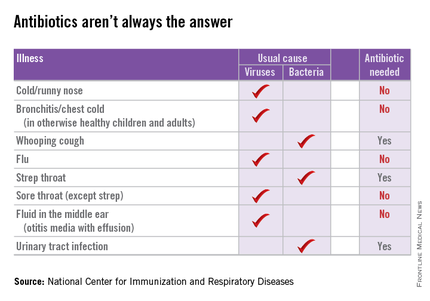
Dr. Purcell and her partners have committed to following evidence-based guidelines for antibiotic practices, such as the AAP’s guidelines for otitis media and sinusitis. She also noted that at least one major insurance company is starting to provide the group feedback about their antibiotic-prescribing practices. “They want to make sure we are not prescribing antibiotics for viruses,” she said.
Still, the message that antibiotics are not always the answer can be a bitter pill for some parents to swallow. A pediatrician friend in Alabama notes: “I have these conversations every day, and a lot of parents are mad at me for not prescribing antibiotics for their child’s ‘terrible cold.’” Another friend notes that watchful waiting can be a burden for parents who have high copays or difficulties with transportation.
Still, many parents would welcome a frank discussion about the risks and benefits of antibiotics. After I shared some of the CDC information for parents with a nursing colleague, she told me that her daughter recently had a febrile illness and was diagnosed with otitis media. “I don’t like giving my kids meds they don’t need,” she told me. “However, if the doc says they need antibiotics and they prescribe them, I give them. I never say, ‘Do we really need antibiotics for that?’”
Now she is rethinking that approach. “Was 10 days of amoxicillin necessary for a ‘red’ eardrum?! I’m just a mom. ... I don’t know the answer to that! Was her ear red because she had been crying or because of her fever? Did she get ‘treatment’ she did not need? Did the doctor give me antibiotics without education because she assumed that is why I brought her in?”
This year’s “Get Smart About Antibiotics Week” was Nov. 16-22. This annual 1-week observance is intended to raise awareness of the threat of antibiotic resistance and the importance of appropriate prescribing and use. Kudos if you celebrated this in your office. If you missed it, it’s not too late to check out some of the activities suggested by the CDC, and try one or two in your own practice. Email me with your ideas about stewardship in the outpatient setting, and I’ll try to feature at least some of them in a future column.
Dr. Bryant is a pediatrician specializing in infectious diseases at the University of Louisville (Ky.) and Kosair Children’s Hospital, also in Louisville. Dr. Bryant disclosed that she has been an investigator for clinical trials funded by Pfizer for the past 2 years. Email her at pdnews@frontlinemedcom.com.
I was recently asked to evaluate a young child with a urinary tract infection caused by an extended spectrum beta-lactamase (ESBL)–producing Escherichia coli.
I’d just broken the bad news to the mother: There was no oral medication available to treat the baby, so she’d have to stay in the hospital for a full intravenous course.
“Has your child been treated with antibiotics recently?” I asked the mother, wondering how the baby had come to have such a resistant infection.
“She had a couple days of runny nose and a low-grade fever a couple of weeks ago,” she told me. “Her doctor treated her for a sinus infection.”
In 2011, doctors in outpatient settings across the United States wrote 262.5 million prescriptions for antibiotics – 73.7 million for children – and according to the Centers for Disease Control and Prevention, about 50% of these were completely unnecessary because they were prescribed for viral respiratory tract infections (Clin Infect Dis. 2015 May 1;60[9]:1308-16).
Prescribing practices varied by region, with the highest rates in the South. Don’t think I’m judging. I live in Kentucky, the state with the highest rate of antibiotic prescribing at 1,281 prescriptions per 1,000 persons. Is it any wonder that we’re seeing kids with very resistant infections?
The CDC estimates that at least two million people in the United States are infected annually with antibiotic-resistant bacteria and at least 23,000 of them die as a result of these infections. It is estimated that prevention strategies that include better antibiotic prescribing could prevent as many as 619,000 infections and 37,000 deaths over 5 years. Fortunately, my little patient recovered fully, but it has made me think about antimicrobial stewardship, especially its role in the outpatient setting.
According the American Academy of Pediatrics, the goal of antimicrobial stewardship is “to optimize antimicrobial use, with the aim of decreasing inappropriate use that leads to unwarranted toxicity and to selection and spread of resistant organisms.”
Antimicrobial stewardship programs (ASPs) are increasingly common in inpatient settings and have been shown to reduce antibiotic use. These programs can take many forms. The hospital where I work relies primarily on clinical guidelines emphasizing appropriate empiric therapy for a variety of common conditions. Other hospitals employ prospective audit and feedback, as well as a restricted formulary. Medicare and Medicaid Conditions of Participation will soon require hospitals that receive funds from the Centers for Medicare and Medicaid Services have an ASP.
Comparatively little has been published about ASPs in the outpatient setting. The American Academy of Pediatrics suggests that effective strategies include patient education, provider education, provider audit and feedback, and clinical decision support. We have at least some data that these work, at least in a research setting.
From 2000 to 2003, a controlled, cluster-randomized trial in 16 Massachusetts communities demonstrated that a 3-year, multifaceted, community-level intervention was “modestly successful” in reducing antibiotic use (Pediatrics. 2008 Jan;121[1]:e15-23). As a part of this intervention, parents received education via direct mail and in primary care settings, pharmacies, and child care centers while physicians received small-group education, frequent updates and educational materials, and prescribing feedback. Antibiotic prescribing was measured via health insurance claims data from all children who were 6 years of age or younger and resided in study communities, and were insured by one of four participating health plans. Coincident with the intervention, there was 4.2% decrease in antibiotic prescribing among children aged 24 to <48 months and a 6.7% decrease among those aged 48-72 months. The effect was greatest among Medicaid-insured children.
More recently, 18 primary care practices in Pennsylvania and New Jersey were randomized to an intervention that consisted of a 1-hour, on-site education session followed by 1 year of personalized, quarterly audit and feedback of prescribing for bacterial and viral acute respiratory tract infections (ARTIs), or usual practice (JAMA. 2013 Jun 12;309[22]:2345-52). The prescribing practices of 162 clinicians were included in the analysis.
Broad spectrum–antibiotic prescribing decreased in intervention practices, compared with controls (26.8% to 14.3% among intervention practices vs. 28.4% to 22.6% in controls), as did “off-guideline” prescribing for pneumonia and acute sinusitis. Antibiotic prescribing for viral infections was relatively low at baseline and did not change. The authors concluded that “extending antimicrobial stewardship to the ambulatory setting, where such programs have generally not been implemented, may have important health benefits.” Unfortunately, the positive effect in these practices was not sustained after the audit and feedback stopped (JAMA. 2014 Dec 17;312[23]:2569-70).
Not all antimicrobial stewardship interventions need to be time- and resource-intensive. Investigators in California found that providers who publicly pledged to reducing inappropriate antibiotic use for ARTIs by signing and posting a commitment letter in exam rooms actually prescribed fewer inappropriate antibiotic courses for their adult patients (JAMA Intern Med. 2014 Mar;174[3]:425-31).
“When you have a cough, sore throat, or other illness, your doctor will help you select the best possible treatments. If an antibiotic would do more harm than good, your doctor will explain this to you, and may offer other treatments that are better for you,” the letter read in part. There was a 19.7 absolute percentage reduction in inappropriate antibiotic prescribing for ARTIs among clinicians randomized to the commitment letter invention relative to controls.
Can antimicrobial strategies work in the “real” world, in a busy pediatrician’s office? According to Dr. Patricia Purcell, a physician with East Louisville Pediatrics in Louisville, Ky., the answer is “yes.”
“We actually start with education in the newborn period,” Dr. Purcell said. “We let parents know that we are not going to call in antibiotics over the phone, and we’re not going to prescribe them for an upper respiratory tract infection.”
Dr. Purcell and her partners have committed to following evidence-based guidelines for antibiotic practices, such as the AAP’s guidelines for otitis media and sinusitis. She also noted that at least one major insurance company is starting to provide the group feedback about their antibiotic-prescribing practices. “They want to make sure we are not prescribing antibiotics for viruses,” she said.
Still, the message that antibiotics are not always the answer can be a bitter pill for some parents to swallow. A pediatrician friend in Alabama notes: “I have these conversations every day, and a lot of parents are mad at me for not prescribing antibiotics for their child’s ‘terrible cold.’” Another friend notes that watchful waiting can be a burden for parents who have high copays or difficulties with transportation.
Still, many parents would welcome a frank discussion about the risks and benefits of antibiotics. After I shared some of the CDC information for parents with a nursing colleague, she told me that her daughter recently had a febrile illness and was diagnosed with otitis media. “I don’t like giving my kids meds they don’t need,” she told me. “However, if the doc says they need antibiotics and they prescribe them, I give them. I never say, ‘Do we really need antibiotics for that?’”
Now she is rethinking that approach. “Was 10 days of amoxicillin necessary for a ‘red’ eardrum?! I’m just a mom. ... I don’t know the answer to that! Was her ear red because she had been crying or because of her fever? Did she get ‘treatment’ she did not need? Did the doctor give me antibiotics without education because she assumed that is why I brought her in?”
This year’s “Get Smart About Antibiotics Week” was Nov. 16-22. This annual 1-week observance is intended to raise awareness of the threat of antibiotic resistance and the importance of appropriate prescribing and use. Kudos if you celebrated this in your office. If you missed it, it’s not too late to check out some of the activities suggested by the CDC, and try one or two in your own practice. Email me with your ideas about stewardship in the outpatient setting, and I’ll try to feature at least some of them in a future column.
Dr. Bryant is a pediatrician specializing in infectious diseases at the University of Louisville (Ky.) and Kosair Children’s Hospital, also in Louisville. Dr. Bryant disclosed that she has been an investigator for clinical trials funded by Pfizer for the past 2 years. Email her at pdnews@frontlinemedcom.com.
I was recently asked to evaluate a young child with a urinary tract infection caused by an extended spectrum beta-lactamase (ESBL)–producing Escherichia coli.
I’d just broken the bad news to the mother: There was no oral medication available to treat the baby, so she’d have to stay in the hospital for a full intravenous course.
“Has your child been treated with antibiotics recently?” I asked the mother, wondering how the baby had come to have such a resistant infection.
“She had a couple days of runny nose and a low-grade fever a couple of weeks ago,” she told me. “Her doctor treated her for a sinus infection.”
In 2011, doctors in outpatient settings across the United States wrote 262.5 million prescriptions for antibiotics – 73.7 million for children – and according to the Centers for Disease Control and Prevention, about 50% of these were completely unnecessary because they were prescribed for viral respiratory tract infections (Clin Infect Dis. 2015 May 1;60[9]:1308-16).
Prescribing practices varied by region, with the highest rates in the South. Don’t think I’m judging. I live in Kentucky, the state with the highest rate of antibiotic prescribing at 1,281 prescriptions per 1,000 persons. Is it any wonder that we’re seeing kids with very resistant infections?
The CDC estimates that at least two million people in the United States are infected annually with antibiotic-resistant bacteria and at least 23,000 of them die as a result of these infections. It is estimated that prevention strategies that include better antibiotic prescribing could prevent as many as 619,000 infections and 37,000 deaths over 5 years. Fortunately, my little patient recovered fully, but it has made me think about antimicrobial stewardship, especially its role in the outpatient setting.
According the American Academy of Pediatrics, the goal of antimicrobial stewardship is “to optimize antimicrobial use, with the aim of decreasing inappropriate use that leads to unwarranted toxicity and to selection and spread of resistant organisms.”
Antimicrobial stewardship programs (ASPs) are increasingly common in inpatient settings and have been shown to reduce antibiotic use. These programs can take many forms. The hospital where I work relies primarily on clinical guidelines emphasizing appropriate empiric therapy for a variety of common conditions. Other hospitals employ prospective audit and feedback, as well as a restricted formulary. Medicare and Medicaid Conditions of Participation will soon require hospitals that receive funds from the Centers for Medicare and Medicaid Services have an ASP.
Comparatively little has been published about ASPs in the outpatient setting. The American Academy of Pediatrics suggests that effective strategies include patient education, provider education, provider audit and feedback, and clinical decision support. We have at least some data that these work, at least in a research setting.
From 2000 to 2003, a controlled, cluster-randomized trial in 16 Massachusetts communities demonstrated that a 3-year, multifaceted, community-level intervention was “modestly successful” in reducing antibiotic use (Pediatrics. 2008 Jan;121[1]:e15-23). As a part of this intervention, parents received education via direct mail and in primary care settings, pharmacies, and child care centers while physicians received small-group education, frequent updates and educational materials, and prescribing feedback. Antibiotic prescribing was measured via health insurance claims data from all children who were 6 years of age or younger and resided in study communities, and were insured by one of four participating health plans. Coincident with the intervention, there was 4.2% decrease in antibiotic prescribing among children aged 24 to <48 months and a 6.7% decrease among those aged 48-72 months. The effect was greatest among Medicaid-insured children.
More recently, 18 primary care practices in Pennsylvania and New Jersey were randomized to an intervention that consisted of a 1-hour, on-site education session followed by 1 year of personalized, quarterly audit and feedback of prescribing for bacterial and viral acute respiratory tract infections (ARTIs), or usual practice (JAMA. 2013 Jun 12;309[22]:2345-52). The prescribing practices of 162 clinicians were included in the analysis.
Broad spectrum–antibiotic prescribing decreased in intervention practices, compared with controls (26.8% to 14.3% among intervention practices vs. 28.4% to 22.6% in controls), as did “off-guideline” prescribing for pneumonia and acute sinusitis. Antibiotic prescribing for viral infections was relatively low at baseline and did not change. The authors concluded that “extending antimicrobial stewardship to the ambulatory setting, where such programs have generally not been implemented, may have important health benefits.” Unfortunately, the positive effect in these practices was not sustained after the audit and feedback stopped (JAMA. 2014 Dec 17;312[23]:2569-70).
Not all antimicrobial stewardship interventions need to be time- and resource-intensive. Investigators in California found that providers who publicly pledged to reducing inappropriate antibiotic use for ARTIs by signing and posting a commitment letter in exam rooms actually prescribed fewer inappropriate antibiotic courses for their adult patients (JAMA Intern Med. 2014 Mar;174[3]:425-31).
“When you have a cough, sore throat, or other illness, your doctor will help you select the best possible treatments. If an antibiotic would do more harm than good, your doctor will explain this to you, and may offer other treatments that are better for you,” the letter read in part. There was a 19.7 absolute percentage reduction in inappropriate antibiotic prescribing for ARTIs among clinicians randomized to the commitment letter invention relative to controls.
Can antimicrobial strategies work in the “real” world, in a busy pediatrician’s office? According to Dr. Patricia Purcell, a physician with East Louisville Pediatrics in Louisville, Ky., the answer is “yes.”
“We actually start with education in the newborn period,” Dr. Purcell said. “We let parents know that we are not going to call in antibiotics over the phone, and we’re not going to prescribe them for an upper respiratory tract infection.”
Dr. Purcell and her partners have committed to following evidence-based guidelines for antibiotic practices, such as the AAP’s guidelines for otitis media and sinusitis. She also noted that at least one major insurance company is starting to provide the group feedback about their antibiotic-prescribing practices. “They want to make sure we are not prescribing antibiotics for viruses,” she said.
Still, the message that antibiotics are not always the answer can be a bitter pill for some parents to swallow. A pediatrician friend in Alabama notes: “I have these conversations every day, and a lot of parents are mad at me for not prescribing antibiotics for their child’s ‘terrible cold.’” Another friend notes that watchful waiting can be a burden for parents who have high copays or difficulties with transportation.
Still, many parents would welcome a frank discussion about the risks and benefits of antibiotics. After I shared some of the CDC information for parents with a nursing colleague, she told me that her daughter recently had a febrile illness and was diagnosed with otitis media. “I don’t like giving my kids meds they don’t need,” she told me. “However, if the doc says they need antibiotics and they prescribe them, I give them. I never say, ‘Do we really need antibiotics for that?’”
Now she is rethinking that approach. “Was 10 days of amoxicillin necessary for a ‘red’ eardrum?! I’m just a mom. ... I don’t know the answer to that! Was her ear red because she had been crying or because of her fever? Did she get ‘treatment’ she did not need? Did the doctor give me antibiotics without education because she assumed that is why I brought her in?”
This year’s “Get Smart About Antibiotics Week” was Nov. 16-22. This annual 1-week observance is intended to raise awareness of the threat of antibiotic resistance and the importance of appropriate prescribing and use. Kudos if you celebrated this in your office. If you missed it, it’s not too late to check out some of the activities suggested by the CDC, and try one or two in your own practice. Email me with your ideas about stewardship in the outpatient setting, and I’ll try to feature at least some of them in a future column.
Dr. Bryant is a pediatrician specializing in infectious diseases at the University of Louisville (Ky.) and Kosair Children’s Hospital, also in Louisville. Dr. Bryant disclosed that she has been an investigator for clinical trials funded by Pfizer for the past 2 years. Email her at pdnews@frontlinemedcom.com.

Assessment of High Staphylococcus aureus MIC and Poor Patient Outcomes
Staphylococcus aureus (S aureus) is a common cause of infection within the hospital and in the community.1 Treatment is based on the organism’s susceptibility to methicillin and is referred to as either MRSA (methicillin-resistant S aureus) or MSSA (methicillin-susceptible S aureus). As antibiotic resistance has evolved, patients with S aureus (especially MRSA) infections have become more difficult to treat. Susceptibility testing guides treatment of these infections and determines the minimum inhibitory concentration (MIC) for each antibiotic. A MIC is the minimum concentration of an antibiotic that will inhibit the visible growth of the organism after incubation.
Related: Experts Debate Infection Control Merits of ‘Bare Beneath the Elbows’
Vancomycin has remained the mainstay for treatment of patients with MRSA infections. An increasing number of infections with high documented MICs to vancomycin are raising concern that resistance may be developing. Clinical controversy exists within the infectious disease community as to whether vancomycin is less effective against S aureus infections with a vancomycin MIC of ≥ 2 µg/mL, contributing to poor patient outcomes.2
The Clinical and Laboratory Standards Institute (CLSI) lowered the breakpoint for vancomycin in 2006 from > 4 µg/mL to > 2 µg/mL.3 Breakpoints delineate MIC values that are considered susceptible, nonsusceptible, or resistant to an antibiotic. The CLSI breakpoint change points to an increase in vancomycin resistance and supports the need for further discussion and insight.
A 2012 meta-analysis was conducted to determine whether an association exists between S aureus infections with vancomycin MIC values ≥ 2 µg/mL and the effectiveness of the therapy.2 Twenty-two studies were included with a primary outcome of 30-day mortality. A review of MRSA data revealed a statistically significant association between high vancomycin MICs (≥ 1.5 µg/mL) and increased mortality (P < .01), regardless of the source of infection. When limiting the data to Etest (bioMérieux, Marcy L’Etoile, France) MIC testing for MRSA bloodstream infections (BSIs), a vancomycin MIC ≥ 1.5 µg/mL was not associated with increased mortality (P = .08). Comparing data for MIC ≥ 2 µg/mL and ≤ 1.5 µg/mL, found that MICs ≥ 2 µg/mL were associated with increased mortality (P < .01). Analysis of the 11 studies that included data on treatment failure concluded that S aureus infections with a vancomycin MIC ≥ 1.5 µg/mL were associated with an increased risk of treatment failure in both MSSA and MRSA infections (P < .01) and that treatment failure was more likely in MRSA BSIs than in non-BSIs (P < .01).Evidence to support a possible correlation between high S aureus vancomycin MICs and poor patient outcomes came from a 2013 meta-analysis.3 The specific aim of this study was to examine the correlations between vancomycin MIC, patient mortality, and treatment failure. A MIC ≥ 1.5 µg/mL and ≥ 1.0 µg/mL were used to classify MICs as high when determined by Etest and broth microdilution (BMD), respectively. Analysis revealed an association between high vancomycin MICs and increased risk of treatment failure (relative risk [RR] 1.40, 95% confidence interval [CI] 1.15-1.71) and overall mortality (RR 1.42, 95% CI 1.08-1.87). Similarly, a sensitivity analysis on S aureus BSIs with high vancomycin MICs revealed an increased risk of mortality (RR 1.46, 95% CI 1.06-2.01) and treatment failure (RR 1.37, 95% CI 1.09-1.73).
Related: The Importance of an Antimicrobial Stewardship Program
The most recent meta-analysis (published in 2014) included patients with S aureus bacteremia and evaluated the association of high S aureus vancomycin MIC with an increased risk of mortality.4 A high MIC was defined as ≥ 1.5 µg/mL by Etest and ≥ 2.0 µg/mL by BMD. The analysis of 38 studies found a nonstatistically significant difference in mortality risk (P = .43). Further analysis was performed to determine whether the vancomycin MIC cutoff plays a role in increased mortality. No statistically significant difference in mortality was found when using a vancomycin MIC ≥ 1.5 µg/mL, ≥ 2.0 µg/mL, ≥ 4.0 µg/mL, or ≥ 8.0 µg/mL. The authors argued that their differing conclusions from other meta-analyses may be due to the inclusion of only bacteremias rather than all infection types, and although there was not a statistically significant difference, increased risk of mortality could not be excluded.
Related: Results Mixed in Hospital Efforts to Tackle Antimicrobial Resistance
Although conclusions of published meta-analyses differ, the results highlight the necessity of using clinical judgment in treating patients with S aureus infections with high MIC values and to consider the primary source and severity of infection. A confounding factor to direct comparison of the literature is the variations based on the method of MIC determination and testing (Etest vs BMD).
Additionally, all 3 studies addressed the importance of considering clinical patient factors that may lead to poorer prognosis as well as the difficultly in achieving necessary vancomycin levels with limited toxicity. The risk of increased mortality in patients with high vancomycin MICs cannot be ruled out at this time. Therefore, additional patient factors as well as the potential toxicities that may result from vancomycin therapy should be considered when using vancomycin in treating patients with S aureus infections.
Additional Note
An earlier version of this article appeared in the Pharmacy Related Newsletter: The Capsule, of the William S. Middleton Memorial Veterans Hospital.
Author disclosures
The authors report no actual or potential conflicts of interest with regard to this article.
Disclaimer
The opinions expressed herein are those of the authors and do not necessarily reflect those of Federal Practitioner, Frontline Medical Communications Inc., the U.S. Government, or any of its agencies. This article may discuss unlabeled or investigational use of certain drugs. Please review complete prescribing information for specific drugs or drug combinations—including indications, contraindications, warnings, and adverse effects—before administering pharmacologic therapy to patients.
1. Martin JH, Norris R, Barras M, et al. Therapeutic monitoring of vancomycin in adult patients: a consensus review of the American Society of Health-System Pharmacists, the Infectious Diseases Society of America, and the Society of Infectious Diseases Pharmacists. Clin Biochem Rev. 2010;31(1):21-24.
2. van Hal SJ, Lodise TP, Paterson DL. The clinical significance of vancomycin minimum inhibitory concentration in Staphylococcus aureus infections: a systematic review and meta-analysis. Clin Infect Dis. 2012;54(6):755-771.
3. Jacob JT, DiazGranados CA. High vancomycin minimum inhibitory concentration and clinical outcomes in adults with methicillin-resistant Staphylococcus aureus infections: a meta-analysis. Int J Infect Dis. 2013;17(2):e93-e100.
4. Kalil AC, Van Schooneveld TC, Fey PD, Rupp ME. Association between vancomycin minimum inhibitory concentration and mortality among patients with Staphylococcus aureus bloodstream infections: a systematic review and meta-analysis. JAMA. 2014;312(15):1552-1564.
Staphylococcus aureus (S aureus) is a common cause of infection within the hospital and in the community.1 Treatment is based on the organism’s susceptibility to methicillin and is referred to as either MRSA (methicillin-resistant S aureus) or MSSA (methicillin-susceptible S aureus). As antibiotic resistance has evolved, patients with S aureus (especially MRSA) infections have become more difficult to treat. Susceptibility testing guides treatment of these infections and determines the minimum inhibitory concentration (MIC) for each antibiotic. A MIC is the minimum concentration of an antibiotic that will inhibit the visible growth of the organism after incubation.
Related: Experts Debate Infection Control Merits of ‘Bare Beneath the Elbows’
Vancomycin has remained the mainstay for treatment of patients with MRSA infections. An increasing number of infections with high documented MICs to vancomycin are raising concern that resistance may be developing. Clinical controversy exists within the infectious disease community as to whether vancomycin is less effective against S aureus infections with a vancomycin MIC of ≥ 2 µg/mL, contributing to poor patient outcomes.2
The Clinical and Laboratory Standards Institute (CLSI) lowered the breakpoint for vancomycin in 2006 from > 4 µg/mL to > 2 µg/mL.3 Breakpoints delineate MIC values that are considered susceptible, nonsusceptible, or resistant to an antibiotic. The CLSI breakpoint change points to an increase in vancomycin resistance and supports the need for further discussion and insight.
A 2012 meta-analysis was conducted to determine whether an association exists between S aureus infections with vancomycin MIC values ≥ 2 µg/mL and the effectiveness of the therapy.2 Twenty-two studies were included with a primary outcome of 30-day mortality. A review of MRSA data revealed a statistically significant association between high vancomycin MICs (≥ 1.5 µg/mL) and increased mortality (P < .01), regardless of the source of infection. When limiting the data to Etest (bioMérieux, Marcy L’Etoile, France) MIC testing for MRSA bloodstream infections (BSIs), a vancomycin MIC ≥ 1.5 µg/mL was not associated with increased mortality (P = .08). Comparing data for MIC ≥ 2 µg/mL and ≤ 1.5 µg/mL, found that MICs ≥ 2 µg/mL were associated with increased mortality (P < .01). Analysis of the 11 studies that included data on treatment failure concluded that S aureus infections with a vancomycin MIC ≥ 1.5 µg/mL were associated with an increased risk of treatment failure in both MSSA and MRSA infections (P < .01) and that treatment failure was more likely in MRSA BSIs than in non-BSIs (P < .01).Evidence to support a possible correlation between high S aureus vancomycin MICs and poor patient outcomes came from a 2013 meta-analysis.3 The specific aim of this study was to examine the correlations between vancomycin MIC, patient mortality, and treatment failure. A MIC ≥ 1.5 µg/mL and ≥ 1.0 µg/mL were used to classify MICs as high when determined by Etest and broth microdilution (BMD), respectively. Analysis revealed an association between high vancomycin MICs and increased risk of treatment failure (relative risk [RR] 1.40, 95% confidence interval [CI] 1.15-1.71) and overall mortality (RR 1.42, 95% CI 1.08-1.87). Similarly, a sensitivity analysis on S aureus BSIs with high vancomycin MICs revealed an increased risk of mortality (RR 1.46, 95% CI 1.06-2.01) and treatment failure (RR 1.37, 95% CI 1.09-1.73).
Related: The Importance of an Antimicrobial Stewardship Program
The most recent meta-analysis (published in 2014) included patients with S aureus bacteremia and evaluated the association of high S aureus vancomycin MIC with an increased risk of mortality.4 A high MIC was defined as ≥ 1.5 µg/mL by Etest and ≥ 2.0 µg/mL by BMD. The analysis of 38 studies found a nonstatistically significant difference in mortality risk (P = .43). Further analysis was performed to determine whether the vancomycin MIC cutoff plays a role in increased mortality. No statistically significant difference in mortality was found when using a vancomycin MIC ≥ 1.5 µg/mL, ≥ 2.0 µg/mL, ≥ 4.0 µg/mL, or ≥ 8.0 µg/mL. The authors argued that their differing conclusions from other meta-analyses may be due to the inclusion of only bacteremias rather than all infection types, and although there was not a statistically significant difference, increased risk of mortality could not be excluded.
Related: Results Mixed in Hospital Efforts to Tackle Antimicrobial Resistance
Although conclusions of published meta-analyses differ, the results highlight the necessity of using clinical judgment in treating patients with S aureus infections with high MIC values and to consider the primary source and severity of infection. A confounding factor to direct comparison of the literature is the variations based on the method of MIC determination and testing (Etest vs BMD).
Additionally, all 3 studies addressed the importance of considering clinical patient factors that may lead to poorer prognosis as well as the difficultly in achieving necessary vancomycin levels with limited toxicity. The risk of increased mortality in patients with high vancomycin MICs cannot be ruled out at this time. Therefore, additional patient factors as well as the potential toxicities that may result from vancomycin therapy should be considered when using vancomycin in treating patients with S aureus infections.
Additional Note
An earlier version of this article appeared in the Pharmacy Related Newsletter: The Capsule, of the William S. Middleton Memorial Veterans Hospital.
Author disclosures
The authors report no actual or potential conflicts of interest with regard to this article.
Disclaimer
The opinions expressed herein are those of the authors and do not necessarily reflect those of Federal Practitioner, Frontline Medical Communications Inc., the U.S. Government, or any of its agencies. This article may discuss unlabeled or investigational use of certain drugs. Please review complete prescribing information for specific drugs or drug combinations—including indications, contraindications, warnings, and adverse effects—before administering pharmacologic therapy to patients.
Staphylococcus aureus (S aureus) is a common cause of infection within the hospital and in the community.1 Treatment is based on the organism’s susceptibility to methicillin and is referred to as either MRSA (methicillin-resistant S aureus) or MSSA (methicillin-susceptible S aureus). As antibiotic resistance has evolved, patients with S aureus (especially MRSA) infections have become more difficult to treat. Susceptibility testing guides treatment of these infections and determines the minimum inhibitory concentration (MIC) for each antibiotic. A MIC is the minimum concentration of an antibiotic that will inhibit the visible growth of the organism after incubation.
Related: Experts Debate Infection Control Merits of ‘Bare Beneath the Elbows’
Vancomycin has remained the mainstay for treatment of patients with MRSA infections. An increasing number of infections with high documented MICs to vancomycin are raising concern that resistance may be developing. Clinical controversy exists within the infectious disease community as to whether vancomycin is less effective against S aureus infections with a vancomycin MIC of ≥ 2 µg/mL, contributing to poor patient outcomes.2
The Clinical and Laboratory Standards Institute (CLSI) lowered the breakpoint for vancomycin in 2006 from > 4 µg/mL to > 2 µg/mL.3 Breakpoints delineate MIC values that are considered susceptible, nonsusceptible, or resistant to an antibiotic. The CLSI breakpoint change points to an increase in vancomycin resistance and supports the need for further discussion and insight.
A 2012 meta-analysis was conducted to determine whether an association exists between S aureus infections with vancomycin MIC values ≥ 2 µg/mL and the effectiveness of the therapy.2 Twenty-two studies were included with a primary outcome of 30-day mortality. A review of MRSA data revealed a statistically significant association between high vancomycin MICs (≥ 1.5 µg/mL) and increased mortality (P < .01), regardless of the source of infection. When limiting the data to Etest (bioMérieux, Marcy L’Etoile, France) MIC testing for MRSA bloodstream infections (BSIs), a vancomycin MIC ≥ 1.5 µg/mL was not associated with increased mortality (P = .08). Comparing data for MIC ≥ 2 µg/mL and ≤ 1.5 µg/mL, found that MICs ≥ 2 µg/mL were associated with increased mortality (P < .01). Analysis of the 11 studies that included data on treatment failure concluded that S aureus infections with a vancomycin MIC ≥ 1.5 µg/mL were associated with an increased risk of treatment failure in both MSSA and MRSA infections (P < .01) and that treatment failure was more likely in MRSA BSIs than in non-BSIs (P < .01).Evidence to support a possible correlation between high S aureus vancomycin MICs and poor patient outcomes came from a 2013 meta-analysis.3 The specific aim of this study was to examine the correlations between vancomycin MIC, patient mortality, and treatment failure. A MIC ≥ 1.5 µg/mL and ≥ 1.0 µg/mL were used to classify MICs as high when determined by Etest and broth microdilution (BMD), respectively. Analysis revealed an association between high vancomycin MICs and increased risk of treatment failure (relative risk [RR] 1.40, 95% confidence interval [CI] 1.15-1.71) and overall mortality (RR 1.42, 95% CI 1.08-1.87). Similarly, a sensitivity analysis on S aureus BSIs with high vancomycin MICs revealed an increased risk of mortality (RR 1.46, 95% CI 1.06-2.01) and treatment failure (RR 1.37, 95% CI 1.09-1.73).
Related: The Importance of an Antimicrobial Stewardship Program
The most recent meta-analysis (published in 2014) included patients with S aureus bacteremia and evaluated the association of high S aureus vancomycin MIC with an increased risk of mortality.4 A high MIC was defined as ≥ 1.5 µg/mL by Etest and ≥ 2.0 µg/mL by BMD. The analysis of 38 studies found a nonstatistically significant difference in mortality risk (P = .43). Further analysis was performed to determine whether the vancomycin MIC cutoff plays a role in increased mortality. No statistically significant difference in mortality was found when using a vancomycin MIC ≥ 1.5 µg/mL, ≥ 2.0 µg/mL, ≥ 4.0 µg/mL, or ≥ 8.0 µg/mL. The authors argued that their differing conclusions from other meta-analyses may be due to the inclusion of only bacteremias rather than all infection types, and although there was not a statistically significant difference, increased risk of mortality could not be excluded.
Related: Results Mixed in Hospital Efforts to Tackle Antimicrobial Resistance
Although conclusions of published meta-analyses differ, the results highlight the necessity of using clinical judgment in treating patients with S aureus infections with high MIC values and to consider the primary source and severity of infection. A confounding factor to direct comparison of the literature is the variations based on the method of MIC determination and testing (Etest vs BMD).
Additionally, all 3 studies addressed the importance of considering clinical patient factors that may lead to poorer prognosis as well as the difficultly in achieving necessary vancomycin levels with limited toxicity. The risk of increased mortality in patients with high vancomycin MICs cannot be ruled out at this time. Therefore, additional patient factors as well as the potential toxicities that may result from vancomycin therapy should be considered when using vancomycin in treating patients with S aureus infections.
Additional Note
An earlier version of this article appeared in the Pharmacy Related Newsletter: The Capsule, of the William S. Middleton Memorial Veterans Hospital.
Author disclosures
The authors report no actual or potential conflicts of interest with regard to this article.
Disclaimer
The opinions expressed herein are those of the authors and do not necessarily reflect those of Federal Practitioner, Frontline Medical Communications Inc., the U.S. Government, or any of its agencies. This article may discuss unlabeled or investigational use of certain drugs. Please review complete prescribing information for specific drugs or drug combinations—including indications, contraindications, warnings, and adverse effects—before administering pharmacologic therapy to patients.
1. Martin JH, Norris R, Barras M, et al. Therapeutic monitoring of vancomycin in adult patients: a consensus review of the American Society of Health-System Pharmacists, the Infectious Diseases Society of America, and the Society of Infectious Diseases Pharmacists. Clin Biochem Rev. 2010;31(1):21-24.
2. van Hal SJ, Lodise TP, Paterson DL. The clinical significance of vancomycin minimum inhibitory concentration in Staphylococcus aureus infections: a systematic review and meta-analysis. Clin Infect Dis. 2012;54(6):755-771.
3. Jacob JT, DiazGranados CA. High vancomycin minimum inhibitory concentration and clinical outcomes in adults with methicillin-resistant Staphylococcus aureus infections: a meta-analysis. Int J Infect Dis. 2013;17(2):e93-e100.
4. Kalil AC, Van Schooneveld TC, Fey PD, Rupp ME. Association between vancomycin minimum inhibitory concentration and mortality among patients with Staphylococcus aureus bloodstream infections: a systematic review and meta-analysis. JAMA. 2014;312(15):1552-1564.
1. Martin JH, Norris R, Barras M, et al. Therapeutic monitoring of vancomycin in adult patients: a consensus review of the American Society of Health-System Pharmacists, the Infectious Diseases Society of America, and the Society of Infectious Diseases Pharmacists. Clin Biochem Rev. 2010;31(1):21-24.
2. van Hal SJ, Lodise TP, Paterson DL. The clinical significance of vancomycin minimum inhibitory concentration in Staphylococcus aureus infections: a systematic review and meta-analysis. Clin Infect Dis. 2012;54(6):755-771.
3. Jacob JT, DiazGranados CA. High vancomycin minimum inhibitory concentration and clinical outcomes in adults with methicillin-resistant Staphylococcus aureus infections: a meta-analysis. Int J Infect Dis. 2013;17(2):e93-e100.
4. Kalil AC, Van Schooneveld TC, Fey PD, Rupp ME. Association between vancomycin minimum inhibitory concentration and mortality among patients with Staphylococcus aureus bloodstream infections: a systematic review and meta-analysis. JAMA. 2014;312(15):1552-1564.
Assessing longer-term effects of SSRI exposure in pregnancy
Over the last 2 decades, the medical community has accumulated more information regarding fetal exposure to selective serotonin reuptake inhibitors than almost any medicine that women take during pregnancy.
Data on the risks for major congenital malformations and even specific malformations, such as cardiac defects, are so vast that they can be confusing for clinicians and researchers alike to digest. Yet the consensus among experts in reproductive safety is that the risk of teratogenesis following fetal exposure to SSRIs is small in terms of absolute risks (N Engl J Med. 2007;356:2732-3.).

But women and their partners are worried about more than the risk of malformations. They also are concerned about how fetal exposure to SSRIs will impact long-term neurobehavioral sequelae. It turns out that is a much more challenging question, and the data available to inform our answers still are relatively sparse.
Research gaps
There have been several reports in the literature that suggest there are modest effects on motor function in children whose mothers used SSRIs during pregnancy, but these reports have not been particularly systematic and have excluded some relevant variables, such as the presence or absence of a psychiatric disorder during pregnancy.
In what is considered a seminal examination of this topic performed more than a decade ago, Dr. Irena Nulman and her colleagues at the Motherisk program in Toronto demonstrated the importance of accounting for postpartum maternal depression and mood. Among a group of children exposed to fluoxetine (Prozac) or tricyclic antidepressants throughout pregnancy, there were no differences in IQ or language development, compared with unexposed children between 15 and 71 months of age. However, children with lower cognitive and language achievement were more likely to have mothers with higher ratings of postpartum mood disturbance (Am J Psychiatry. 2002 Nov;159[11]:1889-95.).
The charge to the field is to tackle this next clinical research frontier: the longer-term effects of fetal exposure to antidepressants and maternal psychiatric illness. Only by factoring in both of these important variables will we be able to get a true model of risk for this very critical issue of longer-term behavioral function.
Recently, researchers attempted to look at this question using data from the Norwegian Mother and Child Cohort study, a large population-based, prospective pregnancy cohort study. Children were assessed at age 3 years and motor development was assessed by maternal reports of fine and gross motor development using items from the Ages and Stages Questionnaire (ASQ). Maternal ASQ scores were compared with data from another Norwegian study in which clinicians assessed motor development using the gross and fine motor Mullen Scales of Early Learning (MSEL).
The strength of the study is that it included a very large number of children – more than 50,000 – although it is noteworthy that only a small percentage of women actually used SSRIs during pregnancy. A total of 381 women reported the use of SSRIs during pregnancy, with about half of the women reporting prolonged use (defined as exposure at two points of observation in the study).

The findings are noteworthy. The study showed that children with prolonged SSRI exposure were more likely to exhibit delays in fine motor development, compared with children with no fetal exposure to SSRIs (odds ratio, 1.42; 95% confidence interval, 1.07-1.87). The association persisted even after adjusting for symptoms of anxiety and depression before and during pregnancy. The severity of maternal depression provided only a partial explanation for the association, and depression after pregnancy appeared to have no impact on the estimated effect of SSRIs during pregnancy (BJOG. 2015 Sep 15. doi: 10.1111/1471-0528.13582).
Personal medicine
So how does the clinician translate these findings into practice? While the study indicates that prolonged prenatal exposure to SSRIs was associated with delayed motor development at age 3 years, the association was very weak, and only a few children had clinically significant impairment in motor development. The finding should be reassuring to many women who are faced with this decision.
The researchers should be commended for trying to at least begin to tackle this critical frontier with respect to the risk-benefit decision in using these medicines during pregnancy. The problem is that in the absence of robust data quantifying the exposure to maternal psychiatric illness, the quality of the data still is somewhat limited.
So far the data indicate that there is not a major signal for neurobehavioral dysregulation associated with fetal exposure to SSRIs. That being said, to adequately answer the question for the field it will be important to conduct a single, prospective study where we can accurately quantify exposure to medicine and exposure to maternal psychiatric illness during pregnancy. That type of study will allow us to assess the relative exposures and come up with a much more refined risk estimate. We also will be able to fold in a critical piece – the role of genomics.
Genomics will play a significant role in determining risk because vulnerability to potential disruption in central nervous system development may be a factor in determining the development of the brain in utero. We know, for example, that prenatal stress affects neuromodulation in the brain, and that vulnerability to disruption will be variable from patient to patient. Prospective studies where we not only quantify what medicines women are taking and the severity of psychiatric illness, but also vulnerability to central nervous system disruption, if any, at the level of the genome will be a critical missing piece for future investigators.
Even similar exposure to medicine and psychiatric disorders may have variable effects on the developing brain. If we can identify that variability at the level of the genome, then we will be able to create a refined model of risk that will dictate personalized medicine with respect to reproductive psychopharmacology.
Dr. Cohen is the director of the Center for Women’s Mental Health at Massachusetts General Hospital in Boston, which provides information resources and conducts clinical care and research in reproductive mental health. He has been a consultant to manufacturers of psychiatric medications. To comment, email him at obnews@frontlinemedcom.com.
Over the last 2 decades, the medical community has accumulated more information regarding fetal exposure to selective serotonin reuptake inhibitors than almost any medicine that women take during pregnancy.
Data on the risks for major congenital malformations and even specific malformations, such as cardiac defects, are so vast that they can be confusing for clinicians and researchers alike to digest. Yet the consensus among experts in reproductive safety is that the risk of teratogenesis following fetal exposure to SSRIs is small in terms of absolute risks (N Engl J Med. 2007;356:2732-3.).
But women and their partners are worried about more than the risk of malformations. They also are concerned about how fetal exposure to SSRIs will impact long-term neurobehavioral sequelae. It turns out that is a much more challenging question, and the data available to inform our answers still are relatively sparse.
Research gaps
There have been several reports in the literature that suggest there are modest effects on motor function in children whose mothers used SSRIs during pregnancy, but these reports have not been particularly systematic and have excluded some relevant variables, such as the presence or absence of a psychiatric disorder during pregnancy.
In what is considered a seminal examination of this topic performed more than a decade ago, Dr. Irena Nulman and her colleagues at the Motherisk program in Toronto demonstrated the importance of accounting for postpartum maternal depression and mood. Among a group of children exposed to fluoxetine (Prozac) or tricyclic antidepressants throughout pregnancy, there were no differences in IQ or language development, compared with unexposed children between 15 and 71 months of age. However, children with lower cognitive and language achievement were more likely to have mothers with higher ratings of postpartum mood disturbance (Am J Psychiatry. 2002 Nov;159[11]:1889-95.).
The charge to the field is to tackle this next clinical research frontier: the longer-term effects of fetal exposure to antidepressants and maternal psychiatric illness. Only by factoring in both of these important variables will we be able to get a true model of risk for this very critical issue of longer-term behavioral function.
Recently, researchers attempted to look at this question using data from the Norwegian Mother and Child Cohort study, a large population-based, prospective pregnancy cohort study. Children were assessed at age 3 years and motor development was assessed by maternal reports of fine and gross motor development using items from the Ages and Stages Questionnaire (ASQ). Maternal ASQ scores were compared with data from another Norwegian study in which clinicians assessed motor development using the gross and fine motor Mullen Scales of Early Learning (MSEL).
The strength of the study is that it included a very large number of children – more than 50,000 – although it is noteworthy that only a small percentage of women actually used SSRIs during pregnancy. A total of 381 women reported the use of SSRIs during pregnancy, with about half of the women reporting prolonged use (defined as exposure at two points of observation in the study).
The findings are noteworthy. The study showed that children with prolonged SSRI exposure were more likely to exhibit delays in fine motor development, compared with children with no fetal exposure to SSRIs (odds ratio, 1.42; 95% confidence interval, 1.07-1.87). The association persisted even after adjusting for symptoms of anxiety and depression before and during pregnancy. The severity of maternal depression provided only a partial explanation for the association, and depression after pregnancy appeared to have no impact on the estimated effect of SSRIs during pregnancy (BJOG. 2015 Sep 15. doi: 10.1111/1471-0528.13582).
Personal medicine
So how does the clinician translate these findings into practice? While the study indicates that prolonged prenatal exposure to SSRIs was associated with delayed motor development at age 3 years, the association was very weak, and only a few children had clinically significant impairment in motor development. The finding should be reassuring to many women who are faced with this decision.
The researchers should be commended for trying to at least begin to tackle this critical frontier with respect to the risk-benefit decision in using these medicines during pregnancy. The problem is that in the absence of robust data quantifying the exposure to maternal psychiatric illness, the quality of the data still is somewhat limited.
So far the data indicate that there is not a major signal for neurobehavioral dysregulation associated with fetal exposure to SSRIs. That being said, to adequately answer the question for the field it will be important to conduct a single, prospective study where we can accurately quantify exposure to medicine and exposure to maternal psychiatric illness during pregnancy. That type of study will allow us to assess the relative exposures and come up with a much more refined risk estimate. We also will be able to fold in a critical piece – the role of genomics.
Genomics will play a significant role in determining risk because vulnerability to potential disruption in central nervous system development may be a factor in determining the development of the brain in utero. We know, for example, that prenatal stress affects neuromodulation in the brain, and that vulnerability to disruption will be variable from patient to patient. Prospective studies where we not only quantify what medicines women are taking and the severity of psychiatric illness, but also vulnerability to central nervous system disruption, if any, at the level of the genome will be a critical missing piece for future investigators.
Even similar exposure to medicine and psychiatric disorders may have variable effects on the developing brain. If we can identify that variability at the level of the genome, then we will be able to create a refined model of risk that will dictate personalized medicine with respect to reproductive psychopharmacology.
Dr. Cohen is the director of the Center for Women’s Mental Health at Massachusetts General Hospital in Boston, which provides information resources and conducts clinical care and research in reproductive mental health. He has been a consultant to manufacturers of psychiatric medications. To comment, email him at obnews@frontlinemedcom.com.
Over the last 2 decades, the medical community has accumulated more information regarding fetal exposure to selective serotonin reuptake inhibitors than almost any medicine that women take during pregnancy.
Data on the risks for major congenital malformations and even specific malformations, such as cardiac defects, are so vast that they can be confusing for clinicians and researchers alike to digest. Yet the consensus among experts in reproductive safety is that the risk of teratogenesis following fetal exposure to SSRIs is small in terms of absolute risks (N Engl J Med. 2007;356:2732-3.).
But women and their partners are worried about more than the risk of malformations. They also are concerned about how fetal exposure to SSRIs will impact long-term neurobehavioral sequelae. It turns out that is a much more challenging question, and the data available to inform our answers still are relatively sparse.
Research gaps
There have been several reports in the literature that suggest there are modest effects on motor function in children whose mothers used SSRIs during pregnancy, but these reports have not been particularly systematic and have excluded some relevant variables, such as the presence or absence of a psychiatric disorder during pregnancy.
In what is considered a seminal examination of this topic performed more than a decade ago, Dr. Irena Nulman and her colleagues at the Motherisk program in Toronto demonstrated the importance of accounting for postpartum maternal depression and mood. Among a group of children exposed to fluoxetine (Prozac) or tricyclic antidepressants throughout pregnancy, there were no differences in IQ or language development, compared with unexposed children between 15 and 71 months of age. However, children with lower cognitive and language achievement were more likely to have mothers with higher ratings of postpartum mood disturbance (Am J Psychiatry. 2002 Nov;159[11]:1889-95.).
The charge to the field is to tackle this next clinical research frontier: the longer-term effects of fetal exposure to antidepressants and maternal psychiatric illness. Only by factoring in both of these important variables will we be able to get a true model of risk for this very critical issue of longer-term behavioral function.
Recently, researchers attempted to look at this question using data from the Norwegian Mother and Child Cohort study, a large population-based, prospective pregnancy cohort study. Children were assessed at age 3 years and motor development was assessed by maternal reports of fine and gross motor development using items from the Ages and Stages Questionnaire (ASQ). Maternal ASQ scores were compared with data from another Norwegian study in which clinicians assessed motor development using the gross and fine motor Mullen Scales of Early Learning (MSEL).
The strength of the study is that it included a very large number of children – more than 50,000 – although it is noteworthy that only a small percentage of women actually used SSRIs during pregnancy. A total of 381 women reported the use of SSRIs during pregnancy, with about half of the women reporting prolonged use (defined as exposure at two points of observation in the study).
The findings are noteworthy. The study showed that children with prolonged SSRI exposure were more likely to exhibit delays in fine motor development, compared with children with no fetal exposure to SSRIs (odds ratio, 1.42; 95% confidence interval, 1.07-1.87). The association persisted even after adjusting for symptoms of anxiety and depression before and during pregnancy. The severity of maternal depression provided only a partial explanation for the association, and depression after pregnancy appeared to have no impact on the estimated effect of SSRIs during pregnancy (BJOG. 2015 Sep 15. doi: 10.1111/1471-0528.13582).
Personal medicine
So how does the clinician translate these findings into practice? While the study indicates that prolonged prenatal exposure to SSRIs was associated with delayed motor development at age 3 years, the association was very weak, and only a few children had clinically significant impairment in motor development. The finding should be reassuring to many women who are faced with this decision.
The researchers should be commended for trying to at least begin to tackle this critical frontier with respect to the risk-benefit decision in using these medicines during pregnancy. The problem is that in the absence of robust data quantifying the exposure to maternal psychiatric illness, the quality of the data still is somewhat limited.
So far the data indicate that there is not a major signal for neurobehavioral dysregulation associated with fetal exposure to SSRIs. That being said, to adequately answer the question for the field it will be important to conduct a single, prospective study where we can accurately quantify exposure to medicine and exposure to maternal psychiatric illness during pregnancy. That type of study will allow us to assess the relative exposures and come up with a much more refined risk estimate. We also will be able to fold in a critical piece – the role of genomics.
Genomics will play a significant role in determining risk because vulnerability to potential disruption in central nervous system development may be a factor in determining the development of the brain in utero. We know, for example, that prenatal stress affects neuromodulation in the brain, and that vulnerability to disruption will be variable from patient to patient. Prospective studies where we not only quantify what medicines women are taking and the severity of psychiatric illness, but also vulnerability to central nervous system disruption, if any, at the level of the genome will be a critical missing piece for future investigators.
Even similar exposure to medicine and psychiatric disorders may have variable effects on the developing brain. If we can identify that variability at the level of the genome, then we will be able to create a refined model of risk that will dictate personalized medicine with respect to reproductive psychopharmacology.
Dr. Cohen is the director of the Center for Women’s Mental Health at Massachusetts General Hospital in Boston, which provides information resources and conducts clinical care and research in reproductive mental health. He has been a consultant to manufacturers of psychiatric medications. To comment, email him at obnews@frontlinemedcom.com.

Brothers and sisters, unite!
In this month’s Vascular Specialist, there are two letters to the editor that seem to imply a division in the SVS membership. The letters indirectly suggest that the SVS comprises two camps, on the one hand, academics, and on the other, community-based physicians. Further, although the majority of the membership comprises primarily of nonacademic surgeons, the leadership is, and will remain, predominantly composed of University-employed physicians. Implicit also is that there may not be a common agenda.
However, many questions come to mind: Are we truly a house divided? If so, how did this come about? Do community and academic surgeons indeed have different concerns that split us into camps? If so, how can we come together because the aphorism “United we stand, divided we fall” will have critical implications for the future of our specialty.
Dennis Gable writes that “the SVS is often (and historically) thought of as a society reserved for academic surgeons” because it is regarded solely as a vehicle to arrange a national academic meeting (the VAM). However, he counters that incorrect assessment by describing many fundamentally important roles that the SVS plays in the daily lives of practicing vascular surgeons. He encourages members to go online (at www.vascularweb.org) and see for themselves all that the SVS is doing for vascular surgery, vascular surgeons and their patients. The Society’s strong advocacy efforts on reimbursement issues, for example, have prevented millions of dollars in payment cuts, something hugely important to members in community practice.
However, many older surgeons will recall a period when only a select few could join the Society for Vascular Surgery as it was then constituted. Entry was reserved for nationally recognized researchers or those with an extensive list of publications. At that time, it was even difficult to become a member of the International Society for Cardiovascular Surgery. Community surgeons who had limited or few current publications were almost totally excluded. That was the impetus for community surgeons to form the Society for Clinical Vascular Surgery. However, some years back the SVS expanded beyond just the meeting and sought to be inclusive rather than restrictive. Membership is now virtually guaranteed to all board-certified vascular surgeons in good standing. Even members of allied health groups such as nurse practitioners and physician assistants are encouraged to become affiliate members. The SVS inspires female and minority medical students to become vascular surgeons and future members.
Further, 7 years ago, current President Bruce Perler, then chair of the Clinical Practice Council, initiated the Community Practice Advisory Committee in an effort to address the concerns of community members. I had the privilege of being its first chairperson. The current chairperson of that committee, Richard Lynn, now serves on the Board of the Society. Additionally, the SVS has made a concerted effort to add community surgeons to all of its committees.
Even the annual meeting has increasingly added multiple sessions addressing topics of interest to community surgeons. As attendance at these session proves, academic and employed physicians have found them to be equally informative. This is the result of the changing economic and health care environment that has blurred the lines between academic and nonacademic practices. Is there, then, any real division that separates the university surgeon from his or her community counterpart? Personally I believe there is none. If there is, it is simply a historical memory that has failed to disappear when confronted with the reality of the present.
However, Carlo Dall’Olmo and Dennis Gable, community surgeons who have been very active in SVS leadership positions (Carlo as Chair of the PAC and Dennis as Membership Chair), both recognize the absence of community surgeons on the SVS Executive Committee. Does this imply a conspiracy? Of course not! Rather, it is a result of the many factors briefly outlined in their letters. I have had the benefit of discussions with both men, as well as current and past SVS Presidents, so perhaps I can paraphrase their thoughts on this issue.
Carlo suggests that it is a result of a governance structure that rewards leadership positions based not only on service to the Society but also on academic achievements. He, as well as many others, suggests that our leaders should be elected, based not only on their publications and research, but also they must have proven dedication to the Society as well as providing a manifesto or platform explaining their goals for its future. Indeed, most if not all current and past executive members have been some of the most prolific researchers and have also effectively served on multiple committees over many years. If not for their hard work (unpaid and purely voluntary), our Society would never be in the viable situation it is now. We certainly owe a great deal of gratitude to the many academics who have so effectively stewarded our organization.
Some also have questioned whether busy community practice surgeons will be equally able to comply with the time-consuming demands of the Executive Committee. The presidency is almost a full-time position, yet it remains unpaid. Accordingly, a private-practice surgeon will need the backing of his or her partners or sufficient finances to counter the loss of income. Academic surgeons also have busy lives running departments, lecturing students, and operating on the most-challenging cases. Surely then, if candidates have proven themselves through years of conscientious labor on SVS committees, the manner of their employment or source of income should not influence their electability.
Dennis also explains that many private practice surgeons have a laissez-faire attitude leaving the multitude of committee appointments to these dedicated academic surgeons. On the contrary, I have spoken with numerous community surgeons who claim to have volunteered for committee or leadership positions and have not yet been appointed. Perhaps it is a self-fulfilling situation. The composition of the SVS Nominating Committee, which proposes the slate for SVS officers, originally comprised the immediate past, current, and future presidents. The composition was changed several years ago and now includes the two immediate past presidents, a representative from the affiliated vascular societies, a representative from the SVS Councils, and recently, an at-large member elected by the SVS membership. The objective was to encourage participation from someone, possibly a community practice surgeon, who had the support of the general membership.
However, it is problematic for community surgeons to gain sufficient exposure or national recognition to be elected unless they publish and lecture prolifically. Since the nominating committee has always consisted of academic surgeons, it could be argued that they would necessarily favor academics. On the other hand, such favoritism may be based simply on the fact that they are more familiar with one another. It is conceivable that as more community surgeons prove their organizational skills by serving on various committees, some will become well known and electable. As yet, the current pool of eligible community surgeons is small, whereas there are many academic surgeons clearly deserving of appointment.
Interestingly, there are now academic members of the current Executive Committee who were formerly in private practice or are currently in situations that can be regarded as both academic and community based. This suggests that the lines between academic and community practice have blurred sufficiently enough that we should no longer consider ourselves as belonging to different camps. Also, for the last 3 years, I have been a guest at the SVS Board of Directors meetings, where I have witnessed intense deliberation on multiple issues of equal concern to both academic and private surgeons. In fact, some current leaders are so certain that we are all the same that they question whether the addition of community surgeons will add new insights that might modify the daily function and future agenda of the SVS.
Consistent with the necessity for full disclosure, I am a community-practice surgeon, although I was in full-time academics for the first 6 years of my practice and now hold a position as a clinical professor at Florida State University Medical School in Tallahassee. With this background, I suggest that negating the value of community input is an incorrect concept. Private practice has many challenges, which include diverse issues such as maintaining IT departments, staffing, electronic medical records, Stark issues, malpractice insurance requirements, PQRS requirements, contract issues, partnership contracts, and competition with other specialists and hospital groups. Even current training paradigms are affecting private practitioners. Accordingly, it is imperative that their concerns are heard at the highest level. Perhaps, too, having community-practice representation on the Executive would be seen as a positive impetus to encourage more unaffiliated community doctors to join the Society.In September, Pope Francis visited America. During his speech to the United Nations, he made the following statement: “The contemporary world, with its open wounds which affect so many of our brothers and sisters, commands that we confront every form of polarization which would divide it into these two camps.”
Vascular surgeons and the Society for Vascular Surgery would do well to heed his words.
Dr. Samson is a clinical professor of surgery (vascular) at Florida State University Medical School, is president of Mote Vascular Foundation, and an attending vascular surgeon, Sarasota (Fla.) Vascular Specialists. Dr. Samson also considers himself a member of his proposed American College of Vascular Surgery.
In this month’s Vascular Specialist, there are two letters to the editor that seem to imply a division in the SVS membership. The letters indirectly suggest that the SVS comprises two camps, on the one hand, academics, and on the other, community-based physicians. Further, although the majority of the membership comprises primarily of nonacademic surgeons, the leadership is, and will remain, predominantly composed of University-employed physicians. Implicit also is that there may not be a common agenda.
However, many questions come to mind: Are we truly a house divided? If so, how did this come about? Do community and academic surgeons indeed have different concerns that split us into camps? If so, how can we come together because the aphorism “United we stand, divided we fall” will have critical implications for the future of our specialty.
Dennis Gable writes that “the SVS is often (and historically) thought of as a society reserved for academic surgeons” because it is regarded solely as a vehicle to arrange a national academic meeting (the VAM). However, he counters that incorrect assessment by describing many fundamentally important roles that the SVS plays in the daily lives of practicing vascular surgeons. He encourages members to go online (at www.vascularweb.org) and see for themselves all that the SVS is doing for vascular surgery, vascular surgeons and their patients. The Society’s strong advocacy efforts on reimbursement issues, for example, have prevented millions of dollars in payment cuts, something hugely important to members in community practice.
However, many older surgeons will recall a period when only a select few could join the Society for Vascular Surgery as it was then constituted. Entry was reserved for nationally recognized researchers or those with an extensive list of publications. At that time, it was even difficult to become a member of the International Society for Cardiovascular Surgery. Community surgeons who had limited or few current publications were almost totally excluded. That was the impetus for community surgeons to form the Society for Clinical Vascular Surgery. However, some years back the SVS expanded beyond just the meeting and sought to be inclusive rather than restrictive. Membership is now virtually guaranteed to all board-certified vascular surgeons in good standing. Even members of allied health groups such as nurse practitioners and physician assistants are encouraged to become affiliate members. The SVS inspires female and minority medical students to become vascular surgeons and future members.
Further, 7 years ago, current President Bruce Perler, then chair of the Clinical Practice Council, initiated the Community Practice Advisory Committee in an effort to address the concerns of community members. I had the privilege of being its first chairperson. The current chairperson of that committee, Richard Lynn, now serves on the Board of the Society. Additionally, the SVS has made a concerted effort to add community surgeons to all of its committees.
Even the annual meeting has increasingly added multiple sessions addressing topics of interest to community surgeons. As attendance at these session proves, academic and employed physicians have found them to be equally informative. This is the result of the changing economic and health care environment that has blurred the lines between academic and nonacademic practices. Is there, then, any real division that separates the university surgeon from his or her community counterpart? Personally I believe there is none. If there is, it is simply a historical memory that has failed to disappear when confronted with the reality of the present.
However, Carlo Dall’Olmo and Dennis Gable, community surgeons who have been very active in SVS leadership positions (Carlo as Chair of the PAC and Dennis as Membership Chair), both recognize the absence of community surgeons on the SVS Executive Committee. Does this imply a conspiracy? Of course not! Rather, it is a result of the many factors briefly outlined in their letters. I have had the benefit of discussions with both men, as well as current and past SVS Presidents, so perhaps I can paraphrase their thoughts on this issue.
Carlo suggests that it is a result of a governance structure that rewards leadership positions based not only on service to the Society but also on academic achievements. He, as well as many others, suggests that our leaders should be elected, based not only on their publications and research, but also they must have proven dedication to the Society as well as providing a manifesto or platform explaining their goals for its future. Indeed, most if not all current and past executive members have been some of the most prolific researchers and have also effectively served on multiple committees over many years. If not for their hard work (unpaid and purely voluntary), our Society would never be in the viable situation it is now. We certainly owe a great deal of gratitude to the many academics who have so effectively stewarded our organization.
Some also have questioned whether busy community practice surgeons will be equally able to comply with the time-consuming demands of the Executive Committee. The presidency is almost a full-time position, yet it remains unpaid. Accordingly, a private-practice surgeon will need the backing of his or her partners or sufficient finances to counter the loss of income. Academic surgeons also have busy lives running departments, lecturing students, and operating on the most-challenging cases. Surely then, if candidates have proven themselves through years of conscientious labor on SVS committees, the manner of their employment or source of income should not influence their electability.
Dennis also explains that many private practice surgeons have a laissez-faire attitude leaving the multitude of committee appointments to these dedicated academic surgeons. On the contrary, I have spoken with numerous community surgeons who claim to have volunteered for committee or leadership positions and have not yet been appointed. Perhaps it is a self-fulfilling situation. The composition of the SVS Nominating Committee, which proposes the slate for SVS officers, originally comprised the immediate past, current, and future presidents. The composition was changed several years ago and now includes the two immediate past presidents, a representative from the affiliated vascular societies, a representative from the SVS Councils, and recently, an at-large member elected by the SVS membership. The objective was to encourage participation from someone, possibly a community practice surgeon, who had the support of the general membership.
However, it is problematic for community surgeons to gain sufficient exposure or national recognition to be elected unless they publish and lecture prolifically. Since the nominating committee has always consisted of academic surgeons, it could be argued that they would necessarily favor academics. On the other hand, such favoritism may be based simply on the fact that they are more familiar with one another. It is conceivable that as more community surgeons prove their organizational skills by serving on various committees, some will become well known and electable. As yet, the current pool of eligible community surgeons is small, whereas there are many academic surgeons clearly deserving of appointment.
Interestingly, there are now academic members of the current Executive Committee who were formerly in private practice or are currently in situations that can be regarded as both academic and community based. This suggests that the lines between academic and community practice have blurred sufficiently enough that we should no longer consider ourselves as belonging to different camps. Also, for the last 3 years, I have been a guest at the SVS Board of Directors meetings, where I have witnessed intense deliberation on multiple issues of equal concern to both academic and private surgeons. In fact, some current leaders are so certain that we are all the same that they question whether the addition of community surgeons will add new insights that might modify the daily function and future agenda of the SVS.
Consistent with the necessity for full disclosure, I am a community-practice surgeon, although I was in full-time academics for the first 6 years of my practice and now hold a position as a clinical professor at Florida State University Medical School in Tallahassee. With this background, I suggest that negating the value of community input is an incorrect concept. Private practice has many challenges, which include diverse issues such as maintaining IT departments, staffing, electronic medical records, Stark issues, malpractice insurance requirements, PQRS requirements, contract issues, partnership contracts, and competition with other specialists and hospital groups. Even current training paradigms are affecting private practitioners. Accordingly, it is imperative that their concerns are heard at the highest level. Perhaps, too, having community-practice representation on the Executive would be seen as a positive impetus to encourage more unaffiliated community doctors to join the Society.In September, Pope Francis visited America. During his speech to the United Nations, he made the following statement: “The contemporary world, with its open wounds which affect so many of our brothers and sisters, commands that we confront every form of polarization which would divide it into these two camps.”
Vascular surgeons and the Society for Vascular Surgery would do well to heed his words.
Dr. Samson is a clinical professor of surgery (vascular) at Florida State University Medical School, is president of Mote Vascular Foundation, and an attending vascular surgeon, Sarasota (Fla.) Vascular Specialists. Dr. Samson also considers himself a member of his proposed American College of Vascular Surgery.
In this month’s Vascular Specialist, there are two letters to the editor that seem to imply a division in the SVS membership. The letters indirectly suggest that the SVS comprises two camps, on the one hand, academics, and on the other, community-based physicians. Further, although the majority of the membership comprises primarily of nonacademic surgeons, the leadership is, and will remain, predominantly composed of University-employed physicians. Implicit also is that there may not be a common agenda.
However, many questions come to mind: Are we truly a house divided? If so, how did this come about? Do community and academic surgeons indeed have different concerns that split us into camps? If so, how can we come together because the aphorism “United we stand, divided we fall” will have critical implications for the future of our specialty.
Dennis Gable writes that “the SVS is often (and historically) thought of as a society reserved for academic surgeons” because it is regarded solely as a vehicle to arrange a national academic meeting (the VAM). However, he counters that incorrect assessment by describing many fundamentally important roles that the SVS plays in the daily lives of practicing vascular surgeons. He encourages members to go online (at www.vascularweb.org) and see for themselves all that the SVS is doing for vascular surgery, vascular surgeons and their patients. The Society’s strong advocacy efforts on reimbursement issues, for example, have prevented millions of dollars in payment cuts, something hugely important to members in community practice.
However, many older surgeons will recall a period when only a select few could join the Society for Vascular Surgery as it was then constituted. Entry was reserved for nationally recognized researchers or those with an extensive list of publications. At that time, it was even difficult to become a member of the International Society for Cardiovascular Surgery. Community surgeons who had limited or few current publications were almost totally excluded. That was the impetus for community surgeons to form the Society for Clinical Vascular Surgery. However, some years back the SVS expanded beyond just the meeting and sought to be inclusive rather than restrictive. Membership is now virtually guaranteed to all board-certified vascular surgeons in good standing. Even members of allied health groups such as nurse practitioners and physician assistants are encouraged to become affiliate members. The SVS inspires female and minority medical students to become vascular surgeons and future members.
Further, 7 years ago, current President Bruce Perler, then chair of the Clinical Practice Council, initiated the Community Practice Advisory Committee in an effort to address the concerns of community members. I had the privilege of being its first chairperson. The current chairperson of that committee, Richard Lynn, now serves on the Board of the Society. Additionally, the SVS has made a concerted effort to add community surgeons to all of its committees.
Even the annual meeting has increasingly added multiple sessions addressing topics of interest to community surgeons. As attendance at these session proves, academic and employed physicians have found them to be equally informative. This is the result of the changing economic and health care environment that has blurred the lines between academic and nonacademic practices. Is there, then, any real division that separates the university surgeon from his or her community counterpart? Personally I believe there is none. If there is, it is simply a historical memory that has failed to disappear when confronted with the reality of the present.
However, Carlo Dall’Olmo and Dennis Gable, community surgeons who have been very active in SVS leadership positions (Carlo as Chair of the PAC and Dennis as Membership Chair), both recognize the absence of community surgeons on the SVS Executive Committee. Does this imply a conspiracy? Of course not! Rather, it is a result of the many factors briefly outlined in their letters. I have had the benefit of discussions with both men, as well as current and past SVS Presidents, so perhaps I can paraphrase their thoughts on this issue.
Carlo suggests that it is a result of a governance structure that rewards leadership positions based not only on service to the Society but also on academic achievements. He, as well as many others, suggests that our leaders should be elected, based not only on their publications and research, but also they must have proven dedication to the Society as well as providing a manifesto or platform explaining their goals for its future. Indeed, most if not all current and past executive members have been some of the most prolific researchers and have also effectively served on multiple committees over many years. If not for their hard work (unpaid and purely voluntary), our Society would never be in the viable situation it is now. We certainly owe a great deal of gratitude to the many academics who have so effectively stewarded our organization.
Some also have questioned whether busy community practice surgeons will be equally able to comply with the time-consuming demands of the Executive Committee. The presidency is almost a full-time position, yet it remains unpaid. Accordingly, a private-practice surgeon will need the backing of his or her partners or sufficient finances to counter the loss of income. Academic surgeons also have busy lives running departments, lecturing students, and operating on the most-challenging cases. Surely then, if candidates have proven themselves through years of conscientious labor on SVS committees, the manner of their employment or source of income should not influence their electability.
Dennis also explains that many private practice surgeons have a laissez-faire attitude leaving the multitude of committee appointments to these dedicated academic surgeons. On the contrary, I have spoken with numerous community surgeons who claim to have volunteered for committee or leadership positions and have not yet been appointed. Perhaps it is a self-fulfilling situation. The composition of the SVS Nominating Committee, which proposes the slate for SVS officers, originally comprised the immediate past, current, and future presidents. The composition was changed several years ago and now includes the two immediate past presidents, a representative from the affiliated vascular societies, a representative from the SVS Councils, and recently, an at-large member elected by the SVS membership. The objective was to encourage participation from someone, possibly a community practice surgeon, who had the support of the general membership.
However, it is problematic for community surgeons to gain sufficient exposure or national recognition to be elected unless they publish and lecture prolifically. Since the nominating committee has always consisted of academic surgeons, it could be argued that they would necessarily favor academics. On the other hand, such favoritism may be based simply on the fact that they are more familiar with one another. It is conceivable that as more community surgeons prove their organizational skills by serving on various committees, some will become well known and electable. As yet, the current pool of eligible community surgeons is small, whereas there are many academic surgeons clearly deserving of appointment.
Interestingly, there are now academic members of the current Executive Committee who were formerly in private practice or are currently in situations that can be regarded as both academic and community based. This suggests that the lines between academic and community practice have blurred sufficiently enough that we should no longer consider ourselves as belonging to different camps. Also, for the last 3 years, I have been a guest at the SVS Board of Directors meetings, where I have witnessed intense deliberation on multiple issues of equal concern to both academic and private surgeons. In fact, some current leaders are so certain that we are all the same that they question whether the addition of community surgeons will add new insights that might modify the daily function and future agenda of the SVS.
Consistent with the necessity for full disclosure, I am a community-practice surgeon, although I was in full-time academics for the first 6 years of my practice and now hold a position as a clinical professor at Florida State University Medical School in Tallahassee. With this background, I suggest that negating the value of community input is an incorrect concept. Private practice has many challenges, which include diverse issues such as maintaining IT departments, staffing, electronic medical records, Stark issues, malpractice insurance requirements, PQRS requirements, contract issues, partnership contracts, and competition with other specialists and hospital groups. Even current training paradigms are affecting private practitioners. Accordingly, it is imperative that their concerns are heard at the highest level. Perhaps, too, having community-practice representation on the Executive would be seen as a positive impetus to encourage more unaffiliated community doctors to join the Society.In September, Pope Francis visited America. During his speech to the United Nations, he made the following statement: “The contemporary world, with its open wounds which affect so many of our brothers and sisters, commands that we confront every form of polarization which would divide it into these two camps.”
Vascular surgeons and the Society for Vascular Surgery would do well to heed his words.
Dr. Samson is a clinical professor of surgery (vascular) at Florida State University Medical School, is president of Mote Vascular Foundation, and an attending vascular surgeon, Sarasota (Fla.) Vascular Specialists. Dr. Samson also considers himself a member of his proposed American College of Vascular Surgery.