User login
Auto-HCT patients run high risks for myeloid neoplasms
ORLANDO – For post–autologous hematopoietic cell transplant (auto-HCT) patients, the 10-year risk of developing a myeloid neoplasm was as high as 6%, based on a recent review of two large cancer databases.
Older age at transplant, receiving total body irradiation, and receiving multiple lines of chemotherapy before transplant all upped the risk of later cancers, according to a study presented by Shahrukh Hashmi, MD, and his collaborators at the combined annual meetings of the Center for International Blood & Marrow Transplant Research (CIBMTR) and the American Society for Blood and Marrow Transplantation.
“The guidelines for autologous stem cell transplantation for surveillance for AML [acute myeloid leukemia] and MDS [myelodysplastic syndrome] need to be clearly formulated. We are doing 30,000 autologous transplants a year globally and these patients are at risk for the most feared cancer, which is leukemia and MDS, for which outcomes are very poor,” said Dr. Hashmi of the Mayo Clinic in Rochester, Minn.
The researchers examined data from auto-HCT patients with diagnoses of non-Hodgkin lymphoma (NHL), Hodgkin lymphoma, and multiple myeloma to determine the relative risks of developing AML and MDS. The study also explored which patient characteristics and aspects of the conditioning regimen might affect risk for later myeloid neoplasms.
In the dataset of 9,108 patients that Dr. Hashmi and his colleagues obtained from CIBMTR, 3,540 patients had NHL.
“As age progresses, the risk of acquiring myeloid neoplasms increases significantly,” he said, noting that the relative risk (RR) rose to 4.52 for patients aged 55 years and older at the time of transplant (95% confidence interval [CI], 2.63-7.77; P less than .0001).
Patients with NHL who received more than two lines of chemotherapy had approximately double the rate of myeloid cancers (RR, 1.93; 95% CI, 1.34-2.78; P = .0004).
The type of conditioning regimen made a difference for NHL patients as well. With total-body irradiation set as the reference at RR = 1, carmustine-etoposide-cytarabine-melphalan (BEAM) or similar therapies were relatively protective, with an RR of 0.59 (95% CI, 0.40-0.87; P = .0083). Also protective were cyclophosphamide-carmustine-etoposide (CBV) and similar therapies (RR, 0.57; 95% CI, 0.33-0.99; P = .0463).
Age at transplant was a factor among the 4,653 patients with multiple myeloma, with an RR of 2.47 for those transplanted at age 55 years or older (95% CI, 1.55-3.93; P = .0001). Multiple lines of chemotherapy also increased risk, with patients who received more than two lines having an RR of 1.77 for neoplasm (95% CI, 0.04-2.06; P = .0302). Women had less than half the risk of recurrence as men (RR, 0.44; 95% CI, 0.28-0.69; P = .0003).
Among the 915 study patients with Hodgkin lymphoma, patients aged 45 years and older at the time of transplant carried an RR of 5.59 for new myeloid neoplasms (95% CI, 2.98-11.70; P less than .0001).
Total-body irradiation was received by 14% of patients with non-Hodgkin lymphoma and by 5% of patients with multiple myeloma and Hodgkin lymphoma. Total-body irradiation was associated with a fourfold increase in neoplasm risk (RR, 4.02; 95% CI, 1.40-11.55; P = .0096).
Dr. Hashmi and his colleagues then examined the incidence rates for myelodysplastic syndrome and acute myelogenous leukemia in the Surveillance, Epidemiology, and End Results (SEER) database , finding that, even at baseline, the rates of myeloid neoplasms were higher for patients with NHL, Hodgkin lymphoma, or MM patients than for the general population of cancer survivors. “Post NHL, Hodgkin lymphoma, and myeloma, the risks are significantly higher to begin with. … We saw a high risk of AML and MDS compared to the SEER controls – risks as high as 100 times greater for auto-transplant patients,” said Dr. Hashmi. “A risk of one hundred times more for MDS was astounding, surprising, unexpected,” he said. The risk of AML, he said, was elevated about 10-50 times in the CIBMTR data.
The cumulative incidence of MDS or AML for NHL was 6% at 10 years post transplant, 4% for Hodgkin lymphoma, and 3% for multiple myeloma.
A limitation of the study, said Dr. Hashmi, was that the investigators did not assess for post-transplant maintenance chemotherapy.
“We have to prospectively assess our transplant patients in a fashion to detect changes early. Or maybe they were present at the time of transplant and we never did sophisticated methods [like] next-generation sequencing” to detect them, he said.
Dr. Hashmi reported no conflicts of interest.
koakes@frontlinemedcom.com
On Twitter @karioakes
ORLANDO – For post–autologous hematopoietic cell transplant (auto-HCT) patients, the 10-year risk of developing a myeloid neoplasm was as high as 6%, based on a recent review of two large cancer databases.
Older age at transplant, receiving total body irradiation, and receiving multiple lines of chemotherapy before transplant all upped the risk of later cancers, according to a study presented by Shahrukh Hashmi, MD, and his collaborators at the combined annual meetings of the Center for International Blood & Marrow Transplant Research (CIBMTR) and the American Society for Blood and Marrow Transplantation.
“The guidelines for autologous stem cell transplantation for surveillance for AML [acute myeloid leukemia] and MDS [myelodysplastic syndrome] need to be clearly formulated. We are doing 30,000 autologous transplants a year globally and these patients are at risk for the most feared cancer, which is leukemia and MDS, for which outcomes are very poor,” said Dr. Hashmi of the Mayo Clinic in Rochester, Minn.
The researchers examined data from auto-HCT patients with diagnoses of non-Hodgkin lymphoma (NHL), Hodgkin lymphoma, and multiple myeloma to determine the relative risks of developing AML and MDS. The study also explored which patient characteristics and aspects of the conditioning regimen might affect risk for later myeloid neoplasms.
In the dataset of 9,108 patients that Dr. Hashmi and his colleagues obtained from CIBMTR, 3,540 patients had NHL.
“As age progresses, the risk of acquiring myeloid neoplasms increases significantly,” he said, noting that the relative risk (RR) rose to 4.52 for patients aged 55 years and older at the time of transplant (95% confidence interval [CI], 2.63-7.77; P less than .0001).
Patients with NHL who received more than two lines of chemotherapy had approximately double the rate of myeloid cancers (RR, 1.93; 95% CI, 1.34-2.78; P = .0004).
The type of conditioning regimen made a difference for NHL patients as well. With total-body irradiation set as the reference at RR = 1, carmustine-etoposide-cytarabine-melphalan (BEAM) or similar therapies were relatively protective, with an RR of 0.59 (95% CI, 0.40-0.87; P = .0083). Also protective were cyclophosphamide-carmustine-etoposide (CBV) and similar therapies (RR, 0.57; 95% CI, 0.33-0.99; P = .0463).
Age at transplant was a factor among the 4,653 patients with multiple myeloma, with an RR of 2.47 for those transplanted at age 55 years or older (95% CI, 1.55-3.93; P = .0001). Multiple lines of chemotherapy also increased risk, with patients who received more than two lines having an RR of 1.77 for neoplasm (95% CI, 0.04-2.06; P = .0302). Women had less than half the risk of recurrence as men (RR, 0.44; 95% CI, 0.28-0.69; P = .0003).
Among the 915 study patients with Hodgkin lymphoma, patients aged 45 years and older at the time of transplant carried an RR of 5.59 for new myeloid neoplasms (95% CI, 2.98-11.70; P less than .0001).
Total-body irradiation was received by 14% of patients with non-Hodgkin lymphoma and by 5% of patients with multiple myeloma and Hodgkin lymphoma. Total-body irradiation was associated with a fourfold increase in neoplasm risk (RR, 4.02; 95% CI, 1.40-11.55; P = .0096).
Dr. Hashmi and his colleagues then examined the incidence rates for myelodysplastic syndrome and acute myelogenous leukemia in the Surveillance, Epidemiology, and End Results (SEER) database , finding that, even at baseline, the rates of myeloid neoplasms were higher for patients with NHL, Hodgkin lymphoma, or MM patients than for the general population of cancer survivors. “Post NHL, Hodgkin lymphoma, and myeloma, the risks are significantly higher to begin with. … We saw a high risk of AML and MDS compared to the SEER controls – risks as high as 100 times greater for auto-transplant patients,” said Dr. Hashmi. “A risk of one hundred times more for MDS was astounding, surprising, unexpected,” he said. The risk of AML, he said, was elevated about 10-50 times in the CIBMTR data.
The cumulative incidence of MDS or AML for NHL was 6% at 10 years post transplant, 4% for Hodgkin lymphoma, and 3% for multiple myeloma.
A limitation of the study, said Dr. Hashmi, was that the investigators did not assess for post-transplant maintenance chemotherapy.
“We have to prospectively assess our transplant patients in a fashion to detect changes early. Or maybe they were present at the time of transplant and we never did sophisticated methods [like] next-generation sequencing” to detect them, he said.
Dr. Hashmi reported no conflicts of interest.
koakes@frontlinemedcom.com
On Twitter @karioakes
ORLANDO – For post–autologous hematopoietic cell transplant (auto-HCT) patients, the 10-year risk of developing a myeloid neoplasm was as high as 6%, based on a recent review of two large cancer databases.
Older age at transplant, receiving total body irradiation, and receiving multiple lines of chemotherapy before transplant all upped the risk of later cancers, according to a study presented by Shahrukh Hashmi, MD, and his collaborators at the combined annual meetings of the Center for International Blood & Marrow Transplant Research (CIBMTR) and the American Society for Blood and Marrow Transplantation.
“The guidelines for autologous stem cell transplantation for surveillance for AML [acute myeloid leukemia] and MDS [myelodysplastic syndrome] need to be clearly formulated. We are doing 30,000 autologous transplants a year globally and these patients are at risk for the most feared cancer, which is leukemia and MDS, for which outcomes are very poor,” said Dr. Hashmi of the Mayo Clinic in Rochester, Minn.
The researchers examined data from auto-HCT patients with diagnoses of non-Hodgkin lymphoma (NHL), Hodgkin lymphoma, and multiple myeloma to determine the relative risks of developing AML and MDS. The study also explored which patient characteristics and aspects of the conditioning regimen might affect risk for later myeloid neoplasms.
In the dataset of 9,108 patients that Dr. Hashmi and his colleagues obtained from CIBMTR, 3,540 patients had NHL.
“As age progresses, the risk of acquiring myeloid neoplasms increases significantly,” he said, noting that the relative risk (RR) rose to 4.52 for patients aged 55 years and older at the time of transplant (95% confidence interval [CI], 2.63-7.77; P less than .0001).
Patients with NHL who received more than two lines of chemotherapy had approximately double the rate of myeloid cancers (RR, 1.93; 95% CI, 1.34-2.78; P = .0004).
The type of conditioning regimen made a difference for NHL patients as well. With total-body irradiation set as the reference at RR = 1, carmustine-etoposide-cytarabine-melphalan (BEAM) or similar therapies were relatively protective, with an RR of 0.59 (95% CI, 0.40-0.87; P = .0083). Also protective were cyclophosphamide-carmustine-etoposide (CBV) and similar therapies (RR, 0.57; 95% CI, 0.33-0.99; P = .0463).
Age at transplant was a factor among the 4,653 patients with multiple myeloma, with an RR of 2.47 for those transplanted at age 55 years or older (95% CI, 1.55-3.93; P = .0001). Multiple lines of chemotherapy also increased risk, with patients who received more than two lines having an RR of 1.77 for neoplasm (95% CI, 0.04-2.06; P = .0302). Women had less than half the risk of recurrence as men (RR, 0.44; 95% CI, 0.28-0.69; P = .0003).
Among the 915 study patients with Hodgkin lymphoma, patients aged 45 years and older at the time of transplant carried an RR of 5.59 for new myeloid neoplasms (95% CI, 2.98-11.70; P less than .0001).
Total-body irradiation was received by 14% of patients with non-Hodgkin lymphoma and by 5% of patients with multiple myeloma and Hodgkin lymphoma. Total-body irradiation was associated with a fourfold increase in neoplasm risk (RR, 4.02; 95% CI, 1.40-11.55; P = .0096).
Dr. Hashmi and his colleagues then examined the incidence rates for myelodysplastic syndrome and acute myelogenous leukemia in the Surveillance, Epidemiology, and End Results (SEER) database , finding that, even at baseline, the rates of myeloid neoplasms were higher for patients with NHL, Hodgkin lymphoma, or MM patients than for the general population of cancer survivors. “Post NHL, Hodgkin lymphoma, and myeloma, the risks are significantly higher to begin with. … We saw a high risk of AML and MDS compared to the SEER controls – risks as high as 100 times greater for auto-transplant patients,” said Dr. Hashmi. “A risk of one hundred times more for MDS was astounding, surprising, unexpected,” he said. The risk of AML, he said, was elevated about 10-50 times in the CIBMTR data.
The cumulative incidence of MDS or AML for NHL was 6% at 10 years post transplant, 4% for Hodgkin lymphoma, and 3% for multiple myeloma.
A limitation of the study, said Dr. Hashmi, was that the investigators did not assess for post-transplant maintenance chemotherapy.
“We have to prospectively assess our transplant patients in a fashion to detect changes early. Or maybe they were present at the time of transplant and we never did sophisticated methods [like] next-generation sequencing” to detect them, he said.
Dr. Hashmi reported no conflicts of interest.
koakes@frontlinemedcom.com
On Twitter @karioakes
AT THE BMT TANDEM MEETINGS
Key clinical point:
Major finding: The 10-year cumulative risk for auto-HCT patients with Hodgkin or non-Hodgkin lymphoma or multiple myeloma was as high at 6%.
Data source: Review of 9,108 patients from an international transplant database.
Disclosures: Dr. Hashmi reported no conflicts of interest.
Local Data on Cancer Mortality Reveal Valuable ‘Patterns’ in Changes
Cancer death rates in the U.S. declined by 20% between 1980 and 2014, but not everywhere: In 160 counties, mortality rose substantially during the same time, according to University of Washington researchers. And those weren’t the only striking variations they found.
The researchers analyzed data on deaths from 29 cancer types. Deaths dropped from about 240 per 100,000 people in 1980 to 192 per 100,000 in 2014. But the researchers say they found “stark” disparities. In 2014, the county with the highest overall cancer mortality had about 7 times as many cancer deaths per 100,000 residents as the county with the lowest overall cancer mortality. For many cancers there were distinct clusters of counties in different regions with especially high mortality, such as in Kentucky, West Virginia, and Alabama.
Related: Major Cancer Death Rates Are Down
The pattern of changes across counties also varied tremendously by type, the researchers say. For instance, breast, cervical, prostate, testicular, and other cancers, mortality rates declined in nearly all counties, whereas liver cancer and mesothelioma increased in nearly all counties.
Previous reports on geographic differences in cancer mortality have focused on variation by state, the researchers say. But the local patterns they found would have been masked by a national or state number. Their innovative approach to aggregating and analyzing the data at the county level has value, they note, because “public health programs and policies are mainly designed and implemented at the local level.”
The policy response from the public health and medical care communities, the researchers add, depends on “parsing these trends into component factors”: trends driven by known risk factors, unexplained trends in incidence, cancers for which screening and early detection can make a major difference, and cancers for which high-quality treatment can make a major difference. Local information, the researchers point out, can be useful for health care practitioners to understand community needs for care and aid in identifying “cancer hot spots” that need more investigation.
In an article for the National Cancer Institute’s newsletter, Eric Durbin, DPh, director of cancer informatics for the Kentucky Cancer Registry at the University of Kentucky Markey Cancer Center, cautioned against basing too many assumptions on local data, especially in rural, sparsely populated areas where small number changes can translate into giant percentages. “We really have no other way to guide cancer prevention and control activities other than using [that] data. Otherwise, you’re just throwing money or resources at a problem without any way to measure the impact,” added Durbin.
Sources:
- National Cancer Institute. U.S. cancer mortality rates falling, but some regions left behind, study finds. https://www.cancer.gov/news-events/cancer-currents-blog/2017/cancer-death-disparities. Published February 21, 2017. Accessed March 15, 2017.
- Mokdad AH, Dwyer-Lindgren L, Fitzmaurice C, et al. JAMA. 2017;317(4):388-406.
doi: 10.1001/jama.2016.20324.
Cancer death rates in the U.S. declined by 20% between 1980 and 2014, but not everywhere: In 160 counties, mortality rose substantially during the same time, according to University of Washington researchers. And those weren’t the only striking variations they found.
The researchers analyzed data on deaths from 29 cancer types. Deaths dropped from about 240 per 100,000 people in 1980 to 192 per 100,000 in 2014. But the researchers say they found “stark” disparities. In 2014, the county with the highest overall cancer mortality had about 7 times as many cancer deaths per 100,000 residents as the county with the lowest overall cancer mortality. For many cancers there were distinct clusters of counties in different regions with especially high mortality, such as in Kentucky, West Virginia, and Alabama.
Related: Major Cancer Death Rates Are Down
The pattern of changes across counties also varied tremendously by type, the researchers say. For instance, breast, cervical, prostate, testicular, and other cancers, mortality rates declined in nearly all counties, whereas liver cancer and mesothelioma increased in nearly all counties.
Previous reports on geographic differences in cancer mortality have focused on variation by state, the researchers say. But the local patterns they found would have been masked by a national or state number. Their innovative approach to aggregating and analyzing the data at the county level has value, they note, because “public health programs and policies are mainly designed and implemented at the local level.”
The policy response from the public health and medical care communities, the researchers add, depends on “parsing these trends into component factors”: trends driven by known risk factors, unexplained trends in incidence, cancers for which screening and early detection can make a major difference, and cancers for which high-quality treatment can make a major difference. Local information, the researchers point out, can be useful for health care practitioners to understand community needs for care and aid in identifying “cancer hot spots” that need more investigation.
In an article for the National Cancer Institute’s newsletter, Eric Durbin, DPh, director of cancer informatics for the Kentucky Cancer Registry at the University of Kentucky Markey Cancer Center, cautioned against basing too many assumptions on local data, especially in rural, sparsely populated areas where small number changes can translate into giant percentages. “We really have no other way to guide cancer prevention and control activities other than using [that] data. Otherwise, you’re just throwing money or resources at a problem without any way to measure the impact,” added Durbin.
Sources:
- National Cancer Institute. U.S. cancer mortality rates falling, but some regions left behind, study finds. https://www.cancer.gov/news-events/cancer-currents-blog/2017/cancer-death-disparities. Published February 21, 2017. Accessed March 15, 2017.
- Mokdad AH, Dwyer-Lindgren L, Fitzmaurice C, et al. JAMA. 2017;317(4):388-406.
doi: 10.1001/jama.2016.20324.
Cancer death rates in the U.S. declined by 20% between 1980 and 2014, but not everywhere: In 160 counties, mortality rose substantially during the same time, according to University of Washington researchers. And those weren’t the only striking variations they found.
The researchers analyzed data on deaths from 29 cancer types. Deaths dropped from about 240 per 100,000 people in 1980 to 192 per 100,000 in 2014. But the researchers say they found “stark” disparities. In 2014, the county with the highest overall cancer mortality had about 7 times as many cancer deaths per 100,000 residents as the county with the lowest overall cancer mortality. For many cancers there were distinct clusters of counties in different regions with especially high mortality, such as in Kentucky, West Virginia, and Alabama.
Related: Major Cancer Death Rates Are Down
The pattern of changes across counties also varied tremendously by type, the researchers say. For instance, breast, cervical, prostate, testicular, and other cancers, mortality rates declined in nearly all counties, whereas liver cancer and mesothelioma increased in nearly all counties.
Previous reports on geographic differences in cancer mortality have focused on variation by state, the researchers say. But the local patterns they found would have been masked by a national or state number. Their innovative approach to aggregating and analyzing the data at the county level has value, they note, because “public health programs and policies are mainly designed and implemented at the local level.”
The policy response from the public health and medical care communities, the researchers add, depends on “parsing these trends into component factors”: trends driven by known risk factors, unexplained trends in incidence, cancers for which screening and early detection can make a major difference, and cancers for which high-quality treatment can make a major difference. Local information, the researchers point out, can be useful for health care practitioners to understand community needs for care and aid in identifying “cancer hot spots” that need more investigation.
In an article for the National Cancer Institute’s newsletter, Eric Durbin, DPh, director of cancer informatics for the Kentucky Cancer Registry at the University of Kentucky Markey Cancer Center, cautioned against basing too many assumptions on local data, especially in rural, sparsely populated areas where small number changes can translate into giant percentages. “We really have no other way to guide cancer prevention and control activities other than using [that] data. Otherwise, you’re just throwing money or resources at a problem without any way to measure the impact,” added Durbin.
Sources:
- National Cancer Institute. U.S. cancer mortality rates falling, but some regions left behind, study finds. https://www.cancer.gov/news-events/cancer-currents-blog/2017/cancer-death-disparities. Published February 21, 2017. Accessed March 15, 2017.
- Mokdad AH, Dwyer-Lindgren L, Fitzmaurice C, et al. JAMA. 2017;317(4):388-406.
doi: 10.1001/jama.2016.20324.
Computerized systems reduce risk of VTE, analysis suggests

The use of computerized clinical decision support systems can reduce the risk of venous thromboembolism (VTE) among surgical patients, according to new research.
Results of a review and meta-analysis showed that use of these computerized systems was associated with a significant increase in the proportion of surgical patients with adequate VTE prophylaxis and a significant decrease in the patients’ risk of developing VTE.
Zachary M. Borab, of the New York University School of Medicine in New York, New York, and his colleagues reported these findings in JAMA Surgery.
A computerized clinical decision support system is rule or algorithm-based software that can be integrated into an electronic health record and uses data to present evidence-based knowledge at the individual patient level.
Borab and his colleagues conducted a review and meta-analysis to assess the effect of such systems on increasing adherence to VTE prophylaxis guidelines and decreasing post-operative VTEs, when compared with routine care.
The researchers combed through several databases looking for studies of surgical patients in which investigators compared routine care to computerized clinical decision support systems with VTE risk stratification and assistance in ordering VTE prophylaxis.
The team found 11 studies that were eligible for meta-analysis—9 prospective and 2 retrospective trials. The trials included a total of 156,366 patients—104,241 in the computerized clinical decision support systems group and 52,125 in the control group.
Analysis of these data revealed that using the computerized systems was associated with a significant increase in the rate of appropriate ordering of VTE prophylaxis. The odds ratio was 2.35 (95% CI, 1.78-3.10; P<0.001).
Use of the computerized systems was also associated with a significant decrease in the risk of VTE. The risk ratio was 0.78 (95% CI, 0.72-0.85; P<0.001).
Based on these results, Borab and his colleagues concluded that computerized clinical decision support systems should be used to help clinicians assess the risk of VTE and provide the appropriate prophylaxis in surgical patients. 
The use of computerized clinical decision support systems can reduce the risk of venous thromboembolism (VTE) among surgical patients, according to new research.
Results of a review and meta-analysis showed that use of these computerized systems was associated with a significant increase in the proportion of surgical patients with adequate VTE prophylaxis and a significant decrease in the patients’ risk of developing VTE.
Zachary M. Borab, of the New York University School of Medicine in New York, New York, and his colleagues reported these findings in JAMA Surgery.
A computerized clinical decision support system is rule or algorithm-based software that can be integrated into an electronic health record and uses data to present evidence-based knowledge at the individual patient level.
Borab and his colleagues conducted a review and meta-analysis to assess the effect of such systems on increasing adherence to VTE prophylaxis guidelines and decreasing post-operative VTEs, when compared with routine care.
The researchers combed through several databases looking for studies of surgical patients in which investigators compared routine care to computerized clinical decision support systems with VTE risk stratification and assistance in ordering VTE prophylaxis.
The team found 11 studies that were eligible for meta-analysis—9 prospective and 2 retrospective trials. The trials included a total of 156,366 patients—104,241 in the computerized clinical decision support systems group and 52,125 in the control group.
Analysis of these data revealed that using the computerized systems was associated with a significant increase in the rate of appropriate ordering of VTE prophylaxis. The odds ratio was 2.35 (95% CI, 1.78-3.10; P<0.001).
Use of the computerized systems was also associated with a significant decrease in the risk of VTE. The risk ratio was 0.78 (95% CI, 0.72-0.85; P<0.001).
Based on these results, Borab and his colleagues concluded that computerized clinical decision support systems should be used to help clinicians assess the risk of VTE and provide the appropriate prophylaxis in surgical patients.
The use of computerized clinical decision support systems can reduce the risk of venous thromboembolism (VTE) among surgical patients, according to new research.
Results of a review and meta-analysis showed that use of these computerized systems was associated with a significant increase in the proportion of surgical patients with adequate VTE prophylaxis and a significant decrease in the patients’ risk of developing VTE.
Zachary M. Borab, of the New York University School of Medicine in New York, New York, and his colleagues reported these findings in JAMA Surgery.
A computerized clinical decision support system is rule or algorithm-based software that can be integrated into an electronic health record and uses data to present evidence-based knowledge at the individual patient level.
Borab and his colleagues conducted a review and meta-analysis to assess the effect of such systems on increasing adherence to VTE prophylaxis guidelines and decreasing post-operative VTEs, when compared with routine care.
The researchers combed through several databases looking for studies of surgical patients in which investigators compared routine care to computerized clinical decision support systems with VTE risk stratification and assistance in ordering VTE prophylaxis.
The team found 11 studies that were eligible for meta-analysis—9 prospective and 2 retrospective trials. The trials included a total of 156,366 patients—104,241 in the computerized clinical decision support systems group and 52,125 in the control group.
Analysis of these data revealed that using the computerized systems was associated with a significant increase in the rate of appropriate ordering of VTE prophylaxis. The odds ratio was 2.35 (95% CI, 1.78-3.10; P<0.001).
Use of the computerized systems was also associated with a significant decrease in the risk of VTE. The risk ratio was 0.78 (95% CI, 0.72-0.85; P<0.001).
Based on these results, Borab and his colleagues concluded that computerized clinical decision support systems should be used to help clinicians assess the risk of VTE and provide the appropriate prophylaxis in surgical patients.

Team develops paper-based test for blood typing
Researchers say they have created a paper-based assay that provides “rapid and reliable” blood typing.
The team used this test to analyze 3550 blood samples and observed a more than 99.9% accuracy rate.
The test was able to classify samples into the common ABO and Rh blood groups in less than 30 seconds.
With slightly more time (but still in less than 2 minutes), the assay was able to identify multiple rare blood types.
Hong Zhang, of Southwest Hospital, Third Military Medical University in Chongqing, China, and colleagues described this test in Science Translational Medicine.
To create the test, the researchers took advantage of chemical reactions between blood serum proteins and the dye bromocreosol green.
The team applied a small sample of whole blood onto a test-strip containing antibodies that recognized different blood group antigens.
The results appeared as visual color changes—teal if a blood group antigen was present in a sample and brown if not.
The researchers also incorporated a separation membrane to isolate plasma from whole blood, which allowed them to simultaneously identify specific blood cell antigens and detect antibodies in plasma based on how the blood cells clumped together (also known as forward and reverse typing), without a centrifuge.
The team said the rapid turnaround time of this test could be ideal for resource-limited situations, such as war zones, remote areas, and during emergencies.
Researchers say they have created a paper-based assay that provides “rapid and reliable” blood typing.
The team used this test to analyze 3550 blood samples and observed a more than 99.9% accuracy rate.
The test was able to classify samples into the common ABO and Rh blood groups in less than 30 seconds.
With slightly more time (but still in less than 2 minutes), the assay was able to identify multiple rare blood types.
Hong Zhang, of Southwest Hospital, Third Military Medical University in Chongqing, China, and colleagues described this test in Science Translational Medicine.
To create the test, the researchers took advantage of chemical reactions between blood serum proteins and the dye bromocreosol green.
The team applied a small sample of whole blood onto a test-strip containing antibodies that recognized different blood group antigens.
The results appeared as visual color changes—teal if a blood group antigen was present in a sample and brown if not.
The researchers also incorporated a separation membrane to isolate plasma from whole blood, which allowed them to simultaneously identify specific blood cell antigens and detect antibodies in plasma based on how the blood cells clumped together (also known as forward and reverse typing), without a centrifuge.
The team said the rapid turnaround time of this test could be ideal for resource-limited situations, such as war zones, remote areas, and during emergencies.
Researchers say they have created a paper-based assay that provides “rapid and reliable” blood typing.
The team used this test to analyze 3550 blood samples and observed a more than 99.9% accuracy rate.
The test was able to classify samples into the common ABO and Rh blood groups in less than 30 seconds.
With slightly more time (but still in less than 2 minutes), the assay was able to identify multiple rare blood types.
Hong Zhang, of Southwest Hospital, Third Military Medical University in Chongqing, China, and colleagues described this test in Science Translational Medicine.
To create the test, the researchers took advantage of chemical reactions between blood serum proteins and the dye bromocreosol green.
The team applied a small sample of whole blood onto a test-strip containing antibodies that recognized different blood group antigens.
The results appeared as visual color changes—teal if a blood group antigen was present in a sample and brown if not.
The researchers also incorporated a separation membrane to isolate plasma from whole blood, which allowed them to simultaneously identify specific blood cell antigens and detect antibodies in plasma based on how the blood cells clumped together (also known as forward and reverse typing), without a centrifuge.
The team said the rapid turnaround time of this test could be ideal for resource-limited situations, such as war zones, remote areas, and during emergencies.
Death risks associated with long-term DAPT

A new analysis suggests that patients who receive dual antiplatelet therapy (DAPT) for at least 1 year after coronary stenting are more likely to experience ischemic events than bleeding events, but both types of events are associated with a high risk of death.
Researchers performed a secondary analysis of data from the DAPT study and found that 4% of patients had ischemic events and 2% had bleeding events between 12 and 33 months after stenting.
Both types of events incurred a serious mortality risk—an 18-fold increase after any bleeding event and a 13-fold increase after any ischemic event.
These findings were published in JAMA Cardiology.
“We know from previous trials that continuing dual antiplatelet therapy longer than 12 months after coronary stenting is associated with both decreased ischemia and increased bleeding risk, so these findings reinforce the need to identify individuals who are likely to experience more benefit than harm from continued dual antiplatelet therapy,” said study author Eric Secemsky, MD, of Massachusetts General Hospital in Boston.
For this study, Dr Secemsky and his colleagues analyzed data collected in the DAPT trial, which was designed to determine the benefits and risks of continuing DAPT for more than a year.
The trial enrolled 25,682 patients who were set to receive a drug-eluting or bare-metal stent. After stent placement, they received DAPT—aspirin plus thienopyridine (clopidogrel or prasugrel)—for at least 12 months.
After 12 months of therapy, patients who were treatment-compliant and event-free (no myocardial infarction, stroke, or moderate or severe bleeding) were randomized to continued DAPT or aspirin alone for an additional 18 months. At month 30, patients discontinued randomized treatment but remained on aspirin and were followed for 3 months.
For the present secondary analysis, Dr Secemsky and his colleagues examined data from all 11,648 randomized patients.
Ischemic events
During the study period, 478 patients (4.1%) had 502 ischemic events, including 306 myocardial infarctions, 113 cases of stent thrombosis, and 83 ischemic strokes.
The death rate among patients with ischemic events was 10.9% (n=52), and 78.8% of these deaths (n=41) were attributable to cardiovascular causes. The death rate was 0.7% among patients without a cardiovascular event (82/11,082, P<0.001).
The cumulative incidence of death after ischemic events was 0.5% (0.3% with myocardial infarction, 0.1% with stent thrombosis, and 0.1% with ischemic stroke) among the more than 11,600 randomized patients.
The unadjusted annualized mortality rate after an ischemic event was 27.2 per 100 person-years.
When the researchers controlled for demographic characteristics, comorbid conditions, and procedural factors, having an ischemic event was associated with a 12.6-fold increased risk of death (hazard ratio=14.6 for stent thrombosis, 13.1 for ischemic stroke, and 9.1 for myocardial infarction).
Deaths after ischemic stroke or stent thrombosis usually occurred soon after the event, but the increased risk of death from a myocardial infarction persisted throughout the study period.
Bleeding events
A total of 232 patients (2.0%) had 235 bleeding events—155 moderate and 80 severe bleeds.
The death rate among patients with bleeding events was 17.7% (n=41), compared to 1.6% among patients without a bleed (181/11,416, P<0.001). However, more than half of the deaths occurring after a bleeding event were attributable to cardiovascular causes (53.7%, n=22).
The cumulative incidence of death after a bleeding event was 0.3% (0.1% with moderate and 0.2% with severe bleeding) in the randomized study population.
The unadjusted annualized mortality rate after a bleeding event was 21.5 per 100 person-years.
When the researchers controlled for demographic characteristics, comorbid conditions, and procedural factors, a bleeding event was associated with an 18.1-fold increased risk of death (hazard ratio=36.3 for a severe bleed and 8.0 for a moderate bleed).
Deaths following bleeding events primarily occurred within 30 days of the event.
“Since our analysis found that the development of both ischemic and bleeding events portend a particularly poor overall prognosis, we conclude that we must be thoughtful when prescribing any treatment, such as dual antiplatelet therapy, that may include bleeding risk,” Dr Secemsky said.
“In order to understand the implications of therapies that have potentially conflicting effects—such as decreasing ischemic risk while increasing bleeding risk—we must understand the prognostic factors related to these events. Our efforts now need to be focused on individualizing treatment and identifying those who are at the greatest risk of developing recurrent ischemia and at the lowest risk of developing a bleed.”
In a previous study, Dr Secemsky and his colleagues developed a risk score using DAPT data that can help determine whether or not DAPT should continue past the 1-year mark.
The tool has recently been included in American College of Cardiology(ACC)/American Heart Association guidelines on the duration of DAPT and is available on the ACC website.
A new analysis suggests that patients who receive dual antiplatelet therapy (DAPT) for at least 1 year after coronary stenting are more likely to experience ischemic events than bleeding events, but both types of events are associated with a high risk of death.
Researchers performed a secondary analysis of data from the DAPT study and found that 4% of patients had ischemic events and 2% had bleeding events between 12 and 33 months after stenting.
Both types of events incurred a serious mortality risk—an 18-fold increase after any bleeding event and a 13-fold increase after any ischemic event.
These findings were published in JAMA Cardiology.
“We know from previous trials that continuing dual antiplatelet therapy longer than 12 months after coronary stenting is associated with both decreased ischemia and increased bleeding risk, so these findings reinforce the need to identify individuals who are likely to experience more benefit than harm from continued dual antiplatelet therapy,” said study author Eric Secemsky, MD, of Massachusetts General Hospital in Boston.
For this study, Dr Secemsky and his colleagues analyzed data collected in the DAPT trial, which was designed to determine the benefits and risks of continuing DAPT for more than a year.
The trial enrolled 25,682 patients who were set to receive a drug-eluting or bare-metal stent. After stent placement, they received DAPT—aspirin plus thienopyridine (clopidogrel or prasugrel)—for at least 12 months.
After 12 months of therapy, patients who were treatment-compliant and event-free (no myocardial infarction, stroke, or moderate or severe bleeding) were randomized to continued DAPT or aspirin alone for an additional 18 months. At month 30, patients discontinued randomized treatment but remained on aspirin and were followed for 3 months.
For the present secondary analysis, Dr Secemsky and his colleagues examined data from all 11,648 randomized patients.
Ischemic events
During the study period, 478 patients (4.1%) had 502 ischemic events, including 306 myocardial infarctions, 113 cases of stent thrombosis, and 83 ischemic strokes.
The death rate among patients with ischemic events was 10.9% (n=52), and 78.8% of these deaths (n=41) were attributable to cardiovascular causes. The death rate was 0.7% among patients without a cardiovascular event (82/11,082, P<0.001).
The cumulative incidence of death after ischemic events was 0.5% (0.3% with myocardial infarction, 0.1% with stent thrombosis, and 0.1% with ischemic stroke) among the more than 11,600 randomized patients.
The unadjusted annualized mortality rate after an ischemic event was 27.2 per 100 person-years.
When the researchers controlled for demographic characteristics, comorbid conditions, and procedural factors, having an ischemic event was associated with a 12.6-fold increased risk of death (hazard ratio=14.6 for stent thrombosis, 13.1 for ischemic stroke, and 9.1 for myocardial infarction).
Deaths after ischemic stroke or stent thrombosis usually occurred soon after the event, but the increased risk of death from a myocardial infarction persisted throughout the study period.
Bleeding events
A total of 232 patients (2.0%) had 235 bleeding events—155 moderate and 80 severe bleeds.
The death rate among patients with bleeding events was 17.7% (n=41), compared to 1.6% among patients without a bleed (181/11,416, P<0.001). However, more than half of the deaths occurring after a bleeding event were attributable to cardiovascular causes (53.7%, n=22).
The cumulative incidence of death after a bleeding event was 0.3% (0.1% with moderate and 0.2% with severe bleeding) in the randomized study population.
The unadjusted annualized mortality rate after a bleeding event was 21.5 per 100 person-years.
When the researchers controlled for demographic characteristics, comorbid conditions, and procedural factors, a bleeding event was associated with an 18.1-fold increased risk of death (hazard ratio=36.3 for a severe bleed and 8.0 for a moderate bleed).
Deaths following bleeding events primarily occurred within 30 days of the event.
“Since our analysis found that the development of both ischemic and bleeding events portend a particularly poor overall prognosis, we conclude that we must be thoughtful when prescribing any treatment, such as dual antiplatelet therapy, that may include bleeding risk,” Dr Secemsky said.
“In order to understand the implications of therapies that have potentially conflicting effects—such as decreasing ischemic risk while increasing bleeding risk—we must understand the prognostic factors related to these events. Our efforts now need to be focused on individualizing treatment and identifying those who are at the greatest risk of developing recurrent ischemia and at the lowest risk of developing a bleed.”
In a previous study, Dr Secemsky and his colleagues developed a risk score using DAPT data that can help determine whether or not DAPT should continue past the 1-year mark.
The tool has recently been included in American College of Cardiology(ACC)/American Heart Association guidelines on the duration of DAPT and is available on the ACC website.
A new analysis suggests that patients who receive dual antiplatelet therapy (DAPT) for at least 1 year after coronary stenting are more likely to experience ischemic events than bleeding events, but both types of events are associated with a high risk of death.
Researchers performed a secondary analysis of data from the DAPT study and found that 4% of patients had ischemic events and 2% had bleeding events between 12 and 33 months after stenting.
Both types of events incurred a serious mortality risk—an 18-fold increase after any bleeding event and a 13-fold increase after any ischemic event.
These findings were published in JAMA Cardiology.
“We know from previous trials that continuing dual antiplatelet therapy longer than 12 months after coronary stenting is associated with both decreased ischemia and increased bleeding risk, so these findings reinforce the need to identify individuals who are likely to experience more benefit than harm from continued dual antiplatelet therapy,” said study author Eric Secemsky, MD, of Massachusetts General Hospital in Boston.
For this study, Dr Secemsky and his colleagues analyzed data collected in the DAPT trial, which was designed to determine the benefits and risks of continuing DAPT for more than a year.
The trial enrolled 25,682 patients who were set to receive a drug-eluting or bare-metal stent. After stent placement, they received DAPT—aspirin plus thienopyridine (clopidogrel or prasugrel)—for at least 12 months.
After 12 months of therapy, patients who were treatment-compliant and event-free (no myocardial infarction, stroke, or moderate or severe bleeding) were randomized to continued DAPT or aspirin alone for an additional 18 months. At month 30, patients discontinued randomized treatment but remained on aspirin and were followed for 3 months.
For the present secondary analysis, Dr Secemsky and his colleagues examined data from all 11,648 randomized patients.
Ischemic events
During the study period, 478 patients (4.1%) had 502 ischemic events, including 306 myocardial infarctions, 113 cases of stent thrombosis, and 83 ischemic strokes.
The death rate among patients with ischemic events was 10.9% (n=52), and 78.8% of these deaths (n=41) were attributable to cardiovascular causes. The death rate was 0.7% among patients without a cardiovascular event (82/11,082, P<0.001).
The cumulative incidence of death after ischemic events was 0.5% (0.3% with myocardial infarction, 0.1% with stent thrombosis, and 0.1% with ischemic stroke) among the more than 11,600 randomized patients.
The unadjusted annualized mortality rate after an ischemic event was 27.2 per 100 person-years.
When the researchers controlled for demographic characteristics, comorbid conditions, and procedural factors, having an ischemic event was associated with a 12.6-fold increased risk of death (hazard ratio=14.6 for stent thrombosis, 13.1 for ischemic stroke, and 9.1 for myocardial infarction).
Deaths after ischemic stroke or stent thrombosis usually occurred soon after the event, but the increased risk of death from a myocardial infarction persisted throughout the study period.
Bleeding events
A total of 232 patients (2.0%) had 235 bleeding events—155 moderate and 80 severe bleeds.
The death rate among patients with bleeding events was 17.7% (n=41), compared to 1.6% among patients without a bleed (181/11,416, P<0.001). However, more than half of the deaths occurring after a bleeding event were attributable to cardiovascular causes (53.7%, n=22).
The cumulative incidence of death after a bleeding event was 0.3% (0.1% with moderate and 0.2% with severe bleeding) in the randomized study population.
The unadjusted annualized mortality rate after a bleeding event was 21.5 per 100 person-years.
When the researchers controlled for demographic characteristics, comorbid conditions, and procedural factors, a bleeding event was associated with an 18.1-fold increased risk of death (hazard ratio=36.3 for a severe bleed and 8.0 for a moderate bleed).
Deaths following bleeding events primarily occurred within 30 days of the event.
“Since our analysis found that the development of both ischemic and bleeding events portend a particularly poor overall prognosis, we conclude that we must be thoughtful when prescribing any treatment, such as dual antiplatelet therapy, that may include bleeding risk,” Dr Secemsky said.
“In order to understand the implications of therapies that have potentially conflicting effects—such as decreasing ischemic risk while increasing bleeding risk—we must understand the prognostic factors related to these events. Our efforts now need to be focused on individualizing treatment and identifying those who are at the greatest risk of developing recurrent ischemia and at the lowest risk of developing a bleed.”
In a previous study, Dr Secemsky and his colleagues developed a risk score using DAPT data that can help determine whether or not DAPT should continue past the 1-year mark.
The tool has recently been included in American College of Cardiology(ACC)/American Heart Association guidelines on the duration of DAPT and is available on the ACC website.

Rash in both axillae
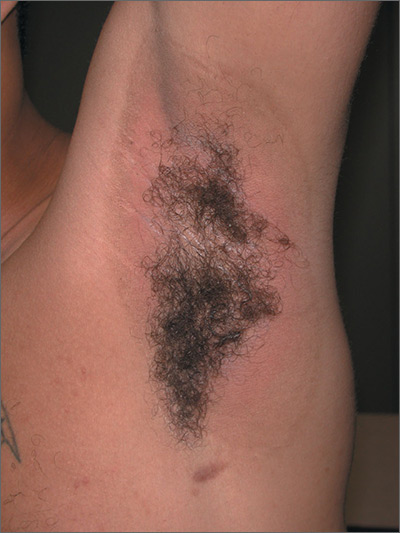
The family physician (FP) suspected that the patient had a contact dermatitis to his deodorant. After further questioning, the patient said he had changed his deodorant about one month before the rash started. The FP explained that an ingredient in this new deodorant was likely causing the allergic reaction.
The FP prescribed 0.1% triamcinolone cream to be applied twice daily. He suggested that the patient either go back to his original deodorant or read the ingredients on the new deodorant and choose a deodorant that does not have the same ingredients.
At a follow-up visit one month later, the patient's skin had cleared and he was very happy with the results. He said he’d gone back to using his original deodorant, which didn’t have the same ingredients as the new one.
This is a typical case of contact dermatitis in which the history and physical exam were sufficient to make the diagnosis. No patch testing or referrals to Dermatology were required.
Photos and text for Photo Rounds Friday courtesy of Richard P. Usatine, MD. This case was adapted from: Usatine R. Contact dermatitis. In: Usatine R, Smith M, Mayeaux EJ, et al, eds. Color Atlas of Family Medicine. 2nd ed. New York, NY: McGraw-Hill; 2013:591-596.
To learn more about the Color Atlas of Family Medicine, see: www.amazon.com/Color-Family-Medicine-Richard-Usatine/dp/0071769641/
You can now get the second edition of the Color Atlas of Family Medicine as an app by clicking on this link: usatinemedia.com
The family physician (FP) suspected that the patient had a contact dermatitis to his deodorant. After further questioning, the patient said he had changed his deodorant about one month before the rash started. The FP explained that an ingredient in this new deodorant was likely causing the allergic reaction.
The FP prescribed 0.1% triamcinolone cream to be applied twice daily. He suggested that the patient either go back to his original deodorant or read the ingredients on the new deodorant and choose a deodorant that does not have the same ingredients.
At a follow-up visit one month later, the patient's skin had cleared and he was very happy with the results. He said he’d gone back to using his original deodorant, which didn’t have the same ingredients as the new one.
This is a typical case of contact dermatitis in which the history and physical exam were sufficient to make the diagnosis. No patch testing or referrals to Dermatology were required.
Photos and text for Photo Rounds Friday courtesy of Richard P. Usatine, MD. This case was adapted from: Usatine R. Contact dermatitis. In: Usatine R, Smith M, Mayeaux EJ, et al, eds. Color Atlas of Family Medicine. 2nd ed. New York, NY: McGraw-Hill; 2013:591-596.
To learn more about the Color Atlas of Family Medicine, see: www.amazon.com/Color-Family-Medicine-Richard-Usatine/dp/0071769641/
You can now get the second edition of the Color Atlas of Family Medicine as an app by clicking on this link: usatinemedia.com
The family physician (FP) suspected that the patient had a contact dermatitis to his deodorant. After further questioning, the patient said he had changed his deodorant about one month before the rash started. The FP explained that an ingredient in this new deodorant was likely causing the allergic reaction.
The FP prescribed 0.1% triamcinolone cream to be applied twice daily. He suggested that the patient either go back to his original deodorant or read the ingredients on the new deodorant and choose a deodorant that does not have the same ingredients.
At a follow-up visit one month later, the patient's skin had cleared and he was very happy with the results. He said he’d gone back to using his original deodorant, which didn’t have the same ingredients as the new one.
This is a typical case of contact dermatitis in which the history and physical exam were sufficient to make the diagnosis. No patch testing or referrals to Dermatology were required.
Photos and text for Photo Rounds Friday courtesy of Richard P. Usatine, MD. This case was adapted from: Usatine R. Contact dermatitis. In: Usatine R, Smith M, Mayeaux EJ, et al, eds. Color Atlas of Family Medicine. 2nd ed. New York, NY: McGraw-Hill; 2013:591-596.
To learn more about the Color Atlas of Family Medicine, see: www.amazon.com/Color-Family-Medicine-Richard-Usatine/dp/0071769641/
You can now get the second edition of the Color Atlas of Family Medicine as an app by clicking on this link: usatinemedia.com
2016 Updates to AASLD Guidance Document on gastroesophageal bleeding in decompensated cirrhosis
Clinical question: What is appropriate inpatient management of a cirrhotic patient with acute esophageal or gastric variceal bleeding?
Study design: Guidance document developed by expert panel based on literature review, consensus conferences and authors’ clinical experience.
Background: Practice guidelines for the diagnosis and treatment of gastroesophageal hemorrhage were last published in 2007 and endorsed by several major professional societies. Since then, there have been a number of randomized controlled trials (RCTs) and consensus conferences. The American Association for the Study of Liver Diseases (AASLD) published updated practice guidelines in 2016 that encompass pathophysiology, monitoring, diagnosis, and treatment of gastroesophageal hemorrhage in cirrhotic patients. This summary will focus on inpatient management for active gastroesophageal hemorrhage.

Synopsis of Inpatient Management for Esophageal Variceal Hemorrhage: The authors suggest that all VH requires ICU admission with the goal of acute control of bleeding, prevention of early recurrence, and reduction in 6-week mortality. Imaging to rule out portal vein thrombosis and HCC should be considered. Hepatic-Venous Pressure Gradient (HVPG) greater than 20 mm Hg is the strongest predictor of early rebleeding and death. However, catheter measurements of portal pressure are not available at most centers. As with any critically ill patient, stabilization of respiratory status and ensuring hemodynamic stability with volume resuscitation is paramount. RCTs evaluating transfusion goals suggest that a restrictive transfusion goal of HgB 7 g/dL is superior to a liberal goal of 9 g/dL. The authors hypothesize this may be related to lower HVPG observed with lower transfusion thresholds. In terms of treating coagulopathy, RCTs evaluating recombinant VIIa have not shown clear benefit. Correction of INR with FFPs similarly not recommended. No recommendations are made regarding utility of platelet transfusions. Vasoactive drugs should be administered when VH is suspected with the goal of decreasing splanchnic blood flow. Octreotide is the only vasoactive drug available in the United States. RCTs show that antibiotics administered prophylactically decrease infections, recurrent hemorrhage, and death. Ceftriaxone 1 g daily is the drug of choice in the United States and should be given up to a maximum of 7 days. A reasonable strategy is discontinuation of prophylaxis concurrently with discontinuation of vasoactive agents. After stabilization of hemodynamics, patients should proceed to endoscopy no more than 12 hours after presentation. Endoscopic Variceal Ligation (EVL) should be done if signs of active or recent variceal bleeding are found. After EVL, select patients at high risk of rebleeding (Child-Pugh B with active bleeding seen on endoscopy or Child-Pugh C patients) may benefit from TIPS within 72 hours. If TIPS is done, vasoactive agents can be discontinued. Otherwise, vasoactive agents should continue for 2-5 days with subsequent transition to nonselective beta blockers (NSBB) such as nadolol or propranolol. For secondary prophylaxis of esophageal bleeding, combination EVL and NSBB is first-line therapy. If recurrent hemorrhage occurs while on secondary prophylaxis, rescue TIPS is recommended.
Synopsis of Inpatient Management for Gastric Variceal Hemorrhage: Management of Gastric Variceal Hemorrhage is similar to Esophageal Variceal (EV) Hemorrhage and encompasses volume resuscitation, vasoactive drugs, and antibiotics with endoscopy shortly thereafter. Balloon tamponade can be used as a bridge to endoscopy in massive bleeds. In addition to the above, anatomic location of Gastric Varices (GV) affects choice of intervention. GOV1 varices extend from the gastric cardia to the lesser curvature and represent 75% of GV. If these are small, they can be managed with EVL. Otherwise these can be managed with injection of cyanoacrylate glue. GOV2 varices extend from the gastric cardia into the fundus. Isolated GV type 1 varices (IGV1) are located entirely in the fundus and have the highest propensity for bleeding. For these latter two types of “cardio-fundal varices” TIPS is the preferred intervention to control acute bleeding. Data on the efficacy of secondary prophylaxis for GV bleeding is limited. A combination of NSBB, cyanoacrylate injection, or TIPS can be considered. Balloon Occluded Retrograde Transvenous Obliteration (BRTO) can be considered if fundal varices are associated with a large gastrorenal or splenorenal collateral. However, no RCTs have compared BRTO with other strategies. Isolated GV type 2 (IGV2) varices are not localized to the esophageal or gastric cardio-fundal region and are rare in cirrhotic patients but tend to occur in pre-hepatic portal hypertension. Management requires multidisciplinary input from endoscopists, hepatologists, interventional radiologists, and surgeons.
Bottom line: For esophageal variceal bleeding related to cirrhosis: volume resuscitation, antibiotic prophylaxis, and vasoactive agents are mainstays of therapy to stabilize patient for endoscopic intervention within 12 hours. This should be followed by early TIPS within 72 hours in high risk patients.
A similar approach applies to gastric variceal bleeding, but interventional management is dependent on the anatomic location of the varices in question.
Citations: Garcia-Tsao G et al. Portal hypertensive bleeding in cirrhosis: Risk stratification, diagnosis and management – 2016 practice guidance by the American Association for the Study of Liver Diseases. Hepatology 2017 Jan;65[1]:310-35.
Dr. Lu is a hospitalist at Cooper University Hospital in Camden, N.J.
Clinical question: What is appropriate inpatient management of a cirrhotic patient with acute esophageal or gastric variceal bleeding?
Study design: Guidance document developed by expert panel based on literature review, consensus conferences and authors’ clinical experience.
Background: Practice guidelines for the diagnosis and treatment of gastroesophageal hemorrhage were last published in 2007 and endorsed by several major professional societies. Since then, there have been a number of randomized controlled trials (RCTs) and consensus conferences. The American Association for the Study of Liver Diseases (AASLD) published updated practice guidelines in 2016 that encompass pathophysiology, monitoring, diagnosis, and treatment of gastroesophageal hemorrhage in cirrhotic patients. This summary will focus on inpatient management for active gastroesophageal hemorrhage.
Synopsis of Inpatient Management for Esophageal Variceal Hemorrhage: The authors suggest that all VH requires ICU admission with the goal of acute control of bleeding, prevention of early recurrence, and reduction in 6-week mortality. Imaging to rule out portal vein thrombosis and HCC should be considered. Hepatic-Venous Pressure Gradient (HVPG) greater than 20 mm Hg is the strongest predictor of early rebleeding and death. However, catheter measurements of portal pressure are not available at most centers. As with any critically ill patient, stabilization of respiratory status and ensuring hemodynamic stability with volume resuscitation is paramount. RCTs evaluating transfusion goals suggest that a restrictive transfusion goal of HgB 7 g/dL is superior to a liberal goal of 9 g/dL. The authors hypothesize this may be related to lower HVPG observed with lower transfusion thresholds. In terms of treating coagulopathy, RCTs evaluating recombinant VIIa have not shown clear benefit. Correction of INR with FFPs similarly not recommended. No recommendations are made regarding utility of platelet transfusions. Vasoactive drugs should be administered when VH is suspected with the goal of decreasing splanchnic blood flow. Octreotide is the only vasoactive drug available in the United States. RCTs show that antibiotics administered prophylactically decrease infections, recurrent hemorrhage, and death. Ceftriaxone 1 g daily is the drug of choice in the United States and should be given up to a maximum of 7 days. A reasonable strategy is discontinuation of prophylaxis concurrently with discontinuation of vasoactive agents. After stabilization of hemodynamics, patients should proceed to endoscopy no more than 12 hours after presentation. Endoscopic Variceal Ligation (EVL) should be done if signs of active or recent variceal bleeding are found. After EVL, select patients at high risk of rebleeding (Child-Pugh B with active bleeding seen on endoscopy or Child-Pugh C patients) may benefit from TIPS within 72 hours. If TIPS is done, vasoactive agents can be discontinued. Otherwise, vasoactive agents should continue for 2-5 days with subsequent transition to nonselective beta blockers (NSBB) such as nadolol or propranolol. For secondary prophylaxis of esophageal bleeding, combination EVL and NSBB is first-line therapy. If recurrent hemorrhage occurs while on secondary prophylaxis, rescue TIPS is recommended.
Synopsis of Inpatient Management for Gastric Variceal Hemorrhage: Management of Gastric Variceal Hemorrhage is similar to Esophageal Variceal (EV) Hemorrhage and encompasses volume resuscitation, vasoactive drugs, and antibiotics with endoscopy shortly thereafter. Balloon tamponade can be used as a bridge to endoscopy in massive bleeds. In addition to the above, anatomic location of Gastric Varices (GV) affects choice of intervention. GOV1 varices extend from the gastric cardia to the lesser curvature and represent 75% of GV. If these are small, they can be managed with EVL. Otherwise these can be managed with injection of cyanoacrylate glue. GOV2 varices extend from the gastric cardia into the fundus. Isolated GV type 1 varices (IGV1) are located entirely in the fundus and have the highest propensity for bleeding. For these latter two types of “cardio-fundal varices” TIPS is the preferred intervention to control acute bleeding. Data on the efficacy of secondary prophylaxis for GV bleeding is limited. A combination of NSBB, cyanoacrylate injection, or TIPS can be considered. Balloon Occluded Retrograde Transvenous Obliteration (BRTO) can be considered if fundal varices are associated with a large gastrorenal or splenorenal collateral. However, no RCTs have compared BRTO with other strategies. Isolated GV type 2 (IGV2) varices are not localized to the esophageal or gastric cardio-fundal region and are rare in cirrhotic patients but tend to occur in pre-hepatic portal hypertension. Management requires multidisciplinary input from endoscopists, hepatologists, interventional radiologists, and surgeons.
Bottom line: For esophageal variceal bleeding related to cirrhosis: volume resuscitation, antibiotic prophylaxis, and vasoactive agents are mainstays of therapy to stabilize patient for endoscopic intervention within 12 hours. This should be followed by early TIPS within 72 hours in high risk patients.
A similar approach applies to gastric variceal bleeding, but interventional management is dependent on the anatomic location of the varices in question.
Citations: Garcia-Tsao G et al. Portal hypertensive bleeding in cirrhosis: Risk stratification, diagnosis and management – 2016 practice guidance by the American Association for the Study of Liver Diseases. Hepatology 2017 Jan;65[1]:310-35.
Dr. Lu is a hospitalist at Cooper University Hospital in Camden, N.J.
Clinical question: What is appropriate inpatient management of a cirrhotic patient with acute esophageal or gastric variceal bleeding?
Study design: Guidance document developed by expert panel based on literature review, consensus conferences and authors’ clinical experience.
Background: Practice guidelines for the diagnosis and treatment of gastroesophageal hemorrhage were last published in 2007 and endorsed by several major professional societies. Since then, there have been a number of randomized controlled trials (RCTs) and consensus conferences. The American Association for the Study of Liver Diseases (AASLD) published updated practice guidelines in 2016 that encompass pathophysiology, monitoring, diagnosis, and treatment of gastroesophageal hemorrhage in cirrhotic patients. This summary will focus on inpatient management for active gastroesophageal hemorrhage.
Synopsis of Inpatient Management for Esophageal Variceal Hemorrhage: The authors suggest that all VH requires ICU admission with the goal of acute control of bleeding, prevention of early recurrence, and reduction in 6-week mortality. Imaging to rule out portal vein thrombosis and HCC should be considered. Hepatic-Venous Pressure Gradient (HVPG) greater than 20 mm Hg is the strongest predictor of early rebleeding and death. However, catheter measurements of portal pressure are not available at most centers. As with any critically ill patient, stabilization of respiratory status and ensuring hemodynamic stability with volume resuscitation is paramount. RCTs evaluating transfusion goals suggest that a restrictive transfusion goal of HgB 7 g/dL is superior to a liberal goal of 9 g/dL. The authors hypothesize this may be related to lower HVPG observed with lower transfusion thresholds. In terms of treating coagulopathy, RCTs evaluating recombinant VIIa have not shown clear benefit. Correction of INR with FFPs similarly not recommended. No recommendations are made regarding utility of platelet transfusions. Vasoactive drugs should be administered when VH is suspected with the goal of decreasing splanchnic blood flow. Octreotide is the only vasoactive drug available in the United States. RCTs show that antibiotics administered prophylactically decrease infections, recurrent hemorrhage, and death. Ceftriaxone 1 g daily is the drug of choice in the United States and should be given up to a maximum of 7 days. A reasonable strategy is discontinuation of prophylaxis concurrently with discontinuation of vasoactive agents. After stabilization of hemodynamics, patients should proceed to endoscopy no more than 12 hours after presentation. Endoscopic Variceal Ligation (EVL) should be done if signs of active or recent variceal bleeding are found. After EVL, select patients at high risk of rebleeding (Child-Pugh B with active bleeding seen on endoscopy or Child-Pugh C patients) may benefit from TIPS within 72 hours. If TIPS is done, vasoactive agents can be discontinued. Otherwise, vasoactive agents should continue for 2-5 days with subsequent transition to nonselective beta blockers (NSBB) such as nadolol or propranolol. For secondary prophylaxis of esophageal bleeding, combination EVL and NSBB is first-line therapy. If recurrent hemorrhage occurs while on secondary prophylaxis, rescue TIPS is recommended.
Synopsis of Inpatient Management for Gastric Variceal Hemorrhage: Management of Gastric Variceal Hemorrhage is similar to Esophageal Variceal (EV) Hemorrhage and encompasses volume resuscitation, vasoactive drugs, and antibiotics with endoscopy shortly thereafter. Balloon tamponade can be used as a bridge to endoscopy in massive bleeds. In addition to the above, anatomic location of Gastric Varices (GV) affects choice of intervention. GOV1 varices extend from the gastric cardia to the lesser curvature and represent 75% of GV. If these are small, they can be managed with EVL. Otherwise these can be managed with injection of cyanoacrylate glue. GOV2 varices extend from the gastric cardia into the fundus. Isolated GV type 1 varices (IGV1) are located entirely in the fundus and have the highest propensity for bleeding. For these latter two types of “cardio-fundal varices” TIPS is the preferred intervention to control acute bleeding. Data on the efficacy of secondary prophylaxis for GV bleeding is limited. A combination of NSBB, cyanoacrylate injection, or TIPS can be considered. Balloon Occluded Retrograde Transvenous Obliteration (BRTO) can be considered if fundal varices are associated with a large gastrorenal or splenorenal collateral. However, no RCTs have compared BRTO with other strategies. Isolated GV type 2 (IGV2) varices are not localized to the esophageal or gastric cardio-fundal region and are rare in cirrhotic patients but tend to occur in pre-hepatic portal hypertension. Management requires multidisciplinary input from endoscopists, hepatologists, interventional radiologists, and surgeons.
Bottom line: For esophageal variceal bleeding related to cirrhosis: volume resuscitation, antibiotic prophylaxis, and vasoactive agents are mainstays of therapy to stabilize patient for endoscopic intervention within 12 hours. This should be followed by early TIPS within 72 hours in high risk patients.
A similar approach applies to gastric variceal bleeding, but interventional management is dependent on the anatomic location of the varices in question.
Citations: Garcia-Tsao G et al. Portal hypertensive bleeding in cirrhosis: Risk stratification, diagnosis and management – 2016 practice guidance by the American Association for the Study of Liver Diseases. Hepatology 2017 Jan;65[1]:310-35.
Dr. Lu is a hospitalist at Cooper University Hospital in Camden, N.J.

Infant hepatitis B vaccine protection lingers into adolescence
Adolescents who received hepatitis B virus (HBV) vaccinations as infants still showed protection despite little evidence of residual antibodies, a study showed.
This finding was based on data from a prospective study of 137 children, aged 10-11 years, and 213 children, aged 15-16 years, with no history of HBV infection who were vaccinated at 2, 4, and 6 months of age. Michelle Pinto, MD, of the Vaccine Evaluation Center in Vancouver and her colleagues measured residual immunity to determine whether HBV boosters might be needed in adolescents vaccinated as infants to prolong immunity and reduce disease transmission in adulthood.
Overall, 97% of the younger age group and 91% of the older age group showed reactions to an HBV vaccine challenge. An additional 3 (2%) younger children and 12 (6%) older children responded to a second vaccine challenge after failing to respond to the first.
Limitations of the study included a “limited ability of the challenge vaccine procedure to accurately identify immune memory and anamnestic responses” and the differences between the findings and those from long-term outcome data in similar studies in other countries, Dr. Pinto and her associates wrote.
However, “the fact that substantial differences exist in measures of residual protection among teenagers after infant or adolescent HBV vaccinations warrants close ongoing scrutiny of whether important differences will emerge in long-term protection, with or without booster vaccination,” they said (Pediatr Infect Dis J. 2017. doi: 10.1097/INF.0000000000001543).
Adolescents who received hepatitis B virus (HBV) vaccinations as infants still showed protection despite little evidence of residual antibodies, a study showed.
This finding was based on data from a prospective study of 137 children, aged 10-11 years, and 213 children, aged 15-16 years, with no history of HBV infection who were vaccinated at 2, 4, and 6 months of age. Michelle Pinto, MD, of the Vaccine Evaluation Center in Vancouver and her colleagues measured residual immunity to determine whether HBV boosters might be needed in adolescents vaccinated as infants to prolong immunity and reduce disease transmission in adulthood.
Overall, 97% of the younger age group and 91% of the older age group showed reactions to an HBV vaccine challenge. An additional 3 (2%) younger children and 12 (6%) older children responded to a second vaccine challenge after failing to respond to the first.
Limitations of the study included a “limited ability of the challenge vaccine procedure to accurately identify immune memory and anamnestic responses” and the differences between the findings and those from long-term outcome data in similar studies in other countries, Dr. Pinto and her associates wrote.
However, “the fact that substantial differences exist in measures of residual protection among teenagers after infant or adolescent HBV vaccinations warrants close ongoing scrutiny of whether important differences will emerge in long-term protection, with or without booster vaccination,” they said (Pediatr Infect Dis J. 2017. doi: 10.1097/INF.0000000000001543).
Adolescents who received hepatitis B virus (HBV) vaccinations as infants still showed protection despite little evidence of residual antibodies, a study showed.
This finding was based on data from a prospective study of 137 children, aged 10-11 years, and 213 children, aged 15-16 years, with no history of HBV infection who were vaccinated at 2, 4, and 6 months of age. Michelle Pinto, MD, of the Vaccine Evaluation Center in Vancouver and her colleagues measured residual immunity to determine whether HBV boosters might be needed in adolescents vaccinated as infants to prolong immunity and reduce disease transmission in adulthood.
Overall, 97% of the younger age group and 91% of the older age group showed reactions to an HBV vaccine challenge. An additional 3 (2%) younger children and 12 (6%) older children responded to a second vaccine challenge after failing to respond to the first.
Limitations of the study included a “limited ability of the challenge vaccine procedure to accurately identify immune memory and anamnestic responses” and the differences between the findings and those from long-term outcome data in similar studies in other countries, Dr. Pinto and her associates wrote.
However, “the fact that substantial differences exist in measures of residual protection among teenagers after infant or adolescent HBV vaccinations warrants close ongoing scrutiny of whether important differences will emerge in long-term protection, with or without booster vaccination,” they said (Pediatr Infect Dis J. 2017. doi: 10.1097/INF.0000000000001543).
FROM THE PEDIATRIC INFECTIOUS DISEASE JOURNAL
2017 Hidradenitis Suppurativa 4-Part Video Roundtable

- Robert G. Micheletti, MD, Moderator
- Jacob Levitt, MD
- Michelle Lowes, MD
The editorial staff of Dermatology News was not involved in developing the video roundtable.
- Robert G. Micheletti, MD, Moderator
- Jacob Levitt, MD
- Michelle Lowes, MD
The editorial staff of Dermatology News was not involved in developing the video roundtable.
- Robert G. Micheletti, MD, Moderator
- Jacob Levitt, MD
- Michelle Lowes, MD
The editorial staff of Dermatology News was not involved in developing the video roundtable.

VIDEO: Stroke thrombectomy count jumps after 2015 landmark reports
HOUSTON – Use of endovascular mechanical thrombectomy for treating selected patients with acute ischemic stroke surged in U.S. practice following publication of several studies in early 2015 that documented the treatment’s efficacy, in data collected by a large U.S. hospital registry.
During April-June 2016, 3.5% of all acute ischemic stroke patients seen at the nearly 2,000 U.S. hospitals enrolled in the Get With the Guidelines-Stroke program underwent treatment with endovascular thrombectomy, up from the 2% rate at the end of 2014,The new data he reported also showed substantial increases for other measures of thrombectomy use during a roughly 18-month period that followed a flurry of reports in late 2014 and early 2015 that presented clear evidence of the safety and efficacy of thrombectomy for selected ischemic stroke patients. The percentage of hospitals participating in the Get With the Guidelines-Stroke program that performed thrombectomies increased from about a quarter of enrolled hospitals at the end of 2014 to almost a third by mid 2016, and the average quarterly number of endovascular thrombectomy cases at hospitals offering the procedure rose from about 7 during the final 3 months of 2014 to about 12 during July-September 2016, reported Dr. Smith, a neurologist and medical director of the Cognitive Neurosciences Clinic at the University of Calgary (Alta.).
“Before 2015, we saw a slow increase in the use of intra-arterial therapy, but after studies showed it was effective, there was an acceleration in the proportion of hospitals providing this therapy, the number of cases treated at each hospital, and the number of ischemic stroke patients treated,” Dr. Smith said in a video interview. “This shows rapid uptake of endovascular thrombectomy, but we still have a ways to go.”
He estimated that roughly 10%-15% of all U.S. acute ischemic stroke patients are eligible for endovascular thrombectomy based on location of the occluding clot in a large cerebral artery and the time frame when patients appear at a thrombectomy hospital relative to their stroke onset. This suggests that by mid-2016, roughly 20%-33% of U.S. ischemic stroke patients eligible for thrombectomy actually received the treatment.
“I don’t think we should be satisfied until we treat every eligible patient as quickly as we can. We need to move toward 100%,” he said.
The analyses he reported came from data collected on more than 2.4 million ischemic stroke patients treated at more than 2,200 U.S. hospitals participating in the Get With the Guidelines-Stroke program during 2003-2016.
The 2016 data also showed that, while the median thrombectomy annual case volume from mid-2015 to mid-2016 was 32 patients per year at thrombectomy hospitals, about 5% of these centers performed 100 or more cases during this 1-year period, and about 10% performed 10 or fewer thrombectomy cases. “There may be a relationship between case volume and the skill of performing the procedure, and a potential need for a volume minimum for thrombectomy certification to ensure that centers and operators maintain their skills,” Dr. Smith said.
He contrasted the recent pace of thrombectomy uptake with the first few years of routine thrombolytic treatment for the same disease during the mid-1990s, when little uptake occurred. Dr. Smith attributed the more robust penetration of thrombectomy to several factors: the impressive benefit of the treatment, the concurrent reporting of several confirmatory studies, and the stronger acute stroke–care infrastructure now in place, compared with what was available to stroke patients a generation ago.
“It’s encouraging to see such early growth in thrombectomy when thrombolysis lagged for so many years,” Dr. Smith said.
Dr. Smith had no disclosures. Get With the Guidelines-Stroke is a program of the American Heart Association and American Stroke Association using funding provided by several drug companies.
Eric E. Smith, MD, said at the International Stroke Conference, sponsored by the American Heart Association.
The video associated with this article is no longer available on this site. Please view all of our videos on the MDedge YouTube channel
On Twitter @mitchelzoler
HOUSTON – Use of endovascular mechanical thrombectomy for treating selected patients with acute ischemic stroke surged in U.S. practice following publication of several studies in early 2015 that documented the treatment’s efficacy, in data collected by a large U.S. hospital registry.
During April-June 2016, 3.5% of all acute ischemic stroke patients seen at the nearly 2,000 U.S. hospitals enrolled in the Get With the Guidelines-Stroke program underwent treatment with endovascular thrombectomy, up from the 2% rate at the end of 2014,The new data he reported also showed substantial increases for other measures of thrombectomy use during a roughly 18-month period that followed a flurry of reports in late 2014 and early 2015 that presented clear evidence of the safety and efficacy of thrombectomy for selected ischemic stroke patients. The percentage of hospitals participating in the Get With the Guidelines-Stroke program that performed thrombectomies increased from about a quarter of enrolled hospitals at the end of 2014 to almost a third by mid 2016, and the average quarterly number of endovascular thrombectomy cases at hospitals offering the procedure rose from about 7 during the final 3 months of 2014 to about 12 during July-September 2016, reported Dr. Smith, a neurologist and medical director of the Cognitive Neurosciences Clinic at the University of Calgary (Alta.).
“Before 2015, we saw a slow increase in the use of intra-arterial therapy, but after studies showed it was effective, there was an acceleration in the proportion of hospitals providing this therapy, the number of cases treated at each hospital, and the number of ischemic stroke patients treated,” Dr. Smith said in a video interview. “This shows rapid uptake of endovascular thrombectomy, but we still have a ways to go.”
He estimated that roughly 10%-15% of all U.S. acute ischemic stroke patients are eligible for endovascular thrombectomy based on location of the occluding clot in a large cerebral artery and the time frame when patients appear at a thrombectomy hospital relative to their stroke onset. This suggests that by mid-2016, roughly 20%-33% of U.S. ischemic stroke patients eligible for thrombectomy actually received the treatment.
“I don’t think we should be satisfied until we treat every eligible patient as quickly as we can. We need to move toward 100%,” he said.
The analyses he reported came from data collected on more than 2.4 million ischemic stroke patients treated at more than 2,200 U.S. hospitals participating in the Get With the Guidelines-Stroke program during 2003-2016.
The 2016 data also showed that, while the median thrombectomy annual case volume from mid-2015 to mid-2016 was 32 patients per year at thrombectomy hospitals, about 5% of these centers performed 100 or more cases during this 1-year period, and about 10% performed 10 or fewer thrombectomy cases. “There may be a relationship between case volume and the skill of performing the procedure, and a potential need for a volume minimum for thrombectomy certification to ensure that centers and operators maintain their skills,” Dr. Smith said.
He contrasted the recent pace of thrombectomy uptake with the first few years of routine thrombolytic treatment for the same disease during the mid-1990s, when little uptake occurred. Dr. Smith attributed the more robust penetration of thrombectomy to several factors: the impressive benefit of the treatment, the concurrent reporting of several confirmatory studies, and the stronger acute stroke–care infrastructure now in place, compared with what was available to stroke patients a generation ago.
“It’s encouraging to see such early growth in thrombectomy when thrombolysis lagged for so many years,” Dr. Smith said.
Dr. Smith had no disclosures. Get With the Guidelines-Stroke is a program of the American Heart Association and American Stroke Association using funding provided by several drug companies.
Eric E. Smith, MD, said at the International Stroke Conference, sponsored by the American Heart Association.
The video associated with this article is no longer available on this site. Please view all of our videos on the MDedge YouTube channel
On Twitter @mitchelzoler
HOUSTON – Use of endovascular mechanical thrombectomy for treating selected patients with acute ischemic stroke surged in U.S. practice following publication of several studies in early 2015 that documented the treatment’s efficacy, in data collected by a large U.S. hospital registry.
During April-June 2016, 3.5% of all acute ischemic stroke patients seen at the nearly 2,000 U.S. hospitals enrolled in the Get With the Guidelines-Stroke program underwent treatment with endovascular thrombectomy, up from the 2% rate at the end of 2014,The new data he reported also showed substantial increases for other measures of thrombectomy use during a roughly 18-month period that followed a flurry of reports in late 2014 and early 2015 that presented clear evidence of the safety and efficacy of thrombectomy for selected ischemic stroke patients. The percentage of hospitals participating in the Get With the Guidelines-Stroke program that performed thrombectomies increased from about a quarter of enrolled hospitals at the end of 2014 to almost a third by mid 2016, and the average quarterly number of endovascular thrombectomy cases at hospitals offering the procedure rose from about 7 during the final 3 months of 2014 to about 12 during July-September 2016, reported Dr. Smith, a neurologist and medical director of the Cognitive Neurosciences Clinic at the University of Calgary (Alta.).
“Before 2015, we saw a slow increase in the use of intra-arterial therapy, but after studies showed it was effective, there was an acceleration in the proportion of hospitals providing this therapy, the number of cases treated at each hospital, and the number of ischemic stroke patients treated,” Dr. Smith said in a video interview. “This shows rapid uptake of endovascular thrombectomy, but we still have a ways to go.”
He estimated that roughly 10%-15% of all U.S. acute ischemic stroke patients are eligible for endovascular thrombectomy based on location of the occluding clot in a large cerebral artery and the time frame when patients appear at a thrombectomy hospital relative to their stroke onset. This suggests that by mid-2016, roughly 20%-33% of U.S. ischemic stroke patients eligible for thrombectomy actually received the treatment.
“I don’t think we should be satisfied until we treat every eligible patient as quickly as we can. We need to move toward 100%,” he said.
The analyses he reported came from data collected on more than 2.4 million ischemic stroke patients treated at more than 2,200 U.S. hospitals participating in the Get With the Guidelines-Stroke program during 2003-2016.
The 2016 data also showed that, while the median thrombectomy annual case volume from mid-2015 to mid-2016 was 32 patients per year at thrombectomy hospitals, about 5% of these centers performed 100 or more cases during this 1-year period, and about 10% performed 10 or fewer thrombectomy cases. “There may be a relationship between case volume and the skill of performing the procedure, and a potential need for a volume minimum for thrombectomy certification to ensure that centers and operators maintain their skills,” Dr. Smith said.
He contrasted the recent pace of thrombectomy uptake with the first few years of routine thrombolytic treatment for the same disease during the mid-1990s, when little uptake occurred. Dr. Smith attributed the more robust penetration of thrombectomy to several factors: the impressive benefit of the treatment, the concurrent reporting of several confirmatory studies, and the stronger acute stroke–care infrastructure now in place, compared with what was available to stroke patients a generation ago.
“It’s encouraging to see such early growth in thrombectomy when thrombolysis lagged for so many years,” Dr. Smith said.
Dr. Smith had no disclosures. Get With the Guidelines-Stroke is a program of the American Heart Association and American Stroke Association using funding provided by several drug companies.
Eric E. Smith, MD, said at the International Stroke Conference, sponsored by the American Heart Association.
The video associated with this article is no longer available on this site. Please view all of our videos on the MDedge YouTube channel
On Twitter @mitchelzoler
AT THE INTERNATIONAL STROKE CONFERENCE
Key clinical point:
Major finding: U.S. thrombectomy treatment jumped from 2% of all acute ischemic stroke patients in late 2014 to 3.5% in mid-2016.
Data source: Hospitalization records for more than 2.4 million ischemic stroke patients treated at more than 2,200 U.S. hospitals participating in the Get With the Guidelines-Stroke program during 2003-2016.
Disclosures: Dr. Smith had no disclosures. Get With the Guidelines-Stroke is a program of the American Heart Association and American Stroke Association using funding provided by several drug companies.