User login
VIDEO: CDK4/6, ET, LHRH combo improves PFS in premenopausal breast cancer
SAN ANTONIO – For premenopausal women with advanced hormone receptor–positive, HER2-negative breast cancer, the addition of the cyclin-dependent kinase (CDK) 4/6 inhibitor ribociclib (Kisqali) to endocrine therapy and goserelin was associated with a near doubling in progression-free survival (PFS), improvement in pain scores and a longer time to deterioration of quality of life scores.
Previous clinical trials have shown the advantage of adding a CDK4/6 inhibitor to standard aromatase inhibitor therapy in postmenopausal women, but the randomized phase 3 MONALEESA-7 trial is the first phase 3 study of an agent in this class in premenopausal women with breast cancer, and is the first randomized trial in this population in nearly 2 decades, notes Debu Tripathy, MD, from the University of Texas MD Anderson Cancer Center in Houston.
The median PFS for women treated with ribociclib plus endocrine therapy with either an aromatase inhibitor or tamoxifen plus the lutenizing hormone-releasing hormone agonist goserelin was 23.8 months, compared with 13 months for women treated with the same combination except for a ribociclib placebo.
In this video interview at the San Antonio Breast Cancer Symposium, Dr. Tripathy discusses the therapeutic benefits and quality of life improvements associated with adding ribociclib to endocrine therapy and ovarian suppression in this population.
The MONALEESA 7 trial was supported by Novartis. Dr. Tripathy disclosed steering committee consulting fees and institutional funding from the company.
The video associated with this article is no longer available on this site. Please view all of our videos on the MDedge YouTube channel
SAN ANTONIO – For premenopausal women with advanced hormone receptor–positive, HER2-negative breast cancer, the addition of the cyclin-dependent kinase (CDK) 4/6 inhibitor ribociclib (Kisqali) to endocrine therapy and goserelin was associated with a near doubling in progression-free survival (PFS), improvement in pain scores and a longer time to deterioration of quality of life scores.
Previous clinical trials have shown the advantage of adding a CDK4/6 inhibitor to standard aromatase inhibitor therapy in postmenopausal women, but the randomized phase 3 MONALEESA-7 trial is the first phase 3 study of an agent in this class in premenopausal women with breast cancer, and is the first randomized trial in this population in nearly 2 decades, notes Debu Tripathy, MD, from the University of Texas MD Anderson Cancer Center in Houston.
The median PFS for women treated with ribociclib plus endocrine therapy with either an aromatase inhibitor or tamoxifen plus the lutenizing hormone-releasing hormone agonist goserelin was 23.8 months, compared with 13 months for women treated with the same combination except for a ribociclib placebo.
In this video interview at the San Antonio Breast Cancer Symposium, Dr. Tripathy discusses the therapeutic benefits and quality of life improvements associated with adding ribociclib to endocrine therapy and ovarian suppression in this population.
The MONALEESA 7 trial was supported by Novartis. Dr. Tripathy disclosed steering committee consulting fees and institutional funding from the company.
The video associated with this article is no longer available on this site. Please view all of our videos on the MDedge YouTube channel
SAN ANTONIO – For premenopausal women with advanced hormone receptor–positive, HER2-negative breast cancer, the addition of the cyclin-dependent kinase (CDK) 4/6 inhibitor ribociclib (Kisqali) to endocrine therapy and goserelin was associated with a near doubling in progression-free survival (PFS), improvement in pain scores and a longer time to deterioration of quality of life scores.
Previous clinical trials have shown the advantage of adding a CDK4/6 inhibitor to standard aromatase inhibitor therapy in postmenopausal women, but the randomized phase 3 MONALEESA-7 trial is the first phase 3 study of an agent in this class in premenopausal women with breast cancer, and is the first randomized trial in this population in nearly 2 decades, notes Debu Tripathy, MD, from the University of Texas MD Anderson Cancer Center in Houston.
The median PFS for women treated with ribociclib plus endocrine therapy with either an aromatase inhibitor or tamoxifen plus the lutenizing hormone-releasing hormone agonist goserelin was 23.8 months, compared with 13 months for women treated with the same combination except for a ribociclib placebo.
In this video interview at the San Antonio Breast Cancer Symposium, Dr. Tripathy discusses the therapeutic benefits and quality of life improvements associated with adding ribociclib to endocrine therapy and ovarian suppression in this population.
The MONALEESA 7 trial was supported by Novartis. Dr. Tripathy disclosed steering committee consulting fees and institutional funding from the company.
The video associated with this article is no longer available on this site. Please view all of our videos on the MDedge YouTube channel
REPORTING FROM SABCS 2017

Acupuncture significantly reduces AI-associated arthralgias
SAN ANTONIO – Acupuncture significantly reduced joint pain that was associated with the use of aromatase inhibitors (AIs) in women with early breast cancer, according to new findings reported at the San Antonio Breast Cancer Symposium.
The randomized, phase 3 SWOG S1200 clinical trial found that, compared with sham acupuncture and a control group receiving no therapy, women receiving acupuncture reported significantly lower scores on the Brief Pain Inventory–Short Form (BPI).
“We have shown consistently, with multiple measures assessing pain and stiffness, that true acupuncture generated better outcomes than either control group in a large multicenter trial,” said lead author Dawn L. Hershman, MD, leader of the Breast Cancer Program at the Herbert Irving Comprehensive Cancer Center at NewYork-Presbyterian/Columbia University Medical Center. “Acupuncture provides a nonpharmacologic option that can improve symptoms and possibly increase AI adherence and subsequent breast cancer outcomes.”
AIs can reduce both early breast cancer recurrence and mortality. Dr. Hershman noted that these agents are effective in the adjuvant setting and for prevention “but we know that it doesn’t work if you don’t take it. Noncompliance is a major problem among women taking hormonal therapy.”
Noncompliance is multifactorial and one of the main reasons women discontinue their therapy early is because of arthralgias or joint discomfort. “We were interested in a nonpharmacologic intervention, to assess whether or not we could control these symptoms.”
Dr. Hershman pointed out acupuncture provides a safe and effective alternative for patients reluctant to take a prescription medication that can result in other side effects. “Identification of nonopioid options for pain control is a public health priority,” she said.
Acupuncture is a popular nonpharmacologic modality and widely used for a number of indications. Several single-institution studies have suggested that it may be useful for controlling AI-associated arthralgias, while other studies have not demonstrated a benefit.
In this trial, the authors evaluated the efficacy of acupuncture, compared with sham acupuncture or waitlist control, in the treatment of AI associated arthralgia in a large population of patients. The study was conducted at 11 centers.
The cohort comprised 226 postmenopausal women diagnosed with early-stage, hormone receptor–positive breast cancer who were receiving treatment with AIs. The primary endpoint was the decline in joint pain as measured by BPI-SF at 6 weeks, and to assess the duration of the effect, the women were followed for an additional 12 weeks.
Within this group, 110 were randomized to true acupuncture; 59 to sham acupuncture, and 57 to waitlist control (no treatment). Patients receiving true or sham acupuncture had sessions three times a week for 6 weeks followed by one session per week for 6 more weeks. Pain status was reported at baseline, during treatment, and then afterwards, using a variety of measurement tools including the BPI-SF, which is a self-administered 14-item questionnaire that evaluates pain severity on a 0-10 scale, and the impact of pain on activities of daily living.
At 6 weeks, the true acupuncture treatment arm reported significantly lower BPI worst pain scores than those in the sham acupuncture and the waitlist control arms. The mean BPI worst pain for the true acupuncture arm was 0.92 points lower than the sham acupuncture arm (P = .01) and 0.96 points lower than the waitlist control arm (P = .01). The proportion of patients experiencing a large reduction in BPI worst pain (greater than 2) was significantly greater in the true acupuncture arm, compared with the other groups: 58% versus 33% percent and 31%, respectively. The differences continued to remain statistically significant at 24 weeks, even though the treatment only continued for 12 weeks.
Associated adverse effects were minimal with true and sham acupuncture and limited to grade 1 bruising.
The cost of the 12-week intervention was about $1,250 or $65-$75 a session. “We feel that there is now sufficient evidence to support insurance coverage of acupuncture of AI arthralgia.”
In a discussion of the paper, Dr. Anne Partridge, from the Dana Farber Cancer Center, noted that it is imperative to seek new ways to improve outcomes in breast cancer, and AIs are contributing to that. However, she echoed the concern that nonadherence to treatment is a “tremendous problem” and hampers the clinical effectiveness of AI therapy.
The rate of discontinuation during the first year of therapy is 20% within the first year and up to 40% of patients do not take them daily. Both early discontinuation and nonadherence contribute to mortality.
Based on these results from the largest randomized controlled trial looking at acupuncture in this setting, should physicians be recommending acupuncture to patients prescribed AI therapy?
“The short answer is, why not?” said Dr. Partridge, “And that we should be recommending it for some of our patients.”
However, there are a number of issues that need to be addressed, she added. The duration of treatment is not known, and the need for follow-up treatment or the frequency of it is not known. The generalizability of it is also unclear when looking at a larger population, and acupuncture is highly operator dependent.
“There are cost and access issues, and insurance right now offers very limited coverage,” she said.
Importantly, Dr. Partridge emphasized, “We know that it will help symptoms, but will it improve adherence to AI?”
It may improve adherence for some patients, but “side effects are only one factor,” she said. “Adherence behavior is complicated. We need to figure out how to optimize these therapies in our patients.”
This study was supported by the National Institutes of Health National Center for Complementary and Integrative Health and the Office of Research on Women’s Health, and grants from the NIH/National Cancer Institute Division of Cancer Prevention. Dr. Hershman declared no conflicts of interest. Dr. Partridge had no disclosures.
SOURCE: Hershman et al. Abstract GS4-04
SAN ANTONIO – Acupuncture significantly reduced joint pain that was associated with the use of aromatase inhibitors (AIs) in women with early breast cancer, according to new findings reported at the San Antonio Breast Cancer Symposium.
The randomized, phase 3 SWOG S1200 clinical trial found that, compared with sham acupuncture and a control group receiving no therapy, women receiving acupuncture reported significantly lower scores on the Brief Pain Inventory–Short Form (BPI).
“We have shown consistently, with multiple measures assessing pain and stiffness, that true acupuncture generated better outcomes than either control group in a large multicenter trial,” said lead author Dawn L. Hershman, MD, leader of the Breast Cancer Program at the Herbert Irving Comprehensive Cancer Center at NewYork-Presbyterian/Columbia University Medical Center. “Acupuncture provides a nonpharmacologic option that can improve symptoms and possibly increase AI adherence and subsequent breast cancer outcomes.”
AIs can reduce both early breast cancer recurrence and mortality. Dr. Hershman noted that these agents are effective in the adjuvant setting and for prevention “but we know that it doesn’t work if you don’t take it. Noncompliance is a major problem among women taking hormonal therapy.”
Noncompliance is multifactorial and one of the main reasons women discontinue their therapy early is because of arthralgias or joint discomfort. “We were interested in a nonpharmacologic intervention, to assess whether or not we could control these symptoms.”
Dr. Hershman pointed out acupuncture provides a safe and effective alternative for patients reluctant to take a prescription medication that can result in other side effects. “Identification of nonopioid options for pain control is a public health priority,” she said.
Acupuncture is a popular nonpharmacologic modality and widely used for a number of indications. Several single-institution studies have suggested that it may be useful for controlling AI-associated arthralgias, while other studies have not demonstrated a benefit.
In this trial, the authors evaluated the efficacy of acupuncture, compared with sham acupuncture or waitlist control, in the treatment of AI associated arthralgia in a large population of patients. The study was conducted at 11 centers.
The cohort comprised 226 postmenopausal women diagnosed with early-stage, hormone receptor–positive breast cancer who were receiving treatment with AIs. The primary endpoint was the decline in joint pain as measured by BPI-SF at 6 weeks, and to assess the duration of the effect, the women were followed for an additional 12 weeks.
Within this group, 110 were randomized to true acupuncture; 59 to sham acupuncture, and 57 to waitlist control (no treatment). Patients receiving true or sham acupuncture had sessions three times a week for 6 weeks followed by one session per week for 6 more weeks. Pain status was reported at baseline, during treatment, and then afterwards, using a variety of measurement tools including the BPI-SF, which is a self-administered 14-item questionnaire that evaluates pain severity on a 0-10 scale, and the impact of pain on activities of daily living.
At 6 weeks, the true acupuncture treatment arm reported significantly lower BPI worst pain scores than those in the sham acupuncture and the waitlist control arms. The mean BPI worst pain for the true acupuncture arm was 0.92 points lower than the sham acupuncture arm (P = .01) and 0.96 points lower than the waitlist control arm (P = .01). The proportion of patients experiencing a large reduction in BPI worst pain (greater than 2) was significantly greater in the true acupuncture arm, compared with the other groups: 58% versus 33% percent and 31%, respectively. The differences continued to remain statistically significant at 24 weeks, even though the treatment only continued for 12 weeks.
Associated adverse effects were minimal with true and sham acupuncture and limited to grade 1 bruising.
The cost of the 12-week intervention was about $1,250 or $65-$75 a session. “We feel that there is now sufficient evidence to support insurance coverage of acupuncture of AI arthralgia.”
In a discussion of the paper, Dr. Anne Partridge, from the Dana Farber Cancer Center, noted that it is imperative to seek new ways to improve outcomes in breast cancer, and AIs are contributing to that. However, she echoed the concern that nonadherence to treatment is a “tremendous problem” and hampers the clinical effectiveness of AI therapy.
The rate of discontinuation during the first year of therapy is 20% within the first year and up to 40% of patients do not take them daily. Both early discontinuation and nonadherence contribute to mortality.
Based on these results from the largest randomized controlled trial looking at acupuncture in this setting, should physicians be recommending acupuncture to patients prescribed AI therapy?
“The short answer is, why not?” said Dr. Partridge, “And that we should be recommending it for some of our patients.”
However, there are a number of issues that need to be addressed, she added. The duration of treatment is not known, and the need for follow-up treatment or the frequency of it is not known. The generalizability of it is also unclear when looking at a larger population, and acupuncture is highly operator dependent.
“There are cost and access issues, and insurance right now offers very limited coverage,” she said.
Importantly, Dr. Partridge emphasized, “We know that it will help symptoms, but will it improve adherence to AI?”
It may improve adherence for some patients, but “side effects are only one factor,” she said. “Adherence behavior is complicated. We need to figure out how to optimize these therapies in our patients.”
This study was supported by the National Institutes of Health National Center for Complementary and Integrative Health and the Office of Research on Women’s Health, and grants from the NIH/National Cancer Institute Division of Cancer Prevention. Dr. Hershman declared no conflicts of interest. Dr. Partridge had no disclosures.
SOURCE: Hershman et al. Abstract GS4-04
SAN ANTONIO – Acupuncture significantly reduced joint pain that was associated with the use of aromatase inhibitors (AIs) in women with early breast cancer, according to new findings reported at the San Antonio Breast Cancer Symposium.
The randomized, phase 3 SWOG S1200 clinical trial found that, compared with sham acupuncture and a control group receiving no therapy, women receiving acupuncture reported significantly lower scores on the Brief Pain Inventory–Short Form (BPI).
“We have shown consistently, with multiple measures assessing pain and stiffness, that true acupuncture generated better outcomes than either control group in a large multicenter trial,” said lead author Dawn L. Hershman, MD, leader of the Breast Cancer Program at the Herbert Irving Comprehensive Cancer Center at NewYork-Presbyterian/Columbia University Medical Center. “Acupuncture provides a nonpharmacologic option that can improve symptoms and possibly increase AI adherence and subsequent breast cancer outcomes.”
AIs can reduce both early breast cancer recurrence and mortality. Dr. Hershman noted that these agents are effective in the adjuvant setting and for prevention “but we know that it doesn’t work if you don’t take it. Noncompliance is a major problem among women taking hormonal therapy.”
Noncompliance is multifactorial and one of the main reasons women discontinue their therapy early is because of arthralgias or joint discomfort. “We were interested in a nonpharmacologic intervention, to assess whether or not we could control these symptoms.”
Dr. Hershman pointed out acupuncture provides a safe and effective alternative for patients reluctant to take a prescription medication that can result in other side effects. “Identification of nonopioid options for pain control is a public health priority,” she said.
Acupuncture is a popular nonpharmacologic modality and widely used for a number of indications. Several single-institution studies have suggested that it may be useful for controlling AI-associated arthralgias, while other studies have not demonstrated a benefit.
In this trial, the authors evaluated the efficacy of acupuncture, compared with sham acupuncture or waitlist control, in the treatment of AI associated arthralgia in a large population of patients. The study was conducted at 11 centers.
The cohort comprised 226 postmenopausal women diagnosed with early-stage, hormone receptor–positive breast cancer who were receiving treatment with AIs. The primary endpoint was the decline in joint pain as measured by BPI-SF at 6 weeks, and to assess the duration of the effect, the women were followed for an additional 12 weeks.
Within this group, 110 were randomized to true acupuncture; 59 to sham acupuncture, and 57 to waitlist control (no treatment). Patients receiving true or sham acupuncture had sessions three times a week for 6 weeks followed by one session per week for 6 more weeks. Pain status was reported at baseline, during treatment, and then afterwards, using a variety of measurement tools including the BPI-SF, which is a self-administered 14-item questionnaire that evaluates pain severity on a 0-10 scale, and the impact of pain on activities of daily living.
At 6 weeks, the true acupuncture treatment arm reported significantly lower BPI worst pain scores than those in the sham acupuncture and the waitlist control arms. The mean BPI worst pain for the true acupuncture arm was 0.92 points lower than the sham acupuncture arm (P = .01) and 0.96 points lower than the waitlist control arm (P = .01). The proportion of patients experiencing a large reduction in BPI worst pain (greater than 2) was significantly greater in the true acupuncture arm, compared with the other groups: 58% versus 33% percent and 31%, respectively. The differences continued to remain statistically significant at 24 weeks, even though the treatment only continued for 12 weeks.
Associated adverse effects were minimal with true and sham acupuncture and limited to grade 1 bruising.
The cost of the 12-week intervention was about $1,250 or $65-$75 a session. “We feel that there is now sufficient evidence to support insurance coverage of acupuncture of AI arthralgia.”
In a discussion of the paper, Dr. Anne Partridge, from the Dana Farber Cancer Center, noted that it is imperative to seek new ways to improve outcomes in breast cancer, and AIs are contributing to that. However, she echoed the concern that nonadherence to treatment is a “tremendous problem” and hampers the clinical effectiveness of AI therapy.
The rate of discontinuation during the first year of therapy is 20% within the first year and up to 40% of patients do not take them daily. Both early discontinuation and nonadherence contribute to mortality.
Based on these results from the largest randomized controlled trial looking at acupuncture in this setting, should physicians be recommending acupuncture to patients prescribed AI therapy?
“The short answer is, why not?” said Dr. Partridge, “And that we should be recommending it for some of our patients.”
However, there are a number of issues that need to be addressed, she added. The duration of treatment is not known, and the need for follow-up treatment or the frequency of it is not known. The generalizability of it is also unclear when looking at a larger population, and acupuncture is highly operator dependent.
“There are cost and access issues, and insurance right now offers very limited coverage,” she said.
Importantly, Dr. Partridge emphasized, “We know that it will help symptoms, but will it improve adherence to AI?”
It may improve adherence for some patients, but “side effects are only one factor,” she said. “Adherence behavior is complicated. We need to figure out how to optimize these therapies in our patients.”
This study was supported by the National Institutes of Health National Center for Complementary and Integrative Health and the Office of Research on Women’s Health, and grants from the NIH/National Cancer Institute Division of Cancer Prevention. Dr. Hershman declared no conflicts of interest. Dr. Partridge had no disclosures.
SOURCE: Hershman et al. Abstract GS4-04
REPORTING FROM SABCS 2017
Key clinical point: Acupuncture significantly reduced joint pain associated with the use of aromatase inhibitors, compared with sham acupuncture and untreated controls.
Major finding: The proportion of patients who experienced a large reduction in BPI worst pain (less than 2) was significantly greater in the true acupuncture arm, compared with the other groups: 58% versus 33% percent and 31%, respectively.
Data source: Three-arm randomized phase 3 trial that included 226 patients with early-stage hormone receptor–positive breast cancer who were receiving treatment with AIs.
Disclosures: This study was supported by the National Institutes of Health National Center for Complementary and Integrative Health and the Office of Research on Women’s Health, and grants from the NIH/National Cancer Institute Division of Cancer Prevention. Dr. Hershman declared no conflicts of interest. Dr. Partridge had no disclosures.
Source: Hershman et al. Abstract GS4-04
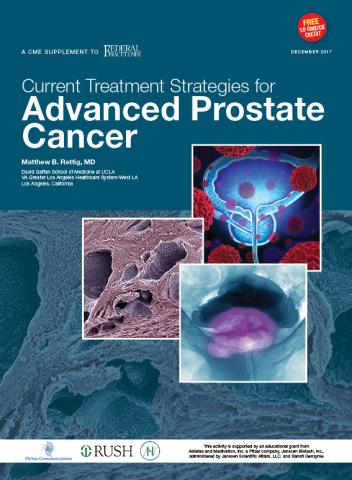
CME: Current Treatment Strategies for Advanced Prostate Cancer
Click here to read the supplement.
This activity is supported by an educational grant from Astellas and Medivation, Inc. a Pfizer company, Janssen Biotech, Inc., administered byJanssen Scientific Affairs, LLC. and Sanofi Genzyme.
In this CME supplement, you will learn to:
- Identify best practices for integrating currently available treatment options for advanced prostate cancer, including immunologic therapies, new secondary hormonal agents, chemotherapy, and radiopharmaceuticals
- Describe new management options for metastatic hormonesensitive prostate cancer (mHSPC)
- Outline considerations for current and emerging therapies in the management of patients with metastatic castration-resistant prostate cancer (mCSPC)
- Understand how the molecular and biochemical underpinnings of mCRPC can impact treatment course and selection
Click here to read the supplement.
After reading, take the posttest evaluation at https://www.surveymonkey.com/r/WMMYNHP
Click here to read the supplement.
This activity is supported by an educational grant from Astellas and Medivation, Inc. a Pfizer company, Janssen Biotech, Inc., administered byJanssen Scientific Affairs, LLC. and Sanofi Genzyme.
In this CME supplement, you will learn to:
- Identify best practices for integrating currently available treatment options for advanced prostate cancer, including immunologic therapies, new secondary hormonal agents, chemotherapy, and radiopharmaceuticals
- Describe new management options for metastatic hormonesensitive prostate cancer (mHSPC)
- Outline considerations for current and emerging therapies in the management of patients with metastatic castration-resistant prostate cancer (mCSPC)
- Understand how the molecular and biochemical underpinnings of mCRPC can impact treatment course and selection
Click here to read the supplement.
After reading, take the posttest evaluation at https://www.surveymonkey.com/r/WMMYNHP
Click here to read the supplement.
This activity is supported by an educational grant from Astellas and Medivation, Inc. a Pfizer company, Janssen Biotech, Inc., administered byJanssen Scientific Affairs, LLC. and Sanofi Genzyme.
In this CME supplement, you will learn to:
- Identify best practices for integrating currently available treatment options for advanced prostate cancer, including immunologic therapies, new secondary hormonal agents, chemotherapy, and radiopharmaceuticals
- Describe new management options for metastatic hormonesensitive prostate cancer (mHSPC)
- Outline considerations for current and emerging therapies in the management of patients with metastatic castration-resistant prostate cancer (mCSPC)
- Understand how the molecular and biochemical underpinnings of mCRPC can impact treatment course and selection
Click here to read the supplement.
After reading, take the posttest evaluation at https://www.surveymonkey.com/r/WMMYNHP
Acute kidney injury linked with doubled inpatient VTEs
TORONTO – Hospitalized patients with acute kidney injury had more than double the inpatient rate of venous thromboembolism as had patients without acute kidney injury in a prospective, observational study of more than 6,000 hospitalized U.S. soldiers.
He offered four possible mechanisms to explain a link between AKI and VTE:
- Patients with AKI are in a hypercoagulable state.
- AKI alters the pharmacodynamics or pharmacokinetics of VTE prophylactic treatments.
- AKI is a marker of an illness that causes VTE.
- VTE leads to an increased rate of AKI rather than the other way around.
Dr. McMahon’s analysis also revealed that two other clinical conditions that are generally believed to raise VTE risk – obesity and impaired overall renal function identified with stagnant measures – did not correspond with a significantly elevated VTE rate in this study.
The data came from 6,552 adults hospitalized for at least 2 days at Walter Reed between September 2009 and March 2011. The study excluded patients with VTE at the time of admission and also those who had been treated with an anticoagulant at the time of admission. The patients averaged 55 years of age and were hospitalized for a median of 4 days. About 22% of patients received VTE prophylaxis with unfractionated heparin, about 41% received prophylaxis with low-molecular-weight heparin, and about 39% received no VTE prophylaxis (percentages total 102% because of rounding).
About 16% of the patients had been diagnosed with AKI at the time of admission, and an additional 8% developed AKI while hospitalized, defined as an increase in serum creatinine during hospitalization of at least 50% above baseline levels or an increase of more than 0.3 mg/dL above the level at time of admission. During hospitalization, 160 patients (2%) developed a new onset VTE.
In an analysis that adjusted for baseline differences in type of surgery, body mass index, sex, age, and prior hospitalizations during the prior 90 days, the results showed that patients with preexisting or new onset AKI had a 2.2-fold higher rate of VTE, compared with patients without AKI, and this difference was statistically significant, Dr. McMahon reported.
The analysis also showed a significant 62% relatively higher rate of VTE among soldiers hospitalized for a deployment-related event, as well as a significant 63% relatively lower VTE rate among patients not receiving medical prophylaxis, compared with patients receiving an anticoagulant. Dr. McMahon suggested that this lower rate of VTEs among patients not on prophylaxis reflected success in identifying which patients had an increased risk for VTE and hence received prophylaxis.
mzoler@frontlinemedcom.com
On Twitter @mitchelzoler
TORONTO – Hospitalized patients with acute kidney injury had more than double the inpatient rate of venous thromboembolism as had patients without acute kidney injury in a prospective, observational study of more than 6,000 hospitalized U.S. soldiers.
He offered four possible mechanisms to explain a link between AKI and VTE:
- Patients with AKI are in a hypercoagulable state.
- AKI alters the pharmacodynamics or pharmacokinetics of VTE prophylactic treatments.
- AKI is a marker of an illness that causes VTE.
- VTE leads to an increased rate of AKI rather than the other way around.
Dr. McMahon’s analysis also revealed that two other clinical conditions that are generally believed to raise VTE risk – obesity and impaired overall renal function identified with stagnant measures – did not correspond with a significantly elevated VTE rate in this study.
The data came from 6,552 adults hospitalized for at least 2 days at Walter Reed between September 2009 and March 2011. The study excluded patients with VTE at the time of admission and also those who had been treated with an anticoagulant at the time of admission. The patients averaged 55 years of age and were hospitalized for a median of 4 days. About 22% of patients received VTE prophylaxis with unfractionated heparin, about 41% received prophylaxis with low-molecular-weight heparin, and about 39% received no VTE prophylaxis (percentages total 102% because of rounding).
About 16% of the patients had been diagnosed with AKI at the time of admission, and an additional 8% developed AKI while hospitalized, defined as an increase in serum creatinine during hospitalization of at least 50% above baseline levels or an increase of more than 0.3 mg/dL above the level at time of admission. During hospitalization, 160 patients (2%) developed a new onset VTE.
In an analysis that adjusted for baseline differences in type of surgery, body mass index, sex, age, and prior hospitalizations during the prior 90 days, the results showed that patients with preexisting or new onset AKI had a 2.2-fold higher rate of VTE, compared with patients without AKI, and this difference was statistically significant, Dr. McMahon reported.
The analysis also showed a significant 62% relatively higher rate of VTE among soldiers hospitalized for a deployment-related event, as well as a significant 63% relatively lower VTE rate among patients not receiving medical prophylaxis, compared with patients receiving an anticoagulant. Dr. McMahon suggested that this lower rate of VTEs among patients not on prophylaxis reflected success in identifying which patients had an increased risk for VTE and hence received prophylaxis.
mzoler@frontlinemedcom.com
On Twitter @mitchelzoler
TORONTO – Hospitalized patients with acute kidney injury had more than double the inpatient rate of venous thromboembolism as had patients without acute kidney injury in a prospective, observational study of more than 6,000 hospitalized U.S. soldiers.
He offered four possible mechanisms to explain a link between AKI and VTE:
- Patients with AKI are in a hypercoagulable state.
- AKI alters the pharmacodynamics or pharmacokinetics of VTE prophylactic treatments.
- AKI is a marker of an illness that causes VTE.
- VTE leads to an increased rate of AKI rather than the other way around.
Dr. McMahon’s analysis also revealed that two other clinical conditions that are generally believed to raise VTE risk – obesity and impaired overall renal function identified with stagnant measures – did not correspond with a significantly elevated VTE rate in this study.
The data came from 6,552 adults hospitalized for at least 2 days at Walter Reed between September 2009 and March 2011. The study excluded patients with VTE at the time of admission and also those who had been treated with an anticoagulant at the time of admission. The patients averaged 55 years of age and were hospitalized for a median of 4 days. About 22% of patients received VTE prophylaxis with unfractionated heparin, about 41% received prophylaxis with low-molecular-weight heparin, and about 39% received no VTE prophylaxis (percentages total 102% because of rounding).
About 16% of the patients had been diagnosed with AKI at the time of admission, and an additional 8% developed AKI while hospitalized, defined as an increase in serum creatinine during hospitalization of at least 50% above baseline levels or an increase of more than 0.3 mg/dL above the level at time of admission. During hospitalization, 160 patients (2%) developed a new onset VTE.
In an analysis that adjusted for baseline differences in type of surgery, body mass index, sex, age, and prior hospitalizations during the prior 90 days, the results showed that patients with preexisting or new onset AKI had a 2.2-fold higher rate of VTE, compared with patients without AKI, and this difference was statistically significant, Dr. McMahon reported.
The analysis also showed a significant 62% relatively higher rate of VTE among soldiers hospitalized for a deployment-related event, as well as a significant 63% relatively lower VTE rate among patients not receiving medical prophylaxis, compared with patients receiving an anticoagulant. Dr. McMahon suggested that this lower rate of VTEs among patients not on prophylaxis reflected success in identifying which patients had an increased risk for VTE and hence received prophylaxis.
mzoler@frontlinemedcom.com
On Twitter @mitchelzoler
AT CHEST 2017
Key clinical point:
Major finding: Inpatients with AKI had an adjusted 2.2-fold higher rate of VTE, compared with other inpatients.
Data source: Prospective, observational data from 6,552 inpatients at a single U.S. military hospital.
Disclosures: Dr. McMahon had no disclosures.
From the Editors: Advice to young hopefuls
Most mature surgeons and surgical educators have been asked by hopeful young medical students: “What can I do to improve my chances of becoming a surgeon?” We all want to give our aspiring students encouraging yet truthful answers. The following are typical questions we get from students, and we have tried to provide responses that are both helpful and realistic given the individual circumstances. Do young hopefuls query you about what it takes to become a surgeon? If so, we invite you to let us know what kinds of questions you get and how you respond. We all want “the best and the brightest” to join our profession, and we can help make that happen by offering sound advice to those who come to us asking “How can I become a surgeon?”
Dear Dr. Hughes,
I am a first-year medical student and want to become a surgeon! Everyone tells me I have to have at least two publications to even be considered for an interview. Is this true? What is the best area of research for me to pursue to assure a match in a surgery residency?
Unpublished in the Midwest
Dear Unpublished,
Like almost everything in life, the answer to your question is “It depends.” Surgery is a field that covers such a wide range of opportunities and training options that there is no “perfect” path to residency. More than anything at the M1 level, you need to keep your options open for any discipline. During the next 3 years, you’ll find out much about yourself and about the breadth of medicine. You need to understand who you are as a person before deciding on a specialty and especially before embarking on a research project. Research is a crucial part of surgery, but research just to have a publication for your resume is not a good enough reason to take this on during medical school.
The pursuit of knowledge through research is best undertaken because you have a passion for a particular subject. Most program directors will see right through “insincere” research – that is, research done to puff up a resume but lacking underlying value or relevance to your personal interests.

Tyler Hughes, MD, FACS
Dear Dr. Deveney,
I am in the middle of my third year of medical school. I have wanted to be a rural general surgeon ever since I shadowed the surgeon in my home town and saw the impact he made on the lives of his patients – and they made on his. Unfortunately, I do not do well on standardized tests and scored only 216 on USMLE Step 1. I did earn “Honors” in my surgery clerkship, but only a “Pass” in Medicine, with other clerkships still pending. What can I do to maximize my chances of a successful match in a surgical residency?
Discouraged in Denver
Dear Discouraged,
Since medical students are applying to a larger number of programs every year, surgical training programs receive far more applicants than they can interview. Most programs use USMLE Step 1 score as a convenient way to filter applicants and interview only students who have scored above an arbitrary threshold, such as 220, 230, or 240. We all know that USMLE Step 1 score does not correlate well with how good a surgeon you will be, but it does correlate with the likelihood of passing the American Board of Surgery Qualifying Exam on the first attempt. Programs are in part judged on their Board passage rate by both applicants and by accrediting agencies. Your score of 216 means that you will need to apply widely to programs across the country.

I urge you to join the American College of Surgeons as a student member and attend the 2018 Clinical Congress meeting. Attend its medical student program, and meet as many program directors as you can at the “Meet and Greet” receptions.
Programs in which you will thrive are ones that value a person who pitches in and helps the team get the daily work done. Surgery is a team sport! You need to be unfailingly pleasant and positive and be able to tie a knot and suture an incision smoothly. Chance favors the prepared mind and hands! Good luck!
Karen E. Deveney, MD, FACS
Most mature surgeons and surgical educators have been asked by hopeful young medical students: “What can I do to improve my chances of becoming a surgeon?” We all want to give our aspiring students encouraging yet truthful answers. The following are typical questions we get from students, and we have tried to provide responses that are both helpful and realistic given the individual circumstances. Do young hopefuls query you about what it takes to become a surgeon? If so, we invite you to let us know what kinds of questions you get and how you respond. We all want “the best and the brightest” to join our profession, and we can help make that happen by offering sound advice to those who come to us asking “How can I become a surgeon?”
Dear Dr. Hughes,
I am a first-year medical student and want to become a surgeon! Everyone tells me I have to have at least two publications to even be considered for an interview. Is this true? What is the best area of research for me to pursue to assure a match in a surgery residency?
Unpublished in the Midwest
Dear Unpublished,
Like almost everything in life, the answer to your question is “It depends.” Surgery is a field that covers such a wide range of opportunities and training options that there is no “perfect” path to residency. More than anything at the M1 level, you need to keep your options open for any discipline. During the next 3 years, you’ll find out much about yourself and about the breadth of medicine. You need to understand who you are as a person before deciding on a specialty and especially before embarking on a research project. Research is a crucial part of surgery, but research just to have a publication for your resume is not a good enough reason to take this on during medical school.
The pursuit of knowledge through research is best undertaken because you have a passion for a particular subject. Most program directors will see right through “insincere” research – that is, research done to puff up a resume but lacking underlying value or relevance to your personal interests.
Tyler Hughes, MD, FACS
Dear Dr. Deveney,
I am in the middle of my third year of medical school. I have wanted to be a rural general surgeon ever since I shadowed the surgeon in my home town and saw the impact he made on the lives of his patients – and they made on his. Unfortunately, I do not do well on standardized tests and scored only 216 on USMLE Step 1. I did earn “Honors” in my surgery clerkship, but only a “Pass” in Medicine, with other clerkships still pending. What can I do to maximize my chances of a successful match in a surgical residency?
Discouraged in Denver
Dear Discouraged,
Since medical students are applying to a larger number of programs every year, surgical training programs receive far more applicants than they can interview. Most programs use USMLE Step 1 score as a convenient way to filter applicants and interview only students who have scored above an arbitrary threshold, such as 220, 230, or 240. We all know that USMLE Step 1 score does not correlate well with how good a surgeon you will be, but it does correlate with the likelihood of passing the American Board of Surgery Qualifying Exam on the first attempt. Programs are in part judged on their Board passage rate by both applicants and by accrediting agencies. Your score of 216 means that you will need to apply widely to programs across the country.
I urge you to join the American College of Surgeons as a student member and attend the 2018 Clinical Congress meeting. Attend its medical student program, and meet as many program directors as you can at the “Meet and Greet” receptions.
Programs in which you will thrive are ones that value a person who pitches in and helps the team get the daily work done. Surgery is a team sport! You need to be unfailingly pleasant and positive and be able to tie a knot and suture an incision smoothly. Chance favors the prepared mind and hands! Good luck!
Karen E. Deveney, MD, FACS
Most mature surgeons and surgical educators have been asked by hopeful young medical students: “What can I do to improve my chances of becoming a surgeon?” We all want to give our aspiring students encouraging yet truthful answers. The following are typical questions we get from students, and we have tried to provide responses that are both helpful and realistic given the individual circumstances. Do young hopefuls query you about what it takes to become a surgeon? If so, we invite you to let us know what kinds of questions you get and how you respond. We all want “the best and the brightest” to join our profession, and we can help make that happen by offering sound advice to those who come to us asking “How can I become a surgeon?”
Dear Dr. Hughes,
I am a first-year medical student and want to become a surgeon! Everyone tells me I have to have at least two publications to even be considered for an interview. Is this true? What is the best area of research for me to pursue to assure a match in a surgery residency?
Unpublished in the Midwest
Dear Unpublished,
Like almost everything in life, the answer to your question is “It depends.” Surgery is a field that covers such a wide range of opportunities and training options that there is no “perfect” path to residency. More than anything at the M1 level, you need to keep your options open for any discipline. During the next 3 years, you’ll find out much about yourself and about the breadth of medicine. You need to understand who you are as a person before deciding on a specialty and especially before embarking on a research project. Research is a crucial part of surgery, but research just to have a publication for your resume is not a good enough reason to take this on during medical school.
The pursuit of knowledge through research is best undertaken because you have a passion for a particular subject. Most program directors will see right through “insincere” research – that is, research done to puff up a resume but lacking underlying value or relevance to your personal interests.
Tyler Hughes, MD, FACS
Dear Dr. Deveney,
I am in the middle of my third year of medical school. I have wanted to be a rural general surgeon ever since I shadowed the surgeon in my home town and saw the impact he made on the lives of his patients – and they made on his. Unfortunately, I do not do well on standardized tests and scored only 216 on USMLE Step 1. I did earn “Honors” in my surgery clerkship, but only a “Pass” in Medicine, with other clerkships still pending. What can I do to maximize my chances of a successful match in a surgical residency?
Discouraged in Denver
Dear Discouraged,
Since medical students are applying to a larger number of programs every year, surgical training programs receive far more applicants than they can interview. Most programs use USMLE Step 1 score as a convenient way to filter applicants and interview only students who have scored above an arbitrary threshold, such as 220, 230, or 240. We all know that USMLE Step 1 score does not correlate well with how good a surgeon you will be, but it does correlate with the likelihood of passing the American Board of Surgery Qualifying Exam on the first attempt. Programs are in part judged on their Board passage rate by both applicants and by accrediting agencies. Your score of 216 means that you will need to apply widely to programs across the country.
I urge you to join the American College of Surgeons as a student member and attend the 2018 Clinical Congress meeting. Attend its medical student program, and meet as many program directors as you can at the “Meet and Greet” receptions.
Programs in which you will thrive are ones that value a person who pitches in and helps the team get the daily work done. Surgery is a team sport! You need to be unfailingly pleasant and positive and be able to tie a knot and suture an incision smoothly. Chance favors the prepared mind and hands! Good luck!
Karen E. Deveney, MD, FACS

TNFi response evaluations may conflict when fibromyalgia, axial SpA coexist
The concomitant presence of both axial spondyloarthritis (axSpA) and fibromyalgia affects response to tumor necrosis factor (TNF) blockers through increased symptom severity on patient-reported outcomes but not on more objective measurements, according to findings from a prospective, longitudinal study.

Although reports have less frequently examined the relationship between fibromyalgia diagnosis and disease activity in patients who have rheumatologist-diagnosed axSpA than they have in patients with rheumatoid arthritis, those reports have indicated that patients with axSpA and concomitant fibromyalgia tend to present with higher disease activity on measures such as the Bath Ankylosing Spondylitis Disease Activity Index (BASDAI), the investigators wrote in Annals of the Rheumatic Diseases.
In this prospective, longitudinal study, a total of 508 adult patients with axSpA from 65 centers first attended a baseline visit, then 12 weeks after commencing treatment with TNF blockers, they attended an “effectiveness visit” in which they were evaluated for a response on the BASDAI. This response was defined as a reduction of at least 50% or two units, compared with baseline measurements. Furthermore, a total of 37.8% tested positive at baseline on the self-reported Fibromyalgia Rapid Screening Tool (FiRST) questionnaire, defined as a score of 5 or 6 out of 6.
These patients testing positive on FiRST at baseline were more likely to be female (55.7% vs. 41.1%), to have a history of peripheral enthesitis (64.7% vs. 47.8%), and to have a higher disease severity at baseline on the BASDAI and Ankylosing Spondylitis Disease Activity Score at baseline (6.5 vs. 5.1 and 3.5 vs. 3.2, respectively). They were also were more likely to be taking antidepressants (26.8% vs. 16.2%).
Patients who had fibromyalgia according to FiRST presented less frequently with a BASDAI response (87 of 192; 45.3%) after 12 weeks, compared with patients who had only axSpA at baseline (171 of 316; 54.1%). But this difference did not reach statistical significance in both univariate or multivariate analyses. However, nearly all of the secondary endpoints of response, such as various levels of response on the Assessment of SpondyloArthritis international Society criteria and the Ankylosing Spondylitis Disease Activity Score, were achieved significantly less often among patients who also had fibromyalgia.
Although BASDAI response was not different between the groups, the investigators said that fibromyalgia had a negative effect on TNF blocker response that “seems related to the instruments used in its evaluation rather than a different treatment effect of the molecule.”
Sensitivity analyses that used the 1990 American College of Rheumatology criteria to define the presence of fibromyalgia rather than the FiRST questionnaire result at baseline did not find any differences in TNF blocker responses between the groups on the main endpoint and most of the secondary endpoints. The ACR criteria classified fibromyalgia in 16.1% of the patients.
Another set of sensitivity analyses that used only the FiRST results at 12 weeks to diagnose fibromyalgia found that fibromyalgia patients had lower responses to treatment on nearly all endpoints. Only 18.7% of patients tested positive on the FiRST questionnaire at 12 weeks.
The change in C-reactive protein (CRP) levels at 12 weeks was not different between the groups of patients regardless of the definition used for fibromyalgia.
The researchers observed a decreased frequency of HLA-B27 positivity, radiographic sacroiliitis, and MRI sacroiliitis in people with both diseases. The authors called this finding “intriguing” and said it “might suggest that some patients participating in the trial might have been misdiagnosed and were in fact suffering from [fibromyalgia] only.”
But other clinical features suggestive of axSpA, such as uveitis, psoriasis, and inflammatory bowel disease, were equally present across the different groups.
Overall, “these results suggest that there is indeed an impact on the treatment response, but seems more related to the patient-reported outcomes used in the effectiveness endpoints, as suggested by the absence of difference across groups for the objective biological parameters (i.e., CRP).”
Dr. Moltó and her colleagues said their findings highlighted the importance not only of evaluating the presence of coexisting fibromyalgia in patients with axSpA when evaluating treatment response but also in determining treatment targets.
“This seems particularly important for decision of the treatment target in patients with axSpA when applying a treat-to-target strategy: For example, remission might not be a feasible target for these patients [with concomitant fibromyalgia] who will not likely reach this state, but should rather aim for a significant change or focus in only on objective parameters (i.e., CRP),” they concluded.
The study was funded by an unrestricted grant from Merck Sharp & Dohme. The authors declared having no competing interests.
SOURCE: Moltó A et al. Ann Rheum Dis. 2017 Nov 28. doi: 10.1136/annrheumdis-2017-212378.
The concomitant presence of both axial spondyloarthritis (axSpA) and fibromyalgia affects response to tumor necrosis factor (TNF) blockers through increased symptom severity on patient-reported outcomes but not on more objective measurements, according to findings from a prospective, longitudinal study.
Although reports have less frequently examined the relationship between fibromyalgia diagnosis and disease activity in patients who have rheumatologist-diagnosed axSpA than they have in patients with rheumatoid arthritis, those reports have indicated that patients with axSpA and concomitant fibromyalgia tend to present with higher disease activity on measures such as the Bath Ankylosing Spondylitis Disease Activity Index (BASDAI), the investigators wrote in Annals of the Rheumatic Diseases.
In this prospective, longitudinal study, a total of 508 adult patients with axSpA from 65 centers first attended a baseline visit, then 12 weeks after commencing treatment with TNF blockers, they attended an “effectiveness visit” in which they were evaluated for a response on the BASDAI. This response was defined as a reduction of at least 50% or two units, compared with baseline measurements. Furthermore, a total of 37.8% tested positive at baseline on the self-reported Fibromyalgia Rapid Screening Tool (FiRST) questionnaire, defined as a score of 5 or 6 out of 6.
These patients testing positive on FiRST at baseline were more likely to be female (55.7% vs. 41.1%), to have a history of peripheral enthesitis (64.7% vs. 47.8%), and to have a higher disease severity at baseline on the BASDAI and Ankylosing Spondylitis Disease Activity Score at baseline (6.5 vs. 5.1 and 3.5 vs. 3.2, respectively). They were also were more likely to be taking antidepressants (26.8% vs. 16.2%).
Patients who had fibromyalgia according to FiRST presented less frequently with a BASDAI response (87 of 192; 45.3%) after 12 weeks, compared with patients who had only axSpA at baseline (171 of 316; 54.1%). But this difference did not reach statistical significance in both univariate or multivariate analyses. However, nearly all of the secondary endpoints of response, such as various levels of response on the Assessment of SpondyloArthritis international Society criteria and the Ankylosing Spondylitis Disease Activity Score, were achieved significantly less often among patients who also had fibromyalgia.
Although BASDAI response was not different between the groups, the investigators said that fibromyalgia had a negative effect on TNF blocker response that “seems related to the instruments used in its evaluation rather than a different treatment effect of the molecule.”
Sensitivity analyses that used the 1990 American College of Rheumatology criteria to define the presence of fibromyalgia rather than the FiRST questionnaire result at baseline did not find any differences in TNF blocker responses between the groups on the main endpoint and most of the secondary endpoints. The ACR criteria classified fibromyalgia in 16.1% of the patients.
Another set of sensitivity analyses that used only the FiRST results at 12 weeks to diagnose fibromyalgia found that fibromyalgia patients had lower responses to treatment on nearly all endpoints. Only 18.7% of patients tested positive on the FiRST questionnaire at 12 weeks.
The change in C-reactive protein (CRP) levels at 12 weeks was not different between the groups of patients regardless of the definition used for fibromyalgia.
The researchers observed a decreased frequency of HLA-B27 positivity, radiographic sacroiliitis, and MRI sacroiliitis in people with both diseases. The authors called this finding “intriguing” and said it “might suggest that some patients participating in the trial might have been misdiagnosed and were in fact suffering from [fibromyalgia] only.”
But other clinical features suggestive of axSpA, such as uveitis, psoriasis, and inflammatory bowel disease, were equally present across the different groups.
Overall, “these results suggest that there is indeed an impact on the treatment response, but seems more related to the patient-reported outcomes used in the effectiveness endpoints, as suggested by the absence of difference across groups for the objective biological parameters (i.e., CRP).”
Dr. Moltó and her colleagues said their findings highlighted the importance not only of evaluating the presence of coexisting fibromyalgia in patients with axSpA when evaluating treatment response but also in determining treatment targets.
“This seems particularly important for decision of the treatment target in patients with axSpA when applying a treat-to-target strategy: For example, remission might not be a feasible target for these patients [with concomitant fibromyalgia] who will not likely reach this state, but should rather aim for a significant change or focus in only on objective parameters (i.e., CRP),” they concluded.
The study was funded by an unrestricted grant from Merck Sharp & Dohme. The authors declared having no competing interests.
SOURCE: Moltó A et al. Ann Rheum Dis. 2017 Nov 28. doi: 10.1136/annrheumdis-2017-212378.
The concomitant presence of both axial spondyloarthritis (axSpA) and fibromyalgia affects response to tumor necrosis factor (TNF) blockers through increased symptom severity on patient-reported outcomes but not on more objective measurements, according to findings from a prospective, longitudinal study.
Although reports have less frequently examined the relationship between fibromyalgia diagnosis and disease activity in patients who have rheumatologist-diagnosed axSpA than they have in patients with rheumatoid arthritis, those reports have indicated that patients with axSpA and concomitant fibromyalgia tend to present with higher disease activity on measures such as the Bath Ankylosing Spondylitis Disease Activity Index (BASDAI), the investigators wrote in Annals of the Rheumatic Diseases.
In this prospective, longitudinal study, a total of 508 adult patients with axSpA from 65 centers first attended a baseline visit, then 12 weeks after commencing treatment with TNF blockers, they attended an “effectiveness visit” in which they were evaluated for a response on the BASDAI. This response was defined as a reduction of at least 50% or two units, compared with baseline measurements. Furthermore, a total of 37.8% tested positive at baseline on the self-reported Fibromyalgia Rapid Screening Tool (FiRST) questionnaire, defined as a score of 5 or 6 out of 6.
These patients testing positive on FiRST at baseline were more likely to be female (55.7% vs. 41.1%), to have a history of peripheral enthesitis (64.7% vs. 47.8%), and to have a higher disease severity at baseline on the BASDAI and Ankylosing Spondylitis Disease Activity Score at baseline (6.5 vs. 5.1 and 3.5 vs. 3.2, respectively). They were also were more likely to be taking antidepressants (26.8% vs. 16.2%).
Patients who had fibromyalgia according to FiRST presented less frequently with a BASDAI response (87 of 192; 45.3%) after 12 weeks, compared with patients who had only axSpA at baseline (171 of 316; 54.1%). But this difference did not reach statistical significance in both univariate or multivariate analyses. However, nearly all of the secondary endpoints of response, such as various levels of response on the Assessment of SpondyloArthritis international Society criteria and the Ankylosing Spondylitis Disease Activity Score, were achieved significantly less often among patients who also had fibromyalgia.
Although BASDAI response was not different between the groups, the investigators said that fibromyalgia had a negative effect on TNF blocker response that “seems related to the instruments used in its evaluation rather than a different treatment effect of the molecule.”
Sensitivity analyses that used the 1990 American College of Rheumatology criteria to define the presence of fibromyalgia rather than the FiRST questionnaire result at baseline did not find any differences in TNF blocker responses between the groups on the main endpoint and most of the secondary endpoints. The ACR criteria classified fibromyalgia in 16.1% of the patients.
Another set of sensitivity analyses that used only the FiRST results at 12 weeks to diagnose fibromyalgia found that fibromyalgia patients had lower responses to treatment on nearly all endpoints. Only 18.7% of patients tested positive on the FiRST questionnaire at 12 weeks.
The change in C-reactive protein (CRP) levels at 12 weeks was not different between the groups of patients regardless of the definition used for fibromyalgia.
The researchers observed a decreased frequency of HLA-B27 positivity, radiographic sacroiliitis, and MRI sacroiliitis in people with both diseases. The authors called this finding “intriguing” and said it “might suggest that some patients participating in the trial might have been misdiagnosed and were in fact suffering from [fibromyalgia] only.”
But other clinical features suggestive of axSpA, such as uveitis, psoriasis, and inflammatory bowel disease, were equally present across the different groups.
Overall, “these results suggest that there is indeed an impact on the treatment response, but seems more related to the patient-reported outcomes used in the effectiveness endpoints, as suggested by the absence of difference across groups for the objective biological parameters (i.e., CRP).”
Dr. Moltó and her colleagues said their findings highlighted the importance not only of evaluating the presence of coexisting fibromyalgia in patients with axSpA when evaluating treatment response but also in determining treatment targets.
“This seems particularly important for decision of the treatment target in patients with axSpA when applying a treat-to-target strategy: For example, remission might not be a feasible target for these patients [with concomitant fibromyalgia] who will not likely reach this state, but should rather aim for a significant change or focus in only on objective parameters (i.e., CRP),” they concluded.
The study was funded by an unrestricted grant from Merck Sharp & Dohme. The authors declared having no competing interests.
SOURCE: Moltó A et al. Ann Rheum Dis. 2017 Nov 28. doi: 10.1136/annrheumdis-2017-212378.
FROM ANNALS OF THE RHEUMATIC DISEASES
Key clinical point:
Major finding: Patients with both axSpA and fibromyalgia presented less frequently with a BASDAI response after 12 weeks than did patients without both diseases (45.3% vs. 54.1%), but the finding did not reach statistical significance.
Data source: Prospective, longitudinal study of 508 adult patients with rheumatologist-diagnosed axSpA.
Disclosures: The study was funded by an unrestricted grant from Merck Sharp & Dohme. The authors declared having no competing interests.
Source: Moltó A et al. Ann Rheum Dis. 2017 Nov 28. doi: 10.1136/annrheumdis-2017-212378.

VIDEO: 5 years of additional AI no better than 2 in HR+ breast cancer
SAN ANTONIO – Clinical trials have shown a clear benefit for preventing breast cancer recurrence with aromatase inhibitor (AI) therapy following 5 years of tamoxifen. Yet the optimal duration for additional AI therapy following 5 years of endocrine therapy with tamoxifen, an AI, or sequential therapies is not known, according to Michael Gnant, MD, from the Medical University of Vienna.
In the ABCSG-16 trial, Dr. Gnant and his colleagues reported that 5 years of additional therapy with anastrozole (Arimidex) was no more effective than 2 additional years following the standard 5 years of initial endocrine therapy in postmenopausal women with hormone receptor–positive (HR+) breast cancer.
In this video interview at the San Antonio Breast Cancer Symposium, Dr. Gnant notes that, although some patients may still benefit from 5 years of additional therapy, the trial results suggest that most patients can be spared from such adverse events as risk for fractures associated with three additional and evidently unnecessary years of therapy.
The ABCSG-16 study was supported by AstraZeneca. Dr. Gnant disclosed research funding, honoraria, and travel funding from the company and others.
The video associated with this article is no longer available on this site. Please view all of our videos on the MDedge YouTube channel
SAN ANTONIO – Clinical trials have shown a clear benefit for preventing breast cancer recurrence with aromatase inhibitor (AI) therapy following 5 years of tamoxifen. Yet the optimal duration for additional AI therapy following 5 years of endocrine therapy with tamoxifen, an AI, or sequential therapies is not known, according to Michael Gnant, MD, from the Medical University of Vienna.
In the ABCSG-16 trial, Dr. Gnant and his colleagues reported that 5 years of additional therapy with anastrozole (Arimidex) was no more effective than 2 additional years following the standard 5 years of initial endocrine therapy in postmenopausal women with hormone receptor–positive (HR+) breast cancer.
In this video interview at the San Antonio Breast Cancer Symposium, Dr. Gnant notes that, although some patients may still benefit from 5 years of additional therapy, the trial results suggest that most patients can be spared from such adverse events as risk for fractures associated with three additional and evidently unnecessary years of therapy.
The ABCSG-16 study was supported by AstraZeneca. Dr. Gnant disclosed research funding, honoraria, and travel funding from the company and others.
The video associated with this article is no longer available on this site. Please view all of our videos on the MDedge YouTube channel
SAN ANTONIO – Clinical trials have shown a clear benefit for preventing breast cancer recurrence with aromatase inhibitor (AI) therapy following 5 years of tamoxifen. Yet the optimal duration for additional AI therapy following 5 years of endocrine therapy with tamoxifen, an AI, or sequential therapies is not known, according to Michael Gnant, MD, from the Medical University of Vienna.
In the ABCSG-16 trial, Dr. Gnant and his colleagues reported that 5 years of additional therapy with anastrozole (Arimidex) was no more effective than 2 additional years following the standard 5 years of initial endocrine therapy in postmenopausal women with hormone receptor–positive (HR+) breast cancer.
In this video interview at the San Antonio Breast Cancer Symposium, Dr. Gnant notes that, although some patients may still benefit from 5 years of additional therapy, the trial results suggest that most patients can be spared from such adverse events as risk for fractures associated with three additional and evidently unnecessary years of therapy.
The ABCSG-16 study was supported by AstraZeneca. Dr. Gnant disclosed research funding, honoraria, and travel funding from the company and others.
The video associated with this article is no longer available on this site. Please view all of our videos on the MDedge YouTube channel
REPORTING FROM SABCS 2017

Expanded hospital testing improves respiratory pathogen detection
SAN DIEGO – Systematic testing of acute respiratory illness patients can increase the likelihood of finding relevant pathogens, according to a study presented at an annual scientific meeting on infectious diseases.
Currently, hospitals conduct either nonroutine assessments or rely heavily on clinical laboratory testing among severe acute respiratory illness patients, which can lead to missing clinically key viruses.
Systematic testing expands on tests ordered and carried out at hospitals, expanding on them by testing for influenza, respiratory syncytial virus (RSV), human metapneumovirus, rhinovirus and enterovirus, adenovirus, coronavirus, and parainfluenza viruses 1-4. To test the efficacy of systematic testing, investigators studied 2,216 severe acute respiratory illness patients hospitalized in one of three hospitals in Minnesota during September 2015-August 2016. Patients were predominantly younger than 5 years old (57%) and had one or more chronic medical condition (63%).
Detection of at least one virus increased from 1,062 patients (48%) to 1,600 patients (72%) when comparing clinically ordered tests against expanded, systematic RT-PCR testing conducted through the Minnesota Health Department (MDH).
By patient age, viral detection increased by 27%, 24%, 18%, and 21% for patients aged younger than 5 years, 5-17 years, 18-64 years, and 65 years and older, respectively. Except for influenza viruses and RSV, the proportions of viruses identified, regardless of age, were all lower in hospital testing, compared with MDH testing.
“RSV targeting was almost systematic among children less than 5 years, but [accounted for] only 28% of RSV detection,” said Dr. Steffen in her presentation. “A smaller proportion of other respiratory viruses, including the human metapneumovirus, were detected at the hospital, and this was especially true for adults.”
Patients with rhinovirus and enterovirus saw a difference between hospital and expanded testing, increasing from a little over 300 patients detected, to nearly 800 patients.
“Patients admitted to the ICU were less likely to have a pathogen detection than those not admitted to the ICU, and those with one or more chronic medical condition had lower viral detection than those without,” Dr. Steffens said. “While testing at MDH did increase the percent of patients in each category, trends remained consistent and significant.”
Since testing information was only collected for patients with positive test results at the hospital, investigators were not able to compare testing practices between patients with and without viruses. This study may also have underrepresented pathogens detected through means other than the hospital laboratory, like rapid tests in emergency departments. The study was also limited by the short time frame of only 1 year.
The presenters reported no relevant financial disclosures.
ezimmerman@frontlinemedcom.com
SOURCE: Steffens A et al. Abstract 885.
SAN DIEGO – Systematic testing of acute respiratory illness patients can increase the likelihood of finding relevant pathogens, according to a study presented at an annual scientific meeting on infectious diseases.
Currently, hospitals conduct either nonroutine assessments or rely heavily on clinical laboratory testing among severe acute respiratory illness patients, which can lead to missing clinically key viruses.
Systematic testing expands on tests ordered and carried out at hospitals, expanding on them by testing for influenza, respiratory syncytial virus (RSV), human metapneumovirus, rhinovirus and enterovirus, adenovirus, coronavirus, and parainfluenza viruses 1-4. To test the efficacy of systematic testing, investigators studied 2,216 severe acute respiratory illness patients hospitalized in one of three hospitals in Minnesota during September 2015-August 2016. Patients were predominantly younger than 5 years old (57%) and had one or more chronic medical condition (63%).
Detection of at least one virus increased from 1,062 patients (48%) to 1,600 patients (72%) when comparing clinically ordered tests against expanded, systematic RT-PCR testing conducted through the Minnesota Health Department (MDH).
By patient age, viral detection increased by 27%, 24%, 18%, and 21% for patients aged younger than 5 years, 5-17 years, 18-64 years, and 65 years and older, respectively. Except for influenza viruses and RSV, the proportions of viruses identified, regardless of age, were all lower in hospital testing, compared with MDH testing.
“RSV targeting was almost systematic among children less than 5 years, but [accounted for] only 28% of RSV detection,” said Dr. Steffen in her presentation. “A smaller proportion of other respiratory viruses, including the human metapneumovirus, were detected at the hospital, and this was especially true for adults.”
Patients with rhinovirus and enterovirus saw a difference between hospital and expanded testing, increasing from a little over 300 patients detected, to nearly 800 patients.
“Patients admitted to the ICU were less likely to have a pathogen detection than those not admitted to the ICU, and those with one or more chronic medical condition had lower viral detection than those without,” Dr. Steffens said. “While testing at MDH did increase the percent of patients in each category, trends remained consistent and significant.”
Since testing information was only collected for patients with positive test results at the hospital, investigators were not able to compare testing practices between patients with and without viruses. This study may also have underrepresented pathogens detected through means other than the hospital laboratory, like rapid tests in emergency departments. The study was also limited by the short time frame of only 1 year.
The presenters reported no relevant financial disclosures.
ezimmerman@frontlinemedcom.com
SOURCE: Steffens A et al. Abstract 885.
SAN DIEGO – Systematic testing of acute respiratory illness patients can increase the likelihood of finding relevant pathogens, according to a study presented at an annual scientific meeting on infectious diseases.
Currently, hospitals conduct either nonroutine assessments or rely heavily on clinical laboratory testing among severe acute respiratory illness patients, which can lead to missing clinically key viruses.
Systematic testing expands on tests ordered and carried out at hospitals, expanding on them by testing for influenza, respiratory syncytial virus (RSV), human metapneumovirus, rhinovirus and enterovirus, adenovirus, coronavirus, and parainfluenza viruses 1-4. To test the efficacy of systematic testing, investigators studied 2,216 severe acute respiratory illness patients hospitalized in one of three hospitals in Minnesota during September 2015-August 2016. Patients were predominantly younger than 5 years old (57%) and had one or more chronic medical condition (63%).
Detection of at least one virus increased from 1,062 patients (48%) to 1,600 patients (72%) when comparing clinically ordered tests against expanded, systematic RT-PCR testing conducted through the Minnesota Health Department (MDH).
By patient age, viral detection increased by 27%, 24%, 18%, and 21% for patients aged younger than 5 years, 5-17 years, 18-64 years, and 65 years and older, respectively. Except for influenza viruses and RSV, the proportions of viruses identified, regardless of age, were all lower in hospital testing, compared with MDH testing.
“RSV targeting was almost systematic among children less than 5 years, but [accounted for] only 28% of RSV detection,” said Dr. Steffen in her presentation. “A smaller proportion of other respiratory viruses, including the human metapneumovirus, were detected at the hospital, and this was especially true for adults.”
Patients with rhinovirus and enterovirus saw a difference between hospital and expanded testing, increasing from a little over 300 patients detected, to nearly 800 patients.
“Patients admitted to the ICU were less likely to have a pathogen detection than those not admitted to the ICU, and those with one or more chronic medical condition had lower viral detection than those without,” Dr. Steffens said. “While testing at MDH did increase the percent of patients in each category, trends remained consistent and significant.”
Since testing information was only collected for patients with positive test results at the hospital, investigators were not able to compare testing practices between patients with and without viruses. This study may also have underrepresented pathogens detected through means other than the hospital laboratory, like rapid tests in emergency departments. The study was also limited by the short time frame of only 1 year.
The presenters reported no relevant financial disclosures.
ezimmerman@frontlinemedcom.com
SOURCE: Steffens A et al. Abstract 885.
REPORTING FROM ID WEEK 2017
Key clinical point:
Major finding: Among 2,216 patients studied, 1,600 (72%) were found to have at least one respiratory virus through expanded testing, compared with 1,062 (48%) patients tested through clincian-directed testing.
Study details: 2,351 severe acute respiratory illness patients hospitalized in one of three hospitals in Minnesota.
Disclosures: The presenter reported no relevant financial disclosures.
Source: Steffens A et al. Abstract 885.

Does Treating Sleep Apnea Improve Seizure Outcomes?
WASHINGTON, DC—Treatment of obstructive sleep apnea (OSA) with positive airway pressure (PAP) is associated with better one-year seizure outcomes in patients with epilepsy, according to a study presented at the 71st Annual Meeting of the American Epilepsy Society.
Prior research has suggested that sleep disturbances are more common in people with epilepsy than in age-matched controls and that more than 40% of people with epilepsy have OSA. PAP therapy has been associated with seizure reduction in small case series.
To compare long-term seizure control between patients with PAP-treated OSA, patients with untreated OSA, and patients without OSA, Thapanee Somboon, MD, a research fellow at the Sleep Disorders Center at Cleveland Clinic, and colleagues conducted a retrospective study of adults with epilepsy who underwent polysomnography at Cleveland Clinic between 1997 and 2015. Researchers compared patients’ seizure outcomes at one, three, and five years after polysomnography.

The study included 197 people with epilepsy, 122 of whom had OSA (ie, an apnea–hypopnea index of 5 or greater). Of the patients with OSA, 73 received PAP therapy. Mean age was about 44, 58% were female, and 70% had focal epilepsy. Patients with OSA were more likely to be older, have a higher BMI, and be male than those without OSA.
At one year, 63% of patients treated with PAP had a 50% or greater reduction in seizures from baseline, compared with 14% of patients with OSA who were not treated and 44% of patients who did not have OSA. Researchers also assessed successful seizure outcomes, which were defined as not having seizures at baseline and remaining seizure-free for a year, or having seizures at baseline but reporting a 50% or greater reduction in seizures over one year. Successful outcomes occurred in 85% of patients who were treated with PAP, 55% of patients with OSA who were untreated, and 65% of patients who did not have OSA.
After adjusting for baseline seizure freedom and antiepileptic drug standardized dose, patients with treated OSA remained more likely to have successful outcomes at one year. Comparisons at three and five years included fewer patients, and the differences at those time points were not statistically significant.
—Jake Remaly
WASHINGTON, DC—Treatment of obstructive sleep apnea (OSA) with positive airway pressure (PAP) is associated with better one-year seizure outcomes in patients with epilepsy, according to a study presented at the 71st Annual Meeting of the American Epilepsy Society.
Prior research has suggested that sleep disturbances are more common in people with epilepsy than in age-matched controls and that more than 40% of people with epilepsy have OSA. PAP therapy has been associated with seizure reduction in small case series.
To compare long-term seizure control between patients with PAP-treated OSA, patients with untreated OSA, and patients without OSA, Thapanee Somboon, MD, a research fellow at the Sleep Disorders Center at Cleveland Clinic, and colleagues conducted a retrospective study of adults with epilepsy who underwent polysomnography at Cleveland Clinic between 1997 and 2015. Researchers compared patients’ seizure outcomes at one, three, and five years after polysomnography.
The study included 197 people with epilepsy, 122 of whom had OSA (ie, an apnea–hypopnea index of 5 or greater). Of the patients with OSA, 73 received PAP therapy. Mean age was about 44, 58% were female, and 70% had focal epilepsy. Patients with OSA were more likely to be older, have a higher BMI, and be male than those without OSA.
At one year, 63% of patients treated with PAP had a 50% or greater reduction in seizures from baseline, compared with 14% of patients with OSA who were not treated and 44% of patients who did not have OSA. Researchers also assessed successful seizure outcomes, which were defined as not having seizures at baseline and remaining seizure-free for a year, or having seizures at baseline but reporting a 50% or greater reduction in seizures over one year. Successful outcomes occurred in 85% of patients who were treated with PAP, 55% of patients with OSA who were untreated, and 65% of patients who did not have OSA.
After adjusting for baseline seizure freedom and antiepileptic drug standardized dose, patients with treated OSA remained more likely to have successful outcomes at one year. Comparisons at three and five years included fewer patients, and the differences at those time points were not statistically significant.
—Jake Remaly
WASHINGTON, DC—Treatment of obstructive sleep apnea (OSA) with positive airway pressure (PAP) is associated with better one-year seizure outcomes in patients with epilepsy, according to a study presented at the 71st Annual Meeting of the American Epilepsy Society.
Prior research has suggested that sleep disturbances are more common in people with epilepsy than in age-matched controls and that more than 40% of people with epilepsy have OSA. PAP therapy has been associated with seizure reduction in small case series.
To compare long-term seizure control between patients with PAP-treated OSA, patients with untreated OSA, and patients without OSA, Thapanee Somboon, MD, a research fellow at the Sleep Disorders Center at Cleveland Clinic, and colleagues conducted a retrospective study of adults with epilepsy who underwent polysomnography at Cleveland Clinic between 1997 and 2015. Researchers compared patients’ seizure outcomes at one, three, and five years after polysomnography.
The study included 197 people with epilepsy, 122 of whom had OSA (ie, an apnea–hypopnea index of 5 or greater). Of the patients with OSA, 73 received PAP therapy. Mean age was about 44, 58% were female, and 70% had focal epilepsy. Patients with OSA were more likely to be older, have a higher BMI, and be male than those without OSA.
At one year, 63% of patients treated with PAP had a 50% or greater reduction in seizures from baseline, compared with 14% of patients with OSA who were not treated and 44% of patients who did not have OSA. Researchers also assessed successful seizure outcomes, which were defined as not having seizures at baseline and remaining seizure-free for a year, or having seizures at baseline but reporting a 50% or greater reduction in seizures over one year. Successful outcomes occurred in 85% of patients who were treated with PAP, 55% of patients with OSA who were untreated, and 65% of patients who did not have OSA.
After adjusting for baseline seizure freedom and antiepileptic drug standardized dose, patients with treated OSA remained more likely to have successful outcomes at one year. Comparisons at three and five years included fewer patients, and the differences at those time points were not statistically significant.
—Jake Remaly

New curriculum teaches value-based health care
While value has become an imperative in both training and health care delivery, few tools exist to teach hospitalists and other providers the basic concepts of value.
“Hospitalists are on the front lines of health care value delivery, and it is critical that we understand and embrace the concepts of value; however, we also need to be able to deliver upon these ideals,” said Christopher Moriates, MD, assistant dean for health care value at the University of Texas at Austin.
“As a hospitalist, I ensured that the content would be specifically applicable to our day-to-day world and experience,” Dr. Moriates said. “Using the modules, hospitalists can better understand how emerging tools, such as the University of Utah’s Value-Drive Outcome tool, can be used by hospitalists to improve value. The modules also dig into thorny subjects like understanding health care costs – for example, what really is the difference between costs and charges?”
The course is adaptive and interactive, using the latest in instructional technology, he said. Hospitalists can take the course independently and earn free CME credits; those who complete all three modules in this first collection will receive a certificate of completion and CME credit.
The goal is to release 10 modules over the course of this academic year, Dr. Moriates said. Future collections will cover “value-based health care delivery,” “how to deliver high-value care at the bedside,” and “how to deliver high-value care in systems.”
“As value-based health care is increasingly taught in medical schools and residency training, it is important for hospitalists – especially any of us that work with trainees – to be able to speak the same language and understand what our trainees now will know,” he said.
While value has become an imperative in both training and health care delivery, few tools exist to teach hospitalists and other providers the basic concepts of value.
“Hospitalists are on the front lines of health care value delivery, and it is critical that we understand and embrace the concepts of value; however, we also need to be able to deliver upon these ideals,” said Christopher Moriates, MD, assistant dean for health care value at the University of Texas at Austin.
“As a hospitalist, I ensured that the content would be specifically applicable to our day-to-day world and experience,” Dr. Moriates said. “Using the modules, hospitalists can better understand how emerging tools, such as the University of Utah’s Value-Drive Outcome tool, can be used by hospitalists to improve value. The modules also dig into thorny subjects like understanding health care costs – for example, what really is the difference between costs and charges?”
The course is adaptive and interactive, using the latest in instructional technology, he said. Hospitalists can take the course independently and earn free CME credits; those who complete all three modules in this first collection will receive a certificate of completion and CME credit.
The goal is to release 10 modules over the course of this academic year, Dr. Moriates said. Future collections will cover “value-based health care delivery,” “how to deliver high-value care at the bedside,” and “how to deliver high-value care in systems.”
“As value-based health care is increasingly taught in medical schools and residency training, it is important for hospitalists – especially any of us that work with trainees – to be able to speak the same language and understand what our trainees now will know,” he said.
While value has become an imperative in both training and health care delivery, few tools exist to teach hospitalists and other providers the basic concepts of value.
“Hospitalists are on the front lines of health care value delivery, and it is critical that we understand and embrace the concepts of value; however, we also need to be able to deliver upon these ideals,” said Christopher Moriates, MD, assistant dean for health care value at the University of Texas at Austin.
“As a hospitalist, I ensured that the content would be specifically applicable to our day-to-day world and experience,” Dr. Moriates said. “Using the modules, hospitalists can better understand how emerging tools, such as the University of Utah’s Value-Drive Outcome tool, can be used by hospitalists to improve value. The modules also dig into thorny subjects like understanding health care costs – for example, what really is the difference between costs and charges?”
The course is adaptive and interactive, using the latest in instructional technology, he said. Hospitalists can take the course independently and earn free CME credits; those who complete all three modules in this first collection will receive a certificate of completion and CME credit.
The goal is to release 10 modules over the course of this academic year, Dr. Moriates said. Future collections will cover “value-based health care delivery,” “how to deliver high-value care at the bedside,” and “how to deliver high-value care in systems.”
“As value-based health care is increasingly taught in medical schools and residency training, it is important for hospitalists – especially any of us that work with trainees – to be able to speak the same language and understand what our trainees now will know,” he said.