User login
Adding chemo beats standard gefitinib for EGFR-mutated lung cancer
For patients with EGFR-mutated, advanced non–small cell lung cancer (NSCLC), adding pemetrexed and carboplatin to standard gefitinib therapy markedly extends progression free survival, but at the cost of twice as many serious toxicities, in a recent phase 3 trial.
Two previous phase 2 trials (J Clin Oncol. 2016 Sep 20;34[27]:3258-66 and Ann Oncol. 2015 Feb 10;26[5]:888-94) suggested that adding chemotherapy could improve outcomes over gefitinib alone, but this is the first study to clearly demonstrate better overall survival, reported lead author Vanita Noronha, MD, of Tata Memorial Hospital in Mumbai, India, and colleagues. They noted that this is the second regimen to demonstrate better overall survival than standard gefitinib for EGFR-mutated lung cancer, with dacomitinib being the first, as shown by the ARCHER 1050 trial.
The present study involved 350 patients with advanced, EGFR-mutated NSCLC who had an Eastern Cooperative Oncology (ECOG) performance status of 0-2 and were candidates for first-line palliative therapy. Approximately one-fifth of patients (21%) had a performance status of 2, and almost as many (18%) had brain metastases. After stratification for performance status and mutation type, patients were randomized in a 1:1 ratio to receive either gefitinib monotherapy (250 mg once daily) or gefitinib plus a chemotherapy combination of pemetrexed (500 mg/m2) and carboplatin (area under the curve of 5 with Calvert formula) on day 1 of four 21-day cycles. Subsequently, nonprogressing patients in the chemotherapy group received maintenance therapy with pemetrexed at the same dose and frequency. Treatment was continued until progression, toxicity, or withdrawal of consent. The primary endpoint was progression-free survival (PFS). Secondary outcomes included overall survival (OS), response rate, quality of life, and toxicity.
After a median follow-up of 17 months, the investigators found that adding chemotherapy to gefitinib resulted in a clear benefit, with estimated median PFS increasing from 8 months to 16 months (P less than .001). Estimated median overall survival also increased, with a figure not reached in the chemotherapy/gefitinib group, compared with 17 months among those who received gefitinib alone. Response rates echoed these findings, with more patients in the chemotherapy/gefitinib group achieving complete (2.9% vs. 0.6%) and partial remission (72.4% vs. 61.9%).
“[T]he PFS attained in our study is noteworthy, considering that 21% of our study patients had a [performance status] of 2, whereas the FLAURA study, [which demonstrated a PFS of 18.9 months with osimertinib], only included patients with a [performance status] of 1 or lower,” the investigators wrote. Their report is in Journal of Clinical Oncology.
Still, introducing chemotherapy was not without negative consequences. Compared with the gefitinib monotherapy group, patients who also received chemotherapy more often had grade 3 or higher adverse events (75% vs. 49.4%), and twice as many had clinically significant, serious toxicities (50.6% vs. 25.3%). The additional toxicities were predominantly due to myelosuppression and nephrotoxicity.
Despite these drawbacks, the investigators concluded that combination therapy was superior to gefitinib alone. “The combination of gefitinib, pemetrexed, and carboplatin represents a new standard first-line therapy for EGFR-mutant NSCLC,” the investigators concluded.
The study was funded by Tata Memorial Center Research Administration Council, Fresenius Kabi India, Lung Cancer Consortium India, and others. The investigators reported relationships with Roche, Biocon, Amgen, and others.
SOURCE: Noronha et al. Journal of Clinical Oncology. 2019 Aug 14. doi: 10.1200/JCO.19.01154.
For patients with EGFR-mutated, advanced non–small cell lung cancer (NSCLC), adding pemetrexed and carboplatin to standard gefitinib therapy markedly extends progression free survival, but at the cost of twice as many serious toxicities, in a recent phase 3 trial.
Two previous phase 2 trials (J Clin Oncol. 2016 Sep 20;34[27]:3258-66 and Ann Oncol. 2015 Feb 10;26[5]:888-94) suggested that adding chemotherapy could improve outcomes over gefitinib alone, but this is the first study to clearly demonstrate better overall survival, reported lead author Vanita Noronha, MD, of Tata Memorial Hospital in Mumbai, India, and colleagues. They noted that this is the second regimen to demonstrate better overall survival than standard gefitinib for EGFR-mutated lung cancer, with dacomitinib being the first, as shown by the ARCHER 1050 trial.
The present study involved 350 patients with advanced, EGFR-mutated NSCLC who had an Eastern Cooperative Oncology (ECOG) performance status of 0-2 and were candidates for first-line palliative therapy. Approximately one-fifth of patients (21%) had a performance status of 2, and almost as many (18%) had brain metastases. After stratification for performance status and mutation type, patients were randomized in a 1:1 ratio to receive either gefitinib monotherapy (250 mg once daily) or gefitinib plus a chemotherapy combination of pemetrexed (500 mg/m2) and carboplatin (area under the curve of 5 with Calvert formula) on day 1 of four 21-day cycles. Subsequently, nonprogressing patients in the chemotherapy group received maintenance therapy with pemetrexed at the same dose and frequency. Treatment was continued until progression, toxicity, or withdrawal of consent. The primary endpoint was progression-free survival (PFS). Secondary outcomes included overall survival (OS), response rate, quality of life, and toxicity.
After a median follow-up of 17 months, the investigators found that adding chemotherapy to gefitinib resulted in a clear benefit, with estimated median PFS increasing from 8 months to 16 months (P less than .001). Estimated median overall survival also increased, with a figure not reached in the chemotherapy/gefitinib group, compared with 17 months among those who received gefitinib alone. Response rates echoed these findings, with more patients in the chemotherapy/gefitinib group achieving complete (2.9% vs. 0.6%) and partial remission (72.4% vs. 61.9%).
“[T]he PFS attained in our study is noteworthy, considering that 21% of our study patients had a [performance status] of 2, whereas the FLAURA study, [which demonstrated a PFS of 18.9 months with osimertinib], only included patients with a [performance status] of 1 or lower,” the investigators wrote. Their report is in Journal of Clinical Oncology.
Still, introducing chemotherapy was not without negative consequences. Compared with the gefitinib monotherapy group, patients who also received chemotherapy more often had grade 3 or higher adverse events (75% vs. 49.4%), and twice as many had clinically significant, serious toxicities (50.6% vs. 25.3%). The additional toxicities were predominantly due to myelosuppression and nephrotoxicity.
Despite these drawbacks, the investigators concluded that combination therapy was superior to gefitinib alone. “The combination of gefitinib, pemetrexed, and carboplatin represents a new standard first-line therapy for EGFR-mutant NSCLC,” the investigators concluded.
The study was funded by Tata Memorial Center Research Administration Council, Fresenius Kabi India, Lung Cancer Consortium India, and others. The investigators reported relationships with Roche, Biocon, Amgen, and others.
SOURCE: Noronha et al. Journal of Clinical Oncology. 2019 Aug 14. doi: 10.1200/JCO.19.01154.
For patients with EGFR-mutated, advanced non–small cell lung cancer (NSCLC), adding pemetrexed and carboplatin to standard gefitinib therapy markedly extends progression free survival, but at the cost of twice as many serious toxicities, in a recent phase 3 trial.
Two previous phase 2 trials (J Clin Oncol. 2016 Sep 20;34[27]:3258-66 and Ann Oncol. 2015 Feb 10;26[5]:888-94) suggested that adding chemotherapy could improve outcomes over gefitinib alone, but this is the first study to clearly demonstrate better overall survival, reported lead author Vanita Noronha, MD, of Tata Memorial Hospital in Mumbai, India, and colleagues. They noted that this is the second regimen to demonstrate better overall survival than standard gefitinib for EGFR-mutated lung cancer, with dacomitinib being the first, as shown by the ARCHER 1050 trial.
The present study involved 350 patients with advanced, EGFR-mutated NSCLC who had an Eastern Cooperative Oncology (ECOG) performance status of 0-2 and were candidates for first-line palliative therapy. Approximately one-fifth of patients (21%) had a performance status of 2, and almost as many (18%) had brain metastases. After stratification for performance status and mutation type, patients were randomized in a 1:1 ratio to receive either gefitinib monotherapy (250 mg once daily) or gefitinib plus a chemotherapy combination of pemetrexed (500 mg/m2) and carboplatin (area under the curve of 5 with Calvert formula) on day 1 of four 21-day cycles. Subsequently, nonprogressing patients in the chemotherapy group received maintenance therapy with pemetrexed at the same dose and frequency. Treatment was continued until progression, toxicity, or withdrawal of consent. The primary endpoint was progression-free survival (PFS). Secondary outcomes included overall survival (OS), response rate, quality of life, and toxicity.
After a median follow-up of 17 months, the investigators found that adding chemotherapy to gefitinib resulted in a clear benefit, with estimated median PFS increasing from 8 months to 16 months (P less than .001). Estimated median overall survival also increased, with a figure not reached in the chemotherapy/gefitinib group, compared with 17 months among those who received gefitinib alone. Response rates echoed these findings, with more patients in the chemotherapy/gefitinib group achieving complete (2.9% vs. 0.6%) and partial remission (72.4% vs. 61.9%).
“[T]he PFS attained in our study is noteworthy, considering that 21% of our study patients had a [performance status] of 2, whereas the FLAURA study, [which demonstrated a PFS of 18.9 months with osimertinib], only included patients with a [performance status] of 1 or lower,” the investigators wrote. Their report is in Journal of Clinical Oncology.
Still, introducing chemotherapy was not without negative consequences. Compared with the gefitinib monotherapy group, patients who also received chemotherapy more often had grade 3 or higher adverse events (75% vs. 49.4%), and twice as many had clinically significant, serious toxicities (50.6% vs. 25.3%). The additional toxicities were predominantly due to myelosuppression and nephrotoxicity.
Despite these drawbacks, the investigators concluded that combination therapy was superior to gefitinib alone. “The combination of gefitinib, pemetrexed, and carboplatin represents a new standard first-line therapy for EGFR-mutant NSCLC,” the investigators concluded.
The study was funded by Tata Memorial Center Research Administration Council, Fresenius Kabi India, Lung Cancer Consortium India, and others. The investigators reported relationships with Roche, Biocon, Amgen, and others.
SOURCE: Noronha et al. Journal of Clinical Oncology. 2019 Aug 14. doi: 10.1200/JCO.19.01154.
FROM THE JOURNAL OF CLINICAL ONCOLOGY
Challenges of Treating Primary Psychiatric Disease in Dermatology
Dermatology patients experience a high burden of mental health disturbance. Psychiatric disease is seen in an estimated 30% to 60% of our patients.1 It can be secondary to or comorbid with dermatologic disorders, or it can be the primary condition that is driving cutaneous disease. Patients with secondary or comorbid psychiatric disorders often are amenable to referral to a mental health provider or are already participating in some form of mental health treatment; however, patients with primary psychiatric disease who present to dermatology generally do not accept these referrals.2 Therefore, if these patients are to receive care anywhere in the health care system, it often must be in the department of dermatology.
What primary psychiatric conditions do we see in dermatology?
Common primary psychiatric conditions seen in dermatology include delusional infestation, obsessive-compulsive disorder and related disorders, and dermatitis artefacta.
Delusional Infestation
Also known as delusions of parasitosis or delusional parasitosis, delusional infestation presents as a fixed false belief that there is an organism or other foreign entity that is present in the skin and is the cause of cutaneous disruption. It often is an isolated delusion but can have a notable psychosocial impact. The term delusional infestation is sometimes preferred, as it is inclusive of delusions focused on any type of organism, not just parasites. It also encompasses delusions of infestation with nonliving matter such as fibers, also known as Morgellons disease.3
Obsessive-Compulsive Disorder and Related Disorders
This broad category includes several conditions encountered in dermatology. Body dysmorphic disorder (BDD), olfactory reference syndrome (ORS), excoriation disorder, and trichotillomania are some of the most common variants. In patients with BDD, skin and hair are the 2 most common preoccupations. It has been estimated that 12% of dermatology patients experience BDD. Unsurprisingly, it is more common in patients presenting to cosmetic dermatology, but general dermatology patients also are affected at a rate of 7%.2 Patients with ORS falsely believe they have body odor and/or halitosis. Excoriation disorder manifests as repetitive skin picking, either of normal skin or of lesions such as pimples and scabs. Trichotillomania presents as repeated hair pulling, and trichophagia (eating the pulled hair) also may be present.
Dermatitis Artefacta
Almost 1 in 4 patients who seek dermatologic evaluation for primarily psychiatric disorders have dermatitis artefacta, the presence of deliberately self-inflicted skin lesions.2 Patients with dermatitis artefacta have unconscious motives for their behavior and should be distinguished from malingering patients who have a conscious goal of secondary gain.
What treatments are available?
Antidepressants
Selective serotonin reuptake inhibitors are one of the first-line treatments for BDD and may be useful in ORS. In excoriation disorder and trichotillomania, selective serotonin reuptake inhibitors are the most commonly prescribed pharmacotherapy, but they have limited efficacy.2
Antipsychotics
The recommended treatment of delusional infestation is antipsychotic pharmacotherapy. Treatment with risperidone and olanzapine has been reported to achieve full or partial remission in more than two-thirds of cases.4 Aripiprazole, a newer antipsychotic, has fewer side effects and has been successful in several case reports.5-7
Cognitive Behavioral Therapy
Psychotherapy, most often in the form of cognitive behavioral therapy, has been reported as effective treatment of several psychocutaneous diseases. Cognitive behavioral therapy is considered first-line treatment of body-focused repetitive behavior disorders such as excoriation disorder and trichotillomania.2 It addresses maladaptive thought patterns to modify behavior.
Who treats patients with neurodermatoses?
If a patient presents to dermatology with a rash found to be related to an underlying thyroid disorder, the treatment plan likely would include referral to an endocrinologist. Similarly, patients with primary psychiatric conditions presenting to dermatology should ideally be referred to psychiatrists or psychotherapists, the providers most thoroughly trained and best equipped to treat them. The challenge in psychodermatology is that patients often are resistant to the assessment that the primary pathology is psychiatric. Patients may deny that they are “crazy” and see numerous providers in search of a dermatologist who “believes” them.8
Referral to mental health professionals almost always is refused by patients with primarily psychiatric neurodermatoses, which presents dermatologists with a dilemma. As the authors of the “Psychotropic Agents” chapter of Comprehensive Dermatologic Drug Therapy put it: “A dermatologist has two choices. The first is to try to ‘look the other way’ and pacify the patient by providing relatively benign, but minimally effective treatments. The other option is to try to directly address the psychological/psychiatric problems.” The chapter then provides a thorough guide for the use of psychotropic medications in the dermatology population, advocating for option 2: treatment by dermatologists.9
Should a dermatologist prescribe psychotropic drugs?
In Dermatology, the principle reference textbook in many dermatology training programs, it is stated that “[a]lthough less comprehensive than treatment delivered in collaboration with a psychiatrist, in the authors’ opinion, management of these issues by a dermatologist is better than no treatment at all.”10 Recent reviews in the dermatologic literature of psychiatric diseases and drugs in dermatology agree that dermatologists should feel comfortable with prescribing pharmacologic treatment.2,8,11 Performance of psychotherapy by dermatologists, on the other hand, is not recommended based on time constraints and lack of training.
Despite the apparent agreement in the texts and literature that pharmacotherapy of psychiatric neurodermatoses is within our scope of practice in dermatology, most dermatologists do not prescribe psychotropic agents. Dermatology residencies generally do not provide thorough training in psychopharmacotherapy.9 Unsurprisingly, a survey of 40 dermatologists at one academic institution found that only 11% felt comfortable prescribing an antidepressant and a mere 3% were comfortable prescribing an antipsychotic.12
Final Thoughts
The challenges involved in managing patients with primary psychiatric disease in dermatology are great and many patients are undertreated despite the availability of effective, evidence-based treatment options. We need to continue to work toward providing better access to these treatments in a way that maximizes the chance that our patients will accept our care.
- Korabel H, Dudek D, Jaworek A, et al. Psychodermatology: psychological and psychiatrical aspects of dermatology [in Polish]. Przegl Lek. 2008;65:244-248.
- Krooks JA, Weatherall AG, Holland PJ. Review of epidemiology, clinical presentation, diagnosis, and treatment of common primary psychiatric causes of cutaneous disease. J Dermatolog Treat. 2018;29:418-427.
- Bewley AP, Lepping P, Freundenmann RW, et al. Delusional parasitosis: time to call it delusional infestation. Br J Dermatol. 2018;163:1-2.
- Freudenmann RW, Lepping P. Second-generation antipsychotics in primary and secondary delusional parasitosis: outcome and efficacy. J Clin Psychopharmacol. 2008;28:500-508.
- Miyamoto S, Miyake N, Ogino S, et al. Successful treatment of delusional disorder with low-dose aripiprazole. Psychiatry Clin Neurosci. 2008;62:369.
- Ladizinski B, Busse KL, Bhutani T, et al. Aripiprazole as a viable alternative for treating delusions of parasitosis. J Drugs Dermatol. 2010;9:1531-1532.
- Huang WL, Chang LR. Aripiprazole in the treatment of delusional parasitosis with ocular and dermatologic presentations. J Clin Psychopharmacol. 2013;33:272-273.
- Campbell EH, Elston DM, Hawthorne JD, et al. Diagnosis and management of delusional parasitosis. J Am Acad Dermatol. 2019;80:1428-1434.
- Bhutani T, Lee CS, Koo JYM. Psychotropic agents. In: Wolverton SE, ed. Comprehensive Dermatologic Drug Therapy. 3rd ed. China: Elsevier Saunders; 2013:375-388.
- Duncan KO, Koo JYM. Psychocutaneous diseases. In: Bolognia JL, Schaffer JV, Cerroni L, eds. Dermatology. 4th ed. China: Elsevier; 2018:128-137.
- Shah B, Levenson JL. Use of psychotropic drugs in the dermatology patient: when to start and stop? Clin Dermatol. 2018;36:748-755.
- Gee SN, Zakhary L, Keuthen N, et al. A survey assessment of the recognition and treatment of psychocutaneous disorders in the outpatient dermatology setting: how prepared are we? J Am Acad Dermatol. 2013;68:47-52.
Dermatology patients experience a high burden of mental health disturbance. Psychiatric disease is seen in an estimated 30% to 60% of our patients.1 It can be secondary to or comorbid with dermatologic disorders, or it can be the primary condition that is driving cutaneous disease. Patients with secondary or comorbid psychiatric disorders often are amenable to referral to a mental health provider or are already participating in some form of mental health treatment; however, patients with primary psychiatric disease who present to dermatology generally do not accept these referrals.2 Therefore, if these patients are to receive care anywhere in the health care system, it often must be in the department of dermatology.
What primary psychiatric conditions do we see in dermatology?
Common primary psychiatric conditions seen in dermatology include delusional infestation, obsessive-compulsive disorder and related disorders, and dermatitis artefacta.
Delusional Infestation
Also known as delusions of parasitosis or delusional parasitosis, delusional infestation presents as a fixed false belief that there is an organism or other foreign entity that is present in the skin and is the cause of cutaneous disruption. It often is an isolated delusion but can have a notable psychosocial impact. The term delusional infestation is sometimes preferred, as it is inclusive of delusions focused on any type of organism, not just parasites. It also encompasses delusions of infestation with nonliving matter such as fibers, also known as Morgellons disease.3
Obsessive-Compulsive Disorder and Related Disorders
This broad category includes several conditions encountered in dermatology. Body dysmorphic disorder (BDD), olfactory reference syndrome (ORS), excoriation disorder, and trichotillomania are some of the most common variants. In patients with BDD, skin and hair are the 2 most common preoccupations. It has been estimated that 12% of dermatology patients experience BDD. Unsurprisingly, it is more common in patients presenting to cosmetic dermatology, but general dermatology patients also are affected at a rate of 7%.2 Patients with ORS falsely believe they have body odor and/or halitosis. Excoriation disorder manifests as repetitive skin picking, either of normal skin or of lesions such as pimples and scabs. Trichotillomania presents as repeated hair pulling, and trichophagia (eating the pulled hair) also may be present.
Dermatitis Artefacta
Almost 1 in 4 patients who seek dermatologic evaluation for primarily psychiatric disorders have dermatitis artefacta, the presence of deliberately self-inflicted skin lesions.2 Patients with dermatitis artefacta have unconscious motives for their behavior and should be distinguished from malingering patients who have a conscious goal of secondary gain.
What treatments are available?
Antidepressants
Selective serotonin reuptake inhibitors are one of the first-line treatments for BDD and may be useful in ORS. In excoriation disorder and trichotillomania, selective serotonin reuptake inhibitors are the most commonly prescribed pharmacotherapy, but they have limited efficacy.2
Antipsychotics
The recommended treatment of delusional infestation is antipsychotic pharmacotherapy. Treatment with risperidone and olanzapine has been reported to achieve full or partial remission in more than two-thirds of cases.4 Aripiprazole, a newer antipsychotic, has fewer side effects and has been successful in several case reports.5-7
Cognitive Behavioral Therapy
Psychotherapy, most often in the form of cognitive behavioral therapy, has been reported as effective treatment of several psychocutaneous diseases. Cognitive behavioral therapy is considered first-line treatment of body-focused repetitive behavior disorders such as excoriation disorder and trichotillomania.2 It addresses maladaptive thought patterns to modify behavior.
Who treats patients with neurodermatoses?
If a patient presents to dermatology with a rash found to be related to an underlying thyroid disorder, the treatment plan likely would include referral to an endocrinologist. Similarly, patients with primary psychiatric conditions presenting to dermatology should ideally be referred to psychiatrists or psychotherapists, the providers most thoroughly trained and best equipped to treat them. The challenge in psychodermatology is that patients often are resistant to the assessment that the primary pathology is psychiatric. Patients may deny that they are “crazy” and see numerous providers in search of a dermatologist who “believes” them.8
Referral to mental health professionals almost always is refused by patients with primarily psychiatric neurodermatoses, which presents dermatologists with a dilemma. As the authors of the “Psychotropic Agents” chapter of Comprehensive Dermatologic Drug Therapy put it: “A dermatologist has two choices. The first is to try to ‘look the other way’ and pacify the patient by providing relatively benign, but minimally effective treatments. The other option is to try to directly address the psychological/psychiatric problems.” The chapter then provides a thorough guide for the use of psychotropic medications in the dermatology population, advocating for option 2: treatment by dermatologists.9
Should a dermatologist prescribe psychotropic drugs?
In Dermatology, the principle reference textbook in many dermatology training programs, it is stated that “[a]lthough less comprehensive than treatment delivered in collaboration with a psychiatrist, in the authors’ opinion, management of these issues by a dermatologist is better than no treatment at all.”10 Recent reviews in the dermatologic literature of psychiatric diseases and drugs in dermatology agree that dermatologists should feel comfortable with prescribing pharmacologic treatment.2,8,11 Performance of psychotherapy by dermatologists, on the other hand, is not recommended based on time constraints and lack of training.
Despite the apparent agreement in the texts and literature that pharmacotherapy of psychiatric neurodermatoses is within our scope of practice in dermatology, most dermatologists do not prescribe psychotropic agents. Dermatology residencies generally do not provide thorough training in psychopharmacotherapy.9 Unsurprisingly, a survey of 40 dermatologists at one academic institution found that only 11% felt comfortable prescribing an antidepressant and a mere 3% were comfortable prescribing an antipsychotic.12
Final Thoughts
The challenges involved in managing patients with primary psychiatric disease in dermatology are great and many patients are undertreated despite the availability of effective, evidence-based treatment options. We need to continue to work toward providing better access to these treatments in a way that maximizes the chance that our patients will accept our care.
Dermatology patients experience a high burden of mental health disturbance. Psychiatric disease is seen in an estimated 30% to 60% of our patients.1 It can be secondary to or comorbid with dermatologic disorders, or it can be the primary condition that is driving cutaneous disease. Patients with secondary or comorbid psychiatric disorders often are amenable to referral to a mental health provider or are already participating in some form of mental health treatment; however, patients with primary psychiatric disease who present to dermatology generally do not accept these referrals.2 Therefore, if these patients are to receive care anywhere in the health care system, it often must be in the department of dermatology.
What primary psychiatric conditions do we see in dermatology?
Common primary psychiatric conditions seen in dermatology include delusional infestation, obsessive-compulsive disorder and related disorders, and dermatitis artefacta.
Delusional Infestation
Also known as delusions of parasitosis or delusional parasitosis, delusional infestation presents as a fixed false belief that there is an organism or other foreign entity that is present in the skin and is the cause of cutaneous disruption. It often is an isolated delusion but can have a notable psychosocial impact. The term delusional infestation is sometimes preferred, as it is inclusive of delusions focused on any type of organism, not just parasites. It also encompasses delusions of infestation with nonliving matter such as fibers, also known as Morgellons disease.3
Obsessive-Compulsive Disorder and Related Disorders
This broad category includes several conditions encountered in dermatology. Body dysmorphic disorder (BDD), olfactory reference syndrome (ORS), excoriation disorder, and trichotillomania are some of the most common variants. In patients with BDD, skin and hair are the 2 most common preoccupations. It has been estimated that 12% of dermatology patients experience BDD. Unsurprisingly, it is more common in patients presenting to cosmetic dermatology, but general dermatology patients also are affected at a rate of 7%.2 Patients with ORS falsely believe they have body odor and/or halitosis. Excoriation disorder manifests as repetitive skin picking, either of normal skin or of lesions such as pimples and scabs. Trichotillomania presents as repeated hair pulling, and trichophagia (eating the pulled hair) also may be present.
Dermatitis Artefacta
Almost 1 in 4 patients who seek dermatologic evaluation for primarily psychiatric disorders have dermatitis artefacta, the presence of deliberately self-inflicted skin lesions.2 Patients with dermatitis artefacta have unconscious motives for their behavior and should be distinguished from malingering patients who have a conscious goal of secondary gain.
What treatments are available?
Antidepressants
Selective serotonin reuptake inhibitors are one of the first-line treatments for BDD and may be useful in ORS. In excoriation disorder and trichotillomania, selective serotonin reuptake inhibitors are the most commonly prescribed pharmacotherapy, but they have limited efficacy.2
Antipsychotics
The recommended treatment of delusional infestation is antipsychotic pharmacotherapy. Treatment with risperidone and olanzapine has been reported to achieve full or partial remission in more than two-thirds of cases.4 Aripiprazole, a newer antipsychotic, has fewer side effects and has been successful in several case reports.5-7
Cognitive Behavioral Therapy
Psychotherapy, most often in the form of cognitive behavioral therapy, has been reported as effective treatment of several psychocutaneous diseases. Cognitive behavioral therapy is considered first-line treatment of body-focused repetitive behavior disorders such as excoriation disorder and trichotillomania.2 It addresses maladaptive thought patterns to modify behavior.
Who treats patients with neurodermatoses?
If a patient presents to dermatology with a rash found to be related to an underlying thyroid disorder, the treatment plan likely would include referral to an endocrinologist. Similarly, patients with primary psychiatric conditions presenting to dermatology should ideally be referred to psychiatrists or psychotherapists, the providers most thoroughly trained and best equipped to treat them. The challenge in psychodermatology is that patients often are resistant to the assessment that the primary pathology is psychiatric. Patients may deny that they are “crazy” and see numerous providers in search of a dermatologist who “believes” them.8
Referral to mental health professionals almost always is refused by patients with primarily psychiatric neurodermatoses, which presents dermatologists with a dilemma. As the authors of the “Psychotropic Agents” chapter of Comprehensive Dermatologic Drug Therapy put it: “A dermatologist has two choices. The first is to try to ‘look the other way’ and pacify the patient by providing relatively benign, but minimally effective treatments. The other option is to try to directly address the psychological/psychiatric problems.” The chapter then provides a thorough guide for the use of psychotropic medications in the dermatology population, advocating for option 2: treatment by dermatologists.9
Should a dermatologist prescribe psychotropic drugs?
In Dermatology, the principle reference textbook in many dermatology training programs, it is stated that “[a]lthough less comprehensive than treatment delivered in collaboration with a psychiatrist, in the authors’ opinion, management of these issues by a dermatologist is better than no treatment at all.”10 Recent reviews in the dermatologic literature of psychiatric diseases and drugs in dermatology agree that dermatologists should feel comfortable with prescribing pharmacologic treatment.2,8,11 Performance of psychotherapy by dermatologists, on the other hand, is not recommended based on time constraints and lack of training.
Despite the apparent agreement in the texts and literature that pharmacotherapy of psychiatric neurodermatoses is within our scope of practice in dermatology, most dermatologists do not prescribe psychotropic agents. Dermatology residencies generally do not provide thorough training in psychopharmacotherapy.9 Unsurprisingly, a survey of 40 dermatologists at one academic institution found that only 11% felt comfortable prescribing an antidepressant and a mere 3% were comfortable prescribing an antipsychotic.12
Final Thoughts
The challenges involved in managing patients with primary psychiatric disease in dermatology are great and many patients are undertreated despite the availability of effective, evidence-based treatment options. We need to continue to work toward providing better access to these treatments in a way that maximizes the chance that our patients will accept our care.
- Korabel H, Dudek D, Jaworek A, et al. Psychodermatology: psychological and psychiatrical aspects of dermatology [in Polish]. Przegl Lek. 2008;65:244-248.
- Krooks JA, Weatherall AG, Holland PJ. Review of epidemiology, clinical presentation, diagnosis, and treatment of common primary psychiatric causes of cutaneous disease. J Dermatolog Treat. 2018;29:418-427.
- Bewley AP, Lepping P, Freundenmann RW, et al. Delusional parasitosis: time to call it delusional infestation. Br J Dermatol. 2018;163:1-2.
- Freudenmann RW, Lepping P. Second-generation antipsychotics in primary and secondary delusional parasitosis: outcome and efficacy. J Clin Psychopharmacol. 2008;28:500-508.
- Miyamoto S, Miyake N, Ogino S, et al. Successful treatment of delusional disorder with low-dose aripiprazole. Psychiatry Clin Neurosci. 2008;62:369.
- Ladizinski B, Busse KL, Bhutani T, et al. Aripiprazole as a viable alternative for treating delusions of parasitosis. J Drugs Dermatol. 2010;9:1531-1532.
- Huang WL, Chang LR. Aripiprazole in the treatment of delusional parasitosis with ocular and dermatologic presentations. J Clin Psychopharmacol. 2013;33:272-273.
- Campbell EH, Elston DM, Hawthorne JD, et al. Diagnosis and management of delusional parasitosis. J Am Acad Dermatol. 2019;80:1428-1434.
- Bhutani T, Lee CS, Koo JYM. Psychotropic agents. In: Wolverton SE, ed. Comprehensive Dermatologic Drug Therapy. 3rd ed. China: Elsevier Saunders; 2013:375-388.
- Duncan KO, Koo JYM. Psychocutaneous diseases. In: Bolognia JL, Schaffer JV, Cerroni L, eds. Dermatology. 4th ed. China: Elsevier; 2018:128-137.
- Shah B, Levenson JL. Use of psychotropic drugs in the dermatology patient: when to start and stop? Clin Dermatol. 2018;36:748-755.
- Gee SN, Zakhary L, Keuthen N, et al. A survey assessment of the recognition and treatment of psychocutaneous disorders in the outpatient dermatology setting: how prepared are we? J Am Acad Dermatol. 2013;68:47-52.
- Korabel H, Dudek D, Jaworek A, et al. Psychodermatology: psychological and psychiatrical aspects of dermatology [in Polish]. Przegl Lek. 2008;65:244-248.
- Krooks JA, Weatherall AG, Holland PJ. Review of epidemiology, clinical presentation, diagnosis, and treatment of common primary psychiatric causes of cutaneous disease. J Dermatolog Treat. 2018;29:418-427.
- Bewley AP, Lepping P, Freundenmann RW, et al. Delusional parasitosis: time to call it delusional infestation. Br J Dermatol. 2018;163:1-2.
- Freudenmann RW, Lepping P. Second-generation antipsychotics in primary and secondary delusional parasitosis: outcome and efficacy. J Clin Psychopharmacol. 2008;28:500-508.
- Miyamoto S, Miyake N, Ogino S, et al. Successful treatment of delusional disorder with low-dose aripiprazole. Psychiatry Clin Neurosci. 2008;62:369.
- Ladizinski B, Busse KL, Bhutani T, et al. Aripiprazole as a viable alternative for treating delusions of parasitosis. J Drugs Dermatol. 2010;9:1531-1532.
- Huang WL, Chang LR. Aripiprazole in the treatment of delusional parasitosis with ocular and dermatologic presentations. J Clin Psychopharmacol. 2013;33:272-273.
- Campbell EH, Elston DM, Hawthorne JD, et al. Diagnosis and management of delusional parasitosis. J Am Acad Dermatol. 2019;80:1428-1434.
- Bhutani T, Lee CS, Koo JYM. Psychotropic agents. In: Wolverton SE, ed. Comprehensive Dermatologic Drug Therapy. 3rd ed. China: Elsevier Saunders; 2013:375-388.
- Duncan KO, Koo JYM. Psychocutaneous diseases. In: Bolognia JL, Schaffer JV, Cerroni L, eds. Dermatology. 4th ed. China: Elsevier; 2018:128-137.
- Shah B, Levenson JL. Use of psychotropic drugs in the dermatology patient: when to start and stop? Clin Dermatol. 2018;36:748-755.
- Gee SN, Zakhary L, Keuthen N, et al. A survey assessment of the recognition and treatment of psychocutaneous disorders in the outpatient dermatology setting: how prepared are we? J Am Acad Dermatol. 2013;68:47-52.
Resident Pearl
- Patients often present to dermatology with primary psychologic disorders such as delusional infestation or trichotillomania. Treatment of such conditions with antidepressants and antipsychotics can be highly effective and is within our scope of practice. Increased emphasis on psychopharmacotherapy in dermatology training would increase access to appropriate care for this patient population.

Forging a path for gender equality in medicine
I read with cautious optimism the Diversity Pledge and No–All Male Panel Policy recently announced by the Lancet Group.1 This initiative comes at a crucial time, on the heels of a renewed interest and attention to gender inequities in medicine.

Despite 50-year-old federal legislation mandating that men and women receive equal compensation for equal work, pay inequities persist in all aspects of the workforce and medicine is no exception. In 2018, the American College of Physicians published a position paper acknowledging that, despite an increase in women in the active physician workforce and training positions, our numbers remain disproportionately low in leadership positions, with a mediocre track record for career advancement.2 Inadequate mentorship, discrimination, gender bias, imposter syndrome and a lack of work-life integration have all been cited as contributing to the problem.
Consensus and commitment statements are important first steps in legitimizing a problem, but they do not always engender change. They run the risk of creating an “illusion of fairness” that lulls us into a sense of complacency that change is coming and yet it never does. This is why the Lancet Group’s pledge is so remarkable in its scope. Less than a year after the timely ACP position paper, the Lancet Group published a theme issue addressing the systematic concerns surrounding gender bias in medicine.
Recognizing that publications are prime currency in medicine, the Lancet Group has declared its commitment to increase the representation of women, minorities, and underrepresented geographic areas in editorial boards, peer review, and authorship. Since their #LancetWomen issue, 8 of their 18 journals have refreshed their editorial boards to include at least 50% female membership, with a goal of all 18 journals achieving this landmark by year’s end. That this change is being catapulted by a major publishing group suggests that a necessary cultural transformation is underway.
Today, women are entering the medical field in equal numbers to men. While some may argue that we have achieved gender diversity in medicine, we must not confuse this with gender equity, which remains a distant goal. This is a ripe time in medicine. We have momentum and an opportunity for change.
In an editorial comment to the ACP position paper, Molly Carnes, MD, drew an analogy to the Surgeon General’s report in 1964, which announced that smoking was detrimental to health. The report legitimized the already overwhelming evidence that smoking negatively impacted clinical outcomes and it served as a trigger to propel change.3 Similarly, we hope the ACP position has legitimized the research highlighting gender disparities in medicine and that the Lancet Group’s initiative is among the first of many changes to come.
This change must be embraced and executed by leadership across medical schools, universities, and professional societies. We must collectively pursue interventions and solutions to the multifaceted problem of gender inequity. After all, women have become an integral part of the medical workforce and we all need to work together to ensure both genders have sustainable careers.
Dr. Sosa is a benign hematologist at Fox Chase Cancer Center in Philadelphia. Her research interests are in thromboembolic disease, with a focus in racial and gender disparities.
References
1. Lancet. 2019 Aug 10; 394(10197): 452-3.
2. Ann Intern Med. 2018 May 15;168(10):721-3.
3. Ann Intern Med. 2018 May 15;168(10):741-3.
I read with cautious optimism the Diversity Pledge and No–All Male Panel Policy recently announced by the Lancet Group.1 This initiative comes at a crucial time, on the heels of a renewed interest and attention to gender inequities in medicine.
Despite 50-year-old federal legislation mandating that men and women receive equal compensation for equal work, pay inequities persist in all aspects of the workforce and medicine is no exception. In 2018, the American College of Physicians published a position paper acknowledging that, despite an increase in women in the active physician workforce and training positions, our numbers remain disproportionately low in leadership positions, with a mediocre track record for career advancement.2 Inadequate mentorship, discrimination, gender bias, imposter syndrome and a lack of work-life integration have all been cited as contributing to the problem.
Consensus and commitment statements are important first steps in legitimizing a problem, but they do not always engender change. They run the risk of creating an “illusion of fairness” that lulls us into a sense of complacency that change is coming and yet it never does. This is why the Lancet Group’s pledge is so remarkable in its scope. Less than a year after the timely ACP position paper, the Lancet Group published a theme issue addressing the systematic concerns surrounding gender bias in medicine.
Recognizing that publications are prime currency in medicine, the Lancet Group has declared its commitment to increase the representation of women, minorities, and underrepresented geographic areas in editorial boards, peer review, and authorship. Since their #LancetWomen issue, 8 of their 18 journals have refreshed their editorial boards to include at least 50% female membership, with a goal of all 18 journals achieving this landmark by year’s end. That this change is being catapulted by a major publishing group suggests that a necessary cultural transformation is underway.
Today, women are entering the medical field in equal numbers to men. While some may argue that we have achieved gender diversity in medicine, we must not confuse this with gender equity, which remains a distant goal. This is a ripe time in medicine. We have momentum and an opportunity for change.
In an editorial comment to the ACP position paper, Molly Carnes, MD, drew an analogy to the Surgeon General’s report in 1964, which announced that smoking was detrimental to health. The report legitimized the already overwhelming evidence that smoking negatively impacted clinical outcomes and it served as a trigger to propel change.3 Similarly, we hope the ACP position has legitimized the research highlighting gender disparities in medicine and that the Lancet Group’s initiative is among the first of many changes to come.
This change must be embraced and executed by leadership across medical schools, universities, and professional societies. We must collectively pursue interventions and solutions to the multifaceted problem of gender inequity. After all, women have become an integral part of the medical workforce and we all need to work together to ensure both genders have sustainable careers.
Dr. Sosa is a benign hematologist at Fox Chase Cancer Center in Philadelphia. Her research interests are in thromboembolic disease, with a focus in racial and gender disparities.
References
1. Lancet. 2019 Aug 10; 394(10197): 452-3.
2. Ann Intern Med. 2018 May 15;168(10):721-3.
3. Ann Intern Med. 2018 May 15;168(10):741-3.
I read with cautious optimism the Diversity Pledge and No–All Male Panel Policy recently announced by the Lancet Group.1 This initiative comes at a crucial time, on the heels of a renewed interest and attention to gender inequities in medicine.
Despite 50-year-old federal legislation mandating that men and women receive equal compensation for equal work, pay inequities persist in all aspects of the workforce and medicine is no exception. In 2018, the American College of Physicians published a position paper acknowledging that, despite an increase in women in the active physician workforce and training positions, our numbers remain disproportionately low in leadership positions, with a mediocre track record for career advancement.2 Inadequate mentorship, discrimination, gender bias, imposter syndrome and a lack of work-life integration have all been cited as contributing to the problem.
Consensus and commitment statements are important first steps in legitimizing a problem, but they do not always engender change. They run the risk of creating an “illusion of fairness” that lulls us into a sense of complacency that change is coming and yet it never does. This is why the Lancet Group’s pledge is so remarkable in its scope. Less than a year after the timely ACP position paper, the Lancet Group published a theme issue addressing the systematic concerns surrounding gender bias in medicine.
Recognizing that publications are prime currency in medicine, the Lancet Group has declared its commitment to increase the representation of women, minorities, and underrepresented geographic areas in editorial boards, peer review, and authorship. Since their #LancetWomen issue, 8 of their 18 journals have refreshed their editorial boards to include at least 50% female membership, with a goal of all 18 journals achieving this landmark by year’s end. That this change is being catapulted by a major publishing group suggests that a necessary cultural transformation is underway.
Today, women are entering the medical field in equal numbers to men. While some may argue that we have achieved gender diversity in medicine, we must not confuse this with gender equity, which remains a distant goal. This is a ripe time in medicine. We have momentum and an opportunity for change.
In an editorial comment to the ACP position paper, Molly Carnes, MD, drew an analogy to the Surgeon General’s report in 1964, which announced that smoking was detrimental to health. The report legitimized the already overwhelming evidence that smoking negatively impacted clinical outcomes and it served as a trigger to propel change.3 Similarly, we hope the ACP position has legitimized the research highlighting gender disparities in medicine and that the Lancet Group’s initiative is among the first of many changes to come.
This change must be embraced and executed by leadership across medical schools, universities, and professional societies. We must collectively pursue interventions and solutions to the multifaceted problem of gender inequity. After all, women have become an integral part of the medical workforce and we all need to work together to ensure both genders have sustainable careers.
Dr. Sosa is a benign hematologist at Fox Chase Cancer Center in Philadelphia. Her research interests are in thromboembolic disease, with a focus in racial and gender disparities.
References
1. Lancet. 2019 Aug 10; 394(10197): 452-3.
2. Ann Intern Med. 2018 May 15;168(10):721-3.
3. Ann Intern Med. 2018 May 15;168(10):741-3.

Cancer survivors face more age-related deficits
Long-term survivors of cancer have more age-related functional deficits than do those who have not experienced cancer, and these deficits – as well as their cancer history – are both associated with a higher risk of all-cause mortality, a study has found.
A paper published in Cancer reported the outcomes of a population-based cohort study involving 1,723 female cancer survivors and 11,145 cancer-free women enrolled in the Iowa Women’s Health Study, who were followed for 10 years.
The analysis revealed that women with a history of cancer had significantly more deficits on a geriatric assessment compared with their age-matched controls without a history of cancer. While 66% of women without a cancer history had one or more deficits, 70% of those with a history had at least one age-related deficit, and they were significantly more likely to have two or more deficits.
Cancer survivors were significantly more likely to have two or more physical function limitations than were those without a history of cancer (42.4% vs. 36.9%, P less than .0001), to have two or more comorbidities (41.3% vs. 38.2%, P = .02) and to have poor general health (23.3% vs. 17.4%, P less than .0001). They were also significantly less likely to be underweight.
The study found that both cancer history and age-related functional deficits were predictors of mortality, even after adjustment for confounders such as chronological age, smoking, and physical activity levels. The highest mortality risk was seen in cancer survivors with two or more age-related health deficits, who had a twofold greater mortality risk compared with the noncancer controls with fewer than two health deficits.
Even individuals with a history of cancer but without any health deficits still had a 1.3-1.4-fold increased risk of mortality compared with individuals without a history of cancer and without health deficits.
“These results confirm the increased risk of mortality associated with GA domain deficits and extend the research by demonstrating that a cancer history is associated with an older functional age compared with aged-matched cancer-free individuals,” wrote Cindy K. Blair, PhD, of the department of internal medicine at the University of New Mexico, Albuquerque, and coauthors.
They noted that the study included very long-term cancer survivors who had survived for an average of 11 years before they underwent the geriatric assessment and were then followed for 10 years after that point.
“Further research is needed to identify older cancer survivors who are at risk of accelerated aging,” the authors wrote. “Interventions that target physical function, comorbidity, nutritional status, and general health are greatly needed to improve or maintain the quality of survivorship in older cancer survivors.”
The National Cancer Institute, the University of Minnesota Cancer Center, and the University of New Mexico Comprehensive Cancer Center supported the study. Two authors declared grants from the National Institutes of Health related to the study.
SOURCE: Blair C et al. Cancer 2019, Aug 16. doi: 10.1002/cncr.32449.
Long-term survivors of cancer have more age-related functional deficits than do those who have not experienced cancer, and these deficits – as well as their cancer history – are both associated with a higher risk of all-cause mortality, a study has found.
A paper published in Cancer reported the outcomes of a population-based cohort study involving 1,723 female cancer survivors and 11,145 cancer-free women enrolled in the Iowa Women’s Health Study, who were followed for 10 years.
The analysis revealed that women with a history of cancer had significantly more deficits on a geriatric assessment compared with their age-matched controls without a history of cancer. While 66% of women without a cancer history had one or more deficits, 70% of those with a history had at least one age-related deficit, and they were significantly more likely to have two or more deficits.
Cancer survivors were significantly more likely to have two or more physical function limitations than were those without a history of cancer (42.4% vs. 36.9%, P less than .0001), to have two or more comorbidities (41.3% vs. 38.2%, P = .02) and to have poor general health (23.3% vs. 17.4%, P less than .0001). They were also significantly less likely to be underweight.
The study found that both cancer history and age-related functional deficits were predictors of mortality, even after adjustment for confounders such as chronological age, smoking, and physical activity levels. The highest mortality risk was seen in cancer survivors with two or more age-related health deficits, who had a twofold greater mortality risk compared with the noncancer controls with fewer than two health deficits.
Even individuals with a history of cancer but without any health deficits still had a 1.3-1.4-fold increased risk of mortality compared with individuals without a history of cancer and without health deficits.
“These results confirm the increased risk of mortality associated with GA domain deficits and extend the research by demonstrating that a cancer history is associated with an older functional age compared with aged-matched cancer-free individuals,” wrote Cindy K. Blair, PhD, of the department of internal medicine at the University of New Mexico, Albuquerque, and coauthors.
They noted that the study included very long-term cancer survivors who had survived for an average of 11 years before they underwent the geriatric assessment and were then followed for 10 years after that point.
“Further research is needed to identify older cancer survivors who are at risk of accelerated aging,” the authors wrote. “Interventions that target physical function, comorbidity, nutritional status, and general health are greatly needed to improve or maintain the quality of survivorship in older cancer survivors.”
The National Cancer Institute, the University of Minnesota Cancer Center, and the University of New Mexico Comprehensive Cancer Center supported the study. Two authors declared grants from the National Institutes of Health related to the study.
SOURCE: Blair C et al. Cancer 2019, Aug 16. doi: 10.1002/cncr.32449.
Long-term survivors of cancer have more age-related functional deficits than do those who have not experienced cancer, and these deficits – as well as their cancer history – are both associated with a higher risk of all-cause mortality, a study has found.
A paper published in Cancer reported the outcomes of a population-based cohort study involving 1,723 female cancer survivors and 11,145 cancer-free women enrolled in the Iowa Women’s Health Study, who were followed for 10 years.
The analysis revealed that women with a history of cancer had significantly more deficits on a geriatric assessment compared with their age-matched controls without a history of cancer. While 66% of women without a cancer history had one or more deficits, 70% of those with a history had at least one age-related deficit, and they were significantly more likely to have two or more deficits.
Cancer survivors were significantly more likely to have two or more physical function limitations than were those without a history of cancer (42.4% vs. 36.9%, P less than .0001), to have two or more comorbidities (41.3% vs. 38.2%, P = .02) and to have poor general health (23.3% vs. 17.4%, P less than .0001). They were also significantly less likely to be underweight.
The study found that both cancer history and age-related functional deficits were predictors of mortality, even after adjustment for confounders such as chronological age, smoking, and physical activity levels. The highest mortality risk was seen in cancer survivors with two or more age-related health deficits, who had a twofold greater mortality risk compared with the noncancer controls with fewer than two health deficits.
Even individuals with a history of cancer but without any health deficits still had a 1.3-1.4-fold increased risk of mortality compared with individuals without a history of cancer and without health deficits.
“These results confirm the increased risk of mortality associated with GA domain deficits and extend the research by demonstrating that a cancer history is associated with an older functional age compared with aged-matched cancer-free individuals,” wrote Cindy K. Blair, PhD, of the department of internal medicine at the University of New Mexico, Albuquerque, and coauthors.
They noted that the study included very long-term cancer survivors who had survived for an average of 11 years before they underwent the geriatric assessment and were then followed for 10 years after that point.
“Further research is needed to identify older cancer survivors who are at risk of accelerated aging,” the authors wrote. “Interventions that target physical function, comorbidity, nutritional status, and general health are greatly needed to improve or maintain the quality of survivorship in older cancer survivors.”
The National Cancer Institute, the University of Minnesota Cancer Center, and the University of New Mexico Comprehensive Cancer Center supported the study. Two authors declared grants from the National Institutes of Health related to the study.
SOURCE: Blair C et al. Cancer 2019, Aug 16. doi: 10.1002/cncr.32449.
FROM CANCER
HCV coinfection adds to cardiovascular risk in HIV-infected patients
Hepatitis C virus (HCV) coinfection, as well as an accumulation of viral and bacterial infections, was independently associated with the risk of developing a cardiovascular event in HIV-infected patients, according to the results of a large retrospective analysis.

The study comprised 823 patients at a single institution during 1982-2018. The researchers assessed those patients who had at least two visits to the HIV clinic, data concerning herpes varicella zoster virus (VZV) reactivation, and bacterial infections. Data on HCV coinfection status (as determined by HCV antibodies and qualitative HCV-PCR) were also available, according to Miguel Genebat, MD, of Virgen del Rocío University Hospital, Seville, Spain, and colleagues.
During the observational period, 58 patients (7%) experienced a cardiovascular event at a median age of 47 years. Most of these patients (50, 86%) had effective HIV treatment, with their viral load being persistently undetectable.
In terms of standard cardiovascular disease (CVD) risk factors, hypercholesterolemia was present in 31 patients (53%) and only 11 subjects (19%) had diabetes. This left 24 “low-risk” subjects, 5 of whom (21%) developed recurrent CVD and 8 of whom (33%) died after the development of cardiovascular disease.
The most frequent cardiovascular event was acute coronary syndrome (ACS), developed by 38 patients, with 14 (24%) of these individuals having recurrent CVD events. Among the 58 patients who experienced a cardiovascular event, 21 (36%) died, 17 from cardiovascular disease, 2 from cancer, and 2 each from acute bacterial infection and end-stage liver disease.
The researchers examined other variables potentially associated with the development of cardiovascular disease. They performed a multivariate analysis considering the added burden of infections and found that advanced age at HIV-1 diagnosis (OR, 1.07), a T-CD4 nadir of less than 200 cells/mcL (OR, 2.01), a diagnosis of HIV prior to combined antiretroviral therapy availability in 1996 (OR, 2.35), and cumulative infections greater than 2 (OR, 3.63), were all significantly and independently associated with the risk of developing a cardiovascular event.
They also found that HCV coinfection (OR, 2.84) on its own in simple multivariate analysis increased the risk of developing a CVD event in HIV-infected subjects. There was insufficient power to tease out the individual risk of other infections, such as herpes zoster virus and bacterial infections, hence the use of cumulative infections reported above.
The researchers concluded that potential strategies to minimize cardiovascular risk in these subjects could be treating HCV coinfection in all subjects independently of liver fibrosis stage, starting cART as soon as possible, and immunizing for those infections for which effective vaccine are available.
The authors reported that they had no conflicts of interest.
SOURCE: Genebat M. et al. Antiviral Res. 2019 Sep;169:104527.
Hepatitis C virus (HCV) coinfection, as well as an accumulation of viral and bacterial infections, was independently associated with the risk of developing a cardiovascular event in HIV-infected patients, according to the results of a large retrospective analysis.
The study comprised 823 patients at a single institution during 1982-2018. The researchers assessed those patients who had at least two visits to the HIV clinic, data concerning herpes varicella zoster virus (VZV) reactivation, and bacterial infections. Data on HCV coinfection status (as determined by HCV antibodies and qualitative HCV-PCR) were also available, according to Miguel Genebat, MD, of Virgen del Rocío University Hospital, Seville, Spain, and colleagues.
During the observational period, 58 patients (7%) experienced a cardiovascular event at a median age of 47 years. Most of these patients (50, 86%) had effective HIV treatment, with their viral load being persistently undetectable.
In terms of standard cardiovascular disease (CVD) risk factors, hypercholesterolemia was present in 31 patients (53%) and only 11 subjects (19%) had diabetes. This left 24 “low-risk” subjects, 5 of whom (21%) developed recurrent CVD and 8 of whom (33%) died after the development of cardiovascular disease.
The most frequent cardiovascular event was acute coronary syndrome (ACS), developed by 38 patients, with 14 (24%) of these individuals having recurrent CVD events. Among the 58 patients who experienced a cardiovascular event, 21 (36%) died, 17 from cardiovascular disease, 2 from cancer, and 2 each from acute bacterial infection and end-stage liver disease.
The researchers examined other variables potentially associated with the development of cardiovascular disease. They performed a multivariate analysis considering the added burden of infections and found that advanced age at HIV-1 diagnosis (OR, 1.07), a T-CD4 nadir of less than 200 cells/mcL (OR, 2.01), a diagnosis of HIV prior to combined antiretroviral therapy availability in 1996 (OR, 2.35), and cumulative infections greater than 2 (OR, 3.63), were all significantly and independently associated with the risk of developing a cardiovascular event.
They also found that HCV coinfection (OR, 2.84) on its own in simple multivariate analysis increased the risk of developing a CVD event in HIV-infected subjects. There was insufficient power to tease out the individual risk of other infections, such as herpes zoster virus and bacterial infections, hence the use of cumulative infections reported above.
The researchers concluded that potential strategies to minimize cardiovascular risk in these subjects could be treating HCV coinfection in all subjects independently of liver fibrosis stage, starting cART as soon as possible, and immunizing for those infections for which effective vaccine are available.
The authors reported that they had no conflicts of interest.
SOURCE: Genebat M. et al. Antiviral Res. 2019 Sep;169:104527.
Hepatitis C virus (HCV) coinfection, as well as an accumulation of viral and bacterial infections, was independently associated with the risk of developing a cardiovascular event in HIV-infected patients, according to the results of a large retrospective analysis.
The study comprised 823 patients at a single institution during 1982-2018. The researchers assessed those patients who had at least two visits to the HIV clinic, data concerning herpes varicella zoster virus (VZV) reactivation, and bacterial infections. Data on HCV coinfection status (as determined by HCV antibodies and qualitative HCV-PCR) were also available, according to Miguel Genebat, MD, of Virgen del Rocío University Hospital, Seville, Spain, and colleagues.
During the observational period, 58 patients (7%) experienced a cardiovascular event at a median age of 47 years. Most of these patients (50, 86%) had effective HIV treatment, with their viral load being persistently undetectable.
In terms of standard cardiovascular disease (CVD) risk factors, hypercholesterolemia was present in 31 patients (53%) and only 11 subjects (19%) had diabetes. This left 24 “low-risk” subjects, 5 of whom (21%) developed recurrent CVD and 8 of whom (33%) died after the development of cardiovascular disease.
The most frequent cardiovascular event was acute coronary syndrome (ACS), developed by 38 patients, with 14 (24%) of these individuals having recurrent CVD events. Among the 58 patients who experienced a cardiovascular event, 21 (36%) died, 17 from cardiovascular disease, 2 from cancer, and 2 each from acute bacterial infection and end-stage liver disease.
The researchers examined other variables potentially associated with the development of cardiovascular disease. They performed a multivariate analysis considering the added burden of infections and found that advanced age at HIV-1 diagnosis (OR, 1.07), a T-CD4 nadir of less than 200 cells/mcL (OR, 2.01), a diagnosis of HIV prior to combined antiretroviral therapy availability in 1996 (OR, 2.35), and cumulative infections greater than 2 (OR, 3.63), were all significantly and independently associated with the risk of developing a cardiovascular event.
They also found that HCV coinfection (OR, 2.84) on its own in simple multivariate analysis increased the risk of developing a CVD event in HIV-infected subjects. There was insufficient power to tease out the individual risk of other infections, such as herpes zoster virus and bacterial infections, hence the use of cumulative infections reported above.
The researchers concluded that potential strategies to minimize cardiovascular risk in these subjects could be treating HCV coinfection in all subjects independently of liver fibrosis stage, starting cART as soon as possible, and immunizing for those infections for which effective vaccine are available.
The authors reported that they had no conflicts of interest.
SOURCE: Genebat M. et al. Antiviral Res. 2019 Sep;169:104527.
FROM ANTIVIRAL RESEARCH

Obinutuzumab-lenalidomide combo shows promise in relapsed/refractory FL
Obinutuzumab plus lenalidomide showed manageable safety and activity in patients with relapsed/refractory follicular lymphoma (FL), according to results from a phase 2 trial.
“The results of this phase 2 study show that induction therapy with obinutuzumab and lenalidomide followed by maintenance therapy with obinutuzumab is effective for many patients with relapsed or refractory follicular lymphoma,” wrote Franck Morschhauser, MD, PhD, of the University of Lille, France, and colleagues. The results were published in The Lancet Haematology.
The multicenter, single-arm study comprised 89 patients, 88 of whom were assessed for safety and 86 for efficacy. All eligible study patients received a minimum of one prior rituximab-based therapy before receiving obinutuzumab.
Study participants received intravenous obinutuzumab 1,000 mg for six 28-day cycles, in addition to oral lenalidomide 20 mg as induction therapy.
Maintenance therapy (year 1) consisted of oral lenalidomide 10 mg on days 2-22 of each cycle for a maximum of 12 28-day cycles plus obinutuzumab 1,000 mg on day 1 of alternate cycles (total of six infusions). Maintenance therapy (year 2) consisted of obinutuzumab 1,000 mg alone on day 1 for six 56-day cycles.
The primary outcome was the proportion of patients who achieved an overall response at the end of induction therapy. Secondary outcomes included various survival parameters and safety.
After analysis, the researchers found that the proportion of patients who achieved an overall response at induction end was 79% (95% confidence interval, 69-87). In addition, 38% of patients (95% CI, 28-50) had achieved a complete response at the end of induction therapy.
The progression-free survival, event-free survival, and overall survival rates were 65% (95% CI, 54-74), 62% (95% CI, 51-72), and 87% (95% CI, 78-93), respectively, at 2 years (no P values were reported).
“The results suggest that obinutuzumab plus lenalidomide is active as shown by 2-year outcomes (progression-free survival and overall survival) in the overall patient group,” the researchers wrote.
With respect to safety, basal cell carcinoma (6%), febrile neutropenia (5%), and infusion-related reactions (3%) were the most frequently reported serious toxicities. One patient died because of therapy-related febrile neutropenia.
The Lymphoma Academic Research Organisation, Celgene, and Roche funded the study. The authors reported financial affiliations with the study sponsors and several other companies.
SOURCE: Morschhauser F et al. Lancet Haematol. 2019 Jul 8. doi: 10.1016/S2352-3026(19)30089-4.
Obinutuzumab plus lenalidomide showed manageable safety and activity in patients with relapsed/refractory follicular lymphoma (FL), according to results from a phase 2 trial.
“The results of this phase 2 study show that induction therapy with obinutuzumab and lenalidomide followed by maintenance therapy with obinutuzumab is effective for many patients with relapsed or refractory follicular lymphoma,” wrote Franck Morschhauser, MD, PhD, of the University of Lille, France, and colleagues. The results were published in The Lancet Haematology.
The multicenter, single-arm study comprised 89 patients, 88 of whom were assessed for safety and 86 for efficacy. All eligible study patients received a minimum of one prior rituximab-based therapy before receiving obinutuzumab.
Study participants received intravenous obinutuzumab 1,000 mg for six 28-day cycles, in addition to oral lenalidomide 20 mg as induction therapy.
Maintenance therapy (year 1) consisted of oral lenalidomide 10 mg on days 2-22 of each cycle for a maximum of 12 28-day cycles plus obinutuzumab 1,000 mg on day 1 of alternate cycles (total of six infusions). Maintenance therapy (year 2) consisted of obinutuzumab 1,000 mg alone on day 1 for six 56-day cycles.
The primary outcome was the proportion of patients who achieved an overall response at the end of induction therapy. Secondary outcomes included various survival parameters and safety.
After analysis, the researchers found that the proportion of patients who achieved an overall response at induction end was 79% (95% confidence interval, 69-87). In addition, 38% of patients (95% CI, 28-50) had achieved a complete response at the end of induction therapy.
The progression-free survival, event-free survival, and overall survival rates were 65% (95% CI, 54-74), 62% (95% CI, 51-72), and 87% (95% CI, 78-93), respectively, at 2 years (no P values were reported).
“The results suggest that obinutuzumab plus lenalidomide is active as shown by 2-year outcomes (progression-free survival and overall survival) in the overall patient group,” the researchers wrote.
With respect to safety, basal cell carcinoma (6%), febrile neutropenia (5%), and infusion-related reactions (3%) were the most frequently reported serious toxicities. One patient died because of therapy-related febrile neutropenia.
The Lymphoma Academic Research Organisation, Celgene, and Roche funded the study. The authors reported financial affiliations with the study sponsors and several other companies.
SOURCE: Morschhauser F et al. Lancet Haematol. 2019 Jul 8. doi: 10.1016/S2352-3026(19)30089-4.
Obinutuzumab plus lenalidomide showed manageable safety and activity in patients with relapsed/refractory follicular lymphoma (FL), according to results from a phase 2 trial.
“The results of this phase 2 study show that induction therapy with obinutuzumab and lenalidomide followed by maintenance therapy with obinutuzumab is effective for many patients with relapsed or refractory follicular lymphoma,” wrote Franck Morschhauser, MD, PhD, of the University of Lille, France, and colleagues. The results were published in The Lancet Haematology.
The multicenter, single-arm study comprised 89 patients, 88 of whom were assessed for safety and 86 for efficacy. All eligible study patients received a minimum of one prior rituximab-based therapy before receiving obinutuzumab.
Study participants received intravenous obinutuzumab 1,000 mg for six 28-day cycles, in addition to oral lenalidomide 20 mg as induction therapy.
Maintenance therapy (year 1) consisted of oral lenalidomide 10 mg on days 2-22 of each cycle for a maximum of 12 28-day cycles plus obinutuzumab 1,000 mg on day 1 of alternate cycles (total of six infusions). Maintenance therapy (year 2) consisted of obinutuzumab 1,000 mg alone on day 1 for six 56-day cycles.
The primary outcome was the proportion of patients who achieved an overall response at the end of induction therapy. Secondary outcomes included various survival parameters and safety.
After analysis, the researchers found that the proportion of patients who achieved an overall response at induction end was 79% (95% confidence interval, 69-87). In addition, 38% of patients (95% CI, 28-50) had achieved a complete response at the end of induction therapy.
The progression-free survival, event-free survival, and overall survival rates were 65% (95% CI, 54-74), 62% (95% CI, 51-72), and 87% (95% CI, 78-93), respectively, at 2 years (no P values were reported).
“The results suggest that obinutuzumab plus lenalidomide is active as shown by 2-year outcomes (progression-free survival and overall survival) in the overall patient group,” the researchers wrote.
With respect to safety, basal cell carcinoma (6%), febrile neutropenia (5%), and infusion-related reactions (3%) were the most frequently reported serious toxicities. One patient died because of therapy-related febrile neutropenia.
The Lymphoma Academic Research Organisation, Celgene, and Roche funded the study. The authors reported financial affiliations with the study sponsors and several other companies.
SOURCE: Morschhauser F et al. Lancet Haematol. 2019 Jul 8. doi: 10.1016/S2352-3026(19)30089-4.
FROM THE LANCET HAEMATOLOGY
False links between violence, mental illness fast-tracked report release
Stigmatizing language in the public domain that falsely links U.S. gun violence to mental illness led the National Council for Behavioral Health to move up release of a report analyzing causes, impacts, and solutions of mass violence, according to Jack Rozel, MD.
“We were planning to release it in October but released it early to push back,” Dr. Rozel, a member of the report’s expert panel and medical director of resolve Crisis Services, said on the Aug. 21 MDedge Psychcast.
The 82-page report examines behavior-based motives and solutions related to mass violence in the United States (Parks J et al. National Council for Behavioral Health. 2019 Aug 6. “Mass Violence in America: Causes, Impacts and Solutions”). It was created by the Medical Director Institute, which advises the National Council on current issues affecting clinical practice.
Policy makers and the public often leap to conclusions about the role of mental illness in the actions of individuals responsible for mass violence, wrote the panel convened by the institute. The panel included not only clinicians such as Dr. Rozel with expertise in treating mental illness, but also researchers, educators, law enforcement personnel, FBI members, judges, policy makers, and parents.
According to the report’s executive summary, perpetrators of mass violence share certain traits independent of cultural, demographic, socioeconomic, and occupational factors. The most common perpetrators of mass violence are “males, often hopeless and harboring grievances that are frequently related to work, school, finances, or interpersonal relationships; feeling victimized and sympathizing with others whom they perceive to be similarly mistreated; indifference to life; and often subsequently dying by suicide.”
, according to the report. In fact, many perpetrators do not suffer from any major psychiatric disorder, and most individuals who do suffer from mental illness are not violent.
“Lumping all mental illness together, and then assuming that acts that seem incomprehensible to the average person are due to mental illness, results in millions of harmless, nonviolent individuals recovering from treatable mental health conditions being subjected to stigma, rejection, discrimination and even unwarranted legal restrictions and social control,” the panel wrote. Recent episodes of mass violence in the United States can contribute to a generalized fear of individuals with mental illness, they added.
More research and strategies are needed to explore and address the root causes that contribute to acts of mass violence, including social problems and insufficient mental health care, the report said.
The panelists also offered recommendations for stakeholders, including health care organizations, schools, law enforcement, and community groups.
Recommendations for health care organizations in particular include establishing multidisciplinary teams for threat assessment and management that include not only security personnel, but also human resources, legal, and law enforcement. In addition, the panel recommended that health care staff be trained in lethal means reduction. “This is a rational strategy for lethal violence reduction and very helpful in combating suicide,” they said. However, staff also should be prepared for compassion fatigue and vicarious trauma, and health care organizations should develop resources for self-care and staff support.
Other recommendations include enacting state red flag laws that would remove guns from high-risk individuals for the short term, and reassessing the value of school safety protocols, such as bulletproof glass, zero tolerance policies, and active shooter drills.
The panel also offered recommendations for additional research on mass violence, including studies on “the nature and factors that contribute to mass violence, including neurobiological, psychological and sociological factors,” as well as research on methods of intervention and prevention of mass violence and the creation of a standardized analysis for mass violence incidence led by the Department of Justice with a multidisciplinary team.
Working with the media is important for engaging and educating the public about mental illness and mass violence, the panel members wrote. They recommended that all stakeholders in mental health develop messages in advance and protocols about how to respond to media requests for information about behavioral health.
“Talk about the role of treatment in helping people at risk of violence. Highlight the fact that most people with mental illnesses will never become violent. Speak to untreated or undertreated mental illness in combination with other risk factors,” they said.
Finally, they emphasized the need to remind the public to be aware of risk factors for mass violence, and the value of the “see something, say something” message.
In the Psychcast interview, Dr. Rozel said he and several colleagues will be conducting talks and training on these issues over the next few months, including at the Institute on Psychiatric Services conference (IPS 2019) in October in New York; at the National Council’s preconference (NatCon20) in April in Austin, Tex.; and at the American College of Emergency Physicians (ACEP 2019) meeting in October in Denver.
The National Council’s expert panel was led by Joe Parks, MD, medical director of the National Council; Donald W. Bechtold, MD, of the Colorado-based Jefferson Center for Mental Health; Sara Coffey, DO, of Oklahoma State University, Tulsa; Jeffrey A. Lieberman, MD, of Columbia University, New York; and Frank Shelp, MD, MPH, of Envolve Health, Atlanta.
Stigmatizing language in the public domain that falsely links U.S. gun violence to mental illness led the National Council for Behavioral Health to move up release of a report analyzing causes, impacts, and solutions of mass violence, according to Jack Rozel, MD.
“We were planning to release it in October but released it early to push back,” Dr. Rozel, a member of the report’s expert panel and medical director of resolve Crisis Services, said on the Aug. 21 MDedge Psychcast.
The 82-page report examines behavior-based motives and solutions related to mass violence in the United States (Parks J et al. National Council for Behavioral Health. 2019 Aug 6. “Mass Violence in America: Causes, Impacts and Solutions”). It was created by the Medical Director Institute, which advises the National Council on current issues affecting clinical practice.
Policy makers and the public often leap to conclusions about the role of mental illness in the actions of individuals responsible for mass violence, wrote the panel convened by the institute. The panel included not only clinicians such as Dr. Rozel with expertise in treating mental illness, but also researchers, educators, law enforcement personnel, FBI members, judges, policy makers, and parents.
According to the report’s executive summary, perpetrators of mass violence share certain traits independent of cultural, demographic, socioeconomic, and occupational factors. The most common perpetrators of mass violence are “males, often hopeless and harboring grievances that are frequently related to work, school, finances, or interpersonal relationships; feeling victimized and sympathizing with others whom they perceive to be similarly mistreated; indifference to life; and often subsequently dying by suicide.”
, according to the report. In fact, many perpetrators do not suffer from any major psychiatric disorder, and most individuals who do suffer from mental illness are not violent.
“Lumping all mental illness together, and then assuming that acts that seem incomprehensible to the average person are due to mental illness, results in millions of harmless, nonviolent individuals recovering from treatable mental health conditions being subjected to stigma, rejection, discrimination and even unwarranted legal restrictions and social control,” the panel wrote. Recent episodes of mass violence in the United States can contribute to a generalized fear of individuals with mental illness, they added.
More research and strategies are needed to explore and address the root causes that contribute to acts of mass violence, including social problems and insufficient mental health care, the report said.
The panelists also offered recommendations for stakeholders, including health care organizations, schools, law enforcement, and community groups.
Recommendations for health care organizations in particular include establishing multidisciplinary teams for threat assessment and management that include not only security personnel, but also human resources, legal, and law enforcement. In addition, the panel recommended that health care staff be trained in lethal means reduction. “This is a rational strategy for lethal violence reduction and very helpful in combating suicide,” they said. However, staff also should be prepared for compassion fatigue and vicarious trauma, and health care organizations should develop resources for self-care and staff support.
Other recommendations include enacting state red flag laws that would remove guns from high-risk individuals for the short term, and reassessing the value of school safety protocols, such as bulletproof glass, zero tolerance policies, and active shooter drills.
The panel also offered recommendations for additional research on mass violence, including studies on “the nature and factors that contribute to mass violence, including neurobiological, psychological and sociological factors,” as well as research on methods of intervention and prevention of mass violence and the creation of a standardized analysis for mass violence incidence led by the Department of Justice with a multidisciplinary team.
Working with the media is important for engaging and educating the public about mental illness and mass violence, the panel members wrote. They recommended that all stakeholders in mental health develop messages in advance and protocols about how to respond to media requests for information about behavioral health.
“Talk about the role of treatment in helping people at risk of violence. Highlight the fact that most people with mental illnesses will never become violent. Speak to untreated or undertreated mental illness in combination with other risk factors,” they said.
Finally, they emphasized the need to remind the public to be aware of risk factors for mass violence, and the value of the “see something, say something” message.
In the Psychcast interview, Dr. Rozel said he and several colleagues will be conducting talks and training on these issues over the next few months, including at the Institute on Psychiatric Services conference (IPS 2019) in October in New York; at the National Council’s preconference (NatCon20) in April in Austin, Tex.; and at the American College of Emergency Physicians (ACEP 2019) meeting in October in Denver.
The National Council’s expert panel was led by Joe Parks, MD, medical director of the National Council; Donald W. Bechtold, MD, of the Colorado-based Jefferson Center for Mental Health; Sara Coffey, DO, of Oklahoma State University, Tulsa; Jeffrey A. Lieberman, MD, of Columbia University, New York; and Frank Shelp, MD, MPH, of Envolve Health, Atlanta.
Stigmatizing language in the public domain that falsely links U.S. gun violence to mental illness led the National Council for Behavioral Health to move up release of a report analyzing causes, impacts, and solutions of mass violence, according to Jack Rozel, MD.
“We were planning to release it in October but released it early to push back,” Dr. Rozel, a member of the report’s expert panel and medical director of resolve Crisis Services, said on the Aug. 21 MDedge Psychcast.
The 82-page report examines behavior-based motives and solutions related to mass violence in the United States (Parks J et al. National Council for Behavioral Health. 2019 Aug 6. “Mass Violence in America: Causes, Impacts and Solutions”). It was created by the Medical Director Institute, which advises the National Council on current issues affecting clinical practice.
Policy makers and the public often leap to conclusions about the role of mental illness in the actions of individuals responsible for mass violence, wrote the panel convened by the institute. The panel included not only clinicians such as Dr. Rozel with expertise in treating mental illness, but also researchers, educators, law enforcement personnel, FBI members, judges, policy makers, and parents.
According to the report’s executive summary, perpetrators of mass violence share certain traits independent of cultural, demographic, socioeconomic, and occupational factors. The most common perpetrators of mass violence are “males, often hopeless and harboring grievances that are frequently related to work, school, finances, or interpersonal relationships; feeling victimized and sympathizing with others whom they perceive to be similarly mistreated; indifference to life; and often subsequently dying by suicide.”
, according to the report. In fact, many perpetrators do not suffer from any major psychiatric disorder, and most individuals who do suffer from mental illness are not violent.
“Lumping all mental illness together, and then assuming that acts that seem incomprehensible to the average person are due to mental illness, results in millions of harmless, nonviolent individuals recovering from treatable mental health conditions being subjected to stigma, rejection, discrimination and even unwarranted legal restrictions and social control,” the panel wrote. Recent episodes of mass violence in the United States can contribute to a generalized fear of individuals with mental illness, they added.
More research and strategies are needed to explore and address the root causes that contribute to acts of mass violence, including social problems and insufficient mental health care, the report said.
The panelists also offered recommendations for stakeholders, including health care organizations, schools, law enforcement, and community groups.
Recommendations for health care organizations in particular include establishing multidisciplinary teams for threat assessment and management that include not only security personnel, but also human resources, legal, and law enforcement. In addition, the panel recommended that health care staff be trained in lethal means reduction. “This is a rational strategy for lethal violence reduction and very helpful in combating suicide,” they said. However, staff also should be prepared for compassion fatigue and vicarious trauma, and health care organizations should develop resources for self-care and staff support.
Other recommendations include enacting state red flag laws that would remove guns from high-risk individuals for the short term, and reassessing the value of school safety protocols, such as bulletproof glass, zero tolerance policies, and active shooter drills.
The panel also offered recommendations for additional research on mass violence, including studies on “the nature and factors that contribute to mass violence, including neurobiological, psychological and sociological factors,” as well as research on methods of intervention and prevention of mass violence and the creation of a standardized analysis for mass violence incidence led by the Department of Justice with a multidisciplinary team.
Working with the media is important for engaging and educating the public about mental illness and mass violence, the panel members wrote. They recommended that all stakeholders in mental health develop messages in advance and protocols about how to respond to media requests for information about behavioral health.
“Talk about the role of treatment in helping people at risk of violence. Highlight the fact that most people with mental illnesses will never become violent. Speak to untreated or undertreated mental illness in combination with other risk factors,” they said.
Finally, they emphasized the need to remind the public to be aware of risk factors for mass violence, and the value of the “see something, say something” message.
In the Psychcast interview, Dr. Rozel said he and several colleagues will be conducting talks and training on these issues over the next few months, including at the Institute on Psychiatric Services conference (IPS 2019) in October in New York; at the National Council’s preconference (NatCon20) in April in Austin, Tex.; and at the American College of Emergency Physicians (ACEP 2019) meeting in October in Denver.
The National Council’s expert panel was led by Joe Parks, MD, medical director of the National Council; Donald W. Bechtold, MD, of the Colorado-based Jefferson Center for Mental Health; Sara Coffey, DO, of Oklahoma State University, Tulsa; Jeffrey A. Lieberman, MD, of Columbia University, New York; and Frank Shelp, MD, MPH, of Envolve Health, Atlanta.
Diabetes effect in heart failure varies by phenotype
Type 2 diabetes is a risk factor for heart failure and a common comorbidity in heart failure patients. New results from a large cohort study in Asia show that, for people with heart failure, having diabetes is associated with changes to the structure of the heart, lower quality of life, more readmissions to hospital, and higher risk of death.

Jonathan Yap, MBBS, MPH, of the National Heart Centre in Singapore, and colleagues, looked at data from a cohort enrolling 6,167 heart failure patients in 11 Asian countries for the prospective ASIAN-HF (Asian Sudden
Cardiac Death in Heart Failure) registry. The researchers identified 5,028 patients with heart failure and reduced left ventricle ejection fraction (LVEF; 22% women), of whom 40% had type 2 diabetes. They also looked at 1,139 patients in the registry with heart failure and preserved LVEF (51% women), of whom 45% had type 2 disease. Controls without heart failure (n = 985; 9% with diabetes) from the SHOP (Singapore Heart Failure Outcomes and Phenotypes) study were included in the analysis, which was published August 21 in the Journal of the American Heart Association.
For both heart failure phenotypes, diabetes was associated with left ventricular hypertrophy, but there was no similar association in patients without diabetes. Dr. Yap and his colleagues reported differences in cardiac remodeling based on heart failure phenotype: The reduced LVEF patients had more eccentric hypertrophy, or dilation, of the left ventricular chamber, whereas the preserved LVEF patients had more concentric hypertrophy, or thickening, of the left ventricular wall.
The researchers also reported that patients with diabetes had lower health-related quality of life scores in both heart failure groups, compared with patients without diabetes, although those in the latter group with preserved LVEF did significantly worse on some quality of life measures. Patients with diabetes had more heart failure rehospitalizations (adjusted hazard ratio, 1.27; 95% confidence interval, 1.05-1.54; P = .014) and higher 1-year rates of a combined measure of all-cause mortality and hospitalization for heart failure (aHR, 1.22; 95% CI, 1.05-1.41; P = .011). No differences were seen between phenotypes for these outcomes.
Dr. Yap and colleagues noted that this was the first large, multinational study investigating diabetes and heart failure in Asia and that “no prior studies have concomitantly included both HF types or controls without HF from the same population.” They listed among the study’s limitations a lack of uniform screening for diabetes that may have resulted in under-identification of diabetics in the cohort.
The Singapore government, the Biomedical Research Council, Boston Scientific, and Bayer sponsored the study. One coauthor disclosed receiving pharmaceutical industry support.
Source: Yap J et al. J Am Heart Assoc. 2019 Aug. doi: 10.1161/JAHA.119.013114.
Type 2 diabetes is a risk factor for heart failure and a common comorbidity in heart failure patients. New results from a large cohort study in Asia show that, for people with heart failure, having diabetes is associated with changes to the structure of the heart, lower quality of life, more readmissions to hospital, and higher risk of death.
Jonathan Yap, MBBS, MPH, of the National Heart Centre in Singapore, and colleagues, looked at data from a cohort enrolling 6,167 heart failure patients in 11 Asian countries for the prospective ASIAN-HF (Asian Sudden
Cardiac Death in Heart Failure) registry. The researchers identified 5,028 patients with heart failure and reduced left ventricle ejection fraction (LVEF; 22% women), of whom 40% had type 2 diabetes. They also looked at 1,139 patients in the registry with heart failure and preserved LVEF (51% women), of whom 45% had type 2 disease. Controls without heart failure (n = 985; 9% with diabetes) from the SHOP (Singapore Heart Failure Outcomes and Phenotypes) study were included in the analysis, which was published August 21 in the Journal of the American Heart Association.
For both heart failure phenotypes, diabetes was associated with left ventricular hypertrophy, but there was no similar association in patients without diabetes. Dr. Yap and his colleagues reported differences in cardiac remodeling based on heart failure phenotype: The reduced LVEF patients had more eccentric hypertrophy, or dilation, of the left ventricular chamber, whereas the preserved LVEF patients had more concentric hypertrophy, or thickening, of the left ventricular wall.
The researchers also reported that patients with diabetes had lower health-related quality of life scores in both heart failure groups, compared with patients without diabetes, although those in the latter group with preserved LVEF did significantly worse on some quality of life measures. Patients with diabetes had more heart failure rehospitalizations (adjusted hazard ratio, 1.27; 95% confidence interval, 1.05-1.54; P = .014) and higher 1-year rates of a combined measure of all-cause mortality and hospitalization for heart failure (aHR, 1.22; 95% CI, 1.05-1.41; P = .011). No differences were seen between phenotypes for these outcomes.
Dr. Yap and colleagues noted that this was the first large, multinational study investigating diabetes and heart failure in Asia and that “no prior studies have concomitantly included both HF types or controls without HF from the same population.” They listed among the study’s limitations a lack of uniform screening for diabetes that may have resulted in under-identification of diabetics in the cohort.
The Singapore government, the Biomedical Research Council, Boston Scientific, and Bayer sponsored the study. One coauthor disclosed receiving pharmaceutical industry support.
Source: Yap J et al. J Am Heart Assoc. 2019 Aug. doi: 10.1161/JAHA.119.013114.
Type 2 diabetes is a risk factor for heart failure and a common comorbidity in heart failure patients. New results from a large cohort study in Asia show that, for people with heart failure, having diabetes is associated with changes to the structure of the heart, lower quality of life, more readmissions to hospital, and higher risk of death.
Jonathan Yap, MBBS, MPH, of the National Heart Centre in Singapore, and colleagues, looked at data from a cohort enrolling 6,167 heart failure patients in 11 Asian countries for the prospective ASIAN-HF (Asian Sudden
Cardiac Death in Heart Failure) registry. The researchers identified 5,028 patients with heart failure and reduced left ventricle ejection fraction (LVEF; 22% women), of whom 40% had type 2 diabetes. They also looked at 1,139 patients in the registry with heart failure and preserved LVEF (51% women), of whom 45% had type 2 disease. Controls without heart failure (n = 985; 9% with diabetes) from the SHOP (Singapore Heart Failure Outcomes and Phenotypes) study were included in the analysis, which was published August 21 in the Journal of the American Heart Association.
For both heart failure phenotypes, diabetes was associated with left ventricular hypertrophy, but there was no similar association in patients without diabetes. Dr. Yap and his colleagues reported differences in cardiac remodeling based on heart failure phenotype: The reduced LVEF patients had more eccentric hypertrophy, or dilation, of the left ventricular chamber, whereas the preserved LVEF patients had more concentric hypertrophy, or thickening, of the left ventricular wall.
The researchers also reported that patients with diabetes had lower health-related quality of life scores in both heart failure groups, compared with patients without diabetes, although those in the latter group with preserved LVEF did significantly worse on some quality of life measures. Patients with diabetes had more heart failure rehospitalizations (adjusted hazard ratio, 1.27; 95% confidence interval, 1.05-1.54; P = .014) and higher 1-year rates of a combined measure of all-cause mortality and hospitalization for heart failure (aHR, 1.22; 95% CI, 1.05-1.41; P = .011). No differences were seen between phenotypes for these outcomes.
Dr. Yap and colleagues noted that this was the first large, multinational study investigating diabetes and heart failure in Asia and that “no prior studies have concomitantly included both HF types or controls without HF from the same population.” They listed among the study’s limitations a lack of uniform screening for diabetes that may have resulted in under-identification of diabetics in the cohort.
The Singapore government, the Biomedical Research Council, Boston Scientific, and Bayer sponsored the study. One coauthor disclosed receiving pharmaceutical industry support.
Source: Yap J et al. J Am Heart Assoc. 2019 Aug. doi: 10.1161/JAHA.119.013114.
FROM THE JOURNAL OF THE AMERICAN HEART ASSOCIATION
Key clinical point: Patients with heart failure and type 2 diabetes have smaller left ventricular ejection fractions, poorer quality of life, and increased risk for all-cause and cardiovascular death and hospitalization for heart failure.
Major finding: Heart failure with comorbid type 2 diabetes is associated with cardiac remodeling, worse clinical outcomes, and higher risk for hospitalization; type of heart failure may have a role.
Study details: A prospective, multicenter cohort of 6,167 patients with heart failure in the ASIAN-HF (Asian Sudden Cardiac Death in Heart Failure) registry enrolled in 11 Asian countries and 965 community-based controls without heart failure recruited as part of the control arm of the SHOP (Singapore Heart Failure Outcomes and Phenotypes) study.
Disclosures: The Singapore government, the Biomedical Research Council, Boston Scientific, and Bayer sponsored the study. One coauthor disclosed receiving pharmaceutical industry support.
Source: Yap J et al. J Am Heart Assoc. 2019 Aug. doi: 10.1161/JAHA.119.013114.

Cognitive Biases Influence Decision-Making Regarding Postacute Care in a Skilled Nursing Facility
The combination of decreasing hospital lengths of stay and increasing age and comorbidity of the United States population is a principal driver of the increased use of postacute care in the US.1-3 Postacute care refers to care in long-term acute care hospitals, inpatient rehabilitation facilities, skilled nursing facilities (SNFs), and care provided by home health agencies after an acute hospitalization. In 2016, 43% of Medicare beneficiaries received postacute care after hospital discharge at the cost of $60 billion annually; nearly half of these received care in an SNF.4 Increasing recognition of the significant cost and poor outcomes of postacute care led to payment reforms, such as bundled payments, that incentivized less expensive forms of postacute care and improvements in outcomes.5-9 Early evaluations suggested that hospitals are sensitive to these reforms and responded by significantly decreasing SNF utilization.10,11 It remains unclear whether this was safe and effective.
In this context, increased attention to how hospital clinicians and hospitalized patients decide whether to use postacute care (and what form to use) is appropriate since the effect of payment reforms could negatively impact vulnerable populations of older adults without adequate protection.12 Suboptimal decision-making can drive both overuse and inappropriate underuse of this expensive medical resource. Initial evidence suggests that patients and clinicians are poorly equipped to make high-quality decisions about postacute care, with significant deficits in both the decision-making process and content.13-16 While these gaps are important to address, they may only be part of the problem. The fields of cognitive psychology and behavioral economics have revealed new insights into decision-making, demonstrating that people deviate from rational decision-making in predictable ways, termed decision heuristics, or cognitive biases.17 This growing field of research suggests heuristics or biases play important roles in decision-making and determining behavior, particularly in situations where there may be little information provided and the patient is stressed, tired, and ill—precisely like deciding on postacute care.18 However, it is currently unknown whether cognitive biases are at play when making hospital discharge decisions.
We sought to identify the most salient heuristics or cognitive biases patients may utilize when making decisions about postacute care at the end of their hospitalization and ways clinicians may contribute to these biases. The overall goal was to derive insights for improving postacute care decision-making.
METHODS
Study Design
We conducted a secondary analysis on interviews with hospital and SNF clinicians as well as patients and their caregivers who were either leaving the hospital for an SNF or newly arrived in an SNF from the hospital to understand if cognitive biases were present and how they manifested themselves in a real-world clinical context.19 These interviews were part of a larger qualitative study that sought to understand how clinicians, patients, and their caregivers made decisions about postacute care, particularly related to SNFs.13,14 This study represents the analysis of all our interviews, specifically examining decision-making bias. Participating sites, clinical roles, and both patient and caregiver characteristics (Table 1) in our cohort have been previously described.13,14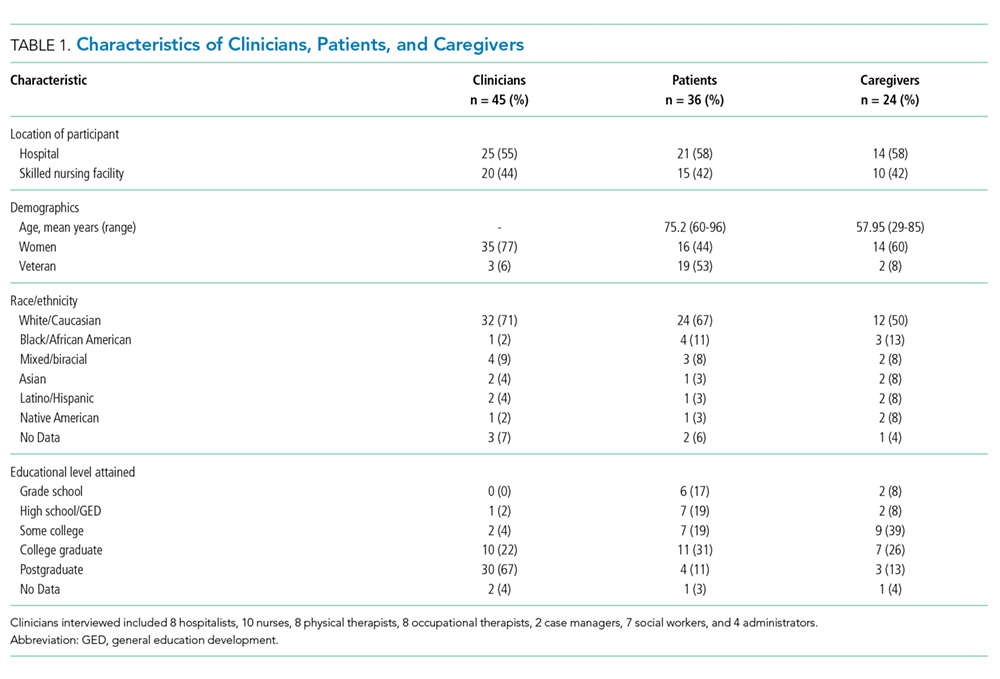
Analysis
We used a team-based approach to framework analysis, which has been used in other decision-making studies14, including those measuring cognitive bias.20 A limitation in cognitive bias research is the lack of a standardized list or categorization of cognitive biases. We reviewed prior systematic17,21 and narrative reviews18,22, as well as prior studies describing examples of cognitive biases playing a role in decision-making about therapy20 to construct a list of possible cognitive biases to evaluate and narrow these a priori to potential biases relevant to the decision about postacute care based on our prior work (Table 2).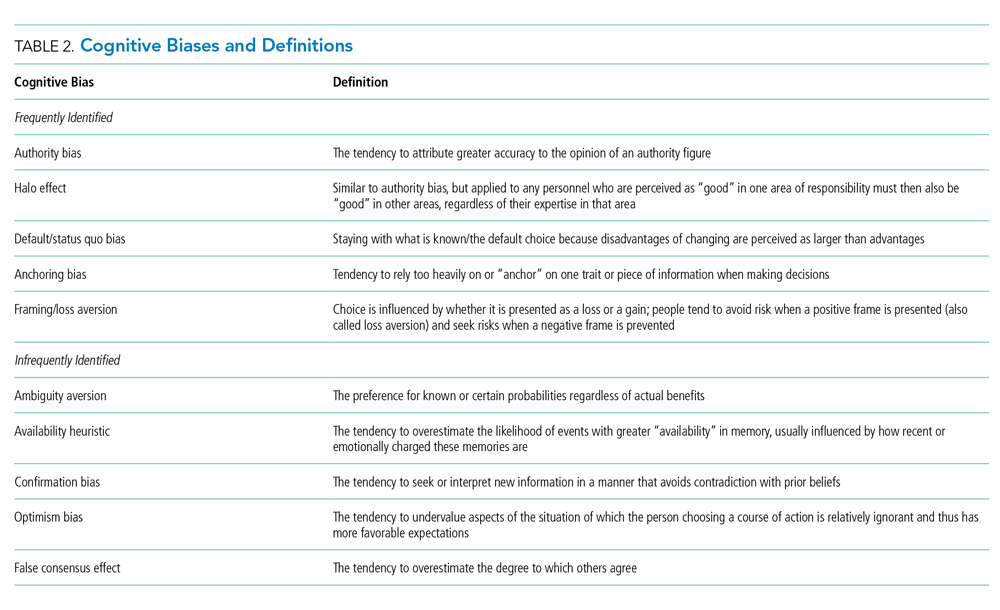
We applied this framework to analyze transcripts through an iterative process of deductive coding and reviewing across four reviewers (ML, RA, AL, CL) and a hospitalist physician with expertise leading qualitative studies (REB).
Intercoder consensus was built through team discussion by resolving points of disagreement.23 Consistency of coding was regularly checked by having more than one investigator code individual manuscripts and comparing coding, and discrepancies were resolved through team discussion. We triangulated the data (shared our preliminary results) using a larger study team, including an expert in behavioral economics (SRG), physicians at study sites (EC, RA), and an anthropologist with expertise in qualitative methods (CL). We did this to ensure credibility (to what extent the findings are credible or believable) and confirmability of findings (ensuring the findings are based on participant narratives rather than researcher biases).
RESULTS
We reviewed a total of 105 interviews with 25 hospital clinicians, 20 SNF clinicians, 21 patients and 14 caregivers in the hospital, and 15 patients and 10 caregivers in the SNF setting (Table 1). We found authority bias/halo effect; default/status quo bias, anchoring bias, and framing was commonly present in decision-making about postacute care in a SNF, whereas there were few if any examples of ambiguity aversion, availability heuristic, confirmation bias, optimism bias, or false consensus effect (Table 2).
Authority Bias/Halo Effect
While most patients deferred to their inpatient teams when it came to decision-making, this effect seemed to differ across VA and non-VA settings. Veterans expressed a higher degree of potential authority bias regarding the VA as an institution, whereas older adults in non-VA settings saw physicians as the authority figure making decisions in their best interests.
Veterans expressed confidence in the VA regarding both whether to go to a SNF and where to go:
“The VA wouldn’t license [an SNF] if they didn’t have a good reputation for care, cleanliness, things of that nature” (Veteran, VA CLC)
“I just knew the VA would have my best interests at heart” (Veteran, VA CLC)
Their caregivers expressed similar confidence:
“I’m not gonna decide [on whether the patient they care for goes to postacute care], like I told you, that’s totally up to the VA. I have trust and faith in them…so wherever they send him, that’s where he’s going” (Caregiver, VA hospital)
In some cases, this perspective was closer to the halo effect: a positive experience with the care provider or the care team led the decision-makers to believe that their recommendations about postacute care would be similarly positive.
“I think we were very trusting in the sense that whatever happened the last time around, he survived it…they took care of him…he got back home, and he started his life again, you know, so why would we question what they’re telling us to do? (Caregiver, VA hospital)
In contrast to Veterans, non-Veteran patients seemed to experience authority bias when it came to the inpatient team.
“Well, I’d like to know more about the PTs [Physical Therapists] there, but I assume since they were recommended, they will be good.” (Patient, University hospital)
This perspective was especially apparent when it came to physicians:
“The level of trust that they [patients] put in their doctor is gonna outweigh what anyone else would say.” (Clinical liaison, SNF)
“[In response to a question about influences on the decision to go to rehab] I don’t…that’s not my decision to make, that’s the doctor’s decision.” (Patient, University hospital)
“They said so…[the doctor] said I needed to go to rehab, so I guess I do because it’s the doctor’s decision.” (Patient, University hospital)
Default/Status quo Bias
In a related way, patients and caregivers with exposure to a SNF seemed to default to the same SNF with which they had previous experience. This bias seems to be primarily related to knowing what to expect.
“He thinks it’s [a particular SNF] the right place for him now…he was there before and he knew, again, it was the right place for him to be” (Caregiver, VA hospital)
“It’s the only one I’ve ever been in…but they have a lot of activities; you have a lot of freedom, staff was good” (Patient, VA hospital)
“I’ve been [to this SNF] before and I kind of know what the program involves…so it was kind of like going home, not, going home is the wrong way to put it…I mean coming here is like something I know, you know, I didn’t need anybody to explain it to me.” (Patient, VA hospital)
“Anybody that’s been to [SNF], that would be their choice to go back to, and I guess I must’ve liked it that first time because I asked to go back again.” (Patient, University hospital)
Anchoring Bias
While anchoring bias was less frequent, it came up in two domains: first, related to costs of care, and second, related to facility characteristics. Costs came up most frequently for Veterans who preferred to move their care to the VA for cost reasons, which appeared in these cases to overshadow other considerations:
“I kept emphasizing that the VA could do all the same things at a lot more reasonable price. The whole purpose of having the VA is for the Veteran, so that…we can get the healthcare that we need at a more reasonable [sic] or a reasonable price.” (Veteran, CLC)
“I think the CLC [VA SNF] is going to take care of her probably the same way any other facility of its type would, unless she were in a private facility, but you know, that costs a lot more money.” (Caregiver, VA hospital)
Patients occasionally had striking responses to particular characteristics of SNFs, regardless of whether this was a central feature or related to their rehabilitation:
“The social worker comes and talks to me about the nursing home where cats are running around, you know, to infect my leg or spin their little cat hairs into my lungs and make my asthma worse…I’m going to have to beg the nurses or the aides or the family or somebody to clean the cat…” (Veteran, VA hospital)
Framing
Framing was the strongest theme among clinician interviews in our sample. Clinicians most frequently described the SNF as a place where patients could recover function (a positive frame), explaining risks (eg, rehospitalization) associated with alternative postacute care options besides the SNF in great detail.
“Aside from explaining the benefits of going and…having that 24-hour care, having the therapies provided to them [the patients], talking about them getting stronger, phrasing it in such a way that patients sometimes are more agreeable, like not calling it a skilled nursing facility, calling it a rehab you know, for them to get physically stronger so they can be the most independent that they can once they do go home, and also explaining … we think that this would be the best plan to prevent them from coming back to the hospital, so those are some of the things that we’ll mention to patients to try and educate them and get them to be agreeable for placement.” (Social worker, University hospital)
Clinicians avoided negative associations with “nursing home” (even though all SNFs are nursing homes) and tended to use more positive frames such as “rehabilitation facility.”
“Use the word rehab….we definitely use the word rehab, to get more therapy, to go home; it’s not a, we really emphasize it’s not a nursing home, it’s not to go to stay forever.” (Physical therapist, safety-net hospital)
Clinicians used a frame of “safety” when discussing the SNF and used a frame of “risk” when discussing alternative postacute care options such as returning home. We did not find examples of clinicians discussing similar risks in going to a SNF even for risks, such as falling, which exist in both settings.
“I’ve talked to them primarily on an avenue of safety because I think people want and they value independence, they value making sure they can get home, but you know, a lot of the times they understand safety is, it can be a concern and outlining that our goal is to make sure that they’re safe and they stay home, and I tend to broach the subject saying that our therapists believe that they might not be safe at home in the moment, but they have potential goals to be safe later on if we continue therapy. I really highlight safety being the major driver of our discussion.” (Physician, VA hospital)
In some cases, framing was so overt that other risk-mitigating options (eg, home healthcare) are not discussed.
“I definitely tend to explain the ideal first. I’m not going to bring up home care when we really think somebody should go to rehab, however, once people say I don’t want to do that, I’m not going, then that’s when I’m like OK, well, let’s talk to the doctors, but we can see about other supports in the home.” (Social worker, VA hospital)
DISCUSSION
In a large sample of patients and their caregivers, as well as multidisciplinary clinicians at three different hospitals and three SNFs, we found authority bias/halo effect and framing biases were most common and seemed most impactful. Default/status quo bias and anchoring bias were also present in decision-making about a SNF. The combination of authority bias/halo effect and framing biases could synergistically interact to augment the likelihood of patients accepting a SNF for postacute care. Patients who had been to a SNF before seemed more likely to choose the SNF they had experienced previously even if they had no other postacute care experiences, and could be highly influenced by isolated characteristics of that facility (such as the physical environment or cost of care).
It is important to mention that cognitive biases do not necessarily have a negative impact: indeed, as Kahneman and Tversky point out, these are useful heuristics from “fast” thinking that are often effective.24 For example, clinicians may be trying to act in the best interests of the patient when framing the decision in terms of regaining function and averting loss of safety and independence. However, the evidence base regarding the outcomes of an SNF versus other postacute options is not robust, and this decision-making is complex. While this decision was most commonly framed in terms of rehabilitation and returning home, the fact that only about half of patients have returned to the community by 100 days4 was not discussed in any interview. In fact, initial evidence suggests replacing the SNF with home healthcare in patients with hip and knee arthroplasty may reduce costs without worsening clinical outcomes.6 However, across a broader population, SNFs significantly reduce 30-day readmissions when directly compared with home healthcare, but other clinical outcomes are similar.25 This evidence suggests that the “right” postacute care option for an individual patient is not clear, highlighting a key role biases may play in decision-making. Further, the nebulous concept of “safety” could introduce potential disparities related to social determinants of health.12 The observed inclination to accept an SNF with which the individual had prior experience may be influenced by the acceptability of this choice because of personal factors or prior research, even if it also represents a bias by limiting the consideration of current alternatives.
Our findings complement those of others in the literature which have also identified profound gaps in discharge decision-making among patients and clinicians,13-16,26-31 though to our knowledge the role of cognitive biases in these decisions has not been explored. This study also addresses gaps in the cognitive bias literature, including the need for real-world data rather than hypothetical vignettes,17 and evaluation of treatment and management decisions rather than diagnoses, which have been more commonly studied.21
These findings have implications for both individual clinicians and healthcare institutions. In the immediate term, these findings may serve as a call to discharging clinicians to modulate language and “debias” their conversations with patients about care after discharge.18,22 Shared decision-making requires an informed choice by patients based on their goals and values; framing a decision in a way that puts the clinician’s goals or values (eg, safety) ahead of patient values (eg, independence and autonomy) or limits disclosure (eg, a “rehab” is a nursing home) in the hope of influencing choice may be more consistent with framing bias and less with shared decision-making.14 Although controversy exists about the best way to “debias” oneself,32 self-awareness of bias is increasingly recognized across healthcare venues as critical to improving care for vulnerable populations.33 The use of data rather than vignettes may be a useful debiasing strategy, although the limitations of currently available data (eg, capturing nursing home quality) are increasingly recognized.34 From a policy and health system perspective, cognitive biases should be integrated into the development of decision aids to facilitate informed, shared, and high-quality decision-making that incorporates patient values, and perhaps “nudges” from behavioral economics to assist patients in choosing the right postdischarge care for them. Such nudges use principles of framing to influence care without restricting choice.35 As the science informing best practice regarding postacute care improves, identifying the “right” postdischarge care may become easier and recommendations more evidence-based.36
Strengths of the study include a large, diverse sample of patients, caregivers, and clinicians in both the hospital and SNF setting. Also, we used a team-based analysis with an experienced team and a deep knowledge of the data, including triangulation with clinicians to verify results. However, all hospitals and SNFs were located in a single metropolitan area, and responses may vary by region or population density. All three hospitals have housestaff teaching programs, and at the time of the interviews all three community SNFs were “five-star” facilities on the Nursing Home Compare website; results may be different at community hospitals or other SNFs. Hospitalists were the only physician group sampled in the hospital as they provide the majority of inpatient care to older adults; geriatricians, in particular, may have had different perspectives. Since we intended to explore whether cognitive biases were present overall, we did not evaluate whether cognitive biases differed by role or subgroup (by clinician type, patient, or caregiver), but this may be a promising area to explore in future work. Many cognitive biases have been described, and there are likely additional biases we did not identify. To confirm the generalizability of these findings, they should be studied in a larger, more generalizable sample of respondents in future work.
Cognitive biases play an important role in patient decision-making about postacute care, particularly regarding SNF care. As postacute care undergoes a transformation spurred by payment reforms, it is more important than ever to ensure that patients understand their choices at hospital discharge and can make a high-quality decision consistent with their goals.
1. Burke RE, Juarez-Colunga E, Levy C, Prochazka AV, Coleman EA, Ginde AA. Rise of post-acute care facilities as a discharge destination of US hospitalizations. JAMA Intern Med. 2015;175(2):295-296. https://doi.org/10.1001/jamainternmed.2014.6383.
2. Burke RE, Juarez-Colunga E, Levy C, Prochazka AV, Coleman EA, Ginde AA. Patient and hospitalization characteristics associated with increased postacute care facility discharges from US hospitals. Med Care. 2015;53(6):492-500. https://doi.org/10.1097/MLR.0000000000000359.
3. Werner RM, Konetzka RT. Trends in post-acute care use among medicare beneficiaries: 2000 to 2015. JAMA. 2018;319(15):1616-1617. https://doi.org/10.1001/jama.2018.2408.
4. Medicare Payment Advisory Commission June 2018 Report to Congress. http://www.medpac.gov/docs/default-source/reports/jun18_ch5_medpacreport_sec.pdf?sfvrsn=0. Accessed November 9, 2018.
5. Burke RE, Cumbler E, Coleman EA, Levy C. Post-acute care reform: implications and opportunities for hospitalists. J Hosp Med. 2017;12(1):46-51. https://doi.org/10.1002/jhm.2673.
6. Dummit LA, Kahvecioglu D, Marrufo G, et al. Association between hospital participation in a medicare bundled payment initiative and payments and quality outcomes for lower extremity joint replacement episodes. JAMA. 2016;316(12):1267-1278. https://doi.org/10.1001/jama.2016.12717.
7. Navathe AS, Troxel AB, Liao JM, et al. Cost of joint replacement using bundled payment models. JAMA Intern Med. 2017;177(2):214-222. https://doi.org/10.1001/jamainternmed.2016.8263.
8. Kennedy G, Lewis VA, Kundu S, Mousqués J, Colla CH. Accountable care organizations and post-acute care: a focus on preferred SNF networks. Med Care Res Rev MCRR. 2018;1077558718781117. https://doi.org/10.1177/1077558718781117.
9. Chandra A, Dalton MA, Holmes J. Large increases in spending on postacute care in Medicare point to the potential for cost savings in these settings. Health Aff Proj Hope. 2013;32(5):864-872. https://doi.org/10.1377/hlthaff.2012.1262.
10. McWilliams JM, Gilstrap LG, Stevenson DG, Chernew ME, Huskamp HA, Grabowski DC. Changes in postacute care in the Medicare shared savings program. JAMA Intern Med. 2017;177(4):518-526. https://doi.org/10.1001/jamainternmed.2016.9115.
11. Zhu JM, Patel V, Shea JA, Neuman MD, Werner RM. Hospitals using bundled payment report reducing skilled nursing facility use and improving care integration. Health Aff Proj Hope. 2018;37(8):1282-1289. https://doi.org/10.1377/hlthaff.2018.0257.
12. Burke RE, Ibrahim SA. Discharge destination and disparities in postoperative care. JAMA. 2018;319(16):1653-1654. https://doi.org/10.1001/jama.2017.21884.
13. Burke RE, Lawrence E, Ladebue A, et al. How hospital clinicians select patients for skilled nursing facilities. J Am Geriatr Soc. 2017;65(11):2466-2472. https://doi.org/10.1111/jgs.14954.
14. Burke RE, Jones J, Lawrence E, et al. Evaluating the quality of patient decision-making regarding post-acute care. J Gen Intern Med. 2018;33(5):678-684. https://doi.org/10.1007/s11606-017-4298-1.
15. Gadbois EA, Tyler DA, Mor V. Selecting a skilled nursing facility for postacute care: individual and family perspectives. J Am Geriatr Soc. 2017;65(11):2459-2465. https://doi.org/10.1111/jgs.14988.
16. Tyler DA, Gadbois EA, McHugh JP, Shield RR, Winblad U, Mor V. Patients are not given quality-of-care data about skilled nursing facilities when discharged from hospitals. Health Aff. 2017;36(8):1385-1391. https://doi.org/10.1377/hlthaff.2017.0155.
17. Blumenthal-Barby JS, Krieger H. Cognitive biases and heuristics in medical decision making: a critical review using a systematic search strategy. Med Decis Mak Int J Soc Med Decis Mak. 2015;35(4):539-557. https://doi.org/10.1177/0272989X14547740.
18. Croskerry P, Singhal G, Mamede S. Cognitive debiasing 1: origins of bias and theory of debiasing. BMJ Qual Saf. 2013;22 Suppl 2:ii58-ii64. https://doi.org/10.1136/bmjqs-2012-001712.
19. Hinds PS, Vogel RJ, Clarke-Steffen L. The possibilities and pitfalls of doing a secondary analysis of a qualitative data set. Qual Health Res. 1997;7(3):408-424. https://doi.org/10.1177/104973239700700306.
20. Magid M, Mcllvennan CK, Jones J, et al. Exploring cognitive bias in destination therapy left ventricular assist device decision making: a retrospective qualitative framework analysis. Am Heart J. 2016;180:64-73. https://doi.org/10.1016/j.ahj.2016.06.024.
21. Saposnik G, Redelmeier D, Ruff CC, Tobler PN. Cognitive biases associated with medical decisions: a systematic review. BMC Med Inform Decis Mak. 2016;16(1):138. https://doi.org/10.1186/s12911-016-0377-1.
22. Croskerry P, Singhal G, Mamede S. Cognitive debiasing 2: impediments to and strategies for change. BMJ Qual Saf. 2013;22 Suppl 2:ii65-ii72. https://doi.org/10.1136/bmjqs-2012-001713.
23. Bradley EH, Curry LA, Devers KJ. Qualitative data analysis for health services research: developing taxonomy, themes, and theory. Health Serv Res. 2007;42(4):1758-1772. https://doi.org/10.1111/j.1475-6773.2006.00684.x.
24. Thinking, Fast and Slow. Daniel Kahneman. Macmillan. US Macmillan. https://us.macmillan.com/thinkingfastandslow/danielkahneman/9780374533557. Accessed February 5, 2019.
25. Werner RM, Konetzka RT, Coe NB. Does type of post-acute care matter? The effect of hospital discharge to home with home health care versus to skilled nursing facility. JAMA Intern Med. In press.
26. Jones J, Lawrence E, Ladebue A, Leonard C, Ayele R, Burke RE. Nurses’ role in managing “The Fit” of older adults in skilled nursing facilities. J Gerontol Nurs. 2017;43(12):11-20. https://doi.org/10.3928/00989134-20171110-06.
27. Lawrence E, Casler J-J, Jones J, et al. Variability in skilled nursing facility screening and admission processes: implications for value-based purchasing. Health Care Manage Rev. 2018. https://doi.org/10.1097/HMR.0000000000000225.
28. Ayele R, Jones J, Ladebue A, et al. Perceived costs of care influence post-acute care choices by clinicians, patients, and caregivers. J Am Geriatr Soc. 2019. https://doi.org/10.1111/jgs.15768.
29. Sefcik JS, Nock RH, Flores EJ, et al. Patient preferences for information on post-acute care services. Res Gerontol Nurs. 2016;9(4):175-182. https://doi.org/10.3928/19404921-20160120-01.
30. Konetzka RT, Perraillon MC. Use of nursing home compare website appears limited by lack of awareness and initial mistrust of the data. Health Aff Proj Hope. 2016;35(4):706-713. https://doi.org/10.1377/hlthaff.2015.1377.
31. Schapira MM, Shea JA, Duey KA, Kleiman C, Werner RM. The nursing home compare report card: perceptions of residents and caregivers regarding quality ratings and nursing home choice. Health Serv Res. 2016;51 Suppl 2:1212-1228. https://doi.org/10.1111/1475-6773.12458.
32. Dhaliwal G. Premature closure? Not so fast. BMJ Qual Saf. 2017;26(2):87-89. https://doi.org/10.1136/bmjqs-2016-005267.
33. Masters C, Robinson D, Faulkner S, Patterson E, McIlraith T, Ansari A. Addressing biases in patient care with the 5Rs of cultural humility, a clinician coaching tool. J Gen Intern Med. 2019;34(4):627-630. https://doi.org/10.1007/s11606-018-4814-y.
34. Burke RE, Werner RM. Quality measurement and nursing homes: measuring what matters. BMJ Qual Saf. 2019;28(7);520-523. https://doi.org/10.1136/bmjqs-2019-009447.
35. Patel MS, Volpp KG, Asch DA. Nudge units to improve the delivery of health care. N Engl J Med. 2018;378(3):214-216. https://doi.org/10.1056/NEJMp1712984.
36. Jenq GY, Tinetti ME. Post–acute care: who belongs where? JAMA Intern Med. 2015;175(2):296-297. https://doi.org/10.1001/jamainternmed.2014.4298.
The combination of decreasing hospital lengths of stay and increasing age and comorbidity of the United States population is a principal driver of the increased use of postacute care in the US.1-3 Postacute care refers to care in long-term acute care hospitals, inpatient rehabilitation facilities, skilled nursing facilities (SNFs), and care provided by home health agencies after an acute hospitalization. In 2016, 43% of Medicare beneficiaries received postacute care after hospital discharge at the cost of $60 billion annually; nearly half of these received care in an SNF.4 Increasing recognition of the significant cost and poor outcomes of postacute care led to payment reforms, such as bundled payments, that incentivized less expensive forms of postacute care and improvements in outcomes.5-9 Early evaluations suggested that hospitals are sensitive to these reforms and responded by significantly decreasing SNF utilization.10,11 It remains unclear whether this was safe and effective.
In this context, increased attention to how hospital clinicians and hospitalized patients decide whether to use postacute care (and what form to use) is appropriate since the effect of payment reforms could negatively impact vulnerable populations of older adults without adequate protection.12 Suboptimal decision-making can drive both overuse and inappropriate underuse of this expensive medical resource. Initial evidence suggests that patients and clinicians are poorly equipped to make high-quality decisions about postacute care, with significant deficits in both the decision-making process and content.13-16 While these gaps are important to address, they may only be part of the problem. The fields of cognitive psychology and behavioral economics have revealed new insights into decision-making, demonstrating that people deviate from rational decision-making in predictable ways, termed decision heuristics, or cognitive biases.17 This growing field of research suggests heuristics or biases play important roles in decision-making and determining behavior, particularly in situations where there may be little information provided and the patient is stressed, tired, and ill—precisely like deciding on postacute care.18 However, it is currently unknown whether cognitive biases are at play when making hospital discharge decisions.
We sought to identify the most salient heuristics or cognitive biases patients may utilize when making decisions about postacute care at the end of their hospitalization and ways clinicians may contribute to these biases. The overall goal was to derive insights for improving postacute care decision-making.
METHODS
Study Design
We conducted a secondary analysis on interviews with hospital and SNF clinicians as well as patients and their caregivers who were either leaving the hospital for an SNF or newly arrived in an SNF from the hospital to understand if cognitive biases were present and how they manifested themselves in a real-world clinical context.19 These interviews were part of a larger qualitative study that sought to understand how clinicians, patients, and their caregivers made decisions about postacute care, particularly related to SNFs.13,14 This study represents the analysis of all our interviews, specifically examining decision-making bias. Participating sites, clinical roles, and both patient and caregiver characteristics (Table 1) in our cohort have been previously described.13,14
Analysis
We used a team-based approach to framework analysis, which has been used in other decision-making studies14, including those measuring cognitive bias.20 A limitation in cognitive bias research is the lack of a standardized list or categorization of cognitive biases. We reviewed prior systematic17,21 and narrative reviews18,22, as well as prior studies describing examples of cognitive biases playing a role in decision-making about therapy20 to construct a list of possible cognitive biases to evaluate and narrow these a priori to potential biases relevant to the decision about postacute care based on our prior work (Table 2).
We applied this framework to analyze transcripts through an iterative process of deductive coding and reviewing across four reviewers (ML, RA, AL, CL) and a hospitalist physician with expertise leading qualitative studies (REB).
Intercoder consensus was built through team discussion by resolving points of disagreement.23 Consistency of coding was regularly checked by having more than one investigator code individual manuscripts and comparing coding, and discrepancies were resolved through team discussion. We triangulated the data (shared our preliminary results) using a larger study team, including an expert in behavioral economics (SRG), physicians at study sites (EC, RA), and an anthropologist with expertise in qualitative methods (CL). We did this to ensure credibility (to what extent the findings are credible or believable) and confirmability of findings (ensuring the findings are based on participant narratives rather than researcher biases).
RESULTS
We reviewed a total of 105 interviews with 25 hospital clinicians, 20 SNF clinicians, 21 patients and 14 caregivers in the hospital, and 15 patients and 10 caregivers in the SNF setting (Table 1). We found authority bias/halo effect; default/status quo bias, anchoring bias, and framing was commonly present in decision-making about postacute care in a SNF, whereas there were few if any examples of ambiguity aversion, availability heuristic, confirmation bias, optimism bias, or false consensus effect (Table 2).
Authority Bias/Halo Effect
While most patients deferred to their inpatient teams when it came to decision-making, this effect seemed to differ across VA and non-VA settings. Veterans expressed a higher degree of potential authority bias regarding the VA as an institution, whereas older adults in non-VA settings saw physicians as the authority figure making decisions in their best interests.
Veterans expressed confidence in the VA regarding both whether to go to a SNF and where to go:
“The VA wouldn’t license [an SNF] if they didn’t have a good reputation for care, cleanliness, things of that nature” (Veteran, VA CLC)
“I just knew the VA would have my best interests at heart” (Veteran, VA CLC)
Their caregivers expressed similar confidence:
“I’m not gonna decide [on whether the patient they care for goes to postacute care], like I told you, that’s totally up to the VA. I have trust and faith in them…so wherever they send him, that’s where he’s going” (Caregiver, VA hospital)
In some cases, this perspective was closer to the halo effect: a positive experience with the care provider or the care team led the decision-makers to believe that their recommendations about postacute care would be similarly positive.
“I think we were very trusting in the sense that whatever happened the last time around, he survived it…they took care of him…he got back home, and he started his life again, you know, so why would we question what they’re telling us to do? (Caregiver, VA hospital)
In contrast to Veterans, non-Veteran patients seemed to experience authority bias when it came to the inpatient team.
“Well, I’d like to know more about the PTs [Physical Therapists] there, but I assume since they were recommended, they will be good.” (Patient, University hospital)
This perspective was especially apparent when it came to physicians:
“The level of trust that they [patients] put in their doctor is gonna outweigh what anyone else would say.” (Clinical liaison, SNF)
“[In response to a question about influences on the decision to go to rehab] I don’t…that’s not my decision to make, that’s the doctor’s decision.” (Patient, University hospital)
“They said so…[the doctor] said I needed to go to rehab, so I guess I do because it’s the doctor’s decision.” (Patient, University hospital)
Default/Status quo Bias
In a related way, patients and caregivers with exposure to a SNF seemed to default to the same SNF with which they had previous experience. This bias seems to be primarily related to knowing what to expect.
“He thinks it’s [a particular SNF] the right place for him now…he was there before and he knew, again, it was the right place for him to be” (Caregiver, VA hospital)
“It’s the only one I’ve ever been in…but they have a lot of activities; you have a lot of freedom, staff was good” (Patient, VA hospital)
“I’ve been [to this SNF] before and I kind of know what the program involves…so it was kind of like going home, not, going home is the wrong way to put it…I mean coming here is like something I know, you know, I didn’t need anybody to explain it to me.” (Patient, VA hospital)
“Anybody that’s been to [SNF], that would be their choice to go back to, and I guess I must’ve liked it that first time because I asked to go back again.” (Patient, University hospital)
Anchoring Bias
While anchoring bias was less frequent, it came up in two domains: first, related to costs of care, and second, related to facility characteristics. Costs came up most frequently for Veterans who preferred to move their care to the VA for cost reasons, which appeared in these cases to overshadow other considerations:
“I kept emphasizing that the VA could do all the same things at a lot more reasonable price. The whole purpose of having the VA is for the Veteran, so that…we can get the healthcare that we need at a more reasonable [sic] or a reasonable price.” (Veteran, CLC)
“I think the CLC [VA SNF] is going to take care of her probably the same way any other facility of its type would, unless she were in a private facility, but you know, that costs a lot more money.” (Caregiver, VA hospital)
Patients occasionally had striking responses to particular characteristics of SNFs, regardless of whether this was a central feature or related to their rehabilitation:
“The social worker comes and talks to me about the nursing home where cats are running around, you know, to infect my leg or spin their little cat hairs into my lungs and make my asthma worse…I’m going to have to beg the nurses or the aides or the family or somebody to clean the cat…” (Veteran, VA hospital)
Framing
Framing was the strongest theme among clinician interviews in our sample. Clinicians most frequently described the SNF as a place where patients could recover function (a positive frame), explaining risks (eg, rehospitalization) associated with alternative postacute care options besides the SNF in great detail.
“Aside from explaining the benefits of going and…having that 24-hour care, having the therapies provided to them [the patients], talking about them getting stronger, phrasing it in such a way that patients sometimes are more agreeable, like not calling it a skilled nursing facility, calling it a rehab you know, for them to get physically stronger so they can be the most independent that they can once they do go home, and also explaining … we think that this would be the best plan to prevent them from coming back to the hospital, so those are some of the things that we’ll mention to patients to try and educate them and get them to be agreeable for placement.” (Social worker, University hospital)
Clinicians avoided negative associations with “nursing home” (even though all SNFs are nursing homes) and tended to use more positive frames such as “rehabilitation facility.”
“Use the word rehab….we definitely use the word rehab, to get more therapy, to go home; it’s not a, we really emphasize it’s not a nursing home, it’s not to go to stay forever.” (Physical therapist, safety-net hospital)
Clinicians used a frame of “safety” when discussing the SNF and used a frame of “risk” when discussing alternative postacute care options such as returning home. We did not find examples of clinicians discussing similar risks in going to a SNF even for risks, such as falling, which exist in both settings.
“I’ve talked to them primarily on an avenue of safety because I think people want and they value independence, they value making sure they can get home, but you know, a lot of the times they understand safety is, it can be a concern and outlining that our goal is to make sure that they’re safe and they stay home, and I tend to broach the subject saying that our therapists believe that they might not be safe at home in the moment, but they have potential goals to be safe later on if we continue therapy. I really highlight safety being the major driver of our discussion.” (Physician, VA hospital)
In some cases, framing was so overt that other risk-mitigating options (eg, home healthcare) are not discussed.
“I definitely tend to explain the ideal first. I’m not going to bring up home care when we really think somebody should go to rehab, however, once people say I don’t want to do that, I’m not going, then that’s when I’m like OK, well, let’s talk to the doctors, but we can see about other supports in the home.” (Social worker, VA hospital)
DISCUSSION
In a large sample of patients and their caregivers, as well as multidisciplinary clinicians at three different hospitals and three SNFs, we found authority bias/halo effect and framing biases were most common and seemed most impactful. Default/status quo bias and anchoring bias were also present in decision-making about a SNF. The combination of authority bias/halo effect and framing biases could synergistically interact to augment the likelihood of patients accepting a SNF for postacute care. Patients who had been to a SNF before seemed more likely to choose the SNF they had experienced previously even if they had no other postacute care experiences, and could be highly influenced by isolated characteristics of that facility (such as the physical environment or cost of care).
It is important to mention that cognitive biases do not necessarily have a negative impact: indeed, as Kahneman and Tversky point out, these are useful heuristics from “fast” thinking that are often effective.24 For example, clinicians may be trying to act in the best interests of the patient when framing the decision in terms of regaining function and averting loss of safety and independence. However, the evidence base regarding the outcomes of an SNF versus other postacute options is not robust, and this decision-making is complex. While this decision was most commonly framed in terms of rehabilitation and returning home, the fact that only about half of patients have returned to the community by 100 days4 was not discussed in any interview. In fact, initial evidence suggests replacing the SNF with home healthcare in patients with hip and knee arthroplasty may reduce costs without worsening clinical outcomes.6 However, across a broader population, SNFs significantly reduce 30-day readmissions when directly compared with home healthcare, but other clinical outcomes are similar.25 This evidence suggests that the “right” postacute care option for an individual patient is not clear, highlighting a key role biases may play in decision-making. Further, the nebulous concept of “safety” could introduce potential disparities related to social determinants of health.12 The observed inclination to accept an SNF with which the individual had prior experience may be influenced by the acceptability of this choice because of personal factors or prior research, even if it also represents a bias by limiting the consideration of current alternatives.
Our findings complement those of others in the literature which have also identified profound gaps in discharge decision-making among patients and clinicians,13-16,26-31 though to our knowledge the role of cognitive biases in these decisions has not been explored. This study also addresses gaps in the cognitive bias literature, including the need for real-world data rather than hypothetical vignettes,17 and evaluation of treatment and management decisions rather than diagnoses, which have been more commonly studied.21
These findings have implications for both individual clinicians and healthcare institutions. In the immediate term, these findings may serve as a call to discharging clinicians to modulate language and “debias” their conversations with patients about care after discharge.18,22 Shared decision-making requires an informed choice by patients based on their goals and values; framing a decision in a way that puts the clinician’s goals or values (eg, safety) ahead of patient values (eg, independence and autonomy) or limits disclosure (eg, a “rehab” is a nursing home) in the hope of influencing choice may be more consistent with framing bias and less with shared decision-making.14 Although controversy exists about the best way to “debias” oneself,32 self-awareness of bias is increasingly recognized across healthcare venues as critical to improving care for vulnerable populations.33 The use of data rather than vignettes may be a useful debiasing strategy, although the limitations of currently available data (eg, capturing nursing home quality) are increasingly recognized.34 From a policy and health system perspective, cognitive biases should be integrated into the development of decision aids to facilitate informed, shared, and high-quality decision-making that incorporates patient values, and perhaps “nudges” from behavioral economics to assist patients in choosing the right postdischarge care for them. Such nudges use principles of framing to influence care without restricting choice.35 As the science informing best practice regarding postacute care improves, identifying the “right” postdischarge care may become easier and recommendations more evidence-based.36
Strengths of the study include a large, diverse sample of patients, caregivers, and clinicians in both the hospital and SNF setting. Also, we used a team-based analysis with an experienced team and a deep knowledge of the data, including triangulation with clinicians to verify results. However, all hospitals and SNFs were located in a single metropolitan area, and responses may vary by region or population density. All three hospitals have housestaff teaching programs, and at the time of the interviews all three community SNFs were “five-star” facilities on the Nursing Home Compare website; results may be different at community hospitals or other SNFs. Hospitalists were the only physician group sampled in the hospital as they provide the majority of inpatient care to older adults; geriatricians, in particular, may have had different perspectives. Since we intended to explore whether cognitive biases were present overall, we did not evaluate whether cognitive biases differed by role or subgroup (by clinician type, patient, or caregiver), but this may be a promising area to explore in future work. Many cognitive biases have been described, and there are likely additional biases we did not identify. To confirm the generalizability of these findings, they should be studied in a larger, more generalizable sample of respondents in future work.
Cognitive biases play an important role in patient decision-making about postacute care, particularly regarding SNF care. As postacute care undergoes a transformation spurred by payment reforms, it is more important than ever to ensure that patients understand their choices at hospital discharge and can make a high-quality decision consistent with their goals.
The combination of decreasing hospital lengths of stay and increasing age and comorbidity of the United States population is a principal driver of the increased use of postacute care in the US.1-3 Postacute care refers to care in long-term acute care hospitals, inpatient rehabilitation facilities, skilled nursing facilities (SNFs), and care provided by home health agencies after an acute hospitalization. In 2016, 43% of Medicare beneficiaries received postacute care after hospital discharge at the cost of $60 billion annually; nearly half of these received care in an SNF.4 Increasing recognition of the significant cost and poor outcomes of postacute care led to payment reforms, such as bundled payments, that incentivized less expensive forms of postacute care and improvements in outcomes.5-9 Early evaluations suggested that hospitals are sensitive to these reforms and responded by significantly decreasing SNF utilization.10,11 It remains unclear whether this was safe and effective.
In this context, increased attention to how hospital clinicians and hospitalized patients decide whether to use postacute care (and what form to use) is appropriate since the effect of payment reforms could negatively impact vulnerable populations of older adults without adequate protection.12 Suboptimal decision-making can drive both overuse and inappropriate underuse of this expensive medical resource. Initial evidence suggests that patients and clinicians are poorly equipped to make high-quality decisions about postacute care, with significant deficits in both the decision-making process and content.13-16 While these gaps are important to address, they may only be part of the problem. The fields of cognitive psychology and behavioral economics have revealed new insights into decision-making, demonstrating that people deviate from rational decision-making in predictable ways, termed decision heuristics, or cognitive biases.17 This growing field of research suggests heuristics or biases play important roles in decision-making and determining behavior, particularly in situations where there may be little information provided and the patient is stressed, tired, and ill—precisely like deciding on postacute care.18 However, it is currently unknown whether cognitive biases are at play when making hospital discharge decisions.
We sought to identify the most salient heuristics or cognitive biases patients may utilize when making decisions about postacute care at the end of their hospitalization and ways clinicians may contribute to these biases. The overall goal was to derive insights for improving postacute care decision-making.
METHODS
Study Design
We conducted a secondary analysis on interviews with hospital and SNF clinicians as well as patients and their caregivers who were either leaving the hospital for an SNF or newly arrived in an SNF from the hospital to understand if cognitive biases were present and how they manifested themselves in a real-world clinical context.19 These interviews were part of a larger qualitative study that sought to understand how clinicians, patients, and their caregivers made decisions about postacute care, particularly related to SNFs.13,14 This study represents the analysis of all our interviews, specifically examining decision-making bias. Participating sites, clinical roles, and both patient and caregiver characteristics (Table 1) in our cohort have been previously described.13,14
Analysis
We used a team-based approach to framework analysis, which has been used in other decision-making studies14, including those measuring cognitive bias.20 A limitation in cognitive bias research is the lack of a standardized list or categorization of cognitive biases. We reviewed prior systematic17,21 and narrative reviews18,22, as well as prior studies describing examples of cognitive biases playing a role in decision-making about therapy20 to construct a list of possible cognitive biases to evaluate and narrow these a priori to potential biases relevant to the decision about postacute care based on our prior work (Table 2).
We applied this framework to analyze transcripts through an iterative process of deductive coding and reviewing across four reviewers (ML, RA, AL, CL) and a hospitalist physician with expertise leading qualitative studies (REB).
Intercoder consensus was built through team discussion by resolving points of disagreement.23 Consistency of coding was regularly checked by having more than one investigator code individual manuscripts and comparing coding, and discrepancies were resolved through team discussion. We triangulated the data (shared our preliminary results) using a larger study team, including an expert in behavioral economics (SRG), physicians at study sites (EC, RA), and an anthropologist with expertise in qualitative methods (CL). We did this to ensure credibility (to what extent the findings are credible or believable) and confirmability of findings (ensuring the findings are based on participant narratives rather than researcher biases).
RESULTS
We reviewed a total of 105 interviews with 25 hospital clinicians, 20 SNF clinicians, 21 patients and 14 caregivers in the hospital, and 15 patients and 10 caregivers in the SNF setting (Table 1). We found authority bias/halo effect; default/status quo bias, anchoring bias, and framing was commonly present in decision-making about postacute care in a SNF, whereas there were few if any examples of ambiguity aversion, availability heuristic, confirmation bias, optimism bias, or false consensus effect (Table 2).
Authority Bias/Halo Effect
While most patients deferred to their inpatient teams when it came to decision-making, this effect seemed to differ across VA and non-VA settings. Veterans expressed a higher degree of potential authority bias regarding the VA as an institution, whereas older adults in non-VA settings saw physicians as the authority figure making decisions in their best interests.
Veterans expressed confidence in the VA regarding both whether to go to a SNF and where to go:
“The VA wouldn’t license [an SNF] if they didn’t have a good reputation for care, cleanliness, things of that nature” (Veteran, VA CLC)
“I just knew the VA would have my best interests at heart” (Veteran, VA CLC)
Their caregivers expressed similar confidence:
“I’m not gonna decide [on whether the patient they care for goes to postacute care], like I told you, that’s totally up to the VA. I have trust and faith in them…so wherever they send him, that’s where he’s going” (Caregiver, VA hospital)
In some cases, this perspective was closer to the halo effect: a positive experience with the care provider or the care team led the decision-makers to believe that their recommendations about postacute care would be similarly positive.
“I think we were very trusting in the sense that whatever happened the last time around, he survived it…they took care of him…he got back home, and he started his life again, you know, so why would we question what they’re telling us to do? (Caregiver, VA hospital)
In contrast to Veterans, non-Veteran patients seemed to experience authority bias when it came to the inpatient team.
“Well, I’d like to know more about the PTs [Physical Therapists] there, but I assume since they were recommended, they will be good.” (Patient, University hospital)
This perspective was especially apparent when it came to physicians:
“The level of trust that they [patients] put in their doctor is gonna outweigh what anyone else would say.” (Clinical liaison, SNF)
“[In response to a question about influences on the decision to go to rehab] I don’t…that’s not my decision to make, that’s the doctor’s decision.” (Patient, University hospital)
“They said so…[the doctor] said I needed to go to rehab, so I guess I do because it’s the doctor’s decision.” (Patient, University hospital)
Default/Status quo Bias
In a related way, patients and caregivers with exposure to a SNF seemed to default to the same SNF with which they had previous experience. This bias seems to be primarily related to knowing what to expect.
“He thinks it’s [a particular SNF] the right place for him now…he was there before and he knew, again, it was the right place for him to be” (Caregiver, VA hospital)
“It’s the only one I’ve ever been in…but they have a lot of activities; you have a lot of freedom, staff was good” (Patient, VA hospital)
“I’ve been [to this SNF] before and I kind of know what the program involves…so it was kind of like going home, not, going home is the wrong way to put it…I mean coming here is like something I know, you know, I didn’t need anybody to explain it to me.” (Patient, VA hospital)
“Anybody that’s been to [SNF], that would be their choice to go back to, and I guess I must’ve liked it that first time because I asked to go back again.” (Patient, University hospital)
Anchoring Bias
While anchoring bias was less frequent, it came up in two domains: first, related to costs of care, and second, related to facility characteristics. Costs came up most frequently for Veterans who preferred to move their care to the VA for cost reasons, which appeared in these cases to overshadow other considerations:
“I kept emphasizing that the VA could do all the same things at a lot more reasonable price. The whole purpose of having the VA is for the Veteran, so that…we can get the healthcare that we need at a more reasonable [sic] or a reasonable price.” (Veteran, CLC)
“I think the CLC [VA SNF] is going to take care of her probably the same way any other facility of its type would, unless she were in a private facility, but you know, that costs a lot more money.” (Caregiver, VA hospital)
Patients occasionally had striking responses to particular characteristics of SNFs, regardless of whether this was a central feature or related to their rehabilitation:
“The social worker comes and talks to me about the nursing home where cats are running around, you know, to infect my leg or spin their little cat hairs into my lungs and make my asthma worse…I’m going to have to beg the nurses or the aides or the family or somebody to clean the cat…” (Veteran, VA hospital)
Framing
Framing was the strongest theme among clinician interviews in our sample. Clinicians most frequently described the SNF as a place where patients could recover function (a positive frame), explaining risks (eg, rehospitalization) associated with alternative postacute care options besides the SNF in great detail.
“Aside from explaining the benefits of going and…having that 24-hour care, having the therapies provided to them [the patients], talking about them getting stronger, phrasing it in such a way that patients sometimes are more agreeable, like not calling it a skilled nursing facility, calling it a rehab you know, for them to get physically stronger so they can be the most independent that they can once they do go home, and also explaining … we think that this would be the best plan to prevent them from coming back to the hospital, so those are some of the things that we’ll mention to patients to try and educate them and get them to be agreeable for placement.” (Social worker, University hospital)
Clinicians avoided negative associations with “nursing home” (even though all SNFs are nursing homes) and tended to use more positive frames such as “rehabilitation facility.”
“Use the word rehab….we definitely use the word rehab, to get more therapy, to go home; it’s not a, we really emphasize it’s not a nursing home, it’s not to go to stay forever.” (Physical therapist, safety-net hospital)
Clinicians used a frame of “safety” when discussing the SNF and used a frame of “risk” when discussing alternative postacute care options such as returning home. We did not find examples of clinicians discussing similar risks in going to a SNF even for risks, such as falling, which exist in both settings.
“I’ve talked to them primarily on an avenue of safety because I think people want and they value independence, they value making sure they can get home, but you know, a lot of the times they understand safety is, it can be a concern and outlining that our goal is to make sure that they’re safe and they stay home, and I tend to broach the subject saying that our therapists believe that they might not be safe at home in the moment, but they have potential goals to be safe later on if we continue therapy. I really highlight safety being the major driver of our discussion.” (Physician, VA hospital)
In some cases, framing was so overt that other risk-mitigating options (eg, home healthcare) are not discussed.
“I definitely tend to explain the ideal first. I’m not going to bring up home care when we really think somebody should go to rehab, however, once people say I don’t want to do that, I’m not going, then that’s when I’m like OK, well, let’s talk to the doctors, but we can see about other supports in the home.” (Social worker, VA hospital)
DISCUSSION
In a large sample of patients and their caregivers, as well as multidisciplinary clinicians at three different hospitals and three SNFs, we found authority bias/halo effect and framing biases were most common and seemed most impactful. Default/status quo bias and anchoring bias were also present in decision-making about a SNF. The combination of authority bias/halo effect and framing biases could synergistically interact to augment the likelihood of patients accepting a SNF for postacute care. Patients who had been to a SNF before seemed more likely to choose the SNF they had experienced previously even if they had no other postacute care experiences, and could be highly influenced by isolated characteristics of that facility (such as the physical environment or cost of care).
It is important to mention that cognitive biases do not necessarily have a negative impact: indeed, as Kahneman and Tversky point out, these are useful heuristics from “fast” thinking that are often effective.24 For example, clinicians may be trying to act in the best interests of the patient when framing the decision in terms of regaining function and averting loss of safety and independence. However, the evidence base regarding the outcomes of an SNF versus other postacute options is not robust, and this decision-making is complex. While this decision was most commonly framed in terms of rehabilitation and returning home, the fact that only about half of patients have returned to the community by 100 days4 was not discussed in any interview. In fact, initial evidence suggests replacing the SNF with home healthcare in patients with hip and knee arthroplasty may reduce costs without worsening clinical outcomes.6 However, across a broader population, SNFs significantly reduce 30-day readmissions when directly compared with home healthcare, but other clinical outcomes are similar.25 This evidence suggests that the “right” postacute care option for an individual patient is not clear, highlighting a key role biases may play in decision-making. Further, the nebulous concept of “safety” could introduce potential disparities related to social determinants of health.12 The observed inclination to accept an SNF with which the individual had prior experience may be influenced by the acceptability of this choice because of personal factors or prior research, even if it also represents a bias by limiting the consideration of current alternatives.
Our findings complement those of others in the literature which have also identified profound gaps in discharge decision-making among patients and clinicians,13-16,26-31 though to our knowledge the role of cognitive biases in these decisions has not been explored. This study also addresses gaps in the cognitive bias literature, including the need for real-world data rather than hypothetical vignettes,17 and evaluation of treatment and management decisions rather than diagnoses, which have been more commonly studied.21
These findings have implications for both individual clinicians and healthcare institutions. In the immediate term, these findings may serve as a call to discharging clinicians to modulate language and “debias” their conversations with patients about care after discharge.18,22 Shared decision-making requires an informed choice by patients based on their goals and values; framing a decision in a way that puts the clinician’s goals or values (eg, safety) ahead of patient values (eg, independence and autonomy) or limits disclosure (eg, a “rehab” is a nursing home) in the hope of influencing choice may be more consistent with framing bias and less with shared decision-making.14 Although controversy exists about the best way to “debias” oneself,32 self-awareness of bias is increasingly recognized across healthcare venues as critical to improving care for vulnerable populations.33 The use of data rather than vignettes may be a useful debiasing strategy, although the limitations of currently available data (eg, capturing nursing home quality) are increasingly recognized.34 From a policy and health system perspective, cognitive biases should be integrated into the development of decision aids to facilitate informed, shared, and high-quality decision-making that incorporates patient values, and perhaps “nudges” from behavioral economics to assist patients in choosing the right postdischarge care for them. Such nudges use principles of framing to influence care without restricting choice.35 As the science informing best practice regarding postacute care improves, identifying the “right” postdischarge care may become easier and recommendations more evidence-based.36
Strengths of the study include a large, diverse sample of patients, caregivers, and clinicians in both the hospital and SNF setting. Also, we used a team-based analysis with an experienced team and a deep knowledge of the data, including triangulation with clinicians to verify results. However, all hospitals and SNFs were located in a single metropolitan area, and responses may vary by region or population density. All three hospitals have housestaff teaching programs, and at the time of the interviews all three community SNFs were “five-star” facilities on the Nursing Home Compare website; results may be different at community hospitals or other SNFs. Hospitalists were the only physician group sampled in the hospital as they provide the majority of inpatient care to older adults; geriatricians, in particular, may have had different perspectives. Since we intended to explore whether cognitive biases were present overall, we did not evaluate whether cognitive biases differed by role or subgroup (by clinician type, patient, or caregiver), but this may be a promising area to explore in future work. Many cognitive biases have been described, and there are likely additional biases we did not identify. To confirm the generalizability of these findings, they should be studied in a larger, more generalizable sample of respondents in future work.
Cognitive biases play an important role in patient decision-making about postacute care, particularly regarding SNF care. As postacute care undergoes a transformation spurred by payment reforms, it is more important than ever to ensure that patients understand their choices at hospital discharge and can make a high-quality decision consistent with their goals.
1. Burke RE, Juarez-Colunga E, Levy C, Prochazka AV, Coleman EA, Ginde AA. Rise of post-acute care facilities as a discharge destination of US hospitalizations. JAMA Intern Med. 2015;175(2):295-296. https://doi.org/10.1001/jamainternmed.2014.6383.
2. Burke RE, Juarez-Colunga E, Levy C, Prochazka AV, Coleman EA, Ginde AA. Patient and hospitalization characteristics associated with increased postacute care facility discharges from US hospitals. Med Care. 2015;53(6):492-500. https://doi.org/10.1097/MLR.0000000000000359.
3. Werner RM, Konetzka RT. Trends in post-acute care use among medicare beneficiaries: 2000 to 2015. JAMA. 2018;319(15):1616-1617. https://doi.org/10.1001/jama.2018.2408.
4. Medicare Payment Advisory Commission June 2018 Report to Congress. http://www.medpac.gov/docs/default-source/reports/jun18_ch5_medpacreport_sec.pdf?sfvrsn=0. Accessed November 9, 2018.
5. Burke RE, Cumbler E, Coleman EA, Levy C. Post-acute care reform: implications and opportunities for hospitalists. J Hosp Med. 2017;12(1):46-51. https://doi.org/10.1002/jhm.2673.
6. Dummit LA, Kahvecioglu D, Marrufo G, et al. Association between hospital participation in a medicare bundled payment initiative and payments and quality outcomes for lower extremity joint replacement episodes. JAMA. 2016;316(12):1267-1278. https://doi.org/10.1001/jama.2016.12717.
7. Navathe AS, Troxel AB, Liao JM, et al. Cost of joint replacement using bundled payment models. JAMA Intern Med. 2017;177(2):214-222. https://doi.org/10.1001/jamainternmed.2016.8263.
8. Kennedy G, Lewis VA, Kundu S, Mousqués J, Colla CH. Accountable care organizations and post-acute care: a focus on preferred SNF networks. Med Care Res Rev MCRR. 2018;1077558718781117. https://doi.org/10.1177/1077558718781117.
9. Chandra A, Dalton MA, Holmes J. Large increases in spending on postacute care in Medicare point to the potential for cost savings in these settings. Health Aff Proj Hope. 2013;32(5):864-872. https://doi.org/10.1377/hlthaff.2012.1262.
10. McWilliams JM, Gilstrap LG, Stevenson DG, Chernew ME, Huskamp HA, Grabowski DC. Changes in postacute care in the Medicare shared savings program. JAMA Intern Med. 2017;177(4):518-526. https://doi.org/10.1001/jamainternmed.2016.9115.
11. Zhu JM, Patel V, Shea JA, Neuman MD, Werner RM. Hospitals using bundled payment report reducing skilled nursing facility use and improving care integration. Health Aff Proj Hope. 2018;37(8):1282-1289. https://doi.org/10.1377/hlthaff.2018.0257.
12. Burke RE, Ibrahim SA. Discharge destination and disparities in postoperative care. JAMA. 2018;319(16):1653-1654. https://doi.org/10.1001/jama.2017.21884.
13. Burke RE, Lawrence E, Ladebue A, et al. How hospital clinicians select patients for skilled nursing facilities. J Am Geriatr Soc. 2017;65(11):2466-2472. https://doi.org/10.1111/jgs.14954.
14. Burke RE, Jones J, Lawrence E, et al. Evaluating the quality of patient decision-making regarding post-acute care. J Gen Intern Med. 2018;33(5):678-684. https://doi.org/10.1007/s11606-017-4298-1.
15. Gadbois EA, Tyler DA, Mor V. Selecting a skilled nursing facility for postacute care: individual and family perspectives. J Am Geriatr Soc. 2017;65(11):2459-2465. https://doi.org/10.1111/jgs.14988.
16. Tyler DA, Gadbois EA, McHugh JP, Shield RR, Winblad U, Mor V. Patients are not given quality-of-care data about skilled nursing facilities when discharged from hospitals. Health Aff. 2017;36(8):1385-1391. https://doi.org/10.1377/hlthaff.2017.0155.
17. Blumenthal-Barby JS, Krieger H. Cognitive biases and heuristics in medical decision making: a critical review using a systematic search strategy. Med Decis Mak Int J Soc Med Decis Mak. 2015;35(4):539-557. https://doi.org/10.1177/0272989X14547740.
18. Croskerry P, Singhal G, Mamede S. Cognitive debiasing 1: origins of bias and theory of debiasing. BMJ Qual Saf. 2013;22 Suppl 2:ii58-ii64. https://doi.org/10.1136/bmjqs-2012-001712.
19. Hinds PS, Vogel RJ, Clarke-Steffen L. The possibilities and pitfalls of doing a secondary analysis of a qualitative data set. Qual Health Res. 1997;7(3):408-424. https://doi.org/10.1177/104973239700700306.
20. Magid M, Mcllvennan CK, Jones J, et al. Exploring cognitive bias in destination therapy left ventricular assist device decision making: a retrospective qualitative framework analysis. Am Heart J. 2016;180:64-73. https://doi.org/10.1016/j.ahj.2016.06.024.
21. Saposnik G, Redelmeier D, Ruff CC, Tobler PN. Cognitive biases associated with medical decisions: a systematic review. BMC Med Inform Decis Mak. 2016;16(1):138. https://doi.org/10.1186/s12911-016-0377-1.
22. Croskerry P, Singhal G, Mamede S. Cognitive debiasing 2: impediments to and strategies for change. BMJ Qual Saf. 2013;22 Suppl 2:ii65-ii72. https://doi.org/10.1136/bmjqs-2012-001713.
23. Bradley EH, Curry LA, Devers KJ. Qualitative data analysis for health services research: developing taxonomy, themes, and theory. Health Serv Res. 2007;42(4):1758-1772. https://doi.org/10.1111/j.1475-6773.2006.00684.x.
24. Thinking, Fast and Slow. Daniel Kahneman. Macmillan. US Macmillan. https://us.macmillan.com/thinkingfastandslow/danielkahneman/9780374533557. Accessed February 5, 2019.
25. Werner RM, Konetzka RT, Coe NB. Does type of post-acute care matter? The effect of hospital discharge to home with home health care versus to skilled nursing facility. JAMA Intern Med. In press.
26. Jones J, Lawrence E, Ladebue A, Leonard C, Ayele R, Burke RE. Nurses’ role in managing “The Fit” of older adults in skilled nursing facilities. J Gerontol Nurs. 2017;43(12):11-20. https://doi.org/10.3928/00989134-20171110-06.
27. Lawrence E, Casler J-J, Jones J, et al. Variability in skilled nursing facility screening and admission processes: implications for value-based purchasing. Health Care Manage Rev. 2018. https://doi.org/10.1097/HMR.0000000000000225.
28. Ayele R, Jones J, Ladebue A, et al. Perceived costs of care influence post-acute care choices by clinicians, patients, and caregivers. J Am Geriatr Soc. 2019. https://doi.org/10.1111/jgs.15768.
29. Sefcik JS, Nock RH, Flores EJ, et al. Patient preferences for information on post-acute care services. Res Gerontol Nurs. 2016;9(4):175-182. https://doi.org/10.3928/19404921-20160120-01.
30. Konetzka RT, Perraillon MC. Use of nursing home compare website appears limited by lack of awareness and initial mistrust of the data. Health Aff Proj Hope. 2016;35(4):706-713. https://doi.org/10.1377/hlthaff.2015.1377.
31. Schapira MM, Shea JA, Duey KA, Kleiman C, Werner RM. The nursing home compare report card: perceptions of residents and caregivers regarding quality ratings and nursing home choice. Health Serv Res. 2016;51 Suppl 2:1212-1228. https://doi.org/10.1111/1475-6773.12458.
32. Dhaliwal G. Premature closure? Not so fast. BMJ Qual Saf. 2017;26(2):87-89. https://doi.org/10.1136/bmjqs-2016-005267.
33. Masters C, Robinson D, Faulkner S, Patterson E, McIlraith T, Ansari A. Addressing biases in patient care with the 5Rs of cultural humility, a clinician coaching tool. J Gen Intern Med. 2019;34(4):627-630. https://doi.org/10.1007/s11606-018-4814-y.
34. Burke RE, Werner RM. Quality measurement and nursing homes: measuring what matters. BMJ Qual Saf. 2019;28(7);520-523. https://doi.org/10.1136/bmjqs-2019-009447.
35. Patel MS, Volpp KG, Asch DA. Nudge units to improve the delivery of health care. N Engl J Med. 2018;378(3):214-216. https://doi.org/10.1056/NEJMp1712984.
36. Jenq GY, Tinetti ME. Post–acute care: who belongs where? JAMA Intern Med. 2015;175(2):296-297. https://doi.org/10.1001/jamainternmed.2014.4298.
1. Burke RE, Juarez-Colunga E, Levy C, Prochazka AV, Coleman EA, Ginde AA. Rise of post-acute care facilities as a discharge destination of US hospitalizations. JAMA Intern Med. 2015;175(2):295-296. https://doi.org/10.1001/jamainternmed.2014.6383.
2. Burke RE, Juarez-Colunga E, Levy C, Prochazka AV, Coleman EA, Ginde AA. Patient and hospitalization characteristics associated with increased postacute care facility discharges from US hospitals. Med Care. 2015;53(6):492-500. https://doi.org/10.1097/MLR.0000000000000359.
3. Werner RM, Konetzka RT. Trends in post-acute care use among medicare beneficiaries: 2000 to 2015. JAMA. 2018;319(15):1616-1617. https://doi.org/10.1001/jama.2018.2408.
4. Medicare Payment Advisory Commission June 2018 Report to Congress. http://www.medpac.gov/docs/default-source/reports/jun18_ch5_medpacreport_sec.pdf?sfvrsn=0. Accessed November 9, 2018.
5. Burke RE, Cumbler E, Coleman EA, Levy C. Post-acute care reform: implications and opportunities for hospitalists. J Hosp Med. 2017;12(1):46-51. https://doi.org/10.1002/jhm.2673.
6. Dummit LA, Kahvecioglu D, Marrufo G, et al. Association between hospital participation in a medicare bundled payment initiative and payments and quality outcomes for lower extremity joint replacement episodes. JAMA. 2016;316(12):1267-1278. https://doi.org/10.1001/jama.2016.12717.
7. Navathe AS, Troxel AB, Liao JM, et al. Cost of joint replacement using bundled payment models. JAMA Intern Med. 2017;177(2):214-222. https://doi.org/10.1001/jamainternmed.2016.8263.
8. Kennedy G, Lewis VA, Kundu S, Mousqués J, Colla CH. Accountable care organizations and post-acute care: a focus on preferred SNF networks. Med Care Res Rev MCRR. 2018;1077558718781117. https://doi.org/10.1177/1077558718781117.
9. Chandra A, Dalton MA, Holmes J. Large increases in spending on postacute care in Medicare point to the potential for cost savings in these settings. Health Aff Proj Hope. 2013;32(5):864-872. https://doi.org/10.1377/hlthaff.2012.1262.
10. McWilliams JM, Gilstrap LG, Stevenson DG, Chernew ME, Huskamp HA, Grabowski DC. Changes in postacute care in the Medicare shared savings program. JAMA Intern Med. 2017;177(4):518-526. https://doi.org/10.1001/jamainternmed.2016.9115.
11. Zhu JM, Patel V, Shea JA, Neuman MD, Werner RM. Hospitals using bundled payment report reducing skilled nursing facility use and improving care integration. Health Aff Proj Hope. 2018;37(8):1282-1289. https://doi.org/10.1377/hlthaff.2018.0257.
12. Burke RE, Ibrahim SA. Discharge destination and disparities in postoperative care. JAMA. 2018;319(16):1653-1654. https://doi.org/10.1001/jama.2017.21884.
13. Burke RE, Lawrence E, Ladebue A, et al. How hospital clinicians select patients for skilled nursing facilities. J Am Geriatr Soc. 2017;65(11):2466-2472. https://doi.org/10.1111/jgs.14954.
14. Burke RE, Jones J, Lawrence E, et al. Evaluating the quality of patient decision-making regarding post-acute care. J Gen Intern Med. 2018;33(5):678-684. https://doi.org/10.1007/s11606-017-4298-1.
15. Gadbois EA, Tyler DA, Mor V. Selecting a skilled nursing facility for postacute care: individual and family perspectives. J Am Geriatr Soc. 2017;65(11):2459-2465. https://doi.org/10.1111/jgs.14988.
16. Tyler DA, Gadbois EA, McHugh JP, Shield RR, Winblad U, Mor V. Patients are not given quality-of-care data about skilled nursing facilities when discharged from hospitals. Health Aff. 2017;36(8):1385-1391. https://doi.org/10.1377/hlthaff.2017.0155.
17. Blumenthal-Barby JS, Krieger H. Cognitive biases and heuristics in medical decision making: a critical review using a systematic search strategy. Med Decis Mak Int J Soc Med Decis Mak. 2015;35(4):539-557. https://doi.org/10.1177/0272989X14547740.
18. Croskerry P, Singhal G, Mamede S. Cognitive debiasing 1: origins of bias and theory of debiasing. BMJ Qual Saf. 2013;22 Suppl 2:ii58-ii64. https://doi.org/10.1136/bmjqs-2012-001712.
19. Hinds PS, Vogel RJ, Clarke-Steffen L. The possibilities and pitfalls of doing a secondary analysis of a qualitative data set. Qual Health Res. 1997;7(3):408-424. https://doi.org/10.1177/104973239700700306.
20. Magid M, Mcllvennan CK, Jones J, et al. Exploring cognitive bias in destination therapy left ventricular assist device decision making: a retrospective qualitative framework analysis. Am Heart J. 2016;180:64-73. https://doi.org/10.1016/j.ahj.2016.06.024.
21. Saposnik G, Redelmeier D, Ruff CC, Tobler PN. Cognitive biases associated with medical decisions: a systematic review. BMC Med Inform Decis Mak. 2016;16(1):138. https://doi.org/10.1186/s12911-016-0377-1.
22. Croskerry P, Singhal G, Mamede S. Cognitive debiasing 2: impediments to and strategies for change. BMJ Qual Saf. 2013;22 Suppl 2:ii65-ii72. https://doi.org/10.1136/bmjqs-2012-001713.
23. Bradley EH, Curry LA, Devers KJ. Qualitative data analysis for health services research: developing taxonomy, themes, and theory. Health Serv Res. 2007;42(4):1758-1772. https://doi.org/10.1111/j.1475-6773.2006.00684.x.
24. Thinking, Fast and Slow. Daniel Kahneman. Macmillan. US Macmillan. https://us.macmillan.com/thinkingfastandslow/danielkahneman/9780374533557. Accessed February 5, 2019.
25. Werner RM, Konetzka RT, Coe NB. Does type of post-acute care matter? The effect of hospital discharge to home with home health care versus to skilled nursing facility. JAMA Intern Med. In press.
26. Jones J, Lawrence E, Ladebue A, Leonard C, Ayele R, Burke RE. Nurses’ role in managing “The Fit” of older adults in skilled nursing facilities. J Gerontol Nurs. 2017;43(12):11-20. https://doi.org/10.3928/00989134-20171110-06.
27. Lawrence E, Casler J-J, Jones J, et al. Variability in skilled nursing facility screening and admission processes: implications for value-based purchasing. Health Care Manage Rev. 2018. https://doi.org/10.1097/HMR.0000000000000225.
28. Ayele R, Jones J, Ladebue A, et al. Perceived costs of care influence post-acute care choices by clinicians, patients, and caregivers. J Am Geriatr Soc. 2019. https://doi.org/10.1111/jgs.15768.
29. Sefcik JS, Nock RH, Flores EJ, et al. Patient preferences for information on post-acute care services. Res Gerontol Nurs. 2016;9(4):175-182. https://doi.org/10.3928/19404921-20160120-01.
30. Konetzka RT, Perraillon MC. Use of nursing home compare website appears limited by lack of awareness and initial mistrust of the data. Health Aff Proj Hope. 2016;35(4):706-713. https://doi.org/10.1377/hlthaff.2015.1377.
31. Schapira MM, Shea JA, Duey KA, Kleiman C, Werner RM. The nursing home compare report card: perceptions of residents and caregivers regarding quality ratings and nursing home choice. Health Serv Res. 2016;51 Suppl 2:1212-1228. https://doi.org/10.1111/1475-6773.12458.
32. Dhaliwal G. Premature closure? Not so fast. BMJ Qual Saf. 2017;26(2):87-89. https://doi.org/10.1136/bmjqs-2016-005267.
33. Masters C, Robinson D, Faulkner S, Patterson E, McIlraith T, Ansari A. Addressing biases in patient care with the 5Rs of cultural humility, a clinician coaching tool. J Gen Intern Med. 2019;34(4):627-630. https://doi.org/10.1007/s11606-018-4814-y.
34. Burke RE, Werner RM. Quality measurement and nursing homes: measuring what matters. BMJ Qual Saf. 2019;28(7);520-523. https://doi.org/10.1136/bmjqs-2019-009447.
35. Patel MS, Volpp KG, Asch DA. Nudge units to improve the delivery of health care. N Engl J Med. 2018;378(3):214-216. https://doi.org/10.1056/NEJMp1712984.
36. Jenq GY, Tinetti ME. Post–acute care: who belongs where? JAMA Intern Med. 2015;175(2):296-297. https://doi.org/10.1001/jamainternmed.2014.4298.
© 2020 Society of Hospital Medicine
Clinical Guideline Highlights for the Hospitalist: Management of Acute Pancreatitis in the Pediatric Population
Pediatric acute pancreatitis is being diagnosed more commonly, affecting approximately one per 10,000 children annually with an estimated inpatient cost burden of $200 million per year.1,2 Common causes of pediatric acute pancreatitis include systemic illness, biliary disease, trauma, and medications; 13%-34% of cases are idiopathic.1 Currently, substantial variation exists in the clinical management of this condition.3,4 Hospitalists should familiarize themselves with the current literature, including the recent practice guideline by the North American Society for Pediatric Gastroenterology, Hepatology and Nutrition (NASPGHAN).2
KEY RECOMMENDATIONS FOR THE HOSPITALIST
(Evidence quality: not graded, recommendation by expert consensus)
Recommendation 1. Diagnosis of acute pancreatitis in pediatric patients requires at least two of the following symptoms: abdominal pain compatible with acute pancreatitis, serum amylase and/or lipase values >3 times the upper limits of normal, and imaging findings consistent with acute pancreatitis.The most common symptoms of acute pancreatitis in children are epigastric or diffuse abdominal pain, vomiting, and irritability. Presentation varies by age, and diagnosis requires a high index of suspicion. Significant elevations in amylase and lipase levels are typically detected early in the disease course. The guideline does not specify a preferred serum biomarker in the diagnosis of pancreatitis but notes that lipase is more sensitive and specific than amylase, rises within 6 hours of symptoms, and stays elevated longer. Amylase levels rise faster but often normalize by 24 hours of symptom onset. Amylase and lipase can originate from extrapancreatic sources and may be elevated during acute illness in the absence of pancreatitis.
Laboratory testing to investigate the etiology of acute pancreatitis should include hepatic enzymes, bilirubin, triglyceride, and calcium levels. Although not typically necessary for diagnosis, imaging may demonstrate pancreatic edema or peripancreatic fluid, confirm disease complications, and identify obstructive causes. Transabdominal ultrasonography is indicated if biliary pancreatitis is suspected. Contrast-enhanced computed tomography should be considered for patients with severe presentation or deteriorating condition. Magnetic resonance cholangiopancreatography is useful in detecting pancreaticobiliary abnormalities.
Recommendation 2. Children with acute pancreatitis should be initially resuscitated with crystalloids, either with lactated Ringer’s or normal saline in the acute setting. These children should be provided 1.5-2 times maintenance intravenous fluids with monitoring of urine output over the next 24-48 hours.
Fluid resuscitation and maintenance are the current mainstays of therapy for pancreatitis. Prompt fluid administration corrects hypovolemia and may prevent potential complications. Early, aggressive fluid replacement in adults reduces the incidence of systemic inflammatory response syndrome and organ failure. Limited pediatric studies support correction of hypovolemia and/or circulatory compromise using 10-20 ml/kg boluses of isotonic crystalloid fluid. Although the literature is sparse regarding the rate of continued fluid replacement, the committee recommends patients receive 1.5-2 times maintenance intravenous fluid (IVF) with normal saline plus 5% dextrose for the first 24-48 hours. The rate of IVF administration should be adjusted based on volume status and urine output. IVF should be discontinued once the patient is able to maintain adequate hydration enterally. Cardiac, renal, and pulmonary complications of pancreatitis often present within the first 48 hours of illness and should prompt close monitoring with assessment of vital signs every four hours. The committee recommends monitoring serum electrolytes and renal function in the first 48 hours but does not offer guidance regarding the frequency of laboratory testing or the value of trending serum biomarkers.
Recommendation 3. Except in the presence of direct contraindications to use the gut, children with mild acute pancreatitis may benefit from early (within 48-72 hours of presentation) oral and enteral nutrition to decrease the length of stay (LOS) and the risk of organ dysfunction.
Adult studies suggest early enteral nutrition decreases complications and reduces LOS. Initiating enteral nutrition within 48 hours in children may have similar benefits. Several small pediatric studies have demonstrated a reduced LOS with early enteral feeds without an increase in complications. In a retrospective single-center study, children who were fed within the first 48 hours and received 1.5-2 times maintenance IVF had shorter LOS, less frequent intensive care admissions, and reduced severity of illness compared with those who were kept nil per os
Recommendation 4. Intravenous morphine or other opioids should be used for acute pancreatitis pain not responding to acetaminophen or nonsteroidal antiinflammatory drugs (NSAIDs).
Abdominal pain is the most common presenting symptom of pancreatitis, and pain control is an essential component of supportive care. There are no randomized trials identifying an optimal pain management regimen. The committee recommends the use of opioids for pain not controlled with acetaminophen and NSAIDs. Refractory pain may necessitate consultation with an acute pain specialist.
Recommendation 5. Routine use of prophylactic antibiotics, protease inhibitors, antioxidants, and probiotics is not recommended in acute pancreatitis.
Adult literature does not support routine use of antibiotics in acute pancreatitis, but their use may be beneficial in severe or recalcitrant cases. Pediatric literature neither confirms nor refutes this finding. The guideline does not recommend the use of antibiotics without signs of infection. Limited adult studies have shown protease inhibitors, antioxidants, and probiotics to be beneficial; however, no pediatric data support their use.
This guideline also discusses interventional and surgical procedures. Of note, biliary tract disease may necessitate endoscopic retrograde cholangiopancreatography or cholecystectomy. Such procedures should be considered in conjunction with subspecialty input.2
CRITIQUE
Methods in Preparing Guideline
The guideline development committee, funded by the NASPGHAN and the National Institutes of Diabetes and Digestive and Kidney Diseases, was composed of members of the NASPGHAN Pancreas Committee and included gastroenterologists from multiple sites.2 Topics were selected via group discussion, and Medline searches included both adult and pediatric literature. Preliminary recommendations were presented at the 2016 World Congress of Pediatric Gastroenterology, Hepatology and Nutrition. Following revision, the 24 authors voted on each recommendation using a five-point Likert scale. A recommendation passed if 75% of the participants either agreed or strongly agreed with it. The authors reported no conflicts of interest.
Although the literature review was comprehensive, it lacked prospective pediatric studies and many of the recommendations were derived from adult research. The committee originally intended to grade the quality of evidence; however, the pediatric specific literature was underpowered and retrospective. Therefore, the committee opted to use consensus voting. The authors note that had the group used the Grading of Recommendations, Assessment, Development and Evaluation (GRADE) system, it would have returned grades of “low” or “very low” quality evidence.2 The Hungarian Pancreatic Study Group and the European Pancreatic Club published a consensus guideline on the management of pediatric acute pancreatitis shortly after the NASPGHAN guideline, which offers similar conclusions.2,6 The strength and generalizability of the NASPGHAN guideline are limited by its overreliance on adult literature, expert consensus, and small, retrospective pediatric studies to guide care.
AREAS OF FURTHER STUDY
This guideline highlights the need for pediatric research to guide the management of acute pancreatitis. The etiologies of pancreatitis in children are distinct from adults, where alcohol abuse and biliary disease are significant contributors.1 Furthermore, age and environmental factors influence the presentation and clinical course.1 Robust, prospective studies are needed to better understand the treatment outcomes of pediatric pancreatitis. Areas of further research include pediatric pancreatic severity scoring, ideal fluid composition and administration rate, enteral feed timing, optimal pain control, laboratory monitoring frequency, and adjuvant therapies.
Disclosures
Dr. Wall has nothing to disclose.
1. Bai HX, Lowe ME, Husain SZ. What have we learned about acute pancreatitis in children? J Pediatr Gastroenterol Nutr. 2011;52(3):262–270. https://doi.org/10.1097/MPG.0b013e3182061d75.
2. Abu-El-Haija M, Kumar S, et al. The management of acute pancreatitis in the pediatric population: a clinical report from the North American Society for Pediatric Gastroenterology, Hepatology, and Nutrition pancreas committee. J Pediatr Gastroenterol Nutr. 2018;66(1):159-176. https://doi.org/ 10.1097/MPG.0000000000001715.
3. Szabo, FK, Palermo, J, et al. Comparison of length of hospital stay of children admitted with acute pancreatitis among hospital services at a single pediatric tertiary care center [AGA Abstract Tu1144]. Gastroenterology. 2014;146(5):S–765. https://doi.org/10.1016/S0016-5085(14)62765-7.
4. Abu-El-Haija M, Lin TK, Palermo J. Update to the management of pediatric acute pancreatitis: highlighting areas in need of research. J Pediatr Gastroenterol Nutr. 2014;58:689–693. https://doi.org/ 10.1097/MPG.0000000000000360.
5. Szabo FK, Fei L, Cruz LA, et al. Early enteral nutrition and aggressive fluid resuscitation are associated with improved clinical outcomes in acute pancreatitis. J Pediatr. 2015;167(2):397–402e1. https://doi.org/10.1016/j.jpeds.2015.05.030.
6. Párniczky A, Abu-El-Haija M, et al. EPC/HPSG evidence-based guidelines for the management of pediatric pancreatitis. Pancreatology. 2018;18(2):146-160. https://doi.org/10.1016/j.pan.2018.01.001.
Pediatric acute pancreatitis is being diagnosed more commonly, affecting approximately one per 10,000 children annually with an estimated inpatient cost burden of $200 million per year.1,2 Common causes of pediatric acute pancreatitis include systemic illness, biliary disease, trauma, and medications; 13%-34% of cases are idiopathic.1 Currently, substantial variation exists in the clinical management of this condition.3,4 Hospitalists should familiarize themselves with the current literature, including the recent practice guideline by the North American Society for Pediatric Gastroenterology, Hepatology and Nutrition (NASPGHAN).2
KEY RECOMMENDATIONS FOR THE HOSPITALIST
(Evidence quality: not graded, recommendation by expert consensus)
Recommendation 1. Diagnosis of acute pancreatitis in pediatric patients requires at least two of the following symptoms: abdominal pain compatible with acute pancreatitis, serum amylase and/or lipase values >3 times the upper limits of normal, and imaging findings consistent with acute pancreatitis.The most common symptoms of acute pancreatitis in children are epigastric or diffuse abdominal pain, vomiting, and irritability. Presentation varies by age, and diagnosis requires a high index of suspicion. Significant elevations in amylase and lipase levels are typically detected early in the disease course. The guideline does not specify a preferred serum biomarker in the diagnosis of pancreatitis but notes that lipase is more sensitive and specific than amylase, rises within 6 hours of symptoms, and stays elevated longer. Amylase levels rise faster but often normalize by 24 hours of symptom onset. Amylase and lipase can originate from extrapancreatic sources and may be elevated during acute illness in the absence of pancreatitis.
Laboratory testing to investigate the etiology of acute pancreatitis should include hepatic enzymes, bilirubin, triglyceride, and calcium levels. Although not typically necessary for diagnosis, imaging may demonstrate pancreatic edema or peripancreatic fluid, confirm disease complications, and identify obstructive causes. Transabdominal ultrasonography is indicated if biliary pancreatitis is suspected. Contrast-enhanced computed tomography should be considered for patients with severe presentation or deteriorating condition. Magnetic resonance cholangiopancreatography is useful in detecting pancreaticobiliary abnormalities.
Recommendation 2. Children with acute pancreatitis should be initially resuscitated with crystalloids, either with lactated Ringer’s or normal saline in the acute setting. These children should be provided 1.5-2 times maintenance intravenous fluids with monitoring of urine output over the next 24-48 hours.
Fluid resuscitation and maintenance are the current mainstays of therapy for pancreatitis. Prompt fluid administration corrects hypovolemia and may prevent potential complications. Early, aggressive fluid replacement in adults reduces the incidence of systemic inflammatory response syndrome and organ failure. Limited pediatric studies support correction of hypovolemia and/or circulatory compromise using 10-20 ml/kg boluses of isotonic crystalloid fluid. Although the literature is sparse regarding the rate of continued fluid replacement, the committee recommends patients receive 1.5-2 times maintenance intravenous fluid (IVF) with normal saline plus 5% dextrose for the first 24-48 hours. The rate of IVF administration should be adjusted based on volume status and urine output. IVF should be discontinued once the patient is able to maintain adequate hydration enterally. Cardiac, renal, and pulmonary complications of pancreatitis often present within the first 48 hours of illness and should prompt close monitoring with assessment of vital signs every four hours. The committee recommends monitoring serum electrolytes and renal function in the first 48 hours but does not offer guidance regarding the frequency of laboratory testing or the value of trending serum biomarkers.
Recommendation 3. Except in the presence of direct contraindications to use the gut, children with mild acute pancreatitis may benefit from early (within 48-72 hours of presentation) oral and enteral nutrition to decrease the length of stay (LOS) and the risk of organ dysfunction.
Adult studies suggest early enteral nutrition decreases complications and reduces LOS. Initiating enteral nutrition within 48 hours in children may have similar benefits. Several small pediatric studies have demonstrated a reduced LOS with early enteral feeds without an increase in complications. In a retrospective single-center study, children who were fed within the first 48 hours and received 1.5-2 times maintenance IVF had shorter LOS, less frequent intensive care admissions, and reduced severity of illness compared with those who were kept nil per os
Recommendation 4. Intravenous morphine or other opioids should be used for acute pancreatitis pain not responding to acetaminophen or nonsteroidal antiinflammatory drugs (NSAIDs).
Abdominal pain is the most common presenting symptom of pancreatitis, and pain control is an essential component of supportive care. There are no randomized trials identifying an optimal pain management regimen. The committee recommends the use of opioids for pain not controlled with acetaminophen and NSAIDs. Refractory pain may necessitate consultation with an acute pain specialist.
Recommendation 5. Routine use of prophylactic antibiotics, protease inhibitors, antioxidants, and probiotics is not recommended in acute pancreatitis.
Adult literature does not support routine use of antibiotics in acute pancreatitis, but their use may be beneficial in severe or recalcitrant cases. Pediatric literature neither confirms nor refutes this finding. The guideline does not recommend the use of antibiotics without signs of infection. Limited adult studies have shown protease inhibitors, antioxidants, and probiotics to be beneficial; however, no pediatric data support their use.
This guideline also discusses interventional and surgical procedures. Of note, biliary tract disease may necessitate endoscopic retrograde cholangiopancreatography or cholecystectomy. Such procedures should be considered in conjunction with subspecialty input.2
CRITIQUE
Methods in Preparing Guideline
The guideline development committee, funded by the NASPGHAN and the National Institutes of Diabetes and Digestive and Kidney Diseases, was composed of members of the NASPGHAN Pancreas Committee and included gastroenterologists from multiple sites.2 Topics were selected via group discussion, and Medline searches included both adult and pediatric literature. Preliminary recommendations were presented at the 2016 World Congress of Pediatric Gastroenterology, Hepatology and Nutrition. Following revision, the 24 authors voted on each recommendation using a five-point Likert scale. A recommendation passed if 75% of the participants either agreed or strongly agreed with it. The authors reported no conflicts of interest.
Although the literature review was comprehensive, it lacked prospective pediatric studies and many of the recommendations were derived from adult research. The committee originally intended to grade the quality of evidence; however, the pediatric specific literature was underpowered and retrospective. Therefore, the committee opted to use consensus voting. The authors note that had the group used the Grading of Recommendations, Assessment, Development and Evaluation (GRADE) system, it would have returned grades of “low” or “very low” quality evidence.2 The Hungarian Pancreatic Study Group and the European Pancreatic Club published a consensus guideline on the management of pediatric acute pancreatitis shortly after the NASPGHAN guideline, which offers similar conclusions.2,6 The strength and generalizability of the NASPGHAN guideline are limited by its overreliance on adult literature, expert consensus, and small, retrospective pediatric studies to guide care.
AREAS OF FURTHER STUDY
This guideline highlights the need for pediatric research to guide the management of acute pancreatitis. The etiologies of pancreatitis in children are distinct from adults, where alcohol abuse and biliary disease are significant contributors.1 Furthermore, age and environmental factors influence the presentation and clinical course.1 Robust, prospective studies are needed to better understand the treatment outcomes of pediatric pancreatitis. Areas of further research include pediatric pancreatic severity scoring, ideal fluid composition and administration rate, enteral feed timing, optimal pain control, laboratory monitoring frequency, and adjuvant therapies.
Disclosures
Dr. Wall has nothing to disclose.
Pediatric acute pancreatitis is being diagnosed more commonly, affecting approximately one per 10,000 children annually with an estimated inpatient cost burden of $200 million per year.1,2 Common causes of pediatric acute pancreatitis include systemic illness, biliary disease, trauma, and medications; 13%-34% of cases are idiopathic.1 Currently, substantial variation exists in the clinical management of this condition.3,4 Hospitalists should familiarize themselves with the current literature, including the recent practice guideline by the North American Society for Pediatric Gastroenterology, Hepatology and Nutrition (NASPGHAN).2
KEY RECOMMENDATIONS FOR THE HOSPITALIST
(Evidence quality: not graded, recommendation by expert consensus)
Recommendation 1. Diagnosis of acute pancreatitis in pediatric patients requires at least two of the following symptoms: abdominal pain compatible with acute pancreatitis, serum amylase and/or lipase values >3 times the upper limits of normal, and imaging findings consistent with acute pancreatitis.The most common symptoms of acute pancreatitis in children are epigastric or diffuse abdominal pain, vomiting, and irritability. Presentation varies by age, and diagnosis requires a high index of suspicion. Significant elevations in amylase and lipase levels are typically detected early in the disease course. The guideline does not specify a preferred serum biomarker in the diagnosis of pancreatitis but notes that lipase is more sensitive and specific than amylase, rises within 6 hours of symptoms, and stays elevated longer. Amylase levels rise faster but often normalize by 24 hours of symptom onset. Amylase and lipase can originate from extrapancreatic sources and may be elevated during acute illness in the absence of pancreatitis.
Laboratory testing to investigate the etiology of acute pancreatitis should include hepatic enzymes, bilirubin, triglyceride, and calcium levels. Although not typically necessary for diagnosis, imaging may demonstrate pancreatic edema or peripancreatic fluid, confirm disease complications, and identify obstructive causes. Transabdominal ultrasonography is indicated if biliary pancreatitis is suspected. Contrast-enhanced computed tomography should be considered for patients with severe presentation or deteriorating condition. Magnetic resonance cholangiopancreatography is useful in detecting pancreaticobiliary abnormalities.
Recommendation 2. Children with acute pancreatitis should be initially resuscitated with crystalloids, either with lactated Ringer’s or normal saline in the acute setting. These children should be provided 1.5-2 times maintenance intravenous fluids with monitoring of urine output over the next 24-48 hours.
Fluid resuscitation and maintenance are the current mainstays of therapy for pancreatitis. Prompt fluid administration corrects hypovolemia and may prevent potential complications. Early, aggressive fluid replacement in adults reduces the incidence of systemic inflammatory response syndrome and organ failure. Limited pediatric studies support correction of hypovolemia and/or circulatory compromise using 10-20 ml/kg boluses of isotonic crystalloid fluid. Although the literature is sparse regarding the rate of continued fluid replacement, the committee recommends patients receive 1.5-2 times maintenance intravenous fluid (IVF) with normal saline plus 5% dextrose for the first 24-48 hours. The rate of IVF administration should be adjusted based on volume status and urine output. IVF should be discontinued once the patient is able to maintain adequate hydration enterally. Cardiac, renal, and pulmonary complications of pancreatitis often present within the first 48 hours of illness and should prompt close monitoring with assessment of vital signs every four hours. The committee recommends monitoring serum electrolytes and renal function in the first 48 hours but does not offer guidance regarding the frequency of laboratory testing or the value of trending serum biomarkers.
Recommendation 3. Except in the presence of direct contraindications to use the gut, children with mild acute pancreatitis may benefit from early (within 48-72 hours of presentation) oral and enteral nutrition to decrease the length of stay (LOS) and the risk of organ dysfunction.
Adult studies suggest early enteral nutrition decreases complications and reduces LOS. Initiating enteral nutrition within 48 hours in children may have similar benefits. Several small pediatric studies have demonstrated a reduced LOS with early enteral feeds without an increase in complications. In a retrospective single-center study, children who were fed within the first 48 hours and received 1.5-2 times maintenance IVF had shorter LOS, less frequent intensive care admissions, and reduced severity of illness compared with those who were kept nil per os
Recommendation 4. Intravenous morphine or other opioids should be used for acute pancreatitis pain not responding to acetaminophen or nonsteroidal antiinflammatory drugs (NSAIDs).
Abdominal pain is the most common presenting symptom of pancreatitis, and pain control is an essential component of supportive care. There are no randomized trials identifying an optimal pain management regimen. The committee recommends the use of opioids for pain not controlled with acetaminophen and NSAIDs. Refractory pain may necessitate consultation with an acute pain specialist.
Recommendation 5. Routine use of prophylactic antibiotics, protease inhibitors, antioxidants, and probiotics is not recommended in acute pancreatitis.
Adult literature does not support routine use of antibiotics in acute pancreatitis, but their use may be beneficial in severe or recalcitrant cases. Pediatric literature neither confirms nor refutes this finding. The guideline does not recommend the use of antibiotics without signs of infection. Limited adult studies have shown protease inhibitors, antioxidants, and probiotics to be beneficial; however, no pediatric data support their use.
This guideline also discusses interventional and surgical procedures. Of note, biliary tract disease may necessitate endoscopic retrograde cholangiopancreatography or cholecystectomy. Such procedures should be considered in conjunction with subspecialty input.2
CRITIQUE
Methods in Preparing Guideline
The guideline development committee, funded by the NASPGHAN and the National Institutes of Diabetes and Digestive and Kidney Diseases, was composed of members of the NASPGHAN Pancreas Committee and included gastroenterologists from multiple sites.2 Topics were selected via group discussion, and Medline searches included both adult and pediatric literature. Preliminary recommendations were presented at the 2016 World Congress of Pediatric Gastroenterology, Hepatology and Nutrition. Following revision, the 24 authors voted on each recommendation using a five-point Likert scale. A recommendation passed if 75% of the participants either agreed or strongly agreed with it. The authors reported no conflicts of interest.
Although the literature review was comprehensive, it lacked prospective pediatric studies and many of the recommendations were derived from adult research. The committee originally intended to grade the quality of evidence; however, the pediatric specific literature was underpowered and retrospective. Therefore, the committee opted to use consensus voting. The authors note that had the group used the Grading of Recommendations, Assessment, Development and Evaluation (GRADE) system, it would have returned grades of “low” or “very low” quality evidence.2 The Hungarian Pancreatic Study Group and the European Pancreatic Club published a consensus guideline on the management of pediatric acute pancreatitis shortly after the NASPGHAN guideline, which offers similar conclusions.2,6 The strength and generalizability of the NASPGHAN guideline are limited by its overreliance on adult literature, expert consensus, and small, retrospective pediatric studies to guide care.
AREAS OF FURTHER STUDY
This guideline highlights the need for pediatric research to guide the management of acute pancreatitis. The etiologies of pancreatitis in children are distinct from adults, where alcohol abuse and biliary disease are significant contributors.1 Furthermore, age and environmental factors influence the presentation and clinical course.1 Robust, prospective studies are needed to better understand the treatment outcomes of pediatric pancreatitis. Areas of further research include pediatric pancreatic severity scoring, ideal fluid composition and administration rate, enteral feed timing, optimal pain control, laboratory monitoring frequency, and adjuvant therapies.
Disclosures
Dr. Wall has nothing to disclose.
1. Bai HX, Lowe ME, Husain SZ. What have we learned about acute pancreatitis in children? J Pediatr Gastroenterol Nutr. 2011;52(3):262–270. https://doi.org/10.1097/MPG.0b013e3182061d75.
2. Abu-El-Haija M, Kumar S, et al. The management of acute pancreatitis in the pediatric population: a clinical report from the North American Society for Pediatric Gastroenterology, Hepatology, and Nutrition pancreas committee. J Pediatr Gastroenterol Nutr. 2018;66(1):159-176. https://doi.org/ 10.1097/MPG.0000000000001715.
3. Szabo, FK, Palermo, J, et al. Comparison of length of hospital stay of children admitted with acute pancreatitis among hospital services at a single pediatric tertiary care center [AGA Abstract Tu1144]. Gastroenterology. 2014;146(5):S–765. https://doi.org/10.1016/S0016-5085(14)62765-7.
4. Abu-El-Haija M, Lin TK, Palermo J. Update to the management of pediatric acute pancreatitis: highlighting areas in need of research. J Pediatr Gastroenterol Nutr. 2014;58:689–693. https://doi.org/ 10.1097/MPG.0000000000000360.
5. Szabo FK, Fei L, Cruz LA, et al. Early enteral nutrition and aggressive fluid resuscitation are associated with improved clinical outcomes in acute pancreatitis. J Pediatr. 2015;167(2):397–402e1. https://doi.org/10.1016/j.jpeds.2015.05.030.
6. Párniczky A, Abu-El-Haija M, et al. EPC/HPSG evidence-based guidelines for the management of pediatric pancreatitis. Pancreatology. 2018;18(2):146-160. https://doi.org/10.1016/j.pan.2018.01.001.
1. Bai HX, Lowe ME, Husain SZ. What have we learned about acute pancreatitis in children? J Pediatr Gastroenterol Nutr. 2011;52(3):262–270. https://doi.org/10.1097/MPG.0b013e3182061d75.
2. Abu-El-Haija M, Kumar S, et al. The management of acute pancreatitis in the pediatric population: a clinical report from the North American Society for Pediatric Gastroenterology, Hepatology, and Nutrition pancreas committee. J Pediatr Gastroenterol Nutr. 2018;66(1):159-176. https://doi.org/ 10.1097/MPG.0000000000001715.
3. Szabo, FK, Palermo, J, et al. Comparison of length of hospital stay of children admitted with acute pancreatitis among hospital services at a single pediatric tertiary care center [AGA Abstract Tu1144]. Gastroenterology. 2014;146(5):S–765. https://doi.org/10.1016/S0016-5085(14)62765-7.
4. Abu-El-Haija M, Lin TK, Palermo J. Update to the management of pediatric acute pancreatitis: highlighting areas in need of research. J Pediatr Gastroenterol Nutr. 2014;58:689–693. https://doi.org/ 10.1097/MPG.0000000000000360.
5. Szabo FK, Fei L, Cruz LA, et al. Early enteral nutrition and aggressive fluid resuscitation are associated with improved clinical outcomes in acute pancreatitis. J Pediatr. 2015;167(2):397–402e1. https://doi.org/10.1016/j.jpeds.2015.05.030.
6. Párniczky A, Abu-El-Haija M, et al. EPC/HPSG evidence-based guidelines for the management of pediatric pancreatitis. Pancreatology. 2018;18(2):146-160. https://doi.org/10.1016/j.pan.2018.01.001.
© 2019 Society of Hospital Medicine