User login
First-line bevacizumab-osimertinib disappoint in EGFR-mutant NSCLC
Median progression-free survival (PFS) was 20.2 months in 61 patients in the osimertinib monotherapy arm and 22.1 months in 61 patients in the combination treatment arm (hazard ratio, 0.862), Hirotsugu Kenmotsu, MD, PhD, reported at the 2021 Congress of the European Society for Medical Oncology Sept. 18 (abstract LBA44).
“The study did not meet the primary endpoint,” said Dr. Kenmotsu of Shizuoka Cancer Center, Nagaizumi, Japan. “One-year progression-free survival was 63.7% and 73.8%, respectively.
However, subgroup analyses showed a trend toward improved PFS with combination bevacizumab and osimertinib in ever-smokers (HR, 0.481) and patients with Del19 mutations (HR, 0.622), he said.
Bevacizumab was also associated with a significant reduction in the risk of pneumonitis, an interstitial lung disease (ILD): Pneumonitis occurred in 18.3% of patients in the combination therapy arm, compared with 3.3% in the osimertinib monotherapy arm.
Study participants were untreated patients with advanced nonsquamous NSCLC harboring an EGFR-sensitizing mutation – either Del19 or L858R – without symptomatic brain metastases. They were enrolled between January 2018 and September 2018 and randomized to receive 80 mg of osimertinib daily, either alone or with 15 mg/kg of bevacizumab every 3 weeks.
The objective response rate was 82% in the combination therapy arm and 86% in osimertinib monotherapy arm, Dr. Kenmotsu said, adding that overall survival data are not yet mature.
Grade 3-4 adverse events occurred in 34 patients (56%) in the combination therapy arm and in 29 patients (48%) in the osimertinib monotherapy arm, he noted.
Osimertinib, a third-generation EGFR tyrosine kinase inhibitor has been a standard first-line treatment for NSCLC harboring activating EGFR mutations, he explained, noting that prior studies have shown promise for improved PFS with the addition of antivascular endothelial growth factor inhibitors to first-generation EGFR TKIs in this population.
Although the current study failed to show efficacy of the combination therapy versus osimertinib monotherapy for improving PFS in nonsquamous NSCLC harboring EGFR mutation, ever-smokers and patients with exon 19 deletions might benefit from the combination therapy as first-line treatment, and the combination might also reduce the risk of osimertinib-related pneumonitis, Dr. Kenmotsu said.
The study is among those that address “really important questions in lung cancer today,” said invited discussant Natasha B. Leighl, MD, professor of medicine at the University of Toronto’s Princess Margaret Cancer Center.
“I certainly agree with the authors that this study is a negative trial and bevacizumab does not improve PFS over the standard of osimertinib alone,” she said, acknowledging that the study is the first randomized comparison of the two treatment approaches in the first-line setting. She also agreed with the authors that the subgroup findings are intriguing.
“But ... what is the biomarker?” she asked, referring to the “very interesting” finding of a possible bevacizumab benefit among ever-smokers. “I’m looking forward to more correlative studies to help define this further.”
The novel finding of a significantly reduced risk of pneumonitis with the addition of bevacizumab, on the other hand, is “extremely exciting,” she said, explaining that the combination therapy approach could “perhaps [be used] as a potential therapy for patients with TKI-induced ILD and no other options, or those at very high risk of ILD, for example, perhaps, post immunotherapy or in high-risk populations.”
This study was funded by AstraZeneca. Dr. Kenmotsu and Dr. Leigh each disclosed financial relationships with numerous pharmaceutical companies.
This article was updated Sept. 24, 2021.
Median progression-free survival (PFS) was 20.2 months in 61 patients in the osimertinib monotherapy arm and 22.1 months in 61 patients in the combination treatment arm (hazard ratio, 0.862), Hirotsugu Kenmotsu, MD, PhD, reported at the 2021 Congress of the European Society for Medical Oncology Sept. 18 (abstract LBA44).
“The study did not meet the primary endpoint,” said Dr. Kenmotsu of Shizuoka Cancer Center, Nagaizumi, Japan. “One-year progression-free survival was 63.7% and 73.8%, respectively.
However, subgroup analyses showed a trend toward improved PFS with combination bevacizumab and osimertinib in ever-smokers (HR, 0.481) and patients with Del19 mutations (HR, 0.622), he said.
Bevacizumab was also associated with a significant reduction in the risk of pneumonitis, an interstitial lung disease (ILD): Pneumonitis occurred in 18.3% of patients in the combination therapy arm, compared with 3.3% in the osimertinib monotherapy arm.
Study participants were untreated patients with advanced nonsquamous NSCLC harboring an EGFR-sensitizing mutation – either Del19 or L858R – without symptomatic brain metastases. They were enrolled between January 2018 and September 2018 and randomized to receive 80 mg of osimertinib daily, either alone or with 15 mg/kg of bevacizumab every 3 weeks.
The objective response rate was 82% in the combination therapy arm and 86% in osimertinib monotherapy arm, Dr. Kenmotsu said, adding that overall survival data are not yet mature.
Grade 3-4 adverse events occurred in 34 patients (56%) in the combination therapy arm and in 29 patients (48%) in the osimertinib monotherapy arm, he noted.
Osimertinib, a third-generation EGFR tyrosine kinase inhibitor has been a standard first-line treatment for NSCLC harboring activating EGFR mutations, he explained, noting that prior studies have shown promise for improved PFS with the addition of antivascular endothelial growth factor inhibitors to first-generation EGFR TKIs in this population.
Although the current study failed to show efficacy of the combination therapy versus osimertinib monotherapy for improving PFS in nonsquamous NSCLC harboring EGFR mutation, ever-smokers and patients with exon 19 deletions might benefit from the combination therapy as first-line treatment, and the combination might also reduce the risk of osimertinib-related pneumonitis, Dr. Kenmotsu said.
The study is among those that address “really important questions in lung cancer today,” said invited discussant Natasha B. Leighl, MD, professor of medicine at the University of Toronto’s Princess Margaret Cancer Center.
“I certainly agree with the authors that this study is a negative trial and bevacizumab does not improve PFS over the standard of osimertinib alone,” she said, acknowledging that the study is the first randomized comparison of the two treatment approaches in the first-line setting. She also agreed with the authors that the subgroup findings are intriguing.
“But ... what is the biomarker?” she asked, referring to the “very interesting” finding of a possible bevacizumab benefit among ever-smokers. “I’m looking forward to more correlative studies to help define this further.”
The novel finding of a significantly reduced risk of pneumonitis with the addition of bevacizumab, on the other hand, is “extremely exciting,” she said, explaining that the combination therapy approach could “perhaps [be used] as a potential therapy for patients with TKI-induced ILD and no other options, or those at very high risk of ILD, for example, perhaps, post immunotherapy or in high-risk populations.”
This study was funded by AstraZeneca. Dr. Kenmotsu and Dr. Leigh each disclosed financial relationships with numerous pharmaceutical companies.
This article was updated Sept. 24, 2021.
Median progression-free survival (PFS) was 20.2 months in 61 patients in the osimertinib monotherapy arm and 22.1 months in 61 patients in the combination treatment arm (hazard ratio, 0.862), Hirotsugu Kenmotsu, MD, PhD, reported at the 2021 Congress of the European Society for Medical Oncology Sept. 18 (abstract LBA44).
“The study did not meet the primary endpoint,” said Dr. Kenmotsu of Shizuoka Cancer Center, Nagaizumi, Japan. “One-year progression-free survival was 63.7% and 73.8%, respectively.
However, subgroup analyses showed a trend toward improved PFS with combination bevacizumab and osimertinib in ever-smokers (HR, 0.481) and patients with Del19 mutations (HR, 0.622), he said.
Bevacizumab was also associated with a significant reduction in the risk of pneumonitis, an interstitial lung disease (ILD): Pneumonitis occurred in 18.3% of patients in the combination therapy arm, compared with 3.3% in the osimertinib monotherapy arm.
Study participants were untreated patients with advanced nonsquamous NSCLC harboring an EGFR-sensitizing mutation – either Del19 or L858R – without symptomatic brain metastases. They were enrolled between January 2018 and September 2018 and randomized to receive 80 mg of osimertinib daily, either alone or with 15 mg/kg of bevacizumab every 3 weeks.
The objective response rate was 82% in the combination therapy arm and 86% in osimertinib monotherapy arm, Dr. Kenmotsu said, adding that overall survival data are not yet mature.
Grade 3-4 adverse events occurred in 34 patients (56%) in the combination therapy arm and in 29 patients (48%) in the osimertinib monotherapy arm, he noted.
Osimertinib, a third-generation EGFR tyrosine kinase inhibitor has been a standard first-line treatment for NSCLC harboring activating EGFR mutations, he explained, noting that prior studies have shown promise for improved PFS with the addition of antivascular endothelial growth factor inhibitors to first-generation EGFR TKIs in this population.
Although the current study failed to show efficacy of the combination therapy versus osimertinib monotherapy for improving PFS in nonsquamous NSCLC harboring EGFR mutation, ever-smokers and patients with exon 19 deletions might benefit from the combination therapy as first-line treatment, and the combination might also reduce the risk of osimertinib-related pneumonitis, Dr. Kenmotsu said.
The study is among those that address “really important questions in lung cancer today,” said invited discussant Natasha B. Leighl, MD, professor of medicine at the University of Toronto’s Princess Margaret Cancer Center.
“I certainly agree with the authors that this study is a negative trial and bevacizumab does not improve PFS over the standard of osimertinib alone,” she said, acknowledging that the study is the first randomized comparison of the two treatment approaches in the first-line setting. She also agreed with the authors that the subgroup findings are intriguing.
“But ... what is the biomarker?” she asked, referring to the “very interesting” finding of a possible bevacizumab benefit among ever-smokers. “I’m looking forward to more correlative studies to help define this further.”
The novel finding of a significantly reduced risk of pneumonitis with the addition of bevacizumab, on the other hand, is “extremely exciting,” she said, explaining that the combination therapy approach could “perhaps [be used] as a potential therapy for patients with TKI-induced ILD and no other options, or those at very high risk of ILD, for example, perhaps, post immunotherapy or in high-risk populations.”
This study was funded by AstraZeneca. Dr. Kenmotsu and Dr. Leigh each disclosed financial relationships with numerous pharmaceutical companies.
This article was updated Sept. 24, 2021.
FROM ESMO 2021
Combination treatment shows promise for men with advanced prostate cancer
The findings were specific to patients not yet been treated with chemotherapy and whose tumors were positive for homologous recombination deficiency (HRD). However, for patients whose tumors were negative for HRD, the clinical activity was limited, said Daniel P. Petrylak, MD, Yale University, New Haven, Conn., and lead investigator for the study called CheckMate 9KD (NCT03338790) .
The patients who were included in all CheckMate 9KD cohorts had no prior treatment with targeted T-cell co-stimulation or immune checkpoint pathways. They had metastatic castrate resistant prostate cancer with documented disease progression, ECOG performance status of 0-1, and tissue available for HRD testing.
Dr. Petrylak offered an updated analysis of cohort A2 with 71 patients (median age 73 years), all of whom had received 1-2 prior new hormonal therapies in the pre-chemotherapy setting. Patients who had received prior PARP inhibitors were ineligible, as were those who refused chemotherapy treatment.
ORR/PSA RR primary endpoints
Patients received nivolumab and rucaparib, nivolumab at 480 mg (q4 weeks up to 2 years) and rucaparib at 600 mg b.i.d., until disease progression or unacceptable toxicity. Objective response rate and PSA response rate (PSA-RR) were the primary endpoint, with overall survival as a secondary endpoint, along with time to objective response, duration of objective response, time to PSA progression, safety, and radiographic progression-free survival.
Median follow-up was 17.5 months with median treatment duration of 4.6 months in the nivolumab group and 5.5 months for rucaparib. At the time of the final database lock in March 2021, 65 patients (91.5%) had discontinued treatment, most often for disease progression (n = 43; 60.6%) or study drug toxicity (n = 8; 11.3%). Four patients (5.6%) remained on treatment.
Better responses for HRD and BRCA 1/2 positive
Stratifying response outcomes showed higher rates for patients who were HRD positive and BRCA1/2 positive for confirmed objective response rate (HRD+ 25.0%, BRCA 1/2+ 33.3%, HRD-/not evaluable 5.3%, all patients 15.4%) and for PSA response (HRD+ 41.9%, BRCA 1/2+ 84.6%, HRD-/not evaluable 14.3%, all patients 27.3%). Partial response rates were 33.3% for BRCA 1/2, 25.0% for HRD positive, 5.3% for HRD- and 15.4% for all patients. Radiographic progression-free survival was longer in the HRD positive group at a median of 10.9 months (95% CI 6.7-12.0), compared with 5.6 months (3.7-9.1) in the HRD-/not evaluable group. Overall survival was similar in the HRD negative group/not evaluable group at 19.0 months (8.2-22.1) and the HRD positive group at 22.7 months (14.1-NE).
Safety profile as expected
Treatment-related adverse events were reported for most patients (64/71, 90.1%), with grade 3-4 events in about half (50.7%). The most common event was grade 1-2 nausea (40.8%), with anemia at 32.4% and alanine aminotransferase (ALT) increases and fatigue both at 28.2%. Adverse events led to discontinuation in 23.9% of patients, with anemia and increased ALT leading both at 4.2%. Grade 3-4 adverse events led to discontinuation in 15.5% of patients. Investigators reported no treatment-related deaths. “The safety profile of nivolumab plus rucaparib was as expected based on the individual components with no new safety signals,” Dr. Petrylak said.
Longer follow-up is needed, Dr. Petrylak added, to better characterize the clinical benefits of adding nivolumab to rucaparib for this population.
Discussion moderator Guilia Baciarello, MD, Milan, asked how much nivolumab added to the rucaparib benefit. Dr. Petrylak responded, “We really can’t determine how much it’s adding because the single-agent data, particularly with the checkpoints, is generally very low. I can’t recall any published data with nivolumab as a single agent, but for example with pembrolizumab or atezolizumab in unselected patients it’s 5%-10%. So, we really can’t tell how much nivolumab added in the BRCA positive patients.”
Dr. Baciarello asked, “Will there be a nivolumab versus rucaparib trial in HRD positive patients?”
“I think that’s something that needs to be considered. I think we may also want to consider doing a broader phase II in that group of patients to really nail down the signal. That’s under discussion,” Dr. Petrylak said.
The study was funded by Bristol Myers Squibb. Dr. Petrylak disclosed numerous financial interests including personal and consulting fees.
This article was updated Sept. 24, 2021.
The findings were specific to patients not yet been treated with chemotherapy and whose tumors were positive for homologous recombination deficiency (HRD). However, for patients whose tumors were negative for HRD, the clinical activity was limited, said Daniel P. Petrylak, MD, Yale University, New Haven, Conn., and lead investigator for the study called CheckMate 9KD (NCT03338790) .
The patients who were included in all CheckMate 9KD cohorts had no prior treatment with targeted T-cell co-stimulation or immune checkpoint pathways. They had metastatic castrate resistant prostate cancer with documented disease progression, ECOG performance status of 0-1, and tissue available for HRD testing.
Dr. Petrylak offered an updated analysis of cohort A2 with 71 patients (median age 73 years), all of whom had received 1-2 prior new hormonal therapies in the pre-chemotherapy setting. Patients who had received prior PARP inhibitors were ineligible, as were those who refused chemotherapy treatment.
ORR/PSA RR primary endpoints
Patients received nivolumab and rucaparib, nivolumab at 480 mg (q4 weeks up to 2 years) and rucaparib at 600 mg b.i.d., until disease progression or unacceptable toxicity. Objective response rate and PSA response rate (PSA-RR) were the primary endpoint, with overall survival as a secondary endpoint, along with time to objective response, duration of objective response, time to PSA progression, safety, and radiographic progression-free survival.
Median follow-up was 17.5 months with median treatment duration of 4.6 months in the nivolumab group and 5.5 months for rucaparib. At the time of the final database lock in March 2021, 65 patients (91.5%) had discontinued treatment, most often for disease progression (n = 43; 60.6%) or study drug toxicity (n = 8; 11.3%). Four patients (5.6%) remained on treatment.
Better responses for HRD and BRCA 1/2 positive
Stratifying response outcomes showed higher rates for patients who were HRD positive and BRCA1/2 positive for confirmed objective response rate (HRD+ 25.0%, BRCA 1/2+ 33.3%, HRD-/not evaluable 5.3%, all patients 15.4%) and for PSA response (HRD+ 41.9%, BRCA 1/2+ 84.6%, HRD-/not evaluable 14.3%, all patients 27.3%). Partial response rates were 33.3% for BRCA 1/2, 25.0% for HRD positive, 5.3% for HRD- and 15.4% for all patients. Radiographic progression-free survival was longer in the HRD positive group at a median of 10.9 months (95% CI 6.7-12.0), compared with 5.6 months (3.7-9.1) in the HRD-/not evaluable group. Overall survival was similar in the HRD negative group/not evaluable group at 19.0 months (8.2-22.1) and the HRD positive group at 22.7 months (14.1-NE).
Safety profile as expected
Treatment-related adverse events were reported for most patients (64/71, 90.1%), with grade 3-4 events in about half (50.7%). The most common event was grade 1-2 nausea (40.8%), with anemia at 32.4% and alanine aminotransferase (ALT) increases and fatigue both at 28.2%. Adverse events led to discontinuation in 23.9% of patients, with anemia and increased ALT leading both at 4.2%. Grade 3-4 adverse events led to discontinuation in 15.5% of patients. Investigators reported no treatment-related deaths. “The safety profile of nivolumab plus rucaparib was as expected based on the individual components with no new safety signals,” Dr. Petrylak said.
Longer follow-up is needed, Dr. Petrylak added, to better characterize the clinical benefits of adding nivolumab to rucaparib for this population.
Discussion moderator Guilia Baciarello, MD, Milan, asked how much nivolumab added to the rucaparib benefit. Dr. Petrylak responded, “We really can’t determine how much it’s adding because the single-agent data, particularly with the checkpoints, is generally very low. I can’t recall any published data with nivolumab as a single agent, but for example with pembrolizumab or atezolizumab in unselected patients it’s 5%-10%. So, we really can’t tell how much nivolumab added in the BRCA positive patients.”
Dr. Baciarello asked, “Will there be a nivolumab versus rucaparib trial in HRD positive patients?”
“I think that’s something that needs to be considered. I think we may also want to consider doing a broader phase II in that group of patients to really nail down the signal. That’s under discussion,” Dr. Petrylak said.
The study was funded by Bristol Myers Squibb. Dr. Petrylak disclosed numerous financial interests including personal and consulting fees.
This article was updated Sept. 24, 2021.
The findings were specific to patients not yet been treated with chemotherapy and whose tumors were positive for homologous recombination deficiency (HRD). However, for patients whose tumors were negative for HRD, the clinical activity was limited, said Daniel P. Petrylak, MD, Yale University, New Haven, Conn., and lead investigator for the study called CheckMate 9KD (NCT03338790) .
The patients who were included in all CheckMate 9KD cohorts had no prior treatment with targeted T-cell co-stimulation or immune checkpoint pathways. They had metastatic castrate resistant prostate cancer with documented disease progression, ECOG performance status of 0-1, and tissue available for HRD testing.
Dr. Petrylak offered an updated analysis of cohort A2 with 71 patients (median age 73 years), all of whom had received 1-2 prior new hormonal therapies in the pre-chemotherapy setting. Patients who had received prior PARP inhibitors were ineligible, as were those who refused chemotherapy treatment.
ORR/PSA RR primary endpoints
Patients received nivolumab and rucaparib, nivolumab at 480 mg (q4 weeks up to 2 years) and rucaparib at 600 mg b.i.d., until disease progression or unacceptable toxicity. Objective response rate and PSA response rate (PSA-RR) were the primary endpoint, with overall survival as a secondary endpoint, along with time to objective response, duration of objective response, time to PSA progression, safety, and radiographic progression-free survival.
Median follow-up was 17.5 months with median treatment duration of 4.6 months in the nivolumab group and 5.5 months for rucaparib. At the time of the final database lock in March 2021, 65 patients (91.5%) had discontinued treatment, most often for disease progression (n = 43; 60.6%) or study drug toxicity (n = 8; 11.3%). Four patients (5.6%) remained on treatment.
Better responses for HRD and BRCA 1/2 positive
Stratifying response outcomes showed higher rates for patients who were HRD positive and BRCA1/2 positive for confirmed objective response rate (HRD+ 25.0%, BRCA 1/2+ 33.3%, HRD-/not evaluable 5.3%, all patients 15.4%) and for PSA response (HRD+ 41.9%, BRCA 1/2+ 84.6%, HRD-/not evaluable 14.3%, all patients 27.3%). Partial response rates were 33.3% for BRCA 1/2, 25.0% for HRD positive, 5.3% for HRD- and 15.4% for all patients. Radiographic progression-free survival was longer in the HRD positive group at a median of 10.9 months (95% CI 6.7-12.0), compared with 5.6 months (3.7-9.1) in the HRD-/not evaluable group. Overall survival was similar in the HRD negative group/not evaluable group at 19.0 months (8.2-22.1) and the HRD positive group at 22.7 months (14.1-NE).
Safety profile as expected
Treatment-related adverse events were reported for most patients (64/71, 90.1%), with grade 3-4 events in about half (50.7%). The most common event was grade 1-2 nausea (40.8%), with anemia at 32.4% and alanine aminotransferase (ALT) increases and fatigue both at 28.2%. Adverse events led to discontinuation in 23.9% of patients, with anemia and increased ALT leading both at 4.2%. Grade 3-4 adverse events led to discontinuation in 15.5% of patients. Investigators reported no treatment-related deaths. “The safety profile of nivolumab plus rucaparib was as expected based on the individual components with no new safety signals,” Dr. Petrylak said.
Longer follow-up is needed, Dr. Petrylak added, to better characterize the clinical benefits of adding nivolumab to rucaparib for this population.
Discussion moderator Guilia Baciarello, MD, Milan, asked how much nivolumab added to the rucaparib benefit. Dr. Petrylak responded, “We really can’t determine how much it’s adding because the single-agent data, particularly with the checkpoints, is generally very low. I can’t recall any published data with nivolumab as a single agent, but for example with pembrolizumab or atezolizumab in unselected patients it’s 5%-10%. So, we really can’t tell how much nivolumab added in the BRCA positive patients.”
Dr. Baciarello asked, “Will there be a nivolumab versus rucaparib trial in HRD positive patients?”
“I think that’s something that needs to be considered. I think we may also want to consider doing a broader phase II in that group of patients to really nail down the signal. That’s under discussion,” Dr. Petrylak said.
The study was funded by Bristol Myers Squibb. Dr. Petrylak disclosed numerous financial interests including personal and consulting fees.
This article was updated Sept. 24, 2021.
FROM ESMO 2021
Temporary hold of mycophenolate helps immune response to SARS-CoV-2 vaccination
Withholding mycophenolate around the time of vaccination against SARS-CoV-2 proved safe and augmented the humoral response to vaccination among a group of patients at one center who were taking the immunosuppressive drug for a variety of rheumatic and musculoskeletal diseases (RMDs).
Previous studies have shown that use of mycophenolate attenuates the humoral response to SARS-CoV-2 vaccination, and the most up-to-date recommendations from the American College of Rheumatology on SARS-CoV-2 vaccination in patients with RMDs advise that mycophenolate should be withheld for a week after receiving the vaccine.
To understand better how withholding mycophenolate would affect immune response to SARS-CoV-2 vaccination, rheumatology fellow Caoilfhionn M. Connolly, MD, and coauthors at Johns Hopkins University, Baltimore, described in their report – published online Sept. 23, 2021, in Annals of the Rheumatic Diseases – how they compared the immune responses to vaccination in 24 patients who withheld mycophenolate and 171 patients who did not stop taking it. All but 1 of the 24 patients who withheld mycophenolate were female, with a median age of 51 years, and they had mostly systemic lupus erythematosus (6 patients), myositis (5), scleroderma (4), or overlap connective tissue disease (4). Three patients received the Janssen/Johnson & Johnson vaccine; all others received either the two-dose Moderna or Pfizer/BioNTech mRNA series.
At a median of 32 days after vaccination, all but two of the patients (92%) who withheld mycophenolate had detectable antibodies against the receptor binding domain (RBD) of the SARS-CoV-2 spike protein, compared with 65% of those who continued the drug (P = .01). This calculated to patients who withheld the drug as having nearly sixfold higher odds for a positive antibody response (odds ratio, 5.8; 95% CI, 1.3-25.5; P = .02). The association remained statistically significant in an logistic regression analysis that was adjusted for age, sex, race, vaccine type, and use of rituximab and glucocorticoids.
The withholding group also had significantly higher median anti-RBD immunoglobulin titers than did the group that continued therapy (125 vs. 7 U/L; P = .004).
Two patients who reported a flare of their underlying disease during the perivaccination period were treated with topical and oral glucocorticoids.
The patients who withdrew mycophenolate had taken it with twice daily dosing at a median total daily dose of 2,000 mg. They ended up withholding a median of 20 doses around the time of vaccination, with 54% withholding before, 38% both before and after, and 8% only after vaccination.
The researchers said that the conclusions that can be drawn from the study were limited by its small sample size, which “did not allow for evaluation of optimal duration of withholding therapy,” and also its “nonrandomized design, lack of data on cellular response, and limited information on dosing of other immunosuppressive agents.”
Three of the authors disclosed receiving consulting and speaking honoraria from Sanofi, Novartis, CSL Behring, Jazz Pharmaceuticals, Veloxis, Mallincrodt, and Thermo Fisher Scientific. A fourth author has received consulting fees from Janssen, Boehringer Ingelheim, Mallinckrodt, EMD Serono, Allogene, and ArgenX.
Withholding mycophenolate around the time of vaccination against SARS-CoV-2 proved safe and augmented the humoral response to vaccination among a group of patients at one center who were taking the immunosuppressive drug for a variety of rheumatic and musculoskeletal diseases (RMDs).
Previous studies have shown that use of mycophenolate attenuates the humoral response to SARS-CoV-2 vaccination, and the most up-to-date recommendations from the American College of Rheumatology on SARS-CoV-2 vaccination in patients with RMDs advise that mycophenolate should be withheld for a week after receiving the vaccine.
To understand better how withholding mycophenolate would affect immune response to SARS-CoV-2 vaccination, rheumatology fellow Caoilfhionn M. Connolly, MD, and coauthors at Johns Hopkins University, Baltimore, described in their report – published online Sept. 23, 2021, in Annals of the Rheumatic Diseases – how they compared the immune responses to vaccination in 24 patients who withheld mycophenolate and 171 patients who did not stop taking it. All but 1 of the 24 patients who withheld mycophenolate were female, with a median age of 51 years, and they had mostly systemic lupus erythematosus (6 patients), myositis (5), scleroderma (4), or overlap connective tissue disease (4). Three patients received the Janssen/Johnson & Johnson vaccine; all others received either the two-dose Moderna or Pfizer/BioNTech mRNA series.
At a median of 32 days after vaccination, all but two of the patients (92%) who withheld mycophenolate had detectable antibodies against the receptor binding domain (RBD) of the SARS-CoV-2 spike protein, compared with 65% of those who continued the drug (P = .01). This calculated to patients who withheld the drug as having nearly sixfold higher odds for a positive antibody response (odds ratio, 5.8; 95% CI, 1.3-25.5; P = .02). The association remained statistically significant in an logistic regression analysis that was adjusted for age, sex, race, vaccine type, and use of rituximab and glucocorticoids.
The withholding group also had significantly higher median anti-RBD immunoglobulin titers than did the group that continued therapy (125 vs. 7 U/L; P = .004).
Two patients who reported a flare of their underlying disease during the perivaccination period were treated with topical and oral glucocorticoids.
The patients who withdrew mycophenolate had taken it with twice daily dosing at a median total daily dose of 2,000 mg. They ended up withholding a median of 20 doses around the time of vaccination, with 54% withholding before, 38% both before and after, and 8% only after vaccination.
The researchers said that the conclusions that can be drawn from the study were limited by its small sample size, which “did not allow for evaluation of optimal duration of withholding therapy,” and also its “nonrandomized design, lack of data on cellular response, and limited information on dosing of other immunosuppressive agents.”
Three of the authors disclosed receiving consulting and speaking honoraria from Sanofi, Novartis, CSL Behring, Jazz Pharmaceuticals, Veloxis, Mallincrodt, and Thermo Fisher Scientific. A fourth author has received consulting fees from Janssen, Boehringer Ingelheim, Mallinckrodt, EMD Serono, Allogene, and ArgenX.
Withholding mycophenolate around the time of vaccination against SARS-CoV-2 proved safe and augmented the humoral response to vaccination among a group of patients at one center who were taking the immunosuppressive drug for a variety of rheumatic and musculoskeletal diseases (RMDs).
Previous studies have shown that use of mycophenolate attenuates the humoral response to SARS-CoV-2 vaccination, and the most up-to-date recommendations from the American College of Rheumatology on SARS-CoV-2 vaccination in patients with RMDs advise that mycophenolate should be withheld for a week after receiving the vaccine.
To understand better how withholding mycophenolate would affect immune response to SARS-CoV-2 vaccination, rheumatology fellow Caoilfhionn M. Connolly, MD, and coauthors at Johns Hopkins University, Baltimore, described in their report – published online Sept. 23, 2021, in Annals of the Rheumatic Diseases – how they compared the immune responses to vaccination in 24 patients who withheld mycophenolate and 171 patients who did not stop taking it. All but 1 of the 24 patients who withheld mycophenolate were female, with a median age of 51 years, and they had mostly systemic lupus erythematosus (6 patients), myositis (5), scleroderma (4), or overlap connective tissue disease (4). Three patients received the Janssen/Johnson & Johnson vaccine; all others received either the two-dose Moderna or Pfizer/BioNTech mRNA series.
At a median of 32 days after vaccination, all but two of the patients (92%) who withheld mycophenolate had detectable antibodies against the receptor binding domain (RBD) of the SARS-CoV-2 spike protein, compared with 65% of those who continued the drug (P = .01). This calculated to patients who withheld the drug as having nearly sixfold higher odds for a positive antibody response (odds ratio, 5.8; 95% CI, 1.3-25.5; P = .02). The association remained statistically significant in an logistic regression analysis that was adjusted for age, sex, race, vaccine type, and use of rituximab and glucocorticoids.
The withholding group also had significantly higher median anti-RBD immunoglobulin titers than did the group that continued therapy (125 vs. 7 U/L; P = .004).
Two patients who reported a flare of their underlying disease during the perivaccination period were treated with topical and oral glucocorticoids.
The patients who withdrew mycophenolate had taken it with twice daily dosing at a median total daily dose of 2,000 mg. They ended up withholding a median of 20 doses around the time of vaccination, with 54% withholding before, 38% both before and after, and 8% only after vaccination.
The researchers said that the conclusions that can be drawn from the study were limited by its small sample size, which “did not allow for evaluation of optimal duration of withholding therapy,” and also its “nonrandomized design, lack of data on cellular response, and limited information on dosing of other immunosuppressive agents.”
Three of the authors disclosed receiving consulting and speaking honoraria from Sanofi, Novartis, CSL Behring, Jazz Pharmaceuticals, Veloxis, Mallincrodt, and Thermo Fisher Scientific. A fourth author has received consulting fees from Janssen, Boehringer Ingelheim, Mallinckrodt, EMD Serono, Allogene, and ArgenX.
FROM ANNALS OF THE RHEUMATIC DISEASES
Early vs. late TNFi switch in AS patients associated with different risk factors
Older age, higher subjective disease activity, and exercising for more than 120 minutes per week were three factors linked to patients with ankylosing spondylitis (AS) who switched from their original tumor necrosis factor inhibitor (TNFi) treatment within 2 years in a U.S.-based study.

Data from the Prospective Study of Outcomes in Ankylosing Spondylitis (PSOAS) also found that higher levels of inflammation, but not radiographic disease, were linked to patients changing from one TNFi to another, or to an interleukin (IL)-17 inhibitor or Janus kinase (JAK) inhibitor.
“Different factors were associated in AS patients who switch from their initial TNF inhibitor to another TNF inhibitor, IL-17 inhibitor, or JAK inhibitor within 2 years versus after 2 years of treatment,” John D. Reveille, MD, professor and vice chair of rheumatology and clinical immunogenetics with McGovern Medical School at UTHealth Houston, said at the 12th International Congress on Spondyloarthritides.
“We’re currently looking at different approaches to analyzing these data. And, certainly, this needs need to be looked at in other cohorts,” Dr. Reveille said.
PSOAS is a prospective observational cohort study that has been looking at predictors of AS severity for almost 20 years. Started in 2002, the study has routinely collected a whole host of data on various demographic and disease-related factors.
The reasoning behind the current analysis of PSOAS data was that a relatively recent study based on a commercial claims database had found that many patients with AS do not remain on their initial TNFi 2 years after initiation. So, Dr. Reveille and associates decided to look at the factors that could be influencing whether patients who started a TNFi would remain on their original drug in the PSOAS cohort.
In all, 533 patients from the PSOAS cohort who had at least 2 years of follow-up were included in the analysis. The majority (n = 496) were treated with a TNFi, 34 had received an IL-17 inhibitor, and 3 had received a JAK inhibitor.
Of the 496 patients treated with a TNFi, almost 70% (n = 344) persisted with this treatment for the duration of the study. Of those that switched to another TNFi or IL-17 or JAK inhibitor treatment, 20% (n = 101) did so within 2 years and the remaining 10% (n = 51) after 2 years.
Multinominal logistic regression modeling revealed a number of different factors that were associated with switching within 2 years versus switching after 2 years.
Compared to patients who persisted with treatment throughout the study period, patients who switched from their original TNFi within 2 years were more likely to be older (odds ratio [OR], 2.0 for ≥ 40 vs. < 40 years; P = .002), have a higher Bath Ankylosing Spondyloarthritis Disease Activity Index (BASDAI) score at baseline (OR, 1.73 for ≥ 4 vs. < 4; P = .03), higher C-reactive protein levels (OR, 1.94 for ≥ 0.8 mg/dL vs. < 0.8 mg/dL, P = .004), and greater weekly duration of exercise (OR, 1.95 for ≥ 120 minutes per week vs. < 120; P <.001).
Switchers also were less likely to have severe radiographic disease at baseline, as determined by the modified Stoke Ankylosing Spondylitis Spinal Score (mSASSS, OR, 0.63; P = .03), and less likely to be current smokers (OR, 0.69; P < .001).
Factors associated with switching after 2 years versus persisting with treatment were higher baseline BASDAI (OR, 2.31; P = .01), exercising more than 120 minutes per week (OR, 1.66; P = .03), and having more comorbidities (OR, 1.63 for ≥ 2 vs. < 2, P = .04).
However, patients who switched after 2 years were less likely to be depressed (OR, 0.35; P = .002) or to have a longer baseline disease duration (OR, 0.27 for ≥ 20 years vs. < 20 years P < .001).
The association observed between switching within 2 years and lower likelihood of currently smoking was a “little bit puzzling,” one delegate said after Dr. Reveille’s presentation. “The opposite has been shown in the literature, and current smokers seem to be refractory to TNF inhibitor therapy,” the delegate observed.
“I was confounded when I saw the data,” Dr. Reveille acknowledged. Because this was an observational study, this finding needs more investigation, he agreed. “Interestingly, we have seen this negative association with some other parameters, too,” he added.
The HLA-B27 carrier and radiographic status were carefully checked, so there should not be a problem with the diagnosis, Dr. Reveille reassured. Further analyses of the findings are now warranted.
Funding for the study was provided by the U.S. Department of Health and Human Services, the National Institutes of Health, and the National Institute of Arthritis and Musculoskeletal and Skin Diseases. Additional funding was received from the Spondyloarthritis Association of America and Eli Lilly.
Dr. Reveille made no personal disclosures; a coauthor of the abstract was an employee of Eli Lilly.
Older age, higher subjective disease activity, and exercising for more than 120 minutes per week were three factors linked to patients with ankylosing spondylitis (AS) who switched from their original tumor necrosis factor inhibitor (TNFi) treatment within 2 years in a U.S.-based study.
Data from the Prospective Study of Outcomes in Ankylosing Spondylitis (PSOAS) also found that higher levels of inflammation, but not radiographic disease, were linked to patients changing from one TNFi to another, or to an interleukin (IL)-17 inhibitor or Janus kinase (JAK) inhibitor.
“Different factors were associated in AS patients who switch from their initial TNF inhibitor to another TNF inhibitor, IL-17 inhibitor, or JAK inhibitor within 2 years versus after 2 years of treatment,” John D. Reveille, MD, professor and vice chair of rheumatology and clinical immunogenetics with McGovern Medical School at UTHealth Houston, said at the 12th International Congress on Spondyloarthritides.
“We’re currently looking at different approaches to analyzing these data. And, certainly, this needs need to be looked at in other cohorts,” Dr. Reveille said.
PSOAS is a prospective observational cohort study that has been looking at predictors of AS severity for almost 20 years. Started in 2002, the study has routinely collected a whole host of data on various demographic and disease-related factors.
The reasoning behind the current analysis of PSOAS data was that a relatively recent study based on a commercial claims database had found that many patients with AS do not remain on their initial TNFi 2 years after initiation. So, Dr. Reveille and associates decided to look at the factors that could be influencing whether patients who started a TNFi would remain on their original drug in the PSOAS cohort.
In all, 533 patients from the PSOAS cohort who had at least 2 years of follow-up were included in the analysis. The majority (n = 496) were treated with a TNFi, 34 had received an IL-17 inhibitor, and 3 had received a JAK inhibitor.
Of the 496 patients treated with a TNFi, almost 70% (n = 344) persisted with this treatment for the duration of the study. Of those that switched to another TNFi or IL-17 or JAK inhibitor treatment, 20% (n = 101) did so within 2 years and the remaining 10% (n = 51) after 2 years.
Multinominal logistic regression modeling revealed a number of different factors that were associated with switching within 2 years versus switching after 2 years.
Compared to patients who persisted with treatment throughout the study period, patients who switched from their original TNFi within 2 years were more likely to be older (odds ratio [OR], 2.0 for ≥ 40 vs. < 40 years; P = .002), have a higher Bath Ankylosing Spondyloarthritis Disease Activity Index (BASDAI) score at baseline (OR, 1.73 for ≥ 4 vs. < 4; P = .03), higher C-reactive protein levels (OR, 1.94 for ≥ 0.8 mg/dL vs. < 0.8 mg/dL, P = .004), and greater weekly duration of exercise (OR, 1.95 for ≥ 120 minutes per week vs. < 120; P <.001).
Switchers also were less likely to have severe radiographic disease at baseline, as determined by the modified Stoke Ankylosing Spondylitis Spinal Score (mSASSS, OR, 0.63; P = .03), and less likely to be current smokers (OR, 0.69; P < .001).
Factors associated with switching after 2 years versus persisting with treatment were higher baseline BASDAI (OR, 2.31; P = .01), exercising more than 120 minutes per week (OR, 1.66; P = .03), and having more comorbidities (OR, 1.63 for ≥ 2 vs. < 2, P = .04).
However, patients who switched after 2 years were less likely to be depressed (OR, 0.35; P = .002) or to have a longer baseline disease duration (OR, 0.27 for ≥ 20 years vs. < 20 years P < .001).
The association observed between switching within 2 years and lower likelihood of currently smoking was a “little bit puzzling,” one delegate said after Dr. Reveille’s presentation. “The opposite has been shown in the literature, and current smokers seem to be refractory to TNF inhibitor therapy,” the delegate observed.
“I was confounded when I saw the data,” Dr. Reveille acknowledged. Because this was an observational study, this finding needs more investigation, he agreed. “Interestingly, we have seen this negative association with some other parameters, too,” he added.
The HLA-B27 carrier and radiographic status were carefully checked, so there should not be a problem with the diagnosis, Dr. Reveille reassured. Further analyses of the findings are now warranted.
Funding for the study was provided by the U.S. Department of Health and Human Services, the National Institutes of Health, and the National Institute of Arthritis and Musculoskeletal and Skin Diseases. Additional funding was received from the Spondyloarthritis Association of America and Eli Lilly.
Dr. Reveille made no personal disclosures; a coauthor of the abstract was an employee of Eli Lilly.
Older age, higher subjective disease activity, and exercising for more than 120 minutes per week were three factors linked to patients with ankylosing spondylitis (AS) who switched from their original tumor necrosis factor inhibitor (TNFi) treatment within 2 years in a U.S.-based study.
Data from the Prospective Study of Outcomes in Ankylosing Spondylitis (PSOAS) also found that higher levels of inflammation, but not radiographic disease, were linked to patients changing from one TNFi to another, or to an interleukin (IL)-17 inhibitor or Janus kinase (JAK) inhibitor.
“Different factors were associated in AS patients who switch from their initial TNF inhibitor to another TNF inhibitor, IL-17 inhibitor, or JAK inhibitor within 2 years versus after 2 years of treatment,” John D. Reveille, MD, professor and vice chair of rheumatology and clinical immunogenetics with McGovern Medical School at UTHealth Houston, said at the 12th International Congress on Spondyloarthritides.
“We’re currently looking at different approaches to analyzing these data. And, certainly, this needs need to be looked at in other cohorts,” Dr. Reveille said.
PSOAS is a prospective observational cohort study that has been looking at predictors of AS severity for almost 20 years. Started in 2002, the study has routinely collected a whole host of data on various demographic and disease-related factors.
The reasoning behind the current analysis of PSOAS data was that a relatively recent study based on a commercial claims database had found that many patients with AS do not remain on their initial TNFi 2 years after initiation. So, Dr. Reveille and associates decided to look at the factors that could be influencing whether patients who started a TNFi would remain on their original drug in the PSOAS cohort.
In all, 533 patients from the PSOAS cohort who had at least 2 years of follow-up were included in the analysis. The majority (n = 496) were treated with a TNFi, 34 had received an IL-17 inhibitor, and 3 had received a JAK inhibitor.
Of the 496 patients treated with a TNFi, almost 70% (n = 344) persisted with this treatment for the duration of the study. Of those that switched to another TNFi or IL-17 or JAK inhibitor treatment, 20% (n = 101) did so within 2 years and the remaining 10% (n = 51) after 2 years.
Multinominal logistic regression modeling revealed a number of different factors that were associated with switching within 2 years versus switching after 2 years.
Compared to patients who persisted with treatment throughout the study period, patients who switched from their original TNFi within 2 years were more likely to be older (odds ratio [OR], 2.0 for ≥ 40 vs. < 40 years; P = .002), have a higher Bath Ankylosing Spondyloarthritis Disease Activity Index (BASDAI) score at baseline (OR, 1.73 for ≥ 4 vs. < 4; P = .03), higher C-reactive protein levels (OR, 1.94 for ≥ 0.8 mg/dL vs. < 0.8 mg/dL, P = .004), and greater weekly duration of exercise (OR, 1.95 for ≥ 120 minutes per week vs. < 120; P <.001).
Switchers also were less likely to have severe radiographic disease at baseline, as determined by the modified Stoke Ankylosing Spondylitis Spinal Score (mSASSS, OR, 0.63; P = .03), and less likely to be current smokers (OR, 0.69; P < .001).
Factors associated with switching after 2 years versus persisting with treatment were higher baseline BASDAI (OR, 2.31; P = .01), exercising more than 120 minutes per week (OR, 1.66; P = .03), and having more comorbidities (OR, 1.63 for ≥ 2 vs. < 2, P = .04).
However, patients who switched after 2 years were less likely to be depressed (OR, 0.35; P = .002) or to have a longer baseline disease duration (OR, 0.27 for ≥ 20 years vs. < 20 years P < .001).
The association observed between switching within 2 years and lower likelihood of currently smoking was a “little bit puzzling,” one delegate said after Dr. Reveille’s presentation. “The opposite has been shown in the literature, and current smokers seem to be refractory to TNF inhibitor therapy,” the delegate observed.
“I was confounded when I saw the data,” Dr. Reveille acknowledged. Because this was an observational study, this finding needs more investigation, he agreed. “Interestingly, we have seen this negative association with some other parameters, too,” he added.
The HLA-B27 carrier and radiographic status were carefully checked, so there should not be a problem with the diagnosis, Dr. Reveille reassured. Further analyses of the findings are now warranted.
Funding for the study was provided by the U.S. Department of Health and Human Services, the National Institutes of Health, and the National Institute of Arthritis and Musculoskeletal and Skin Diseases. Additional funding was received from the Spondyloarthritis Association of America and Eli Lilly.
Dr. Reveille made no personal disclosures; a coauthor of the abstract was an employee of Eli Lilly.
FROM THE 2021 SPA CONGRESS

EASD: Precision in diabetes management and impact of COVID-19
The annual meeting of the European Association for the Study of Diabetes 2021 will delve into individualized approaches in diabetes management, particularly with regard to tailoring drug therapy for type 2 diabetes and management of type 1 diabetes.
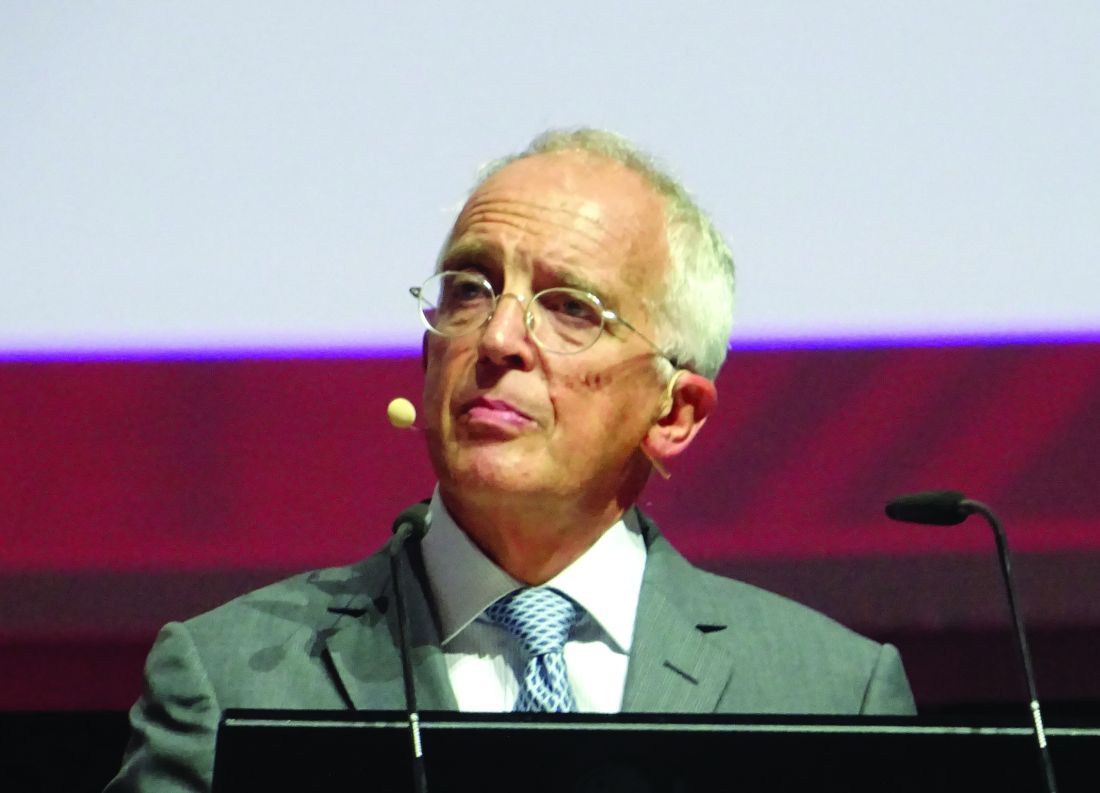
The virtual meeting, taking place Sept. 28 to Oct. 1 in Central European Summer Time, will feature results from TriMASTER (a three-way cross-over trial of precision medicine strategy of second-/third-line therapy in type 2 diabetes), new subgroup analyses from the GRADE (Glycemia Reduction Approaches in Diabetes: A Comparative Effectiveness) study, the final version of a consensus statement on type 1 diabetes management, and new data on the dual incretin agonist tirzepatide, as well as much more.
“I’m a strong believer in personalization. I don’t think the big blockbuster [drugs] will serve the entire community with diabetes. Even in type 1 diabetes, there’s evidence of heterogeneity. ... We need a better way to identify individual needs. I think that’s where we’re going. ... It’s one of the themes of the conference,” EASD President Stefano Del Prato, MD, professor of endocrinology at the University of Pisa (Italy), told this news organization.
He noted that EASD and the American Diabetes Association have recently teamed up with other organizations to form the Precision Medicine in Diabetes Initiative
As would be expected, the meeting will also feature numerous presentations on the COVID-19 pandemic, including studies looking at how people with COVID-19 and diabetes have fared; how the pandemic has affected diabetes care; and the still unclear impact of SARS-CoV-2 on pancreatic beta cells and whether, in some instances, it triggers new-onset diabetes.
New data from previously reported trials
There will be new data from several previously reported trials focusing on specific groups of patients with type 2 diabetes. One is the EMPEROR-Preserved study of empagliflozin (Jardiance) in individuals with heart failure and preserved ejection fraction. Initially presented in August 2021 at the annual congress of the European Society of Cardiology, the new data will focus on patient subpopulations, efficacy endpoints, and safety in patients with and without diabetes. A companion study, EMPEROR-Reduced, in those with heart failure and reduced ejection fraction, was presented at the ESC Congress in August 2020.
New findings will also be presented from the DAPA-CKD study of dapagliflozin (Farxiga) in patients with chronic kidney disease. The study was stopped early in March 2020 because of overwhelming efficacy of the drug in preventing CKD. Now, the data will be analyzed in terms of metabolic, nephrology, and cardiology parameters.
And from FIDELIO-DKD and FIGARO-DKD, trials of the nonsteroidal mineralocorticoid receptor antagonist finerenone (Kerendia), new data will also focus on a variety of subgroups of individuals with type 2 diabetes and chronic kidney disease.
“Our goal is to cover most aspects of what’s happening in the type 2 diabetes field,” EASD Honorary Secretary Mikael Rydén, MD, PhD, professor and senior consultant in endocrinology at the Karolinska Institute and Karolinska University Hospital, Stockholm, said in an interview.
Dr. Rydén, who chairs the meeting’s scientific program committee, added: “We can only focus on so much every year but we try to be active and changing from year to year. I’m convinced that a clinician or translational researcher will definitely have a number of very interesting symposia to follow and learn new things. If you follow all of these things, you will know a lot about what’s cooking in the diabetes world.”
Consensus on type 1 diabetes management: Special considerations
Both Dr. Del Prato and Dr. Rydén cited presentation of the new type 1 diabetes ADA/EASD consensus report as among the most clinically important of the conference. Initially presented in draft form at the ADA Scientific Sessions in June 2021, the document aims to move away from routinely applying principles derived from studies of patients with type 2 diabetes to those with type 1 diabetes, an autoimmune disease with unique characteristics.
The final version of the document is expected to include information on goals of therapy, glycemic targets, prevention and management of hypoglycemia and diabetic ketoacidosis, psychosocial care, and special populations, among other issues. It is also expected to include a section dedicated to adjunctive treatments beyond insulin, including metformin, pramlintide, glucagonlike peptide–1 agonists, and sodium-glucose cotransporter 2 inhibitors for certain patients.
Dr. Del Prato noted, “From a clinical point of view, this is quite an important step that two major organizations came together recommending some strategies for treating type 2 diabetes ... It really deals with a big problem and tries to provide the tools for improving homogenization of the treatment of type 1 diabetes across the different health systems.”
And Dr. Rydén commented: “I think it’s really important to have, since there’s been so much focus on type 2 diabetes for the last few years, and to have the ADA and EASD getting together and actually write this.”
But Dr. Rydén also pointed out that outcomes data are much more conclusive for drugs in type 2 diabetes to inform international guidelines, whereas “this is much more difficult to demonstrate with type 1 diabetes. With a new pump or [continuous glucose monitor (CGM)] you might show a reduction in [hemoglobin] A1c of X percent or X mmol/mol or hypoglycemia events, but it’s much harder to show improvements in hard outcomes like deaths and cardiovascular events. I’m really looking forward to having this presented.”
Diabetes in 2021: It’s personal
Several meeting sessions will specifically address precision medicine approaches, including the TriMASTER study, which aims to identify subgroups of patients with type 2 diabetes who respond well or poorly to particular drugs based on clinical characteristics so that treatments can be better targeted to individuals. In total, 600 patients with type 2 diabetes and suboptimal glycemic control with metformin were randomized to a dipeptidyl peptidase–4 inhibitor, an SGLT2 inhibitor, or thiazolidinedione (TZD).
According to Dr. Rydén, “The TriMASTER final results will be interesting. TZDs still have a place. ... You can’t give them to people with heart failure, but I think like a carpenter you have to have many tools in your toolbox. And I still think that there are some individuals who respond well to pioglitazone. [The study findings] could be influential, depending on the results.”
An EASD/ADA symposium entitled “Optimizing diabetes diagnosis, prevention, and care: Is precision medicine the answer?” will offer three distinct perspectives, with one speaker arguing it’s the future of diabetes medicine, another that it isn’t, and a third explaining that “the devil is in the details.”
The Diabetologia symposium will focus on a related concept: The use of artificial intelligence in diabetes research and care, with particular application to glucose control, neuropathy, and wound healing.
And during the 36th Camillo Golgi Lecture, kidney disease expert H.J. Lambers Heerspink, PhD, of the University of Groningen (the Netherlands), will speak about personalizing treatment for patients with type 2 diabetes, arguing that “the mean is meaningless.”
Next-generation incretin therapy: Is weight loss the treatment?
New data will continue the buzz from the ADA meeting surrounding tirzepatide, the dual GLP-1 receptor agonist and glucose-dependent insulinotropic polypeptide agent.
A session will add new data from SURPASS-3 CGM, looking at the effect of the drug captured by continuous glucose monitoring in patients with type 2 diabetes; SURPASS-3 MRI, examining the effect of the drug on liver fat content and abdominal adipose tissue; and SURPASS-4, investigating efficacy and safety of tirzepatide once-weekly versus insulin glargine in patients with type 2 diabetes and increased cardiovascular risk.
The drug is notable for its dramatic reductions in both A1c and weight, although questions remain about the incidence of gastrointestinal side effects and effects on long-term cardiovascular and renal outcomes.
Dr. Rydén commented: “Given its effects on A1c and body weight, we would expect a positive result, but one never knows. It’s at least safe, that’s for sure. I think this mode of action is extremely interesting.”
Dr. Del Prato noted that tirzepatide could also “open up a new area of intervention for type 1 diabetes. The initial data were promising. ... It’s worth keeping an eye on.”
A related symposium will address the future of incretin-based treatments overall, while the EASD-Lancet symposium will examine whether the treatment of obesity is the «future» of diabetes treatment.
COVID-19, hypoglycemia, bone, and much more
As always, there’s much more on the agenda. Other noteworthy sessions include those addressing hypoglycemia management; a joint EASD/European Society of Endocrinology session on diabetes and bone; a debate about whether women with diabetes are at higher cardiovascular risk than men; and in-hospital management of hyperglycemia.
A new feature of the meeting will be a daily roundup/wrap-up, where members of the program committee and speakers will summarize the day’s highlights. And another feature, “EASD e-Learning,” has been expanded to include more clinical topics around insulin use, nonalcoholic fatty liver disease, obesity, and neuropathy.
Overall, Dr. Del Prato said, “it’s a very populated program, with more than 700 presenters, 162 invited symposia speakers, and 53 chairs. It’s covering widely different areas from basic to clinical research. ... It’s a lot of stuff going on.”
Both Dr. Rydén and Dr. Del Prato have disclosures with multiple manufacturers of diabetes-related products.
A version of this article first appeared on Medscape.com.
The annual meeting of the European Association for the Study of Diabetes 2021 will delve into individualized approaches in diabetes management, particularly with regard to tailoring drug therapy for type 2 diabetes and management of type 1 diabetes.
The virtual meeting, taking place Sept. 28 to Oct. 1 in Central European Summer Time, will feature results from TriMASTER (a three-way cross-over trial of precision medicine strategy of second-/third-line therapy in type 2 diabetes), new subgroup analyses from the GRADE (Glycemia Reduction Approaches in Diabetes: A Comparative Effectiveness) study, the final version of a consensus statement on type 1 diabetes management, and new data on the dual incretin agonist tirzepatide, as well as much more.
“I’m a strong believer in personalization. I don’t think the big blockbuster [drugs] will serve the entire community with diabetes. Even in type 1 diabetes, there’s evidence of heterogeneity. ... We need a better way to identify individual needs. I think that’s where we’re going. ... It’s one of the themes of the conference,” EASD President Stefano Del Prato, MD, professor of endocrinology at the University of Pisa (Italy), told this news organization.
He noted that EASD and the American Diabetes Association have recently teamed up with other organizations to form the Precision Medicine in Diabetes Initiative
As would be expected, the meeting will also feature numerous presentations on the COVID-19 pandemic, including studies looking at how people with COVID-19 and diabetes have fared; how the pandemic has affected diabetes care; and the still unclear impact of SARS-CoV-2 on pancreatic beta cells and whether, in some instances, it triggers new-onset diabetes.
New data from previously reported trials
There will be new data from several previously reported trials focusing on specific groups of patients with type 2 diabetes. One is the EMPEROR-Preserved study of empagliflozin (Jardiance) in individuals with heart failure and preserved ejection fraction. Initially presented in August 2021 at the annual congress of the European Society of Cardiology, the new data will focus on patient subpopulations, efficacy endpoints, and safety in patients with and without diabetes. A companion study, EMPEROR-Reduced, in those with heart failure and reduced ejection fraction, was presented at the ESC Congress in August 2020.
New findings will also be presented from the DAPA-CKD study of dapagliflozin (Farxiga) in patients with chronic kidney disease. The study was stopped early in March 2020 because of overwhelming efficacy of the drug in preventing CKD. Now, the data will be analyzed in terms of metabolic, nephrology, and cardiology parameters.
And from FIDELIO-DKD and FIGARO-DKD, trials of the nonsteroidal mineralocorticoid receptor antagonist finerenone (Kerendia), new data will also focus on a variety of subgroups of individuals with type 2 diabetes and chronic kidney disease.
“Our goal is to cover most aspects of what’s happening in the type 2 diabetes field,” EASD Honorary Secretary Mikael Rydén, MD, PhD, professor and senior consultant in endocrinology at the Karolinska Institute and Karolinska University Hospital, Stockholm, said in an interview.
Dr. Rydén, who chairs the meeting’s scientific program committee, added: “We can only focus on so much every year but we try to be active and changing from year to year. I’m convinced that a clinician or translational researcher will definitely have a number of very interesting symposia to follow and learn new things. If you follow all of these things, you will know a lot about what’s cooking in the diabetes world.”
Consensus on type 1 diabetes management: Special considerations
Both Dr. Del Prato and Dr. Rydén cited presentation of the new type 1 diabetes ADA/EASD consensus report as among the most clinically important of the conference. Initially presented in draft form at the ADA Scientific Sessions in June 2021, the document aims to move away from routinely applying principles derived from studies of patients with type 2 diabetes to those with type 1 diabetes, an autoimmune disease with unique characteristics.
The final version of the document is expected to include information on goals of therapy, glycemic targets, prevention and management of hypoglycemia and diabetic ketoacidosis, psychosocial care, and special populations, among other issues. It is also expected to include a section dedicated to adjunctive treatments beyond insulin, including metformin, pramlintide, glucagonlike peptide–1 agonists, and sodium-glucose cotransporter 2 inhibitors for certain patients.
Dr. Del Prato noted, “From a clinical point of view, this is quite an important step that two major organizations came together recommending some strategies for treating type 2 diabetes ... It really deals with a big problem and tries to provide the tools for improving homogenization of the treatment of type 1 diabetes across the different health systems.”
And Dr. Rydén commented: “I think it’s really important to have, since there’s been so much focus on type 2 diabetes for the last few years, and to have the ADA and EASD getting together and actually write this.”
But Dr. Rydén also pointed out that outcomes data are much more conclusive for drugs in type 2 diabetes to inform international guidelines, whereas “this is much more difficult to demonstrate with type 1 diabetes. With a new pump or [continuous glucose monitor (CGM)] you might show a reduction in [hemoglobin] A1c of X percent or X mmol/mol or hypoglycemia events, but it’s much harder to show improvements in hard outcomes like deaths and cardiovascular events. I’m really looking forward to having this presented.”
Diabetes in 2021: It’s personal
Several meeting sessions will specifically address precision medicine approaches, including the TriMASTER study, which aims to identify subgroups of patients with type 2 diabetes who respond well or poorly to particular drugs based on clinical characteristics so that treatments can be better targeted to individuals. In total, 600 patients with type 2 diabetes and suboptimal glycemic control with metformin were randomized to a dipeptidyl peptidase–4 inhibitor, an SGLT2 inhibitor, or thiazolidinedione (TZD).
According to Dr. Rydén, “The TriMASTER final results will be interesting. TZDs still have a place. ... You can’t give them to people with heart failure, but I think like a carpenter you have to have many tools in your toolbox. And I still think that there are some individuals who respond well to pioglitazone. [The study findings] could be influential, depending on the results.”
An EASD/ADA symposium entitled “Optimizing diabetes diagnosis, prevention, and care: Is precision medicine the answer?” will offer three distinct perspectives, with one speaker arguing it’s the future of diabetes medicine, another that it isn’t, and a third explaining that “the devil is in the details.”
The Diabetologia symposium will focus on a related concept: The use of artificial intelligence in diabetes research and care, with particular application to glucose control, neuropathy, and wound healing.
And during the 36th Camillo Golgi Lecture, kidney disease expert H.J. Lambers Heerspink, PhD, of the University of Groningen (the Netherlands), will speak about personalizing treatment for patients with type 2 diabetes, arguing that “the mean is meaningless.”
Next-generation incretin therapy: Is weight loss the treatment?
New data will continue the buzz from the ADA meeting surrounding tirzepatide, the dual GLP-1 receptor agonist and glucose-dependent insulinotropic polypeptide agent.
A session will add new data from SURPASS-3 CGM, looking at the effect of the drug captured by continuous glucose monitoring in patients with type 2 diabetes; SURPASS-3 MRI, examining the effect of the drug on liver fat content and abdominal adipose tissue; and SURPASS-4, investigating efficacy and safety of tirzepatide once-weekly versus insulin glargine in patients with type 2 diabetes and increased cardiovascular risk.
The drug is notable for its dramatic reductions in both A1c and weight, although questions remain about the incidence of gastrointestinal side effects and effects on long-term cardiovascular and renal outcomes.
Dr. Rydén commented: “Given its effects on A1c and body weight, we would expect a positive result, but one never knows. It’s at least safe, that’s for sure. I think this mode of action is extremely interesting.”
Dr. Del Prato noted that tirzepatide could also “open up a new area of intervention for type 1 diabetes. The initial data were promising. ... It’s worth keeping an eye on.”
A related symposium will address the future of incretin-based treatments overall, while the EASD-Lancet symposium will examine whether the treatment of obesity is the «future» of diabetes treatment.
COVID-19, hypoglycemia, bone, and much more
As always, there’s much more on the agenda. Other noteworthy sessions include those addressing hypoglycemia management; a joint EASD/European Society of Endocrinology session on diabetes and bone; a debate about whether women with diabetes are at higher cardiovascular risk than men; and in-hospital management of hyperglycemia.
A new feature of the meeting will be a daily roundup/wrap-up, where members of the program committee and speakers will summarize the day’s highlights. And another feature, “EASD e-Learning,” has been expanded to include more clinical topics around insulin use, nonalcoholic fatty liver disease, obesity, and neuropathy.
Overall, Dr. Del Prato said, “it’s a very populated program, with more than 700 presenters, 162 invited symposia speakers, and 53 chairs. It’s covering widely different areas from basic to clinical research. ... It’s a lot of stuff going on.”
Both Dr. Rydén and Dr. Del Prato have disclosures with multiple manufacturers of diabetes-related products.
A version of this article first appeared on Medscape.com.
The annual meeting of the European Association for the Study of Diabetes 2021 will delve into individualized approaches in diabetes management, particularly with regard to tailoring drug therapy for type 2 diabetes and management of type 1 diabetes.
The virtual meeting, taking place Sept. 28 to Oct. 1 in Central European Summer Time, will feature results from TriMASTER (a three-way cross-over trial of precision medicine strategy of second-/third-line therapy in type 2 diabetes), new subgroup analyses from the GRADE (Glycemia Reduction Approaches in Diabetes: A Comparative Effectiveness) study, the final version of a consensus statement on type 1 diabetes management, and new data on the dual incretin agonist tirzepatide, as well as much more.
“I’m a strong believer in personalization. I don’t think the big blockbuster [drugs] will serve the entire community with diabetes. Even in type 1 diabetes, there’s evidence of heterogeneity. ... We need a better way to identify individual needs. I think that’s where we’re going. ... It’s one of the themes of the conference,” EASD President Stefano Del Prato, MD, professor of endocrinology at the University of Pisa (Italy), told this news organization.
He noted that EASD and the American Diabetes Association have recently teamed up with other organizations to form the Precision Medicine in Diabetes Initiative
As would be expected, the meeting will also feature numerous presentations on the COVID-19 pandemic, including studies looking at how people with COVID-19 and diabetes have fared; how the pandemic has affected diabetes care; and the still unclear impact of SARS-CoV-2 on pancreatic beta cells and whether, in some instances, it triggers new-onset diabetes.
New data from previously reported trials
There will be new data from several previously reported trials focusing on specific groups of patients with type 2 diabetes. One is the EMPEROR-Preserved study of empagliflozin (Jardiance) in individuals with heart failure and preserved ejection fraction. Initially presented in August 2021 at the annual congress of the European Society of Cardiology, the new data will focus on patient subpopulations, efficacy endpoints, and safety in patients with and without diabetes. A companion study, EMPEROR-Reduced, in those with heart failure and reduced ejection fraction, was presented at the ESC Congress in August 2020.
New findings will also be presented from the DAPA-CKD study of dapagliflozin (Farxiga) in patients with chronic kidney disease. The study was stopped early in March 2020 because of overwhelming efficacy of the drug in preventing CKD. Now, the data will be analyzed in terms of metabolic, nephrology, and cardiology parameters.
And from FIDELIO-DKD and FIGARO-DKD, trials of the nonsteroidal mineralocorticoid receptor antagonist finerenone (Kerendia), new data will also focus on a variety of subgroups of individuals with type 2 diabetes and chronic kidney disease.
“Our goal is to cover most aspects of what’s happening in the type 2 diabetes field,” EASD Honorary Secretary Mikael Rydén, MD, PhD, professor and senior consultant in endocrinology at the Karolinska Institute and Karolinska University Hospital, Stockholm, said in an interview.
Dr. Rydén, who chairs the meeting’s scientific program committee, added: “We can only focus on so much every year but we try to be active and changing from year to year. I’m convinced that a clinician or translational researcher will definitely have a number of very interesting symposia to follow and learn new things. If you follow all of these things, you will know a lot about what’s cooking in the diabetes world.”
Consensus on type 1 diabetes management: Special considerations
Both Dr. Del Prato and Dr. Rydén cited presentation of the new type 1 diabetes ADA/EASD consensus report as among the most clinically important of the conference. Initially presented in draft form at the ADA Scientific Sessions in June 2021, the document aims to move away from routinely applying principles derived from studies of patients with type 2 diabetes to those with type 1 diabetes, an autoimmune disease with unique characteristics.
The final version of the document is expected to include information on goals of therapy, glycemic targets, prevention and management of hypoglycemia and diabetic ketoacidosis, psychosocial care, and special populations, among other issues. It is also expected to include a section dedicated to adjunctive treatments beyond insulin, including metformin, pramlintide, glucagonlike peptide–1 agonists, and sodium-glucose cotransporter 2 inhibitors for certain patients.
Dr. Del Prato noted, “From a clinical point of view, this is quite an important step that two major organizations came together recommending some strategies for treating type 2 diabetes ... It really deals with a big problem and tries to provide the tools for improving homogenization of the treatment of type 1 diabetes across the different health systems.”
And Dr. Rydén commented: “I think it’s really important to have, since there’s been so much focus on type 2 diabetes for the last few years, and to have the ADA and EASD getting together and actually write this.”
But Dr. Rydén also pointed out that outcomes data are much more conclusive for drugs in type 2 diabetes to inform international guidelines, whereas “this is much more difficult to demonstrate with type 1 diabetes. With a new pump or [continuous glucose monitor (CGM)] you might show a reduction in [hemoglobin] A1c of X percent or X mmol/mol or hypoglycemia events, but it’s much harder to show improvements in hard outcomes like deaths and cardiovascular events. I’m really looking forward to having this presented.”
Diabetes in 2021: It’s personal
Several meeting sessions will specifically address precision medicine approaches, including the TriMASTER study, which aims to identify subgroups of patients with type 2 diabetes who respond well or poorly to particular drugs based on clinical characteristics so that treatments can be better targeted to individuals. In total, 600 patients with type 2 diabetes and suboptimal glycemic control with metformin were randomized to a dipeptidyl peptidase–4 inhibitor, an SGLT2 inhibitor, or thiazolidinedione (TZD).
According to Dr. Rydén, “The TriMASTER final results will be interesting. TZDs still have a place. ... You can’t give them to people with heart failure, but I think like a carpenter you have to have many tools in your toolbox. And I still think that there are some individuals who respond well to pioglitazone. [The study findings] could be influential, depending on the results.”
An EASD/ADA symposium entitled “Optimizing diabetes diagnosis, prevention, and care: Is precision medicine the answer?” will offer three distinct perspectives, with one speaker arguing it’s the future of diabetes medicine, another that it isn’t, and a third explaining that “the devil is in the details.”
The Diabetologia symposium will focus on a related concept: The use of artificial intelligence in diabetes research and care, with particular application to glucose control, neuropathy, and wound healing.
And during the 36th Camillo Golgi Lecture, kidney disease expert H.J. Lambers Heerspink, PhD, of the University of Groningen (the Netherlands), will speak about personalizing treatment for patients with type 2 diabetes, arguing that “the mean is meaningless.”
Next-generation incretin therapy: Is weight loss the treatment?
New data will continue the buzz from the ADA meeting surrounding tirzepatide, the dual GLP-1 receptor agonist and glucose-dependent insulinotropic polypeptide agent.
A session will add new data from SURPASS-3 CGM, looking at the effect of the drug captured by continuous glucose monitoring in patients with type 2 diabetes; SURPASS-3 MRI, examining the effect of the drug on liver fat content and abdominal adipose tissue; and SURPASS-4, investigating efficacy and safety of tirzepatide once-weekly versus insulin glargine in patients with type 2 diabetes and increased cardiovascular risk.
The drug is notable for its dramatic reductions in both A1c and weight, although questions remain about the incidence of gastrointestinal side effects and effects on long-term cardiovascular and renal outcomes.
Dr. Rydén commented: “Given its effects on A1c and body weight, we would expect a positive result, but one never knows. It’s at least safe, that’s for sure. I think this mode of action is extremely interesting.”
Dr. Del Prato noted that tirzepatide could also “open up a new area of intervention for type 1 diabetes. The initial data were promising. ... It’s worth keeping an eye on.”
A related symposium will address the future of incretin-based treatments overall, while the EASD-Lancet symposium will examine whether the treatment of obesity is the «future» of diabetes treatment.
COVID-19, hypoglycemia, bone, and much more
As always, there’s much more on the agenda. Other noteworthy sessions include those addressing hypoglycemia management; a joint EASD/European Society of Endocrinology session on diabetes and bone; a debate about whether women with diabetes are at higher cardiovascular risk than men; and in-hospital management of hyperglycemia.
A new feature of the meeting will be a daily roundup/wrap-up, where members of the program committee and speakers will summarize the day’s highlights. And another feature, “EASD e-Learning,” has been expanded to include more clinical topics around insulin use, nonalcoholic fatty liver disease, obesity, and neuropathy.
Overall, Dr. Del Prato said, “it’s a very populated program, with more than 700 presenters, 162 invited symposia speakers, and 53 chairs. It’s covering widely different areas from basic to clinical research. ... It’s a lot of stuff going on.”
Both Dr. Rydén and Dr. Del Prato have disclosures with multiple manufacturers of diabetes-related products.
A version of this article first appeared on Medscape.com.
CDC chief overrules panel, OKs boosters for health care workers
The CDC’s Advisory Committee on Immunization Practices earlier Thursday voted to allow several groups of Americans to get a booster shot, but voted not to recommend it for adults age 18 to 64 who live or work in a place where the risk of COVID-19 is high. That would have included health care workers and other frontline employees.
But CDC Director Rochelle Walensky, MD, decided to reverse that recommendation and include the 18-to-64-year-olds in her final decision.
“As CDC Director, it is my job to recognize where our actions can have the greatest impact,” Dr. Walensky said in a statement late Thursday night, according to published reports. “At CDC, we are tasked with analyzing complex, often imperfect data to make concrete recommendations that optimize health. In a pandemic, even with uncertainty, we must take actions that we anticipate will do the greatest good.”
Dr. Walensky agreed with the rest of the advisory committee's decisions, which included recommendations that the following groups also be eligible for a booster shot:
- Adults ages 65 and up and residents of long-term care facilities
- Adults ages 50 to 64 who have an underlying medical condition that may increase their risk from a COVID infection
- Adults ages 18 to 49 who may be at increased risk from a COVID-19 infection because of an underlying medical condition, if a person feels like they need one based on a consideration of their individual benefit and risks.
About 26 million Americans are at least 6 months past the last dose of the Pfizer vaccines, making them eligible to receive a third dose. About 13.6 million of them are over the age of 65. Another 5.3 million are ages 50 to 64.
In making the recommendations, the committee left out healthcare workers. This was a departure from the Food and Drug Administration’s authorization which included boosters for those 65 and over, and for people 18 through 64 years of age who are at high risk for severe illness from the coronavirus, including essential workers – such as those in healthcare -- whose jobs increase their risk for infection.
This is the group Dr. Walensky added to the eligible list on her own.
Committee members “did not buy the need in occupational or institutional settings,” said William Schaffner, MD, an infectious disease specialist at Vanderbilt University in Nashville. Dr. Schaffner sits on the ACIP workgroup that considered the evidence behind boosters. He said that he would have voted yes to offer boosters to healthcare and other essential workers.
“There was a real split in the committee,” he said.
The vote on boosters for healthcare and other high-risk workers was rejected 9 to 6.
“I think that there is ample evidence that people such as healthcare workers do not have repeated exposure in the workplace,” said Beth Bell, MD, a clinical professor at the University of Washington. “They’re using PPE as they should and they’re following the other policies within the healthcare setting. There’s lots of evidence that suggest that health care workers who become infected become infected because of exposures in the community.”
She was not alone in feeling cautious.
“I think this is an extremely slippery slope,” said Sarah Long, MD, a pediatric infectious disease specialist at Drexel University in Philadelphia, before her vote to reject boosters for healthcare and other high-risk workers.
“We might as well just say, ‘Give it to everybody 18 and over.’ We have an extremely effective vaccine. It’s like saying it’s not working, and it is working.”
The committee saw data showing that all of the vaccines remain highly protective against hospitalization and death for all age groups, though protection against getting sick with COVID has waned slightly over time and with the dominance of the more contagious Delta variant. Those at highest risk for a severe breakthrough infection — those that cause hospitalization or death — are older adults.
How much will the U.S. benefit from boosters?
Some felt squeamish about broadly recommending boosters at all.
“We have too much hope on the line with these boosters,” said James Loehr, MD, who is a family physician in Ithaca, N.Y. Dr. Loehr said he felt the goal of giving boosters in the United States should be to decrease hospitalizations, and he felt they would, but that the impact would likely be smaller than appreciated.
Based on his calculations of the benefits of boosters for each age group, Dr. Loehr said if boosters were given to all 13 million seniors previously vaccinated with the Pfizer vaccine, we might prevent 200 hospitalizations a day, “which would be a lot,” he noted. But, he said, “considering that we have 10,000 hospitalizations a day now, it’s probably not that much.”
Others agreed.
“I really think this is a solution looking for a problem,” said Jason Goldman, MD, an associate professor at Florida Atlantic University who was representing the American College of Physicians. “You know, I don’t think it’s going to address the issue of the pandemic. I really think it’s just going to create more confusion on the provider from the position of implementation, and I really think it’s going really far afield of the data.”
ACIP Chair Grace Lee, MD, a pediatric infectious disease specialist at Stanford, said she had cared for children who had died of COVID.
“I can tell you that their family members really wished they had extra protection for their kids, because they weren’t symptomatic. Nobody else was sick at home,” she said.
Dr. Lee said for her, access was paramount, and she was in favor of expanding access to boosters for as many people as possible.
Next steps
People who were initially vaccinated with either Moderna or Johnson & Johnson vaccines are excluded from booster recommendations, something many on the committee were uncomfortable with.
The FDA is still considering Moderna’s application to market booster doses. Johnson & Johnson hasn’t yet applied to the FDA for permission to offer second doses in the United States.
While the ACIP’s recommendations are important, in this case, they may not have a huge practical effect, said Schaffner. The CDC has already approved third shots for people who are immunocompromised, and no proof of a medical condition is required to get one.
More than 2 million people have already gotten a third dose, he noted, and not all of them are immunocompromised.
“They have heard the president say that, you know, everybody should get a booster, and they’ve taken that at face value,” he said.
A version of this article first appeared on WebMD.com.
The CDC’s Advisory Committee on Immunization Practices earlier Thursday voted to allow several groups of Americans to get a booster shot, but voted not to recommend it for adults age 18 to 64 who live or work in a place where the risk of COVID-19 is high. That would have included health care workers and other frontline employees.
But CDC Director Rochelle Walensky, MD, decided to reverse that recommendation and include the 18-to-64-year-olds in her final decision.
“As CDC Director, it is my job to recognize where our actions can have the greatest impact,” Dr. Walensky said in a statement late Thursday night, according to published reports. “At CDC, we are tasked with analyzing complex, often imperfect data to make concrete recommendations that optimize health. In a pandemic, even with uncertainty, we must take actions that we anticipate will do the greatest good.”
Dr. Walensky agreed with the rest of the advisory committee's decisions, which included recommendations that the following groups also be eligible for a booster shot:
- Adults ages 65 and up and residents of long-term care facilities
- Adults ages 50 to 64 who have an underlying medical condition that may increase their risk from a COVID infection
- Adults ages 18 to 49 who may be at increased risk from a COVID-19 infection because of an underlying medical condition, if a person feels like they need one based on a consideration of their individual benefit and risks.
About 26 million Americans are at least 6 months past the last dose of the Pfizer vaccines, making them eligible to receive a third dose. About 13.6 million of them are over the age of 65. Another 5.3 million are ages 50 to 64.
In making the recommendations, the committee left out healthcare workers. This was a departure from the Food and Drug Administration’s authorization which included boosters for those 65 and over, and for people 18 through 64 years of age who are at high risk for severe illness from the coronavirus, including essential workers – such as those in healthcare -- whose jobs increase their risk for infection.
This is the group Dr. Walensky added to the eligible list on her own.
Committee members “did not buy the need in occupational or institutional settings,” said William Schaffner, MD, an infectious disease specialist at Vanderbilt University in Nashville. Dr. Schaffner sits on the ACIP workgroup that considered the evidence behind boosters. He said that he would have voted yes to offer boosters to healthcare and other essential workers.
“There was a real split in the committee,” he said.
The vote on boosters for healthcare and other high-risk workers was rejected 9 to 6.
“I think that there is ample evidence that people such as healthcare workers do not have repeated exposure in the workplace,” said Beth Bell, MD, a clinical professor at the University of Washington. “They’re using PPE as they should and they’re following the other policies within the healthcare setting. There’s lots of evidence that suggest that health care workers who become infected become infected because of exposures in the community.”
She was not alone in feeling cautious.
“I think this is an extremely slippery slope,” said Sarah Long, MD, a pediatric infectious disease specialist at Drexel University in Philadelphia, before her vote to reject boosters for healthcare and other high-risk workers.
“We might as well just say, ‘Give it to everybody 18 and over.’ We have an extremely effective vaccine. It’s like saying it’s not working, and it is working.”
The committee saw data showing that all of the vaccines remain highly protective against hospitalization and death for all age groups, though protection against getting sick with COVID has waned slightly over time and with the dominance of the more contagious Delta variant. Those at highest risk for a severe breakthrough infection — those that cause hospitalization or death — are older adults.
How much will the U.S. benefit from boosters?
Some felt squeamish about broadly recommending boosters at all.
“We have too much hope on the line with these boosters,” said James Loehr, MD, who is a family physician in Ithaca, N.Y. Dr. Loehr said he felt the goal of giving boosters in the United States should be to decrease hospitalizations, and he felt they would, but that the impact would likely be smaller than appreciated.
Based on his calculations of the benefits of boosters for each age group, Dr. Loehr said if boosters were given to all 13 million seniors previously vaccinated with the Pfizer vaccine, we might prevent 200 hospitalizations a day, “which would be a lot,” he noted. But, he said, “considering that we have 10,000 hospitalizations a day now, it’s probably not that much.”
Others agreed.
“I really think this is a solution looking for a problem,” said Jason Goldman, MD, an associate professor at Florida Atlantic University who was representing the American College of Physicians. “You know, I don’t think it’s going to address the issue of the pandemic. I really think it’s just going to create more confusion on the provider from the position of implementation, and I really think it’s going really far afield of the data.”
ACIP Chair Grace Lee, MD, a pediatric infectious disease specialist at Stanford, said she had cared for children who had died of COVID.
“I can tell you that their family members really wished they had extra protection for their kids, because they weren’t symptomatic. Nobody else was sick at home,” she said.
Dr. Lee said for her, access was paramount, and she was in favor of expanding access to boosters for as many people as possible.
Next steps
People who were initially vaccinated with either Moderna or Johnson & Johnson vaccines are excluded from booster recommendations, something many on the committee were uncomfortable with.
The FDA is still considering Moderna’s application to market booster doses. Johnson & Johnson hasn’t yet applied to the FDA for permission to offer second doses in the United States.
While the ACIP’s recommendations are important, in this case, they may not have a huge practical effect, said Schaffner. The CDC has already approved third shots for people who are immunocompromised, and no proof of a medical condition is required to get one.
More than 2 million people have already gotten a third dose, he noted, and not all of them are immunocompromised.
“They have heard the president say that, you know, everybody should get a booster, and they’ve taken that at face value,” he said.
A version of this article first appeared on WebMD.com.
The CDC’s Advisory Committee on Immunization Practices earlier Thursday voted to allow several groups of Americans to get a booster shot, but voted not to recommend it for adults age 18 to 64 who live or work in a place where the risk of COVID-19 is high. That would have included health care workers and other frontline employees.
But CDC Director Rochelle Walensky, MD, decided to reverse that recommendation and include the 18-to-64-year-olds in her final decision.
“As CDC Director, it is my job to recognize where our actions can have the greatest impact,” Dr. Walensky said in a statement late Thursday night, according to published reports. “At CDC, we are tasked with analyzing complex, often imperfect data to make concrete recommendations that optimize health. In a pandemic, even with uncertainty, we must take actions that we anticipate will do the greatest good.”
Dr. Walensky agreed with the rest of the advisory committee's decisions, which included recommendations that the following groups also be eligible for a booster shot:
- Adults ages 65 and up and residents of long-term care facilities
- Adults ages 50 to 64 who have an underlying medical condition that may increase their risk from a COVID infection
- Adults ages 18 to 49 who may be at increased risk from a COVID-19 infection because of an underlying medical condition, if a person feels like they need one based on a consideration of their individual benefit and risks.
About 26 million Americans are at least 6 months past the last dose of the Pfizer vaccines, making them eligible to receive a third dose. About 13.6 million of them are over the age of 65. Another 5.3 million are ages 50 to 64.
In making the recommendations, the committee left out healthcare workers. This was a departure from the Food and Drug Administration’s authorization which included boosters for those 65 and over, and for people 18 through 64 years of age who are at high risk for severe illness from the coronavirus, including essential workers – such as those in healthcare -- whose jobs increase their risk for infection.
This is the group Dr. Walensky added to the eligible list on her own.
Committee members “did not buy the need in occupational or institutional settings,” said William Schaffner, MD, an infectious disease specialist at Vanderbilt University in Nashville. Dr. Schaffner sits on the ACIP workgroup that considered the evidence behind boosters. He said that he would have voted yes to offer boosters to healthcare and other essential workers.
“There was a real split in the committee,” he said.
The vote on boosters for healthcare and other high-risk workers was rejected 9 to 6.
“I think that there is ample evidence that people such as healthcare workers do not have repeated exposure in the workplace,” said Beth Bell, MD, a clinical professor at the University of Washington. “They’re using PPE as they should and they’re following the other policies within the healthcare setting. There’s lots of evidence that suggest that health care workers who become infected become infected because of exposures in the community.”
She was not alone in feeling cautious.
“I think this is an extremely slippery slope,” said Sarah Long, MD, a pediatric infectious disease specialist at Drexel University in Philadelphia, before her vote to reject boosters for healthcare and other high-risk workers.
“We might as well just say, ‘Give it to everybody 18 and over.’ We have an extremely effective vaccine. It’s like saying it’s not working, and it is working.”
The committee saw data showing that all of the vaccines remain highly protective against hospitalization and death for all age groups, though protection against getting sick with COVID has waned slightly over time and with the dominance of the more contagious Delta variant. Those at highest risk for a severe breakthrough infection — those that cause hospitalization or death — are older adults.
How much will the U.S. benefit from boosters?
Some felt squeamish about broadly recommending boosters at all.
“We have too much hope on the line with these boosters,” said James Loehr, MD, who is a family physician in Ithaca, N.Y. Dr. Loehr said he felt the goal of giving boosters in the United States should be to decrease hospitalizations, and he felt they would, but that the impact would likely be smaller than appreciated.
Based on his calculations of the benefits of boosters for each age group, Dr. Loehr said if boosters were given to all 13 million seniors previously vaccinated with the Pfizer vaccine, we might prevent 200 hospitalizations a day, “which would be a lot,” he noted. But, he said, “considering that we have 10,000 hospitalizations a day now, it’s probably not that much.”
Others agreed.
“I really think this is a solution looking for a problem,” said Jason Goldman, MD, an associate professor at Florida Atlantic University who was representing the American College of Physicians. “You know, I don’t think it’s going to address the issue of the pandemic. I really think it’s just going to create more confusion on the provider from the position of implementation, and I really think it’s going really far afield of the data.”
ACIP Chair Grace Lee, MD, a pediatric infectious disease specialist at Stanford, said she had cared for children who had died of COVID.
“I can tell you that their family members really wished they had extra protection for their kids, because they weren’t symptomatic. Nobody else was sick at home,” she said.
Dr. Lee said for her, access was paramount, and she was in favor of expanding access to boosters for as many people as possible.
Next steps
People who were initially vaccinated with either Moderna or Johnson & Johnson vaccines are excluded from booster recommendations, something many on the committee were uncomfortable with.
The FDA is still considering Moderna’s application to market booster doses. Johnson & Johnson hasn’t yet applied to the FDA for permission to offer second doses in the United States.
While the ACIP’s recommendations are important, in this case, they may not have a huge practical effect, said Schaffner. The CDC has already approved third shots for people who are immunocompromised, and no proof of a medical condition is required to get one.
More than 2 million people have already gotten a third dose, he noted, and not all of them are immunocompromised.
“They have heard the president say that, you know, everybody should get a booster, and they’ve taken that at face value,” he said.
A version of this article first appeared on WebMD.com.
Sharing notes with our patients: Ethical considerations
Even a decade ago, the idea of providers sharing clinical notes with patients was almost unfathomable to most in medicine. We have since seen a sea change regarding the need for transparency in health care, leading to dramatic legislative and policy shifts in recent years.

On April 5, 2021, the federal program rule on Interoperability, Information Blocking, and ONC Health IT Certification took effect, which implemented a part of the bipartisan 21st Century Cures Act of 2016 requiring most of a patient’s electronic health information (EHI) be made easily accessible free of charge and “without delay.”1
Included in this defined set of EHI, known as the United States Core Data for Interoperability, are eight types of clinical notes that must be shared with patients, including: progress notes, history and physical notes, consultation notes, discharge summary notes, procedure notes, laboratory report narratives, imaging narratives, and pathology report narratives. Many clinicians viewed this federally mandated transition to note sharing with patients with concern, fearing increased documentation burdens, needless patient anxiety, and inevitable deluge of follow-up questions and requests for chart corrections.
In reality, the Health Insurance Portability and Accountability Act (HIPAA) granted virtually all patients the right to review a paper copy of their medical records, including all clinical notes, way back in 1996. Practically speaking, though, the multiple steps required to formally make these requests kept most patients from regularly accessing their health information.
The 21st Century Cures Act streamlines and modernizes this process by requiring electronic access. Certain note types, including psychotherapy notes, are exempt from this requirement. As has always been true since HIPAA was enacted, exceptions may be used for circumstances in which a clinician holds a reasonable belief that blocking information is necessary to prevent harm to a patient or another person or to protect an individual’s privacy. By continuing to allow for these exceptions, clinicians maintain the autonomy to block sharing of notes in the rare, complex situations in which doing so may truly be harmful.
And while the legal requirement to share most clinical notes is new, there is already a wealth of evidence from the earliest adopters (part of the OpenNotes movement) affirming the significant benefits from this practice – for patients and providers – with few negative effects on workflows or documentation patterns.2 Findings published as early as 2012, and regularly since then, among OpenNotes adopters from a diverse set of health care institutions have shown access to notes improves patient engagement, activation, and communication, as well as patient and clinician satisfaction.3
Still, providers may argue, shouldn’t clinical notes be a space where providers are free to articulate uncertainties, work through clinical reasoning, and share subtle observations about a patient’s presentation and findings with colleagues without having to worry about alarming patients who may lack the background to understand medical nuances?
It’s a fine balance in certain situations since we want to document our objective clinical assessments and prognoses without needlessly upsetting our patients, especially when considering a potentially life-changing diagnosis. How do we continue offering hope to our patients while still respecting their autonomy and sharing their health information with them? There is no uniform approach or standard playbook to follow since each patient and clinical circumstance is unique.
Fundamentally, sharing clinical notes is about granting access to one’s own health information, promoting patient activation and engagement, and making health care more patient centered. As a clinician, it’s important to frame the conversations we have with our patients so they are not surprised or caught off guard by what we have written in our notes. If you had a difficult or contentious conversation, document it objectively and without bias. If you are discussing obesity, substance abuse, or mental health, do so respectfully, supportively, and without judgment. If one of the reasons you are doing a CT scan is to rule out pancreatic cancer, it’s hard to argue that the patient does not deserve to know that beforehand.
The OpenNotes experience to date has consistently shown that patients benefit from direct discussions and transparency, which can even motivate difficult behavior changes.4 As clinicians, we may have to make minor changes in how we document, such as using less medical jargon and fewer abbreviations, but based on data from the longest tenured participants in OpenNotes, these adjustments do not add to documentation burdens.5 An activated patient who is reading their notes is an engaged patient, one who will often collaborate more in their own care, offer additional insights, and feel more empowered to take responsibility for their own health.6
When surveyed, patients report that access to their clinical notes helps them feel more in control of their health by understanding their medical conditions better, which makes them feel more prepared for their visits.4 Studies have shown that patients forget between 40%-80% of the information communicated during a visit, making clinical notes a valuable reminder and reference. Over 75% of patients in one study reported that reading notes helped them better understand the meaning of results and the rationale for referrals and tests, which led to greater follow-through with their treatment plans and follow-up appointments.3 A remarkable 99% of patients in the same study reported feeling the same or better about their physician after reading their notes.
Sharing notes with patients also makes care safer and more equitable. A written record of a visit serves as an important source of information about why a medicine is prescribed, a reminder about additions or changes to a regimen, and potential adverse effects of medications. In the first OpenNotes study, which had more than 100 primary care physicians and 20,000 patients, 60%-78% of patients with access to their notes reported improved medication adherence.2 A later study reported similar benefits, particularly among patients who identify as racial or ethnic minorities, non-native English speakers, and those with a high school education or less. These findings may reflect increased trust that comes with a more collaborative relationship between providers and patients. Patients who can read their notes also show a willingness to review their medication lists and report discrepancies and errors, making their care safer still.7
Conclusion
The move to widespread shared notes, though prompted by a federal mandate, is a critical step forward in patient activation, engagement, and satisfaction. Importantly, there is a large body of evidence showing multiple benefits, including better communication and safer and more equitable care at sites that have already been sharing notes for over a decade. When surveyed, both patients and providers who have been participating in shared notes believe the practice should continue.
In April 2021, we began a massive natural experiment in the U.S. with ubiquitous sharing of clinical notes, one that will help us learn more about how best to make our patients’ health information accessible, meaningful, and most meaningful in improving their overall health and well-being. Sharing notes with our patients is at once relatively easy to implement but complex in its implications and represents a significant paradigm shift in medicine toward a safer, more patient-centered approach. The evidence to date has shown that embracing shared notes promotes greater patient activation and engagement, and with it a more transparent and collaborative relationship between providers and patients that could lead to transformative benefits to the quality of the care we can achieve together.
Dr. Shah is an associate professor of medicine and pediatrics and associate chief medical information officer at University of Chicago Medicine. He has no disclosures
References
1. 21st Century Cures Act, HR 34, 114th Congress (2015). Accessed 2021 Sep 23. https://www.congress.gov/bill/114th-congress/house-bill/34.
2. Delbanco T et al. Ann Intern Med. 2012 Oct;157(7):461-70.
3. Bell S et al. BMJ Qual Saf. 2017 Apr;26(4):262-70.
4. Walker J et al. J Med Internet Res. 2019 May. doi: 10.2196/13876.
5. DesRoches C et al. JAMA Netw Open. 2020 Mar. doi: 10.1001/jamanetworkopen.2020.1753.
6. Blease C et al. J Med Ethics. 2021 May. doi: 10.1136/medethics-2021-107275.
7. DesRoches C et al. Ann Intern Med. 2019 Jul 2;171(1):69-71.
Even a decade ago, the idea of providers sharing clinical notes with patients was almost unfathomable to most in medicine. We have since seen a sea change regarding the need for transparency in health care, leading to dramatic legislative and policy shifts in recent years.
On April 5, 2021, the federal program rule on Interoperability, Information Blocking, and ONC Health IT Certification took effect, which implemented a part of the bipartisan 21st Century Cures Act of 2016 requiring most of a patient’s electronic health information (EHI) be made easily accessible free of charge and “without delay.”1
Included in this defined set of EHI, known as the United States Core Data for Interoperability, are eight types of clinical notes that must be shared with patients, including: progress notes, history and physical notes, consultation notes, discharge summary notes, procedure notes, laboratory report narratives, imaging narratives, and pathology report narratives. Many clinicians viewed this federally mandated transition to note sharing with patients with concern, fearing increased documentation burdens, needless patient anxiety, and inevitable deluge of follow-up questions and requests for chart corrections.
In reality, the Health Insurance Portability and Accountability Act (HIPAA) granted virtually all patients the right to review a paper copy of their medical records, including all clinical notes, way back in 1996. Practically speaking, though, the multiple steps required to formally make these requests kept most patients from regularly accessing their health information.
The 21st Century Cures Act streamlines and modernizes this process by requiring electronic access. Certain note types, including psychotherapy notes, are exempt from this requirement. As has always been true since HIPAA was enacted, exceptions may be used for circumstances in which a clinician holds a reasonable belief that blocking information is necessary to prevent harm to a patient or another person or to protect an individual’s privacy. By continuing to allow for these exceptions, clinicians maintain the autonomy to block sharing of notes in the rare, complex situations in which doing so may truly be harmful.
And while the legal requirement to share most clinical notes is new, there is already a wealth of evidence from the earliest adopters (part of the OpenNotes movement) affirming the significant benefits from this practice – for patients and providers – with few negative effects on workflows or documentation patterns.2 Findings published as early as 2012, and regularly since then, among OpenNotes adopters from a diverse set of health care institutions have shown access to notes improves patient engagement, activation, and communication, as well as patient and clinician satisfaction.3
Still, providers may argue, shouldn’t clinical notes be a space where providers are free to articulate uncertainties, work through clinical reasoning, and share subtle observations about a patient’s presentation and findings with colleagues without having to worry about alarming patients who may lack the background to understand medical nuances?
It’s a fine balance in certain situations since we want to document our objective clinical assessments and prognoses without needlessly upsetting our patients, especially when considering a potentially life-changing diagnosis. How do we continue offering hope to our patients while still respecting their autonomy and sharing their health information with them? There is no uniform approach or standard playbook to follow since each patient and clinical circumstance is unique.
Fundamentally, sharing clinical notes is about granting access to one’s own health information, promoting patient activation and engagement, and making health care more patient centered. As a clinician, it’s important to frame the conversations we have with our patients so they are not surprised or caught off guard by what we have written in our notes. If you had a difficult or contentious conversation, document it objectively and without bias. If you are discussing obesity, substance abuse, or mental health, do so respectfully, supportively, and without judgment. If one of the reasons you are doing a CT scan is to rule out pancreatic cancer, it’s hard to argue that the patient does not deserve to know that beforehand.
The OpenNotes experience to date has consistently shown that patients benefit from direct discussions and transparency, which can even motivate difficult behavior changes.4 As clinicians, we may have to make minor changes in how we document, such as using less medical jargon and fewer abbreviations, but based on data from the longest tenured participants in OpenNotes, these adjustments do not add to documentation burdens.5 An activated patient who is reading their notes is an engaged patient, one who will often collaborate more in their own care, offer additional insights, and feel more empowered to take responsibility for their own health.6
When surveyed, patients report that access to their clinical notes helps them feel more in control of their health by understanding their medical conditions better, which makes them feel more prepared for their visits.4 Studies have shown that patients forget between 40%-80% of the information communicated during a visit, making clinical notes a valuable reminder and reference. Over 75% of patients in one study reported that reading notes helped them better understand the meaning of results and the rationale for referrals and tests, which led to greater follow-through with their treatment plans and follow-up appointments.3 A remarkable 99% of patients in the same study reported feeling the same or better about their physician after reading their notes.
Sharing notes with patients also makes care safer and more equitable. A written record of a visit serves as an important source of information about why a medicine is prescribed, a reminder about additions or changes to a regimen, and potential adverse effects of medications. In the first OpenNotes study, which had more than 100 primary care physicians and 20,000 patients, 60%-78% of patients with access to their notes reported improved medication adherence.2 A later study reported similar benefits, particularly among patients who identify as racial or ethnic minorities, non-native English speakers, and those with a high school education or less. These findings may reflect increased trust that comes with a more collaborative relationship between providers and patients. Patients who can read their notes also show a willingness to review their medication lists and report discrepancies and errors, making their care safer still.7
Conclusion
The move to widespread shared notes, though prompted by a federal mandate, is a critical step forward in patient activation, engagement, and satisfaction. Importantly, there is a large body of evidence showing multiple benefits, including better communication and safer and more equitable care at sites that have already been sharing notes for over a decade. When surveyed, both patients and providers who have been participating in shared notes believe the practice should continue.
In April 2021, we began a massive natural experiment in the U.S. with ubiquitous sharing of clinical notes, one that will help us learn more about how best to make our patients’ health information accessible, meaningful, and most meaningful in improving their overall health and well-being. Sharing notes with our patients is at once relatively easy to implement but complex in its implications and represents a significant paradigm shift in medicine toward a safer, more patient-centered approach. The evidence to date has shown that embracing shared notes promotes greater patient activation and engagement, and with it a more transparent and collaborative relationship between providers and patients that could lead to transformative benefits to the quality of the care we can achieve together.
Dr. Shah is an associate professor of medicine and pediatrics and associate chief medical information officer at University of Chicago Medicine. He has no disclosures
References
1. 21st Century Cures Act, HR 34, 114th Congress (2015). Accessed 2021 Sep 23. https://www.congress.gov/bill/114th-congress/house-bill/34.
2. Delbanco T et al. Ann Intern Med. 2012 Oct;157(7):461-70.
3. Bell S et al. BMJ Qual Saf. 2017 Apr;26(4):262-70.
4. Walker J et al. J Med Internet Res. 2019 May. doi: 10.2196/13876.
5. DesRoches C et al. JAMA Netw Open. 2020 Mar. doi: 10.1001/jamanetworkopen.2020.1753.
6. Blease C et al. J Med Ethics. 2021 May. doi: 10.1136/medethics-2021-107275.
7. DesRoches C et al. Ann Intern Med. 2019 Jul 2;171(1):69-71.
Even a decade ago, the idea of providers sharing clinical notes with patients was almost unfathomable to most in medicine. We have since seen a sea change regarding the need for transparency in health care, leading to dramatic legislative and policy shifts in recent years.
On April 5, 2021, the federal program rule on Interoperability, Information Blocking, and ONC Health IT Certification took effect, which implemented a part of the bipartisan 21st Century Cures Act of 2016 requiring most of a patient’s electronic health information (EHI) be made easily accessible free of charge and “without delay.”1
Included in this defined set of EHI, known as the United States Core Data for Interoperability, are eight types of clinical notes that must be shared with patients, including: progress notes, history and physical notes, consultation notes, discharge summary notes, procedure notes, laboratory report narratives, imaging narratives, and pathology report narratives. Many clinicians viewed this federally mandated transition to note sharing with patients with concern, fearing increased documentation burdens, needless patient anxiety, and inevitable deluge of follow-up questions and requests for chart corrections.
In reality, the Health Insurance Portability and Accountability Act (HIPAA) granted virtually all patients the right to review a paper copy of their medical records, including all clinical notes, way back in 1996. Practically speaking, though, the multiple steps required to formally make these requests kept most patients from regularly accessing their health information.
The 21st Century Cures Act streamlines and modernizes this process by requiring electronic access. Certain note types, including psychotherapy notes, are exempt from this requirement. As has always been true since HIPAA was enacted, exceptions may be used for circumstances in which a clinician holds a reasonable belief that blocking information is necessary to prevent harm to a patient or another person or to protect an individual’s privacy. By continuing to allow for these exceptions, clinicians maintain the autonomy to block sharing of notes in the rare, complex situations in which doing so may truly be harmful.
And while the legal requirement to share most clinical notes is new, there is already a wealth of evidence from the earliest adopters (part of the OpenNotes movement) affirming the significant benefits from this practice – for patients and providers – with few negative effects on workflows or documentation patterns.2 Findings published as early as 2012, and regularly since then, among OpenNotes adopters from a diverse set of health care institutions have shown access to notes improves patient engagement, activation, and communication, as well as patient and clinician satisfaction.3
Still, providers may argue, shouldn’t clinical notes be a space where providers are free to articulate uncertainties, work through clinical reasoning, and share subtle observations about a patient’s presentation and findings with colleagues without having to worry about alarming patients who may lack the background to understand medical nuances?
It’s a fine balance in certain situations since we want to document our objective clinical assessments and prognoses without needlessly upsetting our patients, especially when considering a potentially life-changing diagnosis. How do we continue offering hope to our patients while still respecting their autonomy and sharing their health information with them? There is no uniform approach or standard playbook to follow since each patient and clinical circumstance is unique.
Fundamentally, sharing clinical notes is about granting access to one’s own health information, promoting patient activation and engagement, and making health care more patient centered. As a clinician, it’s important to frame the conversations we have with our patients so they are not surprised or caught off guard by what we have written in our notes. If you had a difficult or contentious conversation, document it objectively and without bias. If you are discussing obesity, substance abuse, or mental health, do so respectfully, supportively, and without judgment. If one of the reasons you are doing a CT scan is to rule out pancreatic cancer, it’s hard to argue that the patient does not deserve to know that beforehand.
The OpenNotes experience to date has consistently shown that patients benefit from direct discussions and transparency, which can even motivate difficult behavior changes.4 As clinicians, we may have to make minor changes in how we document, such as using less medical jargon and fewer abbreviations, but based on data from the longest tenured participants in OpenNotes, these adjustments do not add to documentation burdens.5 An activated patient who is reading their notes is an engaged patient, one who will often collaborate more in their own care, offer additional insights, and feel more empowered to take responsibility for their own health.6
When surveyed, patients report that access to their clinical notes helps them feel more in control of their health by understanding their medical conditions better, which makes them feel more prepared for their visits.4 Studies have shown that patients forget between 40%-80% of the information communicated during a visit, making clinical notes a valuable reminder and reference. Over 75% of patients in one study reported that reading notes helped them better understand the meaning of results and the rationale for referrals and tests, which led to greater follow-through with their treatment plans and follow-up appointments.3 A remarkable 99% of patients in the same study reported feeling the same or better about their physician after reading their notes.
Sharing notes with patients also makes care safer and more equitable. A written record of a visit serves as an important source of information about why a medicine is prescribed, a reminder about additions or changes to a regimen, and potential adverse effects of medications. In the first OpenNotes study, which had more than 100 primary care physicians and 20,000 patients, 60%-78% of patients with access to their notes reported improved medication adherence.2 A later study reported similar benefits, particularly among patients who identify as racial or ethnic minorities, non-native English speakers, and those with a high school education or less. These findings may reflect increased trust that comes with a more collaborative relationship between providers and patients. Patients who can read their notes also show a willingness to review their medication lists and report discrepancies and errors, making their care safer still.7
Conclusion
The move to widespread shared notes, though prompted by a federal mandate, is a critical step forward in patient activation, engagement, and satisfaction. Importantly, there is a large body of evidence showing multiple benefits, including better communication and safer and more equitable care at sites that have already been sharing notes for over a decade. When surveyed, both patients and providers who have been participating in shared notes believe the practice should continue.
In April 2021, we began a massive natural experiment in the U.S. with ubiquitous sharing of clinical notes, one that will help us learn more about how best to make our patients’ health information accessible, meaningful, and most meaningful in improving their overall health and well-being. Sharing notes with our patients is at once relatively easy to implement but complex in its implications and represents a significant paradigm shift in medicine toward a safer, more patient-centered approach. The evidence to date has shown that embracing shared notes promotes greater patient activation and engagement, and with it a more transparent and collaborative relationship between providers and patients that could lead to transformative benefits to the quality of the care we can achieve together.
Dr. Shah is an associate professor of medicine and pediatrics and associate chief medical information officer at University of Chicago Medicine. He has no disclosures
References
1. 21st Century Cures Act, HR 34, 114th Congress (2015). Accessed 2021 Sep 23. https://www.congress.gov/bill/114th-congress/house-bill/34.
2. Delbanco T et al. Ann Intern Med. 2012 Oct;157(7):461-70.
3. Bell S et al. BMJ Qual Saf. 2017 Apr;26(4):262-70.
4. Walker J et al. J Med Internet Res. 2019 May. doi: 10.2196/13876.
5. DesRoches C et al. JAMA Netw Open. 2020 Mar. doi: 10.1001/jamanetworkopen.2020.1753.
6. Blease C et al. J Med Ethics. 2021 May. doi: 10.1136/medethics-2021-107275.
7. DesRoches C et al. Ann Intern Med. 2019 Jul 2;171(1):69-71.

Standing up to ‘injustice in health’: The Association of Black Gastroenterologists and Hepatologists
“Of all the forms of inequality, injustice in health is the most shocking and inhuman.” – Martin Luther King Jr., March 25, 1966. 1
This single disparity – health care injustice – too often results in needless mental anguish, physical suffering, or death. In the spring of 2020, at the peak of the COVID-19 pandemic, the convergence of injustices in health care and policing led to the disproportionate preventable physical deaths of Black men and women. This became the watershed moment for 11 gastroenterologists and hepatologists who collectively grieved but heeded the call of social responsibility to form the Association of Black Gastroenterologists and Hepatologists.

The mission of ABGH is laser focused. It is to promote health equity in Black communities, advance science, and develop the careers of Black gastroenterologists, hepatologists, and scientists. The vision is to improve gastrointestinal health outcomes in Black communities; to develop the pipeline of Black gastroenterologists and hepatologists given that currently only 4% in the United States identify as Black; to foster networking, mentoring, and sponsorship among Black students, clinical trainees, gastroenterologists, and hepatologists; and to promote the scholarship of Black gastroenterologists and hepatologists.
Through community engagement, ABGH stands to empower the Black community with knowledge and choices, which inherently strengthens the physician-patient relationship. ABGH also exists to implement positive change in long term outcome statistics in Black communities. Black Americans are 20% more likely to be diagnosed with colorectal cancer and 40% more likely to die from the disease. In addition to colorectal cancer, rates of esophageal squamous cancer, as well as cancer of the small bowel and pancreas, are highest in Black people.2 Through scientific research and clinical care, we aim to eradicate digestive health disparities.
Yet in this space, we know first-hand that, in the United States, the wellness of a community is not measured by the medical fitness of its members alone but also by the availability of equitable opportunities for fulfillment of nonmedical but health-impacting social needs. These needs, also known as social determinants of health, are made inaccessible to vulnerable populations because of systemic racism. Importantly, we recognize that dismantling racist systems is not a singular effort, nor are we pioneers in this work, but we look forward to executing health equity goals collaboratively with our fellow gastrointestinal national societies and other leading community and grassroots organizations.
The founders of ABGH are a distinctive group of practicing gastroenterologists and hepatologists from across the United States with a strong track record in DEI work through their community, clinical, and research activities. The board of directors reflects only the depth of talent shared throughout the ABGH membership. The strength of the organization lies in its diverse and energetic constituents who all exemplify outstanding training and the readiness to redefine the standard of health care delivery to the Black community. From medical students to senior level gastroenterologists, we collectively embody a considerable momentum for formation of this organization at this point in our history.

ABGH fulfills a professional career development need for budding gastroenterologists not so readily available from other organizations. The compelling impact of representing the embodiment of what many of us were told we could not become is limitless. The personal and professional growth enabled by our networking and learning from each other is both motivating and empowering since, even after overcoming the obstacles needed to become a medical provider, Black professionals are often not afforded the bandwidth, range of emotion, and protection to reveal their specific needs. For this author personally, the ABGH provides a psychological safety that allows authentic self-identity without code-switching.3 Through this authenticity has arisen formidable strength, creativity, and productivity. The leadership and innovation cultivated in ABGH stands to benefit many generations to come, both within and outside the organization.
Reflections from a junior member of ABGH: Dr. Kafayat Busari
My desire to pursue gastroenterology was bolstered by determination, curiosity, and passion, yet ironically was often met with skepticism by many in position to help advance this goal. Although projections of incertitude on members of a community that are often made to feel inadequate can diminish even the brightest of lights, conversely it can fuel the creation of an organization emboldened to specifically address GI-related health disparities. When I was a second-year internal medicine resident, I encountered a GI physician who told me GI “wasn’t something I wanted to do”—despite me expressing my interest.
Confused by the statement, I reached out to Renee L. Williams, MD, of NYU Langone Health, who I had met during my medical school training. She suggested I join a conference call later that week. On that call and the many that took place thereafter, I was introduced to Black gastroenterologists who are luminal disease experts, chair members, journal editors, transplant hepatologists, interventional endoscopists, researchers, and professors (in other words, GI professional leaders). My time on the initial call lasted perhaps less than 20 minutes, but the impact has been immeasurable.
I was provided the emotional reassurance that GI was indeed for me and told “there’s always a seat, and if it feels like there’s not, we just need to get more chairs.” Little did I know, but those metaphorical chairs were being gathered so that I and other aspiring gastroenterologists will be able to sit comfortably at these tables one day. I was witnessing these GI professional leaders set in motion the beginning of what will undoubtedly be a pivotal component in the way I approach my career as a gastroenterologist. The experience reignited my mental determination to one day attain the level of success represented by the ABGH board members and to persevere in my quest to help redefine how Black medical students and residents serve their communities as physicians.
The creation of the ABGH could not have come at a better time in my training. In the wake of recent public protests for equity of African Americans within every institution (academia, housing, banks, policing, health care, and beyond), which were fundamentally built on racism, being a junior member of ABGH has not only given me a platform to speak my truth but has also provided me with tools to help others do so as well. As someone very passionate about research, primarily in colorectal cancer, I have been given an opportunity to connect with a dream team of mentors who have taken research ideas to new levels and have challenged me to dig deeper and expand my curiosity to investigate what still needs to be uncovered. It has created opportunity after opportunity for actively building relationships, leading to meaningful collaborations and the sharing of innovative ideas and discoveries.
It is important to emphasize that ABGH is not an organization wanting to exclude themselves on the basis of ethnicity. ABGH is an example of how shared health goals within a medical discipline can be achieved when inclusion and equity is at the helm. ABGH led and represented events that raise awareness of diseases affecting all patients and aim to make the GI community more culturally competent. ABGH is future-oriented and embraces all members who align with the mission regardless of ethnicity, gender, orientation, or disability. The institution that is and will be the ABGH impresses upon me a feeling of excitement, gratitude, and humility. I look forward to continuing the mission created by the founding members and being to others what ABGH is to me.
For more information on this organization, please visit blackingastro.org.
Dr. Busari is a resident physician at Florida State University-SMH and a junior member of ABGH. Dr. Guillaume director of the Gastrointestinal Motility Center at Stony Brook (New York) University Hospital and an assistant professor of medicine at the Renaissance School of Medicine at Stony Brook University. They have no disclosures.
References
1. Galarneau C. J Health Care Poor Underserved. 2018;29(1):5-8.
2. Ashktorab H et al. Gastroenterology. 2017 Oct;153(4):910-923.
3. Blanchard AK. N Engl J Med. 2021 Jun 10;384(23):e87.
“Of all the forms of inequality, injustice in health is the most shocking and inhuman.” – Martin Luther King Jr., March 25, 1966. 1
This single disparity – health care injustice – too often results in needless mental anguish, physical suffering, or death. In the spring of 2020, at the peak of the COVID-19 pandemic, the convergence of injustices in health care and policing led to the disproportionate preventable physical deaths of Black men and women. This became the watershed moment for 11 gastroenterologists and hepatologists who collectively grieved but heeded the call of social responsibility to form the Association of Black Gastroenterologists and Hepatologists.
The mission of ABGH is laser focused. It is to promote health equity in Black communities, advance science, and develop the careers of Black gastroenterologists, hepatologists, and scientists. The vision is to improve gastrointestinal health outcomes in Black communities; to develop the pipeline of Black gastroenterologists and hepatologists given that currently only 4% in the United States identify as Black; to foster networking, mentoring, and sponsorship among Black students, clinical trainees, gastroenterologists, and hepatologists; and to promote the scholarship of Black gastroenterologists and hepatologists.
Through community engagement, ABGH stands to empower the Black community with knowledge and choices, which inherently strengthens the physician-patient relationship. ABGH also exists to implement positive change in long term outcome statistics in Black communities. Black Americans are 20% more likely to be diagnosed with colorectal cancer and 40% more likely to die from the disease. In addition to colorectal cancer, rates of esophageal squamous cancer, as well as cancer of the small bowel and pancreas, are highest in Black people.2 Through scientific research and clinical care, we aim to eradicate digestive health disparities.
Yet in this space, we know first-hand that, in the United States, the wellness of a community is not measured by the medical fitness of its members alone but also by the availability of equitable opportunities for fulfillment of nonmedical but health-impacting social needs. These needs, also known as social determinants of health, are made inaccessible to vulnerable populations because of systemic racism. Importantly, we recognize that dismantling racist systems is not a singular effort, nor are we pioneers in this work, but we look forward to executing health equity goals collaboratively with our fellow gastrointestinal national societies and other leading community and grassroots organizations.
The founders of ABGH are a distinctive group of practicing gastroenterologists and hepatologists from across the United States with a strong track record in DEI work through their community, clinical, and research activities. The board of directors reflects only the depth of talent shared throughout the ABGH membership. The strength of the organization lies in its diverse and energetic constituents who all exemplify outstanding training and the readiness to redefine the standard of health care delivery to the Black community. From medical students to senior level gastroenterologists, we collectively embody a considerable momentum for formation of this organization at this point in our history.
ABGH fulfills a professional career development need for budding gastroenterologists not so readily available from other organizations. The compelling impact of representing the embodiment of what many of us were told we could not become is limitless. The personal and professional growth enabled by our networking and learning from each other is both motivating and empowering since, even after overcoming the obstacles needed to become a medical provider, Black professionals are often not afforded the bandwidth, range of emotion, and protection to reveal their specific needs. For this author personally, the ABGH provides a psychological safety that allows authentic self-identity without code-switching.3 Through this authenticity has arisen formidable strength, creativity, and productivity. The leadership and innovation cultivated in ABGH stands to benefit many generations to come, both within and outside the organization.
Reflections from a junior member of ABGH: Dr. Kafayat Busari
My desire to pursue gastroenterology was bolstered by determination, curiosity, and passion, yet ironically was often met with skepticism by many in position to help advance this goal. Although projections of incertitude on members of a community that are often made to feel inadequate can diminish even the brightest of lights, conversely it can fuel the creation of an organization emboldened to specifically address GI-related health disparities. When I was a second-year internal medicine resident, I encountered a GI physician who told me GI “wasn’t something I wanted to do”—despite me expressing my interest.
Confused by the statement, I reached out to Renee L. Williams, MD, of NYU Langone Health, who I had met during my medical school training. She suggested I join a conference call later that week. On that call and the many that took place thereafter, I was introduced to Black gastroenterologists who are luminal disease experts, chair members, journal editors, transplant hepatologists, interventional endoscopists, researchers, and professors (in other words, GI professional leaders). My time on the initial call lasted perhaps less than 20 minutes, but the impact has been immeasurable.
I was provided the emotional reassurance that GI was indeed for me and told “there’s always a seat, and if it feels like there’s not, we just need to get more chairs.” Little did I know, but those metaphorical chairs were being gathered so that I and other aspiring gastroenterologists will be able to sit comfortably at these tables one day. I was witnessing these GI professional leaders set in motion the beginning of what will undoubtedly be a pivotal component in the way I approach my career as a gastroenterologist. The experience reignited my mental determination to one day attain the level of success represented by the ABGH board members and to persevere in my quest to help redefine how Black medical students and residents serve their communities as physicians.
The creation of the ABGH could not have come at a better time in my training. In the wake of recent public protests for equity of African Americans within every institution (academia, housing, banks, policing, health care, and beyond), which were fundamentally built on racism, being a junior member of ABGH has not only given me a platform to speak my truth but has also provided me with tools to help others do so as well. As someone very passionate about research, primarily in colorectal cancer, I have been given an opportunity to connect with a dream team of mentors who have taken research ideas to new levels and have challenged me to dig deeper and expand my curiosity to investigate what still needs to be uncovered. It has created opportunity after opportunity for actively building relationships, leading to meaningful collaborations and the sharing of innovative ideas and discoveries.
It is important to emphasize that ABGH is not an organization wanting to exclude themselves on the basis of ethnicity. ABGH is an example of how shared health goals within a medical discipline can be achieved when inclusion and equity is at the helm. ABGH led and represented events that raise awareness of diseases affecting all patients and aim to make the GI community more culturally competent. ABGH is future-oriented and embraces all members who align with the mission regardless of ethnicity, gender, orientation, or disability. The institution that is and will be the ABGH impresses upon me a feeling of excitement, gratitude, and humility. I look forward to continuing the mission created by the founding members and being to others what ABGH is to me.
For more information on this organization, please visit blackingastro.org.
Dr. Busari is a resident physician at Florida State University-SMH and a junior member of ABGH. Dr. Guillaume director of the Gastrointestinal Motility Center at Stony Brook (New York) University Hospital and an assistant professor of medicine at the Renaissance School of Medicine at Stony Brook University. They have no disclosures.
References
1. Galarneau C. J Health Care Poor Underserved. 2018;29(1):5-8.
2. Ashktorab H et al. Gastroenterology. 2017 Oct;153(4):910-923.
3. Blanchard AK. N Engl J Med. 2021 Jun 10;384(23):e87.
“Of all the forms of inequality, injustice in health is the most shocking and inhuman.” – Martin Luther King Jr., March 25, 1966. 1
This single disparity – health care injustice – too often results in needless mental anguish, physical suffering, or death. In the spring of 2020, at the peak of the COVID-19 pandemic, the convergence of injustices in health care and policing led to the disproportionate preventable physical deaths of Black men and women. This became the watershed moment for 11 gastroenterologists and hepatologists who collectively grieved but heeded the call of social responsibility to form the Association of Black Gastroenterologists and Hepatologists.
The mission of ABGH is laser focused. It is to promote health equity in Black communities, advance science, and develop the careers of Black gastroenterologists, hepatologists, and scientists. The vision is to improve gastrointestinal health outcomes in Black communities; to develop the pipeline of Black gastroenterologists and hepatologists given that currently only 4% in the United States identify as Black; to foster networking, mentoring, and sponsorship among Black students, clinical trainees, gastroenterologists, and hepatologists; and to promote the scholarship of Black gastroenterologists and hepatologists.
Through community engagement, ABGH stands to empower the Black community with knowledge and choices, which inherently strengthens the physician-patient relationship. ABGH also exists to implement positive change in long term outcome statistics in Black communities. Black Americans are 20% more likely to be diagnosed with colorectal cancer and 40% more likely to die from the disease. In addition to colorectal cancer, rates of esophageal squamous cancer, as well as cancer of the small bowel and pancreas, are highest in Black people.2 Through scientific research and clinical care, we aim to eradicate digestive health disparities.
Yet in this space, we know first-hand that, in the United States, the wellness of a community is not measured by the medical fitness of its members alone but also by the availability of equitable opportunities for fulfillment of nonmedical but health-impacting social needs. These needs, also known as social determinants of health, are made inaccessible to vulnerable populations because of systemic racism. Importantly, we recognize that dismantling racist systems is not a singular effort, nor are we pioneers in this work, but we look forward to executing health equity goals collaboratively with our fellow gastrointestinal national societies and other leading community and grassroots organizations.
The founders of ABGH are a distinctive group of practicing gastroenterologists and hepatologists from across the United States with a strong track record in DEI work through their community, clinical, and research activities. The board of directors reflects only the depth of talent shared throughout the ABGH membership. The strength of the organization lies in its diverse and energetic constituents who all exemplify outstanding training and the readiness to redefine the standard of health care delivery to the Black community. From medical students to senior level gastroenterologists, we collectively embody a considerable momentum for formation of this organization at this point in our history.
ABGH fulfills a professional career development need for budding gastroenterologists not so readily available from other organizations. The compelling impact of representing the embodiment of what many of us were told we could not become is limitless. The personal and professional growth enabled by our networking and learning from each other is both motivating and empowering since, even after overcoming the obstacles needed to become a medical provider, Black professionals are often not afforded the bandwidth, range of emotion, and protection to reveal their specific needs. For this author personally, the ABGH provides a psychological safety that allows authentic self-identity without code-switching.3 Through this authenticity has arisen formidable strength, creativity, and productivity. The leadership and innovation cultivated in ABGH stands to benefit many generations to come, both within and outside the organization.
Reflections from a junior member of ABGH: Dr. Kafayat Busari
My desire to pursue gastroenterology was bolstered by determination, curiosity, and passion, yet ironically was often met with skepticism by many in position to help advance this goal. Although projections of incertitude on members of a community that are often made to feel inadequate can diminish even the brightest of lights, conversely it can fuel the creation of an organization emboldened to specifically address GI-related health disparities. When I was a second-year internal medicine resident, I encountered a GI physician who told me GI “wasn’t something I wanted to do”—despite me expressing my interest.
Confused by the statement, I reached out to Renee L. Williams, MD, of NYU Langone Health, who I had met during my medical school training. She suggested I join a conference call later that week. On that call and the many that took place thereafter, I was introduced to Black gastroenterologists who are luminal disease experts, chair members, journal editors, transplant hepatologists, interventional endoscopists, researchers, and professors (in other words, GI professional leaders). My time on the initial call lasted perhaps less than 20 minutes, but the impact has been immeasurable.
I was provided the emotional reassurance that GI was indeed for me and told “there’s always a seat, and if it feels like there’s not, we just need to get more chairs.” Little did I know, but those metaphorical chairs were being gathered so that I and other aspiring gastroenterologists will be able to sit comfortably at these tables one day. I was witnessing these GI professional leaders set in motion the beginning of what will undoubtedly be a pivotal component in the way I approach my career as a gastroenterologist. The experience reignited my mental determination to one day attain the level of success represented by the ABGH board members and to persevere in my quest to help redefine how Black medical students and residents serve their communities as physicians.
The creation of the ABGH could not have come at a better time in my training. In the wake of recent public protests for equity of African Americans within every institution (academia, housing, banks, policing, health care, and beyond), which were fundamentally built on racism, being a junior member of ABGH has not only given me a platform to speak my truth but has also provided me with tools to help others do so as well. As someone very passionate about research, primarily in colorectal cancer, I have been given an opportunity to connect with a dream team of mentors who have taken research ideas to new levels and have challenged me to dig deeper and expand my curiosity to investigate what still needs to be uncovered. It has created opportunity after opportunity for actively building relationships, leading to meaningful collaborations and the sharing of innovative ideas and discoveries.
It is important to emphasize that ABGH is not an organization wanting to exclude themselves on the basis of ethnicity. ABGH is an example of how shared health goals within a medical discipline can be achieved when inclusion and equity is at the helm. ABGH led and represented events that raise awareness of diseases affecting all patients and aim to make the GI community more culturally competent. ABGH is future-oriented and embraces all members who align with the mission regardless of ethnicity, gender, orientation, or disability. The institution that is and will be the ABGH impresses upon me a feeling of excitement, gratitude, and humility. I look forward to continuing the mission created by the founding members and being to others what ABGH is to me.
For more information on this organization, please visit blackingastro.org.
Dr. Busari is a resident physician at Florida State University-SMH and a junior member of ABGH. Dr. Guillaume director of the Gastrointestinal Motility Center at Stony Brook (New York) University Hospital and an assistant professor of medicine at the Renaissance School of Medicine at Stony Brook University. They have no disclosures.
References
1. Galarneau C. J Health Care Poor Underserved. 2018;29(1):5-8.
2. Ashktorab H et al. Gastroenterology. 2017 Oct;153(4):910-923.
3. Blanchard AK. N Engl J Med. 2021 Jun 10;384(23):e87.

Long COVID appears to ‘impair’ survival in cancer patients
More than one in six cancer patients experience long-term sequelae following SARS-CoV-2 infection, placing them at increased risk of discontinuing their cancer treatment or dying, according to European registry data.
Given the “high lethality” of COVID-19 in cancer patients and the risk for long-term complications following infection in the general population, Alessio Cortellini, MD, a consultant medical oncologist at Hammersmith Hospital and Imperial College London, and colleagues wanted to explore the “prevalence and clinical significance of COVID-19 sequelae in cancer patients and their oncological continuity of care.”
Dr. Cortellini presented the OnCovid registry research on Sept. 21 at the 2021 European Society for Medical Oncology Congress. He reported that overall, the data suggest that post–COVID-19 complications may “impair” patients’ cancer survival as well as their cancer care.
The OnCovid registry data showed that the 15% of cancer patients who had long-term COVID-19 complications were 76% more likely to die than those without sequelae. Cancer patients with COVID-19 sequelae were significantly more likely to permanently stop taking their systemic anticancer therapy, and they were more than 3.5 times more likely to die than those who continued their treatment as planned. In terms of long-term complications, almost half of patients experienced dyspnea, and two-fifths reported chronic fatigue.
“This data confirms the need to continue to prioritize cancer patients,” Antonio Passaro, MD, PhD, division of thoracic oncology, European Institute of Oncology IRCCS, Milan, commented in a press release. “In the fight against the pandemic, it is of the utmost importance that we do not neglect to study and understand the curves of cancer incidence and mortality.”
Invited to discuss the results, Anne-Marie C. Dingemans, MD, PhD, a pulmonologist and professor of thoracic oncology at Erasmus Medical Center, Rotterdam, the Netherlands, said COVID-19 remains a “very important” issue for cancer patients.
Interestingly, Dr. Dingemans noted that COVID-19 sequelae in patients with cancer appear to occur slightly less frequently, compared with estimates in the general population – which range from 13% to 60% – though patients with cancer tend to have more respiratory problems.
However, Dr. Dingemans added, the difficulty with comparing sequelae rates between cancer patients and the general population is that cancer patients “probably already have a lot of symptoms” associated with long COVID, such as dyspnea and fatigue, and may not be aware that they are experiencing COVID sequelae.
The registry results
To investigate the long-term impact of COVID-19 on survival and continuity of care, the team examined data from the OnCovid registry, which was established at the beginning of the pandemic to study consecutive patients aged 18 years and older with confirmed SARS-CoV-2 infection and a history of solid or hematologic malignancies.
At the data cutoff on March 1, 2021, the registry included 35 institutions in six European countries. The institutions collected information on patient demographics and comorbidities, cancer history, anticancer therapy, COVID-19 investigations, and COVID-19–specific therapies.
For the current analysis, the team included 1,557 of 2,634 patients who had undergone a clinical reassessment after recovering from COVID-19. Information sufficient to conduct multivariate analysis was available for 840 of these patients.
About half of the patients were younger than 60 years, and just over half were women. The most common cancer diagnoses were breast cancer (23.4%), gastrointestinal tumors (16.5%), gynecologic/genitourinary tumors (19.3%), and hematologic cancers (14.1%), with even distribution between local/locoregional and advanced disease.
The median interval between COVID-19 recovery and reassessment was 44 days, and the mean post–COVID-19 follow-up period was 128 days.
About 15% of patients experienced at least one long-term sequela from COVID-19. The most common were dyspnea/shortness of breath (49.6%), fatigue (41.0%), chronic cough (33.8%), and other respiratory complications (10.7%).
Dr. Cortellini noted that cancer patients who experienced sequelae were more likely to be male, aged 65 years or older, to have at least two comorbidities, and to have a history of smoking. In addition, cancer patients who experienced long-term complications were significantly more likely to have had COVID-19 complications, to have required COVID-19 therapy, and to have been hospitalized for the disease.
Factoring in gender, age, comorbidity burden, primary tumor, stage, receipt of anticancer and anti–COVID-19 therapy, COVID-19 complications, and hospitalization, the team found that COVID-19 sequelae were independently associated with an increased risk for death (hazard ratio, 1.76).
Further analysis of patterns of systemic anticancer therapy in 471 patients revealed that 14.8% of COVID-19 survivors permanently discontinued therapy and that a dose or regimen adjustment occurred for 37.8%.
Patients who permanently discontinued anticancer therapy were more likely to be former or current smokers, to have had COVID-19 complications or been hospitalized for COVID-19, and to have had COVID-19 sequelae at reassessment. The investigators found no association between permanent discontinuation of therapy and cancer disease stage.
Dr. Cortellini and colleagues reported that permanent cessation of systemic anticancer therapy was associated with an increased risk for death. A change in dose or regimen did not affect survival.
The most common reason for stopping therapy permanently was deterioration of the patient’s performance status (61.3%), followed by disease progression (29.0%). Dose or regimen adjustments typically occurred to avoid immune suppression (50.0%), hospitalization (25.8%), and intravenous drug administration (19.1%).
Dr. Cortellini concluded his presentation by highlighting the importance of increasing awareness of long COVID in patients with cancer as well as early treatment of COVID-19 sequelae to improve patient outcomes.
The study was funded by the Imperial College Biomedical Research Center. Dr. Cortellini has relationships with MSD, Bristol-Myers Squibb, Roche, Novartis, AstraZeneca, Astellas, and Sun Pharma. Dr. Dingemans has relationships with Roche, Eli Lilly, Boehringer Ingelheim, AstraZeneca, Jansen, Chiesi, Amgen, Pfizer, Bayer, Takeda, Pharmamar, and Sanofi.
A version of this article first appeared on Medscape.com.
More than one in six cancer patients experience long-term sequelae following SARS-CoV-2 infection, placing them at increased risk of discontinuing their cancer treatment or dying, according to European registry data.
Given the “high lethality” of COVID-19 in cancer patients and the risk for long-term complications following infection in the general population, Alessio Cortellini, MD, a consultant medical oncologist at Hammersmith Hospital and Imperial College London, and colleagues wanted to explore the “prevalence and clinical significance of COVID-19 sequelae in cancer patients and their oncological continuity of care.”
Dr. Cortellini presented the OnCovid registry research on Sept. 21 at the 2021 European Society for Medical Oncology Congress. He reported that overall, the data suggest that post–COVID-19 complications may “impair” patients’ cancer survival as well as their cancer care.
The OnCovid registry data showed that the 15% of cancer patients who had long-term COVID-19 complications were 76% more likely to die than those without sequelae. Cancer patients with COVID-19 sequelae were significantly more likely to permanently stop taking their systemic anticancer therapy, and they were more than 3.5 times more likely to die than those who continued their treatment as planned. In terms of long-term complications, almost half of patients experienced dyspnea, and two-fifths reported chronic fatigue.
“This data confirms the need to continue to prioritize cancer patients,” Antonio Passaro, MD, PhD, division of thoracic oncology, European Institute of Oncology IRCCS, Milan, commented in a press release. “In the fight against the pandemic, it is of the utmost importance that we do not neglect to study and understand the curves of cancer incidence and mortality.”
Invited to discuss the results, Anne-Marie C. Dingemans, MD, PhD, a pulmonologist and professor of thoracic oncology at Erasmus Medical Center, Rotterdam, the Netherlands, said COVID-19 remains a “very important” issue for cancer patients.
Interestingly, Dr. Dingemans noted that COVID-19 sequelae in patients with cancer appear to occur slightly less frequently, compared with estimates in the general population – which range from 13% to 60% – though patients with cancer tend to have more respiratory problems.
However, Dr. Dingemans added, the difficulty with comparing sequelae rates between cancer patients and the general population is that cancer patients “probably already have a lot of symptoms” associated with long COVID, such as dyspnea and fatigue, and may not be aware that they are experiencing COVID sequelae.
The registry results
To investigate the long-term impact of COVID-19 on survival and continuity of care, the team examined data from the OnCovid registry, which was established at the beginning of the pandemic to study consecutive patients aged 18 years and older with confirmed SARS-CoV-2 infection and a history of solid or hematologic malignancies.
At the data cutoff on March 1, 2021, the registry included 35 institutions in six European countries. The institutions collected information on patient demographics and comorbidities, cancer history, anticancer therapy, COVID-19 investigations, and COVID-19–specific therapies.
For the current analysis, the team included 1,557 of 2,634 patients who had undergone a clinical reassessment after recovering from COVID-19. Information sufficient to conduct multivariate analysis was available for 840 of these patients.
About half of the patients were younger than 60 years, and just over half were women. The most common cancer diagnoses were breast cancer (23.4%), gastrointestinal tumors (16.5%), gynecologic/genitourinary tumors (19.3%), and hematologic cancers (14.1%), with even distribution between local/locoregional and advanced disease.
The median interval between COVID-19 recovery and reassessment was 44 days, and the mean post–COVID-19 follow-up period was 128 days.
About 15% of patients experienced at least one long-term sequela from COVID-19. The most common were dyspnea/shortness of breath (49.6%), fatigue (41.0%), chronic cough (33.8%), and other respiratory complications (10.7%).
Dr. Cortellini noted that cancer patients who experienced sequelae were more likely to be male, aged 65 years or older, to have at least two comorbidities, and to have a history of smoking. In addition, cancer patients who experienced long-term complications were significantly more likely to have had COVID-19 complications, to have required COVID-19 therapy, and to have been hospitalized for the disease.
Factoring in gender, age, comorbidity burden, primary tumor, stage, receipt of anticancer and anti–COVID-19 therapy, COVID-19 complications, and hospitalization, the team found that COVID-19 sequelae were independently associated with an increased risk for death (hazard ratio, 1.76).
Further analysis of patterns of systemic anticancer therapy in 471 patients revealed that 14.8% of COVID-19 survivors permanently discontinued therapy and that a dose or regimen adjustment occurred for 37.8%.
Patients who permanently discontinued anticancer therapy were more likely to be former or current smokers, to have had COVID-19 complications or been hospitalized for COVID-19, and to have had COVID-19 sequelae at reassessment. The investigators found no association between permanent discontinuation of therapy and cancer disease stage.
Dr. Cortellini and colleagues reported that permanent cessation of systemic anticancer therapy was associated with an increased risk for death. A change in dose or regimen did not affect survival.
The most common reason for stopping therapy permanently was deterioration of the patient’s performance status (61.3%), followed by disease progression (29.0%). Dose or regimen adjustments typically occurred to avoid immune suppression (50.0%), hospitalization (25.8%), and intravenous drug administration (19.1%).
Dr. Cortellini concluded his presentation by highlighting the importance of increasing awareness of long COVID in patients with cancer as well as early treatment of COVID-19 sequelae to improve patient outcomes.
The study was funded by the Imperial College Biomedical Research Center. Dr. Cortellini has relationships with MSD, Bristol-Myers Squibb, Roche, Novartis, AstraZeneca, Astellas, and Sun Pharma. Dr. Dingemans has relationships with Roche, Eli Lilly, Boehringer Ingelheim, AstraZeneca, Jansen, Chiesi, Amgen, Pfizer, Bayer, Takeda, Pharmamar, and Sanofi.
A version of this article first appeared on Medscape.com.
More than one in six cancer patients experience long-term sequelae following SARS-CoV-2 infection, placing them at increased risk of discontinuing their cancer treatment or dying, according to European registry data.
Given the “high lethality” of COVID-19 in cancer patients and the risk for long-term complications following infection in the general population, Alessio Cortellini, MD, a consultant medical oncologist at Hammersmith Hospital and Imperial College London, and colleagues wanted to explore the “prevalence and clinical significance of COVID-19 sequelae in cancer patients and their oncological continuity of care.”
Dr. Cortellini presented the OnCovid registry research on Sept. 21 at the 2021 European Society for Medical Oncology Congress. He reported that overall, the data suggest that post–COVID-19 complications may “impair” patients’ cancer survival as well as their cancer care.
The OnCovid registry data showed that the 15% of cancer patients who had long-term COVID-19 complications were 76% more likely to die than those without sequelae. Cancer patients with COVID-19 sequelae were significantly more likely to permanently stop taking their systemic anticancer therapy, and they were more than 3.5 times more likely to die than those who continued their treatment as planned. In terms of long-term complications, almost half of patients experienced dyspnea, and two-fifths reported chronic fatigue.
“This data confirms the need to continue to prioritize cancer patients,” Antonio Passaro, MD, PhD, division of thoracic oncology, European Institute of Oncology IRCCS, Milan, commented in a press release. “In the fight against the pandemic, it is of the utmost importance that we do not neglect to study and understand the curves of cancer incidence and mortality.”
Invited to discuss the results, Anne-Marie C. Dingemans, MD, PhD, a pulmonologist and professor of thoracic oncology at Erasmus Medical Center, Rotterdam, the Netherlands, said COVID-19 remains a “very important” issue for cancer patients.
Interestingly, Dr. Dingemans noted that COVID-19 sequelae in patients with cancer appear to occur slightly less frequently, compared with estimates in the general population – which range from 13% to 60% – though patients with cancer tend to have more respiratory problems.
However, Dr. Dingemans added, the difficulty with comparing sequelae rates between cancer patients and the general population is that cancer patients “probably already have a lot of symptoms” associated with long COVID, such as dyspnea and fatigue, and may not be aware that they are experiencing COVID sequelae.
The registry results
To investigate the long-term impact of COVID-19 on survival and continuity of care, the team examined data from the OnCovid registry, which was established at the beginning of the pandemic to study consecutive patients aged 18 years and older with confirmed SARS-CoV-2 infection and a history of solid or hematologic malignancies.
At the data cutoff on March 1, 2021, the registry included 35 institutions in six European countries. The institutions collected information on patient demographics and comorbidities, cancer history, anticancer therapy, COVID-19 investigations, and COVID-19–specific therapies.
For the current analysis, the team included 1,557 of 2,634 patients who had undergone a clinical reassessment after recovering from COVID-19. Information sufficient to conduct multivariate analysis was available for 840 of these patients.
About half of the patients were younger than 60 years, and just over half were women. The most common cancer diagnoses were breast cancer (23.4%), gastrointestinal tumors (16.5%), gynecologic/genitourinary tumors (19.3%), and hematologic cancers (14.1%), with even distribution between local/locoregional and advanced disease.
The median interval between COVID-19 recovery and reassessment was 44 days, and the mean post–COVID-19 follow-up period was 128 days.
About 15% of patients experienced at least one long-term sequela from COVID-19. The most common were dyspnea/shortness of breath (49.6%), fatigue (41.0%), chronic cough (33.8%), and other respiratory complications (10.7%).
Dr. Cortellini noted that cancer patients who experienced sequelae were more likely to be male, aged 65 years or older, to have at least two comorbidities, and to have a history of smoking. In addition, cancer patients who experienced long-term complications were significantly more likely to have had COVID-19 complications, to have required COVID-19 therapy, and to have been hospitalized for the disease.
Factoring in gender, age, comorbidity burden, primary tumor, stage, receipt of anticancer and anti–COVID-19 therapy, COVID-19 complications, and hospitalization, the team found that COVID-19 sequelae were independently associated with an increased risk for death (hazard ratio, 1.76).
Further analysis of patterns of systemic anticancer therapy in 471 patients revealed that 14.8% of COVID-19 survivors permanently discontinued therapy and that a dose or regimen adjustment occurred for 37.8%.
Patients who permanently discontinued anticancer therapy were more likely to be former or current smokers, to have had COVID-19 complications or been hospitalized for COVID-19, and to have had COVID-19 sequelae at reassessment. The investigators found no association between permanent discontinuation of therapy and cancer disease stage.
Dr. Cortellini and colleagues reported that permanent cessation of systemic anticancer therapy was associated with an increased risk for death. A change in dose or regimen did not affect survival.
The most common reason for stopping therapy permanently was deterioration of the patient’s performance status (61.3%), followed by disease progression (29.0%). Dose or regimen adjustments typically occurred to avoid immune suppression (50.0%), hospitalization (25.8%), and intravenous drug administration (19.1%).
Dr. Cortellini concluded his presentation by highlighting the importance of increasing awareness of long COVID in patients with cancer as well as early treatment of COVID-19 sequelae to improve patient outcomes.
The study was funded by the Imperial College Biomedical Research Center. Dr. Cortellini has relationships with MSD, Bristol-Myers Squibb, Roche, Novartis, AstraZeneca, Astellas, and Sun Pharma. Dr. Dingemans has relationships with Roche, Eli Lilly, Boehringer Ingelheim, AstraZeneca, Jansen, Chiesi, Amgen, Pfizer, Bayer, Takeda, Pharmamar, and Sanofi.
A version of this article first appeared on Medscape.com.
Management of advanced endometrial cancer
Endometrial cancer is most commonly diagnosed at an early stage. Unfortunately, there is a trend toward the diagnosis of more advanced disease, for which cure is rare, and this is an important contributing factor toward the overall increasing mortality trend for endometrial cancer.

Histology is a major risk factor for advanced disease. For example, serous carcinoma, which accounts for approximately only 10% of all endometrial cancer diagnoses, comprises 25% of cases of advanced cases. Similarly, carcinosarcoma, a cell type known to be particularly aggressive, is relatively overrepresented among cases of advanced disease.
Advanced endometrial cancer includes cases of stage III (involvement of lymph nodes, ovaries, and vagina) and stage IV disease (with direct extension into pelvic viscera and distant metastases). In most cases of stage III disease, extrauterine metastases are microscopic and are detected only at the time of surgical staging. Bulky nodal disease within the pelvic and para-aortic nodal basins is less common but associated with worse prognosis than for patients with microscopic nodal metastases. Stage IV disease usually presents with peritoneal spread of disease including carcinomatosis, omental disease, and involvement of the small and large intestine.
Once advanced, endometrial cancer requires more than surgery alone, relying heavily on adjuvant therapies to achieve responses, particularly systemic therapy with platinum and taxane chemotherapy. In some cases, molecularly targeted therapy (such as trastuzumab for serous carcinomas that demonstrate overexpression of HER2) has been shown to be superior in efficacy.1 Surgery may involve either radical nodal dissections to the infrarenal aortic basin, and/or peritoneal debulking procedures similar to that required for ovarian cancer. Perhaps because of patterns of disease distribution so similar to ovarian cancer, historically, sequencing of therapy focused on radical primary debulking surgery (PDS) followed by chemotherapy.
In 2000, a retrospective series from Johns Hopkins University documented the outcomes of 65 patients with advanced endometrial cancer who had undergone primary debulking surgery followed by chemotherapy.2 They noted that survival was directly associated with degree of cytoreduction, with the best outcomes seen for those patients whose surgery resulted in no gross residual disease. Following these data, PDS with complete resection of all disease became the goal of primary therapy.
However, unlike ovarian cancer (which shares a similar disease distribution with advanced endometrial cancer) patients with endometrial cancer are more obese, older, and typically have more comorbidities. Therefore, radical primary debulking surgeries may be associated with poor patient perioperative outcomes, and feasibility of complete cytoreduction, particularly in very obese patients, can be limited. For this reason, neoadjuvant chemotherapy (NACT) has been explored as an option. The potential virtue of NACT is that it allows for tumor deposits to decrease in size, or be eliminated, prior to surgery, resulting in a less morbid procedure for the patient.
Observed outcomes for NACT relative to PDS are mixed. When small series have compared the two for the treatment of advanced serous endometrial cancer, NACT was associated with decreased perioperative morbidity, with similar overall survival observed.3,4
However, in larger series exploring patients within the National Cancer Database (a collection of over 1,500 hospitals accredited by the Commission on Cancer) outcomes appear different for the two approaches.5,6 While PDS was initially associated with worse survival, at approximately 5-6 months from diagnosis, this changed and survival was observed to be consistently superior for this group. These data suggest that patients undergoing primary surgical cytoreduction may experience an early mortality risk, possibly secondary to the impact of surgery, but that if they are to survive beyond this point, they experience better outcomes. While the researchers attempted to control for risk factors of poor outcomes that might have systematically differed between the two groups, this specific database is limited in its ability to account for all fundamental differences between them. Only approximately 15% of women with advanced endometrial cancer were offered NACT during those time periods. This observation alone suggests that this likely represents a group specially selected for their poor candidacy for upfront debulking surgery, and inherently increased risk for death from all causes.
The question remains, is NACT appropriate for all patients or just those who are considered poor surgical candidates? Could all patients benefit from the decreased morbidity associated with surgery after NACT without compromising survival? Randomized controlled trials are necessary to answer this question as they are the only way to ensure that risk factors for poor outcomes (such as histology, disease distribution, medical comorbidities) are equally distributed among both groups.
In the meantime, gynecologic oncologists should take a cautious approach to decision making regarding sequencing of surgery and chemotherapy in the setting of a new diagnosis of advanced endometrial cancer. Arguably more important than surgical interventions, access to molecularly targeted systemic therapy is likely to bring the best outcomes for advanced endometrial cancer. Carboplatin and paclitaxel are the current gold standard of care for frontline systemic therapy; however, response rates with this regimen are less favorable for endometrial cancer than for ovarian cancer. Work is being done to test novel therapies against actionable targets to use as alternatives or as adjuncts to traditional chemotherapy regimens. In doing so, clinicians are learning to distinguish endometrial cancers by more than simply their histologic features, but also by their molecular profiles.
Advanced endometrial cancer is a serious disease with high lethality. Future research should focus on ways to ensure toxicities of therapy, including surgery, are minimized while improving upon existing poor clinical outcomes.
Dr. Rossi is assistant professor in the division of gynecologic oncology at the University of North Carolina at Chapel Hill. She has no financial disclosures.
References
1. Fader AN et al. J Clin Oncol 2018;36(20):2044-51.
2. Bristow RE et al. Gynecol Oncol 2000;78(2):85-91.
3. Bogani G et al. Tumori 2019;105(1):92-97.
4. Wilkinson-Ryan I et al. Int J Gynecol Cancer. 2015;25(1):63-8.
5. Tobias CJ et al. JAMA Netw Open 2020;3(12):e2028612.
6. Chambers LM et al. Gynecol Oncol 2021;160(2):405-12.
Endometrial cancer is most commonly diagnosed at an early stage. Unfortunately, there is a trend toward the diagnosis of more advanced disease, for which cure is rare, and this is an important contributing factor toward the overall increasing mortality trend for endometrial cancer.
Histology is a major risk factor for advanced disease. For example, serous carcinoma, which accounts for approximately only 10% of all endometrial cancer diagnoses, comprises 25% of cases of advanced cases. Similarly, carcinosarcoma, a cell type known to be particularly aggressive, is relatively overrepresented among cases of advanced disease.
Advanced endometrial cancer includes cases of stage III (involvement of lymph nodes, ovaries, and vagina) and stage IV disease (with direct extension into pelvic viscera and distant metastases). In most cases of stage III disease, extrauterine metastases are microscopic and are detected only at the time of surgical staging. Bulky nodal disease within the pelvic and para-aortic nodal basins is less common but associated with worse prognosis than for patients with microscopic nodal metastases. Stage IV disease usually presents with peritoneal spread of disease including carcinomatosis, omental disease, and involvement of the small and large intestine.
Once advanced, endometrial cancer requires more than surgery alone, relying heavily on adjuvant therapies to achieve responses, particularly systemic therapy with platinum and taxane chemotherapy. In some cases, molecularly targeted therapy (such as trastuzumab for serous carcinomas that demonstrate overexpression of HER2) has been shown to be superior in efficacy.1 Surgery may involve either radical nodal dissections to the infrarenal aortic basin, and/or peritoneal debulking procedures similar to that required for ovarian cancer. Perhaps because of patterns of disease distribution so similar to ovarian cancer, historically, sequencing of therapy focused on radical primary debulking surgery (PDS) followed by chemotherapy.
In 2000, a retrospective series from Johns Hopkins University documented the outcomes of 65 patients with advanced endometrial cancer who had undergone primary debulking surgery followed by chemotherapy.2 They noted that survival was directly associated with degree of cytoreduction, with the best outcomes seen for those patients whose surgery resulted in no gross residual disease. Following these data, PDS with complete resection of all disease became the goal of primary therapy.
However, unlike ovarian cancer (which shares a similar disease distribution with advanced endometrial cancer) patients with endometrial cancer are more obese, older, and typically have more comorbidities. Therefore, radical primary debulking surgeries may be associated with poor patient perioperative outcomes, and feasibility of complete cytoreduction, particularly in very obese patients, can be limited. For this reason, neoadjuvant chemotherapy (NACT) has been explored as an option. The potential virtue of NACT is that it allows for tumor deposits to decrease in size, or be eliminated, prior to surgery, resulting in a less morbid procedure for the patient.
Observed outcomes for NACT relative to PDS are mixed. When small series have compared the two for the treatment of advanced serous endometrial cancer, NACT was associated with decreased perioperative morbidity, with similar overall survival observed.3,4
However, in larger series exploring patients within the National Cancer Database (a collection of over 1,500 hospitals accredited by the Commission on Cancer) outcomes appear different for the two approaches.5,6 While PDS was initially associated with worse survival, at approximately 5-6 months from diagnosis, this changed and survival was observed to be consistently superior for this group. These data suggest that patients undergoing primary surgical cytoreduction may experience an early mortality risk, possibly secondary to the impact of surgery, but that if they are to survive beyond this point, they experience better outcomes. While the researchers attempted to control for risk factors of poor outcomes that might have systematically differed between the two groups, this specific database is limited in its ability to account for all fundamental differences between them. Only approximately 15% of women with advanced endometrial cancer were offered NACT during those time periods. This observation alone suggests that this likely represents a group specially selected for their poor candidacy for upfront debulking surgery, and inherently increased risk for death from all causes.
The question remains, is NACT appropriate for all patients or just those who are considered poor surgical candidates? Could all patients benefit from the decreased morbidity associated with surgery after NACT without compromising survival? Randomized controlled trials are necessary to answer this question as they are the only way to ensure that risk factors for poor outcomes (such as histology, disease distribution, medical comorbidities) are equally distributed among both groups.
In the meantime, gynecologic oncologists should take a cautious approach to decision making regarding sequencing of surgery and chemotherapy in the setting of a new diagnosis of advanced endometrial cancer. Arguably more important than surgical interventions, access to molecularly targeted systemic therapy is likely to bring the best outcomes for advanced endometrial cancer. Carboplatin and paclitaxel are the current gold standard of care for frontline systemic therapy; however, response rates with this regimen are less favorable for endometrial cancer than for ovarian cancer. Work is being done to test novel therapies against actionable targets to use as alternatives or as adjuncts to traditional chemotherapy regimens. In doing so, clinicians are learning to distinguish endometrial cancers by more than simply their histologic features, but also by their molecular profiles.
Advanced endometrial cancer is a serious disease with high lethality. Future research should focus on ways to ensure toxicities of therapy, including surgery, are minimized while improving upon existing poor clinical outcomes.
Dr. Rossi is assistant professor in the division of gynecologic oncology at the University of North Carolina at Chapel Hill. She has no financial disclosures.
References
1. Fader AN et al. J Clin Oncol 2018;36(20):2044-51.
2. Bristow RE et al. Gynecol Oncol 2000;78(2):85-91.
3. Bogani G et al. Tumori 2019;105(1):92-97.
4. Wilkinson-Ryan I et al. Int J Gynecol Cancer. 2015;25(1):63-8.
5. Tobias CJ et al. JAMA Netw Open 2020;3(12):e2028612.
6. Chambers LM et al. Gynecol Oncol 2021;160(2):405-12.
Endometrial cancer is most commonly diagnosed at an early stage. Unfortunately, there is a trend toward the diagnosis of more advanced disease, for which cure is rare, and this is an important contributing factor toward the overall increasing mortality trend for endometrial cancer.
Histology is a major risk factor for advanced disease. For example, serous carcinoma, which accounts for approximately only 10% of all endometrial cancer diagnoses, comprises 25% of cases of advanced cases. Similarly, carcinosarcoma, a cell type known to be particularly aggressive, is relatively overrepresented among cases of advanced disease.
Advanced endometrial cancer includes cases of stage III (involvement of lymph nodes, ovaries, and vagina) and stage IV disease (with direct extension into pelvic viscera and distant metastases). In most cases of stage III disease, extrauterine metastases are microscopic and are detected only at the time of surgical staging. Bulky nodal disease within the pelvic and para-aortic nodal basins is less common but associated with worse prognosis than for patients with microscopic nodal metastases. Stage IV disease usually presents with peritoneal spread of disease including carcinomatosis, omental disease, and involvement of the small and large intestine.
Once advanced, endometrial cancer requires more than surgery alone, relying heavily on adjuvant therapies to achieve responses, particularly systemic therapy with platinum and taxane chemotherapy. In some cases, molecularly targeted therapy (such as trastuzumab for serous carcinomas that demonstrate overexpression of HER2) has been shown to be superior in efficacy.1 Surgery may involve either radical nodal dissections to the infrarenal aortic basin, and/or peritoneal debulking procedures similar to that required for ovarian cancer. Perhaps because of patterns of disease distribution so similar to ovarian cancer, historically, sequencing of therapy focused on radical primary debulking surgery (PDS) followed by chemotherapy.
In 2000, a retrospective series from Johns Hopkins University documented the outcomes of 65 patients with advanced endometrial cancer who had undergone primary debulking surgery followed by chemotherapy.2 They noted that survival was directly associated with degree of cytoreduction, with the best outcomes seen for those patients whose surgery resulted in no gross residual disease. Following these data, PDS with complete resection of all disease became the goal of primary therapy.
However, unlike ovarian cancer (which shares a similar disease distribution with advanced endometrial cancer) patients with endometrial cancer are more obese, older, and typically have more comorbidities. Therefore, radical primary debulking surgeries may be associated with poor patient perioperative outcomes, and feasibility of complete cytoreduction, particularly in very obese patients, can be limited. For this reason, neoadjuvant chemotherapy (NACT) has been explored as an option. The potential virtue of NACT is that it allows for tumor deposits to decrease in size, or be eliminated, prior to surgery, resulting in a less morbid procedure for the patient.
Observed outcomes for NACT relative to PDS are mixed. When small series have compared the two for the treatment of advanced serous endometrial cancer, NACT was associated with decreased perioperative morbidity, with similar overall survival observed.3,4
However, in larger series exploring patients within the National Cancer Database (a collection of over 1,500 hospitals accredited by the Commission on Cancer) outcomes appear different for the two approaches.5,6 While PDS was initially associated with worse survival, at approximately 5-6 months from diagnosis, this changed and survival was observed to be consistently superior for this group. These data suggest that patients undergoing primary surgical cytoreduction may experience an early mortality risk, possibly secondary to the impact of surgery, but that if they are to survive beyond this point, they experience better outcomes. While the researchers attempted to control for risk factors of poor outcomes that might have systematically differed between the two groups, this specific database is limited in its ability to account for all fundamental differences between them. Only approximately 15% of women with advanced endometrial cancer were offered NACT during those time periods. This observation alone suggests that this likely represents a group specially selected for their poor candidacy for upfront debulking surgery, and inherently increased risk for death from all causes.
The question remains, is NACT appropriate for all patients or just those who are considered poor surgical candidates? Could all patients benefit from the decreased morbidity associated with surgery after NACT without compromising survival? Randomized controlled trials are necessary to answer this question as they are the only way to ensure that risk factors for poor outcomes (such as histology, disease distribution, medical comorbidities) are equally distributed among both groups.
In the meantime, gynecologic oncologists should take a cautious approach to decision making regarding sequencing of surgery and chemotherapy in the setting of a new diagnosis of advanced endometrial cancer. Arguably more important than surgical interventions, access to molecularly targeted systemic therapy is likely to bring the best outcomes for advanced endometrial cancer. Carboplatin and paclitaxel are the current gold standard of care for frontline systemic therapy; however, response rates with this regimen are less favorable for endometrial cancer than for ovarian cancer. Work is being done to test novel therapies against actionable targets to use as alternatives or as adjuncts to traditional chemotherapy regimens. In doing so, clinicians are learning to distinguish endometrial cancers by more than simply their histologic features, but also by their molecular profiles.
Advanced endometrial cancer is a serious disease with high lethality. Future research should focus on ways to ensure toxicities of therapy, including surgery, are minimized while improving upon existing poor clinical outcomes.
Dr. Rossi is assistant professor in the division of gynecologic oncology at the University of North Carolina at Chapel Hill. She has no financial disclosures.
References
1. Fader AN et al. J Clin Oncol 2018;36(20):2044-51.
2. Bristow RE et al. Gynecol Oncol 2000;78(2):85-91.
3. Bogani G et al. Tumori 2019;105(1):92-97.
4. Wilkinson-Ryan I et al. Int J Gynecol Cancer. 2015;25(1):63-8.
5. Tobias CJ et al. JAMA Netw Open 2020;3(12):e2028612.
6. Chambers LM et al. Gynecol Oncol 2021;160(2):405-12.