User login
New stroke intervention guidelines stress volume
A consensus working group from numerous international societies has published new guidelines for standards of practice in the treatment of acute ischemic stroke (AIS). The new guidelines differ somewhat from the Joint Commission guideline, released in 2015, primarily by raising the bar for the number of mechanical thrombectomy (MT) procedures that level 1 and level 2 stroke centers should perform annually in order to maintain a minimum safety threshold.

Previous studies have shown lower mortality in high-volume centers, but setting minimum standards can be a challenge, especially in under-served countries and localities. The authors, led by first author Laurent Pierot, MD, PhD, of University Hospital Reims (France), acknowledge that newly established level 2 centers may struggle to meet the minimum requirement for MT procedures, but that this is acceptable as long as the volume is expected to meet the minimum within 12-24 months.
The guidelines were created by a working group of delegates from 13 international societies, including the American Society of Neuroradiology, European Stroke Organization, World Stroke Organization, and the Society of NeuroInterventional Surgery.
The publication in 2015 of studies showing the efficacy of MT in anterior circulation emergent large-vessel occlusion (ELVO) stroke patients reverberated through the stroke care community, but posed a challenge in delivering this therapy to populations in diverse localities that have no access to level 1 stroke centers.
The guidelines, published online in the Journal of NeuroInterventional Surgery, aim to ensure that facilities can handle not only the MT procedure, but also the medical management before, during, and after the procedure.
According to the new guidelines, level 2 centers should handle cases when a level 1 center cannot be reached within 2 hours. Level 2 centers should care for at least 100 AIS patients per year and should also have a relationship with a level 1 center to maintain staff training, teleconsultations, referrals, and other collaborations.
Previous studies have identified 35 or 36 MT procedures annually as a threshold to be considered “high volume,” a category that led to lower mortality. The new recommendations fall below that threshold because they are intended to apply broadly, to regions that may be under-served. In highly developed countries, stroke centers should follow regional or national guidelines that have higher limits.
Level 2 centers should perform at least 50 intracranial thrombectomy procedures for ELVO, and a total of 120 diagnostic or interventional neuroendovascular procedures per year. Individual interventionists should conduct at least 15 intracranial thrombectomy and 50 interventional neuroendovascular procedures per year.
Other recommendations cover additional details about personnel, as well as community and emergency medical services outreach.
In many ways, the recommendations are in line with the Joint Commission (TJC), according to David Tirschwell, MD, who is the medical director for the UW Medicine* Comprehensive Stroke Center at Harborview Medical Center, Seattle. He was not involved in the development of the new guidelines.
Dr. Tirschwell noted one key difference with respect to the number of MT procedures required to qualify. TJC offered no minimum annual procedures for Comprehensive Stroke Centers (equivalent to level 1), and only 15 for Thrombectomy Capable Stroke Centers (level 2), versus 50 in the new guidelines. The minimum procedure numbers are also higher for individual clinicians.
The guidelines also recommend that level 2 centers have at least three interventionalists on staff available at all times, while TJC does not address this element of staffing.
“The higher minimum number of procedures in the new international recommendations is a substantial difference and would make it harder for many hospitals to qualify, compared to the TJC requirements. As such, a lower number of hospitals may qualify, and such a barrier could prevent access to mechanical thrombectomy for many patients. On the other hand, the higher minimum number may ensure a higher quality of care, which can be seen as a strong positive feature,” Dr. Tirschwell said.
A spokesman for the Joint Commission and the American Heart Association indicated that they will review the new guidelines and consider whether to make changes to their 2015 guidelines.
SOURCE: Pierot Laurent et al. J Neurointervent Surg. 2018 Aug 28. doi: 10.1136/neurintsurg-2018-014287.
*Updated Sept. 14, 2018.
A consensus working group from numerous international societies has published new guidelines for standards of practice in the treatment of acute ischemic stroke (AIS). The new guidelines differ somewhat from the Joint Commission guideline, released in 2015, primarily by raising the bar for the number of mechanical thrombectomy (MT) procedures that level 1 and level 2 stroke centers should perform annually in order to maintain a minimum safety threshold.
Previous studies have shown lower mortality in high-volume centers, but setting minimum standards can be a challenge, especially in under-served countries and localities. The authors, led by first author Laurent Pierot, MD, PhD, of University Hospital Reims (France), acknowledge that newly established level 2 centers may struggle to meet the minimum requirement for MT procedures, but that this is acceptable as long as the volume is expected to meet the minimum within 12-24 months.
The guidelines were created by a working group of delegates from 13 international societies, including the American Society of Neuroradiology, European Stroke Organization, World Stroke Organization, and the Society of NeuroInterventional Surgery.
The publication in 2015 of studies showing the efficacy of MT in anterior circulation emergent large-vessel occlusion (ELVO) stroke patients reverberated through the stroke care community, but posed a challenge in delivering this therapy to populations in diverse localities that have no access to level 1 stroke centers.
The guidelines, published online in the Journal of NeuroInterventional Surgery, aim to ensure that facilities can handle not only the MT procedure, but also the medical management before, during, and after the procedure.
According to the new guidelines, level 2 centers should handle cases when a level 1 center cannot be reached within 2 hours. Level 2 centers should care for at least 100 AIS patients per year and should also have a relationship with a level 1 center to maintain staff training, teleconsultations, referrals, and other collaborations.
Previous studies have identified 35 or 36 MT procedures annually as a threshold to be considered “high volume,” a category that led to lower mortality. The new recommendations fall below that threshold because they are intended to apply broadly, to regions that may be under-served. In highly developed countries, stroke centers should follow regional or national guidelines that have higher limits.
Level 2 centers should perform at least 50 intracranial thrombectomy procedures for ELVO, and a total of 120 diagnostic or interventional neuroendovascular procedures per year. Individual interventionists should conduct at least 15 intracranial thrombectomy and 50 interventional neuroendovascular procedures per year.
Other recommendations cover additional details about personnel, as well as community and emergency medical services outreach.
In many ways, the recommendations are in line with the Joint Commission (TJC), according to David Tirschwell, MD, who is the medical director for the UW Medicine* Comprehensive Stroke Center at Harborview Medical Center, Seattle. He was not involved in the development of the new guidelines.
Dr. Tirschwell noted one key difference with respect to the number of MT procedures required to qualify. TJC offered no minimum annual procedures for Comprehensive Stroke Centers (equivalent to level 1), and only 15 for Thrombectomy Capable Stroke Centers (level 2), versus 50 in the new guidelines. The minimum procedure numbers are also higher for individual clinicians.
The guidelines also recommend that level 2 centers have at least three interventionalists on staff available at all times, while TJC does not address this element of staffing.
“The higher minimum number of procedures in the new international recommendations is a substantial difference and would make it harder for many hospitals to qualify, compared to the TJC requirements. As such, a lower number of hospitals may qualify, and such a barrier could prevent access to mechanical thrombectomy for many patients. On the other hand, the higher minimum number may ensure a higher quality of care, which can be seen as a strong positive feature,” Dr. Tirschwell said.
A spokesman for the Joint Commission and the American Heart Association indicated that they will review the new guidelines and consider whether to make changes to their 2015 guidelines.
SOURCE: Pierot Laurent et al. J Neurointervent Surg. 2018 Aug 28. doi: 10.1136/neurintsurg-2018-014287.
*Updated Sept. 14, 2018.
A consensus working group from numerous international societies has published new guidelines for standards of practice in the treatment of acute ischemic stroke (AIS). The new guidelines differ somewhat from the Joint Commission guideline, released in 2015, primarily by raising the bar for the number of mechanical thrombectomy (MT) procedures that level 1 and level 2 stroke centers should perform annually in order to maintain a minimum safety threshold.
Previous studies have shown lower mortality in high-volume centers, but setting minimum standards can be a challenge, especially in under-served countries and localities. The authors, led by first author Laurent Pierot, MD, PhD, of University Hospital Reims (France), acknowledge that newly established level 2 centers may struggle to meet the minimum requirement for MT procedures, but that this is acceptable as long as the volume is expected to meet the minimum within 12-24 months.
The guidelines were created by a working group of delegates from 13 international societies, including the American Society of Neuroradiology, European Stroke Organization, World Stroke Organization, and the Society of NeuroInterventional Surgery.
The publication in 2015 of studies showing the efficacy of MT in anterior circulation emergent large-vessel occlusion (ELVO) stroke patients reverberated through the stroke care community, but posed a challenge in delivering this therapy to populations in diverse localities that have no access to level 1 stroke centers.
The guidelines, published online in the Journal of NeuroInterventional Surgery, aim to ensure that facilities can handle not only the MT procedure, but also the medical management before, during, and after the procedure.
According to the new guidelines, level 2 centers should handle cases when a level 1 center cannot be reached within 2 hours. Level 2 centers should care for at least 100 AIS patients per year and should also have a relationship with a level 1 center to maintain staff training, teleconsultations, referrals, and other collaborations.
Previous studies have identified 35 or 36 MT procedures annually as a threshold to be considered “high volume,” a category that led to lower mortality. The new recommendations fall below that threshold because they are intended to apply broadly, to regions that may be under-served. In highly developed countries, stroke centers should follow regional or national guidelines that have higher limits.
Level 2 centers should perform at least 50 intracranial thrombectomy procedures for ELVO, and a total of 120 diagnostic or interventional neuroendovascular procedures per year. Individual interventionists should conduct at least 15 intracranial thrombectomy and 50 interventional neuroendovascular procedures per year.
Other recommendations cover additional details about personnel, as well as community and emergency medical services outreach.
In many ways, the recommendations are in line with the Joint Commission (TJC), according to David Tirschwell, MD, who is the medical director for the UW Medicine* Comprehensive Stroke Center at Harborview Medical Center, Seattle. He was not involved in the development of the new guidelines.
Dr. Tirschwell noted one key difference with respect to the number of MT procedures required to qualify. TJC offered no minimum annual procedures for Comprehensive Stroke Centers (equivalent to level 1), and only 15 for Thrombectomy Capable Stroke Centers (level 2), versus 50 in the new guidelines. The minimum procedure numbers are also higher for individual clinicians.
The guidelines also recommend that level 2 centers have at least three interventionalists on staff available at all times, while TJC does not address this element of staffing.
“The higher minimum number of procedures in the new international recommendations is a substantial difference and would make it harder for many hospitals to qualify, compared to the TJC requirements. As such, a lower number of hospitals may qualify, and such a barrier could prevent access to mechanical thrombectomy for many patients. On the other hand, the higher minimum number may ensure a higher quality of care, which can be seen as a strong positive feature,” Dr. Tirschwell said.
A spokesman for the Joint Commission and the American Heart Association indicated that they will review the new guidelines and consider whether to make changes to their 2015 guidelines.
SOURCE: Pierot Laurent et al. J Neurointervent Surg. 2018 Aug 28. doi: 10.1136/neurintsurg-2018-014287.
*Updated Sept. 14, 2018.
FROM THE JOURNAL OF NEUROINTERVENTIONAL SURGERY
Culprit-vessel PCI may be safer long term in cardiogenic shock
At 30 days, culprit lesion–only PCI was associated with fewer cases of death or renal replacement therapy than immediate multivessel PCI.
However, not all the news was good for culprit lesion–only PCI: At 1 year, it was associated with a higher frequency of rehospitalization for heart failure and of repeat vascularization, according to Holger Thiele, MD, of the Heart Center Leipzig at the University of Leipzig (Germany) and his colleagues.
These results from the Culprit Only Lesion PCI versus Multivessel PCI in Cardiogenic Shock (CULPRIT-SHOCK) study were presented at the annual congress of the European Society of Cardiology and published simultaneously in the New England Journal of Medicine.
The 30-day results from the study, published in the journal last year, were enough to convince the creators of the European revascularization guidelines to downgrade immediate multivessel PCI in cardiogenic shock to a class III B recommendation, which indicates that it is not effective and may cause harm.
However, the results also caused controversy because complete revascularization via immediate multivessel PCI in cardiogenic shock patients might lead to long-term benefits. In fact, evidence from nonrandomized trials and a registry study had suggested that immediate multivessel PCI may reduce mortality at 1 year.
But the new 1-year data don’t support that hypothesis of long-term benefit, Dr. Thiele and his colleagues found.
The CULPRIT-SHOCK trial randomized 684 patients at 83 centers to culprit lesion–only PCI or multivessel PCI. At 30 days, death or renal replacement therapy occurred at a lower frequency in the culprit lesion–only group (45.9% vs. 55.4%; relative risk, 0.83; P = .01).
At 1 year, all-cause mortality was 50.0% in the group that underwent culprit lesion–only PCI, compared with 56.9% in the group that underwent multivessel PCI, a result that was not statistically significant (RR, 0.88; 95% CI, 0.76-1.01). There was also no significant difference in death from cardiovascular causes, 46.2% in culprit lesion–only patients, compared with 52.8% in multivessel patients (RR, 0.88; 95% CI, 0.75-1.02).
Mortality rates between baseline and 1 year were similar in the intention-to-treat, per-protocol, and as-treated populations.
The researchers conducted a post hoc analysis of the original primary endpoint – death or renal replacement therapy – at 1 year, and they found results similar to those seen at 30 days: 52.0% in the culprit lesion–only group and 59.5% in the multivessel group (RR, 0.87; 95% CI, 0.76-0.99).
Some results favored multivessel PCI: 32.3% of the culprit lesion–only group underwent repeat revascularization, compared with 9.4% of multivessel PCI (RR, 3.44; 95% CI, 2.39-4.95). Rehospitalizations for congestive heart failure were rare, but occurred in 5.2% of the culprit lesion–only group, compared with 1.2% of the multivessel group (RR, 4.46; 95% CI, 1.53-13.04).
The study was funded by the European Union Seventh Framework Programme, the German Heart Research Foundation, and the German Centre for Cardiovascular Research. Dr. Thiele had no relevant conflicts of interest.
SOURCE: Thiele H et al. N Engl J Med. 2018 Aug 2
At 30 days, culprit lesion–only PCI was associated with fewer cases of death or renal replacement therapy than immediate multivessel PCI.
However, not all the news was good for culprit lesion–only PCI: At 1 year, it was associated with a higher frequency of rehospitalization for heart failure and of repeat vascularization, according to Holger Thiele, MD, of the Heart Center Leipzig at the University of Leipzig (Germany) and his colleagues.
These results from the Culprit Only Lesion PCI versus Multivessel PCI in Cardiogenic Shock (CULPRIT-SHOCK) study were presented at the annual congress of the European Society of Cardiology and published simultaneously in the New England Journal of Medicine.
The 30-day results from the study, published in the journal last year, were enough to convince the creators of the European revascularization guidelines to downgrade immediate multivessel PCI in cardiogenic shock to a class III B recommendation, which indicates that it is not effective and may cause harm.
However, the results also caused controversy because complete revascularization via immediate multivessel PCI in cardiogenic shock patients might lead to long-term benefits. In fact, evidence from nonrandomized trials and a registry study had suggested that immediate multivessel PCI may reduce mortality at 1 year.
But the new 1-year data don’t support that hypothesis of long-term benefit, Dr. Thiele and his colleagues found.
The CULPRIT-SHOCK trial randomized 684 patients at 83 centers to culprit lesion–only PCI or multivessel PCI. At 30 days, death or renal replacement therapy occurred at a lower frequency in the culprit lesion–only group (45.9% vs. 55.4%; relative risk, 0.83; P = .01).
At 1 year, all-cause mortality was 50.0% in the group that underwent culprit lesion–only PCI, compared with 56.9% in the group that underwent multivessel PCI, a result that was not statistically significant (RR, 0.88; 95% CI, 0.76-1.01). There was also no significant difference in death from cardiovascular causes, 46.2% in culprit lesion–only patients, compared with 52.8% in multivessel patients (RR, 0.88; 95% CI, 0.75-1.02).
Mortality rates between baseline and 1 year were similar in the intention-to-treat, per-protocol, and as-treated populations.
The researchers conducted a post hoc analysis of the original primary endpoint – death or renal replacement therapy – at 1 year, and they found results similar to those seen at 30 days: 52.0% in the culprit lesion–only group and 59.5% in the multivessel group (RR, 0.87; 95% CI, 0.76-0.99).
Some results favored multivessel PCI: 32.3% of the culprit lesion–only group underwent repeat revascularization, compared with 9.4% of multivessel PCI (RR, 3.44; 95% CI, 2.39-4.95). Rehospitalizations for congestive heart failure were rare, but occurred in 5.2% of the culprit lesion–only group, compared with 1.2% of the multivessel group (RR, 4.46; 95% CI, 1.53-13.04).
The study was funded by the European Union Seventh Framework Programme, the German Heart Research Foundation, and the German Centre for Cardiovascular Research. Dr. Thiele had no relevant conflicts of interest.
SOURCE: Thiele H et al. N Engl J Med. 2018 Aug 2
At 30 days, culprit lesion–only PCI was associated with fewer cases of death or renal replacement therapy than immediate multivessel PCI.
However, not all the news was good for culprit lesion–only PCI: At 1 year, it was associated with a higher frequency of rehospitalization for heart failure and of repeat vascularization, according to Holger Thiele, MD, of the Heart Center Leipzig at the University of Leipzig (Germany) and his colleagues.
These results from the Culprit Only Lesion PCI versus Multivessel PCI in Cardiogenic Shock (CULPRIT-SHOCK) study were presented at the annual congress of the European Society of Cardiology and published simultaneously in the New England Journal of Medicine.
The 30-day results from the study, published in the journal last year, were enough to convince the creators of the European revascularization guidelines to downgrade immediate multivessel PCI in cardiogenic shock to a class III B recommendation, which indicates that it is not effective and may cause harm.
However, the results also caused controversy because complete revascularization via immediate multivessel PCI in cardiogenic shock patients might lead to long-term benefits. In fact, evidence from nonrandomized trials and a registry study had suggested that immediate multivessel PCI may reduce mortality at 1 year.
But the new 1-year data don’t support that hypothesis of long-term benefit, Dr. Thiele and his colleagues found.
The CULPRIT-SHOCK trial randomized 684 patients at 83 centers to culprit lesion–only PCI or multivessel PCI. At 30 days, death or renal replacement therapy occurred at a lower frequency in the culprit lesion–only group (45.9% vs. 55.4%; relative risk, 0.83; P = .01).
At 1 year, all-cause mortality was 50.0% in the group that underwent culprit lesion–only PCI, compared with 56.9% in the group that underwent multivessel PCI, a result that was not statistically significant (RR, 0.88; 95% CI, 0.76-1.01). There was also no significant difference in death from cardiovascular causes, 46.2% in culprit lesion–only patients, compared with 52.8% in multivessel patients (RR, 0.88; 95% CI, 0.75-1.02).
Mortality rates between baseline and 1 year were similar in the intention-to-treat, per-protocol, and as-treated populations.
The researchers conducted a post hoc analysis of the original primary endpoint – death or renal replacement therapy – at 1 year, and they found results similar to those seen at 30 days: 52.0% in the culprit lesion–only group and 59.5% in the multivessel group (RR, 0.87; 95% CI, 0.76-0.99).
Some results favored multivessel PCI: 32.3% of the culprit lesion–only group underwent repeat revascularization, compared with 9.4% of multivessel PCI (RR, 3.44; 95% CI, 2.39-4.95). Rehospitalizations for congestive heart failure were rare, but occurred in 5.2% of the culprit lesion–only group, compared with 1.2% of the multivessel group (RR, 4.46; 95% CI, 1.53-13.04).
The study was funded by the European Union Seventh Framework Programme, the German Heart Research Foundation, and the German Centre for Cardiovascular Research. Dr. Thiele had no relevant conflicts of interest.
SOURCE: Thiele H et al. N Engl J Med. 2018 Aug 2
REPORTING FROM THE ESC CONGRESS 2018
Key clinical point: Culprit-vessel PCI may be safer than multivessel PCI.
Major finding: At 1 year, treating patients with acute MI, cardiogenic shock, and multivessel coronary artery disease with either culprit-vessel PCI or multivessel PCI had similar mortality rates.
Study details: A randomized, controlled trial of 684 patients.
Disclosures: The study was funded by the European Union Seventh Framework Programme, the German Heart Research Foundation, and the German Centre for Cardiovascular Research. Dr. Thiele had no relevant conflicts of interest.
Source: Thiele H et al. N Engl J Med. 2018 Aug 25. doi: 10.1056/NEJMoa1808788.
Early HbA1c levels may predict gestational diabetes
according to a case-control study drawn from the prospective NICHD Fetal Growth Studies-Singleton cohort.
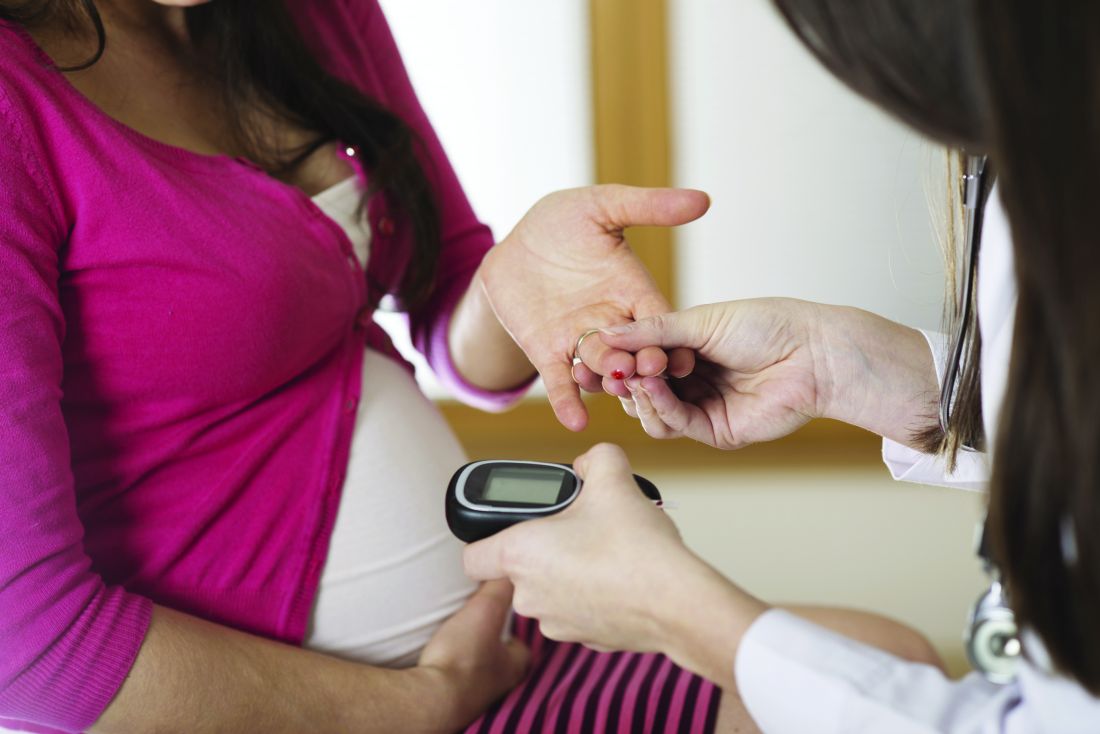
Women who went on to develop GDM had higher HbA1c levels, and measuring this factor improved prediction when added to traditional GDM risk factors, Stefanie N. Hinkle, PhD, of the Eunice Kennedy Shriver National Institute of Child Health and Human Development (NICHD) and her associates reported in Scientific Reports.
A previous report showed that GDM-associated fetal overgrowth begins before GDM diagnosis, which suggests a need to identify GDM earlier in pregnancy (Int J Epidemiol. 2018 Feb;47[1]:25–25l).
HbA1c is already used to screen for type 2 diabetes mellitus outside of pregnancy. Previous studies that examined its potential utility for GDM have focused on high-risk patients, examined an HbA1c threshold of 5.7%, used GDM during the first trimester only as the outcome, or had other limitations. There is little research on HbA1c levels and GDM in population-based samples.
Dr. Hinkle and her associates conducted a secondary analysis of a case-control study that involved 2,334 low-risk pregnancies among nonobese women and 468 low-risk pregnancies among obese women (n = 2,802) at 12 U.S. centers. The women were recruited during gestational weeks 8-13 and then followed until the end of the pregnancy. The researchers did a nested GDM case-control study of 107 GDM cases and 214 matched non-GDM controls.
GDM cases had higher HbA1c levels throughout their pregnancies (P less than .03). The researchers found a linear association between HbA1c at enrollment and GDM risk (P = .001). Women with a first trimester HbA1c level of 5.7% had an odds ratio of 2.73 for GDM, compared with women at the median level of 5.2%.
In the adjusted model, for each increment of 0.1% at enrollment, women had an OR of 1.22 for GDM (P less than .001). For every 0.1% difference between HbA1c levels at enrollment and the second visit (24-29 weeks), the OR was 1.21 (P = .04). When the researchers excluded women who were obese, had smoked, had prior GDM, or had a hematologic disorder, the OR per 0.1% increase was similar (OR, 1.23; 95% confidence interval, 1.10-1.38).
A potential optimal cutoff point is 5.1%, which had a sensitivity of 47% (95% CI, 34%-60%) and a specificity of 79% (95% CI, 62%-88%). At 5.7%, which is used as the cutoff for prediabetes in nonpregnant women, the sensitivity was 21% (95% CI, 8%-36%) and the specificity was 95% (95% CI, 91%-99%).
When the model was added to conventional risk factors such as age, race/ethnicity, being overweight or obese before pregnancy, family history of diabetes, previous GDM, and nulliparity, the area under the curve of HbA1c levels at enrollment increased from 0.59 to 0.65.
Robert Atlas, MD, chair of obstetrics and gynecology at Mercy Medical Center, Baltimore, said in an interview, “This is just the first study that needs to be replicated in different patient populations. No one has looked at a continuum of HbA1c and what value above puts you at an increased risk. I think this is a very powerful study that sets the stage for further investigation into how to utilize HbA1c in a better way than we’ve ever looked at it before.”
The study was funded by the Eunice Kennedy Shriver National Institute of Child Health and Human Development intramural funding and by American Recovery and Reinvestment Act funding. Dr. Hinkle and her associates had no relevant financial disclosures. Dr. Atlas had no relevant financial disclosures.
SOURCE: Hinkle SN et al. Sci Rep. 2018 Aug 16;8(1):12249.
“I don’t think clinically this particular finding can make a change right off the bat. What it shows us is we need to understand, at a deeper level, what mechanistic processes might be going on. What underlying process is going on in the woman that looks apparently normal but has a slightly elevated HbA1c. What are the factors that are making this woman become at (greater) risk?”
Suchi Chandrasekaran, MD, MSCE, is an assistant professor of obstetrics and gynecology in the division of maternal fetal medicine at the University of Washington, Yakima. She had no relevant financial disclosures. She was not associated with the study.
“I don’t think clinically this particular finding can make a change right off the bat. What it shows us is we need to understand, at a deeper level, what mechanistic processes might be going on. What underlying process is going on in the woman that looks apparently normal but has a slightly elevated HbA1c. What are the factors that are making this woman become at (greater) risk?”
Suchi Chandrasekaran, MD, MSCE, is an assistant professor of obstetrics and gynecology in the division of maternal fetal medicine at the University of Washington, Yakima. She had no relevant financial disclosures. She was not associated with the study.
“I don’t think clinically this particular finding can make a change right off the bat. What it shows us is we need to understand, at a deeper level, what mechanistic processes might be going on. What underlying process is going on in the woman that looks apparently normal but has a slightly elevated HbA1c. What are the factors that are making this woman become at (greater) risk?”
Suchi Chandrasekaran, MD, MSCE, is an assistant professor of obstetrics and gynecology in the division of maternal fetal medicine at the University of Washington, Yakima. She had no relevant financial disclosures. She was not associated with the study.
according to a case-control study drawn from the prospective NICHD Fetal Growth Studies-Singleton cohort.
Women who went on to develop GDM had higher HbA1c levels, and measuring this factor improved prediction when added to traditional GDM risk factors, Stefanie N. Hinkle, PhD, of the Eunice Kennedy Shriver National Institute of Child Health and Human Development (NICHD) and her associates reported in Scientific Reports.
A previous report showed that GDM-associated fetal overgrowth begins before GDM diagnosis, which suggests a need to identify GDM earlier in pregnancy (Int J Epidemiol. 2018 Feb;47[1]:25–25l).
HbA1c is already used to screen for type 2 diabetes mellitus outside of pregnancy. Previous studies that examined its potential utility for GDM have focused on high-risk patients, examined an HbA1c threshold of 5.7%, used GDM during the first trimester only as the outcome, or had other limitations. There is little research on HbA1c levels and GDM in population-based samples.
Dr. Hinkle and her associates conducted a secondary analysis of a case-control study that involved 2,334 low-risk pregnancies among nonobese women and 468 low-risk pregnancies among obese women (n = 2,802) at 12 U.S. centers. The women were recruited during gestational weeks 8-13 and then followed until the end of the pregnancy. The researchers did a nested GDM case-control study of 107 GDM cases and 214 matched non-GDM controls.
GDM cases had higher HbA1c levels throughout their pregnancies (P less than .03). The researchers found a linear association between HbA1c at enrollment and GDM risk (P = .001). Women with a first trimester HbA1c level of 5.7% had an odds ratio of 2.73 for GDM, compared with women at the median level of 5.2%.
In the adjusted model, for each increment of 0.1% at enrollment, women had an OR of 1.22 for GDM (P less than .001). For every 0.1% difference between HbA1c levels at enrollment and the second visit (24-29 weeks), the OR was 1.21 (P = .04). When the researchers excluded women who were obese, had smoked, had prior GDM, or had a hematologic disorder, the OR per 0.1% increase was similar (OR, 1.23; 95% confidence interval, 1.10-1.38).
A potential optimal cutoff point is 5.1%, which had a sensitivity of 47% (95% CI, 34%-60%) and a specificity of 79% (95% CI, 62%-88%). At 5.7%, which is used as the cutoff for prediabetes in nonpregnant women, the sensitivity was 21% (95% CI, 8%-36%) and the specificity was 95% (95% CI, 91%-99%).
When the model was added to conventional risk factors such as age, race/ethnicity, being overweight or obese before pregnancy, family history of diabetes, previous GDM, and nulliparity, the area under the curve of HbA1c levels at enrollment increased from 0.59 to 0.65.
Robert Atlas, MD, chair of obstetrics and gynecology at Mercy Medical Center, Baltimore, said in an interview, “This is just the first study that needs to be replicated in different patient populations. No one has looked at a continuum of HbA1c and what value above puts you at an increased risk. I think this is a very powerful study that sets the stage for further investigation into how to utilize HbA1c in a better way than we’ve ever looked at it before.”
The study was funded by the Eunice Kennedy Shriver National Institute of Child Health and Human Development intramural funding and by American Recovery and Reinvestment Act funding. Dr. Hinkle and her associates had no relevant financial disclosures. Dr. Atlas had no relevant financial disclosures.
SOURCE: Hinkle SN et al. Sci Rep. 2018 Aug 16;8(1):12249.
according to a case-control study drawn from the prospective NICHD Fetal Growth Studies-Singleton cohort.
Women who went on to develop GDM had higher HbA1c levels, and measuring this factor improved prediction when added to traditional GDM risk factors, Stefanie N. Hinkle, PhD, of the Eunice Kennedy Shriver National Institute of Child Health and Human Development (NICHD) and her associates reported in Scientific Reports.
A previous report showed that GDM-associated fetal overgrowth begins before GDM diagnosis, which suggests a need to identify GDM earlier in pregnancy (Int J Epidemiol. 2018 Feb;47[1]:25–25l).
HbA1c is already used to screen for type 2 diabetes mellitus outside of pregnancy. Previous studies that examined its potential utility for GDM have focused on high-risk patients, examined an HbA1c threshold of 5.7%, used GDM during the first trimester only as the outcome, or had other limitations. There is little research on HbA1c levels and GDM in population-based samples.
Dr. Hinkle and her associates conducted a secondary analysis of a case-control study that involved 2,334 low-risk pregnancies among nonobese women and 468 low-risk pregnancies among obese women (n = 2,802) at 12 U.S. centers. The women were recruited during gestational weeks 8-13 and then followed until the end of the pregnancy. The researchers did a nested GDM case-control study of 107 GDM cases and 214 matched non-GDM controls.
GDM cases had higher HbA1c levels throughout their pregnancies (P less than .03). The researchers found a linear association between HbA1c at enrollment and GDM risk (P = .001). Women with a first trimester HbA1c level of 5.7% had an odds ratio of 2.73 for GDM, compared with women at the median level of 5.2%.
In the adjusted model, for each increment of 0.1% at enrollment, women had an OR of 1.22 for GDM (P less than .001). For every 0.1% difference between HbA1c levels at enrollment and the second visit (24-29 weeks), the OR was 1.21 (P = .04). When the researchers excluded women who were obese, had smoked, had prior GDM, or had a hematologic disorder, the OR per 0.1% increase was similar (OR, 1.23; 95% confidence interval, 1.10-1.38).
A potential optimal cutoff point is 5.1%, which had a sensitivity of 47% (95% CI, 34%-60%) and a specificity of 79% (95% CI, 62%-88%). At 5.7%, which is used as the cutoff for prediabetes in nonpregnant women, the sensitivity was 21% (95% CI, 8%-36%) and the specificity was 95% (95% CI, 91%-99%).
When the model was added to conventional risk factors such as age, race/ethnicity, being overweight or obese before pregnancy, family history of diabetes, previous GDM, and nulliparity, the area under the curve of HbA1c levels at enrollment increased from 0.59 to 0.65.
Robert Atlas, MD, chair of obstetrics and gynecology at Mercy Medical Center, Baltimore, said in an interview, “This is just the first study that needs to be replicated in different patient populations. No one has looked at a continuum of HbA1c and what value above puts you at an increased risk. I think this is a very powerful study that sets the stage for further investigation into how to utilize HbA1c in a better way than we’ve ever looked at it before.”
The study was funded by the Eunice Kennedy Shriver National Institute of Child Health and Human Development intramural funding and by American Recovery and Reinvestment Act funding. Dr. Hinkle and her associates had no relevant financial disclosures. Dr. Atlas had no relevant financial disclosures.
SOURCE: Hinkle SN et al. Sci Rep. 2018 Aug 16;8(1):12249.
FROM SCIENTIFIC REPORTS
Key clinical point: First trimester HbA1c levels could improve early diagnosis.
Major finding: HbA1c levels of 5.1% predicted later gestational diabetes with a sensitivity of 47% and a specificity of 79%
Study details: Nested case-control study of 107 gestational diabetes cases and 214 controls.
Disclosures: The study was funded by the Eunice Kennedy Shriver National Institute of Child Health and Human Development intramural funding and by the American Recovery and Reinvestment Act funding. .
Source: Hinkle SN et al. Sci Rep. 2018 Aug 16;8(1):12249.
Alopecia areata linked to mental health disorders
Alopecia areata is associated with greater frequency of mental health disorders, according to a new analysis of U.S. hospitalizations.
Specifically, the analysis found, alopecia areata patients are at risk for any mental health disorder, anxiety disorders, attention-deficit/hyperactivity disorder, dementia, mood disorders, personality disorders, and suicide or intentionally self-inflicted injury. The report was published in the Journal of the American Academy of Dermatology.
The researchers worked with 87,053,155 adult and child records from the 2002-2012 National Inpatient Sample, which represents 20% of U.S. hospitalizations.
Overall, 5,605 patients had alopecia areata, which was the secondary diagnosis more than 99% of the time. Compared with inpatients without alopecia areata, those with the disorder were more likely to be younger (42.2 vs. 47.9 years; P less than .0001), female (61.7% vs. 58.6%; P = .0297), and uninsured (8.1% vs. 5.5%; P less than .0001). In addition, inpatients with alopecia areata had a greater frequency of mental health disorders (32.8% vs. 20.0%; P less than .0001) and were more likely to have a primary mental health diagnosis (5.5% vs. 2.2%; P less than .0001), reported Vivek Singam of Northwestern University, Chicago, and his associates.
Among 15 mental health or classes of disorders examined, alopecia areata patients were at greater risk in 13 of them. The only exceptions were delirium/dementia/amnestic/cognitive disorders and disorders diagnosed in infancy, childhood, or adolescence.
Alopecia areata patients with a mental health disorder had a mean hospital stay of 6.0 days (95% confidence interval, 5.4.-6.6) and hospitalization cost of $11,907 (95% CI, $10,312-$13,503).
Previous studies had shown similar relationships. However, previous studies showed lower risk of alopecia areata and schizophrenia and no increased risk of ADHD, compared with the current study’s findings. The authors could offer no explanation for those differences.
The strengths of the current analysis include its use of a large-scale, nationally representative cohort and its large sample size, as well its inclusion of a broad range of mental health disorders. Because of its cross-sectional design, the study could not establish the temporal relationship between alopecia areata and mental health disorders.
It is unclear whether psychosocial stress might cause or exacerbate alopecia areata, or whether alopecia areata can lead to or worsen mental health disorders.
The researchers called for additional studies to understand this relationship and potential mechanisms.
The Agency for Healthcare Research and Quality and the Dermatology Foundation funded the study. The researchers declared having no conflicts of interest.
SOURCE: Singam V et al. J Am Acad Dermatol. 2018 Aug 6. doi: 10.1016/j.jaad.2018.07.044.
Alopecia areata is associated with greater frequency of mental health disorders, according to a new analysis of U.S. hospitalizations.
Specifically, the analysis found, alopecia areata patients are at risk for any mental health disorder, anxiety disorders, attention-deficit/hyperactivity disorder, dementia, mood disorders, personality disorders, and suicide or intentionally self-inflicted injury. The report was published in the Journal of the American Academy of Dermatology.
The researchers worked with 87,053,155 adult and child records from the 2002-2012 National Inpatient Sample, which represents 20% of U.S. hospitalizations.
Overall, 5,605 patients had alopecia areata, which was the secondary diagnosis more than 99% of the time. Compared with inpatients without alopecia areata, those with the disorder were more likely to be younger (42.2 vs. 47.9 years; P less than .0001), female (61.7% vs. 58.6%; P = .0297), and uninsured (8.1% vs. 5.5%; P less than .0001). In addition, inpatients with alopecia areata had a greater frequency of mental health disorders (32.8% vs. 20.0%; P less than .0001) and were more likely to have a primary mental health diagnosis (5.5% vs. 2.2%; P less than .0001), reported Vivek Singam of Northwestern University, Chicago, and his associates.
Among 15 mental health or classes of disorders examined, alopecia areata patients were at greater risk in 13 of them. The only exceptions were delirium/dementia/amnestic/cognitive disorders and disorders diagnosed in infancy, childhood, or adolescence.
Alopecia areata patients with a mental health disorder had a mean hospital stay of 6.0 days (95% confidence interval, 5.4.-6.6) and hospitalization cost of $11,907 (95% CI, $10,312-$13,503).
Previous studies had shown similar relationships. However, previous studies showed lower risk of alopecia areata and schizophrenia and no increased risk of ADHD, compared with the current study’s findings. The authors could offer no explanation for those differences.
The strengths of the current analysis include its use of a large-scale, nationally representative cohort and its large sample size, as well its inclusion of a broad range of mental health disorders. Because of its cross-sectional design, the study could not establish the temporal relationship between alopecia areata and mental health disorders.
It is unclear whether psychosocial stress might cause or exacerbate alopecia areata, or whether alopecia areata can lead to or worsen mental health disorders.
The researchers called for additional studies to understand this relationship and potential mechanisms.
The Agency for Healthcare Research and Quality and the Dermatology Foundation funded the study. The researchers declared having no conflicts of interest.
SOURCE: Singam V et al. J Am Acad Dermatol. 2018 Aug 6. doi: 10.1016/j.jaad.2018.07.044.
Alopecia areata is associated with greater frequency of mental health disorders, according to a new analysis of U.S. hospitalizations.
Specifically, the analysis found, alopecia areata patients are at risk for any mental health disorder, anxiety disorders, attention-deficit/hyperactivity disorder, dementia, mood disorders, personality disorders, and suicide or intentionally self-inflicted injury. The report was published in the Journal of the American Academy of Dermatology.
The researchers worked with 87,053,155 adult and child records from the 2002-2012 National Inpatient Sample, which represents 20% of U.S. hospitalizations.
Overall, 5,605 patients had alopecia areata, which was the secondary diagnosis more than 99% of the time. Compared with inpatients without alopecia areata, those with the disorder were more likely to be younger (42.2 vs. 47.9 years; P less than .0001), female (61.7% vs. 58.6%; P = .0297), and uninsured (8.1% vs. 5.5%; P less than .0001). In addition, inpatients with alopecia areata had a greater frequency of mental health disorders (32.8% vs. 20.0%; P less than .0001) and were more likely to have a primary mental health diagnosis (5.5% vs. 2.2%; P less than .0001), reported Vivek Singam of Northwestern University, Chicago, and his associates.
Among 15 mental health or classes of disorders examined, alopecia areata patients were at greater risk in 13 of them. The only exceptions were delirium/dementia/amnestic/cognitive disorders and disorders diagnosed in infancy, childhood, or adolescence.
Alopecia areata patients with a mental health disorder had a mean hospital stay of 6.0 days (95% confidence interval, 5.4.-6.6) and hospitalization cost of $11,907 (95% CI, $10,312-$13,503).
Previous studies had shown similar relationships. However, previous studies showed lower risk of alopecia areata and schizophrenia and no increased risk of ADHD, compared with the current study’s findings. The authors could offer no explanation for those differences.
The strengths of the current analysis include its use of a large-scale, nationally representative cohort and its large sample size, as well its inclusion of a broad range of mental health disorders. Because of its cross-sectional design, the study could not establish the temporal relationship between alopecia areata and mental health disorders.
It is unclear whether psychosocial stress might cause or exacerbate alopecia areata, or whether alopecia areata can lead to or worsen mental health disorders.
The researchers called for additional studies to understand this relationship and potential mechanisms.
The Agency for Healthcare Research and Quality and the Dermatology Foundation funded the study. The researchers declared having no conflicts of interest.
SOURCE: Singam V et al. J Am Acad Dermatol. 2018 Aug 6. doi: 10.1016/j.jaad.2018.07.044.
FROM THE JOURNAL OF THE AMERICAN ACADEMY OF DERMATOLOGY
Key clinical point: Alopecia areata patients should be monitored closely for mental health disorders.
Major finding: Overall, 32.8% of hospitalized alopecia areata patients had a mental health disorder, compared with 20.0% of controls.
Study details: Retrospective analysis of 87,053,155 U.S. adults and children.
Disclosures: The Agency for Healthcare Research & Quality and the Dermatology Foundation funded the study. The researchers declared having no conflicts of interest.
Source: Singam V et al. J Am Acad Dermatol. 2018 Aug 6. doi: 10.1016/j.jaad.2018.07.044.
Psoriasis registry study provides more data on infliximab’s infection risk
that led to hospitalization, the use of intravenous antimicrobial therapy, or death, according to a prospective cohort study of cases in the United Kingdom and the Republic of Ireland.
The new data suggest a risk associated with infliximab treatment that previous clinical trials and observational studies were insufficiently powered to detect, according to the investigators, led by Zenas Yiu, of the University of Manchester (England). They found no associations between infection risk and treatment with etanercept, adalimumab, or ustekinumab, and they noted that there are no such data yet on more recently approved biologic therapies for psoriasis, such as secukinumab or ixekizumab.
The British Association of Dermatologists (BAD) recommends infliximab, a tumor necrosis factor (TNF)–blocker, only for severe cases of psoriasis (Psoriasis Area and Severity Index greater than or equal to 20 and a Dermatology Life Quality Index greater than 18), or when other biologics fail or cannot be used.
To address the insufficient power of earlier studies, the researchers used data from the BAD Biologic Interventions Register (BADBIR), a large, prospective psoriasis registry in the United Kingdom and Ireland established in 2007. The analysis included 3,421 subjects in the nonbiologic systemic therapy cohort, and 422 subjects in the all-lines infliximab cohort. The median follow-up period was 1.49 person-years (interquartile range, 2.50 person-years) for the all-lines (not just first-line) infliximab group, and 1.51 person-years (1.84 person-years) for the nonbiologics group.*
Treatment with infliximab was associated with a statistically significant increased risk of serious infection (defined as an infection associated with prolonged hospitalization or use of IV antimicrobial therapy; or an infection that resulted in death), with an adjusted hazard ratio of 1.95 (95% confidence interval, 1.01-3.75), compared with nonbiologic systemic treatments. The risk was higher in the first 6 months (adjusted HR, 3.49; 95% CI, 1.14-10.70), and from 6 months to 1 year (aHR, 2.99; 95% CI, 1.10-8.14,) but did not reach statistical significance at 1 year to 2 years (aHR, 2.03; 95% CI, 0.61-6.79).
There was also an increased risk of serious infection with infliximab compared with methotrexate (aHR, 2.96; 95% CI, 1.58-5.57).
“Given our findings of a higher risk of serious infection associated with infliximab, we provide real-world evidence to reinforce the position of infliximab in the psoriasis treatment hierarchy,” the authors wrote, adding that “patients with severe psoriasis who fulfill the criteria for the prescription of infliximab should be counseled” about the risk of serious infection.
Dr. Yiu disclosed having received nonfinancial support form Novartis, two authors had no disclosures, and the remainder had various disclosures related to pharmaceutical companies. BADBIR is funded by BAD, which receives funding from Pfizer, Janssen Cilag, AbbVie, Novartis, Samsung Bioepis and Eli Lilly for providing pharmacovigilance services.
SOURCE: Yiu ZZN et al. Br J Dermatol. 2018 Aug 2. doi: 10.1111/bjd.17036.
*This article was updated to correctly indicate that the median follow-up period was 1.49 person-years (interquartile range, 2.50 person-years) for the all-lines (not just first-line) infliximab group, and 1.51 person-years (1.84 person-years) for the nonbiologics group.
that led to hospitalization, the use of intravenous antimicrobial therapy, or death, according to a prospective cohort study of cases in the United Kingdom and the Republic of Ireland.
The new data suggest a risk associated with infliximab treatment that previous clinical trials and observational studies were insufficiently powered to detect, according to the investigators, led by Zenas Yiu, of the University of Manchester (England). They found no associations between infection risk and treatment with etanercept, adalimumab, or ustekinumab, and they noted that there are no such data yet on more recently approved biologic therapies for psoriasis, such as secukinumab or ixekizumab.
The British Association of Dermatologists (BAD) recommends infliximab, a tumor necrosis factor (TNF)–blocker, only for severe cases of psoriasis (Psoriasis Area and Severity Index greater than or equal to 20 and a Dermatology Life Quality Index greater than 18), or when other biologics fail or cannot be used.
To address the insufficient power of earlier studies, the researchers used data from the BAD Biologic Interventions Register (BADBIR), a large, prospective psoriasis registry in the United Kingdom and Ireland established in 2007. The analysis included 3,421 subjects in the nonbiologic systemic therapy cohort, and 422 subjects in the all-lines infliximab cohort. The median follow-up period was 1.49 person-years (interquartile range, 2.50 person-years) for the all-lines (not just first-line) infliximab group, and 1.51 person-years (1.84 person-years) for the nonbiologics group.*
Treatment with infliximab was associated with a statistically significant increased risk of serious infection (defined as an infection associated with prolonged hospitalization or use of IV antimicrobial therapy; or an infection that resulted in death), with an adjusted hazard ratio of 1.95 (95% confidence interval, 1.01-3.75), compared with nonbiologic systemic treatments. The risk was higher in the first 6 months (adjusted HR, 3.49; 95% CI, 1.14-10.70), and from 6 months to 1 year (aHR, 2.99; 95% CI, 1.10-8.14,) but did not reach statistical significance at 1 year to 2 years (aHR, 2.03; 95% CI, 0.61-6.79).
There was also an increased risk of serious infection with infliximab compared with methotrexate (aHR, 2.96; 95% CI, 1.58-5.57).
“Given our findings of a higher risk of serious infection associated with infliximab, we provide real-world evidence to reinforce the position of infliximab in the psoriasis treatment hierarchy,” the authors wrote, adding that “patients with severe psoriasis who fulfill the criteria for the prescription of infliximab should be counseled” about the risk of serious infection.
Dr. Yiu disclosed having received nonfinancial support form Novartis, two authors had no disclosures, and the remainder had various disclosures related to pharmaceutical companies. BADBIR is funded by BAD, which receives funding from Pfizer, Janssen Cilag, AbbVie, Novartis, Samsung Bioepis and Eli Lilly for providing pharmacovigilance services.
SOURCE: Yiu ZZN et al. Br J Dermatol. 2018 Aug 2. doi: 10.1111/bjd.17036.
*This article was updated to correctly indicate that the median follow-up period was 1.49 person-years (interquartile range, 2.50 person-years) for the all-lines (not just first-line) infliximab group, and 1.51 person-years (1.84 person-years) for the nonbiologics group.
that led to hospitalization, the use of intravenous antimicrobial therapy, or death, according to a prospective cohort study of cases in the United Kingdom and the Republic of Ireland.
The new data suggest a risk associated with infliximab treatment that previous clinical trials and observational studies were insufficiently powered to detect, according to the investigators, led by Zenas Yiu, of the University of Manchester (England). They found no associations between infection risk and treatment with etanercept, adalimumab, or ustekinumab, and they noted that there are no such data yet on more recently approved biologic therapies for psoriasis, such as secukinumab or ixekizumab.
The British Association of Dermatologists (BAD) recommends infliximab, a tumor necrosis factor (TNF)–blocker, only for severe cases of psoriasis (Psoriasis Area and Severity Index greater than or equal to 20 and a Dermatology Life Quality Index greater than 18), or when other biologics fail or cannot be used.
To address the insufficient power of earlier studies, the researchers used data from the BAD Biologic Interventions Register (BADBIR), a large, prospective psoriasis registry in the United Kingdom and Ireland established in 2007. The analysis included 3,421 subjects in the nonbiologic systemic therapy cohort, and 422 subjects in the all-lines infliximab cohort. The median follow-up period was 1.49 person-years (interquartile range, 2.50 person-years) for the all-lines (not just first-line) infliximab group, and 1.51 person-years (1.84 person-years) for the nonbiologics group.*
Treatment with infliximab was associated with a statistically significant increased risk of serious infection (defined as an infection associated with prolonged hospitalization or use of IV antimicrobial therapy; or an infection that resulted in death), with an adjusted hazard ratio of 1.95 (95% confidence interval, 1.01-3.75), compared with nonbiologic systemic treatments. The risk was higher in the first 6 months (adjusted HR, 3.49; 95% CI, 1.14-10.70), and from 6 months to 1 year (aHR, 2.99; 95% CI, 1.10-8.14,) but did not reach statistical significance at 1 year to 2 years (aHR, 2.03; 95% CI, 0.61-6.79).
There was also an increased risk of serious infection with infliximab compared with methotrexate (aHR, 2.96; 95% CI, 1.58-5.57).
“Given our findings of a higher risk of serious infection associated with infliximab, we provide real-world evidence to reinforce the position of infliximab in the psoriasis treatment hierarchy,” the authors wrote, adding that “patients with severe psoriasis who fulfill the criteria for the prescription of infliximab should be counseled” about the risk of serious infection.
Dr. Yiu disclosed having received nonfinancial support form Novartis, two authors had no disclosures, and the remainder had various disclosures related to pharmaceutical companies. BADBIR is funded by BAD, which receives funding from Pfizer, Janssen Cilag, AbbVie, Novartis, Samsung Bioepis and Eli Lilly for providing pharmacovigilance services.
SOURCE: Yiu ZZN et al. Br J Dermatol. 2018 Aug 2. doi: 10.1111/bjd.17036.
*This article was updated to correctly indicate that the median follow-up period was 1.49 person-years (interquartile range, 2.50 person-years) for the all-lines (not just first-line) infliximab group, and 1.51 person-years (1.84 person-years) for the nonbiologics group.
FROM BRITISH JOURNAL OF DERMATOLOGY
Key clinical point: The study reinforces British guidelines that infliximab should be restricted to most severe cases.
Major finding: Infliximab was associated with a hazard ratio of 1.95 for severe infections, compared with non-biologic systemic therapies.
Study details: Prospective cohort analysis of a psoriasis treatment database of 3,843 individuals.
Disclosures: Dr. Yiu disclosed having received non-financial support form Novartis, two authors had no disclosures, and the remainder had various disclosures related to pharmaceutical companies. BADBIR is funded by BAD, which receives funding from Pfizer, Janssen Cilag, AbbVie, Novartis, Samsung Bioepis and Eli Lilly for providing pharmacovigilance services.
Source: Yiu ZZN et al. Br J Dermatol. 2018 Aug 2. doi: 10.1111/bjd.17036.
Researchers pinpoint antigen for autoimmune pancreatitis
Researchers have identified laminin 511 as a novel antigen in autoimmune pancreatitis (AIP). A truncated form of the antigen was found in about half of human patients, but fewer than 2% of controls, and mice that were immunized with the antigen responded with induced antibodies and suffered pancreatic injury.
Laminin 511 plays a key role in cell–extracellular matrix (ECM) adhesion in pancreatic tissue. The results, published in Science Translational Medicine, could improve the biologic understanding of AIP and could potentially be a useful diagnostic marker for the disease.
Some autoantibodies are known to be associated with AIP, but the seropositive frequency is low among patients.
The researchers previously demonstrated that injecting IgG from AIP patients into neonatal mice led to pancreatic injury. The IgG was bound to the basement membrane of the pancreatic acini, suggesting the presence of autoantibodies that recognize an antigen in the ECM.
The researchers then screened previously known proteins from the pancreatic ECM against sera from AIP patients, performing Western blot analyses and immunosorbent column chromatography with human and mouse pancreas extracts, and AIP patient IgG. But this approach yielded no results.
The team then conducted an enzyme-linked immunosorbent assay using known pancreatic ECM proteins, which included the laminin subunits 511-FL, 521-FL, 511-E8, 521-E8, 111-EI, 211-E8, and 332-E8. The E8 designates a truncated protein produced by pancreatic elastase that contains the integrin-binding site.
That experiment revealed that 511-E8 is a consistent autoantigen, and a survey of AIP patients found that 26 of 51 (51.0%) had autoantibodies against 511-E8, compared with just 2 of 122 (1.6%) of controls (P less than .001). Further immunohistochemistry studies confirmed that patient IgG binds to laminin in pancreatic tissue.
When the researchers injected 511-E8, 511-FL, 521-FL, or ovalbumin into 8-week-old mice, and then again after 28 days and 56 days, only those who received 511-E8 showed evidence of pancreatic injury 28 days after the final immunization. The mice generated autoantibodies to 511-E8 but not ovalbumin.
The findings may have clinical significance. Patients with antibodies to laminin 511-E8 had a lower frequency of malignancies (0% vs. 32%; P =.0017) and allergic diseases (12% vs. 48%; P =.0043) than patients with no laminin 511-E8 antibodies.
The study was funded by the Japan Society for the Promotion of Science; the Japanese Ministry of Health, Labour, and Welfare; the Practical Research Project for Rare/Intractable Diseases Grant,; the Agency for Medical Research and Development; and the Takeda Science Foundation. One of the authors has filed a patent related to the study results.
SOURCE: Shiokawa M et al. Sci. Transl. Med. 2018 Aug 8. doi: 10.1126/scitranslmed.aaq0997.
Researchers have identified laminin 511 as a novel antigen in autoimmune pancreatitis (AIP). A truncated form of the antigen was found in about half of human patients, but fewer than 2% of controls, and mice that were immunized with the antigen responded with induced antibodies and suffered pancreatic injury.
Laminin 511 plays a key role in cell–extracellular matrix (ECM) adhesion in pancreatic tissue. The results, published in Science Translational Medicine, could improve the biologic understanding of AIP and could potentially be a useful diagnostic marker for the disease.
Some autoantibodies are known to be associated with AIP, but the seropositive frequency is low among patients.
The researchers previously demonstrated that injecting IgG from AIP patients into neonatal mice led to pancreatic injury. The IgG was bound to the basement membrane of the pancreatic acini, suggesting the presence of autoantibodies that recognize an antigen in the ECM.
The researchers then screened previously known proteins from the pancreatic ECM against sera from AIP patients, performing Western blot analyses and immunosorbent column chromatography with human and mouse pancreas extracts, and AIP patient IgG. But this approach yielded no results.
The team then conducted an enzyme-linked immunosorbent assay using known pancreatic ECM proteins, which included the laminin subunits 511-FL, 521-FL, 511-E8, 521-E8, 111-EI, 211-E8, and 332-E8. The E8 designates a truncated protein produced by pancreatic elastase that contains the integrin-binding site.
That experiment revealed that 511-E8 is a consistent autoantigen, and a survey of AIP patients found that 26 of 51 (51.0%) had autoantibodies against 511-E8, compared with just 2 of 122 (1.6%) of controls (P less than .001). Further immunohistochemistry studies confirmed that patient IgG binds to laminin in pancreatic tissue.
When the researchers injected 511-E8, 511-FL, 521-FL, or ovalbumin into 8-week-old mice, and then again after 28 days and 56 days, only those who received 511-E8 showed evidence of pancreatic injury 28 days after the final immunization. The mice generated autoantibodies to 511-E8 but not ovalbumin.
The findings may have clinical significance. Patients with antibodies to laminin 511-E8 had a lower frequency of malignancies (0% vs. 32%; P =.0017) and allergic diseases (12% vs. 48%; P =.0043) than patients with no laminin 511-E8 antibodies.
The study was funded by the Japan Society for the Promotion of Science; the Japanese Ministry of Health, Labour, and Welfare; the Practical Research Project for Rare/Intractable Diseases Grant,; the Agency for Medical Research and Development; and the Takeda Science Foundation. One of the authors has filed a patent related to the study results.
SOURCE: Shiokawa M et al. Sci. Transl. Med. 2018 Aug 8. doi: 10.1126/scitranslmed.aaq0997.
Researchers have identified laminin 511 as a novel antigen in autoimmune pancreatitis (AIP). A truncated form of the antigen was found in about half of human patients, but fewer than 2% of controls, and mice that were immunized with the antigen responded with induced antibodies and suffered pancreatic injury.
Laminin 511 plays a key role in cell–extracellular matrix (ECM) adhesion in pancreatic tissue. The results, published in Science Translational Medicine, could improve the biologic understanding of AIP and could potentially be a useful diagnostic marker for the disease.
Some autoantibodies are known to be associated with AIP, but the seropositive frequency is low among patients.
The researchers previously demonstrated that injecting IgG from AIP patients into neonatal mice led to pancreatic injury. The IgG was bound to the basement membrane of the pancreatic acini, suggesting the presence of autoantibodies that recognize an antigen in the ECM.
The researchers then screened previously known proteins from the pancreatic ECM against sera from AIP patients, performing Western blot analyses and immunosorbent column chromatography with human and mouse pancreas extracts, and AIP patient IgG. But this approach yielded no results.
The team then conducted an enzyme-linked immunosorbent assay using known pancreatic ECM proteins, which included the laminin subunits 511-FL, 521-FL, 511-E8, 521-E8, 111-EI, 211-E8, and 332-E8. The E8 designates a truncated protein produced by pancreatic elastase that contains the integrin-binding site.
That experiment revealed that 511-E8 is a consistent autoantigen, and a survey of AIP patients found that 26 of 51 (51.0%) had autoantibodies against 511-E8, compared with just 2 of 122 (1.6%) of controls (P less than .001). Further immunohistochemistry studies confirmed that patient IgG binds to laminin in pancreatic tissue.
When the researchers injected 511-E8, 511-FL, 521-FL, or ovalbumin into 8-week-old mice, and then again after 28 days and 56 days, only those who received 511-E8 showed evidence of pancreatic injury 28 days after the final immunization. The mice generated autoantibodies to 511-E8 but not ovalbumin.
The findings may have clinical significance. Patients with antibodies to laminin 511-E8 had a lower frequency of malignancies (0% vs. 32%; P =.0017) and allergic diseases (12% vs. 48%; P =.0043) than patients with no laminin 511-E8 antibodies.
The study was funded by the Japan Society for the Promotion of Science; the Japanese Ministry of Health, Labour, and Welfare; the Practical Research Project for Rare/Intractable Diseases Grant,; the Agency for Medical Research and Development; and the Takeda Science Foundation. One of the authors has filed a patent related to the study results.
SOURCE: Shiokawa M et al. Sci. Transl. Med. 2018 Aug 8. doi: 10.1126/scitranslmed.aaq0997.
FROM SCIENCE TRANSLATIONAL MEDICINE
Key clinical point: The study is the first to identify an autoantigen associated with autoimmune pancreatitis.
Major finding: Just over half of autoimmune pancreatitis patients had antibodies against the antigen, compared with 1.6% of controls.
Study details: A mouse and human study (n = 173).
Disclosures: The study was funded by the Japan Society for the Promotion of Science; the Japanese Ministry of Health, Labour, and Welfare; the Practical Research Project for Rare/Intractable Diseases Grant,; the Agency for Medical Research and Development; and the Takeda Science Foundation. One of the authors has filed a patent related to the study results.
Source: Shiokawa M et al. Sci Transl Med. 2018 Aug 8. doi: 10.1126/scitranslmed.aaq0997.
Lay health workers improve end-of-life care
Lay health workers (LHWs) can improve documentation of cancer patients’ care preferences in the aftermath of their diagnosis, investigators report.
Physicians, palliative care workers, and other health professionals can help cancer patients understand their prognosis and establish end-of-life care preferences, but busy schedules and professional reluctance often prevent this. Nonclinical, nonprofessional LHWs often are employed to assist with screening and adherence, but little work has been done to use them in end-of-life care, Manali I. Patel, MD, MPH, and her associates wrote in JAMA Oncology.
To investigate their potential in this role, the researchers randomized 213 patients with stage 3 or 4 recurrent cancer to usual care or the LHW intervention, which included a 6-month structured program delivered by a single LHW who was enrolled in a part-time graduate health education program. The LHWs received an 80-hour online skills-based seminar and 4 weeks’ observation training with a palliative care team.
The LHWs helped patients with advanced care planning, including: education about goals of care, establishment of care preferences, establishment of a surrogate decision maker, creation of an advanced directive, and encouragement to discuss the patient’s care with the clinician.
In the intervention arm, 92.4% of patients successfully had their goals of care documented in the electronic health record within 6 months of randomization, compared with 17.6% of the usual care group (P less than .001). They also were more likely to have created an advanced directive (67.6% vs. 25.9%; P less than .001), Dr. Patel, of Stanford (Calif.) University, and her associates reported.
Patient satisfaction was also greater in the intervention arm, as measured by the Consumer Assessment of Health Care Providers & Systems “satisfaction with provider” item (mean score, 9.16 vs. 7.83; P less than .001). At 6 months, with respect to their oncology provider, patients in the intervention arm registered a mean increase in satisfaction score of 1.53 (P less than .001).
Patients who died were more likely to receive hospice care if they were in the LHW group (76.7% vs. 48.3%; P =.002). Those in the LHW group also had lower health care costs during the final 30 days of their lives ($1,048 vs. $23,482; P less than .001).
Overall, the study shows that LHWs may be one mechanism for delivering high-value care and avoiding unnecessary, burdensome late-life treatments, at least in cancer patients.
SOURCE: Patel MI et al. JAMA Oncol. 2018 Jul 26doi:10.1001/jamaoncol.2018.2446.
Lay health workers (LHWs) can improve documentation of cancer patients’ care preferences in the aftermath of their diagnosis, investigators report.
Physicians, palliative care workers, and other health professionals can help cancer patients understand their prognosis and establish end-of-life care preferences, but busy schedules and professional reluctance often prevent this. Nonclinical, nonprofessional LHWs often are employed to assist with screening and adherence, but little work has been done to use them in end-of-life care, Manali I. Patel, MD, MPH, and her associates wrote in JAMA Oncology.
To investigate their potential in this role, the researchers randomized 213 patients with stage 3 or 4 recurrent cancer to usual care or the LHW intervention, which included a 6-month structured program delivered by a single LHW who was enrolled in a part-time graduate health education program. The LHWs received an 80-hour online skills-based seminar and 4 weeks’ observation training with a palliative care team.
The LHWs helped patients with advanced care planning, including: education about goals of care, establishment of care preferences, establishment of a surrogate decision maker, creation of an advanced directive, and encouragement to discuss the patient’s care with the clinician.
In the intervention arm, 92.4% of patients successfully had their goals of care documented in the electronic health record within 6 months of randomization, compared with 17.6% of the usual care group (P less than .001). They also were more likely to have created an advanced directive (67.6% vs. 25.9%; P less than .001), Dr. Patel, of Stanford (Calif.) University, and her associates reported.
Patient satisfaction was also greater in the intervention arm, as measured by the Consumer Assessment of Health Care Providers & Systems “satisfaction with provider” item (mean score, 9.16 vs. 7.83; P less than .001). At 6 months, with respect to their oncology provider, patients in the intervention arm registered a mean increase in satisfaction score of 1.53 (P less than .001).
Patients who died were more likely to receive hospice care if they were in the LHW group (76.7% vs. 48.3%; P =.002). Those in the LHW group also had lower health care costs during the final 30 days of their lives ($1,048 vs. $23,482; P less than .001).
Overall, the study shows that LHWs may be one mechanism for delivering high-value care and avoiding unnecessary, burdensome late-life treatments, at least in cancer patients.
SOURCE: Patel MI et al. JAMA Oncol. 2018 Jul 26doi:10.1001/jamaoncol.2018.2446.
Lay health workers (LHWs) can improve documentation of cancer patients’ care preferences in the aftermath of their diagnosis, investigators report.
Physicians, palliative care workers, and other health professionals can help cancer patients understand their prognosis and establish end-of-life care preferences, but busy schedules and professional reluctance often prevent this. Nonclinical, nonprofessional LHWs often are employed to assist with screening and adherence, but little work has been done to use them in end-of-life care, Manali I. Patel, MD, MPH, and her associates wrote in JAMA Oncology.
To investigate their potential in this role, the researchers randomized 213 patients with stage 3 or 4 recurrent cancer to usual care or the LHW intervention, which included a 6-month structured program delivered by a single LHW who was enrolled in a part-time graduate health education program. The LHWs received an 80-hour online skills-based seminar and 4 weeks’ observation training with a palliative care team.
The LHWs helped patients with advanced care planning, including: education about goals of care, establishment of care preferences, establishment of a surrogate decision maker, creation of an advanced directive, and encouragement to discuss the patient’s care with the clinician.
In the intervention arm, 92.4% of patients successfully had their goals of care documented in the electronic health record within 6 months of randomization, compared with 17.6% of the usual care group (P less than .001). They also were more likely to have created an advanced directive (67.6% vs. 25.9%; P less than .001), Dr. Patel, of Stanford (Calif.) University, and her associates reported.
Patient satisfaction was also greater in the intervention arm, as measured by the Consumer Assessment of Health Care Providers & Systems “satisfaction with provider” item (mean score, 9.16 vs. 7.83; P less than .001). At 6 months, with respect to their oncology provider, patients in the intervention arm registered a mean increase in satisfaction score of 1.53 (P less than .001).
Patients who died were more likely to receive hospice care if they were in the LHW group (76.7% vs. 48.3%; P =.002). Those in the LHW group also had lower health care costs during the final 30 days of their lives ($1,048 vs. $23,482; P less than .001).
Overall, the study shows that LHWs may be one mechanism for delivering high-value care and avoiding unnecessary, burdensome late-life treatments, at least in cancer patients.
SOURCE: Patel MI et al. JAMA Oncol. 2018 Jul 26doi:10.1001/jamaoncol.2018.2446.
FROM JAMA ONCOLOGY
Key clinical point: Lay health workers helped advanced cancer patients document their treatment preferences and reduced end of life costs.
Major finding: 92.4% of patients working with LHWs had their preferences recorded at 6 months, compared with 17.6% of controls.
Study details: Randomized, controlled trial of 213 patients with stage 3 or 4 recurrent cancer.
Disclosures: The study was funded by the Department of Veterans Affairs, the National Institutes of Health, and the California Healthcare Foundation.
Source: Patel MI et al. JAMA Oncology. 2018 Jul 26. doi: 10.1001/jamaoncol.2018.2446.
Greening intervention tied to self-reported improved mental health
Living close to an urban greening program improved mental health in low-income city dwellers, according to results from a randomized trial, in which the greening intervention consisted of removing trash from vacant lots, grading the land, planting new grass and trees, installing wooden fences, and performing maintenance.

Options for depression treatment are limited, and this has led researchers to consider environmental factors that might contribute to the condition. Vacant or dilapidated neighborhood spaces are a known factor for depression.
The researchers performed a citywide cluster randomized trial in Philadelphia, which included 541 vacant lots in 110 clusters. A total of 37 clusters were assigned to the greening intervention, 36 to the trash cleanup intervention, and 37 clusters were left alone. The researchers interviewed local residents near each cluster, using the short-form Kessler-6 Psychological Distress Scale to assess mental health outcomes, wrote Dr. South, of the University of Pennsylvania, Philadelphia.
The researchers interviewed 442 participants (mean age 44.6 years, 59.7% female) in the preintervention period, and 342 (77.4%) during the postintervention period. The researchers conducted a neighborhood poverty subset analysis that included 139 participants.
Intention-to-treat analyses showed that, compared with no intervention, those in the greening intervention experienced a significant decrease in reporting feeling depressed (–41.5%; 95% confidence interval, –63.6 to –5.9; P = .03) and feeling worthless (–50.9%; 95% CI, –74.7 to –4.7; P = .04). The investigators also found a trend toward a reduction in participants who self-reported being in poor mental health (–62.8%; 95% CI, –86.5 to –27.5; P = .051).
When the analysis was restricted to neighborhoods below the poverty line, the greening intervention led to a significant decrease in participants feeling depressed (–68.7%; 95% CI, –86.5 to –27.5; P =.007), but no statistically significant difference was found in participants with self-reported poor mental health.
The trash cleanup intervention had no significant associations with changes in mental health outcomes, compared with no intervention.
Dr. South reported having no disclosures. The study was funded by the National Institutes of Health, and the Centers for Disease Control and Prevention.
SOURCE: South EC et al. JAMA Network Open. 2018 Jul 20. doi: 10.1001/jamanetworkopen.2018.0298.
Living close to an urban greening program improved mental health in low-income city dwellers, according to results from a randomized trial, in which the greening intervention consisted of removing trash from vacant lots, grading the land, planting new grass and trees, installing wooden fences, and performing maintenance.
Options for depression treatment are limited, and this has led researchers to consider environmental factors that might contribute to the condition. Vacant or dilapidated neighborhood spaces are a known factor for depression.
The researchers performed a citywide cluster randomized trial in Philadelphia, which included 541 vacant lots in 110 clusters. A total of 37 clusters were assigned to the greening intervention, 36 to the trash cleanup intervention, and 37 clusters were left alone. The researchers interviewed local residents near each cluster, using the short-form Kessler-6 Psychological Distress Scale to assess mental health outcomes, wrote Dr. South, of the University of Pennsylvania, Philadelphia.
The researchers interviewed 442 participants (mean age 44.6 years, 59.7% female) in the preintervention period, and 342 (77.4%) during the postintervention period. The researchers conducted a neighborhood poverty subset analysis that included 139 participants.
Intention-to-treat analyses showed that, compared with no intervention, those in the greening intervention experienced a significant decrease in reporting feeling depressed (–41.5%; 95% confidence interval, –63.6 to –5.9; P = .03) and feeling worthless (–50.9%; 95% CI, –74.7 to –4.7; P = .04). The investigators also found a trend toward a reduction in participants who self-reported being in poor mental health (–62.8%; 95% CI, –86.5 to –27.5; P = .051).
When the analysis was restricted to neighborhoods below the poverty line, the greening intervention led to a significant decrease in participants feeling depressed (–68.7%; 95% CI, –86.5 to –27.5; P =.007), but no statistically significant difference was found in participants with self-reported poor mental health.
The trash cleanup intervention had no significant associations with changes in mental health outcomes, compared with no intervention.
Dr. South reported having no disclosures. The study was funded by the National Institutes of Health, and the Centers for Disease Control and Prevention.
SOURCE: South EC et al. JAMA Network Open. 2018 Jul 20. doi: 10.1001/jamanetworkopen.2018.0298.
Living close to an urban greening program improved mental health in low-income city dwellers, according to results from a randomized trial, in which the greening intervention consisted of removing trash from vacant lots, grading the land, planting new grass and trees, installing wooden fences, and performing maintenance.
Options for depression treatment are limited, and this has led researchers to consider environmental factors that might contribute to the condition. Vacant or dilapidated neighborhood spaces are a known factor for depression.
The researchers performed a citywide cluster randomized trial in Philadelphia, which included 541 vacant lots in 110 clusters. A total of 37 clusters were assigned to the greening intervention, 36 to the trash cleanup intervention, and 37 clusters were left alone. The researchers interviewed local residents near each cluster, using the short-form Kessler-6 Psychological Distress Scale to assess mental health outcomes, wrote Dr. South, of the University of Pennsylvania, Philadelphia.
The researchers interviewed 442 participants (mean age 44.6 years, 59.7% female) in the preintervention period, and 342 (77.4%) during the postintervention period. The researchers conducted a neighborhood poverty subset analysis that included 139 participants.
Intention-to-treat analyses showed that, compared with no intervention, those in the greening intervention experienced a significant decrease in reporting feeling depressed (–41.5%; 95% confidence interval, –63.6 to –5.9; P = .03) and feeling worthless (–50.9%; 95% CI, –74.7 to –4.7; P = .04). The investigators also found a trend toward a reduction in participants who self-reported being in poor mental health (–62.8%; 95% CI, –86.5 to –27.5; P = .051).
When the analysis was restricted to neighborhoods below the poverty line, the greening intervention led to a significant decrease in participants feeling depressed (–68.7%; 95% CI, –86.5 to –27.5; P =.007), but no statistically significant difference was found in participants with self-reported poor mental health.
The trash cleanup intervention had no significant associations with changes in mental health outcomes, compared with no intervention.
Dr. South reported having no disclosures. The study was funded by the National Institutes of Health, and the Centers for Disease Control and Prevention.
SOURCE: South EC et al. JAMA Network Open. 2018 Jul 20. doi: 10.1001/jamanetworkopen.2018.0298.
FROM JAMA NETWORK OPEN
Key clinical point: Treating blighted physical environments in addition to traditional patient treatments may help lift self-reported depression.
Major finding: Low-income residents reported a 68% reduction in feeling depressed.
Study details: Randomized, controlled trial of 442 individuals living near vacant lots.
Disclosures: Dr. South reported having no disclosures. The study was funded by the National Institutes of Health, and the Centers for Disease Control and Prevention.
Source: South EC et al. JAMA Network Open. 2018 Jul 20. doi: 10.1001/jamanetworkopen.2018.0298.
No benefit of direct stenting in PCI
A patient-level analysis drawn from three randomized, controlled trials finds no evidence that direct stenting improved myocardial reperfusion or clinical outcomes in ST-segment elevation myocardial infarction (STEMI) patients undergoing percutaneous coronary intervention.
Patients who underwent thrombus aspiration were more likely to receive direct stenting than conventional stenting, but there was no interaction between thrombus aspiration and outcomes, Karim D. Mahmoud, MD, reported in the European Heart Journal.
Direct stenting – stent implantation without balloon predilatation – has been widely adopted in an effort to improve PCI outcomes in STEMI patients, though no formal guidelines call for it. Small trials have suggested a benefit, but no large, definitive trials have been conducted.
Three previous trials have looked at thrombus aspiration in STEMI patients: TAPAS (the Thrombus Aspiration During Percutaneous Coronary Intervention in Acute Myocardial Infarction Study) found that routine manual thrombus aspiration led to better myocardial reperfusion and lower 1-year cardiac mortality (N Engl J Med. 2008 Feb 7;358:557-67). Two larger trials – TASTE (Thrombus Aspiration in ST Elevation Myocardial Infarction in Scandinavia; N Engl J Med. 2013 Oct 24;369[17]:1587-97) and TOTAL (Trial of Routine Aspiration Thrombectomy with PCI vs. PCI Alone in Patients with STEMI; N Engl J Med. 2015 Apr 9;372[15]:1389-98) – both failed to show any benefit of routine thrombus aspiration. As a result, international guidelines recommended use of thrombus aspiration only in selected patients.
The TASTE and TOTAL trials suggested that thrombus aspiration may have led to higher rates of direct stenting, but those rates were lower in TAPAS. Some have suggested that a synergistic effect between thrombus aspiration and DS could explain the positive finding in TAPAS, compared with negative findings in TASTE and TOTAL, said Dr. Mahmoud of Erasmus Medical Center, Rotterdam, the Netherlands.
The researchers tested this idea by pooling patient-level data from the more than 17,000 participants in the three studies, 32% of whom underwent direct stenting. Patients who were randomized to undergo thrombus aspiration were nearly twice as likely to undergo direct stenting (41% vs. 22%, P less than .001). When the researchers 1:1 propensity matched direct stenting versus conventional stenting, 30-day cardiovascular death rates were similar between direct (1.7%) and conventional stenting (1.9%), and there was no interaction between direct stenting and thrombus aspiration. The latter result suggested that there is no synergistic effect. Similar results were found at 1-year follow-up, and with respect to 30-day stroke or transient ischemic attack.
One of the study authors received funding and or honoraria from Bayer, Medtronic, Vascular Solutions, Terumo, Boston Scientific, Abbott Vascular, AstraZeneca, and the Medicines Company.
SOURCE: Mahmoud KD et al. Eur Heart J. 2018;39:2472-9.
A patient-level analysis drawn from three randomized, controlled trials finds no evidence that direct stenting improved myocardial reperfusion or clinical outcomes in ST-segment elevation myocardial infarction (STEMI) patients undergoing percutaneous coronary intervention.
Patients who underwent thrombus aspiration were more likely to receive direct stenting than conventional stenting, but there was no interaction between thrombus aspiration and outcomes, Karim D. Mahmoud, MD, reported in the European Heart Journal.
Direct stenting – stent implantation without balloon predilatation – has been widely adopted in an effort to improve PCI outcomes in STEMI patients, though no formal guidelines call for it. Small trials have suggested a benefit, but no large, definitive trials have been conducted.
Three previous trials have looked at thrombus aspiration in STEMI patients: TAPAS (the Thrombus Aspiration During Percutaneous Coronary Intervention in Acute Myocardial Infarction Study) found that routine manual thrombus aspiration led to better myocardial reperfusion and lower 1-year cardiac mortality (N Engl J Med. 2008 Feb 7;358:557-67). Two larger trials – TASTE (Thrombus Aspiration in ST Elevation Myocardial Infarction in Scandinavia; N Engl J Med. 2013 Oct 24;369[17]:1587-97) and TOTAL (Trial of Routine Aspiration Thrombectomy with PCI vs. PCI Alone in Patients with STEMI; N Engl J Med. 2015 Apr 9;372[15]:1389-98) – both failed to show any benefit of routine thrombus aspiration. As a result, international guidelines recommended use of thrombus aspiration only in selected patients.
The TASTE and TOTAL trials suggested that thrombus aspiration may have led to higher rates of direct stenting, but those rates were lower in TAPAS. Some have suggested that a synergistic effect between thrombus aspiration and DS could explain the positive finding in TAPAS, compared with negative findings in TASTE and TOTAL, said Dr. Mahmoud of Erasmus Medical Center, Rotterdam, the Netherlands.
The researchers tested this idea by pooling patient-level data from the more than 17,000 participants in the three studies, 32% of whom underwent direct stenting. Patients who were randomized to undergo thrombus aspiration were nearly twice as likely to undergo direct stenting (41% vs. 22%, P less than .001). When the researchers 1:1 propensity matched direct stenting versus conventional stenting, 30-day cardiovascular death rates were similar between direct (1.7%) and conventional stenting (1.9%), and there was no interaction between direct stenting and thrombus aspiration. The latter result suggested that there is no synergistic effect. Similar results were found at 1-year follow-up, and with respect to 30-day stroke or transient ischemic attack.
One of the study authors received funding and or honoraria from Bayer, Medtronic, Vascular Solutions, Terumo, Boston Scientific, Abbott Vascular, AstraZeneca, and the Medicines Company.
SOURCE: Mahmoud KD et al. Eur Heart J. 2018;39:2472-9.
A patient-level analysis drawn from three randomized, controlled trials finds no evidence that direct stenting improved myocardial reperfusion or clinical outcomes in ST-segment elevation myocardial infarction (STEMI) patients undergoing percutaneous coronary intervention.
Patients who underwent thrombus aspiration were more likely to receive direct stenting than conventional stenting, but there was no interaction between thrombus aspiration and outcomes, Karim D. Mahmoud, MD, reported in the European Heart Journal.
Direct stenting – stent implantation without balloon predilatation – has been widely adopted in an effort to improve PCI outcomes in STEMI patients, though no formal guidelines call for it. Small trials have suggested a benefit, but no large, definitive trials have been conducted.
Three previous trials have looked at thrombus aspiration in STEMI patients: TAPAS (the Thrombus Aspiration During Percutaneous Coronary Intervention in Acute Myocardial Infarction Study) found that routine manual thrombus aspiration led to better myocardial reperfusion and lower 1-year cardiac mortality (N Engl J Med. 2008 Feb 7;358:557-67). Two larger trials – TASTE (Thrombus Aspiration in ST Elevation Myocardial Infarction in Scandinavia; N Engl J Med. 2013 Oct 24;369[17]:1587-97) and TOTAL (Trial of Routine Aspiration Thrombectomy with PCI vs. PCI Alone in Patients with STEMI; N Engl J Med. 2015 Apr 9;372[15]:1389-98) – both failed to show any benefit of routine thrombus aspiration. As a result, international guidelines recommended use of thrombus aspiration only in selected patients.
The TASTE and TOTAL trials suggested that thrombus aspiration may have led to higher rates of direct stenting, but those rates were lower in TAPAS. Some have suggested that a synergistic effect between thrombus aspiration and DS could explain the positive finding in TAPAS, compared with negative findings in TASTE and TOTAL, said Dr. Mahmoud of Erasmus Medical Center, Rotterdam, the Netherlands.
The researchers tested this idea by pooling patient-level data from the more than 17,000 participants in the three studies, 32% of whom underwent direct stenting. Patients who were randomized to undergo thrombus aspiration were nearly twice as likely to undergo direct stenting (41% vs. 22%, P less than .001). When the researchers 1:1 propensity matched direct stenting versus conventional stenting, 30-day cardiovascular death rates were similar between direct (1.7%) and conventional stenting (1.9%), and there was no interaction between direct stenting and thrombus aspiration. The latter result suggested that there is no synergistic effect. Similar results were found at 1-year follow-up, and with respect to 30-day stroke or transient ischemic attack.
One of the study authors received funding and or honoraria from Bayer, Medtronic, Vascular Solutions, Terumo, Boston Scientific, Abbott Vascular, AstraZeneca, and the Medicines Company.
SOURCE: Mahmoud KD et al. Eur Heart J. 2018;39:2472-9.
FROM EUROPEAN HEART JOURNAL
Key clinical point:
Major finding: Thirty-day cardiovascular death rates were similar between direct stenting (1.7%) and conventional stenting (1.9%).
Study details: Propensity-matched analysis of patient data from three previous trials (n = 17,329).
Disclosures: One of the study authors received funding and or honoraria from Bayer, Medtronic, Vascular Solutions, Terumo, Boston Scientific, Abbott Vascular, AstraZeneca, and the Medicines Company.
Source: Mahmoud KD et al. Eur Heart J. 2018;39:2472-9.
Prenatal depression tracked through multiple generations shows increase
Rebecca M. Pearson, PhD, and her associates reported in JAMA Network Open.

The findings come from the Avon Longitudinal Study of Parents and Children (ALSPAC), which prospectively followed women who became pregnant between 1990 and 1992 (G0) in a region in southwest England.
In the current analysis, the researchers examined 180 daughters of the original participants, or the female partners of male children (G1). They were recruited during a pregnancy that occurred between June 6, 2012, and Dec. 31, 2016, and had to have completed the Edinburgh Postnatal Depression Scale (EPDS) at 18 weeks of the pregnancy. They were compared to G0 mothers who had become pregnant in the same age range as the G1 subjects (age 19-24 years). Because the G1 participants had all been born in the county of Avon, the G0 subjects were also restricted to 2,390 women who were born there, which represented about 50% of the G0 sample.
Seventeen percent of the G0 women had high depression scores (EPDS greater than or equal to 13) at 18 weeks, compared with 25% of the G1 women. After adjustment for age, body mass index, smoking, parity, and education, the risk ratio for prenatal depression in the later generation of women was 1.77 (95% confidence interval, 1.27-2.46).
There was a strong association between prenatal depression in G1 women and their mothers: Fifty-four percent of women whose mothers had experienced prenatal depression also were positive for prenatal depression, compared with 16% of women whose mothers did not have prenatal depression (RR, 3.33; 95% confidence interval, 1.65-6.67).
An increased incidence of prenatal depression has major implications for service providers and public health efforts. The authors of the study call for more research to confirm this increase and identify potential causes.
The study is the first multigenerational cohort look at prenatal depression, but was limited by the much smaller size of the G1 group. The study also may not be generalizable to older women or ethnic groups other than white European individuals, and selection bias is possible.
The Avon Longitudinal Study of Parents and Children was supported by the UK Medical Research Council, the Wellcome Trust, and the University of Bristol. This current study received support from the National Institute for Health Research Biomedical Research Centre at the University Hospitals Bristol National Health Service Foundation Trust and the University of Bristol, the National Institutes of Health, and the European Research Council under the European Union’s Seventh Framework Programme. Dr. Pearson reported no relevant financial disclosures; a number of the other researchers reported support from a variety of grants.
SOURCE: RM Pearson RM et al. JAMA Network Open. 2018;1(3):e180725.
Rebecca M. Pearson, PhD, and her associates reported in JAMA Network Open.
The findings come from the Avon Longitudinal Study of Parents and Children (ALSPAC), which prospectively followed women who became pregnant between 1990 and 1992 (G0) in a region in southwest England.
In the current analysis, the researchers examined 180 daughters of the original participants, or the female partners of male children (G1). They were recruited during a pregnancy that occurred between June 6, 2012, and Dec. 31, 2016, and had to have completed the Edinburgh Postnatal Depression Scale (EPDS) at 18 weeks of the pregnancy. They were compared to G0 mothers who had become pregnant in the same age range as the G1 subjects (age 19-24 years). Because the G1 participants had all been born in the county of Avon, the G0 subjects were also restricted to 2,390 women who were born there, which represented about 50% of the G0 sample.
Seventeen percent of the G0 women had high depression scores (EPDS greater than or equal to 13) at 18 weeks, compared with 25% of the G1 women. After adjustment for age, body mass index, smoking, parity, and education, the risk ratio for prenatal depression in the later generation of women was 1.77 (95% confidence interval, 1.27-2.46).
There was a strong association between prenatal depression in G1 women and their mothers: Fifty-four percent of women whose mothers had experienced prenatal depression also were positive for prenatal depression, compared with 16% of women whose mothers did not have prenatal depression (RR, 3.33; 95% confidence interval, 1.65-6.67).
An increased incidence of prenatal depression has major implications for service providers and public health efforts. The authors of the study call for more research to confirm this increase and identify potential causes.
The study is the first multigenerational cohort look at prenatal depression, but was limited by the much smaller size of the G1 group. The study also may not be generalizable to older women or ethnic groups other than white European individuals, and selection bias is possible.
The Avon Longitudinal Study of Parents and Children was supported by the UK Medical Research Council, the Wellcome Trust, and the University of Bristol. This current study received support from the National Institute for Health Research Biomedical Research Centre at the University Hospitals Bristol National Health Service Foundation Trust and the University of Bristol, the National Institutes of Health, and the European Research Council under the European Union’s Seventh Framework Programme. Dr. Pearson reported no relevant financial disclosures; a number of the other researchers reported support from a variety of grants.
SOURCE: RM Pearson RM et al. JAMA Network Open. 2018;1(3):e180725.
Rebecca M. Pearson, PhD, and her associates reported in JAMA Network Open.
The findings come from the Avon Longitudinal Study of Parents and Children (ALSPAC), which prospectively followed women who became pregnant between 1990 and 1992 (G0) in a region in southwest England.
In the current analysis, the researchers examined 180 daughters of the original participants, or the female partners of male children (G1). They were recruited during a pregnancy that occurred between June 6, 2012, and Dec. 31, 2016, and had to have completed the Edinburgh Postnatal Depression Scale (EPDS) at 18 weeks of the pregnancy. They were compared to G0 mothers who had become pregnant in the same age range as the G1 subjects (age 19-24 years). Because the G1 participants had all been born in the county of Avon, the G0 subjects were also restricted to 2,390 women who were born there, which represented about 50% of the G0 sample.
Seventeen percent of the G0 women had high depression scores (EPDS greater than or equal to 13) at 18 weeks, compared with 25% of the G1 women. After adjustment for age, body mass index, smoking, parity, and education, the risk ratio for prenatal depression in the later generation of women was 1.77 (95% confidence interval, 1.27-2.46).
There was a strong association between prenatal depression in G1 women and their mothers: Fifty-four percent of women whose mothers had experienced prenatal depression also were positive for prenatal depression, compared with 16% of women whose mothers did not have prenatal depression (RR, 3.33; 95% confidence interval, 1.65-6.67).
An increased incidence of prenatal depression has major implications for service providers and public health efforts. The authors of the study call for more research to confirm this increase and identify potential causes.
The study is the first multigenerational cohort look at prenatal depression, but was limited by the much smaller size of the G1 group. The study also may not be generalizable to older women or ethnic groups other than white European individuals, and selection bias is possible.
The Avon Longitudinal Study of Parents and Children was supported by the UK Medical Research Council, the Wellcome Trust, and the University of Bristol. This current study received support from the National Institute for Health Research Biomedical Research Centre at the University Hospitals Bristol National Health Service Foundation Trust and the University of Bristol, the National Institutes of Health, and the European Research Council under the European Union’s Seventh Framework Programme. Dr. Pearson reported no relevant financial disclosures; a number of the other researchers reported support from a variety of grants.
SOURCE: RM Pearson RM et al. JAMA Network Open. 2018;1(3):e180725.
FROM JAMA NETWORK OPEN
Key clinical point: The frequency of prenatal depression increased from one generation to the next in English women.
Major finding: The second generation of mothers had a higher risk of prenatal depression (risk ratio, 1.77).
Study details: Prospective study of 2,390 first-generation mothers and 180 second-generation mothers.
Disclosures: The Avon Longitudinal Study of Parents and Children was supported by the UK Medical Research Council, the Wellcome Trust, and the University of Bristol. This current study received support from the National Institute for Health Research Biomedical Research Centre at the University Hospitals Bristol National Health Service Foundation Trust and the University of Bristol, the National Institutes of Health, and the European Research Council under the European Union’s Seventh Framework Programme. Dr. Pearson reported no relevant financial disclosures; a number of the other researchers reported support from a variety of grants.
Source: RM Pearson RM et al. JAMA Network Open. 2018;1(3):e180725.