User login
Clinicians still seek the best uses for apremilast
WAILEA, HAWAII – Oral apremilast is a drug in search of a compelling indication, Craig L. Leonardi, MD, declared at the Hawaii Dermatology Seminar provided by Global Academy for Medical Education/Skin Disease Research Foundation.
“Apremilast is the least effective systemic agent for the treatment of psoriasis. That’s a statement of fact. I think the drug is mismatched for the treatment of moderate to severe plaque psoriasis. In fact, many of us gave the company that advice early on, but it was a program that was set in stone at that point,” according to Dr. Leonardi, a dermatologist at Saint Louis University and a prominent psoriasis clinical trialist.
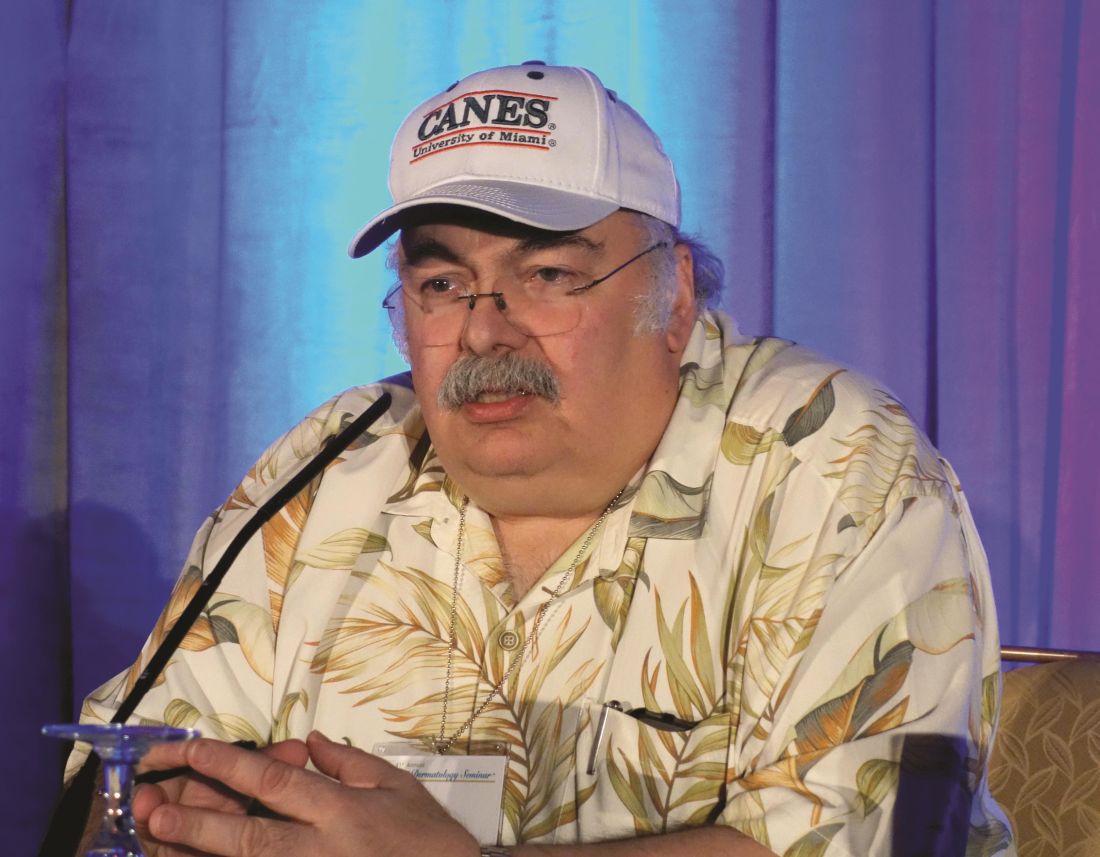
“You have a drug that’s modest with regard to clearing psoriasis and it’s modest in controlling psoriatic arthritis. So you have to ask yourself what’s the patient population for this drug. I would just say that in my hands – and this is off-label – I use it only in patients with mild to moderate psoriasis,” Dr. Leonardi said.
“We all have psoriasis patients who come in with 3% or 4% of their skin involved, they’re actually using the class I topical steroids that I prescribe for them, yet they’re still not clear or almost clear and they want more. At that point, that’s when I might take them down this pathway and put them on apremilast along with a topical steroid. And I think that’s the appropriate place for this drug. I don’t use it in patients with 10% or more body surface area involvement,” he said.
He added that he would like to be able to prescribe apremilast in conjunction with a biologic agent in patients with more severe psoriasis to obtain synergistic efficacy, but payers balk at that because, at close to $3,000 per month, apremilast costs far more than methotrexate and other generic conventional disease-modifying antirheumatic drugs.
“The insurance industry is all over this drug. They require preauthorization, and they tell me, ‘No way, have a nice day,’ ” according to the dermatologist.
Dr. Leonardi described a couple of other practical caveats regarding apremilast. In patients with an estimated glomerular filtration rate below 30 mL/min per 1.73 m2, a dose reduction to 30 mg once daily in the morning is necessary. And apremilast is not recommended for use in patients who are on a strong inducer of the CYP 450 enzyme, such as rifampin or phenytoin.
An intriguing side effect of apremilast is that it causes weight loss: A 5%-10% weight loss was seen in the major psoriasis clinical trials. But it’s been established that there is no correlation at all between the weight loss and clinical efficacy for skin clearance.
What efficacy can be anticipated?
In the pivotal phase III ESTEEM I trial conducted in 844 patients with moderate to severe psoriasis (J Am Acad Dermatol. 2015 Jul;73[1]:37-49), the overall PASI-75 response rate at week 16 in patients assigned to apremilast at 30 mg twice daily was 33%, significantly better than the 5% placebo response rate, but substantially less than what’s achieved with the tumor necrosis factor inhibitors and other injectable biologic agents.
Moreover, in the pivotal phase III PALACE 1 study of apremilast for the treatment of psoriatic arthritis, the primary outcome of at least a 20% improvement in the modified American College of Rheumatology response criteria at week 16 was achieved in 40% of patients randomized to apremilast at 30 mg twice daily, compared with 19% on placebo (Ann Rheum Dis. 2014 Jun;73[6]:1020-6). Again, that doesn’t approach the efficacy of a TNF inhibitor, Dr. Leonardi noted.
On the plus side, an oral agent such as apremilast is an attractive option for treatment-adherent patients. Plus, the drug has a favorable safety profile and is well tolerated, with mild to moderate side effects that appear early and are self-limited. In ESTEEM I, for example, more than 96% of patients had either no or only mild to moderate adverse events. The incidence of the two most common adverse events, diarrhea and nausea, at 19% and 16%, respectively, was more than double that in placebo-treated controls, but rates of other adverse events were similar in the two treatment arms.
Symposium codirector Linda Stein Gold, MD, director of dermatology research at the Henry Ford Health System in Detroit, said a clinical trial of apremilast conducted specifically in patients with moderate psoriasis has recently been completed. When those results become available they should shore up the drug’s use in that population.
Finding potential in off-label use
“This drug may have been brought to market for psoriasis, but I think its utility is so much more in other diseases where inflammation is an important mechanism,” said Neal Bhatia, MD, director of clinical dermatology at Therapeutics Clinical Research in San Diego. “Most of my use of apremilast is off-label for atopic dermatitis, for lichen planus, and I’ve tried it in a lot of patients where it has worked for discoid lupus. There’s so much potential for apremilast,” said Dr. Bhatia.
Dr. Leonardi remained unpersuaded.
“Your glass of water is half full, mine is half empty in this case,” he replied. “This drug has been approved now for at least 3 years, and we are still looking at the occasional favorable case report that flies up. I’ve got to say this drug is having a hard time finding a place outside of psoriasis, but we’ll all see.”
Dr. Leonardi reported having financial relationships with more than a dozen pharmaceutical companies, including Celgene, which markets apremilast. Dr. Stein Gold, too, has received research grants from and serves as a consultant to numerous drug companies, including Celgene. Dr. Bhatia declared having financial relationships with more than two dozen.
SDEF and this news organization are owned by the same parent company.
WAILEA, HAWAII – Oral apremilast is a drug in search of a compelling indication, Craig L. Leonardi, MD, declared at the Hawaii Dermatology Seminar provided by Global Academy for Medical Education/Skin Disease Research Foundation.
“Apremilast is the least effective systemic agent for the treatment of psoriasis. That’s a statement of fact. I think the drug is mismatched for the treatment of moderate to severe plaque psoriasis. In fact, many of us gave the company that advice early on, but it was a program that was set in stone at that point,” according to Dr. Leonardi, a dermatologist at Saint Louis University and a prominent psoriasis clinical trialist.
“You have a drug that’s modest with regard to clearing psoriasis and it’s modest in controlling psoriatic arthritis. So you have to ask yourself what’s the patient population for this drug. I would just say that in my hands – and this is off-label – I use it only in patients with mild to moderate psoriasis,” Dr. Leonardi said.
“We all have psoriasis patients who come in with 3% or 4% of their skin involved, they’re actually using the class I topical steroids that I prescribe for them, yet they’re still not clear or almost clear and they want more. At that point, that’s when I might take them down this pathway and put them on apremilast along with a topical steroid. And I think that’s the appropriate place for this drug. I don’t use it in patients with 10% or more body surface area involvement,” he said.
He added that he would like to be able to prescribe apremilast in conjunction with a biologic agent in patients with more severe psoriasis to obtain synergistic efficacy, but payers balk at that because, at close to $3,000 per month, apremilast costs far more than methotrexate and other generic conventional disease-modifying antirheumatic drugs.
“The insurance industry is all over this drug. They require preauthorization, and they tell me, ‘No way, have a nice day,’ ” according to the dermatologist.
Dr. Leonardi described a couple of other practical caveats regarding apremilast. In patients with an estimated glomerular filtration rate below 30 mL/min per 1.73 m2, a dose reduction to 30 mg once daily in the morning is necessary. And apremilast is not recommended for use in patients who are on a strong inducer of the CYP 450 enzyme, such as rifampin or phenytoin.
An intriguing side effect of apremilast is that it causes weight loss: A 5%-10% weight loss was seen in the major psoriasis clinical trials. But it’s been established that there is no correlation at all between the weight loss and clinical efficacy for skin clearance.
What efficacy can be anticipated?
In the pivotal phase III ESTEEM I trial conducted in 844 patients with moderate to severe psoriasis (J Am Acad Dermatol. 2015 Jul;73[1]:37-49), the overall PASI-75 response rate at week 16 in patients assigned to apremilast at 30 mg twice daily was 33%, significantly better than the 5% placebo response rate, but substantially less than what’s achieved with the tumor necrosis factor inhibitors and other injectable biologic agents.
Moreover, in the pivotal phase III PALACE 1 study of apremilast for the treatment of psoriatic arthritis, the primary outcome of at least a 20% improvement in the modified American College of Rheumatology response criteria at week 16 was achieved in 40% of patients randomized to apremilast at 30 mg twice daily, compared with 19% on placebo (Ann Rheum Dis. 2014 Jun;73[6]:1020-6). Again, that doesn’t approach the efficacy of a TNF inhibitor, Dr. Leonardi noted.
On the plus side, an oral agent such as apremilast is an attractive option for treatment-adherent patients. Plus, the drug has a favorable safety profile and is well tolerated, with mild to moderate side effects that appear early and are self-limited. In ESTEEM I, for example, more than 96% of patients had either no or only mild to moderate adverse events. The incidence of the two most common adverse events, diarrhea and nausea, at 19% and 16%, respectively, was more than double that in placebo-treated controls, but rates of other adverse events were similar in the two treatment arms.
Symposium codirector Linda Stein Gold, MD, director of dermatology research at the Henry Ford Health System in Detroit, said a clinical trial of apremilast conducted specifically in patients with moderate psoriasis has recently been completed. When those results become available they should shore up the drug’s use in that population.
Finding potential in off-label use
“This drug may have been brought to market for psoriasis, but I think its utility is so much more in other diseases where inflammation is an important mechanism,” said Neal Bhatia, MD, director of clinical dermatology at Therapeutics Clinical Research in San Diego. “Most of my use of apremilast is off-label for atopic dermatitis, for lichen planus, and I’ve tried it in a lot of patients where it has worked for discoid lupus. There’s so much potential for apremilast,” said Dr. Bhatia.
Dr. Leonardi remained unpersuaded.
“Your glass of water is half full, mine is half empty in this case,” he replied. “This drug has been approved now for at least 3 years, and we are still looking at the occasional favorable case report that flies up. I’ve got to say this drug is having a hard time finding a place outside of psoriasis, but we’ll all see.”
Dr. Leonardi reported having financial relationships with more than a dozen pharmaceutical companies, including Celgene, which markets apremilast. Dr. Stein Gold, too, has received research grants from and serves as a consultant to numerous drug companies, including Celgene. Dr. Bhatia declared having financial relationships with more than two dozen.
SDEF and this news organization are owned by the same parent company.
WAILEA, HAWAII – Oral apremilast is a drug in search of a compelling indication, Craig L. Leonardi, MD, declared at the Hawaii Dermatology Seminar provided by Global Academy for Medical Education/Skin Disease Research Foundation.
“Apremilast is the least effective systemic agent for the treatment of psoriasis. That’s a statement of fact. I think the drug is mismatched for the treatment of moderate to severe plaque psoriasis. In fact, many of us gave the company that advice early on, but it was a program that was set in stone at that point,” according to Dr. Leonardi, a dermatologist at Saint Louis University and a prominent psoriasis clinical trialist.
“You have a drug that’s modest with regard to clearing psoriasis and it’s modest in controlling psoriatic arthritis. So you have to ask yourself what’s the patient population for this drug. I would just say that in my hands – and this is off-label – I use it only in patients with mild to moderate psoriasis,” Dr. Leonardi said.
“We all have psoriasis patients who come in with 3% or 4% of their skin involved, they’re actually using the class I topical steroids that I prescribe for them, yet they’re still not clear or almost clear and they want more. At that point, that’s when I might take them down this pathway and put them on apremilast along with a topical steroid. And I think that’s the appropriate place for this drug. I don’t use it in patients with 10% or more body surface area involvement,” he said.
He added that he would like to be able to prescribe apremilast in conjunction with a biologic agent in patients with more severe psoriasis to obtain synergistic efficacy, but payers balk at that because, at close to $3,000 per month, apremilast costs far more than methotrexate and other generic conventional disease-modifying antirheumatic drugs.
“The insurance industry is all over this drug. They require preauthorization, and they tell me, ‘No way, have a nice day,’ ” according to the dermatologist.
Dr. Leonardi described a couple of other practical caveats regarding apremilast. In patients with an estimated glomerular filtration rate below 30 mL/min per 1.73 m2, a dose reduction to 30 mg once daily in the morning is necessary. And apremilast is not recommended for use in patients who are on a strong inducer of the CYP 450 enzyme, such as rifampin or phenytoin.
An intriguing side effect of apremilast is that it causes weight loss: A 5%-10% weight loss was seen in the major psoriasis clinical trials. But it’s been established that there is no correlation at all between the weight loss and clinical efficacy for skin clearance.
What efficacy can be anticipated?
In the pivotal phase III ESTEEM I trial conducted in 844 patients with moderate to severe psoriasis (J Am Acad Dermatol. 2015 Jul;73[1]:37-49), the overall PASI-75 response rate at week 16 in patients assigned to apremilast at 30 mg twice daily was 33%, significantly better than the 5% placebo response rate, but substantially less than what’s achieved with the tumor necrosis factor inhibitors and other injectable biologic agents.
Moreover, in the pivotal phase III PALACE 1 study of apremilast for the treatment of psoriatic arthritis, the primary outcome of at least a 20% improvement in the modified American College of Rheumatology response criteria at week 16 was achieved in 40% of patients randomized to apremilast at 30 mg twice daily, compared with 19% on placebo (Ann Rheum Dis. 2014 Jun;73[6]:1020-6). Again, that doesn’t approach the efficacy of a TNF inhibitor, Dr. Leonardi noted.
On the plus side, an oral agent such as apremilast is an attractive option for treatment-adherent patients. Plus, the drug has a favorable safety profile and is well tolerated, with mild to moderate side effects that appear early and are self-limited. In ESTEEM I, for example, more than 96% of patients had either no or only mild to moderate adverse events. The incidence of the two most common adverse events, diarrhea and nausea, at 19% and 16%, respectively, was more than double that in placebo-treated controls, but rates of other adverse events were similar in the two treatment arms.
Symposium codirector Linda Stein Gold, MD, director of dermatology research at the Henry Ford Health System in Detroit, said a clinical trial of apremilast conducted specifically in patients with moderate psoriasis has recently been completed. When those results become available they should shore up the drug’s use in that population.
Finding potential in off-label use
“This drug may have been brought to market for psoriasis, but I think its utility is so much more in other diseases where inflammation is an important mechanism,” said Neal Bhatia, MD, director of clinical dermatology at Therapeutics Clinical Research in San Diego. “Most of my use of apremilast is off-label for atopic dermatitis, for lichen planus, and I’ve tried it in a lot of patients where it has worked for discoid lupus. There’s so much potential for apremilast,” said Dr. Bhatia.
Dr. Leonardi remained unpersuaded.
“Your glass of water is half full, mine is half empty in this case,” he replied. “This drug has been approved now for at least 3 years, and we are still looking at the occasional favorable case report that flies up. I’ve got to say this drug is having a hard time finding a place outside of psoriasis, but we’ll all see.”
Dr. Leonardi reported having financial relationships with more than a dozen pharmaceutical companies, including Celgene, which markets apremilast. Dr. Stein Gold, too, has received research grants from and serves as a consultant to numerous drug companies, including Celgene. Dr. Bhatia declared having financial relationships with more than two dozen.
SDEF and this news organization are owned by the same parent company.
VIDEO: iFR outperforms FFR in two major trials
WASHINGTON – Instantaneous wave-free ratio (iFR) is the new evidence-based standard of care for invasive physiologic assessment of stable coronary lesions of intermediate angiographic severity, supplanting the older fractional flow reserve (FFR) technology, Matthias Gotberg, MD, said at the annual meeting of the American College of Cardiology.
The virtually identical results of these two trials should encourage more interventional cardiologists to incorporate physiologic assessment of stable coronary lesions into their clinical practice instead of relying solely on anatomic assessment by angiography, which abundant evidence shows is insufficiently accurate in identifying hemodynamically significant lesions warranting revascularization.
FFR never really caught on because of its limitations. DEFINE-FLAIR and iFR-SWEDEHEART show that iFR overcomes those limitations, said Dr. Gotberg, director of the cardiac catheterization laboratory at Skane University Hospital in Lund, Sweden.
The two studies showed that iFR was noninferior to FFR in the 1-year composite endpoint of all-cause mortality, nonfatal MI, or unplanned revascularization. And iFR was associated with significantly shorter procedure times, less stent utilization, and markedly less patient discomfort because, unlike FFR, it doesn’t require administration of adenosine to induce hyperemia.
Indeed, in iFR-SWEDEHEART, which included more than 2,000 randomized patients in three Scandinavian countries, only 3% of the iFR group reported experiencing chest pain, dyspnea, or other forms of discomfort during their procedure, compared with 68% of the FFR group, Dr. Gotberg explains in this video interview.[[{"fid":"192539","view_mode":"medstat_image_full_text","attributes":{"height":"390","width":"100%","class":"media-element file-medstat-image-full-text","data-delta":"1"},"fields":{"format":"medstat_image_full_text"},"type":"media","field_deltas":{"1":{"format":"medstat_image_full_text"}}}]]
WASHINGTON – Instantaneous wave-free ratio (iFR) is the new evidence-based standard of care for invasive physiologic assessment of stable coronary lesions of intermediate angiographic severity, supplanting the older fractional flow reserve (FFR) technology, Matthias Gotberg, MD, said at the annual meeting of the American College of Cardiology.
The virtually identical results of these two trials should encourage more interventional cardiologists to incorporate physiologic assessment of stable coronary lesions into their clinical practice instead of relying solely on anatomic assessment by angiography, which abundant evidence shows is insufficiently accurate in identifying hemodynamically significant lesions warranting revascularization.
FFR never really caught on because of its limitations. DEFINE-FLAIR and iFR-SWEDEHEART show that iFR overcomes those limitations, said Dr. Gotberg, director of the cardiac catheterization laboratory at Skane University Hospital in Lund, Sweden.
The two studies showed that iFR was noninferior to FFR in the 1-year composite endpoint of all-cause mortality, nonfatal MI, or unplanned revascularization. And iFR was associated with significantly shorter procedure times, less stent utilization, and markedly less patient discomfort because, unlike FFR, it doesn’t require administration of adenosine to induce hyperemia.
Indeed, in iFR-SWEDEHEART, which included more than 2,000 randomized patients in three Scandinavian countries, only 3% of the iFR group reported experiencing chest pain, dyspnea, or other forms of discomfort during their procedure, compared with 68% of the FFR group, Dr. Gotberg explains in this video interview.[[{"fid":"192539","view_mode":"medstat_image_full_text","attributes":{"height":"390","width":"100%","class":"media-element file-medstat-image-full-text","data-delta":"1"},"fields":{"format":"medstat_image_full_text"},"type":"media","field_deltas":{"1":{"format":"medstat_image_full_text"}}}]]
WASHINGTON – Instantaneous wave-free ratio (iFR) is the new evidence-based standard of care for invasive physiologic assessment of stable coronary lesions of intermediate angiographic severity, supplanting the older fractional flow reserve (FFR) technology, Matthias Gotberg, MD, said at the annual meeting of the American College of Cardiology.
The virtually identical results of these two trials should encourage more interventional cardiologists to incorporate physiologic assessment of stable coronary lesions into their clinical practice instead of relying solely on anatomic assessment by angiography, which abundant evidence shows is insufficiently accurate in identifying hemodynamically significant lesions warranting revascularization.
FFR never really caught on because of its limitations. DEFINE-FLAIR and iFR-SWEDEHEART show that iFR overcomes those limitations, said Dr. Gotberg, director of the cardiac catheterization laboratory at Skane University Hospital in Lund, Sweden.
The two studies showed that iFR was noninferior to FFR in the 1-year composite endpoint of all-cause mortality, nonfatal MI, or unplanned revascularization. And iFR was associated with significantly shorter procedure times, less stent utilization, and markedly less patient discomfort because, unlike FFR, it doesn’t require administration of adenosine to induce hyperemia.
Indeed, in iFR-SWEDEHEART, which included more than 2,000 randomized patients in three Scandinavian countries, only 3% of the iFR group reported experiencing chest pain, dyspnea, or other forms of discomfort during their procedure, compared with 68% of the FFR group, Dr. Gotberg explains in this video interview.[[{"fid":"192539","view_mode":"medstat_image_full_text","attributes":{"height":"390","width":"100%","class":"media-element file-medstat-image-full-text","data-delta":"1"},"fields":{"format":"medstat_image_full_text"},"type":"media","field_deltas":{"1":{"format":"medstat_image_full_text"}}}]]
AT ACC 17
Evolocumab strikes gold in FOURIER trial
WASHINGTON – The PCSK9 inhibitor evolocumab reduced the incidence of the composite endpoint of cardiovascular death, MI, or stroke by an additional 20% in patients with established cardiovascular disease who were already on background maximum-tolerated statin therapy in the landmark FOURIER trial, Marc S. Sabatine, MD, reported at the annual meeting of the American College of Cardiology.
FOURIER (Further Cardiovascular Outcomes Research with PCSK9 Inhibition in Subjects with Elevated Risk) was eagerly anticipated as the first dedicated cardiovascular outcomes trial to report results for a proprotein convertase subtilisin/kexin type 9 inhibitor, the novel drug class that achieves previously unattainable LDL lowering.

FOURIER randomized 27,564 patients with preexisting high-risk cardiovascular disease in 49 countries to double-blind therapy with subcutaneous evolocumab (Repatha) at either 140 mg every 2 weeks or 420 mg once monthly or to placebo injections. Participants had a baseline LDL-cholesterol level of 70 mg/dL or above while on statin therapy, which continued throughout the study. Sixty-nine percent of subjects were on high-intensity statin therapy, and the rest were on a moderate-intensity statin.
The median LDL level plunged from 92 mg/dL at baseline to 30 mg/dL in the evolocumab group, a 59% reduction. Moreover, one-quarter of patients on evolocumab achieved an LDL below 20 mg/dL. And this effect remained durable over the median 26 months of study follow-up.
“The LDL reduction achieved with evolocumab was rock steady over time,” observed Dr. Sabatine, professor of medicine at Harvard Medical School, Boston, and chair of the Thrombolysis in Myocardial Infarction Study Group.
The primary study endpoint – a composite of cardiovascular death, MI, stroke, hospitalization for unstable angina, or coronary revascularization – occurred in 11.3% of controls and 9.8% of the evolocumab group, for a significant 15% relative risk reduction. But Dr. Sabatine drew attention to the prespecified and fully powered secondary endpoint of cardiovascular death, MI, or stroke, which he considers more clinically relevant: 7.4% in controls, compared with 5.9% in the evolocumab group, for a 20% reduction in risk.
The cardiovascular benefits of greater lipid lowering grew over time. The evolocumab group’s relative risk reduction in the secondary composite endpoint was 16% in the first 12 months of follow-up and 25% beyond 12 months.
Even more impressively, the relative risk reduction in the stripped-down secondary endpoint of fatal or nonfatal MI or stroke was 19% in the first 12 months and 33%, compared with placebo, beyond 12 months.
The benefit in terms of cardiovascular risk reduction was consistent across baseline LDL subgroups, including those in the lowest baseline quartile, whose average baseline LDL was 74 mg/dL. Thus, the former LDL goal of a target below 70 mg/dL as representing maximum benefit has flown out the window.
“Even lower LDL appears to be even better, now down in this trial to 22 mg/dL,” the cardiologist declared.
There was no significant difference between the two study arms in the cardiovascular mortality rate, although Dr. Sabatine didn’t consider that surprising.
“Over the past decade, none of the trials of more intensive LDL lowering when compared with patients on moderate-intensity LDL-lowering therapy showed a significant reduction in cardiovascular mortality, which thankfully is now less common after acute MI and acute stroke than it had been in the past,” he said.
The number needed to treat (NNT) in order to prevent one additional cardiovascular death, MI, or stroke, based upon the current 3-year follow-up data, is roughly 50, according to Dr. Sabatine. Projecting out to 5 years, based upon the close fit between FOURIER and the data from the Cholesterol Treatment Trialists Collaboration, the NNT at 5 years for evolocumab is about 30, although the true NNT may actually prove to be smaller than that, given the steadily increasing benefit seen through 3 years. The projected 5-year NNT for the composite of coronary revascularization, cardiovascular death, MI, or stroke drops to about 20, he added.
The treatment was safe and well tolerated. The rate of study discontinuation attributable to treatment-related adverse events was low, at about 1.5% in both treatment arms. The rates of neurocognitive adverse events, new-onset diabetes, cataracts, and muscle-related complaints didn’t differ between the evolocumab and placebo groups, either. Of note, no one developed neutralizing antibodies to evolocumab. Long-term follow-up will continue in roughly 6,000 FOURIER participants.
Discussant Pamela B. Morris, MD, said FOURIER contains an important secondary message that mustn’t get lost in the enthusiasm for a safe and effective new drug.
“I’m very struck by the high event rate in this population, even with LDL levels down to 30 mg/dL. I think what that says is that although LDL cholesterol is etiologic and incredibly important, there were multiple other risk factors in this population, and given a 4.2% event rate per year despite achieving a very low LDL, we can’t take our foot off the gas in terms of other risk factors,” said Dr. Morris of the Medical University of South Carolina, Charleston.
Discussant Sidney C. Smith Jr., MD, a member of the 2013 ACC/AHA cholesterol treatment guidelines committee, which did away with LDL lowering to a target level in favor of a risk-based approach which embraced percent reduction in LDL as a therapeutic goal, asked Dr. Sabatine if it’s time for the committee to revisit and perhaps restore the concept of shooting for an LDL target range.
“We labored with that in the 2013 guidelines, as to whether there’s some optimal range for LDL or one can look at percent reduction as an indicator,” noted Dr. Smith, professor of medicine at the University of North Carolina in Chapel Hill.
Dr. Sabatine replied, “Dr. [Eugene] Braunwald has made the analogy that if this was smoking, we wouldn’t want people to just reduce their amount of smoking by 50%, we’d want them to reduce it to zero cigarettes.”
The investigator added, “My own feeling is that the benefit is more closely related to the absolute reduction than the percent reduction in LDL, and like any other risk factor, you want to get it down as low as you can go.”
In a later video interview, Dr. Smith said that the FOURIER data make a strong case – at least in these first years of what will be much-longer-term drug therapy – that a target LDL in the range of 25-35 mg/dL may be optimal in a very-high-risk patient population.
Dr. Sabatine reported receiving grant support and consultant fees from Amgen, which funded the FOURIER trial.
Simultaneous with his presentation at the ACC meeting, the FOURIER results were published online at NEJM.org (doi: 10.1056/NEJMoa1615664).
The video associated with this article is no longer available on this site. Please view all of our videos on the MDedge YouTube channel
WASHINGTON – The PCSK9 inhibitor evolocumab reduced the incidence of the composite endpoint of cardiovascular death, MI, or stroke by an additional 20% in patients with established cardiovascular disease who were already on background maximum-tolerated statin therapy in the landmark FOURIER trial, Marc S. Sabatine, MD, reported at the annual meeting of the American College of Cardiology.
FOURIER (Further Cardiovascular Outcomes Research with PCSK9 Inhibition in Subjects with Elevated Risk) was eagerly anticipated as the first dedicated cardiovascular outcomes trial to report results for a proprotein convertase subtilisin/kexin type 9 inhibitor, the novel drug class that achieves previously unattainable LDL lowering.
FOURIER randomized 27,564 patients with preexisting high-risk cardiovascular disease in 49 countries to double-blind therapy with subcutaneous evolocumab (Repatha) at either 140 mg every 2 weeks or 420 mg once monthly or to placebo injections. Participants had a baseline LDL-cholesterol level of 70 mg/dL or above while on statin therapy, which continued throughout the study. Sixty-nine percent of subjects were on high-intensity statin therapy, and the rest were on a moderate-intensity statin.
The median LDL level plunged from 92 mg/dL at baseline to 30 mg/dL in the evolocumab group, a 59% reduction. Moreover, one-quarter of patients on evolocumab achieved an LDL below 20 mg/dL. And this effect remained durable over the median 26 months of study follow-up.
“The LDL reduction achieved with evolocumab was rock steady over time,” observed Dr. Sabatine, professor of medicine at Harvard Medical School, Boston, and chair of the Thrombolysis in Myocardial Infarction Study Group.
The primary study endpoint – a composite of cardiovascular death, MI, stroke, hospitalization for unstable angina, or coronary revascularization – occurred in 11.3% of controls and 9.8% of the evolocumab group, for a significant 15% relative risk reduction. But Dr. Sabatine drew attention to the prespecified and fully powered secondary endpoint of cardiovascular death, MI, or stroke, which he considers more clinically relevant: 7.4% in controls, compared with 5.9% in the evolocumab group, for a 20% reduction in risk.
The cardiovascular benefits of greater lipid lowering grew over time. The evolocumab group’s relative risk reduction in the secondary composite endpoint was 16% in the first 12 months of follow-up and 25% beyond 12 months.
Even more impressively, the relative risk reduction in the stripped-down secondary endpoint of fatal or nonfatal MI or stroke was 19% in the first 12 months and 33%, compared with placebo, beyond 12 months.
The benefit in terms of cardiovascular risk reduction was consistent across baseline LDL subgroups, including those in the lowest baseline quartile, whose average baseline LDL was 74 mg/dL. Thus, the former LDL goal of a target below 70 mg/dL as representing maximum benefit has flown out the window.
“Even lower LDL appears to be even better, now down in this trial to 22 mg/dL,” the cardiologist declared.
There was no significant difference between the two study arms in the cardiovascular mortality rate, although Dr. Sabatine didn’t consider that surprising.
“Over the past decade, none of the trials of more intensive LDL lowering when compared with patients on moderate-intensity LDL-lowering therapy showed a significant reduction in cardiovascular mortality, which thankfully is now less common after acute MI and acute stroke than it had been in the past,” he said.
The number needed to treat (NNT) in order to prevent one additional cardiovascular death, MI, or stroke, based upon the current 3-year follow-up data, is roughly 50, according to Dr. Sabatine. Projecting out to 5 years, based upon the close fit between FOURIER and the data from the Cholesterol Treatment Trialists Collaboration, the NNT at 5 years for evolocumab is about 30, although the true NNT may actually prove to be smaller than that, given the steadily increasing benefit seen through 3 years. The projected 5-year NNT for the composite of coronary revascularization, cardiovascular death, MI, or stroke drops to about 20, he added.
The treatment was safe and well tolerated. The rate of study discontinuation attributable to treatment-related adverse events was low, at about 1.5% in both treatment arms. The rates of neurocognitive adverse events, new-onset diabetes, cataracts, and muscle-related complaints didn’t differ between the evolocumab and placebo groups, either. Of note, no one developed neutralizing antibodies to evolocumab. Long-term follow-up will continue in roughly 6,000 FOURIER participants.
Discussant Pamela B. Morris, MD, said FOURIER contains an important secondary message that mustn’t get lost in the enthusiasm for a safe and effective new drug.
“I’m very struck by the high event rate in this population, even with LDL levels down to 30 mg/dL. I think what that says is that although LDL cholesterol is etiologic and incredibly important, there were multiple other risk factors in this population, and given a 4.2% event rate per year despite achieving a very low LDL, we can’t take our foot off the gas in terms of other risk factors,” said Dr. Morris of the Medical University of South Carolina, Charleston.
Discussant Sidney C. Smith Jr., MD, a member of the 2013 ACC/AHA cholesterol treatment guidelines committee, which did away with LDL lowering to a target level in favor of a risk-based approach which embraced percent reduction in LDL as a therapeutic goal, asked Dr. Sabatine if it’s time for the committee to revisit and perhaps restore the concept of shooting for an LDL target range.
“We labored with that in the 2013 guidelines, as to whether there’s some optimal range for LDL or one can look at percent reduction as an indicator,” noted Dr. Smith, professor of medicine at the University of North Carolina in Chapel Hill.
Dr. Sabatine replied, “Dr. [Eugene] Braunwald has made the analogy that if this was smoking, we wouldn’t want people to just reduce their amount of smoking by 50%, we’d want them to reduce it to zero cigarettes.”
The investigator added, “My own feeling is that the benefit is more closely related to the absolute reduction than the percent reduction in LDL, and like any other risk factor, you want to get it down as low as you can go.”
In a later video interview, Dr. Smith said that the FOURIER data make a strong case – at least in these first years of what will be much-longer-term drug therapy – that a target LDL in the range of 25-35 mg/dL may be optimal in a very-high-risk patient population.
Dr. Sabatine reported receiving grant support and consultant fees from Amgen, which funded the FOURIER trial.
Simultaneous with his presentation at the ACC meeting, the FOURIER results were published online at NEJM.org (doi: 10.1056/NEJMoa1615664).
The video associated with this article is no longer available on this site. Please view all of our videos on the MDedge YouTube channel
WASHINGTON – The PCSK9 inhibitor evolocumab reduced the incidence of the composite endpoint of cardiovascular death, MI, or stroke by an additional 20% in patients with established cardiovascular disease who were already on background maximum-tolerated statin therapy in the landmark FOURIER trial, Marc S. Sabatine, MD, reported at the annual meeting of the American College of Cardiology.
FOURIER (Further Cardiovascular Outcomes Research with PCSK9 Inhibition in Subjects with Elevated Risk) was eagerly anticipated as the first dedicated cardiovascular outcomes trial to report results for a proprotein convertase subtilisin/kexin type 9 inhibitor, the novel drug class that achieves previously unattainable LDL lowering.
FOURIER randomized 27,564 patients with preexisting high-risk cardiovascular disease in 49 countries to double-blind therapy with subcutaneous evolocumab (Repatha) at either 140 mg every 2 weeks or 420 mg once monthly or to placebo injections. Participants had a baseline LDL-cholesterol level of 70 mg/dL or above while on statin therapy, which continued throughout the study. Sixty-nine percent of subjects were on high-intensity statin therapy, and the rest were on a moderate-intensity statin.
The median LDL level plunged from 92 mg/dL at baseline to 30 mg/dL in the evolocumab group, a 59% reduction. Moreover, one-quarter of patients on evolocumab achieved an LDL below 20 mg/dL. And this effect remained durable over the median 26 months of study follow-up.
“The LDL reduction achieved with evolocumab was rock steady over time,” observed Dr. Sabatine, professor of medicine at Harvard Medical School, Boston, and chair of the Thrombolysis in Myocardial Infarction Study Group.
The primary study endpoint – a composite of cardiovascular death, MI, stroke, hospitalization for unstable angina, or coronary revascularization – occurred in 11.3% of controls and 9.8% of the evolocumab group, for a significant 15% relative risk reduction. But Dr. Sabatine drew attention to the prespecified and fully powered secondary endpoint of cardiovascular death, MI, or stroke, which he considers more clinically relevant: 7.4% in controls, compared with 5.9% in the evolocumab group, for a 20% reduction in risk.
The cardiovascular benefits of greater lipid lowering grew over time. The evolocumab group’s relative risk reduction in the secondary composite endpoint was 16% in the first 12 months of follow-up and 25% beyond 12 months.
Even more impressively, the relative risk reduction in the stripped-down secondary endpoint of fatal or nonfatal MI or stroke was 19% in the first 12 months and 33%, compared with placebo, beyond 12 months.
The benefit in terms of cardiovascular risk reduction was consistent across baseline LDL subgroups, including those in the lowest baseline quartile, whose average baseline LDL was 74 mg/dL. Thus, the former LDL goal of a target below 70 mg/dL as representing maximum benefit has flown out the window.
“Even lower LDL appears to be even better, now down in this trial to 22 mg/dL,” the cardiologist declared.
There was no significant difference between the two study arms in the cardiovascular mortality rate, although Dr. Sabatine didn’t consider that surprising.
“Over the past decade, none of the trials of more intensive LDL lowering when compared with patients on moderate-intensity LDL-lowering therapy showed a significant reduction in cardiovascular mortality, which thankfully is now less common after acute MI and acute stroke than it had been in the past,” he said.
The number needed to treat (NNT) in order to prevent one additional cardiovascular death, MI, or stroke, based upon the current 3-year follow-up data, is roughly 50, according to Dr. Sabatine. Projecting out to 5 years, based upon the close fit between FOURIER and the data from the Cholesterol Treatment Trialists Collaboration, the NNT at 5 years for evolocumab is about 30, although the true NNT may actually prove to be smaller than that, given the steadily increasing benefit seen through 3 years. The projected 5-year NNT for the composite of coronary revascularization, cardiovascular death, MI, or stroke drops to about 20, he added.
The treatment was safe and well tolerated. The rate of study discontinuation attributable to treatment-related adverse events was low, at about 1.5% in both treatment arms. The rates of neurocognitive adverse events, new-onset diabetes, cataracts, and muscle-related complaints didn’t differ between the evolocumab and placebo groups, either. Of note, no one developed neutralizing antibodies to evolocumab. Long-term follow-up will continue in roughly 6,000 FOURIER participants.
Discussant Pamela B. Morris, MD, said FOURIER contains an important secondary message that mustn’t get lost in the enthusiasm for a safe and effective new drug.
“I’m very struck by the high event rate in this population, even with LDL levels down to 30 mg/dL. I think what that says is that although LDL cholesterol is etiologic and incredibly important, there were multiple other risk factors in this population, and given a 4.2% event rate per year despite achieving a very low LDL, we can’t take our foot off the gas in terms of other risk factors,” said Dr. Morris of the Medical University of South Carolina, Charleston.
Discussant Sidney C. Smith Jr., MD, a member of the 2013 ACC/AHA cholesterol treatment guidelines committee, which did away with LDL lowering to a target level in favor of a risk-based approach which embraced percent reduction in LDL as a therapeutic goal, asked Dr. Sabatine if it’s time for the committee to revisit and perhaps restore the concept of shooting for an LDL target range.
“We labored with that in the 2013 guidelines, as to whether there’s some optimal range for LDL or one can look at percent reduction as an indicator,” noted Dr. Smith, professor of medicine at the University of North Carolina in Chapel Hill.
Dr. Sabatine replied, “Dr. [Eugene] Braunwald has made the analogy that if this was smoking, we wouldn’t want people to just reduce their amount of smoking by 50%, we’d want them to reduce it to zero cigarettes.”
The investigator added, “My own feeling is that the benefit is more closely related to the absolute reduction than the percent reduction in LDL, and like any other risk factor, you want to get it down as low as you can go.”
In a later video interview, Dr. Smith said that the FOURIER data make a strong case – at least in these first years of what will be much-longer-term drug therapy – that a target LDL in the range of 25-35 mg/dL may be optimal in a very-high-risk patient population.
Dr. Sabatine reported receiving grant support and consultant fees from Amgen, which funded the FOURIER trial.
Simultaneous with his presentation at the ACC meeting, the FOURIER results were published online at NEJM.org (doi: 10.1056/NEJMoa1615664).
The video associated with this article is no longer available on this site. Please view all of our videos on the MDedge YouTube channel
Key clinical point:
Major finding: The projected NNT with evolocumab for 5 years in order to prevent one additional cardiovascular death, MI, or stroke is roughly 30 patients.
Data source: The FOURIER trial was a randomized, double-blind, placebo-controlled trial including more than 27,000 patients with high-risk cardiovascular disease on background statin therapy.
Disclosures: The presenter reported receiving grant support and consultant fees from Amgen, which funded the study.
VIDEO: FOURIER and SPIRE show lower LDL is better for longer
WASHINGTON – With the results of two blockbuster trials in lipid-lowering PCSK9 inhibitors, the long-awaited verdict on LDL cholesterol’s effect on cardiovascular outcomes is in: Lower is better.
In a video interview at the annual meeting of the American College of Cardiology, Paul M. Ridker, MD, added that “lower is better for longer.”
Dr. Ridker presented results of the SPIRE (Studies of PCSK9 Inhibition and the Reduction of Vascular Events) program in bococizumab. Bococizumab was revealed to spur antibody responses in some patients, leading Pfizer to discontinue the SPIRE program and any further development. However, the combined endpoint for all six SPIRE trials was reduced by 25%, a trend that continued with longer treatment.
The FOURIER (Further Cardiovascular Outcomes Research with PCSK9 Inhibition in Subjects with Elevated Risk) trial, presented by Marc S. Sabatine, MD, of Brigham and Women’s Hospital in Boston, showed a reduction of 15% in the cardiovascular events.
Both the SPIRE and the FOURIER program have now provided evidence saying “lower is better for longer,” Dr. Ridker said in a video interview. The challenge is, “who do we want to get these drugs into first?”
For his part, Dr. Ridker, director of the Center for Cardiovascular Disease Prevention at Brigham and Women’s Hospital and professor of medicine at Harvard Medical School, Boston, will focus on his very-high-risk patients who are receiving the most aggressive therapy possible.
The video associated with this article is no longer available on this site. Please view all of our videos on the MDedge YouTube channel
WASHINGTON – With the results of two blockbuster trials in lipid-lowering PCSK9 inhibitors, the long-awaited verdict on LDL cholesterol’s effect on cardiovascular outcomes is in: Lower is better.
In a video interview at the annual meeting of the American College of Cardiology, Paul M. Ridker, MD, added that “lower is better for longer.”
Dr. Ridker presented results of the SPIRE (Studies of PCSK9 Inhibition and the Reduction of Vascular Events) program in bococizumab. Bococizumab was revealed to spur antibody responses in some patients, leading Pfizer to discontinue the SPIRE program and any further development. However, the combined endpoint for all six SPIRE trials was reduced by 25%, a trend that continued with longer treatment.
The FOURIER (Further Cardiovascular Outcomes Research with PCSK9 Inhibition in Subjects with Elevated Risk) trial, presented by Marc S. Sabatine, MD, of Brigham and Women’s Hospital in Boston, showed a reduction of 15% in the cardiovascular events.
Both the SPIRE and the FOURIER program have now provided evidence saying “lower is better for longer,” Dr. Ridker said in a video interview. The challenge is, “who do we want to get these drugs into first?”
For his part, Dr. Ridker, director of the Center for Cardiovascular Disease Prevention at Brigham and Women’s Hospital and professor of medicine at Harvard Medical School, Boston, will focus on his very-high-risk patients who are receiving the most aggressive therapy possible.
The video associated with this article is no longer available on this site. Please view all of our videos on the MDedge YouTube channel
WASHINGTON – With the results of two blockbuster trials in lipid-lowering PCSK9 inhibitors, the long-awaited verdict on LDL cholesterol’s effect on cardiovascular outcomes is in: Lower is better.
In a video interview at the annual meeting of the American College of Cardiology, Paul M. Ridker, MD, added that “lower is better for longer.”
Dr. Ridker presented results of the SPIRE (Studies of PCSK9 Inhibition and the Reduction of Vascular Events) program in bococizumab. Bococizumab was revealed to spur antibody responses in some patients, leading Pfizer to discontinue the SPIRE program and any further development. However, the combined endpoint for all six SPIRE trials was reduced by 25%, a trend that continued with longer treatment.
The FOURIER (Further Cardiovascular Outcomes Research with PCSK9 Inhibition in Subjects with Elevated Risk) trial, presented by Marc S. Sabatine, MD, of Brigham and Women’s Hospital in Boston, showed a reduction of 15% in the cardiovascular events.
Both the SPIRE and the FOURIER program have now provided evidence saying “lower is better for longer,” Dr. Ridker said in a video interview. The challenge is, “who do we want to get these drugs into first?”
For his part, Dr. Ridker, director of the Center for Cardiovascular Disease Prevention at Brigham and Women’s Hospital and professor of medicine at Harvard Medical School, Boston, will focus on his very-high-risk patients who are receiving the most aggressive therapy possible.
The video associated with this article is no longer available on this site. Please view all of our videos on the MDedge YouTube channel
AT ACC 17
How will crisaborole for atopic dermatitis fit into clinical practice?
WAILEA, HAWAII – With the recent approval of crisaborole ointment 2% for the treatment of atopic dermatitis, the question of how to best utilize this novel drug in daily clinical practice was put to two atopic dermatitis experts at the Hawaii Dermatology Seminar sponsored by the Global Academy for Medical Education/Skin Disease Research Foundation.
Two of these experts, Lawrence F. Eichenfield, MD, and Wynnis L. Tom, MD, have garnered extensive clinical trials experience with crisaborole (Eucrisa), which, in December 2016, became the first prescription drug approved by the Food and Drug Administration for atopic dermatitis (AD) in more than 10 years. The topical phosphodiesterase-4 inhibitor is indicated for twice-daily treatment of patients aged 2 years and older with mild to moderate AD.

“Topical steroids are the most cost-effective medicine for the management of acute flares of atopic dermatitis. And if I can then take patients down to only intermittent use of topical corticosteroids of mid-strength or lower, depending on patient age, I’ll probably hang in and do just that,” said Dr. Eichenfield, professor of dermatology and pediatrics at the University of California, San Diego, and chief of pediatric and adolescent dermatology at Rady Children’s Hospital-San Diego.
“But, when I have patients with more persistent disease, frequent flaring where I can’t get by with just twice-a-week topical steroids, or ... sensitive areas where I need to avoid steroid atrophy, that’s when I’m likely to incorporate a nonsteroidal agent into regimens of care. Traditionally, over the past 15-18 years, that’s been either with topical tacrolimus [Protopic] or pimecrolimus [Elidel]. And now crisaborole will fit right in there,” he continued.
As for how long to keep patients on crisaborole, Dr. Eichenfield noted that the package labeling “is pretty open.” It doesn’t address the question of treatment duration, and the patient handout that accompanies the tube of ointment simply states, “Use [crisaborole] Eucrisa exactly as your health care provider tells you to use it.”
“In a no-data situation such as this, I’ll probably try to see if use a few times a week or in a mix/match between corticosteroids, a topical calcineurin inhibitor, and crisaborole will provide decent long-term disease control,” Dr. Eichenfield said.
The important, remaining questions regarding crisaborole include, Is it comparatively efficient? – a question that will require head-to-head clinical trials. Is it cost effective? Will it be effective and safe in children younger than 2 years of age? Is it safe beyond 1 year of use? – a particularly important question, given that the phase III clinical trials were only a month long, the dermatologist added.
Dr. Eichenfield emphasized that he was offering only his personal opinion on the use of crisaborole in response to audience questions. Eventually, guidelines committees will formally address how to incorporate the new drug into a sound treatment strategy.
Dr. Tom, like Dr. Eichenfield, was a coauthor of the two pivotal phase III randomized trials of crisaborole, which found infrequent and minimal side effects along with significant improvement of formal quality of life measures (J Am Acad Dermatol. 2016 Sep;75[3]:494-503.e4).
She said that one way she’ll immediately put the new topical agent to work is in treating disease on the face and other sensitive skin areas. The drug’s steroid-sparing ability is also a major asset, given how many parents of children with AD are steroid phobic.
“I’m certainly not going to give up on topical steroids, but anything that enables me to lessen their use is a comfort for parents. That’s really important,” observed Dr. Tom of the University of California, San Diego, and Rady Children’s Hospital.
Both pediatric dermatologists reported having received research grants from or serving as consultants to roughly half-a-dozen pharmaceutical companies, including Anacor/Pfizer, which markets crisaborole.
SDEF and this news organization are owned by the same parent company.
WAILEA, HAWAII – With the recent approval of crisaborole ointment 2% for the treatment of atopic dermatitis, the question of how to best utilize this novel drug in daily clinical practice was put to two atopic dermatitis experts at the Hawaii Dermatology Seminar sponsored by the Global Academy for Medical Education/Skin Disease Research Foundation.
Two of these experts, Lawrence F. Eichenfield, MD, and Wynnis L. Tom, MD, have garnered extensive clinical trials experience with crisaborole (Eucrisa), which, in December 2016, became the first prescription drug approved by the Food and Drug Administration for atopic dermatitis (AD) in more than 10 years. The topical phosphodiesterase-4 inhibitor is indicated for twice-daily treatment of patients aged 2 years and older with mild to moderate AD.
“Topical steroids are the most cost-effective medicine for the management of acute flares of atopic dermatitis. And if I can then take patients down to only intermittent use of topical corticosteroids of mid-strength or lower, depending on patient age, I’ll probably hang in and do just that,” said Dr. Eichenfield, professor of dermatology and pediatrics at the University of California, San Diego, and chief of pediatric and adolescent dermatology at Rady Children’s Hospital-San Diego.
“But, when I have patients with more persistent disease, frequent flaring where I can’t get by with just twice-a-week topical steroids, or ... sensitive areas where I need to avoid steroid atrophy, that’s when I’m likely to incorporate a nonsteroidal agent into regimens of care. Traditionally, over the past 15-18 years, that’s been either with topical tacrolimus [Protopic] or pimecrolimus [Elidel]. And now crisaborole will fit right in there,” he continued.
As for how long to keep patients on crisaborole, Dr. Eichenfield noted that the package labeling “is pretty open.” It doesn’t address the question of treatment duration, and the patient handout that accompanies the tube of ointment simply states, “Use [crisaborole] Eucrisa exactly as your health care provider tells you to use it.”
“In a no-data situation such as this, I’ll probably try to see if use a few times a week or in a mix/match between corticosteroids, a topical calcineurin inhibitor, and crisaborole will provide decent long-term disease control,” Dr. Eichenfield said.
The important, remaining questions regarding crisaborole include, Is it comparatively efficient? – a question that will require head-to-head clinical trials. Is it cost effective? Will it be effective and safe in children younger than 2 years of age? Is it safe beyond 1 year of use? – a particularly important question, given that the phase III clinical trials were only a month long, the dermatologist added.
Dr. Eichenfield emphasized that he was offering only his personal opinion on the use of crisaborole in response to audience questions. Eventually, guidelines committees will formally address how to incorporate the new drug into a sound treatment strategy.
Dr. Tom, like Dr. Eichenfield, was a coauthor of the two pivotal phase III randomized trials of crisaborole, which found infrequent and minimal side effects along with significant improvement of formal quality of life measures (J Am Acad Dermatol. 2016 Sep;75[3]:494-503.e4).
She said that one way she’ll immediately put the new topical agent to work is in treating disease on the face and other sensitive skin areas. The drug’s steroid-sparing ability is also a major asset, given how many parents of children with AD are steroid phobic.
“I’m certainly not going to give up on topical steroids, but anything that enables me to lessen their use is a comfort for parents. That’s really important,” observed Dr. Tom of the University of California, San Diego, and Rady Children’s Hospital.
Both pediatric dermatologists reported having received research grants from or serving as consultants to roughly half-a-dozen pharmaceutical companies, including Anacor/Pfizer, which markets crisaborole.
SDEF and this news organization are owned by the same parent company.
WAILEA, HAWAII – With the recent approval of crisaborole ointment 2% for the treatment of atopic dermatitis, the question of how to best utilize this novel drug in daily clinical practice was put to two atopic dermatitis experts at the Hawaii Dermatology Seminar sponsored by the Global Academy for Medical Education/Skin Disease Research Foundation.
Two of these experts, Lawrence F. Eichenfield, MD, and Wynnis L. Tom, MD, have garnered extensive clinical trials experience with crisaborole (Eucrisa), which, in December 2016, became the first prescription drug approved by the Food and Drug Administration for atopic dermatitis (AD) in more than 10 years. The topical phosphodiesterase-4 inhibitor is indicated for twice-daily treatment of patients aged 2 years and older with mild to moderate AD.
“Topical steroids are the most cost-effective medicine for the management of acute flares of atopic dermatitis. And if I can then take patients down to only intermittent use of topical corticosteroids of mid-strength or lower, depending on patient age, I’ll probably hang in and do just that,” said Dr. Eichenfield, professor of dermatology and pediatrics at the University of California, San Diego, and chief of pediatric and adolescent dermatology at Rady Children’s Hospital-San Diego.
“But, when I have patients with more persistent disease, frequent flaring where I can’t get by with just twice-a-week topical steroids, or ... sensitive areas where I need to avoid steroid atrophy, that’s when I’m likely to incorporate a nonsteroidal agent into regimens of care. Traditionally, over the past 15-18 years, that’s been either with topical tacrolimus [Protopic] or pimecrolimus [Elidel]. And now crisaborole will fit right in there,” he continued.
As for how long to keep patients on crisaborole, Dr. Eichenfield noted that the package labeling “is pretty open.” It doesn’t address the question of treatment duration, and the patient handout that accompanies the tube of ointment simply states, “Use [crisaborole] Eucrisa exactly as your health care provider tells you to use it.”
“In a no-data situation such as this, I’ll probably try to see if use a few times a week or in a mix/match between corticosteroids, a topical calcineurin inhibitor, and crisaborole will provide decent long-term disease control,” Dr. Eichenfield said.
The important, remaining questions regarding crisaborole include, Is it comparatively efficient? – a question that will require head-to-head clinical trials. Is it cost effective? Will it be effective and safe in children younger than 2 years of age? Is it safe beyond 1 year of use? – a particularly important question, given that the phase III clinical trials were only a month long, the dermatologist added.
Dr. Eichenfield emphasized that he was offering only his personal opinion on the use of crisaborole in response to audience questions. Eventually, guidelines committees will formally address how to incorporate the new drug into a sound treatment strategy.
Dr. Tom, like Dr. Eichenfield, was a coauthor of the two pivotal phase III randomized trials of crisaborole, which found infrequent and minimal side effects along with significant improvement of formal quality of life measures (J Am Acad Dermatol. 2016 Sep;75[3]:494-503.e4).
She said that one way she’ll immediately put the new topical agent to work is in treating disease on the face and other sensitive skin areas. The drug’s steroid-sparing ability is also a major asset, given how many parents of children with AD are steroid phobic.
“I’m certainly not going to give up on topical steroids, but anything that enables me to lessen their use is a comfort for parents. That’s really important,” observed Dr. Tom of the University of California, San Diego, and Rady Children’s Hospital.
Both pediatric dermatologists reported having received research grants from or serving as consultants to roughly half-a-dozen pharmaceutical companies, including Anacor/Pfizer, which markets crisaborole.
SDEF and this news organization are owned by the same parent company.
EXPERT ANALYSIS FROM THE SDEF HAWAII DERMATOLOGY SEMINAR
Monthly lab testing for isotretinoin? No need, expert says
WAILEA, HAWAII – Many physicians perform laboratory monitoring monthly when prescribing isotretinoin for severe acne, but recent evidence indicates that’s excessive, according to Julie C. Harper, MD, president-elect of the American Acne and Rosacea Society.
She pointed to a meta-analysis of isotretinoin studies, which she called “a game changer” in her own dermatology practice in Birmingham, Ala.

The investigators published a meta-analysis of 26 studies including 1,574 isotretinoin-treated acne patients with serial laboratory values available (JAMA Dermatol. 2016 Jan;152[1]:35-44). They were particularly interested in patterns of elevation in triglycerides because that’s the most common lab abnormality associated with the use of isotretinoin. Indeed, the package insert states that, in the original clinical trials, one in four isotretinoin-treated patients developed high triglycerides.
The meta-analysis demonstrated that triglyceride levels rose by a mean of 45.3 mg/dL after 8 weeks on isotretinoin. Notably, however, the mean difference in triglycerides between baseline and 20 weeks was essentially the same at 45.6 mg/dL.
“Therefore, if you’re going to have a change in triglycerides, you’re going to have it early. If it’s good at week 8, it should be good at week 20. And if it’s not good at week 8, you probably ought to keep checking,” Dr. Harper said.
Similarly, there was no substantial late effect of isotretinoin on total cholesterol.
The investigators determined that they had insufficient data to draw conclusions regarding late changes in liver function tests. For guidance on that score, Dr. Harper turned to an earlier study of nearly 14,000 isotretinoin-treated patients led by Lee T. Zane, MD, a dermatologist at University of California, San Francisco, and medical director at Anacor.
Dr. Zane and his coinvestigators found that 1.5% of patients experienced a moderate elevation in transaminase levels, and no one experienced high-risk or grade 2 elevations in transaminases, triglycerides, or total cholesterol. Dr. Zane and his coinvestigators also concluded that monitoring white blood cells, platelets, and hemoglobin was meritless (Arch Dermatol. 2006 Aug;142[8]:1016-22).
“I’m not checking white blood cells, platelets, or hemoglobin. I check only triglycerides, total cholesterol, and hepatic function – and a pregnancy test, of course,” Dr. Harper said.
“I’ve practiced for 17 years,” she continued. “I’ve given a lot of people isotretinoin. And I would agree with Lee Zane – we don’t see elevated liver function tests very often with this drug, and when we do there’s often another explanation for why they’re high.”
In her own practice, when a patient on isotretinoin develops a high triglyceride approaching 300 mg/dL, the first thing she does is recheck it and make sure the patient is fasting. If it’s a true elevation, she pulls the dose back because this is a dose-related side effect. She also recommends that the patient begin taking fish oil supplements at a starting dose of 2 g/day. In a handful of refractory patients, she prescribes fenofibrate.
The exceptions she makes to her policy of no further lab testing if the first 2 months are problem free are patients with polycystic ovary syndrome, central obesity, or outright metabolic syndrome, since they are probably already at increased risk for developing lab abnormalities.
Dr. Harper said her acne patients are pleased with her change in practice regarding laboratory monitoring. Coming in for monthly blood work is inconvenient. And some patients really, really do not want to be stuck with a needle.
“We’re saving money, too,” she noted.
Dr. Harper wasn’t the only dermatologist who found the recent meta-analysis persuasive. The report was accompanied by an editorial by physicians uninvolved in the study entitled, “Isotretinoin Laboratory Test Monitoring – A Call to Decrease Testing in an Era of High-Value, Cost-Conscious Care” (JAMA Dermatol. 2016 Jan;152[1]:17-9).
She reported serving on speakers’ bureaus for Allergan, Bayer, Galderma, LaRoche-Posay, Promius, and Valeant.
SDEF and this news organization are owned by the same parent company.
WAILEA, HAWAII – Many physicians perform laboratory monitoring monthly when prescribing isotretinoin for severe acne, but recent evidence indicates that’s excessive, according to Julie C. Harper, MD, president-elect of the American Acne and Rosacea Society.
She pointed to a meta-analysis of isotretinoin studies, which she called “a game changer” in her own dermatology practice in Birmingham, Ala.
The investigators published a meta-analysis of 26 studies including 1,574 isotretinoin-treated acne patients with serial laboratory values available (JAMA Dermatol. 2016 Jan;152[1]:35-44). They were particularly interested in patterns of elevation in triglycerides because that’s the most common lab abnormality associated with the use of isotretinoin. Indeed, the package insert states that, in the original clinical trials, one in four isotretinoin-treated patients developed high triglycerides.
The meta-analysis demonstrated that triglyceride levels rose by a mean of 45.3 mg/dL after 8 weeks on isotretinoin. Notably, however, the mean difference in triglycerides between baseline and 20 weeks was essentially the same at 45.6 mg/dL.
“Therefore, if you’re going to have a change in triglycerides, you’re going to have it early. If it’s good at week 8, it should be good at week 20. And if it’s not good at week 8, you probably ought to keep checking,” Dr. Harper said.
Similarly, there was no substantial late effect of isotretinoin on total cholesterol.
The investigators determined that they had insufficient data to draw conclusions regarding late changes in liver function tests. For guidance on that score, Dr. Harper turned to an earlier study of nearly 14,000 isotretinoin-treated patients led by Lee T. Zane, MD, a dermatologist at University of California, San Francisco, and medical director at Anacor.
Dr. Zane and his coinvestigators found that 1.5% of patients experienced a moderate elevation in transaminase levels, and no one experienced high-risk or grade 2 elevations in transaminases, triglycerides, or total cholesterol. Dr. Zane and his coinvestigators also concluded that monitoring white blood cells, platelets, and hemoglobin was meritless (Arch Dermatol. 2006 Aug;142[8]:1016-22).
“I’m not checking white blood cells, platelets, or hemoglobin. I check only triglycerides, total cholesterol, and hepatic function – and a pregnancy test, of course,” Dr. Harper said.
“I’ve practiced for 17 years,” she continued. “I’ve given a lot of people isotretinoin. And I would agree with Lee Zane – we don’t see elevated liver function tests very often with this drug, and when we do there’s often another explanation for why they’re high.”
In her own practice, when a patient on isotretinoin develops a high triglyceride approaching 300 mg/dL, the first thing she does is recheck it and make sure the patient is fasting. If it’s a true elevation, she pulls the dose back because this is a dose-related side effect. She also recommends that the patient begin taking fish oil supplements at a starting dose of 2 g/day. In a handful of refractory patients, she prescribes fenofibrate.
The exceptions she makes to her policy of no further lab testing if the first 2 months are problem free are patients with polycystic ovary syndrome, central obesity, or outright metabolic syndrome, since they are probably already at increased risk for developing lab abnormalities.
Dr. Harper said her acne patients are pleased with her change in practice regarding laboratory monitoring. Coming in for monthly blood work is inconvenient. And some patients really, really do not want to be stuck with a needle.
“We’re saving money, too,” she noted.
Dr. Harper wasn’t the only dermatologist who found the recent meta-analysis persuasive. The report was accompanied by an editorial by physicians uninvolved in the study entitled, “Isotretinoin Laboratory Test Monitoring – A Call to Decrease Testing in an Era of High-Value, Cost-Conscious Care” (JAMA Dermatol. 2016 Jan;152[1]:17-9).
She reported serving on speakers’ bureaus for Allergan, Bayer, Galderma, LaRoche-Posay, Promius, and Valeant.
SDEF and this news organization are owned by the same parent company.
WAILEA, HAWAII – Many physicians perform laboratory monitoring monthly when prescribing isotretinoin for severe acne, but recent evidence indicates that’s excessive, according to Julie C. Harper, MD, president-elect of the American Acne and Rosacea Society.
She pointed to a meta-analysis of isotretinoin studies, which she called “a game changer” in her own dermatology practice in Birmingham, Ala.
The investigators published a meta-analysis of 26 studies including 1,574 isotretinoin-treated acne patients with serial laboratory values available (JAMA Dermatol. 2016 Jan;152[1]:35-44). They were particularly interested in patterns of elevation in triglycerides because that’s the most common lab abnormality associated with the use of isotretinoin. Indeed, the package insert states that, in the original clinical trials, one in four isotretinoin-treated patients developed high triglycerides.
The meta-analysis demonstrated that triglyceride levels rose by a mean of 45.3 mg/dL after 8 weeks on isotretinoin. Notably, however, the mean difference in triglycerides between baseline and 20 weeks was essentially the same at 45.6 mg/dL.
“Therefore, if you’re going to have a change in triglycerides, you’re going to have it early. If it’s good at week 8, it should be good at week 20. And if it’s not good at week 8, you probably ought to keep checking,” Dr. Harper said.
Similarly, there was no substantial late effect of isotretinoin on total cholesterol.
The investigators determined that they had insufficient data to draw conclusions regarding late changes in liver function tests. For guidance on that score, Dr. Harper turned to an earlier study of nearly 14,000 isotretinoin-treated patients led by Lee T. Zane, MD, a dermatologist at University of California, San Francisco, and medical director at Anacor.
Dr. Zane and his coinvestigators found that 1.5% of patients experienced a moderate elevation in transaminase levels, and no one experienced high-risk or grade 2 elevations in transaminases, triglycerides, or total cholesterol. Dr. Zane and his coinvestigators also concluded that monitoring white blood cells, platelets, and hemoglobin was meritless (Arch Dermatol. 2006 Aug;142[8]:1016-22).
“I’m not checking white blood cells, platelets, or hemoglobin. I check only triglycerides, total cholesterol, and hepatic function – and a pregnancy test, of course,” Dr. Harper said.
“I’ve practiced for 17 years,” she continued. “I’ve given a lot of people isotretinoin. And I would agree with Lee Zane – we don’t see elevated liver function tests very often with this drug, and when we do there’s often another explanation for why they’re high.”
In her own practice, when a patient on isotretinoin develops a high triglyceride approaching 300 mg/dL, the first thing she does is recheck it and make sure the patient is fasting. If it’s a true elevation, she pulls the dose back because this is a dose-related side effect. She also recommends that the patient begin taking fish oil supplements at a starting dose of 2 g/day. In a handful of refractory patients, she prescribes fenofibrate.
The exceptions she makes to her policy of no further lab testing if the first 2 months are problem free are patients with polycystic ovary syndrome, central obesity, or outright metabolic syndrome, since they are probably already at increased risk for developing lab abnormalities.
Dr. Harper said her acne patients are pleased with her change in practice regarding laboratory monitoring. Coming in for monthly blood work is inconvenient. And some patients really, really do not want to be stuck with a needle.
“We’re saving money, too,” she noted.
Dr. Harper wasn’t the only dermatologist who found the recent meta-analysis persuasive. The report was accompanied by an editorial by physicians uninvolved in the study entitled, “Isotretinoin Laboratory Test Monitoring – A Call to Decrease Testing in an Era of High-Value, Cost-Conscious Care” (JAMA Dermatol. 2016 Jan;152[1]:17-9).
She reported serving on speakers’ bureaus for Allergan, Bayer, Galderma, LaRoche-Posay, Promius, and Valeant.
SDEF and this news organization are owned by the same parent company.
Seven shortcuts help with diagnosis of CNS vasculitis
SNOWMASS, COLO. – A lumbar puncture is indispensable when entertaining the diagnosis of primary angiitis of the CNS, Leonard H. Calabrese, DO, declared at the Winter Rheumatology Symposium sponsored by the American College of Rheumatology.
“There’s never an excuse short of an absolute surgical contraindication for not doing a lumbar puncture. It’s amazing to me how often this heuristic is overlooked. Virtually all patients with biopsy-proven CNS vasculitis have an inflammatory spinal fluid. This gets you into the club. I always have great unease when I’m seeing a patient – no matter what else I’m seeing that suggests this condition – if the spinal fluid is totally pristine. This does not happen very often at all,” said Dr. Calabrese, professor of medicine and vice chairman of the department of rheumatic and immunological diseases at the Cleveland Clinic in Ohio.

“Not many of us in rheumatology take care of these patients on a regular basis, but the question of whether a patient has CNS vasculitis is actually pretty common. If you do any kind of hospital consultation work, you’ll get called onto the neurology unit to evaluate an obtunded patient with multiple strokes,” he observed.
Neurologists know a lot more about the brain, yet they often seek input from rheumatologists, who are typically much more familiar with the heavy-hitting drugs used in treating PACNS.
In an influential paper published nearly 3 decades ago, Dr. Calabrese and a colleague proposed diagnostic criteria for PACNS which still hold up today. They defined the disorder as a neurologic deficit that remains unexplained after a vigorous diagnostic work-up accompanied by either a high-probability angiogram for vasculitis or biopsy evidence of CNS vasculitis along with exclusion of all conditions capable of either mimicking the angiographic features of arteritis or producing secondary arteritis (Medicine [Baltimore]. 1988 Jan;67[1]:20-39).
Mimickers of PACNS include systemic inflammatory conditions such as Sjögren’s, systemic vasculitis, sarcoidosis, and paraneoplastic conditions, all of which a rheumatologist can typically rule out at the bedside. Other mimickers include coagulation disorders, infections, demyelinating disorders, CNS lymphoma, reversible cerebral vasoconstriction syndromes, and an ever-expanding list of genetic disorders.
“There is no one in the world who’s an expert on all these diseases, so it’s very important for us to work interprofessionally,” the rheumatologist stressed.
At the Snowmass meeting, Dr. Calabrese presented his seven heuristics – that is, loosely defined rules or mental shortcuts – for getting the diagnosis right.
• PACNS can never be securely diagnosed based solely on clinical findings
The findings with the highest pretest probability of PACNS are chronic meningitis for more than 3 weeks, multiple strokes, or unexplained strokes with poststroke cognitive impairment.
Less specific findings in patients with PACNS may include headaches, behavioral changes, encephalopathy, focal sensorimotor abnormalities, ataxia, scotoma and other visual changes, radiculopathy, and myopathy.
• Don’t skip the lumbar puncture
The cerebrospinal fluid (CSF) is abnormal in more than 95% of patients with PACNS. The findings usually are consistent with aseptic meningitis, with modest pleocytosis, elevated protein levels, and a normal glucose.
• Nonvascular imaging is highly sensitive but has low specificity for PACNS
Thus, nonvascular imaging can’t confirm the diagnosis.
“I don’t believe patients can have this diagnosis with a normal MRI with gadolinium enhancement and diffusion-weighted imaging. With true vascular inflammation and parenchymal destruction, something will be seen. So in a patient who has a headache and can’t think properly but has a pristine MRI, it’s probably not this disease, and it’s time to move along,” according to the rheumatologist.
• No angiographic study has 100% specificity for the diagnosis of PACNS
“No one can tell you ‘This is vasculitis’ from an angiogram, just like no one can tell you an abnormal chest x-ray is always pneumonia. While an angiogram can be very, very suggestive, the specificity drops off in small-vessel disease,” Dr. Calabrese said.
• Don’t fear brain biopsy
Brain biopsy is clearly underutilized. It’s a valuable yet imperfect diagnostic tool.
“A well-done biopsy by a good neurosurgeon who’s interested in CNS vasculitis and works interprofessionally probably has greater than 80% sensitivity and 90%-100% specificity for PACNS,” according to Dr. Calabrese.
The brain biopsy is not only helpful in ruling in the diagnosis of PACNS, it’s also an excellent tool for identifying rule outs. In one study, mimickers of PACNS were identified by brain biopsy in 39% of patients.
“You find something else about 40% of the time – and that’s a good thing,” he said.
Physicians who have difficulty getting a patient or family to okay a brain biopsy are generally going about it wrong, Dr. Calabrese continued.
“I can’t think of a single instance in all my years of practice where a patient has refused a brain biopsy after we’ve engaged in a shared decision-making process. Why? Because I tell them I think it’s important. This is a grave diagnosis with a tremendous impact for the patient. It involves serious therapies and a guarded prognosis,” he explained.
“Often the prospect of brain biopsy is presented to the patient as just the worst thing in the world that could happen to them: ‘They’ll take a piece of your brain. You’ll lose your piano lessons.’ When actually there’s good evidence that biopsies taken in the absence of brain edema involve minimal morbidity and virtually no mortality,” he noted.
• Mind the must-rule-outs
“Ask yourself,” Dr. Calabrese said, “‘What’s the worst thing that could happen here if I goof up this diagnosis?’”
The answer is the worst that can happen is that a CNS infection or malignancy gets misdiagnosed as PACNS. Those are the two must-rule-outs: infection – be it viral, tuberculosis, fungal, syphilis, bacteria, parasites, or Rickettsia – and malignancy.
“Malignancies can be insanely complex. Five percent of solid tumors will have leptomeningeal metastasis and present with chronic meningitis; that’s always goofing us up,” Dr. Calabrese said.
Intravascular CNS lymphoma is an important mimicker of PACNS. The affected patient may have headaches, punctate infarctions upon imaging, an abnormal CSF, and a mildly abnormal angiogram. The only way to distinguish it from PACNS is by brain biopsy.
“CNS lymphomas are always angiocentric, so unless you’ve got a really good pathologist and a really good biopsy specimen you may goof this up,” Dr. Calabrese cautioned.
• Failure to respond to cytotoxic agents and glucocorticoids suggests an alternative diagnosis, not refractory disease
It’s very unusual for a patient with PACNS to fail a robust course of cyclophosphamide or methotrexate plus steroids. This is a red flag situation warranting a pause to reconsider the diagnosis.
Other red flags commonly encountered by a consulting rheumatologists are that a neurologist diagnosed PACNS in the absence of a lumbar puncture, or on the basis of angiographic findings with a normal CSF.
Dr. Calabrese reported having no financial conflicts of interest.
SNOWMASS, COLO. – A lumbar puncture is indispensable when entertaining the diagnosis of primary angiitis of the CNS, Leonard H. Calabrese, DO, declared at the Winter Rheumatology Symposium sponsored by the American College of Rheumatology.
“There’s never an excuse short of an absolute surgical contraindication for not doing a lumbar puncture. It’s amazing to me how often this heuristic is overlooked. Virtually all patients with biopsy-proven CNS vasculitis have an inflammatory spinal fluid. This gets you into the club. I always have great unease when I’m seeing a patient – no matter what else I’m seeing that suggests this condition – if the spinal fluid is totally pristine. This does not happen very often at all,” said Dr. Calabrese, professor of medicine and vice chairman of the department of rheumatic and immunological diseases at the Cleveland Clinic in Ohio.
“Not many of us in rheumatology take care of these patients on a regular basis, but the question of whether a patient has CNS vasculitis is actually pretty common. If you do any kind of hospital consultation work, you’ll get called onto the neurology unit to evaluate an obtunded patient with multiple strokes,” he observed.
Neurologists know a lot more about the brain, yet they often seek input from rheumatologists, who are typically much more familiar with the heavy-hitting drugs used in treating PACNS.
In an influential paper published nearly 3 decades ago, Dr. Calabrese and a colleague proposed diagnostic criteria for PACNS which still hold up today. They defined the disorder as a neurologic deficit that remains unexplained after a vigorous diagnostic work-up accompanied by either a high-probability angiogram for vasculitis or biopsy evidence of CNS vasculitis along with exclusion of all conditions capable of either mimicking the angiographic features of arteritis or producing secondary arteritis (Medicine [Baltimore]. 1988 Jan;67[1]:20-39).
Mimickers of PACNS include systemic inflammatory conditions such as Sjögren’s, systemic vasculitis, sarcoidosis, and paraneoplastic conditions, all of which a rheumatologist can typically rule out at the bedside. Other mimickers include coagulation disorders, infections, demyelinating disorders, CNS lymphoma, reversible cerebral vasoconstriction syndromes, and an ever-expanding list of genetic disorders.
“There is no one in the world who’s an expert on all these diseases, so it’s very important for us to work interprofessionally,” the rheumatologist stressed.
At the Snowmass meeting, Dr. Calabrese presented his seven heuristics – that is, loosely defined rules or mental shortcuts – for getting the diagnosis right.
• PACNS can never be securely diagnosed based solely on clinical findings
The findings with the highest pretest probability of PACNS are chronic meningitis for more than 3 weeks, multiple strokes, or unexplained strokes with poststroke cognitive impairment.
Less specific findings in patients with PACNS may include headaches, behavioral changes, encephalopathy, focal sensorimotor abnormalities, ataxia, scotoma and other visual changes, radiculopathy, and myopathy.
• Don’t skip the lumbar puncture
The cerebrospinal fluid (CSF) is abnormal in more than 95% of patients with PACNS. The findings usually are consistent with aseptic meningitis, with modest pleocytosis, elevated protein levels, and a normal glucose.
• Nonvascular imaging is highly sensitive but has low specificity for PACNS
Thus, nonvascular imaging can’t confirm the diagnosis.
“I don’t believe patients can have this diagnosis with a normal MRI with gadolinium enhancement and diffusion-weighted imaging. With true vascular inflammation and parenchymal destruction, something will be seen. So in a patient who has a headache and can’t think properly but has a pristine MRI, it’s probably not this disease, and it’s time to move along,” according to the rheumatologist.
• No angiographic study has 100% specificity for the diagnosis of PACNS
“No one can tell you ‘This is vasculitis’ from an angiogram, just like no one can tell you an abnormal chest x-ray is always pneumonia. While an angiogram can be very, very suggestive, the specificity drops off in small-vessel disease,” Dr. Calabrese said.
• Don’t fear brain biopsy
Brain biopsy is clearly underutilized. It’s a valuable yet imperfect diagnostic tool.
“A well-done biopsy by a good neurosurgeon who’s interested in CNS vasculitis and works interprofessionally probably has greater than 80% sensitivity and 90%-100% specificity for PACNS,” according to Dr. Calabrese.
The brain biopsy is not only helpful in ruling in the diagnosis of PACNS, it’s also an excellent tool for identifying rule outs. In one study, mimickers of PACNS were identified by brain biopsy in 39% of patients.
“You find something else about 40% of the time – and that’s a good thing,” he said.
Physicians who have difficulty getting a patient or family to okay a brain biopsy are generally going about it wrong, Dr. Calabrese continued.
“I can’t think of a single instance in all my years of practice where a patient has refused a brain biopsy after we’ve engaged in a shared decision-making process. Why? Because I tell them I think it’s important. This is a grave diagnosis with a tremendous impact for the patient. It involves serious therapies and a guarded prognosis,” he explained.
“Often the prospect of brain biopsy is presented to the patient as just the worst thing in the world that could happen to them: ‘They’ll take a piece of your brain. You’ll lose your piano lessons.’ When actually there’s good evidence that biopsies taken in the absence of brain edema involve minimal morbidity and virtually no mortality,” he noted.
• Mind the must-rule-outs
“Ask yourself,” Dr. Calabrese said, “‘What’s the worst thing that could happen here if I goof up this diagnosis?’”
The answer is the worst that can happen is that a CNS infection or malignancy gets misdiagnosed as PACNS. Those are the two must-rule-outs: infection – be it viral, tuberculosis, fungal, syphilis, bacteria, parasites, or Rickettsia – and malignancy.
“Malignancies can be insanely complex. Five percent of solid tumors will have leptomeningeal metastasis and present with chronic meningitis; that’s always goofing us up,” Dr. Calabrese said.
Intravascular CNS lymphoma is an important mimicker of PACNS. The affected patient may have headaches, punctate infarctions upon imaging, an abnormal CSF, and a mildly abnormal angiogram. The only way to distinguish it from PACNS is by brain biopsy.
“CNS lymphomas are always angiocentric, so unless you’ve got a really good pathologist and a really good biopsy specimen you may goof this up,” Dr. Calabrese cautioned.
• Failure to respond to cytotoxic agents and glucocorticoids suggests an alternative diagnosis, not refractory disease
It’s very unusual for a patient with PACNS to fail a robust course of cyclophosphamide or methotrexate plus steroids. This is a red flag situation warranting a pause to reconsider the diagnosis.
Other red flags commonly encountered by a consulting rheumatologists are that a neurologist diagnosed PACNS in the absence of a lumbar puncture, or on the basis of angiographic findings with a normal CSF.
Dr. Calabrese reported having no financial conflicts of interest.
SNOWMASS, COLO. – A lumbar puncture is indispensable when entertaining the diagnosis of primary angiitis of the CNS, Leonard H. Calabrese, DO, declared at the Winter Rheumatology Symposium sponsored by the American College of Rheumatology.
“There’s never an excuse short of an absolute surgical contraindication for not doing a lumbar puncture. It’s amazing to me how often this heuristic is overlooked. Virtually all patients with biopsy-proven CNS vasculitis have an inflammatory spinal fluid. This gets you into the club. I always have great unease when I’m seeing a patient – no matter what else I’m seeing that suggests this condition – if the spinal fluid is totally pristine. This does not happen very often at all,” said Dr. Calabrese, professor of medicine and vice chairman of the department of rheumatic and immunological diseases at the Cleveland Clinic in Ohio.
“Not many of us in rheumatology take care of these patients on a regular basis, but the question of whether a patient has CNS vasculitis is actually pretty common. If you do any kind of hospital consultation work, you’ll get called onto the neurology unit to evaluate an obtunded patient with multiple strokes,” he observed.
Neurologists know a lot more about the brain, yet they often seek input from rheumatologists, who are typically much more familiar with the heavy-hitting drugs used in treating PACNS.
In an influential paper published nearly 3 decades ago, Dr. Calabrese and a colleague proposed diagnostic criteria for PACNS which still hold up today. They defined the disorder as a neurologic deficit that remains unexplained after a vigorous diagnostic work-up accompanied by either a high-probability angiogram for vasculitis or biopsy evidence of CNS vasculitis along with exclusion of all conditions capable of either mimicking the angiographic features of arteritis or producing secondary arteritis (Medicine [Baltimore]. 1988 Jan;67[1]:20-39).
Mimickers of PACNS include systemic inflammatory conditions such as Sjögren’s, systemic vasculitis, sarcoidosis, and paraneoplastic conditions, all of which a rheumatologist can typically rule out at the bedside. Other mimickers include coagulation disorders, infections, demyelinating disorders, CNS lymphoma, reversible cerebral vasoconstriction syndromes, and an ever-expanding list of genetic disorders.
“There is no one in the world who’s an expert on all these diseases, so it’s very important for us to work interprofessionally,” the rheumatologist stressed.
At the Snowmass meeting, Dr. Calabrese presented his seven heuristics – that is, loosely defined rules or mental shortcuts – for getting the diagnosis right.
• PACNS can never be securely diagnosed based solely on clinical findings
The findings with the highest pretest probability of PACNS are chronic meningitis for more than 3 weeks, multiple strokes, or unexplained strokes with poststroke cognitive impairment.
Less specific findings in patients with PACNS may include headaches, behavioral changes, encephalopathy, focal sensorimotor abnormalities, ataxia, scotoma and other visual changes, radiculopathy, and myopathy.
• Don’t skip the lumbar puncture
The cerebrospinal fluid (CSF) is abnormal in more than 95% of patients with PACNS. The findings usually are consistent with aseptic meningitis, with modest pleocytosis, elevated protein levels, and a normal glucose.
• Nonvascular imaging is highly sensitive but has low specificity for PACNS
Thus, nonvascular imaging can’t confirm the diagnosis.
“I don’t believe patients can have this diagnosis with a normal MRI with gadolinium enhancement and diffusion-weighted imaging. With true vascular inflammation and parenchymal destruction, something will be seen. So in a patient who has a headache and can’t think properly but has a pristine MRI, it’s probably not this disease, and it’s time to move along,” according to the rheumatologist.
• No angiographic study has 100% specificity for the diagnosis of PACNS
“No one can tell you ‘This is vasculitis’ from an angiogram, just like no one can tell you an abnormal chest x-ray is always pneumonia. While an angiogram can be very, very suggestive, the specificity drops off in small-vessel disease,” Dr. Calabrese said.
• Don’t fear brain biopsy
Brain biopsy is clearly underutilized. It’s a valuable yet imperfect diagnostic tool.
“A well-done biopsy by a good neurosurgeon who’s interested in CNS vasculitis and works interprofessionally probably has greater than 80% sensitivity and 90%-100% specificity for PACNS,” according to Dr. Calabrese.
The brain biopsy is not only helpful in ruling in the diagnosis of PACNS, it’s also an excellent tool for identifying rule outs. In one study, mimickers of PACNS were identified by brain biopsy in 39% of patients.
“You find something else about 40% of the time – and that’s a good thing,” he said.
Physicians who have difficulty getting a patient or family to okay a brain biopsy are generally going about it wrong, Dr. Calabrese continued.
“I can’t think of a single instance in all my years of practice where a patient has refused a brain biopsy after we’ve engaged in a shared decision-making process. Why? Because I tell them I think it’s important. This is a grave diagnosis with a tremendous impact for the patient. It involves serious therapies and a guarded prognosis,” he explained.
“Often the prospect of brain biopsy is presented to the patient as just the worst thing in the world that could happen to them: ‘They’ll take a piece of your brain. You’ll lose your piano lessons.’ When actually there’s good evidence that biopsies taken in the absence of brain edema involve minimal morbidity and virtually no mortality,” he noted.
• Mind the must-rule-outs
“Ask yourself,” Dr. Calabrese said, “‘What’s the worst thing that could happen here if I goof up this diagnosis?’”
The answer is the worst that can happen is that a CNS infection or malignancy gets misdiagnosed as PACNS. Those are the two must-rule-outs: infection – be it viral, tuberculosis, fungal, syphilis, bacteria, parasites, or Rickettsia – and malignancy.
“Malignancies can be insanely complex. Five percent of solid tumors will have leptomeningeal metastasis and present with chronic meningitis; that’s always goofing us up,” Dr. Calabrese said.
Intravascular CNS lymphoma is an important mimicker of PACNS. The affected patient may have headaches, punctate infarctions upon imaging, an abnormal CSF, and a mildly abnormal angiogram. The only way to distinguish it from PACNS is by brain biopsy.
“CNS lymphomas are always angiocentric, so unless you’ve got a really good pathologist and a really good biopsy specimen you may goof this up,” Dr. Calabrese cautioned.
• Failure to respond to cytotoxic agents and glucocorticoids suggests an alternative diagnosis, not refractory disease
It’s very unusual for a patient with PACNS to fail a robust course of cyclophosphamide or methotrexate plus steroids. This is a red flag situation warranting a pause to reconsider the diagnosis.
Other red flags commonly encountered by a consulting rheumatologists are that a neurologist diagnosed PACNS in the absence of a lumbar puncture, or on the basis of angiographic findings with a normal CSF.
Dr. Calabrese reported having no financial conflicts of interest.
EXPERT ANALYSIS FROM THE WINTER RHEUMATOLOGY SYMPOSIUM
U.S. chikungunya epidemic would likely put rheumatologists on front line
SNOWMASS, COLO. – The continental United States is vulnerable to an epidemic of chikungunya virus disease, an event which would have profound consequences for rheumatologists, Robert T. Schoen, MD, said at the Winter Rheumatology Symposium sponsored by the American College of Rheumatology.
“We certainly have all the factors in place where we could have a major epidemic of chikungunya, particularly in Florida, Texas, and neighboring states. As rheumatologists, I think we can own this infection if we want to because it causes an arthritis that is a true arthritis in a significant percentage of patients,” said Dr. Schoen, a rheumatologist at Yale University in New Haven, Conn.

“That’s a major impact when you think that these epidemics affect tens of thousands of individuals. If 25% of them develop long-term arthritis disability, that’s a whole new world for us,” the rheumatologist observed.
Chikungunya is a single-stranded RNA virus in the togaviridae family, which also contains rubella. The infection is transmitted by Aedes aegypti and A. albopictus, also known as the yellow fever and Asian tiger mosquitoes, respectively. Both mosquitoes are established inhabitants of much of the United States.
“This infection is a one-bite deal. These are very aggressive mosquitoes,” Dr. Schoen observed. “If you haven’t seen a case of chikungunya yet, you will soon,” he added.
In 2014, at the height of a massive Caribbean epidemic which included half a million cases in Puerto Rico, roughly 2,800 cases of chikungunya were imported into 46 U.S. states. In 2015, however, as the Caribbean epidemic waned and herd immunity developed, that figure fell to 653 imported cases. But the epidemic in India, which began in 2008, remains ongoing with no end in sight. Several of Dr. Schoen’s patients with chikungunya had recently returned from India when they first became ill.
“India provides an unlimited reservoir of immunologically naive patients to perpetuate the infection,” he observed.
Course of illness
The rate of asymptomatic infection has been variously estimated at 3%-25%. Symptomatic chikungunya is a biphasic illness. After a 2- to 6-day incubation period, patients develop rapid-onset fever with severe joint pain and muscle aches. Indeed, chikungunya means “bent over” in Makonde, an African Bantu language.
Roughly 60% of patients develop a rash during the acute febrile phase of the illness, which lasts about a week. The dermatitis is most often a maculopapular rash on the trunk which is “absolutely indistinguishable” from the rash caused by Zika virus infection, transmitted by the same vectors, Dr. Schoen noted.
During this acute phase, almost all patients develop a severe polyarthritis which can last for weeks or, less commonly, for months or years. This polyarthritis mimics seronegative rheumatoid arthritis. It is usually symmetric and often affects the hands, wrists, and feet.
The acute febrile phase is characterized by high levels of viremia, with up to 1 billion viral particles per milliliter of blood. During this period, definitive diagnosis of chikungunya can be made through reverse transcriptase–polymerase chain reaction testing or viral culture.
Typically, though, patients make their way to a rheumatologist only well after the viremic period is over. In that situation, the diagnostic mainstay is serologic testing. Antichikungunya virus Immunoglobulin M is detectable starting on about day 5 after symptom onset, and it persists for the next 1-3 months. Immunoglobulin G (IgG) antibodies become detectable in the same time frame and remain elevated for years.
Dr. Schoen highlighted a small but intriguing study from Singapore that suggests that the early appearance of chikungunya-specific neutralizing IgG3–antibodies may constitute a marker for favorable long-term prognosis. The observational study involved 30 patients hospitalized for severe acute chikungunya infection. The investigators classified them into two groups: 14 patients had low levels of acute viremia, a less severe acute illness, and late development of IgG3 antibodies; the other 16 had a high initial viral load, a more severe acute phase, and a rapid IgG3 and interleukin-6 response to infection.
The patients with a robust early IgG3 response cleared the virus faster and none of them developed chronic arthritis. In contrast, those without early, chikungunya-specific IgG3 had a high rate of persistent arthralgia (J Infect Dis. 2012 Apr 1;205[7]:1147-54).
Treatment
No evidence-based treatment for chikungunya exists. Treatment in the acute phase is primarily supportive care. Rheumatologists on the Caribbean island of Martinique have reported a favorable experience using methotrexate at doses up to 25 mg/week or with standard doses of anti–tumor necrosis factor agents in chikungunya patients with severe bilateral symmetric chronic inflammatory joint disease arising during the 2013-2015 epidemic. The treatment response and tolerability were comparable with the results typically obtained in rheumatoid arthritis patients, according to the rheumatologists (Arthritis Rheumatol. 2016 Nov;68[11]:2817-24).
Dr. Schoen found the report from Martinique to be reassuring. He too has resorted to familiar rheumatologic medications in his severely affected patients. Anecdotally, his greatest success involved a patient with a 5-year history of disabling chikungunya polyarthritis who showed marked improvement after several months on hydroxychloroquine.
The Martinique investigators also reported on 22 patients who developed chikungunya while on biologic agents for rheumatoid arthritis, Crohn’s disease, psoriatic arthritis, or systemic lupus erythematosus. The biologics weren’t protective against the viral disease in these patients. All 22 of them developed severe acute chikungunya polyarthritis with a mean swollen joint count of 9.6 (Joint Bone Spine. 2016 Mar;83[2]:245-6).
Infection during pregnancy
There is a legitimate concern about chikungunya infection occurring during pregnancy, but, based on the experiences documented on Reunion Island, the risk to the baby is confined to intrapartum exposure in a viremic mother.
Reunion Island is a French region in the Indian Ocean off the eastern coast of Africa. It has first-world medical care. Much of the best documented early work on chikungunya outbreaks grew out of the 2005-2006 epidemic there, which affected more than one-third of the island’s 800,000-plus residents.
In a prospective study of 7,504 deliveries on the island during a 22-month period, mother-to-child transmission of chikungunya occurred only in the context of intrapartum viremia, with 19 cases of vertical transmission occurring among 39 affected mothers who delivered at a median 38 weeks of gestation. Cesarean section had no protective effect. All 19 infected neonates were asymptomatic at birth, with median onset of pain, fever, and thrombocytopenia on day 4. Nine of the 19 infected neonates developed encephalopathy with pathologic MRI findings, including cerebral hemorrhage in two cases (PLoS Med. 2008 Mar 18;5[3]:e60).
The case fatality rate for chikungunya is low at 0.1%. Most deaths occur in young children or elderly individuals with major comorbid conditions. Despite this low mortality, interest in chikungunya vaccine development is being driven by the infection’s impact on tourism, its spread to temperate climates, the economic impact of the considerable time lost from work, and military need. A promising attenuated, virus-like, particle-based vaccine is currently in phase II testing in the Caribbean.
Dr. Schoen reported having no financial conflicts.
SNOWMASS, COLO. – The continental United States is vulnerable to an epidemic of chikungunya virus disease, an event which would have profound consequences for rheumatologists, Robert T. Schoen, MD, said at the Winter Rheumatology Symposium sponsored by the American College of Rheumatology.
“We certainly have all the factors in place where we could have a major epidemic of chikungunya, particularly in Florida, Texas, and neighboring states. As rheumatologists, I think we can own this infection if we want to because it causes an arthritis that is a true arthritis in a significant percentage of patients,” said Dr. Schoen, a rheumatologist at Yale University in New Haven, Conn.
“That’s a major impact when you think that these epidemics affect tens of thousands of individuals. If 25% of them develop long-term arthritis disability, that’s a whole new world for us,” the rheumatologist observed.
Chikungunya is a single-stranded RNA virus in the togaviridae family, which also contains rubella. The infection is transmitted by Aedes aegypti and A. albopictus, also known as the yellow fever and Asian tiger mosquitoes, respectively. Both mosquitoes are established inhabitants of much of the United States.
“This infection is a one-bite deal. These are very aggressive mosquitoes,” Dr. Schoen observed. “If you haven’t seen a case of chikungunya yet, you will soon,” he added.
In 2014, at the height of a massive Caribbean epidemic which included half a million cases in Puerto Rico, roughly 2,800 cases of chikungunya were imported into 46 U.S. states. In 2015, however, as the Caribbean epidemic waned and herd immunity developed, that figure fell to 653 imported cases. But the epidemic in India, which began in 2008, remains ongoing with no end in sight. Several of Dr. Schoen’s patients with chikungunya had recently returned from India when they first became ill.
“India provides an unlimited reservoir of immunologically naive patients to perpetuate the infection,” he observed.
Course of illness
The rate of asymptomatic infection has been variously estimated at 3%-25%. Symptomatic chikungunya is a biphasic illness. After a 2- to 6-day incubation period, patients develop rapid-onset fever with severe joint pain and muscle aches. Indeed, chikungunya means “bent over” in Makonde, an African Bantu language.
Roughly 60% of patients develop a rash during the acute febrile phase of the illness, which lasts about a week. The dermatitis is most often a maculopapular rash on the trunk which is “absolutely indistinguishable” from the rash caused by Zika virus infection, transmitted by the same vectors, Dr. Schoen noted.
During this acute phase, almost all patients develop a severe polyarthritis which can last for weeks or, less commonly, for months or years. This polyarthritis mimics seronegative rheumatoid arthritis. It is usually symmetric and often affects the hands, wrists, and feet.
The acute febrile phase is characterized by high levels of viremia, with up to 1 billion viral particles per milliliter of blood. During this period, definitive diagnosis of chikungunya can be made through reverse transcriptase–polymerase chain reaction testing or viral culture.
Typically, though, patients make their way to a rheumatologist only well after the viremic period is over. In that situation, the diagnostic mainstay is serologic testing. Antichikungunya virus Immunoglobulin M is detectable starting on about day 5 after symptom onset, and it persists for the next 1-3 months. Immunoglobulin G (IgG) antibodies become detectable in the same time frame and remain elevated for years.
Dr. Schoen highlighted a small but intriguing study from Singapore that suggests that the early appearance of chikungunya-specific neutralizing IgG3–antibodies may constitute a marker for favorable long-term prognosis. The observational study involved 30 patients hospitalized for severe acute chikungunya infection. The investigators classified them into two groups: 14 patients had low levels of acute viremia, a less severe acute illness, and late development of IgG3 antibodies; the other 16 had a high initial viral load, a more severe acute phase, and a rapid IgG3 and interleukin-6 response to infection.
The patients with a robust early IgG3 response cleared the virus faster and none of them developed chronic arthritis. In contrast, those without early, chikungunya-specific IgG3 had a high rate of persistent arthralgia (J Infect Dis. 2012 Apr 1;205[7]:1147-54).
Treatment
No evidence-based treatment for chikungunya exists. Treatment in the acute phase is primarily supportive care. Rheumatologists on the Caribbean island of Martinique have reported a favorable experience using methotrexate at doses up to 25 mg/week or with standard doses of anti–tumor necrosis factor agents in chikungunya patients with severe bilateral symmetric chronic inflammatory joint disease arising during the 2013-2015 epidemic. The treatment response and tolerability were comparable with the results typically obtained in rheumatoid arthritis patients, according to the rheumatologists (Arthritis Rheumatol. 2016 Nov;68[11]:2817-24).
Dr. Schoen found the report from Martinique to be reassuring. He too has resorted to familiar rheumatologic medications in his severely affected patients. Anecdotally, his greatest success involved a patient with a 5-year history of disabling chikungunya polyarthritis who showed marked improvement after several months on hydroxychloroquine.
The Martinique investigators also reported on 22 patients who developed chikungunya while on biologic agents for rheumatoid arthritis, Crohn’s disease, psoriatic arthritis, or systemic lupus erythematosus. The biologics weren’t protective against the viral disease in these patients. All 22 of them developed severe acute chikungunya polyarthritis with a mean swollen joint count of 9.6 (Joint Bone Spine. 2016 Mar;83[2]:245-6).
Infection during pregnancy
There is a legitimate concern about chikungunya infection occurring during pregnancy, but, based on the experiences documented on Reunion Island, the risk to the baby is confined to intrapartum exposure in a viremic mother.
Reunion Island is a French region in the Indian Ocean off the eastern coast of Africa. It has first-world medical care. Much of the best documented early work on chikungunya outbreaks grew out of the 2005-2006 epidemic there, which affected more than one-third of the island’s 800,000-plus residents.
In a prospective study of 7,504 deliveries on the island during a 22-month period, mother-to-child transmission of chikungunya occurred only in the context of intrapartum viremia, with 19 cases of vertical transmission occurring among 39 affected mothers who delivered at a median 38 weeks of gestation. Cesarean section had no protective effect. All 19 infected neonates were asymptomatic at birth, with median onset of pain, fever, and thrombocytopenia on day 4. Nine of the 19 infected neonates developed encephalopathy with pathologic MRI findings, including cerebral hemorrhage in two cases (PLoS Med. 2008 Mar 18;5[3]:e60).
The case fatality rate for chikungunya is low at 0.1%. Most deaths occur in young children or elderly individuals with major comorbid conditions. Despite this low mortality, interest in chikungunya vaccine development is being driven by the infection’s impact on tourism, its spread to temperate climates, the economic impact of the considerable time lost from work, and military need. A promising attenuated, virus-like, particle-based vaccine is currently in phase II testing in the Caribbean.
Dr. Schoen reported having no financial conflicts.
SNOWMASS, COLO. – The continental United States is vulnerable to an epidemic of chikungunya virus disease, an event which would have profound consequences for rheumatologists, Robert T. Schoen, MD, said at the Winter Rheumatology Symposium sponsored by the American College of Rheumatology.
“We certainly have all the factors in place where we could have a major epidemic of chikungunya, particularly in Florida, Texas, and neighboring states. As rheumatologists, I think we can own this infection if we want to because it causes an arthritis that is a true arthritis in a significant percentage of patients,” said Dr. Schoen, a rheumatologist at Yale University in New Haven, Conn.
“That’s a major impact when you think that these epidemics affect tens of thousands of individuals. If 25% of them develop long-term arthritis disability, that’s a whole new world for us,” the rheumatologist observed.
Chikungunya is a single-stranded RNA virus in the togaviridae family, which also contains rubella. The infection is transmitted by Aedes aegypti and A. albopictus, also known as the yellow fever and Asian tiger mosquitoes, respectively. Both mosquitoes are established inhabitants of much of the United States.
“This infection is a one-bite deal. These are very aggressive mosquitoes,” Dr. Schoen observed. “If you haven’t seen a case of chikungunya yet, you will soon,” he added.
In 2014, at the height of a massive Caribbean epidemic which included half a million cases in Puerto Rico, roughly 2,800 cases of chikungunya were imported into 46 U.S. states. In 2015, however, as the Caribbean epidemic waned and herd immunity developed, that figure fell to 653 imported cases. But the epidemic in India, which began in 2008, remains ongoing with no end in sight. Several of Dr. Schoen’s patients with chikungunya had recently returned from India when they first became ill.
“India provides an unlimited reservoir of immunologically naive patients to perpetuate the infection,” he observed.
Course of illness
The rate of asymptomatic infection has been variously estimated at 3%-25%. Symptomatic chikungunya is a biphasic illness. After a 2- to 6-day incubation period, patients develop rapid-onset fever with severe joint pain and muscle aches. Indeed, chikungunya means “bent over” in Makonde, an African Bantu language.
Roughly 60% of patients develop a rash during the acute febrile phase of the illness, which lasts about a week. The dermatitis is most often a maculopapular rash on the trunk which is “absolutely indistinguishable” from the rash caused by Zika virus infection, transmitted by the same vectors, Dr. Schoen noted.
During this acute phase, almost all patients develop a severe polyarthritis which can last for weeks or, less commonly, for months or years. This polyarthritis mimics seronegative rheumatoid arthritis. It is usually symmetric and often affects the hands, wrists, and feet.
The acute febrile phase is characterized by high levels of viremia, with up to 1 billion viral particles per milliliter of blood. During this period, definitive diagnosis of chikungunya can be made through reverse transcriptase–polymerase chain reaction testing or viral culture.
Typically, though, patients make their way to a rheumatologist only well after the viremic period is over. In that situation, the diagnostic mainstay is serologic testing. Antichikungunya virus Immunoglobulin M is detectable starting on about day 5 after symptom onset, and it persists for the next 1-3 months. Immunoglobulin G (IgG) antibodies become detectable in the same time frame and remain elevated for years.
Dr. Schoen highlighted a small but intriguing study from Singapore that suggests that the early appearance of chikungunya-specific neutralizing IgG3–antibodies may constitute a marker for favorable long-term prognosis. The observational study involved 30 patients hospitalized for severe acute chikungunya infection. The investigators classified them into two groups: 14 patients had low levels of acute viremia, a less severe acute illness, and late development of IgG3 antibodies; the other 16 had a high initial viral load, a more severe acute phase, and a rapid IgG3 and interleukin-6 response to infection.
The patients with a robust early IgG3 response cleared the virus faster and none of them developed chronic arthritis. In contrast, those without early, chikungunya-specific IgG3 had a high rate of persistent arthralgia (J Infect Dis. 2012 Apr 1;205[7]:1147-54).
Treatment
No evidence-based treatment for chikungunya exists. Treatment in the acute phase is primarily supportive care. Rheumatologists on the Caribbean island of Martinique have reported a favorable experience using methotrexate at doses up to 25 mg/week or with standard doses of anti–tumor necrosis factor agents in chikungunya patients with severe bilateral symmetric chronic inflammatory joint disease arising during the 2013-2015 epidemic. The treatment response and tolerability were comparable with the results typically obtained in rheumatoid arthritis patients, according to the rheumatologists (Arthritis Rheumatol. 2016 Nov;68[11]:2817-24).
Dr. Schoen found the report from Martinique to be reassuring. He too has resorted to familiar rheumatologic medications in his severely affected patients. Anecdotally, his greatest success involved a patient with a 5-year history of disabling chikungunya polyarthritis who showed marked improvement after several months on hydroxychloroquine.
The Martinique investigators also reported on 22 patients who developed chikungunya while on biologic agents for rheumatoid arthritis, Crohn’s disease, psoriatic arthritis, or systemic lupus erythematosus. The biologics weren’t protective against the viral disease in these patients. All 22 of them developed severe acute chikungunya polyarthritis with a mean swollen joint count of 9.6 (Joint Bone Spine. 2016 Mar;83[2]:245-6).
Infection during pregnancy
There is a legitimate concern about chikungunya infection occurring during pregnancy, but, based on the experiences documented on Reunion Island, the risk to the baby is confined to intrapartum exposure in a viremic mother.
Reunion Island is a French region in the Indian Ocean off the eastern coast of Africa. It has first-world medical care. Much of the best documented early work on chikungunya outbreaks grew out of the 2005-2006 epidemic there, which affected more than one-third of the island’s 800,000-plus residents.
In a prospective study of 7,504 deliveries on the island during a 22-month period, mother-to-child transmission of chikungunya occurred only in the context of intrapartum viremia, with 19 cases of vertical transmission occurring among 39 affected mothers who delivered at a median 38 weeks of gestation. Cesarean section had no protective effect. All 19 infected neonates were asymptomatic at birth, with median onset of pain, fever, and thrombocytopenia on day 4. Nine of the 19 infected neonates developed encephalopathy with pathologic MRI findings, including cerebral hemorrhage in two cases (PLoS Med. 2008 Mar 18;5[3]:e60).
The case fatality rate for chikungunya is low at 0.1%. Most deaths occur in young children or elderly individuals with major comorbid conditions. Despite this low mortality, interest in chikungunya vaccine development is being driven by the infection’s impact on tourism, its spread to temperate climates, the economic impact of the considerable time lost from work, and military need. A promising attenuated, virus-like, particle-based vaccine is currently in phase II testing in the Caribbean.
Dr. Schoen reported having no financial conflicts.

Expert provides deeper insight into tocilizumab for giant cell arteritis
SNOWMASS, COLO. – The sustained remission rate in patients with giant cell arteritis was three times better with subcutaneous tocilizumab than with long-term prednisone in the landmark GiACTA trial, John H. Stone, MD, reported at the Winter Rheumatology Symposium sponsored by the American College of Rheumatology.
Moreover, the serious adverse event rate was significantly lower with the interleukin-6 receptor inhibitor tocilizumab (Actemra). This finding serves to underscore the pronounced, yet sometimes stealthy, toxicity of long-term, high-dose prednisone. Many rheumatologists have underplayed these side effects for lack of a better treatment option, because until the randomized, double-blind GiACTA trial, corticosteroids were the standard of care and only known effective therapy for giant cell arteritis (GCA), observed Dr. Stone, professor of medicine at Harvard Medical School, Boston.
“There’s finally something new in giant cell arteritis,” the rheumatologist declared. “The era of unending steroid therapy with no viable alternative is over.”

Dr. Stone was global principal investigator in GiACTA, a 14-country study including 251 GCA patients, roughly evenly divided between newly diagnosed patients and those with previously treated relapsing disease. GiACTA, he noted, was a study of several firsts: the first-ever clinical trial in any disease to utilize a blinded variable-dose steroid regimen, the first to feature a double-blind steroid-tapering regimen, and the first prospective study of 1 full year of tapered-dose prednisone.
The primary outcome was sustained remission as defined by absence of flare during study weeks 12-52 coupled with normalization of the C-reactive protein level to less than 1 mg/dL. This sustained remission endpoint was achieved in 14% of patients on 26 weeks of prednisone plus placebo and 17.6% of those on 52 weeks of prednisone and placebo.
“The results in the two steroid arms are lousy,” the rheumatologist pointed out. “This is I think one of the most astounding things about the trial.”
In sharp contrast, the sustained remission rate was 56% with 162 mg of subcutaneous tocilizumab once weekly plus 26 weeks of prednisone, and 53.1% with 162 mg of the humanized monoclonal antibody every 2 weeks plus 26 weeks of prednisone.
Tocilizumab’s steroid-sparing capability was impressive. The mean cumulative prednisone dose was 4,199 mg in patients on a 52-week prednisone taper plus placebo – a steroid regimen that most closely mimics what most rheumatologists have until now considered standard practice – versus only 2,098 mg in patients on once-weekly tocilizumab plus a 26-week prednisone taper.
Serious adverse events occurred in 24% of patients on prednisone-only, compared with less than 15% of those on tocilizumab. Quality of life scores as measured on the physical component score of the Short Form–36 were significantly better in the tocilizumab recipients.
“I think this speaks again to corticosteroid toxicity,” Dr. Stone said.
Another corticosteroid toxicity underscored in GiACTA was weight gain. At enrollment, patients with newly diagnosed GCA weighed significantly less than did those with previously diagnosed, relapsing disease for which they’d already been on long-term steroids. This body weight disparity was particularly pronounced in men. Men with relapsing GCA weighed a mean of 18.6 pounds more at baseline – nearly three additional body mass index points – than did newly diagnosed men who hadn’t been on aggressive steroid therapy.
“This is a steroid toxicity that I think sneaks up on us,” Dr. Stone observed.
The ongoing GiACTA study is continuing for an additional 2 years of open-label tocilizumab restricted to participants who flared during the initial double-blind phase or thereafter.
Joel M. Kremer, MD, rose from the audience to pronounce GiACTA “a home run.”
“I thought this was the most important study presented at the 2016 ACR annual meeting,” added Dr. Kremer, professor of medicine at the University of Albany (N.Y.) and president and founder of CORRONA, the Consortium of Rheumatology Researchers of North America.
The Snowmass symposium afforded Dr. Stone the opportunity to delve into aspects of GiACTA that time didn’t permit him to address at the 2016 ACR annual meeting:
• What’s the best dose of tocilizumab?
Weekly therapy appears to be preferable, although that’s a decision for the regulatory agencies. Time to first relapse post steroid taper was significantly longer with weekly than with biweekly tocilizumab, a result driven primarily by a markedly better result in the baseline relapser group. The pharmacokinetic data also support weekly dosing: Although patients randomized to weekly tocilizumab got twice as much of the biologic over the course of 52 weeks, their serum trough levels were actually six times higher than in those on biweekly therapy.
“This has implications for control of acute phase reactants,” the rheumatologist noted.
• Which patients with GCA should receive tocilizumab, and for how long?
The GiACTA finding that patients on 52 weeks of prednisone were only one-third as likely to be in continuous remission at 1 year is a deal breaker for the traditional therapy so far as Dr. Stone is concerned, he said in response to an audience question.
“I would treat almost everyone with tocilizumab right out of the gate, and I think the goal is to get them off concomitant prednisone fast. I think we can probably achieve that in less than the 6 months we used in GiACTA,” he said.
The ongoing second, open-label phase of the study will be informative regarding optimal treatment duration. In the meantime, the rheumatologist said, “I would treat patients for 12 months and then follow them to see what they need. We treat ANCA-associated vasculitis with rituximab and steroids, and some of them go into remission that lasts 5 years. I think some giant cell arteritis patients will be the same way, and others will flare right after you stop tocilizumab or maybe even while they’re still on it. Tocilizumab is not a cure, and these patients will still need to be followed closely.”
• What about intravenous tocilizumab, the far less costly option under Medicare?
The Food and Drug Administration will consider approval only for subcutaneous tocilizumab in GCA, since that what was used in GiACTA, although Dr. Stone is convinced based upon personal experience that the subcutaneous and intravenous formulations act identically. Roche/Genentech officials have told him they will pursue a separate approval process for the intravenous formulation.
• How about Takayasu’s arteritis?
It looks like a separate approval process, including a new study, will be required for this form of large-vessel vasculitis, Dr. Stone said.
• Intriguing baseline clinical features in GiACTA:
Mouth pain/jaw claudication was present in 34% of the GCA patients at enrollment.
“Jaw claudication is, I think, vastly underestimated as a very important symptom in giant cell arteritis. Of course, patients don’t say, ‘I have jaw claudication today, doc.’ You have to ask about it specifically. It’s not part of the ACR criteria, and I think it should be,” Dr. Stone said.
Also, cranial symptoms were present in only 79% of patients at enrollment.
“I think that’s important for physicians to know: One-fifth of patients had no cranial symptoms when they were enrolled in the study,” he continued.
Another key finding: Only 67% of GCA patients had a new-onset headache at enrollment.
“We think of headache as being so crucial in this disease, and it is important, but only two-thirds of patients in this trial had it,” the rheumatologist said.
Also, 62% of GCA patients had polymyalgia rheumatica at enrollment. More interestingly, 21% of patients with confirmed GCA had only polymyalgia rheumatica, with no cranial symptoms at all.
Dr. Stone reported receiving research grants from and serving as a consultant to Roche/Genentech, which sponsored GiACTA and markets tocilizumab for the treatment of rheumatoid arthritis and juvenile idiopathic arthritis.
SNOWMASS, COLO. – The sustained remission rate in patients with giant cell arteritis was three times better with subcutaneous tocilizumab than with long-term prednisone in the landmark GiACTA trial, John H. Stone, MD, reported at the Winter Rheumatology Symposium sponsored by the American College of Rheumatology.
Moreover, the serious adverse event rate was significantly lower with the interleukin-6 receptor inhibitor tocilizumab (Actemra). This finding serves to underscore the pronounced, yet sometimes stealthy, toxicity of long-term, high-dose prednisone. Many rheumatologists have underplayed these side effects for lack of a better treatment option, because until the randomized, double-blind GiACTA trial, corticosteroids were the standard of care and only known effective therapy for giant cell arteritis (GCA), observed Dr. Stone, professor of medicine at Harvard Medical School, Boston.
“There’s finally something new in giant cell arteritis,” the rheumatologist declared. “The era of unending steroid therapy with no viable alternative is over.”
Dr. Stone was global principal investigator in GiACTA, a 14-country study including 251 GCA patients, roughly evenly divided between newly diagnosed patients and those with previously treated relapsing disease. GiACTA, he noted, was a study of several firsts: the first-ever clinical trial in any disease to utilize a blinded variable-dose steroid regimen, the first to feature a double-blind steroid-tapering regimen, and the first prospective study of 1 full year of tapered-dose prednisone.
The primary outcome was sustained remission as defined by absence of flare during study weeks 12-52 coupled with normalization of the C-reactive protein level to less than 1 mg/dL. This sustained remission endpoint was achieved in 14% of patients on 26 weeks of prednisone plus placebo and 17.6% of those on 52 weeks of prednisone and placebo.
“The results in the two steroid arms are lousy,” the rheumatologist pointed out. “This is I think one of the most astounding things about the trial.”
In sharp contrast, the sustained remission rate was 56% with 162 mg of subcutaneous tocilizumab once weekly plus 26 weeks of prednisone, and 53.1% with 162 mg of the humanized monoclonal antibody every 2 weeks plus 26 weeks of prednisone.
Tocilizumab’s steroid-sparing capability was impressive. The mean cumulative prednisone dose was 4,199 mg in patients on a 52-week prednisone taper plus placebo – a steroid regimen that most closely mimics what most rheumatologists have until now considered standard practice – versus only 2,098 mg in patients on once-weekly tocilizumab plus a 26-week prednisone taper.
Serious adverse events occurred in 24% of patients on prednisone-only, compared with less than 15% of those on tocilizumab. Quality of life scores as measured on the physical component score of the Short Form–36 were significantly better in the tocilizumab recipients.
“I think this speaks again to corticosteroid toxicity,” Dr. Stone said.
Another corticosteroid toxicity underscored in GiACTA was weight gain. At enrollment, patients with newly diagnosed GCA weighed significantly less than did those with previously diagnosed, relapsing disease for which they’d already been on long-term steroids. This body weight disparity was particularly pronounced in men. Men with relapsing GCA weighed a mean of 18.6 pounds more at baseline – nearly three additional body mass index points – than did newly diagnosed men who hadn’t been on aggressive steroid therapy.
“This is a steroid toxicity that I think sneaks up on us,” Dr. Stone observed.
The ongoing GiACTA study is continuing for an additional 2 years of open-label tocilizumab restricted to participants who flared during the initial double-blind phase or thereafter.
Joel M. Kremer, MD, rose from the audience to pronounce GiACTA “a home run.”
“I thought this was the most important study presented at the 2016 ACR annual meeting,” added Dr. Kremer, professor of medicine at the University of Albany (N.Y.) and president and founder of CORRONA, the Consortium of Rheumatology Researchers of North America.
The Snowmass symposium afforded Dr. Stone the opportunity to delve into aspects of GiACTA that time didn’t permit him to address at the 2016 ACR annual meeting:
• What’s the best dose of tocilizumab?
Weekly therapy appears to be preferable, although that’s a decision for the regulatory agencies. Time to first relapse post steroid taper was significantly longer with weekly than with biweekly tocilizumab, a result driven primarily by a markedly better result in the baseline relapser group. The pharmacokinetic data also support weekly dosing: Although patients randomized to weekly tocilizumab got twice as much of the biologic over the course of 52 weeks, their serum trough levels were actually six times higher than in those on biweekly therapy.
“This has implications for control of acute phase reactants,” the rheumatologist noted.
• Which patients with GCA should receive tocilizumab, and for how long?
The GiACTA finding that patients on 52 weeks of prednisone were only one-third as likely to be in continuous remission at 1 year is a deal breaker for the traditional therapy so far as Dr. Stone is concerned, he said in response to an audience question.
“I would treat almost everyone with tocilizumab right out of the gate, and I think the goal is to get them off concomitant prednisone fast. I think we can probably achieve that in less than the 6 months we used in GiACTA,” he said.
The ongoing second, open-label phase of the study will be informative regarding optimal treatment duration. In the meantime, the rheumatologist said, “I would treat patients for 12 months and then follow them to see what they need. We treat ANCA-associated vasculitis with rituximab and steroids, and some of them go into remission that lasts 5 years. I think some giant cell arteritis patients will be the same way, and others will flare right after you stop tocilizumab or maybe even while they’re still on it. Tocilizumab is not a cure, and these patients will still need to be followed closely.”
• What about intravenous tocilizumab, the far less costly option under Medicare?
The Food and Drug Administration will consider approval only for subcutaneous tocilizumab in GCA, since that what was used in GiACTA, although Dr. Stone is convinced based upon personal experience that the subcutaneous and intravenous formulations act identically. Roche/Genentech officials have told him they will pursue a separate approval process for the intravenous formulation.
• How about Takayasu’s arteritis?
It looks like a separate approval process, including a new study, will be required for this form of large-vessel vasculitis, Dr. Stone said.
• Intriguing baseline clinical features in GiACTA:
Mouth pain/jaw claudication was present in 34% of the GCA patients at enrollment.
“Jaw claudication is, I think, vastly underestimated as a very important symptom in giant cell arteritis. Of course, patients don’t say, ‘I have jaw claudication today, doc.’ You have to ask about it specifically. It’s not part of the ACR criteria, and I think it should be,” Dr. Stone said.
Also, cranial symptoms were present in only 79% of patients at enrollment.
“I think that’s important for physicians to know: One-fifth of patients had no cranial symptoms when they were enrolled in the study,” he continued.
Another key finding: Only 67% of GCA patients had a new-onset headache at enrollment.
“We think of headache as being so crucial in this disease, and it is important, but only two-thirds of patients in this trial had it,” the rheumatologist said.
Also, 62% of GCA patients had polymyalgia rheumatica at enrollment. More interestingly, 21% of patients with confirmed GCA had only polymyalgia rheumatica, with no cranial symptoms at all.
Dr. Stone reported receiving research grants from and serving as a consultant to Roche/Genentech, which sponsored GiACTA and markets tocilizumab for the treatment of rheumatoid arthritis and juvenile idiopathic arthritis.
SNOWMASS, COLO. – The sustained remission rate in patients with giant cell arteritis was three times better with subcutaneous tocilizumab than with long-term prednisone in the landmark GiACTA trial, John H. Stone, MD, reported at the Winter Rheumatology Symposium sponsored by the American College of Rheumatology.
Moreover, the serious adverse event rate was significantly lower with the interleukin-6 receptor inhibitor tocilizumab (Actemra). This finding serves to underscore the pronounced, yet sometimes stealthy, toxicity of long-term, high-dose prednisone. Many rheumatologists have underplayed these side effects for lack of a better treatment option, because until the randomized, double-blind GiACTA trial, corticosteroids were the standard of care and only known effective therapy for giant cell arteritis (GCA), observed Dr. Stone, professor of medicine at Harvard Medical School, Boston.
“There’s finally something new in giant cell arteritis,” the rheumatologist declared. “The era of unending steroid therapy with no viable alternative is over.”
Dr. Stone was global principal investigator in GiACTA, a 14-country study including 251 GCA patients, roughly evenly divided between newly diagnosed patients and those with previously treated relapsing disease. GiACTA, he noted, was a study of several firsts: the first-ever clinical trial in any disease to utilize a blinded variable-dose steroid regimen, the first to feature a double-blind steroid-tapering regimen, and the first prospective study of 1 full year of tapered-dose prednisone.
The primary outcome was sustained remission as defined by absence of flare during study weeks 12-52 coupled with normalization of the C-reactive protein level to less than 1 mg/dL. This sustained remission endpoint was achieved in 14% of patients on 26 weeks of prednisone plus placebo and 17.6% of those on 52 weeks of prednisone and placebo.
“The results in the two steroid arms are lousy,” the rheumatologist pointed out. “This is I think one of the most astounding things about the trial.”
In sharp contrast, the sustained remission rate was 56% with 162 mg of subcutaneous tocilizumab once weekly plus 26 weeks of prednisone, and 53.1% with 162 mg of the humanized monoclonal antibody every 2 weeks plus 26 weeks of prednisone.
Tocilizumab’s steroid-sparing capability was impressive. The mean cumulative prednisone dose was 4,199 mg in patients on a 52-week prednisone taper plus placebo – a steroid regimen that most closely mimics what most rheumatologists have until now considered standard practice – versus only 2,098 mg in patients on once-weekly tocilizumab plus a 26-week prednisone taper.
Serious adverse events occurred in 24% of patients on prednisone-only, compared with less than 15% of those on tocilizumab. Quality of life scores as measured on the physical component score of the Short Form–36 were significantly better in the tocilizumab recipients.
“I think this speaks again to corticosteroid toxicity,” Dr. Stone said.
Another corticosteroid toxicity underscored in GiACTA was weight gain. At enrollment, patients with newly diagnosed GCA weighed significantly less than did those with previously diagnosed, relapsing disease for which they’d already been on long-term steroids. This body weight disparity was particularly pronounced in men. Men with relapsing GCA weighed a mean of 18.6 pounds more at baseline – nearly three additional body mass index points – than did newly diagnosed men who hadn’t been on aggressive steroid therapy.
“This is a steroid toxicity that I think sneaks up on us,” Dr. Stone observed.
The ongoing GiACTA study is continuing for an additional 2 years of open-label tocilizumab restricted to participants who flared during the initial double-blind phase or thereafter.
Joel M. Kremer, MD, rose from the audience to pronounce GiACTA “a home run.”
“I thought this was the most important study presented at the 2016 ACR annual meeting,” added Dr. Kremer, professor of medicine at the University of Albany (N.Y.) and president and founder of CORRONA, the Consortium of Rheumatology Researchers of North America.
The Snowmass symposium afforded Dr. Stone the opportunity to delve into aspects of GiACTA that time didn’t permit him to address at the 2016 ACR annual meeting:
• What’s the best dose of tocilizumab?
Weekly therapy appears to be preferable, although that’s a decision for the regulatory agencies. Time to first relapse post steroid taper was significantly longer with weekly than with biweekly tocilizumab, a result driven primarily by a markedly better result in the baseline relapser group. The pharmacokinetic data also support weekly dosing: Although patients randomized to weekly tocilizumab got twice as much of the biologic over the course of 52 weeks, their serum trough levels were actually six times higher than in those on biweekly therapy.
“This has implications for control of acute phase reactants,” the rheumatologist noted.
• Which patients with GCA should receive tocilizumab, and for how long?
The GiACTA finding that patients on 52 weeks of prednisone were only one-third as likely to be in continuous remission at 1 year is a deal breaker for the traditional therapy so far as Dr. Stone is concerned, he said in response to an audience question.
“I would treat almost everyone with tocilizumab right out of the gate, and I think the goal is to get them off concomitant prednisone fast. I think we can probably achieve that in less than the 6 months we used in GiACTA,” he said.
The ongoing second, open-label phase of the study will be informative regarding optimal treatment duration. In the meantime, the rheumatologist said, “I would treat patients for 12 months and then follow them to see what they need. We treat ANCA-associated vasculitis with rituximab and steroids, and some of them go into remission that lasts 5 years. I think some giant cell arteritis patients will be the same way, and others will flare right after you stop tocilizumab or maybe even while they’re still on it. Tocilizumab is not a cure, and these patients will still need to be followed closely.”
• What about intravenous tocilizumab, the far less costly option under Medicare?
The Food and Drug Administration will consider approval only for subcutaneous tocilizumab in GCA, since that what was used in GiACTA, although Dr. Stone is convinced based upon personal experience that the subcutaneous and intravenous formulations act identically. Roche/Genentech officials have told him they will pursue a separate approval process for the intravenous formulation.
• How about Takayasu’s arteritis?
It looks like a separate approval process, including a new study, will be required for this form of large-vessel vasculitis, Dr. Stone said.
• Intriguing baseline clinical features in GiACTA:
Mouth pain/jaw claudication was present in 34% of the GCA patients at enrollment.
“Jaw claudication is, I think, vastly underestimated as a very important symptom in giant cell arteritis. Of course, patients don’t say, ‘I have jaw claudication today, doc.’ You have to ask about it specifically. It’s not part of the ACR criteria, and I think it should be,” Dr. Stone said.
Also, cranial symptoms were present in only 79% of patients at enrollment.
“I think that’s important for physicians to know: One-fifth of patients had no cranial symptoms when they were enrolled in the study,” he continued.
Another key finding: Only 67% of GCA patients had a new-onset headache at enrollment.
“We think of headache as being so crucial in this disease, and it is important, but only two-thirds of patients in this trial had it,” the rheumatologist said.
Also, 62% of GCA patients had polymyalgia rheumatica at enrollment. More interestingly, 21% of patients with confirmed GCA had only polymyalgia rheumatica, with no cranial symptoms at all.
Dr. Stone reported receiving research grants from and serving as a consultant to Roche/Genentech, which sponsored GiACTA and markets tocilizumab for the treatment of rheumatoid arthritis and juvenile idiopathic arthritis.
EXPERT ANALYSIS FROM THE WINTER RHEUMATOLOGY SYMPOSIUM
Biosimilars: No big dollar savings, but are clinically ‘dead on’
SNOWMASS, COLO. – If you thought biosimilars would bring sharply reduced pricing compared with their parent agents, with resultant greater patient access to highly effective therapies for rheumatic diseases ... think again.
“The promise to our patients of biosimilars – greater access to treatments – is something I think we’re just not going to see, at least not here in the U.S.,” Michael E. Weinblatt, MD, declared at the Winter Rheumatology Symposium sponsored by the American College of Rheumatology.

In contrast, the safety and efficacy of the biosimilars, as well as their interchangeability with their reference products, appear to be as hoped for. At the 2016 annual meeting of the American College of Rheumatology, Dr. Weinblatt presented the week 24 results of a phase III, randomized trial involving rheumatoid arthritis patients on background methotrexate plus either adalimumab (Humira) or its biosimilar SB5.
“Essentially, they’re dead on in clinical response, they’re dead on in antibody levels, and they’re dead on in toxicity. And, you can put any of the biosimilars up there and the results are the same. If they get approved, this is what you’re going to see,” the rheumatologist said.
Also at the 2016 ACR annual meeting, he noted, Danish investigators presented reassuring 1-year follow-up data on 802 Danes with inflammatory rheumatic diseases who switched from infliximab (Remicade) to its biosimilar Remsima. Disease activity and flare rates in the year following the switch were similar to those in the year before. The 1-year rate of adherence to Remsima was 84%, similar to the historical 86% 1-year rate with infliximab.
“So, I’m pretty comfortable with the biosimilars,” Dr. Weinblatt continued.
He observed that, of all the systemic rheumatic diseases, the greatest progress has occurred in the treatment of rheumatoid arthritis.
“We have made great advances in the treatment of this disease, unlike many of our other diseases. Methotrexate and combination therapies with small molecules and biologics has dramatically changed the course of the disease,” he noted. “The greatest challenge we have now as rheumatologists is access barriers for our patients.”
Dr. Weinblatt reported receiving research grants from half a dozen companies and serving as a consultant to more than two dozen.
SNOWMASS, COLO. – If you thought biosimilars would bring sharply reduced pricing compared with their parent agents, with resultant greater patient access to highly effective therapies for rheumatic diseases ... think again.
“The promise to our patients of biosimilars – greater access to treatments – is something I think we’re just not going to see, at least not here in the U.S.,” Michael E. Weinblatt, MD, declared at the Winter Rheumatology Symposium sponsored by the American College of Rheumatology.
In contrast, the safety and efficacy of the biosimilars, as well as their interchangeability with their reference products, appear to be as hoped for. At the 2016 annual meeting of the American College of Rheumatology, Dr. Weinblatt presented the week 24 results of a phase III, randomized trial involving rheumatoid arthritis patients on background methotrexate plus either adalimumab (Humira) or its biosimilar SB5.
“Essentially, they’re dead on in clinical response, they’re dead on in antibody levels, and they’re dead on in toxicity. And, you can put any of the biosimilars up there and the results are the same. If they get approved, this is what you’re going to see,” the rheumatologist said.
Also at the 2016 ACR annual meeting, he noted, Danish investigators presented reassuring 1-year follow-up data on 802 Danes with inflammatory rheumatic diseases who switched from infliximab (Remicade) to its biosimilar Remsima. Disease activity and flare rates in the year following the switch were similar to those in the year before. The 1-year rate of adherence to Remsima was 84%, similar to the historical 86% 1-year rate with infliximab.
“So, I’m pretty comfortable with the biosimilars,” Dr. Weinblatt continued.
He observed that, of all the systemic rheumatic diseases, the greatest progress has occurred in the treatment of rheumatoid arthritis.
“We have made great advances in the treatment of this disease, unlike many of our other diseases. Methotrexate and combination therapies with small molecules and biologics has dramatically changed the course of the disease,” he noted. “The greatest challenge we have now as rheumatologists is access barriers for our patients.”
Dr. Weinblatt reported receiving research grants from half a dozen companies and serving as a consultant to more than two dozen.
SNOWMASS, COLO. – If you thought biosimilars would bring sharply reduced pricing compared with their parent agents, with resultant greater patient access to highly effective therapies for rheumatic diseases ... think again.
“The promise to our patients of biosimilars – greater access to treatments – is something I think we’re just not going to see, at least not here in the U.S.,” Michael E. Weinblatt, MD, declared at the Winter Rheumatology Symposium sponsored by the American College of Rheumatology.
In contrast, the safety and efficacy of the biosimilars, as well as their interchangeability with their reference products, appear to be as hoped for. At the 2016 annual meeting of the American College of Rheumatology, Dr. Weinblatt presented the week 24 results of a phase III, randomized trial involving rheumatoid arthritis patients on background methotrexate plus either adalimumab (Humira) or its biosimilar SB5.
“Essentially, they’re dead on in clinical response, they’re dead on in antibody levels, and they’re dead on in toxicity. And, you can put any of the biosimilars up there and the results are the same. If they get approved, this is what you’re going to see,” the rheumatologist said.
Also at the 2016 ACR annual meeting, he noted, Danish investigators presented reassuring 1-year follow-up data on 802 Danes with inflammatory rheumatic diseases who switched from infliximab (Remicade) to its biosimilar Remsima. Disease activity and flare rates in the year following the switch were similar to those in the year before. The 1-year rate of adherence to Remsima was 84%, similar to the historical 86% 1-year rate with infliximab.
“So, I’m pretty comfortable with the biosimilars,” Dr. Weinblatt continued.
He observed that, of all the systemic rheumatic diseases, the greatest progress has occurred in the treatment of rheumatoid arthritis.
“We have made great advances in the treatment of this disease, unlike many of our other diseases. Methotrexate and combination therapies with small molecules and biologics has dramatically changed the course of the disease,” he noted. “The greatest challenge we have now as rheumatologists is access barriers for our patients.”
Dr. Weinblatt reported receiving research grants from half a dozen companies and serving as a consultant to more than two dozen.
EXPERT ANALYSIS FROM THE WINTER RHEUMATOLOGY SYMPOSIUM