User login
FDA: MelaFind Device Is Approvable
The Food and Drug Administration has deemed MelaFind, a noninvasive melanoma detection device, approvable, according to the manufacturer.
The FDA still has a list of requirements the manufacturer, Mela Sciences, must fulfill before MelaFind is given final approval. But company CEO, Joseph V. Gulfo, M.D., said in a conference call with analysts that much of the work is already done and that he expects no significant delays to market.
The road to approval has been somewhat rocky. In November 2010, an FDA advisory panel split 8-7, with one abstention over whether MelaFind should be approved.
Then in May 2011, the company submitted a Citizen Petition to the FDA seeking action on its application for approval.
The company will have to work with the FDA on physician and patient labeling, a package insert and user’s guide, a training program for dermatologists, and the protocol for a postmarketing study.
Dr. Gulfo said that he expects MelaFind to be commercially available in the spring of 2012. Initially, it will only be sold to a handful of dermatologists in Connecticut, New Jersey, and New York. Mela Sciences will be working with dermatologists to fine tune the device before rolling it out to a larger number of practices, he said.
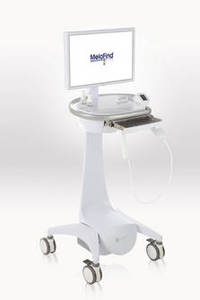
MelaFind is a multispectral computer vision system with a handheld imager that captures the image of a lesion; software uses algorithms to analyze the image, indicating within 2 minutes whether a biopsy should be done.
At the FDA panel meeting in November, some advisers expressed concern that MelaFind might be used by nondermatologists or that it would be used in place of clinical evaluation.
Mela Sciences and the FDA worked on clarifying the indications for use. Those indications now cover multiple paragraphs. According to a Mela Sciences press release, the device "is intended for use on clinically atypical cutaneous pigmented lesions with one or more clinical or historical characteristics of melanoma, excluding those with a clinical diagnosis of melanoma or likely melanoma."

Labeling will also state that the device is "only for use by physicians trained in the clinical diagnosis and management of skin cancer (i.e., dermatologists) who have also successfully completed a training program in the appropriate use of MelaFind."
Dr. Darrell S. Rigel, a consultant for Mela Sciences, said in the company statement that the device can help dermatologists decide which lesions to biopsy and will be an aid to clinical evaluation.* "While there have been incremental improvements in imaging tools for melanoma detection, we still primarily rely on our judgment based on a visual examination to select the lesions to biopsy; data show that this is often not enough," said Dr. Rigel, a clinical professor of dermatology at New York University.
The pivotal study of the device included 1,383 patients. According to the company, MelaFind had a sensitivity of 98%. The device’s sensitivity rating for malignant melanoma was significantly better than that of dermatologists, who showed a wide range of variability about which lesions would have been recommended for biopsy and which relegated to observation.
MelaFind will also soon be available in Germany, which has some of the highest rates of melanoma in Europe, said Dr. Gulfo. The device received European Union approval in September. The company aims to have about 75 systems in Germany by next September, Dr. Gulfo said.
* Correction, 9/30/2011: The original version of this article listed an incorrect title for Dr. Darrell S. Rigel. He is a consultant for Mela Sciences. This version has been corrected.
The Food and Drug Administration has deemed MelaFind, a noninvasive melanoma detection device, approvable, according to the manufacturer.
The FDA still has a list of requirements the manufacturer, Mela Sciences, must fulfill before MelaFind is given final approval. But company CEO, Joseph V. Gulfo, M.D., said in a conference call with analysts that much of the work is already done and that he expects no significant delays to market.
The road to approval has been somewhat rocky. In November 2010, an FDA advisory panel split 8-7, with one abstention over whether MelaFind should be approved.
Then in May 2011, the company submitted a Citizen Petition to the FDA seeking action on its application for approval.
The company will have to work with the FDA on physician and patient labeling, a package insert and user’s guide, a training program for dermatologists, and the protocol for a postmarketing study.
Dr. Gulfo said that he expects MelaFind to be commercially available in the spring of 2012. Initially, it will only be sold to a handful of dermatologists in Connecticut, New Jersey, and New York. Mela Sciences will be working with dermatologists to fine tune the device before rolling it out to a larger number of practices, he said.
MelaFind is a multispectral computer vision system with a handheld imager that captures the image of a lesion; software uses algorithms to analyze the image, indicating within 2 minutes whether a biopsy should be done.
At the FDA panel meeting in November, some advisers expressed concern that MelaFind might be used by nondermatologists or that it would be used in place of clinical evaluation.
Mela Sciences and the FDA worked on clarifying the indications for use. Those indications now cover multiple paragraphs. According to a Mela Sciences press release, the device "is intended for use on clinically atypical cutaneous pigmented lesions with one or more clinical or historical characteristics of melanoma, excluding those with a clinical diagnosis of melanoma or likely melanoma."
Labeling will also state that the device is "only for use by physicians trained in the clinical diagnosis and management of skin cancer (i.e., dermatologists) who have also successfully completed a training program in the appropriate use of MelaFind."
Dr. Darrell S. Rigel, a consultant for Mela Sciences, said in the company statement that the device can help dermatologists decide which lesions to biopsy and will be an aid to clinical evaluation.* "While there have been incremental improvements in imaging tools for melanoma detection, we still primarily rely on our judgment based on a visual examination to select the lesions to biopsy; data show that this is often not enough," said Dr. Rigel, a clinical professor of dermatology at New York University.
The pivotal study of the device included 1,383 patients. According to the company, MelaFind had a sensitivity of 98%. The device’s sensitivity rating for malignant melanoma was significantly better than that of dermatologists, who showed a wide range of variability about which lesions would have been recommended for biopsy and which relegated to observation.
MelaFind will also soon be available in Germany, which has some of the highest rates of melanoma in Europe, said Dr. Gulfo. The device received European Union approval in September. The company aims to have about 75 systems in Germany by next September, Dr. Gulfo said.
* Correction, 9/30/2011: The original version of this article listed an incorrect title for Dr. Darrell S. Rigel. He is a consultant for Mela Sciences. This version has been corrected.
The Food and Drug Administration has deemed MelaFind, a noninvasive melanoma detection device, approvable, according to the manufacturer.
The FDA still has a list of requirements the manufacturer, Mela Sciences, must fulfill before MelaFind is given final approval. But company CEO, Joseph V. Gulfo, M.D., said in a conference call with analysts that much of the work is already done and that he expects no significant delays to market.
The road to approval has been somewhat rocky. In November 2010, an FDA advisory panel split 8-7, with one abstention over whether MelaFind should be approved.
Then in May 2011, the company submitted a Citizen Petition to the FDA seeking action on its application for approval.
The company will have to work with the FDA on physician and patient labeling, a package insert and user’s guide, a training program for dermatologists, and the protocol for a postmarketing study.
Dr. Gulfo said that he expects MelaFind to be commercially available in the spring of 2012. Initially, it will only be sold to a handful of dermatologists in Connecticut, New Jersey, and New York. Mela Sciences will be working with dermatologists to fine tune the device before rolling it out to a larger number of practices, he said.
MelaFind is a multispectral computer vision system with a handheld imager that captures the image of a lesion; software uses algorithms to analyze the image, indicating within 2 minutes whether a biopsy should be done.
At the FDA panel meeting in November, some advisers expressed concern that MelaFind might be used by nondermatologists or that it would be used in place of clinical evaluation.
Mela Sciences and the FDA worked on clarifying the indications for use. Those indications now cover multiple paragraphs. According to a Mela Sciences press release, the device "is intended for use on clinically atypical cutaneous pigmented lesions with one or more clinical or historical characteristics of melanoma, excluding those with a clinical diagnosis of melanoma or likely melanoma."
Labeling will also state that the device is "only for use by physicians trained in the clinical diagnosis and management of skin cancer (i.e., dermatologists) who have also successfully completed a training program in the appropriate use of MelaFind."
Dr. Darrell S. Rigel, a consultant for Mela Sciences, said in the company statement that the device can help dermatologists decide which lesions to biopsy and will be an aid to clinical evaluation.* "While there have been incremental improvements in imaging tools for melanoma detection, we still primarily rely on our judgment based on a visual examination to select the lesions to biopsy; data show that this is often not enough," said Dr. Rigel, a clinical professor of dermatology at New York University.
The pivotal study of the device included 1,383 patients. According to the company, MelaFind had a sensitivity of 98%. The device’s sensitivity rating for malignant melanoma was significantly better than that of dermatologists, who showed a wide range of variability about which lesions would have been recommended for biopsy and which relegated to observation.
MelaFind will also soon be available in Germany, which has some of the highest rates of melanoma in Europe, said Dr. Gulfo. The device received European Union approval in September. The company aims to have about 75 systems in Germany by next September, Dr. Gulfo said.
* Correction, 9/30/2011: The original version of this article listed an incorrect title for Dr. Darrell S. Rigel. He is a consultant for Mela Sciences. This version has been corrected.
Malpractice Concerns Drive Aggressive Care, Say Physicians
Forty-two percent of physicians admit that patients in their practices receive too much treatment, which was described as "aggressive" care, according to a survey of general internists and family doctors. Fifty-two percent said that they thought the amount of care they provided was just right, and 6% said their patients received too little care.
When asked about their own practice style, 28% of respondents said they were too aggressive, ordering more tests and referrals than necessary. Just under 20% said they were practicing more conservatively than their ideal (Arch Intern Med. 2011;171:1582-5).
The doctors were also asked to describe practice styles among other health care providers and reported that they believed they saw too much testing and ordering of referrals by nurse practitioners, physician assistants, and specialists.
Twenty-nine percent said other primary care physicians were practicing too aggressively, while 61% said they believed that specialists are too aggressive in their practice and 47% said mid-level providers overtreat patients.
Malpractice concerns were cited by 76% of the survey respondents as a reason for their more aggressive practice style. Eighty-three percent of the physicians said that they feared being sued if they did not order an indicated test.
About half of those surveyed said that clinical performance measures led to more care, and 40% said that not having enough time with patients translated into a more aggressive practice. Instead of thinking through an issue, they order tests or make referrals.
Few physicians (3%) said that they believed financial considerations influenced how they personally practiced medicine. But 39% said they thought other primary care doctors would order fewer tests if there was no incentive. Sixty-two percent said that specialists would likely perform fewer procedures if they did not generate extra revenue.
The survey authors, led by Dr. Brenda E. Sirovich of the VA Outcomes Group, White River Junction, Vt., said that while many have debated just how much the fear of malpractice leads to more aggressive care, "based on our findings, we believe it is not a small effect."
The survey respondents acknowledged that there is a huge variation in care. They said that they’d like to know where they stand when compared with other physicians.
This indicates a willingness to learn more conservative practice, said Dr. Sirovich and colleagues. "Our work shows that primary care physicians recognize the excesses of our health care system, can point clearly to some of the causes, and may be open to changing their own practices to address them," concluded the authors.
The authors mailed a nine-page survey to primary care physicians, asking them to describe how they and their colleagues practiced medicine. A total of 627 physicians were randomly sampled from the American Medical Association’s Physician Masterfile; 70% responded. Most survey respondents were male, board certified, and reported a median of 24 years in practice. Surveyed physicians were provided with an honorarium of $20-$100 for their participation.
The study was supported by grants from the Department of Veterans Affairs and the National Institute of Aging. The authors reported no relevant financial conflicts of interest.
"Implicit in these findings is a kind of trained helplessness – it seems that physicians know they are practicing aggressively but feel they have no recourse," Dr. Calvin Chou wrote in an invited commentary.
Dr. Chou suggests that defensive medicine is a dead-end; it is not a sustainable practice and there is no evidence that it actually prevents malpractice suits.
Instead, studies have shown that physicians sued the least are the ones who connect more with patients by actively listening and including them in their own care.
"Patients tend to define quality of care in terms of the quality of communication with members of their health care team," Dr. Chou wrote.
Dr. Chou is a professor of medicine at the University of California, San Francisco. These comments were adapted from a commentary accompanying the report (Arch. Intl. Med. 2011;171:1585-6). He reported no relevant financial conflicts of interest.
"Implicit in these findings is a kind of trained helplessness – it seems that physicians know they are practicing aggressively but feel they have no recourse," Dr. Calvin Chou wrote in an invited commentary.
Dr. Chou suggests that defensive medicine is a dead-end; it is not a sustainable practice and there is no evidence that it actually prevents malpractice suits.
Instead, studies have shown that physicians sued the least are the ones who connect more with patients by actively listening and including them in their own care.
"Patients tend to define quality of care in terms of the quality of communication with members of their health care team," Dr. Chou wrote.
Dr. Chou is a professor of medicine at the University of California, San Francisco. These comments were adapted from a commentary accompanying the report (Arch. Intl. Med. 2011;171:1585-6). He reported no relevant financial conflicts of interest.
"Implicit in these findings is a kind of trained helplessness – it seems that physicians know they are practicing aggressively but feel they have no recourse," Dr. Calvin Chou wrote in an invited commentary.
Dr. Chou suggests that defensive medicine is a dead-end; it is not a sustainable practice and there is no evidence that it actually prevents malpractice suits.
Instead, studies have shown that physicians sued the least are the ones who connect more with patients by actively listening and including them in their own care.
"Patients tend to define quality of care in terms of the quality of communication with members of their health care team," Dr. Chou wrote.
Dr. Chou is a professor of medicine at the University of California, San Francisco. These comments were adapted from a commentary accompanying the report (Arch. Intl. Med. 2011;171:1585-6). He reported no relevant financial conflicts of interest.
Forty-two percent of physicians admit that patients in their practices receive too much treatment, which was described as "aggressive" care, according to a survey of general internists and family doctors. Fifty-two percent said that they thought the amount of care they provided was just right, and 6% said their patients received too little care.
When asked about their own practice style, 28% of respondents said they were too aggressive, ordering more tests and referrals than necessary. Just under 20% said they were practicing more conservatively than their ideal (Arch Intern Med. 2011;171:1582-5).
The doctors were also asked to describe practice styles among other health care providers and reported that they believed they saw too much testing and ordering of referrals by nurse practitioners, physician assistants, and specialists.
Twenty-nine percent said other primary care physicians were practicing too aggressively, while 61% said they believed that specialists are too aggressive in their practice and 47% said mid-level providers overtreat patients.
Malpractice concerns were cited by 76% of the survey respondents as a reason for their more aggressive practice style. Eighty-three percent of the physicians said that they feared being sued if they did not order an indicated test.
About half of those surveyed said that clinical performance measures led to more care, and 40% said that not having enough time with patients translated into a more aggressive practice. Instead of thinking through an issue, they order tests or make referrals.
Few physicians (3%) said that they believed financial considerations influenced how they personally practiced medicine. But 39% said they thought other primary care doctors would order fewer tests if there was no incentive. Sixty-two percent said that specialists would likely perform fewer procedures if they did not generate extra revenue.
The survey authors, led by Dr. Brenda E. Sirovich of the VA Outcomes Group, White River Junction, Vt., said that while many have debated just how much the fear of malpractice leads to more aggressive care, "based on our findings, we believe it is not a small effect."
The survey respondents acknowledged that there is a huge variation in care. They said that they’d like to know where they stand when compared with other physicians.
This indicates a willingness to learn more conservative practice, said Dr. Sirovich and colleagues. "Our work shows that primary care physicians recognize the excesses of our health care system, can point clearly to some of the causes, and may be open to changing their own practices to address them," concluded the authors.
The authors mailed a nine-page survey to primary care physicians, asking them to describe how they and their colleagues practiced medicine. A total of 627 physicians were randomly sampled from the American Medical Association’s Physician Masterfile; 70% responded. Most survey respondents were male, board certified, and reported a median of 24 years in practice. Surveyed physicians were provided with an honorarium of $20-$100 for their participation.
The study was supported by grants from the Department of Veterans Affairs and the National Institute of Aging. The authors reported no relevant financial conflicts of interest.
Forty-two percent of physicians admit that patients in their practices receive too much treatment, which was described as "aggressive" care, according to a survey of general internists and family doctors. Fifty-two percent said that they thought the amount of care they provided was just right, and 6% said their patients received too little care.
When asked about their own practice style, 28% of respondents said they were too aggressive, ordering more tests and referrals than necessary. Just under 20% said they were practicing more conservatively than their ideal (Arch Intern Med. 2011;171:1582-5).
The doctors were also asked to describe practice styles among other health care providers and reported that they believed they saw too much testing and ordering of referrals by nurse practitioners, physician assistants, and specialists.
Twenty-nine percent said other primary care physicians were practicing too aggressively, while 61% said they believed that specialists are too aggressive in their practice and 47% said mid-level providers overtreat patients.
Malpractice concerns were cited by 76% of the survey respondents as a reason for their more aggressive practice style. Eighty-three percent of the physicians said that they feared being sued if they did not order an indicated test.
About half of those surveyed said that clinical performance measures led to more care, and 40% said that not having enough time with patients translated into a more aggressive practice. Instead of thinking through an issue, they order tests or make referrals.
Few physicians (3%) said that they believed financial considerations influenced how they personally practiced medicine. But 39% said they thought other primary care doctors would order fewer tests if there was no incentive. Sixty-two percent said that specialists would likely perform fewer procedures if they did not generate extra revenue.
The survey authors, led by Dr. Brenda E. Sirovich of the VA Outcomes Group, White River Junction, Vt., said that while many have debated just how much the fear of malpractice leads to more aggressive care, "based on our findings, we believe it is not a small effect."
The survey respondents acknowledged that there is a huge variation in care. They said that they’d like to know where they stand when compared with other physicians.
This indicates a willingness to learn more conservative practice, said Dr. Sirovich and colleagues. "Our work shows that primary care physicians recognize the excesses of our health care system, can point clearly to some of the causes, and may be open to changing their own practices to address them," concluded the authors.
The authors mailed a nine-page survey to primary care physicians, asking them to describe how they and their colleagues practiced medicine. A total of 627 physicians were randomly sampled from the American Medical Association’s Physician Masterfile; 70% responded. Most survey respondents were male, board certified, and reported a median of 24 years in practice. Surveyed physicians were provided with an honorarium of $20-$100 for their participation.
The study was supported by grants from the Department of Veterans Affairs and the National Institute of Aging. The authors reported no relevant financial conflicts of interest.
FROM ARCHIVES OF INTERNAL MEDICINE
Major Finding: Almost half of primary care physicians responding to a randomized survey said that they practice too aggressively; 76% said the overtreatment stems from malpractice fears.
Data Source: A survey of 627 primary care physicians randomly sampled from the AMA Physician Masterfile; 70% of physicians responded.
Disclosures: The study was supported by grants from the Department of Veterans Affairs and the National Institute of Aging. The authors reported no relevant financial conflicts of interest.
AACR Report: Need for Cancer Funding Urgent
WASHINGTON – In the 40 years since the National Cancer Act was signed into law by President Richard M. Nixon, much progress has been made in the so-called war on cancer, but without a significant increase in funding, the nation will lose ground, said cancer researchers at a briefing on Sept. 20.
The American Association for Cancer Research issued an 84-page progress report that it said showed the tremendous advances that have been made since 1971. The report was also characterized as a call to action in the face of declining federal support.
"Today, more than any time in history, cancer researchers are maximizing the impact of the fundamental discoveries made over the past 40 years and translating them into improved patient care," said AACR Immediate Past President Elizabeth H. Blackburn, Ph.D. "Sustained funding increases for the [National Institutes of Health] and [National Cancer Institute] are an urgent national priority that will improve the health of Americans and strengthen America’s innovation and economy," she said.
This is especially important as the nation ages, said Dr. Blackburn at the briefing. Cancer is expected to surpass heart disease as the nation’s leading killer. Currently, 60% of cancers occur in the 13% of the population that is over age 65. Some 1.5 million Americans are diagnosed with cancer each year, and there are more than 500,000 deaths.
By 2030, Americans age 65 or older will comprise more than 20% of the population and account for 70% of the cancers, said Dr. Blackburn.
According to the AACR report, appropriations for the NIH and NCI have been essentially flat since 2003, when Congress doubled the NIH budget. The AACR is seeking annual increases of 5% above the biomedical inflation rate. That is a tall order at a time when Congress is locked in a fierce battle to cut $1 trillion to $3 trillion in spending from the federal budget over the next decade.
Several speakers at the AACR briefing said that putting money into cancer research would add to the nation’s wealth. "Cancer research is a smart investment that will allow researchers to capitalize on progress, create jobs and grow our economy and bolster our global competitiveness," said Dr. Judy E. Garber, president of the AACR and director of the Cancer Genetics and Prevention Program at Dana-Farber Cancer Institute, Boston.
Citing a report by Battelle, the AACR said that the $3.8 billion spent on the Human Genome Project from 1988 to 2003 created a $796 billion positive for the U.S. economy.
The decoding of the genome has led, so far, to the discovery of more than 290 genes related to the cause of cancer, according to the AACR. It has also helped researchers develop diagnostics and therapies, in particular ones that target specific mutations. These discoveries are opening the door to a future of personalized medicine.
In that future, physicians will be able to "understand the nuance of every patient and tailor-make their therapy," said Dr. William S. Dalton, co-chair of the AACR report and president, CEO and director of the H. Lee Moffitt Cancer Center and Research Institute, Tampa, Fla. "Now is not the time to lose momentum," said Dr. Dalton.
The report also cites progress in attacking tobacco, radiation exposure, environmental carcinogens and infectious agents – which contribute to the 50% of cancers that are considered to be preventable. Screening and early detection of certain cancers has also been a success story. The report noted that 5-year survival rates for cervical, breast, and prostate cancers are over 90%.
New chemotherapies have led to major increases in survival and some cures for childhood acute lymphoblastic leukemia, Hodgkin’s disease, aggressive lymphomas, and testicular cancer.
The AACR speakers said that the progress report gave reason to be hopeful. But some cancers – notably pancreatic, brain, ovarian, and lung, among others – are still major killers, said Dr. Garber, who again emphasized the need for more funding. "Unfortunately, with each passing day our ability to capitalize on the nation’s long-standing investment in cancer research seems to elude us as a result to flat to declining spending," she said.
The progress report can be viewed at www.aacr.org.
WASHINGTON – In the 40 years since the National Cancer Act was signed into law by President Richard M. Nixon, much progress has been made in the so-called war on cancer, but without a significant increase in funding, the nation will lose ground, said cancer researchers at a briefing on Sept. 20.
The American Association for Cancer Research issued an 84-page progress report that it said showed the tremendous advances that have been made since 1971. The report was also characterized as a call to action in the face of declining federal support.
"Today, more than any time in history, cancer researchers are maximizing the impact of the fundamental discoveries made over the past 40 years and translating them into improved patient care," said AACR Immediate Past President Elizabeth H. Blackburn, Ph.D. "Sustained funding increases for the [National Institutes of Health] and [National Cancer Institute] are an urgent national priority that will improve the health of Americans and strengthen America’s innovation and economy," she said.
This is especially important as the nation ages, said Dr. Blackburn at the briefing. Cancer is expected to surpass heart disease as the nation’s leading killer. Currently, 60% of cancers occur in the 13% of the population that is over age 65. Some 1.5 million Americans are diagnosed with cancer each year, and there are more than 500,000 deaths.
By 2030, Americans age 65 or older will comprise more than 20% of the population and account for 70% of the cancers, said Dr. Blackburn.
According to the AACR report, appropriations for the NIH and NCI have been essentially flat since 2003, when Congress doubled the NIH budget. The AACR is seeking annual increases of 5% above the biomedical inflation rate. That is a tall order at a time when Congress is locked in a fierce battle to cut $1 trillion to $3 trillion in spending from the federal budget over the next decade.
Several speakers at the AACR briefing said that putting money into cancer research would add to the nation’s wealth. "Cancer research is a smart investment that will allow researchers to capitalize on progress, create jobs and grow our economy and bolster our global competitiveness," said Dr. Judy E. Garber, president of the AACR and director of the Cancer Genetics and Prevention Program at Dana-Farber Cancer Institute, Boston.
Citing a report by Battelle, the AACR said that the $3.8 billion spent on the Human Genome Project from 1988 to 2003 created a $796 billion positive for the U.S. economy.
The decoding of the genome has led, so far, to the discovery of more than 290 genes related to the cause of cancer, according to the AACR. It has also helped researchers develop diagnostics and therapies, in particular ones that target specific mutations. These discoveries are opening the door to a future of personalized medicine.
In that future, physicians will be able to "understand the nuance of every patient and tailor-make their therapy," said Dr. William S. Dalton, co-chair of the AACR report and president, CEO and director of the H. Lee Moffitt Cancer Center and Research Institute, Tampa, Fla. "Now is not the time to lose momentum," said Dr. Dalton.
The report also cites progress in attacking tobacco, radiation exposure, environmental carcinogens and infectious agents – which contribute to the 50% of cancers that are considered to be preventable. Screening and early detection of certain cancers has also been a success story. The report noted that 5-year survival rates for cervical, breast, and prostate cancers are over 90%.
New chemotherapies have led to major increases in survival and some cures for childhood acute lymphoblastic leukemia, Hodgkin’s disease, aggressive lymphomas, and testicular cancer.
The AACR speakers said that the progress report gave reason to be hopeful. But some cancers – notably pancreatic, brain, ovarian, and lung, among others – are still major killers, said Dr. Garber, who again emphasized the need for more funding. "Unfortunately, with each passing day our ability to capitalize on the nation’s long-standing investment in cancer research seems to elude us as a result to flat to declining spending," she said.
The progress report can be viewed at www.aacr.org.
WASHINGTON – In the 40 years since the National Cancer Act was signed into law by President Richard M. Nixon, much progress has been made in the so-called war on cancer, but without a significant increase in funding, the nation will lose ground, said cancer researchers at a briefing on Sept. 20.
The American Association for Cancer Research issued an 84-page progress report that it said showed the tremendous advances that have been made since 1971. The report was also characterized as a call to action in the face of declining federal support.
"Today, more than any time in history, cancer researchers are maximizing the impact of the fundamental discoveries made over the past 40 years and translating them into improved patient care," said AACR Immediate Past President Elizabeth H. Blackburn, Ph.D. "Sustained funding increases for the [National Institutes of Health] and [National Cancer Institute] are an urgent national priority that will improve the health of Americans and strengthen America’s innovation and economy," she said.
This is especially important as the nation ages, said Dr. Blackburn at the briefing. Cancer is expected to surpass heart disease as the nation’s leading killer. Currently, 60% of cancers occur in the 13% of the population that is over age 65. Some 1.5 million Americans are diagnosed with cancer each year, and there are more than 500,000 deaths.
By 2030, Americans age 65 or older will comprise more than 20% of the population and account for 70% of the cancers, said Dr. Blackburn.
According to the AACR report, appropriations for the NIH and NCI have been essentially flat since 2003, when Congress doubled the NIH budget. The AACR is seeking annual increases of 5% above the biomedical inflation rate. That is a tall order at a time when Congress is locked in a fierce battle to cut $1 trillion to $3 trillion in spending from the federal budget over the next decade.
Several speakers at the AACR briefing said that putting money into cancer research would add to the nation’s wealth. "Cancer research is a smart investment that will allow researchers to capitalize on progress, create jobs and grow our economy and bolster our global competitiveness," said Dr. Judy E. Garber, president of the AACR and director of the Cancer Genetics and Prevention Program at Dana-Farber Cancer Institute, Boston.
Citing a report by Battelle, the AACR said that the $3.8 billion spent on the Human Genome Project from 1988 to 2003 created a $796 billion positive for the U.S. economy.
The decoding of the genome has led, so far, to the discovery of more than 290 genes related to the cause of cancer, according to the AACR. It has also helped researchers develop diagnostics and therapies, in particular ones that target specific mutations. These discoveries are opening the door to a future of personalized medicine.
In that future, physicians will be able to "understand the nuance of every patient and tailor-make their therapy," said Dr. William S. Dalton, co-chair of the AACR report and president, CEO and director of the H. Lee Moffitt Cancer Center and Research Institute, Tampa, Fla. "Now is not the time to lose momentum," said Dr. Dalton.
The report also cites progress in attacking tobacco, radiation exposure, environmental carcinogens and infectious agents – which contribute to the 50% of cancers that are considered to be preventable. Screening and early detection of certain cancers has also been a success story. The report noted that 5-year survival rates for cervical, breast, and prostate cancers are over 90%.
New chemotherapies have led to major increases in survival and some cures for childhood acute lymphoblastic leukemia, Hodgkin’s disease, aggressive lymphomas, and testicular cancer.
The AACR speakers said that the progress report gave reason to be hopeful. But some cancers – notably pancreatic, brain, ovarian, and lung, among others – are still major killers, said Dr. Garber, who again emphasized the need for more funding. "Unfortunately, with each passing day our ability to capitalize on the nation’s long-standing investment in cancer research seems to elude us as a result to flat to declining spending," she said.
The progress report can be viewed at www.aacr.org.
FROM AN AMERICAN ASSOCIATION FOR CANCER RESEARCH BRIEFING
MRI Breast Screening Effective for Underserved Women
WASHINGTON – Magnetic resonance imaging screening for breast cancer is feasible and cost effective for high-risk underserved women, according to a study conducted by Duke University Medical Center researchers.
The investigators, led by Dr. Anne C. Ford, assistant professor of obstetrics and gynecology at the center, wanted to determine whether targeting MRI screening, which has the potential to increase the number of benign biopsies, would increase costs.
The researchers included 299 women who participate in a high-risk clinic at Duke, who were given a digital mammogram followed by an MRI, as well as 299 average-risk women recruited through an outreach program to serve as controls. High risk was defined as a greater than 20% lifetime risk of breast cancer, the investigators reported at a conference sponsored by the American Association for Cancer Research.
The women were racially diverse. The mammography group was 40% African American, 25% white, 25% Hispanic, and 10% other. The MRI group was 62% white, 33% African American, 3% Hispanic, and 2% other.
Women found to have an abnormal mammogram were evaluated by ultrasound, ultrasound-guided biopsy, and/or stereotactic biopsy. Women with an abnormal breast MRI were evaluated with ultrasound, ultrasound-guided biopsy, and/or MRI-guided biopsy. Patient navigators accompanied all women to all appointments, including follow-up care.
Overall, there were seven benign biopsies conducted in the mammography group. One cancer was found, for a detection rate of 12%. Thirty-one benign biopsies were done in the combination group; seven cancers were discovered, for a detection rate of 18%.
Of the cancers that were staged, the MRI had detected one stage 0 tumor, four that were stage I, and one each that were stage II and III. The mammogram detected one tumor that was stage II. So the MRI detected some cancers in an early stage.
For screening alone, the cost per diagnosis was $37,375 for mammography, compared with $27,722 for MRI.
These figures, however, were calculated using a lower MRI rate than many institutions might pay. For the study, the cost of the MRI was negotiated to a reduced rate of $649. Dr. Ford said in an interview that the calculation might change if the MRI rate were more or less.
There also was a very good compliance rate with follow-up studies. Most likely, that is because those services were offered free of charge to participants and because they were constantly interacting with patient navigators, said Dr. Ford.
Six of seven women in the mammography group who were referred for follow-up complied. Twenty-eight of the 31 MRI screening patients returned for follow-up.
The study was supported by the Susan G. Komen for the Cure, the Avon Foundation Breast Care Fund, the Kate B. Reynolds Charitable Trust, and the Breast Cancer Relief Foundation.
WASHINGTON – Magnetic resonance imaging screening for breast cancer is feasible and cost effective for high-risk underserved women, according to a study conducted by Duke University Medical Center researchers.
The investigators, led by Dr. Anne C. Ford, assistant professor of obstetrics and gynecology at the center, wanted to determine whether targeting MRI screening, which has the potential to increase the number of benign biopsies, would increase costs.
The researchers included 299 women who participate in a high-risk clinic at Duke, who were given a digital mammogram followed by an MRI, as well as 299 average-risk women recruited through an outreach program to serve as controls. High risk was defined as a greater than 20% lifetime risk of breast cancer, the investigators reported at a conference sponsored by the American Association for Cancer Research.
The women were racially diverse. The mammography group was 40% African American, 25% white, 25% Hispanic, and 10% other. The MRI group was 62% white, 33% African American, 3% Hispanic, and 2% other.
Women found to have an abnormal mammogram were evaluated by ultrasound, ultrasound-guided biopsy, and/or stereotactic biopsy. Women with an abnormal breast MRI were evaluated with ultrasound, ultrasound-guided biopsy, and/or MRI-guided biopsy. Patient navigators accompanied all women to all appointments, including follow-up care.
Overall, there were seven benign biopsies conducted in the mammography group. One cancer was found, for a detection rate of 12%. Thirty-one benign biopsies were done in the combination group; seven cancers were discovered, for a detection rate of 18%.
Of the cancers that were staged, the MRI had detected one stage 0 tumor, four that were stage I, and one each that were stage II and III. The mammogram detected one tumor that was stage II. So the MRI detected some cancers in an early stage.
For screening alone, the cost per diagnosis was $37,375 for mammography, compared with $27,722 for MRI.
These figures, however, were calculated using a lower MRI rate than many institutions might pay. For the study, the cost of the MRI was negotiated to a reduced rate of $649. Dr. Ford said in an interview that the calculation might change if the MRI rate were more or less.
There also was a very good compliance rate with follow-up studies. Most likely, that is because those services were offered free of charge to participants and because they were constantly interacting with patient navigators, said Dr. Ford.
Six of seven women in the mammography group who were referred for follow-up complied. Twenty-eight of the 31 MRI screening patients returned for follow-up.
The study was supported by the Susan G. Komen for the Cure, the Avon Foundation Breast Care Fund, the Kate B. Reynolds Charitable Trust, and the Breast Cancer Relief Foundation.
WASHINGTON – Magnetic resonance imaging screening for breast cancer is feasible and cost effective for high-risk underserved women, according to a study conducted by Duke University Medical Center researchers.
The investigators, led by Dr. Anne C. Ford, assistant professor of obstetrics and gynecology at the center, wanted to determine whether targeting MRI screening, which has the potential to increase the number of benign biopsies, would increase costs.
The researchers included 299 women who participate in a high-risk clinic at Duke, who were given a digital mammogram followed by an MRI, as well as 299 average-risk women recruited through an outreach program to serve as controls. High risk was defined as a greater than 20% lifetime risk of breast cancer, the investigators reported at a conference sponsored by the American Association for Cancer Research.
The women were racially diverse. The mammography group was 40% African American, 25% white, 25% Hispanic, and 10% other. The MRI group was 62% white, 33% African American, 3% Hispanic, and 2% other.
Women found to have an abnormal mammogram were evaluated by ultrasound, ultrasound-guided biopsy, and/or stereotactic biopsy. Women with an abnormal breast MRI were evaluated with ultrasound, ultrasound-guided biopsy, and/or MRI-guided biopsy. Patient navigators accompanied all women to all appointments, including follow-up care.
Overall, there were seven benign biopsies conducted in the mammography group. One cancer was found, for a detection rate of 12%. Thirty-one benign biopsies were done in the combination group; seven cancers were discovered, for a detection rate of 18%.
Of the cancers that were staged, the MRI had detected one stage 0 tumor, four that were stage I, and one each that were stage II and III. The mammogram detected one tumor that was stage II. So the MRI detected some cancers in an early stage.
For screening alone, the cost per diagnosis was $37,375 for mammography, compared with $27,722 for MRI.
These figures, however, were calculated using a lower MRI rate than many institutions might pay. For the study, the cost of the MRI was negotiated to a reduced rate of $649. Dr. Ford said in an interview that the calculation might change if the MRI rate were more or less.
There also was a very good compliance rate with follow-up studies. Most likely, that is because those services were offered free of charge to participants and because they were constantly interacting with patient navigators, said Dr. Ford.
Six of seven women in the mammography group who were referred for follow-up complied. Twenty-eight of the 31 MRI screening patients returned for follow-up.
The study was supported by the Susan G. Komen for the Cure, the Avon Foundation Breast Care Fund, the Kate B. Reynolds Charitable Trust, and the Breast Cancer Relief Foundation.
FROM A CONFERENCE SPONSORED BY THE AMERICAN ASSOCIATION FOR CANCER RESEARCH
Major Finding: Overall, there were seven benign biopsies conducted in the mammography group. One cancer was found, for a detection rate of 12%. Thirty-one benign biopsies were done in the combination group; seven cancers were discovered, for a detection rate of 18%.
Data Source: A study of 299 high-risk women screened by digital mammography and MRI and 299 controls screened by mammography and ultrasound.
Disclosures: The study was supported by the Susan G. Komen for the Cure, the Avon Foundation Breast Care Fund, the Kate B. Reynolds Charitable Trust, and the Breast Cancer Relief Foundation.
Stress May Factor Into Breast Tumor Aggressiveness
WASHINGTON – Higher levels of stress may partially account for aggressive tumor growth in African American and Hispanic women with breast cancer, according to Garth H. Rauscher, Ph.D., of the University of Illinois at Chicago.
This is one of the first studies to look closely at the potential role of psychosocial stress on tumor progression in breast cancer, said Dr. Rauscher, an associate professor of epidemiology at the university’s School of Public Health. However, he acknowledged that the study is "flawed" because it is cross-sectional and has other limitations. "This is definitely an exploratory study," Dr. Rauscher said at the American Association for Cancer Research Science of Cancer Health Disparities meeting.
It was already known, especially in Chicago, that there was a wide disparity in mortality rates between black women and white women, said Dr. Rauscher. The data are not as well defined for Hispanic women, he said. Tumor aggressiveness likely contributes to higher mortality rates in the minorities. Both African Americans and Hispanics generally have higher-grade tumors and hormone receptor–negative tumors, said Dr. Rauscher. The researchers wanted to investigate why these women have the more aggressive tumor types.
They chose to examine psychosocial factors.
Dr. Rauscher and his colleagues examined associations between patient-reported stress and aggressive breast cancer in a cross-sectional study of 397 non-Hispanic whites, 411 non-Hispanic blacks, and 181 Hispanics. Data were collected through patient interviews and medical record extraction. Stress was assessed using the four-item Cohen Perceived Stress Subscale, the UCLA Loneliness Scale, and the Cockburn psychological consequences scale. The three scales were combined into a single, standardized stress score.
Patients were interviewed just after their diagnosis of breast cancer. Dr. Rauscher explained that the researchers assumed that if patients were experiencing high stress post diagnosis, they were likely to have been under stress before diagnosis as well. But he acknowledged that this assumption is a major limitation of the study.
Of 989 patients, the researchers were able to get tumor grades for 772: 149 had low-grade tumors; 308 were intermediate, and 315 were high-grade tumors. A total of 21% (66 of 315) of patients with high-grade tumors reported elevated stress, 19% (58 of 308) of patients with intermediate-grade tumors reported elevated stress, and 11% (16 of 149) of patients with low-grade tumors reported elevated stress.
The differences were statistically significant, until Dr. Rauscher and his colleagues adjusted for age, treatment, income, and other factors.
A total of 28% of women with hormone receptor–negative tumors reported stress, compared with 14% of those with receptor-positive growths. Patients with hormone receptor–negative disease reported one-third of a standard deviation higher than did patients with receptor-positive disease (P = .0003). The difference held up after adjustment, Dr. Rauscher said.
Overall, psychosocial stress scores were higher for black and Hispanic women than for whites.
There’s still no way to know, however, what accounts for those differences, said Dr. Rauscher. "If you have a more aggressive diagnosis, does that make you worry more? You could certainly put that out there as a possibility," he said. Patients with more aggressive disease might also undergo more aggressive treatment, which could also lead to greater stress, he said. "There could be causal arrows going in both directions here, but we can’t tease that out." Even so, he said, "our results are consistent with a role for stress in the etiology of aggressive breast cancer."
Dr. Rauscher suggested that other researchers could help confirm his work by delving further into existing cohort studies that measured stress and had banked tumor samples. By comparing tumor type to patients reporting stress, they might be able to tease out an association, he said.
Dr. Rauscher reported no conflicts.
WASHINGTON – Higher levels of stress may partially account for aggressive tumor growth in African American and Hispanic women with breast cancer, according to Garth H. Rauscher, Ph.D., of the University of Illinois at Chicago.
This is one of the first studies to look closely at the potential role of psychosocial stress on tumor progression in breast cancer, said Dr. Rauscher, an associate professor of epidemiology at the university’s School of Public Health. However, he acknowledged that the study is "flawed" because it is cross-sectional and has other limitations. "This is definitely an exploratory study," Dr. Rauscher said at the American Association for Cancer Research Science of Cancer Health Disparities meeting.
It was already known, especially in Chicago, that there was a wide disparity in mortality rates between black women and white women, said Dr. Rauscher. The data are not as well defined for Hispanic women, he said. Tumor aggressiveness likely contributes to higher mortality rates in the minorities. Both African Americans and Hispanics generally have higher-grade tumors and hormone receptor–negative tumors, said Dr. Rauscher. The researchers wanted to investigate why these women have the more aggressive tumor types.
They chose to examine psychosocial factors.
Dr. Rauscher and his colleagues examined associations between patient-reported stress and aggressive breast cancer in a cross-sectional study of 397 non-Hispanic whites, 411 non-Hispanic blacks, and 181 Hispanics. Data were collected through patient interviews and medical record extraction. Stress was assessed using the four-item Cohen Perceived Stress Subscale, the UCLA Loneliness Scale, and the Cockburn psychological consequences scale. The three scales were combined into a single, standardized stress score.
Patients were interviewed just after their diagnosis of breast cancer. Dr. Rauscher explained that the researchers assumed that if patients were experiencing high stress post diagnosis, they were likely to have been under stress before diagnosis as well. But he acknowledged that this assumption is a major limitation of the study.
Of 989 patients, the researchers were able to get tumor grades for 772: 149 had low-grade tumors; 308 were intermediate, and 315 were high-grade tumors. A total of 21% (66 of 315) of patients with high-grade tumors reported elevated stress, 19% (58 of 308) of patients with intermediate-grade tumors reported elevated stress, and 11% (16 of 149) of patients with low-grade tumors reported elevated stress.
The differences were statistically significant, until Dr. Rauscher and his colleagues adjusted for age, treatment, income, and other factors.
A total of 28% of women with hormone receptor–negative tumors reported stress, compared with 14% of those with receptor-positive growths. Patients with hormone receptor–negative disease reported one-third of a standard deviation higher than did patients with receptor-positive disease (P = .0003). The difference held up after adjustment, Dr. Rauscher said.
Overall, psychosocial stress scores were higher for black and Hispanic women than for whites.
There’s still no way to know, however, what accounts for those differences, said Dr. Rauscher. "If you have a more aggressive diagnosis, does that make you worry more? You could certainly put that out there as a possibility," he said. Patients with more aggressive disease might also undergo more aggressive treatment, which could also lead to greater stress, he said. "There could be causal arrows going in both directions here, but we can’t tease that out." Even so, he said, "our results are consistent with a role for stress in the etiology of aggressive breast cancer."
Dr. Rauscher suggested that other researchers could help confirm his work by delving further into existing cohort studies that measured stress and had banked tumor samples. By comparing tumor type to patients reporting stress, they might be able to tease out an association, he said.
Dr. Rauscher reported no conflicts.
WASHINGTON – Higher levels of stress may partially account for aggressive tumor growth in African American and Hispanic women with breast cancer, according to Garth H. Rauscher, Ph.D., of the University of Illinois at Chicago.
This is one of the first studies to look closely at the potential role of psychosocial stress on tumor progression in breast cancer, said Dr. Rauscher, an associate professor of epidemiology at the university’s School of Public Health. However, he acknowledged that the study is "flawed" because it is cross-sectional and has other limitations. "This is definitely an exploratory study," Dr. Rauscher said at the American Association for Cancer Research Science of Cancer Health Disparities meeting.
It was already known, especially in Chicago, that there was a wide disparity in mortality rates between black women and white women, said Dr. Rauscher. The data are not as well defined for Hispanic women, he said. Tumor aggressiveness likely contributes to higher mortality rates in the minorities. Both African Americans and Hispanics generally have higher-grade tumors and hormone receptor–negative tumors, said Dr. Rauscher. The researchers wanted to investigate why these women have the more aggressive tumor types.
They chose to examine psychosocial factors.
Dr. Rauscher and his colleagues examined associations between patient-reported stress and aggressive breast cancer in a cross-sectional study of 397 non-Hispanic whites, 411 non-Hispanic blacks, and 181 Hispanics. Data were collected through patient interviews and medical record extraction. Stress was assessed using the four-item Cohen Perceived Stress Subscale, the UCLA Loneliness Scale, and the Cockburn psychological consequences scale. The three scales were combined into a single, standardized stress score.
Patients were interviewed just after their diagnosis of breast cancer. Dr. Rauscher explained that the researchers assumed that if patients were experiencing high stress post diagnosis, they were likely to have been under stress before diagnosis as well. But he acknowledged that this assumption is a major limitation of the study.
Of 989 patients, the researchers were able to get tumor grades for 772: 149 had low-grade tumors; 308 were intermediate, and 315 were high-grade tumors. A total of 21% (66 of 315) of patients with high-grade tumors reported elevated stress, 19% (58 of 308) of patients with intermediate-grade tumors reported elevated stress, and 11% (16 of 149) of patients with low-grade tumors reported elevated stress.
The differences were statistically significant, until Dr. Rauscher and his colleagues adjusted for age, treatment, income, and other factors.
A total of 28% of women with hormone receptor–negative tumors reported stress, compared with 14% of those with receptor-positive growths. Patients with hormone receptor–negative disease reported one-third of a standard deviation higher than did patients with receptor-positive disease (P = .0003). The difference held up after adjustment, Dr. Rauscher said.
Overall, psychosocial stress scores were higher for black and Hispanic women than for whites.
There’s still no way to know, however, what accounts for those differences, said Dr. Rauscher. "If you have a more aggressive diagnosis, does that make you worry more? You could certainly put that out there as a possibility," he said. Patients with more aggressive disease might also undergo more aggressive treatment, which could also lead to greater stress, he said. "There could be causal arrows going in both directions here, but we can’t tease that out." Even so, he said, "our results are consistent with a role for stress in the etiology of aggressive breast cancer."
Dr. Rauscher suggested that other researchers could help confirm his work by delving further into existing cohort studies that measured stress and had banked tumor samples. By comparing tumor type to patients reporting stress, they might be able to tease out an association, he said.
Dr. Rauscher reported no conflicts.
FROM THE AMERICAN ASSOCIATION FOR CANCER RESEARCH SCIENCE OF CANCER HEALTH DISPARITIES MEETING
Major Finding: Higher levels of stress may partially account for aggressive tumor growth in African American and Hispanic women with breast cancer.
Data Source: A cross-sectional study of 397 non-Hispanic whites, 411 non-Hispanic blacks, and 181 Hispanics.
Disclosures: Dr. Rauscher reported no conflicts.
Big Names Absent on Joint Commission's Top-Quality Hospital List
The Joint Commission on Sept. 14 issued a list of what it is designating as the top-performing hospitals in America, and the facilities that are not listed might be somewhat surprising.
The Commission, which accredits some 4,000 hospitals in the United States, decided to create a new designation for hospitals last year, to recognize the ones that are "the best of the best" in terms of quality, said Dr. Mark R. Chassin, president of the Joint Commission, in a briefing with reporters.

Out of the 3,000 hospitals for which the Joint Commission has been collecting performance data on for the last decade, 405 met the top performance criteria for data reported in 2010. They represent only 14% of the universe of facilities that the Joint Commission accredits.
These hospitals had a 95% score on a composite measure for all 22 performance measures for heart attack, heart failure, pneumonia, surgical care, and children’s asthma care. The hospitals also met a second 95% target for each individual measure, which means "a hospital provided an evidence-based practice 95 times out of 100 opportunities to provide the practice," according to the Joint Commission.
The 405 that made the cut were primarily smaller and rural, leading to questions from reporters as to why some of the bigger and better-known academic and urban medical centers, all having stellar reputations, did not achieve the ranking of a top performer. Dr. Chassin replied, "I would suggest asking [those hospitals] why they think they’re not on the list."
He also said, "Reputation and performance on important measures of quality don’t often go together."
Missing from the list are such well-known facilities as Johns Hopkins, Duke, the Cleveland Clinic, the Mayo Clinic, M.D. Anderson, and even the Geisinger Health System, which has been hailed as a quality pioneer.
Dr. Chassin said that the Commission’s use of process measures, instead of outcomes measures, was the best way to determine quality of care. "The criteria we’ve come up with are designed to make sure that the processes we measure and the measures we use to measure them focus on processes that have an extremely high likelihood of creating good outcomes," he said.
Overall, hospitals are doing much better at meeting these measures, said Dr. Chassin. But he added, "Hospitals can and should do better."
Among the improvements tallied by the Joint Commission in its annual report on quality:
• Hospitals provided an evidence-based heart attack treatment 984 times for every 1,000 opportunities to do so, for a composite score of 98.4%. That’s up from 86.9% in 2002.
• The pneumonia care score rose from 72.3% in 2002 to 95.2%.
• The surgical care score improved from 82.1% in 2005 (when it was added) to 96.4%.
• The children’s asthma care composite rose from 79.8% in 2008 to 92.3% in 2010.
• A total of 91.7% of hospitals achieved 90% or better on the overall composite score, up from just 26.2% in 2002.
Hospitals are still lagging in two areas. Only 60% are hitting the 90% target for providing fibrinolytic therapy for acute myocardial infarction within a half hour of arrival. And 77% are reaching the 90% compliance goal for administering antibiotics to ICU pneumonia patients who are immunocompetent.
The Commission is going to start ratcheting down further on poorer-performing hospitals during the accreditation process, said Dr. Chassin.
Starting in 2012, hospitals seeking accreditation will be required to hit 85% or better on a new composite measurement for performance on accountability measures. Dr. Chassin estimated that currently, 121 hospitals would not hit that target.
Given that the “quality” we are talking about here is measured by process documentation (not actual outcomes), the smaller the hospital and number of documenting physicians, the more likely you are to see percentages of ”quality” in the upper echelons. In other words, the process may be occurring in the larger hospitals, it is just not getting documented as such...smaller hospitals can create uniform documentation standards a lot faster than larger hospitals.
It is a bit disingenuous for Dr. Chassin to suggest that reputation and performance do not often go together. In the case of the Cleveland Clinic, Johns Hopkins, Duke, and other similar centers, it most certainly does and has been demonstrated in direct outcomes measurement.
|
You will notice that Lakewood Hospital in Lakewood, Ohio, is the only Cleveland-area hospital that is in the upper echelon in process measurement for acute myocardial infarction
as listed by the Joint Commission (as it is, Lakewood Hospital is owned by the Cleveland Clinic and is a member of the Cleveland Clinic Health System), but if, because of this “best of the best” list, a complicated patient with an acute MI chooses to go to Lakewood Hospital over going to a tertiary center with outcomes reported as good as the Cleveland Clinic main campus, then the Joint Commission should be ashamed of itself.
Franklin A. Michota,
M.D., is director of academic affairs in the department of hospital medicine at the Cleveland Clinic. He is the medical editor of Hospitalist News.
Given that the “quality” we are talking about here is measured by process documentation (not actual outcomes), the smaller the hospital and number of documenting physicians, the more likely you are to see percentages of ”quality” in the upper echelons. In other words, the process may be occurring in the larger hospitals, it is just not getting documented as such...smaller hospitals can create uniform documentation standards a lot faster than larger hospitals.
It is a bit disingenuous for Dr. Chassin to suggest that reputation and performance do not often go together. In the case of the Cleveland Clinic, Johns Hopkins, Duke, and other similar centers, it most certainly does and has been demonstrated in direct outcomes measurement.
|
You will notice that Lakewood Hospital in Lakewood, Ohio, is the only Cleveland-area hospital that is in the upper echelon in process measurement for acute myocardial infarction
as listed by the Joint Commission (as it is, Lakewood Hospital is owned by the Cleveland Clinic and is a member of the Cleveland Clinic Health System), but if, because of this “best of the best” list, a complicated patient with an acute MI chooses to go to Lakewood Hospital over going to a tertiary center with outcomes reported as good as the Cleveland Clinic main campus, then the Joint Commission should be ashamed of itself.
Franklin A. Michota,
M.D., is director of academic affairs in the department of hospital medicine at the Cleveland Clinic. He is the medical editor of Hospitalist News.
Given that the “quality” we are talking about here is measured by process documentation (not actual outcomes), the smaller the hospital and number of documenting physicians, the more likely you are to see percentages of ”quality” in the upper echelons. In other words, the process may be occurring in the larger hospitals, it is just not getting documented as such...smaller hospitals can create uniform documentation standards a lot faster than larger hospitals.
It is a bit disingenuous for Dr. Chassin to suggest that reputation and performance do not often go together. In the case of the Cleveland Clinic, Johns Hopkins, Duke, and other similar centers, it most certainly does and has been demonstrated in direct outcomes measurement.
|
You will notice that Lakewood Hospital in Lakewood, Ohio, is the only Cleveland-area hospital that is in the upper echelon in process measurement for acute myocardial infarction
as listed by the Joint Commission (as it is, Lakewood Hospital is owned by the Cleveland Clinic and is a member of the Cleveland Clinic Health System), but if, because of this “best of the best” list, a complicated patient with an acute MI chooses to go to Lakewood Hospital over going to a tertiary center with outcomes reported as good as the Cleveland Clinic main campus, then the Joint Commission should be ashamed of itself.
Franklin A. Michota,
M.D., is director of academic affairs in the department of hospital medicine at the Cleveland Clinic. He is the medical editor of Hospitalist News.
The Joint Commission on Sept. 14 issued a list of what it is designating as the top-performing hospitals in America, and the facilities that are not listed might be somewhat surprising.
The Commission, which accredits some 4,000 hospitals in the United States, decided to create a new designation for hospitals last year, to recognize the ones that are "the best of the best" in terms of quality, said Dr. Mark R. Chassin, president of the Joint Commission, in a briefing with reporters.
Out of the 3,000 hospitals for which the Joint Commission has been collecting performance data on for the last decade, 405 met the top performance criteria for data reported in 2010. They represent only 14% of the universe of facilities that the Joint Commission accredits.
These hospitals had a 95% score on a composite measure for all 22 performance measures for heart attack, heart failure, pneumonia, surgical care, and children’s asthma care. The hospitals also met a second 95% target for each individual measure, which means "a hospital provided an evidence-based practice 95 times out of 100 opportunities to provide the practice," according to the Joint Commission.
The 405 that made the cut were primarily smaller and rural, leading to questions from reporters as to why some of the bigger and better-known academic and urban medical centers, all having stellar reputations, did not achieve the ranking of a top performer. Dr. Chassin replied, "I would suggest asking [those hospitals] why they think they’re not on the list."
He also said, "Reputation and performance on important measures of quality don’t often go together."
Missing from the list are such well-known facilities as Johns Hopkins, Duke, the Cleveland Clinic, the Mayo Clinic, M.D. Anderson, and even the Geisinger Health System, which has been hailed as a quality pioneer.
Dr. Chassin said that the Commission’s use of process measures, instead of outcomes measures, was the best way to determine quality of care. "The criteria we’ve come up with are designed to make sure that the processes we measure and the measures we use to measure them focus on processes that have an extremely high likelihood of creating good outcomes," he said.
Overall, hospitals are doing much better at meeting these measures, said Dr. Chassin. But he added, "Hospitals can and should do better."
Among the improvements tallied by the Joint Commission in its annual report on quality:
• Hospitals provided an evidence-based heart attack treatment 984 times for every 1,000 opportunities to do so, for a composite score of 98.4%. That’s up from 86.9% in 2002.
• The pneumonia care score rose from 72.3% in 2002 to 95.2%.
• The surgical care score improved from 82.1% in 2005 (when it was added) to 96.4%.
• The children’s asthma care composite rose from 79.8% in 2008 to 92.3% in 2010.
• A total of 91.7% of hospitals achieved 90% or better on the overall composite score, up from just 26.2% in 2002.
Hospitals are still lagging in two areas. Only 60% are hitting the 90% target for providing fibrinolytic therapy for acute myocardial infarction within a half hour of arrival. And 77% are reaching the 90% compliance goal for administering antibiotics to ICU pneumonia patients who are immunocompetent.
The Commission is going to start ratcheting down further on poorer-performing hospitals during the accreditation process, said Dr. Chassin.
Starting in 2012, hospitals seeking accreditation will be required to hit 85% or better on a new composite measurement for performance on accountability measures. Dr. Chassin estimated that currently, 121 hospitals would not hit that target.
The Joint Commission on Sept. 14 issued a list of what it is designating as the top-performing hospitals in America, and the facilities that are not listed might be somewhat surprising.
The Commission, which accredits some 4,000 hospitals in the United States, decided to create a new designation for hospitals last year, to recognize the ones that are "the best of the best" in terms of quality, said Dr. Mark R. Chassin, president of the Joint Commission, in a briefing with reporters.
Out of the 3,000 hospitals for which the Joint Commission has been collecting performance data on for the last decade, 405 met the top performance criteria for data reported in 2010. They represent only 14% of the universe of facilities that the Joint Commission accredits.
These hospitals had a 95% score on a composite measure for all 22 performance measures for heart attack, heart failure, pneumonia, surgical care, and children’s asthma care. The hospitals also met a second 95% target for each individual measure, which means "a hospital provided an evidence-based practice 95 times out of 100 opportunities to provide the practice," according to the Joint Commission.
The 405 that made the cut were primarily smaller and rural, leading to questions from reporters as to why some of the bigger and better-known academic and urban medical centers, all having stellar reputations, did not achieve the ranking of a top performer. Dr. Chassin replied, "I would suggest asking [those hospitals] why they think they’re not on the list."
He also said, "Reputation and performance on important measures of quality don’t often go together."
Missing from the list are such well-known facilities as Johns Hopkins, Duke, the Cleveland Clinic, the Mayo Clinic, M.D. Anderson, and even the Geisinger Health System, which has been hailed as a quality pioneer.
Dr. Chassin said that the Commission’s use of process measures, instead of outcomes measures, was the best way to determine quality of care. "The criteria we’ve come up with are designed to make sure that the processes we measure and the measures we use to measure them focus on processes that have an extremely high likelihood of creating good outcomes," he said.
Overall, hospitals are doing much better at meeting these measures, said Dr. Chassin. But he added, "Hospitals can and should do better."
Among the improvements tallied by the Joint Commission in its annual report on quality:
• Hospitals provided an evidence-based heart attack treatment 984 times for every 1,000 opportunities to do so, for a composite score of 98.4%. That’s up from 86.9% in 2002.
• The pneumonia care score rose from 72.3% in 2002 to 95.2%.
• The surgical care score improved from 82.1% in 2005 (when it was added) to 96.4%.
• The children’s asthma care composite rose from 79.8% in 2008 to 92.3% in 2010.
• A total of 91.7% of hospitals achieved 90% or better on the overall composite score, up from just 26.2% in 2002.
Hospitals are still lagging in two areas. Only 60% are hitting the 90% target for providing fibrinolytic therapy for acute myocardial infarction within a half hour of arrival. And 77% are reaching the 90% compliance goal for administering antibiotics to ICU pneumonia patients who are immunocompetent.
The Commission is going to start ratcheting down further on poorer-performing hospitals during the accreditation process, said Dr. Chassin.
Starting in 2012, hospitals seeking accreditation will be required to hit 85% or better on a new composite measurement for performance on accountability measures. Dr. Chassin estimated that currently, 121 hospitals would not hit that target.
Among the missing from the 'Top Performers' list:
Johns Hopkins, Duke, the Cleveland Clinic, the Mayo Clinic, M.D. Anderson, the Geisinger Health System
FDA Panel: Approve Rivaroxaban for Stroke Prevention
COLLEGE PARK, MD. – The Food and Drug Administration’s Cardiovascular and Renal Drugs Advisory Committee advisory panel on Sept. 8 voted 9-2, with 1 abstention, that the anticoagulant rivaroxaban is effective for prevention of stroke in nonvalvular atrial fibrillation.
But the panelists were generally in agreement that the drug, to be marketed as Xarelto by Johnson & Johnson and Bayer Healthcare, should only be offered as a third-line therapy. The committee members expressed concern that although the drug was no less effective than warfarin, it presented safety concerns. In particular, there was an excess of bleeding events when the drug was discontinued.
The FDA generally follows the advice of its advisory panels.
That is even more likely in this case, said Dr. Norman Stockbridge, director of the FDA’s Division of Cardiovascular and Renal Products. "I would characterize our internal discussions so far as being fairly ambivalent," said Dr. Stockbridge at the outset of the meeting. "So what the committee does today is likely to have considerable influence on us," he said.
The committee members made much of the fact that in trials, the already-available anticoagulant dabigatran (Pradaxa, Boehringer Ingelheim) had a more impressive number of patients who reached the primary end point of time in therapeutic range (TTR). Some 64% of patients hit that marker in the Randomized Evaluation of Long-Term Anticoagulant Therapy (RE-LY) study, compared with only 55% of patients in the Rivaroxaban Once Daily Oral Direct Factor Xa Inhibition Compared With Vitamin K Antagonism for Prevention of Stroke and Embolism Trial in Atrial Fibrillation (ROCKET AF) study (N. Engl. J. Med. 2011;365:883-91).
Even so, nine of the FDA advisers said that rivaroxaban should be approved. Dr. Sanjay Kaul, director of the Cardiology Fellowship Training Program and the Cardiology Consult Service at Cedars-Sinai Medical Center, Los Angeles, was skeptical throughout the day, but in the end voted yes. He said he would support use of the drug in patients who had failed other anticoagulants. But, he added, "I am concerned about one major issue – when you stop the treatment, what happens?"
That was a key reason that led Dr. Steven Nissen to vote against approval. "I still think the agency should not approve this drug without having the data on what to do when you stop the drug," said Dr. Nissen, chair of the department of cardiovascular medicine at the Cleveland Clinic Foundation, Cleveland.
Both he and Dr. Kaul, among other FDA advisers, also questioned why Johnson & Johnson had not given more specific instructions to investigators on how to manage warfarin. The company said that it had decided to leave management up to local investigators’ discretion.
ROCKET AF was conducted at 1,187 sites in 45 countries, but the TTR for warfarin patients was consistently better at the North American sites. Dr. Robert M. Califf, director of the Duke Translational Medicine Institute and a principal investigator on ROCKET AF, said the differences in TTR were primarily due to geography and culture.
In addition, TTR is not a surrogate for risk and benefit. Rivaroxaban patients had less disabling stroke and a decreased occurrence of hemorrhagic strokes and intracranial and fatal bleeding, he said. "If you go according to what is most valued by those who will be prescribing and those contemplating the treatment, rivaroxaban has a favorable risk-benefit balance," said Dr. Califf, who spoke to the efficacy of rivaroxaban on behalf of Johnson & Johnson at the meeting.
However, Dr. Nissen said, "It would have been more prudent to make sure the course of warfarin met the highest contemporary standards," he said, "and that didn’t happen." Since the TTR "was well below other studies," it introduced a "level of uncertainty as to the efficacy."
The seed of doubt had already been planted by the FDA’s own reviewers. Dr. Martin Rose, from the FDA’s Cardiovascular and Renal Drug Products Division, said that rivaroxaban had not met the standard applied to dabigatran. In ROCKET AF, the drug did not prove a "robust noninferiority."
Most of the FDA advisers, however, were satisfied that rivaroxaban would offer a reasonable alternative to patients who could not tolerate warfarin or dabigatran.
Rivaroxaban is already on the market, having been approved by the FDA in July for the prevention of deep vein thrombosis (DVT) in knee or hip replacement surgery.
The company is looking forward to the second approval. "We are pleased with the committee’s recommendation and look forward to working with the FDA to help make this important therapy available in the U.S.," said Dr. Peter M. DiBattiste, Global Therapeutic Area Head of Cardiovascular and Metabolism at Johnson & Johnson/Bayer in a statement issued after the meeting.
COLLEGE PARK, MD. – The Food and Drug Administration’s Cardiovascular and Renal Drugs Advisory Committee advisory panel on Sept. 8 voted 9-2, with 1 abstention, that the anticoagulant rivaroxaban is effective for prevention of stroke in nonvalvular atrial fibrillation.
But the panelists were generally in agreement that the drug, to be marketed as Xarelto by Johnson & Johnson and Bayer Healthcare, should only be offered as a third-line therapy. The committee members expressed concern that although the drug was no less effective than warfarin, it presented safety concerns. In particular, there was an excess of bleeding events when the drug was discontinued.
The FDA generally follows the advice of its advisory panels.
That is even more likely in this case, said Dr. Norman Stockbridge, director of the FDA’s Division of Cardiovascular and Renal Products. "I would characterize our internal discussions so far as being fairly ambivalent," said Dr. Stockbridge at the outset of the meeting. "So what the committee does today is likely to have considerable influence on us," he said.
The committee members made much of the fact that in trials, the already-available anticoagulant dabigatran (Pradaxa, Boehringer Ingelheim) had a more impressive number of patients who reached the primary end point of time in therapeutic range (TTR). Some 64% of patients hit that marker in the Randomized Evaluation of Long-Term Anticoagulant Therapy (RE-LY) study, compared with only 55% of patients in the Rivaroxaban Once Daily Oral Direct Factor Xa Inhibition Compared With Vitamin K Antagonism for Prevention of Stroke and Embolism Trial in Atrial Fibrillation (ROCKET AF) study (N. Engl. J. Med. 2011;365:883-91).
Even so, nine of the FDA advisers said that rivaroxaban should be approved. Dr. Sanjay Kaul, director of the Cardiology Fellowship Training Program and the Cardiology Consult Service at Cedars-Sinai Medical Center, Los Angeles, was skeptical throughout the day, but in the end voted yes. He said he would support use of the drug in patients who had failed other anticoagulants. But, he added, "I am concerned about one major issue – when you stop the treatment, what happens?"
That was a key reason that led Dr. Steven Nissen to vote against approval. "I still think the agency should not approve this drug without having the data on what to do when you stop the drug," said Dr. Nissen, chair of the department of cardiovascular medicine at the Cleveland Clinic Foundation, Cleveland.
Both he and Dr. Kaul, among other FDA advisers, also questioned why Johnson & Johnson had not given more specific instructions to investigators on how to manage warfarin. The company said that it had decided to leave management up to local investigators’ discretion.
ROCKET AF was conducted at 1,187 sites in 45 countries, but the TTR for warfarin patients was consistently better at the North American sites. Dr. Robert M. Califf, director of the Duke Translational Medicine Institute and a principal investigator on ROCKET AF, said the differences in TTR were primarily due to geography and culture.
In addition, TTR is not a surrogate for risk and benefit. Rivaroxaban patients had less disabling stroke and a decreased occurrence of hemorrhagic strokes and intracranial and fatal bleeding, he said. "If you go according to what is most valued by those who will be prescribing and those contemplating the treatment, rivaroxaban has a favorable risk-benefit balance," said Dr. Califf, who spoke to the efficacy of rivaroxaban on behalf of Johnson & Johnson at the meeting.
However, Dr. Nissen said, "It would have been more prudent to make sure the course of warfarin met the highest contemporary standards," he said, "and that didn’t happen." Since the TTR "was well below other studies," it introduced a "level of uncertainty as to the efficacy."
The seed of doubt had already been planted by the FDA’s own reviewers. Dr. Martin Rose, from the FDA’s Cardiovascular and Renal Drug Products Division, said that rivaroxaban had not met the standard applied to dabigatran. In ROCKET AF, the drug did not prove a "robust noninferiority."
Most of the FDA advisers, however, were satisfied that rivaroxaban would offer a reasonable alternative to patients who could not tolerate warfarin or dabigatran.
Rivaroxaban is already on the market, having been approved by the FDA in July for the prevention of deep vein thrombosis (DVT) in knee or hip replacement surgery.
The company is looking forward to the second approval. "We are pleased with the committee’s recommendation and look forward to working with the FDA to help make this important therapy available in the U.S.," said Dr. Peter M. DiBattiste, Global Therapeutic Area Head of Cardiovascular and Metabolism at Johnson & Johnson/Bayer in a statement issued after the meeting.
COLLEGE PARK, MD. – The Food and Drug Administration’s Cardiovascular and Renal Drugs Advisory Committee advisory panel on Sept. 8 voted 9-2, with 1 abstention, that the anticoagulant rivaroxaban is effective for prevention of stroke in nonvalvular atrial fibrillation.
But the panelists were generally in agreement that the drug, to be marketed as Xarelto by Johnson & Johnson and Bayer Healthcare, should only be offered as a third-line therapy. The committee members expressed concern that although the drug was no less effective than warfarin, it presented safety concerns. In particular, there was an excess of bleeding events when the drug was discontinued.
The FDA generally follows the advice of its advisory panels.
That is even more likely in this case, said Dr. Norman Stockbridge, director of the FDA’s Division of Cardiovascular and Renal Products. "I would characterize our internal discussions so far as being fairly ambivalent," said Dr. Stockbridge at the outset of the meeting. "So what the committee does today is likely to have considerable influence on us," he said.
The committee members made much of the fact that in trials, the already-available anticoagulant dabigatran (Pradaxa, Boehringer Ingelheim) had a more impressive number of patients who reached the primary end point of time in therapeutic range (TTR). Some 64% of patients hit that marker in the Randomized Evaluation of Long-Term Anticoagulant Therapy (RE-LY) study, compared with only 55% of patients in the Rivaroxaban Once Daily Oral Direct Factor Xa Inhibition Compared With Vitamin K Antagonism for Prevention of Stroke and Embolism Trial in Atrial Fibrillation (ROCKET AF) study (N. Engl. J. Med. 2011;365:883-91).
Even so, nine of the FDA advisers said that rivaroxaban should be approved. Dr. Sanjay Kaul, director of the Cardiology Fellowship Training Program and the Cardiology Consult Service at Cedars-Sinai Medical Center, Los Angeles, was skeptical throughout the day, but in the end voted yes. He said he would support use of the drug in patients who had failed other anticoagulants. But, he added, "I am concerned about one major issue – when you stop the treatment, what happens?"
That was a key reason that led Dr. Steven Nissen to vote against approval. "I still think the agency should not approve this drug without having the data on what to do when you stop the drug," said Dr. Nissen, chair of the department of cardiovascular medicine at the Cleveland Clinic Foundation, Cleveland.
Both he and Dr. Kaul, among other FDA advisers, also questioned why Johnson & Johnson had not given more specific instructions to investigators on how to manage warfarin. The company said that it had decided to leave management up to local investigators’ discretion.
ROCKET AF was conducted at 1,187 sites in 45 countries, but the TTR for warfarin patients was consistently better at the North American sites. Dr. Robert M. Califf, director of the Duke Translational Medicine Institute and a principal investigator on ROCKET AF, said the differences in TTR were primarily due to geography and culture.
In addition, TTR is not a surrogate for risk and benefit. Rivaroxaban patients had less disabling stroke and a decreased occurrence of hemorrhagic strokes and intracranial and fatal bleeding, he said. "If you go according to what is most valued by those who will be prescribing and those contemplating the treatment, rivaroxaban has a favorable risk-benefit balance," said Dr. Califf, who spoke to the efficacy of rivaroxaban on behalf of Johnson & Johnson at the meeting.
However, Dr. Nissen said, "It would have been more prudent to make sure the course of warfarin met the highest contemporary standards," he said, "and that didn’t happen." Since the TTR "was well below other studies," it introduced a "level of uncertainty as to the efficacy."
The seed of doubt had already been planted by the FDA’s own reviewers. Dr. Martin Rose, from the FDA’s Cardiovascular and Renal Drug Products Division, said that rivaroxaban had not met the standard applied to dabigatran. In ROCKET AF, the drug did not prove a "robust noninferiority."
Most of the FDA advisers, however, were satisfied that rivaroxaban would offer a reasonable alternative to patients who could not tolerate warfarin or dabigatran.
Rivaroxaban is already on the market, having been approved by the FDA in July for the prevention of deep vein thrombosis (DVT) in knee or hip replacement surgery.
The company is looking forward to the second approval. "We are pleased with the committee’s recommendation and look forward to working with the FDA to help make this important therapy available in the U.S.," said Dr. Peter M. DiBattiste, Global Therapeutic Area Head of Cardiovascular and Metabolism at Johnson & Johnson/Bayer in a statement issued after the meeting.
FROM A MEETING OF THE FDA'S CARDIOVASCULAR AND RENAL DRUGS ADVISORY COMMITTEE
CMS Proposes 30% Pay Cut for 2012
As expected, the Centers for Medicare and Medicaid Services proposed that physician fees for 2012 would be reduced by 29.5%. The proposed rule was released in the Federal Register July 1. The 29.5% pay cut is scheduled to take effect Jan. 1, 2012, unless Congress once again intervenes.
The reduction is required by the Sustainable Growth Rate (SGR) formula that was part of the Balanced Budget Act of 1997. But Dr. Donald M. Berwick, CMS administrator, said in a statement that the agency is hoping to find a way to avoid the statutory decrease.
"We need a permanent SGR fix to solve this problem once and for all. That’s why the president’s budget and his fiscal framework call for averting these cuts and why we are determined to pass and implement a permanent and sustainable fix," Dr. Berwick said.
"We are pleased that there is support from the administration and bipartisan members of Congress for permanent reform of this broken system, but agreement is not enough – action is needed," said Dr. Peter W. Carmel, president of the American Medical Association, in a statement.
The AMA has been seeking a review and revision of the Medicare Economic Index (MEI), a measure of cost increases that affect physician practices. That review has not yet begun, but revisions in the MEI could significantly reduce the legislative cost of permanent reform of the Medicare physician payment formula, said Dr. Carmel, noting that cost is an estimated $300 billion over the next 10 years, and is on its way to hit half a trillion dollars in a few years.
The reductions could be deeper for some specialties – especially for radiation oncology and diagnostic imaging – based on the impact of the Physician Practice Information Survey. The changes would reflect the third year of a 4-year transition to new practice expense relative value units. Additional changes will also be made because of the implementation of some recommendations of the American Medical Association/Specialty Society Resource Based Relative Value Scale Update Committee (RUC).
The CMS said in a statement that it is proposing to continue efforts to identify what it calls "potentially misvalued codes." As part of those efforts, the agency will look at all evaluation and management (E/M) codes to determine if they are undervalued. The agency also proposes to examine the highest non–E/M expenditure codes for each specialty to see if they are overvalued.
CMS estimates that the additional changes included in the proposed fee schedule will result in a 0% total payment change for general surgery services. Whereas general surgery still will be subject to the 29.5% Medicare payment reduction if Congress fails to act, this update also means that, unlike some other specialties, general surgery will not be subject to any further payment reductions in 2012.
CMS wants to extend the multiple procedure payment reduction (MPPR) policy to the professional component of advanced imaging services, which includes computed tomography (CT) scans, MRI, and ultrasound. The agency said the reduction would affect about 100 types of services. Reducing that component by 50% for subsequent procedures furnished to the same patient, on the same day, in the same session would result in an estimated $200 million in savings, according to the CMS.
For the first time, the agency is proposing quality and cost measures to be used in setting incentive payments for physicians who provide higher quality and more efficient care. That lays the groundwork for 2015, when the Affordable Care Act requires the CMS to begin making payment adjustments for certain physicians and physician groups. The requirement goes into effect for all physicians in 2017. The agency is proposing to use 2013 as the initial performance year.
Also included in the rule are proposals that would update a number of physician incentive programs, including the Physician Quality Reporting System, the e-Prescribing Incentive Program, and the Electronic Health Records Incentive Program. Additionally, it calls for expanding the multiple procedure payment reduction policy and for using quality and cost measures to establish a new physician value-based payment modifier.
The American College of Surgeons (ACS) continues to work with CMS on all of the programs addressed in the current proposed rule. Ten surgical organizations, including the ACS, recently sent a letter to U.S. Department of Health and Human Services (HHS) Secretary Kathleen Sebelius and CMS Administrator Berwick expressing concern regarding CMS’s action in the last Medicare Physician Fee Schedule. The organizations identified CMS’s departure from past practice in which it has traditionally accepted more than 90% of the RUC’s recommendations. The letter noted that CMS accepted only 71% of the 2010 RUC recommendations.
Citing the need to accurately reflect the work associated with a variety of physician services, the surgical organizations asked CMS to adopt the work values that were developed by the RUC. The organizations also stated that CMS’s decision regarding the valuation of work for physician services "must be made using a transparent, consistent process, and must be based on credible data."
A final rule is expected by Nov. 1.
As expected, the Centers for Medicare and Medicaid Services proposed that physician fees for 2012 would be reduced by 29.5%. The proposed rule was released in the Federal Register July 1. The 29.5% pay cut is scheduled to take effect Jan. 1, 2012, unless Congress once again intervenes.
The reduction is required by the Sustainable Growth Rate (SGR) formula that was part of the Balanced Budget Act of 1997. But Dr. Donald M. Berwick, CMS administrator, said in a statement that the agency is hoping to find a way to avoid the statutory decrease.
"We need a permanent SGR fix to solve this problem once and for all. That’s why the president’s budget and his fiscal framework call for averting these cuts and why we are determined to pass and implement a permanent and sustainable fix," Dr. Berwick said.
"We are pleased that there is support from the administration and bipartisan members of Congress for permanent reform of this broken system, but agreement is not enough – action is needed," said Dr. Peter W. Carmel, president of the American Medical Association, in a statement.
The AMA has been seeking a review and revision of the Medicare Economic Index (MEI), a measure of cost increases that affect physician practices. That review has not yet begun, but revisions in the MEI could significantly reduce the legislative cost of permanent reform of the Medicare physician payment formula, said Dr. Carmel, noting that cost is an estimated $300 billion over the next 10 years, and is on its way to hit half a trillion dollars in a few years.
The reductions could be deeper for some specialties – especially for radiation oncology and diagnostic imaging – based on the impact of the Physician Practice Information Survey. The changes would reflect the third year of a 4-year transition to new practice expense relative value units. Additional changes will also be made because of the implementation of some recommendations of the American Medical Association/Specialty Society Resource Based Relative Value Scale Update Committee (RUC).
The CMS said in a statement that it is proposing to continue efforts to identify what it calls "potentially misvalued codes." As part of those efforts, the agency will look at all evaluation and management (E/M) codes to determine if they are undervalued. The agency also proposes to examine the highest non–E/M expenditure codes for each specialty to see if they are overvalued.
CMS estimates that the additional changes included in the proposed fee schedule will result in a 0% total payment change for general surgery services. Whereas general surgery still will be subject to the 29.5% Medicare payment reduction if Congress fails to act, this update also means that, unlike some other specialties, general surgery will not be subject to any further payment reductions in 2012.
CMS wants to extend the multiple procedure payment reduction (MPPR) policy to the professional component of advanced imaging services, which includes computed tomography (CT) scans, MRI, and ultrasound. The agency said the reduction would affect about 100 types of services. Reducing that component by 50% for subsequent procedures furnished to the same patient, on the same day, in the same session would result in an estimated $200 million in savings, according to the CMS.
For the first time, the agency is proposing quality and cost measures to be used in setting incentive payments for physicians who provide higher quality and more efficient care. That lays the groundwork for 2015, when the Affordable Care Act requires the CMS to begin making payment adjustments for certain physicians and physician groups. The requirement goes into effect for all physicians in 2017. The agency is proposing to use 2013 as the initial performance year.
Also included in the rule are proposals that would update a number of physician incentive programs, including the Physician Quality Reporting System, the e-Prescribing Incentive Program, and the Electronic Health Records Incentive Program. Additionally, it calls for expanding the multiple procedure payment reduction policy and for using quality and cost measures to establish a new physician value-based payment modifier.
The American College of Surgeons (ACS) continues to work with CMS on all of the programs addressed in the current proposed rule. Ten surgical organizations, including the ACS, recently sent a letter to U.S. Department of Health and Human Services (HHS) Secretary Kathleen Sebelius and CMS Administrator Berwick expressing concern regarding CMS’s action in the last Medicare Physician Fee Schedule. The organizations identified CMS’s departure from past practice in which it has traditionally accepted more than 90% of the RUC’s recommendations. The letter noted that CMS accepted only 71% of the 2010 RUC recommendations.
Citing the need to accurately reflect the work associated with a variety of physician services, the surgical organizations asked CMS to adopt the work values that were developed by the RUC. The organizations also stated that CMS’s decision regarding the valuation of work for physician services "must be made using a transparent, consistent process, and must be based on credible data."
A final rule is expected by Nov. 1.
As expected, the Centers for Medicare and Medicaid Services proposed that physician fees for 2012 would be reduced by 29.5%. The proposed rule was released in the Federal Register July 1. The 29.5% pay cut is scheduled to take effect Jan. 1, 2012, unless Congress once again intervenes.
The reduction is required by the Sustainable Growth Rate (SGR) formula that was part of the Balanced Budget Act of 1997. But Dr. Donald M. Berwick, CMS administrator, said in a statement that the agency is hoping to find a way to avoid the statutory decrease.
"We need a permanent SGR fix to solve this problem once and for all. That’s why the president’s budget and his fiscal framework call for averting these cuts and why we are determined to pass and implement a permanent and sustainable fix," Dr. Berwick said.
"We are pleased that there is support from the administration and bipartisan members of Congress for permanent reform of this broken system, but agreement is not enough – action is needed," said Dr. Peter W. Carmel, president of the American Medical Association, in a statement.
The AMA has been seeking a review and revision of the Medicare Economic Index (MEI), a measure of cost increases that affect physician practices. That review has not yet begun, but revisions in the MEI could significantly reduce the legislative cost of permanent reform of the Medicare physician payment formula, said Dr. Carmel, noting that cost is an estimated $300 billion over the next 10 years, and is on its way to hit half a trillion dollars in a few years.
The reductions could be deeper for some specialties – especially for radiation oncology and diagnostic imaging – based on the impact of the Physician Practice Information Survey. The changes would reflect the third year of a 4-year transition to new practice expense relative value units. Additional changes will also be made because of the implementation of some recommendations of the American Medical Association/Specialty Society Resource Based Relative Value Scale Update Committee (RUC).
The CMS said in a statement that it is proposing to continue efforts to identify what it calls "potentially misvalued codes." As part of those efforts, the agency will look at all evaluation and management (E/M) codes to determine if they are undervalued. The agency also proposes to examine the highest non–E/M expenditure codes for each specialty to see if they are overvalued.
CMS estimates that the additional changes included in the proposed fee schedule will result in a 0% total payment change for general surgery services. Whereas general surgery still will be subject to the 29.5% Medicare payment reduction if Congress fails to act, this update also means that, unlike some other specialties, general surgery will not be subject to any further payment reductions in 2012.
CMS wants to extend the multiple procedure payment reduction (MPPR) policy to the professional component of advanced imaging services, which includes computed tomography (CT) scans, MRI, and ultrasound. The agency said the reduction would affect about 100 types of services. Reducing that component by 50% for subsequent procedures furnished to the same patient, on the same day, in the same session would result in an estimated $200 million in savings, according to the CMS.
For the first time, the agency is proposing quality and cost measures to be used in setting incentive payments for physicians who provide higher quality and more efficient care. That lays the groundwork for 2015, when the Affordable Care Act requires the CMS to begin making payment adjustments for certain physicians and physician groups. The requirement goes into effect for all physicians in 2017. The agency is proposing to use 2013 as the initial performance year.
Also included in the rule are proposals that would update a number of physician incentive programs, including the Physician Quality Reporting System, the e-Prescribing Incentive Program, and the Electronic Health Records Incentive Program. Additionally, it calls for expanding the multiple procedure payment reduction policy and for using quality and cost measures to establish a new physician value-based payment modifier.
The American College of Surgeons (ACS) continues to work with CMS on all of the programs addressed in the current proposed rule. Ten surgical organizations, including the ACS, recently sent a letter to U.S. Department of Health and Human Services (HHS) Secretary Kathleen Sebelius and CMS Administrator Berwick expressing concern regarding CMS’s action in the last Medicare Physician Fee Schedule. The organizations identified CMS’s departure from past practice in which it has traditionally accepted more than 90% of the RUC’s recommendations. The letter noted that CMS accepted only 71% of the 2010 RUC recommendations.
Citing the need to accurately reflect the work associated with a variety of physician services, the surgical organizations asked CMS to adopt the work values that were developed by the RUC. The organizations also stated that CMS’s decision regarding the valuation of work for physician services "must be made using a transparent, consistent process, and must be based on credible data."
A final rule is expected by Nov. 1.
Doctors' Pay Drives High U.S. Health Costs
Higher fees paid to physicians are a key reason for greater U.S. health care spending when compared with other nations, according to a study published Sept. 8 in the journal Health Affairs.
There is also a greater pay differential between primary care and specialty care in the United States than in certain European countries, Australia, and Canada.
"Our findings as a whole suggest that the observed price differences are not entirely a consequence of differences in underlying practice costs or in the tuition costs of medical education," said Miriam J. Laugesen of Columbia University and her Columbia colleague, Sherry A. Glied, who is currently on leave at the U.S. Department of Health and Human Services (HHS).
They offered several potential reasons for U.S. physicians’ greater incomes. One possibility is that physicians are reflective of a certain strata of U.S. society: those who are more highly educated and skilled and tend to be more highly paid. But higher fees paid by private insurers in general, and for hip replacement surgery in particular, seem to be major contributors as well, they concluded (Health Aff. 2011;30:9 [doi: 10.1377/hlthaff.2010.0204]).
To examine whether higher prices in the United States are responsible for the greater level of health spending in this country, the researchers analyzed fees, incomes, and spending for primary care – defined as general and family practice, internal medicine, pediatrics, and ob.gyn. – and for orthopedic surgery, specifically, hip replacement.
Data on U.S. physicians and fees were compared with similar information for Australia, Canada, France, Germany, and the United Kingdom. All of these countries continue to use some kind of fee-for-service reimbursement, which allowed for closer comparisons.
Overall, physician income was highest in the United States. Primary care physicians earned about $186,000 before taxes and after practice expenses. Australian physicians earned the least, $92,000, while primary care physicians in the United Kingdom earned close to their U.S. counterparts at $159,000.
Using the fee paid for an 11- to 15-minute office visit for an established patient, the authors determined that public payers reimbursed only $34 in Australia. The highest rate was in the U.K., at $66. In the United States, physicians received an average of $60 per visit from public payers; Canadian physicians received about $59.
The authors calculated that U.S. primary care doctors earned about one-third more than their counterparts in the other nations, primarily because they receive a greater share of their reimbursement from private insurance than do primary care physicians in the other countries.
Of the physicians studied, U.S. orthopedic surgeons were the highest earners: $442,000 after expenses and before taxes. French surgeons earned the least at $154,000, while surgeons in the United Kingdom earned $324,000.
For orthopedic surgery, the public pay rate was lowest in Canada at $652 and highest in the United States at $1,634.
The authors found that private insurance for hip replacement in the United States paid about $4,000 per procedure – more than twice as much as the private rate in any of the other countries studied.
The research "really does a nice job of just very methodically walking through the steps to show that the physician fees and incomes are much higher in the U.S. and that that’s at the heart of why we spend more on physician services," Chapin White, a senior health researcher at the Center for Studying Health System Change, said in an interview.
It would be improper, however, to think that physician fees are solely to blame for higher health care spending in the United States, said Mr. White, noting that physician expenditures are a small slice of the health pie.
By detailing the difference between specialist and primary care pay in America, and the vast difference between payments for hip replacement surgery in the United States and other nations, the authors also showed a fundamental flaw in the payment system, he continued.
U.S. primary care doctors’ income was only 42% of that earned by U.S. orthopedic surgeons. The authors speculated that this is because private insurers in the United States have been more successful in negotiating lower fees for primary care than for orthopedic surgery.
In Canada, France, and Germany, the pay gap was smaller: primary care physicians earned 60% of their surgery colleagues.
The pay gap between primary care and hip replacement surgery "is where the blinking red light is, that something is out of whack in the U.S.," Mr. White said.
The research also shows that "it’s not at all the case that primary care is underpaid, but more that the surgeons and specialists are overpaid," he said.
The study was funded in part by grants from the Robert Wood Johnson Foundation and the Commonwealth Fund. The authors had no financial conflicts to disclose.
Higher fees paid to physicians are a key reason for greater U.S. health care spending when compared with other nations, according to a study published Sept. 8 in the journal Health Affairs.
There is also a greater pay differential between primary care and specialty care in the United States than in certain European countries, Australia, and Canada.
"Our findings as a whole suggest that the observed price differences are not entirely a consequence of differences in underlying practice costs or in the tuition costs of medical education," said Miriam J. Laugesen of Columbia University and her Columbia colleague, Sherry A. Glied, who is currently on leave at the U.S. Department of Health and Human Services (HHS).
They offered several potential reasons for U.S. physicians’ greater incomes. One possibility is that physicians are reflective of a certain strata of U.S. society: those who are more highly educated and skilled and tend to be more highly paid. But higher fees paid by private insurers in general, and for hip replacement surgery in particular, seem to be major contributors as well, they concluded (Health Aff. 2011;30:9 [doi: 10.1377/hlthaff.2010.0204]).
To examine whether higher prices in the United States are responsible for the greater level of health spending in this country, the researchers analyzed fees, incomes, and spending for primary care – defined as general and family practice, internal medicine, pediatrics, and ob.gyn. – and for orthopedic surgery, specifically, hip replacement.
Data on U.S. physicians and fees were compared with similar information for Australia, Canada, France, Germany, and the United Kingdom. All of these countries continue to use some kind of fee-for-service reimbursement, which allowed for closer comparisons.
Overall, physician income was highest in the United States. Primary care physicians earned about $186,000 before taxes and after practice expenses. Australian physicians earned the least, $92,000, while primary care physicians in the United Kingdom earned close to their U.S. counterparts at $159,000.
Using the fee paid for an 11- to 15-minute office visit for an established patient, the authors determined that public payers reimbursed only $34 in Australia. The highest rate was in the U.K., at $66. In the United States, physicians received an average of $60 per visit from public payers; Canadian physicians received about $59.
The authors calculated that U.S. primary care doctors earned about one-third more than their counterparts in the other nations, primarily because they receive a greater share of their reimbursement from private insurance than do primary care physicians in the other countries.
Of the physicians studied, U.S. orthopedic surgeons were the highest earners: $442,000 after expenses and before taxes. French surgeons earned the least at $154,000, while surgeons in the United Kingdom earned $324,000.
For orthopedic surgery, the public pay rate was lowest in Canada at $652 and highest in the United States at $1,634.
The authors found that private insurance for hip replacement in the United States paid about $4,000 per procedure – more than twice as much as the private rate in any of the other countries studied.
The research "really does a nice job of just very methodically walking through the steps to show that the physician fees and incomes are much higher in the U.S. and that that’s at the heart of why we spend more on physician services," Chapin White, a senior health researcher at the Center for Studying Health System Change, said in an interview.
It would be improper, however, to think that physician fees are solely to blame for higher health care spending in the United States, said Mr. White, noting that physician expenditures are a small slice of the health pie.
By detailing the difference between specialist and primary care pay in America, and the vast difference between payments for hip replacement surgery in the United States and other nations, the authors also showed a fundamental flaw in the payment system, he continued.
U.S. primary care doctors’ income was only 42% of that earned by U.S. orthopedic surgeons. The authors speculated that this is because private insurers in the United States have been more successful in negotiating lower fees for primary care than for orthopedic surgery.
In Canada, France, and Germany, the pay gap was smaller: primary care physicians earned 60% of their surgery colleagues.
The pay gap between primary care and hip replacement surgery "is where the blinking red light is, that something is out of whack in the U.S.," Mr. White said.
The research also shows that "it’s not at all the case that primary care is underpaid, but more that the surgeons and specialists are overpaid," he said.
The study was funded in part by grants from the Robert Wood Johnson Foundation and the Commonwealth Fund. The authors had no financial conflicts to disclose.
Higher fees paid to physicians are a key reason for greater U.S. health care spending when compared with other nations, according to a study published Sept. 8 in the journal Health Affairs.
There is also a greater pay differential between primary care and specialty care in the United States than in certain European countries, Australia, and Canada.
"Our findings as a whole suggest that the observed price differences are not entirely a consequence of differences in underlying practice costs or in the tuition costs of medical education," said Miriam J. Laugesen of Columbia University and her Columbia colleague, Sherry A. Glied, who is currently on leave at the U.S. Department of Health and Human Services (HHS).
They offered several potential reasons for U.S. physicians’ greater incomes. One possibility is that physicians are reflective of a certain strata of U.S. society: those who are more highly educated and skilled and tend to be more highly paid. But higher fees paid by private insurers in general, and for hip replacement surgery in particular, seem to be major contributors as well, they concluded (Health Aff. 2011;30:9 [doi: 10.1377/hlthaff.2010.0204]).
To examine whether higher prices in the United States are responsible for the greater level of health spending in this country, the researchers analyzed fees, incomes, and spending for primary care – defined as general and family practice, internal medicine, pediatrics, and ob.gyn. – and for orthopedic surgery, specifically, hip replacement.
Data on U.S. physicians and fees were compared with similar information for Australia, Canada, France, Germany, and the United Kingdom. All of these countries continue to use some kind of fee-for-service reimbursement, which allowed for closer comparisons.
Overall, physician income was highest in the United States. Primary care physicians earned about $186,000 before taxes and after practice expenses. Australian physicians earned the least, $92,000, while primary care physicians in the United Kingdom earned close to their U.S. counterparts at $159,000.
Using the fee paid for an 11- to 15-minute office visit for an established patient, the authors determined that public payers reimbursed only $34 in Australia. The highest rate was in the U.K., at $66. In the United States, physicians received an average of $60 per visit from public payers; Canadian physicians received about $59.
The authors calculated that U.S. primary care doctors earned about one-third more than their counterparts in the other nations, primarily because they receive a greater share of their reimbursement from private insurance than do primary care physicians in the other countries.
Of the physicians studied, U.S. orthopedic surgeons were the highest earners: $442,000 after expenses and before taxes. French surgeons earned the least at $154,000, while surgeons in the United Kingdom earned $324,000.
For orthopedic surgery, the public pay rate was lowest in Canada at $652 and highest in the United States at $1,634.
The authors found that private insurance for hip replacement in the United States paid about $4,000 per procedure – more than twice as much as the private rate in any of the other countries studied.
The research "really does a nice job of just very methodically walking through the steps to show that the physician fees and incomes are much higher in the U.S. and that that’s at the heart of why we spend more on physician services," Chapin White, a senior health researcher at the Center for Studying Health System Change, said in an interview.
It would be improper, however, to think that physician fees are solely to blame for higher health care spending in the United States, said Mr. White, noting that physician expenditures are a small slice of the health pie.
By detailing the difference between specialist and primary care pay in America, and the vast difference between payments for hip replacement surgery in the United States and other nations, the authors also showed a fundamental flaw in the payment system, he continued.
U.S. primary care doctors’ income was only 42% of that earned by U.S. orthopedic surgeons. The authors speculated that this is because private insurers in the United States have been more successful in negotiating lower fees for primary care than for orthopedic surgery.
In Canada, France, and Germany, the pay gap was smaller: primary care physicians earned 60% of their surgery colleagues.
The pay gap between primary care and hip replacement surgery "is where the blinking red light is, that something is out of whack in the U.S.," Mr. White said.
The research also shows that "it’s not at all the case that primary care is underpaid, but more that the surgeons and specialists are overpaid," he said.
The study was funded in part by grants from the Robert Wood Johnson Foundation and the Commonwealth Fund. The authors had no financial conflicts to disclose.
FROM HEALTH AFFAIRS
Major Finding: Private health insurers pay an average of $3,996 for hip replacement surgery in the United States, compared with $2,160 in the United Kingdom, $1,943 in Australia, and $1,340 in France.
Data Source: Organization for Economic Cooperation and Development, Health Data 2010.
Disclosures: The study was funded in part by grants from the Robert Wood Johnson Foundation and the Commonwealth Fund. The authors had no financial conflicts to disclose.
Drug Shortages Spread, Lead to Higher Costs
The persistent shortages of several medications, especially injectable and infusion products, are now affecting virtually every hospital department, according to two separate surveys.
The American Hospital Association (AHA) and the American Society of Health System Pharmacists (ASHP) surveyed their memberships and found that 99.5% of hospitals had experienced one or more drug shortages in the last 6 months.
Most hospitals reported delaying treatment or rationing certain products, and almost all said that the shortages have led to increased drug costs.
This is not the first time the shortages have been reported to be a major problem. But it appears from the new data that shortages have grown from affecting mostly oncology departments to affecting the majority of clinical care areas at the hospital.
The AHA survey included responses from 820 hospitals, collected during June 2011. Of all respondents, 90%-95% said that within the last 6 months they had experienced shortages of medications for the following clinical uses: surgery and anesthesia, emergency care, cardiovascular, gastrointestinal/nutrition, and pain management.
Shortages were also noted in infectious diseases, oncology, neurology, endocrinology, obstetrics/gynecology, allergy, and psychiatry.
Three-quarters of hospitals said they rarely or never received advance notice of the shortages.
Strategies to deal with the shortages varied. The vast majority of hospitals reported that they purchased a more expensive alternative or bought excess inventory. Three-quarters of respondents either bought a more expensive therapeutic alternative or product from a direct manufacturer.
In a separate study published online in the American Journal of Health-System Pharmacists, researchers from the University of Michigan and the ASHP reported that the number of shortages in 2010 (211) was the highest ever recorded in a single year. The researchers surveyed ASHP members about the impact of 30 recent shortages; 353 pharmacists responded.
Overall, pharmacists spent about 9 hours each week managing shortages, with an estimated annual labor cost of $216 million. The shortages seemed to hit bigger hospitals harder. When asked if drug shortages created an increased burden, 97% of the respondents agreed or strongly agreed; 93% said that shortages increased costs, and 55% said that shortages compromised care (Am. J. Health-Syst. Pharm. 2011;68:e13-e21 [doi:10.2146/ajhp110210]).
“Our results confirm what prior surveys have shown: Pharmacy directors believe that the burden of drug shortages continues to increase and that drug shortages have changed clinical practice and compromised patient care,” the investigators wrote.
The shortage problem is attracting more attention in Congress. In February, Sen. Amy Klobuchar (D-Minn.) introduced the Preserving Access to Life-Saving Medications Act (S. 296), which would give the Food and Drug Administration the authority to require early notification from pharmaceutical companies when a shortage appears to be imminent. At press time, the bill had 11 cosponsors.
Rep. Diana DeGette (D-Col.) and Rep. Tom Rooney (R-Fla.) introduced the bill in the House in mid-July. “The early warning system this bill creates represents an immediate safeguard to help prevent sudden shortages of these life-saving medications,” Rep. DeGette said in a statement.
The persistent shortages of several medications, especially injectable and infusion products, are now affecting virtually every hospital department, according to two separate surveys.
The American Hospital Association (AHA) and the American Society of Health System Pharmacists (ASHP) surveyed their memberships and found that 99.5% of hospitals had experienced one or more drug shortages in the last 6 months.
Most hospitals reported delaying treatment or rationing certain products, and almost all said that the shortages have led to increased drug costs.
This is not the first time the shortages have been reported to be a major problem. But it appears from the new data that shortages have grown from affecting mostly oncology departments to affecting the majority of clinical care areas at the hospital.
The AHA survey included responses from 820 hospitals, collected during June 2011. Of all respondents, 90%-95% said that within the last 6 months they had experienced shortages of medications for the following clinical uses: surgery and anesthesia, emergency care, cardiovascular, gastrointestinal/nutrition, and pain management.
Shortages were also noted in infectious diseases, oncology, neurology, endocrinology, obstetrics/gynecology, allergy, and psychiatry.
Three-quarters of hospitals said they rarely or never received advance notice of the shortages.
Strategies to deal with the shortages varied. The vast majority of hospitals reported that they purchased a more expensive alternative or bought excess inventory. Three-quarters of respondents either bought a more expensive therapeutic alternative or product from a direct manufacturer.
In a separate study published online in the American Journal of Health-System Pharmacists, researchers from the University of Michigan and the ASHP reported that the number of shortages in 2010 (211) was the highest ever recorded in a single year. The researchers surveyed ASHP members about the impact of 30 recent shortages; 353 pharmacists responded.
Overall, pharmacists spent about 9 hours each week managing shortages, with an estimated annual labor cost of $216 million. The shortages seemed to hit bigger hospitals harder. When asked if drug shortages created an increased burden, 97% of the respondents agreed or strongly agreed; 93% said that shortages increased costs, and 55% said that shortages compromised care (Am. J. Health-Syst. Pharm. 2011;68:e13-e21 [doi:10.2146/ajhp110210]).
“Our results confirm what prior surveys have shown: Pharmacy directors believe that the burden of drug shortages continues to increase and that drug shortages have changed clinical practice and compromised patient care,” the investigators wrote.
The shortage problem is attracting more attention in Congress. In February, Sen. Amy Klobuchar (D-Minn.) introduced the Preserving Access to Life-Saving Medications Act (S. 296), which would give the Food and Drug Administration the authority to require early notification from pharmaceutical companies when a shortage appears to be imminent. At press time, the bill had 11 cosponsors.
Rep. Diana DeGette (D-Col.) and Rep. Tom Rooney (R-Fla.) introduced the bill in the House in mid-July. “The early warning system this bill creates represents an immediate safeguard to help prevent sudden shortages of these life-saving medications,” Rep. DeGette said in a statement.
The persistent shortages of several medications, especially injectable and infusion products, are now affecting virtually every hospital department, according to two separate surveys.
The American Hospital Association (AHA) and the American Society of Health System Pharmacists (ASHP) surveyed their memberships and found that 99.5% of hospitals had experienced one or more drug shortages in the last 6 months.
Most hospitals reported delaying treatment or rationing certain products, and almost all said that the shortages have led to increased drug costs.
This is not the first time the shortages have been reported to be a major problem. But it appears from the new data that shortages have grown from affecting mostly oncology departments to affecting the majority of clinical care areas at the hospital.
The AHA survey included responses from 820 hospitals, collected during June 2011. Of all respondents, 90%-95% said that within the last 6 months they had experienced shortages of medications for the following clinical uses: surgery and anesthesia, emergency care, cardiovascular, gastrointestinal/nutrition, and pain management.
Shortages were also noted in infectious diseases, oncology, neurology, endocrinology, obstetrics/gynecology, allergy, and psychiatry.
Three-quarters of hospitals said they rarely or never received advance notice of the shortages.
Strategies to deal with the shortages varied. The vast majority of hospitals reported that they purchased a more expensive alternative or bought excess inventory. Three-quarters of respondents either bought a more expensive therapeutic alternative or product from a direct manufacturer.
In a separate study published online in the American Journal of Health-System Pharmacists, researchers from the University of Michigan and the ASHP reported that the number of shortages in 2010 (211) was the highest ever recorded in a single year. The researchers surveyed ASHP members about the impact of 30 recent shortages; 353 pharmacists responded.
Overall, pharmacists spent about 9 hours each week managing shortages, with an estimated annual labor cost of $216 million. The shortages seemed to hit bigger hospitals harder. When asked if drug shortages created an increased burden, 97% of the respondents agreed or strongly agreed; 93% said that shortages increased costs, and 55% said that shortages compromised care (Am. J. Health-Syst. Pharm. 2011;68:e13-e21 [doi:10.2146/ajhp110210]).
“Our results confirm what prior surveys have shown: Pharmacy directors believe that the burden of drug shortages continues to increase and that drug shortages have changed clinical practice and compromised patient care,” the investigators wrote.
The shortage problem is attracting more attention in Congress. In February, Sen. Amy Klobuchar (D-Minn.) introduced the Preserving Access to Life-Saving Medications Act (S. 296), which would give the Food and Drug Administration the authority to require early notification from pharmaceutical companies when a shortage appears to be imminent. At press time, the bill had 11 cosponsors.
Rep. Diana DeGette (D-Col.) and Rep. Tom Rooney (R-Fla.) introduced the bill in the House in mid-July. “The early warning system this bill creates represents an immediate safeguard to help prevent sudden shortages of these life-saving medications,” Rep. DeGette said in a statement.