User login
Teens see marijuana as less harmful after legalization
The legalization of recreational marijuana use is associated with an increase in use of the drug among adolescents, who also perceive it as being less harmful, a new study published online suggests.
In the study, Magdalena Cerdá, DrPH, MPH, and her associates used data from the Monitoring the Future study – a national, annual, cross-sectional survey conducted by the University of Michigan, Ann Arbor, that looks at attitudes about drug use among students in 8th, 10th, and 12th grade. The investigators analyzed the data gathered from 2010 to 2015 in an effort to compare attitudes about marijuana and its use before and after legalization in Washington and Colorado, and in states that did not legalize.
“While the increase in marijuana use among 8th graders in Washington was not significantly greater than zero, the significant decrease in use among 8th graders in states [with no recreational marijuana laws] suggests that if there had been no legalization in Washington, then marijuana use among 8th graders in this state would decrease rather than remain stable, as it did,” wrote Dr. Cerdà of the emergency medicine department at the University of California, Davis, in Sacramento, and her coauthors. “Specifically, the prevalence of regular users of marijuana increased and the prevalence of nonusers decreased; no change was observed among occasional users.”
Legalization, however, did not appear to significantly affect perceived harmfulness or use among 12th graders in any states, nor were there any significant changes after legalization among adolescents in all three grades surveyed in Colorado.
The authors noted that Colorado had a well-developed medical marijuana program in place, with substantial advertising, which might account for the lack of apparent impact of legalization for recreational use.
Commenting on the overall impact of legalization on use, the authors suggested that, besides reducing stigma and perceptions of risk, the legalization of recreational marijuana might have increased availability and potentially decreased the price, which might have led to the increase in use.
Given this, they cautiously proposed increased investment in evidence-based adolescent substance use prevention programs in states that choose to legalize recreational marijuana.
Dr. Cerdá and her associates cited several limitations. For example, the use of marijuana was self reported, and the Monitoring the Future results might have missed adolescents who were either absent from school when the survey was taken or had dropped out.
The study was supported by the National Institute on Drug Abuse, the National Institutes of Health, the National Institute on Alcohol Abuse and Alcoholism, and the New York State Psychiatric Institute. No conflicts of interest were declared.
The legalization of marijuana complicates efforts to prevent use of the drug by young people, Wayne Hall, PhD, and Megan Weier wrote in an accompanying editorial (JAMA Pediatr. 2016 Dec 27. doi: 10.1001/jamapediatrics.2016.3917).
“The challenge for health educators will be in acknowledging that the acute adverse effects of marijuana use are modest by comparison with those of alcohol or heroin, while persuading young people that they can experience adverse effects, especially if they begin use in their teens and use daily throughout young adult life,” Dr. Hall and Ms. Weir wrote.
Users of the drug, they said, should be told that the risk of a collision while driving while intoxicated doubles, “especially if they use both alcohol and marijuana.” In addition, Dr. Hall and Ms. Weier said, people who use the drug regularly should be informed that they can become dependent. “The risk for dependence is about 1 in 10 for those who ever use marijuana and 1 in 6 for those who first use in adolescence. Marijuana users also need to know that dependent users have more anxiety, depression, and psychotic disorders and are more likely to leave school early, to be unemployed as adults, and experience downward social mobility in mid-adulthood,” they wrote.
Dr. Hall and Ms. Weier are affiliated with the Centre for Youth Substance Abuse Research at Royal Brisbane and Women’s Hospital in Herston, Australia. They reported no conflicts of interest.
The legalization of marijuana complicates efforts to prevent use of the drug by young people, Wayne Hall, PhD, and Megan Weier wrote in an accompanying editorial (JAMA Pediatr. 2016 Dec 27. doi: 10.1001/jamapediatrics.2016.3917).
“The challenge for health educators will be in acknowledging that the acute adverse effects of marijuana use are modest by comparison with those of alcohol or heroin, while persuading young people that they can experience adverse effects, especially if they begin use in their teens and use daily throughout young adult life,” Dr. Hall and Ms. Weir wrote.
Users of the drug, they said, should be told that the risk of a collision while driving while intoxicated doubles, “especially if they use both alcohol and marijuana.” In addition, Dr. Hall and Ms. Weier said, people who use the drug regularly should be informed that they can become dependent. “The risk for dependence is about 1 in 10 for those who ever use marijuana and 1 in 6 for those who first use in adolescence. Marijuana users also need to know that dependent users have more anxiety, depression, and psychotic disorders and are more likely to leave school early, to be unemployed as adults, and experience downward social mobility in mid-adulthood,” they wrote.
Dr. Hall and Ms. Weier are affiliated with the Centre for Youth Substance Abuse Research at Royal Brisbane and Women’s Hospital in Herston, Australia. They reported no conflicts of interest.
The legalization of marijuana complicates efforts to prevent use of the drug by young people, Wayne Hall, PhD, and Megan Weier wrote in an accompanying editorial (JAMA Pediatr. 2016 Dec 27. doi: 10.1001/jamapediatrics.2016.3917).
“The challenge for health educators will be in acknowledging that the acute adverse effects of marijuana use are modest by comparison with those of alcohol or heroin, while persuading young people that they can experience adverse effects, especially if they begin use in their teens and use daily throughout young adult life,” Dr. Hall and Ms. Weir wrote.
Users of the drug, they said, should be told that the risk of a collision while driving while intoxicated doubles, “especially if they use both alcohol and marijuana.” In addition, Dr. Hall and Ms. Weier said, people who use the drug regularly should be informed that they can become dependent. “The risk for dependence is about 1 in 10 for those who ever use marijuana and 1 in 6 for those who first use in adolescence. Marijuana users also need to know that dependent users have more anxiety, depression, and psychotic disorders and are more likely to leave school early, to be unemployed as adults, and experience downward social mobility in mid-adulthood,” they wrote.
Dr. Hall and Ms. Weier are affiliated with the Centre for Youth Substance Abuse Research at Royal Brisbane and Women’s Hospital in Herston, Australia. They reported no conflicts of interest.
The legalization of recreational marijuana use is associated with an increase in use of the drug among adolescents, who also perceive it as being less harmful, a new study published online suggests.
In the study, Magdalena Cerdá, DrPH, MPH, and her associates used data from the Monitoring the Future study – a national, annual, cross-sectional survey conducted by the University of Michigan, Ann Arbor, that looks at attitudes about drug use among students in 8th, 10th, and 12th grade. The investigators analyzed the data gathered from 2010 to 2015 in an effort to compare attitudes about marijuana and its use before and after legalization in Washington and Colorado, and in states that did not legalize.
“While the increase in marijuana use among 8th graders in Washington was not significantly greater than zero, the significant decrease in use among 8th graders in states [with no recreational marijuana laws] suggests that if there had been no legalization in Washington, then marijuana use among 8th graders in this state would decrease rather than remain stable, as it did,” wrote Dr. Cerdà of the emergency medicine department at the University of California, Davis, in Sacramento, and her coauthors. “Specifically, the prevalence of regular users of marijuana increased and the prevalence of nonusers decreased; no change was observed among occasional users.”
Legalization, however, did not appear to significantly affect perceived harmfulness or use among 12th graders in any states, nor were there any significant changes after legalization among adolescents in all three grades surveyed in Colorado.
The authors noted that Colorado had a well-developed medical marijuana program in place, with substantial advertising, which might account for the lack of apparent impact of legalization for recreational use.
Commenting on the overall impact of legalization on use, the authors suggested that, besides reducing stigma and perceptions of risk, the legalization of recreational marijuana might have increased availability and potentially decreased the price, which might have led to the increase in use.
Given this, they cautiously proposed increased investment in evidence-based adolescent substance use prevention programs in states that choose to legalize recreational marijuana.
Dr. Cerdá and her associates cited several limitations. For example, the use of marijuana was self reported, and the Monitoring the Future results might have missed adolescents who were either absent from school when the survey was taken or had dropped out.
The study was supported by the National Institute on Drug Abuse, the National Institutes of Health, the National Institute on Alcohol Abuse and Alcoholism, and the New York State Psychiatric Institute. No conflicts of interest were declared.
The legalization of recreational marijuana use is associated with an increase in use of the drug among adolescents, who also perceive it as being less harmful, a new study published online suggests.
In the study, Magdalena Cerdá, DrPH, MPH, and her associates used data from the Monitoring the Future study – a national, annual, cross-sectional survey conducted by the University of Michigan, Ann Arbor, that looks at attitudes about drug use among students in 8th, 10th, and 12th grade. The investigators analyzed the data gathered from 2010 to 2015 in an effort to compare attitudes about marijuana and its use before and after legalization in Washington and Colorado, and in states that did not legalize.
“While the increase in marijuana use among 8th graders in Washington was not significantly greater than zero, the significant decrease in use among 8th graders in states [with no recreational marijuana laws] suggests that if there had been no legalization in Washington, then marijuana use among 8th graders in this state would decrease rather than remain stable, as it did,” wrote Dr. Cerdà of the emergency medicine department at the University of California, Davis, in Sacramento, and her coauthors. “Specifically, the prevalence of regular users of marijuana increased and the prevalence of nonusers decreased; no change was observed among occasional users.”
Legalization, however, did not appear to significantly affect perceived harmfulness or use among 12th graders in any states, nor were there any significant changes after legalization among adolescents in all three grades surveyed in Colorado.
The authors noted that Colorado had a well-developed medical marijuana program in place, with substantial advertising, which might account for the lack of apparent impact of legalization for recreational use.
Commenting on the overall impact of legalization on use, the authors suggested that, besides reducing stigma and perceptions of risk, the legalization of recreational marijuana might have increased availability and potentially decreased the price, which might have led to the increase in use.
Given this, they cautiously proposed increased investment in evidence-based adolescent substance use prevention programs in states that choose to legalize recreational marijuana.
Dr. Cerdá and her associates cited several limitations. For example, the use of marijuana was self reported, and the Monitoring the Future results might have missed adolescents who were either absent from school when the survey was taken or had dropped out.
The study was supported by the National Institute on Drug Abuse, the National Institutes of Health, the National Institute on Alcohol Abuse and Alcoholism, and the New York State Psychiatric Institute. No conflicts of interest were declared.
Key clinical point: The legalization of recreational marijuana use is associated with an increase in its use among adolescents, who also perceive it as being less harmful.
Major finding: The perceived harmfulness of marijuana declined by 14.2% among 8th graders and 16.1% among 10th graders after legalization in Washington, compared with 4.9% and 7.1% decreases among 8th and 10th graders in states that did not legalize.
Data source: The Monitoring the Future study is a national, annual, cross-sectional survey of 253,902 students in the 8th, 10th, and 12th grades.
Disclosures: The study was supported by the National Institute on Drug Abuse, the National Institutes of Health, the National Institute on Alcohol Abuse and Alcoholism, and the New York State Psychiatric Institute. No conflicts of interest were declared.
Why kids with cancer have a higher risk of treatment-related toxicity

Preclinical research appears to explain why certain tissues in very young children are more sensitive to collateral damage from cancer treatment than tissues in older individuals.
Researchers found evidence to suggest that, early in life, cells in the brain, heart, and kidney are primed for apoptosis.
On the other hand, cells in the healthy adult brain, heart, and kidneys are apoptosis-refractory.
Kristopher A. Sarosiek, PhD, of the Harvard T.H. Chan School of Public Health in Boston, Massachusetts, and his colleagues reported these findings in Cancer Cell.
The researchers used BH3 profiling to measure the relative dominance of pro-survival or pro-death signals inside cells.
A cancer cell in which apoptotic signals are dominant is said to be “highly primed” for self-destruction and therefore easily killed by therapy, while a cell with low priming is more resistant to death or damage.
Dr Sarosiek and his colleagues measured the priming of cells in tissues from adult mice and young mice.
In the adult mice, cells of the hematopoietic lineage from the periphery, thymus, spleen, and bone marrow were the most primed for apoptosis. Cells from the large intestine, small intestine, lungs, and liver were relatively unprimed. And cells in brain, heart, and kidney tissues were far less primed.
However, in embryonic and very young mice, cells in the brain, heart, and kidney were extremely primed for apoptosis.
The researchers found that, in the adult brains, hearts, and kidneys, the molecular machinery needed to perform apoptosis was nearly completely absent.
In contrast, this machinery was abundant in the brains, hearts, and kidneys of young mice. As a result, brain, heart, and kidney cells were much more vulnerable to cell death when exposed to chemotherapy or radiation.
After determining in mouse models that certain cells grew more resistant to treatment toxicity with age, the researchers tested human cells. The team obtained fresh samples of tissue that had been removed from brains of children and adults to prevent intractable epileptic seizures.
As in the mice, the youngest human brain cells were more highly primed with apoptotic machinery and vulnerable to chemotherapy and radiation damage.
The researchers said there was a period of higher heterogeneity in apoptotic priming among patients between 2 and 6 years of age. After that, the brain transitions to full apoptotic resistance.
The team also found that, in young tissues, expression of the apoptotic protein machinery is driven by c-Myc. This transcription factor drives an apoptotically primed state by directly activating transcription of the pro-apoptotic genes Bax, Bim, and Bid.
“[This research] has uncovered some opportunities to selectively block apoptosis in our healthy tissues and prevent toxicity from radiation or chemotherapy while still maintaining sensitivity within cancer cells,” Dr Sarosiek said. “We are actively pursuing the identification of new medicines that can be used exactly for this purpose.” 
Preclinical research appears to explain why certain tissues in very young children are more sensitive to collateral damage from cancer treatment than tissues in older individuals.
Researchers found evidence to suggest that, early in life, cells in the brain, heart, and kidney are primed for apoptosis.
On the other hand, cells in the healthy adult brain, heart, and kidneys are apoptosis-refractory.
Kristopher A. Sarosiek, PhD, of the Harvard T.H. Chan School of Public Health in Boston, Massachusetts, and his colleagues reported these findings in Cancer Cell.
The researchers used BH3 profiling to measure the relative dominance of pro-survival or pro-death signals inside cells.
A cancer cell in which apoptotic signals are dominant is said to be “highly primed” for self-destruction and therefore easily killed by therapy, while a cell with low priming is more resistant to death or damage.
Dr Sarosiek and his colleagues measured the priming of cells in tissues from adult mice and young mice.
In the adult mice, cells of the hematopoietic lineage from the periphery, thymus, spleen, and bone marrow were the most primed for apoptosis. Cells from the large intestine, small intestine, lungs, and liver were relatively unprimed. And cells in brain, heart, and kidney tissues were far less primed.
However, in embryonic and very young mice, cells in the brain, heart, and kidney were extremely primed for apoptosis.
The researchers found that, in the adult brains, hearts, and kidneys, the molecular machinery needed to perform apoptosis was nearly completely absent.
In contrast, this machinery was abundant in the brains, hearts, and kidneys of young mice. As a result, brain, heart, and kidney cells were much more vulnerable to cell death when exposed to chemotherapy or radiation.
After determining in mouse models that certain cells grew more resistant to treatment toxicity with age, the researchers tested human cells. The team obtained fresh samples of tissue that had been removed from brains of children and adults to prevent intractable epileptic seizures.
As in the mice, the youngest human brain cells were more highly primed with apoptotic machinery and vulnerable to chemotherapy and radiation damage.
The researchers said there was a period of higher heterogeneity in apoptotic priming among patients between 2 and 6 years of age. After that, the brain transitions to full apoptotic resistance.
The team also found that, in young tissues, expression of the apoptotic protein machinery is driven by c-Myc. This transcription factor drives an apoptotically primed state by directly activating transcription of the pro-apoptotic genes Bax, Bim, and Bid.
“[This research] has uncovered some opportunities to selectively block apoptosis in our healthy tissues and prevent toxicity from radiation or chemotherapy while still maintaining sensitivity within cancer cells,” Dr Sarosiek said. “We are actively pursuing the identification of new medicines that can be used exactly for this purpose.”
Preclinical research appears to explain why certain tissues in very young children are more sensitive to collateral damage from cancer treatment than tissues in older individuals.
Researchers found evidence to suggest that, early in life, cells in the brain, heart, and kidney are primed for apoptosis.
On the other hand, cells in the healthy adult brain, heart, and kidneys are apoptosis-refractory.
Kristopher A. Sarosiek, PhD, of the Harvard T.H. Chan School of Public Health in Boston, Massachusetts, and his colleagues reported these findings in Cancer Cell.
The researchers used BH3 profiling to measure the relative dominance of pro-survival or pro-death signals inside cells.
A cancer cell in which apoptotic signals are dominant is said to be “highly primed” for self-destruction and therefore easily killed by therapy, while a cell with low priming is more resistant to death or damage.
Dr Sarosiek and his colleagues measured the priming of cells in tissues from adult mice and young mice.
In the adult mice, cells of the hematopoietic lineage from the periphery, thymus, spleen, and bone marrow were the most primed for apoptosis. Cells from the large intestine, small intestine, lungs, and liver were relatively unprimed. And cells in brain, heart, and kidney tissues were far less primed.
However, in embryonic and very young mice, cells in the brain, heart, and kidney were extremely primed for apoptosis.
The researchers found that, in the adult brains, hearts, and kidneys, the molecular machinery needed to perform apoptosis was nearly completely absent.
In contrast, this machinery was abundant in the brains, hearts, and kidneys of young mice. As a result, brain, heart, and kidney cells were much more vulnerable to cell death when exposed to chemotherapy or radiation.
After determining in mouse models that certain cells grew more resistant to treatment toxicity with age, the researchers tested human cells. The team obtained fresh samples of tissue that had been removed from brains of children and adults to prevent intractable epileptic seizures.
As in the mice, the youngest human brain cells were more highly primed with apoptotic machinery and vulnerable to chemotherapy and radiation damage.
The researchers said there was a period of higher heterogeneity in apoptotic priming among patients between 2 and 6 years of age. After that, the brain transitions to full apoptotic resistance.
The team also found that, in young tissues, expression of the apoptotic protein machinery is driven by c-Myc. This transcription factor drives an apoptotically primed state by directly activating transcription of the pro-apoptotic genes Bax, Bim, and Bid.
“[This research] has uncovered some opportunities to selectively block apoptosis in our healthy tissues and prevent toxicity from radiation or chemotherapy while still maintaining sensitivity within cancer cells,” Dr Sarosiek said. “We are actively pursuing the identification of new medicines that can be used exactly for this purpose.”
Meningococcal conjugate vaccination may be associated with increased risk of Bell’s palsy
A postlicensure safety study of a meningococcal conjugate vaccine in Southern California has shown that the vaccine may be associated with an increase in the risk of Bell’s palsy, but only if the vaccine is taken concomitantly with another vaccine.
Researchers set out to evaluate the safety of one quadrivalent meningococcal conjugate vaccine, MenACWY-CRM. Two MenACWY vaccines are currently licensed in the United States; MenACWY-D is the other. The vaccines underwent studies on the road to approval, but researchers saw an absence of data about how the vaccine was faring in routine clinical use.
Researchers looked through the electronic health records of the study population for “26 prespecified events of interest (EOIs) under investigation, including neurologic, rheumatologic, hematologic, endocrine, renal, pediatric, and pediatric infectious disease EOIs. Occurrence of incident episodes of these EOIs was identified during a 1-year observation period after the index vaccination for each individual.”
They identified 4,240 EOIs, but dismissed 3,000 of them as probable preexisting conditions. With what was left, some of the EOIs did not occur at all (such as Guillain-Barré syndrome, myasthenia gravis, or systemic lupus erythematosus). Of transverse myelitis and autoimmune hemolytic anemia, among others, there was only 1 case.
Seizure, iridocyclitis, Hashimoto’s disease, and anaphylaxis initially showed statistically significant risk incidence, but were all ruled out (of the hypothesis of possible cause by vaccination) by further review from a physician investigator.
But in the case of Bell’s palsy, the independent case review committee did not rule out the possibility that the MenACWY-CRM vaccine increased the risk incidence of the condition.
However, the increased risk was present only for subjects who received a concomitant vaccine along with the MenACWY-CRM, such as Tdap, influenza, or human papillomavirus vaccine. “Stratified analyses demonstrated an increased risk for Bell’s palsy in subjects receiving concomitant vaccines (risk incidence, 5.0; 95% confidence interval, 1.4-17.8), and no increased risk for those without concomitant vaccine (RI, 1.1; 95% CI, 0.2-5.5),” Dr. Tseng and his coauthors wrote. All eight cases of Bell’s palsy resolved completely.
They concluded, “we observed a temporal association between occurrence of Bell’s palsy and receipt of MenACWY-CRM concomitantly with other vaccines. The association needs further investigation because it could be due to chance, concomitant vaccination, or underlying medical history predisposing to Bell’s palsy.”
Dr. Tseng and numerous coauthors reported receiving research support from Novartis Vaccines, the sponsor of the study. Three coauthors were employees of Novartis at the time of the study.
A postlicensure safety study of a meningococcal conjugate vaccine in Southern California has shown that the vaccine may be associated with an increase in the risk of Bell’s palsy, but only if the vaccine is taken concomitantly with another vaccine.
Researchers set out to evaluate the safety of one quadrivalent meningococcal conjugate vaccine, MenACWY-CRM. Two MenACWY vaccines are currently licensed in the United States; MenACWY-D is the other. The vaccines underwent studies on the road to approval, but researchers saw an absence of data about how the vaccine was faring in routine clinical use.
Researchers looked through the electronic health records of the study population for “26 prespecified events of interest (EOIs) under investigation, including neurologic, rheumatologic, hematologic, endocrine, renal, pediatric, and pediatric infectious disease EOIs. Occurrence of incident episodes of these EOIs was identified during a 1-year observation period after the index vaccination for each individual.”
They identified 4,240 EOIs, but dismissed 3,000 of them as probable preexisting conditions. With what was left, some of the EOIs did not occur at all (such as Guillain-Barré syndrome, myasthenia gravis, or systemic lupus erythematosus). Of transverse myelitis and autoimmune hemolytic anemia, among others, there was only 1 case.
Seizure, iridocyclitis, Hashimoto’s disease, and anaphylaxis initially showed statistically significant risk incidence, but were all ruled out (of the hypothesis of possible cause by vaccination) by further review from a physician investigator.
But in the case of Bell’s palsy, the independent case review committee did not rule out the possibility that the MenACWY-CRM vaccine increased the risk incidence of the condition.
However, the increased risk was present only for subjects who received a concomitant vaccine along with the MenACWY-CRM, such as Tdap, influenza, or human papillomavirus vaccine. “Stratified analyses demonstrated an increased risk for Bell’s palsy in subjects receiving concomitant vaccines (risk incidence, 5.0; 95% confidence interval, 1.4-17.8), and no increased risk for those without concomitant vaccine (RI, 1.1; 95% CI, 0.2-5.5),” Dr. Tseng and his coauthors wrote. All eight cases of Bell’s palsy resolved completely.
They concluded, “we observed a temporal association between occurrence of Bell’s palsy and receipt of MenACWY-CRM concomitantly with other vaccines. The association needs further investigation because it could be due to chance, concomitant vaccination, or underlying medical history predisposing to Bell’s palsy.”
Dr. Tseng and numerous coauthors reported receiving research support from Novartis Vaccines, the sponsor of the study. Three coauthors were employees of Novartis at the time of the study.
A postlicensure safety study of a meningococcal conjugate vaccine in Southern California has shown that the vaccine may be associated with an increase in the risk of Bell’s palsy, but only if the vaccine is taken concomitantly with another vaccine.
Researchers set out to evaluate the safety of one quadrivalent meningococcal conjugate vaccine, MenACWY-CRM. Two MenACWY vaccines are currently licensed in the United States; MenACWY-D is the other. The vaccines underwent studies on the road to approval, but researchers saw an absence of data about how the vaccine was faring in routine clinical use.
Researchers looked through the electronic health records of the study population for “26 prespecified events of interest (EOIs) under investigation, including neurologic, rheumatologic, hematologic, endocrine, renal, pediatric, and pediatric infectious disease EOIs. Occurrence of incident episodes of these EOIs was identified during a 1-year observation period after the index vaccination for each individual.”
They identified 4,240 EOIs, but dismissed 3,000 of them as probable preexisting conditions. With what was left, some of the EOIs did not occur at all (such as Guillain-Barré syndrome, myasthenia gravis, or systemic lupus erythematosus). Of transverse myelitis and autoimmune hemolytic anemia, among others, there was only 1 case.
Seizure, iridocyclitis, Hashimoto’s disease, and anaphylaxis initially showed statistically significant risk incidence, but were all ruled out (of the hypothesis of possible cause by vaccination) by further review from a physician investigator.
But in the case of Bell’s palsy, the independent case review committee did not rule out the possibility that the MenACWY-CRM vaccine increased the risk incidence of the condition.
However, the increased risk was present only for subjects who received a concomitant vaccine along with the MenACWY-CRM, such as Tdap, influenza, or human papillomavirus vaccine. “Stratified analyses demonstrated an increased risk for Bell’s palsy in subjects receiving concomitant vaccines (risk incidence, 5.0; 95% confidence interval, 1.4-17.8), and no increased risk for those without concomitant vaccine (RI, 1.1; 95% CI, 0.2-5.5),” Dr. Tseng and his coauthors wrote. All eight cases of Bell’s palsy resolved completely.
They concluded, “we observed a temporal association between occurrence of Bell’s palsy and receipt of MenACWY-CRM concomitantly with other vaccines. The association needs further investigation because it could be due to chance, concomitant vaccination, or underlying medical history predisposing to Bell’s palsy.”
Dr. Tseng and numerous coauthors reported receiving research support from Novartis Vaccines, the sponsor of the study. Three coauthors were employees of Novartis at the time of the study.
KTE-C19 feasible in most young, high-risk ALL patients, study suggests
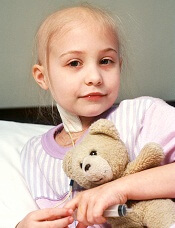
Photo by Bill Branson
SAN DIEGO—Trial results suggest treatment with the chimeric antigen receptor (CAR) T-cell therapy KTE-C19 is feasible for most young patients with high-risk B-cell acute lymphoblastic leukemia (ALL).
Nearly all ALL patients in this trial were able to receive their assigned dose of KTE-C19 after a preparative chemotherapy regimen.
The complete response (CR) rate in these patients was 62%, and the rate of severe cytokine release syndrome (CRS) was low.
Daniel W. Lee III, MD, of the University of Virginia in Charlottesville, presented these results at the 2016 ASH Annual Meeting (abstract 218).
Dr Lee noted that CAR T cells have shown promise in early studies, but morbidity related to high-grade CRS and/or neurotoxicity could limit wide applicability of this treatment in patients with high disease burden. Among those who achieve CR to CD19 CAR T-cell therapy, nearly half of patients relapse in the first year.
At ASH, Dr Lee reported results of a non-randomized clinical trial of KTE-C19, a CD19 CAR T-cell therapy under development by Kite Pharmaceuticals. The company did not sponsor this study, although investigators reported relationships with Kite and other companies. The trial was sponsored by the National Cancer Institute.
The trial included 53 children and young adults with relapsed/refractory ALL (n=51) or diffuse large B-cell lymphoma (n=2). The patients’ median age was 13 (range, 4-30), and most were male (n=41).
Of the ALL patients, 11 had primary refractory disease, 5 had Ph-positive ALL, 3 had Down syndrome, 6 had central nervous system (CNS) disease (2 with CNS3, 4 with CNS2), and 2 had MLL-rearranged ALL. The median ALL disease burden was 27%.
The first 21 patients received a low-dose fludarabine/cyclophosphamide preparative regimen, and the subsequent 32 patients received an alternative intensified preparative regimen in an attempt to mitigate severe CRS risk and improve response.
Possible intensive preparative regimens included higher-dose fludarabine/cyclophosphamide, fludarabine/high-dose cytarabine/G-CSF, and ifosfamide/etoposide.
All 53 patients had peripheral blood cells collected, and 52 were infused with CAR T cells. One patient did not receive an infusion due to progressive fungal pneumonia, and 2 patients received less than their assigned dose.
Therefore, Dr Lee said KTE-C19 was feasible in 94% of patients.
Efficacy
The median follow-up was 18.7 months.
Dr Lee said KTE-C19 “produced robust responses in very high-risk ALL patients.” He noted, however, that the CR rate was lower among patients with high disease burden.
The CR rate among the ALL patients was 62%. Of the 31 patients who achieved a CR, 28 had a minimal residual disease (MRD)-negative remission.
The rate of MRD-negative CR was 100% among the 11 patients with primary refractory ALL, 100% among the 6 patients with CNS disease, 60% among the 5 patients with Ph+ ALL, and 67% among the 3 with Down syndrome. Neither of the 2 patients with MLL-rearranged ALL responded.
“Attempts to increase response rate by modifying the preparative regimen have not yet been successful,” Dr Lee pointed out.
However, he noted superior response and overall survival rates among patients who received a fludarabine/cyclophosphamide preparative regimen.
“Median overall survival in all enrolled patients is 13.3 months with fludarabine/cyclophosphamide prep versus 5.5 months with other regimens,” he said.
The overall survival rate for the ALL patients was 28%, and the median overall survival was 11.2 months.
For patients who achieved an MRD-negative remission, the leukemia-free survival (LFS) rate was 56%. The median LFS was not reached.
Dr Lee noted that hematopoietic stem cell transplant (HSCT) after KTE-C19 correlated with decreased relapse rates and led to superior LFS.
Of the 28 patients who achieved MRD-negative CR, 21 went on to HSCT after KTE-C19. The median time to HSCT after CAR T-cell dose was 54 days. (Ten of the 28 patients had HSCT before receiving KTE-C19.)
Nineteen (91%) of the patients who proceeded to HSCT after KTE-C19 did not relapse, compared to 1 (14%) of the patients who did not have a post-CAR T transplant.
The median LFS was 4.9 months among the MRD responders who did not proceed to HSCT and undefined among MRD responders with a transplant after KTE-C19.
The probability of survival was 65% beginning at 18 months among patients who underwent HSCT and 14% beginning at 9.8 months among patients without a post-KTE-C19 transplant.
CD19 escape remains a challenge, Dr Lee said. The risk may be diminished, but not eradicated, with HSCT.
Toxicity
“There was a low rate of CRS, which was successfully managed with a grade-driven algorithm,” Dr Lee noted.
Five patients (10%) had grade 3 CRS, and 2 (4%) had grade 4 CRS.
Other grade 3/4 adverse events that were considered at least possibly related to therapy included fever (38% grade 3), febrile neutropenia (23% grade
3), hypotension (9% grade 3, 4% grade 4), LV systolic dysfunction (9% grade 3), prolonged QTc (2% grade 3), dysphasia (2% grade 3), cardiac arrest (2% grade 4), multi-organ failure (2% grade 3), hypoxia (2% grade 3, 2% grade 4), and pulmonary embolism (2% grade 3).
“There were no severe or permanent neurologic toxicities,” Dr Lee said. “Intensive neuropsychological testing in 13 patients revealed no consistent treatment-related neurocognitive decline, and several patients improved following therapy.”
In all, there were 46 cases of neurotoxicity, including visual hallucination (8 grade 1, 17%), headache (1 grade 3 [2%], 3 grade 2 [6%]), confusion (2 grade 1, 4%),
dysphasia (1 grade 3, 2%), delirium (1 grade 3, 2%), seizure (1 grade 2, 1 grade 1 [2% each]), ataxia (1 grade 2, 2%), tremor (1 grade 2, 2%), dysesthesia (1 grade 2, 2%), and dysarthria (1 grade 1, 2%).
Photo by Bill Branson
SAN DIEGO—Trial results suggest treatment with the chimeric antigen receptor (CAR) T-cell therapy KTE-C19 is feasible for most young patients with high-risk B-cell acute lymphoblastic leukemia (ALL).
Nearly all ALL patients in this trial were able to receive their assigned dose of KTE-C19 after a preparative chemotherapy regimen.
The complete response (CR) rate in these patients was 62%, and the rate of severe cytokine release syndrome (CRS) was low.
Daniel W. Lee III, MD, of the University of Virginia in Charlottesville, presented these results at the 2016 ASH Annual Meeting (abstract 218).
Dr Lee noted that CAR T cells have shown promise in early studies, but morbidity related to high-grade CRS and/or neurotoxicity could limit wide applicability of this treatment in patients with high disease burden. Among those who achieve CR to CD19 CAR T-cell therapy, nearly half of patients relapse in the first year.
At ASH, Dr Lee reported results of a non-randomized clinical trial of KTE-C19, a CD19 CAR T-cell therapy under development by Kite Pharmaceuticals. The company did not sponsor this study, although investigators reported relationships with Kite and other companies. The trial was sponsored by the National Cancer Institute.
The trial included 53 children and young adults with relapsed/refractory ALL (n=51) or diffuse large B-cell lymphoma (n=2). The patients’ median age was 13 (range, 4-30), and most were male (n=41).
Of the ALL patients, 11 had primary refractory disease, 5 had Ph-positive ALL, 3 had Down syndrome, 6 had central nervous system (CNS) disease (2 with CNS3, 4 with CNS2), and 2 had MLL-rearranged ALL. The median ALL disease burden was 27%.
The first 21 patients received a low-dose fludarabine/cyclophosphamide preparative regimen, and the subsequent 32 patients received an alternative intensified preparative regimen in an attempt to mitigate severe CRS risk and improve response.
Possible intensive preparative regimens included higher-dose fludarabine/cyclophosphamide, fludarabine/high-dose cytarabine/G-CSF, and ifosfamide/etoposide.
All 53 patients had peripheral blood cells collected, and 52 were infused with CAR T cells. One patient did not receive an infusion due to progressive fungal pneumonia, and 2 patients received less than their assigned dose.
Therefore, Dr Lee said KTE-C19 was feasible in 94% of patients.
Efficacy
The median follow-up was 18.7 months.
Dr Lee said KTE-C19 “produced robust responses in very high-risk ALL patients.” He noted, however, that the CR rate was lower among patients with high disease burden.
The CR rate among the ALL patients was 62%. Of the 31 patients who achieved a CR, 28 had a minimal residual disease (MRD)-negative remission.
The rate of MRD-negative CR was 100% among the 11 patients with primary refractory ALL, 100% among the 6 patients with CNS disease, 60% among the 5 patients with Ph+ ALL, and 67% among the 3 with Down syndrome. Neither of the 2 patients with MLL-rearranged ALL responded.
“Attempts to increase response rate by modifying the preparative regimen have not yet been successful,” Dr Lee pointed out.
However, he noted superior response and overall survival rates among patients who received a fludarabine/cyclophosphamide preparative regimen.
“Median overall survival in all enrolled patients is 13.3 months with fludarabine/cyclophosphamide prep versus 5.5 months with other regimens,” he said.
The overall survival rate for the ALL patients was 28%, and the median overall survival was 11.2 months.
For patients who achieved an MRD-negative remission, the leukemia-free survival (LFS) rate was 56%. The median LFS was not reached.
Dr Lee noted that hematopoietic stem cell transplant (HSCT) after KTE-C19 correlated with decreased relapse rates and led to superior LFS.
Of the 28 patients who achieved MRD-negative CR, 21 went on to HSCT after KTE-C19. The median time to HSCT after CAR T-cell dose was 54 days. (Ten of the 28 patients had HSCT before receiving KTE-C19.)
Nineteen (91%) of the patients who proceeded to HSCT after KTE-C19 did not relapse, compared to 1 (14%) of the patients who did not have a post-CAR T transplant.
The median LFS was 4.9 months among the MRD responders who did not proceed to HSCT and undefined among MRD responders with a transplant after KTE-C19.
The probability of survival was 65% beginning at 18 months among patients who underwent HSCT and 14% beginning at 9.8 months among patients without a post-KTE-C19 transplant.
CD19 escape remains a challenge, Dr Lee said. The risk may be diminished, but not eradicated, with HSCT.
Toxicity
“There was a low rate of CRS, which was successfully managed with a grade-driven algorithm,” Dr Lee noted.
Five patients (10%) had grade 3 CRS, and 2 (4%) had grade 4 CRS.
Other grade 3/4 adverse events that were considered at least possibly related to therapy included fever (38% grade 3), febrile neutropenia (23% grade
3), hypotension (9% grade 3, 4% grade 4), LV systolic dysfunction (9% grade 3), prolonged QTc (2% grade 3), dysphasia (2% grade 3), cardiac arrest (2% grade 4), multi-organ failure (2% grade 3), hypoxia (2% grade 3, 2% grade 4), and pulmonary embolism (2% grade 3).
“There were no severe or permanent neurologic toxicities,” Dr Lee said. “Intensive neuropsychological testing in 13 patients revealed no consistent treatment-related neurocognitive decline, and several patients improved following therapy.”
In all, there were 46 cases of neurotoxicity, including visual hallucination (8 grade 1, 17%), headache (1 grade 3 [2%], 3 grade 2 [6%]), confusion (2 grade 1, 4%),
dysphasia (1 grade 3, 2%), delirium (1 grade 3, 2%), seizure (1 grade 2, 1 grade 1 [2% each]), ataxia (1 grade 2, 2%), tremor (1 grade 2, 2%), dysesthesia (1 grade 2, 2%), and dysarthria (1 grade 1, 2%).
Photo by Bill Branson
SAN DIEGO—Trial results suggest treatment with the chimeric antigen receptor (CAR) T-cell therapy KTE-C19 is feasible for most young patients with high-risk B-cell acute lymphoblastic leukemia (ALL).
Nearly all ALL patients in this trial were able to receive their assigned dose of KTE-C19 after a preparative chemotherapy regimen.
The complete response (CR) rate in these patients was 62%, and the rate of severe cytokine release syndrome (CRS) was low.
Daniel W. Lee III, MD, of the University of Virginia in Charlottesville, presented these results at the 2016 ASH Annual Meeting (abstract 218).
Dr Lee noted that CAR T cells have shown promise in early studies, but morbidity related to high-grade CRS and/or neurotoxicity could limit wide applicability of this treatment in patients with high disease burden. Among those who achieve CR to CD19 CAR T-cell therapy, nearly half of patients relapse in the first year.
At ASH, Dr Lee reported results of a non-randomized clinical trial of KTE-C19, a CD19 CAR T-cell therapy under development by Kite Pharmaceuticals. The company did not sponsor this study, although investigators reported relationships with Kite and other companies. The trial was sponsored by the National Cancer Institute.
The trial included 53 children and young adults with relapsed/refractory ALL (n=51) or diffuse large B-cell lymphoma (n=2). The patients’ median age was 13 (range, 4-30), and most were male (n=41).
Of the ALL patients, 11 had primary refractory disease, 5 had Ph-positive ALL, 3 had Down syndrome, 6 had central nervous system (CNS) disease (2 with CNS3, 4 with CNS2), and 2 had MLL-rearranged ALL. The median ALL disease burden was 27%.
The first 21 patients received a low-dose fludarabine/cyclophosphamide preparative regimen, and the subsequent 32 patients received an alternative intensified preparative regimen in an attempt to mitigate severe CRS risk and improve response.
Possible intensive preparative regimens included higher-dose fludarabine/cyclophosphamide, fludarabine/high-dose cytarabine/G-CSF, and ifosfamide/etoposide.
All 53 patients had peripheral blood cells collected, and 52 were infused with CAR T cells. One patient did not receive an infusion due to progressive fungal pneumonia, and 2 patients received less than their assigned dose.
Therefore, Dr Lee said KTE-C19 was feasible in 94% of patients.
Efficacy
The median follow-up was 18.7 months.
Dr Lee said KTE-C19 “produced robust responses in very high-risk ALL patients.” He noted, however, that the CR rate was lower among patients with high disease burden.
The CR rate among the ALL patients was 62%. Of the 31 patients who achieved a CR, 28 had a minimal residual disease (MRD)-negative remission.
The rate of MRD-negative CR was 100% among the 11 patients with primary refractory ALL, 100% among the 6 patients with CNS disease, 60% among the 5 patients with Ph+ ALL, and 67% among the 3 with Down syndrome. Neither of the 2 patients with MLL-rearranged ALL responded.
“Attempts to increase response rate by modifying the preparative regimen have not yet been successful,” Dr Lee pointed out.
However, he noted superior response and overall survival rates among patients who received a fludarabine/cyclophosphamide preparative regimen.
“Median overall survival in all enrolled patients is 13.3 months with fludarabine/cyclophosphamide prep versus 5.5 months with other regimens,” he said.
The overall survival rate for the ALL patients was 28%, and the median overall survival was 11.2 months.
For patients who achieved an MRD-negative remission, the leukemia-free survival (LFS) rate was 56%. The median LFS was not reached.
Dr Lee noted that hematopoietic stem cell transplant (HSCT) after KTE-C19 correlated with decreased relapse rates and led to superior LFS.
Of the 28 patients who achieved MRD-negative CR, 21 went on to HSCT after KTE-C19. The median time to HSCT after CAR T-cell dose was 54 days. (Ten of the 28 patients had HSCT before receiving KTE-C19.)
Nineteen (91%) of the patients who proceeded to HSCT after KTE-C19 did not relapse, compared to 1 (14%) of the patients who did not have a post-CAR T transplant.
The median LFS was 4.9 months among the MRD responders who did not proceed to HSCT and undefined among MRD responders with a transplant after KTE-C19.
The probability of survival was 65% beginning at 18 months among patients who underwent HSCT and 14% beginning at 9.8 months among patients without a post-KTE-C19 transplant.
CD19 escape remains a challenge, Dr Lee said. The risk may be diminished, but not eradicated, with HSCT.
Toxicity
“There was a low rate of CRS, which was successfully managed with a grade-driven algorithm,” Dr Lee noted.
Five patients (10%) had grade 3 CRS, and 2 (4%) had grade 4 CRS.
Other grade 3/4 adverse events that were considered at least possibly related to therapy included fever (38% grade 3), febrile neutropenia (23% grade
3), hypotension (9% grade 3, 4% grade 4), LV systolic dysfunction (9% grade 3), prolonged QTc (2% grade 3), dysphasia (2% grade 3), cardiac arrest (2% grade 4), multi-organ failure (2% grade 3), hypoxia (2% grade 3, 2% grade 4), and pulmonary embolism (2% grade 3).
“There were no severe or permanent neurologic toxicities,” Dr Lee said. “Intensive neuropsychological testing in 13 patients revealed no consistent treatment-related neurocognitive decline, and several patients improved following therapy.”
In all, there were 46 cases of neurotoxicity, including visual hallucination (8 grade 1, 17%), headache (1 grade 3 [2%], 3 grade 2 [6%]), confusion (2 grade 1, 4%),
dysphasia (1 grade 3, 2%), delirium (1 grade 3, 2%), seizure (1 grade 2, 1 grade 1 [2% each]), ataxia (1 grade 2, 2%), tremor (1 grade 2, 2%), dysesthesia (1 grade 2, 2%), and dysarthria (1 grade 1, 2%).
Shorter-course antimicrobials do not reduce antimicrobial resistance in AOM
A shorter duration of antimicrobial therapy for acute otitis media (AOM) in children is associated with higher rates of clinical failure and higher symptom scores but without any associated reduction in the rates of antimicrobial resistance or adverse events.
Alejandro Hoberman, MD, of the Children’s Hospital of Pittsburgh at the University of Pittsburgh Medical Center, and his coauthors report the results of a study in which 520 children aged 6-23 months were randomized to either 10 days of amoxicillin-clavulanate therapy, or 5 days of therapy followed by 5 days of placebo.
The children who received the full 10-day course also had lower mean symptom scores in the 6-14 days after initiation of therapy, compared with those who received 5 days of treatment (1.34 vs. 1.61; P = 0.07), while the number of children whose symptom scores decreased by 50% from baseline to the end of treatment was significantly lower in the 5-day group.
However, there were no significant differences between the two groups in the rate of nasopharyngeal colonization pathogens not susceptible to penicillin: 47% in the 10-day group, compared with 44% in the 5-day group (N Engl J Med. 2016 Dec 22;375[25]:2446-56).
Similarly, the rates of recurrence and adverse events were not significantly different between the two groups.
A shorter duration of treatment has been considered as a strategy for reducing the risk of antimicrobial resistance, but clinical trials so far have showed either modest difference favoring the standard duration of treatment, or no difference at all.
“The outcome differences we found were larger than the differences that have been reported previously, mainly because the rates of clinical failure among children who received reduced duration treatment were higher in our trial than in previous trials,” Dr. Hoberman and his associates wrote.
The researchers did note that clinical failure rates were higher among children with greater exposure to other children, and those with infection in both ears rather than a single ear.
The study was supported by the National Institute of Allergy and Infectious Diseases and the National Institutes of Health. Dr. Hoberman and Dr. Judith M. Martin declared consulting fees from Genocea Biosciences, and Dr. Hoberman declared grant support from Ricoh Innovations and holding pending patents for a reduced clavulanate concentration version of amoxicillin–clavulanate potassium, and a method and device for aiding in the diagnosis of otitis media. No other conflicts of interest were declared.
The study of acute otitis media is challenging owing to antibiotic pharmacokinetics, age of the patients, variation in regional pathogens, polymicrobial infection, viral cofactors, antibiotic resistance, status of patients with regard to receipt of PCV7 or PCV13, and a high rate of spontaneous resolution.
The study was not designed to address outcomes in older children, children with less severe acute otitis media or with acute otitis media in one ear, or children with additional risk factors such as cleft palate or trisomy 21. In addition, there is a paucity of studies from resource-poor and low income countries.
But for now, 10 days of amoxicillin-clavulanate for children younger than 2 years of age who have a definite diagnosis of acute otitis media seems to be a reasonable option.
Margaret A. Kenna, MD, MPH, is from the department of otolaryngology and communication enhancement at the Boston Children’s Hospital. These comments are excerpted from an accompanying editorial (N Engl J Med. 2016 Dec 22;375[25]:2492-93). Dr. Kenna declared a grant from Agilis outside the submitted work.
The study of acute otitis media is challenging owing to antibiotic pharmacokinetics, age of the patients, variation in regional pathogens, polymicrobial infection, viral cofactors, antibiotic resistance, status of patients with regard to receipt of PCV7 or PCV13, and a high rate of spontaneous resolution.
The study was not designed to address outcomes in older children, children with less severe acute otitis media or with acute otitis media in one ear, or children with additional risk factors such as cleft palate or trisomy 21. In addition, there is a paucity of studies from resource-poor and low income countries.
But for now, 10 days of amoxicillin-clavulanate for children younger than 2 years of age who have a definite diagnosis of acute otitis media seems to be a reasonable option.
Margaret A. Kenna, MD, MPH, is from the department of otolaryngology and communication enhancement at the Boston Children’s Hospital. These comments are excerpted from an accompanying editorial (N Engl J Med. 2016 Dec 22;375[25]:2492-93). Dr. Kenna declared a grant from Agilis outside the submitted work.
The study of acute otitis media is challenging owing to antibiotic pharmacokinetics, age of the patients, variation in regional pathogens, polymicrobial infection, viral cofactors, antibiotic resistance, status of patients with regard to receipt of PCV7 or PCV13, and a high rate of spontaneous resolution.
The study was not designed to address outcomes in older children, children with less severe acute otitis media or with acute otitis media in one ear, or children with additional risk factors such as cleft palate or trisomy 21. In addition, there is a paucity of studies from resource-poor and low income countries.
But for now, 10 days of amoxicillin-clavulanate for children younger than 2 years of age who have a definite diagnosis of acute otitis media seems to be a reasonable option.
Margaret A. Kenna, MD, MPH, is from the department of otolaryngology and communication enhancement at the Boston Children’s Hospital. These comments are excerpted from an accompanying editorial (N Engl J Med. 2016 Dec 22;375[25]:2492-93). Dr. Kenna declared a grant from Agilis outside the submitted work.
A shorter duration of antimicrobial therapy for acute otitis media (AOM) in children is associated with higher rates of clinical failure and higher symptom scores but without any associated reduction in the rates of antimicrobial resistance or adverse events.
Alejandro Hoberman, MD, of the Children’s Hospital of Pittsburgh at the University of Pittsburgh Medical Center, and his coauthors report the results of a study in which 520 children aged 6-23 months were randomized to either 10 days of amoxicillin-clavulanate therapy, or 5 days of therapy followed by 5 days of placebo.
The children who received the full 10-day course also had lower mean symptom scores in the 6-14 days after initiation of therapy, compared with those who received 5 days of treatment (1.34 vs. 1.61; P = 0.07), while the number of children whose symptom scores decreased by 50% from baseline to the end of treatment was significantly lower in the 5-day group.
However, there were no significant differences between the two groups in the rate of nasopharyngeal colonization pathogens not susceptible to penicillin: 47% in the 10-day group, compared with 44% in the 5-day group (N Engl J Med. 2016 Dec 22;375[25]:2446-56).
Similarly, the rates of recurrence and adverse events were not significantly different between the two groups.
A shorter duration of treatment has been considered as a strategy for reducing the risk of antimicrobial resistance, but clinical trials so far have showed either modest difference favoring the standard duration of treatment, or no difference at all.
“The outcome differences we found were larger than the differences that have been reported previously, mainly because the rates of clinical failure among children who received reduced duration treatment were higher in our trial than in previous trials,” Dr. Hoberman and his associates wrote.
The researchers did note that clinical failure rates were higher among children with greater exposure to other children, and those with infection in both ears rather than a single ear.
The study was supported by the National Institute of Allergy and Infectious Diseases and the National Institutes of Health. Dr. Hoberman and Dr. Judith M. Martin declared consulting fees from Genocea Biosciences, and Dr. Hoberman declared grant support from Ricoh Innovations and holding pending patents for a reduced clavulanate concentration version of amoxicillin–clavulanate potassium, and a method and device for aiding in the diagnosis of otitis media. No other conflicts of interest were declared.
A shorter duration of antimicrobial therapy for acute otitis media (AOM) in children is associated with higher rates of clinical failure and higher symptom scores but without any associated reduction in the rates of antimicrobial resistance or adverse events.
Alejandro Hoberman, MD, of the Children’s Hospital of Pittsburgh at the University of Pittsburgh Medical Center, and his coauthors report the results of a study in which 520 children aged 6-23 months were randomized to either 10 days of amoxicillin-clavulanate therapy, or 5 days of therapy followed by 5 days of placebo.
The children who received the full 10-day course also had lower mean symptom scores in the 6-14 days after initiation of therapy, compared with those who received 5 days of treatment (1.34 vs. 1.61; P = 0.07), while the number of children whose symptom scores decreased by 50% from baseline to the end of treatment was significantly lower in the 5-day group.
However, there were no significant differences between the two groups in the rate of nasopharyngeal colonization pathogens not susceptible to penicillin: 47% in the 10-day group, compared with 44% in the 5-day group (N Engl J Med. 2016 Dec 22;375[25]:2446-56).
Similarly, the rates of recurrence and adverse events were not significantly different between the two groups.
A shorter duration of treatment has been considered as a strategy for reducing the risk of antimicrobial resistance, but clinical trials so far have showed either modest difference favoring the standard duration of treatment, or no difference at all.
“The outcome differences we found were larger than the differences that have been reported previously, mainly because the rates of clinical failure among children who received reduced duration treatment were higher in our trial than in previous trials,” Dr. Hoberman and his associates wrote.
The researchers did note that clinical failure rates were higher among children with greater exposure to other children, and those with infection in both ears rather than a single ear.
The study was supported by the National Institute of Allergy and Infectious Diseases and the National Institutes of Health. Dr. Hoberman and Dr. Judith M. Martin declared consulting fees from Genocea Biosciences, and Dr. Hoberman declared grant support from Ricoh Innovations and holding pending patents for a reduced clavulanate concentration version of amoxicillin–clavulanate potassium, and a method and device for aiding in the diagnosis of otitis media. No other conflicts of interest were declared.
FROM THE NEW ENGLAND JOURNAL OF MEDICINE
Key clinical point: A shorter duration of antimicrobial therapy for acute otitis media (AOM) in children is associated with higher rates of clinical failure without a reduction in the rates of antimicrobial resistance.
Major finding: Children who received 5 days of antimicrobial experienced clinical failure rates of 35%, compared with 16% in those who received a full 10-day course.
Data source: Randomized controlled trial in 520 children aged 6-23 months with AOM.
Disclosures: The study was supported by the National Institute of Allergy and Infectious Diseases and the National Institutes of Health. Dr. Hoberman and Dr. Judith M. Martin declared consulting fees from Genocea Biosciences, and Dr. Hoberman declared grant support from Ricoh Innovations and holding pending patents for a reduced clavulanate concentration version of amoxicillin–clavulanate potassium, and a method and device for aiding in the diagnosis of otitis media. No other conflicts of interest were declared.
Stress management for ambitious students
Most parents hope that their children will be motivated and hard-working at school, but ambitious students usually face very high levels of stress. Ambitious young people typically push themselves very hard and may not spend enough time in play, relaxation, or exploring potential interests. Their time with peers might be more competitive than social or fun. They may become rigidly focused on a goal, paving the way for devastation if they fall short of their own expectations. They may internalize stress and not ask for help if it starts to take a toll on their mental health. But ambition is not incompatible with healthy development and well-being. Pediatricians usually know who the ambitious students in their practice are, and will hear about the stress they may be experiencing. You have the opportunity to offer them (or their parents) some strategies to manage their high stress levels, and build resilience.
Support ambition, but not perfectionism
It can be helpful to acknowledge to young people that they are ambitious, enabling them to acknowledge this fact about themselves. This kind of drive can be an admirable strength when it is part of an emerging identity, a wish to be successful as defined by the patient.
It is more likely to be problematic if it is a product of a parent’s need to have a child perform as they deem best. Second, it is critical to differentiate ambition from perfectionism. While ambition can keep someone focused and motivated in the face of difficulty, perfectionism is a bully that leaves a person feeling perpetually inadequate. Ambition without a specific interest or focus can lead to general perfectionism in a young person, and parents might unwittingly support this by applauding successes or becoming overinvested in this success reflecting onto them. When the pediatrician points out to a patient (and parents) that perfection is neither possible nor desirable, they may respond, “why wouldn’t I want to be perfect?” Remind them that perfectionism is actually the enemy of long-term accomplishment, discouraging risk-taking, reflection, and growth.
Celebrate failure!
The critical difference between an ambitious person who is persistent and determined (and thus equipped to succeed) and the brittle perfectionist is the ability to tolerate failure and setbacks. Point out to your patients that ambition means there will be a lot of setbacks, disappointments, and failures, as they attempt things that are challenging. Indeed, they should embrace each little failure, as that is how real learning and growth happen, especially if they are constantly stretching their goals.
As children or teenagers learn that failure is evidence that they are on track, working hard, and improving, they will develop tenacity and flexibility. Carol S. Dweck, PhD, a psychologist who has studied school performance in young people, has demonstrated that when young people are praised for their results they tend to give up when they fail, whereas if they are praised for their hard work and persistence, they redouble their effort when they fail. Parents, teachers, and pediatricians have the power to shift an ambitious child’s mindset (Dweck’s term) by helping the child change his or her thinking about what failure really means.
Cultivate self-awareness and perspective
It is one of the central tasks of growing up to learn what one’s interests, talents, and values are, and this self-knowledge is especially critical in ambitious young people. Without genuine interests or passions, ambition may feel like a hollow quest for approval. It is more likely to become general perfectionism. So children and teenagers need adults who are curious about their underlying interests, who patiently help them to cultivate these interests and dedicate their ambition to the pursuit of these passions. Younger children need adult time and support to explore a variety of interests, dabbling so they might figure out where their interests and talents converge. This can provide plenty of opportunity to celebrate effort over achievement. By adolescence, they should have a clearer sense of their personal interests and abilities, and will be deepening their efforts in fewer areas. Adolescence is also when they start to build a narrative of who they are and what values are truly their own. Parents can serve as models and facilitators for their teenagers’ emerging sets of values. Values such as honesty, compassion, or generosity (for example) organize one’s efforts, giving them deeper meaning and keeping difficulties in perspective. Values also will help ambitious young people set their own goals and create an individualized and meaningful definition of success, and keep bigger failures, losses, or disappointments in perspective.
Teach self-care
It seems obvious to state that learning how to care for one’s self is essential to well-being, but for ambitious young people (and adults), self-care is often the first thing to go (or the last thing they consider) in their busy days. Explain to your patients (and parents) that without adequate, consistent, restful sleep, all of their hard work will be inefficient or likely squandered. Explain that daily cardiovascular exercise is not frivolous, but rather essential to balance their cognitive efforts, and offers potent protection for their physical and mental health. There is even robust evidence that sleep and exercise are directly helpful to memory, learning, and creativity. When a parent models this kind of self-care, it is far more powerful than simply talking about it!
Relaxation is self-care!
While most teenagers do not need to be taught how to relax, those very ambitious ones are likely to need permission and even help in learning how to effectively and efficiently blow off steam. Help them to approach relaxation as they would approach a new subject, open-minded and trying different things to determine what works for them. Some may find exercise relaxing, while some may need a cognitive distraction (sometimes called “senseless fun,” an activity not dedicated to achievement) such as reading, family games, or television. Social time often is very effective relaxation for teenagers, and they should know that it is as important as sleep and studying for their performance. Some may find that a calming activity such as yoga or meditation recharges their batteries, whereas others may need noisy video games to feel renewed. Suggest that they should protect (just a little) time for relaxation even on their busiest days to help them develop good habits of self-care. Without consistent, reliable relaxation, ambitious young people are at risk for burnout or for impulsive and extreme behaviors such as binge-drinking.
Be on the lookout for red flags
In the same way that high performing athletes are at risk for stress fractures or other injuries of repetitive, intense physical activity, ambitious students are vulnerable to some of the problems that can follow sustained, intense cognitive effort. These risks go up if they are sleep deprived, stop exercising, or are socially isolated. Parents can be on the lookout for signs of depression or anxiety disorders, such as loss of energy, withdrawal from friends or beloved activities, persistent unhappiness or irritability (sustained over days to weeks), and of course morbid preoccupations.
Intense perfectionism is common among young people at risk for eating disorders, depression and self-injury, and anxiety disorders. Beyond recognizing signs, it is even more important for parents and pediatricians to equip ambitious young people to stay connected and ask for help if they experience a change in their emotional equilibrium. Suggest to your patients that they should never worry alone. They should ask for help if they are struggling to sleep, to sustain their motivation or effort, or notice feeling panicked, unusually tearful, or hopeless. Depression and anxiety are common and treatable problems in adolescents, but ambitious adolescents might be inclined to try to soldier through them. Caring adults should demystify and destigmatize mood and anxiety problems. You might point out that they would ask for help for a toothache or a painful knee joint, and that their mental health should be no different.
Many ambitious children have ambitious parents who might look back on their own adolescence and wonder if they were sufficiently balanced in their approach or whether they overreacted to failure. Sometimes honest sharing of successes, failures, and enduring dilemmas can build an empathic bridge from one generation to the next.
Dr. Swick is an attending psychiatrist in the division of child psychiatry at Massachusetts General Hospital, Boston, and director of the Parenting at a Challenging Time (PACT) Program at the Vernon Cancer Center at Newton Wellesley Hospital, also in Boston. Dr. Jellinek is professor emeritus of psychiatry and pediatrics, Harvard Medical School, Boston. Email them at pdnews@frontlinemedcom.com.
Most parents hope that their children will be motivated and hard-working at school, but ambitious students usually face very high levels of stress. Ambitious young people typically push themselves very hard and may not spend enough time in play, relaxation, or exploring potential interests. Their time with peers might be more competitive than social or fun. They may become rigidly focused on a goal, paving the way for devastation if they fall short of their own expectations. They may internalize stress and not ask for help if it starts to take a toll on their mental health. But ambition is not incompatible with healthy development and well-being. Pediatricians usually know who the ambitious students in their practice are, and will hear about the stress they may be experiencing. You have the opportunity to offer them (or their parents) some strategies to manage their high stress levels, and build resilience.
Support ambition, but not perfectionism
It can be helpful to acknowledge to young people that they are ambitious, enabling them to acknowledge this fact about themselves. This kind of drive can be an admirable strength when it is part of an emerging identity, a wish to be successful as defined by the patient.
It is more likely to be problematic if it is a product of a parent’s need to have a child perform as they deem best. Second, it is critical to differentiate ambition from perfectionism. While ambition can keep someone focused and motivated in the face of difficulty, perfectionism is a bully that leaves a person feeling perpetually inadequate. Ambition without a specific interest or focus can lead to general perfectionism in a young person, and parents might unwittingly support this by applauding successes or becoming overinvested in this success reflecting onto them. When the pediatrician points out to a patient (and parents) that perfection is neither possible nor desirable, they may respond, “why wouldn’t I want to be perfect?” Remind them that perfectionism is actually the enemy of long-term accomplishment, discouraging risk-taking, reflection, and growth.
Celebrate failure!
The critical difference between an ambitious person who is persistent and determined (and thus equipped to succeed) and the brittle perfectionist is the ability to tolerate failure and setbacks. Point out to your patients that ambition means there will be a lot of setbacks, disappointments, and failures, as they attempt things that are challenging. Indeed, they should embrace each little failure, as that is how real learning and growth happen, especially if they are constantly stretching their goals.
As children or teenagers learn that failure is evidence that they are on track, working hard, and improving, they will develop tenacity and flexibility. Carol S. Dweck, PhD, a psychologist who has studied school performance in young people, has demonstrated that when young people are praised for their results they tend to give up when they fail, whereas if they are praised for their hard work and persistence, they redouble their effort when they fail. Parents, teachers, and pediatricians have the power to shift an ambitious child’s mindset (Dweck’s term) by helping the child change his or her thinking about what failure really means.
Cultivate self-awareness and perspective
It is one of the central tasks of growing up to learn what one’s interests, talents, and values are, and this self-knowledge is especially critical in ambitious young people. Without genuine interests or passions, ambition may feel like a hollow quest for approval. It is more likely to become general perfectionism. So children and teenagers need adults who are curious about their underlying interests, who patiently help them to cultivate these interests and dedicate their ambition to the pursuit of these passions. Younger children need adult time and support to explore a variety of interests, dabbling so they might figure out where their interests and talents converge. This can provide plenty of opportunity to celebrate effort over achievement. By adolescence, they should have a clearer sense of their personal interests and abilities, and will be deepening their efforts in fewer areas. Adolescence is also when they start to build a narrative of who they are and what values are truly their own. Parents can serve as models and facilitators for their teenagers’ emerging sets of values. Values such as honesty, compassion, or generosity (for example) organize one’s efforts, giving them deeper meaning and keeping difficulties in perspective. Values also will help ambitious young people set their own goals and create an individualized and meaningful definition of success, and keep bigger failures, losses, or disappointments in perspective.
Teach self-care
It seems obvious to state that learning how to care for one’s self is essential to well-being, but for ambitious young people (and adults), self-care is often the first thing to go (or the last thing they consider) in their busy days. Explain to your patients (and parents) that without adequate, consistent, restful sleep, all of their hard work will be inefficient or likely squandered. Explain that daily cardiovascular exercise is not frivolous, but rather essential to balance their cognitive efforts, and offers potent protection for their physical and mental health. There is even robust evidence that sleep and exercise are directly helpful to memory, learning, and creativity. When a parent models this kind of self-care, it is far more powerful than simply talking about it!
Relaxation is self-care!
While most teenagers do not need to be taught how to relax, those very ambitious ones are likely to need permission and even help in learning how to effectively and efficiently blow off steam. Help them to approach relaxation as they would approach a new subject, open-minded and trying different things to determine what works for them. Some may find exercise relaxing, while some may need a cognitive distraction (sometimes called “senseless fun,” an activity not dedicated to achievement) such as reading, family games, or television. Social time often is very effective relaxation for teenagers, and they should know that it is as important as sleep and studying for their performance. Some may find that a calming activity such as yoga or meditation recharges their batteries, whereas others may need noisy video games to feel renewed. Suggest that they should protect (just a little) time for relaxation even on their busiest days to help them develop good habits of self-care. Without consistent, reliable relaxation, ambitious young people are at risk for burnout or for impulsive and extreme behaviors such as binge-drinking.
Be on the lookout for red flags
In the same way that high performing athletes are at risk for stress fractures or other injuries of repetitive, intense physical activity, ambitious students are vulnerable to some of the problems that can follow sustained, intense cognitive effort. These risks go up if they are sleep deprived, stop exercising, or are socially isolated. Parents can be on the lookout for signs of depression or anxiety disorders, such as loss of energy, withdrawal from friends or beloved activities, persistent unhappiness or irritability (sustained over days to weeks), and of course morbid preoccupations.
Intense perfectionism is common among young people at risk for eating disorders, depression and self-injury, and anxiety disorders. Beyond recognizing signs, it is even more important for parents and pediatricians to equip ambitious young people to stay connected and ask for help if they experience a change in their emotional equilibrium. Suggest to your patients that they should never worry alone. They should ask for help if they are struggling to sleep, to sustain their motivation or effort, or notice feeling panicked, unusually tearful, or hopeless. Depression and anxiety are common and treatable problems in adolescents, but ambitious adolescents might be inclined to try to soldier through them. Caring adults should demystify and destigmatize mood and anxiety problems. You might point out that they would ask for help for a toothache or a painful knee joint, and that their mental health should be no different.
Many ambitious children have ambitious parents who might look back on their own adolescence and wonder if they were sufficiently balanced in their approach or whether they overreacted to failure. Sometimes honest sharing of successes, failures, and enduring dilemmas can build an empathic bridge from one generation to the next.
Dr. Swick is an attending psychiatrist in the division of child psychiatry at Massachusetts General Hospital, Boston, and director of the Parenting at a Challenging Time (PACT) Program at the Vernon Cancer Center at Newton Wellesley Hospital, also in Boston. Dr. Jellinek is professor emeritus of psychiatry and pediatrics, Harvard Medical School, Boston. Email them at pdnews@frontlinemedcom.com.
Most parents hope that their children will be motivated and hard-working at school, but ambitious students usually face very high levels of stress. Ambitious young people typically push themselves very hard and may not spend enough time in play, relaxation, or exploring potential interests. Their time with peers might be more competitive than social or fun. They may become rigidly focused on a goal, paving the way for devastation if they fall short of their own expectations. They may internalize stress and not ask for help if it starts to take a toll on their mental health. But ambition is not incompatible with healthy development and well-being. Pediatricians usually know who the ambitious students in their practice are, and will hear about the stress they may be experiencing. You have the opportunity to offer them (or their parents) some strategies to manage their high stress levels, and build resilience.
Support ambition, but not perfectionism
It can be helpful to acknowledge to young people that they are ambitious, enabling them to acknowledge this fact about themselves. This kind of drive can be an admirable strength when it is part of an emerging identity, a wish to be successful as defined by the patient.
It is more likely to be problematic if it is a product of a parent’s need to have a child perform as they deem best. Second, it is critical to differentiate ambition from perfectionism. While ambition can keep someone focused and motivated in the face of difficulty, perfectionism is a bully that leaves a person feeling perpetually inadequate. Ambition without a specific interest or focus can lead to general perfectionism in a young person, and parents might unwittingly support this by applauding successes or becoming overinvested in this success reflecting onto them. When the pediatrician points out to a patient (and parents) that perfection is neither possible nor desirable, they may respond, “why wouldn’t I want to be perfect?” Remind them that perfectionism is actually the enemy of long-term accomplishment, discouraging risk-taking, reflection, and growth.
Celebrate failure!
The critical difference between an ambitious person who is persistent and determined (and thus equipped to succeed) and the brittle perfectionist is the ability to tolerate failure and setbacks. Point out to your patients that ambition means there will be a lot of setbacks, disappointments, and failures, as they attempt things that are challenging. Indeed, they should embrace each little failure, as that is how real learning and growth happen, especially if they are constantly stretching their goals.
As children or teenagers learn that failure is evidence that they are on track, working hard, and improving, they will develop tenacity and flexibility. Carol S. Dweck, PhD, a psychologist who has studied school performance in young people, has demonstrated that when young people are praised for their results they tend to give up when they fail, whereas if they are praised for their hard work and persistence, they redouble their effort when they fail. Parents, teachers, and pediatricians have the power to shift an ambitious child’s mindset (Dweck’s term) by helping the child change his or her thinking about what failure really means.
Cultivate self-awareness and perspective
It is one of the central tasks of growing up to learn what one’s interests, talents, and values are, and this self-knowledge is especially critical in ambitious young people. Without genuine interests or passions, ambition may feel like a hollow quest for approval. It is more likely to become general perfectionism. So children and teenagers need adults who are curious about their underlying interests, who patiently help them to cultivate these interests and dedicate their ambition to the pursuit of these passions. Younger children need adult time and support to explore a variety of interests, dabbling so they might figure out where their interests and talents converge. This can provide plenty of opportunity to celebrate effort over achievement. By adolescence, they should have a clearer sense of their personal interests and abilities, and will be deepening their efforts in fewer areas. Adolescence is also when they start to build a narrative of who they are and what values are truly their own. Parents can serve as models and facilitators for their teenagers’ emerging sets of values. Values such as honesty, compassion, or generosity (for example) organize one’s efforts, giving them deeper meaning and keeping difficulties in perspective. Values also will help ambitious young people set their own goals and create an individualized and meaningful definition of success, and keep bigger failures, losses, or disappointments in perspective.
Teach self-care
It seems obvious to state that learning how to care for one’s self is essential to well-being, but for ambitious young people (and adults), self-care is often the first thing to go (or the last thing they consider) in their busy days. Explain to your patients (and parents) that without adequate, consistent, restful sleep, all of their hard work will be inefficient or likely squandered. Explain that daily cardiovascular exercise is not frivolous, but rather essential to balance their cognitive efforts, and offers potent protection for their physical and mental health. There is even robust evidence that sleep and exercise are directly helpful to memory, learning, and creativity. When a parent models this kind of self-care, it is far more powerful than simply talking about it!
Relaxation is self-care!
While most teenagers do not need to be taught how to relax, those very ambitious ones are likely to need permission and even help in learning how to effectively and efficiently blow off steam. Help them to approach relaxation as they would approach a new subject, open-minded and trying different things to determine what works for them. Some may find exercise relaxing, while some may need a cognitive distraction (sometimes called “senseless fun,” an activity not dedicated to achievement) such as reading, family games, or television. Social time often is very effective relaxation for teenagers, and they should know that it is as important as sleep and studying for their performance. Some may find that a calming activity such as yoga or meditation recharges their batteries, whereas others may need noisy video games to feel renewed. Suggest that they should protect (just a little) time for relaxation even on their busiest days to help them develop good habits of self-care. Without consistent, reliable relaxation, ambitious young people are at risk for burnout or for impulsive and extreme behaviors such as binge-drinking.
Be on the lookout for red flags
In the same way that high performing athletes are at risk for stress fractures or other injuries of repetitive, intense physical activity, ambitious students are vulnerable to some of the problems that can follow sustained, intense cognitive effort. These risks go up if they are sleep deprived, stop exercising, or are socially isolated. Parents can be on the lookout for signs of depression or anxiety disorders, such as loss of energy, withdrawal from friends or beloved activities, persistent unhappiness or irritability (sustained over days to weeks), and of course morbid preoccupations.
Intense perfectionism is common among young people at risk for eating disorders, depression and self-injury, and anxiety disorders. Beyond recognizing signs, it is even more important for parents and pediatricians to equip ambitious young people to stay connected and ask for help if they experience a change in their emotional equilibrium. Suggest to your patients that they should never worry alone. They should ask for help if they are struggling to sleep, to sustain their motivation or effort, or notice feeling panicked, unusually tearful, or hopeless. Depression and anxiety are common and treatable problems in adolescents, but ambitious adolescents might be inclined to try to soldier through them. Caring adults should demystify and destigmatize mood and anxiety problems. You might point out that they would ask for help for a toothache or a painful knee joint, and that their mental health should be no different.
Many ambitious children have ambitious parents who might look back on their own adolescence and wonder if they were sufficiently balanced in their approach or whether they overreacted to failure. Sometimes honest sharing of successes, failures, and enduring dilemmas can build an empathic bridge from one generation to the next.
Dr. Swick is an attending psychiatrist in the division of child psychiatry at Massachusetts General Hospital, Boston, and director of the Parenting at a Challenging Time (PACT) Program at the Vernon Cancer Center at Newton Wellesley Hospital, also in Boston. Dr. Jellinek is professor emeritus of psychiatry and pediatrics, Harvard Medical School, Boston. Email them at pdnews@frontlinemedcom.com.
ADHD versus anxiety? An approach for pediatricians
This month’s column comes directly by request from a pediatric colleague. She asked about a common diagnostic dilemma for pediatricians that involves what at least on the surface appears like disruptive or oppositional behavior at the home, school, or both, but is complicated by the possibility that the primary engine of this behavior is anxiety. This is an important challenge to try and get right because the treatment plan will take different paths, depending on the final call that is made.
Case summary
Devin is a 6-year-old boy who comes in with his parents for concerns about his behavior. His parents note that he has always been “high strung” but not disruptive or aggressive. When he was younger, Devin was quite sensitive to sounds, textures, and tactile sensations, but this has improved on its own. Thunderstorms continue to bother him quite a bit, though, and he often will ask his parents repeated questions when it is cloudy about the possibility of a thunderstorm. With some extra teacher and parent support, Devin made the transition to kindergarten fairly well. Now, however, he is struggling in a larger 1st grade class. His teacher states that he often seems distracted, fidgety, and easily frustrated, causing him to “shut down” and refuse to do his work. This past week, during a more challenging assignment, he crawled under his desk and would not come out. The teacher is now recommending an evaluation for attention-deficit/hyperactivity disorder (ADHD).
Discussion
1. Are there other times in the child’s life when clearly he is very anxious? The presence of developmentally elevated levels of anxiety in areas outside the particular situations in question can provide a clue that anxiety is contributing to what otherwise might be seen as more oppositional behavior. In this case, the high levels of anxiety about thunderstorms show that anxiety is present in the child and could be playing a role in his disruptive behavior at school.
2. When he’s not focusing on the task at hand, what is he thinking about? Nonanxious children with or without ADHD can frequently daydream and go “off task,” but the content of those thoughts frequently involves anticipation for more preferred activities, reminisces of positive events from the past, or attention to other stimuli in the environment (for example, the bird in a tree outside). More anxious children, by contrast, may have more worried and ruminating thoughts about poor performance, possible bad events that might happen in the future, or “what if?” kinds of concerns.
3. Is there a family history of anxiety? While one should not over-rely on family history, the presence of one or more family members with clinically significant anxiety does raise the possibility of anxiety in the identified patient. Research indicates that the heritability of anxiety is about 50%,1,2 but that a significant amount of the transmission of anxiety from parent to child comes from environmental mechanisms.3
4. Is there a consistent trigger to his outbursts? For anxious children, meltdowns are frequently provoked by situations in which a child feels uncomfortable, overstimulated, or overwhelmed, and the outburst is a reflection of those intense feelings that are difficult to manage. An outburst like that above, which occurs when a child is pushed to finish difficult work, might be a good example of one that is triggered by anxiety.
5. What does the rating scale show? A broad-based rating scale that assesses multiple domains of symptoms can be a big help for diagnostic dilemmas such as this one. Our clinic uses the Child Behavior Checklist4 which has subscales for both anxiety and attention problems. Evidence of a spike in either of those domains, or both, really can help guide our thinking.
Of course, it is very possible that the answer to the ADHD versus anxiety question is that both are present. This is a common conclusion when it comes to mental health assessment, and it is different from the traditional “this or that” thinking present in more classic differential diagnosis decision making. Research indicates that the ADHD and anxiety disorders frequently co-occur.5 When that happens, concurrent evidence-based psychotherapy for anxiety in conjunction with multimodal treatment for ADHD has been recommended as a first step.6
Case follow-up
Based on all the information, the pediatrician judges that Devin’s disruptive behavior is in large part being driven by his level of anxiety. She makes a referral to a child psychologist to begin evidence-based psychotherapy and recommends that the school consider some modifications and accommodations that may help his behavior at school. At a follow-up appointment, Devin’s difficulties have improved, and there is little evidence of ADHD now that the anxiety has been fully addressed.
References
1. Genes Brain Behav. 2005;4(8):466-81.
2. J Am Acad Child Adolesc Psychiatry. 2010;49(3):248-55.
3. Am J Psychiatry. 2015;172(7):630-7.
4. Manual for the ASEBA School-Age Forms & Profiles (Burlington, Vt.: University of Vermont, Research Center for Children, Youth, and Families, 2001).
5. J Anxiety Disord. 1997;11(4):377-94.
6. J Abnorm Child Psychol. 2000;28(6):527-41.
Dr. Rettew is a child and adolescent psychiatrist and assistant professor of psychiatry and pediatrics at the University of Vermont Larner College of Medicine, Burlington. Follow him on Twitter @PediPsych. Email him at pdnews@frontlinemedcom.com.
This month’s column comes directly by request from a pediatric colleague. She asked about a common diagnostic dilemma for pediatricians that involves what at least on the surface appears like disruptive or oppositional behavior at the home, school, or both, but is complicated by the possibility that the primary engine of this behavior is anxiety. This is an important challenge to try and get right because the treatment plan will take different paths, depending on the final call that is made.
Case summary
Devin is a 6-year-old boy who comes in with his parents for concerns about his behavior. His parents note that he has always been “high strung” but not disruptive or aggressive. When he was younger, Devin was quite sensitive to sounds, textures, and tactile sensations, but this has improved on its own. Thunderstorms continue to bother him quite a bit, though, and he often will ask his parents repeated questions when it is cloudy about the possibility of a thunderstorm. With some extra teacher and parent support, Devin made the transition to kindergarten fairly well. Now, however, he is struggling in a larger 1st grade class. His teacher states that he often seems distracted, fidgety, and easily frustrated, causing him to “shut down” and refuse to do his work. This past week, during a more challenging assignment, he crawled under his desk and would not come out. The teacher is now recommending an evaluation for attention-deficit/hyperactivity disorder (ADHD).
Discussion
1. Are there other times in the child’s life when clearly he is very anxious? The presence of developmentally elevated levels of anxiety in areas outside the particular situations in question can provide a clue that anxiety is contributing to what otherwise might be seen as more oppositional behavior. In this case, the high levels of anxiety about thunderstorms show that anxiety is present in the child and could be playing a role in his disruptive behavior at school.
2. When he’s not focusing on the task at hand, what is he thinking about? Nonanxious children with or without ADHD can frequently daydream and go “off task,” but the content of those thoughts frequently involves anticipation for more preferred activities, reminisces of positive events from the past, or attention to other stimuli in the environment (for example, the bird in a tree outside). More anxious children, by contrast, may have more worried and ruminating thoughts about poor performance, possible bad events that might happen in the future, or “what if?” kinds of concerns.
3. Is there a family history of anxiety? While one should not over-rely on family history, the presence of one or more family members with clinically significant anxiety does raise the possibility of anxiety in the identified patient. Research indicates that the heritability of anxiety is about 50%,1,2 but that a significant amount of the transmission of anxiety from parent to child comes from environmental mechanisms.3
4. Is there a consistent trigger to his outbursts? For anxious children, meltdowns are frequently provoked by situations in which a child feels uncomfortable, overstimulated, or overwhelmed, and the outburst is a reflection of those intense feelings that are difficult to manage. An outburst like that above, which occurs when a child is pushed to finish difficult work, might be a good example of one that is triggered by anxiety.
5. What does the rating scale show? A broad-based rating scale that assesses multiple domains of symptoms can be a big help for diagnostic dilemmas such as this one. Our clinic uses the Child Behavior Checklist4 which has subscales for both anxiety and attention problems. Evidence of a spike in either of those domains, or both, really can help guide our thinking.
Of course, it is very possible that the answer to the ADHD versus anxiety question is that both are present. This is a common conclusion when it comes to mental health assessment, and it is different from the traditional “this or that” thinking present in more classic differential diagnosis decision making. Research indicates that the ADHD and anxiety disorders frequently co-occur.5 When that happens, concurrent evidence-based psychotherapy for anxiety in conjunction with multimodal treatment for ADHD has been recommended as a first step.6
Case follow-up
Based on all the information, the pediatrician judges that Devin’s disruptive behavior is in large part being driven by his level of anxiety. She makes a referral to a child psychologist to begin evidence-based psychotherapy and recommends that the school consider some modifications and accommodations that may help his behavior at school. At a follow-up appointment, Devin’s difficulties have improved, and there is little evidence of ADHD now that the anxiety has been fully addressed.
References
1. Genes Brain Behav. 2005;4(8):466-81.
2. J Am Acad Child Adolesc Psychiatry. 2010;49(3):248-55.
3. Am J Psychiatry. 2015;172(7):630-7.
4. Manual for the ASEBA School-Age Forms & Profiles (Burlington, Vt.: University of Vermont, Research Center for Children, Youth, and Families, 2001).
5. J Anxiety Disord. 1997;11(4):377-94.
6. J Abnorm Child Psychol. 2000;28(6):527-41.
Dr. Rettew is a child and adolescent psychiatrist and assistant professor of psychiatry and pediatrics at the University of Vermont Larner College of Medicine, Burlington. Follow him on Twitter @PediPsych. Email him at pdnews@frontlinemedcom.com.
This month’s column comes directly by request from a pediatric colleague. She asked about a common diagnostic dilemma for pediatricians that involves what at least on the surface appears like disruptive or oppositional behavior at the home, school, or both, but is complicated by the possibility that the primary engine of this behavior is anxiety. This is an important challenge to try and get right because the treatment plan will take different paths, depending on the final call that is made.
Case summary
Devin is a 6-year-old boy who comes in with his parents for concerns about his behavior. His parents note that he has always been “high strung” but not disruptive or aggressive. When he was younger, Devin was quite sensitive to sounds, textures, and tactile sensations, but this has improved on its own. Thunderstorms continue to bother him quite a bit, though, and he often will ask his parents repeated questions when it is cloudy about the possibility of a thunderstorm. With some extra teacher and parent support, Devin made the transition to kindergarten fairly well. Now, however, he is struggling in a larger 1st grade class. His teacher states that he often seems distracted, fidgety, and easily frustrated, causing him to “shut down” and refuse to do his work. This past week, during a more challenging assignment, he crawled under his desk and would not come out. The teacher is now recommending an evaluation for attention-deficit/hyperactivity disorder (ADHD).
Discussion
1. Are there other times in the child’s life when clearly he is very anxious? The presence of developmentally elevated levels of anxiety in areas outside the particular situations in question can provide a clue that anxiety is contributing to what otherwise might be seen as more oppositional behavior. In this case, the high levels of anxiety about thunderstorms show that anxiety is present in the child and could be playing a role in his disruptive behavior at school.
2. When he’s not focusing on the task at hand, what is he thinking about? Nonanxious children with or without ADHD can frequently daydream and go “off task,” but the content of those thoughts frequently involves anticipation for more preferred activities, reminisces of positive events from the past, or attention to other stimuli in the environment (for example, the bird in a tree outside). More anxious children, by contrast, may have more worried and ruminating thoughts about poor performance, possible bad events that might happen in the future, or “what if?” kinds of concerns.
3. Is there a family history of anxiety? While one should not over-rely on family history, the presence of one or more family members with clinically significant anxiety does raise the possibility of anxiety in the identified patient. Research indicates that the heritability of anxiety is about 50%,1,2 but that a significant amount of the transmission of anxiety from parent to child comes from environmental mechanisms.3
4. Is there a consistent trigger to his outbursts? For anxious children, meltdowns are frequently provoked by situations in which a child feels uncomfortable, overstimulated, or overwhelmed, and the outburst is a reflection of those intense feelings that are difficult to manage. An outburst like that above, which occurs when a child is pushed to finish difficult work, might be a good example of one that is triggered by anxiety.
5. What does the rating scale show? A broad-based rating scale that assesses multiple domains of symptoms can be a big help for diagnostic dilemmas such as this one. Our clinic uses the Child Behavior Checklist4 which has subscales for both anxiety and attention problems. Evidence of a spike in either of those domains, or both, really can help guide our thinking.
Of course, it is very possible that the answer to the ADHD versus anxiety question is that both are present. This is a common conclusion when it comes to mental health assessment, and it is different from the traditional “this or that” thinking present in more classic differential diagnosis decision making. Research indicates that the ADHD and anxiety disorders frequently co-occur.5 When that happens, concurrent evidence-based psychotherapy for anxiety in conjunction with multimodal treatment for ADHD has been recommended as a first step.6
Case follow-up
Based on all the information, the pediatrician judges that Devin’s disruptive behavior is in large part being driven by his level of anxiety. She makes a referral to a child psychologist to begin evidence-based psychotherapy and recommends that the school consider some modifications and accommodations that may help his behavior at school. At a follow-up appointment, Devin’s difficulties have improved, and there is little evidence of ADHD now that the anxiety has been fully addressed.
References
1. Genes Brain Behav. 2005;4(8):466-81.
2. J Am Acad Child Adolesc Psychiatry. 2010;49(3):248-55.
3. Am J Psychiatry. 2015;172(7):630-7.
4. Manual for the ASEBA School-Age Forms & Profiles (Burlington, Vt.: University of Vermont, Research Center for Children, Youth, and Families, 2001).
5. J Anxiety Disord. 1997;11(4):377-94.
6. J Abnorm Child Psychol. 2000;28(6):527-41.
Dr. Rettew is a child and adolescent psychiatrist and assistant professor of psychiatry and pediatrics at the University of Vermont Larner College of Medicine, Burlington. Follow him on Twitter @PediPsych. Email him at pdnews@frontlinemedcom.com.
Reasons for noncompliance to ketogenic diet explored
HOUSTON – More than one-third of children discontinued the ketogenic diet prior to completion of a 3-month trial because of reported difficulty, a single-center study showed.
The findings underscore the importance of carefully screening patients and their families prior to initiating the ketogenic diet, lead author Gogi Kumar, MD, said in an interview at the annual meeting of the American Epilepsy Society. “We always talk about how and when the ketogenic diet should be used, but we don’t talk about the barriers to continuing the diet, like the socioeconomic aspects that determine the feasibility of continuing the diet,” said Dr. Kumar, a pediatric neurologist at Dayton (Ohio) Children’s Hospital. “If it’s a single mom who has two jobs and has a kid with intractable epilepsy, she cannot do it because ketogenic diets are complex and very intense. If the child has a gastrostomy tube and you can feed them a formula it might work, but then you have to bring them in for multiple lab tests. The family has to be very committed. They have to have resources.”
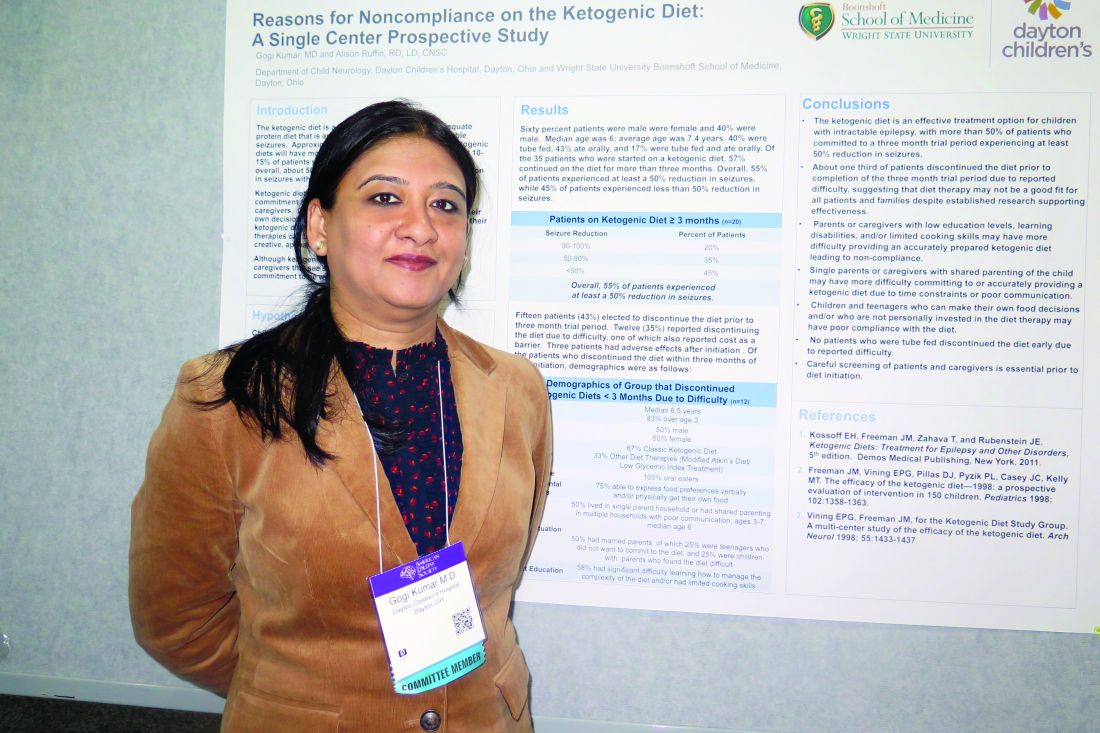
The mean age of study participants was 7.4 years, and feeding was accomplished orally in 43%, by tube in 40%, and both routes in 17%. Of the patients who were started on a ketogenic diet, 57% continued on the diet for more than 3 months. Overall, 55% of patients experienced at least a 50% reduction in seizures, while 45% experienced less than a 50% reduction in seizures.
Dr. Kumar went on to report that 15 patients (43%) discontinued the diet before the 3-month trial period. Of these 15 patients, 3 had adverse effects after initiation of the diet and the remaining 12 reported stopping the diet because of difficulty, 1 of whom also reported cost as a barrier. Of the 12 patients who stopped the diet because of difficulty, 8 were on the classic ketogenic diet and 4 were on other diet therapies. All were oral eaters and 50% lived in a single-parent household or had shared parenting in multiple households with poor communication. The remaining 50% had married parents, of whom 25% were teenagers who did not want to commit to the diet and 25% were children with parents who found the diet difficult. Of families who discontinued the diet early, 58% of parents had difficulty learning how to manage the complexity of the ketogenic diet and/or had limited cooking skills.
“Before you try someone on the ketogenic diet, we should evaluate the family’s educational level, their commitment, and their support systems so that we can help them overcome any barriers. It is important to have social workers as part of the ketogenic diet team to help with the process,” Dr. Kumar said. She reported having no financial disclosures.
HOUSTON – More than one-third of children discontinued the ketogenic diet prior to completion of a 3-month trial because of reported difficulty, a single-center study showed.
The findings underscore the importance of carefully screening patients and their families prior to initiating the ketogenic diet, lead author Gogi Kumar, MD, said in an interview at the annual meeting of the American Epilepsy Society. “We always talk about how and when the ketogenic diet should be used, but we don’t talk about the barriers to continuing the diet, like the socioeconomic aspects that determine the feasibility of continuing the diet,” said Dr. Kumar, a pediatric neurologist at Dayton (Ohio) Children’s Hospital. “If it’s a single mom who has two jobs and has a kid with intractable epilepsy, she cannot do it because ketogenic diets are complex and very intense. If the child has a gastrostomy tube and you can feed them a formula it might work, but then you have to bring them in for multiple lab tests. The family has to be very committed. They have to have resources.”
The mean age of study participants was 7.4 years, and feeding was accomplished orally in 43%, by tube in 40%, and both routes in 17%. Of the patients who were started on a ketogenic diet, 57% continued on the diet for more than 3 months. Overall, 55% of patients experienced at least a 50% reduction in seizures, while 45% experienced less than a 50% reduction in seizures.
Dr. Kumar went on to report that 15 patients (43%) discontinued the diet before the 3-month trial period. Of these 15 patients, 3 had adverse effects after initiation of the diet and the remaining 12 reported stopping the diet because of difficulty, 1 of whom also reported cost as a barrier. Of the 12 patients who stopped the diet because of difficulty, 8 were on the classic ketogenic diet and 4 were on other diet therapies. All were oral eaters and 50% lived in a single-parent household or had shared parenting in multiple households with poor communication. The remaining 50% had married parents, of whom 25% were teenagers who did not want to commit to the diet and 25% were children with parents who found the diet difficult. Of families who discontinued the diet early, 58% of parents had difficulty learning how to manage the complexity of the ketogenic diet and/or had limited cooking skills.
“Before you try someone on the ketogenic diet, we should evaluate the family’s educational level, their commitment, and their support systems so that we can help them overcome any barriers. It is important to have social workers as part of the ketogenic diet team to help with the process,” Dr. Kumar said. She reported having no financial disclosures.
HOUSTON – More than one-third of children discontinued the ketogenic diet prior to completion of a 3-month trial because of reported difficulty, a single-center study showed.
The findings underscore the importance of carefully screening patients and their families prior to initiating the ketogenic diet, lead author Gogi Kumar, MD, said in an interview at the annual meeting of the American Epilepsy Society. “We always talk about how and when the ketogenic diet should be used, but we don’t talk about the barriers to continuing the diet, like the socioeconomic aspects that determine the feasibility of continuing the diet,” said Dr. Kumar, a pediatric neurologist at Dayton (Ohio) Children’s Hospital. “If it’s a single mom who has two jobs and has a kid with intractable epilepsy, she cannot do it because ketogenic diets are complex and very intense. If the child has a gastrostomy tube and you can feed them a formula it might work, but then you have to bring them in for multiple lab tests. The family has to be very committed. They have to have resources.”
The mean age of study participants was 7.4 years, and feeding was accomplished orally in 43%, by tube in 40%, and both routes in 17%. Of the patients who were started on a ketogenic diet, 57% continued on the diet for more than 3 months. Overall, 55% of patients experienced at least a 50% reduction in seizures, while 45% experienced less than a 50% reduction in seizures.
Dr. Kumar went on to report that 15 patients (43%) discontinued the diet before the 3-month trial period. Of these 15 patients, 3 had adverse effects after initiation of the diet and the remaining 12 reported stopping the diet because of difficulty, 1 of whom also reported cost as a barrier. Of the 12 patients who stopped the diet because of difficulty, 8 were on the classic ketogenic diet and 4 were on other diet therapies. All were oral eaters and 50% lived in a single-parent household or had shared parenting in multiple households with poor communication. The remaining 50% had married parents, of whom 25% were teenagers who did not want to commit to the diet and 25% were children with parents who found the diet difficult. Of families who discontinued the diet early, 58% of parents had difficulty learning how to manage the complexity of the ketogenic diet and/or had limited cooking skills.
“Before you try someone on the ketogenic diet, we should evaluate the family’s educational level, their commitment, and their support systems so that we can help them overcome any barriers. It is important to have social workers as part of the ketogenic diet team to help with the process,” Dr. Kumar said. She reported having no financial disclosures.
AT AES 2016
Key clinical point:
Major finding: More than one-third of children (43%) discontinued the ketogenic diet before the end of a 3-month trial period.
Data source: A prospective evaluation of 64 patients with intractable epilepsy and their families who were educated about the ketogenic diet at Dayton Children’s Hospital.
Disclosures: Dr. Kumar reported having no financial disclosures.
First visit for tuberous sclerosis complex comes months before diagnosis
HOUSTON – Many patients who eventually receive a diagnosis of tuberous sclerosis complex present with related complaints for months, or even years, before their condition is recognized and correctly diagnosed, according to a retrospective study.
The study, presented at the annual meeting of the American Epilepsy Society, found that patients with tuberous sclerosis complex (TSC) first sought care for TSC-related conditions an average of 7 months before they were diagnosed with the condition. Younger patients received the correct diagnosis sooner than did older patients: Treatment for TSC-related conditions preceded the diagnosis for 3.4 months for those aged 4 years or younger, compared with 5.5 months for those aged 25-29 years, and 21 months for those aged 80 years or older.
Seizures and skin conditions were common initial diagnoses among TSC patients, with 27% of patients aged 0-4 years being diagnosed with seizures prior to receiving their TSC diagnosis. The likelihood of prediagnosis visits for seizures decreased to less than 6% for older age groups. Seizures remained common post-TSC diagnosis among younger patients, with 38% of patients aged 0-4 years having any seizure diagnosis, while the rate fell through the lifespan to zero for those aged 80 or older.
James Wheless, MD, and his associates examined claims and enrollment data records from 2,163 patients diagnosed with TSC between January 2000 and December 2011. In addition to the frequently-diagnosed seizures seen in many TSC patients, skin conditions were diagnosed in 16.3% of patients before their eventual TSC diagnosis.
Other early conditions associated with TSC, according to the study’s multivariable analysis, included bone cysts, anxiety, and ADHD. However, wrote Dr. Wheless, chief of the department of pediatric neurology at the University of Tennessee Health Science Center, Memphis, and his coauthors, “at any point in time, patients with seizures were 2.9 times more likely to receive a TSC diagnosis than patients without seizures.”
The study was drawn from U.S. health plan databases that included both commercial and Medicare Advantage enrollees, and included patients through the lifespan. The date of the first recorded TSC diagnosis was the index date, and patients had to have at least 12 months of prediagnosis health plan enrollment to be included, or 6 months for those aged 2 years or younger. Data were collected for all pre-index visits (some of which stretched back to 1993), and for visits in the 12 months after the index visit.
The proportion of female patients ranged from fewer than half for those under 15 years (0-4 years, 46%; 5-9 years, 43%; 10-14 years, 48%) to 64% for those aged 80 years or older (P less than .001).
Dr. Wheless and his coauthors noted that the claims data used for the analysis “may not adequately capture clinical characteristics such as disease severity,” and that some patient data may have been lost if patients were disenrolled for periods of time during the study period.
The findings of the poster may prompt clinicians to consider TSC as a diagnosis; though rare, occurring in 1-2 per 6,000 live births, it’s thought to be an underrecognized disease entity. “Understanding the initial diagnoses experienced by TSC patients may help lead to earlier diagnosis and treatment of TSC,” Dr. Wheless and his coauthors wrote.
Novartis funded the study. Four study authors are employed by Optum, and one is employed by Novartis.
koakes@frontlinemedcom.com
On Twitter @karioakes
HOUSTON – Many patients who eventually receive a diagnosis of tuberous sclerosis complex present with related complaints for months, or even years, before their condition is recognized and correctly diagnosed, according to a retrospective study.
The study, presented at the annual meeting of the American Epilepsy Society, found that patients with tuberous sclerosis complex (TSC) first sought care for TSC-related conditions an average of 7 months before they were diagnosed with the condition. Younger patients received the correct diagnosis sooner than did older patients: Treatment for TSC-related conditions preceded the diagnosis for 3.4 months for those aged 4 years or younger, compared with 5.5 months for those aged 25-29 years, and 21 months for those aged 80 years or older.
Seizures and skin conditions were common initial diagnoses among TSC patients, with 27% of patients aged 0-4 years being diagnosed with seizures prior to receiving their TSC diagnosis. The likelihood of prediagnosis visits for seizures decreased to less than 6% for older age groups. Seizures remained common post-TSC diagnosis among younger patients, with 38% of patients aged 0-4 years having any seizure diagnosis, while the rate fell through the lifespan to zero for those aged 80 or older.
James Wheless, MD, and his associates examined claims and enrollment data records from 2,163 patients diagnosed with TSC between January 2000 and December 2011. In addition to the frequently-diagnosed seizures seen in many TSC patients, skin conditions were diagnosed in 16.3% of patients before their eventual TSC diagnosis.
Other early conditions associated with TSC, according to the study’s multivariable analysis, included bone cysts, anxiety, and ADHD. However, wrote Dr. Wheless, chief of the department of pediatric neurology at the University of Tennessee Health Science Center, Memphis, and his coauthors, “at any point in time, patients with seizures were 2.9 times more likely to receive a TSC diagnosis than patients without seizures.”
The study was drawn from U.S. health plan databases that included both commercial and Medicare Advantage enrollees, and included patients through the lifespan. The date of the first recorded TSC diagnosis was the index date, and patients had to have at least 12 months of prediagnosis health plan enrollment to be included, or 6 months for those aged 2 years or younger. Data were collected for all pre-index visits (some of which stretched back to 1993), and for visits in the 12 months after the index visit.
The proportion of female patients ranged from fewer than half for those under 15 years (0-4 years, 46%; 5-9 years, 43%; 10-14 years, 48%) to 64% for those aged 80 years or older (P less than .001).
Dr. Wheless and his coauthors noted that the claims data used for the analysis “may not adequately capture clinical characteristics such as disease severity,” and that some patient data may have been lost if patients were disenrolled for periods of time during the study period.
The findings of the poster may prompt clinicians to consider TSC as a diagnosis; though rare, occurring in 1-2 per 6,000 live births, it’s thought to be an underrecognized disease entity. “Understanding the initial diagnoses experienced by TSC patients may help lead to earlier diagnosis and treatment of TSC,” Dr. Wheless and his coauthors wrote.
Novartis funded the study. Four study authors are employed by Optum, and one is employed by Novartis.
koakes@frontlinemedcom.com
On Twitter @karioakes
HOUSTON – Many patients who eventually receive a diagnosis of tuberous sclerosis complex present with related complaints for months, or even years, before their condition is recognized and correctly diagnosed, according to a retrospective study.
The study, presented at the annual meeting of the American Epilepsy Society, found that patients with tuberous sclerosis complex (TSC) first sought care for TSC-related conditions an average of 7 months before they were diagnosed with the condition. Younger patients received the correct diagnosis sooner than did older patients: Treatment for TSC-related conditions preceded the diagnosis for 3.4 months for those aged 4 years or younger, compared with 5.5 months for those aged 25-29 years, and 21 months for those aged 80 years or older.
Seizures and skin conditions were common initial diagnoses among TSC patients, with 27% of patients aged 0-4 years being diagnosed with seizures prior to receiving their TSC diagnosis. The likelihood of prediagnosis visits for seizures decreased to less than 6% for older age groups. Seizures remained common post-TSC diagnosis among younger patients, with 38% of patients aged 0-4 years having any seizure diagnosis, while the rate fell through the lifespan to zero for those aged 80 or older.
James Wheless, MD, and his associates examined claims and enrollment data records from 2,163 patients diagnosed with TSC between January 2000 and December 2011. In addition to the frequently-diagnosed seizures seen in many TSC patients, skin conditions were diagnosed in 16.3% of patients before their eventual TSC diagnosis.
Other early conditions associated with TSC, according to the study’s multivariable analysis, included bone cysts, anxiety, and ADHD. However, wrote Dr. Wheless, chief of the department of pediatric neurology at the University of Tennessee Health Science Center, Memphis, and his coauthors, “at any point in time, patients with seizures were 2.9 times more likely to receive a TSC diagnosis than patients without seizures.”
The study was drawn from U.S. health plan databases that included both commercial and Medicare Advantage enrollees, and included patients through the lifespan. The date of the first recorded TSC diagnosis was the index date, and patients had to have at least 12 months of prediagnosis health plan enrollment to be included, or 6 months for those aged 2 years or younger. Data were collected for all pre-index visits (some of which stretched back to 1993), and for visits in the 12 months after the index visit.
The proportion of female patients ranged from fewer than half for those under 15 years (0-4 years, 46%; 5-9 years, 43%; 10-14 years, 48%) to 64% for those aged 80 years or older (P less than .001).
Dr. Wheless and his coauthors noted that the claims data used for the analysis “may not adequately capture clinical characteristics such as disease severity,” and that some patient data may have been lost if patients were disenrolled for periods of time during the study period.
The findings of the poster may prompt clinicians to consider TSC as a diagnosis; though rare, occurring in 1-2 per 6,000 live births, it’s thought to be an underrecognized disease entity. “Understanding the initial diagnoses experienced by TSC patients may help lead to earlier diagnosis and treatment of TSC,” Dr. Wheless and his coauthors wrote.
Novartis funded the study. Four study authors are employed by Optum, and one is employed by Novartis.
koakes@frontlinemedcom.com
On Twitter @karioakes
FROM AES 2016
Key clinical point:
Major finding: Patients were seen an average of 6.9 months before they received their TSC diagnosis.
Data source: Retrospective review of claims and enrollment data from 2,163 patients with tuberous sclerosis.
Disclosures: Novartis funded the study. Four study authors are employed by Optum; one is employed by Novartis.
Add-on fenfluramine reduces seizure frequency in Dravet syndrome
HOUSTON – Low-dose fenfluramine was found to reduce seizures significantly among a small cohort with Dravet syndrome without the appearance of valvular abnormalities or pulmonary hypertension, according to a prospective study presented at a poster session of the annual meeting of the American Epilepsy Society.
Six of nine Dravet syndrome (DS) patients (66%) had at least a 50% reduction in major motor seizure frequency for at least 90% of the period during which they took fenfluramine. Five of the nine DS patients (56%) experienced a reduction in major motor seizure frequency of 75% or more for at least 60% of the median 1.9 years they were on fenfluramine.
According to lead author An-Sofie Schoonjans, MD, and her collaborators, the results suggest that “low-dose fenfluramine provides significant improvement in seizure frequency while being generally well tolerated in DS patients.”
The study criteria included patients aged 6 months to 50 years who had a DS diagnosis; enrollees ranged in age from 1.2 to 29.8 years when starting fenfluramine. Though criteria allowed enrollment of patients with and without a mutation in the SCN1A gene, all participants did have a de novo mutation of the SCN1A gene, according to Dr. Schoonjans of the department of pediatric neurology at Antwerp (Belgium) University Hospital and her colleagues. They wrote that mutations in the gene, which encodes the alpha subunit of type 1 voltage-gated sodium channels, are found in about 80% of DS patients.
During the 3-month run-in period that began the study, patients had a median seizure frequency of 15 seizures per month. Patients remained on their baseline antiepilepsy regimen during the run-in period and throughout the study, with fenfluramine used as add-on therapy. At baseline, all patients were taking valproic acid and at least one other antiepileptic medication; three patients were taking four medications and one was taking five medications. Three patients also had vagal nerve stimulators with stable settings.
Throughout the study period, patients or their caregivers kept a seizure diary, recording major motor seizures. Those keeping the diary were instructed to record all tonic-clonic, tonic, atonic, and myoclonic seizures lasting more than 30 seconds.
Three months after beginning treatment, the study population’s median seizure frequency fell to 2.0 per month (–84%). Frequency fell further during the first year, to 1.0 per month (–79%; a smaller percent reduction because data were not available for this time period for the patient with the highest seizure frequency). For the total treatment period, the median seizure frequency was 1.9 per month (–76%). The reduction in seizure frequency was statistically significant at all time points (P less than .05; compared with baseline).
Fenfluramine was generally well-tolerated. Five patients experienced somnolence, and four had loss of appetite.
To track cardiovascular safety, all patients had echocardiographs at baseline and every 3 months during the first year of treatment. Echocardiographs were performed every 6 months during the second year, and annually thereafter. One patient had systolic dysfunction characterized by a reduced ejection fraction (53%) and fractional shortening (26%), findings of “no clinical significance,” according to Dr. Schoonjans and her colleagues.
Fenfluramine was part of an oral weight loss drug combination, along with phentermine. The combo, known as “fen-phen,” was associated with increased rates of pulmonary hypertension and valve disease, particularly aortic valve thickening and regurgitation. It was withdrawn from the market in 1997. Though pulmonary hypertension would frequently resolve after discontinuing fen-phen, not all patients with valvulopathy experienced resolution, and case reports of patients with the aortic valve thickening typically seen with fenfluramine are still surfacing many years after the drug’s discontinuation (e.g., Tex Heart Inst J. 2011;38[5]:581-3).
Fenfluramine was typically given at doses up to 60 mg when used with phentermine for weight loss. The dosing for Dravet syndrome patients in this study was much lower and weight based, ranging from 0.1 to 1.0 mg/kg per day, with a maximum permitted dose of 20 mg/day.
Fenfluramine is a serotonin releaser, and serotonin is known to modulate the action of voltage-gated sodium channels. However, the exact mechanism by which the drug reduces seizure frequency is not known. Clinical trials are underway in the United States for both DS and Lennox Gastaut epilepsy, and fenfluramine has been granted orphan drug status in the United States and Europe, according to an announcement from Zogenix, the drug’s manufacturer.
The study was funded by Zogenix, which holds a Royal Decree to dispense the drug under the study conditions in Belgium, where the study took place. Zogenix also funded writing and editorial assistance for the poster presentation.
koakes@frontlinemedcom.com
On Twitter @karioakes
HOUSTON – Low-dose fenfluramine was found to reduce seizures significantly among a small cohort with Dravet syndrome without the appearance of valvular abnormalities or pulmonary hypertension, according to a prospective study presented at a poster session of the annual meeting of the American Epilepsy Society.
Six of nine Dravet syndrome (DS) patients (66%) had at least a 50% reduction in major motor seizure frequency for at least 90% of the period during which they took fenfluramine. Five of the nine DS patients (56%) experienced a reduction in major motor seizure frequency of 75% or more for at least 60% of the median 1.9 years they were on fenfluramine.
According to lead author An-Sofie Schoonjans, MD, and her collaborators, the results suggest that “low-dose fenfluramine provides significant improvement in seizure frequency while being generally well tolerated in DS patients.”
The study criteria included patients aged 6 months to 50 years who had a DS diagnosis; enrollees ranged in age from 1.2 to 29.8 years when starting fenfluramine. Though criteria allowed enrollment of patients with and without a mutation in the SCN1A gene, all participants did have a de novo mutation of the SCN1A gene, according to Dr. Schoonjans of the department of pediatric neurology at Antwerp (Belgium) University Hospital and her colleagues. They wrote that mutations in the gene, which encodes the alpha subunit of type 1 voltage-gated sodium channels, are found in about 80% of DS patients.
During the 3-month run-in period that began the study, patients had a median seizure frequency of 15 seizures per month. Patients remained on their baseline antiepilepsy regimen during the run-in period and throughout the study, with fenfluramine used as add-on therapy. At baseline, all patients were taking valproic acid and at least one other antiepileptic medication; three patients were taking four medications and one was taking five medications. Three patients also had vagal nerve stimulators with stable settings.
Throughout the study period, patients or their caregivers kept a seizure diary, recording major motor seizures. Those keeping the diary were instructed to record all tonic-clonic, tonic, atonic, and myoclonic seizures lasting more than 30 seconds.
Three months after beginning treatment, the study population’s median seizure frequency fell to 2.0 per month (–84%). Frequency fell further during the first year, to 1.0 per month (–79%; a smaller percent reduction because data were not available for this time period for the patient with the highest seizure frequency). For the total treatment period, the median seizure frequency was 1.9 per month (–76%). The reduction in seizure frequency was statistically significant at all time points (P less than .05; compared with baseline).
Fenfluramine was generally well-tolerated. Five patients experienced somnolence, and four had loss of appetite.
To track cardiovascular safety, all patients had echocardiographs at baseline and every 3 months during the first year of treatment. Echocardiographs were performed every 6 months during the second year, and annually thereafter. One patient had systolic dysfunction characterized by a reduced ejection fraction (53%) and fractional shortening (26%), findings of “no clinical significance,” according to Dr. Schoonjans and her colleagues.
Fenfluramine was part of an oral weight loss drug combination, along with phentermine. The combo, known as “fen-phen,” was associated with increased rates of pulmonary hypertension and valve disease, particularly aortic valve thickening and regurgitation. It was withdrawn from the market in 1997. Though pulmonary hypertension would frequently resolve after discontinuing fen-phen, not all patients with valvulopathy experienced resolution, and case reports of patients with the aortic valve thickening typically seen with fenfluramine are still surfacing many years after the drug’s discontinuation (e.g., Tex Heart Inst J. 2011;38[5]:581-3).
Fenfluramine was typically given at doses up to 60 mg when used with phentermine for weight loss. The dosing for Dravet syndrome patients in this study was much lower and weight based, ranging from 0.1 to 1.0 mg/kg per day, with a maximum permitted dose of 20 mg/day.
Fenfluramine is a serotonin releaser, and serotonin is known to modulate the action of voltage-gated sodium channels. However, the exact mechanism by which the drug reduces seizure frequency is not known. Clinical trials are underway in the United States for both DS and Lennox Gastaut epilepsy, and fenfluramine has been granted orphan drug status in the United States and Europe, according to an announcement from Zogenix, the drug’s manufacturer.
The study was funded by Zogenix, which holds a Royal Decree to dispense the drug under the study conditions in Belgium, where the study took place. Zogenix also funded writing and editorial assistance for the poster presentation.
koakes@frontlinemedcom.com
On Twitter @karioakes
HOUSTON – Low-dose fenfluramine was found to reduce seizures significantly among a small cohort with Dravet syndrome without the appearance of valvular abnormalities or pulmonary hypertension, according to a prospective study presented at a poster session of the annual meeting of the American Epilepsy Society.
Six of nine Dravet syndrome (DS) patients (66%) had at least a 50% reduction in major motor seizure frequency for at least 90% of the period during which they took fenfluramine. Five of the nine DS patients (56%) experienced a reduction in major motor seizure frequency of 75% or more for at least 60% of the median 1.9 years they were on fenfluramine.
According to lead author An-Sofie Schoonjans, MD, and her collaborators, the results suggest that “low-dose fenfluramine provides significant improvement in seizure frequency while being generally well tolerated in DS patients.”
The study criteria included patients aged 6 months to 50 years who had a DS diagnosis; enrollees ranged in age from 1.2 to 29.8 years when starting fenfluramine. Though criteria allowed enrollment of patients with and without a mutation in the SCN1A gene, all participants did have a de novo mutation of the SCN1A gene, according to Dr. Schoonjans of the department of pediatric neurology at Antwerp (Belgium) University Hospital and her colleagues. They wrote that mutations in the gene, which encodes the alpha subunit of type 1 voltage-gated sodium channels, are found in about 80% of DS patients.
During the 3-month run-in period that began the study, patients had a median seizure frequency of 15 seizures per month. Patients remained on their baseline antiepilepsy regimen during the run-in period and throughout the study, with fenfluramine used as add-on therapy. At baseline, all patients were taking valproic acid and at least one other antiepileptic medication; three patients were taking four medications and one was taking five medications. Three patients also had vagal nerve stimulators with stable settings.
Throughout the study period, patients or their caregivers kept a seizure diary, recording major motor seizures. Those keeping the diary were instructed to record all tonic-clonic, tonic, atonic, and myoclonic seizures lasting more than 30 seconds.
Three months after beginning treatment, the study population’s median seizure frequency fell to 2.0 per month (–84%). Frequency fell further during the first year, to 1.0 per month (–79%; a smaller percent reduction because data were not available for this time period for the patient with the highest seizure frequency). For the total treatment period, the median seizure frequency was 1.9 per month (–76%). The reduction in seizure frequency was statistically significant at all time points (P less than .05; compared with baseline).
Fenfluramine was generally well-tolerated. Five patients experienced somnolence, and four had loss of appetite.
To track cardiovascular safety, all patients had echocardiographs at baseline and every 3 months during the first year of treatment. Echocardiographs were performed every 6 months during the second year, and annually thereafter. One patient had systolic dysfunction characterized by a reduced ejection fraction (53%) and fractional shortening (26%), findings of “no clinical significance,” according to Dr. Schoonjans and her colleagues.
Fenfluramine was part of an oral weight loss drug combination, along with phentermine. The combo, known as “fen-phen,” was associated with increased rates of pulmonary hypertension and valve disease, particularly aortic valve thickening and regurgitation. It was withdrawn from the market in 1997. Though pulmonary hypertension would frequently resolve after discontinuing fen-phen, not all patients with valvulopathy experienced resolution, and case reports of patients with the aortic valve thickening typically seen with fenfluramine are still surfacing many years after the drug’s discontinuation (e.g., Tex Heart Inst J. 2011;38[5]:581-3).
Fenfluramine was typically given at doses up to 60 mg when used with phentermine for weight loss. The dosing for Dravet syndrome patients in this study was much lower and weight based, ranging from 0.1 to 1.0 mg/kg per day, with a maximum permitted dose of 20 mg/day.
Fenfluramine is a serotonin releaser, and serotonin is known to modulate the action of voltage-gated sodium channels. However, the exact mechanism by which the drug reduces seizure frequency is not known. Clinical trials are underway in the United States for both DS and Lennox Gastaut epilepsy, and fenfluramine has been granted orphan drug status in the United States and Europe, according to an announcement from Zogenix, the drug’s manufacturer.
The study was funded by Zogenix, which holds a Royal Decree to dispense the drug under the study conditions in Belgium, where the study took place. Zogenix also funded writing and editorial assistance for the poster presentation.
koakes@frontlinemedcom.com
On Twitter @karioakes
AT AES 2016
Key clinical point:
Major finding: Six of nine patients (66%) had a reduction in seizure frequency of at least 50% for at least 90% of the time they were taking fenfluramine.
Data source: Prospective cohort study of nine patients with Dravet syndrome who took fenfluramine as add-on therapy for a median 1.9 years.
Disclosures: The study was funded by Zogenix, which funded editorial and writing support for the poster presentation.