User login
Solid INRs on warfarin don’t predict future stability
Six months of stable international normalized ratio values [INRs] while on warfarin therapy doesn’t predict continued INR stability, according to a Research Letter to the Editor published August 9 in JAMA.
Whether or not to switch patients with atrial fibrillation from warfarin to non–vitamin K anticoagulants remains controversial. “A common belief has been that patients with stable INRs while taking warfarin would continue to be stable and derive less benefit from switching to non–vitamin K oral anticoagulants,” said Sean D. Pokorney, MD, of the division of cardiology, Duke University Medical Center, Durham, N.C., and his associates.
But the results of their observational study of 3,749 patients enrolled in an atrial fibrillation registry show that such stability cannot be predicted, and “challenge the notion that patients who have done well taking warfarin should maintain taking warfarin,” the investigators said (JAMA. 2016;316:661-3).
They assessed INRs over the course of 3 years of follow-up using data from patients enrolled in the registry through 176 clinics. INR stability was defined as having 80% or more of INRs in the therapeutic range (2-3). The mean patient age was 75 years, and 43% were women.
A total of 968 patients showed such INR stability throughout the first 6 months of the study. However, 36% of them went on to have at least one “well out of range” INR during the following year. Even in the subgroup of 376 patients who had 100% of their INRs within the therapeutic range during the first 6 months, 33% went on to have at least one “well out of range” INR during the following year, according to Dr. Pokorney and his associates.
No sponsor was cited for this study. Dr. Pokorney reported ties to AstraZeneca, Boston Scientific, Gilead, Janssen, and Medtronic; his associates reported ties to numerous industry sources.
Six months of stable international normalized ratio values [INRs] while on warfarin therapy doesn’t predict continued INR stability, according to a Research Letter to the Editor published August 9 in JAMA.
Whether or not to switch patients with atrial fibrillation from warfarin to non–vitamin K anticoagulants remains controversial. “A common belief has been that patients with stable INRs while taking warfarin would continue to be stable and derive less benefit from switching to non–vitamin K oral anticoagulants,” said Sean D. Pokorney, MD, of the division of cardiology, Duke University Medical Center, Durham, N.C., and his associates.
But the results of their observational study of 3,749 patients enrolled in an atrial fibrillation registry show that such stability cannot be predicted, and “challenge the notion that patients who have done well taking warfarin should maintain taking warfarin,” the investigators said (JAMA. 2016;316:661-3).
They assessed INRs over the course of 3 years of follow-up using data from patients enrolled in the registry through 176 clinics. INR stability was defined as having 80% or more of INRs in the therapeutic range (2-3). The mean patient age was 75 years, and 43% were women.
A total of 968 patients showed such INR stability throughout the first 6 months of the study. However, 36% of them went on to have at least one “well out of range” INR during the following year. Even in the subgroup of 376 patients who had 100% of their INRs within the therapeutic range during the first 6 months, 33% went on to have at least one “well out of range” INR during the following year, according to Dr. Pokorney and his associates.
No sponsor was cited for this study. Dr. Pokorney reported ties to AstraZeneca, Boston Scientific, Gilead, Janssen, and Medtronic; his associates reported ties to numerous industry sources.
Six months of stable international normalized ratio values [INRs] while on warfarin therapy doesn’t predict continued INR stability, according to a Research Letter to the Editor published August 9 in JAMA.
Whether or not to switch patients with atrial fibrillation from warfarin to non–vitamin K anticoagulants remains controversial. “A common belief has been that patients with stable INRs while taking warfarin would continue to be stable and derive less benefit from switching to non–vitamin K oral anticoagulants,” said Sean D. Pokorney, MD, of the division of cardiology, Duke University Medical Center, Durham, N.C., and his associates.
But the results of their observational study of 3,749 patients enrolled in an atrial fibrillation registry show that such stability cannot be predicted, and “challenge the notion that patients who have done well taking warfarin should maintain taking warfarin,” the investigators said (JAMA. 2016;316:661-3).
They assessed INRs over the course of 3 years of follow-up using data from patients enrolled in the registry through 176 clinics. INR stability was defined as having 80% or more of INRs in the therapeutic range (2-3). The mean patient age was 75 years, and 43% were women.
A total of 968 patients showed such INR stability throughout the first 6 months of the study. However, 36% of them went on to have at least one “well out of range” INR during the following year. Even in the subgroup of 376 patients who had 100% of their INRs within the therapeutic range during the first 6 months, 33% went on to have at least one “well out of range” INR during the following year, according to Dr. Pokorney and his associates.
No sponsor was cited for this study. Dr. Pokorney reported ties to AstraZeneca, Boston Scientific, Gilead, Janssen, and Medtronic; his associates reported ties to numerous industry sources.
FROM JAMA
Key clinical point: Six months of stable INRs while on warfarin doesn’t predict continued INR stability.
Major finding: Of the 968 patients who showed INR stability throughout the first 6 months of the study, 36% went on to have at least one “well out of range” INR during the following year.
Data source: An observational cohort study involving 3,749 patients with atrial fibrillation who were followed for 3 years.
Disclosures: No sponsor was cited for this study. Dr. Pokorney reported ties to AstraZeneca, Boston Scientific, Gilead, Janssen, and Medtronic; his associates reported ties to numerous industry sources.
Statement warns of drugs causing or exacerbating heart failure
Many commonly used prescription drugs, many OTC agents, and also several complimentary or alternative medications, can either trigger heart failure or exacerbate the disease in patients with existing heart failure according to a Scientific Statement written by a committee of the American Heart Association and released on July 11.
This first-ever authoritative U.S. overview of what is known about drugs that can affect heart failure was compiled to address an important practice issue for the large and growing number of U.S. patients with heart failure, estimated to be nearly 6 million Americans, and “provide some guidance to health care providers in how to minimize polypharmacy, improve medication safety, as well as identify the medications that could exacerbate or cause heart failure,” said Robert L. Page II, PharmD, chair of the committee and a professor of clinical pharmacy at the University of Colorado at Denver, Aurora.

Although the comprehensive statement lists 88 distinct prescription drugs or drug classes as agents that pose major or moderate threats for causing or worsening heart failure, “from the American public’s perspective, importance should be placed on educating patients regarding the impact that OTC medications can have on their heart failure,” Dr. Page said in an interview. “For example, nonsteroidal anti-inflammatory drugs like ibuprofen or naproxen can cause sodium and water retention and antagonize the effects of evidence-based heart failure pharmacotherapies. Additionally, OTC medications like pseudoephedrine, which many cough and cold products contain, can increase blood pressure and afterload,” he noted. The risks these drugs pose becomes even greater when they are taken at higher doses.
NSAIDs
The statement cites already existing guidance from the American College of Cardiology and American Heart Association that for patients with existing heart failure, use of NSAIDs should either be avoided or withdrawn when possible. The statement advises educating patients to communicate with their health care provider before taking any OTC medication or complimentary or alternative medication, avoid these agents when their efficacy and safety is uncertain, and evaluate the labels of these products for their sodium content (although the sodium content from inactive ingredients may be difficult to find in labeling).
“Currently, we teach patients to read food labels for sodium content, but we also need to educate patients on how to read OTC medication labels for both ingredients and sodium content. Many OTC antacids may have a large sodium load,” Dr. Page said. The statement includes a list of 14 prescription drugs and also highlights several OTC formulations that have an especially high sodium content.
Metformin
Among the many prescription drugs listed, one notable entry is for the oral hypoglycemic agent metformin that today is among the most widely used drugs for treating type 2 diabetes and is especially relevant for heart failure patients because, as the statement notes, 38% also have diabetes. The statement details the long history of metformin and heart failure, noting that until a decade ago, the drug had a contraindication for patients with heart failure, that metformin’s label still carries a black box warning for cautious use in heart failure patients, and that earlier in 2016, the Food and Drug Administration cautioned that metformin should not be used in patients with an estimated glomerular filtration rate of less than 30 mL/minute per 1.73 m2. The statement also endorsed a recommendation from the American Diabetes Association that metformin not be used in patients with unstable heart failure or those hospitalized for heart failure.
Antihypertensives, biologics, and more
Other notable prescription drugs listed as potentially having a major impact on causing or worsening heart failure include the antihypertensive drugs diltiazem, verapamil, and moxonidine, the tumor necrosis factor–inhibitors that are widely used to treat rheumatologic and gastroenterologic diseases, the antipsychotic clozapine, and a long list of anticancer medications, including several anthracyclines and many types of newer biologic agents.
The statement also lists several specific recommendations to health care providers for improving oversight of the drugs taken by patients with heart failure or those at risk for heart failure. These include a comprehensive medication review during each clinical encounter. The statement also suggests a “medication flow sheet” for each patient that contains the basic information regarding the regimen for each medication taken by a patient: the brand and generic name, the purpose of the medication, and its dosage. “These medication flow sheets should be used by patients as a tool to enhance safety and adherence, and they should show their flow sheets at each provider visit,” Dr. Page said.
Managing myriad meds
The statement also calls for stopping medications without a well defined indication for a patient, avoid prescribing new drugs to address side effects of other drugs, and suggests establishing a “captain” among the health care providers seen by each patient who would be particularly responsible for overseeing and keeping track of the medications the patient takes.
“Ideally, this ‘captain’ would be the patient’s primary care provider, who should be in contact with the other specialists that the patient may be seeing. However, this does not always happen,” said Dr. Page. “Therefore, I encourage each patient with heart failure to contact both their primary care provider and their health care provider who is managing their heart failure before taking or stopping any new medication including prescription, OTC, herbal, complimentary or alternative medication or supplement. Health care providers need to encourage patients to be actively engaged in their medication management.”
Dr. Page had no disclosures.
On Twitter @mitchelzoler
Many commonly used prescription drugs, many OTC agents, and also several complimentary or alternative medications, can either trigger heart failure or exacerbate the disease in patients with existing heart failure according to a Scientific Statement written by a committee of the American Heart Association and released on July 11.
This first-ever authoritative U.S. overview of what is known about drugs that can affect heart failure was compiled to address an important practice issue for the large and growing number of U.S. patients with heart failure, estimated to be nearly 6 million Americans, and “provide some guidance to health care providers in how to minimize polypharmacy, improve medication safety, as well as identify the medications that could exacerbate or cause heart failure,” said Robert L. Page II, PharmD, chair of the committee and a professor of clinical pharmacy at the University of Colorado at Denver, Aurora.
Although the comprehensive statement lists 88 distinct prescription drugs or drug classes as agents that pose major or moderate threats for causing or worsening heart failure, “from the American public’s perspective, importance should be placed on educating patients regarding the impact that OTC medications can have on their heart failure,” Dr. Page said in an interview. “For example, nonsteroidal anti-inflammatory drugs like ibuprofen or naproxen can cause sodium and water retention and antagonize the effects of evidence-based heart failure pharmacotherapies. Additionally, OTC medications like pseudoephedrine, which many cough and cold products contain, can increase blood pressure and afterload,” he noted. The risks these drugs pose becomes even greater when they are taken at higher doses.
NSAIDs
The statement cites already existing guidance from the American College of Cardiology and American Heart Association that for patients with existing heart failure, use of NSAIDs should either be avoided or withdrawn when possible. The statement advises educating patients to communicate with their health care provider before taking any OTC medication or complimentary or alternative medication, avoid these agents when their efficacy and safety is uncertain, and evaluate the labels of these products for their sodium content (although the sodium content from inactive ingredients may be difficult to find in labeling).
“Currently, we teach patients to read food labels for sodium content, but we also need to educate patients on how to read OTC medication labels for both ingredients and sodium content. Many OTC antacids may have a large sodium load,” Dr. Page said. The statement includes a list of 14 prescription drugs and also highlights several OTC formulations that have an especially high sodium content.
Metformin
Among the many prescription drugs listed, one notable entry is for the oral hypoglycemic agent metformin that today is among the most widely used drugs for treating type 2 diabetes and is especially relevant for heart failure patients because, as the statement notes, 38% also have diabetes. The statement details the long history of metformin and heart failure, noting that until a decade ago, the drug had a contraindication for patients with heart failure, that metformin’s label still carries a black box warning for cautious use in heart failure patients, and that earlier in 2016, the Food and Drug Administration cautioned that metformin should not be used in patients with an estimated glomerular filtration rate of less than 30 mL/minute per 1.73 m2. The statement also endorsed a recommendation from the American Diabetes Association that metformin not be used in patients with unstable heart failure or those hospitalized for heart failure.
Antihypertensives, biologics, and more
Other notable prescription drugs listed as potentially having a major impact on causing or worsening heart failure include the antihypertensive drugs diltiazem, verapamil, and moxonidine, the tumor necrosis factor–inhibitors that are widely used to treat rheumatologic and gastroenterologic diseases, the antipsychotic clozapine, and a long list of anticancer medications, including several anthracyclines and many types of newer biologic agents.
The statement also lists several specific recommendations to health care providers for improving oversight of the drugs taken by patients with heart failure or those at risk for heart failure. These include a comprehensive medication review during each clinical encounter. The statement also suggests a “medication flow sheet” for each patient that contains the basic information regarding the regimen for each medication taken by a patient: the brand and generic name, the purpose of the medication, and its dosage. “These medication flow sheets should be used by patients as a tool to enhance safety and adherence, and they should show their flow sheets at each provider visit,” Dr. Page said.
Managing myriad meds
The statement also calls for stopping medications without a well defined indication for a patient, avoid prescribing new drugs to address side effects of other drugs, and suggests establishing a “captain” among the health care providers seen by each patient who would be particularly responsible for overseeing and keeping track of the medications the patient takes.
“Ideally, this ‘captain’ would be the patient’s primary care provider, who should be in contact with the other specialists that the patient may be seeing. However, this does not always happen,” said Dr. Page. “Therefore, I encourage each patient with heart failure to contact both their primary care provider and their health care provider who is managing their heart failure before taking or stopping any new medication including prescription, OTC, herbal, complimentary or alternative medication or supplement. Health care providers need to encourage patients to be actively engaged in their medication management.”
Dr. Page had no disclosures.
On Twitter @mitchelzoler
Many commonly used prescription drugs, many OTC agents, and also several complimentary or alternative medications, can either trigger heart failure or exacerbate the disease in patients with existing heart failure according to a Scientific Statement written by a committee of the American Heart Association and released on July 11.
This first-ever authoritative U.S. overview of what is known about drugs that can affect heart failure was compiled to address an important practice issue for the large and growing number of U.S. patients with heart failure, estimated to be nearly 6 million Americans, and “provide some guidance to health care providers in how to minimize polypharmacy, improve medication safety, as well as identify the medications that could exacerbate or cause heart failure,” said Robert L. Page II, PharmD, chair of the committee and a professor of clinical pharmacy at the University of Colorado at Denver, Aurora.
Although the comprehensive statement lists 88 distinct prescription drugs or drug classes as agents that pose major or moderate threats for causing or worsening heart failure, “from the American public’s perspective, importance should be placed on educating patients regarding the impact that OTC medications can have on their heart failure,” Dr. Page said in an interview. “For example, nonsteroidal anti-inflammatory drugs like ibuprofen or naproxen can cause sodium and water retention and antagonize the effects of evidence-based heart failure pharmacotherapies. Additionally, OTC medications like pseudoephedrine, which many cough and cold products contain, can increase blood pressure and afterload,” he noted. The risks these drugs pose becomes even greater when they are taken at higher doses.
NSAIDs
The statement cites already existing guidance from the American College of Cardiology and American Heart Association that for patients with existing heart failure, use of NSAIDs should either be avoided or withdrawn when possible. The statement advises educating patients to communicate with their health care provider before taking any OTC medication or complimentary or alternative medication, avoid these agents when their efficacy and safety is uncertain, and evaluate the labels of these products for their sodium content (although the sodium content from inactive ingredients may be difficult to find in labeling).
“Currently, we teach patients to read food labels for sodium content, but we also need to educate patients on how to read OTC medication labels for both ingredients and sodium content. Many OTC antacids may have a large sodium load,” Dr. Page said. The statement includes a list of 14 prescription drugs and also highlights several OTC formulations that have an especially high sodium content.
Metformin
Among the many prescription drugs listed, one notable entry is for the oral hypoglycemic agent metformin that today is among the most widely used drugs for treating type 2 diabetes and is especially relevant for heart failure patients because, as the statement notes, 38% also have diabetes. The statement details the long history of metformin and heart failure, noting that until a decade ago, the drug had a contraindication for patients with heart failure, that metformin’s label still carries a black box warning for cautious use in heart failure patients, and that earlier in 2016, the Food and Drug Administration cautioned that metformin should not be used in patients with an estimated glomerular filtration rate of less than 30 mL/minute per 1.73 m2. The statement also endorsed a recommendation from the American Diabetes Association that metformin not be used in patients with unstable heart failure or those hospitalized for heart failure.
Antihypertensives, biologics, and more
Other notable prescription drugs listed as potentially having a major impact on causing or worsening heart failure include the antihypertensive drugs diltiazem, verapamil, and moxonidine, the tumor necrosis factor–inhibitors that are widely used to treat rheumatologic and gastroenterologic diseases, the antipsychotic clozapine, and a long list of anticancer medications, including several anthracyclines and many types of newer biologic agents.
The statement also lists several specific recommendations to health care providers for improving oversight of the drugs taken by patients with heart failure or those at risk for heart failure. These include a comprehensive medication review during each clinical encounter. The statement also suggests a “medication flow sheet” for each patient that contains the basic information regarding the regimen for each medication taken by a patient: the brand and generic name, the purpose of the medication, and its dosage. “These medication flow sheets should be used by patients as a tool to enhance safety and adherence, and they should show their flow sheets at each provider visit,” Dr. Page said.
Managing myriad meds
The statement also calls for stopping medications without a well defined indication for a patient, avoid prescribing new drugs to address side effects of other drugs, and suggests establishing a “captain” among the health care providers seen by each patient who would be particularly responsible for overseeing and keeping track of the medications the patient takes.
“Ideally, this ‘captain’ would be the patient’s primary care provider, who should be in contact with the other specialists that the patient may be seeing. However, this does not always happen,” said Dr. Page. “Therefore, I encourage each patient with heart failure to contact both their primary care provider and their health care provider who is managing their heart failure before taking or stopping any new medication including prescription, OTC, herbal, complimentary or alternative medication or supplement. Health care providers need to encourage patients to be actively engaged in their medication management.”
Dr. Page had no disclosures.
On Twitter @mitchelzoler

Insomnia in young men boosts cardiovascular and cerebrovascular risk
DENVER – Young to early middle-aged men with insomnia symptoms are at increased risk for cardiovascular and cerebrovascular events, according to an analysis from the landmark CARDIA study.
“We found that younger to mid-life men with difficulty initiating sleep or with more than one insomnia symptom were at greater risk for incident cardiovascular disease events. And despite the fact that women in general seemed to be more prone to report those sleep difficulties, those that did were not at increased risk,” Megan E. Petrov, PhD, reported at the annual meeting of the Associated Professional Sleep Societies.

It is well established that insomnia in older adults is associated with increased cardiovascular risk. For example, a meta-analysis of 13 prospective studies with more than 123,000 subjects concluded that insomnia was associated with a 45% increased risk of fatal and nonfatal cardiovascular events (Eur J Prev Cardiol. 2014 Jan;21[1]:57-64). But those studies typically involved older individuals, which makes cause and effect more difficult to determine because so many chronic conditions become more prevalent with advancing age, noted Dr. Petrov of Arizona State University in Phoenix.
“We wanted to see if insomnia is truly an early risk factor in the pathogenesis of cardiovascular disease and stroke,” she said.
To do so, she and her coinvestigators turned to the CARDIA database. CARDIA (the Coronary Artery Risk Development in Young Adults study), is a National Heart, Lung, and Blood Institute–sponsored prospective, epidemiologic study.
She reported on 2,950 non-Hispanic black or white participants aged 33-45 and free of any history of cardiovascular disease in 2000-2001, when they answered questions about insomnia symptoms. Difficulty in initiating sleep was reported by 16.3% of men and 20.7% of women. Difficulty maintaining sleep was a problem for 9.3% of men and 14.5% of women. And 20.6% of men and 20.1% of women reported frequent early morning awakening.
During a mean 11.5 years of prospective follow-up, 4.1% of men and 2.3% of women had a fatal or nonfatal MI, stroke, transient ischemic attack, heart failure, peripheral vascular disease, or hospitalization for an acute coronary syndrome.
In a multivariate logistic regression analysis fully adjusted for demographics, socioeconomic status, body mass index, blood pressure, diabetes, depression, health behaviors, medications, thyroid disease, and kidney problems, men who reported difficulty in getting to sleep had a 2.64-fold increased risk of one of these adverse outcomes. That was the only insomnia symptom associated with significantly increased risk. However, men but not women who reported having more than one insomnia symptom had a 39% increased risk of a cardiovascular event for each additional symptom.
Prior studies have shown that insomnia is associated with cardiac sympathetic hyperactivation. That observation suggests a plausible mechanism for increased cardiovascular and cerebrovascular risk, but it doesn’t explain why that risk was confined to young men in CARDIA. One possibility is that because of gender-related differences in perception, men tend to report having insomnia symptoms only when the insomnia is more severe, Dr. Petrov suggested.
The strengths of the CARDIA study are that all cardiovascular endpoints had to be physician certified, and the study includes a large black population. A study limitation is the relatively small number of cardiovascular events, as to be expected in a younger population. Thus, confirmation of the new findings in another large data set will be important, she noted.
As a next step in her research, Dr. Petrov said she plans to drill down in the CARDIA data to see if race modified the impact of insomnia symptoms on cardiovascular outcomes. Black participants reported all insomnia symptoms more frequently than did whites. For example, difficulty initiating sleep was reported by 25.7% of blacks, compared with just 13.5% of whites, and early morning awakening was twice as prevalent among the black participants.
Also, CARDIA participants provided self-reported sleep duration data. It will be illuminating to see if sleep duration had a modifying effect upon the insomnia/cardiovascular risk association observed in men, she said.
Dr. Petrov reported having no relevant financial conflicts.
DENVER – Young to early middle-aged men with insomnia symptoms are at increased risk for cardiovascular and cerebrovascular events, according to an analysis from the landmark CARDIA study.
“We found that younger to mid-life men with difficulty initiating sleep or with more than one insomnia symptom were at greater risk for incident cardiovascular disease events. And despite the fact that women in general seemed to be more prone to report those sleep difficulties, those that did were not at increased risk,” Megan E. Petrov, PhD, reported at the annual meeting of the Associated Professional Sleep Societies.
It is well established that insomnia in older adults is associated with increased cardiovascular risk. For example, a meta-analysis of 13 prospective studies with more than 123,000 subjects concluded that insomnia was associated with a 45% increased risk of fatal and nonfatal cardiovascular events (Eur J Prev Cardiol. 2014 Jan;21[1]:57-64). But those studies typically involved older individuals, which makes cause and effect more difficult to determine because so many chronic conditions become more prevalent with advancing age, noted Dr. Petrov of Arizona State University in Phoenix.
“We wanted to see if insomnia is truly an early risk factor in the pathogenesis of cardiovascular disease and stroke,” she said.
To do so, she and her coinvestigators turned to the CARDIA database. CARDIA (the Coronary Artery Risk Development in Young Adults study), is a National Heart, Lung, and Blood Institute–sponsored prospective, epidemiologic study.
She reported on 2,950 non-Hispanic black or white participants aged 33-45 and free of any history of cardiovascular disease in 2000-2001, when they answered questions about insomnia symptoms. Difficulty in initiating sleep was reported by 16.3% of men and 20.7% of women. Difficulty maintaining sleep was a problem for 9.3% of men and 14.5% of women. And 20.6% of men and 20.1% of women reported frequent early morning awakening.
During a mean 11.5 years of prospective follow-up, 4.1% of men and 2.3% of women had a fatal or nonfatal MI, stroke, transient ischemic attack, heart failure, peripheral vascular disease, or hospitalization for an acute coronary syndrome.
In a multivariate logistic regression analysis fully adjusted for demographics, socioeconomic status, body mass index, blood pressure, diabetes, depression, health behaviors, medications, thyroid disease, and kidney problems, men who reported difficulty in getting to sleep had a 2.64-fold increased risk of one of these adverse outcomes. That was the only insomnia symptom associated with significantly increased risk. However, men but not women who reported having more than one insomnia symptom had a 39% increased risk of a cardiovascular event for each additional symptom.
Prior studies have shown that insomnia is associated with cardiac sympathetic hyperactivation. That observation suggests a plausible mechanism for increased cardiovascular and cerebrovascular risk, but it doesn’t explain why that risk was confined to young men in CARDIA. One possibility is that because of gender-related differences in perception, men tend to report having insomnia symptoms only when the insomnia is more severe, Dr. Petrov suggested.
The strengths of the CARDIA study are that all cardiovascular endpoints had to be physician certified, and the study includes a large black population. A study limitation is the relatively small number of cardiovascular events, as to be expected in a younger population. Thus, confirmation of the new findings in another large data set will be important, she noted.
As a next step in her research, Dr. Petrov said she plans to drill down in the CARDIA data to see if race modified the impact of insomnia symptoms on cardiovascular outcomes. Black participants reported all insomnia symptoms more frequently than did whites. For example, difficulty initiating sleep was reported by 25.7% of blacks, compared with just 13.5% of whites, and early morning awakening was twice as prevalent among the black participants.
Also, CARDIA participants provided self-reported sleep duration data. It will be illuminating to see if sleep duration had a modifying effect upon the insomnia/cardiovascular risk association observed in men, she said.
Dr. Petrov reported having no relevant financial conflicts.
DENVER – Young to early middle-aged men with insomnia symptoms are at increased risk for cardiovascular and cerebrovascular events, according to an analysis from the landmark CARDIA study.
“We found that younger to mid-life men with difficulty initiating sleep or with more than one insomnia symptom were at greater risk for incident cardiovascular disease events. And despite the fact that women in general seemed to be more prone to report those sleep difficulties, those that did were not at increased risk,” Megan E. Petrov, PhD, reported at the annual meeting of the Associated Professional Sleep Societies.
It is well established that insomnia in older adults is associated with increased cardiovascular risk. For example, a meta-analysis of 13 prospective studies with more than 123,000 subjects concluded that insomnia was associated with a 45% increased risk of fatal and nonfatal cardiovascular events (Eur J Prev Cardiol. 2014 Jan;21[1]:57-64). But those studies typically involved older individuals, which makes cause and effect more difficult to determine because so many chronic conditions become more prevalent with advancing age, noted Dr. Petrov of Arizona State University in Phoenix.
“We wanted to see if insomnia is truly an early risk factor in the pathogenesis of cardiovascular disease and stroke,” she said.
To do so, she and her coinvestigators turned to the CARDIA database. CARDIA (the Coronary Artery Risk Development in Young Adults study), is a National Heart, Lung, and Blood Institute–sponsored prospective, epidemiologic study.
She reported on 2,950 non-Hispanic black or white participants aged 33-45 and free of any history of cardiovascular disease in 2000-2001, when they answered questions about insomnia symptoms. Difficulty in initiating sleep was reported by 16.3% of men and 20.7% of women. Difficulty maintaining sleep was a problem for 9.3% of men and 14.5% of women. And 20.6% of men and 20.1% of women reported frequent early morning awakening.
During a mean 11.5 years of prospective follow-up, 4.1% of men and 2.3% of women had a fatal or nonfatal MI, stroke, transient ischemic attack, heart failure, peripheral vascular disease, or hospitalization for an acute coronary syndrome.
In a multivariate logistic regression analysis fully adjusted for demographics, socioeconomic status, body mass index, blood pressure, diabetes, depression, health behaviors, medications, thyroid disease, and kidney problems, men who reported difficulty in getting to sleep had a 2.64-fold increased risk of one of these adverse outcomes. That was the only insomnia symptom associated with significantly increased risk. However, men but not women who reported having more than one insomnia symptom had a 39% increased risk of a cardiovascular event for each additional symptom.
Prior studies have shown that insomnia is associated with cardiac sympathetic hyperactivation. That observation suggests a plausible mechanism for increased cardiovascular and cerebrovascular risk, but it doesn’t explain why that risk was confined to young men in CARDIA. One possibility is that because of gender-related differences in perception, men tend to report having insomnia symptoms only when the insomnia is more severe, Dr. Petrov suggested.
The strengths of the CARDIA study are that all cardiovascular endpoints had to be physician certified, and the study includes a large black population. A study limitation is the relatively small number of cardiovascular events, as to be expected in a younger population. Thus, confirmation of the new findings in another large data set will be important, she noted.
As a next step in her research, Dr. Petrov said she plans to drill down in the CARDIA data to see if race modified the impact of insomnia symptoms on cardiovascular outcomes. Black participants reported all insomnia symptoms more frequently than did whites. For example, difficulty initiating sleep was reported by 25.7% of blacks, compared with just 13.5% of whites, and early morning awakening was twice as prevalent among the black participants.
Also, CARDIA participants provided self-reported sleep duration data. It will be illuminating to see if sleep duration had a modifying effect upon the insomnia/cardiovascular risk association observed in men, she said.
Dr. Petrov reported having no relevant financial conflicts.
AT SLEEP 2016
Key clinical point: Insomnia symptoms are associated with increased cardiovascular and cerebrovascular event rates in young to middle-aged men.
Major finding: Men aged 33-45 who reported frequent difficulty in falling asleep were at an adjusted 2.64-fold increased risk of a major cardiovascular or cerebrovascular event during subsequent follow-up.
Data source: The prospective, epidemiologic CARDIA study including 2,950 black or white subjects aged 33-45 at enrollment who were followed for a mean of 11.5 years.
Disclosures: The CARDIA study is supported by the National Institutes of Health. The presenter reported having no relevant financial conflicts.

Escitalopram falls short in patients with heart failure and depression
Using escitalopram for patients with chronic heart failure and depression for more than 18 months neither significantly reduces mortality or hospitalization, nor improves depression, a study published June 28 involving 372 patients shows.
“To our knowledge, this study was the first to investigate the composite all-cause mortality and hospitalization in a population with heart failure treated with escitalopram,” wrote Dr. Christiane E. Angermann and her associates.
They said the only other randomized trial evaluating selective serotonin reuptake inhibitors in patients with heart failure was the Sertraline Against Depression and Heart Disease in Chronic Heart Failure study, which found that sertraline did not improve depression or cardiovascular status. But the treatment duration in that study was only 12 weeks, reported Dr. Angermann of the Cardiology and Comprehensive Heart Failure Center, Würzburg, Germany.
The current study, called the Effects of Selective Serotonin Re-Uptake Inhibition on Morbidity, Mortality, and Mood in Depressed Heart Failure Patients, was a double-blind, placebo-controlled randomized trial conducted at 16 tertiary medical centers in Germany. Three hundred seventy-two patients (185 in the escitalopram group and 187 in the placebo group) were randomized and given at least one dose of the study medication. The study was supposed to last for 24 months, but the investigators stopped it early.
Primary outcome of death or hospitalization occurred in 116 (63%) patients and 119 (64%) patients, respectively (hazard ratio, 0.99; 95% confidence interval, 0.76-1.27; P = .92).
Read more of the study and findings on the JAMA website (doi: 10.1001/jama.2016.7635).
Using escitalopram for patients with chronic heart failure and depression for more than 18 months neither significantly reduces mortality or hospitalization, nor improves depression, a study published June 28 involving 372 patients shows.
“To our knowledge, this study was the first to investigate the composite all-cause mortality and hospitalization in a population with heart failure treated with escitalopram,” wrote Dr. Christiane E. Angermann and her associates.
They said the only other randomized trial evaluating selective serotonin reuptake inhibitors in patients with heart failure was the Sertraline Against Depression and Heart Disease in Chronic Heart Failure study, which found that sertraline did not improve depression or cardiovascular status. But the treatment duration in that study was only 12 weeks, reported Dr. Angermann of the Cardiology and Comprehensive Heart Failure Center, Würzburg, Germany.
The current study, called the Effects of Selective Serotonin Re-Uptake Inhibition on Morbidity, Mortality, and Mood in Depressed Heart Failure Patients, was a double-blind, placebo-controlled randomized trial conducted at 16 tertiary medical centers in Germany. Three hundred seventy-two patients (185 in the escitalopram group and 187 in the placebo group) were randomized and given at least one dose of the study medication. The study was supposed to last for 24 months, but the investigators stopped it early.
Primary outcome of death or hospitalization occurred in 116 (63%) patients and 119 (64%) patients, respectively (hazard ratio, 0.99; 95% confidence interval, 0.76-1.27; P = .92).
Read more of the study and findings on the JAMA website (doi: 10.1001/jama.2016.7635).
Using escitalopram for patients with chronic heart failure and depression for more than 18 months neither significantly reduces mortality or hospitalization, nor improves depression, a study published June 28 involving 372 patients shows.
“To our knowledge, this study was the first to investigate the composite all-cause mortality and hospitalization in a population with heart failure treated with escitalopram,” wrote Dr. Christiane E. Angermann and her associates.
They said the only other randomized trial evaluating selective serotonin reuptake inhibitors in patients with heart failure was the Sertraline Against Depression and Heart Disease in Chronic Heart Failure study, which found that sertraline did not improve depression or cardiovascular status. But the treatment duration in that study was only 12 weeks, reported Dr. Angermann of the Cardiology and Comprehensive Heart Failure Center, Würzburg, Germany.
The current study, called the Effects of Selective Serotonin Re-Uptake Inhibition on Morbidity, Mortality, and Mood in Depressed Heart Failure Patients, was a double-blind, placebo-controlled randomized trial conducted at 16 tertiary medical centers in Germany. Three hundred seventy-two patients (185 in the escitalopram group and 187 in the placebo group) were randomized and given at least one dose of the study medication. The study was supposed to last for 24 months, but the investigators stopped it early.
Primary outcome of death or hospitalization occurred in 116 (63%) patients and 119 (64%) patients, respectively (hazard ratio, 0.99; 95% confidence interval, 0.76-1.27; P = .92).
Read more of the study and findings on the JAMA website (doi: 10.1001/jama.2016.7635).
FROM JAMA
Elusive evidence pervades ESC’s 2016 heart failure guidelines
FLORENCE, ITALY – The 2016 revision of the European Society of Cardiology’s guidelines for diagnosing and treating acute and chronic heart failure highlights the extent to which thinking in the field has changed during the past 4 years, since the prior edition in 2012.
The new European guidelines, unveiled by the ESC’s Heart Failure Association during the group’s annual meeting, also underscore the great dependence that many new approaches have on expert opinion rather than what’s become the keystone of guidelines writing, evidence-based medicine. Frequent reliance on consensus decisions rather than indisputable proof from controlled trials defines what some U.S. specialists see as a divide as wide as the Atlantic between the European and U.S. approaches to guideline writing.
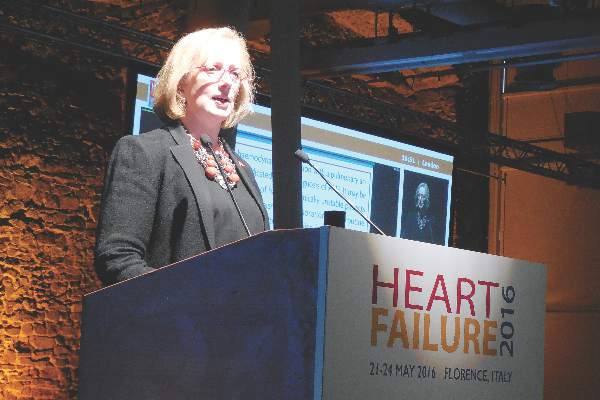
“The guidelines from the ESC are articulated very well; they made their recommendations very clear. But a lot is consensus driven, without new data,” said Dr. Mariell L. Jessup, who serves as both vice chair of the panel currently revising the U.S. heart failure guidelines – expected out later in 2016 – and was also the sole American representative on the panel that produced the ESC guidelines. “The ESC guidelines make clear all the things that need to happen to patients. I hope it will result in better patient care. We are clearly not doing a good job in heart failure. We not only don’t have evidence-based treatments, but people often don’t do a good job [caring for heart failure patients] and they die in the hospital all the time.”
Dr. Javed Butler, another member of the U.S. guidelines panel and professor and chief of cardiology at Stony Brook (N.Y.) University, called the U.S. and European divide a “philosophical perspective of evidence-based medicine.
“U.S. physicians should read the ESC guidelines and make up their own minds. The ESC guidelines are excellent and give you perspective. But U.S. regulatory and payment issues will be driven by U.S. guidelines,” Dr. Butler said in an interview.
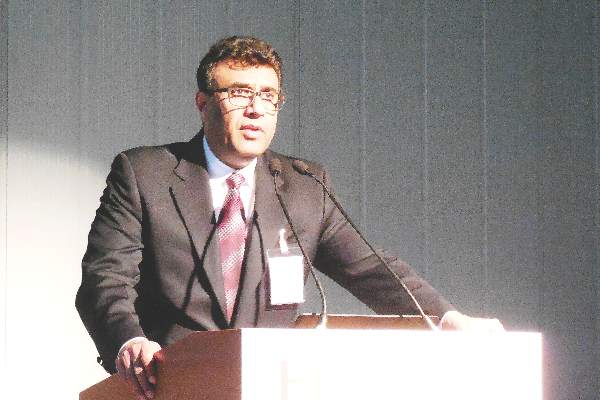
But despite their limitations and the limited weight that the ESC guidelines carry for U.S. practice, they have many redeeming features, noted Dr. Mandeep R. Mehra, medical director of the Heart and Vascular Center at Brigham and Women’s Hospital in Boston. The 2016 ESC guidelines “are extraordinarily clear, very practical, and very concise. They are very usable, and provide a fantastic algorithm for managing patients with heart failure with reduced ejection fraction [HFrEF],” he said while discussing the guidelines during the meeting.
U.S. and Europe largely agree on sacubitril/valsartan and ivabradine
Clearly the greatest area of U.S. and European agreement was in the adoption by both guidelines groups of sacubitril/valsartan (Entresto) and ivabradine (Corlanor) as important new components of the basic drug formula for treating patients with HFrEF. In fact, the U.S. guideline writers saw these two additions as so important and timely that they issued a “focused update” in May to the existing, 2013 U.S. heart failure guidelines, and timed release of this update to occur on May 20, 2016, a day before release of the ESC guidelines. But as Dr. Butler noted, this was more of a temporal harmonization than a substantive one, because even here, in a very evidence-based change, the U.S. guidelines for using sacubitril/valsartan differed subtly but importantly from the ESC version.
The U.S. focused update says that treatment of patients with stage C (symptomatic heart failure with structural heart disease) HFrEF should receive treatment with sacubitril/valsartan (also know as an angiotensin receptor neprilysin inhibitor, or ARNI), an ACE inhibitor, or an angiotensin receptor blocker (ARB), as well as evidence-based treatment with a beta-blocker and with a mineralocorticoid receptor antagonist (MRA). A subsequent recommendation in the U.S. focused update said that HFrEF patients with chronic symptoms and New York Heart Association class II or III disease should switch from a stable, tolerated regimen with either an ACE inhibitor or ARB to treatment with sacubitril/valsartan.

In contrast, the new European guideline for sacubitril/valsartan recommends starting patients on this combination formulation only after first demonstrating that patients tolerated treatment with an ACE inhibitor or ARB for at least 30 days and determining that patients remained symptomatic while on one of these treatments. In short, the U.S. guideline gives a green light to starting patients with newly diagnosed, symptomatic HFrEF on sacubitril/valsartan immediately, while the European guideline only sanctions sacubitril/valsartan to start after a patient has spent at least 30 days settling into a multidrug regimen featuring an ACE inhibitor or an ARB when an ACE inhibitor isn’t well tolerated.
“The European guidelines are closely related to the study population enrolled in the PARADIGM-HF trial,” the pivotal trial that showed superiority of sacubitril/valsartan to an ACE inhibitor (N Engl J Med. 2014;371:993-1004), noted Dr. Butler in an interview. “The U.S. guidelines interpreted [the PARADIGM-HF] results in the best interests of a larger patient population. The European guidelines are far more proscriptive in replicating the clinical criteria of the trial. In some patients the sequence of starting a MRA and sacubitril/valsartan matters, but in other patients it is less important.”
Dr. Frank Ruschitzka, a coauthor of the ESC guidelines, said that the reason for the more cautious ESC approach was lack of widespread familiarity with sacubitril/valsartan treatment among cardiologists.

The ESC guidelines on using sacubitril/valsartan “replicated the PARADIGM-HF trial. We have no data right now that it is justifiable to put a [treatment-naive] patient on sacubitril/valsartan to begin with. Another difference between the U.S. and ESC guidelines is when to start a MRA,” said Dr. Ruschitzka, professor and head of cardiology at the Heart Center of the University Hospital in Zurich. “It makes a lot of sense to me to start sacubitril/valsartan early. The PARADIGM trial was positive, but no one has a feel for how to use sacubitril/valsartan. Should we give it to everyone? We said replicate the trial, and gain experience using the drug. We want to bring a life-saving drug to patients, but this is the approach we took. We need more data.”
Dr. Jessup noted that a lot of uncertainty also exists among U.S. clinicians about when to start sacubitril/valsartan. “It’s not been clear which patients to put on sacubitril/valsartan. No guidelines had been out on using it” until mid-May, and “the cost of sacubitril/valsartan is daunting. I have received calls from many people who ask whom am I supposed to use sacubitril/valsartan on? It took years and years to get people to [routinely] start patients on an ACE inhibitor and a beta-blocker, and now we’re telling them to do something else. In my practice it’s a 30-minute conversation with each patient that you need to first stop your ACE inhibitor, and then they often get denied coverage by their insurer,” said Dr. Jessup, professor of medicine at the University of Pennsylvania in Philadelphia. She expressed hope that coverage issues will diminish now that clear guidelines are out endorsing a key role for sacubitril/valsartan.
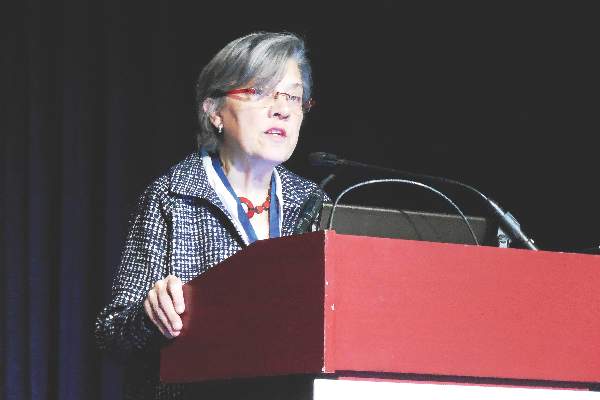
“We now all have started sacubitril/valsartan on patients” without first starting them on an ACE inhibitor, “but we all need to get a sense of what we can get away with” when using this drug, noted Dr. JoAnn Lindenfeld, professor and director of heart failure and transplant at Vanderbilt University in Nashville.
At least one European cardiologist was skeptical of just how proscriptive the ESC guideline for sacubitril/valsartan will be in actual practice.
“The best treatment [for symptomatic HFrEF] is sacubitril/valsartan, a beta-blocker, and a MRA,” said Dr. John J.V. McMurray, professor of cardiology at Glasgow University and lead investigator for the PARADIGM-HF pivotal trial for sacubitril/valsartan. “The treatment sequence advocated in the guidelines – treat with an ACE inhibitor first and if patients remain symptomatic change to sacubitril/valsartan – is evidence-based medicine. As a guidelines writer and as a promoter of evidence-based medicine, this is absolutely the correct approach. But as a practicing physician I’d go straight for sacubitril/valsartan. Otherwise you’re wasting everybody’s time starting with an ACE inhibitor and then waiting a month to switch,” Dr. McMurray said in an interview.
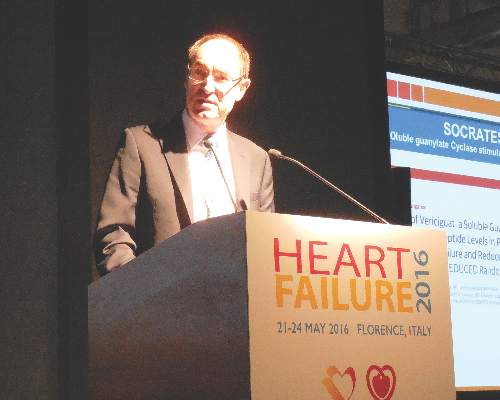
“It’s pointless to wait. We saw results within 30 days of starting sacubitril/valsartan, so it’s a theoretical risk to wait. Very few patients will become completely asymptomatic on an ACE inhibitor. Everyone who entered PARADIGM-HF was at New York Heart Association class II or higher, and at the time of randomization only a handful of patients were in New York Heart Association class I. Very few patients get to class I. That tells you it’s pretty uncommon for a heart failure patient to become truly asymptomatic with ACE inhibitor treatment. The main problem is that you are inconveniencing everybody with more blood tests and more clinic visits by waiting to start sacubitril/valsartan, said Dr. McMurray, who was not a member of the panel that wrote the new ESC guidelines.
Even less separates the new U.S. focused update and the ESC guidelines for using ivabradine. Both agree on starting the drug on HFrEF patients who remain symptomatic and with a left ventricular ejection fraction of 35% or less despite being on guideline-directed therapy including titration to a maximum beta-blocker dosage and with a persistent heart rate of at least 70 beats/min. The goal of ivabradine treatment is to further reduce heart rate beyond what’s achieved by a maximal beta-blocker dosage.
Perhaps the biggest questions about ivabradine have been why it took so long to enter the U.S. guidelines, and why it is listed in both the U.S. and ESC guidelines as a level II recommendation. Results from the pivotal trial that supported ivabradine’s use in HFrEF patients, SHIFT, first appeared in 2010 (Lancet. 2010 Sep 11;376[9744]:875-95).
Dr. Butler chalked up the drug’s slow entry into U.S. guidelines as the result of a lack of initiative by ivabradine’s initial developer, Servier. “SHIFT did not have any U.S. sites, and Servier never sought Food and Drug Administration approval,” he noted. “Amgen acquired the U.S. rights to ivabradine in 2013,” and the drug received FDA approval in April 2015, Dr. Butler noted, in explaining the drug’s U.S. timeline. As to why its use is a level II recommendation, he noted that the evidence for efficacy came only from the SHIFT trial, questions exist whether the beta-blocker dosages were fully optimized in all patients in this trial, and the benefit was limited to a reduction in heart failure hospitalizations but not in mortality. “I think that patients with persistent heart failure symptoms [and a persistently elevated heart rate] should get ivabradine,” but these caveats limit it to a class II level recommendation, Dr. Butler said.
“There were questions about ivabradine’s benefit in reducing heart failure hospitalization but not mortality, and questions about whether it would benefit patients if their beta-blocker dosage was adequately up titrated. There were also questions about which heart failure patients to use it on,” noted Dr. Lindenfeld, a member of the panel that wrote the U.S. focused update. These concerns in part help explain the delay to integrating ivabradine into U.S. practice guidelines, she said in an interview, but added that additional data and analysis published during the past 3 or so years have clarified ivabradine’s potentially useful role in treating selected HFrEF patients.
New ESC guidelines based on expert opinion
The sections on sacubitril/valsartan and ivabradine occupy a mere 2 pages among more than 55 pages of text and charts that spell out the ESC’s current vision of how physicians should diagnose and manage heart failure patients. While much of what carried over from prior editions of the guidelines is rooted in evidence, many of the new approaches advocated rely on expert opinion or new interpretations of existing data. Here are some of the notable changes and highlights of the 2016 ESC recommendations:
• Heart failure diagnosis. The new ESC guidelines streamline the diagnostic process, which now focuses on five key elements: The patient’s history, physical examination, ECG, serum level of either brain natriuretic peptide (BNP) or N-terminal(NT)-proBNP, and echocardiography. The guidelines specify threshold levels of BNP and NT-proBNP that can effectively rule out heart failure, a BNP level of at least 35 pg/mL or a NT-proBNP level of at least 125 pg/mL.
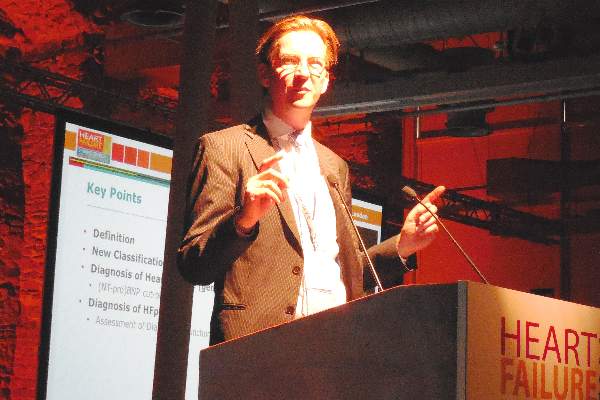
“The diagnostic minimum levels of BNP and NT-proBNP were designed to rule out heart failure. They both have a high negative predictive value, but at these levels their positive predictive value is low,” explained Dr. Adriaan A. Voors, cochair of the ESC’s guideline-writing panel and professor of cardiology at the University of Groningen, the Netherlands.
But while these levels might be effective for reliable rule out of heart failure, they could mean a large number of patients would qualify for an echocardiographic assessment.
“If we used the ESC’s natriuretic peptide cutoffs, there would be a clear concern about overuse of echo. It’s a cost-effectiveness issue. You wind up doing a lot of echos that will be normal. Echocardiography is very safe, but each echo costs about $400-$500,” commented Dr. Butler.
“The results from the STOP-HF and PONTIAC studies showed that BNP levels can identify people at increased risk for developing heart failure who need more intensive assessment and could also potentially benefit from more attention to heart failure prevention. I suspect the full U.S. guideline update will address this issue, but we have not yet finalized our decisions,” he added.
• Heart failure classification. The new ESC guidelines created a new heart failure category, midrange ejection fraction, that the writing panel positioned squarely between the two more classic heart failure subgroups, HFrEF and heart failure with preserved ejection fraction (HFpEF). The definition of each of the three subgroups depends on left ventricular ejection fraction as determined by echocardiography: A LVEF of less than 40% defined HFrEF, a LVEF of 40%-49% defined heart failure with midrange ejection fraction (HFmrEF), and a LVEF of 50% or higher defined HFpEF. Diagnostic confirmation of both HFmrEF and HFpEF also requires that patients fulfill certain criteria of structural or functional heart abnormalities.
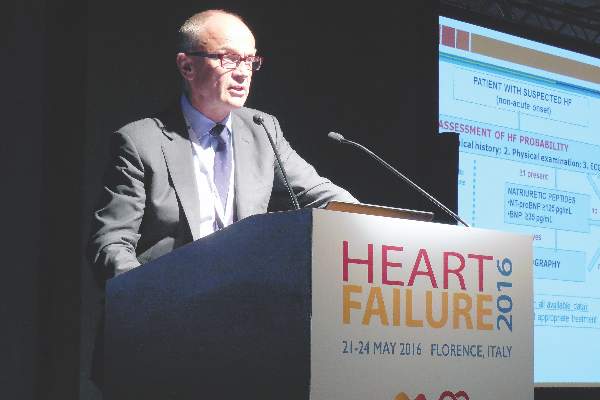
The category of HFmrEF was created “to stimulate research into how to best manage these patients,” explained Dr. Piotr Ponikowski, chair of the ESC guidelines writing panel. For the time being, it remains a category with only theoretical importance as nothing is known to suggest that management of patients with HFmrEF should in any way differ from patients with HFpEF.
• Acute heart failure. Perhaps the most revolutionary element of the new guidelines is the detailed map they provide to managing patients who present with acute decompensated heart failure and the underlying principles cited to justify this radically different approach.
“The acute heart failure section was completely rewritten,” noted Dr. Ponikowski, professor of heart diseases at the Medical University in Wroclaw, Poland. “We don’t yet have evidence-based treatments” to apply to acute heart failure patients, he admitted, “however we strongly recommend the concept that the shorter the better. Shorten the time of diagnosis and for therapeutic decisions. We have borrowed from acute coronary syndrome. Don’t keep patients in the emergency department for another couple of hours just to see if they will respond. We must be aware that we need to do our best to shorten diagnosis and treatment decisions. Time is an issue. Manage a patient’s congestion and impaired peripheral perfusion within a time frame of 1-2 hours.”
The concept that acute heart failure must be quickly managed as an emergency condition similar to acute coronary syndrome first appeared as a European practice recommendation in 2015, a consensus statement from the European Heart Failure Association and two other collaborating organizations (Eur Heart J. 2015 Aug 7;36[30]:1958-66).

“In 2015, the consensus paper talked about how to handle acute heart failure patients in the emergency department. Now, we have focused on defining the patients’ phenotype and how to categorize their treatment options. We built on the 2015 statement, but the algorithms we now have are original to 2016; they were not in the 2015 paper,” said Dr. Veli-Pekka Harjola, a member of the 2015 consensus group and 2016 guidelines panel who spearheaded writing the acute heart failure section of the new ESC guidelines.
An additional new and notable feature of this section in the 2016 guidelines is its creation of an acronym, CHAMP, designed to guide the management of patients with acute heart failure. CHAMP stands for acute Coronary syndrome, Hypertension emergency, Arrhythmia, acute Mechanical cause, and Pulmonary embolism. The CHAMP acronym’s purpose is to “focus attention on these five specific, potential causes of acute heart failure, life-threatening conditions that need immediate treatment,” explained Dr. Ponikowski.
“CHAMP emphasizes the most critical causes of acute heart failure,” added Dr. Harjola, a cardiologist at Helsinki University Central Hospital. “We created this new acronym” to help clinicians keep in mind what to look for in a patient presenting with acute heart failure.
U.S. cardiologists find things to like in what the Europeans say about managing acute heart failure, as well as aspects to question.
“It makes no sense not to aggressively treat a patient who arrives at an emergency department with acute heart failure. But there is a difference between acute MI or stroke and acute heart failure,” said Dr. Butler. “In acute MI there is the ruptured plaque and thrombus that blocks a coronary artery. In stroke there is a thrombus. These are diseases with a specific onset and treatment target. But with acute heart failure we don’t have a thrombus to treat; we don’t have a specific target. What we’ve learned from studying implanted devices [such as CardioMems] is that the congestion that causes acute heart failure can start 2-3 weeks before a patient develops acute decompensated heart failure and goes to the hospital. We have not found a specific pathophysiologic abnormality in the patient with acute heart failure that is any different from chronic heart failure. This begs the question: If a patient who presents with acute heart failure has a congestion process that’s been going on for 2 or 3 weeks what difference will another 3 hours make? Do we need to replicate the concept of an acute stroke team or acute MI response for acute heart failure?”
Dr. Butler stressed that additional data are expected soon that may help clarify this issue.
“Some large outcome trials in patients with acute heart failure are now underway, one testing serelaxin treatment, another testing ularitide treatment, that are also testing the hypothesis that rapid treatment with these drugs can produce more end-organ protection, stop damage to the heart, kidney and liver, and lead to better long-term outcomes. Until we have those data, the jury is still out” on the benefit patients gain from rapid treatment of acute heart failure. “Until then, it’s not that the data say don’t treat acute heart failure patients aggressively. But we have not yet proven it is similar to treating an acute MI or stroke,” said Dr. Butler.
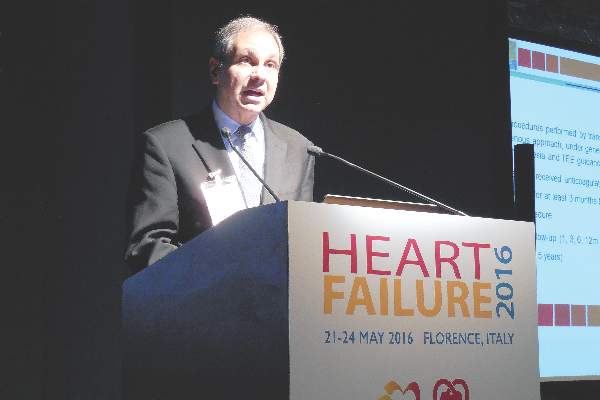
“U.S. guidelines have tended to stay away from areas where there are no evidence-based data. To their credit, the Europeans will take on something like acute heart failure where we don’t have an adequate evidence base. Despite that, they provide guidelines, which is important because clinicians need guidance even when the evidence is not very good, when the guideline is based mostly on experience and expert consensus.” commented Dr. William T. Abraham, professor and director of cardiovascular medicine at the Ohio State University Wexner Medical Center in Columbus.
“It’s absolutely appropriate to think of acute heart failure as an emergency situation. We know from high-sensitivity troponin assays that troponin levels are increased in 90% of patients who present with acute decompensated heart failure. So most acute heart failure patients are losing heart muscle cells and we should treat them like we treat acute coronary syndrome. Time matters in acute heart failure; time is heart muscle. Treatment needs to break the hemodynamic and neurohormonal storm of acute decompensated heart failure; get the patient stabilized; improve vital organ perfusion, including within the heart; and shift the myocardial oxygen supply and demand equation so myocardial necrosis stops. All of this is important, and study results suggest it’s the correct approach. I’m not sure study results prove it, but studies that have looked at the time course of treatment for acute heart failure showed that early initiation of treatment – within the first 6 hours of onset – compared with 12-24 hours of onset makes a difference in outcomes,” Dr. Abraham said in an interview.
But a major limitation to the potential efficacy of a rapidly initiated management strategy is that few interventions currently exist with proven benefits for acute heart failure patients.
For the time being, rapid intervention means using diuretics relatively quickly and, if there is an indication for treating with a vasoactive medication, using that quickly too. “The rapid approach is really more relevant to the future; it’s relevant to the design of future acute heart failure treatment trials. That is where this early treatment paradigm is important,” as it could potentially apply to new, more effective treatments of the future rather than to the marginally effective treatments now available, Dr. Abraham said.
“For a long we time haven’t pushed how quickly we should act when implementing guideline-directed treatment” for patients with acute heart failure, noted Dr. Mehra. “The CHAMP approach is interesting, and the ESC guidelines are a very interesting move in the direction” of faster action. “They speak to the period of time during which one should act. Hopefully this will help the science of acute decompensated heart failure move forward.”
But for other U.S. experts the issue again pivots on the lack of evidence.
“There is nothing new” about managing acute heart failure, said Dr. Jessup. “The ESC guideline was articulated very well; they made their recommendations very clear. But a lot is consensus driven. There are no new data. The problem with acute heart failure is that the recommendations are what we think clinicians should do. CHAMP is a nice acronym; it’s packaged better, but there are not any new data.”
Comorbidities
A dramatic contrast distinguishes the extent to which the ESC guidelines highlight comorbidities, compared with prevailing U.S. guidelines. The new ESC guidelines highlight and discuss with some detail 16 distinct comorbidities for clinicians to keep in mind when managing heart failure patients, compared with three comorbidities (atrial fibrillation, anemia, and depression) discussed with similar detail in the 2013 U.S. guidelines.

“We are targeting comorbidities to personalize medicine, by subgrouping [heart failure] patients into groups that need to receive special attention,” explained Dr. Stefan D. Anker, a coauthor on the ESC guidelines. “We care about comorbidities because they make the diagnosis of heart failure difficult. They aggravate symptoms and contribute to additional hospitalizations. They interfere with [heart failure] treatment, and because comorbidities have led to exclusions of heart failure patients from trials, we lack evidence of treatment efficacy in patients with certain comorbidities,” said Dr. Anker, a professor of innovative clinical trials at the Medical University in Göttingen, Germany.
“The comorbidity discussion in the ESC guidelines is extremely important,” commented Dr. Abraham. “It supports the need for a multidimensional approach to heart failure patients. A cardiologist may not have all the resources to manage all the comorbidities [a heart failure patient might have]. This is why having a sleep medicine specialist, a diabetes specialist, a nephrologist, etc., involved as part of a heart failure management team can be very valuable. We need to involve subspecialists in managing the comorbidities of heart failure because they clearly have an impact on patient outcome.”
But Dr. Butler had a somewhat different take on how comorbidity management fits into the broader picture of heart failure management.
“There is no doubt that heart failure worsens other comorbidities and other comorbidities worsen heart failure. The relationship is bidirectional between heart failure and chronic obstructive pulmonary disease, liver disease, depression, sleep apnea, renal disease, lung disease, diabetes, etc. The problem is that treating a comorbidity does not necessarily translate into improved heart failure outcomes. Comorbidities are important for heart failure patients and worsen their heart failure outcomes. However, management of a comorbidity should be done primarily for the sake of improving the comorbidity. If you treat depression, for example, and it does not improve a patient’s heart failure, that doesn’t mean you shouldn’t have treated the depression. It just means that we don’t have good data that it will improve heart failure.”
Another limitation from a U.S. perspective is what role treatment of various comorbidities can play in benefiting heart failure patients and how compelling the evidence is for this. Dr. Butler gave as an example the problem with treating iron deficiency in heart failure patients who do not have anemia, a strategy endorsed in the ESC guidelines as a level IIa recommendation.
“The data regarding improved exercise capacity from treatment with intravenous ferric carboxymaltose is pretty convincing,” he said. But patients have benefited from this treatment only with improved function and quality of life, and not with improved survival or fewer hospitalizations.
“Is treating patients to improve their function and help them feel better enough?” Dr. Butler asked. “In other diseases it is. In gastrointestinal disease, if a drug helps patients feel better you approve the drug. We value improved functional capacity for patients with pulmonary hypertension, angina, and peripheral vascular disease. All these indications have drugs approved for improving functional capacity and quality of life. But for heart failure the bar has been set higher. There is a lot of interest in changing this” for heart failure.
“There is interest in running a study of ferric carboxymaltose for heart failure with a mortality endpoint. In the meantime, the impact on improving functional capacity is compelling, and it will be interesting to see what happens in the U.S. guidelines. Currently, in U.S. practice if a heart failure patient has iron-deficiency anemia you treat with intravenous iron replacement and the treatment gets reimbursed without a problem. But if the heart failure patient has iron deficiency without anemia then reimbursement for the cost of iron supplementation can be a problem,” Dr. Butler noted. This may change only if the experts who write the next U.S. heart failure guidelines decide to change the rules of what constitutes a useful heart failure treatment, he said.
Dr. Butler has been a consultant to Novartis and Amgen and several other companies. Dr. Jessup had no disclosures. Dr. Mehra has been a consultant to Teva, Johnson & Johnson, Boston Scientific, and St. Jude. Dr. Ruschitzka has been a consultant to Novartis, Servier, Sanofi, Cardiorentis, Heartware, and St. Jude. Dr. McMurray has received research support from Novartis and Amgen. Dr. Lindenfeld has been a consultant to Novartis, Abbott, Janssen, Relypsa, and Resmed. Dr. Voors has been a consultant to Novartis, Amgen, Servier, and several other drug companies. Dr. Ponikowski has been a consultant to Amgen, Novartis, Servier, and several other drug companies. Dr. Harjola has been a consultant to Novartis, Servier, Bayer, Boehringer Ingelheim, Pfizer, and Resmed. Dr. Abraham has been a consultant to Amgen, Novartis, and several device companies. Dr. Anker has been a consultant to Novartis, Servier, and several other companies.
On Twitter @mitchelzoler
FLORENCE, ITALY – The 2016 revision of the European Society of Cardiology’s guidelines for diagnosing and treating acute and chronic heart failure highlights the extent to which thinking in the field has changed during the past 4 years, since the prior edition in 2012.
The new European guidelines, unveiled by the ESC’s Heart Failure Association during the group’s annual meeting, also underscore the great dependence that many new approaches have on expert opinion rather than what’s become the keystone of guidelines writing, evidence-based medicine. Frequent reliance on consensus decisions rather than indisputable proof from controlled trials defines what some U.S. specialists see as a divide as wide as the Atlantic between the European and U.S. approaches to guideline writing.
“The guidelines from the ESC are articulated very well; they made their recommendations very clear. But a lot is consensus driven, without new data,” said Dr. Mariell L. Jessup, who serves as both vice chair of the panel currently revising the U.S. heart failure guidelines – expected out later in 2016 – and was also the sole American representative on the panel that produced the ESC guidelines. “The ESC guidelines make clear all the things that need to happen to patients. I hope it will result in better patient care. We are clearly not doing a good job in heart failure. We not only don’t have evidence-based treatments, but people often don’t do a good job [caring for heart failure patients] and they die in the hospital all the time.”
Dr. Javed Butler, another member of the U.S. guidelines panel and professor and chief of cardiology at Stony Brook (N.Y.) University, called the U.S. and European divide a “philosophical perspective of evidence-based medicine.
“U.S. physicians should read the ESC guidelines and make up their own minds. The ESC guidelines are excellent and give you perspective. But U.S. regulatory and payment issues will be driven by U.S. guidelines,” Dr. Butler said in an interview.
But despite their limitations and the limited weight that the ESC guidelines carry for U.S. practice, they have many redeeming features, noted Dr. Mandeep R. Mehra, medical director of the Heart and Vascular Center at Brigham and Women’s Hospital in Boston. The 2016 ESC guidelines “are extraordinarily clear, very practical, and very concise. They are very usable, and provide a fantastic algorithm for managing patients with heart failure with reduced ejection fraction [HFrEF],” he said while discussing the guidelines during the meeting.
U.S. and Europe largely agree on sacubitril/valsartan and ivabradine
Clearly the greatest area of U.S. and European agreement was in the adoption by both guidelines groups of sacubitril/valsartan (Entresto) and ivabradine (Corlanor) as important new components of the basic drug formula for treating patients with HFrEF. In fact, the U.S. guideline writers saw these two additions as so important and timely that they issued a “focused update” in May to the existing, 2013 U.S. heart failure guidelines, and timed release of this update to occur on May 20, 2016, a day before release of the ESC guidelines. But as Dr. Butler noted, this was more of a temporal harmonization than a substantive one, because even here, in a very evidence-based change, the U.S. guidelines for using sacubitril/valsartan differed subtly but importantly from the ESC version.
The U.S. focused update says that treatment of patients with stage C (symptomatic heart failure with structural heart disease) HFrEF should receive treatment with sacubitril/valsartan (also know as an angiotensin receptor neprilysin inhibitor, or ARNI), an ACE inhibitor, or an angiotensin receptor blocker (ARB), as well as evidence-based treatment with a beta-blocker and with a mineralocorticoid receptor antagonist (MRA). A subsequent recommendation in the U.S. focused update said that HFrEF patients with chronic symptoms and New York Heart Association class II or III disease should switch from a stable, tolerated regimen with either an ACE inhibitor or ARB to treatment with sacubitril/valsartan.
In contrast, the new European guideline for sacubitril/valsartan recommends starting patients on this combination formulation only after first demonstrating that patients tolerated treatment with an ACE inhibitor or ARB for at least 30 days and determining that patients remained symptomatic while on one of these treatments. In short, the U.S. guideline gives a green light to starting patients with newly diagnosed, symptomatic HFrEF on sacubitril/valsartan immediately, while the European guideline only sanctions sacubitril/valsartan to start after a patient has spent at least 30 days settling into a multidrug regimen featuring an ACE inhibitor or an ARB when an ACE inhibitor isn’t well tolerated.
“The European guidelines are closely related to the study population enrolled in the PARADIGM-HF trial,” the pivotal trial that showed superiority of sacubitril/valsartan to an ACE inhibitor (N Engl J Med. 2014;371:993-1004), noted Dr. Butler in an interview. “The U.S. guidelines interpreted [the PARADIGM-HF] results in the best interests of a larger patient population. The European guidelines are far more proscriptive in replicating the clinical criteria of the trial. In some patients the sequence of starting a MRA and sacubitril/valsartan matters, but in other patients it is less important.”
Dr. Frank Ruschitzka, a coauthor of the ESC guidelines, said that the reason for the more cautious ESC approach was lack of widespread familiarity with sacubitril/valsartan treatment among cardiologists.
The ESC guidelines on using sacubitril/valsartan “replicated the PARADIGM-HF trial. We have no data right now that it is justifiable to put a [treatment-naive] patient on sacubitril/valsartan to begin with. Another difference between the U.S. and ESC guidelines is when to start a MRA,” said Dr. Ruschitzka, professor and head of cardiology at the Heart Center of the University Hospital in Zurich. “It makes a lot of sense to me to start sacubitril/valsartan early. The PARADIGM trial was positive, but no one has a feel for how to use sacubitril/valsartan. Should we give it to everyone? We said replicate the trial, and gain experience using the drug. We want to bring a life-saving drug to patients, but this is the approach we took. We need more data.”
Dr. Jessup noted that a lot of uncertainty also exists among U.S. clinicians about when to start sacubitril/valsartan. “It’s not been clear which patients to put on sacubitril/valsartan. No guidelines had been out on using it” until mid-May, and “the cost of sacubitril/valsartan is daunting. I have received calls from many people who ask whom am I supposed to use sacubitril/valsartan on? It took years and years to get people to [routinely] start patients on an ACE inhibitor and a beta-blocker, and now we’re telling them to do something else. In my practice it’s a 30-minute conversation with each patient that you need to first stop your ACE inhibitor, and then they often get denied coverage by their insurer,” said Dr. Jessup, professor of medicine at the University of Pennsylvania in Philadelphia. She expressed hope that coverage issues will diminish now that clear guidelines are out endorsing a key role for sacubitril/valsartan.
“We now all have started sacubitril/valsartan on patients” without first starting them on an ACE inhibitor, “but we all need to get a sense of what we can get away with” when using this drug, noted Dr. JoAnn Lindenfeld, professor and director of heart failure and transplant at Vanderbilt University in Nashville.
At least one European cardiologist was skeptical of just how proscriptive the ESC guideline for sacubitril/valsartan will be in actual practice.
“The best treatment [for symptomatic HFrEF] is sacubitril/valsartan, a beta-blocker, and a MRA,” said Dr. John J.V. McMurray, professor of cardiology at Glasgow University and lead investigator for the PARADIGM-HF pivotal trial for sacubitril/valsartan. “The treatment sequence advocated in the guidelines – treat with an ACE inhibitor first and if patients remain symptomatic change to sacubitril/valsartan – is evidence-based medicine. As a guidelines writer and as a promoter of evidence-based medicine, this is absolutely the correct approach. But as a practicing physician I’d go straight for sacubitril/valsartan. Otherwise you’re wasting everybody’s time starting with an ACE inhibitor and then waiting a month to switch,” Dr. McMurray said in an interview.
“It’s pointless to wait. We saw results within 30 days of starting sacubitril/valsartan, so it’s a theoretical risk to wait. Very few patients will become completely asymptomatic on an ACE inhibitor. Everyone who entered PARADIGM-HF was at New York Heart Association class II or higher, and at the time of randomization only a handful of patients were in New York Heart Association class I. Very few patients get to class I. That tells you it’s pretty uncommon for a heart failure patient to become truly asymptomatic with ACE inhibitor treatment. The main problem is that you are inconveniencing everybody with more blood tests and more clinic visits by waiting to start sacubitril/valsartan, said Dr. McMurray, who was not a member of the panel that wrote the new ESC guidelines.
Even less separates the new U.S. focused update and the ESC guidelines for using ivabradine. Both agree on starting the drug on HFrEF patients who remain symptomatic and with a left ventricular ejection fraction of 35% or less despite being on guideline-directed therapy including titration to a maximum beta-blocker dosage and with a persistent heart rate of at least 70 beats/min. The goal of ivabradine treatment is to further reduce heart rate beyond what’s achieved by a maximal beta-blocker dosage.
Perhaps the biggest questions about ivabradine have been why it took so long to enter the U.S. guidelines, and why it is listed in both the U.S. and ESC guidelines as a level II recommendation. Results from the pivotal trial that supported ivabradine’s use in HFrEF patients, SHIFT, first appeared in 2010 (Lancet. 2010 Sep 11;376[9744]:875-95).
Dr. Butler chalked up the drug’s slow entry into U.S. guidelines as the result of a lack of initiative by ivabradine’s initial developer, Servier. “SHIFT did not have any U.S. sites, and Servier never sought Food and Drug Administration approval,” he noted. “Amgen acquired the U.S. rights to ivabradine in 2013,” and the drug received FDA approval in April 2015, Dr. Butler noted, in explaining the drug’s U.S. timeline. As to why its use is a level II recommendation, he noted that the evidence for efficacy came only from the SHIFT trial, questions exist whether the beta-blocker dosages were fully optimized in all patients in this trial, and the benefit was limited to a reduction in heart failure hospitalizations but not in mortality. “I think that patients with persistent heart failure symptoms [and a persistently elevated heart rate] should get ivabradine,” but these caveats limit it to a class II level recommendation, Dr. Butler said.
“There were questions about ivabradine’s benefit in reducing heart failure hospitalization but not mortality, and questions about whether it would benefit patients if their beta-blocker dosage was adequately up titrated. There were also questions about which heart failure patients to use it on,” noted Dr. Lindenfeld, a member of the panel that wrote the U.S. focused update. These concerns in part help explain the delay to integrating ivabradine into U.S. practice guidelines, she said in an interview, but added that additional data and analysis published during the past 3 or so years have clarified ivabradine’s potentially useful role in treating selected HFrEF patients.
New ESC guidelines based on expert opinion
The sections on sacubitril/valsartan and ivabradine occupy a mere 2 pages among more than 55 pages of text and charts that spell out the ESC’s current vision of how physicians should diagnose and manage heart failure patients. While much of what carried over from prior editions of the guidelines is rooted in evidence, many of the new approaches advocated rely on expert opinion or new interpretations of existing data. Here are some of the notable changes and highlights of the 2016 ESC recommendations:
• Heart failure diagnosis. The new ESC guidelines streamline the diagnostic process, which now focuses on five key elements: The patient’s history, physical examination, ECG, serum level of either brain natriuretic peptide (BNP) or N-terminal(NT)-proBNP, and echocardiography. The guidelines specify threshold levels of BNP and NT-proBNP that can effectively rule out heart failure, a BNP level of at least 35 pg/mL or a NT-proBNP level of at least 125 pg/mL.
“The diagnostic minimum levels of BNP and NT-proBNP were designed to rule out heart failure. They both have a high negative predictive value, but at these levels their positive predictive value is low,” explained Dr. Adriaan A. Voors, cochair of the ESC’s guideline-writing panel and professor of cardiology at the University of Groningen, the Netherlands.
But while these levels might be effective for reliable rule out of heart failure, they could mean a large number of patients would qualify for an echocardiographic assessment.
“If we used the ESC’s natriuretic peptide cutoffs, there would be a clear concern about overuse of echo. It’s a cost-effectiveness issue. You wind up doing a lot of echos that will be normal. Echocardiography is very safe, but each echo costs about $400-$500,” commented Dr. Butler.
“The results from the STOP-HF and PONTIAC studies showed that BNP levels can identify people at increased risk for developing heart failure who need more intensive assessment and could also potentially benefit from more attention to heart failure prevention. I suspect the full U.S. guideline update will address this issue, but we have not yet finalized our decisions,” he added.
• Heart failure classification. The new ESC guidelines created a new heart failure category, midrange ejection fraction, that the writing panel positioned squarely between the two more classic heart failure subgroups, HFrEF and heart failure with preserved ejection fraction (HFpEF). The definition of each of the three subgroups depends on left ventricular ejection fraction as determined by echocardiography: A LVEF of less than 40% defined HFrEF, a LVEF of 40%-49% defined heart failure with midrange ejection fraction (HFmrEF), and a LVEF of 50% or higher defined HFpEF. Diagnostic confirmation of both HFmrEF and HFpEF also requires that patients fulfill certain criteria of structural or functional heart abnormalities.
The category of HFmrEF was created “to stimulate research into how to best manage these patients,” explained Dr. Piotr Ponikowski, chair of the ESC guidelines writing panel. For the time being, it remains a category with only theoretical importance as nothing is known to suggest that management of patients with HFmrEF should in any way differ from patients with HFpEF.
• Acute heart failure. Perhaps the most revolutionary element of the new guidelines is the detailed map they provide to managing patients who present with acute decompensated heart failure and the underlying principles cited to justify this radically different approach.
“The acute heart failure section was completely rewritten,” noted Dr. Ponikowski, professor of heart diseases at the Medical University in Wroclaw, Poland. “We don’t yet have evidence-based treatments” to apply to acute heart failure patients, he admitted, “however we strongly recommend the concept that the shorter the better. Shorten the time of diagnosis and for therapeutic decisions. We have borrowed from acute coronary syndrome. Don’t keep patients in the emergency department for another couple of hours just to see if they will respond. We must be aware that we need to do our best to shorten diagnosis and treatment decisions. Time is an issue. Manage a patient’s congestion and impaired peripheral perfusion within a time frame of 1-2 hours.”
The concept that acute heart failure must be quickly managed as an emergency condition similar to acute coronary syndrome first appeared as a European practice recommendation in 2015, a consensus statement from the European Heart Failure Association and two other collaborating organizations (Eur Heart J. 2015 Aug 7;36[30]:1958-66).
“In 2015, the consensus paper talked about how to handle acute heart failure patients in the emergency department. Now, we have focused on defining the patients’ phenotype and how to categorize their treatment options. We built on the 2015 statement, but the algorithms we now have are original to 2016; they were not in the 2015 paper,” said Dr. Veli-Pekka Harjola, a member of the 2015 consensus group and 2016 guidelines panel who spearheaded writing the acute heart failure section of the new ESC guidelines.
An additional new and notable feature of this section in the 2016 guidelines is its creation of an acronym, CHAMP, designed to guide the management of patients with acute heart failure. CHAMP stands for acute Coronary syndrome, Hypertension emergency, Arrhythmia, acute Mechanical cause, and Pulmonary embolism. The CHAMP acronym’s purpose is to “focus attention on these five specific, potential causes of acute heart failure, life-threatening conditions that need immediate treatment,” explained Dr. Ponikowski.
“CHAMP emphasizes the most critical causes of acute heart failure,” added Dr. Harjola, a cardiologist at Helsinki University Central Hospital. “We created this new acronym” to help clinicians keep in mind what to look for in a patient presenting with acute heart failure.
U.S. cardiologists find things to like in what the Europeans say about managing acute heart failure, as well as aspects to question.
“It makes no sense not to aggressively treat a patient who arrives at an emergency department with acute heart failure. But there is a difference between acute MI or stroke and acute heart failure,” said Dr. Butler. “In acute MI there is the ruptured plaque and thrombus that blocks a coronary artery. In stroke there is a thrombus. These are diseases with a specific onset and treatment target. But with acute heart failure we don’t have a thrombus to treat; we don’t have a specific target. What we’ve learned from studying implanted devices [such as CardioMems] is that the congestion that causes acute heart failure can start 2-3 weeks before a patient develops acute decompensated heart failure and goes to the hospital. We have not found a specific pathophysiologic abnormality in the patient with acute heart failure that is any different from chronic heart failure. This begs the question: If a patient who presents with acute heart failure has a congestion process that’s been going on for 2 or 3 weeks what difference will another 3 hours make? Do we need to replicate the concept of an acute stroke team or acute MI response for acute heart failure?”
Dr. Butler stressed that additional data are expected soon that may help clarify this issue.
“Some large outcome trials in patients with acute heart failure are now underway, one testing serelaxin treatment, another testing ularitide treatment, that are also testing the hypothesis that rapid treatment with these drugs can produce more end-organ protection, stop damage to the heart, kidney and liver, and lead to better long-term outcomes. Until we have those data, the jury is still out” on the benefit patients gain from rapid treatment of acute heart failure. “Until then, it’s not that the data say don’t treat acute heart failure patients aggressively. But we have not yet proven it is similar to treating an acute MI or stroke,” said Dr. Butler.
“U.S. guidelines have tended to stay away from areas where there are no evidence-based data. To their credit, the Europeans will take on something like acute heart failure where we don’t have an adequate evidence base. Despite that, they provide guidelines, which is important because clinicians need guidance even when the evidence is not very good, when the guideline is based mostly on experience and expert consensus.” commented Dr. William T. Abraham, professor and director of cardiovascular medicine at the Ohio State University Wexner Medical Center in Columbus.
“It’s absolutely appropriate to think of acute heart failure as an emergency situation. We know from high-sensitivity troponin assays that troponin levels are increased in 90% of patients who present with acute decompensated heart failure. So most acute heart failure patients are losing heart muscle cells and we should treat them like we treat acute coronary syndrome. Time matters in acute heart failure; time is heart muscle. Treatment needs to break the hemodynamic and neurohormonal storm of acute decompensated heart failure; get the patient stabilized; improve vital organ perfusion, including within the heart; and shift the myocardial oxygen supply and demand equation so myocardial necrosis stops. All of this is important, and study results suggest it’s the correct approach. I’m not sure study results prove it, but studies that have looked at the time course of treatment for acute heart failure showed that early initiation of treatment – within the first 6 hours of onset – compared with 12-24 hours of onset makes a difference in outcomes,” Dr. Abraham said in an interview.
But a major limitation to the potential efficacy of a rapidly initiated management strategy is that few interventions currently exist with proven benefits for acute heart failure patients.
For the time being, rapid intervention means using diuretics relatively quickly and, if there is an indication for treating with a vasoactive medication, using that quickly too. “The rapid approach is really more relevant to the future; it’s relevant to the design of future acute heart failure treatment trials. That is where this early treatment paradigm is important,” as it could potentially apply to new, more effective treatments of the future rather than to the marginally effective treatments now available, Dr. Abraham said.
“For a long we time haven’t pushed how quickly we should act when implementing guideline-directed treatment” for patients with acute heart failure, noted Dr. Mehra. “The CHAMP approach is interesting, and the ESC guidelines are a very interesting move in the direction” of faster action. “They speak to the period of time during which one should act. Hopefully this will help the science of acute decompensated heart failure move forward.”
But for other U.S. experts the issue again pivots on the lack of evidence.
“There is nothing new” about managing acute heart failure, said Dr. Jessup. “The ESC guideline was articulated very well; they made their recommendations very clear. But a lot is consensus driven. There are no new data. The problem with acute heart failure is that the recommendations are what we think clinicians should do. CHAMP is a nice acronym; it’s packaged better, but there are not any new data.”
Comorbidities
A dramatic contrast distinguishes the extent to which the ESC guidelines highlight comorbidities, compared with prevailing U.S. guidelines. The new ESC guidelines highlight and discuss with some detail 16 distinct comorbidities for clinicians to keep in mind when managing heart failure patients, compared with three comorbidities (atrial fibrillation, anemia, and depression) discussed with similar detail in the 2013 U.S. guidelines.
“We are targeting comorbidities to personalize medicine, by subgrouping [heart failure] patients into groups that need to receive special attention,” explained Dr. Stefan D. Anker, a coauthor on the ESC guidelines. “We care about comorbidities because they make the diagnosis of heart failure difficult. They aggravate symptoms and contribute to additional hospitalizations. They interfere with [heart failure] treatment, and because comorbidities have led to exclusions of heart failure patients from trials, we lack evidence of treatment efficacy in patients with certain comorbidities,” said Dr. Anker, a professor of innovative clinical trials at the Medical University in Göttingen, Germany.
“The comorbidity discussion in the ESC guidelines is extremely important,” commented Dr. Abraham. “It supports the need for a multidimensional approach to heart failure patients. A cardiologist may not have all the resources to manage all the comorbidities [a heart failure patient might have]. This is why having a sleep medicine specialist, a diabetes specialist, a nephrologist, etc., involved as part of a heart failure management team can be very valuable. We need to involve subspecialists in managing the comorbidities of heart failure because they clearly have an impact on patient outcome.”
But Dr. Butler had a somewhat different take on how comorbidity management fits into the broader picture of heart failure management.
“There is no doubt that heart failure worsens other comorbidities and other comorbidities worsen heart failure. The relationship is bidirectional between heart failure and chronic obstructive pulmonary disease, liver disease, depression, sleep apnea, renal disease, lung disease, diabetes, etc. The problem is that treating a comorbidity does not necessarily translate into improved heart failure outcomes. Comorbidities are important for heart failure patients and worsen their heart failure outcomes. However, management of a comorbidity should be done primarily for the sake of improving the comorbidity. If you treat depression, for example, and it does not improve a patient’s heart failure, that doesn’t mean you shouldn’t have treated the depression. It just means that we don’t have good data that it will improve heart failure.”
Another limitation from a U.S. perspective is what role treatment of various comorbidities can play in benefiting heart failure patients and how compelling the evidence is for this. Dr. Butler gave as an example the problem with treating iron deficiency in heart failure patients who do not have anemia, a strategy endorsed in the ESC guidelines as a level IIa recommendation.
“The data regarding improved exercise capacity from treatment with intravenous ferric carboxymaltose is pretty convincing,” he said. But patients have benefited from this treatment only with improved function and quality of life, and not with improved survival or fewer hospitalizations.
“Is treating patients to improve their function and help them feel better enough?” Dr. Butler asked. “In other diseases it is. In gastrointestinal disease, if a drug helps patients feel better you approve the drug. We value improved functional capacity for patients with pulmonary hypertension, angina, and peripheral vascular disease. All these indications have drugs approved for improving functional capacity and quality of life. But for heart failure the bar has been set higher. There is a lot of interest in changing this” for heart failure.
“There is interest in running a study of ferric carboxymaltose for heart failure with a mortality endpoint. In the meantime, the impact on improving functional capacity is compelling, and it will be interesting to see what happens in the U.S. guidelines. Currently, in U.S. practice if a heart failure patient has iron-deficiency anemia you treat with intravenous iron replacement and the treatment gets reimbursed without a problem. But if the heart failure patient has iron deficiency without anemia then reimbursement for the cost of iron supplementation can be a problem,” Dr. Butler noted. This may change only if the experts who write the next U.S. heart failure guidelines decide to change the rules of what constitutes a useful heart failure treatment, he said.
Dr. Butler has been a consultant to Novartis and Amgen and several other companies. Dr. Jessup had no disclosures. Dr. Mehra has been a consultant to Teva, Johnson & Johnson, Boston Scientific, and St. Jude. Dr. Ruschitzka has been a consultant to Novartis, Servier, Sanofi, Cardiorentis, Heartware, and St. Jude. Dr. McMurray has received research support from Novartis and Amgen. Dr. Lindenfeld has been a consultant to Novartis, Abbott, Janssen, Relypsa, and Resmed. Dr. Voors has been a consultant to Novartis, Amgen, Servier, and several other drug companies. Dr. Ponikowski has been a consultant to Amgen, Novartis, Servier, and several other drug companies. Dr. Harjola has been a consultant to Novartis, Servier, Bayer, Boehringer Ingelheim, Pfizer, and Resmed. Dr. Abraham has been a consultant to Amgen, Novartis, and several device companies. Dr. Anker has been a consultant to Novartis, Servier, and several other companies.
On Twitter @mitchelzoler
FLORENCE, ITALY – The 2016 revision of the European Society of Cardiology’s guidelines for diagnosing and treating acute and chronic heart failure highlights the extent to which thinking in the field has changed during the past 4 years, since the prior edition in 2012.
The new European guidelines, unveiled by the ESC’s Heart Failure Association during the group’s annual meeting, also underscore the great dependence that many new approaches have on expert opinion rather than what’s become the keystone of guidelines writing, evidence-based medicine. Frequent reliance on consensus decisions rather than indisputable proof from controlled trials defines what some U.S. specialists see as a divide as wide as the Atlantic between the European and U.S. approaches to guideline writing.
“The guidelines from the ESC are articulated very well; they made their recommendations very clear. But a lot is consensus driven, without new data,” said Dr. Mariell L. Jessup, who serves as both vice chair of the panel currently revising the U.S. heart failure guidelines – expected out later in 2016 – and was also the sole American representative on the panel that produced the ESC guidelines. “The ESC guidelines make clear all the things that need to happen to patients. I hope it will result in better patient care. We are clearly not doing a good job in heart failure. We not only don’t have evidence-based treatments, but people often don’t do a good job [caring for heart failure patients] and they die in the hospital all the time.”
Dr. Javed Butler, another member of the U.S. guidelines panel and professor and chief of cardiology at Stony Brook (N.Y.) University, called the U.S. and European divide a “philosophical perspective of evidence-based medicine.
“U.S. physicians should read the ESC guidelines and make up their own minds. The ESC guidelines are excellent and give you perspective. But U.S. regulatory and payment issues will be driven by U.S. guidelines,” Dr. Butler said in an interview.
But despite their limitations and the limited weight that the ESC guidelines carry for U.S. practice, they have many redeeming features, noted Dr. Mandeep R. Mehra, medical director of the Heart and Vascular Center at Brigham and Women’s Hospital in Boston. The 2016 ESC guidelines “are extraordinarily clear, very practical, and very concise. They are very usable, and provide a fantastic algorithm for managing patients with heart failure with reduced ejection fraction [HFrEF],” he said while discussing the guidelines during the meeting.
U.S. and Europe largely agree on sacubitril/valsartan and ivabradine
Clearly the greatest area of U.S. and European agreement was in the adoption by both guidelines groups of sacubitril/valsartan (Entresto) and ivabradine (Corlanor) as important new components of the basic drug formula for treating patients with HFrEF. In fact, the U.S. guideline writers saw these two additions as so important and timely that they issued a “focused update” in May to the existing, 2013 U.S. heart failure guidelines, and timed release of this update to occur on May 20, 2016, a day before release of the ESC guidelines. But as Dr. Butler noted, this was more of a temporal harmonization than a substantive one, because even here, in a very evidence-based change, the U.S. guidelines for using sacubitril/valsartan differed subtly but importantly from the ESC version.
The U.S. focused update says that treatment of patients with stage C (symptomatic heart failure with structural heart disease) HFrEF should receive treatment with sacubitril/valsartan (also know as an angiotensin receptor neprilysin inhibitor, or ARNI), an ACE inhibitor, or an angiotensin receptor blocker (ARB), as well as evidence-based treatment with a beta-blocker and with a mineralocorticoid receptor antagonist (MRA). A subsequent recommendation in the U.S. focused update said that HFrEF patients with chronic symptoms and New York Heart Association class II or III disease should switch from a stable, tolerated regimen with either an ACE inhibitor or ARB to treatment with sacubitril/valsartan.
In contrast, the new European guideline for sacubitril/valsartan recommends starting patients on this combination formulation only after first demonstrating that patients tolerated treatment with an ACE inhibitor or ARB for at least 30 days and determining that patients remained symptomatic while on one of these treatments. In short, the U.S. guideline gives a green light to starting patients with newly diagnosed, symptomatic HFrEF on sacubitril/valsartan immediately, while the European guideline only sanctions sacubitril/valsartan to start after a patient has spent at least 30 days settling into a multidrug regimen featuring an ACE inhibitor or an ARB when an ACE inhibitor isn’t well tolerated.
“The European guidelines are closely related to the study population enrolled in the PARADIGM-HF trial,” the pivotal trial that showed superiority of sacubitril/valsartan to an ACE inhibitor (N Engl J Med. 2014;371:993-1004), noted Dr. Butler in an interview. “The U.S. guidelines interpreted [the PARADIGM-HF] results in the best interests of a larger patient population. The European guidelines are far more proscriptive in replicating the clinical criteria of the trial. In some patients the sequence of starting a MRA and sacubitril/valsartan matters, but in other patients it is less important.”
Dr. Frank Ruschitzka, a coauthor of the ESC guidelines, said that the reason for the more cautious ESC approach was lack of widespread familiarity with sacubitril/valsartan treatment among cardiologists.
The ESC guidelines on using sacubitril/valsartan “replicated the PARADIGM-HF trial. We have no data right now that it is justifiable to put a [treatment-naive] patient on sacubitril/valsartan to begin with. Another difference between the U.S. and ESC guidelines is when to start a MRA,” said Dr. Ruschitzka, professor and head of cardiology at the Heart Center of the University Hospital in Zurich. “It makes a lot of sense to me to start sacubitril/valsartan early. The PARADIGM trial was positive, but no one has a feel for how to use sacubitril/valsartan. Should we give it to everyone? We said replicate the trial, and gain experience using the drug. We want to bring a life-saving drug to patients, but this is the approach we took. We need more data.”
Dr. Jessup noted that a lot of uncertainty also exists among U.S. clinicians about when to start sacubitril/valsartan. “It’s not been clear which patients to put on sacubitril/valsartan. No guidelines had been out on using it” until mid-May, and “the cost of sacubitril/valsartan is daunting. I have received calls from many people who ask whom am I supposed to use sacubitril/valsartan on? It took years and years to get people to [routinely] start patients on an ACE inhibitor and a beta-blocker, and now we’re telling them to do something else. In my practice it’s a 30-minute conversation with each patient that you need to first stop your ACE inhibitor, and then they often get denied coverage by their insurer,” said Dr. Jessup, professor of medicine at the University of Pennsylvania in Philadelphia. She expressed hope that coverage issues will diminish now that clear guidelines are out endorsing a key role for sacubitril/valsartan.
“We now all have started sacubitril/valsartan on patients” without first starting them on an ACE inhibitor, “but we all need to get a sense of what we can get away with” when using this drug, noted Dr. JoAnn Lindenfeld, professor and director of heart failure and transplant at Vanderbilt University in Nashville.
At least one European cardiologist was skeptical of just how proscriptive the ESC guideline for sacubitril/valsartan will be in actual practice.
“The best treatment [for symptomatic HFrEF] is sacubitril/valsartan, a beta-blocker, and a MRA,” said Dr. John J.V. McMurray, professor of cardiology at Glasgow University and lead investigator for the PARADIGM-HF pivotal trial for sacubitril/valsartan. “The treatment sequence advocated in the guidelines – treat with an ACE inhibitor first and if patients remain symptomatic change to sacubitril/valsartan – is evidence-based medicine. As a guidelines writer and as a promoter of evidence-based medicine, this is absolutely the correct approach. But as a practicing physician I’d go straight for sacubitril/valsartan. Otherwise you’re wasting everybody’s time starting with an ACE inhibitor and then waiting a month to switch,” Dr. McMurray said in an interview.
“It’s pointless to wait. We saw results within 30 days of starting sacubitril/valsartan, so it’s a theoretical risk to wait. Very few patients will become completely asymptomatic on an ACE inhibitor. Everyone who entered PARADIGM-HF was at New York Heart Association class II or higher, and at the time of randomization only a handful of patients were in New York Heart Association class I. Very few patients get to class I. That tells you it’s pretty uncommon for a heart failure patient to become truly asymptomatic with ACE inhibitor treatment. The main problem is that you are inconveniencing everybody with more blood tests and more clinic visits by waiting to start sacubitril/valsartan, said Dr. McMurray, who was not a member of the panel that wrote the new ESC guidelines.
Even less separates the new U.S. focused update and the ESC guidelines for using ivabradine. Both agree on starting the drug on HFrEF patients who remain symptomatic and with a left ventricular ejection fraction of 35% or less despite being on guideline-directed therapy including titration to a maximum beta-blocker dosage and with a persistent heart rate of at least 70 beats/min. The goal of ivabradine treatment is to further reduce heart rate beyond what’s achieved by a maximal beta-blocker dosage.
Perhaps the biggest questions about ivabradine have been why it took so long to enter the U.S. guidelines, and why it is listed in both the U.S. and ESC guidelines as a level II recommendation. Results from the pivotal trial that supported ivabradine’s use in HFrEF patients, SHIFT, first appeared in 2010 (Lancet. 2010 Sep 11;376[9744]:875-95).
Dr. Butler chalked up the drug’s slow entry into U.S. guidelines as the result of a lack of initiative by ivabradine’s initial developer, Servier. “SHIFT did not have any U.S. sites, and Servier never sought Food and Drug Administration approval,” he noted. “Amgen acquired the U.S. rights to ivabradine in 2013,” and the drug received FDA approval in April 2015, Dr. Butler noted, in explaining the drug’s U.S. timeline. As to why its use is a level II recommendation, he noted that the evidence for efficacy came only from the SHIFT trial, questions exist whether the beta-blocker dosages were fully optimized in all patients in this trial, and the benefit was limited to a reduction in heart failure hospitalizations but not in mortality. “I think that patients with persistent heart failure symptoms [and a persistently elevated heart rate] should get ivabradine,” but these caveats limit it to a class II level recommendation, Dr. Butler said.
“There were questions about ivabradine’s benefit in reducing heart failure hospitalization but not mortality, and questions about whether it would benefit patients if their beta-blocker dosage was adequately up titrated. There were also questions about which heart failure patients to use it on,” noted Dr. Lindenfeld, a member of the panel that wrote the U.S. focused update. These concerns in part help explain the delay to integrating ivabradine into U.S. practice guidelines, she said in an interview, but added that additional data and analysis published during the past 3 or so years have clarified ivabradine’s potentially useful role in treating selected HFrEF patients.
New ESC guidelines based on expert opinion
The sections on sacubitril/valsartan and ivabradine occupy a mere 2 pages among more than 55 pages of text and charts that spell out the ESC’s current vision of how physicians should diagnose and manage heart failure patients. While much of what carried over from prior editions of the guidelines is rooted in evidence, many of the new approaches advocated rely on expert opinion or new interpretations of existing data. Here are some of the notable changes and highlights of the 2016 ESC recommendations:
• Heart failure diagnosis. The new ESC guidelines streamline the diagnostic process, which now focuses on five key elements: The patient’s history, physical examination, ECG, serum level of either brain natriuretic peptide (BNP) or N-terminal(NT)-proBNP, and echocardiography. The guidelines specify threshold levels of BNP and NT-proBNP that can effectively rule out heart failure, a BNP level of at least 35 pg/mL or a NT-proBNP level of at least 125 pg/mL.
“The diagnostic minimum levels of BNP and NT-proBNP were designed to rule out heart failure. They both have a high negative predictive value, but at these levels their positive predictive value is low,” explained Dr. Adriaan A. Voors, cochair of the ESC’s guideline-writing panel and professor of cardiology at the University of Groningen, the Netherlands.
But while these levels might be effective for reliable rule out of heart failure, they could mean a large number of patients would qualify for an echocardiographic assessment.
“If we used the ESC’s natriuretic peptide cutoffs, there would be a clear concern about overuse of echo. It’s a cost-effectiveness issue. You wind up doing a lot of echos that will be normal. Echocardiography is very safe, but each echo costs about $400-$500,” commented Dr. Butler.
“The results from the STOP-HF and PONTIAC studies showed that BNP levels can identify people at increased risk for developing heart failure who need more intensive assessment and could also potentially benefit from more attention to heart failure prevention. I suspect the full U.S. guideline update will address this issue, but we have not yet finalized our decisions,” he added.
• Heart failure classification. The new ESC guidelines created a new heart failure category, midrange ejection fraction, that the writing panel positioned squarely between the two more classic heart failure subgroups, HFrEF and heart failure with preserved ejection fraction (HFpEF). The definition of each of the three subgroups depends on left ventricular ejection fraction as determined by echocardiography: A LVEF of less than 40% defined HFrEF, a LVEF of 40%-49% defined heart failure with midrange ejection fraction (HFmrEF), and a LVEF of 50% or higher defined HFpEF. Diagnostic confirmation of both HFmrEF and HFpEF also requires that patients fulfill certain criteria of structural or functional heart abnormalities.
The category of HFmrEF was created “to stimulate research into how to best manage these patients,” explained Dr. Piotr Ponikowski, chair of the ESC guidelines writing panel. For the time being, it remains a category with only theoretical importance as nothing is known to suggest that management of patients with HFmrEF should in any way differ from patients with HFpEF.
• Acute heart failure. Perhaps the most revolutionary element of the new guidelines is the detailed map they provide to managing patients who present with acute decompensated heart failure and the underlying principles cited to justify this radically different approach.
“The acute heart failure section was completely rewritten,” noted Dr. Ponikowski, professor of heart diseases at the Medical University in Wroclaw, Poland. “We don’t yet have evidence-based treatments” to apply to acute heart failure patients, he admitted, “however we strongly recommend the concept that the shorter the better. Shorten the time of diagnosis and for therapeutic decisions. We have borrowed from acute coronary syndrome. Don’t keep patients in the emergency department for another couple of hours just to see if they will respond. We must be aware that we need to do our best to shorten diagnosis and treatment decisions. Time is an issue. Manage a patient’s congestion and impaired peripheral perfusion within a time frame of 1-2 hours.”
The concept that acute heart failure must be quickly managed as an emergency condition similar to acute coronary syndrome first appeared as a European practice recommendation in 2015, a consensus statement from the European Heart Failure Association and two other collaborating organizations (Eur Heart J. 2015 Aug 7;36[30]:1958-66).
“In 2015, the consensus paper talked about how to handle acute heart failure patients in the emergency department. Now, we have focused on defining the patients’ phenotype and how to categorize their treatment options. We built on the 2015 statement, but the algorithms we now have are original to 2016; they were not in the 2015 paper,” said Dr. Veli-Pekka Harjola, a member of the 2015 consensus group and 2016 guidelines panel who spearheaded writing the acute heart failure section of the new ESC guidelines.
An additional new and notable feature of this section in the 2016 guidelines is its creation of an acronym, CHAMP, designed to guide the management of patients with acute heart failure. CHAMP stands for acute Coronary syndrome, Hypertension emergency, Arrhythmia, acute Mechanical cause, and Pulmonary embolism. The CHAMP acronym’s purpose is to “focus attention on these five specific, potential causes of acute heart failure, life-threatening conditions that need immediate treatment,” explained Dr. Ponikowski.
“CHAMP emphasizes the most critical causes of acute heart failure,” added Dr. Harjola, a cardiologist at Helsinki University Central Hospital. “We created this new acronym” to help clinicians keep in mind what to look for in a patient presenting with acute heart failure.
U.S. cardiologists find things to like in what the Europeans say about managing acute heart failure, as well as aspects to question.
“It makes no sense not to aggressively treat a patient who arrives at an emergency department with acute heart failure. But there is a difference between acute MI or stroke and acute heart failure,” said Dr. Butler. “In acute MI there is the ruptured plaque and thrombus that blocks a coronary artery. In stroke there is a thrombus. These are diseases with a specific onset and treatment target. But with acute heart failure we don’t have a thrombus to treat; we don’t have a specific target. What we’ve learned from studying implanted devices [such as CardioMems] is that the congestion that causes acute heart failure can start 2-3 weeks before a patient develops acute decompensated heart failure and goes to the hospital. We have not found a specific pathophysiologic abnormality in the patient with acute heart failure that is any different from chronic heart failure. This begs the question: If a patient who presents with acute heart failure has a congestion process that’s been going on for 2 or 3 weeks what difference will another 3 hours make? Do we need to replicate the concept of an acute stroke team or acute MI response for acute heart failure?”
Dr. Butler stressed that additional data are expected soon that may help clarify this issue.
“Some large outcome trials in patients with acute heart failure are now underway, one testing serelaxin treatment, another testing ularitide treatment, that are also testing the hypothesis that rapid treatment with these drugs can produce more end-organ protection, stop damage to the heart, kidney and liver, and lead to better long-term outcomes. Until we have those data, the jury is still out” on the benefit patients gain from rapid treatment of acute heart failure. “Until then, it’s not that the data say don’t treat acute heart failure patients aggressively. But we have not yet proven it is similar to treating an acute MI or stroke,” said Dr. Butler.
“U.S. guidelines have tended to stay away from areas where there are no evidence-based data. To their credit, the Europeans will take on something like acute heart failure where we don’t have an adequate evidence base. Despite that, they provide guidelines, which is important because clinicians need guidance even when the evidence is not very good, when the guideline is based mostly on experience and expert consensus.” commented Dr. William T. Abraham, professor and director of cardiovascular medicine at the Ohio State University Wexner Medical Center in Columbus.
“It’s absolutely appropriate to think of acute heart failure as an emergency situation. We know from high-sensitivity troponin assays that troponin levels are increased in 90% of patients who present with acute decompensated heart failure. So most acute heart failure patients are losing heart muscle cells and we should treat them like we treat acute coronary syndrome. Time matters in acute heart failure; time is heart muscle. Treatment needs to break the hemodynamic and neurohormonal storm of acute decompensated heart failure; get the patient stabilized; improve vital organ perfusion, including within the heart; and shift the myocardial oxygen supply and demand equation so myocardial necrosis stops. All of this is important, and study results suggest it’s the correct approach. I’m not sure study results prove it, but studies that have looked at the time course of treatment for acute heart failure showed that early initiation of treatment – within the first 6 hours of onset – compared with 12-24 hours of onset makes a difference in outcomes,” Dr. Abraham said in an interview.
But a major limitation to the potential efficacy of a rapidly initiated management strategy is that few interventions currently exist with proven benefits for acute heart failure patients.
For the time being, rapid intervention means using diuretics relatively quickly and, if there is an indication for treating with a vasoactive medication, using that quickly too. “The rapid approach is really more relevant to the future; it’s relevant to the design of future acute heart failure treatment trials. That is where this early treatment paradigm is important,” as it could potentially apply to new, more effective treatments of the future rather than to the marginally effective treatments now available, Dr. Abraham said.
“For a long we time haven’t pushed how quickly we should act when implementing guideline-directed treatment” for patients with acute heart failure, noted Dr. Mehra. “The CHAMP approach is interesting, and the ESC guidelines are a very interesting move in the direction” of faster action. “They speak to the period of time during which one should act. Hopefully this will help the science of acute decompensated heart failure move forward.”
But for other U.S. experts the issue again pivots on the lack of evidence.
“There is nothing new” about managing acute heart failure, said Dr. Jessup. “The ESC guideline was articulated very well; they made their recommendations very clear. But a lot is consensus driven. There are no new data. The problem with acute heart failure is that the recommendations are what we think clinicians should do. CHAMP is a nice acronym; it’s packaged better, but there are not any new data.”
Comorbidities
A dramatic contrast distinguishes the extent to which the ESC guidelines highlight comorbidities, compared with prevailing U.S. guidelines. The new ESC guidelines highlight and discuss with some detail 16 distinct comorbidities for clinicians to keep in mind when managing heart failure patients, compared with three comorbidities (atrial fibrillation, anemia, and depression) discussed with similar detail in the 2013 U.S. guidelines.
“We are targeting comorbidities to personalize medicine, by subgrouping [heart failure] patients into groups that need to receive special attention,” explained Dr. Stefan D. Anker, a coauthor on the ESC guidelines. “We care about comorbidities because they make the diagnosis of heart failure difficult. They aggravate symptoms and contribute to additional hospitalizations. They interfere with [heart failure] treatment, and because comorbidities have led to exclusions of heart failure patients from trials, we lack evidence of treatment efficacy in patients with certain comorbidities,” said Dr. Anker, a professor of innovative clinical trials at the Medical University in Göttingen, Germany.
“The comorbidity discussion in the ESC guidelines is extremely important,” commented Dr. Abraham. “It supports the need for a multidimensional approach to heart failure patients. A cardiologist may not have all the resources to manage all the comorbidities [a heart failure patient might have]. This is why having a sleep medicine specialist, a diabetes specialist, a nephrologist, etc., involved as part of a heart failure management team can be very valuable. We need to involve subspecialists in managing the comorbidities of heart failure because they clearly have an impact on patient outcome.”
But Dr. Butler had a somewhat different take on how comorbidity management fits into the broader picture of heart failure management.
“There is no doubt that heart failure worsens other comorbidities and other comorbidities worsen heart failure. The relationship is bidirectional between heart failure and chronic obstructive pulmonary disease, liver disease, depression, sleep apnea, renal disease, lung disease, diabetes, etc. The problem is that treating a comorbidity does not necessarily translate into improved heart failure outcomes. Comorbidities are important for heart failure patients and worsen their heart failure outcomes. However, management of a comorbidity should be done primarily for the sake of improving the comorbidity. If you treat depression, for example, and it does not improve a patient’s heart failure, that doesn’t mean you shouldn’t have treated the depression. It just means that we don’t have good data that it will improve heart failure.”
Another limitation from a U.S. perspective is what role treatment of various comorbidities can play in benefiting heart failure patients and how compelling the evidence is for this. Dr. Butler gave as an example the problem with treating iron deficiency in heart failure patients who do not have anemia, a strategy endorsed in the ESC guidelines as a level IIa recommendation.
“The data regarding improved exercise capacity from treatment with intravenous ferric carboxymaltose is pretty convincing,” he said. But patients have benefited from this treatment only with improved function and quality of life, and not with improved survival or fewer hospitalizations.
“Is treating patients to improve their function and help them feel better enough?” Dr. Butler asked. “In other diseases it is. In gastrointestinal disease, if a drug helps patients feel better you approve the drug. We value improved functional capacity for patients with pulmonary hypertension, angina, and peripheral vascular disease. All these indications have drugs approved for improving functional capacity and quality of life. But for heart failure the bar has been set higher. There is a lot of interest in changing this” for heart failure.
“There is interest in running a study of ferric carboxymaltose for heart failure with a mortality endpoint. In the meantime, the impact on improving functional capacity is compelling, and it will be interesting to see what happens in the U.S. guidelines. Currently, in U.S. practice if a heart failure patient has iron-deficiency anemia you treat with intravenous iron replacement and the treatment gets reimbursed without a problem. But if the heart failure patient has iron deficiency without anemia then reimbursement for the cost of iron supplementation can be a problem,” Dr. Butler noted. This may change only if the experts who write the next U.S. heart failure guidelines decide to change the rules of what constitutes a useful heart failure treatment, he said.
Dr. Butler has been a consultant to Novartis and Amgen and several other companies. Dr. Jessup had no disclosures. Dr. Mehra has been a consultant to Teva, Johnson & Johnson, Boston Scientific, and St. Jude. Dr. Ruschitzka has been a consultant to Novartis, Servier, Sanofi, Cardiorentis, Heartware, and St. Jude. Dr. McMurray has received research support from Novartis and Amgen. Dr. Lindenfeld has been a consultant to Novartis, Abbott, Janssen, Relypsa, and Resmed. Dr. Voors has been a consultant to Novartis, Amgen, Servier, and several other drug companies. Dr. Ponikowski has been a consultant to Amgen, Novartis, Servier, and several other drug companies. Dr. Harjola has been a consultant to Novartis, Servier, Bayer, Boehringer Ingelheim, Pfizer, and Resmed. Dr. Abraham has been a consultant to Amgen, Novartis, and several device companies. Dr. Anker has been a consultant to Novartis, Servier, and several other companies.
On Twitter @mitchelzoler
EXPERT ANALYSIS FROM HEART FAILURE 2016
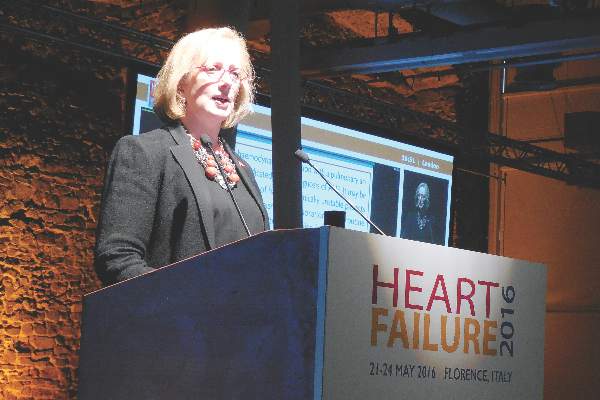
LAA occlusion studied for stroke prevention in atrial fib with prior intracerebral hemorrhage
PARIS – Transcatheter left atrial appendage occlusion shows promise in providing a far better stroke prevention strategy than does standard medical management in patients with atrial fibrillation who have had a prior intracerebral hemorrhage, Dr. Jens E. Nielsen-Kudsk reported at the annual congress of the European Association of Percutaneous Cardiovascular Interventions.
“This is a difficult group of patients because there is no consensus on how to treat patients with atrial fibrillation after an intracerebral hemorrhage. They are very often left without any antithrombotic therapy because physicians and the patients themselves fear to resume anticoagulant therapy. Left atrial appendage occlusion is a nice nonpharmacologic way to obtain stroke prevention,” said Dr. Nielsen-Kudsk of Aarhus (Denmark) University.

He presented a propensity-matched follow-up study of 147 pairs of such patients at seven Nordic heart centers. Half received the percutaneously delivered St. Jude Medical Amplatzer Amulet device, which is approved in Europe for stroke prevention in patients with atrial fibrillation (AF). These 147 device recipients were matched for stroke risk by CHA2DS2-VASc score and for bleeding risk by HASBLED score with 147 patients with AF and a prior intracerebral hemorrhage who received standard medical therapy, ranging from warfarin or a novel oral anticoagulant in nearly half of patients to no antithrombotic therapy in 44%. The Amplatzer recipients were most often placed on aspirin for 6 months afterward unless they had an indication for continued aspirin, such as known coronary artery disease.
During a mean of 166 days of follow-up, the primary study endpoint – a composite of ischemic stroke, major bleeding, or death – occurred in the standard medical therapy group at a rate of 278.9 events per 1,000 patient-years, compared with 47.9 per 1,000 patient-years in patients with left atrial appendage occlusion (LAAO). This translates to an 81% relative risk reduction.
Moreover, the risk of ischemic stroke in the LAAO group was reduced by 65%, major bleeding was reduced by 61%, the rate of intracerebral hemorrhage was reduced by 71%, and mortality was decreased by 92%, the cardiologist continued.
On the basis of these encouraging results, a randomized, prospective clinical trial of LAAO using the Amplatzer device versus standard medical therapy in patients with AF and a prior intracerebral hemorrhage will get underway in the Nordic countries within the next several months. It will be called STROKECLOSE, he added.
Asked if the Watchman, the only LAAO device approved in the United States, might be similarly amenable for stroke prevention in this high-stroke-and-bleeding-risk population, Dr. Nielsen-Kudsk said in theory, yes, but the device’s labeling calls for an initial 45 days of anticoagulation therapy. That’s a daunting prospect in patients who’ve already had an intracerebral bleed, he observed.

Dr. Nicolo Piazza, who chaired a press conference where the Nordic study was highlighted, said the Watchman labeling needn’t be a deal breaker.
“Although the Watchman recommendations suggest an anticoagulant for the first 45 days afterward, real-world practice is not necessarily that. Many of those patients are put on dual-antiplatelet therapy or a single antiplatelet agent for a period of 45 days, 3 months, 6 months – it’s very heterogeneous out there,” said Dr. Piazza of McGill University in Montreal.
He added that STROKEBLED will be a very important trial in terms of providing guidance for daily clinical practice. A propensity matched-pairs analysis can’t be considered the final word because of the possibility of unrecognized and unmatched variables that could affect outcomes.
Dr. Nielsen-Kudsk reported receiving research grants from and serving as a consultant to St. Jude Medical.
PARIS – Transcatheter left atrial appendage occlusion shows promise in providing a far better stroke prevention strategy than does standard medical management in patients with atrial fibrillation who have had a prior intracerebral hemorrhage, Dr. Jens E. Nielsen-Kudsk reported at the annual congress of the European Association of Percutaneous Cardiovascular Interventions.
“This is a difficult group of patients because there is no consensus on how to treat patients with atrial fibrillation after an intracerebral hemorrhage. They are very often left without any antithrombotic therapy because physicians and the patients themselves fear to resume anticoagulant therapy. Left atrial appendage occlusion is a nice nonpharmacologic way to obtain stroke prevention,” said Dr. Nielsen-Kudsk of Aarhus (Denmark) University.
He presented a propensity-matched follow-up study of 147 pairs of such patients at seven Nordic heart centers. Half received the percutaneously delivered St. Jude Medical Amplatzer Amulet device, which is approved in Europe for stroke prevention in patients with atrial fibrillation (AF). These 147 device recipients were matched for stroke risk by CHA2DS2-VASc score and for bleeding risk by HASBLED score with 147 patients with AF and a prior intracerebral hemorrhage who received standard medical therapy, ranging from warfarin or a novel oral anticoagulant in nearly half of patients to no antithrombotic therapy in 44%. The Amplatzer recipients were most often placed on aspirin for 6 months afterward unless they had an indication for continued aspirin, such as known coronary artery disease.
During a mean of 166 days of follow-up, the primary study endpoint – a composite of ischemic stroke, major bleeding, or death – occurred in the standard medical therapy group at a rate of 278.9 events per 1,000 patient-years, compared with 47.9 per 1,000 patient-years in patients with left atrial appendage occlusion (LAAO). This translates to an 81% relative risk reduction.
Moreover, the risk of ischemic stroke in the LAAO group was reduced by 65%, major bleeding was reduced by 61%, the rate of intracerebral hemorrhage was reduced by 71%, and mortality was decreased by 92%, the cardiologist continued.
On the basis of these encouraging results, a randomized, prospective clinical trial of LAAO using the Amplatzer device versus standard medical therapy in patients with AF and a prior intracerebral hemorrhage will get underway in the Nordic countries within the next several months. It will be called STROKECLOSE, he added.
Asked if the Watchman, the only LAAO device approved in the United States, might be similarly amenable for stroke prevention in this high-stroke-and-bleeding-risk population, Dr. Nielsen-Kudsk said in theory, yes, but the device’s labeling calls for an initial 45 days of anticoagulation therapy. That’s a daunting prospect in patients who’ve already had an intracerebral bleed, he observed.
Dr. Nicolo Piazza, who chaired a press conference where the Nordic study was highlighted, said the Watchman labeling needn’t be a deal breaker.
“Although the Watchman recommendations suggest an anticoagulant for the first 45 days afterward, real-world practice is not necessarily that. Many of those patients are put on dual-antiplatelet therapy or a single antiplatelet agent for a period of 45 days, 3 months, 6 months – it’s very heterogeneous out there,” said Dr. Piazza of McGill University in Montreal.
He added that STROKEBLED will be a very important trial in terms of providing guidance for daily clinical practice. A propensity matched-pairs analysis can’t be considered the final word because of the possibility of unrecognized and unmatched variables that could affect outcomes.
Dr. Nielsen-Kudsk reported receiving research grants from and serving as a consultant to St. Jude Medical.
PARIS – Transcatheter left atrial appendage occlusion shows promise in providing a far better stroke prevention strategy than does standard medical management in patients with atrial fibrillation who have had a prior intracerebral hemorrhage, Dr. Jens E. Nielsen-Kudsk reported at the annual congress of the European Association of Percutaneous Cardiovascular Interventions.
“This is a difficult group of patients because there is no consensus on how to treat patients with atrial fibrillation after an intracerebral hemorrhage. They are very often left without any antithrombotic therapy because physicians and the patients themselves fear to resume anticoagulant therapy. Left atrial appendage occlusion is a nice nonpharmacologic way to obtain stroke prevention,” said Dr. Nielsen-Kudsk of Aarhus (Denmark) University.
He presented a propensity-matched follow-up study of 147 pairs of such patients at seven Nordic heart centers. Half received the percutaneously delivered St. Jude Medical Amplatzer Amulet device, which is approved in Europe for stroke prevention in patients with atrial fibrillation (AF). These 147 device recipients were matched for stroke risk by CHA2DS2-VASc score and for bleeding risk by HASBLED score with 147 patients with AF and a prior intracerebral hemorrhage who received standard medical therapy, ranging from warfarin or a novel oral anticoagulant in nearly half of patients to no antithrombotic therapy in 44%. The Amplatzer recipients were most often placed on aspirin for 6 months afterward unless they had an indication for continued aspirin, such as known coronary artery disease.
During a mean of 166 days of follow-up, the primary study endpoint – a composite of ischemic stroke, major bleeding, or death – occurred in the standard medical therapy group at a rate of 278.9 events per 1,000 patient-years, compared with 47.9 per 1,000 patient-years in patients with left atrial appendage occlusion (LAAO). This translates to an 81% relative risk reduction.
Moreover, the risk of ischemic stroke in the LAAO group was reduced by 65%, major bleeding was reduced by 61%, the rate of intracerebral hemorrhage was reduced by 71%, and mortality was decreased by 92%, the cardiologist continued.
On the basis of these encouraging results, a randomized, prospective clinical trial of LAAO using the Amplatzer device versus standard medical therapy in patients with AF and a prior intracerebral hemorrhage will get underway in the Nordic countries within the next several months. It will be called STROKECLOSE, he added.
Asked if the Watchman, the only LAAO device approved in the United States, might be similarly amenable for stroke prevention in this high-stroke-and-bleeding-risk population, Dr. Nielsen-Kudsk said in theory, yes, but the device’s labeling calls for an initial 45 days of anticoagulation therapy. That’s a daunting prospect in patients who’ve already had an intracerebral bleed, he observed.
Dr. Nicolo Piazza, who chaired a press conference where the Nordic study was highlighted, said the Watchman labeling needn’t be a deal breaker.
“Although the Watchman recommendations suggest an anticoagulant for the first 45 days afterward, real-world practice is not necessarily that. Many of those patients are put on dual-antiplatelet therapy or a single antiplatelet agent for a period of 45 days, 3 months, 6 months – it’s very heterogeneous out there,” said Dr. Piazza of McGill University in Montreal.
He added that STROKEBLED will be a very important trial in terms of providing guidance for daily clinical practice. A propensity matched-pairs analysis can’t be considered the final word because of the possibility of unrecognized and unmatched variables that could affect outcomes.
Dr. Nielsen-Kudsk reported receiving research grants from and serving as a consultant to St. Jude Medical.
AT EUROPCR 2016
Key clinical point: Left atrial appendage occlusion appears to be better than medical management for stroke prevention in patients with AF and prior intracerebral hemorrhage.
Major finding: The risk of a combined endpoint of ischemic stroke, major bleeding, or death during follow-up was 81% lower in patients with atrial fibrillation and a prior intracerebral hemorrhage treated with a transcatheter left atrial appendage occlusion device than in controls on standard medical therapy.
Data source: This study included 147 patient pairs propensity-matched for stroke and bleeding risk.
Disclosures: The study presenter reported receiving research grants from and serving as a consultant to St. Jude Medical.

New heart failure interventions face outcomes test
A history of trials where a well-reasoned heart failure intervention did not have the expected results is now coloring the way some clinicians view potential new treatments.
A couple of examples of this cautious, skeptical mindset cropped up during the annual meeting of the Heart Failure Association of the European Society of Cardiology in Florence, Italy, in May.

I previously reported on one of the major talks at the sessions, results from a pivotal trial of a phrenic nerve stimulation device in 151 patients with some type of cardiovascular disease (more than half had heart failure) and central sleep apnea. These patients generally had significant improvement in their apnea-hypopnea index while on active treatment with the phrenic nerve stimulator, designed to produce rhythmic contractions of the diaphragm to create negative chest pressure and enhance breathing in a way that mimics natural respiration and avoids the apparent danger from a positive-pressure intervention in patients with central sleep apnea and heart failure with reduced ejection fraction (HFrEF).
The positive-pressure danger in such patients occurred unexpectedly and dramatically in the form of significantly increased mortality among HFrEF patients with central sleep apnea enrolled in the SERVE-HF trial. Based on that chilling experience, “our understanding of central sleep apnea is imperfect,” said Dr. Martin R. Cowie, lead investigator of SERVE-HF, who rehashed his experience with that study during the recent meeting. “A really important message was that just because patients say they feel better [with the adaptive servo-ventilation tested in SERVE-HF], that doesn’t necessarily translate into benefit,” Dr. Cowie noted.
Dr. Mariell L. Jessup, a leading U.S. heart failure expert, had a similar reaction when I spoke with her during the meeting.
“A lot of things made a lot of sense, including treating central sleep apnea in a patient with HFrEF with positive air pressure that made them feel better,” she said, also invoking the specter of SERVE-HF. “We have to now demand that sleep trials show benefit in clinical outcomes,” such as reduced mortality or a cut in heart failure hospitalizations, and certainly no increase in mortality. Until that’s shown for phrenic nerve stimulation she’ll stay a skeptic, she told me.
Another intervention recently available for U.S. heart failure patients that seems on track to confront this “show-me-the-outcomes” attitude involves new drugs that cut serum potassium levels by binding to potassium in the gastrointestinal tract. This class includes patiromer (Veltassa), approved by the Food and Drug Administration in October 2015. Another potassium binder, sodium zirconium cyclosilicate (ZS-9), seems on track to soon receive FDA approval.
Several speakers at the meeting spoke of the potential to use these drugs to control the hyperkalemia that often complicates treatment of heart failure patients with an ACE inhibitor, angiotensin receptor blocker, or a mineralocorticoid receptor antagonist, especially heart failure patients with concomitant renal disease. Study results showed treatment with patiromer or ZS-9 reversed hyperkalemia, thereby allowing patients to remain on these drugs that are known to significantly cut rates of mortality and heart failure hospitalizations in heart failure patients.
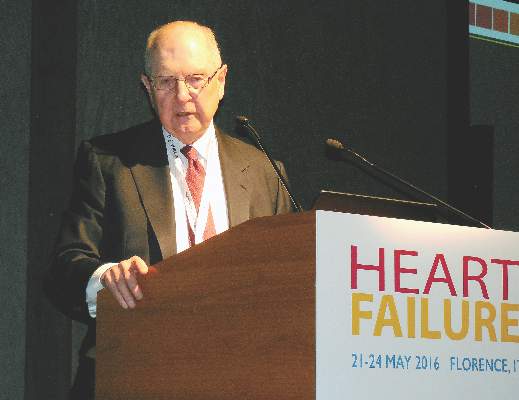
“Right now, a lot of patients don’t get these lifesaving drugs” because of hyperkalemia, noted Dr. Bertram Pitt, a University of Michigan cardiologist who has been involved in several patiromer trials (and is a consultant to Relypsa, the company that markets patiromer).
The problem is that no studies of patiromer or ZS-9 treatment have so far shown that these drugs lead to reduced mortality or heart failure hospitalizations in heart failure patients. All that’s been shown is that patiromer and ZS-9 are effective at lowering potassium levels in patients with hyperkalemia out of the danger zone, levels above 5 mEq/L.
“I want to see outcome trials,” said Dr. Jessup.
Dr. Pitt agreed that outcomes data would be ideal, but also noted that currently no studies aimed at collecting these data are underway.
Without these data, clinicians need to decide whether they believe proven potassium lowering alone is a good enough reason to prescribe patiromer or ZS-9, or whether they need to see proof that these drugs give patients clinically meaningful benefits.
If they demand outcomes evidence they may need to wait quite a while.
On Twitter @mitchelzoler
A history of trials where a well-reasoned heart failure intervention did not have the expected results is now coloring the way some clinicians view potential new treatments.
A couple of examples of this cautious, skeptical mindset cropped up during the annual meeting of the Heart Failure Association of the European Society of Cardiology in Florence, Italy, in May.
I previously reported on one of the major talks at the sessions, results from a pivotal trial of a phrenic nerve stimulation device in 151 patients with some type of cardiovascular disease (more than half had heart failure) and central sleep apnea. These patients generally had significant improvement in their apnea-hypopnea index while on active treatment with the phrenic nerve stimulator, designed to produce rhythmic contractions of the diaphragm to create negative chest pressure and enhance breathing in a way that mimics natural respiration and avoids the apparent danger from a positive-pressure intervention in patients with central sleep apnea and heart failure with reduced ejection fraction (HFrEF).
The positive-pressure danger in such patients occurred unexpectedly and dramatically in the form of significantly increased mortality among HFrEF patients with central sleep apnea enrolled in the SERVE-HF trial. Based on that chilling experience, “our understanding of central sleep apnea is imperfect,” said Dr. Martin R. Cowie, lead investigator of SERVE-HF, who rehashed his experience with that study during the recent meeting. “A really important message was that just because patients say they feel better [with the adaptive servo-ventilation tested in SERVE-HF], that doesn’t necessarily translate into benefit,” Dr. Cowie noted.
Dr. Mariell L. Jessup, a leading U.S. heart failure expert, had a similar reaction when I spoke with her during the meeting.
“A lot of things made a lot of sense, including treating central sleep apnea in a patient with HFrEF with positive air pressure that made them feel better,” she said, also invoking the specter of SERVE-HF. “We have to now demand that sleep trials show benefit in clinical outcomes,” such as reduced mortality or a cut in heart failure hospitalizations, and certainly no increase in mortality. Until that’s shown for phrenic nerve stimulation she’ll stay a skeptic, she told me.
Another intervention recently available for U.S. heart failure patients that seems on track to confront this “show-me-the-outcomes” attitude involves new drugs that cut serum potassium levels by binding to potassium in the gastrointestinal tract. This class includes patiromer (Veltassa), approved by the Food and Drug Administration in October 2015. Another potassium binder, sodium zirconium cyclosilicate (ZS-9), seems on track to soon receive FDA approval.
Several speakers at the meeting spoke of the potential to use these drugs to control the hyperkalemia that often complicates treatment of heart failure patients with an ACE inhibitor, angiotensin receptor blocker, or a mineralocorticoid receptor antagonist, especially heart failure patients with concomitant renal disease. Study results showed treatment with patiromer or ZS-9 reversed hyperkalemia, thereby allowing patients to remain on these drugs that are known to significantly cut rates of mortality and heart failure hospitalizations in heart failure patients.
“Right now, a lot of patients don’t get these lifesaving drugs” because of hyperkalemia, noted Dr. Bertram Pitt, a University of Michigan cardiologist who has been involved in several patiromer trials (and is a consultant to Relypsa, the company that markets patiromer).
The problem is that no studies of patiromer or ZS-9 treatment have so far shown that these drugs lead to reduced mortality or heart failure hospitalizations in heart failure patients. All that’s been shown is that patiromer and ZS-9 are effective at lowering potassium levels in patients with hyperkalemia out of the danger zone, levels above 5 mEq/L.
“I want to see outcome trials,” said Dr. Jessup.
Dr. Pitt agreed that outcomes data would be ideal, but also noted that currently no studies aimed at collecting these data are underway.
Without these data, clinicians need to decide whether they believe proven potassium lowering alone is a good enough reason to prescribe patiromer or ZS-9, or whether they need to see proof that these drugs give patients clinically meaningful benefits.
If they demand outcomes evidence they may need to wait quite a while.
On Twitter @mitchelzoler
A history of trials where a well-reasoned heart failure intervention did not have the expected results is now coloring the way some clinicians view potential new treatments.
A couple of examples of this cautious, skeptical mindset cropped up during the annual meeting of the Heart Failure Association of the European Society of Cardiology in Florence, Italy, in May.
I previously reported on one of the major talks at the sessions, results from a pivotal trial of a phrenic nerve stimulation device in 151 patients with some type of cardiovascular disease (more than half had heart failure) and central sleep apnea. These patients generally had significant improvement in their apnea-hypopnea index while on active treatment with the phrenic nerve stimulator, designed to produce rhythmic contractions of the diaphragm to create negative chest pressure and enhance breathing in a way that mimics natural respiration and avoids the apparent danger from a positive-pressure intervention in patients with central sleep apnea and heart failure with reduced ejection fraction (HFrEF).
The positive-pressure danger in such patients occurred unexpectedly and dramatically in the form of significantly increased mortality among HFrEF patients with central sleep apnea enrolled in the SERVE-HF trial. Based on that chilling experience, “our understanding of central sleep apnea is imperfect,” said Dr. Martin R. Cowie, lead investigator of SERVE-HF, who rehashed his experience with that study during the recent meeting. “A really important message was that just because patients say they feel better [with the adaptive servo-ventilation tested in SERVE-HF], that doesn’t necessarily translate into benefit,” Dr. Cowie noted.
Dr. Mariell L. Jessup, a leading U.S. heart failure expert, had a similar reaction when I spoke with her during the meeting.
“A lot of things made a lot of sense, including treating central sleep apnea in a patient with HFrEF with positive air pressure that made them feel better,” she said, also invoking the specter of SERVE-HF. “We have to now demand that sleep trials show benefit in clinical outcomes,” such as reduced mortality or a cut in heart failure hospitalizations, and certainly no increase in mortality. Until that’s shown for phrenic nerve stimulation she’ll stay a skeptic, she told me.
Another intervention recently available for U.S. heart failure patients that seems on track to confront this “show-me-the-outcomes” attitude involves new drugs that cut serum potassium levels by binding to potassium in the gastrointestinal tract. This class includes patiromer (Veltassa), approved by the Food and Drug Administration in October 2015. Another potassium binder, sodium zirconium cyclosilicate (ZS-9), seems on track to soon receive FDA approval.
Several speakers at the meeting spoke of the potential to use these drugs to control the hyperkalemia that often complicates treatment of heart failure patients with an ACE inhibitor, angiotensin receptor blocker, or a mineralocorticoid receptor antagonist, especially heart failure patients with concomitant renal disease. Study results showed treatment with patiromer or ZS-9 reversed hyperkalemia, thereby allowing patients to remain on these drugs that are known to significantly cut rates of mortality and heart failure hospitalizations in heart failure patients.
“Right now, a lot of patients don’t get these lifesaving drugs” because of hyperkalemia, noted Dr. Bertram Pitt, a University of Michigan cardiologist who has been involved in several patiromer trials (and is a consultant to Relypsa, the company that markets patiromer).
The problem is that no studies of patiromer or ZS-9 treatment have so far shown that these drugs lead to reduced mortality or heart failure hospitalizations in heart failure patients. All that’s been shown is that patiromer and ZS-9 are effective at lowering potassium levels in patients with hyperkalemia out of the danger zone, levels above 5 mEq/L.
“I want to see outcome trials,” said Dr. Jessup.
Dr. Pitt agreed that outcomes data would be ideal, but also noted that currently no studies aimed at collecting these data are underway.
Without these data, clinicians need to decide whether they believe proven potassium lowering alone is a good enough reason to prescribe patiromer or ZS-9, or whether they need to see proof that these drugs give patients clinically meaningful benefits.
If they demand outcomes evidence they may need to wait quite a while.
On Twitter @mitchelzoler

New heart failure guidelines
Recently published guidelines for the pharmacologic management of heart failure in patients with reduced ejection fraction (HFrEF) focus on two drugs – both of which have been approved by the Food and Drug Administration – that have shown promise in managing heart failure patients.
The guideline committee has deemed that the combination drug sacubitril-valsartan (Entresto, Novartis) and ivabradine (Corlanor, Amgen) as “milestone” achievements. In this reader’s mind, compared with the mortality and morbidity effect of beta-blockers and ACE inhibitors, they really don’t make it to that status. They do, however, reach the threshold of important adjuncts to the care for heart failure treatment.
Ivabradine was shown to improve the combination of rehospitalization and mortality when added to conventional therapy, including beta-blockers, by decreasing heart rate. Unfortunately, many of the patients in the trial were not adequately treated with beta-blockers. Sacubitril-valsartan, a drug we have commented about in previous columns, is interesting and adds an additional effect on mortality and morbidity when compared with enalapril alone. In the PARADIGM-HF trial, it showed a significant 20% decrease in rehospitalization and total mortality. A strong case can be made that it should be used instead of an ACE inhibitor, although it is associated with some increased hypotension and angioneurotic edema.
Sacubitril-valsartan poses a significant social issue in regard to its pricing. Most of the drugs we use for the treatment of heart failure cost less than a dollar a day when introduced, and pennies now, and they are immensely effective. Sacubitril-valsartan on average moves the mortality needle a bit, but at a cost of 20 times its competitor, enalapril. It doesn’t do it in all patients, so that it might be reasonable to use it just in those patients who are failing with an ACE inhibitor alone. This is the first time heart failure doctors have had to grapple with the problem of drug pricing, whereas the oncologist and the lipid specialists have been facing this issue for some time. Is it worth $500 a month, compared to $25 a month, to possibly move the mortality index, which has already been modified with the previous ACE inhibitors, down a bit? I suppose that the decision is up to all of us to make.
Reading the guidelines, however, provided me with some insight that I have missed in the past. Of the 17 members of the guideline writing team representing the American College of Cardiology, American Heart Association, and the Heart Failure Society of America, eight had “significant relationships” with the two pharmaceutical companies in question. Committee members were advised not to vote if they had a relevant relationship with industry. How they functioned in the committee proceeding it’s impossible to tell, but the potential for bias is there. I would imagine that eight other heart failure specialists who did not have a conflict could have been found to serve on the writing committee. As guidelines have become such a major part of the construct of the pharmacopoeia, potential bias like this should and easily can be avoided.
Dr. Goldstein, medical editor of Cardiology News, is professor of medicine at Wayne State University and division head emeritus of cardiovascular medicine at Henry Ford Hospital, both in Detroit. He is on data safety monitoring committees for the National Institutes of Health and several pharmaceutical companies.
Recently published guidelines for the pharmacologic management of heart failure in patients with reduced ejection fraction (HFrEF) focus on two drugs – both of which have been approved by the Food and Drug Administration – that have shown promise in managing heart failure patients.
The guideline committee has deemed that the combination drug sacubitril-valsartan (Entresto, Novartis) and ivabradine (Corlanor, Amgen) as “milestone” achievements. In this reader’s mind, compared with the mortality and morbidity effect of beta-blockers and ACE inhibitors, they really don’t make it to that status. They do, however, reach the threshold of important adjuncts to the care for heart failure treatment.
Ivabradine was shown to improve the combination of rehospitalization and mortality when added to conventional therapy, including beta-blockers, by decreasing heart rate. Unfortunately, many of the patients in the trial were not adequately treated with beta-blockers. Sacubitril-valsartan, a drug we have commented about in previous columns, is interesting and adds an additional effect on mortality and morbidity when compared with enalapril alone. In the PARADIGM-HF trial, it showed a significant 20% decrease in rehospitalization and total mortality. A strong case can be made that it should be used instead of an ACE inhibitor, although it is associated with some increased hypotension and angioneurotic edema.
Sacubitril-valsartan poses a significant social issue in regard to its pricing. Most of the drugs we use for the treatment of heart failure cost less than a dollar a day when introduced, and pennies now, and they are immensely effective. Sacubitril-valsartan on average moves the mortality needle a bit, but at a cost of 20 times its competitor, enalapril. It doesn’t do it in all patients, so that it might be reasonable to use it just in those patients who are failing with an ACE inhibitor alone. This is the first time heart failure doctors have had to grapple with the problem of drug pricing, whereas the oncologist and the lipid specialists have been facing this issue for some time. Is it worth $500 a month, compared to $25 a month, to possibly move the mortality index, which has already been modified with the previous ACE inhibitors, down a bit? I suppose that the decision is up to all of us to make.
Reading the guidelines, however, provided me with some insight that I have missed in the past. Of the 17 members of the guideline writing team representing the American College of Cardiology, American Heart Association, and the Heart Failure Society of America, eight had “significant relationships” with the two pharmaceutical companies in question. Committee members were advised not to vote if they had a relevant relationship with industry. How they functioned in the committee proceeding it’s impossible to tell, but the potential for bias is there. I would imagine that eight other heart failure specialists who did not have a conflict could have been found to serve on the writing committee. As guidelines have become such a major part of the construct of the pharmacopoeia, potential bias like this should and easily can be avoided.
Dr. Goldstein, medical editor of Cardiology News, is professor of medicine at Wayne State University and division head emeritus of cardiovascular medicine at Henry Ford Hospital, both in Detroit. He is on data safety monitoring committees for the National Institutes of Health and several pharmaceutical companies.
Recently published guidelines for the pharmacologic management of heart failure in patients with reduced ejection fraction (HFrEF) focus on two drugs – both of which have been approved by the Food and Drug Administration – that have shown promise in managing heart failure patients.
The guideline committee has deemed that the combination drug sacubitril-valsartan (Entresto, Novartis) and ivabradine (Corlanor, Amgen) as “milestone” achievements. In this reader’s mind, compared with the mortality and morbidity effect of beta-blockers and ACE inhibitors, they really don’t make it to that status. They do, however, reach the threshold of important adjuncts to the care for heart failure treatment.
Ivabradine was shown to improve the combination of rehospitalization and mortality when added to conventional therapy, including beta-blockers, by decreasing heart rate. Unfortunately, many of the patients in the trial were not adequately treated with beta-blockers. Sacubitril-valsartan, a drug we have commented about in previous columns, is interesting and adds an additional effect on mortality and morbidity when compared with enalapril alone. In the PARADIGM-HF trial, it showed a significant 20% decrease in rehospitalization and total mortality. A strong case can be made that it should be used instead of an ACE inhibitor, although it is associated with some increased hypotension and angioneurotic edema.
Sacubitril-valsartan poses a significant social issue in regard to its pricing. Most of the drugs we use for the treatment of heart failure cost less than a dollar a day when introduced, and pennies now, and they are immensely effective. Sacubitril-valsartan on average moves the mortality needle a bit, but at a cost of 20 times its competitor, enalapril. It doesn’t do it in all patients, so that it might be reasonable to use it just in those patients who are failing with an ACE inhibitor alone. This is the first time heart failure doctors have had to grapple with the problem of drug pricing, whereas the oncologist and the lipid specialists have been facing this issue for some time. Is it worth $500 a month, compared to $25 a month, to possibly move the mortality index, which has already been modified with the previous ACE inhibitors, down a bit? I suppose that the decision is up to all of us to make.
Reading the guidelines, however, provided me with some insight that I have missed in the past. Of the 17 members of the guideline writing team representing the American College of Cardiology, American Heart Association, and the Heart Failure Society of America, eight had “significant relationships” with the two pharmaceutical companies in question. Committee members were advised not to vote if they had a relevant relationship with industry. How they functioned in the committee proceeding it’s impossible to tell, but the potential for bias is there. I would imagine that eight other heart failure specialists who did not have a conflict could have been found to serve on the writing committee. As guidelines have become such a major part of the construct of the pharmacopoeia, potential bias like this should and easily can be avoided.
Dr. Goldstein, medical editor of Cardiology News, is professor of medicine at Wayne State University and division head emeritus of cardiovascular medicine at Henry Ford Hospital, both in Detroit. He is on data safety monitoring committees for the National Institutes of Health and several pharmaceutical companies.
Exercise training cuts heart failure mortality
FLORENCE, ITALY – Exercise training boosts the longevity of patients with heart failure.
Although results from several prior randomized, controlled trials had already shown a mortality benefit from exercise training for heart failure patients, these findings have now been confirmed by a meta-analysis that used the original, individual patient raw data collected in 20 separate randomized, controlled trials that together involved more than 4,000 patients. The results showed that an exercise-training intervention run for at least 3 weeks produced a statistically significant, relative reduction in all-cause mortality of 18%, compared with similar patients who had been randomized to usual care without an exercise program, Oriana Ciani, Ph.D., reported at a meeting held by the Heart Failure Association of the European Society of Cardiology.
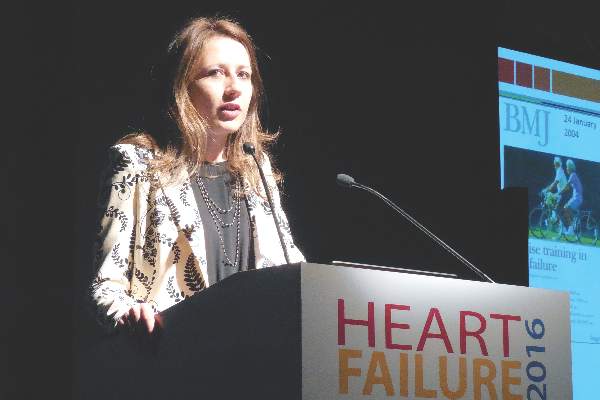
The individual patient data meta-analysis using results from randomized, controlled trials also showed a statistically significant 11% relative reduction in the incidence of all-cause hospitalization in heart failure patients during at least 6 months’ follow-up of exercise programs that lasted for at least 3 weeks, said Dr. Ciani, a health technology researcher at the University of Exeter (England).
Her analysis also showed no suggestion of heterogeneity for each of these two beneficial effects from exercise programs, regardless of patients’ age, sex, or baseline levels of left ventricular ejection fraction, heart failure etiology, functional status, or exercise capacity. “No evidence was found to support a differential treatment effect from exercise-based intervention across patient subgroups,” she said.
The Exercise Training for Chronic Heart Failure (ExTraMATCH II) meta-analysis used data collected in randomized trials published through 2014 that involved at least 50 patients, used an exercise intervention for at least 3 weeks, and had follow-up for at least 6 months. Dr. Ciani and her associates identified 20 studies that included a total of 4,043 heart failure patients who fulfilled these criteria and for whom the researchers from the studies were willing to share individual patient data.
The analysis also showed a median time to all-cause mortality of 605 days among patients who received exercise training and 615 days in the controls, and a median time to first all-cause hospitalization of 229 days with exercise training and 241 days in the controls. The percentage of patients who were hospitalized during follow-up was reduced by an absolute 3.8% for those in the exercise group, compared with the controls.
Although the type of exercise intervention used varied among the 20 studies, most involved aerobic training, and some also used resistance training, Dr. Ciani said. She said she plans additional analyses of the data she has collected to examine the impact of exercise in heart failure patients on cardiovascular mortality, heart failure hospitalization, and a combined endpoint of all-cause death and all-cause hospitalization.
On Twitter @mitchelzoler
These results are a step forward in confirming the safety and efficacy of exercise training for heart failure patients. It is a good addition to the literature. Its strength is its use of an analysis of individual patient data.
|
Dr. Theresa A. McDonagh |
The findings deliver the important message that exercise rehabilitation is important for all heart failure patients. Currently, uptake of such programs is low, involving about 20% of heart failure patients.
The analysis showed a consistent effect from exercise training across all subgroups examined. The actual reductions in adverse outcomes were meaningful, with a 2% absolute reduction in all-cause mortality and a nearly 4% absolute reduction in all-cause hospitalization. However, the findings do not tell us which type of exercise prescription works best. Future research needs to especially focus on patients with heart failure with preserved ejection fraction to determine whether exercise benefits this particular type of heart failure patient.
Dr. Theresa A. McDonagh is a professor of heart failure at King’s College, London. She made these comments as the designated discussant for the study. She had no relevant financial disclosures.
These results are a step forward in confirming the safety and efficacy of exercise training for heart failure patients. It is a good addition to the literature. Its strength is its use of an analysis of individual patient data.
|
|
Dr. Theresa A. McDonagh |
The findings deliver the important message that exercise rehabilitation is important for all heart failure patients. Currently, uptake of such programs is low, involving about 20% of heart failure patients.
The analysis showed a consistent effect from exercise training across all subgroups examined. The actual reductions in adverse outcomes were meaningful, with a 2% absolute reduction in all-cause mortality and a nearly 4% absolute reduction in all-cause hospitalization. However, the findings do not tell us which type of exercise prescription works best. Future research needs to especially focus on patients with heart failure with preserved ejection fraction to determine whether exercise benefits this particular type of heart failure patient.
Dr. Theresa A. McDonagh is a professor of heart failure at King’s College, London. She made these comments as the designated discussant for the study. She had no relevant financial disclosures.
These results are a step forward in confirming the safety and efficacy of exercise training for heart failure patients. It is a good addition to the literature. Its strength is its use of an analysis of individual patient data.
|
|
Dr. Theresa A. McDonagh |
The findings deliver the important message that exercise rehabilitation is important for all heart failure patients. Currently, uptake of such programs is low, involving about 20% of heart failure patients.
The analysis showed a consistent effect from exercise training across all subgroups examined. The actual reductions in adverse outcomes were meaningful, with a 2% absolute reduction in all-cause mortality and a nearly 4% absolute reduction in all-cause hospitalization. However, the findings do not tell us which type of exercise prescription works best. Future research needs to especially focus on patients with heart failure with preserved ejection fraction to determine whether exercise benefits this particular type of heart failure patient.
Dr. Theresa A. McDonagh is a professor of heart failure at King’s College, London. She made these comments as the designated discussant for the study. She had no relevant financial disclosures.
FLORENCE, ITALY – Exercise training boosts the longevity of patients with heart failure.
Although results from several prior randomized, controlled trials had already shown a mortality benefit from exercise training for heart failure patients, these findings have now been confirmed by a meta-analysis that used the original, individual patient raw data collected in 20 separate randomized, controlled trials that together involved more than 4,000 patients. The results showed that an exercise-training intervention run for at least 3 weeks produced a statistically significant, relative reduction in all-cause mortality of 18%, compared with similar patients who had been randomized to usual care without an exercise program, Oriana Ciani, Ph.D., reported at a meeting held by the Heart Failure Association of the European Society of Cardiology.
The individual patient data meta-analysis using results from randomized, controlled trials also showed a statistically significant 11% relative reduction in the incidence of all-cause hospitalization in heart failure patients during at least 6 months’ follow-up of exercise programs that lasted for at least 3 weeks, said Dr. Ciani, a health technology researcher at the University of Exeter (England).
Her analysis also showed no suggestion of heterogeneity for each of these two beneficial effects from exercise programs, regardless of patients’ age, sex, or baseline levels of left ventricular ejection fraction, heart failure etiology, functional status, or exercise capacity. “No evidence was found to support a differential treatment effect from exercise-based intervention across patient subgroups,” she said.
The Exercise Training for Chronic Heart Failure (ExTraMATCH II) meta-analysis used data collected in randomized trials published through 2014 that involved at least 50 patients, used an exercise intervention for at least 3 weeks, and had follow-up for at least 6 months. Dr. Ciani and her associates identified 20 studies that included a total of 4,043 heart failure patients who fulfilled these criteria and for whom the researchers from the studies were willing to share individual patient data.
The analysis also showed a median time to all-cause mortality of 605 days among patients who received exercise training and 615 days in the controls, and a median time to first all-cause hospitalization of 229 days with exercise training and 241 days in the controls. The percentage of patients who were hospitalized during follow-up was reduced by an absolute 3.8% for those in the exercise group, compared with the controls.
Although the type of exercise intervention used varied among the 20 studies, most involved aerobic training, and some also used resistance training, Dr. Ciani said. She said she plans additional analyses of the data she has collected to examine the impact of exercise in heart failure patients on cardiovascular mortality, heart failure hospitalization, and a combined endpoint of all-cause death and all-cause hospitalization.
On Twitter @mitchelzoler
FLORENCE, ITALY – Exercise training boosts the longevity of patients with heart failure.
Although results from several prior randomized, controlled trials had already shown a mortality benefit from exercise training for heart failure patients, these findings have now been confirmed by a meta-analysis that used the original, individual patient raw data collected in 20 separate randomized, controlled trials that together involved more than 4,000 patients. The results showed that an exercise-training intervention run for at least 3 weeks produced a statistically significant, relative reduction in all-cause mortality of 18%, compared with similar patients who had been randomized to usual care without an exercise program, Oriana Ciani, Ph.D., reported at a meeting held by the Heart Failure Association of the European Society of Cardiology.
The individual patient data meta-analysis using results from randomized, controlled trials also showed a statistically significant 11% relative reduction in the incidence of all-cause hospitalization in heart failure patients during at least 6 months’ follow-up of exercise programs that lasted for at least 3 weeks, said Dr. Ciani, a health technology researcher at the University of Exeter (England).
Her analysis also showed no suggestion of heterogeneity for each of these two beneficial effects from exercise programs, regardless of patients’ age, sex, or baseline levels of left ventricular ejection fraction, heart failure etiology, functional status, or exercise capacity. “No evidence was found to support a differential treatment effect from exercise-based intervention across patient subgroups,” she said.
The Exercise Training for Chronic Heart Failure (ExTraMATCH II) meta-analysis used data collected in randomized trials published through 2014 that involved at least 50 patients, used an exercise intervention for at least 3 weeks, and had follow-up for at least 6 months. Dr. Ciani and her associates identified 20 studies that included a total of 4,043 heart failure patients who fulfilled these criteria and for whom the researchers from the studies were willing to share individual patient data.
The analysis also showed a median time to all-cause mortality of 605 days among patients who received exercise training and 615 days in the controls, and a median time to first all-cause hospitalization of 229 days with exercise training and 241 days in the controls. The percentage of patients who were hospitalized during follow-up was reduced by an absolute 3.8% for those in the exercise group, compared with the controls.
Although the type of exercise intervention used varied among the 20 studies, most involved aerobic training, and some also used resistance training, Dr. Ciani said. She said she plans additional analyses of the data she has collected to examine the impact of exercise in heart failure patients on cardiovascular mortality, heart failure hospitalization, and a combined endpoint of all-cause death and all-cause hospitalization.
On Twitter @mitchelzoler
AT HEART FAILURE 2016
Key clinical point: A meta-analysis of 20 randomized controlled studies confirmed that an exercise training intervention in heart failure patients significantly reduces mortality and hospitalizations.
Major finding: All-cause mortality fell by a relative 18% in heart failure patients who underwent exercise training, compared with controls.
Data source: Individual patient data meta-analysis for 4,043 patients from 20 studies.
Disclosures: Dr. Ciani had no relevant financial disclosures.
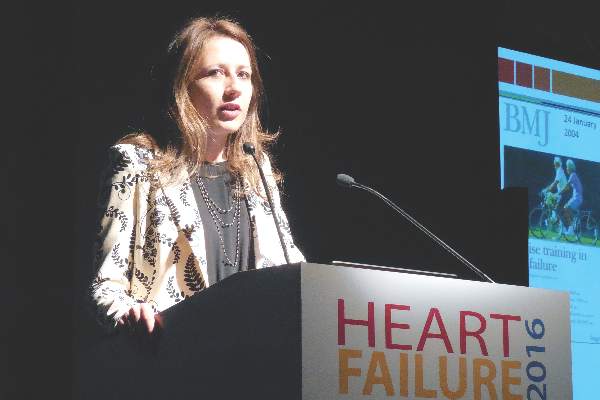
Flu vaccination cut hospitalizations in heart failure patients
FLORENCE, ITALY – Influenza vaccination of heart failure patients cut their rate of hospitalization for cardiovascular disease by nearly a third during the year following vaccination in a study of more than 59,000 British heart failure patients.
Influenza vaccination of heart failure patients also cut their rate of hospitalization for respiratory infections by a statistically significant 16% during the year following vaccination, Dr. Kazem Rahimi said at a meeting held by the Heart Failure Association of the ESC.
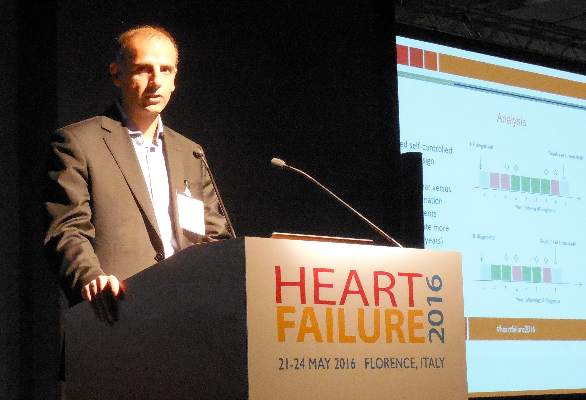
“In the absence of randomized trials, this [observational] study of 59,202 heart failure patients provides the most compelling evidence to date for the protective effect of influenza vaccination on hospital admissions,” said Dr. Rahimi, a cardiologist and epidemiologist who is deputy director of the George Institute for Global Health at the University of Oxford (England).
The analysis also showed that influenza vaccination of heart failure patients had no significant effect on all-cause hospitalizations.
Dr. Rahimi and his associates analyzed electronic health records from primary and secondary care settings in England during 1990-2013, from which they identified 59,202 heart failure patients with records for at least 1 year of influenza vaccination and at least 1 year without vaccination. The patients averaged 75 years old and were divided equally among women and men.
To control for potential confounding factors, they used a self-control model in which hospitalizations for each heart failure patient during the year following an influenza vaccination were compared with an adjacent year for that same patient when no vaccination occurred.
The results showed that the incidence of hospitalizations for cardiovascular diseases fell by a statistically significant 30% in the year following an influenza vaccination, compared with one or more adjacent years without vaccination. The protection again hospitalization was strongest during the second month following vaccination and then gradually waned over the ensuing year; by about 10 months following vaccination the protection effect had disappeared.
The study also looked at influenza vaccine uptake by heart failure patients through the 24-year period examined. During that time, the vaccination uptake rate rose from a low of less than 10% in 1990 to a peak rate of just over 60% in 2006, after which the rate gradually declined to a rate of just under 50% in 2013. Dr. Rahimi attributed the rise in uptake during the period from 1990 to 2006 in part to incentives that primary care physicians in England began receiving to administer influenza vaccine to their patients. “Higher uptake of annual vaccination in heart failure patients may help alleviate the burden of influenza-related hospital admissions,” he said.
Dr. Rahimi had no disclosures.
On Twitter @mitchelzoler
The main problem with observational studies is confounding, and the observational studies done until now that had looked at the protective role of influenza vaccination in heart failure patients had not been very convincing. Dr. Rahimi and his associates performed a high-quality study that adds to the evidence and underlines recommendations for influenza vaccination of heart failure patients. Their study was very large, and it used a self-control approach to adjust for potential confounding. I think they did their best to eliminate confounding.
|
Dr. Arno W. Hoes |
The newly released, updated guidelines from the European Society of Cardiology for the diagnosis and treatment of acute and chronic heart failure recommend annual vaccination of heart failure patients against influenza and pneumococcal disease. The data reported by Dr. Rahimi also document that only about half of heart failure patients in England currently receive an annual influenza vaccine. That percentage needs to increase.
Dr. Arno W. Hoes is professor of clinical epidemiology at the University Medical Center in Utrecht, the Netherlands. He made these comments as designated discussant for the study. He had no disclosures.
The main problem with observational studies is confounding, and the observational studies done until now that had looked at the protective role of influenza vaccination in heart failure patients had not been very convincing. Dr. Rahimi and his associates performed a high-quality study that adds to the evidence and underlines recommendations for influenza vaccination of heart failure patients. Their study was very large, and it used a self-control approach to adjust for potential confounding. I think they did their best to eliminate confounding.
|
|
Dr. Arno W. Hoes |
The newly released, updated guidelines from the European Society of Cardiology for the diagnosis and treatment of acute and chronic heart failure recommend annual vaccination of heart failure patients against influenza and pneumococcal disease. The data reported by Dr. Rahimi also document that only about half of heart failure patients in England currently receive an annual influenza vaccine. That percentage needs to increase.
Dr. Arno W. Hoes is professor of clinical epidemiology at the University Medical Center in Utrecht, the Netherlands. He made these comments as designated discussant for the study. He had no disclosures.
The main problem with observational studies is confounding, and the observational studies done until now that had looked at the protective role of influenza vaccination in heart failure patients had not been very convincing. Dr. Rahimi and his associates performed a high-quality study that adds to the evidence and underlines recommendations for influenza vaccination of heart failure patients. Their study was very large, and it used a self-control approach to adjust for potential confounding. I think they did their best to eliminate confounding.
|
|
Dr. Arno W. Hoes |
The newly released, updated guidelines from the European Society of Cardiology for the diagnosis and treatment of acute and chronic heart failure recommend annual vaccination of heart failure patients against influenza and pneumococcal disease. The data reported by Dr. Rahimi also document that only about half of heart failure patients in England currently receive an annual influenza vaccine. That percentage needs to increase.
Dr. Arno W. Hoes is professor of clinical epidemiology at the University Medical Center in Utrecht, the Netherlands. He made these comments as designated discussant for the study. He had no disclosures.
FLORENCE, ITALY – Influenza vaccination of heart failure patients cut their rate of hospitalization for cardiovascular disease by nearly a third during the year following vaccination in a study of more than 59,000 British heart failure patients.
Influenza vaccination of heart failure patients also cut their rate of hospitalization for respiratory infections by a statistically significant 16% during the year following vaccination, Dr. Kazem Rahimi said at a meeting held by the Heart Failure Association of the ESC.
“In the absence of randomized trials, this [observational] study of 59,202 heart failure patients provides the most compelling evidence to date for the protective effect of influenza vaccination on hospital admissions,” said Dr. Rahimi, a cardiologist and epidemiologist who is deputy director of the George Institute for Global Health at the University of Oxford (England).
The analysis also showed that influenza vaccination of heart failure patients had no significant effect on all-cause hospitalizations.
Dr. Rahimi and his associates analyzed electronic health records from primary and secondary care settings in England during 1990-2013, from which they identified 59,202 heart failure patients with records for at least 1 year of influenza vaccination and at least 1 year without vaccination. The patients averaged 75 years old and were divided equally among women and men.
To control for potential confounding factors, they used a self-control model in which hospitalizations for each heart failure patient during the year following an influenza vaccination were compared with an adjacent year for that same patient when no vaccination occurred.
The results showed that the incidence of hospitalizations for cardiovascular diseases fell by a statistically significant 30% in the year following an influenza vaccination, compared with one or more adjacent years without vaccination. The protection again hospitalization was strongest during the second month following vaccination and then gradually waned over the ensuing year; by about 10 months following vaccination the protection effect had disappeared.
The study also looked at influenza vaccine uptake by heart failure patients through the 24-year period examined. During that time, the vaccination uptake rate rose from a low of less than 10% in 1990 to a peak rate of just over 60% in 2006, after which the rate gradually declined to a rate of just under 50% in 2013. Dr. Rahimi attributed the rise in uptake during the period from 1990 to 2006 in part to incentives that primary care physicians in England began receiving to administer influenza vaccine to their patients. “Higher uptake of annual vaccination in heart failure patients may help alleviate the burden of influenza-related hospital admissions,” he said.
Dr. Rahimi had no disclosures.
On Twitter @mitchelzoler
FLORENCE, ITALY – Influenza vaccination of heart failure patients cut their rate of hospitalization for cardiovascular disease by nearly a third during the year following vaccination in a study of more than 59,000 British heart failure patients.
Influenza vaccination of heart failure patients also cut their rate of hospitalization for respiratory infections by a statistically significant 16% during the year following vaccination, Dr. Kazem Rahimi said at a meeting held by the Heart Failure Association of the ESC.
“In the absence of randomized trials, this [observational] study of 59,202 heart failure patients provides the most compelling evidence to date for the protective effect of influenza vaccination on hospital admissions,” said Dr. Rahimi, a cardiologist and epidemiologist who is deputy director of the George Institute for Global Health at the University of Oxford (England).
The analysis also showed that influenza vaccination of heart failure patients had no significant effect on all-cause hospitalizations.
Dr. Rahimi and his associates analyzed electronic health records from primary and secondary care settings in England during 1990-2013, from which they identified 59,202 heart failure patients with records for at least 1 year of influenza vaccination and at least 1 year without vaccination. The patients averaged 75 years old and were divided equally among women and men.
To control for potential confounding factors, they used a self-control model in which hospitalizations for each heart failure patient during the year following an influenza vaccination were compared with an adjacent year for that same patient when no vaccination occurred.
The results showed that the incidence of hospitalizations for cardiovascular diseases fell by a statistically significant 30% in the year following an influenza vaccination, compared with one or more adjacent years without vaccination. The protection again hospitalization was strongest during the second month following vaccination and then gradually waned over the ensuing year; by about 10 months following vaccination the protection effect had disappeared.
The study also looked at influenza vaccine uptake by heart failure patients through the 24-year period examined. During that time, the vaccination uptake rate rose from a low of less than 10% in 1990 to a peak rate of just over 60% in 2006, after which the rate gradually declined to a rate of just under 50% in 2013. Dr. Rahimi attributed the rise in uptake during the period from 1990 to 2006 in part to incentives that primary care physicians in England began receiving to administer influenza vaccine to their patients. “Higher uptake of annual vaccination in heart failure patients may help alleviate the burden of influenza-related hospital admissions,” he said.
Dr. Rahimi had no disclosures.
On Twitter @mitchelzoler
AT HEART FAILURE 2016
Key clinical point: When heart failure patients received an influenza vaccination, their rate of hospitalization for cardiovascular disease and for respiratory infection fell significantly during the year following vaccination.
Major finding: Cardiovascular hospitalizations fell by 30% in the year following influenza vaccination, compared with adjacent years with no vaccination.
Data source: Review of electronic health records for 59,202 heart failure patients in England during 1990-2013.
Disclosures: Dr. Rahimi had no disclosures.