User login
Preventing recurrent staphylococcal skin and soft tissue infection
A frequent referral to our pediatric infectious disease outpatient program at Boston Medical Center is the child with recurrent skin and soft tissue infection. Most often, the child is an infant, toddler, or adolescent; the child is otherwise well but has had two or three prior episodes of skin infection; the infections are typically peri-inguinal including the buttocks, but may involve the face, back, thighs, or scalp. The families are often frustrated and hoping for a solution. Are there effective strategies for reducing recurrences?
Several recent studies provide insights and can be helpful in forming an evidence-based approach that offers modest benefit for reducing the risk of recurrence. Most recently, Kaplan et al. (Clin. Inf. Dis. 2014;58:679-82) reported on a clinical trial of sodium hypochlorite bleach baths combined with hygienic measures (frequent hand washing with soap, cutting fingernails short, using towels or washcloths and clothing without sharing, and daily bathing or showering), compared with hygienic measures alone. The treatment group received twice-weekly hypochlorite baths with 5 mL household bleach (Clorox-Regular 6.0% hypochlorite) per gallon of bath water, followed by moisturizer. Most children were colonized with methicillin-resistant Staphylococcus aureus (MRSA)(approximately 70%) or methicillin-susceptible S. aureus (MSSA)(approximately 30%). In the 12-month follow-up, 20% of children had recurrent skin or soft tissue infection (SSTI). Risk factors for recurrence were young age (<6 years) and burden of colonization (number of colonized sites). A small, nonstatistically significant benefit was observed in the treatment group with a 17% incidence of SSTI, compared with 20.9% in controls (P = 0.15). The authors concluded a bleach bath plus hygiene measures was associated with about a 20% nonstatistically significant decrease in recurrent community-acquired SSTI. No adverse effects of bleach baths were identified.
A second open-label, randomized study by Fritz et al. (Clin. Inf. Dis. 2012;54:743-51) evaluated the value of individual decolonization, compared with household decolonization, in children 6 months through 20 years of age with prior community-acquired SSTI. Cases were randomized to individual decolonization regimens (hygiene, 2% mupirocin for 5 days and 4% chlorhexidine daily body washes) or to household decolonization. Staphylococcal colonization was evaluated at 1, 3, 6, and 12 months. No differences in the rate of eradication of S. aureus were observed between the two strategies, except at 3 months where a greater proportion of children randomized to household decolonization were culture negative. Despite the lack of impact on colonization, SSTI documented by a physician was less common in children where decolonization was householdwide. After 12 months, 36% of children in the household decolonization sites had recurrent SSTI, compared with 55% in the individual decolonization stratum (P = .03). The authors concluded that household decolonization reduces SSTI in both the individual and household contacts.

Another approach to decolonization has been the use of oral antibiotics in combination with mupirocin and hexachloradine. Although data are limited, Miller et al. (Antimicrob. Agents Chemother. 2012;56:1084-6) reported on a small cohort of 31 prospectively evaluated patients with recurrent community-acquired MRSA skin infections. Individuals received nasal mupirocin, topical hexachlorophene body wash, and an oral antibiotic based on susceptibility testing (doxycycline, minocycline, or trimethoprim-sulfamethoxazole). In the 6 months prior to enrollment, the mean rate of SSTI was three infections per person (range, 2-30). The mean number of MRSA infections after the intervention decreased significantly from 0.84 infections per month to 0.03 infections per month during the 5.2-month follow-up. In general, the regimens were well tolerated with minor gastrointestinal complaints. The authors concluded that the combination of systemic and topical antimicrobials was associated with subsequent decreases in community-acquired MRSA SSTI; however, they acknowledged that without a control group, they were unable to be certain that the decrease was due to the prescribed regimen.
Our current approach for children referred with recurrent SSTI is household decolonization with nasal mupirocin and daily hexachloradine baths or showers or hypochlorite baths. The mupirocin is prescribed for 5-10 days; the hexachloradine/hypochlorite baths, for several months. We also stress the need for hygiene, including washing towels and linens in hot water, and cleaning surfaces and items such as remote controls with hypochlorite solutions. Although the value of environmental decontamination is unknown, studies by Uhlemann et al. (PLOS ONE 2011;6: e22407) demonstrated excess contamination of household surfaces in homes of SSTI cases. If recurrences continue, the addition of an antimicrobial agent is considered. We reserve doxycycline for children over 8 years of age and prescribe trimethoprim-sulfamethoxazole for those younger than 8 years. We also will ask about pets although we are aware of only anecdotal reports where treating the family dog or cat has aborted recurrent disease in the patients.
In summary, recurrent SSTI is common, especially among young children. The burden of colonization appears related to both the risk for recurrent disease and the risk for transmission within the household. Reducing colonization is valuable for decreasing the incidence of recurrent SSTI both for the individual as well as the household members. The current strategies demonstrate modest success, but as many as 30%-40% of patients will continue to have recurrent SSTI. Education about the early signs of infection, early evaluation of SSTI, and appropriate management (topical treatment, incision and drainage, or systemic antibiotics) are successful strategies for limiting progression to invasive staphylococcal disease.
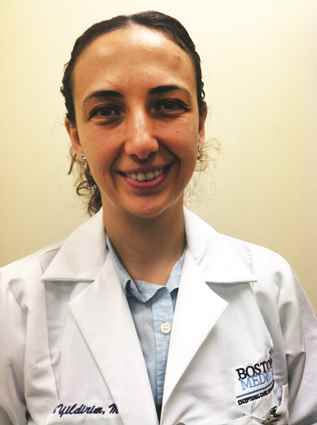
Dr. Pelton is chief of pediatric infectious disease and coordinator of the maternal-child HIV program at Boston Medical Center. Dr. Yildirim is a fellow in pediatric infectious disease and an epidemiologist, at Boston Medical Center. To comment, e-mail Dr. Pelton and Dr. Yildirim at pdnews@frontlinemedcom.com.
A frequent referral to our pediatric infectious disease outpatient program at Boston Medical Center is the child with recurrent skin and soft tissue infection. Most often, the child is an infant, toddler, or adolescent; the child is otherwise well but has had two or three prior episodes of skin infection; the infections are typically peri-inguinal including the buttocks, but may involve the face, back, thighs, or scalp. The families are often frustrated and hoping for a solution. Are there effective strategies for reducing recurrences?
Several recent studies provide insights and can be helpful in forming an evidence-based approach that offers modest benefit for reducing the risk of recurrence. Most recently, Kaplan et al. (Clin. Inf. Dis. 2014;58:679-82) reported on a clinical trial of sodium hypochlorite bleach baths combined with hygienic measures (frequent hand washing with soap, cutting fingernails short, using towels or washcloths and clothing without sharing, and daily bathing or showering), compared with hygienic measures alone. The treatment group received twice-weekly hypochlorite baths with 5 mL household bleach (Clorox-Regular 6.0% hypochlorite) per gallon of bath water, followed by moisturizer. Most children were colonized with methicillin-resistant Staphylococcus aureus (MRSA)(approximately 70%) or methicillin-susceptible S. aureus (MSSA)(approximately 30%). In the 12-month follow-up, 20% of children had recurrent skin or soft tissue infection (SSTI). Risk factors for recurrence were young age (<6 years) and burden of colonization (number of colonized sites). A small, nonstatistically significant benefit was observed in the treatment group with a 17% incidence of SSTI, compared with 20.9% in controls (P = 0.15). The authors concluded a bleach bath plus hygiene measures was associated with about a 20% nonstatistically significant decrease in recurrent community-acquired SSTI. No adverse effects of bleach baths were identified.
A second open-label, randomized study by Fritz et al. (Clin. Inf. Dis. 2012;54:743-51) evaluated the value of individual decolonization, compared with household decolonization, in children 6 months through 20 years of age with prior community-acquired SSTI. Cases were randomized to individual decolonization regimens (hygiene, 2% mupirocin for 5 days and 4% chlorhexidine daily body washes) or to household decolonization. Staphylococcal colonization was evaluated at 1, 3, 6, and 12 months. No differences in the rate of eradication of S. aureus were observed between the two strategies, except at 3 months where a greater proportion of children randomized to household decolonization were culture negative. Despite the lack of impact on colonization, SSTI documented by a physician was less common in children where decolonization was householdwide. After 12 months, 36% of children in the household decolonization sites had recurrent SSTI, compared with 55% in the individual decolonization stratum (P = .03). The authors concluded that household decolonization reduces SSTI in both the individual and household contacts.
Another approach to decolonization has been the use of oral antibiotics in combination with mupirocin and hexachloradine. Although data are limited, Miller et al. (Antimicrob. Agents Chemother. 2012;56:1084-6) reported on a small cohort of 31 prospectively evaluated patients with recurrent community-acquired MRSA skin infections. Individuals received nasal mupirocin, topical hexachlorophene body wash, and an oral antibiotic based on susceptibility testing (doxycycline, minocycline, or trimethoprim-sulfamethoxazole). In the 6 months prior to enrollment, the mean rate of SSTI was three infections per person (range, 2-30). The mean number of MRSA infections after the intervention decreased significantly from 0.84 infections per month to 0.03 infections per month during the 5.2-month follow-up. In general, the regimens were well tolerated with minor gastrointestinal complaints. The authors concluded that the combination of systemic and topical antimicrobials was associated with subsequent decreases in community-acquired MRSA SSTI; however, they acknowledged that without a control group, they were unable to be certain that the decrease was due to the prescribed regimen.
Our current approach for children referred with recurrent SSTI is household decolonization with nasal mupirocin and daily hexachloradine baths or showers or hypochlorite baths. The mupirocin is prescribed for 5-10 days; the hexachloradine/hypochlorite baths, for several months. We also stress the need for hygiene, including washing towels and linens in hot water, and cleaning surfaces and items such as remote controls with hypochlorite solutions. Although the value of environmental decontamination is unknown, studies by Uhlemann et al. (PLOS ONE 2011;6: e22407) demonstrated excess contamination of household surfaces in homes of SSTI cases. If recurrences continue, the addition of an antimicrobial agent is considered. We reserve doxycycline for children over 8 years of age and prescribe trimethoprim-sulfamethoxazole for those younger than 8 years. We also will ask about pets although we are aware of only anecdotal reports where treating the family dog or cat has aborted recurrent disease in the patients.
In summary, recurrent SSTI is common, especially among young children. The burden of colonization appears related to both the risk for recurrent disease and the risk for transmission within the household. Reducing colonization is valuable for decreasing the incidence of recurrent SSTI both for the individual as well as the household members. The current strategies demonstrate modest success, but as many as 30%-40% of patients will continue to have recurrent SSTI. Education about the early signs of infection, early evaluation of SSTI, and appropriate management (topical treatment, incision and drainage, or systemic antibiotics) are successful strategies for limiting progression to invasive staphylococcal disease.
Dr. Pelton is chief of pediatric infectious disease and coordinator of the maternal-child HIV program at Boston Medical Center. Dr. Yildirim is a fellow in pediatric infectious disease and an epidemiologist, at Boston Medical Center. To comment, e-mail Dr. Pelton and Dr. Yildirim at pdnews@frontlinemedcom.com.
A frequent referral to our pediatric infectious disease outpatient program at Boston Medical Center is the child with recurrent skin and soft tissue infection. Most often, the child is an infant, toddler, or adolescent; the child is otherwise well but has had two or three prior episodes of skin infection; the infections are typically peri-inguinal including the buttocks, but may involve the face, back, thighs, or scalp. The families are often frustrated and hoping for a solution. Are there effective strategies for reducing recurrences?
Several recent studies provide insights and can be helpful in forming an evidence-based approach that offers modest benefit for reducing the risk of recurrence. Most recently, Kaplan et al. (Clin. Inf. Dis. 2014;58:679-82) reported on a clinical trial of sodium hypochlorite bleach baths combined with hygienic measures (frequent hand washing with soap, cutting fingernails short, using towels or washcloths and clothing without sharing, and daily bathing or showering), compared with hygienic measures alone. The treatment group received twice-weekly hypochlorite baths with 5 mL household bleach (Clorox-Regular 6.0% hypochlorite) per gallon of bath water, followed by moisturizer. Most children were colonized with methicillin-resistant Staphylococcus aureus (MRSA)(approximately 70%) or methicillin-susceptible S. aureus (MSSA)(approximately 30%). In the 12-month follow-up, 20% of children had recurrent skin or soft tissue infection (SSTI). Risk factors for recurrence were young age (<6 years) and burden of colonization (number of colonized sites). A small, nonstatistically significant benefit was observed in the treatment group with a 17% incidence of SSTI, compared with 20.9% in controls (P = 0.15). The authors concluded a bleach bath plus hygiene measures was associated with about a 20% nonstatistically significant decrease in recurrent community-acquired SSTI. No adverse effects of bleach baths were identified.
A second open-label, randomized study by Fritz et al. (Clin. Inf. Dis. 2012;54:743-51) evaluated the value of individual decolonization, compared with household decolonization, in children 6 months through 20 years of age with prior community-acquired SSTI. Cases were randomized to individual decolonization regimens (hygiene, 2% mupirocin for 5 days and 4% chlorhexidine daily body washes) or to household decolonization. Staphylococcal colonization was evaluated at 1, 3, 6, and 12 months. No differences in the rate of eradication of S. aureus were observed between the two strategies, except at 3 months where a greater proportion of children randomized to household decolonization were culture negative. Despite the lack of impact on colonization, SSTI documented by a physician was less common in children where decolonization was householdwide. After 12 months, 36% of children in the household decolonization sites had recurrent SSTI, compared with 55% in the individual decolonization stratum (P = .03). The authors concluded that household decolonization reduces SSTI in both the individual and household contacts.
Another approach to decolonization has been the use of oral antibiotics in combination with mupirocin and hexachloradine. Although data are limited, Miller et al. (Antimicrob. Agents Chemother. 2012;56:1084-6) reported on a small cohort of 31 prospectively evaluated patients with recurrent community-acquired MRSA skin infections. Individuals received nasal mupirocin, topical hexachlorophene body wash, and an oral antibiotic based on susceptibility testing (doxycycline, minocycline, or trimethoprim-sulfamethoxazole). In the 6 months prior to enrollment, the mean rate of SSTI was three infections per person (range, 2-30). The mean number of MRSA infections after the intervention decreased significantly from 0.84 infections per month to 0.03 infections per month during the 5.2-month follow-up. In general, the regimens were well tolerated with minor gastrointestinal complaints. The authors concluded that the combination of systemic and topical antimicrobials was associated with subsequent decreases in community-acquired MRSA SSTI; however, they acknowledged that without a control group, they were unable to be certain that the decrease was due to the prescribed regimen.
Our current approach for children referred with recurrent SSTI is household decolonization with nasal mupirocin and daily hexachloradine baths or showers or hypochlorite baths. The mupirocin is prescribed for 5-10 days; the hexachloradine/hypochlorite baths, for several months. We also stress the need for hygiene, including washing towels and linens in hot water, and cleaning surfaces and items such as remote controls with hypochlorite solutions. Although the value of environmental decontamination is unknown, studies by Uhlemann et al. (PLOS ONE 2011;6: e22407) demonstrated excess contamination of household surfaces in homes of SSTI cases. If recurrences continue, the addition of an antimicrobial agent is considered. We reserve doxycycline for children over 8 years of age and prescribe trimethoprim-sulfamethoxazole for those younger than 8 years. We also will ask about pets although we are aware of only anecdotal reports where treating the family dog or cat has aborted recurrent disease in the patients.
In summary, recurrent SSTI is common, especially among young children. The burden of colonization appears related to both the risk for recurrent disease and the risk for transmission within the household. Reducing colonization is valuable for decreasing the incidence of recurrent SSTI both for the individual as well as the household members. The current strategies demonstrate modest success, but as many as 30%-40% of patients will continue to have recurrent SSTI. Education about the early signs of infection, early evaluation of SSTI, and appropriate management (topical treatment, incision and drainage, or systemic antibiotics) are successful strategies for limiting progression to invasive staphylococcal disease.
Dr. Pelton is chief of pediatric infectious disease and coordinator of the maternal-child HIV program at Boston Medical Center. Dr. Yildirim is a fellow in pediatric infectious disease and an epidemiologist, at Boston Medical Center. To comment, e-mail Dr. Pelton and Dr. Yildirim at pdnews@frontlinemedcom.com.

Pulling together the discharge summary
So it’s your first day on the service. Mrs. Jones has been there for 21 days and has a long list of consultants to address her numerous complications. You see her twice before it’s time to pull it all together and package her up for an 11 a.m. transfer to rehab the next morning. But how do you effectively weed through weeks of documentation to come up with the salient points of the hospital stay, and do so in a reasonable amount of time considering you have 20 other patients (and a few inquisitive family members) who require your undivided attention that day as well?
A preliminary discharge summary, prepared the day before anticipated discharge, can make life a lot easier. If your EMR allows you to sort notes by author or service, you can dictate the hospital course by problem more seamlessly than by reviewing the hospitalization on a day-by-day basis, especially if there are multiple notes from PT/OT, pharmacy, and other ancillary services intermingled in the providers’ documentation.
If your EMR allows you to auto-populate diagnostic test results, discharge medications, and instructions directly into a note, you can create this note on the day of actual discharge, and then copy and paste the dictation of the hospital course into the body of the final discharge summary.
Alternatively, if the provider who is better acquainted with the patient does a discharge summary prior to going off service, the upcoming provider need only add an addendum to this summary on the day of discharge. When partners do these summaries for each other, it can be a tremendous time saver. Instead of spending 45-60 minutes drudging through every progress note and consultation on an unfamiliar patient, you are able to review the preliminary discharge summary and pick up the hospital course as you would for a patient admitted the day before who already has an H&P. The doctor going off service may only need to spend 5-10 minutes dictating the summary.
Of course, different groups have different practice styles. Some groups may consistently dictate summaries prior to going off service, while others may not choose this option. There may be other ways to streamline complicated discharge summaries within groups as well, but experimenting with new and innovative ways to improve care and make our lives more efficient in the process may prove to be a win-win for all.
Dr. Hester is a hospitalist at Baltimore-Washington Medical Center in Glen Burnie, Md. She is the creator of the Patient Whiz, a patient-engagement app for iOS. Reach her at healthsavvy@aol.com.
So it’s your first day on the service. Mrs. Jones has been there for 21 days and has a long list of consultants to address her numerous complications. You see her twice before it’s time to pull it all together and package her up for an 11 a.m. transfer to rehab the next morning. But how do you effectively weed through weeks of documentation to come up with the salient points of the hospital stay, and do so in a reasonable amount of time considering you have 20 other patients (and a few inquisitive family members) who require your undivided attention that day as well?
A preliminary discharge summary, prepared the day before anticipated discharge, can make life a lot easier. If your EMR allows you to sort notes by author or service, you can dictate the hospital course by problem more seamlessly than by reviewing the hospitalization on a day-by-day basis, especially if there are multiple notes from PT/OT, pharmacy, and other ancillary services intermingled in the providers’ documentation.
If your EMR allows you to auto-populate diagnostic test results, discharge medications, and instructions directly into a note, you can create this note on the day of actual discharge, and then copy and paste the dictation of the hospital course into the body of the final discharge summary.
Alternatively, if the provider who is better acquainted with the patient does a discharge summary prior to going off service, the upcoming provider need only add an addendum to this summary on the day of discharge. When partners do these summaries for each other, it can be a tremendous time saver. Instead of spending 45-60 minutes drudging through every progress note and consultation on an unfamiliar patient, you are able to review the preliminary discharge summary and pick up the hospital course as you would for a patient admitted the day before who already has an H&P. The doctor going off service may only need to spend 5-10 minutes dictating the summary.
Of course, different groups have different practice styles. Some groups may consistently dictate summaries prior to going off service, while others may not choose this option. There may be other ways to streamline complicated discharge summaries within groups as well, but experimenting with new and innovative ways to improve care and make our lives more efficient in the process may prove to be a win-win for all.
Dr. Hester is a hospitalist at Baltimore-Washington Medical Center in Glen Burnie, Md. She is the creator of the Patient Whiz, a patient-engagement app for iOS. Reach her at healthsavvy@aol.com.
So it’s your first day on the service. Mrs. Jones has been there for 21 days and has a long list of consultants to address her numerous complications. You see her twice before it’s time to pull it all together and package her up for an 11 a.m. transfer to rehab the next morning. But how do you effectively weed through weeks of documentation to come up with the salient points of the hospital stay, and do so in a reasonable amount of time considering you have 20 other patients (and a few inquisitive family members) who require your undivided attention that day as well?
A preliminary discharge summary, prepared the day before anticipated discharge, can make life a lot easier. If your EMR allows you to sort notes by author or service, you can dictate the hospital course by problem more seamlessly than by reviewing the hospitalization on a day-by-day basis, especially if there are multiple notes from PT/OT, pharmacy, and other ancillary services intermingled in the providers’ documentation.
If your EMR allows you to auto-populate diagnostic test results, discharge medications, and instructions directly into a note, you can create this note on the day of actual discharge, and then copy and paste the dictation of the hospital course into the body of the final discharge summary.
Alternatively, if the provider who is better acquainted with the patient does a discharge summary prior to going off service, the upcoming provider need only add an addendum to this summary on the day of discharge. When partners do these summaries for each other, it can be a tremendous time saver. Instead of spending 45-60 minutes drudging through every progress note and consultation on an unfamiliar patient, you are able to review the preliminary discharge summary and pick up the hospital course as you would for a patient admitted the day before who already has an H&P. The doctor going off service may only need to spend 5-10 minutes dictating the summary.
Of course, different groups have different practice styles. Some groups may consistently dictate summaries prior to going off service, while others may not choose this option. There may be other ways to streamline complicated discharge summaries within groups as well, but experimenting with new and innovative ways to improve care and make our lives more efficient in the process may prove to be a win-win for all.
Dr. Hester is a hospitalist at Baltimore-Washington Medical Center in Glen Burnie, Md. She is the creator of the Patient Whiz, a patient-engagement app for iOS. Reach her at healthsavvy@aol.com.

Joining forces
Tough economic times and the unpredictable consequences of health care reform are making a growing number of solo practitioners and small private groups very nervous. I’ve received many inquiries about protective options, such as joining a multispecialty group, or merging two or more small practices into larger entities.
If becoming an employee of a large corporation does not appeal to you, a merger can offer significant advantages in stabilization of income and expenses; but careful planning, and a written agreement, are essential.
If you are considering this option, here are some things to think about:
What is the compensation formula? Will everyone be paid only for what they do individually, or will revenue be shared equally? I favor a combination; productivity is rewarded, but your income doesn’t drop to zero when you take time off.
Who will be in charge, and what percentage vote will be needed to approve important decisions? Typically, the majority rules, but you may wish to create a list of pivotal moves that will require unanimous approval, such as purchasing expensive equipment, borrowing money, or adding new partners.
Will you keep your retirement plans separate, or combine them? If the latter, you will have to agree on the terms of the new plan, which can be the same or different from any of the existing plans. You’ll probably need some legal guidance to ensure that assets from existing plans can be transferred into a new plan without tax issues.
Since most private practices are incorporated, there are two basic options for combining them: Corporation A can simply absorb corporation B; the latter ceases to exist, and corporation A, the so-called “surviving entity,” assumes all assets and liabilities of both old corporations. Corporation B shareholders exchange shares of its stock for shares of corporation A, with adjustments for any inequalities in stock value.
The second option is to start a completely new corporation. Both separate entities dissolve and distribute their equipment and charts to their shareholders, who then transfer the assets to the new corporation.
Option 2 is popular, but I am not a fan. It is billed as an opportunity to start fresh, shielding everyone from exposure to malpractice suits and other liabilities. However, the reality is that anyone looking to sue either old corporation will simply sue the new entity as the so-called “successor” corporation, on the grounds that it has assumed responsibility for its predecessors’ liabilities. You also will need new provider numbers, which may impede cash flow for months. Plus, the IRS treats corporate liquidations, even for merger purposes, as sales of assets, and taxes them.
In general, most experts that I’ve talked with favor outright merger of the corporations. This option is tax neutral, and while it may theoretically be less satisfactory liability-wise, you can minimize risk by examining financial and legal records, and by identifying any glaring flaws in charting or coding. Your lawyers can add “hold harmless” clauses to the merger agreement, indemnifying each party against the others’ liabilities. This area in particular is where you need experienced, competent legal advice.
Another common sticking point is known as “equalization.” Ideally, each party brings an equal amount of assets to the table, but in the real world that is rarely the case. One party may contribute more equipment, for example, and the others are often asked to make up the difference (“equalize”) with something else, usually cash.
An alternative is to agree that any inequalities will be compensated at the other end, in the form of buyout value; that is, physicians contributing more assets will receive larger buyouts when they leave or retire than those contributing less.
Non-compete provisions are always a difficult issue, mostly because they are so hard (and expensive) to enforce. An increasingly popular alternative is, once again, to deal with it at the other end, with a buyout penalty. An unhappy partner can leave, and compete, but at the cost of a substantially reduced buyout. This permits competition, but discourages it; and it compensates the remaining partners.
These are only some of the pivotal business and legal issues that must be settled in advance. A little planning and negotiation can prevent a lot of grief, regret, and legal expenses in the future. I’ll mention some other, more complicated merger options in a future column.
Dr. Eastern practices dermatology and dermatologic surgery in Belleville, N.J. He is the author of numerous articles and textbook chapters, and is a longtime monthly columnist for Skin & Allergy News. Additional columns are available online at edermatologynews.com.
Tough economic times and the unpredictable consequences of health care reform are making a growing number of solo practitioners and small private groups very nervous. I’ve received many inquiries about protective options, such as joining a multispecialty group, or merging two or more small practices into larger entities.
If becoming an employee of a large corporation does not appeal to you, a merger can offer significant advantages in stabilization of income and expenses; but careful planning, and a written agreement, are essential.
If you are considering this option, here are some things to think about:
What is the compensation formula? Will everyone be paid only for what they do individually, or will revenue be shared equally? I favor a combination; productivity is rewarded, but your income doesn’t drop to zero when you take time off.
Who will be in charge, and what percentage vote will be needed to approve important decisions? Typically, the majority rules, but you may wish to create a list of pivotal moves that will require unanimous approval, such as purchasing expensive equipment, borrowing money, or adding new partners.
Will you keep your retirement plans separate, or combine them? If the latter, you will have to agree on the terms of the new plan, which can be the same or different from any of the existing plans. You’ll probably need some legal guidance to ensure that assets from existing plans can be transferred into a new plan without tax issues.
Since most private practices are incorporated, there are two basic options for combining them: Corporation A can simply absorb corporation B; the latter ceases to exist, and corporation A, the so-called “surviving entity,” assumes all assets and liabilities of both old corporations. Corporation B shareholders exchange shares of its stock for shares of corporation A, with adjustments for any inequalities in stock value.
The second option is to start a completely new corporation. Both separate entities dissolve and distribute their equipment and charts to their shareholders, who then transfer the assets to the new corporation.
Option 2 is popular, but I am not a fan. It is billed as an opportunity to start fresh, shielding everyone from exposure to malpractice suits and other liabilities. However, the reality is that anyone looking to sue either old corporation will simply sue the new entity as the so-called “successor” corporation, on the grounds that it has assumed responsibility for its predecessors’ liabilities. You also will need new provider numbers, which may impede cash flow for months. Plus, the IRS treats corporate liquidations, even for merger purposes, as sales of assets, and taxes them.
In general, most experts that I’ve talked with favor outright merger of the corporations. This option is tax neutral, and while it may theoretically be less satisfactory liability-wise, you can minimize risk by examining financial and legal records, and by identifying any glaring flaws in charting or coding. Your lawyers can add “hold harmless” clauses to the merger agreement, indemnifying each party against the others’ liabilities. This area in particular is where you need experienced, competent legal advice.
Another common sticking point is known as “equalization.” Ideally, each party brings an equal amount of assets to the table, but in the real world that is rarely the case. One party may contribute more equipment, for example, and the others are often asked to make up the difference (“equalize”) with something else, usually cash.
An alternative is to agree that any inequalities will be compensated at the other end, in the form of buyout value; that is, physicians contributing more assets will receive larger buyouts when they leave or retire than those contributing less.
Non-compete provisions are always a difficult issue, mostly because they are so hard (and expensive) to enforce. An increasingly popular alternative is, once again, to deal with it at the other end, with a buyout penalty. An unhappy partner can leave, and compete, but at the cost of a substantially reduced buyout. This permits competition, but discourages it; and it compensates the remaining partners.
These are only some of the pivotal business and legal issues that must be settled in advance. A little planning and negotiation can prevent a lot of grief, regret, and legal expenses in the future. I’ll mention some other, more complicated merger options in a future column.
Dr. Eastern practices dermatology and dermatologic surgery in Belleville, N.J. He is the author of numerous articles and textbook chapters, and is a longtime monthly columnist for Skin & Allergy News. Additional columns are available online at edermatologynews.com.
Tough economic times and the unpredictable consequences of health care reform are making a growing number of solo practitioners and small private groups very nervous. I’ve received many inquiries about protective options, such as joining a multispecialty group, or merging two or more small practices into larger entities.
If becoming an employee of a large corporation does not appeal to you, a merger can offer significant advantages in stabilization of income and expenses; but careful planning, and a written agreement, are essential.
If you are considering this option, here are some things to think about:
What is the compensation formula? Will everyone be paid only for what they do individually, or will revenue be shared equally? I favor a combination; productivity is rewarded, but your income doesn’t drop to zero when you take time off.
Who will be in charge, and what percentage vote will be needed to approve important decisions? Typically, the majority rules, but you may wish to create a list of pivotal moves that will require unanimous approval, such as purchasing expensive equipment, borrowing money, or adding new partners.
Will you keep your retirement plans separate, or combine them? If the latter, you will have to agree on the terms of the new plan, which can be the same or different from any of the existing plans. You’ll probably need some legal guidance to ensure that assets from existing plans can be transferred into a new plan without tax issues.
Since most private practices are incorporated, there are two basic options for combining them: Corporation A can simply absorb corporation B; the latter ceases to exist, and corporation A, the so-called “surviving entity,” assumes all assets and liabilities of both old corporations. Corporation B shareholders exchange shares of its stock for shares of corporation A, with adjustments for any inequalities in stock value.
The second option is to start a completely new corporation. Both separate entities dissolve and distribute their equipment and charts to their shareholders, who then transfer the assets to the new corporation.
Option 2 is popular, but I am not a fan. It is billed as an opportunity to start fresh, shielding everyone from exposure to malpractice suits and other liabilities. However, the reality is that anyone looking to sue either old corporation will simply sue the new entity as the so-called “successor” corporation, on the grounds that it has assumed responsibility for its predecessors’ liabilities. You also will need new provider numbers, which may impede cash flow for months. Plus, the IRS treats corporate liquidations, even for merger purposes, as sales of assets, and taxes them.
In general, most experts that I’ve talked with favor outright merger of the corporations. This option is tax neutral, and while it may theoretically be less satisfactory liability-wise, you can minimize risk by examining financial and legal records, and by identifying any glaring flaws in charting or coding. Your lawyers can add “hold harmless” clauses to the merger agreement, indemnifying each party against the others’ liabilities. This area in particular is where you need experienced, competent legal advice.
Another common sticking point is known as “equalization.” Ideally, each party brings an equal amount of assets to the table, but in the real world that is rarely the case. One party may contribute more equipment, for example, and the others are often asked to make up the difference (“equalize”) with something else, usually cash.
An alternative is to agree that any inequalities will be compensated at the other end, in the form of buyout value; that is, physicians contributing more assets will receive larger buyouts when they leave or retire than those contributing less.
Non-compete provisions are always a difficult issue, mostly because they are so hard (and expensive) to enforce. An increasingly popular alternative is, once again, to deal with it at the other end, with a buyout penalty. An unhappy partner can leave, and compete, but at the cost of a substantially reduced buyout. This permits competition, but discourages it; and it compensates the remaining partners.
These are only some of the pivotal business and legal issues that must be settled in advance. A little planning and negotiation can prevent a lot of grief, regret, and legal expenses in the future. I’ll mention some other, more complicated merger options in a future column.
Dr. Eastern practices dermatology and dermatologic surgery in Belleville, N.J. He is the author of numerous articles and textbook chapters, and is a longtime monthly columnist for Skin & Allergy News. Additional columns are available online at edermatologynews.com.

Commentary: Managing major neurocognitive disorder in African Americans
The Alzheimer’s Association suggests that major neurocognitive disorder (formerly known as dementia) caused by Alzheimer’s disease is a “silent epidemic” in African Americans, noting that the prevalence among African Americans ranges from 14% to 100% higher than it is among whites.
In April 2013, the National Institute on Aging highlighted a JAMA research article that noted African Americans were more likely to have a variant of the ABCA7 gene and that this gene variant led to almost double the risk of developing Alzheimer’s disease (JAMA 2013;309:1483-92).

In addition, the Alzheimer’s Association suggests that “African Americans are seriously underrepresented in current clinical trials of potential treatment of Alzheimer’s disease, particularly in trials conducted by drug companies.” This observation echoes former U.S. Surgeon General David Satcher’s 2001 Culture, Race, and Ethnicity report, which underscored a historic dearth of research on African American mental health issues. Recently, a randomized clinical trial of citalopram in agitated patients with Alzheimer’s disease found this selective serotonin reuptake inhibitor to be efficacious in reducing agitation. However, African Americans were grossly underrepresented, comprising 15 of 94 patients in the experimental arm of this study (JAMA 2014;311:682-91).
While working on the medical/psychiatric floor at Jackson Park Hospital on Chicago’s South Side, I have watched these issues play out in real life, often delivering a harsh reality. For the past 2 years, every day, I have seen one to three elderly African American patients who had been transferred from local nursing homes with complaints of restlessness, wandering, aggression, depression, and psychosis characterized by hallucinations and delusions, which resulted in disruptive behaviors. Clinical lore suggests that such behaviors are responsible for about 50% of admissions to nursing homes and 95% of hospital admissions from such nursing homes.
Despite the known risks, too often, I see patients being prescribed first- and second-generation antipsychotics. I suppose this is because of the agitation, aggression, and psychotic symptoms. But according to the Food and Drug Administration, such prescribing is associated with premature mortality in Alzheimer’s disease. I also see a lot of benzodiazepine regimens, and this, too, is occurring despite the recent findings that benzodiazepines are associated with the etiology of Alzheimer’s disease. These practices just do not make any sense.
Recently, I saw an elderly woman with suspected Alzheimer’s disease. When I asked her the year, I saw fear and panic spread over her face as she realized that she did not remember. I decided to treat this anxiety with escitalopram 10 mg, so I gave her a dose stat (and followed up with a dose every morning).
When I checked on her the next day, after confirming that she did not remember me from the previous day (quite unusual as I wear a garish cowboy hat that my daughter gave me), I again asked what year it was. She replied with a pleasant smile: “I don’t know, and I don’t care.” She was calm and agreeable, not the frightened, panic-stricken, irritable woman I had seen the day before.
Since then, I have been repeatedly impressed with this particular SSRI in managing major neurocognitive disorder caused by Alzheimer’s disease. It brings about a night and day difference in terms of agitation and irritability, and the medical staff are amazed. And no, I do not own stock in pharmaceutical companies; escitalopram (not citalopram) is the one that the hospital formulary offers, and, in my experience, seems to have minimal side effects (agitation, blurred vision, diarrhea, insomnia, drowsiness, dry mouth, fever, frequent urination, headache, indigestion, nausea, change in appetite, sexual dysfunction, and weight change), including hepatotoxicity and hyponatremia. The other SSRIs (citalopram, duloxetine, fluoxetine, fluvoxamine, paroxetine, or sertraline) might work just as well. I would be interested to hear from other clinicians with extensive experience – for example, those who have treated hundreds of African Americans or other patients with Alzheimer’s disease – as it might take years for the research to be published and even longer before we see related data on underserved populations.
In the absence of research focused on major African American problems, we must rely on clinical experience to address these issues. I’ve been getting such positive results that I felt compelled to pass them along.
Dr. Bell is a staff psychiatrist at Jackson Park Hospital and a member of the editorial advisory board of Clinical Psychiatry News.
The Alzheimer’s Association suggests that major neurocognitive disorder (formerly known as dementia) caused by Alzheimer’s disease is a “silent epidemic” in African Americans, noting that the prevalence among African Americans ranges from 14% to 100% higher than it is among whites.
In April 2013, the National Institute on Aging highlighted a JAMA research article that noted African Americans were more likely to have a variant of the ABCA7 gene and that this gene variant led to almost double the risk of developing Alzheimer’s disease (JAMA 2013;309:1483-92).
In addition, the Alzheimer’s Association suggests that “African Americans are seriously underrepresented in current clinical trials of potential treatment of Alzheimer’s disease, particularly in trials conducted by drug companies.” This observation echoes former U.S. Surgeon General David Satcher’s 2001 Culture, Race, and Ethnicity report, which underscored a historic dearth of research on African American mental health issues. Recently, a randomized clinical trial of citalopram in agitated patients with Alzheimer’s disease found this selective serotonin reuptake inhibitor to be efficacious in reducing agitation. However, African Americans were grossly underrepresented, comprising 15 of 94 patients in the experimental arm of this study (JAMA 2014;311:682-91).
While working on the medical/psychiatric floor at Jackson Park Hospital on Chicago’s South Side, I have watched these issues play out in real life, often delivering a harsh reality. For the past 2 years, every day, I have seen one to three elderly African American patients who had been transferred from local nursing homes with complaints of restlessness, wandering, aggression, depression, and psychosis characterized by hallucinations and delusions, which resulted in disruptive behaviors. Clinical lore suggests that such behaviors are responsible for about 50% of admissions to nursing homes and 95% of hospital admissions from such nursing homes.
Despite the known risks, too often, I see patients being prescribed first- and second-generation antipsychotics. I suppose this is because of the agitation, aggression, and psychotic symptoms. But according to the Food and Drug Administration, such prescribing is associated with premature mortality in Alzheimer’s disease. I also see a lot of benzodiazepine regimens, and this, too, is occurring despite the recent findings that benzodiazepines are associated with the etiology of Alzheimer’s disease. These practices just do not make any sense.
Recently, I saw an elderly woman with suspected Alzheimer’s disease. When I asked her the year, I saw fear and panic spread over her face as she realized that she did not remember. I decided to treat this anxiety with escitalopram 10 mg, so I gave her a dose stat (and followed up with a dose every morning).
When I checked on her the next day, after confirming that she did not remember me from the previous day (quite unusual as I wear a garish cowboy hat that my daughter gave me), I again asked what year it was. She replied with a pleasant smile: “I don’t know, and I don’t care.” She was calm and agreeable, not the frightened, panic-stricken, irritable woman I had seen the day before.
Since then, I have been repeatedly impressed with this particular SSRI in managing major neurocognitive disorder caused by Alzheimer’s disease. It brings about a night and day difference in terms of agitation and irritability, and the medical staff are amazed. And no, I do not own stock in pharmaceutical companies; escitalopram (not citalopram) is the one that the hospital formulary offers, and, in my experience, seems to have minimal side effects (agitation, blurred vision, diarrhea, insomnia, drowsiness, dry mouth, fever, frequent urination, headache, indigestion, nausea, change in appetite, sexual dysfunction, and weight change), including hepatotoxicity and hyponatremia. The other SSRIs (citalopram, duloxetine, fluoxetine, fluvoxamine, paroxetine, or sertraline) might work just as well. I would be interested to hear from other clinicians with extensive experience – for example, those who have treated hundreds of African Americans or other patients with Alzheimer’s disease – as it might take years for the research to be published and even longer before we see related data on underserved populations.
In the absence of research focused on major African American problems, we must rely on clinical experience to address these issues. I’ve been getting such positive results that I felt compelled to pass them along.
Dr. Bell is a staff psychiatrist at Jackson Park Hospital and a member of the editorial advisory board of Clinical Psychiatry News.
The Alzheimer’s Association suggests that major neurocognitive disorder (formerly known as dementia) caused by Alzheimer’s disease is a “silent epidemic” in African Americans, noting that the prevalence among African Americans ranges from 14% to 100% higher than it is among whites.
In April 2013, the National Institute on Aging highlighted a JAMA research article that noted African Americans were more likely to have a variant of the ABCA7 gene and that this gene variant led to almost double the risk of developing Alzheimer’s disease (JAMA 2013;309:1483-92).
In addition, the Alzheimer’s Association suggests that “African Americans are seriously underrepresented in current clinical trials of potential treatment of Alzheimer’s disease, particularly in trials conducted by drug companies.” This observation echoes former U.S. Surgeon General David Satcher’s 2001 Culture, Race, and Ethnicity report, which underscored a historic dearth of research on African American mental health issues. Recently, a randomized clinical trial of citalopram in agitated patients with Alzheimer’s disease found this selective serotonin reuptake inhibitor to be efficacious in reducing agitation. However, African Americans were grossly underrepresented, comprising 15 of 94 patients in the experimental arm of this study (JAMA 2014;311:682-91).
While working on the medical/psychiatric floor at Jackson Park Hospital on Chicago’s South Side, I have watched these issues play out in real life, often delivering a harsh reality. For the past 2 years, every day, I have seen one to three elderly African American patients who had been transferred from local nursing homes with complaints of restlessness, wandering, aggression, depression, and psychosis characterized by hallucinations and delusions, which resulted in disruptive behaviors. Clinical lore suggests that such behaviors are responsible for about 50% of admissions to nursing homes and 95% of hospital admissions from such nursing homes.
Despite the known risks, too often, I see patients being prescribed first- and second-generation antipsychotics. I suppose this is because of the agitation, aggression, and psychotic symptoms. But according to the Food and Drug Administration, such prescribing is associated with premature mortality in Alzheimer’s disease. I also see a lot of benzodiazepine regimens, and this, too, is occurring despite the recent findings that benzodiazepines are associated with the etiology of Alzheimer’s disease. These practices just do not make any sense.
Recently, I saw an elderly woman with suspected Alzheimer’s disease. When I asked her the year, I saw fear and panic spread over her face as she realized that she did not remember. I decided to treat this anxiety with escitalopram 10 mg, so I gave her a dose stat (and followed up with a dose every morning).
When I checked on her the next day, after confirming that she did not remember me from the previous day (quite unusual as I wear a garish cowboy hat that my daughter gave me), I again asked what year it was. She replied with a pleasant smile: “I don’t know, and I don’t care.” She was calm and agreeable, not the frightened, panic-stricken, irritable woman I had seen the day before.
Since then, I have been repeatedly impressed with this particular SSRI in managing major neurocognitive disorder caused by Alzheimer’s disease. It brings about a night and day difference in terms of agitation and irritability, and the medical staff are amazed. And no, I do not own stock in pharmaceutical companies; escitalopram (not citalopram) is the one that the hospital formulary offers, and, in my experience, seems to have minimal side effects (agitation, blurred vision, diarrhea, insomnia, drowsiness, dry mouth, fever, frequent urination, headache, indigestion, nausea, change in appetite, sexual dysfunction, and weight change), including hepatotoxicity and hyponatremia. The other SSRIs (citalopram, duloxetine, fluoxetine, fluvoxamine, paroxetine, or sertraline) might work just as well. I would be interested to hear from other clinicians with extensive experience – for example, those who have treated hundreds of African Americans or other patients with Alzheimer’s disease – as it might take years for the research to be published and even longer before we see related data on underserved populations.
In the absence of research focused on major African American problems, we must rely on clinical experience to address these issues. I’ve been getting such positive results that I felt compelled to pass them along.
Dr. Bell is a staff psychiatrist at Jackson Park Hospital and a member of the editorial advisory board of Clinical Psychiatry News.

When is a biopsy not a biopsy?
“When I use a word, it means just what I choose it to mean…” – Humpty Dumpty
Even after all these years, I’m still surprised to learn new ways the words we use every day can mean different things to patients to whom we say them.
Take the word “biopsy.” To a dermatologist, it means “a test of a piece of tissue” (in our case, of skin), to help find out what the problem is.
I’ve always known that to many patients, the word “biopsy” suggests cancer, or at least the concern that there may be cancer, because cancer is the context in which most people hear the word: breast biopsy, prostate biopsy, and so on. It can therefore be useful to point out to patients when a biopsy is performed for diagnostic purposes and cancer is not even on the list of possibilities.
Lately, though, I’ve had a few encounters that highlighted other interesting ways the word “biopsy” can be misunderstood.
Case 1: Arnold the Irritated
“Arnold,” I say. “I need to biopsy this. Based on the results, it may need further treatment, but I doubt it.”
“I thought you were taking it off now,” says Arnold.
“No, I’m testing it, “I say.
“But I want it off,” says Arnold. “It gets irritated when I shave over it, so I want it off.”
“Yes,” I say, “but in order to remove it properly, I need to know what it is.”
“What?”
We have to go around a few more times before Arnold catches on.
Case 2: Gaetano the Outraged
“Gaetano is on the phone,” says my billing clerk. “He says you told him you weren’t going to biopsy his spot, and then he got a bill from the pathology lab.”
I call Gaetano. “You said you weren’t going to biopsy this,” he says. “You said you were sure you knew what it was, so you didn’t have to biopsy it.”
“First of all,” I explain, “I’m never totally sure. Your spot looked like a basal cell skin cancer, and that’s what it turned out to be. But I’ve had cases where the pathology results surprised me, and it turned out to be something less – or something more. So I have to check the biopsy.”
“I understand, Doctor” says Gaetano.
“In addition,” I go on, “what I actually meant to say was that I was not going to only take a biopsy of the spot. I was going to remove it completely, so that if my diagnosis was confirmed, you wouldn’t have to come back and have more done. Sorry if I didn’t make that clear.”
“So you biopsied it,” says Gaetano, but you didn’t just biopsy it. I get it. I think.”
Good for you, Gaetano. Next time I am going to – actually, next time I don’t know what I’ll do.
Case 3: Melvin the Clueless
“I understand your former dermatologist removed something from your arm,” I say to Melvin.
“Yes, they took a biopsy, and then they removed it,” says Melvin. “I just have one question.”
“What is that?” I ask.
“Which was the biopsy?” asks Melvin, “the first or the second?”
I didn’t let on, but inside I was shaking my head.
Even with the best will on both sides – and even if both are native speakers of the same language – there are just so many ways people can misunderstand each other. Humpty Dumpty was wrong. Words can mean what both the talker and the listener think they mean. Humpty Dumpty probably didn’t get out much.
Never biopsy an egg.
Dr. Rockoff practices dermatology in Brookline, Mass., and is a longtime contributor to Skin & Allergy News. He serves on the clinical faculty at Tufts University, Boston, and has taught senior medical students and other trainees for 30 years.
“When I use a word, it means just what I choose it to mean…” – Humpty Dumpty
Even after all these years, I’m still surprised to learn new ways the words we use every day can mean different things to patients to whom we say them.
Take the word “biopsy.” To a dermatologist, it means “a test of a piece of tissue” (in our case, of skin), to help find out what the problem is.
I’ve always known that to many patients, the word “biopsy” suggests cancer, or at least the concern that there may be cancer, because cancer is the context in which most people hear the word: breast biopsy, prostate biopsy, and so on. It can therefore be useful to point out to patients when a biopsy is performed for diagnostic purposes and cancer is not even on the list of possibilities.
Lately, though, I’ve had a few encounters that highlighted other interesting ways the word “biopsy” can be misunderstood.
Case 1: Arnold the Irritated
“Arnold,” I say. “I need to biopsy this. Based on the results, it may need further treatment, but I doubt it.”
“I thought you were taking it off now,” says Arnold.
“No, I’m testing it, “I say.
“But I want it off,” says Arnold. “It gets irritated when I shave over it, so I want it off.”
“Yes,” I say, “but in order to remove it properly, I need to know what it is.”
“What?”
We have to go around a few more times before Arnold catches on.
Case 2: Gaetano the Outraged
“Gaetano is on the phone,” says my billing clerk. “He says you told him you weren’t going to biopsy his spot, and then he got a bill from the pathology lab.”
I call Gaetano. “You said you weren’t going to biopsy this,” he says. “You said you were sure you knew what it was, so you didn’t have to biopsy it.”
“First of all,” I explain, “I’m never totally sure. Your spot looked like a basal cell skin cancer, and that’s what it turned out to be. But I’ve had cases where the pathology results surprised me, and it turned out to be something less – or something more. So I have to check the biopsy.”
“I understand, Doctor” says Gaetano.
“In addition,” I go on, “what I actually meant to say was that I was not going to only take a biopsy of the spot. I was going to remove it completely, so that if my diagnosis was confirmed, you wouldn’t have to come back and have more done. Sorry if I didn’t make that clear.”
“So you biopsied it,” says Gaetano, but you didn’t just biopsy it. I get it. I think.”
Good for you, Gaetano. Next time I am going to – actually, next time I don’t know what I’ll do.
Case 3: Melvin the Clueless
“I understand your former dermatologist removed something from your arm,” I say to Melvin.
“Yes, they took a biopsy, and then they removed it,” says Melvin. “I just have one question.”
“What is that?” I ask.
“Which was the biopsy?” asks Melvin, “the first or the second?”
I didn’t let on, but inside I was shaking my head.
Even with the best will on both sides – and even if both are native speakers of the same language – there are just so many ways people can misunderstand each other. Humpty Dumpty was wrong. Words can mean what both the talker and the listener think they mean. Humpty Dumpty probably didn’t get out much.
Never biopsy an egg.
Dr. Rockoff practices dermatology in Brookline, Mass., and is a longtime contributor to Skin & Allergy News. He serves on the clinical faculty at Tufts University, Boston, and has taught senior medical students and other trainees for 30 years.
“When I use a word, it means just what I choose it to mean…” – Humpty Dumpty
Even after all these years, I’m still surprised to learn new ways the words we use every day can mean different things to patients to whom we say them.
Take the word “biopsy.” To a dermatologist, it means “a test of a piece of tissue” (in our case, of skin), to help find out what the problem is.
I’ve always known that to many patients, the word “biopsy” suggests cancer, or at least the concern that there may be cancer, because cancer is the context in which most people hear the word: breast biopsy, prostate biopsy, and so on. It can therefore be useful to point out to patients when a biopsy is performed for diagnostic purposes and cancer is not even on the list of possibilities.
Lately, though, I’ve had a few encounters that highlighted other interesting ways the word “biopsy” can be misunderstood.
Case 1: Arnold the Irritated
“Arnold,” I say. “I need to biopsy this. Based on the results, it may need further treatment, but I doubt it.”
“I thought you were taking it off now,” says Arnold.
“No, I’m testing it, “I say.
“But I want it off,” says Arnold. “It gets irritated when I shave over it, so I want it off.”
“Yes,” I say, “but in order to remove it properly, I need to know what it is.”
“What?”
We have to go around a few more times before Arnold catches on.
Case 2: Gaetano the Outraged
“Gaetano is on the phone,” says my billing clerk. “He says you told him you weren’t going to biopsy his spot, and then he got a bill from the pathology lab.”
I call Gaetano. “You said you weren’t going to biopsy this,” he says. “You said you were sure you knew what it was, so you didn’t have to biopsy it.”
“First of all,” I explain, “I’m never totally sure. Your spot looked like a basal cell skin cancer, and that’s what it turned out to be. But I’ve had cases where the pathology results surprised me, and it turned out to be something less – or something more. So I have to check the biopsy.”
“I understand, Doctor” says Gaetano.
“In addition,” I go on, “what I actually meant to say was that I was not going to only take a biopsy of the spot. I was going to remove it completely, so that if my diagnosis was confirmed, you wouldn’t have to come back and have more done. Sorry if I didn’t make that clear.”
“So you biopsied it,” says Gaetano, but you didn’t just biopsy it. I get it. I think.”
Good for you, Gaetano. Next time I am going to – actually, next time I don’t know what I’ll do.
Case 3: Melvin the Clueless
“I understand your former dermatologist removed something from your arm,” I say to Melvin.
“Yes, they took a biopsy, and then they removed it,” says Melvin. “I just have one question.”
“What is that?” I ask.
“Which was the biopsy?” asks Melvin, “the first or the second?”
I didn’t let on, but inside I was shaking my head.
Even with the best will on both sides – and even if both are native speakers of the same language – there are just so many ways people can misunderstand each other. Humpty Dumpty was wrong. Words can mean what both the talker and the listener think they mean. Humpty Dumpty probably didn’t get out much.
Never biopsy an egg.
Dr. Rockoff practices dermatology in Brookline, Mass., and is a longtime contributor to Skin & Allergy News. He serves on the clinical faculty at Tufts University, Boston, and has taught senior medical students and other trainees for 30 years.

Holiday travel
As the holidays approach and school breaks loom on the horizon, many families are preparing to travel. Some are seasoned travelers, but some may be preparing for their first long trip with children. Whether by car or air (or bus or train), families may ask your advice on how to travel safely and with the least amount of difficulty. Additionally, every opportunity for travel – no matter where you are going – is an opportunity for children to learn.
First, I think it is important to remember that the same safety precautions that apply while home also apply while traveling, with particular emphasis on car safety. Having struggled to carry a large bulky car seat through the airport on more than one occasion, I’m sympathetic to the fact that this isn’t always easy. However, the risks of car travel remain the same no matter where you are (and, no matter what the laws of the state or country you are in). Families may want to think about simple ways they can make things easier for themselves. First, there are a variety of different carrying bags for car seats, which can make transport much less cumbersome. Our family purchased a fairly inexpensive backpack-style carrier that was very convenient to use, but there are many other options as well, including one that transforms a convertible car seat into a stroller. Rental car companies typically can also provide car seats if you’d rather not wrestle yours onto the plane or pay the luggage fee. When traveling around cities when my own children were very young, we often chose to take public transportation rather than a taxicab so we didn’t have to make the choice between dragging the car seat around all day or not using a car seat in the cab. The added benefit to this was that our children got a bit more walking in, saw a different view of the city, and had fun learning how to read the subway maps. And, of course, even on long car rides, older children and adults should always wear their seat belts throughout the entire trip.
Another consideration to make travel safe and easy is being prepared for the unexpected. Particularly during the winter when weather is unpredictable, delays can happen at any time and without warning. Advise parents to travel with snacks and a simple meal (peanut butter sandwiches are our standby) because sometimes food won’t be available for immediate purchase, and restless hungry children are much crankier than simply restless children. On that note, it is also wise to travel with books, small activities, and diversions. Electronics are popular, but I don’t recommend relying only on electronics. From a practical standpoint, batteries may run out, but more importantly having a variety of activities to choose from is intellectually stimulating, keeps children occupied for longer, and helps them learn how to entertain themselves without a screen. When our children were little, we would often wrap small gifts for them (like coloring books) that we would parse out at critical moments on the trip. Parents should be sure to travel with (and carry on if they are flying) any essential medicines. For children with special health care needs, it is a good idea to also travel with a summary medical history, and the names and contact information for their regular pediatrician and any specialty providers.
Finally, travel should be fun and interesting. No matter where a family is traveling to, there are unique things to see and learn along the way – and once you get there. A trip to the library or bookstore before you go (or once you get where you are going if you’re like my family and are scrambling to get everything ready at the last minute) to find both nonfiction and fiction books that have something to do with the area you are visiting, even if they are just set in the state or country, can make even seemingly boring things much more intriguing. For example, my children have spent much more time in museums than they otherwise would have after reading books about paintings or history, which sparked their interest (and then finding the painting or person described in the book in the actual museum). Talking about the states they travel through, reading maps as they go, or even making short stops along the way will allow children to experience new things that will keep them interested, make travel exciting to them, and broaden their perspective of the country or world. Some of this you can plan in advance, some you may come across completely spontaneously – with your smart phone you can find out just about anything, anywhere, at any time. With a little patience and planning, families can have safe and fun holiday travel, and keep learning happening even when school is out.
Dr. Beers is an assistant professor of pediatrics at Children’s National Medical Center and the George Washington University Medical Center, Washington. She is chair of the American Academy of Pediatrics Committee on Residency Scholarships and president of the District of Columbia chapter of the American Academy of Pediatrics.
As the holidays approach and school breaks loom on the horizon, many families are preparing to travel. Some are seasoned travelers, but some may be preparing for their first long trip with children. Whether by car or air (or bus or train), families may ask your advice on how to travel safely and with the least amount of difficulty. Additionally, every opportunity for travel – no matter where you are going – is an opportunity for children to learn.
First, I think it is important to remember that the same safety precautions that apply while home also apply while traveling, with particular emphasis on car safety. Having struggled to carry a large bulky car seat through the airport on more than one occasion, I’m sympathetic to the fact that this isn’t always easy. However, the risks of car travel remain the same no matter where you are (and, no matter what the laws of the state or country you are in). Families may want to think about simple ways they can make things easier for themselves. First, there are a variety of different carrying bags for car seats, which can make transport much less cumbersome. Our family purchased a fairly inexpensive backpack-style carrier that was very convenient to use, but there are many other options as well, including one that transforms a convertible car seat into a stroller. Rental car companies typically can also provide car seats if you’d rather not wrestle yours onto the plane or pay the luggage fee. When traveling around cities when my own children were very young, we often chose to take public transportation rather than a taxicab so we didn’t have to make the choice between dragging the car seat around all day or not using a car seat in the cab. The added benefit to this was that our children got a bit more walking in, saw a different view of the city, and had fun learning how to read the subway maps. And, of course, even on long car rides, older children and adults should always wear their seat belts throughout the entire trip.
Another consideration to make travel safe and easy is being prepared for the unexpected. Particularly during the winter when weather is unpredictable, delays can happen at any time and without warning. Advise parents to travel with snacks and a simple meal (peanut butter sandwiches are our standby) because sometimes food won’t be available for immediate purchase, and restless hungry children are much crankier than simply restless children. On that note, it is also wise to travel with books, small activities, and diversions. Electronics are popular, but I don’t recommend relying only on electronics. From a practical standpoint, batteries may run out, but more importantly having a variety of activities to choose from is intellectually stimulating, keeps children occupied for longer, and helps them learn how to entertain themselves without a screen. When our children were little, we would often wrap small gifts for them (like coloring books) that we would parse out at critical moments on the trip. Parents should be sure to travel with (and carry on if they are flying) any essential medicines. For children with special health care needs, it is a good idea to also travel with a summary medical history, and the names and contact information for their regular pediatrician and any specialty providers.
Finally, travel should be fun and interesting. No matter where a family is traveling to, there are unique things to see and learn along the way – and once you get there. A trip to the library or bookstore before you go (or once you get where you are going if you’re like my family and are scrambling to get everything ready at the last minute) to find both nonfiction and fiction books that have something to do with the area you are visiting, even if they are just set in the state or country, can make even seemingly boring things much more intriguing. For example, my children have spent much more time in museums than they otherwise would have after reading books about paintings or history, which sparked their interest (and then finding the painting or person described in the book in the actual museum). Talking about the states they travel through, reading maps as they go, or even making short stops along the way will allow children to experience new things that will keep them interested, make travel exciting to them, and broaden their perspective of the country or world. Some of this you can plan in advance, some you may come across completely spontaneously – with your smart phone you can find out just about anything, anywhere, at any time. With a little patience and planning, families can have safe and fun holiday travel, and keep learning happening even when school is out.
Dr. Beers is an assistant professor of pediatrics at Children’s National Medical Center and the George Washington University Medical Center, Washington. She is chair of the American Academy of Pediatrics Committee on Residency Scholarships and president of the District of Columbia chapter of the American Academy of Pediatrics.
As the holidays approach and school breaks loom on the horizon, many families are preparing to travel. Some are seasoned travelers, but some may be preparing for their first long trip with children. Whether by car or air (or bus or train), families may ask your advice on how to travel safely and with the least amount of difficulty. Additionally, every opportunity for travel – no matter where you are going – is an opportunity for children to learn.
First, I think it is important to remember that the same safety precautions that apply while home also apply while traveling, with particular emphasis on car safety. Having struggled to carry a large bulky car seat through the airport on more than one occasion, I’m sympathetic to the fact that this isn’t always easy. However, the risks of car travel remain the same no matter where you are (and, no matter what the laws of the state or country you are in). Families may want to think about simple ways they can make things easier for themselves. First, there are a variety of different carrying bags for car seats, which can make transport much less cumbersome. Our family purchased a fairly inexpensive backpack-style carrier that was very convenient to use, but there are many other options as well, including one that transforms a convertible car seat into a stroller. Rental car companies typically can also provide car seats if you’d rather not wrestle yours onto the plane or pay the luggage fee. When traveling around cities when my own children were very young, we often chose to take public transportation rather than a taxicab so we didn’t have to make the choice between dragging the car seat around all day or not using a car seat in the cab. The added benefit to this was that our children got a bit more walking in, saw a different view of the city, and had fun learning how to read the subway maps. And, of course, even on long car rides, older children and adults should always wear their seat belts throughout the entire trip.
Another consideration to make travel safe and easy is being prepared for the unexpected. Particularly during the winter when weather is unpredictable, delays can happen at any time and without warning. Advise parents to travel with snacks and a simple meal (peanut butter sandwiches are our standby) because sometimes food won’t be available for immediate purchase, and restless hungry children are much crankier than simply restless children. On that note, it is also wise to travel with books, small activities, and diversions. Electronics are popular, but I don’t recommend relying only on electronics. From a practical standpoint, batteries may run out, but more importantly having a variety of activities to choose from is intellectually stimulating, keeps children occupied for longer, and helps them learn how to entertain themselves without a screen. When our children were little, we would often wrap small gifts for them (like coloring books) that we would parse out at critical moments on the trip. Parents should be sure to travel with (and carry on if they are flying) any essential medicines. For children with special health care needs, it is a good idea to also travel with a summary medical history, and the names and contact information for their regular pediatrician and any specialty providers.
Finally, travel should be fun and interesting. No matter where a family is traveling to, there are unique things to see and learn along the way – and once you get there. A trip to the library or bookstore before you go (or once you get where you are going if you’re like my family and are scrambling to get everything ready at the last minute) to find both nonfiction and fiction books that have something to do with the area you are visiting, even if they are just set in the state or country, can make even seemingly boring things much more intriguing. For example, my children have spent much more time in museums than they otherwise would have after reading books about paintings or history, which sparked their interest (and then finding the painting or person described in the book in the actual museum). Talking about the states they travel through, reading maps as they go, or even making short stops along the way will allow children to experience new things that will keep them interested, make travel exciting to them, and broaden their perspective of the country or world. Some of this you can plan in advance, some you may come across completely spontaneously – with your smart phone you can find out just about anything, anywhere, at any time. With a little patience and planning, families can have safe and fun holiday travel, and keep learning happening even when school is out.
Dr. Beers is an assistant professor of pediatrics at Children’s National Medical Center and the George Washington University Medical Center, Washington. She is chair of the American Academy of Pediatrics Committee on Residency Scholarships and president of the District of Columbia chapter of the American Academy of Pediatrics.

An overlooked laboratory report
Question: Your office assistant misfiled a critical laboratory report showing dangerous hyperkalemia of 6.5 mEq/L. Unaware of the abnormality, you failed to notify the end-stage renal patient to return for treatment. In the meantime, the patient collapsed and died, and an autopsy revealed a fresh transmural myocardial infarct.
Which of the following statements is best?
A. You are negligent, because the standard of care is to promptly contact the patient.
B. Your office assistant is negligent, because she was the one who misfiled the report.
C. Liability rests with the laboratory, because it should have called the office immediately with the critical value.
D. Your lawyer will defend you on the legal theory that hyperkalemia was not the proximate cause of death.
E. All of the above.
Answer: E. In any negligence action, the plaintiff bears the burden of proof, on a balance of probabilities, that the defendant owes him/her a duty of care, the breach of which proximately caused the plaintiff’s injuries.
One begins with an inquiry into whether a duty exists and whether a breach has occurred. Generally, doctors owe a legal duty of due care to their patients arising out of the doctor-patient relationship. By “missing” the laboratory report, especially one of urgency, and not immediately notifying the patient, the doctor has likely breached his/her duty. Another way of putting it is to ask whether the conduct has fallen below what is ordinarily expected of a practitioner in a similar situation.
The doctor will likely blame the office assistant for misfiling the report, and the assistant is indeed liable, as he/she also owes a direct legal duty to the patient. However, such liability will then fall upon the doctor under “respondeat superior” or “let the master answer,” which is the legal doctrine underpinning vicarious liability. This is characteristically seen in an employer-employee situation, where liability is imputed to the employer despite the tortious act being committed only by the employee.
The idea behind this rule is to ensure that the employer, as supervisor, will enforce proper work conditions to avoid risk of harm. The employer also is better able to shoulder the cost of compensating the victim.
For vicarious liability to arise, the employee’s act must have occurred during and within the scope of employment, and the risk of harm must be foreseeable. Under the facts of this hypothetical scenario, it is easy to see that the doctor will be vicariously liable for the negligent act of the assistant.
The clinical laboratory also owes an independent duty to the patient, which includes, among other things, assuring the proper standards in specimen collection and test performance. The duty extends to timely and accurate reporting of the results, including calling the physician when there is a critically high or low value if that is the standard of care in the community, as it generally is.
Thus, the laboratory in this case will likely be named as a codefendant. This is called joint and several liability, where more than one defendant has concurrently or successively caused a plaintiff’s indivisible injury, and the latter can recover all damages from any of the wrongdoers irrespective of degree of fault, as long as causation is proven. However, the plaintiff is not entitled to double recovery, and a defendant can proceed against the other liable parties for contribution.
Proving existence and breach of duty are necessary but insufficient steps toward winning the lawsuit. The plaintiff must also establish causation, i.e., that the substandard care caused the injury.
Causation inquires into both cause-in-fact and cause-in-law, and the term “proximate cause” is used to cover both of these aspects of causation. Cause-in-fact is established with the “but for” test – whether it can be said that had it not been for the defendant’s actions, the plaintiff would not have suffered the injury.
In this scenario, the doctor’s attorney will argue that the cause of death, a myocardial infarct, was preexisting atherosclerotic heart disease, rather than hyperkalemia. Besides, the chronic renal patient typically adapts to hyperkalemia and can tolerate elevated levels better than nonrenal patients. Of course, the counterargument is that the patient’s cardiac injury was a likely consequence of hyperkalemia-induced ventricular arrhythmia.
The doctor, the nurse, and the laboratory will all be named as codefendants. However, the laboratory will attempt to escape liability by arguing that its negligence, if any, was superseded by the doctor’s own negligent failure to read the report. Cause-in-law analysis examines whether a new independent event has intervened between the negligent act and the outcome, which may have been aggravated by the new event.
It naturally raises the question whether the original wrongdoer – in this case, the laboratory – continues to be liable, or whether the chain of causation has been broken by the intervening cause (the doctor’s negligence).
In a federal case, the Florida District Court of Appeals found several doctors liable for missing the diagnosis of tuberculous meningitis (Hadley v. Terwilleger, 873 So.2d 378 (Fl. 2004)). The doctors had seen the patient at various times in a sequential manner. The court held that the plaintiff was entitled to concurring-cause, rather than superseding-cause, jury instructions. The purpose of such instruction was to negate the idea that a defendant is excused from the consequences of his or her negligence by reason of some other cause concurring in time and contributing to the same injury.
Overlooked, misfiled, or otherwise “missed” laboratory or x-ray reports are commonly encountered in medical practice, and may lead in some instances to serious patient injury. They are typically systems errors rather than the fault of any single individual, and like most medical errors, largely preventable.
Physicians and health care institutions should put in place tested protocols that protect patients from risk of harm, and, as the Institute of Medicine stated in its 2000 report, “To Err Is Human: Building a Safer Health System,” move away from “a culture of blame to a culture of safety.”
Dr. Tan is professor emeritus of medicine and former adjunct professor of law at the University of Hawaii, and currently directs the St. Francis International Center for Healthcare Ethics in Honolulu. This article is meant to be educational and does not constitute medical, ethical, or legal advice. Some of the articles in this series are adapted from the author’s 2006 book, “Medical Malpractice: Understanding the Law, Managing the Risk,” and his 2012 Halsbury treatise, “Medical Negligence and Professional Misconduct.” For additional information, readers may contact the author at siang@hawaii.edu.
Question: Your office assistant misfiled a critical laboratory report showing dangerous hyperkalemia of 6.5 mEq/L. Unaware of the abnormality, you failed to notify the end-stage renal patient to return for treatment. In the meantime, the patient collapsed and died, and an autopsy revealed a fresh transmural myocardial infarct.
Which of the following statements is best?
A. You are negligent, because the standard of care is to promptly contact the patient.
B. Your office assistant is negligent, because she was the one who misfiled the report.
C. Liability rests with the laboratory, because it should have called the office immediately with the critical value.
D. Your lawyer will defend you on the legal theory that hyperkalemia was not the proximate cause of death.
E. All of the above.
Answer: E. In any negligence action, the plaintiff bears the burden of proof, on a balance of probabilities, that the defendant owes him/her a duty of care, the breach of which proximately caused the plaintiff’s injuries.
One begins with an inquiry into whether a duty exists and whether a breach has occurred. Generally, doctors owe a legal duty of due care to their patients arising out of the doctor-patient relationship. By “missing” the laboratory report, especially one of urgency, and not immediately notifying the patient, the doctor has likely breached his/her duty. Another way of putting it is to ask whether the conduct has fallen below what is ordinarily expected of a practitioner in a similar situation.
The doctor will likely blame the office assistant for misfiling the report, and the assistant is indeed liable, as he/she also owes a direct legal duty to the patient. However, such liability will then fall upon the doctor under “respondeat superior” or “let the master answer,” which is the legal doctrine underpinning vicarious liability. This is characteristically seen in an employer-employee situation, where liability is imputed to the employer despite the tortious act being committed only by the employee.
The idea behind this rule is to ensure that the employer, as supervisor, will enforce proper work conditions to avoid risk of harm. The employer also is better able to shoulder the cost of compensating the victim.
For vicarious liability to arise, the employee’s act must have occurred during and within the scope of employment, and the risk of harm must be foreseeable. Under the facts of this hypothetical scenario, it is easy to see that the doctor will be vicariously liable for the negligent act of the assistant.
The clinical laboratory also owes an independent duty to the patient, which includes, among other things, assuring the proper standards in specimen collection and test performance. The duty extends to timely and accurate reporting of the results, including calling the physician when there is a critically high or low value if that is the standard of care in the community, as it generally is.
Thus, the laboratory in this case will likely be named as a codefendant. This is called joint and several liability, where more than one defendant has concurrently or successively caused a plaintiff’s indivisible injury, and the latter can recover all damages from any of the wrongdoers irrespective of degree of fault, as long as causation is proven. However, the plaintiff is not entitled to double recovery, and a defendant can proceed against the other liable parties for contribution.
Proving existence and breach of duty are necessary but insufficient steps toward winning the lawsuit. The plaintiff must also establish causation, i.e., that the substandard care caused the injury.
Causation inquires into both cause-in-fact and cause-in-law, and the term “proximate cause” is used to cover both of these aspects of causation. Cause-in-fact is established with the “but for” test – whether it can be said that had it not been for the defendant’s actions, the plaintiff would not have suffered the injury.
In this scenario, the doctor’s attorney will argue that the cause of death, a myocardial infarct, was preexisting atherosclerotic heart disease, rather than hyperkalemia. Besides, the chronic renal patient typically adapts to hyperkalemia and can tolerate elevated levels better than nonrenal patients. Of course, the counterargument is that the patient’s cardiac injury was a likely consequence of hyperkalemia-induced ventricular arrhythmia.
The doctor, the nurse, and the laboratory will all be named as codefendants. However, the laboratory will attempt to escape liability by arguing that its negligence, if any, was superseded by the doctor’s own negligent failure to read the report. Cause-in-law analysis examines whether a new independent event has intervened between the negligent act and the outcome, which may have been aggravated by the new event.
It naturally raises the question whether the original wrongdoer – in this case, the laboratory – continues to be liable, or whether the chain of causation has been broken by the intervening cause (the doctor’s negligence).
In a federal case, the Florida District Court of Appeals found several doctors liable for missing the diagnosis of tuberculous meningitis (Hadley v. Terwilleger, 873 So.2d 378 (Fl. 2004)). The doctors had seen the patient at various times in a sequential manner. The court held that the plaintiff was entitled to concurring-cause, rather than superseding-cause, jury instructions. The purpose of such instruction was to negate the idea that a defendant is excused from the consequences of his or her negligence by reason of some other cause concurring in time and contributing to the same injury.
Overlooked, misfiled, or otherwise “missed” laboratory or x-ray reports are commonly encountered in medical practice, and may lead in some instances to serious patient injury. They are typically systems errors rather than the fault of any single individual, and like most medical errors, largely preventable.
Physicians and health care institutions should put in place tested protocols that protect patients from risk of harm, and, as the Institute of Medicine stated in its 2000 report, “To Err Is Human: Building a Safer Health System,” move away from “a culture of blame to a culture of safety.”
Dr. Tan is professor emeritus of medicine and former adjunct professor of law at the University of Hawaii, and currently directs the St. Francis International Center for Healthcare Ethics in Honolulu. This article is meant to be educational and does not constitute medical, ethical, or legal advice. Some of the articles in this series are adapted from the author’s 2006 book, “Medical Malpractice: Understanding the Law, Managing the Risk,” and his 2012 Halsbury treatise, “Medical Negligence and Professional Misconduct.” For additional information, readers may contact the author at siang@hawaii.edu.
Question: Your office assistant misfiled a critical laboratory report showing dangerous hyperkalemia of 6.5 mEq/L. Unaware of the abnormality, you failed to notify the end-stage renal patient to return for treatment. In the meantime, the patient collapsed and died, and an autopsy revealed a fresh transmural myocardial infarct.
Which of the following statements is best?
A. You are negligent, because the standard of care is to promptly contact the patient.
B. Your office assistant is negligent, because she was the one who misfiled the report.
C. Liability rests with the laboratory, because it should have called the office immediately with the critical value.
D. Your lawyer will defend you on the legal theory that hyperkalemia was not the proximate cause of death.
E. All of the above.
Answer: E. In any negligence action, the plaintiff bears the burden of proof, on a balance of probabilities, that the defendant owes him/her a duty of care, the breach of which proximately caused the plaintiff’s injuries.
One begins with an inquiry into whether a duty exists and whether a breach has occurred. Generally, doctors owe a legal duty of due care to their patients arising out of the doctor-patient relationship. By “missing” the laboratory report, especially one of urgency, and not immediately notifying the patient, the doctor has likely breached his/her duty. Another way of putting it is to ask whether the conduct has fallen below what is ordinarily expected of a practitioner in a similar situation.
The doctor will likely blame the office assistant for misfiling the report, and the assistant is indeed liable, as he/she also owes a direct legal duty to the patient. However, such liability will then fall upon the doctor under “respondeat superior” or “let the master answer,” which is the legal doctrine underpinning vicarious liability. This is characteristically seen in an employer-employee situation, where liability is imputed to the employer despite the tortious act being committed only by the employee.
The idea behind this rule is to ensure that the employer, as supervisor, will enforce proper work conditions to avoid risk of harm. The employer also is better able to shoulder the cost of compensating the victim.
For vicarious liability to arise, the employee’s act must have occurred during and within the scope of employment, and the risk of harm must be foreseeable. Under the facts of this hypothetical scenario, it is easy to see that the doctor will be vicariously liable for the negligent act of the assistant.
The clinical laboratory also owes an independent duty to the patient, which includes, among other things, assuring the proper standards in specimen collection and test performance. The duty extends to timely and accurate reporting of the results, including calling the physician when there is a critically high or low value if that is the standard of care in the community, as it generally is.
Thus, the laboratory in this case will likely be named as a codefendant. This is called joint and several liability, where more than one defendant has concurrently or successively caused a plaintiff’s indivisible injury, and the latter can recover all damages from any of the wrongdoers irrespective of degree of fault, as long as causation is proven. However, the plaintiff is not entitled to double recovery, and a defendant can proceed against the other liable parties for contribution.
Proving existence and breach of duty are necessary but insufficient steps toward winning the lawsuit. The plaintiff must also establish causation, i.e., that the substandard care caused the injury.
Causation inquires into both cause-in-fact and cause-in-law, and the term “proximate cause” is used to cover both of these aspects of causation. Cause-in-fact is established with the “but for” test – whether it can be said that had it not been for the defendant’s actions, the plaintiff would not have suffered the injury.
In this scenario, the doctor’s attorney will argue that the cause of death, a myocardial infarct, was preexisting atherosclerotic heart disease, rather than hyperkalemia. Besides, the chronic renal patient typically adapts to hyperkalemia and can tolerate elevated levels better than nonrenal patients. Of course, the counterargument is that the patient’s cardiac injury was a likely consequence of hyperkalemia-induced ventricular arrhythmia.
The doctor, the nurse, and the laboratory will all be named as codefendants. However, the laboratory will attempt to escape liability by arguing that its negligence, if any, was superseded by the doctor’s own negligent failure to read the report. Cause-in-law analysis examines whether a new independent event has intervened between the negligent act and the outcome, which may have been aggravated by the new event.
It naturally raises the question whether the original wrongdoer – in this case, the laboratory – continues to be liable, or whether the chain of causation has been broken by the intervening cause (the doctor’s negligence).
In a federal case, the Florida District Court of Appeals found several doctors liable for missing the diagnosis of tuberculous meningitis (Hadley v. Terwilleger, 873 So.2d 378 (Fl. 2004)). The doctors had seen the patient at various times in a sequential manner. The court held that the plaintiff was entitled to concurring-cause, rather than superseding-cause, jury instructions. The purpose of such instruction was to negate the idea that a defendant is excused from the consequences of his or her negligence by reason of some other cause concurring in time and contributing to the same injury.
Overlooked, misfiled, or otherwise “missed” laboratory or x-ray reports are commonly encountered in medical practice, and may lead in some instances to serious patient injury. They are typically systems errors rather than the fault of any single individual, and like most medical errors, largely preventable.
Physicians and health care institutions should put in place tested protocols that protect patients from risk of harm, and, as the Institute of Medicine stated in its 2000 report, “To Err Is Human: Building a Safer Health System,” move away from “a culture of blame to a culture of safety.”
Dr. Tan is professor emeritus of medicine and former adjunct professor of law at the University of Hawaii, and currently directs the St. Francis International Center for Healthcare Ethics in Honolulu. This article is meant to be educational and does not constitute medical, ethical, or legal advice. Some of the articles in this series are adapted from the author’s 2006 book, “Medical Malpractice: Understanding the Law, Managing the Risk,” and his 2012 Halsbury treatise, “Medical Negligence and Professional Misconduct.” For additional information, readers may contact the author at siang@hawaii.edu.

'Tis the season for busy practices
The season’s upon us …
The holidays always seem to be a battle of extremes in my practice. A time of year when people are supposed to relax instead becomes a time of insane stressors for many. And those of us in the medical profession get stuck picking up the pieces.
People either want to put things off until the new year or need them addressed urgently. Migraine phone calls go up. Seizure medications are forgotten. Tempers flare (try getting a parking space at Costco if you don’t believe me).
College students come home and want to be worked in during their break. Patients with physical limitations who are traveling need notes written to assist them. People with migraines want them controlled so they don’t ruin their holidays. Those with Parkinson’s disease (and other movement disorders) often want to get “tuned-up” for family gatherings. People visiting relatives leave their medications behind and request replacements called to pharmacies far, far away (often at 2:00 a.m.).
It’s a season for injuries. Back pain from lifting and carrying trees, boxes, and decorations. Concussions from standing up in a low attic. Carpal tunnel syndrome from writing and mailing lots of cards.
The end of the year also brings deductibles into play. People suddenly find they’ve met theirs and call in wanting MRI scans done and medications refilled before the ball drops, usually giving my staff little time to negotiate through the authorization process.
Although everyone else wants time off for the holidays, many are angry when we do, too. The Friday after Thanksgiving traditionally gets a few angry messages from people unhappy that we’re closed.
Of course, human illness never takes time off, so those of us who cover hospitals still see our share of strokes, encephalopathies, and other acute neurologic disorders. Helping others, regardless of when they need us, is part of what we signed up for.
Somewhere in the controlled insanity of a medical practice, it’s often easy to lose sight of our own families and priorities. So try to focus on yours. It’s good to remember who you’re really working for.
Dr. Block has a solo neurology practice in Scottsdale, Ariz.
The season’s upon us …
The holidays always seem to be a battle of extremes in my practice. A time of year when people are supposed to relax instead becomes a time of insane stressors for many. And those of us in the medical profession get stuck picking up the pieces.
People either want to put things off until the new year or need them addressed urgently. Migraine phone calls go up. Seizure medications are forgotten. Tempers flare (try getting a parking space at Costco if you don’t believe me).
College students come home and want to be worked in during their break. Patients with physical limitations who are traveling need notes written to assist them. People with migraines want them controlled so they don’t ruin their holidays. Those with Parkinson’s disease (and other movement disorders) often want to get “tuned-up” for family gatherings. People visiting relatives leave their medications behind and request replacements called to pharmacies far, far away (often at 2:00 a.m.).
It’s a season for injuries. Back pain from lifting and carrying trees, boxes, and decorations. Concussions from standing up in a low attic. Carpal tunnel syndrome from writing and mailing lots of cards.
The end of the year also brings deductibles into play. People suddenly find they’ve met theirs and call in wanting MRI scans done and medications refilled before the ball drops, usually giving my staff little time to negotiate through the authorization process.
Although everyone else wants time off for the holidays, many are angry when we do, too. The Friday after Thanksgiving traditionally gets a few angry messages from people unhappy that we’re closed.
Of course, human illness never takes time off, so those of us who cover hospitals still see our share of strokes, encephalopathies, and other acute neurologic disorders. Helping others, regardless of when they need us, is part of what we signed up for.
Somewhere in the controlled insanity of a medical practice, it’s often easy to lose sight of our own families and priorities. So try to focus on yours. It’s good to remember who you’re really working for.
Dr. Block has a solo neurology practice in Scottsdale, Ariz.
The season’s upon us …
The holidays always seem to be a battle of extremes in my practice. A time of year when people are supposed to relax instead becomes a time of insane stressors for many. And those of us in the medical profession get stuck picking up the pieces.
People either want to put things off until the new year or need them addressed urgently. Migraine phone calls go up. Seizure medications are forgotten. Tempers flare (try getting a parking space at Costco if you don’t believe me).
College students come home and want to be worked in during their break. Patients with physical limitations who are traveling need notes written to assist them. People with migraines want them controlled so they don’t ruin their holidays. Those with Parkinson’s disease (and other movement disorders) often want to get “tuned-up” for family gatherings. People visiting relatives leave their medications behind and request replacements called to pharmacies far, far away (often at 2:00 a.m.).
It’s a season for injuries. Back pain from lifting and carrying trees, boxes, and decorations. Concussions from standing up in a low attic. Carpal tunnel syndrome from writing and mailing lots of cards.
The end of the year also brings deductibles into play. People suddenly find they’ve met theirs and call in wanting MRI scans done and medications refilled before the ball drops, usually giving my staff little time to negotiate through the authorization process.
Although everyone else wants time off for the holidays, many are angry when we do, too. The Friday after Thanksgiving traditionally gets a few angry messages from people unhappy that we’re closed.
Of course, human illness never takes time off, so those of us who cover hospitals still see our share of strokes, encephalopathies, and other acute neurologic disorders. Helping others, regardless of when they need us, is part of what we signed up for.
Somewhere in the controlled insanity of a medical practice, it’s often easy to lose sight of our own families and priorities. So try to focus on yours. It’s good to remember who you’re really working for.
Dr. Block has a solo neurology practice in Scottsdale, Ariz.

Health care reform coverage: Spot on or missing key options?
“Health care reform: Possibilities & opportunities for primary care” (J Fam Pract. 2014;63:298-304) was terrific. You nailed the opportunities and challenges with implementing advanced primary care.
Joseph Scherger, MD
La Quinta, Calif
Your article focuses on so-called “value-based” care and Affordable Care Act (ACA) options and ignores other forms of free market health care, such as concierge and direct primary care, that are growing in popularity with physicians and patients. When patients shop for and pursue self-paid care, they are invested in the process, participate in their own care, and have better outcomes. The free market will bring many diverse options to the table, increase the quality of care, and decrease the price of care to stay competitive.
Physicians must step up for their individual patients and be health care leaders, not followers of government mandates and insurance company policies. Patients deserve nothing less than a free-market, competitive environment, and a variety of care and insurance options—not just a few, as dictated by the ACA.
Craig M. Wax, DO
Mullica Hill, NJ
Authors’ response:
We appreciate the comments of Drs. Scherger and Wax. We also agree that there is a move in some areas of the country toward direct primary care, as well as toward concierge medicine. However, it is our opinion that in their current form, these models are a symptom of today’s health care system and not a solution.
The vast majority of Americans cannot afford to pay directly for their care. And since health care is not a free market system, free market reforms are not likely to be the solution for most Americans. However, if concierge medicine or direct primary care could be part of a menu of options through existing insurance, government, or employer models, the potential negative impact (including the exacerbation of the current strained primary care system) could be ameliorated.
We agree that physicians should always advocate on behalf of their patients, but we also believe we should think of all patients and how policy changes may impact society as a whole.
Randy Wexler, MD, MPH
Jennifer Hefner, PhD, MPH
Mary Jo Welker, MD
Ann Scheck McAlearney, ScD, MS
Columbus, Ohio
“Health care reform: Possibilities & opportunities for primary care” (J Fam Pract. 2014;63:298-304) was terrific. You nailed the opportunities and challenges with implementing advanced primary care.
Joseph Scherger, MD
La Quinta, Calif
Your article focuses on so-called “value-based” care and Affordable Care Act (ACA) options and ignores other forms of free market health care, such as concierge and direct primary care, that are growing in popularity with physicians and patients. When patients shop for and pursue self-paid care, they are invested in the process, participate in their own care, and have better outcomes. The free market will bring many diverse options to the table, increase the quality of care, and decrease the price of care to stay competitive.
Physicians must step up for their individual patients and be health care leaders, not followers of government mandates and insurance company policies. Patients deserve nothing less than a free-market, competitive environment, and a variety of care and insurance options—not just a few, as dictated by the ACA.
Craig M. Wax, DO
Mullica Hill, NJ
Authors’ response:
We appreciate the comments of Drs. Scherger and Wax. We also agree that there is a move in some areas of the country toward direct primary care, as well as toward concierge medicine. However, it is our opinion that in their current form, these models are a symptom of today’s health care system and not a solution.
The vast majority of Americans cannot afford to pay directly for their care. And since health care is not a free market system, free market reforms are not likely to be the solution for most Americans. However, if concierge medicine or direct primary care could be part of a menu of options through existing insurance, government, or employer models, the potential negative impact (including the exacerbation of the current strained primary care system) could be ameliorated.
We agree that physicians should always advocate on behalf of their patients, but we also believe we should think of all patients and how policy changes may impact society as a whole.
Randy Wexler, MD, MPH
Jennifer Hefner, PhD, MPH
Mary Jo Welker, MD
Ann Scheck McAlearney, ScD, MS
Columbus, Ohio
“Health care reform: Possibilities & opportunities for primary care” (J Fam Pract. 2014;63:298-304) was terrific. You nailed the opportunities and challenges with implementing advanced primary care.
Joseph Scherger, MD
La Quinta, Calif
Your article focuses on so-called “value-based” care and Affordable Care Act (ACA) options and ignores other forms of free market health care, such as concierge and direct primary care, that are growing in popularity with physicians and patients. When patients shop for and pursue self-paid care, they are invested in the process, participate in their own care, and have better outcomes. The free market will bring many diverse options to the table, increase the quality of care, and decrease the price of care to stay competitive.
Physicians must step up for their individual patients and be health care leaders, not followers of government mandates and insurance company policies. Patients deserve nothing less than a free-market, competitive environment, and a variety of care and insurance options—not just a few, as dictated by the ACA.
Craig M. Wax, DO
Mullica Hill, NJ
Authors’ response:
We appreciate the comments of Drs. Scherger and Wax. We also agree that there is a move in some areas of the country toward direct primary care, as well as toward concierge medicine. However, it is our opinion that in their current form, these models are a symptom of today’s health care system and not a solution.
The vast majority of Americans cannot afford to pay directly for their care. And since health care is not a free market system, free market reforms are not likely to be the solution for most Americans. However, if concierge medicine or direct primary care could be part of a menu of options through existing insurance, government, or employer models, the potential negative impact (including the exacerbation of the current strained primary care system) could be ameliorated.
We agree that physicians should always advocate on behalf of their patients, but we also believe we should think of all patients and how policy changes may impact society as a whole.
Randy Wexler, MD, MPH
Jennifer Hefner, PhD, MPH
Mary Jo Welker, MD
Ann Scheck McAlearney, ScD, MS
Columbus, Ohio
It takes work-arounds to make EHRs “work”
Dr. Hickner’s editorial “EHRs: Something’s gotta give” (J Fam Pract. 2014;63:558) prompted me to reflect on the elements of electronic health records (EHRs) that cannot change and the ones that can.
The EHR system I use allows the EHR to serve as a quality recorder, and it appears this is the most important part, because the reminders of what needs to be documented come first and are color-coded. From a reimbursement point of view, what is important is not the narrative, but the expanded “elements” that make it a billing document. I believe this will not change.
What can change is how the note information is organized, and I think the organization should be different for specific roles. At intake, a medical assistant can review allergies, medication lists, and preventive services; update family history; and take vital signs and history of present illness (HPI). As the physician, I want the note to show the information in the order that I process it during the visit: 1) allergies/medication list, 2) concerns/complaints with brief documentation, 3) vitals, 4) physical, 5) assessment, and 6) plan.
After the note is signed off on, I want a different format for review purposes: 1) assessment/plan (because this is what I look at first for follow-up), 2) HPI/review of systems, 3) physical, 4) allergies, 5) medication list, 6) past medical history, and 7) quality reminders (if they show up at all after the visit is complete).
Is it asking too much for a programmer to make the EHR organize information in this manner?
Edward Friedler, MD
Annandale, Va
I still dictate my notes and they very much tell a story that an EHR cannot. I have been audited repeatedly and I always have all the bullet points and essentials that the insurance company wants, but this information is in a format that everyone—including patients—can read and appreciate.
The move to APSO (assessment, plan, subjective, objective) from SOAP (subjective, objective, assessment, plan) is an example of the tail wagging the dog. Rather than fix the note so the time-honored SOAP format works, we acknowledge that no one actually reads the long template notes and they want to get to the bottom line (ie, the assessment and plan).
My dream is to return to the days when we only listed the positive findings, the assumption being that a competent physician did the exam that was required and it’s unnecessary to state that the examined anatomy was normal. Unfortunately, so much of what we must do is driven by lawyers and insurance companies—not by doctors.
David M. Brill, DO
Rocky River, Ohio
I now take photos of all of the ludicrous choices our EHR tosses at me, such as “laceration of third eyelid” or “injury, crushed by falling aircraft due to terrorist.” Most of my EHR entries now say, “See scanned handwritten note for accuracy.”
The issue of EHRs needs to be kept on the front burner. It is destroying doctor/patient relationships and quality diagnostic care while hiding the important findings in the garbage.
Jay Hammett, MD
Knoxville, Tenn
I’m in a group practice of 10 family physicians and in a typical workday, each of us sees 23 to 25 patients, answers e-mails/phone calls, and reviews labs/studies, which leaves no time for anything else. There’s a constant struggle to stay on top of the quality of the notes. I have preserved the quality of my own notes by free typing. I free type a differential next to my assessment or on the first line of the plan. I don’t use templates; they slow me down too much.
Kelly Luba, DO
Phoenix, Ariz
I was a civil service physician working for the Department of the Navy in 2005 when EHRs were thrust upon me. The system was not particularly user-friendly. Free texting was highly discouraged and it was strongly preferred that we used structured text embedded in the program.
I couldn’t use the program as envisioned, so I found a work-around. I would paste the 4 sections of the SOAP note directly into the appropriate free text sections of the electronic record. My assessment included the correct diagnosis, and I would pick a general EHR diagnosis from the dropdown list. Visually, my records did not look any different from those of other health care providers who used structured text.
I used this method until my civil service retirement in 2014. All of my record peer reviews were outstanding, and I was told that my records were easy to understand. I finally let on to all that I never used structured text and that all of my records were really written the old-fashioned way. I still used a clipboard during the patient visit, and completed all records after the patient left.
David F. Scaccia, DO, MPH
Kittery, Maine
Dr. Hickner’s editorial “EHRs: Something’s gotta give” (J Fam Pract. 2014;63:558) prompted me to reflect on the elements of electronic health records (EHRs) that cannot change and the ones that can.
The EHR system I use allows the EHR to serve as a quality recorder, and it appears this is the most important part, because the reminders of what needs to be documented come first and are color-coded. From a reimbursement point of view, what is important is not the narrative, but the expanded “elements” that make it a billing document. I believe this will not change.
What can change is how the note information is organized, and I think the organization should be different for specific roles. At intake, a medical assistant can review allergies, medication lists, and preventive services; update family history; and take vital signs and history of present illness (HPI). As the physician, I want the note to show the information in the order that I process it during the visit: 1) allergies/medication list, 2) concerns/complaints with brief documentation, 3) vitals, 4) physical, 5) assessment, and 6) plan.
After the note is signed off on, I want a different format for review purposes: 1) assessment/plan (because this is what I look at first for follow-up), 2) HPI/review of systems, 3) physical, 4) allergies, 5) medication list, 6) past medical history, and 7) quality reminders (if they show up at all after the visit is complete).
Is it asking too much for a programmer to make the EHR organize information in this manner?
Edward Friedler, MD
Annandale, Va
I still dictate my notes and they very much tell a story that an EHR cannot. I have been audited repeatedly and I always have all the bullet points and essentials that the insurance company wants, but this information is in a format that everyone—including patients—can read and appreciate.
The move to APSO (assessment, plan, subjective, objective) from SOAP (subjective, objective, assessment, plan) is an example of the tail wagging the dog. Rather than fix the note so the time-honored SOAP format works, we acknowledge that no one actually reads the long template notes and they want to get to the bottom line (ie, the assessment and plan).
My dream is to return to the days when we only listed the positive findings, the assumption being that a competent physician did the exam that was required and it’s unnecessary to state that the examined anatomy was normal. Unfortunately, so much of what we must do is driven by lawyers and insurance companies—not by doctors.
David M. Brill, DO
Rocky River, Ohio
I now take photos of all of the ludicrous choices our EHR tosses at me, such as “laceration of third eyelid” or “injury, crushed by falling aircraft due to terrorist.” Most of my EHR entries now say, “See scanned handwritten note for accuracy.”
The issue of EHRs needs to be kept on the front burner. It is destroying doctor/patient relationships and quality diagnostic care while hiding the important findings in the garbage.
Jay Hammett, MD
Knoxville, Tenn
I’m in a group practice of 10 family physicians and in a typical workday, each of us sees 23 to 25 patients, answers e-mails/phone calls, and reviews labs/studies, which leaves no time for anything else. There’s a constant struggle to stay on top of the quality of the notes. I have preserved the quality of my own notes by free typing. I free type a differential next to my assessment or on the first line of the plan. I don’t use templates; they slow me down too much.
Kelly Luba, DO
Phoenix, Ariz
I was a civil service physician working for the Department of the Navy in 2005 when EHRs were thrust upon me. The system was not particularly user-friendly. Free texting was highly discouraged and it was strongly preferred that we used structured text embedded in the program.
I couldn’t use the program as envisioned, so I found a work-around. I would paste the 4 sections of the SOAP note directly into the appropriate free text sections of the electronic record. My assessment included the correct diagnosis, and I would pick a general EHR diagnosis from the dropdown list. Visually, my records did not look any different from those of other health care providers who used structured text.
I used this method until my civil service retirement in 2014. All of my record peer reviews were outstanding, and I was told that my records were easy to understand. I finally let on to all that I never used structured text and that all of my records were really written the old-fashioned way. I still used a clipboard during the patient visit, and completed all records after the patient left.
David F. Scaccia, DO, MPH
Kittery, Maine
Dr. Hickner’s editorial “EHRs: Something’s gotta give” (J Fam Pract. 2014;63:558) prompted me to reflect on the elements of electronic health records (EHRs) that cannot change and the ones that can.
The EHR system I use allows the EHR to serve as a quality recorder, and it appears this is the most important part, because the reminders of what needs to be documented come first and are color-coded. From a reimbursement point of view, what is important is not the narrative, but the expanded “elements” that make it a billing document. I believe this will not change.
What can change is how the note information is organized, and I think the organization should be different for specific roles. At intake, a medical assistant can review allergies, medication lists, and preventive services; update family history; and take vital signs and history of present illness (HPI). As the physician, I want the note to show the information in the order that I process it during the visit: 1) allergies/medication list, 2) concerns/complaints with brief documentation, 3) vitals, 4) physical, 5) assessment, and 6) plan.
After the note is signed off on, I want a different format for review purposes: 1) assessment/plan (because this is what I look at first for follow-up), 2) HPI/review of systems, 3) physical, 4) allergies, 5) medication list, 6) past medical history, and 7) quality reminders (if they show up at all after the visit is complete).
Is it asking too much for a programmer to make the EHR organize information in this manner?
Edward Friedler, MD
Annandale, Va
I still dictate my notes and they very much tell a story that an EHR cannot. I have been audited repeatedly and I always have all the bullet points and essentials that the insurance company wants, but this information is in a format that everyone—including patients—can read and appreciate.
The move to APSO (assessment, plan, subjective, objective) from SOAP (subjective, objective, assessment, plan) is an example of the tail wagging the dog. Rather than fix the note so the time-honored SOAP format works, we acknowledge that no one actually reads the long template notes and they want to get to the bottom line (ie, the assessment and plan).
My dream is to return to the days when we only listed the positive findings, the assumption being that a competent physician did the exam that was required and it’s unnecessary to state that the examined anatomy was normal. Unfortunately, so much of what we must do is driven by lawyers and insurance companies—not by doctors.
David M. Brill, DO
Rocky River, Ohio
I now take photos of all of the ludicrous choices our EHR tosses at me, such as “laceration of third eyelid” or “injury, crushed by falling aircraft due to terrorist.” Most of my EHR entries now say, “See scanned handwritten note for accuracy.”
The issue of EHRs needs to be kept on the front burner. It is destroying doctor/patient relationships and quality diagnostic care while hiding the important findings in the garbage.
Jay Hammett, MD
Knoxville, Tenn
I’m in a group practice of 10 family physicians and in a typical workday, each of us sees 23 to 25 patients, answers e-mails/phone calls, and reviews labs/studies, which leaves no time for anything else. There’s a constant struggle to stay on top of the quality of the notes. I have preserved the quality of my own notes by free typing. I free type a differential next to my assessment or on the first line of the plan. I don’t use templates; they slow me down too much.
Kelly Luba, DO
Phoenix, Ariz
I was a civil service physician working for the Department of the Navy in 2005 when EHRs were thrust upon me. The system was not particularly user-friendly. Free texting was highly discouraged and it was strongly preferred that we used structured text embedded in the program.
I couldn’t use the program as envisioned, so I found a work-around. I would paste the 4 sections of the SOAP note directly into the appropriate free text sections of the electronic record. My assessment included the correct diagnosis, and I would pick a general EHR diagnosis from the dropdown list. Visually, my records did not look any different from those of other health care providers who used structured text.
I used this method until my civil service retirement in 2014. All of my record peer reviews were outstanding, and I was told that my records were easy to understand. I finally let on to all that I never used structured text and that all of my records were really written the old-fashioned way. I still used a clipboard during the patient visit, and completed all records after the patient left.
David F. Scaccia, DO, MPH
Kittery, Maine