User login
Global Surgery: ‘Partnership Among Friends’
Surgery volunteerism has been on the rise for several decades. The American College of Surgeons is increasing its role in organizing and facilitating these programs via Operation Giving Back (OGB). And many ACS members are prominent participants in this endeavor.
A leader in global surgery is Michael L. Bentz, M.D., FAAP, FACS, professor of surgery, pediatrics, and neurosurgery, and chairman of the Division of Plastic and Reconstructive Surgery at the University of Wisconsin School of Medicine and Public Health. Dr. Bentz has led international missions in many countries of the world over nearly 20 years and has helped a team develop a long-term program of clinical care and training in Nicaragua. We talked with him about his experiences.
Q: You have been involved in international surgical missions for many years. Can you tell us something about your early projects?
I was first exposed to international work at the University of Pittsburgh. My mentor J. William Futrell, M.D., FACS, was a veteran of over 30 international surgical trips. I went on the first trip with him to Vietnam in the 1997 and have been going ever since. For that initial trip, we worked with a nonprofit organization called Interplast. I went with a large group of 20 people from the University that included plastic surgery attendings, plastic surgery residents, pediatric attendings, pediatric residents, and nursing and anesthesia staff.
In those days, many trips were based predominantly on clinical care – adult care and pediatric care. Teams would do a certain number of operations and then go home. We did cleft lip repairs, cleft palate repairs, burn reconstruction, congenital hand deformity surgery, and tumor management.
That would result in good outcomes for those who actually had a procedure done. But in any place I have ever worked overseas – Vietnam, China, Russia, Nicaragua – the need is overwhelming. The need far outstripped what surgical missions can provide in isolated, single trips back and forth.
Q: The years have brought changes to these missions. What are the most significant changes over the years in how these missions are conducted?
The scope and direction of global health is moving toward sustainable, long-term, and longitudinal education. In those earlier trips where there was an emphasis on doing as many operations as possible, people meant well – we meant well! But the real impact comes with the longitudinal education investment.
I have never been anywhere around the world where there weren’t interested, very capable, excellent surgeons committed to taking care of their patients who only need some support and facilitation.
If you compare the cases we are able to do on a trip with our partners with the cases they are able to do independently, it’s a logarithmic curve – they are far more productive than we could ever be on any number of trips. There is a multiplier effect that allows many more patients to be taken care of.
Q: Your institution has a long-term relationship with a hospital in Nicaragua. How does this work and what is the role of your team in the program?
The University of Wisconsin Division of Plastic Surgery and the Eduplast Foundation has a team of about 10 that goes to Nicaragua twice a year. Most importantly, we support a residency program in there. We move residents through a 3-year modular program much like programs in the U.S. and then examine them. We facilitate this educational process with trips there and we bring them to our institution in the U.S.
Over the past 10 years, we have been doing a weekly live webcast of our Plastic Surgery Grand Rounds which is received on several continents. This creates a very valuable bidirectional, and even tridirectional conversation. This webcast is simple, incredibly inexpensive, and has provided hundreds of hours of education over the years in addition to the on-site work we do.
There can be a language barrier in some cases, but we broadcast in English, with occasional translation support. In addition to Nicaragua, our webcast has been received in institutions in Thailand, China, Ecuador and across the United States. We keep records of cases performed. Our plastic surgery residents can get credit for the cases they do under faculty supervision at our international sites if we meet specific criteria set by our Resident Review Committee.
It is important to note that we take care of the patients in our partner institutions in Nicaragua exactly as we would care for patients in our institution in Wisconsin. There is no “practicing” as all operations are done by surgeons appropriately credentialed and trained for the task.
Q: Do you find that there is a cultural gap that you must bridge in working with colleagues and patients in Nicaragua?
Our program has an orientation session for team participants in advance of each trip, where we talk about the mechanics of the trip – safety, medical issues. We also talk about cultural considerations of each site. It is very important that the residents embed in the culture in which we are working. They also need to know the cultural norms of how to communicate with patients, parents, and children. Some of it is simply good manners – acting like your mother taught you!
The team can reside in a local hotel, but often stays in the homes of local hosts, and this can be a beautiful opportunity to learn about local norms and communication.
Q: What is your favorite part of these missions?
I have so many favorite parts! I like caring for people who otherwise might not receive medical care. This is “giving back” and I think all of the participants would agree that we come home feeling like we received much more than we gave. These experiences remind you of why you went to medical school. It is an opportunity to provide something in return for all the investment that has been made in us for our education. In working with colleagues from other countries, I learn as much as I teach. I come back a better surgeon.
The benefits to residents from our institution are many. They learn how to operate in a resource-limited setting, and they return with a greater appreciation for the equipment and supplies we have available at our institution in Madison. The cultural competence and awareness they also learn is an invaluable life skill.
I want to stress that the friendships with our fellow surgeons are what makes this work. We achieve a degree of continuity and even watch our pediatric patients grow up over the years because of our long-term relationship with the hospital in León and our dedicated colleagues there. This is a truly a partnership among friends.
Q: Do you have some advice for a surgeon interested in participating in an international program?
For those surgeons who were not exposed to these programs during residency, finding a mentor or mentoring organization is the way to begin. A beginner should consider making the first couple of trips with someone who knows the ropes in terms of understanding cultural competency, practical issues of safety, and relevant clinical issues. Almost every surgery discipline has an organization with the capability of identifying volunteer surgery groups in their specialty. ACS’ Operation Giving Back is a particularly important resource for helping Fellows find the right international program.
If you would like to learn more about global surgery programs, contact Operation Giving Back at gtefera@facs.org. Or if you would like to share your experiences as an international surgical volunteer, please email this publication at acssurgerynews@frontlinemedcom.com.
Surgery volunteerism has been on the rise for several decades. The American College of Surgeons is increasing its role in organizing and facilitating these programs via Operation Giving Back (OGB). And many ACS members are prominent participants in this endeavor.
A leader in global surgery is Michael L. Bentz, M.D., FAAP, FACS, professor of surgery, pediatrics, and neurosurgery, and chairman of the Division of Plastic and Reconstructive Surgery at the University of Wisconsin School of Medicine and Public Health. Dr. Bentz has led international missions in many countries of the world over nearly 20 years and has helped a team develop a long-term program of clinical care and training in Nicaragua. We talked with him about his experiences.
Q: You have been involved in international surgical missions for many years. Can you tell us something about your early projects?
I was first exposed to international work at the University of Pittsburgh. My mentor J. William Futrell, M.D., FACS, was a veteran of over 30 international surgical trips. I went on the first trip with him to Vietnam in the 1997 and have been going ever since. For that initial trip, we worked with a nonprofit organization called Interplast. I went with a large group of 20 people from the University that included plastic surgery attendings, plastic surgery residents, pediatric attendings, pediatric residents, and nursing and anesthesia staff.
In those days, many trips were based predominantly on clinical care – adult care and pediatric care. Teams would do a certain number of operations and then go home. We did cleft lip repairs, cleft palate repairs, burn reconstruction, congenital hand deformity surgery, and tumor management.
That would result in good outcomes for those who actually had a procedure done. But in any place I have ever worked overseas – Vietnam, China, Russia, Nicaragua – the need is overwhelming. The need far outstripped what surgical missions can provide in isolated, single trips back and forth.
Q: The years have brought changes to these missions. What are the most significant changes over the years in how these missions are conducted?
The scope and direction of global health is moving toward sustainable, long-term, and longitudinal education. In those earlier trips where there was an emphasis on doing as many operations as possible, people meant well – we meant well! But the real impact comes with the longitudinal education investment.
I have never been anywhere around the world where there weren’t interested, very capable, excellent surgeons committed to taking care of their patients who only need some support and facilitation.
If you compare the cases we are able to do on a trip with our partners with the cases they are able to do independently, it’s a logarithmic curve – they are far more productive than we could ever be on any number of trips. There is a multiplier effect that allows many more patients to be taken care of.
Q: Your institution has a long-term relationship with a hospital in Nicaragua. How does this work and what is the role of your team in the program?
The University of Wisconsin Division of Plastic Surgery and the Eduplast Foundation has a team of about 10 that goes to Nicaragua twice a year. Most importantly, we support a residency program in there. We move residents through a 3-year modular program much like programs in the U.S. and then examine them. We facilitate this educational process with trips there and we bring them to our institution in the U.S.
Over the past 10 years, we have been doing a weekly live webcast of our Plastic Surgery Grand Rounds which is received on several continents. This creates a very valuable bidirectional, and even tridirectional conversation. This webcast is simple, incredibly inexpensive, and has provided hundreds of hours of education over the years in addition to the on-site work we do.
There can be a language barrier in some cases, but we broadcast in English, with occasional translation support. In addition to Nicaragua, our webcast has been received in institutions in Thailand, China, Ecuador and across the United States. We keep records of cases performed. Our plastic surgery residents can get credit for the cases they do under faculty supervision at our international sites if we meet specific criteria set by our Resident Review Committee.
It is important to note that we take care of the patients in our partner institutions in Nicaragua exactly as we would care for patients in our institution in Wisconsin. There is no “practicing” as all operations are done by surgeons appropriately credentialed and trained for the task.
Q: Do you find that there is a cultural gap that you must bridge in working with colleagues and patients in Nicaragua?
Our program has an orientation session for team participants in advance of each trip, where we talk about the mechanics of the trip – safety, medical issues. We also talk about cultural considerations of each site. It is very important that the residents embed in the culture in which we are working. They also need to know the cultural norms of how to communicate with patients, parents, and children. Some of it is simply good manners – acting like your mother taught you!
The team can reside in a local hotel, but often stays in the homes of local hosts, and this can be a beautiful opportunity to learn about local norms and communication.
Q: What is your favorite part of these missions?
I have so many favorite parts! I like caring for people who otherwise might not receive medical care. This is “giving back” and I think all of the participants would agree that we come home feeling like we received much more than we gave. These experiences remind you of why you went to medical school. It is an opportunity to provide something in return for all the investment that has been made in us for our education. In working with colleagues from other countries, I learn as much as I teach. I come back a better surgeon.
The benefits to residents from our institution are many. They learn how to operate in a resource-limited setting, and they return with a greater appreciation for the equipment and supplies we have available at our institution in Madison. The cultural competence and awareness they also learn is an invaluable life skill.
I want to stress that the friendships with our fellow surgeons are what makes this work. We achieve a degree of continuity and even watch our pediatric patients grow up over the years because of our long-term relationship with the hospital in León and our dedicated colleagues there. This is a truly a partnership among friends.
Q: Do you have some advice for a surgeon interested in participating in an international program?
For those surgeons who were not exposed to these programs during residency, finding a mentor or mentoring organization is the way to begin. A beginner should consider making the first couple of trips with someone who knows the ropes in terms of understanding cultural competency, practical issues of safety, and relevant clinical issues. Almost every surgery discipline has an organization with the capability of identifying volunteer surgery groups in their specialty. ACS’ Operation Giving Back is a particularly important resource for helping Fellows find the right international program.
If you would like to learn more about global surgery programs, contact Operation Giving Back at gtefera@facs.org. Or if you would like to share your experiences as an international surgical volunteer, please email this publication at acssurgerynews@frontlinemedcom.com.
Surgery volunteerism has been on the rise for several decades. The American College of Surgeons is increasing its role in organizing and facilitating these programs via Operation Giving Back (OGB). And many ACS members are prominent participants in this endeavor.
A leader in global surgery is Michael L. Bentz, M.D., FAAP, FACS, professor of surgery, pediatrics, and neurosurgery, and chairman of the Division of Plastic and Reconstructive Surgery at the University of Wisconsin School of Medicine and Public Health. Dr. Bentz has led international missions in many countries of the world over nearly 20 years and has helped a team develop a long-term program of clinical care and training in Nicaragua. We talked with him about his experiences.
Q: You have been involved in international surgical missions for many years. Can you tell us something about your early projects?
I was first exposed to international work at the University of Pittsburgh. My mentor J. William Futrell, M.D., FACS, was a veteran of over 30 international surgical trips. I went on the first trip with him to Vietnam in the 1997 and have been going ever since. For that initial trip, we worked with a nonprofit organization called Interplast. I went with a large group of 20 people from the University that included plastic surgery attendings, plastic surgery residents, pediatric attendings, pediatric residents, and nursing and anesthesia staff.
In those days, many trips were based predominantly on clinical care – adult care and pediatric care. Teams would do a certain number of operations and then go home. We did cleft lip repairs, cleft palate repairs, burn reconstruction, congenital hand deformity surgery, and tumor management.
That would result in good outcomes for those who actually had a procedure done. But in any place I have ever worked overseas – Vietnam, China, Russia, Nicaragua – the need is overwhelming. The need far outstripped what surgical missions can provide in isolated, single trips back and forth.
Q: The years have brought changes to these missions. What are the most significant changes over the years in how these missions are conducted?
The scope and direction of global health is moving toward sustainable, long-term, and longitudinal education. In those earlier trips where there was an emphasis on doing as many operations as possible, people meant well – we meant well! But the real impact comes with the longitudinal education investment.
I have never been anywhere around the world where there weren’t interested, very capable, excellent surgeons committed to taking care of their patients who only need some support and facilitation.
If you compare the cases we are able to do on a trip with our partners with the cases they are able to do independently, it’s a logarithmic curve – they are far more productive than we could ever be on any number of trips. There is a multiplier effect that allows many more patients to be taken care of.
Q: Your institution has a long-term relationship with a hospital in Nicaragua. How does this work and what is the role of your team in the program?
The University of Wisconsin Division of Plastic Surgery and the Eduplast Foundation has a team of about 10 that goes to Nicaragua twice a year. Most importantly, we support a residency program in there. We move residents through a 3-year modular program much like programs in the U.S. and then examine them. We facilitate this educational process with trips there and we bring them to our institution in the U.S.
Over the past 10 years, we have been doing a weekly live webcast of our Plastic Surgery Grand Rounds which is received on several continents. This creates a very valuable bidirectional, and even tridirectional conversation. This webcast is simple, incredibly inexpensive, and has provided hundreds of hours of education over the years in addition to the on-site work we do.
There can be a language barrier in some cases, but we broadcast in English, with occasional translation support. In addition to Nicaragua, our webcast has been received in institutions in Thailand, China, Ecuador and across the United States. We keep records of cases performed. Our plastic surgery residents can get credit for the cases they do under faculty supervision at our international sites if we meet specific criteria set by our Resident Review Committee.
It is important to note that we take care of the patients in our partner institutions in Nicaragua exactly as we would care for patients in our institution in Wisconsin. There is no “practicing” as all operations are done by surgeons appropriately credentialed and trained for the task.
Q: Do you find that there is a cultural gap that you must bridge in working with colleagues and patients in Nicaragua?
Our program has an orientation session for team participants in advance of each trip, where we talk about the mechanics of the trip – safety, medical issues. We also talk about cultural considerations of each site. It is very important that the residents embed in the culture in which we are working. They also need to know the cultural norms of how to communicate with patients, parents, and children. Some of it is simply good manners – acting like your mother taught you!
The team can reside in a local hotel, but often stays in the homes of local hosts, and this can be a beautiful opportunity to learn about local norms and communication.
Q: What is your favorite part of these missions?
I have so many favorite parts! I like caring for people who otherwise might not receive medical care. This is “giving back” and I think all of the participants would agree that we come home feeling like we received much more than we gave. These experiences remind you of why you went to medical school. It is an opportunity to provide something in return for all the investment that has been made in us for our education. In working with colleagues from other countries, I learn as much as I teach. I come back a better surgeon.
The benefits to residents from our institution are many. They learn how to operate in a resource-limited setting, and they return with a greater appreciation for the equipment and supplies we have available at our institution in Madison. The cultural competence and awareness they also learn is an invaluable life skill.
I want to stress that the friendships with our fellow surgeons are what makes this work. We achieve a degree of continuity and even watch our pediatric patients grow up over the years because of our long-term relationship with the hospital in León and our dedicated colleagues there. This is a truly a partnership among friends.
Q: Do you have some advice for a surgeon interested in participating in an international program?
For those surgeons who were not exposed to these programs during residency, finding a mentor or mentoring organization is the way to begin. A beginner should consider making the first couple of trips with someone who knows the ropes in terms of understanding cultural competency, practical issues of safety, and relevant clinical issues. Almost every surgery discipline has an organization with the capability of identifying volunteer surgery groups in their specialty. ACS’ Operation Giving Back is a particularly important resource for helping Fellows find the right international program.
If you would like to learn more about global surgery programs, contact Operation Giving Back at gtefera@facs.org. Or if you would like to share your experiences as an international surgical volunteer, please email this publication at acssurgerynews@frontlinemedcom.com.
Commentary: ACS continues to support surgeons in training and in practice
It is once again my privilege to provide ACS Surgery News readers with an update on the activities of the American College of Surgeons (ACS). Each year the scope of the College’s projects as described in this missive continues to expand as the ACS leadership and staff strive to meet our members’ evolving demands.
FIRST things first
A highlight from this last year has been the College’s participation in the Flexibility in Duty Hour Requirements for Surgical Trainees (FIRST) Trial. As members of an organization founded largely for purposes of ensuring that surgeons are adequately trained to provide quality care, many ACS Fellows have expressed concern about the structure of today’s surgical residency programs. They are particularly concerned about the effects of the residency work hour restrictions that the Accreditation Council for Graduate Medical Education (ACGME) issued in 2003 and 2011.

The ACS, the American Board of Surgery, and ACGME sponsored the FIRST Trial to determine whether modified restrictions on resident work hours would affect patient care, surgical outcomes, and resident perceptions. Karl Y. Bilimoria, MD, MS, FACS, ACS Faculty Scholar and director, Surgical Outcomes and Quality Improvement Center, Northwestern University Feinberg School of Medicine, Chicago, IL, led the study, which involved 117 ACGME-approved U.S. general surgery residency programs and their 151 affiliated hospitals. These institutions were randomly assigned to either an intervention group with flexible duty hours or a control group.
For both groups the workweek was limited to an average of 80 hours, residents averaged one day off per week, and residents could take call no more than every third night. The standard policy group, composed of 59 training programs and 71 affiliated hospitals, also complied with the ACGME’s other mandates, whereas the 58 training programs and 80 affiliate hospitals in the flexible policy group received permission from the ACGME to waive some of the restrictions on maximum shift lengths and time off between shifts.
Using the ACS National Surgical Quality Improvement Program (ACS NSQIP®) platform to measure death or serious morbidity within 30 days of an operation, the FIRST Trial showed that of the nearly 139,000 patients treated, the rate of this composite outcome was similar in both study groups (9 percent). We also found no group differences for 10 other patient outcomes, including the need for a second operation. Moreover, residents in the flexible policy group were more likely than were participants in the standard policy group to report improved continuity of patient care, acquisition of operative skills, and levels of professionalism.
Results of the FIRST Trial were published in the New England Journal of Medicine and announced at the Academic Surgical Congress last month. In light of the study’s findings, the ACGME has agreed to review its work hour policies. I am confident that the ACS, ABS, and ACGME will be able to use this initiative to develop new consensus-based protocols for resident work hours.
Other ACS initiatives
The FIRST Trial is just one important initiative that the College has undertaken recently. We remained active on the advocacy front, working closely with Congress and other physician groups to achieve passage of the Medicare Access and CHIP Reauthorization Act of 2015 (MACRA). This important legislation repeals the sustainable growth rate Medicare physician payment formula, establishes an annual payment update of 0.5 percent for five years, and seeks to establish a Merit-Based Incentive Payment System. The College also issued public comments on physician rating systems, questioning the usefulness of information that is based on administrative rather than clinical data.
In terms of practice management, the College has provided resources and information to help surgeons make the transition to the 10th revision of the International Classification of Diseases coding system (ICD-10). We also have continued to sponsor Current Procedural Terminology coding workshops and to offer access to the ACS Coding Hotline.
To ensure that all patients have access to quality care, the ACS Committee on Health Care Disparities established a relationship with National Institute on Minority Health and Health Disparities and conducted a symposium in May 2015 to address variations in care across all patient populations.
Through involvement with the Hartford Consensus, chaired by ACS Regent Lenworth Jacobs, MD, FACS, the College has sought to ensure that victims of mass casualty events receive timely lifesaving care. This past year, the Hartford Consensus joined forces with the White House to publish a compendium of strategies to enhance survival in mass casualty events and ensure the public understands how to assist victims of these tragic incidents.
The College has continued to strengthen its Quality Programs and is attaining a high-profile reputation in this arena. For example, ACS NSQIP received the John M. Eisenberg Patient Safety and Quality Award for Innovation in Patient Safety and Quality at the National Level from The Joint Commission and National Quality Forum for bringing the outcomes measurement program to nearly 700 hospitals.
In addition, we launched the Coalition for Quality in Geriatric Surgery Project to improve care of older patients though a standards and verification program launched July 1 with funding from the John A. Hartford Foundation. To satisfy the needs of patients at the other end of the age spectrum, the College also continued development of the Children’s Surgery Verification Quality Improvement Program. Furthermore, through the ACS Clinical Research Program, we published the first edition of Operative Standards for Cancer Surgery.
Finally, the College is working to integrate all of our clinical registries into a common, consolidated warehouse and reporting platform. We are excited about the potential of this project and how it will help ACS members more easily report their outcomes to regulatory bodies, measure their performance, and, most importantly, improve the quality of patient care.
Clearly, the College provides positive support to surgeons in training and in practice. As always, I welcome your suggestions regarding how we can better meet your needs and help you provide surgical care of the highest standards to your patients.
Dr. Hoyt is the Executive Director of the American College of Surgeons.
It is once again my privilege to provide ACS Surgery News readers with an update on the activities of the American College of Surgeons (ACS). Each year the scope of the College’s projects as described in this missive continues to expand as the ACS leadership and staff strive to meet our members’ evolving demands.
FIRST things first
A highlight from this last year has been the College’s participation in the Flexibility in Duty Hour Requirements for Surgical Trainees (FIRST) Trial. As members of an organization founded largely for purposes of ensuring that surgeons are adequately trained to provide quality care, many ACS Fellows have expressed concern about the structure of today’s surgical residency programs. They are particularly concerned about the effects of the residency work hour restrictions that the Accreditation Council for Graduate Medical Education (ACGME) issued in 2003 and 2011.
The ACS, the American Board of Surgery, and ACGME sponsored the FIRST Trial to determine whether modified restrictions on resident work hours would affect patient care, surgical outcomes, and resident perceptions. Karl Y. Bilimoria, MD, MS, FACS, ACS Faculty Scholar and director, Surgical Outcomes and Quality Improvement Center, Northwestern University Feinberg School of Medicine, Chicago, IL, led the study, which involved 117 ACGME-approved U.S. general surgery residency programs and their 151 affiliated hospitals. These institutions were randomly assigned to either an intervention group with flexible duty hours or a control group.
For both groups the workweek was limited to an average of 80 hours, residents averaged one day off per week, and residents could take call no more than every third night. The standard policy group, composed of 59 training programs and 71 affiliated hospitals, also complied with the ACGME’s other mandates, whereas the 58 training programs and 80 affiliate hospitals in the flexible policy group received permission from the ACGME to waive some of the restrictions on maximum shift lengths and time off between shifts.
Using the ACS National Surgical Quality Improvement Program (ACS NSQIP®) platform to measure death or serious morbidity within 30 days of an operation, the FIRST Trial showed that of the nearly 139,000 patients treated, the rate of this composite outcome was similar in both study groups (9 percent). We also found no group differences for 10 other patient outcomes, including the need for a second operation. Moreover, residents in the flexible policy group were more likely than were participants in the standard policy group to report improved continuity of patient care, acquisition of operative skills, and levels of professionalism.
Results of the FIRST Trial were published in the New England Journal of Medicine and announced at the Academic Surgical Congress last month. In light of the study’s findings, the ACGME has agreed to review its work hour policies. I am confident that the ACS, ABS, and ACGME will be able to use this initiative to develop new consensus-based protocols for resident work hours.
Other ACS initiatives
The FIRST Trial is just one important initiative that the College has undertaken recently. We remained active on the advocacy front, working closely with Congress and other physician groups to achieve passage of the Medicare Access and CHIP Reauthorization Act of 2015 (MACRA). This important legislation repeals the sustainable growth rate Medicare physician payment formula, establishes an annual payment update of 0.5 percent for five years, and seeks to establish a Merit-Based Incentive Payment System. The College also issued public comments on physician rating systems, questioning the usefulness of information that is based on administrative rather than clinical data.
In terms of practice management, the College has provided resources and information to help surgeons make the transition to the 10th revision of the International Classification of Diseases coding system (ICD-10). We also have continued to sponsor Current Procedural Terminology coding workshops and to offer access to the ACS Coding Hotline.
To ensure that all patients have access to quality care, the ACS Committee on Health Care Disparities established a relationship with National Institute on Minority Health and Health Disparities and conducted a symposium in May 2015 to address variations in care across all patient populations.
Through involvement with the Hartford Consensus, chaired by ACS Regent Lenworth Jacobs, MD, FACS, the College has sought to ensure that victims of mass casualty events receive timely lifesaving care. This past year, the Hartford Consensus joined forces with the White House to publish a compendium of strategies to enhance survival in mass casualty events and ensure the public understands how to assist victims of these tragic incidents.
The College has continued to strengthen its Quality Programs and is attaining a high-profile reputation in this arena. For example, ACS NSQIP received the John M. Eisenberg Patient Safety and Quality Award for Innovation in Patient Safety and Quality at the National Level from The Joint Commission and National Quality Forum for bringing the outcomes measurement program to nearly 700 hospitals.
In addition, we launched the Coalition for Quality in Geriatric Surgery Project to improve care of older patients though a standards and verification program launched July 1 with funding from the John A. Hartford Foundation. To satisfy the needs of patients at the other end of the age spectrum, the College also continued development of the Children’s Surgery Verification Quality Improvement Program. Furthermore, through the ACS Clinical Research Program, we published the first edition of Operative Standards for Cancer Surgery.
Finally, the College is working to integrate all of our clinical registries into a common, consolidated warehouse and reporting platform. We are excited about the potential of this project and how it will help ACS members more easily report their outcomes to regulatory bodies, measure their performance, and, most importantly, improve the quality of patient care.
Clearly, the College provides positive support to surgeons in training and in practice. As always, I welcome your suggestions regarding how we can better meet your needs and help you provide surgical care of the highest standards to your patients.
Dr. Hoyt is the Executive Director of the American College of Surgeons.
It is once again my privilege to provide ACS Surgery News readers with an update on the activities of the American College of Surgeons (ACS). Each year the scope of the College’s projects as described in this missive continues to expand as the ACS leadership and staff strive to meet our members’ evolving demands.
FIRST things first
A highlight from this last year has been the College’s participation in the Flexibility in Duty Hour Requirements for Surgical Trainees (FIRST) Trial. As members of an organization founded largely for purposes of ensuring that surgeons are adequately trained to provide quality care, many ACS Fellows have expressed concern about the structure of today’s surgical residency programs. They are particularly concerned about the effects of the residency work hour restrictions that the Accreditation Council for Graduate Medical Education (ACGME) issued in 2003 and 2011.
The ACS, the American Board of Surgery, and ACGME sponsored the FIRST Trial to determine whether modified restrictions on resident work hours would affect patient care, surgical outcomes, and resident perceptions. Karl Y. Bilimoria, MD, MS, FACS, ACS Faculty Scholar and director, Surgical Outcomes and Quality Improvement Center, Northwestern University Feinberg School of Medicine, Chicago, IL, led the study, which involved 117 ACGME-approved U.S. general surgery residency programs and their 151 affiliated hospitals. These institutions were randomly assigned to either an intervention group with flexible duty hours or a control group.
For both groups the workweek was limited to an average of 80 hours, residents averaged one day off per week, and residents could take call no more than every third night. The standard policy group, composed of 59 training programs and 71 affiliated hospitals, also complied with the ACGME’s other mandates, whereas the 58 training programs and 80 affiliate hospitals in the flexible policy group received permission from the ACGME to waive some of the restrictions on maximum shift lengths and time off between shifts.
Using the ACS National Surgical Quality Improvement Program (ACS NSQIP®) platform to measure death or serious morbidity within 30 days of an operation, the FIRST Trial showed that of the nearly 139,000 patients treated, the rate of this composite outcome was similar in both study groups (9 percent). We also found no group differences for 10 other patient outcomes, including the need for a second operation. Moreover, residents in the flexible policy group were more likely than were participants in the standard policy group to report improved continuity of patient care, acquisition of operative skills, and levels of professionalism.
Results of the FIRST Trial were published in the New England Journal of Medicine and announced at the Academic Surgical Congress last month. In light of the study’s findings, the ACGME has agreed to review its work hour policies. I am confident that the ACS, ABS, and ACGME will be able to use this initiative to develop new consensus-based protocols for resident work hours.
Other ACS initiatives
The FIRST Trial is just one important initiative that the College has undertaken recently. We remained active on the advocacy front, working closely with Congress and other physician groups to achieve passage of the Medicare Access and CHIP Reauthorization Act of 2015 (MACRA). This important legislation repeals the sustainable growth rate Medicare physician payment formula, establishes an annual payment update of 0.5 percent for five years, and seeks to establish a Merit-Based Incentive Payment System. The College also issued public comments on physician rating systems, questioning the usefulness of information that is based on administrative rather than clinical data.
In terms of practice management, the College has provided resources and information to help surgeons make the transition to the 10th revision of the International Classification of Diseases coding system (ICD-10). We also have continued to sponsor Current Procedural Terminology coding workshops and to offer access to the ACS Coding Hotline.
To ensure that all patients have access to quality care, the ACS Committee on Health Care Disparities established a relationship with National Institute on Minority Health and Health Disparities and conducted a symposium in May 2015 to address variations in care across all patient populations.
Through involvement with the Hartford Consensus, chaired by ACS Regent Lenworth Jacobs, MD, FACS, the College has sought to ensure that victims of mass casualty events receive timely lifesaving care. This past year, the Hartford Consensus joined forces with the White House to publish a compendium of strategies to enhance survival in mass casualty events and ensure the public understands how to assist victims of these tragic incidents.
The College has continued to strengthen its Quality Programs and is attaining a high-profile reputation in this arena. For example, ACS NSQIP received the John M. Eisenberg Patient Safety and Quality Award for Innovation in Patient Safety and Quality at the National Level from The Joint Commission and National Quality Forum for bringing the outcomes measurement program to nearly 700 hospitals.
In addition, we launched the Coalition for Quality in Geriatric Surgery Project to improve care of older patients though a standards and verification program launched July 1 with funding from the John A. Hartford Foundation. To satisfy the needs of patients at the other end of the age spectrum, the College also continued development of the Children’s Surgery Verification Quality Improvement Program. Furthermore, through the ACS Clinical Research Program, we published the first edition of Operative Standards for Cancer Surgery.
Finally, the College is working to integrate all of our clinical registries into a common, consolidated warehouse and reporting platform. We are excited about the potential of this project and how it will help ACS members more easily report their outcomes to regulatory bodies, measure their performance, and, most importantly, improve the quality of patient care.
Clearly, the College provides positive support to surgeons in training and in practice. As always, I welcome your suggestions regarding how we can better meet your needs and help you provide surgical care of the highest standards to your patients.
Dr. Hoyt is the Executive Director of the American College of Surgeons.

From the Washington Office: 2016 Leadership and Advocacy Summit
The American College of Surgeons (ACS) will host the fifth annual Leadership & Advocacy Summit, April 9-12, at the JW Marriott in Washington, D.C. This annual Summit event is a dual-purpose meeting that offers volunteer ACS leaders and surgeon advocates comprehensive and specialized sessions focused on the tools needed to be more effective leaders as well as comprehensive, focused, and interactive advocacy training. The meeting “capstones” on April 12 with Capitol Hill meetings in congressional offices scheduled with the senators and representatives of whom individual Fellows are constituents.
I first attended the program in 2010 and with each subsequent year become ever more convinced of how critically important it is that surgeons be informed about and engaged in the processes of both the legislative and the administrative branches of their individual state and federal governments. This year’s program promises to educate, challenge and prepare Fellows to assist the ACS in shaping the future of surgical practice while working collaboratively with ACS leaders, key elected officials, as well as their surgery colleagues.
As surgeons, we must be leaders and experts in the building and maintenance of effective teams, changing and ever-evolving cultures, time management, mentoring, coaching, and taking decisive action. The leadership program is designed to develop and hone exemplary leadership skills. Current topics and presenters include Leading Through Team Conflict, David A. Rogers, MD, FACS; Toward Better Communications and Teamwork: Skills for Handling Difficult Conversations, Kurt O’Brien, MHROD; Social Media for the Surgeon: Lifelong Learning, Engagement, and Reputation Management, Deanna J. Attai, MD, FACS; and Enhancing Our Cultural Dexterity: The Next Step in Reducing Disparities and Providing Patient Centered Care, Adil H. Hader, MPH, MD, FACS. In addition, chapter success stories will be presented by ACS Governors from West Virginia, North Texas, and Georgia.
The advocacy portion of the program kicks off on the evening of April 10 with a dinner during which those assembled will hear from Chris Matthews, the host of Hardball on MSNBC.
We will begin the morning of April 11 with a panel session entitled, Strategies for Successful State Advocacy, followed by breakout sessions for advocacy training tailored to individual experience levels. Attendees will then hear from Patrick Conway, MD, MSc, the Deputy Administrator for Innovation and Quality and Chief Medical Officer, Centers for Medicare & Medicaid Services (CMS). Dr. Conway leads the Center for Clinical Standards and Quality (CCSQ) and the Center for Medicare and Medicaid Innovation (CMMI) at CMS. As such he is leading the way within CMS to move into the new physician payment systems prescribed by the Medicare Access and CHIP Reauthorization Act of 2015 (MACRA), which will replace the current physician payment system in 2019.
The Political Luncheon, sponsored by SurgeonsPAC will feature Dr. Larry J. Sabato, founder and director, the University of Virginia Center for Politics and the University Professor of Politics at the University of Virginia, Charlottesville.
In recognition of the fact that “data” is THE buzzword today in health care policy, the afternoon session will feature a panel on how data is being utilized to change our current delivery and payment systems. Panelists include Vindell Washington, MD, the Principal Deputy National Coordinator in the Office of the National Coordinator for Health Information Technology (ONC), and Brian Kelly, MD, President, Payer and Provider Solutions for Quintiles. ACS has recently partnered with Quintiles on a major project to make the College’s multiple systems of data management more effective.
As mentioned above, the Leadership and Advocacy Summit closes on Tuesday, April 12, with a trip to Capitol Hill for Fellows to meet their individual members of the House of Representatives and Senate as well as their staff. This activity provides an important opportunity to put to good use the skills learned or refined on Sunday and Monday. We strongly encourage everyone who attends to stay through to the end of the Summit and participate in this important advocacy initiative.
Make a difference and join us in Washington. Register today to attend the 2016 Leadership and Advocacy Summit.
For questions about registration, please contact ACS Registration Services at registration@facs.org or 312-202-5244.
For questions surrounding the Leadership Summit, please contact Donna Tieberg at dtieberg@facs.org or 312-202-5361.
For questions regarding the Advocacy Summit, please contact Michael Carmody at mcarmody@facs.org or 202-672-1511.
I look forward to seeing you in April in Washington!
Until next month …
The American College of Surgeons (ACS) will host the fifth annual Leadership & Advocacy Summit, April 9-12, at the JW Marriott in Washington, D.C. This annual Summit event is a dual-purpose meeting that offers volunteer ACS leaders and surgeon advocates comprehensive and specialized sessions focused on the tools needed to be more effective leaders as well as comprehensive, focused, and interactive advocacy training. The meeting “capstones” on April 12 with Capitol Hill meetings in congressional offices scheduled with the senators and representatives of whom individual Fellows are constituents.
I first attended the program in 2010 and with each subsequent year become ever more convinced of how critically important it is that surgeons be informed about and engaged in the processes of both the legislative and the administrative branches of their individual state and federal governments. This year’s program promises to educate, challenge and prepare Fellows to assist the ACS in shaping the future of surgical practice while working collaboratively with ACS leaders, key elected officials, as well as their surgery colleagues.
As surgeons, we must be leaders and experts in the building and maintenance of effective teams, changing and ever-evolving cultures, time management, mentoring, coaching, and taking decisive action. The leadership program is designed to develop and hone exemplary leadership skills. Current topics and presenters include Leading Through Team Conflict, David A. Rogers, MD, FACS; Toward Better Communications and Teamwork: Skills for Handling Difficult Conversations, Kurt O’Brien, MHROD; Social Media for the Surgeon: Lifelong Learning, Engagement, and Reputation Management, Deanna J. Attai, MD, FACS; and Enhancing Our Cultural Dexterity: The Next Step in Reducing Disparities and Providing Patient Centered Care, Adil H. Hader, MPH, MD, FACS. In addition, chapter success stories will be presented by ACS Governors from West Virginia, North Texas, and Georgia.
The advocacy portion of the program kicks off on the evening of April 10 with a dinner during which those assembled will hear from Chris Matthews, the host of Hardball on MSNBC.
We will begin the morning of April 11 with a panel session entitled, Strategies for Successful State Advocacy, followed by breakout sessions for advocacy training tailored to individual experience levels. Attendees will then hear from Patrick Conway, MD, MSc, the Deputy Administrator for Innovation and Quality and Chief Medical Officer, Centers for Medicare & Medicaid Services (CMS). Dr. Conway leads the Center for Clinical Standards and Quality (CCSQ) and the Center for Medicare and Medicaid Innovation (CMMI) at CMS. As such he is leading the way within CMS to move into the new physician payment systems prescribed by the Medicare Access and CHIP Reauthorization Act of 2015 (MACRA), which will replace the current physician payment system in 2019.
The Political Luncheon, sponsored by SurgeonsPAC will feature Dr. Larry J. Sabato, founder and director, the University of Virginia Center for Politics and the University Professor of Politics at the University of Virginia, Charlottesville.
In recognition of the fact that “data” is THE buzzword today in health care policy, the afternoon session will feature a panel on how data is being utilized to change our current delivery and payment systems. Panelists include Vindell Washington, MD, the Principal Deputy National Coordinator in the Office of the National Coordinator for Health Information Technology (ONC), and Brian Kelly, MD, President, Payer and Provider Solutions for Quintiles. ACS has recently partnered with Quintiles on a major project to make the College’s multiple systems of data management more effective.
As mentioned above, the Leadership and Advocacy Summit closes on Tuesday, April 12, with a trip to Capitol Hill for Fellows to meet their individual members of the House of Representatives and Senate as well as their staff. This activity provides an important opportunity to put to good use the skills learned or refined on Sunday and Monday. We strongly encourage everyone who attends to stay through to the end of the Summit and participate in this important advocacy initiative.
Make a difference and join us in Washington. Register today to attend the 2016 Leadership and Advocacy Summit.
For questions about registration, please contact ACS Registration Services at registration@facs.org or 312-202-5244.
For questions surrounding the Leadership Summit, please contact Donna Tieberg at dtieberg@facs.org or 312-202-5361.
For questions regarding the Advocacy Summit, please contact Michael Carmody at mcarmody@facs.org or 202-672-1511.
I look forward to seeing you in April in Washington!
Until next month …
The American College of Surgeons (ACS) will host the fifth annual Leadership & Advocacy Summit, April 9-12, at the JW Marriott in Washington, D.C. This annual Summit event is a dual-purpose meeting that offers volunteer ACS leaders and surgeon advocates comprehensive and specialized sessions focused on the tools needed to be more effective leaders as well as comprehensive, focused, and interactive advocacy training. The meeting “capstones” on April 12 with Capitol Hill meetings in congressional offices scheduled with the senators and representatives of whom individual Fellows are constituents.
I first attended the program in 2010 and with each subsequent year become ever more convinced of how critically important it is that surgeons be informed about and engaged in the processes of both the legislative and the administrative branches of their individual state and federal governments. This year’s program promises to educate, challenge and prepare Fellows to assist the ACS in shaping the future of surgical practice while working collaboratively with ACS leaders, key elected officials, as well as their surgery colleagues.
As surgeons, we must be leaders and experts in the building and maintenance of effective teams, changing and ever-evolving cultures, time management, mentoring, coaching, and taking decisive action. The leadership program is designed to develop and hone exemplary leadership skills. Current topics and presenters include Leading Through Team Conflict, David A. Rogers, MD, FACS; Toward Better Communications and Teamwork: Skills for Handling Difficult Conversations, Kurt O’Brien, MHROD; Social Media for the Surgeon: Lifelong Learning, Engagement, and Reputation Management, Deanna J. Attai, MD, FACS; and Enhancing Our Cultural Dexterity: The Next Step in Reducing Disparities and Providing Patient Centered Care, Adil H. Hader, MPH, MD, FACS. In addition, chapter success stories will be presented by ACS Governors from West Virginia, North Texas, and Georgia.
The advocacy portion of the program kicks off on the evening of April 10 with a dinner during which those assembled will hear from Chris Matthews, the host of Hardball on MSNBC.
We will begin the morning of April 11 with a panel session entitled, Strategies for Successful State Advocacy, followed by breakout sessions for advocacy training tailored to individual experience levels. Attendees will then hear from Patrick Conway, MD, MSc, the Deputy Administrator for Innovation and Quality and Chief Medical Officer, Centers for Medicare & Medicaid Services (CMS). Dr. Conway leads the Center for Clinical Standards and Quality (CCSQ) and the Center for Medicare and Medicaid Innovation (CMMI) at CMS. As such he is leading the way within CMS to move into the new physician payment systems prescribed by the Medicare Access and CHIP Reauthorization Act of 2015 (MACRA), which will replace the current physician payment system in 2019.
The Political Luncheon, sponsored by SurgeonsPAC will feature Dr. Larry J. Sabato, founder and director, the University of Virginia Center for Politics and the University Professor of Politics at the University of Virginia, Charlottesville.
In recognition of the fact that “data” is THE buzzword today in health care policy, the afternoon session will feature a panel on how data is being utilized to change our current delivery and payment systems. Panelists include Vindell Washington, MD, the Principal Deputy National Coordinator in the Office of the National Coordinator for Health Information Technology (ONC), and Brian Kelly, MD, President, Payer and Provider Solutions for Quintiles. ACS has recently partnered with Quintiles on a major project to make the College’s multiple systems of data management more effective.
As mentioned above, the Leadership and Advocacy Summit closes on Tuesday, April 12, with a trip to Capitol Hill for Fellows to meet their individual members of the House of Representatives and Senate as well as their staff. This activity provides an important opportunity to put to good use the skills learned or refined on Sunday and Monday. We strongly encourage everyone who attends to stay through to the end of the Summit and participate in this important advocacy initiative.
Make a difference and join us in Washington. Register today to attend the 2016 Leadership and Advocacy Summit.
For questions about registration, please contact ACS Registration Services at registration@facs.org or 312-202-5244.
For questions surrounding the Leadership Summit, please contact Donna Tieberg at dtieberg@facs.org or 312-202-5361.
For questions regarding the Advocacy Summit, please contact Michael Carmody at mcarmody@facs.org or 202-672-1511.
I look forward to seeing you in April in Washington!
Until next month …
Trust
At this ripe point in my career, many new patients come referred by Dr. Google. “I checked the Internet,” they say. “You have great reviews.”
I don’t read my reviews. The abusive ones make me ill. People must filter out the bile and focus on the positives.
Laymen have little sense of how good the professionals they consult really are. Unless I’m audited and lose, how would I know how skillful my accountant is? My urologist is a nice man. How good is he at prostate surgery? I hope not to find out. Nevertheless, reviews are here to stay, as are physician evaluations by insurers and professional agencies.

Some office days highlight the gap, really the chasm, between the truth of the professional matter and what makes patients decide to trust or mistrust us. Last Thursday was one of those days.
Marla brought in her daughter, aged 3 years. Zoe had a scaly rash and some red papules on her arms and legs.
“Did your pediatrician treat this?” I asked.
“No, I came right to you,” said Marla. “You diagnosed her with bedbugs when she was an infant. The pediatricians had no idea what was going on. I trust you.”
That is flattering, but if I were being fully honest, I would tell Marla:
• Bedbug bites are tricky to diagnose. I’ve missed my share.
• What helped me diagnose them in her daughter was that the pediatrician had already tried several remedies that hadn’t helped.
Even if I said these things, though – and why waste all that wonderful transference? – Marla would probably have said, “Maybe so, but you got it right, and I trust you.” Nothing succeeds like success.
The reverse, however, is also true: Nothing fails like failure.
Later the same day Brian brought in Luke, aged 6 years. Luke has severe atopic dermatitis. As usual, he was scratching up a storm. “I think it’s infected,” Brian said. “Shouldn’t he take antibiotics?”
I examined Luke and found subacute eczema. “I don’t think so,” I said. “This is what Luke’s eczema flares look like. Let’s treat him with a topical steroid cream and see how he does.”
“But he had staph last year,” said Brian.
“I recall,” I said, “but most of his outbreaks have not been infected, and it doesn’t look like staph now. Let’s treat it as we usually do and see what happens over the next week.”
Two weeks later Brian brought back Luke, still scratching. There were still no pustules or deeper inflammatory lesions. We started Luke on an antibiotic, and swabbed scratched areas. Two days later the culture grew staph. By the time I called Brian with the results, he had brought Luke to an emergency room. “He has abscesses,” he told me.
The next day the sensitivities were back, confirming staph. I called Brian, who had this to say: “He should have been on antibiotics 2 weeks ago. From now on, whenever he starts scratching, he should be started on them right away. I won’t be bringing him back to your practice. I don’t trust you. I trust the doctors in the ER more.”
Is it really a good idea to start every eczema patient on antibiotics? How about every eczema patient who once had staph? Based on my own clinical experience with both conditions, I would answer both questions in the negative. Others might disagree.
One thing is sure, though: Like most patients, Brian sees the situation not through the eyes of my experience but through his own case series, with an n of 1. But that 1 carries a lot of weight, because the 1 is Luke, his son. It is therefore clear – to him – that his son should be treated preemptively with antibiotics for every eczema flare.
At this point I might too, for Luke, but I will not get the chance. Once trust is gone, the clinical relationship is over. Sometimes it’s one strike and you’re out.
For her part, Marla sees things through her single case report as well, drawing the opposite conclusion: that my success earned me the trust her pediatrician lost.
The subtleties and nuances of such cases, which every clinician knows, are lost in the often black-and-white world of lay reviews and pay-for-performance algorithms. That’s clinical life.
Trust me.
Dr. Rockoff practices dermatology in Brookline, Mass., and is a longtime contributor to Dermatology News. He serves on the clinical faculty at Tufts University, Boston, and has taught senior medical students and other trainees for 30 years. Write to him at dermnews@frontlinemedcom.com.
At this ripe point in my career, many new patients come referred by Dr. Google. “I checked the Internet,” they say. “You have great reviews.”
I don’t read my reviews. The abusive ones make me ill. People must filter out the bile and focus on the positives.
Laymen have little sense of how good the professionals they consult really are. Unless I’m audited and lose, how would I know how skillful my accountant is? My urologist is a nice man. How good is he at prostate surgery? I hope not to find out. Nevertheless, reviews are here to stay, as are physician evaluations by insurers and professional agencies.
Some office days highlight the gap, really the chasm, between the truth of the professional matter and what makes patients decide to trust or mistrust us. Last Thursday was one of those days.
Marla brought in her daughter, aged 3 years. Zoe had a scaly rash and some red papules on her arms and legs.
“Did your pediatrician treat this?” I asked.
“No, I came right to you,” said Marla. “You diagnosed her with bedbugs when she was an infant. The pediatricians had no idea what was going on. I trust you.”
That is flattering, but if I were being fully honest, I would tell Marla:
• Bedbug bites are tricky to diagnose. I’ve missed my share.
• What helped me diagnose them in her daughter was that the pediatrician had already tried several remedies that hadn’t helped.
Even if I said these things, though – and why waste all that wonderful transference? – Marla would probably have said, “Maybe so, but you got it right, and I trust you.” Nothing succeeds like success.
The reverse, however, is also true: Nothing fails like failure.
Later the same day Brian brought in Luke, aged 6 years. Luke has severe atopic dermatitis. As usual, he was scratching up a storm. “I think it’s infected,” Brian said. “Shouldn’t he take antibiotics?”
I examined Luke and found subacute eczema. “I don’t think so,” I said. “This is what Luke’s eczema flares look like. Let’s treat him with a topical steroid cream and see how he does.”
“But he had staph last year,” said Brian.
“I recall,” I said, “but most of his outbreaks have not been infected, and it doesn’t look like staph now. Let’s treat it as we usually do and see what happens over the next week.”
Two weeks later Brian brought back Luke, still scratching. There were still no pustules or deeper inflammatory lesions. We started Luke on an antibiotic, and swabbed scratched areas. Two days later the culture grew staph. By the time I called Brian with the results, he had brought Luke to an emergency room. “He has abscesses,” he told me.
The next day the sensitivities were back, confirming staph. I called Brian, who had this to say: “He should have been on antibiotics 2 weeks ago. From now on, whenever he starts scratching, he should be started on them right away. I won’t be bringing him back to your practice. I don’t trust you. I trust the doctors in the ER more.”
Is it really a good idea to start every eczema patient on antibiotics? How about every eczema patient who once had staph? Based on my own clinical experience with both conditions, I would answer both questions in the negative. Others might disagree.
One thing is sure, though: Like most patients, Brian sees the situation not through the eyes of my experience but through his own case series, with an n of 1. But that 1 carries a lot of weight, because the 1 is Luke, his son. It is therefore clear – to him – that his son should be treated preemptively with antibiotics for every eczema flare.
At this point I might too, for Luke, but I will not get the chance. Once trust is gone, the clinical relationship is over. Sometimes it’s one strike and you’re out.
For her part, Marla sees things through her single case report as well, drawing the opposite conclusion: that my success earned me the trust her pediatrician lost.
The subtleties and nuances of such cases, which every clinician knows, are lost in the often black-and-white world of lay reviews and pay-for-performance algorithms. That’s clinical life.
Trust me.
Dr. Rockoff practices dermatology in Brookline, Mass., and is a longtime contributor to Dermatology News. He serves on the clinical faculty at Tufts University, Boston, and has taught senior medical students and other trainees for 30 years. Write to him at dermnews@frontlinemedcom.com.
At this ripe point in my career, many new patients come referred by Dr. Google. “I checked the Internet,” they say. “You have great reviews.”
I don’t read my reviews. The abusive ones make me ill. People must filter out the bile and focus on the positives.
Laymen have little sense of how good the professionals they consult really are. Unless I’m audited and lose, how would I know how skillful my accountant is? My urologist is a nice man. How good is he at prostate surgery? I hope not to find out. Nevertheless, reviews are here to stay, as are physician evaluations by insurers and professional agencies.
Some office days highlight the gap, really the chasm, between the truth of the professional matter and what makes patients decide to trust or mistrust us. Last Thursday was one of those days.
Marla brought in her daughter, aged 3 years. Zoe had a scaly rash and some red papules on her arms and legs.
“Did your pediatrician treat this?” I asked.
“No, I came right to you,” said Marla. “You diagnosed her with bedbugs when she was an infant. The pediatricians had no idea what was going on. I trust you.”
That is flattering, but if I were being fully honest, I would tell Marla:
• Bedbug bites are tricky to diagnose. I’ve missed my share.
• What helped me diagnose them in her daughter was that the pediatrician had already tried several remedies that hadn’t helped.
Even if I said these things, though – and why waste all that wonderful transference? – Marla would probably have said, “Maybe so, but you got it right, and I trust you.” Nothing succeeds like success.
The reverse, however, is also true: Nothing fails like failure.
Later the same day Brian brought in Luke, aged 6 years. Luke has severe atopic dermatitis. As usual, he was scratching up a storm. “I think it’s infected,” Brian said. “Shouldn’t he take antibiotics?”
I examined Luke and found subacute eczema. “I don’t think so,” I said. “This is what Luke’s eczema flares look like. Let’s treat him with a topical steroid cream and see how he does.”
“But he had staph last year,” said Brian.
“I recall,” I said, “but most of his outbreaks have not been infected, and it doesn’t look like staph now. Let’s treat it as we usually do and see what happens over the next week.”
Two weeks later Brian brought back Luke, still scratching. There were still no pustules or deeper inflammatory lesions. We started Luke on an antibiotic, and swabbed scratched areas. Two days later the culture grew staph. By the time I called Brian with the results, he had brought Luke to an emergency room. “He has abscesses,” he told me.
The next day the sensitivities were back, confirming staph. I called Brian, who had this to say: “He should have been on antibiotics 2 weeks ago. From now on, whenever he starts scratching, he should be started on them right away. I won’t be bringing him back to your practice. I don’t trust you. I trust the doctors in the ER more.”
Is it really a good idea to start every eczema patient on antibiotics? How about every eczema patient who once had staph? Based on my own clinical experience with both conditions, I would answer both questions in the negative. Others might disagree.
One thing is sure, though: Like most patients, Brian sees the situation not through the eyes of my experience but through his own case series, with an n of 1. But that 1 carries a lot of weight, because the 1 is Luke, his son. It is therefore clear – to him – that his son should be treated preemptively with antibiotics for every eczema flare.
At this point I might too, for Luke, but I will not get the chance. Once trust is gone, the clinical relationship is over. Sometimes it’s one strike and you’re out.
For her part, Marla sees things through her single case report as well, drawing the opposite conclusion: that my success earned me the trust her pediatrician lost.
The subtleties and nuances of such cases, which every clinician knows, are lost in the often black-and-white world of lay reviews and pay-for-performance algorithms. That’s clinical life.
Trust me.
Dr. Rockoff practices dermatology in Brookline, Mass., and is a longtime contributor to Dermatology News. He serves on the clinical faculty at Tufts University, Boston, and has taught senior medical students and other trainees for 30 years. Write to him at dermnews@frontlinemedcom.com.
A trip through the history of gynecologic oncology
The subspecialty of gynecologic oncology was formalized less than 50 years ago with the creation of the Society of Gynecologic Oncology and subspecialty training and board certification. The formation of the Gynecologic Oncology Group (GOG) – and the many clinical trials spearheaded by that group – has further advanced evidence-based treatments, resulting in improved survival outcomes, quality of life, and preventive strategies.
While it is not possible to provide a comprehensive and exhaustive review of all of the advances, we hope to highlight many of the notable advances in this article.Cervical cancer
Cervical cancer is the fourth most common cancer in women worldwide with 528,000 new cases in 2012. The majority of cervical cancer cases are caused by infection with human papillomavirus (HPV). While the standard therapies for cervical cancer have been long established (radical hysterectomy for stage I and radiation therapy for locally advanced disease), one of the most significant advances in the past 50 years was the addition of radiation-sensitizing chemotherapy (cisplatin) administered concurrently with radiation therapy.

In randomized trials in both early and advanced cervical cancer, the risk of death was reduced by 30%-50%. These studies changed the paradigm for the treatment of cervical cancer (N Engl J Med. 1999 Apr 15;340[15]:1137-43; N Engl J Med. 1999 Apr 15;340[15]:1144-53; J Clin Oncol. 2000 Apr;18[8]:1606-13).
Future studies evaluating biologic adjuncts or additional chemotherapy are currently underway or awaiting data maturation.
The American Society of Clinical Oncology (ASCO) highlighted the “Top 5 advances in 50 years of Modern Oncology” in 2014, and second on the list was the approval of the HPV vaccine to prevent cervical cancer. Vaccines have been developed that can protect against types 2, 4 or 9 of HPV. In a 2014 study, depending on vaccination coverage, the relative number of cervical cancer cases avoided was 34% in Africa, 27% for America, 26% for Asia, 21% for Europe, and worldwide was estimated at 27% (Vaccine. 2014 Feb 3;32[6]:733-9).
While the benefit from HPV vaccination has been proven, in the United States, only about a third of eligible girls and women have been vaccinated. Efforts should focus on expanding vaccination penetration to eligible girls, boys, women, and men.

Endometrial cancer
Endometrial cancer is the most common gynecologic malignancy in the United States with an estimated 54,870 cases and 10,170 deaths annually. Notable advances in the management of women with endometrial cancer have arisen because of a better understanding that there are two types of endometrial cancer – type I and type II.
The type I endometrial cancers tend to be associated with lower stage of disease at the time of diagnosis and fewer recurrences, while type II endometrial cancer is associated with worse outcomes.
Tailoring the surgical approaches and adjuvant therapy for women with endometrial cancer has led to improved outcomes. The GOG conducted a large prospective randomized trial of laparotomy versus laparoscopic surgical staging for women with clinical early-stage endometrial cancer (LAP2). Laparoscopy was associated with improved perioperative outcomes and was found to be noninferior to laparotomy with regards to survival outcomes (J Clin Oncol. 2012 Mar 1;30[7]:695-700). Therefore, minimally invasive surgery has become widely accepted for the surgical staging of women with endometrial cancer.

Appropriate surgical staging allows for tailoring of postoperative adjuvant therapy. The current evidence suggests that vaginal brachytherapy should be the adjuvant treatment of choice over whole pelvic radiation in women with early-stage endometrial cancer (Lancet. 2010 Mar 6;375[9717]:816-23). Studies are underway to evaluate the role of both adjuvant radiation and chemotherapy in women with early-stage type II endometrial cancer who are felt to be at high risk for recurrent disease, as well as how to improve on the therapeutic options for women with advanced or recurrent disease.
Ovarian cancer
Epithelial ovarian cancer is the most deadly gynecologic malignancy in the United States with 21,290 cases and 14,180 deaths in 2015. The concept of ovarian tumor debulking was first described by Dr. Joe Meigs in 1934, but did not gain traction until the mid-1970s when Dr. C. Thomas Griffiths published his work (Natl Cancer Inst Monogr. 1975 Oct;42:101-4).
While there are no randomized trials proving that surgical cytoreduction improves overall survival, most retrospective studies support this concept. In 2009, Chi et al. showed improved median survival in women with ovarian cancer based on the increased percentage of women who underwent optimal cytoreduction (Gynecol Oncol. 2009 Jul;114[1]:26-31). This has led to modifications of surgical techniques and surgical goals with an effort to maximally cytoreduce all of the visible disease.
While initial surgical debulking is the goal, there are circumstances when a different approach may be indicated. Vergote et al. conducted a prospective randomized trial of 670 women with advanced ovarian cancer. In this study, neoadjuvant chemotherapy followed by interval debulking was not inferior to primary debulking followed by chemotherapy with regards to progression-free survival and overall survival. However, initial surgery was associated with increased surgical complications and perioperative mortality as compared with interval surgery. Therefore, in women who are not felt to be candidates for optimal cytoreduction, neoadjuvant chemotherapy followed by interval surgery may be an appropriate treatment strategy (N Engl J Med. 2010 Sep 2;363[10]:943-53.).
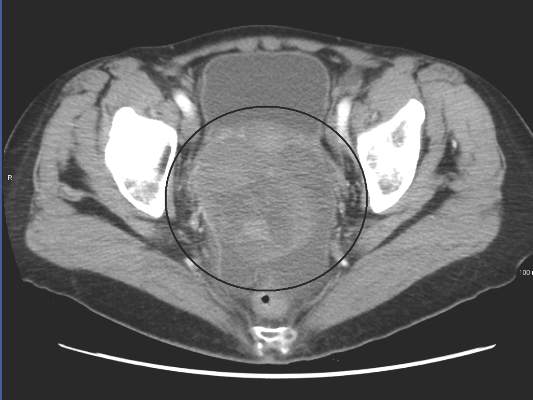
There have been several notable advances and a series of randomized trials – predominately conducted by the GOG – that have resulted in improved overall survival and progression-free interval in women with ovarian cancer. However, none are as significant as the discovery of paclitaxel and platinum-based chemotherapy (cisplatin and carboplatin).
In 1962, samples of the Pacific Yew’s bark were collected and, 2 years later, the extracts from this bark were found to have cytotoxic activity. There were initial difficulties suspending the drug in solution; however, ultimately a formulation in ethanol, cremophor, and saline was found to be effective. In 1984, the National Cancer Institute began clinical trials of paclitaxel and it was found to be highly effective in ovarian cancer. In 1992, it was approved for the treatment of ovarian cancer.
Cisplatin was approved in 1978. Carboplatin entered clinical trials in 1982 and was approved for women with recurrent ovarian cancer in 1989.
There were a series of trials beginning in the late 1980s that established the role of platinum agents and led us to GOG 111. This trial evaluated cisplatin with either cyclophosphamide or paclitaxel. The paclitaxel combination was superior and in 2003 two trials were published that solidified carboplatin and paclitaxel as the cornerstone in the treatment of women with ovarian cancer (J Clin Oncol. 2003 Sep 1;21[17]:3194-200; J Natl Cancer Inst. 2003 Sep 3;95[17]:1320-9).
What has most recently been debated is the route and schedule for both paclitaxel and the platinum agents. In January 2006, the National Cancer Institute released a Clinical Announcement regarding the role of intraperitoneal (IP) chemotherapy for the treatment of women with optimally debulked ovarian cancer. Of the six trials included in the announcement, four trials showed a benefit for progression-free survival and five studies showed an improvement in overall survival. Armstrong et al (GOG 172) showed a 16-month improvement in overall survival with intravenous (IV) paclitaxel, IP cisplatin, and IP paclitaxel. IP chemotherapy has not been universally embraced by physicians and patients in part because of its toxicity, treatment schedule, and the fact that no IP regimen has been compared with the current standard of IV carboplatin and paclitaxel (N Engl J Med. 2006 Jan 5;354[1]:34-43).
While there have been improvements in 5-year survival over time, most women with advanced ovarian cancer will undergo additional chemotherapy in order to achieve subsequent remissions or maintain stability of disease. Other drugs that have Food and Drug Administration approval in the setting of recurrent ovarian cancer include topotecan, liposomal doxorubicin, gemcitabine, bevacizumab, altretamine, carboplatin, cisplatin, cyclophosphamide, and melphalan. Olaparib was recently approved as monotherapy in women with a germline BRCA-mutation who had received three or more prior lines of chemotherapy.
Minimally invasive surgery
Over the last 30 years, minimally invasive surgery (MIS) in gynecologic oncology, particularly for endometrial cancer, has gone from a niche procedure to the standard of care. The introduction of laparoscopy into gynecologic oncology started in the early 1990s. In a series of 59 women undergoing laparoscopy for endometrial cancer, Childers et al. demonstrated feasibility of the technique and low laparotomy conversion rates (Gynecol Oncol. 1993 Oct;51[1]:33-8.). The GOG trial, LAP2, supported the equivalent oncologic outcomes of MIS versus laparotomy for the treatment of endometrial cancer. While many surgeons and centers offered laparoscopic surgery, there were issues with the learning curve that limited its widespread use.
In 2005, the FDA approval of the robotic platform for gynecologic surgery resulted in at least a doubling of the proportion of endometrial cancer patients treated with MIS (Int J Med Robot. 2009 Dec;5[4]:392-7.). In 2012, the Society of Gynecologic Oncology published a consensus statement regarding robotic-assisted surgery in gynecologic oncology (Gynecol Oncol. 2012 Feb;124[2]:180-4.). This review highlights the advantages of the robotics platform with regards to expanding MIS to women with cervical and ovarian cancer; the improvements in outcomes in the obese woman with endometrial cancer; and that the learning curve for robotic surgery is shorter than for traditional laparoscopy. Issues requiring further research include cost analysis as the cost of the new technology decreases, and opportunities for improvement in patient and physician quality of life.
Sentinel node mapping
The rationale for sentinel node mapping is that if one or more sentinel lymph nodes is/are negative for malignancy, then the other regional lymph nodes will also be negative. This would thereby avoid the need for a complete lymph node dissection and its resultant complications, including chronic lymphedema. Much of the work pioneering this strategy has been in breast cancer and melanoma, but data are rapidly emerging for these techniques in gynecologic malignancies.
Candidates for sentinel lymph node biopsy for vulvar cancer include those with a lesion more than 1mm in depth, a tumor less than 4 cm in size, and no obvious metastatic disease on exam or preoperative imaging. Additionally, recommendations have been made regarding case volume in order to achieve limited numbers of false-negative results and to maintain competency. In the study by Van der Zee et al. of 403 patients (623 groins) who underwent sentinel node procedures, the false-negative rate was 0-2%. The overall survival rate was 97% at 3 years (J Clin Oncol. 2008 Feb 20;26[6]:884-9). However, a more recent data from the Gynecologic Oncology Group (GOG 173) showed a slightly higher false-negative rate of 8% (J Clin Oncol. 2012 Nov 1;30[31]:3786-91). Overall survival data are pending from this study.
While sentinel lymph node mapping for endometrial cancer has been feasible for many years and has been well described, the questioned role of completed lymphadenectomy for early-stage endometrial cancer has led to a resurgence of interest in these techniques. While blue dye and radiolabeled tracer methods have historically been the most popular mapping solutions, the advent of endoscopic near-infrared imaging, with its higher sensitivity and good depth penetration, has added options. Indocyanine green fluorescence can be easily detected during robotic surgery and as experience with these techniques increase, successful mapping and sensitivity will increase.
Genetics
While hereditary cancer syndromes have been recognized for many years, detecting the genetic mutations that may increase an individual’s risk of developing a malignancy were not elucidated until the early 1990s. In gynecologic oncology, the most commonly encountered syndromes involve mutations in BRCA1 and BRCA2 and hereditary non–polyposis colorectal cancer, which causes mutations in DNA mismatch-repair genes and increase the risk of endometrial and ovarian cancer.

The SGO recently published a statement on risk assessment for inherited gynecologic cancer predispositions. In this statement “the evaluation for the presence of a hereditary cancer syndrome enables physicians to provide individualized and quantified assessment of cancer risk, as well as options for tailored screening and preventions strategies that may reduce morbidity associated with the development of malignancy” (Gynecol Oncol. 2015 Jan;136[1]:3-7). Beyond risk-reducing salpingo-oophorectomy, therapeutic strategies targeting patients with germline mutations have been developed (PARP inhibitors in BRCA-mutated women with ovarian cancer).
In August 2015, ASCO released an updated policy statement on genetic and genomic testing for cancer susceptibility and highlighted five key areas: germ-line implications of somatic mutation profiling; multigene panel testing for cancer susceptibility; quality assurance in genetic testing; education for oncology professionals; and access to cancer genetic services.
Antiemetics
Rounding out ASCO’s “Top 5 advances in 50 years of Modern Oncology” was the improvement in patients’ quality of life from supportive therapies, in particular antinausea medications.
Several of the agents commonly used in gynecologic oncology rate high (cisplatin) to moderate (carboplatin, cyclophosphamide, doxorubicin, ifosfamide) with regards to emetogenicity. The advent of 5-HT3 receptor antagonists (for example, ondansetron) has significantly improved the quality of life of patients undergoing cytotoxic chemotherapy. In addition to improving quality of life, the decrease in nausea and vomiting can also decrease life-threatening complications such as dehydration and electrolyte imbalance. Both ASCO and the National Comprehensive Cancer Network both have guidelines for the management of nausea and vomiting in patients undergoing chemotherapy.
Throughout 2016, Ob.Gyn. News will celebrate its 50th anniversary with exclusive articles looking at the evolution of the specialty, including the history of contraception, changes in gynecologic surgery, and the transformation of the well-woman visit. Look for these articles and more special features in the pages of Ob.Gyn. News and online at obgynnews.com.
Dr. Gehrig is professor and director of gynecologic oncology at the University of North Carolina, Chapel Hill. Dr. Clarke-Pearson is the chair and the Robert A. Ross Distinguished Professor of Obstetrics and Gynecology, and a professor in the division of gynecologic oncology at UNC. They reported having no relevant financial disclosures.
The subspecialty of gynecologic oncology was formalized less than 50 years ago with the creation of the Society of Gynecologic Oncology and subspecialty training and board certification. The formation of the Gynecologic Oncology Group (GOG) – and the many clinical trials spearheaded by that group – has further advanced evidence-based treatments, resulting in improved survival outcomes, quality of life, and preventive strategies.
While it is not possible to provide a comprehensive and exhaustive review of all of the advances, we hope to highlight many of the notable advances in this article.Cervical cancer
Cervical cancer is the fourth most common cancer in women worldwide with 528,000 new cases in 2012. The majority of cervical cancer cases are caused by infection with human papillomavirus (HPV). While the standard therapies for cervical cancer have been long established (radical hysterectomy for stage I and radiation therapy for locally advanced disease), one of the most significant advances in the past 50 years was the addition of radiation-sensitizing chemotherapy (cisplatin) administered concurrently with radiation therapy.
In randomized trials in both early and advanced cervical cancer, the risk of death was reduced by 30%-50%. These studies changed the paradigm for the treatment of cervical cancer (N Engl J Med. 1999 Apr 15;340[15]:1137-43; N Engl J Med. 1999 Apr 15;340[15]:1144-53; J Clin Oncol. 2000 Apr;18[8]:1606-13).
Future studies evaluating biologic adjuncts or additional chemotherapy are currently underway or awaiting data maturation.
The American Society of Clinical Oncology (ASCO) highlighted the “Top 5 advances in 50 years of Modern Oncology” in 2014, and second on the list was the approval of the HPV vaccine to prevent cervical cancer. Vaccines have been developed that can protect against types 2, 4 or 9 of HPV. In a 2014 study, depending on vaccination coverage, the relative number of cervical cancer cases avoided was 34% in Africa, 27% for America, 26% for Asia, 21% for Europe, and worldwide was estimated at 27% (Vaccine. 2014 Feb 3;32[6]:733-9).
While the benefit from HPV vaccination has been proven, in the United States, only about a third of eligible girls and women have been vaccinated. Efforts should focus on expanding vaccination penetration to eligible girls, boys, women, and men.
Endometrial cancer
Endometrial cancer is the most common gynecologic malignancy in the United States with an estimated 54,870 cases and 10,170 deaths annually. Notable advances in the management of women with endometrial cancer have arisen because of a better understanding that there are two types of endometrial cancer – type I and type II.
The type I endometrial cancers tend to be associated with lower stage of disease at the time of diagnosis and fewer recurrences, while type II endometrial cancer is associated with worse outcomes.
Tailoring the surgical approaches and adjuvant therapy for women with endometrial cancer has led to improved outcomes. The GOG conducted a large prospective randomized trial of laparotomy versus laparoscopic surgical staging for women with clinical early-stage endometrial cancer (LAP2). Laparoscopy was associated with improved perioperative outcomes and was found to be noninferior to laparotomy with regards to survival outcomes (J Clin Oncol. 2012 Mar 1;30[7]:695-700). Therefore, minimally invasive surgery has become widely accepted for the surgical staging of women with endometrial cancer.
Appropriate surgical staging allows for tailoring of postoperative adjuvant therapy. The current evidence suggests that vaginal brachytherapy should be the adjuvant treatment of choice over whole pelvic radiation in women with early-stage endometrial cancer (Lancet. 2010 Mar 6;375[9717]:816-23). Studies are underway to evaluate the role of both adjuvant radiation and chemotherapy in women with early-stage type II endometrial cancer who are felt to be at high risk for recurrent disease, as well as how to improve on the therapeutic options for women with advanced or recurrent disease.
Ovarian cancer
Epithelial ovarian cancer is the most deadly gynecologic malignancy in the United States with 21,290 cases and 14,180 deaths in 2015. The concept of ovarian tumor debulking was first described by Dr. Joe Meigs in 1934, but did not gain traction until the mid-1970s when Dr. C. Thomas Griffiths published his work (Natl Cancer Inst Monogr. 1975 Oct;42:101-4).
While there are no randomized trials proving that surgical cytoreduction improves overall survival, most retrospective studies support this concept. In 2009, Chi et al. showed improved median survival in women with ovarian cancer based on the increased percentage of women who underwent optimal cytoreduction (Gynecol Oncol. 2009 Jul;114[1]:26-31). This has led to modifications of surgical techniques and surgical goals with an effort to maximally cytoreduce all of the visible disease.
While initial surgical debulking is the goal, there are circumstances when a different approach may be indicated. Vergote et al. conducted a prospective randomized trial of 670 women with advanced ovarian cancer. In this study, neoadjuvant chemotherapy followed by interval debulking was not inferior to primary debulking followed by chemotherapy with regards to progression-free survival and overall survival. However, initial surgery was associated with increased surgical complications and perioperative mortality as compared with interval surgery. Therefore, in women who are not felt to be candidates for optimal cytoreduction, neoadjuvant chemotherapy followed by interval surgery may be an appropriate treatment strategy (N Engl J Med. 2010 Sep 2;363[10]:943-53.).
There have been several notable advances and a series of randomized trials – predominately conducted by the GOG – that have resulted in improved overall survival and progression-free interval in women with ovarian cancer. However, none are as significant as the discovery of paclitaxel and platinum-based chemotherapy (cisplatin and carboplatin).
In 1962, samples of the Pacific Yew’s bark were collected and, 2 years later, the extracts from this bark were found to have cytotoxic activity. There were initial difficulties suspending the drug in solution; however, ultimately a formulation in ethanol, cremophor, and saline was found to be effective. In 1984, the National Cancer Institute began clinical trials of paclitaxel and it was found to be highly effective in ovarian cancer. In 1992, it was approved for the treatment of ovarian cancer.
Cisplatin was approved in 1978. Carboplatin entered clinical trials in 1982 and was approved for women with recurrent ovarian cancer in 1989.
There were a series of trials beginning in the late 1980s that established the role of platinum agents and led us to GOG 111. This trial evaluated cisplatin with either cyclophosphamide or paclitaxel. The paclitaxel combination was superior and in 2003 two trials were published that solidified carboplatin and paclitaxel as the cornerstone in the treatment of women with ovarian cancer (J Clin Oncol. 2003 Sep 1;21[17]:3194-200; J Natl Cancer Inst. 2003 Sep 3;95[17]:1320-9).
What has most recently been debated is the route and schedule for both paclitaxel and the platinum agents. In January 2006, the National Cancer Institute released a Clinical Announcement regarding the role of intraperitoneal (IP) chemotherapy for the treatment of women with optimally debulked ovarian cancer. Of the six trials included in the announcement, four trials showed a benefit for progression-free survival and five studies showed an improvement in overall survival. Armstrong et al (GOG 172) showed a 16-month improvement in overall survival with intravenous (IV) paclitaxel, IP cisplatin, and IP paclitaxel. IP chemotherapy has not been universally embraced by physicians and patients in part because of its toxicity, treatment schedule, and the fact that no IP regimen has been compared with the current standard of IV carboplatin and paclitaxel (N Engl J Med. 2006 Jan 5;354[1]:34-43).
While there have been improvements in 5-year survival over time, most women with advanced ovarian cancer will undergo additional chemotherapy in order to achieve subsequent remissions or maintain stability of disease. Other drugs that have Food and Drug Administration approval in the setting of recurrent ovarian cancer include topotecan, liposomal doxorubicin, gemcitabine, bevacizumab, altretamine, carboplatin, cisplatin, cyclophosphamide, and melphalan. Olaparib was recently approved as monotherapy in women with a germline BRCA-mutation who had received three or more prior lines of chemotherapy.
Minimally invasive surgery
Over the last 30 years, minimally invasive surgery (MIS) in gynecologic oncology, particularly for endometrial cancer, has gone from a niche procedure to the standard of care. The introduction of laparoscopy into gynecologic oncology started in the early 1990s. In a series of 59 women undergoing laparoscopy for endometrial cancer, Childers et al. demonstrated feasibility of the technique and low laparotomy conversion rates (Gynecol Oncol. 1993 Oct;51[1]:33-8.). The GOG trial, LAP2, supported the equivalent oncologic outcomes of MIS versus laparotomy for the treatment of endometrial cancer. While many surgeons and centers offered laparoscopic surgery, there were issues with the learning curve that limited its widespread use.
In 2005, the FDA approval of the robotic platform for gynecologic surgery resulted in at least a doubling of the proportion of endometrial cancer patients treated with MIS (Int J Med Robot. 2009 Dec;5[4]:392-7.). In 2012, the Society of Gynecologic Oncology published a consensus statement regarding robotic-assisted surgery in gynecologic oncology (Gynecol Oncol. 2012 Feb;124[2]:180-4.). This review highlights the advantages of the robotics platform with regards to expanding MIS to women with cervical and ovarian cancer; the improvements in outcomes in the obese woman with endometrial cancer; and that the learning curve for robotic surgery is shorter than for traditional laparoscopy. Issues requiring further research include cost analysis as the cost of the new technology decreases, and opportunities for improvement in patient and physician quality of life.
Sentinel node mapping
The rationale for sentinel node mapping is that if one or more sentinel lymph nodes is/are negative for malignancy, then the other regional lymph nodes will also be negative. This would thereby avoid the need for a complete lymph node dissection and its resultant complications, including chronic lymphedema. Much of the work pioneering this strategy has been in breast cancer and melanoma, but data are rapidly emerging for these techniques in gynecologic malignancies.
Candidates for sentinel lymph node biopsy for vulvar cancer include those with a lesion more than 1mm in depth, a tumor less than 4 cm in size, and no obvious metastatic disease on exam or preoperative imaging. Additionally, recommendations have been made regarding case volume in order to achieve limited numbers of false-negative results and to maintain competency. In the study by Van der Zee et al. of 403 patients (623 groins) who underwent sentinel node procedures, the false-negative rate was 0-2%. The overall survival rate was 97% at 3 years (J Clin Oncol. 2008 Feb 20;26[6]:884-9). However, a more recent data from the Gynecologic Oncology Group (GOG 173) showed a slightly higher false-negative rate of 8% (J Clin Oncol. 2012 Nov 1;30[31]:3786-91). Overall survival data are pending from this study.
While sentinel lymph node mapping for endometrial cancer has been feasible for many years and has been well described, the questioned role of completed lymphadenectomy for early-stage endometrial cancer has led to a resurgence of interest in these techniques. While blue dye and radiolabeled tracer methods have historically been the most popular mapping solutions, the advent of endoscopic near-infrared imaging, with its higher sensitivity and good depth penetration, has added options. Indocyanine green fluorescence can be easily detected during robotic surgery and as experience with these techniques increase, successful mapping and sensitivity will increase.
Genetics
While hereditary cancer syndromes have been recognized for many years, detecting the genetic mutations that may increase an individual’s risk of developing a malignancy were not elucidated until the early 1990s. In gynecologic oncology, the most commonly encountered syndromes involve mutations in BRCA1 and BRCA2 and hereditary non–polyposis colorectal cancer, which causes mutations in DNA mismatch-repair genes and increase the risk of endometrial and ovarian cancer.
The SGO recently published a statement on risk assessment for inherited gynecologic cancer predispositions. In this statement “the evaluation for the presence of a hereditary cancer syndrome enables physicians to provide individualized and quantified assessment of cancer risk, as well as options for tailored screening and preventions strategies that may reduce morbidity associated with the development of malignancy” (Gynecol Oncol. 2015 Jan;136[1]:3-7). Beyond risk-reducing salpingo-oophorectomy, therapeutic strategies targeting patients with germline mutations have been developed (PARP inhibitors in BRCA-mutated women with ovarian cancer).
In August 2015, ASCO released an updated policy statement on genetic and genomic testing for cancer susceptibility and highlighted five key areas: germ-line implications of somatic mutation profiling; multigene panel testing for cancer susceptibility; quality assurance in genetic testing; education for oncology professionals; and access to cancer genetic services.
Antiemetics
Rounding out ASCO’s “Top 5 advances in 50 years of Modern Oncology” was the improvement in patients’ quality of life from supportive therapies, in particular antinausea medications.
Several of the agents commonly used in gynecologic oncology rate high (cisplatin) to moderate (carboplatin, cyclophosphamide, doxorubicin, ifosfamide) with regards to emetogenicity. The advent of 5-HT3 receptor antagonists (for example, ondansetron) has significantly improved the quality of life of patients undergoing cytotoxic chemotherapy. In addition to improving quality of life, the decrease in nausea and vomiting can also decrease life-threatening complications such as dehydration and electrolyte imbalance. Both ASCO and the National Comprehensive Cancer Network both have guidelines for the management of nausea and vomiting in patients undergoing chemotherapy.
Throughout 2016, Ob.Gyn. News will celebrate its 50th anniversary with exclusive articles looking at the evolution of the specialty, including the history of contraception, changes in gynecologic surgery, and the transformation of the well-woman visit. Look for these articles and more special features in the pages of Ob.Gyn. News and online at obgynnews.com.
Dr. Gehrig is professor and director of gynecologic oncology at the University of North Carolina, Chapel Hill. Dr. Clarke-Pearson is the chair and the Robert A. Ross Distinguished Professor of Obstetrics and Gynecology, and a professor in the division of gynecologic oncology at UNC. They reported having no relevant financial disclosures.
The subspecialty of gynecologic oncology was formalized less than 50 years ago with the creation of the Society of Gynecologic Oncology and subspecialty training and board certification. The formation of the Gynecologic Oncology Group (GOG) – and the many clinical trials spearheaded by that group – has further advanced evidence-based treatments, resulting in improved survival outcomes, quality of life, and preventive strategies.
While it is not possible to provide a comprehensive and exhaustive review of all of the advances, we hope to highlight many of the notable advances in this article.Cervical cancer
Cervical cancer is the fourth most common cancer in women worldwide with 528,000 new cases in 2012. The majority of cervical cancer cases are caused by infection with human papillomavirus (HPV). While the standard therapies for cervical cancer have been long established (radical hysterectomy for stage I and radiation therapy for locally advanced disease), one of the most significant advances in the past 50 years was the addition of radiation-sensitizing chemotherapy (cisplatin) administered concurrently with radiation therapy.
In randomized trials in both early and advanced cervical cancer, the risk of death was reduced by 30%-50%. These studies changed the paradigm for the treatment of cervical cancer (N Engl J Med. 1999 Apr 15;340[15]:1137-43; N Engl J Med. 1999 Apr 15;340[15]:1144-53; J Clin Oncol. 2000 Apr;18[8]:1606-13).
Future studies evaluating biologic adjuncts or additional chemotherapy are currently underway or awaiting data maturation.
The American Society of Clinical Oncology (ASCO) highlighted the “Top 5 advances in 50 years of Modern Oncology” in 2014, and second on the list was the approval of the HPV vaccine to prevent cervical cancer. Vaccines have been developed that can protect against types 2, 4 or 9 of HPV. In a 2014 study, depending on vaccination coverage, the relative number of cervical cancer cases avoided was 34% in Africa, 27% for America, 26% for Asia, 21% for Europe, and worldwide was estimated at 27% (Vaccine. 2014 Feb 3;32[6]:733-9).
While the benefit from HPV vaccination has been proven, in the United States, only about a third of eligible girls and women have been vaccinated. Efforts should focus on expanding vaccination penetration to eligible girls, boys, women, and men.
Endometrial cancer
Endometrial cancer is the most common gynecologic malignancy in the United States with an estimated 54,870 cases and 10,170 deaths annually. Notable advances in the management of women with endometrial cancer have arisen because of a better understanding that there are two types of endometrial cancer – type I and type II.
The type I endometrial cancers tend to be associated with lower stage of disease at the time of diagnosis and fewer recurrences, while type II endometrial cancer is associated with worse outcomes.
Tailoring the surgical approaches and adjuvant therapy for women with endometrial cancer has led to improved outcomes. The GOG conducted a large prospective randomized trial of laparotomy versus laparoscopic surgical staging for women with clinical early-stage endometrial cancer (LAP2). Laparoscopy was associated with improved perioperative outcomes and was found to be noninferior to laparotomy with regards to survival outcomes (J Clin Oncol. 2012 Mar 1;30[7]:695-700). Therefore, minimally invasive surgery has become widely accepted for the surgical staging of women with endometrial cancer.
Appropriate surgical staging allows for tailoring of postoperative adjuvant therapy. The current evidence suggests that vaginal brachytherapy should be the adjuvant treatment of choice over whole pelvic radiation in women with early-stage endometrial cancer (Lancet. 2010 Mar 6;375[9717]:816-23). Studies are underway to evaluate the role of both adjuvant radiation and chemotherapy in women with early-stage type II endometrial cancer who are felt to be at high risk for recurrent disease, as well as how to improve on the therapeutic options for women with advanced or recurrent disease.
Ovarian cancer
Epithelial ovarian cancer is the most deadly gynecologic malignancy in the United States with 21,290 cases and 14,180 deaths in 2015. The concept of ovarian tumor debulking was first described by Dr. Joe Meigs in 1934, but did not gain traction until the mid-1970s when Dr. C. Thomas Griffiths published his work (Natl Cancer Inst Monogr. 1975 Oct;42:101-4).
While there are no randomized trials proving that surgical cytoreduction improves overall survival, most retrospective studies support this concept. In 2009, Chi et al. showed improved median survival in women with ovarian cancer based on the increased percentage of women who underwent optimal cytoreduction (Gynecol Oncol. 2009 Jul;114[1]:26-31). This has led to modifications of surgical techniques and surgical goals with an effort to maximally cytoreduce all of the visible disease.
While initial surgical debulking is the goal, there are circumstances when a different approach may be indicated. Vergote et al. conducted a prospective randomized trial of 670 women with advanced ovarian cancer. In this study, neoadjuvant chemotherapy followed by interval debulking was not inferior to primary debulking followed by chemotherapy with regards to progression-free survival and overall survival. However, initial surgery was associated with increased surgical complications and perioperative mortality as compared with interval surgery. Therefore, in women who are not felt to be candidates for optimal cytoreduction, neoadjuvant chemotherapy followed by interval surgery may be an appropriate treatment strategy (N Engl J Med. 2010 Sep 2;363[10]:943-53.).
There have been several notable advances and a series of randomized trials – predominately conducted by the GOG – that have resulted in improved overall survival and progression-free interval in women with ovarian cancer. However, none are as significant as the discovery of paclitaxel and platinum-based chemotherapy (cisplatin and carboplatin).
In 1962, samples of the Pacific Yew’s bark were collected and, 2 years later, the extracts from this bark were found to have cytotoxic activity. There were initial difficulties suspending the drug in solution; however, ultimately a formulation in ethanol, cremophor, and saline was found to be effective. In 1984, the National Cancer Institute began clinical trials of paclitaxel and it was found to be highly effective in ovarian cancer. In 1992, it was approved for the treatment of ovarian cancer.
Cisplatin was approved in 1978. Carboplatin entered clinical trials in 1982 and was approved for women with recurrent ovarian cancer in 1989.
There were a series of trials beginning in the late 1980s that established the role of platinum agents and led us to GOG 111. This trial evaluated cisplatin with either cyclophosphamide or paclitaxel. The paclitaxel combination was superior and in 2003 two trials were published that solidified carboplatin and paclitaxel as the cornerstone in the treatment of women with ovarian cancer (J Clin Oncol. 2003 Sep 1;21[17]:3194-200; J Natl Cancer Inst. 2003 Sep 3;95[17]:1320-9).
What has most recently been debated is the route and schedule for both paclitaxel and the platinum agents. In January 2006, the National Cancer Institute released a Clinical Announcement regarding the role of intraperitoneal (IP) chemotherapy for the treatment of women with optimally debulked ovarian cancer. Of the six trials included in the announcement, four trials showed a benefit for progression-free survival and five studies showed an improvement in overall survival. Armstrong et al (GOG 172) showed a 16-month improvement in overall survival with intravenous (IV) paclitaxel, IP cisplatin, and IP paclitaxel. IP chemotherapy has not been universally embraced by physicians and patients in part because of its toxicity, treatment schedule, and the fact that no IP regimen has been compared with the current standard of IV carboplatin and paclitaxel (N Engl J Med. 2006 Jan 5;354[1]:34-43).
While there have been improvements in 5-year survival over time, most women with advanced ovarian cancer will undergo additional chemotherapy in order to achieve subsequent remissions or maintain stability of disease. Other drugs that have Food and Drug Administration approval in the setting of recurrent ovarian cancer include topotecan, liposomal doxorubicin, gemcitabine, bevacizumab, altretamine, carboplatin, cisplatin, cyclophosphamide, and melphalan. Olaparib was recently approved as monotherapy in women with a germline BRCA-mutation who had received three or more prior lines of chemotherapy.
Minimally invasive surgery
Over the last 30 years, minimally invasive surgery (MIS) in gynecologic oncology, particularly for endometrial cancer, has gone from a niche procedure to the standard of care. The introduction of laparoscopy into gynecologic oncology started in the early 1990s. In a series of 59 women undergoing laparoscopy for endometrial cancer, Childers et al. demonstrated feasibility of the technique and low laparotomy conversion rates (Gynecol Oncol. 1993 Oct;51[1]:33-8.). The GOG trial, LAP2, supported the equivalent oncologic outcomes of MIS versus laparotomy for the treatment of endometrial cancer. While many surgeons and centers offered laparoscopic surgery, there were issues with the learning curve that limited its widespread use.
In 2005, the FDA approval of the robotic platform for gynecologic surgery resulted in at least a doubling of the proportion of endometrial cancer patients treated with MIS (Int J Med Robot. 2009 Dec;5[4]:392-7.). In 2012, the Society of Gynecologic Oncology published a consensus statement regarding robotic-assisted surgery in gynecologic oncology (Gynecol Oncol. 2012 Feb;124[2]:180-4.). This review highlights the advantages of the robotics platform with regards to expanding MIS to women with cervical and ovarian cancer; the improvements in outcomes in the obese woman with endometrial cancer; and that the learning curve for robotic surgery is shorter than for traditional laparoscopy. Issues requiring further research include cost analysis as the cost of the new technology decreases, and opportunities for improvement in patient and physician quality of life.
Sentinel node mapping
The rationale for sentinel node mapping is that if one or more sentinel lymph nodes is/are negative for malignancy, then the other regional lymph nodes will also be negative. This would thereby avoid the need for a complete lymph node dissection and its resultant complications, including chronic lymphedema. Much of the work pioneering this strategy has been in breast cancer and melanoma, but data are rapidly emerging for these techniques in gynecologic malignancies.
Candidates for sentinel lymph node biopsy for vulvar cancer include those with a lesion more than 1mm in depth, a tumor less than 4 cm in size, and no obvious metastatic disease on exam or preoperative imaging. Additionally, recommendations have been made regarding case volume in order to achieve limited numbers of false-negative results and to maintain competency. In the study by Van der Zee et al. of 403 patients (623 groins) who underwent sentinel node procedures, the false-negative rate was 0-2%. The overall survival rate was 97% at 3 years (J Clin Oncol. 2008 Feb 20;26[6]:884-9). However, a more recent data from the Gynecologic Oncology Group (GOG 173) showed a slightly higher false-negative rate of 8% (J Clin Oncol. 2012 Nov 1;30[31]:3786-91). Overall survival data are pending from this study.
While sentinel lymph node mapping for endometrial cancer has been feasible for many years and has been well described, the questioned role of completed lymphadenectomy for early-stage endometrial cancer has led to a resurgence of interest in these techniques. While blue dye and radiolabeled tracer methods have historically been the most popular mapping solutions, the advent of endoscopic near-infrared imaging, with its higher sensitivity and good depth penetration, has added options. Indocyanine green fluorescence can be easily detected during robotic surgery and as experience with these techniques increase, successful mapping and sensitivity will increase.
Genetics
While hereditary cancer syndromes have been recognized for many years, detecting the genetic mutations that may increase an individual’s risk of developing a malignancy were not elucidated until the early 1990s. In gynecologic oncology, the most commonly encountered syndromes involve mutations in BRCA1 and BRCA2 and hereditary non–polyposis colorectal cancer, which causes mutations in DNA mismatch-repair genes and increase the risk of endometrial and ovarian cancer.
The SGO recently published a statement on risk assessment for inherited gynecologic cancer predispositions. In this statement “the evaluation for the presence of a hereditary cancer syndrome enables physicians to provide individualized and quantified assessment of cancer risk, as well as options for tailored screening and preventions strategies that may reduce morbidity associated with the development of malignancy” (Gynecol Oncol. 2015 Jan;136[1]:3-7). Beyond risk-reducing salpingo-oophorectomy, therapeutic strategies targeting patients with germline mutations have been developed (PARP inhibitors in BRCA-mutated women with ovarian cancer).
In August 2015, ASCO released an updated policy statement on genetic and genomic testing for cancer susceptibility and highlighted five key areas: germ-line implications of somatic mutation profiling; multigene panel testing for cancer susceptibility; quality assurance in genetic testing; education for oncology professionals; and access to cancer genetic services.
Antiemetics
Rounding out ASCO’s “Top 5 advances in 50 years of Modern Oncology” was the improvement in patients’ quality of life from supportive therapies, in particular antinausea medications.
Several of the agents commonly used in gynecologic oncology rate high (cisplatin) to moderate (carboplatin, cyclophosphamide, doxorubicin, ifosfamide) with regards to emetogenicity. The advent of 5-HT3 receptor antagonists (for example, ondansetron) has significantly improved the quality of life of patients undergoing cytotoxic chemotherapy. In addition to improving quality of life, the decrease in nausea and vomiting can also decrease life-threatening complications such as dehydration and electrolyte imbalance. Both ASCO and the National Comprehensive Cancer Network both have guidelines for the management of nausea and vomiting in patients undergoing chemotherapy.
Throughout 2016, Ob.Gyn. News will celebrate its 50th anniversary with exclusive articles looking at the evolution of the specialty, including the history of contraception, changes in gynecologic surgery, and the transformation of the well-woman visit. Look for these articles and more special features in the pages of Ob.Gyn. News and online at obgynnews.com.
Dr. Gehrig is professor and director of gynecologic oncology at the University of North Carolina, Chapel Hill. Dr. Clarke-Pearson is the chair and the Robert A. Ross Distinguished Professor of Obstetrics and Gynecology, and a professor in the division of gynecologic oncology at UNC. They reported having no relevant financial disclosures.

Sports Medicine Fellowship: What Should I Be Looking For?
The Orthopaedic Sports Medicine Fellowship Match was first established in 2008 as a joint-sponsored venture between the American Orthopaedic Society for Sports Medicine and the Arthroscopy Association of North America to pair applicants with participating training programs.1 Operated under the San Francisco Match,2 the current fellowship match process was adopted to systematically coordinate training appointments and eliminate the role of “exploding offers,” which are pressured early decisions predicated on immediate acceptance. Other advantages of this system include its operation through a central application service to avoid redundancy of submitted paperwork, as well as to create greater awareness and to publicize training options and standardization of the match timeline.1
In its current state, the orthopedic sports medicine match represents 96 programs with 230 positions, accounting for approximately 97% of training programs and fellowship positions.1 While unaccredited options remain available through the Match, many programs have migrated towards American Council for Graduate Medical Education (ACGME) accreditation because of an increased focus on objective learning metrics during fellowship and the requirement for Subspecialty Certification in Orthopaedic Sports Medicine through the American Board of Orthopaedic Surgery.3 However, other programs have also eschewed the increasing constraints and administrative resources associated with ACGME accreditation, particularly among fellowships based at community-based hospitals or private practices that lack formal affiliation with academic institutions or residency training programs.
Along with a greater understanding of the historical background of the match process, fellowship applicants must also appreciate the relative merits of fellowship training. More than 90% of orthopedic surgery residents now pursue further subspecialty fellowship training, with some individuals opting for 2 additional fellowship opportunities.4 As a so-called “nontraditional applicant,” I represent a different demographic, returning to fellowship after years of clinical practice while serving in the military. Individual preferences notwithstanding, I wanted to take the opportunity to emphasize some important considerations in deliberating between different fellowship programs.
- Geography. Your eventual desired practice location may play a role in determining fellowship location or, at least, region of the country. Additionally, this can be an important factor in family happiness. In competitive markets, such as the Northeast or the West Coast, you may make inroads and establish professional connections that result in potential job opportunities. Conversely, other programs may adopt anticompetitive measures to limit local practice options.
- Training setting. Despite the trending consolidation of fellowship training programs in affiliated university and hospital-based teaching systems, many community-based programs and private-practice models thrive, providing an alternative to traditional academic training centers. The latter may provide more in-depth exposure to practice management, billing/coding, and ancillary services. The former typically offer a more structured, academically oriented environment with formal teaching conferences and a broader department hierarchy.
- Program size. Some applicants may prefer a larger, more diverse array of teaching staff or fellows, while others gravitate toward fewer, more personal mentoring relationships that allow more intimate familiarity with practice habits or surgical techniques.
- Associated training programs. Affiliations with a residency or physician-extender training program can offer benefits and drawbacks, including offloading clerical work, shared hands-on experience in the clinic and operating room, and midlevel supervisory responsibilities. This can offer useful opportunities to formulate an individual teaching style and valuable mentoring relationships. However, it can also impose greater time requirements or detract from one-on-one teaching with staff.
- Reputation. Applicants may attach distinction to a well-established regional or national reputation associated with a given training program. Often, certain programs may carry prestige as a result of their academic name, hospital affiliation, or accomplishments. This can offer certain marketing advantages for patient recruitment. However, less renowned programs may provide better training opportunities and confer higher esteem among your professional colleagues. Program reputation can change dramatically with time, so this should be balanced with other potential strengths and overall training experience.
- Practice “niches”/areas of interest. With increasing adoption of arthroscopic techniques among practicing surgeons and a relative excess of sports medicine–trained orthopedists, it is paramount to develop a novel skill set during fellowship to differentiate you from other graduates. I sought a sports medicine fellowship that would offer me a broad-based exposure to arthroscopic and open knee and shoulder reconstruction, chondral restoration techniques, hip arthroscopy and preservation, and shoulder arthroplasty. Opportunities in elbow reconstruction, foot and ankle arthroscopy, and pediatric sports medicine may also be valuable as a distinguishing factor in searching for jobs after training.
- Marketability. Closely intertwined with reputation and scope of practice, an institution’s marketability is another intangible attribute to consider. Professional or collegiate team coverage offers significant market value for patient advertising, and it is frequently publicized by orthopedic practices and hospital systems. Additionally, the importance of ACGME accreditation should also be considered.
- Nonmedical training. This is increasingly important in subsequent subspecialty training. Further education on the business aspects of orthopedic surgery should be emphasized. Additionally, dedicated curricula on professional or leadership development are important for career progression.
- Mentorship. Throughout the interview process, one of my foremost priorities was a strong and enduring pattern of mentorship. Fellowship offers the opportunity to establish 1 or multiple mentors in your subspecialty. These individuals will be instrumental in the development of your early professional career and your approach to clinical practice. From discussions about complicated patients to advice on contract negotiations, your ideal mentor should champion your early successes and work generously on your behalf, even long after fellowship has ended.
- Research opportunities. Given my academic career goals, I actively pursued a program with rich clinical and laboratory resources, and an established infrastructure for accomplishing high-quality, relevant research. Interested individuals should gauge the availability of research support staff, biomechanical or bench-level laboratory collaboration, grant or institutional research funding, cadaveric specimens, or clinical outcomes data for research conducted by fellows. However, not all fellowship applicants have a vested interest in research during fellowship, so I would encourage inquiries regarding core research requirements and expectations.
- Clinical exposure. This encompasses several different and equally important variables, including diversity of clinical or surgical caseloads, case complexity, operative exposure, athletic team coverage, and office or clinical experience. Interestingly, this latter aspect of training is often neglected but cannot be overemphasized. Outpatient clinical evaluation is key to honing important physical examination techniques and critically evaluating patients’ outcomes postoperatively.
- Surgical autonomy. Hands-on operative experience and surgical autonomy vary widely among fellowship programs. Most fellowships advocate for a graduated level of surgical responsibility dependent on individual abilities and staff comfort, while others offer greater potential for independence. Conversely, some programs espouse more of an “observership” model, and arthroscopic simulators and/or cadaveric skills laboratories are designed to complement operative experience. While most fellowship applicants desire maximal case participation, we must also recognize the value in watching talented surgeons performing technically demanding procedures.
- Family. You cannot put a premium on your personal contentment and family’s well-being. Proximity to a support network can be important with the work demands and time constraints of fellowship.
Despite financial obligations and significant time commitments, the fellowship match process offers an incredible range of programs and practice environments. Inevitably, no program can completely fulfill all your criteria, but you should be able to tailor your learning style, professional ambitions, and personal preferences with an excellent training program. For many, fellowship represents the last, and perhaps most integral, stage of formal surgical training. Considering all factors of your chosen fellowship program will ensure a rich and fulfilling educational experience.
1. Sports medicine/arthroscopy fellowship match. American Orthopaedic Society for Sports Medicine website. https://www.sportsmed.org/AOSSMIMIS/Members/Members/Education/Sports_Medicine_Arthroscopy_Fellowship_Match.aspx. Accessed December 21, 2015.
2. Orthopaedic sports medicine fellowship. SF Match website. https://www.sfmatch.org/SpecialtyInsideAll.aspx?id=11&typ=1&name=Orthopaedic%20Sports%20Medicine. Accessed December 21, 2015.
3. Orthopaedic sports medicine. American Board of Orthopaedic Surgery website. https://www.abos.org/certification/sports-subspecialty.aspx. Accessed December 21, 2015.
4. Hariri S, York SC, O’Connor MI, Parsley BS, McCarthy JC. Career plans of current orthopaedic residents with a focus on sex-based and generational differences. J Bone Joint Surg Am. 2011;93(5):e16.
The Orthopaedic Sports Medicine Fellowship Match was first established in 2008 as a joint-sponsored venture between the American Orthopaedic Society for Sports Medicine and the Arthroscopy Association of North America to pair applicants with participating training programs.1 Operated under the San Francisco Match,2 the current fellowship match process was adopted to systematically coordinate training appointments and eliminate the role of “exploding offers,” which are pressured early decisions predicated on immediate acceptance. Other advantages of this system include its operation through a central application service to avoid redundancy of submitted paperwork, as well as to create greater awareness and to publicize training options and standardization of the match timeline.1
In its current state, the orthopedic sports medicine match represents 96 programs with 230 positions, accounting for approximately 97% of training programs and fellowship positions.1 While unaccredited options remain available through the Match, many programs have migrated towards American Council for Graduate Medical Education (ACGME) accreditation because of an increased focus on objective learning metrics during fellowship and the requirement for Subspecialty Certification in Orthopaedic Sports Medicine through the American Board of Orthopaedic Surgery.3 However, other programs have also eschewed the increasing constraints and administrative resources associated with ACGME accreditation, particularly among fellowships based at community-based hospitals or private practices that lack formal affiliation with academic institutions or residency training programs.
Along with a greater understanding of the historical background of the match process, fellowship applicants must also appreciate the relative merits of fellowship training. More than 90% of orthopedic surgery residents now pursue further subspecialty fellowship training, with some individuals opting for 2 additional fellowship opportunities.4 As a so-called “nontraditional applicant,” I represent a different demographic, returning to fellowship after years of clinical practice while serving in the military. Individual preferences notwithstanding, I wanted to take the opportunity to emphasize some important considerations in deliberating between different fellowship programs.
- Geography. Your eventual desired practice location may play a role in determining fellowship location or, at least, region of the country. Additionally, this can be an important factor in family happiness. In competitive markets, such as the Northeast or the West Coast, you may make inroads and establish professional connections that result in potential job opportunities. Conversely, other programs may adopt anticompetitive measures to limit local practice options.
- Training setting. Despite the trending consolidation of fellowship training programs in affiliated university and hospital-based teaching systems, many community-based programs and private-practice models thrive, providing an alternative to traditional academic training centers. The latter may provide more in-depth exposure to practice management, billing/coding, and ancillary services. The former typically offer a more structured, academically oriented environment with formal teaching conferences and a broader department hierarchy.
- Program size. Some applicants may prefer a larger, more diverse array of teaching staff or fellows, while others gravitate toward fewer, more personal mentoring relationships that allow more intimate familiarity with practice habits or surgical techniques.
- Associated training programs. Affiliations with a residency or physician-extender training program can offer benefits and drawbacks, including offloading clerical work, shared hands-on experience in the clinic and operating room, and midlevel supervisory responsibilities. This can offer useful opportunities to formulate an individual teaching style and valuable mentoring relationships. However, it can also impose greater time requirements or detract from one-on-one teaching with staff.
- Reputation. Applicants may attach distinction to a well-established regional or national reputation associated with a given training program. Often, certain programs may carry prestige as a result of their academic name, hospital affiliation, or accomplishments. This can offer certain marketing advantages for patient recruitment. However, less renowned programs may provide better training opportunities and confer higher esteem among your professional colleagues. Program reputation can change dramatically with time, so this should be balanced with other potential strengths and overall training experience.
- Practice “niches”/areas of interest. With increasing adoption of arthroscopic techniques among practicing surgeons and a relative excess of sports medicine–trained orthopedists, it is paramount to develop a novel skill set during fellowship to differentiate you from other graduates. I sought a sports medicine fellowship that would offer me a broad-based exposure to arthroscopic and open knee and shoulder reconstruction, chondral restoration techniques, hip arthroscopy and preservation, and shoulder arthroplasty. Opportunities in elbow reconstruction, foot and ankle arthroscopy, and pediatric sports medicine may also be valuable as a distinguishing factor in searching for jobs after training.
- Marketability. Closely intertwined with reputation and scope of practice, an institution’s marketability is another intangible attribute to consider. Professional or collegiate team coverage offers significant market value for patient advertising, and it is frequently publicized by orthopedic practices and hospital systems. Additionally, the importance of ACGME accreditation should also be considered.
- Nonmedical training. This is increasingly important in subsequent subspecialty training. Further education on the business aspects of orthopedic surgery should be emphasized. Additionally, dedicated curricula on professional or leadership development are important for career progression.
- Mentorship. Throughout the interview process, one of my foremost priorities was a strong and enduring pattern of mentorship. Fellowship offers the opportunity to establish 1 or multiple mentors in your subspecialty. These individuals will be instrumental in the development of your early professional career and your approach to clinical practice. From discussions about complicated patients to advice on contract negotiations, your ideal mentor should champion your early successes and work generously on your behalf, even long after fellowship has ended.
- Research opportunities. Given my academic career goals, I actively pursued a program with rich clinical and laboratory resources, and an established infrastructure for accomplishing high-quality, relevant research. Interested individuals should gauge the availability of research support staff, biomechanical or bench-level laboratory collaboration, grant or institutional research funding, cadaveric specimens, or clinical outcomes data for research conducted by fellows. However, not all fellowship applicants have a vested interest in research during fellowship, so I would encourage inquiries regarding core research requirements and expectations.
- Clinical exposure. This encompasses several different and equally important variables, including diversity of clinical or surgical caseloads, case complexity, operative exposure, athletic team coverage, and office or clinical experience. Interestingly, this latter aspect of training is often neglected but cannot be overemphasized. Outpatient clinical evaluation is key to honing important physical examination techniques and critically evaluating patients’ outcomes postoperatively.
- Surgical autonomy. Hands-on operative experience and surgical autonomy vary widely among fellowship programs. Most fellowships advocate for a graduated level of surgical responsibility dependent on individual abilities and staff comfort, while others offer greater potential for independence. Conversely, some programs espouse more of an “observership” model, and arthroscopic simulators and/or cadaveric skills laboratories are designed to complement operative experience. While most fellowship applicants desire maximal case participation, we must also recognize the value in watching talented surgeons performing technically demanding procedures.
- Family. You cannot put a premium on your personal contentment and family’s well-being. Proximity to a support network can be important with the work demands and time constraints of fellowship.
Despite financial obligations and significant time commitments, the fellowship match process offers an incredible range of programs and practice environments. Inevitably, no program can completely fulfill all your criteria, but you should be able to tailor your learning style, professional ambitions, and personal preferences with an excellent training program. For many, fellowship represents the last, and perhaps most integral, stage of formal surgical training. Considering all factors of your chosen fellowship program will ensure a rich and fulfilling educational experience.
The Orthopaedic Sports Medicine Fellowship Match was first established in 2008 as a joint-sponsored venture between the American Orthopaedic Society for Sports Medicine and the Arthroscopy Association of North America to pair applicants with participating training programs.1 Operated under the San Francisco Match,2 the current fellowship match process was adopted to systematically coordinate training appointments and eliminate the role of “exploding offers,” which are pressured early decisions predicated on immediate acceptance. Other advantages of this system include its operation through a central application service to avoid redundancy of submitted paperwork, as well as to create greater awareness and to publicize training options and standardization of the match timeline.1
In its current state, the orthopedic sports medicine match represents 96 programs with 230 positions, accounting for approximately 97% of training programs and fellowship positions.1 While unaccredited options remain available through the Match, many programs have migrated towards American Council for Graduate Medical Education (ACGME) accreditation because of an increased focus on objective learning metrics during fellowship and the requirement for Subspecialty Certification in Orthopaedic Sports Medicine through the American Board of Orthopaedic Surgery.3 However, other programs have also eschewed the increasing constraints and administrative resources associated with ACGME accreditation, particularly among fellowships based at community-based hospitals or private practices that lack formal affiliation with academic institutions or residency training programs.
Along with a greater understanding of the historical background of the match process, fellowship applicants must also appreciate the relative merits of fellowship training. More than 90% of orthopedic surgery residents now pursue further subspecialty fellowship training, with some individuals opting for 2 additional fellowship opportunities.4 As a so-called “nontraditional applicant,” I represent a different demographic, returning to fellowship after years of clinical practice while serving in the military. Individual preferences notwithstanding, I wanted to take the opportunity to emphasize some important considerations in deliberating between different fellowship programs.
- Geography. Your eventual desired practice location may play a role in determining fellowship location or, at least, region of the country. Additionally, this can be an important factor in family happiness. In competitive markets, such as the Northeast or the West Coast, you may make inroads and establish professional connections that result in potential job opportunities. Conversely, other programs may adopt anticompetitive measures to limit local practice options.
- Training setting. Despite the trending consolidation of fellowship training programs in affiliated university and hospital-based teaching systems, many community-based programs and private-practice models thrive, providing an alternative to traditional academic training centers. The latter may provide more in-depth exposure to practice management, billing/coding, and ancillary services. The former typically offer a more structured, academically oriented environment with formal teaching conferences and a broader department hierarchy.
- Program size. Some applicants may prefer a larger, more diverse array of teaching staff or fellows, while others gravitate toward fewer, more personal mentoring relationships that allow more intimate familiarity with practice habits or surgical techniques.
- Associated training programs. Affiliations with a residency or physician-extender training program can offer benefits and drawbacks, including offloading clerical work, shared hands-on experience in the clinic and operating room, and midlevel supervisory responsibilities. This can offer useful opportunities to formulate an individual teaching style and valuable mentoring relationships. However, it can also impose greater time requirements or detract from one-on-one teaching with staff.
- Reputation. Applicants may attach distinction to a well-established regional or national reputation associated with a given training program. Often, certain programs may carry prestige as a result of their academic name, hospital affiliation, or accomplishments. This can offer certain marketing advantages for patient recruitment. However, less renowned programs may provide better training opportunities and confer higher esteem among your professional colleagues. Program reputation can change dramatically with time, so this should be balanced with other potential strengths and overall training experience.
- Practice “niches”/areas of interest. With increasing adoption of arthroscopic techniques among practicing surgeons and a relative excess of sports medicine–trained orthopedists, it is paramount to develop a novel skill set during fellowship to differentiate you from other graduates. I sought a sports medicine fellowship that would offer me a broad-based exposure to arthroscopic and open knee and shoulder reconstruction, chondral restoration techniques, hip arthroscopy and preservation, and shoulder arthroplasty. Opportunities in elbow reconstruction, foot and ankle arthroscopy, and pediatric sports medicine may also be valuable as a distinguishing factor in searching for jobs after training.
- Marketability. Closely intertwined with reputation and scope of practice, an institution’s marketability is another intangible attribute to consider. Professional or collegiate team coverage offers significant market value for patient advertising, and it is frequently publicized by orthopedic practices and hospital systems. Additionally, the importance of ACGME accreditation should also be considered.
- Nonmedical training. This is increasingly important in subsequent subspecialty training. Further education on the business aspects of orthopedic surgery should be emphasized. Additionally, dedicated curricula on professional or leadership development are important for career progression.
- Mentorship. Throughout the interview process, one of my foremost priorities was a strong and enduring pattern of mentorship. Fellowship offers the opportunity to establish 1 or multiple mentors in your subspecialty. These individuals will be instrumental in the development of your early professional career and your approach to clinical practice. From discussions about complicated patients to advice on contract negotiations, your ideal mentor should champion your early successes and work generously on your behalf, even long after fellowship has ended.
- Research opportunities. Given my academic career goals, I actively pursued a program with rich clinical and laboratory resources, and an established infrastructure for accomplishing high-quality, relevant research. Interested individuals should gauge the availability of research support staff, biomechanical or bench-level laboratory collaboration, grant or institutional research funding, cadaveric specimens, or clinical outcomes data for research conducted by fellows. However, not all fellowship applicants have a vested interest in research during fellowship, so I would encourage inquiries regarding core research requirements and expectations.
- Clinical exposure. This encompasses several different and equally important variables, including diversity of clinical or surgical caseloads, case complexity, operative exposure, athletic team coverage, and office or clinical experience. Interestingly, this latter aspect of training is often neglected but cannot be overemphasized. Outpatient clinical evaluation is key to honing important physical examination techniques and critically evaluating patients’ outcomes postoperatively.
- Surgical autonomy. Hands-on operative experience and surgical autonomy vary widely among fellowship programs. Most fellowships advocate for a graduated level of surgical responsibility dependent on individual abilities and staff comfort, while others offer greater potential for independence. Conversely, some programs espouse more of an “observership” model, and arthroscopic simulators and/or cadaveric skills laboratories are designed to complement operative experience. While most fellowship applicants desire maximal case participation, we must also recognize the value in watching talented surgeons performing technically demanding procedures.
- Family. You cannot put a premium on your personal contentment and family’s well-being. Proximity to a support network can be important with the work demands and time constraints of fellowship.
Despite financial obligations and significant time commitments, the fellowship match process offers an incredible range of programs and practice environments. Inevitably, no program can completely fulfill all your criteria, but you should be able to tailor your learning style, professional ambitions, and personal preferences with an excellent training program. For many, fellowship represents the last, and perhaps most integral, stage of formal surgical training. Considering all factors of your chosen fellowship program will ensure a rich and fulfilling educational experience.
1. Sports medicine/arthroscopy fellowship match. American Orthopaedic Society for Sports Medicine website. https://www.sportsmed.org/AOSSMIMIS/Members/Members/Education/Sports_Medicine_Arthroscopy_Fellowship_Match.aspx. Accessed December 21, 2015.
2. Orthopaedic sports medicine fellowship. SF Match website. https://www.sfmatch.org/SpecialtyInsideAll.aspx?id=11&typ=1&name=Orthopaedic%20Sports%20Medicine. Accessed December 21, 2015.
3. Orthopaedic sports medicine. American Board of Orthopaedic Surgery website. https://www.abos.org/certification/sports-subspecialty.aspx. Accessed December 21, 2015.
4. Hariri S, York SC, O’Connor MI, Parsley BS, McCarthy JC. Career plans of current orthopaedic residents with a focus on sex-based and generational differences. J Bone Joint Surg Am. 2011;93(5):e16.
1. Sports medicine/arthroscopy fellowship match. American Orthopaedic Society for Sports Medicine website. https://www.sportsmed.org/AOSSMIMIS/Members/Members/Education/Sports_Medicine_Arthroscopy_Fellowship_Match.aspx. Accessed December 21, 2015.
2. Orthopaedic sports medicine fellowship. SF Match website. https://www.sfmatch.org/SpecialtyInsideAll.aspx?id=11&typ=1&name=Orthopaedic%20Sports%20Medicine. Accessed December 21, 2015.
3. Orthopaedic sports medicine. American Board of Orthopaedic Surgery website. https://www.abos.org/certification/sports-subspecialty.aspx. Accessed December 21, 2015.
4. Hariri S, York SC, O’Connor MI, Parsley BS, McCarthy JC. Career plans of current orthopaedic residents with a focus on sex-based and generational differences. J Bone Joint Surg Am. 2011;93(5):e16.

Forgoing artificial nutrition and hydration
Question: Which of the following statements regarding artificial nutrition and hydration (ANH) is least supported in ethics and/or law?
A. One may invoke medical futility and discontinue ANH in noncognitive, terminally ill patients.
B. Forgoing ANH at the end of life is part of good palliative care.
C. Tube feeding is a way to provide food and sustenance and does not constitute medical treatment.
D. Many state statutes allow for the discontinuation of ANH under specified conditions.
E. Discontinuing ANH is most contentious when it affects a young, otherwise healthy person in a persistent vegetative state.
Answer: C.
Only a few decades ago, litigation over end-of-life care took the form of surrogates demanding to stop treatment, e.g., mechanical ventilation, against the orders of the hospital and doctors.1 The parties now tend to reverse their positions, with some families insisting on continuing all treatment modalities, especially artificial nutrition and hydration (ANH) such as tube feedings. Medical futility has been variously defined as an intervention that has no pathophysiologic rationale, where such intervention had already failed in the patient, where maximal treatment is already failing, or where the intervention will not achieve the goals of care. The AMA Code of Medical Ethics advises: “Physicians are not ethically obligated to deliver care that, in their best professional judgment, will not have a reasonable chance of benefiting their patients. Patients should not be given treatments simply because they demand them.”2 The AMA Code also clarifies that “life-sustaining treatment is any treatment that serves to prolong life without reversing the underlying medical condition” and “may include … artificial nutrition and hydration.”3

Although many palliative care specialists have deemed ANH to be of dubious medical benefit at the end of life,4 forgoing ANH nonetheless poses a particularly contentious dilemma. Opponents assert that ANH is a form of feeding rather than medical treatment, denial of which amounts to “starving” the patient to death. However in 1990, the U.S. Supreme Court in Cruzan v. Director5 declared that ANH could not be readily distinguished from other forms of medical treatment. The case involved a 25-year-old woman who lapsed into a persistent vegetative state (PVS) following an automobile accident. Her parents sought a court order to withdraw ANH when it became apparent that she had virtually no chance of recovering her cognitive faculties. Writing for a unanimous Supreme Court, Justice O’Connor opined: “Whether or not the techniques used to pass food and water into the patient’s alimentary tract are termed ‘medical treatment,’ it is clear they all involve some degree of intrusion and restraint. … Feeding a patient by means of a nasogastric tube requires a physician to pass a long flexible tube through the patient’s nose, throat, and esophagus and into the stomach. Because of the discomfort such a tube causes, ‘many patients need to be restrained forcibly and their hands put into large mittens to prevent them from removing the tube.’ A gastrostomy tube … or jejunostomy tube must be surgically implanted into the stomach or small intestine. … Requiring a competent adult to endure such procedures against her will burdens the patient’s liberty, dignity, and freedom to determine the course of her own treatment.”
The English High Court has likewise adopted this position in Airedale NHS Trust v. Bland.6 Tony Bland, a young man, was crushed in a Hillsborough football melee in 1989, which caused him to develop PVS. The court wrote: “The question is not whether it is in the best interests of the patient that he should die. The question is whether it is in the best interests of the patient that his life should be prolonged by the continuance of this form of medical treatment or care. The correct formulation of the question is of particular importance in a case such as the present, where the patient is totally unconscious or where there is no hope whatsoever of any amelioration of his condition.”
In 2005, the United States witnessed its most public and highly politicized case regarding the withdrawal of ANH.7 In 1990, Terri Schiavo, then age 26, sustained a cardiac arrest, possibly caused by an eating disorder and hypokalemia. Her husband, Michael, filed a malpractice suit and won damages of $1.5 million, but the arrest left her in a PVS. Terri had left no advance directive, and her husband said she would rather die than be kept alive artificially, and therefore directed that her tube feeding be stopped. On the other hand, her parents Bob and Mary Schindler wished to keep her alive, and volunteered to take care of her. After a long and bitter legal battle, an appellate court finally agreed to stop Terri’s tube feeding, as it found clear and convincing evidence that she would not have wanted to live in that manner. The U.S. Supreme Court refused to review the case. On Oct. 15, 2003, with the discontinuation of her tube feeding, Terri’s parents appealed to then Florida Gov. Jeb Bush, calling into question the diagnosis of PVS. They insisted Terri’s eyes were open, and she appeared to respond with smiles to the sound of her mother’s voice. Despite contrary expert opinion, 15 doctors testified she could and would improve. Both the Florida legislature and the U.S. Congress intervened but to no avail. Terri died at 10 a.m. on March 31, 2005, 13 days after tube withdrawal. An autopsy revealed severe brain atrophy.
In Cruzan, the U.S. Supreme Court had held that the liberty guaranteed by the Due Process Clause must protect an individual’s deeply personal decision to reject medical treatment, including the artificial delivery of food and water. However, where a patient’s wishes are not clear and convincing, a court will be reluctant to order cessation of treatment. In a 6-0 decision, the California Supreme Court ruled that a patient’s tube feedings could not be discontinued under the circumstances of the Wendland case.8 Robert Wendland regained consciousness after 14 months in a coma, but was left hemiparetic and incontinent, and could not feed by mouth or dress, bathe, and communicate consistently. His wife, Rose, refused to authorize reinsertion of his dislodged feeding tube, believing that Robert would not have wanted it replaced. The patient’s daughter and brother, as well as the hospital’s ethics committee, the county ombudsman, and a court-appointed counsel all agreed with the decision. Robert did not have an advance directive, but had made statements to the effect he would not want to live in a vegetative state. But the patient’s mother, Florence, went to court to block the action. The court determined that Robert’s statements were not clear and convincing because they did not address his current condition, were not sufficiently specific, and were not necessarily intended to direct his medical care. Further, the patient’s spouse had failed to provide sufficient evidence that her decision was in her husband’s best interests.
In some jurisdictions, a patient’s advance medical directive to discontinue ANH may require a specific opt-in or opt-out choice. And although medical directives typically spring into effect when a patient is terminally ill, many jurisdictions allow their applicability in nonterminal conditions such as irreversible unconscious states or where the likely risks and burdens of treatment would outweigh any expected benefits (Hawaii is such a state under HRS §327E-16). Physicians are legally bound to respect a patient’s wish regarding forgoing or continuing therapy including ANH. Given the wide variations in legal requirements governing this emotional matter, physicians must look closely at their individual state statute to determine the proper course of action under the circumstances.
References
1. In re Quinlan, 70 N.J. 10 (1976).
2. Code of Medical Ethics of the AMA, 2014-5 ed., section 2.035.
3. Code of Medical Ethics of the AMA, 2014-5 ed., section 2.20.
4. Danis M. Stopping artificial nutrition and hydration at the end of life. UpToDate, Nov 2, 2015.
5. Cruzan v. Director, Missouri Department of Health, 110 S. Ct. 2841 (1990).
6. Airedale NHS Trust v. Bland (1993) A.C. 789.
7. Available at https://en.wikipedia.org/wiki/Terri_Schiavo_case.
8. Wendland v. Wendland, 28 P.3d 151 (Cal., 2001).
Dr. Tan is emeritus professor of medicine and former adjunct professor of law at the University of Hawaii, and currently directs the St. Francis International Center for Healthcare Ethics in Honolulu. This article is meant to be educational and does not constitute medical, ethical, or legal advice. Some of the articles in this series are adapted from the author’s 2006 book, “Medical Malpractice: Understanding the Law, Managing the Risk,” and his 2012 Halsbury treatise, “Medical Negligence and Professional Misconduct.” For additional information, readers may contact the author at siang@hawaii.edu.
Question: Which of the following statements regarding artificial nutrition and hydration (ANH) is least supported in ethics and/or law?
A. One may invoke medical futility and discontinue ANH in noncognitive, terminally ill patients.
B. Forgoing ANH at the end of life is part of good palliative care.
C. Tube feeding is a way to provide food and sustenance and does not constitute medical treatment.
D. Many state statutes allow for the discontinuation of ANH under specified conditions.
E. Discontinuing ANH is most contentious when it affects a young, otherwise healthy person in a persistent vegetative state.
Answer: C.
Only a few decades ago, litigation over end-of-life care took the form of surrogates demanding to stop treatment, e.g., mechanical ventilation, against the orders of the hospital and doctors.1 The parties now tend to reverse their positions, with some families insisting on continuing all treatment modalities, especially artificial nutrition and hydration (ANH) such as tube feedings. Medical futility has been variously defined as an intervention that has no pathophysiologic rationale, where such intervention had already failed in the patient, where maximal treatment is already failing, or where the intervention will not achieve the goals of care. The AMA Code of Medical Ethics advises: “Physicians are not ethically obligated to deliver care that, in their best professional judgment, will not have a reasonable chance of benefiting their patients. Patients should not be given treatments simply because they demand them.”2 The AMA Code also clarifies that “life-sustaining treatment is any treatment that serves to prolong life without reversing the underlying medical condition” and “may include … artificial nutrition and hydration.”3
Although many palliative care specialists have deemed ANH to be of dubious medical benefit at the end of life,4 forgoing ANH nonetheless poses a particularly contentious dilemma. Opponents assert that ANH is a form of feeding rather than medical treatment, denial of which amounts to “starving” the patient to death. However in 1990, the U.S. Supreme Court in Cruzan v. Director5 declared that ANH could not be readily distinguished from other forms of medical treatment. The case involved a 25-year-old woman who lapsed into a persistent vegetative state (PVS) following an automobile accident. Her parents sought a court order to withdraw ANH when it became apparent that she had virtually no chance of recovering her cognitive faculties. Writing for a unanimous Supreme Court, Justice O’Connor opined: “Whether or not the techniques used to pass food and water into the patient’s alimentary tract are termed ‘medical treatment,’ it is clear they all involve some degree of intrusion and restraint. … Feeding a patient by means of a nasogastric tube requires a physician to pass a long flexible tube through the patient’s nose, throat, and esophagus and into the stomach. Because of the discomfort such a tube causes, ‘many patients need to be restrained forcibly and their hands put into large mittens to prevent them from removing the tube.’ A gastrostomy tube … or jejunostomy tube must be surgically implanted into the stomach or small intestine. … Requiring a competent adult to endure such procedures against her will burdens the patient’s liberty, dignity, and freedom to determine the course of her own treatment.”
The English High Court has likewise adopted this position in Airedale NHS Trust v. Bland.6 Tony Bland, a young man, was crushed in a Hillsborough football melee in 1989, which caused him to develop PVS. The court wrote: “The question is not whether it is in the best interests of the patient that he should die. The question is whether it is in the best interests of the patient that his life should be prolonged by the continuance of this form of medical treatment or care. The correct formulation of the question is of particular importance in a case such as the present, where the patient is totally unconscious or where there is no hope whatsoever of any amelioration of his condition.”
In 2005, the United States witnessed its most public and highly politicized case regarding the withdrawal of ANH.7 In 1990, Terri Schiavo, then age 26, sustained a cardiac arrest, possibly caused by an eating disorder and hypokalemia. Her husband, Michael, filed a malpractice suit and won damages of $1.5 million, but the arrest left her in a PVS. Terri had left no advance directive, and her husband said she would rather die than be kept alive artificially, and therefore directed that her tube feeding be stopped. On the other hand, her parents Bob and Mary Schindler wished to keep her alive, and volunteered to take care of her. After a long and bitter legal battle, an appellate court finally agreed to stop Terri’s tube feeding, as it found clear and convincing evidence that she would not have wanted to live in that manner. The U.S. Supreme Court refused to review the case. On Oct. 15, 2003, with the discontinuation of her tube feeding, Terri’s parents appealed to then Florida Gov. Jeb Bush, calling into question the diagnosis of PVS. They insisted Terri’s eyes were open, and she appeared to respond with smiles to the sound of her mother’s voice. Despite contrary expert opinion, 15 doctors testified she could and would improve. Both the Florida legislature and the U.S. Congress intervened but to no avail. Terri died at 10 a.m. on March 31, 2005, 13 days after tube withdrawal. An autopsy revealed severe brain atrophy.
In Cruzan, the U.S. Supreme Court had held that the liberty guaranteed by the Due Process Clause must protect an individual’s deeply personal decision to reject medical treatment, including the artificial delivery of food and water. However, where a patient’s wishes are not clear and convincing, a court will be reluctant to order cessation of treatment. In a 6-0 decision, the California Supreme Court ruled that a patient’s tube feedings could not be discontinued under the circumstances of the Wendland case.8 Robert Wendland regained consciousness after 14 months in a coma, but was left hemiparetic and incontinent, and could not feed by mouth or dress, bathe, and communicate consistently. His wife, Rose, refused to authorize reinsertion of his dislodged feeding tube, believing that Robert would not have wanted it replaced. The patient’s daughter and brother, as well as the hospital’s ethics committee, the county ombudsman, and a court-appointed counsel all agreed with the decision. Robert did not have an advance directive, but had made statements to the effect he would not want to live in a vegetative state. But the patient’s mother, Florence, went to court to block the action. The court determined that Robert’s statements were not clear and convincing because they did not address his current condition, were not sufficiently specific, and were not necessarily intended to direct his medical care. Further, the patient’s spouse had failed to provide sufficient evidence that her decision was in her husband’s best interests.
In some jurisdictions, a patient’s advance medical directive to discontinue ANH may require a specific opt-in or opt-out choice. And although medical directives typically spring into effect when a patient is terminally ill, many jurisdictions allow their applicability in nonterminal conditions such as irreversible unconscious states or where the likely risks and burdens of treatment would outweigh any expected benefits (Hawaii is such a state under HRS §327E-16). Physicians are legally bound to respect a patient’s wish regarding forgoing or continuing therapy including ANH. Given the wide variations in legal requirements governing this emotional matter, physicians must look closely at their individual state statute to determine the proper course of action under the circumstances.
References
1. In re Quinlan, 70 N.J. 10 (1976).
2. Code of Medical Ethics of the AMA, 2014-5 ed., section 2.035.
3. Code of Medical Ethics of the AMA, 2014-5 ed., section 2.20.
4. Danis M. Stopping artificial nutrition and hydration at the end of life. UpToDate, Nov 2, 2015.
5. Cruzan v. Director, Missouri Department of Health, 110 S. Ct. 2841 (1990).
6. Airedale NHS Trust v. Bland (1993) A.C. 789.
7. Available at https://en.wikipedia.org/wiki/Terri_Schiavo_case.
8. Wendland v. Wendland, 28 P.3d 151 (Cal., 2001).
Dr. Tan is emeritus professor of medicine and former adjunct professor of law at the University of Hawaii, and currently directs the St. Francis International Center for Healthcare Ethics in Honolulu. This article is meant to be educational and does not constitute medical, ethical, or legal advice. Some of the articles in this series are adapted from the author’s 2006 book, “Medical Malpractice: Understanding the Law, Managing the Risk,” and his 2012 Halsbury treatise, “Medical Negligence and Professional Misconduct.” For additional information, readers may contact the author at siang@hawaii.edu.
Question: Which of the following statements regarding artificial nutrition and hydration (ANH) is least supported in ethics and/or law?
A. One may invoke medical futility and discontinue ANH in noncognitive, terminally ill patients.
B. Forgoing ANH at the end of life is part of good palliative care.
C. Tube feeding is a way to provide food and sustenance and does not constitute medical treatment.
D. Many state statutes allow for the discontinuation of ANH under specified conditions.
E. Discontinuing ANH is most contentious when it affects a young, otherwise healthy person in a persistent vegetative state.
Answer: C.
Only a few decades ago, litigation over end-of-life care took the form of surrogates demanding to stop treatment, e.g., mechanical ventilation, against the orders of the hospital and doctors.1 The parties now tend to reverse their positions, with some families insisting on continuing all treatment modalities, especially artificial nutrition and hydration (ANH) such as tube feedings. Medical futility has been variously defined as an intervention that has no pathophysiologic rationale, where such intervention had already failed in the patient, where maximal treatment is already failing, or where the intervention will not achieve the goals of care. The AMA Code of Medical Ethics advises: “Physicians are not ethically obligated to deliver care that, in their best professional judgment, will not have a reasonable chance of benefiting their patients. Patients should not be given treatments simply because they demand them.”2 The AMA Code also clarifies that “life-sustaining treatment is any treatment that serves to prolong life without reversing the underlying medical condition” and “may include … artificial nutrition and hydration.”3
Although many palliative care specialists have deemed ANH to be of dubious medical benefit at the end of life,4 forgoing ANH nonetheless poses a particularly contentious dilemma. Opponents assert that ANH is a form of feeding rather than medical treatment, denial of which amounts to “starving” the patient to death. However in 1990, the U.S. Supreme Court in Cruzan v. Director5 declared that ANH could not be readily distinguished from other forms of medical treatment. The case involved a 25-year-old woman who lapsed into a persistent vegetative state (PVS) following an automobile accident. Her parents sought a court order to withdraw ANH when it became apparent that she had virtually no chance of recovering her cognitive faculties. Writing for a unanimous Supreme Court, Justice O’Connor opined: “Whether or not the techniques used to pass food and water into the patient’s alimentary tract are termed ‘medical treatment,’ it is clear they all involve some degree of intrusion and restraint. … Feeding a patient by means of a nasogastric tube requires a physician to pass a long flexible tube through the patient’s nose, throat, and esophagus and into the stomach. Because of the discomfort such a tube causes, ‘many patients need to be restrained forcibly and their hands put into large mittens to prevent them from removing the tube.’ A gastrostomy tube … or jejunostomy tube must be surgically implanted into the stomach or small intestine. … Requiring a competent adult to endure such procedures against her will burdens the patient’s liberty, dignity, and freedom to determine the course of her own treatment.”
The English High Court has likewise adopted this position in Airedale NHS Trust v. Bland.6 Tony Bland, a young man, was crushed in a Hillsborough football melee in 1989, which caused him to develop PVS. The court wrote: “The question is not whether it is in the best interests of the patient that he should die. The question is whether it is in the best interests of the patient that his life should be prolonged by the continuance of this form of medical treatment or care. The correct formulation of the question is of particular importance in a case such as the present, where the patient is totally unconscious or where there is no hope whatsoever of any amelioration of his condition.”
In 2005, the United States witnessed its most public and highly politicized case regarding the withdrawal of ANH.7 In 1990, Terri Schiavo, then age 26, sustained a cardiac arrest, possibly caused by an eating disorder and hypokalemia. Her husband, Michael, filed a malpractice suit and won damages of $1.5 million, but the arrest left her in a PVS. Terri had left no advance directive, and her husband said she would rather die than be kept alive artificially, and therefore directed that her tube feeding be stopped. On the other hand, her parents Bob and Mary Schindler wished to keep her alive, and volunteered to take care of her. After a long and bitter legal battle, an appellate court finally agreed to stop Terri’s tube feeding, as it found clear and convincing evidence that she would not have wanted to live in that manner. The U.S. Supreme Court refused to review the case. On Oct. 15, 2003, with the discontinuation of her tube feeding, Terri’s parents appealed to then Florida Gov. Jeb Bush, calling into question the diagnosis of PVS. They insisted Terri’s eyes were open, and she appeared to respond with smiles to the sound of her mother’s voice. Despite contrary expert opinion, 15 doctors testified she could and would improve. Both the Florida legislature and the U.S. Congress intervened but to no avail. Terri died at 10 a.m. on March 31, 2005, 13 days after tube withdrawal. An autopsy revealed severe brain atrophy.
In Cruzan, the U.S. Supreme Court had held that the liberty guaranteed by the Due Process Clause must protect an individual’s deeply personal decision to reject medical treatment, including the artificial delivery of food and water. However, where a patient’s wishes are not clear and convincing, a court will be reluctant to order cessation of treatment. In a 6-0 decision, the California Supreme Court ruled that a patient’s tube feedings could not be discontinued under the circumstances of the Wendland case.8 Robert Wendland regained consciousness after 14 months in a coma, but was left hemiparetic and incontinent, and could not feed by mouth or dress, bathe, and communicate consistently. His wife, Rose, refused to authorize reinsertion of his dislodged feeding tube, believing that Robert would not have wanted it replaced. The patient’s daughter and brother, as well as the hospital’s ethics committee, the county ombudsman, and a court-appointed counsel all agreed with the decision. Robert did not have an advance directive, but had made statements to the effect he would not want to live in a vegetative state. But the patient’s mother, Florence, went to court to block the action. The court determined that Robert’s statements were not clear and convincing because they did not address his current condition, were not sufficiently specific, and were not necessarily intended to direct his medical care. Further, the patient’s spouse had failed to provide sufficient evidence that her decision was in her husband’s best interests.
In some jurisdictions, a patient’s advance medical directive to discontinue ANH may require a specific opt-in or opt-out choice. And although medical directives typically spring into effect when a patient is terminally ill, many jurisdictions allow their applicability in nonterminal conditions such as irreversible unconscious states or where the likely risks and burdens of treatment would outweigh any expected benefits (Hawaii is such a state under HRS §327E-16). Physicians are legally bound to respect a patient’s wish regarding forgoing or continuing therapy including ANH. Given the wide variations in legal requirements governing this emotional matter, physicians must look closely at their individual state statute to determine the proper course of action under the circumstances.
References
1. In re Quinlan, 70 N.J. 10 (1976).
2. Code of Medical Ethics of the AMA, 2014-5 ed., section 2.035.
3. Code of Medical Ethics of the AMA, 2014-5 ed., section 2.20.
4. Danis M. Stopping artificial nutrition and hydration at the end of life. UpToDate, Nov 2, 2015.
5. Cruzan v. Director, Missouri Department of Health, 110 S. Ct. 2841 (1990).
6. Airedale NHS Trust v. Bland (1993) A.C. 789.
7. Available at https://en.wikipedia.org/wiki/Terri_Schiavo_case.
8. Wendland v. Wendland, 28 P.3d 151 (Cal., 2001).
Dr. Tan is emeritus professor of medicine and former adjunct professor of law at the University of Hawaii, and currently directs the St. Francis International Center for Healthcare Ethics in Honolulu. This article is meant to be educational and does not constitute medical, ethical, or legal advice. Some of the articles in this series are adapted from the author’s 2006 book, “Medical Malpractice: Understanding the Law, Managing the Risk,” and his 2012 Halsbury treatise, “Medical Negligence and Professional Misconduct.” For additional information, readers may contact the author at siang@hawaii.edu.

Seeking an alteplase alternative for stroke
Where is a biosimilar when you need one?
A few weeks ago, I reported on an advisory committee of the Food and Drug Administration overwhelmingly recommending that the agency approve a biosimilar form of infliximab. If the FDA follows this recommendation, and every indication was that it would, it would become the second biosimilar drug approved for U.S. marketing, and a top agency official recently noted during Congressional testimony that the FDA biosimilar program had 59 additional agents working their way through the agency’s development program. A 2014 report cited more than 700 biosimilars under development worldwide.
But when analysts and journalists list the top reference drugs for biosimilars in the pipeline, one reference biologic agent conspicuously absent is alteplase, the thrombolytic also known as tissue plasminogen activator (TPA), which is approved for lysing clots that cause MIs and acute ischemic strokes.
Alteplase, marketed under the brand name Activase, is the only thrombolytic drug with U.S. approval for treating acute ischemic stroke. Although results from several studies published in 2015 rapidly boosted endovascular thrombectomy to physically remove clots causing acute ischemic strokes, this new intervention has by no means relegated intravenous alteplase to the sidelines. Experts I spoke with in February at the International Stroke Conference unanimously endorsed treatment with alteplase as the unshaken keystone of acute ischemic stroke treatment (for appropriate patients), even in the thrombectomy era. Thrombolysis is seen as a complement to thrombectomy rather than a treatment eclipsed by thrombectomy.
Although alteplase treatment remains central it’s also become increasingly expensive. According to a report at the Stroke Conference by Dr. Dawn Kleindorfer, a neurologist and co–medical director of the comprehensive stroke center at the University of Cincinnati, the price paid by Medicare for alteplase given to acute ischemic stroke patients more than doubled during 2005-2014. Upward pricing became especially dramatic starting in 2010, she noted, with a price tag of about $6,400/100 mg vial (enough for roughly one dose) by mid-2014. The cost for alteplase jumped from 27% of the amount hospitals got reimbursed by Medicare for treating a patient with acute ischemic stroke in 2006 to 53% of the reimbursement in 2013, Dr. Kleindorfer reported.
“I think this might impact the ability of hospitals to provide health care because the [alteplase] cost is so high and now more than half the reimbursement,” she warned. Despite its high price, alteplase “remains cost effective,” she noted, and use of the drug in recent years has increased, not dropped.
Dr. Kleindorfer was at a complete loss to explain why alteplase’s price has risen so much since 2010, and she noted that the drug received FDA approval in 1996 and is now off patent for the acute ischemic stroke indication (as well as the acute MI indication). Despite that, no biosimilar has appeared or seems to be under announced development, nor has any other thrombolytic drug received FDA approval for the stroke indication.
In fact, the history of thrombolytics for acute ischemic stroke is notably checkered. For example, an alternative thrombolytic, desmoteplase, showed early signs of promise for treating acute ischemic stroke, but the Danish drug company Lundbeck halted development of desmoteplase in late 2014 after the drug failed to achieve target primary endpoints in pivotal trials. Another thrombolytic, reteplase (Retavase), has had FDA approval for treating acute MI since 1996 but has never received approval for acute ischemic stroke. A spokesperson for Chiesi, the company that currently markets Retavase, declined to comment on why an indication for stroke was never pursued. A third thrombolytic similar to alteplase, tenecteplase, showed promise for treating acute ischemic stroke in a relatively recent phase II study, where it actually showed superiority to alteplase in a head-to-head comparison, but tenecteplase is owned and marketed by Genentech as TNKase (for acute MI only), the same company that also markets alteplase and so has little incentive to develop tenecteplase as an alternative stroke treatment.
“Even a doubling of the price [for TPA, alteplase] doesn’t change whether the drug is cost effective, but this effectively reduces hospital reimbursements that support acute stroke programs,” commented Dr. S. Claiborne Johnston in an interview. “This will ultimately impact the enthusiasm for and use of TPA,” predicted Dr. Johnston, dean of the Dell Medical School of the University of Texas in Austin and a researcher who has analyzed the economics of thrombolytic drugs for acute ischemic stroke.
“The lack of competition [to alteplase for treating acute ischemic stroke] is an example of how our current biopharma marketplace is dysfunctional,” Dr. Johnston told me. “Trials of new agents are difficult, expensive, and protracted, and there is some question whether any agent that works better [than alteplase] at lysing a clot would also produce a higher hemorrhage risk. We really need a biosimilar, but the path to develop this is not as easy as for [generic] drugs.” Although the higher price alteplase now commands might make development of a biosimilar even more attractive, Dr. Johnston said he was unaware of any company that so far is venturing down that path.
On Twitter @mitchelzoler
Where is a biosimilar when you need one?
A few weeks ago, I reported on an advisory committee of the Food and Drug Administration overwhelmingly recommending that the agency approve a biosimilar form of infliximab. If the FDA follows this recommendation, and every indication was that it would, it would become the second biosimilar drug approved for U.S. marketing, and a top agency official recently noted during Congressional testimony that the FDA biosimilar program had 59 additional agents working their way through the agency’s development program. A 2014 report cited more than 700 biosimilars under development worldwide.
But when analysts and journalists list the top reference drugs for biosimilars in the pipeline, one reference biologic agent conspicuously absent is alteplase, the thrombolytic also known as tissue plasminogen activator (TPA), which is approved for lysing clots that cause MIs and acute ischemic strokes.
Alteplase, marketed under the brand name Activase, is the only thrombolytic drug with U.S. approval for treating acute ischemic stroke. Although results from several studies published in 2015 rapidly boosted endovascular thrombectomy to physically remove clots causing acute ischemic strokes, this new intervention has by no means relegated intravenous alteplase to the sidelines. Experts I spoke with in February at the International Stroke Conference unanimously endorsed treatment with alteplase as the unshaken keystone of acute ischemic stroke treatment (for appropriate patients), even in the thrombectomy era. Thrombolysis is seen as a complement to thrombectomy rather than a treatment eclipsed by thrombectomy.
Although alteplase treatment remains central it’s also become increasingly expensive. According to a report at the Stroke Conference by Dr. Dawn Kleindorfer, a neurologist and co–medical director of the comprehensive stroke center at the University of Cincinnati, the price paid by Medicare for alteplase given to acute ischemic stroke patients more than doubled during 2005-2014. Upward pricing became especially dramatic starting in 2010, she noted, with a price tag of about $6,400/100 mg vial (enough for roughly one dose) by mid-2014. The cost for alteplase jumped from 27% of the amount hospitals got reimbursed by Medicare for treating a patient with acute ischemic stroke in 2006 to 53% of the reimbursement in 2013, Dr. Kleindorfer reported.
“I think this might impact the ability of hospitals to provide health care because the [alteplase] cost is so high and now more than half the reimbursement,” she warned. Despite its high price, alteplase “remains cost effective,” she noted, and use of the drug in recent years has increased, not dropped.
Dr. Kleindorfer was at a complete loss to explain why alteplase’s price has risen so much since 2010, and she noted that the drug received FDA approval in 1996 and is now off patent for the acute ischemic stroke indication (as well as the acute MI indication). Despite that, no biosimilar has appeared or seems to be under announced development, nor has any other thrombolytic drug received FDA approval for the stroke indication.
In fact, the history of thrombolytics for acute ischemic stroke is notably checkered. For example, an alternative thrombolytic, desmoteplase, showed early signs of promise for treating acute ischemic stroke, but the Danish drug company Lundbeck halted development of desmoteplase in late 2014 after the drug failed to achieve target primary endpoints in pivotal trials. Another thrombolytic, reteplase (Retavase), has had FDA approval for treating acute MI since 1996 but has never received approval for acute ischemic stroke. A spokesperson for Chiesi, the company that currently markets Retavase, declined to comment on why an indication for stroke was never pursued. A third thrombolytic similar to alteplase, tenecteplase, showed promise for treating acute ischemic stroke in a relatively recent phase II study, where it actually showed superiority to alteplase in a head-to-head comparison, but tenecteplase is owned and marketed by Genentech as TNKase (for acute MI only), the same company that also markets alteplase and so has little incentive to develop tenecteplase as an alternative stroke treatment.
“Even a doubling of the price [for TPA, alteplase] doesn’t change whether the drug is cost effective, but this effectively reduces hospital reimbursements that support acute stroke programs,” commented Dr. S. Claiborne Johnston in an interview. “This will ultimately impact the enthusiasm for and use of TPA,” predicted Dr. Johnston, dean of the Dell Medical School of the University of Texas in Austin and a researcher who has analyzed the economics of thrombolytic drugs for acute ischemic stroke.
“The lack of competition [to alteplase for treating acute ischemic stroke] is an example of how our current biopharma marketplace is dysfunctional,” Dr. Johnston told me. “Trials of new agents are difficult, expensive, and protracted, and there is some question whether any agent that works better [than alteplase] at lysing a clot would also produce a higher hemorrhage risk. We really need a biosimilar, but the path to develop this is not as easy as for [generic] drugs.” Although the higher price alteplase now commands might make development of a biosimilar even more attractive, Dr. Johnston said he was unaware of any company that so far is venturing down that path.
On Twitter @mitchelzoler
Where is a biosimilar when you need one?
A few weeks ago, I reported on an advisory committee of the Food and Drug Administration overwhelmingly recommending that the agency approve a biosimilar form of infliximab. If the FDA follows this recommendation, and every indication was that it would, it would become the second biosimilar drug approved for U.S. marketing, and a top agency official recently noted during Congressional testimony that the FDA biosimilar program had 59 additional agents working their way through the agency’s development program. A 2014 report cited more than 700 biosimilars under development worldwide.
But when analysts and journalists list the top reference drugs for biosimilars in the pipeline, one reference biologic agent conspicuously absent is alteplase, the thrombolytic also known as tissue plasminogen activator (TPA), which is approved for lysing clots that cause MIs and acute ischemic strokes.
Alteplase, marketed under the brand name Activase, is the only thrombolytic drug with U.S. approval for treating acute ischemic stroke. Although results from several studies published in 2015 rapidly boosted endovascular thrombectomy to physically remove clots causing acute ischemic strokes, this new intervention has by no means relegated intravenous alteplase to the sidelines. Experts I spoke with in February at the International Stroke Conference unanimously endorsed treatment with alteplase as the unshaken keystone of acute ischemic stroke treatment (for appropriate patients), even in the thrombectomy era. Thrombolysis is seen as a complement to thrombectomy rather than a treatment eclipsed by thrombectomy.
Although alteplase treatment remains central it’s also become increasingly expensive. According to a report at the Stroke Conference by Dr. Dawn Kleindorfer, a neurologist and co–medical director of the comprehensive stroke center at the University of Cincinnati, the price paid by Medicare for alteplase given to acute ischemic stroke patients more than doubled during 2005-2014. Upward pricing became especially dramatic starting in 2010, she noted, with a price tag of about $6,400/100 mg vial (enough for roughly one dose) by mid-2014. The cost for alteplase jumped from 27% of the amount hospitals got reimbursed by Medicare for treating a patient with acute ischemic stroke in 2006 to 53% of the reimbursement in 2013, Dr. Kleindorfer reported.
“I think this might impact the ability of hospitals to provide health care because the [alteplase] cost is so high and now more than half the reimbursement,” she warned. Despite its high price, alteplase “remains cost effective,” she noted, and use of the drug in recent years has increased, not dropped.
Dr. Kleindorfer was at a complete loss to explain why alteplase’s price has risen so much since 2010, and she noted that the drug received FDA approval in 1996 and is now off patent for the acute ischemic stroke indication (as well as the acute MI indication). Despite that, no biosimilar has appeared or seems to be under announced development, nor has any other thrombolytic drug received FDA approval for the stroke indication.
In fact, the history of thrombolytics for acute ischemic stroke is notably checkered. For example, an alternative thrombolytic, desmoteplase, showed early signs of promise for treating acute ischemic stroke, but the Danish drug company Lundbeck halted development of desmoteplase in late 2014 after the drug failed to achieve target primary endpoints in pivotal trials. Another thrombolytic, reteplase (Retavase), has had FDA approval for treating acute MI since 1996 but has never received approval for acute ischemic stroke. A spokesperson for Chiesi, the company that currently markets Retavase, declined to comment on why an indication for stroke was never pursued. A third thrombolytic similar to alteplase, tenecteplase, showed promise for treating acute ischemic stroke in a relatively recent phase II study, where it actually showed superiority to alteplase in a head-to-head comparison, but tenecteplase is owned and marketed by Genentech as TNKase (for acute MI only), the same company that also markets alteplase and so has little incentive to develop tenecteplase as an alternative stroke treatment.
“Even a doubling of the price [for TPA, alteplase] doesn’t change whether the drug is cost effective, but this effectively reduces hospital reimbursements that support acute stroke programs,” commented Dr. S. Claiborne Johnston in an interview. “This will ultimately impact the enthusiasm for and use of TPA,” predicted Dr. Johnston, dean of the Dell Medical School of the University of Texas in Austin and a researcher who has analyzed the economics of thrombolytic drugs for acute ischemic stroke.
“The lack of competition [to alteplase for treating acute ischemic stroke] is an example of how our current biopharma marketplace is dysfunctional,” Dr. Johnston told me. “Trials of new agents are difficult, expensive, and protracted, and there is some question whether any agent that works better [than alteplase] at lysing a clot would also produce a higher hemorrhage risk. We really need a biosimilar, but the path to develop this is not as easy as for [generic] drugs.” Although the higher price alteplase now commands might make development of a biosimilar even more attractive, Dr. Johnston said he was unaware of any company that so far is venturing down that path.
On Twitter @mitchelzoler
Zika virus gets rational response from physicians and patients
A few weeks ago, Ob.Gyn. News contributor Dr. Eskild Petersen advocated for a calm, reasoned approach to the Zika virus despite a climate of fear amid headlines about higher microcephaly rates among infected women in South America and sexual transmission routes.
New data show that U.S. gynecologists and obstetrician-gynecologists, and perhaps more importantly, their pregnant, or seeking to become pregnant, patients are doing just that. They are clearly aware of and monitoring the Zika virus, but not overreacting to it.
In a microsurvey conducted by InCrowd, a provider of real-time market intelligence to life sciences and health care firms, gynecologists and ob.gyns. were sticking to rather low-tech and commonsense practices, rather than extraordinary measures, to avoid the Zika virus.
Although 90% of gynecologists and ob.gyns. surveyed were recommending against travel to affected countries while their patients are expecting or looking to become pregnant, the doctors’ primary recommendations were use of mosquito protection and reading of online bulletins from the Centers for Disease Control and Prevention and the American College of Obstetricians and Gynecologists prior to travel. Only a third of these doctors would automatically test for the Zika virus if the patient had been to an affected area. Physicians anticipate they could actively manage as many as 10 cases of Zika virus patients under their care.
What’s more, although 65% of the women surveyed were very concerned about the Zika virus, more than half of those considering getting pregnant would not delay pregnancy plans – under any circumstances.
Only one in four women reported that they are postponing any attempts to become pregnant, while 27% are reconsidering upcoming travel plans to certain regions in the United States.
“I don’t believe I’m at risk in the U.S.,” said one patient respondent.
Although Zika virus awareness among patients is high – 77% out of 629 prescreened women (including women not seeking to become pregnant) had heard news about the virus – precautionary behavior was not. A total of 56% of pregnant or would-be pregnant women surveyed said they currently use insect repellent, but nearly half are urging friends and family to take additional precautions to protect themselves against the Zika virus. And 20% of women said they aren’t taking any of the commonly considered precautions.
However, preparedness among doctors and hospitals, and U.S. government support for that, was an issue at the time physicians were surveyed on Feb. 3-5, 2016. Nearly half of the gynecologists and ob.gyns. responding said they do not feel prepared to treat a patient who has potentially contracted the disease. Only 34% of physicians reported that their hospitals have a Zika virus protocol. Those that do, have modified questionnaires to ask about recent travel, obtain blood for testing, and refer to CDC guidelines.
Although data werecaptured prior to the Obama administration’s $1.8 billion funding request to fight the virus, about half of both doctors and women surveyed moderately agreed that the U.S. government was taking strong precautions to prevent the spread of the Zika virus.
With data being obtained during the U.S. winter, when most mosquitoes hibernate, attitudes may be different come spring and summer.
InCrowd will track perceptions as this epidemic evolves. InCrowd’s mobile microsurvey captured data from 220 individuals, including 70 U.S.-based and triple-verified gynecologists or ob.gyns. with a minimum of 20 expectant patients, who as a group had an average of 100 expectant patients and 70 trying-to-get-expectant patients. The microsurvey also included 150 women between ages 18 and 45 surveyed between Feb. 5 and 7,2016, including 20% who were pregnant and 80% who were considering becoming pregnant.
Dr. Hayes has a PhD degree in epidemiology and is the president and cofounder of InCrowd, a tech market research company that provides real-time physician and patient insights to the life sciences industry.
A few weeks ago, Ob.Gyn. News contributor Dr. Eskild Petersen advocated for a calm, reasoned approach to the Zika virus despite a climate of fear amid headlines about higher microcephaly rates among infected women in South America and sexual transmission routes.
New data show that U.S. gynecologists and obstetrician-gynecologists, and perhaps more importantly, their pregnant, or seeking to become pregnant, patients are doing just that. They are clearly aware of and monitoring the Zika virus, but not overreacting to it.
In a microsurvey conducted by InCrowd, a provider of real-time market intelligence to life sciences and health care firms, gynecologists and ob.gyns. were sticking to rather low-tech and commonsense practices, rather than extraordinary measures, to avoid the Zika virus.
Although 90% of gynecologists and ob.gyns. surveyed were recommending against travel to affected countries while their patients are expecting or looking to become pregnant, the doctors’ primary recommendations were use of mosquito protection and reading of online bulletins from the Centers for Disease Control and Prevention and the American College of Obstetricians and Gynecologists prior to travel. Only a third of these doctors would automatically test for the Zika virus if the patient had been to an affected area. Physicians anticipate they could actively manage as many as 10 cases of Zika virus patients under their care.
What’s more, although 65% of the women surveyed were very concerned about the Zika virus, more than half of those considering getting pregnant would not delay pregnancy plans – under any circumstances.
Only one in four women reported that they are postponing any attempts to become pregnant, while 27% are reconsidering upcoming travel plans to certain regions in the United States.
“I don’t believe I’m at risk in the U.S.,” said one patient respondent.
Although Zika virus awareness among patients is high – 77% out of 629 prescreened women (including women not seeking to become pregnant) had heard news about the virus – precautionary behavior was not. A total of 56% of pregnant or would-be pregnant women surveyed said they currently use insect repellent, but nearly half are urging friends and family to take additional precautions to protect themselves against the Zika virus. And 20% of women said they aren’t taking any of the commonly considered precautions.
However, preparedness among doctors and hospitals, and U.S. government support for that, was an issue at the time physicians were surveyed on Feb. 3-5, 2016. Nearly half of the gynecologists and ob.gyns. responding said they do not feel prepared to treat a patient who has potentially contracted the disease. Only 34% of physicians reported that their hospitals have a Zika virus protocol. Those that do, have modified questionnaires to ask about recent travel, obtain blood for testing, and refer to CDC guidelines.
Although data werecaptured prior to the Obama administration’s $1.8 billion funding request to fight the virus, about half of both doctors and women surveyed moderately agreed that the U.S. government was taking strong precautions to prevent the spread of the Zika virus.
With data being obtained during the U.S. winter, when most mosquitoes hibernate, attitudes may be different come spring and summer.
InCrowd will track perceptions as this epidemic evolves. InCrowd’s mobile microsurvey captured data from 220 individuals, including 70 U.S.-based and triple-verified gynecologists or ob.gyns. with a minimum of 20 expectant patients, who as a group had an average of 100 expectant patients and 70 trying-to-get-expectant patients. The microsurvey also included 150 women between ages 18 and 45 surveyed between Feb. 5 and 7,2016, including 20% who were pregnant and 80% who were considering becoming pregnant.
Dr. Hayes has a PhD degree in epidemiology and is the president and cofounder of InCrowd, a tech market research company that provides real-time physician and patient insights to the life sciences industry.
A few weeks ago, Ob.Gyn. News contributor Dr. Eskild Petersen advocated for a calm, reasoned approach to the Zika virus despite a climate of fear amid headlines about higher microcephaly rates among infected women in South America and sexual transmission routes.
New data show that U.S. gynecologists and obstetrician-gynecologists, and perhaps more importantly, their pregnant, or seeking to become pregnant, patients are doing just that. They are clearly aware of and monitoring the Zika virus, but not overreacting to it.
In a microsurvey conducted by InCrowd, a provider of real-time market intelligence to life sciences and health care firms, gynecologists and ob.gyns. were sticking to rather low-tech and commonsense practices, rather than extraordinary measures, to avoid the Zika virus.
Although 90% of gynecologists and ob.gyns. surveyed were recommending against travel to affected countries while their patients are expecting or looking to become pregnant, the doctors’ primary recommendations were use of mosquito protection and reading of online bulletins from the Centers for Disease Control and Prevention and the American College of Obstetricians and Gynecologists prior to travel. Only a third of these doctors would automatically test for the Zika virus if the patient had been to an affected area. Physicians anticipate they could actively manage as many as 10 cases of Zika virus patients under their care.
What’s more, although 65% of the women surveyed were very concerned about the Zika virus, more than half of those considering getting pregnant would not delay pregnancy plans – under any circumstances.
Only one in four women reported that they are postponing any attempts to become pregnant, while 27% are reconsidering upcoming travel plans to certain regions in the United States.
“I don’t believe I’m at risk in the U.S.,” said one patient respondent.
Although Zika virus awareness among patients is high – 77% out of 629 prescreened women (including women not seeking to become pregnant) had heard news about the virus – precautionary behavior was not. A total of 56% of pregnant or would-be pregnant women surveyed said they currently use insect repellent, but nearly half are urging friends and family to take additional precautions to protect themselves against the Zika virus. And 20% of women said they aren’t taking any of the commonly considered precautions.
However, preparedness among doctors and hospitals, and U.S. government support for that, was an issue at the time physicians were surveyed on Feb. 3-5, 2016. Nearly half of the gynecologists and ob.gyns. responding said they do not feel prepared to treat a patient who has potentially contracted the disease. Only 34% of physicians reported that their hospitals have a Zika virus protocol. Those that do, have modified questionnaires to ask about recent travel, obtain blood for testing, and refer to CDC guidelines.
Although data werecaptured prior to the Obama administration’s $1.8 billion funding request to fight the virus, about half of both doctors and women surveyed moderately agreed that the U.S. government was taking strong precautions to prevent the spread of the Zika virus.
With data being obtained during the U.S. winter, when most mosquitoes hibernate, attitudes may be different come spring and summer.
InCrowd will track perceptions as this epidemic evolves. InCrowd’s mobile microsurvey captured data from 220 individuals, including 70 U.S.-based and triple-verified gynecologists or ob.gyns. with a minimum of 20 expectant patients, who as a group had an average of 100 expectant patients and 70 trying-to-get-expectant patients. The microsurvey also included 150 women between ages 18 and 45 surveyed between Feb. 5 and 7,2016, including 20% who were pregnant and 80% who were considering becoming pregnant.
Dr. Hayes has a PhD degree in epidemiology and is the president and cofounder of InCrowd, a tech market research company that provides real-time physician and patient insights to the life sciences industry.
The problem of office theft
Why do people steal stuff from my office?
I’m not talking about pens. I’ve unintentionally walked off with more pens then I can count over the years, and never realized that I did until later. I figure others do the same with mine.
In the last few years, I’ve had a Far Side cartoon book stolen from the lobby, a stapler off my secretary’s desk, a roll of medical tape from my EMG cart, and a few other items.
Most recently, my secretary bought a candy dish at the store. It was nothing fancy, just a few bucks, but she liked it. She set it out on the front desk with some Jolly Ranchers.
A few days later, she left her desk to refill her coffee cup. While in back she heard the front door of the office open and close. When she returned up front, the dish (and candy) were gone.
None of these are a major financial loss, maybe adding up to $15-$20 a year at most. But it’s irritating to have someone steal something minor from my office.
Taking pens, or even magazines, is perhaps understandable, at times unintentional. But to reach over a desk and grab a stapler, or to walk in, grab a candy dish, and leave, are volitional and just wrong. I don’t understand this. Do people feel that, because I’m a doctor (and therefore stereotyped as rich), I can afford it? Do they do it because, since they’re giving me a copay and letting me bill their insurance, they feel entitled to something back? Or are they angry at me over something, and this is a passive-aggressive way to get even?
I don’t know. Admittedly, it’s a tiny minority who do such things. The vast majority of people wouldn’t dream of stealing a $3 candy dish from an office. But still, it points to a sad level of dishonesty among a few of the routine people I see day in and day out. I’m pretty sure they aren’t so hard up that they need to steal such petty items, either. I imagine the black market value of a used stapler is pretty low.
P.S. If someone out there is willing to return the candy dish or the Beyond The Far Side cartoon book, no questions will be asked.
Dr. Block has a solo neurology practice in Scottsdale, Ariz.
Why do people steal stuff from my office?
I’m not talking about pens. I’ve unintentionally walked off with more pens then I can count over the years, and never realized that I did until later. I figure others do the same with mine.
In the last few years, I’ve had a Far Side cartoon book stolen from the lobby, a stapler off my secretary’s desk, a roll of medical tape from my EMG cart, and a few other items.
Most recently, my secretary bought a candy dish at the store. It was nothing fancy, just a few bucks, but she liked it. She set it out on the front desk with some Jolly Ranchers.
A few days later, she left her desk to refill her coffee cup. While in back she heard the front door of the office open and close. When she returned up front, the dish (and candy) were gone.
None of these are a major financial loss, maybe adding up to $15-$20 a year at most. But it’s irritating to have someone steal something minor from my office.
Taking pens, or even magazines, is perhaps understandable, at times unintentional. But to reach over a desk and grab a stapler, or to walk in, grab a candy dish, and leave, are volitional and just wrong. I don’t understand this. Do people feel that, because I’m a doctor (and therefore stereotyped as rich), I can afford it? Do they do it because, since they’re giving me a copay and letting me bill their insurance, they feel entitled to something back? Or are they angry at me over something, and this is a passive-aggressive way to get even?
I don’t know. Admittedly, it’s a tiny minority who do such things. The vast majority of people wouldn’t dream of stealing a $3 candy dish from an office. But still, it points to a sad level of dishonesty among a few of the routine people I see day in and day out. I’m pretty sure they aren’t so hard up that they need to steal such petty items, either. I imagine the black market value of a used stapler is pretty low.
P.S. If someone out there is willing to return the candy dish or the Beyond The Far Side cartoon book, no questions will be asked.
Dr. Block has a solo neurology practice in Scottsdale, Ariz.
Why do people steal stuff from my office?
I’m not talking about pens. I’ve unintentionally walked off with more pens then I can count over the years, and never realized that I did until later. I figure others do the same with mine.
In the last few years, I’ve had a Far Side cartoon book stolen from the lobby, a stapler off my secretary’s desk, a roll of medical tape from my EMG cart, and a few other items.
Most recently, my secretary bought a candy dish at the store. It was nothing fancy, just a few bucks, but she liked it. She set it out on the front desk with some Jolly Ranchers.
A few days later, she left her desk to refill her coffee cup. While in back she heard the front door of the office open and close. When she returned up front, the dish (and candy) were gone.
None of these are a major financial loss, maybe adding up to $15-$20 a year at most. But it’s irritating to have someone steal something minor from my office.
Taking pens, or even magazines, is perhaps understandable, at times unintentional. But to reach over a desk and grab a stapler, or to walk in, grab a candy dish, and leave, are volitional and just wrong. I don’t understand this. Do people feel that, because I’m a doctor (and therefore stereotyped as rich), I can afford it? Do they do it because, since they’re giving me a copay and letting me bill their insurance, they feel entitled to something back? Or are they angry at me over something, and this is a passive-aggressive way to get even?
I don’t know. Admittedly, it’s a tiny minority who do such things. The vast majority of people wouldn’t dream of stealing a $3 candy dish from an office. But still, it points to a sad level of dishonesty among a few of the routine people I see day in and day out. I’m pretty sure they aren’t so hard up that they need to steal such petty items, either. I imagine the black market value of a used stapler is pretty low.
P.S. If someone out there is willing to return the candy dish or the Beyond The Far Side cartoon book, no questions will be asked.
Dr. Block has a solo neurology practice in Scottsdale, Ariz.