User login
Hospitalists Are Uniquely Qualified for Global Health Initiatives
Hospitalist Vincent DeGennaro, Jr., MD, MPH, didn’t train as an oncologist. But during the course of his daily duties at the Hospital Bernard Mevs in Port-au-Prince, Haiti, he administers chemotherapy at the hospital’s women’s cancer center.
“Chemotherapy was outside the realm of my specialty, but under the training and remote consultation of U.S. oncologists, I have become more comfortable with it,” says Dr. DeGennaro, an assistant professor in the division of hospital medicine at the University of Florida College of Medicine in Gainesville. Along with performing echocardiograms and working in Haiti’s only ICU, it’s an example of how global health forces him to be a “true generalist.” That’s also true of hospital medicine. In fact, the flexible schedule hospital medicine offers was a deciding factor in his career choice. Shift work in a discrete time period would allow him, he reasoned, to also follow his passion of global health.
Volunteering in low-resource settings was something that “felt right to me from the beginning,” Dr. DeGennaro says. He worked in Honduras and the Dominican Republic during medical school, mostly through medical missions organizations. Work with Partners in Health during medical school and in Rwanda after residency exposed him to the capacity-building goals of that organization. He now spends seven months of the academic year in Haiti, where he is helping Project Medishare (www.projectmedishare.org) in its efforts to build capacity and infrastructure at the country’s major trauma hospital. In July, he will be supervising clinical fellows as the director of the University of Florida’s first HM global health fellowship program.
Haitian patients have to pay for their own tests, so Dr. DeGennaro must carefully choose those that will guide his management decisions for patients. “Low-resource utilization forces you to become a better clinician,” he says. “I think we have gotten intellectually lazy in the United States, where we can order a dozen tests and let the results guide us instead of using our clinical skills to narrow what tests to order.”
Delivering care in under-resourced countries, he adds, has changed him: “I’m a much better doctor for it.”
Gretchen Henkel is a freelance writer in California.
Hospitalist Vincent DeGennaro, Jr., MD, MPH, didn’t train as an oncologist. But during the course of his daily duties at the Hospital Bernard Mevs in Port-au-Prince, Haiti, he administers chemotherapy at the hospital’s women’s cancer center.
“Chemotherapy was outside the realm of my specialty, but under the training and remote consultation of U.S. oncologists, I have become more comfortable with it,” says Dr. DeGennaro, an assistant professor in the division of hospital medicine at the University of Florida College of Medicine in Gainesville. Along with performing echocardiograms and working in Haiti’s only ICU, it’s an example of how global health forces him to be a “true generalist.” That’s also true of hospital medicine. In fact, the flexible schedule hospital medicine offers was a deciding factor in his career choice. Shift work in a discrete time period would allow him, he reasoned, to also follow his passion of global health.
Volunteering in low-resource settings was something that “felt right to me from the beginning,” Dr. DeGennaro says. He worked in Honduras and the Dominican Republic during medical school, mostly through medical missions organizations. Work with Partners in Health during medical school and in Rwanda after residency exposed him to the capacity-building goals of that organization. He now spends seven months of the academic year in Haiti, where he is helping Project Medishare (www.projectmedishare.org) in its efforts to build capacity and infrastructure at the country’s major trauma hospital. In July, he will be supervising clinical fellows as the director of the University of Florida’s first HM global health fellowship program.
Haitian patients have to pay for their own tests, so Dr. DeGennaro must carefully choose those that will guide his management decisions for patients. “Low-resource utilization forces you to become a better clinician,” he says. “I think we have gotten intellectually lazy in the United States, where we can order a dozen tests and let the results guide us instead of using our clinical skills to narrow what tests to order.”
Delivering care in under-resourced countries, he adds, has changed him: “I’m a much better doctor for it.”
Gretchen Henkel is a freelance writer in California.
Hospitalist Vincent DeGennaro, Jr., MD, MPH, didn’t train as an oncologist. But during the course of his daily duties at the Hospital Bernard Mevs in Port-au-Prince, Haiti, he administers chemotherapy at the hospital’s women’s cancer center.
“Chemotherapy was outside the realm of my specialty, but under the training and remote consultation of U.S. oncologists, I have become more comfortable with it,” says Dr. DeGennaro, an assistant professor in the division of hospital medicine at the University of Florida College of Medicine in Gainesville. Along with performing echocardiograms and working in Haiti’s only ICU, it’s an example of how global health forces him to be a “true generalist.” That’s also true of hospital medicine. In fact, the flexible schedule hospital medicine offers was a deciding factor in his career choice. Shift work in a discrete time period would allow him, he reasoned, to also follow his passion of global health.
Volunteering in low-resource settings was something that “felt right to me from the beginning,” Dr. DeGennaro says. He worked in Honduras and the Dominican Republic during medical school, mostly through medical missions organizations. Work with Partners in Health during medical school and in Rwanda after residency exposed him to the capacity-building goals of that organization. He now spends seven months of the academic year in Haiti, where he is helping Project Medishare (www.projectmedishare.org) in its efforts to build capacity and infrastructure at the country’s major trauma hospital. In July, he will be supervising clinical fellows as the director of the University of Florida’s first HM global health fellowship program.
Haitian patients have to pay for their own tests, so Dr. DeGennaro must carefully choose those that will guide his management decisions for patients. “Low-resource utilization forces you to become a better clinician,” he says. “I think we have gotten intellectually lazy in the United States, where we can order a dozen tests and let the results guide us instead of using our clinical skills to narrow what tests to order.”
Delivering care in under-resourced countries, he adds, has changed him: “I’m a much better doctor for it.”
Gretchen Henkel is a freelance writer in California.
Patient-Specific Instrumentation: Incorporating New Technology in Total Knee Arthroplasty

Some consider denosumab standard treatment for unresectable giant cell tumor of bone
MILAN – Denosumab, a drug originally developed to treat patients with osteoporosis, can halt progression of giant cell tumor of the bone and is now considered by some experts to be standard treatment for patients with tumors that cannot be surgically removed without causing significant morbidity.
The Food and Drug Administration added this indication to the labeling for denosumab (Xgeva) in June 2013, and current management recommendations from the National Comprehensive Cancer Network list denosumab treatment as an option for patients with unresectable giant cell tumor of the bone (GCTB).
But experience with denosumab for this indication is limited and of relatively short duration, and questions remain about its optimal use.
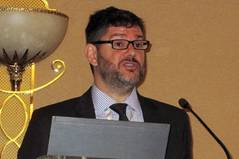
"Does treatment need to be lifelong, if so what is the optimal schedule, and what are the long-term sequelae?" Dr. David Thomas said at Sarcoma and GIST 2014, hosted by the European Society for Medical Oncology. "If surgical resection is an option that is absolutely the first option. This is not an antitumor drug. It contains the tumor’s progression, and it does that very well," said Dr. Thomas, head of the sarcoma genomics and genetics laboratory at Peter MacCallum Cancer Centre in Melbourne.
"It’s clearly a good idea for patients with GCTB, where you would have to do a mutilating operation" to remove the tumor. But you’d be crazy to use it for a GCTB of the proximal tibia that is curable by resection and curettage and packing with cement," said Dr. Robert S. Benjamin, professor and chairman of sarcoma medical oncology at University of Texas M.D. Anderson Cancer Center, Houston. About 90% of GCTB are resectable in a way that is acceptable to patients, he estimated during an interview.
"For the 10% for whom surgery is not a good option, denosumab is fantastic, and it’s being used, but most medical oncologists never see these patients" because GCTB is relatively rare, Dr. Benjamin said.

The largest reported experience with denosumab in patients with GCTB was an international, multicenter, open-label study with 282 patients and a 13-month median follow-up reported last year by Dr. Thomas and his associates (Lancet Onc. 2013;14:901-8). Although this experience provided evidence for the drug’s efficacy and reasonable safety for many patients, the documented experience remains relatively short for a drug that may need to be taken lifelong to keep the tumor in check. And many patients would start treatment relatively early in life because when GCTB occurs, it is often in adolescents or young adults.
"We really don’t know what will happen long term," Dr. Thomas cautioned in an interview.
The published experience also highlighted some potential adverse effects from denosumab that warrant close monitoring of patients. Three of the 281 patients (1%) available for the safety analysis developed osteonecrosis of the jaw; 15 patients (5%) developed hypocalcemia, although none were considered serious; 5 patients (2%) had a serious infection; and 3 patients (1%) had a new primary malignancy. In addition, women should not become pregnant while on denosumab. So far, follow-up produced no suggestion of an increased rate of malignant transformation of the GCTB, he said.
"Because you may need to treat for a lifetime, it’s a big decision to start treatment. But before we had this, we couldn’t have a discussion," of a treatment option when surgery wasn’t possible, he said. "I had a patient in 2004, before denosumab was available, with multiple, recurrent giant cell tumors that spread up his spine" and hence were inoperable and the patient died from the "enormous morbidity" the tumor caused. "Denosumab would have likely saved his life," Dr. Thomas said.
The denosumab study was sponsored by Amgen, maker of the drug. Dr. Thomas said that he has received consulting fees and research support from Amgen. Dr. Benjamin said that he has been a consultant to Johnson & Johnson, Merck, and Pfizer.
On Twitter @mitchelzoler
MILAN – Denosumab, a drug originally developed to treat patients with osteoporosis, can halt progression of giant cell tumor of the bone and is now considered by some experts to be standard treatment for patients with tumors that cannot be surgically removed without causing significant morbidity.
The Food and Drug Administration added this indication to the labeling for denosumab (Xgeva) in June 2013, and current management recommendations from the National Comprehensive Cancer Network list denosumab treatment as an option for patients with unresectable giant cell tumor of the bone (GCTB).
But experience with denosumab for this indication is limited and of relatively short duration, and questions remain about its optimal use.
"Does treatment need to be lifelong, if so what is the optimal schedule, and what are the long-term sequelae?" Dr. David Thomas said at Sarcoma and GIST 2014, hosted by the European Society for Medical Oncology. "If surgical resection is an option that is absolutely the first option. This is not an antitumor drug. It contains the tumor’s progression, and it does that very well," said Dr. Thomas, head of the sarcoma genomics and genetics laboratory at Peter MacCallum Cancer Centre in Melbourne.
"It’s clearly a good idea for patients with GCTB, where you would have to do a mutilating operation" to remove the tumor. But you’d be crazy to use it for a GCTB of the proximal tibia that is curable by resection and curettage and packing with cement," said Dr. Robert S. Benjamin, professor and chairman of sarcoma medical oncology at University of Texas M.D. Anderson Cancer Center, Houston. About 90% of GCTB are resectable in a way that is acceptable to patients, he estimated during an interview.
"For the 10% for whom surgery is not a good option, denosumab is fantastic, and it’s being used, but most medical oncologists never see these patients" because GCTB is relatively rare, Dr. Benjamin said.
The largest reported experience with denosumab in patients with GCTB was an international, multicenter, open-label study with 282 patients and a 13-month median follow-up reported last year by Dr. Thomas and his associates (Lancet Onc. 2013;14:901-8). Although this experience provided evidence for the drug’s efficacy and reasonable safety for many patients, the documented experience remains relatively short for a drug that may need to be taken lifelong to keep the tumor in check. And many patients would start treatment relatively early in life because when GCTB occurs, it is often in adolescents or young adults.
"We really don’t know what will happen long term," Dr. Thomas cautioned in an interview.
The published experience also highlighted some potential adverse effects from denosumab that warrant close monitoring of patients. Three of the 281 patients (1%) available for the safety analysis developed osteonecrosis of the jaw; 15 patients (5%) developed hypocalcemia, although none were considered serious; 5 patients (2%) had a serious infection; and 3 patients (1%) had a new primary malignancy. In addition, women should not become pregnant while on denosumab. So far, follow-up produced no suggestion of an increased rate of malignant transformation of the GCTB, he said.
"Because you may need to treat for a lifetime, it’s a big decision to start treatment. But before we had this, we couldn’t have a discussion," of a treatment option when surgery wasn’t possible, he said. "I had a patient in 2004, before denosumab was available, with multiple, recurrent giant cell tumors that spread up his spine" and hence were inoperable and the patient died from the "enormous morbidity" the tumor caused. "Denosumab would have likely saved his life," Dr. Thomas said.
The denosumab study was sponsored by Amgen, maker of the drug. Dr. Thomas said that he has received consulting fees and research support from Amgen. Dr. Benjamin said that he has been a consultant to Johnson & Johnson, Merck, and Pfizer.
On Twitter @mitchelzoler
MILAN – Denosumab, a drug originally developed to treat patients with osteoporosis, can halt progression of giant cell tumor of the bone and is now considered by some experts to be standard treatment for patients with tumors that cannot be surgically removed without causing significant morbidity.
The Food and Drug Administration added this indication to the labeling for denosumab (Xgeva) in June 2013, and current management recommendations from the National Comprehensive Cancer Network list denosumab treatment as an option for patients with unresectable giant cell tumor of the bone (GCTB).
But experience with denosumab for this indication is limited and of relatively short duration, and questions remain about its optimal use.
"Does treatment need to be lifelong, if so what is the optimal schedule, and what are the long-term sequelae?" Dr. David Thomas said at Sarcoma and GIST 2014, hosted by the European Society for Medical Oncology. "If surgical resection is an option that is absolutely the first option. This is not an antitumor drug. It contains the tumor’s progression, and it does that very well," said Dr. Thomas, head of the sarcoma genomics and genetics laboratory at Peter MacCallum Cancer Centre in Melbourne.
"It’s clearly a good idea for patients with GCTB, where you would have to do a mutilating operation" to remove the tumor. But you’d be crazy to use it for a GCTB of the proximal tibia that is curable by resection and curettage and packing with cement," said Dr. Robert S. Benjamin, professor and chairman of sarcoma medical oncology at University of Texas M.D. Anderson Cancer Center, Houston. About 90% of GCTB are resectable in a way that is acceptable to patients, he estimated during an interview.
"For the 10% for whom surgery is not a good option, denosumab is fantastic, and it’s being used, but most medical oncologists never see these patients" because GCTB is relatively rare, Dr. Benjamin said.
The largest reported experience with denosumab in patients with GCTB was an international, multicenter, open-label study with 282 patients and a 13-month median follow-up reported last year by Dr. Thomas and his associates (Lancet Onc. 2013;14:901-8). Although this experience provided evidence for the drug’s efficacy and reasonable safety for many patients, the documented experience remains relatively short for a drug that may need to be taken lifelong to keep the tumor in check. And many patients would start treatment relatively early in life because when GCTB occurs, it is often in adolescents or young adults.
"We really don’t know what will happen long term," Dr. Thomas cautioned in an interview.
The published experience also highlighted some potential adverse effects from denosumab that warrant close monitoring of patients. Three of the 281 patients (1%) available for the safety analysis developed osteonecrosis of the jaw; 15 patients (5%) developed hypocalcemia, although none were considered serious; 5 patients (2%) had a serious infection; and 3 patients (1%) had a new primary malignancy. In addition, women should not become pregnant while on denosumab. So far, follow-up produced no suggestion of an increased rate of malignant transformation of the GCTB, he said.
"Because you may need to treat for a lifetime, it’s a big decision to start treatment. But before we had this, we couldn’t have a discussion," of a treatment option when surgery wasn’t possible, he said. "I had a patient in 2004, before denosumab was available, with multiple, recurrent giant cell tumors that spread up his spine" and hence were inoperable and the patient died from the "enormous morbidity" the tumor caused. "Denosumab would have likely saved his life," Dr. Thomas said.
The denosumab study was sponsored by Amgen, maker of the drug. Dr. Thomas said that he has received consulting fees and research support from Amgen. Dr. Benjamin said that he has been a consultant to Johnson & Johnson, Merck, and Pfizer.
On Twitter @mitchelzoler
EXPERT ANALYSIS FROM SARCOMA AND GIST 2014
Order of Cy, TBI doesn’t impact HSCT outcome
GRAPEVINE, TEXAS—The order in which patients receive cyclophosphamide (Cy) and total body irradiation (TBI) does not affect the outcome of hematopoietic stem cell transplant (HSCT), researchers have reported.
In a large, retrospective study, the rates of relapse, survival, chronic graft-vs-host disease (GVHD), and other complications were similar whether patients received Cy-TBI or TBI-Cy.
However, receiving Cy-TBI was associated with a slight decrease in the risk of grade 2-4 acute GVHD.
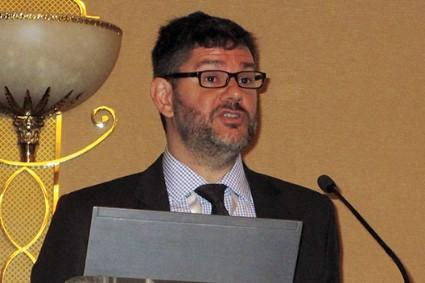
Jennifer L. Holter-Chakrabarty, MD, of the University of Oklahoma in Oklahoma City, presented these findings at the 2014 BMT Tandem Meetings as abstract 13.
She noted that other researchers have investigated the impact of TBI/Cy order, but the results have not provided definitive answers.
“Mouse models show that TBI-Cy is superior, with reduced lung toxicity and increased incidence of bone marrow damage,” Dr Holter-Chakrabarty said.
“Cy-TBI, however, in a retrospective study, showed improved anti-leukemic effect, as well as increased incidence of sinusoidal obstructive syndrome. So for this reason, we wanted to look at the CIBMTR database and compare the order of cyclophosphamide and TBI.”
She and her colleagues analyzed data from 1769 HSCT recipients who were younger than 60 years of age and had been reported to the CIBMTR from 2003 to 2010. Patients had been diagnosed with acute myeloid leukemia (AML, n=945) or acute lymphoblastic leukemia (ALL, n=824) and were in their first or second remission.
They had received TBI doses of at least 1200 cGy, followed by related or unrelated bone marrow or peripheral blood stem cell grafts. Patients who had received cord blood, haploidentical, or T-cell-depleted grafts were excluded.
In all, 948 patients received Cy-TBI, and 821 received TBI-Cy. The 2 cohorts had comparable patient-, disease- and transplant-related characteristics.
The sequence of TBI and Cy did not significantly affect the rates of relapse, leukemia-free survival, or overall survival. And it had no significant impact on transplant-related complications, with the exception of acute grade 2-4 GVHD.
At 100 days, the rate of grade 2-4 acute GVHD was 39% in the Cy-TBI group and 45% in the TBI-Cy group (P=0.01). But the rates of grade 3-4 acute GVHD were 16% and 15%, respectively (P=0.62).
At 100 days, the incidence of veno-occlusive disease and sinusoidal obstructive syndrome was 4% in the Cy-TBI group and 6% in the TBI-Cy group (P=0.082). At 1 year, the incidence of interstitial pneumonia syndrome was 6% and 5%, respectively (P=0.370).
At 3 years, the relapse rate was 27% in the Cy-TBI group and 29% in the TBI-Cy group (P=0.34). Leukemia-free survival was 48% and 49%, respectively (P=0.27). And overall survival was 53% and 52%, respectively (P=0.62).
Transplant-related mortality at 3 years was 24% and 23%, respectively (P=0.67). And the rate of chronic GVHD was 45% and 47%, respectively (P=0.39).
“So, in this population, we see no difference,” Dr Holter-Chakrabarty said. “Cy-TBI or TBI-Cy—it seems to not make a difference either way in relapse, treatment-related mortality, [chronic] graft-vs-host disease, acute 3 and 4 [GVHD], and survival. However, it does give us an idea that 2-4 acute GVHD may be lower in Cy-TBI.” 
GRAPEVINE, TEXAS—The order in which patients receive cyclophosphamide (Cy) and total body irradiation (TBI) does not affect the outcome of hematopoietic stem cell transplant (HSCT), researchers have reported.
In a large, retrospective study, the rates of relapse, survival, chronic graft-vs-host disease (GVHD), and other complications were similar whether patients received Cy-TBI or TBI-Cy.
However, receiving Cy-TBI was associated with a slight decrease in the risk of grade 2-4 acute GVHD.
Jennifer L. Holter-Chakrabarty, MD, of the University of Oklahoma in Oklahoma City, presented these findings at the 2014 BMT Tandem Meetings as abstract 13.
She noted that other researchers have investigated the impact of TBI/Cy order, but the results have not provided definitive answers.
“Mouse models show that TBI-Cy is superior, with reduced lung toxicity and increased incidence of bone marrow damage,” Dr Holter-Chakrabarty said.
“Cy-TBI, however, in a retrospective study, showed improved anti-leukemic effect, as well as increased incidence of sinusoidal obstructive syndrome. So for this reason, we wanted to look at the CIBMTR database and compare the order of cyclophosphamide and TBI.”
She and her colleagues analyzed data from 1769 HSCT recipients who were younger than 60 years of age and had been reported to the CIBMTR from 2003 to 2010. Patients had been diagnosed with acute myeloid leukemia (AML, n=945) or acute lymphoblastic leukemia (ALL, n=824) and were in their first or second remission.
They had received TBI doses of at least 1200 cGy, followed by related or unrelated bone marrow or peripheral blood stem cell grafts. Patients who had received cord blood, haploidentical, or T-cell-depleted grafts were excluded.
In all, 948 patients received Cy-TBI, and 821 received TBI-Cy. The 2 cohorts had comparable patient-, disease- and transplant-related characteristics.
The sequence of TBI and Cy did not significantly affect the rates of relapse, leukemia-free survival, or overall survival. And it had no significant impact on transplant-related complications, with the exception of acute grade 2-4 GVHD.
At 100 days, the rate of grade 2-4 acute GVHD was 39% in the Cy-TBI group and 45% in the TBI-Cy group (P=0.01). But the rates of grade 3-4 acute GVHD were 16% and 15%, respectively (P=0.62).
At 100 days, the incidence of veno-occlusive disease and sinusoidal obstructive syndrome was 4% in the Cy-TBI group and 6% in the TBI-Cy group (P=0.082). At 1 year, the incidence of interstitial pneumonia syndrome was 6% and 5%, respectively (P=0.370).
At 3 years, the relapse rate was 27% in the Cy-TBI group and 29% in the TBI-Cy group (P=0.34). Leukemia-free survival was 48% and 49%, respectively (P=0.27). And overall survival was 53% and 52%, respectively (P=0.62).
Transplant-related mortality at 3 years was 24% and 23%, respectively (P=0.67). And the rate of chronic GVHD was 45% and 47%, respectively (P=0.39).
“So, in this population, we see no difference,” Dr Holter-Chakrabarty said. “Cy-TBI or TBI-Cy—it seems to not make a difference either way in relapse, treatment-related mortality, [chronic] graft-vs-host disease, acute 3 and 4 [GVHD], and survival. However, it does give us an idea that 2-4 acute GVHD may be lower in Cy-TBI.”
GRAPEVINE, TEXAS—The order in which patients receive cyclophosphamide (Cy) and total body irradiation (TBI) does not affect the outcome of hematopoietic stem cell transplant (HSCT), researchers have reported.
In a large, retrospective study, the rates of relapse, survival, chronic graft-vs-host disease (GVHD), and other complications were similar whether patients received Cy-TBI or TBI-Cy.
However, receiving Cy-TBI was associated with a slight decrease in the risk of grade 2-4 acute GVHD.
Jennifer L. Holter-Chakrabarty, MD, of the University of Oklahoma in Oklahoma City, presented these findings at the 2014 BMT Tandem Meetings as abstract 13.
She noted that other researchers have investigated the impact of TBI/Cy order, but the results have not provided definitive answers.
“Mouse models show that TBI-Cy is superior, with reduced lung toxicity and increased incidence of bone marrow damage,” Dr Holter-Chakrabarty said.
“Cy-TBI, however, in a retrospective study, showed improved anti-leukemic effect, as well as increased incidence of sinusoidal obstructive syndrome. So for this reason, we wanted to look at the CIBMTR database and compare the order of cyclophosphamide and TBI.”
She and her colleagues analyzed data from 1769 HSCT recipients who were younger than 60 years of age and had been reported to the CIBMTR from 2003 to 2010. Patients had been diagnosed with acute myeloid leukemia (AML, n=945) or acute lymphoblastic leukemia (ALL, n=824) and were in their first or second remission.
They had received TBI doses of at least 1200 cGy, followed by related or unrelated bone marrow or peripheral blood stem cell grafts. Patients who had received cord blood, haploidentical, or T-cell-depleted grafts were excluded.
In all, 948 patients received Cy-TBI, and 821 received TBI-Cy. The 2 cohorts had comparable patient-, disease- and transplant-related characteristics.
The sequence of TBI and Cy did not significantly affect the rates of relapse, leukemia-free survival, or overall survival. And it had no significant impact on transplant-related complications, with the exception of acute grade 2-4 GVHD.
At 100 days, the rate of grade 2-4 acute GVHD was 39% in the Cy-TBI group and 45% in the TBI-Cy group (P=0.01). But the rates of grade 3-4 acute GVHD were 16% and 15%, respectively (P=0.62).
At 100 days, the incidence of veno-occlusive disease and sinusoidal obstructive syndrome was 4% in the Cy-TBI group and 6% in the TBI-Cy group (P=0.082). At 1 year, the incidence of interstitial pneumonia syndrome was 6% and 5%, respectively (P=0.370).
At 3 years, the relapse rate was 27% in the Cy-TBI group and 29% in the TBI-Cy group (P=0.34). Leukemia-free survival was 48% and 49%, respectively (P=0.27). And overall survival was 53% and 52%, respectively (P=0.62).
Transplant-related mortality at 3 years was 24% and 23%, respectively (P=0.67). And the rate of chronic GVHD was 45% and 47%, respectively (P=0.39).
“So, in this population, we see no difference,” Dr Holter-Chakrabarty said. “Cy-TBI or TBI-Cy—it seems to not make a difference either way in relapse, treatment-related mortality, [chronic] graft-vs-host disease, acute 3 and 4 [GVHD], and survival. However, it does give us an idea that 2-4 acute GVHD may be lower in Cy-TBI.”
Team uses DNA methylation to quantify leukocytes
Credit: Graham Colm
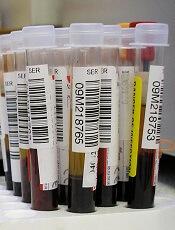
Investigators have found they can use DNA methylation to simultaneously count multiple leukocyte subsets in blood samples, and they’ve reported this finding in Genome Biology.
The researchers noted that current methods of counting leukocytes in a blood sample require whole cells.
But as their newly developed method relies on DNA, it can be useful even in archived blood samples in which cells have lost their physical integrity.
“Once you understand the unique and really immutable [methylation] signature that directs the differentiation of the cell, then you can use that, and you don’t need the cell anymore,” said study author Karl Kelsey, MD, of Brown University in Providence, Rhode Island.
So the new test detects those methylation signatures in a blood sample and, with the help of algorithms, allows researchers to count how many cells of each type are in the sample.
Dr Kelsey and his colleagues found they could quantify T cells, B cells, NK cells, monocytes, eosinophils, basophils, and neutrophils.
The investigators tested their method using fresh blood samples from more than 80 donors.
The new technique proved as accurate as 3 gold-standard methods of cell quantification: manual 5-part differential, complete blood count with automated 5-part differential, and fluorescence activated cell sorting.
In further experiments, the team found their technique could detect the mixtures of immune cells associated with known diseases.
The method also proved effective with blood exposed to storage conditions, such as freezing and the addition of anticoagulants.
Moreover, the researchers showed that to distinguish among and count those various immune cell types, they only needed to measure a few dozen methylation marks in the DNA. In other words, what’s sufficient to constitute a signature can be quite short.
This method has proven feasible enough that other epidemiology research labs are already using it, Dr Kelsey said. And Brown University has applied for a patent on the technique.
Dr Kelsey said the method has the potential to be cheaper and faster than current techniques, although the investigators didn’t test that in their experiments.
Credit: Graham Colm
Investigators have found they can use DNA methylation to simultaneously count multiple leukocyte subsets in blood samples, and they’ve reported this finding in Genome Biology.
The researchers noted that current methods of counting leukocytes in a blood sample require whole cells.
But as their newly developed method relies on DNA, it can be useful even in archived blood samples in which cells have lost their physical integrity.
“Once you understand the unique and really immutable [methylation] signature that directs the differentiation of the cell, then you can use that, and you don’t need the cell anymore,” said study author Karl Kelsey, MD, of Brown University in Providence, Rhode Island.
So the new test detects those methylation signatures in a blood sample and, with the help of algorithms, allows researchers to count how many cells of each type are in the sample.
Dr Kelsey and his colleagues found they could quantify T cells, B cells, NK cells, monocytes, eosinophils, basophils, and neutrophils.
The investigators tested their method using fresh blood samples from more than 80 donors.
The new technique proved as accurate as 3 gold-standard methods of cell quantification: manual 5-part differential, complete blood count with automated 5-part differential, and fluorescence activated cell sorting.
In further experiments, the team found their technique could detect the mixtures of immune cells associated with known diseases.
The method also proved effective with blood exposed to storage conditions, such as freezing and the addition of anticoagulants.
Moreover, the researchers showed that to distinguish among and count those various immune cell types, they only needed to measure a few dozen methylation marks in the DNA. In other words, what’s sufficient to constitute a signature can be quite short.
This method has proven feasible enough that other epidemiology research labs are already using it, Dr Kelsey said. And Brown University has applied for a patent on the technique.
Dr Kelsey said the method has the potential to be cheaper and faster than current techniques, although the investigators didn’t test that in their experiments.
Credit: Graham Colm
Investigators have found they can use DNA methylation to simultaneously count multiple leukocyte subsets in blood samples, and they’ve reported this finding in Genome Biology.
The researchers noted that current methods of counting leukocytes in a blood sample require whole cells.
But as their newly developed method relies on DNA, it can be useful even in archived blood samples in which cells have lost their physical integrity.
“Once you understand the unique and really immutable [methylation] signature that directs the differentiation of the cell, then you can use that, and you don’t need the cell anymore,” said study author Karl Kelsey, MD, of Brown University in Providence, Rhode Island.
So the new test detects those methylation signatures in a blood sample and, with the help of algorithms, allows researchers to count how many cells of each type are in the sample.
Dr Kelsey and his colleagues found they could quantify T cells, B cells, NK cells, monocytes, eosinophils, basophils, and neutrophils.
The investigators tested their method using fresh blood samples from more than 80 donors.
The new technique proved as accurate as 3 gold-standard methods of cell quantification: manual 5-part differential, complete blood count with automated 5-part differential, and fluorescence activated cell sorting.
In further experiments, the team found their technique could detect the mixtures of immune cells associated with known diseases.
The method also proved effective with blood exposed to storage conditions, such as freezing and the addition of anticoagulants.
Moreover, the researchers showed that to distinguish among and count those various immune cell types, they only needed to measure a few dozen methylation marks in the DNA. In other words, what’s sufficient to constitute a signature can be quite short.
This method has proven feasible enough that other epidemiology research labs are already using it, Dr Kelsey said. And Brown University has applied for a patent on the technique.
Dr Kelsey said the method has the potential to be cheaper and faster than current techniques, although the investigators didn’t test that in their experiments.
Idelalisib more effective in CLL, iNHL than MCL

Credit: FDA
Results of a phase 1 study suggest the PI3K delta inhibitor idelalisib can produce durable responses in certain patients with relapsed or refractory disease.
The drug elicited a response rate of 72% in patients with chronic lymphocytic leukemia (CLL), 47% in indolent non-Hodgkin lymphoma (iNHL), and 40% in mantle cell lymphoma(MCL).
The median duration of response was 16.2 months among CLL patients, 18.4 months among iNHL patients, and 2.7 months among those with MCL.
“Considering the high number of previous therapies that these patients had received, higher than we sometimes see in comparable studies, the efficacy of idelalisib that we observed was remarkable,” said study author Ian Flinn, MD, PhD, of the Sarah Cannon Research Institute in Nashville, Tennessee.
In 3 papers published in Blood, Dr Flinn and his colleagues presented data from this phase 1 study of idelalisib. After an initial study involving all trial participants, the patients were separated into CLL, iNHL, and MCL disease cohorts.
Solid survival rates in CLL
The researchers evaluated idelalisib in 54 patients with relapsed or refractory CLL. The patients had received a median of 5 prior treatments (range, 2-14).
They had a median age of 63 years (range 37-82), 80% had bulky lymphadenopathy, 70% had treatment-refractory disease, 91% had unmutated IGHV, and 24% had del17p and/or TP53 mutation.
In the primary study, the patients received idelalisib at doses ranging from 50 mg to 350 mg once or twice daily for 48 weeks. If they continued to derive clinical benefit, patients could continue treatment on an extension study.
Fifty-four percent of patients discontinued treatment during the primary study period. Twenty-eight percent stopped because of disease progression, 9% due to adverse events (AEs), and 6% due to early deaths resulting from AEs.
Grade 3 or higher AEs included pneumonia (20%), neutropenic fever (11%), diarrhea (6%), pyrexia (4%), cough (4%), and fatigue (2%). Common grade 3 or higher lab abnormalities included neutropenia (43%), anemia (11%), and thrombocytopenia (17%).
The overall response rate was 72%, with 39% of patients meeting the criteria for partial response per IWCLL 2008 criteria and 33% meeting the criteria of partial response in the presence of treatment-induced lymphocytosis.
The median duration of response was 16.2 months, the median progression-free survival (PFS) was 15.8 months, and the median overall survival was not reached.
Longer response duration in iNHL
The researchers evaluated idelalisib in 64 patients with iNHL. Lymphoma types included follicular lymphoma (59%), small lymphocytic lymphoma (17%), marginal zone lymphoma (9%), and lymphoplasmacytic lymphoma (14%).
Patients had a median age of 64 years (range, 32-91), 53% had bulky disease, and 58% had refractory disease. They had received a median of 4 prior therapies (range, 1-10).
The patients received idelalisib at doses ranging from 50 mg to 350 mg once or twice daily. After 48 weeks, patients still benefitting from treatment (30%) were enrolled in an extension study.
The remaining 70% of patients discontinued treatment during the primary study. Nineteen percent of these patients discontinued due to AEs.
Grade 3 or higher AEs included pneumonia (17%), diarrhea (9%), peripheral edema (3%), fatigue (3%), rash (3%), pyrexia (3%), nausea (2%), and cough (2%). Grade 3 or higher lab abnormalities included AST elevation (20%), ALT elevation (23%), neutropenia (23%), thrombocytopenia (11%), and anemia (5%).
The overall response rate was 47%, with 1 patient (1.6%) achieving a complete response. The median duration of response was 18.4 months, and the median PFS was 7.6 months.
Short response, survival duration in MCL
The researchers evaluated idelalisib in 40 patients with relapsed or refractory MCL. The median age was 69 years (range, 52-83). Patients had received a median of 4 prior therapies (range, 1-14), and 43% were refractory to their most recent treatment.
Patients received idelalisib at doses ranging from 50 mg to 350 mg once or twice daily for a median of 3.5 months (range, 0.7-30.7). Six patients (15%) continued treatment for more than 48 weeks, although only 1 patient remains on treatment at present.
The 34 patients who discontinued the primary study did so because of progressive disease (60%), AEs (20%), withdrawn consent (3%), or investigator request (3%). Of the 6 patients who entered the extension trial, 4 ultimately discontinued due to progressive disease and 1 due to AEs.
Grade 3 or higher AEs included diarrhea (18%), decreased appetite (15%), pneumonia (10%), nausea (5%), fatigue (3%), and rash (3%). Grade 3 or higher lab abnormalities included ALT/AST elevations (20%), neutropenia (10%), thrombocytopenia (5%), and anemia (3%).
The overall response rate was 40%, with 5% of patients achieving a complete response. The median duration of response was 2.7 months, and the median PFS was 3.7 months.
Despite the modest duration of survival observed in these patients, the researchers believe the strong initial response to idelalisib suggests the drug could still prove useful in patients with MCL.
“[I]delalisib is unlikely to receive designation as a single-agent therapy in mantle cell lymphoma due to the short duration of response,” said study author Brad S. Kahl, MD, of the University of Wisconsin Carbone Cancer Center in Madison.
“The path forward will likely include administering it in combination with other agents or developing second-generation PI3 kinase inhibitors.”
Credit: FDA
Results of a phase 1 study suggest the PI3K delta inhibitor idelalisib can produce durable responses in certain patients with relapsed or refractory disease.
The drug elicited a response rate of 72% in patients with chronic lymphocytic leukemia (CLL), 47% in indolent non-Hodgkin lymphoma (iNHL), and 40% in mantle cell lymphoma(MCL).
The median duration of response was 16.2 months among CLL patients, 18.4 months among iNHL patients, and 2.7 months among those with MCL.
“Considering the high number of previous therapies that these patients had received, higher than we sometimes see in comparable studies, the efficacy of idelalisib that we observed was remarkable,” said study author Ian Flinn, MD, PhD, of the Sarah Cannon Research Institute in Nashville, Tennessee.
In 3 papers published in Blood, Dr Flinn and his colleagues presented data from this phase 1 study of idelalisib. After an initial study involving all trial participants, the patients were separated into CLL, iNHL, and MCL disease cohorts.
Solid survival rates in CLL
The researchers evaluated idelalisib in 54 patients with relapsed or refractory CLL. The patients had received a median of 5 prior treatments (range, 2-14).
They had a median age of 63 years (range 37-82), 80% had bulky lymphadenopathy, 70% had treatment-refractory disease, 91% had unmutated IGHV, and 24% had del17p and/or TP53 mutation.
In the primary study, the patients received idelalisib at doses ranging from 50 mg to 350 mg once or twice daily for 48 weeks. If they continued to derive clinical benefit, patients could continue treatment on an extension study.
Fifty-four percent of patients discontinued treatment during the primary study period. Twenty-eight percent stopped because of disease progression, 9% due to adverse events (AEs), and 6% due to early deaths resulting from AEs.
Grade 3 or higher AEs included pneumonia (20%), neutropenic fever (11%), diarrhea (6%), pyrexia (4%), cough (4%), and fatigue (2%). Common grade 3 or higher lab abnormalities included neutropenia (43%), anemia (11%), and thrombocytopenia (17%).
The overall response rate was 72%, with 39% of patients meeting the criteria for partial response per IWCLL 2008 criteria and 33% meeting the criteria of partial response in the presence of treatment-induced lymphocytosis.
The median duration of response was 16.2 months, the median progression-free survival (PFS) was 15.8 months, and the median overall survival was not reached.
Longer response duration in iNHL
The researchers evaluated idelalisib in 64 patients with iNHL. Lymphoma types included follicular lymphoma (59%), small lymphocytic lymphoma (17%), marginal zone lymphoma (9%), and lymphoplasmacytic lymphoma (14%).
Patients had a median age of 64 years (range, 32-91), 53% had bulky disease, and 58% had refractory disease. They had received a median of 4 prior therapies (range, 1-10).
The patients received idelalisib at doses ranging from 50 mg to 350 mg once or twice daily. After 48 weeks, patients still benefitting from treatment (30%) were enrolled in an extension study.
The remaining 70% of patients discontinued treatment during the primary study. Nineteen percent of these patients discontinued due to AEs.
Grade 3 or higher AEs included pneumonia (17%), diarrhea (9%), peripheral edema (3%), fatigue (3%), rash (3%), pyrexia (3%), nausea (2%), and cough (2%). Grade 3 or higher lab abnormalities included AST elevation (20%), ALT elevation (23%), neutropenia (23%), thrombocytopenia (11%), and anemia (5%).
The overall response rate was 47%, with 1 patient (1.6%) achieving a complete response. The median duration of response was 18.4 months, and the median PFS was 7.6 months.
Short response, survival duration in MCL
The researchers evaluated idelalisib in 40 patients with relapsed or refractory MCL. The median age was 69 years (range, 52-83). Patients had received a median of 4 prior therapies (range, 1-14), and 43% were refractory to their most recent treatment.
Patients received idelalisib at doses ranging from 50 mg to 350 mg once or twice daily for a median of 3.5 months (range, 0.7-30.7). Six patients (15%) continued treatment for more than 48 weeks, although only 1 patient remains on treatment at present.
The 34 patients who discontinued the primary study did so because of progressive disease (60%), AEs (20%), withdrawn consent (3%), or investigator request (3%). Of the 6 patients who entered the extension trial, 4 ultimately discontinued due to progressive disease and 1 due to AEs.
Grade 3 or higher AEs included diarrhea (18%), decreased appetite (15%), pneumonia (10%), nausea (5%), fatigue (3%), and rash (3%). Grade 3 or higher lab abnormalities included ALT/AST elevations (20%), neutropenia (10%), thrombocytopenia (5%), and anemia (3%).
The overall response rate was 40%, with 5% of patients achieving a complete response. The median duration of response was 2.7 months, and the median PFS was 3.7 months.
Despite the modest duration of survival observed in these patients, the researchers believe the strong initial response to idelalisib suggests the drug could still prove useful in patients with MCL.
“[I]delalisib is unlikely to receive designation as a single-agent therapy in mantle cell lymphoma due to the short duration of response,” said study author Brad S. Kahl, MD, of the University of Wisconsin Carbone Cancer Center in Madison.
“The path forward will likely include administering it in combination with other agents or developing second-generation PI3 kinase inhibitors.”
Credit: FDA
Results of a phase 1 study suggest the PI3K delta inhibitor idelalisib can produce durable responses in certain patients with relapsed or refractory disease.
The drug elicited a response rate of 72% in patients with chronic lymphocytic leukemia (CLL), 47% in indolent non-Hodgkin lymphoma (iNHL), and 40% in mantle cell lymphoma(MCL).
The median duration of response was 16.2 months among CLL patients, 18.4 months among iNHL patients, and 2.7 months among those with MCL.
“Considering the high number of previous therapies that these patients had received, higher than we sometimes see in comparable studies, the efficacy of idelalisib that we observed was remarkable,” said study author Ian Flinn, MD, PhD, of the Sarah Cannon Research Institute in Nashville, Tennessee.
In 3 papers published in Blood, Dr Flinn and his colleagues presented data from this phase 1 study of idelalisib. After an initial study involving all trial participants, the patients were separated into CLL, iNHL, and MCL disease cohorts.
Solid survival rates in CLL
The researchers evaluated idelalisib in 54 patients with relapsed or refractory CLL. The patients had received a median of 5 prior treatments (range, 2-14).
They had a median age of 63 years (range 37-82), 80% had bulky lymphadenopathy, 70% had treatment-refractory disease, 91% had unmutated IGHV, and 24% had del17p and/or TP53 mutation.
In the primary study, the patients received idelalisib at doses ranging from 50 mg to 350 mg once or twice daily for 48 weeks. If they continued to derive clinical benefit, patients could continue treatment on an extension study.
Fifty-four percent of patients discontinued treatment during the primary study period. Twenty-eight percent stopped because of disease progression, 9% due to adverse events (AEs), and 6% due to early deaths resulting from AEs.
Grade 3 or higher AEs included pneumonia (20%), neutropenic fever (11%), diarrhea (6%), pyrexia (4%), cough (4%), and fatigue (2%). Common grade 3 or higher lab abnormalities included neutropenia (43%), anemia (11%), and thrombocytopenia (17%).
The overall response rate was 72%, with 39% of patients meeting the criteria for partial response per IWCLL 2008 criteria and 33% meeting the criteria of partial response in the presence of treatment-induced lymphocytosis.
The median duration of response was 16.2 months, the median progression-free survival (PFS) was 15.8 months, and the median overall survival was not reached.
Longer response duration in iNHL
The researchers evaluated idelalisib in 64 patients with iNHL. Lymphoma types included follicular lymphoma (59%), small lymphocytic lymphoma (17%), marginal zone lymphoma (9%), and lymphoplasmacytic lymphoma (14%).
Patients had a median age of 64 years (range, 32-91), 53% had bulky disease, and 58% had refractory disease. They had received a median of 4 prior therapies (range, 1-10).
The patients received idelalisib at doses ranging from 50 mg to 350 mg once or twice daily. After 48 weeks, patients still benefitting from treatment (30%) were enrolled in an extension study.
The remaining 70% of patients discontinued treatment during the primary study. Nineteen percent of these patients discontinued due to AEs.
Grade 3 or higher AEs included pneumonia (17%), diarrhea (9%), peripheral edema (3%), fatigue (3%), rash (3%), pyrexia (3%), nausea (2%), and cough (2%). Grade 3 or higher lab abnormalities included AST elevation (20%), ALT elevation (23%), neutropenia (23%), thrombocytopenia (11%), and anemia (5%).
The overall response rate was 47%, with 1 patient (1.6%) achieving a complete response. The median duration of response was 18.4 months, and the median PFS was 7.6 months.
Short response, survival duration in MCL
The researchers evaluated idelalisib in 40 patients with relapsed or refractory MCL. The median age was 69 years (range, 52-83). Patients had received a median of 4 prior therapies (range, 1-14), and 43% were refractory to their most recent treatment.
Patients received idelalisib at doses ranging from 50 mg to 350 mg once or twice daily for a median of 3.5 months (range, 0.7-30.7). Six patients (15%) continued treatment for more than 48 weeks, although only 1 patient remains on treatment at present.
The 34 patients who discontinued the primary study did so because of progressive disease (60%), AEs (20%), withdrawn consent (3%), or investigator request (3%). Of the 6 patients who entered the extension trial, 4 ultimately discontinued due to progressive disease and 1 due to AEs.
Grade 3 or higher AEs included diarrhea (18%), decreased appetite (15%), pneumonia (10%), nausea (5%), fatigue (3%), and rash (3%). Grade 3 or higher lab abnormalities included ALT/AST elevations (20%), neutropenia (10%), thrombocytopenia (5%), and anemia (3%).
The overall response rate was 40%, with 5% of patients achieving a complete response. The median duration of response was 2.7 months, and the median PFS was 3.7 months.
Despite the modest duration of survival observed in these patients, the researchers believe the strong initial response to idelalisib suggests the drug could still prove useful in patients with MCL.
“[I]delalisib is unlikely to receive designation as a single-agent therapy in mantle cell lymphoma due to the short duration of response,” said study author Brad S. Kahl, MD, of the University of Wisconsin Carbone Cancer Center in Madison.
“The path forward will likely include administering it in combination with other agents or developing second-generation PI3 kinase inhibitors.”
Titanium dioxide
Titanium dioxide (TiO2) and zinc oxide (ZnO) in large-particle form have long been used in various sunscreens to protect the skin by reflecting or physically blocking ultraviolet (UV) radiation. In recent years, TiO2 as well as ZnO nanoparticles have been incorporated into sunscreens and cosmetics to act as a UV shield. They have been shown to be effective barriers against UV-induced damage, and yield stronger protection against UV insult, while leaving less white residue, than previous generations of the physical sunblocks.
However, some data suggest that in nanoparticle form, TiO2 and ZnO absorb UV radiation, leading to photocatalysis and the release of reactive oxygen species (Australas. J. Dermatol. 2011;52:1-6). This column will focus primarily on the safety of TiO2 in nanoparticle form.
While numerous studies examine both TiO2 and ZnO, the primary inorganic sunscreens, the sheer number of separate investigations warrants individual articles, and ZnO was addressed in previous columns. Briefly, though, TiO2 is more photoactive and exhibits a higher refractive index in visible light than ZnO (J. Am. Acad. Dermatol. 1999;40:85-90); therefore, TiO2 appears whiter and is more difficult to incorporate into transparent products.
A 2011 study by Kang et al. showed that TiO2 nanoparticles, but not normal-sized TiO2, and UVA synergistically foster rapid production of reactive oxygen species and breakdown of mitochondrial membrane potential, leading to apoptosis, and that TiO2 nanoparticles are more phototoxic than larger ones (Drug Chem. Toxicol. 2011;34:277-84).
However, also in 2011, Tyner et al. investigated the effects of nanoscale TiO2 use on UV attenuation in simple to complex sunscreen products. They found that barrier function was diminished by none of the formulations, and that optimal UV attenuation resulted when TiO2 particles were stabilized with a coating and evenly dispersed. The researchers concluded that nanoscale TiO2 is nontoxic and may impart greater efficacy (Int. J. Cosmet. Sci. 2011;33:234-44).
In vitro and in vivo studies
In 2010, Tiano et al. evaluated five modified TiO2 particles, developed and marketed for sunscreens. They used different in vitro models, including cultured human skin fibroblasts, to determine potential photocatalytic effects after UVA exposure. The investigators found that the kind of modification to and crystal form of the TiO2 nanoparticle influences its ability to augment or reduce DNA damage, increase or decrease intracellular reactive oxygen species, diminish cell viability, and promote other effects of photocatalysis. In particular, they noted that the anatase crystal form of TiO2 retained photocatalytic activity. The authors suggested that while the debate continues over the penetration of nanosized TiO2 into the viable epidermis, their results help elucidate the potential effects of TiO2 particles at the cellular level (Free Radic. Biol. Med. 2010;49:408-15).
A 2010 study by Senzui et al. using in vitro intact, stripped, and hair-removed skin of Yucatan micropigs to test the skin penetration of four different types of rutile (the most natural form of) TiO2 (two coated, two uncoated) revealed no penetration of TiO2 type in intact and stripped skin. The concentration of titanium in skin was significantly higher when one of the coated forms was applied on hair-removed skin, with titanium penetrating into vacant hair follicles (greater than 1 mm below the skin surface), but not into dermis or viable epidermis (J. Toxicol. Sci. 2010;35:107-13).
Animal studies
In 2009, the Food and Drug Administration Center for Drug Evaluation and Research worked with the National Center for Toxicology Research using minipigs and four sunscreen formulations to determine whether nanoscale TiO2 can penetrate intact skin. Their use of scanning electron microscopy and x-ray diffraction revealed that TiO2 particles were the same size as that observed for the raw materials, implying that the formulation process influenced neither the size nor the shape of TiO2 particles (Drug Dev. Ind. Pharm. 2009;35:1180-9).
In 2010, Sadrieh et al. performed a study of the dermal penetration of three TiO2 particles: uncoated submicrometer-sized, uncoated nano-sized, and dimethicone/methicone copolymer-coated nanosized. The investigators applied 5% by weight of each of the types of particles in a sunscreen on minipigs and found no significant penetration into intact normal epidermis (Toxicol. Sci. 2010;115(1):156-66).
In 2011, Furukawa et al. studied the postinitiation carcinogenic potential of coated and uncoated TiO2 nanoparticles in a two-stage skin carcinogenesis model using 7-week-old CD1 (ICR) female mice. They found that application of coated and uncoated nanoparticles after initiation and promotion with 7,12-dimethylbenz[a]anthracene and 12-O-tetradecanoylphorbol 13-acetate at doses of up to 20 mg/mouse failed to augment nodule development. The investigators concluded that TiO2 nanoparticles do not exhibit postinitiation potential for mouse skin carcinogenesis (Food Chem. Toxicol. 2011;49(4):744-9).
Human data
Given the persistent concerns about possible side effects of coated TiO2 and ZnO nanoparticles used in physical sun blockers, Filipe et al., in 2009, assessed the localization and potential skin penetration of TiO2 and ZnO nanoparticles dispersed in three sunscreen formulations, under realistic in vivo conditions in normal and altered skin. The investigators examined a test hydrophobic formulation containing coated 20-nm TiO2 nanoparticles and two commercially available sunscreen formulations containing TiO2 alone or in combination with ZnO, with respect to how consumers actually used sunscreens compared with the recommended standard condition for the sun protection factor test. They found that traces of the physical blockers could be detected only at the skin surface and uppermost area of the stratum corneum in normal human skin after a 2-hour exposure. After 48 hours of exposure, layers deeper than the stratum corneum contained no detectable TiO2 or ZnO nanoparticles. While preferential deposition of the nanoparticles in the openings of pilosebaceous follicles was noted, no penetration into viable skin tissue was observed. The investigators concluded that significant penetration of TiO2 or ZnO nanoparticles into keratinocytes is improbable (Skin Pharmacol. Physiol. 2009;22:266-75).
The weight of evidence
Current evidence suggests minimal risks to human health from the use of TiO2 or ZnO nanoparticles at concentrations up to 25% in cosmetic preparations or sunscreens, according to Schilling et al., regardless of coatings or crystalline structure. In a safety review of these ingredients, they noted that these nanoparticles formulated in topical products occur as aggregates of primary particles 30-150 nm in size, and bond in such a way that renders them impervious to the force of product application. Thus their structure remains unaffected, and no primary particles are released. The authors also noted that nanoparticles exhibit equivalence with larger particles in terms of distribution and duration and, therefore, recognition and elimination from the body (Photochem. Photobiol. Sci. 2010;9:495-509).
But in 2011, Tran and Salmon, in light of findings that nanoparticles may penetrate the stratum corneum under certain conditions, considered the possible photocarcinogenic results of nanoparticle sunscreens. They noted, though, that most such results were obtained through the use of animal skin models, not investigations with human skin (Australas. J. Dermatol. 2011;52:1-6). To this point, the weight of evidence appears to show that such TiO2 nanoparticles are safe when applied to intact human skin (Semin. Cutan. Med. Surg. 2011;30:210-13).
In response to the increased scrutiny and concern exhibited by the general public and government agencies regarding the safety of TiO2 and ZnO nanoparticles, Newman et al. reviewed the literature and position statements from 1980 to 2008 to ascertain and describe the use, safety, and regulatory state of such ingredients in sunscreens. They found no evidence of significant penetration deeper than the stratum corneum of TiO2 and ZnO nanoparticles, but caution that additional studies simulating real-world conditions (i.e., sunburned skin and under UV exposure) are necessary (J. Am. Acad. Dermatol. 2009;61:685-92).
Conclusion
Titanium dioxide is a well-established, safe, and effective physical sunblock. Nanotechnology has introduced some cause for concern regarding its use in physical sunblocks. In particular, evidence suggesting that photoexcitation of TiO2 nanoparticles leads to the generation of reactive oxygen species that damage DNA, potentially launching a cascade of adverse events, has prompted investigations into the safety of TiO2 in nanoparticle form. However, to date, multiple studies suggest that TiO2 nanoparticles do not penetrate or are highly unlikely to penetrate beyond the stratum corneum.
Dr. Baumann is chief executive officer of the Baumann Cosmetic & Research Institute in Miami Beach. She founded the cosmetic dermatology center at the University of Miami in 1997. Dr. Baumann wrote the textbook "Cosmetic Dermatology: Principles and Practice" (McGraw-Hill, 2002), and a book for consumers, "The Skin Type Solution" (Bantam, 2006). Dr. Baumann has received funding for clinical grants from Allergan, Aveeno, Avon Products, Galderma, Mary Kay, Medicis Pharmaceuticals, Neutrogena, Philosophy, Stiefel, Topix Pharmaceuticals, and Unilever.
Titanium dioxide (TiO2) and zinc oxide (ZnO) in large-particle form have long been used in various sunscreens to protect the skin by reflecting or physically blocking ultraviolet (UV) radiation. In recent years, TiO2 as well as ZnO nanoparticles have been incorporated into sunscreens and cosmetics to act as a UV shield. They have been shown to be effective barriers against UV-induced damage, and yield stronger protection against UV insult, while leaving less white residue, than previous generations of the physical sunblocks.
However, some data suggest that in nanoparticle form, TiO2 and ZnO absorb UV radiation, leading to photocatalysis and the release of reactive oxygen species (Australas. J. Dermatol. 2011;52:1-6). This column will focus primarily on the safety of TiO2 in nanoparticle form.
While numerous studies examine both TiO2 and ZnO, the primary inorganic sunscreens, the sheer number of separate investigations warrants individual articles, and ZnO was addressed in previous columns. Briefly, though, TiO2 is more photoactive and exhibits a higher refractive index in visible light than ZnO (J. Am. Acad. Dermatol. 1999;40:85-90); therefore, TiO2 appears whiter and is more difficult to incorporate into transparent products.
A 2011 study by Kang et al. showed that TiO2 nanoparticles, but not normal-sized TiO2, and UVA synergistically foster rapid production of reactive oxygen species and breakdown of mitochondrial membrane potential, leading to apoptosis, and that TiO2 nanoparticles are more phototoxic than larger ones (Drug Chem. Toxicol. 2011;34:277-84).
However, also in 2011, Tyner et al. investigated the effects of nanoscale TiO2 use on UV attenuation in simple to complex sunscreen products. They found that barrier function was diminished by none of the formulations, and that optimal UV attenuation resulted when TiO2 particles were stabilized with a coating and evenly dispersed. The researchers concluded that nanoscale TiO2 is nontoxic and may impart greater efficacy (Int. J. Cosmet. Sci. 2011;33:234-44).
In vitro and in vivo studies
In 2010, Tiano et al. evaluated five modified TiO2 particles, developed and marketed for sunscreens. They used different in vitro models, including cultured human skin fibroblasts, to determine potential photocatalytic effects after UVA exposure. The investigators found that the kind of modification to and crystal form of the TiO2 nanoparticle influences its ability to augment or reduce DNA damage, increase or decrease intracellular reactive oxygen species, diminish cell viability, and promote other effects of photocatalysis. In particular, they noted that the anatase crystal form of TiO2 retained photocatalytic activity. The authors suggested that while the debate continues over the penetration of nanosized TiO2 into the viable epidermis, their results help elucidate the potential effects of TiO2 particles at the cellular level (Free Radic. Biol. Med. 2010;49:408-15).
A 2010 study by Senzui et al. using in vitro intact, stripped, and hair-removed skin of Yucatan micropigs to test the skin penetration of four different types of rutile (the most natural form of) TiO2 (two coated, two uncoated) revealed no penetration of TiO2 type in intact and stripped skin. The concentration of titanium in skin was significantly higher when one of the coated forms was applied on hair-removed skin, with titanium penetrating into vacant hair follicles (greater than 1 mm below the skin surface), but not into dermis or viable epidermis (J. Toxicol. Sci. 2010;35:107-13).
Animal studies
In 2009, the Food and Drug Administration Center for Drug Evaluation and Research worked with the National Center for Toxicology Research using minipigs and four sunscreen formulations to determine whether nanoscale TiO2 can penetrate intact skin. Their use of scanning electron microscopy and x-ray diffraction revealed that TiO2 particles were the same size as that observed for the raw materials, implying that the formulation process influenced neither the size nor the shape of TiO2 particles (Drug Dev. Ind. Pharm. 2009;35:1180-9).
In 2010, Sadrieh et al. performed a study of the dermal penetration of three TiO2 particles: uncoated submicrometer-sized, uncoated nano-sized, and dimethicone/methicone copolymer-coated nanosized. The investigators applied 5% by weight of each of the types of particles in a sunscreen on minipigs and found no significant penetration into intact normal epidermis (Toxicol. Sci. 2010;115(1):156-66).
In 2011, Furukawa et al. studied the postinitiation carcinogenic potential of coated and uncoated TiO2 nanoparticles in a two-stage skin carcinogenesis model using 7-week-old CD1 (ICR) female mice. They found that application of coated and uncoated nanoparticles after initiation and promotion with 7,12-dimethylbenz[a]anthracene and 12-O-tetradecanoylphorbol 13-acetate at doses of up to 20 mg/mouse failed to augment nodule development. The investigators concluded that TiO2 nanoparticles do not exhibit postinitiation potential for mouse skin carcinogenesis (Food Chem. Toxicol. 2011;49(4):744-9).
Human data
Given the persistent concerns about possible side effects of coated TiO2 and ZnO nanoparticles used in physical sun blockers, Filipe et al., in 2009, assessed the localization and potential skin penetration of TiO2 and ZnO nanoparticles dispersed in three sunscreen formulations, under realistic in vivo conditions in normal and altered skin. The investigators examined a test hydrophobic formulation containing coated 20-nm TiO2 nanoparticles and two commercially available sunscreen formulations containing TiO2 alone or in combination with ZnO, with respect to how consumers actually used sunscreens compared with the recommended standard condition for the sun protection factor test. They found that traces of the physical blockers could be detected only at the skin surface and uppermost area of the stratum corneum in normal human skin after a 2-hour exposure. After 48 hours of exposure, layers deeper than the stratum corneum contained no detectable TiO2 or ZnO nanoparticles. While preferential deposition of the nanoparticles in the openings of pilosebaceous follicles was noted, no penetration into viable skin tissue was observed. The investigators concluded that significant penetration of TiO2 or ZnO nanoparticles into keratinocytes is improbable (Skin Pharmacol. Physiol. 2009;22:266-75).
The weight of evidence
Current evidence suggests minimal risks to human health from the use of TiO2 or ZnO nanoparticles at concentrations up to 25% in cosmetic preparations or sunscreens, according to Schilling et al., regardless of coatings or crystalline structure. In a safety review of these ingredients, they noted that these nanoparticles formulated in topical products occur as aggregates of primary particles 30-150 nm in size, and bond in such a way that renders them impervious to the force of product application. Thus their structure remains unaffected, and no primary particles are released. The authors also noted that nanoparticles exhibit equivalence with larger particles in terms of distribution and duration and, therefore, recognition and elimination from the body (Photochem. Photobiol. Sci. 2010;9:495-509).
But in 2011, Tran and Salmon, in light of findings that nanoparticles may penetrate the stratum corneum under certain conditions, considered the possible photocarcinogenic results of nanoparticle sunscreens. They noted, though, that most such results were obtained through the use of animal skin models, not investigations with human skin (Australas. J. Dermatol. 2011;52:1-6). To this point, the weight of evidence appears to show that such TiO2 nanoparticles are safe when applied to intact human skin (Semin. Cutan. Med. Surg. 2011;30:210-13).
In response to the increased scrutiny and concern exhibited by the general public and government agencies regarding the safety of TiO2 and ZnO nanoparticles, Newman et al. reviewed the literature and position statements from 1980 to 2008 to ascertain and describe the use, safety, and regulatory state of such ingredients in sunscreens. They found no evidence of significant penetration deeper than the stratum corneum of TiO2 and ZnO nanoparticles, but caution that additional studies simulating real-world conditions (i.e., sunburned skin and under UV exposure) are necessary (J. Am. Acad. Dermatol. 2009;61:685-92).
Conclusion
Titanium dioxide is a well-established, safe, and effective physical sunblock. Nanotechnology has introduced some cause for concern regarding its use in physical sunblocks. In particular, evidence suggesting that photoexcitation of TiO2 nanoparticles leads to the generation of reactive oxygen species that damage DNA, potentially launching a cascade of adverse events, has prompted investigations into the safety of TiO2 in nanoparticle form. However, to date, multiple studies suggest that TiO2 nanoparticles do not penetrate or are highly unlikely to penetrate beyond the stratum corneum.
Dr. Baumann is chief executive officer of the Baumann Cosmetic & Research Institute in Miami Beach. She founded the cosmetic dermatology center at the University of Miami in 1997. Dr. Baumann wrote the textbook "Cosmetic Dermatology: Principles and Practice" (McGraw-Hill, 2002), and a book for consumers, "The Skin Type Solution" (Bantam, 2006). Dr. Baumann has received funding for clinical grants from Allergan, Aveeno, Avon Products, Galderma, Mary Kay, Medicis Pharmaceuticals, Neutrogena, Philosophy, Stiefel, Topix Pharmaceuticals, and Unilever.
Titanium dioxide (TiO2) and zinc oxide (ZnO) in large-particle form have long been used in various sunscreens to protect the skin by reflecting or physically blocking ultraviolet (UV) radiation. In recent years, TiO2 as well as ZnO nanoparticles have been incorporated into sunscreens and cosmetics to act as a UV shield. They have been shown to be effective barriers against UV-induced damage, and yield stronger protection against UV insult, while leaving less white residue, than previous generations of the physical sunblocks.
However, some data suggest that in nanoparticle form, TiO2 and ZnO absorb UV radiation, leading to photocatalysis and the release of reactive oxygen species (Australas. J. Dermatol. 2011;52:1-6). This column will focus primarily on the safety of TiO2 in nanoparticle form.
While numerous studies examine both TiO2 and ZnO, the primary inorganic sunscreens, the sheer number of separate investigations warrants individual articles, and ZnO was addressed in previous columns. Briefly, though, TiO2 is more photoactive and exhibits a higher refractive index in visible light than ZnO (J. Am. Acad. Dermatol. 1999;40:85-90); therefore, TiO2 appears whiter and is more difficult to incorporate into transparent products.
A 2011 study by Kang et al. showed that TiO2 nanoparticles, but not normal-sized TiO2, and UVA synergistically foster rapid production of reactive oxygen species and breakdown of mitochondrial membrane potential, leading to apoptosis, and that TiO2 nanoparticles are more phototoxic than larger ones (Drug Chem. Toxicol. 2011;34:277-84).
However, also in 2011, Tyner et al. investigated the effects of nanoscale TiO2 use on UV attenuation in simple to complex sunscreen products. They found that barrier function was diminished by none of the formulations, and that optimal UV attenuation resulted when TiO2 particles were stabilized with a coating and evenly dispersed. The researchers concluded that nanoscale TiO2 is nontoxic and may impart greater efficacy (Int. J. Cosmet. Sci. 2011;33:234-44).
In vitro and in vivo studies
In 2010, Tiano et al. evaluated five modified TiO2 particles, developed and marketed for sunscreens. They used different in vitro models, including cultured human skin fibroblasts, to determine potential photocatalytic effects after UVA exposure. The investigators found that the kind of modification to and crystal form of the TiO2 nanoparticle influences its ability to augment or reduce DNA damage, increase or decrease intracellular reactive oxygen species, diminish cell viability, and promote other effects of photocatalysis. In particular, they noted that the anatase crystal form of TiO2 retained photocatalytic activity. The authors suggested that while the debate continues over the penetration of nanosized TiO2 into the viable epidermis, their results help elucidate the potential effects of TiO2 particles at the cellular level (Free Radic. Biol. Med. 2010;49:408-15).
A 2010 study by Senzui et al. using in vitro intact, stripped, and hair-removed skin of Yucatan micropigs to test the skin penetration of four different types of rutile (the most natural form of) TiO2 (two coated, two uncoated) revealed no penetration of TiO2 type in intact and stripped skin. The concentration of titanium in skin was significantly higher when one of the coated forms was applied on hair-removed skin, with titanium penetrating into vacant hair follicles (greater than 1 mm below the skin surface), but not into dermis or viable epidermis (J. Toxicol. Sci. 2010;35:107-13).
Animal studies
In 2009, the Food and Drug Administration Center for Drug Evaluation and Research worked with the National Center for Toxicology Research using minipigs and four sunscreen formulations to determine whether nanoscale TiO2 can penetrate intact skin. Their use of scanning electron microscopy and x-ray diffraction revealed that TiO2 particles were the same size as that observed for the raw materials, implying that the formulation process influenced neither the size nor the shape of TiO2 particles (Drug Dev. Ind. Pharm. 2009;35:1180-9).
In 2010, Sadrieh et al. performed a study of the dermal penetration of three TiO2 particles: uncoated submicrometer-sized, uncoated nano-sized, and dimethicone/methicone copolymer-coated nanosized. The investigators applied 5% by weight of each of the types of particles in a sunscreen on minipigs and found no significant penetration into intact normal epidermis (Toxicol. Sci. 2010;115(1):156-66).
In 2011, Furukawa et al. studied the postinitiation carcinogenic potential of coated and uncoated TiO2 nanoparticles in a two-stage skin carcinogenesis model using 7-week-old CD1 (ICR) female mice. They found that application of coated and uncoated nanoparticles after initiation and promotion with 7,12-dimethylbenz[a]anthracene and 12-O-tetradecanoylphorbol 13-acetate at doses of up to 20 mg/mouse failed to augment nodule development. The investigators concluded that TiO2 nanoparticles do not exhibit postinitiation potential for mouse skin carcinogenesis (Food Chem. Toxicol. 2011;49(4):744-9).
Human data
Given the persistent concerns about possible side effects of coated TiO2 and ZnO nanoparticles used in physical sun blockers, Filipe et al., in 2009, assessed the localization and potential skin penetration of TiO2 and ZnO nanoparticles dispersed in three sunscreen formulations, under realistic in vivo conditions in normal and altered skin. The investigators examined a test hydrophobic formulation containing coated 20-nm TiO2 nanoparticles and two commercially available sunscreen formulations containing TiO2 alone or in combination with ZnO, with respect to how consumers actually used sunscreens compared with the recommended standard condition for the sun protection factor test. They found that traces of the physical blockers could be detected only at the skin surface and uppermost area of the stratum corneum in normal human skin after a 2-hour exposure. After 48 hours of exposure, layers deeper than the stratum corneum contained no detectable TiO2 or ZnO nanoparticles. While preferential deposition of the nanoparticles in the openings of pilosebaceous follicles was noted, no penetration into viable skin tissue was observed. The investigators concluded that significant penetration of TiO2 or ZnO nanoparticles into keratinocytes is improbable (Skin Pharmacol. Physiol. 2009;22:266-75).
The weight of evidence
Current evidence suggests minimal risks to human health from the use of TiO2 or ZnO nanoparticles at concentrations up to 25% in cosmetic preparations or sunscreens, according to Schilling et al., regardless of coatings or crystalline structure. In a safety review of these ingredients, they noted that these nanoparticles formulated in topical products occur as aggregates of primary particles 30-150 nm in size, and bond in such a way that renders them impervious to the force of product application. Thus their structure remains unaffected, and no primary particles are released. The authors also noted that nanoparticles exhibit equivalence with larger particles in terms of distribution and duration and, therefore, recognition and elimination from the body (Photochem. Photobiol. Sci. 2010;9:495-509).
But in 2011, Tran and Salmon, in light of findings that nanoparticles may penetrate the stratum corneum under certain conditions, considered the possible photocarcinogenic results of nanoparticle sunscreens. They noted, though, that most such results were obtained through the use of animal skin models, not investigations with human skin (Australas. J. Dermatol. 2011;52:1-6). To this point, the weight of evidence appears to show that such TiO2 nanoparticles are safe when applied to intact human skin (Semin. Cutan. Med. Surg. 2011;30:210-13).
In response to the increased scrutiny and concern exhibited by the general public and government agencies regarding the safety of TiO2 and ZnO nanoparticles, Newman et al. reviewed the literature and position statements from 1980 to 2008 to ascertain and describe the use, safety, and regulatory state of such ingredients in sunscreens. They found no evidence of significant penetration deeper than the stratum corneum of TiO2 and ZnO nanoparticles, but caution that additional studies simulating real-world conditions (i.e., sunburned skin and under UV exposure) are necessary (J. Am. Acad. Dermatol. 2009;61:685-92).
Conclusion
Titanium dioxide is a well-established, safe, and effective physical sunblock. Nanotechnology has introduced some cause for concern regarding its use in physical sunblocks. In particular, evidence suggesting that photoexcitation of TiO2 nanoparticles leads to the generation of reactive oxygen species that damage DNA, potentially launching a cascade of adverse events, has prompted investigations into the safety of TiO2 in nanoparticle form. However, to date, multiple studies suggest that TiO2 nanoparticles do not penetrate or are highly unlikely to penetrate beyond the stratum corneum.
Dr. Baumann is chief executive officer of the Baumann Cosmetic & Research Institute in Miami Beach. She founded the cosmetic dermatology center at the University of Miami in 1997. Dr. Baumann wrote the textbook "Cosmetic Dermatology: Principles and Practice" (McGraw-Hill, 2002), and a book for consumers, "The Skin Type Solution" (Bantam, 2006). Dr. Baumann has received funding for clinical grants from Allergan, Aveeno, Avon Products, Galderma, Mary Kay, Medicis Pharmaceuticals, Neutrogena, Philosophy, Stiefel, Topix Pharmaceuticals, and Unilever.

Hair washing – Too much or too little?
Many dermatologists continue to battle an overwashing epidemic. From bar soaps to antibacterial washes, dermatologists continue to educate patients that the extensive lather, the alkaline pH, and the antibacterial components of our washing rituals can strip the natural oils from the skin and leave it dry, cracked, and damaged.
This phenomenon is well reported in the literature, and industry has taken notice by developing more "no-soap" soaps than ever before.
But does the same philosophy apply to hair care practices? Hair washing is more complicated, particularly in skin of color patients.
Overwashing the hair often leads to dry hair, split ends, and the need for compensatory conditioners to replace lost moisture. In African American hair, especially that of patients who use chemical or heat treatments, the lost oil and sebum from overwashing can cause even more damage.
Many skin of color patients wash their hair infrequently to protect it from breakage, and they may use topical oils to smooth and protect the fragile hair shaft.
However, can underwashing the scalp and hair cause problems? Yes, in some cases.
You might see African American patients in your practice who are suffering from scalp folliculitis, itchy scalp, seborrheic dermatitis, or alopecia that can be traced to infrequent hair washing. The infrequency of washing and the application of oils to the hair does help the hair shaft, but the buildup of oils and sebum on the scalp itself can lead to scalp inflammation, follicular plugging, extensive seborrhea, acneiform eruptions, and folliculitis.
Depending on its level and degree, the inflammation can cause pruritus and burning of the scalp and can even lead to temporary or permanent hair loss. Although topical and oral antibiotics, topical steroids, and medicated shampoos do help, proper washing also plays an important preventative role.
For skin of color patients with some of the chronic scalp problems mentioned above, decreasing heat and chemical treatments, along with increasing hair washing to two or three times a week can help prevent scalp dermatitides without compromising the hair integrity. In addition, the use of sulfate-free shampoos, use of shampoo on the scalp only (without lathering the ends of the hair), or use of a dry shampoo between washes can help control the oil and product buildup on the scalp itself.
Ultimately, it may take some trial and error to find the right hair washing regimen for skin of color patients. Determining how often to wash the scalp depends on many patient-specific factors including ethnicity, hair type, frequency of chemical and heat treatments, cost, and level of scalp inflammation. Experimenting with new hair care products and possibly a new hairstyle also may be part of a successful treatment plan.
Dr. Talakoub is in private practice at McLean (Va.) Dermatology Center. A graduate of Boston University School of Medicine, Dr. Talakoub did her residency in dermatology at the University of California, San Francisco. She is the author of multiple scholarly articles and a textbook chapter.
Many dermatologists continue to battle an overwashing epidemic. From bar soaps to antibacterial washes, dermatologists continue to educate patients that the extensive lather, the alkaline pH, and the antibacterial components of our washing rituals can strip the natural oils from the skin and leave it dry, cracked, and damaged.
This phenomenon is well reported in the literature, and industry has taken notice by developing more "no-soap" soaps than ever before.
But does the same philosophy apply to hair care practices? Hair washing is more complicated, particularly in skin of color patients.
Overwashing the hair often leads to dry hair, split ends, and the need for compensatory conditioners to replace lost moisture. In African American hair, especially that of patients who use chemical or heat treatments, the lost oil and sebum from overwashing can cause even more damage.
Many skin of color patients wash their hair infrequently to protect it from breakage, and they may use topical oils to smooth and protect the fragile hair shaft.
However, can underwashing the scalp and hair cause problems? Yes, in some cases.
You might see African American patients in your practice who are suffering from scalp folliculitis, itchy scalp, seborrheic dermatitis, or alopecia that can be traced to infrequent hair washing. The infrequency of washing and the application of oils to the hair does help the hair shaft, but the buildup of oils and sebum on the scalp itself can lead to scalp inflammation, follicular plugging, extensive seborrhea, acneiform eruptions, and folliculitis.
Depending on its level and degree, the inflammation can cause pruritus and burning of the scalp and can even lead to temporary or permanent hair loss. Although topical and oral antibiotics, topical steroids, and medicated shampoos do help, proper washing also plays an important preventative role.
For skin of color patients with some of the chronic scalp problems mentioned above, decreasing heat and chemical treatments, along with increasing hair washing to two or three times a week can help prevent scalp dermatitides without compromising the hair integrity. In addition, the use of sulfate-free shampoos, use of shampoo on the scalp only (without lathering the ends of the hair), or use of a dry shampoo between washes can help control the oil and product buildup on the scalp itself.
Ultimately, it may take some trial and error to find the right hair washing regimen for skin of color patients. Determining how often to wash the scalp depends on many patient-specific factors including ethnicity, hair type, frequency of chemical and heat treatments, cost, and level of scalp inflammation. Experimenting with new hair care products and possibly a new hairstyle also may be part of a successful treatment plan.
Dr. Talakoub is in private practice at McLean (Va.) Dermatology Center. A graduate of Boston University School of Medicine, Dr. Talakoub did her residency in dermatology at the University of California, San Francisco. She is the author of multiple scholarly articles and a textbook chapter.
Many dermatologists continue to battle an overwashing epidemic. From bar soaps to antibacterial washes, dermatologists continue to educate patients that the extensive lather, the alkaline pH, and the antibacterial components of our washing rituals can strip the natural oils from the skin and leave it dry, cracked, and damaged.
This phenomenon is well reported in the literature, and industry has taken notice by developing more "no-soap" soaps than ever before.
But does the same philosophy apply to hair care practices? Hair washing is more complicated, particularly in skin of color patients.
Overwashing the hair often leads to dry hair, split ends, and the need for compensatory conditioners to replace lost moisture. In African American hair, especially that of patients who use chemical or heat treatments, the lost oil and sebum from overwashing can cause even more damage.
Many skin of color patients wash their hair infrequently to protect it from breakage, and they may use topical oils to smooth and protect the fragile hair shaft.
However, can underwashing the scalp and hair cause problems? Yes, in some cases.
You might see African American patients in your practice who are suffering from scalp folliculitis, itchy scalp, seborrheic dermatitis, or alopecia that can be traced to infrequent hair washing. The infrequency of washing and the application of oils to the hair does help the hair shaft, but the buildup of oils and sebum on the scalp itself can lead to scalp inflammation, follicular plugging, extensive seborrhea, acneiform eruptions, and folliculitis.
Depending on its level and degree, the inflammation can cause pruritus and burning of the scalp and can even lead to temporary or permanent hair loss. Although topical and oral antibiotics, topical steroids, and medicated shampoos do help, proper washing also plays an important preventative role.
For skin of color patients with some of the chronic scalp problems mentioned above, decreasing heat and chemical treatments, along with increasing hair washing to two or three times a week can help prevent scalp dermatitides without compromising the hair integrity. In addition, the use of sulfate-free shampoos, use of shampoo on the scalp only (without lathering the ends of the hair), or use of a dry shampoo between washes can help control the oil and product buildup on the scalp itself.
Ultimately, it may take some trial and error to find the right hair washing regimen for skin of color patients. Determining how often to wash the scalp depends on many patient-specific factors including ethnicity, hair type, frequency of chemical and heat treatments, cost, and level of scalp inflammation. Experimenting with new hair care products and possibly a new hairstyle also may be part of a successful treatment plan.
Dr. Talakoub is in private practice at McLean (Va.) Dermatology Center. A graduate of Boston University School of Medicine, Dr. Talakoub did her residency in dermatology at the University of California, San Francisco. She is the author of multiple scholarly articles and a textbook chapter.

Which facts count?
Students who spend a month with me always want a session on topical steroids, that great undiscovered world they have to know but dread to explore. They’ve all seen those tables of steroid potency based on the rabbit-ear bioassay. These run to long columns (or several pages) of small print ordering the steroid universe from the aristocracy of Class 1 ("Supernovacort" 0.015%) down through the midrange ("Mediocricort" 0.026% ointment is Class 2, while Mediocricort 0.026% cream is only Class 3), down to the humble "Trivialicort" 32%, which on a good day is just a measly Class 6. All those multisyllabic names and numbers and classes bewilder and intimidate the poor kids. Even their earnest medical-student memorization skills leave them in despair of mastering all this stuff.
I ask them to ponder a mini-scenario: Your patient was given a topical steroid cream. He says it didn’t work. List all possible explanations.
The next day we discuss their answers. Most students manage to come up with several types of reasons. Maybe the steroid didn’t work because the diagnosis was wrong. (It was a fungus.) Perhaps the condition is inherently unresponsive (like knee psoriasis). Sometimes, the patient didn’t use the cream.
Then we break down that third category. Why would a patient not use the cream? Reasons include:
• The tube was too small (15 g for a full-body rash).
• The steroid did work, but the patient thought it didn’t because the eczema came back. (Eczema comes back.)
• The patient was afraid of steroids. ("I heard they thin your skin.")
I end our session by noting that this third group (the patient didn’t use the cream) is a) intellectually uninteresting; and b) the reason behind most cases were "the steroid didn’t work." By contrast, using the wrong steroid – as defined by the fine-grained distinctions on steroid potency tables – is rarely the difference between success and failure.
I give students a list of four generics, from weak to strong, and advise them not to clutter up their brains with any others. (Since most of them are headed for primary care, those four will be plenty, freeing brain space for board memorization.)
Ever since medical school, which is a rather long time ago by now, I’ve wondered why some things are taught and others left out. More particularly, why are some kinds of facts thought to be important (the ones you can quantify or put numbers next to, for instance) and others are too squishy to mention (such as knowing what the patient thinks about the treatment)?
After all, knowing what a patient thinks about what a treatment does – how it might harm them, and what a treatment "working" really means – has a lot to do with whether the treatment is used properly, or used at all. Why isn’t that important? Because you can’t put it into a table laced with decimal points and percentages?
The tendency to reduce everything to what you can measure has been around for a long time but seems to be getting worse. I read the other day about something called the Human Connectome Project, an effort to produce data to help answer the central question, "How do differences between you and me and how our brains are wired up, relate to differences in our behaviors, our thoughts, our emotions, our feelings, and our experiences?"
I am not the first to wonder whether functional MRIs, with those gaily colored snapshots of the brain in action, really tell us more about how the brain works than does talking with the people who own those brains. The assumption seems to be that pictures of brain circuits are "real," whereas mere talk is mush, not the stuff of science, whose fruits we physicians are supposed to apply. I am wired, therefore I am.
Suppose a patient thinks that topical steroids thin the skin? Suppose she expects your eczema cream to make the rash go away once and for all, and when it comes back, she takes that as proof that it "didn’t work" and stops using it because it’s clearly worthless? Would those opinions show up on a color photo of her amygdala?
Can my patients be the only ones whose opinions about health and disease matter more, and more often, than do the tabulated measures of clinical efficacy?
You know, the real stuff you have to memorize and document, to get in and to get by.
Dr. Rockoff practices dermatology in Brookline, Mass. He is on the clinical faculty at Tufts University School of Medicine, Boston, and has taught senior medical students and other trainees for 30 years. Dr. Rockoff has contributed to the Under My Skin column in Skin & Allergy News since 1997.
Students who spend a month with me always want a session on topical steroids, that great undiscovered world they have to know but dread to explore. They’ve all seen those tables of steroid potency based on the rabbit-ear bioassay. These run to long columns (or several pages) of small print ordering the steroid universe from the aristocracy of Class 1 ("Supernovacort" 0.015%) down through the midrange ("Mediocricort" 0.026% ointment is Class 2, while Mediocricort 0.026% cream is only Class 3), down to the humble "Trivialicort" 32%, which on a good day is just a measly Class 6. All those multisyllabic names and numbers and classes bewilder and intimidate the poor kids. Even their earnest medical-student memorization skills leave them in despair of mastering all this stuff.
I ask them to ponder a mini-scenario: Your patient was given a topical steroid cream. He says it didn’t work. List all possible explanations.
The next day we discuss their answers. Most students manage to come up with several types of reasons. Maybe the steroid didn’t work because the diagnosis was wrong. (It was a fungus.) Perhaps the condition is inherently unresponsive (like knee psoriasis). Sometimes, the patient didn’t use the cream.
Then we break down that third category. Why would a patient not use the cream? Reasons include:
• The tube was too small (15 g for a full-body rash).
• The steroid did work, but the patient thought it didn’t because the eczema came back. (Eczema comes back.)
• The patient was afraid of steroids. ("I heard they thin your skin.")
I end our session by noting that this third group (the patient didn’t use the cream) is a) intellectually uninteresting; and b) the reason behind most cases were "the steroid didn’t work." By contrast, using the wrong steroid – as defined by the fine-grained distinctions on steroid potency tables – is rarely the difference between success and failure.
I give students a list of four generics, from weak to strong, and advise them not to clutter up their brains with any others. (Since most of them are headed for primary care, those four will be plenty, freeing brain space for board memorization.)
Ever since medical school, which is a rather long time ago by now, I’ve wondered why some things are taught and others left out. More particularly, why are some kinds of facts thought to be important (the ones you can quantify or put numbers next to, for instance) and others are too squishy to mention (such as knowing what the patient thinks about the treatment)?
After all, knowing what a patient thinks about what a treatment does – how it might harm them, and what a treatment "working" really means – has a lot to do with whether the treatment is used properly, or used at all. Why isn’t that important? Because you can’t put it into a table laced with decimal points and percentages?
The tendency to reduce everything to what you can measure has been around for a long time but seems to be getting worse. I read the other day about something called the Human Connectome Project, an effort to produce data to help answer the central question, "How do differences between you and me and how our brains are wired up, relate to differences in our behaviors, our thoughts, our emotions, our feelings, and our experiences?"
I am not the first to wonder whether functional MRIs, with those gaily colored snapshots of the brain in action, really tell us more about how the brain works than does talking with the people who own those brains. The assumption seems to be that pictures of brain circuits are "real," whereas mere talk is mush, not the stuff of science, whose fruits we physicians are supposed to apply. I am wired, therefore I am.
Suppose a patient thinks that topical steroids thin the skin? Suppose she expects your eczema cream to make the rash go away once and for all, and when it comes back, she takes that as proof that it "didn’t work" and stops using it because it’s clearly worthless? Would those opinions show up on a color photo of her amygdala?
Can my patients be the only ones whose opinions about health and disease matter more, and more often, than do the tabulated measures of clinical efficacy?
You know, the real stuff you have to memorize and document, to get in and to get by.
Dr. Rockoff practices dermatology in Brookline, Mass. He is on the clinical faculty at Tufts University School of Medicine, Boston, and has taught senior medical students and other trainees for 30 years. Dr. Rockoff has contributed to the Under My Skin column in Skin & Allergy News since 1997.
Students who spend a month with me always want a session on topical steroids, that great undiscovered world they have to know but dread to explore. They’ve all seen those tables of steroid potency based on the rabbit-ear bioassay. These run to long columns (or several pages) of small print ordering the steroid universe from the aristocracy of Class 1 ("Supernovacort" 0.015%) down through the midrange ("Mediocricort" 0.026% ointment is Class 2, while Mediocricort 0.026% cream is only Class 3), down to the humble "Trivialicort" 32%, which on a good day is just a measly Class 6. All those multisyllabic names and numbers and classes bewilder and intimidate the poor kids. Even their earnest medical-student memorization skills leave them in despair of mastering all this stuff.
I ask them to ponder a mini-scenario: Your patient was given a topical steroid cream. He says it didn’t work. List all possible explanations.
The next day we discuss their answers. Most students manage to come up with several types of reasons. Maybe the steroid didn’t work because the diagnosis was wrong. (It was a fungus.) Perhaps the condition is inherently unresponsive (like knee psoriasis). Sometimes, the patient didn’t use the cream.
Then we break down that third category. Why would a patient not use the cream? Reasons include:
• The tube was too small (15 g for a full-body rash).
• The steroid did work, but the patient thought it didn’t because the eczema came back. (Eczema comes back.)
• The patient was afraid of steroids. ("I heard they thin your skin.")
I end our session by noting that this third group (the patient didn’t use the cream) is a) intellectually uninteresting; and b) the reason behind most cases were "the steroid didn’t work." By contrast, using the wrong steroid – as defined by the fine-grained distinctions on steroid potency tables – is rarely the difference between success and failure.
I give students a list of four generics, from weak to strong, and advise them not to clutter up their brains with any others. (Since most of them are headed for primary care, those four will be plenty, freeing brain space for board memorization.)
Ever since medical school, which is a rather long time ago by now, I’ve wondered why some things are taught and others left out. More particularly, why are some kinds of facts thought to be important (the ones you can quantify or put numbers next to, for instance) and others are too squishy to mention (such as knowing what the patient thinks about the treatment)?
After all, knowing what a patient thinks about what a treatment does – how it might harm them, and what a treatment "working" really means – has a lot to do with whether the treatment is used properly, or used at all. Why isn’t that important? Because you can’t put it into a table laced with decimal points and percentages?
The tendency to reduce everything to what you can measure has been around for a long time but seems to be getting worse. I read the other day about something called the Human Connectome Project, an effort to produce data to help answer the central question, "How do differences between you and me and how our brains are wired up, relate to differences in our behaviors, our thoughts, our emotions, our feelings, and our experiences?"
I am not the first to wonder whether functional MRIs, with those gaily colored snapshots of the brain in action, really tell us more about how the brain works than does talking with the people who own those brains. The assumption seems to be that pictures of brain circuits are "real," whereas mere talk is mush, not the stuff of science, whose fruits we physicians are supposed to apply. I am wired, therefore I am.
Suppose a patient thinks that topical steroids thin the skin? Suppose she expects your eczema cream to make the rash go away once and for all, and when it comes back, she takes that as proof that it "didn’t work" and stops using it because it’s clearly worthless? Would those opinions show up on a color photo of her amygdala?
Can my patients be the only ones whose opinions about health and disease matter more, and more often, than do the tabulated measures of clinical efficacy?
You know, the real stuff you have to memorize and document, to get in and to get by.
Dr. Rockoff practices dermatology in Brookline, Mass. He is on the clinical faculty at Tufts University School of Medicine, Boston, and has taught senior medical students and other trainees for 30 years. Dr. Rockoff has contributed to the Under My Skin column in Skin & Allergy News since 1997.

Rate of protein synthesis affects HSC function, study suggests
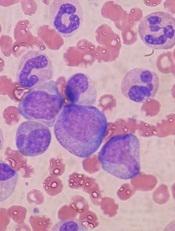
in the bone marrow
Hematopoietic stem cells (HSCs) require a highly regulated rate of protein synthesis to function properly, according to research published in Nature.
Experiments showed that a ribosomal mutation decreases protein synthesis in HSCs, and deletion of a tumor suppressor gene increases protein synthesis.
But both changes result in impaired HSC function.
In mouse models, the mutation counteracted the effects of the deletion, which restored normal HSC function and delayed leukemogenesis.
“We unveiled new areas of cellular biology that no one has seen before,” said study author Sean Morrison, PhD, of the University of Texas Southwestern Medical Center in Dallas.
“This finding not only tells us something new about stem cell regulation but opens up the ability to study differences in protein synthesis between many kinds of cells in the body. We believe there is an undiscovered world of biology that allows different kinds of cells to synthesize protein at different rates and in different ways, and that those differences are important for cellular survival.”
In a previous study, researchers discovered that, by modifying the antibiotic puromycin, they could measure protein synthesis in rare cells in vivo.
Dr Morrison and his colleagues realized they could adapt this reagent to measure protein synthesis in HSCs and other cells in the hematopoietic system.
Their analyses showed that different types of blood cells produced vastly different amounts of protein per hour. And HSCs, in particular, synthesized much less protein than other hematopoietic progenitors.
“This result suggests that blood-forming stem cells require a lower rate of protein synthesis as compared to other blood-forming cells,” Dr Morrison said.
He and his colleagues then generated mice with a mutation in a component of the ribosome (Rpl24Bst/+ mice). HSCs in these mice had a 30% lower rate of protein production than controls.
The researchers observed the opposite effect when they deleted the tumor suppressor gene Pten in mouse HSCs. These mice saw a roughly 30% increase in protein production relative to controls.
However, as in the Rpl24Bst/+ mice, HSC function was noticeably impaired in these animals.
Together, these observations suggest that HSCs require a highly regulated rate of protein synthesis, such that increases or decreases in that rate impair HSC function.
“Amazingly, when the ribosomal mutant mice and the Pten mutant mice were bred together, stem cell function returned to normal, and we greatly delayed, and in some instances entirely blocked, the development of leukemia,” Dr Morrison said.
“All of this happened because protein production in stem cells was returned to normal. It was as if two wrongs made a right.”
in the bone marrow
Hematopoietic stem cells (HSCs) require a highly regulated rate of protein synthesis to function properly, according to research published in Nature.
Experiments showed that a ribosomal mutation decreases protein synthesis in HSCs, and deletion of a tumor suppressor gene increases protein synthesis.
But both changes result in impaired HSC function.
In mouse models, the mutation counteracted the effects of the deletion, which restored normal HSC function and delayed leukemogenesis.
“We unveiled new areas of cellular biology that no one has seen before,” said study author Sean Morrison, PhD, of the University of Texas Southwestern Medical Center in Dallas.
“This finding not only tells us something new about stem cell regulation but opens up the ability to study differences in protein synthesis between many kinds of cells in the body. We believe there is an undiscovered world of biology that allows different kinds of cells to synthesize protein at different rates and in different ways, and that those differences are important for cellular survival.”
In a previous study, researchers discovered that, by modifying the antibiotic puromycin, they could measure protein synthesis in rare cells in vivo.
Dr Morrison and his colleagues realized they could adapt this reagent to measure protein synthesis in HSCs and other cells in the hematopoietic system.
Their analyses showed that different types of blood cells produced vastly different amounts of protein per hour. And HSCs, in particular, synthesized much less protein than other hematopoietic progenitors.
“This result suggests that blood-forming stem cells require a lower rate of protein synthesis as compared to other blood-forming cells,” Dr Morrison said.
He and his colleagues then generated mice with a mutation in a component of the ribosome (Rpl24Bst/+ mice). HSCs in these mice had a 30% lower rate of protein production than controls.
The researchers observed the opposite effect when they deleted the tumor suppressor gene Pten in mouse HSCs. These mice saw a roughly 30% increase in protein production relative to controls.
However, as in the Rpl24Bst/+ mice, HSC function was noticeably impaired in these animals.
Together, these observations suggest that HSCs require a highly regulated rate of protein synthesis, such that increases or decreases in that rate impair HSC function.
“Amazingly, when the ribosomal mutant mice and the Pten mutant mice were bred together, stem cell function returned to normal, and we greatly delayed, and in some instances entirely blocked, the development of leukemia,” Dr Morrison said.
“All of this happened because protein production in stem cells was returned to normal. It was as if two wrongs made a right.”
in the bone marrow
Hematopoietic stem cells (HSCs) require a highly regulated rate of protein synthesis to function properly, according to research published in Nature.
Experiments showed that a ribosomal mutation decreases protein synthesis in HSCs, and deletion of a tumor suppressor gene increases protein synthesis.
But both changes result in impaired HSC function.
In mouse models, the mutation counteracted the effects of the deletion, which restored normal HSC function and delayed leukemogenesis.
“We unveiled new areas of cellular biology that no one has seen before,” said study author Sean Morrison, PhD, of the University of Texas Southwestern Medical Center in Dallas.
“This finding not only tells us something new about stem cell regulation but opens up the ability to study differences in protein synthesis between many kinds of cells in the body. We believe there is an undiscovered world of biology that allows different kinds of cells to synthesize protein at different rates and in different ways, and that those differences are important for cellular survival.”
In a previous study, researchers discovered that, by modifying the antibiotic puromycin, they could measure protein synthesis in rare cells in vivo.
Dr Morrison and his colleagues realized they could adapt this reagent to measure protein synthesis in HSCs and other cells in the hematopoietic system.
Their analyses showed that different types of blood cells produced vastly different amounts of protein per hour. And HSCs, in particular, synthesized much less protein than other hematopoietic progenitors.
“This result suggests that blood-forming stem cells require a lower rate of protein synthesis as compared to other blood-forming cells,” Dr Morrison said.
He and his colleagues then generated mice with a mutation in a component of the ribosome (Rpl24Bst/+ mice). HSCs in these mice had a 30% lower rate of protein production than controls.
The researchers observed the opposite effect when they deleted the tumor suppressor gene Pten in mouse HSCs. These mice saw a roughly 30% increase in protein production relative to controls.
However, as in the Rpl24Bst/+ mice, HSC function was noticeably impaired in these animals.
Together, these observations suggest that HSCs require a highly regulated rate of protein synthesis, such that increases or decreases in that rate impair HSC function.
“Amazingly, when the ribosomal mutant mice and the Pten mutant mice were bred together, stem cell function returned to normal, and we greatly delayed, and in some instances entirely blocked, the development of leukemia,” Dr Morrison said.
“All of this happened because protein production in stem cells was returned to normal. It was as if two wrongs made a right.”