User login
Updated guidelines offer insight into pediatric obesity
Among other things, the guidelines offer new insight into the role of genetics in childhood obesity, provide more extensive guidance regarding bariatric surgery in adolescents, and suggest that measurements of insulin concentrations aren’t useful barometers.
The guidelines also point to research gaps in several areas and call for more studies.
Why issue new guidelines now? “Eight years have passed since the last publication. We did a very thorough job, but there’s been an incredible amount of interest in child obesity, and more information is available,” lead author Dennis M. Styne, MD, professor of pediatrics and the Yocha Dehe endowed chair in pediatric endocrinology at the University of California at Davis, said in an interview. Indeed, recent years have produced hundreds of studies into pediatric obesity, he noted.
The 49-page guidelines are cosponsored by the European Society of Endocrinology and the Pediatric Endocrine Society (J Clin Endocrinol Metab. 2017 March;102[3]:1-49).
Pediatric obesity is of special interest to endocrinologists, Dr. Styne said. “While there’s interest from many specialists now, we are at the forefront of evaluation and treatment of complications like polycystic ovary syndrome, metabolic syndrome, dyslipidemia, and type 2 diabetes.”
The guidelines provide recommendations about a wide variety of obesity-related topics including screening, diagnosis, and treatment. The Endocrine Society commissioned two systematic reviews to support the guidelines: One examined longer randomized controlled trials into medication, surgery, lifestyle, and community-based intervention treatments. The other examined how changing body mass index levels corresponded to cardiometabolic changes.
Several updated areas in the guidelines should be of special interest to endocrinologists: guidance regarding the genetic causes of pediatric obesity, the use of weight-loss medication and surgery, and the roles of insulin tests and breast-feeding, according to Dr. Styne.
In regard to genetics, the guidelines note that research suggests 7% of patients with extreme pediatric obesity “may have rare chromosomal abnormalities and/or highly penetrant genetic mutations that drive their obesity. This percentage is likely to increase with newer methods for genetic testing.”
Dr. Styne calls this finding “remarkable.” As he put it, “we didn’t appreciate that so much in the past.”
The guidelines suggest genetic testing for patients who become obese before the age of 5 years, have a family history of extreme obesity, or show clinical signs of genetic obesity syndromes, especially extreme hyperphagia.
As for the most extreme treatments for the most obese children, the guidelines recommend against weight-loss medication outside of clinical trials and note that “increasing evidence” supports bariatric surgery in teens who haven’t been able to lose enough pounds through lifestyle modification. However, “the use of surgery requires experienced teams with resources for long-term follow-up.”
The guidelines also recommend against measuring serum insulin concentrations as part of pediatric screening for obesity. “A lot of people like to get insulin levels and think it tells them about the future of the child,” Dr. Styne said. “But it doesn’t work very well.”
In another area that reflects new information, the guidelines note that breast-feeding hasn’t been definitively shown to be effective in reducing childhood obesity. “The literature is contradictory,” Dr. Styne said, although he noted that breast-feeding still has many other benefits.
The guidelines point to research gaps in several areas, including the prevention and treatment of pediatric obesity. There’s also “uncharted territory” regarding how to “effectively transition to adult care, with continued necessary monitoring, support, and intervention.”
In regard to the best treatment programs, “we didn’t come up with an answer regarding overall effectiveness,” Dr. Styne said. “School- and community-based programs have promise, but I can’t give you the percentage of success.”
As for the overall picture of pediatric obesity in the United States, “we’re in a better situation than we were 8 years ago,” he said. “Everyone is talking about the problem, and when you talk to families, they’re more aware of it.”
Still, he said, the prevalence of obesity in kids is high, estimated at 17% of those aged 2-19 years in 2014. “That’s not a good place to be,” he said. “We still have to work harder.”
The Endocrine Society funded the guidelines. Dr. Styne reports ownership interests in Teva, Bristol Myers and Organovo. Other authors report various disclosures.
Among other things, the guidelines offer new insight into the role of genetics in childhood obesity, provide more extensive guidance regarding bariatric surgery in adolescents, and suggest that measurements of insulin concentrations aren’t useful barometers.
The guidelines also point to research gaps in several areas and call for more studies.
Why issue new guidelines now? “Eight years have passed since the last publication. We did a very thorough job, but there’s been an incredible amount of interest in child obesity, and more information is available,” lead author Dennis M. Styne, MD, professor of pediatrics and the Yocha Dehe endowed chair in pediatric endocrinology at the University of California at Davis, said in an interview. Indeed, recent years have produced hundreds of studies into pediatric obesity, he noted.
The 49-page guidelines are cosponsored by the European Society of Endocrinology and the Pediatric Endocrine Society (J Clin Endocrinol Metab. 2017 March;102[3]:1-49).
Pediatric obesity is of special interest to endocrinologists, Dr. Styne said. “While there’s interest from many specialists now, we are at the forefront of evaluation and treatment of complications like polycystic ovary syndrome, metabolic syndrome, dyslipidemia, and type 2 diabetes.”
The guidelines provide recommendations about a wide variety of obesity-related topics including screening, diagnosis, and treatment. The Endocrine Society commissioned two systematic reviews to support the guidelines: One examined longer randomized controlled trials into medication, surgery, lifestyle, and community-based intervention treatments. The other examined how changing body mass index levels corresponded to cardiometabolic changes.
Several updated areas in the guidelines should be of special interest to endocrinologists: guidance regarding the genetic causes of pediatric obesity, the use of weight-loss medication and surgery, and the roles of insulin tests and breast-feeding, according to Dr. Styne.
In regard to genetics, the guidelines note that research suggests 7% of patients with extreme pediatric obesity “may have rare chromosomal abnormalities and/or highly penetrant genetic mutations that drive their obesity. This percentage is likely to increase with newer methods for genetic testing.”
Dr. Styne calls this finding “remarkable.” As he put it, “we didn’t appreciate that so much in the past.”
The guidelines suggest genetic testing for patients who become obese before the age of 5 years, have a family history of extreme obesity, or show clinical signs of genetic obesity syndromes, especially extreme hyperphagia.
As for the most extreme treatments for the most obese children, the guidelines recommend against weight-loss medication outside of clinical trials and note that “increasing evidence” supports bariatric surgery in teens who haven’t been able to lose enough pounds through lifestyle modification. However, “the use of surgery requires experienced teams with resources for long-term follow-up.”
The guidelines also recommend against measuring serum insulin concentrations as part of pediatric screening for obesity. “A lot of people like to get insulin levels and think it tells them about the future of the child,” Dr. Styne said. “But it doesn’t work very well.”
In another area that reflects new information, the guidelines note that breast-feeding hasn’t been definitively shown to be effective in reducing childhood obesity. “The literature is contradictory,” Dr. Styne said, although he noted that breast-feeding still has many other benefits.
The guidelines point to research gaps in several areas, including the prevention and treatment of pediatric obesity. There’s also “uncharted territory” regarding how to “effectively transition to adult care, with continued necessary monitoring, support, and intervention.”
In regard to the best treatment programs, “we didn’t come up with an answer regarding overall effectiveness,” Dr. Styne said. “School- and community-based programs have promise, but I can’t give you the percentage of success.”
As for the overall picture of pediatric obesity in the United States, “we’re in a better situation than we were 8 years ago,” he said. “Everyone is talking about the problem, and when you talk to families, they’re more aware of it.”
Still, he said, the prevalence of obesity in kids is high, estimated at 17% of those aged 2-19 years in 2014. “That’s not a good place to be,” he said. “We still have to work harder.”
The Endocrine Society funded the guidelines. Dr. Styne reports ownership interests in Teva, Bristol Myers and Organovo. Other authors report various disclosures.
Among other things, the guidelines offer new insight into the role of genetics in childhood obesity, provide more extensive guidance regarding bariatric surgery in adolescents, and suggest that measurements of insulin concentrations aren’t useful barometers.
The guidelines also point to research gaps in several areas and call for more studies.
Why issue new guidelines now? “Eight years have passed since the last publication. We did a very thorough job, but there’s been an incredible amount of interest in child obesity, and more information is available,” lead author Dennis M. Styne, MD, professor of pediatrics and the Yocha Dehe endowed chair in pediatric endocrinology at the University of California at Davis, said in an interview. Indeed, recent years have produced hundreds of studies into pediatric obesity, he noted.
The 49-page guidelines are cosponsored by the European Society of Endocrinology and the Pediatric Endocrine Society (J Clin Endocrinol Metab. 2017 March;102[3]:1-49).
Pediatric obesity is of special interest to endocrinologists, Dr. Styne said. “While there’s interest from many specialists now, we are at the forefront of evaluation and treatment of complications like polycystic ovary syndrome, metabolic syndrome, dyslipidemia, and type 2 diabetes.”
The guidelines provide recommendations about a wide variety of obesity-related topics including screening, diagnosis, and treatment. The Endocrine Society commissioned two systematic reviews to support the guidelines: One examined longer randomized controlled trials into medication, surgery, lifestyle, and community-based intervention treatments. The other examined how changing body mass index levels corresponded to cardiometabolic changes.
Several updated areas in the guidelines should be of special interest to endocrinologists: guidance regarding the genetic causes of pediatric obesity, the use of weight-loss medication and surgery, and the roles of insulin tests and breast-feeding, according to Dr. Styne.
In regard to genetics, the guidelines note that research suggests 7% of patients with extreme pediatric obesity “may have rare chromosomal abnormalities and/or highly penetrant genetic mutations that drive their obesity. This percentage is likely to increase with newer methods for genetic testing.”
Dr. Styne calls this finding “remarkable.” As he put it, “we didn’t appreciate that so much in the past.”
The guidelines suggest genetic testing for patients who become obese before the age of 5 years, have a family history of extreme obesity, or show clinical signs of genetic obesity syndromes, especially extreme hyperphagia.
As for the most extreme treatments for the most obese children, the guidelines recommend against weight-loss medication outside of clinical trials and note that “increasing evidence” supports bariatric surgery in teens who haven’t been able to lose enough pounds through lifestyle modification. However, “the use of surgery requires experienced teams with resources for long-term follow-up.”
The guidelines also recommend against measuring serum insulin concentrations as part of pediatric screening for obesity. “A lot of people like to get insulin levels and think it tells them about the future of the child,” Dr. Styne said. “But it doesn’t work very well.”
In another area that reflects new information, the guidelines note that breast-feeding hasn’t been definitively shown to be effective in reducing childhood obesity. “The literature is contradictory,” Dr. Styne said, although he noted that breast-feeding still has many other benefits.
The guidelines point to research gaps in several areas, including the prevention and treatment of pediatric obesity. There’s also “uncharted territory” regarding how to “effectively transition to adult care, with continued necessary monitoring, support, and intervention.”
In regard to the best treatment programs, “we didn’t come up with an answer regarding overall effectiveness,” Dr. Styne said. “School- and community-based programs have promise, but I can’t give you the percentage of success.”
As for the overall picture of pediatric obesity in the United States, “we’re in a better situation than we were 8 years ago,” he said. “Everyone is talking about the problem, and when you talk to families, they’re more aware of it.”
Still, he said, the prevalence of obesity in kids is high, estimated at 17% of those aged 2-19 years in 2014. “That’s not a good place to be,” he said. “We still have to work harder.”
The Endocrine Society funded the guidelines. Dr. Styne reports ownership interests in Teva, Bristol Myers and Organovo. Other authors report various disclosures.
Using Patch Testing to Identify Culprit Agents in Suspected Drug Eruptions


Bowel obstruction surgery complications predicted with risk tool
HOLLYWOOD, FLA. – A three-parameter scoring system predicts which patients are likely to experience complications from surgery for a small bowel obstruction.
The new tool – dubbed FAS (Functional status, American Society of Anesthesiologists [ASA] classification, and Sepsis) – focuses mostly on preoperative functional status and the presence of preoperative sepsis. It’s as accurate as a time-consuming 10-item Margenthaler system published in 2006, which requires data on blood chemistry, neurologic status, and cardiac and lung function as well as age, sepsis, and preoperative functional measures.

Small bowel obstruction is a common problem, said Dr. Asuzu, who is also a medical student at Yale University, New Haven, Conn. Whether to treat conservatively or surgically can be a complex decision. “Conservative treatment avoids postoperative complications, but there is a higher risk of occurrence and a quicker time to recurrence than with surgery. But surgery carries its own risks. If we could identify patients at high risk for complications, then perhaps we could push those patients more toward conservative treatment.”
The Margenthaler scoring system attempted to do just that. It was retrospectively validated in 2,000 patients included in the Veterans Affairs Surgical Quality Improvement Program database (VASQIP) who underwent surgery for small bowel obstruction. The authors examined about 60 clinical factors associated with postsurgical morbidity and mortality, finally settling on 10 that, when scored, accurately predicted 30-day morbidity and mortality.
These factors were:
• History of congestive heart failure
• Neurological deficit or stroke
• Chronic obstructive pulmonary disease
• Elevated white cell count
• Preoperative functional health status
• Surgery type
• Preoperative creatinine
• Wound classification
• ASA class
• Age
Dr. Asuzu and his mentor, Kevin Y. Pei, MD, FACS, wanted to come up with a more user-friendly risk assessment tool for patients undergoing open small bowel adhesiolysis. They focused on two measures of preoperative functional status: dependent vs. independent and ASA classification. Another measure – preoperative sepsis – estimated the impact of the patient’s current medical problem.
The tool was tested retrospectively in two independent cohorts extracted from the ACS National Surgery Quality Improvement Project (NSQIP) database. The initial discovery cohort comprised 6,036 patients; the replication cohort, 9,000. These patients had a mean age of 60 years and were relatively healthy, with low rates of congestive obstructive pulmonary disease, renal failure, cancer, bleeding disorders, and ascites. About half were taking antihypertensive medications and 5%, steroids.
Using multivariable regression, the authors developed a scoring system as follows:
• 6 points for each level of preoperative functional status (1 – independent, 2 – partially dependent, 3 – totally dependent)
• 6 points for each level of ASA classification (1 – no disturbance, 2 – mild disturbance, 3 – severe disturbance, 4 – life-threatening disturbance, and 5 – moribund state)
• 4 points for each level of perioperative sepsis (1 – systemic inflammatory response syndrome [SIRS], 2 – sepsis, 3 – septic shock)
In the discovery cohort, the three-item FAS tool was just as accurate as the Margenthaler tool, with an odds ratio of 1.11 vs 1.10 for any complication. The areas under the curve were 0.69 vs. 0.68. These results were virtually identical in the replication cohort.
With a combined total score of 32 as the cutoff, FAS yielded a specificity of 93% for predicting any complication and 92% for any of the six most common complications (ventilator dependence greater than 48 hours, pneumonia, superficial surgical site infection, postoperative sepsis, urinary tract infection, or unplanned intubation) in the replication cohort. The positive predictive value was 50% for any complication and 45% for the six most common complications, and the negative predictive values were 81% and nearly 85%, respectively.
“We are very pleased with how this performs,” Dr. Asuzu said in an interview. “It’s apparent that these three parameters are sufficient to tell us with a high level of specificity which patients could benefit from a more conservative approach. The next step is to prospectively validate it in a single center dataset.”
He said discriminating the most meaningful risk factors plainly showed that preoperative physical status is the best indicator of how well a patient will handle the surgery.
“It turns out that the biggest predictor of you how do after surgery is how you are doing before surgery. We can look at it as the how big the hit is, and the patient’s ability to take that hit. If their ability is already compromised, it’s a sign they might not do well.”
The “functional status” parameter may seem overly simplistic at first glance, he said. “But it really takes into account everything: the gout, the hypertension, the smoking, heart and respiratory and kidney function. All of this plays a role in functional status. I think this is why some of these more complex scores suffer. They’re not clear because there is so much overlap there.”
Dr. Asuzu had no financial disclosures.
msullivan@frontlinemedcom.com
On Twitter @Alz_Gal
HOLLYWOOD, FLA. – A three-parameter scoring system predicts which patients are likely to experience complications from surgery for a small bowel obstruction.
The new tool – dubbed FAS (Functional status, American Society of Anesthesiologists [ASA] classification, and Sepsis) – focuses mostly on preoperative functional status and the presence of preoperative sepsis. It’s as accurate as a time-consuming 10-item Margenthaler system published in 2006, which requires data on blood chemistry, neurologic status, and cardiac and lung function as well as age, sepsis, and preoperative functional measures.
Small bowel obstruction is a common problem, said Dr. Asuzu, who is also a medical student at Yale University, New Haven, Conn. Whether to treat conservatively or surgically can be a complex decision. “Conservative treatment avoids postoperative complications, but there is a higher risk of occurrence and a quicker time to recurrence than with surgery. But surgery carries its own risks. If we could identify patients at high risk for complications, then perhaps we could push those patients more toward conservative treatment.”
The Margenthaler scoring system attempted to do just that. It was retrospectively validated in 2,000 patients included in the Veterans Affairs Surgical Quality Improvement Program database (VASQIP) who underwent surgery for small bowel obstruction. The authors examined about 60 clinical factors associated with postsurgical morbidity and mortality, finally settling on 10 that, when scored, accurately predicted 30-day morbidity and mortality.
These factors were:
• History of congestive heart failure
• Neurological deficit or stroke
• Chronic obstructive pulmonary disease
• Elevated white cell count
• Preoperative functional health status
• Surgery type
• Preoperative creatinine
• Wound classification
• ASA class
• Age
Dr. Asuzu and his mentor, Kevin Y. Pei, MD, FACS, wanted to come up with a more user-friendly risk assessment tool for patients undergoing open small bowel adhesiolysis. They focused on two measures of preoperative functional status: dependent vs. independent and ASA classification. Another measure – preoperative sepsis – estimated the impact of the patient’s current medical problem.
The tool was tested retrospectively in two independent cohorts extracted from the ACS National Surgery Quality Improvement Project (NSQIP) database. The initial discovery cohort comprised 6,036 patients; the replication cohort, 9,000. These patients had a mean age of 60 years and were relatively healthy, with low rates of congestive obstructive pulmonary disease, renal failure, cancer, bleeding disorders, and ascites. About half were taking antihypertensive medications and 5%, steroids.
Using multivariable regression, the authors developed a scoring system as follows:
• 6 points for each level of preoperative functional status (1 – independent, 2 – partially dependent, 3 – totally dependent)
• 6 points for each level of ASA classification (1 – no disturbance, 2 – mild disturbance, 3 – severe disturbance, 4 – life-threatening disturbance, and 5 – moribund state)
• 4 points for each level of perioperative sepsis (1 – systemic inflammatory response syndrome [SIRS], 2 – sepsis, 3 – septic shock)
In the discovery cohort, the three-item FAS tool was just as accurate as the Margenthaler tool, with an odds ratio of 1.11 vs 1.10 for any complication. The areas under the curve were 0.69 vs. 0.68. These results were virtually identical in the replication cohort.
With a combined total score of 32 as the cutoff, FAS yielded a specificity of 93% for predicting any complication and 92% for any of the six most common complications (ventilator dependence greater than 48 hours, pneumonia, superficial surgical site infection, postoperative sepsis, urinary tract infection, or unplanned intubation) in the replication cohort. The positive predictive value was 50% for any complication and 45% for the six most common complications, and the negative predictive values were 81% and nearly 85%, respectively.
“We are very pleased with how this performs,” Dr. Asuzu said in an interview. “It’s apparent that these three parameters are sufficient to tell us with a high level of specificity which patients could benefit from a more conservative approach. The next step is to prospectively validate it in a single center dataset.”
He said discriminating the most meaningful risk factors plainly showed that preoperative physical status is the best indicator of how well a patient will handle the surgery.
“It turns out that the biggest predictor of you how do after surgery is how you are doing before surgery. We can look at it as the how big the hit is, and the patient’s ability to take that hit. If their ability is already compromised, it’s a sign they might not do well.”
The “functional status” parameter may seem overly simplistic at first glance, he said. “But it really takes into account everything: the gout, the hypertension, the smoking, heart and respiratory and kidney function. All of this plays a role in functional status. I think this is why some of these more complex scores suffer. They’re not clear because there is so much overlap there.”
Dr. Asuzu had no financial disclosures.
msullivan@frontlinemedcom.com
On Twitter @Alz_Gal
HOLLYWOOD, FLA. – A three-parameter scoring system predicts which patients are likely to experience complications from surgery for a small bowel obstruction.
The new tool – dubbed FAS (Functional status, American Society of Anesthesiologists [ASA] classification, and Sepsis) – focuses mostly on preoperative functional status and the presence of preoperative sepsis. It’s as accurate as a time-consuming 10-item Margenthaler system published in 2006, which requires data on blood chemistry, neurologic status, and cardiac and lung function as well as age, sepsis, and preoperative functional measures.
Small bowel obstruction is a common problem, said Dr. Asuzu, who is also a medical student at Yale University, New Haven, Conn. Whether to treat conservatively or surgically can be a complex decision. “Conservative treatment avoids postoperative complications, but there is a higher risk of occurrence and a quicker time to recurrence than with surgery. But surgery carries its own risks. If we could identify patients at high risk for complications, then perhaps we could push those patients more toward conservative treatment.”
The Margenthaler scoring system attempted to do just that. It was retrospectively validated in 2,000 patients included in the Veterans Affairs Surgical Quality Improvement Program database (VASQIP) who underwent surgery for small bowel obstruction. The authors examined about 60 clinical factors associated with postsurgical morbidity and mortality, finally settling on 10 that, when scored, accurately predicted 30-day morbidity and mortality.
These factors were:
• History of congestive heart failure
• Neurological deficit or stroke
• Chronic obstructive pulmonary disease
• Elevated white cell count
• Preoperative functional health status
• Surgery type
• Preoperative creatinine
• Wound classification
• ASA class
• Age
Dr. Asuzu and his mentor, Kevin Y. Pei, MD, FACS, wanted to come up with a more user-friendly risk assessment tool for patients undergoing open small bowel adhesiolysis. They focused on two measures of preoperative functional status: dependent vs. independent and ASA classification. Another measure – preoperative sepsis – estimated the impact of the patient’s current medical problem.
The tool was tested retrospectively in two independent cohorts extracted from the ACS National Surgery Quality Improvement Project (NSQIP) database. The initial discovery cohort comprised 6,036 patients; the replication cohort, 9,000. These patients had a mean age of 60 years and were relatively healthy, with low rates of congestive obstructive pulmonary disease, renal failure, cancer, bleeding disorders, and ascites. About half were taking antihypertensive medications and 5%, steroids.
Using multivariable regression, the authors developed a scoring system as follows:
• 6 points for each level of preoperative functional status (1 – independent, 2 – partially dependent, 3 – totally dependent)
• 6 points for each level of ASA classification (1 – no disturbance, 2 – mild disturbance, 3 – severe disturbance, 4 – life-threatening disturbance, and 5 – moribund state)
• 4 points for each level of perioperative sepsis (1 – systemic inflammatory response syndrome [SIRS], 2 – sepsis, 3 – septic shock)
In the discovery cohort, the three-item FAS tool was just as accurate as the Margenthaler tool, with an odds ratio of 1.11 vs 1.10 for any complication. The areas under the curve were 0.69 vs. 0.68. These results were virtually identical in the replication cohort.
With a combined total score of 32 as the cutoff, FAS yielded a specificity of 93% for predicting any complication and 92% for any of the six most common complications (ventilator dependence greater than 48 hours, pneumonia, superficial surgical site infection, postoperative sepsis, urinary tract infection, or unplanned intubation) in the replication cohort. The positive predictive value was 50% for any complication and 45% for the six most common complications, and the negative predictive values were 81% and nearly 85%, respectively.
“We are very pleased with how this performs,” Dr. Asuzu said in an interview. “It’s apparent that these three parameters are sufficient to tell us with a high level of specificity which patients could benefit from a more conservative approach. The next step is to prospectively validate it in a single center dataset.”
He said discriminating the most meaningful risk factors plainly showed that preoperative physical status is the best indicator of how well a patient will handle the surgery.
“It turns out that the biggest predictor of you how do after surgery is how you are doing before surgery. We can look at it as the how big the hit is, and the patient’s ability to take that hit. If their ability is already compromised, it’s a sign they might not do well.”
The “functional status” parameter may seem overly simplistic at first glance, he said. “But it really takes into account everything: the gout, the hypertension, the smoking, heart and respiratory and kidney function. All of this plays a role in functional status. I think this is why some of these more complex scores suffer. They’re not clear because there is so much overlap there.”
Dr. Asuzu had no financial disclosures.
msullivan@frontlinemedcom.com
On Twitter @Alz_Gal
AT THE EAST ANNUAL SCIENTIFIC ASSEMBLY
Key clinical point: A simple, three-item assessment tool predicted complications from small bowel obstruction surgery just as well as a more complex 10-item system.
Major finding: The FAS tool had a specificity of 93% for any complication and 92% for the six most common complications.
Data source: The tool was retrospectively validated in two cohorts comprising more than 15,000 patients.
Disclosures: Dr. Asuzu had no financial disclosures.

Rapid deterioration of type 2 diabetes may be marker for early pancreatic cancer
AMSTERDAM – Incretin-based antidiabetic drugs do not appear to increase risk for pancreatic cancer, but the acute need for these drugs because of rapid worsening of type 2 diabetes may be a marker for early, occult pancreatic adenocarcinoma, investigators cautioned.
Results of a study of nearly 825,000 patients with type 2 diabetes in Belgium and northern Italy showed that patients who required a first-time prescription for an incretin-based antidiabetic drug had a 3.5-fold greater risk of being diagnosed with pancreatic cancer within 3 months, compared with patients who could be safely maintained on an oral noninsulin, nonincretin antidiabetic drug (NIAD), reported Alice Koechlin of the International Prevention Research Institute in Lyon, France, on behalf of coauthor Phillipe Autier, MD, also of the institute.
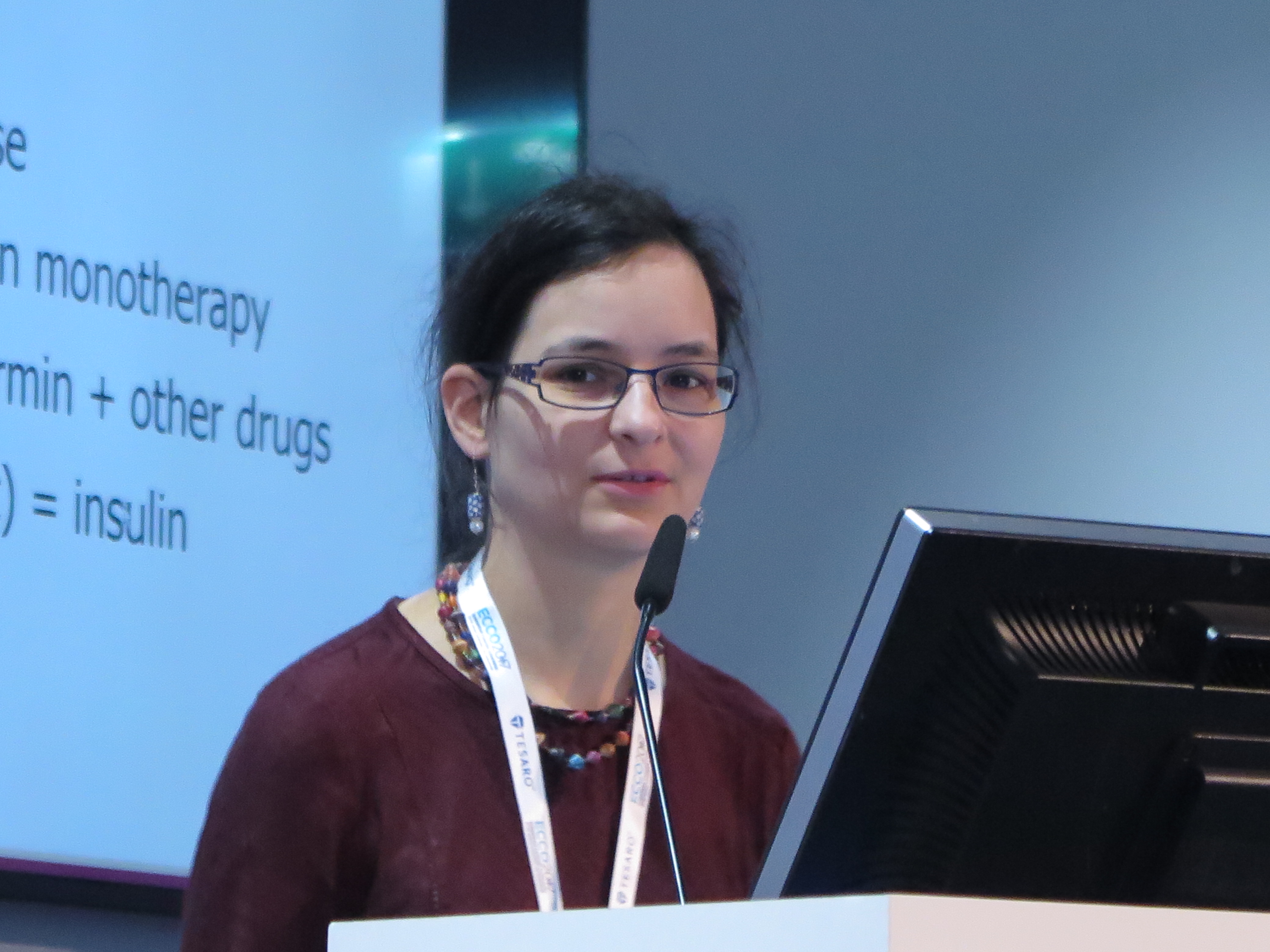
“We think that, at the beginning, there is an asymptomatic pancreatic cancer, with no clinical findings, and its first health effects are to disturb glucose metabolism. Then patients are diagnosed with type 2 diabetes, they are prescribed antidiabetic drugs, and then, as the cancer progresses but is still asymptomatic, the diabetes is less well controlled, and the patients shift to incretins and insulin more rapidly. And when the symptoms [of cancer] appear, it is too late for treatment,” Ms. Koechlin said at an annual congress sponsored by the European Cancer Organisation.
Incretin hormones stimulate the release of insulin from the pancreas. Incretin-based therapies such as dipeptidyl peptidase-4 inhibitors (DPP4 inhibitors, or gliptins) and glucagon-like peptide-1 receptor agonists (GLP-1 RAs), are generally held in reserve for patients with type 2 diabetes who have poor or inadequate glycemic control on oral agents such as metformin or the sulfonylureas.
Data from laboratory studies have suggested that incretins in general, and GLP-1 RAs in particular may increase risk of pancreatic cancer because of their direct action on the gland, Ms. Koechlin said.
As a part of postmarketing studies of the GLP-1 RAs requested by the European Medicines Agency (EMA), the investigators drew data from the Belgian Cancer Register on 11 million people in Belgium and from a registry maintained by the University of Milano-Bicocca, which covers approximately 10 million people in the Lombardy region of Italy.
They identified patients with type 2 diabetes who received a first prescription of an incretin drug or NIAD from January 2008 through the end of 2013 in Belgium, and through the end of 2012 in Italy.
They found that on first blush, incretin use did indeed appear to be associated with risk of pancreatic cancer, compared with NIAD use. Hazard ratios for cancer with incretin were 2.12 in Belgium (95% confidence interval, 1.60-2.81) and 2.17 (95% CI, 1.50-3.13) in Lombardy. The combined HR was 2.14 (95% CI, 1.71-2.67).
“In Belgium, 25% of cases were diagnosed within 90 days, and in Lombardy it was 18%. After the first year, the proportion of diagnosed pancreatic cancers dropped dramatically,” Ms. Koechlin said.
When they looked at the risk of cancer from incretin use over time, however, they found that the risk was highest at 3.5-fold, compared with NIAD use, within 3 months of starting a first prescription, but diminished to 2.3-fold during months 3-6, 2-fold for months 6-12, and 1.7-fold after the first year.
“This is not compatible with a causal relationship, because if there was a causal relationship we would observe a small risk for shorter duration of use, and higher risk for higher duration of use,” she said.
To support their findings, they looked at the relationship between cancer risk over time and first prescriptions for NIADs, and saw a similar decrease in risk as the duration of therapy increased.
They then looked at the relationship between a first prescription for insulin during follow-up, and saw significant increases in cancer risk, compared with patients who did not require insulin, with an HR in Belgium of 6.61 (95% CI, 5.63-7.77), and in Lombardy of 7.46 (95% CI, 6.00-9.35).
The perceived association between incretin drugs and cancer risk, therefore, may be due to “protopathic” or “reverse causation” bias, Ms. Koechlin said.
“Should patients diagnosed with diabetes be screened for pancreatic cancer? For now, no such test exists, but we could imagine in the future something like this: If the patient is diagnosed with diabetes, and the diabetes degrades rapidly, there could be some tests to identify markers for pancreatic cancer, and the pancreatic cancer could then be diagnosed at early stage, where there is more chance of curing the disease,” she said.
The study results raise questions about how practitioners should discuss potential risks of pancreatic cancer in patients with type 2 diabetes, commented Ian Banks, MD, president of the European Men’s Health Forum and cochair of ECCO2017.
“What is the best way of getting this message out without causing unnecessary concern, while at the same time raising the level of suspicion to go and see their GP?” he asked Ms. Koechlin, who presented a summary of the data in a briefing.
“It’s quite a difficult question, actually, because as you said, it could cause unnecessary worries,” and there are “no easy answers,” she said.
The study was sponsored by Sanofi. The investigators and Dr. Banks reported no conflicts of interest.
AMSTERDAM – Incretin-based antidiabetic drugs do not appear to increase risk for pancreatic cancer, but the acute need for these drugs because of rapid worsening of type 2 diabetes may be a marker for early, occult pancreatic adenocarcinoma, investigators cautioned.
Results of a study of nearly 825,000 patients with type 2 diabetes in Belgium and northern Italy showed that patients who required a first-time prescription for an incretin-based antidiabetic drug had a 3.5-fold greater risk of being diagnosed with pancreatic cancer within 3 months, compared with patients who could be safely maintained on an oral noninsulin, nonincretin antidiabetic drug (NIAD), reported Alice Koechlin of the International Prevention Research Institute in Lyon, France, on behalf of coauthor Phillipe Autier, MD, also of the institute.
“We think that, at the beginning, there is an asymptomatic pancreatic cancer, with no clinical findings, and its first health effects are to disturb glucose metabolism. Then patients are diagnosed with type 2 diabetes, they are prescribed antidiabetic drugs, and then, as the cancer progresses but is still asymptomatic, the diabetes is less well controlled, and the patients shift to incretins and insulin more rapidly. And when the symptoms [of cancer] appear, it is too late for treatment,” Ms. Koechlin said at an annual congress sponsored by the European Cancer Organisation.
Incretin hormones stimulate the release of insulin from the pancreas. Incretin-based therapies such as dipeptidyl peptidase-4 inhibitors (DPP4 inhibitors, or gliptins) and glucagon-like peptide-1 receptor agonists (GLP-1 RAs), are generally held in reserve for patients with type 2 diabetes who have poor or inadequate glycemic control on oral agents such as metformin or the sulfonylureas.
Data from laboratory studies have suggested that incretins in general, and GLP-1 RAs in particular may increase risk of pancreatic cancer because of their direct action on the gland, Ms. Koechlin said.
As a part of postmarketing studies of the GLP-1 RAs requested by the European Medicines Agency (EMA), the investigators drew data from the Belgian Cancer Register on 11 million people in Belgium and from a registry maintained by the University of Milano-Bicocca, which covers approximately 10 million people in the Lombardy region of Italy.
They identified patients with type 2 diabetes who received a first prescription of an incretin drug or NIAD from January 2008 through the end of 2013 in Belgium, and through the end of 2012 in Italy.
They found that on first blush, incretin use did indeed appear to be associated with risk of pancreatic cancer, compared with NIAD use. Hazard ratios for cancer with incretin were 2.12 in Belgium (95% confidence interval, 1.60-2.81) and 2.17 (95% CI, 1.50-3.13) in Lombardy. The combined HR was 2.14 (95% CI, 1.71-2.67).
“In Belgium, 25% of cases were diagnosed within 90 days, and in Lombardy it was 18%. After the first year, the proportion of diagnosed pancreatic cancers dropped dramatically,” Ms. Koechlin said.
When they looked at the risk of cancer from incretin use over time, however, they found that the risk was highest at 3.5-fold, compared with NIAD use, within 3 months of starting a first prescription, but diminished to 2.3-fold during months 3-6, 2-fold for months 6-12, and 1.7-fold after the first year.
“This is not compatible with a causal relationship, because if there was a causal relationship we would observe a small risk for shorter duration of use, and higher risk for higher duration of use,” she said.
To support their findings, they looked at the relationship between cancer risk over time and first prescriptions for NIADs, and saw a similar decrease in risk as the duration of therapy increased.
They then looked at the relationship between a first prescription for insulin during follow-up, and saw significant increases in cancer risk, compared with patients who did not require insulin, with an HR in Belgium of 6.61 (95% CI, 5.63-7.77), and in Lombardy of 7.46 (95% CI, 6.00-9.35).
The perceived association between incretin drugs and cancer risk, therefore, may be due to “protopathic” or “reverse causation” bias, Ms. Koechlin said.
“Should patients diagnosed with diabetes be screened for pancreatic cancer? For now, no such test exists, but we could imagine in the future something like this: If the patient is diagnosed with diabetes, and the diabetes degrades rapidly, there could be some tests to identify markers for pancreatic cancer, and the pancreatic cancer could then be diagnosed at early stage, where there is more chance of curing the disease,” she said.
The study results raise questions about how practitioners should discuss potential risks of pancreatic cancer in patients with type 2 diabetes, commented Ian Banks, MD, president of the European Men’s Health Forum and cochair of ECCO2017.
“What is the best way of getting this message out without causing unnecessary concern, while at the same time raising the level of suspicion to go and see their GP?” he asked Ms. Koechlin, who presented a summary of the data in a briefing.
“It’s quite a difficult question, actually, because as you said, it could cause unnecessary worries,” and there are “no easy answers,” she said.
The study was sponsored by Sanofi. The investigators and Dr. Banks reported no conflicts of interest.
AMSTERDAM – Incretin-based antidiabetic drugs do not appear to increase risk for pancreatic cancer, but the acute need for these drugs because of rapid worsening of type 2 diabetes may be a marker for early, occult pancreatic adenocarcinoma, investigators cautioned.
Results of a study of nearly 825,000 patients with type 2 diabetes in Belgium and northern Italy showed that patients who required a first-time prescription for an incretin-based antidiabetic drug had a 3.5-fold greater risk of being diagnosed with pancreatic cancer within 3 months, compared with patients who could be safely maintained on an oral noninsulin, nonincretin antidiabetic drug (NIAD), reported Alice Koechlin of the International Prevention Research Institute in Lyon, France, on behalf of coauthor Phillipe Autier, MD, also of the institute.
“We think that, at the beginning, there is an asymptomatic pancreatic cancer, with no clinical findings, and its first health effects are to disturb glucose metabolism. Then patients are diagnosed with type 2 diabetes, they are prescribed antidiabetic drugs, and then, as the cancer progresses but is still asymptomatic, the diabetes is less well controlled, and the patients shift to incretins and insulin more rapidly. And when the symptoms [of cancer] appear, it is too late for treatment,” Ms. Koechlin said at an annual congress sponsored by the European Cancer Organisation.
Incretin hormones stimulate the release of insulin from the pancreas. Incretin-based therapies such as dipeptidyl peptidase-4 inhibitors (DPP4 inhibitors, or gliptins) and glucagon-like peptide-1 receptor agonists (GLP-1 RAs), are generally held in reserve for patients with type 2 diabetes who have poor or inadequate glycemic control on oral agents such as metformin or the sulfonylureas.
Data from laboratory studies have suggested that incretins in general, and GLP-1 RAs in particular may increase risk of pancreatic cancer because of their direct action on the gland, Ms. Koechlin said.
As a part of postmarketing studies of the GLP-1 RAs requested by the European Medicines Agency (EMA), the investigators drew data from the Belgian Cancer Register on 11 million people in Belgium and from a registry maintained by the University of Milano-Bicocca, which covers approximately 10 million people in the Lombardy region of Italy.
They identified patients with type 2 diabetes who received a first prescription of an incretin drug or NIAD from January 2008 through the end of 2013 in Belgium, and through the end of 2012 in Italy.
They found that on first blush, incretin use did indeed appear to be associated with risk of pancreatic cancer, compared with NIAD use. Hazard ratios for cancer with incretin were 2.12 in Belgium (95% confidence interval, 1.60-2.81) and 2.17 (95% CI, 1.50-3.13) in Lombardy. The combined HR was 2.14 (95% CI, 1.71-2.67).
“In Belgium, 25% of cases were diagnosed within 90 days, and in Lombardy it was 18%. After the first year, the proportion of diagnosed pancreatic cancers dropped dramatically,” Ms. Koechlin said.
When they looked at the risk of cancer from incretin use over time, however, they found that the risk was highest at 3.5-fold, compared with NIAD use, within 3 months of starting a first prescription, but diminished to 2.3-fold during months 3-6, 2-fold for months 6-12, and 1.7-fold after the first year.
“This is not compatible with a causal relationship, because if there was a causal relationship we would observe a small risk for shorter duration of use, and higher risk for higher duration of use,” she said.
To support their findings, they looked at the relationship between cancer risk over time and first prescriptions for NIADs, and saw a similar decrease in risk as the duration of therapy increased.
They then looked at the relationship between a first prescription for insulin during follow-up, and saw significant increases in cancer risk, compared with patients who did not require insulin, with an HR in Belgium of 6.61 (95% CI, 5.63-7.77), and in Lombardy of 7.46 (95% CI, 6.00-9.35).
The perceived association between incretin drugs and cancer risk, therefore, may be due to “protopathic” or “reverse causation” bias, Ms. Koechlin said.
“Should patients diagnosed with diabetes be screened for pancreatic cancer? For now, no such test exists, but we could imagine in the future something like this: If the patient is diagnosed with diabetes, and the diabetes degrades rapidly, there could be some tests to identify markers for pancreatic cancer, and the pancreatic cancer could then be diagnosed at early stage, where there is more chance of curing the disease,” she said.
The study results raise questions about how practitioners should discuss potential risks of pancreatic cancer in patients with type 2 diabetes, commented Ian Banks, MD, president of the European Men’s Health Forum and cochair of ECCO2017.
“What is the best way of getting this message out without causing unnecessary concern, while at the same time raising the level of suspicion to go and see their GP?” he asked Ms. Koechlin, who presented a summary of the data in a briefing.
“It’s quite a difficult question, actually, because as you said, it could cause unnecessary worries,” and there are “no easy answers,” she said.
The study was sponsored by Sanofi. The investigators and Dr. Banks reported no conflicts of interest.
AT ECCO2017
Key clinical point: Rapid deterioration of type 2 diabetes may signal an underlying pancreatic lesion.
Major finding: A first incretin prescription was associated with a 3.5-fold risk for pancreatic cancer within 3 months, but the risk diminished over time, indicating no causation.
Data source: Retrospective Belgian and Italian registry data study of 824,688 patients with type 2 diabetes.
Disclosures: The study was sponsored by Sanofi. The investigators and Dr. Banks reported no conflicts of interest.

New CF guidelines include lower sweat chloride threshold
Updated guidelines for the diagnosis and treatment of cystic fibrosis (CF) include two major changes.
The first important update is that clinicians use the latest classifications of the specific CF transmembrane conductance regulator (CFTR) gene mutations, from the Clinical and Functional TRanslation of CFTR (CFTR2) database, to aid with making a CF diagnosis in any patient, newborn to adult. The other of these changes relates to the chloride concentration level used to confirm CF diagnosis through a sweat test. Under the new guidelines, the sweat chloride threshold for “possible” CF or a CF-related disease was reduced to 30 mmol/L of chloride concentration from 40 mmol/L across all ages. The guidelines, written by an international team of collaborators and published by the Cystic Fibrosis Foundation, are available online in the Journal of Pediatrics (J Pediatr 2017 Feb;181(suppl):S4-S15.e1. doi: 10.1016/j.jpeds.2016.09.064).
Since its inception in 2008, the CFTR2 project has described 300 of the 2,000 known CF-related mutations and their various functional and clinical impacts. The project involves amassing phenotypic and genotypic information from patient registries to collect, quantify, and describe mutations reported in individuals with CF. Such mutations are categorized as CF-causing, carrying a variety of potential clinical consequences, non–cystic fibrosis causing, or unknown. The previous guidelines, written in 2008, relied on a 23-mutation panel from the American College of Medical Genetics and Genomics and the American Congress of Obstetricians and Gynecologists.
“We’ve more precisely defined what cystic fibrosis is,” Patrick R. Sosnay, MD, assistant professor of medicine at Johns Hopkins University, Baltimore, and coauthor of the guidelines, said in a statement. “The stakes in categorizing a mutation are particularly high. For example, claiming that a mutation 100% causes cystic fibrosis may affect people’s reproductive decisions if they believe their child will have the mutation.”
In the CFTR2 project, the “disease-liability” of each mutation is evaluated through a combination of sweat chloride and functional activity identified in cell-based systems, according to a supplement published simultaneously with the updated guidelines (J Pediatr 2017 Feb;181(suppl):S52-S57.e2. doi: 10.1016/j.jpeds.2016.09.068). Data from this project led to the discovery of a cohort of 746 persons diagnosed with CF despite sweat chloride levels less than 60 mmol/L. These findings were the basis for the guideline authors’ decision to lower the threshold of chloride concentration in sweat in order for an individual to be considered having a possible CF diagnosis, according to the supplement.
The guidelines include 27 approved consensus statements spanning four overlapping categories, and applying to screened and nonscreened populations; newborn screened populations and fetuses undergoing prenatal testing; infants with an uncertain diagnosis and designated as having either CFTR gene-related metabolic syndrome or being CF-screen positive, inconclusive diagnosis; and nonscreened patients who present with symptoms, including children before newborn screening implementation, those with false negative tests and older, nonscreened patients.
Although not specified in the consensus statements, the authors of a second supplement published simultaneously with the updated guidelines (J Pediatr 2017;181(suppl):S27-S32.e1. doi: 10.1016/j.jpeds.2016.09.063), wrote that they supported genotyping all individuals diagnosed with CF, even if physiologic tests establish the diagnosis, to better understand the disease’s genetic epidemiology and to refine future therapies. “If the identified mutations are known to be associated with variable outcomes, or have unknown consequence, that genotype may not result in a CF phenotype. In these cases, other tests of CFTR function may help,” this supplement’s authors concluded.
The updated guideline authors recommend avoiding the use of terms such as “atypical” or “nonclassical” CF, as there is no consensus on the specific taxonomy of CF, since the genetic data are still emerging.
When administering a newborn test, the guidelines warn that the heterogenous nature of newborn screening often leads to false positive results, thus the need for the sweat test. Although obtaining an adequate sweat specimen for chloride measurements can be difficult, the authors say it is possible, especially in full-term infants aged 1 month. Repeat sweat testing is recommended, as is nasal potential difference (NPD) and intestinal current measurement (ICM) in some cases.
Another change to the guidelines is that newborns with a high immunoreactive trypsinogen level and inconclusive CFTR functional and genetic testing may now be designated as having CFTR-related metabolic syndrome/CF screen positive inconclusive diagnosis (CRMS/CFSPID), instead of CFTR-related metabolic syndrome or CF screen positive, inconclusive diagnosis. Regarding changes to screening for CRMS/CFSPID, the older guidelines called for such an assessment by age 2 months, repeated every 6-12 months, while the new guidelines say their recommendation on the duration and frequency of follow-up “remains to be determined.”
The authors of the first supplement decry the lack of standardized CF diagnostic criteria for those diagnosed with CF outside of the neonatal period, and urge clinicians to rely on clinical evidence including organ pathologies typical in CF, such as bronchiectasis or pancreatic insufficiency, along with testing for the presence of CFTR dysfunction with sweat chloride testing, CFTR molecular genetic analysis, or CFTR physiologic tests.
In contrast, the second supplement states that “clinical suspicion should always take precedence” in making a CF diagnoses for individuals in this age group.
Dr. Sosnay and Philip M. Farrell, MD, PhD, a coauthor of the guidelines, received funds from the Cystic Fibrosis Foundation, where guideline coauthor Terry B. White, PhD, is an employee. Kris De Boeck, MD, a coauthor of the first supplement, receives funding from Vertex Pharmaceuticals, Ablynx, Aptalis, Galapagos, Gilead, Pharmaxis, and PTC Therapeutics. The guideline and supplements’ other authors have no disclosures.
Susan Millard, MD, FCCP, comments: A comprehensive supplement in the Journal of Pediatrics entitled, “Introduction to ‘Cystic Fibrosis Foundation Consensus Guidelines for Diagnosis of Cystic Fibrosis,’ ” reflects information introduced at the North American Cystic Fibrosis Conference in the fall 2016 (J Pediatr.2017 Feb;181[suppl]:S1-3. doi:10.1016/jpeds.2016.09.062).

Susan Millard, MD, FCCP, comments: A comprehensive supplement in the Journal of Pediatrics entitled, “Introduction to ‘Cystic Fibrosis Foundation Consensus Guidelines for Diagnosis of Cystic Fibrosis,’ ” reflects information introduced at the North American Cystic Fibrosis Conference in the fall 2016 (J Pediatr.2017 Feb;181[suppl]:S1-3. doi:10.1016/jpeds.2016.09.062).
Susan Millard, MD, FCCP, comments: A comprehensive supplement in the Journal of Pediatrics entitled, “Introduction to ‘Cystic Fibrosis Foundation Consensus Guidelines for Diagnosis of Cystic Fibrosis,’ ” reflects information introduced at the North American Cystic Fibrosis Conference in the fall 2016 (J Pediatr.2017 Feb;181[suppl]:S1-3. doi:10.1016/jpeds.2016.09.062).
Updated guidelines for the diagnosis and treatment of cystic fibrosis (CF) include two major changes.
The first important update is that clinicians use the latest classifications of the specific CF transmembrane conductance regulator (CFTR) gene mutations, from the Clinical and Functional TRanslation of CFTR (CFTR2) database, to aid with making a CF diagnosis in any patient, newborn to adult. The other of these changes relates to the chloride concentration level used to confirm CF diagnosis through a sweat test. Under the new guidelines, the sweat chloride threshold for “possible” CF or a CF-related disease was reduced to 30 mmol/L of chloride concentration from 40 mmol/L across all ages. The guidelines, written by an international team of collaborators and published by the Cystic Fibrosis Foundation, are available online in the Journal of Pediatrics (J Pediatr 2017 Feb;181(suppl):S4-S15.e1. doi: 10.1016/j.jpeds.2016.09.064).
Since its inception in 2008, the CFTR2 project has described 300 of the 2,000 known CF-related mutations and their various functional and clinical impacts. The project involves amassing phenotypic and genotypic information from patient registries to collect, quantify, and describe mutations reported in individuals with CF. Such mutations are categorized as CF-causing, carrying a variety of potential clinical consequences, non–cystic fibrosis causing, or unknown. The previous guidelines, written in 2008, relied on a 23-mutation panel from the American College of Medical Genetics and Genomics and the American Congress of Obstetricians and Gynecologists.
“We’ve more precisely defined what cystic fibrosis is,” Patrick R. Sosnay, MD, assistant professor of medicine at Johns Hopkins University, Baltimore, and coauthor of the guidelines, said in a statement. “The stakes in categorizing a mutation are particularly high. For example, claiming that a mutation 100% causes cystic fibrosis may affect people’s reproductive decisions if they believe their child will have the mutation.”
In the CFTR2 project, the “disease-liability” of each mutation is evaluated through a combination of sweat chloride and functional activity identified in cell-based systems, according to a supplement published simultaneously with the updated guidelines (J Pediatr 2017 Feb;181(suppl):S52-S57.e2. doi: 10.1016/j.jpeds.2016.09.068). Data from this project led to the discovery of a cohort of 746 persons diagnosed with CF despite sweat chloride levels less than 60 mmol/L. These findings were the basis for the guideline authors’ decision to lower the threshold of chloride concentration in sweat in order for an individual to be considered having a possible CF diagnosis, according to the supplement.
The guidelines include 27 approved consensus statements spanning four overlapping categories, and applying to screened and nonscreened populations; newborn screened populations and fetuses undergoing prenatal testing; infants with an uncertain diagnosis and designated as having either CFTR gene-related metabolic syndrome or being CF-screen positive, inconclusive diagnosis; and nonscreened patients who present with symptoms, including children before newborn screening implementation, those with false negative tests and older, nonscreened patients.
Although not specified in the consensus statements, the authors of a second supplement published simultaneously with the updated guidelines (J Pediatr 2017;181(suppl):S27-S32.e1. doi: 10.1016/j.jpeds.2016.09.063), wrote that they supported genotyping all individuals diagnosed with CF, even if physiologic tests establish the diagnosis, to better understand the disease’s genetic epidemiology and to refine future therapies. “If the identified mutations are known to be associated with variable outcomes, or have unknown consequence, that genotype may not result in a CF phenotype. In these cases, other tests of CFTR function may help,” this supplement’s authors concluded.
The updated guideline authors recommend avoiding the use of terms such as “atypical” or “nonclassical” CF, as there is no consensus on the specific taxonomy of CF, since the genetic data are still emerging.
When administering a newborn test, the guidelines warn that the heterogenous nature of newborn screening often leads to false positive results, thus the need for the sweat test. Although obtaining an adequate sweat specimen for chloride measurements can be difficult, the authors say it is possible, especially in full-term infants aged 1 month. Repeat sweat testing is recommended, as is nasal potential difference (NPD) and intestinal current measurement (ICM) in some cases.
Another change to the guidelines is that newborns with a high immunoreactive trypsinogen level and inconclusive CFTR functional and genetic testing may now be designated as having CFTR-related metabolic syndrome/CF screen positive inconclusive diagnosis (CRMS/CFSPID), instead of CFTR-related metabolic syndrome or CF screen positive, inconclusive diagnosis. Regarding changes to screening for CRMS/CFSPID, the older guidelines called for such an assessment by age 2 months, repeated every 6-12 months, while the new guidelines say their recommendation on the duration and frequency of follow-up “remains to be determined.”
The authors of the first supplement decry the lack of standardized CF diagnostic criteria for those diagnosed with CF outside of the neonatal period, and urge clinicians to rely on clinical evidence including organ pathologies typical in CF, such as bronchiectasis or pancreatic insufficiency, along with testing for the presence of CFTR dysfunction with sweat chloride testing, CFTR molecular genetic analysis, or CFTR physiologic tests.
In contrast, the second supplement states that “clinical suspicion should always take precedence” in making a CF diagnoses for individuals in this age group.
Dr. Sosnay and Philip M. Farrell, MD, PhD, a coauthor of the guidelines, received funds from the Cystic Fibrosis Foundation, where guideline coauthor Terry B. White, PhD, is an employee. Kris De Boeck, MD, a coauthor of the first supplement, receives funding from Vertex Pharmaceuticals, Ablynx, Aptalis, Galapagos, Gilead, Pharmaxis, and PTC Therapeutics. The guideline and supplements’ other authors have no disclosures.
Updated guidelines for the diagnosis and treatment of cystic fibrosis (CF) include two major changes.
The first important update is that clinicians use the latest classifications of the specific CF transmembrane conductance regulator (CFTR) gene mutations, from the Clinical and Functional TRanslation of CFTR (CFTR2) database, to aid with making a CF diagnosis in any patient, newborn to adult. The other of these changes relates to the chloride concentration level used to confirm CF diagnosis through a sweat test. Under the new guidelines, the sweat chloride threshold for “possible” CF or a CF-related disease was reduced to 30 mmol/L of chloride concentration from 40 mmol/L across all ages. The guidelines, written by an international team of collaborators and published by the Cystic Fibrosis Foundation, are available online in the Journal of Pediatrics (J Pediatr 2017 Feb;181(suppl):S4-S15.e1. doi: 10.1016/j.jpeds.2016.09.064).
Since its inception in 2008, the CFTR2 project has described 300 of the 2,000 known CF-related mutations and their various functional and clinical impacts. The project involves amassing phenotypic and genotypic information from patient registries to collect, quantify, and describe mutations reported in individuals with CF. Such mutations are categorized as CF-causing, carrying a variety of potential clinical consequences, non–cystic fibrosis causing, or unknown. The previous guidelines, written in 2008, relied on a 23-mutation panel from the American College of Medical Genetics and Genomics and the American Congress of Obstetricians and Gynecologists.
“We’ve more precisely defined what cystic fibrosis is,” Patrick R. Sosnay, MD, assistant professor of medicine at Johns Hopkins University, Baltimore, and coauthor of the guidelines, said in a statement. “The stakes in categorizing a mutation are particularly high. For example, claiming that a mutation 100% causes cystic fibrosis may affect people’s reproductive decisions if they believe their child will have the mutation.”
In the CFTR2 project, the “disease-liability” of each mutation is evaluated through a combination of sweat chloride and functional activity identified in cell-based systems, according to a supplement published simultaneously with the updated guidelines (J Pediatr 2017 Feb;181(suppl):S52-S57.e2. doi: 10.1016/j.jpeds.2016.09.068). Data from this project led to the discovery of a cohort of 746 persons diagnosed with CF despite sweat chloride levels less than 60 mmol/L. These findings were the basis for the guideline authors’ decision to lower the threshold of chloride concentration in sweat in order for an individual to be considered having a possible CF diagnosis, according to the supplement.
The guidelines include 27 approved consensus statements spanning four overlapping categories, and applying to screened and nonscreened populations; newborn screened populations and fetuses undergoing prenatal testing; infants with an uncertain diagnosis and designated as having either CFTR gene-related metabolic syndrome or being CF-screen positive, inconclusive diagnosis; and nonscreened patients who present with symptoms, including children before newborn screening implementation, those with false negative tests and older, nonscreened patients.
Although not specified in the consensus statements, the authors of a second supplement published simultaneously with the updated guidelines (J Pediatr 2017;181(suppl):S27-S32.e1. doi: 10.1016/j.jpeds.2016.09.063), wrote that they supported genotyping all individuals diagnosed with CF, even if physiologic tests establish the diagnosis, to better understand the disease’s genetic epidemiology and to refine future therapies. “If the identified mutations are known to be associated with variable outcomes, or have unknown consequence, that genotype may not result in a CF phenotype. In these cases, other tests of CFTR function may help,” this supplement’s authors concluded.
The updated guideline authors recommend avoiding the use of terms such as “atypical” or “nonclassical” CF, as there is no consensus on the specific taxonomy of CF, since the genetic data are still emerging.
When administering a newborn test, the guidelines warn that the heterogenous nature of newborn screening often leads to false positive results, thus the need for the sweat test. Although obtaining an adequate sweat specimen for chloride measurements can be difficult, the authors say it is possible, especially in full-term infants aged 1 month. Repeat sweat testing is recommended, as is nasal potential difference (NPD) and intestinal current measurement (ICM) in some cases.
Another change to the guidelines is that newborns with a high immunoreactive trypsinogen level and inconclusive CFTR functional and genetic testing may now be designated as having CFTR-related metabolic syndrome/CF screen positive inconclusive diagnosis (CRMS/CFSPID), instead of CFTR-related metabolic syndrome or CF screen positive, inconclusive diagnosis. Regarding changes to screening for CRMS/CFSPID, the older guidelines called for such an assessment by age 2 months, repeated every 6-12 months, while the new guidelines say their recommendation on the duration and frequency of follow-up “remains to be determined.”
The authors of the first supplement decry the lack of standardized CF diagnostic criteria for those diagnosed with CF outside of the neonatal period, and urge clinicians to rely on clinical evidence including organ pathologies typical in CF, such as bronchiectasis or pancreatic insufficiency, along with testing for the presence of CFTR dysfunction with sweat chloride testing, CFTR molecular genetic analysis, or CFTR physiologic tests.
In contrast, the second supplement states that “clinical suspicion should always take precedence” in making a CF diagnoses for individuals in this age group.
Dr. Sosnay and Philip M. Farrell, MD, PhD, a coauthor of the guidelines, received funds from the Cystic Fibrosis Foundation, where guideline coauthor Terry B. White, PhD, is an employee. Kris De Boeck, MD, a coauthor of the first supplement, receives funding from Vertex Pharmaceuticals, Ablynx, Aptalis, Galapagos, Gilead, Pharmaxis, and PTC Therapeutics. The guideline and supplements’ other authors have no disclosures.
FROM JOURNAL OF PEDIATRICS
Sickle cell trait artificially lowers HbA1c
African Americans who have sickle cell trait show lower hemoglobin A1c levels at any given concentration of fasting glucose than do those who don’t have sickle cell trait, according to a report published online Feb. 7 in JAMA.
This suggests that HbA1c levels systematically underestimate glucose levels in black patients who carry the trait, who comprise approximately 10% of the African American population, said Mary E. Lacy, a doctoral candidate in the department of epidemiology, Brown University School of Public Health, Providence, R.I., and her associates.
The investigators examined a possible link between HbA1c and sickle cell trait, which affects hemoglobin even though it doesn’t confer sickle cell disease, by analyzing data from two cohort studies involving African American adults. They focused on 4,620 participants who underwent serial HbA1c and plasma glucose measurements during 5-25 years of follow-up. A total of 367 of them had sickle cell trait.
Analysis of 9,062 concurrent assessments of fasting glucose and HbA1c plus 2,001 concurrent assessments of 2-hour postprandial glucose and HbA1c showed mean HbA1c was consistently significantly lower in people with sickle cell trait (mean level, 5.7%) than in those without the trait (mean level, 6%) despite similar glucose values.
“Our results suggest that currently accepted clinical measures of HbA1c do not reflect recent past glycemia in the same way in African Americans with and without sickle cell trait,” Ms. Lacy and her associates said (JAMA 2017 Feb 7. doi: 10.1001/jama.2016.21035).
When used as a screen for prediabetes or diabetes, HbA1c values “systematically underestimate long-term glucose levels,” which means a significant proportion of African American patients will miss the opportunity for treatment. In this study, “using standard clinical HbA1c criteria to identify prediabetes and diabetes resulted in identifying 40% fewer cases of prediabetes and 48% fewer cases of diabetes among participants with sickle cell trait, compared to those without sickle cell trait,” the investigators noted.
“Because black people typically have a higher prevalence of diabetes and experience a number of diabetic complications at higher rates than [those of] white people, the cost of inaccurately assessing risk and treatment response is high,” they added.
The National Heart, Lung, and Blood Institute, the National Institute on Aging, the National Institute on Minority Health Disparities, the Providence VA Medical Center, and the National Institute of Diabetes and Digestive and Kidney Diseases supported the study. Ms. Lacy and her associates reported having no relevant financial disclosures.
The findings of Lacy et al. indicate that clinicians must be alert that black patients with diabetes who don’t have sickle cell trait may be more vulnerable to treatment-related hypoglycemia and require slightly higher HbA1c targets.
The study results also imply that black patients without sickle cell trait are more likely to be misdiagnosed as having prediabetes or diabetes when they don’t actually have these disorders. This would have serious medical and psychosocial implications: In addition to subjecting such patients to unnecessary tests, medications, and health care visits, a diabetes misdiagnosis (like an accurate diabetes diagnosis) makes the purchase of health and life insurance prohibitively expensive.
Anthony J. Bleyer, MD, is in the section on nephrology, and Joseph A. Aloi, MD, is in the section on endocrinology, at Wake Forest University, Winston-Salem, N.C. They made these remarks in an editorial accompanying Ms. Lacy’s report (JAMA 2017;317:481-2), and reported having no relevant financial disclosures.
The findings of Lacy et al. indicate that clinicians must be alert that black patients with diabetes who don’t have sickle cell trait may be more vulnerable to treatment-related hypoglycemia and require slightly higher HbA1c targets.
The study results also imply that black patients without sickle cell trait are more likely to be misdiagnosed as having prediabetes or diabetes when they don’t actually have these disorders. This would have serious medical and psychosocial implications: In addition to subjecting such patients to unnecessary tests, medications, and health care visits, a diabetes misdiagnosis (like an accurate diabetes diagnosis) makes the purchase of health and life insurance prohibitively expensive.
Anthony J. Bleyer, MD, is in the section on nephrology, and Joseph A. Aloi, MD, is in the section on endocrinology, at Wake Forest University, Winston-Salem, N.C. They made these remarks in an editorial accompanying Ms. Lacy’s report (JAMA 2017;317:481-2), and reported having no relevant financial disclosures.
The findings of Lacy et al. indicate that clinicians must be alert that black patients with diabetes who don’t have sickle cell trait may be more vulnerable to treatment-related hypoglycemia and require slightly higher HbA1c targets.
The study results also imply that black patients without sickle cell trait are more likely to be misdiagnosed as having prediabetes or diabetes when they don’t actually have these disorders. This would have serious medical and psychosocial implications: In addition to subjecting such patients to unnecessary tests, medications, and health care visits, a diabetes misdiagnosis (like an accurate diabetes diagnosis) makes the purchase of health and life insurance prohibitively expensive.
Anthony J. Bleyer, MD, is in the section on nephrology, and Joseph A. Aloi, MD, is in the section on endocrinology, at Wake Forest University, Winston-Salem, N.C. They made these remarks in an editorial accompanying Ms. Lacy’s report (JAMA 2017;317:481-2), and reported having no relevant financial disclosures.
African Americans who have sickle cell trait show lower hemoglobin A1c levels at any given concentration of fasting glucose than do those who don’t have sickle cell trait, according to a report published online Feb. 7 in JAMA.
This suggests that HbA1c levels systematically underestimate glucose levels in black patients who carry the trait, who comprise approximately 10% of the African American population, said Mary E. Lacy, a doctoral candidate in the department of epidemiology, Brown University School of Public Health, Providence, R.I., and her associates.
The investigators examined a possible link between HbA1c and sickle cell trait, which affects hemoglobin even though it doesn’t confer sickle cell disease, by analyzing data from two cohort studies involving African American adults. They focused on 4,620 participants who underwent serial HbA1c and plasma glucose measurements during 5-25 years of follow-up. A total of 367 of them had sickle cell trait.
Analysis of 9,062 concurrent assessments of fasting glucose and HbA1c plus 2,001 concurrent assessments of 2-hour postprandial glucose and HbA1c showed mean HbA1c was consistently significantly lower in people with sickle cell trait (mean level, 5.7%) than in those without the trait (mean level, 6%) despite similar glucose values.
“Our results suggest that currently accepted clinical measures of HbA1c do not reflect recent past glycemia in the same way in African Americans with and without sickle cell trait,” Ms. Lacy and her associates said (JAMA 2017 Feb 7. doi: 10.1001/jama.2016.21035).
When used as a screen for prediabetes or diabetes, HbA1c values “systematically underestimate long-term glucose levels,” which means a significant proportion of African American patients will miss the opportunity for treatment. In this study, “using standard clinical HbA1c criteria to identify prediabetes and diabetes resulted in identifying 40% fewer cases of prediabetes and 48% fewer cases of diabetes among participants with sickle cell trait, compared to those without sickle cell trait,” the investigators noted.
“Because black people typically have a higher prevalence of diabetes and experience a number of diabetic complications at higher rates than [those of] white people, the cost of inaccurately assessing risk and treatment response is high,” they added.
The National Heart, Lung, and Blood Institute, the National Institute on Aging, the National Institute on Minority Health Disparities, the Providence VA Medical Center, and the National Institute of Diabetes and Digestive and Kidney Diseases supported the study. Ms. Lacy and her associates reported having no relevant financial disclosures.
African Americans who have sickle cell trait show lower hemoglobin A1c levels at any given concentration of fasting glucose than do those who don’t have sickle cell trait, according to a report published online Feb. 7 in JAMA.
This suggests that HbA1c levels systematically underestimate glucose levels in black patients who carry the trait, who comprise approximately 10% of the African American population, said Mary E. Lacy, a doctoral candidate in the department of epidemiology, Brown University School of Public Health, Providence, R.I., and her associates.
The investigators examined a possible link between HbA1c and sickle cell trait, which affects hemoglobin even though it doesn’t confer sickle cell disease, by analyzing data from two cohort studies involving African American adults. They focused on 4,620 participants who underwent serial HbA1c and plasma glucose measurements during 5-25 years of follow-up. A total of 367 of them had sickle cell trait.
Analysis of 9,062 concurrent assessments of fasting glucose and HbA1c plus 2,001 concurrent assessments of 2-hour postprandial glucose and HbA1c showed mean HbA1c was consistently significantly lower in people with sickle cell trait (mean level, 5.7%) than in those without the trait (mean level, 6%) despite similar glucose values.
“Our results suggest that currently accepted clinical measures of HbA1c do not reflect recent past glycemia in the same way in African Americans with and without sickle cell trait,” Ms. Lacy and her associates said (JAMA 2017 Feb 7. doi: 10.1001/jama.2016.21035).
When used as a screen for prediabetes or diabetes, HbA1c values “systematically underestimate long-term glucose levels,” which means a significant proportion of African American patients will miss the opportunity for treatment. In this study, “using standard clinical HbA1c criteria to identify prediabetes and diabetes resulted in identifying 40% fewer cases of prediabetes and 48% fewer cases of diabetes among participants with sickle cell trait, compared to those without sickle cell trait,” the investigators noted.
“Because black people typically have a higher prevalence of diabetes and experience a number of diabetic complications at higher rates than [those of] white people, the cost of inaccurately assessing risk and treatment response is high,” they added.
The National Heart, Lung, and Blood Institute, the National Institute on Aging, the National Institute on Minority Health Disparities, the Providence VA Medical Center, and the National Institute of Diabetes and Digestive and Kidney Diseases supported the study. Ms. Lacy and her associates reported having no relevant financial disclosures.
FROM JAMA
Key clinical point: African Americans who have sickle cell trait show lower HbA1c levels at any given concentration of fasting glucose than do those without the trait.
Major finding: Mean HbA1c was consistently significantly lower in people with sickle cell trait (mean level, 5.7%) than in those without the trait (mean level, 6%) despite similar glucose values.
Data source: A secondary, retrospective analysis of data pooled from two large cohorts of African American adults involving a total of 4,620 participants.
Disclosures: The National Heart, Lung, and Blood Institute, the National Institute on Aging, the National Institute on Minority Health Disparities, the Providence VA Medical Center, and the National Institute of Diabetes and Digestive and Kidney Diseases supported the study. Ms. Lacy and her associates reported having no relevant financial disclosures.
Prospective Evaluation of Opioid Consumption After Distal Radius Fracture Repair Surgery
Take-Home Points
- Prescription opioid abuse and overdose-related deaths are on the rise in the United States.
- Following Open Reduction Internal Fixation (ORIF) of a distal radius fracture (DRF), patients consumed an average of 14.6 opioid pills. We recommend prescribing no more than 15-20 opioid pills after DRF ORIF.
- There was no difference in opioid consumption between patients who underwent general anesthesia vs regional anesthesia.
- There was a significant trend towards less opioid consumption with increasing age.
- There was a trend towards increased opioid consumption in patients with worsening fracture type as well as in self-pay/Medicaid patients.
Over the past 2 decades, prescription opioid abuse in the United States has risen steadily.1,2 Although use of opioid analgesics in the US far exceeds use in other countries, US patients do not report less pain or more satisfaction with pain relief.3-5 Between 1999 and 2002, oxycodone prescriptions increased by 50%, fentanyl prescriptions by 150%, and morphine prescriptions by 60%.6 Furthermore, the Centers for Disease Control and Prevention (CDC) reported in 2012 that, for every 100 people in the United States, US physicians wrote a mean of 82.5 opioid prescriptions and 37.6 benzodiazepine prescriptions; in total, US clinicians wrote 259 million opioid prescriptions in 2012, enough for every adult to have a bottle.7 The increase in prescription opioid abuse, not surprisingly, has paralleled a 124% increase in opioid overdose-related deaths.8 Cicero and colleagues2,9 recently found that, over the past 50 years, heroin use has dramatically shifted from being a problem mainly of urban centers and minorities toward one of older, suburban Caucasians with a previous history of prescription pain killer abuse. Deaths from prescription opioid overdoses now exceed deaths from heroin and cocaine overdoses combined.10 According to the CDC, emergency department visits related to nonmedical use of prescription opioid medications jumped 111% between 2004 and 2008.11
Opioid analgesics are often prescribed for the management of musculoskeletal pain and injuries.12-16 Orthopedic surgeons, who prescribe more opioids than physicians in any other surgical field, represent the third largest group of opioid prescribers, trailing only primary care physicians and internists, who far outnumber them.17 A study focused on opioid consumption after upper extremity surgery found that upper extremity surgeons tended to overprescribe opioids for postoperative analgesia.18 Many patients saved their remaining medication for later use and were never instructed on proper disposal. There is a developing consensus that opioid medication is not as safe and effective as once thought, and that a high-dose prescription or prolonged opioid therapy do not improve outcomes.19 In addition, patients may experience numerous opioid-associated adverse effects, including nausea, vomiting, constipation, lightheadedness, dizziness, blurred vision, headache, dry mouth, sweating, and itching.
In October 2012, patient satisfaction scores on the Hospital Consumer Assessment of Healthcare Providers and Systems started affecting Medicare reimbursements.20 By 2017, up to 6% of Medicare reimbursement will be at risk, given the poor outcomes caused by uncontrolled pain.21-24 The US healthcare culture has made it more important than ever for physicians to adequately manage postoperative pain while limiting opioid availability and the risk for abuse.
Distal radius fracture (DRF) open reduction and internal fixation (ORIF) is commonly performed by orthopedic surgeons and hand surgeons. Pain management and opioid consumption after DRF repair may be influenced by several variables. We conducted a study to investigate the impact of several clinical variables on postoperative opioid use; to test the hypothesis that post-DRF-ORIF opioid consumption would increase with worsening fracture classification and certain patient demographics; and to seek postoperative opioid consumption insights that would facilitate optimization of future opioid prescribing.
Materials and Methods
Institutional Review Board approval was obtained before initiation of the study. All outpatients who underwent DRF-ORIF (performed by 9 hand surgery fellowship-trained orthopedic surgeons) were consecutively enrolled over a 6-month period in 2014. All procedures were performed with a standard volar plating technique through a flexor carpi radialis approach. The postoperative rehabilitation protocol was standardized for all patients. Data collected on each patient included age, sex, payer type, fracture type, opioid prescribed, amount prescribed, amount consumed, reasons for stopping, adverse events, and any postoperative adjunctive pain medications. The data were taken from questionnaires completed by patients at their first visit within 2 weeks after surgery. Anesthesia type (general or regional) was noted as well. All fractures were classified by Dr. O’Neil using the AO/OTA (Arbeitsgemeinschaft für Osteosynthesefragen/Orthopaedic Trauma Association) classification of long-bone fractures based on preoperative radiographs.
Amount of opioid analgesic consumed was converted into morphine equivalents to adjust for the different opioids prescribed after surgery: oxycodone/acetaminophen or oxycodone equivalent, hydrocodone/acetaminophen or hydrocodone equivalent, and acetaminophen/codeine.
Patients were excluded from the study if their procedure was performed on an inpatient basis, if they sustained other injuries or fractures from their trauma, or if an adjunctive procedure (including carpal tunnel release) was performed during the DRF repair.
We used the Spearman rank correlation coefficient and a count data model to examine the relationship between opioid use and age. The Kruskal-Wallis test was used to examine the relationships between opioid use and payer type, anesthesia type, and fracture type.
Results
Of the 109 patients eligible for the study, 11 were excluded for incomplete postoperative questionnaires, leaving 98 patients (79 females, 19 males) for analysis. Mean age was 58 years (range, 13-92 years). Of the 98 patients, 45 received general anesthesia, and 53 received regional anesthesia with a single-shot peripheral nerve block before surgery and sedation perioperatively (Table). 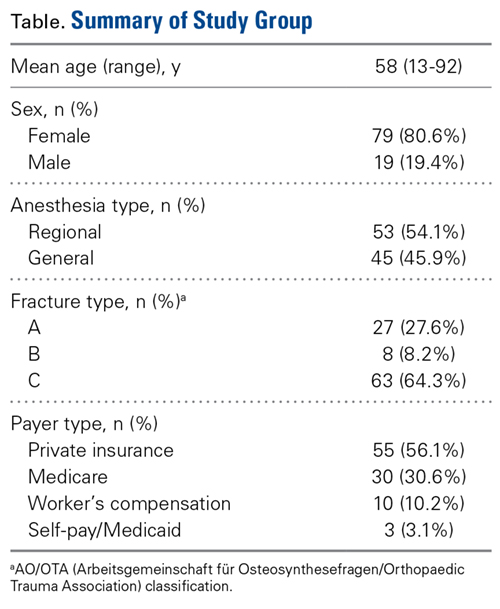
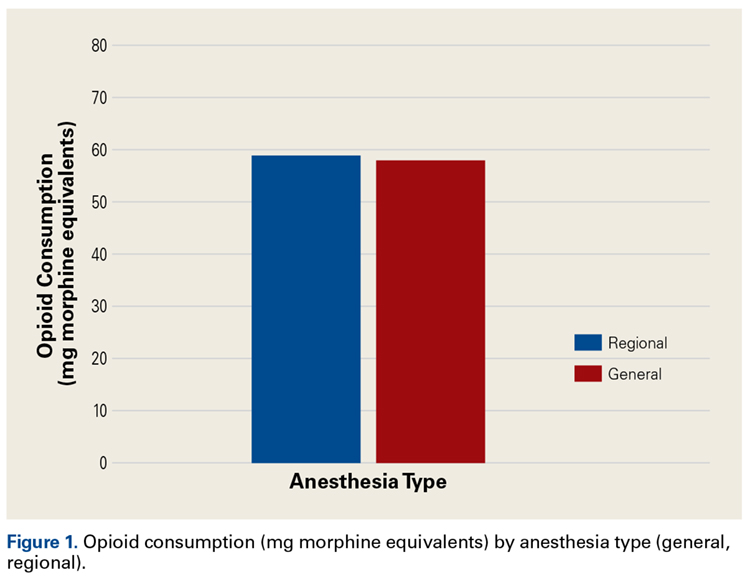
Of the 98 study patients, 61 reported using over-the-counter adjunctive pain medications during the postoperative period, and 37 reported no use. Mean opioid consumption was 64.7 mg of morphine equivalents for the adjunctive medication users and 48.3 mg for the nonusers (P = .1947).
Demographic analysis revealed an inverse relationship between age and opioid use (Figure 2). The Spearman ρ between age and opioid consumption was –0.2958, which suggests decreased opioid use by older patients (P = .003). 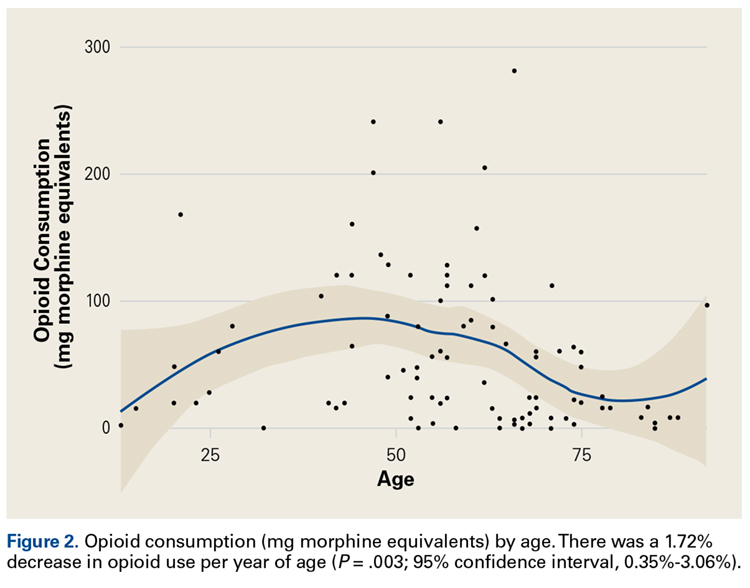
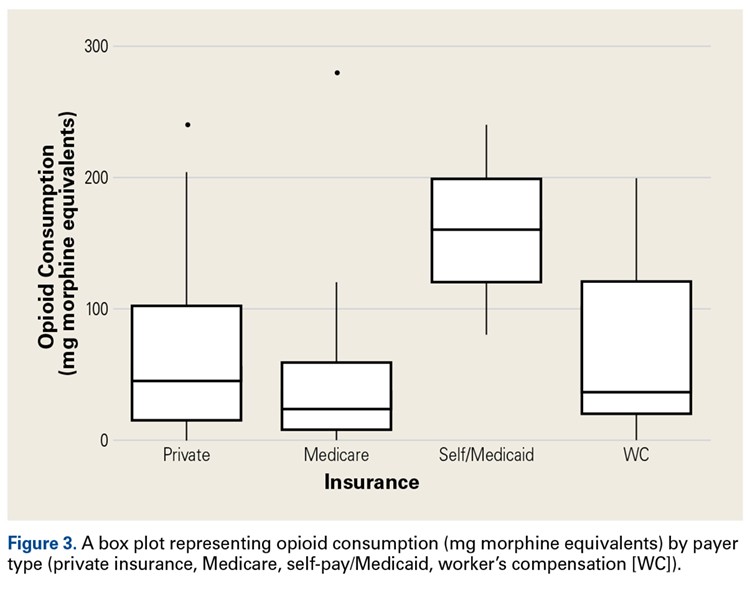
All fractures were graded with the AO/OTA long-bone fracture classification system. Mean opioid consumption for the 3 fracture-type groups was 57.7 mg (class A), 60.3 mg (class B), and 62.0 mg (class C) (Figure 4). 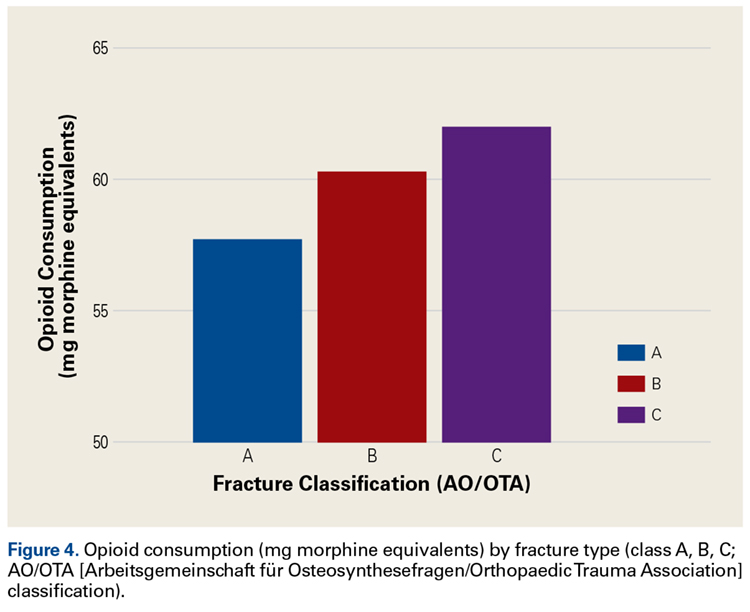
Discussion
The US healthcare culture has elevated physicians’ responsibility in adequately and aggressively managing their patients’ pain experience. Moreover, reimbursement may be affected by patient satisfaction scores, which are partly predicated on pain control.20-24 However, as rates of opioid use and abuse rise, it is important that physicians prescribe such medications judiciously. This is particularly germane to orthopedic surgeons, who prescribe more opioid analgesics than surgeons in any other field.17 Rodgers and colleagues18 found upper extremity surgeons, in particular, tended to overprescribe postoperative opioid analgesics. In the present study, we sought to identify the crucial risk factors that influence post-DRF-ORIF pain management and opioid consumption.
Mean postoperative opioid consumption (morphine equivalents) was 58.5 mg, roughly equivalent to 14.6 tabs of oxycodone/acetaminophen 5/325 mg, an opioid analgesic commonly used during the acute postoperative period. In addition, almost 70% of our patients required <75 mg of morphine equivalents, or <20 tabs of oxycodone/acetaminophen 5/325 mg. For upper extremity surgeons, these numbers may be better guides in determining the most appropriate amount of opioid to prescribe after DRF repair.
As for predicting levels of postoperative opioid medication, there was a significant trend toward less consumption with increasing age. Given this finding, surgeons prescribing for elderly patients should expect less opioid use. Regarding payer type, there was a trend toward more opioid use by self-pay/Medicaid patients; however, there were only 3 patients in this group. The situation in the study by Rodgers and colleagues18 is similar: Their finding that Medicaid patients consumed more pain pills after surgery was underpowered (only 5 patients in the group).
In the orthopedic community, support for use of regional anesthesia has been widespread for several reasons, including the belief that it reduces postoperative pain and therefore should reduce postoperative opioid consumption.25 However, we found no significant difference in postoperative opioid consumption between patients who received general anesthesia (with and without local anesthesia) and patients who received regional anesthesia (nerve block). Mean opioid consumption was 57.93 mg in the general anesthesia group and 58.98 mg in the regional anesthesia group. However, this finding could have been confounded by the variability in success and operator dependence inherent in regional anesthesia. In addition, the anatomical location for the peripheral nerve block and anesthetic could have affected the efficacy of the block and played a role in postoperative opioid consumption.
In this study, we tested the hypothesis that there would be more postoperative opioid consumption with worsening fracture type. Although our results did not reach statistical significance, there was a trend toward increased opioid consumption in patients with a complete intra-articular fracture (AO/OTA class C) vs patients with a partial articular fracture (class B) or an extra-articular fracture (class A). In addition, patients with a partial articular fracture tended to use more postoperative opioids than patients with an extra-articular fracture. In short, postoperative opioid consumption tended to be higher with increasing articular involvement of the fracture.
This study was limited in that it relied on patient self-reporting. Given the social stigma attached to opioid use, patients may have underreported their postoperative opioid consumption, been affected by recall bias, or both. The study also did not control for preoperative opioid use or history of opioid or substance abuse. Chronic preoperative opioid consumption may have affected postoperative opioid use. Other patient-related factors, such as body mass index (BMI) and hepatorenal dysfunction, can create tremendous variability in opioid metabolism across a population. Such factors were not controlled for in this study and therefore may have affected its results. That could help explain why older patients, who are more likely to have lower BMI and less efficient organ function for opioid metabolism, had lower postoperative opioid consumption. In addition, although we excluded patients with concomitant injuries and procedures, we did not screen patients for concomitant complex regional pain syndrome, fibromyalgia, or other medical conditions that might have had a significant impact on postoperative pain management needs. Last, some findings, such as the relationship between opioid use and payer type, were underpowered: Although self-pay/Medicaid patients had higher postoperative opioid consumption, they were few in number. The same was true of the Medicaid patients in the study by Rodgers and colleagues.18Our results demonstrated that post-DRF-ORIF opioid consumption decreased with age and was independent of type of perioperative anesthesia. There was a trend toward more opioid consumption with both self- and Medicaid payment and worsening fracture classification. It has become more important than ever for orthopedic surgeons to adequately manage postoperative pain while limiting opioid availability and the risk for abuse. Surgeons must remain aware of the variables in their patients’ postoperative pain experience in order to better optimize prescribing patterns and provide a safe and effective postoperative pain regimen.
Am J Orthop. 2017;46(1):E35-E40. Copyright Frontline Medical Communications Inc. 2017. All rights reserved.
1. Kuehn BM. Opioid prescriptions soar: increase in legitimate use as well as abuse. JAMA. 2007;297(3):249-251.
2. Cicero TJ, Ellis MS, Surratt HL, Kurtz SP. The changing face of heroin use in the United States: a retrospective analysis of the past 50 years. JAMA Psychiatry. 2014;71(7):821-826.
3. Helmerhorst GT, Lindenhovius AL, Vrahas M, Ring D, Kloen P. Satisfaction with pain relief after operative treatment of an ankle fracture. Injury. 2012;43(11):1958-1961.
4. Lindenhovius AL, Helmerhorst GT, Schnellen AC, Vrahas M, Ring D, Kloen P. Differences in prescription of narcotic pain medication after operative treatment of hip and ankle fractures in the United States and the Netherlands. J Trauma. 2009;67(1):160-164.
5. Seya MJ, Gelders SF, Achara OU, Milani B, Scholten WK. A first comparison between the consumption of and the need for opioid analgesics at country, regional, and global levels. J Pain Palliat Care Pharmacother. 2011;25(1):6-18.
6. Bohnert AS, Valenstein M, Bair MJ, et al. Association between opioid prescribing patterns and opioid overdose-related deaths. JAMA. 2011;305(13):1315-1321.
7. Kuehn BM. CDC: major disparities in opioid prescribing among states: some states crack down on excess prescribing. JAMA. 2014;312(7):684-686.
8. Paulozzi LJ, Budnitz DS, Xi Y. Increasing deaths from opioid analgesics in the United States. Pharmacoepidemiol Drug Saf. 2006;15(9):618-627.
9. Cicero TJ, Kuehn BM. Driven by prescription drug abuse, heroin use increases among suburban and rural whites. JAMA. 2014;312(2):118-119.
10. Painkillers fuel growth in drug addiction. Harvard Ment Health Lett. Harvard Medical School website. http://www.health.harvard.edu/newsletter_article/painkillers-fuel-growth-in-drug-addiction. Published January 2011. Accessed March 18, 2015.
11. Cai R, Crane E, Poneleit K, Paulozzi L. Emergency department visits involving nonmedical use of selected prescription drugs in the United States, 2004-2008. J Pain Palliat Care Pharmacother. 2010;24(3):293-297.
12. Armaghani SJ, Lee DS, Bible JE, et al. Preoperative narcotic use and its relation to depression and anxiety in patients undergoing spine surgery. Spine. 2013;38(25):2196-2200.
13. Caudill-Slosberg MA, Schwartz LM, Woloshin S. Office visits and analgesic prescriptions for musculoskeletal pain in US: 1980 vs. 2000. Pain. 2004;109(3):514-519.
14. Deyo RA, Mirza SK, Turner JA, Martin BI. Overtreating chronic back pain: time to back off? J Am Board Fam Med. 2009;22(1):62-68.
15. Lee D, Armaghani S, Archer KR, et al. Preoperative opioid use as a predictor of adverse postoperative self-reported outcomes in patients undergoing spine surgery. J Bone Joint Surg Am. 2014;96(11):e89.
16. Webster BS, Verma SK, Gatchel RJ. Relationship between early opioid prescribing for acute occupational low back pain and disability duration, medical costs, subsequent surgery and late opioid use. Spine. 2007;32(19):2127-2132.
17. Volkow ND, McLellan TA, Cotto JH, Karithanom M, Weiss SR. Characteristics of opioid prescriptions in 2009. JAMA. 2011;305(13):1299-1301.
18. Rodgers J, Cunningham K, Fitzgerald K, Finnerty E. Opioid consumption following outpatient upper extremity surgery. J Hand Surg Am. 2012;37(4):645-650.
19. Chen L, Vo T, Seefeld L, et al. Lack of correlation between opioid dose adjustment and pain score change in a group of chronic pain patients. J Pain. 2013;14(4):384-392.
20. Bush H. Doubling down on the patient experience. Hosp Health Netw. 2011;85(12):22-25, 1.
21. Centers for Medicare & Medicaid Services, US Department of Health and Human Services. Medicare program; hospital inpatient prospective payment systems for acute care hospitals and the long-term care hospital prospective payment system and fiscal year 2013 rates; hospitals’ resident caps for graduate medical education payment purposes; quality reporting requirements for specific providers and for ambulatory surgical centers. Final rule. Fed Regist. 2012;77(170):53257-53750.
22. Centers for Medicare & Medicaid Services, US Department of Health and Human Services. Hospital Value-Based Purchasing. http://www.cms.gov/Outreach-and-Education/Medicare-Learning-Network-MLN/MLNProducts/downloads/Hospital_VBPurchasing_Fact_Sheet_ICN907664.pdf. Published September 2015. Accessed October 2015.
23. Manchikanti L, Singh V, Caraway DL, Benyamin RM, Falco FJ, Hirsch JA. Proposed physician payment schedule for 2013: guarded prognosis for interventional pain management. Pain Physician. 2012;15(5):E615-E627.
24. Bot AG, Bekkers S, Arnstein PM, Smith RM, Ring D. Opioid use after fracture surgery correlates with pain intensity and satisfaction with pain relief. Clin Orthop Relat Res. 2014;472(8):2542-2549.
25. Oldman M, McCartney CJ, Leung A, et al. A survey of orthopedic surgeons’ attitudes and knowledge regarding regional anesthesia. Anesth Analg. 2004;98(5):1486-1490.
Take-Home Points
- Prescription opioid abuse and overdose-related deaths are on the rise in the United States.
- Following Open Reduction Internal Fixation (ORIF) of a distal radius fracture (DRF), patients consumed an average of 14.6 opioid pills. We recommend prescribing no more than 15-20 opioid pills after DRF ORIF.
- There was no difference in opioid consumption between patients who underwent general anesthesia vs regional anesthesia.
- There was a significant trend towards less opioid consumption with increasing age.
- There was a trend towards increased opioid consumption in patients with worsening fracture type as well as in self-pay/Medicaid patients.
Over the past 2 decades, prescription opioid abuse in the United States has risen steadily.1,2 Although use of opioid analgesics in the US far exceeds use in other countries, US patients do not report less pain or more satisfaction with pain relief.3-5 Between 1999 and 2002, oxycodone prescriptions increased by 50%, fentanyl prescriptions by 150%, and morphine prescriptions by 60%.6 Furthermore, the Centers for Disease Control and Prevention (CDC) reported in 2012 that, for every 100 people in the United States, US physicians wrote a mean of 82.5 opioid prescriptions and 37.6 benzodiazepine prescriptions; in total, US clinicians wrote 259 million opioid prescriptions in 2012, enough for every adult to have a bottle.7 The increase in prescription opioid abuse, not surprisingly, has paralleled a 124% increase in opioid overdose-related deaths.8 Cicero and colleagues2,9 recently found that, over the past 50 years, heroin use has dramatically shifted from being a problem mainly of urban centers and minorities toward one of older, suburban Caucasians with a previous history of prescription pain killer abuse. Deaths from prescription opioid overdoses now exceed deaths from heroin and cocaine overdoses combined.10 According to the CDC, emergency department visits related to nonmedical use of prescription opioid medications jumped 111% between 2004 and 2008.11
Opioid analgesics are often prescribed for the management of musculoskeletal pain and injuries.12-16 Orthopedic surgeons, who prescribe more opioids than physicians in any other surgical field, represent the third largest group of opioid prescribers, trailing only primary care physicians and internists, who far outnumber them.17 A study focused on opioid consumption after upper extremity surgery found that upper extremity surgeons tended to overprescribe opioids for postoperative analgesia.18 Many patients saved their remaining medication for later use and were never instructed on proper disposal. There is a developing consensus that opioid medication is not as safe and effective as once thought, and that a high-dose prescription or prolonged opioid therapy do not improve outcomes.19 In addition, patients may experience numerous opioid-associated adverse effects, including nausea, vomiting, constipation, lightheadedness, dizziness, blurred vision, headache, dry mouth, sweating, and itching.
In October 2012, patient satisfaction scores on the Hospital Consumer Assessment of Healthcare Providers and Systems started affecting Medicare reimbursements.20 By 2017, up to 6% of Medicare reimbursement will be at risk, given the poor outcomes caused by uncontrolled pain.21-24 The US healthcare culture has made it more important than ever for physicians to adequately manage postoperative pain while limiting opioid availability and the risk for abuse.
Distal radius fracture (DRF) open reduction and internal fixation (ORIF) is commonly performed by orthopedic surgeons and hand surgeons. Pain management and opioid consumption after DRF repair may be influenced by several variables. We conducted a study to investigate the impact of several clinical variables on postoperative opioid use; to test the hypothesis that post-DRF-ORIF opioid consumption would increase with worsening fracture classification and certain patient demographics; and to seek postoperative opioid consumption insights that would facilitate optimization of future opioid prescribing.
Materials and Methods
Institutional Review Board approval was obtained before initiation of the study. All outpatients who underwent DRF-ORIF (performed by 9 hand surgery fellowship-trained orthopedic surgeons) were consecutively enrolled over a 6-month period in 2014. All procedures were performed with a standard volar plating technique through a flexor carpi radialis approach. The postoperative rehabilitation protocol was standardized for all patients. Data collected on each patient included age, sex, payer type, fracture type, opioid prescribed, amount prescribed, amount consumed, reasons for stopping, adverse events, and any postoperative adjunctive pain medications. The data were taken from questionnaires completed by patients at their first visit within 2 weeks after surgery. Anesthesia type (general or regional) was noted as well. All fractures were classified by Dr. O’Neil using the AO/OTA (Arbeitsgemeinschaft für Osteosynthesefragen/Orthopaedic Trauma Association) classification of long-bone fractures based on preoperative radiographs.
Amount of opioid analgesic consumed was converted into morphine equivalents to adjust for the different opioids prescribed after surgery: oxycodone/acetaminophen or oxycodone equivalent, hydrocodone/acetaminophen or hydrocodone equivalent, and acetaminophen/codeine.
Patients were excluded from the study if their procedure was performed on an inpatient basis, if they sustained other injuries or fractures from their trauma, or if an adjunctive procedure (including carpal tunnel release) was performed during the DRF repair.
We used the Spearman rank correlation coefficient and a count data model to examine the relationship between opioid use and age. The Kruskal-Wallis test was used to examine the relationships between opioid use and payer type, anesthesia type, and fracture type.
Results
Of the 109 patients eligible for the study, 11 were excluded for incomplete postoperative questionnaires, leaving 98 patients (79 females, 19 males) for analysis. Mean age was 58 years (range, 13-92 years). Of the 98 patients, 45 received general anesthesia, and 53 received regional anesthesia with a single-shot peripheral nerve block before surgery and sedation perioperatively (Table).
Of the 98 study patients, 61 reported using over-the-counter adjunctive pain medications during the postoperative period, and 37 reported no use. Mean opioid consumption was 64.7 mg of morphine equivalents for the adjunctive medication users and 48.3 mg for the nonusers (P = .1947).
Demographic analysis revealed an inverse relationship between age and opioid use (Figure 2). The Spearman ρ between age and opioid consumption was –0.2958, which suggests decreased opioid use by older patients (P = .003).
All fractures were graded with the AO/OTA long-bone fracture classification system. Mean opioid consumption for the 3 fracture-type groups was 57.7 mg (class A), 60.3 mg (class B), and 62.0 mg (class C) (Figure 4).
Discussion
The US healthcare culture has elevated physicians’ responsibility in adequately and aggressively managing their patients’ pain experience. Moreover, reimbursement may be affected by patient satisfaction scores, which are partly predicated on pain control.20-24 However, as rates of opioid use and abuse rise, it is important that physicians prescribe such medications judiciously. This is particularly germane to orthopedic surgeons, who prescribe more opioid analgesics than surgeons in any other field.17 Rodgers and colleagues18 found upper extremity surgeons, in particular, tended to overprescribe postoperative opioid analgesics. In the present study, we sought to identify the crucial risk factors that influence post-DRF-ORIF pain management and opioid consumption.
Mean postoperative opioid consumption (morphine equivalents) was 58.5 mg, roughly equivalent to 14.6 tabs of oxycodone/acetaminophen 5/325 mg, an opioid analgesic commonly used during the acute postoperative period. In addition, almost 70% of our patients required <75 mg of morphine equivalents, or <20 tabs of oxycodone/acetaminophen 5/325 mg. For upper extremity surgeons, these numbers may be better guides in determining the most appropriate amount of opioid to prescribe after DRF repair.
As for predicting levels of postoperative opioid medication, there was a significant trend toward less consumption with increasing age. Given this finding, surgeons prescribing for elderly patients should expect less opioid use. Regarding payer type, there was a trend toward more opioid use by self-pay/Medicaid patients; however, there were only 3 patients in this group. The situation in the study by Rodgers and colleagues18 is similar: Their finding that Medicaid patients consumed more pain pills after surgery was underpowered (only 5 patients in the group).
In the orthopedic community, support for use of regional anesthesia has been widespread for several reasons, including the belief that it reduces postoperative pain and therefore should reduce postoperative opioid consumption.25 However, we found no significant difference in postoperative opioid consumption between patients who received general anesthesia (with and without local anesthesia) and patients who received regional anesthesia (nerve block). Mean opioid consumption was 57.93 mg in the general anesthesia group and 58.98 mg in the regional anesthesia group. However, this finding could have been confounded by the variability in success and operator dependence inherent in regional anesthesia. In addition, the anatomical location for the peripheral nerve block and anesthetic could have affected the efficacy of the block and played a role in postoperative opioid consumption.
In this study, we tested the hypothesis that there would be more postoperative opioid consumption with worsening fracture type. Although our results did not reach statistical significance, there was a trend toward increased opioid consumption in patients with a complete intra-articular fracture (AO/OTA class C) vs patients with a partial articular fracture (class B) or an extra-articular fracture (class A). In addition, patients with a partial articular fracture tended to use more postoperative opioids than patients with an extra-articular fracture. In short, postoperative opioid consumption tended to be higher with increasing articular involvement of the fracture.
This study was limited in that it relied on patient self-reporting. Given the social stigma attached to opioid use, patients may have underreported their postoperative opioid consumption, been affected by recall bias, or both. The study also did not control for preoperative opioid use or history of opioid or substance abuse. Chronic preoperative opioid consumption may have affected postoperative opioid use. Other patient-related factors, such as body mass index (BMI) and hepatorenal dysfunction, can create tremendous variability in opioid metabolism across a population. Such factors were not controlled for in this study and therefore may have affected its results. That could help explain why older patients, who are more likely to have lower BMI and less efficient organ function for opioid metabolism, had lower postoperative opioid consumption. In addition, although we excluded patients with concomitant injuries and procedures, we did not screen patients for concomitant complex regional pain syndrome, fibromyalgia, or other medical conditions that might have had a significant impact on postoperative pain management needs. Last, some findings, such as the relationship between opioid use and payer type, were underpowered: Although self-pay/Medicaid patients had higher postoperative opioid consumption, they were few in number. The same was true of the Medicaid patients in the study by Rodgers and colleagues.18Our results demonstrated that post-DRF-ORIF opioid consumption decreased with age and was independent of type of perioperative anesthesia. There was a trend toward more opioid consumption with both self- and Medicaid payment and worsening fracture classification. It has become more important than ever for orthopedic surgeons to adequately manage postoperative pain while limiting opioid availability and the risk for abuse. Surgeons must remain aware of the variables in their patients’ postoperative pain experience in order to better optimize prescribing patterns and provide a safe and effective postoperative pain regimen.
Am J Orthop. 2017;46(1):E35-E40. Copyright Frontline Medical Communications Inc. 2017. All rights reserved.
Take-Home Points
- Prescription opioid abuse and overdose-related deaths are on the rise in the United States.
- Following Open Reduction Internal Fixation (ORIF) of a distal radius fracture (DRF), patients consumed an average of 14.6 opioid pills. We recommend prescribing no more than 15-20 opioid pills after DRF ORIF.
- There was no difference in opioid consumption between patients who underwent general anesthesia vs regional anesthesia.
- There was a significant trend towards less opioid consumption with increasing age.
- There was a trend towards increased opioid consumption in patients with worsening fracture type as well as in self-pay/Medicaid patients.
Over the past 2 decades, prescription opioid abuse in the United States has risen steadily.1,2 Although use of opioid analgesics in the US far exceeds use in other countries, US patients do not report less pain or more satisfaction with pain relief.3-5 Between 1999 and 2002, oxycodone prescriptions increased by 50%, fentanyl prescriptions by 150%, and morphine prescriptions by 60%.6 Furthermore, the Centers for Disease Control and Prevention (CDC) reported in 2012 that, for every 100 people in the United States, US physicians wrote a mean of 82.5 opioid prescriptions and 37.6 benzodiazepine prescriptions; in total, US clinicians wrote 259 million opioid prescriptions in 2012, enough for every adult to have a bottle.7 The increase in prescription opioid abuse, not surprisingly, has paralleled a 124% increase in opioid overdose-related deaths.8 Cicero and colleagues2,9 recently found that, over the past 50 years, heroin use has dramatically shifted from being a problem mainly of urban centers and minorities toward one of older, suburban Caucasians with a previous history of prescription pain killer abuse. Deaths from prescription opioid overdoses now exceed deaths from heroin and cocaine overdoses combined.10 According to the CDC, emergency department visits related to nonmedical use of prescription opioid medications jumped 111% between 2004 and 2008.11
Opioid analgesics are often prescribed for the management of musculoskeletal pain and injuries.12-16 Orthopedic surgeons, who prescribe more opioids than physicians in any other surgical field, represent the third largest group of opioid prescribers, trailing only primary care physicians and internists, who far outnumber them.17 A study focused on opioid consumption after upper extremity surgery found that upper extremity surgeons tended to overprescribe opioids for postoperative analgesia.18 Many patients saved their remaining medication for later use and were never instructed on proper disposal. There is a developing consensus that opioid medication is not as safe and effective as once thought, and that a high-dose prescription or prolonged opioid therapy do not improve outcomes.19 In addition, patients may experience numerous opioid-associated adverse effects, including nausea, vomiting, constipation, lightheadedness, dizziness, blurred vision, headache, dry mouth, sweating, and itching.
In October 2012, patient satisfaction scores on the Hospital Consumer Assessment of Healthcare Providers and Systems started affecting Medicare reimbursements.20 By 2017, up to 6% of Medicare reimbursement will be at risk, given the poor outcomes caused by uncontrolled pain.21-24 The US healthcare culture has made it more important than ever for physicians to adequately manage postoperative pain while limiting opioid availability and the risk for abuse.
Distal radius fracture (DRF) open reduction and internal fixation (ORIF) is commonly performed by orthopedic surgeons and hand surgeons. Pain management and opioid consumption after DRF repair may be influenced by several variables. We conducted a study to investigate the impact of several clinical variables on postoperative opioid use; to test the hypothesis that post-DRF-ORIF opioid consumption would increase with worsening fracture classification and certain patient demographics; and to seek postoperative opioid consumption insights that would facilitate optimization of future opioid prescribing.
Materials and Methods
Institutional Review Board approval was obtained before initiation of the study. All outpatients who underwent DRF-ORIF (performed by 9 hand surgery fellowship-trained orthopedic surgeons) were consecutively enrolled over a 6-month period in 2014. All procedures were performed with a standard volar plating technique through a flexor carpi radialis approach. The postoperative rehabilitation protocol was standardized for all patients. Data collected on each patient included age, sex, payer type, fracture type, opioid prescribed, amount prescribed, amount consumed, reasons for stopping, adverse events, and any postoperative adjunctive pain medications. The data were taken from questionnaires completed by patients at their first visit within 2 weeks after surgery. Anesthesia type (general or regional) was noted as well. All fractures were classified by Dr. O’Neil using the AO/OTA (Arbeitsgemeinschaft für Osteosynthesefragen/Orthopaedic Trauma Association) classification of long-bone fractures based on preoperative radiographs.
Amount of opioid analgesic consumed was converted into morphine equivalents to adjust for the different opioids prescribed after surgery: oxycodone/acetaminophen or oxycodone equivalent, hydrocodone/acetaminophen or hydrocodone equivalent, and acetaminophen/codeine.
Patients were excluded from the study if their procedure was performed on an inpatient basis, if they sustained other injuries or fractures from their trauma, or if an adjunctive procedure (including carpal tunnel release) was performed during the DRF repair.
We used the Spearman rank correlation coefficient and a count data model to examine the relationship between opioid use and age. The Kruskal-Wallis test was used to examine the relationships between opioid use and payer type, anesthesia type, and fracture type.
Results
Of the 109 patients eligible for the study, 11 were excluded for incomplete postoperative questionnaires, leaving 98 patients (79 females, 19 males) for analysis. Mean age was 58 years (range, 13-92 years). Of the 98 patients, 45 received general anesthesia, and 53 received regional anesthesia with a single-shot peripheral nerve block before surgery and sedation perioperatively (Table).
Of the 98 study patients, 61 reported using over-the-counter adjunctive pain medications during the postoperative period, and 37 reported no use. Mean opioid consumption was 64.7 mg of morphine equivalents for the adjunctive medication users and 48.3 mg for the nonusers (P = .1947).
Demographic analysis revealed an inverse relationship between age and opioid use (Figure 2). The Spearman ρ between age and opioid consumption was –0.2958, which suggests decreased opioid use by older patients (P = .003).
All fractures were graded with the AO/OTA long-bone fracture classification system. Mean opioid consumption for the 3 fracture-type groups was 57.7 mg (class A), 60.3 mg (class B), and 62.0 mg (class C) (Figure 4).
Discussion
The US healthcare culture has elevated physicians’ responsibility in adequately and aggressively managing their patients’ pain experience. Moreover, reimbursement may be affected by patient satisfaction scores, which are partly predicated on pain control.20-24 However, as rates of opioid use and abuse rise, it is important that physicians prescribe such medications judiciously. This is particularly germane to orthopedic surgeons, who prescribe more opioid analgesics than surgeons in any other field.17 Rodgers and colleagues18 found upper extremity surgeons, in particular, tended to overprescribe postoperative opioid analgesics. In the present study, we sought to identify the crucial risk factors that influence post-DRF-ORIF pain management and opioid consumption.
Mean postoperative opioid consumption (morphine equivalents) was 58.5 mg, roughly equivalent to 14.6 tabs of oxycodone/acetaminophen 5/325 mg, an opioid analgesic commonly used during the acute postoperative period. In addition, almost 70% of our patients required <75 mg of morphine equivalents, or <20 tabs of oxycodone/acetaminophen 5/325 mg. For upper extremity surgeons, these numbers may be better guides in determining the most appropriate amount of opioid to prescribe after DRF repair.
As for predicting levels of postoperative opioid medication, there was a significant trend toward less consumption with increasing age. Given this finding, surgeons prescribing for elderly patients should expect less opioid use. Regarding payer type, there was a trend toward more opioid use by self-pay/Medicaid patients; however, there were only 3 patients in this group. The situation in the study by Rodgers and colleagues18 is similar: Their finding that Medicaid patients consumed more pain pills after surgery was underpowered (only 5 patients in the group).
In the orthopedic community, support for use of regional anesthesia has been widespread for several reasons, including the belief that it reduces postoperative pain and therefore should reduce postoperative opioid consumption.25 However, we found no significant difference in postoperative opioid consumption between patients who received general anesthesia (with and without local anesthesia) and patients who received regional anesthesia (nerve block). Mean opioid consumption was 57.93 mg in the general anesthesia group and 58.98 mg in the regional anesthesia group. However, this finding could have been confounded by the variability in success and operator dependence inherent in regional anesthesia. In addition, the anatomical location for the peripheral nerve block and anesthetic could have affected the efficacy of the block and played a role in postoperative opioid consumption.
In this study, we tested the hypothesis that there would be more postoperative opioid consumption with worsening fracture type. Although our results did not reach statistical significance, there was a trend toward increased opioid consumption in patients with a complete intra-articular fracture (AO/OTA class C) vs patients with a partial articular fracture (class B) or an extra-articular fracture (class A). In addition, patients with a partial articular fracture tended to use more postoperative opioids than patients with an extra-articular fracture. In short, postoperative opioid consumption tended to be higher with increasing articular involvement of the fracture.
This study was limited in that it relied on patient self-reporting. Given the social stigma attached to opioid use, patients may have underreported their postoperative opioid consumption, been affected by recall bias, or both. The study also did not control for preoperative opioid use or history of opioid or substance abuse. Chronic preoperative opioid consumption may have affected postoperative opioid use. Other patient-related factors, such as body mass index (BMI) and hepatorenal dysfunction, can create tremendous variability in opioid metabolism across a population. Such factors were not controlled for in this study and therefore may have affected its results. That could help explain why older patients, who are more likely to have lower BMI and less efficient organ function for opioid metabolism, had lower postoperative opioid consumption. In addition, although we excluded patients with concomitant injuries and procedures, we did not screen patients for concomitant complex regional pain syndrome, fibromyalgia, or other medical conditions that might have had a significant impact on postoperative pain management needs. Last, some findings, such as the relationship between opioid use and payer type, were underpowered: Although self-pay/Medicaid patients had higher postoperative opioid consumption, they were few in number. The same was true of the Medicaid patients in the study by Rodgers and colleagues.18Our results demonstrated that post-DRF-ORIF opioid consumption decreased with age and was independent of type of perioperative anesthesia. There was a trend toward more opioid consumption with both self- and Medicaid payment and worsening fracture classification. It has become more important than ever for orthopedic surgeons to adequately manage postoperative pain while limiting opioid availability and the risk for abuse. Surgeons must remain aware of the variables in their patients’ postoperative pain experience in order to better optimize prescribing patterns and provide a safe and effective postoperative pain regimen.
Am J Orthop. 2017;46(1):E35-E40. Copyright Frontline Medical Communications Inc. 2017. All rights reserved.
1. Kuehn BM. Opioid prescriptions soar: increase in legitimate use as well as abuse. JAMA. 2007;297(3):249-251.
2. Cicero TJ, Ellis MS, Surratt HL, Kurtz SP. The changing face of heroin use in the United States: a retrospective analysis of the past 50 years. JAMA Psychiatry. 2014;71(7):821-826.
3. Helmerhorst GT, Lindenhovius AL, Vrahas M, Ring D, Kloen P. Satisfaction with pain relief after operative treatment of an ankle fracture. Injury. 2012;43(11):1958-1961.
4. Lindenhovius AL, Helmerhorst GT, Schnellen AC, Vrahas M, Ring D, Kloen P. Differences in prescription of narcotic pain medication after operative treatment of hip and ankle fractures in the United States and the Netherlands. J Trauma. 2009;67(1):160-164.
5. Seya MJ, Gelders SF, Achara OU, Milani B, Scholten WK. A first comparison between the consumption of and the need for opioid analgesics at country, regional, and global levels. J Pain Palliat Care Pharmacother. 2011;25(1):6-18.
6. Bohnert AS, Valenstein M, Bair MJ, et al. Association between opioid prescribing patterns and opioid overdose-related deaths. JAMA. 2011;305(13):1315-1321.
7. Kuehn BM. CDC: major disparities in opioid prescribing among states: some states crack down on excess prescribing. JAMA. 2014;312(7):684-686.
8. Paulozzi LJ, Budnitz DS, Xi Y. Increasing deaths from opioid analgesics in the United States. Pharmacoepidemiol Drug Saf. 2006;15(9):618-627.
9. Cicero TJ, Kuehn BM. Driven by prescription drug abuse, heroin use increases among suburban and rural whites. JAMA. 2014;312(2):118-119.
10. Painkillers fuel growth in drug addiction. Harvard Ment Health Lett. Harvard Medical School website. http://www.health.harvard.edu/newsletter_article/painkillers-fuel-growth-in-drug-addiction. Published January 2011. Accessed March 18, 2015.
11. Cai R, Crane E, Poneleit K, Paulozzi L. Emergency department visits involving nonmedical use of selected prescription drugs in the United States, 2004-2008. J Pain Palliat Care Pharmacother. 2010;24(3):293-297.
12. Armaghani SJ, Lee DS, Bible JE, et al. Preoperative narcotic use and its relation to depression and anxiety in patients undergoing spine surgery. Spine. 2013;38(25):2196-2200.
13. Caudill-Slosberg MA, Schwartz LM, Woloshin S. Office visits and analgesic prescriptions for musculoskeletal pain in US: 1980 vs. 2000. Pain. 2004;109(3):514-519.
14. Deyo RA, Mirza SK, Turner JA, Martin BI. Overtreating chronic back pain: time to back off? J Am Board Fam Med. 2009;22(1):62-68.
15. Lee D, Armaghani S, Archer KR, et al. Preoperative opioid use as a predictor of adverse postoperative self-reported outcomes in patients undergoing spine surgery. J Bone Joint Surg Am. 2014;96(11):e89.
16. Webster BS, Verma SK, Gatchel RJ. Relationship between early opioid prescribing for acute occupational low back pain and disability duration, medical costs, subsequent surgery and late opioid use. Spine. 2007;32(19):2127-2132.
17. Volkow ND, McLellan TA, Cotto JH, Karithanom M, Weiss SR. Characteristics of opioid prescriptions in 2009. JAMA. 2011;305(13):1299-1301.
18. Rodgers J, Cunningham K, Fitzgerald K, Finnerty E. Opioid consumption following outpatient upper extremity surgery. J Hand Surg Am. 2012;37(4):645-650.
19. Chen L, Vo T, Seefeld L, et al. Lack of correlation between opioid dose adjustment and pain score change in a group of chronic pain patients. J Pain. 2013;14(4):384-392.
20. Bush H. Doubling down on the patient experience. Hosp Health Netw. 2011;85(12):22-25, 1.
21. Centers for Medicare & Medicaid Services, US Department of Health and Human Services. Medicare program; hospital inpatient prospective payment systems for acute care hospitals and the long-term care hospital prospective payment system and fiscal year 2013 rates; hospitals’ resident caps for graduate medical education payment purposes; quality reporting requirements for specific providers and for ambulatory surgical centers. Final rule. Fed Regist. 2012;77(170):53257-53750.
22. Centers for Medicare & Medicaid Services, US Department of Health and Human Services. Hospital Value-Based Purchasing. http://www.cms.gov/Outreach-and-Education/Medicare-Learning-Network-MLN/MLNProducts/downloads/Hospital_VBPurchasing_Fact_Sheet_ICN907664.pdf. Published September 2015. Accessed October 2015.
23. Manchikanti L, Singh V, Caraway DL, Benyamin RM, Falco FJ, Hirsch JA. Proposed physician payment schedule for 2013: guarded prognosis for interventional pain management. Pain Physician. 2012;15(5):E615-E627.
24. Bot AG, Bekkers S, Arnstein PM, Smith RM, Ring D. Opioid use after fracture surgery correlates with pain intensity and satisfaction with pain relief. Clin Orthop Relat Res. 2014;472(8):2542-2549.
25. Oldman M, McCartney CJ, Leung A, et al. A survey of orthopedic surgeons’ attitudes and knowledge regarding regional anesthesia. Anesth Analg. 2004;98(5):1486-1490.
1. Kuehn BM. Opioid prescriptions soar: increase in legitimate use as well as abuse. JAMA. 2007;297(3):249-251.
2. Cicero TJ, Ellis MS, Surratt HL, Kurtz SP. The changing face of heroin use in the United States: a retrospective analysis of the past 50 years. JAMA Psychiatry. 2014;71(7):821-826.
3. Helmerhorst GT, Lindenhovius AL, Vrahas M, Ring D, Kloen P. Satisfaction with pain relief after operative treatment of an ankle fracture. Injury. 2012;43(11):1958-1961.
4. Lindenhovius AL, Helmerhorst GT, Schnellen AC, Vrahas M, Ring D, Kloen P. Differences in prescription of narcotic pain medication after operative treatment of hip and ankle fractures in the United States and the Netherlands. J Trauma. 2009;67(1):160-164.
5. Seya MJ, Gelders SF, Achara OU, Milani B, Scholten WK. A first comparison between the consumption of and the need for opioid analgesics at country, regional, and global levels. J Pain Palliat Care Pharmacother. 2011;25(1):6-18.
6. Bohnert AS, Valenstein M, Bair MJ, et al. Association between opioid prescribing patterns and opioid overdose-related deaths. JAMA. 2011;305(13):1315-1321.
7. Kuehn BM. CDC: major disparities in opioid prescribing among states: some states crack down on excess prescribing. JAMA. 2014;312(7):684-686.
8. Paulozzi LJ, Budnitz DS, Xi Y. Increasing deaths from opioid analgesics in the United States. Pharmacoepidemiol Drug Saf. 2006;15(9):618-627.
9. Cicero TJ, Kuehn BM. Driven by prescription drug abuse, heroin use increases among suburban and rural whites. JAMA. 2014;312(2):118-119.
10. Painkillers fuel growth in drug addiction. Harvard Ment Health Lett. Harvard Medical School website. http://www.health.harvard.edu/newsletter_article/painkillers-fuel-growth-in-drug-addiction. Published January 2011. Accessed March 18, 2015.
11. Cai R, Crane E, Poneleit K, Paulozzi L. Emergency department visits involving nonmedical use of selected prescription drugs in the United States, 2004-2008. J Pain Palliat Care Pharmacother. 2010;24(3):293-297.
12. Armaghani SJ, Lee DS, Bible JE, et al. Preoperative narcotic use and its relation to depression and anxiety in patients undergoing spine surgery. Spine. 2013;38(25):2196-2200.
13. Caudill-Slosberg MA, Schwartz LM, Woloshin S. Office visits and analgesic prescriptions for musculoskeletal pain in US: 1980 vs. 2000. Pain. 2004;109(3):514-519.
14. Deyo RA, Mirza SK, Turner JA, Martin BI. Overtreating chronic back pain: time to back off? J Am Board Fam Med. 2009;22(1):62-68.
15. Lee D, Armaghani S, Archer KR, et al. Preoperative opioid use as a predictor of adverse postoperative self-reported outcomes in patients undergoing spine surgery. J Bone Joint Surg Am. 2014;96(11):e89.
16. Webster BS, Verma SK, Gatchel RJ. Relationship between early opioid prescribing for acute occupational low back pain and disability duration, medical costs, subsequent surgery and late opioid use. Spine. 2007;32(19):2127-2132.
17. Volkow ND, McLellan TA, Cotto JH, Karithanom M, Weiss SR. Characteristics of opioid prescriptions in 2009. JAMA. 2011;305(13):1299-1301.
18. Rodgers J, Cunningham K, Fitzgerald K, Finnerty E. Opioid consumption following outpatient upper extremity surgery. J Hand Surg Am. 2012;37(4):645-650.
19. Chen L, Vo T, Seefeld L, et al. Lack of correlation between opioid dose adjustment and pain score change in a group of chronic pain patients. J Pain. 2013;14(4):384-392.
20. Bush H. Doubling down on the patient experience. Hosp Health Netw. 2011;85(12):22-25, 1.
21. Centers for Medicare & Medicaid Services, US Department of Health and Human Services. Medicare program; hospital inpatient prospective payment systems for acute care hospitals and the long-term care hospital prospective payment system and fiscal year 2013 rates; hospitals’ resident caps for graduate medical education payment purposes; quality reporting requirements for specific providers and for ambulatory surgical centers. Final rule. Fed Regist. 2012;77(170):53257-53750.
22. Centers for Medicare & Medicaid Services, US Department of Health and Human Services. Hospital Value-Based Purchasing. http://www.cms.gov/Outreach-and-Education/Medicare-Learning-Network-MLN/MLNProducts/downloads/Hospital_VBPurchasing_Fact_Sheet_ICN907664.pdf. Published September 2015. Accessed October 2015.
23. Manchikanti L, Singh V, Caraway DL, Benyamin RM, Falco FJ, Hirsch JA. Proposed physician payment schedule for 2013: guarded prognosis for interventional pain management. Pain Physician. 2012;15(5):E615-E627.
24. Bot AG, Bekkers S, Arnstein PM, Smith RM, Ring D. Opioid use after fracture surgery correlates with pain intensity and satisfaction with pain relief. Clin Orthop Relat Res. 2014;472(8):2542-2549.
25. Oldman M, McCartney CJ, Leung A, et al. A survey of orthopedic surgeons’ attitudes and knowledge regarding regional anesthesia. Anesth Analg. 2004;98(5):1486-1490.
Progressive Widespread Warty Skin Growths
Epidermodysplasia Verruciformis
Epidermodysplasia verruciformis (EV) is a rare hereditary disorder that predisposes affected individuals to widespread infection with various forms of human papillomavirus (HPV). It is inherited in an autosomal-recessive pattern.1 The first manifestations generally are seen in childhood. The clinical appearance of lesions can vary, at times mimicking other disease processes. Patients can present with flat wartlike papules resembling verruca plana distributed in sun-exposed areas. Another distinct presentation is multiple salmon-colored, hyperpigmented, or hypopigmented macules, papules, or plaques with overlying scale that can resemble tinea versicolor.1,2 A large percentage of patients will go on to develop actinic keratosis and squamous cell carcinoma by 40 years of age.2 The malignancies most commonly develop in sun-exposed areas, suggesting UV radiation as an important contributor to development along with HPV infection. Mutations in the EVER1 and EVER2 genes that code for transmembrane proteins on the endoplasmic reticulum that are involved in zinc transport lead to EV. The mutations lead to decreased zinc movement into the cytoplasm, which is thought to play a role in preventing HPV infection. The decreased protection against HPV leads to infections from both common subtypes and those that immunocompetent individuals would be resistant to, namely the β-genus HPV-5, -8, -9 and -20.1,2 Immunosuppressed individuals, such as those with human immunodeficiency virus/AIDS, also are at an increased risk for infection with these HPV subtypes and generally have similar clinical and histological presentations.1 It is important to promote sunscreen use for preventive care in patients with EV due to the increased risk for squamous cell carcinoma.
Histologically, the lesions in EV are composed of acanthosis and hyperkeratosis with keratinocytes arranged in clusters.1,3 There is orthokeratosis and parakeratosis.1 Scattered or clustered keratinocytes in the granular layer or upper stratum spinosum appear swollen with foamy blue-gray cytoplasm (quiz image and Figure 1).1,4 The keratinocytes may become atypical and progress to squamous cell carcinoma, particularly in sun-exposed regions. Cell differentiation becomes disorganized and nuclei become enlarged and hyperchromatic.1

Condyloma acuminatum will have pronounced acanthosis and hyperkeratosis with exophytic growth. Rounded parakeratosis is visible. The characteristic cell is the koilocyte, a keratinocyte that has an enlarged nucleus with areas of surrounding clearing, increased dark color in the nucleus, and wrinkled nuclear membrane (Figure 2).1,3 True koilocytes may be rare in condyloma acuminatum.4 Other distinct features include coarse hypergranulosis and a compact stratum corneum.

Herpesvirus lesions typically demonstrate ballooning degeneration of keratinocytes.1 They will become pale and fuse to form multinucleated giant cells, a feature not found in verruca. The nuclei will be slate gray with margination of the chromatin, which can be identified due to its increased basophilic appearance (Figure 3).1,4 Inclusion bodies can be found, but unlike molluscum contagiosum (MC), these bodies are intranuclear as opposed to cytoplasmic.1
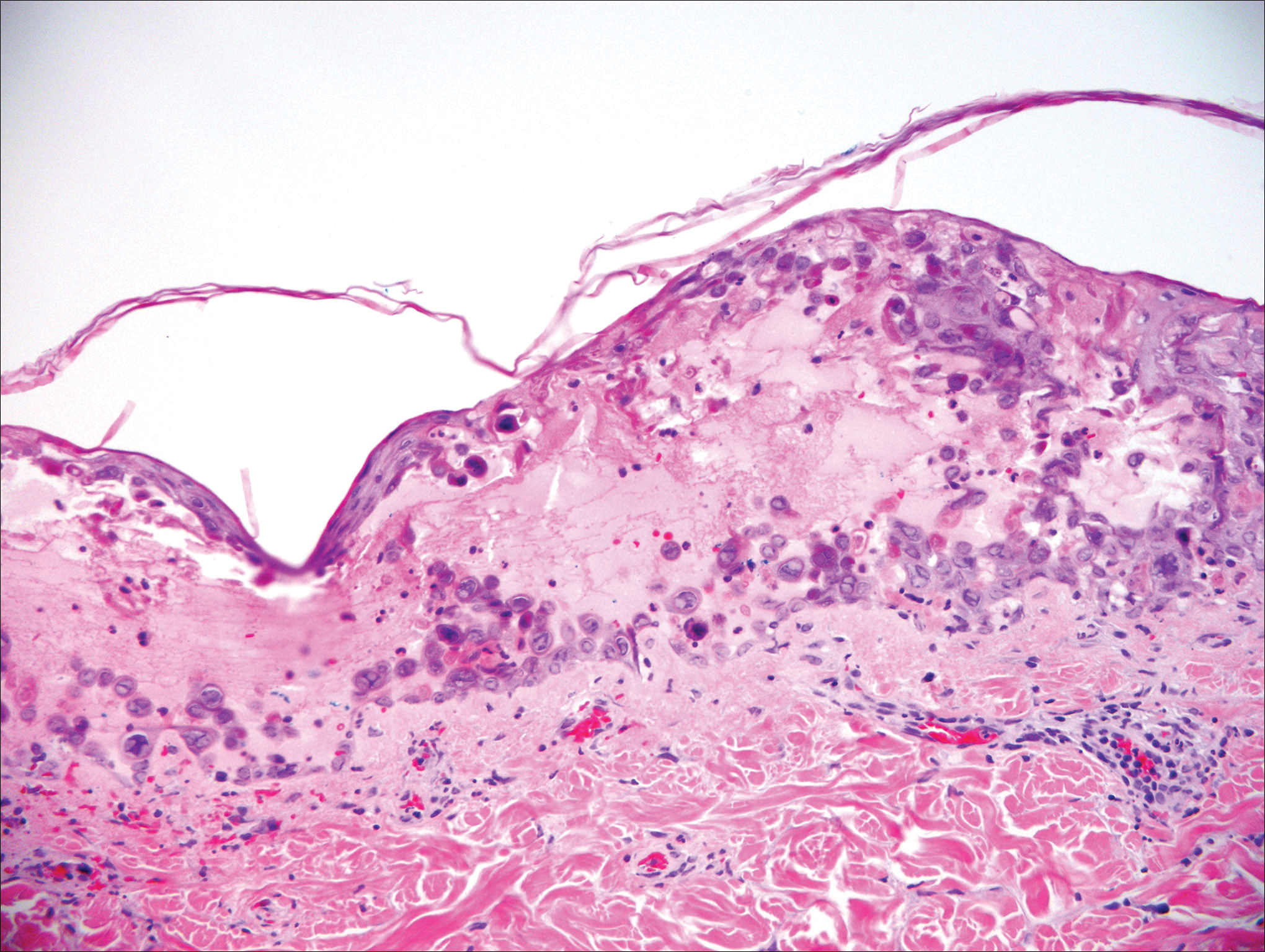
The telltale Henderson-Patterson (molluscum) bodies can identify MC histologically.4 Located within keratinocytes, these cytoplasmic inclusions can vary in both color and size as they mature. As the keratinocytes develop outward, the molluscum bodies grow larger and become more eosinophilic (Figure 4).1,4 Another feature of MC that can be used to differentiate it from EV is the scalloped borders located on lesions.4
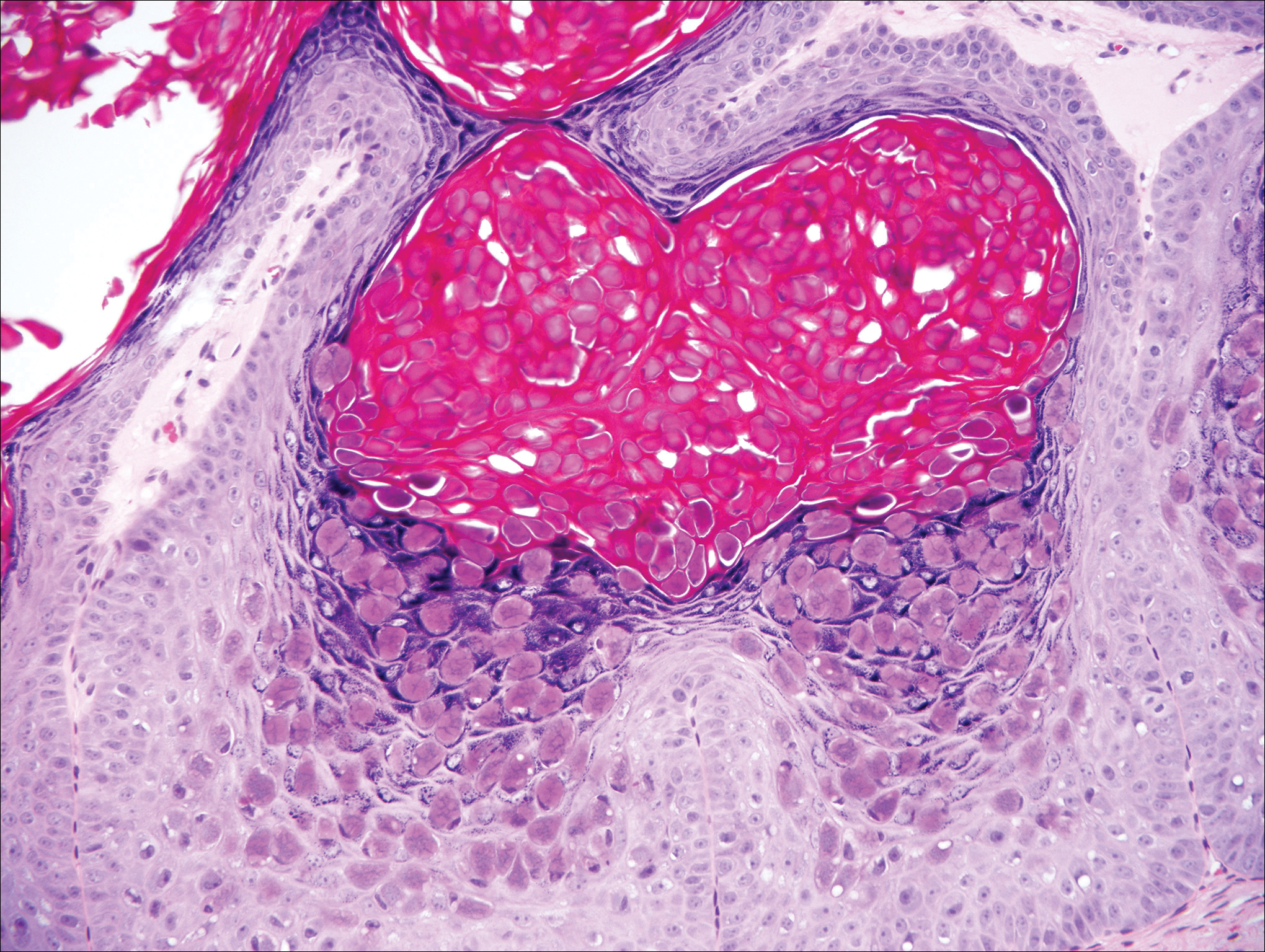
On histology, verruca vulgaris will have pronounced acanthosis with orthokeratosis and vertical tiers of parakeratosis.3,4 Growth is exophytic. The granular layer will have large irregular basophilic granules. Koilocytes may be seen. A distinctive feature is the papillomatosis with inward bending of rete ridges.3,4 It is common to see invasion of tortuous blood vessels into the exophytic projections.3 In myrmecia (palmoplantar warts) it is common to see thrombosis of these vessels and inclusions of red cytoplasmic bodies (Figure 5).1,4
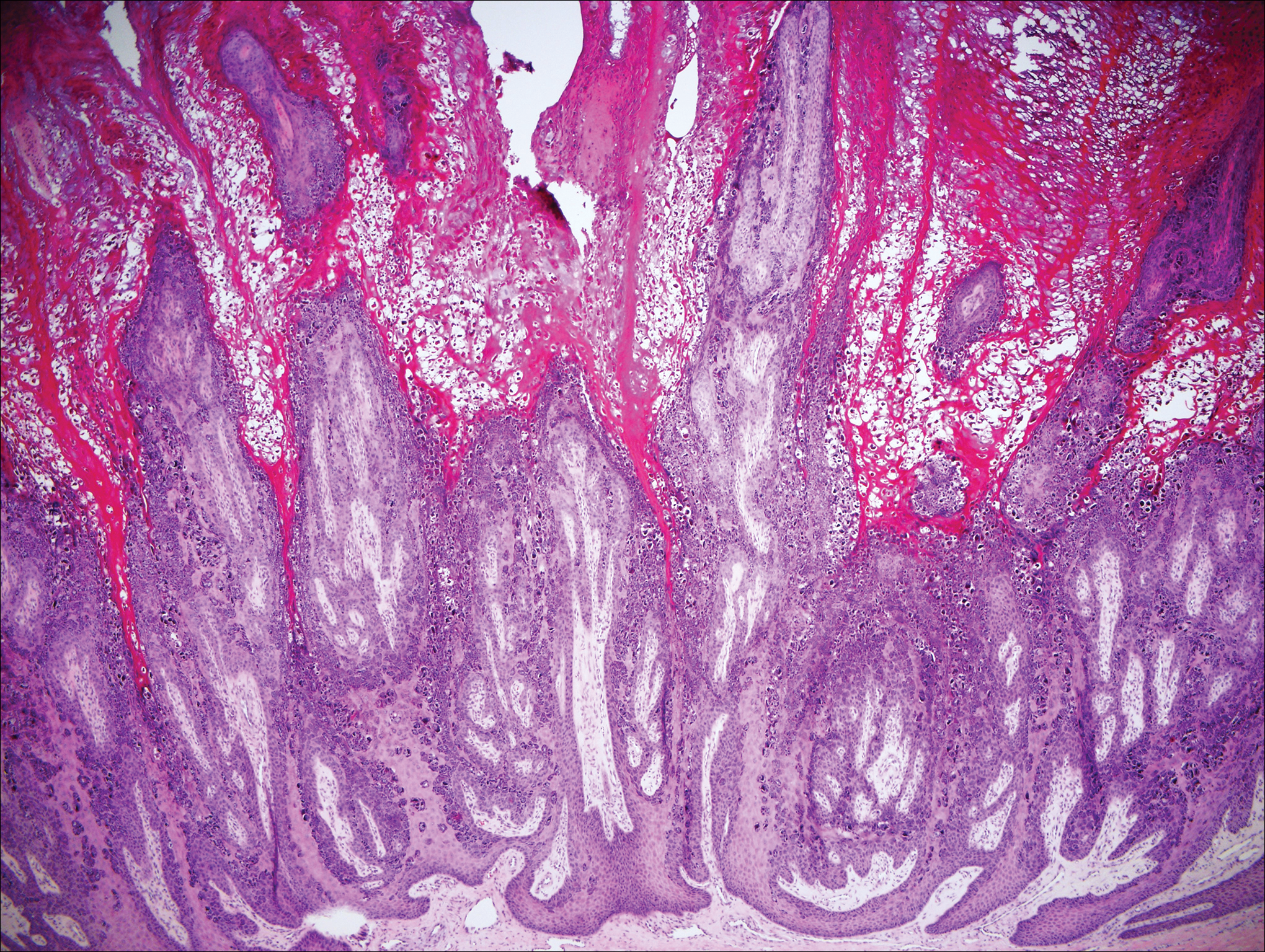
- Bolognia J, Jorizzo JL, Schaffer JV. Dermatology. 3rd ed. Philadelphia, PA: Elsevier/Saunders; 2012.
- Hunzeker CM, Soldano AC, Prystowsky S. Epidermodysplasia verruciformis. Dermatology Online J. 2008;14:2.
- Calonje E, McKee PH. McKee's Pathology of the Skin. 4th ed. Edinburgh, Scotland: Elsevier/Saunders; 2012.
- Elston DM, Ko CJ, Ferringer T. Dermatopathology. Edinburgh, Scotland: Saunders/Elsevier; 2009.
Epidermodysplasia Verruciformis
Epidermodysplasia verruciformis (EV) is a rare hereditary disorder that predisposes affected individuals to widespread infection with various forms of human papillomavirus (HPV). It is inherited in an autosomal-recessive pattern.1 The first manifestations generally are seen in childhood. The clinical appearance of lesions can vary, at times mimicking other disease processes. Patients can present with flat wartlike papules resembling verruca plana distributed in sun-exposed areas. Another distinct presentation is multiple salmon-colored, hyperpigmented, or hypopigmented macules, papules, or plaques with overlying scale that can resemble tinea versicolor.1,2 A large percentage of patients will go on to develop actinic keratosis and squamous cell carcinoma by 40 years of age.2 The malignancies most commonly develop in sun-exposed areas, suggesting UV radiation as an important contributor to development along with HPV infection. Mutations in the EVER1 and EVER2 genes that code for transmembrane proteins on the endoplasmic reticulum that are involved in zinc transport lead to EV. The mutations lead to decreased zinc movement into the cytoplasm, which is thought to play a role in preventing HPV infection. The decreased protection against HPV leads to infections from both common subtypes and those that immunocompetent individuals would be resistant to, namely the β-genus HPV-5, -8, -9 and -20.1,2 Immunosuppressed individuals, such as those with human immunodeficiency virus/AIDS, also are at an increased risk for infection with these HPV subtypes and generally have similar clinical and histological presentations.1 It is important to promote sunscreen use for preventive care in patients with EV due to the increased risk for squamous cell carcinoma.
Histologically, the lesions in EV are composed of acanthosis and hyperkeratosis with keratinocytes arranged in clusters.1,3 There is orthokeratosis and parakeratosis.1 Scattered or clustered keratinocytes in the granular layer or upper stratum spinosum appear swollen with foamy blue-gray cytoplasm (quiz image and Figure 1).1,4 The keratinocytes may become atypical and progress to squamous cell carcinoma, particularly in sun-exposed regions. Cell differentiation becomes disorganized and nuclei become enlarged and hyperchromatic.1
Condyloma acuminatum will have pronounced acanthosis and hyperkeratosis with exophytic growth. Rounded parakeratosis is visible. The characteristic cell is the koilocyte, a keratinocyte that has an enlarged nucleus with areas of surrounding clearing, increased dark color in the nucleus, and wrinkled nuclear membrane (Figure 2).1,3 True koilocytes may be rare in condyloma acuminatum.4 Other distinct features include coarse hypergranulosis and a compact stratum corneum.
Herpesvirus lesions typically demonstrate ballooning degeneration of keratinocytes.1 They will become pale and fuse to form multinucleated giant cells, a feature not found in verruca. The nuclei will be slate gray with margination of the chromatin, which can be identified due to its increased basophilic appearance (Figure 3).1,4 Inclusion bodies can be found, but unlike molluscum contagiosum (MC), these bodies are intranuclear as opposed to cytoplasmic.1
The telltale Henderson-Patterson (molluscum) bodies can identify MC histologically.4 Located within keratinocytes, these cytoplasmic inclusions can vary in both color and size as they mature. As the keratinocytes develop outward, the molluscum bodies grow larger and become more eosinophilic (Figure 4).1,4 Another feature of MC that can be used to differentiate it from EV is the scalloped borders located on lesions.4
On histology, verruca vulgaris will have pronounced acanthosis with orthokeratosis and vertical tiers of parakeratosis.3,4 Growth is exophytic. The granular layer will have large irregular basophilic granules. Koilocytes may be seen. A distinctive feature is the papillomatosis with inward bending of rete ridges.3,4 It is common to see invasion of tortuous blood vessels into the exophytic projections.3 In myrmecia (palmoplantar warts) it is common to see thrombosis of these vessels and inclusions of red cytoplasmic bodies (Figure 5).1,4
Epidermodysplasia Verruciformis
Epidermodysplasia verruciformis (EV) is a rare hereditary disorder that predisposes affected individuals to widespread infection with various forms of human papillomavirus (HPV). It is inherited in an autosomal-recessive pattern.1 The first manifestations generally are seen in childhood. The clinical appearance of lesions can vary, at times mimicking other disease processes. Patients can present with flat wartlike papules resembling verruca plana distributed in sun-exposed areas. Another distinct presentation is multiple salmon-colored, hyperpigmented, or hypopigmented macules, papules, or plaques with overlying scale that can resemble tinea versicolor.1,2 A large percentage of patients will go on to develop actinic keratosis and squamous cell carcinoma by 40 years of age.2 The malignancies most commonly develop in sun-exposed areas, suggesting UV radiation as an important contributor to development along with HPV infection. Mutations in the EVER1 and EVER2 genes that code for transmembrane proteins on the endoplasmic reticulum that are involved in zinc transport lead to EV. The mutations lead to decreased zinc movement into the cytoplasm, which is thought to play a role in preventing HPV infection. The decreased protection against HPV leads to infections from both common subtypes and those that immunocompetent individuals would be resistant to, namely the β-genus HPV-5, -8, -9 and -20.1,2 Immunosuppressed individuals, such as those with human immunodeficiency virus/AIDS, also are at an increased risk for infection with these HPV subtypes and generally have similar clinical and histological presentations.1 It is important to promote sunscreen use for preventive care in patients with EV due to the increased risk for squamous cell carcinoma.
Histologically, the lesions in EV are composed of acanthosis and hyperkeratosis with keratinocytes arranged in clusters.1,3 There is orthokeratosis and parakeratosis.1 Scattered or clustered keratinocytes in the granular layer or upper stratum spinosum appear swollen with foamy blue-gray cytoplasm (quiz image and Figure 1).1,4 The keratinocytes may become atypical and progress to squamous cell carcinoma, particularly in sun-exposed regions. Cell differentiation becomes disorganized and nuclei become enlarged and hyperchromatic.1
Condyloma acuminatum will have pronounced acanthosis and hyperkeratosis with exophytic growth. Rounded parakeratosis is visible. The characteristic cell is the koilocyte, a keratinocyte that has an enlarged nucleus with areas of surrounding clearing, increased dark color in the nucleus, and wrinkled nuclear membrane (Figure 2).1,3 True koilocytes may be rare in condyloma acuminatum.4 Other distinct features include coarse hypergranulosis and a compact stratum corneum.
Herpesvirus lesions typically demonstrate ballooning degeneration of keratinocytes.1 They will become pale and fuse to form multinucleated giant cells, a feature not found in verruca. The nuclei will be slate gray with margination of the chromatin, which can be identified due to its increased basophilic appearance (Figure 3).1,4 Inclusion bodies can be found, but unlike molluscum contagiosum (MC), these bodies are intranuclear as opposed to cytoplasmic.1
The telltale Henderson-Patterson (molluscum) bodies can identify MC histologically.4 Located within keratinocytes, these cytoplasmic inclusions can vary in both color and size as they mature. As the keratinocytes develop outward, the molluscum bodies grow larger and become more eosinophilic (Figure 4).1,4 Another feature of MC that can be used to differentiate it from EV is the scalloped borders located on lesions.4
On histology, verruca vulgaris will have pronounced acanthosis with orthokeratosis and vertical tiers of parakeratosis.3,4 Growth is exophytic. The granular layer will have large irregular basophilic granules. Koilocytes may be seen. A distinctive feature is the papillomatosis with inward bending of rete ridges.3,4 It is common to see invasion of tortuous blood vessels into the exophytic projections.3 In myrmecia (palmoplantar warts) it is common to see thrombosis of these vessels and inclusions of red cytoplasmic bodies (Figure 5).1,4
- Bolognia J, Jorizzo JL, Schaffer JV. Dermatology. 3rd ed. Philadelphia, PA: Elsevier/Saunders; 2012.
- Hunzeker CM, Soldano AC, Prystowsky S. Epidermodysplasia verruciformis. Dermatology Online J. 2008;14:2.
- Calonje E, McKee PH. McKee's Pathology of the Skin. 4th ed. Edinburgh, Scotland: Elsevier/Saunders; 2012.
- Elston DM, Ko CJ, Ferringer T. Dermatopathology. Edinburgh, Scotland: Saunders/Elsevier; 2009.
- Bolognia J, Jorizzo JL, Schaffer JV. Dermatology. 3rd ed. Philadelphia, PA: Elsevier/Saunders; 2012.
- Hunzeker CM, Soldano AC, Prystowsky S. Epidermodysplasia verruciformis. Dermatology Online J. 2008;14:2.
- Calonje E, McKee PH. McKee's Pathology of the Skin. 4th ed. Edinburgh, Scotland: Elsevier/Saunders; 2012.
- Elston DM, Ko CJ, Ferringer T. Dermatopathology. Edinburgh, Scotland: Saunders/Elsevier; 2009.
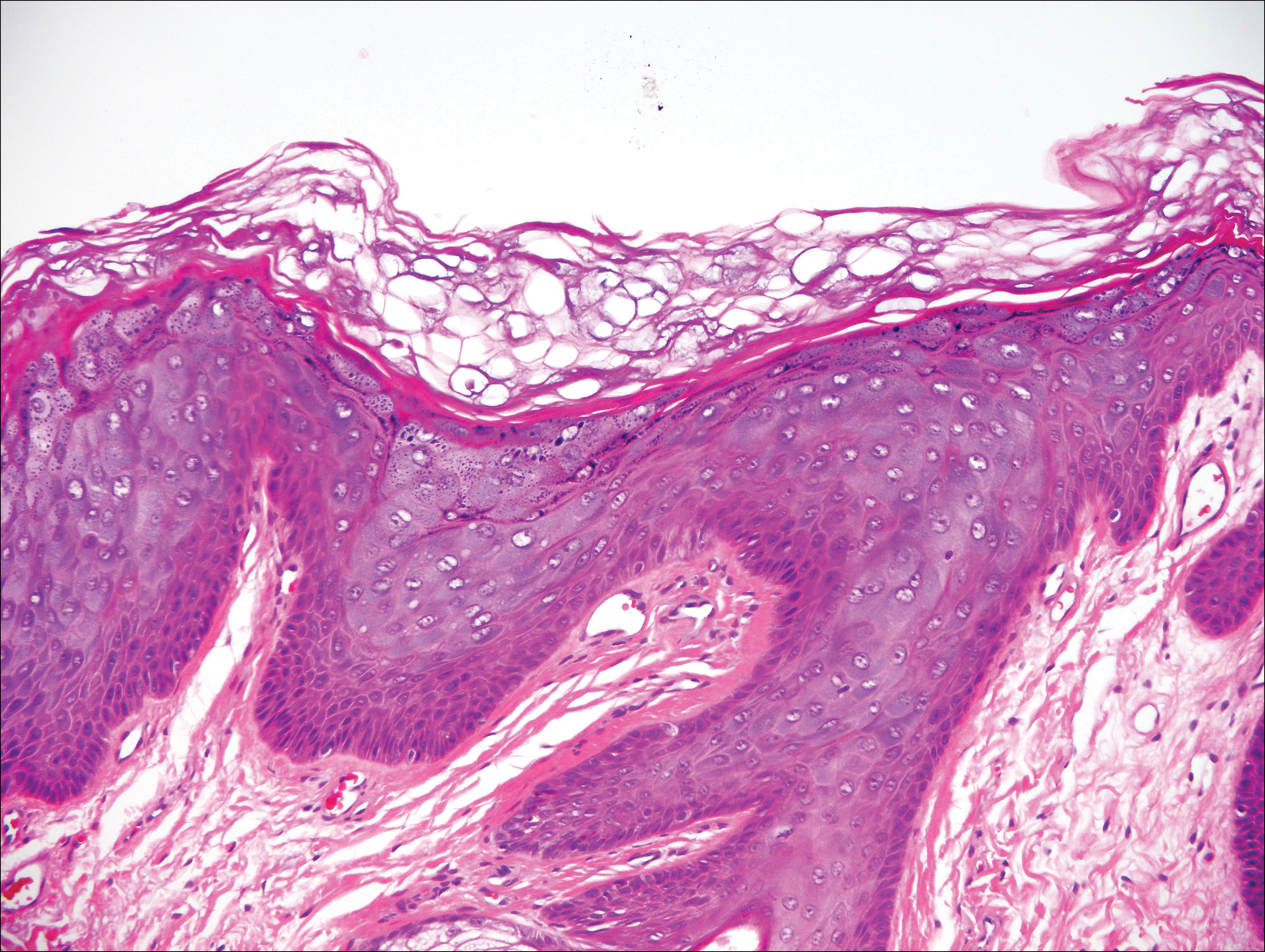
A 33-year-old man presented with progressive widespread warty skin growths that had been present since 6 years of age. Physical examination revealed numerous verrucous papules on the face and neck along with verrucous, tan-pink papules and plaques diffusely scattered on the trunk, arms, and legs. A biopsy of a lesion on the neck was performed.
Expanding Pruritic Plaque on the Forearm
The Diagnosis: Cutaneous Protothecosis
A 4-mm punch biopsy of the plaque on the right forearm was performed. The biopsy showed chronic inflammation with prominent histiocytes, foreign body giant cells, plasma cells, and abundant eosinophils (Figure 1). Grocott-Gomori methenamine-silver stain demonstrated abundant soccer ball-like or floretlike sporangia that were 3 to 11 μm, consistent with a diagnosis of protothecosis (Figure 2).
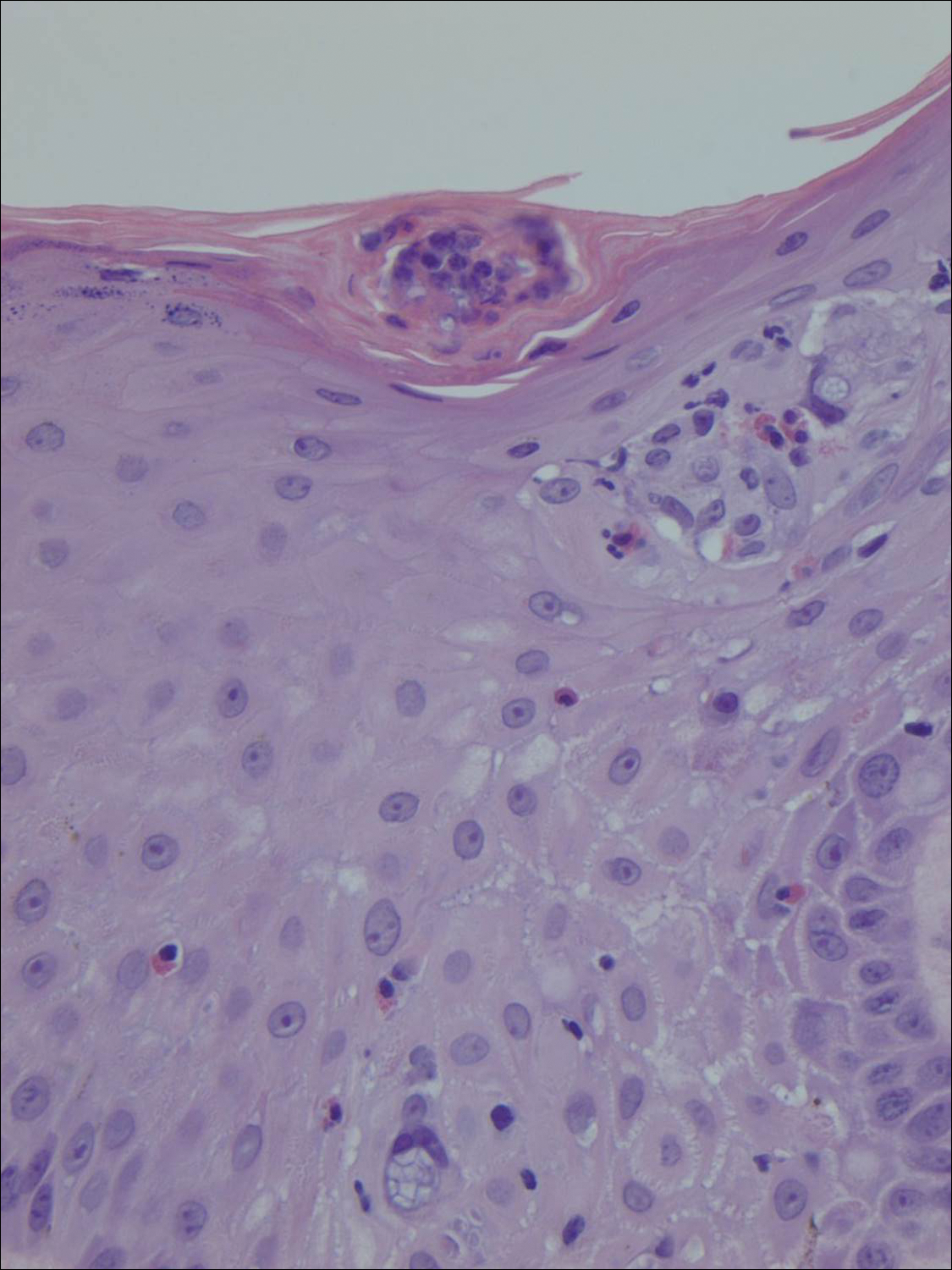

Cutaneous protothecosis is an infection caused by chlorophyll-lacking algae of the genus Prototheca.1 It is ubiquitous in nature and can be isolated from various reservoirs such as trees, grass, water, and food sources.2 Protothecosis is present worldwide and in the United States; it is most prevalent in the Southeast. Prototheca species are rare but often endemic in cattle and can cause bovine mastitis and enteritis.3 However, they are rare opportunistic infections in humans.
The pathogenesis of cutaneous protothecosis is largely unknown.4 However, most infections are thought to be caused by traumatic inoculation into subcutaneous tissues.1,2 The majority of cases occur in patients older than 30 years. To date, approximately 160 cases have been reported in the literature worldwide.5 There are 3 main species of Prototheca, but almost all human infections are caused by Prototheca wickerhamii.2 Clinically, most patients with protothecosis present with cutaneous findings, but olecranon bursitis and systemic forms also have been reported.1
Risk factors for protothecosis include immunosuppression, most often due to steroids, in addition to malignancies, diabetes mellitus, and certain occupations.1 The presentation can be variable from papules and plaques to even herpetiform appearances.4 Protothecosis usually affects the skin and soft tissues of exposed areas such as the extremities or the face.6 Diagnosis largely is made on detection of characteristic floretlike sporangia with a prominent cell wall on histopathological examination. Prototheca wickerhamii specifically produces a morula form of sporangia with endospores arranged symmetrically, giving it a characteristic soccer ball appearance.2
Treatment of protothecosis is difficult and remains controversial.1 There are no established protothecosis treatment protocols or guidelines due to the small number of cases.7 In vitro studies have demonstrated sensitivity to amphotericin B and various azoles as well as a wide range of antibiotics.1 Olecranon bursitis and small skin lesions can be treated by surgical excision. All other Prototheca infections require systemic treatment with azoles or intravenous amphotericin B for immunocompromised patients or those with disseminated disease.5 However, failure to respond to medical management often occurs, requiring surgical excision.1,6
Our patient was treated with a 3-month course of voriconazole but therapy failed and the plaque continued to expand. The patient underwent a wide excision that was repaired with a partial-thickness skin graft. Rebiopsy of the papule adjacent to the skin graft showed no further recurrence.
In conclusion, protothecosis generally is not clinically suspected and patients are subjected to various treatments without adequate results. A definitive diagnosis easily can be established with a skin biopsy, which can direct timely and appropriate treatment.
- Lass-Flörl C, Mary A. Human protothecosis. Clin Microbiol Rev. 2007;20:230-242.
- Mayorga J, Barba-Gómez JF, Verduzco-Martínez AP, et al. Protothecosis. Clin Dermatol. 2012;30:432-436.
- Jensen HE, Aalbaek B, Bloch B, et al. Bovine mammary protothecosis due to Prototheca zopfii. Med Mycol. 1998;36:89-95.
- Boyd AS, Langley M, King LE Jr. Cutaneous manifestations of Prototheca infections. J Am Acad Dermatol. 1995;32:758-764.
- Todd JR, King JW, Oberle A, et al. Protothecosis: report of a case with 20-year follow-up, and review of previously published cases. Med Mycol. 2012;50:673-689.
- Hightower KD, Messina JL. Cutaneous protothecosis: a case report and review of the literature. Cutis. 2007;80:129-131.
- Yamada N, Yoshida Y, Ohsawa T, et al. A case of cutaneous protothecosis successfully treated with local thermal therapy as an adjunct to itraconazole therapy in an immunocompromised host. Med Mycol. 2010;48:643-646.
The Diagnosis: Cutaneous Protothecosis
A 4-mm punch biopsy of the plaque on the right forearm was performed. The biopsy showed chronic inflammation with prominent histiocytes, foreign body giant cells, plasma cells, and abundant eosinophils (Figure 1). Grocott-Gomori methenamine-silver stain demonstrated abundant soccer ball-like or floretlike sporangia that were 3 to 11 μm, consistent with a diagnosis of protothecosis (Figure 2).
Cutaneous protothecosis is an infection caused by chlorophyll-lacking algae of the genus Prototheca.1 It is ubiquitous in nature and can be isolated from various reservoirs such as trees, grass, water, and food sources.2 Protothecosis is present worldwide and in the United States; it is most prevalent in the Southeast. Prototheca species are rare but often endemic in cattle and can cause bovine mastitis and enteritis.3 However, they are rare opportunistic infections in humans.
The pathogenesis of cutaneous protothecosis is largely unknown.4 However, most infections are thought to be caused by traumatic inoculation into subcutaneous tissues.1,2 The majority of cases occur in patients older than 30 years. To date, approximately 160 cases have been reported in the literature worldwide.5 There are 3 main species of Prototheca, but almost all human infections are caused by Prototheca wickerhamii.2 Clinically, most patients with protothecosis present with cutaneous findings, but olecranon bursitis and systemic forms also have been reported.1
Risk factors for protothecosis include immunosuppression, most often due to steroids, in addition to malignancies, diabetes mellitus, and certain occupations.1 The presentation can be variable from papules and plaques to even herpetiform appearances.4 Protothecosis usually affects the skin and soft tissues of exposed areas such as the extremities or the face.6 Diagnosis largely is made on detection of characteristic floretlike sporangia with a prominent cell wall on histopathological examination. Prototheca wickerhamii specifically produces a morula form of sporangia with endospores arranged symmetrically, giving it a characteristic soccer ball appearance.2
Treatment of protothecosis is difficult and remains controversial.1 There are no established protothecosis treatment protocols or guidelines due to the small number of cases.7 In vitro studies have demonstrated sensitivity to amphotericin B and various azoles as well as a wide range of antibiotics.1 Olecranon bursitis and small skin lesions can be treated by surgical excision. All other Prototheca infections require systemic treatment with azoles or intravenous amphotericin B for immunocompromised patients or those with disseminated disease.5 However, failure to respond to medical management often occurs, requiring surgical excision.1,6
Our patient was treated with a 3-month course of voriconazole but therapy failed and the plaque continued to expand. The patient underwent a wide excision that was repaired with a partial-thickness skin graft. Rebiopsy of the papule adjacent to the skin graft showed no further recurrence.
In conclusion, protothecosis generally is not clinically suspected and patients are subjected to various treatments without adequate results. A definitive diagnosis easily can be established with a skin biopsy, which can direct timely and appropriate treatment.
The Diagnosis: Cutaneous Protothecosis
A 4-mm punch biopsy of the plaque on the right forearm was performed. The biopsy showed chronic inflammation with prominent histiocytes, foreign body giant cells, plasma cells, and abundant eosinophils (Figure 1). Grocott-Gomori methenamine-silver stain demonstrated abundant soccer ball-like or floretlike sporangia that were 3 to 11 μm, consistent with a diagnosis of protothecosis (Figure 2).
Cutaneous protothecosis is an infection caused by chlorophyll-lacking algae of the genus Prototheca.1 It is ubiquitous in nature and can be isolated from various reservoirs such as trees, grass, water, and food sources.2 Protothecosis is present worldwide and in the United States; it is most prevalent in the Southeast. Prototheca species are rare but often endemic in cattle and can cause bovine mastitis and enteritis.3 However, they are rare opportunistic infections in humans.
The pathogenesis of cutaneous protothecosis is largely unknown.4 However, most infections are thought to be caused by traumatic inoculation into subcutaneous tissues.1,2 The majority of cases occur in patients older than 30 years. To date, approximately 160 cases have been reported in the literature worldwide.5 There are 3 main species of Prototheca, but almost all human infections are caused by Prototheca wickerhamii.2 Clinically, most patients with protothecosis present with cutaneous findings, but olecranon bursitis and systemic forms also have been reported.1
Risk factors for protothecosis include immunosuppression, most often due to steroids, in addition to malignancies, diabetes mellitus, and certain occupations.1 The presentation can be variable from papules and plaques to even herpetiform appearances.4 Protothecosis usually affects the skin and soft tissues of exposed areas such as the extremities or the face.6 Diagnosis largely is made on detection of characteristic floretlike sporangia with a prominent cell wall on histopathological examination. Prototheca wickerhamii specifically produces a morula form of sporangia with endospores arranged symmetrically, giving it a characteristic soccer ball appearance.2
Treatment of protothecosis is difficult and remains controversial.1 There are no established protothecosis treatment protocols or guidelines due to the small number of cases.7 In vitro studies have demonstrated sensitivity to amphotericin B and various azoles as well as a wide range of antibiotics.1 Olecranon bursitis and small skin lesions can be treated by surgical excision. All other Prototheca infections require systemic treatment with azoles or intravenous amphotericin B for immunocompromised patients or those with disseminated disease.5 However, failure to respond to medical management often occurs, requiring surgical excision.1,6
Our patient was treated with a 3-month course of voriconazole but therapy failed and the plaque continued to expand. The patient underwent a wide excision that was repaired with a partial-thickness skin graft. Rebiopsy of the papule adjacent to the skin graft showed no further recurrence.
In conclusion, protothecosis generally is not clinically suspected and patients are subjected to various treatments without adequate results. A definitive diagnosis easily can be established with a skin biopsy, which can direct timely and appropriate treatment.
- Lass-Flörl C, Mary A. Human protothecosis. Clin Microbiol Rev. 2007;20:230-242.
- Mayorga J, Barba-Gómez JF, Verduzco-Martínez AP, et al. Protothecosis. Clin Dermatol. 2012;30:432-436.
- Jensen HE, Aalbaek B, Bloch B, et al. Bovine mammary protothecosis due to Prototheca zopfii. Med Mycol. 1998;36:89-95.
- Boyd AS, Langley M, King LE Jr. Cutaneous manifestations of Prototheca infections. J Am Acad Dermatol. 1995;32:758-764.
- Todd JR, King JW, Oberle A, et al. Protothecosis: report of a case with 20-year follow-up, and review of previously published cases. Med Mycol. 2012;50:673-689.
- Hightower KD, Messina JL. Cutaneous protothecosis: a case report and review of the literature. Cutis. 2007;80:129-131.
- Yamada N, Yoshida Y, Ohsawa T, et al. A case of cutaneous protothecosis successfully treated with local thermal therapy as an adjunct to itraconazole therapy in an immunocompromised host. Med Mycol. 2010;48:643-646.
- Lass-Flörl C, Mary A. Human protothecosis. Clin Microbiol Rev. 2007;20:230-242.
- Mayorga J, Barba-Gómez JF, Verduzco-Martínez AP, et al. Protothecosis. Clin Dermatol. 2012;30:432-436.
- Jensen HE, Aalbaek B, Bloch B, et al. Bovine mammary protothecosis due to Prototheca zopfii. Med Mycol. 1998;36:89-95.
- Boyd AS, Langley M, King LE Jr. Cutaneous manifestations of Prototheca infections. J Am Acad Dermatol. 1995;32:758-764.
- Todd JR, King JW, Oberle A, et al. Protothecosis: report of a case with 20-year follow-up, and review of previously published cases. Med Mycol. 2012;50:673-689.
- Hightower KD, Messina JL. Cutaneous protothecosis: a case report and review of the literature. Cutis. 2007;80:129-131.
- Yamada N, Yoshida Y, Ohsawa T, et al. A case of cutaneous protothecosis successfully treated with local thermal therapy as an adjunct to itraconazole therapy in an immunocompromised host. Med Mycol. 2010;48:643-646.
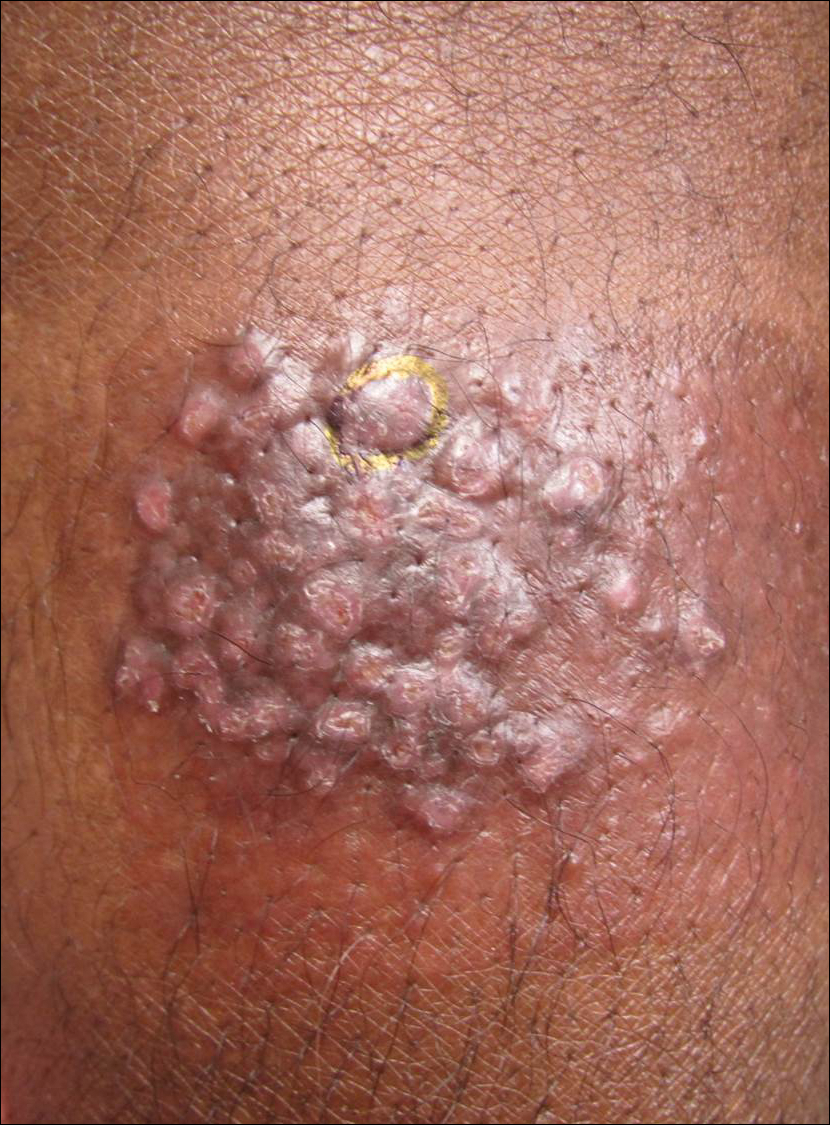
A 66-year-old male firefighter initially presented to the emergency department with an expanding pruritic plaque on the dorsal aspect of the right forearm. The patient recalled the appearance of a single 3-mm papule shortly after doing yardwork in Biloxi, Mississippi. He remembered getting wet grass on the arms, which he later washed off without any notable trauma. The single papule grew into a larger plaque over the next month. In the emergency department he was treated with sulfamethoxazole-trimethoprim, mupirocin, and clotrimazole without response. He was referred to the dermatology department 6 months later and was noted to have multiple 3- to 4-mm papules that coalesced into a 4-cm lichenified plaque with surrounding erythema on the right forearm. His medical history was notable for type 2 diabetes mellitus, hypertension, and hyperlipidemia. The remainder of the physical examination and review of systems was negative.
Proposed Alzheimer’s classification system relies solely on biomarkers
A proposed Alzheimer’s disease classification system eschews neurocognitive testing and relies instead on the presence or absence of known biomarkers.
These markers of Alzheimer’s pathophysiology fall into three distinct categories: amyloid, tau, and neuronal injury (A/T/N). By rating patients as positive or negative for each category, the criteria aim to allow researchers to differentiate true Alzheimer’s patients from those with suspected non-Alzheimer’s pathology (SNAP), a diverse group that experiences neurocognitive decline in the absence of amyloid (Neurology. 2016 Aug 2;87[5]:539-47).
The A/T/N system could be employed in three clinical groups: clinically normal patients, those who meet the clinical criteria for mild cognitive impairment (MCI), and patients with a probable Alzheimer’s disease diagnosis based on the 2011 criteria established by the National Institute on Aging–Alzheimer’s Association (NIA-AA) staging system (Alzheimers Dement. 2011 May;7[3]:257-62).

Both the NIA-AA and IWG systems comprise five biomarkers (low cerebrospinal fluid [CSF] amyloid-beta42; positive PET amyloid imaging; elevated CSF tau; hypometabolism in the temporoparietal cortex on 18F-fluorodeoxyglucose PET imaging; and atrophy in specific brain regions) plus cognitive testing.
The NIA-AA system defines three clinical stages of Alzheimer’s, each with separate classification criteria: stage 1, preclinical; stage 2, MCI; and stage 3, Alzheimer’s disease (AD) dementia. The IWG system is more complex than the NIA-AA system and takes into account biomarkers, cognition, and other clinical manifestations.
The A/T/N system doesn’t require cognitive testing, and includes additional biomarkers that should allow for a much more nuanced classification of patients. It also reflects the field’s growing confidence in objective markers that measure the pathophysiology of the disease, rather than the way it manifests symptomatically, said Dr. Jack, professor of radiology at the Mayo Clinic, Rochester, Minn.
He was the lead author on the August 2016 paper that provided a first look at the proposal. He presented a more mature version of the system at the Clinical Trials on Alzheimer’s Disease meeting in San Diego last fall. The committee is refining the document now, and intends to present a final draft at the Alzheimer’s Association International Conference in London this summer.
Would the A/T/N system benefit clinical research?
Researchers desperately need a better classification system, Dr. Jack said in an interview. The vast majority of AD drug trials have enrolled clinical cohorts that, by most estimates, are only 70% amyloid positive. The other 30% are patients whose neurocognitive deficits are due to other disorders. Many in the field believe this cohort impurity is directly tied to the consistently negative findings on anti-amyloid drugs: Simply put, anti-amyloid drugs won’t work in patients who don’t have amyloid brain plaques to begin with.
With the A/T/N system, “We take the position that cognitive impairment is a late occurrence,” in the Alzheimer’s disease trajectory, Dr. Jack said. “Clinical symptoms are not a good way to diagnose AD. This system does not require clinical symptoms for a diagnosis. In fact, the term ‘Alzheimer’s disease’ should refer only to the pathology in the brain, as it can exist in the absence of clinical symptoms or in the presence of atypical symptoms [such as language dysfunction], as well as in patients with the classic phenotype.”
The classification system comprises seven CSF and imaging biomarkers:
• A (amyloid) may be measured by an amyloid PET scan or by cerebrospinal fluid level of amyloid-beta42.
• T (tau) may be measured by CSF level of phosphorylated or total tau, or by tau PET imaging. Although tau imaging is still in the early phase, with no approved imaging agents, research is moving quickly and the committee wanted to be well positioned to incorporate it into the model as soon as an agent is approved.
• N (neurodegeneration/neuronal injury) may be measured by CSF level of total tau, hypometabolism on 18F-fluorodeoxyglucose PET imaging, or MRI that shows brain atrophy in regions characteristic of AD.
Since each component can be measured with CSF or imaging, the A/T/N system can be globally adopted despite different preferences for how biomarkers are acquired, Dr. Jack said.
“In the U.S., it’s much more common to use imaging, while in the E.U., it’s more common to use CSF for biomarkers. This is the beauty of the A/T/N system. With a single lumbar puncture or a series of imaging tests you can classify every research participant.”
In any of the patient groups, amyloid positivity is a key finding that an individual is probably on the path to Alzheimer’s disease. The biomarker permutations can be compared to the NIA-AA and IWG classifications as follows.
For clinically normal patients:
• A+/T-/N- is analogous to NIA-AA preclinical AD stage 1 and IWG asymptomatic at risk for AD (if A+ is established by amyloid PET).
• A+/T+/N- and A+/T+/N+ are analogous to NIA-AA preclinical AD stage 2/3 and IWG asymptomatic at risk for AD.
For MCI patients:
• A+/T-/N-, A+/T+/N-, and A+/T-/N+ are all analogous to the NIA-AA MCI core clinical criteria and IWG typical AD.
• A+/T+/N+ is analogous to NIA-AA MCI probably due to AD and IWG typical AD.
The A/T/N system offers the most useful details for patients who meet clinical criteria for probable AD dementia. Here, clinical criteria can be considered to help clarify the diagnostic picture:
• A-/T-/N-, analogous to NIA-AA dementia unlikely due to AD and is undefined by IWG.
• A+/T-/N-, analogous to NIA-AA intermediate likelihood of probable AD dementia, based on clinical criteria, and IWG typical AD (if A+ is established by amyloid PET).
• A+/T+/N-, analogous to NIA-AA high likelihood of probable AD dementia, based on clinical criteria, and IWG typical AD.
• A+/T-/N+, analogous to NIA-AA high likelihood of probable AD dementia, based on clinical criteria, and IWG typical AD (if A+ is established by amyloid PET).
• A+/T+/N+, analogous to NIA-AA high likelihood of AD pathophysiology and IWG typical AD.
• A-/T+/N+, analogous to NIA-AA probable AD dementia, based on clinical criteria and is undefined by IWG.
• A-/T-/N+, analogous to NIA-AA intermediate likelihood of probable AD dementia, based on clinical criteria, and is undefined by IWG.
• A-/T+/N+, analogous to NIA-AA intermediate likelihood of probable AD dementia, based on clinical criteria, and is undefined by IWG.
Would the A/T/N system benefit diagnostic accuracy?
The August paper sheds some additional light on how the system could hone diagnostic accuracy.
“For example, an A-/T-/N+ profile would be expected with pathologies such as ischemic cerebrovascular disease or hippocampal sclerosis, whereas an A-/T+/N+ profile would be expected with primary age-related tauopathy. An A+/T-/N+ profile might indicate an individual in the earliest stage of preclinical AD (accounting for the A+/T- status), who also has a non-AD pathology such as hippocampal sclerosis (accounting for the N+ status).”
Other typical profiles will certainly emerge as the A/T/N system is applied in large cohorts, the paper noted.
While the system is now aimed at building stronger research cohorts, it may eventually be adopted – and adapted – by clinicians.
“Right now, the reality is that most clinical practices don’t have access to getting these biomarkers,” Dr. Jack said. “Having said that, we also know that clinicians will vote with their feet. If they think this is useful they’ll end up adopting it, at least in the highly specialized centers that have access to these tests. The ultimate outcome someday will be a clinical practice guideline where people don’t get the label of AD unless they really have positive biomarkers.”
Dr. Jack has been a consultant for Eli Lilly.
msullivan@frontlinemedcom.com
On Twitter @alz_gal
A proposed Alzheimer’s disease classification system eschews neurocognitive testing and relies instead on the presence or absence of known biomarkers.
These markers of Alzheimer’s pathophysiology fall into three distinct categories: amyloid, tau, and neuronal injury (A/T/N). By rating patients as positive or negative for each category, the criteria aim to allow researchers to differentiate true Alzheimer’s patients from those with suspected non-Alzheimer’s pathology (SNAP), a diverse group that experiences neurocognitive decline in the absence of amyloid (Neurology. 2016 Aug 2;87[5]:539-47).
The A/T/N system could be employed in three clinical groups: clinically normal patients, those who meet the clinical criteria for mild cognitive impairment (MCI), and patients with a probable Alzheimer’s disease diagnosis based on the 2011 criteria established by the National Institute on Aging–Alzheimer’s Association (NIA-AA) staging system (Alzheimers Dement. 2011 May;7[3]:257-62).
Both the NIA-AA and IWG systems comprise five biomarkers (low cerebrospinal fluid [CSF] amyloid-beta42; positive PET amyloid imaging; elevated CSF tau; hypometabolism in the temporoparietal cortex on 18F-fluorodeoxyglucose PET imaging; and atrophy in specific brain regions) plus cognitive testing.
The NIA-AA system defines three clinical stages of Alzheimer’s, each with separate classification criteria: stage 1, preclinical; stage 2, MCI; and stage 3, Alzheimer’s disease (AD) dementia. The IWG system is more complex than the NIA-AA system and takes into account biomarkers, cognition, and other clinical manifestations.
The A/T/N system doesn’t require cognitive testing, and includes additional biomarkers that should allow for a much more nuanced classification of patients. It also reflects the field’s growing confidence in objective markers that measure the pathophysiology of the disease, rather than the way it manifests symptomatically, said Dr. Jack, professor of radiology at the Mayo Clinic, Rochester, Minn.
He was the lead author on the August 2016 paper that provided a first look at the proposal. He presented a more mature version of the system at the Clinical Trials on Alzheimer’s Disease meeting in San Diego last fall. The committee is refining the document now, and intends to present a final draft at the Alzheimer’s Association International Conference in London this summer.
Would the A/T/N system benefit clinical research?
Researchers desperately need a better classification system, Dr. Jack said in an interview. The vast majority of AD drug trials have enrolled clinical cohorts that, by most estimates, are only 70% amyloid positive. The other 30% are patients whose neurocognitive deficits are due to other disorders. Many in the field believe this cohort impurity is directly tied to the consistently negative findings on anti-amyloid drugs: Simply put, anti-amyloid drugs won’t work in patients who don’t have amyloid brain plaques to begin with.
With the A/T/N system, “We take the position that cognitive impairment is a late occurrence,” in the Alzheimer’s disease trajectory, Dr. Jack said. “Clinical symptoms are not a good way to diagnose AD. This system does not require clinical symptoms for a diagnosis. In fact, the term ‘Alzheimer’s disease’ should refer only to the pathology in the brain, as it can exist in the absence of clinical symptoms or in the presence of atypical symptoms [such as language dysfunction], as well as in patients with the classic phenotype.”
The classification system comprises seven CSF and imaging biomarkers:
• A (amyloid) may be measured by an amyloid PET scan or by cerebrospinal fluid level of amyloid-beta42.
• T (tau) may be measured by CSF level of phosphorylated or total tau, or by tau PET imaging. Although tau imaging is still in the early phase, with no approved imaging agents, research is moving quickly and the committee wanted to be well positioned to incorporate it into the model as soon as an agent is approved.
• N (neurodegeneration/neuronal injury) may be measured by CSF level of total tau, hypometabolism on 18F-fluorodeoxyglucose PET imaging, or MRI that shows brain atrophy in regions characteristic of AD.
Since each component can be measured with CSF or imaging, the A/T/N system can be globally adopted despite different preferences for how biomarkers are acquired, Dr. Jack said.
“In the U.S., it’s much more common to use imaging, while in the E.U., it’s more common to use CSF for biomarkers. This is the beauty of the A/T/N system. With a single lumbar puncture or a series of imaging tests you can classify every research participant.”
In any of the patient groups, amyloid positivity is a key finding that an individual is probably on the path to Alzheimer’s disease. The biomarker permutations can be compared to the NIA-AA and IWG classifications as follows.
For clinically normal patients:
• A+/T-/N- is analogous to NIA-AA preclinical AD stage 1 and IWG asymptomatic at risk for AD (if A+ is established by amyloid PET).
• A+/T+/N- and A+/T+/N+ are analogous to NIA-AA preclinical AD stage 2/3 and IWG asymptomatic at risk for AD.
For MCI patients:
• A+/T-/N-, A+/T+/N-, and A+/T-/N+ are all analogous to the NIA-AA MCI core clinical criteria and IWG typical AD.
• A+/T+/N+ is analogous to NIA-AA MCI probably due to AD and IWG typical AD.
The A/T/N system offers the most useful details for patients who meet clinical criteria for probable AD dementia. Here, clinical criteria can be considered to help clarify the diagnostic picture:
• A-/T-/N-, analogous to NIA-AA dementia unlikely due to AD and is undefined by IWG.
• A+/T-/N-, analogous to NIA-AA intermediate likelihood of probable AD dementia, based on clinical criteria, and IWG typical AD (if A+ is established by amyloid PET).
• A+/T+/N-, analogous to NIA-AA high likelihood of probable AD dementia, based on clinical criteria, and IWG typical AD.
• A+/T-/N+, analogous to NIA-AA high likelihood of probable AD dementia, based on clinical criteria, and IWG typical AD (if A+ is established by amyloid PET).
• A+/T+/N+, analogous to NIA-AA high likelihood of AD pathophysiology and IWG typical AD.
• A-/T+/N+, analogous to NIA-AA probable AD dementia, based on clinical criteria and is undefined by IWG.
• A-/T-/N+, analogous to NIA-AA intermediate likelihood of probable AD dementia, based on clinical criteria, and is undefined by IWG.
• A-/T+/N+, analogous to NIA-AA intermediate likelihood of probable AD dementia, based on clinical criteria, and is undefined by IWG.
Would the A/T/N system benefit diagnostic accuracy?
The August paper sheds some additional light on how the system could hone diagnostic accuracy.
“For example, an A-/T-/N+ profile would be expected with pathologies such as ischemic cerebrovascular disease or hippocampal sclerosis, whereas an A-/T+/N+ profile would be expected with primary age-related tauopathy. An A+/T-/N+ profile might indicate an individual in the earliest stage of preclinical AD (accounting for the A+/T- status), who also has a non-AD pathology such as hippocampal sclerosis (accounting for the N+ status).”
Other typical profiles will certainly emerge as the A/T/N system is applied in large cohorts, the paper noted.
While the system is now aimed at building stronger research cohorts, it may eventually be adopted – and adapted – by clinicians.
“Right now, the reality is that most clinical practices don’t have access to getting these biomarkers,” Dr. Jack said. “Having said that, we also know that clinicians will vote with their feet. If they think this is useful they’ll end up adopting it, at least in the highly specialized centers that have access to these tests. The ultimate outcome someday will be a clinical practice guideline where people don’t get the label of AD unless they really have positive biomarkers.”
Dr. Jack has been a consultant for Eli Lilly.
msullivan@frontlinemedcom.com
On Twitter @alz_gal
A proposed Alzheimer’s disease classification system eschews neurocognitive testing and relies instead on the presence or absence of known biomarkers.
These markers of Alzheimer’s pathophysiology fall into three distinct categories: amyloid, tau, and neuronal injury (A/T/N). By rating patients as positive or negative for each category, the criteria aim to allow researchers to differentiate true Alzheimer’s patients from those with suspected non-Alzheimer’s pathology (SNAP), a diverse group that experiences neurocognitive decline in the absence of amyloid (Neurology. 2016 Aug 2;87[5]:539-47).
The A/T/N system could be employed in three clinical groups: clinically normal patients, those who meet the clinical criteria for mild cognitive impairment (MCI), and patients with a probable Alzheimer’s disease diagnosis based on the 2011 criteria established by the National Institute on Aging–Alzheimer’s Association (NIA-AA) staging system (Alzheimers Dement. 2011 May;7[3]:257-62).
Both the NIA-AA and IWG systems comprise five biomarkers (low cerebrospinal fluid [CSF] amyloid-beta42; positive PET amyloid imaging; elevated CSF tau; hypometabolism in the temporoparietal cortex on 18F-fluorodeoxyglucose PET imaging; and atrophy in specific brain regions) plus cognitive testing.
The NIA-AA system defines three clinical stages of Alzheimer’s, each with separate classification criteria: stage 1, preclinical; stage 2, MCI; and stage 3, Alzheimer’s disease (AD) dementia. The IWG system is more complex than the NIA-AA system and takes into account biomarkers, cognition, and other clinical manifestations.
The A/T/N system doesn’t require cognitive testing, and includes additional biomarkers that should allow for a much more nuanced classification of patients. It also reflects the field’s growing confidence in objective markers that measure the pathophysiology of the disease, rather than the way it manifests symptomatically, said Dr. Jack, professor of radiology at the Mayo Clinic, Rochester, Minn.
He was the lead author on the August 2016 paper that provided a first look at the proposal. He presented a more mature version of the system at the Clinical Trials on Alzheimer’s Disease meeting in San Diego last fall. The committee is refining the document now, and intends to present a final draft at the Alzheimer’s Association International Conference in London this summer.
Would the A/T/N system benefit clinical research?
Researchers desperately need a better classification system, Dr. Jack said in an interview. The vast majority of AD drug trials have enrolled clinical cohorts that, by most estimates, are only 70% amyloid positive. The other 30% are patients whose neurocognitive deficits are due to other disorders. Many in the field believe this cohort impurity is directly tied to the consistently negative findings on anti-amyloid drugs: Simply put, anti-amyloid drugs won’t work in patients who don’t have amyloid brain plaques to begin with.
With the A/T/N system, “We take the position that cognitive impairment is a late occurrence,” in the Alzheimer’s disease trajectory, Dr. Jack said. “Clinical symptoms are not a good way to diagnose AD. This system does not require clinical symptoms for a diagnosis. In fact, the term ‘Alzheimer’s disease’ should refer only to the pathology in the brain, as it can exist in the absence of clinical symptoms or in the presence of atypical symptoms [such as language dysfunction], as well as in patients with the classic phenotype.”
The classification system comprises seven CSF and imaging biomarkers:
• A (amyloid) may be measured by an amyloid PET scan or by cerebrospinal fluid level of amyloid-beta42.
• T (tau) may be measured by CSF level of phosphorylated or total tau, or by tau PET imaging. Although tau imaging is still in the early phase, with no approved imaging agents, research is moving quickly and the committee wanted to be well positioned to incorporate it into the model as soon as an agent is approved.
• N (neurodegeneration/neuronal injury) may be measured by CSF level of total tau, hypometabolism on 18F-fluorodeoxyglucose PET imaging, or MRI that shows brain atrophy in regions characteristic of AD.
Since each component can be measured with CSF or imaging, the A/T/N system can be globally adopted despite different preferences for how biomarkers are acquired, Dr. Jack said.
“In the U.S., it’s much more common to use imaging, while in the E.U., it’s more common to use CSF for biomarkers. This is the beauty of the A/T/N system. With a single lumbar puncture or a series of imaging tests you can classify every research participant.”
In any of the patient groups, amyloid positivity is a key finding that an individual is probably on the path to Alzheimer’s disease. The biomarker permutations can be compared to the NIA-AA and IWG classifications as follows.
For clinically normal patients:
• A+/T-/N- is analogous to NIA-AA preclinical AD stage 1 and IWG asymptomatic at risk for AD (if A+ is established by amyloid PET).
• A+/T+/N- and A+/T+/N+ are analogous to NIA-AA preclinical AD stage 2/3 and IWG asymptomatic at risk for AD.
For MCI patients:
• A+/T-/N-, A+/T+/N-, and A+/T-/N+ are all analogous to the NIA-AA MCI core clinical criteria and IWG typical AD.
• A+/T+/N+ is analogous to NIA-AA MCI probably due to AD and IWG typical AD.
The A/T/N system offers the most useful details for patients who meet clinical criteria for probable AD dementia. Here, clinical criteria can be considered to help clarify the diagnostic picture:
• A-/T-/N-, analogous to NIA-AA dementia unlikely due to AD and is undefined by IWG.
• A+/T-/N-, analogous to NIA-AA intermediate likelihood of probable AD dementia, based on clinical criteria, and IWG typical AD (if A+ is established by amyloid PET).
• A+/T+/N-, analogous to NIA-AA high likelihood of probable AD dementia, based on clinical criteria, and IWG typical AD.
• A+/T-/N+, analogous to NIA-AA high likelihood of probable AD dementia, based on clinical criteria, and IWG typical AD (if A+ is established by amyloid PET).
• A+/T+/N+, analogous to NIA-AA high likelihood of AD pathophysiology and IWG typical AD.
• A-/T+/N+, analogous to NIA-AA probable AD dementia, based on clinical criteria and is undefined by IWG.
• A-/T-/N+, analogous to NIA-AA intermediate likelihood of probable AD dementia, based on clinical criteria, and is undefined by IWG.
• A-/T+/N+, analogous to NIA-AA intermediate likelihood of probable AD dementia, based on clinical criteria, and is undefined by IWG.
Would the A/T/N system benefit diagnostic accuracy?
The August paper sheds some additional light on how the system could hone diagnostic accuracy.
“For example, an A-/T-/N+ profile would be expected with pathologies such as ischemic cerebrovascular disease or hippocampal sclerosis, whereas an A-/T+/N+ profile would be expected with primary age-related tauopathy. An A+/T-/N+ profile might indicate an individual in the earliest stage of preclinical AD (accounting for the A+/T- status), who also has a non-AD pathology such as hippocampal sclerosis (accounting for the N+ status).”
Other typical profiles will certainly emerge as the A/T/N system is applied in large cohorts, the paper noted.
While the system is now aimed at building stronger research cohorts, it may eventually be adopted – and adapted – by clinicians.
“Right now, the reality is that most clinical practices don’t have access to getting these biomarkers,” Dr. Jack said. “Having said that, we also know that clinicians will vote with their feet. If they think this is useful they’ll end up adopting it, at least in the highly specialized centers that have access to these tests. The ultimate outcome someday will be a clinical practice guideline where people don’t get the label of AD unless they really have positive biomarkers.”
Dr. Jack has been a consultant for Eli Lilly.
msullivan@frontlinemedcom.com
On Twitter @alz_gal