User login
PA Autonomy Levels the Field
I can’t tell you how refreshing it is to read an editorial that portrays PA autonomy in a positive light (2017;27[2]:12-14). I live in Michigan, and the physician I worked with for years is relieved to finally see laws changing for PAs. Physicians want less accountability, as they are carrying so much already. The phrase “supervising physician” can feel burdensome, particularly because of its implications in a court of law. When I took time off to spend with my kids, the physician I worked with hired two NPs; he said that their increased drive for autonomy made him feel less legally responsible. The new bill passed here has altered his thinking about hiring PAs versus NPs.
I believe eventually, with increased practice authority, a title change is inevitable for the PA profession. According to my 14–year-old niece, “PAs obviously can’t do anything by themselves, or their title wouldn’t be ‘assistant.’” This is truly a misnomer that doesn’t reflect the PA scope of practice.
Diana Burmeister,
Southfield, MI
I can’t tell you how refreshing it is to read an editorial that portrays PA autonomy in a positive light (2017;27[2]:12-14). I live in Michigan, and the physician I worked with for years is relieved to finally see laws changing for PAs. Physicians want less accountability, as they are carrying so much already. The phrase “supervising physician” can feel burdensome, particularly because of its implications in a court of law. When I took time off to spend with my kids, the physician I worked with hired two NPs; he said that their increased drive for autonomy made him feel less legally responsible. The new bill passed here has altered his thinking about hiring PAs versus NPs.
I believe eventually, with increased practice authority, a title change is inevitable for the PA profession. According to my 14–year-old niece, “PAs obviously can’t do anything by themselves, or their title wouldn’t be ‘assistant.’” This is truly a misnomer that doesn’t reflect the PA scope of practice.
Diana Burmeister,
Southfield, MI
I can’t tell you how refreshing it is to read an editorial that portrays PA autonomy in a positive light (2017;27[2]:12-14). I live in Michigan, and the physician I worked with for years is relieved to finally see laws changing for PAs. Physicians want less accountability, as they are carrying so much already. The phrase “supervising physician” can feel burdensome, particularly because of its implications in a court of law. When I took time off to spend with my kids, the physician I worked with hired two NPs; he said that their increased drive for autonomy made him feel less legally responsible. The new bill passed here has altered his thinking about hiring PAs versus NPs.
I believe eventually, with increased practice authority, a title change is inevitable for the PA profession. According to my 14–year-old niece, “PAs obviously can’t do anything by themselves, or their title wouldn’t be ‘assistant.’” This is truly a misnomer that doesn’t reflect the PA scope of practice.
Diana Burmeister,
Southfield, MI
When Did I Start Consulting for Dr. Google?
I have witnessed firsthand the evolution of patient satisfaction (2017;27[1]:13-14). When I became an NP in 1986, I worked in rural areas as the primary provider. My patients trusted that I cared for them and in the best way possible. A lot changed with the internet—Google became the primary care provider, and I became the consultant. Expressions of gratitude and respect from patients have been replaced by entitlement to services mandated by them. I have had patients bring in requests for diagnostic studies and further work-up for which there is no clinical evidence of need. They have their minds made up; if I am noncompliant, there is something wrong with me.
I have been reported to administration for being rude, insensitive, and incompetent. Now, I am not perfect, but most of these complaints were a result of me saying “no.” I was initially shocked by these demands and complaints, but they have become the new normal. Precious care time has been replaced by explanations and discussions about why I can’t do what patients want me to do.
Many providers give in to patients’ desires just to keep them happy and coming back. Unnecessary antibiotics, misuse of controlled pain medication, and pointless diagnostic studies have drained insurance and kept providers from just doing what is right. Big corporations run many medical practices, and unfortunately their main goal is to keep the doors open—even if that means compromising evidence-based medicine.
We have a generation of entitled people who become offended when you disagree with them. Many administrators transfer patient complaints to providers so that they will toe the line but fail to include pertinent information, such as what the complaint was and who filed it. This is a control technique; the provider is now automatically guilty, without a trial or defense.
I am blessed to work for a company that agrees that if concern is expressed, I have the right, as the provider, to know the details. If I am perceived as rude or abrupt, then knowing who feels that way can help me improve. Upon that patient’s next visit, I will adopt a gentler attitude and make an extra effort to pick up on cues that I may have missed.
Sometimes, patients express dissatisfaction because I will not dispense a controlled substance for pain upon request. My administration allows me to respond to situations like this in writing, and they can then verify that the complaint is unwarranted, and it will not be held against me or used as a control tactic. This approach has been so helpful. The company I work for also informs providers when patients express gratitude and thankfulness, which creates a great balance.
Surveys can be useful, but only if they are used as a tool to help the provider excel at his/her job—not create compliance for maintaining the patient head count. Providers should not have to worry about pleasing administration; they need to give quality care without fear.
Sue Beebe, APRN
Wichita, KA
I have witnessed firsthand the evolution of patient satisfaction (2017;27[1]:13-14). When I became an NP in 1986, I worked in rural areas as the primary provider. My patients trusted that I cared for them and in the best way possible. A lot changed with the internet—Google became the primary care provider, and I became the consultant. Expressions of gratitude and respect from patients have been replaced by entitlement to services mandated by them. I have had patients bring in requests for diagnostic studies and further work-up for which there is no clinical evidence of need. They have their minds made up; if I am noncompliant, there is something wrong with me.
I have been reported to administration for being rude, insensitive, and incompetent. Now, I am not perfect, but most of these complaints were a result of me saying “no.” I was initially shocked by these demands and complaints, but they have become the new normal. Precious care time has been replaced by explanations and discussions about why I can’t do what patients want me to do.
Many providers give in to patients’ desires just to keep them happy and coming back. Unnecessary antibiotics, misuse of controlled pain medication, and pointless diagnostic studies have drained insurance and kept providers from just doing what is right. Big corporations run many medical practices, and unfortunately their main goal is to keep the doors open—even if that means compromising evidence-based medicine.
We have a generation of entitled people who become offended when you disagree with them. Many administrators transfer patient complaints to providers so that they will toe the line but fail to include pertinent information, such as what the complaint was and who filed it. This is a control technique; the provider is now automatically guilty, without a trial or defense.
I am blessed to work for a company that agrees that if concern is expressed, I have the right, as the provider, to know the details. If I am perceived as rude or abrupt, then knowing who feels that way can help me improve. Upon that patient’s next visit, I will adopt a gentler attitude and make an extra effort to pick up on cues that I may have missed.
Sometimes, patients express dissatisfaction because I will not dispense a controlled substance for pain upon request. My administration allows me to respond to situations like this in writing, and they can then verify that the complaint is unwarranted, and it will not be held against me or used as a control tactic. This approach has been so helpful. The company I work for also informs providers when patients express gratitude and thankfulness, which creates a great balance.
Surveys can be useful, but only if they are used as a tool to help the provider excel at his/her job—not create compliance for maintaining the patient head count. Providers should not have to worry about pleasing administration; they need to give quality care without fear.
Sue Beebe, APRN
Wichita, KA
I have witnessed firsthand the evolution of patient satisfaction (2017;27[1]:13-14). When I became an NP in 1986, I worked in rural areas as the primary provider. My patients trusted that I cared for them and in the best way possible. A lot changed with the internet—Google became the primary care provider, and I became the consultant. Expressions of gratitude and respect from patients have been replaced by entitlement to services mandated by them. I have had patients bring in requests for diagnostic studies and further work-up for which there is no clinical evidence of need. They have their minds made up; if I am noncompliant, there is something wrong with me.
I have been reported to administration for being rude, insensitive, and incompetent. Now, I am not perfect, but most of these complaints were a result of me saying “no.” I was initially shocked by these demands and complaints, but they have become the new normal. Precious care time has been replaced by explanations and discussions about why I can’t do what patients want me to do.
Many providers give in to patients’ desires just to keep them happy and coming back. Unnecessary antibiotics, misuse of controlled pain medication, and pointless diagnostic studies have drained insurance and kept providers from just doing what is right. Big corporations run many medical practices, and unfortunately their main goal is to keep the doors open—even if that means compromising evidence-based medicine.
We have a generation of entitled people who become offended when you disagree with them. Many administrators transfer patient complaints to providers so that they will toe the line but fail to include pertinent information, such as what the complaint was and who filed it. This is a control technique; the provider is now automatically guilty, without a trial or defense.
I am blessed to work for a company that agrees that if concern is expressed, I have the right, as the provider, to know the details. If I am perceived as rude or abrupt, then knowing who feels that way can help me improve. Upon that patient’s next visit, I will adopt a gentler attitude and make an extra effort to pick up on cues that I may have missed.
Sometimes, patients express dissatisfaction because I will not dispense a controlled substance for pain upon request. My administration allows me to respond to situations like this in writing, and they can then verify that the complaint is unwarranted, and it will not be held against me or used as a control tactic. This approach has been so helpful. The company I work for also informs providers when patients express gratitude and thankfulness, which creates a great balance.
Surveys can be useful, but only if they are used as a tool to help the provider excel at his/her job—not create compliance for maintaining the patient head count. Providers should not have to worry about pleasing administration; they need to give quality care without fear.
Sue Beebe, APRN
Wichita, KA
MACRA advice: Do the MIPS bare minimum this year
ORLANDO – Confused about what MACRA, MIPS, and APMs mean for you and your practice this year?
Clifford Lober, MD, offered some very simple advice at the annual meeting of the American Academy of Dermatology: “If you take nothing else from this annual meeting – not this session, but the whole meeting – submit one quality measure or one improvement activity or the required advancing care information base measures – one time, on one patient” to the MIPS program, Dr. Lober said. “If you do that, you will save 4% of your Medicare payments in 2019.”*

MIPS is a system of bonuses and penalties based on data the Medicare program started collecting on Jan. 1, 2017; it incorporates the legacy quality measure reporting systems including the Physician Quality Reporting System, meaningful use, and the value-based modifier program, said Dr. Lober, a dermatologist in private practice in Kissimmee, Fla.
Based on feedback from physicians and other stakeholders, Medicare announced last fall that physicians could “pick their pace” as to how they wanted to report data to MIPS in 2017, the first baseline year of the program. They could:
- Choose to not participate. These physicians will see an automatic 4% reduction in their Medicare payments in 2019.
- Test QPP. Report on one quality measure or improvement activity for one patient. Of note: This information does not have to be submitted electronically; paper submission is okay. These physicians will avoid the 4% Medicare pay cut.
- Participate for part of the year. These physicians will report for 90 consecutive days of their choice on more than one quality measure, more than one improvement activity, or more than the required measures in the advancing care information performance category. Reporting must start before Oct. 2, 2017. These physicians may earn a pay increase.*
- Participate for the full year. Submit a full year of data to Medicare. These physicians may get a pay increase.
Dr. Lober said pointedly, “The first choice – doing nothing – is the dumbest move you could make.”
He also noted that the CMS regulations say verbatim that “positive adjustments are based on data on the performance information submitted, not the amount of information or the length of time submitted.”
A few physicians and other clinicians are exempted from the QPP for 2017. Those who are in their first year of participating in Medicare Part B are exempt, as are those who bill less than $30,000 or have fewer than 100 Medicare patients.*
“The low-value exemption alone, CMS actuaries think, will exempt 32.5% of clinicians in the United States – a huge exemption,” Dr. Lober said, adding that when it comes to dermatologists, it’s estimated that about 18.3% will be exempt from MIPS.
Despite the new political landscape in Washington, Dr. Lober said that he does not think MACRA will go away.
“One of the things I want to say out front is, what is the likelihood of MACRA being repealed?” he said. “Somewhere between slim and none or even none and none. It was supported by both Democrats and Republicans and I think it’s here to stay. It might be modified, but it’s here to stay.”
He urged physicians to reach out to CMS if they have comments about the MIPS, APMs, and the Quality Payment Program, noting that despite the formal comment period being closed, agency officials have been receptive to comments and suggestions.
*This article was updated on March 13, 2017 at 3:30 p.m.
dfulton@frontlinemedcom.com
On Twitter @denisefulton
ORLANDO – Confused about what MACRA, MIPS, and APMs mean for you and your practice this year?
Clifford Lober, MD, offered some very simple advice at the annual meeting of the American Academy of Dermatology: “If you take nothing else from this annual meeting – not this session, but the whole meeting – submit one quality measure or one improvement activity or the required advancing care information base measures – one time, on one patient” to the MIPS program, Dr. Lober said. “If you do that, you will save 4% of your Medicare payments in 2019.”*
MIPS is a system of bonuses and penalties based on data the Medicare program started collecting on Jan. 1, 2017; it incorporates the legacy quality measure reporting systems including the Physician Quality Reporting System, meaningful use, and the value-based modifier program, said Dr. Lober, a dermatologist in private practice in Kissimmee, Fla.
Based on feedback from physicians and other stakeholders, Medicare announced last fall that physicians could “pick their pace” as to how they wanted to report data to MIPS in 2017, the first baseline year of the program. They could:
- Choose to not participate. These physicians will see an automatic 4% reduction in their Medicare payments in 2019.
- Test QPP. Report on one quality measure or improvement activity for one patient. Of note: This information does not have to be submitted electronically; paper submission is okay. These physicians will avoid the 4% Medicare pay cut.
- Participate for part of the year. These physicians will report for 90 consecutive days of their choice on more than one quality measure, more than one improvement activity, or more than the required measures in the advancing care information performance category. Reporting must start before Oct. 2, 2017. These physicians may earn a pay increase.*
- Participate for the full year. Submit a full year of data to Medicare. These physicians may get a pay increase.
Dr. Lober said pointedly, “The first choice – doing nothing – is the dumbest move you could make.”
He also noted that the CMS regulations say verbatim that “positive adjustments are based on data on the performance information submitted, not the amount of information or the length of time submitted.”
A few physicians and other clinicians are exempted from the QPP for 2017. Those who are in their first year of participating in Medicare Part B are exempt, as are those who bill less than $30,000 or have fewer than 100 Medicare patients.*
“The low-value exemption alone, CMS actuaries think, will exempt 32.5% of clinicians in the United States – a huge exemption,” Dr. Lober said, adding that when it comes to dermatologists, it’s estimated that about 18.3% will be exempt from MIPS.
Despite the new political landscape in Washington, Dr. Lober said that he does not think MACRA will go away.
“One of the things I want to say out front is, what is the likelihood of MACRA being repealed?” he said. “Somewhere between slim and none or even none and none. It was supported by both Democrats and Republicans and I think it’s here to stay. It might be modified, but it’s here to stay.”
He urged physicians to reach out to CMS if they have comments about the MIPS, APMs, and the Quality Payment Program, noting that despite the formal comment period being closed, agency officials have been receptive to comments and suggestions.
*This article was updated on March 13, 2017 at 3:30 p.m.
dfulton@frontlinemedcom.com
On Twitter @denisefulton
ORLANDO – Confused about what MACRA, MIPS, and APMs mean for you and your practice this year?
Clifford Lober, MD, offered some very simple advice at the annual meeting of the American Academy of Dermatology: “If you take nothing else from this annual meeting – not this session, but the whole meeting – submit one quality measure or one improvement activity or the required advancing care information base measures – one time, on one patient” to the MIPS program, Dr. Lober said. “If you do that, you will save 4% of your Medicare payments in 2019.”*
MIPS is a system of bonuses and penalties based on data the Medicare program started collecting on Jan. 1, 2017; it incorporates the legacy quality measure reporting systems including the Physician Quality Reporting System, meaningful use, and the value-based modifier program, said Dr. Lober, a dermatologist in private practice in Kissimmee, Fla.
Based on feedback from physicians and other stakeholders, Medicare announced last fall that physicians could “pick their pace” as to how they wanted to report data to MIPS in 2017, the first baseline year of the program. They could:
- Choose to not participate. These physicians will see an automatic 4% reduction in their Medicare payments in 2019.
- Test QPP. Report on one quality measure or improvement activity for one patient. Of note: This information does not have to be submitted electronically; paper submission is okay. These physicians will avoid the 4% Medicare pay cut.
- Participate for part of the year. These physicians will report for 90 consecutive days of their choice on more than one quality measure, more than one improvement activity, or more than the required measures in the advancing care information performance category. Reporting must start before Oct. 2, 2017. These physicians may earn a pay increase.*
- Participate for the full year. Submit a full year of data to Medicare. These physicians may get a pay increase.
Dr. Lober said pointedly, “The first choice – doing nothing – is the dumbest move you could make.”
He also noted that the CMS regulations say verbatim that “positive adjustments are based on data on the performance information submitted, not the amount of information or the length of time submitted.”
A few physicians and other clinicians are exempted from the QPP for 2017. Those who are in their first year of participating in Medicare Part B are exempt, as are those who bill less than $30,000 or have fewer than 100 Medicare patients.*
“The low-value exemption alone, CMS actuaries think, will exempt 32.5% of clinicians in the United States – a huge exemption,” Dr. Lober said, adding that when it comes to dermatologists, it’s estimated that about 18.3% will be exempt from MIPS.
Despite the new political landscape in Washington, Dr. Lober said that he does not think MACRA will go away.
“One of the things I want to say out front is, what is the likelihood of MACRA being repealed?” he said. “Somewhere between slim and none or even none and none. It was supported by both Democrats and Republicans and I think it’s here to stay. It might be modified, but it’s here to stay.”
He urged physicians to reach out to CMS if they have comments about the MIPS, APMs, and the Quality Payment Program, noting that despite the formal comment period being closed, agency officials have been receptive to comments and suggestions.
*This article was updated on March 13, 2017 at 3:30 p.m.
dfulton@frontlinemedcom.com
On Twitter @denisefulton
AT AAD 17

Physicians need to take hyperhidrosis in teens seriously
ORLANDO – Not quite a fifth of teens experience excessive, uncontrollable sweating, according to the results of an online survey presented during this year’s annual American Academy of Dermatology.
Because nearly 70% of teens who reported the condition said it interferes with their activities of daily living, late-breaking research presenter, Adelaide A. Hebert, MD, chief of pediatric dermatology at the University of Texas, Houston, said it was time medical schools paid more attention to it.
For the study, Dr. Hebert and her colleagues online-surveyed 1,000 adolescents between 12 and 17 years who meet the accepted diagnostic criteria for primary focal hyperhidrosis. An analysis of the 981 surveys that were complete showed that 17.1% of respondents experienced excessive, uncontrollable sweating and that 68.6% of these reported the sweating was moderate or major, impairing their normal functioning.
The average age of onset for the condition was 11 years, although more than a quarter of respondents said their sweating began at age 10 years. Nearly all those surveyed said they sweat from at least two focal areas, with five areas being the average number of focal areas.
Adolescence is when hyperhidrosis begins for many adults with the condition, yet few if any data exist regarding the condition in this age group, according to Dr. Hebert. “We have to figure out what is going on so maybe we can make a difference later.”
wmcknight@frontlinemedcom.com
On Twitter @whitneymcknight
ORLANDO – Not quite a fifth of teens experience excessive, uncontrollable sweating, according to the results of an online survey presented during this year’s annual American Academy of Dermatology.
Because nearly 70% of teens who reported the condition said it interferes with their activities of daily living, late-breaking research presenter, Adelaide A. Hebert, MD, chief of pediatric dermatology at the University of Texas, Houston, said it was time medical schools paid more attention to it.
For the study, Dr. Hebert and her colleagues online-surveyed 1,000 adolescents between 12 and 17 years who meet the accepted diagnostic criteria for primary focal hyperhidrosis. An analysis of the 981 surveys that were complete showed that 17.1% of respondents experienced excessive, uncontrollable sweating and that 68.6% of these reported the sweating was moderate or major, impairing their normal functioning.
The average age of onset for the condition was 11 years, although more than a quarter of respondents said their sweating began at age 10 years. Nearly all those surveyed said they sweat from at least two focal areas, with five areas being the average number of focal areas.
Adolescence is when hyperhidrosis begins for many adults with the condition, yet few if any data exist regarding the condition in this age group, according to Dr. Hebert. “We have to figure out what is going on so maybe we can make a difference later.”
wmcknight@frontlinemedcom.com
On Twitter @whitneymcknight
ORLANDO – Not quite a fifth of teens experience excessive, uncontrollable sweating, according to the results of an online survey presented during this year’s annual American Academy of Dermatology.
Because nearly 70% of teens who reported the condition said it interferes with their activities of daily living, late-breaking research presenter, Adelaide A. Hebert, MD, chief of pediatric dermatology at the University of Texas, Houston, said it was time medical schools paid more attention to it.
For the study, Dr. Hebert and her colleagues online-surveyed 1,000 adolescents between 12 and 17 years who meet the accepted diagnostic criteria for primary focal hyperhidrosis. An analysis of the 981 surveys that were complete showed that 17.1% of respondents experienced excessive, uncontrollable sweating and that 68.6% of these reported the sweating was moderate or major, impairing their normal functioning.
The average age of onset for the condition was 11 years, although more than a quarter of respondents said their sweating began at age 10 years. Nearly all those surveyed said they sweat from at least two focal areas, with five areas being the average number of focal areas.
Adolescence is when hyperhidrosis begins for many adults with the condition, yet few if any data exist regarding the condition in this age group, according to Dr. Hebert. “We have to figure out what is going on so maybe we can make a difference later.”
wmcknight@frontlinemedcom.com
On Twitter @whitneymcknight
AT AAD 17
Key clinical point:
Major finding: Hyperhidrosis is common in 17% of teens surveyed; 69% of these reported hyperhidrosis interferes with activities of daily living.
Data source: Online survey of 1,000 U.S. teens between 12 and 17 years who reported excessive, uncontrollable sweating.
Disclosures: Dr. Hebert received a grant from GlaxoSmithKline for this study. She is also a board member of the International Hyperhidrosis Society.

Teletriage app reduced skin specialty care wait times
ORLANDO – A teletriage app significantly reduced the time between triage and evaluation by a dermatologist, helping a volunteer-staffed clinic for the uninsured see more patients and improve rates of accurate diagnosis and treatment.
Peter Chansky, a medical student at the University of Pennsylvania, Philadelphia, presented the data on a study of the app during a late-breaking research session at this year’s annual meeting of the American Academy of Dermatology.

The teletriage app AccessDerm, which is free to all AAD members, uses a photo of the dermatological condition, along with basic clinical and demographic information. The investigators found that with the app, the mean time from referral to teledermatology response was 1.4 days vs. 13.4 days for waiting to be seen in the next dermatology clinic (P less than .0001). Additionally, because the app requires the referring physicians to enter a differential diagnosis and a suggested treatment plan, it was established that diagnoses improved with teledermatology. Compared with self-reported primary care provider plans, the app led to an altered course of treatment in 95% of cases.
In all, 70% of cases were triaged via teledermatology without the need for an in-person evaluation, resulting in an average of 1.4 out of 8 appointments being saved monthly. This allowed the clinic to treat 18% more patients who needed in-person care, according to Mr. Chansky.
“Teletriage can be easily implemented in an underserved clinical setting, and provides an opportunity for dermatologists to make a significant and meaningful impact on the health care and outcomes of underserved populations,” Mr. Chansky said.
wmcknight@frontlinemedcom.com
On Twitter @whitneymcknight
ORLANDO – A teletriage app significantly reduced the time between triage and evaluation by a dermatologist, helping a volunteer-staffed clinic for the uninsured see more patients and improve rates of accurate diagnosis and treatment.
Peter Chansky, a medical student at the University of Pennsylvania, Philadelphia, presented the data on a study of the app during a late-breaking research session at this year’s annual meeting of the American Academy of Dermatology.
The teletriage app AccessDerm, which is free to all AAD members, uses a photo of the dermatological condition, along with basic clinical and demographic information. The investigators found that with the app, the mean time from referral to teledermatology response was 1.4 days vs. 13.4 days for waiting to be seen in the next dermatology clinic (P less than .0001). Additionally, because the app requires the referring physicians to enter a differential diagnosis and a suggested treatment plan, it was established that diagnoses improved with teledermatology. Compared with self-reported primary care provider plans, the app led to an altered course of treatment in 95% of cases.
In all, 70% of cases were triaged via teledermatology without the need for an in-person evaluation, resulting in an average of 1.4 out of 8 appointments being saved monthly. This allowed the clinic to treat 18% more patients who needed in-person care, according to Mr. Chansky.
“Teletriage can be easily implemented in an underserved clinical setting, and provides an opportunity for dermatologists to make a significant and meaningful impact on the health care and outcomes of underserved populations,” Mr. Chansky said.
wmcknight@frontlinemedcom.com
On Twitter @whitneymcknight
ORLANDO – A teletriage app significantly reduced the time between triage and evaluation by a dermatologist, helping a volunteer-staffed clinic for the uninsured see more patients and improve rates of accurate diagnosis and treatment.
Peter Chansky, a medical student at the University of Pennsylvania, Philadelphia, presented the data on a study of the app during a late-breaking research session at this year’s annual meeting of the American Academy of Dermatology.
The teletriage app AccessDerm, which is free to all AAD members, uses a photo of the dermatological condition, along with basic clinical and demographic information. The investigators found that with the app, the mean time from referral to teledermatology response was 1.4 days vs. 13.4 days for waiting to be seen in the next dermatology clinic (P less than .0001). Additionally, because the app requires the referring physicians to enter a differential diagnosis and a suggested treatment plan, it was established that diagnoses improved with teledermatology. Compared with self-reported primary care provider plans, the app led to an altered course of treatment in 95% of cases.
In all, 70% of cases were triaged via teledermatology without the need for an in-person evaluation, resulting in an average of 1.4 out of 8 appointments being saved monthly. This allowed the clinic to treat 18% more patients who needed in-person care, according to Mr. Chansky.
“Teletriage can be easily implemented in an underserved clinical setting, and provides an opportunity for dermatologists to make a significant and meaningful impact on the health care and outcomes of underserved populations,” Mr. Chansky said.
wmcknight@frontlinemedcom.com
On Twitter @whitneymcknight
AT AAD 17
VIDEO: Don’t overlook psychosocial concerns of vitiligo patients
ORLANDO – There are ways to assess the psychosocial needs of your patients with vitiligo, even if you don’t believe you have the necessary skills to do a complete mental health work-up, according to Seemal R. Desai, MD.
In an interview recorded at this year’s annual meeting of the American Academy of Dermatology, Dr. Desai, an assistant clinical professor of dermatology at the University of Texas, Dallas, shares his ideas for how to have casual conversations with patients that can help reveal important clues to psychosocial stress patients with this serious medical skin condition might be facing.
“There are subtle clues to look for to know that these patients are uncomfortable with others seeing their skin,” says Dr. Desai.
In the video interview, he also covers taking a multidisciplinary approach to caring for these patients, what treatments are available to those who are suffering psychosocial stress after having failed several interventions, and how patients from many Asian and African counties are especially at risk for ostracization.
“It’s important to let your patients know that you understand this is really affecting them psychosocially, and that you care,” says Dr. Desai.
The video associated with this article is no longer available on this site. Please view all of our videos on the MDedge YouTube channel
wmcknight@frontlinemedcom.com
On Twitter @whitneymcknight
ORLANDO – There are ways to assess the psychosocial needs of your patients with vitiligo, even if you don’t believe you have the necessary skills to do a complete mental health work-up, according to Seemal R. Desai, MD.
In an interview recorded at this year’s annual meeting of the American Academy of Dermatology, Dr. Desai, an assistant clinical professor of dermatology at the University of Texas, Dallas, shares his ideas for how to have casual conversations with patients that can help reveal important clues to psychosocial stress patients with this serious medical skin condition might be facing.
“There are subtle clues to look for to know that these patients are uncomfortable with others seeing their skin,” says Dr. Desai.
In the video interview, he also covers taking a multidisciplinary approach to caring for these patients, what treatments are available to those who are suffering psychosocial stress after having failed several interventions, and how patients from many Asian and African counties are especially at risk for ostracization.
“It’s important to let your patients know that you understand this is really affecting them psychosocially, and that you care,” says Dr. Desai.
The video associated with this article is no longer available on this site. Please view all of our videos on the MDedge YouTube channel
wmcknight@frontlinemedcom.com
On Twitter @whitneymcknight
ORLANDO – There are ways to assess the psychosocial needs of your patients with vitiligo, even if you don’t believe you have the necessary skills to do a complete mental health work-up, according to Seemal R. Desai, MD.
In an interview recorded at this year’s annual meeting of the American Academy of Dermatology, Dr. Desai, an assistant clinical professor of dermatology at the University of Texas, Dallas, shares his ideas for how to have casual conversations with patients that can help reveal important clues to psychosocial stress patients with this serious medical skin condition might be facing.
“There are subtle clues to look for to know that these patients are uncomfortable with others seeing their skin,” says Dr. Desai.
In the video interview, he also covers taking a multidisciplinary approach to caring for these patients, what treatments are available to those who are suffering psychosocial stress after having failed several interventions, and how patients from many Asian and African counties are especially at risk for ostracization.
“It’s important to let your patients know that you understand this is really affecting them psychosocially, and that you care,” says Dr. Desai.
The video associated with this article is no longer available on this site. Please view all of our videos on the MDedge YouTube channel
wmcknight@frontlinemedcom.com
On Twitter @whitneymcknight
EXPERT ANALYSIS FROM AAD 17

Long-term peanut sublingual immunotherapy found safe
ATLANTA – Peanut sublingual immunotherapy induces clinically significant desensitization in the majority of subjects and can induce sustained unresponsiveness in a subset of children treated for 36-60 months, results from a small study suggest.
“Sublingual immunotherapy [SLIT] is an easy-to-administer treatment that appears to be safe, and with extended treatment, may provide a clinically significant amount of protection with the potential for a lasting effect,” one of the study authors, Edwin H. Kim, MD, said in an interview in advance of the annual meeting of the American Academy of Allergy, Asthma, and Immunology.

To find out, the researchers treated 37 patients with 2 mg of peanut SLIT for 36-60 months and then assessed a 5,000-mg peanut oral food challenge to further assess desensitization. Those who passed the challenge discontinued SLIT for 2-4 weeks and were then re-challenged with 5,000 mg of peanut protein to assess for sustained unresponsiveness.
“Existing data suggested that about 50% of patients on oral immunotherapy develop sustained unresponsiveness, which was defined by being able to tolerate the same full amount of peanut 1 month after stopping therapy,” Dr. Kim said. “As the assumption was that SLIT would have a more modest effect, it was unclear if any patients at all on SLIT would develop sustained unresponsiveness.”
Of the 37 subjects who completed the study, 32 (86%) safely ingested more than 300 mg of peanut and 12 (32%) passed the oral food challenge at the end of SLIT therapy. The median amount of peanut tolerated was 1,750 mg (compared with 1,710 mg in the original 12-month paper). The 12 subjects who passed the oral food challenge were re-challenged with 5,000 mg of peanut 2-4 weeks after discontinuing SLIT. Of these, 10 (27%) demonstrated sustained unresponsiveness. Dr. Kim characterized the results as “better than we would have expected.”
He acknowledged certain limitations to the study, including the lack of an entry food challenge to determine a baseline reaction threshold and the lack of a placebo arm for the study’s extended maintenance phase.
Dr. Kim reported having no financial disclosures.
dbrunk@frontlinemedcom.com
ATLANTA – Peanut sublingual immunotherapy induces clinically significant desensitization in the majority of subjects and can induce sustained unresponsiveness in a subset of children treated for 36-60 months, results from a small study suggest.
“Sublingual immunotherapy [SLIT] is an easy-to-administer treatment that appears to be safe, and with extended treatment, may provide a clinically significant amount of protection with the potential for a lasting effect,” one of the study authors, Edwin H. Kim, MD, said in an interview in advance of the annual meeting of the American Academy of Allergy, Asthma, and Immunology.
To find out, the researchers treated 37 patients with 2 mg of peanut SLIT for 36-60 months and then assessed a 5,000-mg peanut oral food challenge to further assess desensitization. Those who passed the challenge discontinued SLIT for 2-4 weeks and were then re-challenged with 5,000 mg of peanut protein to assess for sustained unresponsiveness.
“Existing data suggested that about 50% of patients on oral immunotherapy develop sustained unresponsiveness, which was defined by being able to tolerate the same full amount of peanut 1 month after stopping therapy,” Dr. Kim said. “As the assumption was that SLIT would have a more modest effect, it was unclear if any patients at all on SLIT would develop sustained unresponsiveness.”
Of the 37 subjects who completed the study, 32 (86%) safely ingested more than 300 mg of peanut and 12 (32%) passed the oral food challenge at the end of SLIT therapy. The median amount of peanut tolerated was 1,750 mg (compared with 1,710 mg in the original 12-month paper). The 12 subjects who passed the oral food challenge were re-challenged with 5,000 mg of peanut 2-4 weeks after discontinuing SLIT. Of these, 10 (27%) demonstrated sustained unresponsiveness. Dr. Kim characterized the results as “better than we would have expected.”
He acknowledged certain limitations to the study, including the lack of an entry food challenge to determine a baseline reaction threshold and the lack of a placebo arm for the study’s extended maintenance phase.
Dr. Kim reported having no financial disclosures.
dbrunk@frontlinemedcom.com
ATLANTA – Peanut sublingual immunotherapy induces clinically significant desensitization in the majority of subjects and can induce sustained unresponsiveness in a subset of children treated for 36-60 months, results from a small study suggest.
“Sublingual immunotherapy [SLIT] is an easy-to-administer treatment that appears to be safe, and with extended treatment, may provide a clinically significant amount of protection with the potential for a lasting effect,” one of the study authors, Edwin H. Kim, MD, said in an interview in advance of the annual meeting of the American Academy of Allergy, Asthma, and Immunology.
To find out, the researchers treated 37 patients with 2 mg of peanut SLIT for 36-60 months and then assessed a 5,000-mg peanut oral food challenge to further assess desensitization. Those who passed the challenge discontinued SLIT for 2-4 weeks and were then re-challenged with 5,000 mg of peanut protein to assess for sustained unresponsiveness.
“Existing data suggested that about 50% of patients on oral immunotherapy develop sustained unresponsiveness, which was defined by being able to tolerate the same full amount of peanut 1 month after stopping therapy,” Dr. Kim said. “As the assumption was that SLIT would have a more modest effect, it was unclear if any patients at all on SLIT would develop sustained unresponsiveness.”
Of the 37 subjects who completed the study, 32 (86%) safely ingested more than 300 mg of peanut and 12 (32%) passed the oral food challenge at the end of SLIT therapy. The median amount of peanut tolerated was 1,750 mg (compared with 1,710 mg in the original 12-month paper). The 12 subjects who passed the oral food challenge were re-challenged with 5,000 mg of peanut 2-4 weeks after discontinuing SLIT. Of these, 10 (27%) demonstrated sustained unresponsiveness. Dr. Kim characterized the results as “better than we would have expected.”
He acknowledged certain limitations to the study, including the lack of an entry food challenge to determine a baseline reaction threshold and the lack of a placebo arm for the study’s extended maintenance phase.
Dr. Kim reported having no financial disclosures.
dbrunk@frontlinemedcom.com
AT THE 2017 AAAAI ANNUAL MEETING
Key clinical point:
Major finding: Of the children who completed the study, 86% safely ingested more than 300 mg of peanut and 32% passed the oral food challenge at the end of SLIT therapy.
Data source: A study of 37 patients who were treated with 2 mg of peanut SLIT for 36-60 months.
Disclosures: Dr. Kim reported having no financial disclosures.

CIMPASI-1 and -2 show certolizumab pegol benefits patients with severe plaque psoriasis
ORLANDO – Results from two phase III trials indicated the tumor necrosis factor alpha inhibitor certolizumab pegol led to significant improvements in moderate to severe chronic plaque psoriasis, compared with placebo, according to an oral presentation at this year’s annual Academy of Dermatology Meeting.
Across the CIMPASI-1 and CIMPASI-2 trials, at 16 weeks, both certolizumab pegol (Cimzia) 400 mg and 200 mg, administered subcutaneously every 2 weeks in groups of patients with moderate to severe chronic plaque psoriasis, demonstrated statistically significant, clinically meaningful improvements in Psoriasis Area and Severity Index (PASI) scores, and on the Physician Global Assessment (PGA) scores, when compared with placebo. The data were presented by Alice B. Gottlieb, MD, PhD, professor of dermatology at New York Medical College, Valhalla. Certolizumab pegol currently is approved in the United States for use in psoriatic arthritis, but not for psoriasis.
In CIMPASI-1, 234 mostly white male patients in their mid-40s who had moderate to severe chronic plaque psoriasis were randomly assigned to one of three groups. There were 88 participants in the arm given 400 mg every 2 weeks at weeks 0, 2, and 4; 95 given 200 mg at weeks 0, 2, and 4; and 51 given placebo. At week 16, the percentage of patients who achieved a PASI 75 was 75.8% in the first group, 66.5% in the second, and 6.5% for placebo. A PGA scale improvement of at least two points over baseline toward a final score of clear or almost clear skin at week 16 was 57.9% for group 1, 47.0% for the second group, and 4.2% for placebo.
Also at week 16, the percentage of patients who achieved a PASI 90 was 43.6% in the 400 mg dose group, 35.8% in the 200 mg dose group, and 0.4% in the placebo group.
In CIMPASI-2, 227 mostly white patients with moderate to severe chronic plaque psoriasis, most of whom were in their mid-40s, evenly distributed across the sexes, were randomly assigned to one of three groups. There were 87 participants in the 400 mg every 2 weeks at weeks 0, 2, and 4 group; 91 in the 200 mg every 2 weeks at weeks 0, 2, and 4 arm, and 49 in the placebo group. At week 16, 82.6% of patients in the first group and 81.4% in the second group had a PASI 75, compared with 11.6% of the placebo group. Also at 16 weeks, a PGA scale improvement of at least two points over baseline toward a final score of clear or almost clear skin at week 16 was 71.6% for group 1, 66.8% for the second group, and 2.0% for placebo. At week 16, 55.4% of patients receiving the 400 mg dose had a PASI 90, as did 52.6% of patients receiving the 200 mg dose every 2 weeks, compared with only 4.5% of the placebo group.
Additionally, Dr. Gottlieb said that at week 16, patients in the 400-mg and 200-mg groups showed significant improvements over baseline Dermatology Life Quality Index (DLQI) average scores, compared with placebo: a 10.2 decrease in the 400-mg group and a 9.3 decrease in the 200-mg group, compared with a 3.3 decrease in the placebo arm (P less than .001) in the CIMPASI-1 study. In the CIMPASI-2 study at week 16, there was a drop of 10.0 DLQI in average scores in the 400-mg group, 10.4 in the 200-mg group, and an average drop of only 3.8 in controls (P less than .001).
Dr. Gottlieb, who disclosed that her mother suffers from severe plaque psoriasis, told the audience that the patient improvements were on par with those seen with infliximab, which she said was “the best anti–TNF alpha in the pack to date, and that’s an intravenous drug. These are impressive drops in the DLQI.”
Adverse events were, said Dr. Gottlieb, “a whole lot of nothing. There’s nothing that stands out.” She said there were no cases of tuberculosis, one case of vulvovaginal candidiasis, and equal distribution of herpes zoster across the study.
wmcknight@frontlinemedcom.com
On Twitter @whitneymcknight
ORLANDO – Results from two phase III trials indicated the tumor necrosis factor alpha inhibitor certolizumab pegol led to significant improvements in moderate to severe chronic plaque psoriasis, compared with placebo, according to an oral presentation at this year’s annual Academy of Dermatology Meeting.
Across the CIMPASI-1 and CIMPASI-2 trials, at 16 weeks, both certolizumab pegol (Cimzia) 400 mg and 200 mg, administered subcutaneously every 2 weeks in groups of patients with moderate to severe chronic plaque psoriasis, demonstrated statistically significant, clinically meaningful improvements in Psoriasis Area and Severity Index (PASI) scores, and on the Physician Global Assessment (PGA) scores, when compared with placebo. The data were presented by Alice B. Gottlieb, MD, PhD, professor of dermatology at New York Medical College, Valhalla. Certolizumab pegol currently is approved in the United States for use in psoriatic arthritis, but not for psoriasis.
In CIMPASI-1, 234 mostly white male patients in their mid-40s who had moderate to severe chronic plaque psoriasis were randomly assigned to one of three groups. There were 88 participants in the arm given 400 mg every 2 weeks at weeks 0, 2, and 4; 95 given 200 mg at weeks 0, 2, and 4; and 51 given placebo. At week 16, the percentage of patients who achieved a PASI 75 was 75.8% in the first group, 66.5% in the second, and 6.5% for placebo. A PGA scale improvement of at least two points over baseline toward a final score of clear or almost clear skin at week 16 was 57.9% for group 1, 47.0% for the second group, and 4.2% for placebo.
Also at week 16, the percentage of patients who achieved a PASI 90 was 43.6% in the 400 mg dose group, 35.8% in the 200 mg dose group, and 0.4% in the placebo group.
In CIMPASI-2, 227 mostly white patients with moderate to severe chronic plaque psoriasis, most of whom were in their mid-40s, evenly distributed across the sexes, were randomly assigned to one of three groups. There were 87 participants in the 400 mg every 2 weeks at weeks 0, 2, and 4 group; 91 in the 200 mg every 2 weeks at weeks 0, 2, and 4 arm, and 49 in the placebo group. At week 16, 82.6% of patients in the first group and 81.4% in the second group had a PASI 75, compared with 11.6% of the placebo group. Also at 16 weeks, a PGA scale improvement of at least two points over baseline toward a final score of clear or almost clear skin at week 16 was 71.6% for group 1, 66.8% for the second group, and 2.0% for placebo. At week 16, 55.4% of patients receiving the 400 mg dose had a PASI 90, as did 52.6% of patients receiving the 200 mg dose every 2 weeks, compared with only 4.5% of the placebo group.
Additionally, Dr. Gottlieb said that at week 16, patients in the 400-mg and 200-mg groups showed significant improvements over baseline Dermatology Life Quality Index (DLQI) average scores, compared with placebo: a 10.2 decrease in the 400-mg group and a 9.3 decrease in the 200-mg group, compared with a 3.3 decrease in the placebo arm (P less than .001) in the CIMPASI-1 study. In the CIMPASI-2 study at week 16, there was a drop of 10.0 DLQI in average scores in the 400-mg group, 10.4 in the 200-mg group, and an average drop of only 3.8 in controls (P less than .001).
Dr. Gottlieb, who disclosed that her mother suffers from severe plaque psoriasis, told the audience that the patient improvements were on par with those seen with infliximab, which she said was “the best anti–TNF alpha in the pack to date, and that’s an intravenous drug. These are impressive drops in the DLQI.”
Adverse events were, said Dr. Gottlieb, “a whole lot of nothing. There’s nothing that stands out.” She said there were no cases of tuberculosis, one case of vulvovaginal candidiasis, and equal distribution of herpes zoster across the study.
wmcknight@frontlinemedcom.com
On Twitter @whitneymcknight
ORLANDO – Results from two phase III trials indicated the tumor necrosis factor alpha inhibitor certolizumab pegol led to significant improvements in moderate to severe chronic plaque psoriasis, compared with placebo, according to an oral presentation at this year’s annual Academy of Dermatology Meeting.
Across the CIMPASI-1 and CIMPASI-2 trials, at 16 weeks, both certolizumab pegol (Cimzia) 400 mg and 200 mg, administered subcutaneously every 2 weeks in groups of patients with moderate to severe chronic plaque psoriasis, demonstrated statistically significant, clinically meaningful improvements in Psoriasis Area and Severity Index (PASI) scores, and on the Physician Global Assessment (PGA) scores, when compared with placebo. The data were presented by Alice B. Gottlieb, MD, PhD, professor of dermatology at New York Medical College, Valhalla. Certolizumab pegol currently is approved in the United States for use in psoriatic arthritis, but not for psoriasis.
In CIMPASI-1, 234 mostly white male patients in their mid-40s who had moderate to severe chronic plaque psoriasis were randomly assigned to one of three groups. There were 88 participants in the arm given 400 mg every 2 weeks at weeks 0, 2, and 4; 95 given 200 mg at weeks 0, 2, and 4; and 51 given placebo. At week 16, the percentage of patients who achieved a PASI 75 was 75.8% in the first group, 66.5% in the second, and 6.5% for placebo. A PGA scale improvement of at least two points over baseline toward a final score of clear or almost clear skin at week 16 was 57.9% for group 1, 47.0% for the second group, and 4.2% for placebo.
Also at week 16, the percentage of patients who achieved a PASI 90 was 43.6% in the 400 mg dose group, 35.8% in the 200 mg dose group, and 0.4% in the placebo group.
In CIMPASI-2, 227 mostly white patients with moderate to severe chronic plaque psoriasis, most of whom were in their mid-40s, evenly distributed across the sexes, were randomly assigned to one of three groups. There were 87 participants in the 400 mg every 2 weeks at weeks 0, 2, and 4 group; 91 in the 200 mg every 2 weeks at weeks 0, 2, and 4 arm, and 49 in the placebo group. At week 16, 82.6% of patients in the first group and 81.4% in the second group had a PASI 75, compared with 11.6% of the placebo group. Also at 16 weeks, a PGA scale improvement of at least two points over baseline toward a final score of clear or almost clear skin at week 16 was 71.6% for group 1, 66.8% for the second group, and 2.0% for placebo. At week 16, 55.4% of patients receiving the 400 mg dose had a PASI 90, as did 52.6% of patients receiving the 200 mg dose every 2 weeks, compared with only 4.5% of the placebo group.
Additionally, Dr. Gottlieb said that at week 16, patients in the 400-mg and 200-mg groups showed significant improvements over baseline Dermatology Life Quality Index (DLQI) average scores, compared with placebo: a 10.2 decrease in the 400-mg group and a 9.3 decrease in the 200-mg group, compared with a 3.3 decrease in the placebo arm (P less than .001) in the CIMPASI-1 study. In the CIMPASI-2 study at week 16, there was a drop of 10.0 DLQI in average scores in the 400-mg group, 10.4 in the 200-mg group, and an average drop of only 3.8 in controls (P less than .001).
Dr. Gottlieb, who disclosed that her mother suffers from severe plaque psoriasis, told the audience that the patient improvements were on par with those seen with infliximab, which she said was “the best anti–TNF alpha in the pack to date, and that’s an intravenous drug. These are impressive drops in the DLQI.”
Adverse events were, said Dr. Gottlieb, “a whole lot of nothing. There’s nothing that stands out.” She said there were no cases of tuberculosis, one case of vulvovaginal candidiasis, and equal distribution of herpes zoster across the study.
wmcknight@frontlinemedcom.com
On Twitter @whitneymcknight
AT AAD 17
Key clinical point:
Major finding: In CIMPASI-1, at week 16, the response rate for patients who achieved a PASI 75 was 75.8% in the 400-mg group, 66.5% in the 200-mg group, and 6.5% in the placebo group.
Data source: 461 adults with moderate to severe plaque arthritis randomly assigned to either 400 mg certolizumab pegol, 200 mg of the treatment, or placebo every other week at weeks 0, 2, and 4.
Disclosures: Dr. Gottlieb had relevant disclosures, including with Dermira and UCB, the sponsors of this trial.
Uptick found in severe allergy shot reactions
ATLANTA – Systemic reactions against subcutaneous allergen immunotherapy have trended down overall in recent years, but there has been an uptick in reports of severe grade 4 reactions for reasons that are not yet clear, according to a review of 46.6 million injection office visits from 2008-2015.
The data come from annual surveys of members of the American Academy of Allergy, Asthma, and Immunology and of the American College of Allergy, Asthma, and Immunology, of whom 27%-51% responded each year.

However, on surveys from 2013 to 2015, one grade 4 reaction – hypotension or respiratory failure – was reported for every 160,000 injection visits, up from one per million office visits in previous years. Two-thirds (152/252) of grade 3/4 systemic reactions (SRs) for 2014-2015 occurred in asthmatics. Among the three fatalities directly linked to allergy shots since 2008, all of them occurred in adults; two patients had asthma. The findings highlight the need for good asthma control before shots begin, with a forced expiratory volume of at least 70% in 1 second (J Allergy Clin Immunol. 2017 Feb;139[2]:AB377).
“Asthma remains a major risk factor for severe SRs... [It’s something] allergists need to be vigilant about,” said lead investigator Tolly Epstein, MD, an assistant professor of immunology at the University of Cincinnati.
It’s unclear if there has been a true increase in severe reactions, or simply better reporting of them since the reaction grading system started being used a few years ago. “I was surprised a little bit to see the uptick in severe systemic reactions, but I am not sure if it’s real yet,” Dr. Epstein said. She and her colleagues are collecting more data on the reports of severe reactions.
Dr. Epstein and her colleagues found in previous work that higher maintenance doses may increase the risk of SRs. The right balance between efficacy and safety is still being worked out, she said at the annual meeting of the American Academy of Allergy, Asthma, and Immunology.
The surveys started collecting data on infections from allergy shots in 2014, amid concerns about contaminants in compounded medications. The fact that none were reported probably isn’t a surprise to allergists, but it might be news to others who have raised concerns about the possibility, Dr. Epstein said.
Overall safety was good for sublingual allergen immunotherapy, first approved by the Food and Drug Administration in 2014. One of the grade 3 reactions was pharyngeal edema; the other involved throat tightening and lower respiratory symptoms.
One of the asthma patients who died was morbidly obese and under treatment for weed allergies during pollen season, and died from overwhelming laryngeal edema. The patient’s weight made IV access difficult. The other asthma patient had severe disease, and was on the maximum dose of fluticasone/salmeterol. He was on an accelerated buildup for dust mites, pollen, mold, and other allergies, and apparently died of asthma complications triggered by the shots. There were no known risk factors in the third death.
Mortalities are lower than they used to be in the past with allergy shots, Dr. Epstein said.
She said she had no relevant disclosures.
aotto@frontlinemedcom.com
ATLANTA – Systemic reactions against subcutaneous allergen immunotherapy have trended down overall in recent years, but there has been an uptick in reports of severe grade 4 reactions for reasons that are not yet clear, according to a review of 46.6 million injection office visits from 2008-2015.
The data come from annual surveys of members of the American Academy of Allergy, Asthma, and Immunology and of the American College of Allergy, Asthma, and Immunology, of whom 27%-51% responded each year.
However, on surveys from 2013 to 2015, one grade 4 reaction – hypotension or respiratory failure – was reported for every 160,000 injection visits, up from one per million office visits in previous years. Two-thirds (152/252) of grade 3/4 systemic reactions (SRs) for 2014-2015 occurred in asthmatics. Among the three fatalities directly linked to allergy shots since 2008, all of them occurred in adults; two patients had asthma. The findings highlight the need for good asthma control before shots begin, with a forced expiratory volume of at least 70% in 1 second (J Allergy Clin Immunol. 2017 Feb;139[2]:AB377).
“Asthma remains a major risk factor for severe SRs... [It’s something] allergists need to be vigilant about,” said lead investigator Tolly Epstein, MD, an assistant professor of immunology at the University of Cincinnati.
It’s unclear if there has been a true increase in severe reactions, or simply better reporting of them since the reaction grading system started being used a few years ago. “I was surprised a little bit to see the uptick in severe systemic reactions, but I am not sure if it’s real yet,” Dr. Epstein said. She and her colleagues are collecting more data on the reports of severe reactions.
Dr. Epstein and her colleagues found in previous work that higher maintenance doses may increase the risk of SRs. The right balance between efficacy and safety is still being worked out, she said at the annual meeting of the American Academy of Allergy, Asthma, and Immunology.
The surveys started collecting data on infections from allergy shots in 2014, amid concerns about contaminants in compounded medications. The fact that none were reported probably isn’t a surprise to allergists, but it might be news to others who have raised concerns about the possibility, Dr. Epstein said.
Overall safety was good for sublingual allergen immunotherapy, first approved by the Food and Drug Administration in 2014. One of the grade 3 reactions was pharyngeal edema; the other involved throat tightening and lower respiratory symptoms.
One of the asthma patients who died was morbidly obese and under treatment for weed allergies during pollen season, and died from overwhelming laryngeal edema. The patient’s weight made IV access difficult. The other asthma patient had severe disease, and was on the maximum dose of fluticasone/salmeterol. He was on an accelerated buildup for dust mites, pollen, mold, and other allergies, and apparently died of asthma complications triggered by the shots. There were no known risk factors in the third death.
Mortalities are lower than they used to be in the past with allergy shots, Dr. Epstein said.
She said she had no relevant disclosures.
aotto@frontlinemedcom.com
ATLANTA – Systemic reactions against subcutaneous allergen immunotherapy have trended down overall in recent years, but there has been an uptick in reports of severe grade 4 reactions for reasons that are not yet clear, according to a review of 46.6 million injection office visits from 2008-2015.
The data come from annual surveys of members of the American Academy of Allergy, Asthma, and Immunology and of the American College of Allergy, Asthma, and Immunology, of whom 27%-51% responded each year.
However, on surveys from 2013 to 2015, one grade 4 reaction – hypotension or respiratory failure – was reported for every 160,000 injection visits, up from one per million office visits in previous years. Two-thirds (152/252) of grade 3/4 systemic reactions (SRs) for 2014-2015 occurred in asthmatics. Among the three fatalities directly linked to allergy shots since 2008, all of them occurred in adults; two patients had asthma. The findings highlight the need for good asthma control before shots begin, with a forced expiratory volume of at least 70% in 1 second (J Allergy Clin Immunol. 2017 Feb;139[2]:AB377).
“Asthma remains a major risk factor for severe SRs... [It’s something] allergists need to be vigilant about,” said lead investigator Tolly Epstein, MD, an assistant professor of immunology at the University of Cincinnati.
It’s unclear if there has been a true increase in severe reactions, or simply better reporting of them since the reaction grading system started being used a few years ago. “I was surprised a little bit to see the uptick in severe systemic reactions, but I am not sure if it’s real yet,” Dr. Epstein said. She and her colleagues are collecting more data on the reports of severe reactions.
Dr. Epstein and her colleagues found in previous work that higher maintenance doses may increase the risk of SRs. The right balance between efficacy and safety is still being worked out, she said at the annual meeting of the American Academy of Allergy, Asthma, and Immunology.
The surveys started collecting data on infections from allergy shots in 2014, amid concerns about contaminants in compounded medications. The fact that none were reported probably isn’t a surprise to allergists, but it might be news to others who have raised concerns about the possibility, Dr. Epstein said.
Overall safety was good for sublingual allergen immunotherapy, first approved by the Food and Drug Administration in 2014. One of the grade 3 reactions was pharyngeal edema; the other involved throat tightening and lower respiratory symptoms.
One of the asthma patients who died was morbidly obese and under treatment for weed allergies during pollen season, and died from overwhelming laryngeal edema. The patient’s weight made IV access difficult. The other asthma patient had severe disease, and was on the maximum dose of fluticasone/salmeterol. He was on an accelerated buildup for dust mites, pollen, mold, and other allergies, and apparently died of asthma complications triggered by the shots. There were no known risk factors in the third death.
Mortalities are lower than they used to be in the past with allergy shots, Dr. Epstein said.
She said she had no relevant disclosures.
aotto@frontlinemedcom.com
AT THE 2017 AAAAI ANNUAL MEETING
Key clinical point: for reasons that are not yet clear, according to a review of 46.6 million injection office visits from 2008-2015.
Major finding: On surveys from 2013 to 2015, one grade 4 reaction – hypotension or respiratory failure – was reported for every 160,000 injection visits, up from one per million office visits in previous years. Two-thirds (152/252) of grade 3/4 systemic reactions for 2014-2015 occurred in patients with asthma.
Data source: Allergist surveys from 2008 to 2015.
Disclosures: The lead investigator said she had no relevant disclosures.

VIDEO: Despite promises of abstinence, isotretinoin-exposed pregnancies still occur
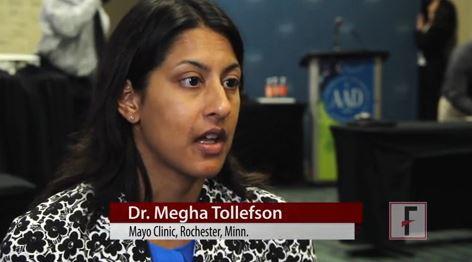
ORLANDO – Pregnancy prevention remains a challenge when prescribing isotretinoin to women of childbearing years with acne, Megha M. Tollefson, MD, said at the annual meeting of the American Academy of Dermatology.
Like so many promises having to do with love, a promise of sexual abstinence, however earnest, may at some point fall by the wayside, said Dr. Tollefson of the Mayo Clinic, Rochester, Minn., in a video interview.
The video associated with this article is no longer available on this site. Please view all of our videos on the MDedge YouTube channel
Despite the promises, the education, and the allegiance to the iPLEDGE program, exposed pregnancies still occur. iPLEDGE, with a 2.67 rate of fetal exposure over 1,000 treatment courses, was no more effective than its predecessor, SMART, with a 3.11 exposure rate. Altogether, there are still about 150 exposed pregnancies every year; 18 babies were exposed to the drug during SMART and 11 during iPLEDGE.
An anonymous survey of 75 iPLEDGE participants disclosed that 19% of those who chose abstinence were not, and that 34% of those who were sexually active did not comply with the promise to use two forms of birth control.
For some patients, Dr. Tollefson said, the best choice is a patient-independent form of birth control. That’s not an easy conversation to have sometimes, especially when parents are involved, but it’s an important one to have.
Dr. Tollefson had no financial disclosures.
msullivan@frontlinemedcom.com
On Twitter @Alz_Gal
ORLANDO – Pregnancy prevention remains a challenge when prescribing isotretinoin to women of childbearing years with acne, Megha M. Tollefson, MD, said at the annual meeting of the American Academy of Dermatology.
Like so many promises having to do with love, a promise of sexual abstinence, however earnest, may at some point fall by the wayside, said Dr. Tollefson of the Mayo Clinic, Rochester, Minn., in a video interview.
The video associated with this article is no longer available on this site. Please view all of our videos on the MDedge YouTube channel
Despite the promises, the education, and the allegiance to the iPLEDGE program, exposed pregnancies still occur. iPLEDGE, with a 2.67 rate of fetal exposure over 1,000 treatment courses, was no more effective than its predecessor, SMART, with a 3.11 exposure rate. Altogether, there are still about 150 exposed pregnancies every year; 18 babies were exposed to the drug during SMART and 11 during iPLEDGE.
An anonymous survey of 75 iPLEDGE participants disclosed that 19% of those who chose abstinence were not, and that 34% of those who were sexually active did not comply with the promise to use two forms of birth control.
For some patients, Dr. Tollefson said, the best choice is a patient-independent form of birth control. That’s not an easy conversation to have sometimes, especially when parents are involved, but it’s an important one to have.
Dr. Tollefson had no financial disclosures.
msullivan@frontlinemedcom.com
On Twitter @Alz_Gal
ORLANDO – Pregnancy prevention remains a challenge when prescribing isotretinoin to women of childbearing years with acne, Megha M. Tollefson, MD, said at the annual meeting of the American Academy of Dermatology.
Like so many promises having to do with love, a promise of sexual abstinence, however earnest, may at some point fall by the wayside, said Dr. Tollefson of the Mayo Clinic, Rochester, Minn., in a video interview.
The video associated with this article is no longer available on this site. Please view all of our videos on the MDedge YouTube channel
Despite the promises, the education, and the allegiance to the iPLEDGE program, exposed pregnancies still occur. iPLEDGE, with a 2.67 rate of fetal exposure over 1,000 treatment courses, was no more effective than its predecessor, SMART, with a 3.11 exposure rate. Altogether, there are still about 150 exposed pregnancies every year; 18 babies were exposed to the drug during SMART and 11 during iPLEDGE.
An anonymous survey of 75 iPLEDGE participants disclosed that 19% of those who chose abstinence were not, and that 34% of those who were sexually active did not comply with the promise to use two forms of birth control.
For some patients, Dr. Tollefson said, the best choice is a patient-independent form of birth control. That’s not an easy conversation to have sometimes, especially when parents are involved, but it’s an important one to have.
Dr. Tollefson had no financial disclosures.
msullivan@frontlinemedcom.com
On Twitter @Alz_Gal
AT AAD 17