User login
What’s the Impact of Osteoporosis in Multiple Myeloma?
Osteoporosis is common among patients with multiple myeloma (MM), in part because both largely affect older adults. And more than half of MM patients will have MM skeletal-related events, which are painful, and can lead to complications (such as spinal cord compression) and death.
But how does pre-existing bone disease contribute to clinical outcomes in MM? Osteoporosis is a “silent condition” and very little is known about its role in MM, say researchers from The Ohio State University in Columbus and University of Massachusetts in Worcester. The standard diagnostic evaluation for MM does not include dual-energy x-ray absorptiometry, therefore assessments of underlying osteoporosis are not routine. Moreover, it is a challenge to distinguish osteoporotic fragility fractures from pathologic MM-induced fractures. Skeletal surveys underestimate bone involvement by about 40%, the researchers note, and are even less specific for distinguishing myeloma-related secondary osteoporosis from primary osteoporosis.
The researchers examined the relationship between the Fracture Risk Assessment Tool (FRAX) and the risk of death in women who developed MM. They analyzed data from 161,808 women in the Women’s Health Initiative (WHI). Of those, 409 developed MM; 362 had no history of cancer.
At baseline, 98 (27%) women had high FRAX scores, and 264 (73%) had low scores. The median follow-up period was 10.5 years from enrollment and 7.2 years from the time of MM diagnosis. Of the patients with MM, 226 died during the follow-up period, including 71 with high FRAX scores and 155 with low scores. MM mortality was higher among women with high FRAX scores: 72%, vs 59% of those with low scores. Poor bone health was associated with greater MM mortality but was not related to delay in time to diagnosis.
During the evaluation, 57 fractures were reported, 65% before MM diagnosis. Fewer than half of the women had a first fracture after diagnosis. The probability of fracture was similar among the women, regardless of FRAX score. Not surprisingly, older women with lower BMI were most at risk.
The WHI does not include information on staging, chemotherapy, or use of bisphosphonates. Therefore, the impact of bisphosphonates could not be determined in this study. The researchers also did not know how many patients might have had pre-existing monoclonal gammopathy of undetermined significance, a disorder in about 3% of the aging population that progresses to MM in 1% per year.
Source:
Rosko AE, Hade EM, Li W, et al. Clin Lymphoma Myeloma Leuk. 2018;18(9):597-602.
Osteoporosis is common among patients with multiple myeloma (MM), in part because both largely affect older adults. And more than half of MM patients will have MM skeletal-related events, which are painful, and can lead to complications (such as spinal cord compression) and death.
But how does pre-existing bone disease contribute to clinical outcomes in MM? Osteoporosis is a “silent condition” and very little is known about its role in MM, say researchers from The Ohio State University in Columbus and University of Massachusetts in Worcester. The standard diagnostic evaluation for MM does not include dual-energy x-ray absorptiometry, therefore assessments of underlying osteoporosis are not routine. Moreover, it is a challenge to distinguish osteoporotic fragility fractures from pathologic MM-induced fractures. Skeletal surveys underestimate bone involvement by about 40%, the researchers note, and are even less specific for distinguishing myeloma-related secondary osteoporosis from primary osteoporosis.
The researchers examined the relationship between the Fracture Risk Assessment Tool (FRAX) and the risk of death in women who developed MM. They analyzed data from 161,808 women in the Women’s Health Initiative (WHI). Of those, 409 developed MM; 362 had no history of cancer.
At baseline, 98 (27%) women had high FRAX scores, and 264 (73%) had low scores. The median follow-up period was 10.5 years from enrollment and 7.2 years from the time of MM diagnosis. Of the patients with MM, 226 died during the follow-up period, including 71 with high FRAX scores and 155 with low scores. MM mortality was higher among women with high FRAX scores: 72%, vs 59% of those with low scores. Poor bone health was associated with greater MM mortality but was not related to delay in time to diagnosis.
During the evaluation, 57 fractures were reported, 65% before MM diagnosis. Fewer than half of the women had a first fracture after diagnosis. The probability of fracture was similar among the women, regardless of FRAX score. Not surprisingly, older women with lower BMI were most at risk.
The WHI does not include information on staging, chemotherapy, or use of bisphosphonates. Therefore, the impact of bisphosphonates could not be determined in this study. The researchers also did not know how many patients might have had pre-existing monoclonal gammopathy of undetermined significance, a disorder in about 3% of the aging population that progresses to MM in 1% per year.
Source:
Rosko AE, Hade EM, Li W, et al. Clin Lymphoma Myeloma Leuk. 2018;18(9):597-602.
Osteoporosis is common among patients with multiple myeloma (MM), in part because both largely affect older adults. And more than half of MM patients will have MM skeletal-related events, which are painful, and can lead to complications (such as spinal cord compression) and death.
But how does pre-existing bone disease contribute to clinical outcomes in MM? Osteoporosis is a “silent condition” and very little is known about its role in MM, say researchers from The Ohio State University in Columbus and University of Massachusetts in Worcester. The standard diagnostic evaluation for MM does not include dual-energy x-ray absorptiometry, therefore assessments of underlying osteoporosis are not routine. Moreover, it is a challenge to distinguish osteoporotic fragility fractures from pathologic MM-induced fractures. Skeletal surveys underestimate bone involvement by about 40%, the researchers note, and are even less specific for distinguishing myeloma-related secondary osteoporosis from primary osteoporosis.
The researchers examined the relationship between the Fracture Risk Assessment Tool (FRAX) and the risk of death in women who developed MM. They analyzed data from 161,808 women in the Women’s Health Initiative (WHI). Of those, 409 developed MM; 362 had no history of cancer.
At baseline, 98 (27%) women had high FRAX scores, and 264 (73%) had low scores. The median follow-up period was 10.5 years from enrollment and 7.2 years from the time of MM diagnosis. Of the patients with MM, 226 died during the follow-up period, including 71 with high FRAX scores and 155 with low scores. MM mortality was higher among women with high FRAX scores: 72%, vs 59% of those with low scores. Poor bone health was associated with greater MM mortality but was not related to delay in time to diagnosis.
During the evaluation, 57 fractures were reported, 65% before MM diagnosis. Fewer than half of the women had a first fracture after diagnosis. The probability of fracture was similar among the women, regardless of FRAX score. Not surprisingly, older women with lower BMI were most at risk.
The WHI does not include information on staging, chemotherapy, or use of bisphosphonates. Therefore, the impact of bisphosphonates could not be determined in this study. The researchers also did not know how many patients might have had pre-existing monoclonal gammopathy of undetermined significance, a disorder in about 3% of the aging population that progresses to MM in 1% per year.
Source:
Rosko AE, Hade EM, Li W, et al. Clin Lymphoma Myeloma Leuk. 2018;18(9):597-602.
Why is loxapine overlooked, underprescribed for psychosis?
I have always tried to practice common sense psychiatry, however, sometimes it seems I am alone in this pursuit. My best example is the minimal prescribing of loxapine (Adasuve) for treating the problem of psychosis, most notably schizophrenia.

Mind you, neither I nor anyone in family own stock in any pharmaceutical companies. I don’t lecture for them, so I have no conflicts in writing about this observation – which I hope will improve patient care, thereby saving lives and making a difference.
Everyone should be familiar with the evolution of atypical antipsychotics and how these medications are touted as “second-generation” classes of medication advertised as superior to the older, first-generation antipsychotics. However, as we get more experience with the second-generation atypical antipsychotics, we are learning that they have problematic side effects of their own. For example, they are associated with metabolic syndrome, so they cause weight gain, hyperglycemia, increased risk of stroke, sudden cardiac death, blood clots, and diabetes. Maybe these problems are so endemic in the low-income, African American population I treat that I am overly sensitive to trying to prevent these medical disorders while treating a patient’s mental illness. However, my public health leanings have long caused me to think that low-income African Americans are the canary in America’s health status coal mine, as it seems that what hits this group first eventually will hit the majority population. Accordingly, it seems to me that it is well advised to pay attention to this group’s well-being, physical health, and mental health challenges.
Everyone also should be aware that clozapine (Clozaril) had been dubbed the first atypical antipsychotic. But, in some regard, that designation might be given to thioridazine – although some maintain that the ratio of serotonergic to dopamine effects is not strong enough to earn that title. Unfortunately, both thioridazine and clozapine have serious side effects. Thioridazine is associated with severe cardiac arrhythmias, and clozapine has been associated with the aforementioned side effects of atypical antipsychotics but also can cause life-threatening agranulocytosis, necessitating regular white blood cell counts to monitor for this possibility.
, which belongs class of medication known as dibenzodiazepines – a class that is extraordinarily similar to dibenzoxazepine. The late William Glazer, MD, a distinguished psychopharmacologist long affiliated with Yale University, New Haven, Conn., even suggested that loxapine might behave as an atypical antipsychotic (J Clin Psychiatry. 1999;60 Suppl 10:42-6). Extensive clinical experience with loxapine suggests the same but with some key differences from the standard atypical antipsychotics regarding its side-effect profile.
First, loxapine, despite being chemically related to clozapine, does not cause agranulocytosis, so the need for white blood cell monitoring is not necessary. Second, I have not seen the problematic metabolic syndrome caused by standard atypical antipsychotic medication. It amazes me when I see patients on aripiprazole, clozapine, olanzapine, quetiapine, risperidone, or ziprasidone who also have diabetes and are on metformin – especially when the development of the patients’ diabetes can be traced back to when they were put on an atypical antipsychotic. I often find myself taking patients off their atypical antipsychotic and putting them on loxapine, resulting in gradual weight loss while maintaining the patients’ stable mental status and absence of psychotic symptoms.
It seems to me that if clozapine and loxapine are so similar (they both bind to serotonin and dopamine receptors), loxapine should be the first drug of choice for the treatment of psychotic symptoms. It acts like an atypical but without the problems of weight gain, hyperglycemia, increased risk of stroke, sudden cardiac death, blood clots, and diabetes that the atypicals may cause. Most of the hundreds of patients with psychotic symptoms I have treated over the past 40 years are on the low dose of loxapine 25 mg at bedtime (although the prescribing information on loxapine says it has to be given at least twice a day, as the half life of the medication is only 4 hours). In some rare instances, I prescribe a total of 50 mg at bedtime.
So, not prescribing loxapine does not make sense to me – other than the medication is generic and so it is not being marketed aggressively by people who make money from prescribing medication and are practicing money, not medicine. The other possibility is that most psychiatrists might not know the connection between clozapine and loxapine, so I thought I should use my influence (what little I have) to inform.
Dr. Bell is staff psychiatrist at Jackson Park Hospital’s surgical-medical/psychiatric inpatient unit in Chicago; and chairman of the department of psychiatry at Windsor University, St. Kitts. He also is clinical professor emeritus, department of psychiatry, University of Illinois at Chicago; former president/CEO of Community Mental Health Council; and former director of the Institute for Juvenile Research (the birthplace of child psychiatry), all in Chicago.
I have always tried to practice common sense psychiatry, however, sometimes it seems I am alone in this pursuit. My best example is the minimal prescribing of loxapine (Adasuve) for treating the problem of psychosis, most notably schizophrenia.
Mind you, neither I nor anyone in family own stock in any pharmaceutical companies. I don’t lecture for them, so I have no conflicts in writing about this observation – which I hope will improve patient care, thereby saving lives and making a difference.
Everyone should be familiar with the evolution of atypical antipsychotics and how these medications are touted as “second-generation” classes of medication advertised as superior to the older, first-generation antipsychotics. However, as we get more experience with the second-generation atypical antipsychotics, we are learning that they have problematic side effects of their own. For example, they are associated with metabolic syndrome, so they cause weight gain, hyperglycemia, increased risk of stroke, sudden cardiac death, blood clots, and diabetes. Maybe these problems are so endemic in the low-income, African American population I treat that I am overly sensitive to trying to prevent these medical disorders while treating a patient’s mental illness. However, my public health leanings have long caused me to think that low-income African Americans are the canary in America’s health status coal mine, as it seems that what hits this group first eventually will hit the majority population. Accordingly, it seems to me that it is well advised to pay attention to this group’s well-being, physical health, and mental health challenges.
Everyone also should be aware that clozapine (Clozaril) had been dubbed the first atypical antipsychotic. But, in some regard, that designation might be given to thioridazine – although some maintain that the ratio of serotonergic to dopamine effects is not strong enough to earn that title. Unfortunately, both thioridazine and clozapine have serious side effects. Thioridazine is associated with severe cardiac arrhythmias, and clozapine has been associated with the aforementioned side effects of atypical antipsychotics but also can cause life-threatening agranulocytosis, necessitating regular white blood cell counts to monitor for this possibility.
, which belongs class of medication known as dibenzodiazepines – a class that is extraordinarily similar to dibenzoxazepine. The late William Glazer, MD, a distinguished psychopharmacologist long affiliated with Yale University, New Haven, Conn., even suggested that loxapine might behave as an atypical antipsychotic (J Clin Psychiatry. 1999;60 Suppl 10:42-6). Extensive clinical experience with loxapine suggests the same but with some key differences from the standard atypical antipsychotics regarding its side-effect profile.
First, loxapine, despite being chemically related to clozapine, does not cause agranulocytosis, so the need for white blood cell monitoring is not necessary. Second, I have not seen the problematic metabolic syndrome caused by standard atypical antipsychotic medication. It amazes me when I see patients on aripiprazole, clozapine, olanzapine, quetiapine, risperidone, or ziprasidone who also have diabetes and are on metformin – especially when the development of the patients’ diabetes can be traced back to when they were put on an atypical antipsychotic. I often find myself taking patients off their atypical antipsychotic and putting them on loxapine, resulting in gradual weight loss while maintaining the patients’ stable mental status and absence of psychotic symptoms.
It seems to me that if clozapine and loxapine are so similar (they both bind to serotonin and dopamine receptors), loxapine should be the first drug of choice for the treatment of psychotic symptoms. It acts like an atypical but without the problems of weight gain, hyperglycemia, increased risk of stroke, sudden cardiac death, blood clots, and diabetes that the atypicals may cause. Most of the hundreds of patients with psychotic symptoms I have treated over the past 40 years are on the low dose of loxapine 25 mg at bedtime (although the prescribing information on loxapine says it has to be given at least twice a day, as the half life of the medication is only 4 hours). In some rare instances, I prescribe a total of 50 mg at bedtime.
So, not prescribing loxapine does not make sense to me – other than the medication is generic and so it is not being marketed aggressively by people who make money from prescribing medication and are practicing money, not medicine. The other possibility is that most psychiatrists might not know the connection between clozapine and loxapine, so I thought I should use my influence (what little I have) to inform.
Dr. Bell is staff psychiatrist at Jackson Park Hospital’s surgical-medical/psychiatric inpatient unit in Chicago; and chairman of the department of psychiatry at Windsor University, St. Kitts. He also is clinical professor emeritus, department of psychiatry, University of Illinois at Chicago; former president/CEO of Community Mental Health Council; and former director of the Institute for Juvenile Research (the birthplace of child psychiatry), all in Chicago.
I have always tried to practice common sense psychiatry, however, sometimes it seems I am alone in this pursuit. My best example is the minimal prescribing of loxapine (Adasuve) for treating the problem of psychosis, most notably schizophrenia.
Mind you, neither I nor anyone in family own stock in any pharmaceutical companies. I don’t lecture for them, so I have no conflicts in writing about this observation – which I hope will improve patient care, thereby saving lives and making a difference.
Everyone should be familiar with the evolution of atypical antipsychotics and how these medications are touted as “second-generation” classes of medication advertised as superior to the older, first-generation antipsychotics. However, as we get more experience with the second-generation atypical antipsychotics, we are learning that they have problematic side effects of their own. For example, they are associated with metabolic syndrome, so they cause weight gain, hyperglycemia, increased risk of stroke, sudden cardiac death, blood clots, and diabetes. Maybe these problems are so endemic in the low-income, African American population I treat that I am overly sensitive to trying to prevent these medical disorders while treating a patient’s mental illness. However, my public health leanings have long caused me to think that low-income African Americans are the canary in America’s health status coal mine, as it seems that what hits this group first eventually will hit the majority population. Accordingly, it seems to me that it is well advised to pay attention to this group’s well-being, physical health, and mental health challenges.
Everyone also should be aware that clozapine (Clozaril) had been dubbed the first atypical antipsychotic. But, in some regard, that designation might be given to thioridazine – although some maintain that the ratio of serotonergic to dopamine effects is not strong enough to earn that title. Unfortunately, both thioridazine and clozapine have serious side effects. Thioridazine is associated with severe cardiac arrhythmias, and clozapine has been associated with the aforementioned side effects of atypical antipsychotics but also can cause life-threatening agranulocytosis, necessitating regular white blood cell counts to monitor for this possibility.
, which belongs class of medication known as dibenzodiazepines – a class that is extraordinarily similar to dibenzoxazepine. The late William Glazer, MD, a distinguished psychopharmacologist long affiliated with Yale University, New Haven, Conn., even suggested that loxapine might behave as an atypical antipsychotic (J Clin Psychiatry. 1999;60 Suppl 10:42-6). Extensive clinical experience with loxapine suggests the same but with some key differences from the standard atypical antipsychotics regarding its side-effect profile.
First, loxapine, despite being chemically related to clozapine, does not cause agranulocytosis, so the need for white blood cell monitoring is not necessary. Second, I have not seen the problematic metabolic syndrome caused by standard atypical antipsychotic medication. It amazes me when I see patients on aripiprazole, clozapine, olanzapine, quetiapine, risperidone, or ziprasidone who also have diabetes and are on metformin – especially when the development of the patients’ diabetes can be traced back to when they were put on an atypical antipsychotic. I often find myself taking patients off their atypical antipsychotic and putting them on loxapine, resulting in gradual weight loss while maintaining the patients’ stable mental status and absence of psychotic symptoms.
It seems to me that if clozapine and loxapine are so similar (they both bind to serotonin and dopamine receptors), loxapine should be the first drug of choice for the treatment of psychotic symptoms. It acts like an atypical but without the problems of weight gain, hyperglycemia, increased risk of stroke, sudden cardiac death, blood clots, and diabetes that the atypicals may cause. Most of the hundreds of patients with psychotic symptoms I have treated over the past 40 years are on the low dose of loxapine 25 mg at bedtime (although the prescribing information on loxapine says it has to be given at least twice a day, as the half life of the medication is only 4 hours). In some rare instances, I prescribe a total of 50 mg at bedtime.
So, not prescribing loxapine does not make sense to me – other than the medication is generic and so it is not being marketed aggressively by people who make money from prescribing medication and are practicing money, not medicine. The other possibility is that most psychiatrists might not know the connection between clozapine and loxapine, so I thought I should use my influence (what little I have) to inform.
Dr. Bell is staff psychiatrist at Jackson Park Hospital’s surgical-medical/psychiatric inpatient unit in Chicago; and chairman of the department of psychiatry at Windsor University, St. Kitts. He also is clinical professor emeritus, department of psychiatry, University of Illinois at Chicago; former president/CEO of Community Mental Health Council; and former director of the Institute for Juvenile Research (the birthplace of child psychiatry), all in Chicago.

United States must join with world to protect refugee children
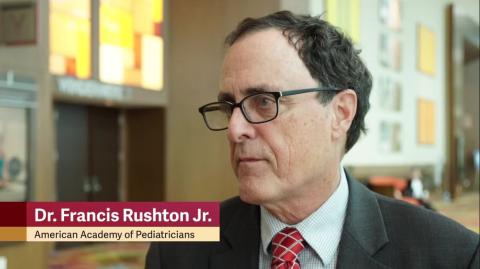
ORLANDO – The United States is one of the wealthiest nations on the planet, yet it does not always stand with the rest of the global community in promoting universally accepted principles on the health and well-being of children across the world, particularly refugee children, according to Francis E. Rushton Jr., MD.
In an interview at the annual meeting of the American Academy of Pediatrics, Dr. Rushton discussed the importance of seeing American exceptionalism for what it is – a flaw rather than a virtue – and joining with the rest of the world in upholding the tenets of the Budapest Declaration On the Rights, Health and Well-being of Children and Youth on the Move.
In the three-page Budapest document, created by the International Society for Social Pediatrics and Child Health (ISSOP) in October 2017 and endorsed by the AAP, pediatricians from across the world acknowledge the realities of worldwide refugee crises and accept their detailed responsibilities in meeting and advocating for those children’s needs.
Although the current administration’s decision earlier this year to split children from their families at the border caught everyone attention, . He particularly stressed the “importance of working with the global community on clinical services, programs and policy.”
Dr. Rushton, clinical professor of pediatrics at the University of South Carolina, Columbia, and medical director of the Quality Through Innovation in Pediatrics network, also discussed the need to commit to the United Nations Convention on the Rights of the Child and to join the global community in following the UN’s Sustainable Development Goals and the principles in the World Health Organization’s publication, “Nurturing care for early childhood development.”
The former is a “blueprint” to overcoming challenges related to “poverty, inequality, climate, environmental degradation, prosperity and peace and justice” by achieving targets by 2030, and the latter is “a framework for helping children survive and thrive to transform health and human potential.”
“This is our issue as child health professionals. We need to continue applying pressure on our political leaders,” Dr. Rushton told his colleagues. He advocated taking the long view: “Let’s build a system that respects the human rights of all children.”
ORLANDO – The United States is one of the wealthiest nations on the planet, yet it does not always stand with the rest of the global community in promoting universally accepted principles on the health and well-being of children across the world, particularly refugee children, according to Francis E. Rushton Jr., MD.
In an interview at the annual meeting of the American Academy of Pediatrics, Dr. Rushton discussed the importance of seeing American exceptionalism for what it is – a flaw rather than a virtue – and joining with the rest of the world in upholding the tenets of the Budapest Declaration On the Rights, Health and Well-being of Children and Youth on the Move.
In the three-page Budapest document, created by the International Society for Social Pediatrics and Child Health (ISSOP) in October 2017 and endorsed by the AAP, pediatricians from across the world acknowledge the realities of worldwide refugee crises and accept their detailed responsibilities in meeting and advocating for those children’s needs.
Although the current administration’s decision earlier this year to split children from their families at the border caught everyone attention, . He particularly stressed the “importance of working with the global community on clinical services, programs and policy.”
Dr. Rushton, clinical professor of pediatrics at the University of South Carolina, Columbia, and medical director of the Quality Through Innovation in Pediatrics network, also discussed the need to commit to the United Nations Convention on the Rights of the Child and to join the global community in following the UN’s Sustainable Development Goals and the principles in the World Health Organization’s publication, “Nurturing care for early childhood development.”
The former is a “blueprint” to overcoming challenges related to “poverty, inequality, climate, environmental degradation, prosperity and peace and justice” by achieving targets by 2030, and the latter is “a framework for helping children survive and thrive to transform health and human potential.”
“This is our issue as child health professionals. We need to continue applying pressure on our political leaders,” Dr. Rushton told his colleagues. He advocated taking the long view: “Let’s build a system that respects the human rights of all children.”
ORLANDO – The United States is one of the wealthiest nations on the planet, yet it does not always stand with the rest of the global community in promoting universally accepted principles on the health and well-being of children across the world, particularly refugee children, according to Francis E. Rushton Jr., MD.
In an interview at the annual meeting of the American Academy of Pediatrics, Dr. Rushton discussed the importance of seeing American exceptionalism for what it is – a flaw rather than a virtue – and joining with the rest of the world in upholding the tenets of the Budapest Declaration On the Rights, Health and Well-being of Children and Youth on the Move.
In the three-page Budapest document, created by the International Society for Social Pediatrics and Child Health (ISSOP) in October 2017 and endorsed by the AAP, pediatricians from across the world acknowledge the realities of worldwide refugee crises and accept their detailed responsibilities in meeting and advocating for those children’s needs.
Although the current administration’s decision earlier this year to split children from their families at the border caught everyone attention, . He particularly stressed the “importance of working with the global community on clinical services, programs and policy.”
Dr. Rushton, clinical professor of pediatrics at the University of South Carolina, Columbia, and medical director of the Quality Through Innovation in Pediatrics network, also discussed the need to commit to the United Nations Convention on the Rights of the Child and to join the global community in following the UN’s Sustainable Development Goals and the principles in the World Health Organization’s publication, “Nurturing care for early childhood development.”
The former is a “blueprint” to overcoming challenges related to “poverty, inequality, climate, environmental degradation, prosperity and peace and justice” by achieving targets by 2030, and the latter is “a framework for helping children survive and thrive to transform health and human potential.”
“This is our issue as child health professionals. We need to continue applying pressure on our political leaders,” Dr. Rushton told his colleagues. He advocated taking the long view: “Let’s build a system that respects the human rights of all children.”
REPORTING FROM AAP 2018
Physical activity tied to lower depression risk among older adults
Meeting World Health Organization recommendations for levels of physical activity reduces the odds of prevalent depression by 40%, according to a study of more than 4,000 adults aged 50 years and older.

“To [our] knowledge, this is the first prospective cohort study to examine the protective effect of meeting [moderate to vigorous physical activity] guidelines, and different volumes of walking, on depression among a sample of adults,” Cillian P. McDowell, of the University of Limerick (Ireland), and his associates wrote in Experimental Gerontology.
The study drew on data from The Irish Longitudinal Study of Ageing and included 4,556 individuals, 56.7% of whom were female. The investigators created “dose categories” based on how much exercise participants performed each week. For moderate to vigorous physical activity, they assigned participants to low (0 to less than 600 metabolic equivalent [MET]–minutes per week), moderate (600 to less than 1,200 MET-min/week), and high (1,200 or more MET-min/week) categories. For walking, investigators divided participants among tertiles of minutes performed (0-110 min/week, 120-400 min/week, and 420 or more min/week). Symptoms of depression were assessed using the Center for Epidemiologic Studies Depression Scale, reported Mr. McDowell and his associates.
The odds of prevalent depression were 40% lower (odds ratio, 0.60; 95% confidence interval, 0.48-0.76) among participants who met the physical activity guidelines, 23% lower (OR, 0.77, 95% confidence interval, 0.49-1.21) among those who were in the moderate and high categories, and 43% lower (OR, 0.57; 95% CI, 0.45-0.73) among those who were in the moderate and high categories, Mr. McDowell and his associates wrote.
The study was not conducted to explore possible mechanisms underlying the ties between physical activity and depression. However, Mr. McDowell and his associates speculated that exercise training has both brain monoaminergic and neurotropic effects and might lower “inflammatory and oxidant markers. Further, physical activity may be associated with depression through psychological factors such as self-esteem.”
Mr. McDowell and his associates wrote. “Recent evidence has shown that people with [major depressive disorder] engage in higher levels of sedentary behavior, and that cross-sectionally sedentary behavior, is positively associated with depression,” they added. “Meeting WHO recommended [physical activity] levels could be recommended ... to prevent the onset of depression.”
The investigators pointed out that one of the major limitations of the study was that participants’ depression and activity were self-reported, which could predispose results to over- or underreporting. They also pointed out that a strength of the study was its large sample size.
Mr. McDowell and his associates reported no conflicts of interest. The sponsors of The Irish Longitudinal Study of Ageing played no role in this study’s design, methods, subject recruitment, data collection, analysis, or preparation.
SOURCE: McDowell CP et al. Exp Gerontol. 2018 Oct 2;112:68-75.
Meeting World Health Organization recommendations for levels of physical activity reduces the odds of prevalent depression by 40%, according to a study of more than 4,000 adults aged 50 years and older.
“To [our] knowledge, this is the first prospective cohort study to examine the protective effect of meeting [moderate to vigorous physical activity] guidelines, and different volumes of walking, on depression among a sample of adults,” Cillian P. McDowell, of the University of Limerick (Ireland), and his associates wrote in Experimental Gerontology.
The study drew on data from The Irish Longitudinal Study of Ageing and included 4,556 individuals, 56.7% of whom were female. The investigators created “dose categories” based on how much exercise participants performed each week. For moderate to vigorous physical activity, they assigned participants to low (0 to less than 600 metabolic equivalent [MET]–minutes per week), moderate (600 to less than 1,200 MET-min/week), and high (1,200 or more MET-min/week) categories. For walking, investigators divided participants among tertiles of minutes performed (0-110 min/week, 120-400 min/week, and 420 or more min/week). Symptoms of depression were assessed using the Center for Epidemiologic Studies Depression Scale, reported Mr. McDowell and his associates.
The odds of prevalent depression were 40% lower (odds ratio, 0.60; 95% confidence interval, 0.48-0.76) among participants who met the physical activity guidelines, 23% lower (OR, 0.77, 95% confidence interval, 0.49-1.21) among those who were in the moderate and high categories, and 43% lower (OR, 0.57; 95% CI, 0.45-0.73) among those who were in the moderate and high categories, Mr. McDowell and his associates wrote.
The study was not conducted to explore possible mechanisms underlying the ties between physical activity and depression. However, Mr. McDowell and his associates speculated that exercise training has both brain monoaminergic and neurotropic effects and might lower “inflammatory and oxidant markers. Further, physical activity may be associated with depression through psychological factors such as self-esteem.”
Mr. McDowell and his associates wrote. “Recent evidence has shown that people with [major depressive disorder] engage in higher levels of sedentary behavior, and that cross-sectionally sedentary behavior, is positively associated with depression,” they added. “Meeting WHO recommended [physical activity] levels could be recommended ... to prevent the onset of depression.”
The investigators pointed out that one of the major limitations of the study was that participants’ depression and activity were self-reported, which could predispose results to over- or underreporting. They also pointed out that a strength of the study was its large sample size.
Mr. McDowell and his associates reported no conflicts of interest. The sponsors of The Irish Longitudinal Study of Ageing played no role in this study’s design, methods, subject recruitment, data collection, analysis, or preparation.
SOURCE: McDowell CP et al. Exp Gerontol. 2018 Oct 2;112:68-75.
Meeting World Health Organization recommendations for levels of physical activity reduces the odds of prevalent depression by 40%, according to a study of more than 4,000 adults aged 50 years and older.
“To [our] knowledge, this is the first prospective cohort study to examine the protective effect of meeting [moderate to vigorous physical activity] guidelines, and different volumes of walking, on depression among a sample of adults,” Cillian P. McDowell, of the University of Limerick (Ireland), and his associates wrote in Experimental Gerontology.
The study drew on data from The Irish Longitudinal Study of Ageing and included 4,556 individuals, 56.7% of whom were female. The investigators created “dose categories” based on how much exercise participants performed each week. For moderate to vigorous physical activity, they assigned participants to low (0 to less than 600 metabolic equivalent [MET]–minutes per week), moderate (600 to less than 1,200 MET-min/week), and high (1,200 or more MET-min/week) categories. For walking, investigators divided participants among tertiles of minutes performed (0-110 min/week, 120-400 min/week, and 420 or more min/week). Symptoms of depression were assessed using the Center for Epidemiologic Studies Depression Scale, reported Mr. McDowell and his associates.
The odds of prevalent depression were 40% lower (odds ratio, 0.60; 95% confidence interval, 0.48-0.76) among participants who met the physical activity guidelines, 23% lower (OR, 0.77, 95% confidence interval, 0.49-1.21) among those who were in the moderate and high categories, and 43% lower (OR, 0.57; 95% CI, 0.45-0.73) among those who were in the moderate and high categories, Mr. McDowell and his associates wrote.
The study was not conducted to explore possible mechanisms underlying the ties between physical activity and depression. However, Mr. McDowell and his associates speculated that exercise training has both brain monoaminergic and neurotropic effects and might lower “inflammatory and oxidant markers. Further, physical activity may be associated with depression through psychological factors such as self-esteem.”
Mr. McDowell and his associates wrote. “Recent evidence has shown that people with [major depressive disorder] engage in higher levels of sedentary behavior, and that cross-sectionally sedentary behavior, is positively associated with depression,” they added. “Meeting WHO recommended [physical activity] levels could be recommended ... to prevent the onset of depression.”
The investigators pointed out that one of the major limitations of the study was that participants’ depression and activity were self-reported, which could predispose results to over- or underreporting. They also pointed out that a strength of the study was its large sample size.
Mr. McDowell and his associates reported no conflicts of interest. The sponsors of The Irish Longitudinal Study of Ageing played no role in this study’s design, methods, subject recruitment, data collection, analysis, or preparation.
SOURCE: McDowell CP et al. Exp Gerontol. 2018 Oct 2;112:68-75.
FROM EXPERIMENTAL GERONTOLOGY

Midterm election boosts Medicaid expansion, but challenges remain
Medicaid – which has been a political football between Washington and state capitols during the past decade – scored big in the Nov. 6 election.

Three deep-red states passed ballot measures expanding their programs and two other states elected governors who have said they will accept expansion bills from their legislatures.
Supporters were so excited by the victories they said they will start planning for more voter referendums in 2020.
Medicaid proponents also were celebrating the Democrats’ takeover of the House, which would impede any Republican efforts to repeal the ACA and make major cuts to the federal-state health insurance program for low-income people.
“Tuesday was huge for the Medicaid program,” said Katherine Howitt, associate director of policy at Community Catalyst, a Boston-based advocacy group. “The overall message is that the electorate does not see this as a Democrat or GOP issue but as an issue of basic fairness, access to care, and pocketbook issue. Medicaid is working and is something Americans want to protect.”
But health experts caution that GOP opposition won’t fade away.
David K. Jones, PhD, of the department of health law, policy and management at Boston University School of Public Health, said ballot organizers now have a blueprint on how to expand Medicaid in states that have resisted. “I see this as a turning point in ACA politics,” he said. Still, he added‚ “it’s not inevitable.”
Medicaid is the largest government health program, insuring at least 73 million low-income Americans. Half of them are children. To date, 32 states and the District of Columbia have expanded it under the ACA. Before that law, Medicaid was generally limited to children, sometimes their parents, pregnant women, and people with disabilities.
The ACA encouraged states to open the program to all Americans earning up to 138% of the poverty level ($16,753 for an individual in 2018). The federal government is paying the bulk of the cost: 94% this year, but gradually dropping to 90% in 2020. States pay the rest.
GOP opposition has left about 4.2 million low-income Americans without coverage in various states.
“It’s not over until it’s over is the story of Medicaid expansion and the Affordable Care Act as the politics never ends and the opportunity for obstruction never ends,” said Dr. Jones. “But the trend overall has been to increasing implementation and increasing coverage.”
Montana fails to endorse funding
Two years after President Donald Trump carried Idaho, Nebraska, and Utah by double-digit margins with a message that included repeal of the ACA, voters in those states approved the ballot referendums on Nov. 6. Together, the states have about 300,000 uninsured adults who would be eligible for the program.
In addition, Democrats secured the governor’s offices in Kansas and Maine, which will increase the likelihood those states will pursue expansion. Legislatures in both states have previously voted to expand, only to have GOP governors block the bills. Maine voters also passed a referendum in 2017 endorsing expansion, but Republican Gov. Paul LePage again refused to accept it.
Current and incoming Republican governors in Utah and Idaho said they wouldn’t block implementation of the effort if voters approved it. Nebraska Gov. Pete Ricketts (R) said on Nov. 7 he would follow the will of the voters but would not support paying for it with a tax increase.
It wasn’t a clean sweep, however, for Medicaid.
In preliminary results, a ballot issue to fund Montana’s Medicaid expansion – which is already in place and slated to expire next July – was failing. Tobacco companies had mounted a campaign to stop the measure, which would have partially financed the expansion with taxes on tobacco products.
The Montana legislature and the Democratic governor are expected to address the issue in the session that starts in January. No state has reversed its Medicaid expansion, even though GOP governors in Kansas and Arkansas have threatened to do so.
Nearly 100,000 Montana residents have received Medicaid since its expansion, twice as many as expected.
Nancy Ballance, the Republican chairwoman of the Montana House Appropriations Committee who opposed the bill that expanded Medicaid in 2015, said she is confident the state legislature will extend the program past July. But she expects the legislature to put some limits on the program, such as adding an asset test and work requirements.
“There are some people in the state who may not have disabilities but need some help to access coverage,” she said. “I think we can pass something without people having a gap in coverage. … That will be a priority.”
“It was never our intent to simply sunset the expansion and have it go away,” she said. Rather, the legislature put the sunset provision in to revisit the provision to make any changes.
Chris Jacobs, a conservative health policy analyst in Washington, said the Montana results showed that when voters are given a choice of having to pay for Medicaid expansion through a new tax, they were not willing to go along.
But in Utah, voters did agree to fund their state plan by adding 0.15% to the state’s sales tax, just over a penny for a $10 purchase.
Fernando Wilson, acting director of the Center for Health Policy at the University of Nebraska Medical Center in Omaha, said the vote on the state’s ballot question indicated many people wanted to help 80,000 uninsured Nebraskans gain coverage.
“I think it showed there was a clear need for it,” he said. The legislature likely won’t block the expansion, Wilson said, though it may try to add a conservative twist such as adding premiums or other steps.
Sheila Burke, a lecturer in health policy at Harvard Kennedy School in Cambridge, Mass., said voters approved Medicaid expansion not just because it would help improve health coverage for their residents but to help stabilize their hospitals, particularly those in rural areas. Hospitals have said this step helps their bottom lines because it cuts down on uninsured patients and uncompensated care.
“The broad population does see the value of Medicaid,” she said. “They saw it as a loss by their states not to accept the federal funds,” she said.
Despite the victories, Ms. Burke said, advocates should not assume other states such as Florida, Texas, and Tennessee will follow suit.
“I don’t see a radical shift, but it moves us closer,” she said.
‘Fertile ground’ for more referendums
If advocates press for more referendums, Florida might be a tempting target. More than 700,000 adults there could become eligible, but the campaign would likely also be very costly.
Jonathan Schleifer, executive director of the Fairness Project, which financed the ballot initiatives in Maine in 2017 and the four states this year, refused to say which states would be targeted next.
The group is funded by the Service Employees International Union–United Healthcare Workers West, a California health care workers union.
“The GOP has been bashing the ACA for nearly a decade, and voters in the reddest states in the country just rejected that message,” Mr. Schleifer said. “It’s a repudiation and a tectonic shift in health care in this country.”
“There is fertile ground” for more such ballot votes, said Topher Spiro, vice president for health policy at the Center for American Progress, a liberal think tank. “It is clear that public opinion is on the side of Medicaid expansion and the election results merely confirm that.”
“This will build momentum for expansion in other states,” he added.
The election results also could have consequences on efforts by states to implement work requirements for Medicaid enrollees.
New Hampshire and Michigan — which expanded the program but recently won federal approval to add controversial work requirements — could revisit that additional mandate as a result of Democrats winning control over both houses of the legislature in New Hampshire and the governor’s office in Michigan.
Kaiser Health News is a nonprofit national health policy news service. It is an editorially independent program of the Henry J. Kaiser Family Foundation that is not affiliated with Kaiser Permanente.
Medicaid – which has been a political football between Washington and state capitols during the past decade – scored big in the Nov. 6 election.
Three deep-red states passed ballot measures expanding their programs and two other states elected governors who have said they will accept expansion bills from their legislatures.
Supporters were so excited by the victories they said they will start planning for more voter referendums in 2020.
Medicaid proponents also were celebrating the Democrats’ takeover of the House, which would impede any Republican efforts to repeal the ACA and make major cuts to the federal-state health insurance program for low-income people.
“Tuesday was huge for the Medicaid program,” said Katherine Howitt, associate director of policy at Community Catalyst, a Boston-based advocacy group. “The overall message is that the electorate does not see this as a Democrat or GOP issue but as an issue of basic fairness, access to care, and pocketbook issue. Medicaid is working and is something Americans want to protect.”
But health experts caution that GOP opposition won’t fade away.
David K. Jones, PhD, of the department of health law, policy and management at Boston University School of Public Health, said ballot organizers now have a blueprint on how to expand Medicaid in states that have resisted. “I see this as a turning point in ACA politics,” he said. Still, he added‚ “it’s not inevitable.”
Medicaid is the largest government health program, insuring at least 73 million low-income Americans. Half of them are children. To date, 32 states and the District of Columbia have expanded it under the ACA. Before that law, Medicaid was generally limited to children, sometimes their parents, pregnant women, and people with disabilities.
The ACA encouraged states to open the program to all Americans earning up to 138% of the poverty level ($16,753 for an individual in 2018). The federal government is paying the bulk of the cost: 94% this year, but gradually dropping to 90% in 2020. States pay the rest.
GOP opposition has left about 4.2 million low-income Americans without coverage in various states.
“It’s not over until it’s over is the story of Medicaid expansion and the Affordable Care Act as the politics never ends and the opportunity for obstruction never ends,” said Dr. Jones. “But the trend overall has been to increasing implementation and increasing coverage.”
Montana fails to endorse funding
Two years after President Donald Trump carried Idaho, Nebraska, and Utah by double-digit margins with a message that included repeal of the ACA, voters in those states approved the ballot referendums on Nov. 6. Together, the states have about 300,000 uninsured adults who would be eligible for the program.
In addition, Democrats secured the governor’s offices in Kansas and Maine, which will increase the likelihood those states will pursue expansion. Legislatures in both states have previously voted to expand, only to have GOP governors block the bills. Maine voters also passed a referendum in 2017 endorsing expansion, but Republican Gov. Paul LePage again refused to accept it.
Current and incoming Republican governors in Utah and Idaho said they wouldn’t block implementation of the effort if voters approved it. Nebraska Gov. Pete Ricketts (R) said on Nov. 7 he would follow the will of the voters but would not support paying for it with a tax increase.
It wasn’t a clean sweep, however, for Medicaid.
In preliminary results, a ballot issue to fund Montana’s Medicaid expansion – which is already in place and slated to expire next July – was failing. Tobacco companies had mounted a campaign to stop the measure, which would have partially financed the expansion with taxes on tobacco products.
The Montana legislature and the Democratic governor are expected to address the issue in the session that starts in January. No state has reversed its Medicaid expansion, even though GOP governors in Kansas and Arkansas have threatened to do so.
Nearly 100,000 Montana residents have received Medicaid since its expansion, twice as many as expected.
Nancy Ballance, the Republican chairwoman of the Montana House Appropriations Committee who opposed the bill that expanded Medicaid in 2015, said she is confident the state legislature will extend the program past July. But she expects the legislature to put some limits on the program, such as adding an asset test and work requirements.
“There are some people in the state who may not have disabilities but need some help to access coverage,” she said. “I think we can pass something without people having a gap in coverage. … That will be a priority.”
“It was never our intent to simply sunset the expansion and have it go away,” she said. Rather, the legislature put the sunset provision in to revisit the provision to make any changes.
Chris Jacobs, a conservative health policy analyst in Washington, said the Montana results showed that when voters are given a choice of having to pay for Medicaid expansion through a new tax, they were not willing to go along.
But in Utah, voters did agree to fund their state plan by adding 0.15% to the state’s sales tax, just over a penny for a $10 purchase.
Fernando Wilson, acting director of the Center for Health Policy at the University of Nebraska Medical Center in Omaha, said the vote on the state’s ballot question indicated many people wanted to help 80,000 uninsured Nebraskans gain coverage.
“I think it showed there was a clear need for it,” he said. The legislature likely won’t block the expansion, Wilson said, though it may try to add a conservative twist such as adding premiums or other steps.
Sheila Burke, a lecturer in health policy at Harvard Kennedy School in Cambridge, Mass., said voters approved Medicaid expansion not just because it would help improve health coverage for their residents but to help stabilize their hospitals, particularly those in rural areas. Hospitals have said this step helps their bottom lines because it cuts down on uninsured patients and uncompensated care.
“The broad population does see the value of Medicaid,” she said. “They saw it as a loss by their states not to accept the federal funds,” she said.
Despite the victories, Ms. Burke said, advocates should not assume other states such as Florida, Texas, and Tennessee will follow suit.
“I don’t see a radical shift, but it moves us closer,” she said.
‘Fertile ground’ for more referendums
If advocates press for more referendums, Florida might be a tempting target. More than 700,000 adults there could become eligible, but the campaign would likely also be very costly.
Jonathan Schleifer, executive director of the Fairness Project, which financed the ballot initiatives in Maine in 2017 and the four states this year, refused to say which states would be targeted next.
The group is funded by the Service Employees International Union–United Healthcare Workers West, a California health care workers union.
“The GOP has been bashing the ACA for nearly a decade, and voters in the reddest states in the country just rejected that message,” Mr. Schleifer said. “It’s a repudiation and a tectonic shift in health care in this country.”
“There is fertile ground” for more such ballot votes, said Topher Spiro, vice president for health policy at the Center for American Progress, a liberal think tank. “It is clear that public opinion is on the side of Medicaid expansion and the election results merely confirm that.”
“This will build momentum for expansion in other states,” he added.
The election results also could have consequences on efforts by states to implement work requirements for Medicaid enrollees.
New Hampshire and Michigan — which expanded the program but recently won federal approval to add controversial work requirements — could revisit that additional mandate as a result of Democrats winning control over both houses of the legislature in New Hampshire and the governor’s office in Michigan.
Kaiser Health News is a nonprofit national health policy news service. It is an editorially independent program of the Henry J. Kaiser Family Foundation that is not affiliated with Kaiser Permanente.
Medicaid – which has been a political football between Washington and state capitols during the past decade – scored big in the Nov. 6 election.
Three deep-red states passed ballot measures expanding their programs and two other states elected governors who have said they will accept expansion bills from their legislatures.
Supporters were so excited by the victories they said they will start planning for more voter referendums in 2020.
Medicaid proponents also were celebrating the Democrats’ takeover of the House, which would impede any Republican efforts to repeal the ACA and make major cuts to the federal-state health insurance program for low-income people.
“Tuesday was huge for the Medicaid program,” said Katherine Howitt, associate director of policy at Community Catalyst, a Boston-based advocacy group. “The overall message is that the electorate does not see this as a Democrat or GOP issue but as an issue of basic fairness, access to care, and pocketbook issue. Medicaid is working and is something Americans want to protect.”
But health experts caution that GOP opposition won’t fade away.
David K. Jones, PhD, of the department of health law, policy and management at Boston University School of Public Health, said ballot organizers now have a blueprint on how to expand Medicaid in states that have resisted. “I see this as a turning point in ACA politics,” he said. Still, he added‚ “it’s not inevitable.”
Medicaid is the largest government health program, insuring at least 73 million low-income Americans. Half of them are children. To date, 32 states and the District of Columbia have expanded it under the ACA. Before that law, Medicaid was generally limited to children, sometimes their parents, pregnant women, and people with disabilities.
The ACA encouraged states to open the program to all Americans earning up to 138% of the poverty level ($16,753 for an individual in 2018). The federal government is paying the bulk of the cost: 94% this year, but gradually dropping to 90% in 2020. States pay the rest.
GOP opposition has left about 4.2 million low-income Americans without coverage in various states.
“It’s not over until it’s over is the story of Medicaid expansion and the Affordable Care Act as the politics never ends and the opportunity for obstruction never ends,” said Dr. Jones. “But the trend overall has been to increasing implementation and increasing coverage.”
Montana fails to endorse funding
Two years after President Donald Trump carried Idaho, Nebraska, and Utah by double-digit margins with a message that included repeal of the ACA, voters in those states approved the ballot referendums on Nov. 6. Together, the states have about 300,000 uninsured adults who would be eligible for the program.
In addition, Democrats secured the governor’s offices in Kansas and Maine, which will increase the likelihood those states will pursue expansion. Legislatures in both states have previously voted to expand, only to have GOP governors block the bills. Maine voters also passed a referendum in 2017 endorsing expansion, but Republican Gov. Paul LePage again refused to accept it.
Current and incoming Republican governors in Utah and Idaho said they wouldn’t block implementation of the effort if voters approved it. Nebraska Gov. Pete Ricketts (R) said on Nov. 7 he would follow the will of the voters but would not support paying for it with a tax increase.
It wasn’t a clean sweep, however, for Medicaid.
In preliminary results, a ballot issue to fund Montana’s Medicaid expansion – which is already in place and slated to expire next July – was failing. Tobacco companies had mounted a campaign to stop the measure, which would have partially financed the expansion with taxes on tobacco products.
The Montana legislature and the Democratic governor are expected to address the issue in the session that starts in January. No state has reversed its Medicaid expansion, even though GOP governors in Kansas and Arkansas have threatened to do so.
Nearly 100,000 Montana residents have received Medicaid since its expansion, twice as many as expected.
Nancy Ballance, the Republican chairwoman of the Montana House Appropriations Committee who opposed the bill that expanded Medicaid in 2015, said she is confident the state legislature will extend the program past July. But she expects the legislature to put some limits on the program, such as adding an asset test and work requirements.
“There are some people in the state who may not have disabilities but need some help to access coverage,” she said. “I think we can pass something without people having a gap in coverage. … That will be a priority.”
“It was never our intent to simply sunset the expansion and have it go away,” she said. Rather, the legislature put the sunset provision in to revisit the provision to make any changes.
Chris Jacobs, a conservative health policy analyst in Washington, said the Montana results showed that when voters are given a choice of having to pay for Medicaid expansion through a new tax, they were not willing to go along.
But in Utah, voters did agree to fund their state plan by adding 0.15% to the state’s sales tax, just over a penny for a $10 purchase.
Fernando Wilson, acting director of the Center for Health Policy at the University of Nebraska Medical Center in Omaha, said the vote on the state’s ballot question indicated many people wanted to help 80,000 uninsured Nebraskans gain coverage.
“I think it showed there was a clear need for it,” he said. The legislature likely won’t block the expansion, Wilson said, though it may try to add a conservative twist such as adding premiums or other steps.
Sheila Burke, a lecturer in health policy at Harvard Kennedy School in Cambridge, Mass., said voters approved Medicaid expansion not just because it would help improve health coverage for their residents but to help stabilize their hospitals, particularly those in rural areas. Hospitals have said this step helps their bottom lines because it cuts down on uninsured patients and uncompensated care.
“The broad population does see the value of Medicaid,” she said. “They saw it as a loss by their states not to accept the federal funds,” she said.
Despite the victories, Ms. Burke said, advocates should not assume other states such as Florida, Texas, and Tennessee will follow suit.
“I don’t see a radical shift, but it moves us closer,” she said.
‘Fertile ground’ for more referendums
If advocates press for more referendums, Florida might be a tempting target. More than 700,000 adults there could become eligible, but the campaign would likely also be very costly.
Jonathan Schleifer, executive director of the Fairness Project, which financed the ballot initiatives in Maine in 2017 and the four states this year, refused to say which states would be targeted next.
The group is funded by the Service Employees International Union–United Healthcare Workers West, a California health care workers union.
“The GOP has been bashing the ACA for nearly a decade, and voters in the reddest states in the country just rejected that message,” Mr. Schleifer said. “It’s a repudiation and a tectonic shift in health care in this country.”
“There is fertile ground” for more such ballot votes, said Topher Spiro, vice president for health policy at the Center for American Progress, a liberal think tank. “It is clear that public opinion is on the side of Medicaid expansion and the election results merely confirm that.”
“This will build momentum for expansion in other states,” he added.
The election results also could have consequences on efforts by states to implement work requirements for Medicaid enrollees.
New Hampshire and Michigan — which expanded the program but recently won federal approval to add controversial work requirements — could revisit that additional mandate as a result of Democrats winning control over both houses of the legislature in New Hampshire and the governor’s office in Michigan.
Kaiser Health News is a nonprofit national health policy news service. It is an editorially independent program of the Henry J. Kaiser Family Foundation that is not affiliated with Kaiser Permanente.

Antimigraine agents in pregnancy and lactation
Migraine is a common neurovascular disorder with episodic attacks of throbbing headache, nausea/vomiting, photophobia, and phonophobia. Migraine symptoms will lessen in up to 70% of pregnant women, usually during the second and third trimesters, but will worsen in 4%-8%, and new-onset migraine may account for as many as 16% of all cases of the disorder in pregnancy.
Prevention of migraines

A 2002 review by Goadsby PJ et al. (N Engl J Med. 2002 Jan 24;346[4]:257-70) identified 11 drugs or drug classes for the prevention of migraine attacks. Four agents that are available in the United States were thought to have proven efficacy or were well accepted: metoprolol, propranolol, amitriptyline, and valproate. Valproate should not be used during pregnancy because it is a known teratogen and can cause other fetal problems throughout gestation. Metoprolol, a cardioselective beta-blocker, is a risk for intrauterine growth restriction (IUGR) in the second/third trimesters.
Three other agents are not available in the United States: flunarizine (an agent with calcium channel blocking activity) and two serotonin antagonists, pizotifen and methysergide (a semisynthetic ergot alkaloid). Based on the drug class, flunarizine probably is compatible with pregnancy. Ergot alkaloids, including methysergide, are contraindicated in pregnancy.
Verapamil (Calan, Isoptin) and the selective serotonin reuptake inhibitors (SSRIs) were widely used, but the reviewers concluded that there was poor evidence of benefit.
Use of the SSRI antidepressants in the third trimester may cause newborn toxicity.
Only amitriptyline, verapamil, and low-dose propranolol (30-40 mg/day) have sufficient data to classify as compatible throughout pregnancy, but higher doses of propranolol may cause IUGR and other fetal/neonatal toxicity.

Two agents, gabapentin (Neurontin) and topiramate (Topamax), were considered promising agents for migraine prophylaxis. However, topiramate is best avoided in pregnancy. There are inadequate human data to assess the risk of gabapentin and topiramate, therefore both agents should be avoided in the first trimester.
Breastfeeding: Prevention therapy
Based on their potential for harm, topiramate and valproate should not be used during breastfeeding. All of the other drugs probably are compatible with breastfeeding, but the nursing infant should be monitored for adverse effects common in nonpregnant adults.
Acute treatment of migraines
There are 11 single-agent drugs that are indicated for the acute treatment of migraine.
Almotriptan (Axert) is available as an oral tablet. There are no human pregnancy data and the animal data suggest low risk. However, there is a possible risk of preterm birth.
Dihydroergotamine (Migranal, D.H.E. 45) is available for injection and nasal spray. It is contraindicated, especially near term (it has oxytocic properties), and the animal data suggest risk of IUGR.
Eletriptan (Relpax) is an oral tablet. There are no human data and the animal data suggest low risk. There is a possible risk of preterm birth.
Ergotamine (Ergomar), an oral tablet, is contraindicated in pregnancy and breastfeeding (see above and below).
Methysergide (Sansert) is contraindicated but is not available in United States.
Frovatriptan (Frova) has no human pregnancy data. The animal data suggests low risk but there is the possibility of preterm birth.
There are 93 cases in pregnancy for naratriptan (Amerge) but none during breastfeeding. The drug did not cause major defects in animals but did produce dose-related embryo and fetal development toxicity. In addition, the data did suggest a possible increase in preterm births.
For the rizatriptan (Maxalt, Maxalt-MLT) tablet, animal data suggest low risk. There was exposure to the drug in more than 81 human pregnancy cases. Although there was no evidence of birth defects, the data raised the concern of preterm birth.
There is no evidence that sumatriptan (Alsuma, Imitrex, Imitrex Statdose, Sumavel DosePro, Zecuity) is a human teratogen but there is a possible increase in preterm birth. The drug was teratogenic in one animal species. This agent is available as a tablet and for injection.
There is no human pregnancy data for zolmitriptan (Zomig; Zomig-ZMT) but, as with all triptans, there is a possible risk of preterm birth. The animal data suggest low risk. It is available as an oral tablet.
There are three multiagent products that can be used to treat migraines. There are no published human pregnancy data for these combination products. The combination oral drug sumatriptan and naproxen (Treximet) is best avoided in pregnancy because first trimester exposure to the NSAID naproxen may cause embryo-fetal harm (structural anomalies and abortion) or close to term (premature closure of the ductus arteriosus) and other newborn toxicities.
Caffeine and ergotamine (Cafergot, Migergot) tablets should be considered contraindicated in pregnancy and breastfeeding. Although small, infrequent doses of this product do not appear to be fetotoxic or teratogenic, idiosyncratic responses may occur with ergotamine that endanger the fetus.
The third product, acetaminophen, dichloralphenazone, and isometheptene (Epidrin, LarkaDrin, Migragesic IDA) is an over-the-counter tablet. It does not appear to be related to embryo-fetal harm, but its effectiveness is unknown.
Breastfeeding: Acute treatment
Consistent with their relatively low molecular weights, all of the acute treatment agents most likely are excreted into breast milk. With the exception of the two ergotamine products, both of which should be considered contraindicated, all of the other agents probably are compatible during breastfeeding.
Summary
Migraine headaches are common but can be prevented and/or treated safely in pregnancy and when nursing. In addition to the review mentioned above, three other reviews are well worth reading: Becker WJ. Continuum (Minneap Minn). 2015 Aug;21(4 Headache):953-72; Becker WJ. Headache. 2015 Jun;55(6):778-93; Hutchinson S et al. Headache. 2013 Apr;53(4):614-27.
Mr. Briggs is a clinical professor of pharmacy at the University of California, San Francisco, and adjunct professor of pharmacy at the University of Southern California, Los Angeles, as well as at Washington State University, Spokane. Mr. Briggs said he had no relevant financial disclosures. Email him at obnews@mdedge.com.
Migraine is a common neurovascular disorder with episodic attacks of throbbing headache, nausea/vomiting, photophobia, and phonophobia. Migraine symptoms will lessen in up to 70% of pregnant women, usually during the second and third trimesters, but will worsen in 4%-8%, and new-onset migraine may account for as many as 16% of all cases of the disorder in pregnancy.
Prevention of migraines
A 2002 review by Goadsby PJ et al. (N Engl J Med. 2002 Jan 24;346[4]:257-70) identified 11 drugs or drug classes for the prevention of migraine attacks. Four agents that are available in the United States were thought to have proven efficacy or were well accepted: metoprolol, propranolol, amitriptyline, and valproate. Valproate should not be used during pregnancy because it is a known teratogen and can cause other fetal problems throughout gestation. Metoprolol, a cardioselective beta-blocker, is a risk for intrauterine growth restriction (IUGR) in the second/third trimesters.
Three other agents are not available in the United States: flunarizine (an agent with calcium channel blocking activity) and two serotonin antagonists, pizotifen and methysergide (a semisynthetic ergot alkaloid). Based on the drug class, flunarizine probably is compatible with pregnancy. Ergot alkaloids, including methysergide, are contraindicated in pregnancy.
Verapamil (Calan, Isoptin) and the selective serotonin reuptake inhibitors (SSRIs) were widely used, but the reviewers concluded that there was poor evidence of benefit.
Use of the SSRI antidepressants in the third trimester may cause newborn toxicity.
Only amitriptyline, verapamil, and low-dose propranolol (30-40 mg/day) have sufficient data to classify as compatible throughout pregnancy, but higher doses of propranolol may cause IUGR and other fetal/neonatal toxicity.
Two agents, gabapentin (Neurontin) and topiramate (Topamax), were considered promising agents for migraine prophylaxis. However, topiramate is best avoided in pregnancy. There are inadequate human data to assess the risk of gabapentin and topiramate, therefore both agents should be avoided in the first trimester.
Breastfeeding: Prevention therapy
Based on their potential for harm, topiramate and valproate should not be used during breastfeeding. All of the other drugs probably are compatible with breastfeeding, but the nursing infant should be monitored for adverse effects common in nonpregnant adults.
Acute treatment of migraines
There are 11 single-agent drugs that are indicated for the acute treatment of migraine.
Almotriptan (Axert) is available as an oral tablet. There are no human pregnancy data and the animal data suggest low risk. However, there is a possible risk of preterm birth.
Dihydroergotamine (Migranal, D.H.E. 45) is available for injection and nasal spray. It is contraindicated, especially near term (it has oxytocic properties), and the animal data suggest risk of IUGR.
Eletriptan (Relpax) is an oral tablet. There are no human data and the animal data suggest low risk. There is a possible risk of preterm birth.
Ergotamine (Ergomar), an oral tablet, is contraindicated in pregnancy and breastfeeding (see above and below).
Methysergide (Sansert) is contraindicated but is not available in United States.
Frovatriptan (Frova) has no human pregnancy data. The animal data suggests low risk but there is the possibility of preterm birth.
There are 93 cases in pregnancy for naratriptan (Amerge) but none during breastfeeding. The drug did not cause major defects in animals but did produce dose-related embryo and fetal development toxicity. In addition, the data did suggest a possible increase in preterm births.
For the rizatriptan (Maxalt, Maxalt-MLT) tablet, animal data suggest low risk. There was exposure to the drug in more than 81 human pregnancy cases. Although there was no evidence of birth defects, the data raised the concern of preterm birth.
There is no evidence that sumatriptan (Alsuma, Imitrex, Imitrex Statdose, Sumavel DosePro, Zecuity) is a human teratogen but there is a possible increase in preterm birth. The drug was teratogenic in one animal species. This agent is available as a tablet and for injection.
There is no human pregnancy data for zolmitriptan (Zomig; Zomig-ZMT) but, as with all triptans, there is a possible risk of preterm birth. The animal data suggest low risk. It is available as an oral tablet.
There are three multiagent products that can be used to treat migraines. There are no published human pregnancy data for these combination products. The combination oral drug sumatriptan and naproxen (Treximet) is best avoided in pregnancy because first trimester exposure to the NSAID naproxen may cause embryo-fetal harm (structural anomalies and abortion) or close to term (premature closure of the ductus arteriosus) and other newborn toxicities.
Caffeine and ergotamine (Cafergot, Migergot) tablets should be considered contraindicated in pregnancy and breastfeeding. Although small, infrequent doses of this product do not appear to be fetotoxic or teratogenic, idiosyncratic responses may occur with ergotamine that endanger the fetus.
The third product, acetaminophen, dichloralphenazone, and isometheptene (Epidrin, LarkaDrin, Migragesic IDA) is an over-the-counter tablet. It does not appear to be related to embryo-fetal harm, but its effectiveness is unknown.
Breastfeeding: Acute treatment
Consistent with their relatively low molecular weights, all of the acute treatment agents most likely are excreted into breast milk. With the exception of the two ergotamine products, both of which should be considered contraindicated, all of the other agents probably are compatible during breastfeeding.
Summary
Migraine headaches are common but can be prevented and/or treated safely in pregnancy and when nursing. In addition to the review mentioned above, three other reviews are well worth reading: Becker WJ. Continuum (Minneap Minn). 2015 Aug;21(4 Headache):953-72; Becker WJ. Headache. 2015 Jun;55(6):778-93; Hutchinson S et al. Headache. 2013 Apr;53(4):614-27.
Mr. Briggs is a clinical professor of pharmacy at the University of California, San Francisco, and adjunct professor of pharmacy at the University of Southern California, Los Angeles, as well as at Washington State University, Spokane. Mr. Briggs said he had no relevant financial disclosures. Email him at obnews@mdedge.com.
Migraine is a common neurovascular disorder with episodic attacks of throbbing headache, nausea/vomiting, photophobia, and phonophobia. Migraine symptoms will lessen in up to 70% of pregnant women, usually during the second and third trimesters, but will worsen in 4%-8%, and new-onset migraine may account for as many as 16% of all cases of the disorder in pregnancy.
Prevention of migraines
A 2002 review by Goadsby PJ et al. (N Engl J Med. 2002 Jan 24;346[4]:257-70) identified 11 drugs or drug classes for the prevention of migraine attacks. Four agents that are available in the United States were thought to have proven efficacy or were well accepted: metoprolol, propranolol, amitriptyline, and valproate. Valproate should not be used during pregnancy because it is a known teratogen and can cause other fetal problems throughout gestation. Metoprolol, a cardioselective beta-blocker, is a risk for intrauterine growth restriction (IUGR) in the second/third trimesters.
Three other agents are not available in the United States: flunarizine (an agent with calcium channel blocking activity) and two serotonin antagonists, pizotifen and methysergide (a semisynthetic ergot alkaloid). Based on the drug class, flunarizine probably is compatible with pregnancy. Ergot alkaloids, including methysergide, are contraindicated in pregnancy.
Verapamil (Calan, Isoptin) and the selective serotonin reuptake inhibitors (SSRIs) were widely used, but the reviewers concluded that there was poor evidence of benefit.
Use of the SSRI antidepressants in the third trimester may cause newborn toxicity.
Only amitriptyline, verapamil, and low-dose propranolol (30-40 mg/day) have sufficient data to classify as compatible throughout pregnancy, but higher doses of propranolol may cause IUGR and other fetal/neonatal toxicity.
Two agents, gabapentin (Neurontin) and topiramate (Topamax), were considered promising agents for migraine prophylaxis. However, topiramate is best avoided in pregnancy. There are inadequate human data to assess the risk of gabapentin and topiramate, therefore both agents should be avoided in the first trimester.
Breastfeeding: Prevention therapy
Based on their potential for harm, topiramate and valproate should not be used during breastfeeding. All of the other drugs probably are compatible with breastfeeding, but the nursing infant should be monitored for adverse effects common in nonpregnant adults.
Acute treatment of migraines
There are 11 single-agent drugs that are indicated for the acute treatment of migraine.
Almotriptan (Axert) is available as an oral tablet. There are no human pregnancy data and the animal data suggest low risk. However, there is a possible risk of preterm birth.
Dihydroergotamine (Migranal, D.H.E. 45) is available for injection and nasal spray. It is contraindicated, especially near term (it has oxytocic properties), and the animal data suggest risk of IUGR.
Eletriptan (Relpax) is an oral tablet. There are no human data and the animal data suggest low risk. There is a possible risk of preterm birth.
Ergotamine (Ergomar), an oral tablet, is contraindicated in pregnancy and breastfeeding (see above and below).
Methysergide (Sansert) is contraindicated but is not available in United States.
Frovatriptan (Frova) has no human pregnancy data. The animal data suggests low risk but there is the possibility of preterm birth.
There are 93 cases in pregnancy for naratriptan (Amerge) but none during breastfeeding. The drug did not cause major defects in animals but did produce dose-related embryo and fetal development toxicity. In addition, the data did suggest a possible increase in preterm births.
For the rizatriptan (Maxalt, Maxalt-MLT) tablet, animal data suggest low risk. There was exposure to the drug in more than 81 human pregnancy cases. Although there was no evidence of birth defects, the data raised the concern of preterm birth.
There is no evidence that sumatriptan (Alsuma, Imitrex, Imitrex Statdose, Sumavel DosePro, Zecuity) is a human teratogen but there is a possible increase in preterm birth. The drug was teratogenic in one animal species. This agent is available as a tablet and for injection.
There is no human pregnancy data for zolmitriptan (Zomig; Zomig-ZMT) but, as with all triptans, there is a possible risk of preterm birth. The animal data suggest low risk. It is available as an oral tablet.
There are three multiagent products that can be used to treat migraines. There are no published human pregnancy data for these combination products. The combination oral drug sumatriptan and naproxen (Treximet) is best avoided in pregnancy because first trimester exposure to the NSAID naproxen may cause embryo-fetal harm (structural anomalies and abortion) or close to term (premature closure of the ductus arteriosus) and other newborn toxicities.
Caffeine and ergotamine (Cafergot, Migergot) tablets should be considered contraindicated in pregnancy and breastfeeding. Although small, infrequent doses of this product do not appear to be fetotoxic or teratogenic, idiosyncratic responses may occur with ergotamine that endanger the fetus.
The third product, acetaminophen, dichloralphenazone, and isometheptene (Epidrin, LarkaDrin, Migragesic IDA) is an over-the-counter tablet. It does not appear to be related to embryo-fetal harm, but its effectiveness is unknown.
Breastfeeding: Acute treatment
Consistent with their relatively low molecular weights, all of the acute treatment agents most likely are excreted into breast milk. With the exception of the two ergotamine products, both of which should be considered contraindicated, all of the other agents probably are compatible during breastfeeding.
Summary
Migraine headaches are common but can be prevented and/or treated safely in pregnancy and when nursing. In addition to the review mentioned above, three other reviews are well worth reading: Becker WJ. Continuum (Minneap Minn). 2015 Aug;21(4 Headache):953-72; Becker WJ. Headache. 2015 Jun;55(6):778-93; Hutchinson S et al. Headache. 2013 Apr;53(4):614-27.
Mr. Briggs is a clinical professor of pharmacy at the University of California, San Francisco, and adjunct professor of pharmacy at the University of Southern California, Los Angeles, as well as at Washington State University, Spokane. Mr. Briggs said he had no relevant financial disclosures. Email him at obnews@mdedge.com.

Portable hematology analyzer gets FDA nod
The Food and Drug Administration has granted .

HemoScreen requires a single drop of blood and uses disposable cartridges that provide automatic sample preparation.
HemoScreen can analyze 20 standard complete blood count parameters and produces results within 5 minutes.
Study results suggested that HemoScreen provides results comparable to those of another hematology analyzer, Sysmex XE-2100 (J Clin Pathol. 2016 Aug;69[8]:720-5).
“The HemoScreen delivers lab accurate results,” Avishay Bransky, PhD, CEO of PixCell, said in a statement.
HemoScreen “would be especially useful” in physicians’ offices, emergency rooms, intensive care units, oncology clinics, and remote locations, he added.
HemoScreen makes use of a technology called viscoelastic focusing, which employs microfluidics and machine vision algorithms to analyze cells.
The Food and Drug Administration has granted .
HemoScreen requires a single drop of blood and uses disposable cartridges that provide automatic sample preparation.
HemoScreen can analyze 20 standard complete blood count parameters and produces results within 5 minutes.
Study results suggested that HemoScreen provides results comparable to those of another hematology analyzer, Sysmex XE-2100 (J Clin Pathol. 2016 Aug;69[8]:720-5).
“The HemoScreen delivers lab accurate results,” Avishay Bransky, PhD, CEO of PixCell, said in a statement.
HemoScreen “would be especially useful” in physicians’ offices, emergency rooms, intensive care units, oncology clinics, and remote locations, he added.
HemoScreen makes use of a technology called viscoelastic focusing, which employs microfluidics and machine vision algorithms to analyze cells.
The Food and Drug Administration has granted .
HemoScreen requires a single drop of blood and uses disposable cartridges that provide automatic sample preparation.
HemoScreen can analyze 20 standard complete blood count parameters and produces results within 5 minutes.
Study results suggested that HemoScreen provides results comparable to those of another hematology analyzer, Sysmex XE-2100 (J Clin Pathol. 2016 Aug;69[8]:720-5).
“The HemoScreen delivers lab accurate results,” Avishay Bransky, PhD, CEO of PixCell, said in a statement.
HemoScreen “would be especially useful” in physicians’ offices, emergency rooms, intensive care units, oncology clinics, and remote locations, he added.
HemoScreen makes use of a technology called viscoelastic focusing, which employs microfluidics and machine vision algorithms to analyze cells.

Researchers seek more sickle cell drug research
BETHESDA, MD – While there are experimental treatments such as sevuparin and gene therapy in testing for sickle cell disease (SCD), researchers said this field is lagging because of a lack of funding.

Yogen Saunthararajah, MD, of the Cleveland Clinic, described what he called a “paltry” landscape of new drugs for SCD at Sickle Cell in Focus, a conference held by the National Institutes of Health.
There are only four main approaches taken by drugs now in clinical testing for addressing the root causes of SCD, despite decades’ worth of research of the genetic and mechanistic underpinnings of this disease, he said.
“It’s pretty sad,” Dr. Saunthararajah said, referring to the quantity of efforts, not their quality.
Within days of his presentation at the conference, one of the drugs he highlighted had officially fallen out of contention. An Oct. 26 post on NIH’s Clinicaltrials.gov site said Incyte had terminated its phase 1 study of INCB059872 in SCD “due to a business decision” not to pursue this indication. Incyte confirmed that it dropped development of INCB059872 for SCD but will continue testing it for other indications, including acute myeloid leukemia (AML).
Dr. Saunthararajah said that work on another approach, using decitabine (Dacogen), for which he has done a phase 1 study, is “struggling,” because of the search for funding.
Two other approaches that Dr. Saunthararajah cited in his presentation appear to remain on track. These are gene therapy and the once-daily voxelotor treatment from Global Blood Therapeutics.
In the field of gene therapy, Sangamo Therapeutics and Sanofi’s Bioverativ in May said the Food and Drug Administration had cleared the way for them to start a phase 1/2 clinical trial for the BIVV003 product that they are developing together. This uses zinc finger nuclease (ZFN) gene-editing technology to modifying a short sequence of the BCL11A gene, with the aim of reactivating fetal hemoglobin.
Bluebird Bio’s LentiGlobin gene therapy has advanced as far as phase 3 for transfusion-dependent beta-thalassemia and phase 1/2 for SCD. In October, the European Medicines Agency accepted the company’s application for approval of LentiGlobin gene therapy for the treatment of adolescents and adults with transfusion-dependent beta-thalassemia (TDT) and a non-beta0/beta0 genotype. The company has not said when it expects to file with the FDA for approval of this treatment.
In the field of oral therapies, Global Blood Therapeutics has said it’s in discussions with the FDA about a potential accelerated approval of voxelotor. The tablet is meant to inhibit the underlying mechanism that causes sickling of red blood cells. In June, the company completed a planned review of early data from its phase 3 trial, known as the HOPE study.
“On the primary endpoint (the proportion of patients with greater than 1 g/dL increase in hemoglobin versus baseline), a statistically significant increase was demonstrated with voxelotor at both the 1,500-mg and 900-mg doses after 12 weeks of treatment versus placebo,” Global Blood Therapeutics said in an August regulatory filing with the Securities and Exchange Commission.
The company has said that voxelotor may meet the FDA’s standard for accelerated approval under Subpart H program.
In his presentation at the NIH conference, Tom Williams, MD, PhD, of KEMRI/Wellcome Trust Research Programme highlighted a recent review of experimental SCD treatments by Marilyn Jo Telen, MD, of Duke University, Durham, N.C. (Blood. 2016;127[7]:810-9).
Also among the drugs being tested for SCD is Modus Therapeutics’ sevuparin, which Dr. Williams described as being “a heparin-like molecule without the anticoagulant complications.”
The compound originated as a “passion project” of Mats Wahlgren, MD, PhD, of the Karolinska Institute, Stockholm, who developed it for the treatment of malaria, Dr. Williams said. The company that’s developing sevuparin, Modus Therapeutics, is moving it forward first as a treatment for SCD for commercial reasons, Dr. Williams said.
“They think it’s a better first target,” he said.
An ongoing study of sevuparin for painful crisis is expected to be completed in December, with data then expected to be released in the middle of 2019, Ellen K. Donnelly, PhD, chief executive officer of Modus Therapeutics, said in an interview. She cited a mix of scientific, medical and commercial reasons for her company’s decision to advance sevuparin in SCD.
“First, and most importantly, there is proof of clinical benefit of a similar molecule (the low-molecular-weight heparin called tinzaparin) in patients with sickle cell disease,” Dr. Donnelly said. “Unfortunately, there is a bleeding risk with tinzaparin that limits use of the agent for the treatment of sickle cell disease. Sevuparin does not have the bleeding risk and thus is a strong candidate for SCD.”
Dr. Donnelly also noted the emphasis that the FDA’s Division of Hematology Products has put on development of therapeutics for SCD as a reason for proceeding first with this indication. The agency and the American Society of Hematology in early October held a workshop of experts, physicians, patients, and industry collaborators focused on identifying new endpoints for clinical studies.
Still, she noted that commercial reasons did factor into this decision.
“[I]t is possible for a small company like Modus to take an asset all the way to market when developing a therapeutic for a rare disease given the need for fewer patients and smaller trials,” Dr. Donnelly wrote. “As you can see from www.clinicaltrials.gov, we were able to run our phase 2 study with a small number of sites. In addition, in SCD it is possible to get approval with only one or two confirmatory studies.”
Financial interests
Other drugs in testing for SCD include rivipansel from GlycoMimetics, for which Pfizer is leading development. The sponsors expect to complete the so-called RESET trial by 2019, according to the clinicaltrials.gov. In this study, which is intended to enroll 350 participants, patients who have vaso-occlusive crises are randomly selected for treatment with either rivipansel or placebo.
Speaking during a question-and-answer session at the NIH conference, Robert Swift, PhD, said there’s a need for inexpensive oral drugs to treat SCD. Many other options will remain beyond the finances of people living in poor countries, he said.
“We need to focus not only on the root cause, but on something that is oral and inexpensive to solve the greater sickle cell problem,” Dr. Swift said.
Large drugmakers already have hospital-based sales forces, making SCD drugs administered in this setting attractive to them, he said.
“This is partly about where money is. The drug companies are going where the money is. It’s not oral drugs to treat everybody, it’s something else,” Dr. Swift said. “So someone else is going to have to fund the basic research” into treatments that could be more broadly used.
Dr. Swift said in an interview that he has received NIH funding for developing SCD-101, an oral drug, for which a placebo-controlled crossover study is underway.
Presenters at the NIH conference, including Dr. Saunthararajah, expressed frustration about what they see as relatively little work being done on SCD despite decades of knowledge about the root causes. Like Dr. Swift, he criticized the approach taken in selecting which treatments advance in this field.
“It’s not being driven by what is the most cost effective, what the patients need the most,” Dr. Saunthararajah said. “It’s driven by what will make the most money, not just for [the] drug company, but also for the hospital and also for the physicians.”
Dr. Saunthararajah reported having patents and patent applications around decitabine/tetrahydrouridine, 5-azacytidine/tetrahydrouridine, and differentiation therapy for oncology. He has also been a consultant for EpiDestiny, Novo Nordisk, and Takeda Oncology. Dr. Williams reported having no relevant financial disclosures. Dr. Swift is a managing member of Invenux and reported equity in Mast Therapeutics and SCD Development.
This article was updated on 11/9/2018.
BETHESDA, MD – While there are experimental treatments such as sevuparin and gene therapy in testing for sickle cell disease (SCD), researchers said this field is lagging because of a lack of funding.
Yogen Saunthararajah, MD, of the Cleveland Clinic, described what he called a “paltry” landscape of new drugs for SCD at Sickle Cell in Focus, a conference held by the National Institutes of Health.
There are only four main approaches taken by drugs now in clinical testing for addressing the root causes of SCD, despite decades’ worth of research of the genetic and mechanistic underpinnings of this disease, he said.
“It’s pretty sad,” Dr. Saunthararajah said, referring to the quantity of efforts, not their quality.
Within days of his presentation at the conference, one of the drugs he highlighted had officially fallen out of contention. An Oct. 26 post on NIH’s Clinicaltrials.gov site said Incyte had terminated its phase 1 study of INCB059872 in SCD “due to a business decision” not to pursue this indication. Incyte confirmed that it dropped development of INCB059872 for SCD but will continue testing it for other indications, including acute myeloid leukemia (AML).
Dr. Saunthararajah said that work on another approach, using decitabine (Dacogen), for which he has done a phase 1 study, is “struggling,” because of the search for funding.
Two other approaches that Dr. Saunthararajah cited in his presentation appear to remain on track. These are gene therapy and the once-daily voxelotor treatment from Global Blood Therapeutics.
In the field of gene therapy, Sangamo Therapeutics and Sanofi’s Bioverativ in May said the Food and Drug Administration had cleared the way for them to start a phase 1/2 clinical trial for the BIVV003 product that they are developing together. This uses zinc finger nuclease (ZFN) gene-editing technology to modifying a short sequence of the BCL11A gene, with the aim of reactivating fetal hemoglobin.
Bluebird Bio’s LentiGlobin gene therapy has advanced as far as phase 3 for transfusion-dependent beta-thalassemia and phase 1/2 for SCD. In October, the European Medicines Agency accepted the company’s application for approval of LentiGlobin gene therapy for the treatment of adolescents and adults with transfusion-dependent beta-thalassemia (TDT) and a non-beta0/beta0 genotype. The company has not said when it expects to file with the FDA for approval of this treatment.
In the field of oral therapies, Global Blood Therapeutics has said it’s in discussions with the FDA about a potential accelerated approval of voxelotor. The tablet is meant to inhibit the underlying mechanism that causes sickling of red blood cells. In June, the company completed a planned review of early data from its phase 3 trial, known as the HOPE study.
“On the primary endpoint (the proportion of patients with greater than 1 g/dL increase in hemoglobin versus baseline), a statistically significant increase was demonstrated with voxelotor at both the 1,500-mg and 900-mg doses after 12 weeks of treatment versus placebo,” Global Blood Therapeutics said in an August regulatory filing with the Securities and Exchange Commission.
The company has said that voxelotor may meet the FDA’s standard for accelerated approval under Subpart H program.
In his presentation at the NIH conference, Tom Williams, MD, PhD, of KEMRI/Wellcome Trust Research Programme highlighted a recent review of experimental SCD treatments by Marilyn Jo Telen, MD, of Duke University, Durham, N.C. (Blood. 2016;127[7]:810-9).
Also among the drugs being tested for SCD is Modus Therapeutics’ sevuparin, which Dr. Williams described as being “a heparin-like molecule without the anticoagulant complications.”
The compound originated as a “passion project” of Mats Wahlgren, MD, PhD, of the Karolinska Institute, Stockholm, who developed it for the treatment of malaria, Dr. Williams said. The company that’s developing sevuparin, Modus Therapeutics, is moving it forward first as a treatment for SCD for commercial reasons, Dr. Williams said.
“They think it’s a better first target,” he said.
An ongoing study of sevuparin for painful crisis is expected to be completed in December, with data then expected to be released in the middle of 2019, Ellen K. Donnelly, PhD, chief executive officer of Modus Therapeutics, said in an interview. She cited a mix of scientific, medical and commercial reasons for her company’s decision to advance sevuparin in SCD.
“First, and most importantly, there is proof of clinical benefit of a similar molecule (the low-molecular-weight heparin called tinzaparin) in patients with sickle cell disease,” Dr. Donnelly said. “Unfortunately, there is a bleeding risk with tinzaparin that limits use of the agent for the treatment of sickle cell disease. Sevuparin does not have the bleeding risk and thus is a strong candidate for SCD.”
Dr. Donnelly also noted the emphasis that the FDA’s Division of Hematology Products has put on development of therapeutics for SCD as a reason for proceeding first with this indication. The agency and the American Society of Hematology in early October held a workshop of experts, physicians, patients, and industry collaborators focused on identifying new endpoints for clinical studies.
Still, she noted that commercial reasons did factor into this decision.
“[I]t is possible for a small company like Modus to take an asset all the way to market when developing a therapeutic for a rare disease given the need for fewer patients and smaller trials,” Dr. Donnelly wrote. “As you can see from www.clinicaltrials.gov, we were able to run our phase 2 study with a small number of sites. In addition, in SCD it is possible to get approval with only one or two confirmatory studies.”
Financial interests
Other drugs in testing for SCD include rivipansel from GlycoMimetics, for which Pfizer is leading development. The sponsors expect to complete the so-called RESET trial by 2019, according to the clinicaltrials.gov. In this study, which is intended to enroll 350 participants, patients who have vaso-occlusive crises are randomly selected for treatment with either rivipansel or placebo.
Speaking during a question-and-answer session at the NIH conference, Robert Swift, PhD, said there’s a need for inexpensive oral drugs to treat SCD. Many other options will remain beyond the finances of people living in poor countries, he said.
“We need to focus not only on the root cause, but on something that is oral and inexpensive to solve the greater sickle cell problem,” Dr. Swift said.
Large drugmakers already have hospital-based sales forces, making SCD drugs administered in this setting attractive to them, he said.
“This is partly about where money is. The drug companies are going where the money is. It’s not oral drugs to treat everybody, it’s something else,” Dr. Swift said. “So someone else is going to have to fund the basic research” into treatments that could be more broadly used.
Dr. Swift said in an interview that he has received NIH funding for developing SCD-101, an oral drug, for which a placebo-controlled crossover study is underway.
Presenters at the NIH conference, including Dr. Saunthararajah, expressed frustration about what they see as relatively little work being done on SCD despite decades of knowledge about the root causes. Like Dr. Swift, he criticized the approach taken in selecting which treatments advance in this field.
“It’s not being driven by what is the most cost effective, what the patients need the most,” Dr. Saunthararajah said. “It’s driven by what will make the most money, not just for [the] drug company, but also for the hospital and also for the physicians.”
Dr. Saunthararajah reported having patents and patent applications around decitabine/tetrahydrouridine, 5-azacytidine/tetrahydrouridine, and differentiation therapy for oncology. He has also been a consultant for EpiDestiny, Novo Nordisk, and Takeda Oncology. Dr. Williams reported having no relevant financial disclosures. Dr. Swift is a managing member of Invenux and reported equity in Mast Therapeutics and SCD Development.
This article was updated on 11/9/2018.
BETHESDA, MD – While there are experimental treatments such as sevuparin and gene therapy in testing for sickle cell disease (SCD), researchers said this field is lagging because of a lack of funding.
Yogen Saunthararajah, MD, of the Cleveland Clinic, described what he called a “paltry” landscape of new drugs for SCD at Sickle Cell in Focus, a conference held by the National Institutes of Health.
There are only four main approaches taken by drugs now in clinical testing for addressing the root causes of SCD, despite decades’ worth of research of the genetic and mechanistic underpinnings of this disease, he said.
“It’s pretty sad,” Dr. Saunthararajah said, referring to the quantity of efforts, not their quality.
Within days of his presentation at the conference, one of the drugs he highlighted had officially fallen out of contention. An Oct. 26 post on NIH’s Clinicaltrials.gov site said Incyte had terminated its phase 1 study of INCB059872 in SCD “due to a business decision” not to pursue this indication. Incyte confirmed that it dropped development of INCB059872 for SCD but will continue testing it for other indications, including acute myeloid leukemia (AML).
Dr. Saunthararajah said that work on another approach, using decitabine (Dacogen), for which he has done a phase 1 study, is “struggling,” because of the search for funding.
Two other approaches that Dr. Saunthararajah cited in his presentation appear to remain on track. These are gene therapy and the once-daily voxelotor treatment from Global Blood Therapeutics.
In the field of gene therapy, Sangamo Therapeutics and Sanofi’s Bioverativ in May said the Food and Drug Administration had cleared the way for them to start a phase 1/2 clinical trial for the BIVV003 product that they are developing together. This uses zinc finger nuclease (ZFN) gene-editing technology to modifying a short sequence of the BCL11A gene, with the aim of reactivating fetal hemoglobin.
Bluebird Bio’s LentiGlobin gene therapy has advanced as far as phase 3 for transfusion-dependent beta-thalassemia and phase 1/2 for SCD. In October, the European Medicines Agency accepted the company’s application for approval of LentiGlobin gene therapy for the treatment of adolescents and adults with transfusion-dependent beta-thalassemia (TDT) and a non-beta0/beta0 genotype. The company has not said when it expects to file with the FDA for approval of this treatment.
In the field of oral therapies, Global Blood Therapeutics has said it’s in discussions with the FDA about a potential accelerated approval of voxelotor. The tablet is meant to inhibit the underlying mechanism that causes sickling of red blood cells. In June, the company completed a planned review of early data from its phase 3 trial, known as the HOPE study.
“On the primary endpoint (the proportion of patients with greater than 1 g/dL increase in hemoglobin versus baseline), a statistically significant increase was demonstrated with voxelotor at both the 1,500-mg and 900-mg doses after 12 weeks of treatment versus placebo,” Global Blood Therapeutics said in an August regulatory filing with the Securities and Exchange Commission.
The company has said that voxelotor may meet the FDA’s standard for accelerated approval under Subpart H program.
In his presentation at the NIH conference, Tom Williams, MD, PhD, of KEMRI/Wellcome Trust Research Programme highlighted a recent review of experimental SCD treatments by Marilyn Jo Telen, MD, of Duke University, Durham, N.C. (Blood. 2016;127[7]:810-9).
Also among the drugs being tested for SCD is Modus Therapeutics’ sevuparin, which Dr. Williams described as being “a heparin-like molecule without the anticoagulant complications.”
The compound originated as a “passion project” of Mats Wahlgren, MD, PhD, of the Karolinska Institute, Stockholm, who developed it for the treatment of malaria, Dr. Williams said. The company that’s developing sevuparin, Modus Therapeutics, is moving it forward first as a treatment for SCD for commercial reasons, Dr. Williams said.
“They think it’s a better first target,” he said.
An ongoing study of sevuparin for painful crisis is expected to be completed in December, with data then expected to be released in the middle of 2019, Ellen K. Donnelly, PhD, chief executive officer of Modus Therapeutics, said in an interview. She cited a mix of scientific, medical and commercial reasons for her company’s decision to advance sevuparin in SCD.
“First, and most importantly, there is proof of clinical benefit of a similar molecule (the low-molecular-weight heparin called tinzaparin) in patients with sickle cell disease,” Dr. Donnelly said. “Unfortunately, there is a bleeding risk with tinzaparin that limits use of the agent for the treatment of sickle cell disease. Sevuparin does not have the bleeding risk and thus is a strong candidate for SCD.”
Dr. Donnelly also noted the emphasis that the FDA’s Division of Hematology Products has put on development of therapeutics for SCD as a reason for proceeding first with this indication. The agency and the American Society of Hematology in early October held a workshop of experts, physicians, patients, and industry collaborators focused on identifying new endpoints for clinical studies.
Still, she noted that commercial reasons did factor into this decision.
“[I]t is possible for a small company like Modus to take an asset all the way to market when developing a therapeutic for a rare disease given the need for fewer patients and smaller trials,” Dr. Donnelly wrote. “As you can see from www.clinicaltrials.gov, we were able to run our phase 2 study with a small number of sites. In addition, in SCD it is possible to get approval with only one or two confirmatory studies.”
Financial interests
Other drugs in testing for SCD include rivipansel from GlycoMimetics, for which Pfizer is leading development. The sponsors expect to complete the so-called RESET trial by 2019, according to the clinicaltrials.gov. In this study, which is intended to enroll 350 participants, patients who have vaso-occlusive crises are randomly selected for treatment with either rivipansel or placebo.
Speaking during a question-and-answer session at the NIH conference, Robert Swift, PhD, said there’s a need for inexpensive oral drugs to treat SCD. Many other options will remain beyond the finances of people living in poor countries, he said.
“We need to focus not only on the root cause, but on something that is oral and inexpensive to solve the greater sickle cell problem,” Dr. Swift said.
Large drugmakers already have hospital-based sales forces, making SCD drugs administered in this setting attractive to them, he said.
“This is partly about where money is. The drug companies are going where the money is. It’s not oral drugs to treat everybody, it’s something else,” Dr. Swift said. “So someone else is going to have to fund the basic research” into treatments that could be more broadly used.
Dr. Swift said in an interview that he has received NIH funding for developing SCD-101, an oral drug, for which a placebo-controlled crossover study is underway.
Presenters at the NIH conference, including Dr. Saunthararajah, expressed frustration about what they see as relatively little work being done on SCD despite decades of knowledge about the root causes. Like Dr. Swift, he criticized the approach taken in selecting which treatments advance in this field.
“It’s not being driven by what is the most cost effective, what the patients need the most,” Dr. Saunthararajah said. “It’s driven by what will make the most money, not just for [the] drug company, but also for the hospital and also for the physicians.”
Dr. Saunthararajah reported having patents and patent applications around decitabine/tetrahydrouridine, 5-azacytidine/tetrahydrouridine, and differentiation therapy for oncology. He has also been a consultant for EpiDestiny, Novo Nordisk, and Takeda Oncology. Dr. Williams reported having no relevant financial disclosures. Dr. Swift is a managing member of Invenux and reported equity in Mast Therapeutics and SCD Development.
This article was updated on 11/9/2018.
REPORTING FROM SICKLE CELL IN FOCUS
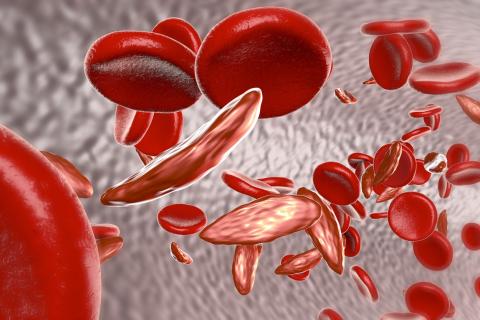
Bradycardia guidelines, hypertension’s risk in young adults, and more
This week on Cardiocast, guidelines for bradycardia set a new bar for shared decision-making in pacemaker placement, young adults with hypertension may be at higher CVD risk, how sleep quality affects cardiovascular risk, and a strong showing for exercise in patients with both heart failure and sleep apnea.
Tune in next Friday for the most exciting news from the scientific sessions of the American Heart Association, as told by the reporters who cover it.
Subscribe to Cardiocast wherever you get your podcasts.
This week on Cardiocast, guidelines for bradycardia set a new bar for shared decision-making in pacemaker placement, young adults with hypertension may be at higher CVD risk, how sleep quality affects cardiovascular risk, and a strong showing for exercise in patients with both heart failure and sleep apnea.
Tune in next Friday for the most exciting news from the scientific sessions of the American Heart Association, as told by the reporters who cover it.
Subscribe to Cardiocast wherever you get your podcasts.
This week on Cardiocast, guidelines for bradycardia set a new bar for shared decision-making in pacemaker placement, young adults with hypertension may be at higher CVD risk, how sleep quality affects cardiovascular risk, and a strong showing for exercise in patients with both heart failure and sleep apnea.
Tune in next Friday for the most exciting news from the scientific sessions of the American Heart Association, as told by the reporters who cover it.
Subscribe to Cardiocast wherever you get your podcasts.

Trump administration rule erodes ACA contraceptive mandate
More employers can opt out of providing contraception coverage to their employees under final regulations from the Trump administration that narrow the Affordable Care Act’s contraceptive mandate.

The two regulations, released Nov. 7, allow an expanded group of employers and insurers to get out of covering contraception methods by objecting on either religious or moral grounds.
The first rule broadens exemptions to the ACA’s contraceptive mandate to entities that object to services covered by the mandate on the basis of sincerely held religious beliefs. The second rule protects nonprofit organizations and small businesses that have nonreligious moral convictions that oppose services covered by the mandate. The religious and moral exemptions apply to institutions of education, issuers, and individuals, but not to governmental entities.
When first proposed in 2017, Trump administration officials said the new policies would “better balance the government’s interest in promoting coverage for contraceptive and sterilization services with the government’s interests in providing conscience protections for entities with sincerely held moral convictions.” The U.S. Department of Health & Human Services estimates that the rules, which take effect in January 2019, will affect no more than 200 employers.
The American College of Obstetricians and Gynecologists expressed concern that the final rules will restrict patient access to meaningful contraceptive methods and will erode decades of progress in increasing women’s reproductive autonomy and restrict patient access to contraception.
“Women, families and our nation all benefit from seamless, affordable access to contraception,” ACOG President Lisa M. Hollier, MD, said in a statement. “Contraception improves women’s health and well-being, reduces unintended pregnancy, enables pregnancy spacing for safer pregnancies and deliveries, and empowers women’s engagement in the workforce and economic self-sufficiency. A woman’s employer should not determine whether or not she has this access.”
Marjorie Dannenfelser, president of Susan B. Anthony List, an anti-abortion group, praised the final rules, calling them needed protections from the burdensome Obama-era ACA abortifacient drug mandate.
“President Trump and HHS Secretary Azar delivered a huge victory for conscience rights and religious liberty in America,” Ms. Dannenfelser said in a statement. “No longer will Catholic nuns who care for the elderly poor be forced by the government to provide abortion-inducing drugs in their health care plans. Not only that, moral objectors such as Susan B. Anthony List, will also no longer have to pay for life-ending drugs that are antithetical to their mission and for which we have argued there is certainly no compelling state interest.”
The ACA initially required all employers to cover birth control for employees with no copayments, except for group health plans of religious employers, which were deemed exempt. Those religious employers were primarily churches and other houses of worship. After a number of complaints and legal challenges, the Obama administration created a workaround for nonprofit religious employers to opt out of the mandate.
However, critics argued the process itself was a violation of their religious freedom. The issue led to the case of Zubik v. Burwell, a legal challenge over the mandate exemption that went before the U.S. Supreme Court in March 2016. The issue was never resolved. In May 2016, the Supreme Court vacated the lower court rulings related to Zubik v. Burwell and remanded the case back to the four appeals courts that had originally ruled on the issue.
Under the approved regulations, employers or insurers can stop their coverage of contraceptive services if they have religious beliefs or moral convictions against covering birth control. Exempted entities and individuals also can choose to cover some, but not all, contraceptive services, depending on their specific religious or moral objection, according to an HHS fact sheet.
The agency emphasized that the regulations leave in place government programs that provide free or subsidized contraceptive coverage to low-income women, such as through community health centers, and that the rules do not ban any employer from covering contraceptives.
The regulations become effective 60 days after they are published in the Federal Register.
More employers can opt out of providing contraception coverage to their employees under final regulations from the Trump administration that narrow the Affordable Care Act’s contraceptive mandate.
The two regulations, released Nov. 7, allow an expanded group of employers and insurers to get out of covering contraception methods by objecting on either religious or moral grounds.
The first rule broadens exemptions to the ACA’s contraceptive mandate to entities that object to services covered by the mandate on the basis of sincerely held religious beliefs. The second rule protects nonprofit organizations and small businesses that have nonreligious moral convictions that oppose services covered by the mandate. The religious and moral exemptions apply to institutions of education, issuers, and individuals, but not to governmental entities.
When first proposed in 2017, Trump administration officials said the new policies would “better balance the government’s interest in promoting coverage for contraceptive and sterilization services with the government’s interests in providing conscience protections for entities with sincerely held moral convictions.” The U.S. Department of Health & Human Services estimates that the rules, which take effect in January 2019, will affect no more than 200 employers.
The American College of Obstetricians and Gynecologists expressed concern that the final rules will restrict patient access to meaningful contraceptive methods and will erode decades of progress in increasing women’s reproductive autonomy and restrict patient access to contraception.
“Women, families and our nation all benefit from seamless, affordable access to contraception,” ACOG President Lisa M. Hollier, MD, said in a statement. “Contraception improves women’s health and well-being, reduces unintended pregnancy, enables pregnancy spacing for safer pregnancies and deliveries, and empowers women’s engagement in the workforce and economic self-sufficiency. A woman’s employer should not determine whether or not she has this access.”
Marjorie Dannenfelser, president of Susan B. Anthony List, an anti-abortion group, praised the final rules, calling them needed protections from the burdensome Obama-era ACA abortifacient drug mandate.
“President Trump and HHS Secretary Azar delivered a huge victory for conscience rights and religious liberty in America,” Ms. Dannenfelser said in a statement. “No longer will Catholic nuns who care for the elderly poor be forced by the government to provide abortion-inducing drugs in their health care plans. Not only that, moral objectors such as Susan B. Anthony List, will also no longer have to pay for life-ending drugs that are antithetical to their mission and for which we have argued there is certainly no compelling state interest.”
The ACA initially required all employers to cover birth control for employees with no copayments, except for group health plans of religious employers, which were deemed exempt. Those religious employers were primarily churches and other houses of worship. After a number of complaints and legal challenges, the Obama administration created a workaround for nonprofit religious employers to opt out of the mandate.
However, critics argued the process itself was a violation of their religious freedom. The issue led to the case of Zubik v. Burwell, a legal challenge over the mandate exemption that went before the U.S. Supreme Court in March 2016. The issue was never resolved. In May 2016, the Supreme Court vacated the lower court rulings related to Zubik v. Burwell and remanded the case back to the four appeals courts that had originally ruled on the issue.
Under the approved regulations, employers or insurers can stop their coverage of contraceptive services if they have religious beliefs or moral convictions against covering birth control. Exempted entities and individuals also can choose to cover some, but not all, contraceptive services, depending on their specific religious or moral objection, according to an HHS fact sheet.
The agency emphasized that the regulations leave in place government programs that provide free or subsidized contraceptive coverage to low-income women, such as through community health centers, and that the rules do not ban any employer from covering contraceptives.
The regulations become effective 60 days after they are published in the Federal Register.
More employers can opt out of providing contraception coverage to their employees under final regulations from the Trump administration that narrow the Affordable Care Act’s contraceptive mandate.
The two regulations, released Nov. 7, allow an expanded group of employers and insurers to get out of covering contraception methods by objecting on either religious or moral grounds.
The first rule broadens exemptions to the ACA’s contraceptive mandate to entities that object to services covered by the mandate on the basis of sincerely held religious beliefs. The second rule protects nonprofit organizations and small businesses that have nonreligious moral convictions that oppose services covered by the mandate. The religious and moral exemptions apply to institutions of education, issuers, and individuals, but not to governmental entities.
When first proposed in 2017, Trump administration officials said the new policies would “better balance the government’s interest in promoting coverage for contraceptive and sterilization services with the government’s interests in providing conscience protections for entities with sincerely held moral convictions.” The U.S. Department of Health & Human Services estimates that the rules, which take effect in January 2019, will affect no more than 200 employers.
The American College of Obstetricians and Gynecologists expressed concern that the final rules will restrict patient access to meaningful contraceptive methods and will erode decades of progress in increasing women’s reproductive autonomy and restrict patient access to contraception.
“Women, families and our nation all benefit from seamless, affordable access to contraception,” ACOG President Lisa M. Hollier, MD, said in a statement. “Contraception improves women’s health and well-being, reduces unintended pregnancy, enables pregnancy spacing for safer pregnancies and deliveries, and empowers women’s engagement in the workforce and economic self-sufficiency. A woman’s employer should not determine whether or not she has this access.”
Marjorie Dannenfelser, president of Susan B. Anthony List, an anti-abortion group, praised the final rules, calling them needed protections from the burdensome Obama-era ACA abortifacient drug mandate.
“President Trump and HHS Secretary Azar delivered a huge victory for conscience rights and religious liberty in America,” Ms. Dannenfelser said in a statement. “No longer will Catholic nuns who care for the elderly poor be forced by the government to provide abortion-inducing drugs in their health care plans. Not only that, moral objectors such as Susan B. Anthony List, will also no longer have to pay for life-ending drugs that are antithetical to their mission and for which we have argued there is certainly no compelling state interest.”
The ACA initially required all employers to cover birth control for employees with no copayments, except for group health plans of religious employers, which were deemed exempt. Those religious employers were primarily churches and other houses of worship. After a number of complaints and legal challenges, the Obama administration created a workaround for nonprofit religious employers to opt out of the mandate.
However, critics argued the process itself was a violation of their religious freedom. The issue led to the case of Zubik v. Burwell, a legal challenge over the mandate exemption that went before the U.S. Supreme Court in March 2016. The issue was never resolved. In May 2016, the Supreme Court vacated the lower court rulings related to Zubik v. Burwell and remanded the case back to the four appeals courts that had originally ruled on the issue.
Under the approved regulations, employers or insurers can stop their coverage of contraceptive services if they have religious beliefs or moral convictions against covering birth control. Exempted entities and individuals also can choose to cover some, but not all, contraceptive services, depending on their specific religious or moral objection, according to an HHS fact sheet.
The agency emphasized that the regulations leave in place government programs that provide free or subsidized contraceptive coverage to low-income women, such as through community health centers, and that the rules do not ban any employer from covering contraceptives.
The regulations become effective 60 days after they are published in the Federal Register.