User login
Baricitinib study highlights power of placebo effect in RA
CHICAGO – After 52 weeks of blinded adalimumab, a switch to 48 weeks of unblinded baricitinib without an adalimumab washout period resulted in an uptick in rheumatoid arthritis control with no flares and no increase in serious adverse events in the phase 3 RA-BEYOND baricitinib long-term extension study, Michael E. Weinblatt, MD, reported at the annual meeting of the American College of Rheumatology.
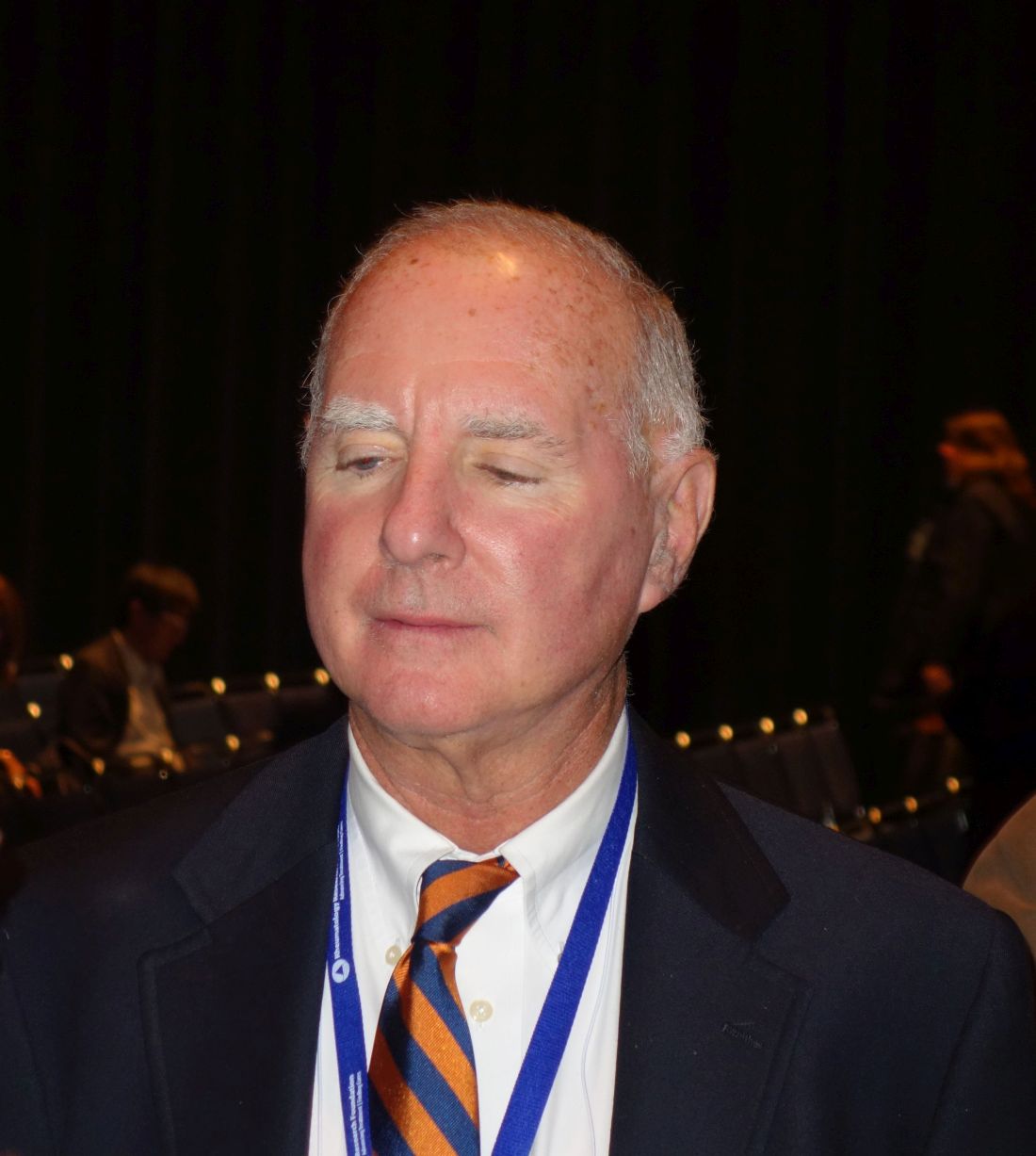
That’s information of practical clinical utility now that baricitinib, an oral inhibitor of Janus kinase subtypes 1 and 2, is approved as Olumiant for the treatment of moderate to severely active rheumatoid arthritis (RA). Perhaps even more interesting, however, is the way RA-BEYOND shined a spotlight on the high placebo response rate endemic to RA clinical trials, according to Dr. Weinblatt, professor of medicine at Harvard Medical School and codirector of clinical rheumatology at Brigham and Women’s Hospital, Boston.
He presented an analysis of two patient groups: 381 RA patients with moderately to severely active RA at baseline who were randomized to 52 weeks of double-blind baricitinib at 4 mg once daily in the previously reported phase 3 RA-BEAM trial (N Engl J Med. 2017 Feb 16;376[7]:652-62), after which they immediately enrolled in RA-BEYOND and were switched to 48 weeks of open-label, unblinded baricitinib; and 238 RA patients who were randomized to double-blind subcutaneous adalimumab (Humira) at 40 mg every 2 weeks in RA-BEAM before being switched to unblinded baricitinib in RA-BEYOND. All participants were on background oral methotrexate throughout.
Here’s the finding that captured Dr. Weinblatt’s attention: At the time of the switch, 28.2% of patients who’d been on blinded baricitinib for 52 weeks were nonresponders to the drug, meaning that after a full year of treatment they had a Clinical Disease Activity Index (CDAI) score greater than 10. Yet after a mere additional 4 weeks on the same drug in RA-BEYOND – this time unblinded as to their treatment – 23.4% of this group were transformed into responders, with low disease activity as defined by a CDAI of 10 or less. This finding speaks eloquently as to the power of the placebo effect. It’s a real issue for clinical trialists, the rheumatologist observed.
In the adalimumab-to-baricitinib group, 31.1% of patients were nonresponders to 52 weeks of blinded adalimumab. Four weeks after switching to open-label baricitinib, 29.7% of this group had a CDAI of 10 or less.
At week 48 of open-label baricitinib in RA-BEYOND, 54.2% of nonresponders to the 52 weeks of blinded baricitinib had become responders, as did 50% of nonresponders to a year of blinded adalimumab.
Taking a step back to describe the primary outcomes in RA-BEYOND, Dr. Weinblatt noted that at enrollment in RA-BEYOND, after 52 weeks on double-blind baricitinib, 71.8% of patients had a CDAI of 10 or less and 27% were in remission as defined by a CDAI of 2.8 or less. Subsequently, after 48 weeks on unblinded baricitinib, these rates climbed to 78.2% and 31.6%, respectively.
Similarly, in the adalimumab-to-baricitinib study arm, the low disease activity and remission rates at enrollment in RA-BEYOND were 68.9% and 24.4%, improving to 73.5% and 28.2% after 48 weeks on open-label baricitinib.
Scores on the SDAI (Simplified Disease Activity Index) and DAS28-ESR (Disease Activity Score based on 28 joints with erythrocyte sedimentation rate) followed suit in both groups.
During the 48 weeks of open-label baricitinib in RA-BEYOND, the incidence of herpes zoster was roughly 2.2% in both study arms, and the rate of adverse events leading to permanent drug discontinuation was 2.7%. During RA-BEYOND, serious infections occurred in 3.8% of the baricitinib-to-baricitinib group and 2.2% of the adalimumab-to-baricitinib group.
Dr. Weinblatt drew attention to the fact that the dose of baricitinib employed in RA-BEAM and RA-BEYOND was 4 mg/day, whereas the dose approved by the Food and Drug Administration is 2 mg/day.
The RA-BEAM and RA-BEYOND trials were sponsored by Eli Lilly. Dr. Weinblatt reported serving as a paid consultant to that pharmaceutical company and more than a dozen others.
SOURCE: Weinblatt ME et al. Arthritis Rheumatol. 2018;70(Suppl 10): Abstract 886.
CHICAGO – After 52 weeks of blinded adalimumab, a switch to 48 weeks of unblinded baricitinib without an adalimumab washout period resulted in an uptick in rheumatoid arthritis control with no flares and no increase in serious adverse events in the phase 3 RA-BEYOND baricitinib long-term extension study, Michael E. Weinblatt, MD, reported at the annual meeting of the American College of Rheumatology.
That’s information of practical clinical utility now that baricitinib, an oral inhibitor of Janus kinase subtypes 1 and 2, is approved as Olumiant for the treatment of moderate to severely active rheumatoid arthritis (RA). Perhaps even more interesting, however, is the way RA-BEYOND shined a spotlight on the high placebo response rate endemic to RA clinical trials, according to Dr. Weinblatt, professor of medicine at Harvard Medical School and codirector of clinical rheumatology at Brigham and Women’s Hospital, Boston.
He presented an analysis of two patient groups: 381 RA patients with moderately to severely active RA at baseline who were randomized to 52 weeks of double-blind baricitinib at 4 mg once daily in the previously reported phase 3 RA-BEAM trial (N Engl J Med. 2017 Feb 16;376[7]:652-62), after which they immediately enrolled in RA-BEYOND and were switched to 48 weeks of open-label, unblinded baricitinib; and 238 RA patients who were randomized to double-blind subcutaneous adalimumab (Humira) at 40 mg every 2 weeks in RA-BEAM before being switched to unblinded baricitinib in RA-BEYOND. All participants were on background oral methotrexate throughout.
Here’s the finding that captured Dr. Weinblatt’s attention: At the time of the switch, 28.2% of patients who’d been on blinded baricitinib for 52 weeks were nonresponders to the drug, meaning that after a full year of treatment they had a Clinical Disease Activity Index (CDAI) score greater than 10. Yet after a mere additional 4 weeks on the same drug in RA-BEYOND – this time unblinded as to their treatment – 23.4% of this group were transformed into responders, with low disease activity as defined by a CDAI of 10 or less. This finding speaks eloquently as to the power of the placebo effect. It’s a real issue for clinical trialists, the rheumatologist observed.
In the adalimumab-to-baricitinib group, 31.1% of patients were nonresponders to 52 weeks of blinded adalimumab. Four weeks after switching to open-label baricitinib, 29.7% of this group had a CDAI of 10 or less.
At week 48 of open-label baricitinib in RA-BEYOND, 54.2% of nonresponders to the 52 weeks of blinded baricitinib had become responders, as did 50% of nonresponders to a year of blinded adalimumab.
Taking a step back to describe the primary outcomes in RA-BEYOND, Dr. Weinblatt noted that at enrollment in RA-BEYOND, after 52 weeks on double-blind baricitinib, 71.8% of patients had a CDAI of 10 or less and 27% were in remission as defined by a CDAI of 2.8 or less. Subsequently, after 48 weeks on unblinded baricitinib, these rates climbed to 78.2% and 31.6%, respectively.
Similarly, in the adalimumab-to-baricitinib study arm, the low disease activity and remission rates at enrollment in RA-BEYOND were 68.9% and 24.4%, improving to 73.5% and 28.2% after 48 weeks on open-label baricitinib.
Scores on the SDAI (Simplified Disease Activity Index) and DAS28-ESR (Disease Activity Score based on 28 joints with erythrocyte sedimentation rate) followed suit in both groups.
During the 48 weeks of open-label baricitinib in RA-BEYOND, the incidence of herpes zoster was roughly 2.2% in both study arms, and the rate of adverse events leading to permanent drug discontinuation was 2.7%. During RA-BEYOND, serious infections occurred in 3.8% of the baricitinib-to-baricitinib group and 2.2% of the adalimumab-to-baricitinib group.
Dr. Weinblatt drew attention to the fact that the dose of baricitinib employed in RA-BEAM and RA-BEYOND was 4 mg/day, whereas the dose approved by the Food and Drug Administration is 2 mg/day.
The RA-BEAM and RA-BEYOND trials were sponsored by Eli Lilly. Dr. Weinblatt reported serving as a paid consultant to that pharmaceutical company and more than a dozen others.
SOURCE: Weinblatt ME et al. Arthritis Rheumatol. 2018;70(Suppl 10): Abstract 886.
CHICAGO – After 52 weeks of blinded adalimumab, a switch to 48 weeks of unblinded baricitinib without an adalimumab washout period resulted in an uptick in rheumatoid arthritis control with no flares and no increase in serious adverse events in the phase 3 RA-BEYOND baricitinib long-term extension study, Michael E. Weinblatt, MD, reported at the annual meeting of the American College of Rheumatology.
That’s information of practical clinical utility now that baricitinib, an oral inhibitor of Janus kinase subtypes 1 and 2, is approved as Olumiant for the treatment of moderate to severely active rheumatoid arthritis (RA). Perhaps even more interesting, however, is the way RA-BEYOND shined a spotlight on the high placebo response rate endemic to RA clinical trials, according to Dr. Weinblatt, professor of medicine at Harvard Medical School and codirector of clinical rheumatology at Brigham and Women’s Hospital, Boston.
He presented an analysis of two patient groups: 381 RA patients with moderately to severely active RA at baseline who were randomized to 52 weeks of double-blind baricitinib at 4 mg once daily in the previously reported phase 3 RA-BEAM trial (N Engl J Med. 2017 Feb 16;376[7]:652-62), after which they immediately enrolled in RA-BEYOND and were switched to 48 weeks of open-label, unblinded baricitinib; and 238 RA patients who were randomized to double-blind subcutaneous adalimumab (Humira) at 40 mg every 2 weeks in RA-BEAM before being switched to unblinded baricitinib in RA-BEYOND. All participants were on background oral methotrexate throughout.
Here’s the finding that captured Dr. Weinblatt’s attention: At the time of the switch, 28.2% of patients who’d been on blinded baricitinib for 52 weeks were nonresponders to the drug, meaning that after a full year of treatment they had a Clinical Disease Activity Index (CDAI) score greater than 10. Yet after a mere additional 4 weeks on the same drug in RA-BEYOND – this time unblinded as to their treatment – 23.4% of this group were transformed into responders, with low disease activity as defined by a CDAI of 10 or less. This finding speaks eloquently as to the power of the placebo effect. It’s a real issue for clinical trialists, the rheumatologist observed.
In the adalimumab-to-baricitinib group, 31.1% of patients were nonresponders to 52 weeks of blinded adalimumab. Four weeks after switching to open-label baricitinib, 29.7% of this group had a CDAI of 10 or less.
At week 48 of open-label baricitinib in RA-BEYOND, 54.2% of nonresponders to the 52 weeks of blinded baricitinib had become responders, as did 50% of nonresponders to a year of blinded adalimumab.
Taking a step back to describe the primary outcomes in RA-BEYOND, Dr. Weinblatt noted that at enrollment in RA-BEYOND, after 52 weeks on double-blind baricitinib, 71.8% of patients had a CDAI of 10 or less and 27% were in remission as defined by a CDAI of 2.8 or less. Subsequently, after 48 weeks on unblinded baricitinib, these rates climbed to 78.2% and 31.6%, respectively.
Similarly, in the adalimumab-to-baricitinib study arm, the low disease activity and remission rates at enrollment in RA-BEYOND were 68.9% and 24.4%, improving to 73.5% and 28.2% after 48 weeks on open-label baricitinib.
Scores on the SDAI (Simplified Disease Activity Index) and DAS28-ESR (Disease Activity Score based on 28 joints with erythrocyte sedimentation rate) followed suit in both groups.
During the 48 weeks of open-label baricitinib in RA-BEYOND, the incidence of herpes zoster was roughly 2.2% in both study arms, and the rate of adverse events leading to permanent drug discontinuation was 2.7%. During RA-BEYOND, serious infections occurred in 3.8% of the baricitinib-to-baricitinib group and 2.2% of the adalimumab-to-baricitinib group.
Dr. Weinblatt drew attention to the fact that the dose of baricitinib employed in RA-BEAM and RA-BEYOND was 4 mg/day, whereas the dose approved by the Food and Drug Administration is 2 mg/day.
The RA-BEAM and RA-BEYOND trials were sponsored by Eli Lilly. Dr. Weinblatt reported serving as a paid consultant to that pharmaceutical company and more than a dozen others.
SOURCE: Weinblatt ME et al. Arthritis Rheumatol. 2018;70(Suppl 10): Abstract 886.
REPORTING FROM THE ACR ANNUAL MEETING
Key clinical point: Never underestimate the potency of the placebo effect in RA.
Major finding: After 100 weeks on oral baricitinib, 78.2% of RA patients had low disease activity and 31.6% were in remission.
Study details: This was an analysis of 619 rheumatoid arthritis patients who participated in RA-BEYOND, a phase 3, 48-week, long-term extension study built upon the earlier 52-week RA-BEAM trial.
Disclosures: Eli Lilly sponsored the study. The presenter serves as a paid consultant to that pharmaceutical company and more than a dozen others.
Source: Weinblatt ME et al. Arthritis Rheumatol. 2018;70(Suppl 10): Abstract 886.
Extended AI therapy reduces breast cancer recurrence risk, ups fracture risk
SAN ANTONIO – Extending aromatase inhibitor (AI) therapy an additional 5 years reduces breast cancer recurrence risk, particularly in patients with node involvement, but the benefits vary based on prior treatment and must be weighed against the risk of bone fracture, according to findings from a meta-analysis involving more than 22,000 women.
The rate of any recurrence after 10 years in almost 7,500 women treated with 5 years of tamoxifen and then randomized to 5 additional years of AI treatment was reduced by 35%, compared with the rate in those who did not receive 5 additional years of AI therapy (recurrence rate, 10.7% vs. 7.1%, respectively; relative risk, 0.67), and the difference was “very highly significant,” Richard Gray, MD, reported at the San Antonio Breast Cancer Symposium.
The distant recurrence rate and mortality rate were also significantly improved in those who received 5 years of AI therapy (rr, 0.77 for each), but the difference in mortality was of borderline significance, Dr. Gray, professor of medical statistics at the University of Oxford, London, reported on behalf of the Early Breast Cancer Trialists’ Collaborative Group.
However, in many of the trials included in the analysis, control group patients crossed over to the treatment group, which likely reduced the effect, he noted.
In about 12,000 women who were treated with 2-3 years of tamoxifen followed by 2-3 years of an AI and who were then randomized to an additional 3-5 years of AI therapy, the effects were less pronounced, with about a 20% reduced risk of any recurrence after 10 years vs. the rate in those without extended therapy (recurrence rate, 9.2% vs. 7.1%), he said.
The differences in the rates of distant recurrence and breast cancer mortality were not statistically significant in this group, but again, follow-up was short, he said.
Similarly, in about 3,300 women treated with an AI followed by an additional 5 years of AI therapy, recurrence risk was reduced by about 25% vs. the rate in those who did not receive extended therapy, and no difference was seen in the rates of distant recurrence or breast cancer mortality.
Of note, the benefits in those who received tamoxifen were seen immediately, whereas the benefits in those receiving AIs in the first 5 years emerged after about 2 years of extended therapy, Dr. Gray said, explaining that this was likely due to “carry-over benefits” of the earlier AI therapy.
The downside with extended AI therapy was a 25% increase in fracture risk, as well as bone pain, which can reduce quality of life.
Therefore, decisions about extended therapy should involve careful risk-benefit analyses, he said, adding that the findings of this meta-analysis of 12 trials, which included postmenopausal women – 99% of whom had estrogen receptor–positive disease – provide “the most reliable assessment of the available evidence ... [for] guiding decisions about endocrine therapy.”
In this video interview, he further discussed the details and limitations of the study, the effects of nodal status on outcomes, implications of the findings for clinical practice, the need for further follow-up on all of the studies included in the analysis, and plans for incorporating new data from the AERAS trial, which were also presented at the symposium and which complement and reinforce the current findings.
Dr. Gray reported having no disclosures.
SOURCE: Gray R et al., SABCS 2018: Abstract GS3-03.
SAN ANTONIO – Extending aromatase inhibitor (AI) therapy an additional 5 years reduces breast cancer recurrence risk, particularly in patients with node involvement, but the benefits vary based on prior treatment and must be weighed against the risk of bone fracture, according to findings from a meta-analysis involving more than 22,000 women.
The rate of any recurrence after 10 years in almost 7,500 women treated with 5 years of tamoxifen and then randomized to 5 additional years of AI treatment was reduced by 35%, compared with the rate in those who did not receive 5 additional years of AI therapy (recurrence rate, 10.7% vs. 7.1%, respectively; relative risk, 0.67), and the difference was “very highly significant,” Richard Gray, MD, reported at the San Antonio Breast Cancer Symposium.
The distant recurrence rate and mortality rate were also significantly improved in those who received 5 years of AI therapy (rr, 0.77 for each), but the difference in mortality was of borderline significance, Dr. Gray, professor of medical statistics at the University of Oxford, London, reported on behalf of the Early Breast Cancer Trialists’ Collaborative Group.
However, in many of the trials included in the analysis, control group patients crossed over to the treatment group, which likely reduced the effect, he noted.
In about 12,000 women who were treated with 2-3 years of tamoxifen followed by 2-3 years of an AI and who were then randomized to an additional 3-5 years of AI therapy, the effects were less pronounced, with about a 20% reduced risk of any recurrence after 10 years vs. the rate in those without extended therapy (recurrence rate, 9.2% vs. 7.1%), he said.
The differences in the rates of distant recurrence and breast cancer mortality were not statistically significant in this group, but again, follow-up was short, he said.
Similarly, in about 3,300 women treated with an AI followed by an additional 5 years of AI therapy, recurrence risk was reduced by about 25% vs. the rate in those who did not receive extended therapy, and no difference was seen in the rates of distant recurrence or breast cancer mortality.
Of note, the benefits in those who received tamoxifen were seen immediately, whereas the benefits in those receiving AIs in the first 5 years emerged after about 2 years of extended therapy, Dr. Gray said, explaining that this was likely due to “carry-over benefits” of the earlier AI therapy.
The downside with extended AI therapy was a 25% increase in fracture risk, as well as bone pain, which can reduce quality of life.
Therefore, decisions about extended therapy should involve careful risk-benefit analyses, he said, adding that the findings of this meta-analysis of 12 trials, which included postmenopausal women – 99% of whom had estrogen receptor–positive disease – provide “the most reliable assessment of the available evidence ... [for] guiding decisions about endocrine therapy.”
In this video interview, he further discussed the details and limitations of the study, the effects of nodal status on outcomes, implications of the findings for clinical practice, the need for further follow-up on all of the studies included in the analysis, and plans for incorporating new data from the AERAS trial, which were also presented at the symposium and which complement and reinforce the current findings.
Dr. Gray reported having no disclosures.
SOURCE: Gray R et al., SABCS 2018: Abstract GS3-03.
SAN ANTONIO – Extending aromatase inhibitor (AI) therapy an additional 5 years reduces breast cancer recurrence risk, particularly in patients with node involvement, but the benefits vary based on prior treatment and must be weighed against the risk of bone fracture, according to findings from a meta-analysis involving more than 22,000 women.
The rate of any recurrence after 10 years in almost 7,500 women treated with 5 years of tamoxifen and then randomized to 5 additional years of AI treatment was reduced by 35%, compared with the rate in those who did not receive 5 additional years of AI therapy (recurrence rate, 10.7% vs. 7.1%, respectively; relative risk, 0.67), and the difference was “very highly significant,” Richard Gray, MD, reported at the San Antonio Breast Cancer Symposium.
The distant recurrence rate and mortality rate were also significantly improved in those who received 5 years of AI therapy (rr, 0.77 for each), but the difference in mortality was of borderline significance, Dr. Gray, professor of medical statistics at the University of Oxford, London, reported on behalf of the Early Breast Cancer Trialists’ Collaborative Group.
However, in many of the trials included in the analysis, control group patients crossed over to the treatment group, which likely reduced the effect, he noted.
In about 12,000 women who were treated with 2-3 years of tamoxifen followed by 2-3 years of an AI and who were then randomized to an additional 3-5 years of AI therapy, the effects were less pronounced, with about a 20% reduced risk of any recurrence after 10 years vs. the rate in those without extended therapy (recurrence rate, 9.2% vs. 7.1%), he said.
The differences in the rates of distant recurrence and breast cancer mortality were not statistically significant in this group, but again, follow-up was short, he said.
Similarly, in about 3,300 women treated with an AI followed by an additional 5 years of AI therapy, recurrence risk was reduced by about 25% vs. the rate in those who did not receive extended therapy, and no difference was seen in the rates of distant recurrence or breast cancer mortality.
Of note, the benefits in those who received tamoxifen were seen immediately, whereas the benefits in those receiving AIs in the first 5 years emerged after about 2 years of extended therapy, Dr. Gray said, explaining that this was likely due to “carry-over benefits” of the earlier AI therapy.
The downside with extended AI therapy was a 25% increase in fracture risk, as well as bone pain, which can reduce quality of life.
Therefore, decisions about extended therapy should involve careful risk-benefit analyses, he said, adding that the findings of this meta-analysis of 12 trials, which included postmenopausal women – 99% of whom had estrogen receptor–positive disease – provide “the most reliable assessment of the available evidence ... [for] guiding decisions about endocrine therapy.”
In this video interview, he further discussed the details and limitations of the study, the effects of nodal status on outcomes, implications of the findings for clinical practice, the need for further follow-up on all of the studies included in the analysis, and plans for incorporating new data from the AERAS trial, which were also presented at the symposium and which complement and reinforce the current findings.
Dr. Gray reported having no disclosures.
SOURCE: Gray R et al., SABCS 2018: Abstract GS3-03.
REPORTING FROM SABCS 2018
Key clinical point: Five extra years of aromatase inhibitor therapy reduces breast cancer recurrence, but increases fracture risk.
Major finding: Extending AI therapy by 5 years reduces breast cancer recurrence by 20% to 35%.
Study details: A meta-analysis of more than 22,000 women from 12 trials.
Disclosures: Dr. Gray reported having no disclosures.
Source: Gray R et al. SABCS 2018: Abstract GS3-03.

Class-action suit filed against ABIM over MOC
A group of internists is suing the American Board of Internal Medicine over its maintenance of certification (MOC) process, alleging that the board is monopolizing the MOC market.

The lawsuit, filed Dec. 6 in Pennsylvania district court, claims that ABIM is charging inflated monopoly prices for maintaining certification, that the organization is forcing physicians to purchase MOC, and that ABIM is inducing employers and others to require ABIM certification. The four plaintiff-physicians are asking a judge to find ABIM in violation of federal antitrust law and to bar the board from continuing its MOC process. The suit is filed as a class action on behalf of all internists and subspecialists required by ABIM to purchase MOC to maintain their ABIM certifications. The plaintiffs seek damages and injunctive relief, plus lawsuit and attorney costs arising from ABIM’s alleged antitrust violations.
In a statement, ABIM expressed disappointment at the lawsuit and said the organization will vigorously defend itself, adding that doing so will “consume resources far better dedicated to continuous improvement of its programs.”
ABIM declined to answer questions addressing specific accusations from the lawsuit. However, in an interview, ABIM President Richard Baron, MD, said that “ABIM board-certified physicians have taken the initiative to distinguish themselves. This is a credential that physicians earn. We offer certified physicians the opportunity to demonstrate to the medical community, their peers, and the public that they are current and have special expertise.”
ABIM has not yet filed a formal response to the lawsuit, which was due by Jan. 6. Court documents show that in January, ABIM entered the appearances of four attorneys that will represent the board in the case. From there, discovery and evidence gathering in the case will begin.
Katherine Murray Leisure, MD, an infectious disease specialist based in Plymouth, Mass., is one of the plaintiffs. While she said that she could not comment specifically on the lawsuit, she has written publicly about her ABIM concerns in the past.
In a 2015 letter to Dr. Baron and posted on an anti-MOC website, Dr. Murray outlined a litany of complaints against ABIM’s MOC process and called on the U.S. Congress to investigate ABIM’s financial, legal, and ethical conduct.
“[The American Board of Medical Specialties] and ABIM collected more than $10,000 in fees and lost practice hours every decade from each [diplomate] doing MOC,” Dr. Murray Leisure wrote. “MOC took weeks away from our offices, clinics, patients, families, specialty societies, and individual research. ABMS MOC removed hundreds, perhaps thousands … of America’s best, once board-certified physicians from full hospital careers and earnings whenever [diplomates] did not complete these high-stakes MOC programs. … The righteous and fast solution to such moral, ethical, scientific, and constitutional problems is to end MOC now.”
Plaintiffs Glen Dela Cruz Manalo, MD; Alexa Joshua, MD; and Gerard Kenney, MD, did not return messages seeking comment. When contacted, attorneys for the plaintiffs declined to comment.
The doctors’ 32-page lawsuit characterizes ABIM as an organization motivated by money that has made its MOC process increasingly more burdensome for physicians over the years without evidence that MOC has any beneficial impact on doctors, patients, or the public. Complying with ABIM’s MOC costs internists an average of $23,607 in financial cost and time lost over 10 years, and costs up to $40,495 for some specialists, according to the suit.
The physicians allege that ABIM controls in excess of 95% of the market for MOC of internists, in violation of federal antitrust laws, and that the organization has unlawfully obtained and maintained monopoly power for MOC services.
The board’s illegal tying of its initial certification to its MOC results in burdensome conditions, including “raising the cost of the practice of medicine, constraining the supply of internists thereby harming competition, decreasing the supply of certified internists, and increasing the cost of medical services to patients and consumers,” the suit claims.
The legal challenge details how MOC has personally and professionally impacted each of the four plaintiffs. Dr. Manalo, a gastroenterologist, lost his privileges at St. Vincent Healthcare in Billings, Mont., and was subsequently terminated after he declined to maintain his ABIM certification as a gastroenterologist. In a letter to ABIM, Dr. Manalo wrote that it was “unfair and outright discriminatory that practitioners certified on or after 1990 are the only ones required to certify,” according to the lawsuit. Dr. Manalo later took a position as staff gastroenterologist at Jonathan M. Wainwright Memorial Veterans Affairs Medical Center in Walla Walla, Wash., at a substantially reduced salary. He became unemployed in 2017.
Dr. Murray Leisure obtained an initial and lifelong board certification in internal medicine from ABIM in 1984 and an infectious disease certification in 1990. ABlM terminated Dr. Murray’s infectious diseases certification after she failed her MOC examination in 2009, which led to lost privileges at Jordan Hospital in Plymouth, Mass. The loss caused significant damage to Dr. Murray, including lost income, a tarnished reputation, and the lost opportunity to help patients, according to the lawsuit. Jordan Hospital restored her privileges after Dr. Murray passed her MOC examination in 2012.
Dr. Kenney lost a job opportunity with Mount Nittany Physicians Group in State College, Pa., after he declined to renew his ABIM certification in gastroenterology. He is currently a physician with the University of Pittsburgh Medical Center in Seneca, Pa.
That the ABIM website lists him as “not certified,” is misleading, and makes it appear that his initial certifications were revoked due to failure to pass a MOC examination or misconduct, rather than because the certifications lapsed, according to the suit. The description makes Dr. Kenney appear less qualified to patients, hospitals, insurance companies, medical corporations, other employers, and others, he claims.
Dr. Joshua could not renew her consulting and admitting privileges at Detroit Medical Center after she failed an MOC examination in 2014 and became uncertified in internal medicine, according to the suit. In addition, Blue Cross Blue Shield informed Dr. Joshua it would no longer cover her because it required ABIM certification for coverage. She unsuccessfully appealed based on her certification with the National Board of Physicians and Surgeons. As a result of her certification termination, Dr. Joshua can only practice outpatient medicine at Detroit Medical Center.
In an interview, Dr. Baron emphasized the number of modifications made to its MOC process in recent years after responding to physician concerns. This includes an overhaul of the organization’s governance structure to include more than 200 practicing physicians and opening new avenues for physicians to engage in the creation of assessment content that more closely reflects what they see in practice, he said. In addition, ABIM now surveys all specialists to contribute to the exam blueprint review and the creation of the new Item Writing Task Force.

“We take all suggestions from physicians seriously, and have used it to launch many new initiatives including: the Knowledge Check-In, a new Physician Portal, partnerships to give physicians dual credit for CME and MOC, and exploration of alternative assessment models with medical societies,” he said.
Dr. Baron acknowledged past criticism of the MOC process, but said he is proud of the work ABIM has done to address physician concerns about the choice, relevance, and convenience of its MOC program.
*This story was updated on Feb. 6, 2019.
A group of internists is suing the American Board of Internal Medicine over its maintenance of certification (MOC) process, alleging that the board is monopolizing the MOC market.
The lawsuit, filed Dec. 6 in Pennsylvania district court, claims that ABIM is charging inflated monopoly prices for maintaining certification, that the organization is forcing physicians to purchase MOC, and that ABIM is inducing employers and others to require ABIM certification. The four plaintiff-physicians are asking a judge to find ABIM in violation of federal antitrust law and to bar the board from continuing its MOC process. The suit is filed as a class action on behalf of all internists and subspecialists required by ABIM to purchase MOC to maintain their ABIM certifications. The plaintiffs seek damages and injunctive relief, plus lawsuit and attorney costs arising from ABIM’s alleged antitrust violations.
In a statement, ABIM expressed disappointment at the lawsuit and said the organization will vigorously defend itself, adding that doing so will “consume resources far better dedicated to continuous improvement of its programs.”
ABIM declined to answer questions addressing specific accusations from the lawsuit. However, in an interview, ABIM President Richard Baron, MD, said that “ABIM board-certified physicians have taken the initiative to distinguish themselves. This is a credential that physicians earn. We offer certified physicians the opportunity to demonstrate to the medical community, their peers, and the public that they are current and have special expertise.”
ABIM has not yet filed a formal response to the lawsuit, which was due by Jan. 6. Court documents show that in January, ABIM entered the appearances of four attorneys that will represent the board in the case. From there, discovery and evidence gathering in the case will begin.
Katherine Murray Leisure, MD, an infectious disease specialist based in Plymouth, Mass., is one of the plaintiffs. While she said that she could not comment specifically on the lawsuit, she has written publicly about her ABIM concerns in the past.
In a 2015 letter to Dr. Baron and posted on an anti-MOC website, Dr. Murray outlined a litany of complaints against ABIM’s MOC process and called on the U.S. Congress to investigate ABIM’s financial, legal, and ethical conduct.
“[The American Board of Medical Specialties] and ABIM collected more than $10,000 in fees and lost practice hours every decade from each [diplomate] doing MOC,” Dr. Murray Leisure wrote. “MOC took weeks away from our offices, clinics, patients, families, specialty societies, and individual research. ABMS MOC removed hundreds, perhaps thousands … of America’s best, once board-certified physicians from full hospital careers and earnings whenever [diplomates] did not complete these high-stakes MOC programs. … The righteous and fast solution to such moral, ethical, scientific, and constitutional problems is to end MOC now.”
Plaintiffs Glen Dela Cruz Manalo, MD; Alexa Joshua, MD; and Gerard Kenney, MD, did not return messages seeking comment. When contacted, attorneys for the plaintiffs declined to comment.
The doctors’ 32-page lawsuit characterizes ABIM as an organization motivated by money that has made its MOC process increasingly more burdensome for physicians over the years without evidence that MOC has any beneficial impact on doctors, patients, or the public. Complying with ABIM’s MOC costs internists an average of $23,607 in financial cost and time lost over 10 years, and costs up to $40,495 for some specialists, according to the suit.
The physicians allege that ABIM controls in excess of 95% of the market for MOC of internists, in violation of federal antitrust laws, and that the organization has unlawfully obtained and maintained monopoly power for MOC services.
The board’s illegal tying of its initial certification to its MOC results in burdensome conditions, including “raising the cost of the practice of medicine, constraining the supply of internists thereby harming competition, decreasing the supply of certified internists, and increasing the cost of medical services to patients and consumers,” the suit claims.
The legal challenge details how MOC has personally and professionally impacted each of the four plaintiffs. Dr. Manalo, a gastroenterologist, lost his privileges at St. Vincent Healthcare in Billings, Mont., and was subsequently terminated after he declined to maintain his ABIM certification as a gastroenterologist. In a letter to ABIM, Dr. Manalo wrote that it was “unfair and outright discriminatory that practitioners certified on or after 1990 are the only ones required to certify,” according to the lawsuit. Dr. Manalo later took a position as staff gastroenterologist at Jonathan M. Wainwright Memorial Veterans Affairs Medical Center in Walla Walla, Wash., at a substantially reduced salary. He became unemployed in 2017.
Dr. Murray Leisure obtained an initial and lifelong board certification in internal medicine from ABIM in 1984 and an infectious disease certification in 1990. ABlM terminated Dr. Murray’s infectious diseases certification after she failed her MOC examination in 2009, which led to lost privileges at Jordan Hospital in Plymouth, Mass. The loss caused significant damage to Dr. Murray, including lost income, a tarnished reputation, and the lost opportunity to help patients, according to the lawsuit. Jordan Hospital restored her privileges after Dr. Murray passed her MOC examination in 2012.
Dr. Kenney lost a job opportunity with Mount Nittany Physicians Group in State College, Pa., after he declined to renew his ABIM certification in gastroenterology. He is currently a physician with the University of Pittsburgh Medical Center in Seneca, Pa.
That the ABIM website lists him as “not certified,” is misleading, and makes it appear that his initial certifications were revoked due to failure to pass a MOC examination or misconduct, rather than because the certifications lapsed, according to the suit. The description makes Dr. Kenney appear less qualified to patients, hospitals, insurance companies, medical corporations, other employers, and others, he claims.
Dr. Joshua could not renew her consulting and admitting privileges at Detroit Medical Center after she failed an MOC examination in 2014 and became uncertified in internal medicine, according to the suit. In addition, Blue Cross Blue Shield informed Dr. Joshua it would no longer cover her because it required ABIM certification for coverage. She unsuccessfully appealed based on her certification with the National Board of Physicians and Surgeons. As a result of her certification termination, Dr. Joshua can only practice outpatient medicine at Detroit Medical Center.
In an interview, Dr. Baron emphasized the number of modifications made to its MOC process in recent years after responding to physician concerns. This includes an overhaul of the organization’s governance structure to include more than 200 practicing physicians and opening new avenues for physicians to engage in the creation of assessment content that more closely reflects what they see in practice, he said. In addition, ABIM now surveys all specialists to contribute to the exam blueprint review and the creation of the new Item Writing Task Force.
“We take all suggestions from physicians seriously, and have used it to launch many new initiatives including: the Knowledge Check-In, a new Physician Portal, partnerships to give physicians dual credit for CME and MOC, and exploration of alternative assessment models with medical societies,” he said.
Dr. Baron acknowledged past criticism of the MOC process, but said he is proud of the work ABIM has done to address physician concerns about the choice, relevance, and convenience of its MOC program.
*This story was updated on Feb. 6, 2019.
A group of internists is suing the American Board of Internal Medicine over its maintenance of certification (MOC) process, alleging that the board is monopolizing the MOC market.
The lawsuit, filed Dec. 6 in Pennsylvania district court, claims that ABIM is charging inflated monopoly prices for maintaining certification, that the organization is forcing physicians to purchase MOC, and that ABIM is inducing employers and others to require ABIM certification. The four plaintiff-physicians are asking a judge to find ABIM in violation of federal antitrust law and to bar the board from continuing its MOC process. The suit is filed as a class action on behalf of all internists and subspecialists required by ABIM to purchase MOC to maintain their ABIM certifications. The plaintiffs seek damages and injunctive relief, plus lawsuit and attorney costs arising from ABIM’s alleged antitrust violations.
In a statement, ABIM expressed disappointment at the lawsuit and said the organization will vigorously defend itself, adding that doing so will “consume resources far better dedicated to continuous improvement of its programs.”
ABIM declined to answer questions addressing specific accusations from the lawsuit. However, in an interview, ABIM President Richard Baron, MD, said that “ABIM board-certified physicians have taken the initiative to distinguish themselves. This is a credential that physicians earn. We offer certified physicians the opportunity to demonstrate to the medical community, their peers, and the public that they are current and have special expertise.”
ABIM has not yet filed a formal response to the lawsuit, which was due by Jan. 6. Court documents show that in January, ABIM entered the appearances of four attorneys that will represent the board in the case. From there, discovery and evidence gathering in the case will begin.
Katherine Murray Leisure, MD, an infectious disease specialist based in Plymouth, Mass., is one of the plaintiffs. While she said that she could not comment specifically on the lawsuit, she has written publicly about her ABIM concerns in the past.
In a 2015 letter to Dr. Baron and posted on an anti-MOC website, Dr. Murray outlined a litany of complaints against ABIM’s MOC process and called on the U.S. Congress to investigate ABIM’s financial, legal, and ethical conduct.
“[The American Board of Medical Specialties] and ABIM collected more than $10,000 in fees and lost practice hours every decade from each [diplomate] doing MOC,” Dr. Murray Leisure wrote. “MOC took weeks away from our offices, clinics, patients, families, specialty societies, and individual research. ABMS MOC removed hundreds, perhaps thousands … of America’s best, once board-certified physicians from full hospital careers and earnings whenever [diplomates] did not complete these high-stakes MOC programs. … The righteous and fast solution to such moral, ethical, scientific, and constitutional problems is to end MOC now.”
Plaintiffs Glen Dela Cruz Manalo, MD; Alexa Joshua, MD; and Gerard Kenney, MD, did not return messages seeking comment. When contacted, attorneys for the plaintiffs declined to comment.
The doctors’ 32-page lawsuit characterizes ABIM as an organization motivated by money that has made its MOC process increasingly more burdensome for physicians over the years without evidence that MOC has any beneficial impact on doctors, patients, or the public. Complying with ABIM’s MOC costs internists an average of $23,607 in financial cost and time lost over 10 years, and costs up to $40,495 for some specialists, according to the suit.
The physicians allege that ABIM controls in excess of 95% of the market for MOC of internists, in violation of federal antitrust laws, and that the organization has unlawfully obtained and maintained monopoly power for MOC services.
The board’s illegal tying of its initial certification to its MOC results in burdensome conditions, including “raising the cost of the practice of medicine, constraining the supply of internists thereby harming competition, decreasing the supply of certified internists, and increasing the cost of medical services to patients and consumers,” the suit claims.
The legal challenge details how MOC has personally and professionally impacted each of the four plaintiffs. Dr. Manalo, a gastroenterologist, lost his privileges at St. Vincent Healthcare in Billings, Mont., and was subsequently terminated after he declined to maintain his ABIM certification as a gastroenterologist. In a letter to ABIM, Dr. Manalo wrote that it was “unfair and outright discriminatory that practitioners certified on or after 1990 are the only ones required to certify,” according to the lawsuit. Dr. Manalo later took a position as staff gastroenterologist at Jonathan M. Wainwright Memorial Veterans Affairs Medical Center in Walla Walla, Wash., at a substantially reduced salary. He became unemployed in 2017.
Dr. Murray Leisure obtained an initial and lifelong board certification in internal medicine from ABIM in 1984 and an infectious disease certification in 1990. ABlM terminated Dr. Murray’s infectious diseases certification after she failed her MOC examination in 2009, which led to lost privileges at Jordan Hospital in Plymouth, Mass. The loss caused significant damage to Dr. Murray, including lost income, a tarnished reputation, and the lost opportunity to help patients, according to the lawsuit. Jordan Hospital restored her privileges after Dr. Murray passed her MOC examination in 2012.
Dr. Kenney lost a job opportunity with Mount Nittany Physicians Group in State College, Pa., after he declined to renew his ABIM certification in gastroenterology. He is currently a physician with the University of Pittsburgh Medical Center in Seneca, Pa.
That the ABIM website lists him as “not certified,” is misleading, and makes it appear that his initial certifications were revoked due to failure to pass a MOC examination or misconduct, rather than because the certifications lapsed, according to the suit. The description makes Dr. Kenney appear less qualified to patients, hospitals, insurance companies, medical corporations, other employers, and others, he claims.
Dr. Joshua could not renew her consulting and admitting privileges at Detroit Medical Center after she failed an MOC examination in 2014 and became uncertified in internal medicine, according to the suit. In addition, Blue Cross Blue Shield informed Dr. Joshua it would no longer cover her because it required ABIM certification for coverage. She unsuccessfully appealed based on her certification with the National Board of Physicians and Surgeons. As a result of her certification termination, Dr. Joshua can only practice outpatient medicine at Detroit Medical Center.
In an interview, Dr. Baron emphasized the number of modifications made to its MOC process in recent years after responding to physician concerns. This includes an overhaul of the organization’s governance structure to include more than 200 practicing physicians and opening new avenues for physicians to engage in the creation of assessment content that more closely reflects what they see in practice, he said. In addition, ABIM now surveys all specialists to contribute to the exam blueprint review and the creation of the new Item Writing Task Force.
“We take all suggestions from physicians seriously, and have used it to launch many new initiatives including: the Knowledge Check-In, a new Physician Portal, partnerships to give physicians dual credit for CME and MOC, and exploration of alternative assessment models with medical societies,” he said.
Dr. Baron acknowledged past criticism of the MOC process, but said he is proud of the work ABIM has done to address physician concerns about the choice, relevance, and convenience of its MOC program.
*This story was updated on Feb. 6, 2019.

Oxybutynin rapidly quells hot flashes
SAN ANTONIO – because of a history of or concern about breast cancer, suggests a phase 3 double-blind randomized controlled trial.
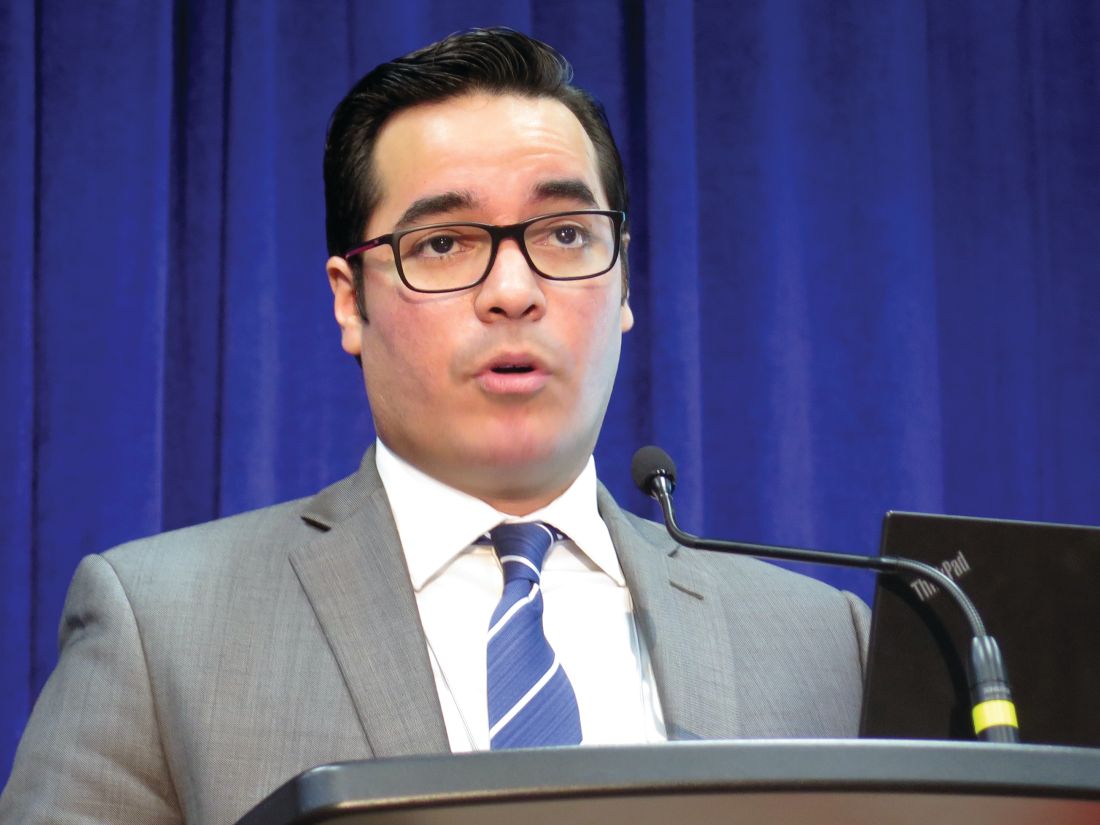
Managing hot flashes in breast cancer survivors is important for ensuring their adherence to endocrine therapy, as about a third fail to complete the recommended 5- to 7-year course, in part because of side effects, Roberto A. Leon-Ferre, MD, of the Mayo Clinic, Rochester, Minn., reported at the San Antonio Breast Cancer Symposium
But many survivors cannot use estrogen because of hormone receptor–positive disease, and currently used nonhormonal alternatives have drawbacks. “Some of these agents interfere with the metabolic activation of tamoxifen, for example. There is also the association, unfortunately, of the taboo of taking antidepressants or anticonvulsants when you don’t have those diagnoses,” he said. In addition, a variety of nonpharmacologic options, such as black cohosh and vitamin E, have not proved any more effective than placebo.
The 150 women enrolled in the trial, ACCRU study SC-1603, were experiencing frequent, bothersome hot flashes and had a history of or concern about breast cancer. The 6-week reduction in a hot flash score capturing both frequency and severity was about 30% with placebo, 65% with oxybutynin 2.5 mg b.i.d., and 80% with oxybutynin 5 mg b.i.d. (P less than .01 across groups and for each dose vs. placebo), with a difference emerging within 2 weeks. “These doses are on the lower end of the currently used doses for urinary incontinence,” Dr. Leon-Ferre noted, with that range extending up to 20 mg daily.
The oxybutynin groups also had significantly greater reductions in hot flash frequency alone and improvements in measures of quality of life such as sleep, work, and relations. The drug was well tolerated, with expected main side effects of dry mouth and difficulty urinating.
Despite the potential pitfalls of cross-trial comparisons, the magnitude of benefit with oxybutynin appeared to exceed that previously reported with clonidine, fluoxetine, citalopram, venlafaxine, and pregabalin, according to Dr. Leon-Ferre.
“Oxybutynin significantly improves hot flash frequency and severity. The use of oxybutynin, more importantly, is associated with a positive impact in several quality of life metrics. And toxicity was acceptable,” he said. “While the two oxybutynin doses were not formally compared, 5 mg twice daily appears to be more effective.”
Treatment considerations
“What is your current strategy for using this variety of drugs?” asked SABCS codirector and press conference moderator C. Kent Osborne, MD, director of the Dan L. Duncan Cancer Center at Baylor College of Medicine, Houston. “Also, acupuncture has been shown to work in several randomized trials,” he noted.

“Before this study, we had been primarily using citalopram or venlafaxine as our first drug intervention. We typically favored venlafaxine for patients who are taking tamoxifen due to the concern about interaction with the CYP2D6 inhibitors,” Dr. Leon-Ferre replied. Oxybutynin is an attractive alternative here because patients can stop it abruptly if they want, whereas venlafaxine may require a lengthy period of tapering and weaning.
His institution doesn’t have a structured acupuncture program. “We do have acupuncturists, but they have to follow a specific program, it’s not any acupuncture. But we often recommend that patients pursue it if they have access to it,” he explained. “With the results of this particular study, we have become more keen on using oxybutynin. As a matter of fact, many of the patients who enrolled in this study decided to continue [or start] it after it had been revealed whether they were taking it or the placebo.”
As with all therapies, it is important to match the therapy to the patient, Dr. Leon-Ferre cautioned. “I can tell you that we have been using oxybutynin, but one has to be cautious about which patients to select for this because this is an anticholinergic drug. We were very careful about not including patients who had taken other potent anticholinergic drugs because these medications can lead to confusion episodes and altered mental status, particularly in more elderly patients and patients who suffer from polypharmacy and take many medications that start interacting with each other.” Another contraindication is urinary retention.
It is also noteworthy that women in the trial received just 6 weeks of oxybutynin therapy, as there has been some concern that extended use of anticholinergics can lead to memory issues.
“With those caveats, I think that if we have an informed decision, we could prescribe oxybutynin to patients,” Dr. Leon-Ferre said. “But ideally, I would say try to use it for a shorter rather than longer period of time.”
Study details
The women randomized in ACCRU study SC-1603 had had hot flashes for at least 30 days and were experiencing at least 28 of them each week. Concurrent stable-dose antidepressants, gabapentin, and pregabalin were allowed, whereas concurrent potent anticholinergics were not. Two-thirds of the women were on tamoxifen or an aromatase inhibitor.
In addition to the dramatic reduction in hot flash scores seen with oxybutynin, the drug was associated with marked reductions in hot flash frequency: 30% with placebo versus 60% with oxybutynin 2.5 mg b.i.d. and 75% with oxybutynin 5 mg b.i.d. (P less than .01 across groups and for each dose compared with placebo), Dr. Leon-Ferre reported.
Most of the 10 domains on the Hot Flash-Related Daily Interference Scale were significantly more improved with both doses of oxybutynin relative to placebo. The exceptions were mood and life enjoyment, which were significantly more improved only with the higher dose, and concentration and sexuality, which were not significantly more improved with either dose.
Both doses of oxybutynin were overall well tolerated, according to Dr. Leon-Ferre. Each was associated with higher incidence of dry mouth, abdominal pain, and difficulty urinating relative to placebo, as expected from what is known about the drug. The higher dose had a greater incidence of dry eyes, episodes of confusion, diarrhea, and headache.
Dr. Leon-Ferre disclosed that he had no conflicts of interest. The study was funded by the Breast Cancer Research Foundation.
SOURCE: Leon-Ferre RA et al. SABCS 2018 Abstract GS6-02.
SAN ANTONIO – because of a history of or concern about breast cancer, suggests a phase 3 double-blind randomized controlled trial.
Managing hot flashes in breast cancer survivors is important for ensuring their adherence to endocrine therapy, as about a third fail to complete the recommended 5- to 7-year course, in part because of side effects, Roberto A. Leon-Ferre, MD, of the Mayo Clinic, Rochester, Minn., reported at the San Antonio Breast Cancer Symposium
But many survivors cannot use estrogen because of hormone receptor–positive disease, and currently used nonhormonal alternatives have drawbacks. “Some of these agents interfere with the metabolic activation of tamoxifen, for example. There is also the association, unfortunately, of the taboo of taking antidepressants or anticonvulsants when you don’t have those diagnoses,” he said. In addition, a variety of nonpharmacologic options, such as black cohosh and vitamin E, have not proved any more effective than placebo.
The 150 women enrolled in the trial, ACCRU study SC-1603, were experiencing frequent, bothersome hot flashes and had a history of or concern about breast cancer. The 6-week reduction in a hot flash score capturing both frequency and severity was about 30% with placebo, 65% with oxybutynin 2.5 mg b.i.d., and 80% with oxybutynin 5 mg b.i.d. (P less than .01 across groups and for each dose vs. placebo), with a difference emerging within 2 weeks. “These doses are on the lower end of the currently used doses for urinary incontinence,” Dr. Leon-Ferre noted, with that range extending up to 20 mg daily.
The oxybutynin groups also had significantly greater reductions in hot flash frequency alone and improvements in measures of quality of life such as sleep, work, and relations. The drug was well tolerated, with expected main side effects of dry mouth and difficulty urinating.
Despite the potential pitfalls of cross-trial comparisons, the magnitude of benefit with oxybutynin appeared to exceed that previously reported with clonidine, fluoxetine, citalopram, venlafaxine, and pregabalin, according to Dr. Leon-Ferre.
“Oxybutynin significantly improves hot flash frequency and severity. The use of oxybutynin, more importantly, is associated with a positive impact in several quality of life metrics. And toxicity was acceptable,” he said. “While the two oxybutynin doses were not formally compared, 5 mg twice daily appears to be more effective.”
Treatment considerations
“What is your current strategy for using this variety of drugs?” asked SABCS codirector and press conference moderator C. Kent Osborne, MD, director of the Dan L. Duncan Cancer Center at Baylor College of Medicine, Houston. “Also, acupuncture has been shown to work in several randomized trials,” he noted.
“Before this study, we had been primarily using citalopram or venlafaxine as our first drug intervention. We typically favored venlafaxine for patients who are taking tamoxifen due to the concern about interaction with the CYP2D6 inhibitors,” Dr. Leon-Ferre replied. Oxybutynin is an attractive alternative here because patients can stop it abruptly if they want, whereas venlafaxine may require a lengthy period of tapering and weaning.
His institution doesn’t have a structured acupuncture program. “We do have acupuncturists, but they have to follow a specific program, it’s not any acupuncture. But we often recommend that patients pursue it if they have access to it,” he explained. “With the results of this particular study, we have become more keen on using oxybutynin. As a matter of fact, many of the patients who enrolled in this study decided to continue [or start] it after it had been revealed whether they were taking it or the placebo.”
As with all therapies, it is important to match the therapy to the patient, Dr. Leon-Ferre cautioned. “I can tell you that we have been using oxybutynin, but one has to be cautious about which patients to select for this because this is an anticholinergic drug. We were very careful about not including patients who had taken other potent anticholinergic drugs because these medications can lead to confusion episodes and altered mental status, particularly in more elderly patients and patients who suffer from polypharmacy and take many medications that start interacting with each other.” Another contraindication is urinary retention.
It is also noteworthy that women in the trial received just 6 weeks of oxybutynin therapy, as there has been some concern that extended use of anticholinergics can lead to memory issues.
“With those caveats, I think that if we have an informed decision, we could prescribe oxybutynin to patients,” Dr. Leon-Ferre said. “But ideally, I would say try to use it for a shorter rather than longer period of time.”
Study details
The women randomized in ACCRU study SC-1603 had had hot flashes for at least 30 days and were experiencing at least 28 of them each week. Concurrent stable-dose antidepressants, gabapentin, and pregabalin were allowed, whereas concurrent potent anticholinergics were not. Two-thirds of the women were on tamoxifen or an aromatase inhibitor.
In addition to the dramatic reduction in hot flash scores seen with oxybutynin, the drug was associated with marked reductions in hot flash frequency: 30% with placebo versus 60% with oxybutynin 2.5 mg b.i.d. and 75% with oxybutynin 5 mg b.i.d. (P less than .01 across groups and for each dose compared with placebo), Dr. Leon-Ferre reported.
Most of the 10 domains on the Hot Flash-Related Daily Interference Scale were significantly more improved with both doses of oxybutynin relative to placebo. The exceptions were mood and life enjoyment, which were significantly more improved only with the higher dose, and concentration and sexuality, which were not significantly more improved with either dose.
Both doses of oxybutynin were overall well tolerated, according to Dr. Leon-Ferre. Each was associated with higher incidence of dry mouth, abdominal pain, and difficulty urinating relative to placebo, as expected from what is known about the drug. The higher dose had a greater incidence of dry eyes, episodes of confusion, diarrhea, and headache.
Dr. Leon-Ferre disclosed that he had no conflicts of interest. The study was funded by the Breast Cancer Research Foundation.
SOURCE: Leon-Ferre RA et al. SABCS 2018 Abstract GS6-02.
SAN ANTONIO – because of a history of or concern about breast cancer, suggests a phase 3 double-blind randomized controlled trial.
Managing hot flashes in breast cancer survivors is important for ensuring their adherence to endocrine therapy, as about a third fail to complete the recommended 5- to 7-year course, in part because of side effects, Roberto A. Leon-Ferre, MD, of the Mayo Clinic, Rochester, Minn., reported at the San Antonio Breast Cancer Symposium
But many survivors cannot use estrogen because of hormone receptor–positive disease, and currently used nonhormonal alternatives have drawbacks. “Some of these agents interfere with the metabolic activation of tamoxifen, for example. There is also the association, unfortunately, of the taboo of taking antidepressants or anticonvulsants when you don’t have those diagnoses,” he said. In addition, a variety of nonpharmacologic options, such as black cohosh and vitamin E, have not proved any more effective than placebo.
The 150 women enrolled in the trial, ACCRU study SC-1603, were experiencing frequent, bothersome hot flashes and had a history of or concern about breast cancer. The 6-week reduction in a hot flash score capturing both frequency and severity was about 30% with placebo, 65% with oxybutynin 2.5 mg b.i.d., and 80% with oxybutynin 5 mg b.i.d. (P less than .01 across groups and for each dose vs. placebo), with a difference emerging within 2 weeks. “These doses are on the lower end of the currently used doses for urinary incontinence,” Dr. Leon-Ferre noted, with that range extending up to 20 mg daily.
The oxybutynin groups also had significantly greater reductions in hot flash frequency alone and improvements in measures of quality of life such as sleep, work, and relations. The drug was well tolerated, with expected main side effects of dry mouth and difficulty urinating.
Despite the potential pitfalls of cross-trial comparisons, the magnitude of benefit with oxybutynin appeared to exceed that previously reported with clonidine, fluoxetine, citalopram, venlafaxine, and pregabalin, according to Dr. Leon-Ferre.
“Oxybutynin significantly improves hot flash frequency and severity. The use of oxybutynin, more importantly, is associated with a positive impact in several quality of life metrics. And toxicity was acceptable,” he said. “While the two oxybutynin doses were not formally compared, 5 mg twice daily appears to be more effective.”
Treatment considerations
“What is your current strategy for using this variety of drugs?” asked SABCS codirector and press conference moderator C. Kent Osborne, MD, director of the Dan L. Duncan Cancer Center at Baylor College of Medicine, Houston. “Also, acupuncture has been shown to work in several randomized trials,” he noted.
“Before this study, we had been primarily using citalopram or venlafaxine as our first drug intervention. We typically favored venlafaxine for patients who are taking tamoxifen due to the concern about interaction with the CYP2D6 inhibitors,” Dr. Leon-Ferre replied. Oxybutynin is an attractive alternative here because patients can stop it abruptly if they want, whereas venlafaxine may require a lengthy period of tapering and weaning.
His institution doesn’t have a structured acupuncture program. “We do have acupuncturists, but they have to follow a specific program, it’s not any acupuncture. But we often recommend that patients pursue it if they have access to it,” he explained. “With the results of this particular study, we have become more keen on using oxybutynin. As a matter of fact, many of the patients who enrolled in this study decided to continue [or start] it after it had been revealed whether they were taking it or the placebo.”
As with all therapies, it is important to match the therapy to the patient, Dr. Leon-Ferre cautioned. “I can tell you that we have been using oxybutynin, but one has to be cautious about which patients to select for this because this is an anticholinergic drug. We were very careful about not including patients who had taken other potent anticholinergic drugs because these medications can lead to confusion episodes and altered mental status, particularly in more elderly patients and patients who suffer from polypharmacy and take many medications that start interacting with each other.” Another contraindication is urinary retention.
It is also noteworthy that women in the trial received just 6 weeks of oxybutynin therapy, as there has been some concern that extended use of anticholinergics can lead to memory issues.
“With those caveats, I think that if we have an informed decision, we could prescribe oxybutynin to patients,” Dr. Leon-Ferre said. “But ideally, I would say try to use it for a shorter rather than longer period of time.”
Study details
The women randomized in ACCRU study SC-1603 had had hot flashes for at least 30 days and were experiencing at least 28 of them each week. Concurrent stable-dose antidepressants, gabapentin, and pregabalin were allowed, whereas concurrent potent anticholinergics were not. Two-thirds of the women were on tamoxifen or an aromatase inhibitor.
In addition to the dramatic reduction in hot flash scores seen with oxybutynin, the drug was associated with marked reductions in hot flash frequency: 30% with placebo versus 60% with oxybutynin 2.5 mg b.i.d. and 75% with oxybutynin 5 mg b.i.d. (P less than .01 across groups and for each dose compared with placebo), Dr. Leon-Ferre reported.
Most of the 10 domains on the Hot Flash-Related Daily Interference Scale were significantly more improved with both doses of oxybutynin relative to placebo. The exceptions were mood and life enjoyment, which were significantly more improved only with the higher dose, and concentration and sexuality, which were not significantly more improved with either dose.
Both doses of oxybutynin were overall well tolerated, according to Dr. Leon-Ferre. Each was associated with higher incidence of dry mouth, abdominal pain, and difficulty urinating relative to placebo, as expected from what is known about the drug. The higher dose had a greater incidence of dry eyes, episodes of confusion, diarrhea, and headache.
Dr. Leon-Ferre disclosed that he had no conflicts of interest. The study was funded by the Breast Cancer Research Foundation.
SOURCE: Leon-Ferre RA et al. SABCS 2018 Abstract GS6-02.
REPORTING FROM SABCS 2018

Time for single payer? ColdironCare
At a New Year’s Eve party a few years back, I noticed a man sitting nearby clutching his left upper arm. He was ashen and obviously uncomfortable. Acute coronary insufficiency, I thought, and I asked him if I could call the life squad for him. “Oh no,” he said, “I have these spells several times a day, the nitro will kick in after a minute, and this will ease off.” I listened as he explained he had a “widow maker,” a 90% plus left main occlusion, but “I am Canadian, and my government is going to pay for my bypass,” he said. “I just have to wait 6 more weeks.” The irony? He was the son of our host, and we were sitting in his mothers’ multimillion dollar home in the Florida Keys. He could be in a Miami hospital’s operating room in an hour or 2.
Wow. Click. Got it.

Fast forward to a lobbying discussion on Capitol Hill: A sympathetic U.S. senator tossed me this softball: ‘What do you think about Medicare reimbursement?” I expect he thought I was going to complain about how bad Medicare is, about its failure to keep current with inflation (currently about 30% behind), and the obtuse quality metrics it now requires. Instead, I found myself saying, “Medicare is my most reliable payer, paying on time – in 2 weeks for clean claims – and the private insurers have beaten me up badly. Medicare is one of my best payers.”
Wrong answer, but true statement.
There is much talk these days about , particularly considering all the barriers to care. (See my recent column, “Produce and Promises.”) Physicians and patients endure a mutual misery inflicted by private insurance companies.
What to do about health care in America?
First, let’s deal with the extraordinary costs of health care in the United States – 19% of our gross domestic product. About 3%-4 % of this figure is an accounting gimmick, since it includes nursing home care, which is considered “domiciliary” care rather than health care in Europe. In addition, drug costs are higher in the U.S., largely to cover the development of new drugs that cost less in the rest of the world. Wait lists are largely unheard of in the United States, and if you have such ready capacity, that means you incur the costs of idle capacity. Also, rarely is a new miracle drug flatly denied for coverage in the United States. If you persist, you will usually get your drug.
We are a commodity-driven society, and that is the real reason that health care costs so much in this country. Hence, we come to the real debate, the “R” word. How do we ration access to care? (See my 2017 column, “Why the Affordable Care Act will be Greatly Modified.”)
There are a plethora of proposals to fund single payer out there, none of which address rationing. And while single payer affords free universal coverage, it does not assure better care. As health economist Devon Herrick, Ph.D., wrote in his health care blog in 2016: “A single payer is not some magical entity that rains down savings from Heaven by being unconcerned about profit. Rather, an efficient single payer operates more like a predatory HMO with no competition. It is currently in vogue for hipsters to matter-of-factly announce the simple solution to health reform is single payer. Be careful what you wish for; you may end up with Medicaid for All.”
In fact, if you try to ferret out how physician income will be affected by universal health care, there would be an estimated pay cut of 11%-40%, depending on how the numbers are manipulated.
Some single-payer proposals use the term “exchange rates,” which for the uninformed means Medicaid rates. In addition, payment is usually given to the local hospital system, or “authority” to dole out. I have a very bad feeling that any small practitioner in an office-based practice would be severely shortchanged in such a system. In fact, if you cut pay for office-based physicians at all, you may begin to see them disappear.
Policy wonks argue for pay cuts for American physicians because European physicians “make less money.” Those numbers are all wrong. U.S. physicians are paid for their work, and for their practice expense. That is, how much it costs to provide the service in their office, which is around 40%-50% of published income. In Europe, almost all procedures are performed in the hospital setting, and the hospital absorbs the practice expense, which is ignored in this current health care reform debate. (See my 2015 column, “Doctor, Why DO you get paid so much?”)
The big selling point of single payer for physicians is that they might have less paperwork and get paid more for seeing Medicaid patients. Yet the paperwork will persist to avoid lawsuits, electronic medical records are now ingrained into the system, and most Medicaid patients are currently seen in the federal or hospital outpatient clinic where higher rates or other subsidies are available. The comically low Medicaid rates paid to physician offices are largely evaded or not even filed for.
Single-payer advocates are basically saying, “Yes, you will be seeing patients at a loss but you will make it up in volume.” This ignores the reality that most physicians don’t need or want more volume.
Here is my plan for single-payer health care. Call it ColdironCare.
- Set payment rates for physicians at 130% of current Medicare, about where we were 30 years ago, considering inflation. Tie the reimbursement rate to the cost of living index, same as social security. If you cut physician pay 11%-40%, you will see mass retirement and the elimination of the most efficient care, office-based practice.
- Remove the practice expense payment from government-reported physician income since this is overhead spent to provide the care.
- Let all physicians participate, and don’t pay site-of-service differentials.
- Enact national tort reform, which would decrease the paperwork, overhead, and much useless defensive medicine.
- Press the generic drug manufacturers (but not the innovators) regarding drug costs. Bite the bullet, and set national coverage standards (ration care) to be revisited every 5 years, which will eliminate step therapy and prior authorizations. Allow individuals to pay out of pocket for additional treatments they want, including that questionable additional 90 days of life they may get from the $250,000 drug for the off-label indication.
- Press the hospitals, and don’t complain when many of them close, especially rural ones.
- Allow individuals, hospitals, and physicians to contract outside of the government plan (in contrast to Canada).
- Downsize the health insurance companies, and have them sell private supplemental insurance to whomever wants it.
Finally, make all of this a constitutional amendment. If not put out of reach, in 15 years we will have the same system we have today. The politicians simply will not be able to resist degrading (reforming, improving, refunding, defunding) the original plan. Or, you could simply increase Medicaid rates to Medicare rates and call it a day.
Oh, by the way, I saw that man from the New Year’s Eve party at the airport the following Christmas. He survived to get his government bypass and is doing well.
The health care system we have is miserable, except compared with all the others.
Dr. Coldiron is in private practice but maintains a clinical assistant professorship at the University of Cincinnati. He cares for patients, teaches medical students and residents, and has several active clinical research projects. Dr. Coldiron is the author of more than 80 scientific letters, papers, and several book chapters, and he speaks frequently on a variety of topics. He is a past president of the American Academy of Dermatology. Write to him at dermnews@mdedge.com.
At a New Year’s Eve party a few years back, I noticed a man sitting nearby clutching his left upper arm. He was ashen and obviously uncomfortable. Acute coronary insufficiency, I thought, and I asked him if I could call the life squad for him. “Oh no,” he said, “I have these spells several times a day, the nitro will kick in after a minute, and this will ease off.” I listened as he explained he had a “widow maker,” a 90% plus left main occlusion, but “I am Canadian, and my government is going to pay for my bypass,” he said. “I just have to wait 6 more weeks.” The irony? He was the son of our host, and we were sitting in his mothers’ multimillion dollar home in the Florida Keys. He could be in a Miami hospital’s operating room in an hour or 2.
Wow. Click. Got it.
Fast forward to a lobbying discussion on Capitol Hill: A sympathetic U.S. senator tossed me this softball: ‘What do you think about Medicare reimbursement?” I expect he thought I was going to complain about how bad Medicare is, about its failure to keep current with inflation (currently about 30% behind), and the obtuse quality metrics it now requires. Instead, I found myself saying, “Medicare is my most reliable payer, paying on time – in 2 weeks for clean claims – and the private insurers have beaten me up badly. Medicare is one of my best payers.”
Wrong answer, but true statement.
There is much talk these days about , particularly considering all the barriers to care. (See my recent column, “Produce and Promises.”) Physicians and patients endure a mutual misery inflicted by private insurance companies.
What to do about health care in America?
First, let’s deal with the extraordinary costs of health care in the United States – 19% of our gross domestic product. About 3%-4 % of this figure is an accounting gimmick, since it includes nursing home care, which is considered “domiciliary” care rather than health care in Europe. In addition, drug costs are higher in the U.S., largely to cover the development of new drugs that cost less in the rest of the world. Wait lists are largely unheard of in the United States, and if you have such ready capacity, that means you incur the costs of idle capacity. Also, rarely is a new miracle drug flatly denied for coverage in the United States. If you persist, you will usually get your drug.
We are a commodity-driven society, and that is the real reason that health care costs so much in this country. Hence, we come to the real debate, the “R” word. How do we ration access to care? (See my 2017 column, “Why the Affordable Care Act will be Greatly Modified.”)
There are a plethora of proposals to fund single payer out there, none of which address rationing. And while single payer affords free universal coverage, it does not assure better care. As health economist Devon Herrick, Ph.D., wrote in his health care blog in 2016: “A single payer is not some magical entity that rains down savings from Heaven by being unconcerned about profit. Rather, an efficient single payer operates more like a predatory HMO with no competition. It is currently in vogue for hipsters to matter-of-factly announce the simple solution to health reform is single payer. Be careful what you wish for; you may end up with Medicaid for All.”
In fact, if you try to ferret out how physician income will be affected by universal health care, there would be an estimated pay cut of 11%-40%, depending on how the numbers are manipulated.
Some single-payer proposals use the term “exchange rates,” which for the uninformed means Medicaid rates. In addition, payment is usually given to the local hospital system, or “authority” to dole out. I have a very bad feeling that any small practitioner in an office-based practice would be severely shortchanged in such a system. In fact, if you cut pay for office-based physicians at all, you may begin to see them disappear.
Policy wonks argue for pay cuts for American physicians because European physicians “make less money.” Those numbers are all wrong. U.S. physicians are paid for their work, and for their practice expense. That is, how much it costs to provide the service in their office, which is around 40%-50% of published income. In Europe, almost all procedures are performed in the hospital setting, and the hospital absorbs the practice expense, which is ignored in this current health care reform debate. (See my 2015 column, “Doctor, Why DO you get paid so much?”)
The big selling point of single payer for physicians is that they might have less paperwork and get paid more for seeing Medicaid patients. Yet the paperwork will persist to avoid lawsuits, electronic medical records are now ingrained into the system, and most Medicaid patients are currently seen in the federal or hospital outpatient clinic where higher rates or other subsidies are available. The comically low Medicaid rates paid to physician offices are largely evaded or not even filed for.
Single-payer advocates are basically saying, “Yes, you will be seeing patients at a loss but you will make it up in volume.” This ignores the reality that most physicians don’t need or want more volume.
Here is my plan for single-payer health care. Call it ColdironCare.
- Set payment rates for physicians at 130% of current Medicare, about where we were 30 years ago, considering inflation. Tie the reimbursement rate to the cost of living index, same as social security. If you cut physician pay 11%-40%, you will see mass retirement and the elimination of the most efficient care, office-based practice.
- Remove the practice expense payment from government-reported physician income since this is overhead spent to provide the care.
- Let all physicians participate, and don’t pay site-of-service differentials.
- Enact national tort reform, which would decrease the paperwork, overhead, and much useless defensive medicine.
- Press the generic drug manufacturers (but not the innovators) regarding drug costs. Bite the bullet, and set national coverage standards (ration care) to be revisited every 5 years, which will eliminate step therapy and prior authorizations. Allow individuals to pay out of pocket for additional treatments they want, including that questionable additional 90 days of life they may get from the $250,000 drug for the off-label indication.
- Press the hospitals, and don’t complain when many of them close, especially rural ones.
- Allow individuals, hospitals, and physicians to contract outside of the government plan (in contrast to Canada).
- Downsize the health insurance companies, and have them sell private supplemental insurance to whomever wants it.
Finally, make all of this a constitutional amendment. If not put out of reach, in 15 years we will have the same system we have today. The politicians simply will not be able to resist degrading (reforming, improving, refunding, defunding) the original plan. Or, you could simply increase Medicaid rates to Medicare rates and call it a day.
Oh, by the way, I saw that man from the New Year’s Eve party at the airport the following Christmas. He survived to get his government bypass and is doing well.
The health care system we have is miserable, except compared with all the others.
Dr. Coldiron is in private practice but maintains a clinical assistant professorship at the University of Cincinnati. He cares for patients, teaches medical students and residents, and has several active clinical research projects. Dr. Coldiron is the author of more than 80 scientific letters, papers, and several book chapters, and he speaks frequently on a variety of topics. He is a past president of the American Academy of Dermatology. Write to him at dermnews@mdedge.com.
At a New Year’s Eve party a few years back, I noticed a man sitting nearby clutching his left upper arm. He was ashen and obviously uncomfortable. Acute coronary insufficiency, I thought, and I asked him if I could call the life squad for him. “Oh no,” he said, “I have these spells several times a day, the nitro will kick in after a minute, and this will ease off.” I listened as he explained he had a “widow maker,” a 90% plus left main occlusion, but “I am Canadian, and my government is going to pay for my bypass,” he said. “I just have to wait 6 more weeks.” The irony? He was the son of our host, and we were sitting in his mothers’ multimillion dollar home in the Florida Keys. He could be in a Miami hospital’s operating room in an hour or 2.
Wow. Click. Got it.
Fast forward to a lobbying discussion on Capitol Hill: A sympathetic U.S. senator tossed me this softball: ‘What do you think about Medicare reimbursement?” I expect he thought I was going to complain about how bad Medicare is, about its failure to keep current with inflation (currently about 30% behind), and the obtuse quality metrics it now requires. Instead, I found myself saying, “Medicare is my most reliable payer, paying on time – in 2 weeks for clean claims – and the private insurers have beaten me up badly. Medicare is one of my best payers.”
Wrong answer, but true statement.
There is much talk these days about , particularly considering all the barriers to care. (See my recent column, “Produce and Promises.”) Physicians and patients endure a mutual misery inflicted by private insurance companies.
What to do about health care in America?
First, let’s deal with the extraordinary costs of health care in the United States – 19% of our gross domestic product. About 3%-4 % of this figure is an accounting gimmick, since it includes nursing home care, which is considered “domiciliary” care rather than health care in Europe. In addition, drug costs are higher in the U.S., largely to cover the development of new drugs that cost less in the rest of the world. Wait lists are largely unheard of in the United States, and if you have such ready capacity, that means you incur the costs of idle capacity. Also, rarely is a new miracle drug flatly denied for coverage in the United States. If you persist, you will usually get your drug.
We are a commodity-driven society, and that is the real reason that health care costs so much in this country. Hence, we come to the real debate, the “R” word. How do we ration access to care? (See my 2017 column, “Why the Affordable Care Act will be Greatly Modified.”)
There are a plethora of proposals to fund single payer out there, none of which address rationing. And while single payer affords free universal coverage, it does not assure better care. As health economist Devon Herrick, Ph.D., wrote in his health care blog in 2016: “A single payer is not some magical entity that rains down savings from Heaven by being unconcerned about profit. Rather, an efficient single payer operates more like a predatory HMO with no competition. It is currently in vogue for hipsters to matter-of-factly announce the simple solution to health reform is single payer. Be careful what you wish for; you may end up with Medicaid for All.”
In fact, if you try to ferret out how physician income will be affected by universal health care, there would be an estimated pay cut of 11%-40%, depending on how the numbers are manipulated.
Some single-payer proposals use the term “exchange rates,” which for the uninformed means Medicaid rates. In addition, payment is usually given to the local hospital system, or “authority” to dole out. I have a very bad feeling that any small practitioner in an office-based practice would be severely shortchanged in such a system. In fact, if you cut pay for office-based physicians at all, you may begin to see them disappear.
Policy wonks argue for pay cuts for American physicians because European physicians “make less money.” Those numbers are all wrong. U.S. physicians are paid for their work, and for their practice expense. That is, how much it costs to provide the service in their office, which is around 40%-50% of published income. In Europe, almost all procedures are performed in the hospital setting, and the hospital absorbs the practice expense, which is ignored in this current health care reform debate. (See my 2015 column, “Doctor, Why DO you get paid so much?”)
The big selling point of single payer for physicians is that they might have less paperwork and get paid more for seeing Medicaid patients. Yet the paperwork will persist to avoid lawsuits, electronic medical records are now ingrained into the system, and most Medicaid patients are currently seen in the federal or hospital outpatient clinic where higher rates or other subsidies are available. The comically low Medicaid rates paid to physician offices are largely evaded or not even filed for.
Single-payer advocates are basically saying, “Yes, you will be seeing patients at a loss but you will make it up in volume.” This ignores the reality that most physicians don’t need or want more volume.
Here is my plan for single-payer health care. Call it ColdironCare.
- Set payment rates for physicians at 130% of current Medicare, about where we were 30 years ago, considering inflation. Tie the reimbursement rate to the cost of living index, same as social security. If you cut physician pay 11%-40%, you will see mass retirement and the elimination of the most efficient care, office-based practice.
- Remove the practice expense payment from government-reported physician income since this is overhead spent to provide the care.
- Let all physicians participate, and don’t pay site-of-service differentials.
- Enact national tort reform, which would decrease the paperwork, overhead, and much useless defensive medicine.
- Press the generic drug manufacturers (but not the innovators) regarding drug costs. Bite the bullet, and set national coverage standards (ration care) to be revisited every 5 years, which will eliminate step therapy and prior authorizations. Allow individuals to pay out of pocket for additional treatments they want, including that questionable additional 90 days of life they may get from the $250,000 drug for the off-label indication.
- Press the hospitals, and don’t complain when many of them close, especially rural ones.
- Allow individuals, hospitals, and physicians to contract outside of the government plan (in contrast to Canada).
- Downsize the health insurance companies, and have them sell private supplemental insurance to whomever wants it.
Finally, make all of this a constitutional amendment. If not put out of reach, in 15 years we will have the same system we have today. The politicians simply will not be able to resist degrading (reforming, improving, refunding, defunding) the original plan. Or, you could simply increase Medicaid rates to Medicare rates and call it a day.
Oh, by the way, I saw that man from the New Year’s Eve party at the airport the following Christmas. He survived to get his government bypass and is doing well.
The health care system we have is miserable, except compared with all the others.
Dr. Coldiron is in private practice but maintains a clinical assistant professorship at the University of Cincinnati. He cares for patients, teaches medical students and residents, and has several active clinical research projects. Dr. Coldiron is the author of more than 80 scientific letters, papers, and several book chapters, and he speaks frequently on a variety of topics. He is a past president of the American Academy of Dermatology. Write to him at dermnews@mdedge.com.

Technical issues inhibit data collection on fentanyl
BONITA SPRINGS, FLA. – Systemic gaps inhibit the collection of data that could be helpful in combating skyrocketing fentanyl use in the United States, experts said at the annual meeting of the American Academy of Addiction Psychiatry.
Jane C. Maxwell, PhD, research professor at the Addiction Research Institute at the University of Texas at Austin, pointed to the Treatment Episode Data Set as an example. It includes client-level information on substance-use treatment admissions from state agencies, and it could be a good source of fentanyl data. The problem? The admissions data do not have a category for fentanyl.
“So we don’t even know who the users are in that data set,” Dr. Maxwell said.
When it comes to mortality, the data on fentanyl are sometimes available, but they are cumbersome to collect, she said. “The only way to get at fentanyl in the mortality data – because you’re going to get it under ‘synthetic opiates’ – is to get the literal texts that are written on the death certificates.” That requires hand-counting the cases of fentanyl in order to know whether a death was attributable to fentanyl or some other drug.
The data that are available paint a grim picture, with drug-poisoning deaths from “other synthetics,” the category that includes fentanyl, soaring since 2013, surging past deaths from heroin as the top killer, according to the Centers for Disease Control and Prevention’s National Center for Health Statistics.
The number of drug cases involving fentanyl jumped to 60,670 in 2017, up from 11,992 in 2015, according to a report from the National Forensic Laboratory Information System.
Dr. Maxwell said when she first heard the word “enigma” used to describe the fentanyl phenomenon, she thought it was a curious word choice. But as she stepped back and looked at how deadly fentanyl is, and the gaps in what is really known about it, she reconsidered. she said.
In addition, Sandra D. Comer, PhD, noted that in 2006 a spike in fentanyl cases was described as an “epidemic,” before falling again. By 2015, the number of cases involving fentanyl was 8 times that “epidemic” amount, driven not by pharmaceutical product but by synthetic versions of the drug.
“There are hundreds of labs now that are making fentanyl,” said Dr. Comer, professor of neurobiology in the department of psychiatry at Columbia University in New York. “This is why the [Drug Enforcement Administration] has stated that they think it’s a problem that’s not going to go away any time soon.”
Dr. Maxwell reported no relevant disclosures. Dr. Comer reported consulting and collaboration with several companies, including Alkermes, Janssen, Mallinckrodt, and Sun Pharmaceutical.
BONITA SPRINGS, FLA. – Systemic gaps inhibit the collection of data that could be helpful in combating skyrocketing fentanyl use in the United States, experts said at the annual meeting of the American Academy of Addiction Psychiatry.
Jane C. Maxwell, PhD, research professor at the Addiction Research Institute at the University of Texas at Austin, pointed to the Treatment Episode Data Set as an example. It includes client-level information on substance-use treatment admissions from state agencies, and it could be a good source of fentanyl data. The problem? The admissions data do not have a category for fentanyl.
“So we don’t even know who the users are in that data set,” Dr. Maxwell said.
When it comes to mortality, the data on fentanyl are sometimes available, but they are cumbersome to collect, she said. “The only way to get at fentanyl in the mortality data – because you’re going to get it under ‘synthetic opiates’ – is to get the literal texts that are written on the death certificates.” That requires hand-counting the cases of fentanyl in order to know whether a death was attributable to fentanyl or some other drug.
The data that are available paint a grim picture, with drug-poisoning deaths from “other synthetics,” the category that includes fentanyl, soaring since 2013, surging past deaths from heroin as the top killer, according to the Centers for Disease Control and Prevention’s National Center for Health Statistics.
The number of drug cases involving fentanyl jumped to 60,670 in 2017, up from 11,992 in 2015, according to a report from the National Forensic Laboratory Information System.
Dr. Maxwell said when she first heard the word “enigma” used to describe the fentanyl phenomenon, she thought it was a curious word choice. But as she stepped back and looked at how deadly fentanyl is, and the gaps in what is really known about it, she reconsidered. she said.
In addition, Sandra D. Comer, PhD, noted that in 2006 a spike in fentanyl cases was described as an “epidemic,” before falling again. By 2015, the number of cases involving fentanyl was 8 times that “epidemic” amount, driven not by pharmaceutical product but by synthetic versions of the drug.
“There are hundreds of labs now that are making fentanyl,” said Dr. Comer, professor of neurobiology in the department of psychiatry at Columbia University in New York. “This is why the [Drug Enforcement Administration] has stated that they think it’s a problem that’s not going to go away any time soon.”
Dr. Maxwell reported no relevant disclosures. Dr. Comer reported consulting and collaboration with several companies, including Alkermes, Janssen, Mallinckrodt, and Sun Pharmaceutical.
BONITA SPRINGS, FLA. – Systemic gaps inhibit the collection of data that could be helpful in combating skyrocketing fentanyl use in the United States, experts said at the annual meeting of the American Academy of Addiction Psychiatry.
Jane C. Maxwell, PhD, research professor at the Addiction Research Institute at the University of Texas at Austin, pointed to the Treatment Episode Data Set as an example. It includes client-level information on substance-use treatment admissions from state agencies, and it could be a good source of fentanyl data. The problem? The admissions data do not have a category for fentanyl.
“So we don’t even know who the users are in that data set,” Dr. Maxwell said.
When it comes to mortality, the data on fentanyl are sometimes available, but they are cumbersome to collect, she said. “The only way to get at fentanyl in the mortality data – because you’re going to get it under ‘synthetic opiates’ – is to get the literal texts that are written on the death certificates.” That requires hand-counting the cases of fentanyl in order to know whether a death was attributable to fentanyl or some other drug.
The data that are available paint a grim picture, with drug-poisoning deaths from “other synthetics,” the category that includes fentanyl, soaring since 2013, surging past deaths from heroin as the top killer, according to the Centers for Disease Control and Prevention’s National Center for Health Statistics.
The number of drug cases involving fentanyl jumped to 60,670 in 2017, up from 11,992 in 2015, according to a report from the National Forensic Laboratory Information System.
Dr. Maxwell said when she first heard the word “enigma” used to describe the fentanyl phenomenon, she thought it was a curious word choice. But as she stepped back and looked at how deadly fentanyl is, and the gaps in what is really known about it, she reconsidered. she said.
In addition, Sandra D. Comer, PhD, noted that in 2006 a spike in fentanyl cases was described as an “epidemic,” before falling again. By 2015, the number of cases involving fentanyl was 8 times that “epidemic” amount, driven not by pharmaceutical product but by synthetic versions of the drug.
“There are hundreds of labs now that are making fentanyl,” said Dr. Comer, professor of neurobiology in the department of psychiatry at Columbia University in New York. “This is why the [Drug Enforcement Administration] has stated that they think it’s a problem that’s not going to go away any time soon.”
Dr. Maxwell reported no relevant disclosures. Dr. Comer reported consulting and collaboration with several companies, including Alkermes, Janssen, Mallinckrodt, and Sun Pharmaceutical.
REPORTING FROM AAAP 2018
Understanding properties of fentanyl, other opioids key to treatment
Naloxone increasingly coming up short, expert says
BONITA SPRINGS, FLA. – Treating disorders tied to the use of highly potent synthetic opioids (HPSO), such as fentanyl, is challenging at best, an expert said at the annual meeting of the American Academy of Addiction Psychiatry.

“We have essentially no data to guide pharmacotherapy management decisions for the leading cause of fatal overdose deaths in the U.S.,” said John J. Mariani, MD, associate professor of clinical psychiatry at Columbia University, New York. “In the absence of data to make evidence-based recommendations, we still need to treat patients.”
That means taking what is known about the properties of those drugs into account when making treatment decisions, he said. Fentanyl quickly crosses the blood-brain barrier and is rapidly distributed to peripheral tissue. It has a short duration of action, but its duration can be extended with multiple injections or an infusion, he said. Research suggests that it has opioid receptor affinity similar to that of morphine, and it’s not known why it is up to 100 times more potent than morphine.
From his own experience, he offered some suggestions on treating patients who use HPSOs:
- Buprenorphine: Clinicians using buprenorphine as induction treatment have to wait longer from the last use to the first dose because of its longer effective half-life, and other medications might be needed to manage withdrawal. For maintenance, higher doses possibly should be considered to prevent HPSO override and to maintain opioid tolerance.
- Extended-release naltrexone: This involves a more difficult induction, and there is a question of whether inpatient treatment is better than outpatient, he said. For maintenance, more frequent administration should be considered, with closer monitoring for the risk of override and more urine toxicology testing.
- Methadone: For induction, methadone could offer an advantage over buprenorphine, because there is no risk of precipitated withdrawal. For maintenance, Dr. Mariani said, it’s not known whether standard doses protect against raising tolerance out of the reach of HPSOs’ effects.
- Naloxone: He said there have been increasing reports of multiple doses being needed to reverse an overdose. Because of the shorter time between substance use and death with fentanyl, more reports have been filed on unsuccessful attempts to revive people with naloxone despite multiple doses or stronger doses. Some naloxone programs have been giving more than two standard doses or using devices that give higher doses, he said. Also, , he said.
Addiction psychiatrists “need to educate patients, families, and other clinicians of this new risk of using opioids,” he said.
Meanwhile, in another talk, Thomas Kosten, MD, described progress in the efforts to develop a vaccine against fentanyl addiction, in the hopes of preventing overdoses. Researchers are taking cues from the failed attempt to develop a cocaine vaccine a few years ago, in which not enough antibodies were produced in about half the patients.

This time, researchers are using toll-like receptor agonists to boost the effects of the main vaccine component, known as norcocaine. Those agonists can more than double the antibody increase that is seen without them, said Dr. Kosten, professor of psychiatry at Baylor College of Medicine, Houston.
So far, researchers have found that the vaccine produces blockade of fentanyl analgesia and respiratory depression in rats. Dr. Kosten said his lab is looking for funding to continue the research. “It looks like we’re going to have some money in February to start making the vaccine,” he said.
Dr. Mariani and Dr. Kosten reported no relevant disclosures.
Naloxone increasingly coming up short, expert says
Naloxone increasingly coming up short, expert says
BONITA SPRINGS, FLA. – Treating disorders tied to the use of highly potent synthetic opioids (HPSO), such as fentanyl, is challenging at best, an expert said at the annual meeting of the American Academy of Addiction Psychiatry.
“We have essentially no data to guide pharmacotherapy management decisions for the leading cause of fatal overdose deaths in the U.S.,” said John J. Mariani, MD, associate professor of clinical psychiatry at Columbia University, New York. “In the absence of data to make evidence-based recommendations, we still need to treat patients.”
That means taking what is known about the properties of those drugs into account when making treatment decisions, he said. Fentanyl quickly crosses the blood-brain barrier and is rapidly distributed to peripheral tissue. It has a short duration of action, but its duration can be extended with multiple injections or an infusion, he said. Research suggests that it has opioid receptor affinity similar to that of morphine, and it’s not known why it is up to 100 times more potent than morphine.
From his own experience, he offered some suggestions on treating patients who use HPSOs:
- Buprenorphine: Clinicians using buprenorphine as induction treatment have to wait longer from the last use to the first dose because of its longer effective half-life, and other medications might be needed to manage withdrawal. For maintenance, higher doses possibly should be considered to prevent HPSO override and to maintain opioid tolerance.
- Extended-release naltrexone: This involves a more difficult induction, and there is a question of whether inpatient treatment is better than outpatient, he said. For maintenance, more frequent administration should be considered, with closer monitoring for the risk of override and more urine toxicology testing.
- Methadone: For induction, methadone could offer an advantage over buprenorphine, because there is no risk of precipitated withdrawal. For maintenance, Dr. Mariani said, it’s not known whether standard doses protect against raising tolerance out of the reach of HPSOs’ effects.
- Naloxone: He said there have been increasing reports of multiple doses being needed to reverse an overdose. Because of the shorter time between substance use and death with fentanyl, more reports have been filed on unsuccessful attempts to revive people with naloxone despite multiple doses or stronger doses. Some naloxone programs have been giving more than two standard doses or using devices that give higher doses, he said. Also, , he said.
Addiction psychiatrists “need to educate patients, families, and other clinicians of this new risk of using opioids,” he said.
Meanwhile, in another talk, Thomas Kosten, MD, described progress in the efforts to develop a vaccine against fentanyl addiction, in the hopes of preventing overdoses. Researchers are taking cues from the failed attempt to develop a cocaine vaccine a few years ago, in which not enough antibodies were produced in about half the patients.
This time, researchers are using toll-like receptor agonists to boost the effects of the main vaccine component, known as norcocaine. Those agonists can more than double the antibody increase that is seen without them, said Dr. Kosten, professor of psychiatry at Baylor College of Medicine, Houston.
So far, researchers have found that the vaccine produces blockade of fentanyl analgesia and respiratory depression in rats. Dr. Kosten said his lab is looking for funding to continue the research. “It looks like we’re going to have some money in February to start making the vaccine,” he said.
Dr. Mariani and Dr. Kosten reported no relevant disclosures.
BONITA SPRINGS, FLA. – Treating disorders tied to the use of highly potent synthetic opioids (HPSO), such as fentanyl, is challenging at best, an expert said at the annual meeting of the American Academy of Addiction Psychiatry.
“We have essentially no data to guide pharmacotherapy management decisions for the leading cause of fatal overdose deaths in the U.S.,” said John J. Mariani, MD, associate professor of clinical psychiatry at Columbia University, New York. “In the absence of data to make evidence-based recommendations, we still need to treat patients.”
That means taking what is known about the properties of those drugs into account when making treatment decisions, he said. Fentanyl quickly crosses the blood-brain barrier and is rapidly distributed to peripheral tissue. It has a short duration of action, but its duration can be extended with multiple injections or an infusion, he said. Research suggests that it has opioid receptor affinity similar to that of morphine, and it’s not known why it is up to 100 times more potent than morphine.
From his own experience, he offered some suggestions on treating patients who use HPSOs:
- Buprenorphine: Clinicians using buprenorphine as induction treatment have to wait longer from the last use to the first dose because of its longer effective half-life, and other medications might be needed to manage withdrawal. For maintenance, higher doses possibly should be considered to prevent HPSO override and to maintain opioid tolerance.
- Extended-release naltrexone: This involves a more difficult induction, and there is a question of whether inpatient treatment is better than outpatient, he said. For maintenance, more frequent administration should be considered, with closer monitoring for the risk of override and more urine toxicology testing.
- Methadone: For induction, methadone could offer an advantage over buprenorphine, because there is no risk of precipitated withdrawal. For maintenance, Dr. Mariani said, it’s not known whether standard doses protect against raising tolerance out of the reach of HPSOs’ effects.
- Naloxone: He said there have been increasing reports of multiple doses being needed to reverse an overdose. Because of the shorter time between substance use and death with fentanyl, more reports have been filed on unsuccessful attempts to revive people with naloxone despite multiple doses or stronger doses. Some naloxone programs have been giving more than two standard doses or using devices that give higher doses, he said. Also, , he said.
Addiction psychiatrists “need to educate patients, families, and other clinicians of this new risk of using opioids,” he said.
Meanwhile, in another talk, Thomas Kosten, MD, described progress in the efforts to develop a vaccine against fentanyl addiction, in the hopes of preventing overdoses. Researchers are taking cues from the failed attempt to develop a cocaine vaccine a few years ago, in which not enough antibodies were produced in about half the patients.
This time, researchers are using toll-like receptor agonists to boost the effects of the main vaccine component, known as norcocaine. Those agonists can more than double the antibody increase that is seen without them, said Dr. Kosten, professor of psychiatry at Baylor College of Medicine, Houston.
So far, researchers have found that the vaccine produces blockade of fentanyl analgesia and respiratory depression in rats. Dr. Kosten said his lab is looking for funding to continue the research. “It looks like we’re going to have some money in February to start making the vaccine,” he said.
Dr. Mariani and Dr. Kosten reported no relevant disclosures.
REPORTING FROM AAAP 2018

Novel SSc classification scheme aims to improve risk stratification
CHICAGO – A simple new classification scheme that combines autoantibody specificity and extent of skin involvement could improve risk stratification of patients with systemic sclerosis, according to researchers at University College London.
“The Le Roy et al. classification of SSc [systemic sclerosis] into limited and diffuse cutaneous subtype remains the most commonly used classification system for systemic sclerosis, but autoantibodies are much better predictors of organ involvement, and while more sophisticated approaches exist, this proposed simple classification using antibodies and skin subset is relevant to clinical practice and could help risk stratification,” Svetlana I. Nihtyanova, MD, said at the annual meeting of the American College of Rheumatology.
Dr. Nihtyanova, a clinical research fellow at University College London, reported how she and her colleagues at UCL divided 1,025 SSc patients into 12 subgroups based on skin subset and autoantibodies and then conducted Kaplan-Meier estimates of survival and cumulative incidence of organ complications to rank these 12 subgroups by endpoint estimates. They merged subgroups with similar ranking in multiple endpoints, ending up with seven groups in the final classification.
Group 1 comprised anti–centromere antibody–positive limited cutaneous SSc (lcSSc) patients and accounted for 29% of patients.
“This was the subgroup with the highest survival (72%) and the lowest incidence of pulmonary fibrosis (13%) and scleroderma renal crisis (no cases) at 20 years from onset,” she said, noting that the incidence of pulmonary hypertension in this group was similar to the average for the whole cohort.
Group 2 comprised all anti–RNA polymerase antibody–positive subjects and accounted for 11% of patients. This group had the highest incidence of scleroderma renal crisis (SRC; 32% at 20 years), but other organ complications and survival were similar to the cohort average.
Group 3 comprised Scl-70–positive lcSSc patients, and accounted for 11% of patients.
“Although incidence of pulmonary fibrosis in this group was the second highest (69% at 20 years), other complications were rare,” Dr. Nihtyanova said, adding that this group had the lowest incidence of pulmonary hypertension (6%) and the second lowest incidence of SRC (3%) at 20 years.
Group 4, conversely, included Scl-70–positive dcSSc patients and accounted for 11% of patients, who had a very poor prognosis; they had the highest incidence of pulmonary fibrosis (91%) and cardiac scleroderma (14%), and the worst survival (41%) at 20 years, she said.
Group 5 included all U3 RNP–positive patients, accounting for 5% of patients.
“Although survival in this group was not bad (70% at 20 years), the group had the highest pulmonary hypertension incidence (40%) and the second highest incidence of cardiac SSc (11%) at 20 years,” she noted.
Groups 6 and 7 (comprising 22% and 11% of study subjects, respectively) included lcSSc and diffuse cutaneous SSc (dcSSc) patients with other antibody specificities. Group 6 had low overall SRC and cardiac SSc risk, while other outcomes were similar to the cohort average. Group 7, however, had poor prognosis, with the second lowest survival (42% at 20 years) and above average rates of organ disease, particularly pulmonary fibrosis and SRC, she said.
Overall, estimated survival for the entire cohort was 60% at 20 years from onset, and in that time frame 44% developed significant pulmonary fibrosis, 25% pulmonary hypertension, 7% SRC, and 6% cardiac SSc. The patients had a mean age of 47 years at disease onset, and 16% were men. Diffuse cutaneous SSc was diagnosed in 35% of the subjects, she noted.
Dr. Nihtyanova reported having no disclosures.
SOURCE: Nihtyanova S et al. Arthritis Rheumatol. 2018;70(Suppl 10): Abstract 2935.
CHICAGO – A simple new classification scheme that combines autoantibody specificity and extent of skin involvement could improve risk stratification of patients with systemic sclerosis, according to researchers at University College London.
“The Le Roy et al. classification of SSc [systemic sclerosis] into limited and diffuse cutaneous subtype remains the most commonly used classification system for systemic sclerosis, but autoantibodies are much better predictors of organ involvement, and while more sophisticated approaches exist, this proposed simple classification using antibodies and skin subset is relevant to clinical practice and could help risk stratification,” Svetlana I. Nihtyanova, MD, said at the annual meeting of the American College of Rheumatology.
Dr. Nihtyanova, a clinical research fellow at University College London, reported how she and her colleagues at UCL divided 1,025 SSc patients into 12 subgroups based on skin subset and autoantibodies and then conducted Kaplan-Meier estimates of survival and cumulative incidence of organ complications to rank these 12 subgroups by endpoint estimates. They merged subgroups with similar ranking in multiple endpoints, ending up with seven groups in the final classification.
Group 1 comprised anti–centromere antibody–positive limited cutaneous SSc (lcSSc) patients and accounted for 29% of patients.
“This was the subgroup with the highest survival (72%) and the lowest incidence of pulmonary fibrosis (13%) and scleroderma renal crisis (no cases) at 20 years from onset,” she said, noting that the incidence of pulmonary hypertension in this group was similar to the average for the whole cohort.
Group 2 comprised all anti–RNA polymerase antibody–positive subjects and accounted for 11% of patients. This group had the highest incidence of scleroderma renal crisis (SRC; 32% at 20 years), but other organ complications and survival were similar to the cohort average.
Group 3 comprised Scl-70–positive lcSSc patients, and accounted for 11% of patients.
“Although incidence of pulmonary fibrosis in this group was the second highest (69% at 20 years), other complications were rare,” Dr. Nihtyanova said, adding that this group had the lowest incidence of pulmonary hypertension (6%) and the second lowest incidence of SRC (3%) at 20 years.
Group 4, conversely, included Scl-70–positive dcSSc patients and accounted for 11% of patients, who had a very poor prognosis; they had the highest incidence of pulmonary fibrosis (91%) and cardiac scleroderma (14%), and the worst survival (41%) at 20 years, she said.
Group 5 included all U3 RNP–positive patients, accounting for 5% of patients.
“Although survival in this group was not bad (70% at 20 years), the group had the highest pulmonary hypertension incidence (40%) and the second highest incidence of cardiac SSc (11%) at 20 years,” she noted.
Groups 6 and 7 (comprising 22% and 11% of study subjects, respectively) included lcSSc and diffuse cutaneous SSc (dcSSc) patients with other antibody specificities. Group 6 had low overall SRC and cardiac SSc risk, while other outcomes were similar to the cohort average. Group 7, however, had poor prognosis, with the second lowest survival (42% at 20 years) and above average rates of organ disease, particularly pulmonary fibrosis and SRC, she said.
Overall, estimated survival for the entire cohort was 60% at 20 years from onset, and in that time frame 44% developed significant pulmonary fibrosis, 25% pulmonary hypertension, 7% SRC, and 6% cardiac SSc. The patients had a mean age of 47 years at disease onset, and 16% were men. Diffuse cutaneous SSc was diagnosed in 35% of the subjects, she noted.
Dr. Nihtyanova reported having no disclosures.
SOURCE: Nihtyanova S et al. Arthritis Rheumatol. 2018;70(Suppl 10): Abstract 2935.
CHICAGO – A simple new classification scheme that combines autoantibody specificity and extent of skin involvement could improve risk stratification of patients with systemic sclerosis, according to researchers at University College London.
“The Le Roy et al. classification of SSc [systemic sclerosis] into limited and diffuse cutaneous subtype remains the most commonly used classification system for systemic sclerosis, but autoantibodies are much better predictors of organ involvement, and while more sophisticated approaches exist, this proposed simple classification using antibodies and skin subset is relevant to clinical practice and could help risk stratification,” Svetlana I. Nihtyanova, MD, said at the annual meeting of the American College of Rheumatology.
Dr. Nihtyanova, a clinical research fellow at University College London, reported how she and her colleagues at UCL divided 1,025 SSc patients into 12 subgroups based on skin subset and autoantibodies and then conducted Kaplan-Meier estimates of survival and cumulative incidence of organ complications to rank these 12 subgroups by endpoint estimates. They merged subgroups with similar ranking in multiple endpoints, ending up with seven groups in the final classification.
Group 1 comprised anti–centromere antibody–positive limited cutaneous SSc (lcSSc) patients and accounted for 29% of patients.
“This was the subgroup with the highest survival (72%) and the lowest incidence of pulmonary fibrosis (13%) and scleroderma renal crisis (no cases) at 20 years from onset,” she said, noting that the incidence of pulmonary hypertension in this group was similar to the average for the whole cohort.
Group 2 comprised all anti–RNA polymerase antibody–positive subjects and accounted for 11% of patients. This group had the highest incidence of scleroderma renal crisis (SRC; 32% at 20 years), but other organ complications and survival were similar to the cohort average.
Group 3 comprised Scl-70–positive lcSSc patients, and accounted for 11% of patients.
“Although incidence of pulmonary fibrosis in this group was the second highest (69% at 20 years), other complications were rare,” Dr. Nihtyanova said, adding that this group had the lowest incidence of pulmonary hypertension (6%) and the second lowest incidence of SRC (3%) at 20 years.
Group 4, conversely, included Scl-70–positive dcSSc patients and accounted for 11% of patients, who had a very poor prognosis; they had the highest incidence of pulmonary fibrosis (91%) and cardiac scleroderma (14%), and the worst survival (41%) at 20 years, she said.
Group 5 included all U3 RNP–positive patients, accounting for 5% of patients.
“Although survival in this group was not bad (70% at 20 years), the group had the highest pulmonary hypertension incidence (40%) and the second highest incidence of cardiac SSc (11%) at 20 years,” she noted.
Groups 6 and 7 (comprising 22% and 11% of study subjects, respectively) included lcSSc and diffuse cutaneous SSc (dcSSc) patients with other antibody specificities. Group 6 had low overall SRC and cardiac SSc risk, while other outcomes were similar to the cohort average. Group 7, however, had poor prognosis, with the second lowest survival (42% at 20 years) and above average rates of organ disease, particularly pulmonary fibrosis and SRC, she said.
Overall, estimated survival for the entire cohort was 60% at 20 years from onset, and in that time frame 44% developed significant pulmonary fibrosis, 25% pulmonary hypertension, 7% SRC, and 6% cardiac SSc. The patients had a mean age of 47 years at disease onset, and 16% were men. Diffuse cutaneous SSc was diagnosed in 35% of the subjects, she noted.
Dr. Nihtyanova reported having no disclosures.
SOURCE: Nihtyanova S et al. Arthritis Rheumatol. 2018;70(Suppl 10): Abstract 2935.
REPORTING FROM THE ACR ANNUAL MEETING
Key clinical point:
Major finding: The classification scheme for SSc risk stratification identified seven distinct SSc subgroups.
Study details: Development and testing of a novel risk classification scheme in 1,025 SSc patients.
Disclosures: Dr. Nihtyanova reported having no disclosures.
Source: Nihtyanova S et al. Arthritis Rheumatol. 2018;70(Suppl 10):Abstract 2935.
Increased cancer risk in dermatomyositis has temporal limits
The increased risk of cancer associated with anti-TIF1-Ab-positive dermatomyositis is limited almost exclusively to 3 years on either side of the onset of dermatomyositis, new research suggests.
Idiopathic inflammatory myopathy have been associated with malignancy, in particular dermatomyositis (DM) and the DM-specific antitranscriptional intermediary factor 1 antibody (anti-TIF1-Ab).
Around one-fifth of the 236 patients diagnosed with DM in the current study, published online Dec. 7 in Rheumatology, were anti-TIF1-Ab positive, and these patients had a more than threefold higher risk of developing cancer comapared with patients who were anti-TIF1-Ab negative (hazard ratio = 3.4, 95% confidence interval, 2.2-5.4; P less than .01).
Overall, 38% of patients in the anti-TIF1-Ab-positive group developed cancer during the 10-year follow-up, compared with 15% of patients with anti-TIF1-Ab-negative DM.
However, all the cancers in the anti-TIF1-Ab-positive group occurred within the 3 years before the onset of DM or within 2.5 years after onset. No anti-TIF1-Ab-positive patients developed cancers after this time, but some patients in the anti-TIF1-Ab-negative group did.
“This finding is not likely to be due to a disparity in follow-up time between anti-TIF1-Ab-positive and -negative cases, as the median follow-up times were similar for both groups: 10 years and 12 years, respectively,” wrote Alexander Oldroyd, MBChB, a clinical research fellow in the Centre for Musculoskeletal Research at the University of Manchester (England), and his coauthors. “Further, this finding is unlikely to be due to differences in cancer detection methods, as both cohorts’ cancer diagnoses were identified through HSCIC [U.K. Health and Social Care Information Centre] data, ensuring capture of all incident cancers during the follow-up period.”
Anti-TIF1-Ab-positive patients were more likely to develop cancer if they were older. None of the 15 anti-TIF1-Ab-positive patients who were aged under 39 when they developed DM went on to develop cancer. But cancer developed in around half of the anti-TIF1-Ab-positive patients who were aged 39 years or older when their DM began.
The anti-TIF1 antibody is commonly found in juvenile DM, but previous research has not found an association with an increased risk of cancer in this younger patient population.
“Our findings add strength to the hypothesis that there exists a subset of young adult anti-TIF1-Ab-positive cases who do not have a discernible increased risk of cancer, similar to that observed in TIF1-Ab-positive juvenile DM,” the authors wrote. They suggested that given the increased risk of malignancy in older patients who were anti-TIF1-Ab positive, this group should be subject to more detailed cancer screening.
Breast cancer was the most common malignancy among both anti-TIF1-Ab-positive and anti-TIF1-Ab-negative patients (33% and 25%, respectively). However, ovarian cancer was significantly more common among the anti-TIF1-Ab-positive patients than among the anti-TIF1-Ab-negative patients (19% vs. 2%; P less than .05); four of the five ovarian cancers in the entire cohort occurred in the anti-TIF1-Ab-positive group.
The authors noted that this confirmed the finding of a number of previous studies suggesting an increased risk of ovarian cancer with DM.
“However, this is the first large study to identify that ovarian cancer is overrepresented in anti-TIF1-Ab-positive individuals, suggesting that the true association between DM and ovarian cancer may be through possession of anti-TIF1-Abs,” they noted.
The authors wrote that they had aimed to inform cancer screening strategies among patients with DM.
“It may be that a focus on screening for cancer within the first 3 years after DM onset and particularly screening for ovarian cancer in anti-TIF1-Ab-positive female patients may be required,” they wrote. “Our findings also strengthen the hypothesis that inflammatory myopathies represent a paraneoplastic reaction initiated by attempted immune-mediated clearance of a cancer.”
The study was supported by Arthritis Research UK, Myositis UK, the European Science Foundation for EuMyoNet, Association Francaise Contre Les Myopathies, the Medical Research Council, and the Manchester Academic Health Science Centre. No conflicts of interest were declared.
SOURCE: Oldroyd A et al. Rheumatology. 2018 Dec 7. doi: 10.1093/rheumatology/key357.
The increased risk of cancer associated with anti-TIF1-Ab-positive dermatomyositis is limited almost exclusively to 3 years on either side of the onset of dermatomyositis, new research suggests.
Idiopathic inflammatory myopathy have been associated with malignancy, in particular dermatomyositis (DM) and the DM-specific antitranscriptional intermediary factor 1 antibody (anti-TIF1-Ab).
Around one-fifth of the 236 patients diagnosed with DM in the current study, published online Dec. 7 in Rheumatology, were anti-TIF1-Ab positive, and these patients had a more than threefold higher risk of developing cancer comapared with patients who were anti-TIF1-Ab negative (hazard ratio = 3.4, 95% confidence interval, 2.2-5.4; P less than .01).
Overall, 38% of patients in the anti-TIF1-Ab-positive group developed cancer during the 10-year follow-up, compared with 15% of patients with anti-TIF1-Ab-negative DM.
However, all the cancers in the anti-TIF1-Ab-positive group occurred within the 3 years before the onset of DM or within 2.5 years after onset. No anti-TIF1-Ab-positive patients developed cancers after this time, but some patients in the anti-TIF1-Ab-negative group did.
“This finding is not likely to be due to a disparity in follow-up time between anti-TIF1-Ab-positive and -negative cases, as the median follow-up times were similar for both groups: 10 years and 12 years, respectively,” wrote Alexander Oldroyd, MBChB, a clinical research fellow in the Centre for Musculoskeletal Research at the University of Manchester (England), and his coauthors. “Further, this finding is unlikely to be due to differences in cancer detection methods, as both cohorts’ cancer diagnoses were identified through HSCIC [U.K. Health and Social Care Information Centre] data, ensuring capture of all incident cancers during the follow-up period.”
Anti-TIF1-Ab-positive patients were more likely to develop cancer if they were older. None of the 15 anti-TIF1-Ab-positive patients who were aged under 39 when they developed DM went on to develop cancer. But cancer developed in around half of the anti-TIF1-Ab-positive patients who were aged 39 years or older when their DM began.
The anti-TIF1 antibody is commonly found in juvenile DM, but previous research has not found an association with an increased risk of cancer in this younger patient population.
“Our findings add strength to the hypothesis that there exists a subset of young adult anti-TIF1-Ab-positive cases who do not have a discernible increased risk of cancer, similar to that observed in TIF1-Ab-positive juvenile DM,” the authors wrote. They suggested that given the increased risk of malignancy in older patients who were anti-TIF1-Ab positive, this group should be subject to more detailed cancer screening.
Breast cancer was the most common malignancy among both anti-TIF1-Ab-positive and anti-TIF1-Ab-negative patients (33% and 25%, respectively). However, ovarian cancer was significantly more common among the anti-TIF1-Ab-positive patients than among the anti-TIF1-Ab-negative patients (19% vs. 2%; P less than .05); four of the five ovarian cancers in the entire cohort occurred in the anti-TIF1-Ab-positive group.
The authors noted that this confirmed the finding of a number of previous studies suggesting an increased risk of ovarian cancer with DM.
“However, this is the first large study to identify that ovarian cancer is overrepresented in anti-TIF1-Ab-positive individuals, suggesting that the true association between DM and ovarian cancer may be through possession of anti-TIF1-Abs,” they noted.
The authors wrote that they had aimed to inform cancer screening strategies among patients with DM.
“It may be that a focus on screening for cancer within the first 3 years after DM onset and particularly screening for ovarian cancer in anti-TIF1-Ab-positive female patients may be required,” they wrote. “Our findings also strengthen the hypothesis that inflammatory myopathies represent a paraneoplastic reaction initiated by attempted immune-mediated clearance of a cancer.”
The study was supported by Arthritis Research UK, Myositis UK, the European Science Foundation for EuMyoNet, Association Francaise Contre Les Myopathies, the Medical Research Council, and the Manchester Academic Health Science Centre. No conflicts of interest were declared.
SOURCE: Oldroyd A et al. Rheumatology. 2018 Dec 7. doi: 10.1093/rheumatology/key357.
The increased risk of cancer associated with anti-TIF1-Ab-positive dermatomyositis is limited almost exclusively to 3 years on either side of the onset of dermatomyositis, new research suggests.
Idiopathic inflammatory myopathy have been associated with malignancy, in particular dermatomyositis (DM) and the DM-specific antitranscriptional intermediary factor 1 antibody (anti-TIF1-Ab).
Around one-fifth of the 236 patients diagnosed with DM in the current study, published online Dec. 7 in Rheumatology, were anti-TIF1-Ab positive, and these patients had a more than threefold higher risk of developing cancer comapared with patients who were anti-TIF1-Ab negative (hazard ratio = 3.4, 95% confidence interval, 2.2-5.4; P less than .01).
Overall, 38% of patients in the anti-TIF1-Ab-positive group developed cancer during the 10-year follow-up, compared with 15% of patients with anti-TIF1-Ab-negative DM.
However, all the cancers in the anti-TIF1-Ab-positive group occurred within the 3 years before the onset of DM or within 2.5 years after onset. No anti-TIF1-Ab-positive patients developed cancers after this time, but some patients in the anti-TIF1-Ab-negative group did.
“This finding is not likely to be due to a disparity in follow-up time between anti-TIF1-Ab-positive and -negative cases, as the median follow-up times were similar for both groups: 10 years and 12 years, respectively,” wrote Alexander Oldroyd, MBChB, a clinical research fellow in the Centre for Musculoskeletal Research at the University of Manchester (England), and his coauthors. “Further, this finding is unlikely to be due to differences in cancer detection methods, as both cohorts’ cancer diagnoses were identified through HSCIC [U.K. Health and Social Care Information Centre] data, ensuring capture of all incident cancers during the follow-up period.”
Anti-TIF1-Ab-positive patients were more likely to develop cancer if they were older. None of the 15 anti-TIF1-Ab-positive patients who were aged under 39 when they developed DM went on to develop cancer. But cancer developed in around half of the anti-TIF1-Ab-positive patients who were aged 39 years or older when their DM began.
The anti-TIF1 antibody is commonly found in juvenile DM, but previous research has not found an association with an increased risk of cancer in this younger patient population.
“Our findings add strength to the hypothesis that there exists a subset of young adult anti-TIF1-Ab-positive cases who do not have a discernible increased risk of cancer, similar to that observed in TIF1-Ab-positive juvenile DM,” the authors wrote. They suggested that given the increased risk of malignancy in older patients who were anti-TIF1-Ab positive, this group should be subject to more detailed cancer screening.
Breast cancer was the most common malignancy among both anti-TIF1-Ab-positive and anti-TIF1-Ab-negative patients (33% and 25%, respectively). However, ovarian cancer was significantly more common among the anti-TIF1-Ab-positive patients than among the anti-TIF1-Ab-negative patients (19% vs. 2%; P less than .05); four of the five ovarian cancers in the entire cohort occurred in the anti-TIF1-Ab-positive group.
The authors noted that this confirmed the finding of a number of previous studies suggesting an increased risk of ovarian cancer with DM.
“However, this is the first large study to identify that ovarian cancer is overrepresented in anti-TIF1-Ab-positive individuals, suggesting that the true association between DM and ovarian cancer may be through possession of anti-TIF1-Abs,” they noted.
The authors wrote that they had aimed to inform cancer screening strategies among patients with DM.
“It may be that a focus on screening for cancer within the first 3 years after DM onset and particularly screening for ovarian cancer in anti-TIF1-Ab-positive female patients may be required,” they wrote. “Our findings also strengthen the hypothesis that inflammatory myopathies represent a paraneoplastic reaction initiated by attempted immune-mediated clearance of a cancer.”
The study was supported by Arthritis Research UK, Myositis UK, the European Science Foundation for EuMyoNet, Association Francaise Contre Les Myopathies, the Medical Research Council, and the Manchester Academic Health Science Centre. No conflicts of interest were declared.
SOURCE: Oldroyd A et al. Rheumatology. 2018 Dec 7. doi: 10.1093/rheumatology/key357.
FROM RHEUMATOLOGY
Key clinical point: Patients with dermatomyositis are at increased risk of cancer only in the 3-year periods before and after the onset of dermatomyositis.
Major finding: Overall, 38% of patients in the anti-TIF1-Ab-positive group developed cancer during the 10-year follow-up, compared with 15% of patients with anti-TIF1-Ab-negative DM.
Study details: Cohort study of 236 people with dermatomyositis.
Disclosures: The study was supported by Arthritis Research UK, Myositis UK, the European Science Foundation for EuMyoNet, Association Francaise Contre Les Myopathies, the Medical Research Council, and the Manchester Academic Health Science Centre. No conflicts of interest were declared.
Source: Oldroyd A et al. Rheumatology. 2018 Dec 7. doi: 10.1093/rheumatology/key357.
Flu vaccine effectiveness drops by half after 6 months
The , according to 5 years of data from approximately 15,000 children in Hong Kong.

The vaccine is known to last less than a year, but the findings support the need for more vaccine availability in areas where influenza activity occurs year-round, wrote Shuo Feng, PhD, and Susan S. Chiu, MD, of the University of Hong Kong, and their colleagues.
In a study published in the Lancet Respiratory Medicine, the researchers reviewed how vaccine effectiveness changed over time by analyzing data from children aged 6 months to 17 years admitted to a Hong Kong hospital between 2012 and 2017. The study population involved 15,695 children hospitalized for respiratory infections, including 2,500 who were positive for influenza A or B and 13,195 who were negative. Of these, 6.4% of the positive patients and 11% of the negative patients had been vaccinated; 70% to 80% of the vaccinations occurred before the end of December of a given year.
Overall, the vaccination effectiveness rate was 79% for 0.5 to 2 months after vaccination, then dropped to 60% at 2-4 months, 57% at 4-6 months, and 45% at 6-9 months.
The researchers estimated vaccine effectiveness by three time periods: September to December, January to April, and May to August. Across seasons, vaccine effectiveness for all age groups was 79% for September to December, 67% for January to April, and 43% for May to August.
The study results were strengthened by the inclusion of year-round activity, but limited by several factors including lack of data on patients’ vaccination history and the specifics of each year’s flu virus, and lack of generalizability to an adult population, the researchers said.
However, the findings support data from previous studies on the effectiveness of annual vaccination, with the optimal timing from October to December in Hong Kong, they said. “Improved influenza vaccines are needed to provide year-round protection for children, particularly in subtropical and tropical locations,” they added.
The study was supported by the Health and Medical Research Fund and the Research Grants Council, Hong Kong. The lead authors had no financial conflicts to disclose.
SOURCE: Feng S et al. Lancet Respir Med. 2018;6:925-34.
The , according to 5 years of data from approximately 15,000 children in Hong Kong.
The vaccine is known to last less than a year, but the findings support the need for more vaccine availability in areas where influenza activity occurs year-round, wrote Shuo Feng, PhD, and Susan S. Chiu, MD, of the University of Hong Kong, and their colleagues.
In a study published in the Lancet Respiratory Medicine, the researchers reviewed how vaccine effectiveness changed over time by analyzing data from children aged 6 months to 17 years admitted to a Hong Kong hospital between 2012 and 2017. The study population involved 15,695 children hospitalized for respiratory infections, including 2,500 who were positive for influenza A or B and 13,195 who were negative. Of these, 6.4% of the positive patients and 11% of the negative patients had been vaccinated; 70% to 80% of the vaccinations occurred before the end of December of a given year.
Overall, the vaccination effectiveness rate was 79% for 0.5 to 2 months after vaccination, then dropped to 60% at 2-4 months, 57% at 4-6 months, and 45% at 6-9 months.
The researchers estimated vaccine effectiveness by three time periods: September to December, January to April, and May to August. Across seasons, vaccine effectiveness for all age groups was 79% for September to December, 67% for January to April, and 43% for May to August.
The study results were strengthened by the inclusion of year-round activity, but limited by several factors including lack of data on patients’ vaccination history and the specifics of each year’s flu virus, and lack of generalizability to an adult population, the researchers said.
However, the findings support data from previous studies on the effectiveness of annual vaccination, with the optimal timing from October to December in Hong Kong, they said. “Improved influenza vaccines are needed to provide year-round protection for children, particularly in subtropical and tropical locations,” they added.
The study was supported by the Health and Medical Research Fund and the Research Grants Council, Hong Kong. The lead authors had no financial conflicts to disclose.
SOURCE: Feng S et al. Lancet Respir Med. 2018;6:925-34.
The , according to 5 years of data from approximately 15,000 children in Hong Kong.
The vaccine is known to last less than a year, but the findings support the need for more vaccine availability in areas where influenza activity occurs year-round, wrote Shuo Feng, PhD, and Susan S. Chiu, MD, of the University of Hong Kong, and their colleagues.
In a study published in the Lancet Respiratory Medicine, the researchers reviewed how vaccine effectiveness changed over time by analyzing data from children aged 6 months to 17 years admitted to a Hong Kong hospital between 2012 and 2017. The study population involved 15,695 children hospitalized for respiratory infections, including 2,500 who were positive for influenza A or B and 13,195 who were negative. Of these, 6.4% of the positive patients and 11% of the negative patients had been vaccinated; 70% to 80% of the vaccinations occurred before the end of December of a given year.
Overall, the vaccination effectiveness rate was 79% for 0.5 to 2 months after vaccination, then dropped to 60% at 2-4 months, 57% at 4-6 months, and 45% at 6-9 months.
The researchers estimated vaccine effectiveness by three time periods: September to December, January to April, and May to August. Across seasons, vaccine effectiveness for all age groups was 79% for September to December, 67% for January to April, and 43% for May to August.
The study results were strengthened by the inclusion of year-round activity, but limited by several factors including lack of data on patients’ vaccination history and the specifics of each year’s flu virus, and lack of generalizability to an adult population, the researchers said.
However, the findings support data from previous studies on the effectiveness of annual vaccination, with the optimal timing from October to December in Hong Kong, they said. “Improved influenza vaccines are needed to provide year-round protection for children, particularly in subtropical and tropical locations,” they added.
The study was supported by the Health and Medical Research Fund and the Research Grants Council, Hong Kong. The lead authors had no financial conflicts to disclose.
SOURCE: Feng S et al. Lancet Respir Med. 2018;6:925-34.
FROM THE LANCET RESPIRATORY MEDICINE
Key clinical point: The effectiveness of the influenza vaccine decreased after 9 months in a cohort of children in Hong Kong.
Major finding: Vaccine effectiveness was 79% from 0.5 to 2 months after vaccination, but dropped to 45% within 6-9 months.
Study details: The data come from a review of 15,695 children aged 6 months to 17 years hospitalized for influenza in Hong Kong.
Disclosures: The study was supported by the Health and Medical Research Fund and the Research Grants Council, Hong Kong.
Source: Feng S et al. Lancet Respir Med. 2018;6:925-34.