User login
Bringing you the latest news, research and reviews, exclusive interviews, podcasts, quizzes, and more.
div[contains(@class, 'read-next-article')]
div[contains(@class, 'nav-primary')]
nav[contains(@class, 'nav-primary')]
section[contains(@class, 'footer-nav-section-wrapper')]
nav[contains(@class, 'nav-ce-stack nav-ce-stack__large-screen')]
header[@id='header']
div[contains(@class, 'header__large-screen')]
div[contains(@class, 'read-next-article')]
div[contains(@class, 'main-prefix')]
div[contains(@class, 'nav-primary')]
nav[contains(@class, 'nav-primary')]
section[contains(@class, 'footer-nav-section-wrapper')]
footer[@id='footer']
section[contains(@class, 'nav-hidden')]
div[contains(@class, 'ce-card-content')]
nav[contains(@class, 'nav-ce-stack')]
div[contains(@class, 'view-medstat-quiz-listing-panes')]
div[contains(@class, 'pane-article-sidebar-latest-news')]
This brain surgery was BYOS: Bring your own saxophone
Tumor vs. saxophone: The surgical grudge match
Brain surgery is a notoriously difficult task. There’s a reason we say, “Well, at least it’s not brain surgery” when we’re trying to convince someone that a task isn’t that tough. Make one wrong incision, cut the wrong neuron, and it’s goodbye higher cognitive function. And most people appreciate thinking. Crazy, right?
One would imagine that the act of brain surgery would become even more difficult when the patient brings his saxophone and plays it randomly throughout the operation. It’s a hospital, after all, not a jazz club. Patients don’t get to play musical instruments during other surgeries. Why should brain surgery patients get special treatment?
As it turns out, the musical performance was actually quite helpful. A man in Italy had a brain tumor in a particularly complex area, and he’s left-handed, which apparently makes the brain’s neural pathways much more complicated. Plus, he insisted that he retain his musical ability after the surgery. So he and his medical team had a crazy thought: Why not play the saxophone throughout the surgery? After all, according to head surgeon Christian Brogna, MD, playing an instrument means you understand music, which tests many higher cognitive functions such as coordination, mathematics, and memory.
And so, at various points throughout the 9-hour surgery, the patient played his saxophone for his doctors. Doing so allowed the surgeons to map the patient’s brain in a more complete and personalized fashion. With that extra knowledge, they were able to successfully remove the tumor while maintaining the patient’s musical ability, and the patient was discharged on Oct. 13, just 3 days after his operation.
While we’re happy the patient recovered, we do have to question his choice of music. During the surgery, he played the theme to the 1970 movie “Love Story” and the Italian national anthem. Perfectly fine pieces, no doubt, but the saxophone solo in “Jungleland” exists. And we could listen to that for 9 hours straight. In fact, we do that every Friday in the LOTME office.
Basketball has the Big Dance. Mosquitoes get the Big Sniff
In this week’s installment of our seemingly never-ending series, “Mosquitoes and the scientists who love them,” we visit The Rockefeller University in New York, where the olfactory capabilities of Aedes Aegypti – the primary vector species for Zika, dengue, yellow fever, and chikungunya – became the subject of a round robin–style tournament.
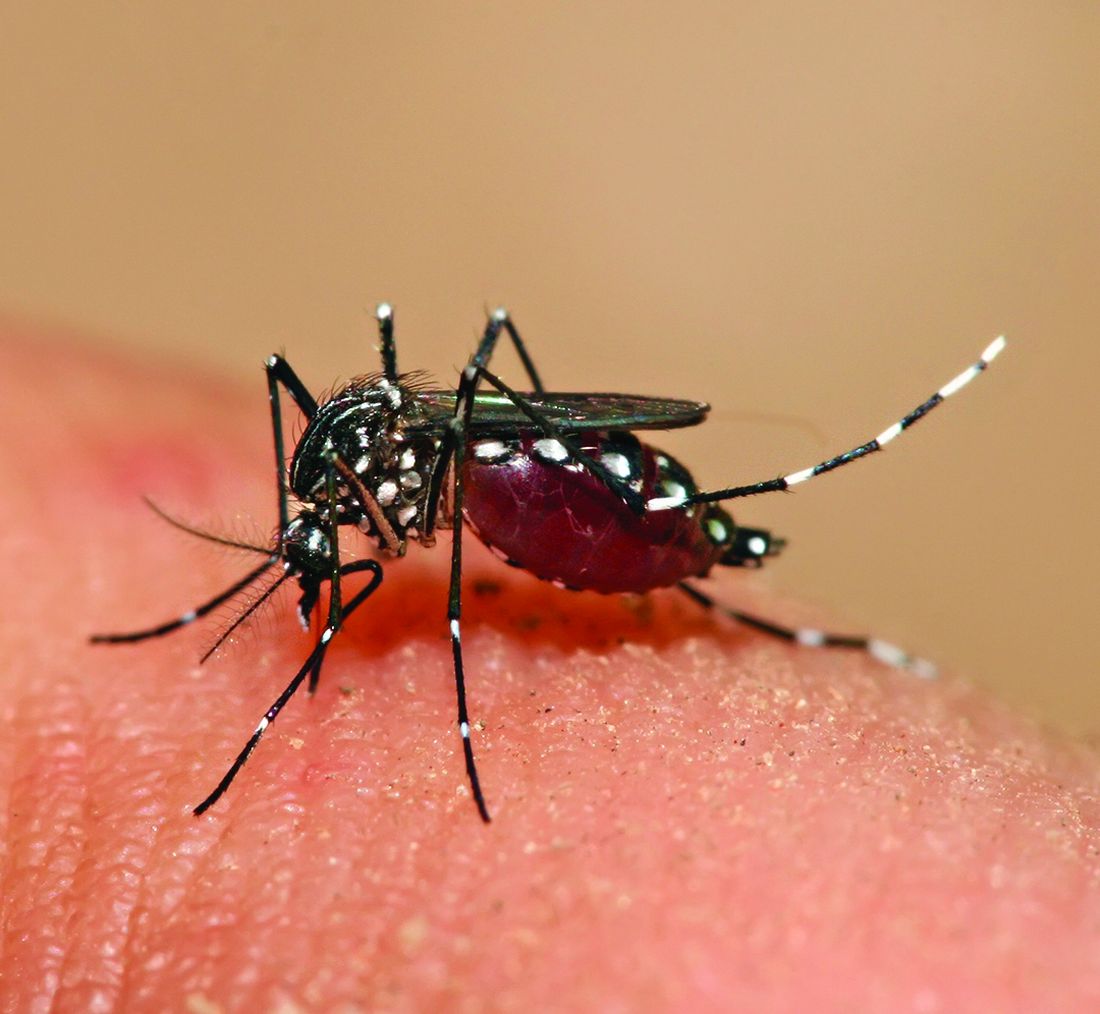
First things first, though. If you’re going to test mosquito noses, you have to give them something to smell. The researchers enrolled eight humans who were willing to wear nylon stockings on their forearms for 6 hours a day for multiple days. “Over the next few years, the researchers tested the nylons against each other in all possible pairings,” Leslie B. Vosshall, PhD, and associates said in a statement from the university. In other words, mosquito March Madness.
Nylons from different participants were hooked up in pairs to an olfactometer assay consisting of a plexiglass chamber divided into two tubes, each ending in a box that held a stocking. The mosquitoes were placed in the main chamber and observed as they flew down the tubes toward one stocking or the other.
Eventually, the “winner” of the “tournament” was Subject 33. And no, we don’t know why there was a Subject 33 since the study involved only eight participants. We do know that the nylons worn by Subject 33 were “four times more attractive to the mosquitoes than the next most-attractive study participant, and an astonishing 100 times more appealing than the least attractive, Subject 19,” according to the written statement.
Chemical analysis identified 50 molecular compounds that were elevated in the sebum of the high-attracting participants, and eventually the investigators discovered that mosquito magnets produced carboxylic acids at much higher levels than the less-attractive volunteers.
We could go on about the research team genetically engineering mosquitoes without odor receptors, but we have to save something for later. Tune in again next week for another exciting episode of “Mosquitoes and the scientists who love them.”
Are women better with words?
Men vs. Women is probably the oldest argument in the book, but there may now be movement. Researchers have been able not only to shift the advantage toward women, but also to use that knowledge to medical advantage.

When it comes to the matter of words and remembering them, women apparently have men beat. The margin is small, said lead author Marco Hirnstein, PhD, of the University of Bergen, Norway, but, after performing a meta-analysis of 168 published studies and PhD theses involving more than 350,000 participants, it’s pretty clear. The research supports women’s advantage over men in recall, verbal fluency (categorical and phonemic), and recognition.
So how is this information useful from a medical standpoint?
Dr. Hirnstein and colleagues suggested that this information can help in interpreting diagnostic assessment results. The example given was dementia diagnosis. Since women are underdiagnosed because their baseline exceeds average while men are overdiagnosed, taking gender and performance into account could clear up or catch cases that might otherwise slip through the cracks.
Now, let’s just put this part of the debate to rest and take this not only as a win for women but for science as well.
Tumor vs. saxophone: The surgical grudge match
Brain surgery is a notoriously difficult task. There’s a reason we say, “Well, at least it’s not brain surgery” when we’re trying to convince someone that a task isn’t that tough. Make one wrong incision, cut the wrong neuron, and it’s goodbye higher cognitive function. And most people appreciate thinking. Crazy, right?
One would imagine that the act of brain surgery would become even more difficult when the patient brings his saxophone and plays it randomly throughout the operation. It’s a hospital, after all, not a jazz club. Patients don’t get to play musical instruments during other surgeries. Why should brain surgery patients get special treatment?
As it turns out, the musical performance was actually quite helpful. A man in Italy had a brain tumor in a particularly complex area, and he’s left-handed, which apparently makes the brain’s neural pathways much more complicated. Plus, he insisted that he retain his musical ability after the surgery. So he and his medical team had a crazy thought: Why not play the saxophone throughout the surgery? After all, according to head surgeon Christian Brogna, MD, playing an instrument means you understand music, which tests many higher cognitive functions such as coordination, mathematics, and memory.
And so, at various points throughout the 9-hour surgery, the patient played his saxophone for his doctors. Doing so allowed the surgeons to map the patient’s brain in a more complete and personalized fashion. With that extra knowledge, they were able to successfully remove the tumor while maintaining the patient’s musical ability, and the patient was discharged on Oct. 13, just 3 days after his operation.
While we’re happy the patient recovered, we do have to question his choice of music. During the surgery, he played the theme to the 1970 movie “Love Story” and the Italian national anthem. Perfectly fine pieces, no doubt, but the saxophone solo in “Jungleland” exists. And we could listen to that for 9 hours straight. In fact, we do that every Friday in the LOTME office.
Basketball has the Big Dance. Mosquitoes get the Big Sniff
In this week’s installment of our seemingly never-ending series, “Mosquitoes and the scientists who love them,” we visit The Rockefeller University in New York, where the olfactory capabilities of Aedes Aegypti – the primary vector species for Zika, dengue, yellow fever, and chikungunya – became the subject of a round robin–style tournament.
First things first, though. If you’re going to test mosquito noses, you have to give them something to smell. The researchers enrolled eight humans who were willing to wear nylon stockings on their forearms for 6 hours a day for multiple days. “Over the next few years, the researchers tested the nylons against each other in all possible pairings,” Leslie B. Vosshall, PhD, and associates said in a statement from the university. In other words, mosquito March Madness.
Nylons from different participants were hooked up in pairs to an olfactometer assay consisting of a plexiglass chamber divided into two tubes, each ending in a box that held a stocking. The mosquitoes were placed in the main chamber and observed as they flew down the tubes toward one stocking or the other.
Eventually, the “winner” of the “tournament” was Subject 33. And no, we don’t know why there was a Subject 33 since the study involved only eight participants. We do know that the nylons worn by Subject 33 were “four times more attractive to the mosquitoes than the next most-attractive study participant, and an astonishing 100 times more appealing than the least attractive, Subject 19,” according to the written statement.
Chemical analysis identified 50 molecular compounds that were elevated in the sebum of the high-attracting participants, and eventually the investigators discovered that mosquito magnets produced carboxylic acids at much higher levels than the less-attractive volunteers.
We could go on about the research team genetically engineering mosquitoes without odor receptors, but we have to save something for later. Tune in again next week for another exciting episode of “Mosquitoes and the scientists who love them.”
Are women better with words?
Men vs. Women is probably the oldest argument in the book, but there may now be movement. Researchers have been able not only to shift the advantage toward women, but also to use that knowledge to medical advantage.
When it comes to the matter of words and remembering them, women apparently have men beat. The margin is small, said lead author Marco Hirnstein, PhD, of the University of Bergen, Norway, but, after performing a meta-analysis of 168 published studies and PhD theses involving more than 350,000 participants, it’s pretty clear. The research supports women’s advantage over men in recall, verbal fluency (categorical and phonemic), and recognition.
So how is this information useful from a medical standpoint?
Dr. Hirnstein and colleagues suggested that this information can help in interpreting diagnostic assessment results. The example given was dementia diagnosis. Since women are underdiagnosed because their baseline exceeds average while men are overdiagnosed, taking gender and performance into account could clear up or catch cases that might otherwise slip through the cracks.
Now, let’s just put this part of the debate to rest and take this not only as a win for women but for science as well.
Tumor vs. saxophone: The surgical grudge match
Brain surgery is a notoriously difficult task. There’s a reason we say, “Well, at least it’s not brain surgery” when we’re trying to convince someone that a task isn’t that tough. Make one wrong incision, cut the wrong neuron, and it’s goodbye higher cognitive function. And most people appreciate thinking. Crazy, right?
One would imagine that the act of brain surgery would become even more difficult when the patient brings his saxophone and plays it randomly throughout the operation. It’s a hospital, after all, not a jazz club. Patients don’t get to play musical instruments during other surgeries. Why should brain surgery patients get special treatment?
As it turns out, the musical performance was actually quite helpful. A man in Italy had a brain tumor in a particularly complex area, and he’s left-handed, which apparently makes the brain’s neural pathways much more complicated. Plus, he insisted that he retain his musical ability after the surgery. So he and his medical team had a crazy thought: Why not play the saxophone throughout the surgery? After all, according to head surgeon Christian Brogna, MD, playing an instrument means you understand music, which tests many higher cognitive functions such as coordination, mathematics, and memory.
And so, at various points throughout the 9-hour surgery, the patient played his saxophone for his doctors. Doing so allowed the surgeons to map the patient’s brain in a more complete and personalized fashion. With that extra knowledge, they were able to successfully remove the tumor while maintaining the patient’s musical ability, and the patient was discharged on Oct. 13, just 3 days after his operation.
While we’re happy the patient recovered, we do have to question his choice of music. During the surgery, he played the theme to the 1970 movie “Love Story” and the Italian national anthem. Perfectly fine pieces, no doubt, but the saxophone solo in “Jungleland” exists. And we could listen to that for 9 hours straight. In fact, we do that every Friday in the LOTME office.
Basketball has the Big Dance. Mosquitoes get the Big Sniff
In this week’s installment of our seemingly never-ending series, “Mosquitoes and the scientists who love them,” we visit The Rockefeller University in New York, where the olfactory capabilities of Aedes Aegypti – the primary vector species for Zika, dengue, yellow fever, and chikungunya – became the subject of a round robin–style tournament.
First things first, though. If you’re going to test mosquito noses, you have to give them something to smell. The researchers enrolled eight humans who were willing to wear nylon stockings on their forearms for 6 hours a day for multiple days. “Over the next few years, the researchers tested the nylons against each other in all possible pairings,” Leslie B. Vosshall, PhD, and associates said in a statement from the university. In other words, mosquito March Madness.
Nylons from different participants were hooked up in pairs to an olfactometer assay consisting of a plexiglass chamber divided into two tubes, each ending in a box that held a stocking. The mosquitoes were placed in the main chamber and observed as they flew down the tubes toward one stocking or the other.
Eventually, the “winner” of the “tournament” was Subject 33. And no, we don’t know why there was a Subject 33 since the study involved only eight participants. We do know that the nylons worn by Subject 33 were “four times more attractive to the mosquitoes than the next most-attractive study participant, and an astonishing 100 times more appealing than the least attractive, Subject 19,” according to the written statement.
Chemical analysis identified 50 molecular compounds that were elevated in the sebum of the high-attracting participants, and eventually the investigators discovered that mosquito magnets produced carboxylic acids at much higher levels than the less-attractive volunteers.
We could go on about the research team genetically engineering mosquitoes without odor receptors, but we have to save something for later. Tune in again next week for another exciting episode of “Mosquitoes and the scientists who love them.”
Are women better with words?
Men vs. Women is probably the oldest argument in the book, but there may now be movement. Researchers have been able not only to shift the advantage toward women, but also to use that knowledge to medical advantage.
When it comes to the matter of words and remembering them, women apparently have men beat. The margin is small, said lead author Marco Hirnstein, PhD, of the University of Bergen, Norway, but, after performing a meta-analysis of 168 published studies and PhD theses involving more than 350,000 participants, it’s pretty clear. The research supports women’s advantage over men in recall, verbal fluency (categorical and phonemic), and recognition.
So how is this information useful from a medical standpoint?
Dr. Hirnstein and colleagues suggested that this information can help in interpreting diagnostic assessment results. The example given was dementia diagnosis. Since women are underdiagnosed because their baseline exceeds average while men are overdiagnosed, taking gender and performance into account could clear up or catch cases that might otherwise slip through the cracks.
Now, let’s just put this part of the debate to rest and take this not only as a win for women but for science as well.
The ‘root cause’ visit
“How did we miss out on that?” “What?” my physician friend replied as we stood in line at the coffee cart. “Root cause. I mean, we invented this idea and now all these naturopaths and functional medicine quacks are gettin’ rich off it.” “Take it easy,” he says. “Just order a coffee.”
It’s hard not to be indignant. I had a morning clinic with three patients insisting I find the “root cause” of their problem. Now, if one had flagellate dermatitis after eating Asian mushroom soup, I’d have said “Root cause? Shiitake mushrooms!” and walked out like Costanza in Seinfeld, “All right, that’s it for me! Be good everybody!”
Alas no. They had perioral dermatitis, alopecia areata, eczema – no satisfying “roots” for walk-off answers.
There is a universal desire to find the proximal cause for problems. Patients often want to know it so that we address the root of their trouble and not just cut off the branches. This is deeply gratifying for those who want not only to know why, but also to have agency in how to control their disease. For example, if they believe the root cause of perioral dermatitis was excess yeast, then eating a “candida diet’’ should do the trick! Food sensitivities, hormones, and heavy metals round out the top suspects that root cause patients want to talk about.
Of course, patients have been asking about this for a long time, but lately, the root cause visit seems to be on trend. Check out any hip primary care start-up such as One Medical or any hot direct-to-consumer virtual offering such as ParsleyHealth and you will see root-cause everywhere. Our patients are expecting us to address it, or it seems they will find someone cooler who will.
Yet, it wasn’t the slick marketing team at ParsleyHeath who invented the “root cause doctor visit.” We did. It’s an idea that started with our Greek physician ancestors. Breaking from the diviners and priests, we were the first “naturalists” positing that there was a natural, not a divine cause for illness. The cardinal concept in the Hippocratic Corpus was that health was an equilibrium and illness an imbalance. They didn’t have dehydroepiandrosterone tests or mercury levels, but did have bodily fluids. Yellow bile, black bile, blood, and phlegm, were the root of all root causes. A physician simply had to identify which was in excess or deficient and fix that to cure the disease. Interestingly, the word “diagnosis” appears only once in the Corpus. The word “Diagignoskein” appears occasionally but this describes studying thoroughly, not naming a diagnosis as we understand it.
Advances in chemistry in the 17th century meant physicians could add new theories, and new root causes. Now alkaline or other chemical elixirs were added to cure at the source. Since there was no verifiable evidence to prove causes, theories were adopted to provide some rational direction to treatment. In the 18th century, physicians such as Dr. Benjamin Rush, one of the original faculty at the University of Pennsylvania school of medicine, taught that spasms of the arteries were the root cause of illnesses. “Heroic” treatments such as extreme bloodletting were the cure. (Note, those patients who survived us kept coming back to us for more).
Scientific knowledge and diagnostic technologies led to more and more complex and abstruse causes. Yet, as we became more precise and effective, our explanations became less satisfying to our patients. I can diagnose and readily treat perioral dermatitis, yet I’m hard pressed to give an answer to its root cause. “Root cause? Yes. Just apply this pimecrolimus cream for a couple of weeks and it’ll be better! All right, that’s it for me! Be good everybody!”
You’ll have to do better, George.
Dr. Benabio is director of Healthcare Transformation and chief of dermatology at Kaiser Permanente San Diego. The opinions expressed in this column are his own and do not represent those of Kaiser Permanente. Dr. Benabio is @Dermdoc on Twitter. Write to him at dermnews@mdedge.com
“How did we miss out on that?” “What?” my physician friend replied as we stood in line at the coffee cart. “Root cause. I mean, we invented this idea and now all these naturopaths and functional medicine quacks are gettin’ rich off it.” “Take it easy,” he says. “Just order a coffee.”
It’s hard not to be indignant. I had a morning clinic with three patients insisting I find the “root cause” of their problem. Now, if one had flagellate dermatitis after eating Asian mushroom soup, I’d have said “Root cause? Shiitake mushrooms!” and walked out like Costanza in Seinfeld, “All right, that’s it for me! Be good everybody!”
Alas no. They had perioral dermatitis, alopecia areata, eczema – no satisfying “roots” for walk-off answers.
There is a universal desire to find the proximal cause for problems. Patients often want to know it so that we address the root of their trouble and not just cut off the branches. This is deeply gratifying for those who want not only to know why, but also to have agency in how to control their disease. For example, if they believe the root cause of perioral dermatitis was excess yeast, then eating a “candida diet’’ should do the trick! Food sensitivities, hormones, and heavy metals round out the top suspects that root cause patients want to talk about.
Of course, patients have been asking about this for a long time, but lately, the root cause visit seems to be on trend. Check out any hip primary care start-up such as One Medical or any hot direct-to-consumer virtual offering such as ParsleyHealth and you will see root-cause everywhere. Our patients are expecting us to address it, or it seems they will find someone cooler who will.
Yet, it wasn’t the slick marketing team at ParsleyHeath who invented the “root cause doctor visit.” We did. It’s an idea that started with our Greek physician ancestors. Breaking from the diviners and priests, we were the first “naturalists” positing that there was a natural, not a divine cause for illness. The cardinal concept in the Hippocratic Corpus was that health was an equilibrium and illness an imbalance. They didn’t have dehydroepiandrosterone tests or mercury levels, but did have bodily fluids. Yellow bile, black bile, blood, and phlegm, were the root of all root causes. A physician simply had to identify which was in excess or deficient and fix that to cure the disease. Interestingly, the word “diagnosis” appears only once in the Corpus. The word “Diagignoskein” appears occasionally but this describes studying thoroughly, not naming a diagnosis as we understand it.
Advances in chemistry in the 17th century meant physicians could add new theories, and new root causes. Now alkaline or other chemical elixirs were added to cure at the source. Since there was no verifiable evidence to prove causes, theories were adopted to provide some rational direction to treatment. In the 18th century, physicians such as Dr. Benjamin Rush, one of the original faculty at the University of Pennsylvania school of medicine, taught that spasms of the arteries were the root cause of illnesses. “Heroic” treatments such as extreme bloodletting were the cure. (Note, those patients who survived us kept coming back to us for more).
Scientific knowledge and diagnostic technologies led to more and more complex and abstruse causes. Yet, as we became more precise and effective, our explanations became less satisfying to our patients. I can diagnose and readily treat perioral dermatitis, yet I’m hard pressed to give an answer to its root cause. “Root cause? Yes. Just apply this pimecrolimus cream for a couple of weeks and it’ll be better! All right, that’s it for me! Be good everybody!”
You’ll have to do better, George.
Dr. Benabio is director of Healthcare Transformation and chief of dermatology at Kaiser Permanente San Diego. The opinions expressed in this column are his own and do not represent those of Kaiser Permanente. Dr. Benabio is @Dermdoc on Twitter. Write to him at dermnews@mdedge.com
“How did we miss out on that?” “What?” my physician friend replied as we stood in line at the coffee cart. “Root cause. I mean, we invented this idea and now all these naturopaths and functional medicine quacks are gettin’ rich off it.” “Take it easy,” he says. “Just order a coffee.”
It’s hard not to be indignant. I had a morning clinic with three patients insisting I find the “root cause” of their problem. Now, if one had flagellate dermatitis after eating Asian mushroom soup, I’d have said “Root cause? Shiitake mushrooms!” and walked out like Costanza in Seinfeld, “All right, that’s it for me! Be good everybody!”
Alas no. They had perioral dermatitis, alopecia areata, eczema – no satisfying “roots” for walk-off answers.
There is a universal desire to find the proximal cause for problems. Patients often want to know it so that we address the root of their trouble and not just cut off the branches. This is deeply gratifying for those who want not only to know why, but also to have agency in how to control their disease. For example, if they believe the root cause of perioral dermatitis was excess yeast, then eating a “candida diet’’ should do the trick! Food sensitivities, hormones, and heavy metals round out the top suspects that root cause patients want to talk about.
Of course, patients have been asking about this for a long time, but lately, the root cause visit seems to be on trend. Check out any hip primary care start-up such as One Medical or any hot direct-to-consumer virtual offering such as ParsleyHealth and you will see root-cause everywhere. Our patients are expecting us to address it, or it seems they will find someone cooler who will.
Yet, it wasn’t the slick marketing team at ParsleyHeath who invented the “root cause doctor visit.” We did. It’s an idea that started with our Greek physician ancestors. Breaking from the diviners and priests, we were the first “naturalists” positing that there was a natural, not a divine cause for illness. The cardinal concept in the Hippocratic Corpus was that health was an equilibrium and illness an imbalance. They didn’t have dehydroepiandrosterone tests or mercury levels, but did have bodily fluids. Yellow bile, black bile, blood, and phlegm, were the root of all root causes. A physician simply had to identify which was in excess or deficient and fix that to cure the disease. Interestingly, the word “diagnosis” appears only once in the Corpus. The word “Diagignoskein” appears occasionally but this describes studying thoroughly, not naming a diagnosis as we understand it.
Advances in chemistry in the 17th century meant physicians could add new theories, and new root causes. Now alkaline or other chemical elixirs were added to cure at the source. Since there was no verifiable evidence to prove causes, theories were adopted to provide some rational direction to treatment. In the 18th century, physicians such as Dr. Benjamin Rush, one of the original faculty at the University of Pennsylvania school of medicine, taught that spasms of the arteries were the root cause of illnesses. “Heroic” treatments such as extreme bloodletting were the cure. (Note, those patients who survived us kept coming back to us for more).
Scientific knowledge and diagnostic technologies led to more and more complex and abstruse causes. Yet, as we became more precise and effective, our explanations became less satisfying to our patients. I can diagnose and readily treat perioral dermatitis, yet I’m hard pressed to give an answer to its root cause. “Root cause? Yes. Just apply this pimecrolimus cream for a couple of weeks and it’ll be better! All right, that’s it for me! Be good everybody!”
You’ll have to do better, George.
Dr. Benabio is director of Healthcare Transformation and chief of dermatology at Kaiser Permanente San Diego. The opinions expressed in this column are his own and do not represent those of Kaiser Permanente. Dr. Benabio is @Dermdoc on Twitter. Write to him at dermnews@mdedge.com
Apixaban outmatches rivaroxaban in patients with AFib and valvular heart disease
Compared with rivaroxaban, apixaban cut risks nearly in half, suggesting that clinicians should consider these new data when choosing an anticoagulant, reported lead author Ghadeer K. Dawwas, PhD, of the University of Pennsylvania, Philadelphia, and colleagues.
In the new retrospective study involving almost 20,000 patients, Dr. Dawwas and her colleagues “emulated a target trial” using private insurance claims from Optum’s deidentified Clinformatics Data Mart Database. The cohort was narrowed from a screened population of 58,210 patients with concurrent AFib and VHD to 9,947 new apixaban users who could be closely matched with 9,947 new rivaroxaban users. Covariates included provider specialty, type of VHD, demographic characteristics, measures of health care use, baseline use of medications, and baseline comorbidities.
The primary effectiveness outcome was a composite of systemic embolism and ischemic stroke, while the primary safety outcome was a composite of intracranial or gastrointestinal bleeding.
“Although several ongoing trials aim to compare apixaban with warfarin in patients with AFib and VHD, none of these trials will directly compare apixaban and rivaroxaban,” the investigators wrote. Their report is in Annals of Internal Medicine.
Dr. Dawwas and colleagues previously showed that direct oral anticoagulants (DOACs) were safer and more effective than warfarin in the same patient population. Comparing apixaban and rivaroxaban – the two most common DOACs – was the next logical step, Dr. Dawwas said in an interview.
Study results
Compared with rivaroxaban, patients who received apixaban had a 43% reduced risk of stroke or embolism (hazard ratio [HR], 0.57; 95% confidence interval [CI], 0.40-0.80). Apixaban’s ability to protect against bleeding appeared even more pronounced, with a 49% reduced risk over rivaroxaban (HR, 0.51; 95% CI, 0.41-0.62).
Comparing the two agents on an absolute basis, apixaban reduced risk of embolism or stroke by 0.2% within the first 6 months of treatment initiation, and 1.1% within the first year of initiation. At the same time points, absolute risk reductions for bleeding were 1.2% and 1.9%, respectively.
The investigators noted that their results held consistent in an alternative analysis that considered separate types of VHD.
“Based on the results from our analysis, we showed that apixaban is effective and safe in patients with atrial fibrillation and valvular heart diseases,” Dr. Dawwas said.
Head-to-head trial needed to change practice
Christopher M. Bianco, DO, associate professor of medicine at West Virginia University Heart and Vascular Institute, Morgantown, said the findings “add to the growing body of literature,” but “a head-to-head trial would be necessary to make a definitive change to clinical practice.”
Dr. Bianco, who recently conducted a retrospective analysis of apixaban and rivaroxaban that found no difference in safety and efficacy among a different patient population, said these kinds of studies are helpful in generating hypotheses, but they can’t account for all relevant clinical factors.
“There are just so many things that go into the decision-making process of [prescribing] apixaban and rivaroxaban,” he said. “Even though [Dr. Dawwas and colleagues] used propensity matching, you’re never going to be able to sort that out with a retrospective analysis.”
Specifically, Dr. Bianco noted that the findings did not include dose data. This is a key gap, he said, considering how often real-world datasets have shown that providers underdose DOACs for a number of unaccountable reasons, and how frequently patients exhibit poor adherence.
The study also lacked detail concerning the degree of renal dysfunction, which can determine drug eligibility, Dr. Bianco said. Furthermore, attempts to stratify patients based on thrombosis and bleeding risk were likely “insufficient,” he added.
Dr. Bianco also cautioned that the investigators defined valvular heart disease as any valve-related disease of any severity. In contrast, previous studies have generally restricted valvular heart disease to patients with mitral stenosis or prosthetic valves.
“This is definitely not the traditional definition of valvular heart disease, so the title is a little bit misleading in that sense, although they certainly do disclose that in the methods,” Dr. Bianco said.
On a more positive note, he highlighted the size of the patient population, and the real-world data, which included many patients who would be excluded from clinical trials.
More broadly, the study helps drive research forward, Dr. Bianco concluded; namely, by attracting financial support for a more powerful head-to-head trial that drug makers are unlikely to fund due to inherent market risk.
This study was supported by the National Institutes of Health. The investigators disclosed additional relationships with Takeda, Spark, Sanofi, and others. Dr. Bianco disclosed no conflicts of interest.
Compared with rivaroxaban, apixaban cut risks nearly in half, suggesting that clinicians should consider these new data when choosing an anticoagulant, reported lead author Ghadeer K. Dawwas, PhD, of the University of Pennsylvania, Philadelphia, and colleagues.
In the new retrospective study involving almost 20,000 patients, Dr. Dawwas and her colleagues “emulated a target trial” using private insurance claims from Optum’s deidentified Clinformatics Data Mart Database. The cohort was narrowed from a screened population of 58,210 patients with concurrent AFib and VHD to 9,947 new apixaban users who could be closely matched with 9,947 new rivaroxaban users. Covariates included provider specialty, type of VHD, demographic characteristics, measures of health care use, baseline use of medications, and baseline comorbidities.
The primary effectiveness outcome was a composite of systemic embolism and ischemic stroke, while the primary safety outcome was a composite of intracranial or gastrointestinal bleeding.
“Although several ongoing trials aim to compare apixaban with warfarin in patients with AFib and VHD, none of these trials will directly compare apixaban and rivaroxaban,” the investigators wrote. Their report is in Annals of Internal Medicine.
Dr. Dawwas and colleagues previously showed that direct oral anticoagulants (DOACs) were safer and more effective than warfarin in the same patient population. Comparing apixaban and rivaroxaban – the two most common DOACs – was the next logical step, Dr. Dawwas said in an interview.
Study results
Compared with rivaroxaban, patients who received apixaban had a 43% reduced risk of stroke or embolism (hazard ratio [HR], 0.57; 95% confidence interval [CI], 0.40-0.80). Apixaban’s ability to protect against bleeding appeared even more pronounced, with a 49% reduced risk over rivaroxaban (HR, 0.51; 95% CI, 0.41-0.62).
Comparing the two agents on an absolute basis, apixaban reduced risk of embolism or stroke by 0.2% within the first 6 months of treatment initiation, and 1.1% within the first year of initiation. At the same time points, absolute risk reductions for bleeding were 1.2% and 1.9%, respectively.
The investigators noted that their results held consistent in an alternative analysis that considered separate types of VHD.
“Based on the results from our analysis, we showed that apixaban is effective and safe in patients with atrial fibrillation and valvular heart diseases,” Dr. Dawwas said.
Head-to-head trial needed to change practice
Christopher M. Bianco, DO, associate professor of medicine at West Virginia University Heart and Vascular Institute, Morgantown, said the findings “add to the growing body of literature,” but “a head-to-head trial would be necessary to make a definitive change to clinical practice.”
Dr. Bianco, who recently conducted a retrospective analysis of apixaban and rivaroxaban that found no difference in safety and efficacy among a different patient population, said these kinds of studies are helpful in generating hypotheses, but they can’t account for all relevant clinical factors.
“There are just so many things that go into the decision-making process of [prescribing] apixaban and rivaroxaban,” he said. “Even though [Dr. Dawwas and colleagues] used propensity matching, you’re never going to be able to sort that out with a retrospective analysis.”
Specifically, Dr. Bianco noted that the findings did not include dose data. This is a key gap, he said, considering how often real-world datasets have shown that providers underdose DOACs for a number of unaccountable reasons, and how frequently patients exhibit poor adherence.
The study also lacked detail concerning the degree of renal dysfunction, which can determine drug eligibility, Dr. Bianco said. Furthermore, attempts to stratify patients based on thrombosis and bleeding risk were likely “insufficient,” he added.
Dr. Bianco also cautioned that the investigators defined valvular heart disease as any valve-related disease of any severity. In contrast, previous studies have generally restricted valvular heart disease to patients with mitral stenosis or prosthetic valves.
“This is definitely not the traditional definition of valvular heart disease, so the title is a little bit misleading in that sense, although they certainly do disclose that in the methods,” Dr. Bianco said.
On a more positive note, he highlighted the size of the patient population, and the real-world data, which included many patients who would be excluded from clinical trials.
More broadly, the study helps drive research forward, Dr. Bianco concluded; namely, by attracting financial support for a more powerful head-to-head trial that drug makers are unlikely to fund due to inherent market risk.
This study was supported by the National Institutes of Health. The investigators disclosed additional relationships with Takeda, Spark, Sanofi, and others. Dr. Bianco disclosed no conflicts of interest.
Compared with rivaroxaban, apixaban cut risks nearly in half, suggesting that clinicians should consider these new data when choosing an anticoagulant, reported lead author Ghadeer K. Dawwas, PhD, of the University of Pennsylvania, Philadelphia, and colleagues.
In the new retrospective study involving almost 20,000 patients, Dr. Dawwas and her colleagues “emulated a target trial” using private insurance claims from Optum’s deidentified Clinformatics Data Mart Database. The cohort was narrowed from a screened population of 58,210 patients with concurrent AFib and VHD to 9,947 new apixaban users who could be closely matched with 9,947 new rivaroxaban users. Covariates included provider specialty, type of VHD, demographic characteristics, measures of health care use, baseline use of medications, and baseline comorbidities.
The primary effectiveness outcome was a composite of systemic embolism and ischemic stroke, while the primary safety outcome was a composite of intracranial or gastrointestinal bleeding.
“Although several ongoing trials aim to compare apixaban with warfarin in patients with AFib and VHD, none of these trials will directly compare apixaban and rivaroxaban,” the investigators wrote. Their report is in Annals of Internal Medicine.
Dr. Dawwas and colleagues previously showed that direct oral anticoagulants (DOACs) were safer and more effective than warfarin in the same patient population. Comparing apixaban and rivaroxaban – the two most common DOACs – was the next logical step, Dr. Dawwas said in an interview.
Study results
Compared with rivaroxaban, patients who received apixaban had a 43% reduced risk of stroke or embolism (hazard ratio [HR], 0.57; 95% confidence interval [CI], 0.40-0.80). Apixaban’s ability to protect against bleeding appeared even more pronounced, with a 49% reduced risk over rivaroxaban (HR, 0.51; 95% CI, 0.41-0.62).
Comparing the two agents on an absolute basis, apixaban reduced risk of embolism or stroke by 0.2% within the first 6 months of treatment initiation, and 1.1% within the first year of initiation. At the same time points, absolute risk reductions for bleeding were 1.2% and 1.9%, respectively.
The investigators noted that their results held consistent in an alternative analysis that considered separate types of VHD.
“Based on the results from our analysis, we showed that apixaban is effective and safe in patients with atrial fibrillation and valvular heart diseases,” Dr. Dawwas said.
Head-to-head trial needed to change practice
Christopher M. Bianco, DO, associate professor of medicine at West Virginia University Heart and Vascular Institute, Morgantown, said the findings “add to the growing body of literature,” but “a head-to-head trial would be necessary to make a definitive change to clinical practice.”
Dr. Bianco, who recently conducted a retrospective analysis of apixaban and rivaroxaban that found no difference in safety and efficacy among a different patient population, said these kinds of studies are helpful in generating hypotheses, but they can’t account for all relevant clinical factors.
“There are just so many things that go into the decision-making process of [prescribing] apixaban and rivaroxaban,” he said. “Even though [Dr. Dawwas and colleagues] used propensity matching, you’re never going to be able to sort that out with a retrospective analysis.”
Specifically, Dr. Bianco noted that the findings did not include dose data. This is a key gap, he said, considering how often real-world datasets have shown that providers underdose DOACs for a number of unaccountable reasons, and how frequently patients exhibit poor adherence.
The study also lacked detail concerning the degree of renal dysfunction, which can determine drug eligibility, Dr. Bianco said. Furthermore, attempts to stratify patients based on thrombosis and bleeding risk were likely “insufficient,” he added.
Dr. Bianco also cautioned that the investigators defined valvular heart disease as any valve-related disease of any severity. In contrast, previous studies have generally restricted valvular heart disease to patients with mitral stenosis or prosthetic valves.
“This is definitely not the traditional definition of valvular heart disease, so the title is a little bit misleading in that sense, although they certainly do disclose that in the methods,” Dr. Bianco said.
On a more positive note, he highlighted the size of the patient population, and the real-world data, which included many patients who would be excluded from clinical trials.
More broadly, the study helps drive research forward, Dr. Bianco concluded; namely, by attracting financial support for a more powerful head-to-head trial that drug makers are unlikely to fund due to inherent market risk.
This study was supported by the National Institutes of Health. The investigators disclosed additional relationships with Takeda, Spark, Sanofi, and others. Dr. Bianco disclosed no conflicts of interest.
FROM ANNALS OF INTERNAL MEDICINE
No effect of diet on dementia risk?
Contrary to some prior studies,
After adjusting for relevant demographic and other lifestyle measures, there was no association between adherence to healthy dietary advice or the Mediterranean diet on the future risk of dementia or amyloid-beta (Abeta) accumulation.
“While our study does not rule out a possible association between diet and dementia, we did not find a link in our study, which had a long follow-up period, included younger participants than some other studies and did not require people to remember what foods they had eaten regularly years before,” study investigator Isabelle Glans, MD, of Lund (Sweden) University, said in a news release.
The findings were published online in Neurology.
No risk reduction
Several studies have investigated how dietary habits affect dementia risk, with inconsistent results.
The new findings are based on 28,025 adults (61% women; mean age, 58 years at baseline) who were free of dementia at baseline and were followed over a 20-year period as part of the Swedish Malmö Diet and Cancer Study. Dietary habits were assessed with a 7-day food diary, detailed food frequency questionnaire, and in-person interview.
During follow-up, 1,943 individuals (6.9%) developed dementia.
Compared with those who did not develop dementia, those who did develop dementia during follow-up were older and had a lower level of education and more cardiovascular risk factors and comorbidities at baseline.
Individuals who adhered to conventional healthy dietary recommendations did not have a lower risk of developing all-cause dementia (hazard ratio comparing worst with best adherence, 0.93; 95% confidence interval, 0.81-1.08), Alzheimer’s disease (HR, 1.03; 95% CI, 0.85-1.23) or vascular dementia (HR, 0.93; 95% CI, 0.69-1.26).
Adherence to the modified Mediterranean diet also did not appear to lower the risk of all-cause dementia (HR, 0.93; 95% CI, 0.75-1.15), Alzheimer’s disease (HR, 0.90; 95% CI, 0.68-1.19), or vascular dementia (HR, 1.00; 95% CI, 0.65-1.55).
There was also no significant association between diet and Alzheimer’s disease–related pathology, as measured by cerebrospinal fluid analysis of Abeta42 in a subgroup of 738 participants. Various sensitivity analyses yielded similar results.
Diet still matters
The authors of an accompanying editorial noted that diet as a “singular factor may not have a strong enough effect on cognition, but is more likely to be considered as one factor embedded with various others, the sum of which may influence the course of cognitive function (diet, regular exercise, vascular risk factor control, avoiding cigarette smoking, drinking alcohol in moderation, etc).
“Diet should not be forgotten and it still matters” but should be regarded as “one part of a multidomain intervention with respect to cognitive performance,” wrote Nils Peters, MD, with the University of Basel (Switzerland), and Benedetta Nacmias, PhD, with the University of Florence (Italy)).
“Key questions that remain include how to provide evidence for promoting the implications of dietary habits on cognition? Overall, dietary strategies will most likely be implicated either in order to reduce the increasing number of older subjects with dementia, or to extend healthy life expectancy, or both,” Dr. Peters and Dr. Nacmias said.
The study had no commercial funding. Dr. Glans, Dr. Peters, and Dr. Nacmias disclosed no relevant financial relationships.
A version of this article first appeared on Medscape.com.
Contrary to some prior studies,
After adjusting for relevant demographic and other lifestyle measures, there was no association between adherence to healthy dietary advice or the Mediterranean diet on the future risk of dementia or amyloid-beta (Abeta) accumulation.
“While our study does not rule out a possible association between diet and dementia, we did not find a link in our study, which had a long follow-up period, included younger participants than some other studies and did not require people to remember what foods they had eaten regularly years before,” study investigator Isabelle Glans, MD, of Lund (Sweden) University, said in a news release.
The findings were published online in Neurology.
No risk reduction
Several studies have investigated how dietary habits affect dementia risk, with inconsistent results.
The new findings are based on 28,025 adults (61% women; mean age, 58 years at baseline) who were free of dementia at baseline and were followed over a 20-year period as part of the Swedish Malmö Diet and Cancer Study. Dietary habits were assessed with a 7-day food diary, detailed food frequency questionnaire, and in-person interview.
During follow-up, 1,943 individuals (6.9%) developed dementia.
Compared with those who did not develop dementia, those who did develop dementia during follow-up were older and had a lower level of education and more cardiovascular risk factors and comorbidities at baseline.
Individuals who adhered to conventional healthy dietary recommendations did not have a lower risk of developing all-cause dementia (hazard ratio comparing worst with best adherence, 0.93; 95% confidence interval, 0.81-1.08), Alzheimer’s disease (HR, 1.03; 95% CI, 0.85-1.23) or vascular dementia (HR, 0.93; 95% CI, 0.69-1.26).
Adherence to the modified Mediterranean diet also did not appear to lower the risk of all-cause dementia (HR, 0.93; 95% CI, 0.75-1.15), Alzheimer’s disease (HR, 0.90; 95% CI, 0.68-1.19), or vascular dementia (HR, 1.00; 95% CI, 0.65-1.55).
There was also no significant association between diet and Alzheimer’s disease–related pathology, as measured by cerebrospinal fluid analysis of Abeta42 in a subgroup of 738 participants. Various sensitivity analyses yielded similar results.
Diet still matters
The authors of an accompanying editorial noted that diet as a “singular factor may not have a strong enough effect on cognition, but is more likely to be considered as one factor embedded with various others, the sum of which may influence the course of cognitive function (diet, regular exercise, vascular risk factor control, avoiding cigarette smoking, drinking alcohol in moderation, etc).
“Diet should not be forgotten and it still matters” but should be regarded as “one part of a multidomain intervention with respect to cognitive performance,” wrote Nils Peters, MD, with the University of Basel (Switzerland), and Benedetta Nacmias, PhD, with the University of Florence (Italy)).
“Key questions that remain include how to provide evidence for promoting the implications of dietary habits on cognition? Overall, dietary strategies will most likely be implicated either in order to reduce the increasing number of older subjects with dementia, or to extend healthy life expectancy, or both,” Dr. Peters and Dr. Nacmias said.
The study had no commercial funding. Dr. Glans, Dr. Peters, and Dr. Nacmias disclosed no relevant financial relationships.
A version of this article first appeared on Medscape.com.
Contrary to some prior studies,
After adjusting for relevant demographic and other lifestyle measures, there was no association between adherence to healthy dietary advice or the Mediterranean diet on the future risk of dementia or amyloid-beta (Abeta) accumulation.
“While our study does not rule out a possible association between diet and dementia, we did not find a link in our study, which had a long follow-up period, included younger participants than some other studies and did not require people to remember what foods they had eaten regularly years before,” study investigator Isabelle Glans, MD, of Lund (Sweden) University, said in a news release.
The findings were published online in Neurology.
No risk reduction
Several studies have investigated how dietary habits affect dementia risk, with inconsistent results.
The new findings are based on 28,025 adults (61% women; mean age, 58 years at baseline) who were free of dementia at baseline and were followed over a 20-year period as part of the Swedish Malmö Diet and Cancer Study. Dietary habits were assessed with a 7-day food diary, detailed food frequency questionnaire, and in-person interview.
During follow-up, 1,943 individuals (6.9%) developed dementia.
Compared with those who did not develop dementia, those who did develop dementia during follow-up were older and had a lower level of education and more cardiovascular risk factors and comorbidities at baseline.
Individuals who adhered to conventional healthy dietary recommendations did not have a lower risk of developing all-cause dementia (hazard ratio comparing worst with best adherence, 0.93; 95% confidence interval, 0.81-1.08), Alzheimer’s disease (HR, 1.03; 95% CI, 0.85-1.23) or vascular dementia (HR, 0.93; 95% CI, 0.69-1.26).
Adherence to the modified Mediterranean diet also did not appear to lower the risk of all-cause dementia (HR, 0.93; 95% CI, 0.75-1.15), Alzheimer’s disease (HR, 0.90; 95% CI, 0.68-1.19), or vascular dementia (HR, 1.00; 95% CI, 0.65-1.55).
There was also no significant association between diet and Alzheimer’s disease–related pathology, as measured by cerebrospinal fluid analysis of Abeta42 in a subgroup of 738 participants. Various sensitivity analyses yielded similar results.
Diet still matters
The authors of an accompanying editorial noted that diet as a “singular factor may not have a strong enough effect on cognition, but is more likely to be considered as one factor embedded with various others, the sum of which may influence the course of cognitive function (diet, regular exercise, vascular risk factor control, avoiding cigarette smoking, drinking alcohol in moderation, etc).
“Diet should not be forgotten and it still matters” but should be regarded as “one part of a multidomain intervention with respect to cognitive performance,” wrote Nils Peters, MD, with the University of Basel (Switzerland), and Benedetta Nacmias, PhD, with the University of Florence (Italy)).
“Key questions that remain include how to provide evidence for promoting the implications of dietary habits on cognition? Overall, dietary strategies will most likely be implicated either in order to reduce the increasing number of older subjects with dementia, or to extend healthy life expectancy, or both,” Dr. Peters and Dr. Nacmias said.
The study had no commercial funding. Dr. Glans, Dr. Peters, and Dr. Nacmias disclosed no relevant financial relationships.
A version of this article first appeared on Medscape.com.
FROM NEUROLOGY
Are doctors savers or spenders?
In a poll that ran from August 30 to Sept. 21, conducted by Medscape, physicians were asked if they lived within their means. They were asked whether they pay their bills on time, save at least 20% of their monthly income toward retirement, pay down student loan debt, and contribute to their kids’ college savings or a rainy-day emergency fund.
Medscape polled 468 U.S. physicians and 159 living outside of the United States. Eighty-nine percent of U.S. respondents report living within their means, while only 11% said they don’t.
Medscape’s Physician Wealth & Debt Report 2022 similarly reported that of 13,000 physicians in more than 29 specialties, 94% said they live at or below their means.
For example, over half of physicians have a net worth above $1 million. In contrast, according to Credit Suisse’s Global Wealth Report, less than 7% of the general population has a seven-figure net worth.
So just how do physicians stack up financially?
Habits of physician super savers
Physicians who consider themselves savers likely have money habits that correlate. They buy things on sale, are DIYers for home projects and maintenance, and wait to buy luxury or large expenses when the timing is right, an item is on sale, or they’ve saved for it.
For example, when it comes to life’s luxuries like buying a new car or dining out, overall, physicians seem to be more frugal, as 43% of those who buy cars said they only buy a new car every 10 years; 30% said they buy a new vehicle every 6-7 years, and 22% said every 4-5 years.
When asked about weekly dine-out or delivery habits, 82% of those polled who said they dine out, or order takeout, do so a nominal 1-2 times per week. That’s on par with the Centers for Disease Control, which reports that 3 in 5 Americans eat out once weekly. Another 14% of polled physicians said they dine out 3-5 nights per week. Only 4% revealed they eat out or grab to-go food more than 5 nights a week.
When hiring for essential home maintenance, like house cleaning and pool or lawn service, almost a third of physicians we polled who require such maintenance employ a service for these tasks, and 23% hire out often while 21% hire out only sometimes. However, 14% say they rarely hire out for home maintenance, and 11% never do.
Since physicians are typically tight on time, they tend to favor outsourcing things like housecleaning, lawn service, landscaping, maintenance, and even cooking. So, the fact that a quarter of physicians polled rarely or never hire out for household help is somewhat surprising.
Most physicians also prioritize saving. When asked how important it is to save money consistently, 93% think it’s either extremely or very important, while only 6% think it’s somewhat important.
Barriers to wealth
When asked what barriers prevent them from saving at least 20% of their monthly income, physician respondents who said they live within their means and encountered barriers reported that family necessities (35%), student loan debt (19%), and mortgage sizes (18%) were the top reasons. The average doctor earns five times as much as the average American, according to the Global Wealth Report.
“What prevents me from saving is holding too much debt, responsibilities at home, bills, being unprepared for what is coming, and making excuses to spend even when it’s not necessary,” says Sean Ormond, MD, a dual board-certified physician in Anesthesiology and Pain Management in Phoenix.
When physician respondents who said they didn’t live within their means were asked about the barriers preventing them from saving at least 20% of their monthly income, they cited the cost of family necessities (49%), the size of their mortgage (47%), credit card debt (30%), student loan debt (21%), other loans (15%), and car lease/loan (13%).
“My most significant financial splurge is vacation, since I always choose the best, and the best comes at an extra cost,” says Dr. Ormond.
What’s your financial grade?
Finally, physicians were asked who they considered better at saving money, themselves or their spouse/domestic partner. Forty-four percent think they are the better saver, whereas 41% said that both they and their partner were equally good at saving. Thirteen percent credited their partner with better saving habits, and 2% said neither themselves nor their partner were good at saving money.
More than half (63%) of physicians polled pay off their credit card balance monthly, but 18% carry a $1,000-$5,000 balance, 10% have $5,000-$10,000 in credit card debt, and 6% hold more than $10,000 of credit card debt.
“I would grade myself with a B, because however much I love having the best, I still have a budget, and I always ensure that I follow it to the dot,” says Dr. Ormond.
A version of this article first appeared on Medscape.com.
In a poll that ran from August 30 to Sept. 21, conducted by Medscape, physicians were asked if they lived within their means. They were asked whether they pay their bills on time, save at least 20% of their monthly income toward retirement, pay down student loan debt, and contribute to their kids’ college savings or a rainy-day emergency fund.
Medscape polled 468 U.S. physicians and 159 living outside of the United States. Eighty-nine percent of U.S. respondents report living within their means, while only 11% said they don’t.
Medscape’s Physician Wealth & Debt Report 2022 similarly reported that of 13,000 physicians in more than 29 specialties, 94% said they live at or below their means.
For example, over half of physicians have a net worth above $1 million. In contrast, according to Credit Suisse’s Global Wealth Report, less than 7% of the general population has a seven-figure net worth.
So just how do physicians stack up financially?
Habits of physician super savers
Physicians who consider themselves savers likely have money habits that correlate. They buy things on sale, are DIYers for home projects and maintenance, and wait to buy luxury or large expenses when the timing is right, an item is on sale, or they’ve saved for it.
For example, when it comes to life’s luxuries like buying a new car or dining out, overall, physicians seem to be more frugal, as 43% of those who buy cars said they only buy a new car every 10 years; 30% said they buy a new vehicle every 6-7 years, and 22% said every 4-5 years.
When asked about weekly dine-out or delivery habits, 82% of those polled who said they dine out, or order takeout, do so a nominal 1-2 times per week. That’s on par with the Centers for Disease Control, which reports that 3 in 5 Americans eat out once weekly. Another 14% of polled physicians said they dine out 3-5 nights per week. Only 4% revealed they eat out or grab to-go food more than 5 nights a week.
When hiring for essential home maintenance, like house cleaning and pool or lawn service, almost a third of physicians we polled who require such maintenance employ a service for these tasks, and 23% hire out often while 21% hire out only sometimes. However, 14% say they rarely hire out for home maintenance, and 11% never do.
Since physicians are typically tight on time, they tend to favor outsourcing things like housecleaning, lawn service, landscaping, maintenance, and even cooking. So, the fact that a quarter of physicians polled rarely or never hire out for household help is somewhat surprising.
Most physicians also prioritize saving. When asked how important it is to save money consistently, 93% think it’s either extremely or very important, while only 6% think it’s somewhat important.
Barriers to wealth
When asked what barriers prevent them from saving at least 20% of their monthly income, physician respondents who said they live within their means and encountered barriers reported that family necessities (35%), student loan debt (19%), and mortgage sizes (18%) were the top reasons. The average doctor earns five times as much as the average American, according to the Global Wealth Report.
“What prevents me from saving is holding too much debt, responsibilities at home, bills, being unprepared for what is coming, and making excuses to spend even when it’s not necessary,” says Sean Ormond, MD, a dual board-certified physician in Anesthesiology and Pain Management in Phoenix.
When physician respondents who said they didn’t live within their means were asked about the barriers preventing them from saving at least 20% of their monthly income, they cited the cost of family necessities (49%), the size of their mortgage (47%), credit card debt (30%), student loan debt (21%), other loans (15%), and car lease/loan (13%).
“My most significant financial splurge is vacation, since I always choose the best, and the best comes at an extra cost,” says Dr. Ormond.
What’s your financial grade?
Finally, physicians were asked who they considered better at saving money, themselves or their spouse/domestic partner. Forty-four percent think they are the better saver, whereas 41% said that both they and their partner were equally good at saving. Thirteen percent credited their partner with better saving habits, and 2% said neither themselves nor their partner were good at saving money.
More than half (63%) of physicians polled pay off their credit card balance monthly, but 18% carry a $1,000-$5,000 balance, 10% have $5,000-$10,000 in credit card debt, and 6% hold more than $10,000 of credit card debt.
“I would grade myself with a B, because however much I love having the best, I still have a budget, and I always ensure that I follow it to the dot,” says Dr. Ormond.
A version of this article first appeared on Medscape.com.
In a poll that ran from August 30 to Sept. 21, conducted by Medscape, physicians were asked if they lived within their means. They were asked whether they pay their bills on time, save at least 20% of their monthly income toward retirement, pay down student loan debt, and contribute to their kids’ college savings or a rainy-day emergency fund.
Medscape polled 468 U.S. physicians and 159 living outside of the United States. Eighty-nine percent of U.S. respondents report living within their means, while only 11% said they don’t.
Medscape’s Physician Wealth & Debt Report 2022 similarly reported that of 13,000 physicians in more than 29 specialties, 94% said they live at or below their means.
For example, over half of physicians have a net worth above $1 million. In contrast, according to Credit Suisse’s Global Wealth Report, less than 7% of the general population has a seven-figure net worth.
So just how do physicians stack up financially?
Habits of physician super savers
Physicians who consider themselves savers likely have money habits that correlate. They buy things on sale, are DIYers for home projects and maintenance, and wait to buy luxury or large expenses when the timing is right, an item is on sale, or they’ve saved for it.
For example, when it comes to life’s luxuries like buying a new car or dining out, overall, physicians seem to be more frugal, as 43% of those who buy cars said they only buy a new car every 10 years; 30% said they buy a new vehicle every 6-7 years, and 22% said every 4-5 years.
When asked about weekly dine-out or delivery habits, 82% of those polled who said they dine out, or order takeout, do so a nominal 1-2 times per week. That’s on par with the Centers for Disease Control, which reports that 3 in 5 Americans eat out once weekly. Another 14% of polled physicians said they dine out 3-5 nights per week. Only 4% revealed they eat out or grab to-go food more than 5 nights a week.
When hiring for essential home maintenance, like house cleaning and pool or lawn service, almost a third of physicians we polled who require such maintenance employ a service for these tasks, and 23% hire out often while 21% hire out only sometimes. However, 14% say they rarely hire out for home maintenance, and 11% never do.
Since physicians are typically tight on time, they tend to favor outsourcing things like housecleaning, lawn service, landscaping, maintenance, and even cooking. So, the fact that a quarter of physicians polled rarely or never hire out for household help is somewhat surprising.
Most physicians also prioritize saving. When asked how important it is to save money consistently, 93% think it’s either extremely or very important, while only 6% think it’s somewhat important.
Barriers to wealth
When asked what barriers prevent them from saving at least 20% of their monthly income, physician respondents who said they live within their means and encountered barriers reported that family necessities (35%), student loan debt (19%), and mortgage sizes (18%) were the top reasons. The average doctor earns five times as much as the average American, according to the Global Wealth Report.
“What prevents me from saving is holding too much debt, responsibilities at home, bills, being unprepared for what is coming, and making excuses to spend even when it’s not necessary,” says Sean Ormond, MD, a dual board-certified physician in Anesthesiology and Pain Management in Phoenix.
When physician respondents who said they didn’t live within their means were asked about the barriers preventing them from saving at least 20% of their monthly income, they cited the cost of family necessities (49%), the size of their mortgage (47%), credit card debt (30%), student loan debt (21%), other loans (15%), and car lease/loan (13%).
“My most significant financial splurge is vacation, since I always choose the best, and the best comes at an extra cost,” says Dr. Ormond.
What’s your financial grade?
Finally, physicians were asked who they considered better at saving money, themselves or their spouse/domestic partner. Forty-four percent think they are the better saver, whereas 41% said that both they and their partner were equally good at saving. Thirteen percent credited their partner with better saving habits, and 2% said neither themselves nor their partner were good at saving money.
More than half (63%) of physicians polled pay off their credit card balance monthly, but 18% carry a $1,000-$5,000 balance, 10% have $5,000-$10,000 in credit card debt, and 6% hold more than $10,000 of credit card debt.
“I would grade myself with a B, because however much I love having the best, I still have a budget, and I always ensure that I follow it to the dot,” says Dr. Ormond.
A version of this article first appeared on Medscape.com.
New COVID variant gaining traction in U.S.
, according to the CDC’s latest data.
Just 1 month ago, the variant accounted for less than 1% of cases.
“When you get variants like that, you look at what their rate of increase is as a relative proportion of the variants, and this has a pretty troublesome doubling time,” Anthony Fauci, MD, said in an interview with CBS News. Dr. Fauci is the director of the National Institute of Allergy and Infectious Diseases and also the chief medical adviser to President Joe Biden.
There are also concerning features of the BQ.1 variant, which include mutations that could potentially escape vaccines and treatments for COVID-19.
Currently, the most widespread variant in the U.S. is the Omicron subvariant known as BA.5, which accounts for 68% of all infections. One of the go-to treatments for BA.5 infections is monoclonal antibodies, which may not be as effective when fighting the up-and-coming strains of BQ.1 and its descendant BQ.1.1, according to experts.
“That’s the reason why people are concerned about BQ.1.1, for the double reason of its doubling time and the fact that it seems to elude important monoclonal antibodies,” Dr. Fauci told CBS News.
Currently, BQ.1 and BQ.1.1 appear most widespread in the New York and New Jersey region, accounting for nearly 20% of infections there, according to the CDC.
But because the new variant is a descendant of Omicron, Dr. Fauci said the currently available booster shots are still the best first line of protection against this up-and-coming threat.
“The bad news is that there’s a new variant that’s emerging and that has qualities or characteristics that could evade some of the interventions we have. But, the somewhat encouraging news is that it’s a BA.5 sub-lineage, so there is almost certainly going to be some cross-protection that you can boost up,” he said.
A version of this article first appeared on WebMD.com.
, according to the CDC’s latest data.
Just 1 month ago, the variant accounted for less than 1% of cases.
“When you get variants like that, you look at what their rate of increase is as a relative proportion of the variants, and this has a pretty troublesome doubling time,” Anthony Fauci, MD, said in an interview with CBS News. Dr. Fauci is the director of the National Institute of Allergy and Infectious Diseases and also the chief medical adviser to President Joe Biden.
There are also concerning features of the BQ.1 variant, which include mutations that could potentially escape vaccines and treatments for COVID-19.
Currently, the most widespread variant in the U.S. is the Omicron subvariant known as BA.5, which accounts for 68% of all infections. One of the go-to treatments for BA.5 infections is monoclonal antibodies, which may not be as effective when fighting the up-and-coming strains of BQ.1 and its descendant BQ.1.1, according to experts.
“That’s the reason why people are concerned about BQ.1.1, for the double reason of its doubling time and the fact that it seems to elude important monoclonal antibodies,” Dr. Fauci told CBS News.
Currently, BQ.1 and BQ.1.1 appear most widespread in the New York and New Jersey region, accounting for nearly 20% of infections there, according to the CDC.
But because the new variant is a descendant of Omicron, Dr. Fauci said the currently available booster shots are still the best first line of protection against this up-and-coming threat.
“The bad news is that there’s a new variant that’s emerging and that has qualities or characteristics that could evade some of the interventions we have. But, the somewhat encouraging news is that it’s a BA.5 sub-lineage, so there is almost certainly going to be some cross-protection that you can boost up,” he said.
A version of this article first appeared on WebMD.com.
, according to the CDC’s latest data.
Just 1 month ago, the variant accounted for less than 1% of cases.
“When you get variants like that, you look at what their rate of increase is as a relative proportion of the variants, and this has a pretty troublesome doubling time,” Anthony Fauci, MD, said in an interview with CBS News. Dr. Fauci is the director of the National Institute of Allergy and Infectious Diseases and also the chief medical adviser to President Joe Biden.
There are also concerning features of the BQ.1 variant, which include mutations that could potentially escape vaccines and treatments for COVID-19.
Currently, the most widespread variant in the U.S. is the Omicron subvariant known as BA.5, which accounts for 68% of all infections. One of the go-to treatments for BA.5 infections is monoclonal antibodies, which may not be as effective when fighting the up-and-coming strains of BQ.1 and its descendant BQ.1.1, according to experts.
“That’s the reason why people are concerned about BQ.1.1, for the double reason of its doubling time and the fact that it seems to elude important monoclonal antibodies,” Dr. Fauci told CBS News.
Currently, BQ.1 and BQ.1.1 appear most widespread in the New York and New Jersey region, accounting for nearly 20% of infections there, according to the CDC.
But because the new variant is a descendant of Omicron, Dr. Fauci said the currently available booster shots are still the best first line of protection against this up-and-coming threat.
“The bad news is that there’s a new variant that’s emerging and that has qualities or characteristics that could evade some of the interventions we have. But, the somewhat encouraging news is that it’s a BA.5 sub-lineage, so there is almost certainly going to be some cross-protection that you can boost up,” he said.
A version of this article first appeared on WebMD.com.
Drug abusers will find a way
Recently, when I logged on to see what medication refills had come in, I was greeted with a notice that Walgreens would no longer carry promethazine/codeine cough syrup. It wouldn’t surprise me if other pharmacies follow.
This doesn’t affect me much. As a neurologist I’ve never prescribed it, and as a patient I’ve never used it.
The unwritten reason was likely because of its popularity for abuse. It is often mixed with various beverages and called “purple drank.” It has both social, and legal, consequences that can come back and bite the pharmacy.
A friend of mine commented that if everything that can be abused gets banned, all we’ll be left with are Tylenol and Preparation H. Another friend made the comment that it’s a shame, because codeine is a remarkably effective antitussive.
I agree with both of them, but Walgreens is pulling only the combo preparation off the shelves. Codeine and promethazine are still available. The former is on WHO’s list of essential medications.
They’d still find a way to get the components and whip up some equivalent. Human innovation can be remarkable. All of us who trained in the inner city (which is pretty much all of us at some point) have seen people who drank mouthwash, hairspray, and who knows what else in desperation.
No one believes it’s going to stop drug abuse, but it will make it harder to have purple drank, which is often passed around as a low-level drug at parties. Putting Sudafed behind the counter has reduced, though not stopped, meth. Walter White can tell you that.
A patient of mine who’s a pharmacist also was talking about this. He’s in favor of it, as he’s tired of dealing with people trying to get it through faked prescriptions and bogus visits to urgent care pretending to have a cough, not to mention the additional paperwork and reporting requirements that a controlled drug carries.
I agree with it, mostly, but there are those who truly do need it at times, and who now will have to take it as individual components, or find a pharmacy that does carry it. The issue here becomes that, by punishing the abusers, you’re also punishing the responsible.
The vast majority of alcohol users are responsible drinkers. I have the occasional beer myself. Unfortunately, there are a comparative few who aren’t, and their actions can bring tremendous grief to many others. So we have tougher laws all around that we all have to follow.
I agree with Walgreens actions on this, but still find myself wondering how much of a difference it will make.
Probably not as much as I hope.
Dr. Block has a solo neurology practice in Scottsdale, Ariz.
Recently, when I logged on to see what medication refills had come in, I was greeted with a notice that Walgreens would no longer carry promethazine/codeine cough syrup. It wouldn’t surprise me if other pharmacies follow.
This doesn’t affect me much. As a neurologist I’ve never prescribed it, and as a patient I’ve never used it.
The unwritten reason was likely because of its popularity for abuse. It is often mixed with various beverages and called “purple drank.” It has both social, and legal, consequences that can come back and bite the pharmacy.
A friend of mine commented that if everything that can be abused gets banned, all we’ll be left with are Tylenol and Preparation H. Another friend made the comment that it’s a shame, because codeine is a remarkably effective antitussive.
I agree with both of them, but Walgreens is pulling only the combo preparation off the shelves. Codeine and promethazine are still available. The former is on WHO’s list of essential medications.
They’d still find a way to get the components and whip up some equivalent. Human innovation can be remarkable. All of us who trained in the inner city (which is pretty much all of us at some point) have seen people who drank mouthwash, hairspray, and who knows what else in desperation.
No one believes it’s going to stop drug abuse, but it will make it harder to have purple drank, which is often passed around as a low-level drug at parties. Putting Sudafed behind the counter has reduced, though not stopped, meth. Walter White can tell you that.
A patient of mine who’s a pharmacist also was talking about this. He’s in favor of it, as he’s tired of dealing with people trying to get it through faked prescriptions and bogus visits to urgent care pretending to have a cough, not to mention the additional paperwork and reporting requirements that a controlled drug carries.
I agree with it, mostly, but there are those who truly do need it at times, and who now will have to take it as individual components, or find a pharmacy that does carry it. The issue here becomes that, by punishing the abusers, you’re also punishing the responsible.
The vast majority of alcohol users are responsible drinkers. I have the occasional beer myself. Unfortunately, there are a comparative few who aren’t, and their actions can bring tremendous grief to many others. So we have tougher laws all around that we all have to follow.
I agree with Walgreens actions on this, but still find myself wondering how much of a difference it will make.
Probably not as much as I hope.
Dr. Block has a solo neurology practice in Scottsdale, Ariz.
Recently, when I logged on to see what medication refills had come in, I was greeted with a notice that Walgreens would no longer carry promethazine/codeine cough syrup. It wouldn’t surprise me if other pharmacies follow.
This doesn’t affect me much. As a neurologist I’ve never prescribed it, and as a patient I’ve never used it.
The unwritten reason was likely because of its popularity for abuse. It is often mixed with various beverages and called “purple drank.” It has both social, and legal, consequences that can come back and bite the pharmacy.
A friend of mine commented that if everything that can be abused gets banned, all we’ll be left with are Tylenol and Preparation H. Another friend made the comment that it’s a shame, because codeine is a remarkably effective antitussive.
I agree with both of them, but Walgreens is pulling only the combo preparation off the shelves. Codeine and promethazine are still available. The former is on WHO’s list of essential medications.
They’d still find a way to get the components and whip up some equivalent. Human innovation can be remarkable. All of us who trained in the inner city (which is pretty much all of us at some point) have seen people who drank mouthwash, hairspray, and who knows what else in desperation.
No one believes it’s going to stop drug abuse, but it will make it harder to have purple drank, which is often passed around as a low-level drug at parties. Putting Sudafed behind the counter has reduced, though not stopped, meth. Walter White can tell you that.
A patient of mine who’s a pharmacist also was talking about this. He’s in favor of it, as he’s tired of dealing with people trying to get it through faked prescriptions and bogus visits to urgent care pretending to have a cough, not to mention the additional paperwork and reporting requirements that a controlled drug carries.
I agree with it, mostly, but there are those who truly do need it at times, and who now will have to take it as individual components, or find a pharmacy that does carry it. The issue here becomes that, by punishing the abusers, you’re also punishing the responsible.
The vast majority of alcohol users are responsible drinkers. I have the occasional beer myself. Unfortunately, there are a comparative few who aren’t, and their actions can bring tremendous grief to many others. So we have tougher laws all around that we all have to follow.
I agree with Walgreens actions on this, but still find myself wondering how much of a difference it will make.
Probably not as much as I hope.
Dr. Block has a solo neurology practice in Scottsdale, Ariz.
Cerebral palsy: Video clues suggest dystonia
CINCINNATI – Dystonia is a frequent complication seen in cerebral palsy, but it often goes undiagnosed. Using a unique video analysis, researchers have identified some movement features that have the potential to simplify diagnosis.
“[We have] previously demonstrated that by the age of 5 years, only 30% of children seen in a clinical setting have had their predominant motor phenotype identified, including dystonia. This helps demonstrate a broad diagnostic gap and the need for novel solutions,” said Laura Gilbert, DO, during her presentation of the results at the 2022 annual meeting of the Child Neurology Society.
Diagnosis of dystonia is challenging because of its clinical variability, and diagnostic tools often require a trained physician, which limits access to diagnoses. Expert clinician consensus therefore remains the gold standard for diagnosis of dystonia.
Another clinical need is that specific features of dystonia have not been well described in the upper extremities, and the research suggests there could be differences in brain injuries contributing to dystonia in the two domains.
The researchers set out to discover expert-identified features of patient videos that could be used to allow nonexperts to make a diagnosis of dystonia.
The researchers analyzed 26 videos with upper extremity exam maneuvers performed on children with periventricular leukomalacia at St. Louis Children’s Hospital Cerebral Palsy Center from 2005 to 2018. Among the study cohort, 65% of patients were male, 77% were White, and 11% were Black; 24% of patients were Gross Motor Function Classification Scale I, 24% were GMFCS II, 24% were GMFCS III, 16% were GMFCS IV, and 12% were GMFCS V. A total of 12% of patients were older than 20, 11% were aged 15-20, 38% were aged 10-15, 31% were aged 5-10, and 8% were age 5 or younger.
Video clues aid diagnosis
Three pediatric movement disorder specialists independently reviewed each video and assessed severity of dystonia. They then met over Zoom to reach a diagnostic consensus for each case.
The research team performed a content analysis of the experts’ discussions and identified specific statement fragments. The frequency of these fragments was then linked to severity of dystonia.
A total of 45% of the statement fragments referenced movement codes, which in turn comprised five content areas: 33% referenced a body part, 24% focused on laterality, 22% described movement features, 18% an action, and 3% described exam maneuvers. Examples included shoulder as a body part, flexion as an action descriptor, brisk as a movement feature, unilateral, and finger-nose-finger for exam maneuver.
With increasing dystonia severity, the shoulder was more often cited and hand was cited less often. Mirror movements, defined as involuntary, contralateral movements that are similar to the voluntary action, occurred more often in patients with no dystonia or only mild dystonia. Variability of movement over time, which is a distinguishing feature found in lower extremities, was not significantly associated with dystonia severity.
Within the category of exam maneuver, hand opening and closing was the most commonly cited, and it was cited more frequently among individuals with mild dystonia (70% vs. about 10% for both no dystonia and moderate to severe dystonia; P < .005).
“So how can we adopt this clinically? First, we can add in a very brief exam maneuver of hand opening and closing that can help assess for mild dystonia. Shoulder involvement may suggest more severe dystonia, and we must recognize the dystonia features seem to differ by body region and the triggering task. Overall, to help improve dystonia diagnosis, we must continue to work towards understanding these salient features to fully grasp the breadth of dystonia manifestations in people with [cerebral palsy],” said Dr. Gilbert, who is a pediatric movements disorder fellow at Washington University in St. Louis.
Key features help determine dystonia severity
The study is particularly interesting for its different findings in upper extremities versus lower extremities, according to Keith Coffman, MD, who comoderated the session where the study was presented. “That same group showed that there are very clear differences in lower-extremity function, but when they looked at upper extremity, there really weren’t robust differences. What it may show is that the features of cerebral palsy regarding dystonia may be very dependent on what type of injury you have to your brain. Because when you think about where the motor fibers that provide leg function, they live along the medial walls of the brain right along the midline, whereas the representation of the hand and arm are more out on the lateral side of the brain. So it may be that those regional anatomy differences and where the injury occurred could be at the baseline of why they had such differences in motor function,” said Dr. Coffman, who is a professor of pediatrics at University of Missouri–Kansas City and director of the movement disorders program at Children’s Mercy Hospital, also in Kansas City, Mo.
He suggested that the researchers might also do kinematic analysis of the videos to make predictions using quantitative differences in movement.
The research has the potential to improve dystonia diagnosis, according to comoderator Marc Patterson, MD, professor of neurology, pediatrics, and medical genetics at Mayo Clinic in Rochester, Minn. “I think they really pointed to some key features that can help clinicians distinguish [dystonia severity]. Something like the speed of opening and closing the hands [is a] fairly simple thing. That was to me the chief value of that study,” Dr. Patterson said.
Dr. Gilbert reported no relevant disclosures.
CINCINNATI – Dystonia is a frequent complication seen in cerebral palsy, but it often goes undiagnosed. Using a unique video analysis, researchers have identified some movement features that have the potential to simplify diagnosis.
“[We have] previously demonstrated that by the age of 5 years, only 30% of children seen in a clinical setting have had their predominant motor phenotype identified, including dystonia. This helps demonstrate a broad diagnostic gap and the need for novel solutions,” said Laura Gilbert, DO, during her presentation of the results at the 2022 annual meeting of the Child Neurology Society.
Diagnosis of dystonia is challenging because of its clinical variability, and diagnostic tools often require a trained physician, which limits access to diagnoses. Expert clinician consensus therefore remains the gold standard for diagnosis of dystonia.
Another clinical need is that specific features of dystonia have not been well described in the upper extremities, and the research suggests there could be differences in brain injuries contributing to dystonia in the two domains.
The researchers set out to discover expert-identified features of patient videos that could be used to allow nonexperts to make a diagnosis of dystonia.
The researchers analyzed 26 videos with upper extremity exam maneuvers performed on children with periventricular leukomalacia at St. Louis Children’s Hospital Cerebral Palsy Center from 2005 to 2018. Among the study cohort, 65% of patients were male, 77% were White, and 11% were Black; 24% of patients were Gross Motor Function Classification Scale I, 24% were GMFCS II, 24% were GMFCS III, 16% were GMFCS IV, and 12% were GMFCS V. A total of 12% of patients were older than 20, 11% were aged 15-20, 38% were aged 10-15, 31% were aged 5-10, and 8% were age 5 or younger.
Video clues aid diagnosis
Three pediatric movement disorder specialists independently reviewed each video and assessed severity of dystonia. They then met over Zoom to reach a diagnostic consensus for each case.
The research team performed a content analysis of the experts’ discussions and identified specific statement fragments. The frequency of these fragments was then linked to severity of dystonia.
A total of 45% of the statement fragments referenced movement codes, which in turn comprised five content areas: 33% referenced a body part, 24% focused on laterality, 22% described movement features, 18% an action, and 3% described exam maneuvers. Examples included shoulder as a body part, flexion as an action descriptor, brisk as a movement feature, unilateral, and finger-nose-finger for exam maneuver.
With increasing dystonia severity, the shoulder was more often cited and hand was cited less often. Mirror movements, defined as involuntary, contralateral movements that are similar to the voluntary action, occurred more often in patients with no dystonia or only mild dystonia. Variability of movement over time, which is a distinguishing feature found in lower extremities, was not significantly associated with dystonia severity.
Within the category of exam maneuver, hand opening and closing was the most commonly cited, and it was cited more frequently among individuals with mild dystonia (70% vs. about 10% for both no dystonia and moderate to severe dystonia; P < .005).
“So how can we adopt this clinically? First, we can add in a very brief exam maneuver of hand opening and closing that can help assess for mild dystonia. Shoulder involvement may suggest more severe dystonia, and we must recognize the dystonia features seem to differ by body region and the triggering task. Overall, to help improve dystonia diagnosis, we must continue to work towards understanding these salient features to fully grasp the breadth of dystonia manifestations in people with [cerebral palsy],” said Dr. Gilbert, who is a pediatric movements disorder fellow at Washington University in St. Louis.
Key features help determine dystonia severity
The study is particularly interesting for its different findings in upper extremities versus lower extremities, according to Keith Coffman, MD, who comoderated the session where the study was presented. “That same group showed that there are very clear differences in lower-extremity function, but when they looked at upper extremity, there really weren’t robust differences. What it may show is that the features of cerebral palsy regarding dystonia may be very dependent on what type of injury you have to your brain. Because when you think about where the motor fibers that provide leg function, they live along the medial walls of the brain right along the midline, whereas the representation of the hand and arm are more out on the lateral side of the brain. So it may be that those regional anatomy differences and where the injury occurred could be at the baseline of why they had such differences in motor function,” said Dr. Coffman, who is a professor of pediatrics at University of Missouri–Kansas City and director of the movement disorders program at Children’s Mercy Hospital, also in Kansas City, Mo.
He suggested that the researchers might also do kinematic analysis of the videos to make predictions using quantitative differences in movement.
The research has the potential to improve dystonia diagnosis, according to comoderator Marc Patterson, MD, professor of neurology, pediatrics, and medical genetics at Mayo Clinic in Rochester, Minn. “I think they really pointed to some key features that can help clinicians distinguish [dystonia severity]. Something like the speed of opening and closing the hands [is a] fairly simple thing. That was to me the chief value of that study,” Dr. Patterson said.
Dr. Gilbert reported no relevant disclosures.
CINCINNATI – Dystonia is a frequent complication seen in cerebral palsy, but it often goes undiagnosed. Using a unique video analysis, researchers have identified some movement features that have the potential to simplify diagnosis.
“[We have] previously demonstrated that by the age of 5 years, only 30% of children seen in a clinical setting have had their predominant motor phenotype identified, including dystonia. This helps demonstrate a broad diagnostic gap and the need for novel solutions,” said Laura Gilbert, DO, during her presentation of the results at the 2022 annual meeting of the Child Neurology Society.
Diagnosis of dystonia is challenging because of its clinical variability, and diagnostic tools often require a trained physician, which limits access to diagnoses. Expert clinician consensus therefore remains the gold standard for diagnosis of dystonia.
Another clinical need is that specific features of dystonia have not been well described in the upper extremities, and the research suggests there could be differences in brain injuries contributing to dystonia in the two domains.
The researchers set out to discover expert-identified features of patient videos that could be used to allow nonexperts to make a diagnosis of dystonia.
The researchers analyzed 26 videos with upper extremity exam maneuvers performed on children with periventricular leukomalacia at St. Louis Children’s Hospital Cerebral Palsy Center from 2005 to 2018. Among the study cohort, 65% of patients were male, 77% were White, and 11% were Black; 24% of patients were Gross Motor Function Classification Scale I, 24% were GMFCS II, 24% were GMFCS III, 16% were GMFCS IV, and 12% were GMFCS V. A total of 12% of patients were older than 20, 11% were aged 15-20, 38% were aged 10-15, 31% were aged 5-10, and 8% were age 5 or younger.
Video clues aid diagnosis
Three pediatric movement disorder specialists independently reviewed each video and assessed severity of dystonia. They then met over Zoom to reach a diagnostic consensus for each case.
The research team performed a content analysis of the experts’ discussions and identified specific statement fragments. The frequency of these fragments was then linked to severity of dystonia.
A total of 45% of the statement fragments referenced movement codes, which in turn comprised five content areas: 33% referenced a body part, 24% focused on laterality, 22% described movement features, 18% an action, and 3% described exam maneuvers. Examples included shoulder as a body part, flexion as an action descriptor, brisk as a movement feature, unilateral, and finger-nose-finger for exam maneuver.
With increasing dystonia severity, the shoulder was more often cited and hand was cited less often. Mirror movements, defined as involuntary, contralateral movements that are similar to the voluntary action, occurred more often in patients with no dystonia or only mild dystonia. Variability of movement over time, which is a distinguishing feature found in lower extremities, was not significantly associated with dystonia severity.
Within the category of exam maneuver, hand opening and closing was the most commonly cited, and it was cited more frequently among individuals with mild dystonia (70% vs. about 10% for both no dystonia and moderate to severe dystonia; P < .005).
“So how can we adopt this clinically? First, we can add in a very brief exam maneuver of hand opening and closing that can help assess for mild dystonia. Shoulder involvement may suggest more severe dystonia, and we must recognize the dystonia features seem to differ by body region and the triggering task. Overall, to help improve dystonia diagnosis, we must continue to work towards understanding these salient features to fully grasp the breadth of dystonia manifestations in people with [cerebral palsy],” said Dr. Gilbert, who is a pediatric movements disorder fellow at Washington University in St. Louis.
Key features help determine dystonia severity
The study is particularly interesting for its different findings in upper extremities versus lower extremities, according to Keith Coffman, MD, who comoderated the session where the study was presented. “That same group showed that there are very clear differences in lower-extremity function, but when they looked at upper extremity, there really weren’t robust differences. What it may show is that the features of cerebral palsy regarding dystonia may be very dependent on what type of injury you have to your brain. Because when you think about where the motor fibers that provide leg function, they live along the medial walls of the brain right along the midline, whereas the representation of the hand and arm are more out on the lateral side of the brain. So it may be that those regional anatomy differences and where the injury occurred could be at the baseline of why they had such differences in motor function,” said Dr. Coffman, who is a professor of pediatrics at University of Missouri–Kansas City and director of the movement disorders program at Children’s Mercy Hospital, also in Kansas City, Mo.
He suggested that the researchers might also do kinematic analysis of the videos to make predictions using quantitative differences in movement.
The research has the potential to improve dystonia diagnosis, according to comoderator Marc Patterson, MD, professor of neurology, pediatrics, and medical genetics at Mayo Clinic in Rochester, Minn. “I think they really pointed to some key features that can help clinicians distinguish [dystonia severity]. Something like the speed of opening and closing the hands [is a] fairly simple thing. That was to me the chief value of that study,” Dr. Patterson said.
Dr. Gilbert reported no relevant disclosures.
AT CNS 2022
‘Not in our lane’: Physicians rebel at idea they should discuss gun safety with patients
The latest NPR/PBS NewsHour/Marist poll shows that that the margin of public opinion in the United States is the widest that it has been during the past 10 years in favor of taking steps to control gun violence; 59% of U.S. adults said it’s more important to control gun violence than to protect gun rights, and 35% said the opposite.
Have physicians’ opinions about gun issues in our country shifted meaningfully during that period? That’s a complex question that can be informed with the basic snapshot provided by doctors› comments to New York University (and Medscape blogger) bioethicist Arthur L. Caplan’s four video blogs on whether physicians should discuss gun safety with their patients. Dr. Caplan’s video blogs appeared on the Medscape website in 2014, 2016, 2018, and 2022.
Hundreds of physicians have posted comments to Dr. Caplan’s arguments that doctors should bring up gun safety when talking to their patients. The great majority of comments opposed his position in 2014, and that remained the case through 2022, regardless of incidents of gun-related violence. Supportive comments have been a small minority that has grown only slightly over his four video blogs.
Physicians’ lack of qualifications
The most prevalent counterarguments expressed against Dr. Caplan’s position are that physicians lack the proper knowledge to discuss gun safety with patients; and the responsibility falls on family members, certified firearms instructors, teachers, and others – but not doctors – to educate people about firearm safety.
“Then there’s a third group that says, ‘I don’t want to do this because I am too busy trying to figure out what is wrong with the patient,’ ” Dr. Caplan says.
Here are a few on-point comments that were posted to his video blogs:
- “Unless physicians become certified firearms instructors like myself, they are not qualified to talk to patients on the subject and should advise patients to find a program and take a course.” – Dr. Ken Long, March 31, 2014
- “Gun safety should be taught in school, just like health and sex education.” – Patricia L., Feb. 11, 2016
- “None of my medical or surgical training or experience qualifies me as a policy expert on gun laws or regulations.” – Dr. Kelly Hyde, Dec. 23, 2018
- “I have the Constitution hanging in my office with an NRA plaque next to it. Most MDs can’t mow their own yard.” – Dr. Brian Anseeuw, June 21, 2022
Do mental health issues trump gun talks?
Another counterargument to discussing gun safety with patients involves mental health issues that many physicians may not be trained to address. Mental health entered comments to Dr. Caplan’s video blogs in 2016 and has shaped much of the discussion since.
- “First of all, two-thirds of gun deaths are suicides. It is foolish to talk about counseling patients about gun safety, etc, and ignore the mental health issues.” – Dr. Jeffrey Jennings, Jan. 25, 2016
- “Suicide victims and those committing mass shootings are mentally ill. ... Blame society, drugs, mental illness, easy access to illegal firearms, and poor recognition of SOS (signs of suicide).” – Dr. Alan DeCarlo, Dec. 24, 2018
- “Yes, we have gun violence, but what is the underlying problem? Bullying? Mental issues? Not enough parental supervision? These and others are the issues I feel need to be discussed.” – T. Deese, June 24, 2022
- “The causes of increased gun violence are mental health, problems with bullying, social media, and normalization of deviant behavior.” – Julie Johng, 2022
Added responsibility is too much
Another theme that has grown over time is that talks of gun safety just heap issues onto physicians’ treatment plates that are already too full.
- “Oh, for God’s sake, is there anything else I can do while I›m at it? Primary care has gotten to be more headache than it’s worth. Thanks for another reason to think about retiring.” – Dr. Kathleen Collins, March 31, 2014
- “THE JOB OF POLICE, COURTS, AND LAW-EDUCATED PROSECUTORS SHOULD NOT BE HANDLED BY PHYSICIANS.” – Dr. Sudarshan Singla, Jan. 25, 2016
- “This is a debate that only those at the academic/ivory tower–level of medicine even have time to lament. The frontline medical providers barely have enough time to adequately address the pertinent.” – Tobin Purslow, Jan. 15, 2016
Other ways to communicate
For his part, Dr. Caplan believes there is a variety of ways physicians can effectively discuss gun safety with patients to help minimize the potential of injury or death.
Acknowledging that other aspects of treatment are often more pressing, he suggested that the gun safety education could be done through educational videos that are shown in waiting rooms, through pamphlets available at the front desk, or throuigh a newsletter sent to patients.
“Everything doesn’t have to happen in conversation. The doctor’s office should become more of an educational site.
“I am 100% more passionate about this than when I first started down this road.”
A version of this article first appeared on Medscape.com.
The latest NPR/PBS NewsHour/Marist poll shows that that the margin of public opinion in the United States is the widest that it has been during the past 10 years in favor of taking steps to control gun violence; 59% of U.S. adults said it’s more important to control gun violence than to protect gun rights, and 35% said the opposite.
Have physicians’ opinions about gun issues in our country shifted meaningfully during that period? That’s a complex question that can be informed with the basic snapshot provided by doctors› comments to New York University (and Medscape blogger) bioethicist Arthur L. Caplan’s four video blogs on whether physicians should discuss gun safety with their patients. Dr. Caplan’s video blogs appeared on the Medscape website in 2014, 2016, 2018, and 2022.
Hundreds of physicians have posted comments to Dr. Caplan’s arguments that doctors should bring up gun safety when talking to their patients. The great majority of comments opposed his position in 2014, and that remained the case through 2022, regardless of incidents of gun-related violence. Supportive comments have been a small minority that has grown only slightly over his four video blogs.
Physicians’ lack of qualifications
The most prevalent counterarguments expressed against Dr. Caplan’s position are that physicians lack the proper knowledge to discuss gun safety with patients; and the responsibility falls on family members, certified firearms instructors, teachers, and others – but not doctors – to educate people about firearm safety.
“Then there’s a third group that says, ‘I don’t want to do this because I am too busy trying to figure out what is wrong with the patient,’ ” Dr. Caplan says.
Here are a few on-point comments that were posted to his video blogs:
- “Unless physicians become certified firearms instructors like myself, they are not qualified to talk to patients on the subject and should advise patients to find a program and take a course.” – Dr. Ken Long, March 31, 2014
- “Gun safety should be taught in school, just like health and sex education.” – Patricia L., Feb. 11, 2016
- “None of my medical or surgical training or experience qualifies me as a policy expert on gun laws or regulations.” – Dr. Kelly Hyde, Dec. 23, 2018
- “I have the Constitution hanging in my office with an NRA plaque next to it. Most MDs can’t mow their own yard.” – Dr. Brian Anseeuw, June 21, 2022
Do mental health issues trump gun talks?
Another counterargument to discussing gun safety with patients involves mental health issues that many physicians may not be trained to address. Mental health entered comments to Dr. Caplan’s video blogs in 2016 and has shaped much of the discussion since.
- “First of all, two-thirds of gun deaths are suicides. It is foolish to talk about counseling patients about gun safety, etc, and ignore the mental health issues.” – Dr. Jeffrey Jennings, Jan. 25, 2016
- “Suicide victims and those committing mass shootings are mentally ill. ... Blame society, drugs, mental illness, easy access to illegal firearms, and poor recognition of SOS (signs of suicide).” – Dr. Alan DeCarlo, Dec. 24, 2018
- “Yes, we have gun violence, but what is the underlying problem? Bullying? Mental issues? Not enough parental supervision? These and others are the issues I feel need to be discussed.” – T. Deese, June 24, 2022
- “The causes of increased gun violence are mental health, problems with bullying, social media, and normalization of deviant behavior.” – Julie Johng, 2022
Added responsibility is too much
Another theme that has grown over time is that talks of gun safety just heap issues onto physicians’ treatment plates that are already too full.
- “Oh, for God’s sake, is there anything else I can do while I›m at it? Primary care has gotten to be more headache than it’s worth. Thanks for another reason to think about retiring.” – Dr. Kathleen Collins, March 31, 2014
- “THE JOB OF POLICE, COURTS, AND LAW-EDUCATED PROSECUTORS SHOULD NOT BE HANDLED BY PHYSICIANS.” – Dr. Sudarshan Singla, Jan. 25, 2016
- “This is a debate that only those at the academic/ivory tower–level of medicine even have time to lament. The frontline medical providers barely have enough time to adequately address the pertinent.” – Tobin Purslow, Jan. 15, 2016
Other ways to communicate
For his part, Dr. Caplan believes there is a variety of ways physicians can effectively discuss gun safety with patients to help minimize the potential of injury or death.
Acknowledging that other aspects of treatment are often more pressing, he suggested that the gun safety education could be done through educational videos that are shown in waiting rooms, through pamphlets available at the front desk, or throuigh a newsletter sent to patients.
“Everything doesn’t have to happen in conversation. The doctor’s office should become more of an educational site.
“I am 100% more passionate about this than when I first started down this road.”
A version of this article first appeared on Medscape.com.
The latest NPR/PBS NewsHour/Marist poll shows that that the margin of public opinion in the United States is the widest that it has been during the past 10 years in favor of taking steps to control gun violence; 59% of U.S. adults said it’s more important to control gun violence than to protect gun rights, and 35% said the opposite.
Have physicians’ opinions about gun issues in our country shifted meaningfully during that period? That’s a complex question that can be informed with the basic snapshot provided by doctors› comments to New York University (and Medscape blogger) bioethicist Arthur L. Caplan’s four video blogs on whether physicians should discuss gun safety with their patients. Dr. Caplan’s video blogs appeared on the Medscape website in 2014, 2016, 2018, and 2022.
Hundreds of physicians have posted comments to Dr. Caplan’s arguments that doctors should bring up gun safety when talking to their patients. The great majority of comments opposed his position in 2014, and that remained the case through 2022, regardless of incidents of gun-related violence. Supportive comments have been a small minority that has grown only slightly over his four video blogs.
Physicians’ lack of qualifications
The most prevalent counterarguments expressed against Dr. Caplan’s position are that physicians lack the proper knowledge to discuss gun safety with patients; and the responsibility falls on family members, certified firearms instructors, teachers, and others – but not doctors – to educate people about firearm safety.
“Then there’s a third group that says, ‘I don’t want to do this because I am too busy trying to figure out what is wrong with the patient,’ ” Dr. Caplan says.
Here are a few on-point comments that were posted to his video blogs:
- “Unless physicians become certified firearms instructors like myself, they are not qualified to talk to patients on the subject and should advise patients to find a program and take a course.” – Dr. Ken Long, March 31, 2014
- “Gun safety should be taught in school, just like health and sex education.” – Patricia L., Feb. 11, 2016
- “None of my medical or surgical training or experience qualifies me as a policy expert on gun laws or regulations.” – Dr. Kelly Hyde, Dec. 23, 2018
- “I have the Constitution hanging in my office with an NRA plaque next to it. Most MDs can’t mow their own yard.” – Dr. Brian Anseeuw, June 21, 2022
Do mental health issues trump gun talks?
Another counterargument to discussing gun safety with patients involves mental health issues that many physicians may not be trained to address. Mental health entered comments to Dr. Caplan’s video blogs in 2016 and has shaped much of the discussion since.
- “First of all, two-thirds of gun deaths are suicides. It is foolish to talk about counseling patients about gun safety, etc, and ignore the mental health issues.” – Dr. Jeffrey Jennings, Jan. 25, 2016
- “Suicide victims and those committing mass shootings are mentally ill. ... Blame society, drugs, mental illness, easy access to illegal firearms, and poor recognition of SOS (signs of suicide).” – Dr. Alan DeCarlo, Dec. 24, 2018
- “Yes, we have gun violence, but what is the underlying problem? Bullying? Mental issues? Not enough parental supervision? These and others are the issues I feel need to be discussed.” – T. Deese, June 24, 2022
- “The causes of increased gun violence are mental health, problems with bullying, social media, and normalization of deviant behavior.” – Julie Johng, 2022
Added responsibility is too much
Another theme that has grown over time is that talks of gun safety just heap issues onto physicians’ treatment plates that are already too full.
- “Oh, for God’s sake, is there anything else I can do while I›m at it? Primary care has gotten to be more headache than it’s worth. Thanks for another reason to think about retiring.” – Dr. Kathleen Collins, March 31, 2014
- “THE JOB OF POLICE, COURTS, AND LAW-EDUCATED PROSECUTORS SHOULD NOT BE HANDLED BY PHYSICIANS.” – Dr. Sudarshan Singla, Jan. 25, 2016
- “This is a debate that only those at the academic/ivory tower–level of medicine even have time to lament. The frontline medical providers barely have enough time to adequately address the pertinent.” – Tobin Purslow, Jan. 15, 2016
Other ways to communicate
For his part, Dr. Caplan believes there is a variety of ways physicians can effectively discuss gun safety with patients to help minimize the potential of injury or death.
Acknowledging that other aspects of treatment are often more pressing, he suggested that the gun safety education could be done through educational videos that are shown in waiting rooms, through pamphlets available at the front desk, or throuigh a newsletter sent to patients.
“Everything doesn’t have to happen in conversation. The doctor’s office should become more of an educational site.
“I am 100% more passionate about this than when I first started down this road.”
A version of this article first appeared on Medscape.com.
Teens with diagnosed and undiagnosed ADHD report similar quality of life
The results align with findings from other studies suggesting lower quality of life (QOL) in teens with ADHD, but the current study is the first known to focus on the association between ADHD diagnosis itself vs. ADHD symptoms, and QOL, the researchers wrote. The findings show that at least some of the reduced QOL is associated with the diagnosis itself, they explained.
The researchers directly compared 393 teens with a childhood ADHD diagnosis to 393 matched teens with no ADHD diagnosis but who had hyperactive/inattentive behaviors.
The researchers reviewed self-reports from individuals who were enrolled in a population-based prospective study in Australia. The primary outcome was quality of life at age 14-15, which was measured with Child Health Utility 9D (CHU9D), a validated quality of life measure.
Study results
Overall, teens with and without an ADHD diagnosis reported similar levels of overall quality of life; the mean difference in the primary outcome CHU9D score was –0.03 (P = .10). Teens with and without an ADHD diagnosis also showed similar scores on measures of general health, happiness, and peer trust, the researchers noted.
The researchers also reviewed eight other prespecified, self-reported measures: academic self-concept, global health, negative social behaviors, overall happiness, peer trust, psychological sense of school membership, self-efficacy, and self-harm.
Teens diagnosed with ADHD in childhood were more than twice as likely to report self-harm (odds ratio 2.53, P less than .001) and displayed significantly more negative social behaviors (mean difference 1.56, P = .002), compared with teens without an ADHD diagnosis.
Teens diagnosed with ADHD in childhood also scored significantly worse on measures of sense of school membership (mean difference −2.58, P less than .001), academic self-concept (mean difference, −0.14; P = .02), and self-efficacy (mean difference −0.20; P = .007), compared to teens without an ADHD diagnosis.
The average age at ADHD diagnosis was 10 years, and 72% of the ADHD-diagnosed group were boys. No significant differences were noted for levels of hyperactive/inattentive behaviors and between girls and boys, but girls overall and children with the highest levels of hyperactive and inattentive behaviors reported generally worse outcomes, regardless of ADHD diagnosis, the researchers noted.
Don’t rush to diagnosis
Although rates of ADHD diagnosis in children continue to rise, the prevalence of hyperactivity and inattentive behaviors appears stable, which suggests a problem with diagnosis, senior author Alexandra Barratt, MBBS, MPH, PhD, professor of public health at the University of Sydney, Australia, said in an interview.
“Our hypothesis was that children who had been diagnosed, and we assume treated for, ADHD would have better outcomes, compared to children matched for hyperactivity/inattention behaviors who were left undiagnosed and untreated, but we were surprised to find that, at best, outcomes were unchanged, and for some outcomes, worse,” Dr. Barratt said.
“Our study provides evidence that diagnosing ADHD may lead, inadvertently, to long-term harms, particularly for children with mild or borderline hyperactivity and inattention behaviors,” she emphasized.
“We can’t say from this study what to do instead, but previously one of our team has looked at stepped diagnosis as an alternative option for children with mild or borderline hyperactivity and inattention behaviors,” she said.
The stepped diagnosis includes such actions as gathering behavior data from multiple sources, and conducting a period of watchful waiting without presumption of a diagnosis or active treatment.
Given the findings of the new study, “I would ask that health professionals considering a child who may have ADHD be aware that there is an evidence gap around the long-term impact of an ADHD diagnosis on children, and to proceed cautiously,” Dr. Barratt said. As for additional research, independent, high-quality, randomized controlled trials of ADHD diagnosis in children with mild or borderline hyperactivity/inattention behaviors are urgently needed, with long-term, patient-centered outcomes including quality of life she noted.
ADHD screening needs improvement
The incidence and prevalence of ADHD is on the rise, but much of the perceived increase in ADHD may be due to overdiagnosis, “and a lack of robust thorough psychological testing as standard of care for diagnosis,” Peter Loper, MD, a pediatrician and psychiatrist at the University of South Carolina, Columbia, said in an interview.
The current study “reinforces the necessity of consistent screening for comorbid mental health problems, and specifically for thoughts of self-harm, in those children who are diagnosed with ADHD,” he said.
Expressing his lack of astonishment about the study findings, Dr. Loper said: “Previous data indicates that while following initial diagnosis of a medical or mental health problem, patients may experience a sense of relief; however, this is followed shortly thereafter by feelings of insufficiency or anxiety related to their specific diagnosis.”
“As it stands now, ADHD is often diagnosed in children and adolescents using basic screening questionnaires,” said Dr. Loper. “The findings of this study may bolster calls for more robust and thorough psychological testing for supporting the diagnosis of ADHD,” he said.
Individuals diagnosed with ADHD can sometimes have difficulty with social skills and relating to others, said Dr. Loper. “They may be more prone to internalize their poor school performance as due to being ‘stupid’ or ‘dumb,’ ” he said. Children and teens with ADHD should, whenever possible, be involved in extracurricular activities that support the development of social skills, he said. Parents’ praise of the process/effort, rather than focusing only on outcomes such as grades, is very important for the esteem of children and teens with ADHD, he added.
The study limitations included the use of observational data vs. data from randomized trials, and the potential for confounding factors in propensity scoring, the researchers wrote. Additional limitations include the size of the sample, which may have been too small to detect additional differences between diagnosed teens and matched controls, they noted.
“As the study authors appropriately cite, a large, randomized trial would be very helpful in supporting additional understanding of this issue,” Dr. Loper added.
The study was supported by the National Health and Medical Research Council The researchers and Dr. Loper had no financial conflicts to disclose.
The results align with findings from other studies suggesting lower quality of life (QOL) in teens with ADHD, but the current study is the first known to focus on the association between ADHD diagnosis itself vs. ADHD symptoms, and QOL, the researchers wrote. The findings show that at least some of the reduced QOL is associated with the diagnosis itself, they explained.
The researchers directly compared 393 teens with a childhood ADHD diagnosis to 393 matched teens with no ADHD diagnosis but who had hyperactive/inattentive behaviors.
The researchers reviewed self-reports from individuals who were enrolled in a population-based prospective study in Australia. The primary outcome was quality of life at age 14-15, which was measured with Child Health Utility 9D (CHU9D), a validated quality of life measure.
Study results
Overall, teens with and without an ADHD diagnosis reported similar levels of overall quality of life; the mean difference in the primary outcome CHU9D score was –0.03 (P = .10). Teens with and without an ADHD diagnosis also showed similar scores on measures of general health, happiness, and peer trust, the researchers noted.
The researchers also reviewed eight other prespecified, self-reported measures: academic self-concept, global health, negative social behaviors, overall happiness, peer trust, psychological sense of school membership, self-efficacy, and self-harm.
Teens diagnosed with ADHD in childhood were more than twice as likely to report self-harm (odds ratio 2.53, P less than .001) and displayed significantly more negative social behaviors (mean difference 1.56, P = .002), compared with teens without an ADHD diagnosis.
Teens diagnosed with ADHD in childhood also scored significantly worse on measures of sense of school membership (mean difference −2.58, P less than .001), academic self-concept (mean difference, −0.14; P = .02), and self-efficacy (mean difference −0.20; P = .007), compared to teens without an ADHD diagnosis.
The average age at ADHD diagnosis was 10 years, and 72% of the ADHD-diagnosed group were boys. No significant differences were noted for levels of hyperactive/inattentive behaviors and between girls and boys, but girls overall and children with the highest levels of hyperactive and inattentive behaviors reported generally worse outcomes, regardless of ADHD diagnosis, the researchers noted.
Don’t rush to diagnosis
Although rates of ADHD diagnosis in children continue to rise, the prevalence of hyperactivity and inattentive behaviors appears stable, which suggests a problem with diagnosis, senior author Alexandra Barratt, MBBS, MPH, PhD, professor of public health at the University of Sydney, Australia, said in an interview.
“Our hypothesis was that children who had been diagnosed, and we assume treated for, ADHD would have better outcomes, compared to children matched for hyperactivity/inattention behaviors who were left undiagnosed and untreated, but we were surprised to find that, at best, outcomes were unchanged, and for some outcomes, worse,” Dr. Barratt said.
“Our study provides evidence that diagnosing ADHD may lead, inadvertently, to long-term harms, particularly for children with mild or borderline hyperactivity and inattention behaviors,” she emphasized.
“We can’t say from this study what to do instead, but previously one of our team has looked at stepped diagnosis as an alternative option for children with mild or borderline hyperactivity and inattention behaviors,” she said.
The stepped diagnosis includes such actions as gathering behavior data from multiple sources, and conducting a period of watchful waiting without presumption of a diagnosis or active treatment.
Given the findings of the new study, “I would ask that health professionals considering a child who may have ADHD be aware that there is an evidence gap around the long-term impact of an ADHD diagnosis on children, and to proceed cautiously,” Dr. Barratt said. As for additional research, independent, high-quality, randomized controlled trials of ADHD diagnosis in children with mild or borderline hyperactivity/inattention behaviors are urgently needed, with long-term, patient-centered outcomes including quality of life she noted.
ADHD screening needs improvement
The incidence and prevalence of ADHD is on the rise, but much of the perceived increase in ADHD may be due to overdiagnosis, “and a lack of robust thorough psychological testing as standard of care for diagnosis,” Peter Loper, MD, a pediatrician and psychiatrist at the University of South Carolina, Columbia, said in an interview.
The current study “reinforces the necessity of consistent screening for comorbid mental health problems, and specifically for thoughts of self-harm, in those children who are diagnosed with ADHD,” he said.
Expressing his lack of astonishment about the study findings, Dr. Loper said: “Previous data indicates that while following initial diagnosis of a medical or mental health problem, patients may experience a sense of relief; however, this is followed shortly thereafter by feelings of insufficiency or anxiety related to their specific diagnosis.”
“As it stands now, ADHD is often diagnosed in children and adolescents using basic screening questionnaires,” said Dr. Loper. “The findings of this study may bolster calls for more robust and thorough psychological testing for supporting the diagnosis of ADHD,” he said.
Individuals diagnosed with ADHD can sometimes have difficulty with social skills and relating to others, said Dr. Loper. “They may be more prone to internalize their poor school performance as due to being ‘stupid’ or ‘dumb,’ ” he said. Children and teens with ADHD should, whenever possible, be involved in extracurricular activities that support the development of social skills, he said. Parents’ praise of the process/effort, rather than focusing only on outcomes such as grades, is very important for the esteem of children and teens with ADHD, he added.
The study limitations included the use of observational data vs. data from randomized trials, and the potential for confounding factors in propensity scoring, the researchers wrote. Additional limitations include the size of the sample, which may have been too small to detect additional differences between diagnosed teens and matched controls, they noted.
“As the study authors appropriately cite, a large, randomized trial would be very helpful in supporting additional understanding of this issue,” Dr. Loper added.
The study was supported by the National Health and Medical Research Council The researchers and Dr. Loper had no financial conflicts to disclose.
The results align with findings from other studies suggesting lower quality of life (QOL) in teens with ADHD, but the current study is the first known to focus on the association between ADHD diagnosis itself vs. ADHD symptoms, and QOL, the researchers wrote. The findings show that at least some of the reduced QOL is associated with the diagnosis itself, they explained.
The researchers directly compared 393 teens with a childhood ADHD diagnosis to 393 matched teens with no ADHD diagnosis but who had hyperactive/inattentive behaviors.
The researchers reviewed self-reports from individuals who were enrolled in a population-based prospective study in Australia. The primary outcome was quality of life at age 14-15, which was measured with Child Health Utility 9D (CHU9D), a validated quality of life measure.
Study results
Overall, teens with and without an ADHD diagnosis reported similar levels of overall quality of life; the mean difference in the primary outcome CHU9D score was –0.03 (P = .10). Teens with and without an ADHD diagnosis also showed similar scores on measures of general health, happiness, and peer trust, the researchers noted.
The researchers also reviewed eight other prespecified, self-reported measures: academic self-concept, global health, negative social behaviors, overall happiness, peer trust, psychological sense of school membership, self-efficacy, and self-harm.
Teens diagnosed with ADHD in childhood were more than twice as likely to report self-harm (odds ratio 2.53, P less than .001) and displayed significantly more negative social behaviors (mean difference 1.56, P = .002), compared with teens without an ADHD diagnosis.
Teens diagnosed with ADHD in childhood also scored significantly worse on measures of sense of school membership (mean difference −2.58, P less than .001), academic self-concept (mean difference, −0.14; P = .02), and self-efficacy (mean difference −0.20; P = .007), compared to teens without an ADHD diagnosis.
The average age at ADHD diagnosis was 10 years, and 72% of the ADHD-diagnosed group were boys. No significant differences were noted for levels of hyperactive/inattentive behaviors and between girls and boys, but girls overall and children with the highest levels of hyperactive and inattentive behaviors reported generally worse outcomes, regardless of ADHD diagnosis, the researchers noted.
Don’t rush to diagnosis
Although rates of ADHD diagnosis in children continue to rise, the prevalence of hyperactivity and inattentive behaviors appears stable, which suggests a problem with diagnosis, senior author Alexandra Barratt, MBBS, MPH, PhD, professor of public health at the University of Sydney, Australia, said in an interview.
“Our hypothesis was that children who had been diagnosed, and we assume treated for, ADHD would have better outcomes, compared to children matched for hyperactivity/inattention behaviors who were left undiagnosed and untreated, but we were surprised to find that, at best, outcomes were unchanged, and for some outcomes, worse,” Dr. Barratt said.
“Our study provides evidence that diagnosing ADHD may lead, inadvertently, to long-term harms, particularly for children with mild or borderline hyperactivity and inattention behaviors,” she emphasized.
“We can’t say from this study what to do instead, but previously one of our team has looked at stepped diagnosis as an alternative option for children with mild or borderline hyperactivity and inattention behaviors,” she said.
The stepped diagnosis includes such actions as gathering behavior data from multiple sources, and conducting a period of watchful waiting without presumption of a diagnosis or active treatment.
Given the findings of the new study, “I would ask that health professionals considering a child who may have ADHD be aware that there is an evidence gap around the long-term impact of an ADHD diagnosis on children, and to proceed cautiously,” Dr. Barratt said. As for additional research, independent, high-quality, randomized controlled trials of ADHD diagnosis in children with mild or borderline hyperactivity/inattention behaviors are urgently needed, with long-term, patient-centered outcomes including quality of life she noted.
ADHD screening needs improvement
The incidence and prevalence of ADHD is on the rise, but much of the perceived increase in ADHD may be due to overdiagnosis, “and a lack of robust thorough psychological testing as standard of care for diagnosis,” Peter Loper, MD, a pediatrician and psychiatrist at the University of South Carolina, Columbia, said in an interview.
The current study “reinforces the necessity of consistent screening for comorbid mental health problems, and specifically for thoughts of self-harm, in those children who are diagnosed with ADHD,” he said.
Expressing his lack of astonishment about the study findings, Dr. Loper said: “Previous data indicates that while following initial diagnosis of a medical or mental health problem, patients may experience a sense of relief; however, this is followed shortly thereafter by feelings of insufficiency or anxiety related to their specific diagnosis.”
“As it stands now, ADHD is often diagnosed in children and adolescents using basic screening questionnaires,” said Dr. Loper. “The findings of this study may bolster calls for more robust and thorough psychological testing for supporting the diagnosis of ADHD,” he said.
Individuals diagnosed with ADHD can sometimes have difficulty with social skills and relating to others, said Dr. Loper. “They may be more prone to internalize their poor school performance as due to being ‘stupid’ or ‘dumb,’ ” he said. Children and teens with ADHD should, whenever possible, be involved in extracurricular activities that support the development of social skills, he said. Parents’ praise of the process/effort, rather than focusing only on outcomes such as grades, is very important for the esteem of children and teens with ADHD, he added.
The study limitations included the use of observational data vs. data from randomized trials, and the potential for confounding factors in propensity scoring, the researchers wrote. Additional limitations include the size of the sample, which may have been too small to detect additional differences between diagnosed teens and matched controls, they noted.
“As the study authors appropriately cite, a large, randomized trial would be very helpful in supporting additional understanding of this issue,” Dr. Loper added.
The study was supported by the National Health and Medical Research Council The researchers and Dr. Loper had no financial conflicts to disclose.
FROM JAMA NETWORK OPEN