User login
ABIM and the future of maintaining certification
Knowledge Check-In assessment now available for FPHM
Given the unpredictability and wide range of patients and conditions physicians see in a hospital setting, keeping current with the latest trends and methods is essential. Until now, options for maintaining certification in Hospital Medicine were limited to ABIM’s 10-year, traditional Maintenance of Certification (MOC) exam taken at a testing center. Beginning this year hospitalists will have a choice for how they maintain their certification with the introduction of the Knowledge Check-In (KCI) in Focused Practice in Hospital Medicine (FPHM). Physicians who are currently certified in Internal Medicine can also use the KCI to earn their FPHM certificate once they have been admitted into the FPHM program.
KCI for hospitalists
The KCI is a shorter, lower stakes assessment option that takes about three hours to complete. Similar to the traditional 10-year MOC exam, it includes access to UpToDate® without the need for a personal subscription. Physicians can choose to take the KCI at a test center or online, such as from their home or workplace. The test center experience resembles that of the traditional 10-year MOC exam, with the main difference being the shorter testing format.

Since this is the first year the KCI is offered in FPHM, it is considered to be “no consequences,” meaning that if a physician is unsuccessful they will continue to be publicly reported as certified as long as they are meeting all other MOC requirements, and their next assessment will be due two years later. However, the “no consequences” feature does not apply to physicians who are already in a grace period. Please refer to ABIM’s policy on Traditional 10-Year MOC Exam Grace Period.
The longitudinal assessment option
Responding to feedback from the community for an MOC program that is lower-stakes and more closely aligned with how physicians practice, in August 2019 ABIM announced it would develop a longitudinal assessment pathway for physicians to acquire and demonstrate current knowledge. Longitudinal assessment is a process that involves the administration of shorter assessments of specific content, such as medical knowledge, repeatedly over a period of time. A critical component of longitudinal is that it integrates education into the assessment experience.
What features can you expect with longitudinal assessment?
The new assessment pathway is anticipated to launch in 2022 in as many specialties as possible. As the program is being developed ABIM is engaging with the community to ensure it will meet their needs, and physicians are encouraged to join its Community Insights Network by visiting abim.org. With the new longitudinal assessment option physicians will be able to:
- Answer a question at any place or time
- Receive immediate feedback
- See references and rationales for each answer
- Access all the resources they use in practice, such as journals or websites
The traditional MOC Exam that is taken every 10 years will also remain an option, as some physicians have expressed a preference for a point-in-time exam taken less frequently.
What should you do now?
All current ABIM MOC program requirements and policies remain in effect while the new longitudinal assessment is being developed and ABIM will communicate any program changes as well as more details on the program in advance of implementation. If you have an assessment due in 2020 or 2021, you can choose from the assessment options currently available in your discipline.
Registration for all 2020 MOC assessments opened December 1, 2019. Be sure to check ABIM’s website to see exam dates – and registration dates – for FPHM and any other certificates you are maintaining.
You can also find all of your MOC program requirements and deadlines by signing into your Physician Portal at abim.org.
Dr. Gupta is a member of ABIM’s Internal Medicine Board and a full-time hospitalist with Apogee Physicians. As a medical director, he currently runs the Hospitalist Program at Texas Health Arlington Memorial Hospital. He is also president of the SHM North Central Texas Chapter.
Knowledge Check-In assessment now available for FPHM
Knowledge Check-In assessment now available for FPHM
Given the unpredictability and wide range of patients and conditions physicians see in a hospital setting, keeping current with the latest trends and methods is essential. Until now, options for maintaining certification in Hospital Medicine were limited to ABIM’s 10-year, traditional Maintenance of Certification (MOC) exam taken at a testing center. Beginning this year hospitalists will have a choice for how they maintain their certification with the introduction of the Knowledge Check-In (KCI) in Focused Practice in Hospital Medicine (FPHM). Physicians who are currently certified in Internal Medicine can also use the KCI to earn their FPHM certificate once they have been admitted into the FPHM program.
KCI for hospitalists
The KCI is a shorter, lower stakes assessment option that takes about three hours to complete. Similar to the traditional 10-year MOC exam, it includes access to UpToDate® without the need for a personal subscription. Physicians can choose to take the KCI at a test center or online, such as from their home or workplace. The test center experience resembles that of the traditional 10-year MOC exam, with the main difference being the shorter testing format.
Since this is the first year the KCI is offered in FPHM, it is considered to be “no consequences,” meaning that if a physician is unsuccessful they will continue to be publicly reported as certified as long as they are meeting all other MOC requirements, and their next assessment will be due two years later. However, the “no consequences” feature does not apply to physicians who are already in a grace period. Please refer to ABIM’s policy on Traditional 10-Year MOC Exam Grace Period.
The longitudinal assessment option
Responding to feedback from the community for an MOC program that is lower-stakes and more closely aligned with how physicians practice, in August 2019 ABIM announced it would develop a longitudinal assessment pathway for physicians to acquire and demonstrate current knowledge. Longitudinal assessment is a process that involves the administration of shorter assessments of specific content, such as medical knowledge, repeatedly over a period of time. A critical component of longitudinal is that it integrates education into the assessment experience.
What features can you expect with longitudinal assessment?
The new assessment pathway is anticipated to launch in 2022 in as many specialties as possible. As the program is being developed ABIM is engaging with the community to ensure it will meet their needs, and physicians are encouraged to join its Community Insights Network by visiting abim.org. With the new longitudinal assessment option physicians will be able to:
- Answer a question at any place or time
- Receive immediate feedback
- See references and rationales for each answer
- Access all the resources they use in practice, such as journals or websites
The traditional MOC Exam that is taken every 10 years will also remain an option, as some physicians have expressed a preference for a point-in-time exam taken less frequently.
What should you do now?
All current ABIM MOC program requirements and policies remain in effect while the new longitudinal assessment is being developed and ABIM will communicate any program changes as well as more details on the program in advance of implementation. If you have an assessment due in 2020 or 2021, you can choose from the assessment options currently available in your discipline.
Registration for all 2020 MOC assessments opened December 1, 2019. Be sure to check ABIM’s website to see exam dates – and registration dates – for FPHM and any other certificates you are maintaining.
You can also find all of your MOC program requirements and deadlines by signing into your Physician Portal at abim.org.
Dr. Gupta is a member of ABIM’s Internal Medicine Board and a full-time hospitalist with Apogee Physicians. As a medical director, he currently runs the Hospitalist Program at Texas Health Arlington Memorial Hospital. He is also president of the SHM North Central Texas Chapter.
Given the unpredictability and wide range of patients and conditions physicians see in a hospital setting, keeping current with the latest trends and methods is essential. Until now, options for maintaining certification in Hospital Medicine were limited to ABIM’s 10-year, traditional Maintenance of Certification (MOC) exam taken at a testing center. Beginning this year hospitalists will have a choice for how they maintain their certification with the introduction of the Knowledge Check-In (KCI) in Focused Practice in Hospital Medicine (FPHM). Physicians who are currently certified in Internal Medicine can also use the KCI to earn their FPHM certificate once they have been admitted into the FPHM program.
KCI for hospitalists
The KCI is a shorter, lower stakes assessment option that takes about three hours to complete. Similar to the traditional 10-year MOC exam, it includes access to UpToDate® without the need for a personal subscription. Physicians can choose to take the KCI at a test center or online, such as from their home or workplace. The test center experience resembles that of the traditional 10-year MOC exam, with the main difference being the shorter testing format.
Since this is the first year the KCI is offered in FPHM, it is considered to be “no consequences,” meaning that if a physician is unsuccessful they will continue to be publicly reported as certified as long as they are meeting all other MOC requirements, and their next assessment will be due two years later. However, the “no consequences” feature does not apply to physicians who are already in a grace period. Please refer to ABIM’s policy on Traditional 10-Year MOC Exam Grace Period.
The longitudinal assessment option
Responding to feedback from the community for an MOC program that is lower-stakes and more closely aligned with how physicians practice, in August 2019 ABIM announced it would develop a longitudinal assessment pathway for physicians to acquire and demonstrate current knowledge. Longitudinal assessment is a process that involves the administration of shorter assessments of specific content, such as medical knowledge, repeatedly over a period of time. A critical component of longitudinal is that it integrates education into the assessment experience.
What features can you expect with longitudinal assessment?
The new assessment pathway is anticipated to launch in 2022 in as many specialties as possible. As the program is being developed ABIM is engaging with the community to ensure it will meet their needs, and physicians are encouraged to join its Community Insights Network by visiting abim.org. With the new longitudinal assessment option physicians will be able to:
- Answer a question at any place or time
- Receive immediate feedback
- See references and rationales for each answer
- Access all the resources they use in practice, such as journals or websites
The traditional MOC Exam that is taken every 10 years will also remain an option, as some physicians have expressed a preference for a point-in-time exam taken less frequently.
What should you do now?
All current ABIM MOC program requirements and policies remain in effect while the new longitudinal assessment is being developed and ABIM will communicate any program changes as well as more details on the program in advance of implementation. If you have an assessment due in 2020 or 2021, you can choose from the assessment options currently available in your discipline.
Registration for all 2020 MOC assessments opened December 1, 2019. Be sure to check ABIM’s website to see exam dates – and registration dates – for FPHM and any other certificates you are maintaining.
You can also find all of your MOC program requirements and deadlines by signing into your Physician Portal at abim.org.
Dr. Gupta is a member of ABIM’s Internal Medicine Board and a full-time hospitalist with Apogee Physicians. As a medical director, he currently runs the Hospitalist Program at Texas Health Arlington Memorial Hospital. He is also president of the SHM North Central Texas Chapter.
ESMO provides road map for lung cancer care in the COVID-19 era
The European Society for Medical Oncology (ESMO) has issued guidelines that provide a practical road map for managing lung cancer patients during the COVID-19 pandemic, but the guidelines don’t address some issues that may affect U.S. physicians.

ESMO’s lung cancer guidelines provide specific details on when to prioritize and when to delay care. However, the guidelines don’t provide recommendations for managing patients who cannot participate in telemedicine or patients who have seen their clinical trial halted because of the pandemic, two situations that may be familiar to U.S. physicians.
Prioritization
As with ESMO’s other disease-focused COVID-19 guidelines, the lung cancer guidelines are organized into three priority levels – high, medium, and low – which are applied to several domains of diagnosis and treatment.
High-priority recommendations apply to patients whose condition is either clinically unstable or whose cancer burden is immediately life-threatening. Medium-priority recommendations apply to patients in noncritical situations for whom delaying care beyond 6 weeks would likely lower the chance of a significant benefit from the intervention. Low-priority recommendations apply to patients whose condition is stable enough that services can be delayed for the duration of the COVID-19 pandemic.
ESMO applied the high-, medium-, and low-prioritization schema to clinically distinct domains of lung cancer management, including outpatient visits; imaging; surgical treatment and diagnostic intervention; radiation therapy; and medical oncology treatment of early, locally advanced, or metastatic lung cancer.
As an example, a high-priority outpatient visit would be a visit for a patient with a new diagnosis of lung cancer and disease-related symptoms, suspicion of advanced disease or small cell cancer, or a visit for treatment administration. Low-priority visits would be survivorship visits, follow-up for a patient with low or intermediate relapse risk, or a visit for psychological support alone. For each diagnostic and therapeutic domain, there are similarly explicit examples.
Strengths of the guidelines
Because of small cell lung cancer’s usually aggressive behavior, ESMO’s recommendations appropriately give high priority to the diagnosis and treatment of small cell lung cancer.
Regarding imaging of pulmonary nodules, ESMO’s guidelines are fairly faithful to the Fleischner Society’s 2017 recommendations (Radiographics. 2018 Sep-Oct;38[5]:1337-50).
Most importantly, ESMO urges oncologists to adjust their routines by amplifying telemedicine services, reducing clinic visits, delaying adjuvant radiation therapy, switching to oral therapies when possible, and taking minor liberties with the schedule and duration of immune-targeted therapy.
The guidelines contain advice on supportive therapies, particularly regarding more liberal use of myeloid growth factors for patients on cytotoxic chemotherapy and postponement of antiresorptive therapy when it is not needed urgently.
Unaddressed issues
ESMO’s guidelines do not suggest more liberal use of immune-targeted therapy alone for specific patient profiles, nor do the guidelines provide tips for enhancing mental and physical health of patients during this stressful time.

The guidelines put primacy on “patient safety.” However, Narjust Duma, MD, of the University of Wisconsin–Madison, noted that there may be other equally important considerations. The patient’s comfort level about management recommendations and the safety of family members are vital, especially those who are older or immunocompromised.
Dr. Duma also noted that access to care is an issue specific to the United States that is not specifically addressed in the ESMO guidelines.
Dr. Duma estimated that as many as 30%-40% of patients with lung cancer may have no access to the Internet, a smartphone, or the ability to set up a telemedicine encounter. A patient’s lack of health insurance, transportation, and shelter will also have a direct impact on a provider’s ability to implement the ESMO guidance.
In addition, ESMO’s lung cancer guidelines do not specifically address accrual of patients to research studies during the pandemic. In the United States, many institutions have decided to suspend recruitment of patients to clinical trials, and many developing studies have been put on hold.
Lung cancer management today
The COVID-19 pandemic poses unique challenges to cancer patient care, since cancer patients are at high risk of COVID-19-related mortality, but they also have a high risk of cancer progression and its associated morbidity and mortality. In an analysis of 355 Italian patients who died from COVID-19, 20% had active cancer (JAMA. 2020 Mar 23. doi: 10.1001/jama.2020.4683).
Patients with lung cancer may be particularly vulnerable to death from coronavirus infection caused by older age, comorbid conditions, and the frequent requirement for multiple modalities of treatment, including cytotoxic therapy. In China, among 18 patients with cancer and coronavirus infection, 28% had lung cancer, and those patients had a high risk of requiring ICU-level care (Lancet Oncol. 2020 Mar;21[3]:335-7).
Bearing these data in mind, even the most mundane aspects of lung cancer diagnosis, treatment, and follow-up require careful risk-benefit analysis before application to individual patients.
There are always gray areas, particularly in quantifying the risk of relapse or infection for individual patients. However, the articulation of the ESMO guidelines into the chosen domains should make them easy to apply in routine practice for many patients.
The holistic approach the ESMO guidelines promote has never been more critical than during the pandemic, nor more aptly applied than to patients with lung cancer.
Dr. Lyss was a community-based medical oncologist and clinical researcher for more than 35 years before his recent retirement. His clinical and research interests were focused on breast and lung cancers as well as expanding clinical trial access to medically underserved populations. He is based in St. Louis. He has no conflicts of interest. Dr. Duma disclosed relationships with AstraZeneca and Inivata.
The European Society for Medical Oncology (ESMO) has issued guidelines that provide a practical road map for managing lung cancer patients during the COVID-19 pandemic, but the guidelines don’t address some issues that may affect U.S. physicians.
ESMO’s lung cancer guidelines provide specific details on when to prioritize and when to delay care. However, the guidelines don’t provide recommendations for managing patients who cannot participate in telemedicine or patients who have seen their clinical trial halted because of the pandemic, two situations that may be familiar to U.S. physicians.
Prioritization
As with ESMO’s other disease-focused COVID-19 guidelines, the lung cancer guidelines are organized into three priority levels – high, medium, and low – which are applied to several domains of diagnosis and treatment.
High-priority recommendations apply to patients whose condition is either clinically unstable or whose cancer burden is immediately life-threatening. Medium-priority recommendations apply to patients in noncritical situations for whom delaying care beyond 6 weeks would likely lower the chance of a significant benefit from the intervention. Low-priority recommendations apply to patients whose condition is stable enough that services can be delayed for the duration of the COVID-19 pandemic.
ESMO applied the high-, medium-, and low-prioritization schema to clinically distinct domains of lung cancer management, including outpatient visits; imaging; surgical treatment and diagnostic intervention; radiation therapy; and medical oncology treatment of early, locally advanced, or metastatic lung cancer.
As an example, a high-priority outpatient visit would be a visit for a patient with a new diagnosis of lung cancer and disease-related symptoms, suspicion of advanced disease or small cell cancer, or a visit for treatment administration. Low-priority visits would be survivorship visits, follow-up for a patient with low or intermediate relapse risk, or a visit for psychological support alone. For each diagnostic and therapeutic domain, there are similarly explicit examples.
Strengths of the guidelines
Because of small cell lung cancer’s usually aggressive behavior, ESMO’s recommendations appropriately give high priority to the diagnosis and treatment of small cell lung cancer.
Regarding imaging of pulmonary nodules, ESMO’s guidelines are fairly faithful to the Fleischner Society’s 2017 recommendations (Radiographics. 2018 Sep-Oct;38[5]:1337-50).
Most importantly, ESMO urges oncologists to adjust their routines by amplifying telemedicine services, reducing clinic visits, delaying adjuvant radiation therapy, switching to oral therapies when possible, and taking minor liberties with the schedule and duration of immune-targeted therapy.
The guidelines contain advice on supportive therapies, particularly regarding more liberal use of myeloid growth factors for patients on cytotoxic chemotherapy and postponement of antiresorptive therapy when it is not needed urgently.
Unaddressed issues
ESMO’s guidelines do not suggest more liberal use of immune-targeted therapy alone for specific patient profiles, nor do the guidelines provide tips for enhancing mental and physical health of patients during this stressful time.
The guidelines put primacy on “patient safety.” However, Narjust Duma, MD, of the University of Wisconsin–Madison, noted that there may be other equally important considerations. The patient’s comfort level about management recommendations and the safety of family members are vital, especially those who are older or immunocompromised.
Dr. Duma also noted that access to care is an issue specific to the United States that is not specifically addressed in the ESMO guidelines.
Dr. Duma estimated that as many as 30%-40% of patients with lung cancer may have no access to the Internet, a smartphone, or the ability to set up a telemedicine encounter. A patient’s lack of health insurance, transportation, and shelter will also have a direct impact on a provider’s ability to implement the ESMO guidance.
In addition, ESMO’s lung cancer guidelines do not specifically address accrual of patients to research studies during the pandemic. In the United States, many institutions have decided to suspend recruitment of patients to clinical trials, and many developing studies have been put on hold.
Lung cancer management today
The COVID-19 pandemic poses unique challenges to cancer patient care, since cancer patients are at high risk of COVID-19-related mortality, but they also have a high risk of cancer progression and its associated morbidity and mortality. In an analysis of 355 Italian patients who died from COVID-19, 20% had active cancer (JAMA. 2020 Mar 23. doi: 10.1001/jama.2020.4683).
Patients with lung cancer may be particularly vulnerable to death from coronavirus infection caused by older age, comorbid conditions, and the frequent requirement for multiple modalities of treatment, including cytotoxic therapy. In China, among 18 patients with cancer and coronavirus infection, 28% had lung cancer, and those patients had a high risk of requiring ICU-level care (Lancet Oncol. 2020 Mar;21[3]:335-7).
Bearing these data in mind, even the most mundane aspects of lung cancer diagnosis, treatment, and follow-up require careful risk-benefit analysis before application to individual patients.
There are always gray areas, particularly in quantifying the risk of relapse or infection for individual patients. However, the articulation of the ESMO guidelines into the chosen domains should make them easy to apply in routine practice for many patients.
The holistic approach the ESMO guidelines promote has never been more critical than during the pandemic, nor more aptly applied than to patients with lung cancer.
Dr. Lyss was a community-based medical oncologist and clinical researcher for more than 35 years before his recent retirement. His clinical and research interests were focused on breast and lung cancers as well as expanding clinical trial access to medically underserved populations. He is based in St. Louis. He has no conflicts of interest. Dr. Duma disclosed relationships with AstraZeneca and Inivata.
The European Society for Medical Oncology (ESMO) has issued guidelines that provide a practical road map for managing lung cancer patients during the COVID-19 pandemic, but the guidelines don’t address some issues that may affect U.S. physicians.
ESMO’s lung cancer guidelines provide specific details on when to prioritize and when to delay care. However, the guidelines don’t provide recommendations for managing patients who cannot participate in telemedicine or patients who have seen their clinical trial halted because of the pandemic, two situations that may be familiar to U.S. physicians.
Prioritization
As with ESMO’s other disease-focused COVID-19 guidelines, the lung cancer guidelines are organized into three priority levels – high, medium, and low – which are applied to several domains of diagnosis and treatment.
High-priority recommendations apply to patients whose condition is either clinically unstable or whose cancer burden is immediately life-threatening. Medium-priority recommendations apply to patients in noncritical situations for whom delaying care beyond 6 weeks would likely lower the chance of a significant benefit from the intervention. Low-priority recommendations apply to patients whose condition is stable enough that services can be delayed for the duration of the COVID-19 pandemic.
ESMO applied the high-, medium-, and low-prioritization schema to clinically distinct domains of lung cancer management, including outpatient visits; imaging; surgical treatment and diagnostic intervention; radiation therapy; and medical oncology treatment of early, locally advanced, or metastatic lung cancer.
As an example, a high-priority outpatient visit would be a visit for a patient with a new diagnosis of lung cancer and disease-related symptoms, suspicion of advanced disease or small cell cancer, or a visit for treatment administration. Low-priority visits would be survivorship visits, follow-up for a patient with low or intermediate relapse risk, or a visit for psychological support alone. For each diagnostic and therapeutic domain, there are similarly explicit examples.
Strengths of the guidelines
Because of small cell lung cancer’s usually aggressive behavior, ESMO’s recommendations appropriately give high priority to the diagnosis and treatment of small cell lung cancer.
Regarding imaging of pulmonary nodules, ESMO’s guidelines are fairly faithful to the Fleischner Society’s 2017 recommendations (Radiographics. 2018 Sep-Oct;38[5]:1337-50).
Most importantly, ESMO urges oncologists to adjust their routines by amplifying telemedicine services, reducing clinic visits, delaying adjuvant radiation therapy, switching to oral therapies when possible, and taking minor liberties with the schedule and duration of immune-targeted therapy.
The guidelines contain advice on supportive therapies, particularly regarding more liberal use of myeloid growth factors for patients on cytotoxic chemotherapy and postponement of antiresorptive therapy when it is not needed urgently.
Unaddressed issues
ESMO’s guidelines do not suggest more liberal use of immune-targeted therapy alone for specific patient profiles, nor do the guidelines provide tips for enhancing mental and physical health of patients during this stressful time.
The guidelines put primacy on “patient safety.” However, Narjust Duma, MD, of the University of Wisconsin–Madison, noted that there may be other equally important considerations. The patient’s comfort level about management recommendations and the safety of family members are vital, especially those who are older or immunocompromised.
Dr. Duma also noted that access to care is an issue specific to the United States that is not specifically addressed in the ESMO guidelines.
Dr. Duma estimated that as many as 30%-40% of patients with lung cancer may have no access to the Internet, a smartphone, or the ability to set up a telemedicine encounter. A patient’s lack of health insurance, transportation, and shelter will also have a direct impact on a provider’s ability to implement the ESMO guidance.
In addition, ESMO’s lung cancer guidelines do not specifically address accrual of patients to research studies during the pandemic. In the United States, many institutions have decided to suspend recruitment of patients to clinical trials, and many developing studies have been put on hold.
Lung cancer management today
The COVID-19 pandemic poses unique challenges to cancer patient care, since cancer patients are at high risk of COVID-19-related mortality, but they also have a high risk of cancer progression and its associated morbidity and mortality. In an analysis of 355 Italian patients who died from COVID-19, 20% had active cancer (JAMA. 2020 Mar 23. doi: 10.1001/jama.2020.4683).
Patients with lung cancer may be particularly vulnerable to death from coronavirus infection caused by older age, comorbid conditions, and the frequent requirement for multiple modalities of treatment, including cytotoxic therapy. In China, among 18 patients with cancer and coronavirus infection, 28% had lung cancer, and those patients had a high risk of requiring ICU-level care (Lancet Oncol. 2020 Mar;21[3]:335-7).
Bearing these data in mind, even the most mundane aspects of lung cancer diagnosis, treatment, and follow-up require careful risk-benefit analysis before application to individual patients.
There are always gray areas, particularly in quantifying the risk of relapse or infection for individual patients. However, the articulation of the ESMO guidelines into the chosen domains should make them easy to apply in routine practice for many patients.
The holistic approach the ESMO guidelines promote has never been more critical than during the pandemic, nor more aptly applied than to patients with lung cancer.
Dr. Lyss was a community-based medical oncologist and clinical researcher for more than 35 years before his recent retirement. His clinical and research interests were focused on breast and lung cancers as well as expanding clinical trial access to medically underserved populations. He is based in St. Louis. He has no conflicts of interest. Dr. Duma disclosed relationships with AstraZeneca and Inivata.
‘Eye-opening’: Cognitive decline with endocrine therapy for breast cancer
Cognitive impairment seen in women with early breast cancer who undergo chemotherapy – so-called chemobrain – has now been reported in patients who are treated with endocrine therapy alone.
“The cognitive decline that we observed with endocrine therapy alone was really surprising and very eye-opening, because I think we have generally assumed that hormone therapy is very well tolerated,” lead author Lynne I. Wagner, PhD, professor of social science and health policy at Wake Forest School of Medicine, Winston-Salem, North Carolina, told Medscape Medical News.
“I think this is very important,” she added. “If you have a patient who has been on endocrine therapy for 3 years, don’t just assume that she’s fine and her cognitive function isn’t a concern, because for many women, it is very much a lingering and persistent concern.”
The findings come from a substudy analysis of 218 women who received chemotherapy plus endocrine therapy and 236 women who received endocrine therapy alone.
For most women in the study (58%), endocrine therapy initially consisted of an aromatase inhibitor; 37% of patients received tamoxifen, the researchers report. For chemotherapy, the most common regimens were docetaxel plus cyclophosphamide (70%) and anthracycline-based therapy (20%).
Women who received both chemotherapy and endocrine therapy experienced early and abrupt cognitive decline at 3 and 6 months following treatment; the decline leveled off at 12 and 36 months.
Women who were randomly assigned to receive endocrine therapy alone also experienced loss of cognition, but the loss was more gradual, and, by 36 months, it was the same as occurred in women who had received both chemotherapy and endocrine therapy.
The researchers also found that cognitive function did not return to pretreatment levels, regardless of the treatment the women received.
“We were surprised by the finding that women’s cognitive function did not return to pretreatment levels after finishing chemotherapy, but neither did the group receiving endocrine therapy alone. This highlights the importance of continuing to ask women who are receiving hormonal treatment for breast cancer about their cognitive function, even if they have been on treatment for a few years,” she said.
The findings come from a substudy of the Trial Assigning Individualized Treatment Options (TAILORx) and were published on April 9 in the Journal of Clinical Oncology.
An important contribution
The results of this study make an important contribution toward understanding the potential adverse cognitive effects of chemotherapy in combination with endocrine therapy and endocrine therapy alone, write Patricia A. Ganz, MD, and Kathleen Van Dyk, PhD, of the University of California, Los Angeles, in an accompanying editorial.
However, there was a difference in the effects on cognition with respect to menopausal status, and this should be a covariate or stratification variable, Ganz told Medscape Medical News.
“Clearly, this study shows that endocrine therapy is problematic. Certainly for younger women, the decrement is much worse. It may be that the brain of a young woman who has not yet gone through menopause is ill prepared, if you will, for these hormonal changes, whereas, in older women, even though they may be ill prepared for the toxicity of chemotherapy, endocrine therapy may not be as disruptive, because they have already adjusted to a low-estrogen state,” Ganz said.
“As a clinician, I can say that most of the complaints I hear are from younger women. Older women don’t really complain that much, and this may be because they are at a time in life when they don’t have to multitask, they can sleep late in the morning, and they do not have the same kind of management pressures that a younger woman would have,” she said.
“Unparalleled opportunity”
Before TAILORx, it was impossible to quantify the extent to which chemotherapy contributed to cognitive impairment, because all women received chemotherapy, Wagner told Medscape Medical News.
“We had been unable to isolate how much chemotherapy contributed versus all of the other aspects of having cancer, such as surgery, radiation therapy, and endocrine therapy. The design of TAILORx gave us an unparalleled opportunity to uniquely isolate the extent to which chemotherapy contributes to cognitive impairment,” she explained.
TAILORx enrolled 10,273 patients with breast cancer from April 2006 through October 2010. It was amended in January 2010 to include a patient-reported outcome substudy, which assessed cognitive impairment and other symptoms, such as fatigue, endocrine symptoms, and overall health-related quality of life.
All patients had hormone receptor–positive, human epidermal growth factor receptor 2–negative, axillary node–negative early breast cancer and a midrange 21-gene recurrence score of 11 to 25.
Cognitive impairment was assessed in a subgroup of women using the 37-item Functional Assessment of Cancer Therapy–Cognitive Function (FACT-Cog) questionnaire, which was administered at baseline and at 3, 6, 12, 24, and 36 months.
The primary endpoint was the score on the 20-item FACT-Cog Perceived Cognitive Impairment (PCI) scale, which is part of the FACT-Cog questionnaire, at 3 months after randomization. The scale scores of the PCI range from 0 to 80, with a higher score indicating better cognitive status.
Of the 734 women who were enrolled in TAILORx after the start of the substudy, 218 women in the group who received chemotherapy plus endocrine therapy and 236 women who received endocrine therapy alone had evaluable FACT-Cog PCI data at baseline and at 3 months.
For both treatment groups, FACT-Cog PCI scores were significantly lower, indicating more impairment, at 3, 6, 12, 24, and 36 months, compared to baseline scores.
However, the pattern of cognitive decline differed between the treatment groups. Among women in the chemotherapy group, impairment was more significant at 3 months (mean PCI score, –3.82; P < .001) and at 6 months (mean PCI score, –2.62; P = .02), compared with the women who received endocrine therapy alone.
PCI scores were comparable in both treatment arms at 12, 24, and 36 months.
“This was not because the women who had chemotherapy improved but because women on endocrine therapy were also reporting a gradual increase in cognitive impairment at 12 months that persisted at 24 and 36 months. So the pace of their cognitive decline was slower and more gradual,” Wagner said.
TAILORx results highlight need for effective interventions
“I was excited to see the publication of this work,” Jamie S. Myers, PhD, RN, of University of Kansas School of Nursing, Kansas City, told Medscape Medical News.
“Drs. Wagner and Cella have been so instrumental in the development of the FACT PROs, and we have used the FACT-Cog PCI subscale in much of our work. The TAILORx study provided a beautiful opportunity to capture PRO data for women with early breast cancer randomized to chemotherapy plus endocrine therapy versus endocrine therapy alone, and I was not surprised that endocrine therapy was associated with reports of cognitive decline,” Myers said in email correspondence.
“This study further confirms the work conducted by my mentor, Dr. Catherine Bender at the University of Pittsburgh. Women receiving endocrine therapy continue to report issues with cognitive function. What was encouraging about this study was confirmation that the contribution of chemotherapy to the cognitive decline that women experience does level out at 12 months for the majority of women. However, as the results clearly demonstrated, neither group in this study returned to baseline by 36 months, likely due to the ongoing impact of the endocrine therapy,” she said.
“I completely agree with the researchers that we must continue to vigilantly monitor and assess women for cognitive changes throughout their treatment trajectory. And these study results certainly highlight the need for effective interventions to either prevent or mitigate the cognitive effects of breast cancer treatment. I hope these researchers will continue to assess women’s report of cognitive function for a significant period of time after endocrine therapy is completed. This would give us very important information about the recovery trajectory for cognitive function once endocrine therapy is complete. I would also hope they would break down the results by category of endocrine therapy, for example, specific aromatase inhibitor versus tamoxifen, as this too could yield important information,” Myers said.
The study was supported by the National Cancer Institute. Wagner, Ganz, Van Dyk, and Myers have disclosed no relevant financial relationships.
This article first appeared on Medscape.com.
Cognitive impairment seen in women with early breast cancer who undergo chemotherapy – so-called chemobrain – has now been reported in patients who are treated with endocrine therapy alone.
“The cognitive decline that we observed with endocrine therapy alone was really surprising and very eye-opening, because I think we have generally assumed that hormone therapy is very well tolerated,” lead author Lynne I. Wagner, PhD, professor of social science and health policy at Wake Forest School of Medicine, Winston-Salem, North Carolina, told Medscape Medical News.
“I think this is very important,” she added. “If you have a patient who has been on endocrine therapy for 3 years, don’t just assume that she’s fine and her cognitive function isn’t a concern, because for many women, it is very much a lingering and persistent concern.”
The findings come from a substudy analysis of 218 women who received chemotherapy plus endocrine therapy and 236 women who received endocrine therapy alone.
For most women in the study (58%), endocrine therapy initially consisted of an aromatase inhibitor; 37% of patients received tamoxifen, the researchers report. For chemotherapy, the most common regimens were docetaxel plus cyclophosphamide (70%) and anthracycline-based therapy (20%).
Women who received both chemotherapy and endocrine therapy experienced early and abrupt cognitive decline at 3 and 6 months following treatment; the decline leveled off at 12 and 36 months.
Women who were randomly assigned to receive endocrine therapy alone also experienced loss of cognition, but the loss was more gradual, and, by 36 months, it was the same as occurred in women who had received both chemotherapy and endocrine therapy.
The researchers also found that cognitive function did not return to pretreatment levels, regardless of the treatment the women received.
“We were surprised by the finding that women’s cognitive function did not return to pretreatment levels after finishing chemotherapy, but neither did the group receiving endocrine therapy alone. This highlights the importance of continuing to ask women who are receiving hormonal treatment for breast cancer about their cognitive function, even if they have been on treatment for a few years,” she said.
The findings come from a substudy of the Trial Assigning Individualized Treatment Options (TAILORx) and were published on April 9 in the Journal of Clinical Oncology.
An important contribution
The results of this study make an important contribution toward understanding the potential adverse cognitive effects of chemotherapy in combination with endocrine therapy and endocrine therapy alone, write Patricia A. Ganz, MD, and Kathleen Van Dyk, PhD, of the University of California, Los Angeles, in an accompanying editorial.
However, there was a difference in the effects on cognition with respect to menopausal status, and this should be a covariate or stratification variable, Ganz told Medscape Medical News.
“Clearly, this study shows that endocrine therapy is problematic. Certainly for younger women, the decrement is much worse. It may be that the brain of a young woman who has not yet gone through menopause is ill prepared, if you will, for these hormonal changes, whereas, in older women, even though they may be ill prepared for the toxicity of chemotherapy, endocrine therapy may not be as disruptive, because they have already adjusted to a low-estrogen state,” Ganz said.
“As a clinician, I can say that most of the complaints I hear are from younger women. Older women don’t really complain that much, and this may be because they are at a time in life when they don’t have to multitask, they can sleep late in the morning, and they do not have the same kind of management pressures that a younger woman would have,” she said.
“Unparalleled opportunity”
Before TAILORx, it was impossible to quantify the extent to which chemotherapy contributed to cognitive impairment, because all women received chemotherapy, Wagner told Medscape Medical News.
“We had been unable to isolate how much chemotherapy contributed versus all of the other aspects of having cancer, such as surgery, radiation therapy, and endocrine therapy. The design of TAILORx gave us an unparalleled opportunity to uniquely isolate the extent to which chemotherapy contributes to cognitive impairment,” she explained.
TAILORx enrolled 10,273 patients with breast cancer from April 2006 through October 2010. It was amended in January 2010 to include a patient-reported outcome substudy, which assessed cognitive impairment and other symptoms, such as fatigue, endocrine symptoms, and overall health-related quality of life.
All patients had hormone receptor–positive, human epidermal growth factor receptor 2–negative, axillary node–negative early breast cancer and a midrange 21-gene recurrence score of 11 to 25.
Cognitive impairment was assessed in a subgroup of women using the 37-item Functional Assessment of Cancer Therapy–Cognitive Function (FACT-Cog) questionnaire, which was administered at baseline and at 3, 6, 12, 24, and 36 months.
The primary endpoint was the score on the 20-item FACT-Cog Perceived Cognitive Impairment (PCI) scale, which is part of the FACT-Cog questionnaire, at 3 months after randomization. The scale scores of the PCI range from 0 to 80, with a higher score indicating better cognitive status.
Of the 734 women who were enrolled in TAILORx after the start of the substudy, 218 women in the group who received chemotherapy plus endocrine therapy and 236 women who received endocrine therapy alone had evaluable FACT-Cog PCI data at baseline and at 3 months.
For both treatment groups, FACT-Cog PCI scores were significantly lower, indicating more impairment, at 3, 6, 12, 24, and 36 months, compared to baseline scores.
However, the pattern of cognitive decline differed between the treatment groups. Among women in the chemotherapy group, impairment was more significant at 3 months (mean PCI score, –3.82; P < .001) and at 6 months (mean PCI score, –2.62; P = .02), compared with the women who received endocrine therapy alone.
PCI scores were comparable in both treatment arms at 12, 24, and 36 months.
“This was not because the women who had chemotherapy improved but because women on endocrine therapy were also reporting a gradual increase in cognitive impairment at 12 months that persisted at 24 and 36 months. So the pace of their cognitive decline was slower and more gradual,” Wagner said.
TAILORx results highlight need for effective interventions
“I was excited to see the publication of this work,” Jamie S. Myers, PhD, RN, of University of Kansas School of Nursing, Kansas City, told Medscape Medical News.
“Drs. Wagner and Cella have been so instrumental in the development of the FACT PROs, and we have used the FACT-Cog PCI subscale in much of our work. The TAILORx study provided a beautiful opportunity to capture PRO data for women with early breast cancer randomized to chemotherapy plus endocrine therapy versus endocrine therapy alone, and I was not surprised that endocrine therapy was associated with reports of cognitive decline,” Myers said in email correspondence.
“This study further confirms the work conducted by my mentor, Dr. Catherine Bender at the University of Pittsburgh. Women receiving endocrine therapy continue to report issues with cognitive function. What was encouraging about this study was confirmation that the contribution of chemotherapy to the cognitive decline that women experience does level out at 12 months for the majority of women. However, as the results clearly demonstrated, neither group in this study returned to baseline by 36 months, likely due to the ongoing impact of the endocrine therapy,” she said.
“I completely agree with the researchers that we must continue to vigilantly monitor and assess women for cognitive changes throughout their treatment trajectory. And these study results certainly highlight the need for effective interventions to either prevent or mitigate the cognitive effects of breast cancer treatment. I hope these researchers will continue to assess women’s report of cognitive function for a significant period of time after endocrine therapy is completed. This would give us very important information about the recovery trajectory for cognitive function once endocrine therapy is complete. I would also hope they would break down the results by category of endocrine therapy, for example, specific aromatase inhibitor versus tamoxifen, as this too could yield important information,” Myers said.
The study was supported by the National Cancer Institute. Wagner, Ganz, Van Dyk, and Myers have disclosed no relevant financial relationships.
This article first appeared on Medscape.com.
Cognitive impairment seen in women with early breast cancer who undergo chemotherapy – so-called chemobrain – has now been reported in patients who are treated with endocrine therapy alone.
“The cognitive decline that we observed with endocrine therapy alone was really surprising and very eye-opening, because I think we have generally assumed that hormone therapy is very well tolerated,” lead author Lynne I. Wagner, PhD, professor of social science and health policy at Wake Forest School of Medicine, Winston-Salem, North Carolina, told Medscape Medical News.
“I think this is very important,” she added. “If you have a patient who has been on endocrine therapy for 3 years, don’t just assume that she’s fine and her cognitive function isn’t a concern, because for many women, it is very much a lingering and persistent concern.”
The findings come from a substudy analysis of 218 women who received chemotherapy plus endocrine therapy and 236 women who received endocrine therapy alone.
For most women in the study (58%), endocrine therapy initially consisted of an aromatase inhibitor; 37% of patients received tamoxifen, the researchers report. For chemotherapy, the most common regimens were docetaxel plus cyclophosphamide (70%) and anthracycline-based therapy (20%).
Women who received both chemotherapy and endocrine therapy experienced early and abrupt cognitive decline at 3 and 6 months following treatment; the decline leveled off at 12 and 36 months.
Women who were randomly assigned to receive endocrine therapy alone also experienced loss of cognition, but the loss was more gradual, and, by 36 months, it was the same as occurred in women who had received both chemotherapy and endocrine therapy.
The researchers also found that cognitive function did not return to pretreatment levels, regardless of the treatment the women received.
“We were surprised by the finding that women’s cognitive function did not return to pretreatment levels after finishing chemotherapy, but neither did the group receiving endocrine therapy alone. This highlights the importance of continuing to ask women who are receiving hormonal treatment for breast cancer about their cognitive function, even if they have been on treatment for a few years,” she said.
The findings come from a substudy of the Trial Assigning Individualized Treatment Options (TAILORx) and were published on April 9 in the Journal of Clinical Oncology.
An important contribution
The results of this study make an important contribution toward understanding the potential adverse cognitive effects of chemotherapy in combination with endocrine therapy and endocrine therapy alone, write Patricia A. Ganz, MD, and Kathleen Van Dyk, PhD, of the University of California, Los Angeles, in an accompanying editorial.
However, there was a difference in the effects on cognition with respect to menopausal status, and this should be a covariate or stratification variable, Ganz told Medscape Medical News.
“Clearly, this study shows that endocrine therapy is problematic. Certainly for younger women, the decrement is much worse. It may be that the brain of a young woman who has not yet gone through menopause is ill prepared, if you will, for these hormonal changes, whereas, in older women, even though they may be ill prepared for the toxicity of chemotherapy, endocrine therapy may not be as disruptive, because they have already adjusted to a low-estrogen state,” Ganz said.
“As a clinician, I can say that most of the complaints I hear are from younger women. Older women don’t really complain that much, and this may be because they are at a time in life when they don’t have to multitask, they can sleep late in the morning, and they do not have the same kind of management pressures that a younger woman would have,” she said.
“Unparalleled opportunity”
Before TAILORx, it was impossible to quantify the extent to which chemotherapy contributed to cognitive impairment, because all women received chemotherapy, Wagner told Medscape Medical News.
“We had been unable to isolate how much chemotherapy contributed versus all of the other aspects of having cancer, such as surgery, radiation therapy, and endocrine therapy. The design of TAILORx gave us an unparalleled opportunity to uniquely isolate the extent to which chemotherapy contributes to cognitive impairment,” she explained.
TAILORx enrolled 10,273 patients with breast cancer from April 2006 through October 2010. It was amended in January 2010 to include a patient-reported outcome substudy, which assessed cognitive impairment and other symptoms, such as fatigue, endocrine symptoms, and overall health-related quality of life.
All patients had hormone receptor–positive, human epidermal growth factor receptor 2–negative, axillary node–negative early breast cancer and a midrange 21-gene recurrence score of 11 to 25.
Cognitive impairment was assessed in a subgroup of women using the 37-item Functional Assessment of Cancer Therapy–Cognitive Function (FACT-Cog) questionnaire, which was administered at baseline and at 3, 6, 12, 24, and 36 months.
The primary endpoint was the score on the 20-item FACT-Cog Perceived Cognitive Impairment (PCI) scale, which is part of the FACT-Cog questionnaire, at 3 months after randomization. The scale scores of the PCI range from 0 to 80, with a higher score indicating better cognitive status.
Of the 734 women who were enrolled in TAILORx after the start of the substudy, 218 women in the group who received chemotherapy plus endocrine therapy and 236 women who received endocrine therapy alone had evaluable FACT-Cog PCI data at baseline and at 3 months.
For both treatment groups, FACT-Cog PCI scores were significantly lower, indicating more impairment, at 3, 6, 12, 24, and 36 months, compared to baseline scores.
However, the pattern of cognitive decline differed between the treatment groups. Among women in the chemotherapy group, impairment was more significant at 3 months (mean PCI score, –3.82; P < .001) and at 6 months (mean PCI score, –2.62; P = .02), compared with the women who received endocrine therapy alone.
PCI scores were comparable in both treatment arms at 12, 24, and 36 months.
“This was not because the women who had chemotherapy improved but because women on endocrine therapy were also reporting a gradual increase in cognitive impairment at 12 months that persisted at 24 and 36 months. So the pace of their cognitive decline was slower and more gradual,” Wagner said.
TAILORx results highlight need for effective interventions
“I was excited to see the publication of this work,” Jamie S. Myers, PhD, RN, of University of Kansas School of Nursing, Kansas City, told Medscape Medical News.
“Drs. Wagner and Cella have been so instrumental in the development of the FACT PROs, and we have used the FACT-Cog PCI subscale in much of our work. The TAILORx study provided a beautiful opportunity to capture PRO data for women with early breast cancer randomized to chemotherapy plus endocrine therapy versus endocrine therapy alone, and I was not surprised that endocrine therapy was associated with reports of cognitive decline,” Myers said in email correspondence.
“This study further confirms the work conducted by my mentor, Dr. Catherine Bender at the University of Pittsburgh. Women receiving endocrine therapy continue to report issues with cognitive function. What was encouraging about this study was confirmation that the contribution of chemotherapy to the cognitive decline that women experience does level out at 12 months for the majority of women. However, as the results clearly demonstrated, neither group in this study returned to baseline by 36 months, likely due to the ongoing impact of the endocrine therapy,” she said.
“I completely agree with the researchers that we must continue to vigilantly monitor and assess women for cognitive changes throughout their treatment trajectory. And these study results certainly highlight the need for effective interventions to either prevent or mitigate the cognitive effects of breast cancer treatment. I hope these researchers will continue to assess women’s report of cognitive function for a significant period of time after endocrine therapy is completed. This would give us very important information about the recovery trajectory for cognitive function once endocrine therapy is complete. I would also hope they would break down the results by category of endocrine therapy, for example, specific aromatase inhibitor versus tamoxifen, as this too could yield important information,” Myers said.
The study was supported by the National Cancer Institute. Wagner, Ganz, Van Dyk, and Myers have disclosed no relevant financial relationships.
This article first appeared on Medscape.com.
Latest data on COVID-19 patients with rheumatic diseases revealed in registry
An international registry of adult and pediatric rheumatology patients is beginning to identify trends in the types of patients with COVID-19 and who is recovering.

The COVID-19 Global Rheumatology Alliance (GRA) has created pediatric and adult registries for health care providers to enter information on their rheumatology patients with COVID-19. The adult registry is hosted by the University of California, San Francisco, Research Electronic Data Capture system, while the Childhood Arthritis and Rheumatology Research Alliance is supporting the pediatric registry. A separate path for data entry of both adult and pediatric cases has been established through the European League Against Rheumatism for European countries and countries with EULAR member organizations.
Prior to the creation of the registries, there were no data available to guide rheumatologists in clinical decision making for their patients, noted Jinoos Yazdany, MD, MPH, COVID-19 GRA steering committee member and chief of the division of rheumatology at Zuckerberg San Francisco General Hospital. “COVID-19 has potential to severely affect those with rheumatologic diseases or those taking immunosuppressive drugs,” she said in an interview. “The GRA registries were designed to answer critical questions that will inform the medical care of this population.”
The GRA began on Twitter, with conversations between Leonard H. Calabrese, DO, of the Cleveland Clinic; Paul Sufka, MD, of HealthPartners in St. Paul, Minn.; Philip Robinson, MBChB, PhD, of the Royal Brisbane (Australia) Hospital; and herself, Dr. Yazdany said. Dr. Robinson started work on the governance of the GRA, Dr. Yazdany designed the data infrastructure, and Dr. Sufka approached his professional networks and social media followings to promote the effort and ask for support. The COVID-19 GRA steering committee representatives include patients, private practice rheumatologists, and international investigators. Listed among official supporters of the alliance are the American College of Rheumatology and EULAR along with more than 290 medical societies, institutions, journals, and other organizations in rheumatology.
The goal of the registries is to examine the health outcomes of patients with rheumatic diseases and COVID-19 based on sociodemographic factors, comorbidities, and clinical presentations of COVID-19 as well as what role taking immunosuppressive drugs prior to a COVID-19 infection play in helping or hindering outcomes. Hydroxychloroquine, used to treat lupus and arthritis, is a potential treatment candidate for COVID-19. Biologics such as tocilizumab (Actemra) and sarilumab (Kevzara), which target interleukin-6, and anakinra (Kineret), which targets IL-1, are treatment candidates for patients who have experienced COVID-related cytokine storm syndrome, which researchers believe may contribute to worsening or fatal cases.
Dr. Yazdany, who is also vice chair of real-world data infrastructure, registry, and institutional review board/ethics for the GRA, said that there are some important high-level trends in the data thus far. “People with lupus and those taking hydroxychloroquine are becoming infected with SARS-CoV-2, which is counter to misinformation on social media. Most people with rheumatic diseases on immunosuppression are recovering, which is great news for our patients.”
One of the major strengths of the registries is that each case is entered by the rheumatologist treating the patient and contains detailed clinical information, Dr. Yazdany said. However, the registry has no control group, it is not a population surveillance study, and it may contain selection bias through rheumatologists omitting milder, undiagnosed cases.
“The Global Alliance case reporting registry represents the collective effort of hundreds of rheumatologists across the world. I have never been more inspired by the strength and collaboration of the rheumatology community,” Dr. Yazdany said.
According to a paper published in the Lancet Rheumatology, which references data on 110 cases from the combined databases up to April 1, about three-fourths of cases presented with fever (79%) and cough (77%), and about half presented with shortness of breath (50%) and myalgia (45%).
Results from the global and UCSF registries
As of April 18, 334 cases were in the global and UCSF registries, with 121 patients (36%) in the database having both COVID-19 and RA, 33 patients (10%) with psoriatic arthritis, 58 patients (17%) with systemic lupus erythematosus, 28 patients (8%) with axial spondyloarthritis, 27 patients (8%) with vasculitis, and 19 patients (6%) with Sjögren’s syndrome. There were less than five cases reported for patients with the following rheumatic diseases: inflammatory myopathy, ocular inflammation, other inflammatory arthritis, polymyalgia rheumatica, sarcoidosis, systemic sclerosis, osteoporosis, psoriasis, isolated pulmonary capillaritis, gout, and autoinflammatory disease. A majority of the patients in the registries are women (74%) aged younger than 65 years (78%) and are white (52%).
The most common comorbid conditions among patients in the registry are hypertension (33%), lung disease (18%), diabetes (11%), cardiovascular disease (10%), chronic renal insufficiency or end-stage renal disease (7%), morbid obesity (7%), and cancer (4%). Before being diagnosed with COVID-19, 219 patients (66%) in the registry were taking conventional synthetic disease-modifying antirheumatic drugs (csDMARDs), which included antimalarials, azathioprine, cyclophosphamide, cyclosporine, leflunomide, methotrexate, mycophenolate mofetil/mycophenolic acid, sulfasalazine, and tacrolimus. A total of 122 patients (37%) were taking biologic DMARDs, 101 patients were taking glucocorticoids (30%), 86 patients (26%) were taking hydroxychloroquine, 41 patients (12%) were taking NSAIDs, and 18 patients (5%) were taking a Janus kinase inhibitor.
The most recent data from the registry show that 128 patients (38%) have been hospitalized for COVID-19, and 19 patients (6%) have died. Although 104 patients (31%) resolved their infections, 177 patients (53%) have a COVID-19 infection status of “unresolved,” and 53 patients (16%) have an unknown infection status.
EULAR registry results
As of April 21, 249 cases were in the EULAR registry, including 110 hospitalizations (44%) and 37 deaths (15%). Overall, 64% of these patients were women, and they had a median age of 60 years.
The top five diagnoses of these patients were RA (39%), psoriatic arthritis (15%), spondyloarthritis (9%), systemic lupus erythematosus (9%), and gout (5%). A total of 27% had no reported comorbidities, while lung disease occurred in 26%, hypertension in 34%, diabetes in 11%, and cardiovascular disease on 11%. The registry also reported use of any DMARD in 80%, including 62% on csDMARDs, 31% on biologics, and 2% on targeted synthetic DMARDs.
Ten authors in the Lancet Rheumatology paper reported personal and institutional relationships in the form of grants, corporate sponsorships, advisory board memberships, investigator appointments, speaker’s bureau positions, personal fees, and consultancies for a variety of pharmaceutical companies, agencies, societies, and other organizations. The other authors reported no relevant conflicts of interest.
An international registry of adult and pediatric rheumatology patients is beginning to identify trends in the types of patients with COVID-19 and who is recovering.
The COVID-19 Global Rheumatology Alliance (GRA) has created pediatric and adult registries for health care providers to enter information on their rheumatology patients with COVID-19. The adult registry is hosted by the University of California, San Francisco, Research Electronic Data Capture system, while the Childhood Arthritis and Rheumatology Research Alliance is supporting the pediatric registry. A separate path for data entry of both adult and pediatric cases has been established through the European League Against Rheumatism for European countries and countries with EULAR member organizations.
Prior to the creation of the registries, there were no data available to guide rheumatologists in clinical decision making for their patients, noted Jinoos Yazdany, MD, MPH, COVID-19 GRA steering committee member and chief of the division of rheumatology at Zuckerberg San Francisco General Hospital. “COVID-19 has potential to severely affect those with rheumatologic diseases or those taking immunosuppressive drugs,” she said in an interview. “The GRA registries were designed to answer critical questions that will inform the medical care of this population.”
The GRA began on Twitter, with conversations between Leonard H. Calabrese, DO, of the Cleveland Clinic; Paul Sufka, MD, of HealthPartners in St. Paul, Minn.; Philip Robinson, MBChB, PhD, of the Royal Brisbane (Australia) Hospital; and herself, Dr. Yazdany said. Dr. Robinson started work on the governance of the GRA, Dr. Yazdany designed the data infrastructure, and Dr. Sufka approached his professional networks and social media followings to promote the effort and ask for support. The COVID-19 GRA steering committee representatives include patients, private practice rheumatologists, and international investigators. Listed among official supporters of the alliance are the American College of Rheumatology and EULAR along with more than 290 medical societies, institutions, journals, and other organizations in rheumatology.
The goal of the registries is to examine the health outcomes of patients with rheumatic diseases and COVID-19 based on sociodemographic factors, comorbidities, and clinical presentations of COVID-19 as well as what role taking immunosuppressive drugs prior to a COVID-19 infection play in helping or hindering outcomes. Hydroxychloroquine, used to treat lupus and arthritis, is a potential treatment candidate for COVID-19. Biologics such as tocilizumab (Actemra) and sarilumab (Kevzara), which target interleukin-6, and anakinra (Kineret), which targets IL-1, are treatment candidates for patients who have experienced COVID-related cytokine storm syndrome, which researchers believe may contribute to worsening or fatal cases.
Dr. Yazdany, who is also vice chair of real-world data infrastructure, registry, and institutional review board/ethics for the GRA, said that there are some important high-level trends in the data thus far. “People with lupus and those taking hydroxychloroquine are becoming infected with SARS-CoV-2, which is counter to misinformation on social media. Most people with rheumatic diseases on immunosuppression are recovering, which is great news for our patients.”
One of the major strengths of the registries is that each case is entered by the rheumatologist treating the patient and contains detailed clinical information, Dr. Yazdany said. However, the registry has no control group, it is not a population surveillance study, and it may contain selection bias through rheumatologists omitting milder, undiagnosed cases.
“The Global Alliance case reporting registry represents the collective effort of hundreds of rheumatologists across the world. I have never been more inspired by the strength and collaboration of the rheumatology community,” Dr. Yazdany said.
According to a paper published in the Lancet Rheumatology, which references data on 110 cases from the combined databases up to April 1, about three-fourths of cases presented with fever (79%) and cough (77%), and about half presented with shortness of breath (50%) and myalgia (45%).
Results from the global and UCSF registries
As of April 18, 334 cases were in the global and UCSF registries, with 121 patients (36%) in the database having both COVID-19 and RA, 33 patients (10%) with psoriatic arthritis, 58 patients (17%) with systemic lupus erythematosus, 28 patients (8%) with axial spondyloarthritis, 27 patients (8%) with vasculitis, and 19 patients (6%) with Sjögren’s syndrome. There were less than five cases reported for patients with the following rheumatic diseases: inflammatory myopathy, ocular inflammation, other inflammatory arthritis, polymyalgia rheumatica, sarcoidosis, systemic sclerosis, osteoporosis, psoriasis, isolated pulmonary capillaritis, gout, and autoinflammatory disease. A majority of the patients in the registries are women (74%) aged younger than 65 years (78%) and are white (52%).
The most common comorbid conditions among patients in the registry are hypertension (33%), lung disease (18%), diabetes (11%), cardiovascular disease (10%), chronic renal insufficiency or end-stage renal disease (7%), morbid obesity (7%), and cancer (4%). Before being diagnosed with COVID-19, 219 patients (66%) in the registry were taking conventional synthetic disease-modifying antirheumatic drugs (csDMARDs), which included antimalarials, azathioprine, cyclophosphamide, cyclosporine, leflunomide, methotrexate, mycophenolate mofetil/mycophenolic acid, sulfasalazine, and tacrolimus. A total of 122 patients (37%) were taking biologic DMARDs, 101 patients were taking glucocorticoids (30%), 86 patients (26%) were taking hydroxychloroquine, 41 patients (12%) were taking NSAIDs, and 18 patients (5%) were taking a Janus kinase inhibitor.
The most recent data from the registry show that 128 patients (38%) have been hospitalized for COVID-19, and 19 patients (6%) have died. Although 104 patients (31%) resolved their infections, 177 patients (53%) have a COVID-19 infection status of “unresolved,” and 53 patients (16%) have an unknown infection status.
EULAR registry results
As of April 21, 249 cases were in the EULAR registry, including 110 hospitalizations (44%) and 37 deaths (15%). Overall, 64% of these patients were women, and they had a median age of 60 years.
The top five diagnoses of these patients were RA (39%), psoriatic arthritis (15%), spondyloarthritis (9%), systemic lupus erythematosus (9%), and gout (5%). A total of 27% had no reported comorbidities, while lung disease occurred in 26%, hypertension in 34%, diabetes in 11%, and cardiovascular disease on 11%. The registry also reported use of any DMARD in 80%, including 62% on csDMARDs, 31% on biologics, and 2% on targeted synthetic DMARDs.
Ten authors in the Lancet Rheumatology paper reported personal and institutional relationships in the form of grants, corporate sponsorships, advisory board memberships, investigator appointments, speaker’s bureau positions, personal fees, and consultancies for a variety of pharmaceutical companies, agencies, societies, and other organizations. The other authors reported no relevant conflicts of interest.
An international registry of adult and pediatric rheumatology patients is beginning to identify trends in the types of patients with COVID-19 and who is recovering.
The COVID-19 Global Rheumatology Alliance (GRA) has created pediatric and adult registries for health care providers to enter information on their rheumatology patients with COVID-19. The adult registry is hosted by the University of California, San Francisco, Research Electronic Data Capture system, while the Childhood Arthritis and Rheumatology Research Alliance is supporting the pediatric registry. A separate path for data entry of both adult and pediatric cases has been established through the European League Against Rheumatism for European countries and countries with EULAR member organizations.
Prior to the creation of the registries, there were no data available to guide rheumatologists in clinical decision making for their patients, noted Jinoos Yazdany, MD, MPH, COVID-19 GRA steering committee member and chief of the division of rheumatology at Zuckerberg San Francisco General Hospital. “COVID-19 has potential to severely affect those with rheumatologic diseases or those taking immunosuppressive drugs,” she said in an interview. “The GRA registries were designed to answer critical questions that will inform the medical care of this population.”
The GRA began on Twitter, with conversations between Leonard H. Calabrese, DO, of the Cleveland Clinic; Paul Sufka, MD, of HealthPartners in St. Paul, Minn.; Philip Robinson, MBChB, PhD, of the Royal Brisbane (Australia) Hospital; and herself, Dr. Yazdany said. Dr. Robinson started work on the governance of the GRA, Dr. Yazdany designed the data infrastructure, and Dr. Sufka approached his professional networks and social media followings to promote the effort and ask for support. The COVID-19 GRA steering committee representatives include patients, private practice rheumatologists, and international investigators. Listed among official supporters of the alliance are the American College of Rheumatology and EULAR along with more than 290 medical societies, institutions, journals, and other organizations in rheumatology.
The goal of the registries is to examine the health outcomes of patients with rheumatic diseases and COVID-19 based on sociodemographic factors, comorbidities, and clinical presentations of COVID-19 as well as what role taking immunosuppressive drugs prior to a COVID-19 infection play in helping or hindering outcomes. Hydroxychloroquine, used to treat lupus and arthritis, is a potential treatment candidate for COVID-19. Biologics such as tocilizumab (Actemra) and sarilumab (Kevzara), which target interleukin-6, and anakinra (Kineret), which targets IL-1, are treatment candidates for patients who have experienced COVID-related cytokine storm syndrome, which researchers believe may contribute to worsening or fatal cases.
Dr. Yazdany, who is also vice chair of real-world data infrastructure, registry, and institutional review board/ethics for the GRA, said that there are some important high-level trends in the data thus far. “People with lupus and those taking hydroxychloroquine are becoming infected with SARS-CoV-2, which is counter to misinformation on social media. Most people with rheumatic diseases on immunosuppression are recovering, which is great news for our patients.”
One of the major strengths of the registries is that each case is entered by the rheumatologist treating the patient and contains detailed clinical information, Dr. Yazdany said. However, the registry has no control group, it is not a population surveillance study, and it may contain selection bias through rheumatologists omitting milder, undiagnosed cases.
“The Global Alliance case reporting registry represents the collective effort of hundreds of rheumatologists across the world. I have never been more inspired by the strength and collaboration of the rheumatology community,” Dr. Yazdany said.
According to a paper published in the Lancet Rheumatology, which references data on 110 cases from the combined databases up to April 1, about three-fourths of cases presented with fever (79%) and cough (77%), and about half presented with shortness of breath (50%) and myalgia (45%).
Results from the global and UCSF registries
As of April 18, 334 cases were in the global and UCSF registries, with 121 patients (36%) in the database having both COVID-19 and RA, 33 patients (10%) with psoriatic arthritis, 58 patients (17%) with systemic lupus erythematosus, 28 patients (8%) with axial spondyloarthritis, 27 patients (8%) with vasculitis, and 19 patients (6%) with Sjögren’s syndrome. There were less than five cases reported for patients with the following rheumatic diseases: inflammatory myopathy, ocular inflammation, other inflammatory arthritis, polymyalgia rheumatica, sarcoidosis, systemic sclerosis, osteoporosis, psoriasis, isolated pulmonary capillaritis, gout, and autoinflammatory disease. A majority of the patients in the registries are women (74%) aged younger than 65 years (78%) and are white (52%).
The most common comorbid conditions among patients in the registry are hypertension (33%), lung disease (18%), diabetes (11%), cardiovascular disease (10%), chronic renal insufficiency or end-stage renal disease (7%), morbid obesity (7%), and cancer (4%). Before being diagnosed with COVID-19, 219 patients (66%) in the registry were taking conventional synthetic disease-modifying antirheumatic drugs (csDMARDs), which included antimalarials, azathioprine, cyclophosphamide, cyclosporine, leflunomide, methotrexate, mycophenolate mofetil/mycophenolic acid, sulfasalazine, and tacrolimus. A total of 122 patients (37%) were taking biologic DMARDs, 101 patients were taking glucocorticoids (30%), 86 patients (26%) were taking hydroxychloroquine, 41 patients (12%) were taking NSAIDs, and 18 patients (5%) were taking a Janus kinase inhibitor.
The most recent data from the registry show that 128 patients (38%) have been hospitalized for COVID-19, and 19 patients (6%) have died. Although 104 patients (31%) resolved their infections, 177 patients (53%) have a COVID-19 infection status of “unresolved,” and 53 patients (16%) have an unknown infection status.
EULAR registry results
As of April 21, 249 cases were in the EULAR registry, including 110 hospitalizations (44%) and 37 deaths (15%). Overall, 64% of these patients were women, and they had a median age of 60 years.
The top five diagnoses of these patients were RA (39%), psoriatic arthritis (15%), spondyloarthritis (9%), systemic lupus erythematosus (9%), and gout (5%). A total of 27% had no reported comorbidities, while lung disease occurred in 26%, hypertension in 34%, diabetes in 11%, and cardiovascular disease on 11%. The registry also reported use of any DMARD in 80%, including 62% on csDMARDs, 31% on biologics, and 2% on targeted synthetic DMARDs.
Ten authors in the Lancet Rheumatology paper reported personal and institutional relationships in the form of grants, corporate sponsorships, advisory board memberships, investigator appointments, speaker’s bureau positions, personal fees, and consultancies for a variety of pharmaceutical companies, agencies, societies, and other organizations. The other authors reported no relevant conflicts of interest.
COVID-19 & Mental Health
Join us on Thursday, April 23, at 8:30 p.m. EST as we discuss how the COVID-19 pandemic is affecting the mental health of psychiatry patients and providers around the world.
Our special guests include two psychiatry educators with expertise in therapeutic psychotherapy and solutions on how to help our most vulnerable populations being affected by COVID-19, Dinah Miller, MD (@shrinkraphdinah), and Elizabeth Ryznar, MD (@RyznarMD). We hope you will participate in our Twitter chat this evening, at 8:30 p.m. EST on #MDedgeChats.
Public health emergencies can affect the well-being of individuals and communities causing possible feelings of insecurity, confusion, and emotional isolation. These effects may translate into a range of emotional reactions affecting current psychiatric conditions and creating new ones, according to the New England Journal of Medicine.
According to the Kaiser Family Foundation, “nearly 45% of adults across the country say that worry and stress related to the coronavirus pandemic are hurting their mental health.”
In this chat, we will discuss this topic and how COVID-19 is affecting your patients and practice. Join us tonight and feel free to share what you have experienced during this pandemic at 8:30 pm EST on #MDedgeChats.
Topics of Conversation
Question 1: How are pre-pandemic patients doing during the crisis?
Question 2: How has COVID-19 affected inpatient and outpatient care for you?
Question 3: How are our most vulnerable populations being affected by COVID-19?
Question 4: How are you doing personally and professionally as a medical professional and psychiatrist amidst this pandemic?
Question 5: What psychiatric manifestations are you seeing in your patients who have had COVID-19?


About Dr. Dinah Miller
Dr. Dinah Miller (@shrinkrapdinah) a psychiatrist with a private practice and an assistant professor of psychiatry and behavioral sciences at Johns Hopkins University, both in Baltimore. Dr. Miller is also a columnist for and a member of the Editorial Advisory Board of Clinical Psychiatry News. She is the co-author of “Committed: The Battle Over Involuntary Psychiatric Care” (Baltimore: Johns Hopkins University, 2016) and “Shrink Rap: Three Psychiatrists Explain Their Work” (Baltimore: Johns Hopkins University, 2011).

About Dr. Elizabeth Ryznar
Dr. Elizabeth Ryznar (@RyznarMD) is a psychiatry clinician-educator research fellow and an assistant professor of psychiatry and behavioral sciences at Johns Hopkins in Baltimore. She completed her medical training at Harvard Medical School in Boston and her residency training at Northwestern University in Chicago. Dr. Ryznar is co-editor of the new book “Landmark Papers in Psychiatry,” published by Oxford University Press, and has several peer-reviewed articles.
Resources
- Mental health and the COVID-19 pandemic
- Brief examines the COVID-19 crisis’ implications for Americans’ mental health
- COVID-19: Helping health care workers on the front lines
- Overcoming COVID-related stress
- Confessions of an outpatient psychiatrist during the pandemic
- Psychiatric patients may be among the hardest hit
- Experts hasten to head off mental health crisis
Join us on Thursday, April 23, at 8:30 p.m. EST as we discuss how the COVID-19 pandemic is affecting the mental health of psychiatry patients and providers around the world.
Our special guests include two psychiatry educators with expertise in therapeutic psychotherapy and solutions on how to help our most vulnerable populations being affected by COVID-19, Dinah Miller, MD (@shrinkraphdinah), and Elizabeth Ryznar, MD (@RyznarMD). We hope you will participate in our Twitter chat this evening, at 8:30 p.m. EST on #MDedgeChats.
Public health emergencies can affect the well-being of individuals and communities causing possible feelings of insecurity, confusion, and emotional isolation. These effects may translate into a range of emotional reactions affecting current psychiatric conditions and creating new ones, according to the New England Journal of Medicine.
According to the Kaiser Family Foundation, “nearly 45% of adults across the country say that worry and stress related to the coronavirus pandemic are hurting their mental health.”
In this chat, we will discuss this topic and how COVID-19 is affecting your patients and practice. Join us tonight and feel free to share what you have experienced during this pandemic at 8:30 pm EST on #MDedgeChats.
Topics of Conversation
Question 1: How are pre-pandemic patients doing during the crisis?
Question 2: How has COVID-19 affected inpatient and outpatient care for you?
Question 3: How are our most vulnerable populations being affected by COVID-19?
Question 4: How are you doing personally and professionally as a medical professional and psychiatrist amidst this pandemic?
Question 5: What psychiatric manifestations are you seeing in your patients who have had COVID-19?
About Dr. Dinah Miller
Dr. Dinah Miller (@shrinkrapdinah) a psychiatrist with a private practice and an assistant professor of psychiatry and behavioral sciences at Johns Hopkins University, both in Baltimore. Dr. Miller is also a columnist for and a member of the Editorial Advisory Board of Clinical Psychiatry News. She is the co-author of “Committed: The Battle Over Involuntary Psychiatric Care” (Baltimore: Johns Hopkins University, 2016) and “Shrink Rap: Three Psychiatrists Explain Their Work” (Baltimore: Johns Hopkins University, 2011).
About Dr. Elizabeth Ryznar
Dr. Elizabeth Ryznar (@RyznarMD) is a psychiatry clinician-educator research fellow and an assistant professor of psychiatry and behavioral sciences at Johns Hopkins in Baltimore. She completed her medical training at Harvard Medical School in Boston and her residency training at Northwestern University in Chicago. Dr. Ryznar is co-editor of the new book “Landmark Papers in Psychiatry,” published by Oxford University Press, and has several peer-reviewed articles.
Resources
- Mental health and the COVID-19 pandemic
- Brief examines the COVID-19 crisis’ implications for Americans’ mental health
- COVID-19: Helping health care workers on the front lines
- Overcoming COVID-related stress
- Confessions of an outpatient psychiatrist during the pandemic
- Psychiatric patients may be among the hardest hit
- Experts hasten to head off mental health crisis
Join us on Thursday, April 23, at 8:30 p.m. EST as we discuss how the COVID-19 pandemic is affecting the mental health of psychiatry patients and providers around the world.
Our special guests include two psychiatry educators with expertise in therapeutic psychotherapy and solutions on how to help our most vulnerable populations being affected by COVID-19, Dinah Miller, MD (@shrinkraphdinah), and Elizabeth Ryznar, MD (@RyznarMD). We hope you will participate in our Twitter chat this evening, at 8:30 p.m. EST on #MDedgeChats.
Public health emergencies can affect the well-being of individuals and communities causing possible feelings of insecurity, confusion, and emotional isolation. These effects may translate into a range of emotional reactions affecting current psychiatric conditions and creating new ones, according to the New England Journal of Medicine.
According to the Kaiser Family Foundation, “nearly 45% of adults across the country say that worry and stress related to the coronavirus pandemic are hurting their mental health.”
In this chat, we will discuss this topic and how COVID-19 is affecting your patients and practice. Join us tonight and feel free to share what you have experienced during this pandemic at 8:30 pm EST on #MDedgeChats.
Topics of Conversation
Question 1: How are pre-pandemic patients doing during the crisis?
Question 2: How has COVID-19 affected inpatient and outpatient care for you?
Question 3: How are our most vulnerable populations being affected by COVID-19?
Question 4: How are you doing personally and professionally as a medical professional and psychiatrist amidst this pandemic?
Question 5: What psychiatric manifestations are you seeing in your patients who have had COVID-19?
About Dr. Dinah Miller
Dr. Dinah Miller (@shrinkrapdinah) a psychiatrist with a private practice and an assistant professor of psychiatry and behavioral sciences at Johns Hopkins University, both in Baltimore. Dr. Miller is also a columnist for and a member of the Editorial Advisory Board of Clinical Psychiatry News. She is the co-author of “Committed: The Battle Over Involuntary Psychiatric Care” (Baltimore: Johns Hopkins University, 2016) and “Shrink Rap: Three Psychiatrists Explain Their Work” (Baltimore: Johns Hopkins University, 2011).
About Dr. Elizabeth Ryznar
Dr. Elizabeth Ryznar (@RyznarMD) is a psychiatry clinician-educator research fellow and an assistant professor of psychiatry and behavioral sciences at Johns Hopkins in Baltimore. She completed her medical training at Harvard Medical School in Boston and her residency training at Northwestern University in Chicago. Dr. Ryznar is co-editor of the new book “Landmark Papers in Psychiatry,” published by Oxford University Press, and has several peer-reviewed articles.
Resources
- Mental health and the COVID-19 pandemic
- Brief examines the COVID-19 crisis’ implications for Americans’ mental health
- COVID-19: Helping health care workers on the front lines
- Overcoming COVID-related stress
- Confessions of an outpatient psychiatrist during the pandemic
- Psychiatric patients may be among the hardest hit
- Experts hasten to head off mental health crisis
Itchy bumps on back

This patient had prurigo nodularis (PN). The diagnosis usually is made clinically by the appearance of the lesions and the cycle of severe pruritus and scratching. In this case, the patient had acutely excoriated lesions in addition to more chronic lesions that had become hyperpigmented nodules. The distribution pattern on his back was typical and highlighted the clinical course of PN. There were no lesions present where the patient was unable to scratch; however, lesions were present where he could reach, hence the term Picker’s nodules. Often, these patients have a history of atopic dermatitis, and anxiety may play a role in patients nervously scratching the lesions.
Biopsy is indicated if there is suspicion of bullous pemphigoid or cutaneous T-cell lymphoma. Pathology of PN shows increased density of nerve fibers in the dermis along with an increased number of T cells, mast cells, and eosinophilic granulocytes. Most patients do not require biopsy unless the diagnosis is in doubt.
Treatment can be difficult due to the severe pruritis and subsequent scratching that appears to prolong the chronic cycle of inflammation. Daily use of nonsedating antihistamines (eg, loratadine, cetirizine) may help reduce pruritus and break the cycle. Sedating antihistamines (eg, diphenhydramine, hydroxyzine) can be used cautiously at bedtime; cotton gloves worn while sleeping may reduce nocturnal scratching and excoriations.
Topical steroids (eg, triamcinolone, betamethasone) can reduce the itching and local inflammation. Emollients can help with associated dyshidrosis and eczema, if present.
Second line therapies include topical calcineurin inhibitors (eg, tacrolimus, pimecrolimus), calcipotriene, and narrow beam UVB therapy.
This patient had done reasonably well with cetirizine and triamcinolone in the past, so treatment was restarted. He was counseled regarding the nature and chronicity of his PN and told that if he could achieve symptom control and stop scratching the lesions, his condition might resolve.
Photo and text courtesy of Daniel Stulberg, MD, FAAFP, Department of Family and Community Medicine, University of New Mexico School of Medicine, Albuquerque.
Zeidler C, Yosipovitch G, Ständer S. Prurigo nodularis and its management. Dermatol Clin. 2018;36:189-197.
This patient had prurigo nodularis (PN). The diagnosis usually is made clinically by the appearance of the lesions and the cycle of severe pruritus and scratching. In this case, the patient had acutely excoriated lesions in addition to more chronic lesions that had become hyperpigmented nodules. The distribution pattern on his back was typical and highlighted the clinical course of PN. There were no lesions present where the patient was unable to scratch; however, lesions were present where he could reach, hence the term Picker’s nodules. Often, these patients have a history of atopic dermatitis, and anxiety may play a role in patients nervously scratching the lesions.
Biopsy is indicated if there is suspicion of bullous pemphigoid or cutaneous T-cell lymphoma. Pathology of PN shows increased density of nerve fibers in the dermis along with an increased number of T cells, mast cells, and eosinophilic granulocytes. Most patients do not require biopsy unless the diagnosis is in doubt.
Treatment can be difficult due to the severe pruritis and subsequent scratching that appears to prolong the chronic cycle of inflammation. Daily use of nonsedating antihistamines (eg, loratadine, cetirizine) may help reduce pruritus and break the cycle. Sedating antihistamines (eg, diphenhydramine, hydroxyzine) can be used cautiously at bedtime; cotton gloves worn while sleeping may reduce nocturnal scratching and excoriations.
Topical steroids (eg, triamcinolone, betamethasone) can reduce the itching and local inflammation. Emollients can help with associated dyshidrosis and eczema, if present.
Second line therapies include topical calcineurin inhibitors (eg, tacrolimus, pimecrolimus), calcipotriene, and narrow beam UVB therapy.
This patient had done reasonably well with cetirizine and triamcinolone in the past, so treatment was restarted. He was counseled regarding the nature and chronicity of his PN and told that if he could achieve symptom control and stop scratching the lesions, his condition might resolve.
Photo and text courtesy of Daniel Stulberg, MD, FAAFP, Department of Family and Community Medicine, University of New Mexico School of Medicine, Albuquerque.
This patient had prurigo nodularis (PN). The diagnosis usually is made clinically by the appearance of the lesions and the cycle of severe pruritus and scratching. In this case, the patient had acutely excoriated lesions in addition to more chronic lesions that had become hyperpigmented nodules. The distribution pattern on his back was typical and highlighted the clinical course of PN. There were no lesions present where the patient was unable to scratch; however, lesions were present where he could reach, hence the term Picker’s nodules. Often, these patients have a history of atopic dermatitis, and anxiety may play a role in patients nervously scratching the lesions.
Biopsy is indicated if there is suspicion of bullous pemphigoid or cutaneous T-cell lymphoma. Pathology of PN shows increased density of nerve fibers in the dermis along with an increased number of T cells, mast cells, and eosinophilic granulocytes. Most patients do not require biopsy unless the diagnosis is in doubt.
Treatment can be difficult due to the severe pruritis and subsequent scratching that appears to prolong the chronic cycle of inflammation. Daily use of nonsedating antihistamines (eg, loratadine, cetirizine) may help reduce pruritus and break the cycle. Sedating antihistamines (eg, diphenhydramine, hydroxyzine) can be used cautiously at bedtime; cotton gloves worn while sleeping may reduce nocturnal scratching and excoriations.
Topical steroids (eg, triamcinolone, betamethasone) can reduce the itching and local inflammation. Emollients can help with associated dyshidrosis and eczema, if present.
Second line therapies include topical calcineurin inhibitors (eg, tacrolimus, pimecrolimus), calcipotriene, and narrow beam UVB therapy.
This patient had done reasonably well with cetirizine and triamcinolone in the past, so treatment was restarted. He was counseled regarding the nature and chronicity of his PN and told that if he could achieve symptom control and stop scratching the lesions, his condition might resolve.
Photo and text courtesy of Daniel Stulberg, MD, FAAFP, Department of Family and Community Medicine, University of New Mexico School of Medicine, Albuquerque.
Zeidler C, Yosipovitch G, Ständer S. Prurigo nodularis and its management. Dermatol Clin. 2018;36:189-197.
Zeidler C, Yosipovitch G, Ständer S. Prurigo nodularis and its management. Dermatol Clin. 2018;36:189-197.

FDA approves ibrutinib-rituximab combo for newly diagnosed CLL, SLL in adults
The Food and Drug Administration has expanded the indication for ibrutinib (Imbruvica) to allow its combination with rituximab for frontline treatment of chronic lymphocytic leukemia (CLL) or small lymphocytic lymphoma (SLL) in adults.

The approval, announced April 21, was based on findings from the randomized, controlled, open-label, phase 3 E1912 trial of 529 patients, which demonstrated significantly improved progression-free survival (PFS) among those who received ibrutinib plus rituximab, compared with those who received fludarabine, cyclophosphamide, and rituximab (FCR) (87% vs. 75%; hazard ratio, 0.34). Median PFS was not reached in either arm after a median follow-up of 37 months.
E1912 was the first study to show superiority of a chemotherapy-free regimen over FCR chemoimmunotherapy, considered the gold standard for newly diagnosed CLL and SLL for the past 2 decades.
The recommended dosage for the newly approved combination is a once-daily 420-mg dose of ibrutinib taken with a glass of water, with rituximab initiation in the second cycle at doses of 50 mg/m2 on day 1, 325 mg/m2 on day 2, and 500 mg/m2 on days 1-5 of subsequent cycles for a total of six cycles.
sworcester@mdedge.com
The Food and Drug Administration has expanded the indication for ibrutinib (Imbruvica) to allow its combination with rituximab for frontline treatment of chronic lymphocytic leukemia (CLL) or small lymphocytic lymphoma (SLL) in adults.
The approval, announced April 21, was based on findings from the randomized, controlled, open-label, phase 3 E1912 trial of 529 patients, which demonstrated significantly improved progression-free survival (PFS) among those who received ibrutinib plus rituximab, compared with those who received fludarabine, cyclophosphamide, and rituximab (FCR) (87% vs. 75%; hazard ratio, 0.34). Median PFS was not reached in either arm after a median follow-up of 37 months.
E1912 was the first study to show superiority of a chemotherapy-free regimen over FCR chemoimmunotherapy, considered the gold standard for newly diagnosed CLL and SLL for the past 2 decades.
The recommended dosage for the newly approved combination is a once-daily 420-mg dose of ibrutinib taken with a glass of water, with rituximab initiation in the second cycle at doses of 50 mg/m2 on day 1, 325 mg/m2 on day 2, and 500 mg/m2 on days 1-5 of subsequent cycles for a total of six cycles.
sworcester@mdedge.com
The Food and Drug Administration has expanded the indication for ibrutinib (Imbruvica) to allow its combination with rituximab for frontline treatment of chronic lymphocytic leukemia (CLL) or small lymphocytic lymphoma (SLL) in adults.
The approval, announced April 21, was based on findings from the randomized, controlled, open-label, phase 3 E1912 trial of 529 patients, which demonstrated significantly improved progression-free survival (PFS) among those who received ibrutinib plus rituximab, compared with those who received fludarabine, cyclophosphamide, and rituximab (FCR) (87% vs. 75%; hazard ratio, 0.34). Median PFS was not reached in either arm after a median follow-up of 37 months.
E1912 was the first study to show superiority of a chemotherapy-free regimen over FCR chemoimmunotherapy, considered the gold standard for newly diagnosed CLL and SLL for the past 2 decades.
The recommended dosage for the newly approved combination is a once-daily 420-mg dose of ibrutinib taken with a glass of water, with rituximab initiation in the second cycle at doses of 50 mg/m2 on day 1, 325 mg/m2 on day 2, and 500 mg/m2 on days 1-5 of subsequent cycles for a total of six cycles.
sworcester@mdedge.com
COVID-19: Helping health care workers on front lines
Psychiatrists are intervening with less conventional strategies
Across the country, psychiatrists are stepping up to provide urgent care to fellow health care workers in need amid the coronavirus pandemic. They’re offering stress management strategies, spearheading unusual partnerships, and discovering that psychotherapy and medication might not be their most helpful tools to help their colleagues at this time.
“This is completely the opposite of the way we practice psychiatry,” said Allison Cotton, MD, of the University of Nevada, Reno. “Our interventions are quite different from a psychotherapeutic standpoint.”
In March, she worked with four colleagues, Suzan Song, MD, MPH, PhD; Ben Cheng, MD; Smita Gautam, MD; and Mona S. Masood, DO, to create the Physician Support Line, a confidential and free hotline that links physicians to volunteer psychiatrists who are available to listen and offer advice on coping. The hotline (888-409-0141) is available every day from 8 a.m. to midnight Eastern time. Calls typically take 15-45 minutes; no appointment is needed, and conversations are not reportable to state medical boards.
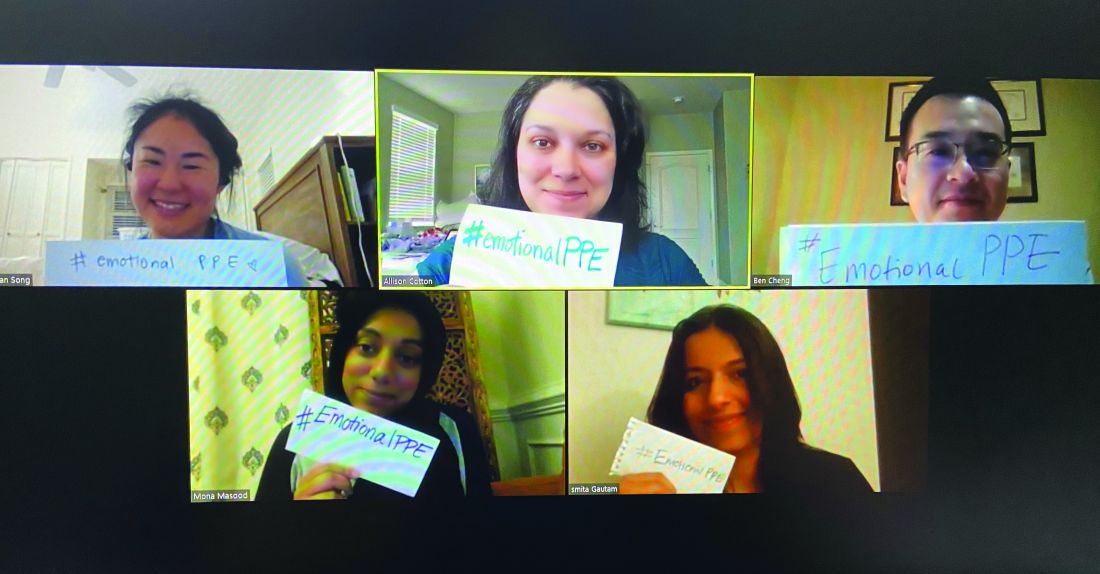
“The calls can be very intense,” Dr. Cotton said, and they’re unusual for several reasons. The hotline is not like a suicide or crisis hotline, when “a person calls because they need help, and then they can go get that help – they go to the hospital and get admitted to a psychiatric unit. Our callers don’t have that luxury.”
It’s also impossible to take an extensive history and create a sophisticated, long-term treatment plan as psychiatrists would during normal office visits. At the hotline, Dr. Cotton said, “we’re really focusing on the caller’s strengths and helping them come up with a plan for today to get through whatever they’re facing,” she said.
Stress management is critical
Psychiatrists at the University of Colorado Anschutz Medical Campus are embracing a similar approach to help health care workers cope, said Steven Berkowitz, MD. “We focus on stress management, and the notion that they are generally healthy and understandably struggling with extraordinary circumstances,” he said. “We are conservative in our use of medications and really only prescribe medications, such as trazodone, to help with sleep. We do not use benzodiazepines unless there is a history of more severe psychiatric problems.”

The pressure on health care workers during the pandemic is intense. A survey of 1,257 workers in 34 Chinese hospitals found high levels of symptoms of depression (50%), anxiety (45%), insomnia (35%), and distress (72%). Several groups appeared to be more vulnerable: women, nurses, front-line health care workers, and those in the coronavirus-stricken city of Wuhan (JAMA Netw Open. 2020;3[3]:e203976).
In Colorado, “providers are depleted,” Dr. Berkowitz said. “We are hearing about sleep disturbances and even some traumatic nightmares from ICU staff. During our support sessions, tears come most frequently when they talk about the struggle to care for their families and how they’re putting them at risk.”
Also, he said, “one of the most upsetting issues has been around language and cultural issues. Because of the language barriers, providers cannot explain why families can’t be with their sick members, which has led to acrimony.”
Guilt is a prevailing theme
Guilt also is a common emotion among health care workers, said psychiatrist Tia Konzer, DO, of Charlotte, N.C. “The ones on the front line question whether they were able to do enough to save someone or if they could have done more. Those of us not on the front lines feel guilty that we’re not there with our colleagues, that we don’t face the same fears and are in the safety of our outpatient clinics.”

The focus on social distancing is creating its own strains, she said. “A lot of people are recognizing the power of human touch and how comforting that is,” she said. “The healers aren’t able to comfort the loved ones of the deceased, and we’re not able to comfort each other. And people are having a hard time not being able to hug their kids and their spouses, having to ward off their kids when they come home or avoid them until they’ve showered.”
How can mental health professionals be most helpful to health care workers in need? The simple act of listening is crucial, several such professionals said in interviews.
“Your main job is to bear witness to their experiences and to hear their story, then secondarily to make sure they have a basic self-care plan to recover from what they’re doing each day,” said psychologist Leah Welch, PhD, of the Scripps Health network in San Diego. “Don’t talk too much or try to give advice too quickly before you’ve listened to what the caregiver has shared. They’re accumulating small traumas and need time and space to sort them out, and that takes patience and a listening ear on the part of the provider. Rushing in too quickly with advice deprives them of making sense of their own experience.”
She added that “they should also be thanked for what they’re doing, because it requires skill, empathy, and courage. They are being heroic, and they need to know they’re appreciated by those of us not on the front lines for what they’re putting themselves through.”
Partnerships are forming
At Zuckerberg San Francisco General Hospital and Trauma Center, psychiatry chief Lisa Fortuna, MD, MPH, MDiv, said her team has had success by working closely with the hospital’s chaplains. “A lot of the staff are not saying: ‘We’re stressing out; help us.’ The chaplains had starting rounding, asking how they’re doing, and they’d open up because there was already a relationship. The chaplains are very well trained in dealing with being support for people under situations of death, loss, and immediate stress.”

The chaplains themselves became overwhelmed, and the hospital responded by reaching out to bring in more chaplains. The psychiatry team, meanwhile, worked to partner with the chaplains to provide a continuum of support for staff. “We have an opportunity to build on the trust that they have,” said Dr. Fortuna, who is an ordained Episcopal minister. “They’re the perfect partners.”
What happens now? Dr. Fortuna has seen the long-term aftermath of a crisis. She previously worked in Massachusetts and helped to support health care workers in that state after the Boston Marathon bombing.
She cautioned that health care workers may first run on adrenaline in a crisis, spurred by “heroic high energy.” But then, the full extent of the tragedy begins to set in, and they start to process their feelings. “You have to keep people going through those phases,” she said.
Going forward, she said, “there will be a prolonged tail of stress,” especially if virus outbreaks recur. “We’ll have a long time enduring this.”
Don’t forget the self-care
There was a time during the pandemic when Dr. Cotton had become so overwhelmed by anxiety that she called the Physician Support Line to get some support from fellow psychiatrists.
“I thought, ‘Why not?’” she recalled. “I helped create the hotline. Why wouldn’t I call it?”
The calls took only a few minutes but they made a difference to Dr. Cotton, who had been severely ill with what she believed was an unconfirmed case of the novel coronavirus. “I immediately felt more like I improved my outlook by focusing on what I could control,” she said, “and accepting the things I could not control.”
Many psychiatrists are finding themselves in similar situations. Fortunately, colleagues are highlighting ways for psychiatrists to care for themselves just as they care for patients.
“One of the challenges clinicians are facing is that they are living through a shared experience in this global pandemic with their patients right now,” said psychologist Randi Pochtar, PhD, who is managing support groups for front-line workers at NYU Langone Health in New York City. “Some might find the work to be overwhelming and anxiety-inducing, and others might find their work to be helpful in managing their own anxiety and stress about the pandemic and its impact.”
Dr. Cotton said her breaking points came when she felt panic amid the pandemic. “I had watched too much news, and I’d seen protesters not taking it seriously, and I was scared for my family and myself. I just needed to feel like someone heard me feeling that way.”
The calls to the hotline were helpful, she said, and so was sharing news about her illness with friends. “So many people reached out to me and checked in on me, people I haven’t seen in years, and that was immensely helpful,” she said.
This sort of personal exposure may not come naturally to physicians and nurses, she said. “We don’t seek that kind of attention when we’re ill. Instead, we say: ‘I’m fine; how are you doing?’ That’s what we do every day of our lives at work.”
How can clinicians help themselves and one another? “Clinicians in our practice have been coping and supporting each other through peer supervision, connecting with colleagues in team meetings, and simply checking in on one another,” said Dr. Pochtar. “In addition, we can adopt many of the strategies that we are likely recommending to our patients, such as maintaining routines as much as possible, engaging in regular exercise, eating well and consistently, and connecting with friends and family.”
Managers can play important roles, said Dr. Fortuna. “I’ve been checking in with my faculty, being as supportive as I can be and highlighting the extraordinary things that people are doing, like going from zero to 100 percent in setting up telehealth.”
Dr. Konzer offered another perspective on recognizing the value of the work that psychiatrists are doing. “We’re on the front line of helping heal the front line, and in that responsibility comes an additional stress,” she said. “But there’s an additional gift of being able to contribute where we are most beneficial. We can try to be present now, versus worrying about what may happen or what lies ahead, and appreciate the beauty in the helpers and the small joys of life.”
Dr. Cotton, Dr. Berkowitz, Dr. Konzer, Dr. Welch, Dr. Fortuna, and Dr. Pochtar reported no relevant disclosures.
Psychiatrists are intervening with less conventional strategies
Psychiatrists are intervening with less conventional strategies
Across the country, psychiatrists are stepping up to provide urgent care to fellow health care workers in need amid the coronavirus pandemic. They’re offering stress management strategies, spearheading unusual partnerships, and discovering that psychotherapy and medication might not be their most helpful tools to help their colleagues at this time.
“This is completely the opposite of the way we practice psychiatry,” said Allison Cotton, MD, of the University of Nevada, Reno. “Our interventions are quite different from a psychotherapeutic standpoint.”
In March, she worked with four colleagues, Suzan Song, MD, MPH, PhD; Ben Cheng, MD; Smita Gautam, MD; and Mona S. Masood, DO, to create the Physician Support Line, a confidential and free hotline that links physicians to volunteer psychiatrists who are available to listen and offer advice on coping. The hotline (888-409-0141) is available every day from 8 a.m. to midnight Eastern time. Calls typically take 15-45 minutes; no appointment is needed, and conversations are not reportable to state medical boards.
“The calls can be very intense,” Dr. Cotton said, and they’re unusual for several reasons. The hotline is not like a suicide or crisis hotline, when “a person calls because they need help, and then they can go get that help – they go to the hospital and get admitted to a psychiatric unit. Our callers don’t have that luxury.”
It’s also impossible to take an extensive history and create a sophisticated, long-term treatment plan as psychiatrists would during normal office visits. At the hotline, Dr. Cotton said, “we’re really focusing on the caller’s strengths and helping them come up with a plan for today to get through whatever they’re facing,” she said.
Stress management is critical
Psychiatrists at the University of Colorado Anschutz Medical Campus are embracing a similar approach to help health care workers cope, said Steven Berkowitz, MD. “We focus on stress management, and the notion that they are generally healthy and understandably struggling with extraordinary circumstances,” he said. “We are conservative in our use of medications and really only prescribe medications, such as trazodone, to help with sleep. We do not use benzodiazepines unless there is a history of more severe psychiatric problems.”
The pressure on health care workers during the pandemic is intense. A survey of 1,257 workers in 34 Chinese hospitals found high levels of symptoms of depression (50%), anxiety (45%), insomnia (35%), and distress (72%). Several groups appeared to be more vulnerable: women, nurses, front-line health care workers, and those in the coronavirus-stricken city of Wuhan (JAMA Netw Open. 2020;3[3]:e203976).
In Colorado, “providers are depleted,” Dr. Berkowitz said. “We are hearing about sleep disturbances and even some traumatic nightmares from ICU staff. During our support sessions, tears come most frequently when they talk about the struggle to care for their families and how they’re putting them at risk.”
Also, he said, “one of the most upsetting issues has been around language and cultural issues. Because of the language barriers, providers cannot explain why families can’t be with their sick members, which has led to acrimony.”
Guilt is a prevailing theme
Guilt also is a common emotion among health care workers, said psychiatrist Tia Konzer, DO, of Charlotte, N.C. “The ones on the front line question whether they were able to do enough to save someone or if they could have done more. Those of us not on the front lines feel guilty that we’re not there with our colleagues, that we don’t face the same fears and are in the safety of our outpatient clinics.”
The focus on social distancing is creating its own strains, she said. “A lot of people are recognizing the power of human touch and how comforting that is,” she said. “The healers aren’t able to comfort the loved ones of the deceased, and we’re not able to comfort each other. And people are having a hard time not being able to hug their kids and their spouses, having to ward off their kids when they come home or avoid them until they’ve showered.”
How can mental health professionals be most helpful to health care workers in need? The simple act of listening is crucial, several such professionals said in interviews.
“Your main job is to bear witness to their experiences and to hear their story, then secondarily to make sure they have a basic self-care plan to recover from what they’re doing each day,” said psychologist Leah Welch, PhD, of the Scripps Health network in San Diego. “Don’t talk too much or try to give advice too quickly before you’ve listened to what the caregiver has shared. They’re accumulating small traumas and need time and space to sort them out, and that takes patience and a listening ear on the part of the provider. Rushing in too quickly with advice deprives them of making sense of their own experience.”
She added that “they should also be thanked for what they’re doing, because it requires skill, empathy, and courage. They are being heroic, and they need to know they’re appreciated by those of us not on the front lines for what they’re putting themselves through.”
Partnerships are forming
At Zuckerberg San Francisco General Hospital and Trauma Center, psychiatry chief Lisa Fortuna, MD, MPH, MDiv, said her team has had success by working closely with the hospital’s chaplains. “A lot of the staff are not saying: ‘We’re stressing out; help us.’ The chaplains had starting rounding, asking how they’re doing, and they’d open up because there was already a relationship. The chaplains are very well trained in dealing with being support for people under situations of death, loss, and immediate stress.”
The chaplains themselves became overwhelmed, and the hospital responded by reaching out to bring in more chaplains. The psychiatry team, meanwhile, worked to partner with the chaplains to provide a continuum of support for staff. “We have an opportunity to build on the trust that they have,” said Dr. Fortuna, who is an ordained Episcopal minister. “They’re the perfect partners.”
What happens now? Dr. Fortuna has seen the long-term aftermath of a crisis. She previously worked in Massachusetts and helped to support health care workers in that state after the Boston Marathon bombing.
She cautioned that health care workers may first run on adrenaline in a crisis, spurred by “heroic high energy.” But then, the full extent of the tragedy begins to set in, and they start to process their feelings. “You have to keep people going through those phases,” she said.
Going forward, she said, “there will be a prolonged tail of stress,” especially if virus outbreaks recur. “We’ll have a long time enduring this.”
Don’t forget the self-care
There was a time during the pandemic when Dr. Cotton had become so overwhelmed by anxiety that she called the Physician Support Line to get some support from fellow psychiatrists.
“I thought, ‘Why not?’” she recalled. “I helped create the hotline. Why wouldn’t I call it?”
The calls took only a few minutes but they made a difference to Dr. Cotton, who had been severely ill with what she believed was an unconfirmed case of the novel coronavirus. “I immediately felt more like I improved my outlook by focusing on what I could control,” she said, “and accepting the things I could not control.”
Many psychiatrists are finding themselves in similar situations. Fortunately, colleagues are highlighting ways for psychiatrists to care for themselves just as they care for patients.
“One of the challenges clinicians are facing is that they are living through a shared experience in this global pandemic with their patients right now,” said psychologist Randi Pochtar, PhD, who is managing support groups for front-line workers at NYU Langone Health in New York City. “Some might find the work to be overwhelming and anxiety-inducing, and others might find their work to be helpful in managing their own anxiety and stress about the pandemic and its impact.”
Dr. Cotton said her breaking points came when she felt panic amid the pandemic. “I had watched too much news, and I’d seen protesters not taking it seriously, and I was scared for my family and myself. I just needed to feel like someone heard me feeling that way.”
The calls to the hotline were helpful, she said, and so was sharing news about her illness with friends. “So many people reached out to me and checked in on me, people I haven’t seen in years, and that was immensely helpful,” she said.
This sort of personal exposure may not come naturally to physicians and nurses, she said. “We don’t seek that kind of attention when we’re ill. Instead, we say: ‘I’m fine; how are you doing?’ That’s what we do every day of our lives at work.”
How can clinicians help themselves and one another? “Clinicians in our practice have been coping and supporting each other through peer supervision, connecting with colleagues in team meetings, and simply checking in on one another,” said Dr. Pochtar. “In addition, we can adopt many of the strategies that we are likely recommending to our patients, such as maintaining routines as much as possible, engaging in regular exercise, eating well and consistently, and connecting with friends and family.”
Managers can play important roles, said Dr. Fortuna. “I’ve been checking in with my faculty, being as supportive as I can be and highlighting the extraordinary things that people are doing, like going from zero to 100 percent in setting up telehealth.”
Dr. Konzer offered another perspective on recognizing the value of the work that psychiatrists are doing. “We’re on the front line of helping heal the front line, and in that responsibility comes an additional stress,” she said. “But there’s an additional gift of being able to contribute where we are most beneficial. We can try to be present now, versus worrying about what may happen or what lies ahead, and appreciate the beauty in the helpers and the small joys of life.”
Dr. Cotton, Dr. Berkowitz, Dr. Konzer, Dr. Welch, Dr. Fortuna, and Dr. Pochtar reported no relevant disclosures.
Across the country, psychiatrists are stepping up to provide urgent care to fellow health care workers in need amid the coronavirus pandemic. They’re offering stress management strategies, spearheading unusual partnerships, and discovering that psychotherapy and medication might not be their most helpful tools to help their colleagues at this time.
“This is completely the opposite of the way we practice psychiatry,” said Allison Cotton, MD, of the University of Nevada, Reno. “Our interventions are quite different from a psychotherapeutic standpoint.”
In March, she worked with four colleagues, Suzan Song, MD, MPH, PhD; Ben Cheng, MD; Smita Gautam, MD; and Mona S. Masood, DO, to create the Physician Support Line, a confidential and free hotline that links physicians to volunteer psychiatrists who are available to listen and offer advice on coping. The hotline (888-409-0141) is available every day from 8 a.m. to midnight Eastern time. Calls typically take 15-45 minutes; no appointment is needed, and conversations are not reportable to state medical boards.
“The calls can be very intense,” Dr. Cotton said, and they’re unusual for several reasons. The hotline is not like a suicide or crisis hotline, when “a person calls because they need help, and then they can go get that help – they go to the hospital and get admitted to a psychiatric unit. Our callers don’t have that luxury.”
It’s also impossible to take an extensive history and create a sophisticated, long-term treatment plan as psychiatrists would during normal office visits. At the hotline, Dr. Cotton said, “we’re really focusing on the caller’s strengths and helping them come up with a plan for today to get through whatever they’re facing,” she said.
Stress management is critical
Psychiatrists at the University of Colorado Anschutz Medical Campus are embracing a similar approach to help health care workers cope, said Steven Berkowitz, MD. “We focus on stress management, and the notion that they are generally healthy and understandably struggling with extraordinary circumstances,” he said. “We are conservative in our use of medications and really only prescribe medications, such as trazodone, to help with sleep. We do not use benzodiazepines unless there is a history of more severe psychiatric problems.”
The pressure on health care workers during the pandemic is intense. A survey of 1,257 workers in 34 Chinese hospitals found high levels of symptoms of depression (50%), anxiety (45%), insomnia (35%), and distress (72%). Several groups appeared to be more vulnerable: women, nurses, front-line health care workers, and those in the coronavirus-stricken city of Wuhan (JAMA Netw Open. 2020;3[3]:e203976).
In Colorado, “providers are depleted,” Dr. Berkowitz said. “We are hearing about sleep disturbances and even some traumatic nightmares from ICU staff. During our support sessions, tears come most frequently when they talk about the struggle to care for their families and how they’re putting them at risk.”
Also, he said, “one of the most upsetting issues has been around language and cultural issues. Because of the language barriers, providers cannot explain why families can’t be with their sick members, which has led to acrimony.”
Guilt is a prevailing theme
Guilt also is a common emotion among health care workers, said psychiatrist Tia Konzer, DO, of Charlotte, N.C. “The ones on the front line question whether they were able to do enough to save someone or if they could have done more. Those of us not on the front lines feel guilty that we’re not there with our colleagues, that we don’t face the same fears and are in the safety of our outpatient clinics.”
The focus on social distancing is creating its own strains, she said. “A lot of people are recognizing the power of human touch and how comforting that is,” she said. “The healers aren’t able to comfort the loved ones of the deceased, and we’re not able to comfort each other. And people are having a hard time not being able to hug their kids and their spouses, having to ward off their kids when they come home or avoid them until they’ve showered.”
How can mental health professionals be most helpful to health care workers in need? The simple act of listening is crucial, several such professionals said in interviews.
“Your main job is to bear witness to their experiences and to hear their story, then secondarily to make sure they have a basic self-care plan to recover from what they’re doing each day,” said psychologist Leah Welch, PhD, of the Scripps Health network in San Diego. “Don’t talk too much or try to give advice too quickly before you’ve listened to what the caregiver has shared. They’re accumulating small traumas and need time and space to sort them out, and that takes patience and a listening ear on the part of the provider. Rushing in too quickly with advice deprives them of making sense of their own experience.”
She added that “they should also be thanked for what they’re doing, because it requires skill, empathy, and courage. They are being heroic, and they need to know they’re appreciated by those of us not on the front lines for what they’re putting themselves through.”
Partnerships are forming
At Zuckerberg San Francisco General Hospital and Trauma Center, psychiatry chief Lisa Fortuna, MD, MPH, MDiv, said her team has had success by working closely with the hospital’s chaplains. “A lot of the staff are not saying: ‘We’re stressing out; help us.’ The chaplains had starting rounding, asking how they’re doing, and they’d open up because there was already a relationship. The chaplains are very well trained in dealing with being support for people under situations of death, loss, and immediate stress.”
The chaplains themselves became overwhelmed, and the hospital responded by reaching out to bring in more chaplains. The psychiatry team, meanwhile, worked to partner with the chaplains to provide a continuum of support for staff. “We have an opportunity to build on the trust that they have,” said Dr. Fortuna, who is an ordained Episcopal minister. “They’re the perfect partners.”
What happens now? Dr. Fortuna has seen the long-term aftermath of a crisis. She previously worked in Massachusetts and helped to support health care workers in that state after the Boston Marathon bombing.
She cautioned that health care workers may first run on adrenaline in a crisis, spurred by “heroic high energy.” But then, the full extent of the tragedy begins to set in, and they start to process their feelings. “You have to keep people going through those phases,” she said.
Going forward, she said, “there will be a prolonged tail of stress,” especially if virus outbreaks recur. “We’ll have a long time enduring this.”
Don’t forget the self-care
There was a time during the pandemic when Dr. Cotton had become so overwhelmed by anxiety that she called the Physician Support Line to get some support from fellow psychiatrists.
“I thought, ‘Why not?’” she recalled. “I helped create the hotline. Why wouldn’t I call it?”
The calls took only a few minutes but they made a difference to Dr. Cotton, who had been severely ill with what she believed was an unconfirmed case of the novel coronavirus. “I immediately felt more like I improved my outlook by focusing on what I could control,” she said, “and accepting the things I could not control.”
Many psychiatrists are finding themselves in similar situations. Fortunately, colleagues are highlighting ways for psychiatrists to care for themselves just as they care for patients.
“One of the challenges clinicians are facing is that they are living through a shared experience in this global pandemic with their patients right now,” said psychologist Randi Pochtar, PhD, who is managing support groups for front-line workers at NYU Langone Health in New York City. “Some might find the work to be overwhelming and anxiety-inducing, and others might find their work to be helpful in managing their own anxiety and stress about the pandemic and its impact.”
Dr. Cotton said her breaking points came when she felt panic amid the pandemic. “I had watched too much news, and I’d seen protesters not taking it seriously, and I was scared for my family and myself. I just needed to feel like someone heard me feeling that way.”
The calls to the hotline were helpful, she said, and so was sharing news about her illness with friends. “So many people reached out to me and checked in on me, people I haven’t seen in years, and that was immensely helpful,” she said.
This sort of personal exposure may not come naturally to physicians and nurses, she said. “We don’t seek that kind of attention when we’re ill. Instead, we say: ‘I’m fine; how are you doing?’ That’s what we do every day of our lives at work.”
How can clinicians help themselves and one another? “Clinicians in our practice have been coping and supporting each other through peer supervision, connecting with colleagues in team meetings, and simply checking in on one another,” said Dr. Pochtar. “In addition, we can adopt many of the strategies that we are likely recommending to our patients, such as maintaining routines as much as possible, engaging in regular exercise, eating well and consistently, and connecting with friends and family.”
Managers can play important roles, said Dr. Fortuna. “I’ve been checking in with my faculty, being as supportive as I can be and highlighting the extraordinary things that people are doing, like going from zero to 100 percent in setting up telehealth.”
Dr. Konzer offered another perspective on recognizing the value of the work that psychiatrists are doing. “We’re on the front line of helping heal the front line, and in that responsibility comes an additional stress,” she said. “But there’s an additional gift of being able to contribute where we are most beneficial. We can try to be present now, versus worrying about what may happen or what lies ahead, and appreciate the beauty in the helpers and the small joys of life.”
Dr. Cotton, Dr. Berkowitz, Dr. Konzer, Dr. Welch, Dr. Fortuna, and Dr. Pochtar reported no relevant disclosures.
REACH2: Ruxolitinib outperformed control treatment for refractory acute GVHD
Ruxolitinib produced significantly better efficacy outcomes in patients with glucocorticoid-refractory acute graft-versus-host disease (GVHD), compared with investigator’s choice of control therapy, in the phase 3 REACH2 trial.
However, there was a higher incidence of thrombocytopenia with ruxolitinib than with control treatment, according to a report by Robert Zeiser, MD, of University of Freiburg (Germany) and colleagues on behalf of the REACH2 research group. The report was published in the New England Journal of Medicine.
The REACH2 trial (NCT02913261) is a randomized, open-label, phase 3 trial comparing the efficacy and safety of oral ruxolitinib (10 mg twice daily) with investigator’s choice of therapy for control treatment using a list of nine commonly used options.
Patients were 12 years of age or older with glucocorticoid-refractory acute GVHD after allogeneic stem cell transplant. A total of 154 patients were assigned to the ruxolitinib group, and 155 patients were in the control group.
Most patients – 152 in the ruxolitinib group and 150 in the control group – received at least one dose of trial treatment.
Treatment discontinuation occurred in 72% (111/154) of patients in the ruxolitinib group and in 85% (132/155) of those in the control group. The most common reason for discontinuation was lack of efficacy (in 21% and 44%, respectively).
Outcomes
The overall response at day 28 (the primary endpoint) was significantly higher in the ruxolitinib group than in the control group (62% vs. 39%; odds ratio, 2.64; P < .001). The durable overall response at day 56 was also significantly higher in the ruxolitinib group than in the control group (40% vs. 22%; OR, 2.38; P < .001).
The estimated cumulative incidence of loss of response at 6 months was 10% in the ruxolitinib group compared with 39% in the control group.
The median failure-free survival was considerably longer with ruxolitinib than with control treatment (5.0 months vs. 1.0 month; hazard ratio for relapse or progression of hematologic disease, non–relapse-related death, or the use of new systemic therapy for acute GVHD, 0.46).
The median overall survival was 11.1 months in the ruxolitinib group and 6.5 months in the control group (HR, 0.83).
Overall, 72 patients (47%) in the ruxolitinib group and 77 (51%) in the control group died by the data cutoff date. Most deaths were attributed to acute GVHD (22% in the ruxolitinib group and 25% in the control group).
The most common adverse events at day 28 (in the ruxolitinib and control arms, respectively) were thrombocytopenia (33% and 18%), anemia (30% and 28%), and cytomegalovirus infection (26% and 21%).
Praise for ‘successful’ randomized trial in GVHD
“The authors are to be congratulated for completing this successful randomized trial, which showed convincingly that ruxolitinib was more effective than the investigator’s choice of therapy ... in patients in whom glucocorticoid therapy had failed,” wrote Nelson Chao, MD, of Duke University in Durham, N.C., in his invited editorial.
He went on to speculate on the possible mechanism for ruxolitinib in these patients, discussing the possible role of the STAT3 and STAT1 signaling pathways.
Dr. Chao also found it “interesting that the incidence of infectious complications or relapse was apparently not greater with ruxolitinib than with control therapy,” but he noted that the total follow-up time was short.
“As with all good research, these observations raise important questions and set the stage for further work in this area,” he concluded.
The REACH2 trial was funded by Novartis. The study authors disclosed relationships with a variety of pharmaceutical companies, including Novartis. Dr. Chao reported having no relevant disclosures.
SOURCE: Zeiser R et al. N Engl J Med. 2020. doi: 10.1056/NEJMoa1917635.
Ruxolitinib produced significantly better efficacy outcomes in patients with glucocorticoid-refractory acute graft-versus-host disease (GVHD), compared with investigator’s choice of control therapy, in the phase 3 REACH2 trial.
However, there was a higher incidence of thrombocytopenia with ruxolitinib than with control treatment, according to a report by Robert Zeiser, MD, of University of Freiburg (Germany) and colleagues on behalf of the REACH2 research group. The report was published in the New England Journal of Medicine.
The REACH2 trial (NCT02913261) is a randomized, open-label, phase 3 trial comparing the efficacy and safety of oral ruxolitinib (10 mg twice daily) with investigator’s choice of therapy for control treatment using a list of nine commonly used options.
Patients were 12 years of age or older with glucocorticoid-refractory acute GVHD after allogeneic stem cell transplant. A total of 154 patients were assigned to the ruxolitinib group, and 155 patients were in the control group.
Most patients – 152 in the ruxolitinib group and 150 in the control group – received at least one dose of trial treatment.
Treatment discontinuation occurred in 72% (111/154) of patients in the ruxolitinib group and in 85% (132/155) of those in the control group. The most common reason for discontinuation was lack of efficacy (in 21% and 44%, respectively).
Outcomes
The overall response at day 28 (the primary endpoint) was significantly higher in the ruxolitinib group than in the control group (62% vs. 39%; odds ratio, 2.64; P < .001). The durable overall response at day 56 was also significantly higher in the ruxolitinib group than in the control group (40% vs. 22%; OR, 2.38; P < .001).
The estimated cumulative incidence of loss of response at 6 months was 10% in the ruxolitinib group compared with 39% in the control group.
The median failure-free survival was considerably longer with ruxolitinib than with control treatment (5.0 months vs. 1.0 month; hazard ratio for relapse or progression of hematologic disease, non–relapse-related death, or the use of new systemic therapy for acute GVHD, 0.46).
The median overall survival was 11.1 months in the ruxolitinib group and 6.5 months in the control group (HR, 0.83).
Overall, 72 patients (47%) in the ruxolitinib group and 77 (51%) in the control group died by the data cutoff date. Most deaths were attributed to acute GVHD (22% in the ruxolitinib group and 25% in the control group).
The most common adverse events at day 28 (in the ruxolitinib and control arms, respectively) were thrombocytopenia (33% and 18%), anemia (30% and 28%), and cytomegalovirus infection (26% and 21%).
Praise for ‘successful’ randomized trial in GVHD
“The authors are to be congratulated for completing this successful randomized trial, which showed convincingly that ruxolitinib was more effective than the investigator’s choice of therapy ... in patients in whom glucocorticoid therapy had failed,” wrote Nelson Chao, MD, of Duke University in Durham, N.C., in his invited editorial.
He went on to speculate on the possible mechanism for ruxolitinib in these patients, discussing the possible role of the STAT3 and STAT1 signaling pathways.
Dr. Chao also found it “interesting that the incidence of infectious complications or relapse was apparently not greater with ruxolitinib than with control therapy,” but he noted that the total follow-up time was short.
“As with all good research, these observations raise important questions and set the stage for further work in this area,” he concluded.
The REACH2 trial was funded by Novartis. The study authors disclosed relationships with a variety of pharmaceutical companies, including Novartis. Dr. Chao reported having no relevant disclosures.
SOURCE: Zeiser R et al. N Engl J Med. 2020. doi: 10.1056/NEJMoa1917635.
Ruxolitinib produced significantly better efficacy outcomes in patients with glucocorticoid-refractory acute graft-versus-host disease (GVHD), compared with investigator’s choice of control therapy, in the phase 3 REACH2 trial.
However, there was a higher incidence of thrombocytopenia with ruxolitinib than with control treatment, according to a report by Robert Zeiser, MD, of University of Freiburg (Germany) and colleagues on behalf of the REACH2 research group. The report was published in the New England Journal of Medicine.
The REACH2 trial (NCT02913261) is a randomized, open-label, phase 3 trial comparing the efficacy and safety of oral ruxolitinib (10 mg twice daily) with investigator’s choice of therapy for control treatment using a list of nine commonly used options.
Patients were 12 years of age or older with glucocorticoid-refractory acute GVHD after allogeneic stem cell transplant. A total of 154 patients were assigned to the ruxolitinib group, and 155 patients were in the control group.
Most patients – 152 in the ruxolitinib group and 150 in the control group – received at least one dose of trial treatment.
Treatment discontinuation occurred in 72% (111/154) of patients in the ruxolitinib group and in 85% (132/155) of those in the control group. The most common reason for discontinuation was lack of efficacy (in 21% and 44%, respectively).
Outcomes
The overall response at day 28 (the primary endpoint) was significantly higher in the ruxolitinib group than in the control group (62% vs. 39%; odds ratio, 2.64; P < .001). The durable overall response at day 56 was also significantly higher in the ruxolitinib group than in the control group (40% vs. 22%; OR, 2.38; P < .001).
The estimated cumulative incidence of loss of response at 6 months was 10% in the ruxolitinib group compared with 39% in the control group.
The median failure-free survival was considerably longer with ruxolitinib than with control treatment (5.0 months vs. 1.0 month; hazard ratio for relapse or progression of hematologic disease, non–relapse-related death, or the use of new systemic therapy for acute GVHD, 0.46).
The median overall survival was 11.1 months in the ruxolitinib group and 6.5 months in the control group (HR, 0.83).
Overall, 72 patients (47%) in the ruxolitinib group and 77 (51%) in the control group died by the data cutoff date. Most deaths were attributed to acute GVHD (22% in the ruxolitinib group and 25% in the control group).
The most common adverse events at day 28 (in the ruxolitinib and control arms, respectively) were thrombocytopenia (33% and 18%), anemia (30% and 28%), and cytomegalovirus infection (26% and 21%).
Praise for ‘successful’ randomized trial in GVHD
“The authors are to be congratulated for completing this successful randomized trial, which showed convincingly that ruxolitinib was more effective than the investigator’s choice of therapy ... in patients in whom glucocorticoid therapy had failed,” wrote Nelson Chao, MD, of Duke University in Durham, N.C., in his invited editorial.
He went on to speculate on the possible mechanism for ruxolitinib in these patients, discussing the possible role of the STAT3 and STAT1 signaling pathways.
Dr. Chao also found it “interesting that the incidence of infectious complications or relapse was apparently not greater with ruxolitinib than with control therapy,” but he noted that the total follow-up time was short.
“As with all good research, these observations raise important questions and set the stage for further work in this area,” he concluded.
The REACH2 trial was funded by Novartis. The study authors disclosed relationships with a variety of pharmaceutical companies, including Novartis. Dr. Chao reported having no relevant disclosures.
SOURCE: Zeiser R et al. N Engl J Med. 2020. doi: 10.1056/NEJMoa1917635.
FROM THE NEW ENGLAND JOURNAL OF MEDICINE
Key clinical point: Ruxolitinib was significantly more effective against acute graft-versus-host disease than was control treatment.
Major finding: The overall response at day 28 was significantly higher in the ruxolitinib group than in the control group (62% vs. 39%; P < .001).
Study details: Phase 3 trial of 154 patients randomized to ruxolitinib and 155 patients randomized to investigator’s choice of control therapy.
Disclosures: The trial was funded by Novartis. Authors disclosed relationships with a variety of pharmaceutical companies, including Novartis.
Source: Zeiser R et al. N Engl J Med. 2020. doi: 10.1056/NEJMoa1917635.
Double Masking and Decontamination: A Doctor's COVID-19 Routine

This transcript has been edited for clarity.
Gary S. Ferenchick, MD, MS: I'm Gary Ferenchick with Hannah Ferenchick, who has agreed to join us to talk about the PPE and decontamination processes she's using. Why don't you introduce yourself?
Hannah R.B. Ferenchick, MD: I am Hannah Ferenchick. I'm an ER physician and medical intensivist. I split my time between the medical ICU and the emergency department at Detroit Medical Center.
PPE Routine at the Hospital
Dr Gary Ferenchick: You've developed your own PPE and decontamination routines. It's about protecting yourself at work but also about protecting your loved ones by not carrying the virus home. Could you walk us through it? I'll show it on the screen.
Dr Hannah Ferenchick: At work I wear scrubs, and I try to minimize any additional clothing. I don't wear a jacket over my scrubs, and I don't wear any T-shirts under my scrubs. If I'm going to be in a situation that might involve exposure to patient secretions or bodily fluids, then I also wear shoe covers.
Because so many of our patients are infected and we may be called upon at any time to do an aerosol-generating procedure, in the ED we have all taken to wearing N95 masks for our entire shift. I wear a fitted N95 mask. I cover that with a surgical mask.
We are anticipating N95 shortages because our use of the masks has increased exponentially. Every hospital has to think about how to protect their healthcare workers while conserving PPE. We cover the N95 mask with a surgical mask, so that if there is any soiling or droplets reaching the mask, we are able to change the surgical mask and continue to use the same N95.
In addition, eye protection is important. Generally throughout the shift I wear my own goggles. If I'm going to be involved in any procedure with the potential for aerosolization (intubation, performing CPR, bronchoscopy) then I wear a creation of my own, which is a welder's shield.
Many of our providers have chosen to use their own equipment, although we are still able to use hospital-provided equipment. There is probably no difference in effectiveness between these devices.
Cell Phones and Stethoscopes
I carry a personal cell phone at work (which I often use to look things up, use the calculator, and for other purposes), and I'm cognizant that when I touch it, I am potentially transmitting pathogens to my phone or its cover. So I've taken to keeping my phone in a plastic sandwich bag, which I disinfect a couple of times throughout the shift. The phone still works normally.
After my shift, in my "decontamination phase," I remove the phone from the plastic bag and disinfect the phone again.
I try to avoid bringing objects into the vicinity of the patient. That's different from my normal routine—I usually like to write down what the patient has told me—but unfortunately, carrying pen and paper or a clipboard into a patient's room is not feasible at this point. During this time, I've also avoided using my personal stethoscope.
There's also transmission risk associated with shared equipment. We share hospital-provided phones and they must be disinfected. We are each disinfecting our own workspaces: computer, keyboard, mouse, and countertop.
Obviously you are trying to minimize any contact with your mouth or face. You don't want to rub your eyes, touch your nose, or eat anything with your hands while you are at work. The assumption is that you are doing very frequent hand hygiene.
Decontamination Routine
One of our concerns as healthcare providers is the possibility that we could, either asymptomatically or through the objects that we use at work, be bringing the disease home. We want to protect the people who may be at higher risk just because they live with a healthcare provider. These are the decontamination practices I've developed for my own situation, taken from best practices and suggestions from others.
I remove my dirty scrubs and leave them at work, and I change into a clean pair of scrubs or clean clothes. I disinfect any inanimate objects that my hands may have touched during the shift using alcohol, sanitizer wipes, bleach wipes, or hospital-grade chemical wipes.
To keep those objects clean after disinfecting, I place them in clean plastic bags away from other objects (eg, a wallet or purse) that may not be easy to disinfect. Then I store those bags in the trunk of my car for my next shift, so I'm not taking them into my home.
I also change my shoes, leaving my work shoes in the trunk of my car, and wear another pair of shoes into the house.
When I get home, I basically do everything again. I disinfect my phone, I wash my hands, and I shower immediately. At that point, I consider myself sufficiently "disinfected."
Gary S. Ferenchick, MD, MS, is a family physician and professor in the Department of Medicine at Michigan State University in East Lansing, Michigan. His daughter, Hannah R.B. Ferenchick, MD, is an assistant professor in the Department of Emergency Medicine, Division of Pulmonary & Critical Care and Sleep Medicine at Wayne State University, Detroit, Michigan, and a medical intensivist and emergency medicine physician at Detroit Medical Center.
This transcript has been edited for clarity.
Gary S. Ferenchick, MD, MS: I'm Gary Ferenchick with Hannah Ferenchick, who has agreed to join us to talk about the PPE and decontamination processes she's using. Why don't you introduce yourself?
Hannah R.B. Ferenchick, MD: I am Hannah Ferenchick. I'm an ER physician and medical intensivist. I split my time between the medical ICU and the emergency department at Detroit Medical Center.
PPE Routine at the Hospital
Dr Gary Ferenchick: You've developed your own PPE and decontamination routines. It's about protecting yourself at work but also about protecting your loved ones by not carrying the virus home. Could you walk us through it? I'll show it on the screen.
Dr Hannah Ferenchick: At work I wear scrubs, and I try to minimize any additional clothing. I don't wear a jacket over my scrubs, and I don't wear any T-shirts under my scrubs. If I'm going to be in a situation that might involve exposure to patient secretions or bodily fluids, then I also wear shoe covers.
Because so many of our patients are infected and we may be called upon at any time to do an aerosol-generating procedure, in the ED we have all taken to wearing N95 masks for our entire shift. I wear a fitted N95 mask. I cover that with a surgical mask.
We are anticipating N95 shortages because our use of the masks has increased exponentially. Every hospital has to think about how to protect their healthcare workers while conserving PPE. We cover the N95 mask with a surgical mask, so that if there is any soiling or droplets reaching the mask, we are able to change the surgical mask and continue to use the same N95.
In addition, eye protection is important. Generally throughout the shift I wear my own goggles. If I'm going to be involved in any procedure with the potential for aerosolization (intubation, performing CPR, bronchoscopy) then I wear a creation of my own, which is a welder's shield.
Many of our providers have chosen to use their own equipment, although we are still able to use hospital-provided equipment. There is probably no difference in effectiveness between these devices.
Cell Phones and Stethoscopes
I carry a personal cell phone at work (which I often use to look things up, use the calculator, and for other purposes), and I'm cognizant that when I touch it, I am potentially transmitting pathogens to my phone or its cover. So I've taken to keeping my phone in a plastic sandwich bag, which I disinfect a couple of times throughout the shift. The phone still works normally.
After my shift, in my "decontamination phase," I remove the phone from the plastic bag and disinfect the phone again.
I try to avoid bringing objects into the vicinity of the patient. That's different from my normal routine—I usually like to write down what the patient has told me—but unfortunately, carrying pen and paper or a clipboard into a patient's room is not feasible at this point. During this time, I've also avoided using my personal stethoscope.
There's also transmission risk associated with shared equipment. We share hospital-provided phones and they must be disinfected. We are each disinfecting our own workspaces: computer, keyboard, mouse, and countertop.
Obviously you are trying to minimize any contact with your mouth or face. You don't want to rub your eyes, touch your nose, or eat anything with your hands while you are at work. The assumption is that you are doing very frequent hand hygiene.
Decontamination Routine
One of our concerns as healthcare providers is the possibility that we could, either asymptomatically or through the objects that we use at work, be bringing the disease home. We want to protect the people who may be at higher risk just because they live with a healthcare provider. These are the decontamination practices I've developed for my own situation, taken from best practices and suggestions from others.
I remove my dirty scrubs and leave them at work, and I change into a clean pair of scrubs or clean clothes. I disinfect any inanimate objects that my hands may have touched during the shift using alcohol, sanitizer wipes, bleach wipes, or hospital-grade chemical wipes.
To keep those objects clean after disinfecting, I place them in clean plastic bags away from other objects (eg, a wallet or purse) that may not be easy to disinfect. Then I store those bags in the trunk of my car for my next shift, so I'm not taking them into my home.
I also change my shoes, leaving my work shoes in the trunk of my car, and wear another pair of shoes into the house.
When I get home, I basically do everything again. I disinfect my phone, I wash my hands, and I shower immediately. At that point, I consider myself sufficiently "disinfected."
Gary S. Ferenchick, MD, MS, is a family physician and professor in the Department of Medicine at Michigan State University in East Lansing, Michigan. His daughter, Hannah R.B. Ferenchick, MD, is an assistant professor in the Department of Emergency Medicine, Division of Pulmonary & Critical Care and Sleep Medicine at Wayne State University, Detroit, Michigan, and a medical intensivist and emergency medicine physician at Detroit Medical Center.
This transcript has been edited for clarity.
Gary S. Ferenchick, MD, MS: I'm Gary Ferenchick with Hannah Ferenchick, who has agreed to join us to talk about the PPE and decontamination processes she's using. Why don't you introduce yourself?
Hannah R.B. Ferenchick, MD: I am Hannah Ferenchick. I'm an ER physician and medical intensivist. I split my time between the medical ICU and the emergency department at Detroit Medical Center.
PPE Routine at the Hospital
Dr Gary Ferenchick: You've developed your own PPE and decontamination routines. It's about protecting yourself at work but also about protecting your loved ones by not carrying the virus home. Could you walk us through it? I'll show it on the screen.
Dr Hannah Ferenchick: At work I wear scrubs, and I try to minimize any additional clothing. I don't wear a jacket over my scrubs, and I don't wear any T-shirts under my scrubs. If I'm going to be in a situation that might involve exposure to patient secretions or bodily fluids, then I also wear shoe covers.
Because so many of our patients are infected and we may be called upon at any time to do an aerosol-generating procedure, in the ED we have all taken to wearing N95 masks for our entire shift. I wear a fitted N95 mask. I cover that with a surgical mask.
We are anticipating N95 shortages because our use of the masks has increased exponentially. Every hospital has to think about how to protect their healthcare workers while conserving PPE. We cover the N95 mask with a surgical mask, so that if there is any soiling or droplets reaching the mask, we are able to change the surgical mask and continue to use the same N95.
In addition, eye protection is important. Generally throughout the shift I wear my own goggles. If I'm going to be involved in any procedure with the potential for aerosolization (intubation, performing CPR, bronchoscopy) then I wear a creation of my own, which is a welder's shield.
Many of our providers have chosen to use their own equipment, although we are still able to use hospital-provided equipment. There is probably no difference in effectiveness between these devices.
Cell Phones and Stethoscopes
I carry a personal cell phone at work (which I often use to look things up, use the calculator, and for other purposes), and I'm cognizant that when I touch it, I am potentially transmitting pathogens to my phone or its cover. So I've taken to keeping my phone in a plastic sandwich bag, which I disinfect a couple of times throughout the shift. The phone still works normally.
After my shift, in my "decontamination phase," I remove the phone from the plastic bag and disinfect the phone again.
I try to avoid bringing objects into the vicinity of the patient. That's different from my normal routine—I usually like to write down what the patient has told me—but unfortunately, carrying pen and paper or a clipboard into a patient's room is not feasible at this point. During this time, I've also avoided using my personal stethoscope.
There's also transmission risk associated with shared equipment. We share hospital-provided phones and they must be disinfected. We are each disinfecting our own workspaces: computer, keyboard, mouse, and countertop.
Obviously you are trying to minimize any contact with your mouth or face. You don't want to rub your eyes, touch your nose, or eat anything with your hands while you are at work. The assumption is that you are doing very frequent hand hygiene.
Decontamination Routine
One of our concerns as healthcare providers is the possibility that we could, either asymptomatically or through the objects that we use at work, be bringing the disease home. We want to protect the people who may be at higher risk just because they live with a healthcare provider. These are the decontamination practices I've developed for my own situation, taken from best practices and suggestions from others.
I remove my dirty scrubs and leave them at work, and I change into a clean pair of scrubs or clean clothes. I disinfect any inanimate objects that my hands may have touched during the shift using alcohol, sanitizer wipes, bleach wipes, or hospital-grade chemical wipes.
To keep those objects clean after disinfecting, I place them in clean plastic bags away from other objects (eg, a wallet or purse) that may not be easy to disinfect. Then I store those bags in the trunk of my car for my next shift, so I'm not taking them into my home.
I also change my shoes, leaving my work shoes in the trunk of my car, and wear another pair of shoes into the house.
When I get home, I basically do everything again. I disinfect my phone, I wash my hands, and I shower immediately. At that point, I consider myself sufficiently "disinfected."
Gary S. Ferenchick, MD, MS, is a family physician and professor in the Department of Medicine at Michigan State University in East Lansing, Michigan. His daughter, Hannah R.B. Ferenchick, MD, is an assistant professor in the Department of Emergency Medicine, Division of Pulmonary & Critical Care and Sleep Medicine at Wayne State University, Detroit, Michigan, and a medical intensivist and emergency medicine physician at Detroit Medical Center.