User login
Mitchel is a reporter for MDedge based in the Philadelphia area. He started with the company in 1992, when it was International Medical News Group (IMNG), and has since covered a range of medical specialties. Mitchel trained as a virologist at Roswell Park Memorial Institute in Buffalo, and then worked briefly as a researcher at Boston Children's Hospital before pivoting to journalism as a AAAS Mass Media Fellow in 1980. His first reporting job was with Science Digest magazine, and from the mid-1980s to early-1990s he was a reporter with Medical World News. @mitchelzoler
Directed Exchange Called Key to EHR Stage 2
PHILADELPHIA – With the federal stage 2 deadline for the meaningful use of electronic health records looming less than 2 years from now, doctors need to start thinking about interoperability, directed exchange, and health Internet service providers.
The key capability that stage 2 demands is the ability to transfer patient data in a reliably secure, confidential way between physicians, between a physician and patient, or between a physician and a health care system.

These secure, Internet-based data transfers will depend on three elements, Dr. David C. Kibbe said at the annual Congress of Delegates of the American Academy of Family Physicians:
• A standardized format and language for recording the data that transcend the different electronic health record (EHR) formats used by different vendors.
• A method to securely move the data between two or more EHR users, a process known as directed exchange.
• A system to verify that the person engaged in a data exchange – for example, Dr. Smith – really is Dr. Smith.
Although the software that allows these secure exchanges is still being tweaked and has generally not yet rolled out to EHR users, the systems will likely become available in the next few months, said Dr. Kibbe, a senior adviser to the American Academy of Family Physicians in Oriental, N.C.
If the systems work the way they should, physicians will not need to sweat the details. Once EHR vendors get the software finalized and providers in place, all physicians will need to do is sign up for service with the EHR vendor, Dr. Kibbe said.
New Kind of Service Provider
A big part will be physicians becoming customers of a health Internet service provider. Those providers will be something like a conventional Internet service provider, except that they’ll be geared to operate with special certification and encryption procedures to guarantee secure data transmission and validate sender and recipient identities. EHR systems and health Internet service providers will need to use a certification process to establish and confirm the identity of each of their physician clients.
"Health Internet service providers didn’t exist 12 months ago; now many exist, and they are eager to have your business," he said.
Physicians who plan to comply with meaningful use stage 2 and don’t hear anything about this from the EHR vendor by mid-2013 should ask their vendor, "When can you provide it?" said Dr. Kibbe, who also is president of DirectTrust, a nonprofit group that facilitates implementation of directed exchange.
"While some vendors are on top of this, others are clueless," he warned.
And be prepared to pay a bit more for the ability to run secure directed exchange, he said. On the upside, having this capability for secure transmission of EHR data should eliminate the need to send patient information by fax, a step that should save most practices time and money, Dr. Kibbe said.
EHRs Penetrate Family Practice
When he spoke about the next phase of EHR meaningful use at the meeting, he addressed an audience that had already bought into the EHR concept.
"It’s been just about a decade since the AAFP’s Future of Family Medicine led a push for electronic health records for its members," and the push worked, said Dr. Kibbe. In 2004, roughly 10% of AAFP members used an EHR. By 2011, the percent had risen to about 60%, and by late 2012, it had grown to about 80% of the AAFP membership, according to results from recent surveys, he said.
"A few years ago, 40 or 50 EHR vendors exhibited at this meeting," Dr. Kibbe noted. "This year, only nine EHR vendors are exhibiting." That’s because they now find few new customers among family physicians.
Dr. Kibbe said that he had no disclosures.
PHILADELPHIA – With the federal stage 2 deadline for the meaningful use of electronic health records looming less than 2 years from now, doctors need to start thinking about interoperability, directed exchange, and health Internet service providers.
The key capability that stage 2 demands is the ability to transfer patient data in a reliably secure, confidential way between physicians, between a physician and patient, or between a physician and a health care system.
These secure, Internet-based data transfers will depend on three elements, Dr. David C. Kibbe said at the annual Congress of Delegates of the American Academy of Family Physicians:
• A standardized format and language for recording the data that transcend the different electronic health record (EHR) formats used by different vendors.
• A method to securely move the data between two or more EHR users, a process known as directed exchange.
• A system to verify that the person engaged in a data exchange – for example, Dr. Smith – really is Dr. Smith.
Although the software that allows these secure exchanges is still being tweaked and has generally not yet rolled out to EHR users, the systems will likely become available in the next few months, said Dr. Kibbe, a senior adviser to the American Academy of Family Physicians in Oriental, N.C.
If the systems work the way they should, physicians will not need to sweat the details. Once EHR vendors get the software finalized and providers in place, all physicians will need to do is sign up for service with the EHR vendor, Dr. Kibbe said.
New Kind of Service Provider
A big part will be physicians becoming customers of a health Internet service provider. Those providers will be something like a conventional Internet service provider, except that they’ll be geared to operate with special certification and encryption procedures to guarantee secure data transmission and validate sender and recipient identities. EHR systems and health Internet service providers will need to use a certification process to establish and confirm the identity of each of their physician clients.
"Health Internet service providers didn’t exist 12 months ago; now many exist, and they are eager to have your business," he said.
Physicians who plan to comply with meaningful use stage 2 and don’t hear anything about this from the EHR vendor by mid-2013 should ask their vendor, "When can you provide it?" said Dr. Kibbe, who also is president of DirectTrust, a nonprofit group that facilitates implementation of directed exchange.
"While some vendors are on top of this, others are clueless," he warned.
And be prepared to pay a bit more for the ability to run secure directed exchange, he said. On the upside, having this capability for secure transmission of EHR data should eliminate the need to send patient information by fax, a step that should save most practices time and money, Dr. Kibbe said.
EHRs Penetrate Family Practice
When he spoke about the next phase of EHR meaningful use at the meeting, he addressed an audience that had already bought into the EHR concept.
"It’s been just about a decade since the AAFP’s Future of Family Medicine led a push for electronic health records for its members," and the push worked, said Dr. Kibbe. In 2004, roughly 10% of AAFP members used an EHR. By 2011, the percent had risen to about 60%, and by late 2012, it had grown to about 80% of the AAFP membership, according to results from recent surveys, he said.
"A few years ago, 40 or 50 EHR vendors exhibited at this meeting," Dr. Kibbe noted. "This year, only nine EHR vendors are exhibiting." That’s because they now find few new customers among family physicians.
Dr. Kibbe said that he had no disclosures.
PHILADELPHIA – With the federal stage 2 deadline for the meaningful use of electronic health records looming less than 2 years from now, doctors need to start thinking about interoperability, directed exchange, and health Internet service providers.
The key capability that stage 2 demands is the ability to transfer patient data in a reliably secure, confidential way between physicians, between a physician and patient, or between a physician and a health care system.
These secure, Internet-based data transfers will depend on three elements, Dr. David C. Kibbe said at the annual Congress of Delegates of the American Academy of Family Physicians:
• A standardized format and language for recording the data that transcend the different electronic health record (EHR) formats used by different vendors.
• A method to securely move the data between two or more EHR users, a process known as directed exchange.
• A system to verify that the person engaged in a data exchange – for example, Dr. Smith – really is Dr. Smith.
Although the software that allows these secure exchanges is still being tweaked and has generally not yet rolled out to EHR users, the systems will likely become available in the next few months, said Dr. Kibbe, a senior adviser to the American Academy of Family Physicians in Oriental, N.C.
If the systems work the way they should, physicians will not need to sweat the details. Once EHR vendors get the software finalized and providers in place, all physicians will need to do is sign up for service with the EHR vendor, Dr. Kibbe said.
New Kind of Service Provider
A big part will be physicians becoming customers of a health Internet service provider. Those providers will be something like a conventional Internet service provider, except that they’ll be geared to operate with special certification and encryption procedures to guarantee secure data transmission and validate sender and recipient identities. EHR systems and health Internet service providers will need to use a certification process to establish and confirm the identity of each of their physician clients.
"Health Internet service providers didn’t exist 12 months ago; now many exist, and they are eager to have your business," he said.
Physicians who plan to comply with meaningful use stage 2 and don’t hear anything about this from the EHR vendor by mid-2013 should ask their vendor, "When can you provide it?" said Dr. Kibbe, who also is president of DirectTrust, a nonprofit group that facilitates implementation of directed exchange.
"While some vendors are on top of this, others are clueless," he warned.
And be prepared to pay a bit more for the ability to run secure directed exchange, he said. On the upside, having this capability for secure transmission of EHR data should eliminate the need to send patient information by fax, a step that should save most practices time and money, Dr. Kibbe said.
EHRs Penetrate Family Practice
When he spoke about the next phase of EHR meaningful use at the meeting, he addressed an audience that had already bought into the EHR concept.
"It’s been just about a decade since the AAFP’s Future of Family Medicine led a push for electronic health records for its members," and the push worked, said Dr. Kibbe. In 2004, roughly 10% of AAFP members used an EHR. By 2011, the percent had risen to about 60%, and by late 2012, it had grown to about 80% of the AAFP membership, according to results from recent surveys, he said.
"A few years ago, 40 or 50 EHR vendors exhibited at this meeting," Dr. Kibbe noted. "This year, only nine EHR vendors are exhibiting." That’s because they now find few new customers among family physicians.
Dr. Kibbe said that he had no disclosures.
EXPERT OPINION AT THE ANNUAL CONGRESS OF DELEGATES OF THE AMERICAN ACADEMY OF FAMILY PHYSICIANS

Platelet Activity, Clinical Benefit Disconnected Post ACS
LOS ANGELES – Treatment proven to cut platelet reactivity in medically managed patients following an acute coronary syndrome event failed to improve clinical outcomes in a trial substudy with more than 2,500 patients, prompting experts to rethink their approach to managing patients with acute coronary disease who do not receive a coronary stent.
The "lack of a significant, independent association between platelet reactivity and ischemic outcomes may explain the comparable clinical outcomes" in the overall results of the TRILOGY ACS (Targeted Platelet Inhibition to Clarify the Optimal Strategy to Medically Manage Acute Coronary Syndromes) trial, Dr. Paul A. Gurbel said at the annual scientific sessions of the American Heart Association.

"The value of platelet function testing will depend on the risk of the patient," said Dr. Gurbel, director of the Center for Thrombosis Research at Sinai Hospital in Baltimore. He drew a distinction between the patients enrolled in TRILOGY ACS, which by design restricted enrolled acute coronary syndrome patients to only those targeted for exclusively medical management, and ACS patients who need to receive one or more coronary stents.
"In low-risk patients [those who don’t need a stent], it’s hard to do any change of treatment that improves outcomes, but we don’t have data on personalizing antiplatelet treatment for higher-risk patients," who require stenting, he said. "We know that in higher-risk patients, administering a more potent antiplatelet agent does have clinical benefit.
"I think the key is all about risk. The TRILOGY results clearly show that events occurred even at very low levels of platelet reactivity. That tells you something is driving these ischemic events beyond the interaction of ADP with a P2Y12 receptor," the action blocked by the two thienopyridines compared in TRILOGY ACS, prasugrel (Effient) and clopidogrel [Plavix], Dr. Gurbel said in an interview. "This pathway is very important, but it doesn’t seem to play a major role unless the patient has a stent."
Dr. Gurbel suggested that in the nonstented, medically managed ACS patients in TRILOGY ACS, other factors that might drive ischemic events could include endothelial dysfunction and nonthrombotic mediated ischemic events. "With patients who have stents, it’s a purer pathophysiology, where we know that the P2Y12 receptor plays an important role.
To Dr. Gurbel, the new findings he reported from the TRILOGY ACS substudy suggest that a similar comparison of platelet reactivity following prasugrel or clopidogrel treatment should be done in ACS patients who have undergone percutaneous coronary intervention and received a stent.

Dr. Lars Wallentin had a different take on the findings. He suggested that the way to optimize treatment in medically managed ACS patients is to "try something different," such as ticagrelor (Brilinta), the investigational agent vorapaxar, or an anticoagulant. The substudy results "show you can’t reduce risk by increasing the dose of a thienopyridine," said Dr. Wallentin, professor of medicine and director of the Clinical Research Center at Uppsala University in Sweden.
The TRILOGY ACS platelet-function substudy piggybacked on a clinical-event comparison of prasugrel and clopidogrel in 9,326 ACS patients managed medically. Primary results from the overall trial, first reported last August, showed no difference in clinical end points between patients who received these two thienopyridines.
The prespecified substudy, which included 1,286 patients treated with prasugrel and 1,278 who received clopidogrel, involved serial measurements of platelet reactivity in these patients using VerifyNow devices, at baseline, after 2 hours, and at 1, 3, 6, 12, 18, 24, and 30 months into the study. These measurements showed that prasugrel treatment resulted in robust, statistically significant incremental reductions in platelet activity, compared with clopidogrel, within 1 month after the onset of treatment and continuing through the study’s 2.5 years.
In univariate analyses, reduced platelet reactivity significantly linked with reduced numbers of clinical events through 30 months. However, after adjustment for a long list of potential confounders at baseline, the degree of platelet reactivity failed to show any statistically significant relation to the incidence of clinical events, Dr. Gurbel reported.
Concurrent with his talk at the meeting, the findings appeared in an article published online (JAMA 2012;308:1785-94).
The TRILOGY ACS study was sponsored by Eli Lilly and Daiichi Sankyo, which market prasugrel. Dr. Gurbel said that he has been a consultant to and has received research grants from Eli Lilly and from several other drug companies. Dr. Wallentin served as lead investigator for PLATO, the pivotal trial of ticagrelor. He has received research funding and other financial benefit from AstraZeneca, the company that markets ticagrelor, and that he has served as a consultant to and has received research funding from several other drug companies.
The results of this substudy were very clear: Treatment with prasugrel substantially reduced ADP-induced platelet aggregation. About 10% of patients treated with prasugrel had high platelet reactivity, compared with about 50% of the clopidogrel-treated patients. But most important, the investigators showed no independent relationship between platelet activity, as measured by the device they used, and outcomes. There was a relation in an unadjusted analysis, but when corrected for baseline differences, there was no significant effect.
The neutral outcome between prasugrel and clopidogrel seen in TRILOGY ACS contrasts with the consistent benefit seen with ticagrelor over clopidogrel in PLATO (Study of Platelet Inhibition and Patient Outcomes).
The TRILOGY ACS substudy results leave us with more questions than answers: Why was there no association between platelet reactivity and outcomes in TRILOGY ACS? Would this lack of association also apply to other P2Y12 inhibitors, such as ticagrelor, or to other types of platelet inhibitors? How might the preventive effects seen with ticagrelor and vorapaxar be explained? And how should these unique results influence future use of platelet function measurement in either trials or in practice, and how should future trials address intensified platelet inhibition as a way to improve long-term outcomes in acute coronary syndrome patients?
Lars Wallentin, M.D., is a professor of medicine and director of the Clinical Research Center at Uppsala University in Sweden. He served as lead investigator for the PLATO trial, the pivotal trial of ticagrelor. He has received research funding and other financial benefit from AstraZeneca, the company that markets ticagrelor (Brilinta), and that he has served as a consultant to and has received research funding from several other drug companies. Dr. Wallentin made these comments as the designated discussant for the TRILOGY ACS substudy.
The results of this substudy were very clear: Treatment with prasugrel substantially reduced ADP-induced platelet aggregation. About 10% of patients treated with prasugrel had high platelet reactivity, compared with about 50% of the clopidogrel-treated patients. But most important, the investigators showed no independent relationship between platelet activity, as measured by the device they used, and outcomes. There was a relation in an unadjusted analysis, but when corrected for baseline differences, there was no significant effect.
The neutral outcome between prasugrel and clopidogrel seen in TRILOGY ACS contrasts with the consistent benefit seen with ticagrelor over clopidogrel in PLATO (Study of Platelet Inhibition and Patient Outcomes).
The TRILOGY ACS substudy results leave us with more questions than answers: Why was there no association between platelet reactivity and outcomes in TRILOGY ACS? Would this lack of association also apply to other P2Y12 inhibitors, such as ticagrelor, or to other types of platelet inhibitors? How might the preventive effects seen with ticagrelor and vorapaxar be explained? And how should these unique results influence future use of platelet function measurement in either trials or in practice, and how should future trials address intensified platelet inhibition as a way to improve long-term outcomes in acute coronary syndrome patients?
Lars Wallentin, M.D., is a professor of medicine and director of the Clinical Research Center at Uppsala University in Sweden. He served as lead investigator for the PLATO trial, the pivotal trial of ticagrelor. He has received research funding and other financial benefit from AstraZeneca, the company that markets ticagrelor (Brilinta), and that he has served as a consultant to and has received research funding from several other drug companies. Dr. Wallentin made these comments as the designated discussant for the TRILOGY ACS substudy.
The results of this substudy were very clear: Treatment with prasugrel substantially reduced ADP-induced platelet aggregation. About 10% of patients treated with prasugrel had high platelet reactivity, compared with about 50% of the clopidogrel-treated patients. But most important, the investigators showed no independent relationship between platelet activity, as measured by the device they used, and outcomes. There was a relation in an unadjusted analysis, but when corrected for baseline differences, there was no significant effect.
The neutral outcome between prasugrel and clopidogrel seen in TRILOGY ACS contrasts with the consistent benefit seen with ticagrelor over clopidogrel in PLATO (Study of Platelet Inhibition and Patient Outcomes).
The TRILOGY ACS substudy results leave us with more questions than answers: Why was there no association between platelet reactivity and outcomes in TRILOGY ACS? Would this lack of association also apply to other P2Y12 inhibitors, such as ticagrelor, or to other types of platelet inhibitors? How might the preventive effects seen with ticagrelor and vorapaxar be explained? And how should these unique results influence future use of platelet function measurement in either trials or in practice, and how should future trials address intensified platelet inhibition as a way to improve long-term outcomes in acute coronary syndrome patients?
Lars Wallentin, M.D., is a professor of medicine and director of the Clinical Research Center at Uppsala University in Sweden. He served as lead investigator for the PLATO trial, the pivotal trial of ticagrelor. He has received research funding and other financial benefit from AstraZeneca, the company that markets ticagrelor (Brilinta), and that he has served as a consultant to and has received research funding from several other drug companies. Dr. Wallentin made these comments as the designated discussant for the TRILOGY ACS substudy.
LOS ANGELES – Treatment proven to cut platelet reactivity in medically managed patients following an acute coronary syndrome event failed to improve clinical outcomes in a trial substudy with more than 2,500 patients, prompting experts to rethink their approach to managing patients with acute coronary disease who do not receive a coronary stent.
The "lack of a significant, independent association between platelet reactivity and ischemic outcomes may explain the comparable clinical outcomes" in the overall results of the TRILOGY ACS (Targeted Platelet Inhibition to Clarify the Optimal Strategy to Medically Manage Acute Coronary Syndromes) trial, Dr. Paul A. Gurbel said at the annual scientific sessions of the American Heart Association.
"The value of platelet function testing will depend on the risk of the patient," said Dr. Gurbel, director of the Center for Thrombosis Research at Sinai Hospital in Baltimore. He drew a distinction between the patients enrolled in TRILOGY ACS, which by design restricted enrolled acute coronary syndrome patients to only those targeted for exclusively medical management, and ACS patients who need to receive one or more coronary stents.
"In low-risk patients [those who don’t need a stent], it’s hard to do any change of treatment that improves outcomes, but we don’t have data on personalizing antiplatelet treatment for higher-risk patients," who require stenting, he said. "We know that in higher-risk patients, administering a more potent antiplatelet agent does have clinical benefit.
"I think the key is all about risk. The TRILOGY results clearly show that events occurred even at very low levels of platelet reactivity. That tells you something is driving these ischemic events beyond the interaction of ADP with a P2Y12 receptor," the action blocked by the two thienopyridines compared in TRILOGY ACS, prasugrel (Effient) and clopidogrel [Plavix], Dr. Gurbel said in an interview. "This pathway is very important, but it doesn’t seem to play a major role unless the patient has a stent."
Dr. Gurbel suggested that in the nonstented, medically managed ACS patients in TRILOGY ACS, other factors that might drive ischemic events could include endothelial dysfunction and nonthrombotic mediated ischemic events. "With patients who have stents, it’s a purer pathophysiology, where we know that the P2Y12 receptor plays an important role.
To Dr. Gurbel, the new findings he reported from the TRILOGY ACS substudy suggest that a similar comparison of platelet reactivity following prasugrel or clopidogrel treatment should be done in ACS patients who have undergone percutaneous coronary intervention and received a stent.
Dr. Lars Wallentin had a different take on the findings. He suggested that the way to optimize treatment in medically managed ACS patients is to "try something different," such as ticagrelor (Brilinta), the investigational agent vorapaxar, or an anticoagulant. The substudy results "show you can’t reduce risk by increasing the dose of a thienopyridine," said Dr. Wallentin, professor of medicine and director of the Clinical Research Center at Uppsala University in Sweden.
The TRILOGY ACS platelet-function substudy piggybacked on a clinical-event comparison of prasugrel and clopidogrel in 9,326 ACS patients managed medically. Primary results from the overall trial, first reported last August, showed no difference in clinical end points between patients who received these two thienopyridines.
The prespecified substudy, which included 1,286 patients treated with prasugrel and 1,278 who received clopidogrel, involved serial measurements of platelet reactivity in these patients using VerifyNow devices, at baseline, after 2 hours, and at 1, 3, 6, 12, 18, 24, and 30 months into the study. These measurements showed that prasugrel treatment resulted in robust, statistically significant incremental reductions in platelet activity, compared with clopidogrel, within 1 month after the onset of treatment and continuing through the study’s 2.5 years.
In univariate analyses, reduced platelet reactivity significantly linked with reduced numbers of clinical events through 30 months. However, after adjustment for a long list of potential confounders at baseline, the degree of platelet reactivity failed to show any statistically significant relation to the incidence of clinical events, Dr. Gurbel reported.
Concurrent with his talk at the meeting, the findings appeared in an article published online (JAMA 2012;308:1785-94).
The TRILOGY ACS study was sponsored by Eli Lilly and Daiichi Sankyo, which market prasugrel. Dr. Gurbel said that he has been a consultant to and has received research grants from Eli Lilly and from several other drug companies. Dr. Wallentin served as lead investigator for PLATO, the pivotal trial of ticagrelor. He has received research funding and other financial benefit from AstraZeneca, the company that markets ticagrelor, and that he has served as a consultant to and has received research funding from several other drug companies.
LOS ANGELES – Treatment proven to cut platelet reactivity in medically managed patients following an acute coronary syndrome event failed to improve clinical outcomes in a trial substudy with more than 2,500 patients, prompting experts to rethink their approach to managing patients with acute coronary disease who do not receive a coronary stent.
The "lack of a significant, independent association between platelet reactivity and ischemic outcomes may explain the comparable clinical outcomes" in the overall results of the TRILOGY ACS (Targeted Platelet Inhibition to Clarify the Optimal Strategy to Medically Manage Acute Coronary Syndromes) trial, Dr. Paul A. Gurbel said at the annual scientific sessions of the American Heart Association.
"The value of platelet function testing will depend on the risk of the patient," said Dr. Gurbel, director of the Center for Thrombosis Research at Sinai Hospital in Baltimore. He drew a distinction between the patients enrolled in TRILOGY ACS, which by design restricted enrolled acute coronary syndrome patients to only those targeted for exclusively medical management, and ACS patients who need to receive one or more coronary stents.
"In low-risk patients [those who don’t need a stent], it’s hard to do any change of treatment that improves outcomes, but we don’t have data on personalizing antiplatelet treatment for higher-risk patients," who require stenting, he said. "We know that in higher-risk patients, administering a more potent antiplatelet agent does have clinical benefit.
"I think the key is all about risk. The TRILOGY results clearly show that events occurred even at very low levels of platelet reactivity. That tells you something is driving these ischemic events beyond the interaction of ADP with a P2Y12 receptor," the action blocked by the two thienopyridines compared in TRILOGY ACS, prasugrel (Effient) and clopidogrel [Plavix], Dr. Gurbel said in an interview. "This pathway is very important, but it doesn’t seem to play a major role unless the patient has a stent."
Dr. Gurbel suggested that in the nonstented, medically managed ACS patients in TRILOGY ACS, other factors that might drive ischemic events could include endothelial dysfunction and nonthrombotic mediated ischemic events. "With patients who have stents, it’s a purer pathophysiology, where we know that the P2Y12 receptor plays an important role.
To Dr. Gurbel, the new findings he reported from the TRILOGY ACS substudy suggest that a similar comparison of platelet reactivity following prasugrel or clopidogrel treatment should be done in ACS patients who have undergone percutaneous coronary intervention and received a stent.
Dr. Lars Wallentin had a different take on the findings. He suggested that the way to optimize treatment in medically managed ACS patients is to "try something different," such as ticagrelor (Brilinta), the investigational agent vorapaxar, or an anticoagulant. The substudy results "show you can’t reduce risk by increasing the dose of a thienopyridine," said Dr. Wallentin, professor of medicine and director of the Clinical Research Center at Uppsala University in Sweden.
The TRILOGY ACS platelet-function substudy piggybacked on a clinical-event comparison of prasugrel and clopidogrel in 9,326 ACS patients managed medically. Primary results from the overall trial, first reported last August, showed no difference in clinical end points between patients who received these two thienopyridines.
The prespecified substudy, which included 1,286 patients treated with prasugrel and 1,278 who received clopidogrel, involved serial measurements of platelet reactivity in these patients using VerifyNow devices, at baseline, after 2 hours, and at 1, 3, 6, 12, 18, 24, and 30 months into the study. These measurements showed that prasugrel treatment resulted in robust, statistically significant incremental reductions in platelet activity, compared with clopidogrel, within 1 month after the onset of treatment and continuing through the study’s 2.5 years.
In univariate analyses, reduced platelet reactivity significantly linked with reduced numbers of clinical events through 30 months. However, after adjustment for a long list of potential confounders at baseline, the degree of platelet reactivity failed to show any statistically significant relation to the incidence of clinical events, Dr. Gurbel reported.
Concurrent with his talk at the meeting, the findings appeared in an article published online (JAMA 2012;308:1785-94).
The TRILOGY ACS study was sponsored by Eli Lilly and Daiichi Sankyo, which market prasugrel. Dr. Gurbel said that he has been a consultant to and has received research grants from Eli Lilly and from several other drug companies. Dr. Wallentin served as lead investigator for PLATO, the pivotal trial of ticagrelor. He has received research funding and other financial benefit from AstraZeneca, the company that markets ticagrelor, and that he has served as a consultant to and has received research funding from several other drug companies.
AT THE ANNUAL SCIENTIFIC SESSIONS OF THE AMERICAN HEART ASSOCIATION
Major Finding: Patients on prasugrel had significantly lower platelet activity than clopidogrel-treated patients, but this did not produce better clinical outcomes.
Data Source: Data came from the platelet-function substudy of the TRILOGY ACS trial; the substudy enrolled 2,564 patients following an acute coronary syndrome event.
Disclosures: The TRILOGY ACS study was sponsored by Eli Lilly and Daiichi Sankyo, which market prasugrel (Effient). Dr. Gurbel said that he has been a consultant to and has received research grants from Lilly and from several other drug companies. Dr. Wallentin served as lead investigator for the Study of Platelet Inhibition and Patient Outcomes (PLATO), the pivotal trial of ticagrelor. He said that he has received research funding and other financial benefit from AstraZeneca, the company that markets ticagrelor (Brilinta), and has served as a consultant to and has received research funding from several other drug companies.

WellMed Uses Peer Mentoring to Boost Diabetes Management
PHILADELPHIA – Participants in a peer-mentoring program had lower hemoglobin A1c levels and less severe diabetes over 6-10 months in an initiative that involved more than 550 patients at a single Texas health care organization.
Run at WellMed Medical Management in San Antonio, a primary care–oriented health care organization, the peer-mentoring program "shows what is possible with a well-designed health care system," Dr. Wilson D. Pace said at the annual Congress of Delegates of the American Academy of Family Physicians.

Peer mentoring "is what’s possible with reorganization [of health care delivery] from a strong primary care perspective. WellMed has worked on their model for more than 20 years," said Dr. Pace, a professor of family medicine at the University of Colorado in Denver, and director of the National Research Network of the American Academy of Family Physicians.
Programs like peer mentoring "are much more resource intensive at the primary care level" compared with standard models of care delivery, "but overall costs actually are reduced. Going beyond just health care is how you achieve health," Dr. Pace said in an interview.
"Putting in social systems and thinking about community resources are not usually seen in our health care systems. It takes [a system] willing to take on risk early, because it takes time to see the savings; they don’t happen in the first 6 months," he said.

Dr. Pace and his associates conducted a case study of WellMed to document the effect of management programs that the Accountable Care Organization already had in place. During the course of that evaluation, they suggested to WellMed officials that they also consider starting a peer-mentoring program. To bolster their case, the researchers reviewed reported results from 69 studies on peer mentoring, and found that 60 reported net benefits from this approach.
"We thought that we could put peer mentoring [at WellMed] and show some impact, and when we called they said that they had already been thinking about it; they were very receptive," Dr. Pace recalled.
The WellMed program initially rolled out to 15 of the 23 San Antonio practices in the plan. Over the course of the next 2 years, the peer-mentoring program, which is managed by a nurse practitioner, expanded to all 23 practices and is now overseen by six nurse practitioners. After full implementation, the program involved more than 50 recruited and trained patient mentors, and more than 500 patients with diabetes who were interested in being mentees.
Mentees attended a series of twelve 3-hour, peer-led workshop sessions that dealt with diabetes and self-management. Participants also attended one-on-one and small-group mentoring sessions. In addition, they received personal health records with information that included their blood sugar levels over time, their lab results, and their appointments, to help patients "own" their information.
After 6 months, mentored patients had statistically significant increases in the number of times a week they checked their blood glucose, their knowledge of what hemoglobin A1c means, the quality of their diet, and their activity level. The percent of participants who knew their own A1c level rose from 32% at baseline to 76% after 6 months.
Average hemoglobin A1c levels among the mentored patients fell significantly more after 6 months compared with a control group of patients. Among the patients who received mentorship, average A1c levels dropped from 6.34% at baseline to 6.13% at 6-10 months after the end of the mentoring program. Their average level of disease-related distress fell from a score of 4.08 at baseline to 3.40 6 months after the end of mentoring. The percentage of patients with a disease-related distress score greater than 6 – a marker of clinically significant distress – fell from 24% at baseline to 18% after 6 months. Both changes were statistically significant.
Even before peer mentoring started, WellMed outperformed most other health providers, according to an assessment of their methods and outcomes led by Dr. Robert L. Phillips, Jr., vice president for research and policy at the American Board of Family Medicine in Lexington, Ky.
In a case study led by Dr. Phillips, WellMed members in 2008 had an 18% rate of emergency department visits, a 14% hospitalization rate, a 14% rate of 30-day rehospitalizations, and a rate of 1,002 hospital bed days per 1,000 program members. In contrast, the Texas region’s Medicare program in 2006 had a 28% rate of ED visits, a 22% hospitalization rate, a 20% rate of 30-day rehospitalizations, and 2,559 hospital bed days per 1,000 program members. Those numbers were seen in a study that matched enrollees by age, gender, and number of chronic conditions. Dr. Phillips published a full report of his case study findings last year (J. Ambul. Care Manage. 2001;34:67-77).
"WellMed is really interesting because it does not include a hospital, and it’s primary care driven," Dr. Pace said. "The biggest issue [in creating a health care company like WellMed] is the way the health care dollars flow, and getting rid of the ‘silo-ing’ of dollars. The vision now is that hospitals and specialists are revenue centers that drive everything else; that’s how we think of health care."
WellMed "is an interesting model because it’s different from a hospital-led Accountable Care Organization. That gets you away from hospitals arguing about their bed days. Hospitals need to right-size. We think we can maintain this crazy misdistribution of specialists and hospitals, and it just can’t happen."
Dr. Pace and Dr. Phillips said that they had no disclosures.
PHILADELPHIA – Participants in a peer-mentoring program had lower hemoglobin A1c levels and less severe diabetes over 6-10 months in an initiative that involved more than 550 patients at a single Texas health care organization.
Run at WellMed Medical Management in San Antonio, a primary care–oriented health care organization, the peer-mentoring program "shows what is possible with a well-designed health care system," Dr. Wilson D. Pace said at the annual Congress of Delegates of the American Academy of Family Physicians.
Peer mentoring "is what’s possible with reorganization [of health care delivery] from a strong primary care perspective. WellMed has worked on their model for more than 20 years," said Dr. Pace, a professor of family medicine at the University of Colorado in Denver, and director of the National Research Network of the American Academy of Family Physicians.
Programs like peer mentoring "are much more resource intensive at the primary care level" compared with standard models of care delivery, "but overall costs actually are reduced. Going beyond just health care is how you achieve health," Dr. Pace said in an interview.
"Putting in social systems and thinking about community resources are not usually seen in our health care systems. It takes [a system] willing to take on risk early, because it takes time to see the savings; they don’t happen in the first 6 months," he said.
Dr. Pace and his associates conducted a case study of WellMed to document the effect of management programs that the Accountable Care Organization already had in place. During the course of that evaluation, they suggested to WellMed officials that they also consider starting a peer-mentoring program. To bolster their case, the researchers reviewed reported results from 69 studies on peer mentoring, and found that 60 reported net benefits from this approach.
"We thought that we could put peer mentoring [at WellMed] and show some impact, and when we called they said that they had already been thinking about it; they were very receptive," Dr. Pace recalled.
The WellMed program initially rolled out to 15 of the 23 San Antonio practices in the plan. Over the course of the next 2 years, the peer-mentoring program, which is managed by a nurse practitioner, expanded to all 23 practices and is now overseen by six nurse practitioners. After full implementation, the program involved more than 50 recruited and trained patient mentors, and more than 500 patients with diabetes who were interested in being mentees.
Mentees attended a series of twelve 3-hour, peer-led workshop sessions that dealt with diabetes and self-management. Participants also attended one-on-one and small-group mentoring sessions. In addition, they received personal health records with information that included their blood sugar levels over time, their lab results, and their appointments, to help patients "own" their information.
After 6 months, mentored patients had statistically significant increases in the number of times a week they checked their blood glucose, their knowledge of what hemoglobin A1c means, the quality of their diet, and their activity level. The percent of participants who knew their own A1c level rose from 32% at baseline to 76% after 6 months.
Average hemoglobin A1c levels among the mentored patients fell significantly more after 6 months compared with a control group of patients. Among the patients who received mentorship, average A1c levels dropped from 6.34% at baseline to 6.13% at 6-10 months after the end of the mentoring program. Their average level of disease-related distress fell from a score of 4.08 at baseline to 3.40 6 months after the end of mentoring. The percentage of patients with a disease-related distress score greater than 6 – a marker of clinically significant distress – fell from 24% at baseline to 18% after 6 months. Both changes were statistically significant.
Even before peer mentoring started, WellMed outperformed most other health providers, according to an assessment of their methods and outcomes led by Dr. Robert L. Phillips, Jr., vice president for research and policy at the American Board of Family Medicine in Lexington, Ky.
In a case study led by Dr. Phillips, WellMed members in 2008 had an 18% rate of emergency department visits, a 14% hospitalization rate, a 14% rate of 30-day rehospitalizations, and a rate of 1,002 hospital bed days per 1,000 program members. In contrast, the Texas region’s Medicare program in 2006 had a 28% rate of ED visits, a 22% hospitalization rate, a 20% rate of 30-day rehospitalizations, and 2,559 hospital bed days per 1,000 program members. Those numbers were seen in a study that matched enrollees by age, gender, and number of chronic conditions. Dr. Phillips published a full report of his case study findings last year (J. Ambul. Care Manage. 2001;34:67-77).
"WellMed is really interesting because it does not include a hospital, and it’s primary care driven," Dr. Pace said. "The biggest issue [in creating a health care company like WellMed] is the way the health care dollars flow, and getting rid of the ‘silo-ing’ of dollars. The vision now is that hospitals and specialists are revenue centers that drive everything else; that’s how we think of health care."
WellMed "is an interesting model because it’s different from a hospital-led Accountable Care Organization. That gets you away from hospitals arguing about their bed days. Hospitals need to right-size. We think we can maintain this crazy misdistribution of specialists and hospitals, and it just can’t happen."
Dr. Pace and Dr. Phillips said that they had no disclosures.
PHILADELPHIA – Participants in a peer-mentoring program had lower hemoglobin A1c levels and less severe diabetes over 6-10 months in an initiative that involved more than 550 patients at a single Texas health care organization.
Run at WellMed Medical Management in San Antonio, a primary care–oriented health care organization, the peer-mentoring program "shows what is possible with a well-designed health care system," Dr. Wilson D. Pace said at the annual Congress of Delegates of the American Academy of Family Physicians.
Peer mentoring "is what’s possible with reorganization [of health care delivery] from a strong primary care perspective. WellMed has worked on their model for more than 20 years," said Dr. Pace, a professor of family medicine at the University of Colorado in Denver, and director of the National Research Network of the American Academy of Family Physicians.
Programs like peer mentoring "are much more resource intensive at the primary care level" compared with standard models of care delivery, "but overall costs actually are reduced. Going beyond just health care is how you achieve health," Dr. Pace said in an interview.
"Putting in social systems and thinking about community resources are not usually seen in our health care systems. It takes [a system] willing to take on risk early, because it takes time to see the savings; they don’t happen in the first 6 months," he said.
Dr. Pace and his associates conducted a case study of WellMed to document the effect of management programs that the Accountable Care Organization already had in place. During the course of that evaluation, they suggested to WellMed officials that they also consider starting a peer-mentoring program. To bolster their case, the researchers reviewed reported results from 69 studies on peer mentoring, and found that 60 reported net benefits from this approach.
"We thought that we could put peer mentoring [at WellMed] and show some impact, and when we called they said that they had already been thinking about it; they were very receptive," Dr. Pace recalled.
The WellMed program initially rolled out to 15 of the 23 San Antonio practices in the plan. Over the course of the next 2 years, the peer-mentoring program, which is managed by a nurse practitioner, expanded to all 23 practices and is now overseen by six nurse practitioners. After full implementation, the program involved more than 50 recruited and trained patient mentors, and more than 500 patients with diabetes who were interested in being mentees.
Mentees attended a series of twelve 3-hour, peer-led workshop sessions that dealt with diabetes and self-management. Participants also attended one-on-one and small-group mentoring sessions. In addition, they received personal health records with information that included their blood sugar levels over time, their lab results, and their appointments, to help patients "own" their information.
After 6 months, mentored patients had statistically significant increases in the number of times a week they checked their blood glucose, their knowledge of what hemoglobin A1c means, the quality of their diet, and their activity level. The percent of participants who knew their own A1c level rose from 32% at baseline to 76% after 6 months.
Average hemoglobin A1c levels among the mentored patients fell significantly more after 6 months compared with a control group of patients. Among the patients who received mentorship, average A1c levels dropped from 6.34% at baseline to 6.13% at 6-10 months after the end of the mentoring program. Their average level of disease-related distress fell from a score of 4.08 at baseline to 3.40 6 months after the end of mentoring. The percentage of patients with a disease-related distress score greater than 6 – a marker of clinically significant distress – fell from 24% at baseline to 18% after 6 months. Both changes were statistically significant.
Even before peer mentoring started, WellMed outperformed most other health providers, according to an assessment of their methods and outcomes led by Dr. Robert L. Phillips, Jr., vice president for research and policy at the American Board of Family Medicine in Lexington, Ky.
In a case study led by Dr. Phillips, WellMed members in 2008 had an 18% rate of emergency department visits, a 14% hospitalization rate, a 14% rate of 30-day rehospitalizations, and a rate of 1,002 hospital bed days per 1,000 program members. In contrast, the Texas region’s Medicare program in 2006 had a 28% rate of ED visits, a 22% hospitalization rate, a 20% rate of 30-day rehospitalizations, and 2,559 hospital bed days per 1,000 program members. Those numbers were seen in a study that matched enrollees by age, gender, and number of chronic conditions. Dr. Phillips published a full report of his case study findings last year (J. Ambul. Care Manage. 2001;34:67-77).
"WellMed is really interesting because it does not include a hospital, and it’s primary care driven," Dr. Pace said. "The biggest issue [in creating a health care company like WellMed] is the way the health care dollars flow, and getting rid of the ‘silo-ing’ of dollars. The vision now is that hospitals and specialists are revenue centers that drive everything else; that’s how we think of health care."
WellMed "is an interesting model because it’s different from a hospital-led Accountable Care Organization. That gets you away from hospitals arguing about their bed days. Hospitals need to right-size. We think we can maintain this crazy misdistribution of specialists and hospitals, and it just can’t happen."
Dr. Pace and Dr. Phillips said that they had no disclosures.
AT THE ANNUAL CONGRESS OF DELEGATES OF THE AMERICAN ACADEMY OF FAMILY PHYSICIANS
Major Finding: A peer-mentoring program for diabetes patients produced an average hemoglobin A1c of 6.13%, down from 6.34% at baseline.
Data Source: Results came from a before-and-after study of more than 550 patients in a diabetes peer-mentoring program at one Texas health plan.
Disclosures: Dr. Pace and Dr. Phillips said that they had no disclosures.

WellMed Uses Peer Mentoring to Boost Diabetes Management
PHILADELPHIA – Participants in a peer-mentoring program had lower hemoglobin A1c levels and less severe diabetes over 6-10 months in an initiative that involved more than 550 patients at a single Texas health care organization.
Run at WellMed Medical Management in San Antonio, a primary care–oriented health care organization, the peer-mentoring program "shows what is possible with a well-designed health care system," Dr. Wilson D. Pace said at the annual Congress of Delegates of the American Academy of Family Physicians.
Peer mentoring "is what’s possible with reorganization [of health care delivery] from a strong primary care perspective. WellMed has worked on their model for more than 20 years," said Dr. Pace, a professor of family medicine at the University of Colorado in Denver, and director of the National Research Network of the American Academy of Family Physicians.
Programs like peer mentoring "are much more resource intensive at the primary care level" compared with standard models of care delivery, "but overall costs actually are reduced. Going beyond just health care is how you achieve health," Dr. Pace said in an interview.
"Putting in social systems and thinking about community resources are not usually seen in our health care systems. It takes [a system] willing to take on risk early, because it takes time to see the savings; they don’t happen in the first 6 months," he said.
Dr. Pace and his associates conducted a case study of WellMed to document the effect of management programs that the Accountable Care Organization already had in place. During the course of that evaluation, they suggested to WellMed officials that they also consider starting a peer-mentoring program. To bolster their case, the researchers reviewed reported results from 69 studies on peer mentoring, and found that 60 reported net benefits from this approach.
"We thought that we could put peer mentoring [at WellMed] and show some impact, and when we called they said that they had already been thinking about it; they were very receptive," Dr. Pace recalled.
The WellMed program initially rolled out to 15 of the 23 San Antonio practices in the plan. Over the course of the next 2 years, the peer-mentoring program, which is managed by a nurse practitioner, expanded to all 23 practices and is now overseen by six nurse practitioners. After full implementation, the program involved more than 50 recruited and trained patient mentors, and more than 500 patients with diabetes who were interested in being mentees.
Mentees attended a series of twelve 3-hour, peer-led workshop sessions that dealt with diabetes and self-management. Participants also attended one-on-one and small-group mentoring sessions. In addition, they received personal health records with information that included their blood sugar levels over time, their lab results, and their appointments, to help patients "own" their information.
After 6 months, mentored patients had statistically significant increases in the number of times a week they checked their blood glucose, their knowledge of what hemoglobin A1c means, the quality of their diet, and their activity level. The percent of participants who knew their own A1c level rose from 32% at baseline to 76% after 6 months.
Average hemoglobin A1c levels among the mentored patients fell significantly more after 6 months compared with a control group of patients. Among the patients who received mentorship, average A1c levels dropped from 6.34% at baseline to 6.13% at 6-10 months after the end of the mentoring program. Their average level of disease-related distress fell from a score of 4.08 at baseline to 3.40 6 months after the end of mentoring. The percentage of patients with a disease-related distress score greater than 6 – a marker of clinically significant distress – fell from 24% at baseline to 18% after 6 months. Both changes were statistically significant.
Even before peer mentoring started, WellMed outperformed most other health providers, according to an assessment of their methods and outcomes led by Dr. Robert L. Phillips, Jr., vice president for research and policy at the American Board of Family Medicine in Lexington, Ky.
In a case study led by Dr. Phillips, WellMed members in 2008 had an 18% rate of emergency department visits, a 14% hospitalization rate, a 14% rate of 30-day rehospitalizations, and a rate of 1,002 hospital bed days per 1,000 program members. In contrast, the Texas region’s Medicare program in 2006 had a 28% rate of ED visits, a 22% hospitalization rate, a 20% rate of 30-day rehospitalizations, and 2,559 hospital bed days per 1,000 program members. Those numbers were seen in a study that matched enrollees by age, gender, and number of chronic conditions. Dr. Phillips published a full report of his case study findings last year (J. Ambul. Care Manage. 2001;34:67-77).
"WellMed is really interesting because it does not include a hospital, and it’s primary care driven," Dr. Pace said. "The biggest issue [in creating a health care company like WellMed] is the way the health care dollars flow, and getting rid of the ‘silo-ing’ of dollars. The vision now is that hospitals and specialists are revenue centers that drive everything else; that’s how we think of health care."
WellMed "is an interesting model because it’s different from a hospital-led Accountable Care Organization. That gets you away from hospitals arguing about their bed days. Hospitals need to right-size. We think we can maintain this crazy misdistribution of specialists and hospitals, and it just can’t happen."
Dr. Pace and Dr. Phillips said that they had no disclosures.
PHILADELPHIA – Participants in a peer-mentoring program had lower hemoglobin A1c levels and less severe diabetes over 6-10 months in an initiative that involved more than 550 patients at a single Texas health care organization.
Run at WellMed Medical Management in San Antonio, a primary care–oriented health care organization, the peer-mentoring program "shows what is possible with a well-designed health care system," Dr. Wilson D. Pace said at the annual Congress of Delegates of the American Academy of Family Physicians.
Peer mentoring "is what’s possible with reorganization [of health care delivery] from a strong primary care perspective. WellMed has worked on their model for more than 20 years," said Dr. Pace, a professor of family medicine at the University of Colorado in Denver, and director of the National Research Network of the American Academy of Family Physicians.
Programs like peer mentoring "are much more resource intensive at the primary care level" compared with standard models of care delivery, "but overall costs actually are reduced. Going beyond just health care is how you achieve health," Dr. Pace said in an interview.
"Putting in social systems and thinking about community resources are not usually seen in our health care systems. It takes [a system] willing to take on risk early, because it takes time to see the savings; they don’t happen in the first 6 months," he said.
Dr. Pace and his associates conducted a case study of WellMed to document the effect of management programs that the Accountable Care Organization already had in place. During the course of that evaluation, they suggested to WellMed officials that they also consider starting a peer-mentoring program. To bolster their case, the researchers reviewed reported results from 69 studies on peer mentoring, and found that 60 reported net benefits from this approach.
"We thought that we could put peer mentoring [at WellMed] and show some impact, and when we called they said that they had already been thinking about it; they were very receptive," Dr. Pace recalled.
The WellMed program initially rolled out to 15 of the 23 San Antonio practices in the plan. Over the course of the next 2 years, the peer-mentoring program, which is managed by a nurse practitioner, expanded to all 23 practices and is now overseen by six nurse practitioners. After full implementation, the program involved more than 50 recruited and trained patient mentors, and more than 500 patients with diabetes who were interested in being mentees.
Mentees attended a series of twelve 3-hour, peer-led workshop sessions that dealt with diabetes and self-management. Participants also attended one-on-one and small-group mentoring sessions. In addition, they received personal health records with information that included their blood sugar levels over time, their lab results, and their appointments, to help patients "own" their information.
After 6 months, mentored patients had statistically significant increases in the number of times a week they checked their blood glucose, their knowledge of what hemoglobin A1c means, the quality of their diet, and their activity level. The percent of participants who knew their own A1c level rose from 32% at baseline to 76% after 6 months.
Average hemoglobin A1c levels among the mentored patients fell significantly more after 6 months compared with a control group of patients. Among the patients who received mentorship, average A1c levels dropped from 6.34% at baseline to 6.13% at 6-10 months after the end of the mentoring program. Their average level of disease-related distress fell from a score of 4.08 at baseline to 3.40 6 months after the end of mentoring. The percentage of patients with a disease-related distress score greater than 6 – a marker of clinically significant distress – fell from 24% at baseline to 18% after 6 months. Both changes were statistically significant.
Even before peer mentoring started, WellMed outperformed most other health providers, according to an assessment of their methods and outcomes led by Dr. Robert L. Phillips, Jr., vice president for research and policy at the American Board of Family Medicine in Lexington, Ky.
In a case study led by Dr. Phillips, WellMed members in 2008 had an 18% rate of emergency department visits, a 14% hospitalization rate, a 14% rate of 30-day rehospitalizations, and a rate of 1,002 hospital bed days per 1,000 program members. In contrast, the Texas region’s Medicare program in 2006 had a 28% rate of ED visits, a 22% hospitalization rate, a 20% rate of 30-day rehospitalizations, and 2,559 hospital bed days per 1,000 program members. Those numbers were seen in a study that matched enrollees by age, gender, and number of chronic conditions. Dr. Phillips published a full report of his case study findings last year (J. Ambul. Care Manage. 2001;34:67-77).
"WellMed is really interesting because it does not include a hospital, and it’s primary care driven," Dr. Pace said. "The biggest issue [in creating a health care company like WellMed] is the way the health care dollars flow, and getting rid of the ‘silo-ing’ of dollars. The vision now is that hospitals and specialists are revenue centers that drive everything else; that’s how we think of health care."
WellMed "is an interesting model because it’s different from a hospital-led Accountable Care Organization. That gets you away from hospitals arguing about their bed days. Hospitals need to right-size. We think we can maintain this crazy misdistribution of specialists and hospitals, and it just can’t happen."
Dr. Pace and Dr. Phillips said that they had no disclosures.
PHILADELPHIA – Participants in a peer-mentoring program had lower hemoglobin A1c levels and less severe diabetes over 6-10 months in an initiative that involved more than 550 patients at a single Texas health care organization.
Run at WellMed Medical Management in San Antonio, a primary care–oriented health care organization, the peer-mentoring program "shows what is possible with a well-designed health care system," Dr. Wilson D. Pace said at the annual Congress of Delegates of the American Academy of Family Physicians.
Peer mentoring "is what’s possible with reorganization [of health care delivery] from a strong primary care perspective. WellMed has worked on their model for more than 20 years," said Dr. Pace, a professor of family medicine at the University of Colorado in Denver, and director of the National Research Network of the American Academy of Family Physicians.
Programs like peer mentoring "are much more resource intensive at the primary care level" compared with standard models of care delivery, "but overall costs actually are reduced. Going beyond just health care is how you achieve health," Dr. Pace said in an interview.
"Putting in social systems and thinking about community resources are not usually seen in our health care systems. It takes [a system] willing to take on risk early, because it takes time to see the savings; they don’t happen in the first 6 months," he said.
Dr. Pace and his associates conducted a case study of WellMed to document the effect of management programs that the Accountable Care Organization already had in place. During the course of that evaluation, they suggested to WellMed officials that they also consider starting a peer-mentoring program. To bolster their case, the researchers reviewed reported results from 69 studies on peer mentoring, and found that 60 reported net benefits from this approach.
"We thought that we could put peer mentoring [at WellMed] and show some impact, and when we called they said that they had already been thinking about it; they were very receptive," Dr. Pace recalled.
The WellMed program initially rolled out to 15 of the 23 San Antonio practices in the plan. Over the course of the next 2 years, the peer-mentoring program, which is managed by a nurse practitioner, expanded to all 23 practices and is now overseen by six nurse practitioners. After full implementation, the program involved more than 50 recruited and trained patient mentors, and more than 500 patients with diabetes who were interested in being mentees.
Mentees attended a series of twelve 3-hour, peer-led workshop sessions that dealt with diabetes and self-management. Participants also attended one-on-one and small-group mentoring sessions. In addition, they received personal health records with information that included their blood sugar levels over time, their lab results, and their appointments, to help patients "own" their information.
After 6 months, mentored patients had statistically significant increases in the number of times a week they checked their blood glucose, their knowledge of what hemoglobin A1c means, the quality of their diet, and their activity level. The percent of participants who knew their own A1c level rose from 32% at baseline to 76% after 6 months.
Average hemoglobin A1c levels among the mentored patients fell significantly more after 6 months compared with a control group of patients. Among the patients who received mentorship, average A1c levels dropped from 6.34% at baseline to 6.13% at 6-10 months after the end of the mentoring program. Their average level of disease-related distress fell from a score of 4.08 at baseline to 3.40 6 months after the end of mentoring. The percentage of patients with a disease-related distress score greater than 6 – a marker of clinically significant distress – fell from 24% at baseline to 18% after 6 months. Both changes were statistically significant.
Even before peer mentoring started, WellMed outperformed most other health providers, according to an assessment of their methods and outcomes led by Dr. Robert L. Phillips, Jr., vice president for research and policy at the American Board of Family Medicine in Lexington, Ky.
In a case study led by Dr. Phillips, WellMed members in 2008 had an 18% rate of emergency department visits, a 14% hospitalization rate, a 14% rate of 30-day rehospitalizations, and a rate of 1,002 hospital bed days per 1,000 program members. In contrast, the Texas region’s Medicare program in 2006 had a 28% rate of ED visits, a 22% hospitalization rate, a 20% rate of 30-day rehospitalizations, and 2,559 hospital bed days per 1,000 program members. Those numbers were seen in a study that matched enrollees by age, gender, and number of chronic conditions. Dr. Phillips published a full report of his case study findings last year (J. Ambul. Care Manage. 2001;34:67-77).
"WellMed is really interesting because it does not include a hospital, and it’s primary care driven," Dr. Pace said. "The biggest issue [in creating a health care company like WellMed] is the way the health care dollars flow, and getting rid of the ‘silo-ing’ of dollars. The vision now is that hospitals and specialists are revenue centers that drive everything else; that’s how we think of health care."
WellMed "is an interesting model because it’s different from a hospital-led Accountable Care Organization. That gets you away from hospitals arguing about their bed days. Hospitals need to right-size. We think we can maintain this crazy misdistribution of specialists and hospitals, and it just can’t happen."
Dr. Pace and Dr. Phillips said that they had no disclosures.
AT THE ANNUAL CONGRESS OF DELEGATES OF THE AMERICAN ACADEMY OF FAMILY PHYSICIANS

In Marathons, Cardiac Arrests Cluster Near the Finish Line
PHILADELPHIA – The last 4 miles of a marathon can be a killer, in more ways than one.
Among U.S. marathon participants, the incidence of sudden cardiac arrests (SCA) peaked starting at mile 23 and continuing till the finish at 26.2 miles, based on data collected from more than 1.7 million runners who participated in U.S. marathons during 1976-2009.

Among the 30 SCA experienced by 1,710,052 marathon runners, 16 (53%) occurred at mile 23 or beyond, Kevin M. DuPrey, D.O., and his associates reported in a poster at the annual congress of delegates of the American Academy of Family Physicians. Six of the other 14 SCA occurred during miles 15-22, so that 73% of all SCA occurred during the final 43% of the race. Five of the SCA occurred during miles 6-14, and three happened in the races’ first five miles.
The findings, derived from web-based survey responses by 88 marathon medical directors, also highlighted the life-saving impact of treating cardiac arrests with an automated external defibrillator (AED). Among the 20 cases known to have received AED treatment, 17 runners survived (85%). In contrast, among eight runners known to have not received AED treatment, two survived (25%). In two cases, definitive information about AED use was not available, and one of these patients died. Ten of the 30 runners who had an in-race SCA died. Statistical analysis showed that AED use was significantly linked with survival.
Given the life-saving potential of AED use and the link between SCA and distance into the race, marathon organizers should focus AED placement in the final miles of a race, the researchers concluded. "Results from a recent study showed that proximity of AED to a collapsed runner was a major determinant of survival," wrote Dr. DuPrey, a researcher at Crozier-Keystone Health System in Springfield, Pa., and his associates.
Another previously reported study they cited documented a sharp reduction in fatality among marathon runners who had an SCA starting in 1995, the period when AEDs became more routinely available at marathons (J. Amer. Coll. Cardiol. 2005;46:1373-4). In two large U.S. marathons, the fatality rate fell from one in 55,000 in 1976-1994 to one in 220,000 during 1995-2004.
Autopsies of 9 of the 10 fatalities in the current survey revealed coronary artery disease in seven, an anomalous coronary artery in one, and no clear pathology in one. Twenty-eight of the 30 SCA (93%) occurred in men, and the cases averaged 50 years old, ranging from 19 to 82 years old.
Dr. DuPrey and his associates had no disclosures.
PHILADELPHIA – The last 4 miles of a marathon can be a killer, in more ways than one.
Among U.S. marathon participants, the incidence of sudden cardiac arrests (SCA) peaked starting at mile 23 and continuing till the finish at 26.2 miles, based on data collected from more than 1.7 million runners who participated in U.S. marathons during 1976-2009.
Among the 30 SCA experienced by 1,710,052 marathon runners, 16 (53%) occurred at mile 23 or beyond, Kevin M. DuPrey, D.O., and his associates reported in a poster at the annual congress of delegates of the American Academy of Family Physicians. Six of the other 14 SCA occurred during miles 15-22, so that 73% of all SCA occurred during the final 43% of the race. Five of the SCA occurred during miles 6-14, and three happened in the races’ first five miles.
The findings, derived from web-based survey responses by 88 marathon medical directors, also highlighted the life-saving impact of treating cardiac arrests with an automated external defibrillator (AED). Among the 20 cases known to have received AED treatment, 17 runners survived (85%). In contrast, among eight runners known to have not received AED treatment, two survived (25%). In two cases, definitive information about AED use was not available, and one of these patients died. Ten of the 30 runners who had an in-race SCA died. Statistical analysis showed that AED use was significantly linked with survival.
Given the life-saving potential of AED use and the link between SCA and distance into the race, marathon organizers should focus AED placement in the final miles of a race, the researchers concluded. "Results from a recent study showed that proximity of AED to a collapsed runner was a major determinant of survival," wrote Dr. DuPrey, a researcher at Crozier-Keystone Health System in Springfield, Pa., and his associates.
Another previously reported study they cited documented a sharp reduction in fatality among marathon runners who had an SCA starting in 1995, the period when AEDs became more routinely available at marathons (J. Amer. Coll. Cardiol. 2005;46:1373-4). In two large U.S. marathons, the fatality rate fell from one in 55,000 in 1976-1994 to one in 220,000 during 1995-2004.
Autopsies of 9 of the 10 fatalities in the current survey revealed coronary artery disease in seven, an anomalous coronary artery in one, and no clear pathology in one. Twenty-eight of the 30 SCA (93%) occurred in men, and the cases averaged 50 years old, ranging from 19 to 82 years old.
Dr. DuPrey and his associates had no disclosures.
PHILADELPHIA – The last 4 miles of a marathon can be a killer, in more ways than one.
Among U.S. marathon participants, the incidence of sudden cardiac arrests (SCA) peaked starting at mile 23 and continuing till the finish at 26.2 miles, based on data collected from more than 1.7 million runners who participated in U.S. marathons during 1976-2009.
Among the 30 SCA experienced by 1,710,052 marathon runners, 16 (53%) occurred at mile 23 or beyond, Kevin M. DuPrey, D.O., and his associates reported in a poster at the annual congress of delegates of the American Academy of Family Physicians. Six of the other 14 SCA occurred during miles 15-22, so that 73% of all SCA occurred during the final 43% of the race. Five of the SCA occurred during miles 6-14, and three happened in the races’ first five miles.
The findings, derived from web-based survey responses by 88 marathon medical directors, also highlighted the life-saving impact of treating cardiac arrests with an automated external defibrillator (AED). Among the 20 cases known to have received AED treatment, 17 runners survived (85%). In contrast, among eight runners known to have not received AED treatment, two survived (25%). In two cases, definitive information about AED use was not available, and one of these patients died. Ten of the 30 runners who had an in-race SCA died. Statistical analysis showed that AED use was significantly linked with survival.
Given the life-saving potential of AED use and the link between SCA and distance into the race, marathon organizers should focus AED placement in the final miles of a race, the researchers concluded. "Results from a recent study showed that proximity of AED to a collapsed runner was a major determinant of survival," wrote Dr. DuPrey, a researcher at Crozier-Keystone Health System in Springfield, Pa., and his associates.
Another previously reported study they cited documented a sharp reduction in fatality among marathon runners who had an SCA starting in 1995, the period when AEDs became more routinely available at marathons (J. Amer. Coll. Cardiol. 2005;46:1373-4). In two large U.S. marathons, the fatality rate fell from one in 55,000 in 1976-1994 to one in 220,000 during 1995-2004.
Autopsies of 9 of the 10 fatalities in the current survey revealed coronary artery disease in seven, an anomalous coronary artery in one, and no clear pathology in one. Twenty-eight of the 30 SCA (93%) occurred in men, and the cases averaged 50 years old, ranging from 19 to 82 years old.
Dr. DuPrey and his associates had no disclosures.
AT THE ANNUAL CONGRESS OF DELEGATES OF THE AMERICAN ACADEMY OF FAMILY PHYSICIANS
Major Finding: Review of 30 sudden cardiac arrests among marathon runners found 53% of arrests at mile 23 or further in the race.
Data Source: Data came from survey responses by 88 medical directors of U.S. marathons run during 1976-2009 and involving more than 1.7 million runners.
Disclosures: Dr. DuPrey and his associates had no disclosures.

Women Seeking Oral Contraceptives Have Few Contraindications
PHILADELPHIA – About 1,000 St. Louis women who sought combined hormonal contraception as part of a research study had a 2.4% prevalence of a true medical contraindication for this form of contraception.
"This low prevalence supports provision of combined hormonal contraception without a prescription," concluded Hanna Xu and her associates in a poster at the meeting.
The finding may add impetus to an 8-year old project aimed at making at least some type of oral contraception available to U.S. women on an over-the-counter (OTC) basis, commented physicians involved in this effort.

"I’m pleased to see a 2.4% rate. It’s actually a bit lower than what we’ve seen in other studies," commented Dr. Anne E. Burke, an ob.gyn. at Johns Hopkins University, Baltimore. "This kind of information is important because it gets at one of the big barriers; data like this reassure us that OTC oral contraceptives are safe," she said in an interview.
Results from other studies have generally shown a higher contraindication prevalence. For example, a 2007 report based on data collected in the National Health and Nutrition Examination Survey (NHANES) 1999-2001 found a 16% prevalence of contraindications in American women aged 20-51 years (Contraception 2007;75:355-60).
Dr. Burke serves on the steering committee of the Oral Contraceptives Over the Counter (OCs OTC) Working Group, a coalition formed in 2004 aimed at making oral contraceptives available to U.S. women without need for prescriptions.
Since its founding, the group has worked to "consolidate what we know about this issue, build consensus, disseminate information, and engage with drug companies," said Dr. Daniel Grossman, an ob.gyn. who is vice president for research of Ibis Reproductive Health, a nonprofit organization that researches reproductive health, and coordinator of the OCs OTC Working Group.
"Although this result from the St. Louis program is very interesting, it is much more likely that the Food and Drug Administration will approve a progestin-only contraceptive for OTC use," Dr. Grossman said in an interview. In part, that’s because the FDA has already approved an OTC progestin-only emergency contraceptive formulation. "We see a progestin-only OTC contraceptive as an interim step, but a more realistic step. Getting a combined hormonal contraceptive made OTC by the FDA would be a real challenge," he said. Another advantage to progestin-only pills is they have fewer contraindications than do combined hormonal pills.
Eventually, the FDA may be willing to make a combined hormonal pill available OTC under conditions of safe use, such as having sales tied to an automated kiosk that would also guide women through the contraindications and record their blood pressure. Another option for the FDA is to limit initial sale of combined hormonal pills to women with prescriptions, but allow refills on an OTC basis.
A major barrier to any oral contraceptive becoming OTC is the need for a manufacturer to apply to the FDA. "No manufacturer has said it is willing to apply," Dr. Grossman said.
In addition to trying to persuade a manufacturer to cooperate, "the next step is to show the FDA that women can self-identify their contraindications," Dr. Grossman said. A study he published in 2008 showed that 7% of women incorrectly thought that they were candidates for oral contraceptive use when in fact they had a contraindication (Obstet. Gynecol. 2008;112:572-8). This rate was almost identical to the 6% rate of contraindications found in women who had received an oral contraceptive prescription in the 2007 NHANES analysis (Contraception 2007;75:355-60).The main contraindication women have trouble self-identifying is hypertension, especially when undiagnosed, he said. In the St. Louis study, hypertension caused 71% of the true contraindications.
Ob.gyn. researchers at Washington University in St. Louis enrolled roughly 10,000 area women in the Contraceptive CHOICE program and provided them with free contraception of their choice to promote reversible, long-term methods of contraception. The current study focused on 1,010 participants in the program who opted to receive a combined hormonal contraceptive. The researchers tallied the number of women with a true medical contraindication for a combined hormonal contraceptive based on health records, reported Ms. Xu, a researcher in the department of ob.gyn. at Washington University in St. Louis, and her associates. Contraindications were a documented history of breast cancer, hypertension, myocardial infarction, transient ischemic attack, cerebral vascular accident, migraines with aura, any migraine at age 35 years or older, venous thromboembolism, liver disease, or smoking at age 35 or older.
Ms. Xu and her associates had no disclosures. Dr. Burke said that she has received a training grant from Merck, which markets Nexplanon. Dr. Grossman said that he has no disclosures.
PHILADELPHIA – About 1,000 St. Louis women who sought combined hormonal contraception as part of a research study had a 2.4% prevalence of a true medical contraindication for this form of contraception.
"This low prevalence supports provision of combined hormonal contraception without a prescription," concluded Hanna Xu and her associates in a poster at the meeting.
The finding may add impetus to an 8-year old project aimed at making at least some type of oral contraception available to U.S. women on an over-the-counter (OTC) basis, commented physicians involved in this effort.
"I’m pleased to see a 2.4% rate. It’s actually a bit lower than what we’ve seen in other studies," commented Dr. Anne E. Burke, an ob.gyn. at Johns Hopkins University, Baltimore. "This kind of information is important because it gets at one of the big barriers; data like this reassure us that OTC oral contraceptives are safe," she said in an interview.
Results from other studies have generally shown a higher contraindication prevalence. For example, a 2007 report based on data collected in the National Health and Nutrition Examination Survey (NHANES) 1999-2001 found a 16% prevalence of contraindications in American women aged 20-51 years (Contraception 2007;75:355-60).
Dr. Burke serves on the steering committee of the Oral Contraceptives Over the Counter (OCs OTC) Working Group, a coalition formed in 2004 aimed at making oral contraceptives available to U.S. women without need for prescriptions.
Since its founding, the group has worked to "consolidate what we know about this issue, build consensus, disseminate information, and engage with drug companies," said Dr. Daniel Grossman, an ob.gyn. who is vice president for research of Ibis Reproductive Health, a nonprofit organization that researches reproductive health, and coordinator of the OCs OTC Working Group.
"Although this result from the St. Louis program is very interesting, it is much more likely that the Food and Drug Administration will approve a progestin-only contraceptive for OTC use," Dr. Grossman said in an interview. In part, that’s because the FDA has already approved an OTC progestin-only emergency contraceptive formulation. "We see a progestin-only OTC contraceptive as an interim step, but a more realistic step. Getting a combined hormonal contraceptive made OTC by the FDA would be a real challenge," he said. Another advantage to progestin-only pills is they have fewer contraindications than do combined hormonal pills.
Eventually, the FDA may be willing to make a combined hormonal pill available OTC under conditions of safe use, such as having sales tied to an automated kiosk that would also guide women through the contraindications and record their blood pressure. Another option for the FDA is to limit initial sale of combined hormonal pills to women with prescriptions, but allow refills on an OTC basis.
A major barrier to any oral contraceptive becoming OTC is the need for a manufacturer to apply to the FDA. "No manufacturer has said it is willing to apply," Dr. Grossman said.
In addition to trying to persuade a manufacturer to cooperate, "the next step is to show the FDA that women can self-identify their contraindications," Dr. Grossman said. A study he published in 2008 showed that 7% of women incorrectly thought that they were candidates for oral contraceptive use when in fact they had a contraindication (Obstet. Gynecol. 2008;112:572-8). This rate was almost identical to the 6% rate of contraindications found in women who had received an oral contraceptive prescription in the 2007 NHANES analysis (Contraception 2007;75:355-60).The main contraindication women have trouble self-identifying is hypertension, especially when undiagnosed, he said. In the St. Louis study, hypertension caused 71% of the true contraindications.
Ob.gyn. researchers at Washington University in St. Louis enrolled roughly 10,000 area women in the Contraceptive CHOICE program and provided them with free contraception of their choice to promote reversible, long-term methods of contraception. The current study focused on 1,010 participants in the program who opted to receive a combined hormonal contraceptive. The researchers tallied the number of women with a true medical contraindication for a combined hormonal contraceptive based on health records, reported Ms. Xu, a researcher in the department of ob.gyn. at Washington University in St. Louis, and her associates. Contraindications were a documented history of breast cancer, hypertension, myocardial infarction, transient ischemic attack, cerebral vascular accident, migraines with aura, any migraine at age 35 years or older, venous thromboembolism, liver disease, or smoking at age 35 or older.
Ms. Xu and her associates had no disclosures. Dr. Burke said that she has received a training grant from Merck, which markets Nexplanon. Dr. Grossman said that he has no disclosures.
PHILADELPHIA – About 1,000 St. Louis women who sought combined hormonal contraception as part of a research study had a 2.4% prevalence of a true medical contraindication for this form of contraception.
"This low prevalence supports provision of combined hormonal contraception without a prescription," concluded Hanna Xu and her associates in a poster at the meeting.
The finding may add impetus to an 8-year old project aimed at making at least some type of oral contraception available to U.S. women on an over-the-counter (OTC) basis, commented physicians involved in this effort.
"I’m pleased to see a 2.4% rate. It’s actually a bit lower than what we’ve seen in other studies," commented Dr. Anne E. Burke, an ob.gyn. at Johns Hopkins University, Baltimore. "This kind of information is important because it gets at one of the big barriers; data like this reassure us that OTC oral contraceptives are safe," she said in an interview.
Results from other studies have generally shown a higher contraindication prevalence. For example, a 2007 report based on data collected in the National Health and Nutrition Examination Survey (NHANES) 1999-2001 found a 16% prevalence of contraindications in American women aged 20-51 years (Contraception 2007;75:355-60).
Dr. Burke serves on the steering committee of the Oral Contraceptives Over the Counter (OCs OTC) Working Group, a coalition formed in 2004 aimed at making oral contraceptives available to U.S. women without need for prescriptions.
Since its founding, the group has worked to "consolidate what we know about this issue, build consensus, disseminate information, and engage with drug companies," said Dr. Daniel Grossman, an ob.gyn. who is vice president for research of Ibis Reproductive Health, a nonprofit organization that researches reproductive health, and coordinator of the OCs OTC Working Group.
"Although this result from the St. Louis program is very interesting, it is much more likely that the Food and Drug Administration will approve a progestin-only contraceptive for OTC use," Dr. Grossman said in an interview. In part, that’s because the FDA has already approved an OTC progestin-only emergency contraceptive formulation. "We see a progestin-only OTC contraceptive as an interim step, but a more realistic step. Getting a combined hormonal contraceptive made OTC by the FDA would be a real challenge," he said. Another advantage to progestin-only pills is they have fewer contraindications than do combined hormonal pills.
Eventually, the FDA may be willing to make a combined hormonal pill available OTC under conditions of safe use, such as having sales tied to an automated kiosk that would also guide women through the contraindications and record their blood pressure. Another option for the FDA is to limit initial sale of combined hormonal pills to women with prescriptions, but allow refills on an OTC basis.
A major barrier to any oral contraceptive becoming OTC is the need for a manufacturer to apply to the FDA. "No manufacturer has said it is willing to apply," Dr. Grossman said.
In addition to trying to persuade a manufacturer to cooperate, "the next step is to show the FDA that women can self-identify their contraindications," Dr. Grossman said. A study he published in 2008 showed that 7% of women incorrectly thought that they were candidates for oral contraceptive use when in fact they had a contraindication (Obstet. Gynecol. 2008;112:572-8). This rate was almost identical to the 6% rate of contraindications found in women who had received an oral contraceptive prescription in the 2007 NHANES analysis (Contraception 2007;75:355-60).The main contraindication women have trouble self-identifying is hypertension, especially when undiagnosed, he said. In the St. Louis study, hypertension caused 71% of the true contraindications.
Ob.gyn. researchers at Washington University in St. Louis enrolled roughly 10,000 area women in the Contraceptive CHOICE program and provided them with free contraception of their choice to promote reversible, long-term methods of contraception. The current study focused on 1,010 participants in the program who opted to receive a combined hormonal contraceptive. The researchers tallied the number of women with a true medical contraindication for a combined hormonal contraceptive based on health records, reported Ms. Xu, a researcher in the department of ob.gyn. at Washington University in St. Louis, and her associates. Contraindications were a documented history of breast cancer, hypertension, myocardial infarction, transient ischemic attack, cerebral vascular accident, migraines with aura, any migraine at age 35 years or older, venous thromboembolism, liver disease, or smoking at age 35 or older.
Ms. Xu and her associates had no disclosures. Dr. Burke said that she has received a training grant from Merck, which markets Nexplanon. Dr. Grossman said that he has no disclosures.
AT THE ANNUAL SCIENTIFIC ASSEMBLY OF THE AMERICAN ACADEMY OF FAMILY PHYSICIANS
Major Finding: Among 1,010 women seeking a combined hormonal contraceptive, 2.4% had a true contraindication for these drugs.
Data Source: Data came from 5,087 women enrolled in the Contraceptive CHOICE program in St. Louis.
Disclosures: Ms. Xu and her associates had no disclosures. Dr. Burke said that she has received a training grant from Merck, which markets Nexplanon. Dr. Grossman said that he has no disclosures.

Weight Gain Following Diabetes Diagnosis Boosts Mortality
BERLIN – Adults who gained weight during the first year following their initial diagnosis with type 2 diabetes had a significantly increased risk for cardiovascular-disease death and for all-cause death, in an analysis of nearly 8,500 patients in Swedish primary care practices.
"Weight gain in patients with newly diagnosed type 2 diabetes may be more hazardous than previously recognized," Dr. Johan Bodegard and his associates reported in a poster at the annual meeting of the European Association for the Study of Diabetes. Steps should be taken to limit weight gain in this patient group, said Dr. Bodegard, a researcher with AstraZeneca in Södertälje, Sweden, and his associates.

The analysis showed that among 1,238 patients who gained at least one body mass index unit (1 kg/m2) during the first year following incident diagnosis with type 2 diabetes had a cardiovascular mortality rate 63% above that of 4,523 patients whose BMI didn’t change, and they had an all-cause mortality 34% above the unchanged group, both statistically significant differences. The analysis was adjusted for baseline differences in age, sex, BMI, prior angina, education, marital status, and glucose-lowering drugs.
The researchers examined records from 8,486 people who were patients in 84 primary-care centers in Sweden during 1999-2008. Patients included in the analysis had newly diagnosed type 2 diabetes who had their BMI measured at the time of initial diagnosis and also 1 year later, and also had no newly diagnosed cardiovascular disease or cancer during the first year following their diabetes diagnosis.
During that first year, 14% of the patients gained at least 1 kg/m2, 32% lost at least 1 kg/m2, and 53% had no change (percentages total 99% because of rounding). At baseline, the patients’ average age was 58 years, slightly more than half were men, and average BMI was 31 kg/m2. About a third of the patients received at least one antidiabetes drug. During a median follow-up of 4.6 years, 197 patients died from cardiovascular disease and 423 patients died overall.
The patients who added at least 1 kg/m2 during the first year of follow-up remained at an elevated BMI throughout the study. The weight gainers also had higher levels of hemoglobin A1c and higher rates of treatment with insulin and sulfonylurea drugs during follow-up, compared with the patients who didn’t change or those who lost weight. But all three subgroups showed similar patterns for blood pressure and cholesterol levels throughout follow-up.
The study was sponsored by AstraZeneca. Dr. Bodegard is an employee of AstraZeneca.
BERLIN – Adults who gained weight during the first year following their initial diagnosis with type 2 diabetes had a significantly increased risk for cardiovascular-disease death and for all-cause death, in an analysis of nearly 8,500 patients in Swedish primary care practices.
"Weight gain in patients with newly diagnosed type 2 diabetes may be more hazardous than previously recognized," Dr. Johan Bodegard and his associates reported in a poster at the annual meeting of the European Association for the Study of Diabetes. Steps should be taken to limit weight gain in this patient group, said Dr. Bodegard, a researcher with AstraZeneca in Södertälje, Sweden, and his associates.
The analysis showed that among 1,238 patients who gained at least one body mass index unit (1 kg/m2) during the first year following incident diagnosis with type 2 diabetes had a cardiovascular mortality rate 63% above that of 4,523 patients whose BMI didn’t change, and they had an all-cause mortality 34% above the unchanged group, both statistically significant differences. The analysis was adjusted for baseline differences in age, sex, BMI, prior angina, education, marital status, and glucose-lowering drugs.
The researchers examined records from 8,486 people who were patients in 84 primary-care centers in Sweden during 1999-2008. Patients included in the analysis had newly diagnosed type 2 diabetes who had their BMI measured at the time of initial diagnosis and also 1 year later, and also had no newly diagnosed cardiovascular disease or cancer during the first year following their diabetes diagnosis.
During that first year, 14% of the patients gained at least 1 kg/m2, 32% lost at least 1 kg/m2, and 53% had no change (percentages total 99% because of rounding). At baseline, the patients’ average age was 58 years, slightly more than half were men, and average BMI was 31 kg/m2. About a third of the patients received at least one antidiabetes drug. During a median follow-up of 4.6 years, 197 patients died from cardiovascular disease and 423 patients died overall.
The patients who added at least 1 kg/m2 during the first year of follow-up remained at an elevated BMI throughout the study. The weight gainers also had higher levels of hemoglobin A1c and higher rates of treatment with insulin and sulfonylurea drugs during follow-up, compared with the patients who didn’t change or those who lost weight. But all three subgroups showed similar patterns for blood pressure and cholesterol levels throughout follow-up.
The study was sponsored by AstraZeneca. Dr. Bodegard is an employee of AstraZeneca.
BERLIN – Adults who gained weight during the first year following their initial diagnosis with type 2 diabetes had a significantly increased risk for cardiovascular-disease death and for all-cause death, in an analysis of nearly 8,500 patients in Swedish primary care practices.
"Weight gain in patients with newly diagnosed type 2 diabetes may be more hazardous than previously recognized," Dr. Johan Bodegard and his associates reported in a poster at the annual meeting of the European Association for the Study of Diabetes. Steps should be taken to limit weight gain in this patient group, said Dr. Bodegard, a researcher with AstraZeneca in Södertälje, Sweden, and his associates.
The analysis showed that among 1,238 patients who gained at least one body mass index unit (1 kg/m2) during the first year following incident diagnosis with type 2 diabetes had a cardiovascular mortality rate 63% above that of 4,523 patients whose BMI didn’t change, and they had an all-cause mortality 34% above the unchanged group, both statistically significant differences. The analysis was adjusted for baseline differences in age, sex, BMI, prior angina, education, marital status, and glucose-lowering drugs.
The researchers examined records from 8,486 people who were patients in 84 primary-care centers in Sweden during 1999-2008. Patients included in the analysis had newly diagnosed type 2 diabetes who had their BMI measured at the time of initial diagnosis and also 1 year later, and also had no newly diagnosed cardiovascular disease or cancer during the first year following their diabetes diagnosis.
During that first year, 14% of the patients gained at least 1 kg/m2, 32% lost at least 1 kg/m2, and 53% had no change (percentages total 99% because of rounding). At baseline, the patients’ average age was 58 years, slightly more than half were men, and average BMI was 31 kg/m2. About a third of the patients received at least one antidiabetes drug. During a median follow-up of 4.6 years, 197 patients died from cardiovascular disease and 423 patients died overall.
The patients who added at least 1 kg/m2 during the first year of follow-up remained at an elevated BMI throughout the study. The weight gainers also had higher levels of hemoglobin A1c and higher rates of treatment with insulin and sulfonylurea drugs during follow-up, compared with the patients who didn’t change or those who lost weight. But all three subgroups showed similar patterns for blood pressure and cholesterol levels throughout follow-up.
The study was sponsored by AstraZeneca. Dr. Bodegard is an employee of AstraZeneca.
AT THE ANNUAL MEETING OF THE EUROPEAN ASSOCIATION FOR THE STUDY OF DIABETES
Major Finding:. Gaining at least 1 kg/m2 during the year after diagnosis of type 2 diabetes linked with 63% higher cardiovascular mortality compared with no weight change.
Data Source: A review of 8,486 people from 84 primary-care practices in Sweden during 1999-2008.
Disclosures: The study was sponsored by AstraZeneca. Dr. Bodegard said that he is an employee of AstraZeneca.

Searching for the Right Type 2 Diabetes Treatment
No one ever said treating type 2 diabetes is easy, but there are certainly two distinct schools of thought on how to do it: the physicians who use insulin, and the ones who don’t.
This month, I covered a diabetes meeting, the European Association for the Study of Diabetes (EASD) and, 2 weeks later, a primary care meeting, the American Academy of Family Physicians (AAFP), and they posed a contrast in styles for managing obese patients with type 2 diabetes whose glycemia doesn’t improve with two or so oral drugs.

Among the diabetologists and endocrinologists at the EASD, opinion seemed tipped toward using insulin when type 2 patients get hard to manage. "We want to encourage physicians to use insulin earlier in type 2 diabetes in general practice, but doctors are afraid of using insulin. They are afraid of hypoglycemia," Dr. John Leahy told me at that meeting. He applauded the results of a study that randomized patients with type 2 diabetes with inadequate glucose control on one or two oral drugs to treatment with insulin or sitagliptin (Januvia), a popular oral drug. The findings showed that insulin did significantly better controlling glucose levels than sitagliptin, with a decent safety profile.
But the fear about insulin goes beyond hypoglycemia, noted Dr. Frank Domino, when he spoke last week at the AAFP meeting in Philadelphia.
"I hate putting patients on insulin. It will only make the patient more obese and insulin resistant," he bemoaned. "If you just treat the [hemoglobin] A1c, it doesn’t improve outcomes and probably make some things worse," he said.
Obese patient’s whose HbA1c remains above 9% despite treatment with two or three oral drugs need treatment for their chronic disease, obesity, said Dr. Domino, and that means treatments that go beyond HbA1c. He then gave a qualified shout out to the two newly FDA-approved weight loss drugs, Qsymia, which combines phentermine and topiramate, and lorcaserin, Belviq. While he characterized the Food and Drug Administration as "finally coming to the rescue" by approving this pair of weight-loss drugs, he quickly added: "I’m not encouraging you to use these drugs. I’m encouraging you to think of obesity as a chronic disease that needs all modalities of treatment."
Dr. Domino isn’t alone being cautious with weight-loss meds. An article in the Oct. 25 issue of New England Journal of Medicine from staffers at the the FDA laid out their rationale for approving the two formulations (2012; 367:1577-9). Also in the issue is an interview with drug guru Dr. Jerry Avorn, who spells out his reservations about using these two drugs in practice right now.
Dr. Avorn’s concern is the dicey safety history of weight-loss drugs of the past, and the scant safety record that the two new agents have so far.
"The average doc with a patient who wants to lose weight would be advised to wait until we have a known track record on these drugs, and restrict their use now to patients with morbid obesity" who face substantial health risks from their high excess weight." Dr. Avorn said he would have preferred Qsymia and lorcaserin get qualified FDA approvals that restricted the drugs to patients who met obesity thresholds and were treated by obesity specialists. But the FDA does not do qualified approvals.
No one ever said treating type 2 diabetes is easy, but there are certainly two distinct schools of thought on how to do it: the physicians who use insulin, and the ones who don’t.
This month, I covered a diabetes meeting, the European Association for the Study of Diabetes (EASD) and, 2 weeks later, a primary care meeting, the American Academy of Family Physicians (AAFP), and they posed a contrast in styles for managing obese patients with type 2 diabetes whose glycemia doesn’t improve with two or so oral drugs.
Among the diabetologists and endocrinologists at the EASD, opinion seemed tipped toward using insulin when type 2 patients get hard to manage. "We want to encourage physicians to use insulin earlier in type 2 diabetes in general practice, but doctors are afraid of using insulin. They are afraid of hypoglycemia," Dr. John Leahy told me at that meeting. He applauded the results of a study that randomized patients with type 2 diabetes with inadequate glucose control on one or two oral drugs to treatment with insulin or sitagliptin (Januvia), a popular oral drug. The findings showed that insulin did significantly better controlling glucose levels than sitagliptin, with a decent safety profile.
But the fear about insulin goes beyond hypoglycemia, noted Dr. Frank Domino, when he spoke last week at the AAFP meeting in Philadelphia.
"I hate putting patients on insulin. It will only make the patient more obese and insulin resistant," he bemoaned. "If you just treat the [hemoglobin] A1c, it doesn’t improve outcomes and probably make some things worse," he said.
Obese patient’s whose HbA1c remains above 9% despite treatment with two or three oral drugs need treatment for their chronic disease, obesity, said Dr. Domino, and that means treatments that go beyond HbA1c. He then gave a qualified shout out to the two newly FDA-approved weight loss drugs, Qsymia, which combines phentermine and topiramate, and lorcaserin, Belviq. While he characterized the Food and Drug Administration as "finally coming to the rescue" by approving this pair of weight-loss drugs, he quickly added: "I’m not encouraging you to use these drugs. I’m encouraging you to think of obesity as a chronic disease that needs all modalities of treatment."
Dr. Domino isn’t alone being cautious with weight-loss meds. An article in the Oct. 25 issue of New England Journal of Medicine from staffers at the the FDA laid out their rationale for approving the two formulations (2012; 367:1577-9). Also in the issue is an interview with drug guru Dr. Jerry Avorn, who spells out his reservations about using these two drugs in practice right now.
Dr. Avorn’s concern is the dicey safety history of weight-loss drugs of the past, and the scant safety record that the two new agents have so far.
"The average doc with a patient who wants to lose weight would be advised to wait until we have a known track record on these drugs, and restrict their use now to patients with morbid obesity" who face substantial health risks from their high excess weight." Dr. Avorn said he would have preferred Qsymia and lorcaserin get qualified FDA approvals that restricted the drugs to patients who met obesity thresholds and were treated by obesity specialists. But the FDA does not do qualified approvals.
No one ever said treating type 2 diabetes is easy, but there are certainly two distinct schools of thought on how to do it: the physicians who use insulin, and the ones who don’t.
This month, I covered a diabetes meeting, the European Association for the Study of Diabetes (EASD) and, 2 weeks later, a primary care meeting, the American Academy of Family Physicians (AAFP), and they posed a contrast in styles for managing obese patients with type 2 diabetes whose glycemia doesn’t improve with two or so oral drugs.
Among the diabetologists and endocrinologists at the EASD, opinion seemed tipped toward using insulin when type 2 patients get hard to manage. "We want to encourage physicians to use insulin earlier in type 2 diabetes in general practice, but doctors are afraid of using insulin. They are afraid of hypoglycemia," Dr. John Leahy told me at that meeting. He applauded the results of a study that randomized patients with type 2 diabetes with inadequate glucose control on one or two oral drugs to treatment with insulin or sitagliptin (Januvia), a popular oral drug. The findings showed that insulin did significantly better controlling glucose levels than sitagliptin, with a decent safety profile.
But the fear about insulin goes beyond hypoglycemia, noted Dr. Frank Domino, when he spoke last week at the AAFP meeting in Philadelphia.
"I hate putting patients on insulin. It will only make the patient more obese and insulin resistant," he bemoaned. "If you just treat the [hemoglobin] A1c, it doesn’t improve outcomes and probably make some things worse," he said.
Obese patient’s whose HbA1c remains above 9% despite treatment with two or three oral drugs need treatment for their chronic disease, obesity, said Dr. Domino, and that means treatments that go beyond HbA1c. He then gave a qualified shout out to the two newly FDA-approved weight loss drugs, Qsymia, which combines phentermine and topiramate, and lorcaserin, Belviq. While he characterized the Food and Drug Administration as "finally coming to the rescue" by approving this pair of weight-loss drugs, he quickly added: "I’m not encouraging you to use these drugs. I’m encouraging you to think of obesity as a chronic disease that needs all modalities of treatment."
Dr. Domino isn’t alone being cautious with weight-loss meds. An article in the Oct. 25 issue of New England Journal of Medicine from staffers at the the FDA laid out their rationale for approving the two formulations (2012; 367:1577-9). Also in the issue is an interview with drug guru Dr. Jerry Avorn, who spells out his reservations about using these two drugs in practice right now.
Dr. Avorn’s concern is the dicey safety history of weight-loss drugs of the past, and the scant safety record that the two new agents have so far.
"The average doc with a patient who wants to lose weight would be advised to wait until we have a known track record on these drugs, and restrict their use now to patients with morbid obesity" who face substantial health risks from their high excess weight." Dr. Avorn said he would have preferred Qsymia and lorcaserin get qualified FDA approvals that restricted the drugs to patients who met obesity thresholds and were treated by obesity specialists. But the FDA does not do qualified approvals.

Hyaluronidase + Insulin Formulation Cuts Postprandial Glucose Excursions
BERLIN – Bolus, mealtime dosages of a new formulation of insulin paired with recombinant human hyaluronidase to speed insulin’s absorption and action led to significantly reduced postprandial, glycemic excursions in a randomized study of 113 patients with type 1 diabetes.
The hyaluronidase plus insulin formulation also resulted in a "flatter" daytime glucose profile, and led to a statistically significant reduction in hypoglycemic events, Dr. Jay S. Skyler said at the annual meeting of the European Association for the Study of Diabetes. In addition to these improvements in insulin management, the study results also showed that the hyaluronidase formulation was noninferior to insulin alone for reducing hemoglobin A1c levels, and also had a similar safety and tolerability profile in type 1 patients, said Dr. Skyler, professor and deputy director of the diabetes research institute of the University of Miami.
"This is not the first report on hyaluronidase, but it’s very exciting. The results are pretty amazing," commented Dr. John L. Leahy, professor and codirector of the division of endocrinology, diabetes, and metabolism at the University of Vermont in Colchester. "Postprandial control really improved, and safety didn’t seem to change. There are different approaches that companies are taking to try to create superfast insulin; hyaluronidase is one approach. The main limitation is that these are studies of modest duration," 12 weeks in this study, Dr. Leahy noted in an interview. "You don’t know what it means when patients are shooting hyaluronidase over the course of 2 years, so we need more experience with longer duration. But I thought these were powerful data."
The study, done at 18 sites, enrolled patients with type 1 diabetes (average age, 43) who had an average hemoglobin A1c of 7.43 and were maintained on a basal/bolus regimen.
After a 4- to 6-week run-in period on an open-label bolus with insulin glulisine and a twice-daily basal insulin dosage with glargine, Dr. Skyler and his associates randomized 117 patients to bolus treatment with either of two forms of 100 U/mL insulin – either insulin aspart or lispro – plus 5 g/mL recombinant human hyaluronidase, or to treatment with insulin lispro 100 U/mL alone for 12 weeks. Following the first 12-week period, patients were crossed either off of or onto the hyaluronidase-containing formulation for a second 12-week treatment period. Throughout the study, patients remained on their twice-daily glargine basal regimen. Four patients failed to complete the study, which left 113 patients available for outcomes analysis.
"When you use a very rapidly acting insulin, you need to be sure that the basal insulin level is correct. The protocol was written to treat all patients with glargine insulin twice daily so that patients would have a constant, steady basal insulinemia," Dr. Skyler said.
The average hemoglobin A1c was about 6.8% in both treatment arms after 12 weeks, which met the study’s prespecified end point for noninferiority for the hyaluronidase formulations.

The incidence of postprandial glycemic excursions throughout the day was 82% lower in patients treated with hyaluronidase formulations than in those who received insulin-only bolus injections, a statistically significant difference. The incidence of total hypoglycemic events was also significantly lower in the hyaluronidase-treated patients; severe hypoglycemic episodes occurred in one patient who received hyaluronidase plus insulin aspart or lispro, and in five who received bolus insulin lispro only.
Commenting on the apparent disconnect between the reduced number of glycemic excursions in the hyaluronidase-treated patients without an improvement in hemoglobin A1c levels, Dr. Skyler noted that the time on the hyaluronidase formulation was brief, just 12 weeks. "This may not have been enough time" to see an effect on A1c, he said.
The two treatment arms also showed no differences in the incidence of adverse events, serious adverse events, immunogenicity of the drugs, or injection-site pain.
Now that these results have documented the superior efficacy of hyaluronidase formulations, the next step is to better optimize the dosing algorithms for hyaluronidase-containing insulin formulations, Dr. Skyler said.
The study was sponsored by Halozyme Therapeutics, the company that is developing the hyaluronidase and insulin formulation. Dr. Skyler said his university has received grant support from Halozyme. He said that he has had relationships with several drug companies, as an adviser, consultant, a member of the board of directors, or a shareholder. Dr. Leahy said he has been an adviser to Novo Nordisk, Merck, and Sanofi-Aventis.
BERLIN – Bolus, mealtime dosages of a new formulation of insulin paired with recombinant human hyaluronidase to speed insulin’s absorption and action led to significantly reduced postprandial, glycemic excursions in a randomized study of 113 patients with type 1 diabetes.
The hyaluronidase plus insulin formulation also resulted in a "flatter" daytime glucose profile, and led to a statistically significant reduction in hypoglycemic events, Dr. Jay S. Skyler said at the annual meeting of the European Association for the Study of Diabetes. In addition to these improvements in insulin management, the study results also showed that the hyaluronidase formulation was noninferior to insulin alone for reducing hemoglobin A1c levels, and also had a similar safety and tolerability profile in type 1 patients, said Dr. Skyler, professor and deputy director of the diabetes research institute of the University of Miami.
"This is not the first report on hyaluronidase, but it’s very exciting. The results are pretty amazing," commented Dr. John L. Leahy, professor and codirector of the division of endocrinology, diabetes, and metabolism at the University of Vermont in Colchester. "Postprandial control really improved, and safety didn’t seem to change. There are different approaches that companies are taking to try to create superfast insulin; hyaluronidase is one approach. The main limitation is that these are studies of modest duration," 12 weeks in this study, Dr. Leahy noted in an interview. "You don’t know what it means when patients are shooting hyaluronidase over the course of 2 years, so we need more experience with longer duration. But I thought these were powerful data."
The study, done at 18 sites, enrolled patients with type 1 diabetes (average age, 43) who had an average hemoglobin A1c of 7.43 and were maintained on a basal/bolus regimen.
After a 4- to 6-week run-in period on an open-label bolus with insulin glulisine and a twice-daily basal insulin dosage with glargine, Dr. Skyler and his associates randomized 117 patients to bolus treatment with either of two forms of 100 U/mL insulin – either insulin aspart or lispro – plus 5 g/mL recombinant human hyaluronidase, or to treatment with insulin lispro 100 U/mL alone for 12 weeks. Following the first 12-week period, patients were crossed either off of or onto the hyaluronidase-containing formulation for a second 12-week treatment period. Throughout the study, patients remained on their twice-daily glargine basal regimen. Four patients failed to complete the study, which left 113 patients available for outcomes analysis.
"When you use a very rapidly acting insulin, you need to be sure that the basal insulin level is correct. The protocol was written to treat all patients with glargine insulin twice daily so that patients would have a constant, steady basal insulinemia," Dr. Skyler said.
The average hemoglobin A1c was about 6.8% in both treatment arms after 12 weeks, which met the study’s prespecified end point for noninferiority for the hyaluronidase formulations.
The incidence of postprandial glycemic excursions throughout the day was 82% lower in patients treated with hyaluronidase formulations than in those who received insulin-only bolus injections, a statistically significant difference. The incidence of total hypoglycemic events was also significantly lower in the hyaluronidase-treated patients; severe hypoglycemic episodes occurred in one patient who received hyaluronidase plus insulin aspart or lispro, and in five who received bolus insulin lispro only.
Commenting on the apparent disconnect between the reduced number of glycemic excursions in the hyaluronidase-treated patients without an improvement in hemoglobin A1c levels, Dr. Skyler noted that the time on the hyaluronidase formulation was brief, just 12 weeks. "This may not have been enough time" to see an effect on A1c, he said.
The two treatment arms also showed no differences in the incidence of adverse events, serious adverse events, immunogenicity of the drugs, or injection-site pain.
Now that these results have documented the superior efficacy of hyaluronidase formulations, the next step is to better optimize the dosing algorithms for hyaluronidase-containing insulin formulations, Dr. Skyler said.
The study was sponsored by Halozyme Therapeutics, the company that is developing the hyaluronidase and insulin formulation. Dr. Skyler said his university has received grant support from Halozyme. He said that he has had relationships with several drug companies, as an adviser, consultant, a member of the board of directors, or a shareholder. Dr. Leahy said he has been an adviser to Novo Nordisk, Merck, and Sanofi-Aventis.
BERLIN – Bolus, mealtime dosages of a new formulation of insulin paired with recombinant human hyaluronidase to speed insulin’s absorption and action led to significantly reduced postprandial, glycemic excursions in a randomized study of 113 patients with type 1 diabetes.
The hyaluronidase plus insulin formulation also resulted in a "flatter" daytime glucose profile, and led to a statistically significant reduction in hypoglycemic events, Dr. Jay S. Skyler said at the annual meeting of the European Association for the Study of Diabetes. In addition to these improvements in insulin management, the study results also showed that the hyaluronidase formulation was noninferior to insulin alone for reducing hemoglobin A1c levels, and also had a similar safety and tolerability profile in type 1 patients, said Dr. Skyler, professor and deputy director of the diabetes research institute of the University of Miami.
"This is not the first report on hyaluronidase, but it’s very exciting. The results are pretty amazing," commented Dr. John L. Leahy, professor and codirector of the division of endocrinology, diabetes, and metabolism at the University of Vermont in Colchester. "Postprandial control really improved, and safety didn’t seem to change. There are different approaches that companies are taking to try to create superfast insulin; hyaluronidase is one approach. The main limitation is that these are studies of modest duration," 12 weeks in this study, Dr. Leahy noted in an interview. "You don’t know what it means when patients are shooting hyaluronidase over the course of 2 years, so we need more experience with longer duration. But I thought these were powerful data."
The study, done at 18 sites, enrolled patients with type 1 diabetes (average age, 43) who had an average hemoglobin A1c of 7.43 and were maintained on a basal/bolus regimen.
After a 4- to 6-week run-in period on an open-label bolus with insulin glulisine and a twice-daily basal insulin dosage with glargine, Dr. Skyler and his associates randomized 117 patients to bolus treatment with either of two forms of 100 U/mL insulin – either insulin aspart or lispro – plus 5 g/mL recombinant human hyaluronidase, or to treatment with insulin lispro 100 U/mL alone for 12 weeks. Following the first 12-week period, patients were crossed either off of or onto the hyaluronidase-containing formulation for a second 12-week treatment period. Throughout the study, patients remained on their twice-daily glargine basal regimen. Four patients failed to complete the study, which left 113 patients available for outcomes analysis.
"When you use a very rapidly acting insulin, you need to be sure that the basal insulin level is correct. The protocol was written to treat all patients with glargine insulin twice daily so that patients would have a constant, steady basal insulinemia," Dr. Skyler said.
The average hemoglobin A1c was about 6.8% in both treatment arms after 12 weeks, which met the study’s prespecified end point for noninferiority for the hyaluronidase formulations.
The incidence of postprandial glycemic excursions throughout the day was 82% lower in patients treated with hyaluronidase formulations than in those who received insulin-only bolus injections, a statistically significant difference. The incidence of total hypoglycemic events was also significantly lower in the hyaluronidase-treated patients; severe hypoglycemic episodes occurred in one patient who received hyaluronidase plus insulin aspart or lispro, and in five who received bolus insulin lispro only.
Commenting on the apparent disconnect between the reduced number of glycemic excursions in the hyaluronidase-treated patients without an improvement in hemoglobin A1c levels, Dr. Skyler noted that the time on the hyaluronidase formulation was brief, just 12 weeks. "This may not have been enough time" to see an effect on A1c, he said.
The two treatment arms also showed no differences in the incidence of adverse events, serious adverse events, immunogenicity of the drugs, or injection-site pain.
Now that these results have documented the superior efficacy of hyaluronidase formulations, the next step is to better optimize the dosing algorithms for hyaluronidase-containing insulin formulations, Dr. Skyler said.
The study was sponsored by Halozyme Therapeutics, the company that is developing the hyaluronidase and insulin formulation. Dr. Skyler said his university has received grant support from Halozyme. He said that he has had relationships with several drug companies, as an adviser, consultant, a member of the board of directors, or a shareholder. Dr. Leahy said he has been an adviser to Novo Nordisk, Merck, and Sanofi-Aventis.
AT THE ANNUAL MEETING OF THE EUROPEAN ASSOCIATION FOR THE STUDY OF DIABETES
Major Finding: Patients who received bolus hyaluronidase plus insulin had 82% fewer postprandial glycemic excursions than patients treated with bolus insulin alone.
Data Source: Data are from a multicenter, randomized, controlled crossover study with 113 patients with type 1 diabetes.
Disclosures: The study was sponsored by Halozyme Therapeutics, the company that is developing the hyaluronidase and insulin formulation. Dr. Skyler said that his university has received grant support from Halozyme. Dr. Skyler said that he has had relationships with several drug companies, as an adviser, a consultant, a member of the board of directors, or a shareholder. Dr. Leahy said that he has been an adviser to Novo Nordisk, Merck, and Sanofi-Aventis.
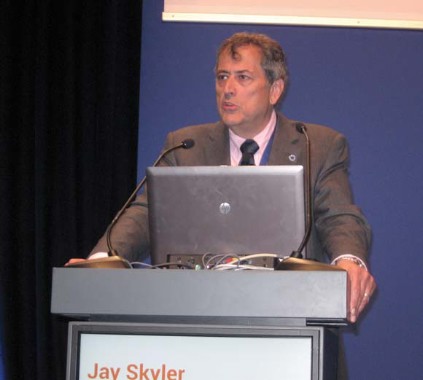
Spironolactone Shows Efficacy in Diastolic Heart Failure
MUNICH – Results from the largest study to ever assess treatment with spironolactone in patients with diastolic heart failure showed clear indications that the drug exerted beneficial structural, hemodynamic, and physiologic effects with a generally reasonable safety profile.
But the mottled results also showed a puzzling lack of efficacy for other end points, and when coupled with some worrisome signs of harm, most physicians will probably reserve judgment on using spironolactone on patients with heart failure and preserved left ventricular ejection fraction until results from an even larger, clinical end point trial are available next year.

Based on the results, "spironolactone can be considered in patients with diastolic heart failure for improving cardiac function and blood pressure control," Dr. Burkert M. Pieske said at the annual congress of the European Society of Cardiology.
Moreover, spironolactone’s performance in the Aldosterone Receptor Blockade in Diastolic Heart Failure (Aldo-DHF) trial with 422 patients randomized to treatment with spironolactone or placebo gives the drug a unique position in the world of diastolic heart failure: Spironolactone is now the only drug with any sort of positive track record in a prospective controlled trial.
"I can’t give a general recommendation to use it because patients [on spironolactone in the trial] did not feel better" after a year on treatment, Dr. Pieske acknowledged in an interview. "But if I had a [diastolic heart failure] patient on dual or triple antihypertensive therapy who still had high blood pressure, I would not hesitate to put the patient on spironolactone if their renal function and potassium level allowed it. This treatment will reduce blood pressure and improve cardiac structure and function," said Dr. Pieske, professor and head of the department of cardiology at the Medical University of Graz, Austria.
But other experts who heard the results had doubts.
"It was not all good news. Patients had an increase in their potassium level, and even more concerning, they had a reduction in their glomerular filtration rate, an average reduction of about 5 mL/min," commented Dr. Stefan D. Anker, professor of medicine at Charité Medical University in Berlin. In addition, the distance walked on the 6-minute walk test was "slightly decreased with spironolactone. Even though it was a small change of 15 m, it was statistically significant," he noted. On top of all this, "worsening of anemia was seen in patients," he added.
Dr. Anker advised waiting for results that are expected to come out next year from TOPCAT, a U.S. study of spironolactone in more than 3,500 patients with diastolic heart failure sponsored by the National Heart, Lung, and Blood Institute.
Aldo-CHF enrolled patients aged 50 years or older with New York Heart Association class II or III heart failure and a left ventricular ejection fraction of at least 50%. Patients also needed to have echocardiographic evidence of diastolic dysfunction, and a peak oxygen consumption (VO2) of less than 25 mL/kg per minute. The study excluded patients with a serum potassium level of 5.1 mmol/L or higher, and those with an estimated glomerular filtration rate of less than 30 mL/min per 1.73 m2 or a serum creatinine greater than 1.8 mg/dL. The patients averaged 67 years old, about 86% had class II heart failure, their average ejection fraction was about 67%, and their average GFR was about 79 mL/min per 1.73 m2.
The researchers randomized 213 patients to received 25 mg of spironolactone daily, and 209 control patients to placebo. Patients also received other medications, with about three-quarters on an angiotensin-converting enzyme inhibitor or angiotensin-receptor blocker, about three-quarters receiving a beta-blocker, and slightly more than half receiving a diuretic.
The study had two primary end points. After 12 months, patients on spironolactone had an average reduction in the E/é ratio of 0.6 (a 5% drop from baseline), compared with an average rise among the control patients of 0.8 (a 6% rise from baseline) for this surrogate measure of filling pressure, a significant between-group difference. The second primary end point was change in peak VO2, and for this measure the two groups showed very similar changes over the 12 months of the study without a significant between-group difference.
Patients on spironolactone also had a significant reduction in average blood pressure of 8/2 mm Hg at 12 months compared with baseline, but the beneficial effect that spironolactone had on myocardial reverse remodeling reflected in the change in E/é occurred independent of the drug’s blood pressure effect, Dr. Pieske said.
Secondary end points that showed beneficial effects from spironolactone treatment included a small but significant increase in left ventricular ejection fraction, and a significant reduction in serum levels of N-terminal prohormone brain natriuretic peptide (NT-proBNP), a marker of heart failure severity. But patients on spironolactone also had an average 15-m reduction in their 6-minute walk distance, a significant drop.
"We saw consistent structural and functional remodeling effects from spironolactone, and except for left ventricular size, all of the other measures improved. But we saw no benefit on exercise capacity, New York Heart Association class, or quality of life," Dr. Pieske said. "Somehow, the beneficial effects on the heart did not translate into an improved situation."
While the overall safety profile of spironolactone treatment was good, the results showed a few possible areas of concern. In the spironolactone group, 36% of patients had worsening renal function, compared with 21% in the control arm, a significant difference; and the average GFR fell by about 7 mL/min per 1.73 m2 with spironolactone, compared with no change in the control patients. The incidence of new or worsening anemia was 16% among the spironolactone patients and 9% in the controls, a significant difference. And twice as many patients on spironolactone had an increase in their serum potassium compared with the controls. However, the incidence of severe hyperkalemia was low and similar in both arms of the study.
"To our knowledge, increased anemia was not seen before" with spironolactone. "Maybe the anemia or a mild decrease in hemoglobin contributed" to the lack of an effect of treatment on exercise capacity, Dr. Pieske suggested.
Aldo-DHF was sponsored by the German government. Dr. Pieske said that he and his associates had no disclosures. Dr. Anker said that he has received consulting fees from Amgen, Bosch Healthcare, and other companies.
Overwhelming evidence indicates that treatment with an aldosterone antagonist, spironolactone or eplerenone, benefits patients with heart failure and left ventricular ejection fraction that’s less than 45%. But few studies have examined these drugs in patients with heart failure and preserved left ventricular function. I have identified three prior studies in the literature, published during 2004-2011, and they include a cumulative total of 98 patients. By assessing the action of spironolactone in a randomized study with 422 patients with diastolic heart failure, Aldo-DHF adds substantial new data to what was previously known about using aldosterone antagonists in this patient population.
Dr. John G.F. Cleland |
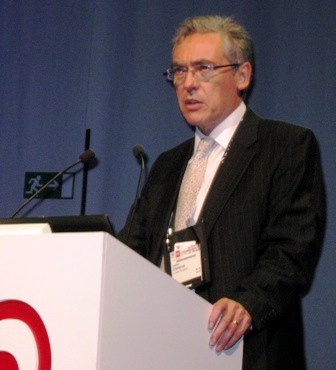
However, the clinical profile of the patients enrolled in the Aldo-DHF trial suggests that they may be younger and healthier than the typical patient with diastolic heart failure that clinicians usually see. They averaged 67 years old, with only a third of the patients aged 70 years or older. Most of the patients had New York Heart Association class II disease, and hypertension was very prevalent, in more than 90% of patients, but they had remarkably little atrial fibrillation, a 4% prevalence, and remarkably good renal function, with an average estimated glomerular filtration rate at baseline of 79 mL/min.
Another marker of the relatively good health of the enrolled patients in the trial was their median level of NT-proBPN, which was 179 ng/mL in the spironolactone-treated arm and 148 ng/mL in the placebo arm, with nearly half the patients having a level below 125 ng/mL, the minimum for identifying patients with heart failure. The low levels of NT-proBNP are a concern.
Finally, only 1 of the 422 patients in the study died (a patient in the spironolactone arm) during 12 months of follow-up. It is strange that these patients did not have a higher mortality rate.
The overall clinical profile of the patients in this trial indicates that they were at the mild end of the spectrum of diastolic dysfunction.
The results also raise some safety concerns, with the spironolactone-treated patients showing increased levels of anemia and reduced renal function. For efficacy, while spironolactone reduced ventricular and atrial volume and level of NT-proBNP, and also reduced blood pressure, the treatment had no effect on symptoms, exercise capacity, or 6-minute walking distance.
The Aldo-CHF study adds important new information on the progression of diastolic heart failure as seen in the control group. But I do not believe that this really was a study of diastolic heart failure. Few of the patients were on diuretic drugs, at entry they had fairly normal levels of NT-proBNP, they had mild abnormalities detected by echocardiography, and they exhibited mild deficits in cardiopulmonary exercise testing. This was a population of patients with early-phase diastolic dysfunction. That limitation, coupled with the uncertain balance of risks and benefits seen in the outcomes, means that we need to await the results of further studies before deciding how to use aldosterone antagonists when treating diastolic heart failure.
Dr. John G.F. Cleland is a professor of cardiology at the University of Hull, Kingston-upon-Hull, U.K. He said that he has received research funding from Pfizer, the company that markets eplerenone (Inspra). He made these comments as designated discussant for the Aldo-DHR report.
Overwhelming evidence indicates that treatment with an aldosterone antagonist, spironolactone or eplerenone, benefits patients with heart failure and left ventricular ejection fraction that’s less than 45%. But few studies have examined these drugs in patients with heart failure and preserved left ventricular function. I have identified three prior studies in the literature, published during 2004-2011, and they include a cumulative total of 98 patients. By assessing the action of spironolactone in a randomized study with 422 patients with diastolic heart failure, Aldo-DHF adds substantial new data to what was previously known about using aldosterone antagonists in this patient population.
Dr. John G.F. Cleland |
However, the clinical profile of the patients enrolled in the Aldo-DHF trial suggests that they may be younger and healthier than the typical patient with diastolic heart failure that clinicians usually see. They averaged 67 years old, with only a third of the patients aged 70 years or older. Most of the patients had New York Heart Association class II disease, and hypertension was very prevalent, in more than 90% of patients, but they had remarkably little atrial fibrillation, a 4% prevalence, and remarkably good renal function, with an average estimated glomerular filtration rate at baseline of 79 mL/min.
Another marker of the relatively good health of the enrolled patients in the trial was their median level of NT-proBPN, which was 179 ng/mL in the spironolactone-treated arm and 148 ng/mL in the placebo arm, with nearly half the patients having a level below 125 ng/mL, the minimum for identifying patients with heart failure. The low levels of NT-proBNP are a concern.
Finally, only 1 of the 422 patients in the study died (a patient in the spironolactone arm) during 12 months of follow-up. It is strange that these patients did not have a higher mortality rate.
The overall clinical profile of the patients in this trial indicates that they were at the mild end of the spectrum of diastolic dysfunction.
The results also raise some safety concerns, with the spironolactone-treated patients showing increased levels of anemia and reduced renal function. For efficacy, while spironolactone reduced ventricular and atrial volume and level of NT-proBNP, and also reduced blood pressure, the treatment had no effect on symptoms, exercise capacity, or 6-minute walking distance.
The Aldo-CHF study adds important new information on the progression of diastolic heart failure as seen in the control group. But I do not believe that this really was a study of diastolic heart failure. Few of the patients were on diuretic drugs, at entry they had fairly normal levels of NT-proBNP, they had mild abnormalities detected by echocardiography, and they exhibited mild deficits in cardiopulmonary exercise testing. This was a population of patients with early-phase diastolic dysfunction. That limitation, coupled with the uncertain balance of risks and benefits seen in the outcomes, means that we need to await the results of further studies before deciding how to use aldosterone antagonists when treating diastolic heart failure.
Dr. John G.F. Cleland is a professor of cardiology at the University of Hull, Kingston-upon-Hull, U.K. He said that he has received research funding from Pfizer, the company that markets eplerenone (Inspra). He made these comments as designated discussant for the Aldo-DHR report.
Overwhelming evidence indicates that treatment with an aldosterone antagonist, spironolactone or eplerenone, benefits patients with heart failure and left ventricular ejection fraction that’s less than 45%. But few studies have examined these drugs in patients with heart failure and preserved left ventricular function. I have identified three prior studies in the literature, published during 2004-2011, and they include a cumulative total of 98 patients. By assessing the action of spironolactone in a randomized study with 422 patients with diastolic heart failure, Aldo-DHF adds substantial new data to what was previously known about using aldosterone antagonists in this patient population.
Dr. John G.F. Cleland |
However, the clinical profile of the patients enrolled in the Aldo-DHF trial suggests that they may be younger and healthier than the typical patient with diastolic heart failure that clinicians usually see. They averaged 67 years old, with only a third of the patients aged 70 years or older. Most of the patients had New York Heart Association class II disease, and hypertension was very prevalent, in more than 90% of patients, but they had remarkably little atrial fibrillation, a 4% prevalence, and remarkably good renal function, with an average estimated glomerular filtration rate at baseline of 79 mL/min.
Another marker of the relatively good health of the enrolled patients in the trial was their median level of NT-proBPN, which was 179 ng/mL in the spironolactone-treated arm and 148 ng/mL in the placebo arm, with nearly half the patients having a level below 125 ng/mL, the minimum for identifying patients with heart failure. The low levels of NT-proBNP are a concern.
Finally, only 1 of the 422 patients in the study died (a patient in the spironolactone arm) during 12 months of follow-up. It is strange that these patients did not have a higher mortality rate.
The overall clinical profile of the patients in this trial indicates that they were at the mild end of the spectrum of diastolic dysfunction.
The results also raise some safety concerns, with the spironolactone-treated patients showing increased levels of anemia and reduced renal function. For efficacy, while spironolactone reduced ventricular and atrial volume and level of NT-proBNP, and also reduced blood pressure, the treatment had no effect on symptoms, exercise capacity, or 6-minute walking distance.
The Aldo-CHF study adds important new information on the progression of diastolic heart failure as seen in the control group. But I do not believe that this really was a study of diastolic heart failure. Few of the patients were on diuretic drugs, at entry they had fairly normal levels of NT-proBNP, they had mild abnormalities detected by echocardiography, and they exhibited mild deficits in cardiopulmonary exercise testing. This was a population of patients with early-phase diastolic dysfunction. That limitation, coupled with the uncertain balance of risks and benefits seen in the outcomes, means that we need to await the results of further studies before deciding how to use aldosterone antagonists when treating diastolic heart failure.
Dr. John G.F. Cleland is a professor of cardiology at the University of Hull, Kingston-upon-Hull, U.K. He said that he has received research funding from Pfizer, the company that markets eplerenone (Inspra). He made these comments as designated discussant for the Aldo-DHR report.
MUNICH – Results from the largest study to ever assess treatment with spironolactone in patients with diastolic heart failure showed clear indications that the drug exerted beneficial structural, hemodynamic, and physiologic effects with a generally reasonable safety profile.
But the mottled results also showed a puzzling lack of efficacy for other end points, and when coupled with some worrisome signs of harm, most physicians will probably reserve judgment on using spironolactone on patients with heart failure and preserved left ventricular ejection fraction until results from an even larger, clinical end point trial are available next year.
Based on the results, "spironolactone can be considered in patients with diastolic heart failure for improving cardiac function and blood pressure control," Dr. Burkert M. Pieske said at the annual congress of the European Society of Cardiology.
Moreover, spironolactone’s performance in the Aldosterone Receptor Blockade in Diastolic Heart Failure (Aldo-DHF) trial with 422 patients randomized to treatment with spironolactone or placebo gives the drug a unique position in the world of diastolic heart failure: Spironolactone is now the only drug with any sort of positive track record in a prospective controlled trial.
"I can’t give a general recommendation to use it because patients [on spironolactone in the trial] did not feel better" after a year on treatment, Dr. Pieske acknowledged in an interview. "But if I had a [diastolic heart failure] patient on dual or triple antihypertensive therapy who still had high blood pressure, I would not hesitate to put the patient on spironolactone if their renal function and potassium level allowed it. This treatment will reduce blood pressure and improve cardiac structure and function," said Dr. Pieske, professor and head of the department of cardiology at the Medical University of Graz, Austria.
But other experts who heard the results had doubts.
"It was not all good news. Patients had an increase in their potassium level, and even more concerning, they had a reduction in their glomerular filtration rate, an average reduction of about 5 mL/min," commented Dr. Stefan D. Anker, professor of medicine at Charité Medical University in Berlin. In addition, the distance walked on the 6-minute walk test was "slightly decreased with spironolactone. Even though it was a small change of 15 m, it was statistically significant," he noted. On top of all this, "worsening of anemia was seen in patients," he added.
Dr. Anker advised waiting for results that are expected to come out next year from TOPCAT, a U.S. study of spironolactone in more than 3,500 patients with diastolic heart failure sponsored by the National Heart, Lung, and Blood Institute.
Aldo-CHF enrolled patients aged 50 years or older with New York Heart Association class II or III heart failure and a left ventricular ejection fraction of at least 50%. Patients also needed to have echocardiographic evidence of diastolic dysfunction, and a peak oxygen consumption (VO2) of less than 25 mL/kg per minute. The study excluded patients with a serum potassium level of 5.1 mmol/L or higher, and those with an estimated glomerular filtration rate of less than 30 mL/min per 1.73 m2 or a serum creatinine greater than 1.8 mg/dL. The patients averaged 67 years old, about 86% had class II heart failure, their average ejection fraction was about 67%, and their average GFR was about 79 mL/min per 1.73 m2.
The researchers randomized 213 patients to received 25 mg of spironolactone daily, and 209 control patients to placebo. Patients also received other medications, with about three-quarters on an angiotensin-converting enzyme inhibitor or angiotensin-receptor blocker, about three-quarters receiving a beta-blocker, and slightly more than half receiving a diuretic.
The study had two primary end points. After 12 months, patients on spironolactone had an average reduction in the E/é ratio of 0.6 (a 5% drop from baseline), compared with an average rise among the control patients of 0.8 (a 6% rise from baseline) for this surrogate measure of filling pressure, a significant between-group difference. The second primary end point was change in peak VO2, and for this measure the two groups showed very similar changes over the 12 months of the study without a significant between-group difference.
Patients on spironolactone also had a significant reduction in average blood pressure of 8/2 mm Hg at 12 months compared with baseline, but the beneficial effect that spironolactone had on myocardial reverse remodeling reflected in the change in E/é occurred independent of the drug’s blood pressure effect, Dr. Pieske said.
Secondary end points that showed beneficial effects from spironolactone treatment included a small but significant increase in left ventricular ejection fraction, and a significant reduction in serum levels of N-terminal prohormone brain natriuretic peptide (NT-proBNP), a marker of heart failure severity. But patients on spironolactone also had an average 15-m reduction in their 6-minute walk distance, a significant drop.
"We saw consistent structural and functional remodeling effects from spironolactone, and except for left ventricular size, all of the other measures improved. But we saw no benefit on exercise capacity, New York Heart Association class, or quality of life," Dr. Pieske said. "Somehow, the beneficial effects on the heart did not translate into an improved situation."
While the overall safety profile of spironolactone treatment was good, the results showed a few possible areas of concern. In the spironolactone group, 36% of patients had worsening renal function, compared with 21% in the control arm, a significant difference; and the average GFR fell by about 7 mL/min per 1.73 m2 with spironolactone, compared with no change in the control patients. The incidence of new or worsening anemia was 16% among the spironolactone patients and 9% in the controls, a significant difference. And twice as many patients on spironolactone had an increase in their serum potassium compared with the controls. However, the incidence of severe hyperkalemia was low and similar in both arms of the study.
"To our knowledge, increased anemia was not seen before" with spironolactone. "Maybe the anemia or a mild decrease in hemoglobin contributed" to the lack of an effect of treatment on exercise capacity, Dr. Pieske suggested.
Aldo-DHF was sponsored by the German government. Dr. Pieske said that he and his associates had no disclosures. Dr. Anker said that he has received consulting fees from Amgen, Bosch Healthcare, and other companies.
MUNICH – Results from the largest study to ever assess treatment with spironolactone in patients with diastolic heart failure showed clear indications that the drug exerted beneficial structural, hemodynamic, and physiologic effects with a generally reasonable safety profile.
But the mottled results also showed a puzzling lack of efficacy for other end points, and when coupled with some worrisome signs of harm, most physicians will probably reserve judgment on using spironolactone on patients with heart failure and preserved left ventricular ejection fraction until results from an even larger, clinical end point trial are available next year.
Based on the results, "spironolactone can be considered in patients with diastolic heart failure for improving cardiac function and blood pressure control," Dr. Burkert M. Pieske said at the annual congress of the European Society of Cardiology.
Moreover, spironolactone’s performance in the Aldosterone Receptor Blockade in Diastolic Heart Failure (Aldo-DHF) trial with 422 patients randomized to treatment with spironolactone or placebo gives the drug a unique position in the world of diastolic heart failure: Spironolactone is now the only drug with any sort of positive track record in a prospective controlled trial.
"I can’t give a general recommendation to use it because patients [on spironolactone in the trial] did not feel better" after a year on treatment, Dr. Pieske acknowledged in an interview. "But if I had a [diastolic heart failure] patient on dual or triple antihypertensive therapy who still had high blood pressure, I would not hesitate to put the patient on spironolactone if their renal function and potassium level allowed it. This treatment will reduce blood pressure and improve cardiac structure and function," said Dr. Pieske, professor and head of the department of cardiology at the Medical University of Graz, Austria.
But other experts who heard the results had doubts.
"It was not all good news. Patients had an increase in their potassium level, and even more concerning, they had a reduction in their glomerular filtration rate, an average reduction of about 5 mL/min," commented Dr. Stefan D. Anker, professor of medicine at Charité Medical University in Berlin. In addition, the distance walked on the 6-minute walk test was "slightly decreased with spironolactone. Even though it was a small change of 15 m, it was statistically significant," he noted. On top of all this, "worsening of anemia was seen in patients," he added.
Dr. Anker advised waiting for results that are expected to come out next year from TOPCAT, a U.S. study of spironolactone in more than 3,500 patients with diastolic heart failure sponsored by the National Heart, Lung, and Blood Institute.
Aldo-CHF enrolled patients aged 50 years or older with New York Heart Association class II or III heart failure and a left ventricular ejection fraction of at least 50%. Patients also needed to have echocardiographic evidence of diastolic dysfunction, and a peak oxygen consumption (VO2) of less than 25 mL/kg per minute. The study excluded patients with a serum potassium level of 5.1 mmol/L or higher, and those with an estimated glomerular filtration rate of less than 30 mL/min per 1.73 m2 or a serum creatinine greater than 1.8 mg/dL. The patients averaged 67 years old, about 86% had class II heart failure, their average ejection fraction was about 67%, and their average GFR was about 79 mL/min per 1.73 m2.
The researchers randomized 213 patients to received 25 mg of spironolactone daily, and 209 control patients to placebo. Patients also received other medications, with about three-quarters on an angiotensin-converting enzyme inhibitor or angiotensin-receptor blocker, about three-quarters receiving a beta-blocker, and slightly more than half receiving a diuretic.
The study had two primary end points. After 12 months, patients on spironolactone had an average reduction in the E/é ratio of 0.6 (a 5% drop from baseline), compared with an average rise among the control patients of 0.8 (a 6% rise from baseline) for this surrogate measure of filling pressure, a significant between-group difference. The second primary end point was change in peak VO2, and for this measure the two groups showed very similar changes over the 12 months of the study without a significant between-group difference.
Patients on spironolactone also had a significant reduction in average blood pressure of 8/2 mm Hg at 12 months compared with baseline, but the beneficial effect that spironolactone had on myocardial reverse remodeling reflected in the change in E/é occurred independent of the drug’s blood pressure effect, Dr. Pieske said.
Secondary end points that showed beneficial effects from spironolactone treatment included a small but significant increase in left ventricular ejection fraction, and a significant reduction in serum levels of N-terminal prohormone brain natriuretic peptide (NT-proBNP), a marker of heart failure severity. But patients on spironolactone also had an average 15-m reduction in their 6-minute walk distance, a significant drop.
"We saw consistent structural and functional remodeling effects from spironolactone, and except for left ventricular size, all of the other measures improved. But we saw no benefit on exercise capacity, New York Heart Association class, or quality of life," Dr. Pieske said. "Somehow, the beneficial effects on the heart did not translate into an improved situation."
While the overall safety profile of spironolactone treatment was good, the results showed a few possible areas of concern. In the spironolactone group, 36% of patients had worsening renal function, compared with 21% in the control arm, a significant difference; and the average GFR fell by about 7 mL/min per 1.73 m2 with spironolactone, compared with no change in the control patients. The incidence of new or worsening anemia was 16% among the spironolactone patients and 9% in the controls, a significant difference. And twice as many patients on spironolactone had an increase in their serum potassium compared with the controls. However, the incidence of severe hyperkalemia was low and similar in both arms of the study.
"To our knowledge, increased anemia was not seen before" with spironolactone. "Maybe the anemia or a mild decrease in hemoglobin contributed" to the lack of an effect of treatment on exercise capacity, Dr. Pieske suggested.
Aldo-DHF was sponsored by the German government. Dr. Pieske said that he and his associates had no disclosures. Dr. Anker said that he has received consulting fees from Amgen, Bosch Healthcare, and other companies.
AT THE ANNUAL CONGRESS OF THE EUROPEAN SOCIETY OF CARDIOLOGY
Major Finding: In patients with diastolic heart failure, spironolactone cut left ventricular filling pressure by 5%, compared with a 6% rise with placebo.
Data Source: Data came from Aldo-DHR, a multicenter study that randomized 422 patients with diastolic heart failure on optimal medical therapy to treatment with spironolactone or placebo for 1 year.
Disclosures: Aldo-DHF was sponsored by the German government. Dr. Pieske said that he and his associates had no disclosures. Dr. Anker said that he has received consulting fees from Amgen, Bosch Healthcare, and other companies.