User login
In metastatic NSCLC, better QoL outcomes tied to better outcomes
The authors, including Fabio Salomone of the University of Naples Federico II, department of clinical medicine and surgery, also observed trends toward an association between QoL improvement and PFS among patients treated with chemotherapy and immunotherapy.
The new research was presented during a poster session at European Lung Cancer Congress 2023.
“The findings of the study support the thesis that QoL and survival in patients with NSCLC are linked. Although this is documented in the literature, this study sums up the evidence of a large number of RCTs, and provides detail in the QoL/survival relationship by treatment type. The subgroup analysis by treatment type is a key strength of the study showing that the QoL/survival link is stronger and more reliable in target(ed) therapies,” George Kypriotakis, PhD, who was not involved with the study, said in an interview.
Combining efficacy and quality of life improvement is an important consideration in clinical practice. “It is important that clinicians provide therapies that are also palliative and improve QoL,” said Dr. Kypriotakis, assistant professor of behavioral sciences at University of Texas MD Anderson Cancer Center, Houston. He noted that the finding of a PFS benefit is a good indicator of overall benefit, which is important since OS outcomes require a larger number of patients and longer follow-up to determine.
“PFS can still be a valid surrogate for OS, especially when it is positively associated with QoL,” noted Dr. Kypriotakis.
The study included 81 trials. Sixteen of the studies investigated immunotherapy, 50 investigated targeted therapy, and 17 investigated chemotherapy regimens. Thirty-seven percent of the trials found an improvement in QoL in the treatment arm compared with the control arm, 59.3% found no difference between arms, and 3.7% found a worse QoL in the treatment arm. There was no statistically significant association between an improvement in OS and QoL among the trials (P = .368).
Improved QoL tied to improved PFS
The researchers found an association between improved QoL and improved PFS. Among 60 trials that showed improved PFS, 43.3% found a superior QoL in the treatment arm, 53.3% showed no difference, and 3.3% showed reduced QoL. Among 20 trials that found no improvement in PFS, 20% demonstrated an improved QoL, 75% found no change, and 5% showed worse QoL (P = .0473).
A subanalysis of 48 targeted therapy trials found a correlation between PFS and QoL improvement (P = .0196). Among 25 trials involving patients receiving epidermal growth factor receptor (EGFR) and anaplastic lymphoma kinase (ALK) inhibitors showing an improved PFS, 60% showed improved QoL, 36% showed no difference, and 4% showed worsening (P = .0077). Seven of these trials showed no PFS benefit and no change in QoL.
Industry sponsorship may affect QOL results
The researchers found potential evidence that industry sponsorship may lead to a spin on QoL outcomes. Among 51 trials that showed no QoL benefit associated with treatment, the description of the QoL outcome in 37 industry-sponsored was judged to be neutral and coherent with the study findings in 26 cases, but unjustifiably favorable in 11 cases. Among 14 with nonprofit support, descriptions of QoL results were found to be neutral in all cases (P = .0232).
“Obviously, industry may be motivated to overemphasize treatment benefits, especially in measures that also have a qualitative/subjective dimension such as QoL. Assuming that the authors used a reliable criterion to evaluate “inappropriateness,” industry may be more likely to emphasize QoL improvements as a surrogate for OS, especially when seeking drug approval,” Dr. Kypriotakis said.
The study is retrospective and cannot prove causation.
Dr. Salomone and Dr. Kypriotakis have no relevant financial disclosures.
The authors, including Fabio Salomone of the University of Naples Federico II, department of clinical medicine and surgery, also observed trends toward an association between QoL improvement and PFS among patients treated with chemotherapy and immunotherapy.
The new research was presented during a poster session at European Lung Cancer Congress 2023.
“The findings of the study support the thesis that QoL and survival in patients with NSCLC are linked. Although this is documented in the literature, this study sums up the evidence of a large number of RCTs, and provides detail in the QoL/survival relationship by treatment type. The subgroup analysis by treatment type is a key strength of the study showing that the QoL/survival link is stronger and more reliable in target(ed) therapies,” George Kypriotakis, PhD, who was not involved with the study, said in an interview.
Combining efficacy and quality of life improvement is an important consideration in clinical practice. “It is important that clinicians provide therapies that are also palliative and improve QoL,” said Dr. Kypriotakis, assistant professor of behavioral sciences at University of Texas MD Anderson Cancer Center, Houston. He noted that the finding of a PFS benefit is a good indicator of overall benefit, which is important since OS outcomes require a larger number of patients and longer follow-up to determine.
“PFS can still be a valid surrogate for OS, especially when it is positively associated with QoL,” noted Dr. Kypriotakis.
The study included 81 trials. Sixteen of the studies investigated immunotherapy, 50 investigated targeted therapy, and 17 investigated chemotherapy regimens. Thirty-seven percent of the trials found an improvement in QoL in the treatment arm compared with the control arm, 59.3% found no difference between arms, and 3.7% found a worse QoL in the treatment arm. There was no statistically significant association between an improvement in OS and QoL among the trials (P = .368).
Improved QoL tied to improved PFS
The researchers found an association between improved QoL and improved PFS. Among 60 trials that showed improved PFS, 43.3% found a superior QoL in the treatment arm, 53.3% showed no difference, and 3.3% showed reduced QoL. Among 20 trials that found no improvement in PFS, 20% demonstrated an improved QoL, 75% found no change, and 5% showed worse QoL (P = .0473).
A subanalysis of 48 targeted therapy trials found a correlation between PFS and QoL improvement (P = .0196). Among 25 trials involving patients receiving epidermal growth factor receptor (EGFR) and anaplastic lymphoma kinase (ALK) inhibitors showing an improved PFS, 60% showed improved QoL, 36% showed no difference, and 4% showed worsening (P = .0077). Seven of these trials showed no PFS benefit and no change in QoL.
Industry sponsorship may affect QOL results
The researchers found potential evidence that industry sponsorship may lead to a spin on QoL outcomes. Among 51 trials that showed no QoL benefit associated with treatment, the description of the QoL outcome in 37 industry-sponsored was judged to be neutral and coherent with the study findings in 26 cases, but unjustifiably favorable in 11 cases. Among 14 with nonprofit support, descriptions of QoL results were found to be neutral in all cases (P = .0232).
“Obviously, industry may be motivated to overemphasize treatment benefits, especially in measures that also have a qualitative/subjective dimension such as QoL. Assuming that the authors used a reliable criterion to evaluate “inappropriateness,” industry may be more likely to emphasize QoL improvements as a surrogate for OS, especially when seeking drug approval,” Dr. Kypriotakis said.
The study is retrospective and cannot prove causation.
Dr. Salomone and Dr. Kypriotakis have no relevant financial disclosures.
The authors, including Fabio Salomone of the University of Naples Federico II, department of clinical medicine and surgery, also observed trends toward an association between QoL improvement and PFS among patients treated with chemotherapy and immunotherapy.
The new research was presented during a poster session at European Lung Cancer Congress 2023.
“The findings of the study support the thesis that QoL and survival in patients with NSCLC are linked. Although this is documented in the literature, this study sums up the evidence of a large number of RCTs, and provides detail in the QoL/survival relationship by treatment type. The subgroup analysis by treatment type is a key strength of the study showing that the QoL/survival link is stronger and more reliable in target(ed) therapies,” George Kypriotakis, PhD, who was not involved with the study, said in an interview.
Combining efficacy and quality of life improvement is an important consideration in clinical practice. “It is important that clinicians provide therapies that are also palliative and improve QoL,” said Dr. Kypriotakis, assistant professor of behavioral sciences at University of Texas MD Anderson Cancer Center, Houston. He noted that the finding of a PFS benefit is a good indicator of overall benefit, which is important since OS outcomes require a larger number of patients and longer follow-up to determine.
“PFS can still be a valid surrogate for OS, especially when it is positively associated with QoL,” noted Dr. Kypriotakis.
The study included 81 trials. Sixteen of the studies investigated immunotherapy, 50 investigated targeted therapy, and 17 investigated chemotherapy regimens. Thirty-seven percent of the trials found an improvement in QoL in the treatment arm compared with the control arm, 59.3% found no difference between arms, and 3.7% found a worse QoL in the treatment arm. There was no statistically significant association between an improvement in OS and QoL among the trials (P = .368).
Improved QoL tied to improved PFS
The researchers found an association between improved QoL and improved PFS. Among 60 trials that showed improved PFS, 43.3% found a superior QoL in the treatment arm, 53.3% showed no difference, and 3.3% showed reduced QoL. Among 20 trials that found no improvement in PFS, 20% demonstrated an improved QoL, 75% found no change, and 5% showed worse QoL (P = .0473).
A subanalysis of 48 targeted therapy trials found a correlation between PFS and QoL improvement (P = .0196). Among 25 trials involving patients receiving epidermal growth factor receptor (EGFR) and anaplastic lymphoma kinase (ALK) inhibitors showing an improved PFS, 60% showed improved QoL, 36% showed no difference, and 4% showed worsening (P = .0077). Seven of these trials showed no PFS benefit and no change in QoL.
Industry sponsorship may affect QOL results
The researchers found potential evidence that industry sponsorship may lead to a spin on QoL outcomes. Among 51 trials that showed no QoL benefit associated with treatment, the description of the QoL outcome in 37 industry-sponsored was judged to be neutral and coherent with the study findings in 26 cases, but unjustifiably favorable in 11 cases. Among 14 with nonprofit support, descriptions of QoL results were found to be neutral in all cases (P = .0232).
“Obviously, industry may be motivated to overemphasize treatment benefits, especially in measures that also have a qualitative/subjective dimension such as QoL. Assuming that the authors used a reliable criterion to evaluate “inappropriateness,” industry may be more likely to emphasize QoL improvements as a surrogate for OS, especially when seeking drug approval,” Dr. Kypriotakis said.
The study is retrospective and cannot prove causation.
Dr. Salomone and Dr. Kypriotakis have no relevant financial disclosures.
FROM ELCC 2023
SBRT: Alternative to surgery in early stage lung cancer?
, according to population-based data from a German cancer registry.
“From a public health perspective, SBRT is a good therapeutic option in terms of survival, especially for elderly and inoperable patients,” noted the study authors, led by Jörg Andreas Müller, MD, department of radiation oncology, University Hospital of Halle, Germany.
The analysis was published online in the journal Strahlentherapie Und Onkologie.
Surgery remains the standard of care for early stage NSCLC. However, many patients are not eligible for surgery because of the tumor’s location, age, frailty, or comorbidities.
Before the introduction of SBRT, conventional radiation therapy was the only reasonable option for inoperable patients, with study data showing only a small survival improvement in treated vs. untreated patients.
High-precision, image-guided SBRT offers better tumor control with limited toxicity. And while many radiation oncology centers in Germany adopted SBRT as an alternative treatment for surgery after 2000, few population-based studies evaluating SBRT’s impact on overall survival exist.
Using the German clinical cancer registry of Berlin-Brandenburg, Dr. Müller and colleagues assessed SBRT as an alternative to surgery in 558 patients with stage I and II NSCLC, diagnosed between 2000 and 2015.
More patients received surgery than SBRT (74% vs. 26%). Those who received SBRT were younger than those in the surgery group and had better Karnofsky performance status.
Among patients in the SBRT group, median survival was 19 months overall and 27 months in patients over age 75. In the surgery group, median survival was 22 months overall and 24 months in those over 75.
In a univariate survival model of a propensity-matched sample of 292 patients – half of whom received SBRT – survival rates were similar among those who underwent SBRT versus surgery (hazard ratio [HR], 1.2; P = .2).
Survival was also similar in the two treatment groups in a T1 subanalysis (HR, 1.12; P = .7) as well as in patients over age 75 (HR, 0.86; P = .5).
Better performance status scores were associated with improved survival, and higher histological grades and TNM stages were linked to higher mortality risk. The availability of histological data did not have a significant impact on survival outcomes.
Overall, the findings suggest that SBRT and surgery offer comparable survival outcomes in early stage NSCLC and “the availability of histological data might not be decisive for treatment planning,” Dr. Müller and colleagues said.
Drew Moghanaki, MD, chief of the thoracic oncology service at UCLA Health Jonsson Comprehensive Cancer Center, Los Angeles, highlighted the findings on Twitter.
A thoracic surgeon from Germany responded with several concerns about the study, including the use of statistics with univariate modeling and undiagnosed lymph node (N) status.
Dr. Moghanaki replied that these “concerns summarize how we USED to think. It increasingly seems they aren’t as important as our teachers once thought they were. As we move into the future we need to reassess the data that supported these recommendations as they seem more academic than patient centered.”
The study authors reported no specific funding, and no relevant financial relationships.
A version of this article first appeared on Medscape.com.
, according to population-based data from a German cancer registry.
“From a public health perspective, SBRT is a good therapeutic option in terms of survival, especially for elderly and inoperable patients,” noted the study authors, led by Jörg Andreas Müller, MD, department of radiation oncology, University Hospital of Halle, Germany.
The analysis was published online in the journal Strahlentherapie Und Onkologie.
Surgery remains the standard of care for early stage NSCLC. However, many patients are not eligible for surgery because of the tumor’s location, age, frailty, or comorbidities.
Before the introduction of SBRT, conventional radiation therapy was the only reasonable option for inoperable patients, with study data showing only a small survival improvement in treated vs. untreated patients.
High-precision, image-guided SBRT offers better tumor control with limited toxicity. And while many radiation oncology centers in Germany adopted SBRT as an alternative treatment for surgery after 2000, few population-based studies evaluating SBRT’s impact on overall survival exist.
Using the German clinical cancer registry of Berlin-Brandenburg, Dr. Müller and colleagues assessed SBRT as an alternative to surgery in 558 patients with stage I and II NSCLC, diagnosed between 2000 and 2015.
More patients received surgery than SBRT (74% vs. 26%). Those who received SBRT were younger than those in the surgery group and had better Karnofsky performance status.
Among patients in the SBRT group, median survival was 19 months overall and 27 months in patients over age 75. In the surgery group, median survival was 22 months overall and 24 months in those over 75.
In a univariate survival model of a propensity-matched sample of 292 patients – half of whom received SBRT – survival rates were similar among those who underwent SBRT versus surgery (hazard ratio [HR], 1.2; P = .2).
Survival was also similar in the two treatment groups in a T1 subanalysis (HR, 1.12; P = .7) as well as in patients over age 75 (HR, 0.86; P = .5).
Better performance status scores were associated with improved survival, and higher histological grades and TNM stages were linked to higher mortality risk. The availability of histological data did not have a significant impact on survival outcomes.
Overall, the findings suggest that SBRT and surgery offer comparable survival outcomes in early stage NSCLC and “the availability of histological data might not be decisive for treatment planning,” Dr. Müller and colleagues said.
Drew Moghanaki, MD, chief of the thoracic oncology service at UCLA Health Jonsson Comprehensive Cancer Center, Los Angeles, highlighted the findings on Twitter.
A thoracic surgeon from Germany responded with several concerns about the study, including the use of statistics with univariate modeling and undiagnosed lymph node (N) status.
Dr. Moghanaki replied that these “concerns summarize how we USED to think. It increasingly seems they aren’t as important as our teachers once thought they were. As we move into the future we need to reassess the data that supported these recommendations as they seem more academic than patient centered.”
The study authors reported no specific funding, and no relevant financial relationships.
A version of this article first appeared on Medscape.com.
, according to population-based data from a German cancer registry.
“From a public health perspective, SBRT is a good therapeutic option in terms of survival, especially for elderly and inoperable patients,” noted the study authors, led by Jörg Andreas Müller, MD, department of radiation oncology, University Hospital of Halle, Germany.
The analysis was published online in the journal Strahlentherapie Und Onkologie.
Surgery remains the standard of care for early stage NSCLC. However, many patients are not eligible for surgery because of the tumor’s location, age, frailty, or comorbidities.
Before the introduction of SBRT, conventional radiation therapy was the only reasonable option for inoperable patients, with study data showing only a small survival improvement in treated vs. untreated patients.
High-precision, image-guided SBRT offers better tumor control with limited toxicity. And while many radiation oncology centers in Germany adopted SBRT as an alternative treatment for surgery after 2000, few population-based studies evaluating SBRT’s impact on overall survival exist.
Using the German clinical cancer registry of Berlin-Brandenburg, Dr. Müller and colleagues assessed SBRT as an alternative to surgery in 558 patients with stage I and II NSCLC, diagnosed between 2000 and 2015.
More patients received surgery than SBRT (74% vs. 26%). Those who received SBRT were younger than those in the surgery group and had better Karnofsky performance status.
Among patients in the SBRT group, median survival was 19 months overall and 27 months in patients over age 75. In the surgery group, median survival was 22 months overall and 24 months in those over 75.
In a univariate survival model of a propensity-matched sample of 292 patients – half of whom received SBRT – survival rates were similar among those who underwent SBRT versus surgery (hazard ratio [HR], 1.2; P = .2).
Survival was also similar in the two treatment groups in a T1 subanalysis (HR, 1.12; P = .7) as well as in patients over age 75 (HR, 0.86; P = .5).
Better performance status scores were associated with improved survival, and higher histological grades and TNM stages were linked to higher mortality risk. The availability of histological data did not have a significant impact on survival outcomes.
Overall, the findings suggest that SBRT and surgery offer comparable survival outcomes in early stage NSCLC and “the availability of histological data might not be decisive for treatment planning,” Dr. Müller and colleagues said.
Drew Moghanaki, MD, chief of the thoracic oncology service at UCLA Health Jonsson Comprehensive Cancer Center, Los Angeles, highlighted the findings on Twitter.
A thoracic surgeon from Germany responded with several concerns about the study, including the use of statistics with univariate modeling and undiagnosed lymph node (N) status.
Dr. Moghanaki replied that these “concerns summarize how we USED to think. It increasingly seems they aren’t as important as our teachers once thought they were. As we move into the future we need to reassess the data that supported these recommendations as they seem more academic than patient centered.”
The study authors reported no specific funding, and no relevant financial relationships.
A version of this article first appeared on Medscape.com.
FROM STRAHLENTHERAPIE UND ONKOLOGIE
Low-dose olanzapine improves appetite in chemotherapy patients
Anorexia is a problem in approximately 50% of newly-diagnosed cancer patients, and can compromise survival, wrote study author Lakshmi Sandhya, MD, of Jawaharlal Institute of Postgraduate Medical Education and Research (JIPMER), Puducherry, India, and colleagues. In particular, patients with lung and gastrointestinal tract cancers are prone to anorexia during chemotherapy, they said. Olanzapine is a demonstrated appetite stimulant and has been used in cancer patients as a short-term antiemetic, but its use for long-term appetite stimulation has not been well-studied, they said.
In the study, published in the Journal of Clinical Oncology, the researchers randomized 124 adults aged 18 years and older to a 2.5 grams of olanzapine or placebo for 12 weeks. The participants had untreated, locally advanced, or metastatic gastric, hepatopancreaticobiliary (HPB), or lung cancers.
The median age of the participants was 55 years. The primary outcome was a weight gain greater than 5% and improved appetite based on the visual analog scale (VAS) and questionnaires. A change in nutritional status, quality of life (QOL), and chemotherapy toxicity, were secondary endpoints.
After 12 weeks, complete data were available for 58 patients in the olanzapine group and 54 in the placebo group. Of these, 60% of the olanzapine group and 9% of the placebo group met the primary endpoint of a weight gain greater than 5%. The proportion of patients with improved appetite based on VAS scores and questionnaire scores was significantly higher in olanzapine patients vs. placebo patients (43% vs. 13% and 22% vs. 4%, respectively).
In addition, 52% of the olanzapine group vs. 18% of the placebo group achieved more than 75% intake of recommended daily calories.
Most of the reported toxicities were not hematological and similar between the groups (85% for olanzapine vs. 88% for placebo). The proportion of patients with toxicities of grade 3 or higher was lower in the olanzapine group vs. the placebo group (12% vs. 37%, P = .002). Patients in the olanzapine group also reported significantly improved quality of life from baseline compared to the placebo patients.
The findings were limited by several factors including the heterogeneous cancers and treatment regimens, the lack of data on weight beyond 12 weeks, the relatively small study population, and the subjective nature of anorexia measurements, the researchers noted.
However, the results suggest that low-dose olanzapine is an effective and well-tolerated add-on intervention for the subset of patients at risk for anorexia at the start of chemotherapy, they said.
“Future studies could look at various cancers in a multicentric setting and long-term endpoints such as patient survival,” they concluded.
The study drug and placebo were funded by an intramural grant from Jawaharlal Institute of Postgraduate Medical Education and Research (JIPMER). The researchers had no financial conflicts to disclose.
Anorexia is a problem in approximately 50% of newly-diagnosed cancer patients, and can compromise survival, wrote study author Lakshmi Sandhya, MD, of Jawaharlal Institute of Postgraduate Medical Education and Research (JIPMER), Puducherry, India, and colleagues. In particular, patients with lung and gastrointestinal tract cancers are prone to anorexia during chemotherapy, they said. Olanzapine is a demonstrated appetite stimulant and has been used in cancer patients as a short-term antiemetic, but its use for long-term appetite stimulation has not been well-studied, they said.
In the study, published in the Journal of Clinical Oncology, the researchers randomized 124 adults aged 18 years and older to a 2.5 grams of olanzapine or placebo for 12 weeks. The participants had untreated, locally advanced, or metastatic gastric, hepatopancreaticobiliary (HPB), or lung cancers.
The median age of the participants was 55 years. The primary outcome was a weight gain greater than 5% and improved appetite based on the visual analog scale (VAS) and questionnaires. A change in nutritional status, quality of life (QOL), and chemotherapy toxicity, were secondary endpoints.
After 12 weeks, complete data were available for 58 patients in the olanzapine group and 54 in the placebo group. Of these, 60% of the olanzapine group and 9% of the placebo group met the primary endpoint of a weight gain greater than 5%. The proportion of patients with improved appetite based on VAS scores and questionnaire scores was significantly higher in olanzapine patients vs. placebo patients (43% vs. 13% and 22% vs. 4%, respectively).
In addition, 52% of the olanzapine group vs. 18% of the placebo group achieved more than 75% intake of recommended daily calories.
Most of the reported toxicities were not hematological and similar between the groups (85% for olanzapine vs. 88% for placebo). The proportion of patients with toxicities of grade 3 or higher was lower in the olanzapine group vs. the placebo group (12% vs. 37%, P = .002). Patients in the olanzapine group also reported significantly improved quality of life from baseline compared to the placebo patients.
The findings were limited by several factors including the heterogeneous cancers and treatment regimens, the lack of data on weight beyond 12 weeks, the relatively small study population, and the subjective nature of anorexia measurements, the researchers noted.
However, the results suggest that low-dose olanzapine is an effective and well-tolerated add-on intervention for the subset of patients at risk for anorexia at the start of chemotherapy, they said.
“Future studies could look at various cancers in a multicentric setting and long-term endpoints such as patient survival,” they concluded.
The study drug and placebo were funded by an intramural grant from Jawaharlal Institute of Postgraduate Medical Education and Research (JIPMER). The researchers had no financial conflicts to disclose.
Anorexia is a problem in approximately 50% of newly-diagnosed cancer patients, and can compromise survival, wrote study author Lakshmi Sandhya, MD, of Jawaharlal Institute of Postgraduate Medical Education and Research (JIPMER), Puducherry, India, and colleagues. In particular, patients with lung and gastrointestinal tract cancers are prone to anorexia during chemotherapy, they said. Olanzapine is a demonstrated appetite stimulant and has been used in cancer patients as a short-term antiemetic, but its use for long-term appetite stimulation has not been well-studied, they said.
In the study, published in the Journal of Clinical Oncology, the researchers randomized 124 adults aged 18 years and older to a 2.5 grams of olanzapine or placebo for 12 weeks. The participants had untreated, locally advanced, or metastatic gastric, hepatopancreaticobiliary (HPB), or lung cancers.
The median age of the participants was 55 years. The primary outcome was a weight gain greater than 5% and improved appetite based on the visual analog scale (VAS) and questionnaires. A change in nutritional status, quality of life (QOL), and chemotherapy toxicity, were secondary endpoints.
After 12 weeks, complete data were available for 58 patients in the olanzapine group and 54 in the placebo group. Of these, 60% of the olanzapine group and 9% of the placebo group met the primary endpoint of a weight gain greater than 5%. The proportion of patients with improved appetite based on VAS scores and questionnaire scores was significantly higher in olanzapine patients vs. placebo patients (43% vs. 13% and 22% vs. 4%, respectively).
In addition, 52% of the olanzapine group vs. 18% of the placebo group achieved more than 75% intake of recommended daily calories.
Most of the reported toxicities were not hematological and similar between the groups (85% for olanzapine vs. 88% for placebo). The proportion of patients with toxicities of grade 3 or higher was lower in the olanzapine group vs. the placebo group (12% vs. 37%, P = .002). Patients in the olanzapine group also reported significantly improved quality of life from baseline compared to the placebo patients.
The findings were limited by several factors including the heterogeneous cancers and treatment regimens, the lack of data on weight beyond 12 weeks, the relatively small study population, and the subjective nature of anorexia measurements, the researchers noted.
However, the results suggest that low-dose olanzapine is an effective and well-tolerated add-on intervention for the subset of patients at risk for anorexia at the start of chemotherapy, they said.
“Future studies could look at various cancers in a multicentric setting and long-term endpoints such as patient survival,” they concluded.
The study drug and placebo were funded by an intramural grant from Jawaharlal Institute of Postgraduate Medical Education and Research (JIPMER). The researchers had no financial conflicts to disclose.
FROM THE JOURNAL OF CLINICAL ONCOLOGY
Cancer risk elevated after stroke in younger people
In young people, stroke might be the first manifestation of an underlying cancer, according to the investigators, led by Jamie Verhoeven, MD, PhD, with the department of neurology, Radboud University Medical Centre, Nijmegen, the Netherlands.
The new study can be viewed as a “stepping stone for future studies investigating the usefulness of screening for cancer after stroke,” the researchers say.
The study was published online in JAMA Network Open.
Currently, the diagnostic workup for young people with stroke includes searching for rare clotting disorders, although screening for cancer is not regularly performed.
Some research suggests that stroke and cancer are linked, but the literature is limited. In prior studies among people of all ages, cancer incidence after stroke has been variable – from 1% to 5% at 1 year and from 11% to 30% after 10 years.
To the team’s knowledge, only two studies have described the incidence of cancer after stroke among younger patients. One put the risk at 0.5% for people aged 18-50 years in the first year after stroke; the other described a cumulative risk of 17.3% in the 10 years after stroke for patients aged 18-55 years.
Using Dutch data, Dr. Verhoeven and colleagues identified 27,616 young stroke patients (age, 15-49 years; median age, 45 years) and 362,782 older stroke patients (median age, 76 years).
The cumulative incidence of any new cancer at 10 years was 3.7% among the younger stroke patients and 8.5% among the older stroke patients.
The incidence of a new cancer after stroke among younger patients was higher among women than men, while the opposite was true for older stroke patients.
Compared with the general population, younger stroke patients had a more than 2.5-fold greater likelihood of being diagnosed with a new cancer in the first year after ischemic stroke (standardized incidence ratio, 2.6). The risk was highest for lung cancer (SIR, 6.9), followed by hematologic cancers (SIR, 5.2).
Compared with the general population, younger stroke patients had nearly a 5.5-fold greater likelihood of being diagnosed with a new cancer in the first year after intracerebral hemorrhage (SIR, 5.4), and the risk was highest for hematologic cancers (SIR, 14.2).
In younger patients, the cumulative incidence of any cancer decreased over the years but remained significantly higher for 8 years following a stroke.
For patients aged 50 years or older, the 1-year risk for any new cancer after either ischemic stroke or intracerebral hemorrhage was 1.2 times higher, compared with the general population.
“We typically think of occult cancer as being a cause of stroke in an older population, given that the incidence of cancer increases over time [but] what this study shows is that we probably do need to consider occult cancer as an underlying cause of stroke even in a younger population,” said Laura Gioia, MD, stroke neurologist at the University of Montreal, who was not involved in the research.
Dr. Verhoeven and colleagues conclude that their finding supports the hypothesis of a causal link between cancer and stroke. Given the timing between stroke and cancer diagnosis, cancer may have been present when the stroke occurred and possibly played a role in causing it, the authors note. However, conclusions on causal mechanisms cannot be drawn from the current study.
The question of whether young stroke patients should be screened for cancer is a tough one, Dr. Gioia noted. “Cancer represents a small percentage of causes of stroke. That means you would have to screen a lot of people with a benefit that is still uncertain for the moment,” Dr. Gioia said in an interview.
“I think we need to keep cancer in mind as a cause of stroke in our young patients, and that should probably guide our history-taking with the patient and consider imaging when it’s appropriate and when we think that there could be an underlying occult cancer,” Dr. Gioia suggested.
The study was funded in part through unrestricted funding by Stryker, Medtronic, and Cerenovus. Dr. Verhoeven and Dr. Gioia have disclosed no relevant financial relationships.
A version of this article first appeared on Medscape.com.
In young people, stroke might be the first manifestation of an underlying cancer, according to the investigators, led by Jamie Verhoeven, MD, PhD, with the department of neurology, Radboud University Medical Centre, Nijmegen, the Netherlands.
The new study can be viewed as a “stepping stone for future studies investigating the usefulness of screening for cancer after stroke,” the researchers say.
The study was published online in JAMA Network Open.
Currently, the diagnostic workup for young people with stroke includes searching for rare clotting disorders, although screening for cancer is not regularly performed.
Some research suggests that stroke and cancer are linked, but the literature is limited. In prior studies among people of all ages, cancer incidence after stroke has been variable – from 1% to 5% at 1 year and from 11% to 30% after 10 years.
To the team’s knowledge, only two studies have described the incidence of cancer after stroke among younger patients. One put the risk at 0.5% for people aged 18-50 years in the first year after stroke; the other described a cumulative risk of 17.3% in the 10 years after stroke for patients aged 18-55 years.
Using Dutch data, Dr. Verhoeven and colleagues identified 27,616 young stroke patients (age, 15-49 years; median age, 45 years) and 362,782 older stroke patients (median age, 76 years).
The cumulative incidence of any new cancer at 10 years was 3.7% among the younger stroke patients and 8.5% among the older stroke patients.
The incidence of a new cancer after stroke among younger patients was higher among women than men, while the opposite was true for older stroke patients.
Compared with the general population, younger stroke patients had a more than 2.5-fold greater likelihood of being diagnosed with a new cancer in the first year after ischemic stroke (standardized incidence ratio, 2.6). The risk was highest for lung cancer (SIR, 6.9), followed by hematologic cancers (SIR, 5.2).
Compared with the general population, younger stroke patients had nearly a 5.5-fold greater likelihood of being diagnosed with a new cancer in the first year after intracerebral hemorrhage (SIR, 5.4), and the risk was highest for hematologic cancers (SIR, 14.2).
In younger patients, the cumulative incidence of any cancer decreased over the years but remained significantly higher for 8 years following a stroke.
For patients aged 50 years or older, the 1-year risk for any new cancer after either ischemic stroke or intracerebral hemorrhage was 1.2 times higher, compared with the general population.
“We typically think of occult cancer as being a cause of stroke in an older population, given that the incidence of cancer increases over time [but] what this study shows is that we probably do need to consider occult cancer as an underlying cause of stroke even in a younger population,” said Laura Gioia, MD, stroke neurologist at the University of Montreal, who was not involved in the research.
Dr. Verhoeven and colleagues conclude that their finding supports the hypothesis of a causal link between cancer and stroke. Given the timing between stroke and cancer diagnosis, cancer may have been present when the stroke occurred and possibly played a role in causing it, the authors note. However, conclusions on causal mechanisms cannot be drawn from the current study.
The question of whether young stroke patients should be screened for cancer is a tough one, Dr. Gioia noted. “Cancer represents a small percentage of causes of stroke. That means you would have to screen a lot of people with a benefit that is still uncertain for the moment,” Dr. Gioia said in an interview.
“I think we need to keep cancer in mind as a cause of stroke in our young patients, and that should probably guide our history-taking with the patient and consider imaging when it’s appropriate and when we think that there could be an underlying occult cancer,” Dr. Gioia suggested.
The study was funded in part through unrestricted funding by Stryker, Medtronic, and Cerenovus. Dr. Verhoeven and Dr. Gioia have disclosed no relevant financial relationships.
A version of this article first appeared on Medscape.com.
In young people, stroke might be the first manifestation of an underlying cancer, according to the investigators, led by Jamie Verhoeven, MD, PhD, with the department of neurology, Radboud University Medical Centre, Nijmegen, the Netherlands.
The new study can be viewed as a “stepping stone for future studies investigating the usefulness of screening for cancer after stroke,” the researchers say.
The study was published online in JAMA Network Open.
Currently, the diagnostic workup for young people with stroke includes searching for rare clotting disorders, although screening for cancer is not regularly performed.
Some research suggests that stroke and cancer are linked, but the literature is limited. In prior studies among people of all ages, cancer incidence after stroke has been variable – from 1% to 5% at 1 year and from 11% to 30% after 10 years.
To the team’s knowledge, only two studies have described the incidence of cancer after stroke among younger patients. One put the risk at 0.5% for people aged 18-50 years in the first year after stroke; the other described a cumulative risk of 17.3% in the 10 years after stroke for patients aged 18-55 years.
Using Dutch data, Dr. Verhoeven and colleagues identified 27,616 young stroke patients (age, 15-49 years; median age, 45 years) and 362,782 older stroke patients (median age, 76 years).
The cumulative incidence of any new cancer at 10 years was 3.7% among the younger stroke patients and 8.5% among the older stroke patients.
The incidence of a new cancer after stroke among younger patients was higher among women than men, while the opposite was true for older stroke patients.
Compared with the general population, younger stroke patients had a more than 2.5-fold greater likelihood of being diagnosed with a new cancer in the first year after ischemic stroke (standardized incidence ratio, 2.6). The risk was highest for lung cancer (SIR, 6.9), followed by hematologic cancers (SIR, 5.2).
Compared with the general population, younger stroke patients had nearly a 5.5-fold greater likelihood of being diagnosed with a new cancer in the first year after intracerebral hemorrhage (SIR, 5.4), and the risk was highest for hematologic cancers (SIR, 14.2).
In younger patients, the cumulative incidence of any cancer decreased over the years but remained significantly higher for 8 years following a stroke.
For patients aged 50 years or older, the 1-year risk for any new cancer after either ischemic stroke or intracerebral hemorrhage was 1.2 times higher, compared with the general population.
“We typically think of occult cancer as being a cause of stroke in an older population, given that the incidence of cancer increases over time [but] what this study shows is that we probably do need to consider occult cancer as an underlying cause of stroke even in a younger population,” said Laura Gioia, MD, stroke neurologist at the University of Montreal, who was not involved in the research.
Dr. Verhoeven and colleagues conclude that their finding supports the hypothesis of a causal link between cancer and stroke. Given the timing between stroke and cancer diagnosis, cancer may have been present when the stroke occurred and possibly played a role in causing it, the authors note. However, conclusions on causal mechanisms cannot be drawn from the current study.
The question of whether young stroke patients should be screened for cancer is a tough one, Dr. Gioia noted. “Cancer represents a small percentage of causes of stroke. That means you would have to screen a lot of people with a benefit that is still uncertain for the moment,” Dr. Gioia said in an interview.
“I think we need to keep cancer in mind as a cause of stroke in our young patients, and that should probably guide our history-taking with the patient and consider imaging when it’s appropriate and when we think that there could be an underlying occult cancer,” Dr. Gioia suggested.
The study was funded in part through unrestricted funding by Stryker, Medtronic, and Cerenovus. Dr. Verhoeven and Dr. Gioia have disclosed no relevant financial relationships.
A version of this article first appeared on Medscape.com.
FROM JAMA NETWORK OPEN
When practice-changing results don’t change practice
The highly favorable results of the CheckMate 816 trial of neoadjuvant chemotherapy plus nivolumab for resectable stage IB-IIIA non–small cell lung cancer (NSCLC) were impressive enough to prompt a Food and Drug Administration approval of this combination in March 2022.
For many, this led to a marked shift in how we approached these patients. But in my conversations with many care teams, they have expressed ambivalence about using the chemoimmunotherapy regimen. Some have conveyed to me that the lack of statistically significant improvement in overall survival is a sticking point. Others have expressed uncertainty about the true benefit of neoadjuvant chemotherapy alongside nivolumab for patients with earlier-stage disease, given that 64% of patients in the trial had stage IIIA disease. The benefit of the neoadjuvant combination in patients with low or negative tumor programmed death–ligand 1 (PD-L1) expression also remains a question mark, though the trial found no significant differences in outcomes by PD-L1 subset.
But among many of my colleagues who favor adjuvant over neoadjuvant therapy, it isn’t necessarily the fine points of the data that present the real barrier: it’s the sentiment that “we just don’t favor a neoadjuvant approach at my place.”
If the worry is that a subset of patients who are eligible for up-front surgery may be derailed from the operating room if they experience significant disease progression or a complication during preoperative therapy or that surgery will more difficult after chemoimmunotherapy, those concerns are not supported by evidence. In fact, data on surgical outcomes from CheckMate 816 assessing these issues found that surgery after chemoimmunotherapy was approximately 30 minutes faster than it was after chemotherapy alone. In addition, the combination neoadjuvant chemoimmunotherapy approach was associated with less extensive surgeries, particularly for patients with stage IIIA NSCLC, and patients experienced measurably lower reports of pain and dyspnea as well.
Though postoperative systemic therapy has been our general approach for resectable NSCLC for nearly 2 decades, there are several reasons to focus on neoadjuvant therapy.
First, immunotherapy may work more effectively when the tumor antigens as well as lymph nodes and lymphatic system are present in situ at the time.
Second, patients may be eager to complete their treatment within a 3-month period of just three cycles of systemic therapy followed by surgery rather than receiving their treatment over a prolonged chapter of their lives, starting with surgery followed by four cycles of chemotherapy and 1 year of immunotherapy.
Finally, we can’t ignore the fact that most neoadjuvant therapy is delivered exactly as intended, whereas planned adjuvant therapy is often not started or rarely completed as designed. At most, only about half of appropriate patients for adjuvant chemotherapy even start it, and far less complete a full four cycles or go on to complete prolonged adjuvant immunotherapy.
We also can’t underestimate the value of imaging and pathology findings after patients have completed neoadjuvant therapy. The pathologic complete response rate in CheckMate 816 is predictive of improved event-free survival over time.
And that isn’t just a binary variable of achieving a pathologic complete response or not. The degree of residual, viable tumor after surgery is a continuous variable associated along a spectrum with event-free survival. Our colleagues who treat breast cancer have been able to customize postoperative therapy to improve outcomes on the basis of the results achieved with neoadjuvant therapy. Multidisciplinary gastrointestinal oncology teams have revolutionized outcomes with rectal cancer by transitioning to total neoadjuvant therapy that makes it possible to deliver treatment more reliably and pursue organ-sparing approaches while achieving better survival.
Putting all of this together, I appreciate arguments against the generalizability or the maturity of the data supporting neoadjuvant chemoimmunotherapy for resectable NSCLC. However, sidestepping our most promising advances will harm our patients. Plus, what’s the point of generating practice-changing results if we don’t accept and implement them?
We owe it to our patients to follow the evolving evidence and not just stick to what we’ve always done.
Dr. West is an associate professor at City of Hope Comprehensive Cancer Center in Duarte, Calif., and vice president of network strategy at AccessHope in Los Angeles. Dr. West serves as web editor for JAMA Oncology, edits and writes several sections on lung cancer for UpToDate, and leads a wide range of continuing medical education and other educational programs.
A version of this article first appeared on Medscape.com.
The highly favorable results of the CheckMate 816 trial of neoadjuvant chemotherapy plus nivolumab for resectable stage IB-IIIA non–small cell lung cancer (NSCLC) were impressive enough to prompt a Food and Drug Administration approval of this combination in March 2022.
For many, this led to a marked shift in how we approached these patients. But in my conversations with many care teams, they have expressed ambivalence about using the chemoimmunotherapy regimen. Some have conveyed to me that the lack of statistically significant improvement in overall survival is a sticking point. Others have expressed uncertainty about the true benefit of neoadjuvant chemotherapy alongside nivolumab for patients with earlier-stage disease, given that 64% of patients in the trial had stage IIIA disease. The benefit of the neoadjuvant combination in patients with low or negative tumor programmed death–ligand 1 (PD-L1) expression also remains a question mark, though the trial found no significant differences in outcomes by PD-L1 subset.
But among many of my colleagues who favor adjuvant over neoadjuvant therapy, it isn’t necessarily the fine points of the data that present the real barrier: it’s the sentiment that “we just don’t favor a neoadjuvant approach at my place.”
If the worry is that a subset of patients who are eligible for up-front surgery may be derailed from the operating room if they experience significant disease progression or a complication during preoperative therapy or that surgery will more difficult after chemoimmunotherapy, those concerns are not supported by evidence. In fact, data on surgical outcomes from CheckMate 816 assessing these issues found that surgery after chemoimmunotherapy was approximately 30 minutes faster than it was after chemotherapy alone. In addition, the combination neoadjuvant chemoimmunotherapy approach was associated with less extensive surgeries, particularly for patients with stage IIIA NSCLC, and patients experienced measurably lower reports of pain and dyspnea as well.
Though postoperative systemic therapy has been our general approach for resectable NSCLC for nearly 2 decades, there are several reasons to focus on neoadjuvant therapy.
First, immunotherapy may work more effectively when the tumor antigens as well as lymph nodes and lymphatic system are present in situ at the time.
Second, patients may be eager to complete their treatment within a 3-month period of just three cycles of systemic therapy followed by surgery rather than receiving their treatment over a prolonged chapter of their lives, starting with surgery followed by four cycles of chemotherapy and 1 year of immunotherapy.
Finally, we can’t ignore the fact that most neoadjuvant therapy is delivered exactly as intended, whereas planned adjuvant therapy is often not started or rarely completed as designed. At most, only about half of appropriate patients for adjuvant chemotherapy even start it, and far less complete a full four cycles or go on to complete prolonged adjuvant immunotherapy.
We also can’t underestimate the value of imaging and pathology findings after patients have completed neoadjuvant therapy. The pathologic complete response rate in CheckMate 816 is predictive of improved event-free survival over time.
And that isn’t just a binary variable of achieving a pathologic complete response or not. The degree of residual, viable tumor after surgery is a continuous variable associated along a spectrum with event-free survival. Our colleagues who treat breast cancer have been able to customize postoperative therapy to improve outcomes on the basis of the results achieved with neoadjuvant therapy. Multidisciplinary gastrointestinal oncology teams have revolutionized outcomes with rectal cancer by transitioning to total neoadjuvant therapy that makes it possible to deliver treatment more reliably and pursue organ-sparing approaches while achieving better survival.
Putting all of this together, I appreciate arguments against the generalizability or the maturity of the data supporting neoadjuvant chemoimmunotherapy for resectable NSCLC. However, sidestepping our most promising advances will harm our patients. Plus, what’s the point of generating practice-changing results if we don’t accept and implement them?
We owe it to our patients to follow the evolving evidence and not just stick to what we’ve always done.
Dr. West is an associate professor at City of Hope Comprehensive Cancer Center in Duarte, Calif., and vice president of network strategy at AccessHope in Los Angeles. Dr. West serves as web editor for JAMA Oncology, edits and writes several sections on lung cancer for UpToDate, and leads a wide range of continuing medical education and other educational programs.
A version of this article first appeared on Medscape.com.
The highly favorable results of the CheckMate 816 trial of neoadjuvant chemotherapy plus nivolumab for resectable stage IB-IIIA non–small cell lung cancer (NSCLC) were impressive enough to prompt a Food and Drug Administration approval of this combination in March 2022.
For many, this led to a marked shift in how we approached these patients. But in my conversations with many care teams, they have expressed ambivalence about using the chemoimmunotherapy regimen. Some have conveyed to me that the lack of statistically significant improvement in overall survival is a sticking point. Others have expressed uncertainty about the true benefit of neoadjuvant chemotherapy alongside nivolumab for patients with earlier-stage disease, given that 64% of patients in the trial had stage IIIA disease. The benefit of the neoadjuvant combination in patients with low or negative tumor programmed death–ligand 1 (PD-L1) expression also remains a question mark, though the trial found no significant differences in outcomes by PD-L1 subset.
But among many of my colleagues who favor adjuvant over neoadjuvant therapy, it isn’t necessarily the fine points of the data that present the real barrier: it’s the sentiment that “we just don’t favor a neoadjuvant approach at my place.”
If the worry is that a subset of patients who are eligible for up-front surgery may be derailed from the operating room if they experience significant disease progression or a complication during preoperative therapy or that surgery will more difficult after chemoimmunotherapy, those concerns are not supported by evidence. In fact, data on surgical outcomes from CheckMate 816 assessing these issues found that surgery after chemoimmunotherapy was approximately 30 minutes faster than it was after chemotherapy alone. In addition, the combination neoadjuvant chemoimmunotherapy approach was associated with less extensive surgeries, particularly for patients with stage IIIA NSCLC, and patients experienced measurably lower reports of pain and dyspnea as well.
Though postoperative systemic therapy has been our general approach for resectable NSCLC for nearly 2 decades, there are several reasons to focus on neoadjuvant therapy.
First, immunotherapy may work more effectively when the tumor antigens as well as lymph nodes and lymphatic system are present in situ at the time.
Second, patients may be eager to complete their treatment within a 3-month period of just three cycles of systemic therapy followed by surgery rather than receiving their treatment over a prolonged chapter of their lives, starting with surgery followed by four cycles of chemotherapy and 1 year of immunotherapy.
Finally, we can’t ignore the fact that most neoadjuvant therapy is delivered exactly as intended, whereas planned adjuvant therapy is often not started or rarely completed as designed. At most, only about half of appropriate patients for adjuvant chemotherapy even start it, and far less complete a full four cycles or go on to complete prolonged adjuvant immunotherapy.
We also can’t underestimate the value of imaging and pathology findings after patients have completed neoadjuvant therapy. The pathologic complete response rate in CheckMate 816 is predictive of improved event-free survival over time.
And that isn’t just a binary variable of achieving a pathologic complete response or not. The degree of residual, viable tumor after surgery is a continuous variable associated along a spectrum with event-free survival. Our colleagues who treat breast cancer have been able to customize postoperative therapy to improve outcomes on the basis of the results achieved with neoadjuvant therapy. Multidisciplinary gastrointestinal oncology teams have revolutionized outcomes with rectal cancer by transitioning to total neoadjuvant therapy that makes it possible to deliver treatment more reliably and pursue organ-sparing approaches while achieving better survival.
Putting all of this together, I appreciate arguments against the generalizability or the maturity of the data supporting neoadjuvant chemoimmunotherapy for resectable NSCLC. However, sidestepping our most promising advances will harm our patients. Plus, what’s the point of generating practice-changing results if we don’t accept and implement them?
We owe it to our patients to follow the evolving evidence and not just stick to what we’ve always done.
Dr. West is an associate professor at City of Hope Comprehensive Cancer Center in Duarte, Calif., and vice president of network strategy at AccessHope in Los Angeles. Dr. West serves as web editor for JAMA Oncology, edits and writes several sections on lung cancer for UpToDate, and leads a wide range of continuing medical education and other educational programs.
A version of this article first appeared on Medscape.com.
Depression tied to inflammation and survival in lung cancer
suggests a new study.
The findings underscore the importance of assessing and treating depression in patients with cancer, particularly given the high rate of depression among those with lung cancer versus other types of cancer, the investigators said.
The study involved 186 patients with newly diagnosed stage IV non–small cell lung cancer (NSCLC), of whom 35% had self-reported moderate to severe depressive symptoms.
Depression was reliably associated with lung-relevant systemic inflammation responses (SIRs), which included neutrophil-to-lymphocyte ratio (NLR), platelet-to-lymphocyte ratio (PLR), and Advanced Lung Cancer Inflammation Index (ALI) score.
These SIRs were prognostic for 2-year OS.
Overall mortality at 2 years was 61%. Higher NLRs and PLRs and lower ALI scores all predicted worse OS (hazard ratio, 1.91, 2.08, and 0.53, respectively).
The findings were published online in PLoS ONE (2023 Feb 24.
“These patients with high levels of depression are at much higher risk for poor outcomes,” but the key finding was that patients with the highest depression levels were driving the relationship, lead author Barbara Andersen, PhD, professor of psychology at Ohio State University, Columbus, stated in a press release.
“It was patients with high depression levels who had strikingly higher inflammation levels, and that is what really drove the correlation we saw,” she explained.
For example, 56% of patients with no depression symptoms or only mild depression symptoms had a PLR above the cutoff for dangerous levels of inflammation, compared with 42% whose PLR was below the cutoff. However, among those with high depression levels, 77% and 23% had a PLR above and below the cutoff, respectively.
“These highly depressed patients were 1.3-3 times more likely to have high inflammation levels, even after controlling for other factors related to inflammation biomarker levels, including demographics and smoking status,” Dr. Andersen noted.
“Depression levels may be as important or even more important than other factors that have been associated with how people fare with lung cancer,” she suggested.
In a previous study, the team controlled for baseline depression and found that “the trajectory of depression from diagnosis through 2 years (18 assessments) predicted NSCLC patients’ survival (HR, 1.09), above and beyond baseline depression, sociodemographics, smoking status, cell type, and receipt of targeted treatments and immunotherapies.”
“Taken together, data support psychological, behavioral, and biologic toxicities of depression capable of influencing treatment response and/or survival,” they wrote.
“The results may help explain why a substantial portion of lung cancer patients fail to respond to new immunotherapy and targeted treatments that have led to significantly longer survival for many people with the disease,” Dr. Andersen said.
The investigators concluded that “intensive study of depression among patients with NSCLC, combined with measures of cell biology, inflammation, and immunity, is needed to extend these findings and discover their mechanisms, with the long-term aim to improve patients’ quality of life, treatment responses, and longevity.”
This study was funded by the Ohio State University Comprehensive Cancer Center and Pelotonia through grants to individual authors. Dr. Andersen reported having no relevant disclosures.
A version of this article first appeared on Medscape.com.
suggests a new study.
The findings underscore the importance of assessing and treating depression in patients with cancer, particularly given the high rate of depression among those with lung cancer versus other types of cancer, the investigators said.
The study involved 186 patients with newly diagnosed stage IV non–small cell lung cancer (NSCLC), of whom 35% had self-reported moderate to severe depressive symptoms.
Depression was reliably associated with lung-relevant systemic inflammation responses (SIRs), which included neutrophil-to-lymphocyte ratio (NLR), platelet-to-lymphocyte ratio (PLR), and Advanced Lung Cancer Inflammation Index (ALI) score.
These SIRs were prognostic for 2-year OS.
Overall mortality at 2 years was 61%. Higher NLRs and PLRs and lower ALI scores all predicted worse OS (hazard ratio, 1.91, 2.08, and 0.53, respectively).
The findings were published online in PLoS ONE (2023 Feb 24.
“These patients with high levels of depression are at much higher risk for poor outcomes,” but the key finding was that patients with the highest depression levels were driving the relationship, lead author Barbara Andersen, PhD, professor of psychology at Ohio State University, Columbus, stated in a press release.
“It was patients with high depression levels who had strikingly higher inflammation levels, and that is what really drove the correlation we saw,” she explained.
For example, 56% of patients with no depression symptoms or only mild depression symptoms had a PLR above the cutoff for dangerous levels of inflammation, compared with 42% whose PLR was below the cutoff. However, among those with high depression levels, 77% and 23% had a PLR above and below the cutoff, respectively.
“These highly depressed patients were 1.3-3 times more likely to have high inflammation levels, even after controlling for other factors related to inflammation biomarker levels, including demographics and smoking status,” Dr. Andersen noted.
“Depression levels may be as important or even more important than other factors that have been associated with how people fare with lung cancer,” she suggested.
In a previous study, the team controlled for baseline depression and found that “the trajectory of depression from diagnosis through 2 years (18 assessments) predicted NSCLC patients’ survival (HR, 1.09), above and beyond baseline depression, sociodemographics, smoking status, cell type, and receipt of targeted treatments and immunotherapies.”
“Taken together, data support psychological, behavioral, and biologic toxicities of depression capable of influencing treatment response and/or survival,” they wrote.
“The results may help explain why a substantial portion of lung cancer patients fail to respond to new immunotherapy and targeted treatments that have led to significantly longer survival for many people with the disease,” Dr. Andersen said.
The investigators concluded that “intensive study of depression among patients with NSCLC, combined with measures of cell biology, inflammation, and immunity, is needed to extend these findings and discover their mechanisms, with the long-term aim to improve patients’ quality of life, treatment responses, and longevity.”
This study was funded by the Ohio State University Comprehensive Cancer Center and Pelotonia through grants to individual authors. Dr. Andersen reported having no relevant disclosures.
A version of this article first appeared on Medscape.com.
suggests a new study.
The findings underscore the importance of assessing and treating depression in patients with cancer, particularly given the high rate of depression among those with lung cancer versus other types of cancer, the investigators said.
The study involved 186 patients with newly diagnosed stage IV non–small cell lung cancer (NSCLC), of whom 35% had self-reported moderate to severe depressive symptoms.
Depression was reliably associated with lung-relevant systemic inflammation responses (SIRs), which included neutrophil-to-lymphocyte ratio (NLR), platelet-to-lymphocyte ratio (PLR), and Advanced Lung Cancer Inflammation Index (ALI) score.
These SIRs were prognostic for 2-year OS.
Overall mortality at 2 years was 61%. Higher NLRs and PLRs and lower ALI scores all predicted worse OS (hazard ratio, 1.91, 2.08, and 0.53, respectively).
The findings were published online in PLoS ONE (2023 Feb 24.
“These patients with high levels of depression are at much higher risk for poor outcomes,” but the key finding was that patients with the highest depression levels were driving the relationship, lead author Barbara Andersen, PhD, professor of psychology at Ohio State University, Columbus, stated in a press release.
“It was patients with high depression levels who had strikingly higher inflammation levels, and that is what really drove the correlation we saw,” she explained.
For example, 56% of patients with no depression symptoms or only mild depression symptoms had a PLR above the cutoff for dangerous levels of inflammation, compared with 42% whose PLR was below the cutoff. However, among those with high depression levels, 77% and 23% had a PLR above and below the cutoff, respectively.
“These highly depressed patients were 1.3-3 times more likely to have high inflammation levels, even after controlling for other factors related to inflammation biomarker levels, including demographics and smoking status,” Dr. Andersen noted.
“Depression levels may be as important or even more important than other factors that have been associated with how people fare with lung cancer,” she suggested.
In a previous study, the team controlled for baseline depression and found that “the trajectory of depression from diagnosis through 2 years (18 assessments) predicted NSCLC patients’ survival (HR, 1.09), above and beyond baseline depression, sociodemographics, smoking status, cell type, and receipt of targeted treatments and immunotherapies.”
“Taken together, data support psychological, behavioral, and biologic toxicities of depression capable of influencing treatment response and/or survival,” they wrote.
“The results may help explain why a substantial portion of lung cancer patients fail to respond to new immunotherapy and targeted treatments that have led to significantly longer survival for many people with the disease,” Dr. Andersen said.
The investigators concluded that “intensive study of depression among patients with NSCLC, combined with measures of cell biology, inflammation, and immunity, is needed to extend these findings and discover their mechanisms, with the long-term aim to improve patients’ quality of life, treatment responses, and longevity.”
This study was funded by the Ohio State University Comprehensive Cancer Center and Pelotonia through grants to individual authors. Dr. Andersen reported having no relevant disclosures.
A version of this article first appeared on Medscape.com.
FROM PLOS ONE
Logistical hassles hinder lifesaving lung cancer screenings
Screening high-risk populations for lung cancer saves lives. The National Lung Screening Trial (NLST) demonstrated a 20% relative reduction in lung cancer mortality with annual screening over 3 years with low-dose CT as compared with x-rays. The NELSON trial found a higher benefit: Men at high risk for lung cancer had a 26% reduced risk of dying from lung cancer and women had a 61% reduced risk over 10 years. However,
There are many reasons, but I submit that at least one hurdle is related to the difficulties associated with ordering the low-dose CT in the electronic medical record (EMR) and following the results. The rules and regulations around lung cancer screening are complex. First, the ordering provider must be able to determine if the patient is eligible for screening and has insurance coverage – a complicated procedure, which is constantly in flux, and is based on age, smoking history, smoke-free interval, and type of insurance coverage. Most EMRs do not have a way of flagging high-risk individuals, and clinic coordinators (for those practices that have one) are often put in charge of determining eligibility.

Secondly, the health care provider must order the scan. Unlike mammography, people must have a prescreening visit with a physician or other health care provider – a visit which is poorly compensated, and often must be supported by the institution. Many EMRs also do not have a smooth mechanism to make sure all the “boxes have been checked” before the scan can be ordered. Is there a complete smoking history? Has the patient had their prescreening visit? Has the patient been counseled regarding tobacco use? Has eligibility for insurance payment been confirmed?
Coordinating follow-up is cumbersome. Abnormal findings are common and usually nonmalignant, but must be followed up, and the follow-up recommendations are complicated and are based upon the appearance of the finding. This may be difficult for a general practitioner, so referrals to pulmonologists are often scheduled. Best practices state the patient be followed in a multidisciplinary pulmonary module clinic, but again, most multidisciplinary pulmonary module clinics are found in the academic setting.
All this involves a lot of back-and-forth for the patient: First to see their primary care physician, then to see a pulmonologist or other health care provider for the counseling regarding risks and benefits of screening and the importance of smoking cessation, and then a visit to a radiologist as well as a visit to a smoking cessation clinic, then a return follow-up visit. Academic medical centers and NCI-approved cancer centers often have these procedures worked out, but many private or smaller practices do not. Yes, the local IT folks can modify an EMR, but in a small practice, there are other “more important” problems that take precedence.
Would coupling lung cancer screening with breast cancer scanning help? One study followed 874 women who attended mammographic screening and found that over 11% were at high risk for lung cancer. This would appear to be an ideal “teaching moment” to educate the importance of lung cancer screening to women. It could also cut down on some of the logistical issues associated with lung cancer screening, particularly if a health care provider and coordinator were immediately available for counseling and eligibility determination at the time of the mammography visit. The radiology clinic staff could schedule a scan and return visit while the patient was still in the mammography suite.
Of course, the logistical hassle is just one of many associated with lung cancer screening. The internal stigma the patient may experience about their smoking history, the unconscious bias on the part of many health professionals, the many other screening and prevention regulations providers are now required to follow, the institution’s reluctance to support a screening program, the rushed pace in many clinics: These all certainly contribute to the problem. However, we have overcome all of these issues when it comes to mammography, such as work flow, stigma, logistical issues, seamless incorporation of ordering scans and referrals to specialists in the EMR, etc. We can and must do the same for our patients at high risk for lung cancer, and routine scheduling of mammograms and low-dose CTs may help.
Dr. Schiller is a medical oncologist and founding member of Oncologists United for Climate and Health. She is a former board member of the International Association for the Study of Lung Cancer and a current board member of the Lung Cancer Research Foundation. Ivy Elkins, cofounder of EGFR Resisters, a patient, survivor, and caregiver advocacy group, contributed to this article.
Screening high-risk populations for lung cancer saves lives. The National Lung Screening Trial (NLST) demonstrated a 20% relative reduction in lung cancer mortality with annual screening over 3 years with low-dose CT as compared with x-rays. The NELSON trial found a higher benefit: Men at high risk for lung cancer had a 26% reduced risk of dying from lung cancer and women had a 61% reduced risk over 10 years. However,
There are many reasons, but I submit that at least one hurdle is related to the difficulties associated with ordering the low-dose CT in the electronic medical record (EMR) and following the results. The rules and regulations around lung cancer screening are complex. First, the ordering provider must be able to determine if the patient is eligible for screening and has insurance coverage – a complicated procedure, which is constantly in flux, and is based on age, smoking history, smoke-free interval, and type of insurance coverage. Most EMRs do not have a way of flagging high-risk individuals, and clinic coordinators (for those practices that have one) are often put in charge of determining eligibility.
Secondly, the health care provider must order the scan. Unlike mammography, people must have a prescreening visit with a physician or other health care provider – a visit which is poorly compensated, and often must be supported by the institution. Many EMRs also do not have a smooth mechanism to make sure all the “boxes have been checked” before the scan can be ordered. Is there a complete smoking history? Has the patient had their prescreening visit? Has the patient been counseled regarding tobacco use? Has eligibility for insurance payment been confirmed?
Coordinating follow-up is cumbersome. Abnormal findings are common and usually nonmalignant, but must be followed up, and the follow-up recommendations are complicated and are based upon the appearance of the finding. This may be difficult for a general practitioner, so referrals to pulmonologists are often scheduled. Best practices state the patient be followed in a multidisciplinary pulmonary module clinic, but again, most multidisciplinary pulmonary module clinics are found in the academic setting.
All this involves a lot of back-and-forth for the patient: First to see their primary care physician, then to see a pulmonologist or other health care provider for the counseling regarding risks and benefits of screening and the importance of smoking cessation, and then a visit to a radiologist as well as a visit to a smoking cessation clinic, then a return follow-up visit. Academic medical centers and NCI-approved cancer centers often have these procedures worked out, but many private or smaller practices do not. Yes, the local IT folks can modify an EMR, but in a small practice, there are other “more important” problems that take precedence.
Would coupling lung cancer screening with breast cancer scanning help? One study followed 874 women who attended mammographic screening and found that over 11% were at high risk for lung cancer. This would appear to be an ideal “teaching moment” to educate the importance of lung cancer screening to women. It could also cut down on some of the logistical issues associated with lung cancer screening, particularly if a health care provider and coordinator were immediately available for counseling and eligibility determination at the time of the mammography visit. The radiology clinic staff could schedule a scan and return visit while the patient was still in the mammography suite.
Of course, the logistical hassle is just one of many associated with lung cancer screening. The internal stigma the patient may experience about their smoking history, the unconscious bias on the part of many health professionals, the many other screening and prevention regulations providers are now required to follow, the institution’s reluctance to support a screening program, the rushed pace in many clinics: These all certainly contribute to the problem. However, we have overcome all of these issues when it comes to mammography, such as work flow, stigma, logistical issues, seamless incorporation of ordering scans and referrals to specialists in the EMR, etc. We can and must do the same for our patients at high risk for lung cancer, and routine scheduling of mammograms and low-dose CTs may help.
Dr. Schiller is a medical oncologist and founding member of Oncologists United for Climate and Health. She is a former board member of the International Association for the Study of Lung Cancer and a current board member of the Lung Cancer Research Foundation. Ivy Elkins, cofounder of EGFR Resisters, a patient, survivor, and caregiver advocacy group, contributed to this article.
Screening high-risk populations for lung cancer saves lives. The National Lung Screening Trial (NLST) demonstrated a 20% relative reduction in lung cancer mortality with annual screening over 3 years with low-dose CT as compared with x-rays. The NELSON trial found a higher benefit: Men at high risk for lung cancer had a 26% reduced risk of dying from lung cancer and women had a 61% reduced risk over 10 years. However,
There are many reasons, but I submit that at least one hurdle is related to the difficulties associated with ordering the low-dose CT in the electronic medical record (EMR) and following the results. The rules and regulations around lung cancer screening are complex. First, the ordering provider must be able to determine if the patient is eligible for screening and has insurance coverage – a complicated procedure, which is constantly in flux, and is based on age, smoking history, smoke-free interval, and type of insurance coverage. Most EMRs do not have a way of flagging high-risk individuals, and clinic coordinators (for those practices that have one) are often put in charge of determining eligibility.
Secondly, the health care provider must order the scan. Unlike mammography, people must have a prescreening visit with a physician or other health care provider – a visit which is poorly compensated, and often must be supported by the institution. Many EMRs also do not have a smooth mechanism to make sure all the “boxes have been checked” before the scan can be ordered. Is there a complete smoking history? Has the patient had their prescreening visit? Has the patient been counseled regarding tobacco use? Has eligibility for insurance payment been confirmed?
Coordinating follow-up is cumbersome. Abnormal findings are common and usually nonmalignant, but must be followed up, and the follow-up recommendations are complicated and are based upon the appearance of the finding. This may be difficult for a general practitioner, so referrals to pulmonologists are often scheduled. Best practices state the patient be followed in a multidisciplinary pulmonary module clinic, but again, most multidisciplinary pulmonary module clinics are found in the academic setting.
All this involves a lot of back-and-forth for the patient: First to see their primary care physician, then to see a pulmonologist or other health care provider for the counseling regarding risks and benefits of screening and the importance of smoking cessation, and then a visit to a radiologist as well as a visit to a smoking cessation clinic, then a return follow-up visit. Academic medical centers and NCI-approved cancer centers often have these procedures worked out, but many private or smaller practices do not. Yes, the local IT folks can modify an EMR, but in a small practice, there are other “more important” problems that take precedence.
Would coupling lung cancer screening with breast cancer scanning help? One study followed 874 women who attended mammographic screening and found that over 11% were at high risk for lung cancer. This would appear to be an ideal “teaching moment” to educate the importance of lung cancer screening to women. It could also cut down on some of the logistical issues associated with lung cancer screening, particularly if a health care provider and coordinator were immediately available for counseling and eligibility determination at the time of the mammography visit. The radiology clinic staff could schedule a scan and return visit while the patient was still in the mammography suite.
Of course, the logistical hassle is just one of many associated with lung cancer screening. The internal stigma the patient may experience about their smoking history, the unconscious bias on the part of many health professionals, the many other screening and prevention regulations providers are now required to follow, the institution’s reluctance to support a screening program, the rushed pace in many clinics: These all certainly contribute to the problem. However, we have overcome all of these issues when it comes to mammography, such as work flow, stigma, logistical issues, seamless incorporation of ordering scans and referrals to specialists in the EMR, etc. We can and must do the same for our patients at high risk for lung cancer, and routine scheduling of mammograms and low-dose CTs may help.
Dr. Schiller is a medical oncologist and founding member of Oncologists United for Climate and Health. She is a former board member of the International Association for the Study of Lung Cancer and a current board member of the Lung Cancer Research Foundation. Ivy Elkins, cofounder of EGFR Resisters, a patient, survivor, and caregiver advocacy group, contributed to this article.
NSCLC- Clinical Presentation
Complaints of cough and fatigue
The history and findings in this case are suggestive of non–small cell lung cancer (NSCLC) large cell carcinoma.
Lung cancer is the most common cancer worldwide and has the highest mortality rate of all cancers. It comprises two major subtypes: NSCLC and small cell lung cancer (SCLC). Histologically, NSCLC is further classified as adenocarcinoma, squamous cell carcinoma, and large cell carcinoma with or without neuroendocrine features. Large cell carcinoma accounts for 9% of all cases and is frequently associated with poor prognosis. Most patients with NSCLC large cell carcinoma are older than 60 years and are diagnosed with stage III or IV disease. NSCLC large cell carcinoma appears to occur more commonly in men than in women and in patients with a history of smoking. It often presents as a large mass with central necrosis.
NSCLC is often asymptomatic in its early stages. The most frequently reported signs and symptoms of lung cancer include:
• Cough
• Chest pain
• Shortness of breath
• Coughing up blood
• Wheezing
• Hoarseness
• Recurring infections, such as bronchitis and pneumonia
• Weight loss and loss of appetite
• Fatigue
Signs and symptoms of metastatic disease may include bone pain, spinal cord impingement, or neurologic problems, such as headache, weakness or numbness of limbs, dizziness, and seizures.
All patients with NSCLC require a complete staging workup to evaluate the extent of disease because stage plays a central role in treatment selection. After physical examination and a complete blood count, a chest radiograph is often the first test performed. Chest radiographs may show a pulmonary nodule, mass, or infiltrate; mediastinal widening; atelectasis; hilar enlargement; and/or pleural effusion.
Various methods are available to confirm the diagnosis, and the method chosen may be determined at least in part by lesion location. These include:
• Bronchoscopy
• Sputum cytology
• Mediastinoscopy
• Thoracentesis
• Thoracoscopy
• Transthoracic needle biopsy (CT- or fluoroscopy-guided)
According to 2023 guidelines from the National Comprehensive Cancer Network (NCCN), the diagnosis of NSCLC large cell carcinoma requires a thoroughly sampled resected tumor with immunohistochemical stains that exclude adenocarcinoma (TTF-1, napsin A) and squamous cell (p40, p63) carcinoma. Nonresected specimens or cytology specimens are insufficient for its diagnosis. NSCLC large cell carcinoma lacks the cytologic, architectural, and histochemical features of small cell carcinoma, adenocarcinoma, or squamous cell carcinoma and is undifferentiated.
When the NSCLC histologic subtype is determined, molecular testing should be performed as part of broad molecular profiling with the goal of identifying rare driver mutations for which effective drugs may already be available or to appropriately counsel patients regarding the availability of clinical trials. NSCLC diagnostic standards include the detection of EGFR, BRAF, and MET mutations, ERBB2 (HER2) expression, and the analysis of ALK, ROS1, RET, and NTRK translocations. In addition, analysis of programmed death-ligand 1 expression is necessary to identify patients who may benefit from the use of immune checkpoint inhibitors.
Surgery combined with chemotherapy has been shown to improve the prognosis of patients with NSCLC large cell carcinoma. Preferred regimens in various lines of treatment and according to molecular characteristics can be found in the NCCN guidelines.
Karl J. D'Silva, MD, Clinical Assistant Professor, Department of Medicine, Tufts University School of Medicine, Boston; Medical Director, Department of Oncology and Hematology, Lahey Hospital and Medical Center, Peabody, Massachusetts.
Karl J. D'Silva, MD, has disclosed no relevant financial relationships.
Image Quizzes are fictional or fictionalized clinical scenarios intended to provide evidence-based educational takeaways.
The history and findings in this case are suggestive of non–small cell lung cancer (NSCLC) large cell carcinoma.
Lung cancer is the most common cancer worldwide and has the highest mortality rate of all cancers. It comprises two major subtypes: NSCLC and small cell lung cancer (SCLC). Histologically, NSCLC is further classified as adenocarcinoma, squamous cell carcinoma, and large cell carcinoma with or without neuroendocrine features. Large cell carcinoma accounts for 9% of all cases and is frequently associated with poor prognosis. Most patients with NSCLC large cell carcinoma are older than 60 years and are diagnosed with stage III or IV disease. NSCLC large cell carcinoma appears to occur more commonly in men than in women and in patients with a history of smoking. It often presents as a large mass with central necrosis.
NSCLC is often asymptomatic in its early stages. The most frequently reported signs and symptoms of lung cancer include:
• Cough
• Chest pain
• Shortness of breath
• Coughing up blood
• Wheezing
• Hoarseness
• Recurring infections, such as bronchitis and pneumonia
• Weight loss and loss of appetite
• Fatigue
Signs and symptoms of metastatic disease may include bone pain, spinal cord impingement, or neurologic problems, such as headache, weakness or numbness of limbs, dizziness, and seizures.
All patients with NSCLC require a complete staging workup to evaluate the extent of disease because stage plays a central role in treatment selection. After physical examination and a complete blood count, a chest radiograph is often the first test performed. Chest radiographs may show a pulmonary nodule, mass, or infiltrate; mediastinal widening; atelectasis; hilar enlargement; and/or pleural effusion.
Various methods are available to confirm the diagnosis, and the method chosen may be determined at least in part by lesion location. These include:
• Bronchoscopy
• Sputum cytology
• Mediastinoscopy
• Thoracentesis
• Thoracoscopy
• Transthoracic needle biopsy (CT- or fluoroscopy-guided)
According to 2023 guidelines from the National Comprehensive Cancer Network (NCCN), the diagnosis of NSCLC large cell carcinoma requires a thoroughly sampled resected tumor with immunohistochemical stains that exclude adenocarcinoma (TTF-1, napsin A) and squamous cell (p40, p63) carcinoma. Nonresected specimens or cytology specimens are insufficient for its diagnosis. NSCLC large cell carcinoma lacks the cytologic, architectural, and histochemical features of small cell carcinoma, adenocarcinoma, or squamous cell carcinoma and is undifferentiated.
When the NSCLC histologic subtype is determined, molecular testing should be performed as part of broad molecular profiling with the goal of identifying rare driver mutations for which effective drugs may already be available or to appropriately counsel patients regarding the availability of clinical trials. NSCLC diagnostic standards include the detection of EGFR, BRAF, and MET mutations, ERBB2 (HER2) expression, and the analysis of ALK, ROS1, RET, and NTRK translocations. In addition, analysis of programmed death-ligand 1 expression is necessary to identify patients who may benefit from the use of immune checkpoint inhibitors.
Surgery combined with chemotherapy has been shown to improve the prognosis of patients with NSCLC large cell carcinoma. Preferred regimens in various lines of treatment and according to molecular characteristics can be found in the NCCN guidelines.
Karl J. D'Silva, MD, Clinical Assistant Professor, Department of Medicine, Tufts University School of Medicine, Boston; Medical Director, Department of Oncology and Hematology, Lahey Hospital and Medical Center, Peabody, Massachusetts.
Karl J. D'Silva, MD, has disclosed no relevant financial relationships.
Image Quizzes are fictional or fictionalized clinical scenarios intended to provide evidence-based educational takeaways.
The history and findings in this case are suggestive of non–small cell lung cancer (NSCLC) large cell carcinoma.
Lung cancer is the most common cancer worldwide and has the highest mortality rate of all cancers. It comprises two major subtypes: NSCLC and small cell lung cancer (SCLC). Histologically, NSCLC is further classified as adenocarcinoma, squamous cell carcinoma, and large cell carcinoma with or without neuroendocrine features. Large cell carcinoma accounts for 9% of all cases and is frequently associated with poor prognosis. Most patients with NSCLC large cell carcinoma are older than 60 years and are diagnosed with stage III or IV disease. NSCLC large cell carcinoma appears to occur more commonly in men than in women and in patients with a history of smoking. It often presents as a large mass with central necrosis.
NSCLC is often asymptomatic in its early stages. The most frequently reported signs and symptoms of lung cancer include:
• Cough
• Chest pain
• Shortness of breath
• Coughing up blood
• Wheezing
• Hoarseness
• Recurring infections, such as bronchitis and pneumonia
• Weight loss and loss of appetite
• Fatigue
Signs and symptoms of metastatic disease may include bone pain, spinal cord impingement, or neurologic problems, such as headache, weakness or numbness of limbs, dizziness, and seizures.
All patients with NSCLC require a complete staging workup to evaluate the extent of disease because stage plays a central role in treatment selection. After physical examination and a complete blood count, a chest radiograph is often the first test performed. Chest radiographs may show a pulmonary nodule, mass, or infiltrate; mediastinal widening; atelectasis; hilar enlargement; and/or pleural effusion.
Various methods are available to confirm the diagnosis, and the method chosen may be determined at least in part by lesion location. These include:
• Bronchoscopy
• Sputum cytology
• Mediastinoscopy
• Thoracentesis
• Thoracoscopy
• Transthoracic needle biopsy (CT- or fluoroscopy-guided)
According to 2023 guidelines from the National Comprehensive Cancer Network (NCCN), the diagnosis of NSCLC large cell carcinoma requires a thoroughly sampled resected tumor with immunohistochemical stains that exclude adenocarcinoma (TTF-1, napsin A) and squamous cell (p40, p63) carcinoma. Nonresected specimens or cytology specimens are insufficient for its diagnosis. NSCLC large cell carcinoma lacks the cytologic, architectural, and histochemical features of small cell carcinoma, adenocarcinoma, or squamous cell carcinoma and is undifferentiated.
When the NSCLC histologic subtype is determined, molecular testing should be performed as part of broad molecular profiling with the goal of identifying rare driver mutations for which effective drugs may already be available or to appropriately counsel patients regarding the availability of clinical trials. NSCLC diagnostic standards include the detection of EGFR, BRAF, and MET mutations, ERBB2 (HER2) expression, and the analysis of ALK, ROS1, RET, and NTRK translocations. In addition, analysis of programmed death-ligand 1 expression is necessary to identify patients who may benefit from the use of immune checkpoint inhibitors.
Surgery combined with chemotherapy has been shown to improve the prognosis of patients with NSCLC large cell carcinoma. Preferred regimens in various lines of treatment and according to molecular characteristics can be found in the NCCN guidelines.
Karl J. D'Silva, MD, Clinical Assistant Professor, Department of Medicine, Tufts University School of Medicine, Boston; Medical Director, Department of Oncology and Hematology, Lahey Hospital and Medical Center, Peabody, Massachusetts.
Karl J. D'Silva, MD, has disclosed no relevant financial relationships.
Image Quizzes are fictional or fictionalized clinical scenarios intended to provide evidence-based educational takeaways.
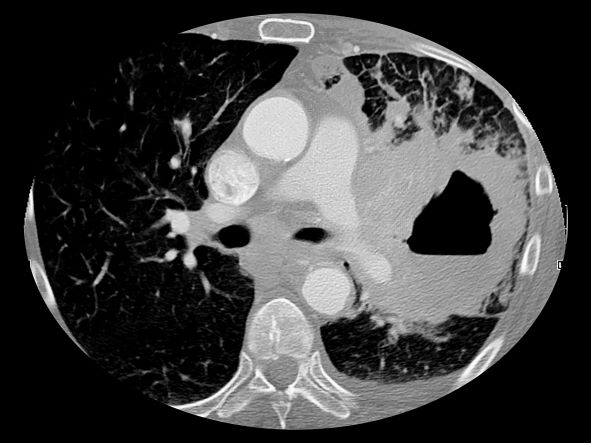
A 67-year-old White man presents to the emergency department with reports of cough, dyspnea, fatigue, hoarseness, and unintentional weight loss. The patient states that his symptoms began approximately 3 weeks earlier and have progressively worsened. In the past year, he has been treated twice for respiratory infections (bronchitis and pneumonia approximately 6 and 9 months before the current presentation, respectively). He has a 45-year history of smoking (45 pack-years). The patient's vital signs include temperature of 100.4 °F, blood pressure of 142/80 mm Hg, and pulse ox of 95%. Physical examination reveals rales in the left side of the chest and decreased breath sounds in bilateral bases of the lungs. The patient appears cachexic. He is 6 ft 2 in and weighs 163 lb.
A chest radiograph reveals a large mass in the left lung field. A subsequent CT of the chest reveals encasement of the left upper and lower lobe bronchus with extensive mediastinal lymphadenopathy and areas of necrosis. Immunohistochemical analysis of the resected tumor reveals a malignant, poorly differentiated epithelial neoplasm composed of large, atypical cells. There is no morphologic or immunohistochemical evidence of glandular, squamous, or neuroendocrine differentiation.