Psychiatrists with expertise in delusional infestation have some advice for dermatologists, infectious disease specialists, and primary care physicians who encounter affected patients: If you want to try to help them, initiate treatment yourself.
Dr. Peter Lepping
“If you see it, try and treat it. These patients are unlikely to agree to see a psychiatrist,” Peter Lepping, MD, said at the Entomology 2020 annual meeting.
Indeed, one of the hallmarks of delusional infestation (DI) is a refusal to even consider referral to a mental health professional, noted Dr. Lepping, a consultation-liaison psychiatrist at Bangor (Wales) University who, together with an infectious disease specialist, codirects one of the world’s few DI multispecialty referral clinics, located at the University of Liverpool School of Tropical Medicine.
That being said, he offered another piece of advice: “Accept that it is not easy to help these patients.”
Dr. Lepping was among a group of distinguished psychiatrists, dermatologists, entomologists, and a neurologist at the annual meeting who participated in a comprehensive session devoted to DI. The experts shared tips on making the diagnosis, establishing the rapport necessary to persuade affected patients to try taking a very-low-dose antipsychotic agent for their delusion, and how to achieve a high rate of therapeutic success. They also highlighted recent research advances in the field, including brain MRI evidence suggesting that impaired somatosensory neural networks mediate symptoms in DI, but not in nonsomatic delusional disorders.
COVID-19 pandemic triggers surge in DI
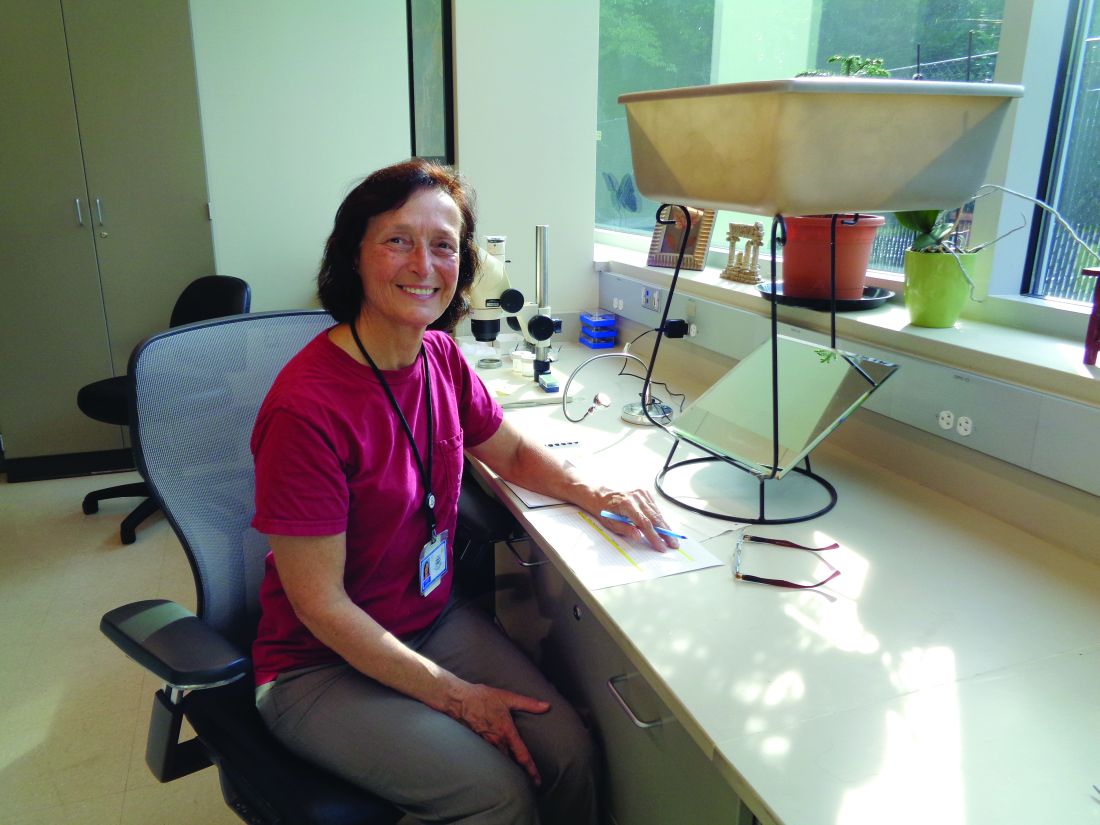
Entomologist Gail E. Ridge, PhD, has taken notes on all of her thousands of consultations with individuals with suspected DI since the late 1990s. A sharp jump in such contacts occurred during the Great Recession of 2008 in conjunction with the widespread social distress of job loss and threatened economic ruin. Now the same thing is happening as the catastrophic COVID-19 pandemic stretches on. Indeed, during the first 8 months of the pandemic she documented 500 interactions involving people with suspected DI. She’s learned to identify the clues, including a chattering mind, defensiveness, physician avoidance, and rigid body tension.
Courtesy Dr. Gale E. Ridge
Dr. Gale E. Ridge
“They’re fearful of judgment and suggestions of madness. And they’ll pounce on any perceived negativity. I never debunk beliefs; that can immediately backfire. If the medical profession was educated about DI, then many cases could be caught early. I, as the entomologist, and the mental health professionals are often last in line to be seen,” said Dr. Ridge, director of the Insect Information Office at the Connecticut Agricultural Experiment Station in New Haven.
She has noticed a recurring theme in her interactions with these patients: DI often starts with a real underlying medical condition, such as, for example, a cutaneous drug reaction, which over time, progresses to gain a psychiatric component. And she has found that a tipping point often occurs after roughly 6 months of unrelieved symptoms and sensations. Prior to that, affected individuals are concerned about their condition and will seek medical help in a genuine effort to understand what’s going on. They can be redirected. After about 6 months, however, Dr. Ridge has observed “they slide into the rabbit hole of fanaticism and despair.”
Arriving at the diagnosis
In the Diagnostic and Statistical Manual of Mental Disorders, Fifth Edition (DSM-5), DI is classified as a “delusional disorder, somatic type 297.1 F22.” The diagnosis requires that the delusion be present for at least 1 month, criteria for schizophrenia are not met, and the condition cannot be attributed to other medical or neuropsychiatric conditions.
“Many of these people are very high-functioning. I have corporate CEOs who fly in to see me in their private jets. At work, they’re king of their domain. At home, their family is falling apart because of their delusion,” said Dirk M. Elston, MD, professor and chair of the department of dermatology and dermatologic surgery at the Medical University of South Carolina, Charleston.
Dr. Dirk M. Elston
“These people suffer, and the people around them suffer,” he emphasized.
Dozens of medical conditions can cause intractable itching or biting sensations. Far and away at the top of the medical differential diagnosis is thyroid disease, given its high incidence and frequent presentation with anxiety and itch. Other possibilities that can readily be ruled out via lab tests include substance use – especially involving amphetamine/methamphetamine, cocaine, or opioids – liver or kidney disease, diabetes and other sources of peripheral neuropathy, polycythemia, dermatitis herpetiformis, and pemphigus, Dr. Elston said.
Scott A. Norton, MD, MPH, MSc, a dermatologist and preventive medicine specialist at the Uniformed Services University of the Health Sciences in Bethesda, Md., noted that a diagnosis of DI requires three elements: The presence of abnormal sensations in the skin, a patient’s tenacious conviction that the sensations are caused by an infestation, and a lack of supporting evidence for that conviction.
Dr. Scott A. Norton
Taking an accurate medical history can be a challenge in these patients because they are often so guarded. They won’t disclose that they’ve already seen other health care providers, or that they’ve been self-treating with OTC veterinary medicine products, such as high-dose topical or oral ivermectin. They’ll often even deny repeated scratching despite clear evidence to the contrary from the skin exam.
As a dermatologist, Dr. Norton considers his first task to be a search for evidence of an infestation. Scabies is usually the first diagnosis proposed to account for the uncomfortable skin sensations. The presentation can be subtle. While the classic teaching is that the telltale signs of infestation by Sarcoptes scabiei are burrows in the skin and a rash in the web spaces between the fingers, he finds these features are often absent or equivocal.
“I think there are two more reliable presentations of scabies: Check to see if there’s symmetric involvement of the volar or palm side of the wrists; if there isn’t, I’m skeptical of the diagnosis. And every male older than 1 year of age with scabies will have scabies nodules on their genitalia. If the penis, the glans, or the scrotum aren’t involved with the nodules, I discard scabies as a possible diagnosis and look for evidence of other skin conditions that can plausibly explain the sensations and skin lesions, like eczema, contact dermatitis, scalp folliculitis, or dry skin,” he said.
If he can’t find evidence of infestation, he next systematically looks for another dermatologic cause of the patient’s sensations. When that proves fruitless, he tries to determine if there might be a biomedical or neuropsychiatric cause, such as depression, anxiety, schizophrenia, or dementia.
Taking a personal hygiene history is helpful. Patients who believe they have an infestation may bathe or shower three to five times daily with harsh soaps, causing dry, inflamed, itchy and uncomfortable skin.
“Many patients are thrilled to hear the good news that the history, physical examination, and lab tests do not show an infestation and that we have another explanation to account for their unwanted sensations. However, there are some patients who vehemently reject that idea and immediately return to their unwavering, unalterable belief that they are in fact infested. At this point, the possible diagnosis of DI looms large,” the dermatologist said.
Clues suggestive of DI include a patient’s obsessive focus on collecting “specimens” of the offending pathogen in Ziplock bags for assessment during the office visit – “usually a mix of unhelpful household debris and environmental detritus” – and eager presentation of a lengthy and detailed infestation diary, Dr. Norton said.
“Among the most distinctive signs that the patient is detached from reality are the biologically implausible descriptions and explanations of the supposed attacking organism. It’s a fanciful amalgamation of mutable features, behaviors, and life cycles composed of a composite of taxonomically unrelated organisms – for example, fungal hyphae with wings – that shapeshift at will to evade detection,” he said.
Dr. Elston observed that DI skin lesions are typically excoriated, sometimes because of a patient’s systematic use of a sharp object in an effort to dig out the infestation.
“One of the clues is the angularity of the lesion,” the dermatologist noted. “We always say round-to-oval lesions suggest an inside job; angulated lesions suggest an outside job, like fingernail work. There’s often a row of good healing border showing there’s really nothing wrong with wound healing, but a fibrinoid base where the excoriations have occurred. And the lesions are often in various stages of healing.”
Don’t forget neuropathic itch in nondelusional individuals as a potential cause of sensations of infestation and self-injury due to relentless scratching, urged Anne Louise Oaklander, MD, PhD, associate professor of neurology, Harvard Medical School, Boston, who is director of the nerve unit and the neurodiagnostic skin biopsy lab at Massachusetts General Hospital, Boston.
Dr. Anne Louise Oaklander
“There’s no one cause of patients’ impressions that they may have insects. Let’s be sympathetic: It is a normal assumption that insects may be present if the skin itches. One problem is that when patients don’t get good medical diagnoses they make up their own explanations, and sometimes these include persistent ideas of infestation. Many of them don’t realize that their scratching is a cause, not a result, of their skin lesions,” said Dr. Oaklander, who has conducted pioneering research on unintentional self-injury due to neuropathic itch accompanied by loss of pain signaling.
“Rapport first, medication later”
“The office visits are typically difficult to conclude, but skills can be learned and make it much easier to help these people,” Dr. Elston said.
John Koo, MD, emphasized that establishing rapport is “by far” the most important part of managing patients with DI.
Dr. John Koo
“Rapport first, medication later. This may require multiple visits,” said Dr. Koo, professor of dermatology at the University of California, San Francisco, who is a board-certified psychiatrist.
He makes sure he walks into the examination room all smiles and positivity. Patients with DI are eager to expound on their ailment; he lets them talk for a while, then when the timing is right, he actively encourages them to shift their focus away from etiology to treatment.
Dr. Koo and coworkers have described a spectrum of mental fixation in DI ranging from having only crawling and biting sensations, progressing to holding an overvalued idea as to their cause, then on to DSM-5 somatic preoccupation, followed by becoming truly delusional, and finally terminal delusion, where the patient doesn’t care about getting better, but only wants the physician to agree there is an infestation (J Clin Exp Dermatol Res. 2014 Oct. 3. doi: 10.4172/2155-9554.1000241).
“You cannot argue with people with delusions. How you talk to them as a clinician depends on whether they are entirely delusional or not,” he advised. “I cannot agree with their ideation, but I can agree with their misery – and that’s how I make a connection.”
Declining a DI patient’s request for a skin biopsy when it’s obvious there is no infestation can lead to a counterproductive power struggle. Instead, Dr. Koo turns the patient request into an opportunity to form a verbal contract: “I ask, ‘If the result comes back negative, can you be open-minded about the possibility of other etiologies besides parasites?’ ”
As for Dr. Norton, when his schedule shows a patient is coming in for a first visit for a supposed skin infestation, he tells his staff to expect a lengthy session as he works at establishing a good relationship.
“When my patients arrive with bags of specimens, I ask them to select two or three that they’re most confident will have a creature in them. Then I bring a two-headed microscope into the exam room and ask the patient to join me in examining the material. It helps with rapport by showing that I genuinely want to determine if there’s an infestation,” he explained.
He then sends the specimens to a laboratory, which provides a full report of the findings.
In performing a skin biopsy in a patient with suspected DI, Dr. Norton routinely biopsies two sites so the patient can’t claim sampling error when the pathology report comes back with no pathogens or parasites found. Also, he asks the patient to choose biopsy sites with intact skin where he or she believes the infestation exists. There is no point in biopsying excoriated lesions because they often contain snagged textile fibers.
Another rapport-building strategy: “I try to design a treatment regimen that will palliate the uncomfortable sensations and help relieve the patient’s misery while we continue working towards treating those delusions,” Dr. Norton said.
This might entail cutting back to one lukewarm shower per day with gentle or no soap, coupled with moisturizing, oral antihistamines or doxepin for itch, topical corticosteroids for the associated inflammation, and oral or topical antibiotics for any secondary bacterial skin infection.
What he doesn’t recommend as a rapport-building strategy or simply in order to get the patient out of the office is offering a therapeutic trial of an antiparasitic agent. That’s counterproductive. It may reinforce the false belief of infestation, and when the medication doesn’t bring lasting belief, the patient may conclude the infestation is resistant to conventional treatment.
Dr. Koo tells affected patients that he suspects they have Morgellons syndrome. He doesn’t call it DI in their presence.
“These people would not like their condition to be called delusional,” he explained. “Morgellons is a more neutral term. I tell them it’s a mysterious condition, and that what I’m really interested in is in trying to get them out of their misery.”
Treatment tips
Dr. Koo’s first-line medication for DI is pimozide (Orap), which in the United States has the advantage of being approved only for Tourette syndrome; it’s an antipsychotic without the perceived stigma of a psychiatric indication.
“Many of these patients will not consider taking any medication that has any psychiatric indication,” he noted.
Low-dose pimozide is highly effective, according to Dr. Koo, who recommends starting at 0.5 mg to 1 mg/day, increasing by 0.5 mg/day every 2-4 weeks. The drug is usually effective at a dose of 3 mg/day or less. Once a patient’s symptoms become clear or almost clear, the patient is maintained on that dose for another 3-4 months, then tapered by 0.5 mg/day every 2-4 weeks.
“In 35 years of seeing a new patient on average every week or two, I’ve had only five patients with one recurrence and one patient with two recurrences. All six responded to repeat therapy,” Dr. Koo said.
Side effects at these low doses are “very rare,” he added. Diphenhydramine (Benadryl) at 25 mg up to four times daily is effective for complaints of stiffness or restlessness. Prolongation of the QT interval is a potential concern, but Dr. Koo has never encountered it despite routinely ordering ECGs for patients on pimozide with known heart disease or who are over age 50.
When a patient can’t tolerate pimozide, Dr. Koo’s second-line antipsychotic for DI is low-dose risperidone (Risperdal), which is also highly effective.
Dr. Lepping noted that the European situation is different. There, unlike in the United States, pimozide has regulatory approval as an antipsychotic, so it loses the advantage of being an under-the-radar neuroleptic. His go-to medication is the first-generation antipsychotic sulpiride (Dogmatil), which he finds has a more favorable side effect profile than pimozide, particularly in the elderly. (Sulpiride is not approved in the United States.)
In treating DI, he prefers more dopaminergic-focused antipsychotics over those covering a broader spectrum of receptors. His alternatives to sulpiride include risperidone and olanzapine, atypical antipsychotics. He explains to patients that just as aspirin is used in low doses for its antiplatelet effect and in higher doses for pain relief, these medications can help them feel better at much lower doses than for schizophrenia.
“Once we get some rapport and a trusting relationship going, we normally try to persuade people to basically try something against their better judgment. We know that they don’t believe in it, but you try to get them to at least try something because everything else has failed,” Dr. Lepping explained. “We tell them it’s a condition we have seen before, and we have seen these medications to be useful because they are good for their distress, they help with making them calmer, and they might help with their symptoms. We say, ‘What do you have to lose if you trust us?’
“About 60% of our patients take the medication and almost invariably they all get better,” the psychiatrist said. “The others we either lose to follow-up or they just refuse to take the medication.”
A patient’s first visit to the Liverpool multispecialty DI referral clinic is 1 hour long. “They know that in advance, and we very much stick to that hour. We say to people up front, ‘We have an hour – that’s a lot, but we don’t have more,’ ” he said.
The initial visit is typically followed by two to four 30-minute follow-up visits. Dr. Lepping recommends that when possible, patients with DI should be seen jointly by a psychiatrist and a nonpsychiatrist physician. He finds this approach leads to substantially better clinical outcomes than with a single health care provider.
“If you have two people in the clinic with the patient, when you get really annoyed and your amygdala really starts going, that’s the time when you can then turn to your colleague and say, ‘Oh yes, and Professor Squire, what do you have to say to that?’ So as you see the red mist rising in yourself because you’re getting so exasperated, you have the other person there to take over so you can calm down. And then the other person does the same. That can be really important to deescalate a heated situation,” Dr. Lepping explained.
Roughly 10% of patients with DI have what is termed folie à deux, where the delusion of infestation is shared by another person.
“Anecdotally, I would say those are much more difficult to treat,” said Jason S. Reichenberg, MD, MBA, professor of medicine (dermatology) at the University of Texas at Austin and president of the Ascension Medical Group Texas.
Dr. Jason S. Reichenberg
“It’s like getting somebody to quit smoking when everybody else in the house is still smoking. It’s very hard to convince a single family member that they’re wrong when everybody else in their family keeps telling them they’re right,” he said.
Recent advances in DI research
Dr. Lepping and coinvestigators at multispecialist DI clinics in London, Italy, and Moscow reported in an unusually large observational study of 236 affected patients that longer duration of untreated psychosis was associated with significantly worse clinical outcome. It’s a finding consistent with Dr. Koo’s construct of progressive stages of delusionality, and it underscores the need for early treatment.
“Having said that, improvement is still possible, even if people have had quite a long time of untreated psychosis,” Dr. Lepping said. The same study also showed that older age at illness onset was inversely associated with good outcome.
In another study, Dr. Lepping and colleagues reported that substance use involving amphetamines, cocaine, opioids, and other drugs that can cause itch was roughly twice as common in a group of patients with DI compared to the general population. “I highly recommend, if at all possible, a drug screen in suspected DI,” he said.
In a large survey of U.S. and Canadian veterinarians, Dr. Lepping and coinvestigators found that these practitioners not infrequently encountered delusional infestation among pet owners who claimed their dog or cat is infested when it’s not. This is called “delusion by proxy,” and it often leads to unwarranted animal euthanasia. Some of these pet owners claim they, too, are infested, which the investigators termed “double delusional infestation.”
MRI studies
Recent structural brain MRI studies support the concept that impaired somatosensory neural networks mediate the delusional symptoms of DI, but not in delusional disorders without somatic content. This was demonstrated in an MRI study by Dr. Lepping and others conducted in 18 patients with DI, 19 others with nonsomatic delusional disorders centered on themes of persecution or jealousy, and 20 healthy volunteers. The DI group had lower gray matter volume in prefrontal, thalamic, striatal, and insular regions of the brain compared to the other two groups.
Of note, mapping of the insula and dorsal striatum indicates they are part of the peripersonal space network, which integrates tactile and visual perceptions involving the area near the body surface. The insula also mediates feelings of pain and disgust.
Some of the same investigators have also recently reported brain MRI evidence specifically of cerebellar dysfunction in patients with DI, who displayed decreased gray matter volume in left lobule VIIa of the cerebellum and increased gray matter volume in bilateral lobule VIIa/crus II compared to patients with non-somatic delusions. This points to a role for impaired cerebellar neural networks related to somatosensory perception in patients with DI but not in those with non-somatic delusions.
Delusional infestation: What’s in a name?
Ekbom syndrome. Delusional parasitosis. Morgellons syndrome. These and other terms are increasingly giving way to ‘delusional infestation’ as the preferred moniker for the disorder. That’s in part because the delusional focus in patients with this condition has shifted over time. In the 19th century, for example, affected patients often attributed their infestation to typhus.
In contemporary practice, roughly one-quarter of affected patients think they are infested by small inanimate objects, most commonly fibers or threads emerging from the skin, rather than by parasites, insects, or worms. In a study of 148 consecutive European patients with suspected DI, Dr. Lepping and coinvestigators reported only 35% believed they were infested by parasites.
“The name ‘delusional infestation’ emphasizes the constantly changing pathogens and covers all present and future variations of the theme that are bound to occur,” Dr. Lepping observed.
All speakers reported having no conflicts of interest.
Psychiatrists with expertise in delusional infestation have some advice for dermatologists, infectious disease specialists, and primary care physicians who encounter affected patients: If you want to try to help them, initiate treatment yourself.
Dr. Peter Lepping
“If you see it, try and treat it. These patients are unlikely to agree to see a psychiatrist,” Peter Lepping, MD, said at the Entomology 2020 annual meeting.
Indeed, one of the hallmarks of delusional infestation (DI) is a refusal to even consider referral to a mental health professional, noted Dr. Lepping, a consultation-liaison psychiatrist at Bangor (Wales) University who, together with an infectious disease specialist, codirects one of the world’s few DI multispecialty referral clinics, located at the University of Liverpool School of Tropical Medicine.
That being said, he offered another piece of advice: “Accept that it is not easy to help these patients.”
Dr. Lepping was among a group of distinguished psychiatrists, dermatologists, entomologists, and a neurologist at the annual meeting who participated in a comprehensive session devoted to DI. The experts shared tips on making the diagnosis, establishing the rapport necessary to persuade affected patients to try taking a very-low-dose antipsychotic agent for their delusion, and how to achieve a high rate of therapeutic success. They also highlighted recent research advances in the field, including brain MRI evidence suggesting that impaired somatosensory neural networks mediate symptoms in DI, but not in nonsomatic delusional disorders.
COVID-19 pandemic triggers surge in DI
Entomologist Gail E. Ridge, PhD, has taken notes on all of her thousands of consultations with individuals with suspected DI since the late 1990s. A sharp jump in such contacts occurred during the Great Recession of 2008 in conjunction with the widespread social distress of job loss and threatened economic ruin. Now the same thing is happening as the catastrophic COVID-19 pandemic stretches on. Indeed, during the first 8 months of the pandemic she documented 500 interactions involving people with suspected DI. She’s learned to identify the clues, including a chattering mind, defensiveness, physician avoidance, and rigid body tension.
Courtesy Dr. Gale E. Ridge
Dr. Gale E. Ridge
“They’re fearful of judgment and suggestions of madness. And they’ll pounce on any perceived negativity. I never debunk beliefs; that can immediately backfire. If the medical profession was educated about DI, then many cases could be caught early. I, as the entomologist, and the mental health professionals are often last in line to be seen,” said Dr. Ridge, director of the Insect Information Office at the Connecticut Agricultural Experiment Station in New Haven.
She has noticed a recurring theme in her interactions with these patients: DI often starts with a real underlying medical condition, such as, for example, a cutaneous drug reaction, which over time, progresses to gain a psychiatric component. And she has found that a tipping point often occurs after roughly 6 months of unrelieved symptoms and sensations. Prior to that, affected individuals are concerned about their condition and will seek medical help in a genuine effort to understand what’s going on. They can be redirected. After about 6 months, however, Dr. Ridge has observed “they slide into the rabbit hole of fanaticism and despair.”
Arriving at the diagnosis
In the Diagnostic and Statistical Manual of Mental Disorders, Fifth Edition (DSM-5), DI is classified as a “delusional disorder, somatic type 297.1 F22.” The diagnosis requires that the delusion be present for at least 1 month, criteria for schizophrenia are not met, and the condition cannot be attributed to other medical or neuropsychiatric conditions.
“Many of these people are very high-functioning. I have corporate CEOs who fly in to see me in their private jets. At work, they’re king of their domain. At home, their family is falling apart because of their delusion,” said Dirk M. Elston, MD, professor and chair of the department of dermatology and dermatologic surgery at the Medical University of South Carolina, Charleston.
Dr. Dirk M. Elston
“These people suffer, and the people around them suffer,” he emphasized.
Dozens of medical conditions can cause intractable itching or biting sensations. Far and away at the top of the medical differential diagnosis is thyroid disease, given its high incidence and frequent presentation with anxiety and itch. Other possibilities that can readily be ruled out via lab tests include substance use – especially involving amphetamine/methamphetamine, cocaine, or opioids – liver or kidney disease, diabetes and other sources of peripheral neuropathy, polycythemia, dermatitis herpetiformis, and pemphigus, Dr. Elston said.
Scott A. Norton, MD, MPH, MSc, a dermatologist and preventive medicine specialist at the Uniformed Services University of the Health Sciences in Bethesda, Md., noted that a diagnosis of DI requires three elements: The presence of abnormal sensations in the skin, a patient’s tenacious conviction that the sensations are caused by an infestation, and a lack of supporting evidence for that conviction.
Dr. Scott A. Norton
Taking an accurate medical history can be a challenge in these patients because they are often so guarded. They won’t disclose that they’ve already seen other health care providers, or that they’ve been self-treating with OTC veterinary medicine products, such as high-dose topical or oral ivermectin. They’ll often even deny repeated scratching despite clear evidence to the contrary from the skin exam.
As a dermatologist, Dr. Norton considers his first task to be a search for evidence of an infestation. Scabies is usually the first diagnosis proposed to account for the uncomfortable skin sensations. The presentation can be subtle. While the classic teaching is that the telltale signs of infestation by Sarcoptes scabiei are burrows in the skin and a rash in the web spaces between the fingers, he finds these features are often absent or equivocal.
“I think there are two more reliable presentations of scabies: Check to see if there’s symmetric involvement of the volar or palm side of the wrists; if there isn’t, I’m skeptical of the diagnosis. And every male older than 1 year of age with scabies will have scabies nodules on their genitalia. If the penis, the glans, or the scrotum aren’t involved with the nodules, I discard scabies as a possible diagnosis and look for evidence of other skin conditions that can plausibly explain the sensations and skin lesions, like eczema, contact dermatitis, scalp folliculitis, or dry skin,” he said.
If he can’t find evidence of infestation, he next systematically looks for another dermatologic cause of the patient’s sensations. When that proves fruitless, he tries to determine if there might be a biomedical or neuropsychiatric cause, such as depression, anxiety, schizophrenia, or dementia.
Taking a personal hygiene history is helpful. Patients who believe they have an infestation may bathe or shower three to five times daily with harsh soaps, causing dry, inflamed, itchy and uncomfortable skin.
“Many patients are thrilled to hear the good news that the history, physical examination, and lab tests do not show an infestation and that we have another explanation to account for their unwanted sensations. However, there are some patients who vehemently reject that idea and immediately return to their unwavering, unalterable belief that they are in fact infested. At this point, the possible diagnosis of DI looms large,” the dermatologist said.
Clues suggestive of DI include a patient’s obsessive focus on collecting “specimens” of the offending pathogen in Ziplock bags for assessment during the office visit – “usually a mix of unhelpful household debris and environmental detritus” – and eager presentation of a lengthy and detailed infestation diary, Dr. Norton said.
“Among the most distinctive signs that the patient is detached from reality are the biologically implausible descriptions and explanations of the supposed attacking organism. It’s a fanciful amalgamation of mutable features, behaviors, and life cycles composed of a composite of taxonomically unrelated organisms – for example, fungal hyphae with wings – that shapeshift at will to evade detection,” he said.
Dr. Elston observed that DI skin lesions are typically excoriated, sometimes because of a patient’s systematic use of a sharp object in an effort to dig out the infestation.
“One of the clues is the angularity of the lesion,” the dermatologist noted. “We always say round-to-oval lesions suggest an inside job; angulated lesions suggest an outside job, like fingernail work. There’s often a row of good healing border showing there’s really nothing wrong with wound healing, but a fibrinoid base where the excoriations have occurred. And the lesions are often in various stages of healing.”
Don’t forget neuropathic itch in nondelusional individuals as a potential cause of sensations of infestation and self-injury due to relentless scratching, urged Anne Louise Oaklander, MD, PhD, associate professor of neurology, Harvard Medical School, Boston, who is director of the nerve unit and the neurodiagnostic skin biopsy lab at Massachusetts General Hospital, Boston.
Dr. Anne Louise Oaklander
“There’s no one cause of patients’ impressions that they may have insects. Let’s be sympathetic: It is a normal assumption that insects may be present if the skin itches. One problem is that when patients don’t get good medical diagnoses they make up their own explanations, and sometimes these include persistent ideas of infestation. Many of them don’t realize that their scratching is a cause, not a result, of their skin lesions,” said Dr. Oaklander, who has conducted pioneering research on unintentional self-injury due to neuropathic itch accompanied by loss of pain signaling.
“Rapport first, medication later”
“The office visits are typically difficult to conclude, but skills can be learned and make it much easier to help these people,” Dr. Elston said.
John Koo, MD, emphasized that establishing rapport is “by far” the most important part of managing patients with DI.
Dr. John Koo
“Rapport first, medication later. This may require multiple visits,” said Dr. Koo, professor of dermatology at the University of California, San Francisco, who is a board-certified psychiatrist.
He makes sure he walks into the examination room all smiles and positivity. Patients with DI are eager to expound on their ailment; he lets them talk for a while, then when the timing is right, he actively encourages them to shift their focus away from etiology to treatment.
Dr. Koo and coworkers have described a spectrum of mental fixation in DI ranging from having only crawling and biting sensations, progressing to holding an overvalued idea as to their cause, then on to DSM-5 somatic preoccupation, followed by becoming truly delusional, and finally terminal delusion, where the patient doesn’t care about getting better, but only wants the physician to agree there is an infestation (J Clin Exp Dermatol Res. 2014 Oct. 3. doi: 10.4172/2155-9554.1000241).
“You cannot argue with people with delusions. How you talk to them as a clinician depends on whether they are entirely delusional or not,” he advised. “I cannot agree with their ideation, but I can agree with their misery – and that’s how I make a connection.”
Declining a DI patient’s request for a skin biopsy when it’s obvious there is no infestation can lead to a counterproductive power struggle. Instead, Dr. Koo turns the patient request into an opportunity to form a verbal contract: “I ask, ‘If the result comes back negative, can you be open-minded about the possibility of other etiologies besides parasites?’ ”
As for Dr. Norton, when his schedule shows a patient is coming in for a first visit for a supposed skin infestation, he tells his staff to expect a lengthy session as he works at establishing a good relationship.
“When my patients arrive with bags of specimens, I ask them to select two or three that they’re most confident will have a creature in them. Then I bring a two-headed microscope into the exam room and ask the patient to join me in examining the material. It helps with rapport by showing that I genuinely want to determine if there’s an infestation,” he explained.
He then sends the specimens to a laboratory, which provides a full report of the findings.
In performing a skin biopsy in a patient with suspected DI, Dr. Norton routinely biopsies two sites so the patient can’t claim sampling error when the pathology report comes back with no pathogens or parasites found. Also, he asks the patient to choose biopsy sites with intact skin where he or she believes the infestation exists. There is no point in biopsying excoriated lesions because they often contain snagged textile fibers.
Another rapport-building strategy: “I try to design a treatment regimen that will palliate the uncomfortable sensations and help relieve the patient’s misery while we continue working towards treating those delusions,” Dr. Norton said.
This might entail cutting back to one lukewarm shower per day with gentle or no soap, coupled with moisturizing, oral antihistamines or doxepin for itch, topical corticosteroids for the associated inflammation, and oral or topical antibiotics for any secondary bacterial skin infection.
What he doesn’t recommend as a rapport-building strategy or simply in order to get the patient out of the office is offering a therapeutic trial of an antiparasitic agent. That’s counterproductive. It may reinforce the false belief of infestation, and when the medication doesn’t bring lasting belief, the patient may conclude the infestation is resistant to conventional treatment.
Dr. Koo tells affected patients that he suspects they have Morgellons syndrome. He doesn’t call it DI in their presence.
“These people would not like their condition to be called delusional,” he explained. “Morgellons is a more neutral term. I tell them it’s a mysterious condition, and that what I’m really interested in is in trying to get them out of their misery.”
Treatment tips
Dr. Koo’s first-line medication for DI is pimozide (Orap), which in the United States has the advantage of being approved only for Tourette syndrome; it’s an antipsychotic without the perceived stigma of a psychiatric indication.
“Many of these patients will not consider taking any medication that has any psychiatric indication,” he noted.
Low-dose pimozide is highly effective, according to Dr. Koo, who recommends starting at 0.5 mg to 1 mg/day, increasing by 0.5 mg/day every 2-4 weeks. The drug is usually effective at a dose of 3 mg/day or less. Once a patient’s symptoms become clear or almost clear, the patient is maintained on that dose for another 3-4 months, then tapered by 0.5 mg/day every 2-4 weeks.
“In 35 years of seeing a new patient on average every week or two, I’ve had only five patients with one recurrence and one patient with two recurrences. All six responded to repeat therapy,” Dr. Koo said.
Side effects at these low doses are “very rare,” he added. Diphenhydramine (Benadryl) at 25 mg up to four times daily is effective for complaints of stiffness or restlessness. Prolongation of the QT interval is a potential concern, but Dr. Koo has never encountered it despite routinely ordering ECGs for patients on pimozide with known heart disease or who are over age 50.
When a patient can’t tolerate pimozide, Dr. Koo’s second-line antipsychotic for DI is low-dose risperidone (Risperdal), which is also highly effective.
Dr. Lepping noted that the European situation is different. There, unlike in the United States, pimozide has regulatory approval as an antipsychotic, so it loses the advantage of being an under-the-radar neuroleptic. His go-to medication is the first-generation antipsychotic sulpiride (Dogmatil), which he finds has a more favorable side effect profile than pimozide, particularly in the elderly. (Sulpiride is not approved in the United States.)
In treating DI, he prefers more dopaminergic-focused antipsychotics over those covering a broader spectrum of receptors. His alternatives to sulpiride include risperidone and olanzapine, atypical antipsychotics. He explains to patients that just as aspirin is used in low doses for its antiplatelet effect and in higher doses for pain relief, these medications can help them feel better at much lower doses than for schizophrenia.
“Once we get some rapport and a trusting relationship going, we normally try to persuade people to basically try something against their better judgment. We know that they don’t believe in it, but you try to get them to at least try something because everything else has failed,” Dr. Lepping explained. “We tell them it’s a condition we have seen before, and we have seen these medications to be useful because they are good for their distress, they help with making them calmer, and they might help with their symptoms. We say, ‘What do you have to lose if you trust us?’
“About 60% of our patients take the medication and almost invariably they all get better,” the psychiatrist said. “The others we either lose to follow-up or they just refuse to take the medication.”
A patient’s first visit to the Liverpool multispecialty DI referral clinic is 1 hour long. “They know that in advance, and we very much stick to that hour. We say to people up front, ‘We have an hour – that’s a lot, but we don’t have more,’ ” he said.
The initial visit is typically followed by two to four 30-minute follow-up visits. Dr. Lepping recommends that when possible, patients with DI should be seen jointly by a psychiatrist and a nonpsychiatrist physician. He finds this approach leads to substantially better clinical outcomes than with a single health care provider.
“If you have two people in the clinic with the patient, when you get really annoyed and your amygdala really starts going, that’s the time when you can then turn to your colleague and say, ‘Oh yes, and Professor Squire, what do you have to say to that?’ So as you see the red mist rising in yourself because you’re getting so exasperated, you have the other person there to take over so you can calm down. And then the other person does the same. That can be really important to deescalate a heated situation,” Dr. Lepping explained.
Roughly 10% of patients with DI have what is termed folie à deux, where the delusion of infestation is shared by another person.
“Anecdotally, I would say those are much more difficult to treat,” said Jason S. Reichenberg, MD, MBA, professor of medicine (dermatology) at the University of Texas at Austin and president of the Ascension Medical Group Texas.
Dr. Jason S. Reichenberg
“It’s like getting somebody to quit smoking when everybody else in the house is still smoking. It’s very hard to convince a single family member that they’re wrong when everybody else in their family keeps telling them they’re right,” he said.
Recent advances in DI research
Dr. Lepping and coinvestigators at multispecialist DI clinics in London, Italy, and Moscow reported in an unusually large observational study of 236 affected patients that longer duration of untreated psychosis was associated with significantly worse clinical outcome. It’s a finding consistent with Dr. Koo’s construct of progressive stages of delusionality, and it underscores the need for early treatment.
“Having said that, improvement is still possible, even if people have had quite a long time of untreated psychosis,” Dr. Lepping said. The same study also showed that older age at illness onset was inversely associated with good outcome.
In another study, Dr. Lepping and colleagues reported that substance use involving amphetamines, cocaine, opioids, and other drugs that can cause itch was roughly twice as common in a group of patients with DI compared to the general population. “I highly recommend, if at all possible, a drug screen in suspected DI,” he said.
In a large survey of U.S. and Canadian veterinarians, Dr. Lepping and coinvestigators found that these practitioners not infrequently encountered delusional infestation among pet owners who claimed their dog or cat is infested when it’s not. This is called “delusion by proxy,” and it often leads to unwarranted animal euthanasia. Some of these pet owners claim they, too, are infested, which the investigators termed “double delusional infestation.”
MRI studies
Recent structural brain MRI studies support the concept that impaired somatosensory neural networks mediate the delusional symptoms of DI, but not in delusional disorders without somatic content. This was demonstrated in an MRI study by Dr. Lepping and others conducted in 18 patients with DI, 19 others with nonsomatic delusional disorders centered on themes of persecution or jealousy, and 20 healthy volunteers. The DI group had lower gray matter volume in prefrontal, thalamic, striatal, and insular regions of the brain compared to the other two groups.
Of note, mapping of the insula and dorsal striatum indicates they are part of the peripersonal space network, which integrates tactile and visual perceptions involving the area near the body surface. The insula also mediates feelings of pain and disgust.
Some of the same investigators have also recently reported brain MRI evidence specifically of cerebellar dysfunction in patients with DI, who displayed decreased gray matter volume in left lobule VIIa of the cerebellum and increased gray matter volume in bilateral lobule VIIa/crus II compared to patients with non-somatic delusions. This points to a role for impaired cerebellar neural networks related to somatosensory perception in patients with DI but not in those with non-somatic delusions.
Delusional infestation: What’s in a name?
Ekbom syndrome. Delusional parasitosis. Morgellons syndrome. These and other terms are increasingly giving way to ‘delusional infestation’ as the preferred moniker for the disorder. That’s in part because the delusional focus in patients with this condition has shifted over time. In the 19th century, for example, affected patients often attributed their infestation to typhus.
In contemporary practice, roughly one-quarter of affected patients think they are infested by small inanimate objects, most commonly fibers or threads emerging from the skin, rather than by parasites, insects, or worms. In a study of 148 consecutive European patients with suspected DI, Dr. Lepping and coinvestigators reported only 35% believed they were infested by parasites.
“The name ‘delusional infestation’ emphasizes the constantly changing pathogens and covers all present and future variations of the theme that are bound to occur,” Dr. Lepping observed.
All speakers reported having no conflicts of interest.
Psychiatrists with expertise in delusional infestation have some advice for dermatologists, infectious disease specialists, and primary care physicians who encounter affected patients: If you want to try to help them, initiate treatment yourself.
Dr. Peter Lepping
“If you see it, try and treat it. These patients are unlikely to agree to see a psychiatrist,” Peter Lepping, MD, said at the Entomology 2020 annual meeting.
Indeed, one of the hallmarks of delusional infestation (DI) is a refusal to even consider referral to a mental health professional, noted Dr. Lepping, a consultation-liaison psychiatrist at Bangor (Wales) University who, together with an infectious disease specialist, codirects one of the world’s few DI multispecialty referral clinics, located at the University of Liverpool School of Tropical Medicine.
That being said, he offered another piece of advice: “Accept that it is not easy to help these patients.”
Dr. Lepping was among a group of distinguished psychiatrists, dermatologists, entomologists, and a neurologist at the annual meeting who participated in a comprehensive session devoted to DI. The experts shared tips on making the diagnosis, establishing the rapport necessary to persuade affected patients to try taking a very-low-dose antipsychotic agent for their delusion, and how to achieve a high rate of therapeutic success. They also highlighted recent research advances in the field, including brain MRI evidence suggesting that impaired somatosensory neural networks mediate symptoms in DI, but not in nonsomatic delusional disorders.
COVID-19 pandemic triggers surge in DI
Entomologist Gail E. Ridge, PhD, has taken notes on all of her thousands of consultations with individuals with suspected DI since the late 1990s. A sharp jump in such contacts occurred during the Great Recession of 2008 in conjunction with the widespread social distress of job loss and threatened economic ruin. Now the same thing is happening as the catastrophic COVID-19 pandemic stretches on. Indeed, during the first 8 months of the pandemic she documented 500 interactions involving people with suspected DI. She’s learned to identify the clues, including a chattering mind, defensiveness, physician avoidance, and rigid body tension.
Courtesy Dr. Gale E. Ridge
Dr. Gale E. Ridge
“They’re fearful of judgment and suggestions of madness. And they’ll pounce on any perceived negativity. I never debunk beliefs; that can immediately backfire. If the medical profession was educated about DI, then many cases could be caught early. I, as the entomologist, and the mental health professionals are often last in line to be seen,” said Dr. Ridge, director of the Insect Information Office at the Connecticut Agricultural Experiment Station in New Haven.
She has noticed a recurring theme in her interactions with these patients: DI often starts with a real underlying medical condition, such as, for example, a cutaneous drug reaction, which over time, progresses to gain a psychiatric component. And she has found that a tipping point often occurs after roughly 6 months of unrelieved symptoms and sensations. Prior to that, affected individuals are concerned about their condition and will seek medical help in a genuine effort to understand what’s going on. They can be redirected. After about 6 months, however, Dr. Ridge has observed “they slide into the rabbit hole of fanaticism and despair.”
Arriving at the diagnosis
In the Diagnostic and Statistical Manual of Mental Disorders, Fifth Edition (DSM-5), DI is classified as a “delusional disorder, somatic type 297.1 F22.” The diagnosis requires that the delusion be present for at least 1 month, criteria for schizophrenia are not met, and the condition cannot be attributed to other medical or neuropsychiatric conditions.
“Many of these people are very high-functioning. I have corporate CEOs who fly in to see me in their private jets. At work, they’re king of their domain. At home, their family is falling apart because of their delusion,” said Dirk M. Elston, MD, professor and chair of the department of dermatology and dermatologic surgery at the Medical University of South Carolina, Charleston.
Dr. Dirk M. Elston
“These people suffer, and the people around them suffer,” he emphasized.
Dozens of medical conditions can cause intractable itching or biting sensations. Far and away at the top of the medical differential diagnosis is thyroid disease, given its high incidence and frequent presentation with anxiety and itch. Other possibilities that can readily be ruled out via lab tests include substance use – especially involving amphetamine/methamphetamine, cocaine, or opioids – liver or kidney disease, diabetes and other sources of peripheral neuropathy, polycythemia, dermatitis herpetiformis, and pemphigus, Dr. Elston said.
Scott A. Norton, MD, MPH, MSc, a dermatologist and preventive medicine specialist at the Uniformed Services University of the Health Sciences in Bethesda, Md., noted that a diagnosis of DI requires three elements: The presence of abnormal sensations in the skin, a patient’s tenacious conviction that the sensations are caused by an infestation, and a lack of supporting evidence for that conviction.
Dr. Scott A. Norton
Taking an accurate medical history can be a challenge in these patients because they are often so guarded. They won’t disclose that they’ve already seen other health care providers, or that they’ve been self-treating with OTC veterinary medicine products, such as high-dose topical or oral ivermectin. They’ll often even deny repeated scratching despite clear evidence to the contrary from the skin exam.
As a dermatologist, Dr. Norton considers his first task to be a search for evidence of an infestation. Scabies is usually the first diagnosis proposed to account for the uncomfortable skin sensations. The presentation can be subtle. While the classic teaching is that the telltale signs of infestation by Sarcoptes scabiei are burrows in the skin and a rash in the web spaces between the fingers, he finds these features are often absent or equivocal.
“I think there are two more reliable presentations of scabies: Check to see if there’s symmetric involvement of the volar or palm side of the wrists; if there isn’t, I’m skeptical of the diagnosis. And every male older than 1 year of age with scabies will have scabies nodules on their genitalia. If the penis, the glans, or the scrotum aren’t involved with the nodules, I discard scabies as a possible diagnosis and look for evidence of other skin conditions that can plausibly explain the sensations and skin lesions, like eczema, contact dermatitis, scalp folliculitis, or dry skin,” he said.
If he can’t find evidence of infestation, he next systematically looks for another dermatologic cause of the patient’s sensations. When that proves fruitless, he tries to determine if there might be a biomedical or neuropsychiatric cause, such as depression, anxiety, schizophrenia, or dementia.
Taking a personal hygiene history is helpful. Patients who believe they have an infestation may bathe or shower three to five times daily with harsh soaps, causing dry, inflamed, itchy and uncomfortable skin.
“Many patients are thrilled to hear the good news that the history, physical examination, and lab tests do not show an infestation and that we have another explanation to account for their unwanted sensations. However, there are some patients who vehemently reject that idea and immediately return to their unwavering, unalterable belief that they are in fact infested. At this point, the possible diagnosis of DI looms large,” the dermatologist said.
Clues suggestive of DI include a patient’s obsessive focus on collecting “specimens” of the offending pathogen in Ziplock bags for assessment during the office visit – “usually a mix of unhelpful household debris and environmental detritus” – and eager presentation of a lengthy and detailed infestation diary, Dr. Norton said.
“Among the most distinctive signs that the patient is detached from reality are the biologically implausible descriptions and explanations of the supposed attacking organism. It’s a fanciful amalgamation of mutable features, behaviors, and life cycles composed of a composite of taxonomically unrelated organisms – for example, fungal hyphae with wings – that shapeshift at will to evade detection,” he said.
Dr. Elston observed that DI skin lesions are typically excoriated, sometimes because of a patient’s systematic use of a sharp object in an effort to dig out the infestation.
“One of the clues is the angularity of the lesion,” the dermatologist noted. “We always say round-to-oval lesions suggest an inside job; angulated lesions suggest an outside job, like fingernail work. There’s often a row of good healing border showing there’s really nothing wrong with wound healing, but a fibrinoid base where the excoriations have occurred. And the lesions are often in various stages of healing.”
Don’t forget neuropathic itch in nondelusional individuals as a potential cause of sensations of infestation and self-injury due to relentless scratching, urged Anne Louise Oaklander, MD, PhD, associate professor of neurology, Harvard Medical School, Boston, who is director of the nerve unit and the neurodiagnostic skin biopsy lab at Massachusetts General Hospital, Boston.
Dr. Anne Louise Oaklander
“There’s no one cause of patients’ impressions that they may have insects. Let’s be sympathetic: It is a normal assumption that insects may be present if the skin itches. One problem is that when patients don’t get good medical diagnoses they make up their own explanations, and sometimes these include persistent ideas of infestation. Many of them don’t realize that their scratching is a cause, not a result, of their skin lesions,” said Dr. Oaklander, who has conducted pioneering research on unintentional self-injury due to neuropathic itch accompanied by loss of pain signaling.
“Rapport first, medication later”
“The office visits are typically difficult to conclude, but skills can be learned and make it much easier to help these people,” Dr. Elston said.
John Koo, MD, emphasized that establishing rapport is “by far” the most important part of managing patients with DI.
Dr. John Koo
“Rapport first, medication later. This may require multiple visits,” said Dr. Koo, professor of dermatology at the University of California, San Francisco, who is a board-certified psychiatrist.
He makes sure he walks into the examination room all smiles and positivity. Patients with DI are eager to expound on their ailment; he lets them talk for a while, then when the timing is right, he actively encourages them to shift their focus away from etiology to treatment.
Dr. Koo and coworkers have described a spectrum of mental fixation in DI ranging from having only crawling and biting sensations, progressing to holding an overvalued idea as to their cause, then on to DSM-5 somatic preoccupation, followed by becoming truly delusional, and finally terminal delusion, where the patient doesn’t care about getting better, but only wants the physician to agree there is an infestation (J Clin Exp Dermatol Res. 2014 Oct. 3. doi: 10.4172/2155-9554.1000241).
“You cannot argue with people with delusions. How you talk to them as a clinician depends on whether they are entirely delusional or not,” he advised. “I cannot agree with their ideation, but I can agree with their misery – and that’s how I make a connection.”
Declining a DI patient’s request for a skin biopsy when it’s obvious there is no infestation can lead to a counterproductive power struggle. Instead, Dr. Koo turns the patient request into an opportunity to form a verbal contract: “I ask, ‘If the result comes back negative, can you be open-minded about the possibility of other etiologies besides parasites?’ ”
As for Dr. Norton, when his schedule shows a patient is coming in for a first visit for a supposed skin infestation, he tells his staff to expect a lengthy session as he works at establishing a good relationship.
“When my patients arrive with bags of specimens, I ask them to select two or three that they’re most confident will have a creature in them. Then I bring a two-headed microscope into the exam room and ask the patient to join me in examining the material. It helps with rapport by showing that I genuinely want to determine if there’s an infestation,” he explained.
He then sends the specimens to a laboratory, which provides a full report of the findings.
In performing a skin biopsy in a patient with suspected DI, Dr. Norton routinely biopsies two sites so the patient can’t claim sampling error when the pathology report comes back with no pathogens or parasites found. Also, he asks the patient to choose biopsy sites with intact skin where he or she believes the infestation exists. There is no point in biopsying excoriated lesions because they often contain snagged textile fibers.
Another rapport-building strategy: “I try to design a treatment regimen that will palliate the uncomfortable sensations and help relieve the patient’s misery while we continue working towards treating those delusions,” Dr. Norton said.
This might entail cutting back to one lukewarm shower per day with gentle or no soap, coupled with moisturizing, oral antihistamines or doxepin for itch, topical corticosteroids for the associated inflammation, and oral or topical antibiotics for any secondary bacterial skin infection.
What he doesn’t recommend as a rapport-building strategy or simply in order to get the patient out of the office is offering a therapeutic trial of an antiparasitic agent. That’s counterproductive. It may reinforce the false belief of infestation, and when the medication doesn’t bring lasting belief, the patient may conclude the infestation is resistant to conventional treatment.
Dr. Koo tells affected patients that he suspects they have Morgellons syndrome. He doesn’t call it DI in their presence.
“These people would not like their condition to be called delusional,” he explained. “Morgellons is a more neutral term. I tell them it’s a mysterious condition, and that what I’m really interested in is in trying to get them out of their misery.”
Treatment tips
Dr. Koo’s first-line medication for DI is pimozide (Orap), which in the United States has the advantage of being approved only for Tourette syndrome; it’s an antipsychotic without the perceived stigma of a psychiatric indication.
“Many of these patients will not consider taking any medication that has any psychiatric indication,” he noted.
Low-dose pimozide is highly effective, according to Dr. Koo, who recommends starting at 0.5 mg to 1 mg/day, increasing by 0.5 mg/day every 2-4 weeks. The drug is usually effective at a dose of 3 mg/day or less. Once a patient’s symptoms become clear or almost clear, the patient is maintained on that dose for another 3-4 months, then tapered by 0.5 mg/day every 2-4 weeks.
“In 35 years of seeing a new patient on average every week or two, I’ve had only five patients with one recurrence and one patient with two recurrences. All six responded to repeat therapy,” Dr. Koo said.
Side effects at these low doses are “very rare,” he added. Diphenhydramine (Benadryl) at 25 mg up to four times daily is effective for complaints of stiffness or restlessness. Prolongation of the QT interval is a potential concern, but Dr. Koo has never encountered it despite routinely ordering ECGs for patients on pimozide with known heart disease or who are over age 50.
When a patient can’t tolerate pimozide, Dr. Koo’s second-line antipsychotic for DI is low-dose risperidone (Risperdal), which is also highly effective.
Dr. Lepping noted that the European situation is different. There, unlike in the United States, pimozide has regulatory approval as an antipsychotic, so it loses the advantage of being an under-the-radar neuroleptic. His go-to medication is the first-generation antipsychotic sulpiride (Dogmatil), which he finds has a more favorable side effect profile than pimozide, particularly in the elderly. (Sulpiride is not approved in the United States.)
In treating DI, he prefers more dopaminergic-focused antipsychotics over those covering a broader spectrum of receptors. His alternatives to sulpiride include risperidone and olanzapine, atypical antipsychotics. He explains to patients that just as aspirin is used in low doses for its antiplatelet effect and in higher doses for pain relief, these medications can help them feel better at much lower doses than for schizophrenia.
“Once we get some rapport and a trusting relationship going, we normally try to persuade people to basically try something against their better judgment. We know that they don’t believe in it, but you try to get them to at least try something because everything else has failed,” Dr. Lepping explained. “We tell them it’s a condition we have seen before, and we have seen these medications to be useful because they are good for their distress, they help with making them calmer, and they might help with their symptoms. We say, ‘What do you have to lose if you trust us?’
“About 60% of our patients take the medication and almost invariably they all get better,” the psychiatrist said. “The others we either lose to follow-up or they just refuse to take the medication.”
A patient’s first visit to the Liverpool multispecialty DI referral clinic is 1 hour long. “They know that in advance, and we very much stick to that hour. We say to people up front, ‘We have an hour – that’s a lot, but we don’t have more,’ ” he said.
The initial visit is typically followed by two to four 30-minute follow-up visits. Dr. Lepping recommends that when possible, patients with DI should be seen jointly by a psychiatrist and a nonpsychiatrist physician. He finds this approach leads to substantially better clinical outcomes than with a single health care provider.
“If you have two people in the clinic with the patient, when you get really annoyed and your amygdala really starts going, that’s the time when you can then turn to your colleague and say, ‘Oh yes, and Professor Squire, what do you have to say to that?’ So as you see the red mist rising in yourself because you’re getting so exasperated, you have the other person there to take over so you can calm down. And then the other person does the same. That can be really important to deescalate a heated situation,” Dr. Lepping explained.
Roughly 10% of patients with DI have what is termed folie à deux, where the delusion of infestation is shared by another person.
“Anecdotally, I would say those are much more difficult to treat,” said Jason S. Reichenberg, MD, MBA, professor of medicine (dermatology) at the University of Texas at Austin and president of the Ascension Medical Group Texas.
Dr. Jason S. Reichenberg
“It’s like getting somebody to quit smoking when everybody else in the house is still smoking. It’s very hard to convince a single family member that they’re wrong when everybody else in their family keeps telling them they’re right,” he said.
Recent advances in DI research
Dr. Lepping and coinvestigators at multispecialist DI clinics in London, Italy, and Moscow reported in an unusually large observational study of 236 affected patients that longer duration of untreated psychosis was associated with significantly worse clinical outcome. It’s a finding consistent with Dr. Koo’s construct of progressive stages of delusionality, and it underscores the need for early treatment.
“Having said that, improvement is still possible, even if people have had quite a long time of untreated psychosis,” Dr. Lepping said. The same study also showed that older age at illness onset was inversely associated with good outcome.
In another study, Dr. Lepping and colleagues reported that substance use involving amphetamines, cocaine, opioids, and other drugs that can cause itch was roughly twice as common in a group of patients with DI compared to the general population. “I highly recommend, if at all possible, a drug screen in suspected DI,” he said.
In a large survey of U.S. and Canadian veterinarians, Dr. Lepping and coinvestigators found that these practitioners not infrequently encountered delusional infestation among pet owners who claimed their dog or cat is infested when it’s not. This is called “delusion by proxy,” and it often leads to unwarranted animal euthanasia. Some of these pet owners claim they, too, are infested, which the investigators termed “double delusional infestation.”
MRI studies
Recent structural brain MRI studies support the concept that impaired somatosensory neural networks mediate the delusional symptoms of DI, but not in delusional disorders without somatic content. This was demonstrated in an MRI study by Dr. Lepping and others conducted in 18 patients with DI, 19 others with nonsomatic delusional disorders centered on themes of persecution or jealousy, and 20 healthy volunteers. The DI group had lower gray matter volume in prefrontal, thalamic, striatal, and insular regions of the brain compared to the other two groups.
Of note, mapping of the insula and dorsal striatum indicates they are part of the peripersonal space network, which integrates tactile and visual perceptions involving the area near the body surface. The insula also mediates feelings of pain and disgust.
Some of the same investigators have also recently reported brain MRI evidence specifically of cerebellar dysfunction in patients with DI, who displayed decreased gray matter volume in left lobule VIIa of the cerebellum and increased gray matter volume in bilateral lobule VIIa/crus II compared to patients with non-somatic delusions. This points to a role for impaired cerebellar neural networks related to somatosensory perception in patients with DI but not in those with non-somatic delusions.
Delusional infestation: What’s in a name?
Ekbom syndrome. Delusional parasitosis. Morgellons syndrome. These and other terms are increasingly giving way to ‘delusional infestation’ as the preferred moniker for the disorder. That’s in part because the delusional focus in patients with this condition has shifted over time. In the 19th century, for example, affected patients often attributed their infestation to typhus.
In contemporary practice, roughly one-quarter of affected patients think they are infested by small inanimate objects, most commonly fibers or threads emerging from the skin, rather than by parasites, insects, or worms. In a study of 148 consecutive European patients with suspected DI, Dr. Lepping and coinvestigators reported only 35% believed they were infested by parasites.
“The name ‘delusional infestation’ emphasizes the constantly changing pathogens and covers all present and future variations of the theme that are bound to occur,” Dr. Lepping observed.
All speakers reported having no conflicts of interest.
The final numbers won’t look much different, but the 2021 Match results will be unlike any before. As of mid-January, only 16 more institutions were confirmed to be participating in Match Day this year, resulting in about 800 more positions, said Donna Lamb, president and CEO of the National Resident Matching Program (NRMP). The Electronic Residency Application Service reported about 50,000 individual applicant submissions, a slight increase from prior years.
The stats may be similar, but the current residency application cycle may lead to wildly different results after the pandemic forced interviews to be conducted virtually and caused the cancellation of most away clinical rotations. Troy Amen, a fifth-year MD-MBA student at Harvard Medical School, Boston, and copresident of his student class, says the lack of on-campus, in-person experiences means students feel more in the dark than ever. The same is true for institutions. “The programs are also suffering because now they don’t know which students are a good ‘cultural fit’ for them,” he said.
Standing out has always been a concern for prospective residents, but Mr. Amen says fears are even higher this year. “[Institutions are] struggling to vet out 850 applicants, and they have no connection to us.”
Organizations have scrambled to keep the process as fair and informative as possible. “Everyone is trying to do the right thing here,” said Alison J. Whelan, MD, chief academic officer of the Association of American Medical Colleges (AAMC). She says that although the process has significantly changed, the heart of it remains the same. “The bottom line is directors really want to fill their intern class, and schools and students really want to match.”
Since the NRMP was established in 1952, it has never had to contend with a pandemic of this scale. The unprecedented circumstances have led to some much-feared and some unexpected changes, like top candidates “stealing” interview slots, “swag bags” sent to entice residents, beefed-up online profiles, as well as “Zoom fatigue,” a spike in home-field advantage for institutions, and massive anxiety for those students staking their future to a city they may have never seen in person.
What was lost and what was gained
“It’s really hard to get a real feel for the program when you’ve not been there in person,” said Christopher Smith, MD, director of the internal medicine residency program at Beth Israel Deaconess Medical Center in Boston. Dr. Smith recalled interviewing for residencies 25 years ago. His wife, a teacher, took time off to travel with him.
“She would ‘interview the town’ while I interviewed the program, and we compared notes at night,” he said. Because of COVID-19-related travel restrictions, just physically seeing the city in which they may live for years wasn’t an option for many. “I have a lot of sympathy for students applying right now,” Dr. Smith said.
For the residency class of 2021, the first shoe really dropped last March, when the AAMC issued guidance strongly recommending that programs pause clinical rotations away from their home schools. As established doctors know well, and as graduating medical students confirmed, these rotations are crucial to understanding a program’s culture and gaining experience that can boost candidacy. “I’m applying to orthopedic surgery, where away rotations are the gold standard for impressing attendees and residents at institutions away from home,” said Mr. Amen.
The pandemic completely cut off that key source of information to determine the right fit. It also meant applicants couldn’t have as diverse a portfolio of recommendation letters, something many worry may be detrimental to their soon-to-be-released Match rankings.
Unlike the loss of away rotations, the forced shift from in-person to virtual interviews had some meaningful benefits. Students no longer incurred expenses for airline flights, hotel rooms, and rental cars. Many organizations and programs have been trying for years to figure out how to lower the financial burden of interviews to make the process more equitable for those at economic or other disadvantage.
“The equity piece of this is huge – decreasing barriers and leveling the field a little bit is a really huge advantage,” said Kate Shaw, MD, residency program director and associate chair of education for the obstetrics and gynecology program at Stanford (Calif.) University. In some ways, this latest change is an extension of a strategy Dr. Shaw and others had already begun implementing.
“Over the last 5 to 10 years, we’ve been working to address the implicit bias in the application process, so we’ve gone to a holistic review of applicants, where we don’t have score cutoffs. We look at the whole person,” she said. “And we did that in an effort to increase diversity and equity.” Dr. Shaw and others hope that the accidental positive changes from COVID restrictions may be intentionally preserved long after the pandemic ends.
Home-field advantage vs. swag bags
Many medical students applying to residencies this year say they have given greater weight to their home programs than they might have without the pandemic. “I didn’t get a sense of anyone’s culture other than my home institution,” said Alex Skidmore, a fourth-year medical student at Washington University in St. Louis. “I definitely am ranking Wash-U higher.”
The desire to emphasize the known quality of a student’s home institution isn’t surprising to program directors. Dr. Shaw said she thinks this year’s Match could well end with a higher percentage of students matching either in their home programs or in programs close to loved ones. “The value of being close to family has come up in our conversations, where students are considering the right program for them but also the other life factors,” she said.
To overcome this home-field advantage, many programs have beefed up their websites, including providing video tours of their facilities. They also “upped their social media game” and encouraged residents to create online groups for prospective residents to share information about programs and life outside of work. Some residents even offered video tours of their personal apartments to applicants.
Without in-person access to facilities and staff, a program’s online presence became a deciding factor, applicants said. “If you have a bad website, it’s like having a dirty building to interview applicants in,” Mr. Skidmore said. For many prospective residents, an institution’s Internet presence was a “make or break” factor. “It’s the only thing I saw for many programs, and when we are doing the amount of research we are doing remotely, when I saw a program with a bad website, it made me not like the program as much,” he said.
Some programs, hoping to woo candidates as well as to provide them with more insight into what they and their cities have to offer, sent “swag bags” to candidates. These included things like gift cards for food delivery and offerings from local businesses. Washington University’s pediatrics residency program sent gooey butter cakes – a St. Louis staple – along with other treats from small businesses and copies of magazines that showcased the city’s dining and entertainment scene.
Other programs, even those at the same medical institution, felt quite strongly that those types of packages shouldn’t be sent. “We interviewed almost 500 applicants, so there was no way we could have afforded that,” said Dominique Cosco, MD, director of Washington University’s internal medicine residency program. “Our normal recruitment budget is almost $100,000 in a normal year, and that got cut because of COVID. For us, it was thinking about allocations of resources.”
Interview slot theft and zoom fatigue
Remote interviewing also meant that applicants could accept more interviews, something that raised a big concern. Without expenses or travel time, would top-tier candidates take more interviews than normal and thus take limited interview spots from other qualified candidates? Maybe so, says the AAMC’s Dr. Whelan.
“We didn’t have systematic data, but we heard from enough schools and programs ... that students who were maybe not the top-top ranked students in the class but in every way solid were receiving fewer interviews than previous years,” Dr. Whelan said. This is despite guidance that recommended programs add interview slots to serve as a counterbalance.
Some students say they accepted more interview slots in the beginning of the interview season, partly because they could, and partly because some thought of early interviews as “practice” for later interviews. However, as video interviews piled up, some of them described feeling “Zoom fatigue” and said they later canceled interviews with programs they didn’t anticipate joining.
More SOAP, less clarity
As for what comes next, the NRMP is preparing for a longer-than-normal Supplemental Offer and Acceptance Program (SOAP) than in years past. SOAP usually offers three rounds of matches after the initial Match Day; Ms. Lamb said things are different this year.
“SOAP will be the same number of days, but we’ve added an additional round on Thursday afternoon,” she said. Will it be unnecessary or not enough? Nobody knows. “How big SOAP actually is going to be is one of the things that we really don’t have a sense of right now and probably aren’t going to have a sense of until the Match.”
Uncertainty is the name of the game. More than any other Match before, programs and applicants won’t know how results from this pandemic year stack up for a few months at the very least. “I really want to see what this looks like on the other side,” Dr. Smith said. “Are applicants happy with the way it looks when they come here? Do they feel like they matched with the right place?”
Whether this unprecedented year will be remembered more for positive changes moving forward, including more flexibility on remote interviews, or for less-informed decisions that result in dissatisfied participants is also unclear.
“I think after the Match is over, we’ll be talking to everyone to get more perspective on what people who are applying now would tell the next class, and how programs can adjust,” said Kathy Diemer, MD, assistant dean for career counseling at Washington University. At the very least, those who are involved in this year after year can start thinking about what the future should look like.
“We’re going to need to do some kind of debriefing after this is over, both program directors and our students as well, so we can determine how to move forward next year and beyond.”
A version of this article first appeared on Medscape.com.
The final numbers won’t look much different, but the 2021 Match results will be unlike any before. As of mid-January, only 16 more institutions were confirmed to be participating in Match Day this year, resulting in about 800 more positions, said Donna Lamb, president and CEO of the National Resident Matching Program (NRMP). The Electronic Residency Application Service reported about 50,000 individual applicant submissions, a slight increase from prior years.
The stats may be similar, but the current residency application cycle may lead to wildly different results after the pandemic forced interviews to be conducted virtually and caused the cancellation of most away clinical rotations. Troy Amen, a fifth-year MD-MBA student at Harvard Medical School, Boston, and copresident of his student class, says the lack of on-campus, in-person experiences means students feel more in the dark than ever. The same is true for institutions. “The programs are also suffering because now they don’t know which students are a good ‘cultural fit’ for them,” he said.
Standing out has always been a concern for prospective residents, but Mr. Amen says fears are even higher this year. “[Institutions are] struggling to vet out 850 applicants, and they have no connection to us.”
Organizations have scrambled to keep the process as fair and informative as possible. “Everyone is trying to do the right thing here,” said Alison J. Whelan, MD, chief academic officer of the Association of American Medical Colleges (AAMC). She says that although the process has significantly changed, the heart of it remains the same. “The bottom line is directors really want to fill their intern class, and schools and students really want to match.”
Since the NRMP was established in 1952, it has never had to contend with a pandemic of this scale. The unprecedented circumstances have led to some much-feared and some unexpected changes, like top candidates “stealing” interview slots, “swag bags” sent to entice residents, beefed-up online profiles, as well as “Zoom fatigue,” a spike in home-field advantage for institutions, and massive anxiety for those students staking their future to a city they may have never seen in person.
What was lost and what was gained
“It’s really hard to get a real feel for the program when you’ve not been there in person,” said Christopher Smith, MD, director of the internal medicine residency program at Beth Israel Deaconess Medical Center in Boston. Dr. Smith recalled interviewing for residencies 25 years ago. His wife, a teacher, took time off to travel with him.
“She would ‘interview the town’ while I interviewed the program, and we compared notes at night,” he said. Because of COVID-19-related travel restrictions, just physically seeing the city in which they may live for years wasn’t an option for many. “I have a lot of sympathy for students applying right now,” Dr. Smith said.
For the residency class of 2021, the first shoe really dropped last March, when the AAMC issued guidance strongly recommending that programs pause clinical rotations away from their home schools. As established doctors know well, and as graduating medical students confirmed, these rotations are crucial to understanding a program’s culture and gaining experience that can boost candidacy. “I’m applying to orthopedic surgery, where away rotations are the gold standard for impressing attendees and residents at institutions away from home,” said Mr. Amen.
The pandemic completely cut off that key source of information to determine the right fit. It also meant applicants couldn’t have as diverse a portfolio of recommendation letters, something many worry may be detrimental to their soon-to-be-released Match rankings.
Unlike the loss of away rotations, the forced shift from in-person to virtual interviews had some meaningful benefits. Students no longer incurred expenses for airline flights, hotel rooms, and rental cars. Many organizations and programs have been trying for years to figure out how to lower the financial burden of interviews to make the process more equitable for those at economic or other disadvantage.
“The equity piece of this is huge – decreasing barriers and leveling the field a little bit is a really huge advantage,” said Kate Shaw, MD, residency program director and associate chair of education for the obstetrics and gynecology program at Stanford (Calif.) University. In some ways, this latest change is an extension of a strategy Dr. Shaw and others had already begun implementing.
“Over the last 5 to 10 years, we’ve been working to address the implicit bias in the application process, so we’ve gone to a holistic review of applicants, where we don’t have score cutoffs. We look at the whole person,” she said. “And we did that in an effort to increase diversity and equity.” Dr. Shaw and others hope that the accidental positive changes from COVID restrictions may be intentionally preserved long after the pandemic ends.
Home-field advantage vs. swag bags
Many medical students applying to residencies this year say they have given greater weight to their home programs than they might have without the pandemic. “I didn’t get a sense of anyone’s culture other than my home institution,” said Alex Skidmore, a fourth-year medical student at Washington University in St. Louis. “I definitely am ranking Wash-U higher.”
The desire to emphasize the known quality of a student’s home institution isn’t surprising to program directors. Dr. Shaw said she thinks this year’s Match could well end with a higher percentage of students matching either in their home programs or in programs close to loved ones. “The value of being close to family has come up in our conversations, where students are considering the right program for them but also the other life factors,” she said.
To overcome this home-field advantage, many programs have beefed up their websites, including providing video tours of their facilities. They also “upped their social media game” and encouraged residents to create online groups for prospective residents to share information about programs and life outside of work. Some residents even offered video tours of their personal apartments to applicants.
Without in-person access to facilities and staff, a program’s online presence became a deciding factor, applicants said. “If you have a bad website, it’s like having a dirty building to interview applicants in,” Mr. Skidmore said. For many prospective residents, an institution’s Internet presence was a “make or break” factor. “It’s the only thing I saw for many programs, and when we are doing the amount of research we are doing remotely, when I saw a program with a bad website, it made me not like the program as much,” he said.
Some programs, hoping to woo candidates as well as to provide them with more insight into what they and their cities have to offer, sent “swag bags” to candidates. These included things like gift cards for food delivery and offerings from local businesses. Washington University’s pediatrics residency program sent gooey butter cakes – a St. Louis staple – along with other treats from small businesses and copies of magazines that showcased the city’s dining and entertainment scene.
Other programs, even those at the same medical institution, felt quite strongly that those types of packages shouldn’t be sent. “We interviewed almost 500 applicants, so there was no way we could have afforded that,” said Dominique Cosco, MD, director of Washington University’s internal medicine residency program. “Our normal recruitment budget is almost $100,000 in a normal year, and that got cut because of COVID. For us, it was thinking about allocations of resources.”
Interview slot theft and zoom fatigue
Remote interviewing also meant that applicants could accept more interviews, something that raised a big concern. Without expenses or travel time, would top-tier candidates take more interviews than normal and thus take limited interview spots from other qualified candidates? Maybe so, says the AAMC’s Dr. Whelan.
“We didn’t have systematic data, but we heard from enough schools and programs ... that students who were maybe not the top-top ranked students in the class but in every way solid were receiving fewer interviews than previous years,” Dr. Whelan said. This is despite guidance that recommended programs add interview slots to serve as a counterbalance.
Some students say they accepted more interview slots in the beginning of the interview season, partly because they could, and partly because some thought of early interviews as “practice” for later interviews. However, as video interviews piled up, some of them described feeling “Zoom fatigue” and said they later canceled interviews with programs they didn’t anticipate joining.
More SOAP, less clarity
As for what comes next, the NRMP is preparing for a longer-than-normal Supplemental Offer and Acceptance Program (SOAP) than in years past. SOAP usually offers three rounds of matches after the initial Match Day; Ms. Lamb said things are different this year.
“SOAP will be the same number of days, but we’ve added an additional round on Thursday afternoon,” she said. Will it be unnecessary or not enough? Nobody knows. “How big SOAP actually is going to be is one of the things that we really don’t have a sense of right now and probably aren’t going to have a sense of until the Match.”
Uncertainty is the name of the game. More than any other Match before, programs and applicants won’t know how results from this pandemic year stack up for a few months at the very least. “I really want to see what this looks like on the other side,” Dr. Smith said. “Are applicants happy with the way it looks when they come here? Do they feel like they matched with the right place?”
Whether this unprecedented year will be remembered more for positive changes moving forward, including more flexibility on remote interviews, or for less-informed decisions that result in dissatisfied participants is also unclear.
“I think after the Match is over, we’ll be talking to everyone to get more perspective on what people who are applying now would tell the next class, and how programs can adjust,” said Kathy Diemer, MD, assistant dean for career counseling at Washington University. At the very least, those who are involved in this year after year can start thinking about what the future should look like.
“We’re going to need to do some kind of debriefing after this is over, both program directors and our students as well, so we can determine how to move forward next year and beyond.”
A version of this article first appeared on Medscape.com.
The final numbers won’t look much different, but the 2021 Match results will be unlike any before. As of mid-January, only 16 more institutions were confirmed to be participating in Match Day this year, resulting in about 800 more positions, said Donna Lamb, president and CEO of the National Resident Matching Program (NRMP). The Electronic Residency Application Service reported about 50,000 individual applicant submissions, a slight increase from prior years.
The stats may be similar, but the current residency application cycle may lead to wildly different results after the pandemic forced interviews to be conducted virtually and caused the cancellation of most away clinical rotations. Troy Amen, a fifth-year MD-MBA student at Harvard Medical School, Boston, and copresident of his student class, says the lack of on-campus, in-person experiences means students feel more in the dark than ever. The same is true for institutions. “The programs are also suffering because now they don’t know which students are a good ‘cultural fit’ for them,” he said.
Standing out has always been a concern for prospective residents, but Mr. Amen says fears are even higher this year. “[Institutions are] struggling to vet out 850 applicants, and they have no connection to us.”
Organizations have scrambled to keep the process as fair and informative as possible. “Everyone is trying to do the right thing here,” said Alison J. Whelan, MD, chief academic officer of the Association of American Medical Colleges (AAMC). She says that although the process has significantly changed, the heart of it remains the same. “The bottom line is directors really want to fill their intern class, and schools and students really want to match.”
Since the NRMP was established in 1952, it has never had to contend with a pandemic of this scale. The unprecedented circumstances have led to some much-feared and some unexpected changes, like top candidates “stealing” interview slots, “swag bags” sent to entice residents, beefed-up online profiles, as well as “Zoom fatigue,” a spike in home-field advantage for institutions, and massive anxiety for those students staking their future to a city they may have never seen in person.
What was lost and what was gained
“It’s really hard to get a real feel for the program when you’ve not been there in person,” said Christopher Smith, MD, director of the internal medicine residency program at Beth Israel Deaconess Medical Center in Boston. Dr. Smith recalled interviewing for residencies 25 years ago. His wife, a teacher, took time off to travel with him.
“She would ‘interview the town’ while I interviewed the program, and we compared notes at night,” he said. Because of COVID-19-related travel restrictions, just physically seeing the city in which they may live for years wasn’t an option for many. “I have a lot of sympathy for students applying right now,” Dr. Smith said.
For the residency class of 2021, the first shoe really dropped last March, when the AAMC issued guidance strongly recommending that programs pause clinical rotations away from their home schools. As established doctors know well, and as graduating medical students confirmed, these rotations are crucial to understanding a program’s culture and gaining experience that can boost candidacy. “I’m applying to orthopedic surgery, where away rotations are the gold standard for impressing attendees and residents at institutions away from home,” said Mr. Amen.
The pandemic completely cut off that key source of information to determine the right fit. It also meant applicants couldn’t have as diverse a portfolio of recommendation letters, something many worry may be detrimental to their soon-to-be-released Match rankings.
Unlike the loss of away rotations, the forced shift from in-person to virtual interviews had some meaningful benefits. Students no longer incurred expenses for airline flights, hotel rooms, and rental cars. Many organizations and programs have been trying for years to figure out how to lower the financial burden of interviews to make the process more equitable for those at economic or other disadvantage.
“The equity piece of this is huge – decreasing barriers and leveling the field a little bit is a really huge advantage,” said Kate Shaw, MD, residency program director and associate chair of education for the obstetrics and gynecology program at Stanford (Calif.) University. In some ways, this latest change is an extension of a strategy Dr. Shaw and others had already begun implementing.
“Over the last 5 to 10 years, we’ve been working to address the implicit bias in the application process, so we’ve gone to a holistic review of applicants, where we don’t have score cutoffs. We look at the whole person,” she said. “And we did that in an effort to increase diversity and equity.” Dr. Shaw and others hope that the accidental positive changes from COVID restrictions may be intentionally preserved long after the pandemic ends.
Home-field advantage vs. swag bags
Many medical students applying to residencies this year say they have given greater weight to their home programs than they might have without the pandemic. “I didn’t get a sense of anyone’s culture other than my home institution,” said Alex Skidmore, a fourth-year medical student at Washington University in St. Louis. “I definitely am ranking Wash-U higher.”
The desire to emphasize the known quality of a student’s home institution isn’t surprising to program directors. Dr. Shaw said she thinks this year’s Match could well end with a higher percentage of students matching either in their home programs or in programs close to loved ones. “The value of being close to family has come up in our conversations, where students are considering the right program for them but also the other life factors,” she said.
To overcome this home-field advantage, many programs have beefed up their websites, including providing video tours of their facilities. They also “upped their social media game” and encouraged residents to create online groups for prospective residents to share information about programs and life outside of work. Some residents even offered video tours of their personal apartments to applicants.
Without in-person access to facilities and staff, a program’s online presence became a deciding factor, applicants said. “If you have a bad website, it’s like having a dirty building to interview applicants in,” Mr. Skidmore said. For many prospective residents, an institution’s Internet presence was a “make or break” factor. “It’s the only thing I saw for many programs, and when we are doing the amount of research we are doing remotely, when I saw a program with a bad website, it made me not like the program as much,” he said.
Some programs, hoping to woo candidates as well as to provide them with more insight into what they and their cities have to offer, sent “swag bags” to candidates. These included things like gift cards for food delivery and offerings from local businesses. Washington University’s pediatrics residency program sent gooey butter cakes – a St. Louis staple – along with other treats from small businesses and copies of magazines that showcased the city’s dining and entertainment scene.
Other programs, even those at the same medical institution, felt quite strongly that those types of packages shouldn’t be sent. “We interviewed almost 500 applicants, so there was no way we could have afforded that,” said Dominique Cosco, MD, director of Washington University’s internal medicine residency program. “Our normal recruitment budget is almost $100,000 in a normal year, and that got cut because of COVID. For us, it was thinking about allocations of resources.”
Interview slot theft and zoom fatigue
Remote interviewing also meant that applicants could accept more interviews, something that raised a big concern. Without expenses or travel time, would top-tier candidates take more interviews than normal and thus take limited interview spots from other qualified candidates? Maybe so, says the AAMC’s Dr. Whelan.
“We didn’t have systematic data, but we heard from enough schools and programs ... that students who were maybe not the top-top ranked students in the class but in every way solid were receiving fewer interviews than previous years,” Dr. Whelan said. This is despite guidance that recommended programs add interview slots to serve as a counterbalance.
Some students say they accepted more interview slots in the beginning of the interview season, partly because they could, and partly because some thought of early interviews as “practice” for later interviews. However, as video interviews piled up, some of them described feeling “Zoom fatigue” and said they later canceled interviews with programs they didn’t anticipate joining.
More SOAP, less clarity
As for what comes next, the NRMP is preparing for a longer-than-normal Supplemental Offer and Acceptance Program (SOAP) than in years past. SOAP usually offers three rounds of matches after the initial Match Day; Ms. Lamb said things are different this year.
“SOAP will be the same number of days, but we’ve added an additional round on Thursday afternoon,” she said. Will it be unnecessary or not enough? Nobody knows. “How big SOAP actually is going to be is one of the things that we really don’t have a sense of right now and probably aren’t going to have a sense of until the Match.”
Uncertainty is the name of the game. More than any other Match before, programs and applicants won’t know how results from this pandemic year stack up for a few months at the very least. “I really want to see what this looks like on the other side,” Dr. Smith said. “Are applicants happy with the way it looks when they come here? Do they feel like they matched with the right place?”
Whether this unprecedented year will be remembered more for positive changes moving forward, including more flexibility on remote interviews, or for less-informed decisions that result in dissatisfied participants is also unclear.
“I think after the Match is over, we’ll be talking to everyone to get more perspective on what people who are applying now would tell the next class, and how programs can adjust,” said Kathy Diemer, MD, assistant dean for career counseling at Washington University. At the very least, those who are involved in this year after year can start thinking about what the future should look like.
“We’re going to need to do some kind of debriefing after this is over, both program directors and our students as well, so we can determine how to move forward next year and beyond.”
A version of this article first appeared on Medscape.com.
Despite a drop in the number of weekly COVID-19 cases, children made up a larger share of cases for the fourth consecutive week, according to a report from the American Academy of Pediatrics and the Children’s Hospital Association.
Just over 140,000 new cases of COVID-19 in children were reported for the week of Jan. 22-28, down from 165,000 the week before and down from the record high of 211,000 2 weeks earlier, the AAP and the CHA said in their weekly COVID-19 report.
Since the beginning of January, however, the proportion of weekly cases occurring in children has risen from 12.9% to 15.1%, based on data collected by the AAP/CHA from the health department websites of 49 states (excluding New York), the District of Columbia, New York City, Puerto Rico, and Guam.
Since the beginning of the pandemic, 2.81 million children have been infected by the coronavirus, representing 12.8% of the total for all ages, which is almost 22 million. The cumulative rate since the start of the pandemic passed 3,700 cases per 100,000 children after increasing by 5.2% over the previous week, the AAP and CHA said in their report.
Cumulative hospitalizations in children just passed 11,000 in the 24 states (and New York City) that are reporting data for children, which represents 1.8% of COVID-19–related admissions for all ages, a proportion that has not changed since mid-November. Ten more deaths in children were reported during Jan. 22-28, bringing the total to 215 in the 43 states, along with New York City and Guam, that are tracking mortality.
In the 10 states that are reporting data on testing, rates of positive results in children range from 7.1% in Indiana, in which children make up the largest proportion of total tests performed (18.1%) to 28.4% in Iowa, where children make up the smallest proportion of tests (6.0%), the AAP and CHA said.
Despite a drop in the number of weekly COVID-19 cases, children made up a larger share of cases for the fourth consecutive week, according to a report from the American Academy of Pediatrics and the Children’s Hospital Association.
Just over 140,000 new cases of COVID-19 in children were reported for the week of Jan. 22-28, down from 165,000 the week before and down from the record high of 211,000 2 weeks earlier, the AAP and the CHA said in their weekly COVID-19 report.
Since the beginning of January, however, the proportion of weekly cases occurring in children has risen from 12.9% to 15.1%, based on data collected by the AAP/CHA from the health department websites of 49 states (excluding New York), the District of Columbia, New York City, Puerto Rico, and Guam.
Since the beginning of the pandemic, 2.81 million children have been infected by the coronavirus, representing 12.8% of the total for all ages, which is almost 22 million. The cumulative rate since the start of the pandemic passed 3,700 cases per 100,000 children after increasing by 5.2% over the previous week, the AAP and CHA said in their report.
Cumulative hospitalizations in children just passed 11,000 in the 24 states (and New York City) that are reporting data for children, which represents 1.8% of COVID-19–related admissions for all ages, a proportion that has not changed since mid-November. Ten more deaths in children were reported during Jan. 22-28, bringing the total to 215 in the 43 states, along with New York City and Guam, that are tracking mortality.
In the 10 states that are reporting data on testing, rates of positive results in children range from 7.1% in Indiana, in which children make up the largest proportion of total tests performed (18.1%) to 28.4% in Iowa, where children make up the smallest proportion of tests (6.0%), the AAP and CHA said.
Despite a drop in the number of weekly COVID-19 cases, children made up a larger share of cases for the fourth consecutive week, according to a report from the American Academy of Pediatrics and the Children’s Hospital Association.
Just over 140,000 new cases of COVID-19 in children were reported for the week of Jan. 22-28, down from 165,000 the week before and down from the record high of 211,000 2 weeks earlier, the AAP and the CHA said in their weekly COVID-19 report.
Since the beginning of January, however, the proportion of weekly cases occurring in children has risen from 12.9% to 15.1%, based on data collected by the AAP/CHA from the health department websites of 49 states (excluding New York), the District of Columbia, New York City, Puerto Rico, and Guam.
Since the beginning of the pandemic, 2.81 million children have been infected by the coronavirus, representing 12.8% of the total for all ages, which is almost 22 million. The cumulative rate since the start of the pandemic passed 3,700 cases per 100,000 children after increasing by 5.2% over the previous week, the AAP and CHA said in their report.
Cumulative hospitalizations in children just passed 11,000 in the 24 states (and New York City) that are reporting data for children, which represents 1.8% of COVID-19–related admissions for all ages, a proportion that has not changed since mid-November. Ten more deaths in children were reported during Jan. 22-28, bringing the total to 215 in the 43 states, along with New York City and Guam, that are tracking mortality.
In the 10 states that are reporting data on testing, rates of positive results in children range from 7.1% in Indiana, in which children make up the largest proportion of total tests performed (18.1%) to 28.4% in Iowa, where children make up the smallest proportion of tests (6.0%), the AAP and CHA said.
“This was not entirely surprising given that inflammation has been implicated in the pathogenesis of both hypertensive disorders of pregnancy and COVID-19 infection and thus may serve to exacerbate each other,” Nigel Madden, MD, a resident physician in the ob.gyn. department at Columbia University, New York. , told this news organization after she presented the results.
Hypertensive disorders of pregnancy occur in 10%-15% of all pregnancies and are the leading cause of maternal and perinatal morbidity and mortality worldwide, Dr. Madden told attendees of the meeting. Although it’s not clear what causes hypertensive diseases in pregnancy generally, “it is possible that the acute inflammatory state of the COVID infection may incite or exacerbate hypertensive disease of pregnancy,” Dr. Madden said.
The researchers conducted a retrospective chart review of 1,715 patients who had a singleton pregnancy and who underwent routine nasal polymerase chain reaction testing at admission to one institution’s labor and delivery department between March and June 2020. The researchers excluded patients who had a history of chronic hypertension.
Overall, 10% of the patients tested positive for COVID-19 (n = 167), and 90% tested negative (n = 1,548). There were several differences at baseline between the groups. Those who tested positive tended to be younger, with an average age of 28, compared with an average age of 31 years for the group that tested negative. The group that tested negative also had a higher proportion of mothers aged 35 and older (P < .01). There were also significant differences in the racial makeup of the groups. Half of those in the COVID-positive group reported “other” for their race. The biggest baseline disparity between the groups was with regard to insurance type: 73% of those who tested positive for COVID-19 used Medicaid; only 36% of patients in the COVID-negative group used Medicaid. Those with private insurance were more likely to test negative (43%) than positive (25%) (P < .01).
The researchers defined gestational hypertension as having a systolic blood pressure greater than or equal to 140 mm Hg or a diastolic blood pressure greater than or equal to 90 mm Hg on two occasions at least 4 hours apart. A preeclampsia diagnosis required elevated blood pressure (using the same definition as for hypertension) as well as proteinuria, characterized by a protein/creatine ratio greater than or equal to 0.3 mg/dL or greater than or equal to 300 mg of protein on a 24-hour urine collection. Preeclampsia with severe features required prespecified laboratory abnormalities, pulmonary edema, or symptoms of headache, vision changes, chest pain, shortness of breath, or right upper quadrant pain.
More than twice as many patients with COVID had a hypertensive disorder of pregnancy (18%) as those who tested negative (8%). The patients who were COVID positive were significantly more likely than those who tested negative to have gestational hypertension and preeclampsia without severe features. Rates of preeclampsia with severe features were not significantly different between the groups.
The severity of hypertensive disease did not differ between the groups. Limitations of the study included its retrospective design, the small number of COVID-positive patients, and the fact that it was conducted at a single institution in New York. However, the study population was diverse, and it was conducted during the height of infections at the epicenter of the COVID-19 pandemic.
“This was a study of great clinical significance,” said Kim Boggess, MD, of the University of North Carolina at Chapel Hill, while moderating the session. “I would argue that you guys in New York are the best poised to answer some of the questions that need to be answered as it relates to the effect of coronavirus infection in pregnancy.”
Dr. Boggess asked whether the study examined associations related to the severity of COVID-19. Only 10 of the patients were symptomatic, Dr. Madden said, and only one of those patients developed preeclampsia with severe features.
Michelle Y. Owens, MD, professor and chief of maternal fetal medicine at the University of Mississippi Medical Center, Jackson, who also moderated the session, said in an interview that the findings call for physicians to remain vigilant about evaluating patients who test positive for COVID-19 for hypertensive disease and disorders.
“Additionally, these women should be educated about hypertensive disorders and the common symptoms to facilitate early diagnosis and treatment when indicated,” Dr. Owens said. “I believe this is of particular interest in those women who are not severely affected by COVID, as these changes may occur while they are undergoing quarantine or being monitored remotely. This amplifies the need for remote assessment or home monitoring of maternal blood pressures.”
Dr. Madden, Dr. Boggess, and Dr. Owens have disclosed no relevant financial relationships.
A version of this article first appeared on Medscape.com.
“This was not entirely surprising given that inflammation has been implicated in the pathogenesis of both hypertensive disorders of pregnancy and COVID-19 infection and thus may serve to exacerbate each other,” Nigel Madden, MD, a resident physician in the ob.gyn. department at Columbia University, New York. , told this news organization after she presented the results.
Hypertensive disorders of pregnancy occur in 10%-15% of all pregnancies and are the leading cause of maternal and perinatal morbidity and mortality worldwide, Dr. Madden told attendees of the meeting. Although it’s not clear what causes hypertensive diseases in pregnancy generally, “it is possible that the acute inflammatory state of the COVID infection may incite or exacerbate hypertensive disease of pregnancy,” Dr. Madden said.
The researchers conducted a retrospective chart review of 1,715 patients who had a singleton pregnancy and who underwent routine nasal polymerase chain reaction testing at admission to one institution’s labor and delivery department between March and June 2020. The researchers excluded patients who had a history of chronic hypertension.
Overall, 10% of the patients tested positive for COVID-19 (n = 167), and 90% tested negative (n = 1,548). There were several differences at baseline between the groups. Those who tested positive tended to be younger, with an average age of 28, compared with an average age of 31 years for the group that tested negative. The group that tested negative also had a higher proportion of mothers aged 35 and older (P < .01). There were also significant differences in the racial makeup of the groups. Half of those in the COVID-positive group reported “other” for their race. The biggest baseline disparity between the groups was with regard to insurance type: 73% of those who tested positive for COVID-19 used Medicaid; only 36% of patients in the COVID-negative group used Medicaid. Those with private insurance were more likely to test negative (43%) than positive (25%) (P < .01).
The researchers defined gestational hypertension as having a systolic blood pressure greater than or equal to 140 mm Hg or a diastolic blood pressure greater than or equal to 90 mm Hg on two occasions at least 4 hours apart. A preeclampsia diagnosis required elevated blood pressure (using the same definition as for hypertension) as well as proteinuria, characterized by a protein/creatine ratio greater than or equal to 0.3 mg/dL or greater than or equal to 300 mg of protein on a 24-hour urine collection. Preeclampsia with severe features required prespecified laboratory abnormalities, pulmonary edema, or symptoms of headache, vision changes, chest pain, shortness of breath, or right upper quadrant pain.
More than twice as many patients with COVID had a hypertensive disorder of pregnancy (18%) as those who tested negative (8%). The patients who were COVID positive were significantly more likely than those who tested negative to have gestational hypertension and preeclampsia without severe features. Rates of preeclampsia with severe features were not significantly different between the groups.
The severity of hypertensive disease did not differ between the groups. Limitations of the study included its retrospective design, the small number of COVID-positive patients, and the fact that it was conducted at a single institution in New York. However, the study population was diverse, and it was conducted during the height of infections at the epicenter of the COVID-19 pandemic.
“This was a study of great clinical significance,” said Kim Boggess, MD, of the University of North Carolina at Chapel Hill, while moderating the session. “I would argue that you guys in New York are the best poised to answer some of the questions that need to be answered as it relates to the effect of coronavirus infection in pregnancy.”
Dr. Boggess asked whether the study examined associations related to the severity of COVID-19. Only 10 of the patients were symptomatic, Dr. Madden said, and only one of those patients developed preeclampsia with severe features.
Michelle Y. Owens, MD, professor and chief of maternal fetal medicine at the University of Mississippi Medical Center, Jackson, who also moderated the session, said in an interview that the findings call for physicians to remain vigilant about evaluating patients who test positive for COVID-19 for hypertensive disease and disorders.
“Additionally, these women should be educated about hypertensive disorders and the common symptoms to facilitate early diagnosis and treatment when indicated,” Dr. Owens said. “I believe this is of particular interest in those women who are not severely affected by COVID, as these changes may occur while they are undergoing quarantine or being monitored remotely. This amplifies the need for remote assessment or home monitoring of maternal blood pressures.”
Dr. Madden, Dr. Boggess, and Dr. Owens have disclosed no relevant financial relationships.
A version of this article first appeared on Medscape.com.
“This was not entirely surprising given that inflammation has been implicated in the pathogenesis of both hypertensive disorders of pregnancy and COVID-19 infection and thus may serve to exacerbate each other,” Nigel Madden, MD, a resident physician in the ob.gyn. department at Columbia University, New York. , told this news organization after she presented the results.
Hypertensive disorders of pregnancy occur in 10%-15% of all pregnancies and are the leading cause of maternal and perinatal morbidity and mortality worldwide, Dr. Madden told attendees of the meeting. Although it’s not clear what causes hypertensive diseases in pregnancy generally, “it is possible that the acute inflammatory state of the COVID infection may incite or exacerbate hypertensive disease of pregnancy,” Dr. Madden said.
The researchers conducted a retrospective chart review of 1,715 patients who had a singleton pregnancy and who underwent routine nasal polymerase chain reaction testing at admission to one institution’s labor and delivery department between March and June 2020. The researchers excluded patients who had a history of chronic hypertension.
Overall, 10% of the patients tested positive for COVID-19 (n = 167), and 90% tested negative (n = 1,548). There were several differences at baseline between the groups. Those who tested positive tended to be younger, with an average age of 28, compared with an average age of 31 years for the group that tested negative. The group that tested negative also had a higher proportion of mothers aged 35 and older (P < .01). There were also significant differences in the racial makeup of the groups. Half of those in the COVID-positive group reported “other” for their race. The biggest baseline disparity between the groups was with regard to insurance type: 73% of those who tested positive for COVID-19 used Medicaid; only 36% of patients in the COVID-negative group used Medicaid. Those with private insurance were more likely to test negative (43%) than positive (25%) (P < .01).
The researchers defined gestational hypertension as having a systolic blood pressure greater than or equal to 140 mm Hg or a diastolic blood pressure greater than or equal to 90 mm Hg on two occasions at least 4 hours apart. A preeclampsia diagnosis required elevated blood pressure (using the same definition as for hypertension) as well as proteinuria, characterized by a protein/creatine ratio greater than or equal to 0.3 mg/dL or greater than or equal to 300 mg of protein on a 24-hour urine collection. Preeclampsia with severe features required prespecified laboratory abnormalities, pulmonary edema, or symptoms of headache, vision changes, chest pain, shortness of breath, or right upper quadrant pain.
More than twice as many patients with COVID had a hypertensive disorder of pregnancy (18%) as those who tested negative (8%). The patients who were COVID positive were significantly more likely than those who tested negative to have gestational hypertension and preeclampsia without severe features. Rates of preeclampsia with severe features were not significantly different between the groups.
The severity of hypertensive disease did not differ between the groups. Limitations of the study included its retrospective design, the small number of COVID-positive patients, and the fact that it was conducted at a single institution in New York. However, the study population was diverse, and it was conducted during the height of infections at the epicenter of the COVID-19 pandemic.
“This was a study of great clinical significance,” said Kim Boggess, MD, of the University of North Carolina at Chapel Hill, while moderating the session. “I would argue that you guys in New York are the best poised to answer some of the questions that need to be answered as it relates to the effect of coronavirus infection in pregnancy.”
Dr. Boggess asked whether the study examined associations related to the severity of COVID-19. Only 10 of the patients were symptomatic, Dr. Madden said, and only one of those patients developed preeclampsia with severe features.
Michelle Y. Owens, MD, professor and chief of maternal fetal medicine at the University of Mississippi Medical Center, Jackson, who also moderated the session, said in an interview that the findings call for physicians to remain vigilant about evaluating patients who test positive for COVID-19 for hypertensive disease and disorders.
“Additionally, these women should be educated about hypertensive disorders and the common symptoms to facilitate early diagnosis and treatment when indicated,” Dr. Owens said. “I believe this is of particular interest in those women who are not severely affected by COVID, as these changes may occur while they are undergoing quarantine or being monitored remotely. This amplifies the need for remote assessment or home monitoring of maternal blood pressures.”
Dr. Madden, Dr. Boggess, and Dr. Owens have disclosed no relevant financial relationships.
A version of this article first appeared on Medscape.com.
Autopsies on patients who died from COVID-19 are providing important clues on how to treat the disease. In an analysis of 40 hearts from COVID-19 patients who died early in the pandemic, myocyte necrosis was seen in 14 hearts, or 35%.
In the majority of these hearts, pathologists found both small areas of focal necrosis and cardiac thrombi, most of which were microthrombi in myocardial capillaries, arterioles, and small muscular cells.
In an interview, senior author Aloke V. Finn, MD, CVPath Institute, Gaithersburg, Md., stressed the importance of understanding what they saw, but also what they didn’t see.
“What we saw in the majority of patients with myocardial injury were these small areas of infarct and microthrombi in small vessels. What we didn’t see was any evidence of myocarditis and or huge infarcts in, like, the LAD artery,” he said.
“What we’re seeing here is not clinically detectable. ... There is no test that will tell you there are microthrombi and no imaging tests that will show these focal areas of necrosis, but that doesn’t mean it’s not there,” he added.
The finding of myocyte necrosis in about one-third of samples is consistent with another study that showed that 30%-40% of patients hospitalized with COVID-19 have elevated troponins, noted Dr. Finn. The investigators were unable to obtain troponin levels on their patients, which could limit the clinical translation of myocardial necrosis detected at autopsy.
Dr. Finn and colleagues, including first author Dario Pellegrini, MD, from Ospedale Papa Giovanni XXIII in Bergamo, Italy, published their findings online in Circulation on Jan. 22, 2020.
The report is a follow-up to another just published by Dr. Finn’s group in the Journal of the American College of Cardiology, which showed that myocarditis is a very rare finding in COVID-19 autopsies.
Only three of 14 individuals (21.4%) with evidence of myocyte necrosis showed evidence of acute MI, which Dr. Finn and colleagues define as an area of necrosis at least 1 cm2 in size. The remaining 11 (78.6%) had only discrete areas of myocyte necrosis (>20 necrotic myocytes with an area of ≥0.05 mm2, but <1 cm2).
“This makes sense when we saw what type of thrombus there was in these cases; it wasn’t thrombus in major epicardial vessels but microthombi in small vessels,” said Dr. Finn.
In those with necrosis, cardiac thrombi were present in 11 of 14 (78.6%) cases, with 2 of 14 (14.2%) having epicardial coronary artery thrombi and 0 of 14 (64.3%) having microthrombi in myocardial capillaries, arterioles, and small muscular arteries.
Further supporting the role of COVID-19–related hypercoagulability as the cause of myocardial injury in many patients, the investigators noted that the incidence of severe coronary artery disease (defined as >75% cross sectional narrowing) did not differ significantly between those with and without necrosis.
COVID-19 vs. non–COVID-19 thrombi
Going one step further, Dr. Finn’s team compared cardiac microthrombi from their COVID-19–positive autopsy cases with intramyocardial thromboemboli from COVID-19 cases. They also compared the samples with aspirated thrombi obtained during primary percutaneous coronary intervention from uninfected and COVID-19–infected patients presenting with ST-segment elevation MI (STEMI).
The autopsy-obtained microthrombi had significantly more fibrin and terminal complement C5b-9 immunostaining than intramyocardial thromboemboli from COVID-19–negative subjects and than aspirated thrombi from either COVID-positive or COVID-negative STEMI patients.
“Basically, what we’re seeing in these thrombi is evidence of an immune-mediated reaction,” said Dr. Finn, explaining that complement C5b-9 is an innate immune system protein that circulates in the blood in response to any kind of activation of the immune system. “It is nonspecific but can also lead to coagulation problems,” he said.
Anticoagulation, yes, but dose unclear
These findings clearly support the use of anticoagulation in hospitalized COVID patients, said Jeffrey Weitz, MD, director of the Thrombosis & Atherosclerosis Research Institute, McMaster University, Hamilton, Ont. But the details of how much anticoagulation, what kind, and for whom are still a moving target.
“I think what we can say at this point is that these autopsy findings fit with previous studies that have shown microthrombi in the lungs and thrombi in the legs and gut, and support the notion that these patients should receive prophylactic doses of anticoagulants if they’re sick enough to be hospitalized,” said Dr. Weitz.
“But it’s not as simple as to say that this study shows clots form in the heart of COVID patients and therefore more anticoagulation is going to be better than less anticoagulation,” he said in an interview.
Recent top-line findings from three linked clinical trials – REMAP-CAP, ACTIV-4, and ATTACC – show that full-dose anticoagulation was beneficial in moderately ill patients hospitalized for COVID-19 and reduced the need for mechanical ventilation.
Moderately ill patients are those not in intensive care and who did not require organ support, such as mechanical ventilation, at the time of enrollment.
However, the same group reported findings in December that showed that routine use of full-dose anticoagulation when started in the ICU in critically ill patients was not beneficial and possibly harmful.
Dr. Weitz was only a little bit surprised by this finding of potential harm in the sickest patients. “I figured everybody should get prophylaxis but I wasn’t sure that everybody should get intensified anticoagulant. But my assumption was that if anybody is going to benefit from it, it would be the ICU patients.”
It was notable, said Dr. Weitz, that levels of D-dimer, a fibrin degradation product, were not associated with outcomes. “So, it doesn’t seem to be that patients with evidence of more clotting are more likely to benefit, which might indicate that it’s not the anticoagulant effect of the heparin that’s helping, but maybe the anti-inflammatory effect. At this point, we just don’t know.”
All three studies have paused enrollment of the critically ill subgroup, but are continuing to enroll patients with moderate illness and expect to publish results in the coming months, according to previous coverage from this news organization.
The study was funded by CVPath, a nonprofit institute that receives funding from a number of different industry entities. Dr. Finn and Dr. Weitz reported no relevant conflicts of interest.
A version of this article first appeared on Medscape.com.
Autopsies on patients who died from COVID-19 are providing important clues on how to treat the disease. In an analysis of 40 hearts from COVID-19 patients who died early in the pandemic, myocyte necrosis was seen in 14 hearts, or 35%.
In the majority of these hearts, pathologists found both small areas of focal necrosis and cardiac thrombi, most of which were microthrombi in myocardial capillaries, arterioles, and small muscular cells.
In an interview, senior author Aloke V. Finn, MD, CVPath Institute, Gaithersburg, Md., stressed the importance of understanding what they saw, but also what they didn’t see.
“What we saw in the majority of patients with myocardial injury were these small areas of infarct and microthrombi in small vessels. What we didn’t see was any evidence of myocarditis and or huge infarcts in, like, the LAD artery,” he said.
“What we’re seeing here is not clinically detectable. ... There is no test that will tell you there are microthrombi and no imaging tests that will show these focal areas of necrosis, but that doesn’t mean it’s not there,” he added.
The finding of myocyte necrosis in about one-third of samples is consistent with another study that showed that 30%-40% of patients hospitalized with COVID-19 have elevated troponins, noted Dr. Finn. The investigators were unable to obtain troponin levels on their patients, which could limit the clinical translation of myocardial necrosis detected at autopsy.
Dr. Finn and colleagues, including first author Dario Pellegrini, MD, from Ospedale Papa Giovanni XXIII in Bergamo, Italy, published their findings online in Circulation on Jan. 22, 2020.
The report is a follow-up to another just published by Dr. Finn’s group in the Journal of the American College of Cardiology, which showed that myocarditis is a very rare finding in COVID-19 autopsies.
Only three of 14 individuals (21.4%) with evidence of myocyte necrosis showed evidence of acute MI, which Dr. Finn and colleagues define as an area of necrosis at least 1 cm2 in size. The remaining 11 (78.6%) had only discrete areas of myocyte necrosis (>20 necrotic myocytes with an area of ≥0.05 mm2, but <1 cm2).
“This makes sense when we saw what type of thrombus there was in these cases; it wasn’t thrombus in major epicardial vessels but microthombi in small vessels,” said Dr. Finn.
In those with necrosis, cardiac thrombi were present in 11 of 14 (78.6%) cases, with 2 of 14 (14.2%) having epicardial coronary artery thrombi and 0 of 14 (64.3%) having microthrombi in myocardial capillaries, arterioles, and small muscular arteries.
Further supporting the role of COVID-19–related hypercoagulability as the cause of myocardial injury in many patients, the investigators noted that the incidence of severe coronary artery disease (defined as >75% cross sectional narrowing) did not differ significantly between those with and without necrosis.
COVID-19 vs. non–COVID-19 thrombi
Going one step further, Dr. Finn’s team compared cardiac microthrombi from their COVID-19–positive autopsy cases with intramyocardial thromboemboli from COVID-19 cases. They also compared the samples with aspirated thrombi obtained during primary percutaneous coronary intervention from uninfected and COVID-19–infected patients presenting with ST-segment elevation MI (STEMI).
The autopsy-obtained microthrombi had significantly more fibrin and terminal complement C5b-9 immunostaining than intramyocardial thromboemboli from COVID-19–negative subjects and than aspirated thrombi from either COVID-positive or COVID-negative STEMI patients.
“Basically, what we’re seeing in these thrombi is evidence of an immune-mediated reaction,” said Dr. Finn, explaining that complement C5b-9 is an innate immune system protein that circulates in the blood in response to any kind of activation of the immune system. “It is nonspecific but can also lead to coagulation problems,” he said.
Anticoagulation, yes, but dose unclear
These findings clearly support the use of anticoagulation in hospitalized COVID patients, said Jeffrey Weitz, MD, director of the Thrombosis & Atherosclerosis Research Institute, McMaster University, Hamilton, Ont. But the details of how much anticoagulation, what kind, and for whom are still a moving target.
“I think what we can say at this point is that these autopsy findings fit with previous studies that have shown microthrombi in the lungs and thrombi in the legs and gut, and support the notion that these patients should receive prophylactic doses of anticoagulants if they’re sick enough to be hospitalized,” said Dr. Weitz.
“But it’s not as simple as to say that this study shows clots form in the heart of COVID patients and therefore more anticoagulation is going to be better than less anticoagulation,” he said in an interview.
Recent top-line findings from three linked clinical trials – REMAP-CAP, ACTIV-4, and ATTACC – show that full-dose anticoagulation was beneficial in moderately ill patients hospitalized for COVID-19 and reduced the need for mechanical ventilation.
Moderately ill patients are those not in intensive care and who did not require organ support, such as mechanical ventilation, at the time of enrollment.
However, the same group reported findings in December that showed that routine use of full-dose anticoagulation when started in the ICU in critically ill patients was not beneficial and possibly harmful.
Dr. Weitz was only a little bit surprised by this finding of potential harm in the sickest patients. “I figured everybody should get prophylaxis but I wasn’t sure that everybody should get intensified anticoagulant. But my assumption was that if anybody is going to benefit from it, it would be the ICU patients.”
It was notable, said Dr. Weitz, that levels of D-dimer, a fibrin degradation product, were not associated with outcomes. “So, it doesn’t seem to be that patients with evidence of more clotting are more likely to benefit, which might indicate that it’s not the anticoagulant effect of the heparin that’s helping, but maybe the anti-inflammatory effect. At this point, we just don’t know.”
All three studies have paused enrollment of the critically ill subgroup, but are continuing to enroll patients with moderate illness and expect to publish results in the coming months, according to previous coverage from this news organization.
The study was funded by CVPath, a nonprofit institute that receives funding from a number of different industry entities. Dr. Finn and Dr. Weitz reported no relevant conflicts of interest.
A version of this article first appeared on Medscape.com.
Autopsies on patients who died from COVID-19 are providing important clues on how to treat the disease. In an analysis of 40 hearts from COVID-19 patients who died early in the pandemic, myocyte necrosis was seen in 14 hearts, or 35%.
In the majority of these hearts, pathologists found both small areas of focal necrosis and cardiac thrombi, most of which were microthrombi in myocardial capillaries, arterioles, and small muscular cells.
In an interview, senior author Aloke V. Finn, MD, CVPath Institute, Gaithersburg, Md., stressed the importance of understanding what they saw, but also what they didn’t see.
“What we saw in the majority of patients with myocardial injury were these small areas of infarct and microthrombi in small vessels. What we didn’t see was any evidence of myocarditis and or huge infarcts in, like, the LAD artery,” he said.
“What we’re seeing here is not clinically detectable. ... There is no test that will tell you there are microthrombi and no imaging tests that will show these focal areas of necrosis, but that doesn’t mean it’s not there,” he added.
The finding of myocyte necrosis in about one-third of samples is consistent with another study that showed that 30%-40% of patients hospitalized with COVID-19 have elevated troponins, noted Dr. Finn. The investigators were unable to obtain troponin levels on their patients, which could limit the clinical translation of myocardial necrosis detected at autopsy.
Dr. Finn and colleagues, including first author Dario Pellegrini, MD, from Ospedale Papa Giovanni XXIII in Bergamo, Italy, published their findings online in Circulation on Jan. 22, 2020.
The report is a follow-up to another just published by Dr. Finn’s group in the Journal of the American College of Cardiology, which showed that myocarditis is a very rare finding in COVID-19 autopsies.
Only three of 14 individuals (21.4%) with evidence of myocyte necrosis showed evidence of acute MI, which Dr. Finn and colleagues define as an area of necrosis at least 1 cm2 in size. The remaining 11 (78.6%) had only discrete areas of myocyte necrosis (>20 necrotic myocytes with an area of ≥0.05 mm2, but <1 cm2).
“This makes sense when we saw what type of thrombus there was in these cases; it wasn’t thrombus in major epicardial vessels but microthombi in small vessels,” said Dr. Finn.
In those with necrosis, cardiac thrombi were present in 11 of 14 (78.6%) cases, with 2 of 14 (14.2%) having epicardial coronary artery thrombi and 0 of 14 (64.3%) having microthrombi in myocardial capillaries, arterioles, and small muscular arteries.
Further supporting the role of COVID-19–related hypercoagulability as the cause of myocardial injury in many patients, the investigators noted that the incidence of severe coronary artery disease (defined as >75% cross sectional narrowing) did not differ significantly between those with and without necrosis.
COVID-19 vs. non–COVID-19 thrombi
Going one step further, Dr. Finn’s team compared cardiac microthrombi from their COVID-19–positive autopsy cases with intramyocardial thromboemboli from COVID-19 cases. They also compared the samples with aspirated thrombi obtained during primary percutaneous coronary intervention from uninfected and COVID-19–infected patients presenting with ST-segment elevation MI (STEMI).
The autopsy-obtained microthrombi had significantly more fibrin and terminal complement C5b-9 immunostaining than intramyocardial thromboemboli from COVID-19–negative subjects and than aspirated thrombi from either COVID-positive or COVID-negative STEMI patients.
“Basically, what we’re seeing in these thrombi is evidence of an immune-mediated reaction,” said Dr. Finn, explaining that complement C5b-9 is an innate immune system protein that circulates in the blood in response to any kind of activation of the immune system. “It is nonspecific but can also lead to coagulation problems,” he said.
Anticoagulation, yes, but dose unclear
These findings clearly support the use of anticoagulation in hospitalized COVID patients, said Jeffrey Weitz, MD, director of the Thrombosis & Atherosclerosis Research Institute, McMaster University, Hamilton, Ont. But the details of how much anticoagulation, what kind, and for whom are still a moving target.
“I think what we can say at this point is that these autopsy findings fit with previous studies that have shown microthrombi in the lungs and thrombi in the legs and gut, and support the notion that these patients should receive prophylactic doses of anticoagulants if they’re sick enough to be hospitalized,” said Dr. Weitz.
“But it’s not as simple as to say that this study shows clots form in the heart of COVID patients and therefore more anticoagulation is going to be better than less anticoagulation,” he said in an interview.
Recent top-line findings from three linked clinical trials – REMAP-CAP, ACTIV-4, and ATTACC – show that full-dose anticoagulation was beneficial in moderately ill patients hospitalized for COVID-19 and reduced the need for mechanical ventilation.
Moderately ill patients are those not in intensive care and who did not require organ support, such as mechanical ventilation, at the time of enrollment.
However, the same group reported findings in December that showed that routine use of full-dose anticoagulation when started in the ICU in critically ill patients was not beneficial and possibly harmful.
Dr. Weitz was only a little bit surprised by this finding of potential harm in the sickest patients. “I figured everybody should get prophylaxis but I wasn’t sure that everybody should get intensified anticoagulant. But my assumption was that if anybody is going to benefit from it, it would be the ICU patients.”
It was notable, said Dr. Weitz, that levels of D-dimer, a fibrin degradation product, were not associated with outcomes. “So, it doesn’t seem to be that patients with evidence of more clotting are more likely to benefit, which might indicate that it’s not the anticoagulant effect of the heparin that’s helping, but maybe the anti-inflammatory effect. At this point, we just don’t know.”
All three studies have paused enrollment of the critically ill subgroup, but are continuing to enroll patients with moderate illness and expect to publish results in the coming months, according to previous coverage from this news organization.
The study was funded by CVPath, a nonprofit institute that receives funding from a number of different industry entities. Dr. Finn and Dr. Weitz reported no relevant conflicts of interest.
A version of this article first appeared on Medscape.com.
The Blitz was a Nazi bombing campaign targeting London. It was designed to break the spirit of the British. Knowing London would be the centerpiece of the campaign, the British rather hastily established several psychiatric hospitals for the expected panic in the streets. However, despite 9 months of bombing, 43,000 civilians killed and 139,000 more wounded, the predicted chaos in the streets did not manifest. Civilians continued to work, industry continued to churn, and eventually, Hitler’s eye turned east toward Russia.
H. F. Davis/Wikimedia Commons/Public Domain
The aftermath of a German bombing raid on London in the first days of the Blitz, Sept. 9, 1940.
The surprising lack of pandemonium in London inspired Dr. John T. MacCurdy, who chronicled his findings in a book The Structure of Morale, more recently popularized in Malcolm Gladwell’s David and Goliath. A brief summary of Dr. MacCurdy’s theory divides the targeted Londoners into the following categories:
Direct hit
Near miss
Remote miss
The direct hit group was defined as those killed by the bombing. However, As Dr. MacCurdy stated, “The morale of the community depends on the reaction of the survivors…Put this way, the fact is obvious, corpses do not run about spreading panic.”
A near miss were those for whom wounds were inflicted or loved ones were killed. This group felt the real repercussions of the bombing. However, with 139,000 wounded out of a city of 8 million people, they were a small minority.
The majority of Londoners, then, fit into the third group – the remote miss. These people faced a serious fear, but survived, often totally unscathed. The process of facing that fear without having panicked or having been harmed, then, led to “a feeling of excitement with a flavour of invulnerability.”
Therefore, rather than a city of millions running in fear in the streets, requiring military presence to control the chaos, London became a city of people who felt themselves, perhaps, invincible.
A similar threat passed through the world in the first several months of the COVID-19 pandemic. Hospitals were expected to be overrun, and ethics committees convened to discuss allocation of scarce ventilators. However, due, at least in part, to the impressive efforts of the populace of the United States, the majority of civilians did not feel the burden of this frightening disease. Certainly, in a few places, hospitals were overwhelmed, and resources were unavailable due to sheer numbers. These places saw those who suffered direct hits with the highest frequency. However, a disease with an infection fatality ratio recently estimated at 0.5-1%, with a relatively high rate of asymptomatic disease, led to a large majority of people who experienced the first wave of COVID-19 in the United States as a remote miss. COVID-19’s flattened first peak gave much of the population a sense of relief, and, perhaps, a “flavour of invulnerability.”
An anonymous, but concerned, household contact wrote The New York Times and illustrated perfectly the invulnerable feelings of a remote miss:
“I’m doing my best to avoid social contact, along with two other members of my household. We have sufficient supplies for a month. Despite that, one member insists on going out for trivial reasons, such as not liking the kind of apples we have. He’s 92. I’ve tried explaining and cajoling, using graphs and anecdotes to make the danger to all of us seem ‘real.’ It doesn’t take. His risk of death is many times greater than mine, and he’s poking holes in a lifeboat we all have to rely on. What is the correct path?”
American culture expects certainty from science. Therein lies the problem with a new disease no medical provider or researcher had seen prior to November 2019. Action was required in the effort to slow the spread with little to no data as a guide. Therefore, messages that seemed contradictory reached the public. “A mask less than N-95 grade will not protect you,” evolved to, “everyone should wear a homemade cloth mask.” As the pandemic evolved and data was gathered, new recommendations were presented. Unfortunately, such well-meaning and necessary changes led to confusion, mistrust, and conspiracy theories.
Dr. Leonidas Walthall
Psychologists have weighed in regarding other aspects of our culture that allow for the flourishing of misinformation. A photograph even loosely related to the information presented has been shown to increase the initial sense of trustworthiness. Simple repetition can also make a point seem more trustworthy. As social media pushes the daily deluge of information (with pictures!) to new heights, it is a small wonder misinformation remains in circulation.
Medicine’s response
The science of COVID-19 carries phenomenal uncertainties, but the psychology of those who have suffered direct hits or near misses are the daily bedside challenge of all physicians, but particularly of hospitalists. We live at the front lines of disease – as one colleague put it to me, “we are the watchers on the wall.” Though we do not yet have our hoped-for, evidence-based treatment for this virus, we are familiar with acute illness. We know the rapid change of health to disease, and we know the chronically ill who suffer exacerbations of such illness. Supporting patients and their loved ones through those times is our daily practice.
On the other hand, those who have experienced only remote misses remain vulnerable in this pandemic, despite their feelings of invincibility. Those that feel invincible may be the least interested in our advice. This, too, is no strange position for a physician. We have tools to reach patients who do not reach out to us. Traditional media outlets have been saturated with headlines and talking points about this disease. Physicians who have taken to social media have been met with appreciation in some situations, but ignored, doubted, or shunned in others. In May 2020, NBC News reported an ED doctor’s attempt to dispel some COVID myths on social media. Unfortunately, his remarks were summarily dismissed. Through the frustration, we persevere.
Out of the many responsible authorities who help battle misinformation, the World Health Organization’s mythbusting website (www.who.int/emergencies/diseases/novel-coronavirus-2019/advice-for-public/myth-busters) directly confronts many incorrect circulating ideas. My personal favorite at the time of this writing is: “Being able to hold your breath for 10 seconds or more without coughing or feeling discomfort DOES NOT mean you are free from COVID-19.”
For the policy and communication side of medicine in the midst of this pandemic, I will not claim to have a silver bullet. There are many intelligent, policy-minded people who are working on that very problem. However, as individual practitioners and as individual citizens, I can see two powerful tools that may help us move forward.
1) Confidence and humility: We live in a world of uncertainty, and we struggle against that every day. This pandemic has put our uncertainty clearly on display. However, we may also be confident in providing the best currently known care, even while holding the humility that what we know will likely change. Before COVID-19, we have all seen patients who received multiple different answers from multiple different providers. When I am willing to admit my uncertainty, I have witnessed patients’ skepticism transform into assuming an active role in their care.
For those who have suffered a direct hit or a near miss, honest conversations are vital to build a trusting physician-patient relationship. For the remote miss group, speaking candidly about our uncertainty displays our authenticity and helps combat conspiracy-type theories of ulterior motives. This becomes all the more crucial when new technologies are being deployed – for instance, a September 2020 CBS News survey showed only 21% of Americans planned to get a COVID-19 vaccine “as soon as possible.”
2) Insight into our driving emotions: While the near miss patients are likely ready to continue prevention measures, the remote miss group is often more difficult. When we do have the opportunity to discuss actions to impede the virus’ spread with the remote miss group, understanding their potentially unrecognized motivations helps with that conversation. I have shared the story of the London Blitz and the remote miss and seen people connect the dots with their own emotions. Effective counseling – expecting the feelings of invulnerability amongst the remote miss group – can support endurance with prevention measures amongst that group and help flatten the curve.
Communicating our strengths, transparently discussing our weaknesses, and better understanding underlying emotions for ourselves and our patients may help save lives. As physicians, that is our daily practice, unchanged even as medicine takes center stage in our national conversation.
Dr. Walthall completed his internal medicine residency at the Medical University of South Carolina in Charleston, SC. After residency, he joined the faculty at MUSC in the Division of Hospital Medicine. He is also interested in systems-based care and has taken on the role of physician advisor. This essay appeared first on The Hospital Leader, the official blog of SHM.
The Blitz was a Nazi bombing campaign targeting London. It was designed to break the spirit of the British. Knowing London would be the centerpiece of the campaign, the British rather hastily established several psychiatric hospitals for the expected panic in the streets. However, despite 9 months of bombing, 43,000 civilians killed and 139,000 more wounded, the predicted chaos in the streets did not manifest. Civilians continued to work, industry continued to churn, and eventually, Hitler’s eye turned east toward Russia.
H. F. Davis/Wikimedia Commons/Public Domain
The aftermath of a German bombing raid on London in the first days of the Blitz, Sept. 9, 1940.
The surprising lack of pandemonium in London inspired Dr. John T. MacCurdy, who chronicled his findings in a book The Structure of Morale, more recently popularized in Malcolm Gladwell’s David and Goliath. A brief summary of Dr. MacCurdy’s theory divides the targeted Londoners into the following categories:
Direct hit
Near miss
Remote miss
The direct hit group was defined as those killed by the bombing. However, As Dr. MacCurdy stated, “The morale of the community depends on the reaction of the survivors…Put this way, the fact is obvious, corpses do not run about spreading panic.”
A near miss were those for whom wounds were inflicted or loved ones were killed. This group felt the real repercussions of the bombing. However, with 139,000 wounded out of a city of 8 million people, they were a small minority.
The majority of Londoners, then, fit into the third group – the remote miss. These people faced a serious fear, but survived, often totally unscathed. The process of facing that fear without having panicked or having been harmed, then, led to “a feeling of excitement with a flavour of invulnerability.”
Therefore, rather than a city of millions running in fear in the streets, requiring military presence to control the chaos, London became a city of people who felt themselves, perhaps, invincible.
A similar threat passed through the world in the first several months of the COVID-19 pandemic. Hospitals were expected to be overrun, and ethics committees convened to discuss allocation of scarce ventilators. However, due, at least in part, to the impressive efforts of the populace of the United States, the majority of civilians did not feel the burden of this frightening disease. Certainly, in a few places, hospitals were overwhelmed, and resources were unavailable due to sheer numbers. These places saw those who suffered direct hits with the highest frequency. However, a disease with an infection fatality ratio recently estimated at 0.5-1%, with a relatively high rate of asymptomatic disease, led to a large majority of people who experienced the first wave of COVID-19 in the United States as a remote miss. COVID-19’s flattened first peak gave much of the population a sense of relief, and, perhaps, a “flavour of invulnerability.”
An anonymous, but concerned, household contact wrote The New York Times and illustrated perfectly the invulnerable feelings of a remote miss:
“I’m doing my best to avoid social contact, along with two other members of my household. We have sufficient supplies for a month. Despite that, one member insists on going out for trivial reasons, such as not liking the kind of apples we have. He’s 92. I’ve tried explaining and cajoling, using graphs and anecdotes to make the danger to all of us seem ‘real.’ It doesn’t take. His risk of death is many times greater than mine, and he’s poking holes in a lifeboat we all have to rely on. What is the correct path?”
American culture expects certainty from science. Therein lies the problem with a new disease no medical provider or researcher had seen prior to November 2019. Action was required in the effort to slow the spread with little to no data as a guide. Therefore, messages that seemed contradictory reached the public. “A mask less than N-95 grade will not protect you,” evolved to, “everyone should wear a homemade cloth mask.” As the pandemic evolved and data was gathered, new recommendations were presented. Unfortunately, such well-meaning and necessary changes led to confusion, mistrust, and conspiracy theories.
Dr. Leonidas Walthall
Psychologists have weighed in regarding other aspects of our culture that allow for the flourishing of misinformation. A photograph even loosely related to the information presented has been shown to increase the initial sense of trustworthiness. Simple repetition can also make a point seem more trustworthy. As social media pushes the daily deluge of information (with pictures!) to new heights, it is a small wonder misinformation remains in circulation.
Medicine’s response
The science of COVID-19 carries phenomenal uncertainties, but the psychology of those who have suffered direct hits or near misses are the daily bedside challenge of all physicians, but particularly of hospitalists. We live at the front lines of disease – as one colleague put it to me, “we are the watchers on the wall.” Though we do not yet have our hoped-for, evidence-based treatment for this virus, we are familiar with acute illness. We know the rapid change of health to disease, and we know the chronically ill who suffer exacerbations of such illness. Supporting patients and their loved ones through those times is our daily practice.
On the other hand, those who have experienced only remote misses remain vulnerable in this pandemic, despite their feelings of invincibility. Those that feel invincible may be the least interested in our advice. This, too, is no strange position for a physician. We have tools to reach patients who do not reach out to us. Traditional media outlets have been saturated with headlines and talking points about this disease. Physicians who have taken to social media have been met with appreciation in some situations, but ignored, doubted, or shunned in others. In May 2020, NBC News reported an ED doctor’s attempt to dispel some COVID myths on social media. Unfortunately, his remarks were summarily dismissed. Through the frustration, we persevere.
Out of the many responsible authorities who help battle misinformation, the World Health Organization’s mythbusting website (www.who.int/emergencies/diseases/novel-coronavirus-2019/advice-for-public/myth-busters) directly confronts many incorrect circulating ideas. My personal favorite at the time of this writing is: “Being able to hold your breath for 10 seconds or more without coughing or feeling discomfort DOES NOT mean you are free from COVID-19.”
For the policy and communication side of medicine in the midst of this pandemic, I will not claim to have a silver bullet. There are many intelligent, policy-minded people who are working on that very problem. However, as individual practitioners and as individual citizens, I can see two powerful tools that may help us move forward.
1) Confidence and humility: We live in a world of uncertainty, and we struggle against that every day. This pandemic has put our uncertainty clearly on display. However, we may also be confident in providing the best currently known care, even while holding the humility that what we know will likely change. Before COVID-19, we have all seen patients who received multiple different answers from multiple different providers. When I am willing to admit my uncertainty, I have witnessed patients’ skepticism transform into assuming an active role in their care.
For those who have suffered a direct hit or a near miss, honest conversations are vital to build a trusting physician-patient relationship. For the remote miss group, speaking candidly about our uncertainty displays our authenticity and helps combat conspiracy-type theories of ulterior motives. This becomes all the more crucial when new technologies are being deployed – for instance, a September 2020 CBS News survey showed only 21% of Americans planned to get a COVID-19 vaccine “as soon as possible.”
2) Insight into our driving emotions: While the near miss patients are likely ready to continue prevention measures, the remote miss group is often more difficult. When we do have the opportunity to discuss actions to impede the virus’ spread with the remote miss group, understanding their potentially unrecognized motivations helps with that conversation. I have shared the story of the London Blitz and the remote miss and seen people connect the dots with their own emotions. Effective counseling – expecting the feelings of invulnerability amongst the remote miss group – can support endurance with prevention measures amongst that group and help flatten the curve.
Communicating our strengths, transparently discussing our weaknesses, and better understanding underlying emotions for ourselves and our patients may help save lives. As physicians, that is our daily practice, unchanged even as medicine takes center stage in our national conversation.
Dr. Walthall completed his internal medicine residency at the Medical University of South Carolina in Charleston, SC. After residency, he joined the faculty at MUSC in the Division of Hospital Medicine. He is also interested in systems-based care and has taken on the role of physician advisor. This essay appeared first on The Hospital Leader, the official blog of SHM.
The Blitz was a Nazi bombing campaign targeting London. It was designed to break the spirit of the British. Knowing London would be the centerpiece of the campaign, the British rather hastily established several psychiatric hospitals for the expected panic in the streets. However, despite 9 months of bombing, 43,000 civilians killed and 139,000 more wounded, the predicted chaos in the streets did not manifest. Civilians continued to work, industry continued to churn, and eventually, Hitler’s eye turned east toward Russia.
H. F. Davis/Wikimedia Commons/Public Domain
The aftermath of a German bombing raid on London in the first days of the Blitz, Sept. 9, 1940.
The surprising lack of pandemonium in London inspired Dr. John T. MacCurdy, who chronicled his findings in a book The Structure of Morale, more recently popularized in Malcolm Gladwell’s David and Goliath. A brief summary of Dr. MacCurdy’s theory divides the targeted Londoners into the following categories:
Direct hit
Near miss
Remote miss
The direct hit group was defined as those killed by the bombing. However, As Dr. MacCurdy stated, “The morale of the community depends on the reaction of the survivors…Put this way, the fact is obvious, corpses do not run about spreading panic.”
A near miss were those for whom wounds were inflicted or loved ones were killed. This group felt the real repercussions of the bombing. However, with 139,000 wounded out of a city of 8 million people, they were a small minority.
The majority of Londoners, then, fit into the third group – the remote miss. These people faced a serious fear, but survived, often totally unscathed. The process of facing that fear without having panicked or having been harmed, then, led to “a feeling of excitement with a flavour of invulnerability.”
Therefore, rather than a city of millions running in fear in the streets, requiring military presence to control the chaos, London became a city of people who felt themselves, perhaps, invincible.
A similar threat passed through the world in the first several months of the COVID-19 pandemic. Hospitals were expected to be overrun, and ethics committees convened to discuss allocation of scarce ventilators. However, due, at least in part, to the impressive efforts of the populace of the United States, the majority of civilians did not feel the burden of this frightening disease. Certainly, in a few places, hospitals were overwhelmed, and resources were unavailable due to sheer numbers. These places saw those who suffered direct hits with the highest frequency. However, a disease with an infection fatality ratio recently estimated at 0.5-1%, with a relatively high rate of asymptomatic disease, led to a large majority of people who experienced the first wave of COVID-19 in the United States as a remote miss. COVID-19’s flattened first peak gave much of the population a sense of relief, and, perhaps, a “flavour of invulnerability.”
An anonymous, but concerned, household contact wrote The New York Times and illustrated perfectly the invulnerable feelings of a remote miss:
“I’m doing my best to avoid social contact, along with two other members of my household. We have sufficient supplies for a month. Despite that, one member insists on going out for trivial reasons, such as not liking the kind of apples we have. He’s 92. I’ve tried explaining and cajoling, using graphs and anecdotes to make the danger to all of us seem ‘real.’ It doesn’t take. His risk of death is many times greater than mine, and he’s poking holes in a lifeboat we all have to rely on. What is the correct path?”
American culture expects certainty from science. Therein lies the problem with a new disease no medical provider or researcher had seen prior to November 2019. Action was required in the effort to slow the spread with little to no data as a guide. Therefore, messages that seemed contradictory reached the public. “A mask less than N-95 grade will not protect you,” evolved to, “everyone should wear a homemade cloth mask.” As the pandemic evolved and data was gathered, new recommendations were presented. Unfortunately, such well-meaning and necessary changes led to confusion, mistrust, and conspiracy theories.
Dr. Leonidas Walthall
Psychologists have weighed in regarding other aspects of our culture that allow for the flourishing of misinformation. A photograph even loosely related to the information presented has been shown to increase the initial sense of trustworthiness. Simple repetition can also make a point seem more trustworthy. As social media pushes the daily deluge of information (with pictures!) to new heights, it is a small wonder misinformation remains in circulation.
Medicine’s response
The science of COVID-19 carries phenomenal uncertainties, but the psychology of those who have suffered direct hits or near misses are the daily bedside challenge of all physicians, but particularly of hospitalists. We live at the front lines of disease – as one colleague put it to me, “we are the watchers on the wall.” Though we do not yet have our hoped-for, evidence-based treatment for this virus, we are familiar with acute illness. We know the rapid change of health to disease, and we know the chronically ill who suffer exacerbations of such illness. Supporting patients and their loved ones through those times is our daily practice.
On the other hand, those who have experienced only remote misses remain vulnerable in this pandemic, despite their feelings of invincibility. Those that feel invincible may be the least interested in our advice. This, too, is no strange position for a physician. We have tools to reach patients who do not reach out to us. Traditional media outlets have been saturated with headlines and talking points about this disease. Physicians who have taken to social media have been met with appreciation in some situations, but ignored, doubted, or shunned in others. In May 2020, NBC News reported an ED doctor’s attempt to dispel some COVID myths on social media. Unfortunately, his remarks were summarily dismissed. Through the frustration, we persevere.
Out of the many responsible authorities who help battle misinformation, the World Health Organization’s mythbusting website (www.who.int/emergencies/diseases/novel-coronavirus-2019/advice-for-public/myth-busters) directly confronts many incorrect circulating ideas. My personal favorite at the time of this writing is: “Being able to hold your breath for 10 seconds or more without coughing or feeling discomfort DOES NOT mean you are free from COVID-19.”
For the policy and communication side of medicine in the midst of this pandemic, I will not claim to have a silver bullet. There are many intelligent, policy-minded people who are working on that very problem. However, as individual practitioners and as individual citizens, I can see two powerful tools that may help us move forward.
1) Confidence and humility: We live in a world of uncertainty, and we struggle against that every day. This pandemic has put our uncertainty clearly on display. However, we may also be confident in providing the best currently known care, even while holding the humility that what we know will likely change. Before COVID-19, we have all seen patients who received multiple different answers from multiple different providers. When I am willing to admit my uncertainty, I have witnessed patients’ skepticism transform into assuming an active role in their care.
For those who have suffered a direct hit or a near miss, honest conversations are vital to build a trusting physician-patient relationship. For the remote miss group, speaking candidly about our uncertainty displays our authenticity and helps combat conspiracy-type theories of ulterior motives. This becomes all the more crucial when new technologies are being deployed – for instance, a September 2020 CBS News survey showed only 21% of Americans planned to get a COVID-19 vaccine “as soon as possible.”
2) Insight into our driving emotions: While the near miss patients are likely ready to continue prevention measures, the remote miss group is often more difficult. When we do have the opportunity to discuss actions to impede the virus’ spread with the remote miss group, understanding their potentially unrecognized motivations helps with that conversation. I have shared the story of the London Blitz and the remote miss and seen people connect the dots with their own emotions. Effective counseling – expecting the feelings of invulnerability amongst the remote miss group – can support endurance with prevention measures amongst that group and help flatten the curve.
Communicating our strengths, transparently discussing our weaknesses, and better understanding underlying emotions for ourselves and our patients may help save lives. As physicians, that is our daily practice, unchanged even as medicine takes center stage in our national conversation.
Dr. Walthall completed his internal medicine residency at the Medical University of South Carolina in Charleston, SC. After residency, he joined the faculty at MUSC in the Division of Hospital Medicine. He is also interested in systems-based care and has taken on the role of physician advisor. This essay appeared first on The Hospital Leader, the official blog of SHM.
The National Institutes of Health has launched a database to track COVID-19–related neurologic symptoms, complications, and outcomes as well as the effects of the virus on preexisting neurologic conditions.
“We know COVID-19 can disrupt multiple body systems, but the effects of the virus and the body’s response to COVID-19 infection on the brain, spinal cord, nerves, and muscle can be particularly devastating and contribute to persistence of disability even after the virus is cleared,” said Barbara Karp, MD, program director at the National Institute of Neurological Disorders and Stroke.
“There is an urgent need to understand COVID-19–related neurological problems, which not uncommonly include headaches, fatigue, cognitive difficulties, stroke, pain, and sleep disorders as well as some very rare complications of serious infections,” said Dr. Karp.
The COVID-19 NeuroDatabank/BioBank (NeuroCOVID) is funded by the NINDS. It was created and will be maintained by researchers at NYU Langone Health in New York.
The project is led by Andrea Troxel, ScD, professor of population health, and Eva Petkova, PhD, professor of population health and child and adolescent psychiatry, both at New York University.
“We’ve built a pretty comprehensive database that will accept deidentified patient information about new neurological issues that coincide with their COVID disease or worsening of preexisting neurological problems,” said Dr. Troxel. “In addition, we have a bio repository that will accept almost any kind of biological sample, such as blood, plasma, cerebrospinal fluid, and tissue,” she said.
“Neuroimages are very difficult to store because the files are so enormous, but we’ve had some questions about that, and we’re looking into whether we can accommodate neuroimages,” Dr. Troxel noted.
Dr. Troxel said a “blast of information and invitations” has gone out in an effort to acquire data and biospecimens. “We’ve been really pleased with the amount of interest already, interest not only from large academic medical centers, as you might expect, but also from some smaller stand-alone clinics and even some individuals who have either experienced some of these neurological problems of COVID or know those who have and are really eager to try to provide information,” she added.
Researchers interested in using data and biosamples from the database may submit requests to the NeuroCOVID Steering Committee. More information is available online on the NeuroCOVID website.
A version of this article first appeared on Medscape.com.
The National Institutes of Health has launched a database to track COVID-19–related neurologic symptoms, complications, and outcomes as well as the effects of the virus on preexisting neurologic conditions.
“We know COVID-19 can disrupt multiple body systems, but the effects of the virus and the body’s response to COVID-19 infection on the brain, spinal cord, nerves, and muscle can be particularly devastating and contribute to persistence of disability even after the virus is cleared,” said Barbara Karp, MD, program director at the National Institute of Neurological Disorders and Stroke.
“There is an urgent need to understand COVID-19–related neurological problems, which not uncommonly include headaches, fatigue, cognitive difficulties, stroke, pain, and sleep disorders as well as some very rare complications of serious infections,” said Dr. Karp.
The COVID-19 NeuroDatabank/BioBank (NeuroCOVID) is funded by the NINDS. It was created and will be maintained by researchers at NYU Langone Health in New York.
The project is led by Andrea Troxel, ScD, professor of population health, and Eva Petkova, PhD, professor of population health and child and adolescent psychiatry, both at New York University.
“We’ve built a pretty comprehensive database that will accept deidentified patient information about new neurological issues that coincide with their COVID disease or worsening of preexisting neurological problems,” said Dr. Troxel. “In addition, we have a bio repository that will accept almost any kind of biological sample, such as blood, plasma, cerebrospinal fluid, and tissue,” she said.
“Neuroimages are very difficult to store because the files are so enormous, but we’ve had some questions about that, and we’re looking into whether we can accommodate neuroimages,” Dr. Troxel noted.
Dr. Troxel said a “blast of information and invitations” has gone out in an effort to acquire data and biospecimens. “We’ve been really pleased with the amount of interest already, interest not only from large academic medical centers, as you might expect, but also from some smaller stand-alone clinics and even some individuals who have either experienced some of these neurological problems of COVID or know those who have and are really eager to try to provide information,” she added.
Researchers interested in using data and biosamples from the database may submit requests to the NeuroCOVID Steering Committee. More information is available online on the NeuroCOVID website.
A version of this article first appeared on Medscape.com.
The National Institutes of Health has launched a database to track COVID-19–related neurologic symptoms, complications, and outcomes as well as the effects of the virus on preexisting neurologic conditions.
“We know COVID-19 can disrupt multiple body systems, but the effects of the virus and the body’s response to COVID-19 infection on the brain, spinal cord, nerves, and muscle can be particularly devastating and contribute to persistence of disability even after the virus is cleared,” said Barbara Karp, MD, program director at the National Institute of Neurological Disorders and Stroke.
“There is an urgent need to understand COVID-19–related neurological problems, which not uncommonly include headaches, fatigue, cognitive difficulties, stroke, pain, and sleep disorders as well as some very rare complications of serious infections,” said Dr. Karp.
The COVID-19 NeuroDatabank/BioBank (NeuroCOVID) is funded by the NINDS. It was created and will be maintained by researchers at NYU Langone Health in New York.
The project is led by Andrea Troxel, ScD, professor of population health, and Eva Petkova, PhD, professor of population health and child and adolescent psychiatry, both at New York University.
“We’ve built a pretty comprehensive database that will accept deidentified patient information about new neurological issues that coincide with their COVID disease or worsening of preexisting neurological problems,” said Dr. Troxel. “In addition, we have a bio repository that will accept almost any kind of biological sample, such as blood, plasma, cerebrospinal fluid, and tissue,” she said.
“Neuroimages are very difficult to store because the files are so enormous, but we’ve had some questions about that, and we’re looking into whether we can accommodate neuroimages,” Dr. Troxel noted.
Dr. Troxel said a “blast of information and invitations” has gone out in an effort to acquire data and biospecimens. “We’ve been really pleased with the amount of interest already, interest not only from large academic medical centers, as you might expect, but also from some smaller stand-alone clinics and even some individuals who have either experienced some of these neurological problems of COVID or know those who have and are really eager to try to provide information,” she added.
Researchers interested in using data and biosamples from the database may submit requests to the NeuroCOVID Steering Committee. More information is available online on the NeuroCOVID website.
A version of this article first appeared on Medscape.com.
Researchers from the National Institute of Neurological Disorders and Stroke studying the brains of patients who died from COVID-19, “consistently” found microvascular damage—but no signs of COVID-19 infection. Of the 19 patients in the study, 14 had chronic illnesses, including diabetes mellitus and hypertension, and 11 had ben found dead or had died unexpectedly. Of the 16 with available medical histories, one had delirium and the others had respiratory or unknown symptoms. Two had pulmonary embolism.
Patients with COVID-19 often have neurological problems, such as headaches, delirium, and dizziness. Some have strokes. Several studies have shown that COVID-19 can cause inflammation and blood vessel damage, but the precise mode of action is still unclear. In this study, the researchers used a magnetic resonance imaging (MRI) scanner 4 to 10 times more sensitive than most MRI scanners to examine samples of the olfactory bulbs and brainstems from the samples.
In 9 patients, the MRI scan showed punctate hyperintensities (bright spots representing areas of microvascular injury and fibrinogen leakage) that often indicate inflammation. In 10 brains, they found punctate hypointensities (dark spots) that corresponded to congested blood vessels, with surrounding areas of fibrinogen leakage and relatively intact vasculature. Areas of linear hypointensities (dark spots) were interpreted as microhemorrhages.
Using the scans as a guide, the researchers examined the spots more closely under a microscope. They found that the bright spots contained blood vessels that were thinner than normal and sometimes leaked blood proteins into the brain. This, the researchers say, seemed to trigger an immune reaction. The spots were surrounded by T cells from the blood and the brain’s own immune cells. In contrast, the dark spots contained clotted and leaky blood vessels but no immune response.
Moreover, although they used several methods for detecting genetic material or proteins from SAS-CoV-2, they found none. It’s possible, the researchers say, that the virus was cleared by the time of death or that viral copy numbers were undetectable by their assays.
We were completely surprised,” said Avindra Nath, MD, NINDS clinical director. “Originally, we expected to see damage that is caused by a lack of oxygen. Instead, we saw multifocal areas of damage that is usually associated with strokes and neuroinflammatory diseases.”
In future, Nath says, they plan to study how COVID-19 harms the blood vessels and whether that produces some of the short- and long-term symptoms seen. “We hope these results will help doctors understand the full spectrum of problems patients may suffer so that we can come up with better treatments.”
Researchers from the National Institute of Neurological Disorders and Stroke studying the brains of patients who died from COVID-19, “consistently” found microvascular damage—but no signs of COVID-19 infection. Of the 19 patients in the study, 14 had chronic illnesses, including diabetes mellitus and hypertension, and 11 had ben found dead or had died unexpectedly. Of the 16 with available medical histories, one had delirium and the others had respiratory or unknown symptoms. Two had pulmonary embolism.
Patients with COVID-19 often have neurological problems, such as headaches, delirium, and dizziness. Some have strokes. Several studies have shown that COVID-19 can cause inflammation and blood vessel damage, but the precise mode of action is still unclear. In this study, the researchers used a magnetic resonance imaging (MRI) scanner 4 to 10 times more sensitive than most MRI scanners to examine samples of the olfactory bulbs and brainstems from the samples.
In 9 patients, the MRI scan showed punctate hyperintensities (bright spots representing areas of microvascular injury and fibrinogen leakage) that often indicate inflammation. In 10 brains, they found punctate hypointensities (dark spots) that corresponded to congested blood vessels, with surrounding areas of fibrinogen leakage and relatively intact vasculature. Areas of linear hypointensities (dark spots) were interpreted as microhemorrhages.
Using the scans as a guide, the researchers examined the spots more closely under a microscope. They found that the bright spots contained blood vessels that were thinner than normal and sometimes leaked blood proteins into the brain. This, the researchers say, seemed to trigger an immune reaction. The spots were surrounded by T cells from the blood and the brain’s own immune cells. In contrast, the dark spots contained clotted and leaky blood vessels but no immune response.
Moreover, although they used several methods for detecting genetic material or proteins from SAS-CoV-2, they found none. It’s possible, the researchers say, that the virus was cleared by the time of death or that viral copy numbers were undetectable by their assays.
We were completely surprised,” said Avindra Nath, MD, NINDS clinical director. “Originally, we expected to see damage that is caused by a lack of oxygen. Instead, we saw multifocal areas of damage that is usually associated with strokes and neuroinflammatory diseases.”
In future, Nath says, they plan to study how COVID-19 harms the blood vessels and whether that produces some of the short- and long-term symptoms seen. “We hope these results will help doctors understand the full spectrum of problems patients may suffer so that we can come up with better treatments.”
Researchers from the National Institute of Neurological Disorders and Stroke studying the brains of patients who died from COVID-19, “consistently” found microvascular damage—but no signs of COVID-19 infection. Of the 19 patients in the study, 14 had chronic illnesses, including diabetes mellitus and hypertension, and 11 had ben found dead or had died unexpectedly. Of the 16 with available medical histories, one had delirium and the others had respiratory or unknown symptoms. Two had pulmonary embolism.
Patients with COVID-19 often have neurological problems, such as headaches, delirium, and dizziness. Some have strokes. Several studies have shown that COVID-19 can cause inflammation and blood vessel damage, but the precise mode of action is still unclear. In this study, the researchers used a magnetic resonance imaging (MRI) scanner 4 to 10 times more sensitive than most MRI scanners to examine samples of the olfactory bulbs and brainstems from the samples.
In 9 patients, the MRI scan showed punctate hyperintensities (bright spots representing areas of microvascular injury and fibrinogen leakage) that often indicate inflammation. In 10 brains, they found punctate hypointensities (dark spots) that corresponded to congested blood vessels, with surrounding areas of fibrinogen leakage and relatively intact vasculature. Areas of linear hypointensities (dark spots) were interpreted as microhemorrhages.
Using the scans as a guide, the researchers examined the spots more closely under a microscope. They found that the bright spots contained blood vessels that were thinner than normal and sometimes leaked blood proteins into the brain. This, the researchers say, seemed to trigger an immune reaction. The spots were surrounded by T cells from the blood and the brain’s own immune cells. In contrast, the dark spots contained clotted and leaky blood vessels but no immune response.
Moreover, although they used several methods for detecting genetic material or proteins from SAS-CoV-2, they found none. It’s possible, the researchers say, that the virus was cleared by the time of death or that viral copy numbers were undetectable by their assays.
We were completely surprised,” said Avindra Nath, MD, NINDS clinical director. “Originally, we expected to see damage that is caused by a lack of oxygen. Instead, we saw multifocal areas of damage that is usually associated with strokes and neuroinflammatory diseases.”
In future, Nath says, they plan to study how COVID-19 harms the blood vessels and whether that produces some of the short- and long-term symptoms seen. “We hope these results will help doctors understand the full spectrum of problems patients may suffer so that we can come up with better treatments.”
Coinfection with COVID-19 and influenza was reported early in the pandemic. Although both infections on their own can cause severe complications and death, coinfection can double the odds of death when compared with COVID infection alone. Moreover, those odds can be raised by chronic medical conditions and environmental or occupational factors, such as congregate living settings, say physicians who report on the first 2 confirmed cases of COVID-19 and influenza coinfection among US Department of Defense personnel within the US Central Command area of responsibility.
In the first case, a 56-year-old contractor presented to a Role I clinic with anorexia, fever, chills, and headache, which had begun 3 days before. His initial vital signs were “unremarkable,” and he did not have symptoms of respiratory distress. An antigen test was positive for influenza type A. A COVID-19 test also was positive. He was placed on isolation and treated with oseltamivir, amlodipine, hydrochlorothiazide, and losartan. His condition did not warrant hospitalization. Of 3 close contacts, 1 tested positive and was isolated. Two remained asymptomatic during the 14-day quarantine. Ten days after onset, the patient returned to duty.
The second patient, a 34-year-old officer in the Army, was initially identified as a close contact of a confirmed COVID-19 case and placed in quarantine. He was asymptomatic but tested positive and was placed in isolation with precautions. As with the first patient, his vital signs were unremarkable. He continued to be asymptomatic, although he reported myalgias 2 days later. Since those are a classic sign of seasonal influenzas, he was tested and proved positive for type B influenza. He, too, was started on oseltamivir. By the end of the first week, he experienced loss of taste and smell, cough, and shortness of breath, but his vital signs remained normal. His symptoms improved through supportive care. All 6 of his close contacts remained asymptomatic. Ten days after his symptoms began, he also returned to duty.
Influenza-associated deaths among the US military have been relatively few, the authors say, most likely because of the good preexisting health status of the US military, prompt detection with rapid influenza diagnostic tests, several effective antiviral therapeutics, and a “robust, compulsory vaccination program.” Nonetheless, neither patient had received the 2020-2021 influenza vaccine, which underscores the importance of this intervention, the authors say.
Because both infections present with a wide variety of clinical manifestations and overlapping symptoms, providers should stay alert to the possibility of coinfection, especially among personnel who are higher risk. For instance, as a linguist who interacted daily with host nation partners, the civilian contractor had a high occupational exposure.
While the authors only discuss 2 cases, a Medical Surveillance Monthly Report editorial comment says their report “nevertheless supports the importance of implementing force health protection (FHP) measures to prevent, detect, and respond to the spread of both of these health threats.” It’s particularly important, the comment notes, in the current context of a drawdown in forces in many deployed locations, as further losses of personnel to illness may degrade the execution of critical missions.
Coinfection with COVID-19 and influenza was reported early in the pandemic. Although both infections on their own can cause severe complications and death, coinfection can double the odds of death when compared with COVID infection alone. Moreover, those odds can be raised by chronic medical conditions and environmental or occupational factors, such as congregate living settings, say physicians who report on the first 2 confirmed cases of COVID-19 and influenza coinfection among US Department of Defense personnel within the US Central Command area of responsibility.
In the first case, a 56-year-old contractor presented to a Role I clinic with anorexia, fever, chills, and headache, which had begun 3 days before. His initial vital signs were “unremarkable,” and he did not have symptoms of respiratory distress. An antigen test was positive for influenza type A. A COVID-19 test also was positive. He was placed on isolation and treated with oseltamivir, amlodipine, hydrochlorothiazide, and losartan. His condition did not warrant hospitalization. Of 3 close contacts, 1 tested positive and was isolated. Two remained asymptomatic during the 14-day quarantine. Ten days after onset, the patient returned to duty.
The second patient, a 34-year-old officer in the Army, was initially identified as a close contact of a confirmed COVID-19 case and placed in quarantine. He was asymptomatic but tested positive and was placed in isolation with precautions. As with the first patient, his vital signs were unremarkable. He continued to be asymptomatic, although he reported myalgias 2 days later. Since those are a classic sign of seasonal influenzas, he was tested and proved positive for type B influenza. He, too, was started on oseltamivir. By the end of the first week, he experienced loss of taste and smell, cough, and shortness of breath, but his vital signs remained normal. His symptoms improved through supportive care. All 6 of his close contacts remained asymptomatic. Ten days after his symptoms began, he also returned to duty.
Influenza-associated deaths among the US military have been relatively few, the authors say, most likely because of the good preexisting health status of the US military, prompt detection with rapid influenza diagnostic tests, several effective antiviral therapeutics, and a “robust, compulsory vaccination program.” Nonetheless, neither patient had received the 2020-2021 influenza vaccine, which underscores the importance of this intervention, the authors say.
Because both infections present with a wide variety of clinical manifestations and overlapping symptoms, providers should stay alert to the possibility of coinfection, especially among personnel who are higher risk. For instance, as a linguist who interacted daily with host nation partners, the civilian contractor had a high occupational exposure.
While the authors only discuss 2 cases, a Medical Surveillance Monthly Report editorial comment says their report “nevertheless supports the importance of implementing force health protection (FHP) measures to prevent, detect, and respond to the spread of both of these health threats.” It’s particularly important, the comment notes, in the current context of a drawdown in forces in many deployed locations, as further losses of personnel to illness may degrade the execution of critical missions.
Coinfection with COVID-19 and influenza was reported early in the pandemic. Although both infections on their own can cause severe complications and death, coinfection can double the odds of death when compared with COVID infection alone. Moreover, those odds can be raised by chronic medical conditions and environmental or occupational factors, such as congregate living settings, say physicians who report on the first 2 confirmed cases of COVID-19 and influenza coinfection among US Department of Defense personnel within the US Central Command area of responsibility.
In the first case, a 56-year-old contractor presented to a Role I clinic with anorexia, fever, chills, and headache, which had begun 3 days before. His initial vital signs were “unremarkable,” and he did not have symptoms of respiratory distress. An antigen test was positive for influenza type A. A COVID-19 test also was positive. He was placed on isolation and treated with oseltamivir, amlodipine, hydrochlorothiazide, and losartan. His condition did not warrant hospitalization. Of 3 close contacts, 1 tested positive and was isolated. Two remained asymptomatic during the 14-day quarantine. Ten days after onset, the patient returned to duty.
The second patient, a 34-year-old officer in the Army, was initially identified as a close contact of a confirmed COVID-19 case and placed in quarantine. He was asymptomatic but tested positive and was placed in isolation with precautions. As with the first patient, his vital signs were unremarkable. He continued to be asymptomatic, although he reported myalgias 2 days later. Since those are a classic sign of seasonal influenzas, he was tested and proved positive for type B influenza. He, too, was started on oseltamivir. By the end of the first week, he experienced loss of taste and smell, cough, and shortness of breath, but his vital signs remained normal. His symptoms improved through supportive care. All 6 of his close contacts remained asymptomatic. Ten days after his symptoms began, he also returned to duty.
Influenza-associated deaths among the US military have been relatively few, the authors say, most likely because of the good preexisting health status of the US military, prompt detection with rapid influenza diagnostic tests, several effective antiviral therapeutics, and a “robust, compulsory vaccination program.” Nonetheless, neither patient had received the 2020-2021 influenza vaccine, which underscores the importance of this intervention, the authors say.
Because both infections present with a wide variety of clinical manifestations and overlapping symptoms, providers should stay alert to the possibility of coinfection, especially among personnel who are higher risk. For instance, as a linguist who interacted daily with host nation partners, the civilian contractor had a high occupational exposure.
While the authors only discuss 2 cases, a Medical Surveillance Monthly Report editorial comment says their report “nevertheless supports the importance of implementing force health protection (FHP) measures to prevent, detect, and respond to the spread of both of these health threats.” It’s particularly important, the comment notes, in the current context of a drawdown in forces in many deployed locations, as further losses of personnel to illness may degrade the execution of critical missions.
Schizophrenia spectrum disorder is associated with a significantly increased risk of dying from COVID-19, new research shows.
Dr. Donald Goff
After adjusting for demographic and medical risk factors, the investigators found that patients who had been diagnosed with schizophrenia were two to three times more likely to die of COVID-19 if they contracted the disease.
“This means that people with schizophrenia should be prioritized for vaccination, and efforts should be taken to reduce risk of infection [social distancing, masks, etc.], particularly in people with schizophrenia who live in congregate living situations [hospitals and group residences],” Donald Goff, MD, department of psychiatry, New York University Langone Medical Center, said in an interview.
The study included 7,348 adults with laboratory-confirmed SARS-CoV-2 infection from the NYU Langone Health System; 75 (1.0%) had a history of schizophrenia spectrum disorder, 564 (7.7%) had a history of a mood disorder, and 360 (4.9%) had a history of an anxiety disorder.
Overall, 864 patients (11.8%) died or were discharged to hospice within 45 days of a positive SARS-CoV-2 test.
In the fully adjusted model, a premorbid diagnosis of schizophrenia spectrum disorder, but not mood or anxiety disorder, was significantly associated with an increased risk of dying from COVID-19 within 45 days.
”A higher risk with schizophrenia spectrum diagnoses was expected based on previous studies of all-cause mortality, but the magnitude of the increase after adjusting for comorbid medical risk factors was unexpected,” the researchers wrote in the study, first authored by Katlyn Nemani, MD, research assistant professor of psychiatry at NYU Langone.
‘Alarming finding’
In an interview, Luming Li, MD, Yale New Haven (Conn.) Psychiatric Hospital, noted that, although the number patients with schizophrenia spectrum disorders in the sample is “fairly low,” she was not surprised by the increased risk for death from COVID-19.
Dr. Luming Li
“Schizophrenia falls into the serious mental illness category, and these patients are more often predisposed to homelessness, comorbid medical and substance use, living in congregate settings, lower socioeconomic status, etc,” Dr. Li noted.
Dr. Li’s advice for clinicians who treat patients who have schizophrenia during the COVID-19 pandemic is to minimize their risk in various care settings through the use of personal protective equipment and other infection prevention techniques.
“If a patient does contract COVID-19, make sure patient’s care is escalated appropriately, given the higher risk for mortality in patients with schizophrenia spectrum disorders,” she said.
Tom Pollak, PhD, MRCPsych, King’s College London, said that it has been known for some time that patients with serious mental illness have poorer physical health outcomes. More recently, it has been shown that those who have been diagnosed with psychiatric disorders appear to be at greater risk for poor COVID-19 outcomes.
“This study is the first to specifically highlight schizophrenia spectrum disorders as being particularly at risk. This is an alarming finding. These patients are already amongst the most vulnerable members of society and are probably underserved by most health care systems worldwide,” Dr. Pollak said in a statement.
“Although these findings need urgent replication in larger samples, there are clear reasons for policymakers to take notice now, including giving immediate consideration for prioritization of patients with serious mental illness in nationwide COVID-19 vaccination programs,” he added.
Matthew Hotopf, PhD, FRCPsych, FMedSci, also with King’s College London, said that the New York group has identified people with severe mental disorders as “a high-risk group, and this has immediate public health implications regarding vaccination – that’s the important message of the paper.
“Schizophrenia and other severe psychiatric disorders are risk factors for mortality in the general population before COVID. This is a group with a 10- to 20-year reduction in life expectancy – more than for many diseases we associated with early death,” said Dr. Hotopf.
“The reasons for this are multifactorial, including social deprivation, lifestyle factors (people with schizophrenia smoke more and have high rates of obesity), harms associated with some medications used to treat psychosis, and differential access to health care,” he noted.
“In COVID, we know that deprivation is associated with a much higher mortality, so we would therefore expect that people with severe mental illness will be particularly disadvantaged,” he said.
The study had no specific funding. Dr. Goff has received research support and travel reimbursement from Avanir Pharmaceuticals and Takeda. Dr. Nemani, Dr. Li, Dr. Pollak, and Dr. Hotopf disclosed no relevant financial relationships.
A version of this article first appeared on Medscape.com.
Schizophrenia spectrum disorder is associated with a significantly increased risk of dying from COVID-19, new research shows.
Dr. Donald Goff
After adjusting for demographic and medical risk factors, the investigators found that patients who had been diagnosed with schizophrenia were two to three times more likely to die of COVID-19 if they contracted the disease.
“This means that people with schizophrenia should be prioritized for vaccination, and efforts should be taken to reduce risk of infection [social distancing, masks, etc.], particularly in people with schizophrenia who live in congregate living situations [hospitals and group residences],” Donald Goff, MD, department of psychiatry, New York University Langone Medical Center, said in an interview.
The study included 7,348 adults with laboratory-confirmed SARS-CoV-2 infection from the NYU Langone Health System; 75 (1.0%) had a history of schizophrenia spectrum disorder, 564 (7.7%) had a history of a mood disorder, and 360 (4.9%) had a history of an anxiety disorder.
Overall, 864 patients (11.8%) died or were discharged to hospice within 45 days of a positive SARS-CoV-2 test.
In the fully adjusted model, a premorbid diagnosis of schizophrenia spectrum disorder, but not mood or anxiety disorder, was significantly associated with an increased risk of dying from COVID-19 within 45 days.
”A higher risk with schizophrenia spectrum diagnoses was expected based on previous studies of all-cause mortality, but the magnitude of the increase after adjusting for comorbid medical risk factors was unexpected,” the researchers wrote in the study, first authored by Katlyn Nemani, MD, research assistant professor of psychiatry at NYU Langone.
‘Alarming finding’
In an interview, Luming Li, MD, Yale New Haven (Conn.) Psychiatric Hospital, noted that, although the number patients with schizophrenia spectrum disorders in the sample is “fairly low,” she was not surprised by the increased risk for death from COVID-19.
Dr. Luming Li
“Schizophrenia falls into the serious mental illness category, and these patients are more often predisposed to homelessness, comorbid medical and substance use, living in congregate settings, lower socioeconomic status, etc,” Dr. Li noted.
Dr. Li’s advice for clinicians who treat patients who have schizophrenia during the COVID-19 pandemic is to minimize their risk in various care settings through the use of personal protective equipment and other infection prevention techniques.
“If a patient does contract COVID-19, make sure patient’s care is escalated appropriately, given the higher risk for mortality in patients with schizophrenia spectrum disorders,” she said.
Tom Pollak, PhD, MRCPsych, King’s College London, said that it has been known for some time that patients with serious mental illness have poorer physical health outcomes. More recently, it has been shown that those who have been diagnosed with psychiatric disorders appear to be at greater risk for poor COVID-19 outcomes.
“This study is the first to specifically highlight schizophrenia spectrum disorders as being particularly at risk. This is an alarming finding. These patients are already amongst the most vulnerable members of society and are probably underserved by most health care systems worldwide,” Dr. Pollak said in a statement.
“Although these findings need urgent replication in larger samples, there are clear reasons for policymakers to take notice now, including giving immediate consideration for prioritization of patients with serious mental illness in nationwide COVID-19 vaccination programs,” he added.
Matthew Hotopf, PhD, FRCPsych, FMedSci, also with King’s College London, said that the New York group has identified people with severe mental disorders as “a high-risk group, and this has immediate public health implications regarding vaccination – that’s the important message of the paper.
“Schizophrenia and other severe psychiatric disorders are risk factors for mortality in the general population before COVID. This is a group with a 10- to 20-year reduction in life expectancy – more than for many diseases we associated with early death,” said Dr. Hotopf.
“The reasons for this are multifactorial, including social deprivation, lifestyle factors (people with schizophrenia smoke more and have high rates of obesity), harms associated with some medications used to treat psychosis, and differential access to health care,” he noted.
“In COVID, we know that deprivation is associated with a much higher mortality, so we would therefore expect that people with severe mental illness will be particularly disadvantaged,” he said.
The study had no specific funding. Dr. Goff has received research support and travel reimbursement from Avanir Pharmaceuticals and Takeda. Dr. Nemani, Dr. Li, Dr. Pollak, and Dr. Hotopf disclosed no relevant financial relationships.
A version of this article first appeared on Medscape.com.
Schizophrenia spectrum disorder is associated with a significantly increased risk of dying from COVID-19, new research shows.
Dr. Donald Goff
After adjusting for demographic and medical risk factors, the investigators found that patients who had been diagnosed with schizophrenia were two to three times more likely to die of COVID-19 if they contracted the disease.
“This means that people with schizophrenia should be prioritized for vaccination, and efforts should be taken to reduce risk of infection [social distancing, masks, etc.], particularly in people with schizophrenia who live in congregate living situations [hospitals and group residences],” Donald Goff, MD, department of psychiatry, New York University Langone Medical Center, said in an interview.
The study included 7,348 adults with laboratory-confirmed SARS-CoV-2 infection from the NYU Langone Health System; 75 (1.0%) had a history of schizophrenia spectrum disorder, 564 (7.7%) had a history of a mood disorder, and 360 (4.9%) had a history of an anxiety disorder.
Overall, 864 patients (11.8%) died or were discharged to hospice within 45 days of a positive SARS-CoV-2 test.
In the fully adjusted model, a premorbid diagnosis of schizophrenia spectrum disorder, but not mood or anxiety disorder, was significantly associated with an increased risk of dying from COVID-19 within 45 days.
”A higher risk with schizophrenia spectrum diagnoses was expected based on previous studies of all-cause mortality, but the magnitude of the increase after adjusting for comorbid medical risk factors was unexpected,” the researchers wrote in the study, first authored by Katlyn Nemani, MD, research assistant professor of psychiatry at NYU Langone.
‘Alarming finding’
In an interview, Luming Li, MD, Yale New Haven (Conn.) Psychiatric Hospital, noted that, although the number patients with schizophrenia spectrum disorders in the sample is “fairly low,” she was not surprised by the increased risk for death from COVID-19.
Dr. Luming Li
“Schizophrenia falls into the serious mental illness category, and these patients are more often predisposed to homelessness, comorbid medical and substance use, living in congregate settings, lower socioeconomic status, etc,” Dr. Li noted.
Dr. Li’s advice for clinicians who treat patients who have schizophrenia during the COVID-19 pandemic is to minimize their risk in various care settings through the use of personal protective equipment and other infection prevention techniques.
“If a patient does contract COVID-19, make sure patient’s care is escalated appropriately, given the higher risk for mortality in patients with schizophrenia spectrum disorders,” she said.
Tom Pollak, PhD, MRCPsych, King’s College London, said that it has been known for some time that patients with serious mental illness have poorer physical health outcomes. More recently, it has been shown that those who have been diagnosed with psychiatric disorders appear to be at greater risk for poor COVID-19 outcomes.
“This study is the first to specifically highlight schizophrenia spectrum disorders as being particularly at risk. This is an alarming finding. These patients are already amongst the most vulnerable members of society and are probably underserved by most health care systems worldwide,” Dr. Pollak said in a statement.
“Although these findings need urgent replication in larger samples, there are clear reasons for policymakers to take notice now, including giving immediate consideration for prioritization of patients with serious mental illness in nationwide COVID-19 vaccination programs,” he added.
Matthew Hotopf, PhD, FRCPsych, FMedSci, also with King’s College London, said that the New York group has identified people with severe mental disorders as “a high-risk group, and this has immediate public health implications regarding vaccination – that’s the important message of the paper.
“Schizophrenia and other severe psychiatric disorders are risk factors for mortality in the general population before COVID. This is a group with a 10- to 20-year reduction in life expectancy – more than for many diseases we associated with early death,” said Dr. Hotopf.
“The reasons for this are multifactorial, including social deprivation, lifestyle factors (people with schizophrenia smoke more and have high rates of obesity), harms associated with some medications used to treat psychosis, and differential access to health care,” he noted.
“In COVID, we know that deprivation is associated with a much higher mortality, so we would therefore expect that people with severe mental illness will be particularly disadvantaged,” he said.
The study had no specific funding. Dr. Goff has received research support and travel reimbursement from Avanir Pharmaceuticals and Takeda. Dr. Nemani, Dr. Li, Dr. Pollak, and Dr. Hotopf disclosed no relevant financial relationships.
A version of this article first appeared on Medscape.com.