User login
Direct Provider Communication Not Associated with 30-Day Readmissions
Clinical question: How often do inpatient providers report direct communication with outpatient providers, and how is direct communication associated with 30-day readmissions?
Background: Studies have demonstrated that adverse events and errors occurring after hospital discharge can result from poor provider communication between the inpatient and outpatient setting.
Study design: Prospective cohort.
Setting: Johns Hopkins Hospital, Baltimore.
Synopsis: The presence or absence of direct communication between inpatient and outpatient healthcare providers was captured from a required field in an electronic discharge worksheet completed by the discharging physician. Of 6,635 hospitalizations studied, successful direct communication was reported in 36.7% of cases. Predictors of successful direct communication included patients cared for by hospitalists without house staff (OR 1.81, 95% CI 1.59-2.08), high expected 30-day readmission rate (OR 1.18, 95% CI 1.10-1.28), and insurance by Medicare (OR 1.35, 95% CI 1.16-1.56) and private insurance companies (OR 1.35, 95% CI 1.18-1.56). In adjusted analyses, direct communication between the inpatient and outpatient providers was not associated with 30-day readmissions (OR 1.08, 95% CI 0.92-1.26).
There were several limitations in this study. Only the primary team was surveyed; thus, it is not known if consulting providers might have contacted the outpatient providers. Only readmissions to the same medical center were studied, and therefore it is not known if patients were readmitted to other facilities. Additionally, information regarding discharge communication was self-reported, which might have introduced bias.
Bottom line: Self-reported direct communication between inpatient and outpatient providers occurred infrequently and was not associated with 30-day same-hospital readmission.
Citation: Oduyebo I, Lehmann C, Pollack C, et al. Association of self-reported hospital discharge handoffs with 30-day readmissions. JAMA Intern Med. 2013;173:624-629.
Clinical question: How often do inpatient providers report direct communication with outpatient providers, and how is direct communication associated with 30-day readmissions?
Background: Studies have demonstrated that adverse events and errors occurring after hospital discharge can result from poor provider communication between the inpatient and outpatient setting.
Study design: Prospective cohort.
Setting: Johns Hopkins Hospital, Baltimore.
Synopsis: The presence or absence of direct communication between inpatient and outpatient healthcare providers was captured from a required field in an electronic discharge worksheet completed by the discharging physician. Of 6,635 hospitalizations studied, successful direct communication was reported in 36.7% of cases. Predictors of successful direct communication included patients cared for by hospitalists without house staff (OR 1.81, 95% CI 1.59-2.08), high expected 30-day readmission rate (OR 1.18, 95% CI 1.10-1.28), and insurance by Medicare (OR 1.35, 95% CI 1.16-1.56) and private insurance companies (OR 1.35, 95% CI 1.18-1.56). In adjusted analyses, direct communication between the inpatient and outpatient providers was not associated with 30-day readmissions (OR 1.08, 95% CI 0.92-1.26).
There were several limitations in this study. Only the primary team was surveyed; thus, it is not known if consulting providers might have contacted the outpatient providers. Only readmissions to the same medical center were studied, and therefore it is not known if patients were readmitted to other facilities. Additionally, information regarding discharge communication was self-reported, which might have introduced bias.
Bottom line: Self-reported direct communication between inpatient and outpatient providers occurred infrequently and was not associated with 30-day same-hospital readmission.
Citation: Oduyebo I, Lehmann C, Pollack C, et al. Association of self-reported hospital discharge handoffs with 30-day readmissions. JAMA Intern Med. 2013;173:624-629.
Clinical question: How often do inpatient providers report direct communication with outpatient providers, and how is direct communication associated with 30-day readmissions?
Background: Studies have demonstrated that adverse events and errors occurring after hospital discharge can result from poor provider communication between the inpatient and outpatient setting.
Study design: Prospective cohort.
Setting: Johns Hopkins Hospital, Baltimore.
Synopsis: The presence or absence of direct communication between inpatient and outpatient healthcare providers was captured from a required field in an electronic discharge worksheet completed by the discharging physician. Of 6,635 hospitalizations studied, successful direct communication was reported in 36.7% of cases. Predictors of successful direct communication included patients cared for by hospitalists without house staff (OR 1.81, 95% CI 1.59-2.08), high expected 30-day readmission rate (OR 1.18, 95% CI 1.10-1.28), and insurance by Medicare (OR 1.35, 95% CI 1.16-1.56) and private insurance companies (OR 1.35, 95% CI 1.18-1.56). In adjusted analyses, direct communication between the inpatient and outpatient providers was not associated with 30-day readmissions (OR 1.08, 95% CI 0.92-1.26).
There were several limitations in this study. Only the primary team was surveyed; thus, it is not known if consulting providers might have contacted the outpatient providers. Only readmissions to the same medical center were studied, and therefore it is not known if patients were readmitted to other facilities. Additionally, information regarding discharge communication was self-reported, which might have introduced bias.
Bottom line: Self-reported direct communication between inpatient and outpatient providers occurred infrequently and was not associated with 30-day same-hospital readmission.
Citation: Oduyebo I, Lehmann C, Pollack C, et al. Association of self-reported hospital discharge handoffs with 30-day readmissions. JAMA Intern Med. 2013;173:624-629.
Suboptimal Outcomes Using IVC Filters for VTE Prophylaxis, Treatment
Clinical question: In patients who undergo inferior vena cava (IVC) filter placement for venous thromboembolism (VTE) prophylaxis or treatment, what are the associated patient characteristics, indications for placement, complications, retrieval date, and use of concomitant anticoagulant therapy?
Background: Retrievable IVC filters were designed to provide short-term protection from pulmonary embolism but are often left in place indefinitely. Retrievable IVC filters that are not removed can carry significant long-term risks. Further, the use of filters for VTE prophylaxis is controversial, and there are multiple sets of conflicting guidelines for filter insertion provided by various professional groups.
Study design: Retrospective review of IVC filter use over an eight-year period.
Setting: Boston Medical Center.
Synopsis: Medical records from all patients at Boston Medical Center who had a billing code for placement of an IVC filter between August 2003 and February 2011 were manually reviewed. Nine hundred fifty-two medical records were evaluated, of which 679 (71.3%) patients had retrievable IVC filters placed. The most common indications for filter placement were trauma (50.2%), malignancy (15.9%), and bleeding during anticoagulation (11.8%).
In total, 448 patients (47.1%) had filters placed for prophylactic purposes in the absence of documented VTE. Seventy-four patients developed VTE after filter placement; 48.2% of post-filter insertion VTEs occurred in patients who had no VTE prior to the filter; and 89.4% occurred in patients not receiving anticoagulants. An attempt was made to remove 71 of 679 (10.5%) retrievable filters, and 58 (8.5%) attempts were successful. There were 10 serious complications related to mechanical filter failure, including migration or fracture of the filter.
In this study, there was a high volume of filter use by the trauma service; thus, the patient population might be different from the hospital medicine patient population. The study also lacked systematic imaging and follow-up data. Further studies are needed to analyze the risks associated with IVC filter placement.
Bottom line: Use of IVC filters for VTE treatment and prophylaxis, in the context of low filter retrieval rates and lack of appropriate anticoagulant therapy, results in suboptimal outcomes.
Citation: Sarosiek S, Crowther M, Sloan M. Indications, complications, and management of inferior vena cava filters: the experience in 952 patients at an academic hospital with a level I trauma center. JAMA Intern Med. 2013;173:513-517.
Clinical question: In patients who undergo inferior vena cava (IVC) filter placement for venous thromboembolism (VTE) prophylaxis or treatment, what are the associated patient characteristics, indications for placement, complications, retrieval date, and use of concomitant anticoagulant therapy?
Background: Retrievable IVC filters were designed to provide short-term protection from pulmonary embolism but are often left in place indefinitely. Retrievable IVC filters that are not removed can carry significant long-term risks. Further, the use of filters for VTE prophylaxis is controversial, and there are multiple sets of conflicting guidelines for filter insertion provided by various professional groups.
Study design: Retrospective review of IVC filter use over an eight-year period.
Setting: Boston Medical Center.
Synopsis: Medical records from all patients at Boston Medical Center who had a billing code for placement of an IVC filter between August 2003 and February 2011 were manually reviewed. Nine hundred fifty-two medical records were evaluated, of which 679 (71.3%) patients had retrievable IVC filters placed. The most common indications for filter placement were trauma (50.2%), malignancy (15.9%), and bleeding during anticoagulation (11.8%).
In total, 448 patients (47.1%) had filters placed for prophylactic purposes in the absence of documented VTE. Seventy-four patients developed VTE after filter placement; 48.2% of post-filter insertion VTEs occurred in patients who had no VTE prior to the filter; and 89.4% occurred in patients not receiving anticoagulants. An attempt was made to remove 71 of 679 (10.5%) retrievable filters, and 58 (8.5%) attempts were successful. There were 10 serious complications related to mechanical filter failure, including migration or fracture of the filter.
In this study, there was a high volume of filter use by the trauma service; thus, the patient population might be different from the hospital medicine patient population. The study also lacked systematic imaging and follow-up data. Further studies are needed to analyze the risks associated with IVC filter placement.
Bottom line: Use of IVC filters for VTE treatment and prophylaxis, in the context of low filter retrieval rates and lack of appropriate anticoagulant therapy, results in suboptimal outcomes.
Citation: Sarosiek S, Crowther M, Sloan M. Indications, complications, and management of inferior vena cava filters: the experience in 952 patients at an academic hospital with a level I trauma center. JAMA Intern Med. 2013;173:513-517.
Clinical question: In patients who undergo inferior vena cava (IVC) filter placement for venous thromboembolism (VTE) prophylaxis or treatment, what are the associated patient characteristics, indications for placement, complications, retrieval date, and use of concomitant anticoagulant therapy?
Background: Retrievable IVC filters were designed to provide short-term protection from pulmonary embolism but are often left in place indefinitely. Retrievable IVC filters that are not removed can carry significant long-term risks. Further, the use of filters for VTE prophylaxis is controversial, and there are multiple sets of conflicting guidelines for filter insertion provided by various professional groups.
Study design: Retrospective review of IVC filter use over an eight-year period.
Setting: Boston Medical Center.
Synopsis: Medical records from all patients at Boston Medical Center who had a billing code for placement of an IVC filter between August 2003 and February 2011 were manually reviewed. Nine hundred fifty-two medical records were evaluated, of which 679 (71.3%) patients had retrievable IVC filters placed. The most common indications for filter placement were trauma (50.2%), malignancy (15.9%), and bleeding during anticoagulation (11.8%).
In total, 448 patients (47.1%) had filters placed for prophylactic purposes in the absence of documented VTE. Seventy-four patients developed VTE after filter placement; 48.2% of post-filter insertion VTEs occurred in patients who had no VTE prior to the filter; and 89.4% occurred in patients not receiving anticoagulants. An attempt was made to remove 71 of 679 (10.5%) retrievable filters, and 58 (8.5%) attempts were successful. There were 10 serious complications related to mechanical filter failure, including migration or fracture of the filter.
In this study, there was a high volume of filter use by the trauma service; thus, the patient population might be different from the hospital medicine patient population. The study also lacked systematic imaging and follow-up data. Further studies are needed to analyze the risks associated with IVC filter placement.
Bottom line: Use of IVC filters for VTE treatment and prophylaxis, in the context of low filter retrieval rates and lack of appropriate anticoagulant therapy, results in suboptimal outcomes.
Citation: Sarosiek S, Crowther M, Sloan M. Indications, complications, and management of inferior vena cava filters: the experience in 952 patients at an academic hospital with a level I trauma center. JAMA Intern Med. 2013;173:513-517.
Prediction Model Identifies Potentially Avoidable 30-Day Readmissions
Clinical question: Can a prediction model based on administrative and clinical data identify potentially avoidable 30-day readmissions in medical patients prior to discharge?
Background: An estimated 18% of Medicare beneficiaries are readmitted to the hospital within 30 days of discharge, costing nearly $17 billion per year. Interventions to reduce readmission rates are costly and should be focused on high-risk patients. To date, using models to predict 30-day readmission has been problematic and unreliable.
Study design: Retrospective cohort.
Setting: Academic medical center in Boston.
Synopsis: Using consecutive discharges from all medical services of Brigham and Women’s Hospital occurring over one year, this study derived and internally validated a prediction model for potentially avoidable 30-day readmissions. Of 10,731 discharges, there were 2,399 (22%) 30-day readmissions, and 879 (8.5%) were deemed potentially avoidable. Seven independent predictors for readmission were identified and used to create a predictor score referred to as the HOSPITAL score. Predictors included hemoglobin and sodium levels at discharge, number of hospitalizations in the past year, and four features of the index hospitalization, including type, discharge from an oncology service, presence of procedures, and length of stay. The score was internally validated and found to predict potentially avoidable 30-day readmission in medical patients with fair discriminatory power and good calibration.
This study is unique in that none of the classic comorbidities (e.g. congestive heart failure) were associated with a higher risk of 30-day readmission. Previously unrecognized predictors, including hemoglobin, sodium, and number of procedures performed, were incorporated. This suggests that comorbidities are not as important as illness severity or clinical instability. Hospitalists should await studies that externally validate the HOSPITAL score before incorporating it into practice.
Bottom line: A unique and simple seven-item prediction model identifies potentially avoidable 30-day readmissions but needs to be externally validated before being widely utilized.
Citation: Donze J, Drahomir A, Williams D, Schnipper JL. Potentially avoidable 30-day hospital readmissions in medical patients. JAMA Intern Med. 2013;137(8):632-638.
Clinical question: Can a prediction model based on administrative and clinical data identify potentially avoidable 30-day readmissions in medical patients prior to discharge?
Background: An estimated 18% of Medicare beneficiaries are readmitted to the hospital within 30 days of discharge, costing nearly $17 billion per year. Interventions to reduce readmission rates are costly and should be focused on high-risk patients. To date, using models to predict 30-day readmission has been problematic and unreliable.
Study design: Retrospective cohort.
Setting: Academic medical center in Boston.
Synopsis: Using consecutive discharges from all medical services of Brigham and Women’s Hospital occurring over one year, this study derived and internally validated a prediction model for potentially avoidable 30-day readmissions. Of 10,731 discharges, there were 2,399 (22%) 30-day readmissions, and 879 (8.5%) were deemed potentially avoidable. Seven independent predictors for readmission were identified and used to create a predictor score referred to as the HOSPITAL score. Predictors included hemoglobin and sodium levels at discharge, number of hospitalizations in the past year, and four features of the index hospitalization, including type, discharge from an oncology service, presence of procedures, and length of stay. The score was internally validated and found to predict potentially avoidable 30-day readmission in medical patients with fair discriminatory power and good calibration.
This study is unique in that none of the classic comorbidities (e.g. congestive heart failure) were associated with a higher risk of 30-day readmission. Previously unrecognized predictors, including hemoglobin, sodium, and number of procedures performed, were incorporated. This suggests that comorbidities are not as important as illness severity or clinical instability. Hospitalists should await studies that externally validate the HOSPITAL score before incorporating it into practice.
Bottom line: A unique and simple seven-item prediction model identifies potentially avoidable 30-day readmissions but needs to be externally validated before being widely utilized.
Citation: Donze J, Drahomir A, Williams D, Schnipper JL. Potentially avoidable 30-day hospital readmissions in medical patients. JAMA Intern Med. 2013;137(8):632-638.
Clinical question: Can a prediction model based on administrative and clinical data identify potentially avoidable 30-day readmissions in medical patients prior to discharge?
Background: An estimated 18% of Medicare beneficiaries are readmitted to the hospital within 30 days of discharge, costing nearly $17 billion per year. Interventions to reduce readmission rates are costly and should be focused on high-risk patients. To date, using models to predict 30-day readmission has been problematic and unreliable.
Study design: Retrospective cohort.
Setting: Academic medical center in Boston.
Synopsis: Using consecutive discharges from all medical services of Brigham and Women’s Hospital occurring over one year, this study derived and internally validated a prediction model for potentially avoidable 30-day readmissions. Of 10,731 discharges, there were 2,399 (22%) 30-day readmissions, and 879 (8.5%) were deemed potentially avoidable. Seven independent predictors for readmission were identified and used to create a predictor score referred to as the HOSPITAL score. Predictors included hemoglobin and sodium levels at discharge, number of hospitalizations in the past year, and four features of the index hospitalization, including type, discharge from an oncology service, presence of procedures, and length of stay. The score was internally validated and found to predict potentially avoidable 30-day readmission in medical patients with fair discriminatory power and good calibration.
This study is unique in that none of the classic comorbidities (e.g. congestive heart failure) were associated with a higher risk of 30-day readmission. Previously unrecognized predictors, including hemoglobin, sodium, and number of procedures performed, were incorporated. This suggests that comorbidities are not as important as illness severity or clinical instability. Hospitalists should await studies that externally validate the HOSPITAL score before incorporating it into practice.
Bottom line: A unique and simple seven-item prediction model identifies potentially avoidable 30-day readmissions but needs to be externally validated before being widely utilized.
Citation: Donze J, Drahomir A, Williams D, Schnipper JL. Potentially avoidable 30-day hospital readmissions in medical patients. JAMA Intern Med. 2013;137(8):632-638.
Surgical-Site Infection Risk Not Associated with Prophylactic Antibiotic Timing
Clinical question: How does timing of surgical antibiotic prophylaxis affect risk of postoperative surgical-site infections (SSIs)?
Background: Antibiotic prophylaxis for major surgical procedures has been proven in clinical trials to reduce rates of SSI. The Centers for Medicare & Medicaid Services’ (CMS) Surgical Care Improvement Project (SCIP) has implemented quality metrics to ensure antibiotics are administered within 60 minutes of incision; however, studies have failed to show that a 60-minute pre-incision window is advantageous.
Study design: Retrospective cohort.
Setting: Veterans Affairs hospitals.
Synopsis: Using SCIP and VA Surgical Quality Improvement Program data from 112 VA hospitals, 32,459 cases of hip or knee arthroplasty, colorectal surgery, arterial vascular surgery, and hysterectomy from 2005-2009 were reviewed. A postoperative SSI occurred in 1,497 cases (4.6%). Using several statistical methods, the relationship between timing of prophylactic antibiotic administration and postoperative SSI within 30 days was evaluated. In unadjusted models, higher SSI rates were observed with antibiotic administration more than 60 minutes prior to incision (OR 1.34, 95% CI 1.08-1.66) but not after incision (OR 1.26, 95% CI 0.92-1.72), compared with procedures with antibiotics administered within 60 minutes pre-incision. However, after adjustment for patient, procedure, and antibiotic variables, no significant relationship between timing and SSI was observed (P=0.50 for all specialties).
The study sample was comprised primarily of older men and did not include patients who underwent cardiac procedures, limiting the generalizability of the findings. Nonetheless, the study is the largest of its kind and confirms previous studies that suggest there is no significant relationship between timing of antibiotics and SSI. Prophylactic antibiotics should still be used when indicated; however, using timing of prophylactic antibiotics as a quality measure is unlikely to improve outcomes.
Bottom line: Adherence to the empiric 60-minute window metric for timing of prophylactic antibiotics is not significantly associated with risk of SSI.
Citation: Hawn MT, Richman JS, Vick CC, et al. Timing of surgical antibiotic prophylaxis and the risk of surgical site infection. JAMA Surg. 2013 March 20:1-8. doi: 10.1001/jamasurg.2013.134 [Epub ahead of print].
Clinical question: How does timing of surgical antibiotic prophylaxis affect risk of postoperative surgical-site infections (SSIs)?
Background: Antibiotic prophylaxis for major surgical procedures has been proven in clinical trials to reduce rates of SSI. The Centers for Medicare & Medicaid Services’ (CMS) Surgical Care Improvement Project (SCIP) has implemented quality metrics to ensure antibiotics are administered within 60 minutes of incision; however, studies have failed to show that a 60-minute pre-incision window is advantageous.
Study design: Retrospective cohort.
Setting: Veterans Affairs hospitals.
Synopsis: Using SCIP and VA Surgical Quality Improvement Program data from 112 VA hospitals, 32,459 cases of hip or knee arthroplasty, colorectal surgery, arterial vascular surgery, and hysterectomy from 2005-2009 were reviewed. A postoperative SSI occurred in 1,497 cases (4.6%). Using several statistical methods, the relationship between timing of prophylactic antibiotic administration and postoperative SSI within 30 days was evaluated. In unadjusted models, higher SSI rates were observed with antibiotic administration more than 60 minutes prior to incision (OR 1.34, 95% CI 1.08-1.66) but not after incision (OR 1.26, 95% CI 0.92-1.72), compared with procedures with antibiotics administered within 60 minutes pre-incision. However, after adjustment for patient, procedure, and antibiotic variables, no significant relationship between timing and SSI was observed (P=0.50 for all specialties).
The study sample was comprised primarily of older men and did not include patients who underwent cardiac procedures, limiting the generalizability of the findings. Nonetheless, the study is the largest of its kind and confirms previous studies that suggest there is no significant relationship between timing of antibiotics and SSI. Prophylactic antibiotics should still be used when indicated; however, using timing of prophylactic antibiotics as a quality measure is unlikely to improve outcomes.
Bottom line: Adherence to the empiric 60-minute window metric for timing of prophylactic antibiotics is not significantly associated with risk of SSI.
Citation: Hawn MT, Richman JS, Vick CC, et al. Timing of surgical antibiotic prophylaxis and the risk of surgical site infection. JAMA Surg. 2013 March 20:1-8. doi: 10.1001/jamasurg.2013.134 [Epub ahead of print].
Clinical question: How does timing of surgical antibiotic prophylaxis affect risk of postoperative surgical-site infections (SSIs)?
Background: Antibiotic prophylaxis for major surgical procedures has been proven in clinical trials to reduce rates of SSI. The Centers for Medicare & Medicaid Services’ (CMS) Surgical Care Improvement Project (SCIP) has implemented quality metrics to ensure antibiotics are administered within 60 minutes of incision; however, studies have failed to show that a 60-minute pre-incision window is advantageous.
Study design: Retrospective cohort.
Setting: Veterans Affairs hospitals.
Synopsis: Using SCIP and VA Surgical Quality Improvement Program data from 112 VA hospitals, 32,459 cases of hip or knee arthroplasty, colorectal surgery, arterial vascular surgery, and hysterectomy from 2005-2009 were reviewed. A postoperative SSI occurred in 1,497 cases (4.6%). Using several statistical methods, the relationship between timing of prophylactic antibiotic administration and postoperative SSI within 30 days was evaluated. In unadjusted models, higher SSI rates were observed with antibiotic administration more than 60 minutes prior to incision (OR 1.34, 95% CI 1.08-1.66) but not after incision (OR 1.26, 95% CI 0.92-1.72), compared with procedures with antibiotics administered within 60 minutes pre-incision. However, after adjustment for patient, procedure, and antibiotic variables, no significant relationship between timing and SSI was observed (P=0.50 for all specialties).
The study sample was comprised primarily of older men and did not include patients who underwent cardiac procedures, limiting the generalizability of the findings. Nonetheless, the study is the largest of its kind and confirms previous studies that suggest there is no significant relationship between timing of antibiotics and SSI. Prophylactic antibiotics should still be used when indicated; however, using timing of prophylactic antibiotics as a quality measure is unlikely to improve outcomes.
Bottom line: Adherence to the empiric 60-minute window metric for timing of prophylactic antibiotics is not significantly associated with risk of SSI.
Citation: Hawn MT, Richman JS, Vick CC, et al. Timing of surgical antibiotic prophylaxis and the risk of surgical site infection. JAMA Surg. 2013 March 20:1-8. doi: 10.1001/jamasurg.2013.134 [Epub ahead of print].
One-Year Survival Nearly 60% for Elderly Survivors of In-Hospital Cardiac Arrest
Clinical question: What is the long-term outcome of elderly survivors of in-hospital cardiac arrest?
Background: Previous studies have examined in-hospital survival from in-hospital cardiac arrest but have not looked at long-term outcomes and readmission of in-hospital cardiac arrest survivors.
Study design: Retrospective cohort.
Setting: Acute-care hospitals that submitted data to the Get with the Guidelines—Resuscitation registry between 2000 and 2008.
Synopsis: Using the Get with the Guidelines—Resuscitation registry from 401 acute-care hospitals, data from 6,972 Medicare patients aged 65 years or older who had a pulseless in-hospital cardiac arrest and survived to discharge were analyzed. Survival rates were 82% at 30 days, 72% at three months, 58.5% at one year, and 49.6% at two years. Survival at three years was 43.5%, similar to patients discharged with heart failure.
One-year survival decreased with increasing age. Survival also decreased with black race (52.5% vs. 60.4% for white patients, P=0.001) and male sex (58.6% vs. 60.9% for women, P=0.03). Patients with mild or no neurologic disability at discharge had a higher survival rate at one year than patients with moderate, severe, or coma state. Readmission rates at one year after discharge were 65.6% and 76.2% at two years. Black patients, women, and patients with neurologic disability at discharge were more likely to be readmitted.
Because this is an observational study looking at a quality database of Medicare patients, it excludes patients at VA hospitals and non-Medicare facilities. This data excludes assessments of quality of life after discharge and health status among those with long-term survival, and does not include cause of death.
Bottom line: One-year survival following in-hospital cardiac arrest for patients over age 65 approaches 60% and decreases with increasing age, male sex, and black race.
Citation: Chan PS, Nallamothu BK, Krumholz HM, et al. Long-term outcomes in elderly survivors of in-hospital cardiac arrest. N Engl J Med. 2013;368:1019-1026.
Clinical question: What is the long-term outcome of elderly survivors of in-hospital cardiac arrest?
Background: Previous studies have examined in-hospital survival from in-hospital cardiac arrest but have not looked at long-term outcomes and readmission of in-hospital cardiac arrest survivors.
Study design: Retrospective cohort.
Setting: Acute-care hospitals that submitted data to the Get with the Guidelines—Resuscitation registry between 2000 and 2008.
Synopsis: Using the Get with the Guidelines—Resuscitation registry from 401 acute-care hospitals, data from 6,972 Medicare patients aged 65 years or older who had a pulseless in-hospital cardiac arrest and survived to discharge were analyzed. Survival rates were 82% at 30 days, 72% at three months, 58.5% at one year, and 49.6% at two years. Survival at three years was 43.5%, similar to patients discharged with heart failure.
One-year survival decreased with increasing age. Survival also decreased with black race (52.5% vs. 60.4% for white patients, P=0.001) and male sex (58.6% vs. 60.9% for women, P=0.03). Patients with mild or no neurologic disability at discharge had a higher survival rate at one year than patients with moderate, severe, or coma state. Readmission rates at one year after discharge were 65.6% and 76.2% at two years. Black patients, women, and patients with neurologic disability at discharge were more likely to be readmitted.
Because this is an observational study looking at a quality database of Medicare patients, it excludes patients at VA hospitals and non-Medicare facilities. This data excludes assessments of quality of life after discharge and health status among those with long-term survival, and does not include cause of death.
Bottom line: One-year survival following in-hospital cardiac arrest for patients over age 65 approaches 60% and decreases with increasing age, male sex, and black race.
Citation: Chan PS, Nallamothu BK, Krumholz HM, et al. Long-term outcomes in elderly survivors of in-hospital cardiac arrest. N Engl J Med. 2013;368:1019-1026.
Clinical question: What is the long-term outcome of elderly survivors of in-hospital cardiac arrest?
Background: Previous studies have examined in-hospital survival from in-hospital cardiac arrest but have not looked at long-term outcomes and readmission of in-hospital cardiac arrest survivors.
Study design: Retrospective cohort.
Setting: Acute-care hospitals that submitted data to the Get with the Guidelines—Resuscitation registry between 2000 and 2008.
Synopsis: Using the Get with the Guidelines—Resuscitation registry from 401 acute-care hospitals, data from 6,972 Medicare patients aged 65 years or older who had a pulseless in-hospital cardiac arrest and survived to discharge were analyzed. Survival rates were 82% at 30 days, 72% at three months, 58.5% at one year, and 49.6% at two years. Survival at three years was 43.5%, similar to patients discharged with heart failure.
One-year survival decreased with increasing age. Survival also decreased with black race (52.5% vs. 60.4% for white patients, P=0.001) and male sex (58.6% vs. 60.9% for women, P=0.03). Patients with mild or no neurologic disability at discharge had a higher survival rate at one year than patients with moderate, severe, or coma state. Readmission rates at one year after discharge were 65.6% and 76.2% at two years. Black patients, women, and patients with neurologic disability at discharge were more likely to be readmitted.
Because this is an observational study looking at a quality database of Medicare patients, it excludes patients at VA hospitals and non-Medicare facilities. This data excludes assessments of quality of life after discharge and health status among those with long-term survival, and does not include cause of death.
Bottom line: One-year survival following in-hospital cardiac arrest for patients over age 65 approaches 60% and decreases with increasing age, male sex, and black race.
Citation: Chan PS, Nallamothu BK, Krumholz HM, et al. Long-term outcomes in elderly survivors of in-hospital cardiac arrest. N Engl J Med. 2013;368:1019-1026.
Hospitalist Outlines Importance of Nutrition in Patient Care
Click here to listen to excerpts of Dr. Parkhurst's interview with The Hospitalist
Click here to listen to excerpts of Dr. Parkhurst's interview with The Hospitalist
Click here to listen to excerpts of Dr. Parkhurst's interview with The Hospitalist
Why It's Important to Have Supportive Colleagues
Boston Marathon Bombing Calls Hospitalists to Duty
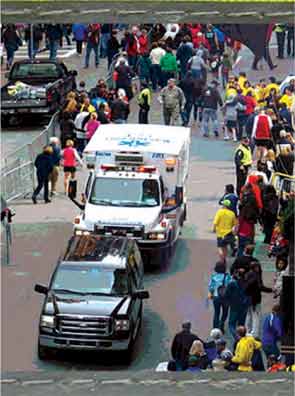
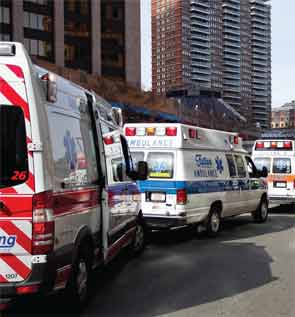

—James Hudspeth, MD, Boston Medical Center
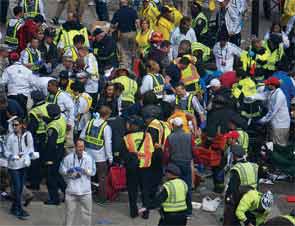

—Dan Hale, MD, Floating Hospital for Children at Tufts Medical Center, Boston
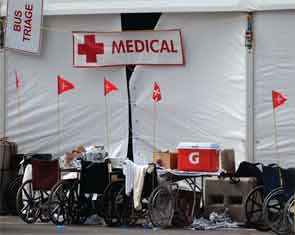
Dan Hale, MD, a pediatric hospitalist at the Floating Hospital for Children at Tufts Medical Center in Boston, was doing discharge paperwork when he started getting text messages he couldn’t quite interpret.
“Are you OK?” “Do you need anything?” friends were asking him. Then he heard a page for all anesthesiologists to report to the OR. Immediately, he knew something terrible must have happened. He soon learned about the bombings at the Boston Marathon. He rushed to the pediatric ED to see how he could help.
James Hudspeth, MD, a hospitalist at Boston Medical Center, was meeting with the program director for internal medicine when he read a text message that bombs had just gone off near the finish line. They went online for local news coverage; soon thereafter, a cap on admissions was lifted. Dr. Hudspeth started expediting discharges to make room for what might be coming the hospital’s way.
Sushrut Jangi, MD, a hospitalist at Beth Israel Deaconess Medical Center, was in a medical tent gathering information for an article on treating the health problems of marathoners that he was writing for The Boston Globe when he heard the blasts. Doctors and medical staff there worried about the possibility of a bomb in the tent, he said, but they were instructed to stay with their patients. Dr. Jangi had expected to work as a journalist for the day, but his doctoring skills were needed.
Hospitalists who were working in downtown Boston on April 15, when two bombs exploded 17 seconds apart, all experienced the tragedy in their own ways. But their accounts also resonate within some of the same themes.
They found themselves unsure of their roles, as most of the work inevitably fell to surgeons and trauma specialists. They described the importance of good leadership in times of crisis. And they say that hospitalists should be incorporated to a greater extent into disaster plans.
Dr. Jangi said that before the bombs went off, the medical tent was almost filled with runners who were “quite ill”—hypothermic and shaking, high sodium levels, disoriented. When the blasts occurred, the main instruction was, “Don’t leave your patients behind.” Those who were well enough were released from the tent, and the bomb-blast victims were essentially “whisked through.”
“We just kind of cleared the way and got them into ambulances as soon as possible. We just didn’t have the capacity to take care of such severe injury,” he said. “Why should we? We weren’t expecting a war zone.”
In the tent, Dr. Jangi wrote in an essay for the New England Journal of Medicine, “Many of us barely laid our hands on anyone. We had no trauma surgeons or supplies of blood products; tourniquets had already been applied; CPR had already been performed. Though some patients required bandages, sutures, and dressings, many of us watched these passing victims in a kind of idle horror, with no idea how to help.”
Dr. Hale was not involved in the treatment of bombing victims as the attending of record, but he said that he had a “bird’s-eye view” of the response in the pediatric ED. One child had shrapnel injuries and a ruptured tympanic membrane and was worked on by the team “professionally and efficiently,” Dr. Hale said.
When reports of a possible third bomb blast, at a library, came in, he saw the physician leaders go from team to team, making sure they were prepared.
“There were clear leaders communicating what to do,” said Dr. Hale, a firefighter in his hometown of Kittery in southern Maine. “As patients came in, it was extremely orderly. I saw very few clinical staff who were rattled.”
For his own part, in addition to his medical training, his training as a firefighter helped keep him calm, he said.
At Boston Medical Center, about a mile and a half from the blasts, the admissions that had been worked up over the course of the afternoon were essentially taken all at once so that there was room in the ED, said Dr. Hudspeth, who also does medical work in Haiti and was in New York on 9/11, though not as a doctor.
Focusing, he said, was “definitely a challenge.” Even though he had faith in hospital security, there was still “some notion of ‘You never know exactly what’s going to happen.’”
“You focus on the patient that’s in front of you. You focus on trying to solve the issues that are at hand. You deal with the logistical questions that come up between patients,” he said. “By and large, just put your nose to the grindstone.”
The doctors said that hospitalists had an unclear role in the response effort and hope to have their roles clarified so that they can better put to use their expertise in internal medicine. If hospitalists are monitoring general medical issues, that will help take some of the pressure off the trauma team.
“We know the [general] medicine stuff very well—that is our bread and butter,” said Dr. Hudspeth, who added that steps are being taken as part of Boston Medical Center’s post-response analysis to determine hospitalists’ role in future disaster responses.
They also said they felt fortunate that the bombings had occurred where they did, with so many hospitals close to the scene. It kept the system from becoming overwhelmed. Even so, “at some point, a disaster is so large that it would overwhelm any system, no matter how many resources were available,” Dr. Hale added.
Dr. Jangi said that he thinks his residency training helped him when he found himself having to provide care in a high-pressure situation in the medical tent.
“During residency, there are a lot of situations where you’re responsible for making a decision on your feet,” he said. “That’s a skill that you’re not really exposed to until you do it and that type of fast decision-making. I felt myself drawing on that. Not that I resuscitated anyone in the tent, but I felt more comfortable with uncertainty, with doing your duty in a situation of uncertainty. And I don’t know—maybe if I hadn’t gone through that, I would have just run out of there.”
He said the experience has helped make him more committed as a doctor.
“It makes it easier to remember what my duty is more, and it just gives me more empathy for suffering in general—I feel that very strongly,” he said. “It’s possible that this experience could have numbed me, but it didn’t. It’s made me more acute to the idea of people suffering.”
Tom Collins is a freelance writer in South Florida.
Reference
—James Hudspeth, MD, Boston Medical Center
—Dan Hale, MD, Floating Hospital for Children at Tufts Medical Center, Boston
Dan Hale, MD, a pediatric hospitalist at the Floating Hospital for Children at Tufts Medical Center in Boston, was doing discharge paperwork when he started getting text messages he couldn’t quite interpret.
“Are you OK?” “Do you need anything?” friends were asking him. Then he heard a page for all anesthesiologists to report to the OR. Immediately, he knew something terrible must have happened. He soon learned about the bombings at the Boston Marathon. He rushed to the pediatric ED to see how he could help.
James Hudspeth, MD, a hospitalist at Boston Medical Center, was meeting with the program director for internal medicine when he read a text message that bombs had just gone off near the finish line. They went online for local news coverage; soon thereafter, a cap on admissions was lifted. Dr. Hudspeth started expediting discharges to make room for what might be coming the hospital’s way.
Sushrut Jangi, MD, a hospitalist at Beth Israel Deaconess Medical Center, was in a medical tent gathering information for an article on treating the health problems of marathoners that he was writing for The Boston Globe when he heard the blasts. Doctors and medical staff there worried about the possibility of a bomb in the tent, he said, but they were instructed to stay with their patients. Dr. Jangi had expected to work as a journalist for the day, but his doctoring skills were needed.
Hospitalists who were working in downtown Boston on April 15, when two bombs exploded 17 seconds apart, all experienced the tragedy in their own ways. But their accounts also resonate within some of the same themes.
They found themselves unsure of their roles, as most of the work inevitably fell to surgeons and trauma specialists. They described the importance of good leadership in times of crisis. And they say that hospitalists should be incorporated to a greater extent into disaster plans.
Dr. Jangi said that before the bombs went off, the medical tent was almost filled with runners who were “quite ill”—hypothermic and shaking, high sodium levels, disoriented. When the blasts occurred, the main instruction was, “Don’t leave your patients behind.” Those who were well enough were released from the tent, and the bomb-blast victims were essentially “whisked through.”
“We just kind of cleared the way and got them into ambulances as soon as possible. We just didn’t have the capacity to take care of such severe injury,” he said. “Why should we? We weren’t expecting a war zone.”
In the tent, Dr. Jangi wrote in an essay for the New England Journal of Medicine, “Many of us barely laid our hands on anyone. We had no trauma surgeons or supplies of blood products; tourniquets had already been applied; CPR had already been performed. Though some patients required bandages, sutures, and dressings, many of us watched these passing victims in a kind of idle horror, with no idea how to help.”
Dr. Hale was not involved in the treatment of bombing victims as the attending of record, but he said that he had a “bird’s-eye view” of the response in the pediatric ED. One child had shrapnel injuries and a ruptured tympanic membrane and was worked on by the team “professionally and efficiently,” Dr. Hale said.
When reports of a possible third bomb blast, at a library, came in, he saw the physician leaders go from team to team, making sure they were prepared.
“There were clear leaders communicating what to do,” said Dr. Hale, a firefighter in his hometown of Kittery in southern Maine. “As patients came in, it was extremely orderly. I saw very few clinical staff who were rattled.”
For his own part, in addition to his medical training, his training as a firefighter helped keep him calm, he said.
At Boston Medical Center, about a mile and a half from the blasts, the admissions that had been worked up over the course of the afternoon were essentially taken all at once so that there was room in the ED, said Dr. Hudspeth, who also does medical work in Haiti and was in New York on 9/11, though not as a doctor.
Focusing, he said, was “definitely a challenge.” Even though he had faith in hospital security, there was still “some notion of ‘You never know exactly what’s going to happen.’”
“You focus on the patient that’s in front of you. You focus on trying to solve the issues that are at hand. You deal with the logistical questions that come up between patients,” he said. “By and large, just put your nose to the grindstone.”
The doctors said that hospitalists had an unclear role in the response effort and hope to have their roles clarified so that they can better put to use their expertise in internal medicine. If hospitalists are monitoring general medical issues, that will help take some of the pressure off the trauma team.
“We know the [general] medicine stuff very well—that is our bread and butter,” said Dr. Hudspeth, who added that steps are being taken as part of Boston Medical Center’s post-response analysis to determine hospitalists’ role in future disaster responses.
They also said they felt fortunate that the bombings had occurred where they did, with so many hospitals close to the scene. It kept the system from becoming overwhelmed. Even so, “at some point, a disaster is so large that it would overwhelm any system, no matter how many resources were available,” Dr. Hale added.
Dr. Jangi said that he thinks his residency training helped him when he found himself having to provide care in a high-pressure situation in the medical tent.
“During residency, there are a lot of situations where you’re responsible for making a decision on your feet,” he said. “That’s a skill that you’re not really exposed to until you do it and that type of fast decision-making. I felt myself drawing on that. Not that I resuscitated anyone in the tent, but I felt more comfortable with uncertainty, with doing your duty in a situation of uncertainty. And I don’t know—maybe if I hadn’t gone through that, I would have just run out of there.”
He said the experience has helped make him more committed as a doctor.
“It makes it easier to remember what my duty is more, and it just gives me more empathy for suffering in general—I feel that very strongly,” he said. “It’s possible that this experience could have numbed me, but it didn’t. It’s made me more acute to the idea of people suffering.”
Tom Collins is a freelance writer in South Florida.
Reference
—James Hudspeth, MD, Boston Medical Center
—Dan Hale, MD, Floating Hospital for Children at Tufts Medical Center, Boston
Dan Hale, MD, a pediatric hospitalist at the Floating Hospital for Children at Tufts Medical Center in Boston, was doing discharge paperwork when he started getting text messages he couldn’t quite interpret.
“Are you OK?” “Do you need anything?” friends were asking him. Then he heard a page for all anesthesiologists to report to the OR. Immediately, he knew something terrible must have happened. He soon learned about the bombings at the Boston Marathon. He rushed to the pediatric ED to see how he could help.
James Hudspeth, MD, a hospitalist at Boston Medical Center, was meeting with the program director for internal medicine when he read a text message that bombs had just gone off near the finish line. They went online for local news coverage; soon thereafter, a cap on admissions was lifted. Dr. Hudspeth started expediting discharges to make room for what might be coming the hospital’s way.
Sushrut Jangi, MD, a hospitalist at Beth Israel Deaconess Medical Center, was in a medical tent gathering information for an article on treating the health problems of marathoners that he was writing for The Boston Globe when he heard the blasts. Doctors and medical staff there worried about the possibility of a bomb in the tent, he said, but they were instructed to stay with their patients. Dr. Jangi had expected to work as a journalist for the day, but his doctoring skills were needed.
Hospitalists who were working in downtown Boston on April 15, when two bombs exploded 17 seconds apart, all experienced the tragedy in their own ways. But their accounts also resonate within some of the same themes.
They found themselves unsure of their roles, as most of the work inevitably fell to surgeons and trauma specialists. They described the importance of good leadership in times of crisis. And they say that hospitalists should be incorporated to a greater extent into disaster plans.
Dr. Jangi said that before the bombs went off, the medical tent was almost filled with runners who were “quite ill”—hypothermic and shaking, high sodium levels, disoriented. When the blasts occurred, the main instruction was, “Don’t leave your patients behind.” Those who were well enough were released from the tent, and the bomb-blast victims were essentially “whisked through.”
“We just kind of cleared the way and got them into ambulances as soon as possible. We just didn’t have the capacity to take care of such severe injury,” he said. “Why should we? We weren’t expecting a war zone.”
In the tent, Dr. Jangi wrote in an essay for the New England Journal of Medicine, “Many of us barely laid our hands on anyone. We had no trauma surgeons or supplies of blood products; tourniquets had already been applied; CPR had already been performed. Though some patients required bandages, sutures, and dressings, many of us watched these passing victims in a kind of idle horror, with no idea how to help.”
Dr. Hale was not involved in the treatment of bombing victims as the attending of record, but he said that he had a “bird’s-eye view” of the response in the pediatric ED. One child had shrapnel injuries and a ruptured tympanic membrane and was worked on by the team “professionally and efficiently,” Dr. Hale said.
When reports of a possible third bomb blast, at a library, came in, he saw the physician leaders go from team to team, making sure they were prepared.
“There were clear leaders communicating what to do,” said Dr. Hale, a firefighter in his hometown of Kittery in southern Maine. “As patients came in, it was extremely orderly. I saw very few clinical staff who were rattled.”
For his own part, in addition to his medical training, his training as a firefighter helped keep him calm, he said.
At Boston Medical Center, about a mile and a half from the blasts, the admissions that had been worked up over the course of the afternoon were essentially taken all at once so that there was room in the ED, said Dr. Hudspeth, who also does medical work in Haiti and was in New York on 9/11, though not as a doctor.
Focusing, he said, was “definitely a challenge.” Even though he had faith in hospital security, there was still “some notion of ‘You never know exactly what’s going to happen.’”
“You focus on the patient that’s in front of you. You focus on trying to solve the issues that are at hand. You deal with the logistical questions that come up between patients,” he said. “By and large, just put your nose to the grindstone.”
The doctors said that hospitalists had an unclear role in the response effort and hope to have their roles clarified so that they can better put to use their expertise in internal medicine. If hospitalists are monitoring general medical issues, that will help take some of the pressure off the trauma team.
“We know the [general] medicine stuff very well—that is our bread and butter,” said Dr. Hudspeth, who added that steps are being taken as part of Boston Medical Center’s post-response analysis to determine hospitalists’ role in future disaster responses.
They also said they felt fortunate that the bombings had occurred where they did, with so many hospitals close to the scene. It kept the system from becoming overwhelmed. Even so, “at some point, a disaster is so large that it would overwhelm any system, no matter how many resources were available,” Dr. Hale added.
Dr. Jangi said that he thinks his residency training helped him when he found himself having to provide care in a high-pressure situation in the medical tent.
“During residency, there are a lot of situations where you’re responsible for making a decision on your feet,” he said. “That’s a skill that you’re not really exposed to until you do it and that type of fast decision-making. I felt myself drawing on that. Not that I resuscitated anyone in the tent, but I felt more comfortable with uncertainty, with doing your duty in a situation of uncertainty. And I don’t know—maybe if I hadn’t gone through that, I would have just run out of there.”
He said the experience has helped make him more committed as a doctor.
“It makes it easier to remember what my duty is more, and it just gives me more empathy for suffering in general—I feel that very strongly,” he said. “It’s possible that this experience could have numbed me, but it didn’t. It’s made me more acute to the idea of people suffering.”
Tom Collins is a freelance writer in South Florida.
Reference
The Hospitalist Names New Pediatric Editor

—Weijen Chang, MD, SFHM, FAAP
Next month, readers of The Hospitalist will see a new face alongside the monthly “Pediatric HM Literature” column. Weijen Chang, MD, SFHM, FAAP, has been selected its new pediatric editor. Next month Dr. Chang takes over for Mark Shen, MD, SFHM, the magazine's pediatric editor since 2010.
Dr. Chang attended Duke University’s medicine-pediatrics residency program in Durham, N.C., after graduating from New York Medical College in Valhalla, N.Y. He serves as health sciences associate clinical professor of medicine and pediatrics at the University of California at San Diego (UCSD) School of Medicine, and serves as a hospitalist at both UCSD Medical Center and Rady Children’s Hospital, just across town from UCSD.
As pediatric editor, Dr. Chang hopes to help grow the field of pediatric hospital medicine, just as adult HM has grown over the last decade.
“In the past 10 years of HM being in existence, I think adult hospitalists have gone from being a fill-in-type player to really being leaders in their institutions,” he says, “and I think pediatric hospitalists are beginning to fill that role. What I’d like to highlight is how pediatric hospitalists can follow their adult hospitalist brothers and sisters into the role of being leaders … in how to handle challenges that their hospitals face.”
Danielle Scheurer, MD, MSCR, SFHM, The Hospitalist’s physician editor, echoed Dr. Change’s enthusiasm. “We are thrilled to have Weijen Chang as our new pediatric editor,” Dr. Scheurer says. “He is a long-time member of Team Hospitalist, active SHM member, and a respected mentor in the pediatric hospitalist community. He will bring insight and depth to the pediatric HM community. We are lucky to be able to recruit him to this position.”
Dr. Chang says he’s looking forward to his new role and new contacts he will be making. He recently joined SHM’s Pediatrics Committee, and will continue engagement with Team Hospitalist, the magazine’s editorial advisory board.
“I’m really excited to get the chance to contact other pediatric hospitalists around the country to gauge opinions about various issues that we face,” Dr. Chang says. “For me, the most exciting part is having an excuse to call people to see what’s going on in their institutions. As hospitalists, we’re so focused on what happens within our walls that we don’t get to see what’s happening elsewhere.”
Michael O’Neal is a freelance writer in New York.
—Weijen Chang, MD, SFHM, FAAP
Next month, readers of The Hospitalist will see a new face alongside the monthly “Pediatric HM Literature” column. Weijen Chang, MD, SFHM, FAAP, has been selected its new pediatric editor. Next month Dr. Chang takes over for Mark Shen, MD, SFHM, the magazine's pediatric editor since 2010.
Dr. Chang attended Duke University’s medicine-pediatrics residency program in Durham, N.C., after graduating from New York Medical College in Valhalla, N.Y. He serves as health sciences associate clinical professor of medicine and pediatrics at the University of California at San Diego (UCSD) School of Medicine, and serves as a hospitalist at both UCSD Medical Center and Rady Children’s Hospital, just across town from UCSD.
As pediatric editor, Dr. Chang hopes to help grow the field of pediatric hospital medicine, just as adult HM has grown over the last decade.
“In the past 10 years of HM being in existence, I think adult hospitalists have gone from being a fill-in-type player to really being leaders in their institutions,” he says, “and I think pediatric hospitalists are beginning to fill that role. What I’d like to highlight is how pediatric hospitalists can follow their adult hospitalist brothers and sisters into the role of being leaders … in how to handle challenges that their hospitals face.”
Danielle Scheurer, MD, MSCR, SFHM, The Hospitalist’s physician editor, echoed Dr. Change’s enthusiasm. “We are thrilled to have Weijen Chang as our new pediatric editor,” Dr. Scheurer says. “He is a long-time member of Team Hospitalist, active SHM member, and a respected mentor in the pediatric hospitalist community. He will bring insight and depth to the pediatric HM community. We are lucky to be able to recruit him to this position.”
Dr. Chang says he’s looking forward to his new role and new contacts he will be making. He recently joined SHM’s Pediatrics Committee, and will continue engagement with Team Hospitalist, the magazine’s editorial advisory board.
“I’m really excited to get the chance to contact other pediatric hospitalists around the country to gauge opinions about various issues that we face,” Dr. Chang says. “For me, the most exciting part is having an excuse to call people to see what’s going on in their institutions. As hospitalists, we’re so focused on what happens within our walls that we don’t get to see what’s happening elsewhere.”
Michael O’Neal is a freelance writer in New York.
—Weijen Chang, MD, SFHM, FAAP
Next month, readers of The Hospitalist will see a new face alongside the monthly “Pediatric HM Literature” column. Weijen Chang, MD, SFHM, FAAP, has been selected its new pediatric editor. Next month Dr. Chang takes over for Mark Shen, MD, SFHM, the magazine's pediatric editor since 2010.
Dr. Chang attended Duke University’s medicine-pediatrics residency program in Durham, N.C., after graduating from New York Medical College in Valhalla, N.Y. He serves as health sciences associate clinical professor of medicine and pediatrics at the University of California at San Diego (UCSD) School of Medicine, and serves as a hospitalist at both UCSD Medical Center and Rady Children’s Hospital, just across town from UCSD.
As pediatric editor, Dr. Chang hopes to help grow the field of pediatric hospital medicine, just as adult HM has grown over the last decade.
“In the past 10 years of HM being in existence, I think adult hospitalists have gone from being a fill-in-type player to really being leaders in their institutions,” he says, “and I think pediatric hospitalists are beginning to fill that role. What I’d like to highlight is how pediatric hospitalists can follow their adult hospitalist brothers and sisters into the role of being leaders … in how to handle challenges that their hospitals face.”
Danielle Scheurer, MD, MSCR, SFHM, The Hospitalist’s physician editor, echoed Dr. Change’s enthusiasm. “We are thrilled to have Weijen Chang as our new pediatric editor,” Dr. Scheurer says. “He is a long-time member of Team Hospitalist, active SHM member, and a respected mentor in the pediatric hospitalist community. He will bring insight and depth to the pediatric HM community. We are lucky to be able to recruit him to this position.”
Dr. Chang says he’s looking forward to his new role and new contacts he will be making. He recently joined SHM’s Pediatrics Committee, and will continue engagement with Team Hospitalist, the magazine’s editorial advisory board.
“I’m really excited to get the chance to contact other pediatric hospitalists around the country to gauge opinions about various issues that we face,” Dr. Chang says. “For me, the most exciting part is having an excuse to call people to see what’s going on in their institutions. As hospitalists, we’re so focused on what happens within our walls that we don’t get to see what’s happening elsewhere.”
Michael O’Neal is a freelance writer in New York.
SHM Allies with Leading Health Care Groups to Advance Hospital Patient Nutrition
SHM announced in May the launch of a new interdisciplinary partnership, the Alliance to Advance Patient Nutrition, in conjunction with four other organizations. The alliance’s mission is to improve patient outcomes through nutrition intervention in the hospital.
Representing more than 100,000 dietitians, nurses, hospitalists, and other physicians and clinicians from across the nation, the following organizations have come together with SHM to champion for early nutrition screening, assessment, and intervention in hospitals:
- Academy of Medical-Surgical Nurses (AMSN);
- Academy of Nutrition and Dietetics (AND);
- American Society for Parenteral and Enteral Nutrition (ASPEN); and
- Abbott Nutrition.
Malnutrition increases costs, length of stay, and unfavorable outcomes. Properly addressing hospital malnutrition creates an opportunity to improve quality of care while also reducing healthcare costs. Additional clinical research finds that malnourished patients are two times more likely to develop a pressure ulcer, while patients with malnutrition have three times the rate of infection.
Yet when hospitalized patients are provided intervention via oral nutrition supplements, health economic research finds associated benefits:
Nutrition intervention can reduce hospital length of stay by an average of two days, and nutrition intervention has been shown to reduce patient hospitalization costs by 21.6%, or $4,734 per episode.
Additionally, there was a 6.7% reduction in the probability of 30-day readmission with patients who had at least one known subsequent readmission and were offered oral nutrition supplements during hospitalization.
“There is a growing body of evidence supporting the positive impact nutrition has on improving patient outcomes,” says hospitalist Melissa Parkhurst, MD, FHM, who serves as medical director for the University of Kansas Hospital’s hospitalist section and its nutrition support service. “We are seeing that early intervention can make a significant difference. As physicians, we need to work with the entire clinician team to ensure that nutrition is an integral part of our patients’ treatment plans.”
The alliance launched a website at www.malnutrition.org to provide hospital-based clinicians with the following resources:
- Research and fact sheets about malnutrition and the positive impact nutrition intervention has on patient care and outcomes;
- The Alliance Nutrition Toolkit, which facilitates clinician collaboration and nutrition integration; and
- Information about educational events, such as quick learning modules, continuing medical education (CME) programs.
The Alliance to Advance Patient Nutrition is made possible with support from Abbott’s nutrition business.
SHM announced in May the launch of a new interdisciplinary partnership, the Alliance to Advance Patient Nutrition, in conjunction with four other organizations. The alliance’s mission is to improve patient outcomes through nutrition intervention in the hospital.
Representing more than 100,000 dietitians, nurses, hospitalists, and other physicians and clinicians from across the nation, the following organizations have come together with SHM to champion for early nutrition screening, assessment, and intervention in hospitals:
- Academy of Medical-Surgical Nurses (AMSN);
- Academy of Nutrition and Dietetics (AND);
- American Society for Parenteral and Enteral Nutrition (ASPEN); and
- Abbott Nutrition.
Malnutrition increases costs, length of stay, and unfavorable outcomes. Properly addressing hospital malnutrition creates an opportunity to improve quality of care while also reducing healthcare costs. Additional clinical research finds that malnourished patients are two times more likely to develop a pressure ulcer, while patients with malnutrition have three times the rate of infection.
Yet when hospitalized patients are provided intervention via oral nutrition supplements, health economic research finds associated benefits:
Nutrition intervention can reduce hospital length of stay by an average of two days, and nutrition intervention has been shown to reduce patient hospitalization costs by 21.6%, or $4,734 per episode.
Additionally, there was a 6.7% reduction in the probability of 30-day readmission with patients who had at least one known subsequent readmission and were offered oral nutrition supplements during hospitalization.
“There is a growing body of evidence supporting the positive impact nutrition has on improving patient outcomes,” says hospitalist Melissa Parkhurst, MD, FHM, who serves as medical director for the University of Kansas Hospital’s hospitalist section and its nutrition support service. “We are seeing that early intervention can make a significant difference. As physicians, we need to work with the entire clinician team to ensure that nutrition is an integral part of our patients’ treatment plans.”
The alliance launched a website at www.malnutrition.org to provide hospital-based clinicians with the following resources:
- Research and fact sheets about malnutrition and the positive impact nutrition intervention has on patient care and outcomes;
- The Alliance Nutrition Toolkit, which facilitates clinician collaboration and nutrition integration; and
- Information about educational events, such as quick learning modules, continuing medical education (CME) programs.
The Alliance to Advance Patient Nutrition is made possible with support from Abbott’s nutrition business.
SHM announced in May the launch of a new interdisciplinary partnership, the Alliance to Advance Patient Nutrition, in conjunction with four other organizations. The alliance’s mission is to improve patient outcomes through nutrition intervention in the hospital.
Representing more than 100,000 dietitians, nurses, hospitalists, and other physicians and clinicians from across the nation, the following organizations have come together with SHM to champion for early nutrition screening, assessment, and intervention in hospitals:
- Academy of Medical-Surgical Nurses (AMSN);
- Academy of Nutrition and Dietetics (AND);
- American Society for Parenteral and Enteral Nutrition (ASPEN); and
- Abbott Nutrition.
Malnutrition increases costs, length of stay, and unfavorable outcomes. Properly addressing hospital malnutrition creates an opportunity to improve quality of care while also reducing healthcare costs. Additional clinical research finds that malnourished patients are two times more likely to develop a pressure ulcer, while patients with malnutrition have three times the rate of infection.
Yet when hospitalized patients are provided intervention via oral nutrition supplements, health economic research finds associated benefits:
Nutrition intervention can reduce hospital length of stay by an average of two days, and nutrition intervention has been shown to reduce patient hospitalization costs by 21.6%, or $4,734 per episode.
Additionally, there was a 6.7% reduction in the probability of 30-day readmission with patients who had at least one known subsequent readmission and were offered oral nutrition supplements during hospitalization.
“There is a growing body of evidence supporting the positive impact nutrition has on improving patient outcomes,” says hospitalist Melissa Parkhurst, MD, FHM, who serves as medical director for the University of Kansas Hospital’s hospitalist section and its nutrition support service. “We are seeing that early intervention can make a significant difference. As physicians, we need to work with the entire clinician team to ensure that nutrition is an integral part of our patients’ treatment plans.”
The alliance launched a website at www.malnutrition.org to provide hospital-based clinicians with the following resources:
- Research and fact sheets about malnutrition and the positive impact nutrition intervention has on patient care and outcomes;
- The Alliance Nutrition Toolkit, which facilitates clinician collaboration and nutrition integration; and
- Information about educational events, such as quick learning modules, continuing medical education (CME) programs.
The Alliance to Advance Patient Nutrition is made possible with support from Abbott’s nutrition business.