User login
MDedge conference coverage features onsite reporting of the latest study results and expert perspectives from leading researchers.
CBD for LGS: Fewer seizures, but thrombocytopenia risk

At the 2020 CNS-ICNA Conjoint Meeting, held virtually this year, Anul Patel, MD, section chief of Pediatric neurology at Nationwide Children’s and associate professor of clinical pediatrics and neurology at the Ohio State University, both in Columbus, Ohio, reported 156-week results of an open-label extension trial called GWPCARE5 that showed patients with LGS taking Epidiolex had a 60% or greater average reduction in seizures, compared with baseline. Epidiolex, a highly purified form of CBD, was approved by the Food and Drug Administration in 2018 for LGS and Dravet syndrome.
In a separate presentation, Nancy A. McNamara, MD, an assistant professor at the C.S. Mott Children’s Hospital at the University of Michigan, Ann Arbor, said that more than one-third of patients taking both Epidiolex and valproic acid (VPA) developed thrombocytopenia after starting CBD therapy. The single-center chart review she reported on included 83 patients.
Daniel Friedman, MD, an epilepsy specialist at New York University who’s researched CBD in children with autism spectrum disorder, said, “These studies show that, while purified CBD has durable effects on the most disabling seizures in children and adults with LGS, like all treatments, it is not without risks that warrant attention and monitoring.”
Open-label extension study
The open-label extension study included 366 patients who participated in the two previous clinical trials. They were given varying doses of CBD titrated over 2 weeks with 20 mg/kg as the target dose, Dr. Patel said. The most common concurrent therapies they were taking were clobazam, valproate or VPA, lamotrigine, levetiracetam, and rufinamide. At weeks 145-156, 67% of patients had a 50% or greater reduction in seizures, 44% had a 75% or greater reduction, and 9% stopped having seizures altogether, Dr. Patel said.
“CBD treatment had a similar safety profile to what was observed in the completed parent randomized clinical trials,” Dr. Patel said. “Sustained reductions in drop and total seizures were observed up to the 156-week follow-up point. So these results demonstrate the potential long-term benefits of CBD treatment for patients with LGS as it relates to reduction of their seizures.”
Adverse event profiles in this analysis were similar to previous clinical trials, he noted. The three most common adverse events were diarrhea (38%), convulsion (38%) and pyrexia (34%), but high percentages of those adverse events resolved during follow-up: 78%, 80%, and 96%, respectively.
Dr. Patel also noted that 31% of patients had elevated liver enzymes (alanine aminotransferase or aspartate aminotransferase), but most of these patients – 78 of 113, or 69% – were on concomitant VPA. “Importantly, no patient met the standard criteria for severe drug-induced liver injury, known as Hy’s law,” he said.
Retention rates for patients were 81% at 1 year, 69% at 2 years and 65% at 3 years, Dr. Patel said.
“An urgent systemic review”
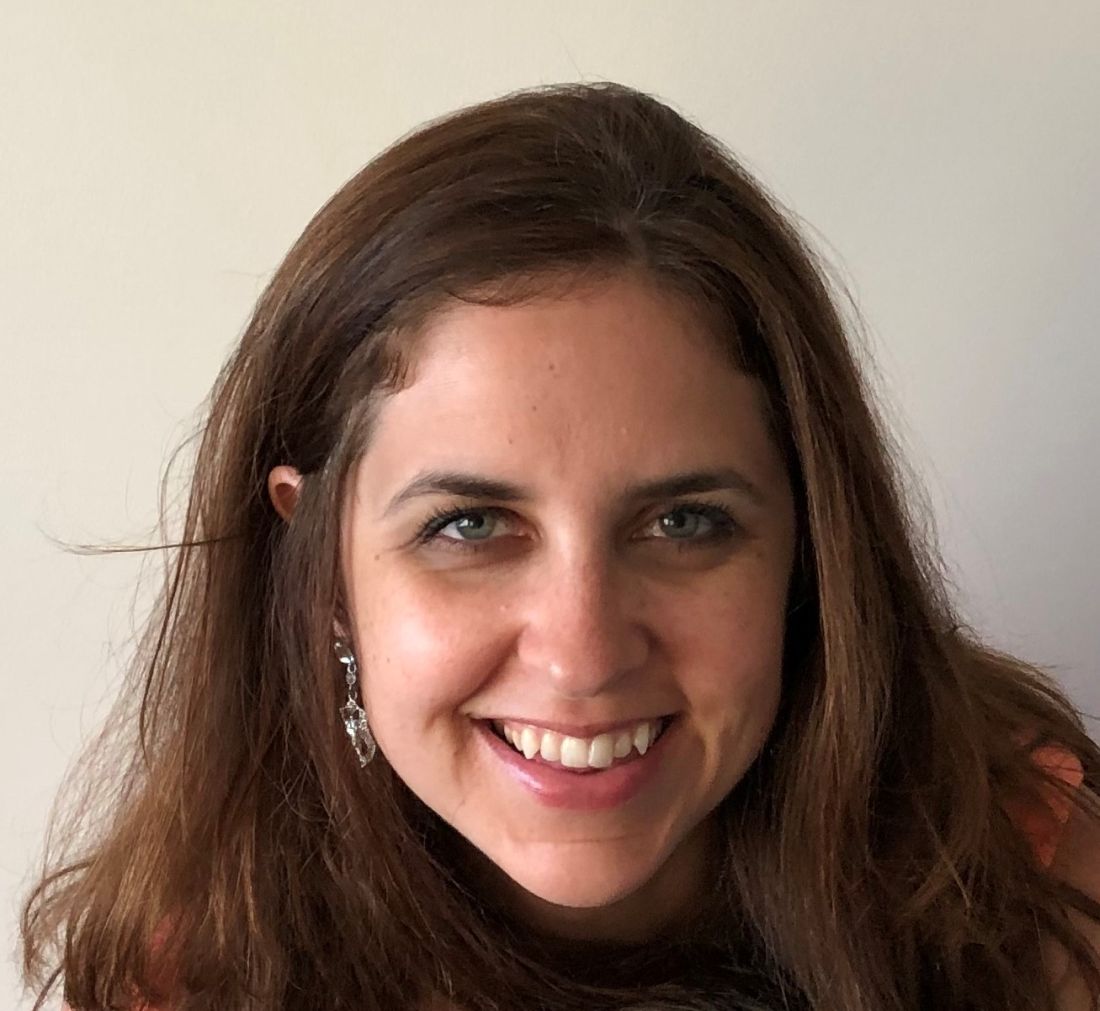
Dr. McNamara’s research drilled down into the interaction of CBD and VPA. “Over the past several months we have made observations that several patients that had been started on CBD, also known as Epidiolex, had developed thrombocytopenia, some of which were symptomatic,” she said. Symptoms included hematuria, easy bruising, and gingival bleeding.
That prompted what Dr. McNamara called “an urgent systemic review” of all patients on CBD. Of 83 patients started on CBD for LGS from January to August 2019, 9 (11%) developed thrombocytopenia. “All of these patients were on concurrent VPA and no patients started on CBD without VPA developed thrombocytopenia,” she said. In all, 23 patients were taking CBD concurrently with VPA. Four of nine cases were symptomatic.
“The thrombocytopenia was reversible in all patients with reduction of medication and one patient recovered spontaneously without intervention,” Dr. McNamara noted.
“This was an important finding because this was not something that had come out of the clinical trials prior to FDA approval,” Dr. McNamara said. “This requires closer monitoring for patients who are started on CBD who are already on VPA.”
Of the 23 patients taking concurrent VPA, 10 had low platelet counts after starting CBD. In six patients, platelet counts dropped from normal before CBD therapy to low afterward.
The study used a McNemar test to determine if an observed adverse event occurred by chance or was related to starting a drug, which yielded a P value of .125, Dr. McNamara said. “While this did not achieve statistical significance, we suggest that prescribers closely monitor platelet levels after starting CBD, particularly when a patient is also on concurrent VPA,” she said.
Her group obtained a complete blood count at baseline and then at 1, 3, and 6 months after starting the patient on CBD, along with evaluation of alanine aminotransferase and aspartate aminotransferase. “We believe that this is helpful because most of the patients that develop low platelets did so within 3 months of starting cannabidiol,” Dr. McNamara said.
She acknowledged the limits of the single-center study. “Future research will need to be done with larger cohorts with standardized surveillance labs,” she said in an interview.
Dr. Patel disclosed financial relationships with GW Research and Greenwich Biosciences. Dr. McNamara has no relevant disclosures.
At the 2020 CNS-ICNA Conjoint Meeting, held virtually this year, Anul Patel, MD, section chief of Pediatric neurology at Nationwide Children’s and associate professor of clinical pediatrics and neurology at the Ohio State University, both in Columbus, Ohio, reported 156-week results of an open-label extension trial called GWPCARE5 that showed patients with LGS taking Epidiolex had a 60% or greater average reduction in seizures, compared with baseline. Epidiolex, a highly purified form of CBD, was approved by the Food and Drug Administration in 2018 for LGS and Dravet syndrome.
In a separate presentation, Nancy A. McNamara, MD, an assistant professor at the C.S. Mott Children’s Hospital at the University of Michigan, Ann Arbor, said that more than one-third of patients taking both Epidiolex and valproic acid (VPA) developed thrombocytopenia after starting CBD therapy. The single-center chart review she reported on included 83 patients.
Daniel Friedman, MD, an epilepsy specialist at New York University who’s researched CBD in children with autism spectrum disorder, said, “These studies show that, while purified CBD has durable effects on the most disabling seizures in children and adults with LGS, like all treatments, it is not without risks that warrant attention and monitoring.”
Open-label extension study
The open-label extension study included 366 patients who participated in the two previous clinical trials. They were given varying doses of CBD titrated over 2 weeks with 20 mg/kg as the target dose, Dr. Patel said. The most common concurrent therapies they were taking were clobazam, valproate or VPA, lamotrigine, levetiracetam, and rufinamide. At weeks 145-156, 67% of patients had a 50% or greater reduction in seizures, 44% had a 75% or greater reduction, and 9% stopped having seizures altogether, Dr. Patel said.
“CBD treatment had a similar safety profile to what was observed in the completed parent randomized clinical trials,” Dr. Patel said. “Sustained reductions in drop and total seizures were observed up to the 156-week follow-up point. So these results demonstrate the potential long-term benefits of CBD treatment for patients with LGS as it relates to reduction of their seizures.”
Adverse event profiles in this analysis were similar to previous clinical trials, he noted. The three most common adverse events were diarrhea (38%), convulsion (38%) and pyrexia (34%), but high percentages of those adverse events resolved during follow-up: 78%, 80%, and 96%, respectively.
Dr. Patel also noted that 31% of patients had elevated liver enzymes (alanine aminotransferase or aspartate aminotransferase), but most of these patients – 78 of 113, or 69% – were on concomitant VPA. “Importantly, no patient met the standard criteria for severe drug-induced liver injury, known as Hy’s law,” he said.
Retention rates for patients were 81% at 1 year, 69% at 2 years and 65% at 3 years, Dr. Patel said.
“An urgent systemic review”
Dr. McNamara’s research drilled down into the interaction of CBD and VPA. “Over the past several months we have made observations that several patients that had been started on CBD, also known as Epidiolex, had developed thrombocytopenia, some of which were symptomatic,” she said. Symptoms included hematuria, easy bruising, and gingival bleeding.
That prompted what Dr. McNamara called “an urgent systemic review” of all patients on CBD. Of 83 patients started on CBD for LGS from January to August 2019, 9 (11%) developed thrombocytopenia. “All of these patients were on concurrent VPA and no patients started on CBD without VPA developed thrombocytopenia,” she said. In all, 23 patients were taking CBD concurrently with VPA. Four of nine cases were symptomatic.
“The thrombocytopenia was reversible in all patients with reduction of medication and one patient recovered spontaneously without intervention,” Dr. McNamara noted.
“This was an important finding because this was not something that had come out of the clinical trials prior to FDA approval,” Dr. McNamara said. “This requires closer monitoring for patients who are started on CBD who are already on VPA.”
Of the 23 patients taking concurrent VPA, 10 had low platelet counts after starting CBD. In six patients, platelet counts dropped from normal before CBD therapy to low afterward.
The study used a McNemar test to determine if an observed adverse event occurred by chance or was related to starting a drug, which yielded a P value of .125, Dr. McNamara said. “While this did not achieve statistical significance, we suggest that prescribers closely monitor platelet levels after starting CBD, particularly when a patient is also on concurrent VPA,” she said.
Her group obtained a complete blood count at baseline and then at 1, 3, and 6 months after starting the patient on CBD, along with evaluation of alanine aminotransferase and aspartate aminotransferase. “We believe that this is helpful because most of the patients that develop low platelets did so within 3 months of starting cannabidiol,” Dr. McNamara said.
She acknowledged the limits of the single-center study. “Future research will need to be done with larger cohorts with standardized surveillance labs,” she said in an interview.
Dr. Patel disclosed financial relationships with GW Research and Greenwich Biosciences. Dr. McNamara has no relevant disclosures.
At the 2020 CNS-ICNA Conjoint Meeting, held virtually this year, Anul Patel, MD, section chief of Pediatric neurology at Nationwide Children’s and associate professor of clinical pediatrics and neurology at the Ohio State University, both in Columbus, Ohio, reported 156-week results of an open-label extension trial called GWPCARE5 that showed patients with LGS taking Epidiolex had a 60% or greater average reduction in seizures, compared with baseline. Epidiolex, a highly purified form of CBD, was approved by the Food and Drug Administration in 2018 for LGS and Dravet syndrome.
In a separate presentation, Nancy A. McNamara, MD, an assistant professor at the C.S. Mott Children’s Hospital at the University of Michigan, Ann Arbor, said that more than one-third of patients taking both Epidiolex and valproic acid (VPA) developed thrombocytopenia after starting CBD therapy. The single-center chart review she reported on included 83 patients.
Daniel Friedman, MD, an epilepsy specialist at New York University who’s researched CBD in children with autism spectrum disorder, said, “These studies show that, while purified CBD has durable effects on the most disabling seizures in children and adults with LGS, like all treatments, it is not without risks that warrant attention and monitoring.”
Open-label extension study
The open-label extension study included 366 patients who participated in the two previous clinical trials. They were given varying doses of CBD titrated over 2 weeks with 20 mg/kg as the target dose, Dr. Patel said. The most common concurrent therapies they were taking were clobazam, valproate or VPA, lamotrigine, levetiracetam, and rufinamide. At weeks 145-156, 67% of patients had a 50% or greater reduction in seizures, 44% had a 75% or greater reduction, and 9% stopped having seizures altogether, Dr. Patel said.
“CBD treatment had a similar safety profile to what was observed in the completed parent randomized clinical trials,” Dr. Patel said. “Sustained reductions in drop and total seizures were observed up to the 156-week follow-up point. So these results demonstrate the potential long-term benefits of CBD treatment for patients with LGS as it relates to reduction of their seizures.”
Adverse event profiles in this analysis were similar to previous clinical trials, he noted. The three most common adverse events were diarrhea (38%), convulsion (38%) and pyrexia (34%), but high percentages of those adverse events resolved during follow-up: 78%, 80%, and 96%, respectively.
Dr. Patel also noted that 31% of patients had elevated liver enzymes (alanine aminotransferase or aspartate aminotransferase), but most of these patients – 78 of 113, or 69% – were on concomitant VPA. “Importantly, no patient met the standard criteria for severe drug-induced liver injury, known as Hy’s law,” he said.
Retention rates for patients were 81% at 1 year, 69% at 2 years and 65% at 3 years, Dr. Patel said.
“An urgent systemic review”
Dr. McNamara’s research drilled down into the interaction of CBD and VPA. “Over the past several months we have made observations that several patients that had been started on CBD, also known as Epidiolex, had developed thrombocytopenia, some of which were symptomatic,” she said. Symptoms included hematuria, easy bruising, and gingival bleeding.
That prompted what Dr. McNamara called “an urgent systemic review” of all patients on CBD. Of 83 patients started on CBD for LGS from January to August 2019, 9 (11%) developed thrombocytopenia. “All of these patients were on concurrent VPA and no patients started on CBD without VPA developed thrombocytopenia,” she said. In all, 23 patients were taking CBD concurrently with VPA. Four of nine cases were symptomatic.
“The thrombocytopenia was reversible in all patients with reduction of medication and one patient recovered spontaneously without intervention,” Dr. McNamara noted.
“This was an important finding because this was not something that had come out of the clinical trials prior to FDA approval,” Dr. McNamara said. “This requires closer monitoring for patients who are started on CBD who are already on VPA.”
Of the 23 patients taking concurrent VPA, 10 had low platelet counts after starting CBD. In six patients, platelet counts dropped from normal before CBD therapy to low afterward.
The study used a McNemar test to determine if an observed adverse event occurred by chance or was related to starting a drug, which yielded a P value of .125, Dr. McNamara said. “While this did not achieve statistical significance, we suggest that prescribers closely monitor platelet levels after starting CBD, particularly when a patient is also on concurrent VPA,” she said.
Her group obtained a complete blood count at baseline and then at 1, 3, and 6 months after starting the patient on CBD, along with evaluation of alanine aminotransferase and aspartate aminotransferase. “We believe that this is helpful because most of the patients that develop low platelets did so within 3 months of starting cannabidiol,” Dr. McNamara said.
She acknowledged the limits of the single-center study. “Future research will need to be done with larger cohorts with standardized surveillance labs,” she said in an interview.
Dr. Patel disclosed financial relationships with GW Research and Greenwich Biosciences. Dr. McNamara has no relevant disclosures.
FROM CNS-ICNA 2020
Addressing adolescent substance use requires establishing consistent procedures
according to Lucien Gonzalez, MD, assistant professor of psychiatry and behavioral sciences at the University of Minnesota, Minneapolis.

In a presentation at the annual meeting of the American Academy of Pediatrics, held virtually this year, Dr. Gonzalez discussed some of the common challenges pediatricians face in appropriately screening, diagnosing, and managing or referring youth when it comes to substance use.
Substance use screening
One of these included picking the right assessment tool and frequency for screening patients for substance use. A number of validated tools are out there, including the Screening to Brief Intervention (S2BI) and CRAFFT Screening Tool for Adolescent Substance Abuse. Regardless of which screening tool providers choose, “the important thing is to use a tool that is validated in the pediatric population and ideally has frequency results in it,” Dr. Gonzalez said.
In terms of frequency, screening young people at least once a year is fairly standard, but it may be necessary to screen adolescents more often or to screen them at acute visits.
“As many of you who work with adolescents know, you can’t always rely on the yearly well child visit because after a certain age, you start to see drop-off,” Dr. Gonzalez said. “They often aren’t coming for well child visits, and they often are then only showing up for acute visits.”
That means doctors need to think about how their clinics operate, how often they see their teen patients, and other factors – including how much can happen in a single year of adolescence – to ensure that screening captures these patients at least once a year, but more if that works within the practice.
Screening vs. diagnosis
Dr. Gonzalez also addressed the difference between screening and diagnosis, a very familiar distinction to physicians in other areas of medicine but often a source of confusion in the area of substance use.
“Screening is the presumptive identification of unrecognized disease in apparently healthy people who don’t have symptoms, using assessments that can be used rapidly,” Dr. Gonzalez said. “When we move into the diagnostic realm, these are people who present with symptoms or they have positive results on our screening test prompting further investigation.”
Sonia Khan, MD, a pediatrician and the medical director of the substance use disorder counseling program in the department of health and human services in Fremont, Calif., who heard the talk, particularly appreciated this point about screening versus diagnosis.
“As soon as you get a hint that there’s a problem with the kid, you’re no longer screening. You’re doing diagnostic investigation,” Dr. Khan, also the human relations commissioner for the city of Fremont, Calif., said in an interview. “Screening is about the kids you don’t know about. It seems like a small point to make a big deal out of, but it’s not.”
Sometimes a screening tool can serve as an introductory interview guide when beginning a clinical investigation with a patient who already shows symptoms, but that doesn’t mean it’s a screen.
Dr. Gonzalez emphasized the importance of not prescreening.
“A prescreener looks at a kid and decides whether or not they need to be screened,” Dr. Gonzalez said. “We have research that demonstrates that that doesn’t work. Physicians are not good at determining this by eyeballing it, and it’s fraught with bias. Universal screening with a validated screening tool is what works.”
Again, the idea of confronting one’s own personal biases and how they could interfere with screening really resonated with Dr. Khan.
“When it comes to the prescreening, if you’re only screening the ones you [think you] need to screen, you’re introducing bias into your screening,” she said. “It’s usually judgmental. It’s important to focus on really getting the bias out of what you’re doing because it’s a field fraught with bias and expectations.”
Brief interventions
Another area of confusion for many providers is what qualifies as a brief intervention and how to deliver it. The brief intervention needs to focus on increasing the patient’s knowledge, insights, and awareness when it comes to their own substance use and how it affects others. It should also support motivation in the patient to make behavioral changes. “It is always given in a nonjudgmental, supportive manner,” Dr. Gonzalez said.
Though motivational interviewing is often discussed as though it’s a brief intervention, it is actually the mechanism for delivering the intervention – not the intervention itself.
Dr. Gonzalez highly recommended that providers seek motivational interviewing training if they haven’t already. He went on to caution attendees about behavior goals in interventions: They should be the patient’s change goals, not the provider’s, and the provider is there to facilitate the teen’s clarification of those goals.
“It’s very important to use those listening skills that we have and honor their decision-making and listen to their language in establishing their own goals,” he said. It’s also important to keep cultural relevance and respect in mind when delivering the intervention. He shared a chart showing the dominant and nondominant groups along various demographic cultural influences, including age, disability status, faith, race/ethnicity, indigenous heritage, socioeconomic status, national origin, gender and sexuality.
For example, the dominant age groups are the young and middle-aged while the nondominant are children and elderly. The dominant faith in the United States is Christian or secular, and the dominant sexuality is heterosexual; the corresponding nondominant groups would be non-Christian and nonheterosexual. It’s important for providers to consider the child’s needs within that entire behavioral context to understand where they’re coming from.
“Have you ever characterized a kid’s situation with regard to substance use and diagnoses based on certain characteristics?” Dr. Gonzalez asked attendees. “We like to think that we don’t, but research on diagnostic disparities indicates otherwise.”
A way to help avoid this is to know who you are in the room and who you’re with in terms of dominant and nondominant groups. “Oftentimes a kid’s cultural make-up holds a big part of the answer to what they need,” Dr. Gonzalez said. He provided the example of a patient who was witnessing domestic violence in the home. A key part to helping him meet his goal of reducing cannabis and alcohol use was understanding his relationship with his dad, his response to trauma, and his depression, all within his cultural and religious background.
Preserving the medical home
Finally, when it comes to referrals, consider what are you referring a patient for and whom are you referring them to because not all programs and all clinicians are created equal. Create, build, and maintain relationships with as many behavioral health clinicians and practices as you can, he advised.
Further, it’s important to preserve the medical home, though that can require extra effort, particularly with children who have seen a lot of providers. Each physician will need to develop their own strategy for how to do this. Sometimes kids feel passed around and there’s poor communication within programs, leaving kids and their families feeling unwelcome at your practice.
“No child is a hot potato,” he said. Because they may feel like they’re being bounced around among different providers, programs, emergency departments, facilities, and such, it’s important to convey strongly that you want to continue to care for them.
“Whether we’ve been part of that or not, we become part of that,” Dr. Gonzalez said. “They may think that you don’t want to see them again. You want to keep them, and you might have to continue giving repeated messages. Sometimes we need to be very overt and repeat ourselves and say no, ‘I really, really, really want you to come back. This is your home and I want you to come back.’ ”
Dr. Gonzalez and Dr. Khan have no disclosures.
according to Lucien Gonzalez, MD, assistant professor of psychiatry and behavioral sciences at the University of Minnesota, Minneapolis.
In a presentation at the annual meeting of the American Academy of Pediatrics, held virtually this year, Dr. Gonzalez discussed some of the common challenges pediatricians face in appropriately screening, diagnosing, and managing or referring youth when it comes to substance use.
Substance use screening
One of these included picking the right assessment tool and frequency for screening patients for substance use. A number of validated tools are out there, including the Screening to Brief Intervention (S2BI) and CRAFFT Screening Tool for Adolescent Substance Abuse. Regardless of which screening tool providers choose, “the important thing is to use a tool that is validated in the pediatric population and ideally has frequency results in it,” Dr. Gonzalez said.
In terms of frequency, screening young people at least once a year is fairly standard, but it may be necessary to screen adolescents more often or to screen them at acute visits.
“As many of you who work with adolescents know, you can’t always rely on the yearly well child visit because after a certain age, you start to see drop-off,” Dr. Gonzalez said. “They often aren’t coming for well child visits, and they often are then only showing up for acute visits.”
That means doctors need to think about how their clinics operate, how often they see their teen patients, and other factors – including how much can happen in a single year of adolescence – to ensure that screening captures these patients at least once a year, but more if that works within the practice.
Screening vs. diagnosis
Dr. Gonzalez also addressed the difference between screening and diagnosis, a very familiar distinction to physicians in other areas of medicine but often a source of confusion in the area of substance use.
“Screening is the presumptive identification of unrecognized disease in apparently healthy people who don’t have symptoms, using assessments that can be used rapidly,” Dr. Gonzalez said. “When we move into the diagnostic realm, these are people who present with symptoms or they have positive results on our screening test prompting further investigation.”
Sonia Khan, MD, a pediatrician and the medical director of the substance use disorder counseling program in the department of health and human services in Fremont, Calif., who heard the talk, particularly appreciated this point about screening versus diagnosis.
“As soon as you get a hint that there’s a problem with the kid, you’re no longer screening. You’re doing diagnostic investigation,” Dr. Khan, also the human relations commissioner for the city of Fremont, Calif., said in an interview. “Screening is about the kids you don’t know about. It seems like a small point to make a big deal out of, but it’s not.”
Sometimes a screening tool can serve as an introductory interview guide when beginning a clinical investigation with a patient who already shows symptoms, but that doesn’t mean it’s a screen.
Dr. Gonzalez emphasized the importance of not prescreening.
“A prescreener looks at a kid and decides whether or not they need to be screened,” Dr. Gonzalez said. “We have research that demonstrates that that doesn’t work. Physicians are not good at determining this by eyeballing it, and it’s fraught with bias. Universal screening with a validated screening tool is what works.”
Again, the idea of confronting one’s own personal biases and how they could interfere with screening really resonated with Dr. Khan.
“When it comes to the prescreening, if you’re only screening the ones you [think you] need to screen, you’re introducing bias into your screening,” she said. “It’s usually judgmental. It’s important to focus on really getting the bias out of what you’re doing because it’s a field fraught with bias and expectations.”
Brief interventions
Another area of confusion for many providers is what qualifies as a brief intervention and how to deliver it. The brief intervention needs to focus on increasing the patient’s knowledge, insights, and awareness when it comes to their own substance use and how it affects others. It should also support motivation in the patient to make behavioral changes. “It is always given in a nonjudgmental, supportive manner,” Dr. Gonzalez said.
Though motivational interviewing is often discussed as though it’s a brief intervention, it is actually the mechanism for delivering the intervention – not the intervention itself.
Dr. Gonzalez highly recommended that providers seek motivational interviewing training if they haven’t already. He went on to caution attendees about behavior goals in interventions: They should be the patient’s change goals, not the provider’s, and the provider is there to facilitate the teen’s clarification of those goals.
“It’s very important to use those listening skills that we have and honor their decision-making and listen to their language in establishing their own goals,” he said. It’s also important to keep cultural relevance and respect in mind when delivering the intervention. He shared a chart showing the dominant and nondominant groups along various demographic cultural influences, including age, disability status, faith, race/ethnicity, indigenous heritage, socioeconomic status, national origin, gender and sexuality.
For example, the dominant age groups are the young and middle-aged while the nondominant are children and elderly. The dominant faith in the United States is Christian or secular, and the dominant sexuality is heterosexual; the corresponding nondominant groups would be non-Christian and nonheterosexual. It’s important for providers to consider the child’s needs within that entire behavioral context to understand where they’re coming from.
“Have you ever characterized a kid’s situation with regard to substance use and diagnoses based on certain characteristics?” Dr. Gonzalez asked attendees. “We like to think that we don’t, but research on diagnostic disparities indicates otherwise.”
A way to help avoid this is to know who you are in the room and who you’re with in terms of dominant and nondominant groups. “Oftentimes a kid’s cultural make-up holds a big part of the answer to what they need,” Dr. Gonzalez said. He provided the example of a patient who was witnessing domestic violence in the home. A key part to helping him meet his goal of reducing cannabis and alcohol use was understanding his relationship with his dad, his response to trauma, and his depression, all within his cultural and religious background.
Preserving the medical home
Finally, when it comes to referrals, consider what are you referring a patient for and whom are you referring them to because not all programs and all clinicians are created equal. Create, build, and maintain relationships with as many behavioral health clinicians and practices as you can, he advised.
Further, it’s important to preserve the medical home, though that can require extra effort, particularly with children who have seen a lot of providers. Each physician will need to develop their own strategy for how to do this. Sometimes kids feel passed around and there’s poor communication within programs, leaving kids and their families feeling unwelcome at your practice.
“No child is a hot potato,” he said. Because they may feel like they’re being bounced around among different providers, programs, emergency departments, facilities, and such, it’s important to convey strongly that you want to continue to care for them.
“Whether we’ve been part of that or not, we become part of that,” Dr. Gonzalez said. “They may think that you don’t want to see them again. You want to keep them, and you might have to continue giving repeated messages. Sometimes we need to be very overt and repeat ourselves and say no, ‘I really, really, really want you to come back. This is your home and I want you to come back.’ ”
Dr. Gonzalez and Dr. Khan have no disclosures.
according to Lucien Gonzalez, MD, assistant professor of psychiatry and behavioral sciences at the University of Minnesota, Minneapolis.
In a presentation at the annual meeting of the American Academy of Pediatrics, held virtually this year, Dr. Gonzalez discussed some of the common challenges pediatricians face in appropriately screening, diagnosing, and managing or referring youth when it comes to substance use.
Substance use screening
One of these included picking the right assessment tool and frequency for screening patients for substance use. A number of validated tools are out there, including the Screening to Brief Intervention (S2BI) and CRAFFT Screening Tool for Adolescent Substance Abuse. Regardless of which screening tool providers choose, “the important thing is to use a tool that is validated in the pediatric population and ideally has frequency results in it,” Dr. Gonzalez said.
In terms of frequency, screening young people at least once a year is fairly standard, but it may be necessary to screen adolescents more often or to screen them at acute visits.
“As many of you who work with adolescents know, you can’t always rely on the yearly well child visit because after a certain age, you start to see drop-off,” Dr. Gonzalez said. “They often aren’t coming for well child visits, and they often are then only showing up for acute visits.”
That means doctors need to think about how their clinics operate, how often they see their teen patients, and other factors – including how much can happen in a single year of adolescence – to ensure that screening captures these patients at least once a year, but more if that works within the practice.
Screening vs. diagnosis
Dr. Gonzalez also addressed the difference between screening and diagnosis, a very familiar distinction to physicians in other areas of medicine but often a source of confusion in the area of substance use.
“Screening is the presumptive identification of unrecognized disease in apparently healthy people who don’t have symptoms, using assessments that can be used rapidly,” Dr. Gonzalez said. “When we move into the diagnostic realm, these are people who present with symptoms or they have positive results on our screening test prompting further investigation.”
Sonia Khan, MD, a pediatrician and the medical director of the substance use disorder counseling program in the department of health and human services in Fremont, Calif., who heard the talk, particularly appreciated this point about screening versus diagnosis.
“As soon as you get a hint that there’s a problem with the kid, you’re no longer screening. You’re doing diagnostic investigation,” Dr. Khan, also the human relations commissioner for the city of Fremont, Calif., said in an interview. “Screening is about the kids you don’t know about. It seems like a small point to make a big deal out of, but it’s not.”
Sometimes a screening tool can serve as an introductory interview guide when beginning a clinical investigation with a patient who already shows symptoms, but that doesn’t mean it’s a screen.
Dr. Gonzalez emphasized the importance of not prescreening.
“A prescreener looks at a kid and decides whether or not they need to be screened,” Dr. Gonzalez said. “We have research that demonstrates that that doesn’t work. Physicians are not good at determining this by eyeballing it, and it’s fraught with bias. Universal screening with a validated screening tool is what works.”
Again, the idea of confronting one’s own personal biases and how they could interfere with screening really resonated with Dr. Khan.
“When it comes to the prescreening, if you’re only screening the ones you [think you] need to screen, you’re introducing bias into your screening,” she said. “It’s usually judgmental. It’s important to focus on really getting the bias out of what you’re doing because it’s a field fraught with bias and expectations.”
Brief interventions
Another area of confusion for many providers is what qualifies as a brief intervention and how to deliver it. The brief intervention needs to focus on increasing the patient’s knowledge, insights, and awareness when it comes to their own substance use and how it affects others. It should also support motivation in the patient to make behavioral changes. “It is always given in a nonjudgmental, supportive manner,” Dr. Gonzalez said.
Though motivational interviewing is often discussed as though it’s a brief intervention, it is actually the mechanism for delivering the intervention – not the intervention itself.
Dr. Gonzalez highly recommended that providers seek motivational interviewing training if they haven’t already. He went on to caution attendees about behavior goals in interventions: They should be the patient’s change goals, not the provider’s, and the provider is there to facilitate the teen’s clarification of those goals.
“It’s very important to use those listening skills that we have and honor their decision-making and listen to their language in establishing their own goals,” he said. It’s also important to keep cultural relevance and respect in mind when delivering the intervention. He shared a chart showing the dominant and nondominant groups along various demographic cultural influences, including age, disability status, faith, race/ethnicity, indigenous heritage, socioeconomic status, national origin, gender and sexuality.
For example, the dominant age groups are the young and middle-aged while the nondominant are children and elderly. The dominant faith in the United States is Christian or secular, and the dominant sexuality is heterosexual; the corresponding nondominant groups would be non-Christian and nonheterosexual. It’s important for providers to consider the child’s needs within that entire behavioral context to understand where they’re coming from.
“Have you ever characterized a kid’s situation with regard to substance use and diagnoses based on certain characteristics?” Dr. Gonzalez asked attendees. “We like to think that we don’t, but research on diagnostic disparities indicates otherwise.”
A way to help avoid this is to know who you are in the room and who you’re with in terms of dominant and nondominant groups. “Oftentimes a kid’s cultural make-up holds a big part of the answer to what they need,” Dr. Gonzalez said. He provided the example of a patient who was witnessing domestic violence in the home. A key part to helping him meet his goal of reducing cannabis and alcohol use was understanding his relationship with his dad, his response to trauma, and his depression, all within his cultural and religious background.
Preserving the medical home
Finally, when it comes to referrals, consider what are you referring a patient for and whom are you referring them to because not all programs and all clinicians are created equal. Create, build, and maintain relationships with as many behavioral health clinicians and practices as you can, he advised.
Further, it’s important to preserve the medical home, though that can require extra effort, particularly with children who have seen a lot of providers. Each physician will need to develop their own strategy for how to do this. Sometimes kids feel passed around and there’s poor communication within programs, leaving kids and their families feeling unwelcome at your practice.
“No child is a hot potato,” he said. Because they may feel like they’re being bounced around among different providers, programs, emergency departments, facilities, and such, it’s important to convey strongly that you want to continue to care for them.
“Whether we’ve been part of that or not, we become part of that,” Dr. Gonzalez said. “They may think that you don’t want to see them again. You want to keep them, and you might have to continue giving repeated messages. Sometimes we need to be very overt and repeat ourselves and say no, ‘I really, really, really want you to come back. This is your home and I want you to come back.’ ”
Dr. Gonzalez and Dr. Khan have no disclosures.
FROM AAP 2020
Standard treatment lacking in relapsed refractory AML
Despite a variety of options, patients with relapsed/refractory acute myeloid leukemia (AML) continue to face poor prognoses, and a standard of care remains elusive, a hematologist/oncologist told colleagues.
“Clearly we have a problem with this group of patients,” Ehab Atallah, MD, professor of medicine at Medical College of Wisconsin, Milwaukee, said in a presentation at the virtual Acute Leukemia Forum of Hemedicus. In regard to treatments, he added, “we still have multiple unanswered questions.”
As Dr. Atallah noted, a 2018 study of 3,012 patients – in 9 successive ECOG‐ACRIN trials for newly diagnosed AML from 1984-2008 – showed poor outcomes for relapsed/refractory patients. At a median follow-up of 9.7 years, 59.1% reached first complete remission (CR1), and 58.9% of those relapsed. In the relapsed patients, the median overall survival from relapse was 0.5 years, and the overall survival (OS) over 5 years was 10%.
“Even among patients who relapsed with better prognostic factors – age < 40 and CR1 > 12 months – there was no significant OS difference between the studies,” the study noted. “In conclusion, this large cohort appears to confirm that the survival of AML patients post relapse continues to be dismal and has not improved during the past quarter of a century.”
There isn’t a clear standard of care, said Dr. Atallah, as shown by a 2014 phase 3 study of elacytarabine vs. investigator choice in relapsed/refractory AML patients. The investigators chose seven treatment options for the control arm.
So how can physicians make the best decisions about treatment? A 2018 report finds that some factors do offer guidance about how well relapsed patients will do, Dr. Atallah said, including worse prognoses for higher age (>50 years), time to relapse (< 1 year), number of cycles of treatment needed to achieve remission (more than 1), and unfavorable cytogenetics. And, he said, “practically no one is cured when their leukemia relapses without stem cell transplantation.”
Also keep comorbidities in mind, he said, and consider previous therapies – not just the ones implemented prior to their induction but from all treatments they received: “How much anthracycline did they get? Do they still have room to receive any more anthracycline? Do they have any pulmonary complications from GVHD [graft versus host disease]?”
Another tool may be helpful. A 2013 study found that geriatric assessment predicted survival for older adults with AML who took induction chemotherapy, he said. “I’m pretty sure that this geriatric assessment would also have significant prognostic information for patients with relapsed refractory AML.”
Molecular changes add to the complexity of treatment for relapsed/refractory AML, Dr. Atallah said, in light of new molecularly targeted drugs. He pointed to a 2019 study that showed a slight increase in median overall survival (9.3 months vs. 5.6 months) for gilteritinib vs. salvage chemotherapy in relapsed/refractory patients with FLT3-mutated AML. Other studies have shown limited effects of ID1 inhibitors, he said.
In the big picture, “there are many patient-, disease-, and prior-therapy-related variables that are involved in our decisions plus donor availability, social support, whether they have a transplant before, what kind of treatment they got before the functional assessment, and comorbidities. Even with the current choices for relapsed/refractory AML, the overall survival remains poor. Enrollment in clinical trials would be the best option for these patients.”
Dr. Atallah disclosed ties with Jazz, Abbvie, Takeda, Celgene, and Novartis.
The Acute Leukemia Forum is held by Hemedicus, which is owned by the same company as this news organization.
SOURCE: “Why Is There No Standard of Care for Relapsed AML?” Acute Leukemia Forum of Hemedicus, Oct. 15, 2020.
Despite a variety of options, patients with relapsed/refractory acute myeloid leukemia (AML) continue to face poor prognoses, and a standard of care remains elusive, a hematologist/oncologist told colleagues.
“Clearly we have a problem with this group of patients,” Ehab Atallah, MD, professor of medicine at Medical College of Wisconsin, Milwaukee, said in a presentation at the virtual Acute Leukemia Forum of Hemedicus. In regard to treatments, he added, “we still have multiple unanswered questions.”
As Dr. Atallah noted, a 2018 study of 3,012 patients – in 9 successive ECOG‐ACRIN trials for newly diagnosed AML from 1984-2008 – showed poor outcomes for relapsed/refractory patients. At a median follow-up of 9.7 years, 59.1% reached first complete remission (CR1), and 58.9% of those relapsed. In the relapsed patients, the median overall survival from relapse was 0.5 years, and the overall survival (OS) over 5 years was 10%.
“Even among patients who relapsed with better prognostic factors – age < 40 and CR1 > 12 months – there was no significant OS difference between the studies,” the study noted. “In conclusion, this large cohort appears to confirm that the survival of AML patients post relapse continues to be dismal and has not improved during the past quarter of a century.”
There isn’t a clear standard of care, said Dr. Atallah, as shown by a 2014 phase 3 study of elacytarabine vs. investigator choice in relapsed/refractory AML patients. The investigators chose seven treatment options for the control arm.
So how can physicians make the best decisions about treatment? A 2018 report finds that some factors do offer guidance about how well relapsed patients will do, Dr. Atallah said, including worse prognoses for higher age (>50 years), time to relapse (< 1 year), number of cycles of treatment needed to achieve remission (more than 1), and unfavorable cytogenetics. And, he said, “practically no one is cured when their leukemia relapses without stem cell transplantation.”
Also keep comorbidities in mind, he said, and consider previous therapies – not just the ones implemented prior to their induction but from all treatments they received: “How much anthracycline did they get? Do they still have room to receive any more anthracycline? Do they have any pulmonary complications from GVHD [graft versus host disease]?”
Another tool may be helpful. A 2013 study found that geriatric assessment predicted survival for older adults with AML who took induction chemotherapy, he said. “I’m pretty sure that this geriatric assessment would also have significant prognostic information for patients with relapsed refractory AML.”
Molecular changes add to the complexity of treatment for relapsed/refractory AML, Dr. Atallah said, in light of new molecularly targeted drugs. He pointed to a 2019 study that showed a slight increase in median overall survival (9.3 months vs. 5.6 months) for gilteritinib vs. salvage chemotherapy in relapsed/refractory patients with FLT3-mutated AML. Other studies have shown limited effects of ID1 inhibitors, he said.
In the big picture, “there are many patient-, disease-, and prior-therapy-related variables that are involved in our decisions plus donor availability, social support, whether they have a transplant before, what kind of treatment they got before the functional assessment, and comorbidities. Even with the current choices for relapsed/refractory AML, the overall survival remains poor. Enrollment in clinical trials would be the best option for these patients.”
Dr. Atallah disclosed ties with Jazz, Abbvie, Takeda, Celgene, and Novartis.
The Acute Leukemia Forum is held by Hemedicus, which is owned by the same company as this news organization.
SOURCE: “Why Is There No Standard of Care for Relapsed AML?” Acute Leukemia Forum of Hemedicus, Oct. 15, 2020.
Despite a variety of options, patients with relapsed/refractory acute myeloid leukemia (AML) continue to face poor prognoses, and a standard of care remains elusive, a hematologist/oncologist told colleagues.
“Clearly we have a problem with this group of patients,” Ehab Atallah, MD, professor of medicine at Medical College of Wisconsin, Milwaukee, said in a presentation at the virtual Acute Leukemia Forum of Hemedicus. In regard to treatments, he added, “we still have multiple unanswered questions.”
As Dr. Atallah noted, a 2018 study of 3,012 patients – in 9 successive ECOG‐ACRIN trials for newly diagnosed AML from 1984-2008 – showed poor outcomes for relapsed/refractory patients. At a median follow-up of 9.7 years, 59.1% reached first complete remission (CR1), and 58.9% of those relapsed. In the relapsed patients, the median overall survival from relapse was 0.5 years, and the overall survival (OS) over 5 years was 10%.
“Even among patients who relapsed with better prognostic factors – age < 40 and CR1 > 12 months – there was no significant OS difference between the studies,” the study noted. “In conclusion, this large cohort appears to confirm that the survival of AML patients post relapse continues to be dismal and has not improved during the past quarter of a century.”
There isn’t a clear standard of care, said Dr. Atallah, as shown by a 2014 phase 3 study of elacytarabine vs. investigator choice in relapsed/refractory AML patients. The investigators chose seven treatment options for the control arm.
So how can physicians make the best decisions about treatment? A 2018 report finds that some factors do offer guidance about how well relapsed patients will do, Dr. Atallah said, including worse prognoses for higher age (>50 years), time to relapse (< 1 year), number of cycles of treatment needed to achieve remission (more than 1), and unfavorable cytogenetics. And, he said, “practically no one is cured when their leukemia relapses without stem cell transplantation.”
Also keep comorbidities in mind, he said, and consider previous therapies – not just the ones implemented prior to their induction but from all treatments they received: “How much anthracycline did they get? Do they still have room to receive any more anthracycline? Do they have any pulmonary complications from GVHD [graft versus host disease]?”
Another tool may be helpful. A 2013 study found that geriatric assessment predicted survival for older adults with AML who took induction chemotherapy, he said. “I’m pretty sure that this geriatric assessment would also have significant prognostic information for patients with relapsed refractory AML.”
Molecular changes add to the complexity of treatment for relapsed/refractory AML, Dr. Atallah said, in light of new molecularly targeted drugs. He pointed to a 2019 study that showed a slight increase in median overall survival (9.3 months vs. 5.6 months) for gilteritinib vs. salvage chemotherapy in relapsed/refractory patients with FLT3-mutated AML. Other studies have shown limited effects of ID1 inhibitors, he said.
In the big picture, “there are many patient-, disease-, and prior-therapy-related variables that are involved in our decisions plus donor availability, social support, whether they have a transplant before, what kind of treatment they got before the functional assessment, and comorbidities. Even with the current choices for relapsed/refractory AML, the overall survival remains poor. Enrollment in clinical trials would be the best option for these patients.”
Dr. Atallah disclosed ties with Jazz, Abbvie, Takeda, Celgene, and Novartis.
The Acute Leukemia Forum is held by Hemedicus, which is owned by the same company as this news organization.
SOURCE: “Why Is There No Standard of Care for Relapsed AML?” Acute Leukemia Forum of Hemedicus, Oct. 15, 2020.
FROM ALF 2020
Genitourinary syndrome of menopause statement stresses treatment options
It’s important for clinicians to ask women whether they are experiencing symptoms of genitourinary syndrome of menopause (GSM) before and after menopause, according to a new statement from the North American Menopause Society.
Stephanie Faubion, MD, MBA, medical director of NAMS, presented the updated statement at the virtual annual meeting of the North American Menopause Society.
“The one thing we tried to emphasize is proactive counseling and proactive inquiry, educating women when they hit perimenopause that this is a thing and that there are treatments,” Dr. Faubion said in an interview.
There’s the misperception that it’s just part of getting old, which it’s not,” said Dr. Faubion, who is also director of the Mayo Clinic Center for Women’s Health in Rochester, Minn., and chair of the department of medicine at the Mayo Clinic in Jacksonville, Fla.
Changes from previous statement
The GSM statement describes the symptoms and signs resulting from estrogen deficiency on the genitourinary tract, Dr. Faubion explained. The biggest change from the earlier version, published in 2013, is the condition’s new name. Formerly known as vulvovaginal atrophy, the condition’s new term was developed in 2014 and is now preferred by NAMS and the American College of Obstetricians and Gynecologists because it’s more comprehensive. Rather than just a physical description of the condition, GSM encompasses the many related symptoms and the urinary tract changes that occur, and it clearly associates the condition with menopause.
“Women don’t always associate these changes with menopause and don’t recognize that there’s something that can be done about it,” Dr. Faubion said. “We like to emphasize that sex should never be painful, but it’s not just about sex. It’s about comfort.”
Other changes include a review of evidence related to vaginal laser therapy for GSM and the availability of Imvexxy vaginal inserts with lower doses (4 mcg and 10 mpg) of estrogen.
Etiology and diagnosis of GSM
The presence of endogenous estrogen keeps the vaginal lining thick, rugated, well vascularized, and lubricated. As estrogen levels decline during postmenopause, the epithelial lining becomes thinner, with reduced blood supply and loss of glycogen.
The most common symptoms of GSM include irritation of the vulva, inadequate vaginal lubrication, burning, dysuria, dyspareunia, and vaginal discharge, but the symptoms may not always correlate with physical findings. In women with surgical menopause, the symptoms tend to be more severe. The most distressing symptoms to women are often those that affect sexual function.
“Clinicians must be proactive in asking menopausal women if GSM symptoms are present, even before menopause begins,” Dr. Faubion said.
Taking a women’s history during evaluation may help identify contributing factors, other causes, or potentially effective treatments based on what has worked in the past. History should include a description of symptoms, their onset and duration, how distressing they are, and their effect on the woman’s quality of life. A sexual history, such as lubricants the woman has used, can also be useful in determining management strategies.
Signs of GSM include labial atrophy, vaginal dryness, introital stenosis, clitoral atrophy, phimosis of the prepuce, reduced mons pubis and labia majora bulk, reduced labia minora tissue and pigmentation, and changes in the urethra, including erythema of the urethral meatus and commonly a urethral caruncle, a benign outgrown of inflammatory tissue that likely results from low estrogen levels and can be treated effectively with topical hormonal therapies.
A diagnosis of GSM requires both physical findings and bothersome symptoms, though not necessarily specific vaginal maturation index or vaginal pH values. The differential diagnosis speaks to the importance of taking a good history: allergic or inflammatory conditions, infection, trauma, presence of a foreign body, malignancy, vulvodynia, chronic pelvic pain, or provoked pelvic floor hypertonia.
If first-line therapies of over-the-counter lubricants do not sufficiently treat GSM, other effective treatments include low-dose vaginal estrogen therapy, systemic estrogen therapy if other menopause symptoms are present, vaginal dehydroepiandrosterone (DHEA), and ospemifene.
Management of GSM
First-line therapy of GSM involves over-the-counter lubricants and moisturizers, which are often adequate to alleviate or eliminate women’s symptoms. However, the panel that developed the statement found no evidence that hyaluronic acid was any more effective than other lubricants or moisturizers, and no herbal products were found to effectively treat GSM.
While emerging evidence suggests that energy-based therapies, such as treatments with vaginal laser or radiofrequency devices, show some promise, more evidence is needed to show safety and efficacy before the panel can recommend routine use.
When over-the-counter therapies are not effective, vaginal estrogen usually relieves GSM with little absorption and is preferred over systemic therapy if GSM is the only bothersome menopausal symptom. Options include topical creams, a slow-release estradiol intravaginal ring, and estradiol vaginal tablets and inserts.
“However, when systemic hormone therapy is needed to treat other menopause symptoms, usually a woman will derive benefit and resolution of the GSM at the same time,” Dr. Faubion said. “However, for some women, additional low-dose vaginal estrogen may be added to systemic estrogen if needed, and that could include vaginal DHEA.”
All the approved vaginal products have shown efficacy, compared with placebo in clinical trials, and a Cochrane review comparing the different therapies found them to be similarly efficacious in treating vaginal dryness and dyspareunia with no significant differences in adverse events.
Preparing patients for the boxed warning
As vaginal estrogen doses are significantly lower than systemic estrogen, their safety profile is better, with serum estrogen levels remaining within the postmenopausal range when low-dose vaginal estrogen therapy is used. That said, some studies have shown that vaginal estrogen cream can be a large enough dose to involve systemic absorption and lead to symptoms such as vaginal bleeding, breast pain, and nausea.
However, package inserts for vaginal estrogen have the same boxed warning as seen in systemic hormone therapy inserts regarding risk of endometrial cancer, breast cancer, cardiovascular disorders, and “probable dementia” despite these conditions not being linked to vaginal estrogen in trials. Neither has venous thromboembolism been linked to vaginal estrogen.
“The panel felt it was very important that women be educated about the differences between low-dose vaginal estrogen and systemic estrogen therapy and be prepared for this boxed warning,” Dr. Faubion told attendees. “It’s really important to say: ‘You’re going to get this, it’s going to look scary, and there’s no evidence these same warnings apply to the low-dose vaginal estrogen products.’ ”
This point particularly resonated with NAMS attendee Juliana (Jewel) Kling, MD, MPH, an associate professor of medicine at the Mayo Clinic Arizona, Scottsdale.
“The point about educating women about the differences between low-dose vaginal estrogen products and systemic treatments and being prepared for the boxed warning is important and I hope reaches many practitioners,” Dr. Kling said in an interview.
The panel did not recommend using progestogen with low-dose vaginal estrogen therapy or doing routine endometrial surveillance in women using vaginal estrogen. But endometrial surveillance may be worth considering in women with increased risk of endometrial cancer.
Estrogen insufficiency from premature menopause or primary ovarian insufficiency is linked to more severe sexual dysfunction, which can be particularly upsetting for younger women with vaginal atrophy and dyspareunia. A meta-analysis showed that vaginal estrogen appeared to slightly outperform over-the-counter lubricants in bringing back sexual function.
Undiagnosed vaginal or uterine bleeding is a contraindication for vaginal estrogen until the cause has been determined, and providers should use caution in prescribing vaginal estrogen to women with estrogen-dependent neoplasia. Dr. Faubion noted that GSM is common in women with breast cancer, especially if they are receiving endocrine treatments or aromatase inhibitors.
“For women with a hormone-dependent cancer, GSM management depends on each woman’s preference in consultants with her oncologist,” she said. GSM management in women with a nonhormone-dependent cancer, however, is no different than in women without cancer.
DHEA is a steroid that effectively improves vaginal maturation index, vaginal pH, dyspareunia, and vaginal dryness. The most common side effect is vaginal discharge.
Ospemifene, an estrogen agonist available in the United States but not in Canada, is the only oral product approved to treat vaginal dryness and dyspareunia. An observational study also found it effective in reducing recurrent UTIs. The most common side effect is vasomotor symptoms, and it should not be used in patients with breast cancer because it hasn’t been studied in this population.
“This updated information and position statement was needed and will be very clinically relevant in treating midlife women,” Dr. Kling said in an interview. “Dr. Faubion presented a high-level overview of the position statement with clinically relevant points, including treatment for sexual dysfunction related to GSM, GSM treatment in cancer patients, and emphasized the efficacy and low-risk safety profile of low-dose vaginal estrogen, compared to systemic [hormone therapy], for treatment of GSM.”
Dr. Faubion and Dr. Kling disclosed no relevant financial relationships.
A version of this article originally appeared on Medscape.com.
It’s important for clinicians to ask women whether they are experiencing symptoms of genitourinary syndrome of menopause (GSM) before and after menopause, according to a new statement from the North American Menopause Society.
Stephanie Faubion, MD, MBA, medical director of NAMS, presented the updated statement at the virtual annual meeting of the North American Menopause Society.
“The one thing we tried to emphasize is proactive counseling and proactive inquiry, educating women when they hit perimenopause that this is a thing and that there are treatments,” Dr. Faubion said in an interview.
There’s the misperception that it’s just part of getting old, which it’s not,” said Dr. Faubion, who is also director of the Mayo Clinic Center for Women’s Health in Rochester, Minn., and chair of the department of medicine at the Mayo Clinic in Jacksonville, Fla.
Changes from previous statement
The GSM statement describes the symptoms and signs resulting from estrogen deficiency on the genitourinary tract, Dr. Faubion explained. The biggest change from the earlier version, published in 2013, is the condition’s new name. Formerly known as vulvovaginal atrophy, the condition’s new term was developed in 2014 and is now preferred by NAMS and the American College of Obstetricians and Gynecologists because it’s more comprehensive. Rather than just a physical description of the condition, GSM encompasses the many related symptoms and the urinary tract changes that occur, and it clearly associates the condition with menopause.
“Women don’t always associate these changes with menopause and don’t recognize that there’s something that can be done about it,” Dr. Faubion said. “We like to emphasize that sex should never be painful, but it’s not just about sex. It’s about comfort.”
Other changes include a review of evidence related to vaginal laser therapy for GSM and the availability of Imvexxy vaginal inserts with lower doses (4 mcg and 10 mpg) of estrogen.
Etiology and diagnosis of GSM
The presence of endogenous estrogen keeps the vaginal lining thick, rugated, well vascularized, and lubricated. As estrogen levels decline during postmenopause, the epithelial lining becomes thinner, with reduced blood supply and loss of glycogen.
The most common symptoms of GSM include irritation of the vulva, inadequate vaginal lubrication, burning, dysuria, dyspareunia, and vaginal discharge, but the symptoms may not always correlate with physical findings. In women with surgical menopause, the symptoms tend to be more severe. The most distressing symptoms to women are often those that affect sexual function.
“Clinicians must be proactive in asking menopausal women if GSM symptoms are present, even before menopause begins,” Dr. Faubion said.
Taking a women’s history during evaluation may help identify contributing factors, other causes, or potentially effective treatments based on what has worked in the past. History should include a description of symptoms, their onset and duration, how distressing they are, and their effect on the woman’s quality of life. A sexual history, such as lubricants the woman has used, can also be useful in determining management strategies.
Signs of GSM include labial atrophy, vaginal dryness, introital stenosis, clitoral atrophy, phimosis of the prepuce, reduced mons pubis and labia majora bulk, reduced labia minora tissue and pigmentation, and changes in the urethra, including erythema of the urethral meatus and commonly a urethral caruncle, a benign outgrown of inflammatory tissue that likely results from low estrogen levels and can be treated effectively with topical hormonal therapies.
A diagnosis of GSM requires both physical findings and bothersome symptoms, though not necessarily specific vaginal maturation index or vaginal pH values. The differential diagnosis speaks to the importance of taking a good history: allergic or inflammatory conditions, infection, trauma, presence of a foreign body, malignancy, vulvodynia, chronic pelvic pain, or provoked pelvic floor hypertonia.
If first-line therapies of over-the-counter lubricants do not sufficiently treat GSM, other effective treatments include low-dose vaginal estrogen therapy, systemic estrogen therapy if other menopause symptoms are present, vaginal dehydroepiandrosterone (DHEA), and ospemifene.
Management of GSM
First-line therapy of GSM involves over-the-counter lubricants and moisturizers, which are often adequate to alleviate or eliminate women’s symptoms. However, the panel that developed the statement found no evidence that hyaluronic acid was any more effective than other lubricants or moisturizers, and no herbal products were found to effectively treat GSM.
While emerging evidence suggests that energy-based therapies, such as treatments with vaginal laser or radiofrequency devices, show some promise, more evidence is needed to show safety and efficacy before the panel can recommend routine use.
When over-the-counter therapies are not effective, vaginal estrogen usually relieves GSM with little absorption and is preferred over systemic therapy if GSM is the only bothersome menopausal symptom. Options include topical creams, a slow-release estradiol intravaginal ring, and estradiol vaginal tablets and inserts.
“However, when systemic hormone therapy is needed to treat other menopause symptoms, usually a woman will derive benefit and resolution of the GSM at the same time,” Dr. Faubion said. “However, for some women, additional low-dose vaginal estrogen may be added to systemic estrogen if needed, and that could include vaginal DHEA.”
All the approved vaginal products have shown efficacy, compared with placebo in clinical trials, and a Cochrane review comparing the different therapies found them to be similarly efficacious in treating vaginal dryness and dyspareunia with no significant differences in adverse events.
Preparing patients for the boxed warning
As vaginal estrogen doses are significantly lower than systemic estrogen, their safety profile is better, with serum estrogen levels remaining within the postmenopausal range when low-dose vaginal estrogen therapy is used. That said, some studies have shown that vaginal estrogen cream can be a large enough dose to involve systemic absorption and lead to symptoms such as vaginal bleeding, breast pain, and nausea.
However, package inserts for vaginal estrogen have the same boxed warning as seen in systemic hormone therapy inserts regarding risk of endometrial cancer, breast cancer, cardiovascular disorders, and “probable dementia” despite these conditions not being linked to vaginal estrogen in trials. Neither has venous thromboembolism been linked to vaginal estrogen.
“The panel felt it was very important that women be educated about the differences between low-dose vaginal estrogen and systemic estrogen therapy and be prepared for this boxed warning,” Dr. Faubion told attendees. “It’s really important to say: ‘You’re going to get this, it’s going to look scary, and there’s no evidence these same warnings apply to the low-dose vaginal estrogen products.’ ”
This point particularly resonated with NAMS attendee Juliana (Jewel) Kling, MD, MPH, an associate professor of medicine at the Mayo Clinic Arizona, Scottsdale.
“The point about educating women about the differences between low-dose vaginal estrogen products and systemic treatments and being prepared for the boxed warning is important and I hope reaches many practitioners,” Dr. Kling said in an interview.
The panel did not recommend using progestogen with low-dose vaginal estrogen therapy or doing routine endometrial surveillance in women using vaginal estrogen. But endometrial surveillance may be worth considering in women with increased risk of endometrial cancer.
Estrogen insufficiency from premature menopause or primary ovarian insufficiency is linked to more severe sexual dysfunction, which can be particularly upsetting for younger women with vaginal atrophy and dyspareunia. A meta-analysis showed that vaginal estrogen appeared to slightly outperform over-the-counter lubricants in bringing back sexual function.
Undiagnosed vaginal or uterine bleeding is a contraindication for vaginal estrogen until the cause has been determined, and providers should use caution in prescribing vaginal estrogen to women with estrogen-dependent neoplasia. Dr. Faubion noted that GSM is common in women with breast cancer, especially if they are receiving endocrine treatments or aromatase inhibitors.
“For women with a hormone-dependent cancer, GSM management depends on each woman’s preference in consultants with her oncologist,” she said. GSM management in women with a nonhormone-dependent cancer, however, is no different than in women without cancer.
DHEA is a steroid that effectively improves vaginal maturation index, vaginal pH, dyspareunia, and vaginal dryness. The most common side effect is vaginal discharge.
Ospemifene, an estrogen agonist available in the United States but not in Canada, is the only oral product approved to treat vaginal dryness and dyspareunia. An observational study also found it effective in reducing recurrent UTIs. The most common side effect is vasomotor symptoms, and it should not be used in patients with breast cancer because it hasn’t been studied in this population.
“This updated information and position statement was needed and will be very clinically relevant in treating midlife women,” Dr. Kling said in an interview. “Dr. Faubion presented a high-level overview of the position statement with clinically relevant points, including treatment for sexual dysfunction related to GSM, GSM treatment in cancer patients, and emphasized the efficacy and low-risk safety profile of low-dose vaginal estrogen, compared to systemic [hormone therapy], for treatment of GSM.”
Dr. Faubion and Dr. Kling disclosed no relevant financial relationships.
A version of this article originally appeared on Medscape.com.
It’s important for clinicians to ask women whether they are experiencing symptoms of genitourinary syndrome of menopause (GSM) before and after menopause, according to a new statement from the North American Menopause Society.
Stephanie Faubion, MD, MBA, medical director of NAMS, presented the updated statement at the virtual annual meeting of the North American Menopause Society.
“The one thing we tried to emphasize is proactive counseling and proactive inquiry, educating women when they hit perimenopause that this is a thing and that there are treatments,” Dr. Faubion said in an interview.
There’s the misperception that it’s just part of getting old, which it’s not,” said Dr. Faubion, who is also director of the Mayo Clinic Center for Women’s Health in Rochester, Minn., and chair of the department of medicine at the Mayo Clinic in Jacksonville, Fla.
Changes from previous statement
The GSM statement describes the symptoms and signs resulting from estrogen deficiency on the genitourinary tract, Dr. Faubion explained. The biggest change from the earlier version, published in 2013, is the condition’s new name. Formerly known as vulvovaginal atrophy, the condition’s new term was developed in 2014 and is now preferred by NAMS and the American College of Obstetricians and Gynecologists because it’s more comprehensive. Rather than just a physical description of the condition, GSM encompasses the many related symptoms and the urinary tract changes that occur, and it clearly associates the condition with menopause.
“Women don’t always associate these changes with menopause and don’t recognize that there’s something that can be done about it,” Dr. Faubion said. “We like to emphasize that sex should never be painful, but it’s not just about sex. It’s about comfort.”
Other changes include a review of evidence related to vaginal laser therapy for GSM and the availability of Imvexxy vaginal inserts with lower doses (4 mcg and 10 mpg) of estrogen.
Etiology and diagnosis of GSM
The presence of endogenous estrogen keeps the vaginal lining thick, rugated, well vascularized, and lubricated. As estrogen levels decline during postmenopause, the epithelial lining becomes thinner, with reduced blood supply and loss of glycogen.
The most common symptoms of GSM include irritation of the vulva, inadequate vaginal lubrication, burning, dysuria, dyspareunia, and vaginal discharge, but the symptoms may not always correlate with physical findings. In women with surgical menopause, the symptoms tend to be more severe. The most distressing symptoms to women are often those that affect sexual function.
“Clinicians must be proactive in asking menopausal women if GSM symptoms are present, even before menopause begins,” Dr. Faubion said.
Taking a women’s history during evaluation may help identify contributing factors, other causes, or potentially effective treatments based on what has worked in the past. History should include a description of symptoms, their onset and duration, how distressing they are, and their effect on the woman’s quality of life. A sexual history, such as lubricants the woman has used, can also be useful in determining management strategies.
Signs of GSM include labial atrophy, vaginal dryness, introital stenosis, clitoral atrophy, phimosis of the prepuce, reduced mons pubis and labia majora bulk, reduced labia minora tissue and pigmentation, and changes in the urethra, including erythema of the urethral meatus and commonly a urethral caruncle, a benign outgrown of inflammatory tissue that likely results from low estrogen levels and can be treated effectively with topical hormonal therapies.
A diagnosis of GSM requires both physical findings and bothersome symptoms, though not necessarily specific vaginal maturation index or vaginal pH values. The differential diagnosis speaks to the importance of taking a good history: allergic or inflammatory conditions, infection, trauma, presence of a foreign body, malignancy, vulvodynia, chronic pelvic pain, or provoked pelvic floor hypertonia.
If first-line therapies of over-the-counter lubricants do not sufficiently treat GSM, other effective treatments include low-dose vaginal estrogen therapy, systemic estrogen therapy if other menopause symptoms are present, vaginal dehydroepiandrosterone (DHEA), and ospemifene.
Management of GSM
First-line therapy of GSM involves over-the-counter lubricants and moisturizers, which are often adequate to alleviate or eliminate women’s symptoms. However, the panel that developed the statement found no evidence that hyaluronic acid was any more effective than other lubricants or moisturizers, and no herbal products were found to effectively treat GSM.
While emerging evidence suggests that energy-based therapies, such as treatments with vaginal laser or radiofrequency devices, show some promise, more evidence is needed to show safety and efficacy before the panel can recommend routine use.
When over-the-counter therapies are not effective, vaginal estrogen usually relieves GSM with little absorption and is preferred over systemic therapy if GSM is the only bothersome menopausal symptom. Options include topical creams, a slow-release estradiol intravaginal ring, and estradiol vaginal tablets and inserts.
“However, when systemic hormone therapy is needed to treat other menopause symptoms, usually a woman will derive benefit and resolution of the GSM at the same time,” Dr. Faubion said. “However, for some women, additional low-dose vaginal estrogen may be added to systemic estrogen if needed, and that could include vaginal DHEA.”
All the approved vaginal products have shown efficacy, compared with placebo in clinical trials, and a Cochrane review comparing the different therapies found them to be similarly efficacious in treating vaginal dryness and dyspareunia with no significant differences in adverse events.
Preparing patients for the boxed warning
As vaginal estrogen doses are significantly lower than systemic estrogen, their safety profile is better, with serum estrogen levels remaining within the postmenopausal range when low-dose vaginal estrogen therapy is used. That said, some studies have shown that vaginal estrogen cream can be a large enough dose to involve systemic absorption and lead to symptoms such as vaginal bleeding, breast pain, and nausea.
However, package inserts for vaginal estrogen have the same boxed warning as seen in systemic hormone therapy inserts regarding risk of endometrial cancer, breast cancer, cardiovascular disorders, and “probable dementia” despite these conditions not being linked to vaginal estrogen in trials. Neither has venous thromboembolism been linked to vaginal estrogen.
“The panel felt it was very important that women be educated about the differences between low-dose vaginal estrogen and systemic estrogen therapy and be prepared for this boxed warning,” Dr. Faubion told attendees. “It’s really important to say: ‘You’re going to get this, it’s going to look scary, and there’s no evidence these same warnings apply to the low-dose vaginal estrogen products.’ ”
This point particularly resonated with NAMS attendee Juliana (Jewel) Kling, MD, MPH, an associate professor of medicine at the Mayo Clinic Arizona, Scottsdale.
“The point about educating women about the differences between low-dose vaginal estrogen products and systemic treatments and being prepared for the boxed warning is important and I hope reaches many practitioners,” Dr. Kling said in an interview.
The panel did not recommend using progestogen with low-dose vaginal estrogen therapy or doing routine endometrial surveillance in women using vaginal estrogen. But endometrial surveillance may be worth considering in women with increased risk of endometrial cancer.
Estrogen insufficiency from premature menopause or primary ovarian insufficiency is linked to more severe sexual dysfunction, which can be particularly upsetting for younger women with vaginal atrophy and dyspareunia. A meta-analysis showed that vaginal estrogen appeared to slightly outperform over-the-counter lubricants in bringing back sexual function.
Undiagnosed vaginal or uterine bleeding is a contraindication for vaginal estrogen until the cause has been determined, and providers should use caution in prescribing vaginal estrogen to women with estrogen-dependent neoplasia. Dr. Faubion noted that GSM is common in women with breast cancer, especially if they are receiving endocrine treatments or aromatase inhibitors.
“For women with a hormone-dependent cancer, GSM management depends on each woman’s preference in consultants with her oncologist,” she said. GSM management in women with a nonhormone-dependent cancer, however, is no different than in women without cancer.
DHEA is a steroid that effectively improves vaginal maturation index, vaginal pH, dyspareunia, and vaginal dryness. The most common side effect is vaginal discharge.
Ospemifene, an estrogen agonist available in the United States but not in Canada, is the only oral product approved to treat vaginal dryness and dyspareunia. An observational study also found it effective in reducing recurrent UTIs. The most common side effect is vasomotor symptoms, and it should not be used in patients with breast cancer because it hasn’t been studied in this population.
“This updated information and position statement was needed and will be very clinically relevant in treating midlife women,” Dr. Kling said in an interview. “Dr. Faubion presented a high-level overview of the position statement with clinically relevant points, including treatment for sexual dysfunction related to GSM, GSM treatment in cancer patients, and emphasized the efficacy and low-risk safety profile of low-dose vaginal estrogen, compared to systemic [hormone therapy], for treatment of GSM.”
Dr. Faubion and Dr. Kling disclosed no relevant financial relationships.
A version of this article originally appeared on Medscape.com.
Pediatricians called to action in addressing children’s trauma from police brutality
Pediatricians and other health care professionals who care for children are uniquely situated and qualified to educate the rest of the nation on how police brutality and overpolicing traumatizes children and teens and why those issues must be addressed, said Cornell William Brooks, JD, MDiv, a professor of public leadership and social justice at the Harvard Kennedy School of Government in Cambridge, Mass.
Mr. Brooks, also former president and CEO of the National Association for the Advancement of Colored People (NAACP), delivered an impassioned call to action during a plenary session at the annual meeting of the American Academy of Pediatrics, held virtually this year.
“In this moment, you enjoy an extraordinary measure of trust,” Mr. Brooks said. “As a consequence, I would argue that history and circumstance call upon to you to speak to this moment with a voice that is distinctive as a measure of expertise and unique as a measure of trust and credibility.”
The flood of comments throughout his live talk testified to how inspirational the AAP attendees found his words.
“We, as pediatricians, have a very powerful voice together,” wrote AAP President-elect Lee Savio Beers, MD.
“As pediatric staff we need to have our voices heard beyond the walls of our clinics, in our schools, in our legislative bodies and communities as a whole!” wrote Michelle Bucknor, MD, MBA, chief medical officer of United Healthcare of North Carolina.
Mr. Brooks opened his talk with images of Tamir Rice, Emmett Till, and George Floyd, explaining how images of Emmett Till’s dead body galvanized a movement in the same way that Rice, Floyd, Breonna Taylor, and other victims of police brutality are doing today.
“Emmett Till was killed by white racists in 1955 in Mississippi on the eve of the Montgomery boycott, and his death and his tragic image in death animated and inspired the Civil Rights movement,” Mr. Brooks said. Now “the country is divided along the fissures of class and the fault lines of race in a moment of generationally unprecedented policing. These images, tragic as they are, represent the countenance, the face of police brutality in this moment. “
How police brutality affects children
Since the death of George Floyd, at least 27 million Americans have participated in protests and demonstrations throughout at least 550 jurisdictions in the United States and throughout the world, Mr. Brooks said. But the harm of police brutality extends beyond police homicide victims.
“The harm is a matter of overpoliced patients and untreated children,” he said. Children are watching and listening as the nation grapples with police brutality and overpolicing, and the experience is traumatizing them in ways that shows up in school performance and health.
He shared findings from multiple different studies showing that exposure to police violence in the community is associated with declines in grade point averages, lower test scores, and poorer attendance. Risk of emotional disturbance is 15% greater in children exposed to police violence, and youth who have had contact with the police have reported worse health than those who hadn’t. Some of these effects increased with age, and they disproportionately fell almost entirely on Black and Hispanic students.
“Because of this trauma, school attendance and college enrollment declines,” Mr. Brooks said. “Police brutality has an impact on your patients, and beyond the patients who are right in front of you, there is a sea of millions of untreated, unattended children, and this trauma is reflected in the tremor of their voices, the trepidation, the apprehension, the fear that can be discerned in their spirits.”
Mr. Brooks shared several quotes from two qualitative studies that attempted to capture the experience of youths living in overpoliced communities and whose daily routines are criminalized. One respondent in this research said, “Sometimes I think to myself that I probably look suspicious, but I, like, shouldn’t think like that ‘cause I’m a human being.” Another said when he sees the police come around when there are groups of boys out, “I have my phone ready to record. I’m just waiting for something to happen.”
The voice of pediatricians
The voices of pediatric providers have a key role in the national discussion about this issue, Mr. Brooks said, because medical professionals have so much of America’s truth. One Pew Research Center survey found that 74% of Americans had a mostly positive view of medical doctors, compared with only 35% with a positive view of elected officials and 47% of the news media.
“As health care professionals dedicated to pediatrics, you are uniquely qualified, circumstantially and historically called in this moment to respond to this tragedy and trauma of police brutality as visited upon our children because you have been entrusted with America’s trust and credibility,” Mr. Brooks said.
He described several ways pediatricians can use storytelling to shift how the country perceives the issue of police brutality and the impact on children.
“Some children we deem to be sufficiently perfect that we can have sympathy and empathy for them,” Mr. Brooks said. “Other children are deemed to be so imperfect that we cannot have sympathy and empathy for them.” Within days of Michael Brown’s death by police in Ferguson, Mo., for example, a “post mortem character assassination” deemed Mr. Brown “too imperfect for empathy,” Mr. Brooks said.
“Dr. Brooks hit the nail on the head,” attendee Jeanette Callahan, MD, a pediatrician with Cambridge Health Alliance in Massachusetts, wrote during the session. “We must tell the stories that we hear every day from our patients.”
Pediatricians also can bring science and research into the public conversation to help people better understand children, just as the amicus briefs of pediatricians and neuroscientists in U.S. Supreme Court cases led the court to declare the death penalty and life sentences without parole as unconstitutional for minors.
“You as pediatricians, as physicians, as nurses, as health care professionals have the ability to cast doubt on things that people believe to be true and give them conviction with respect to things we know to be true as a consequence of data and our moral understanding,” Mr. Brooks said. He encouraged pediatricians to “engage in storytelling and justice-seeking by expanding and diversifying the resources we bring to public policy,” including science, data, and expertise.
Two recent examples of this professional activism include Massachusetts pediatrician Fiona Danaher’s testimony to the U.S. House of Representatives regarding current immigration policies’ impact on children and the work of Michigan pediatrician Mona Hanna-Attisha’s in exposing the Flint water crisis. Mr. Brooks shared a quote from Dr. Danaher: “For me, treating children humanely is a question of basic morality. I knew I couldn’t sit on the sidelines.”
Neither can pediatricians sit on the sidelines now with the issue of police brutality, Mr. Brooks said.
“You as pediatricians can call on America to engage in a Hippocratic approach to policing, that is to say, do no harm,” he said. “It’s not enough for us to content ourselves with children not becoming hashtags, not becoming police homicides. We have to also consider the trauma of overpolicing and oversurveilling our communities of color.”
He also recommended pediatricians remind the country that addressing social determinants of health also addresses social determinants of crime, providing an opportunity to disrupt the school-to-prison pipeline.
In the comments, attendees shared other ways pediatricians can influence policy in favor of children.
“Pediatricians can reach out to police departments, prosecutors, and public defender offices, the local judiciary, and local attorney associations, etc., to describe and explain the effects of policing on children and adolescents,” wrote Trina Anglin, MD, PhD, who retired in August 2019 as chief of the Adolescent Health Branch in the Health Resources and Services Administration’s Maternal and Child Health Bureau. “We can bring the voices of young people to others. At the community level, each professional group meets on a regular basis; each group also talks to the other groups.”
Others echoed these suggestions. “Expand your voice outside your office,” wrote Jimmell Felder, MD, of Pediatric Associates Greenwood in South Carolina. “Attend city council meetings and discuss the stories of our patients with the people who make the policies. It is part of our job to advocate for our patients.”
Joanna Betancourt, MD, a pediatrician with Salud Pediatrics in Algonquin, Ill., encouraged fellow attendees to “vote locally and nationally for people that are open to change legislation that supports the well-being of all children.”
Given all the trauma of 2020, Patricia Deffer-Valley, MD, of the University of Wisconsin School of Medicine and Public Health in Madison, said pediatricians cannot have “moral paralysis.”
Mr. Brooks had no relevant financial disclosures. Disclosure information was unavailable for others quoted in this article
Pediatricians and other health care professionals who care for children are uniquely situated and qualified to educate the rest of the nation on how police brutality and overpolicing traumatizes children and teens and why those issues must be addressed, said Cornell William Brooks, JD, MDiv, a professor of public leadership and social justice at the Harvard Kennedy School of Government in Cambridge, Mass.
Mr. Brooks, also former president and CEO of the National Association for the Advancement of Colored People (NAACP), delivered an impassioned call to action during a plenary session at the annual meeting of the American Academy of Pediatrics, held virtually this year.
“In this moment, you enjoy an extraordinary measure of trust,” Mr. Brooks said. “As a consequence, I would argue that history and circumstance call upon to you to speak to this moment with a voice that is distinctive as a measure of expertise and unique as a measure of trust and credibility.”
The flood of comments throughout his live talk testified to how inspirational the AAP attendees found his words.
“We, as pediatricians, have a very powerful voice together,” wrote AAP President-elect Lee Savio Beers, MD.
“As pediatric staff we need to have our voices heard beyond the walls of our clinics, in our schools, in our legislative bodies and communities as a whole!” wrote Michelle Bucknor, MD, MBA, chief medical officer of United Healthcare of North Carolina.
Mr. Brooks opened his talk with images of Tamir Rice, Emmett Till, and George Floyd, explaining how images of Emmett Till’s dead body galvanized a movement in the same way that Rice, Floyd, Breonna Taylor, and other victims of police brutality are doing today.
“Emmett Till was killed by white racists in 1955 in Mississippi on the eve of the Montgomery boycott, and his death and his tragic image in death animated and inspired the Civil Rights movement,” Mr. Brooks said. Now “the country is divided along the fissures of class and the fault lines of race in a moment of generationally unprecedented policing. These images, tragic as they are, represent the countenance, the face of police brutality in this moment. “
How police brutality affects children
Since the death of George Floyd, at least 27 million Americans have participated in protests and demonstrations throughout at least 550 jurisdictions in the United States and throughout the world, Mr. Brooks said. But the harm of police brutality extends beyond police homicide victims.
“The harm is a matter of overpoliced patients and untreated children,” he said. Children are watching and listening as the nation grapples with police brutality and overpolicing, and the experience is traumatizing them in ways that shows up in school performance and health.
He shared findings from multiple different studies showing that exposure to police violence in the community is associated with declines in grade point averages, lower test scores, and poorer attendance. Risk of emotional disturbance is 15% greater in children exposed to police violence, and youth who have had contact with the police have reported worse health than those who hadn’t. Some of these effects increased with age, and they disproportionately fell almost entirely on Black and Hispanic students.
“Because of this trauma, school attendance and college enrollment declines,” Mr. Brooks said. “Police brutality has an impact on your patients, and beyond the patients who are right in front of you, there is a sea of millions of untreated, unattended children, and this trauma is reflected in the tremor of their voices, the trepidation, the apprehension, the fear that can be discerned in their spirits.”
Mr. Brooks shared several quotes from two qualitative studies that attempted to capture the experience of youths living in overpoliced communities and whose daily routines are criminalized. One respondent in this research said, “Sometimes I think to myself that I probably look suspicious, but I, like, shouldn’t think like that ‘cause I’m a human being.” Another said when he sees the police come around when there are groups of boys out, “I have my phone ready to record. I’m just waiting for something to happen.”
The voice of pediatricians
The voices of pediatric providers have a key role in the national discussion about this issue, Mr. Brooks said, because medical professionals have so much of America’s truth. One Pew Research Center survey found that 74% of Americans had a mostly positive view of medical doctors, compared with only 35% with a positive view of elected officials and 47% of the news media.
“As health care professionals dedicated to pediatrics, you are uniquely qualified, circumstantially and historically called in this moment to respond to this tragedy and trauma of police brutality as visited upon our children because you have been entrusted with America’s trust and credibility,” Mr. Brooks said.
He described several ways pediatricians can use storytelling to shift how the country perceives the issue of police brutality and the impact on children.
“Some children we deem to be sufficiently perfect that we can have sympathy and empathy for them,” Mr. Brooks said. “Other children are deemed to be so imperfect that we cannot have sympathy and empathy for them.” Within days of Michael Brown’s death by police in Ferguson, Mo., for example, a “post mortem character assassination” deemed Mr. Brown “too imperfect for empathy,” Mr. Brooks said.
“Dr. Brooks hit the nail on the head,” attendee Jeanette Callahan, MD, a pediatrician with Cambridge Health Alliance in Massachusetts, wrote during the session. “We must tell the stories that we hear every day from our patients.”
Pediatricians also can bring science and research into the public conversation to help people better understand children, just as the amicus briefs of pediatricians and neuroscientists in U.S. Supreme Court cases led the court to declare the death penalty and life sentences without parole as unconstitutional for minors.
“You as pediatricians, as physicians, as nurses, as health care professionals have the ability to cast doubt on things that people believe to be true and give them conviction with respect to things we know to be true as a consequence of data and our moral understanding,” Mr. Brooks said. He encouraged pediatricians to “engage in storytelling and justice-seeking by expanding and diversifying the resources we bring to public policy,” including science, data, and expertise.
Two recent examples of this professional activism include Massachusetts pediatrician Fiona Danaher’s testimony to the U.S. House of Representatives regarding current immigration policies’ impact on children and the work of Michigan pediatrician Mona Hanna-Attisha’s in exposing the Flint water crisis. Mr. Brooks shared a quote from Dr. Danaher: “For me, treating children humanely is a question of basic morality. I knew I couldn’t sit on the sidelines.”
Neither can pediatricians sit on the sidelines now with the issue of police brutality, Mr. Brooks said.
“You as pediatricians can call on America to engage in a Hippocratic approach to policing, that is to say, do no harm,” he said. “It’s not enough for us to content ourselves with children not becoming hashtags, not becoming police homicides. We have to also consider the trauma of overpolicing and oversurveilling our communities of color.”
He also recommended pediatricians remind the country that addressing social determinants of health also addresses social determinants of crime, providing an opportunity to disrupt the school-to-prison pipeline.
In the comments, attendees shared other ways pediatricians can influence policy in favor of children.
“Pediatricians can reach out to police departments, prosecutors, and public defender offices, the local judiciary, and local attorney associations, etc., to describe and explain the effects of policing on children and adolescents,” wrote Trina Anglin, MD, PhD, who retired in August 2019 as chief of the Adolescent Health Branch in the Health Resources and Services Administration’s Maternal and Child Health Bureau. “We can bring the voices of young people to others. At the community level, each professional group meets on a regular basis; each group also talks to the other groups.”
Others echoed these suggestions. “Expand your voice outside your office,” wrote Jimmell Felder, MD, of Pediatric Associates Greenwood in South Carolina. “Attend city council meetings and discuss the stories of our patients with the people who make the policies. It is part of our job to advocate for our patients.”
Joanna Betancourt, MD, a pediatrician with Salud Pediatrics in Algonquin, Ill., encouraged fellow attendees to “vote locally and nationally for people that are open to change legislation that supports the well-being of all children.”
Given all the trauma of 2020, Patricia Deffer-Valley, MD, of the University of Wisconsin School of Medicine and Public Health in Madison, said pediatricians cannot have “moral paralysis.”
Mr. Brooks had no relevant financial disclosures. Disclosure information was unavailable for others quoted in this article
Pediatricians and other health care professionals who care for children are uniquely situated and qualified to educate the rest of the nation on how police brutality and overpolicing traumatizes children and teens and why those issues must be addressed, said Cornell William Brooks, JD, MDiv, a professor of public leadership and social justice at the Harvard Kennedy School of Government in Cambridge, Mass.
Mr. Brooks, also former president and CEO of the National Association for the Advancement of Colored People (NAACP), delivered an impassioned call to action during a plenary session at the annual meeting of the American Academy of Pediatrics, held virtually this year.
“In this moment, you enjoy an extraordinary measure of trust,” Mr. Brooks said. “As a consequence, I would argue that history and circumstance call upon to you to speak to this moment with a voice that is distinctive as a measure of expertise and unique as a measure of trust and credibility.”
The flood of comments throughout his live talk testified to how inspirational the AAP attendees found his words.
“We, as pediatricians, have a very powerful voice together,” wrote AAP President-elect Lee Savio Beers, MD.
“As pediatric staff we need to have our voices heard beyond the walls of our clinics, in our schools, in our legislative bodies and communities as a whole!” wrote Michelle Bucknor, MD, MBA, chief medical officer of United Healthcare of North Carolina.
Mr. Brooks opened his talk with images of Tamir Rice, Emmett Till, and George Floyd, explaining how images of Emmett Till’s dead body galvanized a movement in the same way that Rice, Floyd, Breonna Taylor, and other victims of police brutality are doing today.
“Emmett Till was killed by white racists in 1955 in Mississippi on the eve of the Montgomery boycott, and his death and his tragic image in death animated and inspired the Civil Rights movement,” Mr. Brooks said. Now “the country is divided along the fissures of class and the fault lines of race in a moment of generationally unprecedented policing. These images, tragic as they are, represent the countenance, the face of police brutality in this moment. “
How police brutality affects children
Since the death of George Floyd, at least 27 million Americans have participated in protests and demonstrations throughout at least 550 jurisdictions in the United States and throughout the world, Mr. Brooks said. But the harm of police brutality extends beyond police homicide victims.
“The harm is a matter of overpoliced patients and untreated children,” he said. Children are watching and listening as the nation grapples with police brutality and overpolicing, and the experience is traumatizing them in ways that shows up in school performance and health.
He shared findings from multiple different studies showing that exposure to police violence in the community is associated with declines in grade point averages, lower test scores, and poorer attendance. Risk of emotional disturbance is 15% greater in children exposed to police violence, and youth who have had contact with the police have reported worse health than those who hadn’t. Some of these effects increased with age, and they disproportionately fell almost entirely on Black and Hispanic students.
“Because of this trauma, school attendance and college enrollment declines,” Mr. Brooks said. “Police brutality has an impact on your patients, and beyond the patients who are right in front of you, there is a sea of millions of untreated, unattended children, and this trauma is reflected in the tremor of their voices, the trepidation, the apprehension, the fear that can be discerned in their spirits.”
Mr. Brooks shared several quotes from two qualitative studies that attempted to capture the experience of youths living in overpoliced communities and whose daily routines are criminalized. One respondent in this research said, “Sometimes I think to myself that I probably look suspicious, but I, like, shouldn’t think like that ‘cause I’m a human being.” Another said when he sees the police come around when there are groups of boys out, “I have my phone ready to record. I’m just waiting for something to happen.”
The voice of pediatricians
The voices of pediatric providers have a key role in the national discussion about this issue, Mr. Brooks said, because medical professionals have so much of America’s truth. One Pew Research Center survey found that 74% of Americans had a mostly positive view of medical doctors, compared with only 35% with a positive view of elected officials and 47% of the news media.
“As health care professionals dedicated to pediatrics, you are uniquely qualified, circumstantially and historically called in this moment to respond to this tragedy and trauma of police brutality as visited upon our children because you have been entrusted with America’s trust and credibility,” Mr. Brooks said.
He described several ways pediatricians can use storytelling to shift how the country perceives the issue of police brutality and the impact on children.
“Some children we deem to be sufficiently perfect that we can have sympathy and empathy for them,” Mr. Brooks said. “Other children are deemed to be so imperfect that we cannot have sympathy and empathy for them.” Within days of Michael Brown’s death by police in Ferguson, Mo., for example, a “post mortem character assassination” deemed Mr. Brown “too imperfect for empathy,” Mr. Brooks said.
“Dr. Brooks hit the nail on the head,” attendee Jeanette Callahan, MD, a pediatrician with Cambridge Health Alliance in Massachusetts, wrote during the session. “We must tell the stories that we hear every day from our patients.”
Pediatricians also can bring science and research into the public conversation to help people better understand children, just as the amicus briefs of pediatricians and neuroscientists in U.S. Supreme Court cases led the court to declare the death penalty and life sentences without parole as unconstitutional for minors.
“You as pediatricians, as physicians, as nurses, as health care professionals have the ability to cast doubt on things that people believe to be true and give them conviction with respect to things we know to be true as a consequence of data and our moral understanding,” Mr. Brooks said. He encouraged pediatricians to “engage in storytelling and justice-seeking by expanding and diversifying the resources we bring to public policy,” including science, data, and expertise.
Two recent examples of this professional activism include Massachusetts pediatrician Fiona Danaher’s testimony to the U.S. House of Representatives regarding current immigration policies’ impact on children and the work of Michigan pediatrician Mona Hanna-Attisha’s in exposing the Flint water crisis. Mr. Brooks shared a quote from Dr. Danaher: “For me, treating children humanely is a question of basic morality. I knew I couldn’t sit on the sidelines.”
Neither can pediatricians sit on the sidelines now with the issue of police brutality, Mr. Brooks said.
“You as pediatricians can call on America to engage in a Hippocratic approach to policing, that is to say, do no harm,” he said. “It’s not enough for us to content ourselves with children not becoming hashtags, not becoming police homicides. We have to also consider the trauma of overpolicing and oversurveilling our communities of color.”
He also recommended pediatricians remind the country that addressing social determinants of health also addresses social determinants of crime, providing an opportunity to disrupt the school-to-prison pipeline.
In the comments, attendees shared other ways pediatricians can influence policy in favor of children.
“Pediatricians can reach out to police departments, prosecutors, and public defender offices, the local judiciary, and local attorney associations, etc., to describe and explain the effects of policing on children and adolescents,” wrote Trina Anglin, MD, PhD, who retired in August 2019 as chief of the Adolescent Health Branch in the Health Resources and Services Administration’s Maternal and Child Health Bureau. “We can bring the voices of young people to others. At the community level, each professional group meets on a regular basis; each group also talks to the other groups.”
Others echoed these suggestions. “Expand your voice outside your office,” wrote Jimmell Felder, MD, of Pediatric Associates Greenwood in South Carolina. “Attend city council meetings and discuss the stories of our patients with the people who make the policies. It is part of our job to advocate for our patients.”
Joanna Betancourt, MD, a pediatrician with Salud Pediatrics in Algonquin, Ill., encouraged fellow attendees to “vote locally and nationally for people that are open to change legislation that supports the well-being of all children.”
Given all the trauma of 2020, Patricia Deffer-Valley, MD, of the University of Wisconsin School of Medicine and Public Health in Madison, said pediatricians cannot have “moral paralysis.”
Mr. Brooks had no relevant financial disclosures. Disclosure information was unavailable for others quoted in this article
FROM AAP 2020
Fetal estrogens show promise for safer therapy for menopause
Hormone therapy for menopausal symptoms has come a long way in the past decade, but some low risks remain, particularly for certain groups of women. But new naturally occurring estrogens are on the horizon and may provide safer options with similar efficacy for treating hot flashes and other symptoms, researchers report.
“Unfortunately, there is no such thing as the perfect estrogen that has all the things that makes it favorable and none of the negative,” Hugh S. Taylor, MD, told attendees at the virtual annual meeting of the North American Menopause Society. “It probably doesn’t exist. But there’s an opportunity for us to design better estrogens or take advantage of other naturally occurring estrogens that come closer to that goal of the ideal estrogen,” said Dr. Taylor, professor and chair of ob.gyn. and reproductive sciences at Yale University, New Haven, Conn.
Those naturally occurring estrogens are the fetal estrogens, estetrol and estriol, which are produced almost exclusively during pregnancy. Only estetrol has been investigated in clinical trials, and it does show some promise, Dr. Taylor said.
“If there’s a better cardiovascular effect without the breast cancer risk, this could be something everyone would want to take,” Dr. Taylor said in an interview. We’ve never really been able to get a synthetic estrogen [that works].”
Hormone therapy still most effective for vasomotor symptoms
The primary benefits of hormone therapy for postmenopausal women are decreased hot flashes and night sweats and the prevention of bone loss, vaginal dryness, and vaginal atrophy. But as women age, particularly past age 70 years, the risks for stroke, heart disease, and breast cancer associated with hormone therapy begin to outweigh the benefits.
That leaves women who are still experiencing those symptoms in a quandary.
“Some people will take on substantial risks because they want to continue taking hormones,” Nanette F. Santoro, MD, a professor of ob.gyn. at the University of Colorado at Denver, Aurora, said in an interview. “If they understand what they’re doing and they tell me that they are that miserable, then I will continue their hormones.”
Dr. Santoro, who was not involved in Taylor’s work, said some patients have seen her because their primary care providers refused to continue prescribing them hormones at their age, despite serious vasomotor symptoms that interfered with their daily life.
“Women are sometimes not taken seriously, and I think that’s a problem,” Dr. Santoro said. “Women need to be able to make an informed choice about what kinds of risk they’re taking on. Many physicians’ rationales are that hot flashes never killed anybody. Well, they can sure make you miserable.”
Dr. Taylor echoed the importance of taking women’s symptoms seriously and helping them choose the most effective treatments to manage their symptoms.
“The rush of adrenaline, the anxiety, the palpitations, the heart racing, the sweating, all the night sweats [that mean] you can’t sleep at night, and the lack of adequate REM sleep – all these things add up and can really be disruptive to someone’s life,” Dr. Taylor said in an interview. “I think it’s important that we raise awareness of how severe it can be, about just how low the risks [of hormone therapy] are, and get people more comfortable using hormone therapy, but also continue to search for safer, better products that will eliminate even those low risks.”
A major development toward that goal in the past decade has been therapies that combine an estrogen with a selective estrogen receptor modulator (SERM), which have antiestrogen effects in the endometrium and breast without blocking estrogen in the bones and brain.
One such tissue-selective estrogen complex (TSEC) is the combination of bazedoxifene (20 mg) and conjugated estrogens (0.45 mg). Clinical trials showed that this TSEC reduced the frequency of hot flashes by 74%, compared with 47% with placebo. In addition, TSEC reduced the severity of hot flashes by 39%, compared with 13% with placebo. The combination also improved bone density at the spine and hip without promoting endometrial hyperplasia.
“It looks like it does exactly what we want,” Dr. Taylor told NAMS attendees. “The SERM is antagonizing the effects of the estrogens in the endometrium but not in the bone or brain.” It also led to a decrease in total cholesterol, and there was no increase in breast stimulation or density.
Another advance in recent years has been more choices and more precision with dosing, Dr. Santoro said.
“Where inroads have been made is in having women be aware of all the options they have and in getting the most convenient compounds to people,” she said, despite the confusion and misinformation that have arisen from the proliferation of bioidenticals. “You can dial in a dose for just about anybody.”
New estrogens in the pipeline
Neither of these developments, however, have eliminated the risks associated with hormone therapy for women of older age or for women at high risk for breast cancer. Although total elimination of risk may not be possible, recent research suggests that the naturally occurring fetal estrogens estriol and estetrol appear to have SERM-like properties, Dr. Taylor said. These estrogens are made only in pregnancy and appear to have evolved for a purpose different from that of estrone and estradiol.
“While both are weak estrogens by traditional standards, both have unique properties that make them very interesting for therapeutic use,” Dr. Taylor said. In particular, estetrol has a much longer half-life than estriol, making it more appropriate for therapeutic investigation.
A study of estetrol that was published in Menopause in August 2020 showed encouraging results. Despite a fairly sizable placebo effect, there was also a dose-response effect from estetrol on vasomotor symptoms. Low doses did not have much effect, but with higher doses (15 mg), there was a robust, significant improvement in the frequency and severity of hot flashes. So far, Dr. Taylor said, it looks like estetrol can be a highly effective treatment for vasomotor symptoms.
In addition, preclinical research suggests that estetrol may have a better safety profile than currently available therapies, though much more work is needed to know for sure. For example, a 2015 study found that it requires extremely high doses – well above therapeutic levels – for tumor growth to occur. Similarly, a 2019 study found that very high doses of estetrol or estriol were needed before it would stimulate breast cancer cell growth, likely because these are such weak estrogens, compared with estradiol, Dr. Taylor said.
There is currently less information on estetrol’s potential cardiovascular effects, but an animal model suggests positive effects, he said. Giving a mouse estetrol led to an increase in blood vessel dilation with increased blood flow.
The reason these estrogens appear to pose less risk yet still show therapeutic effects appears related to how they bind to the estrogen receptor and what their purpose is, Dr. Taylor told attendees.
“These fetal estrogens are really there probably for developmental programming,” he said. “It’s no wonder they may have some unique and favorable properties for therapeutic use. I’m really enthusiastic to see this explored further as a potential new hormonal therapy.”
Dr. Taylor disclosed no relevant financial relationships. Dr. Santoro reported stock ownership in Menogenix and consulting or advising for Ansh Labs, Menogenix, and Ogeda/Astellas.
A version of this article originally appeared on Medscape.com.
Hormone therapy for menopausal symptoms has come a long way in the past decade, but some low risks remain, particularly for certain groups of women. But new naturally occurring estrogens are on the horizon and may provide safer options with similar efficacy for treating hot flashes and other symptoms, researchers report.
“Unfortunately, there is no such thing as the perfect estrogen that has all the things that makes it favorable and none of the negative,” Hugh S. Taylor, MD, told attendees at the virtual annual meeting of the North American Menopause Society. “It probably doesn’t exist. But there’s an opportunity for us to design better estrogens or take advantage of other naturally occurring estrogens that come closer to that goal of the ideal estrogen,” said Dr. Taylor, professor and chair of ob.gyn. and reproductive sciences at Yale University, New Haven, Conn.
Those naturally occurring estrogens are the fetal estrogens, estetrol and estriol, which are produced almost exclusively during pregnancy. Only estetrol has been investigated in clinical trials, and it does show some promise, Dr. Taylor said.
“If there’s a better cardiovascular effect without the breast cancer risk, this could be something everyone would want to take,” Dr. Taylor said in an interview. We’ve never really been able to get a synthetic estrogen [that works].”
Hormone therapy still most effective for vasomotor symptoms
The primary benefits of hormone therapy for postmenopausal women are decreased hot flashes and night sweats and the prevention of bone loss, vaginal dryness, and vaginal atrophy. But as women age, particularly past age 70 years, the risks for stroke, heart disease, and breast cancer associated with hormone therapy begin to outweigh the benefits.
That leaves women who are still experiencing those symptoms in a quandary.
“Some people will take on substantial risks because they want to continue taking hormones,” Nanette F. Santoro, MD, a professor of ob.gyn. at the University of Colorado at Denver, Aurora, said in an interview. “If they understand what they’re doing and they tell me that they are that miserable, then I will continue their hormones.”
Dr. Santoro, who was not involved in Taylor’s work, said some patients have seen her because their primary care providers refused to continue prescribing them hormones at their age, despite serious vasomotor symptoms that interfered with their daily life.
“Women are sometimes not taken seriously, and I think that’s a problem,” Dr. Santoro said. “Women need to be able to make an informed choice about what kinds of risk they’re taking on. Many physicians’ rationales are that hot flashes never killed anybody. Well, they can sure make you miserable.”
Dr. Taylor echoed the importance of taking women’s symptoms seriously and helping them choose the most effective treatments to manage their symptoms.
“The rush of adrenaline, the anxiety, the palpitations, the heart racing, the sweating, all the night sweats [that mean] you can’t sleep at night, and the lack of adequate REM sleep – all these things add up and can really be disruptive to someone’s life,” Dr. Taylor said in an interview. “I think it’s important that we raise awareness of how severe it can be, about just how low the risks [of hormone therapy] are, and get people more comfortable using hormone therapy, but also continue to search for safer, better products that will eliminate even those low risks.”
A major development toward that goal in the past decade has been therapies that combine an estrogen with a selective estrogen receptor modulator (SERM), which have antiestrogen effects in the endometrium and breast without blocking estrogen in the bones and brain.
One such tissue-selective estrogen complex (TSEC) is the combination of bazedoxifene (20 mg) and conjugated estrogens (0.45 mg). Clinical trials showed that this TSEC reduced the frequency of hot flashes by 74%, compared with 47% with placebo. In addition, TSEC reduced the severity of hot flashes by 39%, compared with 13% with placebo. The combination also improved bone density at the spine and hip without promoting endometrial hyperplasia.
“It looks like it does exactly what we want,” Dr. Taylor told NAMS attendees. “The SERM is antagonizing the effects of the estrogens in the endometrium but not in the bone or brain.” It also led to a decrease in total cholesterol, and there was no increase in breast stimulation or density.
Another advance in recent years has been more choices and more precision with dosing, Dr. Santoro said.
“Where inroads have been made is in having women be aware of all the options they have and in getting the most convenient compounds to people,” she said, despite the confusion and misinformation that have arisen from the proliferation of bioidenticals. “You can dial in a dose for just about anybody.”
New estrogens in the pipeline
Neither of these developments, however, have eliminated the risks associated with hormone therapy for women of older age or for women at high risk for breast cancer. Although total elimination of risk may not be possible, recent research suggests that the naturally occurring fetal estrogens estriol and estetrol appear to have SERM-like properties, Dr. Taylor said. These estrogens are made only in pregnancy and appear to have evolved for a purpose different from that of estrone and estradiol.
“While both are weak estrogens by traditional standards, both have unique properties that make them very interesting for therapeutic use,” Dr. Taylor said. In particular, estetrol has a much longer half-life than estriol, making it more appropriate for therapeutic investigation.
A study of estetrol that was published in Menopause in August 2020 showed encouraging results. Despite a fairly sizable placebo effect, there was also a dose-response effect from estetrol on vasomotor symptoms. Low doses did not have much effect, but with higher doses (15 mg), there was a robust, significant improvement in the frequency and severity of hot flashes. So far, Dr. Taylor said, it looks like estetrol can be a highly effective treatment for vasomotor symptoms.
In addition, preclinical research suggests that estetrol may have a better safety profile than currently available therapies, though much more work is needed to know for sure. For example, a 2015 study found that it requires extremely high doses – well above therapeutic levels – for tumor growth to occur. Similarly, a 2019 study found that very high doses of estetrol or estriol were needed before it would stimulate breast cancer cell growth, likely because these are such weak estrogens, compared with estradiol, Dr. Taylor said.
There is currently less information on estetrol’s potential cardiovascular effects, but an animal model suggests positive effects, he said. Giving a mouse estetrol led to an increase in blood vessel dilation with increased blood flow.
The reason these estrogens appear to pose less risk yet still show therapeutic effects appears related to how they bind to the estrogen receptor and what their purpose is, Dr. Taylor told attendees.
“These fetal estrogens are really there probably for developmental programming,” he said. “It’s no wonder they may have some unique and favorable properties for therapeutic use. I’m really enthusiastic to see this explored further as a potential new hormonal therapy.”
Dr. Taylor disclosed no relevant financial relationships. Dr. Santoro reported stock ownership in Menogenix and consulting or advising for Ansh Labs, Menogenix, and Ogeda/Astellas.
A version of this article originally appeared on Medscape.com.
Hormone therapy for menopausal symptoms has come a long way in the past decade, but some low risks remain, particularly for certain groups of women. But new naturally occurring estrogens are on the horizon and may provide safer options with similar efficacy for treating hot flashes and other symptoms, researchers report.
“Unfortunately, there is no such thing as the perfect estrogen that has all the things that makes it favorable and none of the negative,” Hugh S. Taylor, MD, told attendees at the virtual annual meeting of the North American Menopause Society. “It probably doesn’t exist. But there’s an opportunity for us to design better estrogens or take advantage of other naturally occurring estrogens that come closer to that goal of the ideal estrogen,” said Dr. Taylor, professor and chair of ob.gyn. and reproductive sciences at Yale University, New Haven, Conn.
Those naturally occurring estrogens are the fetal estrogens, estetrol and estriol, which are produced almost exclusively during pregnancy. Only estetrol has been investigated in clinical trials, and it does show some promise, Dr. Taylor said.
“If there’s a better cardiovascular effect without the breast cancer risk, this could be something everyone would want to take,” Dr. Taylor said in an interview. We’ve never really been able to get a synthetic estrogen [that works].”
Hormone therapy still most effective for vasomotor symptoms
The primary benefits of hormone therapy for postmenopausal women are decreased hot flashes and night sweats and the prevention of bone loss, vaginal dryness, and vaginal atrophy. But as women age, particularly past age 70 years, the risks for stroke, heart disease, and breast cancer associated with hormone therapy begin to outweigh the benefits.
That leaves women who are still experiencing those symptoms in a quandary.
“Some people will take on substantial risks because they want to continue taking hormones,” Nanette F. Santoro, MD, a professor of ob.gyn. at the University of Colorado at Denver, Aurora, said in an interview. “If they understand what they’re doing and they tell me that they are that miserable, then I will continue their hormones.”
Dr. Santoro, who was not involved in Taylor’s work, said some patients have seen her because their primary care providers refused to continue prescribing them hormones at their age, despite serious vasomotor symptoms that interfered with their daily life.
“Women are sometimes not taken seriously, and I think that’s a problem,” Dr. Santoro said. “Women need to be able to make an informed choice about what kinds of risk they’re taking on. Many physicians’ rationales are that hot flashes never killed anybody. Well, they can sure make you miserable.”
Dr. Taylor echoed the importance of taking women’s symptoms seriously and helping them choose the most effective treatments to manage their symptoms.
“The rush of adrenaline, the anxiety, the palpitations, the heart racing, the sweating, all the night sweats [that mean] you can’t sleep at night, and the lack of adequate REM sleep – all these things add up and can really be disruptive to someone’s life,” Dr. Taylor said in an interview. “I think it’s important that we raise awareness of how severe it can be, about just how low the risks [of hormone therapy] are, and get people more comfortable using hormone therapy, but also continue to search for safer, better products that will eliminate even those low risks.”
A major development toward that goal in the past decade has been therapies that combine an estrogen with a selective estrogen receptor modulator (SERM), which have antiestrogen effects in the endometrium and breast without blocking estrogen in the bones and brain.
One such tissue-selective estrogen complex (TSEC) is the combination of bazedoxifene (20 mg) and conjugated estrogens (0.45 mg). Clinical trials showed that this TSEC reduced the frequency of hot flashes by 74%, compared with 47% with placebo. In addition, TSEC reduced the severity of hot flashes by 39%, compared with 13% with placebo. The combination also improved bone density at the spine and hip without promoting endometrial hyperplasia.
“It looks like it does exactly what we want,” Dr. Taylor told NAMS attendees. “The SERM is antagonizing the effects of the estrogens in the endometrium but not in the bone or brain.” It also led to a decrease in total cholesterol, and there was no increase in breast stimulation or density.
Another advance in recent years has been more choices and more precision with dosing, Dr. Santoro said.
“Where inroads have been made is in having women be aware of all the options they have and in getting the most convenient compounds to people,” she said, despite the confusion and misinformation that have arisen from the proliferation of bioidenticals. “You can dial in a dose for just about anybody.”
New estrogens in the pipeline
Neither of these developments, however, have eliminated the risks associated with hormone therapy for women of older age or for women at high risk for breast cancer. Although total elimination of risk may not be possible, recent research suggests that the naturally occurring fetal estrogens estriol and estetrol appear to have SERM-like properties, Dr. Taylor said. These estrogens are made only in pregnancy and appear to have evolved for a purpose different from that of estrone and estradiol.
“While both are weak estrogens by traditional standards, both have unique properties that make them very interesting for therapeutic use,” Dr. Taylor said. In particular, estetrol has a much longer half-life than estriol, making it more appropriate for therapeutic investigation.
A study of estetrol that was published in Menopause in August 2020 showed encouraging results. Despite a fairly sizable placebo effect, there was also a dose-response effect from estetrol on vasomotor symptoms. Low doses did not have much effect, but with higher doses (15 mg), there was a robust, significant improvement in the frequency and severity of hot flashes. So far, Dr. Taylor said, it looks like estetrol can be a highly effective treatment for vasomotor symptoms.
In addition, preclinical research suggests that estetrol may have a better safety profile than currently available therapies, though much more work is needed to know for sure. For example, a 2015 study found that it requires extremely high doses – well above therapeutic levels – for tumor growth to occur. Similarly, a 2019 study found that very high doses of estetrol or estriol were needed before it would stimulate breast cancer cell growth, likely because these are such weak estrogens, compared with estradiol, Dr. Taylor said.
There is currently less information on estetrol’s potential cardiovascular effects, but an animal model suggests positive effects, he said. Giving a mouse estetrol led to an increase in blood vessel dilation with increased blood flow.
The reason these estrogens appear to pose less risk yet still show therapeutic effects appears related to how they bind to the estrogen receptor and what their purpose is, Dr. Taylor told attendees.
“These fetal estrogens are really there probably for developmental programming,” he said. “It’s no wonder they may have some unique and favorable properties for therapeutic use. I’m really enthusiastic to see this explored further as a potential new hormonal therapy.”
Dr. Taylor disclosed no relevant financial relationships. Dr. Santoro reported stock ownership in Menogenix and consulting or advising for Ansh Labs, Menogenix, and Ogeda/Astellas.
A version of this article originally appeared on Medscape.com.
Integrating ADHD care into pediatric practice is doable and essential
Integrating ADHD care into practice work flows is vitally important for all practitioners who care for children, said Herschel Lessin, MD, a senior partner of the Children’s Medical Group in Poughkeepsie, N.Y.

Although not necessarily “easy” to do, it’s far less overwhelming than it seems when doctors take the time to thoughtfully set up protocols, train others in the office, and use the ADHD Toolkit sold by the American Academy of Pediatrics, Dr. Lessin told attendees at the annual meeting of the AAP, held virtually this year. Dr. Lessin is a coeditor of the AAP’s ADHD Toolkit 3rd Ed., although he does not receive royalties from it. The toolkit includes patient handouts, clinicians tools, and rating scales that help practices incorporate ADHD care into their practices.
“The biggest complaint is: ‘But I don’t have enough time to do all of this stuff,’ ” Dr. Lessin said. “The reality is, once you’re comfortable with the visits and you know how they progress and flow, they can be done much more quickly.” He emphasized that
Dr. Lessin gave multiple reasons it’s important to integrate ADHD care into practices, starting with the condition’s prevalence and the importance of building a medical home for patients.
“ADHD affects 8%-10% of your patient population, a truly enormous number, yet many pediatricians do not treat ADHD in their practices, depriving their patients of needed care and depriving themselves from economic benefits of the visits and the revenue,” he said. The pediatrician added that more than 80% of ADHD care takes place in pediatric offices, but much of it is “badly diagnosed and poorly treated” in both primary care and specialty offices.
Jesse Hackell, MD, a private practice pediatrician in a suburb of New York City and vice president of the New York AAP Chapter 3, attended the session and agreed with Dr. Lessin that pediatricians are best suited to manage ADHD over other practitioners.
“One of the things he pointed out is that it’s a pediatric issue,” Dr. Hackell said. “We’re better at this than psychiatrists, than neurologists, than psychologists because we’re really focused on the whole lifestyle of the child, how it impacts them at home, how it impacts them at school, and how it impacts them in the social sphere.”
There’s also been a substantial increase in mental health issues as a proportion of visits, particularly recently with the pandemic and accompanying lockdowns. Youth already have limited access to mental health resources, making general pediatricians’ roles even more important. “Who else is going to provide this much needed service if not pediatricians?” Dr. Lessin asked.
Again, Dr. Hackell agreed, noting that the AAP’s toolkit is especially helpful in providing this care.
“It’s something that pediatricians have often been afraid to deal with and who farm them out to these other specialties, and I don’t think the children are served as well,” Dr. Hackell said. “If you do the right forms and questionnaires, you can actually make it work for the kids and work it for your office, which generates a lot of visits and generates revenue.”
Where to start
Dr. Lessin began by recommending that all pediatricians read the AAP’s clinical practice guidelines for ADHD along with its supplemental material (Process of Care Algorithm, and Systemic Barriers to Care of Children and Adolescents with ADHD).

“The first thing is you must educate yourself,” he said. “You have to learn the medicine and what are you able and comfortable doing because few of us were ever trained in our residency programs about ADHD care.”
Providers also need to learn to manage barriers to care, including referral sources and insurance company and medication hassles. Then you need to figure out how to structure the visits, determine the most appropriate visit settings, and learn to document and code appropriately. These are not quick 10-minute visits, Dr. Lessin said. Doctors must schedule enough time for them, although they may be able to do them faster with practice.
Dr. Lessin offered encouraging words for those feeling overwhelmed: “Overcome your anxiety. This is not as hard as it seems. It’s a little bit harder with comorbidities, but many chronic diseases we manage are far worse.”
In addition to reading the guidelines and review articles, seeking out mental health training programs, and learning the medications available, Dr. Lessin told attendees to get comfortable with the fact that a lot of treatment comes down to trial and error.
Again, he emphasized the value of the toolkit, which Dr. Hackell echoed.
“It’s a really nice roadmap to be able to follow and to explain how it requires two or three or four visits to treat these children well and get them started on treatment,” Dr. Hackell said. “It’s something that I recommend people use if they have not already done so to integrate ADHD care into their practices.”
Beginning the process
In figuring out how to structure visits, avoid addressing ADHD as a “by-the-way” issue, such as when a parent mentions it at the end of an appointment, Dr. Lessin said. Instead, start with an intake visit to determine whether you’re the right person to evaluate the child and hand out Parent and Teacher Evaluation scales to begin the process. Next, do the evaluation, discuss the process with the family, determine how treatment will work, and then look at comorbidities.
Visit settings can be traditional face-to-face visits, which are particularly helpful for intake visits, Dr. Lessin said, or telehealth, especially during the pandemic. In-person visits allow you more easily to make eye contact with the child and observe the parent and child behaviors and interactions, but telehealth often is adequate for titrating medication, discussing side effects, monitoring, and similar follow-up.
“Coding practices are absolutely necessary to make your practice viable, much less make money,” Dr. Lessin said. “Doing good for people and doing well for yourself are not mutually exclusive. You have to figure out a way to make it work economically for the practice or else you’re just not going to do it.”
He reminded pediatricians to code for evaluation, monitoring scales, and care coordination, and to be prepared for the big change of new coding rules coming in 2021.
“For better or worse, documentation is the key to survival in medical practice these days,” Dr. Lessin said. “This is true for all medical care these days, but it’s particularly true for ADHD because visits are all high intensity codes and should be coded as such.”
Templates are fine, he said, but box-checking isn’t enough; leave space for a narrative that explains the case complexity and decision-making.
Training staff is essential
It’s utterly essential to train all office staff, Dr. Lessin said. “I can’t tell you how important this step is because no matter how much you know or how well you understand what you want to do, you’re going to be frustrated at every turn if your staff and colleagues don’t get this stuff.”
That includes training those who make appointments, front desk staff, clinical staff, and practice colleagues regarding coding, scheduling, visit protocols, and similar procedures. Cheat sheets can be helpful here.
“They must understand the structure of the visits, what happens at each visit, the time requirements for each visit, and the standard follow-up,” including, for clinical staff, what handouts and rating scales to use, he said. “And if they aren’t sure what the parents needs or what you want, make sure they know to contact you.”
Colleagues also need to learn to properly document visits to justify coding and complexity, and not dump all patients on you.
One challenge that Dr. Lessin acknowledged as a common problem is that many pediatricians don’t have subspecialists they can refer patients to.
“Sadly, this is true almost everywhere, in rural and in big cities, near big medical centers and only local hospitals,” Dr. Lessin said. “This another reason why I think you need to learn and treat this illness to the extent you can. Your families need you.”
Dr. Hackell particularly appreciated this point, emphasizing again how important it is that pediatricians manage ADHD care of their patients.
“We see their day-to-day life, and that’s where this impacts these kids and families,” he said. “It’s really rewarding to do from my personal experience because you can really make a really big difference in these kids’ lives when they’re younger and even as they get older. When you get the rewards, it makes the work all worthwhile.”
Dr. Lessin and Dr. Hackell said they have no relevant financial disclosures.
Integrating ADHD care into practice work flows is vitally important for all practitioners who care for children, said Herschel Lessin, MD, a senior partner of the Children’s Medical Group in Poughkeepsie, N.Y.
Although not necessarily “easy” to do, it’s far less overwhelming than it seems when doctors take the time to thoughtfully set up protocols, train others in the office, and use the ADHD Toolkit sold by the American Academy of Pediatrics, Dr. Lessin told attendees at the annual meeting of the AAP, held virtually this year. Dr. Lessin is a coeditor of the AAP’s ADHD Toolkit 3rd Ed., although he does not receive royalties from it. The toolkit includes patient handouts, clinicians tools, and rating scales that help practices incorporate ADHD care into their practices.
“The biggest complaint is: ‘But I don’t have enough time to do all of this stuff,’ ” Dr. Lessin said. “The reality is, once you’re comfortable with the visits and you know how they progress and flow, they can be done much more quickly.” He emphasized that
Dr. Lessin gave multiple reasons it’s important to integrate ADHD care into practices, starting with the condition’s prevalence and the importance of building a medical home for patients.
“ADHD affects 8%-10% of your patient population, a truly enormous number, yet many pediatricians do not treat ADHD in their practices, depriving their patients of needed care and depriving themselves from economic benefits of the visits and the revenue,” he said. The pediatrician added that more than 80% of ADHD care takes place in pediatric offices, but much of it is “badly diagnosed and poorly treated” in both primary care and specialty offices.
Jesse Hackell, MD, a private practice pediatrician in a suburb of New York City and vice president of the New York AAP Chapter 3, attended the session and agreed with Dr. Lessin that pediatricians are best suited to manage ADHD over other practitioners.
“One of the things he pointed out is that it’s a pediatric issue,” Dr. Hackell said. “We’re better at this than psychiatrists, than neurologists, than psychologists because we’re really focused on the whole lifestyle of the child, how it impacts them at home, how it impacts them at school, and how it impacts them in the social sphere.”
There’s also been a substantial increase in mental health issues as a proportion of visits, particularly recently with the pandemic and accompanying lockdowns. Youth already have limited access to mental health resources, making general pediatricians’ roles even more important. “Who else is going to provide this much needed service if not pediatricians?” Dr. Lessin asked.
Again, Dr. Hackell agreed, noting that the AAP’s toolkit is especially helpful in providing this care.
“It’s something that pediatricians have often been afraid to deal with and who farm them out to these other specialties, and I don’t think the children are served as well,” Dr. Hackell said. “If you do the right forms and questionnaires, you can actually make it work for the kids and work it for your office, which generates a lot of visits and generates revenue.”
Where to start
Dr. Lessin began by recommending that all pediatricians read the AAP’s clinical practice guidelines for ADHD along with its supplemental material (Process of Care Algorithm, and Systemic Barriers to Care of Children and Adolescents with ADHD).
“The first thing is you must educate yourself,” he said. “You have to learn the medicine and what are you able and comfortable doing because few of us were ever trained in our residency programs about ADHD care.”
Providers also need to learn to manage barriers to care, including referral sources and insurance company and medication hassles. Then you need to figure out how to structure the visits, determine the most appropriate visit settings, and learn to document and code appropriately. These are not quick 10-minute visits, Dr. Lessin said. Doctors must schedule enough time for them, although they may be able to do them faster with practice.
Dr. Lessin offered encouraging words for those feeling overwhelmed: “Overcome your anxiety. This is not as hard as it seems. It’s a little bit harder with comorbidities, but many chronic diseases we manage are far worse.”
In addition to reading the guidelines and review articles, seeking out mental health training programs, and learning the medications available, Dr. Lessin told attendees to get comfortable with the fact that a lot of treatment comes down to trial and error.
Again, he emphasized the value of the toolkit, which Dr. Hackell echoed.
“It’s a really nice roadmap to be able to follow and to explain how it requires two or three or four visits to treat these children well and get them started on treatment,” Dr. Hackell said. “It’s something that I recommend people use if they have not already done so to integrate ADHD care into their practices.”
Beginning the process
In figuring out how to structure visits, avoid addressing ADHD as a “by-the-way” issue, such as when a parent mentions it at the end of an appointment, Dr. Lessin said. Instead, start with an intake visit to determine whether you’re the right person to evaluate the child and hand out Parent and Teacher Evaluation scales to begin the process. Next, do the evaluation, discuss the process with the family, determine how treatment will work, and then look at comorbidities.
Visit settings can be traditional face-to-face visits, which are particularly helpful for intake visits, Dr. Lessin said, or telehealth, especially during the pandemic. In-person visits allow you more easily to make eye contact with the child and observe the parent and child behaviors and interactions, but telehealth often is adequate for titrating medication, discussing side effects, monitoring, and similar follow-up.
“Coding practices are absolutely necessary to make your practice viable, much less make money,” Dr. Lessin said. “Doing good for people and doing well for yourself are not mutually exclusive. You have to figure out a way to make it work economically for the practice or else you’re just not going to do it.”
He reminded pediatricians to code for evaluation, monitoring scales, and care coordination, and to be prepared for the big change of new coding rules coming in 2021.
“For better or worse, documentation is the key to survival in medical practice these days,” Dr. Lessin said. “This is true for all medical care these days, but it’s particularly true for ADHD because visits are all high intensity codes and should be coded as such.”
Templates are fine, he said, but box-checking isn’t enough; leave space for a narrative that explains the case complexity and decision-making.
Training staff is essential
It’s utterly essential to train all office staff, Dr. Lessin said. “I can’t tell you how important this step is because no matter how much you know or how well you understand what you want to do, you’re going to be frustrated at every turn if your staff and colleagues don’t get this stuff.”
That includes training those who make appointments, front desk staff, clinical staff, and practice colleagues regarding coding, scheduling, visit protocols, and similar procedures. Cheat sheets can be helpful here.
“They must understand the structure of the visits, what happens at each visit, the time requirements for each visit, and the standard follow-up,” including, for clinical staff, what handouts and rating scales to use, he said. “And if they aren’t sure what the parents needs or what you want, make sure they know to contact you.”
Colleagues also need to learn to properly document visits to justify coding and complexity, and not dump all patients on you.
One challenge that Dr. Lessin acknowledged as a common problem is that many pediatricians don’t have subspecialists they can refer patients to.
“Sadly, this is true almost everywhere, in rural and in big cities, near big medical centers and only local hospitals,” Dr. Lessin said. “This another reason why I think you need to learn and treat this illness to the extent you can. Your families need you.”
Dr. Hackell particularly appreciated this point, emphasizing again how important it is that pediatricians manage ADHD care of their patients.
“We see their day-to-day life, and that’s where this impacts these kids and families,” he said. “It’s really rewarding to do from my personal experience because you can really make a really big difference in these kids’ lives when they’re younger and even as they get older. When you get the rewards, it makes the work all worthwhile.”
Dr. Lessin and Dr. Hackell said they have no relevant financial disclosures.
Integrating ADHD care into practice work flows is vitally important for all practitioners who care for children, said Herschel Lessin, MD, a senior partner of the Children’s Medical Group in Poughkeepsie, N.Y.
Although not necessarily “easy” to do, it’s far less overwhelming than it seems when doctors take the time to thoughtfully set up protocols, train others in the office, and use the ADHD Toolkit sold by the American Academy of Pediatrics, Dr. Lessin told attendees at the annual meeting of the AAP, held virtually this year. Dr. Lessin is a coeditor of the AAP’s ADHD Toolkit 3rd Ed., although he does not receive royalties from it. The toolkit includes patient handouts, clinicians tools, and rating scales that help practices incorporate ADHD care into their practices.
“The biggest complaint is: ‘But I don’t have enough time to do all of this stuff,’ ” Dr. Lessin said. “The reality is, once you’re comfortable with the visits and you know how they progress and flow, they can be done much more quickly.” He emphasized that
Dr. Lessin gave multiple reasons it’s important to integrate ADHD care into practices, starting with the condition’s prevalence and the importance of building a medical home for patients.
“ADHD affects 8%-10% of your patient population, a truly enormous number, yet many pediatricians do not treat ADHD in their practices, depriving their patients of needed care and depriving themselves from economic benefits of the visits and the revenue,” he said. The pediatrician added that more than 80% of ADHD care takes place in pediatric offices, but much of it is “badly diagnosed and poorly treated” in both primary care and specialty offices.
Jesse Hackell, MD, a private practice pediatrician in a suburb of New York City and vice president of the New York AAP Chapter 3, attended the session and agreed with Dr. Lessin that pediatricians are best suited to manage ADHD over other practitioners.
“One of the things he pointed out is that it’s a pediatric issue,” Dr. Hackell said. “We’re better at this than psychiatrists, than neurologists, than psychologists because we’re really focused on the whole lifestyle of the child, how it impacts them at home, how it impacts them at school, and how it impacts them in the social sphere.”
There’s also been a substantial increase in mental health issues as a proportion of visits, particularly recently with the pandemic and accompanying lockdowns. Youth already have limited access to mental health resources, making general pediatricians’ roles even more important. “Who else is going to provide this much needed service if not pediatricians?” Dr. Lessin asked.
Again, Dr. Hackell agreed, noting that the AAP’s toolkit is especially helpful in providing this care.
“It’s something that pediatricians have often been afraid to deal with and who farm them out to these other specialties, and I don’t think the children are served as well,” Dr. Hackell said. “If you do the right forms and questionnaires, you can actually make it work for the kids and work it for your office, which generates a lot of visits and generates revenue.”
Where to start
Dr. Lessin began by recommending that all pediatricians read the AAP’s clinical practice guidelines for ADHD along with its supplemental material (Process of Care Algorithm, and Systemic Barriers to Care of Children and Adolescents with ADHD).
“The first thing is you must educate yourself,” he said. “You have to learn the medicine and what are you able and comfortable doing because few of us were ever trained in our residency programs about ADHD care.”
Providers also need to learn to manage barriers to care, including referral sources and insurance company and medication hassles. Then you need to figure out how to structure the visits, determine the most appropriate visit settings, and learn to document and code appropriately. These are not quick 10-minute visits, Dr. Lessin said. Doctors must schedule enough time for them, although they may be able to do them faster with practice.
Dr. Lessin offered encouraging words for those feeling overwhelmed: “Overcome your anxiety. This is not as hard as it seems. It’s a little bit harder with comorbidities, but many chronic diseases we manage are far worse.”
In addition to reading the guidelines and review articles, seeking out mental health training programs, and learning the medications available, Dr. Lessin told attendees to get comfortable with the fact that a lot of treatment comes down to trial and error.
Again, he emphasized the value of the toolkit, which Dr. Hackell echoed.
“It’s a really nice roadmap to be able to follow and to explain how it requires two or three or four visits to treat these children well and get them started on treatment,” Dr. Hackell said. “It’s something that I recommend people use if they have not already done so to integrate ADHD care into their practices.”
Beginning the process
In figuring out how to structure visits, avoid addressing ADHD as a “by-the-way” issue, such as when a parent mentions it at the end of an appointment, Dr. Lessin said. Instead, start with an intake visit to determine whether you’re the right person to evaluate the child and hand out Parent and Teacher Evaluation scales to begin the process. Next, do the evaluation, discuss the process with the family, determine how treatment will work, and then look at comorbidities.
Visit settings can be traditional face-to-face visits, which are particularly helpful for intake visits, Dr. Lessin said, or telehealth, especially during the pandemic. In-person visits allow you more easily to make eye contact with the child and observe the parent and child behaviors and interactions, but telehealth often is adequate for titrating medication, discussing side effects, monitoring, and similar follow-up.
“Coding practices are absolutely necessary to make your practice viable, much less make money,” Dr. Lessin said. “Doing good for people and doing well for yourself are not mutually exclusive. You have to figure out a way to make it work economically for the practice or else you’re just not going to do it.”
He reminded pediatricians to code for evaluation, monitoring scales, and care coordination, and to be prepared for the big change of new coding rules coming in 2021.
“For better or worse, documentation is the key to survival in medical practice these days,” Dr. Lessin said. “This is true for all medical care these days, but it’s particularly true for ADHD because visits are all high intensity codes and should be coded as such.”
Templates are fine, he said, but box-checking isn’t enough; leave space for a narrative that explains the case complexity and decision-making.
Training staff is essential
It’s utterly essential to train all office staff, Dr. Lessin said. “I can’t tell you how important this step is because no matter how much you know or how well you understand what you want to do, you’re going to be frustrated at every turn if your staff and colleagues don’t get this stuff.”
That includes training those who make appointments, front desk staff, clinical staff, and practice colleagues regarding coding, scheduling, visit protocols, and similar procedures. Cheat sheets can be helpful here.
“They must understand the structure of the visits, what happens at each visit, the time requirements for each visit, and the standard follow-up,” including, for clinical staff, what handouts and rating scales to use, he said. “And if they aren’t sure what the parents needs or what you want, make sure they know to contact you.”
Colleagues also need to learn to properly document visits to justify coding and complexity, and not dump all patients on you.
One challenge that Dr. Lessin acknowledged as a common problem is that many pediatricians don’t have subspecialists they can refer patients to.
“Sadly, this is true almost everywhere, in rural and in big cities, near big medical centers and only local hospitals,” Dr. Lessin said. “This another reason why I think you need to learn and treat this illness to the extent you can. Your families need you.”
Dr. Hackell particularly appreciated this point, emphasizing again how important it is that pediatricians manage ADHD care of their patients.
“We see their day-to-day life, and that’s where this impacts these kids and families,” he said. “It’s really rewarding to do from my personal experience because you can really make a really big difference in these kids’ lives when they’re younger and even as they get older. When you get the rewards, it makes the work all worthwhile.”
Dr. Lessin and Dr. Hackell said they have no relevant financial disclosures.
FROM AAP 2020
Cardiogenic shock rate soars in COVID-positive ACS
COVID-19–positive patients undergoing an invasive strategy for acute coronary syndrome presented hours later than uninfected historical controls, had a far higher incidence of cardiogenic shock, and their in-hospital mortality rate was four- to fivefold greater, according to data from the Global Multicenter Prospective COVID–ACS Registry. These phenomena are probably interrelated, according to Anthony Gershlick, MBBS, who presented the registry results at the Transcatheter Cardiovascular Therapeutics virtual annual meeting.
“We know that increasing ischemic time leads to bigger infarcts. And we know that bigger infarcts lead to cardiogenic shock, with its known higher mortality,” said Dr. Gershlick, professor of interventional cardiology at the University of Leicester (England).
“These data suggest that patients may have presented late, likely due to COVID concerns, and they had worse outcomes. If these data are borne out, future public information strategies need to be reassuring, proactive, simple, and more effective because we think patients stayed away,” the cardiologist added. “There are important public information messages to be taken from these data about getting patients to come to hospital during such pandemics.”
He presented prospectively collected registry data on 144 patients with confirmed ST-elevation MI (STEMI) and 122 with non-ST–elevation MI (NSTEMI), all COVID-19 positive on presentation at 85 hospitals in the United Kingdom, Europe, and North America during March through August of 2020. Since the initial message to the public early in the pandemic in many places was to try to avoid the hospital, the investigators selected for their no-COVID comparison group the data on more than 22,000 STEMI and NSTEMI patients included in two British national databases covering 2018-2019.
The COVID-positive STEMI patients were significantly younger, had more comorbidities, and had a higher mean heart rate and lower systolic blood pressure at admission than the non-COVID STEMI control group. Their median time from symptom onset to admission was 339 minutes, compared with 178 minutes in controls. Their door-to-balloon time averaged 83 minutes, versus 37 minutes in the era before the pandemic.
“I suspect that’s got something to do with the donning and doffing of personal protective equipment,” he said at the meeting sponsored by the Cardiovascular Research Foundation.
The in-hospital mortality rates were strikingly different: 27.1% in COVID-positive STEMI patients versus 5.7% in controls. Bleeding Academic Research Consortium type 3-5 bleeding was increased as well, by a margin of 2.8% to 0.3%. So was stroke, with a 2.1% in-hospital incidence in COVID-positive STEMI patients and a 0.1% rate in the comparator arm.
“But the biggest headline here for me was that the cardiogenic shock rate was 20.1% in the COVID-positive patients versus 8.7% in the non-COVID STEMI patients,” the cardiologist continued.
The same pattern held true among the COVID-positive NSTEMI patients: They were younger, sicker, and slower to present to the hospital than the non-COVID group. The in-hospital mortality rate was 6.6% in the COVID-positive NSTEMI patients, compared with 1.2% in the reference group. The COVID-positive patients had a 2.5% bleeding rate versus 0.1% in the controls. And the incidence of cardiogenic shock was 5%, compared with 1.4% in the controls from before the pandemic.
“Even though NSTEMI is traditionally regarded as lower risk, this is really quite dramatic. These are sick patients,” Dr. Gershlick observed.
Nearly two-thirds of in-hospital deaths in COVID-positive ACS patients were cardiovascular, and three-quarters of those cardiovascular deaths occurred in patients with cardiogenic shock. Thirty-two percent of deaths in COVID-positive ACS patients were of respiratory causes, and 4.9% were neurologic.
Notably, the ischemic time of patients with cardiogenic shock who died – that is, the time from symptom onset to balloon deployment – averaged 1,271 minutes, compared with 441 minutes in those who died without being in cardiogenic shock.
Session comoderator Sahil A. Parikh, MD, director of endovascular services at Columbia University Medical Center in New York, commented, “One of the striking things that is resonating with me is the high incidence of cardiogenic shock and the mortality. It’s akin to what we’ve seen in New York.”

Discussant Valentin Fuster, MD, PhD, said he doubts that the increased in-hospital mortality in the COVID–ACS registry is related to the prolonged time to presentation at the hospital. More likely, it’s related to the greater thrombotic burden various studies have shown accompanies COVID-positive ACS. It might even be caused by a direct effect of the virus on the myocardium, added Dr. Fuster, director of the Zena and Michael A. Wiener Cardiovascular Institute and professor of medicine at the Icahn School of Medicine at Mount Sinai in New York.
“I have to say I absolutely disagree,” responded Dr. Gershlick. “I think it’s important that we try to understand all the mechanisms, but we know that patients with COVID are anxious, and I think one of the messages from this registry is patients took longer to come to hospital, they were sicker, they had more cardiogenic shock, and they died. And I don’t think it’s anything more complicated than that.”
Another discussant, Mamas Mamas, MD, is involved with a 500-patient U.K. pandemic ACS registry nearing publication. The findings, he said, are similar to what Dr. Gershlick reported in terms of the high rate of presentation with cardiogenic shock and elevated in-hospital mortality. The COVID-positive ACS patients were also more likely to present with out-of-hospital cardiac arrest. But like Dr. Fuster, he is skeptical that their worse outcomes can be explained by a delay in seeking care.
“I don’t think the delay in presentation is really associated with the high mortality rate that we see. The delay in our U.K. registry is maybe half an hour for STEMIs and maybe 2-3 hours for NSTEMIs. And I don’t think that can produce a 30%-40% increase in mortality,” asserted Dr. Mamas, professor of cardiology at Keele University in Staffordshire, England.
Dr. Gershlick reported having no financial conflicts regarding his presentation.
COVID-19–positive patients undergoing an invasive strategy for acute coronary syndrome presented hours later than uninfected historical controls, had a far higher incidence of cardiogenic shock, and their in-hospital mortality rate was four- to fivefold greater, according to data from the Global Multicenter Prospective COVID–ACS Registry. These phenomena are probably interrelated, according to Anthony Gershlick, MBBS, who presented the registry results at the Transcatheter Cardiovascular Therapeutics virtual annual meeting.
“We know that increasing ischemic time leads to bigger infarcts. And we know that bigger infarcts lead to cardiogenic shock, with its known higher mortality,” said Dr. Gershlick, professor of interventional cardiology at the University of Leicester (England).
“These data suggest that patients may have presented late, likely due to COVID concerns, and they had worse outcomes. If these data are borne out, future public information strategies need to be reassuring, proactive, simple, and more effective because we think patients stayed away,” the cardiologist added. “There are important public information messages to be taken from these data about getting patients to come to hospital during such pandemics.”
He presented prospectively collected registry data on 144 patients with confirmed ST-elevation MI (STEMI) and 122 with non-ST–elevation MI (NSTEMI), all COVID-19 positive on presentation at 85 hospitals in the United Kingdom, Europe, and North America during March through August of 2020. Since the initial message to the public early in the pandemic in many places was to try to avoid the hospital, the investigators selected for their no-COVID comparison group the data on more than 22,000 STEMI and NSTEMI patients included in two British national databases covering 2018-2019.
The COVID-positive STEMI patients were significantly younger, had more comorbidities, and had a higher mean heart rate and lower systolic blood pressure at admission than the non-COVID STEMI control group. Their median time from symptom onset to admission was 339 minutes, compared with 178 minutes in controls. Their door-to-balloon time averaged 83 minutes, versus 37 minutes in the era before the pandemic.
“I suspect that’s got something to do with the donning and doffing of personal protective equipment,” he said at the meeting sponsored by the Cardiovascular Research Foundation.
The in-hospital mortality rates were strikingly different: 27.1% in COVID-positive STEMI patients versus 5.7% in controls. Bleeding Academic Research Consortium type 3-5 bleeding was increased as well, by a margin of 2.8% to 0.3%. So was stroke, with a 2.1% in-hospital incidence in COVID-positive STEMI patients and a 0.1% rate in the comparator arm.
“But the biggest headline here for me was that the cardiogenic shock rate was 20.1% in the COVID-positive patients versus 8.7% in the non-COVID STEMI patients,” the cardiologist continued.
The same pattern held true among the COVID-positive NSTEMI patients: They were younger, sicker, and slower to present to the hospital than the non-COVID group. The in-hospital mortality rate was 6.6% in the COVID-positive NSTEMI patients, compared with 1.2% in the reference group. The COVID-positive patients had a 2.5% bleeding rate versus 0.1% in the controls. And the incidence of cardiogenic shock was 5%, compared with 1.4% in the controls from before the pandemic.
“Even though NSTEMI is traditionally regarded as lower risk, this is really quite dramatic. These are sick patients,” Dr. Gershlick observed.
Nearly two-thirds of in-hospital deaths in COVID-positive ACS patients were cardiovascular, and three-quarters of those cardiovascular deaths occurred in patients with cardiogenic shock. Thirty-two percent of deaths in COVID-positive ACS patients were of respiratory causes, and 4.9% were neurologic.
Notably, the ischemic time of patients with cardiogenic shock who died – that is, the time from symptom onset to balloon deployment – averaged 1,271 minutes, compared with 441 minutes in those who died without being in cardiogenic shock.
Session comoderator Sahil A. Parikh, MD, director of endovascular services at Columbia University Medical Center in New York, commented, “One of the striking things that is resonating with me is the high incidence of cardiogenic shock and the mortality. It’s akin to what we’ve seen in New York.”
Discussant Valentin Fuster, MD, PhD, said he doubts that the increased in-hospital mortality in the COVID–ACS registry is related to the prolonged time to presentation at the hospital. More likely, it’s related to the greater thrombotic burden various studies have shown accompanies COVID-positive ACS. It might even be caused by a direct effect of the virus on the myocardium, added Dr. Fuster, director of the Zena and Michael A. Wiener Cardiovascular Institute and professor of medicine at the Icahn School of Medicine at Mount Sinai in New York.
“I have to say I absolutely disagree,” responded Dr. Gershlick. “I think it’s important that we try to understand all the mechanisms, but we know that patients with COVID are anxious, and I think one of the messages from this registry is patients took longer to come to hospital, they were sicker, they had more cardiogenic shock, and they died. And I don’t think it’s anything more complicated than that.”
Another discussant, Mamas Mamas, MD, is involved with a 500-patient U.K. pandemic ACS registry nearing publication. The findings, he said, are similar to what Dr. Gershlick reported in terms of the high rate of presentation with cardiogenic shock and elevated in-hospital mortality. The COVID-positive ACS patients were also more likely to present with out-of-hospital cardiac arrest. But like Dr. Fuster, he is skeptical that their worse outcomes can be explained by a delay in seeking care.
“I don’t think the delay in presentation is really associated with the high mortality rate that we see. The delay in our U.K. registry is maybe half an hour for STEMIs and maybe 2-3 hours for NSTEMIs. And I don’t think that can produce a 30%-40% increase in mortality,” asserted Dr. Mamas, professor of cardiology at Keele University in Staffordshire, England.
Dr. Gershlick reported having no financial conflicts regarding his presentation.
COVID-19–positive patients undergoing an invasive strategy for acute coronary syndrome presented hours later than uninfected historical controls, had a far higher incidence of cardiogenic shock, and their in-hospital mortality rate was four- to fivefold greater, according to data from the Global Multicenter Prospective COVID–ACS Registry. These phenomena are probably interrelated, according to Anthony Gershlick, MBBS, who presented the registry results at the Transcatheter Cardiovascular Therapeutics virtual annual meeting.
“We know that increasing ischemic time leads to bigger infarcts. And we know that bigger infarcts lead to cardiogenic shock, with its known higher mortality,” said Dr. Gershlick, professor of interventional cardiology at the University of Leicester (England).
“These data suggest that patients may have presented late, likely due to COVID concerns, and they had worse outcomes. If these data are borne out, future public information strategies need to be reassuring, proactive, simple, and more effective because we think patients stayed away,” the cardiologist added. “There are important public information messages to be taken from these data about getting patients to come to hospital during such pandemics.”
He presented prospectively collected registry data on 144 patients with confirmed ST-elevation MI (STEMI) and 122 with non-ST–elevation MI (NSTEMI), all COVID-19 positive on presentation at 85 hospitals in the United Kingdom, Europe, and North America during March through August of 2020. Since the initial message to the public early in the pandemic in many places was to try to avoid the hospital, the investigators selected for their no-COVID comparison group the data on more than 22,000 STEMI and NSTEMI patients included in two British national databases covering 2018-2019.
The COVID-positive STEMI patients were significantly younger, had more comorbidities, and had a higher mean heart rate and lower systolic blood pressure at admission than the non-COVID STEMI control group. Their median time from symptom onset to admission was 339 minutes, compared with 178 minutes in controls. Their door-to-balloon time averaged 83 minutes, versus 37 minutes in the era before the pandemic.
“I suspect that’s got something to do with the donning and doffing of personal protective equipment,” he said at the meeting sponsored by the Cardiovascular Research Foundation.
The in-hospital mortality rates were strikingly different: 27.1% in COVID-positive STEMI patients versus 5.7% in controls. Bleeding Academic Research Consortium type 3-5 bleeding was increased as well, by a margin of 2.8% to 0.3%. So was stroke, with a 2.1% in-hospital incidence in COVID-positive STEMI patients and a 0.1% rate in the comparator arm.
“But the biggest headline here for me was that the cardiogenic shock rate was 20.1% in the COVID-positive patients versus 8.7% in the non-COVID STEMI patients,” the cardiologist continued.
The same pattern held true among the COVID-positive NSTEMI patients: They were younger, sicker, and slower to present to the hospital than the non-COVID group. The in-hospital mortality rate was 6.6% in the COVID-positive NSTEMI patients, compared with 1.2% in the reference group. The COVID-positive patients had a 2.5% bleeding rate versus 0.1% in the controls. And the incidence of cardiogenic shock was 5%, compared with 1.4% in the controls from before the pandemic.
“Even though NSTEMI is traditionally regarded as lower risk, this is really quite dramatic. These are sick patients,” Dr. Gershlick observed.
Nearly two-thirds of in-hospital deaths in COVID-positive ACS patients were cardiovascular, and three-quarters of those cardiovascular deaths occurred in patients with cardiogenic shock. Thirty-two percent of deaths in COVID-positive ACS patients were of respiratory causes, and 4.9% were neurologic.
Notably, the ischemic time of patients with cardiogenic shock who died – that is, the time from symptom onset to balloon deployment – averaged 1,271 minutes, compared with 441 minutes in those who died without being in cardiogenic shock.
Session comoderator Sahil A. Parikh, MD, director of endovascular services at Columbia University Medical Center in New York, commented, “One of the striking things that is resonating with me is the high incidence of cardiogenic shock and the mortality. It’s akin to what we’ve seen in New York.”
Discussant Valentin Fuster, MD, PhD, said he doubts that the increased in-hospital mortality in the COVID–ACS registry is related to the prolonged time to presentation at the hospital. More likely, it’s related to the greater thrombotic burden various studies have shown accompanies COVID-positive ACS. It might even be caused by a direct effect of the virus on the myocardium, added Dr. Fuster, director of the Zena and Michael A. Wiener Cardiovascular Institute and professor of medicine at the Icahn School of Medicine at Mount Sinai in New York.
“I have to say I absolutely disagree,” responded Dr. Gershlick. “I think it’s important that we try to understand all the mechanisms, but we know that patients with COVID are anxious, and I think one of the messages from this registry is patients took longer to come to hospital, they were sicker, they had more cardiogenic shock, and they died. And I don’t think it’s anything more complicated than that.”
Another discussant, Mamas Mamas, MD, is involved with a 500-patient U.K. pandemic ACS registry nearing publication. The findings, he said, are similar to what Dr. Gershlick reported in terms of the high rate of presentation with cardiogenic shock and elevated in-hospital mortality. The COVID-positive ACS patients were also more likely to present with out-of-hospital cardiac arrest. But like Dr. Fuster, he is skeptical that their worse outcomes can be explained by a delay in seeking care.
“I don’t think the delay in presentation is really associated with the high mortality rate that we see. The delay in our U.K. registry is maybe half an hour for STEMIs and maybe 2-3 hours for NSTEMIs. And I don’t think that can produce a 30%-40% increase in mortality,” asserted Dr. Mamas, professor of cardiology at Keele University in Staffordshire, England.
Dr. Gershlick reported having no financial conflicts regarding his presentation.
FROM TCT 2020
Selexipag has no effect on daily activity in PAH patients
Selexipag (Uptravi) does not change the level of daily activity of patients with pulmonary arterial hypertension (PAH), results from the phase 4 TRACE trial suggest.
“We had no preconceived idea if this drug would improve exercise capacity,” said Luke Howard, MD, of Imperial College Healthcare NHS Trust in London. It was clear, however, that 6-minute walk tests conducted a few times a year “don’t paint a picture of what daily life is like for patients on selexipag.”
The oral prostacyclin IP receptor agonist is prescribed to slow the progression of PAH and reduce hospital admissions, but there are no studies that show whether it improves quality of life.
Dr. Howard and his team turned to wearable technology to “capture a snapshot of everyday life,” he explained during his presentation at the annual meeting of the American College of Chest Physicians (CHEST 2020), held virtually this year.
The primary concern of the investigators was to get TRACE participants – all with PAH – to wear a wrist device; they did not encourage patients to become more active. “We wanted a true picture of the impact of the drug itself,” he noted.
After 24 months of daily tracking, “there was no benefit to increased daily activity for patients taking this drug,” Dr. Howard said in an interview. “That was a bit deflating.”
The daily activity of TRACE participants was “slightly more elevated” in the selexipag group than in the placebo group. “We saw some numerical drops in activity in the placebo group, and a trend that might make a difference over a longer, bigger study, but not in a statically significant way,” he reported.
In the randomized, blinded trial – the first to track the activity of PAH patients – 53 participants received selexipag and 55 received placebo. All 108 wore a wrist accelerometer (GT9X Link) that counted the number of steps taken each day, providing an indication of daily activity.
Device compliance – the mean number of days in which the device was worn for at least 7 hours during a 14-day predrug period – was similar in the selexipag and placebo groups (13.2 vs 13.0 days).
“We wanted to make sure we had people who were stable and weren’t enrolled in a rehabilitation program; we didn’t want any competing influences,” Dr. Howard explained. All in all, the participants were in pretty good shape. “There was a low risk of a bad outcome.”
The primary endpoint was change in activity from baseline to week 24. The secondary endpoints were PAH-SYMPACT health quality-of-life tests and 6-minute walk distance.
Similar activity levels in both groups
As expected in a population in which the majority of patients meet the criteria for WHO functional class II PAH, all participants had low PAH-SYMPACT domain scores throughout the trial.
All adverse events were “consistent with the known profile” of selexipag, and there were no deaths, Dr. Howard reported.
“We did not show any significant benefit to taking the drug,” he said, but the drug is marketed for the prevention of disease progression, and this finding “doesn’t change that.”
Pulmonary rehabilitation
“Pulmonary rehabilitation is one of the most vital management issues with chronic lung disease,” Riddhi Upadhyay, MD, of Carle Foundation Hospital in Urbana, Ill., said during her CHEST 2020 presentation on improving PAH rehabilitation referral rates.
“We know it improves exercise capacity, lung function, and decreases total hospital stays and recurrent hospital admission,” she explained. And studies have shown that PAH rehabilitation “also reduces frailty and improves quality of life.”
In their study, Dr. Upadhyay and colleagues showed that when pulmonary rehabilitation is added to the discharge order set, referrals increase by 60%.
They attribute their success to “recognizing the benefits of pulmonary rehab and understanding where interventions are required.”
An encouraging takeaway from the TRACE data is that it established that daily activity can be tracked in this patient population. “We think we might need to encourage these patients to get active, maybe combine the drug with a formal rehabilitation program; that might increase motivation,” Dr. Howard said.
“People don’t necessarily do more just because they can,” he noted.
Dr. Howard has received consulting fees from Actelion.
A version of this article originally appeared on Medscape.com.
Selexipag (Uptravi) does not change the level of daily activity of patients with pulmonary arterial hypertension (PAH), results from the phase 4 TRACE trial suggest.
“We had no preconceived idea if this drug would improve exercise capacity,” said Luke Howard, MD, of Imperial College Healthcare NHS Trust in London. It was clear, however, that 6-minute walk tests conducted a few times a year “don’t paint a picture of what daily life is like for patients on selexipag.”
The oral prostacyclin IP receptor agonist is prescribed to slow the progression of PAH and reduce hospital admissions, but there are no studies that show whether it improves quality of life.
Dr. Howard and his team turned to wearable technology to “capture a snapshot of everyday life,” he explained during his presentation at the annual meeting of the American College of Chest Physicians (CHEST 2020), held virtually this year.
The primary concern of the investigators was to get TRACE participants – all with PAH – to wear a wrist device; they did not encourage patients to become more active. “We wanted a true picture of the impact of the drug itself,” he noted.
After 24 months of daily tracking, “there was no benefit to increased daily activity for patients taking this drug,” Dr. Howard said in an interview. “That was a bit deflating.”
The daily activity of TRACE participants was “slightly more elevated” in the selexipag group than in the placebo group. “We saw some numerical drops in activity in the placebo group, and a trend that might make a difference over a longer, bigger study, but not in a statically significant way,” he reported.
In the randomized, blinded trial – the first to track the activity of PAH patients – 53 participants received selexipag and 55 received placebo. All 108 wore a wrist accelerometer (GT9X Link) that counted the number of steps taken each day, providing an indication of daily activity.
Device compliance – the mean number of days in which the device was worn for at least 7 hours during a 14-day predrug period – was similar in the selexipag and placebo groups (13.2 vs 13.0 days).
“We wanted to make sure we had people who were stable and weren’t enrolled in a rehabilitation program; we didn’t want any competing influences,” Dr. Howard explained. All in all, the participants were in pretty good shape. “There was a low risk of a bad outcome.”
The primary endpoint was change in activity from baseline to week 24. The secondary endpoints were PAH-SYMPACT health quality-of-life tests and 6-minute walk distance.
Similar activity levels in both groups
As expected in a population in which the majority of patients meet the criteria for WHO functional class II PAH, all participants had low PAH-SYMPACT domain scores throughout the trial.
All adverse events were “consistent with the known profile” of selexipag, and there were no deaths, Dr. Howard reported.
“We did not show any significant benefit to taking the drug,” he said, but the drug is marketed for the prevention of disease progression, and this finding “doesn’t change that.”
Pulmonary rehabilitation
“Pulmonary rehabilitation is one of the most vital management issues with chronic lung disease,” Riddhi Upadhyay, MD, of Carle Foundation Hospital in Urbana, Ill., said during her CHEST 2020 presentation on improving PAH rehabilitation referral rates.
“We know it improves exercise capacity, lung function, and decreases total hospital stays and recurrent hospital admission,” she explained. And studies have shown that PAH rehabilitation “also reduces frailty and improves quality of life.”
In their study, Dr. Upadhyay and colleagues showed that when pulmonary rehabilitation is added to the discharge order set, referrals increase by 60%.
They attribute their success to “recognizing the benefits of pulmonary rehab and understanding where interventions are required.”
An encouraging takeaway from the TRACE data is that it established that daily activity can be tracked in this patient population. “We think we might need to encourage these patients to get active, maybe combine the drug with a formal rehabilitation program; that might increase motivation,” Dr. Howard said.
“People don’t necessarily do more just because they can,” he noted.
Dr. Howard has received consulting fees from Actelion.
A version of this article originally appeared on Medscape.com.
Selexipag (Uptravi) does not change the level of daily activity of patients with pulmonary arterial hypertension (PAH), results from the phase 4 TRACE trial suggest.
“We had no preconceived idea if this drug would improve exercise capacity,” said Luke Howard, MD, of Imperial College Healthcare NHS Trust in London. It was clear, however, that 6-minute walk tests conducted a few times a year “don’t paint a picture of what daily life is like for patients on selexipag.”
The oral prostacyclin IP receptor agonist is prescribed to slow the progression of PAH and reduce hospital admissions, but there are no studies that show whether it improves quality of life.
Dr. Howard and his team turned to wearable technology to “capture a snapshot of everyday life,” he explained during his presentation at the annual meeting of the American College of Chest Physicians (CHEST 2020), held virtually this year.
The primary concern of the investigators was to get TRACE participants – all with PAH – to wear a wrist device; they did not encourage patients to become more active. “We wanted a true picture of the impact of the drug itself,” he noted.
After 24 months of daily tracking, “there was no benefit to increased daily activity for patients taking this drug,” Dr. Howard said in an interview. “That was a bit deflating.”
The daily activity of TRACE participants was “slightly more elevated” in the selexipag group than in the placebo group. “We saw some numerical drops in activity in the placebo group, and a trend that might make a difference over a longer, bigger study, but not in a statically significant way,” he reported.
In the randomized, blinded trial – the first to track the activity of PAH patients – 53 participants received selexipag and 55 received placebo. All 108 wore a wrist accelerometer (GT9X Link) that counted the number of steps taken each day, providing an indication of daily activity.
Device compliance – the mean number of days in which the device was worn for at least 7 hours during a 14-day predrug period – was similar in the selexipag and placebo groups (13.2 vs 13.0 days).
“We wanted to make sure we had people who were stable and weren’t enrolled in a rehabilitation program; we didn’t want any competing influences,” Dr. Howard explained. All in all, the participants were in pretty good shape. “There was a low risk of a bad outcome.”
The primary endpoint was change in activity from baseline to week 24. The secondary endpoints were PAH-SYMPACT health quality-of-life tests and 6-minute walk distance.
Similar activity levels in both groups
As expected in a population in which the majority of patients meet the criteria for WHO functional class II PAH, all participants had low PAH-SYMPACT domain scores throughout the trial.
All adverse events were “consistent with the known profile” of selexipag, and there were no deaths, Dr. Howard reported.
“We did not show any significant benefit to taking the drug,” he said, but the drug is marketed for the prevention of disease progression, and this finding “doesn’t change that.”
Pulmonary rehabilitation
“Pulmonary rehabilitation is one of the most vital management issues with chronic lung disease,” Riddhi Upadhyay, MD, of Carle Foundation Hospital in Urbana, Ill., said during her CHEST 2020 presentation on improving PAH rehabilitation referral rates.
“We know it improves exercise capacity, lung function, and decreases total hospital stays and recurrent hospital admission,” she explained. And studies have shown that PAH rehabilitation “also reduces frailty and improves quality of life.”
In their study, Dr. Upadhyay and colleagues showed that when pulmonary rehabilitation is added to the discharge order set, referrals increase by 60%.
They attribute their success to “recognizing the benefits of pulmonary rehab and understanding where interventions are required.”
An encouraging takeaway from the TRACE data is that it established that daily activity can be tracked in this patient population. “We think we might need to encourage these patients to get active, maybe combine the drug with a formal rehabilitation program; that might increase motivation,” Dr. Howard said.
“People don’t necessarily do more just because they can,” he noted.
Dr. Howard has received consulting fees from Actelion.
A version of this article originally appeared on Medscape.com.
Neutrophil granulocyte markers may distinguish between demyelinating diseases
, researchers reported. If current findings are replicated, these biomarkers will help neurologists distinguish between these disorders in the future, even in cases that are negative for autoantibodies, they said.
The sensitivity and specificity profile of neutrophil granulocyte biomarkers is not as good as that for cell-based assays for AQP4 and anti-MOG antibodies when it comes to distinguishing between acute NMOSD or MOGAD versus acute relapsing-remitting MS, said David Leppert, MD, of University Hospital Basel (Switzerland) and the University of Basel. But the sensitivity and specificity of neutrophil granulocyte biomarkers are “even with” those of referring ELISA tests, he added. Furthermore, the evaluation of these biomarkers can be completed within hours, thus providing the potential for timely support for therapeutic decisions about patients with acute NMOSD.
It can be difficult to distinguish between NMOSD, MOGAD, and MS using a clinical examination and MRI scans alone. Assays for AQP4 and anti-MOG antibodies are the standard for refining the diagnosis, but obtaining the results of these assays takes 1-2 weeks. This time frame may delay the administration of urgently needed treatment.
Neutrophil granulocytes have various components that carry molecules that, although they are secreted to defend the host, also can damage tissue. These cells are common in brain tissue and CSF among patients with NMOSD. Patients with MOGAD often have neutrophil granulocytes as well, but the latter are rare in MS.
Biomarkers had high AUC
Dr. Leppert and colleagues conducted a study to evaluate whether these cells can distinguish NMOSD or MOGAD from MS. The investigators specifically examined the following neutrophil granule products: elastase, myeloperoxidase (MPO), matrix metalloproteinase-8 (MMP-8), and neutrophil gelatinase-associated lipocalin (NGAL). Dr. Leppert’s group evaluated CSF samples from 42 patients with NMOSD, 6 patients with MOGAD, and 41 patients with relapsing-remitting MS for these potential biomarkers. They also examined the samples for neurofilament light (NfL), glial fibrillary acidic protein (GFAP), and S100B by conventional ELISA or single-molecule array assay. The investigators examined CSF samples from 25 healthy controls as a reference group.
Linear models allowed Dr. Leppert and colleagues to assess the association between biomarkers and disease groups. The investigators modeled the change of biomarker levels over time. They calculated receiver operating characteristic (ROC) curves and area under the curve (AUC) to estimate the potential to distinguish NMOSD and MOGAD from relapsing-remitting MS in acute disease phase (i.e., at 20 or fewer days after relapse), as well as between acute NMOSD and MOGAD. Finally, they assessed the association of biomarkers with Expanded Disability Status Scale (EDSS) score in acute NMOSD and relapsing-remitting MS using linear models and Spearman correlation.
Dr. Leppert and colleagues found that levels of NfL were increased among patients, compared with healthy controls. GFAP levels were increased in patients with NMOSD, compared with controls.
Among patients with NMOSD, all four neutrophil granulocyte markers were significantly increased, compared with healthy controls and patients with acute relapsing-remitting MS. Among patients with MOGAD, elastase, MPO, and MMP-8 were increased, compared with healthy controls and patients with acute relapsing-remitting MS. In ROC analyses comparing patients with acute NMOSD or MOGAD against those with acute RRMS, the AUC of elastase and NGAL was 0.91, the AUC of MPO was 0.82, and the AUC of MMP-8 was 0.81.
Levels of S100B were increased in 89% of patients with acute NMOSD (AUC = 0.82), and levels of GFAP were increased in 83% of patients with acute NMOSD (AUC = 0.80), compared with median values of MOGAD. Among patients with acute NMOSD, EDSS scores correlated with all four neutrophil granulocyte markers and GFAP, but not with NfL and S100B. The neutrophil granulocyte markers in acute NMOSD are likely drivers of tissue damage, said Dr. Leppert. “We may end up in the future with an algorithm that combines several markers into one score to optimize the differentiating power.” The next step will be to validate these findings in a larger sample set, he said at the Joint European Committee for Treatment and Research in Multiple Sclerosis–Americas Committee for Treatment and Research in Multiple Sclerosis (ECTRIMS-ACTRIMS) 2020, this year known as MSVirtual2020.
Biomarkers may predict attacks
Granulocyte markers may provide support for a diagnosis of NMOSD over MS even in the small subgroup of patients who are seronegative for AQP4-IgG and MOG-IgG, said Brian G. Weinshenker, MD, a neurology consultant at Mayo Clinic in Rochester, Minn. In the study by Leppert and colleagues, granulocyte markers did not appear able to distinguish patients with AQP4-IgG–associated NMOSD from those with MOG-IgG–associated NMOSD, although astrocyte markers did in previous studies. “Granulocyte markers are primarily effective when studied in the context of an acute attack, unlike the antibody biomarkers,” said Dr. Weinshenker.
“Perhaps the most promising aspect of these new biomarkers is the fact that they are biomarkers for important mediators of tissue toxicity and seemed to correlate with attack-related disability,” he added. “They may prove to be prognostic indicators of attacks, and might influence the aggressiveness of acute management of attacks, although, in practice, all patients with NMOSD attacks, especially those associated with AQP4-IgG, should be managed aggressively.”
The current results will need independent confirmation before these biomarkers can be integrated into clinical practice, said Dr. Weinshenker. Studies should include patients with other diseases that can cause inflammation in the spinal cord and optic nerve (e.g., acute disseminated encephalomyelitis, infectious myelitis, and parainfectious myelitis) as relevant controls to determine whether granulocyte markers can distinguish these conditions effectively.
In addition, patients with discrepant values for elevations of granulocyte markers and serological indicators of NMOSD should be followed to determine the markers’ significance in this population, as well as to understand the value that measuring neutrophil markers provides. “Further studies of how these markers might herald attacks and predict disability might render these tests useful in monitoring patients and potentially intervening early in the attack process before attacks are fully manifest clinically.”
Dr. Leppert did not report any disclosures or any outside funding for the study. Dr. Weinshenker receives royalties from RSR, Oxford University, Hospices Civil de Lyon, and MVZ Labor PD Dr. Volkmann und Kollegen for a patent on NMO-IgG as a diagnostic test for NMOSD. He has served on an adjudication committee for clinical trials in NMOSD being conducted by MedImmune/VielaBio and Alexion, and consulted for Chugai/Roche/Genentech and Mitsubishi-Tanabe regarding a clinical trial for NMOSD.
SOURCE: Leppert D et al. MSVirtual2020. Abstract LB01.03.
, researchers reported. If current findings are replicated, these biomarkers will help neurologists distinguish between these disorders in the future, even in cases that are negative for autoantibodies, they said.
The sensitivity and specificity profile of neutrophil granulocyte biomarkers is not as good as that for cell-based assays for AQP4 and anti-MOG antibodies when it comes to distinguishing between acute NMOSD or MOGAD versus acute relapsing-remitting MS, said David Leppert, MD, of University Hospital Basel (Switzerland) and the University of Basel. But the sensitivity and specificity of neutrophil granulocyte biomarkers are “even with” those of referring ELISA tests, he added. Furthermore, the evaluation of these biomarkers can be completed within hours, thus providing the potential for timely support for therapeutic decisions about patients with acute NMOSD.
It can be difficult to distinguish between NMOSD, MOGAD, and MS using a clinical examination and MRI scans alone. Assays for AQP4 and anti-MOG antibodies are the standard for refining the diagnosis, but obtaining the results of these assays takes 1-2 weeks. This time frame may delay the administration of urgently needed treatment.
Neutrophil granulocytes have various components that carry molecules that, although they are secreted to defend the host, also can damage tissue. These cells are common in brain tissue and CSF among patients with NMOSD. Patients with MOGAD often have neutrophil granulocytes as well, but the latter are rare in MS.
Biomarkers had high AUC
Dr. Leppert and colleagues conducted a study to evaluate whether these cells can distinguish NMOSD or MOGAD from MS. The investigators specifically examined the following neutrophil granule products: elastase, myeloperoxidase (MPO), matrix metalloproteinase-8 (MMP-8), and neutrophil gelatinase-associated lipocalin (NGAL). Dr. Leppert’s group evaluated CSF samples from 42 patients with NMOSD, 6 patients with MOGAD, and 41 patients with relapsing-remitting MS for these potential biomarkers. They also examined the samples for neurofilament light (NfL), glial fibrillary acidic protein (GFAP), and S100B by conventional ELISA or single-molecule array assay. The investigators examined CSF samples from 25 healthy controls as a reference group.
Linear models allowed Dr. Leppert and colleagues to assess the association between biomarkers and disease groups. The investigators modeled the change of biomarker levels over time. They calculated receiver operating characteristic (ROC) curves and area under the curve (AUC) to estimate the potential to distinguish NMOSD and MOGAD from relapsing-remitting MS in acute disease phase (i.e., at 20 or fewer days after relapse), as well as between acute NMOSD and MOGAD. Finally, they assessed the association of biomarkers with Expanded Disability Status Scale (EDSS) score in acute NMOSD and relapsing-remitting MS using linear models and Spearman correlation.
Dr. Leppert and colleagues found that levels of NfL were increased among patients, compared with healthy controls. GFAP levels were increased in patients with NMOSD, compared with controls.
Among patients with NMOSD, all four neutrophil granulocyte markers were significantly increased, compared with healthy controls and patients with acute relapsing-remitting MS. Among patients with MOGAD, elastase, MPO, and MMP-8 were increased, compared with healthy controls and patients with acute relapsing-remitting MS. In ROC analyses comparing patients with acute NMOSD or MOGAD against those with acute RRMS, the AUC of elastase and NGAL was 0.91, the AUC of MPO was 0.82, and the AUC of MMP-8 was 0.81.
Levels of S100B were increased in 89% of patients with acute NMOSD (AUC = 0.82), and levels of GFAP were increased in 83% of patients with acute NMOSD (AUC = 0.80), compared with median values of MOGAD. Among patients with acute NMOSD, EDSS scores correlated with all four neutrophil granulocyte markers and GFAP, but not with NfL and S100B. The neutrophil granulocyte markers in acute NMOSD are likely drivers of tissue damage, said Dr. Leppert. “We may end up in the future with an algorithm that combines several markers into one score to optimize the differentiating power.” The next step will be to validate these findings in a larger sample set, he said at the Joint European Committee for Treatment and Research in Multiple Sclerosis–Americas Committee for Treatment and Research in Multiple Sclerosis (ECTRIMS-ACTRIMS) 2020, this year known as MSVirtual2020.
Biomarkers may predict attacks
Granulocyte markers may provide support for a diagnosis of NMOSD over MS even in the small subgroup of patients who are seronegative for AQP4-IgG and MOG-IgG, said Brian G. Weinshenker, MD, a neurology consultant at Mayo Clinic in Rochester, Minn. In the study by Leppert and colleagues, granulocyte markers did not appear able to distinguish patients with AQP4-IgG–associated NMOSD from those with MOG-IgG–associated NMOSD, although astrocyte markers did in previous studies. “Granulocyte markers are primarily effective when studied in the context of an acute attack, unlike the antibody biomarkers,” said Dr. Weinshenker.
“Perhaps the most promising aspect of these new biomarkers is the fact that they are biomarkers for important mediators of tissue toxicity and seemed to correlate with attack-related disability,” he added. “They may prove to be prognostic indicators of attacks, and might influence the aggressiveness of acute management of attacks, although, in practice, all patients with NMOSD attacks, especially those associated with AQP4-IgG, should be managed aggressively.”
The current results will need independent confirmation before these biomarkers can be integrated into clinical practice, said Dr. Weinshenker. Studies should include patients with other diseases that can cause inflammation in the spinal cord and optic nerve (e.g., acute disseminated encephalomyelitis, infectious myelitis, and parainfectious myelitis) as relevant controls to determine whether granulocyte markers can distinguish these conditions effectively.
In addition, patients with discrepant values for elevations of granulocyte markers and serological indicators of NMOSD should be followed to determine the markers’ significance in this population, as well as to understand the value that measuring neutrophil markers provides. “Further studies of how these markers might herald attacks and predict disability might render these tests useful in monitoring patients and potentially intervening early in the attack process before attacks are fully manifest clinically.”
Dr. Leppert did not report any disclosures or any outside funding for the study. Dr. Weinshenker receives royalties from RSR, Oxford University, Hospices Civil de Lyon, and MVZ Labor PD Dr. Volkmann und Kollegen for a patent on NMO-IgG as a diagnostic test for NMOSD. He has served on an adjudication committee for clinical trials in NMOSD being conducted by MedImmune/VielaBio and Alexion, and consulted for Chugai/Roche/Genentech and Mitsubishi-Tanabe regarding a clinical trial for NMOSD.
SOURCE: Leppert D et al. MSVirtual2020. Abstract LB01.03.
, researchers reported. If current findings are replicated, these biomarkers will help neurologists distinguish between these disorders in the future, even in cases that are negative for autoantibodies, they said.
The sensitivity and specificity profile of neutrophil granulocyte biomarkers is not as good as that for cell-based assays for AQP4 and anti-MOG antibodies when it comes to distinguishing between acute NMOSD or MOGAD versus acute relapsing-remitting MS, said David Leppert, MD, of University Hospital Basel (Switzerland) and the University of Basel. But the sensitivity and specificity of neutrophil granulocyte biomarkers are “even with” those of referring ELISA tests, he added. Furthermore, the evaluation of these biomarkers can be completed within hours, thus providing the potential for timely support for therapeutic decisions about patients with acute NMOSD.
It can be difficult to distinguish between NMOSD, MOGAD, and MS using a clinical examination and MRI scans alone. Assays for AQP4 and anti-MOG antibodies are the standard for refining the diagnosis, but obtaining the results of these assays takes 1-2 weeks. This time frame may delay the administration of urgently needed treatment.
Neutrophil granulocytes have various components that carry molecules that, although they are secreted to defend the host, also can damage tissue. These cells are common in brain tissue and CSF among patients with NMOSD. Patients with MOGAD often have neutrophil granulocytes as well, but the latter are rare in MS.
Biomarkers had high AUC
Dr. Leppert and colleagues conducted a study to evaluate whether these cells can distinguish NMOSD or MOGAD from MS. The investigators specifically examined the following neutrophil granule products: elastase, myeloperoxidase (MPO), matrix metalloproteinase-8 (MMP-8), and neutrophil gelatinase-associated lipocalin (NGAL). Dr. Leppert’s group evaluated CSF samples from 42 patients with NMOSD, 6 patients with MOGAD, and 41 patients with relapsing-remitting MS for these potential biomarkers. They also examined the samples for neurofilament light (NfL), glial fibrillary acidic protein (GFAP), and S100B by conventional ELISA or single-molecule array assay. The investigators examined CSF samples from 25 healthy controls as a reference group.
Linear models allowed Dr. Leppert and colleagues to assess the association between biomarkers and disease groups. The investigators modeled the change of biomarker levels over time. They calculated receiver operating characteristic (ROC) curves and area under the curve (AUC) to estimate the potential to distinguish NMOSD and MOGAD from relapsing-remitting MS in acute disease phase (i.e., at 20 or fewer days after relapse), as well as between acute NMOSD and MOGAD. Finally, they assessed the association of biomarkers with Expanded Disability Status Scale (EDSS) score in acute NMOSD and relapsing-remitting MS using linear models and Spearman correlation.
Dr. Leppert and colleagues found that levels of NfL were increased among patients, compared with healthy controls. GFAP levels were increased in patients with NMOSD, compared with controls.
Among patients with NMOSD, all four neutrophil granulocyte markers were significantly increased, compared with healthy controls and patients with acute relapsing-remitting MS. Among patients with MOGAD, elastase, MPO, and MMP-8 were increased, compared with healthy controls and patients with acute relapsing-remitting MS. In ROC analyses comparing patients with acute NMOSD or MOGAD against those with acute RRMS, the AUC of elastase and NGAL was 0.91, the AUC of MPO was 0.82, and the AUC of MMP-8 was 0.81.
Levels of S100B were increased in 89% of patients with acute NMOSD (AUC = 0.82), and levels of GFAP were increased in 83% of patients with acute NMOSD (AUC = 0.80), compared with median values of MOGAD. Among patients with acute NMOSD, EDSS scores correlated with all four neutrophil granulocyte markers and GFAP, but not with NfL and S100B. The neutrophil granulocyte markers in acute NMOSD are likely drivers of tissue damage, said Dr. Leppert. “We may end up in the future with an algorithm that combines several markers into one score to optimize the differentiating power.” The next step will be to validate these findings in a larger sample set, he said at the Joint European Committee for Treatment and Research in Multiple Sclerosis–Americas Committee for Treatment and Research in Multiple Sclerosis (ECTRIMS-ACTRIMS) 2020, this year known as MSVirtual2020.
Biomarkers may predict attacks
Granulocyte markers may provide support for a diagnosis of NMOSD over MS even in the small subgroup of patients who are seronegative for AQP4-IgG and MOG-IgG, said Brian G. Weinshenker, MD, a neurology consultant at Mayo Clinic in Rochester, Minn. In the study by Leppert and colleagues, granulocyte markers did not appear able to distinguish patients with AQP4-IgG–associated NMOSD from those with MOG-IgG–associated NMOSD, although astrocyte markers did in previous studies. “Granulocyte markers are primarily effective when studied in the context of an acute attack, unlike the antibody biomarkers,” said Dr. Weinshenker.
“Perhaps the most promising aspect of these new biomarkers is the fact that they are biomarkers for important mediators of tissue toxicity and seemed to correlate with attack-related disability,” he added. “They may prove to be prognostic indicators of attacks, and might influence the aggressiveness of acute management of attacks, although, in practice, all patients with NMOSD attacks, especially those associated with AQP4-IgG, should be managed aggressively.”
The current results will need independent confirmation before these biomarkers can be integrated into clinical practice, said Dr. Weinshenker. Studies should include patients with other diseases that can cause inflammation in the spinal cord and optic nerve (e.g., acute disseminated encephalomyelitis, infectious myelitis, and parainfectious myelitis) as relevant controls to determine whether granulocyte markers can distinguish these conditions effectively.
In addition, patients with discrepant values for elevations of granulocyte markers and serological indicators of NMOSD should be followed to determine the markers’ significance in this population, as well as to understand the value that measuring neutrophil markers provides. “Further studies of how these markers might herald attacks and predict disability might render these tests useful in monitoring patients and potentially intervening early in the attack process before attacks are fully manifest clinically.”
Dr. Leppert did not report any disclosures or any outside funding for the study. Dr. Weinshenker receives royalties from RSR, Oxford University, Hospices Civil de Lyon, and MVZ Labor PD Dr. Volkmann und Kollegen for a patent on NMO-IgG as a diagnostic test for NMOSD. He has served on an adjudication committee for clinical trials in NMOSD being conducted by MedImmune/VielaBio and Alexion, and consulted for Chugai/Roche/Genentech and Mitsubishi-Tanabe regarding a clinical trial for NMOSD.
SOURCE: Leppert D et al. MSVirtual2020. Abstract LB01.03.
FROM MSVIRTUAL2020