User login
MDedge conference coverage features onsite reporting of the latest study results and expert perspectives from leading researchers.
How the pandemic prompted one clinic to embrace digital innovation
When the .
“Before COVID, we had zero use of teledermatology,” Dr. Afanasiev, a dermatologist at the practice, said during the annual meeting of the Pacific Dermatologic Association. “We didn’t do photography other than the required pre-biopsy photographs, and minimal evaluation of home photos, in response to the patients who say, ‘Wait, doc. Let me pull out my phone and show my photographs.”
During the very first days of the pandemic, in order to accommodate urgent patient requests, she and her colleagues used cloud services for patients to submit photos for concerning skin conditions or lesions, which were then discussed over commonly available video platforms. But they quickly realized that this would not work long-term so within two months, they created an electronic health record–integrated workflow that they are still using, she said.
Here’s how it works. If the patient request is deemed nonacute or does not require a full-body skin exam, the scheduling team offers that patient a store-and-video evaluation (SAVe) or an in-person visit. If a SAVe visit is requested, the patient is required to submit a photograph of his or her condition, then a medical assistant checks for the presence and quality of up to nine patient-submitted photos and contacts the patient if additional photos are required.
Immediately before the encounter, a medical assistant calls the patient to ensure video connectivity and performs a brief intake history. The patient and physician then connect via a video-capable platform – most commonly Vidyo, which is integrated with EPIC. After the visit, the provider notifies the scheduling team if any additional in-person or virtual follow up is required.
In a half day of practice, Dr. Afanasiev sees about 20 patients via video visits scheduled every 15 minutes. On a recent day, 55% of visits were related to acne and 10% were related to a mole check, which usually resulted in recommendation for biopsy. Most (70%) were existing patients, while 30% were new.
“There is no store-and-forward option at this time, meaning that patients can’t just submit a photo without a visit,” she said. “In addition, part of our consent is, if you don’t show up to your scheduled video visit, your photos will not be reviewed. The photos are linked to the video visit and uploaded to the patient’s chart. The rooming workflow is very similar to in clinic, except you’re at home and the medical assistant is remote.”
In an article recently published in the Journal of the American Academy of Dermatology, Dr. Afanasiev and her colleagues described their experience with this photo plus video teledermatology – SAVe – workflow between March 16, 2020, and Aug. 31, 2020. The researchers analyzed 74,411 dermatology cases encountered by 89 providers who cared for 46,024 patients during that time frame. Most of the encounters (79%) were in-person, while the remaining 21% were digital in nature – SAVe in 89% of cases, followed by telephone/message encounters.
At the initial peak of the COVID-19 pandemic in April 2020, SAVe encounters increased to 72% of all encounters from 0% prior to March 16, 2020, and were sustained at 12% when the clinic reopened in the summer of 2020. Over the study period, the clinic’s incorporation of SAVe increased care access to patients located in 731 unique ZIP codes in and near California. “We also have been able to retain many patients within our system,” Dr. Afanasiev said. “We have a large proportion of patients that require 2-3 hours of travel time to get to our clinic, so virtual visits allowed for increased rural access. It also allowed for flexibility for patients and providers.”
The new workflow also led to faster access to care. The time from referral to an in-person evaluation fell from an average of 56 days in 2019 to average of 27 days in 2020, while the wait time for a virtual visit was just 14 days in 2020. “We were able to see a diverse number of diagnostic categories with both in-person and virtual care, most commonly rashes, acne, dermal growths, and pigmentary disorders,” she said.
For clinicians interested in incorporating a SAVe-like system into their workflow, Dr. Afanasiev advises them to think seriously about consent. “You want to make sure patients understand what they’re getting themselves into,” she said. “You want to make sure they know that some diagnoses cannot be adequately addressed by teledermatology.” Photo quality is also important, she said. “Video quality is not good enough for most of our diagnoses, so photos are an important part of this evaluation. In this day and age, patients are actually pretty good photographers most of the time.”
She urges practices to carefully think about how they allow patients to submit photos, especially if photographs are not attached to a billable visit.
In her opinion, a good teledermatology platform should have trained support staff with the ability for patients to send photos prior to their visit, and should be safe, secure, and HIPAA compliant. It should also be app and browser compatible and have high resolution and low downtime.
“Into the future, I think it’s important to maintain teledermatology within our clinical practice, especially for remote monitoring of chronic skin diseases,” Dr. Afanasiev said. “Oftentimes we schedule 3- or 6-month follow-ups but often those do not correspond to the patients’ disease flare. They may have had an eczema or psoriatic flare 3 weeks prior, but we see them in clinic with clear skin, which makes it hard to judge how to tailor our treatment. It will also be important for us to understand the safety and security and legal implications of these new practice styles.”
She also referred to technological advances, which she said “will dovetail well with teledermatology, including robust at-home and commercial 3D virtual capture technology, machine learning algorithms for improved photos, and virtual biopsy technology.”
Dr. Afanasiev is a member of the American Academy of Dermatology Teledermatology Task Force. She had no relevant disclosures.
When the .
“Before COVID, we had zero use of teledermatology,” Dr. Afanasiev, a dermatologist at the practice, said during the annual meeting of the Pacific Dermatologic Association. “We didn’t do photography other than the required pre-biopsy photographs, and minimal evaluation of home photos, in response to the patients who say, ‘Wait, doc. Let me pull out my phone and show my photographs.”
During the very first days of the pandemic, in order to accommodate urgent patient requests, she and her colleagues used cloud services for patients to submit photos for concerning skin conditions or lesions, which were then discussed over commonly available video platforms. But they quickly realized that this would not work long-term so within two months, they created an electronic health record–integrated workflow that they are still using, she said.
Here’s how it works. If the patient request is deemed nonacute or does not require a full-body skin exam, the scheduling team offers that patient a store-and-video evaluation (SAVe) or an in-person visit. If a SAVe visit is requested, the patient is required to submit a photograph of his or her condition, then a medical assistant checks for the presence and quality of up to nine patient-submitted photos and contacts the patient if additional photos are required.
Immediately before the encounter, a medical assistant calls the patient to ensure video connectivity and performs a brief intake history. The patient and physician then connect via a video-capable platform – most commonly Vidyo, which is integrated with EPIC. After the visit, the provider notifies the scheduling team if any additional in-person or virtual follow up is required.
In a half day of practice, Dr. Afanasiev sees about 20 patients via video visits scheduled every 15 minutes. On a recent day, 55% of visits were related to acne and 10% were related to a mole check, which usually resulted in recommendation for biopsy. Most (70%) were existing patients, while 30% were new.
“There is no store-and-forward option at this time, meaning that patients can’t just submit a photo without a visit,” she said. “In addition, part of our consent is, if you don’t show up to your scheduled video visit, your photos will not be reviewed. The photos are linked to the video visit and uploaded to the patient’s chart. The rooming workflow is very similar to in clinic, except you’re at home and the medical assistant is remote.”
In an article recently published in the Journal of the American Academy of Dermatology, Dr. Afanasiev and her colleagues described their experience with this photo plus video teledermatology – SAVe – workflow between March 16, 2020, and Aug. 31, 2020. The researchers analyzed 74,411 dermatology cases encountered by 89 providers who cared for 46,024 patients during that time frame. Most of the encounters (79%) were in-person, while the remaining 21% were digital in nature – SAVe in 89% of cases, followed by telephone/message encounters.
At the initial peak of the COVID-19 pandemic in April 2020, SAVe encounters increased to 72% of all encounters from 0% prior to March 16, 2020, and were sustained at 12% when the clinic reopened in the summer of 2020. Over the study period, the clinic’s incorporation of SAVe increased care access to patients located in 731 unique ZIP codes in and near California. “We also have been able to retain many patients within our system,” Dr. Afanasiev said. “We have a large proportion of patients that require 2-3 hours of travel time to get to our clinic, so virtual visits allowed for increased rural access. It also allowed for flexibility for patients and providers.”
The new workflow also led to faster access to care. The time from referral to an in-person evaluation fell from an average of 56 days in 2019 to average of 27 days in 2020, while the wait time for a virtual visit was just 14 days in 2020. “We were able to see a diverse number of diagnostic categories with both in-person and virtual care, most commonly rashes, acne, dermal growths, and pigmentary disorders,” she said.
For clinicians interested in incorporating a SAVe-like system into their workflow, Dr. Afanasiev advises them to think seriously about consent. “You want to make sure patients understand what they’re getting themselves into,” she said. “You want to make sure they know that some diagnoses cannot be adequately addressed by teledermatology.” Photo quality is also important, she said. “Video quality is not good enough for most of our diagnoses, so photos are an important part of this evaluation. In this day and age, patients are actually pretty good photographers most of the time.”
She urges practices to carefully think about how they allow patients to submit photos, especially if photographs are not attached to a billable visit.
In her opinion, a good teledermatology platform should have trained support staff with the ability for patients to send photos prior to their visit, and should be safe, secure, and HIPAA compliant. It should also be app and browser compatible and have high resolution and low downtime.
“Into the future, I think it’s important to maintain teledermatology within our clinical practice, especially for remote monitoring of chronic skin diseases,” Dr. Afanasiev said. “Oftentimes we schedule 3- or 6-month follow-ups but often those do not correspond to the patients’ disease flare. They may have had an eczema or psoriatic flare 3 weeks prior, but we see them in clinic with clear skin, which makes it hard to judge how to tailor our treatment. It will also be important for us to understand the safety and security and legal implications of these new practice styles.”
She also referred to technological advances, which she said “will dovetail well with teledermatology, including robust at-home and commercial 3D virtual capture technology, machine learning algorithms for improved photos, and virtual biopsy technology.”
Dr. Afanasiev is a member of the American Academy of Dermatology Teledermatology Task Force. She had no relevant disclosures.
When the .
“Before COVID, we had zero use of teledermatology,” Dr. Afanasiev, a dermatologist at the practice, said during the annual meeting of the Pacific Dermatologic Association. “We didn’t do photography other than the required pre-biopsy photographs, and minimal evaluation of home photos, in response to the patients who say, ‘Wait, doc. Let me pull out my phone and show my photographs.”
During the very first days of the pandemic, in order to accommodate urgent patient requests, she and her colleagues used cloud services for patients to submit photos for concerning skin conditions or lesions, which were then discussed over commonly available video platforms. But they quickly realized that this would not work long-term so within two months, they created an electronic health record–integrated workflow that they are still using, she said.
Here’s how it works. If the patient request is deemed nonacute or does not require a full-body skin exam, the scheduling team offers that patient a store-and-video evaluation (SAVe) or an in-person visit. If a SAVe visit is requested, the patient is required to submit a photograph of his or her condition, then a medical assistant checks for the presence and quality of up to nine patient-submitted photos and contacts the patient if additional photos are required.
Immediately before the encounter, a medical assistant calls the patient to ensure video connectivity and performs a brief intake history. The patient and physician then connect via a video-capable platform – most commonly Vidyo, which is integrated with EPIC. After the visit, the provider notifies the scheduling team if any additional in-person or virtual follow up is required.
In a half day of practice, Dr. Afanasiev sees about 20 patients via video visits scheduled every 15 minutes. On a recent day, 55% of visits were related to acne and 10% were related to a mole check, which usually resulted in recommendation for biopsy. Most (70%) were existing patients, while 30% were new.
“There is no store-and-forward option at this time, meaning that patients can’t just submit a photo without a visit,” she said. “In addition, part of our consent is, if you don’t show up to your scheduled video visit, your photos will not be reviewed. The photos are linked to the video visit and uploaded to the patient’s chart. The rooming workflow is very similar to in clinic, except you’re at home and the medical assistant is remote.”
In an article recently published in the Journal of the American Academy of Dermatology, Dr. Afanasiev and her colleagues described their experience with this photo plus video teledermatology – SAVe – workflow between March 16, 2020, and Aug. 31, 2020. The researchers analyzed 74,411 dermatology cases encountered by 89 providers who cared for 46,024 patients during that time frame. Most of the encounters (79%) were in-person, while the remaining 21% were digital in nature – SAVe in 89% of cases, followed by telephone/message encounters.
At the initial peak of the COVID-19 pandemic in April 2020, SAVe encounters increased to 72% of all encounters from 0% prior to March 16, 2020, and were sustained at 12% when the clinic reopened in the summer of 2020. Over the study period, the clinic’s incorporation of SAVe increased care access to patients located in 731 unique ZIP codes in and near California. “We also have been able to retain many patients within our system,” Dr. Afanasiev said. “We have a large proportion of patients that require 2-3 hours of travel time to get to our clinic, so virtual visits allowed for increased rural access. It also allowed for flexibility for patients and providers.”
The new workflow also led to faster access to care. The time from referral to an in-person evaluation fell from an average of 56 days in 2019 to average of 27 days in 2020, while the wait time for a virtual visit was just 14 days in 2020. “We were able to see a diverse number of diagnostic categories with both in-person and virtual care, most commonly rashes, acne, dermal growths, and pigmentary disorders,” she said.
For clinicians interested in incorporating a SAVe-like system into their workflow, Dr. Afanasiev advises them to think seriously about consent. “You want to make sure patients understand what they’re getting themselves into,” she said. “You want to make sure they know that some diagnoses cannot be adequately addressed by teledermatology.” Photo quality is also important, she said. “Video quality is not good enough for most of our diagnoses, so photos are an important part of this evaluation. In this day and age, patients are actually pretty good photographers most of the time.”
She urges practices to carefully think about how they allow patients to submit photos, especially if photographs are not attached to a billable visit.
In her opinion, a good teledermatology platform should have trained support staff with the ability for patients to send photos prior to their visit, and should be safe, secure, and HIPAA compliant. It should also be app and browser compatible and have high resolution and low downtime.
“Into the future, I think it’s important to maintain teledermatology within our clinical practice, especially for remote monitoring of chronic skin diseases,” Dr. Afanasiev said. “Oftentimes we schedule 3- or 6-month follow-ups but often those do not correspond to the patients’ disease flare. They may have had an eczema or psoriatic flare 3 weeks prior, but we see them in clinic with clear skin, which makes it hard to judge how to tailor our treatment. It will also be important for us to understand the safety and security and legal implications of these new practice styles.”
She also referred to technological advances, which she said “will dovetail well with teledermatology, including robust at-home and commercial 3D virtual capture technology, machine learning algorithms for improved photos, and virtual biopsy technology.”
Dr. Afanasiev is a member of the American Academy of Dermatology Teledermatology Task Force. She had no relevant disclosures.
FROM PDA 2021
Exercise may help stall MS disability and progression
Though once regarded with suspicion,

That was the key message of a talk given by Ulrik Dalgas, PhD, professor of exercise biology at Aarhus University in Denmark, who spoke at the annual meeting of the European Committee for Treatment and Research in Multiple Sclerosis (ECTRIMS).
Rethinking the role of exercise
It used to be thought that exercise could worsen disease, but case studies in the 1960s suggested some beneficial effects. The first interventional studies were published in the 1990s. A 2008 special issue of Multiple Sclerosis Journal declared exercise safe for people with MS. Research has continued to evolve, “and now we are actually at a stage where some of us have started to believe that exercise is a medicine in multiple sclerosis,” said Dr. Dalgas, who outlined that view in a 2019 review paper.
In the early phase of MS, before the onset of a significant decline in brain volume or increase in disability, there are already measurable physical deficits. Dr. Dalgas showed data from an unpublished study from his group, which looked at 48 patients who had been diagnosed in the previous 2 years, at an average 10 months after diagnosis. “Already at this very early stage of the disease, we can actually observe impairments or deficits in walking, different walking outcome measures here between 10 and up to more than 30%, depending on the walking outcome,” said Dr. Dalgas. Similar deficits appeared in physical activity and maximum rate of oxygen consumption (VO2 max).
Animal studies suggest that exercise could improve matters at this stage. In a model of experimental autoimmune encephalomyelitis, animals allowed the opportunity to exercise had lower levels of clinical disability throughout the model disease course. That has led some to examine a “prehabilitation” approach to early MS – a term borrowed from orthopedics. “We try to prevent rather than to treat symptoms, or build reserve capacity rather than restore capacity,” said Dr. Dalgas.
Some work in this area has been done in human patients, but a review found that none of more than 70 published studies looked at patients within 5 years of onset. “That left kind of an unstudied early phase,” said Dr. Dalgas.
In the mid-phase of MS, when brain volume loss increases and mobility and other problems increase, exercise has proved to counteract some of these issues. “What we are now trying to do is figure out what are the best exercise modalities for treating different symptoms,” said Dr. Dalgas.
Resistance and aerobic training have predictable, positive effects on strength and VO2 max, but one study showed that the two modes of exercise had similar positive impacts on short and long walks, as well as fatigue, despite the fact that they have very different physiological effects.
Other studies have looked at the impact of exercise on the diseases itself. One recent study examined aerobic exercise versus a wait-list group. Gray matter volume remained stable in the exercise group, but dropped in the wait-list group, suggesting a possible protective effect .
In the later, more severe phase of MS, more specialized equipment is needed to ensure safety during exercise. A pilot study by Dr. Dalgas’ group in individuals with Expanded Disability Status Scores (EDSS) scores between 6.5 and 8 found that upper body exercise improved VO2 peak score in five out of six patients. “Even at this later stage of the disease, it seems that people can still have important improvements in health and performance markers,” said Dr. Dalgas.
A review of numerous studies found that exercise had a positive effect on quality of life, and the gains were not affected by baseline disability, disease duration, or exercise type. The study shows that “it’s never too late to improve your life through exercise,” said Dr. Dalgas.
Next steps
Challenges remain for the field. “We still need to figure out how long-term adherence is best secured in these patients, and then we really need to look further into how to provide exercise in the best possible way in severe and elderly patients,” said Dr. Dalgas.
During the Q&A session following the presentation, Dr. Dalgas was asked for advice on how to get a patient with MS started with exercise. “We normally recommend that people should find a physical therapist or sports scientist who has expertise in this field to help with getting started. If you start out wrong you can get into problems, so having the right expertise at hand is a good way to start. Then shortly afterward they will be more independent to do the exercise,” said Dr. Dalgas.
Alan Thompson, MD, who moderated the session, brought up the concept of cognitive reserve in MS, which posits that positive life experience builds up the capacity and efficiency of neural networks, which in turn act as a sort of buffer against later cognitive decline due to aging and illness. “Can you build up your exercises in a way that has a meaningful impact in delaying the onset of confirmed disability or progression?” asked Dr. Thompson, professor of clinical neurology and neurorehabilitation at University College London.
Dr. Dalgas said that there are studies that suggest this may be true, with MS diagnoses occurring later in patients who are physically active. “You can interpret that as some kind of delayed onset of the disease.”
For more information, Dr. Dalgas suggested recently published recommendations for exercise in MS patients.
Dr. Dalgas disclosed ties with Biogen Idec, Merck Serono, Sanofi Aventis, Almirall, Novartis, Bayer Schering, and Sanofi Genzyme. Dr. Thompson has no relevant financial disclosures.
Though once regarded with suspicion,
That was the key message of a talk given by Ulrik Dalgas, PhD, professor of exercise biology at Aarhus University in Denmark, who spoke at the annual meeting of the European Committee for Treatment and Research in Multiple Sclerosis (ECTRIMS).
Rethinking the role of exercise
It used to be thought that exercise could worsen disease, but case studies in the 1960s suggested some beneficial effects. The first interventional studies were published in the 1990s. A 2008 special issue of Multiple Sclerosis Journal declared exercise safe for people with MS. Research has continued to evolve, “and now we are actually at a stage where some of us have started to believe that exercise is a medicine in multiple sclerosis,” said Dr. Dalgas, who outlined that view in a 2019 review paper.
In the early phase of MS, before the onset of a significant decline in brain volume or increase in disability, there are already measurable physical deficits. Dr. Dalgas showed data from an unpublished study from his group, which looked at 48 patients who had been diagnosed in the previous 2 years, at an average 10 months after diagnosis. “Already at this very early stage of the disease, we can actually observe impairments or deficits in walking, different walking outcome measures here between 10 and up to more than 30%, depending on the walking outcome,” said Dr. Dalgas. Similar deficits appeared in physical activity and maximum rate of oxygen consumption (VO2 max).
Animal studies suggest that exercise could improve matters at this stage. In a model of experimental autoimmune encephalomyelitis, animals allowed the opportunity to exercise had lower levels of clinical disability throughout the model disease course. That has led some to examine a “prehabilitation” approach to early MS – a term borrowed from orthopedics. “We try to prevent rather than to treat symptoms, or build reserve capacity rather than restore capacity,” said Dr. Dalgas.
Some work in this area has been done in human patients, but a review found that none of more than 70 published studies looked at patients within 5 years of onset. “That left kind of an unstudied early phase,” said Dr. Dalgas.
In the mid-phase of MS, when brain volume loss increases and mobility and other problems increase, exercise has proved to counteract some of these issues. “What we are now trying to do is figure out what are the best exercise modalities for treating different symptoms,” said Dr. Dalgas.
Resistance and aerobic training have predictable, positive effects on strength and VO2 max, but one study showed that the two modes of exercise had similar positive impacts on short and long walks, as well as fatigue, despite the fact that they have very different physiological effects.
Other studies have looked at the impact of exercise on the diseases itself. One recent study examined aerobic exercise versus a wait-list group. Gray matter volume remained stable in the exercise group, but dropped in the wait-list group, suggesting a possible protective effect .
In the later, more severe phase of MS, more specialized equipment is needed to ensure safety during exercise. A pilot study by Dr. Dalgas’ group in individuals with Expanded Disability Status Scores (EDSS) scores between 6.5 and 8 found that upper body exercise improved VO2 peak score in five out of six patients. “Even at this later stage of the disease, it seems that people can still have important improvements in health and performance markers,” said Dr. Dalgas.
A review of numerous studies found that exercise had a positive effect on quality of life, and the gains were not affected by baseline disability, disease duration, or exercise type. The study shows that “it’s never too late to improve your life through exercise,” said Dr. Dalgas.
Next steps
Challenges remain for the field. “We still need to figure out how long-term adherence is best secured in these patients, and then we really need to look further into how to provide exercise in the best possible way in severe and elderly patients,” said Dr. Dalgas.
During the Q&A session following the presentation, Dr. Dalgas was asked for advice on how to get a patient with MS started with exercise. “We normally recommend that people should find a physical therapist or sports scientist who has expertise in this field to help with getting started. If you start out wrong you can get into problems, so having the right expertise at hand is a good way to start. Then shortly afterward they will be more independent to do the exercise,” said Dr. Dalgas.
Alan Thompson, MD, who moderated the session, brought up the concept of cognitive reserve in MS, which posits that positive life experience builds up the capacity and efficiency of neural networks, which in turn act as a sort of buffer against later cognitive decline due to aging and illness. “Can you build up your exercises in a way that has a meaningful impact in delaying the onset of confirmed disability or progression?” asked Dr. Thompson, professor of clinical neurology and neurorehabilitation at University College London.
Dr. Dalgas said that there are studies that suggest this may be true, with MS diagnoses occurring later in patients who are physically active. “You can interpret that as some kind of delayed onset of the disease.”
For more information, Dr. Dalgas suggested recently published recommendations for exercise in MS patients.
Dr. Dalgas disclosed ties with Biogen Idec, Merck Serono, Sanofi Aventis, Almirall, Novartis, Bayer Schering, and Sanofi Genzyme. Dr. Thompson has no relevant financial disclosures.
Though once regarded with suspicion,
That was the key message of a talk given by Ulrik Dalgas, PhD, professor of exercise biology at Aarhus University in Denmark, who spoke at the annual meeting of the European Committee for Treatment and Research in Multiple Sclerosis (ECTRIMS).
Rethinking the role of exercise
It used to be thought that exercise could worsen disease, but case studies in the 1960s suggested some beneficial effects. The first interventional studies were published in the 1990s. A 2008 special issue of Multiple Sclerosis Journal declared exercise safe for people with MS. Research has continued to evolve, “and now we are actually at a stage where some of us have started to believe that exercise is a medicine in multiple sclerosis,” said Dr. Dalgas, who outlined that view in a 2019 review paper.
In the early phase of MS, before the onset of a significant decline in brain volume or increase in disability, there are already measurable physical deficits. Dr. Dalgas showed data from an unpublished study from his group, which looked at 48 patients who had been diagnosed in the previous 2 years, at an average 10 months after diagnosis. “Already at this very early stage of the disease, we can actually observe impairments or deficits in walking, different walking outcome measures here between 10 and up to more than 30%, depending on the walking outcome,” said Dr. Dalgas. Similar deficits appeared in physical activity and maximum rate of oxygen consumption (VO2 max).
Animal studies suggest that exercise could improve matters at this stage. In a model of experimental autoimmune encephalomyelitis, animals allowed the opportunity to exercise had lower levels of clinical disability throughout the model disease course. That has led some to examine a “prehabilitation” approach to early MS – a term borrowed from orthopedics. “We try to prevent rather than to treat symptoms, or build reserve capacity rather than restore capacity,” said Dr. Dalgas.
Some work in this area has been done in human patients, but a review found that none of more than 70 published studies looked at patients within 5 years of onset. “That left kind of an unstudied early phase,” said Dr. Dalgas.
In the mid-phase of MS, when brain volume loss increases and mobility and other problems increase, exercise has proved to counteract some of these issues. “What we are now trying to do is figure out what are the best exercise modalities for treating different symptoms,” said Dr. Dalgas.
Resistance and aerobic training have predictable, positive effects on strength and VO2 max, but one study showed that the two modes of exercise had similar positive impacts on short and long walks, as well as fatigue, despite the fact that they have very different physiological effects.
Other studies have looked at the impact of exercise on the diseases itself. One recent study examined aerobic exercise versus a wait-list group. Gray matter volume remained stable in the exercise group, but dropped in the wait-list group, suggesting a possible protective effect .
In the later, more severe phase of MS, more specialized equipment is needed to ensure safety during exercise. A pilot study by Dr. Dalgas’ group in individuals with Expanded Disability Status Scores (EDSS) scores between 6.5 and 8 found that upper body exercise improved VO2 peak score in five out of six patients. “Even at this later stage of the disease, it seems that people can still have important improvements in health and performance markers,” said Dr. Dalgas.
A review of numerous studies found that exercise had a positive effect on quality of life, and the gains were not affected by baseline disability, disease duration, or exercise type. The study shows that “it’s never too late to improve your life through exercise,” said Dr. Dalgas.
Next steps
Challenges remain for the field. “We still need to figure out how long-term adherence is best secured in these patients, and then we really need to look further into how to provide exercise in the best possible way in severe and elderly patients,” said Dr. Dalgas.
During the Q&A session following the presentation, Dr. Dalgas was asked for advice on how to get a patient with MS started with exercise. “We normally recommend that people should find a physical therapist or sports scientist who has expertise in this field to help with getting started. If you start out wrong you can get into problems, so having the right expertise at hand is a good way to start. Then shortly afterward they will be more independent to do the exercise,” said Dr. Dalgas.
Alan Thompson, MD, who moderated the session, brought up the concept of cognitive reserve in MS, which posits that positive life experience builds up the capacity and efficiency of neural networks, which in turn act as a sort of buffer against later cognitive decline due to aging and illness. “Can you build up your exercises in a way that has a meaningful impact in delaying the onset of confirmed disability or progression?” asked Dr. Thompson, professor of clinical neurology and neurorehabilitation at University College London.
Dr. Dalgas said that there are studies that suggest this may be true, with MS diagnoses occurring later in patients who are physically active. “You can interpret that as some kind of delayed onset of the disease.”
For more information, Dr. Dalgas suggested recently published recommendations for exercise in MS patients.
Dr. Dalgas disclosed ties with Biogen Idec, Merck Serono, Sanofi Aventis, Almirall, Novartis, Bayer Schering, and Sanofi Genzyme. Dr. Thompson has no relevant financial disclosures.
FROM ECTRIMS 2021
How can doctors help kids recover from COVID-19 school disruptions?
Physicians may be able to help students get back on track after the pandemic derailed normal schooling, a developmental and behavioral pediatrician suggests.
The disruptions especially affected vulnerable students, such as those with disabilities and those affected by poverty. But academic setbacks occurred across grades and demographics.
“What we know is that, if it was bad before COVID, things are much worse now,” Eric Tridas, MD, said at the annual meeting of the American Academy of Pediatrics. “The pandemic disproportionately affected vulnerable populations. It exacerbated their learning and mental health problems to a high degree.”
In an effort to help kids catch up, pediatricians can provide information to parents about approaches to accelerated academic instruction, Dr. Tridas suggested. They also can monitor for depression and anxiety, and provide appropriate referrals and, if needed, medication, said Dr. Tridas, who is a member of the National Joint Committee on Learning Disabilities.
Doctors also can collaborate with educators to establish schoolwide plans to address mental health problems, he said.
Dr. Tridas focused on vulnerable populations, including students with neurodevelopmental disorders, as well as students of color, English language learners, and Indigenous populations. But other research presented at the AAP meeting focused on challenges that college students in general encountered during the pandemic.
Nelson Chow, a research intern at Cohen Children’s Medical Center in New Hyde Park, N.Y., and colleagues surveyed college students in June 2020 about academic barriers when their schools switched to virtual learning.
Nearly 80% of the 307 respondents had difficulties concentrating. Many students also agreed that responsibilities at home (57.6%), mental health issues (46.3%), family relationships (37.8%), financial hardships (31.5%), and limited Internet access (25.1%) were among the factors that posed academic barriers.
A larger proportion of Hispanic students reported that responsibilities at home were a challenge, compared with non-Hispanic students, the researchers found.
“It is especially important to have a particular awareness of the cultural and socioeconomic factors that may impact students’ outcomes,” Mr. Chow said in a news release highlighting the research.
Although studies indicate that the pandemic led to academic losses across the board in terms of students not learning as much as usual, these setbacks were more pronounced for vulnerable populations, Dr. Tridas said.
What can busy pediatricians do? “We can at least inquire about how the kids are doing educationally, and with mental health. That’s it. If we do that, we are doing an awful lot.”
Education
Dr. Tridas pointed meeting attendees to a report from the National Center for Learning Disabilities, “Promising Practices to Accelerate Learning for Students with Disabilities During COVID-19 and Beyond,” that he said could be a helpful resource for pediatricians, parents, and educators who want to learn more about accelerated learning approaches.
Research indicates that these strategies “may help in a situation like this,” Dr. Tridas said.
Accelerated approaches typically simplify the curriculum to focus on essential reading, writing, and math skills that most students should acquire by third grade, while capitalizing on students’ strengths and interests.
Despite vulnerable students having fallen farther behind academically, they likely are doing the same thing in school that they were doing before COVID-19, “which was not working to begin with,” he said. “That is why I try to provide parents and pediatricians with ways of ... recognizing when appropriate instruction is being provided.”
Sharing this information does not necessarily mean that schools will implement those strategies, or that schools are not applying them already. Still, making parents aware of these approaches can help, he said.
Emotional health
Social isolation, loss of routine and structure, more screen time, and changes in sleeping and eating patterns during the pandemic are factors that may have exacerbated mental health problems in students.
Vulnerable populations are at higher risk for these issues, and it will be important to monitor these kids for suicidal ideation and depression, especially in middle school and high school, Dr. Tridas said.
Doctors should establish alliances with mental health providers in their communities if they are not able to provide cognitive-behavioral therapy or medication management in their own practices.
And at home and at school, children should have structure and consistency, positive enforcement of appropriate conduct, and a safe environment that allows them to fail and try again, Dr. Tridas said.
Dr. Tridas and Mr. Chow had no relevant financial disclosures.
Physicians may be able to help students get back on track after the pandemic derailed normal schooling, a developmental and behavioral pediatrician suggests.
The disruptions especially affected vulnerable students, such as those with disabilities and those affected by poverty. But academic setbacks occurred across grades and demographics.
“What we know is that, if it was bad before COVID, things are much worse now,” Eric Tridas, MD, said at the annual meeting of the American Academy of Pediatrics. “The pandemic disproportionately affected vulnerable populations. It exacerbated their learning and mental health problems to a high degree.”
In an effort to help kids catch up, pediatricians can provide information to parents about approaches to accelerated academic instruction, Dr. Tridas suggested. They also can monitor for depression and anxiety, and provide appropriate referrals and, if needed, medication, said Dr. Tridas, who is a member of the National Joint Committee on Learning Disabilities.
Doctors also can collaborate with educators to establish schoolwide plans to address mental health problems, he said.
Dr. Tridas focused on vulnerable populations, including students with neurodevelopmental disorders, as well as students of color, English language learners, and Indigenous populations. But other research presented at the AAP meeting focused on challenges that college students in general encountered during the pandemic.
Nelson Chow, a research intern at Cohen Children’s Medical Center in New Hyde Park, N.Y., and colleagues surveyed college students in June 2020 about academic barriers when their schools switched to virtual learning.
Nearly 80% of the 307 respondents had difficulties concentrating. Many students also agreed that responsibilities at home (57.6%), mental health issues (46.3%), family relationships (37.8%), financial hardships (31.5%), and limited Internet access (25.1%) were among the factors that posed academic barriers.
A larger proportion of Hispanic students reported that responsibilities at home were a challenge, compared with non-Hispanic students, the researchers found.
“It is especially important to have a particular awareness of the cultural and socioeconomic factors that may impact students’ outcomes,” Mr. Chow said in a news release highlighting the research.
Although studies indicate that the pandemic led to academic losses across the board in terms of students not learning as much as usual, these setbacks were more pronounced for vulnerable populations, Dr. Tridas said.
What can busy pediatricians do? “We can at least inquire about how the kids are doing educationally, and with mental health. That’s it. If we do that, we are doing an awful lot.”
Education
Dr. Tridas pointed meeting attendees to a report from the National Center for Learning Disabilities, “Promising Practices to Accelerate Learning for Students with Disabilities During COVID-19 and Beyond,” that he said could be a helpful resource for pediatricians, parents, and educators who want to learn more about accelerated learning approaches.
Research indicates that these strategies “may help in a situation like this,” Dr. Tridas said.
Accelerated approaches typically simplify the curriculum to focus on essential reading, writing, and math skills that most students should acquire by third grade, while capitalizing on students’ strengths and interests.
Despite vulnerable students having fallen farther behind academically, they likely are doing the same thing in school that they were doing before COVID-19, “which was not working to begin with,” he said. “That is why I try to provide parents and pediatricians with ways of ... recognizing when appropriate instruction is being provided.”
Sharing this information does not necessarily mean that schools will implement those strategies, or that schools are not applying them already. Still, making parents aware of these approaches can help, he said.
Emotional health
Social isolation, loss of routine and structure, more screen time, and changes in sleeping and eating patterns during the pandemic are factors that may have exacerbated mental health problems in students.
Vulnerable populations are at higher risk for these issues, and it will be important to monitor these kids for suicidal ideation and depression, especially in middle school and high school, Dr. Tridas said.
Doctors should establish alliances with mental health providers in their communities if they are not able to provide cognitive-behavioral therapy or medication management in their own practices.
And at home and at school, children should have structure and consistency, positive enforcement of appropriate conduct, and a safe environment that allows them to fail and try again, Dr. Tridas said.
Dr. Tridas and Mr. Chow had no relevant financial disclosures.
Physicians may be able to help students get back on track after the pandemic derailed normal schooling, a developmental and behavioral pediatrician suggests.
The disruptions especially affected vulnerable students, such as those with disabilities and those affected by poverty. But academic setbacks occurred across grades and demographics.
“What we know is that, if it was bad before COVID, things are much worse now,” Eric Tridas, MD, said at the annual meeting of the American Academy of Pediatrics. “The pandemic disproportionately affected vulnerable populations. It exacerbated their learning and mental health problems to a high degree.”
In an effort to help kids catch up, pediatricians can provide information to parents about approaches to accelerated academic instruction, Dr. Tridas suggested. They also can monitor for depression and anxiety, and provide appropriate referrals and, if needed, medication, said Dr. Tridas, who is a member of the National Joint Committee on Learning Disabilities.
Doctors also can collaborate with educators to establish schoolwide plans to address mental health problems, he said.
Dr. Tridas focused on vulnerable populations, including students with neurodevelopmental disorders, as well as students of color, English language learners, and Indigenous populations. But other research presented at the AAP meeting focused on challenges that college students in general encountered during the pandemic.
Nelson Chow, a research intern at Cohen Children’s Medical Center in New Hyde Park, N.Y., and colleagues surveyed college students in June 2020 about academic barriers when their schools switched to virtual learning.
Nearly 80% of the 307 respondents had difficulties concentrating. Many students also agreed that responsibilities at home (57.6%), mental health issues (46.3%), family relationships (37.8%), financial hardships (31.5%), and limited Internet access (25.1%) were among the factors that posed academic barriers.
A larger proportion of Hispanic students reported that responsibilities at home were a challenge, compared with non-Hispanic students, the researchers found.
“It is especially important to have a particular awareness of the cultural and socioeconomic factors that may impact students’ outcomes,” Mr. Chow said in a news release highlighting the research.
Although studies indicate that the pandemic led to academic losses across the board in terms of students not learning as much as usual, these setbacks were more pronounced for vulnerable populations, Dr. Tridas said.
What can busy pediatricians do? “We can at least inquire about how the kids are doing educationally, and with mental health. That’s it. If we do that, we are doing an awful lot.”
Education
Dr. Tridas pointed meeting attendees to a report from the National Center for Learning Disabilities, “Promising Practices to Accelerate Learning for Students with Disabilities During COVID-19 and Beyond,” that he said could be a helpful resource for pediatricians, parents, and educators who want to learn more about accelerated learning approaches.
Research indicates that these strategies “may help in a situation like this,” Dr. Tridas said.
Accelerated approaches typically simplify the curriculum to focus on essential reading, writing, and math skills that most students should acquire by third grade, while capitalizing on students’ strengths and interests.
Despite vulnerable students having fallen farther behind academically, they likely are doing the same thing in school that they were doing before COVID-19, “which was not working to begin with,” he said. “That is why I try to provide parents and pediatricians with ways of ... recognizing when appropriate instruction is being provided.”
Sharing this information does not necessarily mean that schools will implement those strategies, or that schools are not applying them already. Still, making parents aware of these approaches can help, he said.
Emotional health
Social isolation, loss of routine and structure, more screen time, and changes in sleeping and eating patterns during the pandemic are factors that may have exacerbated mental health problems in students.
Vulnerable populations are at higher risk for these issues, and it will be important to monitor these kids for suicidal ideation and depression, especially in middle school and high school, Dr. Tridas said.
Doctors should establish alliances with mental health providers in their communities if they are not able to provide cognitive-behavioral therapy or medication management in their own practices.
And at home and at school, children should have structure and consistency, positive enforcement of appropriate conduct, and a safe environment that allows them to fail and try again, Dr. Tridas said.
Dr. Tridas and Mr. Chow had no relevant financial disclosures.
FROM AAP 2021
COVID-19 ICU visit restrictions add to staff stress, burnout
During the COVID-19 pandemic, visitation in intensive care units has been restricted for obvious safety reasons, but such restrictions have contributed to the already serious strains on staff, results of a survey indicate.
Among 91 residents, nurse practitioners, and physician assistants who work in ICUs in the Emory Healthcare system, in Atlanta, two-thirds agreed that visitation restrictions were necessary, but nearly three-fourths said that the restrictions had a negative effect on their job satisfaction, and slightly more than half reported experiencing symptoms of burnout, wrote Nicole Herbst, MD, and Joanne Kuntz, MD, from Emory University School of Medicine.
“Because families are not present at bedside, restrictive visitation policies have necessitated that communication with families be more intentional and planned than before the COVID-19 pandemic. Understanding the ways these restrictions impact providers and patients can help guide future interventions to improve communication with families and reduce provider burnout,” the authors wrote in a poster presentation at the American College of Chest Physicians (CHEST) 2021 Annual Meeting.
Valid concerns, negative effects
“During the COVID pandemic, we fell back into old ways of doing things, where parents were restricted from the bedsides of patients in the intensive care unit. And I think we have shown over the last decade that family presence at the bedside significantly improves outcomes for patients and also helps clinicians caring for those patients,” commented Christopher Carroll, MD, FCCP, from Connecticut Children’s Medical Center, Hartford, in an interview.
“We had good reason to exclude visitors because we were worried about their own safety and their own health, but now 18 months into this pandemic, we know how to prevent COVID. We know now how to safely walk into the room of a patient who has COVID and walk out of it and not get infected. There’s no reason why we can’t relax these restrictions and allow families to be there with their loved ones,” continued Dr. Carroll, who was not involved in the study.
With visitation limited or banned outright, ICU staff have had to replace face-to-face discussion with more intentional, planned, and time-consuming methods, such as telephone calls and online video.
At the time of the survey, only two visitors were allowed to see patients in end-of-life situations in Emory ICUs. Exceptions to this rule were rare.
Study details
ICU staff members were asked about their communication practices, their attitudes about the effect of the restrictions on communication with families and job satisfaction, and about symptoms of burnout, using a validated single-item measure.
A total of 91 practitioners completed most of the survey questions. The results showed that more than half of all respondents (57.9%) reported spending more time communicating with families than they had the previous year.
A large majority (90.5%) also said that video communication (for example, with a tablet, personal device, or computer) was as effective or more effective than telephone communication.
In all, 64.3% of practitioners agreed that visitation restrictions were appropriate, but 71.4% said that the restrictions had a negative effect on their job satisfaction, and 51.8% reported experiencing symptoms of burnout, such as stress, low energy, exhaustion, or lack of motivation.
Casey Cable, MD, a pulmonary disease and critical care specialist at Virginia Commonwealth Medical Center, Richmond, Virginia, who was not involved in the study, did her fellowship at Emory. She told this news organization that the study findings might be skewed a bit by subjective impressions.
“I work in a level I trauma unit providing tertiary medical care, and we’re using more video to communicate with family members, more iPads,” she said. “Their finding is interesting that people felt that they were communicating more with family members, and I wonder if that’s a type of recall bias, because at the bedside, you can have a conversation, as opposed to actively talking to family members by calling them, videoing them, or whatnot, and I think that sticks in our head more, about putting in more effort. I don’t know if we are spending more time communicating with family or if that’s what we just recall.”
She agreed with the authors that visitation restrictions have a definite negative effect on job satisfaction and that they cause feelings of burnout.
“It’s tough not having families at bedside and offering them support. When visitors are not able to see how sick their family members are, it complicates discussions about end-of-life care, transitioning to comfort care, or maybe not doing everything,” she said.
No funding source for the study was reported. Dr. Herbst, Dr. Kuntz, Dr. Carroll, and Dr. Cable have disclosed no relevant financial relationships.
A version of this article first appeared on Medscape.com.
During the COVID-19 pandemic, visitation in intensive care units has been restricted for obvious safety reasons, but such restrictions have contributed to the already serious strains on staff, results of a survey indicate.
Among 91 residents, nurse practitioners, and physician assistants who work in ICUs in the Emory Healthcare system, in Atlanta, two-thirds agreed that visitation restrictions were necessary, but nearly three-fourths said that the restrictions had a negative effect on their job satisfaction, and slightly more than half reported experiencing symptoms of burnout, wrote Nicole Herbst, MD, and Joanne Kuntz, MD, from Emory University School of Medicine.
“Because families are not present at bedside, restrictive visitation policies have necessitated that communication with families be more intentional and planned than before the COVID-19 pandemic. Understanding the ways these restrictions impact providers and patients can help guide future interventions to improve communication with families and reduce provider burnout,” the authors wrote in a poster presentation at the American College of Chest Physicians (CHEST) 2021 Annual Meeting.
Valid concerns, negative effects
“During the COVID pandemic, we fell back into old ways of doing things, where parents were restricted from the bedsides of patients in the intensive care unit. And I think we have shown over the last decade that family presence at the bedside significantly improves outcomes for patients and also helps clinicians caring for those patients,” commented Christopher Carroll, MD, FCCP, from Connecticut Children’s Medical Center, Hartford, in an interview.
“We had good reason to exclude visitors because we were worried about their own safety and their own health, but now 18 months into this pandemic, we know how to prevent COVID. We know now how to safely walk into the room of a patient who has COVID and walk out of it and not get infected. There’s no reason why we can’t relax these restrictions and allow families to be there with their loved ones,” continued Dr. Carroll, who was not involved in the study.
With visitation limited or banned outright, ICU staff have had to replace face-to-face discussion with more intentional, planned, and time-consuming methods, such as telephone calls and online video.
At the time of the survey, only two visitors were allowed to see patients in end-of-life situations in Emory ICUs. Exceptions to this rule were rare.
Study details
ICU staff members were asked about their communication practices, their attitudes about the effect of the restrictions on communication with families and job satisfaction, and about symptoms of burnout, using a validated single-item measure.
A total of 91 practitioners completed most of the survey questions. The results showed that more than half of all respondents (57.9%) reported spending more time communicating with families than they had the previous year.
A large majority (90.5%) also said that video communication (for example, with a tablet, personal device, or computer) was as effective or more effective than telephone communication.
In all, 64.3% of practitioners agreed that visitation restrictions were appropriate, but 71.4% said that the restrictions had a negative effect on their job satisfaction, and 51.8% reported experiencing symptoms of burnout, such as stress, low energy, exhaustion, or lack of motivation.
Casey Cable, MD, a pulmonary disease and critical care specialist at Virginia Commonwealth Medical Center, Richmond, Virginia, who was not involved in the study, did her fellowship at Emory. She told this news organization that the study findings might be skewed a bit by subjective impressions.
“I work in a level I trauma unit providing tertiary medical care, and we’re using more video to communicate with family members, more iPads,” she said. “Their finding is interesting that people felt that they were communicating more with family members, and I wonder if that’s a type of recall bias, because at the bedside, you can have a conversation, as opposed to actively talking to family members by calling them, videoing them, or whatnot, and I think that sticks in our head more, about putting in more effort. I don’t know if we are spending more time communicating with family or if that’s what we just recall.”
She agreed with the authors that visitation restrictions have a definite negative effect on job satisfaction and that they cause feelings of burnout.
“It’s tough not having families at bedside and offering them support. When visitors are not able to see how sick their family members are, it complicates discussions about end-of-life care, transitioning to comfort care, or maybe not doing everything,” she said.
No funding source for the study was reported. Dr. Herbst, Dr. Kuntz, Dr. Carroll, and Dr. Cable have disclosed no relevant financial relationships.
A version of this article first appeared on Medscape.com.
During the COVID-19 pandemic, visitation in intensive care units has been restricted for obvious safety reasons, but such restrictions have contributed to the already serious strains on staff, results of a survey indicate.
Among 91 residents, nurse practitioners, and physician assistants who work in ICUs in the Emory Healthcare system, in Atlanta, two-thirds agreed that visitation restrictions were necessary, but nearly three-fourths said that the restrictions had a negative effect on their job satisfaction, and slightly more than half reported experiencing symptoms of burnout, wrote Nicole Herbst, MD, and Joanne Kuntz, MD, from Emory University School of Medicine.
“Because families are not present at bedside, restrictive visitation policies have necessitated that communication with families be more intentional and planned than before the COVID-19 pandemic. Understanding the ways these restrictions impact providers and patients can help guide future interventions to improve communication with families and reduce provider burnout,” the authors wrote in a poster presentation at the American College of Chest Physicians (CHEST) 2021 Annual Meeting.
Valid concerns, negative effects
“During the COVID pandemic, we fell back into old ways of doing things, where parents were restricted from the bedsides of patients in the intensive care unit. And I think we have shown over the last decade that family presence at the bedside significantly improves outcomes for patients and also helps clinicians caring for those patients,” commented Christopher Carroll, MD, FCCP, from Connecticut Children’s Medical Center, Hartford, in an interview.
“We had good reason to exclude visitors because we were worried about their own safety and their own health, but now 18 months into this pandemic, we know how to prevent COVID. We know now how to safely walk into the room of a patient who has COVID and walk out of it and not get infected. There’s no reason why we can’t relax these restrictions and allow families to be there with their loved ones,” continued Dr. Carroll, who was not involved in the study.
With visitation limited or banned outright, ICU staff have had to replace face-to-face discussion with more intentional, planned, and time-consuming methods, such as telephone calls and online video.
At the time of the survey, only two visitors were allowed to see patients in end-of-life situations in Emory ICUs. Exceptions to this rule were rare.
Study details
ICU staff members were asked about their communication practices, their attitudes about the effect of the restrictions on communication with families and job satisfaction, and about symptoms of burnout, using a validated single-item measure.
A total of 91 practitioners completed most of the survey questions. The results showed that more than half of all respondents (57.9%) reported spending more time communicating with families than they had the previous year.
A large majority (90.5%) also said that video communication (for example, with a tablet, personal device, or computer) was as effective or more effective than telephone communication.
In all, 64.3% of practitioners agreed that visitation restrictions were appropriate, but 71.4% said that the restrictions had a negative effect on their job satisfaction, and 51.8% reported experiencing symptoms of burnout, such as stress, low energy, exhaustion, or lack of motivation.
Casey Cable, MD, a pulmonary disease and critical care specialist at Virginia Commonwealth Medical Center, Richmond, Virginia, who was not involved in the study, did her fellowship at Emory. She told this news organization that the study findings might be skewed a bit by subjective impressions.
“I work in a level I trauma unit providing tertiary medical care, and we’re using more video to communicate with family members, more iPads,” she said. “Their finding is interesting that people felt that they were communicating more with family members, and I wonder if that’s a type of recall bias, because at the bedside, you can have a conversation, as opposed to actively talking to family members by calling them, videoing them, or whatnot, and I think that sticks in our head more, about putting in more effort. I don’t know if we are spending more time communicating with family or if that’s what we just recall.”
She agreed with the authors that visitation restrictions have a definite negative effect on job satisfaction and that they cause feelings of burnout.
“It’s tough not having families at bedside and offering them support. When visitors are not able to see how sick their family members are, it complicates discussions about end-of-life care, transitioning to comfort care, or maybe not doing everything,” she said.
No funding source for the study was reported. Dr. Herbst, Dr. Kuntz, Dr. Carroll, and Dr. Cable have disclosed no relevant financial relationships.
A version of this article first appeared on Medscape.com.
Sepsis multiplies in-hospital mortality risk in COPD
Although slightly fewer than 1% of hospitalizations for chronic obstructive pulmonary disease (COPD) are complicated by sepsis, this complication increases the risk for in-hospital mortality fivefold, investigators who studied a representative national sample found.
Among nearly 7 million hospitalizations in which the primary diagnosis was COPD, nearly 65,000 (0.93%) patients experienced sepsis as a complication. In all, 31% of patients with COPD and sepsis were discharged from the hospital to another care facility, and 19% of patients died in hospital, report Harshil Shah, MD, from Guthrie Corning (N.Y.) Hospital and colleagues.
“Our study highlights the need for better risk stratification in patients with COPD developing sepsis to improve the outcomes. Further studies are warranted to consider factoring some of the modifiable factors into account and to ameliorate the outcomes of sepsis during COPD hospitalizations,” Dr. Shah and colleagues write in a poster presented during the at the annual meeting of the American College of Chest Physicians, held virtually this year.
COPD has been associated with increased risk for sepsis because of the use of corticosteroids, underlying comorbidities, and, potentially, because of impaired barrier function, the authors note.
Nationwide sample
To determine the effects of sepsis and predictors of poor outcomes among patients hospitalized for COPD, the investigators used standard diagnostic codes to identify patients with a primary diagnosis of COPD from the Nationwide Inpatient Sample for the period 2007 through 2018 and sepsis from codes in secondary fields in the International Classification of Diseases (9th/10th Editions) Clinical Modification.
They identified a total of 6,940,615 hospitalizations in which the primary diagnosis was COPD; in 64,748 of those cases, sepsis was a complication.
As noted, the in-hospital death rate, one of two primary outcomes, was 19% for patients with COPD and sepsis, and the rate of discharge to other facilities was 31%.
In analysis adjusted for confounding factors, sepsis was associated with an odds ratio for mortality of 4.9 (P < .01) and an OR for discharge to a facility of 2.2 (P < .01).
With regard to trends, the investigators saw that, although the adjusted odds for in-hospital mortality remained stable over time, discharge to facilities increased significantly. In 2007, the adjusted OR was 2.2, whereas in 2018, it was 2.6 (P for trend = .02).
Predictors of in-hospital mortality among patients with sepsis included increasing age (OR, not shown), White ethnicity (OR, 1.2), treatment in the Northeast region (OR, 1.4), disseminated intravascular coagulation (OR, 3.7), pneumococcal infection (OR, 1.2), congestive heart failure (OR, 1.2), and renal failure (OR, 1.4; P < .01 for all comparisons).
Mortality risk for many patients
A COPD specialist who was not involved in the study told this news organization that sepsis is an uncommon but serious complication, not just for patients with COPD but also for those with other severe illnesses.
“Sepsis has a high risk for mortality whether a person has COPD or not,” commented David M. Mannino III MD, FCCP, FERS, professor of medicine at the University of Kentucky, Lexington, and a cofounder and co–medical director of the COPD Foundation.
“It’s not surprising that sepsis is lethal in this population; the question is, if you have COPD, are you more likely to have sepsis? And I think the answer is probably yes. The connection there is that people with COPD have a higher risk for pneumonia, and pneumonia itself is probably one of the biggest risk factors, or certainly an important risk factor, for the development of sepsis,” he said in an interview.
It would be interesting to see the relationship between sepsis and in-hospital mortality for patients with other chronic diseases or people without COPD, he said, and he would have liked to have seen more detailed information about trends over time than Dr. Shah and colleagues provided.
No funding source for the study was reported. Dr. Shah and colleagues and Dr. Mannino have disclosed no relevant financial relationships.
A version of this article first appeared on Medscape.com.
Although slightly fewer than 1% of hospitalizations for chronic obstructive pulmonary disease (COPD) are complicated by sepsis, this complication increases the risk for in-hospital mortality fivefold, investigators who studied a representative national sample found.
Among nearly 7 million hospitalizations in which the primary diagnosis was COPD, nearly 65,000 (0.93%) patients experienced sepsis as a complication. In all, 31% of patients with COPD and sepsis were discharged from the hospital to another care facility, and 19% of patients died in hospital, report Harshil Shah, MD, from Guthrie Corning (N.Y.) Hospital and colleagues.
“Our study highlights the need for better risk stratification in patients with COPD developing sepsis to improve the outcomes. Further studies are warranted to consider factoring some of the modifiable factors into account and to ameliorate the outcomes of sepsis during COPD hospitalizations,” Dr. Shah and colleagues write in a poster presented during the at the annual meeting of the American College of Chest Physicians, held virtually this year.
COPD has been associated with increased risk for sepsis because of the use of corticosteroids, underlying comorbidities, and, potentially, because of impaired barrier function, the authors note.
Nationwide sample
To determine the effects of sepsis and predictors of poor outcomes among patients hospitalized for COPD, the investigators used standard diagnostic codes to identify patients with a primary diagnosis of COPD from the Nationwide Inpatient Sample for the period 2007 through 2018 and sepsis from codes in secondary fields in the International Classification of Diseases (9th/10th Editions) Clinical Modification.
They identified a total of 6,940,615 hospitalizations in which the primary diagnosis was COPD; in 64,748 of those cases, sepsis was a complication.
As noted, the in-hospital death rate, one of two primary outcomes, was 19% for patients with COPD and sepsis, and the rate of discharge to other facilities was 31%.
In analysis adjusted for confounding factors, sepsis was associated with an odds ratio for mortality of 4.9 (P < .01) and an OR for discharge to a facility of 2.2 (P < .01).
With regard to trends, the investigators saw that, although the adjusted odds for in-hospital mortality remained stable over time, discharge to facilities increased significantly. In 2007, the adjusted OR was 2.2, whereas in 2018, it was 2.6 (P for trend = .02).
Predictors of in-hospital mortality among patients with sepsis included increasing age (OR, not shown), White ethnicity (OR, 1.2), treatment in the Northeast region (OR, 1.4), disseminated intravascular coagulation (OR, 3.7), pneumococcal infection (OR, 1.2), congestive heart failure (OR, 1.2), and renal failure (OR, 1.4; P < .01 for all comparisons).
Mortality risk for many patients
A COPD specialist who was not involved in the study told this news organization that sepsis is an uncommon but serious complication, not just for patients with COPD but also for those with other severe illnesses.
“Sepsis has a high risk for mortality whether a person has COPD or not,” commented David M. Mannino III MD, FCCP, FERS, professor of medicine at the University of Kentucky, Lexington, and a cofounder and co–medical director of the COPD Foundation.
“It’s not surprising that sepsis is lethal in this population; the question is, if you have COPD, are you more likely to have sepsis? And I think the answer is probably yes. The connection there is that people with COPD have a higher risk for pneumonia, and pneumonia itself is probably one of the biggest risk factors, or certainly an important risk factor, for the development of sepsis,” he said in an interview.
It would be interesting to see the relationship between sepsis and in-hospital mortality for patients with other chronic diseases or people without COPD, he said, and he would have liked to have seen more detailed information about trends over time than Dr. Shah and colleagues provided.
No funding source for the study was reported. Dr. Shah and colleagues and Dr. Mannino have disclosed no relevant financial relationships.
A version of this article first appeared on Medscape.com.
Although slightly fewer than 1% of hospitalizations for chronic obstructive pulmonary disease (COPD) are complicated by sepsis, this complication increases the risk for in-hospital mortality fivefold, investigators who studied a representative national sample found.
Among nearly 7 million hospitalizations in which the primary diagnosis was COPD, nearly 65,000 (0.93%) patients experienced sepsis as a complication. In all, 31% of patients with COPD and sepsis were discharged from the hospital to another care facility, and 19% of patients died in hospital, report Harshil Shah, MD, from Guthrie Corning (N.Y.) Hospital and colleagues.
“Our study highlights the need for better risk stratification in patients with COPD developing sepsis to improve the outcomes. Further studies are warranted to consider factoring some of the modifiable factors into account and to ameliorate the outcomes of sepsis during COPD hospitalizations,” Dr. Shah and colleagues write in a poster presented during the at the annual meeting of the American College of Chest Physicians, held virtually this year.
COPD has been associated with increased risk for sepsis because of the use of corticosteroids, underlying comorbidities, and, potentially, because of impaired barrier function, the authors note.
Nationwide sample
To determine the effects of sepsis and predictors of poor outcomes among patients hospitalized for COPD, the investigators used standard diagnostic codes to identify patients with a primary diagnosis of COPD from the Nationwide Inpatient Sample for the period 2007 through 2018 and sepsis from codes in secondary fields in the International Classification of Diseases (9th/10th Editions) Clinical Modification.
They identified a total of 6,940,615 hospitalizations in which the primary diagnosis was COPD; in 64,748 of those cases, sepsis was a complication.
As noted, the in-hospital death rate, one of two primary outcomes, was 19% for patients with COPD and sepsis, and the rate of discharge to other facilities was 31%.
In analysis adjusted for confounding factors, sepsis was associated with an odds ratio for mortality of 4.9 (P < .01) and an OR for discharge to a facility of 2.2 (P < .01).
With regard to trends, the investigators saw that, although the adjusted odds for in-hospital mortality remained stable over time, discharge to facilities increased significantly. In 2007, the adjusted OR was 2.2, whereas in 2018, it was 2.6 (P for trend = .02).
Predictors of in-hospital mortality among patients with sepsis included increasing age (OR, not shown), White ethnicity (OR, 1.2), treatment in the Northeast region (OR, 1.4), disseminated intravascular coagulation (OR, 3.7), pneumococcal infection (OR, 1.2), congestive heart failure (OR, 1.2), and renal failure (OR, 1.4; P < .01 for all comparisons).
Mortality risk for many patients
A COPD specialist who was not involved in the study told this news organization that sepsis is an uncommon but serious complication, not just for patients with COPD but also for those with other severe illnesses.
“Sepsis has a high risk for mortality whether a person has COPD or not,” commented David M. Mannino III MD, FCCP, FERS, professor of medicine at the University of Kentucky, Lexington, and a cofounder and co–medical director of the COPD Foundation.
“It’s not surprising that sepsis is lethal in this population; the question is, if you have COPD, are you more likely to have sepsis? And I think the answer is probably yes. The connection there is that people with COPD have a higher risk for pneumonia, and pneumonia itself is probably one of the biggest risk factors, or certainly an important risk factor, for the development of sepsis,” he said in an interview.
It would be interesting to see the relationship between sepsis and in-hospital mortality for patients with other chronic diseases or people without COPD, he said, and he would have liked to have seen more detailed information about trends over time than Dr. Shah and colleagues provided.
No funding source for the study was reported. Dr. Shah and colleagues and Dr. Mannino have disclosed no relevant financial relationships.
A version of this article first appeared on Medscape.com.
COVID-19 pandemic affects menstrual cycles, presenting challenges for conception
A survey of more than 12,000 women of reproductive age found that one in three had experienced changes to their menstrual cycles and symptoms during the COVID-19 pandemic. Noticeably higher stress levels than prepandemic benchmarks could be affecting menstruation.
This has implications for women trying to conceive or struggling with infertility, said Shannon M. Malloy, a research and data associate with Ovia Health, a women’s and family health technology company in Boston. Ms. Malloy presented this study at the American Society of Reproductive Medicine’s 2021 meeting.
COVID-19 has introduced new psychosocial, interpersonal, and environmental stressors. The pandemic is “one of the most stressful, collectively experienced disasters modern society has ever seen,” said Ms. Malloy. Once imagined as an explicit event in time, COVID-19 has ingrained itself into daily life for the foreseeable future.
Research has shown that chronic, long-term stress produces high cortisol levels, which can alter endocrinology and regulation of menstrual cycles. This can make family building even more challenging, said Ms. Malloy. Physicians and other providers have always taken stress into account when managing patients, but never at this level of chronic, episodic stress, she said.
Survey examines impact on ART
Ovia Health decided to investigate the relationship between perceived stress and menstrual cycle and symptom changes during the COVID-19 pandemic, to see how it might affect assisted reproductive technology (ART).
From March 2020 to April 2021, users of Ovia Health’s Fertility mobile application in the United States took part in a survey. Items captured changes in menstruation pattern and symptomatology and included the Perceived Stress Scale 4-item version (PSS-4). A paired t-test evaluated differences between groups (menstrual changes versus no menstrual changes). The survey asked participants what changes they noticed in their menstrual cycle and why they thought cycle patterns or symptoms changed.
One-third report changes in cycle, symptoms
Among 12,302 respondents, 1 in 3 (36%) reported changes in cycle or symptoms. Eighty-seven percent said that their cycle started early or late. Twenty-nine percent reported stronger symptoms during menstruation such as low back pain, cramping, or discharge changes, and 27% said bleeding was heavier during periods.
These results are similar to other studies investigating the affect of episodic stress on menstruation, said Ms. Malloy.
Those who reported menstrual cycle or symptom changes scored higher on average on the PSS-4 compared with those who didn’t report any changes (8.5 v. 8.3, respectively, P < .05). PSS-4 scores across the board were notably higher in all respondents, regardless of cycle/symptom irregularity, compared with prepandemic benchmarking in similar populations.
Slightly more than half (55%) thought stress contributed to their menstrual cycle pattern and/or symptom changes, whereas 33% pointed to changes in mental health, such as depression or anxiety. “Interestingly, many users believed the COVID-19 vaccine impacted their menstrual cycle symptom changes,” said Ms. Malloy.
No definitive link between vaccine, menstruation
While known side effects of the vaccine include sore arm, fever, fatigue, and myalgia, some women have reported changes in their menstrual cycle, Mark P. Trolice, MD, professor of obstetrics and gynecology at the University of Central Florida and director of the IVF Center in Orlando, said in an interview.
“Vaccination reaction from the immune response rather than the vaccine may be the implicating factor,” said Dr. Trolice, who was not involved in the study.
Currently, there’s no direct link between the vaccine and subsequent effects on menstruation, he continued. “Most women experience resumption of normal intervals 1 month following vaccination. Further, there is no credible evidence that links the vaccine to infertility.
“Nevertheless, research in this area is vital and underway,” he added.
Physicians can help with stress
Menstrual cycle disruption is especially frustrating for women trying to build a family, said Ms. Malloy. Providers may be observing more menstrual irregularity in their patient populations, and seeing more patients struggle to conceive on their own, turning to ART.
Providers can’t make COVID-19 go away, but they could help patients by doing a better job of integrating mental health screening, connecting patients to treatments that optimize conception and fertility treatment outcomes, said Ms. Malloy.
The survey was limited in that its questions didn’t consider proper diagnostic criteria for irregularity, versus self-reported changes. But it does highlight the need for more research on the pandemic’s affect on menstruation and the vaccine on menstruation, said Ms. Malloy. “The National Institutes of Health in August committed $1.6 million to explore this connection. We’re looking forward to seeing what their results are.”
Dr. Trolice and Ms. Malloy had no disclosures.
A survey of more than 12,000 women of reproductive age found that one in three had experienced changes to their menstrual cycles and symptoms during the COVID-19 pandemic. Noticeably higher stress levels than prepandemic benchmarks could be affecting menstruation.
This has implications for women trying to conceive or struggling with infertility, said Shannon M. Malloy, a research and data associate with Ovia Health, a women’s and family health technology company in Boston. Ms. Malloy presented this study at the American Society of Reproductive Medicine’s 2021 meeting.
COVID-19 has introduced new psychosocial, interpersonal, and environmental stressors. The pandemic is “one of the most stressful, collectively experienced disasters modern society has ever seen,” said Ms. Malloy. Once imagined as an explicit event in time, COVID-19 has ingrained itself into daily life for the foreseeable future.
Research has shown that chronic, long-term stress produces high cortisol levels, which can alter endocrinology and regulation of menstrual cycles. This can make family building even more challenging, said Ms. Malloy. Physicians and other providers have always taken stress into account when managing patients, but never at this level of chronic, episodic stress, she said.
Survey examines impact on ART
Ovia Health decided to investigate the relationship between perceived stress and menstrual cycle and symptom changes during the COVID-19 pandemic, to see how it might affect assisted reproductive technology (ART).
From March 2020 to April 2021, users of Ovia Health’s Fertility mobile application in the United States took part in a survey. Items captured changes in menstruation pattern and symptomatology and included the Perceived Stress Scale 4-item version (PSS-4). A paired t-test evaluated differences between groups (menstrual changes versus no menstrual changes). The survey asked participants what changes they noticed in their menstrual cycle and why they thought cycle patterns or symptoms changed.
One-third report changes in cycle, symptoms
Among 12,302 respondents, 1 in 3 (36%) reported changes in cycle or symptoms. Eighty-seven percent said that their cycle started early or late. Twenty-nine percent reported stronger symptoms during menstruation such as low back pain, cramping, or discharge changes, and 27% said bleeding was heavier during periods.
These results are similar to other studies investigating the affect of episodic stress on menstruation, said Ms. Malloy.
Those who reported menstrual cycle or symptom changes scored higher on average on the PSS-4 compared with those who didn’t report any changes (8.5 v. 8.3, respectively, P < .05). PSS-4 scores across the board were notably higher in all respondents, regardless of cycle/symptom irregularity, compared with prepandemic benchmarking in similar populations.
Slightly more than half (55%) thought stress contributed to their menstrual cycle pattern and/or symptom changes, whereas 33% pointed to changes in mental health, such as depression or anxiety. “Interestingly, many users believed the COVID-19 vaccine impacted their menstrual cycle symptom changes,” said Ms. Malloy.
No definitive link between vaccine, menstruation
While known side effects of the vaccine include sore arm, fever, fatigue, and myalgia, some women have reported changes in their menstrual cycle, Mark P. Trolice, MD, professor of obstetrics and gynecology at the University of Central Florida and director of the IVF Center in Orlando, said in an interview.
“Vaccination reaction from the immune response rather than the vaccine may be the implicating factor,” said Dr. Trolice, who was not involved in the study.
Currently, there’s no direct link between the vaccine and subsequent effects on menstruation, he continued. “Most women experience resumption of normal intervals 1 month following vaccination. Further, there is no credible evidence that links the vaccine to infertility.
“Nevertheless, research in this area is vital and underway,” he added.
Physicians can help with stress
Menstrual cycle disruption is especially frustrating for women trying to build a family, said Ms. Malloy. Providers may be observing more menstrual irregularity in their patient populations, and seeing more patients struggle to conceive on their own, turning to ART.
Providers can’t make COVID-19 go away, but they could help patients by doing a better job of integrating mental health screening, connecting patients to treatments that optimize conception and fertility treatment outcomes, said Ms. Malloy.
The survey was limited in that its questions didn’t consider proper diagnostic criteria for irregularity, versus self-reported changes. But it does highlight the need for more research on the pandemic’s affect on menstruation and the vaccine on menstruation, said Ms. Malloy. “The National Institutes of Health in August committed $1.6 million to explore this connection. We’re looking forward to seeing what their results are.”
Dr. Trolice and Ms. Malloy had no disclosures.
A survey of more than 12,000 women of reproductive age found that one in three had experienced changes to their menstrual cycles and symptoms during the COVID-19 pandemic. Noticeably higher stress levels than prepandemic benchmarks could be affecting menstruation.
This has implications for women trying to conceive or struggling with infertility, said Shannon M. Malloy, a research and data associate with Ovia Health, a women’s and family health technology company in Boston. Ms. Malloy presented this study at the American Society of Reproductive Medicine’s 2021 meeting.
COVID-19 has introduced new psychosocial, interpersonal, and environmental stressors. The pandemic is “one of the most stressful, collectively experienced disasters modern society has ever seen,” said Ms. Malloy. Once imagined as an explicit event in time, COVID-19 has ingrained itself into daily life for the foreseeable future.
Research has shown that chronic, long-term stress produces high cortisol levels, which can alter endocrinology and regulation of menstrual cycles. This can make family building even more challenging, said Ms. Malloy. Physicians and other providers have always taken stress into account when managing patients, but never at this level of chronic, episodic stress, she said.
Survey examines impact on ART
Ovia Health decided to investigate the relationship between perceived stress and menstrual cycle and symptom changes during the COVID-19 pandemic, to see how it might affect assisted reproductive technology (ART).
From March 2020 to April 2021, users of Ovia Health’s Fertility mobile application in the United States took part in a survey. Items captured changes in menstruation pattern and symptomatology and included the Perceived Stress Scale 4-item version (PSS-4). A paired t-test evaluated differences between groups (menstrual changes versus no menstrual changes). The survey asked participants what changes they noticed in their menstrual cycle and why they thought cycle patterns or symptoms changed.
One-third report changes in cycle, symptoms
Among 12,302 respondents, 1 in 3 (36%) reported changes in cycle or symptoms. Eighty-seven percent said that their cycle started early or late. Twenty-nine percent reported stronger symptoms during menstruation such as low back pain, cramping, or discharge changes, and 27% said bleeding was heavier during periods.
These results are similar to other studies investigating the affect of episodic stress on menstruation, said Ms. Malloy.
Those who reported menstrual cycle or symptom changes scored higher on average on the PSS-4 compared with those who didn’t report any changes (8.5 v. 8.3, respectively, P < .05). PSS-4 scores across the board were notably higher in all respondents, regardless of cycle/symptom irregularity, compared with prepandemic benchmarking in similar populations.
Slightly more than half (55%) thought stress contributed to their menstrual cycle pattern and/or symptom changes, whereas 33% pointed to changes in mental health, such as depression or anxiety. “Interestingly, many users believed the COVID-19 vaccine impacted their menstrual cycle symptom changes,” said Ms. Malloy.
No definitive link between vaccine, menstruation
While known side effects of the vaccine include sore arm, fever, fatigue, and myalgia, some women have reported changes in their menstrual cycle, Mark P. Trolice, MD, professor of obstetrics and gynecology at the University of Central Florida and director of the IVF Center in Orlando, said in an interview.
“Vaccination reaction from the immune response rather than the vaccine may be the implicating factor,” said Dr. Trolice, who was not involved in the study.
Currently, there’s no direct link between the vaccine and subsequent effects on menstruation, he continued. “Most women experience resumption of normal intervals 1 month following vaccination. Further, there is no credible evidence that links the vaccine to infertility.
“Nevertheless, research in this area is vital and underway,” he added.
Physicians can help with stress
Menstrual cycle disruption is especially frustrating for women trying to build a family, said Ms. Malloy. Providers may be observing more menstrual irregularity in their patient populations, and seeing more patients struggle to conceive on their own, turning to ART.
Providers can’t make COVID-19 go away, but they could help patients by doing a better job of integrating mental health screening, connecting patients to treatments that optimize conception and fertility treatment outcomes, said Ms. Malloy.
The survey was limited in that its questions didn’t consider proper diagnostic criteria for irregularity, versus self-reported changes. But it does highlight the need for more research on the pandemic’s affect on menstruation and the vaccine on menstruation, said Ms. Malloy. “The National Institutes of Health in August committed $1.6 million to explore this connection. We’re looking forward to seeing what their results are.”
Dr. Trolice and Ms. Malloy had no disclosures.
FROM ASRM 2021
Patients seeking infertility care report infrequent counseling on weight loss
Physicians could be doing a better job of counseling patients with obesity and overweight on weight loss and fertility. A study of 48 women seeking infertility care at a large academic center found that less than half received advice on weight loss from their primary ob.gyn. prior to referral for infertility treatment.
Patients are thinking about this – many attempt to lose weight independently of support from their health care providers, said lead study author Margaret R. O’Neill, MD, a resident at the University of Massachusetts Medical Center in Worcester. Dr. O’Neill discussed these results at the American Society of Reproductive Medicine’s 2021 meeting.
Nearly half of all U.S. women of reproductive age have overweight or obesity, with a body mass index of >25 kg/m2. Menstrual irregularity, ovulatory dysfunction, reduced fecundity, and lower efficacy of infertility treatment are some of the consequences of obesity on fertility, said Dr. O’Neill. Obesity also affects the health of expectant mothers and fetuses, increasing the likelihood of gestational diabetes, preterm delivery, and preeclampsia, and increased incidence of fetal anomalies.
“Unfortunately, even though the prevalence of obesity has been increasing substantially in our country, there’s not excellent rates of this being addressed by physicians,” said Dr. O’Neill. BMI is often left out of documentation and rates of referrals to weight loss specialists are also low.
Conversations have been taking place about IVF centers instituting different BMI cutoffs for certain types of assisted reproductive technology, she noted.
Dr. O’Neill and her colleagues undertook a survey to see what advice community providers were dispensing about weight management on fertility.
Infertility specialists offer the most guidance
The prospective study included 48 nonpregnant women of reproductive age women presenting for IVF who needed an anesthesia consultation because of elevated BMI (> 35) prior to initiation of IVF. Mean age was 36 years and mean BMI was 38.5. More than 70% of the patients were White and they were predominantly English speakers.
All participants had attempted weight loss, including an attempt in the last year, and 93.8% reported trying to lose weight in the last year. On average, patients weighed about 20 pounds less than their heaviest adult weight. Nineteen percent of the participants were at their heaviest adult weight.
While 60% said they’d received weight loss/infertility counseling by any health care provider, just 41.7% reported that their primary ob.gyn. counseled them about weight loss before referring them for treatment. Infertility specialists seem to provide the most assistance: Nearly 70% of the respondents said they’ve been counseled by these providers.
Women with a higher-than-average BMI (39) were more likely to report a referral to weight loss counseling compared with women not referred (37.9, P = .2).
Investigators also asked patients about their knowledge of obesity and its relationship to other health conditions. About 90% understood that infertility and excess weight were related. Overall, they were less sure about the link between obesity and still birth, breast cancer, and birth defects. Only 37% were able to identify a normal BMI range.
Avoiding a touchy subject
BMI is a highly sensitive area for many women, despite its detrimental effect on fertility, Mark P. Trolice, MD, professor of obstetrics and gynecology at the University of Central Florida and director of the IVF Center in Orlando, said in an interview.
“By the time their journey has led them to an infertility specialist, most women are very anxious to begin treatment,” said Dr. Trolice, who was not involved in the survey. These patients, however, could interpret any medical advice to achieve a more optimal BMI and healthier lifestyle as a negative judgment that could delay their goal of having a healthy child, he said.
Physicians in turn may avoid these conversations because they don’t want to encourage the ire of patients and/or risk a negative online rating review, he added.
Don’t say ‘just lose weight’
When asked what type of counseling works best, many said that nonspecific recommendations such as “you need to lose weight” or “exercise more” were the least helpful. Targeted advice such as “avoid eating at night and take walks every day,” works more effectively. “Any kind of referral to a bariatrics team or weight loss program was seen as helpful by patients,” said Dr. O’Neill.
Suggestions that considered the difficulty of this process, such as seeking therapy, were also helpful. “Patients appreciated empathy, compassion, and encouragement” from their physicians, she said.
The role of physicians in weight loss
Physicians can make a difference. Studies show that patients who received weight loss counseling were more likely to attempt weight loss and report clinically significant weight loss.
The American College of Obstetricians and Gynecologists and ASRM recommend counseling patients with overweight and obesity to lose weight before getting pregnant. A modest weight loss of 10% is associated with improved ovulatory function and higher pregnancy rates, said Dr. O’Neill.
“Appropriately, the infertility specialist should strongly recommend [that women who are obese] obtain a more optimal BMI prior to fertility treatment. While there is no guarantee of decreased infertility and decreased pregnancy complications following weight loss, a lower BMI improves outcomes,” said Dr. Trolice.
Future research should address the fertility outcomes of women who have been counseled by their providers to lose weight and the most effective method of counseling, noted Dr. O’Neill. “We have to find the best ways to address this at each fertility institution.”
The study had limited generalizability because of its narrow patient population and regional differences in access to insurance and weight loss specialists. COVID-19 also reduced the sample size, said Dr. O’Neill. She noted that patient perceptions might not equate with actual counseling delivered.
Dr. O’Neill and Dr. Trolice had no disclosures.
Physicians could be doing a better job of counseling patients with obesity and overweight on weight loss and fertility. A study of 48 women seeking infertility care at a large academic center found that less than half received advice on weight loss from their primary ob.gyn. prior to referral for infertility treatment.
Patients are thinking about this – many attempt to lose weight independently of support from their health care providers, said lead study author Margaret R. O’Neill, MD, a resident at the University of Massachusetts Medical Center in Worcester. Dr. O’Neill discussed these results at the American Society of Reproductive Medicine’s 2021 meeting.
Nearly half of all U.S. women of reproductive age have overweight or obesity, with a body mass index of >25 kg/m2. Menstrual irregularity, ovulatory dysfunction, reduced fecundity, and lower efficacy of infertility treatment are some of the consequences of obesity on fertility, said Dr. O’Neill. Obesity also affects the health of expectant mothers and fetuses, increasing the likelihood of gestational diabetes, preterm delivery, and preeclampsia, and increased incidence of fetal anomalies.
“Unfortunately, even though the prevalence of obesity has been increasing substantially in our country, there’s not excellent rates of this being addressed by physicians,” said Dr. O’Neill. BMI is often left out of documentation and rates of referrals to weight loss specialists are also low.
Conversations have been taking place about IVF centers instituting different BMI cutoffs for certain types of assisted reproductive technology, she noted.
Dr. O’Neill and her colleagues undertook a survey to see what advice community providers were dispensing about weight management on fertility.
Infertility specialists offer the most guidance
The prospective study included 48 nonpregnant women of reproductive age women presenting for IVF who needed an anesthesia consultation because of elevated BMI (> 35) prior to initiation of IVF. Mean age was 36 years and mean BMI was 38.5. More than 70% of the patients were White and they were predominantly English speakers.
All participants had attempted weight loss, including an attempt in the last year, and 93.8% reported trying to lose weight in the last year. On average, patients weighed about 20 pounds less than their heaviest adult weight. Nineteen percent of the participants were at their heaviest adult weight.
While 60% said they’d received weight loss/infertility counseling by any health care provider, just 41.7% reported that their primary ob.gyn. counseled them about weight loss before referring them for treatment. Infertility specialists seem to provide the most assistance: Nearly 70% of the respondents said they’ve been counseled by these providers.
Women with a higher-than-average BMI (39) were more likely to report a referral to weight loss counseling compared with women not referred (37.9, P = .2).
Investigators also asked patients about their knowledge of obesity and its relationship to other health conditions. About 90% understood that infertility and excess weight were related. Overall, they were less sure about the link between obesity and still birth, breast cancer, and birth defects. Only 37% were able to identify a normal BMI range.
Avoiding a touchy subject
BMI is a highly sensitive area for many women, despite its detrimental effect on fertility, Mark P. Trolice, MD, professor of obstetrics and gynecology at the University of Central Florida and director of the IVF Center in Orlando, said in an interview.
“By the time their journey has led them to an infertility specialist, most women are very anxious to begin treatment,” said Dr. Trolice, who was not involved in the survey. These patients, however, could interpret any medical advice to achieve a more optimal BMI and healthier lifestyle as a negative judgment that could delay their goal of having a healthy child, he said.
Physicians in turn may avoid these conversations because they don’t want to encourage the ire of patients and/or risk a negative online rating review, he added.
Don’t say ‘just lose weight’
When asked what type of counseling works best, many said that nonspecific recommendations such as “you need to lose weight” or “exercise more” were the least helpful. Targeted advice such as “avoid eating at night and take walks every day,” works more effectively. “Any kind of referral to a bariatrics team or weight loss program was seen as helpful by patients,” said Dr. O’Neill.
Suggestions that considered the difficulty of this process, such as seeking therapy, were also helpful. “Patients appreciated empathy, compassion, and encouragement” from their physicians, she said.
The role of physicians in weight loss
Physicians can make a difference. Studies show that patients who received weight loss counseling were more likely to attempt weight loss and report clinically significant weight loss.
The American College of Obstetricians and Gynecologists and ASRM recommend counseling patients with overweight and obesity to lose weight before getting pregnant. A modest weight loss of 10% is associated with improved ovulatory function and higher pregnancy rates, said Dr. O’Neill.
“Appropriately, the infertility specialist should strongly recommend [that women who are obese] obtain a more optimal BMI prior to fertility treatment. While there is no guarantee of decreased infertility and decreased pregnancy complications following weight loss, a lower BMI improves outcomes,” said Dr. Trolice.
Future research should address the fertility outcomes of women who have been counseled by their providers to lose weight and the most effective method of counseling, noted Dr. O’Neill. “We have to find the best ways to address this at each fertility institution.”
The study had limited generalizability because of its narrow patient population and regional differences in access to insurance and weight loss specialists. COVID-19 also reduced the sample size, said Dr. O’Neill. She noted that patient perceptions might not equate with actual counseling delivered.
Dr. O’Neill and Dr. Trolice had no disclosures.
Physicians could be doing a better job of counseling patients with obesity and overweight on weight loss and fertility. A study of 48 women seeking infertility care at a large academic center found that less than half received advice on weight loss from their primary ob.gyn. prior to referral for infertility treatment.
Patients are thinking about this – many attempt to lose weight independently of support from their health care providers, said lead study author Margaret R. O’Neill, MD, a resident at the University of Massachusetts Medical Center in Worcester. Dr. O’Neill discussed these results at the American Society of Reproductive Medicine’s 2021 meeting.
Nearly half of all U.S. women of reproductive age have overweight or obesity, with a body mass index of >25 kg/m2. Menstrual irregularity, ovulatory dysfunction, reduced fecundity, and lower efficacy of infertility treatment are some of the consequences of obesity on fertility, said Dr. O’Neill. Obesity also affects the health of expectant mothers and fetuses, increasing the likelihood of gestational diabetes, preterm delivery, and preeclampsia, and increased incidence of fetal anomalies.
“Unfortunately, even though the prevalence of obesity has been increasing substantially in our country, there’s not excellent rates of this being addressed by physicians,” said Dr. O’Neill. BMI is often left out of documentation and rates of referrals to weight loss specialists are also low.
Conversations have been taking place about IVF centers instituting different BMI cutoffs for certain types of assisted reproductive technology, she noted.
Dr. O’Neill and her colleagues undertook a survey to see what advice community providers were dispensing about weight management on fertility.
Infertility specialists offer the most guidance
The prospective study included 48 nonpregnant women of reproductive age women presenting for IVF who needed an anesthesia consultation because of elevated BMI (> 35) prior to initiation of IVF. Mean age was 36 years and mean BMI was 38.5. More than 70% of the patients were White and they were predominantly English speakers.
All participants had attempted weight loss, including an attempt in the last year, and 93.8% reported trying to lose weight in the last year. On average, patients weighed about 20 pounds less than their heaviest adult weight. Nineteen percent of the participants were at their heaviest adult weight.
While 60% said they’d received weight loss/infertility counseling by any health care provider, just 41.7% reported that their primary ob.gyn. counseled them about weight loss before referring them for treatment. Infertility specialists seem to provide the most assistance: Nearly 70% of the respondents said they’ve been counseled by these providers.
Women with a higher-than-average BMI (39) were more likely to report a referral to weight loss counseling compared with women not referred (37.9, P = .2).
Investigators also asked patients about their knowledge of obesity and its relationship to other health conditions. About 90% understood that infertility and excess weight were related. Overall, they were less sure about the link between obesity and still birth, breast cancer, and birth defects. Only 37% were able to identify a normal BMI range.
Avoiding a touchy subject
BMI is a highly sensitive area for many women, despite its detrimental effect on fertility, Mark P. Trolice, MD, professor of obstetrics and gynecology at the University of Central Florida and director of the IVF Center in Orlando, said in an interview.
“By the time their journey has led them to an infertility specialist, most women are very anxious to begin treatment,” said Dr. Trolice, who was not involved in the survey. These patients, however, could interpret any medical advice to achieve a more optimal BMI and healthier lifestyle as a negative judgment that could delay their goal of having a healthy child, he said.
Physicians in turn may avoid these conversations because they don’t want to encourage the ire of patients and/or risk a negative online rating review, he added.
Don’t say ‘just lose weight’
When asked what type of counseling works best, many said that nonspecific recommendations such as “you need to lose weight” or “exercise more” were the least helpful. Targeted advice such as “avoid eating at night and take walks every day,” works more effectively. “Any kind of referral to a bariatrics team or weight loss program was seen as helpful by patients,” said Dr. O’Neill.
Suggestions that considered the difficulty of this process, such as seeking therapy, were also helpful. “Patients appreciated empathy, compassion, and encouragement” from their physicians, she said.
The role of physicians in weight loss
Physicians can make a difference. Studies show that patients who received weight loss counseling were more likely to attempt weight loss and report clinically significant weight loss.
The American College of Obstetricians and Gynecologists and ASRM recommend counseling patients with overweight and obesity to lose weight before getting pregnant. A modest weight loss of 10% is associated with improved ovulatory function and higher pregnancy rates, said Dr. O’Neill.
“Appropriately, the infertility specialist should strongly recommend [that women who are obese] obtain a more optimal BMI prior to fertility treatment. While there is no guarantee of decreased infertility and decreased pregnancy complications following weight loss, a lower BMI improves outcomes,” said Dr. Trolice.
Future research should address the fertility outcomes of women who have been counseled by their providers to lose weight and the most effective method of counseling, noted Dr. O’Neill. “We have to find the best ways to address this at each fertility institution.”
The study had limited generalizability because of its narrow patient population and regional differences in access to insurance and weight loss specialists. COVID-19 also reduced the sample size, said Dr. O’Neill. She noted that patient perceptions might not equate with actual counseling delivered.
Dr. O’Neill and Dr. Trolice had no disclosures.
FROM ASRM 2021
Estimating insulin resistance may help predict stroke, death in T2D
Calculating the estimated glucose disposal rate (eGDR) as a proxy for the level of insulin resistance may be useful way to determine if someone with type 2 diabetes (T2D) is at risk for having a first stroke, Swedish researchers have found.
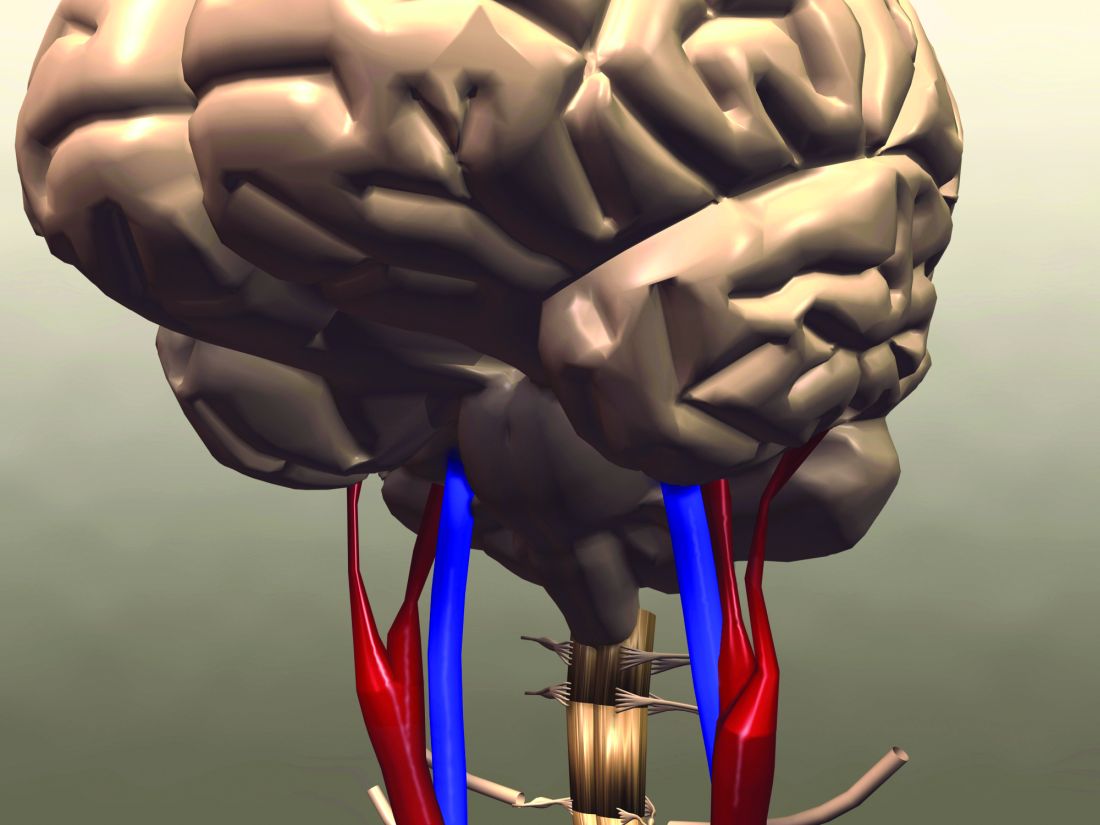
In a large population-based study, the lower the eGDR score went, the higher the risk for having a first stroke became.
The eGDR score was also predictive of the chance of dying from any or a cardiovascular cause, Alexander Zabala, MD, reported at the annual meeting of the European Association for the Study of Diabetes (Abstract OP 01-4).
The link between insulin resistance and an increased risk for stroke has been known for some time, and not just in people with T2D. However, the current way of determining insulin resistance is not suitable for widespread practice.
“The goal standard technique for measuring insulin resistance is the euglycemic clamp method,” said Dr. Zabala, an internal medical resident at Södersjukhuset hospital and researcher at the Karolinska Institutet in Stockholm.
“For that reason, [the eGDR], a method based on readily available clinical factors – waist circumference, hypertension, and glycosylated hemoglobin was developed,” he explained. Body mass index can also be used in place of waist circumference, he qualified.
The eGDR has already been proven to be very precise in people with type 1 diabetes, said Dr. Zabala, and could be an “excellent tool to measure insulin resistance in a large patient population.”
Investigating the link between eGDR and first stroke risk
The aim of the study he presented was to see if changes in the eGDR were associated with changes in the risk of someone with T2D experiencing a first stroke, or dying from a cardiovascular or other cause.
An observational cohort was formed by first considering data on all adult patients with T2D who were logged in the Swedish National Diabetes Registry (NDR) during 2004-2016. Then anyone with a history of stroke, or with any missing data on the clinical variables needed to calculate the eGDR, were excluded.
This resulted in an overall population of 104,697 individuals, aged a mean of 63 years, who had developed T2D at around the age of 59 years. About 44% of the study population were women. The mean eGDR for the whole population was 5.6 mg/kg per min.
The study subjects were grouped according to four eGDR levels: 24,706 were in the lowest quartile of eGDR (less than 4 mg/kg per min), signifying the highest level of insulin resistance, and 18,762 were in the upper quartile of eGDR (greater than 8 mg/kg per min), signifying the lowest level of insulin resistance. The middle two groups had an eGDR between 4 and 6 mg/kg per min (40,187), and 6 and 8 mg/kg/min (21,042).
Data from the NDR were then combined with the Swedish Cause of Death register, the Swedish In-patient Care Diagnoses registry, and the Longitudinal Database for Health Insurance and Labour Market Studies (LISA) to determine the rates of stroke, ischemic stroke, hemorrhagic stroke, all-cause mortality, and cardiovascular mortality.
Increasing insulin resistance ups risk for stroke, death
After a median follow-up of 5.6 years, 4% (4,201) of the study population had had a stroke.
“We clearly see an increased occurrence of first-time stroke in the group with the lowest eGDR, indicating worst insulin resistance, in comparison with the group with the highest eGDR, indicating less insulin resistance,” Dr. Zabala reported.
After adjustment for potential confounding factors, including age at baseline, gender, diabetes duration, among other variables, the risk for stroke was lowest in those with a high eGDR value and highest for those with a low eGDR value.
Using individuals with the lowest eGDR (less than 4 mg/kg per min) and thus greatest risk of stroke as the reference, adjusted hazard ratios (aHR) for first-time stroke were: 0.60, 0.68, and 0.77 for those with an eGDR of greater than 8, 6-8, and 4-6 mg/kg per min, respectively.
The corresponding values for risk of ischemic stroke were 0.55, 0.68, and 0.75. Regarding hemorrhagic stroke, there was no statistically significant correlation between eGDR levels and stroke occurrence. This was due to the small number of cases recorded.
As for all-cause and cardiovascular mortality, a similar pattern was seen, with higher rates of death linked to increasing insulin resistance. Adjusted hazard ratios according to increasing insulin resistance (decreasing eGDR scores) for all-cause death were 0.68, 0.75, and 0.82 and for cardiovascular mortality were 0.65, 0.75, and 0.82.
A sensitivity analysis, using BMI instead of waist circumference to calculate the eGDR, showed a similar pattern, and “interestingly, a correlation between eGDR levels and risk of hemorrhagic stroke.” Dr. Zabala said.
Limitations and take-homes
Of course, this is an observational cohort study, so no conclusions on causality can be made and there are no data on the use of anti-diabetic treatments specifically. But there are strengths such as covering almost all adults with T2D in Sweden and a relatively long-follow-up time.
The findings suggest that “eGDR, which may reflect insulin resistance may be a useful risk marker for stroke and death in people with type 2 diabetes,” said Dr. Zabala.
“You had a very large cohort, and that certainly makes your results very valid,” observed Peter Novodvorsky, MUDr. (Hons), PhD, MRCP, a consultant diabetologist in Trenčín, Slovakia.
Dr. Novodvorsky, who chaired the session, picked up on the lack of information about how many people were taking newer diabetes drugs, such as the glucagon-like peptide 1 receptor antagonists and sodium glucose-lowering transport 2 inhibitors.
“As we all know, these might have protective effects which are not necessarily related to the glucose lowering or insulin resistance-lowering” effects, so could have influenced the results. In terms of how practical the eGDR is for clinical practice, Dr. Zabala observed in a press release: “eGDR could be used to help T2D patients better understand and manage their risk of stroke and death.
“It could also be of importance in research. In this era of personalized medicine, better stratification of type 2 diabetes patients will help optimize clinical trials and further vital research into treatment, diagnosis, care and prevention.”
The research was a collaboration between the Karolinska Institutet, Gothenburg University and the Swedish National Diabetes Registry. Dr. Zabala and coauthors reported having no conflicts of interest.
Calculating the estimated glucose disposal rate (eGDR) as a proxy for the level of insulin resistance may be useful way to determine if someone with type 2 diabetes (T2D) is at risk for having a first stroke, Swedish researchers have found.
In a large population-based study, the lower the eGDR score went, the higher the risk for having a first stroke became.
The eGDR score was also predictive of the chance of dying from any or a cardiovascular cause, Alexander Zabala, MD, reported at the annual meeting of the European Association for the Study of Diabetes (Abstract OP 01-4).
The link between insulin resistance and an increased risk for stroke has been known for some time, and not just in people with T2D. However, the current way of determining insulin resistance is not suitable for widespread practice.
“The goal standard technique for measuring insulin resistance is the euglycemic clamp method,” said Dr. Zabala, an internal medical resident at Södersjukhuset hospital and researcher at the Karolinska Institutet in Stockholm.
“For that reason, [the eGDR], a method based on readily available clinical factors – waist circumference, hypertension, and glycosylated hemoglobin was developed,” he explained. Body mass index can also be used in place of waist circumference, he qualified.
The eGDR has already been proven to be very precise in people with type 1 diabetes, said Dr. Zabala, and could be an “excellent tool to measure insulin resistance in a large patient population.”
Investigating the link between eGDR and first stroke risk
The aim of the study he presented was to see if changes in the eGDR were associated with changes in the risk of someone with T2D experiencing a first stroke, or dying from a cardiovascular or other cause.
An observational cohort was formed by first considering data on all adult patients with T2D who were logged in the Swedish National Diabetes Registry (NDR) during 2004-2016. Then anyone with a history of stroke, or with any missing data on the clinical variables needed to calculate the eGDR, were excluded.
This resulted in an overall population of 104,697 individuals, aged a mean of 63 years, who had developed T2D at around the age of 59 years. About 44% of the study population were women. The mean eGDR for the whole population was 5.6 mg/kg per min.
The study subjects were grouped according to four eGDR levels: 24,706 were in the lowest quartile of eGDR (less than 4 mg/kg per min), signifying the highest level of insulin resistance, and 18,762 were in the upper quartile of eGDR (greater than 8 mg/kg per min), signifying the lowest level of insulin resistance. The middle two groups had an eGDR between 4 and 6 mg/kg per min (40,187), and 6 and 8 mg/kg/min (21,042).
Data from the NDR were then combined with the Swedish Cause of Death register, the Swedish In-patient Care Diagnoses registry, and the Longitudinal Database for Health Insurance and Labour Market Studies (LISA) to determine the rates of stroke, ischemic stroke, hemorrhagic stroke, all-cause mortality, and cardiovascular mortality.
Increasing insulin resistance ups risk for stroke, death
After a median follow-up of 5.6 years, 4% (4,201) of the study population had had a stroke.
“We clearly see an increased occurrence of first-time stroke in the group with the lowest eGDR, indicating worst insulin resistance, in comparison with the group with the highest eGDR, indicating less insulin resistance,” Dr. Zabala reported.
After adjustment for potential confounding factors, including age at baseline, gender, diabetes duration, among other variables, the risk for stroke was lowest in those with a high eGDR value and highest for those with a low eGDR value.
Using individuals with the lowest eGDR (less than 4 mg/kg per min) and thus greatest risk of stroke as the reference, adjusted hazard ratios (aHR) for first-time stroke were: 0.60, 0.68, and 0.77 for those with an eGDR of greater than 8, 6-8, and 4-6 mg/kg per min, respectively.
The corresponding values for risk of ischemic stroke were 0.55, 0.68, and 0.75. Regarding hemorrhagic stroke, there was no statistically significant correlation between eGDR levels and stroke occurrence. This was due to the small number of cases recorded.
As for all-cause and cardiovascular mortality, a similar pattern was seen, with higher rates of death linked to increasing insulin resistance. Adjusted hazard ratios according to increasing insulin resistance (decreasing eGDR scores) for all-cause death were 0.68, 0.75, and 0.82 and for cardiovascular mortality were 0.65, 0.75, and 0.82.
A sensitivity analysis, using BMI instead of waist circumference to calculate the eGDR, showed a similar pattern, and “interestingly, a correlation between eGDR levels and risk of hemorrhagic stroke.” Dr. Zabala said.
Limitations and take-homes
Of course, this is an observational cohort study, so no conclusions on causality can be made and there are no data on the use of anti-diabetic treatments specifically. But there are strengths such as covering almost all adults with T2D in Sweden and a relatively long-follow-up time.
The findings suggest that “eGDR, which may reflect insulin resistance may be a useful risk marker for stroke and death in people with type 2 diabetes,” said Dr. Zabala.
“You had a very large cohort, and that certainly makes your results very valid,” observed Peter Novodvorsky, MUDr. (Hons), PhD, MRCP, a consultant diabetologist in Trenčín, Slovakia.
Dr. Novodvorsky, who chaired the session, picked up on the lack of information about how many people were taking newer diabetes drugs, such as the glucagon-like peptide 1 receptor antagonists and sodium glucose-lowering transport 2 inhibitors.
“As we all know, these might have protective effects which are not necessarily related to the glucose lowering or insulin resistance-lowering” effects, so could have influenced the results. In terms of how practical the eGDR is for clinical practice, Dr. Zabala observed in a press release: “eGDR could be used to help T2D patients better understand and manage their risk of stroke and death.
“It could also be of importance in research. In this era of personalized medicine, better stratification of type 2 diabetes patients will help optimize clinical trials and further vital research into treatment, diagnosis, care and prevention.”
The research was a collaboration between the Karolinska Institutet, Gothenburg University and the Swedish National Diabetes Registry. Dr. Zabala and coauthors reported having no conflicts of interest.
Calculating the estimated glucose disposal rate (eGDR) as a proxy for the level of insulin resistance may be useful way to determine if someone with type 2 diabetes (T2D) is at risk for having a first stroke, Swedish researchers have found.
In a large population-based study, the lower the eGDR score went, the higher the risk for having a first stroke became.
The eGDR score was also predictive of the chance of dying from any or a cardiovascular cause, Alexander Zabala, MD, reported at the annual meeting of the European Association for the Study of Diabetes (Abstract OP 01-4).
The link between insulin resistance and an increased risk for stroke has been known for some time, and not just in people with T2D. However, the current way of determining insulin resistance is not suitable for widespread practice.
“The goal standard technique for measuring insulin resistance is the euglycemic clamp method,” said Dr. Zabala, an internal medical resident at Södersjukhuset hospital and researcher at the Karolinska Institutet in Stockholm.
“For that reason, [the eGDR], a method based on readily available clinical factors – waist circumference, hypertension, and glycosylated hemoglobin was developed,” he explained. Body mass index can also be used in place of waist circumference, he qualified.
The eGDR has already been proven to be very precise in people with type 1 diabetes, said Dr. Zabala, and could be an “excellent tool to measure insulin resistance in a large patient population.”
Investigating the link between eGDR and first stroke risk
The aim of the study he presented was to see if changes in the eGDR were associated with changes in the risk of someone with T2D experiencing a first stroke, or dying from a cardiovascular or other cause.
An observational cohort was formed by first considering data on all adult patients with T2D who were logged in the Swedish National Diabetes Registry (NDR) during 2004-2016. Then anyone with a history of stroke, or with any missing data on the clinical variables needed to calculate the eGDR, were excluded.
This resulted in an overall population of 104,697 individuals, aged a mean of 63 years, who had developed T2D at around the age of 59 years. About 44% of the study population were women. The mean eGDR for the whole population was 5.6 mg/kg per min.
The study subjects were grouped according to four eGDR levels: 24,706 were in the lowest quartile of eGDR (less than 4 mg/kg per min), signifying the highest level of insulin resistance, and 18,762 were in the upper quartile of eGDR (greater than 8 mg/kg per min), signifying the lowest level of insulin resistance. The middle two groups had an eGDR between 4 and 6 mg/kg per min (40,187), and 6 and 8 mg/kg/min (21,042).
Data from the NDR were then combined with the Swedish Cause of Death register, the Swedish In-patient Care Diagnoses registry, and the Longitudinal Database for Health Insurance and Labour Market Studies (LISA) to determine the rates of stroke, ischemic stroke, hemorrhagic stroke, all-cause mortality, and cardiovascular mortality.
Increasing insulin resistance ups risk for stroke, death
After a median follow-up of 5.6 years, 4% (4,201) of the study population had had a stroke.
“We clearly see an increased occurrence of first-time stroke in the group with the lowest eGDR, indicating worst insulin resistance, in comparison with the group with the highest eGDR, indicating less insulin resistance,” Dr. Zabala reported.
After adjustment for potential confounding factors, including age at baseline, gender, diabetes duration, among other variables, the risk for stroke was lowest in those with a high eGDR value and highest for those with a low eGDR value.
Using individuals with the lowest eGDR (less than 4 mg/kg per min) and thus greatest risk of stroke as the reference, adjusted hazard ratios (aHR) for first-time stroke were: 0.60, 0.68, and 0.77 for those with an eGDR of greater than 8, 6-8, and 4-6 mg/kg per min, respectively.
The corresponding values for risk of ischemic stroke were 0.55, 0.68, and 0.75. Regarding hemorrhagic stroke, there was no statistically significant correlation between eGDR levels and stroke occurrence. This was due to the small number of cases recorded.
As for all-cause and cardiovascular mortality, a similar pattern was seen, with higher rates of death linked to increasing insulin resistance. Adjusted hazard ratios according to increasing insulin resistance (decreasing eGDR scores) for all-cause death were 0.68, 0.75, and 0.82 and for cardiovascular mortality were 0.65, 0.75, and 0.82.
A sensitivity analysis, using BMI instead of waist circumference to calculate the eGDR, showed a similar pattern, and “interestingly, a correlation between eGDR levels and risk of hemorrhagic stroke.” Dr. Zabala said.
Limitations and take-homes
Of course, this is an observational cohort study, so no conclusions on causality can be made and there are no data on the use of anti-diabetic treatments specifically. But there are strengths such as covering almost all adults with T2D in Sweden and a relatively long-follow-up time.
The findings suggest that “eGDR, which may reflect insulin resistance may be a useful risk marker for stroke and death in people with type 2 diabetes,” said Dr. Zabala.
“You had a very large cohort, and that certainly makes your results very valid,” observed Peter Novodvorsky, MUDr. (Hons), PhD, MRCP, a consultant diabetologist in Trenčín, Slovakia.
Dr. Novodvorsky, who chaired the session, picked up on the lack of information about how many people were taking newer diabetes drugs, such as the glucagon-like peptide 1 receptor antagonists and sodium glucose-lowering transport 2 inhibitors.
“As we all know, these might have protective effects which are not necessarily related to the glucose lowering or insulin resistance-lowering” effects, so could have influenced the results. In terms of how practical the eGDR is for clinical practice, Dr. Zabala observed in a press release: “eGDR could be used to help T2D patients better understand and manage their risk of stroke and death.
“It could also be of importance in research. In this era of personalized medicine, better stratification of type 2 diabetes patients will help optimize clinical trials and further vital research into treatment, diagnosis, care and prevention.”
The research was a collaboration between the Karolinska Institutet, Gothenburg University and the Swedish National Diabetes Registry. Dr. Zabala and coauthors reported having no conflicts of interest.
FROM EASD 2021
Comorbidities larger factor than race in COVID ICU deaths?
Racial/ethnic disparities in COVID-19 mortality rates may be related more to comorbidities than to demographics, suggest authors of a new study.
Researchers compared the length of stay in intensive care units in two suburban hospitals for patients with severe SARS-CoV-2 infections. Their study shows that although the incidence of comorbidities and rates of use of mechanical ventilation and death were higher among Black patients than among patients of other races, length of stay in the ICU was generally similar for patients of all races. The study was conducted by Tripti Kumar, DO, from Lankenau Medical Center, Wynnewood, Pennsylvania, and colleagues.
“Racial disparities are observed in the United States concerning COVID-19, and studies have discovered that minority populations are at ongoing risk for health inequity,” Dr. Kumar said in a narrated e-poster presented during the American College of Chest Physicians (CHEST) 2021 Annual Meeting.
“Primary prevention initiatives should take precedence in mitigating the effect that comorbidities have on these vulnerable populations to help reduce necessity for mechanical ventilation, hospital length of stay, and overall mortality,” she said.
Higher death rates for Black patients
At the time the study was conducted, the COVID-19 death rate in the United States had topped 500,000 (as of this writing, it stands at 726,000). Of those who died, 22.4% were Black, 18.1% were Hispanic, and 3.6% were of Asian descent. The numbers of COVID-19 diagnoses and deaths were significantly higher in U.S. counties where the proportions of Black residents were higher, the authors note.
To see whether differences in COVID-19 outcomes were reflected in ICU length of stay, the researchers conducted a retrospective chart review of data on 162 patients admitted to ICUs at Paoli Hospital and Lankenau Medical Center, both in the suburban Philadelphia town of Wynnewood.
All patients were diagnosed with COVID-19 from March through June 2020.
In all, 60% of the study population were Black, 35% were White, 3% were Asian, and 2% were Hispanic. Women composed 46% of the sample.
The average length of ICU stay, which was the primary endpoint, was similar among Black patients (15.4 days), White patients (15.5 days), and Asians (16 days). The shortest average hospital stay was among Hispanic patients, at 11.3 days.
The investigators determined that among all races, the prevalence of type 2 diabetes, obesity, hypertension, and smoking was highest among Black patients.
Overall, nearly 85% of patients required mechanical ventilation. Among the patients who required it, 86% were Black, 84% were White, 66% were Hispanic, and 75% were Asian.
Overall mortality was 62%. It was higher among Black patients, at 60%, than among White patients, at 33%. The investigators did not report mortality rates for Hispanic or Asian patients.
Missing data
Demondes Haynes, MD, FCCP, professor of medicine in the Division of Pulmonary and Critical Care and associate dean for admissions at the University of Mississippi Medical Center and School of Medicine, Jackson, who was not involved in the study, told this news organization that there are some gaps in the study that make it difficult to draw strong conclusions about the findings.
“For sure, comorbidities contribute a great deal to mortality, but is there something else going on? I think this poster is incomplete in that it cannot answer that question,” he said in an interview.
He noted that the use of retrospective rather than prospective data makes it hard to account for potential confounders.
“I agree that these findings show the potential contribution of comorbidities, but to me, this is a little incomplete to make that a definitive statement,” he said.
“I can’t argue with their recommendation for primary prevention – we definitely want to do primary prevention to decrease comorbidities. Would it decrease overall mortality? It might, it sure might, for just COVID-19 I’d say no, we need more information.”
No funding source for the study was reported. Dr. Kumar and colleagues and Dr. Haynes reported no relevant financial relationships.
A version of this article first appeared on Medscape.com.
Racial/ethnic disparities in COVID-19 mortality rates may be related more to comorbidities than to demographics, suggest authors of a new study.
Researchers compared the length of stay in intensive care units in two suburban hospitals for patients with severe SARS-CoV-2 infections. Their study shows that although the incidence of comorbidities and rates of use of mechanical ventilation and death were higher among Black patients than among patients of other races, length of stay in the ICU was generally similar for patients of all races. The study was conducted by Tripti Kumar, DO, from Lankenau Medical Center, Wynnewood, Pennsylvania, and colleagues.
“Racial disparities are observed in the United States concerning COVID-19, and studies have discovered that minority populations are at ongoing risk for health inequity,” Dr. Kumar said in a narrated e-poster presented during the American College of Chest Physicians (CHEST) 2021 Annual Meeting.
“Primary prevention initiatives should take precedence in mitigating the effect that comorbidities have on these vulnerable populations to help reduce necessity for mechanical ventilation, hospital length of stay, and overall mortality,” she said.
Higher death rates for Black patients
At the time the study was conducted, the COVID-19 death rate in the United States had topped 500,000 (as of this writing, it stands at 726,000). Of those who died, 22.4% were Black, 18.1% were Hispanic, and 3.6% were of Asian descent. The numbers of COVID-19 diagnoses and deaths were significantly higher in U.S. counties where the proportions of Black residents were higher, the authors note.
To see whether differences in COVID-19 outcomes were reflected in ICU length of stay, the researchers conducted a retrospective chart review of data on 162 patients admitted to ICUs at Paoli Hospital and Lankenau Medical Center, both in the suburban Philadelphia town of Wynnewood.
All patients were diagnosed with COVID-19 from March through June 2020.
In all, 60% of the study population were Black, 35% were White, 3% were Asian, and 2% were Hispanic. Women composed 46% of the sample.
The average length of ICU stay, which was the primary endpoint, was similar among Black patients (15.4 days), White patients (15.5 days), and Asians (16 days). The shortest average hospital stay was among Hispanic patients, at 11.3 days.
The investigators determined that among all races, the prevalence of type 2 diabetes, obesity, hypertension, and smoking was highest among Black patients.
Overall, nearly 85% of patients required mechanical ventilation. Among the patients who required it, 86% were Black, 84% were White, 66% were Hispanic, and 75% were Asian.
Overall mortality was 62%. It was higher among Black patients, at 60%, than among White patients, at 33%. The investigators did not report mortality rates for Hispanic or Asian patients.
Missing data
Demondes Haynes, MD, FCCP, professor of medicine in the Division of Pulmonary and Critical Care and associate dean for admissions at the University of Mississippi Medical Center and School of Medicine, Jackson, who was not involved in the study, told this news organization that there are some gaps in the study that make it difficult to draw strong conclusions about the findings.
“For sure, comorbidities contribute a great deal to mortality, but is there something else going on? I think this poster is incomplete in that it cannot answer that question,” he said in an interview.
He noted that the use of retrospective rather than prospective data makes it hard to account for potential confounders.
“I agree that these findings show the potential contribution of comorbidities, but to me, this is a little incomplete to make that a definitive statement,” he said.
“I can’t argue with their recommendation for primary prevention – we definitely want to do primary prevention to decrease comorbidities. Would it decrease overall mortality? It might, it sure might, for just COVID-19 I’d say no, we need more information.”
No funding source for the study was reported. Dr. Kumar and colleagues and Dr. Haynes reported no relevant financial relationships.
A version of this article first appeared on Medscape.com.
Racial/ethnic disparities in COVID-19 mortality rates may be related more to comorbidities than to demographics, suggest authors of a new study.
Researchers compared the length of stay in intensive care units in two suburban hospitals for patients with severe SARS-CoV-2 infections. Their study shows that although the incidence of comorbidities and rates of use of mechanical ventilation and death were higher among Black patients than among patients of other races, length of stay in the ICU was generally similar for patients of all races. The study was conducted by Tripti Kumar, DO, from Lankenau Medical Center, Wynnewood, Pennsylvania, and colleagues.
“Racial disparities are observed in the United States concerning COVID-19, and studies have discovered that minority populations are at ongoing risk for health inequity,” Dr. Kumar said in a narrated e-poster presented during the American College of Chest Physicians (CHEST) 2021 Annual Meeting.
“Primary prevention initiatives should take precedence in mitigating the effect that comorbidities have on these vulnerable populations to help reduce necessity for mechanical ventilation, hospital length of stay, and overall mortality,” she said.
Higher death rates for Black patients
At the time the study was conducted, the COVID-19 death rate in the United States had topped 500,000 (as of this writing, it stands at 726,000). Of those who died, 22.4% were Black, 18.1% were Hispanic, and 3.6% were of Asian descent. The numbers of COVID-19 diagnoses and deaths were significantly higher in U.S. counties where the proportions of Black residents were higher, the authors note.
To see whether differences in COVID-19 outcomes were reflected in ICU length of stay, the researchers conducted a retrospective chart review of data on 162 patients admitted to ICUs at Paoli Hospital and Lankenau Medical Center, both in the suburban Philadelphia town of Wynnewood.
All patients were diagnosed with COVID-19 from March through June 2020.
In all, 60% of the study population were Black, 35% were White, 3% were Asian, and 2% were Hispanic. Women composed 46% of the sample.
The average length of ICU stay, which was the primary endpoint, was similar among Black patients (15.4 days), White patients (15.5 days), and Asians (16 days). The shortest average hospital stay was among Hispanic patients, at 11.3 days.
The investigators determined that among all races, the prevalence of type 2 diabetes, obesity, hypertension, and smoking was highest among Black patients.
Overall, nearly 85% of patients required mechanical ventilation. Among the patients who required it, 86% were Black, 84% were White, 66% were Hispanic, and 75% were Asian.
Overall mortality was 62%. It was higher among Black patients, at 60%, than among White patients, at 33%. The investigators did not report mortality rates for Hispanic or Asian patients.
Missing data
Demondes Haynes, MD, FCCP, professor of medicine in the Division of Pulmonary and Critical Care and associate dean for admissions at the University of Mississippi Medical Center and School of Medicine, Jackson, who was not involved in the study, told this news organization that there are some gaps in the study that make it difficult to draw strong conclusions about the findings.
“For sure, comorbidities contribute a great deal to mortality, but is there something else going on? I think this poster is incomplete in that it cannot answer that question,” he said in an interview.
He noted that the use of retrospective rather than prospective data makes it hard to account for potential confounders.
“I agree that these findings show the potential contribution of comorbidities, but to me, this is a little incomplete to make that a definitive statement,” he said.
“I can’t argue with their recommendation for primary prevention – we definitely want to do primary prevention to decrease comorbidities. Would it decrease overall mortality? It might, it sure might, for just COVID-19 I’d say no, we need more information.”
No funding source for the study was reported. Dr. Kumar and colleagues and Dr. Haynes reported no relevant financial relationships.
A version of this article first appeared on Medscape.com.
No increased risk of relugolix side effects in fibroid, endometriosis patients
Side effects from relugolix combination therapy (Myfembree) in premenopausal women treated for uterine fibroids and endometriosis are minimal, according to research presented at the American Society for Reproductive Medicine’s 2021 meeting.
The Food and Drug Administration approved relugolix, a daily oral gonadotropin-releasing hormone antagonist medication, earlier this year to treat heavy menstrual bleeding associated with uterine fibroids. It has not received Food and Drug Administration approval to treat endometriosis yet.
“It was a good kind of vindication about the safety of relugolix combination therapy,” Ayman Al-Hendy, MD, PhD, gynecologist and endoscopic surgeon at the University of Chicago, said in an interview.
Researchers led by Dr. Al-Hendy analyzed the results from two 24-week clinical trials that examined the effects of relugolix on premenopausal women between the ages of 18 and 50 suffering from uterine fibroids and endometriosis, both of which found that the treatment was well tolerated. With 1,344 patients in total, researchers found that the most common side effects of the treatment were headache, which occurred in 24.3% of participants, and hot flush, which affected 10.6%.
However, the prevalence of adverse reactions was similar to that of the placebo group in which 21.4% of participants experienced headaches and 6.4% experienced hot flushes, which, according to Dr. Al-Hendy, means that there is “really no increased risk” of experiencing an adverse event while taking relugolix.
“If we follow a large number of patients [with uterine fibroids or endometriosis], they will have some of these symptoms like headache or hot flushes or fatigue and so on. Either because it just happens in women for no known reason or because maybe the disease itself is causing some of these symptoms. The question is does the treatment in this case increase the frequency of these events?” Dr. Al-Hendy said.
“As long as it’s similar, fairly similar, or close between the [treatment and placebo group], then we know it’s not because of the medication,” Dr. Al-Hendy added.
Other adverse reactions that occurred while taking relugolix were “relatively rare” Dr. Al-Hendy said during his presentation. About 5.5% of those who took relugolix had uterine bleeding, 3.4% had decreased libido, 1.9% suffered from hyperhidrosis, 1.2% experienced night sweats, and 1.3% suffered from vaginal dryness.
The study shows that the risk profile of relugolix combination therapy is favorable and the side effects are relatively mild compared with past treatment options used to treat fibroids or endometriosis, said J. Ricardo Loret de Mola, MD, FACOG, FACS, who was not involved in the study.
However, Dr. Loret de Mola emphasized that this treatment isn’t for women who are seeking fertility or to get pregnant so it’s important for physicians to ask patients about their goals for treatment. Relugolix treatment could be a way for fibroid patients in their reproductive age to buy time and reduce the number of surgeries needed to get them to “the point where they would be ready to become mothers.”
He said surgery could be the right option for endometriosis patients who want to have children in the near future.
“This is an additional tool that we have available now that’s effective,” Dr. Loret de Mola said. “It is not going to cure either one of the two conditions, but could buy enough time for patients to be able to reach their goals, which is not having symptoms of endometriosis and fibroids after menopause or for people who just want to buy time.”
Dr. Al-Hendy said he hopes his findings reassure and encourage health care providers to discuss with patients different options for treating fibroids, and not just counsel them about surgery.
“So more awareness of these nonsurgical options hopefully will offer our patients a wide range of options when they seek help with fibroids and then against endometriosis [if or when] it’s [FDA]-approved,” Dr. Al-Hendy said.
None of the experts interviewed had conflicts of interest.
Side effects from relugolix combination therapy (Myfembree) in premenopausal women treated for uterine fibroids and endometriosis are minimal, according to research presented at the American Society for Reproductive Medicine’s 2021 meeting.
The Food and Drug Administration approved relugolix, a daily oral gonadotropin-releasing hormone antagonist medication, earlier this year to treat heavy menstrual bleeding associated with uterine fibroids. It has not received Food and Drug Administration approval to treat endometriosis yet.
“It was a good kind of vindication about the safety of relugolix combination therapy,” Ayman Al-Hendy, MD, PhD, gynecologist and endoscopic surgeon at the University of Chicago, said in an interview.
Researchers led by Dr. Al-Hendy analyzed the results from two 24-week clinical trials that examined the effects of relugolix on premenopausal women between the ages of 18 and 50 suffering from uterine fibroids and endometriosis, both of which found that the treatment was well tolerated. With 1,344 patients in total, researchers found that the most common side effects of the treatment were headache, which occurred in 24.3% of participants, and hot flush, which affected 10.6%.
However, the prevalence of adverse reactions was similar to that of the placebo group in which 21.4% of participants experienced headaches and 6.4% experienced hot flushes, which, according to Dr. Al-Hendy, means that there is “really no increased risk” of experiencing an adverse event while taking relugolix.
“If we follow a large number of patients [with uterine fibroids or endometriosis], they will have some of these symptoms like headache or hot flushes or fatigue and so on. Either because it just happens in women for no known reason or because maybe the disease itself is causing some of these symptoms. The question is does the treatment in this case increase the frequency of these events?” Dr. Al-Hendy said.
“As long as it’s similar, fairly similar, or close between the [treatment and placebo group], then we know it’s not because of the medication,” Dr. Al-Hendy added.
Other adverse reactions that occurred while taking relugolix were “relatively rare” Dr. Al-Hendy said during his presentation. About 5.5% of those who took relugolix had uterine bleeding, 3.4% had decreased libido, 1.9% suffered from hyperhidrosis, 1.2% experienced night sweats, and 1.3% suffered from vaginal dryness.
The study shows that the risk profile of relugolix combination therapy is favorable and the side effects are relatively mild compared with past treatment options used to treat fibroids or endometriosis, said J. Ricardo Loret de Mola, MD, FACOG, FACS, who was not involved in the study.
However, Dr. Loret de Mola emphasized that this treatment isn’t for women who are seeking fertility or to get pregnant so it’s important for physicians to ask patients about their goals for treatment. Relugolix treatment could be a way for fibroid patients in their reproductive age to buy time and reduce the number of surgeries needed to get them to “the point where they would be ready to become mothers.”
He said surgery could be the right option for endometriosis patients who want to have children in the near future.
“This is an additional tool that we have available now that’s effective,” Dr. Loret de Mola said. “It is not going to cure either one of the two conditions, but could buy enough time for patients to be able to reach their goals, which is not having symptoms of endometriosis and fibroids after menopause or for people who just want to buy time.”
Dr. Al-Hendy said he hopes his findings reassure and encourage health care providers to discuss with patients different options for treating fibroids, and not just counsel them about surgery.
“So more awareness of these nonsurgical options hopefully will offer our patients a wide range of options when they seek help with fibroids and then against endometriosis [if or when] it’s [FDA]-approved,” Dr. Al-Hendy said.
None of the experts interviewed had conflicts of interest.
Side effects from relugolix combination therapy (Myfembree) in premenopausal women treated for uterine fibroids and endometriosis are minimal, according to research presented at the American Society for Reproductive Medicine’s 2021 meeting.
The Food and Drug Administration approved relugolix, a daily oral gonadotropin-releasing hormone antagonist medication, earlier this year to treat heavy menstrual bleeding associated with uterine fibroids. It has not received Food and Drug Administration approval to treat endometriosis yet.
“It was a good kind of vindication about the safety of relugolix combination therapy,” Ayman Al-Hendy, MD, PhD, gynecologist and endoscopic surgeon at the University of Chicago, said in an interview.
Researchers led by Dr. Al-Hendy analyzed the results from two 24-week clinical trials that examined the effects of relugolix on premenopausal women between the ages of 18 and 50 suffering from uterine fibroids and endometriosis, both of which found that the treatment was well tolerated. With 1,344 patients in total, researchers found that the most common side effects of the treatment were headache, which occurred in 24.3% of participants, and hot flush, which affected 10.6%.
However, the prevalence of adverse reactions was similar to that of the placebo group in which 21.4% of participants experienced headaches and 6.4% experienced hot flushes, which, according to Dr. Al-Hendy, means that there is “really no increased risk” of experiencing an adverse event while taking relugolix.
“If we follow a large number of patients [with uterine fibroids or endometriosis], they will have some of these symptoms like headache or hot flushes or fatigue and so on. Either because it just happens in women for no known reason or because maybe the disease itself is causing some of these symptoms. The question is does the treatment in this case increase the frequency of these events?” Dr. Al-Hendy said.
“As long as it’s similar, fairly similar, or close between the [treatment and placebo group], then we know it’s not because of the medication,” Dr. Al-Hendy added.
Other adverse reactions that occurred while taking relugolix were “relatively rare” Dr. Al-Hendy said during his presentation. About 5.5% of those who took relugolix had uterine bleeding, 3.4% had decreased libido, 1.9% suffered from hyperhidrosis, 1.2% experienced night sweats, and 1.3% suffered from vaginal dryness.
The study shows that the risk profile of relugolix combination therapy is favorable and the side effects are relatively mild compared with past treatment options used to treat fibroids or endometriosis, said J. Ricardo Loret de Mola, MD, FACOG, FACS, who was not involved in the study.
However, Dr. Loret de Mola emphasized that this treatment isn’t for women who are seeking fertility or to get pregnant so it’s important for physicians to ask patients about their goals for treatment. Relugolix treatment could be a way for fibroid patients in their reproductive age to buy time and reduce the number of surgeries needed to get them to “the point where they would be ready to become mothers.”
He said surgery could be the right option for endometriosis patients who want to have children in the near future.
“This is an additional tool that we have available now that’s effective,” Dr. Loret de Mola said. “It is not going to cure either one of the two conditions, but could buy enough time for patients to be able to reach their goals, which is not having symptoms of endometriosis and fibroids after menopause or for people who just want to buy time.”
Dr. Al-Hendy said he hopes his findings reassure and encourage health care providers to discuss with patients different options for treating fibroids, and not just counsel them about surgery.
“So more awareness of these nonsurgical options hopefully will offer our patients a wide range of options when they seek help with fibroids and then against endometriosis [if or when] it’s [FDA]-approved,” Dr. Al-Hendy said.
None of the experts interviewed had conflicts of interest.
FROM ASRM 2021