User login
Pregnancy registries add to the clinical picture
Pregnancy registries are valuable sources of information. For many drugs, they are the primary source of human pregnancy experience. The new Food and Drug Administration prescription drug information format may increase the amount of information available, at least from registries conducted by drug manufacturers, because they will be required to list all substantive changes made within the year. Although most of the registries use the word “pregnancy,” it is important to note that many also enroll women who took the target drug shortly before conception.

The strengths of pregnancy registries are their prospective nature and enrollment across a wide geographical area. Typically, two types of pregnancy outcomes are obtained: those with birth defects and those without known birth defects (classified as live births, fetal deaths, and spontaneous abortions).
Registries can identify early signals of teratogenicity, but they have several limitations, including voluntary reporting that results in selection bias, pregnancies lost to follow-up that may have had different outcomes than those with documented outcomes, and a lack of control groups (with some exceptions).
Other limitations are that registry cases are not representative of target populations, and pregnancies lost to follow-up lack details on elective terminations and fetal deaths without birth defects, as well as all spontaneous abortions. Additionally, publication of results may be delayed and does not appear in a peer-reviewed journal.
Since the total number of exposed pregnancies is unknown, registry data cannot be used to calculate prevalence, but can be used to estimate the proportion of birth defects. Some registries also collect data on retrospective reports, which are less representative of the target population because they can be biased toward the reporting of more unusual and severe outcomes. However, they may be helpful in detecting unusual patterns of birth defects.
MothertoBaby Registry
The large Organization of Teratology Information Specialists (OTIS) MothertoBaby registry (877-311-8972) involves four different categories: autoimmune diseases(rheumatoid arthritis, psoriatic arthritis, ankylosing spondylitis, psoriasis, Crohn’s disease, and multiple sclerosis); asthma; antiviral agents; and vaccines.

The drugs for autoimmune diseases are tocilizumab (Actemra), leflunomide (Arava), teriflunomide (Aubagio), certolizumab pegol (Cimzia), etanercept (Enbrel), adalimumab (Humira), abatacept (Orencia), apremilast (Otezla), ustekinumab (Stelara), tofacitinib (Xeljanz), infliximab (Remicade), and methotrexate.
The asthma drugs are formoterol (Foradil, Perforomist, Symbicort, Dulera), albuterol, levalbuterol, metaproterenol, pirbuterol (Maxair), and terbutaline.
The antiviral agents are oseltamivir (Tamiflu) and zanamivir (Relenza).
The vaccines include pertussis (Tdap), seasonal influenza, and meningococcal disease (Menveo). In addition to a control group in each category, a unique aspect of this registry is that many exposed infants will undergo dysmorphology examinations.
Vaccine registries
A second vaccine for meningococcal disease (Menactra) is being studied in the Menactra vaccine Pregnancy Registry (800-822-2463 / www.sanofipasteurpregnancy.com).
Two other registries also include influenza vaccines: Flu vaccine Pregnancy Registry, PPD (Flucelvax) (877-413-4759 / email: NovartisPregnancyregistries@ppdi.com) and the GSK Seasonal Influenza Vaccine Pregnancy Registry, GlaxoSmithKline (888-825-5249 / pregnancyregistry.gsk.com/seasonalinfluenzavaccines.html), which includes the Fluarix and FluLaval vaccines.
Asthma
Women with asthma who are being treated with omalizumab (Xolair) are the target population for the EXPECT Pregnancy Registry (866-496-5247 Option 3 / www.xolairpregnancyregistry.com).
GSK registries
GlaxoSmithKline is also conducting three other registries: the Belimumab (Benlysta) Pregnancy Registry for patients with systemic lupus erythematosus treated with belimumab (877-681-6296 / belimumab.pregnancy@ppdi.com); and the Twinrix Pregnancy Registry for women who have received the Twinrix hepatitis A and B vaccine (888-825-5249).
Atypical antipsychotics
TheNational Pregnancy Registry for Atypical Antipsychotics (866-961-2388 / registry@womens mentalhealth.org) is studying 10 drugs: aripiprazole (Abilify), clozapine (Clozaril), iloperidone (Fanapt), paliperidone (Invega), lurasidone (Latuda), risperidone (Risperdal), asenapine (Saphris), quetiapine (Seroquel), ziprasidone (Geodon), and olanzapine (Zyprexa).
TAPP registry
Acitretin is under study by the Take Action to Prevent Pregnancy (T.A.P.P.) registry (855-850-2138 / www.tevagenerics.com/acitretin).
MPS I registry
The MPS I (Mucopolysaccharidosis I) Registry, Genzyme Corp (617-591-5500 / help@mpsiregistry.com), is studying the use of laronidase (Aldurazyme) for Hurler syndrome, Scheie syndrome, and Hurler-Scheie syndrome.
MPS VI registry
The use of galsulfase (Naglazyme) for Maroteaux-Lamy syndrome during pregnancy is under study by the Mucopolysaccharidosis VI (MPS VI) Clinical Surveillance Program(415-506-6849 or 415-506-6703)
Epilepsy drugs
The Antiepileptic Drug Pregnancy Registry (888-233-2334 / www.aedpregnancyregistry.org) is studying antiepileptic drugs.
Type 2 diabetes
The Exenatide Pregnancy Registry, conducted by INC Research for AstraZeneca (800-633-9081 / www.exenatidepregnancyregistry.com), examines the use of exenatide (Byetta, Bydureon) for the treatment of type 2 diabetes.
Renal transplant
Renal transplant patients exposed to mycophenolate (Cellcept) can be enrolled in the Mycophenolate Pregnancy Registry (800-617-8191) or the National Transplantation Pregnancy Registry (877-955-6877). The NTPR is enrolling renal transplant patients exposed to belatacept (Nulojix).
Cymbalta
The antidepressant duloxetine (Cymbalta), when used for major depressive or generalized anxiety disorders, diabetic peripheral neuropathic pain, or fibromyalgia is being studied by the Cymbalta Pregnancy Registry, INC Research (pregnancyregistries@incresearch.com / www.cymbaltapregancyregistry.com).
Fabry disease
The Fabry Registry, Genzyme Corp (617-581-5500 / help@FabryRegistry.com) is studying the use in pregnancy of agalsidase beta (Fabrazyme) for Fabry disease.
MS registry
Novartis Pharmaceuticals is conducting the Gilenya (fingolimod) Pregnancy Registry (877-598-7237 / gpr@outcome.com) for patients with multiple sclerosis who are taking fingolimod (Gilenya).
Cancer
The MotHER Pregnancy Registry, INC Research (800-690-6720 / pregnancyregistries@incresearch.com / themotherpregnancyregistry.com) is enrolling breast cancer patients who have been treated during pregnancy with ado-trastuzumab (Kadcyla), trastuzumab (Herceptin), or pertuzumab (Perjeta).
Merck registries
Merck Pregnancy Registries (800-986-8999) include a registry for type 2 diabetes – sitagliptin/metformin (Janumet) or sitagliptin (Januvia) (www.merckpregancyregistries.com/januvia.html); a registry for rizatriptan (Maxalt) (www.merckpregancyregistries.com/maxalt.html), for migraine headaches; and a registry for the 9-valent human papillomavirus (HPV) (Gardasil 9) vaccine (www.merckpregnancyregistries.com/gardasil9.html).
The registry for the asthma drug montelukast (Singulair) and the registry for Gardasil, the quadrivalent HPV vaccine, are now closed to new enrollment, but new cases of pregnancy exposures can be reported to the company at: 877-888-4231.
Osteoporosis
Amgen’s Pregnancy Surveillance Program (800-772-6436) is enrolling pregnant subjects with osteoporosis who are being treated with denosumab (Prolia).
Hepatitis C
The Ribavirin Pregnancy Registry, INC Research (800-593-2214/ pregnancyregisteries@incresearch.com / ribavirinpregnancyregistry.com) is looking for subjects with hepatitis C who have been treated with ribavirin (Copegus).
Fibromyalgia
The Savella Pregnancy Registry (877-643-3010/ pregnancyresgistries@incresearch.com / savellapregnancyregistry.com) is looking for patients with fibromyalgia who are being treated with milnacipran (Savella).
Skin infections
An antibacterial, telavancin (Vibativ), indicated for skin infections is being studied by the Vibativ Pregnancy Registry (888-658-4228 / www.clinicaltrial.gov).
Pompe disease
Pregnant women treated with alglucosidase alfa (Myozyme) for Pompe disease can enroll in the Pompe Registry (800-745-4447 x 15500 / www.pompe.com/en/healthcare-professionals/pompe-registry.aspx).
Sleep disorders
Armodafinil (Nuvigil) used to treat excessive sleepiness associated with narcolepsy and other sleep disorders is being studied in the Nuvigil Pregnancy Registry (866-404-4106 / www.nuvigilpregnancyregistry.com). A second drug with the same indication and telephone number, modafinil (Provigil), is in the Provigil Pregnancy Registry (provigilpregnancyregistry.com).
Additional details, including fax numbers and addresses of the registries reviewed above, can be obtained from the FDA website, List of Pregnancy Exposure Registries. Since the strength of a registry is based on numbers, health care professionals are encouraged to enroll potential subjects or have their patients call to enroll themselves.
Before retirement, Mr. Briggs was a pharmacist clinical specialist at the outpatient clinics of Memorial Care Center for Women at Miller Children’s Hospital in Long Beach, Calif.; he remains a clinical professor of pharmacy at the University of California, San Francisco; and adjunct professor of pharmacy at the University of Southern California, Los Angeles, and Washington State University, Spokane. He also is coauthor of “Drugs in Pregnancy and Lactation,” and coeditor of “Diseases, Complications, and Drug Therapy in Obstetrics.” He had no relevant financial disclosures. Contact him at obnews@frontlinemedcom.com.
Pregnancy registries are valuable sources of information. For many drugs, they are the primary source of human pregnancy experience. The new Food and Drug Administration prescription drug information format may increase the amount of information available, at least from registries conducted by drug manufacturers, because they will be required to list all substantive changes made within the year. Although most of the registries use the word “pregnancy,” it is important to note that many also enroll women who took the target drug shortly before conception.
The strengths of pregnancy registries are their prospective nature and enrollment across a wide geographical area. Typically, two types of pregnancy outcomes are obtained: those with birth defects and those without known birth defects (classified as live births, fetal deaths, and spontaneous abortions).
Registries can identify early signals of teratogenicity, but they have several limitations, including voluntary reporting that results in selection bias, pregnancies lost to follow-up that may have had different outcomes than those with documented outcomes, and a lack of control groups (with some exceptions).
Other limitations are that registry cases are not representative of target populations, and pregnancies lost to follow-up lack details on elective terminations and fetal deaths without birth defects, as well as all spontaneous abortions. Additionally, publication of results may be delayed and does not appear in a peer-reviewed journal.
Since the total number of exposed pregnancies is unknown, registry data cannot be used to calculate prevalence, but can be used to estimate the proportion of birth defects. Some registries also collect data on retrospective reports, which are less representative of the target population because they can be biased toward the reporting of more unusual and severe outcomes. However, they may be helpful in detecting unusual patterns of birth defects.
MothertoBaby Registry
The large Organization of Teratology Information Specialists (OTIS) MothertoBaby registry (877-311-8972) involves four different categories: autoimmune diseases(rheumatoid arthritis, psoriatic arthritis, ankylosing spondylitis, psoriasis, Crohn’s disease, and multiple sclerosis); asthma; antiviral agents; and vaccines.
The drugs for autoimmune diseases are tocilizumab (Actemra), leflunomide (Arava), teriflunomide (Aubagio), certolizumab pegol (Cimzia), etanercept (Enbrel), adalimumab (Humira), abatacept (Orencia), apremilast (Otezla), ustekinumab (Stelara), tofacitinib (Xeljanz), infliximab (Remicade), and methotrexate.
The asthma drugs are formoterol (Foradil, Perforomist, Symbicort, Dulera), albuterol, levalbuterol, metaproterenol, pirbuterol (Maxair), and terbutaline.
The antiviral agents are oseltamivir (Tamiflu) and zanamivir (Relenza).
The vaccines include pertussis (Tdap), seasonal influenza, and meningococcal disease (Menveo). In addition to a control group in each category, a unique aspect of this registry is that many exposed infants will undergo dysmorphology examinations.
Vaccine registries
A second vaccine for meningococcal disease (Menactra) is being studied in the Menactra vaccine Pregnancy Registry (800-822-2463 / www.sanofipasteurpregnancy.com).
Two other registries also include influenza vaccines: Flu vaccine Pregnancy Registry, PPD (Flucelvax) (877-413-4759 / email: NovartisPregnancyregistries@ppdi.com) and the GSK Seasonal Influenza Vaccine Pregnancy Registry, GlaxoSmithKline (888-825-5249 / pregnancyregistry.gsk.com/seasonalinfluenzavaccines.html), which includes the Fluarix and FluLaval vaccines.
Asthma
Women with asthma who are being treated with omalizumab (Xolair) are the target population for the EXPECT Pregnancy Registry (866-496-5247 Option 3 / www.xolairpregnancyregistry.com).
GSK registries
GlaxoSmithKline is also conducting three other registries: the Belimumab (Benlysta) Pregnancy Registry for patients with systemic lupus erythematosus treated with belimumab (877-681-6296 / belimumab.pregnancy@ppdi.com); and the Twinrix Pregnancy Registry for women who have received the Twinrix hepatitis A and B vaccine (888-825-5249).
Atypical antipsychotics
TheNational Pregnancy Registry for Atypical Antipsychotics (866-961-2388 / registry@womens mentalhealth.org) is studying 10 drugs: aripiprazole (Abilify), clozapine (Clozaril), iloperidone (Fanapt), paliperidone (Invega), lurasidone (Latuda), risperidone (Risperdal), asenapine (Saphris), quetiapine (Seroquel), ziprasidone (Geodon), and olanzapine (Zyprexa).
TAPP registry
Acitretin is under study by the Take Action to Prevent Pregnancy (T.A.P.P.) registry (855-850-2138 / www.tevagenerics.com/acitretin).
MPS I registry
The MPS I (Mucopolysaccharidosis I) Registry, Genzyme Corp (617-591-5500 / help@mpsiregistry.com), is studying the use of laronidase (Aldurazyme) for Hurler syndrome, Scheie syndrome, and Hurler-Scheie syndrome.
MPS VI registry
The use of galsulfase (Naglazyme) for Maroteaux-Lamy syndrome during pregnancy is under study by the Mucopolysaccharidosis VI (MPS VI) Clinical Surveillance Program(415-506-6849 or 415-506-6703)
Epilepsy drugs
The Antiepileptic Drug Pregnancy Registry (888-233-2334 / www.aedpregnancyregistry.org) is studying antiepileptic drugs.
Type 2 diabetes
The Exenatide Pregnancy Registry, conducted by INC Research for AstraZeneca (800-633-9081 / www.exenatidepregnancyregistry.com), examines the use of exenatide (Byetta, Bydureon) for the treatment of type 2 diabetes.
Renal transplant
Renal transplant patients exposed to mycophenolate (Cellcept) can be enrolled in the Mycophenolate Pregnancy Registry (800-617-8191) or the National Transplantation Pregnancy Registry (877-955-6877). The NTPR is enrolling renal transplant patients exposed to belatacept (Nulojix).
Cymbalta
The antidepressant duloxetine (Cymbalta), when used for major depressive or generalized anxiety disorders, diabetic peripheral neuropathic pain, or fibromyalgia is being studied by the Cymbalta Pregnancy Registry, INC Research (pregnancyregistries@incresearch.com / www.cymbaltapregancyregistry.com).
Fabry disease
The Fabry Registry, Genzyme Corp (617-581-5500 / help@FabryRegistry.com) is studying the use in pregnancy of agalsidase beta (Fabrazyme) for Fabry disease.
MS registry
Novartis Pharmaceuticals is conducting the Gilenya (fingolimod) Pregnancy Registry (877-598-7237 / gpr@outcome.com) for patients with multiple sclerosis who are taking fingolimod (Gilenya).
Cancer
The MotHER Pregnancy Registry, INC Research (800-690-6720 / pregnancyregistries@incresearch.com / themotherpregnancyregistry.com) is enrolling breast cancer patients who have been treated during pregnancy with ado-trastuzumab (Kadcyla), trastuzumab (Herceptin), or pertuzumab (Perjeta).
Merck registries
Merck Pregnancy Registries (800-986-8999) include a registry for type 2 diabetes – sitagliptin/metformin (Janumet) or sitagliptin (Januvia) (www.merckpregancyregistries.com/januvia.html); a registry for rizatriptan (Maxalt) (www.merckpregancyregistries.com/maxalt.html), for migraine headaches; and a registry for the 9-valent human papillomavirus (HPV) (Gardasil 9) vaccine (www.merckpregnancyregistries.com/gardasil9.html).
The registry for the asthma drug montelukast (Singulair) and the registry for Gardasil, the quadrivalent HPV vaccine, are now closed to new enrollment, but new cases of pregnancy exposures can be reported to the company at: 877-888-4231.
Osteoporosis
Amgen’s Pregnancy Surveillance Program (800-772-6436) is enrolling pregnant subjects with osteoporosis who are being treated with denosumab (Prolia).
Hepatitis C
The Ribavirin Pregnancy Registry, INC Research (800-593-2214/ pregnancyregisteries@incresearch.com / ribavirinpregnancyregistry.com) is looking for subjects with hepatitis C who have been treated with ribavirin (Copegus).
Fibromyalgia
The Savella Pregnancy Registry (877-643-3010/ pregnancyresgistries@incresearch.com / savellapregnancyregistry.com) is looking for patients with fibromyalgia who are being treated with milnacipran (Savella).
Skin infections
An antibacterial, telavancin (Vibativ), indicated for skin infections is being studied by the Vibativ Pregnancy Registry (888-658-4228 / www.clinicaltrial.gov).
Pompe disease
Pregnant women treated with alglucosidase alfa (Myozyme) for Pompe disease can enroll in the Pompe Registry (800-745-4447 x 15500 / www.pompe.com/en/healthcare-professionals/pompe-registry.aspx).
Sleep disorders
Armodafinil (Nuvigil) used to treat excessive sleepiness associated with narcolepsy and other sleep disorders is being studied in the Nuvigil Pregnancy Registry (866-404-4106 / www.nuvigilpregnancyregistry.com). A second drug with the same indication and telephone number, modafinil (Provigil), is in the Provigil Pregnancy Registry (provigilpregnancyregistry.com).
Additional details, including fax numbers and addresses of the registries reviewed above, can be obtained from the FDA website, List of Pregnancy Exposure Registries. Since the strength of a registry is based on numbers, health care professionals are encouraged to enroll potential subjects or have their patients call to enroll themselves.
Before retirement, Mr. Briggs was a pharmacist clinical specialist at the outpatient clinics of Memorial Care Center for Women at Miller Children’s Hospital in Long Beach, Calif.; he remains a clinical professor of pharmacy at the University of California, San Francisco; and adjunct professor of pharmacy at the University of Southern California, Los Angeles, and Washington State University, Spokane. He also is coauthor of “Drugs in Pregnancy and Lactation,” and coeditor of “Diseases, Complications, and Drug Therapy in Obstetrics.” He had no relevant financial disclosures. Contact him at obnews@frontlinemedcom.com.
Pregnancy registries are valuable sources of information. For many drugs, they are the primary source of human pregnancy experience. The new Food and Drug Administration prescription drug information format may increase the amount of information available, at least from registries conducted by drug manufacturers, because they will be required to list all substantive changes made within the year. Although most of the registries use the word “pregnancy,” it is important to note that many also enroll women who took the target drug shortly before conception.
The strengths of pregnancy registries are their prospective nature and enrollment across a wide geographical area. Typically, two types of pregnancy outcomes are obtained: those with birth defects and those without known birth defects (classified as live births, fetal deaths, and spontaneous abortions).
Registries can identify early signals of teratogenicity, but they have several limitations, including voluntary reporting that results in selection bias, pregnancies lost to follow-up that may have had different outcomes than those with documented outcomes, and a lack of control groups (with some exceptions).
Other limitations are that registry cases are not representative of target populations, and pregnancies lost to follow-up lack details on elective terminations and fetal deaths without birth defects, as well as all spontaneous abortions. Additionally, publication of results may be delayed and does not appear in a peer-reviewed journal.
Since the total number of exposed pregnancies is unknown, registry data cannot be used to calculate prevalence, but can be used to estimate the proportion of birth defects. Some registries also collect data on retrospective reports, which are less representative of the target population because they can be biased toward the reporting of more unusual and severe outcomes. However, they may be helpful in detecting unusual patterns of birth defects.
MothertoBaby Registry
The large Organization of Teratology Information Specialists (OTIS) MothertoBaby registry (877-311-8972) involves four different categories: autoimmune diseases(rheumatoid arthritis, psoriatic arthritis, ankylosing spondylitis, psoriasis, Crohn’s disease, and multiple sclerosis); asthma; antiviral agents; and vaccines.
The drugs for autoimmune diseases are tocilizumab (Actemra), leflunomide (Arava), teriflunomide (Aubagio), certolizumab pegol (Cimzia), etanercept (Enbrel), adalimumab (Humira), abatacept (Orencia), apremilast (Otezla), ustekinumab (Stelara), tofacitinib (Xeljanz), infliximab (Remicade), and methotrexate.
The asthma drugs are formoterol (Foradil, Perforomist, Symbicort, Dulera), albuterol, levalbuterol, metaproterenol, pirbuterol (Maxair), and terbutaline.
The antiviral agents are oseltamivir (Tamiflu) and zanamivir (Relenza).
The vaccines include pertussis (Tdap), seasonal influenza, and meningococcal disease (Menveo). In addition to a control group in each category, a unique aspect of this registry is that many exposed infants will undergo dysmorphology examinations.
Vaccine registries
A second vaccine for meningococcal disease (Menactra) is being studied in the Menactra vaccine Pregnancy Registry (800-822-2463 / www.sanofipasteurpregnancy.com).
Two other registries also include influenza vaccines: Flu vaccine Pregnancy Registry, PPD (Flucelvax) (877-413-4759 / email: NovartisPregnancyregistries@ppdi.com) and the GSK Seasonal Influenza Vaccine Pregnancy Registry, GlaxoSmithKline (888-825-5249 / pregnancyregistry.gsk.com/seasonalinfluenzavaccines.html), which includes the Fluarix and FluLaval vaccines.
Asthma
Women with asthma who are being treated with omalizumab (Xolair) are the target population for the EXPECT Pregnancy Registry (866-496-5247 Option 3 / www.xolairpregnancyregistry.com).
GSK registries
GlaxoSmithKline is also conducting three other registries: the Belimumab (Benlysta) Pregnancy Registry for patients with systemic lupus erythematosus treated with belimumab (877-681-6296 / belimumab.pregnancy@ppdi.com); and the Twinrix Pregnancy Registry for women who have received the Twinrix hepatitis A and B vaccine (888-825-5249).
Atypical antipsychotics
TheNational Pregnancy Registry for Atypical Antipsychotics (866-961-2388 / registry@womens mentalhealth.org) is studying 10 drugs: aripiprazole (Abilify), clozapine (Clozaril), iloperidone (Fanapt), paliperidone (Invega), lurasidone (Latuda), risperidone (Risperdal), asenapine (Saphris), quetiapine (Seroquel), ziprasidone (Geodon), and olanzapine (Zyprexa).
TAPP registry
Acitretin is under study by the Take Action to Prevent Pregnancy (T.A.P.P.) registry (855-850-2138 / www.tevagenerics.com/acitretin).
MPS I registry
The MPS I (Mucopolysaccharidosis I) Registry, Genzyme Corp (617-591-5500 / help@mpsiregistry.com), is studying the use of laronidase (Aldurazyme) for Hurler syndrome, Scheie syndrome, and Hurler-Scheie syndrome.
MPS VI registry
The use of galsulfase (Naglazyme) for Maroteaux-Lamy syndrome during pregnancy is under study by the Mucopolysaccharidosis VI (MPS VI) Clinical Surveillance Program(415-506-6849 or 415-506-6703)
Epilepsy drugs
The Antiepileptic Drug Pregnancy Registry (888-233-2334 / www.aedpregnancyregistry.org) is studying antiepileptic drugs.
Type 2 diabetes
The Exenatide Pregnancy Registry, conducted by INC Research for AstraZeneca (800-633-9081 / www.exenatidepregnancyregistry.com), examines the use of exenatide (Byetta, Bydureon) for the treatment of type 2 diabetes.
Renal transplant
Renal transplant patients exposed to mycophenolate (Cellcept) can be enrolled in the Mycophenolate Pregnancy Registry (800-617-8191) or the National Transplantation Pregnancy Registry (877-955-6877). The NTPR is enrolling renal transplant patients exposed to belatacept (Nulojix).
Cymbalta
The antidepressant duloxetine (Cymbalta), when used for major depressive or generalized anxiety disorders, diabetic peripheral neuropathic pain, or fibromyalgia is being studied by the Cymbalta Pregnancy Registry, INC Research (pregnancyregistries@incresearch.com / www.cymbaltapregancyregistry.com).
Fabry disease
The Fabry Registry, Genzyme Corp (617-581-5500 / help@FabryRegistry.com) is studying the use in pregnancy of agalsidase beta (Fabrazyme) for Fabry disease.
MS registry
Novartis Pharmaceuticals is conducting the Gilenya (fingolimod) Pregnancy Registry (877-598-7237 / gpr@outcome.com) for patients with multiple sclerosis who are taking fingolimod (Gilenya).
Cancer
The MotHER Pregnancy Registry, INC Research (800-690-6720 / pregnancyregistries@incresearch.com / themotherpregnancyregistry.com) is enrolling breast cancer patients who have been treated during pregnancy with ado-trastuzumab (Kadcyla), trastuzumab (Herceptin), or pertuzumab (Perjeta).
Merck registries
Merck Pregnancy Registries (800-986-8999) include a registry for type 2 diabetes – sitagliptin/metformin (Janumet) or sitagliptin (Januvia) (www.merckpregancyregistries.com/januvia.html); a registry for rizatriptan (Maxalt) (www.merckpregancyregistries.com/maxalt.html), for migraine headaches; and a registry for the 9-valent human papillomavirus (HPV) (Gardasil 9) vaccine (www.merckpregnancyregistries.com/gardasil9.html).
The registry for the asthma drug montelukast (Singulair) and the registry for Gardasil, the quadrivalent HPV vaccine, are now closed to new enrollment, but new cases of pregnancy exposures can be reported to the company at: 877-888-4231.
Osteoporosis
Amgen’s Pregnancy Surveillance Program (800-772-6436) is enrolling pregnant subjects with osteoporosis who are being treated with denosumab (Prolia).
Hepatitis C
The Ribavirin Pregnancy Registry, INC Research (800-593-2214/ pregnancyregisteries@incresearch.com / ribavirinpregnancyregistry.com) is looking for subjects with hepatitis C who have been treated with ribavirin (Copegus).
Fibromyalgia
The Savella Pregnancy Registry (877-643-3010/ pregnancyresgistries@incresearch.com / savellapregnancyregistry.com) is looking for patients with fibromyalgia who are being treated with milnacipran (Savella).
Skin infections
An antibacterial, telavancin (Vibativ), indicated for skin infections is being studied by the Vibativ Pregnancy Registry (888-658-4228 / www.clinicaltrial.gov).
Pompe disease
Pregnant women treated with alglucosidase alfa (Myozyme) for Pompe disease can enroll in the Pompe Registry (800-745-4447 x 15500 / www.pompe.com/en/healthcare-professionals/pompe-registry.aspx).
Sleep disorders
Armodafinil (Nuvigil) used to treat excessive sleepiness associated with narcolepsy and other sleep disorders is being studied in the Nuvigil Pregnancy Registry (866-404-4106 / www.nuvigilpregnancyregistry.com). A second drug with the same indication and telephone number, modafinil (Provigil), is in the Provigil Pregnancy Registry (provigilpregnancyregistry.com).
Additional details, including fax numbers and addresses of the registries reviewed above, can be obtained from the FDA website, List of Pregnancy Exposure Registries. Since the strength of a registry is based on numbers, health care professionals are encouraged to enroll potential subjects or have their patients call to enroll themselves.
Before retirement, Mr. Briggs was a pharmacist clinical specialist at the outpatient clinics of Memorial Care Center for Women at Miller Children’s Hospital in Long Beach, Calif.; he remains a clinical professor of pharmacy at the University of California, San Francisco; and adjunct professor of pharmacy at the University of Southern California, Los Angeles, and Washington State University, Spokane. He also is coauthor of “Drugs in Pregnancy and Lactation,” and coeditor of “Diseases, Complications, and Drug Therapy in Obstetrics.” He had no relevant financial disclosures. Contact him at obnews@frontlinemedcom.com.

Underlying psychology of ‘lone wolf’ terrorism is complex
The recent attack in Chattanooga, Tenn., on two military facilities in which four Marines and one Naval Academy midshipman were killed has the hallmarks of a lone wolf attack. Muhammad Youssef Abdulazeez, age 24, reportedly said 3 days before his attack that “life is short and bitter” and that Muslims should submit to Allah, for the time “may pass you by.” Abdulazeez's parents were increasingly concerned by his drug abuse and depression, and sent him to Jordan last year to break the downward spiral in his life, according to news reports.
A sharp increase in Islamic State sympathizers plotting against U.S. targets occurred after a communiqué circulated widely on the radical Internet called for waging jihad against the United States in retaliation for the bombing of ISIS positions. Although Abdulazeez reportedly said ISIS was "a stupid group and it was completely against Islam," he was particularly influenced by Anwar al-Awlaki, former senior al-Qaeda official, and had his sermons in his possession.

Al-Awlaki, dubbed “the Bin Laden of the Internet” before his killing in a drone attack in 2011, was gifted in providing externalizing rhetoric to the many frustrated, alienated Muslim youth not feeling accepted into American society. Three themes can be found in Al-Awlaki’s sermons: 1. Muslims are victims. Their economic and social difficulties are caused by “them.” 2. “They” – the enemy out to humiliate and defeat Muslims – refers to the West, especially the United States, Great Britain, and Israel. 3. Therefore, jihad is required by all Muslims to defend Islam, which is under attack by “them.” These repetitive messages on the Internet were attractive to the rising number of alienated Muslims and are present in al-Qaeda and ISIS messaging today.
The New York Times recounted the story of a woman it called “Alex,” a 23-year-old college dropout living in rural Washington state who communicated with Islamic State supporters online for several months.

Alex, who filled her time babysitting a couple of days a week, teaching Sunday school, “streaming movies on Netflix, and updating her social media timelines,” came dangerously close to boarding a plane – with her 11-year-old brother – for Austria, where her virtual community promised her a Muslim husband. What psychological patterns were at work with Alex, and what are the underlying psychological patterns of “lone wolf” terrorism?
Our studies of this phenomenon reflect not one but four different patterns, suggesting a typology of motivations. Based on an extensive review of open-source journalistic reports, we examined the available psychobiographic information and histories of 43 lone wolf terrorists and have been able to differentiate four types of lone wolves: glory seekers, hero worshipers, lonely romantics, and radical altruists (Behav. Sci. Law 2014;32:306-34).
Glory seekers are individuals who feel the world does not understand or appreciate their talents. This frustration generally stems from unrealized expectations of success, acceptance, and recognition from within their new community. An example of a lone wolf glory seeker is Abu Khalid Abdul-Latif, who became increasingly isolated and radical, and converted to Islam in prison. He reportedly confided to an FBI informant that he hoped to carry out an attack at a military processing station even more devastating than Maj. Nidal Malik Hasan’s massacre at Fort Hood, Tex. “We’re trying to send a message; We’re trying to get something that’s gonna be on CNN and over the world,” he was quoted as saying.

The hero worshipers who, by an idealized other, are persuaded to enter the path of radicalization and carry out an act of violent jihad. Because of the emptiness they feel in their own lives, they seek to emulate an idealized other who is seen as embodying all they would like to become. Before his death, Anwar al-Awlaki served as this idealized figure for many of the hero worshipers.
Typically immature and naive, the lonely romantics are isolated individuals entranced by promises of inclusion into a larger group (for example, al-Qaeda and ISIS). Their own personal struggles with self-identity make them susceptible to violent jihadist propaganda that sells a romanticized notion of “revolution,” one that promises inclusion into a global, violent jihadist brotherhood. Before the rise of ISIS, the Somali terrorist group, Al-Shabaab was adept in recruiting these lonely romantics as exemplified by a wolf pack of nearly 50 people from the Somali diaspora in Minnesota.
Radical altruists perceive themselves, or their Muslim community, as victims of Western oppression. Convinced that they are acting for the greater good, they plan or carry out acts of violent jihad out of a sense of moral outrage against the United States and the West. Fueled by narcissistic rage and an inflated sense of self-worth, they position themselves as victims of injustice. Would-be Times Square bomber Faisal Shahzad was an example of a radical altruist.

The recent arrest of Justin Nojan Sullivan, a 19-year-old from North Carolina, illustrates the psychology of a “wannabe” terrorist, showing tendencies of a glory seeker and lonely romantic. He had grandiose aspirations and reportedly talked of killing up to 1,000 Americans by using guns, bombs, and chemical weapons. He planned to recruit others to the “Islamic State of North America.” In an email to an undercover agent, he said: “Our attacks need to be as big as possible … we can do minor assassinations before the big attack ....” He wanted to make a video of some of the killings and send them to the terrorist group, seeking to impress ISIS with his elaborate plan. His plans were cut short when his father called the police with concerns about his son’s change in behavior.
Familial intervention by Alex’s grandmother was instrumental in preventing her from traveling overseas to fulfill her goal of supporting the Islamic State by helping to bear the next generation of fighters. Alex embodied the features of a lonely romantic with altruistic justifications. She did not exhibit outwardly noticeable changes in appearance or attitude, as she was instructed to lead a double life, which included her continuing to teach Sunday school throughout her online radicalization. Her grandmother became concerned over the amount of time Alex was spending on social media and contacted the FBI.
A recent study by Fordham Law School’s Center on National Security, in New York, showed an increase in individuals wishing to conduct attacks in the United States, although most still seek to become foreign fighters for ISIS. As author Gabriel Weimann recently observed, these people are not truly lone wolves, as social media provides a coherent attractive message to these lonely, isolated individuals who feel a sense of belonging to the virtual community of hatred. An absorption in radical social media is increasingly the pathway to joining the virtual community of hatred, and this is a daunting challenge for counterterrorism.
Dr. Post is the founding director of the political psychology program at the Elliott School of International Affairs, The George Washington University, Washington. He is the author of “The Mind of the Terrorist” (New York: Palgrave Macmillan, 2008). Mr. McGinnis, a former Air Force intelligence, surveillance, and reconnaissance operator, is a doctoral candidate in clinical psychology at the university. Dr. Moody, a graduate of the program, is a forensic psychologist in the federal prison service. Ms. Zayas is Dr. Post’s director of research and has a master of arts in security policy studies from the university.
*This story was updated 7/24/2015.
The recent attack in Chattanooga, Tenn., on two military facilities in which four Marines and one Naval Academy midshipman were killed has the hallmarks of a lone wolf attack. Muhammad Youssef Abdulazeez, age 24, reportedly said 3 days before his attack that “life is short and bitter” and that Muslims should submit to Allah, for the time “may pass you by.” Abdulazeez's parents were increasingly concerned by his drug abuse and depression, and sent him to Jordan last year to break the downward spiral in his life, according to news reports.
A sharp increase in Islamic State sympathizers plotting against U.S. targets occurred after a communiqué circulated widely on the radical Internet called for waging jihad against the United States in retaliation for the bombing of ISIS positions. Although Abdulazeez reportedly said ISIS was "a stupid group and it was completely against Islam," he was particularly influenced by Anwar al-Awlaki, former senior al-Qaeda official, and had his sermons in his possession.
Al-Awlaki, dubbed “the Bin Laden of the Internet” before his killing in a drone attack in 2011, was gifted in providing externalizing rhetoric to the many frustrated, alienated Muslim youth not feeling accepted into American society. Three themes can be found in Al-Awlaki’s sermons: 1. Muslims are victims. Their economic and social difficulties are caused by “them.” 2. “They” – the enemy out to humiliate and defeat Muslims – refers to the West, especially the United States, Great Britain, and Israel. 3. Therefore, jihad is required by all Muslims to defend Islam, which is under attack by “them.” These repetitive messages on the Internet were attractive to the rising number of alienated Muslims and are present in al-Qaeda and ISIS messaging today.
The New York Times recounted the story of a woman it called “Alex,” a 23-year-old college dropout living in rural Washington state who communicated with Islamic State supporters online for several months.
Alex, who filled her time babysitting a couple of days a week, teaching Sunday school, “streaming movies on Netflix, and updating her social media timelines,” came dangerously close to boarding a plane – with her 11-year-old brother – for Austria, where her virtual community promised her a Muslim husband. What psychological patterns were at work with Alex, and what are the underlying psychological patterns of “lone wolf” terrorism?
Our studies of this phenomenon reflect not one but four different patterns, suggesting a typology of motivations. Based on an extensive review of open-source journalistic reports, we examined the available psychobiographic information and histories of 43 lone wolf terrorists and have been able to differentiate four types of lone wolves: glory seekers, hero worshipers, lonely romantics, and radical altruists (Behav. Sci. Law 2014;32:306-34).
Glory seekers are individuals who feel the world does not understand or appreciate their talents. This frustration generally stems from unrealized expectations of success, acceptance, and recognition from within their new community. An example of a lone wolf glory seeker is Abu Khalid Abdul-Latif, who became increasingly isolated and radical, and converted to Islam in prison. He reportedly confided to an FBI informant that he hoped to carry out an attack at a military processing station even more devastating than Maj. Nidal Malik Hasan’s massacre at Fort Hood, Tex. “We’re trying to send a message; We’re trying to get something that’s gonna be on CNN and over the world,” he was quoted as saying.
The hero worshipers who, by an idealized other, are persuaded to enter the path of radicalization and carry out an act of violent jihad. Because of the emptiness they feel in their own lives, they seek to emulate an idealized other who is seen as embodying all they would like to become. Before his death, Anwar al-Awlaki served as this idealized figure for many of the hero worshipers.
Typically immature and naive, the lonely romantics are isolated individuals entranced by promises of inclusion into a larger group (for example, al-Qaeda and ISIS). Their own personal struggles with self-identity make them susceptible to violent jihadist propaganda that sells a romanticized notion of “revolution,” one that promises inclusion into a global, violent jihadist brotherhood. Before the rise of ISIS, the Somali terrorist group, Al-Shabaab was adept in recruiting these lonely romantics as exemplified by a wolf pack of nearly 50 people from the Somali diaspora in Minnesota.
Radical altruists perceive themselves, or their Muslim community, as victims of Western oppression. Convinced that they are acting for the greater good, they plan or carry out acts of violent jihad out of a sense of moral outrage against the United States and the West. Fueled by narcissistic rage and an inflated sense of self-worth, they position themselves as victims of injustice. Would-be Times Square bomber Faisal Shahzad was an example of a radical altruist.
The recent arrest of Justin Nojan Sullivan, a 19-year-old from North Carolina, illustrates the psychology of a “wannabe” terrorist, showing tendencies of a glory seeker and lonely romantic. He had grandiose aspirations and reportedly talked of killing up to 1,000 Americans by using guns, bombs, and chemical weapons. He planned to recruit others to the “Islamic State of North America.” In an email to an undercover agent, he said: “Our attacks need to be as big as possible … we can do minor assassinations before the big attack ....” He wanted to make a video of some of the killings and send them to the terrorist group, seeking to impress ISIS with his elaborate plan. His plans were cut short when his father called the police with concerns about his son’s change in behavior.
Familial intervention by Alex’s grandmother was instrumental in preventing her from traveling overseas to fulfill her goal of supporting the Islamic State by helping to bear the next generation of fighters. Alex embodied the features of a lonely romantic with altruistic justifications. She did not exhibit outwardly noticeable changes in appearance or attitude, as she was instructed to lead a double life, which included her continuing to teach Sunday school throughout her online radicalization. Her grandmother became concerned over the amount of time Alex was spending on social media and contacted the FBI.
A recent study by Fordham Law School’s Center on National Security, in New York, showed an increase in individuals wishing to conduct attacks in the United States, although most still seek to become foreign fighters for ISIS. As author Gabriel Weimann recently observed, these people are not truly lone wolves, as social media provides a coherent attractive message to these lonely, isolated individuals who feel a sense of belonging to the virtual community of hatred. An absorption in radical social media is increasingly the pathway to joining the virtual community of hatred, and this is a daunting challenge for counterterrorism.
Dr. Post is the founding director of the political psychology program at the Elliott School of International Affairs, The George Washington University, Washington. He is the author of “The Mind of the Terrorist” (New York: Palgrave Macmillan, 2008). Mr. McGinnis, a former Air Force intelligence, surveillance, and reconnaissance operator, is a doctoral candidate in clinical psychology at the university. Dr. Moody, a graduate of the program, is a forensic psychologist in the federal prison service. Ms. Zayas is Dr. Post’s director of research and has a master of arts in security policy studies from the university.
*This story was updated 7/24/2015.
The recent attack in Chattanooga, Tenn., on two military facilities in which four Marines and one Naval Academy midshipman were killed has the hallmarks of a lone wolf attack. Muhammad Youssef Abdulazeez, age 24, reportedly said 3 days before his attack that “life is short and bitter” and that Muslims should submit to Allah, for the time “may pass you by.” Abdulazeez's parents were increasingly concerned by his drug abuse and depression, and sent him to Jordan last year to break the downward spiral in his life, according to news reports.
A sharp increase in Islamic State sympathizers plotting against U.S. targets occurred after a communiqué circulated widely on the radical Internet called for waging jihad against the United States in retaliation for the bombing of ISIS positions. Although Abdulazeez reportedly said ISIS was "a stupid group and it was completely against Islam," he was particularly influenced by Anwar al-Awlaki, former senior al-Qaeda official, and had his sermons in his possession.
Al-Awlaki, dubbed “the Bin Laden of the Internet” before his killing in a drone attack in 2011, was gifted in providing externalizing rhetoric to the many frustrated, alienated Muslim youth not feeling accepted into American society. Three themes can be found in Al-Awlaki’s sermons: 1. Muslims are victims. Their economic and social difficulties are caused by “them.” 2. “They” – the enemy out to humiliate and defeat Muslims – refers to the West, especially the United States, Great Britain, and Israel. 3. Therefore, jihad is required by all Muslims to defend Islam, which is under attack by “them.” These repetitive messages on the Internet were attractive to the rising number of alienated Muslims and are present in al-Qaeda and ISIS messaging today.
The New York Times recounted the story of a woman it called “Alex,” a 23-year-old college dropout living in rural Washington state who communicated with Islamic State supporters online for several months.
Alex, who filled her time babysitting a couple of days a week, teaching Sunday school, “streaming movies on Netflix, and updating her social media timelines,” came dangerously close to boarding a plane – with her 11-year-old brother – for Austria, where her virtual community promised her a Muslim husband. What psychological patterns were at work with Alex, and what are the underlying psychological patterns of “lone wolf” terrorism?
Our studies of this phenomenon reflect not one but four different patterns, suggesting a typology of motivations. Based on an extensive review of open-source journalistic reports, we examined the available psychobiographic information and histories of 43 lone wolf terrorists and have been able to differentiate four types of lone wolves: glory seekers, hero worshipers, lonely romantics, and radical altruists (Behav. Sci. Law 2014;32:306-34).
Glory seekers are individuals who feel the world does not understand or appreciate their talents. This frustration generally stems from unrealized expectations of success, acceptance, and recognition from within their new community. An example of a lone wolf glory seeker is Abu Khalid Abdul-Latif, who became increasingly isolated and radical, and converted to Islam in prison. He reportedly confided to an FBI informant that he hoped to carry out an attack at a military processing station even more devastating than Maj. Nidal Malik Hasan’s massacre at Fort Hood, Tex. “We’re trying to send a message; We’re trying to get something that’s gonna be on CNN and over the world,” he was quoted as saying.
The hero worshipers who, by an idealized other, are persuaded to enter the path of radicalization and carry out an act of violent jihad. Because of the emptiness they feel in their own lives, they seek to emulate an idealized other who is seen as embodying all they would like to become. Before his death, Anwar al-Awlaki served as this idealized figure for many of the hero worshipers.
Typically immature and naive, the lonely romantics are isolated individuals entranced by promises of inclusion into a larger group (for example, al-Qaeda and ISIS). Their own personal struggles with self-identity make them susceptible to violent jihadist propaganda that sells a romanticized notion of “revolution,” one that promises inclusion into a global, violent jihadist brotherhood. Before the rise of ISIS, the Somali terrorist group, Al-Shabaab was adept in recruiting these lonely romantics as exemplified by a wolf pack of nearly 50 people from the Somali diaspora in Minnesota.
Radical altruists perceive themselves, or their Muslim community, as victims of Western oppression. Convinced that they are acting for the greater good, they plan or carry out acts of violent jihad out of a sense of moral outrage against the United States and the West. Fueled by narcissistic rage and an inflated sense of self-worth, they position themselves as victims of injustice. Would-be Times Square bomber Faisal Shahzad was an example of a radical altruist.
The recent arrest of Justin Nojan Sullivan, a 19-year-old from North Carolina, illustrates the psychology of a “wannabe” terrorist, showing tendencies of a glory seeker and lonely romantic. He had grandiose aspirations and reportedly talked of killing up to 1,000 Americans by using guns, bombs, and chemical weapons. He planned to recruit others to the “Islamic State of North America.” In an email to an undercover agent, he said: “Our attacks need to be as big as possible … we can do minor assassinations before the big attack ....” He wanted to make a video of some of the killings and send them to the terrorist group, seeking to impress ISIS with his elaborate plan. His plans were cut short when his father called the police with concerns about his son’s change in behavior.
Familial intervention by Alex’s grandmother was instrumental in preventing her from traveling overseas to fulfill her goal of supporting the Islamic State by helping to bear the next generation of fighters. Alex embodied the features of a lonely romantic with altruistic justifications. She did not exhibit outwardly noticeable changes in appearance or attitude, as she was instructed to lead a double life, which included her continuing to teach Sunday school throughout her online radicalization. Her grandmother became concerned over the amount of time Alex was spending on social media and contacted the FBI.
A recent study by Fordham Law School’s Center on National Security, in New York, showed an increase in individuals wishing to conduct attacks in the United States, although most still seek to become foreign fighters for ISIS. As author Gabriel Weimann recently observed, these people are not truly lone wolves, as social media provides a coherent attractive message to these lonely, isolated individuals who feel a sense of belonging to the virtual community of hatred. An absorption in radical social media is increasingly the pathway to joining the virtual community of hatred, and this is a daunting challenge for counterterrorism.
Dr. Post is the founding director of the political psychology program at the Elliott School of International Affairs, The George Washington University, Washington. He is the author of “The Mind of the Terrorist” (New York: Palgrave Macmillan, 2008). Mr. McGinnis, a former Air Force intelligence, surveillance, and reconnaissance operator, is a doctoral candidate in clinical psychology at the university. Dr. Moody, a graduate of the program, is a forensic psychologist in the federal prison service. Ms. Zayas is Dr. Post’s director of research and has a master of arts in security policy studies from the university.
*This story was updated 7/24/2015.

GRAPPA initiatives continue to chart the way for psoriasis, psoriatic arthritis
The Group for Research and Assessment of Psoriasis and Psoriatic Arthritis (GRAPPA) meeting was held in Stockholm this year on July 7 and 8. This year’s meeting was packed with updates regarding numerous projects, including, but not limited to, educational initiatives, research work streams, inclusion of patients in the research process in psoriasis and psoriatic arthritis (PsA), and updating of the core set of outcome measures to be included in both psoriasis and PsA clinical trials through Outcome Measures in Rheumatology (OMERACT) and International Dermatology Outcome Measures (IDEOM) initiatives.
Among the most exciting initiatives was the review of the 2015 GRAPPA PsA Treatment Recommendations. The new treatment recommendations began 2 years ago and have included extensive literature reviews, small group discussions, and large group surveys. The final manuscript includes overarching principles and specific recommendations broken down by disease manifestations (for example, peripheral arthritis, axial disease, enthesitis, dactylitis, skin psoriasis, and nail disease). Changes from the 2009 GRAPPA Treatment Recommendations (Ann. Rheum. Dis. 2009;68:1387-94) include addition of new therapies (for example, phosphodiesterase-4 inhibitors, interleukin (IL) 12/23 inhibitors, IL-17 inhibitors) and recommendations for screening for comorbidities, as well as a table noting the influence of comorbidities on therapy selection. Each recommendation is supported as “weak” or “strong” depending on the level of evidence. Patient research partners were involved in all steps of the process. The final manuscript has been submitted for publication.

In addition to treating the disease, better defining the disease is also of critical importance. In particular, defining a “flare” of rheumatoid arthritis or PsA has been quite difficult, and there has been great interest in building an assessment tool to measure the occurrence of flare. During the meeting, Dr. Anna Moverley and Dr. Philip Helliwell, both from the NIHR Musculoskeletal Biomedical Research Unit, Leeds (England) Institute of Rheumatic & Musculoskeletal Medicine, presented their work to date on defining PsA flares. They began their work by conducting a qualitative analysis of 18 patient interviews to identify themes related to having a PsA flare. Domains (or themes) identified included physical, psychological, social withdrawal, fatigue, and loss of function. In addition, patients described flare triggers, timing of flares, preflare management, and flare management. The results of this study were recently published in a paper titled, “It’s not just the joints, it’s the whole thing: qualitative analysis of patients’ experience of flare in psoriatic arthritis” (Rheumatology 2015;54:1448-54). The team then used these themes to create a Delphi survey, which was sent to both patients and physicians. Working groups at GRAPPA were used to determine the next steps, in particular whether a physician or patient tool (or both) should be developed.
Care of the patient with PsA from a multispecialty perspective was discussed in the “combined clinics” presentation. Several academic centers across North America have developed combined dermatology-rheumatology clinics. The functioning of these clinics varies widely from monthly dual clinics in which the dermatologist and rheumatologist see the patient together for virtual combined clinics in which time is set aside for discussion of shared patients. The advantages of these dual clinics include rich educational opportunities for medical students, residents, and fellows; the ideal clinical care model for patients; enhanced patient satisfaction with their care; improved patient care and quicker transition to a disease-modifying agent when indicated; and physician satisfaction and learning opportunities through collaborative work. Institutions using these collaborative models have combined to form the Psoriasis and Psoriatic Arthritis Clinics Multicenter Advancement Network (PPACMAN). The group has had two meetings and has developed research initiatives that are moving forward. Another goal of the group is to assist others centers interested in creating similar collaborative clinics.
The GRAPPA PsA BioDam (Psoriatic Arthritis Biomarkers for Joint Damage) initiative was also discussed at the meeting. The goal of this initiative is to examine soluble biomarkers as predictors of structural damage in PsA. Blood samples are taken at enrollment and then patients are followed prospectively. At 24 months of follow-up, repeat radiographs are obtained to monitor the development of new erosions. In addition to plain film radiographs, three sites are now also including MRI to assess for erosions. The study team, led by Dr. Oliver FitzGerald, hopes to begin analyzing some of the results from the study in the next 1-2 years.
Dr. Ogdie-Beatty is director of the Penn Psoriatic Arthritis Clinic at the University of Pennsylvania, Philadelphia, and is a member of the GRAPPA Steering Committee.
The Group for Research and Assessment of Psoriasis and Psoriatic Arthritis (GRAPPA) meeting was held in Stockholm this year on July 7 and 8. This year’s meeting was packed with updates regarding numerous projects, including, but not limited to, educational initiatives, research work streams, inclusion of patients in the research process in psoriasis and psoriatic arthritis (PsA), and updating of the core set of outcome measures to be included in both psoriasis and PsA clinical trials through Outcome Measures in Rheumatology (OMERACT) and International Dermatology Outcome Measures (IDEOM) initiatives.
Among the most exciting initiatives was the review of the 2015 GRAPPA PsA Treatment Recommendations. The new treatment recommendations began 2 years ago and have included extensive literature reviews, small group discussions, and large group surveys. The final manuscript includes overarching principles and specific recommendations broken down by disease manifestations (for example, peripheral arthritis, axial disease, enthesitis, dactylitis, skin psoriasis, and nail disease). Changes from the 2009 GRAPPA Treatment Recommendations (Ann. Rheum. Dis. 2009;68:1387-94) include addition of new therapies (for example, phosphodiesterase-4 inhibitors, interleukin (IL) 12/23 inhibitors, IL-17 inhibitors) and recommendations for screening for comorbidities, as well as a table noting the influence of comorbidities on therapy selection. Each recommendation is supported as “weak” or “strong” depending on the level of evidence. Patient research partners were involved in all steps of the process. The final manuscript has been submitted for publication.
In addition to treating the disease, better defining the disease is also of critical importance. In particular, defining a “flare” of rheumatoid arthritis or PsA has been quite difficult, and there has been great interest in building an assessment tool to measure the occurrence of flare. During the meeting, Dr. Anna Moverley and Dr. Philip Helliwell, both from the NIHR Musculoskeletal Biomedical Research Unit, Leeds (England) Institute of Rheumatic & Musculoskeletal Medicine, presented their work to date on defining PsA flares. They began their work by conducting a qualitative analysis of 18 patient interviews to identify themes related to having a PsA flare. Domains (or themes) identified included physical, psychological, social withdrawal, fatigue, and loss of function. In addition, patients described flare triggers, timing of flares, preflare management, and flare management. The results of this study were recently published in a paper titled, “It’s not just the joints, it’s the whole thing: qualitative analysis of patients’ experience of flare in psoriatic arthritis” (Rheumatology 2015;54:1448-54). The team then used these themes to create a Delphi survey, which was sent to both patients and physicians. Working groups at GRAPPA were used to determine the next steps, in particular whether a physician or patient tool (or both) should be developed.
Care of the patient with PsA from a multispecialty perspective was discussed in the “combined clinics” presentation. Several academic centers across North America have developed combined dermatology-rheumatology clinics. The functioning of these clinics varies widely from monthly dual clinics in which the dermatologist and rheumatologist see the patient together for virtual combined clinics in which time is set aside for discussion of shared patients. The advantages of these dual clinics include rich educational opportunities for medical students, residents, and fellows; the ideal clinical care model for patients; enhanced patient satisfaction with their care; improved patient care and quicker transition to a disease-modifying agent when indicated; and physician satisfaction and learning opportunities through collaborative work. Institutions using these collaborative models have combined to form the Psoriasis and Psoriatic Arthritis Clinics Multicenter Advancement Network (PPACMAN). The group has had two meetings and has developed research initiatives that are moving forward. Another goal of the group is to assist others centers interested in creating similar collaborative clinics.
The GRAPPA PsA BioDam (Psoriatic Arthritis Biomarkers for Joint Damage) initiative was also discussed at the meeting. The goal of this initiative is to examine soluble biomarkers as predictors of structural damage in PsA. Blood samples are taken at enrollment and then patients are followed prospectively. At 24 months of follow-up, repeat radiographs are obtained to monitor the development of new erosions. In addition to plain film radiographs, three sites are now also including MRI to assess for erosions. The study team, led by Dr. Oliver FitzGerald, hopes to begin analyzing some of the results from the study in the next 1-2 years.
Dr. Ogdie-Beatty is director of the Penn Psoriatic Arthritis Clinic at the University of Pennsylvania, Philadelphia, and is a member of the GRAPPA Steering Committee.
The Group for Research and Assessment of Psoriasis and Psoriatic Arthritis (GRAPPA) meeting was held in Stockholm this year on July 7 and 8. This year’s meeting was packed with updates regarding numerous projects, including, but not limited to, educational initiatives, research work streams, inclusion of patients in the research process in psoriasis and psoriatic arthritis (PsA), and updating of the core set of outcome measures to be included in both psoriasis and PsA clinical trials through Outcome Measures in Rheumatology (OMERACT) and International Dermatology Outcome Measures (IDEOM) initiatives.
Among the most exciting initiatives was the review of the 2015 GRAPPA PsA Treatment Recommendations. The new treatment recommendations began 2 years ago and have included extensive literature reviews, small group discussions, and large group surveys. The final manuscript includes overarching principles and specific recommendations broken down by disease manifestations (for example, peripheral arthritis, axial disease, enthesitis, dactylitis, skin psoriasis, and nail disease). Changes from the 2009 GRAPPA Treatment Recommendations (Ann. Rheum. Dis. 2009;68:1387-94) include addition of new therapies (for example, phosphodiesterase-4 inhibitors, interleukin (IL) 12/23 inhibitors, IL-17 inhibitors) and recommendations for screening for comorbidities, as well as a table noting the influence of comorbidities on therapy selection. Each recommendation is supported as “weak” or “strong” depending on the level of evidence. Patient research partners were involved in all steps of the process. The final manuscript has been submitted for publication.
In addition to treating the disease, better defining the disease is also of critical importance. In particular, defining a “flare” of rheumatoid arthritis or PsA has been quite difficult, and there has been great interest in building an assessment tool to measure the occurrence of flare. During the meeting, Dr. Anna Moverley and Dr. Philip Helliwell, both from the NIHR Musculoskeletal Biomedical Research Unit, Leeds (England) Institute of Rheumatic & Musculoskeletal Medicine, presented their work to date on defining PsA flares. They began their work by conducting a qualitative analysis of 18 patient interviews to identify themes related to having a PsA flare. Domains (or themes) identified included physical, psychological, social withdrawal, fatigue, and loss of function. In addition, patients described flare triggers, timing of flares, preflare management, and flare management. The results of this study were recently published in a paper titled, “It’s not just the joints, it’s the whole thing: qualitative analysis of patients’ experience of flare in psoriatic arthritis” (Rheumatology 2015;54:1448-54). The team then used these themes to create a Delphi survey, which was sent to both patients and physicians. Working groups at GRAPPA were used to determine the next steps, in particular whether a physician or patient tool (or both) should be developed.
Care of the patient with PsA from a multispecialty perspective was discussed in the “combined clinics” presentation. Several academic centers across North America have developed combined dermatology-rheumatology clinics. The functioning of these clinics varies widely from monthly dual clinics in which the dermatologist and rheumatologist see the patient together for virtual combined clinics in which time is set aside for discussion of shared patients. The advantages of these dual clinics include rich educational opportunities for medical students, residents, and fellows; the ideal clinical care model for patients; enhanced patient satisfaction with their care; improved patient care and quicker transition to a disease-modifying agent when indicated; and physician satisfaction and learning opportunities through collaborative work. Institutions using these collaborative models have combined to form the Psoriasis and Psoriatic Arthritis Clinics Multicenter Advancement Network (PPACMAN). The group has had two meetings and has developed research initiatives that are moving forward. Another goal of the group is to assist others centers interested in creating similar collaborative clinics.
The GRAPPA PsA BioDam (Psoriatic Arthritis Biomarkers for Joint Damage) initiative was also discussed at the meeting. The goal of this initiative is to examine soluble biomarkers as predictors of structural damage in PsA. Blood samples are taken at enrollment and then patients are followed prospectively. At 24 months of follow-up, repeat radiographs are obtained to monitor the development of new erosions. In addition to plain film radiographs, three sites are now also including MRI to assess for erosions. The study team, led by Dr. Oliver FitzGerald, hopes to begin analyzing some of the results from the study in the next 1-2 years.
Dr. Ogdie-Beatty is director of the Penn Psoriatic Arthritis Clinic at the University of Pennsylvania, Philadelphia, and is a member of the GRAPPA Steering Committee.

Is bread bad?
My 27-year-old patient with a body mass index of 64 kg/m2 presented to my clinic with back and leg pain. Unfortunately, I was not the least bit surprised.
When bending over, he developed acute onset of back pain, with radiating pain down the lateral side of his right leg to his foot. Exam and history were consistent with lumbar radiculopathy.

Over the next several months, the patient had intractable pain in the presence of escalating opioids. The neurosurgeons said that his weight created too high a risk for intraoperative and postoperative complications, with which I agreed.
And so began the work of titrating his pain-modulating agents, along with the significantly less glamorous and substantially more challenging task of helping him lose weight.
He was staunchly opposed to bariatric surgery and could not afford weight loss medications, presenting a bit of an impasse. To me, the fact that his insurance company would have covered his spinal surgery but not his FDA-approved weight loss medications embodies one of the great medical mysteries of modern times.
His mother accompanied him on one of his several visits and chimed in, “He needs to eat bread, doesn’t he?”
One of my common weight loss counseling mantras is “no whites for breakfast, lunch, or dinner.” These whites would include rice, bread, pasta, and potatoes. The airwaves have been crackling for a while with calls to decrease carbohydrate consumption to combat the obesity epidemic and to eat bread only if you’re a duck. As a result, bread consumption has declined worldwide.
So how bad is bread? Are all breads the same?
Luis Serra-Majem and Inmaculada Bautista-Castano of the University of Las Palmas de Gran Canaria, Spain, conducted a systematic review of the impact of bread consumption on obesity and abdominal adiposity (Br. J. Nutr. 2015;113:S29-S35). The authors concluded that white (refined grain) bread, but not whole-grain bread, may be associated with excess abdominal fat.
Proposed hypotheses for how breads impact adiposity differently are:
1. Whole-grain bread increases satiety more than white bread;
2. Whole-grain bread results in lower plasma glucose and insulin responses than white bread;
3. Higher fiber content of whole-grain bread limits glucose absorption more than white bread; and
4. Whole-grain bread may positively influence gut microbiota through a probiotic effect.
My advice to the patient was to restrict calories, avoid carbohydrates, and if bread must be consumed, then it must be whole grain. Baby steps.
But he found religion in this (and in walking) and lost 200 pounds over the next 5 years. Miracles are still possible.
Dr. Ebbert is professor of medicine, a general internist at the Mayo Clinic in Rochester, Minn., and a diplomate of the American Board of Addiction Medicine. The opinions expressed are those of the author and do not necessarily represent the views and opinions of the Mayo Clinic. The opinions expressed in this article should not be used to diagnose or treat any medical condition, nor should they be used as a substitute for medical advice from a qualified, board-certified practicing clinician. Dr. Ebbert has no relevant financial disclosures about this article. Follow him on Twitter @jonebbert.
My 27-year-old patient with a body mass index of 64 kg/m2 presented to my clinic with back and leg pain. Unfortunately, I was not the least bit surprised.
When bending over, he developed acute onset of back pain, with radiating pain down the lateral side of his right leg to his foot. Exam and history were consistent with lumbar radiculopathy.
Over the next several months, the patient had intractable pain in the presence of escalating opioids. The neurosurgeons said that his weight created too high a risk for intraoperative and postoperative complications, with which I agreed.
And so began the work of titrating his pain-modulating agents, along with the significantly less glamorous and substantially more challenging task of helping him lose weight.
He was staunchly opposed to bariatric surgery and could not afford weight loss medications, presenting a bit of an impasse. To me, the fact that his insurance company would have covered his spinal surgery but not his FDA-approved weight loss medications embodies one of the great medical mysteries of modern times.
His mother accompanied him on one of his several visits and chimed in, “He needs to eat bread, doesn’t he?”
One of my common weight loss counseling mantras is “no whites for breakfast, lunch, or dinner.” These whites would include rice, bread, pasta, and potatoes. The airwaves have been crackling for a while with calls to decrease carbohydrate consumption to combat the obesity epidemic and to eat bread only if you’re a duck. As a result, bread consumption has declined worldwide.
So how bad is bread? Are all breads the same?
Luis Serra-Majem and Inmaculada Bautista-Castano of the University of Las Palmas de Gran Canaria, Spain, conducted a systematic review of the impact of bread consumption on obesity and abdominal adiposity (Br. J. Nutr. 2015;113:S29-S35). The authors concluded that white (refined grain) bread, but not whole-grain bread, may be associated with excess abdominal fat.
Proposed hypotheses for how breads impact adiposity differently are:
1. Whole-grain bread increases satiety more than white bread;
2. Whole-grain bread results in lower plasma glucose and insulin responses than white bread;
3. Higher fiber content of whole-grain bread limits glucose absorption more than white bread; and
4. Whole-grain bread may positively influence gut microbiota through a probiotic effect.
My advice to the patient was to restrict calories, avoid carbohydrates, and if bread must be consumed, then it must be whole grain. Baby steps.
But he found religion in this (and in walking) and lost 200 pounds over the next 5 years. Miracles are still possible.
Dr. Ebbert is professor of medicine, a general internist at the Mayo Clinic in Rochester, Minn., and a diplomate of the American Board of Addiction Medicine. The opinions expressed are those of the author and do not necessarily represent the views and opinions of the Mayo Clinic. The opinions expressed in this article should not be used to diagnose or treat any medical condition, nor should they be used as a substitute for medical advice from a qualified, board-certified practicing clinician. Dr. Ebbert has no relevant financial disclosures about this article. Follow him on Twitter @jonebbert.
My 27-year-old patient with a body mass index of 64 kg/m2 presented to my clinic with back and leg pain. Unfortunately, I was not the least bit surprised.
When bending over, he developed acute onset of back pain, with radiating pain down the lateral side of his right leg to his foot. Exam and history were consistent with lumbar radiculopathy.
Over the next several months, the patient had intractable pain in the presence of escalating opioids. The neurosurgeons said that his weight created too high a risk for intraoperative and postoperative complications, with which I agreed.
And so began the work of titrating his pain-modulating agents, along with the significantly less glamorous and substantially more challenging task of helping him lose weight.
He was staunchly opposed to bariatric surgery and could not afford weight loss medications, presenting a bit of an impasse. To me, the fact that his insurance company would have covered his spinal surgery but not his FDA-approved weight loss medications embodies one of the great medical mysteries of modern times.
His mother accompanied him on one of his several visits and chimed in, “He needs to eat bread, doesn’t he?”
One of my common weight loss counseling mantras is “no whites for breakfast, lunch, or dinner.” These whites would include rice, bread, pasta, and potatoes. The airwaves have been crackling for a while with calls to decrease carbohydrate consumption to combat the obesity epidemic and to eat bread only if you’re a duck. As a result, bread consumption has declined worldwide.
So how bad is bread? Are all breads the same?
Luis Serra-Majem and Inmaculada Bautista-Castano of the University of Las Palmas de Gran Canaria, Spain, conducted a systematic review of the impact of bread consumption on obesity and abdominal adiposity (Br. J. Nutr. 2015;113:S29-S35). The authors concluded that white (refined grain) bread, but not whole-grain bread, may be associated with excess abdominal fat.
Proposed hypotheses for how breads impact adiposity differently are:
1. Whole-grain bread increases satiety more than white bread;
2. Whole-grain bread results in lower plasma glucose and insulin responses than white bread;
3. Higher fiber content of whole-grain bread limits glucose absorption more than white bread; and
4. Whole-grain bread may positively influence gut microbiota through a probiotic effect.
My advice to the patient was to restrict calories, avoid carbohydrates, and if bread must be consumed, then it must be whole grain. Baby steps.
But he found religion in this (and in walking) and lost 200 pounds over the next 5 years. Miracles are still possible.
Dr. Ebbert is professor of medicine, a general internist at the Mayo Clinic in Rochester, Minn., and a diplomate of the American Board of Addiction Medicine. The opinions expressed are those of the author and do not necessarily represent the views and opinions of the Mayo Clinic. The opinions expressed in this article should not be used to diagnose or treat any medical condition, nor should they be used as a substitute for medical advice from a qualified, board-certified practicing clinician. Dr. Ebbert has no relevant financial disclosures about this article. Follow him on Twitter @jonebbert.

Why, oh why, won’t she go to bed?!
To weary parents, the fact that their child does not want to go to bed at night is both puzzling and exasperating. No matter what age, it is important to have a healthy bedtime for the child’s well-being as well as their caregiver’s!
Sleep, like the “canary in the mine,” is vulnerable to disruption by anything from minor illness to changes in schedule, things viewed on media, or emotions in the home, to life changes such as a new sibling, toilet training, or a new school year. In patients on stimulant medicine resisting bedtime, consider the need to finally eat. Asking about these specifically will help you plan an appropriate time to successfully address bedtime conflicts.
Knowing some basic principles about falling asleep can help your counseling. “Sleep drive” builds up over the day like a coiled spring, making falling asleep easier initially than for wakings later in the night. It also means that a nap too close to bedtime reduces the drive. Avoiding any naps (after age 4 years) and naps lasting past 4 p.m. for children under 4, even in car rides, is crucial. Beware of teens “having trouble falling asleep” who have sneaked in a nap after school!
To optimize sleep drive, calculate age-related sleep needs and, ideally, ask parents to keep a sleep diary for 1-2 weeks, especially checking on naps at daycare. Updated sleep duration standards (preschool 10-13 hours; school age 9-11 hours; teens 8-10 hours (see sleepfoundation.org) show that ranges of total sleep are remarkably stable, but may not meet parents’ ideals for time “off duty.”
If placed in bed when not yet tired, anyone will have trouble falling asleep (phase shift). For a child, lying awake in the dark alone is time for active imaginations to conjure fear of separation (> 4-6 months), monsters (for preschoolers), burglars (for anxious school-aged children), or the next day’s social or academic stresses (for school-aged children to teens). Children with anxiety disorders even worry that they may not get enough sleep! A soothing routine with a story in their bed (not media), a spritzing of “monster spray” or a “bedtime ticket” to cash in for “one more thing” (for those who beg) will usually suffice for preschoolers. A “magic flashlight” lends the child some control to check for monsters, but an “exorcism ritual” by the all-powerful parent can be added if needed. Teens are never too old for a chance to talk or even a story read by the parent (but they won’t ask for this).
A secret to managing bedtime struggles is to start the routine at the time the child is now falling asleep to avoid resistance, and keeping wake-up time appropriate to the new schedule. Once falling asleep within 10 minutes, move bedtime 15 minutes earlier each night to reach the schedule, then maintain 7 days per week (or within 1 hour) to prevent resetting the biological clock. Sorry, no movie nights until 2 a.m. or “sleeping in” on weekends! Teens who resist bedtime may be napping, socializing at the “only time” peers are up, addicted to media, or avoiding family. Their cooperation must be engaged to make a change by staying up all night once, then setting a new schedule, or staying up 1 hour later each night until the desired bedtime is reached.
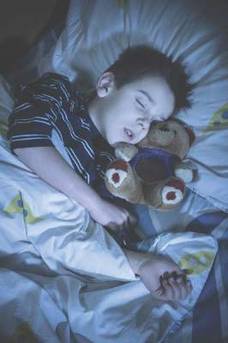
Because sleep includes being paralyzed (REM stages), evolution encourages animals to sleep together to protect from predators. Sleeping alone requires a great deal of reassurance, such as from a friendly atmosphere, favorite stuffed toy, and familiar routine that implies safety. Children could use a toy, pet, or even a sibling to feel safe. While body contact is the most reassuring, children may not return to sleep from the many normal night wakings without it. Most can be weaned from this dependence by the parent sitting by the bed silently, moving one foot closer to the door each night. A promise to “check on you” in 5 minutes also helps.
Other factors making sleep easier include avoiding caffeine, stimulating medicines, or nicotine as well as exciting games, media, or exercise within 2 hours of bedtime. A quiet, dark, cool but not damp location used only for sleeping is helpful, but not always possible. A white noise generator, fan, or radio on static can help.
Many parents strangely expect their child to give up the pleasures of the day and take themselves to bed! As for other kinds of limit setting, parental company is typically needed for brushing teeth, pajamas, and a story. Ideally, it can be fun as a race or with songs, not a yelling match, which undermines the sense of safety. Setting rules about no electronics in the bedroom, even for charging, after a certain hour is often the only solution (even for adults) to the common struggle over ending media.
Often the bedtime complaint is “curtain calls” after being settled in bed. For children who call out, advise parents wait a few moments before responding, then reassure verbally without entering their room, waiting longer each time. For the child getting out of bed, one parent should lead them back without talking at all as many times as necessary. A reward for staying in bed without calling or coming out can be an extra story the next night and/or a morning reward. Alternatively, close the door and turn off the light if they come out or call out. After a few moments in the dark, give a “second chance” as long as they are quietly in bed. Gating the doorway works well for toddlers – sleeping on the floor is not dangerous!
Families often are ambivalent about asking for bedtime advice, thinking your solutions might be stressful, harmful to their relationship, or will take up their own precious sleep. For many, a prolonged bedtime is the best part of their day. Special Time earlier is often key to enforcing a healthy bedtime. Reassure them that these solutions usually take less than 3 weeks!
For the child, bedtime means giving up on fun but, more importantly, separation from the parent. This separation is harder if negative emotions are left from a day of behavior struggles or parents are even subtly angry at each other. For parents, bedtime means separating from their main pleasure in life. They also may be regretting their interactions during the day. Ambivalence about parting also may come from fears of being alone with their partner due to marital discord, intimate partner violence, chronic arguing, substance use, or simply depression. When simple advice fails, it is important to explore these meanings with families, encourage positive daytime behavior management methods, and avoid conflict in front of the children to resolve bedtime struggles.
Dr. Howard is assistant professor of pediatrics at the Johns Hopkins University School of Medicine, Baltimore, and creator of CHADIS (www.CHADIS.com). She has no other relevant disclosures. Dr. Howard’s contribution to this publication was as a paid expert to Frontline. E-mail her at pdnews@frontlinemedcom.com.
To weary parents, the fact that their child does not want to go to bed at night is both puzzling and exasperating. No matter what age, it is important to have a healthy bedtime for the child’s well-being as well as their caregiver’s!
Sleep, like the “canary in the mine,” is vulnerable to disruption by anything from minor illness to changes in schedule, things viewed on media, or emotions in the home, to life changes such as a new sibling, toilet training, or a new school year. In patients on stimulant medicine resisting bedtime, consider the need to finally eat. Asking about these specifically will help you plan an appropriate time to successfully address bedtime conflicts.
Knowing some basic principles about falling asleep can help your counseling. “Sleep drive” builds up over the day like a coiled spring, making falling asleep easier initially than for wakings later in the night. It also means that a nap too close to bedtime reduces the drive. Avoiding any naps (after age 4 years) and naps lasting past 4 p.m. for children under 4, even in car rides, is crucial. Beware of teens “having trouble falling asleep” who have sneaked in a nap after school!
To optimize sleep drive, calculate age-related sleep needs and, ideally, ask parents to keep a sleep diary for 1-2 weeks, especially checking on naps at daycare. Updated sleep duration standards (preschool 10-13 hours; school age 9-11 hours; teens 8-10 hours (see sleepfoundation.org) show that ranges of total sleep are remarkably stable, but may not meet parents’ ideals for time “off duty.”
If placed in bed when not yet tired, anyone will have trouble falling asleep (phase shift). For a child, lying awake in the dark alone is time for active imaginations to conjure fear of separation (> 4-6 months), monsters (for preschoolers), burglars (for anxious school-aged children), or the next day’s social or academic stresses (for school-aged children to teens). Children with anxiety disorders even worry that they may not get enough sleep! A soothing routine with a story in their bed (not media), a spritzing of “monster spray” or a “bedtime ticket” to cash in for “one more thing” (for those who beg) will usually suffice for preschoolers. A “magic flashlight” lends the child some control to check for monsters, but an “exorcism ritual” by the all-powerful parent can be added if needed. Teens are never too old for a chance to talk or even a story read by the parent (but they won’t ask for this).
A secret to managing bedtime struggles is to start the routine at the time the child is now falling asleep to avoid resistance, and keeping wake-up time appropriate to the new schedule. Once falling asleep within 10 minutes, move bedtime 15 minutes earlier each night to reach the schedule, then maintain 7 days per week (or within 1 hour) to prevent resetting the biological clock. Sorry, no movie nights until 2 a.m. or “sleeping in” on weekends! Teens who resist bedtime may be napping, socializing at the “only time” peers are up, addicted to media, or avoiding family. Their cooperation must be engaged to make a change by staying up all night once, then setting a new schedule, or staying up 1 hour later each night until the desired bedtime is reached.
Because sleep includes being paralyzed (REM stages), evolution encourages animals to sleep together to protect from predators. Sleeping alone requires a great deal of reassurance, such as from a friendly atmosphere, favorite stuffed toy, and familiar routine that implies safety. Children could use a toy, pet, or even a sibling to feel safe. While body contact is the most reassuring, children may not return to sleep from the many normal night wakings without it. Most can be weaned from this dependence by the parent sitting by the bed silently, moving one foot closer to the door each night. A promise to “check on you” in 5 minutes also helps.
Other factors making sleep easier include avoiding caffeine, stimulating medicines, or nicotine as well as exciting games, media, or exercise within 2 hours of bedtime. A quiet, dark, cool but not damp location used only for sleeping is helpful, but not always possible. A white noise generator, fan, or radio on static can help.
Many parents strangely expect their child to give up the pleasures of the day and take themselves to bed! As for other kinds of limit setting, parental company is typically needed for brushing teeth, pajamas, and a story. Ideally, it can be fun as a race or with songs, not a yelling match, which undermines the sense of safety. Setting rules about no electronics in the bedroom, even for charging, after a certain hour is often the only solution (even for adults) to the common struggle over ending media.
Often the bedtime complaint is “curtain calls” after being settled in bed. For children who call out, advise parents wait a few moments before responding, then reassure verbally without entering their room, waiting longer each time. For the child getting out of bed, one parent should lead them back without talking at all as many times as necessary. A reward for staying in bed without calling or coming out can be an extra story the next night and/or a morning reward. Alternatively, close the door and turn off the light if they come out or call out. After a few moments in the dark, give a “second chance” as long as they are quietly in bed. Gating the doorway works well for toddlers – sleeping on the floor is not dangerous!
Families often are ambivalent about asking for bedtime advice, thinking your solutions might be stressful, harmful to their relationship, or will take up their own precious sleep. For many, a prolonged bedtime is the best part of their day. Special Time earlier is often key to enforcing a healthy bedtime. Reassure them that these solutions usually take less than 3 weeks!
For the child, bedtime means giving up on fun but, more importantly, separation from the parent. This separation is harder if negative emotions are left from a day of behavior struggles or parents are even subtly angry at each other. For parents, bedtime means separating from their main pleasure in life. They also may be regretting their interactions during the day. Ambivalence about parting also may come from fears of being alone with their partner due to marital discord, intimate partner violence, chronic arguing, substance use, or simply depression. When simple advice fails, it is important to explore these meanings with families, encourage positive daytime behavior management methods, and avoid conflict in front of the children to resolve bedtime struggles.
Dr. Howard is assistant professor of pediatrics at the Johns Hopkins University School of Medicine, Baltimore, and creator of CHADIS (www.CHADIS.com). She has no other relevant disclosures. Dr. Howard’s contribution to this publication was as a paid expert to Frontline. E-mail her at pdnews@frontlinemedcom.com.
To weary parents, the fact that their child does not want to go to bed at night is both puzzling and exasperating. No matter what age, it is important to have a healthy bedtime for the child’s well-being as well as their caregiver’s!
Sleep, like the “canary in the mine,” is vulnerable to disruption by anything from minor illness to changes in schedule, things viewed on media, or emotions in the home, to life changes such as a new sibling, toilet training, or a new school year. In patients on stimulant medicine resisting bedtime, consider the need to finally eat. Asking about these specifically will help you plan an appropriate time to successfully address bedtime conflicts.
Knowing some basic principles about falling asleep can help your counseling. “Sleep drive” builds up over the day like a coiled spring, making falling asleep easier initially than for wakings later in the night. It also means that a nap too close to bedtime reduces the drive. Avoiding any naps (after age 4 years) and naps lasting past 4 p.m. for children under 4, even in car rides, is crucial. Beware of teens “having trouble falling asleep” who have sneaked in a nap after school!
To optimize sleep drive, calculate age-related sleep needs and, ideally, ask parents to keep a sleep diary for 1-2 weeks, especially checking on naps at daycare. Updated sleep duration standards (preschool 10-13 hours; school age 9-11 hours; teens 8-10 hours (see sleepfoundation.org) show that ranges of total sleep are remarkably stable, but may not meet parents’ ideals for time “off duty.”
If placed in bed when not yet tired, anyone will have trouble falling asleep (phase shift). For a child, lying awake in the dark alone is time for active imaginations to conjure fear of separation (> 4-6 months), monsters (for preschoolers), burglars (for anxious school-aged children), or the next day’s social or academic stresses (for school-aged children to teens). Children with anxiety disorders even worry that they may not get enough sleep! A soothing routine with a story in their bed (not media), a spritzing of “monster spray” or a “bedtime ticket” to cash in for “one more thing” (for those who beg) will usually suffice for preschoolers. A “magic flashlight” lends the child some control to check for monsters, but an “exorcism ritual” by the all-powerful parent can be added if needed. Teens are never too old for a chance to talk or even a story read by the parent (but they won’t ask for this).
A secret to managing bedtime struggles is to start the routine at the time the child is now falling asleep to avoid resistance, and keeping wake-up time appropriate to the new schedule. Once falling asleep within 10 minutes, move bedtime 15 minutes earlier each night to reach the schedule, then maintain 7 days per week (or within 1 hour) to prevent resetting the biological clock. Sorry, no movie nights until 2 a.m. or “sleeping in” on weekends! Teens who resist bedtime may be napping, socializing at the “only time” peers are up, addicted to media, or avoiding family. Their cooperation must be engaged to make a change by staying up all night once, then setting a new schedule, or staying up 1 hour later each night until the desired bedtime is reached.
Because sleep includes being paralyzed (REM stages), evolution encourages animals to sleep together to protect from predators. Sleeping alone requires a great deal of reassurance, such as from a friendly atmosphere, favorite stuffed toy, and familiar routine that implies safety. Children could use a toy, pet, or even a sibling to feel safe. While body contact is the most reassuring, children may not return to sleep from the many normal night wakings without it. Most can be weaned from this dependence by the parent sitting by the bed silently, moving one foot closer to the door each night. A promise to “check on you” in 5 minutes also helps.
Other factors making sleep easier include avoiding caffeine, stimulating medicines, or nicotine as well as exciting games, media, or exercise within 2 hours of bedtime. A quiet, dark, cool but not damp location used only for sleeping is helpful, but not always possible. A white noise generator, fan, or radio on static can help.
Many parents strangely expect their child to give up the pleasures of the day and take themselves to bed! As for other kinds of limit setting, parental company is typically needed for brushing teeth, pajamas, and a story. Ideally, it can be fun as a race or with songs, not a yelling match, which undermines the sense of safety. Setting rules about no electronics in the bedroom, even for charging, after a certain hour is often the only solution (even for adults) to the common struggle over ending media.
Often the bedtime complaint is “curtain calls” after being settled in bed. For children who call out, advise parents wait a few moments before responding, then reassure verbally without entering their room, waiting longer each time. For the child getting out of bed, one parent should lead them back without talking at all as many times as necessary. A reward for staying in bed without calling or coming out can be an extra story the next night and/or a morning reward. Alternatively, close the door and turn off the light if they come out or call out. After a few moments in the dark, give a “second chance” as long as they are quietly in bed. Gating the doorway works well for toddlers – sleeping on the floor is not dangerous!
Families often are ambivalent about asking for bedtime advice, thinking your solutions might be stressful, harmful to their relationship, or will take up their own precious sleep. For many, a prolonged bedtime is the best part of their day. Special Time earlier is often key to enforcing a healthy bedtime. Reassure them that these solutions usually take less than 3 weeks!
For the child, bedtime means giving up on fun but, more importantly, separation from the parent. This separation is harder if negative emotions are left from a day of behavior struggles or parents are even subtly angry at each other. For parents, bedtime means separating from their main pleasure in life. They also may be regretting their interactions during the day. Ambivalence about parting also may come from fears of being alone with their partner due to marital discord, intimate partner violence, chronic arguing, substance use, or simply depression. When simple advice fails, it is important to explore these meanings with families, encourage positive daytime behavior management methods, and avoid conflict in front of the children to resolve bedtime struggles.
Dr. Howard is assistant professor of pediatrics at the Johns Hopkins University School of Medicine, Baltimore, and creator of CHADIS (www.CHADIS.com). She has no other relevant disclosures. Dr. Howard’s contribution to this publication was as a paid expert to Frontline. E-mail her at pdnews@frontlinemedcom.com.
Water woes: Recognizing and treating recreational water illness
Most of our patients have been or will be exposed to water in a recreational setting this summer. As health care providers, we might not routinely consider illnesses associated with recreational water exposure or discuss preventive strategies; however, the Centers for Disease Control and Prevention has been actively promoting awareness about recreational water illnesses for years. May 18-24, 2015, was the 11th annual observance of Healthy and Safe Swimming Week, formerly known as Recreational Illness and Injury Prevention Week. The focus for 2015 was promoting the role of swimmers, residential pool owners, public health officials, and beach staff in the prevention of drownings, chemical injuries, and outbreaks of illness. One goal was for the swimmer to take a more active role in protecting themselves and preventing the spread of infections to others. For our colleagues, that means educating both parents and children.

To begin our discussion, let’s define recreational water illnesses (RWI). RWIs are caused by a variety of infectious pathogens transmitted by ingestion, inhalation of aerosols or mists, or having contact with contaminated water from both treated (swimming pools, hot tubs, water parks, and fountains) and untreated (lakes, rivers, and oceans) sources of water in recreational venues. RWIs also can be caused by chemicals that have evaporated from water leading to poor indoor air quality. However, I am focusing on the infectious etiologies.
A broad spectrum of infections are associated with RWIs, including infections of the gastrointestinal tract, ear, skin, eye, central nervous system, and wounds. Diarrhea is the most common infection. Implicated pathogens include Giardia, Shigella, norovirus, and Escherichia coli O157:H7, but it is Cryptosporidium that has emerged as the pathogen implicated most often in swimming pool–related outbreaks. Recently published data from the CDC revealed that in 2011-2012, there were 90 recreational-associated outbreaks reported from 32 states and Puerto Rico resulting in 1,788 infections, with 69 outbreaks occurring in treated water venues. Of these, 36 (51%) were caused by Cryptosporidium. Among 21 outbreaks occurring in untreated recreational water, E. coli was responsible for 7 (33%) (MMWR Morb. Mortal. Wkly Rep. 2015;64:668-72)
It’s no surprise diarrhea is the most common illness. Infection can easily occur after swallowing contaminated water. Many erroneously think chlorine kills all pathogens. Cryptosporidium is chlorine tolerant and can persist in treated water with the current recommended levels of chlorine for more than 10 days (J. Water Health 2008;6:513-20). For chlorine-sensitive pathogens, maintenance of the disinfection process must remain intact. What role do swimmers play? Most people have about 0.4 g of feces on their bottoms that can contaminate water when rinsed off. How many people enter a pool with a diarrheal illness? How many may go swimming after having recently recovered from a diarrheal illness and may have asymptomatic shedding? We all have cringed when we see a diapered child in the water. All of these are potential ways for the swimmer to contaminate an adequately treated pool. Additionally, while Cryptosporidium infections are usually self-limited, some individuals, including the immunocompromised host and especially those with advanced HIV and those who are solid organ transplant recipients, may have a protracted course of profuse diarrhea if infected.
While diarrhea maybe the most common RWI, it is not the only one. Acute otitis externa (AOE), more commonly known as “swimmer’s ear,” is one of the most frequent reasons for summer health care encounters. It has been estimated that in the United States in 2007, 2.4 million health care visits resulted in the diagnosis of AOE (MMWR Morb. Mortal. Wkly. Rep. 2011;60:605-9). Visits were highest among children aged 5-9 years; however, adults accounted for 53% of the encounters. Inflammation and infection of the external auditory canal is usually caused by bacteria. Pseudomonas aeruginosa or Staphylococcus aureus are the two most common etiologies. Water is easily introduced into the external auditory canal with recreational water activities, leading to maceration and subsequent infection of the canal. Simply reminding parents to thoroughly dry their child’s ears after water exposure can help prevent AOE.

P. aeruginosa also is the agent causing the self-limiting conditions hot tub folliculitis and hot-foot syndrome. Hot tub folliculitis is characterized by the development of tender, pruritic papules and papulopustules on the hips, buttocks, and axillae, usually developing 8-48 hours after exposure to water that has been contaminated because of inadequate chlorination. Hot-foot syndrome is characterized by painful planter nodules (N. Engl. J. Med. 2001;345:335).
Serious diseases are encountered infrequently, but there are some that require more urgent interventions. Primary amebic meningoencephalitis (PAM) is an extremely rare, progressive, and almost always fatal infection of the brain caused by Naegleria fowleri. The pathogen is found in warm freshwater including lakes, rivers, streams, and hot springs. It enters the body through the nose and travels via the olfactory nerve to the brain. Infection usually occurs when individuals swim or dive in warm freshwater. Most cases have been reported in children from Southern states. In 2010, the first case in a northern state was reported from Minnesota, and three additional cases have since been reported in Kansas and Indiana (J. Ped. Infect. Dis. 2014 [doi: 10.1093/jpids/piu103]). Cases also have been reported in two individuals who were regular users of neti pots for sinus irrigation because the irrigating solution was prepared with contaminated tap water (Clin. Infect. Dis. 2012;55:e79-85). Clinical presentation is similar to bacterial meningitis. Helpful diagnostic clues may come from obtaining a history of swimming in freshwater within the 2 weeks prior to presentation, especially during the summer, or the use of nasal or sinus irrigation with untreated tap water. Consultation with an infectious disease specialist is recommended.
Acanthamoeba keratitis is a potentially blinding infection of the cornea that primarily occurs in individuals who wear contact lenses. Risk factors for the infection include swimming, showering, and use of hot tubs while wearing contact lenses. Improper storage and cleansing contacts with tap water are other risk factors. Anyone with corneal trauma and similar water exposures also would be at risk. Clinically, the history combined with a foreign-body sensation, pain, and decreased visual acuity should make one include this infection in the differential diagnosis. Referral to an ophthalmologist is required.
Finally, swimming with an open wound is a portal of entry for Vibrio vulnificus. It usually is associated with consumption of contaminated seafood, especially oysters. In immunocompromised individuals, especially those with chronic liver disease, this bacteria can cause a life-threatening illness leading to bacteremia, septic shock, and development of blistering skin lesions. Infections are fatal in approximately 50% of cases.
The goal of this brief review was not to discourage swimming, but to make your patients and their families healthy swimmers. Here are a few things the CDC is recommending to help them achieve that goal:
• Shower prior to going swimming.
• Do not swallow or drink pool water.
• Take bathroom breaks every hour and rinse off before going back into the water.
• Do not swim if you have diarrhea.
• Wait at least 2 weeks to go swimming if you have had diarrhea.
• Change swim diapers frequently and away from the water.
• Suggest patients download the free CDC app Healthy Swimming for more detailed information and suggest they visit cdc.gov/healthywater/swimming.
Dr. Word is a pediatric infectious disease specialist and director of the Houston Travel Medicine Clinic. She had no relevant financial disclosures. Write to Dr. Word at pdnews@frontlinemedcom.com.
Most of our patients have been or will be exposed to water in a recreational setting this summer. As health care providers, we might not routinely consider illnesses associated with recreational water exposure or discuss preventive strategies; however, the Centers for Disease Control and Prevention has been actively promoting awareness about recreational water illnesses for years. May 18-24, 2015, was the 11th annual observance of Healthy and Safe Swimming Week, formerly known as Recreational Illness and Injury Prevention Week. The focus for 2015 was promoting the role of swimmers, residential pool owners, public health officials, and beach staff in the prevention of drownings, chemical injuries, and outbreaks of illness. One goal was for the swimmer to take a more active role in protecting themselves and preventing the spread of infections to others. For our colleagues, that means educating both parents and children.
To begin our discussion, let’s define recreational water illnesses (RWI). RWIs are caused by a variety of infectious pathogens transmitted by ingestion, inhalation of aerosols or mists, or having contact with contaminated water from both treated (swimming pools, hot tubs, water parks, and fountains) and untreated (lakes, rivers, and oceans) sources of water in recreational venues. RWIs also can be caused by chemicals that have evaporated from water leading to poor indoor air quality. However, I am focusing on the infectious etiologies.
A broad spectrum of infections are associated with RWIs, including infections of the gastrointestinal tract, ear, skin, eye, central nervous system, and wounds. Diarrhea is the most common infection. Implicated pathogens include Giardia, Shigella, norovirus, and Escherichia coli O157:H7, but it is Cryptosporidium that has emerged as the pathogen implicated most often in swimming pool–related outbreaks. Recently published data from the CDC revealed that in 2011-2012, there were 90 recreational-associated outbreaks reported from 32 states and Puerto Rico resulting in 1,788 infections, with 69 outbreaks occurring in treated water venues. Of these, 36 (51%) were caused by Cryptosporidium. Among 21 outbreaks occurring in untreated recreational water, E. coli was responsible for 7 (33%) (MMWR Morb. Mortal. Wkly Rep. 2015;64:668-72)
It’s no surprise diarrhea is the most common illness. Infection can easily occur after swallowing contaminated water. Many erroneously think chlorine kills all pathogens. Cryptosporidium is chlorine tolerant and can persist in treated water with the current recommended levels of chlorine for more than 10 days (J. Water Health 2008;6:513-20). For chlorine-sensitive pathogens, maintenance of the disinfection process must remain intact. What role do swimmers play? Most people have about 0.4 g of feces on their bottoms that can contaminate water when rinsed off. How many people enter a pool with a diarrheal illness? How many may go swimming after having recently recovered from a diarrheal illness and may have asymptomatic shedding? We all have cringed when we see a diapered child in the water. All of these are potential ways for the swimmer to contaminate an adequately treated pool. Additionally, while Cryptosporidium infections are usually self-limited, some individuals, including the immunocompromised host and especially those with advanced HIV and those who are solid organ transplant recipients, may have a protracted course of profuse diarrhea if infected.
While diarrhea maybe the most common RWI, it is not the only one. Acute otitis externa (AOE), more commonly known as “swimmer’s ear,” is one of the most frequent reasons for summer health care encounters. It has been estimated that in the United States in 2007, 2.4 million health care visits resulted in the diagnosis of AOE (MMWR Morb. Mortal. Wkly. Rep. 2011;60:605-9). Visits were highest among children aged 5-9 years; however, adults accounted for 53% of the encounters. Inflammation and infection of the external auditory canal is usually caused by bacteria. Pseudomonas aeruginosa or Staphylococcus aureus are the two most common etiologies. Water is easily introduced into the external auditory canal with recreational water activities, leading to maceration and subsequent infection of the canal. Simply reminding parents to thoroughly dry their child’s ears after water exposure can help prevent AOE.
P. aeruginosa also is the agent causing the self-limiting conditions hot tub folliculitis and hot-foot syndrome. Hot tub folliculitis is characterized by the development of tender, pruritic papules and papulopustules on the hips, buttocks, and axillae, usually developing 8-48 hours after exposure to water that has been contaminated because of inadequate chlorination. Hot-foot syndrome is characterized by painful planter nodules (N. Engl. J. Med. 2001;345:335).
Serious diseases are encountered infrequently, but there are some that require more urgent interventions. Primary amebic meningoencephalitis (PAM) is an extremely rare, progressive, and almost always fatal infection of the brain caused by Naegleria fowleri. The pathogen is found in warm freshwater including lakes, rivers, streams, and hot springs. It enters the body through the nose and travels via the olfactory nerve to the brain. Infection usually occurs when individuals swim or dive in warm freshwater. Most cases have been reported in children from Southern states. In 2010, the first case in a northern state was reported from Minnesota, and three additional cases have since been reported in Kansas and Indiana (J. Ped. Infect. Dis. 2014 [doi: 10.1093/jpids/piu103]). Cases also have been reported in two individuals who were regular users of neti pots for sinus irrigation because the irrigating solution was prepared with contaminated tap water (Clin. Infect. Dis. 2012;55:e79-85). Clinical presentation is similar to bacterial meningitis. Helpful diagnostic clues may come from obtaining a history of swimming in freshwater within the 2 weeks prior to presentation, especially during the summer, or the use of nasal or sinus irrigation with untreated tap water. Consultation with an infectious disease specialist is recommended.
Acanthamoeba keratitis is a potentially blinding infection of the cornea that primarily occurs in individuals who wear contact lenses. Risk factors for the infection include swimming, showering, and use of hot tubs while wearing contact lenses. Improper storage and cleansing contacts with tap water are other risk factors. Anyone with corneal trauma and similar water exposures also would be at risk. Clinically, the history combined with a foreign-body sensation, pain, and decreased visual acuity should make one include this infection in the differential diagnosis. Referral to an ophthalmologist is required.
Finally, swimming with an open wound is a portal of entry for Vibrio vulnificus. It usually is associated with consumption of contaminated seafood, especially oysters. In immunocompromised individuals, especially those with chronic liver disease, this bacteria can cause a life-threatening illness leading to bacteremia, septic shock, and development of blistering skin lesions. Infections are fatal in approximately 50% of cases.
The goal of this brief review was not to discourage swimming, but to make your patients and their families healthy swimmers. Here are a few things the CDC is recommending to help them achieve that goal:
• Shower prior to going swimming.
• Do not swallow or drink pool water.
• Take bathroom breaks every hour and rinse off before going back into the water.
• Do not swim if you have diarrhea.
• Wait at least 2 weeks to go swimming if you have had diarrhea.
• Change swim diapers frequently and away from the water.
• Suggest patients download the free CDC app Healthy Swimming for more detailed information and suggest they visit cdc.gov/healthywater/swimming.
Dr. Word is a pediatric infectious disease specialist and director of the Houston Travel Medicine Clinic. She had no relevant financial disclosures. Write to Dr. Word at pdnews@frontlinemedcom.com.
Most of our patients have been or will be exposed to water in a recreational setting this summer. As health care providers, we might not routinely consider illnesses associated with recreational water exposure or discuss preventive strategies; however, the Centers for Disease Control and Prevention has been actively promoting awareness about recreational water illnesses for years. May 18-24, 2015, was the 11th annual observance of Healthy and Safe Swimming Week, formerly known as Recreational Illness and Injury Prevention Week. The focus for 2015 was promoting the role of swimmers, residential pool owners, public health officials, and beach staff in the prevention of drownings, chemical injuries, and outbreaks of illness. One goal was for the swimmer to take a more active role in protecting themselves and preventing the spread of infections to others. For our colleagues, that means educating both parents and children.
To begin our discussion, let’s define recreational water illnesses (RWI). RWIs are caused by a variety of infectious pathogens transmitted by ingestion, inhalation of aerosols or mists, or having contact with contaminated water from both treated (swimming pools, hot tubs, water parks, and fountains) and untreated (lakes, rivers, and oceans) sources of water in recreational venues. RWIs also can be caused by chemicals that have evaporated from water leading to poor indoor air quality. However, I am focusing on the infectious etiologies.
A broad spectrum of infections are associated with RWIs, including infections of the gastrointestinal tract, ear, skin, eye, central nervous system, and wounds. Diarrhea is the most common infection. Implicated pathogens include Giardia, Shigella, norovirus, and Escherichia coli O157:H7, but it is Cryptosporidium that has emerged as the pathogen implicated most often in swimming pool–related outbreaks. Recently published data from the CDC revealed that in 2011-2012, there were 90 recreational-associated outbreaks reported from 32 states and Puerto Rico resulting in 1,788 infections, with 69 outbreaks occurring in treated water venues. Of these, 36 (51%) were caused by Cryptosporidium. Among 21 outbreaks occurring in untreated recreational water, E. coli was responsible for 7 (33%) (MMWR Morb. Mortal. Wkly Rep. 2015;64:668-72)
It’s no surprise diarrhea is the most common illness. Infection can easily occur after swallowing contaminated water. Many erroneously think chlorine kills all pathogens. Cryptosporidium is chlorine tolerant and can persist in treated water with the current recommended levels of chlorine for more than 10 days (J. Water Health 2008;6:513-20). For chlorine-sensitive pathogens, maintenance of the disinfection process must remain intact. What role do swimmers play? Most people have about 0.4 g of feces on their bottoms that can contaminate water when rinsed off. How many people enter a pool with a diarrheal illness? How many may go swimming after having recently recovered from a diarrheal illness and may have asymptomatic shedding? We all have cringed when we see a diapered child in the water. All of these are potential ways for the swimmer to contaminate an adequately treated pool. Additionally, while Cryptosporidium infections are usually self-limited, some individuals, including the immunocompromised host and especially those with advanced HIV and those who are solid organ transplant recipients, may have a protracted course of profuse diarrhea if infected.
While diarrhea maybe the most common RWI, it is not the only one. Acute otitis externa (AOE), more commonly known as “swimmer’s ear,” is one of the most frequent reasons for summer health care encounters. It has been estimated that in the United States in 2007, 2.4 million health care visits resulted in the diagnosis of AOE (MMWR Morb. Mortal. Wkly. Rep. 2011;60:605-9). Visits were highest among children aged 5-9 years; however, adults accounted for 53% of the encounters. Inflammation and infection of the external auditory canal is usually caused by bacteria. Pseudomonas aeruginosa or Staphylococcus aureus are the two most common etiologies. Water is easily introduced into the external auditory canal with recreational water activities, leading to maceration and subsequent infection of the canal. Simply reminding parents to thoroughly dry their child’s ears after water exposure can help prevent AOE.
P. aeruginosa also is the agent causing the self-limiting conditions hot tub folliculitis and hot-foot syndrome. Hot tub folliculitis is characterized by the development of tender, pruritic papules and papulopustules on the hips, buttocks, and axillae, usually developing 8-48 hours after exposure to water that has been contaminated because of inadequate chlorination. Hot-foot syndrome is characterized by painful planter nodules (N. Engl. J. Med. 2001;345:335).
Serious diseases are encountered infrequently, but there are some that require more urgent interventions. Primary amebic meningoencephalitis (PAM) is an extremely rare, progressive, and almost always fatal infection of the brain caused by Naegleria fowleri. The pathogen is found in warm freshwater including lakes, rivers, streams, and hot springs. It enters the body through the nose and travels via the olfactory nerve to the brain. Infection usually occurs when individuals swim or dive in warm freshwater. Most cases have been reported in children from Southern states. In 2010, the first case in a northern state was reported from Minnesota, and three additional cases have since been reported in Kansas and Indiana (J. Ped. Infect. Dis. 2014 [doi: 10.1093/jpids/piu103]). Cases also have been reported in two individuals who were regular users of neti pots for sinus irrigation because the irrigating solution was prepared with contaminated tap water (Clin. Infect. Dis. 2012;55:e79-85). Clinical presentation is similar to bacterial meningitis. Helpful diagnostic clues may come from obtaining a history of swimming in freshwater within the 2 weeks prior to presentation, especially during the summer, or the use of nasal or sinus irrigation with untreated tap water. Consultation with an infectious disease specialist is recommended.
Acanthamoeba keratitis is a potentially blinding infection of the cornea that primarily occurs in individuals who wear contact lenses. Risk factors for the infection include swimming, showering, and use of hot tubs while wearing contact lenses. Improper storage and cleansing contacts with tap water are other risk factors. Anyone with corneal trauma and similar water exposures also would be at risk. Clinically, the history combined with a foreign-body sensation, pain, and decreased visual acuity should make one include this infection in the differential diagnosis. Referral to an ophthalmologist is required.
Finally, swimming with an open wound is a portal of entry for Vibrio vulnificus. It usually is associated with consumption of contaminated seafood, especially oysters. In immunocompromised individuals, especially those with chronic liver disease, this bacteria can cause a life-threatening illness leading to bacteremia, septic shock, and development of blistering skin lesions. Infections are fatal in approximately 50% of cases.
The goal of this brief review was not to discourage swimming, but to make your patients and their families healthy swimmers. Here are a few things the CDC is recommending to help them achieve that goal:
• Shower prior to going swimming.
• Do not swallow or drink pool water.
• Take bathroom breaks every hour and rinse off before going back into the water.
• Do not swim if you have diarrhea.
• Wait at least 2 weeks to go swimming if you have had diarrhea.
• Change swim diapers frequently and away from the water.
• Suggest patients download the free CDC app Healthy Swimming for more detailed information and suggest they visit cdc.gov/healthywater/swimming.
Dr. Word is a pediatric infectious disease specialist and director of the Houston Travel Medicine Clinic. She had no relevant financial disclosures. Write to Dr. Word at pdnews@frontlinemedcom.com.

Complementary and alternative approaches in treating ASD
Navigating the world of autism treatments and staying abreast of the evolving evidence base of a wide array of interventions spanning diverse modalities can be overwhelming for even well-trained clinicians. Parents and caregivers for children with an autism spectrum disorder (ASD) equally face troubles reconciling treatment information often obtained not only from their health care providers, but from family members, friends, and the Internet (where thousands of websites promise “cures” or improvements for ASD/ASD-related symptoms). In this context, families are commonly seeking complementary and alternative treatments for their children. Although some of these treatments are relatively benign, key safety and efficacy issues remain, and parents often act with little to no guidance from their child’s primary care provider. With the increasing prevalence of the use of nontraditional treatments used both with and in place of conventional treatments, you should be prepared to counsel families in making the most informed decisions in the best interest of their child.
Case Summary
Adam is a 15-year-old boy who carries a diagnosis of an ASD accompanied by enduring gastrointestinal troubles (constipation), auditory and tactile sensitivities, and episodes of aggression towards himself and others. Adam is essentially nonverbal and enjoys watching children’s videos repeatedly (Thomas the Train); he attends school in an alternative classroom as his hyperactivity, impulsivity, and susceptibility to behaving in an unpredictable physical manner limits his ability to successfully engage with peers without one-on-one supervision.
In an attempt to address Adam’s challenging behaviors (that haven’t responded significantly to a variety of conventional medications and behavioral strategies), his well-meaning and highly educated parents seek advice. They admit they’ve come across websites that offer treatments with a promise to cure their son’s autism symptoms. Adam’s mother has always preferred “a more natural” approach to her son’s treatment, and she still has vivid memories of the side effects her son experienced on past medications, such as akathisia with risperidone.
Discussion
Adam’s case is not an uncommon scenario encountered by many families who may be experiencing increasing desperation to address their child’s autism-related struggles while being disappointed by conventional treatments. Autism is a complex neurobiologic disorder with a heterogeneous presentation for which there are no well-established pharmacologic treatments to address its core symptoms of social-communication impairments and restricted, repetitive behaviors/interests. With this in mind, it’s not surprising that studies indicate that at least 50% of families with an autistic child have tried complementary and alternative medicine (CAM) treatments. Notably, the higher the child-related stress, the more likely the families are to try CAM interventions (J. Child Neurology 2014;29:360-7) and higher use of CAM is associated with coexisting gastrointestinal problems, seizure disorders, and behavioral problems in youth with autism (Pediatrics 2012;130:S77-S82).
CAM treatments are defined by the National Center for Complementary and Integrative Health (nccih.nih.gov) as “a group of diverse medical and health care systems, practices, and products that are not presently considered to be a part of conventional medicine.” They may include biologically based therapies (dietary supplements, chelation, immune-modulating agents, special diets), mind-body medicine (acupuncture, biofeedback), energy medicine, and manipulative and body-based treatments (massage, chiropractic manipulation). Families who choose CAM interventions for their children with autism tend to try natural products, special diets, and/or mind and body practices.
Reviewing the literature surrounding CAM, there are few randomized controlled trials published, and you should be aware that evidence for most of these interventions is insufficient to make strong recommendations for or against their use. Certainly, some treatments considered as CAM can be effective in treating specific target symptoms that often co-occur in individuals with autism (using melatonin to address sleep difficulties) without major safety issues, but others are potentially dangerous and likely ineffective (chelation therapy, hyperbaric oxygen, mineral solutions). The National Autism Center has published a comprehensive analysis of autism interventions (www.nationalautismcenter.org) that can be helpful for parents and practitioners to make informed treatment decisions; their most recent 2015 review categorizes some CAM treatments as having “emerging” evidence for favorable outcomes (music therapy, massage therapy, exercise) and labels some CAM interventions as having little to no evidence to support their efficacy. Interestingly, gluten-free and casein free diets are included in this latter category. Families are frequently curious about such elimination diets, especially given the buzz in both the popular and scientific press about the gut-brain connection. Although these diets do not have strong evidence to support their use in managing core features of autism, investigators are examining whether there may be a subgroup of children with autism (those with gastrointestinal problems) who may achieve potential benefits. All in all, there’s a need for more robust research on this particular set of treatments. Families should be aware that if they chose to pursue an elimination diet, adherence for children who are inherently picky eaters may be challenging. Furthermore, although commonly labeled as safe, these diets could be linked with potentially harmful adverse effects such as nutritional deficits.
To help guide clinical decision making, it may be helpful for you to first consult the American Academy of Pediatrics 2001 policy statement, “Counseling families who choose complementary and alternative medicine for their child with chronic illness or disability” (Pediatrics 2001;107:598-601) and then consider a range of variables when discussing the use of CAM treatments with families. Some authors classify treatments as being safe, easy, cheap, and sensible (SECS) versus being risky, unrealistic, difficult, and expensive (RUDE) (Contemporary Pediatrics 2004;21:61-72), and using these terms when engaging parents in treatment decisions can be instructive for all parties. For example, there is limited high-quality evidence that omega-3 fatty acid supplementation is effective in treating autism symptoms, but the fact that this can be easy, inexpensive, and relatively safe for families to use may ultimately inform your decision to support a family’s trial of this with close monitoring. Additionally, it is important to explore whether families are seeking to replace other therapies with something novel and new, or are they looking for something to complement existing treatments/services? You should always, while being mindful of a family’s needs, values, and resources, consider first and foremost the use of treatments with established efficacy. Certainly CAM treatments – particularly those that are nonbiologic (pet therapy) – may positively augment standard interventions without potential significant harm.
Clinical Pearl
With the increasing number of parents turning to CAM treatments for their children with autism (particularly when the parents themselves use CAM), you should be prepared to talk with families about their decision making and actively ask families if this is something that they’ve considered. Given that the research on many CAM treatments is in early stages, it’s not unique to perhaps feel ill prepared to make CAM recommendations to families. Often it’s helpful to share this “CAM illiteracy” with families and aim to work together in a nonjudgmental manner to evaluate and select individualized treatment programs based on factors of potential efficacy, safety, cost, and family values. Regardless of the intervention, you should establish, with all patients, reliable methods for documenting past trials of all treatments, evaluating target symptoms, monitoring clinical outcomes, and measuring adverse events.
You should work to provide realistic hope to families and acknowledge that some CAM treatments may work better for some children, but we often don’t have a great sense, from the current state-of-the-science of ASD treatment, as to who these kids may be.
Dr. Dickerson, a child and adolescent psychiatrist, is an assistant professor of psychiatry at the University of Vermont. He is the director of the university’s autism diagnostic clinic. Dr. Dickerson said he had no relevant financial disclosures. Contact Dr. Dickerson at pdnews@frontlinemedcom.com.
Navigating the world of autism treatments and staying abreast of the evolving evidence base of a wide array of interventions spanning diverse modalities can be overwhelming for even well-trained clinicians. Parents and caregivers for children with an autism spectrum disorder (ASD) equally face troubles reconciling treatment information often obtained not only from their health care providers, but from family members, friends, and the Internet (where thousands of websites promise “cures” or improvements for ASD/ASD-related symptoms). In this context, families are commonly seeking complementary and alternative treatments for their children. Although some of these treatments are relatively benign, key safety and efficacy issues remain, and parents often act with little to no guidance from their child’s primary care provider. With the increasing prevalence of the use of nontraditional treatments used both with and in place of conventional treatments, you should be prepared to counsel families in making the most informed decisions in the best interest of their child.
Case Summary
Adam is a 15-year-old boy who carries a diagnosis of an ASD accompanied by enduring gastrointestinal troubles (constipation), auditory and tactile sensitivities, and episodes of aggression towards himself and others. Adam is essentially nonverbal and enjoys watching children’s videos repeatedly (Thomas the Train); he attends school in an alternative classroom as his hyperactivity, impulsivity, and susceptibility to behaving in an unpredictable physical manner limits his ability to successfully engage with peers without one-on-one supervision.
In an attempt to address Adam’s challenging behaviors (that haven’t responded significantly to a variety of conventional medications and behavioral strategies), his well-meaning and highly educated parents seek advice. They admit they’ve come across websites that offer treatments with a promise to cure their son’s autism symptoms. Adam’s mother has always preferred “a more natural” approach to her son’s treatment, and she still has vivid memories of the side effects her son experienced on past medications, such as akathisia with risperidone.
Discussion
Adam’s case is not an uncommon scenario encountered by many families who may be experiencing increasing desperation to address their child’s autism-related struggles while being disappointed by conventional treatments. Autism is a complex neurobiologic disorder with a heterogeneous presentation for which there are no well-established pharmacologic treatments to address its core symptoms of social-communication impairments and restricted, repetitive behaviors/interests. With this in mind, it’s not surprising that studies indicate that at least 50% of families with an autistic child have tried complementary and alternative medicine (CAM) treatments. Notably, the higher the child-related stress, the more likely the families are to try CAM interventions (J. Child Neurology 2014;29:360-7) and higher use of CAM is associated with coexisting gastrointestinal problems, seizure disorders, and behavioral problems in youth with autism (Pediatrics 2012;130:S77-S82).
CAM treatments are defined by the National Center for Complementary and Integrative Health (nccih.nih.gov) as “a group of diverse medical and health care systems, practices, and products that are not presently considered to be a part of conventional medicine.” They may include biologically based therapies (dietary supplements, chelation, immune-modulating agents, special diets), mind-body medicine (acupuncture, biofeedback), energy medicine, and manipulative and body-based treatments (massage, chiropractic manipulation). Families who choose CAM interventions for their children with autism tend to try natural products, special diets, and/or mind and body practices.
Reviewing the literature surrounding CAM, there are few randomized controlled trials published, and you should be aware that evidence for most of these interventions is insufficient to make strong recommendations for or against their use. Certainly, some treatments considered as CAM can be effective in treating specific target symptoms that often co-occur in individuals with autism (using melatonin to address sleep difficulties) without major safety issues, but others are potentially dangerous and likely ineffective (chelation therapy, hyperbaric oxygen, mineral solutions). The National Autism Center has published a comprehensive analysis of autism interventions (www.nationalautismcenter.org) that can be helpful for parents and practitioners to make informed treatment decisions; their most recent 2015 review categorizes some CAM treatments as having “emerging” evidence for favorable outcomes (music therapy, massage therapy, exercise) and labels some CAM interventions as having little to no evidence to support their efficacy. Interestingly, gluten-free and casein free diets are included in this latter category. Families are frequently curious about such elimination diets, especially given the buzz in both the popular and scientific press about the gut-brain connection. Although these diets do not have strong evidence to support their use in managing core features of autism, investigators are examining whether there may be a subgroup of children with autism (those with gastrointestinal problems) who may achieve potential benefits. All in all, there’s a need for more robust research on this particular set of treatments. Families should be aware that if they chose to pursue an elimination diet, adherence for children who are inherently picky eaters may be challenging. Furthermore, although commonly labeled as safe, these diets could be linked with potentially harmful adverse effects such as nutritional deficits.
To help guide clinical decision making, it may be helpful for you to first consult the American Academy of Pediatrics 2001 policy statement, “Counseling families who choose complementary and alternative medicine for their child with chronic illness or disability” (Pediatrics 2001;107:598-601) and then consider a range of variables when discussing the use of CAM treatments with families. Some authors classify treatments as being safe, easy, cheap, and sensible (SECS) versus being risky, unrealistic, difficult, and expensive (RUDE) (Contemporary Pediatrics 2004;21:61-72), and using these terms when engaging parents in treatment decisions can be instructive for all parties. For example, there is limited high-quality evidence that omega-3 fatty acid supplementation is effective in treating autism symptoms, but the fact that this can be easy, inexpensive, and relatively safe for families to use may ultimately inform your decision to support a family’s trial of this with close monitoring. Additionally, it is important to explore whether families are seeking to replace other therapies with something novel and new, or are they looking for something to complement existing treatments/services? You should always, while being mindful of a family’s needs, values, and resources, consider first and foremost the use of treatments with established efficacy. Certainly CAM treatments – particularly those that are nonbiologic (pet therapy) – may positively augment standard interventions without potential significant harm.
Clinical Pearl
With the increasing number of parents turning to CAM treatments for their children with autism (particularly when the parents themselves use CAM), you should be prepared to talk with families about their decision making and actively ask families if this is something that they’ve considered. Given that the research on many CAM treatments is in early stages, it’s not unique to perhaps feel ill prepared to make CAM recommendations to families. Often it’s helpful to share this “CAM illiteracy” with families and aim to work together in a nonjudgmental manner to evaluate and select individualized treatment programs based on factors of potential efficacy, safety, cost, and family values. Regardless of the intervention, you should establish, with all patients, reliable methods for documenting past trials of all treatments, evaluating target symptoms, monitoring clinical outcomes, and measuring adverse events.
You should work to provide realistic hope to families and acknowledge that some CAM treatments may work better for some children, but we often don’t have a great sense, from the current state-of-the-science of ASD treatment, as to who these kids may be.
Dr. Dickerson, a child and adolescent psychiatrist, is an assistant professor of psychiatry at the University of Vermont. He is the director of the university’s autism diagnostic clinic. Dr. Dickerson said he had no relevant financial disclosures. Contact Dr. Dickerson at pdnews@frontlinemedcom.com.
Navigating the world of autism treatments and staying abreast of the evolving evidence base of a wide array of interventions spanning diverse modalities can be overwhelming for even well-trained clinicians. Parents and caregivers for children with an autism spectrum disorder (ASD) equally face troubles reconciling treatment information often obtained not only from their health care providers, but from family members, friends, and the Internet (where thousands of websites promise “cures” or improvements for ASD/ASD-related symptoms). In this context, families are commonly seeking complementary and alternative treatments for their children. Although some of these treatments are relatively benign, key safety and efficacy issues remain, and parents often act with little to no guidance from their child’s primary care provider. With the increasing prevalence of the use of nontraditional treatments used both with and in place of conventional treatments, you should be prepared to counsel families in making the most informed decisions in the best interest of their child.
Case Summary
Adam is a 15-year-old boy who carries a diagnosis of an ASD accompanied by enduring gastrointestinal troubles (constipation), auditory and tactile sensitivities, and episodes of aggression towards himself and others. Adam is essentially nonverbal and enjoys watching children’s videos repeatedly (Thomas the Train); he attends school in an alternative classroom as his hyperactivity, impulsivity, and susceptibility to behaving in an unpredictable physical manner limits his ability to successfully engage with peers without one-on-one supervision.
In an attempt to address Adam’s challenging behaviors (that haven’t responded significantly to a variety of conventional medications and behavioral strategies), his well-meaning and highly educated parents seek advice. They admit they’ve come across websites that offer treatments with a promise to cure their son’s autism symptoms. Adam’s mother has always preferred “a more natural” approach to her son’s treatment, and she still has vivid memories of the side effects her son experienced on past medications, such as akathisia with risperidone.
Discussion
Adam’s case is not an uncommon scenario encountered by many families who may be experiencing increasing desperation to address their child’s autism-related struggles while being disappointed by conventional treatments. Autism is a complex neurobiologic disorder with a heterogeneous presentation for which there are no well-established pharmacologic treatments to address its core symptoms of social-communication impairments and restricted, repetitive behaviors/interests. With this in mind, it’s not surprising that studies indicate that at least 50% of families with an autistic child have tried complementary and alternative medicine (CAM) treatments. Notably, the higher the child-related stress, the more likely the families are to try CAM interventions (J. Child Neurology 2014;29:360-7) and higher use of CAM is associated with coexisting gastrointestinal problems, seizure disorders, and behavioral problems in youth with autism (Pediatrics 2012;130:S77-S82).
CAM treatments are defined by the National Center for Complementary and Integrative Health (nccih.nih.gov) as “a group of diverse medical and health care systems, practices, and products that are not presently considered to be a part of conventional medicine.” They may include biologically based therapies (dietary supplements, chelation, immune-modulating agents, special diets), mind-body medicine (acupuncture, biofeedback), energy medicine, and manipulative and body-based treatments (massage, chiropractic manipulation). Families who choose CAM interventions for their children with autism tend to try natural products, special diets, and/or mind and body practices.
Reviewing the literature surrounding CAM, there are few randomized controlled trials published, and you should be aware that evidence for most of these interventions is insufficient to make strong recommendations for or against their use. Certainly, some treatments considered as CAM can be effective in treating specific target symptoms that often co-occur in individuals with autism (using melatonin to address sleep difficulties) without major safety issues, but others are potentially dangerous and likely ineffective (chelation therapy, hyperbaric oxygen, mineral solutions). The National Autism Center has published a comprehensive analysis of autism interventions (www.nationalautismcenter.org) that can be helpful for parents and practitioners to make informed treatment decisions; their most recent 2015 review categorizes some CAM treatments as having “emerging” evidence for favorable outcomes (music therapy, massage therapy, exercise) and labels some CAM interventions as having little to no evidence to support their efficacy. Interestingly, gluten-free and casein free diets are included in this latter category. Families are frequently curious about such elimination diets, especially given the buzz in both the popular and scientific press about the gut-brain connection. Although these diets do not have strong evidence to support their use in managing core features of autism, investigators are examining whether there may be a subgroup of children with autism (those with gastrointestinal problems) who may achieve potential benefits. All in all, there’s a need for more robust research on this particular set of treatments. Families should be aware that if they chose to pursue an elimination diet, adherence for children who are inherently picky eaters may be challenging. Furthermore, although commonly labeled as safe, these diets could be linked with potentially harmful adverse effects such as nutritional deficits.
To help guide clinical decision making, it may be helpful for you to first consult the American Academy of Pediatrics 2001 policy statement, “Counseling families who choose complementary and alternative medicine for their child with chronic illness or disability” (Pediatrics 2001;107:598-601) and then consider a range of variables when discussing the use of CAM treatments with families. Some authors classify treatments as being safe, easy, cheap, and sensible (SECS) versus being risky, unrealistic, difficult, and expensive (RUDE) (Contemporary Pediatrics 2004;21:61-72), and using these terms when engaging parents in treatment decisions can be instructive for all parties. For example, there is limited high-quality evidence that omega-3 fatty acid supplementation is effective in treating autism symptoms, but the fact that this can be easy, inexpensive, and relatively safe for families to use may ultimately inform your decision to support a family’s trial of this with close monitoring. Additionally, it is important to explore whether families are seeking to replace other therapies with something novel and new, or are they looking for something to complement existing treatments/services? You should always, while being mindful of a family’s needs, values, and resources, consider first and foremost the use of treatments with established efficacy. Certainly CAM treatments – particularly those that are nonbiologic (pet therapy) – may positively augment standard interventions without potential significant harm.
Clinical Pearl
With the increasing number of parents turning to CAM treatments for their children with autism (particularly when the parents themselves use CAM), you should be prepared to talk with families about their decision making and actively ask families if this is something that they’ve considered. Given that the research on many CAM treatments is in early stages, it’s not unique to perhaps feel ill prepared to make CAM recommendations to families. Often it’s helpful to share this “CAM illiteracy” with families and aim to work together in a nonjudgmental manner to evaluate and select individualized treatment programs based on factors of potential efficacy, safety, cost, and family values. Regardless of the intervention, you should establish, with all patients, reliable methods for documenting past trials of all treatments, evaluating target symptoms, monitoring clinical outcomes, and measuring adverse events.
You should work to provide realistic hope to families and acknowledge that some CAM treatments may work better for some children, but we often don’t have a great sense, from the current state-of-the-science of ASD treatment, as to who these kids may be.
Dr. Dickerson, a child and adolescent psychiatrist, is an assistant professor of psychiatry at the University of Vermont. He is the director of the university’s autism diagnostic clinic. Dr. Dickerson said he had no relevant financial disclosures. Contact Dr. Dickerson at pdnews@frontlinemedcom.com.
Does mental health influence entry into violent extremism and domestic hate groups?
In the wake of the Charleston, S.C., church massacre, people are asking what led the alleged shooter, Dylann Roof, into the world of hate, extremism, and violence. People also are asking what role, if any, mental health factors played in Roof’s violent radicalization.
At this point, no clear answers are available regarding Roof’s mental health status, nor are we certain about his specific entry into domestic radicalization and violent extremism. It is hoped that further investigation will provide greater clarity about the influences of Roof’s hateful ideology and violent actions, but this tragedy requires a discussion about the potential overlap between domestic radicalization, violent extremism, and mental health issues.

We are currently conducting research funded by the Department of Justice’s research arm, the National Institute of Justice (NIJ), to address this gap in knowledge in an effort to inform prevention and intervention efforts in the area, often referred to as “countering violent extremism,” or CVE.
Several complexities are related to the relationship between mental health and violent extremism, VE, which is defined, in part, as violence motivated by ideological commitments to a political and/or religious cause. In Roof’s case, his violence was quite clearly motivated by a long history of white supremacist ideology that condoned violence, supported hatred, and encouraged extremism. Roof’s actions, therefore, are embedded within a historical context that has traumatized racial/ethnic minorities and other vulnerable populations by individuals aligned, in varying degrees, to a broad cross section of the Ku Klux Klan (KKK), neo-Nazi, Christian Identity, and racist skinhead groups.

Beliefs play a central role in this “world of hate,” where individuals learn about a “white racial genocide,” promoted by a host of “racial enemies” who purportedly control the media, government, and education system. Although these radical ideas are inaccurate, we have to be careful in assuming that collective beliefs such as these that appear delusional, paranoid, and simply “crazy” to an outside observer automatically implicate mental health problems.
More than 50 years of social behavioral research show that even the most “sane” and stable people are susceptible to the pressures of group dynamics and the power of situational forces. In fact, the importance of group dynamics has led many leading scholars who study VE to dismiss the possibility that mental health plays a role in the radicalization process. Instead, these scholars suggest that violent extremists are otherwise well-adjusted people influenced solely by group beliefs and norms that advocate violent tactics to achieve political and/or religious goals. Certainly, this is the case for numerous individuals attracted to VE. Still however, it seems premature to completely discount the role mental health may play in the world of domestic radicalization and violent extremism.
Through the NIJ’s funding, we are engaged in a research collaboration with Life After Hate (LAH), a nongovernmental organization founded by former members of domestic radical groups, and the Anti-Defamation League, the Simon Wiesenthal Center, and the Southern Poverty Law Center. This partnership will result in a comprehensive study of the disengagement and deradicalization processes among members of domestic radical groups. As part of the project, we are conducting 50 in-depth life history interviews with former members of such extremist groups as the KKK, neo-Nazis, and racist skinheads. The findings will inform LAH’s efforts to build a robust prevention and intervention program aimed specifically at domestic radical groups.
LAH’s community intervention program, Exit USA, is modeled after similar programs in Europe, the Middle East, and elsewhere. Exit USA will be a bridge to connect individuals seeking to exit domestic radical groups with needed social and behavioral services as they make their way out of domestic radicalization. Heretofore, intervention and prevention strategies, including the recent White House Summit on CVE, have focused almost exclusively on “violent jihadis.” We suggest this emphasis on foreign terrorism has left many of our communities with little support to dissuade membership and dismantle domestic radical group mobilization. Our research will contribute to Exit USA as a first step toward building community supports.
As part of the interviews, the research team is examining how exposure to various types of risk factors, including mental health problems, are associated with entry into domestic hate groups as well as how these risk factors might impede or create obstacles to leaving violent extremism. Identifying the presence of risk factors and providing opportunities for individuals to access services that might help mitigate these issues is critical, but we do not assume that any one risk factor or even a distinct combination of certain risk factors cause violent extremism in a straightforward way easily detectable through predictive assessment.
We see mental health as one factor that can influence the development of VE. The multidimensional nature of radicalization means there is no single cause of radicalization and no “magic bullet” that guarantees the exit from violent extremist groups. Instead, there are various points along the pathway of entering and leaving VE where intervention strategies such as Exit USA could be successful. Untreated mental health problems, along with the volatile mix of extremist beliefs and associations, destabilize a person and also remove the needed internal constraints that otherwise are likely to reduce the potential of VE.
We expect CVE interventions focused on mental health to be effective in two principal ways. First, individuals at risk of becoming involved or who are at the early stages of entry might benefit from mental health treatment as a means to provide stability and address underlying issues that might be driving the person toward extremism. A growing number of studies underscore that individuals are not necessarily initially motivated by ideology and are often seeking universal needs, such as social support, protection, and excitement. In this sense, mental health treatment could aid the person in addressing these underlying motivations and seeking alternative ways of fulfilling these needs.
Second, mental health treatment should be an important consideration in the design of intervention programs aimed at promoting disengagement and deradicalization. Mental health treatment is especially likely to be helpful in terms of decreasing the likelihood an individual will “relapse” and return to extremism, which our preliminary results suggest is relatively common.
We are seeking firsthand accounts of how trauma, neglect, and other mental health issues are related to domestic radicalization to inform LAH’s Exit USA program. Anyone with an account should send an e-mail to psimi@unomaha.edu.
The project was supported by Award No. 2014-ZA-0005, awarded by the NIJ, Office of Justice Programs, U.S. Department of Justice. The opinions, findings, and conclusions or recommendations expressed in this article are those of the author(s) and do not necessarily reflect those of the Department of Justice.
Dr. Simi is with the National Consortium for the Study of Terrorism and Responses to Terrorism and is associate professor at the University of Nebraska, Omaha. Dr. Blee is associate dean for graduate studies, and research and distinguished professor of sociology at the Kenneth P. Dietrich School of Arts and Sciences, University of Pittsburgh. Dr. DeMichele is a research sociologist with the Center for Justice, Safety, and Resilience at RTI International, Research Triangle Park, N.C.*
This article was updated 7/27/2015.
In the wake of the Charleston, S.C., church massacre, people are asking what led the alleged shooter, Dylann Roof, into the world of hate, extremism, and violence. People also are asking what role, if any, mental health factors played in Roof’s violent radicalization.
At this point, no clear answers are available regarding Roof’s mental health status, nor are we certain about his specific entry into domestic radicalization and violent extremism. It is hoped that further investigation will provide greater clarity about the influences of Roof’s hateful ideology and violent actions, but this tragedy requires a discussion about the potential overlap between domestic radicalization, violent extremism, and mental health issues.
We are currently conducting research funded by the Department of Justice’s research arm, the National Institute of Justice (NIJ), to address this gap in knowledge in an effort to inform prevention and intervention efforts in the area, often referred to as “countering violent extremism,” or CVE.
Several complexities are related to the relationship between mental health and violent extremism, VE, which is defined, in part, as violence motivated by ideological commitments to a political and/or religious cause. In Roof’s case, his violence was quite clearly motivated by a long history of white supremacist ideology that condoned violence, supported hatred, and encouraged extremism. Roof’s actions, therefore, are embedded within a historical context that has traumatized racial/ethnic minorities and other vulnerable populations by individuals aligned, in varying degrees, to a broad cross section of the Ku Klux Klan (KKK), neo-Nazi, Christian Identity, and racist skinhead groups.
Beliefs play a central role in this “world of hate,” where individuals learn about a “white racial genocide,” promoted by a host of “racial enemies” who purportedly control the media, government, and education system. Although these radical ideas are inaccurate, we have to be careful in assuming that collective beliefs such as these that appear delusional, paranoid, and simply “crazy” to an outside observer automatically implicate mental health problems.
More than 50 years of social behavioral research show that even the most “sane” and stable people are susceptible to the pressures of group dynamics and the power of situational forces. In fact, the importance of group dynamics has led many leading scholars who study VE to dismiss the possibility that mental health plays a role in the radicalization process. Instead, these scholars suggest that violent extremists are otherwise well-adjusted people influenced solely by group beliefs and norms that advocate violent tactics to achieve political and/or religious goals. Certainly, this is the case for numerous individuals attracted to VE. Still however, it seems premature to completely discount the role mental health may play in the world of domestic radicalization and violent extremism.
Through the NIJ’s funding, we are engaged in a research collaboration with Life After Hate (LAH), a nongovernmental organization founded by former members of domestic radical groups, and the Anti-Defamation League, the Simon Wiesenthal Center, and the Southern Poverty Law Center. This partnership will result in a comprehensive study of the disengagement and deradicalization processes among members of domestic radical groups. As part of the project, we are conducting 50 in-depth life history interviews with former members of such extremist groups as the KKK, neo-Nazis, and racist skinheads. The findings will inform LAH’s efforts to build a robust prevention and intervention program aimed specifically at domestic radical groups.
LAH’s community intervention program, Exit USA, is modeled after similar programs in Europe, the Middle East, and elsewhere. Exit USA will be a bridge to connect individuals seeking to exit domestic radical groups with needed social and behavioral services as they make their way out of domestic radicalization. Heretofore, intervention and prevention strategies, including the recent White House Summit on CVE, have focused almost exclusively on “violent jihadis.” We suggest this emphasis on foreign terrorism has left many of our communities with little support to dissuade membership and dismantle domestic radical group mobilization. Our research will contribute to Exit USA as a first step toward building community supports.
As part of the interviews, the research team is examining how exposure to various types of risk factors, including mental health problems, are associated with entry into domestic hate groups as well as how these risk factors might impede or create obstacles to leaving violent extremism. Identifying the presence of risk factors and providing opportunities for individuals to access services that might help mitigate these issues is critical, but we do not assume that any one risk factor or even a distinct combination of certain risk factors cause violent extremism in a straightforward way easily detectable through predictive assessment.
We see mental health as one factor that can influence the development of VE. The multidimensional nature of radicalization means there is no single cause of radicalization and no “magic bullet” that guarantees the exit from violent extremist groups. Instead, there are various points along the pathway of entering and leaving VE where intervention strategies such as Exit USA could be successful. Untreated mental health problems, along with the volatile mix of extremist beliefs and associations, destabilize a person and also remove the needed internal constraints that otherwise are likely to reduce the potential of VE.
We expect CVE interventions focused on mental health to be effective in two principal ways. First, individuals at risk of becoming involved or who are at the early stages of entry might benefit from mental health treatment as a means to provide stability and address underlying issues that might be driving the person toward extremism. A growing number of studies underscore that individuals are not necessarily initially motivated by ideology and are often seeking universal needs, such as social support, protection, and excitement. In this sense, mental health treatment could aid the person in addressing these underlying motivations and seeking alternative ways of fulfilling these needs.
Second, mental health treatment should be an important consideration in the design of intervention programs aimed at promoting disengagement and deradicalization. Mental health treatment is especially likely to be helpful in terms of decreasing the likelihood an individual will “relapse” and return to extremism, which our preliminary results suggest is relatively common.
We are seeking firsthand accounts of how trauma, neglect, and other mental health issues are related to domestic radicalization to inform LAH’s Exit USA program. Anyone with an account should send an e-mail to psimi@unomaha.edu.
The project was supported by Award No. 2014-ZA-0005, awarded by the NIJ, Office of Justice Programs, U.S. Department of Justice. The opinions, findings, and conclusions or recommendations expressed in this article are those of the author(s) and do not necessarily reflect those of the Department of Justice.
Dr. Simi is with the National Consortium for the Study of Terrorism and Responses to Terrorism and is associate professor at the University of Nebraska, Omaha. Dr. Blee is associate dean for graduate studies, and research and distinguished professor of sociology at the Kenneth P. Dietrich School of Arts and Sciences, University of Pittsburgh. Dr. DeMichele is a research sociologist with the Center for Justice, Safety, and Resilience at RTI International, Research Triangle Park, N.C.*
This article was updated 7/27/2015.
In the wake of the Charleston, S.C., church massacre, people are asking what led the alleged shooter, Dylann Roof, into the world of hate, extremism, and violence. People also are asking what role, if any, mental health factors played in Roof’s violent radicalization.
At this point, no clear answers are available regarding Roof’s mental health status, nor are we certain about his specific entry into domestic radicalization and violent extremism. It is hoped that further investigation will provide greater clarity about the influences of Roof’s hateful ideology and violent actions, but this tragedy requires a discussion about the potential overlap between domestic radicalization, violent extremism, and mental health issues.
We are currently conducting research funded by the Department of Justice’s research arm, the National Institute of Justice (NIJ), to address this gap in knowledge in an effort to inform prevention and intervention efforts in the area, often referred to as “countering violent extremism,” or CVE.
Several complexities are related to the relationship between mental health and violent extremism, VE, which is defined, in part, as violence motivated by ideological commitments to a political and/or religious cause. In Roof’s case, his violence was quite clearly motivated by a long history of white supremacist ideology that condoned violence, supported hatred, and encouraged extremism. Roof’s actions, therefore, are embedded within a historical context that has traumatized racial/ethnic minorities and other vulnerable populations by individuals aligned, in varying degrees, to a broad cross section of the Ku Klux Klan (KKK), neo-Nazi, Christian Identity, and racist skinhead groups.
Beliefs play a central role in this “world of hate,” where individuals learn about a “white racial genocide,” promoted by a host of “racial enemies” who purportedly control the media, government, and education system. Although these radical ideas are inaccurate, we have to be careful in assuming that collective beliefs such as these that appear delusional, paranoid, and simply “crazy” to an outside observer automatically implicate mental health problems.
More than 50 years of social behavioral research show that even the most “sane” and stable people are susceptible to the pressures of group dynamics and the power of situational forces. In fact, the importance of group dynamics has led many leading scholars who study VE to dismiss the possibility that mental health plays a role in the radicalization process. Instead, these scholars suggest that violent extremists are otherwise well-adjusted people influenced solely by group beliefs and norms that advocate violent tactics to achieve political and/or religious goals. Certainly, this is the case for numerous individuals attracted to VE. Still however, it seems premature to completely discount the role mental health may play in the world of domestic radicalization and violent extremism.
Through the NIJ’s funding, we are engaged in a research collaboration with Life After Hate (LAH), a nongovernmental organization founded by former members of domestic radical groups, and the Anti-Defamation League, the Simon Wiesenthal Center, and the Southern Poverty Law Center. This partnership will result in a comprehensive study of the disengagement and deradicalization processes among members of domestic radical groups. As part of the project, we are conducting 50 in-depth life history interviews with former members of such extremist groups as the KKK, neo-Nazis, and racist skinheads. The findings will inform LAH’s efforts to build a robust prevention and intervention program aimed specifically at domestic radical groups.
LAH’s community intervention program, Exit USA, is modeled after similar programs in Europe, the Middle East, and elsewhere. Exit USA will be a bridge to connect individuals seeking to exit domestic radical groups with needed social and behavioral services as they make their way out of domestic radicalization. Heretofore, intervention and prevention strategies, including the recent White House Summit on CVE, have focused almost exclusively on “violent jihadis.” We suggest this emphasis on foreign terrorism has left many of our communities with little support to dissuade membership and dismantle domestic radical group mobilization. Our research will contribute to Exit USA as a first step toward building community supports.
As part of the interviews, the research team is examining how exposure to various types of risk factors, including mental health problems, are associated with entry into domestic hate groups as well as how these risk factors might impede or create obstacles to leaving violent extremism. Identifying the presence of risk factors and providing opportunities for individuals to access services that might help mitigate these issues is critical, but we do not assume that any one risk factor or even a distinct combination of certain risk factors cause violent extremism in a straightforward way easily detectable through predictive assessment.
We see mental health as one factor that can influence the development of VE. The multidimensional nature of radicalization means there is no single cause of radicalization and no “magic bullet” that guarantees the exit from violent extremist groups. Instead, there are various points along the pathway of entering and leaving VE where intervention strategies such as Exit USA could be successful. Untreated mental health problems, along with the volatile mix of extremist beliefs and associations, destabilize a person and also remove the needed internal constraints that otherwise are likely to reduce the potential of VE.
We expect CVE interventions focused on mental health to be effective in two principal ways. First, individuals at risk of becoming involved or who are at the early stages of entry might benefit from mental health treatment as a means to provide stability and address underlying issues that might be driving the person toward extremism. A growing number of studies underscore that individuals are not necessarily initially motivated by ideology and are often seeking universal needs, such as social support, protection, and excitement. In this sense, mental health treatment could aid the person in addressing these underlying motivations and seeking alternative ways of fulfilling these needs.
Second, mental health treatment should be an important consideration in the design of intervention programs aimed at promoting disengagement and deradicalization. Mental health treatment is especially likely to be helpful in terms of decreasing the likelihood an individual will “relapse” and return to extremism, which our preliminary results suggest is relatively common.
We are seeking firsthand accounts of how trauma, neglect, and other mental health issues are related to domestic radicalization to inform LAH’s Exit USA program. Anyone with an account should send an e-mail to psimi@unomaha.edu.
The project was supported by Award No. 2014-ZA-0005, awarded by the NIJ, Office of Justice Programs, U.S. Department of Justice. The opinions, findings, and conclusions or recommendations expressed in this article are those of the author(s) and do not necessarily reflect those of the Department of Justice.
Dr. Simi is with the National Consortium for the Study of Terrorism and Responses to Terrorism and is associate professor at the University of Nebraska, Omaha. Dr. Blee is associate dean for graduate studies, and research and distinguished professor of sociology at the Kenneth P. Dietrich School of Arts and Sciences, University of Pittsburgh. Dr. DeMichele is a research sociologist with the Center for Justice, Safety, and Resilience at RTI International, Research Triangle Park, N.C.*
This article was updated 7/27/2015.

Cold iron truth: The high value quotient of dermatology
I have been a traveling road show for the last 2 years, explaining the value of dermatology to insurers. It is amazing how poorly understood we are by payers.
Let me give you an example. Currently, dermatologists treat about 70% of all skin cancers. This is up from the 10% we treated 30 years ago, but if you think about it, it should be 98% or 99%. There were 5.4 million skin cancers in the United States in 2012. The great majority were nonmelanoma skin cancers (at an interesting ratio of 1:1 for basal cell carcinoma and squamous cell carcinoma), and only about 75,000 were melanomas. About 80% of all melanomas are less than 1 mm in thickness and undoubtedly appropriate for local excision in the office. Dermatologists treat these skin cancers at less than 1/5 the cost of treatment in a facility. We, and a few primary care physicians, are the only physicians who are not operating room dependent. We can remove these cancers under local anesthesia in the office, without an anesthesiologist, multiple nurses, intravenous lines, preop labs, and the other high fixed costs associated with a hospital procedure, and we can do it promptly. Insurers should be pounding their drums to demand that the vast majority of skin cancers be treated in the office setting, rather than in a hospital. Maybe all skin cancer patients should be required to get “precertified” by a dermatologist before they are sent to a hospital for a procedure. This would improve quality and greatly cut costs.
Insurers always drop their jaws when I explain this to them. They have never matched up the costs of the physicians and the costs of the facilities where procedures are performed. They need to consider the value of the dermatologist in providing an accurate, quick diagnosis, with immediate exclusion of benign lesions and elimination of the long wait times to get a cancer removed. It costs less to get a skin cancer diagnosed and removed by a dermatologist than to get a new set of car tires installed, and we can often do it in about the same amount of time. Compare that with $150,000 spent annually to treat metastatic melanoma.
In addition, fewer dermatologists mean longer wait times to see the dermatologist, causing what I call the “spillover” effect. When patients cannot get in to see the dermatologist, they call their primary care physician, who sends them down to the hospital to see their general surgeon on lumps and bumps day. Everything gets removed, benign or not, in the hospital outpatient department.
That is why it is insane for insurers to be eliminating dermatologists wholesale from their “tight” networks. Their software tells them they will save money in the short term, but they won’t because of the spillover, and it is very foolish in the long term. With the advent of the Affordable Care Act, patients cannot be excluded for preexisting conditions, and these patients all become long-term clients of one insurer or another. What is neglected today becomes a nightmare tomorrow. Dermatology offers an extraordinarily high value quotient, but only if insurers have enough sense to let the patients see us.
Dr. Coldiron is in private practice, but maintains a clinical assistant professorship of dermatology at the University of Cincinnati. Email him at dermnews@frontlinemedcom.com.
I have been a traveling road show for the last 2 years, explaining the value of dermatology to insurers. It is amazing how poorly understood we are by payers.
Let me give you an example. Currently, dermatologists treat about 70% of all skin cancers. This is up from the 10% we treated 30 years ago, but if you think about it, it should be 98% or 99%. There were 5.4 million skin cancers in the United States in 2012. The great majority were nonmelanoma skin cancers (at an interesting ratio of 1:1 for basal cell carcinoma and squamous cell carcinoma), and only about 75,000 were melanomas. About 80% of all melanomas are less than 1 mm in thickness and undoubtedly appropriate for local excision in the office. Dermatologists treat these skin cancers at less than 1/5 the cost of treatment in a facility. We, and a few primary care physicians, are the only physicians who are not operating room dependent. We can remove these cancers under local anesthesia in the office, without an anesthesiologist, multiple nurses, intravenous lines, preop labs, and the other high fixed costs associated with a hospital procedure, and we can do it promptly. Insurers should be pounding their drums to demand that the vast majority of skin cancers be treated in the office setting, rather than in a hospital. Maybe all skin cancer patients should be required to get “precertified” by a dermatologist before they are sent to a hospital for a procedure. This would improve quality and greatly cut costs.
Insurers always drop their jaws when I explain this to them. They have never matched up the costs of the physicians and the costs of the facilities where procedures are performed. They need to consider the value of the dermatologist in providing an accurate, quick diagnosis, with immediate exclusion of benign lesions and elimination of the long wait times to get a cancer removed. It costs less to get a skin cancer diagnosed and removed by a dermatologist than to get a new set of car tires installed, and we can often do it in about the same amount of time. Compare that with $150,000 spent annually to treat metastatic melanoma.
In addition, fewer dermatologists mean longer wait times to see the dermatologist, causing what I call the “spillover” effect. When patients cannot get in to see the dermatologist, they call their primary care physician, who sends them down to the hospital to see their general surgeon on lumps and bumps day. Everything gets removed, benign or not, in the hospital outpatient department.
That is why it is insane for insurers to be eliminating dermatologists wholesale from their “tight” networks. Their software tells them they will save money in the short term, but they won’t because of the spillover, and it is very foolish in the long term. With the advent of the Affordable Care Act, patients cannot be excluded for preexisting conditions, and these patients all become long-term clients of one insurer or another. What is neglected today becomes a nightmare tomorrow. Dermatology offers an extraordinarily high value quotient, but only if insurers have enough sense to let the patients see us.
Dr. Coldiron is in private practice, but maintains a clinical assistant professorship of dermatology at the University of Cincinnati. Email him at dermnews@frontlinemedcom.com.
I have been a traveling road show for the last 2 years, explaining the value of dermatology to insurers. It is amazing how poorly understood we are by payers.
Let me give you an example. Currently, dermatologists treat about 70% of all skin cancers. This is up from the 10% we treated 30 years ago, but if you think about it, it should be 98% or 99%. There were 5.4 million skin cancers in the United States in 2012. The great majority were nonmelanoma skin cancers (at an interesting ratio of 1:1 for basal cell carcinoma and squamous cell carcinoma), and only about 75,000 were melanomas. About 80% of all melanomas are less than 1 mm in thickness and undoubtedly appropriate for local excision in the office. Dermatologists treat these skin cancers at less than 1/5 the cost of treatment in a facility. We, and a few primary care physicians, are the only physicians who are not operating room dependent. We can remove these cancers under local anesthesia in the office, without an anesthesiologist, multiple nurses, intravenous lines, preop labs, and the other high fixed costs associated with a hospital procedure, and we can do it promptly. Insurers should be pounding their drums to demand that the vast majority of skin cancers be treated in the office setting, rather than in a hospital. Maybe all skin cancer patients should be required to get “precertified” by a dermatologist before they are sent to a hospital for a procedure. This would improve quality and greatly cut costs.
Insurers always drop their jaws when I explain this to them. They have never matched up the costs of the physicians and the costs of the facilities where procedures are performed. They need to consider the value of the dermatologist in providing an accurate, quick diagnosis, with immediate exclusion of benign lesions and elimination of the long wait times to get a cancer removed. It costs less to get a skin cancer diagnosed and removed by a dermatologist than to get a new set of car tires installed, and we can often do it in about the same amount of time. Compare that with $150,000 spent annually to treat metastatic melanoma.
In addition, fewer dermatologists mean longer wait times to see the dermatologist, causing what I call the “spillover” effect. When patients cannot get in to see the dermatologist, they call their primary care physician, who sends them down to the hospital to see their general surgeon on lumps and bumps day. Everything gets removed, benign or not, in the hospital outpatient department.
That is why it is insane for insurers to be eliminating dermatologists wholesale from their “tight” networks. Their software tells them they will save money in the short term, but they won’t because of the spillover, and it is very foolish in the long term. With the advent of the Affordable Care Act, patients cannot be excluded for preexisting conditions, and these patients all become long-term clients of one insurer or another. What is neglected today becomes a nightmare tomorrow. Dermatology offers an extraordinarily high value quotient, but only if insurers have enough sense to let the patients see us.
Dr. Coldiron is in private practice, but maintains a clinical assistant professorship of dermatology at the University of Cincinnati. Email him at dermnews@frontlinemedcom.com.
Business associate agreements
Revision of the Health Insurance Portability and Accountability Act (HIPAA) rules has prompted numerous questions about business associates (BAs) and business associate agreements (BAAs). Apparently there is confusion about exactly which businesses qualify as BAs and how your BAAs should be modified to reflect the new provisions.
The criteria for identifying BAs are admittedly vague: The act defines them as nonemployees, performing “functions or activities” on behalf of the “covered entity” (your practice) that involve “creating, receiving, maintaining, or transmitting” personal health information (PHI).
Clearly, answering and billing services, independent transcriptionists, hardware and software companies, and any other vendors involved in creating or maintaining your medical records always qualify as BAs. Other businesses may or may not qualify, depending on whether they need direct access to PHI in order to provide their service. These include practice management consultants, attorneys, companies that store or microfilm medical records, and record-shredding services.
Specialty pharmacies are seldom mentioned in the BA discussion, but they probably should be. Pharmaceutical manufacturers are increasingly using them as intermediaries for their products – particularly the more expensive ones, such as biologics. Many of them ship products directly to patients, for which they require home addresses and other personal information, and in order to file payment paperwork and claim forms, they usually request diagnoses and associated medical information. By any reasonable interpretation of the new rules, this makes them BAs, and you should have BAAs in place before allowing them to fill your prescriptions.
To further complicate the situation, manufacturers and insurers routinely compile information about the real world uses of their products. To that end, they often ask specialty pharmacies to provide them with any patient data that they collect. Under the new rules, patients may restrict any PHI shared with third parties when patients pay for the drugs or services themselves. Your specialty pharmacy BAA should include a provision noting that the pharmacy is forbidden from disclosing any data to pharmaceutical companies or insurers from patients who self-pay and request confidentiality.
Mail carriers, package delivery people, cleaning services, copier repairmen, bank employees, and the like are not considered BAs. While they might conceivably come in contact with PHI on occasion, they don’t need it to do their job. You are required to use “reasonable diligence” in limiting the PHI that these folks may encounter, but you do not need to enter into written BA agreements with them.
Independent contractors who work within your practice – aestheticians and physical therapists, for example – are not considered BAs either, and do not need to sign a BA agreement. Just train them, as you do your employees.
Another source of confusion is the provision in the new rules that makes BAs directly responsible for their own HIPAA violations. While this might seem to eliminate the need for BAAs entirely, unfortunately that is not the case. In fact, even more responsibility has been placed on physicians for confidentiality breaches committed by their BAs. It is not enough to simply have a BAA in place; you are expected to use “reasonable diligence” in monitoring the work of your BAs. While BAs and their subcontractors are responsible for their own actions, the primary responsibility remains with you. Furthermore, you now must assume the worst-case scenario. Previously, when PHI was compromised, you would have to notify affected patients (and the government) only if there was a “significant risk of financial or reputational harm”; but now, any incident involving patient records is assumed to be a breach, and must be reported. Failure to do so could subject your practice, as well as the contractor, to significant fines.
If you haven’t yet revised your Notice of Privacy Practices (NPP) to explain your relationships with BAs, and their status under the new rules, do it now. (You should have done it last September.) You need to explain the breach notification process too, as well as the new patient rights mentioned above. You must post your revised NPP in your office, and make copies available there, but you need not mail a copy to every patient.
Dr. Eastern practices dermatology and dermatologic surgery in Belleville, N.J. He is the author of numerous articles and textbook chapters, and is a longtime monthly columnist for Dermatology News.
Revision of the Health Insurance Portability and Accountability Act (HIPAA) rules has prompted numerous questions about business associates (BAs) and business associate agreements (BAAs). Apparently there is confusion about exactly which businesses qualify as BAs and how your BAAs should be modified to reflect the new provisions.
The criteria for identifying BAs are admittedly vague: The act defines them as nonemployees, performing “functions or activities” on behalf of the “covered entity” (your practice) that involve “creating, receiving, maintaining, or transmitting” personal health information (PHI).
Clearly, answering and billing services, independent transcriptionists, hardware and software companies, and any other vendors involved in creating or maintaining your medical records always qualify as BAs. Other businesses may or may not qualify, depending on whether they need direct access to PHI in order to provide their service. These include practice management consultants, attorneys, companies that store or microfilm medical records, and record-shredding services.
Specialty pharmacies are seldom mentioned in the BA discussion, but they probably should be. Pharmaceutical manufacturers are increasingly using them as intermediaries for their products – particularly the more expensive ones, such as biologics. Many of them ship products directly to patients, for which they require home addresses and other personal information, and in order to file payment paperwork and claim forms, they usually request diagnoses and associated medical information. By any reasonable interpretation of the new rules, this makes them BAs, and you should have BAAs in place before allowing them to fill your prescriptions.
To further complicate the situation, manufacturers and insurers routinely compile information about the real world uses of their products. To that end, they often ask specialty pharmacies to provide them with any patient data that they collect. Under the new rules, patients may restrict any PHI shared with third parties when patients pay for the drugs or services themselves. Your specialty pharmacy BAA should include a provision noting that the pharmacy is forbidden from disclosing any data to pharmaceutical companies or insurers from patients who self-pay and request confidentiality.
Mail carriers, package delivery people, cleaning services, copier repairmen, bank employees, and the like are not considered BAs. While they might conceivably come in contact with PHI on occasion, they don’t need it to do their job. You are required to use “reasonable diligence” in limiting the PHI that these folks may encounter, but you do not need to enter into written BA agreements with them.
Independent contractors who work within your practice – aestheticians and physical therapists, for example – are not considered BAs either, and do not need to sign a BA agreement. Just train them, as you do your employees.
Another source of confusion is the provision in the new rules that makes BAs directly responsible for their own HIPAA violations. While this might seem to eliminate the need for BAAs entirely, unfortunately that is not the case. In fact, even more responsibility has been placed on physicians for confidentiality breaches committed by their BAs. It is not enough to simply have a BAA in place; you are expected to use “reasonable diligence” in monitoring the work of your BAs. While BAs and their subcontractors are responsible for their own actions, the primary responsibility remains with you. Furthermore, you now must assume the worst-case scenario. Previously, when PHI was compromised, you would have to notify affected patients (and the government) only if there was a “significant risk of financial or reputational harm”; but now, any incident involving patient records is assumed to be a breach, and must be reported. Failure to do so could subject your practice, as well as the contractor, to significant fines.
If you haven’t yet revised your Notice of Privacy Practices (NPP) to explain your relationships with BAs, and their status under the new rules, do it now. (You should have done it last September.) You need to explain the breach notification process too, as well as the new patient rights mentioned above. You must post your revised NPP in your office, and make copies available there, but you need not mail a copy to every patient.
Dr. Eastern practices dermatology and dermatologic surgery in Belleville, N.J. He is the author of numerous articles and textbook chapters, and is a longtime monthly columnist for Dermatology News.
Revision of the Health Insurance Portability and Accountability Act (HIPAA) rules has prompted numerous questions about business associates (BAs) and business associate agreements (BAAs). Apparently there is confusion about exactly which businesses qualify as BAs and how your BAAs should be modified to reflect the new provisions.
The criteria for identifying BAs are admittedly vague: The act defines them as nonemployees, performing “functions or activities” on behalf of the “covered entity” (your practice) that involve “creating, receiving, maintaining, or transmitting” personal health information (PHI).
Clearly, answering and billing services, independent transcriptionists, hardware and software companies, and any other vendors involved in creating or maintaining your medical records always qualify as BAs. Other businesses may or may not qualify, depending on whether they need direct access to PHI in order to provide their service. These include practice management consultants, attorneys, companies that store or microfilm medical records, and record-shredding services.
Specialty pharmacies are seldom mentioned in the BA discussion, but they probably should be. Pharmaceutical manufacturers are increasingly using them as intermediaries for their products – particularly the more expensive ones, such as biologics. Many of them ship products directly to patients, for which they require home addresses and other personal information, and in order to file payment paperwork and claim forms, they usually request diagnoses and associated medical information. By any reasonable interpretation of the new rules, this makes them BAs, and you should have BAAs in place before allowing them to fill your prescriptions.
To further complicate the situation, manufacturers and insurers routinely compile information about the real world uses of their products. To that end, they often ask specialty pharmacies to provide them with any patient data that they collect. Under the new rules, patients may restrict any PHI shared with third parties when patients pay for the drugs or services themselves. Your specialty pharmacy BAA should include a provision noting that the pharmacy is forbidden from disclosing any data to pharmaceutical companies or insurers from patients who self-pay and request confidentiality.
Mail carriers, package delivery people, cleaning services, copier repairmen, bank employees, and the like are not considered BAs. While they might conceivably come in contact with PHI on occasion, they don’t need it to do their job. You are required to use “reasonable diligence” in limiting the PHI that these folks may encounter, but you do not need to enter into written BA agreements with them.
Independent contractors who work within your practice – aestheticians and physical therapists, for example – are not considered BAs either, and do not need to sign a BA agreement. Just train them, as you do your employees.
Another source of confusion is the provision in the new rules that makes BAs directly responsible for their own HIPAA violations. While this might seem to eliminate the need for BAAs entirely, unfortunately that is not the case. In fact, even more responsibility has been placed on physicians for confidentiality breaches committed by their BAs. It is not enough to simply have a BAA in place; you are expected to use “reasonable diligence” in monitoring the work of your BAs. While BAs and their subcontractors are responsible for their own actions, the primary responsibility remains with you. Furthermore, you now must assume the worst-case scenario. Previously, when PHI was compromised, you would have to notify affected patients (and the government) only if there was a “significant risk of financial or reputational harm”; but now, any incident involving patient records is assumed to be a breach, and must be reported. Failure to do so could subject your practice, as well as the contractor, to significant fines.
If you haven’t yet revised your Notice of Privacy Practices (NPP) to explain your relationships with BAs, and their status under the new rules, do it now. (You should have done it last September.) You need to explain the breach notification process too, as well as the new patient rights mentioned above. You must post your revised NPP in your office, and make copies available there, but you need not mail a copy to every patient.
Dr. Eastern practices dermatology and dermatologic surgery in Belleville, N.J. He is the author of numerous articles and textbook chapters, and is a longtime monthly columnist for Dermatology News.