User login
Scott Kaatz, DO, uses SHM to Engage Future Hospitalists
Editor’s note: Each month, SHM puts the spotlight on some of our most active members who are making substantial contributions to hospital medicine. Log on to www.hospitalmedicine.org/getinvolved for more information on how you can lend your expertise to help SHM improve the care of hospitalized patients.
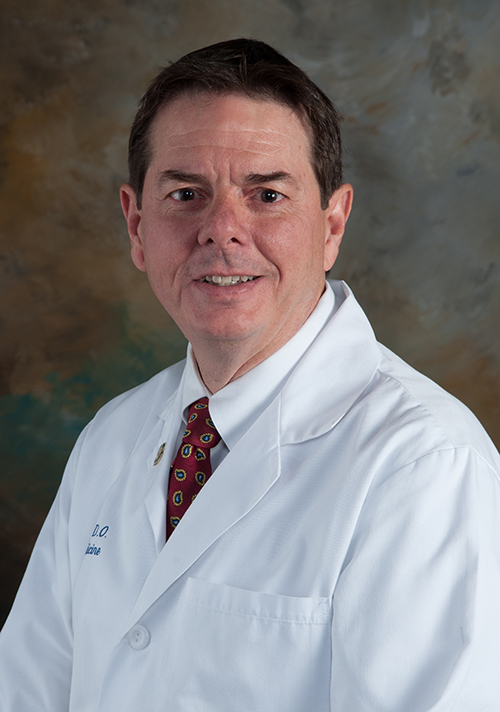
This month, The Hospitalist spotlights Scott Kaatz, DO, MSc, FACP, SFHM, a hospitalist at Henry Ford Hospital in Detroit. In addition to being an active SHM member, he is immediate past president of SHM’s Michigan Chapter and has been involved in multiple mentored implementation (MI) programs offered by SHM’s Center for Hospital Innovation and Improvement.
Question: What inspired you to begin working in hospital medicine and later join and become so involved with SHM?
Answer: For most of my career, I’ve been at Henry Ford Hospital in Detroit, including during my internal medicine residency. After residency, I was a primary-care physician there, and I rounded three to four months out of the year in the hospital with traditional house staff model. Four years ago, I transitioned to another role as a chief quality officer at Hurley Medical Center in Flint, Mich. While in Flint, I didn’t have a clinic and was strictly a hospitalist, spending about four months a year rounding.
When my career path led me to mostly inpatient work in the hospital, I became more involved not only with hospital medicine but with SHM. As of this past June, I went back home to Henry Ford as a full-time hospitalist. I now focus my attention on hospital medicine for eight months of the year, with some protected time for faculty development and scholarly activities for residents and junior faculty in the division of hospital medicine.

Q: How has your involvement with SHM’s mentored implementation programs impacted your practice and led to improved patient care?
A: After participating in the venous thromboembolism (VTE) mentored implementation program, I became a participant as a mentee site for I-PASS, a program focused on improving communication between providers during patient handoffs. During my time with the I-PASS team, I could sense the commitment and energy to improving handoffs not only at my site but at other participant sites nationwide during our regular check-in calls. Mentored implementation programs are brilliant because they go beyond providing sites with data, a few research papers, and some written recommendations. They really dig down into the true spirit of mentoring with a team.
At Hurley Medical Center, we went “all in” with our pediatric residency. What was most encouraging was that by the end of the year, the I-PASS recommendations and processes were standard practice and fully integrated into the culture and workflow of the care teams.
I applaud these programs tremendously. That’s really how you impact change, and it’s the spark, energy, and momentum from both mentors and mentees that keeps the team on track.
Q: You are the immediate past president of the Michigan Chapter of SHM. What have been some of the biggest benefits of being involved with an SHM chapter?
A: When I first became involved with SHM, there had been a Northern Michigan Chapter, but since SHM seeks to have regional chapters that cater to local audiences, I and some of my colleagues set out to develop a Southern Michigan Chapter. We developed our chapter and designed our meetings with support from SHM’s Chapter Support Committee.
At a typical meeting, we typically host an hour of cocktails with some hors d’oeuvres to provide an opportunity for networking and fellowship. The personal connections are at the heart of these meetings. From the content side, we always have a speaker to talk about issues germane to hospitalists. These are not just run-of-the-mill grand rounds discussions but rather information on clinical updates or the business and policy side of hospital medicine.
In our chapter, we also cycle leadership each year, using a “see one, do one, teach one” approach with our vice president-elect, president, and immediate past president to ensure proper development and continuity.
Moving forward, we are trying to reach out to medical students on a more regular basis. If you’re in your third year of medical school, it’s beneficial to start talking informally to hospitalists from multiple organizations in the state and get a feel for what a career in hospital medicine is like. How amazing would it be to walk in and interview for residency with a person you had dinner with a few months ago?
Q: SHM’s Board of Directors recently approved a Chapter Development Fund to support innovative initiatives that drive engagement on a local level. Explain the potential impact you see this having on chapters and, more broadly, SHM’s membership and hospital medicine.
A: Since our chapter’s inception, we have been able to expand our reach and stream our content to other parts of the state on the Internet. Part of the reason we have been able to do this is due to support from a Chapter Development Fund recently approved by SHM’s Board of Directors. As a result, we have turned our Southern Michigan Chapter into a statewide chapter with virtual sites. At the last meeting, we had over 75 attendees between our physical site and our “satellite site” in Michigan.
Our next project is to apply for funding to provide first- and second-year residents with free membership for a year through our chapter to expose them to the resources SHM has available to them and get their foot in the door with the organization. At a recent co-sponsored statewide meeting with the American College of Physicians, we were able to sign up 20 residents as new members of SHM, and our chapter paid their dues as an investment into our specialty.
Q: Any closing thoughts?
A: If there’s one thing I haven’t yet shared that I feel quite passionately about, it’s that SHM has such a robust library of educational resources that all hospitalists should be aware of, especially SHM’s annual meeting. It’s extraordinarily clinical and features a sizeable amount of content for grassroots clinicians and hospital leaders, including the best speakers in the field. On top of the educational components, the networking possibilities with hospitalists across the country make the annual meeting a prime example of the value SHM offers.
I’ve also been fortunate to have been involved with developing enduring materials on SHM’s Learning Portal, some of which are available without cost due to grant funding. The fact that SHM has pursued this funding and made some of these resources available to hospitalists outside of SHM’s membership embodies the organization’s mission of not only teaching doctors how to take better care of patients but helping patients get better—one of many reasons I am proud to be an active member. TH
Editor’s note: Each month, SHM puts the spotlight on some of our most active members who are making substantial contributions to hospital medicine. Log on to www.hospitalmedicine.org/getinvolved for more information on how you can lend your expertise to help SHM improve the care of hospitalized patients.
This month, The Hospitalist spotlights Scott Kaatz, DO, MSc, FACP, SFHM, a hospitalist at Henry Ford Hospital in Detroit. In addition to being an active SHM member, he is immediate past president of SHM’s Michigan Chapter and has been involved in multiple mentored implementation (MI) programs offered by SHM’s Center for Hospital Innovation and Improvement.
Question: What inspired you to begin working in hospital medicine and later join and become so involved with SHM?
Answer: For most of my career, I’ve been at Henry Ford Hospital in Detroit, including during my internal medicine residency. After residency, I was a primary-care physician there, and I rounded three to four months out of the year in the hospital with traditional house staff model. Four years ago, I transitioned to another role as a chief quality officer at Hurley Medical Center in Flint, Mich. While in Flint, I didn’t have a clinic and was strictly a hospitalist, spending about four months a year rounding.
When my career path led me to mostly inpatient work in the hospital, I became more involved not only with hospital medicine but with SHM. As of this past June, I went back home to Henry Ford as a full-time hospitalist. I now focus my attention on hospital medicine for eight months of the year, with some protected time for faculty development and scholarly activities for residents and junior faculty in the division of hospital medicine.
Q: How has your involvement with SHM’s mentored implementation programs impacted your practice and led to improved patient care?
A: After participating in the venous thromboembolism (VTE) mentored implementation program, I became a participant as a mentee site for I-PASS, a program focused on improving communication between providers during patient handoffs. During my time with the I-PASS team, I could sense the commitment and energy to improving handoffs not only at my site but at other participant sites nationwide during our regular check-in calls. Mentored implementation programs are brilliant because they go beyond providing sites with data, a few research papers, and some written recommendations. They really dig down into the true spirit of mentoring with a team.
At Hurley Medical Center, we went “all in” with our pediatric residency. What was most encouraging was that by the end of the year, the I-PASS recommendations and processes were standard practice and fully integrated into the culture and workflow of the care teams.
I applaud these programs tremendously. That’s really how you impact change, and it’s the spark, energy, and momentum from both mentors and mentees that keeps the team on track.
Q: You are the immediate past president of the Michigan Chapter of SHM. What have been some of the biggest benefits of being involved with an SHM chapter?
A: When I first became involved with SHM, there had been a Northern Michigan Chapter, but since SHM seeks to have regional chapters that cater to local audiences, I and some of my colleagues set out to develop a Southern Michigan Chapter. We developed our chapter and designed our meetings with support from SHM’s Chapter Support Committee.
At a typical meeting, we typically host an hour of cocktails with some hors d’oeuvres to provide an opportunity for networking and fellowship. The personal connections are at the heart of these meetings. From the content side, we always have a speaker to talk about issues germane to hospitalists. These are not just run-of-the-mill grand rounds discussions but rather information on clinical updates or the business and policy side of hospital medicine.
In our chapter, we also cycle leadership each year, using a “see one, do one, teach one” approach with our vice president-elect, president, and immediate past president to ensure proper development and continuity.
Moving forward, we are trying to reach out to medical students on a more regular basis. If you’re in your third year of medical school, it’s beneficial to start talking informally to hospitalists from multiple organizations in the state and get a feel for what a career in hospital medicine is like. How amazing would it be to walk in and interview for residency with a person you had dinner with a few months ago?
Q: SHM’s Board of Directors recently approved a Chapter Development Fund to support innovative initiatives that drive engagement on a local level. Explain the potential impact you see this having on chapters and, more broadly, SHM’s membership and hospital medicine.
A: Since our chapter’s inception, we have been able to expand our reach and stream our content to other parts of the state on the Internet. Part of the reason we have been able to do this is due to support from a Chapter Development Fund recently approved by SHM’s Board of Directors. As a result, we have turned our Southern Michigan Chapter into a statewide chapter with virtual sites. At the last meeting, we had over 75 attendees between our physical site and our “satellite site” in Michigan.
Our next project is to apply for funding to provide first- and second-year residents with free membership for a year through our chapter to expose them to the resources SHM has available to them and get their foot in the door with the organization. At a recent co-sponsored statewide meeting with the American College of Physicians, we were able to sign up 20 residents as new members of SHM, and our chapter paid their dues as an investment into our specialty.
Q: Any closing thoughts?
A: If there’s one thing I haven’t yet shared that I feel quite passionately about, it’s that SHM has such a robust library of educational resources that all hospitalists should be aware of, especially SHM’s annual meeting. It’s extraordinarily clinical and features a sizeable amount of content for grassroots clinicians and hospital leaders, including the best speakers in the field. On top of the educational components, the networking possibilities with hospitalists across the country make the annual meeting a prime example of the value SHM offers.
I’ve also been fortunate to have been involved with developing enduring materials on SHM’s Learning Portal, some of which are available without cost due to grant funding. The fact that SHM has pursued this funding and made some of these resources available to hospitalists outside of SHM’s membership embodies the organization’s mission of not only teaching doctors how to take better care of patients but helping patients get better—one of many reasons I am proud to be an active member. TH
Editor’s note: Each month, SHM puts the spotlight on some of our most active members who are making substantial contributions to hospital medicine. Log on to www.hospitalmedicine.org/getinvolved for more information on how you can lend your expertise to help SHM improve the care of hospitalized patients.
This month, The Hospitalist spotlights Scott Kaatz, DO, MSc, FACP, SFHM, a hospitalist at Henry Ford Hospital in Detroit. In addition to being an active SHM member, he is immediate past president of SHM’s Michigan Chapter and has been involved in multiple mentored implementation (MI) programs offered by SHM’s Center for Hospital Innovation and Improvement.
Question: What inspired you to begin working in hospital medicine and later join and become so involved with SHM?
Answer: For most of my career, I’ve been at Henry Ford Hospital in Detroit, including during my internal medicine residency. After residency, I was a primary-care physician there, and I rounded three to four months out of the year in the hospital with traditional house staff model. Four years ago, I transitioned to another role as a chief quality officer at Hurley Medical Center in Flint, Mich. While in Flint, I didn’t have a clinic and was strictly a hospitalist, spending about four months a year rounding.
When my career path led me to mostly inpatient work in the hospital, I became more involved not only with hospital medicine but with SHM. As of this past June, I went back home to Henry Ford as a full-time hospitalist. I now focus my attention on hospital medicine for eight months of the year, with some protected time for faculty development and scholarly activities for residents and junior faculty in the division of hospital medicine.
Q: How has your involvement with SHM’s mentored implementation programs impacted your practice and led to improved patient care?
A: After participating in the venous thromboembolism (VTE) mentored implementation program, I became a participant as a mentee site for I-PASS, a program focused on improving communication between providers during patient handoffs. During my time with the I-PASS team, I could sense the commitment and energy to improving handoffs not only at my site but at other participant sites nationwide during our regular check-in calls. Mentored implementation programs are brilliant because they go beyond providing sites with data, a few research papers, and some written recommendations. They really dig down into the true spirit of mentoring with a team.
At Hurley Medical Center, we went “all in” with our pediatric residency. What was most encouraging was that by the end of the year, the I-PASS recommendations and processes were standard practice and fully integrated into the culture and workflow of the care teams.
I applaud these programs tremendously. That’s really how you impact change, and it’s the spark, energy, and momentum from both mentors and mentees that keeps the team on track.
Q: You are the immediate past president of the Michigan Chapter of SHM. What have been some of the biggest benefits of being involved with an SHM chapter?
A: When I first became involved with SHM, there had been a Northern Michigan Chapter, but since SHM seeks to have regional chapters that cater to local audiences, I and some of my colleagues set out to develop a Southern Michigan Chapter. We developed our chapter and designed our meetings with support from SHM’s Chapter Support Committee.
At a typical meeting, we typically host an hour of cocktails with some hors d’oeuvres to provide an opportunity for networking and fellowship. The personal connections are at the heart of these meetings. From the content side, we always have a speaker to talk about issues germane to hospitalists. These are not just run-of-the-mill grand rounds discussions but rather information on clinical updates or the business and policy side of hospital medicine.
In our chapter, we also cycle leadership each year, using a “see one, do one, teach one” approach with our vice president-elect, president, and immediate past president to ensure proper development and continuity.
Moving forward, we are trying to reach out to medical students on a more regular basis. If you’re in your third year of medical school, it’s beneficial to start talking informally to hospitalists from multiple organizations in the state and get a feel for what a career in hospital medicine is like. How amazing would it be to walk in and interview for residency with a person you had dinner with a few months ago?
Q: SHM’s Board of Directors recently approved a Chapter Development Fund to support innovative initiatives that drive engagement on a local level. Explain the potential impact you see this having on chapters and, more broadly, SHM’s membership and hospital medicine.
A: Since our chapter’s inception, we have been able to expand our reach and stream our content to other parts of the state on the Internet. Part of the reason we have been able to do this is due to support from a Chapter Development Fund recently approved by SHM’s Board of Directors. As a result, we have turned our Southern Michigan Chapter into a statewide chapter with virtual sites. At the last meeting, we had over 75 attendees between our physical site and our “satellite site” in Michigan.
Our next project is to apply for funding to provide first- and second-year residents with free membership for a year through our chapter to expose them to the resources SHM has available to them and get their foot in the door with the organization. At a recent co-sponsored statewide meeting with the American College of Physicians, we were able to sign up 20 residents as new members of SHM, and our chapter paid their dues as an investment into our specialty.
Q: Any closing thoughts?
A: If there’s one thing I haven’t yet shared that I feel quite passionately about, it’s that SHM has such a robust library of educational resources that all hospitalists should be aware of, especially SHM’s annual meeting. It’s extraordinarily clinical and features a sizeable amount of content for grassroots clinicians and hospital leaders, including the best speakers in the field. On top of the educational components, the networking possibilities with hospitalists across the country make the annual meeting a prime example of the value SHM offers.
I’ve also been fortunate to have been involved with developing enduring materials on SHM’s Learning Portal, some of which are available without cost due to grant funding. The fact that SHM has pursued this funding and made some of these resources available to hospitalists outside of SHM’s membership embodies the organization’s mission of not only teaching doctors how to take better care of patients but helping patients get better—one of many reasons I am proud to be an active member. TH
FDA approves new uses for drug in MM
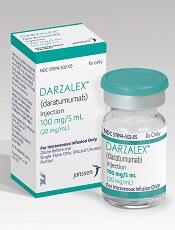
Photo courtesy of Janssen
The US Food and Drug Administration (FDA) has approved new indications for the monoclonal antibody daratumumab (Darzalex®).
The drug is now approved for use in combination with lenalidomide and dexamethasone or bortezomib and dexamethasone to treat patients with multiple myeloma (MM) who have received at least 1 prior therapy.
This approval comes 3 months after a supplemental biologics license application was submitted to the FDA.
The application was granted priority review last month, and the FDA granted daratumumab breakthrough therapy designation in July.
Daratumumab is the first CD38-directed cytolytic antibody approved anywhere in the world.
The drug received accelerated approval from the FDA in November of last year for use as monotherapy in MM patients who have received at least 3 prior lines of therapy, including a proteasome inhibitor and an immunomodulatory agent, or MM patients who are double refractory to a proteasome inhibitor and immunomodulatory agent.
Daratumumab is being developed by Janssen Biotech, Inc. under an exclusive worldwide license from Genmab. For the full prescribing information, visit www.DARZALEX.com.
Phase 3 trials
The FDA’s latest approval of daratumumab was based on data from the phase 3 POLLUX and CASTOR trials.
In the POLLUX trial, researchers compared treatment with lenalidomide and dexamethasone to treatment with daratumumab, lenalidomide, and dexamethasone in patients with relapsed or refractory MM.
Patients who received daratumumab in combination had a significantly higher response rate and longer progression-free survival than patients who received the 2-drug combination.
However, treatment with daratumumab was associated with infusion-related reactions and a higher incidence of neutropenia.
Results from this trial were published in NEJM in October.
In the CASTOR trial, researchers compared treatment with bortezomib and dexamethasone to treatment with daratumumab, bortezomib, and dexamethasone in patients with previously treated MM.
Patients who received the 3-drug combination had a higher response rate, longer progression-free survival, and a higher incidence of grade 3/4 adverse events than those who received the 2-drug combination.
Results from this trial were published in NEJM in August. 
Photo courtesy of Janssen
The US Food and Drug Administration (FDA) has approved new indications for the monoclonal antibody daratumumab (Darzalex®).
The drug is now approved for use in combination with lenalidomide and dexamethasone or bortezomib and dexamethasone to treat patients with multiple myeloma (MM) who have received at least 1 prior therapy.
This approval comes 3 months after a supplemental biologics license application was submitted to the FDA.
The application was granted priority review last month, and the FDA granted daratumumab breakthrough therapy designation in July.
Daratumumab is the first CD38-directed cytolytic antibody approved anywhere in the world.
The drug received accelerated approval from the FDA in November of last year for use as monotherapy in MM patients who have received at least 3 prior lines of therapy, including a proteasome inhibitor and an immunomodulatory agent, or MM patients who are double refractory to a proteasome inhibitor and immunomodulatory agent.
Daratumumab is being developed by Janssen Biotech, Inc. under an exclusive worldwide license from Genmab. For the full prescribing information, visit www.DARZALEX.com.
Phase 3 trials
The FDA’s latest approval of daratumumab was based on data from the phase 3 POLLUX and CASTOR trials.
In the POLLUX trial, researchers compared treatment with lenalidomide and dexamethasone to treatment with daratumumab, lenalidomide, and dexamethasone in patients with relapsed or refractory MM.
Patients who received daratumumab in combination had a significantly higher response rate and longer progression-free survival than patients who received the 2-drug combination.
However, treatment with daratumumab was associated with infusion-related reactions and a higher incidence of neutropenia.
Results from this trial were published in NEJM in October.
In the CASTOR trial, researchers compared treatment with bortezomib and dexamethasone to treatment with daratumumab, bortezomib, and dexamethasone in patients with previously treated MM.
Patients who received the 3-drug combination had a higher response rate, longer progression-free survival, and a higher incidence of grade 3/4 adverse events than those who received the 2-drug combination.
Results from this trial were published in NEJM in August.
Photo courtesy of Janssen
The US Food and Drug Administration (FDA) has approved new indications for the monoclonal antibody daratumumab (Darzalex®).
The drug is now approved for use in combination with lenalidomide and dexamethasone or bortezomib and dexamethasone to treat patients with multiple myeloma (MM) who have received at least 1 prior therapy.
This approval comes 3 months after a supplemental biologics license application was submitted to the FDA.
The application was granted priority review last month, and the FDA granted daratumumab breakthrough therapy designation in July.
Daratumumab is the first CD38-directed cytolytic antibody approved anywhere in the world.
The drug received accelerated approval from the FDA in November of last year for use as monotherapy in MM patients who have received at least 3 prior lines of therapy, including a proteasome inhibitor and an immunomodulatory agent, or MM patients who are double refractory to a proteasome inhibitor and immunomodulatory agent.
Daratumumab is being developed by Janssen Biotech, Inc. under an exclusive worldwide license from Genmab. For the full prescribing information, visit www.DARZALEX.com.
Phase 3 trials
The FDA’s latest approval of daratumumab was based on data from the phase 3 POLLUX and CASTOR trials.
In the POLLUX trial, researchers compared treatment with lenalidomide and dexamethasone to treatment with daratumumab, lenalidomide, and dexamethasone in patients with relapsed or refractory MM.
Patients who received daratumumab in combination had a significantly higher response rate and longer progression-free survival than patients who received the 2-drug combination.
However, treatment with daratumumab was associated with infusion-related reactions and a higher incidence of neutropenia.
Results from this trial were published in NEJM in October.
In the CASTOR trial, researchers compared treatment with bortezomib and dexamethasone to treatment with daratumumab, bortezomib, and dexamethasone in patients with previously treated MM.
Patients who received the 3-drug combination had a higher response rate, longer progression-free survival, and a higher incidence of grade 3/4 adverse events than those who received the 2-drug combination.
Results from this trial were published in NEJM in August.
ALL subtype ‘highly prevalent’ in adults

Photo courtesy of St. Jude
Children’s Research Hospital
Researchers have found evidence to suggest that a high-risk subtype of acute lymphoblastic leukemia (ALL) is “highly prevalent” in adults with ALL.
In a study of nearly 800 adults with ALL, roughly a quarter of the patients had Philadelphia chromosome-like (Ph-like) ALL.
Patients with Ph-like ALL had inferior overall survival (OS) and event-free survival (EFS), but most of them also had kinase-activating alterations that suggest they might respond well to tyrosine kinase inhibitors.
The researchers reported these findings in the Journal of Clinical Oncology.
“This study establishes that a large percentage of adults with ALL have this high-risk subtype,” said study author Charles Mullighan, MD, MBBS, of St. Jude Children’s Research Hospital in Memphis, Tennessee.
“The finding provides a compelling reason to identify those with Ph-like ALL and move forward with clinical trials of these targeted therapies in combination with current chemotherapeutic regimens.”
This study builds on previous research, which suggested that Ph-like ALL becomes more common with age, is associated with poor prognosis, and is characterized by genomic alterations that appear to make patients responsive to treatment with tyrosine kinase inhibitors.
“Our 2014 findings that the prevalence of Ph-like ALL increased with age and was particularly common in young adults generated tremendous interest because adult ALL is difficult to treat,” Dr Mullighan said. “In this study, we determined that the prevalence remains high across the age spectrum of adults with ALL.”
Prevalence and outcomes
The study included 798 adults who were between the ages of 21 and 86 when diagnosed with ALL. A total of 194 patients (24%) had Ph-like ALL.
The incidence of Ph-like ALL was 27.9% among young adults (ages 21 to 39), 20.4% in adults (ages 40 to 59), and 24.0% in older adults (ages 60 to 86).
Patients with Ph-like ALL had significantly inferior 5-year OS compared to patients with non-Ph-like ALL—23.8% and 52.4%, respectively (P<0.001). The same was true for 5-year EFS—22.5% and 49.3%, respectively (P<0.001).
Among Ph-like ALL patients, the 5-year EFS rates were 40.4% for young adults, 29.8% for adults, and 18.9% for older adults. The 5-year OS rates were 45.2%, 35.1%, and 16.2%, respectively.
Genomic analysis
The researchers performed genomic analysis of 180 of the Ph-like ALL cases and found that 88% had kinase-activating alterations.
This included CRLF2 rearrangements in 51% of cases, JAK2 or EPOR rearrangements in 12.4%, ABL class fusions in 9.8%, other JAK-STAT sequence mutations in 7.2%, other kinase alterations in 4.1%, and Ras pathway mutations in 3.6%.
“Our comprehensive sequencing showed that Ph-like ALL in adults is the most genetically diverse subtype of leukemia that has been described,” said study author Kathryn Roberts, PhD, of St. Jude.
“Cumulatively, more than 50 different chromosomal rearrangements involving 15 different kinases and cytokine receptors have been identified. In this study, we identified 11 chromosomal rearrangements that are new to Ph-like ALL.”
These 11 rearrangements are FIP1L1-PDGFRA, SNX29-PDGFRB, SMU1-JAK2, ZNF340-JAK2, THADA-EPOR, SMARCA4-TYK2, ZNF340-TYK2, ZYMM2-FLT3, DNTT-BLNK, TMEM2-PTK2B, and KANK1-CBL1.
The diversity of kinase-activating alterations in Ph-like ALL has important clinical implications, said study author Hagop Kantarjian, MD, of the University of Texas MD Anderson Cancer Center in Houston.
“It is important that we now identify patients with Ph-like ALL at diagnosis to provide optimal treatment with targeted agents,” he said.
The findings also highlight the importance of centralized comprehensive genomic sequencing for patients, said study author Elisabeth Paietta, PhD, of the Montefiore Health System and Albert Einstein College of Medicine in Bronx, New York.
“Lymphoblasts from almost half of the patients with Ph-like ALL harbor a genomic rearrangement of CRLF2, which can be detected by flow cytometry using an antibody to CRLF2,” Dr Paietta said. “This is very important as it allows a quick characterization of this Ph-like ALL subtype prior to any detailed sequencing.”
Photo courtesy of St. Jude
Children’s Research Hospital
Researchers have found evidence to suggest that a high-risk subtype of acute lymphoblastic leukemia (ALL) is “highly prevalent” in adults with ALL.
In a study of nearly 800 adults with ALL, roughly a quarter of the patients had Philadelphia chromosome-like (Ph-like) ALL.
Patients with Ph-like ALL had inferior overall survival (OS) and event-free survival (EFS), but most of them also had kinase-activating alterations that suggest they might respond well to tyrosine kinase inhibitors.
The researchers reported these findings in the Journal of Clinical Oncology.
“This study establishes that a large percentage of adults with ALL have this high-risk subtype,” said study author Charles Mullighan, MD, MBBS, of St. Jude Children’s Research Hospital in Memphis, Tennessee.
“The finding provides a compelling reason to identify those with Ph-like ALL and move forward with clinical trials of these targeted therapies in combination with current chemotherapeutic regimens.”
This study builds on previous research, which suggested that Ph-like ALL becomes more common with age, is associated with poor prognosis, and is characterized by genomic alterations that appear to make patients responsive to treatment with tyrosine kinase inhibitors.
“Our 2014 findings that the prevalence of Ph-like ALL increased with age and was particularly common in young adults generated tremendous interest because adult ALL is difficult to treat,” Dr Mullighan said. “In this study, we determined that the prevalence remains high across the age spectrum of adults with ALL.”
Prevalence and outcomes
The study included 798 adults who were between the ages of 21 and 86 when diagnosed with ALL. A total of 194 patients (24%) had Ph-like ALL.
The incidence of Ph-like ALL was 27.9% among young adults (ages 21 to 39), 20.4% in adults (ages 40 to 59), and 24.0% in older adults (ages 60 to 86).
Patients with Ph-like ALL had significantly inferior 5-year OS compared to patients with non-Ph-like ALL—23.8% and 52.4%, respectively (P<0.001). The same was true for 5-year EFS—22.5% and 49.3%, respectively (P<0.001).
Among Ph-like ALL patients, the 5-year EFS rates were 40.4% for young adults, 29.8% for adults, and 18.9% for older adults. The 5-year OS rates were 45.2%, 35.1%, and 16.2%, respectively.
Genomic analysis
The researchers performed genomic analysis of 180 of the Ph-like ALL cases and found that 88% had kinase-activating alterations.
This included CRLF2 rearrangements in 51% of cases, JAK2 or EPOR rearrangements in 12.4%, ABL class fusions in 9.8%, other JAK-STAT sequence mutations in 7.2%, other kinase alterations in 4.1%, and Ras pathway mutations in 3.6%.
“Our comprehensive sequencing showed that Ph-like ALL in adults is the most genetically diverse subtype of leukemia that has been described,” said study author Kathryn Roberts, PhD, of St. Jude.
“Cumulatively, more than 50 different chromosomal rearrangements involving 15 different kinases and cytokine receptors have been identified. In this study, we identified 11 chromosomal rearrangements that are new to Ph-like ALL.”
These 11 rearrangements are FIP1L1-PDGFRA, SNX29-PDGFRB, SMU1-JAK2, ZNF340-JAK2, THADA-EPOR, SMARCA4-TYK2, ZNF340-TYK2, ZYMM2-FLT3, DNTT-BLNK, TMEM2-PTK2B, and KANK1-CBL1.
The diversity of kinase-activating alterations in Ph-like ALL has important clinical implications, said study author Hagop Kantarjian, MD, of the University of Texas MD Anderson Cancer Center in Houston.
“It is important that we now identify patients with Ph-like ALL at diagnosis to provide optimal treatment with targeted agents,” he said.
The findings also highlight the importance of centralized comprehensive genomic sequencing for patients, said study author Elisabeth Paietta, PhD, of the Montefiore Health System and Albert Einstein College of Medicine in Bronx, New York.
“Lymphoblasts from almost half of the patients with Ph-like ALL harbor a genomic rearrangement of CRLF2, which can be detected by flow cytometry using an antibody to CRLF2,” Dr Paietta said. “This is very important as it allows a quick characterization of this Ph-like ALL subtype prior to any detailed sequencing.”
Photo courtesy of St. Jude
Children’s Research Hospital
Researchers have found evidence to suggest that a high-risk subtype of acute lymphoblastic leukemia (ALL) is “highly prevalent” in adults with ALL.
In a study of nearly 800 adults with ALL, roughly a quarter of the patients had Philadelphia chromosome-like (Ph-like) ALL.
Patients with Ph-like ALL had inferior overall survival (OS) and event-free survival (EFS), but most of them also had kinase-activating alterations that suggest they might respond well to tyrosine kinase inhibitors.
The researchers reported these findings in the Journal of Clinical Oncology.
“This study establishes that a large percentage of adults with ALL have this high-risk subtype,” said study author Charles Mullighan, MD, MBBS, of St. Jude Children’s Research Hospital in Memphis, Tennessee.
“The finding provides a compelling reason to identify those with Ph-like ALL and move forward with clinical trials of these targeted therapies in combination with current chemotherapeutic regimens.”
This study builds on previous research, which suggested that Ph-like ALL becomes more common with age, is associated with poor prognosis, and is characterized by genomic alterations that appear to make patients responsive to treatment with tyrosine kinase inhibitors.
“Our 2014 findings that the prevalence of Ph-like ALL increased with age and was particularly common in young adults generated tremendous interest because adult ALL is difficult to treat,” Dr Mullighan said. “In this study, we determined that the prevalence remains high across the age spectrum of adults with ALL.”
Prevalence and outcomes
The study included 798 adults who were between the ages of 21 and 86 when diagnosed with ALL. A total of 194 patients (24%) had Ph-like ALL.
The incidence of Ph-like ALL was 27.9% among young adults (ages 21 to 39), 20.4% in adults (ages 40 to 59), and 24.0% in older adults (ages 60 to 86).
Patients with Ph-like ALL had significantly inferior 5-year OS compared to patients with non-Ph-like ALL—23.8% and 52.4%, respectively (P<0.001). The same was true for 5-year EFS—22.5% and 49.3%, respectively (P<0.001).
Among Ph-like ALL patients, the 5-year EFS rates were 40.4% for young adults, 29.8% for adults, and 18.9% for older adults. The 5-year OS rates were 45.2%, 35.1%, and 16.2%, respectively.
Genomic analysis
The researchers performed genomic analysis of 180 of the Ph-like ALL cases and found that 88% had kinase-activating alterations.
This included CRLF2 rearrangements in 51% of cases, JAK2 or EPOR rearrangements in 12.4%, ABL class fusions in 9.8%, other JAK-STAT sequence mutations in 7.2%, other kinase alterations in 4.1%, and Ras pathway mutations in 3.6%.
“Our comprehensive sequencing showed that Ph-like ALL in adults is the most genetically diverse subtype of leukemia that has been described,” said study author Kathryn Roberts, PhD, of St. Jude.
“Cumulatively, more than 50 different chromosomal rearrangements involving 15 different kinases and cytokine receptors have been identified. In this study, we identified 11 chromosomal rearrangements that are new to Ph-like ALL.”
These 11 rearrangements are FIP1L1-PDGFRA, SNX29-PDGFRB, SMU1-JAK2, ZNF340-JAK2, THADA-EPOR, SMARCA4-TYK2, ZNF340-TYK2, ZYMM2-FLT3, DNTT-BLNK, TMEM2-PTK2B, and KANK1-CBL1.
The diversity of kinase-activating alterations in Ph-like ALL has important clinical implications, said study author Hagop Kantarjian, MD, of the University of Texas MD Anderson Cancer Center in Houston.
“It is important that we now identify patients with Ph-like ALL at diagnosis to provide optimal treatment with targeted agents,” he said.
The findings also highlight the importance of centralized comprehensive genomic sequencing for patients, said study author Elisabeth Paietta, PhD, of the Montefiore Health System and Albert Einstein College of Medicine in Bronx, New York.
“Lymphoblasts from almost half of the patients with Ph-like ALL harbor a genomic rearrangement of CRLF2, which can be detected by flow cytometry using an antibody to CRLF2,” Dr Paietta said. “This is very important as it allows a quick characterization of this Ph-like ALL subtype prior to any detailed sequencing.”
Drug approved to treat hemophilia A in Kuwait
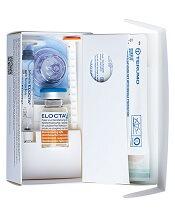
(Elocta) packaging
Photo courtesy of Sobi
The Ministry of Health in Kuwait has approved efmoroctocog alfa (Elocta®), a recombinant human factor VIII Fc-fusion protein, for the treatment of hemophilia A.
It is indicated for both on-demand and prophylactic treatment in hemophilia A patients of all ages.
Efmoroctocog alfa is the first recombinant factor VIII Fc fusion protein therapy approved for the treatment of hemophilia A in the Middle East region.
Efmoroctocog alfa is also approved in the European Union, Switzerland, Iceland, Liechtenstein, Norway, the US, Canada, Australia, New Zealand, Brazil, Taiwan, and Japan.
Efmoroctocog alfa was developed by fusing B-domain deleted factor VIII to the Fc portion of immunoglobulin G subclass 1. It is believed that this enables efmoroctocog alfa to utilize a naturally occurring pathway to prolong the time the therapy remains in the body.
Sobi and Biogen are collaborators in the development and commercialization of efmoroctocog alfa for hemophilia A.
The approval of efmoroctocog alfa in Kuwait was based on data from a pair of phase 3 studies: A-LONG and Kids A-LONG.
A-LONG
The A-LONG study included 165 previously treated males 12 years of age and older with severe hemophilia A. Researchers evaluated individualized and weekly prophylaxis to reduce or prevent bleeding episodes and on-demand dosing to treat bleeding episodes.
Prophylaxis with efmoroctocog alfa resulted in low annualized bleeding rates, and a majority of bleeding episodes were controlled with a single injection of efmoroctocog alfa.
None of the patients developed neutralizing antibodies, efmoroctocog alfa was considered well-tolerated, and the product had a prolonged half-life when compared with recombinant factor VIII.
Kids A-LONG
The Kids A-LONG study included 71 boys (younger than 12) with severe hemophilia A who had at least 50 prior exposure days to factor VIII therapies.
The children saw their median annualized bleeding rate decrease with efmoroctocog alfa, and close to half of the children did not have any bleeding episodes while they were receiving efmoroctocog alfa.
None of the patients developed inhibitors, and researchers said adverse events were typical of a pediatric hemophilia population.
(Elocta) packaging
Photo courtesy of Sobi
The Ministry of Health in Kuwait has approved efmoroctocog alfa (Elocta®), a recombinant human factor VIII Fc-fusion protein, for the treatment of hemophilia A.
It is indicated for both on-demand and prophylactic treatment in hemophilia A patients of all ages.
Efmoroctocog alfa is the first recombinant factor VIII Fc fusion protein therapy approved for the treatment of hemophilia A in the Middle East region.
Efmoroctocog alfa is also approved in the European Union, Switzerland, Iceland, Liechtenstein, Norway, the US, Canada, Australia, New Zealand, Brazil, Taiwan, and Japan.
Efmoroctocog alfa was developed by fusing B-domain deleted factor VIII to the Fc portion of immunoglobulin G subclass 1. It is believed that this enables efmoroctocog alfa to utilize a naturally occurring pathway to prolong the time the therapy remains in the body.
Sobi and Biogen are collaborators in the development and commercialization of efmoroctocog alfa for hemophilia A.
The approval of efmoroctocog alfa in Kuwait was based on data from a pair of phase 3 studies: A-LONG and Kids A-LONG.
A-LONG
The A-LONG study included 165 previously treated males 12 years of age and older with severe hemophilia A. Researchers evaluated individualized and weekly prophylaxis to reduce or prevent bleeding episodes and on-demand dosing to treat bleeding episodes.
Prophylaxis with efmoroctocog alfa resulted in low annualized bleeding rates, and a majority of bleeding episodes were controlled with a single injection of efmoroctocog alfa.
None of the patients developed neutralizing antibodies, efmoroctocog alfa was considered well-tolerated, and the product had a prolonged half-life when compared with recombinant factor VIII.
Kids A-LONG
The Kids A-LONG study included 71 boys (younger than 12) with severe hemophilia A who had at least 50 prior exposure days to factor VIII therapies.
The children saw their median annualized bleeding rate decrease with efmoroctocog alfa, and close to half of the children did not have any bleeding episodes while they were receiving efmoroctocog alfa.
None of the patients developed inhibitors, and researchers said adverse events were typical of a pediatric hemophilia population.
(Elocta) packaging
Photo courtesy of Sobi
The Ministry of Health in Kuwait has approved efmoroctocog alfa (Elocta®), a recombinant human factor VIII Fc-fusion protein, for the treatment of hemophilia A.
It is indicated for both on-demand and prophylactic treatment in hemophilia A patients of all ages.
Efmoroctocog alfa is the first recombinant factor VIII Fc fusion protein therapy approved for the treatment of hemophilia A in the Middle East region.
Efmoroctocog alfa is also approved in the European Union, Switzerland, Iceland, Liechtenstein, Norway, the US, Canada, Australia, New Zealand, Brazil, Taiwan, and Japan.
Efmoroctocog alfa was developed by fusing B-domain deleted factor VIII to the Fc portion of immunoglobulin G subclass 1. It is believed that this enables efmoroctocog alfa to utilize a naturally occurring pathway to prolong the time the therapy remains in the body.
Sobi and Biogen are collaborators in the development and commercialization of efmoroctocog alfa for hemophilia A.
The approval of efmoroctocog alfa in Kuwait was based on data from a pair of phase 3 studies: A-LONG and Kids A-LONG.
A-LONG
The A-LONG study included 165 previously treated males 12 years of age and older with severe hemophilia A. Researchers evaluated individualized and weekly prophylaxis to reduce or prevent bleeding episodes and on-demand dosing to treat bleeding episodes.
Prophylaxis with efmoroctocog alfa resulted in low annualized bleeding rates, and a majority of bleeding episodes were controlled with a single injection of efmoroctocog alfa.
None of the patients developed neutralizing antibodies, efmoroctocog alfa was considered well-tolerated, and the product had a prolonged half-life when compared with recombinant factor VIII.
Kids A-LONG
The Kids A-LONG study included 71 boys (younger than 12) with severe hemophilia A who had at least 50 prior exposure days to factor VIII therapies.
The children saw their median annualized bleeding rate decrease with efmoroctocog alfa, and close to half of the children did not have any bleeding episodes while they were receiving efmoroctocog alfa.
None of the patients developed inhibitors, and researchers said adverse events were typical of a pediatric hemophilia population.
Novel CLL drugs could greatly increase costs

New research suggests the increasing use of oral targeted therapies for chronic lymphocytic leukemia (CLL) could raise US treatment costs for the disease by almost 600%.
Investigators modeled the evolving management of CLL from 2011 to 2025 and found that increasing use of the oral targeted therapies ibrutinib and idelalisib could greatly increase costs for both patients and payers.
The team detailed these findings in the Journal of Clinical Oncology.
“The rising cost of cancer care is a serious concern,” said study author Jagpreet Chhatwal, PhD, of Massachusetts General Hospital in Boston.
“The average cost of annual cancer treatment, which was below $10,000 per patient before 2000, has now increased to more than $100,000. Such increasing trends can limit access to new therapies, potentially undermining their clinical effectiveness. These new drugs are highly effective, but their high costs motivated us to project their changing economic burden and affordability.”
Dr Chhatwal and his colleagues noted that ibrutinib and idelalisib each cost around $130,000 per year, and treatment with these drugs may be continued indefinitely.
So the team set out to determine the potential financial impact of the drugs on payers’ budgets, as well as on Medicare-enrolled patients, who represent the majority of CLL patients in the US.
The investigators developed a model to simulate the evolving management of CLL from 2011 to 2025.
In one scenario, chemoimmunotherapy was the standard of care before 2014, while oral targeted therapies were used for patients with del(17p) and relapsed CLL from 2014 onward and for first-line treatment of CLL from 2016 onward.
The team also modeled a scenario in which chemoimmunotherapy was the standard of care throughout the entire time period and compared the costs between these scenarios.
The model projects that:
- Per-patient lifetime costs for CLL treatment will increase from $147,000 to $604,000 from 2016 onward
- The total out-of-pocket costs for Medicare patients will increase from $9200 to $57,000 for patients initiating treatment from 2016 onward
- The total annual cost of CLL management in the US will rise from $0.74 billion in 2011 to $5.13 billion in 2025, an increase of 590%.
“Such substantial increases in the cost are mainly driven by high drug prices, prolonged treatment duration, and the increase in the number of patients living with CLL,” said study author Qiushi Chen, PhD, of Massachusetts General Hospital.
The investigators also noted that the standard measure used to determine the cost-effectiveness of a medical intervention is whether it costs less than $100,000 for each additional year of life gained. The projected cost-effectiveness ratio of oral targeted therapy in CLL is $189,000 for each year gained.
“At the current average wholesale prices, oral targeted therapies for CLL are not cost-effective, and prices would need to drop by 50% to 70% to become cost-effective,” Dr Chhatwal said.
“We are not recommending that clinicians choose less effective CLL management strategies that do not include oral targeted therapies,” said study author Nitin Jain, MD, of the University of Texas MD Anderson Cancer Center in Houston.
“Instead, we propose that the prices of these drugs need to be reduced to make the treatment cost-effective and more affordable, something we hope may happen with all cancer drugs. We also believe more research is needed to explore whether we can discontinue targeted treatment of patients who have responded well without risking worsening of their health.”
New research suggests the increasing use of oral targeted therapies for chronic lymphocytic leukemia (CLL) could raise US treatment costs for the disease by almost 600%.
Investigators modeled the evolving management of CLL from 2011 to 2025 and found that increasing use of the oral targeted therapies ibrutinib and idelalisib could greatly increase costs for both patients and payers.
The team detailed these findings in the Journal of Clinical Oncology.
“The rising cost of cancer care is a serious concern,” said study author Jagpreet Chhatwal, PhD, of Massachusetts General Hospital in Boston.
“The average cost of annual cancer treatment, which was below $10,000 per patient before 2000, has now increased to more than $100,000. Such increasing trends can limit access to new therapies, potentially undermining their clinical effectiveness. These new drugs are highly effective, but their high costs motivated us to project their changing economic burden and affordability.”
Dr Chhatwal and his colleagues noted that ibrutinib and idelalisib each cost around $130,000 per year, and treatment with these drugs may be continued indefinitely.
So the team set out to determine the potential financial impact of the drugs on payers’ budgets, as well as on Medicare-enrolled patients, who represent the majority of CLL patients in the US.
The investigators developed a model to simulate the evolving management of CLL from 2011 to 2025.
In one scenario, chemoimmunotherapy was the standard of care before 2014, while oral targeted therapies were used for patients with del(17p) and relapsed CLL from 2014 onward and for first-line treatment of CLL from 2016 onward.
The team also modeled a scenario in which chemoimmunotherapy was the standard of care throughout the entire time period and compared the costs between these scenarios.
The model projects that:
- Per-patient lifetime costs for CLL treatment will increase from $147,000 to $604,000 from 2016 onward
- The total out-of-pocket costs for Medicare patients will increase from $9200 to $57,000 for patients initiating treatment from 2016 onward
- The total annual cost of CLL management in the US will rise from $0.74 billion in 2011 to $5.13 billion in 2025, an increase of 590%.
“Such substantial increases in the cost are mainly driven by high drug prices, prolonged treatment duration, and the increase in the number of patients living with CLL,” said study author Qiushi Chen, PhD, of Massachusetts General Hospital.
The investigators also noted that the standard measure used to determine the cost-effectiveness of a medical intervention is whether it costs less than $100,000 for each additional year of life gained. The projected cost-effectiveness ratio of oral targeted therapy in CLL is $189,000 for each year gained.
“At the current average wholesale prices, oral targeted therapies for CLL are not cost-effective, and prices would need to drop by 50% to 70% to become cost-effective,” Dr Chhatwal said.
“We are not recommending that clinicians choose less effective CLL management strategies that do not include oral targeted therapies,” said study author Nitin Jain, MD, of the University of Texas MD Anderson Cancer Center in Houston.
“Instead, we propose that the prices of these drugs need to be reduced to make the treatment cost-effective and more affordable, something we hope may happen with all cancer drugs. We also believe more research is needed to explore whether we can discontinue targeted treatment of patients who have responded well without risking worsening of their health.”
New research suggests the increasing use of oral targeted therapies for chronic lymphocytic leukemia (CLL) could raise US treatment costs for the disease by almost 600%.
Investigators modeled the evolving management of CLL from 2011 to 2025 and found that increasing use of the oral targeted therapies ibrutinib and idelalisib could greatly increase costs for both patients and payers.
The team detailed these findings in the Journal of Clinical Oncology.
“The rising cost of cancer care is a serious concern,” said study author Jagpreet Chhatwal, PhD, of Massachusetts General Hospital in Boston.
“The average cost of annual cancer treatment, which was below $10,000 per patient before 2000, has now increased to more than $100,000. Such increasing trends can limit access to new therapies, potentially undermining their clinical effectiveness. These new drugs are highly effective, but their high costs motivated us to project their changing economic burden and affordability.”
Dr Chhatwal and his colleagues noted that ibrutinib and idelalisib each cost around $130,000 per year, and treatment with these drugs may be continued indefinitely.
So the team set out to determine the potential financial impact of the drugs on payers’ budgets, as well as on Medicare-enrolled patients, who represent the majority of CLL patients in the US.
The investigators developed a model to simulate the evolving management of CLL from 2011 to 2025.
In one scenario, chemoimmunotherapy was the standard of care before 2014, while oral targeted therapies were used for patients with del(17p) and relapsed CLL from 2014 onward and for first-line treatment of CLL from 2016 onward.
The team also modeled a scenario in which chemoimmunotherapy was the standard of care throughout the entire time period and compared the costs between these scenarios.
The model projects that:
- Per-patient lifetime costs for CLL treatment will increase from $147,000 to $604,000 from 2016 onward
- The total out-of-pocket costs for Medicare patients will increase from $9200 to $57,000 for patients initiating treatment from 2016 onward
- The total annual cost of CLL management in the US will rise from $0.74 billion in 2011 to $5.13 billion in 2025, an increase of 590%.
“Such substantial increases in the cost are mainly driven by high drug prices, prolonged treatment duration, and the increase in the number of patients living with CLL,” said study author Qiushi Chen, PhD, of Massachusetts General Hospital.
The investigators also noted that the standard measure used to determine the cost-effectiveness of a medical intervention is whether it costs less than $100,000 for each additional year of life gained. The projected cost-effectiveness ratio of oral targeted therapy in CLL is $189,000 for each year gained.
“At the current average wholesale prices, oral targeted therapies for CLL are not cost-effective, and prices would need to drop by 50% to 70% to become cost-effective,” Dr Chhatwal said.
“We are not recommending that clinicians choose less effective CLL management strategies that do not include oral targeted therapies,” said study author Nitin Jain, MD, of the University of Texas MD Anderson Cancer Center in Houston.
“Instead, we propose that the prices of these drugs need to be reduced to make the treatment cost-effective and more affordable, something we hope may happen with all cancer drugs. We also believe more research is needed to explore whether we can discontinue targeted treatment of patients who have responded well without risking worsening of their health.”
Which Health Care Providers Are Most Likely to Get Vaccinated?
Making it easier for employees to get free flu vaccinations on site—and requiring vaccinations—has helped bump up coverage, according to an online survey conducted for the CDC.
Of 2,316 health care personnel who responded, 79% reported having gotten a flu shot for the 2015-2016 season, up 15.5 percentage points from the 2010-2011 estimate but similar to the 77.3% coverage for 2014-2015.
Physicians are most likely to get vaccinated (95.6%), whereas assistants and aides have the lowest coverage, although it was well above half (64.1%). Nurse practitioners and physician assistants also had a high rate of vaccination (90.3%), followed by nurses (90.1%) and pharmacists (86.5%), and Allied health professionals/technicians/technologists (84.7%).
Related: The Ads Say ‘Get Your Flu Shot Today,’ But It May Be Wiser To Wait
Coverage among staff in long-term care settings was up—from 63.9% in 2014-2015 to 69.2% for 2015-2016—but still consistently lower than the coverage in hospitals and ambulatory care. Coverage in those settings was similar in both seasons. Employer requirements “likely contributed” to the gradual increase in vaccination among health care staff in settings with lowest coverage, the researchers say.
In facilities where vaccination was required, coverage was nearly total (96.5%). But only 61% of health care personnel work in hospitals with vaccination requirements—and that’s at least 27 percentage points higher than the proportion in any other work setting, the researchers say. Aides and assistants reported the lowest prevalence of vaccination requirements (22.5%).
Related: New Vaccination Data & Trends
Next to requirements, cost influenced vaccination response. The majority of vaccinated health care staff got the shots at their workplace. Coverage was highest when free vaccination was available on-site for a day or more.
To boost vaccination among long-term care staff, the CDC and the National Vaccine Program Office offer a web-based tool kit that includes access to resources, strategies, and educational material (www.cdc/gov/flu/toolkit/long-term-care/index.htm). Employers and health care administrators can also check out the Guide to Community Preventive Services, which presents evidence to support on-site vaccination at no or low cost.
Related: Health Care Providers Impact on HPV Vaccination Rates
Source:
Black CL, Yue X, Ball SW, et al. MMWR. 2016;65(38):1026-1031.
Making it easier for employees to get free flu vaccinations on site—and requiring vaccinations—has helped bump up coverage, according to an online survey conducted for the CDC.
Of 2,316 health care personnel who responded, 79% reported having gotten a flu shot for the 2015-2016 season, up 15.5 percentage points from the 2010-2011 estimate but similar to the 77.3% coverage for 2014-2015.
Physicians are most likely to get vaccinated (95.6%), whereas assistants and aides have the lowest coverage, although it was well above half (64.1%). Nurse practitioners and physician assistants also had a high rate of vaccination (90.3%), followed by nurses (90.1%) and pharmacists (86.5%), and Allied health professionals/technicians/technologists (84.7%).
Related: The Ads Say ‘Get Your Flu Shot Today,’ But It May Be Wiser To Wait
Coverage among staff in long-term care settings was up—from 63.9% in 2014-2015 to 69.2% for 2015-2016—but still consistently lower than the coverage in hospitals and ambulatory care. Coverage in those settings was similar in both seasons. Employer requirements “likely contributed” to the gradual increase in vaccination among health care staff in settings with lowest coverage, the researchers say.
In facilities where vaccination was required, coverage was nearly total (96.5%). But only 61% of health care personnel work in hospitals with vaccination requirements—and that’s at least 27 percentage points higher than the proportion in any other work setting, the researchers say. Aides and assistants reported the lowest prevalence of vaccination requirements (22.5%).
Related: New Vaccination Data & Trends
Next to requirements, cost influenced vaccination response. The majority of vaccinated health care staff got the shots at their workplace. Coverage was highest when free vaccination was available on-site for a day or more.
To boost vaccination among long-term care staff, the CDC and the National Vaccine Program Office offer a web-based tool kit that includes access to resources, strategies, and educational material (www.cdc/gov/flu/toolkit/long-term-care/index.htm). Employers and health care administrators can also check out the Guide to Community Preventive Services, which presents evidence to support on-site vaccination at no or low cost.
Related: Health Care Providers Impact on HPV Vaccination Rates
Source:
Black CL, Yue X, Ball SW, et al. MMWR. 2016;65(38):1026-1031.
Making it easier for employees to get free flu vaccinations on site—and requiring vaccinations—has helped bump up coverage, according to an online survey conducted for the CDC.
Of 2,316 health care personnel who responded, 79% reported having gotten a flu shot for the 2015-2016 season, up 15.5 percentage points from the 2010-2011 estimate but similar to the 77.3% coverage for 2014-2015.
Physicians are most likely to get vaccinated (95.6%), whereas assistants and aides have the lowest coverage, although it was well above half (64.1%). Nurse practitioners and physician assistants also had a high rate of vaccination (90.3%), followed by nurses (90.1%) and pharmacists (86.5%), and Allied health professionals/technicians/technologists (84.7%).
Related: The Ads Say ‘Get Your Flu Shot Today,’ But It May Be Wiser To Wait
Coverage among staff in long-term care settings was up—from 63.9% in 2014-2015 to 69.2% for 2015-2016—but still consistently lower than the coverage in hospitals and ambulatory care. Coverage in those settings was similar in both seasons. Employer requirements “likely contributed” to the gradual increase in vaccination among health care staff in settings with lowest coverage, the researchers say.
In facilities where vaccination was required, coverage was nearly total (96.5%). But only 61% of health care personnel work in hospitals with vaccination requirements—and that’s at least 27 percentage points higher than the proportion in any other work setting, the researchers say. Aides and assistants reported the lowest prevalence of vaccination requirements (22.5%).
Related: New Vaccination Data & Trends
Next to requirements, cost influenced vaccination response. The majority of vaccinated health care staff got the shots at their workplace. Coverage was highest when free vaccination was available on-site for a day or more.
To boost vaccination among long-term care staff, the CDC and the National Vaccine Program Office offer a web-based tool kit that includes access to resources, strategies, and educational material (www.cdc/gov/flu/toolkit/long-term-care/index.htm). Employers and health care administrators can also check out the Guide to Community Preventive Services, which presents evidence to support on-site vaccination at no or low cost.
Related: Health Care Providers Impact on HPV Vaccination Rates
Source:
Black CL, Yue X, Ball SW, et al. MMWR. 2016;65(38):1026-1031.
IHS Funds Programs to Protect Native Youth from Substance Abuse
The IHS announced 42 new awards to promote best practice strategies for preventing suicide and substance abuse, incorporating culturally appropriate approaches that are effective for tribal communities.
The awards, totaling more than $7 million for 1 year, are specifically for Methamphetamine and Suicide Prevention Initiative (MSPI) funding. The award recipients focus on boosting positive youth development, fostering resiliency, and promoting family engagement among Native youth, the IHS says. “We know that protective factors provided through caring adults, traditional practices, and Native language and culture help offset negative outcomes and foster the long-term development of resilience,” said IHS Principal Deputy Director Mary Smith, in announcing the awards.
Current funded projects include the Ohkay Owingeh MSPI Project in New Mexico. The evidence- and practice-based prevention program, conducted by the local Boys and Girls Club, “strongly focuses” on the issues surrounding methamphetamine and other drugs and self-harm in Native communities.
Another funded program, Fresno American Indian Health Project, targets Native youth at risk for substance abuse and suicide in the San Francisco Bay Area. The Stronghold Project II after-school programs help to strengthen cultural systems and family capacity, addressing family violence and suicide due to substance abuse.
From 2009 through 2015, MSPI supported > 12,200 people entering treatment for methamphetamine abuse, plus > 16,560 substance use and mental health disorder encounters via telehealth. The funding also supported training nearly 17,000 professionals and community members in suicide crisis response, with nearly 700,000 encounters with youth through prevention activities. The recently announced awards build on the more than $13 million awarded in 2015.
The IHS announced 42 new awards to promote best practice strategies for preventing suicide and substance abuse, incorporating culturally appropriate approaches that are effective for tribal communities.
The awards, totaling more than $7 million for 1 year, are specifically for Methamphetamine and Suicide Prevention Initiative (MSPI) funding. The award recipients focus on boosting positive youth development, fostering resiliency, and promoting family engagement among Native youth, the IHS says. “We know that protective factors provided through caring adults, traditional practices, and Native language and culture help offset negative outcomes and foster the long-term development of resilience,” said IHS Principal Deputy Director Mary Smith, in announcing the awards.
Current funded projects include the Ohkay Owingeh MSPI Project in New Mexico. The evidence- and practice-based prevention program, conducted by the local Boys and Girls Club, “strongly focuses” on the issues surrounding methamphetamine and other drugs and self-harm in Native communities.
Another funded program, Fresno American Indian Health Project, targets Native youth at risk for substance abuse and suicide in the San Francisco Bay Area. The Stronghold Project II after-school programs help to strengthen cultural systems and family capacity, addressing family violence and suicide due to substance abuse.
From 2009 through 2015, MSPI supported > 12,200 people entering treatment for methamphetamine abuse, plus > 16,560 substance use and mental health disorder encounters via telehealth. The funding also supported training nearly 17,000 professionals and community members in suicide crisis response, with nearly 700,000 encounters with youth through prevention activities. The recently announced awards build on the more than $13 million awarded in 2015.
The IHS announced 42 new awards to promote best practice strategies for preventing suicide and substance abuse, incorporating culturally appropriate approaches that are effective for tribal communities.
The awards, totaling more than $7 million for 1 year, are specifically for Methamphetamine and Suicide Prevention Initiative (MSPI) funding. The award recipients focus on boosting positive youth development, fostering resiliency, and promoting family engagement among Native youth, the IHS says. “We know that protective factors provided through caring adults, traditional practices, and Native language and culture help offset negative outcomes and foster the long-term development of resilience,” said IHS Principal Deputy Director Mary Smith, in announcing the awards.
Current funded projects include the Ohkay Owingeh MSPI Project in New Mexico. The evidence- and practice-based prevention program, conducted by the local Boys and Girls Club, “strongly focuses” on the issues surrounding methamphetamine and other drugs and self-harm in Native communities.
Another funded program, Fresno American Indian Health Project, targets Native youth at risk for substance abuse and suicide in the San Francisco Bay Area. The Stronghold Project II after-school programs help to strengthen cultural systems and family capacity, addressing family violence and suicide due to substance abuse.
From 2009 through 2015, MSPI supported > 12,200 people entering treatment for methamphetamine abuse, plus > 16,560 substance use and mental health disorder encounters via telehealth. The funding also supported training nearly 17,000 professionals and community members in suicide crisis response, with nearly 700,000 encounters with youth through prevention activities. The recently announced awards build on the more than $13 million awarded in 2015.
Most children’s hypertension goes undiagnosed and untreated
Twenty-three percent of children with hypertension and 10% of those with prehypertension were diagnosed by clinicians, based on data from a retrospective study of more than 398,000 children in the United States.
In addition, only 6% of children who met criteria for hypertension received treatment within a year of their diagnosis.
The researchers reviewed data from 398,079 children and adolescents aged 3-18 years who were part of the Comparative Effectiveness Research Through Collaborative Electronic Reporting Consortium. The patients had at least three visits with blood pressure and height measured.
The final study population included 12,138 children with hypertension at 44 sites and 38,874 children with prehypertension at 77 sites. Of the children with hypertension, 23% had hypertension or abnormal blood pressure diagnosis in their electronic health record (EHR). In addition, 32% of 4,996 children with stage 2 hypertension had an EHR diagnosis. A diagnosis was more likely in children who were male, taller, older, heavier, had at least one blood pressure measurement in the stage 2 range, or who had additional measurements beyond the three needed for a diagnosis.
Of the children with prehypertension, 10% had a diagnosis of hypertension or abnormal blood pressure in their EHRs. Diagnosis was more common among males and those who were older, heavier, taller, had more than one blood pressure measurement in the stage 2 range or had additional readings beyond those needed for diagnosis, the investigators said.
Of 2,813 pediatric patients who met criteria for hypertension and continued to have high blood pressure readings, only 6% were prescribed medication within 12 months of diagnosis. The average age for medication initiation was almost 14 years, and the most commonly prescribed medications were angiotensin-converting-enzyme inhibitors or angiotensin-II-receptor blockers for 35% of children, diuretics for 22%, calcium channel blockers for 17%, and beta blockers for 10%, Dr. Kaelber and his associates reported.
The study results were limited by several factors, among them the reliance on ICD-9 codes for identification of abnormal blood pressure and inclusion of all reasons (preventive care and nonpreventive care) for visits to primary care pediatric providers. The findings, however, suggest that “intervention is needed to help pediatric primary care clinicians recognize and treat hypertension and prehypertension,” they wrote.
Funding was provided by U.S. Department of Health & Human Services grants and by the Eunice Kennedy Shriver National Institute of Child Health and Human Development. The researchers had no relevant financial disclosures.
“Childhood hypertension is associated with increased carotid intima media thickness, increased left ventricular mass, and increased arterial stiffness, all precursors to adverse cardiovascular outcomes in adulthood,” wrote Kevin D. Hill, MD, and Jennifer S. Li., MD, in an accompanying editorial (Pediatrics 2016 Nov 22;138:e20162857. doi: 10.1542/peds.2016-2857).
Although some may question the study findings, “there are compelling reasons to believe the results,” in part because the study’s definition of hypertension and reported 3.3% hypertension rate are consistent with current guidelines and previous studies, they noted.
“Hypertension is indeed more challenging to diagnose in children because of age, sex, and height-related variability in blood pressure norms,” they said. Evaluation of blood pressure percentiles, however, should be routine in pediatric practice.
More research is needed, including head-to-head comparisons of drugs and assessments of lifestyle interventions, the editorialists said. However, “it is clear that childhood hypertension is a major public health concern. The clinical manifestations may be silent during childhood, but this should not deter early diagnosis and treatment.”
Dr. Hill and Dr. Li are with Duke University in Durham, N.C. They had no financial conflicts to disclose. Their work was supported in part by the National Institutes of Health.
“Childhood hypertension is associated with increased carotid intima media thickness, increased left ventricular mass, and increased arterial stiffness, all precursors to adverse cardiovascular outcomes in adulthood,” wrote Kevin D. Hill, MD, and Jennifer S. Li., MD, in an accompanying editorial (Pediatrics 2016 Nov 22;138:e20162857. doi: 10.1542/peds.2016-2857).
Although some may question the study findings, “there are compelling reasons to believe the results,” in part because the study’s definition of hypertension and reported 3.3% hypertension rate are consistent with current guidelines and previous studies, they noted.
“Hypertension is indeed more challenging to diagnose in children because of age, sex, and height-related variability in blood pressure norms,” they said. Evaluation of blood pressure percentiles, however, should be routine in pediatric practice.
More research is needed, including head-to-head comparisons of drugs and assessments of lifestyle interventions, the editorialists said. However, “it is clear that childhood hypertension is a major public health concern. The clinical manifestations may be silent during childhood, but this should not deter early diagnosis and treatment.”
Dr. Hill and Dr. Li are with Duke University in Durham, N.C. They had no financial conflicts to disclose. Their work was supported in part by the National Institutes of Health.
“Childhood hypertension is associated with increased carotid intima media thickness, increased left ventricular mass, and increased arterial stiffness, all precursors to adverse cardiovascular outcomes in adulthood,” wrote Kevin D. Hill, MD, and Jennifer S. Li., MD, in an accompanying editorial (Pediatrics 2016 Nov 22;138:e20162857. doi: 10.1542/peds.2016-2857).
Although some may question the study findings, “there are compelling reasons to believe the results,” in part because the study’s definition of hypertension and reported 3.3% hypertension rate are consistent with current guidelines and previous studies, they noted.
“Hypertension is indeed more challenging to diagnose in children because of age, sex, and height-related variability in blood pressure norms,” they said. Evaluation of blood pressure percentiles, however, should be routine in pediatric practice.
More research is needed, including head-to-head comparisons of drugs and assessments of lifestyle interventions, the editorialists said. However, “it is clear that childhood hypertension is a major public health concern. The clinical manifestations may be silent during childhood, but this should not deter early diagnosis and treatment.”
Dr. Hill and Dr. Li are with Duke University in Durham, N.C. They had no financial conflicts to disclose. Their work was supported in part by the National Institutes of Health.
Twenty-three percent of children with hypertension and 10% of those with prehypertension were diagnosed by clinicians, based on data from a retrospective study of more than 398,000 children in the United States.
In addition, only 6% of children who met criteria for hypertension received treatment within a year of their diagnosis.
The researchers reviewed data from 398,079 children and adolescents aged 3-18 years who were part of the Comparative Effectiveness Research Through Collaborative Electronic Reporting Consortium. The patients had at least three visits with blood pressure and height measured.
The final study population included 12,138 children with hypertension at 44 sites and 38,874 children with prehypertension at 77 sites. Of the children with hypertension, 23% had hypertension or abnormal blood pressure diagnosis in their electronic health record (EHR). In addition, 32% of 4,996 children with stage 2 hypertension had an EHR diagnosis. A diagnosis was more likely in children who were male, taller, older, heavier, had at least one blood pressure measurement in the stage 2 range, or who had additional measurements beyond the three needed for a diagnosis.
Of the children with prehypertension, 10% had a diagnosis of hypertension or abnormal blood pressure in their EHRs. Diagnosis was more common among males and those who were older, heavier, taller, had more than one blood pressure measurement in the stage 2 range or had additional readings beyond those needed for diagnosis, the investigators said.
Of 2,813 pediatric patients who met criteria for hypertension and continued to have high blood pressure readings, only 6% were prescribed medication within 12 months of diagnosis. The average age for medication initiation was almost 14 years, and the most commonly prescribed medications were angiotensin-converting-enzyme inhibitors or angiotensin-II-receptor blockers for 35% of children, diuretics for 22%, calcium channel blockers for 17%, and beta blockers for 10%, Dr. Kaelber and his associates reported.
The study results were limited by several factors, among them the reliance on ICD-9 codes for identification of abnormal blood pressure and inclusion of all reasons (preventive care and nonpreventive care) for visits to primary care pediatric providers. The findings, however, suggest that “intervention is needed to help pediatric primary care clinicians recognize and treat hypertension and prehypertension,” they wrote.
Funding was provided by U.S. Department of Health & Human Services grants and by the Eunice Kennedy Shriver National Institute of Child Health and Human Development. The researchers had no relevant financial disclosures.
Twenty-three percent of children with hypertension and 10% of those with prehypertension were diagnosed by clinicians, based on data from a retrospective study of more than 398,000 children in the United States.
In addition, only 6% of children who met criteria for hypertension received treatment within a year of their diagnosis.
The researchers reviewed data from 398,079 children and adolescents aged 3-18 years who were part of the Comparative Effectiveness Research Through Collaborative Electronic Reporting Consortium. The patients had at least three visits with blood pressure and height measured.
The final study population included 12,138 children with hypertension at 44 sites and 38,874 children with prehypertension at 77 sites. Of the children with hypertension, 23% had hypertension or abnormal blood pressure diagnosis in their electronic health record (EHR). In addition, 32% of 4,996 children with stage 2 hypertension had an EHR diagnosis. A diagnosis was more likely in children who were male, taller, older, heavier, had at least one blood pressure measurement in the stage 2 range, or who had additional measurements beyond the three needed for a diagnosis.
Of the children with prehypertension, 10% had a diagnosis of hypertension or abnormal blood pressure in their EHRs. Diagnosis was more common among males and those who were older, heavier, taller, had more than one blood pressure measurement in the stage 2 range or had additional readings beyond those needed for diagnosis, the investigators said.
Of 2,813 pediatric patients who met criteria for hypertension and continued to have high blood pressure readings, only 6% were prescribed medication within 12 months of diagnosis. The average age for medication initiation was almost 14 years, and the most commonly prescribed medications were angiotensin-converting-enzyme inhibitors or angiotensin-II-receptor blockers for 35% of children, diuretics for 22%, calcium channel blockers for 17%, and beta blockers for 10%, Dr. Kaelber and his associates reported.
The study results were limited by several factors, among them the reliance on ICD-9 codes for identification of abnormal blood pressure and inclusion of all reasons (preventive care and nonpreventive care) for visits to primary care pediatric providers. The findings, however, suggest that “intervention is needed to help pediatric primary care clinicians recognize and treat hypertension and prehypertension,” they wrote.
Funding was provided by U.S. Department of Health & Human Services grants and by the Eunice Kennedy Shriver National Institute of Child Health and Human Development. The researchers had no relevant financial disclosures.
FROM PEDIATRICS
Key clinical point: Pediatric hypertension is underdiagnosed, and medication guidelines are inconsistently followed.
Major finding: Only 23% of children with hypertension and 10% of those with prehypertension were diagnosed by clinicians; 6% of those with hypertension were prescribed medication.
Data source: A retrospective cohort study including 398,079 pediatric patients from 196 clinics in 27 states.
Disclosures: Funding was provided by U.S. Department of Health & Human Services grants and by the Eunice Kennedy Shriver National Institute of Child Health and Human Development. The researchers had no relevant financial disclosures.

VIDEO: Urate lowering therapy improved kidney function
WASHINGTON – Urate lowering therapy improved kidney function in patients with chronic kidney disease (CKD), according to a large retrospective study presented at the annual meeting of the American College of Rheumatology. Moreover, patients with CKD stage 3 derived the most benefit from urate lowering therapy, and those with CKD stage 2 also benefited to a lesser degree. Patients with CKD stage 4 had no benefit from urate lowering therapy.
“Two years ago we showed that urate lowering therapy did not worsen kidney function in patients with chronic kidney disease. This study shows that their kidney function improved [with urate lowering therapy],” said Gerald D. Levy, MD, MBA, a rheumatologist at Kaiser Permanente of Southern California, Downey, Calif.
The study was conducted from 2008 to 2014 and included 12,751 patients with serum urate levels of above 7 mg/dL and CKD Stages 2, 3, and 4 at the index date, defined as the first time this test result was reported. Patients were drawn from the Kaiser Permanente database and were treated by primary care physicians. Patients were followed for 1 year from the index date. The primary outcome measure was a 30% increase or a 30% decrease in glomerular filtration rate (GFR) from baseline to the last available result.
Of the 12,751 patients, 2,690 were on urate lowering therapy and 10,061 were not on urate lowering therapy. Goal serum urate (sUA) was achieved in 1,118 (42%) of patients on urate lowering therapy. Among patients who achieved goal sUA, a 30% improvement in GFR was observed in 17.1% versus 10.4% of patients who did not achieve sUA goal, for an absolute difference of 6.7% (P less than .001).
For patients at goal versus those not at goal, the ratio of improvement was 3.4 and 3.8, respectively.
“This study suggests that patients with CKD should be tested for uric acid independent of whether they have gout or not. Getting to goal is important. Stage 3 CKD is the sweet spot where patients got the most pronounced benefit from urate lowering therapy,” he stated. “Stage 4 CKD is too late.”
Dr. Levy discussed the findings in a video interview during the meeting.
The video associated with this article is no longer available on this site. Please view all of our videos on the MDedge YouTube channel
WASHINGTON – Urate lowering therapy improved kidney function in patients with chronic kidney disease (CKD), according to a large retrospective study presented at the annual meeting of the American College of Rheumatology. Moreover, patients with CKD stage 3 derived the most benefit from urate lowering therapy, and those with CKD stage 2 also benefited to a lesser degree. Patients with CKD stage 4 had no benefit from urate lowering therapy.
“Two years ago we showed that urate lowering therapy did not worsen kidney function in patients with chronic kidney disease. This study shows that their kidney function improved [with urate lowering therapy],” said Gerald D. Levy, MD, MBA, a rheumatologist at Kaiser Permanente of Southern California, Downey, Calif.
The study was conducted from 2008 to 2014 and included 12,751 patients with serum urate levels of above 7 mg/dL and CKD Stages 2, 3, and 4 at the index date, defined as the first time this test result was reported. Patients were drawn from the Kaiser Permanente database and were treated by primary care physicians. Patients were followed for 1 year from the index date. The primary outcome measure was a 30% increase or a 30% decrease in glomerular filtration rate (GFR) from baseline to the last available result.
Of the 12,751 patients, 2,690 were on urate lowering therapy and 10,061 were not on urate lowering therapy. Goal serum urate (sUA) was achieved in 1,118 (42%) of patients on urate lowering therapy. Among patients who achieved goal sUA, a 30% improvement in GFR was observed in 17.1% versus 10.4% of patients who did not achieve sUA goal, for an absolute difference of 6.7% (P less than .001).
For patients at goal versus those not at goal, the ratio of improvement was 3.4 and 3.8, respectively.
“This study suggests that patients with CKD should be tested for uric acid independent of whether they have gout or not. Getting to goal is important. Stage 3 CKD is the sweet spot where patients got the most pronounced benefit from urate lowering therapy,” he stated. “Stage 4 CKD is too late.”
Dr. Levy discussed the findings in a video interview during the meeting.
The video associated with this article is no longer available on this site. Please view all of our videos on the MDedge YouTube channel
WASHINGTON – Urate lowering therapy improved kidney function in patients with chronic kidney disease (CKD), according to a large retrospective study presented at the annual meeting of the American College of Rheumatology. Moreover, patients with CKD stage 3 derived the most benefit from urate lowering therapy, and those with CKD stage 2 also benefited to a lesser degree. Patients with CKD stage 4 had no benefit from urate lowering therapy.
“Two years ago we showed that urate lowering therapy did not worsen kidney function in patients with chronic kidney disease. This study shows that their kidney function improved [with urate lowering therapy],” said Gerald D. Levy, MD, MBA, a rheumatologist at Kaiser Permanente of Southern California, Downey, Calif.
The study was conducted from 2008 to 2014 and included 12,751 patients with serum urate levels of above 7 mg/dL and CKD Stages 2, 3, and 4 at the index date, defined as the first time this test result was reported. Patients were drawn from the Kaiser Permanente database and were treated by primary care physicians. Patients were followed for 1 year from the index date. The primary outcome measure was a 30% increase or a 30% decrease in glomerular filtration rate (GFR) from baseline to the last available result.
Of the 12,751 patients, 2,690 were on urate lowering therapy and 10,061 were not on urate lowering therapy. Goal serum urate (sUA) was achieved in 1,118 (42%) of patients on urate lowering therapy. Among patients who achieved goal sUA, a 30% improvement in GFR was observed in 17.1% versus 10.4% of patients who did not achieve sUA goal, for an absolute difference of 6.7% (P less than .001).
For patients at goal versus those not at goal, the ratio of improvement was 3.4 and 3.8, respectively.
“This study suggests that patients with CKD should be tested for uric acid independent of whether they have gout or not. Getting to goal is important. Stage 3 CKD is the sweet spot where patients got the most pronounced benefit from urate lowering therapy,” he stated. “Stage 4 CKD is too late.”
Dr. Levy discussed the findings in a video interview during the meeting.
The video associated with this article is no longer available on this site. Please view all of our videos on the MDedge YouTube channel
AT THE ACR ANNUAL MEETING
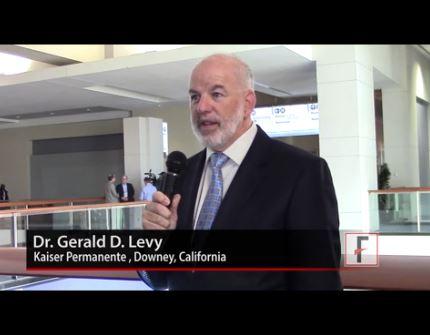
Tinzaparin is a safe, effective anticoagulant in patients on dialysis
CHICAGO – Tinzaparin was safe and effective as an anticoagulant for hemodialysis patients based on results from the Intermittent Hemodialysis Anticoagulation with Tinzaparin (HEMO-TIN) trial presented at the annual meeting sponsored by the American Society for Nephrology.
In the multicenter randomized controlled trial of 192 adults on hemodialysis, tinzaparin, a low molecular weight heparin with antithrombotic properties, was compared with unfractionated heparin. Tinzaparin has been considered for hemodialysis patients because it is thought to be less dependent on renal clearance than are other low molecular weight heparins, Christine Ribic, MD, MSc, of McMaster University, Hamilton, Ont., said in reporting the results.
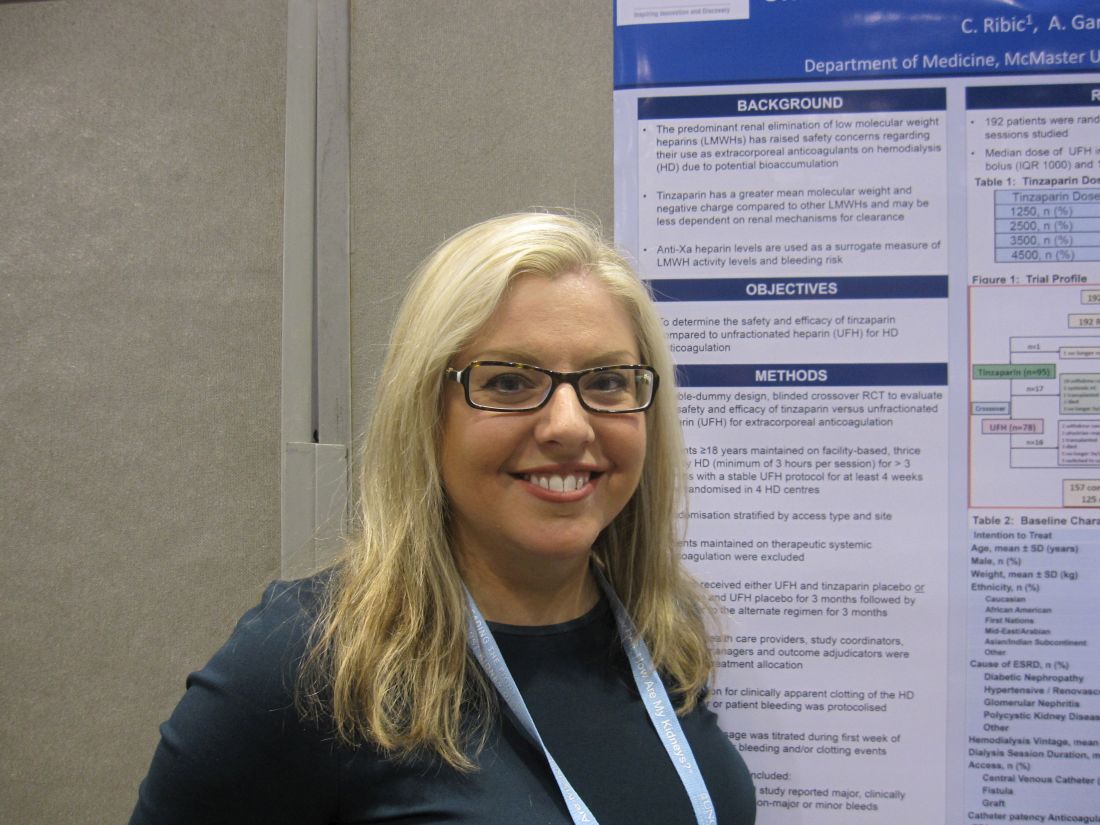
After 3 months, the 78 patients remaining in the tinzaparin group crossed over to receive unfractionated heparin for 3 months. The 79 patients remaining in the unfractionated heparin group crossed over to receive tinzaparin for 3 months. Of these 156 patients, 125 completed the 3-month crossover phase.
There were 421 bleeding events in the 12,125 hemodialysis sessions studied. They were evenly distributed in the groups, with 212 (50.4%) in those receiving unfractionated heparin and 209 (49.6%) in those receiving tinzaparin. The prevalence of major bleeds (2.1 vs 1.6%), clinically important nonmajor bleeds (1.2% vs 0.2%), and minor bleeds (47.0% vs 47.7%) was also similar between the unfractionated heparin and tinzaparin groups.
Anti-Xa heparin levels were used as a surrogate measure of low molecular weight heparin activity levels and bleeding risk due to bioaccumulation. In tinzaparin-treated patients, anti-Xa heparin levels never exceeded a value of 0.2 either before or after dialysis. This value was considered the threshold between safety and increased risk for bleeding. This threshold level was routinely exceeded pre- and post-dialysis in patients receiving unfractionated heparin at baseline and both before and after crossover.
Grade 4 clotting was similar for tinzaparin and unfractionated heparin, occurring in 23 of 6,095 (0.4%) unfractionated heparin hemodialysis sessions and 41 of 6030 (0.7%) tinzaparin hemodialysis sessions. Mean dialyzer clotting scores and mean air trap clotting scores were also comparable.
The trial was supported by Leo Pharma, the maker of tinzaparin (innohep), in collaboration with McMaster University. Dr. Ribic is the sponsor of the trial.
CHICAGO – Tinzaparin was safe and effective as an anticoagulant for hemodialysis patients based on results from the Intermittent Hemodialysis Anticoagulation with Tinzaparin (HEMO-TIN) trial presented at the annual meeting sponsored by the American Society for Nephrology.
In the multicenter randomized controlled trial of 192 adults on hemodialysis, tinzaparin, a low molecular weight heparin with antithrombotic properties, was compared with unfractionated heparin. Tinzaparin has been considered for hemodialysis patients because it is thought to be less dependent on renal clearance than are other low molecular weight heparins, Christine Ribic, MD, MSc, of McMaster University, Hamilton, Ont., said in reporting the results.
After 3 months, the 78 patients remaining in the tinzaparin group crossed over to receive unfractionated heparin for 3 months. The 79 patients remaining in the unfractionated heparin group crossed over to receive tinzaparin for 3 months. Of these 156 patients, 125 completed the 3-month crossover phase.
There were 421 bleeding events in the 12,125 hemodialysis sessions studied. They were evenly distributed in the groups, with 212 (50.4%) in those receiving unfractionated heparin and 209 (49.6%) in those receiving tinzaparin. The prevalence of major bleeds (2.1 vs 1.6%), clinically important nonmajor bleeds (1.2% vs 0.2%), and minor bleeds (47.0% vs 47.7%) was also similar between the unfractionated heparin and tinzaparin groups.
Anti-Xa heparin levels were used as a surrogate measure of low molecular weight heparin activity levels and bleeding risk due to bioaccumulation. In tinzaparin-treated patients, anti-Xa heparin levels never exceeded a value of 0.2 either before or after dialysis. This value was considered the threshold between safety and increased risk for bleeding. This threshold level was routinely exceeded pre- and post-dialysis in patients receiving unfractionated heparin at baseline and both before and after crossover.
Grade 4 clotting was similar for tinzaparin and unfractionated heparin, occurring in 23 of 6,095 (0.4%) unfractionated heparin hemodialysis sessions and 41 of 6030 (0.7%) tinzaparin hemodialysis sessions. Mean dialyzer clotting scores and mean air trap clotting scores were also comparable.
The trial was supported by Leo Pharma, the maker of tinzaparin (innohep), in collaboration with McMaster University. Dr. Ribic is the sponsor of the trial.
CHICAGO – Tinzaparin was safe and effective as an anticoagulant for hemodialysis patients based on results from the Intermittent Hemodialysis Anticoagulation with Tinzaparin (HEMO-TIN) trial presented at the annual meeting sponsored by the American Society for Nephrology.
In the multicenter randomized controlled trial of 192 adults on hemodialysis, tinzaparin, a low molecular weight heparin with antithrombotic properties, was compared with unfractionated heparin. Tinzaparin has been considered for hemodialysis patients because it is thought to be less dependent on renal clearance than are other low molecular weight heparins, Christine Ribic, MD, MSc, of McMaster University, Hamilton, Ont., said in reporting the results.
After 3 months, the 78 patients remaining in the tinzaparin group crossed over to receive unfractionated heparin for 3 months. The 79 patients remaining in the unfractionated heparin group crossed over to receive tinzaparin for 3 months. Of these 156 patients, 125 completed the 3-month crossover phase.
There were 421 bleeding events in the 12,125 hemodialysis sessions studied. They were evenly distributed in the groups, with 212 (50.4%) in those receiving unfractionated heparin and 209 (49.6%) in those receiving tinzaparin. The prevalence of major bleeds (2.1 vs 1.6%), clinically important nonmajor bleeds (1.2% vs 0.2%), and minor bleeds (47.0% vs 47.7%) was also similar between the unfractionated heparin and tinzaparin groups.
Anti-Xa heparin levels were used as a surrogate measure of low molecular weight heparin activity levels and bleeding risk due to bioaccumulation. In tinzaparin-treated patients, anti-Xa heparin levels never exceeded a value of 0.2 either before or after dialysis. This value was considered the threshold between safety and increased risk for bleeding. This threshold level was routinely exceeded pre- and post-dialysis in patients receiving unfractionated heparin at baseline and both before and after crossover.
Grade 4 clotting was similar for tinzaparin and unfractionated heparin, occurring in 23 of 6,095 (0.4%) unfractionated heparin hemodialysis sessions and 41 of 6030 (0.7%) tinzaparin hemodialysis sessions. Mean dialyzer clotting scores and mean air trap clotting scores were also comparable.
The trial was supported by Leo Pharma, the maker of tinzaparin (innohep), in collaboration with McMaster University. Dr. Ribic is the sponsor of the trial.
AT KIDNEY WEEK 2016
Key clinical point: Tinzaparin outcomes compare to those with low molecular weight heparin, and tinzaparin may be safer because it is less dependent on renal clearance than are low molecular weight heparins.
Major finding: Mean anti-Xa levels post-hemodialysis did not exceed 0.2 for tinzaparin, indicating no residual anticoagulant effect.
Data source: Randomized, double-dummy, blinded crossover controlled trial involving 192 patients.
Disclosures: Study sponsor was McMaster University, Hamilton, Ont. The study was funded by Leo Pharma. Dr. Ribic reported having no financial disclosures.