User login
Emicizumab controls bleeding regardless of inhibitors

GLASGOW—Emicizumab prophylaxis provides “clinically meaningful” control of bleeding whether or not patients have factor VIII inhibitors, according to researchers.
In the phase 3 HAVEN 4 study, researchers evaluated emicizumab prophylaxis, given every 4 weeks, in hemophilia A patients with or without factor VIII inhibitors.
At a median follow-up of about 26 weeks, patients had a median annualized bleeding rate (ABR) of 0.0 for treated bleeds and 2.1 for all bleeds.
About 30% of patients had 0 bleeds, and about 56% had 0 treated bleeds.
There were no serious adverse events (AEs) related to emicizumab. The most common AE was injection-site reaction.
Steve Pipe, MD, of Mott Children’s Hospital in Ann Arbor, Michigan, presented these results at the World Federation of Hemophilia (WFH) 2018 World Congress during the late-breaking abstract session on Monday.
The trial was sponsored by Hoffmann-La Roche.
HAVEN 4 included 48 patients, age 12 and older, who had hemophilia A with or without factor VIII inhibitors. Patients were previously treated with factor VIII or bypassing agents, on-demand or as prophylaxis.
The study was conducted in 2 parts: a pharmacokinetic (PK) run-in and an expansion cohort.
All patients in the PK run-in (n=7) were previously treated on-demand and received subcutaneous emicizumab at 6 mg/kg to fully characterize the PK profile after a single dose during 4 weeks. This was followed by 6 mg/kg every 4 weeks for at least 24 weeks.
Patients in the expansion cohort (n=41) received subcutaneous emicizumab prophylaxis at 3 mg/kg/wk for 4 weeks, followed by 6 mg/kg every 4 weeks for at least 24 weeks.
Episodic treatment of breakthrough bleeds with factor VIII therapy or bypassing agents, depending on a patient’s factor VIII inhibitor status, was allowed per study protocol.
Results
The efficacy analysis included the 41 patients in the expansion cohort, 5 of whom had inhibitors at baseline.
The median efficacy period was 25.6 weeks. The median ABR was 2.1 for all bleeds and 0.0 for treated bleeds.
The percentage of patients with 0 bleeds was 29.3% for all bleeds, 56.1% for treated bleeds, 82.9% for treated spontaneous bleeds, 70.7% for treated joint bleeds, and 85.4% for treated target joint bleeds.
Most treated bleeds (74.5%, 38/51) were traumatic.
There were 148 AEs, and 73.2% of patients had at least 1 AE.
Injection-site reaction was the most common AE related to emicizumab, occurring in 22.0% of patients (n=9).
There were 2 serious AEs (grade ≥3)—hypertension and rhabdomyolysis. Both were considered unrelated to emicizumab.
There were no AEs leading to emicizumab discontinuation or withdrawal. There were no thrombotic events, cases of thrombotic microangiopathy, hypersensitivity reactions, or fatalities.
None of the patients developed de novo factor VIII inhibitors, and there were no anti-drug antibodies detected.
GLASGOW—Emicizumab prophylaxis provides “clinically meaningful” control of bleeding whether or not patients have factor VIII inhibitors, according to researchers.
In the phase 3 HAVEN 4 study, researchers evaluated emicizumab prophylaxis, given every 4 weeks, in hemophilia A patients with or without factor VIII inhibitors.
At a median follow-up of about 26 weeks, patients had a median annualized bleeding rate (ABR) of 0.0 for treated bleeds and 2.1 for all bleeds.
About 30% of patients had 0 bleeds, and about 56% had 0 treated bleeds.
There were no serious adverse events (AEs) related to emicizumab. The most common AE was injection-site reaction.
Steve Pipe, MD, of Mott Children’s Hospital in Ann Arbor, Michigan, presented these results at the World Federation of Hemophilia (WFH) 2018 World Congress during the late-breaking abstract session on Monday.
The trial was sponsored by Hoffmann-La Roche.
HAVEN 4 included 48 patients, age 12 and older, who had hemophilia A with or without factor VIII inhibitors. Patients were previously treated with factor VIII or bypassing agents, on-demand or as prophylaxis.
The study was conducted in 2 parts: a pharmacokinetic (PK) run-in and an expansion cohort.
All patients in the PK run-in (n=7) were previously treated on-demand and received subcutaneous emicizumab at 6 mg/kg to fully characterize the PK profile after a single dose during 4 weeks. This was followed by 6 mg/kg every 4 weeks for at least 24 weeks.
Patients in the expansion cohort (n=41) received subcutaneous emicizumab prophylaxis at 3 mg/kg/wk for 4 weeks, followed by 6 mg/kg every 4 weeks for at least 24 weeks.
Episodic treatment of breakthrough bleeds with factor VIII therapy or bypassing agents, depending on a patient’s factor VIII inhibitor status, was allowed per study protocol.
Results
The efficacy analysis included the 41 patients in the expansion cohort, 5 of whom had inhibitors at baseline.
The median efficacy period was 25.6 weeks. The median ABR was 2.1 for all bleeds and 0.0 for treated bleeds.
The percentage of patients with 0 bleeds was 29.3% for all bleeds, 56.1% for treated bleeds, 82.9% for treated spontaneous bleeds, 70.7% for treated joint bleeds, and 85.4% for treated target joint bleeds.
Most treated bleeds (74.5%, 38/51) were traumatic.
There were 148 AEs, and 73.2% of patients had at least 1 AE.
Injection-site reaction was the most common AE related to emicizumab, occurring in 22.0% of patients (n=9).
There were 2 serious AEs (grade ≥3)—hypertension and rhabdomyolysis. Both were considered unrelated to emicizumab.
There were no AEs leading to emicizumab discontinuation or withdrawal. There were no thrombotic events, cases of thrombotic microangiopathy, hypersensitivity reactions, or fatalities.
None of the patients developed de novo factor VIII inhibitors, and there were no anti-drug antibodies detected.
GLASGOW—Emicizumab prophylaxis provides “clinically meaningful” control of bleeding whether or not patients have factor VIII inhibitors, according to researchers.
In the phase 3 HAVEN 4 study, researchers evaluated emicizumab prophylaxis, given every 4 weeks, in hemophilia A patients with or without factor VIII inhibitors.
At a median follow-up of about 26 weeks, patients had a median annualized bleeding rate (ABR) of 0.0 for treated bleeds and 2.1 for all bleeds.
About 30% of patients had 0 bleeds, and about 56% had 0 treated bleeds.
There were no serious adverse events (AEs) related to emicizumab. The most common AE was injection-site reaction.
Steve Pipe, MD, of Mott Children’s Hospital in Ann Arbor, Michigan, presented these results at the World Federation of Hemophilia (WFH) 2018 World Congress during the late-breaking abstract session on Monday.
The trial was sponsored by Hoffmann-La Roche.
HAVEN 4 included 48 patients, age 12 and older, who had hemophilia A with or without factor VIII inhibitors. Patients were previously treated with factor VIII or bypassing agents, on-demand or as prophylaxis.
The study was conducted in 2 parts: a pharmacokinetic (PK) run-in and an expansion cohort.
All patients in the PK run-in (n=7) were previously treated on-demand and received subcutaneous emicizumab at 6 mg/kg to fully characterize the PK profile after a single dose during 4 weeks. This was followed by 6 mg/kg every 4 weeks for at least 24 weeks.
Patients in the expansion cohort (n=41) received subcutaneous emicizumab prophylaxis at 3 mg/kg/wk for 4 weeks, followed by 6 mg/kg every 4 weeks for at least 24 weeks.
Episodic treatment of breakthrough bleeds with factor VIII therapy or bypassing agents, depending on a patient’s factor VIII inhibitor status, was allowed per study protocol.
Results
The efficacy analysis included the 41 patients in the expansion cohort, 5 of whom had inhibitors at baseline.
The median efficacy period was 25.6 weeks. The median ABR was 2.1 for all bleeds and 0.0 for treated bleeds.
The percentage of patients with 0 bleeds was 29.3% for all bleeds, 56.1% for treated bleeds, 82.9% for treated spontaneous bleeds, 70.7% for treated joint bleeds, and 85.4% for treated target joint bleeds.
Most treated bleeds (74.5%, 38/51) were traumatic.
There were 148 AEs, and 73.2% of patients had at least 1 AE.
Injection-site reaction was the most common AE related to emicizumab, occurring in 22.0% of patients (n=9).
There were 2 serious AEs (grade ≥3)—hypertension and rhabdomyolysis. Both were considered unrelated to emicizumab.
There were no AEs leading to emicizumab discontinuation or withdrawal. There were no thrombotic events, cases of thrombotic microangiopathy, hypersensitivity reactions, or fatalities.
None of the patients developed de novo factor VIII inhibitors, and there were no anti-drug antibodies detected.

Large dark discoloration on the back
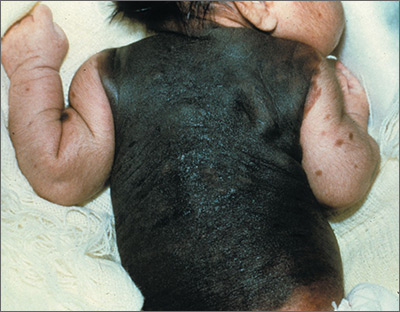
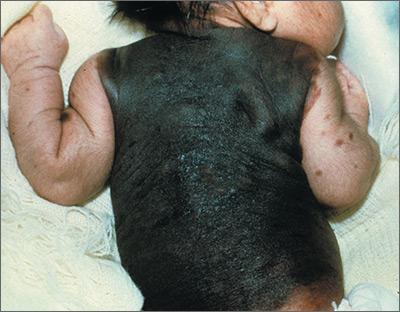
The FP recognized that this child had a large bathing trunk nevus with multiple small melanocytic satellite lesions on her arms.
He explained to the worried parents that their daughter had a bathing trunk nevus and that a local expert was needed. The FP consulted a local dermatologist, who subsequently explained to the parents that there was a significant risk of cutaneous melanoma if nothing was done about this large congenital nevus. The dermatologist indicated that while removal could decrease that risk, the process would require multiple large surgeries by a plastic surgeon. She also explained that a magnetic resonance imaging scan of the brain would be needed at about 6 months to look for neurocutaneous melanosis, which can cause seizures, hydrocephalus, and a central nervous system melanoma.
The parents were conflicted about whether to put their child through a series of massive surgeries or to accept the higher risk of melanoma and proceed with careful monitoring by the dermatologist. (No additional details on how this case resolved are available—Editor.)
Photos and text for Photo Rounds Friday courtesy of Richard P. Usatine, MD. This case was adapted from: Smith, M. Congenital nevi. In: Usatine R, Smith M, Mayeaux EJ, et al. Color Atlas of Family Medicine. 2nd ed. New York, NY: McGraw-Hill; 2013:953-957.
To learn more about the Color Atlas of Family Medicine, see: www.amazon.com/Color-Family-Medicine-Richard-Usatine/dp/0071769641/.
You can now get the second edition of the Color Atlas of Family Medicine as an app by clicking on this link: usatinemedia.com.
The FP recognized that this child had a large bathing trunk nevus with multiple small melanocytic satellite lesions on her arms.
He explained to the worried parents that their daughter had a bathing trunk nevus and that a local expert was needed. The FP consulted a local dermatologist, who subsequently explained to the parents that there was a significant risk of cutaneous melanoma if nothing was done about this large congenital nevus. The dermatologist indicated that while removal could decrease that risk, the process would require multiple large surgeries by a plastic surgeon. She also explained that a magnetic resonance imaging scan of the brain would be needed at about 6 months to look for neurocutaneous melanosis, which can cause seizures, hydrocephalus, and a central nervous system melanoma.
The parents were conflicted about whether to put their child through a series of massive surgeries or to accept the higher risk of melanoma and proceed with careful monitoring by the dermatologist. (No additional details on how this case resolved are available—Editor.)
Photos and text for Photo Rounds Friday courtesy of Richard P. Usatine, MD. This case was adapted from: Smith, M. Congenital nevi. In: Usatine R, Smith M, Mayeaux EJ, et al. Color Atlas of Family Medicine. 2nd ed. New York, NY: McGraw-Hill; 2013:953-957.
To learn more about the Color Atlas of Family Medicine, see: www.amazon.com/Color-Family-Medicine-Richard-Usatine/dp/0071769641/.
You can now get the second edition of the Color Atlas of Family Medicine as an app by clicking on this link: usatinemedia.com.
The FP recognized that this child had a large bathing trunk nevus with multiple small melanocytic satellite lesions on her arms.
He explained to the worried parents that their daughter had a bathing trunk nevus and that a local expert was needed. The FP consulted a local dermatologist, who subsequently explained to the parents that there was a significant risk of cutaneous melanoma if nothing was done about this large congenital nevus. The dermatologist indicated that while removal could decrease that risk, the process would require multiple large surgeries by a plastic surgeon. She also explained that a magnetic resonance imaging scan of the brain would be needed at about 6 months to look for neurocutaneous melanosis, which can cause seizures, hydrocephalus, and a central nervous system melanoma.
The parents were conflicted about whether to put their child through a series of massive surgeries or to accept the higher risk of melanoma and proceed with careful monitoring by the dermatologist. (No additional details on how this case resolved are available—Editor.)
Photos and text for Photo Rounds Friday courtesy of Richard P. Usatine, MD. This case was adapted from: Smith, M. Congenital nevi. In: Usatine R, Smith M, Mayeaux EJ, et al. Color Atlas of Family Medicine. 2nd ed. New York, NY: McGraw-Hill; 2013:953-957.
To learn more about the Color Atlas of Family Medicine, see: www.amazon.com/Color-Family-Medicine-Richard-Usatine/dp/0071769641/.
You can now get the second edition of the Color Atlas of Family Medicine as an app by clicking on this link: usatinemedia.com.
Atopic eczema linked to cardiovascular disease risk
according to a case-control study published online May 23 in BMJ.
In a population-based cohort study, researchers compared the electronic health records of 387,439 adults with eczema and 1,528,477 patients without eczema in the United Kingddom, matched according to age, sex, general practice, and calendar time, during 1998-2015. Patients were followed up for a median of 5.1 years
With the exception of cardiovascular death, atopic eczema was associated with all cardiovascular outcomes (MI, unstable angina, heart failure, atrial fibrillation, and stroke). The associations were stronger for severe atopic eczema, with significantly higher risks of MI, unstable angina, atrial fibrillation, stroke, cardiovascular death, and coronary revascularization among individuals with severe atopic eczema, compared with controls.
After adjustment for potential mediators such as body mass index, smoking, hyperlipidemia, diabetes, and severe alcohol use, individuals with severe eczema had a significant 37% increased risk of MI, 67% greater risk of heart failure, 35% greater risk of atrial fibrillation, 30% greater risk of cardiovascular death, and 36% greater risk of coronary revascularization, compared with controls with no eczema.
Increased cardiovascular risks also were seen in individuals whose atopic eczema was active more than half the time at follow-up. This group had a 37% greater risk of heart failure, 36% greater risk of unstable angina, and 19% greater risk of stroke, as well as significantly elevated risks of MI, atrial fibrillation, cardiovascular death, and coronary revascularization, compared with those without eczema.
Overall, atopic eczema contributed around 2.4% of the population-attributable risk for unstable angina, and 1.9% for heart failure (the highest population attributable risks). Ethnicity or high-dose corticosteroid use did not significantly impact outcomes.
Richard J. Silverwood, PhD, from the London School of Hygiene and Tropical Medicine, and his coauthors wrote that previous work examining the relationship between atopic eczema and cardiovascular disease had shown inconsistent outcomes, with some studies even pointing to a possible protective effect of mild atopic eczema.
“Mechanistic work suggests that atopic eczema may be associated with increased platelet activation and decreased fibrinolysis, which may increase the risk of clotting, though a recent study found no association with metabolite levels,” the authors wrote.
They noted that the strengths of their study were that it was largest to examine the association between atopic eczema and cardiovascular risk, and that they had access to data on body mass index, smoking, and severe alcohol use for most of the study population, which enabled them to adjust for these potential mediators.
“Consideration should be given to developing prevention strategies to reduce the risk of cardiovascular disease among patients with severe or predominantly active atopic eczema, including awareness of and screening for conventional cardiovascular risk factors by those providing clinical care,” they wrote.
The study was supported by the Wellcome Trust, and no relevant conflicts of interest were declared.
SOURCE: Silverwood R et al. BMJ 2018 May 23;361:k1786. doi: 10.1136/bmj.k1786.
The evidence in favor of a link between chronic inflammatory conditions, such as rheumatoid arthritis, and cardiovascular disease is growing. However, there are conflicting data and some of the uncertainty may be a result of a dose-response effect, where the increased cardiovascular risk is seen only in people with more severe disease.
This study and its finding of increased cardiovascular risk in patients with severe or more active eczema supports the case for targeted screening of this group for standard cardiovascular disease risk factors. It also could prompt incorporation of severe eczema as an independent cardiovascular disease risk factor in calculation of thresholds for primary prevention interventions.
The findings also may have implications for health care resources allocated to treatment of eczema, as prevention of cardiovascular disease could contribute to the argument in favor of the more expensive next-generation biologic treatments for eczema that are becoming available.
John R. Ingram, MD, is senior lecturer and consultant dermatologist, dermatology and academic wound healing in the division of infection and immunity at Cardiff (U.K.) University. These comments are taken from an accompanying editorial No conflicts of interest were declared. (BMJ. 2018 May 23. doi: 10.1136/bmj.k2064).
The evidence in favor of a link between chronic inflammatory conditions, such as rheumatoid arthritis, and cardiovascular disease is growing. However, there are conflicting data and some of the uncertainty may be a result of a dose-response effect, where the increased cardiovascular risk is seen only in people with more severe disease.
This study and its finding of increased cardiovascular risk in patients with severe or more active eczema supports the case for targeted screening of this group for standard cardiovascular disease risk factors. It also could prompt incorporation of severe eczema as an independent cardiovascular disease risk factor in calculation of thresholds for primary prevention interventions.
The findings also may have implications for health care resources allocated to treatment of eczema, as prevention of cardiovascular disease could contribute to the argument in favor of the more expensive next-generation biologic treatments for eczema that are becoming available.
John R. Ingram, MD, is senior lecturer and consultant dermatologist, dermatology and academic wound healing in the division of infection and immunity at Cardiff (U.K.) University. These comments are taken from an accompanying editorial No conflicts of interest were declared. (BMJ. 2018 May 23. doi: 10.1136/bmj.k2064).
The evidence in favor of a link between chronic inflammatory conditions, such as rheumatoid arthritis, and cardiovascular disease is growing. However, there are conflicting data and some of the uncertainty may be a result of a dose-response effect, where the increased cardiovascular risk is seen only in people with more severe disease.
This study and its finding of increased cardiovascular risk in patients with severe or more active eczema supports the case for targeted screening of this group for standard cardiovascular disease risk factors. It also could prompt incorporation of severe eczema as an independent cardiovascular disease risk factor in calculation of thresholds for primary prevention interventions.
The findings also may have implications for health care resources allocated to treatment of eczema, as prevention of cardiovascular disease could contribute to the argument in favor of the more expensive next-generation biologic treatments for eczema that are becoming available.
John R. Ingram, MD, is senior lecturer and consultant dermatologist, dermatology and academic wound healing in the division of infection and immunity at Cardiff (U.K.) University. These comments are taken from an accompanying editorial No conflicts of interest were declared. (BMJ. 2018 May 23. doi: 10.1136/bmj.k2064).
according to a case-control study published online May 23 in BMJ.
In a population-based cohort study, researchers compared the electronic health records of 387,439 adults with eczema and 1,528,477 patients without eczema in the United Kingddom, matched according to age, sex, general practice, and calendar time, during 1998-2015. Patients were followed up for a median of 5.1 years
With the exception of cardiovascular death, atopic eczema was associated with all cardiovascular outcomes (MI, unstable angina, heart failure, atrial fibrillation, and stroke). The associations were stronger for severe atopic eczema, with significantly higher risks of MI, unstable angina, atrial fibrillation, stroke, cardiovascular death, and coronary revascularization among individuals with severe atopic eczema, compared with controls.
After adjustment for potential mediators such as body mass index, smoking, hyperlipidemia, diabetes, and severe alcohol use, individuals with severe eczema had a significant 37% increased risk of MI, 67% greater risk of heart failure, 35% greater risk of atrial fibrillation, 30% greater risk of cardiovascular death, and 36% greater risk of coronary revascularization, compared with controls with no eczema.
Increased cardiovascular risks also were seen in individuals whose atopic eczema was active more than half the time at follow-up. This group had a 37% greater risk of heart failure, 36% greater risk of unstable angina, and 19% greater risk of stroke, as well as significantly elevated risks of MI, atrial fibrillation, cardiovascular death, and coronary revascularization, compared with those without eczema.
Overall, atopic eczema contributed around 2.4% of the population-attributable risk for unstable angina, and 1.9% for heart failure (the highest population attributable risks). Ethnicity or high-dose corticosteroid use did not significantly impact outcomes.
Richard J. Silverwood, PhD, from the London School of Hygiene and Tropical Medicine, and his coauthors wrote that previous work examining the relationship between atopic eczema and cardiovascular disease had shown inconsistent outcomes, with some studies even pointing to a possible protective effect of mild atopic eczema.
“Mechanistic work suggests that atopic eczema may be associated with increased platelet activation and decreased fibrinolysis, which may increase the risk of clotting, though a recent study found no association with metabolite levels,” the authors wrote.
They noted that the strengths of their study were that it was largest to examine the association between atopic eczema and cardiovascular risk, and that they had access to data on body mass index, smoking, and severe alcohol use for most of the study population, which enabled them to adjust for these potential mediators.
“Consideration should be given to developing prevention strategies to reduce the risk of cardiovascular disease among patients with severe or predominantly active atopic eczema, including awareness of and screening for conventional cardiovascular risk factors by those providing clinical care,” they wrote.
The study was supported by the Wellcome Trust, and no relevant conflicts of interest were declared.
SOURCE: Silverwood R et al. BMJ 2018 May 23;361:k1786. doi: 10.1136/bmj.k1786.
according to a case-control study published online May 23 in BMJ.
In a population-based cohort study, researchers compared the electronic health records of 387,439 adults with eczema and 1,528,477 patients without eczema in the United Kingddom, matched according to age, sex, general practice, and calendar time, during 1998-2015. Patients were followed up for a median of 5.1 years
With the exception of cardiovascular death, atopic eczema was associated with all cardiovascular outcomes (MI, unstable angina, heart failure, atrial fibrillation, and stroke). The associations were stronger for severe atopic eczema, with significantly higher risks of MI, unstable angina, atrial fibrillation, stroke, cardiovascular death, and coronary revascularization among individuals with severe atopic eczema, compared with controls.
After adjustment for potential mediators such as body mass index, smoking, hyperlipidemia, diabetes, and severe alcohol use, individuals with severe eczema had a significant 37% increased risk of MI, 67% greater risk of heart failure, 35% greater risk of atrial fibrillation, 30% greater risk of cardiovascular death, and 36% greater risk of coronary revascularization, compared with controls with no eczema.
Increased cardiovascular risks also were seen in individuals whose atopic eczema was active more than half the time at follow-up. This group had a 37% greater risk of heart failure, 36% greater risk of unstable angina, and 19% greater risk of stroke, as well as significantly elevated risks of MI, atrial fibrillation, cardiovascular death, and coronary revascularization, compared with those without eczema.
Overall, atopic eczema contributed around 2.4% of the population-attributable risk for unstable angina, and 1.9% for heart failure (the highest population attributable risks). Ethnicity or high-dose corticosteroid use did not significantly impact outcomes.
Richard J. Silverwood, PhD, from the London School of Hygiene and Tropical Medicine, and his coauthors wrote that previous work examining the relationship between atopic eczema and cardiovascular disease had shown inconsistent outcomes, with some studies even pointing to a possible protective effect of mild atopic eczema.
“Mechanistic work suggests that atopic eczema may be associated with increased platelet activation and decreased fibrinolysis, which may increase the risk of clotting, though a recent study found no association with metabolite levels,” the authors wrote.
They noted that the strengths of their study were that it was largest to examine the association between atopic eczema and cardiovascular risk, and that they had access to data on body mass index, smoking, and severe alcohol use for most of the study population, which enabled them to adjust for these potential mediators.
“Consideration should be given to developing prevention strategies to reduce the risk of cardiovascular disease among patients with severe or predominantly active atopic eczema, including awareness of and screening for conventional cardiovascular risk factors by those providing clinical care,” they wrote.
The study was supported by the Wellcome Trust, and no relevant conflicts of interest were declared.
SOURCE: Silverwood R et al. BMJ 2018 May 23;361:k1786. doi: 10.1136/bmj.k1786.
FROM THE BMJ
Key clinical point: Severe atopic eczema may be associated with a significantly increased risk of cardiovascular disease.
Major finding: Individuals with severe atopic eczema were at increased for cardiovascular disease, including a 67% greater risk of heart failure.
Study details: A population-based case-control cohort study in 387,439 patients with atopic eczema, compared with more than 1 million controls.
Disclosures: The study was supported by the Wellcome Trust, and no relevant conflicts of interest were declared.
Source: Silverwood R et al. BMJ. 2018 May 23;361:k1786.
Antidepressant use linked to increased weight gain
Taking antidepressants appears associated with weight gain in a recent study, though the researchers caution that the link might not be causal. Antidepressant use already was lowest in those with an initially normal BMI, and it increased with each category of greater BMI.
“Participants of normal weight showed an increased risk of transitioning to overweight or obesity, and overweight participants were more likely to become obese if they were treated with an antidepressant,” Rafael Gafoor, PhD, of King’s College London, and his associates wrote in BMJ.
“The risk of weight gain was substantially increased during the second and third years of treatment,” they reported. “The risk of weight gain remained increased during at least 6 years of follow-up.”
The researchers retrospectively analyzed EHRs from the U.K. Clinical Practice Research Datalink, representing about 7% of general practices in the United Kingdom, to compare the risk of weight gain among those who were and were not prescribed antidepressants. Of more than 2 million registered participants, a random sample of those with at least three measurements for body mass index (BMI), representing different weight classes, were included.
Out of 136,762 men and 157,957 women, 13% of the men and 22.4% of the women received prescriptions for antidepressants. The 10-year follow-up period included more than 1.8 million person-years. The proportion of people gaining at least 5% in BMI was 11.1% in those with antidepressants prescriptions, compared with 8.1% in those not prescribed antidepressants.
“Antidepressant use was greater in patients with comorbidity and coprescriptions, particularly with diagnoses of stroke and diabetes or coprescribing of antiepileptics or antipsychotics, than in those without,” the researchers wrote. “Antidepressant use was also associated with current smoking and higher deprivation category.”
The researchers adjusted the analysis to account for age, sex, initial BMI classification, smoking, prescriptions for antiepileptics or antipsychotics, year, region of residence, socioeconomic status, or having received advice on weight management or diet. They also accounted for diabetes, coronary heart disease, stroke, cancer, and depression diagnoses, and they eliminated the 280 days before a newborn delivery to account for pregnancy-related weight increases.
After adjustment for those potential confounders, people prescribed antidepressants were 21% more likely to experience substantial weight gain than those not prescribed them (adjusted rate ratio = 1.21; P less than .001). The researchers, cautioned, however, that residual confounding might have inflated the risk.
Those who had a normal weight when they began taking antidepressants had 29% greater risk of gaining enough weight to meet the criteria for overweight or obesity. Likewise, those already overweight when first prescribed antidepressants were 29% more likely to develop obesity.
For every 27 patients who took antidepressants for at least 1 year, 1 of them gained at least 5% in BMI during the subsequent year. Again, however, the researchers emphasized the absence of evidence for causality and the risk of bias from confounding.
Mirtazapine was the antidepressant associated with the highest incidence ratio of weight gain, but that drug was prescribed infrequently.
“From a clinical perspective, these observations reinforce the need for active body weight management to accompany widespread antidepressant treatment, although this might often be met with limited success,” the authors wrote.
The research was funded by the National Health Service Foundation Trust and by King’s College London. Aside from one author’s employment with the U.K. Clinical Practice Research Datalink data source, the authors had no disclosures.
SOURCE: Gafoor R et al. BMJ. 2018;361:k1951. doi: 10.1136/bmj.k1951.
Taking antidepressants appears associated with weight gain in a recent study, though the researchers caution that the link might not be causal. Antidepressant use already was lowest in those with an initially normal BMI, and it increased with each category of greater BMI.
“Participants of normal weight showed an increased risk of transitioning to overweight or obesity, and overweight participants were more likely to become obese if they were treated with an antidepressant,” Rafael Gafoor, PhD, of King’s College London, and his associates wrote in BMJ.
“The risk of weight gain was substantially increased during the second and third years of treatment,” they reported. “The risk of weight gain remained increased during at least 6 years of follow-up.”
The researchers retrospectively analyzed EHRs from the U.K. Clinical Practice Research Datalink, representing about 7% of general practices in the United Kingdom, to compare the risk of weight gain among those who were and were not prescribed antidepressants. Of more than 2 million registered participants, a random sample of those with at least three measurements for body mass index (BMI), representing different weight classes, were included.
Out of 136,762 men and 157,957 women, 13% of the men and 22.4% of the women received prescriptions for antidepressants. The 10-year follow-up period included more than 1.8 million person-years. The proportion of people gaining at least 5% in BMI was 11.1% in those with antidepressants prescriptions, compared with 8.1% in those not prescribed antidepressants.
“Antidepressant use was greater in patients with comorbidity and coprescriptions, particularly with diagnoses of stroke and diabetes or coprescribing of antiepileptics or antipsychotics, than in those without,” the researchers wrote. “Antidepressant use was also associated with current smoking and higher deprivation category.”
The researchers adjusted the analysis to account for age, sex, initial BMI classification, smoking, prescriptions for antiepileptics or antipsychotics, year, region of residence, socioeconomic status, or having received advice on weight management or diet. They also accounted for diabetes, coronary heart disease, stroke, cancer, and depression diagnoses, and they eliminated the 280 days before a newborn delivery to account for pregnancy-related weight increases.
After adjustment for those potential confounders, people prescribed antidepressants were 21% more likely to experience substantial weight gain than those not prescribed them (adjusted rate ratio = 1.21; P less than .001). The researchers, cautioned, however, that residual confounding might have inflated the risk.
Those who had a normal weight when they began taking antidepressants had 29% greater risk of gaining enough weight to meet the criteria for overweight or obesity. Likewise, those already overweight when first prescribed antidepressants were 29% more likely to develop obesity.
For every 27 patients who took antidepressants for at least 1 year, 1 of them gained at least 5% in BMI during the subsequent year. Again, however, the researchers emphasized the absence of evidence for causality and the risk of bias from confounding.
Mirtazapine was the antidepressant associated with the highest incidence ratio of weight gain, but that drug was prescribed infrequently.
“From a clinical perspective, these observations reinforce the need for active body weight management to accompany widespread antidepressant treatment, although this might often be met with limited success,” the authors wrote.
The research was funded by the National Health Service Foundation Trust and by King’s College London. Aside from one author’s employment with the U.K. Clinical Practice Research Datalink data source, the authors had no disclosures.
SOURCE: Gafoor R et al. BMJ. 2018;361:k1951. doi: 10.1136/bmj.k1951.
Taking antidepressants appears associated with weight gain in a recent study, though the researchers caution that the link might not be causal. Antidepressant use already was lowest in those with an initially normal BMI, and it increased with each category of greater BMI.
“Participants of normal weight showed an increased risk of transitioning to overweight or obesity, and overweight participants were more likely to become obese if they were treated with an antidepressant,” Rafael Gafoor, PhD, of King’s College London, and his associates wrote in BMJ.
“The risk of weight gain was substantially increased during the second and third years of treatment,” they reported. “The risk of weight gain remained increased during at least 6 years of follow-up.”
The researchers retrospectively analyzed EHRs from the U.K. Clinical Practice Research Datalink, representing about 7% of general practices in the United Kingdom, to compare the risk of weight gain among those who were and were not prescribed antidepressants. Of more than 2 million registered participants, a random sample of those with at least three measurements for body mass index (BMI), representing different weight classes, were included.
Out of 136,762 men and 157,957 women, 13% of the men and 22.4% of the women received prescriptions for antidepressants. The 10-year follow-up period included more than 1.8 million person-years. The proportion of people gaining at least 5% in BMI was 11.1% in those with antidepressants prescriptions, compared with 8.1% in those not prescribed antidepressants.
“Antidepressant use was greater in patients with comorbidity and coprescriptions, particularly with diagnoses of stroke and diabetes or coprescribing of antiepileptics or antipsychotics, than in those without,” the researchers wrote. “Antidepressant use was also associated with current smoking and higher deprivation category.”
The researchers adjusted the analysis to account for age, sex, initial BMI classification, smoking, prescriptions for antiepileptics or antipsychotics, year, region of residence, socioeconomic status, or having received advice on weight management or diet. They also accounted for diabetes, coronary heart disease, stroke, cancer, and depression diagnoses, and they eliminated the 280 days before a newborn delivery to account for pregnancy-related weight increases.
After adjustment for those potential confounders, people prescribed antidepressants were 21% more likely to experience substantial weight gain than those not prescribed them (adjusted rate ratio = 1.21; P less than .001). The researchers, cautioned, however, that residual confounding might have inflated the risk.
Those who had a normal weight when they began taking antidepressants had 29% greater risk of gaining enough weight to meet the criteria for overweight or obesity. Likewise, those already overweight when first prescribed antidepressants were 29% more likely to develop obesity.
For every 27 patients who took antidepressants for at least 1 year, 1 of them gained at least 5% in BMI during the subsequent year. Again, however, the researchers emphasized the absence of evidence for causality and the risk of bias from confounding.
Mirtazapine was the antidepressant associated with the highest incidence ratio of weight gain, but that drug was prescribed infrequently.
“From a clinical perspective, these observations reinforce the need for active body weight management to accompany widespread antidepressant treatment, although this might often be met with limited success,” the authors wrote.
The research was funded by the National Health Service Foundation Trust and by King’s College London. Aside from one author’s employment with the U.K. Clinical Practice Research Datalink data source, the authors had no disclosures.
SOURCE: Gafoor R et al. BMJ. 2018;361:k1951. doi: 10.1136/bmj.k1951.
FROM THE BMJ
Key clinical point: “These observations reinforce the need for active body weight management to accompany widespread antidepressant treatment.”
Major finding: People taking antidepressants had 21% higher risk of gaining at least 5% in body mass index and 29% greater risk of moving into a higher BMI category.
Study details: The findings are based on analysis of 10-year follow-up date from a British population-based cohort of 294,719 men and women, 18% of whom had been prescribed antidepressants.
Disclosures: The research was funded by the National Health Service Foundation Trust and by King’s College London. Aside from one author’s employment with the U.K. Clinical Practice Research Datalink data source, the authors had no disclosures.
Source: Gafoor R et al. BMJ. 2018;361:k1951. doi: 10.1136/bmj.k1951.
Hefty rewards pay off in smoking-cessation study
A new study finds it pays to pay people to stop lighting up: Smokers were more likely to quit if they had an opportunity to gain rewards worth $600 than if they simply received free cessation aids or free e-cigarettes.
The wide majority of the more than 6,000 smokers in the randomized study didn’t quit despite offers of various incentives. All the same, “programs that offered financial incentives tripled the rates of smoking cessation, reduced employers’ costs per successful quit, as compared with programs that offered cessation aids alone, and yielded total costs that compared favorably with the costs of employing smokers,” the study authors wrote.
The researchers reached out to employees and spouses at 54 companies that use wellness programs provided by the Vitality Institute, which supports research into health promotion. The institute provided grant support for the study.
Just over 6,000 employees and spouses who smoked were assigned to five groups. One group received usual care. The others received interventions: free smoking-cessation aids (nicotine replacement therapy, bupropion, or varenicline); free e-cigarettes; up to $600 worth of an unidentified “reward incentive” plus free cessation aids; and up to $600 via a redeemable deposit, plus free cessation aids.
Participants could only get the entire reward incentive or the full $600 redeemable deposit if they showed signs of sustained smoking cessation via blood or urine test at 1, 3, and 6 months.
The median age in the groups ranged from 43 to 45 years, and most were not college graduates. Just over half were women, and roughly 90% said they wanted to quit smoking.
Overall, 20% of the 6,006 participants logged onto the trial website, a sign that they were “engaged.” The number was highest in the free e-cigarette and reward groups (21%-23%) and lowest in the usual care group (16%).
The researchers focused on how many participants abstained from smoking – as confirmed by blood or urine test – for 6 months past the target quit date. The test data confirmed that just 1.3% of the total participants, 80 people, sustained cessation over 6 months.
Only 0.1% of the usual-care group sustained smoking cessation, and the number wasn’t much higher (0.5%) in the free cessation aids group.
One percent of those in the free e-cigarette group sustained cessation. However, the researchers noted there wasn’t a significant difference in the quit rates between the usual care, free cessation aid, and free e-cigarette groups.
“The observation of greater e-cigarette use in the free e-cigarette group than in the free cessation aids group, coupled with the absence of benefit of free e-cigarettes versus no intervention, supports the conclusion that offering free e-cigarettes does not promote smoking cessation,” they cautioned.
In the reward incentive and $600 redeemable-deposit groups, 2% and 2.9% of participants quit over a sustained period, respectively. Cessation rates in the $600 deposit group were superior to the free cessation aid group (P less than .001) and the free e-cigarette group (P = .008). Cessation rates in the incentive group were superior to those in the free cessation aid group (P = .006).
“Average costs per participant assigned to each intervention were lowest in the usual-care group ($0.82) and highest in the redeemable-deposit group ($100.96),” the researchers reported. “The overall cost of each program per participant who was abstinent for 6 months was lower in the rewards and redeemable-deposit groups than in the free e-cigarettes or free cessation aids groups.”
The study received grant support from the Vitality Institute. Most of the study authors reported no relevant disclosures. One author reported serving on the scientific advisory board of VAL Health, and another reported various grants and personal fees.
SOURCE: Halpern SD et al. N Engl J Med. 2018 May 23. doi: 10.1056/NEJMsa1715757.
A new study finds it pays to pay people to stop lighting up: Smokers were more likely to quit if they had an opportunity to gain rewards worth $600 than if they simply received free cessation aids or free e-cigarettes.
The wide majority of the more than 6,000 smokers in the randomized study didn’t quit despite offers of various incentives. All the same, “programs that offered financial incentives tripled the rates of smoking cessation, reduced employers’ costs per successful quit, as compared with programs that offered cessation aids alone, and yielded total costs that compared favorably with the costs of employing smokers,” the study authors wrote.
The researchers reached out to employees and spouses at 54 companies that use wellness programs provided by the Vitality Institute, which supports research into health promotion. The institute provided grant support for the study.
Just over 6,000 employees and spouses who smoked were assigned to five groups. One group received usual care. The others received interventions: free smoking-cessation aids (nicotine replacement therapy, bupropion, or varenicline); free e-cigarettes; up to $600 worth of an unidentified “reward incentive” plus free cessation aids; and up to $600 via a redeemable deposit, plus free cessation aids.
Participants could only get the entire reward incentive or the full $600 redeemable deposit if they showed signs of sustained smoking cessation via blood or urine test at 1, 3, and 6 months.
The median age in the groups ranged from 43 to 45 years, and most were not college graduates. Just over half were women, and roughly 90% said they wanted to quit smoking.
Overall, 20% of the 6,006 participants logged onto the trial website, a sign that they were “engaged.” The number was highest in the free e-cigarette and reward groups (21%-23%) and lowest in the usual care group (16%).
The researchers focused on how many participants abstained from smoking – as confirmed by blood or urine test – for 6 months past the target quit date. The test data confirmed that just 1.3% of the total participants, 80 people, sustained cessation over 6 months.
Only 0.1% of the usual-care group sustained smoking cessation, and the number wasn’t much higher (0.5%) in the free cessation aids group.
One percent of those in the free e-cigarette group sustained cessation. However, the researchers noted there wasn’t a significant difference in the quit rates between the usual care, free cessation aid, and free e-cigarette groups.
“The observation of greater e-cigarette use in the free e-cigarette group than in the free cessation aids group, coupled with the absence of benefit of free e-cigarettes versus no intervention, supports the conclusion that offering free e-cigarettes does not promote smoking cessation,” they cautioned.
In the reward incentive and $600 redeemable-deposit groups, 2% and 2.9% of participants quit over a sustained period, respectively. Cessation rates in the $600 deposit group were superior to the free cessation aid group (P less than .001) and the free e-cigarette group (P = .008). Cessation rates in the incentive group were superior to those in the free cessation aid group (P = .006).
“Average costs per participant assigned to each intervention were lowest in the usual-care group ($0.82) and highest in the redeemable-deposit group ($100.96),” the researchers reported. “The overall cost of each program per participant who was abstinent for 6 months was lower in the rewards and redeemable-deposit groups than in the free e-cigarettes or free cessation aids groups.”
The study received grant support from the Vitality Institute. Most of the study authors reported no relevant disclosures. One author reported serving on the scientific advisory board of VAL Health, and another reported various grants and personal fees.
SOURCE: Halpern SD et al. N Engl J Med. 2018 May 23. doi: 10.1056/NEJMsa1715757.
A new study finds it pays to pay people to stop lighting up: Smokers were more likely to quit if they had an opportunity to gain rewards worth $600 than if they simply received free cessation aids or free e-cigarettes.
The wide majority of the more than 6,000 smokers in the randomized study didn’t quit despite offers of various incentives. All the same, “programs that offered financial incentives tripled the rates of smoking cessation, reduced employers’ costs per successful quit, as compared with programs that offered cessation aids alone, and yielded total costs that compared favorably with the costs of employing smokers,” the study authors wrote.
The researchers reached out to employees and spouses at 54 companies that use wellness programs provided by the Vitality Institute, which supports research into health promotion. The institute provided grant support for the study.
Just over 6,000 employees and spouses who smoked were assigned to five groups. One group received usual care. The others received interventions: free smoking-cessation aids (nicotine replacement therapy, bupropion, or varenicline); free e-cigarettes; up to $600 worth of an unidentified “reward incentive” plus free cessation aids; and up to $600 via a redeemable deposit, plus free cessation aids.
Participants could only get the entire reward incentive or the full $600 redeemable deposit if they showed signs of sustained smoking cessation via blood or urine test at 1, 3, and 6 months.
The median age in the groups ranged from 43 to 45 years, and most were not college graduates. Just over half were women, and roughly 90% said they wanted to quit smoking.
Overall, 20% of the 6,006 participants logged onto the trial website, a sign that they were “engaged.” The number was highest in the free e-cigarette and reward groups (21%-23%) and lowest in the usual care group (16%).
The researchers focused on how many participants abstained from smoking – as confirmed by blood or urine test – for 6 months past the target quit date. The test data confirmed that just 1.3% of the total participants, 80 people, sustained cessation over 6 months.
Only 0.1% of the usual-care group sustained smoking cessation, and the number wasn’t much higher (0.5%) in the free cessation aids group.
One percent of those in the free e-cigarette group sustained cessation. However, the researchers noted there wasn’t a significant difference in the quit rates between the usual care, free cessation aid, and free e-cigarette groups.
“The observation of greater e-cigarette use in the free e-cigarette group than in the free cessation aids group, coupled with the absence of benefit of free e-cigarettes versus no intervention, supports the conclusion that offering free e-cigarettes does not promote smoking cessation,” they cautioned.
In the reward incentive and $600 redeemable-deposit groups, 2% and 2.9% of participants quit over a sustained period, respectively. Cessation rates in the $600 deposit group were superior to the free cessation aid group (P less than .001) and the free e-cigarette group (P = .008). Cessation rates in the incentive group were superior to those in the free cessation aid group (P = .006).
“Average costs per participant assigned to each intervention were lowest in the usual-care group ($0.82) and highest in the redeemable-deposit group ($100.96),” the researchers reported. “The overall cost of each program per participant who was abstinent for 6 months was lower in the rewards and redeemable-deposit groups than in the free e-cigarettes or free cessation aids groups.”
The study received grant support from the Vitality Institute. Most of the study authors reported no relevant disclosures. One author reported serving on the scientific advisory board of VAL Health, and another reported various grants and personal fees.
SOURCE: Halpern SD et al. N Engl J Med. 2018 May 23. doi: 10.1056/NEJMsa1715757.
FROM NEW ENGLAND JOURNAL OF MEDICINE
Key clinical point: Smokers are more likely to sustain cessation if they receive incentives worth $600.
Major finding: Cessation rates for 6 months past target quit date reached as high as 2.9% in smokers who had the opportunity to gain rewards, while they didn’t top 1% in those who received free cessation aids or free e-cigarettes.
Study details: A randomized, prospective study of 6,006 smokers (employees of 54 companies and spouses) who were assigned to usual care or one of four intervention groups.
Disclosures: The study received grant support from the Vitality Institute. Most of the study authors reported no relevant disclosures. One reported serving on the scientific advisory board of VAL Health, and another reported various grants and personal fees.
Source: Halpern SD et al. N Engl J Med. 2018 May 23. doi: 10.1056/NEJMsa1715757.

Doctors’ pay involves a lot of unseen work
“Doctors make a lot of money.” We hear that a lot, always from people who aren’t part of the profession.
Last month, I had to do my tax forms. Not my annual forms, but the quarterly withholding ones for the IRS, and for the state, along with the Arizona Department of Economic Security forms.
The whole thing takes me about 2 hours every 3 months. I suppose I could hire an accountant or office manager to deal with that stuff, but in solo practice, you do everything you can to keep the overhead low. So I do it myself.
Eight hours a year doesn’t sound too bad, but it got me thinking about all the other ways that work creeps into my home time.
I’m usually at the office around 5:00 a.m., when I start with reviewing charts, doing paperwork, and catching up on dictations until patients start at 8:00 a.m. From then on, they’re a steady stream until 4:00 p.m., when we close up and head home.
I get home and then have 1-2 hours of time paying bills, sorting mail, and catching up on phone calls and other unresolved issues.
On weekends, there’s always other stuff. Payroll for the coming weeks, office bills, and credit card statements I didn’t get to during the week, CME, forms, licensing paperwork, etc.
I’d guess about 15 hours/week goes into nonpatient-related stuff. Each year that’s more than 700 hours (or a little over a month) of extra time. Tack that on to the roughly 60 hours that I spend seeing patients between the office and hospital.
People say we make “a lot” (whatever that is), but they don’t see everything behind it. The 7-12 years of post-college training. The student loans of $200,000 and dating back to when I was 26 years old. The rising costs of overhead and dropping rates of reimbursement. The denied payments in disputes over claims. And, as mentioned above, the huge amount of time this job takes for stuff beyond just seeing patients.
We don’t get paid by the hour, but if we did, the rate would probably be a lot lower than what most would expect.
I suppose I could become employed, and let someone else worry about those things. But the financial impact doesn’t go away. Someone else still has to be doing those things, and since doctors are the ones who generate income in the majority of medical practices, the salaries for everyone else come out of ours. Plus, as I’ve previously written about, I’ve been employed before and got sick of the meetings and memos about cost-sharing, productivity numbers, and dollars earned per square foot.
But whenever I hear the refrain about our field being overpaid, I think about the actual hours the public doesn’t see (or care about). This isn’t a job for slackers, and

Dr. Block has a solo neurology practice in Scottsdale, Ariz.
“Doctors make a lot of money.” We hear that a lot, always from people who aren’t part of the profession.
Last month, I had to do my tax forms. Not my annual forms, but the quarterly withholding ones for the IRS, and for the state, along with the Arizona Department of Economic Security forms.
The whole thing takes me about 2 hours every 3 months. I suppose I could hire an accountant or office manager to deal with that stuff, but in solo practice, you do everything you can to keep the overhead low. So I do it myself.
Eight hours a year doesn’t sound too bad, but it got me thinking about all the other ways that work creeps into my home time.
I’m usually at the office around 5:00 a.m., when I start with reviewing charts, doing paperwork, and catching up on dictations until patients start at 8:00 a.m. From then on, they’re a steady stream until 4:00 p.m., when we close up and head home.
I get home and then have 1-2 hours of time paying bills, sorting mail, and catching up on phone calls and other unresolved issues.
On weekends, there’s always other stuff. Payroll for the coming weeks, office bills, and credit card statements I didn’t get to during the week, CME, forms, licensing paperwork, etc.
I’d guess about 15 hours/week goes into nonpatient-related stuff. Each year that’s more than 700 hours (or a little over a month) of extra time. Tack that on to the roughly 60 hours that I spend seeing patients between the office and hospital.
People say we make “a lot” (whatever that is), but they don’t see everything behind it. The 7-12 years of post-college training. The student loans of $200,000 and dating back to when I was 26 years old. The rising costs of overhead and dropping rates of reimbursement. The denied payments in disputes over claims. And, as mentioned above, the huge amount of time this job takes for stuff beyond just seeing patients.
We don’t get paid by the hour, but if we did, the rate would probably be a lot lower than what most would expect.
I suppose I could become employed, and let someone else worry about those things. But the financial impact doesn’t go away. Someone else still has to be doing those things, and since doctors are the ones who generate income in the majority of medical practices, the salaries for everyone else come out of ours. Plus, as I’ve previously written about, I’ve been employed before and got sick of the meetings and memos about cost-sharing, productivity numbers, and dollars earned per square foot.
But whenever I hear the refrain about our field being overpaid, I think about the actual hours the public doesn’t see (or care about). This isn’t a job for slackers, and
Dr. Block has a solo neurology practice in Scottsdale, Ariz.
“Doctors make a lot of money.” We hear that a lot, always from people who aren’t part of the profession.
Last month, I had to do my tax forms. Not my annual forms, but the quarterly withholding ones for the IRS, and for the state, along with the Arizona Department of Economic Security forms.
The whole thing takes me about 2 hours every 3 months. I suppose I could hire an accountant or office manager to deal with that stuff, but in solo practice, you do everything you can to keep the overhead low. So I do it myself.
Eight hours a year doesn’t sound too bad, but it got me thinking about all the other ways that work creeps into my home time.
I’m usually at the office around 5:00 a.m., when I start with reviewing charts, doing paperwork, and catching up on dictations until patients start at 8:00 a.m. From then on, they’re a steady stream until 4:00 p.m., when we close up and head home.
I get home and then have 1-2 hours of time paying bills, sorting mail, and catching up on phone calls and other unresolved issues.
On weekends, there’s always other stuff. Payroll for the coming weeks, office bills, and credit card statements I didn’t get to during the week, CME, forms, licensing paperwork, etc.
I’d guess about 15 hours/week goes into nonpatient-related stuff. Each year that’s more than 700 hours (or a little over a month) of extra time. Tack that on to the roughly 60 hours that I spend seeing patients between the office and hospital.
People say we make “a lot” (whatever that is), but they don’t see everything behind it. The 7-12 years of post-college training. The student loans of $200,000 and dating back to when I was 26 years old. The rising costs of overhead and dropping rates of reimbursement. The denied payments in disputes over claims. And, as mentioned above, the huge amount of time this job takes for stuff beyond just seeing patients.
We don’t get paid by the hour, but if we did, the rate would probably be a lot lower than what most would expect.
I suppose I could become employed, and let someone else worry about those things. But the financial impact doesn’t go away. Someone else still has to be doing those things, and since doctors are the ones who generate income in the majority of medical practices, the salaries for everyone else come out of ours. Plus, as I’ve previously written about, I’ve been employed before and got sick of the meetings and memos about cost-sharing, productivity numbers, and dollars earned per square foot.
But whenever I hear the refrain about our field being overpaid, I think about the actual hours the public doesn’t see (or care about). This isn’t a job for slackers, and
Dr. Block has a solo neurology practice in Scottsdale, Ariz.

Older CLL and NHL patients are more vulnerable to toxicities
Older patients with chronic lymphocytic leukemia (CLL) and non-Hodgkin lymphoma (NHL) have an increased odds of experiencing treatment-related toxicities, even when treated with novel agents, according to findings reported in the Journal of Geriatric Oncology.
An analysis of 1,199 patients showed that CLL patients aged 65 years and older had significantly higher odds than younger patients of developing a grade three or four hematologic toxicity (adjusted odds ratio, 1.70; P = .009; 95% confidence interval, 1.57-1.84) or nonhematologic toxicity (OR, 1.47; P = .022; 95% CI, 1.39-1.55).
Investigators analyzed data obtained from the Alliance for Clinical Trials in Oncology to compare the incidence of toxicities between age groups. Of the 1,199 patients included in the analysis, 409 were 65 years of age or older, and 790 were younger than 65 years. Among these patients, 438 received only therapy with novel agents including biologic combinations, monoclonal antibodies, cell cycle inhibitors, chemoimmunotherapy, and immunomodulators, and 761 received novel agents in addition to chemotherapy.
Overall, 68% of CLL patients and 35% of NHL patients had at least one grade three or four hematologic toxicity, compared with 48% and 54% for nonhematologic toxicities, respectively.
Older CLL patients with at least one grade three or four toxicity in the first 3 months had similar overall survival (OS) and progression-free survival (PFS) as those without a toxicity. In contrast, older NHL patients with at least one grade three or four hematologic toxicity in the first 3 months had worse OS (HR, 3.14; P = .006; 95% CI, 2.25-4.39) and PFS (HR, 3.06; P = .011; 95% CI, 2.10-4.45) than patients without these toxicities. Nonhematologic toxicities were not significantly associated with survival outcomes for patients with NHL.
“The observed associations between hematologic toxicity and OS/PFS among older patients with NHL require further investigation,” the researchers wrote. “These findings could represent a direct effect of toxicity due to decreased physiologic reserve, decreased drug clearance, or an increased sensitivity of tissue to novel agents.”
The study was supported by a National Institutes of Health grant. Researchers reported relationships with Bartlett, KITE, Pfizer, Seattle Genetics, Roche-Genentech, Celgene, Pharmacyclics, and Gilead.
SOURCE: Tallarico M et al. J Geriatr Oncol. 2018 Apr 16. pii: S1879-4068(18)30131-0.
Older patients with chronic lymphocytic leukemia (CLL) and non-Hodgkin lymphoma (NHL) have an increased odds of experiencing treatment-related toxicities, even when treated with novel agents, according to findings reported in the Journal of Geriatric Oncology.
An analysis of 1,199 patients showed that CLL patients aged 65 years and older had significantly higher odds than younger patients of developing a grade three or four hematologic toxicity (adjusted odds ratio, 1.70; P = .009; 95% confidence interval, 1.57-1.84) or nonhematologic toxicity (OR, 1.47; P = .022; 95% CI, 1.39-1.55).
Investigators analyzed data obtained from the Alliance for Clinical Trials in Oncology to compare the incidence of toxicities between age groups. Of the 1,199 patients included in the analysis, 409 were 65 years of age or older, and 790 were younger than 65 years. Among these patients, 438 received only therapy with novel agents including biologic combinations, monoclonal antibodies, cell cycle inhibitors, chemoimmunotherapy, and immunomodulators, and 761 received novel agents in addition to chemotherapy.
Overall, 68% of CLL patients and 35% of NHL patients had at least one grade three or four hematologic toxicity, compared with 48% and 54% for nonhematologic toxicities, respectively.
Older CLL patients with at least one grade three or four toxicity in the first 3 months had similar overall survival (OS) and progression-free survival (PFS) as those without a toxicity. In contrast, older NHL patients with at least one grade three or four hematologic toxicity in the first 3 months had worse OS (HR, 3.14; P = .006; 95% CI, 2.25-4.39) and PFS (HR, 3.06; P = .011; 95% CI, 2.10-4.45) than patients without these toxicities. Nonhematologic toxicities were not significantly associated with survival outcomes for patients with NHL.
“The observed associations between hematologic toxicity and OS/PFS among older patients with NHL require further investigation,” the researchers wrote. “These findings could represent a direct effect of toxicity due to decreased physiologic reserve, decreased drug clearance, or an increased sensitivity of tissue to novel agents.”
The study was supported by a National Institutes of Health grant. Researchers reported relationships with Bartlett, KITE, Pfizer, Seattle Genetics, Roche-Genentech, Celgene, Pharmacyclics, and Gilead.
SOURCE: Tallarico M et al. J Geriatr Oncol. 2018 Apr 16. pii: S1879-4068(18)30131-0.
Older patients with chronic lymphocytic leukemia (CLL) and non-Hodgkin lymphoma (NHL) have an increased odds of experiencing treatment-related toxicities, even when treated with novel agents, according to findings reported in the Journal of Geriatric Oncology.
An analysis of 1,199 patients showed that CLL patients aged 65 years and older had significantly higher odds than younger patients of developing a grade three or four hematologic toxicity (adjusted odds ratio, 1.70; P = .009; 95% confidence interval, 1.57-1.84) or nonhematologic toxicity (OR, 1.47; P = .022; 95% CI, 1.39-1.55).
Investigators analyzed data obtained from the Alliance for Clinical Trials in Oncology to compare the incidence of toxicities between age groups. Of the 1,199 patients included in the analysis, 409 were 65 years of age or older, and 790 were younger than 65 years. Among these patients, 438 received only therapy with novel agents including biologic combinations, monoclonal antibodies, cell cycle inhibitors, chemoimmunotherapy, and immunomodulators, and 761 received novel agents in addition to chemotherapy.
Overall, 68% of CLL patients and 35% of NHL patients had at least one grade three or four hematologic toxicity, compared with 48% and 54% for nonhematologic toxicities, respectively.
Older CLL patients with at least one grade three or four toxicity in the first 3 months had similar overall survival (OS) and progression-free survival (PFS) as those without a toxicity. In contrast, older NHL patients with at least one grade three or four hematologic toxicity in the first 3 months had worse OS (HR, 3.14; P = .006; 95% CI, 2.25-4.39) and PFS (HR, 3.06; P = .011; 95% CI, 2.10-4.45) than patients without these toxicities. Nonhematologic toxicities were not significantly associated with survival outcomes for patients with NHL.
“The observed associations between hematologic toxicity and OS/PFS among older patients with NHL require further investigation,” the researchers wrote. “These findings could represent a direct effect of toxicity due to decreased physiologic reserve, decreased drug clearance, or an increased sensitivity of tissue to novel agents.”
The study was supported by a National Institutes of Health grant. Researchers reported relationships with Bartlett, KITE, Pfizer, Seattle Genetics, Roche-Genentech, Celgene, Pharmacyclics, and Gilead.
SOURCE: Tallarico M et al. J Geriatr Oncol. 2018 Apr 16. pii: S1879-4068(18)30131-0.
FROM THE JOURNAL OF GERIATRIC ONCOLOGY
Key clinical point:
Major finding: Older CLL patients had significantly higher odds of developing a grade three or four hematologic toxicity (adjusted odds ratio, 1.70; P = .009; 95% confidence interval, 1.57-1.84) or nonhematologic toxicity (OR, 1.47; P = .022; 95% CI 1.39-1.55).
Study details: An analysis of data from 1,199 CLL and NHL patients in the Alliance for Clinical Trials in Oncology.
Disclosures: The study was supported by a National Institutes of Health grant. Researchers reported relationships with Bartlett, KITE, Pfizer, Seattle Genetics, Roche-Genentech, Celgene, Pharmacyclics, and Gilead.
Source: Tallarico M et al. J Geriatr Oncol. 2018 Apr 16. pii: S1879-4068(18)30131-0.

Comorbid spondyloarthritis and fibromyalgia lower response to TNF inhibitors
LIVERPOOL, ENGLAND – Individuals with axial spondyloarthritis (axSpA) who have comorbid fibromyalgia do respond to biologic therapy but at a seemingly lower rate if they have a high symptom score during early assessments.
Data from the British Society for Rheumatology Biologics Register in Ankylosing Spondylitis (BSRBR-AS) showed that participants with axSpA who were starting biologic therapy with a tumor necrosis factor inhibitor (TNFi) for the first time also had worse disease activity at baseline if they met fibromyalgia research criteria than if they did not.

“The issue of fibromyalgia as a comorbidity in axial SpA has been the subject of current considerable interest,” said Dr. Macfarlane, who is Clinical Chair in Epidemiology at the University of Aberdeen (Scotland), where the BSRBR-AS is run. This is for several reasons: “One is the challenge of identifying patients with axial SpA who have comorbid fibromyalgia.
“The second is the concern that comorbid fibromyalgia may have an effect on disease indices such as BASDAI [Bath Ankylosing Spondylitis Disease Activity Index],” Dr. Macfarlane observed.
This leads to the third issue: “Are patients with comorbid fibromyalgia inappropriately receiving biological therapy, and how do they respond if they do receive it?”
Previous data from the BSRBR-AS have shown that approximately one in five patients with axSpA meet research criteria for fibromyalgia (Arthritis Rheumatol. 2017;69:2144-50) and that the prevalence of the comorbidity was higher in those who met Assessment of SpondyloArthritis International Society imaging criteria and lower in those who only met clinical criteria (25% vs. 10%).
The current aims of the study presented by Dr. Macfarlane were to first quantify the extent to which meeting fibromyalgia criteria was associated with higher measures of disease activity and impact, and then to see if meeting these criteria was associated with a poorer response to first use of a TNFi.
In order to find out, Dr. Macfarlane and his associates examined data from the prospective BSRBR-AS, which has been running since 2012. The BSRBR-AS recruits patients with ASAS-confirmed axSpA who are newly starting biologics from 83 U.K. centers.
At recruitment and at 3 months, patients starting biologic treatment undergo several assessments, which since 2015 has included research criteria for fibromyalgia (J Rheumatol. 2011;38:1113–22). The latter incorporate a Widespread Pain Index rated 0-19 and a Symptom Severity Scale rated 0-12 and cover items such as fatigue and waking up unrefreshed, and the presence of lower abdominal pain or headaches.
To date, around 1,750 participants in the BSRBR-AS have completed the fibromyalgia criteria, Dr. Macfarlane said.
Across the board, baseline measures of disease activity were lower in patients who met the fibromyalgia criteria versus those who did not. This included the BASDAI and the Bath Ankylosing Spondylitis Functional Index, where scores were approximately 6.5 and 4.5 for each measure.
“Quality of life was significantly lower in those who were fibromyalgia positive,” Dr. Macfarlane said. Indeed, whatever the measure used, from the disease-specific Ankylosing Spondylitis Quality of Life (ASQoL) Scale to the general EuroQoL Quality of Life Scale, there were significant differences between those who did and did not meet fibromyalgia criteria. There were also higher scores for depression, anxiety, poorer-quality sleep, and higher levels of fatigue.
Patients treated with TNFi therapy showed improvement in both BASDAI and ASQoL scores regardless of whether they met fibromyalgia criteria, but crucially, the responses were still lower and significantly different from those without fibromyalgia.
An ASAS20 response to TNFi therapy was met by “slightly fewer” patients who met the fibromyalgia criteria than by those who did not at all follow-up points: at 3 months (about 35% vs. 45%), 6 months (about 58% vs. 61%), and 12 months (about 60% vs. 62%).
A high score on the Symptom Severity Scale but not the Widespread Pain Index of the fibromyalgia criteria was associated with a lower response to TNFi therapy at 3 months. “Such patients may benefit from the use of TNFi and nonpharmacological therapy,” Dr. Macfarlane said.
The BSRBR-AS is funded by the British Society for Rheumatology, which in turn receives funding from AbbVie, Pfizer, and UCB. Dr. Macfarlane did not provide any disclosures but has previously acknowledged receiving an honorarium from Pfizer and research funding from AbbVie and Pfizer for the Scotland Registry for Ankylosing Spondylitis study.
SOURCE: Macfarlane GJ et al. Rheumatology. 2018;57(Suppl. 3):key075.183.
LIVERPOOL, ENGLAND – Individuals with axial spondyloarthritis (axSpA) who have comorbid fibromyalgia do respond to biologic therapy but at a seemingly lower rate if they have a high symptom score during early assessments.
Data from the British Society for Rheumatology Biologics Register in Ankylosing Spondylitis (BSRBR-AS) showed that participants with axSpA who were starting biologic therapy with a tumor necrosis factor inhibitor (TNFi) for the first time also had worse disease activity at baseline if they met fibromyalgia research criteria than if they did not.
“The issue of fibromyalgia as a comorbidity in axial SpA has been the subject of current considerable interest,” said Dr. Macfarlane, who is Clinical Chair in Epidemiology at the University of Aberdeen (Scotland), where the BSRBR-AS is run. This is for several reasons: “One is the challenge of identifying patients with axial SpA who have comorbid fibromyalgia.
“The second is the concern that comorbid fibromyalgia may have an effect on disease indices such as BASDAI [Bath Ankylosing Spondylitis Disease Activity Index],” Dr. Macfarlane observed.
This leads to the third issue: “Are patients with comorbid fibromyalgia inappropriately receiving biological therapy, and how do they respond if they do receive it?”
Previous data from the BSRBR-AS have shown that approximately one in five patients with axSpA meet research criteria for fibromyalgia (Arthritis Rheumatol. 2017;69:2144-50) and that the prevalence of the comorbidity was higher in those who met Assessment of SpondyloArthritis International Society imaging criteria and lower in those who only met clinical criteria (25% vs. 10%).
The current aims of the study presented by Dr. Macfarlane were to first quantify the extent to which meeting fibromyalgia criteria was associated with higher measures of disease activity and impact, and then to see if meeting these criteria was associated with a poorer response to first use of a TNFi.
In order to find out, Dr. Macfarlane and his associates examined data from the prospective BSRBR-AS, which has been running since 2012. The BSRBR-AS recruits patients with ASAS-confirmed axSpA who are newly starting biologics from 83 U.K. centers.
At recruitment and at 3 months, patients starting biologic treatment undergo several assessments, which since 2015 has included research criteria for fibromyalgia (J Rheumatol. 2011;38:1113–22). The latter incorporate a Widespread Pain Index rated 0-19 and a Symptom Severity Scale rated 0-12 and cover items such as fatigue and waking up unrefreshed, and the presence of lower abdominal pain or headaches.
To date, around 1,750 participants in the BSRBR-AS have completed the fibromyalgia criteria, Dr. Macfarlane said.
Across the board, baseline measures of disease activity were lower in patients who met the fibromyalgia criteria versus those who did not. This included the BASDAI and the Bath Ankylosing Spondylitis Functional Index, where scores were approximately 6.5 and 4.5 for each measure.
“Quality of life was significantly lower in those who were fibromyalgia positive,” Dr. Macfarlane said. Indeed, whatever the measure used, from the disease-specific Ankylosing Spondylitis Quality of Life (ASQoL) Scale to the general EuroQoL Quality of Life Scale, there were significant differences between those who did and did not meet fibromyalgia criteria. There were also higher scores for depression, anxiety, poorer-quality sleep, and higher levels of fatigue.
Patients treated with TNFi therapy showed improvement in both BASDAI and ASQoL scores regardless of whether they met fibromyalgia criteria, but crucially, the responses were still lower and significantly different from those without fibromyalgia.
An ASAS20 response to TNFi therapy was met by “slightly fewer” patients who met the fibromyalgia criteria than by those who did not at all follow-up points: at 3 months (about 35% vs. 45%), 6 months (about 58% vs. 61%), and 12 months (about 60% vs. 62%).
A high score on the Symptom Severity Scale but not the Widespread Pain Index of the fibromyalgia criteria was associated with a lower response to TNFi therapy at 3 months. “Such patients may benefit from the use of TNFi and nonpharmacological therapy,” Dr. Macfarlane said.
The BSRBR-AS is funded by the British Society for Rheumatology, which in turn receives funding from AbbVie, Pfizer, and UCB. Dr. Macfarlane did not provide any disclosures but has previously acknowledged receiving an honorarium from Pfizer and research funding from AbbVie and Pfizer for the Scotland Registry for Ankylosing Spondylitis study.
SOURCE: Macfarlane GJ et al. Rheumatology. 2018;57(Suppl. 3):key075.183.
LIVERPOOL, ENGLAND – Individuals with axial spondyloarthritis (axSpA) who have comorbid fibromyalgia do respond to biologic therapy but at a seemingly lower rate if they have a high symptom score during early assessments.
Data from the British Society for Rheumatology Biologics Register in Ankylosing Spondylitis (BSRBR-AS) showed that participants with axSpA who were starting biologic therapy with a tumor necrosis factor inhibitor (TNFi) for the first time also had worse disease activity at baseline if they met fibromyalgia research criteria than if they did not.
“The issue of fibromyalgia as a comorbidity in axial SpA has been the subject of current considerable interest,” said Dr. Macfarlane, who is Clinical Chair in Epidemiology at the University of Aberdeen (Scotland), where the BSRBR-AS is run. This is for several reasons: “One is the challenge of identifying patients with axial SpA who have comorbid fibromyalgia.
“The second is the concern that comorbid fibromyalgia may have an effect on disease indices such as BASDAI [Bath Ankylosing Spondylitis Disease Activity Index],” Dr. Macfarlane observed.
This leads to the third issue: “Are patients with comorbid fibromyalgia inappropriately receiving biological therapy, and how do they respond if they do receive it?”
Previous data from the BSRBR-AS have shown that approximately one in five patients with axSpA meet research criteria for fibromyalgia (Arthritis Rheumatol. 2017;69:2144-50) and that the prevalence of the comorbidity was higher in those who met Assessment of SpondyloArthritis International Society imaging criteria and lower in those who only met clinical criteria (25% vs. 10%).
The current aims of the study presented by Dr. Macfarlane were to first quantify the extent to which meeting fibromyalgia criteria was associated with higher measures of disease activity and impact, and then to see if meeting these criteria was associated with a poorer response to first use of a TNFi.
In order to find out, Dr. Macfarlane and his associates examined data from the prospective BSRBR-AS, which has been running since 2012. The BSRBR-AS recruits patients with ASAS-confirmed axSpA who are newly starting biologics from 83 U.K. centers.
At recruitment and at 3 months, patients starting biologic treatment undergo several assessments, which since 2015 has included research criteria for fibromyalgia (J Rheumatol. 2011;38:1113–22). The latter incorporate a Widespread Pain Index rated 0-19 and a Symptom Severity Scale rated 0-12 and cover items such as fatigue and waking up unrefreshed, and the presence of lower abdominal pain or headaches.
To date, around 1,750 participants in the BSRBR-AS have completed the fibromyalgia criteria, Dr. Macfarlane said.
Across the board, baseline measures of disease activity were lower in patients who met the fibromyalgia criteria versus those who did not. This included the BASDAI and the Bath Ankylosing Spondylitis Functional Index, where scores were approximately 6.5 and 4.5 for each measure.
“Quality of life was significantly lower in those who were fibromyalgia positive,” Dr. Macfarlane said. Indeed, whatever the measure used, from the disease-specific Ankylosing Spondylitis Quality of Life (ASQoL) Scale to the general EuroQoL Quality of Life Scale, there were significant differences between those who did and did not meet fibromyalgia criteria. There were also higher scores for depression, anxiety, poorer-quality sleep, and higher levels of fatigue.
Patients treated with TNFi therapy showed improvement in both BASDAI and ASQoL scores regardless of whether they met fibromyalgia criteria, but crucially, the responses were still lower and significantly different from those without fibromyalgia.
An ASAS20 response to TNFi therapy was met by “slightly fewer” patients who met the fibromyalgia criteria than by those who did not at all follow-up points: at 3 months (about 35% vs. 45%), 6 months (about 58% vs. 61%), and 12 months (about 60% vs. 62%).
A high score on the Symptom Severity Scale but not the Widespread Pain Index of the fibromyalgia criteria was associated with a lower response to TNFi therapy at 3 months. “Such patients may benefit from the use of TNFi and nonpharmacological therapy,” Dr. Macfarlane said.
The BSRBR-AS is funded by the British Society for Rheumatology, which in turn receives funding from AbbVie, Pfizer, and UCB. Dr. Macfarlane did not provide any disclosures but has previously acknowledged receiving an honorarium from Pfizer and research funding from AbbVie and Pfizer for the Scotland Registry for Ankylosing Spondylitis study.
SOURCE: Macfarlane GJ et al. Rheumatology. 2018;57(Suppl. 3):key075.183.
REPORTING FROM RHEUMATOLOGY 2018
Key clinical point: Comorbid axial spondyloarthritis and fibromyalgia are associated with a lower response to biologic therapy.
Major finding: About 35% vs. 45% of patients who did and did not meet research criteria for fibromyalgia had an ASAS20 response at 3 months.
Study details: Data on 1,750 participants of the British Society for Rheumatology Biologics Register in Ankylosing Spondylitis (BSRBR-AS).
Disclosures: The BSRBR-AS is funded by the British Society for Rheumatology, which in turn receives funding from AbbVie, Pfizer, and UCB. Dr. Macfarlane did not provide any disclosures but has previously acknowledged receiving an honorarium from Pfizer and research funding from AbbVie and Pfizer for the Scotland Registry for Ankylosing Spondylitis study.
Source: Macfarlane GJ et al. Rheumatology. 2018;57(Suppl. 3):key075.183.

Tailored hemophilia prophylaxis could cut costs
Tailored frequency-escalated prophylaxis produced good outcomes with little arthropathy among boys with hemophilia A, according to findings from a prospective study.
The potential to use smaller amounts of clotting factor concentrates (CFCs) also offers a possible cost savings, Brian M. Feldman, MD, of the Hospital for Sick Children, Toronto, and his colleagues reported in the Lancet Haematology.
Prophylactic treatment to prevent bleeding episodes and avoid long term complications using regular CFCs is very effective but also very expensive. The Canadian Hemophilia Prophylaxis Study (CHPS) began 2 decades ago with the premise that, since CFC use accounts for most of the financial burden in severe hemophilia and because primary prophylaxis is started at a very young age, the burden on both the patient and the health care system could potentially be reduced by starting prophylaxis with CFC infusions at reduced frequency intervals. The individual’s subsequent bleeding episodes would then determine how the dose and frequency could be tailored.
In the study, 56 boys between the ages of 1 and 2.5 years with severe hemophilia A from 12 Canadian centers were enrolled in the CHPS, with a median time in the study of 10.2 years. Treatment was with standard half-life recombinant factor VIII (SHL-rFVIII), beginning as once weekly prophylaxis with 50 IU/kg and then escalating in frequency with appropriate dose adjustments as needed (step 1). The primary endpoint for this analysis was joint health, as measured by the modified Colorado Child Physical Examination Scores at completion of the study.
Participants were able to stay on once a week prophylaxis, without unacceptable bleeding, until a median age of 4.5 years. At this time, boys who developed unacceptable bleeding were escalated to twice-weekly prophylaxis at 30 IU/kg (step 2). The median age for beginning alternate day prophylaxis at 25 IU/kg (step 3) was 9.9 years of age.
The median annual SHL-rFVIII use was 3,582 IU/kg at age 2 years (n = 56), 4,041 IU/kg at age 6 years (n = 53), 3,638 IU/kg at age 10 years (n = 40), and 3,663 IU/kg at 14 years of age (n = 18). Overall adherence to the tailored regimen was a median of 86%, and no treatment-related safety events were observed during the study, including central venous catheter infections.
The median use of SHL-rFVIII on the tailored frequency-escalated prophylaxis is considerably less than the 6,000 IU/kg per year used in standard prophylaxis regimens, the researchers noted.
“We have previously shown, with a formal cost-benefit analysis using the value-of-information approach, that tailored frequency escalated prophylaxis provides substantial cost-benefit in a variety of scenarios. Our results from this study lend further support to these findings,” they wrote.
The median annualized index joint bleeding rate was 0.95 per year, but 30% of the boys in the study experienced “unacceptable breakthrough bleeding” during the study.
Overall joint health was “well preserved,” according to the researchers. The median Colorado Child Physical Examination Score at the end of the CHPS was 1 (range 0-12) for the left ankle and 1 for the right ankle, with all other joints having a median score of 0.
Activities of daily living and physical function, as well as health-related quality of life were generally good, the researchers reported.
The study was initially funded by grants from the Medical Research Council of Canada/Pharmaceutical Manufacturers Association of Canada Partnership Fund and by the Bayer/Canadian Blood Services/Héma-Québec Partnership Fund. Subsequent renewals were funded by Bayer. Dr. Feldman reported grants from Bayer during the conduct of the study and grants from Baxter/Baxalta/Shire outside the submitted work. Several coauthors also report multiple relationships with industry.
SOURCE: Feldman BM et al. Lancet Haematol. 2018 May 3. doi: 10.1016/S2352-3026(18)30048-6.
Tailored frequency-escalated prophylaxis produced good outcomes with little arthropathy among boys with hemophilia A, according to findings from a prospective study.
The potential to use smaller amounts of clotting factor concentrates (CFCs) also offers a possible cost savings, Brian M. Feldman, MD, of the Hospital for Sick Children, Toronto, and his colleagues reported in the Lancet Haematology.
Prophylactic treatment to prevent bleeding episodes and avoid long term complications using regular CFCs is very effective but also very expensive. The Canadian Hemophilia Prophylaxis Study (CHPS) began 2 decades ago with the premise that, since CFC use accounts for most of the financial burden in severe hemophilia and because primary prophylaxis is started at a very young age, the burden on both the patient and the health care system could potentially be reduced by starting prophylaxis with CFC infusions at reduced frequency intervals. The individual’s subsequent bleeding episodes would then determine how the dose and frequency could be tailored.
In the study, 56 boys between the ages of 1 and 2.5 years with severe hemophilia A from 12 Canadian centers were enrolled in the CHPS, with a median time in the study of 10.2 years. Treatment was with standard half-life recombinant factor VIII (SHL-rFVIII), beginning as once weekly prophylaxis with 50 IU/kg and then escalating in frequency with appropriate dose adjustments as needed (step 1). The primary endpoint for this analysis was joint health, as measured by the modified Colorado Child Physical Examination Scores at completion of the study.
Participants were able to stay on once a week prophylaxis, without unacceptable bleeding, until a median age of 4.5 years. At this time, boys who developed unacceptable bleeding were escalated to twice-weekly prophylaxis at 30 IU/kg (step 2). The median age for beginning alternate day prophylaxis at 25 IU/kg (step 3) was 9.9 years of age.
The median annual SHL-rFVIII use was 3,582 IU/kg at age 2 years (n = 56), 4,041 IU/kg at age 6 years (n = 53), 3,638 IU/kg at age 10 years (n = 40), and 3,663 IU/kg at 14 years of age (n = 18). Overall adherence to the tailored regimen was a median of 86%, and no treatment-related safety events were observed during the study, including central venous catheter infections.
The median use of SHL-rFVIII on the tailored frequency-escalated prophylaxis is considerably less than the 6,000 IU/kg per year used in standard prophylaxis regimens, the researchers noted.
“We have previously shown, with a formal cost-benefit analysis using the value-of-information approach, that tailored frequency escalated prophylaxis provides substantial cost-benefit in a variety of scenarios. Our results from this study lend further support to these findings,” they wrote.
The median annualized index joint bleeding rate was 0.95 per year, but 30% of the boys in the study experienced “unacceptable breakthrough bleeding” during the study.
Overall joint health was “well preserved,” according to the researchers. The median Colorado Child Physical Examination Score at the end of the CHPS was 1 (range 0-12) for the left ankle and 1 for the right ankle, with all other joints having a median score of 0.
Activities of daily living and physical function, as well as health-related quality of life were generally good, the researchers reported.
The study was initially funded by grants from the Medical Research Council of Canada/Pharmaceutical Manufacturers Association of Canada Partnership Fund and by the Bayer/Canadian Blood Services/Héma-Québec Partnership Fund. Subsequent renewals were funded by Bayer. Dr. Feldman reported grants from Bayer during the conduct of the study and grants from Baxter/Baxalta/Shire outside the submitted work. Several coauthors also report multiple relationships with industry.
SOURCE: Feldman BM et al. Lancet Haematol. 2018 May 3. doi: 10.1016/S2352-3026(18)30048-6.
Tailored frequency-escalated prophylaxis produced good outcomes with little arthropathy among boys with hemophilia A, according to findings from a prospective study.
The potential to use smaller amounts of clotting factor concentrates (CFCs) also offers a possible cost savings, Brian M. Feldman, MD, of the Hospital for Sick Children, Toronto, and his colleagues reported in the Lancet Haematology.
Prophylactic treatment to prevent bleeding episodes and avoid long term complications using regular CFCs is very effective but also very expensive. The Canadian Hemophilia Prophylaxis Study (CHPS) began 2 decades ago with the premise that, since CFC use accounts for most of the financial burden in severe hemophilia and because primary prophylaxis is started at a very young age, the burden on both the patient and the health care system could potentially be reduced by starting prophylaxis with CFC infusions at reduced frequency intervals. The individual’s subsequent bleeding episodes would then determine how the dose and frequency could be tailored.
In the study, 56 boys between the ages of 1 and 2.5 years with severe hemophilia A from 12 Canadian centers were enrolled in the CHPS, with a median time in the study of 10.2 years. Treatment was with standard half-life recombinant factor VIII (SHL-rFVIII), beginning as once weekly prophylaxis with 50 IU/kg and then escalating in frequency with appropriate dose adjustments as needed (step 1). The primary endpoint for this analysis was joint health, as measured by the modified Colorado Child Physical Examination Scores at completion of the study.
Participants were able to stay on once a week prophylaxis, without unacceptable bleeding, until a median age of 4.5 years. At this time, boys who developed unacceptable bleeding were escalated to twice-weekly prophylaxis at 30 IU/kg (step 2). The median age for beginning alternate day prophylaxis at 25 IU/kg (step 3) was 9.9 years of age.
The median annual SHL-rFVIII use was 3,582 IU/kg at age 2 years (n = 56), 4,041 IU/kg at age 6 years (n = 53), 3,638 IU/kg at age 10 years (n = 40), and 3,663 IU/kg at 14 years of age (n = 18). Overall adherence to the tailored regimen was a median of 86%, and no treatment-related safety events were observed during the study, including central venous catheter infections.
The median use of SHL-rFVIII on the tailored frequency-escalated prophylaxis is considerably less than the 6,000 IU/kg per year used in standard prophylaxis regimens, the researchers noted.
“We have previously shown, with a formal cost-benefit analysis using the value-of-information approach, that tailored frequency escalated prophylaxis provides substantial cost-benefit in a variety of scenarios. Our results from this study lend further support to these findings,” they wrote.
The median annualized index joint bleeding rate was 0.95 per year, but 30% of the boys in the study experienced “unacceptable breakthrough bleeding” during the study.
Overall joint health was “well preserved,” according to the researchers. The median Colorado Child Physical Examination Score at the end of the CHPS was 1 (range 0-12) for the left ankle and 1 for the right ankle, with all other joints having a median score of 0.
Activities of daily living and physical function, as well as health-related quality of life were generally good, the researchers reported.
The study was initially funded by grants from the Medical Research Council of Canada/Pharmaceutical Manufacturers Association of Canada Partnership Fund and by the Bayer/Canadian Blood Services/Héma-Québec Partnership Fund. Subsequent renewals were funded by Bayer. Dr. Feldman reported grants from Bayer during the conduct of the study and grants from Baxter/Baxalta/Shire outside the submitted work. Several coauthors also report multiple relationships with industry.
SOURCE: Feldman BM et al. Lancet Haematol. 2018 May 3. doi: 10.1016/S2352-3026(18)30048-6.
LANCET HAEMATOLOGY
Key clinical point:
Major finding: The median CPPES score at the end of the study was 1 (range 0-12) for the left ankle and 1 for the right ankle, with all other joints having a median score of 0.
Study details: Longitudinal design comprising 56 boys with severe hemophilia A who were followed for up to 16.1 years.
Disclosures: The study was initially funded by grants from the Medical Research Council of Canada/Pharmaceutical Manufacturers Association of Canada Partnership Fund and by the Bayer/Canadian Blood Services/Héma-Québec Partnership Fund. Subsequent renewals were funded by Bayer. Dr. Feldman reported grants from Bayer during the conduct of the study and grants from Baxter/Baxalta/Shire outside the submitted work. Several coauthors also report multiple relationships with industry.
Source: Feldman BM et al. Lancet Haematol. 2018 May 3. doi: 10.1016/S2352-3026(18)30048-6.

Congress passes ‘right to try’ legislation
Both houses of Congress have now approved a bill to provide terminally ill patients with access to experimental treatments, despite opposition from many Democrats and more than 100 patient and physician groups. President Trump is expected to sign the legislation.
By a vote of 250-169, the House passed S. 204, the Trickett Wendler, Frank Mongiello, Jordan McLinn, and Matthew Bellina Right to Try Act of 2017 on May 22. All Republication House members voted for the bill, as did 22 Democrats. The Senate had passed the bill by unanimous consent in August 2017.
“This is dangerous legislation that threatens FDA’s [Food and Drug Administration’s] authority over insuring that medical treatments are effective,” Rep. Frank Pallone (D-N.J.), ranking member of the House Energy and Commerce Committee, said during the debate on the bill. “This bill needlessly exposes vulnerable patients to the risk of unproven medications.”
He noted the language will apply broadly to anyone who has been diagnosed with a disease but may not be terminal.
“The term ‘life-threatening disease or condition’ could include chronic and often manageable diseases, such as diabetes or chronic heart failure,” he said. “If all patients with diabetes and other chronic but manageable illnesses were eligible, you have greatly expanded the scope of the legislation well beyond the scope of most state laws and FDA’s expanded access program. This exposes an even greater number of patients to risk and undermines our clinical trial program by diverting patients from trials that could support full approval to the alternate pathway.”
The law notes that the experimental drug must have cleared phase 1 testing and experimentation, and development and testing must be ongoing. Treating physicians will not be compensated for certifying a patient as eligible to gain access to an investigational drug.
Patient and physician groups, including the American Society of Clinical Oncology, Friends of Cancer Research, American Lung Association, Cystic Fibrosis Foundation, and National Organization for Rare Disorders, voiced their opposition in a May 21 letter to House Republican and Democratic leaders.
“The Senate version of the legislation is less safe than the pathway proposed in the House version and is dangerous compared to the current [FDA] expanded access program,” according to the groups. “Both House and Senate versions would also remove FDA’s consultation on dosing, route of administration, dosing schedule, and other important safety measures available under FDA’s current expanded access program.”
The organizations noted that, while they did not support the House version, it “includes improved patient safeguards compared to the Senate version. The Senate version would negatively impact patient safety substantially, and our collective organizations are strongly opposed.”
President Trump has signaled he will sign the bill.
Both houses of Congress have now approved a bill to provide terminally ill patients with access to experimental treatments, despite opposition from many Democrats and more than 100 patient and physician groups. President Trump is expected to sign the legislation.
By a vote of 250-169, the House passed S. 204, the Trickett Wendler, Frank Mongiello, Jordan McLinn, and Matthew Bellina Right to Try Act of 2017 on May 22. All Republication House members voted for the bill, as did 22 Democrats. The Senate had passed the bill by unanimous consent in August 2017.
“This is dangerous legislation that threatens FDA’s [Food and Drug Administration’s] authority over insuring that medical treatments are effective,” Rep. Frank Pallone (D-N.J.), ranking member of the House Energy and Commerce Committee, said during the debate on the bill. “This bill needlessly exposes vulnerable patients to the risk of unproven medications.”
He noted the language will apply broadly to anyone who has been diagnosed with a disease but may not be terminal.
“The term ‘life-threatening disease or condition’ could include chronic and often manageable diseases, such as diabetes or chronic heart failure,” he said. “If all patients with diabetes and other chronic but manageable illnesses were eligible, you have greatly expanded the scope of the legislation well beyond the scope of most state laws and FDA’s expanded access program. This exposes an even greater number of patients to risk and undermines our clinical trial program by diverting patients from trials that could support full approval to the alternate pathway.”
The law notes that the experimental drug must have cleared phase 1 testing and experimentation, and development and testing must be ongoing. Treating physicians will not be compensated for certifying a patient as eligible to gain access to an investigational drug.
Patient and physician groups, including the American Society of Clinical Oncology, Friends of Cancer Research, American Lung Association, Cystic Fibrosis Foundation, and National Organization for Rare Disorders, voiced their opposition in a May 21 letter to House Republican and Democratic leaders.
“The Senate version of the legislation is less safe than the pathway proposed in the House version and is dangerous compared to the current [FDA] expanded access program,” according to the groups. “Both House and Senate versions would also remove FDA’s consultation on dosing, route of administration, dosing schedule, and other important safety measures available under FDA’s current expanded access program.”
The organizations noted that, while they did not support the House version, it “includes improved patient safeguards compared to the Senate version. The Senate version would negatively impact patient safety substantially, and our collective organizations are strongly opposed.”
President Trump has signaled he will sign the bill.
Both houses of Congress have now approved a bill to provide terminally ill patients with access to experimental treatments, despite opposition from many Democrats and more than 100 patient and physician groups. President Trump is expected to sign the legislation.
By a vote of 250-169, the House passed S. 204, the Trickett Wendler, Frank Mongiello, Jordan McLinn, and Matthew Bellina Right to Try Act of 2017 on May 22. All Republication House members voted for the bill, as did 22 Democrats. The Senate had passed the bill by unanimous consent in August 2017.
“This is dangerous legislation that threatens FDA’s [Food and Drug Administration’s] authority over insuring that medical treatments are effective,” Rep. Frank Pallone (D-N.J.), ranking member of the House Energy and Commerce Committee, said during the debate on the bill. “This bill needlessly exposes vulnerable patients to the risk of unproven medications.”
He noted the language will apply broadly to anyone who has been diagnosed with a disease but may not be terminal.
“The term ‘life-threatening disease or condition’ could include chronic and often manageable diseases, such as diabetes or chronic heart failure,” he said. “If all patients with diabetes and other chronic but manageable illnesses were eligible, you have greatly expanded the scope of the legislation well beyond the scope of most state laws and FDA’s expanded access program. This exposes an even greater number of patients to risk and undermines our clinical trial program by diverting patients from trials that could support full approval to the alternate pathway.”
The law notes that the experimental drug must have cleared phase 1 testing and experimentation, and development and testing must be ongoing. Treating physicians will not be compensated for certifying a patient as eligible to gain access to an investigational drug.
Patient and physician groups, including the American Society of Clinical Oncology, Friends of Cancer Research, American Lung Association, Cystic Fibrosis Foundation, and National Organization for Rare Disorders, voiced their opposition in a May 21 letter to House Republican and Democratic leaders.
“The Senate version of the legislation is less safe than the pathway proposed in the House version and is dangerous compared to the current [FDA] expanded access program,” according to the groups. “Both House and Senate versions would also remove FDA’s consultation on dosing, route of administration, dosing schedule, and other important safety measures available under FDA’s current expanded access program.”
The organizations noted that, while they did not support the House version, it “includes improved patient safeguards compared to the Senate version. The Senate version would negatively impact patient safety substantially, and our collective organizations are strongly opposed.”
President Trump has signaled he will sign the bill.