User login
TEG-guided topped conventional transfusion in cirrhotic patients with variceal bleeding
For patients with cirrhosis, variceal bleeding, and severe coagulopathies, the use of thromboelastography (TEG) to guide transfusion decisions significantly reduced both transfusions and rates of late rebleeding, according to the results of a randomized, open-label trial.
“With the use of TEG, only 13.3% of patients received any blood product, as compared with all patients in the conventional transfusion group,” wrote Gyanranjan Rout, MD, and associates at the All India Institute of Medical Sciences, a tertiary care center in New Delhi. The rate of rebleeding at 6 weeks was more than two-thirds lower with TEG versus the comparator group. The findings were published in the Journal of Clinical Gastroenterology.
Mortality remains high in patients with hepatic cirrhosis and variceal bleeding. Rebleeding is a major concern for these patients, and guidelines disagree on how to correct their coagulopathies so that they can undergo endoscopic treatment of varices. TEG “provides a global assessment of various factors promoting coagulation [platelets and clotting factors] and anticoagulation [fibrinolysis] in a single test,” the researchers noted.
Hence, they randomly assigned 60 adults with hepatic cirrhosis, acute variceal bleeding based on the Baveno VI consensus criteria, and significant coagulopathy (less than 50,000 platelets per mm3 or international normalized ratio under 1.8) to either conventional or TEG-guided transfusion. TEG of fresh blood was performed within 6 hours of hospital admission by using a MonoTEM-A automated thromboelastometer (Framar Hemologix, Rome).
Patients in the TEG group whose blood samples took more than 15 minutes to start forming fibrin received fresh frozen plasma (5 mL/kg of ideal body weight based on the Devine formula). Those whose maximum amplitude (an indicator of clot strength) was less than 30 mm received three units of platelets. Conventionally transfused patients received the same dose of fresh frozen plasma if their international normalized ratio was under 1.8 and the same amount of platelets if their platelet count was under 50,000 per mm3.
The groups had comparable baseline endoscopic findings, international normalized ratios, and hemoglobin and platelet levels. In the TEG group, only four (13.3%) patients underwent blood product transfusions, compared with every patient in the comparator group (P less than .001). Initial endoscopy showed similar control of bleeding between groups. At 5 days, rebleeding was noted in one (3.3%) TEG patient and four (13.3%) conventional transfusion patients (P = .167). At 42 days, this difference reached statistical significance (10% vs. 36.7%; P = .012).
The 6-week mortality rates were 13.3% in the TEG group and 26.7% in the conventional transfusion group (P = .176). The lack of statistical significance “can be explained by the fact that our study was not adequately powered to address the difference in mortality between the two study arms,” the researchers wrote.
The study excluded patients with sepsis, a major reason for coagulopathy in patients with cirrhosis. It also did not assess fibrinogen levels, and no patient received cryoprecipitate. “Our study provides initial data [supporting] the concept that TEG may help to decrease unnecessary blood transfusion and may even decrease 6-week rebleeding rate,” the researchers concluded. “However, this needs to be validated in a larger cohort of patients.”
The investigators did not disclose funding sources. They reported having no conflicts of interest.
SOURCE: Rout G et al. J Clin Gastroenterol. 2019 Apr 17. doi: 10.1097/MCG.000000000000121.
For patients with cirrhosis, variceal bleeding, and severe coagulopathies, the use of thromboelastography (TEG) to guide transfusion decisions significantly reduced both transfusions and rates of late rebleeding, according to the results of a randomized, open-label trial.
“With the use of TEG, only 13.3% of patients received any blood product, as compared with all patients in the conventional transfusion group,” wrote Gyanranjan Rout, MD, and associates at the All India Institute of Medical Sciences, a tertiary care center in New Delhi. The rate of rebleeding at 6 weeks was more than two-thirds lower with TEG versus the comparator group. The findings were published in the Journal of Clinical Gastroenterology.
Mortality remains high in patients with hepatic cirrhosis and variceal bleeding. Rebleeding is a major concern for these patients, and guidelines disagree on how to correct their coagulopathies so that they can undergo endoscopic treatment of varices. TEG “provides a global assessment of various factors promoting coagulation [platelets and clotting factors] and anticoagulation [fibrinolysis] in a single test,” the researchers noted.
Hence, they randomly assigned 60 adults with hepatic cirrhosis, acute variceal bleeding based on the Baveno VI consensus criteria, and significant coagulopathy (less than 50,000 platelets per mm3 or international normalized ratio under 1.8) to either conventional or TEG-guided transfusion. TEG of fresh blood was performed within 6 hours of hospital admission by using a MonoTEM-A automated thromboelastometer (Framar Hemologix, Rome).
Patients in the TEG group whose blood samples took more than 15 minutes to start forming fibrin received fresh frozen plasma (5 mL/kg of ideal body weight based on the Devine formula). Those whose maximum amplitude (an indicator of clot strength) was less than 30 mm received three units of platelets. Conventionally transfused patients received the same dose of fresh frozen plasma if their international normalized ratio was under 1.8 and the same amount of platelets if their platelet count was under 50,000 per mm3.
The groups had comparable baseline endoscopic findings, international normalized ratios, and hemoglobin and platelet levels. In the TEG group, only four (13.3%) patients underwent blood product transfusions, compared with every patient in the comparator group (P less than .001). Initial endoscopy showed similar control of bleeding between groups. At 5 days, rebleeding was noted in one (3.3%) TEG patient and four (13.3%) conventional transfusion patients (P = .167). At 42 days, this difference reached statistical significance (10% vs. 36.7%; P = .012).
The 6-week mortality rates were 13.3% in the TEG group and 26.7% in the conventional transfusion group (P = .176). The lack of statistical significance “can be explained by the fact that our study was not adequately powered to address the difference in mortality between the two study arms,” the researchers wrote.
The study excluded patients with sepsis, a major reason for coagulopathy in patients with cirrhosis. It also did not assess fibrinogen levels, and no patient received cryoprecipitate. “Our study provides initial data [supporting] the concept that TEG may help to decrease unnecessary blood transfusion and may even decrease 6-week rebleeding rate,” the researchers concluded. “However, this needs to be validated in a larger cohort of patients.”
The investigators did not disclose funding sources. They reported having no conflicts of interest.
SOURCE: Rout G et al. J Clin Gastroenterol. 2019 Apr 17. doi: 10.1097/MCG.000000000000121.
For patients with cirrhosis, variceal bleeding, and severe coagulopathies, the use of thromboelastography (TEG) to guide transfusion decisions significantly reduced both transfusions and rates of late rebleeding, according to the results of a randomized, open-label trial.
“With the use of TEG, only 13.3% of patients received any blood product, as compared with all patients in the conventional transfusion group,” wrote Gyanranjan Rout, MD, and associates at the All India Institute of Medical Sciences, a tertiary care center in New Delhi. The rate of rebleeding at 6 weeks was more than two-thirds lower with TEG versus the comparator group. The findings were published in the Journal of Clinical Gastroenterology.
Mortality remains high in patients with hepatic cirrhosis and variceal bleeding. Rebleeding is a major concern for these patients, and guidelines disagree on how to correct their coagulopathies so that they can undergo endoscopic treatment of varices. TEG “provides a global assessment of various factors promoting coagulation [platelets and clotting factors] and anticoagulation [fibrinolysis] in a single test,” the researchers noted.
Hence, they randomly assigned 60 adults with hepatic cirrhosis, acute variceal bleeding based on the Baveno VI consensus criteria, and significant coagulopathy (less than 50,000 platelets per mm3 or international normalized ratio under 1.8) to either conventional or TEG-guided transfusion. TEG of fresh blood was performed within 6 hours of hospital admission by using a MonoTEM-A automated thromboelastometer (Framar Hemologix, Rome).
Patients in the TEG group whose blood samples took more than 15 minutes to start forming fibrin received fresh frozen plasma (5 mL/kg of ideal body weight based on the Devine formula). Those whose maximum amplitude (an indicator of clot strength) was less than 30 mm received three units of platelets. Conventionally transfused patients received the same dose of fresh frozen plasma if their international normalized ratio was under 1.8 and the same amount of platelets if their platelet count was under 50,000 per mm3.
The groups had comparable baseline endoscopic findings, international normalized ratios, and hemoglobin and platelet levels. In the TEG group, only four (13.3%) patients underwent blood product transfusions, compared with every patient in the comparator group (P less than .001). Initial endoscopy showed similar control of bleeding between groups. At 5 days, rebleeding was noted in one (3.3%) TEG patient and four (13.3%) conventional transfusion patients (P = .167). At 42 days, this difference reached statistical significance (10% vs. 36.7%; P = .012).
The 6-week mortality rates were 13.3% in the TEG group and 26.7% in the conventional transfusion group (P = .176). The lack of statistical significance “can be explained by the fact that our study was not adequately powered to address the difference in mortality between the two study arms,” the researchers wrote.
The study excluded patients with sepsis, a major reason for coagulopathy in patients with cirrhosis. It also did not assess fibrinogen levels, and no patient received cryoprecipitate. “Our study provides initial data [supporting] the concept that TEG may help to decrease unnecessary blood transfusion and may even decrease 6-week rebleeding rate,” the researchers concluded. “However, this needs to be validated in a larger cohort of patients.”
The investigators did not disclose funding sources. They reported having no conflicts of interest.
SOURCE: Rout G et al. J Clin Gastroenterol. 2019 Apr 17. doi: 10.1097/MCG.000000000000121.
FROM THE JOURNAL OF CLINICAL GASTROENTEROLOGY
Addressing the sexual and reproductive health needs of trans and gender nonconforming patients
Separating gender identity from sexual identity to allow for more comprehensive history-taking
Grouping the term “transgender” in the abbreviation LGBT (lesbian, gay, bisexual, transgender) has historically been empowering for trans and gender nonconforming (GNC) persons. However, it also has contributed to the misunderstanding that gender identity is interchangeable with sexual identity. This common misconception can be a barrier to trans and GNC patients seeking care from ob.gyns. for their reproductive health needs.

By definition, gender identity refers to an internal experience of one’s gender, of one’s self.1 While gender identity has social implications, it ultimately is something that a person experiences independently of interactions with others. By contrast, sexual orientation has an explicitly relational underpinning because sexual orientation involves attraction to others. The distinction between gender identity and sexual orientation is similar to an internal-versus-external, or a self-versus-other dichotomy. A further nuance to add is that sexual behavior does not always reflect sexual orientation, and sexual behavior can vary along a wide spectrum when gender identity is added to the equation.
Overall, When approaching a sexual history with any patient, but especially a transgender or GNC patient, providers should think deeply about what information is medically relevant.2 The purpose of a sexual history is to identify behaviors that contribute to health risk, including pregnancy, sexually transmitted infection, and social problems such as sex-trafficking or intimate partner violence. The health care provider’s job is to ask questions that will uncover these risk factors.
With the advent of a more inclusive attitude toward gay and lesbian partnership, many providers already have learned to collect the sexual history without assuming the gender of a person’s sexual contacts. Still, when a provider is taking the sexual history, gender often is inappropriately used as proxy for the type of sex that a patient may be having. For example, a provider asking a cisgender woman about her sexual activity may ask, “how many sexual partners have you had in the last year?” But then, the provider may follow-up her response of “three sexual partners in the last year” by asking “men, women, or both?” By asking a patient if the patient’s sexual partners are “men, women, or both,” providers fail to accurately elucidate the risk factors that they are actually seeking when taking a sexual history. The cisgender woman from the above scenario may reply that she has been sleeping only with women for the last year, but if the sexual partners are transgender women, aka a woman who was assigned male at birth and therefore still may use her penis/testes for sexual purposes, then the patient actually may be at risk for pregnancy and may also have a different risk factor profile for sexually transmitted infections than if the patient were sexually active with cisgender women.

A different approach to using gender in taking the sexual history is to speak plainly about which sex organs come into contact during sexual activity. When patients identify as transgender or GNC, a provider first should start by asking them what language they would like providers to use when discussing sex organs.3 One example is that many trans men, both those who have undergone mastectomy as well as those who have not, may not use the word “breasts” to describe their “chests.” This distinction may make the difference between gaining and losing the trust of a trans/GNC patient in your clinic. After identifying how a patient would like to refer to sex organs, a provider can continue by asking which of the patient’s sex partners’ organs come into contact with the patient’s organs during sexual activity. Alternatively, starting with an even more broad line of questioning may be best for some patients, such as “how do you like to have sex?”

Carefully identifying the type of sex and what sex organs are involved has concrete medical implications. Patients assigned female at birth who are on hormone therapy with testosterone may need supportive care if they continue to use their vaginas in sexual encounters because testosterone can lead to a relatively hypoestrogenic state. Patients assigned male at birth who have undergone vaginoplasty procedures may need counseling about how to use and support their neovaginas as well as adjusted testing for dysplasia. Patients assigned female at birth who want to avoid pregnancy may need a nuanced consultation regarding contraception. These are just a few examples of how obstetrician-gynecologists can better support the sexual health of their trans/GNC patients by having an accurate understanding of how a trans/GNC person has sex.
Dr. Joyner is an assistant professor at Emory University, Atlanta, and is the director of gynecologic services in the Gender Center at Grady Memorial Hospital in Atlanta. Dr. Joyner identifies as a cisgender female and uses she/hers/her as her personal pronouns. Dr. Joey Bahng is a PGY-1 resident physician in Emory University’s gynecology & obstetrics residency program. Dr. Bahng identifies as nonbinary and uses they/them/their as their personal pronouns. Dr. Bahng and Dr. Joyner reported no relevant financial disclosures
References
1. Sexual orientation and gender identity definitions. Human Rights Campaign.
2. Taking a sexual history from transgender people. Transforming Health at the Centers for Disease Control and Prevention.
3. Sexual health history: Talking sex with gender non-conforming and trans patients. National LGBT Health Education Center at The Fenway Institute.
Separating gender identity from sexual identity to allow for more comprehensive history-taking
Separating gender identity from sexual identity to allow for more comprehensive history-taking
Grouping the term “transgender” in the abbreviation LGBT (lesbian, gay, bisexual, transgender) has historically been empowering for trans and gender nonconforming (GNC) persons. However, it also has contributed to the misunderstanding that gender identity is interchangeable with sexual identity. This common misconception can be a barrier to trans and GNC patients seeking care from ob.gyns. for their reproductive health needs.
By definition, gender identity refers to an internal experience of one’s gender, of one’s self.1 While gender identity has social implications, it ultimately is something that a person experiences independently of interactions with others. By contrast, sexual orientation has an explicitly relational underpinning because sexual orientation involves attraction to others. The distinction between gender identity and sexual orientation is similar to an internal-versus-external, or a self-versus-other dichotomy. A further nuance to add is that sexual behavior does not always reflect sexual orientation, and sexual behavior can vary along a wide spectrum when gender identity is added to the equation.
Overall, When approaching a sexual history with any patient, but especially a transgender or GNC patient, providers should think deeply about what information is medically relevant.2 The purpose of a sexual history is to identify behaviors that contribute to health risk, including pregnancy, sexually transmitted infection, and social problems such as sex-trafficking or intimate partner violence. The health care provider’s job is to ask questions that will uncover these risk factors.
With the advent of a more inclusive attitude toward gay and lesbian partnership, many providers already have learned to collect the sexual history without assuming the gender of a person’s sexual contacts. Still, when a provider is taking the sexual history, gender often is inappropriately used as proxy for the type of sex that a patient may be having. For example, a provider asking a cisgender woman about her sexual activity may ask, “how many sexual partners have you had in the last year?” But then, the provider may follow-up her response of “three sexual partners in the last year” by asking “men, women, or both?” By asking a patient if the patient’s sexual partners are “men, women, or both,” providers fail to accurately elucidate the risk factors that they are actually seeking when taking a sexual history. The cisgender woman from the above scenario may reply that she has been sleeping only with women for the last year, but if the sexual partners are transgender women, aka a woman who was assigned male at birth and therefore still may use her penis/testes for sexual purposes, then the patient actually may be at risk for pregnancy and may also have a different risk factor profile for sexually transmitted infections than if the patient were sexually active with cisgender women.
A different approach to using gender in taking the sexual history is to speak plainly about which sex organs come into contact during sexual activity. When patients identify as transgender or GNC, a provider first should start by asking them what language they would like providers to use when discussing sex organs.3 One example is that many trans men, both those who have undergone mastectomy as well as those who have not, may not use the word “breasts” to describe their “chests.” This distinction may make the difference between gaining and losing the trust of a trans/GNC patient in your clinic. After identifying how a patient would like to refer to sex organs, a provider can continue by asking which of the patient’s sex partners’ organs come into contact with the patient’s organs during sexual activity. Alternatively, starting with an even more broad line of questioning may be best for some patients, such as “how do you like to have sex?”
Carefully identifying the type of sex and what sex organs are involved has concrete medical implications. Patients assigned female at birth who are on hormone therapy with testosterone may need supportive care if they continue to use their vaginas in sexual encounters because testosterone can lead to a relatively hypoestrogenic state. Patients assigned male at birth who have undergone vaginoplasty procedures may need counseling about how to use and support their neovaginas as well as adjusted testing for dysplasia. Patients assigned female at birth who want to avoid pregnancy may need a nuanced consultation regarding contraception. These are just a few examples of how obstetrician-gynecologists can better support the sexual health of their trans/GNC patients by having an accurate understanding of how a trans/GNC person has sex.
Dr. Joyner is an assistant professor at Emory University, Atlanta, and is the director of gynecologic services in the Gender Center at Grady Memorial Hospital in Atlanta. Dr. Joyner identifies as a cisgender female and uses she/hers/her as her personal pronouns. Dr. Joey Bahng is a PGY-1 resident physician in Emory University’s gynecology & obstetrics residency program. Dr. Bahng identifies as nonbinary and uses they/them/their as their personal pronouns. Dr. Bahng and Dr. Joyner reported no relevant financial disclosures
References
1. Sexual orientation and gender identity definitions. Human Rights Campaign.
2. Taking a sexual history from transgender people. Transforming Health at the Centers for Disease Control and Prevention.
3. Sexual health history: Talking sex with gender non-conforming and trans patients. National LGBT Health Education Center at The Fenway Institute.
Grouping the term “transgender” in the abbreviation LGBT (lesbian, gay, bisexual, transgender) has historically been empowering for trans and gender nonconforming (GNC) persons. However, it also has contributed to the misunderstanding that gender identity is interchangeable with sexual identity. This common misconception can be a barrier to trans and GNC patients seeking care from ob.gyns. for their reproductive health needs.
By definition, gender identity refers to an internal experience of one’s gender, of one’s self.1 While gender identity has social implications, it ultimately is something that a person experiences independently of interactions with others. By contrast, sexual orientation has an explicitly relational underpinning because sexual orientation involves attraction to others. The distinction between gender identity and sexual orientation is similar to an internal-versus-external, or a self-versus-other dichotomy. A further nuance to add is that sexual behavior does not always reflect sexual orientation, and sexual behavior can vary along a wide spectrum when gender identity is added to the equation.
Overall, When approaching a sexual history with any patient, but especially a transgender or GNC patient, providers should think deeply about what information is medically relevant.2 The purpose of a sexual history is to identify behaviors that contribute to health risk, including pregnancy, sexually transmitted infection, and social problems such as sex-trafficking or intimate partner violence. The health care provider’s job is to ask questions that will uncover these risk factors.
With the advent of a more inclusive attitude toward gay and lesbian partnership, many providers already have learned to collect the sexual history without assuming the gender of a person’s sexual contacts. Still, when a provider is taking the sexual history, gender often is inappropriately used as proxy for the type of sex that a patient may be having. For example, a provider asking a cisgender woman about her sexual activity may ask, “how many sexual partners have you had in the last year?” But then, the provider may follow-up her response of “three sexual partners in the last year” by asking “men, women, or both?” By asking a patient if the patient’s sexual partners are “men, women, or both,” providers fail to accurately elucidate the risk factors that they are actually seeking when taking a sexual history. The cisgender woman from the above scenario may reply that she has been sleeping only with women for the last year, but if the sexual partners are transgender women, aka a woman who was assigned male at birth and therefore still may use her penis/testes for sexual purposes, then the patient actually may be at risk for pregnancy and may also have a different risk factor profile for sexually transmitted infections than if the patient were sexually active with cisgender women.
A different approach to using gender in taking the sexual history is to speak plainly about which sex organs come into contact during sexual activity. When patients identify as transgender or GNC, a provider first should start by asking them what language they would like providers to use when discussing sex organs.3 One example is that many trans men, both those who have undergone mastectomy as well as those who have not, may not use the word “breasts” to describe their “chests.” This distinction may make the difference between gaining and losing the trust of a trans/GNC patient in your clinic. After identifying how a patient would like to refer to sex organs, a provider can continue by asking which of the patient’s sex partners’ organs come into contact with the patient’s organs during sexual activity. Alternatively, starting with an even more broad line of questioning may be best for some patients, such as “how do you like to have sex?”
Carefully identifying the type of sex and what sex organs are involved has concrete medical implications. Patients assigned female at birth who are on hormone therapy with testosterone may need supportive care if they continue to use their vaginas in sexual encounters because testosterone can lead to a relatively hypoestrogenic state. Patients assigned male at birth who have undergone vaginoplasty procedures may need counseling about how to use and support their neovaginas as well as adjusted testing for dysplasia. Patients assigned female at birth who want to avoid pregnancy may need a nuanced consultation regarding contraception. These are just a few examples of how obstetrician-gynecologists can better support the sexual health of their trans/GNC patients by having an accurate understanding of how a trans/GNC person has sex.
Dr. Joyner is an assistant professor at Emory University, Atlanta, and is the director of gynecologic services in the Gender Center at Grady Memorial Hospital in Atlanta. Dr. Joyner identifies as a cisgender female and uses she/hers/her as her personal pronouns. Dr. Joey Bahng is a PGY-1 resident physician in Emory University’s gynecology & obstetrics residency program. Dr. Bahng identifies as nonbinary and uses they/them/their as their personal pronouns. Dr. Bahng and Dr. Joyner reported no relevant financial disclosures
References
1. Sexual orientation and gender identity definitions. Human Rights Campaign.
2. Taking a sexual history from transgender people. Transforming Health at the Centers for Disease Control and Prevention.
3. Sexual health history: Talking sex with gender non-conforming and trans patients. National LGBT Health Education Center at The Fenway Institute.

Low-dose CT has a place in spondyloarthritis imaging toolbox
MADISON, WISC. – said Robert Lambert, MD, speaking at the annual meeting of the Spondyloarthritis Research and Treatment Network (SPARTAN).
“Low-dose CT of the SI [sacroiliac] joints is probably underutilized,” said Dr. Lambert, chair of the department of radiology and diagnostic imaging at the University of Alberta, Edmonton. “Subtle bony changes are demonstrated very well, and it can be an excellent test for resolving equivocal findings on x-ray or MRI.”
An important first step in making imaging decisions is to put concerns about radiation exposure in context, said Dr. Lambert. “Today, almost all CT effective exposure doses are considered low risk.”
Older studies have shown that a conventional two-view chest radiograph delivers a dose of 0.1 mSv – the equivalent of 10 days of background radiation – whereas the highest radiation dose is delivered by a CT scan of the abdomen and pelvis with and without contrast. This examination delivers an effective dose of 20 mSv, the equivalent of 7 years of background radiation. Dr. Lambert pointed out what the “moderate” additional lifetime risk of malignancy – 1:500 – associated with this scan looks like in real-world numbers: “So the lifetime risk of cancer would increase from 20% to 20.2%.”
Recently, measurements of effective doses delivered in low-dose CT (ldCT) have shown that “most doses are significantly lower than previously quoted,” said Dr. Lambert. For example, ldCT of the SI joints delivers just 0.42 mSv, a radiation dose that’s in the same minimal risk category as a chest radiograph. In fact, for patients with high body mass, the radiation dose from ldCT of the SI joints can be less than that from a conventional radiograph.
“Could low-dose CT of the spine better detect new bone formation, compared to x-ray?” Dr. Lambert asked. A recent study attempted to answer the question, looking at 40 patients with ankylosing spondylitis who received ldCT at baseline and 2 years later (Ann Rheum Dis. 2018;77:371-7). In developing a CT syndesmophyte score (CTSS), two independent readers, blinded to the time order in which images were obtained, assessed vertebral syndesmophytes in the coronal and sagittal planes for each patient. The conclusion was that “new bone formation in the spine of patients with ankylosing spondylitis can be assessed reliably,” Dr. Lambert said.
A related study directly compared the new CTSS system with the modified Stoke Ankylosing Spondylitis Spine Score, used for conventional radiographs. Both studies used data from the Sensitive Imaging in Ankylosing Spondylitis cohort.
In this latter study, whole spine ldCT tracked progression better than conventional radiographs because it detected more new and growing syndesmophytes, Dr. Lambert said. One important reason for this was that conventional radiography only has utility in the cervical and lumbar spine and the pelvis, while most progression was seen in the thoracic spine with ldCT (Ann Rheum Dis. 2018;77:293-9).
The radiation dose for ldCT of the spine – approximately 4 mSv – is about 10 times that for ldCT of the SI joints, but still one-half to three-quarters of the dose for a whole-spine CT, Dr. Lambert said. Put another way, the ldCT whole-spine dose is nearly equivalent to the dose for the three radiographic studies required to image the cervical, thoracic, and lumbar spine.
Another imaging approach using CT zooms in on the thoracolumbar spine, imaging vertebrae T10-L4. Through sophisticated computational reconstruction techniques, the researchers were able to quantify syndesmophyte height circumferentially around each vertebra (J Rheumatol. 2015;42[3]:472-8).
The study, which imaged 33 patients at baseline and then at year 1 and year 2, found that the circumferential syndesmophyte height correlated well with spinal flexibility. Variation was low between two scans performed on the same day, at 0.893% per patient. Despite these advantages of high reliability and good sensitivity to change, one consideration for clinical consideration is the radiation dose, estimated about 8 mSv, Dr. Lambert noted.
Though MRI is a keystone for diagnosis and management of spondyloarthritis, Dr. Lambert pointed out that it’s more expensive than CT and still not routinely available everywhere. He also noted that reimbursement and prior authorizations may be easier to obtain for CT.
“Low-dose CT has tremendous research potential, especially in the thoracic spine,” said Dr. Lambert. “But it’s not ready for routine clinical use. First, the dose is not trivial, at about 4 mSv.” Also, it’s time consuming to interpret and not all CT scanners are compatible with ldCT techniques. “Lower dose can mean lower imaging quality,” and syndesmophytes can be harder to detect in larger individuals.
Dr. Lambert reported no relevant conflicts of interest.
MADISON, WISC. – said Robert Lambert, MD, speaking at the annual meeting of the Spondyloarthritis Research and Treatment Network (SPARTAN).
“Low-dose CT of the SI [sacroiliac] joints is probably underutilized,” said Dr. Lambert, chair of the department of radiology and diagnostic imaging at the University of Alberta, Edmonton. “Subtle bony changes are demonstrated very well, and it can be an excellent test for resolving equivocal findings on x-ray or MRI.”
An important first step in making imaging decisions is to put concerns about radiation exposure in context, said Dr. Lambert. “Today, almost all CT effective exposure doses are considered low risk.”
Older studies have shown that a conventional two-view chest radiograph delivers a dose of 0.1 mSv – the equivalent of 10 days of background radiation – whereas the highest radiation dose is delivered by a CT scan of the abdomen and pelvis with and without contrast. This examination delivers an effective dose of 20 mSv, the equivalent of 7 years of background radiation. Dr. Lambert pointed out what the “moderate” additional lifetime risk of malignancy – 1:500 – associated with this scan looks like in real-world numbers: “So the lifetime risk of cancer would increase from 20% to 20.2%.”
Recently, measurements of effective doses delivered in low-dose CT (ldCT) have shown that “most doses are significantly lower than previously quoted,” said Dr. Lambert. For example, ldCT of the SI joints delivers just 0.42 mSv, a radiation dose that’s in the same minimal risk category as a chest radiograph. In fact, for patients with high body mass, the radiation dose from ldCT of the SI joints can be less than that from a conventional radiograph.
“Could low-dose CT of the spine better detect new bone formation, compared to x-ray?” Dr. Lambert asked. A recent study attempted to answer the question, looking at 40 patients with ankylosing spondylitis who received ldCT at baseline and 2 years later (Ann Rheum Dis. 2018;77:371-7). In developing a CT syndesmophyte score (CTSS), two independent readers, blinded to the time order in which images were obtained, assessed vertebral syndesmophytes in the coronal and sagittal planes for each patient. The conclusion was that “new bone formation in the spine of patients with ankylosing spondylitis can be assessed reliably,” Dr. Lambert said.
A related study directly compared the new CTSS system with the modified Stoke Ankylosing Spondylitis Spine Score, used for conventional radiographs. Both studies used data from the Sensitive Imaging in Ankylosing Spondylitis cohort.
In this latter study, whole spine ldCT tracked progression better than conventional radiographs because it detected more new and growing syndesmophytes, Dr. Lambert said. One important reason for this was that conventional radiography only has utility in the cervical and lumbar spine and the pelvis, while most progression was seen in the thoracic spine with ldCT (Ann Rheum Dis. 2018;77:293-9).
The radiation dose for ldCT of the spine – approximately 4 mSv – is about 10 times that for ldCT of the SI joints, but still one-half to three-quarters of the dose for a whole-spine CT, Dr. Lambert said. Put another way, the ldCT whole-spine dose is nearly equivalent to the dose for the three radiographic studies required to image the cervical, thoracic, and lumbar spine.
Another imaging approach using CT zooms in on the thoracolumbar spine, imaging vertebrae T10-L4. Through sophisticated computational reconstruction techniques, the researchers were able to quantify syndesmophyte height circumferentially around each vertebra (J Rheumatol. 2015;42[3]:472-8).
The study, which imaged 33 patients at baseline and then at year 1 and year 2, found that the circumferential syndesmophyte height correlated well with spinal flexibility. Variation was low between two scans performed on the same day, at 0.893% per patient. Despite these advantages of high reliability and good sensitivity to change, one consideration for clinical consideration is the radiation dose, estimated about 8 mSv, Dr. Lambert noted.
Though MRI is a keystone for diagnosis and management of spondyloarthritis, Dr. Lambert pointed out that it’s more expensive than CT and still not routinely available everywhere. He also noted that reimbursement and prior authorizations may be easier to obtain for CT.
“Low-dose CT has tremendous research potential, especially in the thoracic spine,” said Dr. Lambert. “But it’s not ready for routine clinical use. First, the dose is not trivial, at about 4 mSv.” Also, it’s time consuming to interpret and not all CT scanners are compatible with ldCT techniques. “Lower dose can mean lower imaging quality,” and syndesmophytes can be harder to detect in larger individuals.
Dr. Lambert reported no relevant conflicts of interest.
MADISON, WISC. – said Robert Lambert, MD, speaking at the annual meeting of the Spondyloarthritis Research and Treatment Network (SPARTAN).
“Low-dose CT of the SI [sacroiliac] joints is probably underutilized,” said Dr. Lambert, chair of the department of radiology and diagnostic imaging at the University of Alberta, Edmonton. “Subtle bony changes are demonstrated very well, and it can be an excellent test for resolving equivocal findings on x-ray or MRI.”
An important first step in making imaging decisions is to put concerns about radiation exposure in context, said Dr. Lambert. “Today, almost all CT effective exposure doses are considered low risk.”
Older studies have shown that a conventional two-view chest radiograph delivers a dose of 0.1 mSv – the equivalent of 10 days of background radiation – whereas the highest radiation dose is delivered by a CT scan of the abdomen and pelvis with and without contrast. This examination delivers an effective dose of 20 mSv, the equivalent of 7 years of background radiation. Dr. Lambert pointed out what the “moderate” additional lifetime risk of malignancy – 1:500 – associated with this scan looks like in real-world numbers: “So the lifetime risk of cancer would increase from 20% to 20.2%.”
Recently, measurements of effective doses delivered in low-dose CT (ldCT) have shown that “most doses are significantly lower than previously quoted,” said Dr. Lambert. For example, ldCT of the SI joints delivers just 0.42 mSv, a radiation dose that’s in the same minimal risk category as a chest radiograph. In fact, for patients with high body mass, the radiation dose from ldCT of the SI joints can be less than that from a conventional radiograph.
“Could low-dose CT of the spine better detect new bone formation, compared to x-ray?” Dr. Lambert asked. A recent study attempted to answer the question, looking at 40 patients with ankylosing spondylitis who received ldCT at baseline and 2 years later (Ann Rheum Dis. 2018;77:371-7). In developing a CT syndesmophyte score (CTSS), two independent readers, blinded to the time order in which images were obtained, assessed vertebral syndesmophytes in the coronal and sagittal planes for each patient. The conclusion was that “new bone formation in the spine of patients with ankylosing spondylitis can be assessed reliably,” Dr. Lambert said.
A related study directly compared the new CTSS system with the modified Stoke Ankylosing Spondylitis Spine Score, used for conventional radiographs. Both studies used data from the Sensitive Imaging in Ankylosing Spondylitis cohort.
In this latter study, whole spine ldCT tracked progression better than conventional radiographs because it detected more new and growing syndesmophytes, Dr. Lambert said. One important reason for this was that conventional radiography only has utility in the cervical and lumbar spine and the pelvis, while most progression was seen in the thoracic spine with ldCT (Ann Rheum Dis. 2018;77:293-9).
The radiation dose for ldCT of the spine – approximately 4 mSv – is about 10 times that for ldCT of the SI joints, but still one-half to three-quarters of the dose for a whole-spine CT, Dr. Lambert said. Put another way, the ldCT whole-spine dose is nearly equivalent to the dose for the three radiographic studies required to image the cervical, thoracic, and lumbar spine.
Another imaging approach using CT zooms in on the thoracolumbar spine, imaging vertebrae T10-L4. Through sophisticated computational reconstruction techniques, the researchers were able to quantify syndesmophyte height circumferentially around each vertebra (J Rheumatol. 2015;42[3]:472-8).
The study, which imaged 33 patients at baseline and then at year 1 and year 2, found that the circumferential syndesmophyte height correlated well with spinal flexibility. Variation was low between two scans performed on the same day, at 0.893% per patient. Despite these advantages of high reliability and good sensitivity to change, one consideration for clinical consideration is the radiation dose, estimated about 8 mSv, Dr. Lambert noted.
Though MRI is a keystone for diagnosis and management of spondyloarthritis, Dr. Lambert pointed out that it’s more expensive than CT and still not routinely available everywhere. He also noted that reimbursement and prior authorizations may be easier to obtain for CT.
“Low-dose CT has tremendous research potential, especially in the thoracic spine,” said Dr. Lambert. “But it’s not ready for routine clinical use. First, the dose is not trivial, at about 4 mSv.” Also, it’s time consuming to interpret and not all CT scanners are compatible with ldCT techniques. “Lower dose can mean lower imaging quality,” and syndesmophytes can be harder to detect in larger individuals.
Dr. Lambert reported no relevant conflicts of interest.
EXPERT ANALYSIS FROM SPARTAN 2019
Fear driven
I’m sometimes asked what was different about practicing pediatrics when I was at the apex of my clinical career. Colored by the recent memory of several painful adjustments to unworkable and time-gobbling electronic medical record systems, I usually answer, “It was more fun before the damn computer landed in my exam room.” However, an op-ed piece in the New York Times has prompted me to reconsider how the practice of medicine has changed over the last 50 years (“An Era Defined by Fear,” by David Brooks, April 29, 2019).

Mr. Brooks claims that the era in which we are living is defined by fear. He argues that beginning with the terrorist attacks of 9/11, fear has crept into every corner or our lives, influencing how we relate to one another and govern ourselves. Fueled by a media that feeds us “breaking news” at every hour of the day, we have become a country of people who see everything through the “dark filter” of fear.
I can recall monthly air raid drills during which my third-grade classmates and I scurried under our desks for what seemed hours. And I know my parents were concerned as polio swept through my hometown and the surrounding communities. But I don’t recall feeling the same omnipresent fear that I began to see over the last decade and a half of my practice.
Bombs never landed in Pleasantville, New York, and we knew our school was safe. Third graders today have been told that other third graders have been shot and killed in schools they thought were safe. I knew that there was a risk I might get my “bell rung” playing football. But neither my parents nor I worried that repeated concussions might hasten dementia. My parents and I knew that the weather was unpredictable, but we weren’t bombarded with warnings that the ocean might engulf our home or that the planet was dying.
I suspect my parents worried how I would find my way in the world, but not with the level of anxiety that I feel in parents today who are obsessed with their own fear of failure. And as David Brooks observes, “fear generates fear.” A fearful parent is likely to raise a fearful child. It’s not surprising that today’s pediatricians feel that their appointment lists are filled to the bursting point with patients who have mental health complaints, with anxiety and depression high on the list of diagnoses.
Foremost among our fears is the threat of malpractice litigation. We are coached in risk management strategies, and although we may not admit it, many of us are practicing defensive medicine, a scourge that appeared only infrequently in my first 2 decades of practice. While rumors always could tarnish a physician’s reputation in a small town, the damage done by Internet trolls wielding the power of social media can be several orders of magnitude more devastating.
Not surprisingly, physicians like to practice in comfortable surroundings, which of course draw other physicians, and in short order physicians can find themselves facing the fear of competition. Before insurance companies controlled the landscape, physicians didn’t have to worry about maintaining a stable panel of patients. Now a physician must worry that he or she may be delisted on the whim of a committee of number crunchers. Although I always was concerned on keeping current, my accreditation was grandfathered, and I didn’t have to worry about maintenance of certification (MOC) exams and deadlines. And of course I completed my education with what I considered at the time a whopping $3,200 of debt, but at an interest rate so low that we could make more money in CDs (certificates of deposit).

I wish I could end with something of more substance than Franklin Roosevelt’s advice that the only thing to fear is fear itself. But I’m afraid I can’t.
Dr. Wilkoff practiced primary care pediatrics in Brunswick, Maine for nearly 40 years. He has authored several books on behavioral pediatrics, including “How to Say No to Your Toddler.” Email him at pdnews@mdedge.com.
I’m sometimes asked what was different about practicing pediatrics when I was at the apex of my clinical career. Colored by the recent memory of several painful adjustments to unworkable and time-gobbling electronic medical record systems, I usually answer, “It was more fun before the damn computer landed in my exam room.” However, an op-ed piece in the New York Times has prompted me to reconsider how the practice of medicine has changed over the last 50 years (“An Era Defined by Fear,” by David Brooks, April 29, 2019).
Mr. Brooks claims that the era in which we are living is defined by fear. He argues that beginning with the terrorist attacks of 9/11, fear has crept into every corner or our lives, influencing how we relate to one another and govern ourselves. Fueled by a media that feeds us “breaking news” at every hour of the day, we have become a country of people who see everything through the “dark filter” of fear.
I can recall monthly air raid drills during which my third-grade classmates and I scurried under our desks for what seemed hours. And I know my parents were concerned as polio swept through my hometown and the surrounding communities. But I don’t recall feeling the same omnipresent fear that I began to see over the last decade and a half of my practice.
Bombs never landed in Pleasantville, New York, and we knew our school was safe. Third graders today have been told that other third graders have been shot and killed in schools they thought were safe. I knew that there was a risk I might get my “bell rung” playing football. But neither my parents nor I worried that repeated concussions might hasten dementia. My parents and I knew that the weather was unpredictable, but we weren’t bombarded with warnings that the ocean might engulf our home or that the planet was dying.
I suspect my parents worried how I would find my way in the world, but not with the level of anxiety that I feel in parents today who are obsessed with their own fear of failure. And as David Brooks observes, “fear generates fear.” A fearful parent is likely to raise a fearful child. It’s not surprising that today’s pediatricians feel that their appointment lists are filled to the bursting point with patients who have mental health complaints, with anxiety and depression high on the list of diagnoses.
Foremost among our fears is the threat of malpractice litigation. We are coached in risk management strategies, and although we may not admit it, many of us are practicing defensive medicine, a scourge that appeared only infrequently in my first 2 decades of practice. While rumors always could tarnish a physician’s reputation in a small town, the damage done by Internet trolls wielding the power of social media can be several orders of magnitude more devastating.
Not surprisingly, physicians like to practice in comfortable surroundings, which of course draw other physicians, and in short order physicians can find themselves facing the fear of competition. Before insurance companies controlled the landscape, physicians didn’t have to worry about maintaining a stable panel of patients. Now a physician must worry that he or she may be delisted on the whim of a committee of number crunchers. Although I always was concerned on keeping current, my accreditation was grandfathered, and I didn’t have to worry about maintenance of certification (MOC) exams and deadlines. And of course I completed my education with what I considered at the time a whopping $3,200 of debt, but at an interest rate so low that we could make more money in CDs (certificates of deposit).
I wish I could end with something of more substance than Franklin Roosevelt’s advice that the only thing to fear is fear itself. But I’m afraid I can’t.
Dr. Wilkoff practiced primary care pediatrics in Brunswick, Maine for nearly 40 years. He has authored several books on behavioral pediatrics, including “How to Say No to Your Toddler.” Email him at pdnews@mdedge.com.
I’m sometimes asked what was different about practicing pediatrics when I was at the apex of my clinical career. Colored by the recent memory of several painful adjustments to unworkable and time-gobbling electronic medical record systems, I usually answer, “It was more fun before the damn computer landed in my exam room.” However, an op-ed piece in the New York Times has prompted me to reconsider how the practice of medicine has changed over the last 50 years (“An Era Defined by Fear,” by David Brooks, April 29, 2019).
Mr. Brooks claims that the era in which we are living is defined by fear. He argues that beginning with the terrorist attacks of 9/11, fear has crept into every corner or our lives, influencing how we relate to one another and govern ourselves. Fueled by a media that feeds us “breaking news” at every hour of the day, we have become a country of people who see everything through the “dark filter” of fear.
I can recall monthly air raid drills during which my third-grade classmates and I scurried under our desks for what seemed hours. And I know my parents were concerned as polio swept through my hometown and the surrounding communities. But I don’t recall feeling the same omnipresent fear that I began to see over the last decade and a half of my practice.
Bombs never landed in Pleasantville, New York, and we knew our school was safe. Third graders today have been told that other third graders have been shot and killed in schools they thought were safe. I knew that there was a risk I might get my “bell rung” playing football. But neither my parents nor I worried that repeated concussions might hasten dementia. My parents and I knew that the weather was unpredictable, but we weren’t bombarded with warnings that the ocean might engulf our home or that the planet was dying.
I suspect my parents worried how I would find my way in the world, but not with the level of anxiety that I feel in parents today who are obsessed with their own fear of failure. And as David Brooks observes, “fear generates fear.” A fearful parent is likely to raise a fearful child. It’s not surprising that today’s pediatricians feel that their appointment lists are filled to the bursting point with patients who have mental health complaints, with anxiety and depression high on the list of diagnoses.
Foremost among our fears is the threat of malpractice litigation. We are coached in risk management strategies, and although we may not admit it, many of us are practicing defensive medicine, a scourge that appeared only infrequently in my first 2 decades of practice. While rumors always could tarnish a physician’s reputation in a small town, the damage done by Internet trolls wielding the power of social media can be several orders of magnitude more devastating.
Not surprisingly, physicians like to practice in comfortable surroundings, which of course draw other physicians, and in short order physicians can find themselves facing the fear of competition. Before insurance companies controlled the landscape, physicians didn’t have to worry about maintaining a stable panel of patients. Now a physician must worry that he or she may be delisted on the whim of a committee of number crunchers. Although I always was concerned on keeping current, my accreditation was grandfathered, and I didn’t have to worry about maintenance of certification (MOC) exams and deadlines. And of course I completed my education with what I considered at the time a whopping $3,200 of debt, but at an interest rate so low that we could make more money in CDs (certificates of deposit).
I wish I could end with something of more substance than Franklin Roosevelt’s advice that the only thing to fear is fear itself. But I’m afraid I can’t.
Dr. Wilkoff practiced primary care pediatrics in Brunswick, Maine for nearly 40 years. He has authored several books on behavioral pediatrics, including “How to Say No to Your Toddler.” Email him at pdnews@mdedge.com.

Upcoming OA management guidelines reveal dearth of effective therapies
TORONTO – Draft guidelines for the management of OA developed by the Osteoarthritis Research Society International expose an inconvenient truth: Although a tremendous number of interventions are available for the treatment of OA, the cupboard is nearly bare when it comes to strongly recommended, evidence-based therapies.

Indeed, the sole strong, level Ia recommendation for pharmacotherapy of knee OA contained in the 2019 guidelines is for topical NSAIDs. The proposed guidelines contain no level Ia recommendations at all for nonpharmacologic treatment of knee OA. And for hip OA and polyarticular OA – the other two expressions of the disease addressed in the guidelines – there are no level Ia recommendations, pharmacologic or nonpharmacologic. The treatment recommendations for hip OA and polyarticular OA start at level Ib and drop-off in strength from there, Raveendhara R. Bannuru, MD, said at the OARSI 2019 World Congress. He and his fellow OARSI guideline panelists reviewed roughly 12,500 published abstracts before winnowing down the literature to 407 articles for data extraction. The voting panel was comprised of orthopedic surgeons, physical therapists, rheumatologists, primary care physicians, and sports medicine specialists from 10 countries. Panelists employed the Grading of Recommendations Assessment, Development, and Evaluation (GRADE) methodology, resulting in guidelines which were categorized as either “strong,” that is, first-line, level Ia, a designation that required endorsement by at least 75% of panelists, or weaker “conditional” recommendations. Voting was conducted anonymously, Dr. Bannuru said in presenting highlights of the draft guidelines at the meeting sponsored by the Osteoarthritis Research Society International.
A challenge in coming up with evidence-based guidelines for OA management is that most of the existing research is focused on patients with knee OA and no comorbid conditions, he explained. The panelists wanted to create patient-centric guidelines, so they tackled hip OA and polyarticular OA as well, despite the paucity of good-quality data. And the guidelines separately address five common comorbidity scenarios for each of the three forms of OA: GI or cardiovascular comorbidity, frailty, comorbid widespread pain disorder/depression, and OA with no major comorbid conditions.
The draft guidelines feature one category of recommendations, known as the core recommendations, which are even stronger than the level Ia recommendations. The core recommendations are defined as key treatments deemed appropriate for nearly any OA patient at all points in treatment. The core recommendations are considered standard of care – the first interventions to utilize – to be supplemented by level Ia and Ib interventions added on as needed, with lower-level recommendations available when core plus levels Ia and Ib interventions don’t achieve the desired results.
The core recommendations include arthritis education, dietary weight management, and a structured, land-based exercise program involving strengthening and/or cardiovascular exercise and/or balance training. In a major departure from previous guidelines, mind-body exercise is categorized as a core recommendation, although just for patients with knee OA.
“Mind-body exercise is comprised of tai chi and yoga only. We do not recommend other things,” according to Dr. Bannuru, director of the Center for Treatment Comparison and Integrative Analysis at Tufts Medical Center, Boston.
For hip OA, mind-body exercise gets demoted to a level Ib nonpharmacologic recommendation across all five comorbidity categories, along with aquatic exercise, gait aids, and self-management programs.
Dr. Bannuru pointed out other highlights of the proposed guidelines: Opioids and acetaminophen are not recommended, duloxetine (Cymbalta) gets a conditional recommendation in OA patients with comorbid depression, and nonspecific NSAIDs are not recommended in OA patients with comorbid cardiovascular disease or frailty. When nonspecific NSAIDs are used, it should be at the lowest possible dose, for only 1-4 weeks, and in conjunction with a proton pump inhibitor, according to the draft guidelines.
Patient representatives asked the guideline panelists specifically about a number of interventions for OA popular in some circles but which the panel members are strongly opposed to because of unfavorable efficacy and safety profiles. The resulting “forget-about-it” list included colchicine, collagen, diacerein, doxycycline, dextrose prolotherapy, electrical stimulation, and electroacupuncture, with explanations provided as to why they deserve to be rejected.
The OA guidelines project was funded by the Arthritis Foundation, Versus Arthritis, and ReumaNederlands, with no industry funding.
TORONTO – Draft guidelines for the management of OA developed by the Osteoarthritis Research Society International expose an inconvenient truth: Although a tremendous number of interventions are available for the treatment of OA, the cupboard is nearly bare when it comes to strongly recommended, evidence-based therapies.
Indeed, the sole strong, level Ia recommendation for pharmacotherapy of knee OA contained in the 2019 guidelines is for topical NSAIDs. The proposed guidelines contain no level Ia recommendations at all for nonpharmacologic treatment of knee OA. And for hip OA and polyarticular OA – the other two expressions of the disease addressed in the guidelines – there are no level Ia recommendations, pharmacologic or nonpharmacologic. The treatment recommendations for hip OA and polyarticular OA start at level Ib and drop-off in strength from there, Raveendhara R. Bannuru, MD, said at the OARSI 2019 World Congress. He and his fellow OARSI guideline panelists reviewed roughly 12,500 published abstracts before winnowing down the literature to 407 articles for data extraction. The voting panel was comprised of orthopedic surgeons, physical therapists, rheumatologists, primary care physicians, and sports medicine specialists from 10 countries. Panelists employed the Grading of Recommendations Assessment, Development, and Evaluation (GRADE) methodology, resulting in guidelines which were categorized as either “strong,” that is, first-line, level Ia, a designation that required endorsement by at least 75% of panelists, or weaker “conditional” recommendations. Voting was conducted anonymously, Dr. Bannuru said in presenting highlights of the draft guidelines at the meeting sponsored by the Osteoarthritis Research Society International.
A challenge in coming up with evidence-based guidelines for OA management is that most of the existing research is focused on patients with knee OA and no comorbid conditions, he explained. The panelists wanted to create patient-centric guidelines, so they tackled hip OA and polyarticular OA as well, despite the paucity of good-quality data. And the guidelines separately address five common comorbidity scenarios for each of the three forms of OA: GI or cardiovascular comorbidity, frailty, comorbid widespread pain disorder/depression, and OA with no major comorbid conditions.
The draft guidelines feature one category of recommendations, known as the core recommendations, which are even stronger than the level Ia recommendations. The core recommendations are defined as key treatments deemed appropriate for nearly any OA patient at all points in treatment. The core recommendations are considered standard of care – the first interventions to utilize – to be supplemented by level Ia and Ib interventions added on as needed, with lower-level recommendations available when core plus levels Ia and Ib interventions don’t achieve the desired results.
The core recommendations include arthritis education, dietary weight management, and a structured, land-based exercise program involving strengthening and/or cardiovascular exercise and/or balance training. In a major departure from previous guidelines, mind-body exercise is categorized as a core recommendation, although just for patients with knee OA.
“Mind-body exercise is comprised of tai chi and yoga only. We do not recommend other things,” according to Dr. Bannuru, director of the Center for Treatment Comparison and Integrative Analysis at Tufts Medical Center, Boston.
For hip OA, mind-body exercise gets demoted to a level Ib nonpharmacologic recommendation across all five comorbidity categories, along with aquatic exercise, gait aids, and self-management programs.
Dr. Bannuru pointed out other highlights of the proposed guidelines: Opioids and acetaminophen are not recommended, duloxetine (Cymbalta) gets a conditional recommendation in OA patients with comorbid depression, and nonspecific NSAIDs are not recommended in OA patients with comorbid cardiovascular disease or frailty. When nonspecific NSAIDs are used, it should be at the lowest possible dose, for only 1-4 weeks, and in conjunction with a proton pump inhibitor, according to the draft guidelines.
Patient representatives asked the guideline panelists specifically about a number of interventions for OA popular in some circles but which the panel members are strongly opposed to because of unfavorable efficacy and safety profiles. The resulting “forget-about-it” list included colchicine, collagen, diacerein, doxycycline, dextrose prolotherapy, electrical stimulation, and electroacupuncture, with explanations provided as to why they deserve to be rejected.
The OA guidelines project was funded by the Arthritis Foundation, Versus Arthritis, and ReumaNederlands, with no industry funding.
TORONTO – Draft guidelines for the management of OA developed by the Osteoarthritis Research Society International expose an inconvenient truth: Although a tremendous number of interventions are available for the treatment of OA, the cupboard is nearly bare when it comes to strongly recommended, evidence-based therapies.
Indeed, the sole strong, level Ia recommendation for pharmacotherapy of knee OA contained in the 2019 guidelines is for topical NSAIDs. The proposed guidelines contain no level Ia recommendations at all for nonpharmacologic treatment of knee OA. And for hip OA and polyarticular OA – the other two expressions of the disease addressed in the guidelines – there are no level Ia recommendations, pharmacologic or nonpharmacologic. The treatment recommendations for hip OA and polyarticular OA start at level Ib and drop-off in strength from there, Raveendhara R. Bannuru, MD, said at the OARSI 2019 World Congress. He and his fellow OARSI guideline panelists reviewed roughly 12,500 published abstracts before winnowing down the literature to 407 articles for data extraction. The voting panel was comprised of orthopedic surgeons, physical therapists, rheumatologists, primary care physicians, and sports medicine specialists from 10 countries. Panelists employed the Grading of Recommendations Assessment, Development, and Evaluation (GRADE) methodology, resulting in guidelines which were categorized as either “strong,” that is, first-line, level Ia, a designation that required endorsement by at least 75% of panelists, or weaker “conditional” recommendations. Voting was conducted anonymously, Dr. Bannuru said in presenting highlights of the draft guidelines at the meeting sponsored by the Osteoarthritis Research Society International.
A challenge in coming up with evidence-based guidelines for OA management is that most of the existing research is focused on patients with knee OA and no comorbid conditions, he explained. The panelists wanted to create patient-centric guidelines, so they tackled hip OA and polyarticular OA as well, despite the paucity of good-quality data. And the guidelines separately address five common comorbidity scenarios for each of the three forms of OA: GI or cardiovascular comorbidity, frailty, comorbid widespread pain disorder/depression, and OA with no major comorbid conditions.
The draft guidelines feature one category of recommendations, known as the core recommendations, which are even stronger than the level Ia recommendations. The core recommendations are defined as key treatments deemed appropriate for nearly any OA patient at all points in treatment. The core recommendations are considered standard of care – the first interventions to utilize – to be supplemented by level Ia and Ib interventions added on as needed, with lower-level recommendations available when core plus levels Ia and Ib interventions don’t achieve the desired results.
The core recommendations include arthritis education, dietary weight management, and a structured, land-based exercise program involving strengthening and/or cardiovascular exercise and/or balance training. In a major departure from previous guidelines, mind-body exercise is categorized as a core recommendation, although just for patients with knee OA.
“Mind-body exercise is comprised of tai chi and yoga only. We do not recommend other things,” according to Dr. Bannuru, director of the Center for Treatment Comparison and Integrative Analysis at Tufts Medical Center, Boston.
For hip OA, mind-body exercise gets demoted to a level Ib nonpharmacologic recommendation across all five comorbidity categories, along with aquatic exercise, gait aids, and self-management programs.
Dr. Bannuru pointed out other highlights of the proposed guidelines: Opioids and acetaminophen are not recommended, duloxetine (Cymbalta) gets a conditional recommendation in OA patients with comorbid depression, and nonspecific NSAIDs are not recommended in OA patients with comorbid cardiovascular disease or frailty. When nonspecific NSAIDs are used, it should be at the lowest possible dose, for only 1-4 weeks, and in conjunction with a proton pump inhibitor, according to the draft guidelines.
Patient representatives asked the guideline panelists specifically about a number of interventions for OA popular in some circles but which the panel members are strongly opposed to because of unfavorable efficacy and safety profiles. The resulting “forget-about-it” list included colchicine, collagen, diacerein, doxycycline, dextrose prolotherapy, electrical stimulation, and electroacupuncture, with explanations provided as to why they deserve to be rejected.
The OA guidelines project was funded by the Arthritis Foundation, Versus Arthritis, and ReumaNederlands, with no industry funding.
REPORTING FROM OARSI 2019

Patients rate burden of OA equal to RA
TORONTO – The disease burden of osteoarthritis at the time of the first visit to a rheumatologist is similar to that of a new rheumatoid arthritis patient; the big difference between the two diseases is that a year later the disease burden of RA is significantly diminished, while it remains unchanged over time in OA patients, Theodore Pincus, MD, reported at the OARSI 2019 World Congress.

These divergent trajectories of disease burden, as measured using a validated patient self-assessment instrument, reflect the far superior and more numerous therapies available for treatment of RA. It’s an unfortunate disparity, especially given that OA is more than 20 times as prevalent as RA.
But the side-by-side, patient self-reported disease burden data presented by Dr. Pincus also underscored another point: “The severity of disease burden in OA to the patient appears to be underrated by the medical community, general public, and even patients,” he said at the meeting sponsored by the Osteoarthritis Research Society International.
Dr. Pincus, a pioneer in outcomes assessment in rheumatology, is credited with codeveloping the RAPID 3 (Routine Assessment of Patient Index Data 3) score, widely utilized by rheumatologists as part of routine care in clinical practice (Bull NYU Hosp Jt Dis. 2009;67[2]:211-25).
At OARSI 2019, he presented results of a longitudinal study of disease burden over the course of 2 years in 101 patients with OA and 175 with RA who completed the Multidimensional Health Assessment Questionnaire (MDHAQ) and RAPID 3 in the waiting room before their first and all subsequent office visits with a rheumatologist. The MDHAQ, another self-assessment tool codeveloped by Dr. Pincus, is a two-page questionnaire that includes scores for pain, physical function in 10 activities, fatigue, and a self-reported painful joint count.
At the first visit with a rheumatologist, the mean MDHAQ/RAPID 3 score on a 0-30 scale was 11.9 in the OA group and 13.7 in the RA patients, a difference small enough that Dr. Pincus dismissed it as not clinically significant. After 1 year, the mean score was 11.5 in the OA group, and 2 years later it was 11.9, identical to the OA patients’ score back at their first visit. Meanwhile, the RA patients improved from 13.7 at baseline to 10.9 at 1 year and 9.0 at 2 years, according to Dr. Pincus, professor of rheumatology at Rush Medical College, Chicago.
The between-group differences over time in pain and physical function were particularly telling. Pain on a 0-10 scale stuttered from 5.0 at first visit in the OA group to 4.9 at 1 year and 4.7 at 2 years, while the RA group registered much greater improvement, going from a mean of 5.5 at first visit to 4.3 at 1 year and 3.6 at 2 years. Meanwhile, physical function worsened over time in the OA group while improving in the RA group from 0.78 at first visit to 0.66 at 1 year and 0.53 at 2 years, he noted.
Dr. Pincus reported having no financial conflicts regarding this study.
TORONTO – The disease burden of osteoarthritis at the time of the first visit to a rheumatologist is similar to that of a new rheumatoid arthritis patient; the big difference between the two diseases is that a year later the disease burden of RA is significantly diminished, while it remains unchanged over time in OA patients, Theodore Pincus, MD, reported at the OARSI 2019 World Congress.
These divergent trajectories of disease burden, as measured using a validated patient self-assessment instrument, reflect the far superior and more numerous therapies available for treatment of RA. It’s an unfortunate disparity, especially given that OA is more than 20 times as prevalent as RA.
But the side-by-side, patient self-reported disease burden data presented by Dr. Pincus also underscored another point: “The severity of disease burden in OA to the patient appears to be underrated by the medical community, general public, and even patients,” he said at the meeting sponsored by the Osteoarthritis Research Society International.
Dr. Pincus, a pioneer in outcomes assessment in rheumatology, is credited with codeveloping the RAPID 3 (Routine Assessment of Patient Index Data 3) score, widely utilized by rheumatologists as part of routine care in clinical practice (Bull NYU Hosp Jt Dis. 2009;67[2]:211-25).
At OARSI 2019, he presented results of a longitudinal study of disease burden over the course of 2 years in 101 patients with OA and 175 with RA who completed the Multidimensional Health Assessment Questionnaire (MDHAQ) and RAPID 3 in the waiting room before their first and all subsequent office visits with a rheumatologist. The MDHAQ, another self-assessment tool codeveloped by Dr. Pincus, is a two-page questionnaire that includes scores for pain, physical function in 10 activities, fatigue, and a self-reported painful joint count.
At the first visit with a rheumatologist, the mean MDHAQ/RAPID 3 score on a 0-30 scale was 11.9 in the OA group and 13.7 in the RA patients, a difference small enough that Dr. Pincus dismissed it as not clinically significant. After 1 year, the mean score was 11.5 in the OA group, and 2 years later it was 11.9, identical to the OA patients’ score back at their first visit. Meanwhile, the RA patients improved from 13.7 at baseline to 10.9 at 1 year and 9.0 at 2 years, according to Dr. Pincus, professor of rheumatology at Rush Medical College, Chicago.
The between-group differences over time in pain and physical function were particularly telling. Pain on a 0-10 scale stuttered from 5.0 at first visit in the OA group to 4.9 at 1 year and 4.7 at 2 years, while the RA group registered much greater improvement, going from a mean of 5.5 at first visit to 4.3 at 1 year and 3.6 at 2 years. Meanwhile, physical function worsened over time in the OA group while improving in the RA group from 0.78 at first visit to 0.66 at 1 year and 0.53 at 2 years, he noted.
Dr. Pincus reported having no financial conflicts regarding this study.
TORONTO – The disease burden of osteoarthritis at the time of the first visit to a rheumatologist is similar to that of a new rheumatoid arthritis patient; the big difference between the two diseases is that a year later the disease burden of RA is significantly diminished, while it remains unchanged over time in OA patients, Theodore Pincus, MD, reported at the OARSI 2019 World Congress.
These divergent trajectories of disease burden, as measured using a validated patient self-assessment instrument, reflect the far superior and more numerous therapies available for treatment of RA. It’s an unfortunate disparity, especially given that OA is more than 20 times as prevalent as RA.
But the side-by-side, patient self-reported disease burden data presented by Dr. Pincus also underscored another point: “The severity of disease burden in OA to the patient appears to be underrated by the medical community, general public, and even patients,” he said at the meeting sponsored by the Osteoarthritis Research Society International.
Dr. Pincus, a pioneer in outcomes assessment in rheumatology, is credited with codeveloping the RAPID 3 (Routine Assessment of Patient Index Data 3) score, widely utilized by rheumatologists as part of routine care in clinical practice (Bull NYU Hosp Jt Dis. 2009;67[2]:211-25).
At OARSI 2019, he presented results of a longitudinal study of disease burden over the course of 2 years in 101 patients with OA and 175 with RA who completed the Multidimensional Health Assessment Questionnaire (MDHAQ) and RAPID 3 in the waiting room before their first and all subsequent office visits with a rheumatologist. The MDHAQ, another self-assessment tool codeveloped by Dr. Pincus, is a two-page questionnaire that includes scores for pain, physical function in 10 activities, fatigue, and a self-reported painful joint count.
At the first visit with a rheumatologist, the mean MDHAQ/RAPID 3 score on a 0-30 scale was 11.9 in the OA group and 13.7 in the RA patients, a difference small enough that Dr. Pincus dismissed it as not clinically significant. After 1 year, the mean score was 11.5 in the OA group, and 2 years later it was 11.9, identical to the OA patients’ score back at their first visit. Meanwhile, the RA patients improved from 13.7 at baseline to 10.9 at 1 year and 9.0 at 2 years, according to Dr. Pincus, professor of rheumatology at Rush Medical College, Chicago.
The between-group differences over time in pain and physical function were particularly telling. Pain on a 0-10 scale stuttered from 5.0 at first visit in the OA group to 4.9 at 1 year and 4.7 at 2 years, while the RA group registered much greater improvement, going from a mean of 5.5 at first visit to 4.3 at 1 year and 3.6 at 2 years. Meanwhile, physical function worsened over time in the OA group while improving in the RA group from 0.78 at first visit to 0.66 at 1 year and 0.53 at 2 years, he noted.
Dr. Pincus reported having no financial conflicts regarding this study.
REPORTING FROM OARSI 2019

Lower rates of patient satisfaction may predict readmission
Clinical question: Do higher rates of patient satisfaction lead to lower rates of hospital readmission?

Background: Readmissions account for 32.1% of total health care expenditures in the United States, of which 15%-20% are considered potentially preventable. Multiple studies have examined a variety of possible indicators of readmission, but rarely has patient perspective prior to discharge been examined.
Study design: Thematic interview and questionnaire.
Setting: Two inpatient medical units at Massachusetts General Hospital, Boston.
Synopsis: 846 patients were enrolled during their index admission with 201 of these patients being readmitted within 30 days of discharge. During the index admission, the patients completed a questionnaire developed by the authors and underwent a formal, thematic interview with identification of core domains performed by trained research coordinators. The primary outcome was 30-day readmission. Readmitted patients were less likely to have reported being “very satisfied” with their overall care (67.7% vs. 76.4%; P = .045) and were less likely to have reported that physicians “always listened” to them (65.7% vs. 73.2%; P = .048). Interestingly, if health care providers discussed the possible need for help after hospital stay, the patient had an increased risk of readmission (adjusted odds ratio, 1.56; 95% confidence interval, 1.02-2.39; P = .04) and patients who predicted they were “very likely” to require readmission were not more likely to be readmitted (aOR, 1.35; 95% CI, 0.83-2.19; P = .22). The major limitations of this study are that researchers interviewed only English-speaking patients who were able to participate in an in-depth interview and survey, perhaps resulting in a healthier-patient bias, as well as an inability to capture hospital admission at other institutions. Additionally, these patients are drawn from a tertiary-care service designed to care for medically complex cases and may not be generalizable to larger populations.
Bottom line: Lower rates of 30-day hospital readmission were associated with higher rates of patient satisfaction and a higher level of patient perception that providers were listening to them.
Citation: Carter J et al. The association between patient experience factors and likelihood of 30-day readmission: A prospective cohort study. BMJ Qual Saf. 2018 Sep;27:683-90.
Dr. Imber is an assistant professor in the division of hospital medicine, University of New Mexico.
Clinical question: Do higher rates of patient satisfaction lead to lower rates of hospital readmission?
Background: Readmissions account for 32.1% of total health care expenditures in the United States, of which 15%-20% are considered potentially preventable. Multiple studies have examined a variety of possible indicators of readmission, but rarely has patient perspective prior to discharge been examined.
Study design: Thematic interview and questionnaire.
Setting: Two inpatient medical units at Massachusetts General Hospital, Boston.
Synopsis: 846 patients were enrolled during their index admission with 201 of these patients being readmitted within 30 days of discharge. During the index admission, the patients completed a questionnaire developed by the authors and underwent a formal, thematic interview with identification of core domains performed by trained research coordinators. The primary outcome was 30-day readmission. Readmitted patients were less likely to have reported being “very satisfied” with their overall care (67.7% vs. 76.4%; P = .045) and were less likely to have reported that physicians “always listened” to them (65.7% vs. 73.2%; P = .048). Interestingly, if health care providers discussed the possible need for help after hospital stay, the patient had an increased risk of readmission (adjusted odds ratio, 1.56; 95% confidence interval, 1.02-2.39; P = .04) and patients who predicted they were “very likely” to require readmission were not more likely to be readmitted (aOR, 1.35; 95% CI, 0.83-2.19; P = .22). The major limitations of this study are that researchers interviewed only English-speaking patients who were able to participate in an in-depth interview and survey, perhaps resulting in a healthier-patient bias, as well as an inability to capture hospital admission at other institutions. Additionally, these patients are drawn from a tertiary-care service designed to care for medically complex cases and may not be generalizable to larger populations.
Bottom line: Lower rates of 30-day hospital readmission were associated with higher rates of patient satisfaction and a higher level of patient perception that providers were listening to them.
Citation: Carter J et al. The association between patient experience factors and likelihood of 30-day readmission: A prospective cohort study. BMJ Qual Saf. 2018 Sep;27:683-90.
Dr. Imber is an assistant professor in the division of hospital medicine, University of New Mexico.
Clinical question: Do higher rates of patient satisfaction lead to lower rates of hospital readmission?
Background: Readmissions account for 32.1% of total health care expenditures in the United States, of which 15%-20% are considered potentially preventable. Multiple studies have examined a variety of possible indicators of readmission, but rarely has patient perspective prior to discharge been examined.
Study design: Thematic interview and questionnaire.
Setting: Two inpatient medical units at Massachusetts General Hospital, Boston.
Synopsis: 846 patients were enrolled during their index admission with 201 of these patients being readmitted within 30 days of discharge. During the index admission, the patients completed a questionnaire developed by the authors and underwent a formal, thematic interview with identification of core domains performed by trained research coordinators. The primary outcome was 30-day readmission. Readmitted patients were less likely to have reported being “very satisfied” with their overall care (67.7% vs. 76.4%; P = .045) and were less likely to have reported that physicians “always listened” to them (65.7% vs. 73.2%; P = .048). Interestingly, if health care providers discussed the possible need for help after hospital stay, the patient had an increased risk of readmission (adjusted odds ratio, 1.56; 95% confidence interval, 1.02-2.39; P = .04) and patients who predicted they were “very likely” to require readmission were not more likely to be readmitted (aOR, 1.35; 95% CI, 0.83-2.19; P = .22). The major limitations of this study are that researchers interviewed only English-speaking patients who were able to participate in an in-depth interview and survey, perhaps resulting in a healthier-patient bias, as well as an inability to capture hospital admission at other institutions. Additionally, these patients are drawn from a tertiary-care service designed to care for medically complex cases and may not be generalizable to larger populations.
Bottom line: Lower rates of 30-day hospital readmission were associated with higher rates of patient satisfaction and a higher level of patient perception that providers were listening to them.
Citation: Carter J et al. The association between patient experience factors and likelihood of 30-day readmission: A prospective cohort study. BMJ Qual Saf. 2018 Sep;27:683-90.
Dr. Imber is an assistant professor in the division of hospital medicine, University of New Mexico.

Advanced Melanoma: Treatment After Progression on First-line Therapy
The past decade has brought rapid advancements in treatment with immune checkpoint inhibitors and molecularly targeted agents, which have significantly improved objective response rates (ORRs), progression-free survival (PFS), and overall survival (OS) for patients with metastatic melanoma. This article reviews current evidence for immune checkpoint blockade and molecularly targeted agents in the treatment of metastatic melanoma after progression on first-line therapy. The selection of first-line therapy for metastatic melanoma is reviewed in a separate article.
Case Presentation
A 62-year-old man was diagnosed with stage IIA melanoma after undergoing wide local excision of a right scalp lesion (final staging was consistent with pT3aN0M0). After 3.5 years of follow-up, he developed symptoms of vertigo, diplopia, and recurrent falls prompting medical attention. Magnetic resonance imaging (MRI) brain revealed multiple supratentorial and infratentorial lesions concerning for intracranial metastases and computed tomography (CT) chest/abdomen/pelvis revealed a right lower lobe pulmonary mass with right hilar and subcarinal lymphadenopathy. He was treated with intravenous dexamethasone and further evaluation with an endobronchial ultrasound-guided fine-needle aspiration of the right lower lobe mass revealed metastatic melanoma. The patient underwent whole brain radiation therapy for symptomatic relief prior to initiating systemic therapy. Testing showed the melanoma was positive for a BRAF V600K mutation. He was started on combination molecularly targeted therapy with dabrafenib and trametinib. He initially did well, with a partial response noted by resolution of symptoms and decreased size of his intracranial metastases and decreased size of the right lower lobe mass.
After 3 months of therapy, surveillance PET-CT notes increasing size and FDG avidity of the right lower lobe mass. MRI brain reveals resolution of several previously noted metastases, but with interval development of a new left frontal lobe mass concerning for progressive disease.
What is the general approach to treatment of metastatic melanoma after progression on first-line therapy?
Based on the current evidence, there is no definitive algorithm for the treatment of metastatic melanoma after progression on first-line therapy. Enrollment in clinical trials is encouraged to further elucidate the best sequencing of treatment. The current practice is to typically switch class of agents after progression on front-line therapy to either immunotherapy that has not yet been tried or to molecularly targeted therapy in patients harboring a BRAF V600 mutation. After further progression of disease, retreatment with a previously received agent is possible, and this may be combined with investigational therapies.
Immune Checkpoint Inhibitors in Progressive Disease
The 2 major populations of patients to consider are those with BRAF wild-type melanomas who progress on first-line immunotherapy and those with BRAF V600 mutation–positive melanoma who progress on molecularly targeted therapy with BRAF and MEK inhibitors. There is relatively limited data on the efficacy of immune checkpoint inhibition after progression on anti-programmed cell death 1 (PD-1) monotherapy. A small retrospective study of patients who progressed on anti-PD-1 monotherapy were treated with ipilimumab, with a 10% ORR and another 8% having stable disease for more than 6 months; however, 35% of patients experienced grade 3 to 5 immune-related adverse events.1 The only prospective data supports the efficacy of anti-PD-1 therapy after progression on ipilimumab, as supported by the CheckMate 037 trial (nivolumab versus chemotherapy)2 and KEYNOTE-002 trial (pembrolizumab versus chemotherapy)3,4; however, this is no longer applicable as ipilimumab is no longer given in the first-line setting and has been replaced by anti-PD-1 monotherapy or combination immunotherapy.
Another interesting facet of PD-1 monotherapy is the idea of treatment beyond progression. The concept of pseudoprogression—whereby patients receiving PD-1 inhibitors initially meet Response Evaluation Criteria in Solid Tumors (RECIST) criteria for progression, but then later go on to demonstrate significant decreases in tumor burden on subsequent imaging studies—has been described in melanoma patients receiving such immunotherapies. It is thought that pseudoprogression occurs due to either an initial delay in anti-tumor response to the immunotherapy or from the measured target lesion appearing larger due to surrounding immune/inflammatory infiltrate. In an analysis of individual patient data pooled from 8 multicenter clinical trials, 19% of patients were treated beyond initially documented RECIST progression and had subsequent imaging to evaluate the tumor burden; in these patients, the same target lesion later met RECIST criteria for response, with a greater than 30% reduction in tumor size. Furthermore, of the evaluable cohort, the median OS in patients who did receive treatment beyond progression was 24.4 months compared to 11.2 months in those who did not receive treatment beyond progression.5 While further randomized studies are warranted to characterize the potential benefit, the existing data suggests that selected patients who are doing well clinically despite evidence of radiographic progressive disease may benefit from continued treatment with PD-1 inhibitors.
Combination immunotherapy with both PD-1 and CTLA-4 blockade has been studied retrospectively in the second-line setting. A retrospective analysis of patients who had progressive disease on PD-1 inhibitor monotherapy compared the outcomes of patients who received just ipilimumab to those of patients who received both ipilimumab and nivolumab. The ORR (16% ipilimumab vs 21% combination group) and 1-year OS (54% vs 55%) were similar in both groups,6 and this demonstrated significantly less efficacy with combination therapy when compared to use in the first-line setting, albeit in a separate prospective trial.7 A multicenter, retrospective study by Tétu and colleagues compared outcomes with ipilimumab plus nivolumab across 3 groups that included previously untreated patients, patients who had progressed on single-agent immunotherapy, and patients who had progressed on prior molecularly targeted therapy.8 Despite clearly inferior efficacy in previously treated patients, the results support combination immunotherapy as a viable treatment option in the second-line setting. Outcomes are reported in Table 1 below. Of note, there is an ongoing phase 2 trial to assess the use of combined PD-1 and CTLA-4 inhibitors versus CTLA-4 inhibition alone after progression on first-line PD-1 inhibitor monotherapy (NCT03033576).
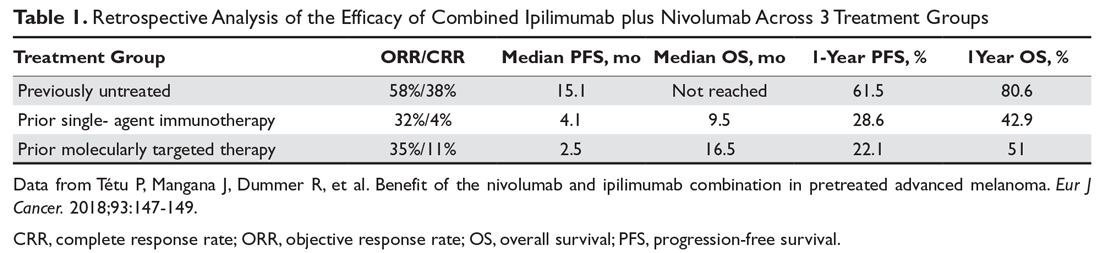
For patients with BRAF V600–mutation positive melanoma who progress on front-line molecularly targeted therapy, immune checkpoint inhibitor therapy with either anti-PD-1 monotherapy or combination anti-PD-1 and ipilimumab should be considered. The KEYNOTE-006 trial that demonstrated superiority of pembrolizumab compared to ipilimumab included patients who had received up to 1 prior systemic therapy that was not a PD-1 or CTLA-4 inhibitor, and subgroup analysis demonstrated efficacy with pembrolizumab in patients who had received prior treatment with a BRAF inhibitor.9 The retrospective analysis by Tétu et al (Table 1) noted efficacy of combination nivolumab and ipilimumab in patients treated with prior molecularly targeted therapy, as evidenced by an ORR of 35% and median OS of 16.5 months.8
A retrospective trial by Ackerman et al analyzed ORR, median PFS, and median OS from the time of commencement of BRAF inhibitor therapy (with or without a MEK inhibitor), and the comparison was made between those who received ipilimumab before or after molecularly targeted therapy. While ipilimumab is no longer the first-line immunotherapy agent used in advanced melanoma, the study did highlight some important concepts. First, ORRs to BRAF inhibitors were similar between the 2 treatment groups. The conclusions of the analysis were that there was no significant difference in median PFS or OS in regard to which therapy was given first, but median OS after BRAF inhibitors were discontinued was very short and patients had poor responses to ipilimumab after stopping a BRAF inhibitor. This highlights the concern that patients who have progressive disease on molecularly targeted therapy often have a poor performance status and undergo too rapid of a clinical decline to derive benefit from immunotherapy, which can often take weeks to months to take effect.10
A more recent retrospective study by Johnson et al compared efficacy outcomes in patients who received single-agent anti-PD-1 therapy prior to molecularly targeted therapy (BRAF inhibitor with or without MEK inhibitor) to those who received molecularly targeted therapy prior to anti-PD-1 therapy. The difference in median OS was not statistically significant (27.5 months with PD-1 inhibitor first vs 40.3 months with molecularly targeted therapy first). Both treatments demonstrated second-line efficacy, but outcomes were inferior to those reported when either type of therapy was used in the first-line setting. Interestingly, patients who were maintained on molecularly targeted therapy for more than 6 months prior to progression demonstrated an improved ORR to subsequent anti-PD-1 therapy (34% vs 15%).11
Molecularly Targeted Therapy in Progressive Disease
When melanoma patients with a BRAF V600 mutation are treated initially with immunotherapy and demonstrate progressive disease, molecularly targeted therapy with combined BRAF and MEK inhibition should be considered for second-line therapy. While there are no dedicated prospective trial results with BRAF/MEK inhibitors after progression on immune checkpoint inhibitors, for practical purposes, it may be reasonable to extrapolate outcomes from the currently available first-line studies.12-16 An ongoing study (NCT02224781) in which patients are randomized to receive ipilimumab/nivolumab followed by dabrafenib/trametinib at progression versus the reverse order is designed to help answer the question of optimal sequencing and timing of therapy. Johnson et al’s retrospective analysis of patients receiving single-agent anti-PD-1 therapy prior to molecularly targeted therapy compared to the reverse order concluded that there was no statistically significant difference in median OS.11 Ackerman et al’s retrospective study of patients who had received ipilimumab before or after molecularly targeted therapy noted similar response rates to molecularly targeted therapy in each treatment group.10
The issue of re-treatment with a BRAF/MEK inhibitor in a patient already progressing on targeted therapy is a more challenging situation, and currently available data suggests there is limited benefit. However, select patients may be considered for this approach. The combination of dabrafenib/trametinib demonstrated an ORR of approximately 15% in a cohort of patients who progressed on single-agent BRAF inhibitor therapy, with a suggestion that those patients who had previously derived benefit for more than 6 months may have a more favorable outcome.17
Based on the hypothesis that acquired resistance to BRAF/MEK inhibition may be reversible if the selective pressure of the medication is held for a period of time, a phase 2 trial analyzed outcomes with retreatment. The study included patients with BRAF V600–mutant melanoma who had progressed on prior BRAF inhibition (with or without MEK inhibitor) and required that they had been off of therapy for at least 12 weeks. Of the 25 patients who received dabrafenib plus trametinib as retreatment, 32% demonstrated a partial response and 40% had stable disease.18 While further studies are warranted, retreatment with molecularly targeted therapy may be a viable option, especially in light of the multiple approved BRAF and MEK inhibitor combinations.
Another concept that has been studied is treatment beyond disease progression with molecularly targeted therapy. In a retrospective analysis of patients who had progressed on a single-agent BRAF inhibitor, 39% of those patients were continued on the same BRAF inhibitor and compared to patients who received no subsequent therapy or changed to an alternative systemic therapy. In the multivariable analysis adjusting for other prognostic factors, continued treatment with the BRAF inhibitor was associated with prolonged OS.19
Case Conclusion
The patient is started on second-line therapy with nivolumab and ipilimumab and demonstrates a partial response. One year later he continues to feel well with decreased size of the intracranial and right lower lobe lesions, and without any interval development of new areas of metastatic disease.
Special Considerations
Intralesional Therapies
Talimogene laherparepvec (T-VEC) is a genetically modified herpesvirus-1 oncolytic virus that is injected into melanoma skin lesions and leads to the expression of granulocyte-macrophage colony-stimulating factor. While T-VEC is currently approved for local treatment of unresectable cutaneous, subcutaneous, or nodal recurrences,20 it has also been investigated in combination with other therapies for patients with advanced disease. In patients with previously treated melanoma, T-VEC plus ipilimumab demonstrated superior ORR to ipilimumab alone (39% vs 18%), and the tumor response was not limited to the injected lesions. The observation of systemic response suggests synergy between T-VEC and immune checkpoint blockade in enhancing the anti-tumor immune response.21 The phase 1b MASTERKEY-265 trial combining pembrolizumab and T-VEC led to an ORR of 62% and CR of 33%.22 A phase 3 trial comparing pembrolizumab plus T-VEC to pembrolizumab alone is ongoing (NCT02263508).
Melanoma Brain Metastases
The presence of brain metastases is a common event in patients with metastatic melanoma, and often confers a poor prognosis.23 The approach to the management of brain metastases should be multidisciplinary among medical oncology, neurosurgery, and radiation oncology providers, as treatment algorithms continue to rapidly evolve. Historically, there has been little prospective clinical trial data regarding optimal systemic therapy, and local therapies such as surgery or stereotactic radiation have long been the mainstay of therapy for intracranial disease.24 However, recent data with both immunotherapy and molecularly targeted therapy has demonstrated efficacy with intracranial metastases.
A recent trial of combined nivolumab and ipilimumab as frontline therapy in patients with asymptomatic melanoma brain metastases demonstrated a complete response rate of 26% and partial response rate of 30% in patients with a median follow-up of 14 months.25 In a separate study, ipilimumab plus nivolumab demonstrated better intracranial ORR when compared to nivolumab alone in asymptomatic, previously untreated patients. Outcomes were better in patients presenting with asymptomatic versus symptomatic brain metastases.26 Collectively, these results suggest that systemic immunotherapy alone may be adequate for patients with asymptomatic, previously untreated brain metastases.
For molecularly targeted therapy in patients with BRAF mutations and brain metastases, the BREAK-MB trial demonstrated that an intracranial response was attainable with dabrafenib regardless of whether the patient had previously received local therapy in the form of surgery or radiation.27 The COMBI-MB trial enhanced the preexisting data by testing the intracranial efficacy of dabrafenib plus trametinib in 4 different cohorts of patients, further supporting that systemic molecularly targeted therapy can provide significant intracranial activity in patients with both symptomatic and asymptomatic brain lesions and regardless of prior local therapy (Table 2).28
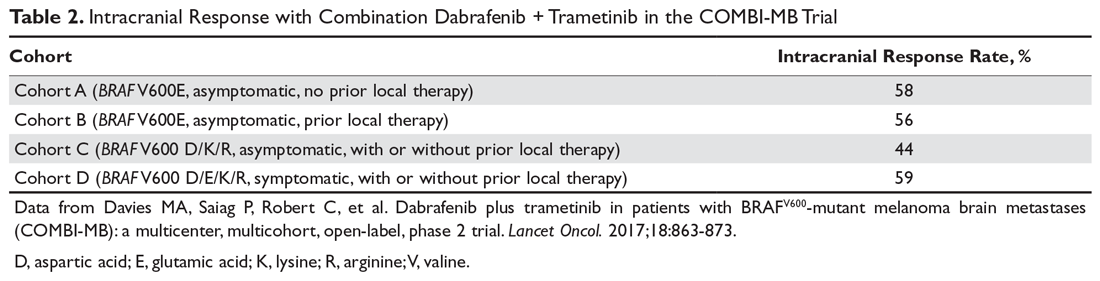
Conclusion
The treatment of advanced melanoma has been drastically improved over the past decade by the development and study of immune checkpoint inhibitors and molecularly targeted agents. There is still much to learn regarding the optimal combination and sequencing of therapies. Many of these trials are ongoing and will provide additional evidence to guide treatment decisions moving forward.
1. Bowyer S, Prithviraj P, Lorigan P, et al. Efficacy and toxicity of treatment with the anti-CTLA-4 antibody ipilimumab in patients with metastatic melanoma after prior anti-PD-1 therapy. Br J Cancer. 2016;114:1084-1089.
2. Weber JS, D’Angelo SP, Minor D, et al. Nivolumab versus chemotherapy in patients with advanced melanoma who progressed after anti-CTLA-4 treatment (CheckMate 037): a randomised, controlled, open-label, phase 3 trial. Lancet Oncol. 2015;16:375-384.
3. Ribas A, Puzanov I, Dummer R, et al. Pembrolizumab versus investigator-choice chemotherapy for ipilimumab-refractory melanoma (KEYNOTE-002): a randomised, controlled, phase 2 trial. Lancet Oncol. 2015;16:908-918.
4. Hamid O, Puzanov I, Dummer R, et al. Final analysis of a randomised trial comparing pembrolizumab versus investigator-choice chemotherapy for ipilimumab-refractory advanced melanoma. Eur J Cancer. 2017;86:37-45.
5. Beaver JA, Hazarika M, Mulkey F, et al. Patients with melanoma treated with an anti-PD-1 antibody beyond RECIST progression: a US Food and Drug Administration pooled analysis. Lancet Oncol. 2018;19:229-239.
6. Zimmer L, Apuri S, Eroglu Z, et al. Ipilimumab alone or in combination with nivolumab after progression on anti-PD-1 therapy in advanced melanoma. Eur J Cancer. 2017;75:47-55.
7. Larkin J, Chiarion-Sileni V, Gonazalez R, et al. Combined nivolumab and ipilimumab or monotherapy in untreated melanoma. N Engl J Med. 2015;373:23-34.
8. Tétu P, Mangana J, Dummer R, et al. Benefit of the nivolumab and ipilimumab combination in pretreated advanced melanoma. Eur J Cancer. 2018;93:147-149.
9. Robert C, Schachter J, Long GV, et al. Pembrolizumab versus ipilimumab in advanced melanoma. N Engl J Med. 2015;372:2522-2532.
10. Ackerman A, Klein O, McDermott D, et al. Outcomes of patients with metastatic melanoma treated with immunotherapy prior to or after BRAF inhibitors. Cancer. 2014;120:1695-1701.
11. Johnson DB, Pectasides E, Feld E, et al. Sequencing treatment in BRAFV600 mutant melanoma: anti-pd-1 before and after BRAF inhibition. J Immunother. 2017;40:31-35.
12. Long GV, Stroyakovskiy D, Gogas H, et al. Dabrafenib and trametinib versus dabrafenib and placebo for Val600 BRAF-mutant melanoma: a multicenter, double-blind, phase 3 randomised controlled trial. Lancet Oncol. 2015;386:444-451.
13. Long GV, Flaherty KT, Stroyakovskiy D, et al. Dabrafenib plus trametinib versus dabrafenib monotherapy in patients with metastatic BRAF V600E/K-mutant melanoma: long-term survival and safety analysis of a phase 3 study. Ann Oncol. 2017;28:1631-1639.
14. Ascierto PA, McArthur GA, Dréno B, et al. Cobimetinib combined with vemurafenib in advanced BRAFV600-mutant melanoma (coBRIM): updated efficacy results from a randomised, double-blind, phase 3 trial. Lancet Oncol. 2016;17:1248-1260.
15. Dummer R, Ascierto PA, Gogas HJ, et al. Encorafenib plus binimetinib versus vemurafenib or encorafenib in patients with BRAF-mutant melanoma (COLUMBUS): a multicenter, open-label, randomised phase 3 trial. Lancet Oncol. 2018;19:603-615.
16. Dummer R, Ascierto PA, Gogas HJ, et al. Overall survival in patients with BRAF-mutant melanoma receiving encorafenib plus binimetinib versus vemurafenib or encorafenib (COLUMBUS): a multicenter, open-label, randomised, phase 3 trial. Lancet Oncol. 2018;19:1315-1327.
17. Johnson DB, Flaherty KT, Weber, JS et al. Combined BRAF (Dabrafenib) and MEK inhibition (Trametinib) in patients with BRAFV600-mutant melanoma experiencing progression with single-agent BRAF inhibitor. J Clin Oncol. 2014;32:3697-3704.
18. Schreuer M, Jansen Y, Planken S, et al. Combination of dabrafenib plus trametinib for BRAF and MEK inhibitor pretreated patients with advanced BRAFV600-mutant melanoma: an open-label, single arm, dual-centre, phase 2 clinical trial. Lancet Oncol. 2017;18:464-472.
19. Chan MM, Haydu LE, Azer MW, et al. The nature and management of metastatic melanoma after progression on BRAF inhibitors: effects of extended BRAF inhibition. Cancer. 2014;120:3142-3153.
20. Imlygic (talimogene laherparepvec) suspension for intralesional injection [package insert]. Thousand Oaks, CA: BioVex; 2015.
21. Chesney J, Puzanov I, Collichio F, et al. Randomized, open-label phase ii study evaluating the efficacy and safety of talimogene laherparepvec in combination with ipilimumab versus ipilimumab alone in patients with advanced, unresectable melanoma. J Clin Oncol. 2018;36:1658-1667.
22. Ribas A, Dummer R, Puzanov I, et al. Oncolytic virotherapy promotes intratumoral t cell infiltration and improves anti-PD-1 immunotherapy. Cell. 2018;174:1031-1032.
23. Sampson JH, Carter Jr. JH, Friedman AH, Seigler HF. Demographics, prognosis, and therapy in 702 patients with brain metastases from malignant melanoma. J Neurosurg. 1998;88:11-20.
24. Yamamoto M, Serizawa T, Shuto T, et al. Stereotactic radiosurgery for patients with multiple brain metastases (JLGK0901): a multi-institutional prospective observational study. Lancet Oncol. 2014;15:387-395.
25. Tawbi HA, Forsyth PA, Hamid O, et al. Combined nivolumab and ipilimumab in melanoma metastatic to the brain. N Engl J Med. 2018;379:722-730.
26. Long GV, Atkinson V, La S, et al. Combination nivolumab and ipilimumab or nivolumab alone in melanoma brain metastases: a multicenter randomised phase 2 study. Lancet Oncol. 2018;19:672-681.
27. Long GV, Trefzer U, Davies MA, et al. Dabrafenib in patients with Val600Glu or Val600Lys BRAF-mutant melanoma metastatic to the brain (BREAK-MB): a multicenter, open-label, phase 2 trial. Lancet Oncol. 2012;13:1087-1095.
28. Davies MA, Saiag P, Robert C, et al. Dabrafenib plus trametinib in patients with BRAFV600-mutant melanoma brain metastases (COMBI-MB): a multicenter, multicohort, open-label, phase 2 trial. Lancet Oncol. 2017;18:863-873.
The past decade has brought rapid advancements in treatment with immune checkpoint inhibitors and molecularly targeted agents, which have significantly improved objective response rates (ORRs), progression-free survival (PFS), and overall survival (OS) for patients with metastatic melanoma. This article reviews current evidence for immune checkpoint blockade and molecularly targeted agents in the treatment of metastatic melanoma after progression on first-line therapy. The selection of first-line therapy for metastatic melanoma is reviewed in a separate article.
Case Presentation
A 62-year-old man was diagnosed with stage IIA melanoma after undergoing wide local excision of a right scalp lesion (final staging was consistent with pT3aN0M0). After 3.5 years of follow-up, he developed symptoms of vertigo, diplopia, and recurrent falls prompting medical attention. Magnetic resonance imaging (MRI) brain revealed multiple supratentorial and infratentorial lesions concerning for intracranial metastases and computed tomography (CT) chest/abdomen/pelvis revealed a right lower lobe pulmonary mass with right hilar and subcarinal lymphadenopathy. He was treated with intravenous dexamethasone and further evaluation with an endobronchial ultrasound-guided fine-needle aspiration of the right lower lobe mass revealed metastatic melanoma. The patient underwent whole brain radiation therapy for symptomatic relief prior to initiating systemic therapy. Testing showed the melanoma was positive for a BRAF V600K mutation. He was started on combination molecularly targeted therapy with dabrafenib and trametinib. He initially did well, with a partial response noted by resolution of symptoms and decreased size of his intracranial metastases and decreased size of the right lower lobe mass.
After 3 months of therapy, surveillance PET-CT notes increasing size and FDG avidity of the right lower lobe mass. MRI brain reveals resolution of several previously noted metastases, but with interval development of a new left frontal lobe mass concerning for progressive disease.
What is the general approach to treatment of metastatic melanoma after progression on first-line therapy?
Based on the current evidence, there is no definitive algorithm for the treatment of metastatic melanoma after progression on first-line therapy. Enrollment in clinical trials is encouraged to further elucidate the best sequencing of treatment. The current practice is to typically switch class of agents after progression on front-line therapy to either immunotherapy that has not yet been tried or to molecularly targeted therapy in patients harboring a BRAF V600 mutation. After further progression of disease, retreatment with a previously received agent is possible, and this may be combined with investigational therapies.
Immune Checkpoint Inhibitors in Progressive Disease
The 2 major populations of patients to consider are those with BRAF wild-type melanomas who progress on first-line immunotherapy and those with BRAF V600 mutation–positive melanoma who progress on molecularly targeted therapy with BRAF and MEK inhibitors. There is relatively limited data on the efficacy of immune checkpoint inhibition after progression on anti-programmed cell death 1 (PD-1) monotherapy. A small retrospective study of patients who progressed on anti-PD-1 monotherapy were treated with ipilimumab, with a 10% ORR and another 8% having stable disease for more than 6 months; however, 35% of patients experienced grade 3 to 5 immune-related adverse events.1 The only prospective data supports the efficacy of anti-PD-1 therapy after progression on ipilimumab, as supported by the CheckMate 037 trial (nivolumab versus chemotherapy)2 and KEYNOTE-002 trial (pembrolizumab versus chemotherapy)3,4; however, this is no longer applicable as ipilimumab is no longer given in the first-line setting and has been replaced by anti-PD-1 monotherapy or combination immunotherapy.
Another interesting facet of PD-1 monotherapy is the idea of treatment beyond progression. The concept of pseudoprogression—whereby patients receiving PD-1 inhibitors initially meet Response Evaluation Criteria in Solid Tumors (RECIST) criteria for progression, but then later go on to demonstrate significant decreases in tumor burden on subsequent imaging studies—has been described in melanoma patients receiving such immunotherapies. It is thought that pseudoprogression occurs due to either an initial delay in anti-tumor response to the immunotherapy or from the measured target lesion appearing larger due to surrounding immune/inflammatory infiltrate. In an analysis of individual patient data pooled from 8 multicenter clinical trials, 19% of patients were treated beyond initially documented RECIST progression and had subsequent imaging to evaluate the tumor burden; in these patients, the same target lesion later met RECIST criteria for response, with a greater than 30% reduction in tumor size. Furthermore, of the evaluable cohort, the median OS in patients who did receive treatment beyond progression was 24.4 months compared to 11.2 months in those who did not receive treatment beyond progression.5 While further randomized studies are warranted to characterize the potential benefit, the existing data suggests that selected patients who are doing well clinically despite evidence of radiographic progressive disease may benefit from continued treatment with PD-1 inhibitors.
Combination immunotherapy with both PD-1 and CTLA-4 blockade has been studied retrospectively in the second-line setting. A retrospective analysis of patients who had progressive disease on PD-1 inhibitor monotherapy compared the outcomes of patients who received just ipilimumab to those of patients who received both ipilimumab and nivolumab. The ORR (16% ipilimumab vs 21% combination group) and 1-year OS (54% vs 55%) were similar in both groups,6 and this demonstrated significantly less efficacy with combination therapy when compared to use in the first-line setting, albeit in a separate prospective trial.7 A multicenter, retrospective study by Tétu and colleagues compared outcomes with ipilimumab plus nivolumab across 3 groups that included previously untreated patients, patients who had progressed on single-agent immunotherapy, and patients who had progressed on prior molecularly targeted therapy.8 Despite clearly inferior efficacy in previously treated patients, the results support combination immunotherapy as a viable treatment option in the second-line setting. Outcomes are reported in Table 1 below. Of note, there is an ongoing phase 2 trial to assess the use of combined PD-1 and CTLA-4 inhibitors versus CTLA-4 inhibition alone after progression on first-line PD-1 inhibitor monotherapy (NCT03033576).
For patients with BRAF V600–mutation positive melanoma who progress on front-line molecularly targeted therapy, immune checkpoint inhibitor therapy with either anti-PD-1 monotherapy or combination anti-PD-1 and ipilimumab should be considered. The KEYNOTE-006 trial that demonstrated superiority of pembrolizumab compared to ipilimumab included patients who had received up to 1 prior systemic therapy that was not a PD-1 or CTLA-4 inhibitor, and subgroup analysis demonstrated efficacy with pembrolizumab in patients who had received prior treatment with a BRAF inhibitor.9 The retrospective analysis by Tétu et al (Table 1) noted efficacy of combination nivolumab and ipilimumab in patients treated with prior molecularly targeted therapy, as evidenced by an ORR of 35% and median OS of 16.5 months.8
A retrospective trial by Ackerman et al analyzed ORR, median PFS, and median OS from the time of commencement of BRAF inhibitor therapy (with or without a MEK inhibitor), and the comparison was made between those who received ipilimumab before or after molecularly targeted therapy. While ipilimumab is no longer the first-line immunotherapy agent used in advanced melanoma, the study did highlight some important concepts. First, ORRs to BRAF inhibitors were similar between the 2 treatment groups. The conclusions of the analysis were that there was no significant difference in median PFS or OS in regard to which therapy was given first, but median OS after BRAF inhibitors were discontinued was very short and patients had poor responses to ipilimumab after stopping a BRAF inhibitor. This highlights the concern that patients who have progressive disease on molecularly targeted therapy often have a poor performance status and undergo too rapid of a clinical decline to derive benefit from immunotherapy, which can often take weeks to months to take effect.10
A more recent retrospective study by Johnson et al compared efficacy outcomes in patients who received single-agent anti-PD-1 therapy prior to molecularly targeted therapy (BRAF inhibitor with or without MEK inhibitor) to those who received molecularly targeted therapy prior to anti-PD-1 therapy. The difference in median OS was not statistically significant (27.5 months with PD-1 inhibitor first vs 40.3 months with molecularly targeted therapy first). Both treatments demonstrated second-line efficacy, but outcomes were inferior to those reported when either type of therapy was used in the first-line setting. Interestingly, patients who were maintained on molecularly targeted therapy for more than 6 months prior to progression demonstrated an improved ORR to subsequent anti-PD-1 therapy (34% vs 15%).11
Molecularly Targeted Therapy in Progressive Disease
When melanoma patients with a BRAF V600 mutation are treated initially with immunotherapy and demonstrate progressive disease, molecularly targeted therapy with combined BRAF and MEK inhibition should be considered for second-line therapy. While there are no dedicated prospective trial results with BRAF/MEK inhibitors after progression on immune checkpoint inhibitors, for practical purposes, it may be reasonable to extrapolate outcomes from the currently available first-line studies.12-16 An ongoing study (NCT02224781) in which patients are randomized to receive ipilimumab/nivolumab followed by dabrafenib/trametinib at progression versus the reverse order is designed to help answer the question of optimal sequencing and timing of therapy. Johnson et al’s retrospective analysis of patients receiving single-agent anti-PD-1 therapy prior to molecularly targeted therapy compared to the reverse order concluded that there was no statistically significant difference in median OS.11 Ackerman et al’s retrospective study of patients who had received ipilimumab before or after molecularly targeted therapy noted similar response rates to molecularly targeted therapy in each treatment group.10
The issue of re-treatment with a BRAF/MEK inhibitor in a patient already progressing on targeted therapy is a more challenging situation, and currently available data suggests there is limited benefit. However, select patients may be considered for this approach. The combination of dabrafenib/trametinib demonstrated an ORR of approximately 15% in a cohort of patients who progressed on single-agent BRAF inhibitor therapy, with a suggestion that those patients who had previously derived benefit for more than 6 months may have a more favorable outcome.17
Based on the hypothesis that acquired resistance to BRAF/MEK inhibition may be reversible if the selective pressure of the medication is held for a period of time, a phase 2 trial analyzed outcomes with retreatment. The study included patients with BRAF V600–mutant melanoma who had progressed on prior BRAF inhibition (with or without MEK inhibitor) and required that they had been off of therapy for at least 12 weeks. Of the 25 patients who received dabrafenib plus trametinib as retreatment, 32% demonstrated a partial response and 40% had stable disease.18 While further studies are warranted, retreatment with molecularly targeted therapy may be a viable option, especially in light of the multiple approved BRAF and MEK inhibitor combinations.
Another concept that has been studied is treatment beyond disease progression with molecularly targeted therapy. In a retrospective analysis of patients who had progressed on a single-agent BRAF inhibitor, 39% of those patients were continued on the same BRAF inhibitor and compared to patients who received no subsequent therapy or changed to an alternative systemic therapy. In the multivariable analysis adjusting for other prognostic factors, continued treatment with the BRAF inhibitor was associated with prolonged OS.19
Case Conclusion
The patient is started on second-line therapy with nivolumab and ipilimumab and demonstrates a partial response. One year later he continues to feel well with decreased size of the intracranial and right lower lobe lesions, and without any interval development of new areas of metastatic disease.
Special Considerations
Intralesional Therapies
Talimogene laherparepvec (T-VEC) is a genetically modified herpesvirus-1 oncolytic virus that is injected into melanoma skin lesions and leads to the expression of granulocyte-macrophage colony-stimulating factor. While T-VEC is currently approved for local treatment of unresectable cutaneous, subcutaneous, or nodal recurrences,20 it has also been investigated in combination with other therapies for patients with advanced disease. In patients with previously treated melanoma, T-VEC plus ipilimumab demonstrated superior ORR to ipilimumab alone (39% vs 18%), and the tumor response was not limited to the injected lesions. The observation of systemic response suggests synergy between T-VEC and immune checkpoint blockade in enhancing the anti-tumor immune response.21 The phase 1b MASTERKEY-265 trial combining pembrolizumab and T-VEC led to an ORR of 62% and CR of 33%.22 A phase 3 trial comparing pembrolizumab plus T-VEC to pembrolizumab alone is ongoing (NCT02263508).
Melanoma Brain Metastases
The presence of brain metastases is a common event in patients with metastatic melanoma, and often confers a poor prognosis.23 The approach to the management of brain metastases should be multidisciplinary among medical oncology, neurosurgery, and radiation oncology providers, as treatment algorithms continue to rapidly evolve. Historically, there has been little prospective clinical trial data regarding optimal systemic therapy, and local therapies such as surgery or stereotactic radiation have long been the mainstay of therapy for intracranial disease.24 However, recent data with both immunotherapy and molecularly targeted therapy has demonstrated efficacy with intracranial metastases.
A recent trial of combined nivolumab and ipilimumab as frontline therapy in patients with asymptomatic melanoma brain metastases demonstrated a complete response rate of 26% and partial response rate of 30% in patients with a median follow-up of 14 months.25 In a separate study, ipilimumab plus nivolumab demonstrated better intracranial ORR when compared to nivolumab alone in asymptomatic, previously untreated patients. Outcomes were better in patients presenting with asymptomatic versus symptomatic brain metastases.26 Collectively, these results suggest that systemic immunotherapy alone may be adequate for patients with asymptomatic, previously untreated brain metastases.
For molecularly targeted therapy in patients with BRAF mutations and brain metastases, the BREAK-MB trial demonstrated that an intracranial response was attainable with dabrafenib regardless of whether the patient had previously received local therapy in the form of surgery or radiation.27 The COMBI-MB trial enhanced the preexisting data by testing the intracranial efficacy of dabrafenib plus trametinib in 4 different cohorts of patients, further supporting that systemic molecularly targeted therapy can provide significant intracranial activity in patients with both symptomatic and asymptomatic brain lesions and regardless of prior local therapy (Table 2).28
Conclusion
The treatment of advanced melanoma has been drastically improved over the past decade by the development and study of immune checkpoint inhibitors and molecularly targeted agents. There is still much to learn regarding the optimal combination and sequencing of therapies. Many of these trials are ongoing and will provide additional evidence to guide treatment decisions moving forward.
The past decade has brought rapid advancements in treatment with immune checkpoint inhibitors and molecularly targeted agents, which have significantly improved objective response rates (ORRs), progression-free survival (PFS), and overall survival (OS) for patients with metastatic melanoma. This article reviews current evidence for immune checkpoint blockade and molecularly targeted agents in the treatment of metastatic melanoma after progression on first-line therapy. The selection of first-line therapy for metastatic melanoma is reviewed in a separate article.
Case Presentation
A 62-year-old man was diagnosed with stage IIA melanoma after undergoing wide local excision of a right scalp lesion (final staging was consistent with pT3aN0M0). After 3.5 years of follow-up, he developed symptoms of vertigo, diplopia, and recurrent falls prompting medical attention. Magnetic resonance imaging (MRI) brain revealed multiple supratentorial and infratentorial lesions concerning for intracranial metastases and computed tomography (CT) chest/abdomen/pelvis revealed a right lower lobe pulmonary mass with right hilar and subcarinal lymphadenopathy. He was treated with intravenous dexamethasone and further evaluation with an endobronchial ultrasound-guided fine-needle aspiration of the right lower lobe mass revealed metastatic melanoma. The patient underwent whole brain radiation therapy for symptomatic relief prior to initiating systemic therapy. Testing showed the melanoma was positive for a BRAF V600K mutation. He was started on combination molecularly targeted therapy with dabrafenib and trametinib. He initially did well, with a partial response noted by resolution of symptoms and decreased size of his intracranial metastases and decreased size of the right lower lobe mass.
After 3 months of therapy, surveillance PET-CT notes increasing size and FDG avidity of the right lower lobe mass. MRI brain reveals resolution of several previously noted metastases, but with interval development of a new left frontal lobe mass concerning for progressive disease.
What is the general approach to treatment of metastatic melanoma after progression on first-line therapy?
Based on the current evidence, there is no definitive algorithm for the treatment of metastatic melanoma after progression on first-line therapy. Enrollment in clinical trials is encouraged to further elucidate the best sequencing of treatment. The current practice is to typically switch class of agents after progression on front-line therapy to either immunotherapy that has not yet been tried or to molecularly targeted therapy in patients harboring a BRAF V600 mutation. After further progression of disease, retreatment with a previously received agent is possible, and this may be combined with investigational therapies.
Immune Checkpoint Inhibitors in Progressive Disease
The 2 major populations of patients to consider are those with BRAF wild-type melanomas who progress on first-line immunotherapy and those with BRAF V600 mutation–positive melanoma who progress on molecularly targeted therapy with BRAF and MEK inhibitors. There is relatively limited data on the efficacy of immune checkpoint inhibition after progression on anti-programmed cell death 1 (PD-1) monotherapy. A small retrospective study of patients who progressed on anti-PD-1 monotherapy were treated with ipilimumab, with a 10% ORR and another 8% having stable disease for more than 6 months; however, 35% of patients experienced grade 3 to 5 immune-related adverse events.1 The only prospective data supports the efficacy of anti-PD-1 therapy after progression on ipilimumab, as supported by the CheckMate 037 trial (nivolumab versus chemotherapy)2 and KEYNOTE-002 trial (pembrolizumab versus chemotherapy)3,4; however, this is no longer applicable as ipilimumab is no longer given in the first-line setting and has been replaced by anti-PD-1 monotherapy or combination immunotherapy.
Another interesting facet of PD-1 monotherapy is the idea of treatment beyond progression. The concept of pseudoprogression—whereby patients receiving PD-1 inhibitors initially meet Response Evaluation Criteria in Solid Tumors (RECIST) criteria for progression, but then later go on to demonstrate significant decreases in tumor burden on subsequent imaging studies—has been described in melanoma patients receiving such immunotherapies. It is thought that pseudoprogression occurs due to either an initial delay in anti-tumor response to the immunotherapy or from the measured target lesion appearing larger due to surrounding immune/inflammatory infiltrate. In an analysis of individual patient data pooled from 8 multicenter clinical trials, 19% of patients were treated beyond initially documented RECIST progression and had subsequent imaging to evaluate the tumor burden; in these patients, the same target lesion later met RECIST criteria for response, with a greater than 30% reduction in tumor size. Furthermore, of the evaluable cohort, the median OS in patients who did receive treatment beyond progression was 24.4 months compared to 11.2 months in those who did not receive treatment beyond progression.5 While further randomized studies are warranted to characterize the potential benefit, the existing data suggests that selected patients who are doing well clinically despite evidence of radiographic progressive disease may benefit from continued treatment with PD-1 inhibitors.
Combination immunotherapy with both PD-1 and CTLA-4 blockade has been studied retrospectively in the second-line setting. A retrospective analysis of patients who had progressive disease on PD-1 inhibitor monotherapy compared the outcomes of patients who received just ipilimumab to those of patients who received both ipilimumab and nivolumab. The ORR (16% ipilimumab vs 21% combination group) and 1-year OS (54% vs 55%) were similar in both groups,6 and this demonstrated significantly less efficacy with combination therapy when compared to use in the first-line setting, albeit in a separate prospective trial.7 A multicenter, retrospective study by Tétu and colleagues compared outcomes with ipilimumab plus nivolumab across 3 groups that included previously untreated patients, patients who had progressed on single-agent immunotherapy, and patients who had progressed on prior molecularly targeted therapy.8 Despite clearly inferior efficacy in previously treated patients, the results support combination immunotherapy as a viable treatment option in the second-line setting. Outcomes are reported in Table 1 below. Of note, there is an ongoing phase 2 trial to assess the use of combined PD-1 and CTLA-4 inhibitors versus CTLA-4 inhibition alone after progression on first-line PD-1 inhibitor monotherapy (NCT03033576).
For patients with BRAF V600–mutation positive melanoma who progress on front-line molecularly targeted therapy, immune checkpoint inhibitor therapy with either anti-PD-1 monotherapy or combination anti-PD-1 and ipilimumab should be considered. The KEYNOTE-006 trial that demonstrated superiority of pembrolizumab compared to ipilimumab included patients who had received up to 1 prior systemic therapy that was not a PD-1 or CTLA-4 inhibitor, and subgroup analysis demonstrated efficacy with pembrolizumab in patients who had received prior treatment with a BRAF inhibitor.9 The retrospective analysis by Tétu et al (Table 1) noted efficacy of combination nivolumab and ipilimumab in patients treated with prior molecularly targeted therapy, as evidenced by an ORR of 35% and median OS of 16.5 months.8
A retrospective trial by Ackerman et al analyzed ORR, median PFS, and median OS from the time of commencement of BRAF inhibitor therapy (with or without a MEK inhibitor), and the comparison was made between those who received ipilimumab before or after molecularly targeted therapy. While ipilimumab is no longer the first-line immunotherapy agent used in advanced melanoma, the study did highlight some important concepts. First, ORRs to BRAF inhibitors were similar between the 2 treatment groups. The conclusions of the analysis were that there was no significant difference in median PFS or OS in regard to which therapy was given first, but median OS after BRAF inhibitors were discontinued was very short and patients had poor responses to ipilimumab after stopping a BRAF inhibitor. This highlights the concern that patients who have progressive disease on molecularly targeted therapy often have a poor performance status and undergo too rapid of a clinical decline to derive benefit from immunotherapy, which can often take weeks to months to take effect.10
A more recent retrospective study by Johnson et al compared efficacy outcomes in patients who received single-agent anti-PD-1 therapy prior to molecularly targeted therapy (BRAF inhibitor with or without MEK inhibitor) to those who received molecularly targeted therapy prior to anti-PD-1 therapy. The difference in median OS was not statistically significant (27.5 months with PD-1 inhibitor first vs 40.3 months with molecularly targeted therapy first). Both treatments demonstrated second-line efficacy, but outcomes were inferior to those reported when either type of therapy was used in the first-line setting. Interestingly, patients who were maintained on molecularly targeted therapy for more than 6 months prior to progression demonstrated an improved ORR to subsequent anti-PD-1 therapy (34% vs 15%).11
Molecularly Targeted Therapy in Progressive Disease
When melanoma patients with a BRAF V600 mutation are treated initially with immunotherapy and demonstrate progressive disease, molecularly targeted therapy with combined BRAF and MEK inhibition should be considered for second-line therapy. While there are no dedicated prospective trial results with BRAF/MEK inhibitors after progression on immune checkpoint inhibitors, for practical purposes, it may be reasonable to extrapolate outcomes from the currently available first-line studies.12-16 An ongoing study (NCT02224781) in which patients are randomized to receive ipilimumab/nivolumab followed by dabrafenib/trametinib at progression versus the reverse order is designed to help answer the question of optimal sequencing and timing of therapy. Johnson et al’s retrospective analysis of patients receiving single-agent anti-PD-1 therapy prior to molecularly targeted therapy compared to the reverse order concluded that there was no statistically significant difference in median OS.11 Ackerman et al’s retrospective study of patients who had received ipilimumab before or after molecularly targeted therapy noted similar response rates to molecularly targeted therapy in each treatment group.10
The issue of re-treatment with a BRAF/MEK inhibitor in a patient already progressing on targeted therapy is a more challenging situation, and currently available data suggests there is limited benefit. However, select patients may be considered for this approach. The combination of dabrafenib/trametinib demonstrated an ORR of approximately 15% in a cohort of patients who progressed on single-agent BRAF inhibitor therapy, with a suggestion that those patients who had previously derived benefit for more than 6 months may have a more favorable outcome.17
Based on the hypothesis that acquired resistance to BRAF/MEK inhibition may be reversible if the selective pressure of the medication is held for a period of time, a phase 2 trial analyzed outcomes with retreatment. The study included patients with BRAF V600–mutant melanoma who had progressed on prior BRAF inhibition (with or without MEK inhibitor) and required that they had been off of therapy for at least 12 weeks. Of the 25 patients who received dabrafenib plus trametinib as retreatment, 32% demonstrated a partial response and 40% had stable disease.18 While further studies are warranted, retreatment with molecularly targeted therapy may be a viable option, especially in light of the multiple approved BRAF and MEK inhibitor combinations.
Another concept that has been studied is treatment beyond disease progression with molecularly targeted therapy. In a retrospective analysis of patients who had progressed on a single-agent BRAF inhibitor, 39% of those patients were continued on the same BRAF inhibitor and compared to patients who received no subsequent therapy or changed to an alternative systemic therapy. In the multivariable analysis adjusting for other prognostic factors, continued treatment with the BRAF inhibitor was associated with prolonged OS.19
Case Conclusion
The patient is started on second-line therapy with nivolumab and ipilimumab and demonstrates a partial response. One year later he continues to feel well with decreased size of the intracranial and right lower lobe lesions, and without any interval development of new areas of metastatic disease.
Special Considerations
Intralesional Therapies
Talimogene laherparepvec (T-VEC) is a genetically modified herpesvirus-1 oncolytic virus that is injected into melanoma skin lesions and leads to the expression of granulocyte-macrophage colony-stimulating factor. While T-VEC is currently approved for local treatment of unresectable cutaneous, subcutaneous, or nodal recurrences,20 it has also been investigated in combination with other therapies for patients with advanced disease. In patients with previously treated melanoma, T-VEC plus ipilimumab demonstrated superior ORR to ipilimumab alone (39% vs 18%), and the tumor response was not limited to the injected lesions. The observation of systemic response suggests synergy between T-VEC and immune checkpoint blockade in enhancing the anti-tumor immune response.21 The phase 1b MASTERKEY-265 trial combining pembrolizumab and T-VEC led to an ORR of 62% and CR of 33%.22 A phase 3 trial comparing pembrolizumab plus T-VEC to pembrolizumab alone is ongoing (NCT02263508).
Melanoma Brain Metastases
The presence of brain metastases is a common event in patients with metastatic melanoma, and often confers a poor prognosis.23 The approach to the management of brain metastases should be multidisciplinary among medical oncology, neurosurgery, and radiation oncology providers, as treatment algorithms continue to rapidly evolve. Historically, there has been little prospective clinical trial data regarding optimal systemic therapy, and local therapies such as surgery or stereotactic radiation have long been the mainstay of therapy for intracranial disease.24 However, recent data with both immunotherapy and molecularly targeted therapy has demonstrated efficacy with intracranial metastases.
A recent trial of combined nivolumab and ipilimumab as frontline therapy in patients with asymptomatic melanoma brain metastases demonstrated a complete response rate of 26% and partial response rate of 30% in patients with a median follow-up of 14 months.25 In a separate study, ipilimumab plus nivolumab demonstrated better intracranial ORR when compared to nivolumab alone in asymptomatic, previously untreated patients. Outcomes were better in patients presenting with asymptomatic versus symptomatic brain metastases.26 Collectively, these results suggest that systemic immunotherapy alone may be adequate for patients with asymptomatic, previously untreated brain metastases.
For molecularly targeted therapy in patients with BRAF mutations and brain metastases, the BREAK-MB trial demonstrated that an intracranial response was attainable with dabrafenib regardless of whether the patient had previously received local therapy in the form of surgery or radiation.27 The COMBI-MB trial enhanced the preexisting data by testing the intracranial efficacy of dabrafenib plus trametinib in 4 different cohorts of patients, further supporting that systemic molecularly targeted therapy can provide significant intracranial activity in patients with both symptomatic and asymptomatic brain lesions and regardless of prior local therapy (Table 2).28
Conclusion
The treatment of advanced melanoma has been drastically improved over the past decade by the development and study of immune checkpoint inhibitors and molecularly targeted agents. There is still much to learn regarding the optimal combination and sequencing of therapies. Many of these trials are ongoing and will provide additional evidence to guide treatment decisions moving forward.
1. Bowyer S, Prithviraj P, Lorigan P, et al. Efficacy and toxicity of treatment with the anti-CTLA-4 antibody ipilimumab in patients with metastatic melanoma after prior anti-PD-1 therapy. Br J Cancer. 2016;114:1084-1089.
2. Weber JS, D’Angelo SP, Minor D, et al. Nivolumab versus chemotherapy in patients with advanced melanoma who progressed after anti-CTLA-4 treatment (CheckMate 037): a randomised, controlled, open-label, phase 3 trial. Lancet Oncol. 2015;16:375-384.
3. Ribas A, Puzanov I, Dummer R, et al. Pembrolizumab versus investigator-choice chemotherapy for ipilimumab-refractory melanoma (KEYNOTE-002): a randomised, controlled, phase 2 trial. Lancet Oncol. 2015;16:908-918.
4. Hamid O, Puzanov I, Dummer R, et al. Final analysis of a randomised trial comparing pembrolizumab versus investigator-choice chemotherapy for ipilimumab-refractory advanced melanoma. Eur J Cancer. 2017;86:37-45.
5. Beaver JA, Hazarika M, Mulkey F, et al. Patients with melanoma treated with an anti-PD-1 antibody beyond RECIST progression: a US Food and Drug Administration pooled analysis. Lancet Oncol. 2018;19:229-239.
6. Zimmer L, Apuri S, Eroglu Z, et al. Ipilimumab alone or in combination with nivolumab after progression on anti-PD-1 therapy in advanced melanoma. Eur J Cancer. 2017;75:47-55.
7. Larkin J, Chiarion-Sileni V, Gonazalez R, et al. Combined nivolumab and ipilimumab or monotherapy in untreated melanoma. N Engl J Med. 2015;373:23-34.
8. Tétu P, Mangana J, Dummer R, et al. Benefit of the nivolumab and ipilimumab combination in pretreated advanced melanoma. Eur J Cancer. 2018;93:147-149.
9. Robert C, Schachter J, Long GV, et al. Pembrolizumab versus ipilimumab in advanced melanoma. N Engl J Med. 2015;372:2522-2532.
10. Ackerman A, Klein O, McDermott D, et al. Outcomes of patients with metastatic melanoma treated with immunotherapy prior to or after BRAF inhibitors. Cancer. 2014;120:1695-1701.
11. Johnson DB, Pectasides E, Feld E, et al. Sequencing treatment in BRAFV600 mutant melanoma: anti-pd-1 before and after BRAF inhibition. J Immunother. 2017;40:31-35.
12. Long GV, Stroyakovskiy D, Gogas H, et al. Dabrafenib and trametinib versus dabrafenib and placebo for Val600 BRAF-mutant melanoma: a multicenter, double-blind, phase 3 randomised controlled trial. Lancet Oncol. 2015;386:444-451.
13. Long GV, Flaherty KT, Stroyakovskiy D, et al. Dabrafenib plus trametinib versus dabrafenib monotherapy in patients with metastatic BRAF V600E/K-mutant melanoma: long-term survival and safety analysis of a phase 3 study. Ann Oncol. 2017;28:1631-1639.
14. Ascierto PA, McArthur GA, Dréno B, et al. Cobimetinib combined with vemurafenib in advanced BRAFV600-mutant melanoma (coBRIM): updated efficacy results from a randomised, double-blind, phase 3 trial. Lancet Oncol. 2016;17:1248-1260.
15. Dummer R, Ascierto PA, Gogas HJ, et al. Encorafenib plus binimetinib versus vemurafenib or encorafenib in patients with BRAF-mutant melanoma (COLUMBUS): a multicenter, open-label, randomised phase 3 trial. Lancet Oncol. 2018;19:603-615.
16. Dummer R, Ascierto PA, Gogas HJ, et al. Overall survival in patients with BRAF-mutant melanoma receiving encorafenib plus binimetinib versus vemurafenib or encorafenib (COLUMBUS): a multicenter, open-label, randomised, phase 3 trial. Lancet Oncol. 2018;19:1315-1327.
17. Johnson DB, Flaherty KT, Weber, JS et al. Combined BRAF (Dabrafenib) and MEK inhibition (Trametinib) in patients with BRAFV600-mutant melanoma experiencing progression with single-agent BRAF inhibitor. J Clin Oncol. 2014;32:3697-3704.
18. Schreuer M, Jansen Y, Planken S, et al. Combination of dabrafenib plus trametinib for BRAF and MEK inhibitor pretreated patients with advanced BRAFV600-mutant melanoma: an open-label, single arm, dual-centre, phase 2 clinical trial. Lancet Oncol. 2017;18:464-472.
19. Chan MM, Haydu LE, Azer MW, et al. The nature and management of metastatic melanoma after progression on BRAF inhibitors: effects of extended BRAF inhibition. Cancer. 2014;120:3142-3153.
20. Imlygic (talimogene laherparepvec) suspension for intralesional injection [package insert]. Thousand Oaks, CA: BioVex; 2015.
21. Chesney J, Puzanov I, Collichio F, et al. Randomized, open-label phase ii study evaluating the efficacy and safety of talimogene laherparepvec in combination with ipilimumab versus ipilimumab alone in patients with advanced, unresectable melanoma. J Clin Oncol. 2018;36:1658-1667.
22. Ribas A, Dummer R, Puzanov I, et al. Oncolytic virotherapy promotes intratumoral t cell infiltration and improves anti-PD-1 immunotherapy. Cell. 2018;174:1031-1032.
23. Sampson JH, Carter Jr. JH, Friedman AH, Seigler HF. Demographics, prognosis, and therapy in 702 patients with brain metastases from malignant melanoma. J Neurosurg. 1998;88:11-20.
24. Yamamoto M, Serizawa T, Shuto T, et al. Stereotactic radiosurgery for patients with multiple brain metastases (JLGK0901): a multi-institutional prospective observational study. Lancet Oncol. 2014;15:387-395.
25. Tawbi HA, Forsyth PA, Hamid O, et al. Combined nivolumab and ipilimumab in melanoma metastatic to the brain. N Engl J Med. 2018;379:722-730.
26. Long GV, Atkinson V, La S, et al. Combination nivolumab and ipilimumab or nivolumab alone in melanoma brain metastases: a multicenter randomised phase 2 study. Lancet Oncol. 2018;19:672-681.
27. Long GV, Trefzer U, Davies MA, et al. Dabrafenib in patients with Val600Glu or Val600Lys BRAF-mutant melanoma metastatic to the brain (BREAK-MB): a multicenter, open-label, phase 2 trial. Lancet Oncol. 2012;13:1087-1095.
28. Davies MA, Saiag P, Robert C, et al. Dabrafenib plus trametinib in patients with BRAFV600-mutant melanoma brain metastases (COMBI-MB): a multicenter, multicohort, open-label, phase 2 trial. Lancet Oncol. 2017;18:863-873.
1. Bowyer S, Prithviraj P, Lorigan P, et al. Efficacy and toxicity of treatment with the anti-CTLA-4 antibody ipilimumab in patients with metastatic melanoma after prior anti-PD-1 therapy. Br J Cancer. 2016;114:1084-1089.
2. Weber JS, D’Angelo SP, Minor D, et al. Nivolumab versus chemotherapy in patients with advanced melanoma who progressed after anti-CTLA-4 treatment (CheckMate 037): a randomised, controlled, open-label, phase 3 trial. Lancet Oncol. 2015;16:375-384.
3. Ribas A, Puzanov I, Dummer R, et al. Pembrolizumab versus investigator-choice chemotherapy for ipilimumab-refractory melanoma (KEYNOTE-002): a randomised, controlled, phase 2 trial. Lancet Oncol. 2015;16:908-918.
4. Hamid O, Puzanov I, Dummer R, et al. Final analysis of a randomised trial comparing pembrolizumab versus investigator-choice chemotherapy for ipilimumab-refractory advanced melanoma. Eur J Cancer. 2017;86:37-45.
5. Beaver JA, Hazarika M, Mulkey F, et al. Patients with melanoma treated with an anti-PD-1 antibody beyond RECIST progression: a US Food and Drug Administration pooled analysis. Lancet Oncol. 2018;19:229-239.
6. Zimmer L, Apuri S, Eroglu Z, et al. Ipilimumab alone or in combination with nivolumab after progression on anti-PD-1 therapy in advanced melanoma. Eur J Cancer. 2017;75:47-55.
7. Larkin J, Chiarion-Sileni V, Gonazalez R, et al. Combined nivolumab and ipilimumab or monotherapy in untreated melanoma. N Engl J Med. 2015;373:23-34.
8. Tétu P, Mangana J, Dummer R, et al. Benefit of the nivolumab and ipilimumab combination in pretreated advanced melanoma. Eur J Cancer. 2018;93:147-149.
9. Robert C, Schachter J, Long GV, et al. Pembrolizumab versus ipilimumab in advanced melanoma. N Engl J Med. 2015;372:2522-2532.
10. Ackerman A, Klein O, McDermott D, et al. Outcomes of patients with metastatic melanoma treated with immunotherapy prior to or after BRAF inhibitors. Cancer. 2014;120:1695-1701.
11. Johnson DB, Pectasides E, Feld E, et al. Sequencing treatment in BRAFV600 mutant melanoma: anti-pd-1 before and after BRAF inhibition. J Immunother. 2017;40:31-35.
12. Long GV, Stroyakovskiy D, Gogas H, et al. Dabrafenib and trametinib versus dabrafenib and placebo for Val600 BRAF-mutant melanoma: a multicenter, double-blind, phase 3 randomised controlled trial. Lancet Oncol. 2015;386:444-451.
13. Long GV, Flaherty KT, Stroyakovskiy D, et al. Dabrafenib plus trametinib versus dabrafenib monotherapy in patients with metastatic BRAF V600E/K-mutant melanoma: long-term survival and safety analysis of a phase 3 study. Ann Oncol. 2017;28:1631-1639.
14. Ascierto PA, McArthur GA, Dréno B, et al. Cobimetinib combined with vemurafenib in advanced BRAFV600-mutant melanoma (coBRIM): updated efficacy results from a randomised, double-blind, phase 3 trial. Lancet Oncol. 2016;17:1248-1260.
15. Dummer R, Ascierto PA, Gogas HJ, et al. Encorafenib plus binimetinib versus vemurafenib or encorafenib in patients with BRAF-mutant melanoma (COLUMBUS): a multicenter, open-label, randomised phase 3 trial. Lancet Oncol. 2018;19:603-615.
16. Dummer R, Ascierto PA, Gogas HJ, et al. Overall survival in patients with BRAF-mutant melanoma receiving encorafenib plus binimetinib versus vemurafenib or encorafenib (COLUMBUS): a multicenter, open-label, randomised, phase 3 trial. Lancet Oncol. 2018;19:1315-1327.
17. Johnson DB, Flaherty KT, Weber, JS et al. Combined BRAF (Dabrafenib) and MEK inhibition (Trametinib) in patients with BRAFV600-mutant melanoma experiencing progression with single-agent BRAF inhibitor. J Clin Oncol. 2014;32:3697-3704.
18. Schreuer M, Jansen Y, Planken S, et al. Combination of dabrafenib plus trametinib for BRAF and MEK inhibitor pretreated patients with advanced BRAFV600-mutant melanoma: an open-label, single arm, dual-centre, phase 2 clinical trial. Lancet Oncol. 2017;18:464-472.
19. Chan MM, Haydu LE, Azer MW, et al. The nature and management of metastatic melanoma after progression on BRAF inhibitors: effects of extended BRAF inhibition. Cancer. 2014;120:3142-3153.
20. Imlygic (talimogene laherparepvec) suspension for intralesional injection [package insert]. Thousand Oaks, CA: BioVex; 2015.
21. Chesney J, Puzanov I, Collichio F, et al. Randomized, open-label phase ii study evaluating the efficacy and safety of talimogene laherparepvec in combination with ipilimumab versus ipilimumab alone in patients with advanced, unresectable melanoma. J Clin Oncol. 2018;36:1658-1667.
22. Ribas A, Dummer R, Puzanov I, et al. Oncolytic virotherapy promotes intratumoral t cell infiltration and improves anti-PD-1 immunotherapy. Cell. 2018;174:1031-1032.
23. Sampson JH, Carter Jr. JH, Friedman AH, Seigler HF. Demographics, prognosis, and therapy in 702 patients with brain metastases from malignant melanoma. J Neurosurg. 1998;88:11-20.
24. Yamamoto M, Serizawa T, Shuto T, et al. Stereotactic radiosurgery for patients with multiple brain metastases (JLGK0901): a multi-institutional prospective observational study. Lancet Oncol. 2014;15:387-395.
25. Tawbi HA, Forsyth PA, Hamid O, et al. Combined nivolumab and ipilimumab in melanoma metastatic to the brain. N Engl J Med. 2018;379:722-730.
26. Long GV, Atkinson V, La S, et al. Combination nivolumab and ipilimumab or nivolumab alone in melanoma brain metastases: a multicenter randomised phase 2 study. Lancet Oncol. 2018;19:672-681.
27. Long GV, Trefzer U, Davies MA, et al. Dabrafenib in patients with Val600Glu or Val600Lys BRAF-mutant melanoma metastatic to the brain (BREAK-MB): a multicenter, open-label, phase 2 trial. Lancet Oncol. 2012;13:1087-1095.
28. Davies MA, Saiag P, Robert C, et al. Dabrafenib plus trametinib in patients with BRAFV600-mutant melanoma brain metastases (COMBI-MB): a multicenter, multicohort, open-label, phase 2 trial. Lancet Oncol. 2017;18:863-873.
Don’t Just Look at the Lesion
A 52-year-old man self-refers to dermatology for evaluation of an irritated lesion on the posterolateral aspect of his neck. It’s been there for years, waxing and waning but always being irritated by his shirt collar or seat belt.
He has shown the lesion to his primary care provider on several occasions. Various topical preparations, including steroid and antifungal creams, have been prescribed—to no avail.
The patient owns a landscaping business. He has worked outdoors since he was in his teens and acknowledges that in his younger years, he was not careful about sun protection. For the past 20 years or so, however, he has worn a wide-brimmed hat and long-sleeved shirt while working.
His health is good in all other respects.
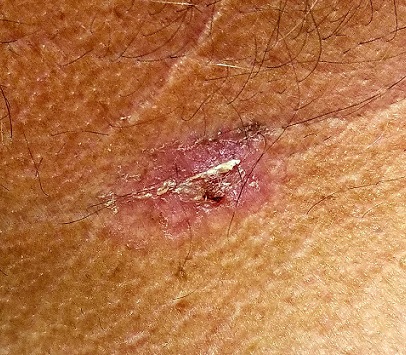
EXAMINATION
The lesion is a pink, scaly, 2-cm ovoid patch on the left side of the patient’s neck. Several areas of scabbing are seen within the bounds of the lesion, the margins of which are very well defined.
There is much evidence of sun damage on his neck and arms, with prominent pilosebaceous units and rhomboidal lining of the neck skin. Elsewhere, on sun-exposed skin, there are numerous actinic keratoses, telangiectasias, and poikilodermatous changes.
The lesion is biopsied by shave technique and the sample submitted to pathology.
What’s the diagnosis?
DISCUSSION
The biopsy results confirmed the impression of superficial squamous cell carcinoma (SSC) with focal areas of invasion.
One thinks of skin cancer as being “a thing,” a papule or nodule, and that’s usually true. But there are several types of skin cancer that manifest as a fixed rash—meaning it stays in the same place year after year, unlike other rashes (eg, psoriasis, eczema, or fungal infection). Common examples, besides superficial SCC (also known as Bowen disease), include superficial basal cell carcinoma (BCC), Paget disease (mammary and extramammary), cutaneous T-cell lymphoma, and even local recurrence of breast cancer.
This patient’s occupation and history of (abundantly evident) sun damage put him at risk for a sun-caused skin cancer. As so often happens, the problem was initially misdiagnosed by a provider who was only looking at the lesion instead of factoring in the context in which it appeared. Who has the lesion is almost as important as the lesion itself.
Without a biopsy, Bowen disease is often indistinguishable from superficial BCC; the latter can take on a variety of appearances, from scar-like (cicatricial) to pigmented (especially in patients with darker skin) to the most common, nodular/noduloulcerative. Another item in the differential is discoid lupus erythematosus, particularly when the lesion manifests in a highly sun-exposed area.
Treatment of this patient’s lesion entailed full excision with 3-mm margins. This option was chosen based on the focal areas of invasion and theoretical potential for metastasis.
TAKE-HOME LEARNING POINTS
- Intraepidermal squamous cell carcinoma (Bowen disease) presents as a red, scaly rash with a rounded, well-demarcated border, almost always on skin directly overexposed to the sun.
- These cancers grow slowly, are fixed in location, never heal, and—given enough time—often become focally invasive.
- They will often be misdiagnosed as fungal infection, psoriasis, or eczema, because of the misperception that skin cancers are always papular or nodular.
- A history of sun exposure and resulting markers of dermatoheliosis serve to corroborate the putative diagnosis.
A 52-year-old man self-refers to dermatology for evaluation of an irritated lesion on the posterolateral aspect of his neck. It’s been there for years, waxing and waning but always being irritated by his shirt collar or seat belt.
He has shown the lesion to his primary care provider on several occasions. Various topical preparations, including steroid and antifungal creams, have been prescribed—to no avail.
The patient owns a landscaping business. He has worked outdoors since he was in his teens and acknowledges that in his younger years, he was not careful about sun protection. For the past 20 years or so, however, he has worn a wide-brimmed hat and long-sleeved shirt while working.
His health is good in all other respects.
EXAMINATION
The lesion is a pink, scaly, 2-cm ovoid patch on the left side of the patient’s neck. Several areas of scabbing are seen within the bounds of the lesion, the margins of which are very well defined.
There is much evidence of sun damage on his neck and arms, with prominent pilosebaceous units and rhomboidal lining of the neck skin. Elsewhere, on sun-exposed skin, there are numerous actinic keratoses, telangiectasias, and poikilodermatous changes.
The lesion is biopsied by shave technique and the sample submitted to pathology.
What’s the diagnosis?
DISCUSSION
The biopsy results confirmed the impression of superficial squamous cell carcinoma (SSC) with focal areas of invasion.
One thinks of skin cancer as being “a thing,” a papule or nodule, and that’s usually true. But there are several types of skin cancer that manifest as a fixed rash—meaning it stays in the same place year after year, unlike other rashes (eg, psoriasis, eczema, or fungal infection). Common examples, besides superficial SCC (also known as Bowen disease), include superficial basal cell carcinoma (BCC), Paget disease (mammary and extramammary), cutaneous T-cell lymphoma, and even local recurrence of breast cancer.
This patient’s occupation and history of (abundantly evident) sun damage put him at risk for a sun-caused skin cancer. As so often happens, the problem was initially misdiagnosed by a provider who was only looking at the lesion instead of factoring in the context in which it appeared. Who has the lesion is almost as important as the lesion itself.
Without a biopsy, Bowen disease is often indistinguishable from superficial BCC; the latter can take on a variety of appearances, from scar-like (cicatricial) to pigmented (especially in patients with darker skin) to the most common, nodular/noduloulcerative. Another item in the differential is discoid lupus erythematosus, particularly when the lesion manifests in a highly sun-exposed area.
Treatment of this patient’s lesion entailed full excision with 3-mm margins. This option was chosen based on the focal areas of invasion and theoretical potential for metastasis.
TAKE-HOME LEARNING POINTS
- Intraepidermal squamous cell carcinoma (Bowen disease) presents as a red, scaly rash with a rounded, well-demarcated border, almost always on skin directly overexposed to the sun.
- These cancers grow slowly, are fixed in location, never heal, and—given enough time—often become focally invasive.
- They will often be misdiagnosed as fungal infection, psoriasis, or eczema, because of the misperception that skin cancers are always papular or nodular.
- A history of sun exposure and resulting markers of dermatoheliosis serve to corroborate the putative diagnosis.
A 52-year-old man self-refers to dermatology for evaluation of an irritated lesion on the posterolateral aspect of his neck. It’s been there for years, waxing and waning but always being irritated by his shirt collar or seat belt.
He has shown the lesion to his primary care provider on several occasions. Various topical preparations, including steroid and antifungal creams, have been prescribed—to no avail.
The patient owns a landscaping business. He has worked outdoors since he was in his teens and acknowledges that in his younger years, he was not careful about sun protection. For the past 20 years or so, however, he has worn a wide-brimmed hat and long-sleeved shirt while working.
His health is good in all other respects.
EXAMINATION
The lesion is a pink, scaly, 2-cm ovoid patch on the left side of the patient’s neck. Several areas of scabbing are seen within the bounds of the lesion, the margins of which are very well defined.
There is much evidence of sun damage on his neck and arms, with prominent pilosebaceous units and rhomboidal lining of the neck skin. Elsewhere, on sun-exposed skin, there are numerous actinic keratoses, telangiectasias, and poikilodermatous changes.
The lesion is biopsied by shave technique and the sample submitted to pathology.
What’s the diagnosis?
DISCUSSION
The biopsy results confirmed the impression of superficial squamous cell carcinoma (SSC) with focal areas of invasion.
One thinks of skin cancer as being “a thing,” a papule or nodule, and that’s usually true. But there are several types of skin cancer that manifest as a fixed rash—meaning it stays in the same place year after year, unlike other rashes (eg, psoriasis, eczema, or fungal infection). Common examples, besides superficial SCC (also known as Bowen disease), include superficial basal cell carcinoma (BCC), Paget disease (mammary and extramammary), cutaneous T-cell lymphoma, and even local recurrence of breast cancer.
This patient’s occupation and history of (abundantly evident) sun damage put him at risk for a sun-caused skin cancer. As so often happens, the problem was initially misdiagnosed by a provider who was only looking at the lesion instead of factoring in the context in which it appeared. Who has the lesion is almost as important as the lesion itself.
Without a biopsy, Bowen disease is often indistinguishable from superficial BCC; the latter can take on a variety of appearances, from scar-like (cicatricial) to pigmented (especially in patients with darker skin) to the most common, nodular/noduloulcerative. Another item in the differential is discoid lupus erythematosus, particularly when the lesion manifests in a highly sun-exposed area.
Treatment of this patient’s lesion entailed full excision with 3-mm margins. This option was chosen based on the focal areas of invasion and theoretical potential for metastasis.
TAKE-HOME LEARNING POINTS
- Intraepidermal squamous cell carcinoma (Bowen disease) presents as a red, scaly rash with a rounded, well-demarcated border, almost always on skin directly overexposed to the sun.
- These cancers grow slowly, are fixed in location, never heal, and—given enough time—often become focally invasive.
- They will often be misdiagnosed as fungal infection, psoriasis, or eczema, because of the misperception that skin cancers are always papular or nodular.
- A history of sun exposure and resulting markers of dermatoheliosis serve to corroborate the putative diagnosis.

Geometric rash on arms and legs

The FP thought this looked like granuloma annulare (GA) but had never seen so many lesions on a patient. Some lesions were not round (more oval or elongated), while others were not completely enclosed geometric shapes (with breaks in the multiple ring patterns). However, all of the lesions were slightly raised with erythema and no scale. (The FP also considered tinea corporis, but ruled it out because there was no scale.)
He consulted some Internet resources and was convinced that this was disseminated GA. The greatest risk factor for this somewhat mysterious disease of unknown origin is female gender. It is also often associated with diabetes, but diabetes is not the cause.
Although intralesional steroids work when treating disseminated GA, this approach is not realistic for widespread disease. A number of options have been studied and reported in small series or case reports. The FP presented various options to the patient, and together they decided to try pentoxifylline 400 mg 3 times daily for systemic treatment. Pentoxifylline is approved for claudication and has few adverse effects or risks. While this treatment is off-label for GA, there are no FDA approved treatments.
During a follow-up visit 1 month later, the number of lesions had been reduced by half. The FP continued treating the patient with pentoxifylline with the hope of achieving full resolution.
Photos and text for Photo Rounds Friday courtesy of Richard P. Usatine, MD. This case was adapted from: Mauskar M, Usatine R. Granuloma annulare. In: Usatine R, Smith M, Mayeaux EJ, et al. Color Atlas and Synopsis of Family Medicine. 3rd ed. New York, NY: McGraw-Hill; 2019:1141-1146.
To learn more about the newest 3rd edition of the Color Atlas and Synopsis of Family Medicine, see: https://www.amazon.com/Color-Atlas-Synopsis-Family-Medicine/dp/1259862046/
You can get the Color Atlas of Family Medicine app by clicking on this link: usatinemedia.com
The FP thought this looked like granuloma annulare (GA) but had never seen so many lesions on a patient. Some lesions were not round (more oval or elongated), while others were not completely enclosed geometric shapes (with breaks in the multiple ring patterns). However, all of the lesions were slightly raised with erythema and no scale. (The FP also considered tinea corporis, but ruled it out because there was no scale.)
He consulted some Internet resources and was convinced that this was disseminated GA. The greatest risk factor for this somewhat mysterious disease of unknown origin is female gender. It is also often associated with diabetes, but diabetes is not the cause.
Although intralesional steroids work when treating disseminated GA, this approach is not realistic for widespread disease. A number of options have been studied and reported in small series or case reports. The FP presented various options to the patient, and together they decided to try pentoxifylline 400 mg 3 times daily for systemic treatment. Pentoxifylline is approved for claudication and has few adverse effects or risks. While this treatment is off-label for GA, there are no FDA approved treatments.
During a follow-up visit 1 month later, the number of lesions had been reduced by half. The FP continued treating the patient with pentoxifylline with the hope of achieving full resolution.
Photos and text for Photo Rounds Friday courtesy of Richard P. Usatine, MD. This case was adapted from: Mauskar M, Usatine R. Granuloma annulare. In: Usatine R, Smith M, Mayeaux EJ, et al. Color Atlas and Synopsis of Family Medicine. 3rd ed. New York, NY: McGraw-Hill; 2019:1141-1146.
To learn more about the newest 3rd edition of the Color Atlas and Synopsis of Family Medicine, see: https://www.amazon.com/Color-Atlas-Synopsis-Family-Medicine/dp/1259862046/
You can get the Color Atlas of Family Medicine app by clicking on this link: usatinemedia.com
The FP thought this looked like granuloma annulare (GA) but had never seen so many lesions on a patient. Some lesions were not round (more oval or elongated), while others were not completely enclosed geometric shapes (with breaks in the multiple ring patterns). However, all of the lesions were slightly raised with erythema and no scale. (The FP also considered tinea corporis, but ruled it out because there was no scale.)
He consulted some Internet resources and was convinced that this was disseminated GA. The greatest risk factor for this somewhat mysterious disease of unknown origin is female gender. It is also often associated with diabetes, but diabetes is not the cause.
Although intralesional steroids work when treating disseminated GA, this approach is not realistic for widespread disease. A number of options have been studied and reported in small series or case reports. The FP presented various options to the patient, and together they decided to try pentoxifylline 400 mg 3 times daily for systemic treatment. Pentoxifylline is approved for claudication and has few adverse effects or risks. While this treatment is off-label for GA, there are no FDA approved treatments.
During a follow-up visit 1 month later, the number of lesions had been reduced by half. The FP continued treating the patient with pentoxifylline with the hope of achieving full resolution.
Photos and text for Photo Rounds Friday courtesy of Richard P. Usatine, MD. This case was adapted from: Mauskar M, Usatine R. Granuloma annulare. In: Usatine R, Smith M, Mayeaux EJ, et al. Color Atlas and Synopsis of Family Medicine. 3rd ed. New York, NY: McGraw-Hill; 2019:1141-1146.
To learn more about the newest 3rd edition of the Color Atlas and Synopsis of Family Medicine, see: https://www.amazon.com/Color-Atlas-Synopsis-Family-Medicine/dp/1259862046/
You can get the Color Atlas of Family Medicine app by clicking on this link: usatinemedia.com