User login
Sarilumab monotherapy as effective as sarilumab + methotrexate combo in RA
Key clinical point: Sarilumab monotherapy was as effective as its combination with methotrexate in patients with rheumatoid arthritis (RA). Hence, it could be a suitable alternative in patients with contraindications or intolerance to methotrexate.
Major finding: At 24 weeks, sarilumab vs. sarilumab + methotrexate groups had comparable least square mean change from baseline with overlapping confidence intervals for Clinical Disease Activity Index (−28.79 vs. −26.21), 28-joint Disease Activity using C-reactive protein (−2.95 vs. −2.81), and pain visual analog scale (−33.62 vs. −31.66).
Study details: This was a post hoc analysis of 184 patients with RA who received sarilumab in the MONARCH trial and 399 patients with RA with inadequate response to methotrexate, who received a combination of sarilumab and methotrexate in the MOBILITY trial.
Disclosures: Sanofi provided funding for this study. The authors including the lead author reported receiving grants/research support, consultancy, speaker’s fees, and consultancy fees or honoraria from various sources. A Praestgaard and HV Hoogstraten reported being employees of Sanofi and may hold stock or stock options in the company.
Source: Burmester GR et al. Rheumatology (Oxford). 2021 Sep 11. doi: 10.1093/rheumatology/keab676.
Key clinical point: Sarilumab monotherapy was as effective as its combination with methotrexate in patients with rheumatoid arthritis (RA). Hence, it could be a suitable alternative in patients with contraindications or intolerance to methotrexate.
Major finding: At 24 weeks, sarilumab vs. sarilumab + methotrexate groups had comparable least square mean change from baseline with overlapping confidence intervals for Clinical Disease Activity Index (−28.79 vs. −26.21), 28-joint Disease Activity using C-reactive protein (−2.95 vs. −2.81), and pain visual analog scale (−33.62 vs. −31.66).
Study details: This was a post hoc analysis of 184 patients with RA who received sarilumab in the MONARCH trial and 399 patients with RA with inadequate response to methotrexate, who received a combination of sarilumab and methotrexate in the MOBILITY trial.
Disclosures: Sanofi provided funding for this study. The authors including the lead author reported receiving grants/research support, consultancy, speaker’s fees, and consultancy fees or honoraria from various sources. A Praestgaard and HV Hoogstraten reported being employees of Sanofi and may hold stock or stock options in the company.
Source: Burmester GR et al. Rheumatology (Oxford). 2021 Sep 11. doi: 10.1093/rheumatology/keab676.
Key clinical point: Sarilumab monotherapy was as effective as its combination with methotrexate in patients with rheumatoid arthritis (RA). Hence, it could be a suitable alternative in patients with contraindications or intolerance to methotrexate.
Major finding: At 24 weeks, sarilumab vs. sarilumab + methotrexate groups had comparable least square mean change from baseline with overlapping confidence intervals for Clinical Disease Activity Index (−28.79 vs. −26.21), 28-joint Disease Activity using C-reactive protein (−2.95 vs. −2.81), and pain visual analog scale (−33.62 vs. −31.66).
Study details: This was a post hoc analysis of 184 patients with RA who received sarilumab in the MONARCH trial and 399 patients with RA with inadequate response to methotrexate, who received a combination of sarilumab and methotrexate in the MOBILITY trial.
Disclosures: Sanofi provided funding for this study. The authors including the lead author reported receiving grants/research support, consultancy, speaker’s fees, and consultancy fees or honoraria from various sources. A Praestgaard and HV Hoogstraten reported being employees of Sanofi and may hold stock or stock options in the company.
Source: Burmester GR et al. Rheumatology (Oxford). 2021 Sep 11. doi: 10.1093/rheumatology/keab676.
No effect of bDMARD treatment on risk for cancer recurrence or new cancer in RA
Key clinical point: Exposure to biologic disease-modifying antirheumatic drugs (bDMARD) did not seem to be associated with an elevated risk for recurrent or new cancer in patients with rheumatoid arthritis (RA) and a history of cancer.
Major finding: The risk for recurrent or new cancer was not significantly higher in patients with RA receiving bDMARDs (relative risk [RR], 1.09; P = .31), tumor necrosis factor inhibitors (RR 1.11; P = .45), or rituximab (RR 0.79; P = .49) vs. those not receiving bDMARDs.
Study details: This was a meta-analysis of 12 observational studies involving patients with RA who had a history of cancer and received bDMARDs.
Disclosures: No specific funding was received for this study. The authors declared receiving honoraria or grants from various sources.
Source: Wetzman A et al. Arthritis Care Res (Hoboken). 2021 Sep 21. doi: 10.1002/acr.24784.
Key clinical point: Exposure to biologic disease-modifying antirheumatic drugs (bDMARD) did not seem to be associated with an elevated risk for recurrent or new cancer in patients with rheumatoid arthritis (RA) and a history of cancer.
Major finding: The risk for recurrent or new cancer was not significantly higher in patients with RA receiving bDMARDs (relative risk [RR], 1.09; P = .31), tumor necrosis factor inhibitors (RR 1.11; P = .45), or rituximab (RR 0.79; P = .49) vs. those not receiving bDMARDs.
Study details: This was a meta-analysis of 12 observational studies involving patients with RA who had a history of cancer and received bDMARDs.
Disclosures: No specific funding was received for this study. The authors declared receiving honoraria or grants from various sources.
Source: Wetzman A et al. Arthritis Care Res (Hoboken). 2021 Sep 21. doi: 10.1002/acr.24784.
Key clinical point: Exposure to biologic disease-modifying antirheumatic drugs (bDMARD) did not seem to be associated with an elevated risk for recurrent or new cancer in patients with rheumatoid arthritis (RA) and a history of cancer.
Major finding: The risk for recurrent or new cancer was not significantly higher in patients with RA receiving bDMARDs (relative risk [RR], 1.09; P = .31), tumor necrosis factor inhibitors (RR 1.11; P = .45), or rituximab (RR 0.79; P = .49) vs. those not receiving bDMARDs.
Study details: This was a meta-analysis of 12 observational studies involving patients with RA who had a history of cancer and received bDMARDs.
Disclosures: No specific funding was received for this study. The authors declared receiving honoraria or grants from various sources.
Source: Wetzman A et al. Arthritis Care Res (Hoboken). 2021 Sep 21. doi: 10.1002/acr.24784.
RA: Discontinuation of denosumab leads to reversal of treatment gains
Key clinical point: Discontinuation of denosumab after 1 year of treatment showed a return to baseline lumbar spine (LS) and total hip (TH) bone mineral density (BMD) in patients with rheumatoid arthritis (RA) receiving glucocorticoids.
Major finding: By 12 months after discontinuation, TH BMD reduced to levels similar to or slightly above placebo in patients receiving 60 mg (P = .210) and 180 mg denosumab (P = .706). Similar reversal of gains was observed for LS BMD with the least-square percent mean change from baseline in placebo, 60 mg, and 180 mg denosumab, being 2.30% (95% CI −0.35%-4.94%), 1.31% (95% CI −1.17%-3.79%), and 0.12% (95% CI −2.45%-2.68%), respectively.
Study details: This was a post hoc analysis of a phase 2 study including 82 patients with RA receiving glucocorticoids, randomly assigned to placebo, 60 mg, or 180 mg denosumab every 6 months for 12 months.
Disclosures: The study was sponsored by Amgen Inc. Some of the authors declared ties with various sources including Amgen. MT McDermott, RK Stad, L Chen, and S Huang declared being employees of Amgen.
Source: Saag KG et al. Arthritis Rheumatol. 2021 Sep 17. doi: 10.1002/art.41981.
Key clinical point: Discontinuation of denosumab after 1 year of treatment showed a return to baseline lumbar spine (LS) and total hip (TH) bone mineral density (BMD) in patients with rheumatoid arthritis (RA) receiving glucocorticoids.
Major finding: By 12 months after discontinuation, TH BMD reduced to levels similar to or slightly above placebo in patients receiving 60 mg (P = .210) and 180 mg denosumab (P = .706). Similar reversal of gains was observed for LS BMD with the least-square percent mean change from baseline in placebo, 60 mg, and 180 mg denosumab, being 2.30% (95% CI −0.35%-4.94%), 1.31% (95% CI −1.17%-3.79%), and 0.12% (95% CI −2.45%-2.68%), respectively.
Study details: This was a post hoc analysis of a phase 2 study including 82 patients with RA receiving glucocorticoids, randomly assigned to placebo, 60 mg, or 180 mg denosumab every 6 months for 12 months.
Disclosures: The study was sponsored by Amgen Inc. Some of the authors declared ties with various sources including Amgen. MT McDermott, RK Stad, L Chen, and S Huang declared being employees of Amgen.
Source: Saag KG et al. Arthritis Rheumatol. 2021 Sep 17. doi: 10.1002/art.41981.
Key clinical point: Discontinuation of denosumab after 1 year of treatment showed a return to baseline lumbar spine (LS) and total hip (TH) bone mineral density (BMD) in patients with rheumatoid arthritis (RA) receiving glucocorticoids.
Major finding: By 12 months after discontinuation, TH BMD reduced to levels similar to or slightly above placebo in patients receiving 60 mg (P = .210) and 180 mg denosumab (P = .706). Similar reversal of gains was observed for LS BMD with the least-square percent mean change from baseline in placebo, 60 mg, and 180 mg denosumab, being 2.30% (95% CI −0.35%-4.94%), 1.31% (95% CI −1.17%-3.79%), and 0.12% (95% CI −2.45%-2.68%), respectively.
Study details: This was a post hoc analysis of a phase 2 study including 82 patients with RA receiving glucocorticoids, randomly assigned to placebo, 60 mg, or 180 mg denosumab every 6 months for 12 months.
Disclosures: The study was sponsored by Amgen Inc. Some of the authors declared ties with various sources including Amgen. MT McDermott, RK Stad, L Chen, and S Huang declared being employees of Amgen.
Source: Saag KG et al. Arthritis Rheumatol. 2021 Sep 17. doi: 10.1002/art.41981.
Use of bDMARDs lowers total knee and hip replacement risk in RA
Key clinical point: Despite higher initial disease activity, patients with rheumatoid arthritis (RA) who received biologic disease-modifying antirheumatic drugs (bDMARDs) vs. conventional synthetic DMARDs (csDMARDs) had a lower incidence of total knee replacement (TKR) and total hip replacement (THR).
Major finding: The incidence of TKR (incidence rate ratio [IRR] 0.72; 95% CI 0.62-0.83) and THR (IRR 0.77; 95% CI 0.64-0.93) was significantly lower in patients receiving biologics vs. those who received csDMARDs, with TKR (adjusted hazard ratio [aHR] 0.55; 95% CI 0.38-0.81) and THR (aHR 0.63; 95% CI 0.40-0.98) risk being lowest in patients with regular bDMARD use.
Study details: This was a nationwide retrospective study involving 48,165 patients with RA. Patients receiving biologics without undergoing TKR (n = 5,979) or THR (n = 6,245) formed the biologic cohort matched with control cohorts comprising 11,958 and 12,490 patients receiving csDMARDs, respectively.
Disclosures: No specific funding or conflict of interests was reported.
Source: Chang YS et al. Rheumatology (Oxford). 2021 Sep 17. doi: 10.1093/rheumatology/keab671.
Key clinical point: Despite higher initial disease activity, patients with rheumatoid arthritis (RA) who received biologic disease-modifying antirheumatic drugs (bDMARDs) vs. conventional synthetic DMARDs (csDMARDs) had a lower incidence of total knee replacement (TKR) and total hip replacement (THR).
Major finding: The incidence of TKR (incidence rate ratio [IRR] 0.72; 95% CI 0.62-0.83) and THR (IRR 0.77; 95% CI 0.64-0.93) was significantly lower in patients receiving biologics vs. those who received csDMARDs, with TKR (adjusted hazard ratio [aHR] 0.55; 95% CI 0.38-0.81) and THR (aHR 0.63; 95% CI 0.40-0.98) risk being lowest in patients with regular bDMARD use.
Study details: This was a nationwide retrospective study involving 48,165 patients with RA. Patients receiving biologics without undergoing TKR (n = 5,979) or THR (n = 6,245) formed the biologic cohort matched with control cohorts comprising 11,958 and 12,490 patients receiving csDMARDs, respectively.
Disclosures: No specific funding or conflict of interests was reported.
Source: Chang YS et al. Rheumatology (Oxford). 2021 Sep 17. doi: 10.1093/rheumatology/keab671.
Key clinical point: Despite higher initial disease activity, patients with rheumatoid arthritis (RA) who received biologic disease-modifying antirheumatic drugs (bDMARDs) vs. conventional synthetic DMARDs (csDMARDs) had a lower incidence of total knee replacement (TKR) and total hip replacement (THR).
Major finding: The incidence of TKR (incidence rate ratio [IRR] 0.72; 95% CI 0.62-0.83) and THR (IRR 0.77; 95% CI 0.64-0.93) was significantly lower in patients receiving biologics vs. those who received csDMARDs, with TKR (adjusted hazard ratio [aHR] 0.55; 95% CI 0.38-0.81) and THR (aHR 0.63; 95% CI 0.40-0.98) risk being lowest in patients with regular bDMARD use.
Study details: This was a nationwide retrospective study involving 48,165 patients with RA. Patients receiving biologics without undergoing TKR (n = 5,979) or THR (n = 6,245) formed the biologic cohort matched with control cohorts comprising 11,958 and 12,490 patients receiving csDMARDs, respectively.
Disclosures: No specific funding or conflict of interests was reported.
Source: Chang YS et al. Rheumatology (Oxford). 2021 Sep 17. doi: 10.1093/rheumatology/keab671.
No link between statin use and RA occurrence
Key clinical point: After adjustment for hyperlipidemia, the risk of developing rheumatoid arthritis (RA) was not higher among statin users than nonusers.
Major finding: After adjusting for hyperlipidemia, the risk of developing RA was not higher among former users of statins (adjusted odds ratio [aOR] 1.03; 95% CI 0.96-1.10) and was slightly lower among current users (aOR 0.87; 95% CI 0.81-0.93) than nonusers.
Study details: This was a nationwide case-control study of 16,363 patients with RA and a similar number of matched control participants.
Disclosures: The National Institutes of Health, the National Institute of Arthritis and Musculoskeletal and Skin Diseases, and the National Institute on Aging funded this work. None of the authors declared any conflict of interest.
Source: Peterson MN et al. Arthritis Res Ther. 2021 (Sep 18):23:244. doi: 10.1186/s13075-021-02617-5.
Key clinical point: After adjustment for hyperlipidemia, the risk of developing rheumatoid arthritis (RA) was not higher among statin users than nonusers.
Major finding: After adjusting for hyperlipidemia, the risk of developing RA was not higher among former users of statins (adjusted odds ratio [aOR] 1.03; 95% CI 0.96-1.10) and was slightly lower among current users (aOR 0.87; 95% CI 0.81-0.93) than nonusers.
Study details: This was a nationwide case-control study of 16,363 patients with RA and a similar number of matched control participants.
Disclosures: The National Institutes of Health, the National Institute of Arthritis and Musculoskeletal and Skin Diseases, and the National Institute on Aging funded this work. None of the authors declared any conflict of interest.
Source: Peterson MN et al. Arthritis Res Ther. 2021 (Sep 18):23:244. doi: 10.1186/s13075-021-02617-5.
Key clinical point: After adjustment for hyperlipidemia, the risk of developing rheumatoid arthritis (RA) was not higher among statin users than nonusers.
Major finding: After adjusting for hyperlipidemia, the risk of developing RA was not higher among former users of statins (adjusted odds ratio [aOR] 1.03; 95% CI 0.96-1.10) and was slightly lower among current users (aOR 0.87; 95% CI 0.81-0.93) than nonusers.
Study details: This was a nationwide case-control study of 16,363 patients with RA and a similar number of matched control participants.
Disclosures: The National Institutes of Health, the National Institute of Arthritis and Musculoskeletal and Skin Diseases, and the National Institute on Aging funded this work. None of the authors declared any conflict of interest.
Source: Peterson MN et al. Arthritis Res Ther. 2021 (Sep 18):23:244. doi: 10.1186/s13075-021-02617-5.
RA: No effect of treatment switch from reference adalimumab to biosimilar PF-06410293
Key clinical point: A switch from adalimumab (ADL), sourced from the European Union (ADL-EU), to ADL biosimilar PF-06410293 (ADL-PF) had no effect on long-term treatment efficacy and safety in patients with active rheumatoid arthritis (RA).
Major finding: The American College of Rheumatology 20 response rate was sustained and similar in patients maintained on ADL-PF and those who switched from ADL-EU to ADL-PF at weeks 26 and 52 (52 weeks: 88.4%, 88.2%, and 87.6%, respectively; 78 weeks: 83.4%, 85.8%, and 84.3%, respectively). From weeks 52-78, the incidence of treatment-related adverse events was 42.6%, 37.0%, and 50.8% for the biosimilar, week 26 switch, and week 52 switch groups, respectively.
Study details: Findings are from an analysis of 597 patients with RA and an inadequate response to methotrexate who continued ADL-PF treatment throughout 78 weeks or switched from ADL-EU to ADL-PF at week 26 or 52 in the phase 3 REFLECTIONS B538-02 trial.
Disclosures: The study was sponsored by Pfizer. Five authors reported being employees and shareholders of Pfizer, and two reported receiving grants/support and consulting fees from several sources.
Source: Fleischmann RM. Arthritis Res Ther. 2021(Sep 25);23:248. doi: 10.1186/s13075-021-02626-4.
Key clinical point: A switch from adalimumab (ADL), sourced from the European Union (ADL-EU), to ADL biosimilar PF-06410293 (ADL-PF) had no effect on long-term treatment efficacy and safety in patients with active rheumatoid arthritis (RA).
Major finding: The American College of Rheumatology 20 response rate was sustained and similar in patients maintained on ADL-PF and those who switched from ADL-EU to ADL-PF at weeks 26 and 52 (52 weeks: 88.4%, 88.2%, and 87.6%, respectively; 78 weeks: 83.4%, 85.8%, and 84.3%, respectively). From weeks 52-78, the incidence of treatment-related adverse events was 42.6%, 37.0%, and 50.8% for the biosimilar, week 26 switch, and week 52 switch groups, respectively.
Study details: Findings are from an analysis of 597 patients with RA and an inadequate response to methotrexate who continued ADL-PF treatment throughout 78 weeks or switched from ADL-EU to ADL-PF at week 26 or 52 in the phase 3 REFLECTIONS B538-02 trial.
Disclosures: The study was sponsored by Pfizer. Five authors reported being employees and shareholders of Pfizer, and two reported receiving grants/support and consulting fees from several sources.
Source: Fleischmann RM. Arthritis Res Ther. 2021(Sep 25);23:248. doi: 10.1186/s13075-021-02626-4.
Key clinical point: A switch from adalimumab (ADL), sourced from the European Union (ADL-EU), to ADL biosimilar PF-06410293 (ADL-PF) had no effect on long-term treatment efficacy and safety in patients with active rheumatoid arthritis (RA).
Major finding: The American College of Rheumatology 20 response rate was sustained and similar in patients maintained on ADL-PF and those who switched from ADL-EU to ADL-PF at weeks 26 and 52 (52 weeks: 88.4%, 88.2%, and 87.6%, respectively; 78 weeks: 83.4%, 85.8%, and 84.3%, respectively). From weeks 52-78, the incidence of treatment-related adverse events was 42.6%, 37.0%, and 50.8% for the biosimilar, week 26 switch, and week 52 switch groups, respectively.
Study details: Findings are from an analysis of 597 patients with RA and an inadequate response to methotrexate who continued ADL-PF treatment throughout 78 weeks or switched from ADL-EU to ADL-PF at week 26 or 52 in the phase 3 REFLECTIONS B538-02 trial.
Disclosures: The study was sponsored by Pfizer. Five authors reported being employees and shareholders of Pfizer, and two reported receiving grants/support and consulting fees from several sources.
Source: Fleischmann RM. Arthritis Res Ther. 2021(Sep 25);23:248. doi: 10.1186/s13075-021-02626-4.
Low lean mass and sarcopenic obesity more prevalent in RA
Key clinical point: The prevalence of low lean mass and sarcopenic obesity was significantly higher in patients with rheumatoid arthritis (RA) than the general reference population.
Major finding: Patients with RA compared to reference populations from NHANES and HealthABC had a greater prevalence of low lean mass (14.2% vs. 10.0% and 7.0%, respectively; all P < .001) and sarcopenic obesity (12.6% vs. 4.5% and 4.0%, respectively; all P < .001), with both associated with worse Health Assessment Questionnaire scores, suggesting worse disability (P < .001).
Study details: The findings came from the analysis of 113, 190, and 141 patients with RA from the University of Pennsylvania, Events in RA study, and University of San Francisco cohorts, respectively, compared with reference populations from NHANES and HealthABC.
Disclosures: This work was supported by a VA Clinical Science Research and Development Award, the National Institutes of Health, the University of Pennsylvania Clinical and Translational Research Center, among others. JF Bater declared receiving consulting fees from Bristol Myers Squibb, Gilead, and Pfizer.
Source: Baker JF et al. Rheumatology (Oxford). 2021 Sep 24. doi: 10.1093/rheumatology/keab710.
Key clinical point: The prevalence of low lean mass and sarcopenic obesity was significantly higher in patients with rheumatoid arthritis (RA) than the general reference population.
Major finding: Patients with RA compared to reference populations from NHANES and HealthABC had a greater prevalence of low lean mass (14.2% vs. 10.0% and 7.0%, respectively; all P < .001) and sarcopenic obesity (12.6% vs. 4.5% and 4.0%, respectively; all P < .001), with both associated with worse Health Assessment Questionnaire scores, suggesting worse disability (P < .001).
Study details: The findings came from the analysis of 113, 190, and 141 patients with RA from the University of Pennsylvania, Events in RA study, and University of San Francisco cohorts, respectively, compared with reference populations from NHANES and HealthABC.
Disclosures: This work was supported by a VA Clinical Science Research and Development Award, the National Institutes of Health, the University of Pennsylvania Clinical and Translational Research Center, among others. JF Bater declared receiving consulting fees from Bristol Myers Squibb, Gilead, and Pfizer.
Source: Baker JF et al. Rheumatology (Oxford). 2021 Sep 24. doi: 10.1093/rheumatology/keab710.
Key clinical point: The prevalence of low lean mass and sarcopenic obesity was significantly higher in patients with rheumatoid arthritis (RA) than the general reference population.
Major finding: Patients with RA compared to reference populations from NHANES and HealthABC had a greater prevalence of low lean mass (14.2% vs. 10.0% and 7.0%, respectively; all P < .001) and sarcopenic obesity (12.6% vs. 4.5% and 4.0%, respectively; all P < .001), with both associated with worse Health Assessment Questionnaire scores, suggesting worse disability (P < .001).
Study details: The findings came from the analysis of 113, 190, and 141 patients with RA from the University of Pennsylvania, Events in RA study, and University of San Francisco cohorts, respectively, compared with reference populations from NHANES and HealthABC.
Disclosures: This work was supported by a VA Clinical Science Research and Development Award, the National Institutes of Health, the University of Pennsylvania Clinical and Translational Research Center, among others. JF Bater declared receiving consulting fees from Bristol Myers Squibb, Gilead, and Pfizer.
Source: Baker JF et al. Rheumatology (Oxford). 2021 Sep 24. doi: 10.1093/rheumatology/keab710.
Motor imagery improves MS
It’s a technique that many think of as the realm of professional athletes, who use it to help mentally prepare for physical activity. But the underlying mechanism has broad applicability, even in patients with MS who have disability.
The method recruits and employs motor-related areas within the brain, which suggests that it has functional equivalence to carrying out the rehearsed movement. The mental chronometry is also similar between imagined and executed actions, said Barbara Seebacher, PhD, who discussed MI during a presentation at the annual meeting of the European Committee for Treatment and Research in Multiple Sclerosis (ECTRIMS).
MI involves mentally rehearsing movements, and so requires working memory. The patient must also have the fundamental ability to carry out the action, so it isn’t much use having nonambulatory patients imagine themselves walking. “The mental representations need to be available,” said Dr. Seebacher, a researcher at Medical University of Innsbruck in Austria.
During MI, individuals may imagine themselves from a first- or third-person view. The experience may be visual, as in picturing oneself moving, or kinesthetic, as in imagining the feeling of movement. There can be implicit components, such as imagining a projection of the speed and distance of an approaching car, and explicit, such as imagining the personal movement of walking across the street.
The use of MI in MS rehabilitation is a relatively new development, with no reports before 2010. One early, uncontrolled study found improvements in fatigue and quality of life when MI was combined with physical practice in 20 patients. Another study published in 2012 found that MS patients had worse MI accuracy and temporal organization than that of healthy controls, and that MI accuracy was associated with cognitive impairment.
A study in 2012 used visual and rhythmic cues combined with MI, and compared results when those cues were present or absent during MI. The cues produced much better results. Dr. Seebacher’s group has used rhythmic, auditory-cued MI of walking in people with MS. Approaches included music cueing, music and verbal cueing, metronome and verbal cueing, and no cue MI. “We found significant effects after all of these approaches, but the greatest effects were shown after music and verbally-cued MI practice,” said Dr. Seebacher.
MI ability appears to be impaired by longer MS disease duration, more severe disability, depression and anxiety, and cognitive fatigue. “All of this contributes to timing deficits in performing mental movements and to deficits in the spatial organization of imagined movements,” said Dr. Seebacher.
In contrast, studies have shown that MI training improves dynamic balance, walking, perceived walking ability, balance, confidence, cognition, fatigue, anxiety and depression, quality of life, and health-related quality of life.
Rehabilitation specialists can help patients achieve success with MI by letting them select their preferred perspective, first or third person, at least during initial sessions. Patients can also be given the choice to use a more dexterous, more often-used body part, at least in initial MI sessions. External rhythmic, audio, or visual cuing can be offered.
Dr. Seebacher has developed an initial framework for helping patients to improve their MI ability. This includes assessing rhythmicity of single imagined movements to help ensure that MI and movements are functionally equivalent. Another step is to incorporate movements that are meaningful to the patients, to help ensure that they are emotionally engaged with the exercise. Research conducted primarily in stroke patients has shown that embedding physical practice into MI, or adding physical movement to MI, can enhance sensory feedback.
Motor learning principles from neurorehabilitation also apply to MI, such as beginning with simple tasks and progressing to more complex tasks, as well as use of blocked practice before turning to random practice. “All this should help our patients to perform MI more easily and to gain a greater benefit,” said Dr. Seebacher.
The potential of MI piqued the interest of comoderator Hanneke Hulst, PhD, assistant professor of neurology at Amsterdam University Medical Center, during the Q&A session. “It’s actually very intriguing and interesting,” she said, and then asked Dr. Seebacher how difficult MI is to implement in a rehabilitation program, especially for someone who isn’t a rehabilitation specialist.
Dr. Seebacher responded that it can be difficult, especially because patients and therapists usually aren’t familiar with MI. “Whenever I explain MI to patients, I compare it with athletes, because everybody knows that athletes use mental training, together with their physical training. And this is something patients can identify themselves with,” said Dr. Seebacher. It’s also vital that the patient has preserved cognitive function, and is open to a new therapeutic approach. “If somebody just wants to act the same way that they did all the time, it may not be useful for these patients,” said Dr. Seebacher.
MI is also useful for patients who have difficulty with physical training, for example following relapses, or for those who are at greater risk of falling.
Dr. Seebacher has no relevant financial disclosures. Dr. Hulst has consulted with or served on the scientific advisory boards of Biogen, Celgene, Genzyme, Merck, and Roche.
It’s a technique that many think of as the realm of professional athletes, who use it to help mentally prepare for physical activity. But the underlying mechanism has broad applicability, even in patients with MS who have disability.
The method recruits and employs motor-related areas within the brain, which suggests that it has functional equivalence to carrying out the rehearsed movement. The mental chronometry is also similar between imagined and executed actions, said Barbara Seebacher, PhD, who discussed MI during a presentation at the annual meeting of the European Committee for Treatment and Research in Multiple Sclerosis (ECTRIMS).
MI involves mentally rehearsing movements, and so requires working memory. The patient must also have the fundamental ability to carry out the action, so it isn’t much use having nonambulatory patients imagine themselves walking. “The mental representations need to be available,” said Dr. Seebacher, a researcher at Medical University of Innsbruck in Austria.
During MI, individuals may imagine themselves from a first- or third-person view. The experience may be visual, as in picturing oneself moving, or kinesthetic, as in imagining the feeling of movement. There can be implicit components, such as imagining a projection of the speed and distance of an approaching car, and explicit, such as imagining the personal movement of walking across the street.
The use of MI in MS rehabilitation is a relatively new development, with no reports before 2010. One early, uncontrolled study found improvements in fatigue and quality of life when MI was combined with physical practice in 20 patients. Another study published in 2012 found that MS patients had worse MI accuracy and temporal organization than that of healthy controls, and that MI accuracy was associated with cognitive impairment.
A study in 2012 used visual and rhythmic cues combined with MI, and compared results when those cues were present or absent during MI. The cues produced much better results. Dr. Seebacher’s group has used rhythmic, auditory-cued MI of walking in people with MS. Approaches included music cueing, music and verbal cueing, metronome and verbal cueing, and no cue MI. “We found significant effects after all of these approaches, but the greatest effects were shown after music and verbally-cued MI practice,” said Dr. Seebacher.
MI ability appears to be impaired by longer MS disease duration, more severe disability, depression and anxiety, and cognitive fatigue. “All of this contributes to timing deficits in performing mental movements and to deficits in the spatial organization of imagined movements,” said Dr. Seebacher.
In contrast, studies have shown that MI training improves dynamic balance, walking, perceived walking ability, balance, confidence, cognition, fatigue, anxiety and depression, quality of life, and health-related quality of life.
Rehabilitation specialists can help patients achieve success with MI by letting them select their preferred perspective, first or third person, at least during initial sessions. Patients can also be given the choice to use a more dexterous, more often-used body part, at least in initial MI sessions. External rhythmic, audio, or visual cuing can be offered.
Dr. Seebacher has developed an initial framework for helping patients to improve their MI ability. This includes assessing rhythmicity of single imagined movements to help ensure that MI and movements are functionally equivalent. Another step is to incorporate movements that are meaningful to the patients, to help ensure that they are emotionally engaged with the exercise. Research conducted primarily in stroke patients has shown that embedding physical practice into MI, or adding physical movement to MI, can enhance sensory feedback.
Motor learning principles from neurorehabilitation also apply to MI, such as beginning with simple tasks and progressing to more complex tasks, as well as use of blocked practice before turning to random practice. “All this should help our patients to perform MI more easily and to gain a greater benefit,” said Dr. Seebacher.
The potential of MI piqued the interest of comoderator Hanneke Hulst, PhD, assistant professor of neurology at Amsterdam University Medical Center, during the Q&A session. “It’s actually very intriguing and interesting,” she said, and then asked Dr. Seebacher how difficult MI is to implement in a rehabilitation program, especially for someone who isn’t a rehabilitation specialist.
Dr. Seebacher responded that it can be difficult, especially because patients and therapists usually aren’t familiar with MI. “Whenever I explain MI to patients, I compare it with athletes, because everybody knows that athletes use mental training, together with their physical training. And this is something patients can identify themselves with,” said Dr. Seebacher. It’s also vital that the patient has preserved cognitive function, and is open to a new therapeutic approach. “If somebody just wants to act the same way that they did all the time, it may not be useful for these patients,” said Dr. Seebacher.
MI is also useful for patients who have difficulty with physical training, for example following relapses, or for those who are at greater risk of falling.
Dr. Seebacher has no relevant financial disclosures. Dr. Hulst has consulted with or served on the scientific advisory boards of Biogen, Celgene, Genzyme, Merck, and Roche.
It’s a technique that many think of as the realm of professional athletes, who use it to help mentally prepare for physical activity. But the underlying mechanism has broad applicability, even in patients with MS who have disability.
The method recruits and employs motor-related areas within the brain, which suggests that it has functional equivalence to carrying out the rehearsed movement. The mental chronometry is also similar between imagined and executed actions, said Barbara Seebacher, PhD, who discussed MI during a presentation at the annual meeting of the European Committee for Treatment and Research in Multiple Sclerosis (ECTRIMS).
MI involves mentally rehearsing movements, and so requires working memory. The patient must also have the fundamental ability to carry out the action, so it isn’t much use having nonambulatory patients imagine themselves walking. “The mental representations need to be available,” said Dr. Seebacher, a researcher at Medical University of Innsbruck in Austria.
During MI, individuals may imagine themselves from a first- or third-person view. The experience may be visual, as in picturing oneself moving, or kinesthetic, as in imagining the feeling of movement. There can be implicit components, such as imagining a projection of the speed and distance of an approaching car, and explicit, such as imagining the personal movement of walking across the street.
The use of MI in MS rehabilitation is a relatively new development, with no reports before 2010. One early, uncontrolled study found improvements in fatigue and quality of life when MI was combined with physical practice in 20 patients. Another study published in 2012 found that MS patients had worse MI accuracy and temporal organization than that of healthy controls, and that MI accuracy was associated with cognitive impairment.
A study in 2012 used visual and rhythmic cues combined with MI, and compared results when those cues were present or absent during MI. The cues produced much better results. Dr. Seebacher’s group has used rhythmic, auditory-cued MI of walking in people with MS. Approaches included music cueing, music and verbal cueing, metronome and verbal cueing, and no cue MI. “We found significant effects after all of these approaches, but the greatest effects were shown after music and verbally-cued MI practice,” said Dr. Seebacher.
MI ability appears to be impaired by longer MS disease duration, more severe disability, depression and anxiety, and cognitive fatigue. “All of this contributes to timing deficits in performing mental movements and to deficits in the spatial organization of imagined movements,” said Dr. Seebacher.
In contrast, studies have shown that MI training improves dynamic balance, walking, perceived walking ability, balance, confidence, cognition, fatigue, anxiety and depression, quality of life, and health-related quality of life.
Rehabilitation specialists can help patients achieve success with MI by letting them select their preferred perspective, first or third person, at least during initial sessions. Patients can also be given the choice to use a more dexterous, more often-used body part, at least in initial MI sessions. External rhythmic, audio, or visual cuing can be offered.
Dr. Seebacher has developed an initial framework for helping patients to improve their MI ability. This includes assessing rhythmicity of single imagined movements to help ensure that MI and movements are functionally equivalent. Another step is to incorporate movements that are meaningful to the patients, to help ensure that they are emotionally engaged with the exercise. Research conducted primarily in stroke patients has shown that embedding physical practice into MI, or adding physical movement to MI, can enhance sensory feedback.
Motor learning principles from neurorehabilitation also apply to MI, such as beginning with simple tasks and progressing to more complex tasks, as well as use of blocked practice before turning to random practice. “All this should help our patients to perform MI more easily and to gain a greater benefit,” said Dr. Seebacher.
The potential of MI piqued the interest of comoderator Hanneke Hulst, PhD, assistant professor of neurology at Amsterdam University Medical Center, during the Q&A session. “It’s actually very intriguing and interesting,” she said, and then asked Dr. Seebacher how difficult MI is to implement in a rehabilitation program, especially for someone who isn’t a rehabilitation specialist.
Dr. Seebacher responded that it can be difficult, especially because patients and therapists usually aren’t familiar with MI. “Whenever I explain MI to patients, I compare it with athletes, because everybody knows that athletes use mental training, together with their physical training. And this is something patients can identify themselves with,” said Dr. Seebacher. It’s also vital that the patient has preserved cognitive function, and is open to a new therapeutic approach. “If somebody just wants to act the same way that they did all the time, it may not be useful for these patients,” said Dr. Seebacher.
MI is also useful for patients who have difficulty with physical training, for example following relapses, or for those who are at greater risk of falling.
Dr. Seebacher has no relevant financial disclosures. Dr. Hulst has consulted with or served on the scientific advisory boards of Biogen, Celgene, Genzyme, Merck, and Roche.
FROM ECTRIMS 2021
Low androgen in kidney recipients tied to diabetes
Low androgen levels appear to be linked to the development of posttransplantation diabetes mellitus (PTDM) in male kidney transplant recipients, new research suggests.
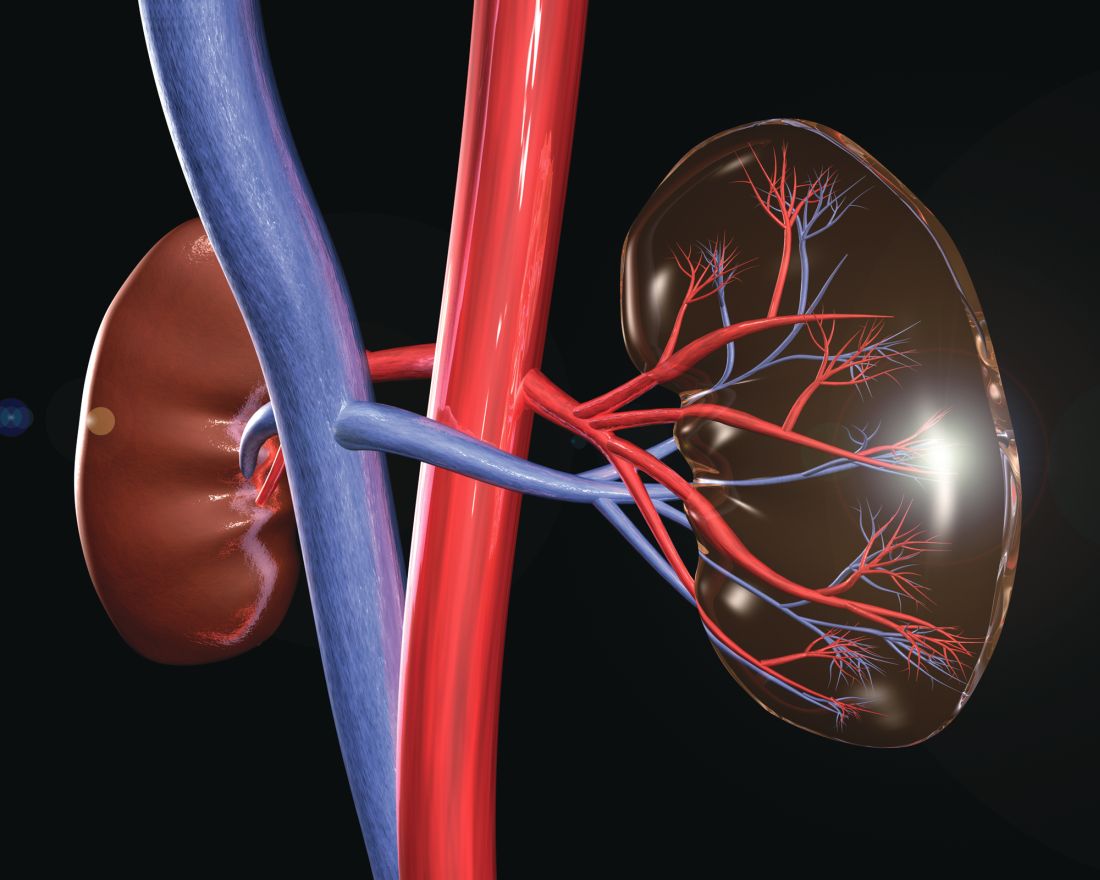
Among 243 men who did not have diabetes prior to undergoing kidney transplantation, levels of both dihydrotestosterone (DHT) and testosterone were inversely related to the risk for developing diabetes the next 5 years.
“These results suggest that androgen insufficiency could play a role in the frequent deterioration of the glucose metabolism after kidney transplantation,” Suzanne P. Stam and colleagues wrote in Diabetes Care.
However, “our study has unfortunately no direct clinical findings as it was of an observational nature,” Ms. Stam told this news organization. “As a result, we can say that we have observed an association and have not established a causal relationship. So based on our study alone there is not a reason to start screening for low androgen values.”
Previous data have suggested that failure of pancreatic beta cell secretion of insulin plays a role in PTDM. In addition, DHT appears to act on the androgen receptor in pancreatic beta cells to enhance insulin secretion, while testosterone deficiency has been shown to play a role in the development of type 2 diabetes in aging males and in men receiving androgen-deprivation therapy. And, randomized clinical trials have found favorable metabolic effects of testosterone replacement therapy in hypogonadal men with type 2 diabetes.
The current post hoc analysis of a prospective single-center cohort study is the first longitudinal epidemiological investigation of the role of androgens in PTDM in kidney transplant recipients. The subjects, all men, had functioning grafts for at least a year posttransplantation. Androgen levels were assessed by liquid chromatography–tandem mass spectrometry.
At a median follow-up duration of 5.3 years, 28 (11.5%) of the men had developed PTDM. By DHT tertile, the proportions developing diabetes were 19% (15) for the lowest, 12% (10) for the middle, and 4% (3) for men with the highest DHT tertile (P = .008). A similar relationship was seen with tertiles of testosterone, with 17% (14), 14% (11), and 4% (3) developing diabetes in the lowest, middle, and highest tertiles, respectively (P = .01).
In unadjusted analysis, every doubling of DHT was linked to a 27% increased risk for PTDM (P < .001). The association remained significant after adjustments for age, estimated glomerular filtration rate, time between transplantation and baseline, body mass index, high sensitivity C-reactive protein, medication use, and baseline hemoglobin A1c (all P < .001). Similar results were found with total testosterone.
Ms. Stam, of the division of nephrology at the University Medical Center Groningen, the Netherlands, noted in an interview that, in the Netherlands, about 15% of those with kidney failure have preexisting diabetes, compared with about 50% in other western countries, including the United States.
She said that her team is currently working on a study to investigate the association between androgens and the development of PTDM in female kidney transplant recipients.
The study was funded by the TransplantLines Food and Nutrition Biobank and Cohort Study, Top Institute Food and Nutrition, and partly by the European Union’s Horizon 2020 research and innovation program. Ms. Stam and the other authors have no further disclosures.
Low androgen levels appear to be linked to the development of posttransplantation diabetes mellitus (PTDM) in male kidney transplant recipients, new research suggests.
Among 243 men who did not have diabetes prior to undergoing kidney transplantation, levels of both dihydrotestosterone (DHT) and testosterone were inversely related to the risk for developing diabetes the next 5 years.
“These results suggest that androgen insufficiency could play a role in the frequent deterioration of the glucose metabolism after kidney transplantation,” Suzanne P. Stam and colleagues wrote in Diabetes Care.
However, “our study has unfortunately no direct clinical findings as it was of an observational nature,” Ms. Stam told this news organization. “As a result, we can say that we have observed an association and have not established a causal relationship. So based on our study alone there is not a reason to start screening for low androgen values.”
Previous data have suggested that failure of pancreatic beta cell secretion of insulin plays a role in PTDM. In addition, DHT appears to act on the androgen receptor in pancreatic beta cells to enhance insulin secretion, while testosterone deficiency has been shown to play a role in the development of type 2 diabetes in aging males and in men receiving androgen-deprivation therapy. And, randomized clinical trials have found favorable metabolic effects of testosterone replacement therapy in hypogonadal men with type 2 diabetes.
The current post hoc analysis of a prospective single-center cohort study is the first longitudinal epidemiological investigation of the role of androgens in PTDM in kidney transplant recipients. The subjects, all men, had functioning grafts for at least a year posttransplantation. Androgen levels were assessed by liquid chromatography–tandem mass spectrometry.
At a median follow-up duration of 5.3 years, 28 (11.5%) of the men had developed PTDM. By DHT tertile, the proportions developing diabetes were 19% (15) for the lowest, 12% (10) for the middle, and 4% (3) for men with the highest DHT tertile (P = .008). A similar relationship was seen with tertiles of testosterone, with 17% (14), 14% (11), and 4% (3) developing diabetes in the lowest, middle, and highest tertiles, respectively (P = .01).
In unadjusted analysis, every doubling of DHT was linked to a 27% increased risk for PTDM (P < .001). The association remained significant after adjustments for age, estimated glomerular filtration rate, time between transplantation and baseline, body mass index, high sensitivity C-reactive protein, medication use, and baseline hemoglobin A1c (all P < .001). Similar results were found with total testosterone.
Ms. Stam, of the division of nephrology at the University Medical Center Groningen, the Netherlands, noted in an interview that, in the Netherlands, about 15% of those with kidney failure have preexisting diabetes, compared with about 50% in other western countries, including the United States.
She said that her team is currently working on a study to investigate the association between androgens and the development of PTDM in female kidney transplant recipients.
The study was funded by the TransplantLines Food and Nutrition Biobank and Cohort Study, Top Institute Food and Nutrition, and partly by the European Union’s Horizon 2020 research and innovation program. Ms. Stam and the other authors have no further disclosures.
Low androgen levels appear to be linked to the development of posttransplantation diabetes mellitus (PTDM) in male kidney transplant recipients, new research suggests.
Among 243 men who did not have diabetes prior to undergoing kidney transplantation, levels of both dihydrotestosterone (DHT) and testosterone were inversely related to the risk for developing diabetes the next 5 years.
“These results suggest that androgen insufficiency could play a role in the frequent deterioration of the glucose metabolism after kidney transplantation,” Suzanne P. Stam and colleagues wrote in Diabetes Care.
However, “our study has unfortunately no direct clinical findings as it was of an observational nature,” Ms. Stam told this news organization. “As a result, we can say that we have observed an association and have not established a causal relationship. So based on our study alone there is not a reason to start screening for low androgen values.”
Previous data have suggested that failure of pancreatic beta cell secretion of insulin plays a role in PTDM. In addition, DHT appears to act on the androgen receptor in pancreatic beta cells to enhance insulin secretion, while testosterone deficiency has been shown to play a role in the development of type 2 diabetes in aging males and in men receiving androgen-deprivation therapy. And, randomized clinical trials have found favorable metabolic effects of testosterone replacement therapy in hypogonadal men with type 2 diabetes.
The current post hoc analysis of a prospective single-center cohort study is the first longitudinal epidemiological investigation of the role of androgens in PTDM in kidney transplant recipients. The subjects, all men, had functioning grafts for at least a year posttransplantation. Androgen levels were assessed by liquid chromatography–tandem mass spectrometry.
At a median follow-up duration of 5.3 years, 28 (11.5%) of the men had developed PTDM. By DHT tertile, the proportions developing diabetes were 19% (15) for the lowest, 12% (10) for the middle, and 4% (3) for men with the highest DHT tertile (P = .008). A similar relationship was seen with tertiles of testosterone, with 17% (14), 14% (11), and 4% (3) developing diabetes in the lowest, middle, and highest tertiles, respectively (P = .01).
In unadjusted analysis, every doubling of DHT was linked to a 27% increased risk for PTDM (P < .001). The association remained significant after adjustments for age, estimated glomerular filtration rate, time between transplantation and baseline, body mass index, high sensitivity C-reactive protein, medication use, and baseline hemoglobin A1c (all P < .001). Similar results were found with total testosterone.
Ms. Stam, of the division of nephrology at the University Medical Center Groningen, the Netherlands, noted in an interview that, in the Netherlands, about 15% of those with kidney failure have preexisting diabetes, compared with about 50% in other western countries, including the United States.
She said that her team is currently working on a study to investigate the association between androgens and the development of PTDM in female kidney transplant recipients.
The study was funded by the TransplantLines Food and Nutrition Biobank and Cohort Study, Top Institute Food and Nutrition, and partly by the European Union’s Horizon 2020 research and innovation program. Ms. Stam and the other authors have no further disclosures.
FROM DIABETES CARE
How the pandemic prompted one clinic to embrace digital innovation
When the .
“Before COVID, we had zero use of teledermatology,” Dr. Afanasiev, a dermatologist at the practice, said during the annual meeting of the Pacific Dermatologic Association. “We didn’t do photography other than the required pre-biopsy photographs, and minimal evaluation of home photos, in response to the patients who say, ‘Wait, doc. Let me pull out my phone and show my photographs.”
During the very first days of the pandemic, in order to accommodate urgent patient requests, she and her colleagues used cloud services for patients to submit photos for concerning skin conditions or lesions, which were then discussed over commonly available video platforms. But they quickly realized that this would not work long-term so within two months, they created an electronic health record–integrated workflow that they are still using, she said.
Here’s how it works. If the patient request is deemed nonacute or does not require a full-body skin exam, the scheduling team offers that patient a store-and-video evaluation (SAVe) or an in-person visit. If a SAVe visit is requested, the patient is required to submit a photograph of his or her condition, then a medical assistant checks for the presence and quality of up to nine patient-submitted photos and contacts the patient if additional photos are required.
Immediately before the encounter, a medical assistant calls the patient to ensure video connectivity and performs a brief intake history. The patient and physician then connect via a video-capable platform – most commonly Vidyo, which is integrated with EPIC. After the visit, the provider notifies the scheduling team if any additional in-person or virtual follow up is required.
In a half day of practice, Dr. Afanasiev sees about 20 patients via video visits scheduled every 15 minutes. On a recent day, 55% of visits were related to acne and 10% were related to a mole check, which usually resulted in recommendation for biopsy. Most (70%) were existing patients, while 30% were new.
“There is no store-and-forward option at this time, meaning that patients can’t just submit a photo without a visit,” she said. “In addition, part of our consent is, if you don’t show up to your scheduled video visit, your photos will not be reviewed. The photos are linked to the video visit and uploaded to the patient’s chart. The rooming workflow is very similar to in clinic, except you’re at home and the medical assistant is remote.”
In an article recently published in the Journal of the American Academy of Dermatology, Dr. Afanasiev and her colleagues described their experience with this photo plus video teledermatology – SAVe – workflow between March 16, 2020, and Aug. 31, 2020. The researchers analyzed 74,411 dermatology cases encountered by 89 providers who cared for 46,024 patients during that time frame. Most of the encounters (79%) were in-person, while the remaining 21% were digital in nature – SAVe in 89% of cases, followed by telephone/message encounters.
At the initial peak of the COVID-19 pandemic in April 2020, SAVe encounters increased to 72% of all encounters from 0% prior to March 16, 2020, and were sustained at 12% when the clinic reopened in the summer of 2020. Over the study period, the clinic’s incorporation of SAVe increased care access to patients located in 731 unique ZIP codes in and near California. “We also have been able to retain many patients within our system,” Dr. Afanasiev said. “We have a large proportion of patients that require 2-3 hours of travel time to get to our clinic, so virtual visits allowed for increased rural access. It also allowed for flexibility for patients and providers.”
The new workflow also led to faster access to care. The time from referral to an in-person evaluation fell from an average of 56 days in 2019 to average of 27 days in 2020, while the wait time for a virtual visit was just 14 days in 2020. “We were able to see a diverse number of diagnostic categories with both in-person and virtual care, most commonly rashes, acne, dermal growths, and pigmentary disorders,” she said.
For clinicians interested in incorporating a SAVe-like system into their workflow, Dr. Afanasiev advises them to think seriously about consent. “You want to make sure patients understand what they’re getting themselves into,” she said. “You want to make sure they know that some diagnoses cannot be adequately addressed by teledermatology.” Photo quality is also important, she said. “Video quality is not good enough for most of our diagnoses, so photos are an important part of this evaluation. In this day and age, patients are actually pretty good photographers most of the time.”
She urges practices to carefully think about how they allow patients to submit photos, especially if photographs are not attached to a billable visit.
In her opinion, a good teledermatology platform should have trained support staff with the ability for patients to send photos prior to their visit, and should be safe, secure, and HIPAA compliant. It should also be app and browser compatible and have high resolution and low downtime.
“Into the future, I think it’s important to maintain teledermatology within our clinical practice, especially for remote monitoring of chronic skin diseases,” Dr. Afanasiev said. “Oftentimes we schedule 3- or 6-month follow-ups but often those do not correspond to the patients’ disease flare. They may have had an eczema or psoriatic flare 3 weeks prior, but we see them in clinic with clear skin, which makes it hard to judge how to tailor our treatment. It will also be important for us to understand the safety and security and legal implications of these new practice styles.”
She also referred to technological advances, which she said “will dovetail well with teledermatology, including robust at-home and commercial 3D virtual capture technology, machine learning algorithms for improved photos, and virtual biopsy technology.”
Dr. Afanasiev is a member of the American Academy of Dermatology Teledermatology Task Force. She had no relevant disclosures.
When the .
“Before COVID, we had zero use of teledermatology,” Dr. Afanasiev, a dermatologist at the practice, said during the annual meeting of the Pacific Dermatologic Association. “We didn’t do photography other than the required pre-biopsy photographs, and minimal evaluation of home photos, in response to the patients who say, ‘Wait, doc. Let me pull out my phone and show my photographs.”
During the very first days of the pandemic, in order to accommodate urgent patient requests, she and her colleagues used cloud services for patients to submit photos for concerning skin conditions or lesions, which were then discussed over commonly available video platforms. But they quickly realized that this would not work long-term so within two months, they created an electronic health record–integrated workflow that they are still using, she said.
Here’s how it works. If the patient request is deemed nonacute or does not require a full-body skin exam, the scheduling team offers that patient a store-and-video evaluation (SAVe) or an in-person visit. If a SAVe visit is requested, the patient is required to submit a photograph of his or her condition, then a medical assistant checks for the presence and quality of up to nine patient-submitted photos and contacts the patient if additional photos are required.
Immediately before the encounter, a medical assistant calls the patient to ensure video connectivity and performs a brief intake history. The patient and physician then connect via a video-capable platform – most commonly Vidyo, which is integrated with EPIC. After the visit, the provider notifies the scheduling team if any additional in-person or virtual follow up is required.
In a half day of practice, Dr. Afanasiev sees about 20 patients via video visits scheduled every 15 minutes. On a recent day, 55% of visits were related to acne and 10% were related to a mole check, which usually resulted in recommendation for biopsy. Most (70%) were existing patients, while 30% were new.
“There is no store-and-forward option at this time, meaning that patients can’t just submit a photo without a visit,” she said. “In addition, part of our consent is, if you don’t show up to your scheduled video visit, your photos will not be reviewed. The photos are linked to the video visit and uploaded to the patient’s chart. The rooming workflow is very similar to in clinic, except you’re at home and the medical assistant is remote.”
In an article recently published in the Journal of the American Academy of Dermatology, Dr. Afanasiev and her colleagues described their experience with this photo plus video teledermatology – SAVe – workflow between March 16, 2020, and Aug. 31, 2020. The researchers analyzed 74,411 dermatology cases encountered by 89 providers who cared for 46,024 patients during that time frame. Most of the encounters (79%) were in-person, while the remaining 21% were digital in nature – SAVe in 89% of cases, followed by telephone/message encounters.
At the initial peak of the COVID-19 pandemic in April 2020, SAVe encounters increased to 72% of all encounters from 0% prior to March 16, 2020, and were sustained at 12% when the clinic reopened in the summer of 2020. Over the study period, the clinic’s incorporation of SAVe increased care access to patients located in 731 unique ZIP codes in and near California. “We also have been able to retain many patients within our system,” Dr. Afanasiev said. “We have a large proportion of patients that require 2-3 hours of travel time to get to our clinic, so virtual visits allowed for increased rural access. It also allowed for flexibility for patients and providers.”
The new workflow also led to faster access to care. The time from referral to an in-person evaluation fell from an average of 56 days in 2019 to average of 27 days in 2020, while the wait time for a virtual visit was just 14 days in 2020. “We were able to see a diverse number of diagnostic categories with both in-person and virtual care, most commonly rashes, acne, dermal growths, and pigmentary disorders,” she said.
For clinicians interested in incorporating a SAVe-like system into their workflow, Dr. Afanasiev advises them to think seriously about consent. “You want to make sure patients understand what they’re getting themselves into,” she said. “You want to make sure they know that some diagnoses cannot be adequately addressed by teledermatology.” Photo quality is also important, she said. “Video quality is not good enough for most of our diagnoses, so photos are an important part of this evaluation. In this day and age, patients are actually pretty good photographers most of the time.”
She urges practices to carefully think about how they allow patients to submit photos, especially if photographs are not attached to a billable visit.
In her opinion, a good teledermatology platform should have trained support staff with the ability for patients to send photos prior to their visit, and should be safe, secure, and HIPAA compliant. It should also be app and browser compatible and have high resolution and low downtime.
“Into the future, I think it’s important to maintain teledermatology within our clinical practice, especially for remote monitoring of chronic skin diseases,” Dr. Afanasiev said. “Oftentimes we schedule 3- or 6-month follow-ups but often those do not correspond to the patients’ disease flare. They may have had an eczema or psoriatic flare 3 weeks prior, but we see them in clinic with clear skin, which makes it hard to judge how to tailor our treatment. It will also be important for us to understand the safety and security and legal implications of these new practice styles.”
She also referred to technological advances, which she said “will dovetail well with teledermatology, including robust at-home and commercial 3D virtual capture technology, machine learning algorithms for improved photos, and virtual biopsy technology.”
Dr. Afanasiev is a member of the American Academy of Dermatology Teledermatology Task Force. She had no relevant disclosures.
When the .
“Before COVID, we had zero use of teledermatology,” Dr. Afanasiev, a dermatologist at the practice, said during the annual meeting of the Pacific Dermatologic Association. “We didn’t do photography other than the required pre-biopsy photographs, and minimal evaluation of home photos, in response to the patients who say, ‘Wait, doc. Let me pull out my phone and show my photographs.”
During the very first days of the pandemic, in order to accommodate urgent patient requests, she and her colleagues used cloud services for patients to submit photos for concerning skin conditions or lesions, which were then discussed over commonly available video platforms. But they quickly realized that this would not work long-term so within two months, they created an electronic health record–integrated workflow that they are still using, she said.
Here’s how it works. If the patient request is deemed nonacute or does not require a full-body skin exam, the scheduling team offers that patient a store-and-video evaluation (SAVe) or an in-person visit. If a SAVe visit is requested, the patient is required to submit a photograph of his or her condition, then a medical assistant checks for the presence and quality of up to nine patient-submitted photos and contacts the patient if additional photos are required.
Immediately before the encounter, a medical assistant calls the patient to ensure video connectivity and performs a brief intake history. The patient and physician then connect via a video-capable platform – most commonly Vidyo, which is integrated with EPIC. After the visit, the provider notifies the scheduling team if any additional in-person or virtual follow up is required.
In a half day of practice, Dr. Afanasiev sees about 20 patients via video visits scheduled every 15 minutes. On a recent day, 55% of visits were related to acne and 10% were related to a mole check, which usually resulted in recommendation for biopsy. Most (70%) were existing patients, while 30% were new.
“There is no store-and-forward option at this time, meaning that patients can’t just submit a photo without a visit,” she said. “In addition, part of our consent is, if you don’t show up to your scheduled video visit, your photos will not be reviewed. The photos are linked to the video visit and uploaded to the patient’s chart. The rooming workflow is very similar to in clinic, except you’re at home and the medical assistant is remote.”
In an article recently published in the Journal of the American Academy of Dermatology, Dr. Afanasiev and her colleagues described their experience with this photo plus video teledermatology – SAVe – workflow between March 16, 2020, and Aug. 31, 2020. The researchers analyzed 74,411 dermatology cases encountered by 89 providers who cared for 46,024 patients during that time frame. Most of the encounters (79%) were in-person, while the remaining 21% were digital in nature – SAVe in 89% of cases, followed by telephone/message encounters.
At the initial peak of the COVID-19 pandemic in April 2020, SAVe encounters increased to 72% of all encounters from 0% prior to March 16, 2020, and were sustained at 12% when the clinic reopened in the summer of 2020. Over the study period, the clinic’s incorporation of SAVe increased care access to patients located in 731 unique ZIP codes in and near California. “We also have been able to retain many patients within our system,” Dr. Afanasiev said. “We have a large proportion of patients that require 2-3 hours of travel time to get to our clinic, so virtual visits allowed for increased rural access. It also allowed for flexibility for patients and providers.”
The new workflow also led to faster access to care. The time from referral to an in-person evaluation fell from an average of 56 days in 2019 to average of 27 days in 2020, while the wait time for a virtual visit was just 14 days in 2020. “We were able to see a diverse number of diagnostic categories with both in-person and virtual care, most commonly rashes, acne, dermal growths, and pigmentary disorders,” she said.
For clinicians interested in incorporating a SAVe-like system into their workflow, Dr. Afanasiev advises them to think seriously about consent. “You want to make sure patients understand what they’re getting themselves into,” she said. “You want to make sure they know that some diagnoses cannot be adequately addressed by teledermatology.” Photo quality is also important, she said. “Video quality is not good enough for most of our diagnoses, so photos are an important part of this evaluation. In this day and age, patients are actually pretty good photographers most of the time.”
She urges practices to carefully think about how they allow patients to submit photos, especially if photographs are not attached to a billable visit.
In her opinion, a good teledermatology platform should have trained support staff with the ability for patients to send photos prior to their visit, and should be safe, secure, and HIPAA compliant. It should also be app and browser compatible and have high resolution and low downtime.
“Into the future, I think it’s important to maintain teledermatology within our clinical practice, especially for remote monitoring of chronic skin diseases,” Dr. Afanasiev said. “Oftentimes we schedule 3- or 6-month follow-ups but often those do not correspond to the patients’ disease flare. They may have had an eczema or psoriatic flare 3 weeks prior, but we see them in clinic with clear skin, which makes it hard to judge how to tailor our treatment. It will also be important for us to understand the safety and security and legal implications of these new practice styles.”
She also referred to technological advances, which she said “will dovetail well with teledermatology, including robust at-home and commercial 3D virtual capture technology, machine learning algorithms for improved photos, and virtual biopsy technology.”
Dr. Afanasiev is a member of the American Academy of Dermatology Teledermatology Task Force. She had no relevant disclosures.
FROM PDA 2021