User login
No COVID vax, no transplant: Unfair or good medicine?
Right now, more than 106,600 people in the United States are on the national transplant waiting list, each hoping to hear soon that a lung, kidney, heart, or other vital organ has been found for them. It’s the promise not just of a new organ, but a new life.
Well before they are placed on that list, transplant candidates, as they’re known, are evaluated with a battery of tests and exams to be sure they are infection free, their other organs are healthy, and that all their vaccinations are up to date.
In January, a 31-year-old Boston father of two declined to get the COVID-19 vaccine, and Brigham and Women’s Hospital officials removed him from the heart transplant waiting list. And in North Carolina, a 38-year-old man in need of a kidney transplant said he, too, was denied the organ when he declined to get the vaccination.
Those are just two of the most recent cases. The decisions by the transplant centers to remove the candidates from the waiting list have set off a national debate among ethicists, family members, doctors, patients, and others.
On social media and in conversation, the question persists: Is removing them from the list unfair and cruel, or simply business as usual to keep the patient as healthy as possible and the transplant as successful as possible?
Two recent tweets sum up the debate.
“The people responsible for this should be charged with attempted homicide,” one Twitter user said, while another suggested that the more accurate way to headline the news about a transplant candidate refusing the COVID-19 vaccine would be: “Patient voluntarily forfeits donor organ.”
Doctors and ethics experts, as well as other patients on the waiting list, say it’s simply good medicine to require the COVID vaccine, along with a host of other pretransplant requirements.
Transplant protocols
“Transplant medicine has always been a strong promoter of vaccination,” said Silas Prescod Norman, MD, a clinical associate professor of nephrology and internal medicine at the University of Michigan, Ann Arbor. He is a kidney specialist who works in the university’s transplant clinic.
Requiring the COVID vaccine is in line with requirements to get numerous other vaccines, he said.“Promoting the COVID vaccine among our transplant candidates and recipients is just an extension of our usual practice.
“In transplantation, first and foremost is patient safety,” Dr. Norman said. “And we know that solid organ transplant patients are at substantially higher risk of contracting COVID than nontransplant patients.”
After the transplant, they are placed on immunosuppressant drugs, that weaken the immune system while also decreasing the body’s ability to reject the new organ.
“We know now, because there is good data about the vaccine to show that people who are on transplant medications are less likely to make detectable antibodies after vaccination,” said Dr. Norman, who’s also a medical adviser for the American Kidney Fund, a nonprofit that provides kidney health information and financial assistance for dialysis.
And this is not a surprise because of the immunosuppressive effects, he said. “So it only makes sense to get people vaccinated before transplantation.”
Researchers compared the cases of more than 17,000 people who had received organ transplants and were hospitalized from April to November 2020, either for COVID (1,682 of them) or other health issues. Those who had COVID were more likely to have complications and to die in the hospital than those who did not have it.
Vaccination guidelines, policies
Federal COVID-19 treatment guidelines from the National Institutes of Health state that transplant patients on immunosuppressant drugs used after the procedure should be considered at a higher risk of getting severe COVID if infected.
In a joint statement from the American Society of Transplant Surgeons, the American Society of Transplantation, and the International Society for Heart and Lung Transplantation, the organizations say they “strongly recommend that all eligible children and adult transplant candidates and recipients be vaccinated with a COVID-19 vaccine [and booster] that is approved or authorized in their jurisdiction. Whenever possible, vaccination should occur prior to transplantation.” Ideally, it should be completed at least 2 weeks before the transplant.
The organizations also “support the development of institutional policies regarding pretransplant vaccination. We believe that this is in the best interest of the transplant candidate, optimizing their chances of getting through the perioperative and posttransplant periods without severe COVID-19 disease, especially at times of greater infection prevalence.”
Officials at Brigham and Women’s Hospital, where the 31-year-old father was removed from the list, issued a statement that reads, in part: “Our Mass General Brigham health care system requires several [Centers for Disease Control and Prevention]-recommended vaccines, including the COVID-19 vaccine, and lifestyle behaviors for transplant candidates to create both the best chance for a successful operation and to optimize the patient’s survival after transplantation, given that their immune system is drastically suppressed. Patients are not active on the wait list without this.”
Ethics amid organ shortage
“Organs are scarce,” said Arthur L. Caplan, PhD, director of the division of medical ethics at New York University Langone Medical Center. That makes the goal of choosing the very best candidates for success even more crucial.
“You try to maximize the chance the organ will work,” he said. Pretransplant vaccination is one way.
The shortage is most severe for kidney transplants. In 2020, according to federal statistics, more than 91,000 kidney transplants were needed, but fewer than 23,000 were received. During 2021, 41,354 transplants were done, an increase of nearly 6% over the previous year. The total includes kidneys, hearts, lungs, and other organs, with kidneys accounting for more than 24,000 of the total.
Even with the rise in transplant numbers, supply does not meet demand. According to federal statistics, 17 people in the United States die each day waiting for an organ transplant. Every 9 minutes, someone is added to the waiting list.
“This isn’t and it shouldn’t be a fight about the COVID vaccine,” Dr. Caplan said. “This isn’t an issue about punishing non-COVID vaccinators. It’s deciding who is going to get a scarce organ.”
“A lot of people [opposed to removing the nonvaccinated from the list] think: ‘Oh, they are just killing those people who won’t take a COVID vaccine.’ That’s not what is going on.”
The transplant candidate must be in the best possible shape overall, Dr. Caplan and doctors agreed. Someone who is smoking, drinking heavily, or abusing drugs isn’t going to the top of the list either. And for other procedures, such as bariatric surgery or knee surgery, some patients are told first to lose weight before a surgeon will operate.
The worry about side effects from the vaccine, which some patients have cited as a concern, is misplaced, Dr. Caplan said. What transplant candidates who refuse the COVID vaccine may not be thinking about is that they are facing a serious operation and will be on numerous anti-rejection drugs, with side effects, after the surgery.
“So to be worried about the side effects of a COVID vaccine is irrational,” he said.
Transplants: The process
The patients who were recently removed from the transplant list could seek care and a transplant at an alternate center, said Anne Paschke, a spokesperson for the United Network for Organ Sharing, a nonprofit group that is under contract with the federal government and operates the national Organ Procurement and Transplantation Network (OPTN).
“Transplant hospitals decide which patients to add to the wait list based on their own criteria and medical judgment to create the best chance for a positive transplant outcome,” she said. That’s done with the understanding that patients will help with their medical care.
So, if one program won’t accept a patient, another may. But, if a patient turned down at one center due to refusing to get the COVID vaccine tries another center, the requirements at that hospital may be the same, she said.
OPTN maintains a list of transplant centers. As of Jan. 28, there were 251 transplant centers, according to UNOS, which manages the waiting list, matches donors and recipients, and strives for equity, among other duties.
Pretransplant refusers not typical
“The cases we are seeing are outliers,” Dr. Caplan said of the handful of known candidates who have refused the vaccine. Most ask their doctor exactly what they need to do to live and follow those instructions.
Dr. Norman agreed. Most of the kidney patients he cares for who are hoping for a transplant have been on dialysis, “which they do not like. They are doing whatever they can to make sure they don’t go back on dialysis. As a group, they tend to be very adherent, very safety conscious because they understand their risk and they understand the gift they have received [or will receive] through transplantation. They want to do everything they can to respect and protect that gift.”
Not surprisingly, some on the transplant list who are vaccinated have strong opinions about those who refuse to get the vaccine. Dana J. Ufkes, 61, a Seattle realtor, has been on the kidney transplant list – this time – since 2003, hoping for her third transplant. When asked if potential recipients should be removed from the list if they refuse the COVID vaccine, her answer was immediate: “Absolutely.”
At age 17, Ms. Ufkes got a serious kidney infection that went undiagnosed and untreated. Her kidney health worsened, and she needed a transplant. She got her first one in 1986, then again in 1992.
“They last longer than they used to,” she said. But not forever. (According to the American Kidney Fund, transplants from a living kidney donor last about 15-20 years; from a deceased donor, 10-15.)
The decision to decline the vaccine is, of course, each person’s choice, Ms. Ufkes said. But “if they don’t want to be vaccinated [and still want to be on the list], I think that’s BS.”
Citing the lack of organs, “it’s not like they are handing these out like jellybeans.”
A version of this article first appeared on WebMD.com.
Right now, more than 106,600 people in the United States are on the national transplant waiting list, each hoping to hear soon that a lung, kidney, heart, or other vital organ has been found for them. It’s the promise not just of a new organ, but a new life.
Well before they are placed on that list, transplant candidates, as they’re known, are evaluated with a battery of tests and exams to be sure they are infection free, their other organs are healthy, and that all their vaccinations are up to date.
In January, a 31-year-old Boston father of two declined to get the COVID-19 vaccine, and Brigham and Women’s Hospital officials removed him from the heart transplant waiting list. And in North Carolina, a 38-year-old man in need of a kidney transplant said he, too, was denied the organ when he declined to get the vaccination.
Those are just two of the most recent cases. The decisions by the transplant centers to remove the candidates from the waiting list have set off a national debate among ethicists, family members, doctors, patients, and others.
On social media and in conversation, the question persists: Is removing them from the list unfair and cruel, or simply business as usual to keep the patient as healthy as possible and the transplant as successful as possible?
Two recent tweets sum up the debate.
“The people responsible for this should be charged with attempted homicide,” one Twitter user said, while another suggested that the more accurate way to headline the news about a transplant candidate refusing the COVID-19 vaccine would be: “Patient voluntarily forfeits donor organ.”
Doctors and ethics experts, as well as other patients on the waiting list, say it’s simply good medicine to require the COVID vaccine, along with a host of other pretransplant requirements.
Transplant protocols
“Transplant medicine has always been a strong promoter of vaccination,” said Silas Prescod Norman, MD, a clinical associate professor of nephrology and internal medicine at the University of Michigan, Ann Arbor. He is a kidney specialist who works in the university’s transplant clinic.
Requiring the COVID vaccine is in line with requirements to get numerous other vaccines, he said.“Promoting the COVID vaccine among our transplant candidates and recipients is just an extension of our usual practice.
“In transplantation, first and foremost is patient safety,” Dr. Norman said. “And we know that solid organ transplant patients are at substantially higher risk of contracting COVID than nontransplant patients.”
After the transplant, they are placed on immunosuppressant drugs, that weaken the immune system while also decreasing the body’s ability to reject the new organ.
“We know now, because there is good data about the vaccine to show that people who are on transplant medications are less likely to make detectable antibodies after vaccination,” said Dr. Norman, who’s also a medical adviser for the American Kidney Fund, a nonprofit that provides kidney health information and financial assistance for dialysis.
And this is not a surprise because of the immunosuppressive effects, he said. “So it only makes sense to get people vaccinated before transplantation.”
Researchers compared the cases of more than 17,000 people who had received organ transplants and were hospitalized from April to November 2020, either for COVID (1,682 of them) or other health issues. Those who had COVID were more likely to have complications and to die in the hospital than those who did not have it.
Vaccination guidelines, policies
Federal COVID-19 treatment guidelines from the National Institutes of Health state that transplant patients on immunosuppressant drugs used after the procedure should be considered at a higher risk of getting severe COVID if infected.
In a joint statement from the American Society of Transplant Surgeons, the American Society of Transplantation, and the International Society for Heart and Lung Transplantation, the organizations say they “strongly recommend that all eligible children and adult transplant candidates and recipients be vaccinated with a COVID-19 vaccine [and booster] that is approved or authorized in their jurisdiction. Whenever possible, vaccination should occur prior to transplantation.” Ideally, it should be completed at least 2 weeks before the transplant.
The organizations also “support the development of institutional policies regarding pretransplant vaccination. We believe that this is in the best interest of the transplant candidate, optimizing their chances of getting through the perioperative and posttransplant periods without severe COVID-19 disease, especially at times of greater infection prevalence.”
Officials at Brigham and Women’s Hospital, where the 31-year-old father was removed from the list, issued a statement that reads, in part: “Our Mass General Brigham health care system requires several [Centers for Disease Control and Prevention]-recommended vaccines, including the COVID-19 vaccine, and lifestyle behaviors for transplant candidates to create both the best chance for a successful operation and to optimize the patient’s survival after transplantation, given that their immune system is drastically suppressed. Patients are not active on the wait list without this.”
Ethics amid organ shortage
“Organs are scarce,” said Arthur L. Caplan, PhD, director of the division of medical ethics at New York University Langone Medical Center. That makes the goal of choosing the very best candidates for success even more crucial.
“You try to maximize the chance the organ will work,” he said. Pretransplant vaccination is one way.
The shortage is most severe for kidney transplants. In 2020, according to federal statistics, more than 91,000 kidney transplants were needed, but fewer than 23,000 were received. During 2021, 41,354 transplants were done, an increase of nearly 6% over the previous year. The total includes kidneys, hearts, lungs, and other organs, with kidneys accounting for more than 24,000 of the total.
Even with the rise in transplant numbers, supply does not meet demand. According to federal statistics, 17 people in the United States die each day waiting for an organ transplant. Every 9 minutes, someone is added to the waiting list.
“This isn’t and it shouldn’t be a fight about the COVID vaccine,” Dr. Caplan said. “This isn’t an issue about punishing non-COVID vaccinators. It’s deciding who is going to get a scarce organ.”
“A lot of people [opposed to removing the nonvaccinated from the list] think: ‘Oh, they are just killing those people who won’t take a COVID vaccine.’ That’s not what is going on.”
The transplant candidate must be in the best possible shape overall, Dr. Caplan and doctors agreed. Someone who is smoking, drinking heavily, or abusing drugs isn’t going to the top of the list either. And for other procedures, such as bariatric surgery or knee surgery, some patients are told first to lose weight before a surgeon will operate.
The worry about side effects from the vaccine, which some patients have cited as a concern, is misplaced, Dr. Caplan said. What transplant candidates who refuse the COVID vaccine may not be thinking about is that they are facing a serious operation and will be on numerous anti-rejection drugs, with side effects, after the surgery.
“So to be worried about the side effects of a COVID vaccine is irrational,” he said.
Transplants: The process
The patients who were recently removed from the transplant list could seek care and a transplant at an alternate center, said Anne Paschke, a spokesperson for the United Network for Organ Sharing, a nonprofit group that is under contract with the federal government and operates the national Organ Procurement and Transplantation Network (OPTN).
“Transplant hospitals decide which patients to add to the wait list based on their own criteria and medical judgment to create the best chance for a positive transplant outcome,” she said. That’s done with the understanding that patients will help with their medical care.
So, if one program won’t accept a patient, another may. But, if a patient turned down at one center due to refusing to get the COVID vaccine tries another center, the requirements at that hospital may be the same, she said.
OPTN maintains a list of transplant centers. As of Jan. 28, there were 251 transplant centers, according to UNOS, which manages the waiting list, matches donors and recipients, and strives for equity, among other duties.
Pretransplant refusers not typical
“The cases we are seeing are outliers,” Dr. Caplan said of the handful of known candidates who have refused the vaccine. Most ask their doctor exactly what they need to do to live and follow those instructions.
Dr. Norman agreed. Most of the kidney patients he cares for who are hoping for a transplant have been on dialysis, “which they do not like. They are doing whatever they can to make sure they don’t go back on dialysis. As a group, they tend to be very adherent, very safety conscious because they understand their risk and they understand the gift they have received [or will receive] through transplantation. They want to do everything they can to respect and protect that gift.”
Not surprisingly, some on the transplant list who are vaccinated have strong opinions about those who refuse to get the vaccine. Dana J. Ufkes, 61, a Seattle realtor, has been on the kidney transplant list – this time – since 2003, hoping for her third transplant. When asked if potential recipients should be removed from the list if they refuse the COVID vaccine, her answer was immediate: “Absolutely.”
At age 17, Ms. Ufkes got a serious kidney infection that went undiagnosed and untreated. Her kidney health worsened, and she needed a transplant. She got her first one in 1986, then again in 1992.
“They last longer than they used to,” she said. But not forever. (According to the American Kidney Fund, transplants from a living kidney donor last about 15-20 years; from a deceased donor, 10-15.)
The decision to decline the vaccine is, of course, each person’s choice, Ms. Ufkes said. But “if they don’t want to be vaccinated [and still want to be on the list], I think that’s BS.”
Citing the lack of organs, “it’s not like they are handing these out like jellybeans.”
A version of this article first appeared on WebMD.com.
Right now, more than 106,600 people in the United States are on the national transplant waiting list, each hoping to hear soon that a lung, kidney, heart, or other vital organ has been found for them. It’s the promise not just of a new organ, but a new life.
Well before they are placed on that list, transplant candidates, as they’re known, are evaluated with a battery of tests and exams to be sure they are infection free, their other organs are healthy, and that all their vaccinations are up to date.
In January, a 31-year-old Boston father of two declined to get the COVID-19 vaccine, and Brigham and Women’s Hospital officials removed him from the heart transplant waiting list. And in North Carolina, a 38-year-old man in need of a kidney transplant said he, too, was denied the organ when he declined to get the vaccination.
Those are just two of the most recent cases. The decisions by the transplant centers to remove the candidates from the waiting list have set off a national debate among ethicists, family members, doctors, patients, and others.
On social media and in conversation, the question persists: Is removing them from the list unfair and cruel, or simply business as usual to keep the patient as healthy as possible and the transplant as successful as possible?
Two recent tweets sum up the debate.
“The people responsible for this should be charged with attempted homicide,” one Twitter user said, while another suggested that the more accurate way to headline the news about a transplant candidate refusing the COVID-19 vaccine would be: “Patient voluntarily forfeits donor organ.”
Doctors and ethics experts, as well as other patients on the waiting list, say it’s simply good medicine to require the COVID vaccine, along with a host of other pretransplant requirements.
Transplant protocols
“Transplant medicine has always been a strong promoter of vaccination,” said Silas Prescod Norman, MD, a clinical associate professor of nephrology and internal medicine at the University of Michigan, Ann Arbor. He is a kidney specialist who works in the university’s transplant clinic.
Requiring the COVID vaccine is in line with requirements to get numerous other vaccines, he said.“Promoting the COVID vaccine among our transplant candidates and recipients is just an extension of our usual practice.
“In transplantation, first and foremost is patient safety,” Dr. Norman said. “And we know that solid organ transplant patients are at substantially higher risk of contracting COVID than nontransplant patients.”
After the transplant, they are placed on immunosuppressant drugs, that weaken the immune system while also decreasing the body’s ability to reject the new organ.
“We know now, because there is good data about the vaccine to show that people who are on transplant medications are less likely to make detectable antibodies after vaccination,” said Dr. Norman, who’s also a medical adviser for the American Kidney Fund, a nonprofit that provides kidney health information and financial assistance for dialysis.
And this is not a surprise because of the immunosuppressive effects, he said. “So it only makes sense to get people vaccinated before transplantation.”
Researchers compared the cases of more than 17,000 people who had received organ transplants and were hospitalized from April to November 2020, either for COVID (1,682 of them) or other health issues. Those who had COVID were more likely to have complications and to die in the hospital than those who did not have it.
Vaccination guidelines, policies
Federal COVID-19 treatment guidelines from the National Institutes of Health state that transplant patients on immunosuppressant drugs used after the procedure should be considered at a higher risk of getting severe COVID if infected.
In a joint statement from the American Society of Transplant Surgeons, the American Society of Transplantation, and the International Society for Heart and Lung Transplantation, the organizations say they “strongly recommend that all eligible children and adult transplant candidates and recipients be vaccinated with a COVID-19 vaccine [and booster] that is approved or authorized in their jurisdiction. Whenever possible, vaccination should occur prior to transplantation.” Ideally, it should be completed at least 2 weeks before the transplant.
The organizations also “support the development of institutional policies regarding pretransplant vaccination. We believe that this is in the best interest of the transplant candidate, optimizing their chances of getting through the perioperative and posttransplant periods without severe COVID-19 disease, especially at times of greater infection prevalence.”
Officials at Brigham and Women’s Hospital, where the 31-year-old father was removed from the list, issued a statement that reads, in part: “Our Mass General Brigham health care system requires several [Centers for Disease Control and Prevention]-recommended vaccines, including the COVID-19 vaccine, and lifestyle behaviors for transplant candidates to create both the best chance for a successful operation and to optimize the patient’s survival after transplantation, given that their immune system is drastically suppressed. Patients are not active on the wait list without this.”
Ethics amid organ shortage
“Organs are scarce,” said Arthur L. Caplan, PhD, director of the division of medical ethics at New York University Langone Medical Center. That makes the goal of choosing the very best candidates for success even more crucial.
“You try to maximize the chance the organ will work,” he said. Pretransplant vaccination is one way.
The shortage is most severe for kidney transplants. In 2020, according to federal statistics, more than 91,000 kidney transplants were needed, but fewer than 23,000 were received. During 2021, 41,354 transplants were done, an increase of nearly 6% over the previous year. The total includes kidneys, hearts, lungs, and other organs, with kidneys accounting for more than 24,000 of the total.
Even with the rise in transplant numbers, supply does not meet demand. According to federal statistics, 17 people in the United States die each day waiting for an organ transplant. Every 9 minutes, someone is added to the waiting list.
“This isn’t and it shouldn’t be a fight about the COVID vaccine,” Dr. Caplan said. “This isn’t an issue about punishing non-COVID vaccinators. It’s deciding who is going to get a scarce organ.”
“A lot of people [opposed to removing the nonvaccinated from the list] think: ‘Oh, they are just killing those people who won’t take a COVID vaccine.’ That’s not what is going on.”
The transplant candidate must be in the best possible shape overall, Dr. Caplan and doctors agreed. Someone who is smoking, drinking heavily, or abusing drugs isn’t going to the top of the list either. And for other procedures, such as bariatric surgery or knee surgery, some patients are told first to lose weight before a surgeon will operate.
The worry about side effects from the vaccine, which some patients have cited as a concern, is misplaced, Dr. Caplan said. What transplant candidates who refuse the COVID vaccine may not be thinking about is that they are facing a serious operation and will be on numerous anti-rejection drugs, with side effects, after the surgery.
“So to be worried about the side effects of a COVID vaccine is irrational,” he said.
Transplants: The process
The patients who were recently removed from the transplant list could seek care and a transplant at an alternate center, said Anne Paschke, a spokesperson for the United Network for Organ Sharing, a nonprofit group that is under contract with the federal government and operates the national Organ Procurement and Transplantation Network (OPTN).
“Transplant hospitals decide which patients to add to the wait list based on their own criteria and medical judgment to create the best chance for a positive transplant outcome,” she said. That’s done with the understanding that patients will help with their medical care.
So, if one program won’t accept a patient, another may. But, if a patient turned down at one center due to refusing to get the COVID vaccine tries another center, the requirements at that hospital may be the same, she said.
OPTN maintains a list of transplant centers. As of Jan. 28, there were 251 transplant centers, according to UNOS, which manages the waiting list, matches donors and recipients, and strives for equity, among other duties.
Pretransplant refusers not typical
“The cases we are seeing are outliers,” Dr. Caplan said of the handful of known candidates who have refused the vaccine. Most ask their doctor exactly what they need to do to live and follow those instructions.
Dr. Norman agreed. Most of the kidney patients he cares for who are hoping for a transplant have been on dialysis, “which they do not like. They are doing whatever they can to make sure they don’t go back on dialysis. As a group, they tend to be very adherent, very safety conscious because they understand their risk and they understand the gift they have received [or will receive] through transplantation. They want to do everything they can to respect and protect that gift.”
Not surprisingly, some on the transplant list who are vaccinated have strong opinions about those who refuse to get the vaccine. Dana J. Ufkes, 61, a Seattle realtor, has been on the kidney transplant list – this time – since 2003, hoping for her third transplant. When asked if potential recipients should be removed from the list if they refuse the COVID vaccine, her answer was immediate: “Absolutely.”
At age 17, Ms. Ufkes got a serious kidney infection that went undiagnosed and untreated. Her kidney health worsened, and she needed a transplant. She got her first one in 1986, then again in 1992.
“They last longer than they used to,” she said. But not forever. (According to the American Kidney Fund, transplants from a living kidney donor last about 15-20 years; from a deceased donor, 10-15.)
The decision to decline the vaccine is, of course, each person’s choice, Ms. Ufkes said. But “if they don’t want to be vaccinated [and still want to be on the list], I think that’s BS.”
Citing the lack of organs, “it’s not like they are handing these out like jellybeans.”
A version of this article first appeared on WebMD.com.
Drinking a risk factor for epilepsy?
but more research is needed before any definitive conclusions can be drawn.
Results of an updated meta-analysis are consistent with those of a previous meta-analysis but contrast with some prior cohort studies.
“Further large cohort studies of the general population are required to assert a definite causal relationship between alcohol consumption and epilepsy and to identify a potential threshold,” Yun Hak Kim, MD, PhD, departments of biomedical informatics and anatomy, Pusan (South Korea) National University, said in a press release.
The study was published online Jan. 11, 2022, in Drug and Alcohol Dependence.
Conflicting findings
Much of the research into the impact of alcohol on epilepsy risk has focused on provoked seizures related to alcohol intoxication or withdrawal, but few studies have investigated the effect of alcohol on unprovoked seizures. In addition, the research in this area has been conflicting.
A 2010 meta-analysis that included six case-control studies showed alcohol users had an increased risk of unprovoked seizure or epilepsy with a pooled relative risk of 2.19 (95% confidence interval, 1.82-2.63). This analysis also showed a dose-dependent relationship with relative risks increasing with more grams of alcohol consumed daily.
However, some recent large cohort studies showed that moderate alcohol consumption was associated with a lower risk of epilepsy.
The updated meta-analysis included eight studies – three cohort studies not included in the previous meta-analysis and five case-control studies.
The study excluded two case-control studies included in the previous meta-analysis. One of these studies used duplicated data, and the other included epilepsy patients and did not present results of subgroup analysis for patients experiencing their first seizure.
Results of the new analysis showed the pooled odds ratio for newly diagnosed epilepsy was 1.70 (95% CI, 1.16-2.49) in alcohol users versus nondrinkers.
A dose-response analysis of case-control studies carried out using the cubic spline analysis showed a significant positive dose-response relationship. A dose-response graph showed a steep increase in risk above about 150 g/day and 250 g/day of alcohol consumption.
However, a subgroup analysis showed that epilepsy risk was only found in the case-control studies. In fact, two of the three cohort studies showed that alcohol consumption was associated with a lower risk of epilepsy, although this was not significant.
Cohort studies often include more control subjects and longer follow-up periods and are less prone to bias, such as selection and recall biases, the investigators noted.
“Therefore, cohort studies usually provide a stronger association between exposure and disease than case-control studies, despite having limitations for diseases with low incidence levels,” they wrote.
More research needed
The researchers added that most case-control studies included in the new meta-analysis assessed alcohol consumption only in the 6 months prior to the onset of seizures. Research shows it usually takes heavy drinkers 5 or more years to develop repetitive unprovoked seizures.
“Considering these temporal relationships and differences in study design, alcohol may not actually increase the risk of epilepsy, as seen in our subgroup analysis for cohort studies,” the investigators wrote.
They noted that the cohort studies in the meta-analysis were variously limited to young women, elderly patients, and post–subdural hematoma patients. “This limitation makes it difficult to confirm or generalize the results of the subgroup analysis.”
To resolve this “discrepancy,” further large cohort studies of the general population over a longer period are needed, the investigators wrote.
Examining the risk of bias within studies, the authors evaluated three cohort studies as “good” quality. Of the case-control studies, they rated two as “good,” one as “fair,” and two as “poor.”
For primary prevention, an assessment of the risk of alcohol consumption in various clinical situations, such as the time relation of alcohol consumption with seizures, will be important, lead author Kyoung Nam Woo, department of neurology, Pusan National University, said in the release.
“To increase the applicability to the general population, future studies should be conducted in which the potential confounders such as age, sex, and smoking have been adjusted.”
Commenting on the study, Jacqueline French, MD, professor, New York University Comprehensive Epilepsy Center, echoed the authors in noting a number of weaknesses in the study.
The analysis was unable to exclude alcohol withdrawal seizures. Also, while some studies suggested a positive relationship, others suggested a negative relationship, she said. “The authors suggest further work is needed before a definitive determination is made, and I agree.”
The study received funding from the Medical Research Center Program, the Basic Science Research Program, and the Collaborative Genome Program for Fostering New Post-Genome Industry through a National Research Foundation of Korea grant funded by the Korean government. The authors disclosed no relevant financial relationships.
A version of this article first appeared on Medscape.com.
but more research is needed before any definitive conclusions can be drawn.
Results of an updated meta-analysis are consistent with those of a previous meta-analysis but contrast with some prior cohort studies.
“Further large cohort studies of the general population are required to assert a definite causal relationship between alcohol consumption and epilepsy and to identify a potential threshold,” Yun Hak Kim, MD, PhD, departments of biomedical informatics and anatomy, Pusan (South Korea) National University, said in a press release.
The study was published online Jan. 11, 2022, in Drug and Alcohol Dependence.
Conflicting findings
Much of the research into the impact of alcohol on epilepsy risk has focused on provoked seizures related to alcohol intoxication or withdrawal, but few studies have investigated the effect of alcohol on unprovoked seizures. In addition, the research in this area has been conflicting.
A 2010 meta-analysis that included six case-control studies showed alcohol users had an increased risk of unprovoked seizure or epilepsy with a pooled relative risk of 2.19 (95% confidence interval, 1.82-2.63). This analysis also showed a dose-dependent relationship with relative risks increasing with more grams of alcohol consumed daily.
However, some recent large cohort studies showed that moderate alcohol consumption was associated with a lower risk of epilepsy.
The updated meta-analysis included eight studies – three cohort studies not included in the previous meta-analysis and five case-control studies.
The study excluded two case-control studies included in the previous meta-analysis. One of these studies used duplicated data, and the other included epilepsy patients and did not present results of subgroup analysis for patients experiencing their first seizure.
Results of the new analysis showed the pooled odds ratio for newly diagnosed epilepsy was 1.70 (95% CI, 1.16-2.49) in alcohol users versus nondrinkers.
A dose-response analysis of case-control studies carried out using the cubic spline analysis showed a significant positive dose-response relationship. A dose-response graph showed a steep increase in risk above about 150 g/day and 250 g/day of alcohol consumption.
However, a subgroup analysis showed that epilepsy risk was only found in the case-control studies. In fact, two of the three cohort studies showed that alcohol consumption was associated with a lower risk of epilepsy, although this was not significant.
Cohort studies often include more control subjects and longer follow-up periods and are less prone to bias, such as selection and recall biases, the investigators noted.
“Therefore, cohort studies usually provide a stronger association between exposure and disease than case-control studies, despite having limitations for diseases with low incidence levels,” they wrote.
More research needed
The researchers added that most case-control studies included in the new meta-analysis assessed alcohol consumption only in the 6 months prior to the onset of seizures. Research shows it usually takes heavy drinkers 5 or more years to develop repetitive unprovoked seizures.
“Considering these temporal relationships and differences in study design, alcohol may not actually increase the risk of epilepsy, as seen in our subgroup analysis for cohort studies,” the investigators wrote.
They noted that the cohort studies in the meta-analysis were variously limited to young women, elderly patients, and post–subdural hematoma patients. “This limitation makes it difficult to confirm or generalize the results of the subgroup analysis.”
To resolve this “discrepancy,” further large cohort studies of the general population over a longer period are needed, the investigators wrote.
Examining the risk of bias within studies, the authors evaluated three cohort studies as “good” quality. Of the case-control studies, they rated two as “good,” one as “fair,” and two as “poor.”
For primary prevention, an assessment of the risk of alcohol consumption in various clinical situations, such as the time relation of alcohol consumption with seizures, will be important, lead author Kyoung Nam Woo, department of neurology, Pusan National University, said in the release.
“To increase the applicability to the general population, future studies should be conducted in which the potential confounders such as age, sex, and smoking have been adjusted.”
Commenting on the study, Jacqueline French, MD, professor, New York University Comprehensive Epilepsy Center, echoed the authors in noting a number of weaknesses in the study.
The analysis was unable to exclude alcohol withdrawal seizures. Also, while some studies suggested a positive relationship, others suggested a negative relationship, she said. “The authors suggest further work is needed before a definitive determination is made, and I agree.”
The study received funding from the Medical Research Center Program, the Basic Science Research Program, and the Collaborative Genome Program for Fostering New Post-Genome Industry through a National Research Foundation of Korea grant funded by the Korean government. The authors disclosed no relevant financial relationships.
A version of this article first appeared on Medscape.com.
but more research is needed before any definitive conclusions can be drawn.
Results of an updated meta-analysis are consistent with those of a previous meta-analysis but contrast with some prior cohort studies.
“Further large cohort studies of the general population are required to assert a definite causal relationship between alcohol consumption and epilepsy and to identify a potential threshold,” Yun Hak Kim, MD, PhD, departments of biomedical informatics and anatomy, Pusan (South Korea) National University, said in a press release.
The study was published online Jan. 11, 2022, in Drug and Alcohol Dependence.
Conflicting findings
Much of the research into the impact of alcohol on epilepsy risk has focused on provoked seizures related to alcohol intoxication or withdrawal, but few studies have investigated the effect of alcohol on unprovoked seizures. In addition, the research in this area has been conflicting.
A 2010 meta-analysis that included six case-control studies showed alcohol users had an increased risk of unprovoked seizure or epilepsy with a pooled relative risk of 2.19 (95% confidence interval, 1.82-2.63). This analysis also showed a dose-dependent relationship with relative risks increasing with more grams of alcohol consumed daily.
However, some recent large cohort studies showed that moderate alcohol consumption was associated with a lower risk of epilepsy.
The updated meta-analysis included eight studies – three cohort studies not included in the previous meta-analysis and five case-control studies.
The study excluded two case-control studies included in the previous meta-analysis. One of these studies used duplicated data, and the other included epilepsy patients and did not present results of subgroup analysis for patients experiencing their first seizure.
Results of the new analysis showed the pooled odds ratio for newly diagnosed epilepsy was 1.70 (95% CI, 1.16-2.49) in alcohol users versus nondrinkers.
A dose-response analysis of case-control studies carried out using the cubic spline analysis showed a significant positive dose-response relationship. A dose-response graph showed a steep increase in risk above about 150 g/day and 250 g/day of alcohol consumption.
However, a subgroup analysis showed that epilepsy risk was only found in the case-control studies. In fact, two of the three cohort studies showed that alcohol consumption was associated with a lower risk of epilepsy, although this was not significant.
Cohort studies often include more control subjects and longer follow-up periods and are less prone to bias, such as selection and recall biases, the investigators noted.
“Therefore, cohort studies usually provide a stronger association between exposure and disease than case-control studies, despite having limitations for diseases with low incidence levels,” they wrote.
More research needed
The researchers added that most case-control studies included in the new meta-analysis assessed alcohol consumption only in the 6 months prior to the onset of seizures. Research shows it usually takes heavy drinkers 5 or more years to develop repetitive unprovoked seizures.
“Considering these temporal relationships and differences in study design, alcohol may not actually increase the risk of epilepsy, as seen in our subgroup analysis for cohort studies,” the investigators wrote.
They noted that the cohort studies in the meta-analysis were variously limited to young women, elderly patients, and post–subdural hematoma patients. “This limitation makes it difficult to confirm or generalize the results of the subgroup analysis.”
To resolve this “discrepancy,” further large cohort studies of the general population over a longer period are needed, the investigators wrote.
Examining the risk of bias within studies, the authors evaluated three cohort studies as “good” quality. Of the case-control studies, they rated two as “good,” one as “fair,” and two as “poor.”
For primary prevention, an assessment of the risk of alcohol consumption in various clinical situations, such as the time relation of alcohol consumption with seizures, will be important, lead author Kyoung Nam Woo, department of neurology, Pusan National University, said in the release.
“To increase the applicability to the general population, future studies should be conducted in which the potential confounders such as age, sex, and smoking have been adjusted.”
Commenting on the study, Jacqueline French, MD, professor, New York University Comprehensive Epilepsy Center, echoed the authors in noting a number of weaknesses in the study.
The analysis was unable to exclude alcohol withdrawal seizures. Also, while some studies suggested a positive relationship, others suggested a negative relationship, she said. “The authors suggest further work is needed before a definitive determination is made, and I agree.”
The study received funding from the Medical Research Center Program, the Basic Science Research Program, and the Collaborative Genome Program for Fostering New Post-Genome Industry through a National Research Foundation of Korea grant funded by the Korean government. The authors disclosed no relevant financial relationships.
A version of this article first appeared on Medscape.com.
FROM ALCOHOL DEPENDENCE

Increased diversity remains elusive for dermatological research
according to literature reviews for 2010-2015 and 2015-2020.
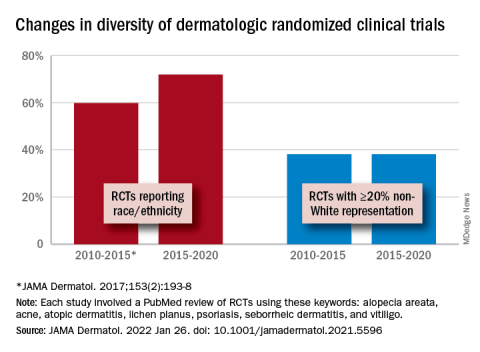
Race and ethnicity were reported in 75.3% of the randomized clinical trials (RCTs) involving dermatologic diseases that were published over the 5-year period from 2015 to 2020, said Vivien Chen, BS, and associates in the department of dermatology and cutaneous surgery at the University of Miami.
In the earlier analysis, conducted by different investigators and published in 2017, race and ethnicity were reported for 59.8% of dermatology RCTs published from 2010 to 2015.
Since that initial evaluation, “there have not been significant changes in representative inclusion for racial and ethnic minority groups,” however, as both analyses produced the same result: The non-White share of the patient population was 20% or more in 38.1% of the exclusively U.S.-based RCTs included during the two time periods analyzed, Ms. Chen and associates said.
Disease type had a noticeable effect on racial/ethnic distribution representation. Among the RCTs focusing on psoriasis, which were the most numerous in 2015-2020 (268 of the total 392), only 12.1% had a 20% or greater non-White representation versus 71.1% for eczema trials (n = 64) and 53.1% for acne (n = 53). “While this finding may reflect the slight predominance of White participants reported by several epidemiologic studies on psoriasis, prevalence among other racial groups may be underestimated and should be represented in studies,” they wrote.
RCT counts were much lower for the other disease types included: vitiligo (two), alopecia areata (three), and seborrheic dermatitis (two), the investigators reported.
Patient sex also was covered in both analyses, with reporting of sex distribution increasing from 85.0% of RCTs in 2010-2015 to 91.6% in 2015-2020 but representation (≥45% women) dropping from 55.8% to 41.3%, Ms. Chen and associates said.
The effect on representation in psoriasis studies was even greater, as the proportion of studies having at least 45% women fell from 87.2% in 2010-2015 to just 29.5% in 2015-2020, although the inclusion of studies outside the United States in the 2010-2015 analysis may have been a factor, they noted. Representation for women declined from 69.4% to 59.4% for eczema RCTs but increased from 41.1% to 75.5% for acne.
Changes in the specialty may have had an effect. “The scope of our study was limited to the dermatological conditions included in the original study, to facilitate direct comparison between time periods. However,dermatologic research has expanded significantly within the last 5 years in other areas including hidradenitis suppurativa, prurigo nodularis, and frontal fibrosing alopecia,” they said.
according to literature reviews for 2010-2015 and 2015-2020.
Race and ethnicity were reported in 75.3% of the randomized clinical trials (RCTs) involving dermatologic diseases that were published over the 5-year period from 2015 to 2020, said Vivien Chen, BS, and associates in the department of dermatology and cutaneous surgery at the University of Miami.
In the earlier analysis, conducted by different investigators and published in 2017, race and ethnicity were reported for 59.8% of dermatology RCTs published from 2010 to 2015.
Since that initial evaluation, “there have not been significant changes in representative inclusion for racial and ethnic minority groups,” however, as both analyses produced the same result: The non-White share of the patient population was 20% or more in 38.1% of the exclusively U.S.-based RCTs included during the two time periods analyzed, Ms. Chen and associates said.
Disease type had a noticeable effect on racial/ethnic distribution representation. Among the RCTs focusing on psoriasis, which were the most numerous in 2015-2020 (268 of the total 392), only 12.1% had a 20% or greater non-White representation versus 71.1% for eczema trials (n = 64) and 53.1% for acne (n = 53). “While this finding may reflect the slight predominance of White participants reported by several epidemiologic studies on psoriasis, prevalence among other racial groups may be underestimated and should be represented in studies,” they wrote.
RCT counts were much lower for the other disease types included: vitiligo (two), alopecia areata (three), and seborrheic dermatitis (two), the investigators reported.
Patient sex also was covered in both analyses, with reporting of sex distribution increasing from 85.0% of RCTs in 2010-2015 to 91.6% in 2015-2020 but representation (≥45% women) dropping from 55.8% to 41.3%, Ms. Chen and associates said.
The effect on representation in psoriasis studies was even greater, as the proportion of studies having at least 45% women fell from 87.2% in 2010-2015 to just 29.5% in 2015-2020, although the inclusion of studies outside the United States in the 2010-2015 analysis may have been a factor, they noted. Representation for women declined from 69.4% to 59.4% for eczema RCTs but increased from 41.1% to 75.5% for acne.
Changes in the specialty may have had an effect. “The scope of our study was limited to the dermatological conditions included in the original study, to facilitate direct comparison between time periods. However,dermatologic research has expanded significantly within the last 5 years in other areas including hidradenitis suppurativa, prurigo nodularis, and frontal fibrosing alopecia,” they said.
according to literature reviews for 2010-2015 and 2015-2020.
Race and ethnicity were reported in 75.3% of the randomized clinical trials (RCTs) involving dermatologic diseases that were published over the 5-year period from 2015 to 2020, said Vivien Chen, BS, and associates in the department of dermatology and cutaneous surgery at the University of Miami.
In the earlier analysis, conducted by different investigators and published in 2017, race and ethnicity were reported for 59.8% of dermatology RCTs published from 2010 to 2015.
Since that initial evaluation, “there have not been significant changes in representative inclusion for racial and ethnic minority groups,” however, as both analyses produced the same result: The non-White share of the patient population was 20% or more in 38.1% of the exclusively U.S.-based RCTs included during the two time periods analyzed, Ms. Chen and associates said.
Disease type had a noticeable effect on racial/ethnic distribution representation. Among the RCTs focusing on psoriasis, which were the most numerous in 2015-2020 (268 of the total 392), only 12.1% had a 20% or greater non-White representation versus 71.1% for eczema trials (n = 64) and 53.1% for acne (n = 53). “While this finding may reflect the slight predominance of White participants reported by several epidemiologic studies on psoriasis, prevalence among other racial groups may be underestimated and should be represented in studies,” they wrote.
RCT counts were much lower for the other disease types included: vitiligo (two), alopecia areata (three), and seborrheic dermatitis (two), the investigators reported.
Patient sex also was covered in both analyses, with reporting of sex distribution increasing from 85.0% of RCTs in 2010-2015 to 91.6% in 2015-2020 but representation (≥45% women) dropping from 55.8% to 41.3%, Ms. Chen and associates said.
The effect on representation in psoriasis studies was even greater, as the proportion of studies having at least 45% women fell from 87.2% in 2010-2015 to just 29.5% in 2015-2020, although the inclusion of studies outside the United States in the 2010-2015 analysis may have been a factor, they noted. Representation for women declined from 69.4% to 59.4% for eczema RCTs but increased from 41.1% to 75.5% for acne.
Changes in the specialty may have had an effect. “The scope of our study was limited to the dermatological conditions included in the original study, to facilitate direct comparison between time periods. However,dermatologic research has expanded significantly within the last 5 years in other areas including hidradenitis suppurativa, prurigo nodularis, and frontal fibrosing alopecia,” they said.
FROM JAMA DERMATOLOGY
Routine vaginal cleansing seen ineffective for unscheduled cesareans
Vaginal cleansing showed no reduction in morbidity when performed before unscheduled cesarean deliveries, researchers reported at the 2022 Pregnancy Meeting of the Society for Maternal-Fetal Medicine.
Several studies have evaluated vaginal cleansing prior to cesarean delivery, with mixed results. The American College of Obstetricians and Gynecologists recommends clinicians consider cleansing prior to unscheduled cesareans, but that advice appears not to be widely heeded.
The new findings, from what the researchers called the single largest study of vaginal cleansing prior to cesarean delivery in the United States, showed no difference in post-cesarean infections when the vagina was cleansed with povidone-iodine prior to unscheduled cesarean delivery.
“These findings do not support routine vaginal cleansing prior to unscheduled cesarean deliveries,” lead author Lorene Atkins Temming, MD, medical director of labor and delivery at Atrium Health Wake Forest School of Medicine, Charlotte, North Carolina, told this news organization. The research was conducted at and sponsored by Washington University School of Medicine, St. Louis, where Dr. Temming did her fellowship.
Dr. Temming’s group compared vaginal cleansing with povidone-iodine in addition to routine abdominal cleansing to abdominal cleansing alone. Among the primary outcomes of the study was the effect of cleansing on post-cesarean infectious morbidity.
“There is a higher risk of infectious complications after cesarean delivery than other gynecologic surgeries,” Dr. Temming told this news organization. “While the reason for this isn’t entirely clear, it is thought to be because cesareans are often performed after a patient’s cervix is dilated. This dilation can allow normal bacteria that live in the vagina to ascend into the uterus and can increase the risk of infections.”
Patients undergoing cesarean delivery after labor were randomly assigned to undergo preoperative abdominal cleansing only (n = 304) or preoperative abdominal cleansing plus vaginal cleansing with povidone-iodine (n = 304). Women were included in the analysis if they underwent cesareans after regular contractions and any cervical dilation, if their membranes ruptured, or if they had the procedure performed when they were more than 4 cm dilated.
The primary outcome was composite infectious morbidity, a catchall that included surgical-site infection, maternal fever, endometritis, and wound complications within 30 days after cesarean delivery. The secondary outcomes were hospital readmission, visits to the emergency department, and treatment for neonatal sepsis.
The researchers observed no significant difference in the primary composite outcome between the two groups (11.7% vs. 11.7%, P = .98; 95% confidence interval, 0.6-1.5). “Vaginal cleansing appears to be unnecessary when preoperative antibiotics and skin antisepsis are performed,” Dr. Temming said.
Jennifer L. Lew, MD, an ob/gyn at Northwestern Medicine Kishwaukee Hospital in Dekalb, Illinois, said current practice regarding preparation for unscheduled cesarean surgery includes chlorhexidine on the abdomen and povidone-iodine for introducing a Foley catheter into the urethra.
“Many patients may already have a catheter in place due to labor and epidural, so they would not need” vaginal prep, Dr. Lew said. “Currently, the standard does not require doing a vaginal prep for any cesarean sections, those in labor or not.”
The researchers have disclosed no relevant financial relationships.
A version of this article first appeared on Medscape.com.
Vaginal cleansing showed no reduction in morbidity when performed before unscheduled cesarean deliveries, researchers reported at the 2022 Pregnancy Meeting of the Society for Maternal-Fetal Medicine.
Several studies have evaluated vaginal cleansing prior to cesarean delivery, with mixed results. The American College of Obstetricians and Gynecologists recommends clinicians consider cleansing prior to unscheduled cesareans, but that advice appears not to be widely heeded.
The new findings, from what the researchers called the single largest study of vaginal cleansing prior to cesarean delivery in the United States, showed no difference in post-cesarean infections when the vagina was cleansed with povidone-iodine prior to unscheduled cesarean delivery.
“These findings do not support routine vaginal cleansing prior to unscheduled cesarean deliveries,” lead author Lorene Atkins Temming, MD, medical director of labor and delivery at Atrium Health Wake Forest School of Medicine, Charlotte, North Carolina, told this news organization. The research was conducted at and sponsored by Washington University School of Medicine, St. Louis, where Dr. Temming did her fellowship.
Dr. Temming’s group compared vaginal cleansing with povidone-iodine in addition to routine abdominal cleansing to abdominal cleansing alone. Among the primary outcomes of the study was the effect of cleansing on post-cesarean infectious morbidity.
“There is a higher risk of infectious complications after cesarean delivery than other gynecologic surgeries,” Dr. Temming told this news organization. “While the reason for this isn’t entirely clear, it is thought to be because cesareans are often performed after a patient’s cervix is dilated. This dilation can allow normal bacteria that live in the vagina to ascend into the uterus and can increase the risk of infections.”
Patients undergoing cesarean delivery after labor were randomly assigned to undergo preoperative abdominal cleansing only (n = 304) or preoperative abdominal cleansing plus vaginal cleansing with povidone-iodine (n = 304). Women were included in the analysis if they underwent cesareans after regular contractions and any cervical dilation, if their membranes ruptured, or if they had the procedure performed when they were more than 4 cm dilated.
The primary outcome was composite infectious morbidity, a catchall that included surgical-site infection, maternal fever, endometritis, and wound complications within 30 days after cesarean delivery. The secondary outcomes were hospital readmission, visits to the emergency department, and treatment for neonatal sepsis.
The researchers observed no significant difference in the primary composite outcome between the two groups (11.7% vs. 11.7%, P = .98; 95% confidence interval, 0.6-1.5). “Vaginal cleansing appears to be unnecessary when preoperative antibiotics and skin antisepsis are performed,” Dr. Temming said.
Jennifer L. Lew, MD, an ob/gyn at Northwestern Medicine Kishwaukee Hospital in Dekalb, Illinois, said current practice regarding preparation for unscheduled cesarean surgery includes chlorhexidine on the abdomen and povidone-iodine for introducing a Foley catheter into the urethra.
“Many patients may already have a catheter in place due to labor and epidural, so they would not need” vaginal prep, Dr. Lew said. “Currently, the standard does not require doing a vaginal prep for any cesarean sections, those in labor or not.”
The researchers have disclosed no relevant financial relationships.
A version of this article first appeared on Medscape.com.
Vaginal cleansing showed no reduction in morbidity when performed before unscheduled cesarean deliveries, researchers reported at the 2022 Pregnancy Meeting of the Society for Maternal-Fetal Medicine.
Several studies have evaluated vaginal cleansing prior to cesarean delivery, with mixed results. The American College of Obstetricians and Gynecologists recommends clinicians consider cleansing prior to unscheduled cesareans, but that advice appears not to be widely heeded.
The new findings, from what the researchers called the single largest study of vaginal cleansing prior to cesarean delivery in the United States, showed no difference in post-cesarean infections when the vagina was cleansed with povidone-iodine prior to unscheduled cesarean delivery.
“These findings do not support routine vaginal cleansing prior to unscheduled cesarean deliveries,” lead author Lorene Atkins Temming, MD, medical director of labor and delivery at Atrium Health Wake Forest School of Medicine, Charlotte, North Carolina, told this news organization. The research was conducted at and sponsored by Washington University School of Medicine, St. Louis, where Dr. Temming did her fellowship.
Dr. Temming’s group compared vaginal cleansing with povidone-iodine in addition to routine abdominal cleansing to abdominal cleansing alone. Among the primary outcomes of the study was the effect of cleansing on post-cesarean infectious morbidity.
“There is a higher risk of infectious complications after cesarean delivery than other gynecologic surgeries,” Dr. Temming told this news organization. “While the reason for this isn’t entirely clear, it is thought to be because cesareans are often performed after a patient’s cervix is dilated. This dilation can allow normal bacteria that live in the vagina to ascend into the uterus and can increase the risk of infections.”
Patients undergoing cesarean delivery after labor were randomly assigned to undergo preoperative abdominal cleansing only (n = 304) or preoperative abdominal cleansing plus vaginal cleansing with povidone-iodine (n = 304). Women were included in the analysis if they underwent cesareans after regular contractions and any cervical dilation, if their membranes ruptured, or if they had the procedure performed when they were more than 4 cm dilated.
The primary outcome was composite infectious morbidity, a catchall that included surgical-site infection, maternal fever, endometritis, and wound complications within 30 days after cesarean delivery. The secondary outcomes were hospital readmission, visits to the emergency department, and treatment for neonatal sepsis.
The researchers observed no significant difference in the primary composite outcome between the two groups (11.7% vs. 11.7%, P = .98; 95% confidence interval, 0.6-1.5). “Vaginal cleansing appears to be unnecessary when preoperative antibiotics and skin antisepsis are performed,” Dr. Temming said.
Jennifer L. Lew, MD, an ob/gyn at Northwestern Medicine Kishwaukee Hospital in Dekalb, Illinois, said current practice regarding preparation for unscheduled cesarean surgery includes chlorhexidine on the abdomen and povidone-iodine for introducing a Foley catheter into the urethra.
“Many patients may already have a catheter in place due to labor and epidural, so they would not need” vaginal prep, Dr. Lew said. “Currently, the standard does not require doing a vaginal prep for any cesarean sections, those in labor or not.”
The researchers have disclosed no relevant financial relationships.
A version of this article first appeared on Medscape.com.
Marijuana use linked to nausea, vomiting of pregnancy
Use of marijuana during pregnancy was associated with symptoms of nausea and vomiting and with use of prescribed antiemetics, according to a study presented Feb. 3 at the meeting sponsored by the Society for Maternal-Fetal Medicine. It’s unclear, however, whether the association suggests that pregnant individuals are using marijuana in an attempt to treat their symptoms or whether the marijuana use is contributing to nausea and vomiting – or neither, Torri D. Metz, MD, of the University of Utah Health in Salt Lake City, told attendees.
“Cannabis use has been increasing among pregnant individuals,” Dr. Metz said. “Reported reasons for use range from habit to perceived benefit for treatment of medical conditions, including nausea and vomiting.” She noted a previous study that found that dispensary employees in Colorado recommended cannabis to pregnant callers for treating of nausea despite no clinical evidence of it being an effective treatment.
”Anecdotally, I can say that many patients have told me that marijuana is the only thing that makes them feel better in the first trimester, but that could also be closely tied to marijuana alleviating their other symptoms, such as anxiety or sleep disturbances,” Ilina Pluym, MD, of the department of maternal-fetal medicine at the University of California, Los Angeles, said in an interview. ”In the brain, marijuana acts to alleviate nausea and vomiting, and it has been used successfully to treat nausea [caused by] chemotherapy,” said Dr. Pluym, who attended the abstract presentation but was not involved in the research. “But in the gut, with long-term marijuana use, it can have the opposite effect, which is what is seen in cannabinoid hyperemesis syndrome.”
Past research that has identified a link between cannabis use and nausea in pregnancy has typically relied on administrative data or self-reporting that are subject to recall and social desirability bias instead of a biomarker to assess cannabis use. This study therefore assessed marijuana use based on the presence of THC-COOH in urine samples and added the element of investigating antiemetic use in the population.
The study enrolled 10,038 nulliparous pregnant patients from eight U.S. centers from 2010 to 2013 who were an average 11 weeks pregnant. All participants completed the Pregnancy-Unique Quantification of Emesis (PUQE) tool at their first study visit and consented to testing of their previously frozen urine samples. The PUQE tool asks participants how often they have experienced nausea, vomiting, or retching or dry heaves within the previous 12 hours. A score of 1-6 is mild, a score of 7-12 is moderate, and a score of 13 or higher is severe.
Overall, 15.8% of participants reported moderate to severe nausea and 38.2% reported mild nausea. A total of 5.8% of participants tested positive for marijuana use based on THC levels in urine. Those with incrementally higher levels of THC, at least 500 ng/mg of creatinine, were 1.6 times more likely to report moderate to severe nausea after accounting for maternal age, body mass index, antiemetic drug use, and gestational age (adjusted odds ratio, 1.6; P < .001). An association did not exist, however, with any level of nausea overall. Those with higher creatinine levels were also 1.9 times more likely to report vomiting and 1.6 times more likely to report dry heaves or retching (P < .001).
About 1 in 10 participants (9.6%) overall had used a prescription antiemetic drug. Antiemetics were more common among those who had used marijuana: 18% of those with detectable THC had used antiemetics, compared with 12% of those without evidence of cannabis use (P < .001). However, most of those who used marijuana (83%) took only one antiemetic.
Among the study’s limitations were its lack of data on the reasons for cannabis use and the fact that it took place before widespread cannabidiol products became available, which meant most participants were using marijuana by smoking it.
Dr. Pluym also pointed out that the overall rate of marijuana use during pregnancy is likely higher today than it was in 2010-2013, before many states legalized its use. “But legalization shouldn’t equal normalization in pregnancy,” she added.
In addition, while the PUQE score assesses symptoms within the previous 12 hours, THC can remain in urine samples anywhere from several days to several weeks after marijuana is used.
”We’re unable to establish cause and effect,” Dr. Metz said, “but what we can conclude is that marijuana use was associated with early pregnancy nausea and vomiting.”
The findings emphasize the need for physicians to ask patients about their use of marijuana and seek to find out why they’re using it, Dr. Metz said. If it’s to treat nausea and vomiting of pregnancy, ob.gyns. should ensure patients are aware of the potential adverse effects of marijuana use in pregnancy and mention safe, effective alternatives. Research from the National Academy of Sciences has shown consistent evidence of decreased fetal growth with marijuana use in pregnancy, but there hasn’t been enough evidence to assess potential long-term neurological effects.
The research was funded by the National Institute on Drug Abuse and the National Institute of Child Health and Human Development. Dr. Metz and Dr. Pluym reported no disclosures.
Use of marijuana during pregnancy was associated with symptoms of nausea and vomiting and with use of prescribed antiemetics, according to a study presented Feb. 3 at the meeting sponsored by the Society for Maternal-Fetal Medicine. It’s unclear, however, whether the association suggests that pregnant individuals are using marijuana in an attempt to treat their symptoms or whether the marijuana use is contributing to nausea and vomiting – or neither, Torri D. Metz, MD, of the University of Utah Health in Salt Lake City, told attendees.
“Cannabis use has been increasing among pregnant individuals,” Dr. Metz said. “Reported reasons for use range from habit to perceived benefit for treatment of medical conditions, including nausea and vomiting.” She noted a previous study that found that dispensary employees in Colorado recommended cannabis to pregnant callers for treating of nausea despite no clinical evidence of it being an effective treatment.
”Anecdotally, I can say that many patients have told me that marijuana is the only thing that makes them feel better in the first trimester, but that could also be closely tied to marijuana alleviating their other symptoms, such as anxiety or sleep disturbances,” Ilina Pluym, MD, of the department of maternal-fetal medicine at the University of California, Los Angeles, said in an interview. ”In the brain, marijuana acts to alleviate nausea and vomiting, and it has been used successfully to treat nausea [caused by] chemotherapy,” said Dr. Pluym, who attended the abstract presentation but was not involved in the research. “But in the gut, with long-term marijuana use, it can have the opposite effect, which is what is seen in cannabinoid hyperemesis syndrome.”
Past research that has identified a link between cannabis use and nausea in pregnancy has typically relied on administrative data or self-reporting that are subject to recall and social desirability bias instead of a biomarker to assess cannabis use. This study therefore assessed marijuana use based on the presence of THC-COOH in urine samples and added the element of investigating antiemetic use in the population.
The study enrolled 10,038 nulliparous pregnant patients from eight U.S. centers from 2010 to 2013 who were an average 11 weeks pregnant. All participants completed the Pregnancy-Unique Quantification of Emesis (PUQE) tool at their first study visit and consented to testing of their previously frozen urine samples. The PUQE tool asks participants how often they have experienced nausea, vomiting, or retching or dry heaves within the previous 12 hours. A score of 1-6 is mild, a score of 7-12 is moderate, and a score of 13 or higher is severe.
Overall, 15.8% of participants reported moderate to severe nausea and 38.2% reported mild nausea. A total of 5.8% of participants tested positive for marijuana use based on THC levels in urine. Those with incrementally higher levels of THC, at least 500 ng/mg of creatinine, were 1.6 times more likely to report moderate to severe nausea after accounting for maternal age, body mass index, antiemetic drug use, and gestational age (adjusted odds ratio, 1.6; P < .001). An association did not exist, however, with any level of nausea overall. Those with higher creatinine levels were also 1.9 times more likely to report vomiting and 1.6 times more likely to report dry heaves or retching (P < .001).
About 1 in 10 participants (9.6%) overall had used a prescription antiemetic drug. Antiemetics were more common among those who had used marijuana: 18% of those with detectable THC had used antiemetics, compared with 12% of those without evidence of cannabis use (P < .001). However, most of those who used marijuana (83%) took only one antiemetic.
Among the study’s limitations were its lack of data on the reasons for cannabis use and the fact that it took place before widespread cannabidiol products became available, which meant most participants were using marijuana by smoking it.
Dr. Pluym also pointed out that the overall rate of marijuana use during pregnancy is likely higher today than it was in 2010-2013, before many states legalized its use. “But legalization shouldn’t equal normalization in pregnancy,” she added.
In addition, while the PUQE score assesses symptoms within the previous 12 hours, THC can remain in urine samples anywhere from several days to several weeks after marijuana is used.
”We’re unable to establish cause and effect,” Dr. Metz said, “but what we can conclude is that marijuana use was associated with early pregnancy nausea and vomiting.”
The findings emphasize the need for physicians to ask patients about their use of marijuana and seek to find out why they’re using it, Dr. Metz said. If it’s to treat nausea and vomiting of pregnancy, ob.gyns. should ensure patients are aware of the potential adverse effects of marijuana use in pregnancy and mention safe, effective alternatives. Research from the National Academy of Sciences has shown consistent evidence of decreased fetal growth with marijuana use in pregnancy, but there hasn’t been enough evidence to assess potential long-term neurological effects.
The research was funded by the National Institute on Drug Abuse and the National Institute of Child Health and Human Development. Dr. Metz and Dr. Pluym reported no disclosures.
Use of marijuana during pregnancy was associated with symptoms of nausea and vomiting and with use of prescribed antiemetics, according to a study presented Feb. 3 at the meeting sponsored by the Society for Maternal-Fetal Medicine. It’s unclear, however, whether the association suggests that pregnant individuals are using marijuana in an attempt to treat their symptoms or whether the marijuana use is contributing to nausea and vomiting – or neither, Torri D. Metz, MD, of the University of Utah Health in Salt Lake City, told attendees.
“Cannabis use has been increasing among pregnant individuals,” Dr. Metz said. “Reported reasons for use range from habit to perceived benefit for treatment of medical conditions, including nausea and vomiting.” She noted a previous study that found that dispensary employees in Colorado recommended cannabis to pregnant callers for treating of nausea despite no clinical evidence of it being an effective treatment.
”Anecdotally, I can say that many patients have told me that marijuana is the only thing that makes them feel better in the first trimester, but that could also be closely tied to marijuana alleviating their other symptoms, such as anxiety or sleep disturbances,” Ilina Pluym, MD, of the department of maternal-fetal medicine at the University of California, Los Angeles, said in an interview. ”In the brain, marijuana acts to alleviate nausea and vomiting, and it has been used successfully to treat nausea [caused by] chemotherapy,” said Dr. Pluym, who attended the abstract presentation but was not involved in the research. “But in the gut, with long-term marijuana use, it can have the opposite effect, which is what is seen in cannabinoid hyperemesis syndrome.”
Past research that has identified a link between cannabis use and nausea in pregnancy has typically relied on administrative data or self-reporting that are subject to recall and social desirability bias instead of a biomarker to assess cannabis use. This study therefore assessed marijuana use based on the presence of THC-COOH in urine samples and added the element of investigating antiemetic use in the population.
The study enrolled 10,038 nulliparous pregnant patients from eight U.S. centers from 2010 to 2013 who were an average 11 weeks pregnant. All participants completed the Pregnancy-Unique Quantification of Emesis (PUQE) tool at their first study visit and consented to testing of their previously frozen urine samples. The PUQE tool asks participants how often they have experienced nausea, vomiting, or retching or dry heaves within the previous 12 hours. A score of 1-6 is mild, a score of 7-12 is moderate, and a score of 13 or higher is severe.
Overall, 15.8% of participants reported moderate to severe nausea and 38.2% reported mild nausea. A total of 5.8% of participants tested positive for marijuana use based on THC levels in urine. Those with incrementally higher levels of THC, at least 500 ng/mg of creatinine, were 1.6 times more likely to report moderate to severe nausea after accounting for maternal age, body mass index, antiemetic drug use, and gestational age (adjusted odds ratio, 1.6; P < .001). An association did not exist, however, with any level of nausea overall. Those with higher creatinine levels were also 1.9 times more likely to report vomiting and 1.6 times more likely to report dry heaves or retching (P < .001).
About 1 in 10 participants (9.6%) overall had used a prescription antiemetic drug. Antiemetics were more common among those who had used marijuana: 18% of those with detectable THC had used antiemetics, compared with 12% of those without evidence of cannabis use (P < .001). However, most of those who used marijuana (83%) took only one antiemetic.
Among the study’s limitations were its lack of data on the reasons for cannabis use and the fact that it took place before widespread cannabidiol products became available, which meant most participants were using marijuana by smoking it.
Dr. Pluym also pointed out that the overall rate of marijuana use during pregnancy is likely higher today than it was in 2010-2013, before many states legalized its use. “But legalization shouldn’t equal normalization in pregnancy,” she added.
In addition, while the PUQE score assesses symptoms within the previous 12 hours, THC can remain in urine samples anywhere from several days to several weeks after marijuana is used.
”We’re unable to establish cause and effect,” Dr. Metz said, “but what we can conclude is that marijuana use was associated with early pregnancy nausea and vomiting.”
The findings emphasize the need for physicians to ask patients about their use of marijuana and seek to find out why they’re using it, Dr. Metz said. If it’s to treat nausea and vomiting of pregnancy, ob.gyns. should ensure patients are aware of the potential adverse effects of marijuana use in pregnancy and mention safe, effective alternatives. Research from the National Academy of Sciences has shown consistent evidence of decreased fetal growth with marijuana use in pregnancy, but there hasn’t been enough evidence to assess potential long-term neurological effects.
The research was funded by the National Institute on Drug Abuse and the National Institute of Child Health and Human Development. Dr. Metz and Dr. Pluym reported no disclosures.
AT THE PREGNANCY MEETING
AGA clinical practice update: Expert review on managing refractory gastroparesis
Gastroparesis can be tricky to diagnose and treat, in part because its symptoms can be difficult to distinguish from functional dyspepsia. A new clinical practice update from the American Gastroenterological Association aims to help physicians treat medically refractory gastroparesis with practical advice stemming from expert opinion and a literature review.
Although gastroparesis can be caused by known factors such as diabetes and medications, the largest group is idiopathic. The authors define medically refractory gastroparesis as symptoms that are not due to medication use, that continue despite dietary changes and first-line treatment with metoclopramide.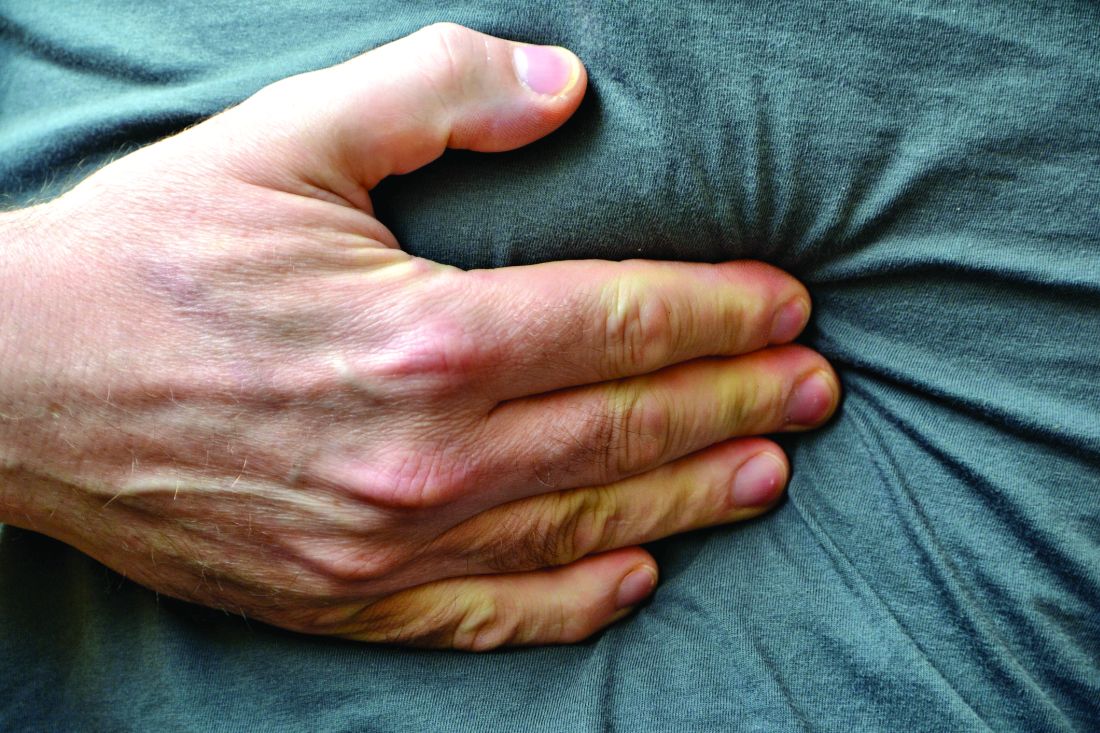
Although the authors outline several best practice advice statements on symptom identification and management, they acknowledge that much uncertainty still exists. “Our knowledge gap remains vast, and areas for future research include study of pathophysiology and etiology, as well as identification of clinical and investigation-based predictors of response to each management approach,” the authors wrote. Their report is in Clinical Gastroenterology and Hepatology.
They also call for research to identify gastroparesis phenotypes that are most likely to respond to individual management approaches.
Common gastroparesis symptoms include nausea, vomiting, early satiety, bloating, postprandial fullness, abdominal pain, and weight loss. Many of these overlap with functional dyspepsia (FD). In fact, one study found that 42% of gastroparesis could be reclassified as having functional dyspepsia, and 37% of FD patients as having gastroparesis.
About 5 million adults in the United States, and 7.2% of the world population, report gastroparesis-like symptoms. The similarities between the two groups poses a significant diagnostic challenge. However, a careful history, physical exam, and appropriate diagnostic tests should allow the physician to rule out other conditions that may mimic gastroparesis. Repeating scintigraphy may change diagnosis from gastroparesis to FD or vice versa, but the authors note that this technique is often performed incorrectly and so should be conducted at centers that closely follow guidelines. They suggest a 4 hour meal-based test of gastric emptying over the wireless motility capsule because it provides a better physiological assessment.
They also suggest that treatment should focus on the most bothersome symptom, along with reducing the potential for complications such as esophagitis, malnutrition, and weight loss, as well as improving quality of life.
There are medications available for nausea and vomiting, although most have not been studied in large randomized controlled trials. These agents include domperidone, 5-hydroxytryptamine3 receptor antagonists, neurokinin receptor antagonists, and phenothiazine antipsychotics.
There are also medications available to increase the rate of gastric emptying. Erythromycin can be used intravenously or orally ahead of meals, while the 5-HT4 receptor agonist velusetrag improved gastric emptying in healthy volunteers with no sign of cardiac side effects. The commonly available 5-HT4 agonist prucalopride has also shown promise in improving gastric emptying.
For visceral pain, the authors suggest not using opioids because they may slow gastric emptying and increase pain perception. It is believed that neuromodulators such as tricyclic antidepressants (TCAs) and serotonin norepinephrine reuptake inhibitors (SNRIs) may reduce perception of pain, but there is limited high-quality evidence available for these therapies. The authors suggest that higher potency tertiary tricyclic amines such as amitriptyline or imipramine may be effective, particularly in diabetic gastroparesis since they provide relief in FD.
Nonpharmaceutical options include gastric electrical stimulation (GES), which improves refractory nausea and vomiting in some patients with gastroparesis, but does not accelerate gastric emptying. It may also improve glycemic control, nutritional status, and quality of life. The treatment may be well suited to opioid-free patients with refractory or intractable nausea and vomiting whose predominant symptom is not abdominal pain.
Other therapies focus on the pylorus and its role in gastric emptying, which can be impaired as a result of abnormalities of pyloric tone and pressure. Functional lumen imaging probe (FLIP) can be used to probe pyloric tone and pressure, but it is expensive, invasive, and not widely available.
Outside of clinical trial settings, the authors advise against the use of intrapyloric botulinum toxic injection and transpyloric stent placement. Per oral endoscopic myotomy (POEM) has shown some efficacy at improving symptoms and reducing gastric emptying times, but it has not been studied in sham-controlled trials. The authors call the technique intriguing, but say it should not be considered a first-line therapy, and should be performed only at tertiary centers with expert motility specialists and endoscopists.
In extreme cases, enteral nutrition may be necessary, and a transjejunal tube or combined gastrojejunostomy tube should be emplaced beyond the pylorus. In a retrospective case series, patients experienced weight recovery with acceptable morbidity and mortality, and the implant was removed at an average of 20 months.
The authors have consulted or been on scientific advisory boards for Salix, Ironwood, Allergan, Arena, Allakos, Medtronic, Diversatek, Takeda, Quintiles, and IsoThrive.
This article was updated Feb. 17, 2022.
Gastroparesis can be tricky to diagnose and treat, in part because its symptoms can be difficult to distinguish from functional dyspepsia. A new clinical practice update from the American Gastroenterological Association aims to help physicians treat medically refractory gastroparesis with practical advice stemming from expert opinion and a literature review.
Although gastroparesis can be caused by known factors such as diabetes and medications, the largest group is idiopathic. The authors define medically refractory gastroparesis as symptoms that are not due to medication use, that continue despite dietary changes and first-line treatment with metoclopramide.
Although the authors outline several best practice advice statements on symptom identification and management, they acknowledge that much uncertainty still exists. “Our knowledge gap remains vast, and areas for future research include study of pathophysiology and etiology, as well as identification of clinical and investigation-based predictors of response to each management approach,” the authors wrote. Their report is in Clinical Gastroenterology and Hepatology.
They also call for research to identify gastroparesis phenotypes that are most likely to respond to individual management approaches.
Common gastroparesis symptoms include nausea, vomiting, early satiety, bloating, postprandial fullness, abdominal pain, and weight loss. Many of these overlap with functional dyspepsia (FD). In fact, one study found that 42% of gastroparesis could be reclassified as having functional dyspepsia, and 37% of FD patients as having gastroparesis.
About 5 million adults in the United States, and 7.2% of the world population, report gastroparesis-like symptoms. The similarities between the two groups poses a significant diagnostic challenge. However, a careful history, physical exam, and appropriate diagnostic tests should allow the physician to rule out other conditions that may mimic gastroparesis. Repeating scintigraphy may change diagnosis from gastroparesis to FD or vice versa, but the authors note that this technique is often performed incorrectly and so should be conducted at centers that closely follow guidelines. They suggest a 4 hour meal-based test of gastric emptying over the wireless motility capsule because it provides a better physiological assessment.
They also suggest that treatment should focus on the most bothersome symptom, along with reducing the potential for complications such as esophagitis, malnutrition, and weight loss, as well as improving quality of life.
There are medications available for nausea and vomiting, although most have not been studied in large randomized controlled trials. These agents include domperidone, 5-hydroxytryptamine3 receptor antagonists, neurokinin receptor antagonists, and phenothiazine antipsychotics.
There are also medications available to increase the rate of gastric emptying. Erythromycin can be used intravenously or orally ahead of meals, while the 5-HT4 receptor agonist velusetrag improved gastric emptying in healthy volunteers with no sign of cardiac side effects. The commonly available 5-HT4 agonist prucalopride has also shown promise in improving gastric emptying.
For visceral pain, the authors suggest not using opioids because they may slow gastric emptying and increase pain perception. It is believed that neuromodulators such as tricyclic antidepressants (TCAs) and serotonin norepinephrine reuptake inhibitors (SNRIs) may reduce perception of pain, but there is limited high-quality evidence available for these therapies. The authors suggest that higher potency tertiary tricyclic amines such as amitriptyline or imipramine may be effective, particularly in diabetic gastroparesis since they provide relief in FD.
Nonpharmaceutical options include gastric electrical stimulation (GES), which improves refractory nausea and vomiting in some patients with gastroparesis, but does not accelerate gastric emptying. It may also improve glycemic control, nutritional status, and quality of life. The treatment may be well suited to opioid-free patients with refractory or intractable nausea and vomiting whose predominant symptom is not abdominal pain.
Other therapies focus on the pylorus and its role in gastric emptying, which can be impaired as a result of abnormalities of pyloric tone and pressure. Functional lumen imaging probe (FLIP) can be used to probe pyloric tone and pressure, but it is expensive, invasive, and not widely available.
Outside of clinical trial settings, the authors advise against the use of intrapyloric botulinum toxic injection and transpyloric stent placement. Per oral endoscopic myotomy (POEM) has shown some efficacy at improving symptoms and reducing gastric emptying times, but it has not been studied in sham-controlled trials. The authors call the technique intriguing, but say it should not be considered a first-line therapy, and should be performed only at tertiary centers with expert motility specialists and endoscopists.
In extreme cases, enteral nutrition may be necessary, and a transjejunal tube or combined gastrojejunostomy tube should be emplaced beyond the pylorus. In a retrospective case series, patients experienced weight recovery with acceptable morbidity and mortality, and the implant was removed at an average of 20 months.
The authors have consulted or been on scientific advisory boards for Salix, Ironwood, Allergan, Arena, Allakos, Medtronic, Diversatek, Takeda, Quintiles, and IsoThrive.
This article was updated Feb. 17, 2022.
Gastroparesis can be tricky to diagnose and treat, in part because its symptoms can be difficult to distinguish from functional dyspepsia. A new clinical practice update from the American Gastroenterological Association aims to help physicians treat medically refractory gastroparesis with practical advice stemming from expert opinion and a literature review.
Although gastroparesis can be caused by known factors such as diabetes and medications, the largest group is idiopathic. The authors define medically refractory gastroparesis as symptoms that are not due to medication use, that continue despite dietary changes and first-line treatment with metoclopramide.
Although the authors outline several best practice advice statements on symptom identification and management, they acknowledge that much uncertainty still exists. “Our knowledge gap remains vast, and areas for future research include study of pathophysiology and etiology, as well as identification of clinical and investigation-based predictors of response to each management approach,” the authors wrote. Their report is in Clinical Gastroenterology and Hepatology.
They also call for research to identify gastroparesis phenotypes that are most likely to respond to individual management approaches.
Common gastroparesis symptoms include nausea, vomiting, early satiety, bloating, postprandial fullness, abdominal pain, and weight loss. Many of these overlap with functional dyspepsia (FD). In fact, one study found that 42% of gastroparesis could be reclassified as having functional dyspepsia, and 37% of FD patients as having gastroparesis.
About 5 million adults in the United States, and 7.2% of the world population, report gastroparesis-like symptoms. The similarities between the two groups poses a significant diagnostic challenge. However, a careful history, physical exam, and appropriate diagnostic tests should allow the physician to rule out other conditions that may mimic gastroparesis. Repeating scintigraphy may change diagnosis from gastroparesis to FD or vice versa, but the authors note that this technique is often performed incorrectly and so should be conducted at centers that closely follow guidelines. They suggest a 4 hour meal-based test of gastric emptying over the wireless motility capsule because it provides a better physiological assessment.
They also suggest that treatment should focus on the most bothersome symptom, along with reducing the potential for complications such as esophagitis, malnutrition, and weight loss, as well as improving quality of life.
There are medications available for nausea and vomiting, although most have not been studied in large randomized controlled trials. These agents include domperidone, 5-hydroxytryptamine3 receptor antagonists, neurokinin receptor antagonists, and phenothiazine antipsychotics.
There are also medications available to increase the rate of gastric emptying. Erythromycin can be used intravenously or orally ahead of meals, while the 5-HT4 receptor agonist velusetrag improved gastric emptying in healthy volunteers with no sign of cardiac side effects. The commonly available 5-HT4 agonist prucalopride has also shown promise in improving gastric emptying.
For visceral pain, the authors suggest not using opioids because they may slow gastric emptying and increase pain perception. It is believed that neuromodulators such as tricyclic antidepressants (TCAs) and serotonin norepinephrine reuptake inhibitors (SNRIs) may reduce perception of pain, but there is limited high-quality evidence available for these therapies. The authors suggest that higher potency tertiary tricyclic amines such as amitriptyline or imipramine may be effective, particularly in diabetic gastroparesis since they provide relief in FD.
Nonpharmaceutical options include gastric electrical stimulation (GES), which improves refractory nausea and vomiting in some patients with gastroparesis, but does not accelerate gastric emptying. It may also improve glycemic control, nutritional status, and quality of life. The treatment may be well suited to opioid-free patients with refractory or intractable nausea and vomiting whose predominant symptom is not abdominal pain.
Other therapies focus on the pylorus and its role in gastric emptying, which can be impaired as a result of abnormalities of pyloric tone and pressure. Functional lumen imaging probe (FLIP) can be used to probe pyloric tone and pressure, but it is expensive, invasive, and not widely available.
Outside of clinical trial settings, the authors advise against the use of intrapyloric botulinum toxic injection and transpyloric stent placement. Per oral endoscopic myotomy (POEM) has shown some efficacy at improving symptoms and reducing gastric emptying times, but it has not been studied in sham-controlled trials. The authors call the technique intriguing, but say it should not be considered a first-line therapy, and should be performed only at tertiary centers with expert motility specialists and endoscopists.
In extreme cases, enteral nutrition may be necessary, and a transjejunal tube or combined gastrojejunostomy tube should be emplaced beyond the pylorus. In a retrospective case series, patients experienced weight recovery with acceptable morbidity and mortality, and the implant was removed at an average of 20 months.
The authors have consulted or been on scientific advisory boards for Salix, Ironwood, Allergan, Arena, Allakos, Medtronic, Diversatek, Takeda, Quintiles, and IsoThrive.
This article was updated Feb. 17, 2022.
FROM CLINICAL GASTROENTEROLOGY AND HEPATOLOGY
Questions about optimal dosing of isotretinoin persist, expert says
Although the to this day, according to Diane M. Thiboutot, MD.
These include, what is the ideal daily dose of isotretinoin? What is the ideal cumulative dose of isotretinoin to minimize relapse of acne? What is the ideal duration of isotretinoin therapy? How do you define relapse?

“Initially, it was recommended as 1–mg/kg per day dosing,” Dr. Thiboutot, professor of dermatology at Penn State University, Hershey, said during the Orlando Dermatology Aesthetic and Clinical Conference. “As time went on and we became familiar with flares that some patients can have on that dose, it was recommended to start treatment at a dose of 0.5 mg/kg per day. Then there were trends for low dosing, intermittent dosing, and some of the more recent medical literature is talking about high dosing.”
Clinical studies
A multicenter study of 150 patients published in 1984 found that rates of relapse (retreatment needed) were 42% of patients of patients treated with 0.1 mg/kg daily, 20% in patients treated with 0.5 mg/kg daily, and 10% in patients treated with 1.0 mg/kg daily.
In a later study, researchers who followed 299 patients for 5 years post isotretinoin treatment found that there were more relapses in the 0.5-mg/kg group versus those treated with 1.0 mg/kg. Factors that contributed to the need for more treatment courses included lower-dose regimens (0.1 mg/kg and 0.5 mg/kg), having severe acne, being a female over the age of 25 at the onset of therapy, and having a prolonged history of acne.
More recently, investigators who conducted a single-center study of 1,453 patients treated with isotretinoin defined relapse as the need for a second course of isotretinoin. “They found that neither daily nor cumulative dosages influenced relapse of acne vulgaris in patients treated with varying doses of isotretinoin as long as treatment was continued for 2 or more months after the acne had completely resolved,” said Dr. Thiboutot, a past president of the American Acne and Rosacea Society.
“The current evidence underpinning the 120-150 mg/kg cumulative threshold–dosing regimen is equivocal and is based on two low-grade studies,” she noted. “Cumulative doses required for clearance appear lower for acne of mild to moderate severity and higher for more severe acne. Future investigations should use clinically relevant endpoints as end of treatment criteria and define treatment success in acne accurately.”
Other studies have looked at whether higher doses of isotretinoin could reduce treatment failures in patients with acne, Dr. Thiboutot said. In a retrospective chart review of 102 patients with acne who had been treated with isotretinoin for at least 4 consecutive months and followed for over a year, 45.1% required further treatment and 15.7% received a second course of isotretinoin. Cumulative dose (mg/kg), follow-up period, duration of treatment, and daily dose during the last month of treatment were not significantly different between those who relapsed and those who did not relapse.
However, “while the cumulative dose of isotretinoin did not significantly impact acne relapse, patients who received a higher cumulative dose were less likely to require a second course of treatment,” the authors wrote, adding that “female patients had a higher risk of needing retrial regardless of their cumulative dose.” They commented that “prescribing a higher dose per weight may result in less severe acne recurrences and the need for further isotretinoin therapy.”
Another study evaluated 116 patients who were treated to clearance with dosing at the discretion of the provider and defined relapse as subsequent treatment with an oral or topical agent. In the lower-dose treatment (less than 220 mg/kg; mean of 170 mg/kg) group, the relapse rate was 47.4%, compared with 26.9% in the higher-dose (greater than 220 mg/kg) group (P = .03). Cheilitis and xerosis during treatment was reported in nearly all patients in both treatment groups, but retinoid dermatitis was significantly more common among those in the higher-dose group (53.8% vs. 31.6%; P = .02). There were no significant differences in other adverse events between the two groups.
According to Dr. Thiboutot, variables to consider in selection of a daily dose include the presence of intense inflammation, cysts, nodules, potential difference in side-effect profiles with ethnicity, and an individual’s degree of side effects and their level of comfort. “What are some of the concerns with higher doses? Those of us who have treated a lot of acne patients have had the unfortunate occurrence where you start someone on isotretinoin and their acne explodes, as do their cysts and nodules. Once that happens it’s a bad situation and it takes you a while to get past it.”
Acne fulminans
Dr. Thiboutot was part of a panel of experts who assembled guidelines on the classification, management, and prevention of acne fulminans, published in 2017. “Acne fulminans can be induced by isotretinoin or it can occur on its own. If you have someone who has a lot of inflammation, a lot of cysts and nodules, it’s probably best to start them on a lower dose with or without prednisone,” she said.
Age at treatment is another variable that can affect the duration of response to isotretinoin. “If the patient is very young when they need isotretinoin, it’s highly likely that they will need it again,” Dr. Thiboutot said. “Also, adult females often need a repeat dose of isotretinoin. The cumulative dose is important, and the presence of truncal acne is a factor affecting duration of response. Truncal acne takes longer to clear, and it oftentimes needs a longer treatment course.”
Data from the iPledge database indicate that 37% of 10- to 11-year-olds needed a repeat course of isotretinoin, “and as you get older, the need for retreatment is less,” she said.
High-dose versus low-dose isotretinoin
A slow, low-dose approach to the use of isotretinoin in practice can minimize side effects and cystic flares, according to Dr. Thiboutot. “The cons are that you could have a longer treatment duration, you might need more patient visits, and it creates more prolonged drug exposure in patients who can become pregnant,” she said.
“The pros of a high-dose strategy include a shorter treatment duration and potential costs savings. The cons are that there is an increased risk of side effects and a risk of cystic flare. It seems that the general agreement is to treat until clearance and then treat for another 2 months. A clear definition of acne relapse is needed as well as prospective studies to optimize dosing.”
Dr. Thiboutot disclosed that she is a consultant Galderma and Novartis. She has also performed clinical trials for Galderma, Cassiopea, and Foamix.
Commentary by Robert Sidbury, MD, MPH
Isotretinoin has been around for a long time – 40-plus years, to be exact. Despite this cumulative experience, ideal dosing and duration remain uncertain. Many providers have evolved from a “one size fits all” approach (for example, 1 mg/kg of body weight per day for 4-6 months) to a more tailored and nuanced strategy. Dr. Thiboutot validates the need to individualize therapy and helps identify patients at higher risk for relapse. Younger patients are at greater risk for repeat courses of isotretinoin – Dr. Thiboutot cites a study showing 37% of 10- to 11-year-olds required a second course of isotretinoin. This could simply be a proxy for severity, which also augurs a more protracted course. Adult women and those with truncal acne also trend toward longer courses. Knowing these risk factors will help practitioners counsel proper expectations, tailor treatment courses, and thread the always challenging isotretinoin needle: Should one dose “low and slow” and court a longer risk window, or higher and faster, sometimes leading to a dryer disaster?
Dr. Sidbury is chief of dermatology at Seattle Children's Hospital and professor, department of pediatrics, University of Washington, Seattle. He is a site principal investigator for dupilumab trials, for which the hospital has a contract with Regeneron.
This article was updated 6/10/22.
Although the to this day, according to Diane M. Thiboutot, MD.
These include, what is the ideal daily dose of isotretinoin? What is the ideal cumulative dose of isotretinoin to minimize relapse of acne? What is the ideal duration of isotretinoin therapy? How do you define relapse?
“Initially, it was recommended as 1–mg/kg per day dosing,” Dr. Thiboutot, professor of dermatology at Penn State University, Hershey, said during the Orlando Dermatology Aesthetic and Clinical Conference. “As time went on and we became familiar with flares that some patients can have on that dose, it was recommended to start treatment at a dose of 0.5 mg/kg per day. Then there were trends for low dosing, intermittent dosing, and some of the more recent medical literature is talking about high dosing.”
Clinical studies
A multicenter study of 150 patients published in 1984 found that rates of relapse (retreatment needed) were 42% of patients of patients treated with 0.1 mg/kg daily, 20% in patients treated with 0.5 mg/kg daily, and 10% in patients treated with 1.0 mg/kg daily.
In a later study, researchers who followed 299 patients for 5 years post isotretinoin treatment found that there were more relapses in the 0.5-mg/kg group versus those treated with 1.0 mg/kg. Factors that contributed to the need for more treatment courses included lower-dose regimens (0.1 mg/kg and 0.5 mg/kg), having severe acne, being a female over the age of 25 at the onset of therapy, and having a prolonged history of acne.
More recently, investigators who conducted a single-center study of 1,453 patients treated with isotretinoin defined relapse as the need for a second course of isotretinoin. “They found that neither daily nor cumulative dosages influenced relapse of acne vulgaris in patients treated with varying doses of isotretinoin as long as treatment was continued for 2 or more months after the acne had completely resolved,” said Dr. Thiboutot, a past president of the American Acne and Rosacea Society.
“The current evidence underpinning the 120-150 mg/kg cumulative threshold–dosing regimen is equivocal and is based on two low-grade studies,” she noted. “Cumulative doses required for clearance appear lower for acne of mild to moderate severity and higher for more severe acne. Future investigations should use clinically relevant endpoints as end of treatment criteria and define treatment success in acne accurately.”
Other studies have looked at whether higher doses of isotretinoin could reduce treatment failures in patients with acne, Dr. Thiboutot said. In a retrospective chart review of 102 patients with acne who had been treated with isotretinoin for at least 4 consecutive months and followed for over a year, 45.1% required further treatment and 15.7% received a second course of isotretinoin. Cumulative dose (mg/kg), follow-up period, duration of treatment, and daily dose during the last month of treatment were not significantly different between those who relapsed and those who did not relapse.
However, “while the cumulative dose of isotretinoin did not significantly impact acne relapse, patients who received a higher cumulative dose were less likely to require a second course of treatment,” the authors wrote, adding that “female patients had a higher risk of needing retrial regardless of their cumulative dose.” They commented that “prescribing a higher dose per weight may result in less severe acne recurrences and the need for further isotretinoin therapy.”
Another study evaluated 116 patients who were treated to clearance with dosing at the discretion of the provider and defined relapse as subsequent treatment with an oral or topical agent. In the lower-dose treatment (less than 220 mg/kg; mean of 170 mg/kg) group, the relapse rate was 47.4%, compared with 26.9% in the higher-dose (greater than 220 mg/kg) group (P = .03). Cheilitis and xerosis during treatment was reported in nearly all patients in both treatment groups, but retinoid dermatitis was significantly more common among those in the higher-dose group (53.8% vs. 31.6%; P = .02). There were no significant differences in other adverse events between the two groups.
According to Dr. Thiboutot, variables to consider in selection of a daily dose include the presence of intense inflammation, cysts, nodules, potential difference in side-effect profiles with ethnicity, and an individual’s degree of side effects and their level of comfort. “What are some of the concerns with higher doses? Those of us who have treated a lot of acne patients have had the unfortunate occurrence where you start someone on isotretinoin and their acne explodes, as do their cysts and nodules. Once that happens it’s a bad situation and it takes you a while to get past it.”
Acne fulminans
Dr. Thiboutot was part of a panel of experts who assembled guidelines on the classification, management, and prevention of acne fulminans, published in 2017. “Acne fulminans can be induced by isotretinoin or it can occur on its own. If you have someone who has a lot of inflammation, a lot of cysts and nodules, it’s probably best to start them on a lower dose with or without prednisone,” she said.
Age at treatment is another variable that can affect the duration of response to isotretinoin. “If the patient is very young when they need isotretinoin, it’s highly likely that they will need it again,” Dr. Thiboutot said. “Also, adult females often need a repeat dose of isotretinoin. The cumulative dose is important, and the presence of truncal acne is a factor affecting duration of response. Truncal acne takes longer to clear, and it oftentimes needs a longer treatment course.”
Data from the iPledge database indicate that 37% of 10- to 11-year-olds needed a repeat course of isotretinoin, “and as you get older, the need for retreatment is less,” she said.
High-dose versus low-dose isotretinoin
A slow, low-dose approach to the use of isotretinoin in practice can minimize side effects and cystic flares, according to Dr. Thiboutot. “The cons are that you could have a longer treatment duration, you might need more patient visits, and it creates more prolonged drug exposure in patients who can become pregnant,” she said.
“The pros of a high-dose strategy include a shorter treatment duration and potential costs savings. The cons are that there is an increased risk of side effects and a risk of cystic flare. It seems that the general agreement is to treat until clearance and then treat for another 2 months. A clear definition of acne relapse is needed as well as prospective studies to optimize dosing.”
Dr. Thiboutot disclosed that she is a consultant Galderma and Novartis. She has also performed clinical trials for Galderma, Cassiopea, and Foamix.
Commentary by Robert Sidbury, MD, MPH
Isotretinoin has been around for a long time – 40-plus years, to be exact. Despite this cumulative experience, ideal dosing and duration remain uncertain. Many providers have evolved from a “one size fits all” approach (for example, 1 mg/kg of body weight per day for 4-6 months) to a more tailored and nuanced strategy. Dr. Thiboutot validates the need to individualize therapy and helps identify patients at higher risk for relapse. Younger patients are at greater risk for repeat courses of isotretinoin – Dr. Thiboutot cites a study showing 37% of 10- to 11-year-olds required a second course of isotretinoin. This could simply be a proxy for severity, which also augurs a more protracted course. Adult women and those with truncal acne also trend toward longer courses. Knowing these risk factors will help practitioners counsel proper expectations, tailor treatment courses, and thread the always challenging isotretinoin needle: Should one dose “low and slow” and court a longer risk window, or higher and faster, sometimes leading to a dryer disaster?
Dr. Sidbury is chief of dermatology at Seattle Children's Hospital and professor, department of pediatrics, University of Washington, Seattle. He is a site principal investigator for dupilumab trials, for which the hospital has a contract with Regeneron.
This article was updated 6/10/22.
Although the to this day, according to Diane M. Thiboutot, MD.
These include, what is the ideal daily dose of isotretinoin? What is the ideal cumulative dose of isotretinoin to minimize relapse of acne? What is the ideal duration of isotretinoin therapy? How do you define relapse?
“Initially, it was recommended as 1–mg/kg per day dosing,” Dr. Thiboutot, professor of dermatology at Penn State University, Hershey, said during the Orlando Dermatology Aesthetic and Clinical Conference. “As time went on and we became familiar with flares that some patients can have on that dose, it was recommended to start treatment at a dose of 0.5 mg/kg per day. Then there were trends for low dosing, intermittent dosing, and some of the more recent medical literature is talking about high dosing.”
Clinical studies
A multicenter study of 150 patients published in 1984 found that rates of relapse (retreatment needed) were 42% of patients of patients treated with 0.1 mg/kg daily, 20% in patients treated with 0.5 mg/kg daily, and 10% in patients treated with 1.0 mg/kg daily.
In a later study, researchers who followed 299 patients for 5 years post isotretinoin treatment found that there were more relapses in the 0.5-mg/kg group versus those treated with 1.0 mg/kg. Factors that contributed to the need for more treatment courses included lower-dose regimens (0.1 mg/kg and 0.5 mg/kg), having severe acne, being a female over the age of 25 at the onset of therapy, and having a prolonged history of acne.
More recently, investigators who conducted a single-center study of 1,453 patients treated with isotretinoin defined relapse as the need for a second course of isotretinoin. “They found that neither daily nor cumulative dosages influenced relapse of acne vulgaris in patients treated with varying doses of isotretinoin as long as treatment was continued for 2 or more months after the acne had completely resolved,” said Dr. Thiboutot, a past president of the American Acne and Rosacea Society.
“The current evidence underpinning the 120-150 mg/kg cumulative threshold–dosing regimen is equivocal and is based on two low-grade studies,” she noted. “Cumulative doses required for clearance appear lower for acne of mild to moderate severity and higher for more severe acne. Future investigations should use clinically relevant endpoints as end of treatment criteria and define treatment success in acne accurately.”
Other studies have looked at whether higher doses of isotretinoin could reduce treatment failures in patients with acne, Dr. Thiboutot said. In a retrospective chart review of 102 patients with acne who had been treated with isotretinoin for at least 4 consecutive months and followed for over a year, 45.1% required further treatment and 15.7% received a second course of isotretinoin. Cumulative dose (mg/kg), follow-up period, duration of treatment, and daily dose during the last month of treatment were not significantly different between those who relapsed and those who did not relapse.
However, “while the cumulative dose of isotretinoin did not significantly impact acne relapse, patients who received a higher cumulative dose were less likely to require a second course of treatment,” the authors wrote, adding that “female patients had a higher risk of needing retrial regardless of their cumulative dose.” They commented that “prescribing a higher dose per weight may result in less severe acne recurrences and the need for further isotretinoin therapy.”
Another study evaluated 116 patients who were treated to clearance with dosing at the discretion of the provider and defined relapse as subsequent treatment with an oral or topical agent. In the lower-dose treatment (less than 220 mg/kg; mean of 170 mg/kg) group, the relapse rate was 47.4%, compared with 26.9% in the higher-dose (greater than 220 mg/kg) group (P = .03). Cheilitis and xerosis during treatment was reported in nearly all patients in both treatment groups, but retinoid dermatitis was significantly more common among those in the higher-dose group (53.8% vs. 31.6%; P = .02). There were no significant differences in other adverse events between the two groups.
According to Dr. Thiboutot, variables to consider in selection of a daily dose include the presence of intense inflammation, cysts, nodules, potential difference in side-effect profiles with ethnicity, and an individual’s degree of side effects and their level of comfort. “What are some of the concerns with higher doses? Those of us who have treated a lot of acne patients have had the unfortunate occurrence where you start someone on isotretinoin and their acne explodes, as do their cysts and nodules. Once that happens it’s a bad situation and it takes you a while to get past it.”
Acne fulminans
Dr. Thiboutot was part of a panel of experts who assembled guidelines on the classification, management, and prevention of acne fulminans, published in 2017. “Acne fulminans can be induced by isotretinoin or it can occur on its own. If you have someone who has a lot of inflammation, a lot of cysts and nodules, it’s probably best to start them on a lower dose with or without prednisone,” she said.
Age at treatment is another variable that can affect the duration of response to isotretinoin. “If the patient is very young when they need isotretinoin, it’s highly likely that they will need it again,” Dr. Thiboutot said. “Also, adult females often need a repeat dose of isotretinoin. The cumulative dose is important, and the presence of truncal acne is a factor affecting duration of response. Truncal acne takes longer to clear, and it oftentimes needs a longer treatment course.”
Data from the iPledge database indicate that 37% of 10- to 11-year-olds needed a repeat course of isotretinoin, “and as you get older, the need for retreatment is less,” she said.
High-dose versus low-dose isotretinoin
A slow, low-dose approach to the use of isotretinoin in practice can minimize side effects and cystic flares, according to Dr. Thiboutot. “The cons are that you could have a longer treatment duration, you might need more patient visits, and it creates more prolonged drug exposure in patients who can become pregnant,” she said.
“The pros of a high-dose strategy include a shorter treatment duration and potential costs savings. The cons are that there is an increased risk of side effects and a risk of cystic flare. It seems that the general agreement is to treat until clearance and then treat for another 2 months. A clear definition of acne relapse is needed as well as prospective studies to optimize dosing.”
Dr. Thiboutot disclosed that she is a consultant Galderma and Novartis. She has also performed clinical trials for Galderma, Cassiopea, and Foamix.
Commentary by Robert Sidbury, MD, MPH
Isotretinoin has been around for a long time – 40-plus years, to be exact. Despite this cumulative experience, ideal dosing and duration remain uncertain. Many providers have evolved from a “one size fits all” approach (for example, 1 mg/kg of body weight per day for 4-6 months) to a more tailored and nuanced strategy. Dr. Thiboutot validates the need to individualize therapy and helps identify patients at higher risk for relapse. Younger patients are at greater risk for repeat courses of isotretinoin – Dr. Thiboutot cites a study showing 37% of 10- to 11-year-olds required a second course of isotretinoin. This could simply be a proxy for severity, which also augurs a more protracted course. Adult women and those with truncal acne also trend toward longer courses. Knowing these risk factors will help practitioners counsel proper expectations, tailor treatment courses, and thread the always challenging isotretinoin needle: Should one dose “low and slow” and court a longer risk window, or higher and faster, sometimes leading to a dryer disaster?
Dr. Sidbury is chief of dermatology at Seattle Children's Hospital and professor, department of pediatrics, University of Washington, Seattle. He is a site principal investigator for dupilumab trials, for which the hospital has a contract with Regeneron.
This article was updated 6/10/22.
FROM ODAC 2022

New CDC webpage aims to reduce maternal deaths
The Centers for Disease Control and Prevention is providing new online materials in a comprehensive campaign to reduce maternal mortality and postpartum complications.
As part of the CDC’s Hear Her campaign, launched last year, the webpage resources are designed to lower the United States’s more than 700 annual pregnancy-related deaths, of which two-thirds could be prevented.
The United States has the highest maternal death rate of any industrialized country and is the only developed nation in which that rate is rising.

“Unfortunately, the number of deaths occurring during pregnancy around and after delivery has not improved over time,” said obstetrician-gynecologist Romeo Galang, MD, MPH, acting chief medical officer and associate director for health equity in CDC’s division of reproductive health in Atlanta. “But no matter when they occur, two of three are preventable.”
Each year, some 50,000 mothers experience adverse pregnancy-related effects that can affect their long-term health. According to the American College of Obstetricians and Gynecologists, approximately one in three maternal deaths occur within 1 week to 1 year of delivery.
Self-harm and drug overdoses are leading causes of maternal death and non-White minority mothers are more likely than Whites to die.
Other causes are postpartum complications of hypertension, even postpartum preeclampsia, cardiovascular problems, and infectious illness, said Dr. Galang. “These are all things we may see after pregnancy and we want to monitor for them and make women aware of them.”
According to the CDC, in the first week after delivery hemorrhage, hypertensive disorders of pregnancy, and infection were leading causes of death, while cardiomyopathy was the predominant cause 1 week to 1 year after delivery.
During maternity care
Obstetricians, obstetric nurses, midwives, and nurse practitioners are uniquely positioned to educate pregnant and postpartum patients about recognizing urgent maternal warning signs, the CDC stated.
These harbingers of potential trouble include chronic or worsening headache, dizziness or faintness, altered vision, a fever of 100.4° F or higher, severely swollen hands or feet, thoughts of self-harming or harming the baby, and respiratory distress. Chest pain or tachycardia, a swollen abdomen, belly pain, nausea and vomiting, and extreme fatigue are also indicators of potential trouble.
Signs that occurred during pregnancy range from cessation or slowing of fetal movement to vaginal bleeding and fluid leakage.
The success of the Hear Her campaign will rely on an environment of trust, and it is important for obstetric care providers to build trust with patients at the outset of prenatal care and encourage mothers to share any concerns, the CDC stated. Ultimately, the best person to know her body is the woman herself, and her concerns should be heard and addressed.
But getting women to report symptoms may not be a given. “Many women and their family will attribute symptoms to the fact they’re having or have just had a baby, and there are other factors related to individual care providers and the health care systems they practice in,” Dr. Galang said.
Postpartum care
Since pregnancy complications may affect women for as long as a year after delivery, pediatricians and pediatric nurses can be an important lifeline for mothers needing postpartum care. Infant check-ups are an opportune time for staff to ask mothers how they are feeling and listen and observe carefully to identify urgent maternal warning signs.

While physicians often feel inundated by awareness campaigns, this is one that Rachel Sinkey, MD, of the department of obstetrics and gynecology and division of maternal-fetal medicine at the University of Alabama at Birmingham, wants to see remain top of mind. “It’s an excellent campaign. It’s spot on,” she said in an interview.
“The understanding that the U.S. has the highest maternal mortality rate in the developed world has rightly gained a lot of media attention,” she said. “The death of a mother affects the child, the family, and the entire community. Maternal death is a marker of the health of the community.”
Dr. Sinkey has seen mothers die postpartum of infection and heart problems. Self-harm, psychiatric disorders, and opioid overdoses are also leading causes of maternal death in Alabama. “If we can recognize these mothers and get them into good care, we can reduce some of the overdose deaths,” she said. Unfortunately, however, it’s not always a simple matter of timely recognition and referral, she said. “Some patients don’t have the insurance coverage they need to get access to care.”
Nonobstetric settings
Beyond the context of maternity-specific care, other medical professionals can help, the CDC said. Emergency department staff, paramedics, urgent care staff, primary care providers, and mental health professionals can all ask women about their recent pregnancy status and recognize the signs and symptoms of pregnancy-related complications. Health care professionals should specifically ask patients if they are pregnant or were pregnant in the past year, the CDC advised.
Support materials
Campaign materials available from the website include posters, palm cards, graphics, and social media content in English and Spanish as well as other languages ranging from Arabic to Tagalog and Vietnamese. There are separate guides to help mothers recognize warning signs and comfortably raise issues with their health care providers, as well as guides for providers to ensure respectful listening followed by appropriate action and for women’s partners and family members. A graphic poster, “Pregnant now or within the last year?” clearly illustrates symptoms worth discussing.
The site also connects health care professionals with clinical resources and tools from a variety of complementary stakeholder organizations.
The CDC is partnering in this effort with ACOG and many other medical organizations from the American Academy of Family Physicians and the American Society of Addiction Medicine to the Society for Maternal-Fetal Medicine. The goal is to expand readiness across multiple health care settings to manage obstetric emergencies during pregnancy and the postpartum period.
ACOG’s initiative is called Commitment to Action: Eliminating Preventable Maternal Mortality.
Dr. Sinkey had no competing interests with regard to her comments. Dr. Galang, as a government employee, had no conflicts of interest.
The Centers for Disease Control and Prevention is providing new online materials in a comprehensive campaign to reduce maternal mortality and postpartum complications.
As part of the CDC’s Hear Her campaign, launched last year, the webpage resources are designed to lower the United States’s more than 700 annual pregnancy-related deaths, of which two-thirds could be prevented.
The United States has the highest maternal death rate of any industrialized country and is the only developed nation in which that rate is rising.
“Unfortunately, the number of deaths occurring during pregnancy around and after delivery has not improved over time,” said obstetrician-gynecologist Romeo Galang, MD, MPH, acting chief medical officer and associate director for health equity in CDC’s division of reproductive health in Atlanta. “But no matter when they occur, two of three are preventable.”
Each year, some 50,000 mothers experience adverse pregnancy-related effects that can affect their long-term health. According to the American College of Obstetricians and Gynecologists, approximately one in three maternal deaths occur within 1 week to 1 year of delivery.
Self-harm and drug overdoses are leading causes of maternal death and non-White minority mothers are more likely than Whites to die.
Other causes are postpartum complications of hypertension, even postpartum preeclampsia, cardiovascular problems, and infectious illness, said Dr. Galang. “These are all things we may see after pregnancy and we want to monitor for them and make women aware of them.”
According to the CDC, in the first week after delivery hemorrhage, hypertensive disorders of pregnancy, and infection were leading causes of death, while cardiomyopathy was the predominant cause 1 week to 1 year after delivery.
During maternity care
Obstetricians, obstetric nurses, midwives, and nurse practitioners are uniquely positioned to educate pregnant and postpartum patients about recognizing urgent maternal warning signs, the CDC stated.
These harbingers of potential trouble include chronic or worsening headache, dizziness or faintness, altered vision, a fever of 100.4° F or higher, severely swollen hands or feet, thoughts of self-harming or harming the baby, and respiratory distress. Chest pain or tachycardia, a swollen abdomen, belly pain, nausea and vomiting, and extreme fatigue are also indicators of potential trouble.
Signs that occurred during pregnancy range from cessation or slowing of fetal movement to vaginal bleeding and fluid leakage.
The success of the Hear Her campaign will rely on an environment of trust, and it is important for obstetric care providers to build trust with patients at the outset of prenatal care and encourage mothers to share any concerns, the CDC stated. Ultimately, the best person to know her body is the woman herself, and her concerns should be heard and addressed.
But getting women to report symptoms may not be a given. “Many women and their family will attribute symptoms to the fact they’re having or have just had a baby, and there are other factors related to individual care providers and the health care systems they practice in,” Dr. Galang said.
Postpartum care
Since pregnancy complications may affect women for as long as a year after delivery, pediatricians and pediatric nurses can be an important lifeline for mothers needing postpartum care. Infant check-ups are an opportune time for staff to ask mothers how they are feeling and listen and observe carefully to identify urgent maternal warning signs.
While physicians often feel inundated by awareness campaigns, this is one that Rachel Sinkey, MD, of the department of obstetrics and gynecology and division of maternal-fetal medicine at the University of Alabama at Birmingham, wants to see remain top of mind. “It’s an excellent campaign. It’s spot on,” she said in an interview.
“The understanding that the U.S. has the highest maternal mortality rate in the developed world has rightly gained a lot of media attention,” she said. “The death of a mother affects the child, the family, and the entire community. Maternal death is a marker of the health of the community.”
Dr. Sinkey has seen mothers die postpartum of infection and heart problems. Self-harm, psychiatric disorders, and opioid overdoses are also leading causes of maternal death in Alabama. “If we can recognize these mothers and get them into good care, we can reduce some of the overdose deaths,” she said. Unfortunately, however, it’s not always a simple matter of timely recognition and referral, she said. “Some patients don’t have the insurance coverage they need to get access to care.”
Nonobstetric settings
Beyond the context of maternity-specific care, other medical professionals can help, the CDC said. Emergency department staff, paramedics, urgent care staff, primary care providers, and mental health professionals can all ask women about their recent pregnancy status and recognize the signs and symptoms of pregnancy-related complications. Health care professionals should specifically ask patients if they are pregnant or were pregnant in the past year, the CDC advised.
Support materials
Campaign materials available from the website include posters, palm cards, graphics, and social media content in English and Spanish as well as other languages ranging from Arabic to Tagalog and Vietnamese. There are separate guides to help mothers recognize warning signs and comfortably raise issues with their health care providers, as well as guides for providers to ensure respectful listening followed by appropriate action and for women’s partners and family members. A graphic poster, “Pregnant now or within the last year?” clearly illustrates symptoms worth discussing.
The site also connects health care professionals with clinical resources and tools from a variety of complementary stakeholder organizations.
The CDC is partnering in this effort with ACOG and many other medical organizations from the American Academy of Family Physicians and the American Society of Addiction Medicine to the Society for Maternal-Fetal Medicine. The goal is to expand readiness across multiple health care settings to manage obstetric emergencies during pregnancy and the postpartum period.
ACOG’s initiative is called Commitment to Action: Eliminating Preventable Maternal Mortality.
Dr. Sinkey had no competing interests with regard to her comments. Dr. Galang, as a government employee, had no conflicts of interest.
The Centers for Disease Control and Prevention is providing new online materials in a comprehensive campaign to reduce maternal mortality and postpartum complications.
As part of the CDC’s Hear Her campaign, launched last year, the webpage resources are designed to lower the United States’s more than 700 annual pregnancy-related deaths, of which two-thirds could be prevented.
The United States has the highest maternal death rate of any industrialized country and is the only developed nation in which that rate is rising.
“Unfortunately, the number of deaths occurring during pregnancy around and after delivery has not improved over time,” said obstetrician-gynecologist Romeo Galang, MD, MPH, acting chief medical officer and associate director for health equity in CDC’s division of reproductive health in Atlanta. “But no matter when they occur, two of three are preventable.”
Each year, some 50,000 mothers experience adverse pregnancy-related effects that can affect their long-term health. According to the American College of Obstetricians and Gynecologists, approximately one in three maternal deaths occur within 1 week to 1 year of delivery.
Self-harm and drug overdoses are leading causes of maternal death and non-White minority mothers are more likely than Whites to die.
Other causes are postpartum complications of hypertension, even postpartum preeclampsia, cardiovascular problems, and infectious illness, said Dr. Galang. “These are all things we may see after pregnancy and we want to monitor for them and make women aware of them.”
According to the CDC, in the first week after delivery hemorrhage, hypertensive disorders of pregnancy, and infection were leading causes of death, while cardiomyopathy was the predominant cause 1 week to 1 year after delivery.
During maternity care
Obstetricians, obstetric nurses, midwives, and nurse practitioners are uniquely positioned to educate pregnant and postpartum patients about recognizing urgent maternal warning signs, the CDC stated.
These harbingers of potential trouble include chronic or worsening headache, dizziness or faintness, altered vision, a fever of 100.4° F or higher, severely swollen hands or feet, thoughts of self-harming or harming the baby, and respiratory distress. Chest pain or tachycardia, a swollen abdomen, belly pain, nausea and vomiting, and extreme fatigue are also indicators of potential trouble.
Signs that occurred during pregnancy range from cessation or slowing of fetal movement to vaginal bleeding and fluid leakage.
The success of the Hear Her campaign will rely on an environment of trust, and it is important for obstetric care providers to build trust with patients at the outset of prenatal care and encourage mothers to share any concerns, the CDC stated. Ultimately, the best person to know her body is the woman herself, and her concerns should be heard and addressed.
But getting women to report symptoms may not be a given. “Many women and their family will attribute symptoms to the fact they’re having or have just had a baby, and there are other factors related to individual care providers and the health care systems they practice in,” Dr. Galang said.
Postpartum care
Since pregnancy complications may affect women for as long as a year after delivery, pediatricians and pediatric nurses can be an important lifeline for mothers needing postpartum care. Infant check-ups are an opportune time for staff to ask mothers how they are feeling and listen and observe carefully to identify urgent maternal warning signs.
While physicians often feel inundated by awareness campaigns, this is one that Rachel Sinkey, MD, of the department of obstetrics and gynecology and division of maternal-fetal medicine at the University of Alabama at Birmingham, wants to see remain top of mind. “It’s an excellent campaign. It’s spot on,” she said in an interview.
“The understanding that the U.S. has the highest maternal mortality rate in the developed world has rightly gained a lot of media attention,” she said. “The death of a mother affects the child, the family, and the entire community. Maternal death is a marker of the health of the community.”
Dr. Sinkey has seen mothers die postpartum of infection and heart problems. Self-harm, psychiatric disorders, and opioid overdoses are also leading causes of maternal death in Alabama. “If we can recognize these mothers and get them into good care, we can reduce some of the overdose deaths,” she said. Unfortunately, however, it’s not always a simple matter of timely recognition and referral, she said. “Some patients don’t have the insurance coverage they need to get access to care.”
Nonobstetric settings
Beyond the context of maternity-specific care, other medical professionals can help, the CDC said. Emergency department staff, paramedics, urgent care staff, primary care providers, and mental health professionals can all ask women about their recent pregnancy status and recognize the signs and symptoms of pregnancy-related complications. Health care professionals should specifically ask patients if they are pregnant or were pregnant in the past year, the CDC advised.
Support materials
Campaign materials available from the website include posters, palm cards, graphics, and social media content in English and Spanish as well as other languages ranging from Arabic to Tagalog and Vietnamese. There are separate guides to help mothers recognize warning signs and comfortably raise issues with their health care providers, as well as guides for providers to ensure respectful listening followed by appropriate action and for women’s partners and family members. A graphic poster, “Pregnant now or within the last year?” clearly illustrates symptoms worth discussing.
The site also connects health care professionals with clinical resources and tools from a variety of complementary stakeholder organizations.
The CDC is partnering in this effort with ACOG and many other medical organizations from the American Academy of Family Physicians and the American Society of Addiction Medicine to the Society for Maternal-Fetal Medicine. The goal is to expand readiness across multiple health care settings to manage obstetric emergencies during pregnancy and the postpartum period.
ACOG’s initiative is called Commitment to Action: Eliminating Preventable Maternal Mortality.
Dr. Sinkey had no competing interests with regard to her comments. Dr. Galang, as a government employee, had no conflicts of interest.

Disseminated Erythematous-Violet Edematous Plaques and Necrotic Nodules
The Diagnosis: Histiocytoid Sweet Syndrome
The patient was admitted for clinical study and treatment monitoring. During the first 72 hours of admittance, the lesions and general malaise further developed along with C-reactive protein elevation (126 mg/L). Administration of intravenous prednisone at a dosage of 1 mg/kg daily was accompanied by substantial improvement after 1 week of treatment, with subsequent follow-up and outpatient monitoring. An underlying neoplasia was ruled out after review of medical history, physical examination, complete blood cell count, chest radiography, abdominal ultrasonography, colonoscopy, and bone marrow aspiration.

A 4-mm skin biopsy was performed from a lesion on the neck (Figure 1). Histology revealed a dermis with prominent edema alongside superficial, deep, and periadnexal perivascular inflammatory infiltrates, as well as predominant lymphocytes and cells with a histiocytoid profile (Figure 2). These findings were accompanied by isolated neutrophil foci. The absence of leukocytoclastic vasculitis was noted. Immunohistochemistry demonstrated that the histiocyte population was positive for myeloperoxidase and CD68, which categorized them as immature cells of myeloid origin (Figure 3). Clinical and histopathologic findings led to a definitive diagnosis of histiocytoid Sweet syndrome (SS). Sweet syndrome consists of a neutrophilic dermatosis profile. Clinically, it manifests as a sudden onset of painful nodules and plaques accompanied by fever, malaise, and leukocytosis.
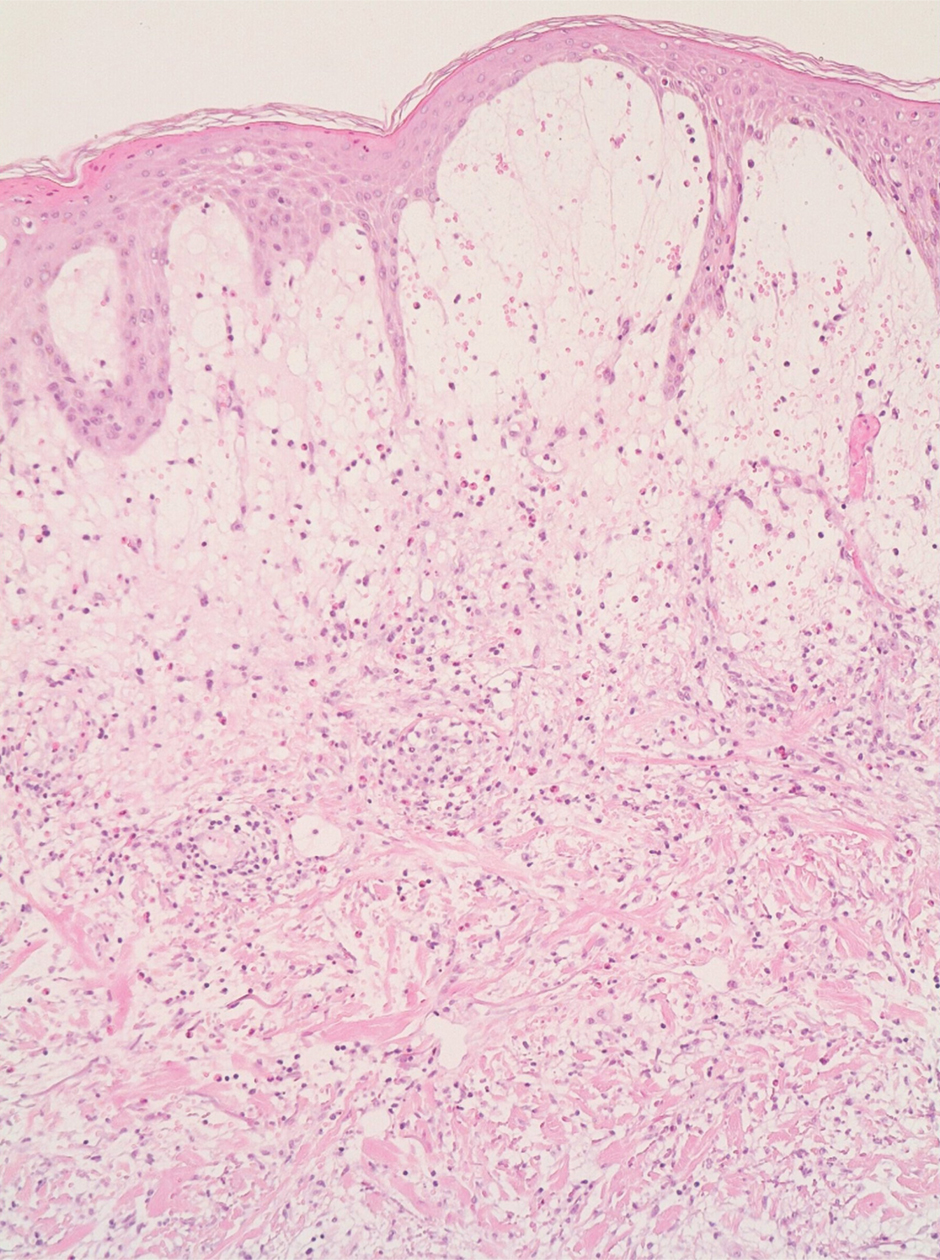
Histiocytoid SS is a rare histologic variant of SS initially described by Requena et al1 in 2005. In histiocytoid SS, the main inflammatory infiltrates are promyelocytes and myelocytes.2 Immunohistochemistry shows positivity for myeloperoxidase, CD15, CD43, CD45, CD68, MAC-386, and HAM56.1 The diagnosis is determined by exclusion after adequate clinical and histopathologic correlation, which also should exclude other diagnoses such as leukemia cutis and interstitial granulomatous dermatitis.3 Histiocytoid SS may be related to an increased risk for underlying malignancy. Haber et al4 performed a systematic review in which they concluded that approximately 40% of patients newly diagnosed with histiocytoid SS subsequently were diagnosed or already were diagnosed with a hematologic or solid cancer vs 21% in the classical neutrophilic infiltrate of SS (NSS). Histiocytoid SS more commonly was associated with myelodysplastic syndrome (46% vs 2.5% in NSS) and hematologic malignancies (42.5% vs 25% in SS).
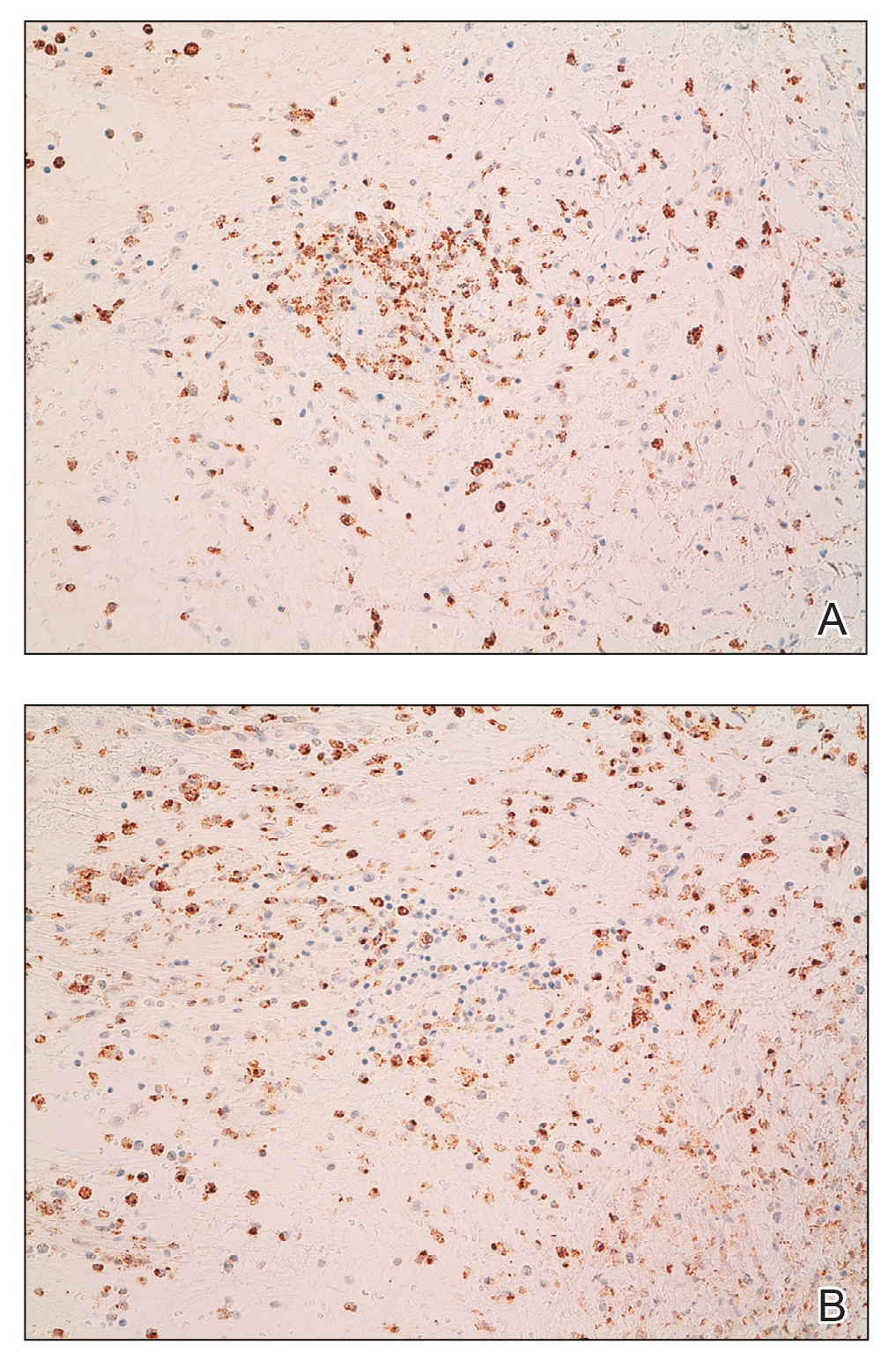
The initial differential diagnoses include inflammatory dermatoses, infections, neoplasms, and systemic diseases. In exudative erythema multiforme, early lesions are composed of typical target lesions with mucosal involvement in 25% to 60% of patients.5 Erythema elevatum diutinum is a chronic dermatosis characterized by asymptomatic papules and red-violet nodules. The most characteristic histologic finding is leukocytoclastic vasculitis.6 The absence of vasculitis is part of the major diagnostic criteria for SS.7 Wells syndrome is associated with general malaise, and edematous and erythematous-violet plaques or nodules appear on the limbs; however, it frequently is associated with eosinophilia in peripheral blood, and histology shows that the main cell population of the inflammatory infiltrate also is eosinophilic.8 Painful, superficial, and erosive blisters appear preferentially on the face and backs of the arms in bullous pyoderma gangrenosum. It usually is not associated with the typical systemic manifestations of SS (ie, fever, arthralgia, damage to target organs). On histopathology, the neutrophilic infiltrate is accompanied by subepidermal vesicles.9
Histiocytoid SS responds dramatically to corticosteroids. Other first-line treatments that avoid use of corticosteroids are colchicine, dapsone, and potassium iodide. Multiple treatments were attempted in our patient, including corticosteroids, methotrexate, dapsone, colchicine, and anakinra. Despite patients responding well to treatment, a possible underlying neoplasm, most frequently of hematologic origin, must be excluded.10
- Requena L, Kutzner H, Palmedo G, et al. Histiocytoid Sweet syndrome: a dermal infiltration of immature neutrophilic granulocytes. Arch Dermatol. 2005;141:834-842. doi:10.1001/archderm.141.7.834
- Alegría-Landa V, Rodríguez-Pinilla SM, Santos-Briz A, et al. Clinicopathologic, immunohistochemical, and molecular features of histiocytoid Sweet syndrome. JAMA Dermatol. 2017;153:651-659. doi:10.1001/jamadermatol.2016.6092
- Llamas-Velasco M, Concha-Garzón MJ, Fraga J, et al. Histiocytoid Sweet syndrome related to bortezomib: a mimicker of cutaneous infiltration by myeloma. Indian J Dermatol Venereol Leprol. 2015; 81:305-306. doi:10.4103/0378-6323.152743
- Haber R, Feghali J, El Gemayel M. Risk of malignancy in histiocytoid Sweet syndrome: a systematic review and reappraisal [published online February 21, 2020]. J Am Acad Dermatol. 2020;83:661-663. doi:10.1016/j.jaad.2020.02.048
- Sokumbi O, Wetter DA. Clinical features, diagnosis, and treatment of erythema multiforme: a review for the practicing dermatologist. Int J Dermatol. 2012;51:889-902. doi:10.1111/j.1365-4632.2011.05348.x
- Newburger J, Schmieder GJ. Erythema elevatum diutinum. StatPearls. StatPearls Publishing; 2021. http://www.ncbi.nlm.nih.gov /books/NBK448069/
- Su WP, Liu HN. Diagnostic criteria for Sweet’s syndrome. Cutis. 1986;37:167-174.
- Weins AB, Biedermann T, Weiss T, et al. Wells syndrome. J Dtsch Dermatol Ges. 2016;14:989-993. doi:10.1111/ddg.13132
- Powell FC, Su WP, Perry HO. Pyoderma gangrenosum: classification and management. J Am Acad Dermatol. 1996;34:395-409; quiz 410-412. doi:10.1016/s0190-9622(96)90428-4
- Villarreal-Villarreal CD, Ocampo-Candiani J, Villarreal-Martínez A. Sweet syndrome: a review and update. Actas Dermosifiliogr. 2016;107:369-378. doi:10.1016/j.ad.2015.12.001
The Diagnosis: Histiocytoid Sweet Syndrome
The patient was admitted for clinical study and treatment monitoring. During the first 72 hours of admittance, the lesions and general malaise further developed along with C-reactive protein elevation (126 mg/L). Administration of intravenous prednisone at a dosage of 1 mg/kg daily was accompanied by substantial improvement after 1 week of treatment, with subsequent follow-up and outpatient monitoring. An underlying neoplasia was ruled out after review of medical history, physical examination, complete blood cell count, chest radiography, abdominal ultrasonography, colonoscopy, and bone marrow aspiration.
A 4-mm skin biopsy was performed from a lesion on the neck (Figure 1). Histology revealed a dermis with prominent edema alongside superficial, deep, and periadnexal perivascular inflammatory infiltrates, as well as predominant lymphocytes and cells with a histiocytoid profile (Figure 2). These findings were accompanied by isolated neutrophil foci. The absence of leukocytoclastic vasculitis was noted. Immunohistochemistry demonstrated that the histiocyte population was positive for myeloperoxidase and CD68, which categorized them as immature cells of myeloid origin (Figure 3). Clinical and histopathologic findings led to a definitive diagnosis of histiocytoid Sweet syndrome (SS). Sweet syndrome consists of a neutrophilic dermatosis profile. Clinically, it manifests as a sudden onset of painful nodules and plaques accompanied by fever, malaise, and leukocytosis.
Histiocytoid SS is a rare histologic variant of SS initially described by Requena et al1 in 2005. In histiocytoid SS, the main inflammatory infiltrates are promyelocytes and myelocytes.2 Immunohistochemistry shows positivity for myeloperoxidase, CD15, CD43, CD45, CD68, MAC-386, and HAM56.1 The diagnosis is determined by exclusion after adequate clinical and histopathologic correlation, which also should exclude other diagnoses such as leukemia cutis and interstitial granulomatous dermatitis.3 Histiocytoid SS may be related to an increased risk for underlying malignancy. Haber et al4 performed a systematic review in which they concluded that approximately 40% of patients newly diagnosed with histiocytoid SS subsequently were diagnosed or already were diagnosed with a hematologic or solid cancer vs 21% in the classical neutrophilic infiltrate of SS (NSS). Histiocytoid SS more commonly was associated with myelodysplastic syndrome (46% vs 2.5% in NSS) and hematologic malignancies (42.5% vs 25% in SS).
The initial differential diagnoses include inflammatory dermatoses, infections, neoplasms, and systemic diseases. In exudative erythema multiforme, early lesions are composed of typical target lesions with mucosal involvement in 25% to 60% of patients.5 Erythema elevatum diutinum is a chronic dermatosis characterized by asymptomatic papules and red-violet nodules. The most characteristic histologic finding is leukocytoclastic vasculitis.6 The absence of vasculitis is part of the major diagnostic criteria for SS.7 Wells syndrome is associated with general malaise, and edematous and erythematous-violet plaques or nodules appear on the limbs; however, it frequently is associated with eosinophilia in peripheral blood, and histology shows that the main cell population of the inflammatory infiltrate also is eosinophilic.8 Painful, superficial, and erosive blisters appear preferentially on the face and backs of the arms in bullous pyoderma gangrenosum. It usually is not associated with the typical systemic manifestations of SS (ie, fever, arthralgia, damage to target organs). On histopathology, the neutrophilic infiltrate is accompanied by subepidermal vesicles.9
Histiocytoid SS responds dramatically to corticosteroids. Other first-line treatments that avoid use of corticosteroids are colchicine, dapsone, and potassium iodide. Multiple treatments were attempted in our patient, including corticosteroids, methotrexate, dapsone, colchicine, and anakinra. Despite patients responding well to treatment, a possible underlying neoplasm, most frequently of hematologic origin, must be excluded.10
The Diagnosis: Histiocytoid Sweet Syndrome
The patient was admitted for clinical study and treatment monitoring. During the first 72 hours of admittance, the lesions and general malaise further developed along with C-reactive protein elevation (126 mg/L). Administration of intravenous prednisone at a dosage of 1 mg/kg daily was accompanied by substantial improvement after 1 week of treatment, with subsequent follow-up and outpatient monitoring. An underlying neoplasia was ruled out after review of medical history, physical examination, complete blood cell count, chest radiography, abdominal ultrasonography, colonoscopy, and bone marrow aspiration.
A 4-mm skin biopsy was performed from a lesion on the neck (Figure 1). Histology revealed a dermis with prominent edema alongside superficial, deep, and periadnexal perivascular inflammatory infiltrates, as well as predominant lymphocytes and cells with a histiocytoid profile (Figure 2). These findings were accompanied by isolated neutrophil foci. The absence of leukocytoclastic vasculitis was noted. Immunohistochemistry demonstrated that the histiocyte population was positive for myeloperoxidase and CD68, which categorized them as immature cells of myeloid origin (Figure 3). Clinical and histopathologic findings led to a definitive diagnosis of histiocytoid Sweet syndrome (SS). Sweet syndrome consists of a neutrophilic dermatosis profile. Clinically, it manifests as a sudden onset of painful nodules and plaques accompanied by fever, malaise, and leukocytosis.
Histiocytoid SS is a rare histologic variant of SS initially described by Requena et al1 in 2005. In histiocytoid SS, the main inflammatory infiltrates are promyelocytes and myelocytes.2 Immunohistochemistry shows positivity for myeloperoxidase, CD15, CD43, CD45, CD68, MAC-386, and HAM56.1 The diagnosis is determined by exclusion after adequate clinical and histopathologic correlation, which also should exclude other diagnoses such as leukemia cutis and interstitial granulomatous dermatitis.3 Histiocytoid SS may be related to an increased risk for underlying malignancy. Haber et al4 performed a systematic review in which they concluded that approximately 40% of patients newly diagnosed with histiocytoid SS subsequently were diagnosed or already were diagnosed with a hematologic or solid cancer vs 21% in the classical neutrophilic infiltrate of SS (NSS). Histiocytoid SS more commonly was associated with myelodysplastic syndrome (46% vs 2.5% in NSS) and hematologic malignancies (42.5% vs 25% in SS).
The initial differential diagnoses include inflammatory dermatoses, infections, neoplasms, and systemic diseases. In exudative erythema multiforme, early lesions are composed of typical target lesions with mucosal involvement in 25% to 60% of patients.5 Erythema elevatum diutinum is a chronic dermatosis characterized by asymptomatic papules and red-violet nodules. The most characteristic histologic finding is leukocytoclastic vasculitis.6 The absence of vasculitis is part of the major diagnostic criteria for SS.7 Wells syndrome is associated with general malaise, and edematous and erythematous-violet plaques or nodules appear on the limbs; however, it frequently is associated with eosinophilia in peripheral blood, and histology shows that the main cell population of the inflammatory infiltrate also is eosinophilic.8 Painful, superficial, and erosive blisters appear preferentially on the face and backs of the arms in bullous pyoderma gangrenosum. It usually is not associated with the typical systemic manifestations of SS (ie, fever, arthralgia, damage to target organs). On histopathology, the neutrophilic infiltrate is accompanied by subepidermal vesicles.9
Histiocytoid SS responds dramatically to corticosteroids. Other first-line treatments that avoid use of corticosteroids are colchicine, dapsone, and potassium iodide. Multiple treatments were attempted in our patient, including corticosteroids, methotrexate, dapsone, colchicine, and anakinra. Despite patients responding well to treatment, a possible underlying neoplasm, most frequently of hematologic origin, must be excluded.10
- Requena L, Kutzner H, Palmedo G, et al. Histiocytoid Sweet syndrome: a dermal infiltration of immature neutrophilic granulocytes. Arch Dermatol. 2005;141:834-842. doi:10.1001/archderm.141.7.834
- Alegría-Landa V, Rodríguez-Pinilla SM, Santos-Briz A, et al. Clinicopathologic, immunohistochemical, and molecular features of histiocytoid Sweet syndrome. JAMA Dermatol. 2017;153:651-659. doi:10.1001/jamadermatol.2016.6092
- Llamas-Velasco M, Concha-Garzón MJ, Fraga J, et al. Histiocytoid Sweet syndrome related to bortezomib: a mimicker of cutaneous infiltration by myeloma. Indian J Dermatol Venereol Leprol. 2015; 81:305-306. doi:10.4103/0378-6323.152743
- Haber R, Feghali J, El Gemayel M. Risk of malignancy in histiocytoid Sweet syndrome: a systematic review and reappraisal [published online February 21, 2020]. J Am Acad Dermatol. 2020;83:661-663. doi:10.1016/j.jaad.2020.02.048
- Sokumbi O, Wetter DA. Clinical features, diagnosis, and treatment of erythema multiforme: a review for the practicing dermatologist. Int J Dermatol. 2012;51:889-902. doi:10.1111/j.1365-4632.2011.05348.x
- Newburger J, Schmieder GJ. Erythema elevatum diutinum. StatPearls. StatPearls Publishing; 2021. http://www.ncbi.nlm.nih.gov /books/NBK448069/
- Su WP, Liu HN. Diagnostic criteria for Sweet’s syndrome. Cutis. 1986;37:167-174.
- Weins AB, Biedermann T, Weiss T, et al. Wells syndrome. J Dtsch Dermatol Ges. 2016;14:989-993. doi:10.1111/ddg.13132
- Powell FC, Su WP, Perry HO. Pyoderma gangrenosum: classification and management. J Am Acad Dermatol. 1996;34:395-409; quiz 410-412. doi:10.1016/s0190-9622(96)90428-4
- Villarreal-Villarreal CD, Ocampo-Candiani J, Villarreal-Martínez A. Sweet syndrome: a review and update. Actas Dermosifiliogr. 2016;107:369-378. doi:10.1016/j.ad.2015.12.001
- Requena L, Kutzner H, Palmedo G, et al. Histiocytoid Sweet syndrome: a dermal infiltration of immature neutrophilic granulocytes. Arch Dermatol. 2005;141:834-842. doi:10.1001/archderm.141.7.834
- Alegría-Landa V, Rodríguez-Pinilla SM, Santos-Briz A, et al. Clinicopathologic, immunohistochemical, and molecular features of histiocytoid Sweet syndrome. JAMA Dermatol. 2017;153:651-659. doi:10.1001/jamadermatol.2016.6092
- Llamas-Velasco M, Concha-Garzón MJ, Fraga J, et al. Histiocytoid Sweet syndrome related to bortezomib: a mimicker of cutaneous infiltration by myeloma. Indian J Dermatol Venereol Leprol. 2015; 81:305-306. doi:10.4103/0378-6323.152743
- Haber R, Feghali J, El Gemayel M. Risk of malignancy in histiocytoid Sweet syndrome: a systematic review and reappraisal [published online February 21, 2020]. J Am Acad Dermatol. 2020;83:661-663. doi:10.1016/j.jaad.2020.02.048
- Sokumbi O, Wetter DA. Clinical features, diagnosis, and treatment of erythema multiforme: a review for the practicing dermatologist. Int J Dermatol. 2012;51:889-902. doi:10.1111/j.1365-4632.2011.05348.x
- Newburger J, Schmieder GJ. Erythema elevatum diutinum. StatPearls. StatPearls Publishing; 2021. http://www.ncbi.nlm.nih.gov /books/NBK448069/
- Su WP, Liu HN. Diagnostic criteria for Sweet’s syndrome. Cutis. 1986;37:167-174.
- Weins AB, Biedermann T, Weiss T, et al. Wells syndrome. J Dtsch Dermatol Ges. 2016;14:989-993. doi:10.1111/ddg.13132
- Powell FC, Su WP, Perry HO. Pyoderma gangrenosum: classification and management. J Am Acad Dermatol. 1996;34:395-409; quiz 410-412. doi:10.1016/s0190-9622(96)90428-4
- Villarreal-Villarreal CD, Ocampo-Candiani J, Villarreal-Martínez A. Sweet syndrome: a review and update. Actas Dermosifiliogr. 2016;107:369-378. doi:10.1016/j.ad.2015.12.001
A 53-year-old man presented to the emergency department with a fever and painful skin lesions of 2 days’ duration. He reported a medical history of an upper respiratory infection 4 weeks prior. Physical examination was notable for erythematous-violet edematous papules, necrotic lesions, and pseudovesicles located on the face (top), head, neck, arms, and legs (bottom). Hemorrhagic splinters were evidenced in multiple nail sections. Urgent blood work revealed microcytic anemia (hemoglobin, 12.6 g/dL [reference range, 14.0–17.5 g/dL]) and elevated C-reactive protein (58 mg/L [reference range, 0.0–5.0 mg/L]).
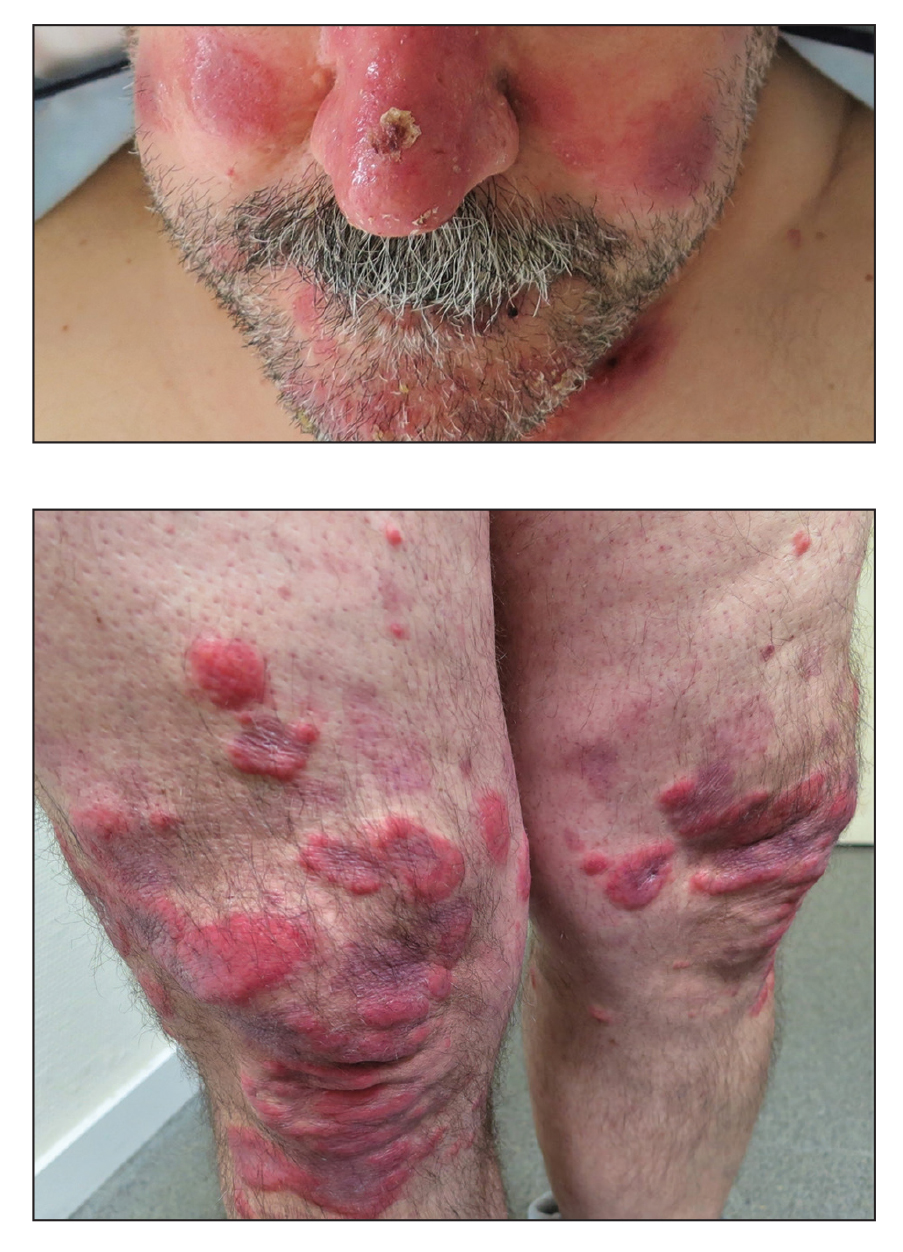
Improved follow-up needed to find late-stage pancreatic cancers
A relatively large number of late-stage pancreatic ductal adenocarcinomas (PDACs) are detected during follow-up surveillance, yet no single patient- or protocol-specific factor appears to be significantly associated with detecting late-stage disease during this period, according to a new systematic literature review and meta-analysis.
The researchers, led by Ankit Chhoda, MD, of Yale University, New Haven, Conn., wrote in Gastroenterology that interval progression in high-risk individuals “highlights the need for improved follow-up methodology with higher accuracy to detect prognostically significant and treatable lesions.”
Individuals at high risk for PDAC are encouraged to undergo routine surveillance for the disease because early detection and resection of T1N0M0 PDAC and high-grade precursors may improve survival outcomes. According to Dr. Chhoda and colleagues, challenges of interval progression of cancers during the surveillance period for gastrointestinal malignancies have been well described in the general and at-risk patient populations. Previous studies, the authors explained, have not scrutinized the issues associated with late-stage PDACs detected during follow-up surveillance.
“Late-stage PDACs necessitate critical appraisal of current follow-up strategies to detect successful targets and perform timely resections,” the authors wrote. The researchers added that the diagnosis of late-stage PDACs during follow-up emphasizes the need for implementing “quality measures to avoid preventable causes, including surveillance adherence and diagnostic errors.”
To understand the incidence rates of late-stage PDACs during follow-up in high-risk individuals, Dr. Chhoda and researchers performed a systematic literature review and meta-analysis of data that included follow-up strategies for early PDAC detection among a high-risk population.
Outcomes of interest for the analysis included the overall diagnosis of advanced neoplasia as well as surveillance-detected/interval late-stage PDACs (T2–4N0M0/metastatic stage PDAC) during follow-up. The investigators defined surveillance-detected and interval late-stage PDACs as late-stage PDACs that were detected during surveillance and as those presenting symptomatically between visits, respectively.
The researchers also performed metaregression of the incidence rates of late-stage PDACs to examine the relationship with clinicoradiologic features in high-risk individuals.
A total of 13 studies on surveillance in 2,169 high-risk individuals were included in the systematic review, while 12 studies were included in the meta-analysis. Across studies, high-risk individuals were followed for over 7,302.72 patient-years for the purposes of detecting incident lesions or progression of preexisting pancreatic abnormalities.
In all high-risk individuals who underwent follow-up, the investigators identified a total yield of advanced neoplasia of 53. This total yield consisted of 7 high-grade pancreatic intraepithelial neoplasms, 7 high-grade intraductal papillary mucinous neoplasms, and 39 PDACs. According to the meta-analysis, the cumulative incidence of advanced neoplasia was 3.3 (95% confidence interval, 0.6-7.4; P < .001) per 1,000 patient-years. During follow-up, the cumulative incidence of surveillance-detected/interval late-stage PDACs was 1.7 per 1,000 patient-years (95% CI, 0.2-4.0; P = .03).
In a separate analysis, the investigators sought to identify the relationship between the modality of follow-up imaging and late-stage PDAC incidence. Imaging modalities used during follow-up were mostly cross-sectional imaging, such as computed tomography or magnetic resonance imaging with cholangiopancreatography (n = 4) or endoscopic ultrasound and cross-sectional modalities (n = 8).
The investigators found no significant associations between late-stage PDACs and surveillance imaging, baseline pancreatic morphology, study location, genetic background, gender, or age. Incidence of late-stage PDACs in studies with mostly cross-sectional imaging was 0.7 per 1,000 patient-years (95% CI, 0.0-8.0). This incidence rate was lower than that reported with EUS and cross-sectional modalities (2.5 per 1,000 patient-years; 95% CI, 0.6-5.4), but this difference was not statistically significant (P = .2).
No significant difference was found during follow-up in the incidence of late-stage PDACs between high-risk individuals with baseline pancreatic abnormalities (0.0 no significant difference; 95% CI, 0.0-0.3) vs. high-risk individuals with normal baseline (0.9 per 1,000 patient-years; 95% CI, 0.0-2.8) (P = .9).
Most studies included in the analysis did not report on diagnostic errors and surveillance adherence, the researchers wrote. Nonadherence to surveillance as well as delays in surveillance accounted for four late-stage PDACs, and surveillance cessation and/or delays were reported in 4 out of 19 high-risk individuals. There was limited information on symptoms, presentation timing, site of lesion, and surveillance adherence, which the investigators indicated prevented a formal meta-analysis.
In their summary, the study authors noted that in clinical practice there is a need for improved quality measures and adherence to surveillance programs to reduce the risk of diagnostic errors. The authors stated that evidence on the impact of these quality measures “on surveillance outcomes will not only improve quality of surveillance practices, but also enrich our communication with patients who undergo surveillance.”
The researchers reported no conflicts of interest with the pharmaceutical industry, and the study did not receive any funding.
A relatively large number of late-stage pancreatic ductal adenocarcinomas (PDACs) are detected during follow-up surveillance, yet no single patient- or protocol-specific factor appears to be significantly associated with detecting late-stage disease during this period, according to a new systematic literature review and meta-analysis.
The researchers, led by Ankit Chhoda, MD, of Yale University, New Haven, Conn., wrote in Gastroenterology that interval progression in high-risk individuals “highlights the need for improved follow-up methodology with higher accuracy to detect prognostically significant and treatable lesions.”
Individuals at high risk for PDAC are encouraged to undergo routine surveillance for the disease because early detection and resection of T1N0M0 PDAC and high-grade precursors may improve survival outcomes. According to Dr. Chhoda and colleagues, challenges of interval progression of cancers during the surveillance period for gastrointestinal malignancies have been well described in the general and at-risk patient populations. Previous studies, the authors explained, have not scrutinized the issues associated with late-stage PDACs detected during follow-up surveillance.
“Late-stage PDACs necessitate critical appraisal of current follow-up strategies to detect successful targets and perform timely resections,” the authors wrote. The researchers added that the diagnosis of late-stage PDACs during follow-up emphasizes the need for implementing “quality measures to avoid preventable causes, including surveillance adherence and diagnostic errors.”
To understand the incidence rates of late-stage PDACs during follow-up in high-risk individuals, Dr. Chhoda and researchers performed a systematic literature review and meta-analysis of data that included follow-up strategies for early PDAC detection among a high-risk population.
Outcomes of interest for the analysis included the overall diagnosis of advanced neoplasia as well as surveillance-detected/interval late-stage PDACs (T2–4N0M0/metastatic stage PDAC) during follow-up. The investigators defined surveillance-detected and interval late-stage PDACs as late-stage PDACs that were detected during surveillance and as those presenting symptomatically between visits, respectively.
The researchers also performed metaregression of the incidence rates of late-stage PDACs to examine the relationship with clinicoradiologic features in high-risk individuals.
A total of 13 studies on surveillance in 2,169 high-risk individuals were included in the systematic review, while 12 studies were included in the meta-analysis. Across studies, high-risk individuals were followed for over 7,302.72 patient-years for the purposes of detecting incident lesions or progression of preexisting pancreatic abnormalities.
In all high-risk individuals who underwent follow-up, the investigators identified a total yield of advanced neoplasia of 53. This total yield consisted of 7 high-grade pancreatic intraepithelial neoplasms, 7 high-grade intraductal papillary mucinous neoplasms, and 39 PDACs. According to the meta-analysis, the cumulative incidence of advanced neoplasia was 3.3 (95% confidence interval, 0.6-7.4; P < .001) per 1,000 patient-years. During follow-up, the cumulative incidence of surveillance-detected/interval late-stage PDACs was 1.7 per 1,000 patient-years (95% CI, 0.2-4.0; P = .03).
In a separate analysis, the investigators sought to identify the relationship between the modality of follow-up imaging and late-stage PDAC incidence. Imaging modalities used during follow-up were mostly cross-sectional imaging, such as computed tomography or magnetic resonance imaging with cholangiopancreatography (n = 4) or endoscopic ultrasound and cross-sectional modalities (n = 8).
The investigators found no significant associations between late-stage PDACs and surveillance imaging, baseline pancreatic morphology, study location, genetic background, gender, or age. Incidence of late-stage PDACs in studies with mostly cross-sectional imaging was 0.7 per 1,000 patient-years (95% CI, 0.0-8.0). This incidence rate was lower than that reported with EUS and cross-sectional modalities (2.5 per 1,000 patient-years; 95% CI, 0.6-5.4), but this difference was not statistically significant (P = .2).
No significant difference was found during follow-up in the incidence of late-stage PDACs between high-risk individuals with baseline pancreatic abnormalities (0.0 no significant difference; 95% CI, 0.0-0.3) vs. high-risk individuals with normal baseline (0.9 per 1,000 patient-years; 95% CI, 0.0-2.8) (P = .9).
Most studies included in the analysis did not report on diagnostic errors and surveillance adherence, the researchers wrote. Nonadherence to surveillance as well as delays in surveillance accounted for four late-stage PDACs, and surveillance cessation and/or delays were reported in 4 out of 19 high-risk individuals. There was limited information on symptoms, presentation timing, site of lesion, and surveillance adherence, which the investigators indicated prevented a formal meta-analysis.
In their summary, the study authors noted that in clinical practice there is a need for improved quality measures and adherence to surveillance programs to reduce the risk of diagnostic errors. The authors stated that evidence on the impact of these quality measures “on surveillance outcomes will not only improve quality of surveillance practices, but also enrich our communication with patients who undergo surveillance.”
The researchers reported no conflicts of interest with the pharmaceutical industry, and the study did not receive any funding.
A relatively large number of late-stage pancreatic ductal adenocarcinomas (PDACs) are detected during follow-up surveillance, yet no single patient- or protocol-specific factor appears to be significantly associated with detecting late-stage disease during this period, according to a new systematic literature review and meta-analysis.
The researchers, led by Ankit Chhoda, MD, of Yale University, New Haven, Conn., wrote in Gastroenterology that interval progression in high-risk individuals “highlights the need for improved follow-up methodology with higher accuracy to detect prognostically significant and treatable lesions.”
Individuals at high risk for PDAC are encouraged to undergo routine surveillance for the disease because early detection and resection of T1N0M0 PDAC and high-grade precursors may improve survival outcomes. According to Dr. Chhoda and colleagues, challenges of interval progression of cancers during the surveillance period for gastrointestinal malignancies have been well described in the general and at-risk patient populations. Previous studies, the authors explained, have not scrutinized the issues associated with late-stage PDACs detected during follow-up surveillance.
“Late-stage PDACs necessitate critical appraisal of current follow-up strategies to detect successful targets and perform timely resections,” the authors wrote. The researchers added that the diagnosis of late-stage PDACs during follow-up emphasizes the need for implementing “quality measures to avoid preventable causes, including surveillance adherence and diagnostic errors.”
To understand the incidence rates of late-stage PDACs during follow-up in high-risk individuals, Dr. Chhoda and researchers performed a systematic literature review and meta-analysis of data that included follow-up strategies for early PDAC detection among a high-risk population.
Outcomes of interest for the analysis included the overall diagnosis of advanced neoplasia as well as surveillance-detected/interval late-stage PDACs (T2–4N0M0/metastatic stage PDAC) during follow-up. The investigators defined surveillance-detected and interval late-stage PDACs as late-stage PDACs that were detected during surveillance and as those presenting symptomatically between visits, respectively.
The researchers also performed metaregression of the incidence rates of late-stage PDACs to examine the relationship with clinicoradiologic features in high-risk individuals.
A total of 13 studies on surveillance in 2,169 high-risk individuals were included in the systematic review, while 12 studies were included in the meta-analysis. Across studies, high-risk individuals were followed for over 7,302.72 patient-years for the purposes of detecting incident lesions or progression of preexisting pancreatic abnormalities.
In all high-risk individuals who underwent follow-up, the investigators identified a total yield of advanced neoplasia of 53. This total yield consisted of 7 high-grade pancreatic intraepithelial neoplasms, 7 high-grade intraductal papillary mucinous neoplasms, and 39 PDACs. According to the meta-analysis, the cumulative incidence of advanced neoplasia was 3.3 (95% confidence interval, 0.6-7.4; P < .001) per 1,000 patient-years. During follow-up, the cumulative incidence of surveillance-detected/interval late-stage PDACs was 1.7 per 1,000 patient-years (95% CI, 0.2-4.0; P = .03).
In a separate analysis, the investigators sought to identify the relationship between the modality of follow-up imaging and late-stage PDAC incidence. Imaging modalities used during follow-up were mostly cross-sectional imaging, such as computed tomography or magnetic resonance imaging with cholangiopancreatography (n = 4) or endoscopic ultrasound and cross-sectional modalities (n = 8).
The investigators found no significant associations between late-stage PDACs and surveillance imaging, baseline pancreatic morphology, study location, genetic background, gender, or age. Incidence of late-stage PDACs in studies with mostly cross-sectional imaging was 0.7 per 1,000 patient-years (95% CI, 0.0-8.0). This incidence rate was lower than that reported with EUS and cross-sectional modalities (2.5 per 1,000 patient-years; 95% CI, 0.6-5.4), but this difference was not statistically significant (P = .2).
No significant difference was found during follow-up in the incidence of late-stage PDACs between high-risk individuals with baseline pancreatic abnormalities (0.0 no significant difference; 95% CI, 0.0-0.3) vs. high-risk individuals with normal baseline (0.9 per 1,000 patient-years; 95% CI, 0.0-2.8) (P = .9).
Most studies included in the analysis did not report on diagnostic errors and surveillance adherence, the researchers wrote. Nonadherence to surveillance as well as delays in surveillance accounted for four late-stage PDACs, and surveillance cessation and/or delays were reported in 4 out of 19 high-risk individuals. There was limited information on symptoms, presentation timing, site of lesion, and surveillance adherence, which the investigators indicated prevented a formal meta-analysis.
In their summary, the study authors noted that in clinical practice there is a need for improved quality measures and adherence to surveillance programs to reduce the risk of diagnostic errors. The authors stated that evidence on the impact of these quality measures “on surveillance outcomes will not only improve quality of surveillance practices, but also enrich our communication with patients who undergo surveillance.”
The researchers reported no conflicts of interest with the pharmaceutical industry, and the study did not receive any funding.
FROM GASTROENTEROLOGY