User login
FDA approves first monoclonal antibody for MM
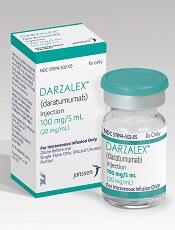
Photo courtesy of Janssen
The US Food and Drug Administration (FDA) has granted accelerated approval for daratumumab (Darzalex).
The drug is now approved to treat patients with multiple myeloma (MM) who have received at least 3 prior lines of therapy, including a proteasome inhibitor and an immunomodulatory agent, or who are double-refractory to a proteasome inhibitor and an immunomodulatory agent.
Daratumumab is the first monoclonal antibody approved to treat MM.
The drug works by binding to CD38 on the surface of MM cells. It triggers the patient’s own immune system to attack MM cells, resulting in cell death through multiple mechanisms of action.
Daratumumab is being developed by Janssen Biotech. The drug was previously granted breakthrough designation, orphan designation, and priority review from the FDA.
Daratumumab was approved under the FDA’s accelerated approval program, which allows the agency to approve a drug to treat a serious or life-threatening disease based on clinical data showing the drug has an effect on a surrogate endpoint reasonably likely to predict clinical benefit to patients.
As a condition of this accelerated approval, Janssen is required to conduct a multicenter, randomized trial establishing the superiority of daratumumab over standard therapy to verify and describe the clinical benefit of daratumumab. Janssen has several ongoing, multicenter, randomized trials with a primary endpoint of progression-free survival.
The recommended dose and schedule for daratumumab is 16 mg/kg once every week for 8 weeks, then once every 2 weeks for 16 weeks, then once every 4 weeks until disease progression.
The FDA said blood banks should be informed that patients are receiving daratumumab because the drug may interfere with tests such as antibody screening.
In addition, women who are pregnant should not use daratumumab, and women planning to become pregnant should use effective contraceptives during and for at least 3 months after stopping daratumumab.
Trial data
The FDA’s approval of daratumumab was based on results of 2 studies—the phase 2 MMY2002 (SIRIUS) study and the phase 1/2 GEN501 study.
The GEN501 study enrolled 102 patients with relapsed MM or relapsed MM that was refractory to 2 or more prior lines of therapy. The patients received daratumumab at a range of doses and on a number of different schedules.
The results suggested that daratumumab is most effective at a dose of 16 mg/kg. At this dose, the overall response rate was 36%.
Most adverse events in this study were grade 1 or 2, although serious events did occur.
The SIRIUS study enrolled 124 MM patients who had received 3 or more prior lines of therapy. They received daratumumab at different doses and on different schedules, but 106 of the patients received the drug at 16 mg/kg.
Twenty-nine percent of the 106 patients responded to treatment, and the median duration of response was 7 months. Thirty percent of patients experienced serious adverse events. 
Photo courtesy of Janssen
The US Food and Drug Administration (FDA) has granted accelerated approval for daratumumab (Darzalex).
The drug is now approved to treat patients with multiple myeloma (MM) who have received at least 3 prior lines of therapy, including a proteasome inhibitor and an immunomodulatory agent, or who are double-refractory to a proteasome inhibitor and an immunomodulatory agent.
Daratumumab is the first monoclonal antibody approved to treat MM.
The drug works by binding to CD38 on the surface of MM cells. It triggers the patient’s own immune system to attack MM cells, resulting in cell death through multiple mechanisms of action.
Daratumumab is being developed by Janssen Biotech. The drug was previously granted breakthrough designation, orphan designation, and priority review from the FDA.
Daratumumab was approved under the FDA’s accelerated approval program, which allows the agency to approve a drug to treat a serious or life-threatening disease based on clinical data showing the drug has an effect on a surrogate endpoint reasonably likely to predict clinical benefit to patients.
As a condition of this accelerated approval, Janssen is required to conduct a multicenter, randomized trial establishing the superiority of daratumumab over standard therapy to verify and describe the clinical benefit of daratumumab. Janssen has several ongoing, multicenter, randomized trials with a primary endpoint of progression-free survival.
The recommended dose and schedule for daratumumab is 16 mg/kg once every week for 8 weeks, then once every 2 weeks for 16 weeks, then once every 4 weeks until disease progression.
The FDA said blood banks should be informed that patients are receiving daratumumab because the drug may interfere with tests such as antibody screening.
In addition, women who are pregnant should not use daratumumab, and women planning to become pregnant should use effective contraceptives during and for at least 3 months after stopping daratumumab.
Trial data
The FDA’s approval of daratumumab was based on results of 2 studies—the phase 2 MMY2002 (SIRIUS) study and the phase 1/2 GEN501 study.
The GEN501 study enrolled 102 patients with relapsed MM or relapsed MM that was refractory to 2 or more prior lines of therapy. The patients received daratumumab at a range of doses and on a number of different schedules.
The results suggested that daratumumab is most effective at a dose of 16 mg/kg. At this dose, the overall response rate was 36%.
Most adverse events in this study were grade 1 or 2, although serious events did occur.
The SIRIUS study enrolled 124 MM patients who had received 3 or more prior lines of therapy. They received daratumumab at different doses and on different schedules, but 106 of the patients received the drug at 16 mg/kg.
Twenty-nine percent of the 106 patients responded to treatment, and the median duration of response was 7 months. Thirty percent of patients experienced serious adverse events.
Photo courtesy of Janssen
The US Food and Drug Administration (FDA) has granted accelerated approval for daratumumab (Darzalex).
The drug is now approved to treat patients with multiple myeloma (MM) who have received at least 3 prior lines of therapy, including a proteasome inhibitor and an immunomodulatory agent, or who are double-refractory to a proteasome inhibitor and an immunomodulatory agent.
Daratumumab is the first monoclonal antibody approved to treat MM.
The drug works by binding to CD38 on the surface of MM cells. It triggers the patient’s own immune system to attack MM cells, resulting in cell death through multiple mechanisms of action.
Daratumumab is being developed by Janssen Biotech. The drug was previously granted breakthrough designation, orphan designation, and priority review from the FDA.
Daratumumab was approved under the FDA’s accelerated approval program, which allows the agency to approve a drug to treat a serious or life-threatening disease based on clinical data showing the drug has an effect on a surrogate endpoint reasonably likely to predict clinical benefit to patients.
As a condition of this accelerated approval, Janssen is required to conduct a multicenter, randomized trial establishing the superiority of daratumumab over standard therapy to verify and describe the clinical benefit of daratumumab. Janssen has several ongoing, multicenter, randomized trials with a primary endpoint of progression-free survival.
The recommended dose and schedule for daratumumab is 16 mg/kg once every week for 8 weeks, then once every 2 weeks for 16 weeks, then once every 4 weeks until disease progression.
The FDA said blood banks should be informed that patients are receiving daratumumab because the drug may interfere with tests such as antibody screening.
In addition, women who are pregnant should not use daratumumab, and women planning to become pregnant should use effective contraceptives during and for at least 3 months after stopping daratumumab.
Trial data
The FDA’s approval of daratumumab was based on results of 2 studies—the phase 2 MMY2002 (SIRIUS) study and the phase 1/2 GEN501 study.
The GEN501 study enrolled 102 patients with relapsed MM or relapsed MM that was refractory to 2 or more prior lines of therapy. The patients received daratumumab at a range of doses and on a number of different schedules.
The results suggested that daratumumab is most effective at a dose of 16 mg/kg. At this dose, the overall response rate was 36%.
Most adverse events in this study were grade 1 or 2, although serious events did occur.
The SIRIUS study enrolled 124 MM patients who had received 3 or more prior lines of therapy. They received daratumumab at different doses and on different schedules, but 106 of the patients received the drug at 16 mg/kg.
Twenty-nine percent of the 106 patients responded to treatment, and the median duration of response was 7 months. Thirty percent of patients experienced serious adverse events.
Strategy could slow spread of resistant malaria
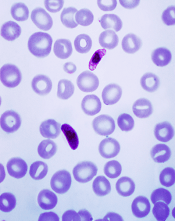
Plasmodium falciparum
Image by Mae Melvin
A varied treatment approach could slow the spread of artemisinin-resistant malaria, according to research published in The Lancet Global Health.
Computer simulations suggested that giving a population multiple artemisinin-based combination therapies simultaneously, along with a non-artemisinin therapy, is the best way to combat malaria and reduce the spread of resistant disease.
Investigators found this approach worked best even when the non-artemisinin drug was only effective in treating malaria 85% of the time.
The team ran their computer simulations to determine if there was an optimal strategy that could stop the spread of drug-resistant Plasmodium falciparum parasites across populations while still effectively treating malaria in individual patients.
The simulations showed that simultaneously dosing a population with several artemisinin-combination therapies—for example, by prescribing artemisinin in combination with different partner drugs on different days of the week—was more effective than either cycling between different artemisinin combination therapies or sticking to one specific combination until that combination started failing.
The simulations also showed that if this simultaneous dosing included a combination without artemisinin, malaria parasites that were resistant to artemisinin were slower to emerge and slower to spread.
Including this potentially less effective treatment option didn’t necessarily mean that many more people would not recover from malaria.
In the worst-case scenario of the non-artemisinin treatment being only 75% as effective as artemisinin-based combination therapy, fewer than 7% of patients would still have post-treatment malaria parasites in their blood as a result of not receiving an artemisinin-based therapy.
“For this subgroup of patients, second-line treatment with an artemisinin combination therapy would be recommended,” said study author Maciej Boni, PhD, of the Hospital for Tropical Diseases in Ho Chi Minh City, Vietnam.
“The ethical implications of such a treatment policy will need to be weighed against the benefit of delaying and slowing down the spread of artemisinin resistance. But the nightmare we all want to avoid is the establishment of artemisinin resistance in Africa, where hundreds of millions of individuals rely on artemisinin-based therapies as their first-line antimalarial treatment.”
“By deploying different antimalarial therapies simultaneously—including non-artemisinin-based therapies—national malaria control programs in Africa should be able to slow down the spread of artemisinin-resistant parasites when they are imported into the continent.”
Plasmodium falciparum
Image by Mae Melvin
A varied treatment approach could slow the spread of artemisinin-resistant malaria, according to research published in The Lancet Global Health.
Computer simulations suggested that giving a population multiple artemisinin-based combination therapies simultaneously, along with a non-artemisinin therapy, is the best way to combat malaria and reduce the spread of resistant disease.
Investigators found this approach worked best even when the non-artemisinin drug was only effective in treating malaria 85% of the time.
The team ran their computer simulations to determine if there was an optimal strategy that could stop the spread of drug-resistant Plasmodium falciparum parasites across populations while still effectively treating malaria in individual patients.
The simulations showed that simultaneously dosing a population with several artemisinin-combination therapies—for example, by prescribing artemisinin in combination with different partner drugs on different days of the week—was more effective than either cycling between different artemisinin combination therapies or sticking to one specific combination until that combination started failing.
The simulations also showed that if this simultaneous dosing included a combination without artemisinin, malaria parasites that were resistant to artemisinin were slower to emerge and slower to spread.
Including this potentially less effective treatment option didn’t necessarily mean that many more people would not recover from malaria.
In the worst-case scenario of the non-artemisinin treatment being only 75% as effective as artemisinin-based combination therapy, fewer than 7% of patients would still have post-treatment malaria parasites in their blood as a result of not receiving an artemisinin-based therapy.
“For this subgroup of patients, second-line treatment with an artemisinin combination therapy would be recommended,” said study author Maciej Boni, PhD, of the Hospital for Tropical Diseases in Ho Chi Minh City, Vietnam.
“The ethical implications of such a treatment policy will need to be weighed against the benefit of delaying and slowing down the spread of artemisinin resistance. But the nightmare we all want to avoid is the establishment of artemisinin resistance in Africa, where hundreds of millions of individuals rely on artemisinin-based therapies as their first-line antimalarial treatment.”
“By deploying different antimalarial therapies simultaneously—including non-artemisinin-based therapies—national malaria control programs in Africa should be able to slow down the spread of artemisinin-resistant parasites when they are imported into the continent.”
Plasmodium falciparum
Image by Mae Melvin
A varied treatment approach could slow the spread of artemisinin-resistant malaria, according to research published in The Lancet Global Health.
Computer simulations suggested that giving a population multiple artemisinin-based combination therapies simultaneously, along with a non-artemisinin therapy, is the best way to combat malaria and reduce the spread of resistant disease.
Investigators found this approach worked best even when the non-artemisinin drug was only effective in treating malaria 85% of the time.
The team ran their computer simulations to determine if there was an optimal strategy that could stop the spread of drug-resistant Plasmodium falciparum parasites across populations while still effectively treating malaria in individual patients.
The simulations showed that simultaneously dosing a population with several artemisinin-combination therapies—for example, by prescribing artemisinin in combination with different partner drugs on different days of the week—was more effective than either cycling between different artemisinin combination therapies or sticking to one specific combination until that combination started failing.
The simulations also showed that if this simultaneous dosing included a combination without artemisinin, malaria parasites that were resistant to artemisinin were slower to emerge and slower to spread.
Including this potentially less effective treatment option didn’t necessarily mean that many more people would not recover from malaria.
In the worst-case scenario of the non-artemisinin treatment being only 75% as effective as artemisinin-based combination therapy, fewer than 7% of patients would still have post-treatment malaria parasites in their blood as a result of not receiving an artemisinin-based therapy.
“For this subgroup of patients, second-line treatment with an artemisinin combination therapy would be recommended,” said study author Maciej Boni, PhD, of the Hospital for Tropical Diseases in Ho Chi Minh City, Vietnam.
“The ethical implications of such a treatment policy will need to be weighed against the benefit of delaying and slowing down the spread of artemisinin resistance. But the nightmare we all want to avoid is the establishment of artemisinin resistance in Africa, where hundreds of millions of individuals rely on artemisinin-based therapies as their first-line antimalarial treatment.”
“By deploying different antimalarial therapies simultaneously—including non-artemisinin-based therapies—national malaria control programs in Africa should be able to slow down the spread of artemisinin-resistant parasites when they are imported into the continent.”
Role of inflammation and aging in leukemia
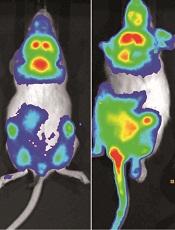
Image by Michael Zangani
Previous research has suggested the accumulation of cancer-causing mutations is to blame for the increased risk of cancer in the aging population.
But a study published in The Journal of Clinical Investigation tells another story.
Investigators found that, without age-associated inflammation, older mice developed leukemia no faster than young mice.
The study focused primarily on the “ecosystem” of B-cell progenitor pools.
The investigators wanted to determine what allows a population of healthy B-cell progenitors to be replaced over time with a population of cancerous B-cell progenitors.
“We chose to focus on the role of inflammation in the bone marrow—one of the hallmarks of age-associated tissue changes—where these B-cell progenitor pools live,” said study author Curtis Henry, PhD, of the University of Colorado Anschutz Medical Campus in Aurora, Colorado.
He and his colleagues found that inflammation hurts the growth and maintenance of B-progenitor cells, but that’s not all. Cancerous mutations tend to alter cells in ways that help them survive conditions of inflammation in the bone marrow.
“Suddenly, the healthy cells that were the fittest are no longer the most fit,” Dr Henry explained. “Because the tissue changed, cancer cells have a selective advantage.”
The investigators were able to observe this inflammation-driven natural selection in mouse models. The group worked with mice engineered to prevent inflammation and set out to determine how healthy and leukemia-initiated cells would fare in these conditions.
“Basically, without the effects of inflammation, B-cell progenitor pools stayed fit,” Dr Henry said.
And stopping inflammation reduced the ability of cells expressing the oncogene NRAS from taking over the bone marrow niche.
This study suggests that an increase in cancer risk with age may not be inevitable. Instead of simply being a matter of the passage of time, cancer development in aged populations may be partially dependent on inflammation-associated tissue changes.
“Despite the fact that cancer is largely a disease of old age, almost all cancer modeling in mice employs only young mice,” noted study author James DeGregori, PhD, of the University of Colorado Anschutz Medical Campus.
“This is based on the view that finding the genetic mutation that causes cancer should be enough to understand the disease.”
In these studies, the investigators tested both young and old mice. The older mice were more likely to develop leukemia, but only in the presence of age-associated inflammation. If age-associated inflammation was blocked, the older mice were no more likely than young mice to develop leukemia.
The work implies that stopping the effects of inflammation on tissue could stop cancers from forming. However, inflammation can be necessary in some circumstances. So the investigators said more work is needed to understand how to “tune” inflammation in the elderly to maximize its beneficial effects while minimizing negative effects.
“While it’s premature to suggest that people should take medicines to fight inflammation as they age, we believe our results warrant further study into this potential strategy to combat the age-associated increase in cancer risk,” Dr Henry concluded.
Image by Michael Zangani
Previous research has suggested the accumulation of cancer-causing mutations is to blame for the increased risk of cancer in the aging population.
But a study published in The Journal of Clinical Investigation tells another story.
Investigators found that, without age-associated inflammation, older mice developed leukemia no faster than young mice.
The study focused primarily on the “ecosystem” of B-cell progenitor pools.
The investigators wanted to determine what allows a population of healthy B-cell progenitors to be replaced over time with a population of cancerous B-cell progenitors.
“We chose to focus on the role of inflammation in the bone marrow—one of the hallmarks of age-associated tissue changes—where these B-cell progenitor pools live,” said study author Curtis Henry, PhD, of the University of Colorado Anschutz Medical Campus in Aurora, Colorado.
He and his colleagues found that inflammation hurts the growth and maintenance of B-progenitor cells, but that’s not all. Cancerous mutations tend to alter cells in ways that help them survive conditions of inflammation in the bone marrow.
“Suddenly, the healthy cells that were the fittest are no longer the most fit,” Dr Henry explained. “Because the tissue changed, cancer cells have a selective advantage.”
The investigators were able to observe this inflammation-driven natural selection in mouse models. The group worked with mice engineered to prevent inflammation and set out to determine how healthy and leukemia-initiated cells would fare in these conditions.
“Basically, without the effects of inflammation, B-cell progenitor pools stayed fit,” Dr Henry said.
And stopping inflammation reduced the ability of cells expressing the oncogene NRAS from taking over the bone marrow niche.
This study suggests that an increase in cancer risk with age may not be inevitable. Instead of simply being a matter of the passage of time, cancer development in aged populations may be partially dependent on inflammation-associated tissue changes.
“Despite the fact that cancer is largely a disease of old age, almost all cancer modeling in mice employs only young mice,” noted study author James DeGregori, PhD, of the University of Colorado Anschutz Medical Campus.
“This is based on the view that finding the genetic mutation that causes cancer should be enough to understand the disease.”
In these studies, the investigators tested both young and old mice. The older mice were more likely to develop leukemia, but only in the presence of age-associated inflammation. If age-associated inflammation was blocked, the older mice were no more likely than young mice to develop leukemia.
The work implies that stopping the effects of inflammation on tissue could stop cancers from forming. However, inflammation can be necessary in some circumstances. So the investigators said more work is needed to understand how to “tune” inflammation in the elderly to maximize its beneficial effects while minimizing negative effects.
“While it’s premature to suggest that people should take medicines to fight inflammation as they age, we believe our results warrant further study into this potential strategy to combat the age-associated increase in cancer risk,” Dr Henry concluded.
Image by Michael Zangani
Previous research has suggested the accumulation of cancer-causing mutations is to blame for the increased risk of cancer in the aging population.
But a study published in The Journal of Clinical Investigation tells another story.
Investigators found that, without age-associated inflammation, older mice developed leukemia no faster than young mice.
The study focused primarily on the “ecosystem” of B-cell progenitor pools.
The investigators wanted to determine what allows a population of healthy B-cell progenitors to be replaced over time with a population of cancerous B-cell progenitors.
“We chose to focus on the role of inflammation in the bone marrow—one of the hallmarks of age-associated tissue changes—where these B-cell progenitor pools live,” said study author Curtis Henry, PhD, of the University of Colorado Anschutz Medical Campus in Aurora, Colorado.
He and his colleagues found that inflammation hurts the growth and maintenance of B-progenitor cells, but that’s not all. Cancerous mutations tend to alter cells in ways that help them survive conditions of inflammation in the bone marrow.
“Suddenly, the healthy cells that were the fittest are no longer the most fit,” Dr Henry explained. “Because the tissue changed, cancer cells have a selective advantage.”
The investigators were able to observe this inflammation-driven natural selection in mouse models. The group worked with mice engineered to prevent inflammation and set out to determine how healthy and leukemia-initiated cells would fare in these conditions.
“Basically, without the effects of inflammation, B-cell progenitor pools stayed fit,” Dr Henry said.
And stopping inflammation reduced the ability of cells expressing the oncogene NRAS from taking over the bone marrow niche.
This study suggests that an increase in cancer risk with age may not be inevitable. Instead of simply being a matter of the passage of time, cancer development in aged populations may be partially dependent on inflammation-associated tissue changes.
“Despite the fact that cancer is largely a disease of old age, almost all cancer modeling in mice employs only young mice,” noted study author James DeGregori, PhD, of the University of Colorado Anschutz Medical Campus.
“This is based on the view that finding the genetic mutation that causes cancer should be enough to understand the disease.”
In these studies, the investigators tested both young and old mice. The older mice were more likely to develop leukemia, but only in the presence of age-associated inflammation. If age-associated inflammation was blocked, the older mice were no more likely than young mice to develop leukemia.
The work implies that stopping the effects of inflammation on tissue could stop cancers from forming. However, inflammation can be necessary in some circumstances. So the investigators said more work is needed to understand how to “tune” inflammation in the elderly to maximize its beneficial effects while minimizing negative effects.
“While it’s premature to suggest that people should take medicines to fight inflammation as they age, we believe our results warrant further study into this potential strategy to combat the age-associated increase in cancer risk,” Dr Henry concluded.
Product News: 11 2015
Carmex Winter Mint Lip Balm Click Stick
Carma Laboratories, Inc, introduces limited-edition Carmex Winter Mint Lip Balm Click Sticks. The new seasonal flavor, which comes in convenient click sticks that glide on lips easily, is available to consumers as part of specially marked 2-pack and 4-pack promotions. Both offers combine the Carmex Original Lip Balm Click Stick or Carmex Original Lip Balm Tube with a bonus Winter Mint seasonal stick and will be available at select retailers while supplies last. For more information, visit www.mycarmex.com.
Daytrana Patch
The US Food and Drug Administration (FDA) has added a new warning of chemical leukoderma to the drug label for the Daytrana patch (methylphenidate transdermal system)(Noven Therapeutics, LLC), which treats attention deficit hyperactivity disorder in children and adolescents. Chemical leukoderma is a condition that causes loss of skin color due to repeated exposure to specific chemical compounds. The areas of skin color loss described with the Daytrana patch ranged up to 8 inches in diameter. The FDA recommends that patients or their caregivers should watch for new areas of lighter skin, especially under the drug patch, and immediately report these changes to a health care professional. For more information, visit www.fda.gov/MedWatch.
Enstilar Foam
LEO Pharma Inc announces US Food and Drug Administration approval of Enstilar (calcipotriene and metamethasone dipropionate) Foam 0.005%/0.064% for topical treatment of plaque psoriasis in patients aged 18 years and older. Enstilar is an alcohol-free foam formulation in a pressurized spray can that allows application across large body areas of plaque psoriasis and should be applied to affected areas once daily for up to 4 weeks. The approval was based on pivotal clinical trial data at week 4 that also showed patients using Enstilar achieved efficacy as early as week 2. For more information, visit www.enstilar.com.
IMLYGIC
Amgen Inc announces that the US Food and Drug Administration has approved the Biologics License Application for IMLYGIC (talimogene laherparepvec), a genetically modified oncolytic viral therapy indicated for the local treatment of unresectable cutaneous, subcutaneous, and nodal lesions in patients with melanoma recurrent after initial surgery. IMLYGIC is the first oncolytic viral therapy approved based on therapeutic benefit demonstrated in a pivotal study, and variability of dosing from patient to patient is expected. IMLYGIC has not been shown to improve overall survival or have an effect on visceral metastases, and treatment is contraindicated in immunocompromised patients. For more information, visit www.imlygic.com.
Juvéderm Ultra XC
Allergan, Inc announces US Food and Drug Administration approval to market Juvéderm Ultra XC gel for injection into the lips and perioral area for lip augmentation in patients over the age of 21 years. Juvéderm Ultra XC is a smooth gel formulation made up of a modified form of hyaluronic acid, a naturally occurring sugar found in the human body whose role is to deliver nutrients and help the skin retain its natural moisture and softness. The gel formulation also contains a small amount of lidocaine, which improves the comfort of the injection. For more information, visit www.juvederm.com.
Opdivo + Yervoy Regimen
Bristol-Myers Squibb Company obtains US Food and Drug Administration approval for the Opdivo (nivolumab) + Yervoy (ipilimumab) regimen in BRAF V600 wild-type unresectable or metastatic melanoma. The approval, which is based on data from a pivotal study, marks the first approval of a regimen of 2 immuno-oncology agents in cancer. This indication is approved under accelerated approval based on tumor response rate and durability of response. Opdivo and Yervoy are immune checkpoint inhibitors that target separate, distinct, and complementary checkpoint pathways (PD-1 and CTLA-4). The mechanism of action involves dual immune checkpoint inhibition resulting in increased antitumor activity. For more information, visit www.bms.com.
If you would like your product included in Product News, please e-mail a press release to the Editorial Office at cutis@frontlinemedcom.com.
Carmex Winter Mint Lip Balm Click Stick
Carma Laboratories, Inc, introduces limited-edition Carmex Winter Mint Lip Balm Click Sticks. The new seasonal flavor, which comes in convenient click sticks that glide on lips easily, is available to consumers as part of specially marked 2-pack and 4-pack promotions. Both offers combine the Carmex Original Lip Balm Click Stick or Carmex Original Lip Balm Tube with a bonus Winter Mint seasonal stick and will be available at select retailers while supplies last. For more information, visit www.mycarmex.com.
Daytrana Patch
The US Food and Drug Administration (FDA) has added a new warning of chemical leukoderma to the drug label for the Daytrana patch (methylphenidate transdermal system)(Noven Therapeutics, LLC), which treats attention deficit hyperactivity disorder in children and adolescents. Chemical leukoderma is a condition that causes loss of skin color due to repeated exposure to specific chemical compounds. The areas of skin color loss described with the Daytrana patch ranged up to 8 inches in diameter. The FDA recommends that patients or their caregivers should watch for new areas of lighter skin, especially under the drug patch, and immediately report these changes to a health care professional. For more information, visit www.fda.gov/MedWatch.
Enstilar Foam
LEO Pharma Inc announces US Food and Drug Administration approval of Enstilar (calcipotriene and metamethasone dipropionate) Foam 0.005%/0.064% for topical treatment of plaque psoriasis in patients aged 18 years and older. Enstilar is an alcohol-free foam formulation in a pressurized spray can that allows application across large body areas of plaque psoriasis and should be applied to affected areas once daily for up to 4 weeks. The approval was based on pivotal clinical trial data at week 4 that also showed patients using Enstilar achieved efficacy as early as week 2. For more information, visit www.enstilar.com.
IMLYGIC
Amgen Inc announces that the US Food and Drug Administration has approved the Biologics License Application for IMLYGIC (talimogene laherparepvec), a genetically modified oncolytic viral therapy indicated for the local treatment of unresectable cutaneous, subcutaneous, and nodal lesions in patients with melanoma recurrent after initial surgery. IMLYGIC is the first oncolytic viral therapy approved based on therapeutic benefit demonstrated in a pivotal study, and variability of dosing from patient to patient is expected. IMLYGIC has not been shown to improve overall survival or have an effect on visceral metastases, and treatment is contraindicated in immunocompromised patients. For more information, visit www.imlygic.com.
Juvéderm Ultra XC
Allergan, Inc announces US Food and Drug Administration approval to market Juvéderm Ultra XC gel for injection into the lips and perioral area for lip augmentation in patients over the age of 21 years. Juvéderm Ultra XC is a smooth gel formulation made up of a modified form of hyaluronic acid, a naturally occurring sugar found in the human body whose role is to deliver nutrients and help the skin retain its natural moisture and softness. The gel formulation also contains a small amount of lidocaine, which improves the comfort of the injection. For more information, visit www.juvederm.com.
Opdivo + Yervoy Regimen
Bristol-Myers Squibb Company obtains US Food and Drug Administration approval for the Opdivo (nivolumab) + Yervoy (ipilimumab) regimen in BRAF V600 wild-type unresectable or metastatic melanoma. The approval, which is based on data from a pivotal study, marks the first approval of a regimen of 2 immuno-oncology agents in cancer. This indication is approved under accelerated approval based on tumor response rate and durability of response. Opdivo and Yervoy are immune checkpoint inhibitors that target separate, distinct, and complementary checkpoint pathways (PD-1 and CTLA-4). The mechanism of action involves dual immune checkpoint inhibition resulting in increased antitumor activity. For more information, visit www.bms.com.
If you would like your product included in Product News, please e-mail a press release to the Editorial Office at cutis@frontlinemedcom.com.
Carmex Winter Mint Lip Balm Click Stick
Carma Laboratories, Inc, introduces limited-edition Carmex Winter Mint Lip Balm Click Sticks. The new seasonal flavor, which comes in convenient click sticks that glide on lips easily, is available to consumers as part of specially marked 2-pack and 4-pack promotions. Both offers combine the Carmex Original Lip Balm Click Stick or Carmex Original Lip Balm Tube with a bonus Winter Mint seasonal stick and will be available at select retailers while supplies last. For more information, visit www.mycarmex.com.
Daytrana Patch
The US Food and Drug Administration (FDA) has added a new warning of chemical leukoderma to the drug label for the Daytrana patch (methylphenidate transdermal system)(Noven Therapeutics, LLC), which treats attention deficit hyperactivity disorder in children and adolescents. Chemical leukoderma is a condition that causes loss of skin color due to repeated exposure to specific chemical compounds. The areas of skin color loss described with the Daytrana patch ranged up to 8 inches in diameter. The FDA recommends that patients or their caregivers should watch for new areas of lighter skin, especially under the drug patch, and immediately report these changes to a health care professional. For more information, visit www.fda.gov/MedWatch.
Enstilar Foam
LEO Pharma Inc announces US Food and Drug Administration approval of Enstilar (calcipotriene and metamethasone dipropionate) Foam 0.005%/0.064% for topical treatment of plaque psoriasis in patients aged 18 years and older. Enstilar is an alcohol-free foam formulation in a pressurized spray can that allows application across large body areas of plaque psoriasis and should be applied to affected areas once daily for up to 4 weeks. The approval was based on pivotal clinical trial data at week 4 that also showed patients using Enstilar achieved efficacy as early as week 2. For more information, visit www.enstilar.com.
IMLYGIC
Amgen Inc announces that the US Food and Drug Administration has approved the Biologics License Application for IMLYGIC (talimogene laherparepvec), a genetically modified oncolytic viral therapy indicated for the local treatment of unresectable cutaneous, subcutaneous, and nodal lesions in patients with melanoma recurrent after initial surgery. IMLYGIC is the first oncolytic viral therapy approved based on therapeutic benefit demonstrated in a pivotal study, and variability of dosing from patient to patient is expected. IMLYGIC has not been shown to improve overall survival or have an effect on visceral metastases, and treatment is contraindicated in immunocompromised patients. For more information, visit www.imlygic.com.
Juvéderm Ultra XC
Allergan, Inc announces US Food and Drug Administration approval to market Juvéderm Ultra XC gel for injection into the lips and perioral area for lip augmentation in patients over the age of 21 years. Juvéderm Ultra XC is a smooth gel formulation made up of a modified form of hyaluronic acid, a naturally occurring sugar found in the human body whose role is to deliver nutrients and help the skin retain its natural moisture and softness. The gel formulation also contains a small amount of lidocaine, which improves the comfort of the injection. For more information, visit www.juvederm.com.
Opdivo + Yervoy Regimen
Bristol-Myers Squibb Company obtains US Food and Drug Administration approval for the Opdivo (nivolumab) + Yervoy (ipilimumab) regimen in BRAF V600 wild-type unresectable or metastatic melanoma. The approval, which is based on data from a pivotal study, marks the first approval of a regimen of 2 immuno-oncology agents in cancer. This indication is approved under accelerated approval based on tumor response rate and durability of response. Opdivo and Yervoy are immune checkpoint inhibitors that target separate, distinct, and complementary checkpoint pathways (PD-1 and CTLA-4). The mechanism of action involves dual immune checkpoint inhibition resulting in increased antitumor activity. For more information, visit www.bms.com.
If you would like your product included in Product News, please e-mail a press release to the Editorial Office at cutis@frontlinemedcom.com.

A modified olanzapine regimen for the prevention of chemotherapy-induced nausea and vomiting
Background At Kaiser Permanente Antioch and Walnut Creek Cancer Centers, a modified olanzapine regimen is used to prevent chemotherapy-induced nausea and vomiting (CINV) in patients who receive highly emetogenic chemotherapy (HEC).
Objective To determine if an olanzapine, ondansetron, dexamethasone (OOD) regimen is noninferior to a fosaprepitant, ondansetron, dexamethasone (FOD) regimen in preventing CINV in patients receiving HEC.
Methods This retrospective cohort study compared the rates of CINV in patients who were treated with HEC and received either the OOD or FOD regimen. Electronic medical records were assessed for documented reports of CINV. 148 patients were included in this study.
Results Complete response (CR), defined as no emesis after Cycle 1 of HEC, in patients receiving the OOD regimen was 95.7% in the acute phase, 94.3% in the delayed phase, and 92.9% overall. CR in patients receiving the FOD regimen was 98.7% in the acute phase, 89.7% in the delayed phase, and 89.7% overall. The percentage of patients who had no nausea on the OOD regimen was 87.1 in the acute phase, 75.5 in the delayed phase, and 71.4 overall, compared with 78.2 in the acute phase, 62.8 in the delayed phase, and 62.7 overall in patients on the FOD regimen.
Limitations This study was limited by its retrospective, nonrandomized design, and short follow-up period. This study did not assess adverse effects from the antiemetic regimens.
Conclusions A modified olanzapine regimen is noninferior to a standard fosaprepitant regimen in regard to CR in showing improved control of CINV. In addition, the use of the olanzapine regimen reduces patient exposure to corticosteroids and the risk of associated side effects, and it is significantly more cost effective, compared with the fosaprepitant regimen.
Click on the PDF icon at the top of this introduction to read the full article.
Background At Kaiser Permanente Antioch and Walnut Creek Cancer Centers, a modified olanzapine regimen is used to prevent chemotherapy-induced nausea and vomiting (CINV) in patients who receive highly emetogenic chemotherapy (HEC).
Objective To determine if an olanzapine, ondansetron, dexamethasone (OOD) regimen is noninferior to a fosaprepitant, ondansetron, dexamethasone (FOD) regimen in preventing CINV in patients receiving HEC.
Methods This retrospective cohort study compared the rates of CINV in patients who were treated with HEC and received either the OOD or FOD regimen. Electronic medical records were assessed for documented reports of CINV. 148 patients were included in this study.
Results Complete response (CR), defined as no emesis after Cycle 1 of HEC, in patients receiving the OOD regimen was 95.7% in the acute phase, 94.3% in the delayed phase, and 92.9% overall. CR in patients receiving the FOD regimen was 98.7% in the acute phase, 89.7% in the delayed phase, and 89.7% overall. The percentage of patients who had no nausea on the OOD regimen was 87.1 in the acute phase, 75.5 in the delayed phase, and 71.4 overall, compared with 78.2 in the acute phase, 62.8 in the delayed phase, and 62.7 overall in patients on the FOD regimen.
Limitations This study was limited by its retrospective, nonrandomized design, and short follow-up period. This study did not assess adverse effects from the antiemetic regimens.
Conclusions A modified olanzapine regimen is noninferior to a standard fosaprepitant regimen in regard to CR in showing improved control of CINV. In addition, the use of the olanzapine regimen reduces patient exposure to corticosteroids and the risk of associated side effects, and it is significantly more cost effective, compared with the fosaprepitant regimen.
Click on the PDF icon at the top of this introduction to read the full article.
Background At Kaiser Permanente Antioch and Walnut Creek Cancer Centers, a modified olanzapine regimen is used to prevent chemotherapy-induced nausea and vomiting (CINV) in patients who receive highly emetogenic chemotherapy (HEC).
Objective To determine if an olanzapine, ondansetron, dexamethasone (OOD) regimen is noninferior to a fosaprepitant, ondansetron, dexamethasone (FOD) regimen in preventing CINV in patients receiving HEC.
Methods This retrospective cohort study compared the rates of CINV in patients who were treated with HEC and received either the OOD or FOD regimen. Electronic medical records were assessed for documented reports of CINV. 148 patients were included in this study.
Results Complete response (CR), defined as no emesis after Cycle 1 of HEC, in patients receiving the OOD regimen was 95.7% in the acute phase, 94.3% in the delayed phase, and 92.9% overall. CR in patients receiving the FOD regimen was 98.7% in the acute phase, 89.7% in the delayed phase, and 89.7% overall. The percentage of patients who had no nausea on the OOD regimen was 87.1 in the acute phase, 75.5 in the delayed phase, and 71.4 overall, compared with 78.2 in the acute phase, 62.8 in the delayed phase, and 62.7 overall in patients on the FOD regimen.
Limitations This study was limited by its retrospective, nonrandomized design, and short follow-up period. This study did not assess adverse effects from the antiemetic regimens.
Conclusions A modified olanzapine regimen is noninferior to a standard fosaprepitant regimen in regard to CR in showing improved control of CINV. In addition, the use of the olanzapine regimen reduces patient exposure to corticosteroids and the risk of associated side effects, and it is significantly more cost effective, compared with the fosaprepitant regimen.
Click on the PDF icon at the top of this introduction to read the full article.
Balancing clinical and supportive care at every step of the disease continuum
It seems it was just yesterday that we did our first “mutation analysis” to help guide us in our treatment of patients with a drug that was more likely to work than not. Of course, I am referring to estrogen-receptor/progesterone receptor (ER/PR) blocking therapy, and “yesterday” actually goes all the way back to the 1970s! When tamoxifen was first given to unselected metastatic breast cancer patients, the response rate was low, but when the study population was “enriched” with breast cancer patients who were ER/ PR-positive, the response rates improved and the outcomes were more favorable. So began the era of tumor markers and enriching patient populations, and the process now referred to as mutation analysis, which is becoming more broadly applicable to other tumors as well.
Click on the PDF icon at the top of this introduction to read the full article.
It seems it was just yesterday that we did our first “mutation analysis” to help guide us in our treatment of patients with a drug that was more likely to work than not. Of course, I am referring to estrogen-receptor/progesterone receptor (ER/PR) blocking therapy, and “yesterday” actually goes all the way back to the 1970s! When tamoxifen was first given to unselected metastatic breast cancer patients, the response rate was low, but when the study population was “enriched” with breast cancer patients who were ER/ PR-positive, the response rates improved and the outcomes were more favorable. So began the era of tumor markers and enriching patient populations, and the process now referred to as mutation analysis, which is becoming more broadly applicable to other tumors as well.
Click on the PDF icon at the top of this introduction to read the full article.
It seems it was just yesterday that we did our first “mutation analysis” to help guide us in our treatment of patients with a drug that was more likely to work than not. Of course, I am referring to estrogen-receptor/progesterone receptor (ER/PR) blocking therapy, and “yesterday” actually goes all the way back to the 1970s! When tamoxifen was first given to unselected metastatic breast cancer patients, the response rate was low, but when the study population was “enriched” with breast cancer patients who were ER/ PR-positive, the response rates improved and the outcomes were more favorable. So began the era of tumor markers and enriching patient populations, and the process now referred to as mutation analysis, which is becoming more broadly applicable to other tumors as well.
Click on the PDF icon at the top of this introduction to read the full article.
Risks of tobacco use in the LGBT community
Tobacco addiction and smoke exposure are among the leading causes of preventable and premature death and disability in the United States and elsewhere in the world. The landmark 2012 Surgeon General’s report, Preventing Tobacco Use Among Youth and Young Adults, stated, “The vast majority of Americans who begin daily smoking during adolescence are addicted to nicotine by young adulthood.” All youth are at risk for experimenting and using “standard” tobacco products, as well as relatively new merchandise such as e-cigarettes, hookas, bidis (small, hand-rolled cigarettes), and little cigars (Pediatrics. 2013 Aug 5;132:e578-86). In a 2015 article, data show more than twice as many youth use two or more types of tobacco products than use cigarettes alone (Pediatrics. 2015 March;135:409-15).
In a 2015 American Academy of Pediatrics policy statement, the academy stated that all children, adolescents, and young adults must be safeguarded from using all of the various tobacco products (Pediatrics. 2015 Oct 26. doi: 10.1542/peds.2015-3108). Therefore, a working knowledge of the various types of products is essential when speaking with youth on this subject.

The AAP recommended that all children and youth, without exception, must be considered to be at risk for using tobacco products. Therefore, all youth should be counseled, as the AAP made no exceptions with regard to race, national origin, ethnic group, socioeconomic status, or membership in the LGBT community.
Tobacco use by sexual identity
Much more needs to be known with regard to tobacco use for all children, youth, and young adults. National surveillance data are needed for the LGBT community, whose members have unique health care needs. A 2013 article demonstrated disparities in the use of tobacco products in young adults in the LGBT community (Nicotine Tob Res. 2013;15[11]:1822-31).
This study used data from the American Legacy Foundation’s Young Adult Study. The survey compared the use of tobacco by the LGBT community versus the heterosexual community during the previous 30-day period. The prevalence of use of tobacco products for young adults who self-identified as sexual minorities was statistically higher than for their heterosexual counterparts. For example, current use of tobacco products was 22% in heterosexual young adults, compared with 35% in young adults who identified as homosexual and 31% in young adults who identified as bisexual.
However, this same publication stated that there are very few studies on this subject, including why there are these disparities. This information is important to know so better approaches can be developed to address these issues. In addition, health care providers must address the issue of tobacco use by youth and young adults, and develop specific approaches that can specifically target at-risk populations that are culturally competent. The authors concluded that it remains unclear why the tobacco use rate among the LGBT community is significantly higher than in their peers who are heterosexual. Risk factors that have been posited include social stigma, the role of bars in this community, and alcohol and drug use. Also, social acceptance issues, inclusion issues, alienation and depression, and marketing by tobacco manufacturers may be risk factors.

Much work remains to be done to address these risk factors and, therefore, the use of tobacco and similar drugs. The 2012 surgeon general’s report emphasized that health care providers of young people must address these issues directly and consistently with their patients.
Practical next steps for your practice
One approach to addressing tobacco use with your patients is to implement the “5 A’s”:
1. Anticipate/Ask. Ask young people if they or their friends are interested in tobacco products and/or if they use tobacco products of any type. Do this at every visit.
2. Advise. In clear, strong, personalized language, urge the tobacco user to quit.
3. Assess. Assess the willingness of the tobacco user to quit, and urge the youth to quit smoking.
4. Assist. For the youth willing to quit, use counseling yourself and/or refer for counseling to individuals with expertise in tobacco cessation or support groups, and consider pharmacotherapy if necessary.
5. Arrange. Schedule a follow-up contact in person within the first week and then on a regularly scheduled basis.
The 5 A’s have been recognized by the Agency for Healthcare Research and Quality as an evidence-based practice for both adult and pediatric patients. In a 2014 article, Dr. Jonathan Klein reported on a study of youth who had seen a clinician for a preventive visit within the past year. However, the youth also reported that the rate of their receiving counseling on tobacco use was relatively low (Pediatrics. 2014 Sep;134[3]:600-1) Most recently, Howard University completed a project funded by the District of Columbia Department of Health to develop and teach a curriculum for medical and nursing students, residents, and physician and nursing staff on this important issue. The youth whom we interviewed in developing the curriculum reported that they had never received counseling by health professionals during their preventive health care visits. This important issue needs to be addressed because it truly is a key to future health for our children and youth.
Dr. Tierney is a Washington-based pediatrician who is a member of the Institute for Public Health Innovation and the D.C. Primary Care Association Medicaid Financing Task Force on Medicaid payment for community health workers. She also works with Howard University Hospital’s Cancer Center on tobacco use avoidance and/or cessation by African American youth. She is on the board of Whitman-Walker Health to advise on Medicaid payment and sits on the quality assurance committee.
Tobacco addiction and smoke exposure are among the leading causes of preventable and premature death and disability in the United States and elsewhere in the world. The landmark 2012 Surgeon General’s report, Preventing Tobacco Use Among Youth and Young Adults, stated, “The vast majority of Americans who begin daily smoking during adolescence are addicted to nicotine by young adulthood.” All youth are at risk for experimenting and using “standard” tobacco products, as well as relatively new merchandise such as e-cigarettes, hookas, bidis (small, hand-rolled cigarettes), and little cigars (Pediatrics. 2013 Aug 5;132:e578-86). In a 2015 article, data show more than twice as many youth use two or more types of tobacco products than use cigarettes alone (Pediatrics. 2015 March;135:409-15).
In a 2015 American Academy of Pediatrics policy statement, the academy stated that all children, adolescents, and young adults must be safeguarded from using all of the various tobacco products (Pediatrics. 2015 Oct 26. doi: 10.1542/peds.2015-3108). Therefore, a working knowledge of the various types of products is essential when speaking with youth on this subject.
The AAP recommended that all children and youth, without exception, must be considered to be at risk for using tobacco products. Therefore, all youth should be counseled, as the AAP made no exceptions with regard to race, national origin, ethnic group, socioeconomic status, or membership in the LGBT community.
Tobacco use by sexual identity
Much more needs to be known with regard to tobacco use for all children, youth, and young adults. National surveillance data are needed for the LGBT community, whose members have unique health care needs. A 2013 article demonstrated disparities in the use of tobacco products in young adults in the LGBT community (Nicotine Tob Res. 2013;15[11]:1822-31).
This study used data from the American Legacy Foundation’s Young Adult Study. The survey compared the use of tobacco by the LGBT community versus the heterosexual community during the previous 30-day period. The prevalence of use of tobacco products for young adults who self-identified as sexual minorities was statistically higher than for their heterosexual counterparts. For example, current use of tobacco products was 22% in heterosexual young adults, compared with 35% in young adults who identified as homosexual and 31% in young adults who identified as bisexual.
However, this same publication stated that there are very few studies on this subject, including why there are these disparities. This information is important to know so better approaches can be developed to address these issues. In addition, health care providers must address the issue of tobacco use by youth and young adults, and develop specific approaches that can specifically target at-risk populations that are culturally competent. The authors concluded that it remains unclear why the tobacco use rate among the LGBT community is significantly higher than in their peers who are heterosexual. Risk factors that have been posited include social stigma, the role of bars in this community, and alcohol and drug use. Also, social acceptance issues, inclusion issues, alienation and depression, and marketing by tobacco manufacturers may be risk factors.
Much work remains to be done to address these risk factors and, therefore, the use of tobacco and similar drugs. The 2012 surgeon general’s report emphasized that health care providers of young people must address these issues directly and consistently with their patients.
Practical next steps for your practice
One approach to addressing tobacco use with your patients is to implement the “5 A’s”:
1. Anticipate/Ask. Ask young people if they or their friends are interested in tobacco products and/or if they use tobacco products of any type. Do this at every visit.
2. Advise. In clear, strong, personalized language, urge the tobacco user to quit.
3. Assess. Assess the willingness of the tobacco user to quit, and urge the youth to quit smoking.
4. Assist. For the youth willing to quit, use counseling yourself and/or refer for counseling to individuals with expertise in tobacco cessation or support groups, and consider pharmacotherapy if necessary.
5. Arrange. Schedule a follow-up contact in person within the first week and then on a regularly scheduled basis.
The 5 A’s have been recognized by the Agency for Healthcare Research and Quality as an evidence-based practice for both adult and pediatric patients. In a 2014 article, Dr. Jonathan Klein reported on a study of youth who had seen a clinician for a preventive visit within the past year. However, the youth also reported that the rate of their receiving counseling on tobacco use was relatively low (Pediatrics. 2014 Sep;134[3]:600-1) Most recently, Howard University completed a project funded by the District of Columbia Department of Health to develop and teach a curriculum for medical and nursing students, residents, and physician and nursing staff on this important issue. The youth whom we interviewed in developing the curriculum reported that they had never received counseling by health professionals during their preventive health care visits. This important issue needs to be addressed because it truly is a key to future health for our children and youth.
Dr. Tierney is a Washington-based pediatrician who is a member of the Institute for Public Health Innovation and the D.C. Primary Care Association Medicaid Financing Task Force on Medicaid payment for community health workers. She also works with Howard University Hospital’s Cancer Center on tobacco use avoidance and/or cessation by African American youth. She is on the board of Whitman-Walker Health to advise on Medicaid payment and sits on the quality assurance committee.
Tobacco addiction and smoke exposure are among the leading causes of preventable and premature death and disability in the United States and elsewhere in the world. The landmark 2012 Surgeon General’s report, Preventing Tobacco Use Among Youth and Young Adults, stated, “The vast majority of Americans who begin daily smoking during adolescence are addicted to nicotine by young adulthood.” All youth are at risk for experimenting and using “standard” tobacco products, as well as relatively new merchandise such as e-cigarettes, hookas, bidis (small, hand-rolled cigarettes), and little cigars (Pediatrics. 2013 Aug 5;132:e578-86). In a 2015 article, data show more than twice as many youth use two or more types of tobacco products than use cigarettes alone (Pediatrics. 2015 March;135:409-15).
In a 2015 American Academy of Pediatrics policy statement, the academy stated that all children, adolescents, and young adults must be safeguarded from using all of the various tobacco products (Pediatrics. 2015 Oct 26. doi: 10.1542/peds.2015-3108). Therefore, a working knowledge of the various types of products is essential when speaking with youth on this subject.
The AAP recommended that all children and youth, without exception, must be considered to be at risk for using tobacco products. Therefore, all youth should be counseled, as the AAP made no exceptions with regard to race, national origin, ethnic group, socioeconomic status, or membership in the LGBT community.
Tobacco use by sexual identity
Much more needs to be known with regard to tobacco use for all children, youth, and young adults. National surveillance data are needed for the LGBT community, whose members have unique health care needs. A 2013 article demonstrated disparities in the use of tobacco products in young adults in the LGBT community (Nicotine Tob Res. 2013;15[11]:1822-31).
This study used data from the American Legacy Foundation’s Young Adult Study. The survey compared the use of tobacco by the LGBT community versus the heterosexual community during the previous 30-day period. The prevalence of use of tobacco products for young adults who self-identified as sexual minorities was statistically higher than for their heterosexual counterparts. For example, current use of tobacco products was 22% in heterosexual young adults, compared with 35% in young adults who identified as homosexual and 31% in young adults who identified as bisexual.
However, this same publication stated that there are very few studies on this subject, including why there are these disparities. This information is important to know so better approaches can be developed to address these issues. In addition, health care providers must address the issue of tobacco use by youth and young adults, and develop specific approaches that can specifically target at-risk populations that are culturally competent. The authors concluded that it remains unclear why the tobacco use rate among the LGBT community is significantly higher than in their peers who are heterosexual. Risk factors that have been posited include social stigma, the role of bars in this community, and alcohol and drug use. Also, social acceptance issues, inclusion issues, alienation and depression, and marketing by tobacco manufacturers may be risk factors.
Much work remains to be done to address these risk factors and, therefore, the use of tobacco and similar drugs. The 2012 surgeon general’s report emphasized that health care providers of young people must address these issues directly and consistently with their patients.
Practical next steps for your practice
One approach to addressing tobacco use with your patients is to implement the “5 A’s”:
1. Anticipate/Ask. Ask young people if they or their friends are interested in tobacco products and/or if they use tobacco products of any type. Do this at every visit.
2. Advise. In clear, strong, personalized language, urge the tobacco user to quit.
3. Assess. Assess the willingness of the tobacco user to quit, and urge the youth to quit smoking.
4. Assist. For the youth willing to quit, use counseling yourself and/or refer for counseling to individuals with expertise in tobacco cessation or support groups, and consider pharmacotherapy if necessary.
5. Arrange. Schedule a follow-up contact in person within the first week and then on a regularly scheduled basis.
The 5 A’s have been recognized by the Agency for Healthcare Research and Quality as an evidence-based practice for both adult and pediatric patients. In a 2014 article, Dr. Jonathan Klein reported on a study of youth who had seen a clinician for a preventive visit within the past year. However, the youth also reported that the rate of their receiving counseling on tobacco use was relatively low (Pediatrics. 2014 Sep;134[3]:600-1) Most recently, Howard University completed a project funded by the District of Columbia Department of Health to develop and teach a curriculum for medical and nursing students, residents, and physician and nursing staff on this important issue. The youth whom we interviewed in developing the curriculum reported that they had never received counseling by health professionals during their preventive health care visits. This important issue needs to be addressed because it truly is a key to future health for our children and youth.
Dr. Tierney is a Washington-based pediatrician who is a member of the Institute for Public Health Innovation and the D.C. Primary Care Association Medicaid Financing Task Force on Medicaid payment for community health workers. She also works with Howard University Hospital’s Cancer Center on tobacco use avoidance and/or cessation by African American youth. She is on the board of Whitman-Walker Health to advise on Medicaid payment and sits on the quality assurance committee.

Supporting siblings of children with special needs
Even the name “special needs” gives a clue about what it can be like to be a sibling of a child with a chronic condition. When a sibling has special needs, from a child’s perspective, that sibling can seem to be regarded as more special than me!
Whether parents are caring for a child with a physical or mental condition, the amount of attention required almost inevitably consumes some of the time the siblings might otherwise access. There are more visits to doctors and other professionals, hospitalizations with one parent staying overnight, more tests, and sometimes even therapists coming into the family’s home for monitoring or care giving. If the primary issue is mental health that takes attention, too! Sometimes even routine health care for the sibling falls behind.

When the special needs child is acutely ill, or a time-sensitive need or crisis occurs, everything planned for the family that day can go out the window. There is hardly an adult who would not resent always being second fiddle, much less a child with less maturity.
There are more subtle reasons for potential resentment that come from having a special sibling. Although federal regulations now mandate accessibility, often the kinds of outings typical families enjoy are too much hassle to arrange when there is equipment to haul, there are medicines to refrigerate, or there are toileting requirements such as for catheter care. Travel team soccer is out. So these events just don’t happen for the family as a whole.
Even with greater community awareness of different special needs conditions such as autism, stigma still exists. Siblings already are embarrassed about behaviors of typically developing children who pick their noses, laugh too loudly, or slurp their milkshake! It is not hard to see how being in public with a sibling who is shouting, rocking, or having tantrums could be mortifying. Children often choose playdates at someone else’s house to avoid having to explain or deal with their special sibling. This creates a kind of uneven relationship with peers and also deprives parents from being involved.
Siblings of children with special needs are often asked to help out. They have to answer the door when the parent is suctioning, babysit that child or siblings, feed them, or even provide direct care for the child’s medical needs. Household chores that would have been shared with a typically developing child may fall on the sibling.
Finances often add another constraint on the opportunities for a sibling of a child with special needs. Even really good insurance does not cover all the extra costs associated with chronic conditions. Babysitters may need extra skills; vehicles may need lifts or extra space; the home may need structural changes. Paying all these costs means other things don’t fit the budget. Even for a family of means, for the sibling this may result in public school rather than an elite private school, no music lessons, or no overnight camp. For families of lesser means, even life’s basics are hard to afford.
As children get older, they begin to worry about their future options. Will there be enough money for college? Will I have to live at home to help out? What if my parents die and I am the only one left to care for my special sibling? How will I ever get a date or get married?
While all of these factors are stresses, studies have shown being a sibling of a special needs child promotes greater compassion and maturity. Being of real help in the family and to a beloved sibling gives meaning to a child’s life that may be hard to come by during more typical circumstances of growing up. Certainly you have seen in your practice how siblings of special needs children disproportionately aim for careers in health care, psychology, social work, or other helping professions. This may even have been a factor in your own life.
But some siblings of children with special needs become depressed, develop hardened resentment, or take a defiant, acting-out stance. How can you support siblings so that this is not the outcome?
The first step is to ask about their well-being at every visit for the child with special needs. When parents respond with a balanced expression of the positive and the problematic, you can be reassured. If they seem immune to the difficulties the sibling must be experiencing or interpret jealous or attention-seeking behaviors as being solely “bad,” then more discussion or even referral for counseling may be needed. A parent who ordinarily might have understood may not when overburdened or depressed. The siblings with greater maturity and compassion were likely raised by parents who made sure that the point of view and positive attributes of every child in the family were voiced, and that each had opportunities to contribute to the family in meaningful ways as well as express themselves.
“Strong empathic talk” about the sibling’s feelings has been shown to be one of the best ways to build all positive sibling relationships starting in infancy. Acknowledging jealousy and providing individual attention come next. When things aren’t “fair” (which they often cannot be), token fairness helps. For the sake of the sibling, a child with special needs should still have “chores” (such as pulling sheets out of the dryer) and consequences for misbehavior (such as time out), whether the child understands or not.
At their own health supervision visit, I ask siblings about their relationship with the child with special needs, what is fun for them together and what is the hardest part about living with them. The aim is to assess their attitudes and also give them permission to complain. I almost always do this interview with the parents present, giving them a chance to hear those views (although private time may be needed as well). It often is hard for parents and the child himself or herself to express negative feelings because the special needs situation was no one’s fault and everyone has to work hard to be optimistic and to cope. You can then model a sympathetic ear plus assist in coming up with solutions, when possible. The interventions I suggest are often “tokens” to address the family dynamics rather than solutions to the problem. For example, a teen sibling of a child with autism under my care showed depression. Although for fun he played video games with his brother with autism, the hardest part was the lack of an age-appropriate social life. He had to make breakfast and get the special needs sibling off to school every morning as well as care for him after school while their single mother worked. We discussed this, and their mother determined to pay the teen for child care plus loosen her restrictions on his bedtime so that he could go out with friends.
Simply allowing the sibling expression that it can be hard is helpful. Many times stress is denied. To open up discussion, ask such questions as, “How is it having friends over?” or “Do you get enough time with your mom, just you and her?” or “Are there things you miss out on because you have a sister with special needs?”. These same topics are relevant for the parents themselves, too. Protecting the sibling’s privacy during playdates, having 10 minutes daily alone with the sibling to talk or play cards, or setting some family savings goals for the missing privileges are possible solutions that parents could implement. I suggest regular family meetings at home to ensure that these discussions occur and that the solutions are maintained or refined over time.
There are services available for some special needs conditions that are helpful in supporting siblings. Wraparound services may include respite care to allow family vacations, babysitters with needed skills, or payment for summer camp for children with special needs. Summer camps specific to siblings of children with special needs exist as well.
When free services are not available or finances are tight, you can encourage families to think outside the box. Maybe they can trade child care with another family with a child with special needs – each taking both kids for weekly breaks for the other family. Both condition-specific and general parent support groups often are helpful for coming up with ideas and making friendships that can lead to this kind of exchange.
When parents do not have a sitter they trust to manage care for the child with special needs, I often suggest getting a less-skilled (and less expensive) sitter (an 11-year old-works) to mind the child, but then the parent can stay in the house or yard to allow for individual time with the sibling without having to worry. (This is a good tip for time alone for spouses, too!)
The long-term questions that older siblings will have are best addressed by making a plan with a financial adviser. Organizations such as the Arc of the United States (www.thearc.org) and lawyers specializing in disabilities can provide this kind of advice. A trust fund, an up-to-date will, and a written plan for care giving long term are important to reduce worries parents have and can be communicated to the siblings when the time is right.
Dr. Howard is assistant professor of pediatrics at the Johns Hopkins University, Baltimore, and creator of CHADIS (www.CHADIS.com). She had no other relevant disclosures. Dr. Howard’s contribution to this publication was as a paid expert to Frontline.
Even the name “special needs” gives a clue about what it can be like to be a sibling of a child with a chronic condition. When a sibling has special needs, from a child’s perspective, that sibling can seem to be regarded as more special than me!
Whether parents are caring for a child with a physical or mental condition, the amount of attention required almost inevitably consumes some of the time the siblings might otherwise access. There are more visits to doctors and other professionals, hospitalizations with one parent staying overnight, more tests, and sometimes even therapists coming into the family’s home for monitoring or care giving. If the primary issue is mental health that takes attention, too! Sometimes even routine health care for the sibling falls behind.
When the special needs child is acutely ill, or a time-sensitive need or crisis occurs, everything planned for the family that day can go out the window. There is hardly an adult who would not resent always being second fiddle, much less a child with less maturity.
There are more subtle reasons for potential resentment that come from having a special sibling. Although federal regulations now mandate accessibility, often the kinds of outings typical families enjoy are too much hassle to arrange when there is equipment to haul, there are medicines to refrigerate, or there are toileting requirements such as for catheter care. Travel team soccer is out. So these events just don’t happen for the family as a whole.
Even with greater community awareness of different special needs conditions such as autism, stigma still exists. Siblings already are embarrassed about behaviors of typically developing children who pick their noses, laugh too loudly, or slurp their milkshake! It is not hard to see how being in public with a sibling who is shouting, rocking, or having tantrums could be mortifying. Children often choose playdates at someone else’s house to avoid having to explain or deal with their special sibling. This creates a kind of uneven relationship with peers and also deprives parents from being involved.
Siblings of children with special needs are often asked to help out. They have to answer the door when the parent is suctioning, babysit that child or siblings, feed them, or even provide direct care for the child’s medical needs. Household chores that would have been shared with a typically developing child may fall on the sibling.
Finances often add another constraint on the opportunities for a sibling of a child with special needs. Even really good insurance does not cover all the extra costs associated with chronic conditions. Babysitters may need extra skills; vehicles may need lifts or extra space; the home may need structural changes. Paying all these costs means other things don’t fit the budget. Even for a family of means, for the sibling this may result in public school rather than an elite private school, no music lessons, or no overnight camp. For families of lesser means, even life’s basics are hard to afford.
As children get older, they begin to worry about their future options. Will there be enough money for college? Will I have to live at home to help out? What if my parents die and I am the only one left to care for my special sibling? How will I ever get a date or get married?
While all of these factors are stresses, studies have shown being a sibling of a special needs child promotes greater compassion and maturity. Being of real help in the family and to a beloved sibling gives meaning to a child’s life that may be hard to come by during more typical circumstances of growing up. Certainly you have seen in your practice how siblings of special needs children disproportionately aim for careers in health care, psychology, social work, or other helping professions. This may even have been a factor in your own life.
But some siblings of children with special needs become depressed, develop hardened resentment, or take a defiant, acting-out stance. How can you support siblings so that this is not the outcome?
The first step is to ask about their well-being at every visit for the child with special needs. When parents respond with a balanced expression of the positive and the problematic, you can be reassured. If they seem immune to the difficulties the sibling must be experiencing or interpret jealous or attention-seeking behaviors as being solely “bad,” then more discussion or even referral for counseling may be needed. A parent who ordinarily might have understood may not when overburdened or depressed. The siblings with greater maturity and compassion were likely raised by parents who made sure that the point of view and positive attributes of every child in the family were voiced, and that each had opportunities to contribute to the family in meaningful ways as well as express themselves.
“Strong empathic talk” about the sibling’s feelings has been shown to be one of the best ways to build all positive sibling relationships starting in infancy. Acknowledging jealousy and providing individual attention come next. When things aren’t “fair” (which they often cannot be), token fairness helps. For the sake of the sibling, a child with special needs should still have “chores” (such as pulling sheets out of the dryer) and consequences for misbehavior (such as time out), whether the child understands or not.
At their own health supervision visit, I ask siblings about their relationship with the child with special needs, what is fun for them together and what is the hardest part about living with them. The aim is to assess their attitudes and also give them permission to complain. I almost always do this interview with the parents present, giving them a chance to hear those views (although private time may be needed as well). It often is hard for parents and the child himself or herself to express negative feelings because the special needs situation was no one’s fault and everyone has to work hard to be optimistic and to cope. You can then model a sympathetic ear plus assist in coming up with solutions, when possible. The interventions I suggest are often “tokens” to address the family dynamics rather than solutions to the problem. For example, a teen sibling of a child with autism under my care showed depression. Although for fun he played video games with his brother with autism, the hardest part was the lack of an age-appropriate social life. He had to make breakfast and get the special needs sibling off to school every morning as well as care for him after school while their single mother worked. We discussed this, and their mother determined to pay the teen for child care plus loosen her restrictions on his bedtime so that he could go out with friends.
Simply allowing the sibling expression that it can be hard is helpful. Many times stress is denied. To open up discussion, ask such questions as, “How is it having friends over?” or “Do you get enough time with your mom, just you and her?” or “Are there things you miss out on because you have a sister with special needs?”. These same topics are relevant for the parents themselves, too. Protecting the sibling’s privacy during playdates, having 10 minutes daily alone with the sibling to talk or play cards, or setting some family savings goals for the missing privileges are possible solutions that parents could implement. I suggest regular family meetings at home to ensure that these discussions occur and that the solutions are maintained or refined over time.
There are services available for some special needs conditions that are helpful in supporting siblings. Wraparound services may include respite care to allow family vacations, babysitters with needed skills, or payment for summer camp for children with special needs. Summer camps specific to siblings of children with special needs exist as well.
When free services are not available or finances are tight, you can encourage families to think outside the box. Maybe they can trade child care with another family with a child with special needs – each taking both kids for weekly breaks for the other family. Both condition-specific and general parent support groups often are helpful for coming up with ideas and making friendships that can lead to this kind of exchange.
When parents do not have a sitter they trust to manage care for the child with special needs, I often suggest getting a less-skilled (and less expensive) sitter (an 11-year old-works) to mind the child, but then the parent can stay in the house or yard to allow for individual time with the sibling without having to worry. (This is a good tip for time alone for spouses, too!)
The long-term questions that older siblings will have are best addressed by making a plan with a financial adviser. Organizations such as the Arc of the United States (www.thearc.org) and lawyers specializing in disabilities can provide this kind of advice. A trust fund, an up-to-date will, and a written plan for care giving long term are important to reduce worries parents have and can be communicated to the siblings when the time is right.
Dr. Howard is assistant professor of pediatrics at the Johns Hopkins University, Baltimore, and creator of CHADIS (www.CHADIS.com). She had no other relevant disclosures. Dr. Howard’s contribution to this publication was as a paid expert to Frontline.
Even the name “special needs” gives a clue about what it can be like to be a sibling of a child with a chronic condition. When a sibling has special needs, from a child’s perspective, that sibling can seem to be regarded as more special than me!
Whether parents are caring for a child with a physical or mental condition, the amount of attention required almost inevitably consumes some of the time the siblings might otherwise access. There are more visits to doctors and other professionals, hospitalizations with one parent staying overnight, more tests, and sometimes even therapists coming into the family’s home for monitoring or care giving. If the primary issue is mental health that takes attention, too! Sometimes even routine health care for the sibling falls behind.
When the special needs child is acutely ill, or a time-sensitive need or crisis occurs, everything planned for the family that day can go out the window. There is hardly an adult who would not resent always being second fiddle, much less a child with less maturity.
There are more subtle reasons for potential resentment that come from having a special sibling. Although federal regulations now mandate accessibility, often the kinds of outings typical families enjoy are too much hassle to arrange when there is equipment to haul, there are medicines to refrigerate, or there are toileting requirements such as for catheter care. Travel team soccer is out. So these events just don’t happen for the family as a whole.
Even with greater community awareness of different special needs conditions such as autism, stigma still exists. Siblings already are embarrassed about behaviors of typically developing children who pick their noses, laugh too loudly, or slurp their milkshake! It is not hard to see how being in public with a sibling who is shouting, rocking, or having tantrums could be mortifying. Children often choose playdates at someone else’s house to avoid having to explain or deal with their special sibling. This creates a kind of uneven relationship with peers and also deprives parents from being involved.
Siblings of children with special needs are often asked to help out. They have to answer the door when the parent is suctioning, babysit that child or siblings, feed them, or even provide direct care for the child’s medical needs. Household chores that would have been shared with a typically developing child may fall on the sibling.
Finances often add another constraint on the opportunities for a sibling of a child with special needs. Even really good insurance does not cover all the extra costs associated with chronic conditions. Babysitters may need extra skills; vehicles may need lifts or extra space; the home may need structural changes. Paying all these costs means other things don’t fit the budget. Even for a family of means, for the sibling this may result in public school rather than an elite private school, no music lessons, or no overnight camp. For families of lesser means, even life’s basics are hard to afford.
As children get older, they begin to worry about their future options. Will there be enough money for college? Will I have to live at home to help out? What if my parents die and I am the only one left to care for my special sibling? How will I ever get a date or get married?
While all of these factors are stresses, studies have shown being a sibling of a special needs child promotes greater compassion and maturity. Being of real help in the family and to a beloved sibling gives meaning to a child’s life that may be hard to come by during more typical circumstances of growing up. Certainly you have seen in your practice how siblings of special needs children disproportionately aim for careers in health care, psychology, social work, or other helping professions. This may even have been a factor in your own life.
But some siblings of children with special needs become depressed, develop hardened resentment, or take a defiant, acting-out stance. How can you support siblings so that this is not the outcome?
The first step is to ask about their well-being at every visit for the child with special needs. When parents respond with a balanced expression of the positive and the problematic, you can be reassured. If they seem immune to the difficulties the sibling must be experiencing or interpret jealous or attention-seeking behaviors as being solely “bad,” then more discussion or even referral for counseling may be needed. A parent who ordinarily might have understood may not when overburdened or depressed. The siblings with greater maturity and compassion were likely raised by parents who made sure that the point of view and positive attributes of every child in the family were voiced, and that each had opportunities to contribute to the family in meaningful ways as well as express themselves.
“Strong empathic talk” about the sibling’s feelings has been shown to be one of the best ways to build all positive sibling relationships starting in infancy. Acknowledging jealousy and providing individual attention come next. When things aren’t “fair” (which they often cannot be), token fairness helps. For the sake of the sibling, a child with special needs should still have “chores” (such as pulling sheets out of the dryer) and consequences for misbehavior (such as time out), whether the child understands or not.
At their own health supervision visit, I ask siblings about their relationship with the child with special needs, what is fun for them together and what is the hardest part about living with them. The aim is to assess their attitudes and also give them permission to complain. I almost always do this interview with the parents present, giving them a chance to hear those views (although private time may be needed as well). It often is hard for parents and the child himself or herself to express negative feelings because the special needs situation was no one’s fault and everyone has to work hard to be optimistic and to cope. You can then model a sympathetic ear plus assist in coming up with solutions, when possible. The interventions I suggest are often “tokens” to address the family dynamics rather than solutions to the problem. For example, a teen sibling of a child with autism under my care showed depression. Although for fun he played video games with his brother with autism, the hardest part was the lack of an age-appropriate social life. He had to make breakfast and get the special needs sibling off to school every morning as well as care for him after school while their single mother worked. We discussed this, and their mother determined to pay the teen for child care plus loosen her restrictions on his bedtime so that he could go out with friends.
Simply allowing the sibling expression that it can be hard is helpful. Many times stress is denied. To open up discussion, ask such questions as, “How is it having friends over?” or “Do you get enough time with your mom, just you and her?” or “Are there things you miss out on because you have a sister with special needs?”. These same topics are relevant for the parents themselves, too. Protecting the sibling’s privacy during playdates, having 10 minutes daily alone with the sibling to talk or play cards, or setting some family savings goals for the missing privileges are possible solutions that parents could implement. I suggest regular family meetings at home to ensure that these discussions occur and that the solutions are maintained or refined over time.
There are services available for some special needs conditions that are helpful in supporting siblings. Wraparound services may include respite care to allow family vacations, babysitters with needed skills, or payment for summer camp for children with special needs. Summer camps specific to siblings of children with special needs exist as well.
When free services are not available or finances are tight, you can encourage families to think outside the box. Maybe they can trade child care with another family with a child with special needs – each taking both kids for weekly breaks for the other family. Both condition-specific and general parent support groups often are helpful for coming up with ideas and making friendships that can lead to this kind of exchange.
When parents do not have a sitter they trust to manage care for the child with special needs, I often suggest getting a less-skilled (and less expensive) sitter (an 11-year old-works) to mind the child, but then the parent can stay in the house or yard to allow for individual time with the sibling without having to worry. (This is a good tip for time alone for spouses, too!)
The long-term questions that older siblings will have are best addressed by making a plan with a financial adviser. Organizations such as the Arc of the United States (www.thearc.org) and lawyers specializing in disabilities can provide this kind of advice. A trust fund, an up-to-date will, and a written plan for care giving long term are important to reduce worries parents have and can be communicated to the siblings when the time is right.
Dr. Howard is assistant professor of pediatrics at the Johns Hopkins University, Baltimore, and creator of CHADIS (www.CHADIS.com). She had no other relevant disclosures. Dr. Howard’s contribution to this publication was as a paid expert to Frontline.

IDH1 mutant inhibitor targets gliomas, chondrosarcomas
BOSTON – An investigational agent targeted against tumors carrying mutant forms of the metabolic protein IDH1 has shown clinical activity against advanced solid tumors, including gliomas and chondrosarcomas, investigators reported.
In a phase I trial in 62 patients with advanced IDH1 mutation-positive solid tumors that had recurred or progressed on a median three prior lines of therapy, 7 of 11 patients with chondrosarcomas treated with AG-120 had stable disease, with five of the responses maintained beyond 6 months, and 10 of 20 patients with glioma had stable disease, with 4 having responses longer than 6 months, reported Dr. Howard A. Burris III, chief medical officer and executive director, drug development program, at the Sarah Cannon Research Institute, Nashville, Tenn.

“These tumors don’t respond to any of our systemic therapies, so it’s pretty remarkable that you get patients who don’t have treatment options that do so well for so long. We’ve just not seen that in the past,” commented Dr. Lee J. Helman, a sarcoma specialist at the National Cancer Institute in Bethesda, Md., who was not involved in the study.
A related compound, AG-221, which inhibits IDH2, has previously been shown to produce durable objective responses in 30%-50% of patients with acute myeloid leukemia. Here at the AACR–NCI–EORTC International Conference on Molecular Targets and Cancer Therapeutics, Dr. Burris presented the first clinical results with the IHD1-inhibiting compound in solid tumors.
IDH1 is normally involved in regulation of the Krebs cycle, the central metabolic pathway. IDH1 mutations produce the metabolite 2-hydroxyglutarate (2-HG), which causes genetic and epigenetic dysregulation, leading to oncogenesis via unchecked cell proliferation. AG-120 blocks the accumulation of 2-HG, thereby allowing cells to differentiate and undergo apoptosis as normal, thereby restoring homeostasis.

IDH1 mutations are found in an estimated 68%-74% of gliomas, 11%-24% of intrahepatic cholangiocarcinomas (IHCC), and in 40%-52% of chondrosarcomas, Dr. Burris said.
Early efficacy promising
He reported early safety and clinical data from a single-arm, dose escalation study of single-agent AG-210 dosed orally once or twice daily in 28-day cycles in one of eight dose levels. The dose escalation phase has been completed and a 500-mg q.i.d. dose has been selected.
There were no dose-limiting toxicities, and the maximum tolerated dose was not reached. Serious adverse events, occurring in one patient each (18 of 62 patients) were acute kidney injury, acute respiratory failure, anemia, ataxia, brain herniation, confusional state, cystitis, urinary tract infection, headache, hyponatremia, joint effusion, esophageal varices hemorrhage, partial seizures, seizure, bacteremia, superior vena cava syndrome, vertebral fracture, and urosepsis. There were no deaths judged to be treatment related.
Data on 55 patients were available for the efficacy analysis. Among 11 patients with chondrosarcoma, 7 had stable disease, 2 had progressive disease, and 2 had unknown status. Among 20 patients with IHCC, there was 1 partial response, 11 cases of stable disease, 6 of progressive disease, and 2 unknown. Among patients with glioma, 10 had stable disease, and 10 had progressive disease.
Of four remaining patients (with adenocarcinoma and colitis-associated neuroendocrine, small intestine, and ovarian cancers), one had stable disease, and three had progression.
The patient with IHCC who had a partial response was a 65-year-old woman who had previously been treated with multiple lines of chemotherapy, including combinations of cisplatin and gemcitabine, gemcitabine and oxaliplatin, and cisplatin and docetaxel. Following treatment with AG-120, she had a 98.7% reduction in 2-HG level, and an 81% reduction in Ki-67 staining, indicating marked tumor reduction.
“This patient in fact was on the trial for more than 9 months. By protocol criteria, she had to come off study for development of a solitary new, small lesion that was felt to be a new metastatic spot, but had no change – no further regrowth of the tumor that had shrunk,” Dr. Burris said in a briefing following his presentation of the data in a plenary session.
In a 38-year-old man with grade II glioma, investigators saw volumetric changes consistent with 2-HG reduction on magnetic resonance spectroscopy, he added.
For the expansion phase, investigators are currently enrolling four cohorts each of 25 patients with low-grade glioma (with at least 6 months of prior scans), IHCC following progression on first-line therapy, high-grade metastatic chondrosarcoma, and patients with other solid tumors with IDH1 mutations. They are also planning a randomized phase II study in patients with IHCC beginning in 2016.
BOSTON – An investigational agent targeted against tumors carrying mutant forms of the metabolic protein IDH1 has shown clinical activity against advanced solid tumors, including gliomas and chondrosarcomas, investigators reported.
In a phase I trial in 62 patients with advanced IDH1 mutation-positive solid tumors that had recurred or progressed on a median three prior lines of therapy, 7 of 11 patients with chondrosarcomas treated with AG-120 had stable disease, with five of the responses maintained beyond 6 months, and 10 of 20 patients with glioma had stable disease, with 4 having responses longer than 6 months, reported Dr. Howard A. Burris III, chief medical officer and executive director, drug development program, at the Sarah Cannon Research Institute, Nashville, Tenn.
“These tumors don’t respond to any of our systemic therapies, so it’s pretty remarkable that you get patients who don’t have treatment options that do so well for so long. We’ve just not seen that in the past,” commented Dr. Lee J. Helman, a sarcoma specialist at the National Cancer Institute in Bethesda, Md., who was not involved in the study.
A related compound, AG-221, which inhibits IDH2, has previously been shown to produce durable objective responses in 30%-50% of patients with acute myeloid leukemia. Here at the AACR–NCI–EORTC International Conference on Molecular Targets and Cancer Therapeutics, Dr. Burris presented the first clinical results with the IHD1-inhibiting compound in solid tumors.
IDH1 is normally involved in regulation of the Krebs cycle, the central metabolic pathway. IDH1 mutations produce the metabolite 2-hydroxyglutarate (2-HG), which causes genetic and epigenetic dysregulation, leading to oncogenesis via unchecked cell proliferation. AG-120 blocks the accumulation of 2-HG, thereby allowing cells to differentiate and undergo apoptosis as normal, thereby restoring homeostasis.
IDH1 mutations are found in an estimated 68%-74% of gliomas, 11%-24% of intrahepatic cholangiocarcinomas (IHCC), and in 40%-52% of chondrosarcomas, Dr. Burris said.
Early efficacy promising
He reported early safety and clinical data from a single-arm, dose escalation study of single-agent AG-210 dosed orally once or twice daily in 28-day cycles in one of eight dose levels. The dose escalation phase has been completed and a 500-mg q.i.d. dose has been selected.
There were no dose-limiting toxicities, and the maximum tolerated dose was not reached. Serious adverse events, occurring in one patient each (18 of 62 patients) were acute kidney injury, acute respiratory failure, anemia, ataxia, brain herniation, confusional state, cystitis, urinary tract infection, headache, hyponatremia, joint effusion, esophageal varices hemorrhage, partial seizures, seizure, bacteremia, superior vena cava syndrome, vertebral fracture, and urosepsis. There were no deaths judged to be treatment related.
Data on 55 patients were available for the efficacy analysis. Among 11 patients with chondrosarcoma, 7 had stable disease, 2 had progressive disease, and 2 had unknown status. Among 20 patients with IHCC, there was 1 partial response, 11 cases of stable disease, 6 of progressive disease, and 2 unknown. Among patients with glioma, 10 had stable disease, and 10 had progressive disease.
Of four remaining patients (with adenocarcinoma and colitis-associated neuroendocrine, small intestine, and ovarian cancers), one had stable disease, and three had progression.
The patient with IHCC who had a partial response was a 65-year-old woman who had previously been treated with multiple lines of chemotherapy, including combinations of cisplatin and gemcitabine, gemcitabine and oxaliplatin, and cisplatin and docetaxel. Following treatment with AG-120, she had a 98.7% reduction in 2-HG level, and an 81% reduction in Ki-67 staining, indicating marked tumor reduction.
“This patient in fact was on the trial for more than 9 months. By protocol criteria, she had to come off study for development of a solitary new, small lesion that was felt to be a new metastatic spot, but had no change – no further regrowth of the tumor that had shrunk,” Dr. Burris said in a briefing following his presentation of the data in a plenary session.
In a 38-year-old man with grade II glioma, investigators saw volumetric changes consistent with 2-HG reduction on magnetic resonance spectroscopy, he added.
For the expansion phase, investigators are currently enrolling four cohorts each of 25 patients with low-grade glioma (with at least 6 months of prior scans), IHCC following progression on first-line therapy, high-grade metastatic chondrosarcoma, and patients with other solid tumors with IDH1 mutations. They are also planning a randomized phase II study in patients with IHCC beginning in 2016.
BOSTON – An investigational agent targeted against tumors carrying mutant forms of the metabolic protein IDH1 has shown clinical activity against advanced solid tumors, including gliomas and chondrosarcomas, investigators reported.
In a phase I trial in 62 patients with advanced IDH1 mutation-positive solid tumors that had recurred or progressed on a median three prior lines of therapy, 7 of 11 patients with chondrosarcomas treated with AG-120 had stable disease, with five of the responses maintained beyond 6 months, and 10 of 20 patients with glioma had stable disease, with 4 having responses longer than 6 months, reported Dr. Howard A. Burris III, chief medical officer and executive director, drug development program, at the Sarah Cannon Research Institute, Nashville, Tenn.
“These tumors don’t respond to any of our systemic therapies, so it’s pretty remarkable that you get patients who don’t have treatment options that do so well for so long. We’ve just not seen that in the past,” commented Dr. Lee J. Helman, a sarcoma specialist at the National Cancer Institute in Bethesda, Md., who was not involved in the study.
A related compound, AG-221, which inhibits IDH2, has previously been shown to produce durable objective responses in 30%-50% of patients with acute myeloid leukemia. Here at the AACR–NCI–EORTC International Conference on Molecular Targets and Cancer Therapeutics, Dr. Burris presented the first clinical results with the IHD1-inhibiting compound in solid tumors.
IDH1 is normally involved in regulation of the Krebs cycle, the central metabolic pathway. IDH1 mutations produce the metabolite 2-hydroxyglutarate (2-HG), which causes genetic and epigenetic dysregulation, leading to oncogenesis via unchecked cell proliferation. AG-120 blocks the accumulation of 2-HG, thereby allowing cells to differentiate and undergo apoptosis as normal, thereby restoring homeostasis.
IDH1 mutations are found in an estimated 68%-74% of gliomas, 11%-24% of intrahepatic cholangiocarcinomas (IHCC), and in 40%-52% of chondrosarcomas, Dr. Burris said.
Early efficacy promising
He reported early safety and clinical data from a single-arm, dose escalation study of single-agent AG-210 dosed orally once or twice daily in 28-day cycles in one of eight dose levels. The dose escalation phase has been completed and a 500-mg q.i.d. dose has been selected.
There were no dose-limiting toxicities, and the maximum tolerated dose was not reached. Serious adverse events, occurring in one patient each (18 of 62 patients) were acute kidney injury, acute respiratory failure, anemia, ataxia, brain herniation, confusional state, cystitis, urinary tract infection, headache, hyponatremia, joint effusion, esophageal varices hemorrhage, partial seizures, seizure, bacteremia, superior vena cava syndrome, vertebral fracture, and urosepsis. There were no deaths judged to be treatment related.
Data on 55 patients were available for the efficacy analysis. Among 11 patients with chondrosarcoma, 7 had stable disease, 2 had progressive disease, and 2 had unknown status. Among 20 patients with IHCC, there was 1 partial response, 11 cases of stable disease, 6 of progressive disease, and 2 unknown. Among patients with glioma, 10 had stable disease, and 10 had progressive disease.
Of four remaining patients (with adenocarcinoma and colitis-associated neuroendocrine, small intestine, and ovarian cancers), one had stable disease, and three had progression.
The patient with IHCC who had a partial response was a 65-year-old woman who had previously been treated with multiple lines of chemotherapy, including combinations of cisplatin and gemcitabine, gemcitabine and oxaliplatin, and cisplatin and docetaxel. Following treatment with AG-120, she had a 98.7% reduction in 2-HG level, and an 81% reduction in Ki-67 staining, indicating marked tumor reduction.
“This patient in fact was on the trial for more than 9 months. By protocol criteria, she had to come off study for development of a solitary new, small lesion that was felt to be a new metastatic spot, but had no change – no further regrowth of the tumor that had shrunk,” Dr. Burris said in a briefing following his presentation of the data in a plenary session.
In a 38-year-old man with grade II glioma, investigators saw volumetric changes consistent with 2-HG reduction on magnetic resonance spectroscopy, he added.
For the expansion phase, investigators are currently enrolling four cohorts each of 25 patients with low-grade glioma (with at least 6 months of prior scans), IHCC following progression on first-line therapy, high-grade metastatic chondrosarcoma, and patients with other solid tumors with IDH1 mutations. They are also planning a randomized phase II study in patients with IHCC beginning in 2016.
AT THE AACR–NCI–EORTC
Key clinical point: AG-120 is a first-in-class inhibitor of IDH1 mutations that may drive oncogenesis.
Major finding: 10 of 20 patients with gliomas and 7 of 11 with chondrosarcomas had stable disease on AG-120.
Data source: Phase I dose-escalation trial in 62 patients (55 available for efficacy analysis).
Disclosures: The trial is supported by Agios Pharmaceuticals. Dr. Burris and Dr. Helman reported no conflicts of interest.

VIDEO: Survival benefits, relapse risks in liver transplant for alcoholic hepatitis
SAN FRANCISCO – Are policies requiring 6 months of abstinence before liver transplantation in severe alcoholic hepatitis justified, given the potential survival advantage that earlier transplantation offers?
Alcoholic hepatitis has an “exceptionally high mortality rate,” noted Dr. Brian Lee of Johns Hopkins University, Baltimore. But a policy requiring 6 months of abstinence before liver transplantation in patients with severe alcoholic hepatitis “is possibly even causing a precondition that’s death for these patients.”
In an interview at the annual meeting of the American Association for the Study of Liver Diseases, Dr. Lee discussed a study in which early liver transplantation in 40 patients with severe alcoholic hepatitis achieved a 100% survival rate at 1 year, with a 22% alcohol relapse rate.
The video associated with this article is no longer available on this site. Please view all of our videos on the MDedge YouTube channel
SAN FRANCISCO – Are policies requiring 6 months of abstinence before liver transplantation in severe alcoholic hepatitis justified, given the potential survival advantage that earlier transplantation offers?
Alcoholic hepatitis has an “exceptionally high mortality rate,” noted Dr. Brian Lee of Johns Hopkins University, Baltimore. But a policy requiring 6 months of abstinence before liver transplantation in patients with severe alcoholic hepatitis “is possibly even causing a precondition that’s death for these patients.”
In an interview at the annual meeting of the American Association for the Study of Liver Diseases, Dr. Lee discussed a study in which early liver transplantation in 40 patients with severe alcoholic hepatitis achieved a 100% survival rate at 1 year, with a 22% alcohol relapse rate.
The video associated with this article is no longer available on this site. Please view all of our videos on the MDedge YouTube channel
SAN FRANCISCO – Are policies requiring 6 months of abstinence before liver transplantation in severe alcoholic hepatitis justified, given the potential survival advantage that earlier transplantation offers?
Alcoholic hepatitis has an “exceptionally high mortality rate,” noted Dr. Brian Lee of Johns Hopkins University, Baltimore. But a policy requiring 6 months of abstinence before liver transplantation in patients with severe alcoholic hepatitis “is possibly even causing a precondition that’s death for these patients.”
In an interview at the annual meeting of the American Association for the Study of Liver Diseases, Dr. Lee discussed a study in which early liver transplantation in 40 patients with severe alcoholic hepatitis achieved a 100% survival rate at 1 year, with a 22% alcohol relapse rate.
The video associated with this article is no longer available on this site. Please view all of our videos on the MDedge YouTube channel
AT THE LIVER MEETING 2015