User login
AVAHO
div[contains(@class, 'header__large-screen')]
div[contains(@class, 'read-next-article')]
div[contains(@class, 'nav-primary')]
nav[contains(@class, 'nav-primary')]
section[contains(@class, 'footer-nav-section-wrapper')]
footer[@id='footer']
div[contains(@class, 'main-prefix')]
section[contains(@class, 'nav-hidden')]
div[contains(@class, 'ce-card-content')]
nav[contains(@class, 'nav-ce-stack')]

First-line bortezomib prolongs survival in MCL
Bortezomib in combination with rituximab plus chemotherapy significantly improved overall survival in transplant-ineligible patients with newly diagnosed mantle cell lymphoma (MCL), compared with standard treatment, according to final results from the international, phase 3 LYM-3002 trial.
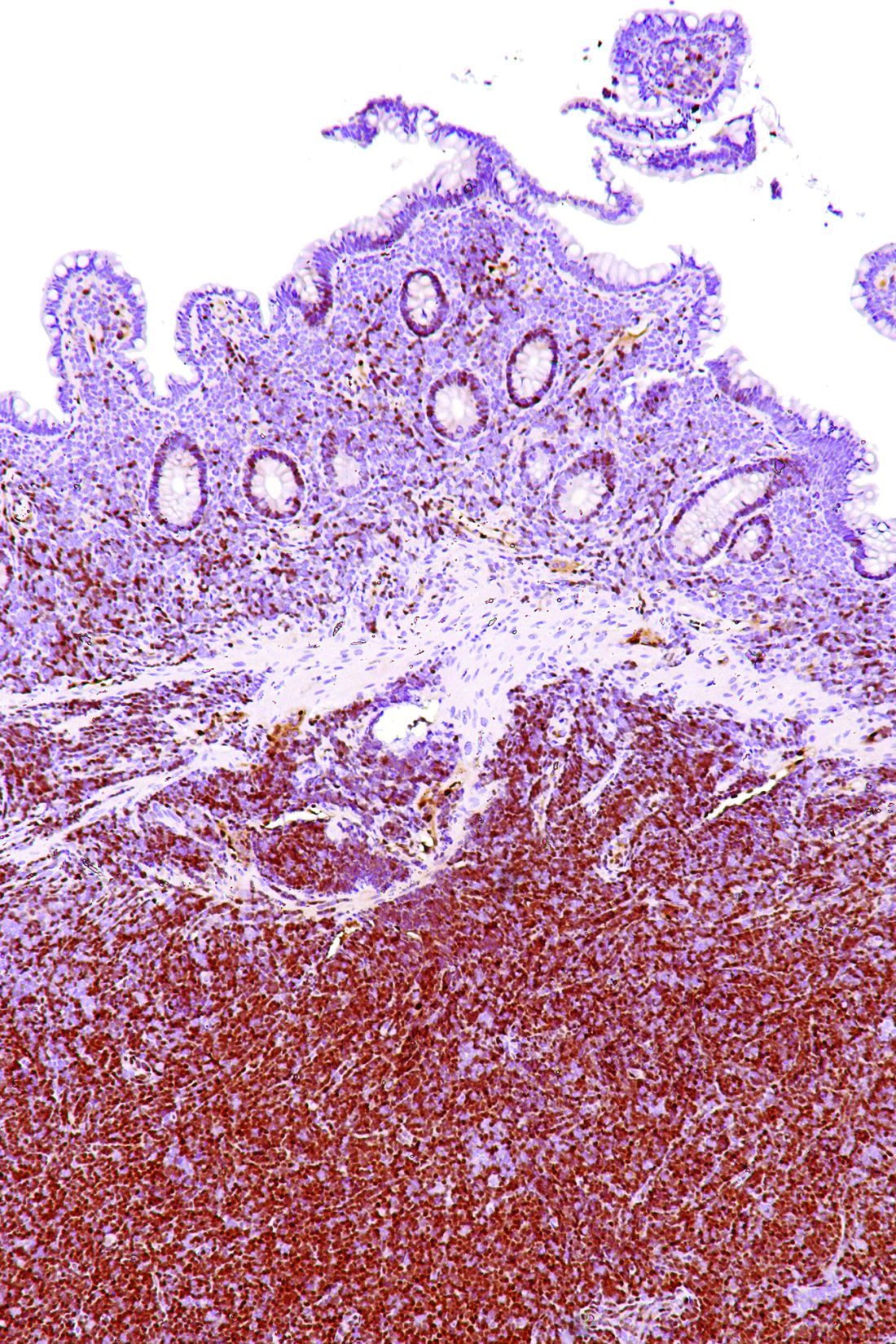
After a median follow-up period of 82.0 months, median overall survival was 90.7 months among participants who were given first-line bortezomib in addition to rituximab plus cyclophosphamide, doxorubicin, and prednisone (VR-CAP) versus 55.7 months in the control arm, where patients were given rituximab, cyclophosphamide, doxorubicin, vincristine, and prednisone (R-CHOP), for a hazard ratio of 0.66 (95% confidence interval, 0.51-0.85; P = .001).
Tadeusz Robak, MD, of the Medical University of Lodz in Poland, and his colleagues also reported that patients in the bortezomib arm experienced two novel adverse effects, which were different from findings reported in the primary analysis. Each case was classified as grade 4; there was one case of gastric cancer and one case of lung adenocarcinoma.
The findings were reported in the Lancet Oncology.
Among 268 patients in the follow-up analysis set, the median age was 66 years and 31% were classified as high risk based on the MCL-specific International Prognostic Index (MIPI). For those considered high risk, no significant difference was noted when comparing the two groups on the basis of overall survival.
“When analyzed according to MIPI risk category, VR-CAP was associated with significantly improved overall survival, compared with R-CHOP in the low-risk and intermediate-risk categories, but not in the high-risk category,” the investigators wrote.
The authors acknowledged a key limitation of the study was that rituximab was not given as a maintenance therapy since it was not considered standard of care at the time of study initiation.
Moving forward, Dr. Robak and his colleagues recommended that bortezomib be investigated in combination with newer targeted therapies in order to establish best practice for treating MCL.
The study was sponsored by Janssen Pharmaceuticals. The authors reported financial ties to Janssen, Celgene, Ipsen Biopharmaceuticals, Johnson & Johnson, Novartis, and others.
SOURCE: Robak T et al. Lancet Oncol. 2018 Oct 19. doi: 10.1016/S1470-2045(18)30685-5.
The proteasome inhibitor, bortezomib, represents a “substantial advance” for the treatment of newly diagnosed mantle cell lymphoma, according to Simon Rule, MD.
In an accompanying commentary, he stated that bortezomib-based VR-CAP (rituximab plus cyclophosphamide, doxorubicin, and prednisone) showed a clear survival benefit in the LYM-3002 trial, compared with rituximab, cyclophosphamide, doxorubicin, vincristine, and prednisone (R-CHOP). However, in order to use this combination in elderly patients, the administration method must be considered. Additionally, it makes sense to routinely use rituximab maintenance.
While the final analysis of the LYM-3002 trial is positive, there are caveats to consider before changing practice, particularly for elderly patients. First, the study had a somewhat younger population and fewer high-risk patients, compared with the only similar study of R-CHOP regimen in an elderly population. The bortezomib plus VR-CAP combination also had significant toxicity that could limit its widespread use in elderly patients.
Dr. Rule also noted that, internationally, bendamustine-based therapy is increasingly being chosen over R-CHOP for older patients with mantle cell lymphoma.
“Whether VR-CAP or the combination of bortezomib and bendamustine-based regimens will be the optimal approach has yet to be established. However, if R-CHOP is being considered, then the long-term survival results reported by Robak and colleagues strongly support the use of VR-CAP as an alternative,” Dr. Rule wrote.
Dr. Rule is with the University of Plymouth (England). These comments are adapted from his commentary (Lancet Oncol. 2018 Oct 19. doi: 10.1016/S1470-2045[18]30743-5). Dr. Rule reported receiving grants and personal fees from Janssen Pharmaceuticals.
The proteasome inhibitor, bortezomib, represents a “substantial advance” for the treatment of newly diagnosed mantle cell lymphoma, according to Simon Rule, MD.
In an accompanying commentary, he stated that bortezomib-based VR-CAP (rituximab plus cyclophosphamide, doxorubicin, and prednisone) showed a clear survival benefit in the LYM-3002 trial, compared with rituximab, cyclophosphamide, doxorubicin, vincristine, and prednisone (R-CHOP). However, in order to use this combination in elderly patients, the administration method must be considered. Additionally, it makes sense to routinely use rituximab maintenance.
While the final analysis of the LYM-3002 trial is positive, there are caveats to consider before changing practice, particularly for elderly patients. First, the study had a somewhat younger population and fewer high-risk patients, compared with the only similar study of R-CHOP regimen in an elderly population. The bortezomib plus VR-CAP combination also had significant toxicity that could limit its widespread use in elderly patients.
Dr. Rule also noted that, internationally, bendamustine-based therapy is increasingly being chosen over R-CHOP for older patients with mantle cell lymphoma.
“Whether VR-CAP or the combination of bortezomib and bendamustine-based regimens will be the optimal approach has yet to be established. However, if R-CHOP is being considered, then the long-term survival results reported by Robak and colleagues strongly support the use of VR-CAP as an alternative,” Dr. Rule wrote.
Dr. Rule is with the University of Plymouth (England). These comments are adapted from his commentary (Lancet Oncol. 2018 Oct 19. doi: 10.1016/S1470-2045[18]30743-5). Dr. Rule reported receiving grants and personal fees from Janssen Pharmaceuticals.
The proteasome inhibitor, bortezomib, represents a “substantial advance” for the treatment of newly diagnosed mantle cell lymphoma, according to Simon Rule, MD.
In an accompanying commentary, he stated that bortezomib-based VR-CAP (rituximab plus cyclophosphamide, doxorubicin, and prednisone) showed a clear survival benefit in the LYM-3002 trial, compared with rituximab, cyclophosphamide, doxorubicin, vincristine, and prednisone (R-CHOP). However, in order to use this combination in elderly patients, the administration method must be considered. Additionally, it makes sense to routinely use rituximab maintenance.
While the final analysis of the LYM-3002 trial is positive, there are caveats to consider before changing practice, particularly for elderly patients. First, the study had a somewhat younger population and fewer high-risk patients, compared with the only similar study of R-CHOP regimen in an elderly population. The bortezomib plus VR-CAP combination also had significant toxicity that could limit its widespread use in elderly patients.
Dr. Rule also noted that, internationally, bendamustine-based therapy is increasingly being chosen over R-CHOP for older patients with mantle cell lymphoma.
“Whether VR-CAP or the combination of bortezomib and bendamustine-based regimens will be the optimal approach has yet to be established. However, if R-CHOP is being considered, then the long-term survival results reported by Robak and colleagues strongly support the use of VR-CAP as an alternative,” Dr. Rule wrote.
Dr. Rule is with the University of Plymouth (England). These comments are adapted from his commentary (Lancet Oncol. 2018 Oct 19. doi: 10.1016/S1470-2045[18]30743-5). Dr. Rule reported receiving grants and personal fees from Janssen Pharmaceuticals.
Bortezomib in combination with rituximab plus chemotherapy significantly improved overall survival in transplant-ineligible patients with newly diagnosed mantle cell lymphoma (MCL), compared with standard treatment, according to final results from the international, phase 3 LYM-3002 trial.
After a median follow-up period of 82.0 months, median overall survival was 90.7 months among participants who were given first-line bortezomib in addition to rituximab plus cyclophosphamide, doxorubicin, and prednisone (VR-CAP) versus 55.7 months in the control arm, where patients were given rituximab, cyclophosphamide, doxorubicin, vincristine, and prednisone (R-CHOP), for a hazard ratio of 0.66 (95% confidence interval, 0.51-0.85; P = .001).
Tadeusz Robak, MD, of the Medical University of Lodz in Poland, and his colleagues also reported that patients in the bortezomib arm experienced two novel adverse effects, which were different from findings reported in the primary analysis. Each case was classified as grade 4; there was one case of gastric cancer and one case of lung adenocarcinoma.
The findings were reported in the Lancet Oncology.
Among 268 patients in the follow-up analysis set, the median age was 66 years and 31% were classified as high risk based on the MCL-specific International Prognostic Index (MIPI). For those considered high risk, no significant difference was noted when comparing the two groups on the basis of overall survival.
“When analyzed according to MIPI risk category, VR-CAP was associated with significantly improved overall survival, compared with R-CHOP in the low-risk and intermediate-risk categories, but not in the high-risk category,” the investigators wrote.
The authors acknowledged a key limitation of the study was that rituximab was not given as a maintenance therapy since it was not considered standard of care at the time of study initiation.
Moving forward, Dr. Robak and his colleagues recommended that bortezomib be investigated in combination with newer targeted therapies in order to establish best practice for treating MCL.
The study was sponsored by Janssen Pharmaceuticals. The authors reported financial ties to Janssen, Celgene, Ipsen Biopharmaceuticals, Johnson & Johnson, Novartis, and others.
SOURCE: Robak T et al. Lancet Oncol. 2018 Oct 19. doi: 10.1016/S1470-2045(18)30685-5.
Bortezomib in combination with rituximab plus chemotherapy significantly improved overall survival in transplant-ineligible patients with newly diagnosed mantle cell lymphoma (MCL), compared with standard treatment, according to final results from the international, phase 3 LYM-3002 trial.
After a median follow-up period of 82.0 months, median overall survival was 90.7 months among participants who were given first-line bortezomib in addition to rituximab plus cyclophosphamide, doxorubicin, and prednisone (VR-CAP) versus 55.7 months in the control arm, where patients were given rituximab, cyclophosphamide, doxorubicin, vincristine, and prednisone (R-CHOP), for a hazard ratio of 0.66 (95% confidence interval, 0.51-0.85; P = .001).
Tadeusz Robak, MD, of the Medical University of Lodz in Poland, and his colleagues also reported that patients in the bortezomib arm experienced two novel adverse effects, which were different from findings reported in the primary analysis. Each case was classified as grade 4; there was one case of gastric cancer and one case of lung adenocarcinoma.
The findings were reported in the Lancet Oncology.
Among 268 patients in the follow-up analysis set, the median age was 66 years and 31% were classified as high risk based on the MCL-specific International Prognostic Index (MIPI). For those considered high risk, no significant difference was noted when comparing the two groups on the basis of overall survival.
“When analyzed according to MIPI risk category, VR-CAP was associated with significantly improved overall survival, compared with R-CHOP in the low-risk and intermediate-risk categories, but not in the high-risk category,” the investigators wrote.
The authors acknowledged a key limitation of the study was that rituximab was not given as a maintenance therapy since it was not considered standard of care at the time of study initiation.
Moving forward, Dr. Robak and his colleagues recommended that bortezomib be investigated in combination with newer targeted therapies in order to establish best practice for treating MCL.
The study was sponsored by Janssen Pharmaceuticals. The authors reported financial ties to Janssen, Celgene, Ipsen Biopharmaceuticals, Johnson & Johnson, Novartis, and others.
SOURCE: Robak T et al. Lancet Oncol. 2018 Oct 19. doi: 10.1016/S1470-2045(18)30685-5.
FROM THE LANCET ONCOLOGY
Key clinical point:
Major finding: Median overall survival was 90.7 months in the intervention arm (bortezomib in addition to rituximab plus chemotherapy) versus 55.7 months in the control arm (hazard ratio, 0.66; 95% confidence interval, 0.51-0.85; P = .001).
Study details: LYM-3002 was a phase 3, randomized, open-label study of 487 transplant-ineligible patients with untreated mantle cell lymphoma.
Disclosures: The study was sponsored by Janssen Pharmaceuticals. The authors reported financial ties with Janssen, Celgene, Ipsen Biopharmaceuticals, Johnson & Johnson, Novartis, and others.
Source: Robak T et al. Lancet Oncol. 2018 Oct 19. doi: 10.1016/S1470-2045(18)30685-5.
Checkpoint inhibitor doubles 3-year survival rate of BRAF wild-type advanced melanoma
For previously untreated patients with BRAF wild-type advanced melanoma, the antiprogrammed death-ligand 1 agent nivolumab dramatically improved overall survival (OS), compared with standard first-line chemotherapy, according to new data from the CheckMate 066 trial.
At the 3-year follow-up, more than twice as many nivolumab-treated patients were alive, compared with those who received dacarbazine, reported lead author Paolo A. Ascierto, MD, director of the unit of melanoma, cancer immunotherapy, and innovative therapy at the Istituto Nazionale Tumori Fondazione Pascale in Naples, Italy, and his colleagues. Longer median progression-free survival (PFS) and higher complete response rates were also reported.
“The results of this 3-year follow-up analysis provided evidence for a durable survival benefit with nivolumab monotherapy in patients with previously untreated BRAF wild-type advanced melanoma,” the investigators wrote in JAMA Oncology.
The double-blind, phase 3 trial involved 418 patients with unresectable, previously untreated stage III or IV melanoma not exhibiting a BRAF mutation. Patients were randomized to receive either nivolumab (n = 210; 3 mg/kg every 2 weeks plus placebo every 3 weeks) or dacarbazine (n = 208; 1,000 mg/m2 every 3 weeks plus placebo every 2 weeks). Treatment continued until unacceptable toxicity or disease progression occurred.
The results showed dramatic benefits, measured by OS and PFS, when patients were treated with nivolumab. The 3-year OS rate was 51.2% in the nivolumab group, compared with 21.6% in the dacarbazine group, an approximate 130% difference. Median OS and median PFS were also multiplied by the checkpoint inhibitor, showing 230% and 130% improvements, respectively (OS, 37.5 months vs. 11.2 months; PFS, 5.1 months vs. 2.2 months; P less than .001). Grade 3 or higher treatment-related adverse events (AEs) were comparable between treatment arms (nivolumab, 15.0% vs. dacarbazine, 17.6%).
“Responses to nivolumab were long lasting in many patients who discontinued treatment, with most patients who stopped treatment still alive and without disease progression at the time of the last assessment,” the investigators wrote.
“Collectively, our results showed durable responses and long-term survival with nivolumab monotherapy, with no new AEs developing at late time points,” they concluded.
The study was funded by Bristol-Myers Squibb. The authors reported financial relationships with Bristol-Myers Squibb, Roche/Genentech, Novartis, Amgen, and others.
SOURCE: Ascierto PA et al. JAMA Oncol. 2018 Oct 25. doi: 10.1001/jamaoncol.2018.4514.
For previously untreated patients with BRAF wild-type advanced melanoma, the antiprogrammed death-ligand 1 agent nivolumab dramatically improved overall survival (OS), compared with standard first-line chemotherapy, according to new data from the CheckMate 066 trial.
At the 3-year follow-up, more than twice as many nivolumab-treated patients were alive, compared with those who received dacarbazine, reported lead author Paolo A. Ascierto, MD, director of the unit of melanoma, cancer immunotherapy, and innovative therapy at the Istituto Nazionale Tumori Fondazione Pascale in Naples, Italy, and his colleagues. Longer median progression-free survival (PFS) and higher complete response rates were also reported.
“The results of this 3-year follow-up analysis provided evidence for a durable survival benefit with nivolumab monotherapy in patients with previously untreated BRAF wild-type advanced melanoma,” the investigators wrote in JAMA Oncology.
The double-blind, phase 3 trial involved 418 patients with unresectable, previously untreated stage III or IV melanoma not exhibiting a BRAF mutation. Patients were randomized to receive either nivolumab (n = 210; 3 mg/kg every 2 weeks plus placebo every 3 weeks) or dacarbazine (n = 208; 1,000 mg/m2 every 3 weeks plus placebo every 2 weeks). Treatment continued until unacceptable toxicity or disease progression occurred.
The results showed dramatic benefits, measured by OS and PFS, when patients were treated with nivolumab. The 3-year OS rate was 51.2% in the nivolumab group, compared with 21.6% in the dacarbazine group, an approximate 130% difference. Median OS and median PFS were also multiplied by the checkpoint inhibitor, showing 230% and 130% improvements, respectively (OS, 37.5 months vs. 11.2 months; PFS, 5.1 months vs. 2.2 months; P less than .001). Grade 3 or higher treatment-related adverse events (AEs) were comparable between treatment arms (nivolumab, 15.0% vs. dacarbazine, 17.6%).
“Responses to nivolumab were long lasting in many patients who discontinued treatment, with most patients who stopped treatment still alive and without disease progression at the time of the last assessment,” the investigators wrote.
“Collectively, our results showed durable responses and long-term survival with nivolumab monotherapy, with no new AEs developing at late time points,” they concluded.
The study was funded by Bristol-Myers Squibb. The authors reported financial relationships with Bristol-Myers Squibb, Roche/Genentech, Novartis, Amgen, and others.
SOURCE: Ascierto PA et al. JAMA Oncol. 2018 Oct 25. doi: 10.1001/jamaoncol.2018.4514.
For previously untreated patients with BRAF wild-type advanced melanoma, the antiprogrammed death-ligand 1 agent nivolumab dramatically improved overall survival (OS), compared with standard first-line chemotherapy, according to new data from the CheckMate 066 trial.
At the 3-year follow-up, more than twice as many nivolumab-treated patients were alive, compared with those who received dacarbazine, reported lead author Paolo A. Ascierto, MD, director of the unit of melanoma, cancer immunotherapy, and innovative therapy at the Istituto Nazionale Tumori Fondazione Pascale in Naples, Italy, and his colleagues. Longer median progression-free survival (PFS) and higher complete response rates were also reported.
“The results of this 3-year follow-up analysis provided evidence for a durable survival benefit with nivolumab monotherapy in patients with previously untreated BRAF wild-type advanced melanoma,” the investigators wrote in JAMA Oncology.
The double-blind, phase 3 trial involved 418 patients with unresectable, previously untreated stage III or IV melanoma not exhibiting a BRAF mutation. Patients were randomized to receive either nivolumab (n = 210; 3 mg/kg every 2 weeks plus placebo every 3 weeks) or dacarbazine (n = 208; 1,000 mg/m2 every 3 weeks plus placebo every 2 weeks). Treatment continued until unacceptable toxicity or disease progression occurred.
The results showed dramatic benefits, measured by OS and PFS, when patients were treated with nivolumab. The 3-year OS rate was 51.2% in the nivolumab group, compared with 21.6% in the dacarbazine group, an approximate 130% difference. Median OS and median PFS were also multiplied by the checkpoint inhibitor, showing 230% and 130% improvements, respectively (OS, 37.5 months vs. 11.2 months; PFS, 5.1 months vs. 2.2 months; P less than .001). Grade 3 or higher treatment-related adverse events (AEs) were comparable between treatment arms (nivolumab, 15.0% vs. dacarbazine, 17.6%).
“Responses to nivolumab were long lasting in many patients who discontinued treatment, with most patients who stopped treatment still alive and without disease progression at the time of the last assessment,” the investigators wrote.
“Collectively, our results showed durable responses and long-term survival with nivolumab monotherapy, with no new AEs developing at late time points,” they concluded.
The study was funded by Bristol-Myers Squibb. The authors reported financial relationships with Bristol-Myers Squibb, Roche/Genentech, Novartis, Amgen, and others.
SOURCE: Ascierto PA et al. JAMA Oncol. 2018 Oct 25. doi: 10.1001/jamaoncol.2018.4514.
FROM JAMA ONCOLOGY
Key clinical point: For previously untreated patients with BRAF wild-type advanced melanoma, the checkpoint inhibitor nivolumab dramatically improved overall survival, compared with standard first-line chemotherapy.
Major finding: The 3-year overall survival rate for patients treated with nivolumab was 51.2%, compared with 21.6% for those who received dacarbazine.
Study details: CheckMate 066 is an ongoing, phase 3, double-blind trial involving 418 patients with BRAF wild-type advanced melanoma.
Disclosures: The study was funded by Bristol-Myers Squibb. The authors reported financial relationships with Bristol-Myers Squibb, Roche/Genentech, Novartis, Amgen, and others.
Source: Ascierto PA et al. JAMA Oncol. 2018 Oct 25. doi: 10.1001/jamaoncol.2018.4514.
“Unique” Challenges for Screening Native American Women
American Indian/Alaska Native (AI/AN) women face the same barriers as all low-income minority women face in accessing preventive care, but according to researchers from Rutgers University in New Jersey and University of Arizona, they also face “unique challenges and circumstances.” The researchers reviewed 18 studies to find out more about facilitators of, and barriers to, breast cancer screening.
Low-income women are more likely to be diagnosed at a later stage and to die of breast cancer, one study found. The factors are well known: cost, lack of a usual source of care, lack of insurance, distance from a facility, and lack of transportation.
However, the researchers of the meta-analysis say, “compounding these barriers,” AI/AN women expressed the belief that preventive care is not a priority, especially when it is their own preventive care. Moreover, some barriers that might be unique to the AI/AN women included concern with “manifest destiny”: the assumption that thinking or talking about breast cancer can cause it, for instance. One study examined “traditionality” and found women who could be seen as more traditional, defining themselves as living an “Indian way of life,” were less likely to be current with screening. Other women expressed mistrust in the technology of screening or spoke about perception of discrimination in the health care system.
Although this population has access to screening through IHS facilities, women who also have insurance (typically Medicaid) are more likely to get screened. Women in rural areas who lived near an IHS facility were more likely than were urban women to get mammograms. The researchers suggest this could be because rural women are more likely to be isolated from other mammogram facilities. Too, the IHS is “chronically underfunded,” the researchers note, likely a cause of the health disparities and limiting scope of services.
Their review made clear that efforts to intervene with AI/AN women to increase breast cancer screening have been limited, the researchers say. The intervention studies they reviewed “were not successful in improving screening rates or adherence.” The qualitative studies, on the other hand, suggest that women may be more responsive to locally supportive, targeted, and culturally appropriate interventions that respect traditionality yet encourage trust in the medical system.
American Indian/Alaska Native (AI/AN) women face the same barriers as all low-income minority women face in accessing preventive care, but according to researchers from Rutgers University in New Jersey and University of Arizona, they also face “unique challenges and circumstances.” The researchers reviewed 18 studies to find out more about facilitators of, and barriers to, breast cancer screening.
Low-income women are more likely to be diagnosed at a later stage and to die of breast cancer, one study found. The factors are well known: cost, lack of a usual source of care, lack of insurance, distance from a facility, and lack of transportation.
However, the researchers of the meta-analysis say, “compounding these barriers,” AI/AN women expressed the belief that preventive care is not a priority, especially when it is their own preventive care. Moreover, some barriers that might be unique to the AI/AN women included concern with “manifest destiny”: the assumption that thinking or talking about breast cancer can cause it, for instance. One study examined “traditionality” and found women who could be seen as more traditional, defining themselves as living an “Indian way of life,” were less likely to be current with screening. Other women expressed mistrust in the technology of screening or spoke about perception of discrimination in the health care system.
Although this population has access to screening through IHS facilities, women who also have insurance (typically Medicaid) are more likely to get screened. Women in rural areas who lived near an IHS facility were more likely than were urban women to get mammograms. The researchers suggest this could be because rural women are more likely to be isolated from other mammogram facilities. Too, the IHS is “chronically underfunded,” the researchers note, likely a cause of the health disparities and limiting scope of services.
Their review made clear that efforts to intervene with AI/AN women to increase breast cancer screening have been limited, the researchers say. The intervention studies they reviewed “were not successful in improving screening rates or adherence.” The qualitative studies, on the other hand, suggest that women may be more responsive to locally supportive, targeted, and culturally appropriate interventions that respect traditionality yet encourage trust in the medical system.
American Indian/Alaska Native (AI/AN) women face the same barriers as all low-income minority women face in accessing preventive care, but according to researchers from Rutgers University in New Jersey and University of Arizona, they also face “unique challenges and circumstances.” The researchers reviewed 18 studies to find out more about facilitators of, and barriers to, breast cancer screening.
Low-income women are more likely to be diagnosed at a later stage and to die of breast cancer, one study found. The factors are well known: cost, lack of a usual source of care, lack of insurance, distance from a facility, and lack of transportation.
However, the researchers of the meta-analysis say, “compounding these barriers,” AI/AN women expressed the belief that preventive care is not a priority, especially when it is their own preventive care. Moreover, some barriers that might be unique to the AI/AN women included concern with “manifest destiny”: the assumption that thinking or talking about breast cancer can cause it, for instance. One study examined “traditionality” and found women who could be seen as more traditional, defining themselves as living an “Indian way of life,” were less likely to be current with screening. Other women expressed mistrust in the technology of screening or spoke about perception of discrimination in the health care system.
Although this population has access to screening through IHS facilities, women who also have insurance (typically Medicaid) are more likely to get screened. Women in rural areas who lived near an IHS facility were more likely than were urban women to get mammograms. The researchers suggest this could be because rural women are more likely to be isolated from other mammogram facilities. Too, the IHS is “chronically underfunded,” the researchers note, likely a cause of the health disparities and limiting scope of services.
Their review made clear that efforts to intervene with AI/AN women to increase breast cancer screening have been limited, the researchers say. The intervention studies they reviewed “were not successful in improving screening rates or adherence.” The qualitative studies, on the other hand, suggest that women may be more responsive to locally supportive, targeted, and culturally appropriate interventions that respect traditionality yet encourage trust in the medical system.
Genetic variants linked to warfarin-related bleeding in patients of African descent
Single-nucleotide polymorphisms linked to increased bleeding risk have been identified in patients of African descent taking warfarin, investigators have reported.
Four single-nucleotide polymorphisms (SNPs) were associated with increased major bleeding risk in African Americans at an international normalized ratio (INR) of less than 4, according to results of their preliminary, retrospective study.
The preliminary findings could have implications for patients of African descent, but independent validation of the study results are needed, according to Minoli A. Perera, PharmD, PhD, of Northwestern University, Chicago, and her coauthors.
“Identifying these variants may help physicians make safer choices in anticoagulation therapy for this understudied patient population,” Dr. Perera and her colleagues wrote in JAMA.
Most prior studies looking at warfarin-related bleeding risk have included predominantly white patients and don’t account for differences in warfarin responsiveness between ethnic groups, they wrote.
Moreover, bleeding-associated SNPs have been identified, but in populations of European ancestry, they added.
The report covered results of a discovery cohort based on African American patients from a genome-wide study conducted at the University of Chicago, and a replication cohort based on patients who self-identified as African American and had routinely received care at University of Chicago hospitals.
The discovery cohort included 31 patients with major bleeding that occurred at an INR less than 4 and 184 controls with no documented history of bleeding related to warfarin.
In that cohort, Dr. Perera and her coinvestigators found four SNPs in linkage disequilibrium on chromosome 6 associated with warfarin-related bleeding, including rs115112393, rs16871327, rs78132896, and rs114504854. In particular, the rs78132896 SNP was found in 35.5% of cases (n = 11) and just 4.9% of controls (n = 9), with an odds ratio of 8.31 (95% confidence interval, 3.2-21.5).
The replication cohort, including 40 cases and 148 warfarin-treated controls, was genotyped specifically for rs78132896. That SNP was similarly found in 35.0% of cases (n = 14) and 4.8% of controls (n = 7), with an odds ratio of 8.24 (95% CI, 3.1-25.3).
“Genome-wide significance of this cohort was achieved when the cohorts were combined via meta-analysis,” said the investigators, who reported an odds ratio of 8.27 for that analysis (95% CI, 4.18-16.38).
Compared with wild-type alleles, the rs16871327 and rs78132896 risk alleles increased EPHA7 gene transcription, results of gene assay analyses further showed.
Expression of the EPHA7 gene on vascular endothelial cells and peripheral lymphocytes is increased during inflammation, according to Dr. Perera and her coauthors. Increased EPHA7 expression might lead to bleeding in patients who are taking warfarin.
“This haplotype might also have potential implications for bleeding risk with direct oral anticoagulants,” they said.
Dr. Perera and her coauthors reported no conflicts of interest related to their work on this study, which was funded by grants from the National Heart, Lung, and Blood Institute; the National Institute of General Medicine; the National Institutes of Health; and the American Heart Association Midwest Affiliate; as well as a research award from the University of Illinois at Chicago College of Pharmacy.
SOURCE: Perera MA et al. JAMA. 2018 Oct 23. doi: 10.1001/jama.2018.14955.
Single-nucleotide polymorphisms linked to increased bleeding risk have been identified in patients of African descent taking warfarin, investigators have reported.
Four single-nucleotide polymorphisms (SNPs) were associated with increased major bleeding risk in African Americans at an international normalized ratio (INR) of less than 4, according to results of their preliminary, retrospective study.
The preliminary findings could have implications for patients of African descent, but independent validation of the study results are needed, according to Minoli A. Perera, PharmD, PhD, of Northwestern University, Chicago, and her coauthors.
“Identifying these variants may help physicians make safer choices in anticoagulation therapy for this understudied patient population,” Dr. Perera and her colleagues wrote in JAMA.
Most prior studies looking at warfarin-related bleeding risk have included predominantly white patients and don’t account for differences in warfarin responsiveness between ethnic groups, they wrote.
Moreover, bleeding-associated SNPs have been identified, but in populations of European ancestry, they added.
The report covered results of a discovery cohort based on African American patients from a genome-wide study conducted at the University of Chicago, and a replication cohort based on patients who self-identified as African American and had routinely received care at University of Chicago hospitals.
The discovery cohort included 31 patients with major bleeding that occurred at an INR less than 4 and 184 controls with no documented history of bleeding related to warfarin.
In that cohort, Dr. Perera and her coinvestigators found four SNPs in linkage disequilibrium on chromosome 6 associated with warfarin-related bleeding, including rs115112393, rs16871327, rs78132896, and rs114504854. In particular, the rs78132896 SNP was found in 35.5% of cases (n = 11) and just 4.9% of controls (n = 9), with an odds ratio of 8.31 (95% confidence interval, 3.2-21.5).
The replication cohort, including 40 cases and 148 warfarin-treated controls, was genotyped specifically for rs78132896. That SNP was similarly found in 35.0% of cases (n = 14) and 4.8% of controls (n = 7), with an odds ratio of 8.24 (95% CI, 3.1-25.3).
“Genome-wide significance of this cohort was achieved when the cohorts were combined via meta-analysis,” said the investigators, who reported an odds ratio of 8.27 for that analysis (95% CI, 4.18-16.38).
Compared with wild-type alleles, the rs16871327 and rs78132896 risk alleles increased EPHA7 gene transcription, results of gene assay analyses further showed.
Expression of the EPHA7 gene on vascular endothelial cells and peripheral lymphocytes is increased during inflammation, according to Dr. Perera and her coauthors. Increased EPHA7 expression might lead to bleeding in patients who are taking warfarin.
“This haplotype might also have potential implications for bleeding risk with direct oral anticoagulants,” they said.
Dr. Perera and her coauthors reported no conflicts of interest related to their work on this study, which was funded by grants from the National Heart, Lung, and Blood Institute; the National Institute of General Medicine; the National Institutes of Health; and the American Heart Association Midwest Affiliate; as well as a research award from the University of Illinois at Chicago College of Pharmacy.
SOURCE: Perera MA et al. JAMA. 2018 Oct 23. doi: 10.1001/jama.2018.14955.
Single-nucleotide polymorphisms linked to increased bleeding risk have been identified in patients of African descent taking warfarin, investigators have reported.
Four single-nucleotide polymorphisms (SNPs) were associated with increased major bleeding risk in African Americans at an international normalized ratio (INR) of less than 4, according to results of their preliminary, retrospective study.
The preliminary findings could have implications for patients of African descent, but independent validation of the study results are needed, according to Minoli A. Perera, PharmD, PhD, of Northwestern University, Chicago, and her coauthors.
“Identifying these variants may help physicians make safer choices in anticoagulation therapy for this understudied patient population,” Dr. Perera and her colleagues wrote in JAMA.
Most prior studies looking at warfarin-related bleeding risk have included predominantly white patients and don’t account for differences in warfarin responsiveness between ethnic groups, they wrote.
Moreover, bleeding-associated SNPs have been identified, but in populations of European ancestry, they added.
The report covered results of a discovery cohort based on African American patients from a genome-wide study conducted at the University of Chicago, and a replication cohort based on patients who self-identified as African American and had routinely received care at University of Chicago hospitals.
The discovery cohort included 31 patients with major bleeding that occurred at an INR less than 4 and 184 controls with no documented history of bleeding related to warfarin.
In that cohort, Dr. Perera and her coinvestigators found four SNPs in linkage disequilibrium on chromosome 6 associated with warfarin-related bleeding, including rs115112393, rs16871327, rs78132896, and rs114504854. In particular, the rs78132896 SNP was found in 35.5% of cases (n = 11) and just 4.9% of controls (n = 9), with an odds ratio of 8.31 (95% confidence interval, 3.2-21.5).
The replication cohort, including 40 cases and 148 warfarin-treated controls, was genotyped specifically for rs78132896. That SNP was similarly found in 35.0% of cases (n = 14) and 4.8% of controls (n = 7), with an odds ratio of 8.24 (95% CI, 3.1-25.3).
“Genome-wide significance of this cohort was achieved when the cohorts were combined via meta-analysis,” said the investigators, who reported an odds ratio of 8.27 for that analysis (95% CI, 4.18-16.38).
Compared with wild-type alleles, the rs16871327 and rs78132896 risk alleles increased EPHA7 gene transcription, results of gene assay analyses further showed.
Expression of the EPHA7 gene on vascular endothelial cells and peripheral lymphocytes is increased during inflammation, according to Dr. Perera and her coauthors. Increased EPHA7 expression might lead to bleeding in patients who are taking warfarin.
“This haplotype might also have potential implications for bleeding risk with direct oral anticoagulants,” they said.
Dr. Perera and her coauthors reported no conflicts of interest related to their work on this study, which was funded by grants from the National Heart, Lung, and Blood Institute; the National Institute of General Medicine; the National Institutes of Health; and the American Heart Association Midwest Affiliate; as well as a research award from the University of Illinois at Chicago College of Pharmacy.
SOURCE: Perera MA et al. JAMA. 2018 Oct 23. doi: 10.1001/jama.2018.14955.
FROM JAMA
Key clinical point: A set of single-nucleotide polymorphisms associated with increased bleeding risk were identified in African American patients on warfarin.
Major finding: Four single-nucleotide polymorphisms associated with increased bleeding risk were identified, including one seen in about one-third of bleeding cases and less than 5% of controls.
Study details: A genome-wide association study including a total of 71 African American patients with major bleeding on warfarin and 332 controls.
Disclosures: The investigators reported no conflicts of interest. Funding for the study came from the National Heart, Lung, and Blood Institute; National Institute of General Medicine, National Institutes of Health; the American Heart Association Midwest Affiliate; and the University of Illinois at Chicago College of Pharmacy.
Source: Perera MA et al. JAMA. 2018 Oct 23. doi: 10.1001/jama.2018.14955.
PCI safely improves iPFS and OS in advanced NSCLC
TORONTO – Prophylactic cranial irradiation, which is standard-of-care practice in patients with small cell lung cancer, also appears to improve intracranial progression-free survival (iPFS) and overall survival in patients with stage IV non–small cell lung cancer (NSCLC), according to findings from a randomized study.
The cumulative incidence of brain metastases at 2 years was 22% in 41 patients who received prophylactic cranial irradiation (PCI), compared with 52% in 43 patients who received standard care with first- and second-generation tyrosine kinase inhibitors (TKIs) without PCI, Oscar Arrieta, MD, reported at the World Conference on Lung Cancer.
PCI was associated with lower odds of progression to the CNS (odds ratio, 0.16), Dr. Arrieta, of the National Cancer Institute of Mexico, Mexico City, said at the meeting sponsored by the International Association for the Study of Lung Cancer. Further, the relative risk for iPFS in patients with an epithelial growth factor receptor (EGFR) or anaplastic lymphoma kinase mutation (ALK), who comprised 70% of patients in both groups, was 0.29 with PCI.
Median overall survival in the groups was 42.8 months versus 25.9 months (HR, 0.48).
The burden of brain metastases can impact the quality and length of survival in patients with NSCLC, and because of an aging population and advances in detection and treatment of primary cancers, patients are living longer and thus are more likely to experience brain metastases, Dr. Arrieta said, noting that this is particularly true for patients at high risk, such as those with elevated carcinoembryonic antigen levels.
Although PCI is standard in small cell lung cancer, its role in NSCLC remains controversial because of concerns about neurologic morbidity and lack of overall survival benefit, he explained.
“The objective of this study was to determine if the use of PCI reduced the development of brain metastases and improved the survival in this population without impairing quality of life,” he said.
Study participants were patients with confirmed stage IV NSCLC and adenocarcinoma histology at high risk for developing brain metastasis. PCI in the treatment group was delivered at 25 Gy/10 fractions.
The findings suggest that in NSCLC with a high risk of developing brain metastases who are treated with a first- or second-generation TKI – particularly those with EGFR and ALK mutations – PCI increases iPFS, Dr. Arrieta said.
“The findings can be extrapolated to those treated with third-generation TKIs, which have higher CNS penetration,” he said, noting, however, that access to third-generation TKIs is limited in most developing countries and cost barriers are high.
Of note, the relatively low dose of PCI used in this study was not associated with significant differences in Mini-Mental State Examination or quality of life scores in the short-term. Long-term assessments are needed, he said, concluding that, while additional study is needed to confirm the findings, the results, including the overall survival benefit seen with PCI, “highlight the benefits of this approach, particularly among patients with a high risk of developing brain metastases.”
Invited discussant Nasser Hanna, MD, the Tom and Julie Wood Family Foundation Professor of Lung Cancer Clinical Research at Indiana University, Indianapolis, said the findings of this “interesting and important study,” are intriguing, but agreed that additional study is needed.
“The study is far too small ... to definitively make this conclusion [that PCI improves iPFS in this population]; I would not recommend PCI without confirmatory data from larger, randomized trials,” he said.
Dr. Arrieta reported advisory roles or provision of expert testimony for Eli Lilly, AstraZeneca, Boehringer Ingelheim, Roche, Merck, Takeda, and Bristol-Myers Squibb, and receipt of honoraria and/or research funding from AstraZeneca, Boehringer Ingelheim, Merck, Roche, and Bristol-Myers Squibb. Dr. Nasser reported receiving research grants from Bristol-Myers Squibb, AstraZeneca, Genentech, and Merck.
SOURCE: Arrieta O et al. WCLC 2018, Abstract MA08.02.
TORONTO – Prophylactic cranial irradiation, which is standard-of-care practice in patients with small cell lung cancer, also appears to improve intracranial progression-free survival (iPFS) and overall survival in patients with stage IV non–small cell lung cancer (NSCLC), according to findings from a randomized study.
The cumulative incidence of brain metastases at 2 years was 22% in 41 patients who received prophylactic cranial irradiation (PCI), compared with 52% in 43 patients who received standard care with first- and second-generation tyrosine kinase inhibitors (TKIs) without PCI, Oscar Arrieta, MD, reported at the World Conference on Lung Cancer.
PCI was associated with lower odds of progression to the CNS (odds ratio, 0.16), Dr. Arrieta, of the National Cancer Institute of Mexico, Mexico City, said at the meeting sponsored by the International Association for the Study of Lung Cancer. Further, the relative risk for iPFS in patients with an epithelial growth factor receptor (EGFR) or anaplastic lymphoma kinase mutation (ALK), who comprised 70% of patients in both groups, was 0.29 with PCI.
Median overall survival in the groups was 42.8 months versus 25.9 months (HR, 0.48).
The burden of brain metastases can impact the quality and length of survival in patients with NSCLC, and because of an aging population and advances in detection and treatment of primary cancers, patients are living longer and thus are more likely to experience brain metastases, Dr. Arrieta said, noting that this is particularly true for patients at high risk, such as those with elevated carcinoembryonic antigen levels.
Although PCI is standard in small cell lung cancer, its role in NSCLC remains controversial because of concerns about neurologic morbidity and lack of overall survival benefit, he explained.
“The objective of this study was to determine if the use of PCI reduced the development of brain metastases and improved the survival in this population without impairing quality of life,” he said.
Study participants were patients with confirmed stage IV NSCLC and adenocarcinoma histology at high risk for developing brain metastasis. PCI in the treatment group was delivered at 25 Gy/10 fractions.
The findings suggest that in NSCLC with a high risk of developing brain metastases who are treated with a first- or second-generation TKI – particularly those with EGFR and ALK mutations – PCI increases iPFS, Dr. Arrieta said.
“The findings can be extrapolated to those treated with third-generation TKIs, which have higher CNS penetration,” he said, noting, however, that access to third-generation TKIs is limited in most developing countries and cost barriers are high.
Of note, the relatively low dose of PCI used in this study was not associated with significant differences in Mini-Mental State Examination or quality of life scores in the short-term. Long-term assessments are needed, he said, concluding that, while additional study is needed to confirm the findings, the results, including the overall survival benefit seen with PCI, “highlight the benefits of this approach, particularly among patients with a high risk of developing brain metastases.”
Invited discussant Nasser Hanna, MD, the Tom and Julie Wood Family Foundation Professor of Lung Cancer Clinical Research at Indiana University, Indianapolis, said the findings of this “interesting and important study,” are intriguing, but agreed that additional study is needed.
“The study is far too small ... to definitively make this conclusion [that PCI improves iPFS in this population]; I would not recommend PCI without confirmatory data from larger, randomized trials,” he said.
Dr. Arrieta reported advisory roles or provision of expert testimony for Eli Lilly, AstraZeneca, Boehringer Ingelheim, Roche, Merck, Takeda, and Bristol-Myers Squibb, and receipt of honoraria and/or research funding from AstraZeneca, Boehringer Ingelheim, Merck, Roche, and Bristol-Myers Squibb. Dr. Nasser reported receiving research grants from Bristol-Myers Squibb, AstraZeneca, Genentech, and Merck.
SOURCE: Arrieta O et al. WCLC 2018, Abstract MA08.02.
TORONTO – Prophylactic cranial irradiation, which is standard-of-care practice in patients with small cell lung cancer, also appears to improve intracranial progression-free survival (iPFS) and overall survival in patients with stage IV non–small cell lung cancer (NSCLC), according to findings from a randomized study.
The cumulative incidence of brain metastases at 2 years was 22% in 41 patients who received prophylactic cranial irradiation (PCI), compared with 52% in 43 patients who received standard care with first- and second-generation tyrosine kinase inhibitors (TKIs) without PCI, Oscar Arrieta, MD, reported at the World Conference on Lung Cancer.
PCI was associated with lower odds of progression to the CNS (odds ratio, 0.16), Dr. Arrieta, of the National Cancer Institute of Mexico, Mexico City, said at the meeting sponsored by the International Association for the Study of Lung Cancer. Further, the relative risk for iPFS in patients with an epithelial growth factor receptor (EGFR) or anaplastic lymphoma kinase mutation (ALK), who comprised 70% of patients in both groups, was 0.29 with PCI.
Median overall survival in the groups was 42.8 months versus 25.9 months (HR, 0.48).
The burden of brain metastases can impact the quality and length of survival in patients with NSCLC, and because of an aging population and advances in detection and treatment of primary cancers, patients are living longer and thus are more likely to experience brain metastases, Dr. Arrieta said, noting that this is particularly true for patients at high risk, such as those with elevated carcinoembryonic antigen levels.
Although PCI is standard in small cell lung cancer, its role in NSCLC remains controversial because of concerns about neurologic morbidity and lack of overall survival benefit, he explained.
“The objective of this study was to determine if the use of PCI reduced the development of brain metastases and improved the survival in this population without impairing quality of life,” he said.
Study participants were patients with confirmed stage IV NSCLC and adenocarcinoma histology at high risk for developing brain metastasis. PCI in the treatment group was delivered at 25 Gy/10 fractions.
The findings suggest that in NSCLC with a high risk of developing brain metastases who are treated with a first- or second-generation TKI – particularly those with EGFR and ALK mutations – PCI increases iPFS, Dr. Arrieta said.
“The findings can be extrapolated to those treated with third-generation TKIs, which have higher CNS penetration,” he said, noting, however, that access to third-generation TKIs is limited in most developing countries and cost barriers are high.
Of note, the relatively low dose of PCI used in this study was not associated with significant differences in Mini-Mental State Examination or quality of life scores in the short-term. Long-term assessments are needed, he said, concluding that, while additional study is needed to confirm the findings, the results, including the overall survival benefit seen with PCI, “highlight the benefits of this approach, particularly among patients with a high risk of developing brain metastases.”
Invited discussant Nasser Hanna, MD, the Tom and Julie Wood Family Foundation Professor of Lung Cancer Clinical Research at Indiana University, Indianapolis, said the findings of this “interesting and important study,” are intriguing, but agreed that additional study is needed.
“The study is far too small ... to definitively make this conclusion [that PCI improves iPFS in this population]; I would not recommend PCI without confirmatory data from larger, randomized trials,” he said.
Dr. Arrieta reported advisory roles or provision of expert testimony for Eli Lilly, AstraZeneca, Boehringer Ingelheim, Roche, Merck, Takeda, and Bristol-Myers Squibb, and receipt of honoraria and/or research funding from AstraZeneca, Boehringer Ingelheim, Merck, Roche, and Bristol-Myers Squibb. Dr. Nasser reported receiving research grants from Bristol-Myers Squibb, AstraZeneca, Genentech, and Merck.
SOURCE: Arrieta O et al. WCLC 2018, Abstract MA08.02.
REPORTING FROM WCLC 2018
Key clinical point: Prophylactic cranial irradiation improves intracranial progression-free survival and overall survival in non–small cell lung cancer.
Major finding: Prophylactic cranial irradiation reduced the risk of CNS progression (odds ratio, 0.16).
Study details: A randomized study of 84 patients with non–small cell lung cancer.
Disclosures: Dr. Arrieta reported advisory roles or provision of expert testimony for Eli Lilly, AstraZeneca, Boehringer Ingelheim, Roche, Merck, Takeda, and Bristol-Myers Squibb, and receipt of honoraria and/or research funding from AstraZeneca, Boehringer Ingelheim, Merck, Roche, and Bristol-Myers Squibb. Dr. Nasser reported receiving research grants from Bristol-Myers Squibb, AstraZeneca, Genentech, and Merck.
Source: Arrieta O et al. WCLC 2018, Abstract MA08.02.
STAMPEDE: Radiation to prostate boosts survival of metastatic cancer
MUNICH – Radiotherapy of the primary tumor can improve overall survival in men with untreated metastatic adenocarcinoma of the prostate, a finding that suggests a possible life-extending role of radiotherapy in other metastatic tumor types, investigators in the STAMPEDE trial reported.

Among 2,061 men from the United Kingdom and Switzerland with previously untreated metastatic prostate cancer, there was no survival advantage to adding local radiation to standard drug therapy in the overall study population. But among men with low disease burden (local invasion of bone or lymphatics) radiation to the prostate plus standard of care was associated with a 32% improvement in overall survival compared with standard therapy alone, said Chris Parker, MD, from the Royal Marsden NHS Foundation Trust.
“Prostate radiotherapy is a simple treatment, it’s very well tolerated, and it’s widely available in any cancer center throughout the world,” Dr. Parker said in a briefing prior to his presentation in a presidential symposium at the European Society for Medical Oncology Congress.
The study was published online in the Lancet Oncology to coincide with the presentation.
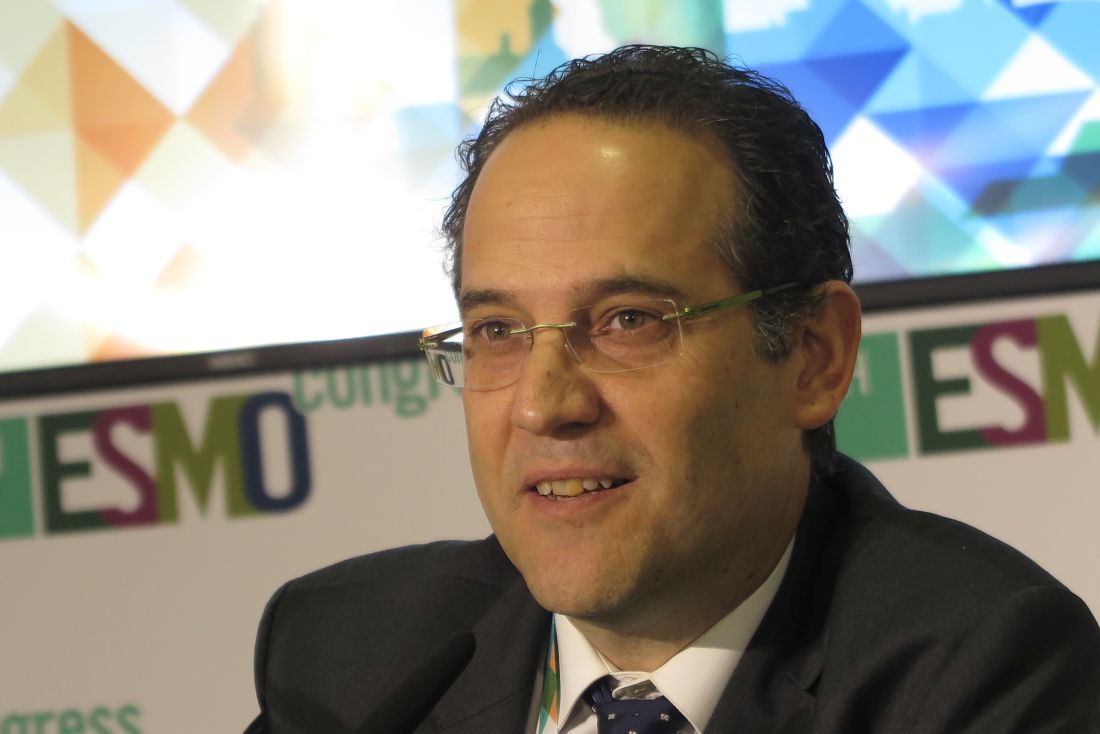
Men who first present with metastatic prostate cancer account for about 10% of prostate cancer patients in the Western world, but may comprise as much as 60% of the prostate cancer population in some parts of Asia, noted briefing moderator and discussant Ignacio Duran, MD, from the Hospital Universitario Marques de Valdecilla, in Santander, Spain.
Prior to STAMPEDE, “we had never considered treating the local tumor in the context of wider-spread disease, and this is what the group of STAMPEDE really answered today with this study,” he said. “I think there is a substantial group of prostate cancer patients who might benefit from that. This opens the door to apply a new treatment that may have an impact in the life of these patients.”
The overarching goal of the STAMPEDE (Systemic Therapy in Advancing or Metastatic Prostate Cancer: Evaluation of Drug Efficacy) study is to assess novel approaches for men with hormone-naive prostate cancer.
For this aspect of the randomized, phase 3 trial, 2,061 men with newly diagnosed M1 prostate cancer were enrolled and randomly assigned to either androgen deprivation with or without docetaxel or to the same standard of care plus radiotherapy. Radiation was delivered in one of two schedules: 55 Gy delivered in 20 fractions over 4 weeks or 36 Gy in 6 fractions delivered over 6 weeks, started within 8 weeks of randomization or the start of docetaxel.
As noted before, death from any cause, the primary endpoint, was not significantly different between the study arms. But in a subgroup analysis by metastatic burden, the rate of 3-year overall survival in patients with low burden was 81% in the radiotherapy group, compared with 73% in the standard-of-care arm. The hazard ratio was 0.68 (P = .007) favoring radiation.
In contrast, the 3-year overall survival rate in the high metastatic burden arm (patients with four or more metastases to bone with at least one outside the axial skeleton and/or visceral metastases) was 53% with radiation, versus 54% without.
In all, 5% of patients in the radiotherapy arm had grade 3 or 4 adverse events during therapy, and 4% had postradiation adverse events.
Radiation was associated with small increases in the risk for bladder and bowel events, but these were generally “modest” in nature and were outweighed by the survival benefit, Dr. Parker said.
He noted that men with regional nodal invasion but not metastases were not included in the trial. “However, if prostate radiotherapy improves survival for men with distant metastases, we can be very confident that it would improve survival for men with regional nodal disease. There aren’t any trials addressing that question, and currently many of these men receive drug treatment alone. So going forward, prostate radiotherapy should be the standard treatment for these men as well.”
The concept of primary tumor irradiation may work for patients with other malignancies who have low burden (oligometastatic) disease, he added.
“Based on the findings of STAMPEDE, radiotherapy could be considered for patients with newly diagnosed oligometastatic prostate cancer, but further studies are needed to delineate the clinical implementation of such treatment,” commented R. Jeffrey Karnes, MD, from the Mayo Clinic in Rochester, Minnesota, and his colleagues, in an editorial accompanying the article in the Lancet Oncology.
The study is sponsored by the Medical Research Council of the United Kingdom. Dr. Parker disclosed research funding and personal fees from Bayer and personal fees from Advanced Accelerator Applications and Janssen Pharmaceuticals. Dr. Duran disclosed participation in compensated advisory boards for Roche and Bristol-Myers Squibb and speaker honoraria from Roche, Bristol-Myers Squibb, and Merck.
SOURCE: Parker C et al. ESMO 2018, Abstract LBA5_PR.
MUNICH – Radiotherapy of the primary tumor can improve overall survival in men with untreated metastatic adenocarcinoma of the prostate, a finding that suggests a possible life-extending role of radiotherapy in other metastatic tumor types, investigators in the STAMPEDE trial reported.
Among 2,061 men from the United Kingdom and Switzerland with previously untreated metastatic prostate cancer, there was no survival advantage to adding local radiation to standard drug therapy in the overall study population. But among men with low disease burden (local invasion of bone or lymphatics) radiation to the prostate plus standard of care was associated with a 32% improvement in overall survival compared with standard therapy alone, said Chris Parker, MD, from the Royal Marsden NHS Foundation Trust.
“Prostate radiotherapy is a simple treatment, it’s very well tolerated, and it’s widely available in any cancer center throughout the world,” Dr. Parker said in a briefing prior to his presentation in a presidential symposium at the European Society for Medical Oncology Congress.
The study was published online in the Lancet Oncology to coincide with the presentation.
Men who first present with metastatic prostate cancer account for about 10% of prostate cancer patients in the Western world, but may comprise as much as 60% of the prostate cancer population in some parts of Asia, noted briefing moderator and discussant Ignacio Duran, MD, from the Hospital Universitario Marques de Valdecilla, in Santander, Spain.
Prior to STAMPEDE, “we had never considered treating the local tumor in the context of wider-spread disease, and this is what the group of STAMPEDE really answered today with this study,” he said. “I think there is a substantial group of prostate cancer patients who might benefit from that. This opens the door to apply a new treatment that may have an impact in the life of these patients.”
The overarching goal of the STAMPEDE (Systemic Therapy in Advancing or Metastatic Prostate Cancer: Evaluation of Drug Efficacy) study is to assess novel approaches for men with hormone-naive prostate cancer.
For this aspect of the randomized, phase 3 trial, 2,061 men with newly diagnosed M1 prostate cancer were enrolled and randomly assigned to either androgen deprivation with or without docetaxel or to the same standard of care plus radiotherapy. Radiation was delivered in one of two schedules: 55 Gy delivered in 20 fractions over 4 weeks or 36 Gy in 6 fractions delivered over 6 weeks, started within 8 weeks of randomization or the start of docetaxel.
As noted before, death from any cause, the primary endpoint, was not significantly different between the study arms. But in a subgroup analysis by metastatic burden, the rate of 3-year overall survival in patients with low burden was 81% in the radiotherapy group, compared with 73% in the standard-of-care arm. The hazard ratio was 0.68 (P = .007) favoring radiation.
In contrast, the 3-year overall survival rate in the high metastatic burden arm (patients with four or more metastases to bone with at least one outside the axial skeleton and/or visceral metastases) was 53% with radiation, versus 54% without.
In all, 5% of patients in the radiotherapy arm had grade 3 or 4 adverse events during therapy, and 4% had postradiation adverse events.
Radiation was associated with small increases in the risk for bladder and bowel events, but these were generally “modest” in nature and were outweighed by the survival benefit, Dr. Parker said.
He noted that men with regional nodal invasion but not metastases were not included in the trial. “However, if prostate radiotherapy improves survival for men with distant metastases, we can be very confident that it would improve survival for men with regional nodal disease. There aren’t any trials addressing that question, and currently many of these men receive drug treatment alone. So going forward, prostate radiotherapy should be the standard treatment for these men as well.”
The concept of primary tumor irradiation may work for patients with other malignancies who have low burden (oligometastatic) disease, he added.
“Based on the findings of STAMPEDE, radiotherapy could be considered for patients with newly diagnosed oligometastatic prostate cancer, but further studies are needed to delineate the clinical implementation of such treatment,” commented R. Jeffrey Karnes, MD, from the Mayo Clinic in Rochester, Minnesota, and his colleagues, in an editorial accompanying the article in the Lancet Oncology.
The study is sponsored by the Medical Research Council of the United Kingdom. Dr. Parker disclosed research funding and personal fees from Bayer and personal fees from Advanced Accelerator Applications and Janssen Pharmaceuticals. Dr. Duran disclosed participation in compensated advisory boards for Roche and Bristol-Myers Squibb and speaker honoraria from Roche, Bristol-Myers Squibb, and Merck.
SOURCE: Parker C et al. ESMO 2018, Abstract LBA5_PR.
MUNICH – Radiotherapy of the primary tumor can improve overall survival in men with untreated metastatic adenocarcinoma of the prostate, a finding that suggests a possible life-extending role of radiotherapy in other metastatic tumor types, investigators in the STAMPEDE trial reported.
Among 2,061 men from the United Kingdom and Switzerland with previously untreated metastatic prostate cancer, there was no survival advantage to adding local radiation to standard drug therapy in the overall study population. But among men with low disease burden (local invasion of bone or lymphatics) radiation to the prostate plus standard of care was associated with a 32% improvement in overall survival compared with standard therapy alone, said Chris Parker, MD, from the Royal Marsden NHS Foundation Trust.
“Prostate radiotherapy is a simple treatment, it’s very well tolerated, and it’s widely available in any cancer center throughout the world,” Dr. Parker said in a briefing prior to his presentation in a presidential symposium at the European Society for Medical Oncology Congress.
The study was published online in the Lancet Oncology to coincide with the presentation.
Men who first present with metastatic prostate cancer account for about 10% of prostate cancer patients in the Western world, but may comprise as much as 60% of the prostate cancer population in some parts of Asia, noted briefing moderator and discussant Ignacio Duran, MD, from the Hospital Universitario Marques de Valdecilla, in Santander, Spain.
Prior to STAMPEDE, “we had never considered treating the local tumor in the context of wider-spread disease, and this is what the group of STAMPEDE really answered today with this study,” he said. “I think there is a substantial group of prostate cancer patients who might benefit from that. This opens the door to apply a new treatment that may have an impact in the life of these patients.”
The overarching goal of the STAMPEDE (Systemic Therapy in Advancing or Metastatic Prostate Cancer: Evaluation of Drug Efficacy) study is to assess novel approaches for men with hormone-naive prostate cancer.
For this aspect of the randomized, phase 3 trial, 2,061 men with newly diagnosed M1 prostate cancer were enrolled and randomly assigned to either androgen deprivation with or without docetaxel or to the same standard of care plus radiotherapy. Radiation was delivered in one of two schedules: 55 Gy delivered in 20 fractions over 4 weeks or 36 Gy in 6 fractions delivered over 6 weeks, started within 8 weeks of randomization or the start of docetaxel.
As noted before, death from any cause, the primary endpoint, was not significantly different between the study arms. But in a subgroup analysis by metastatic burden, the rate of 3-year overall survival in patients with low burden was 81% in the radiotherapy group, compared with 73% in the standard-of-care arm. The hazard ratio was 0.68 (P = .007) favoring radiation.
In contrast, the 3-year overall survival rate in the high metastatic burden arm (patients with four or more metastases to bone with at least one outside the axial skeleton and/or visceral metastases) was 53% with radiation, versus 54% without.
In all, 5% of patients in the radiotherapy arm had grade 3 or 4 adverse events during therapy, and 4% had postradiation adverse events.
Radiation was associated with small increases in the risk for bladder and bowel events, but these were generally “modest” in nature and were outweighed by the survival benefit, Dr. Parker said.
He noted that men with regional nodal invasion but not metastases were not included in the trial. “However, if prostate radiotherapy improves survival for men with distant metastases, we can be very confident that it would improve survival for men with regional nodal disease. There aren’t any trials addressing that question, and currently many of these men receive drug treatment alone. So going forward, prostate radiotherapy should be the standard treatment for these men as well.”
The concept of primary tumor irradiation may work for patients with other malignancies who have low burden (oligometastatic) disease, he added.
“Based on the findings of STAMPEDE, radiotherapy could be considered for patients with newly diagnosed oligometastatic prostate cancer, but further studies are needed to delineate the clinical implementation of such treatment,” commented R. Jeffrey Karnes, MD, from the Mayo Clinic in Rochester, Minnesota, and his colleagues, in an editorial accompanying the article in the Lancet Oncology.
The study is sponsored by the Medical Research Council of the United Kingdom. Dr. Parker disclosed research funding and personal fees from Bayer and personal fees from Advanced Accelerator Applications and Janssen Pharmaceuticals. Dr. Duran disclosed participation in compensated advisory boards for Roche and Bristol-Myers Squibb and speaker honoraria from Roche, Bristol-Myers Squibb, and Merck.
SOURCE: Parker C et al. ESMO 2018, Abstract LBA5_PR.
REPORTING FROM ESMO 2018
Key clinical point: Local radiation can improve survival of low-burden metastatic prostate cancer.
Major finding: In men with low-burden metastatic disease, the 3-year overall survival rate was 81% with radiation versus 73% without.
Study details: A prospective study of 2,061 men in a randomized, phase 3 trial exploring new therapeutic options for prostate cancer.
Disclosures: The study is sponsored by the Medical Research Council of the United Kingdom. Dr. Parker disclosed research funding and personal fees from Bayer and personal fees from Advanced Accelerator Applications and Janssen Pharmaceuticals. Dr. Duran disclosed participation in compensated advisory boards for Roche and Bristol-Myers Squibb and speaker honoraria from Roche, Bristol-Myers Squibb, and Merck.
Source: Parker C et al. ESMO 2018, Abstract LBA5_PR.
Checkpoint inhibitor/TKI combo improves PFS of RCC over sunitinib
MUNICH – The combination of the immune checkpoint inhibitor avelumab (Bavencio) and the tyrosine kinase inhibitor axitinib (Inlyta) was associated with longer progression-free survival and higher objective response rates than was sunitinib as frontline therapy for patients with advanced renal cell carcinoma, investigators found.
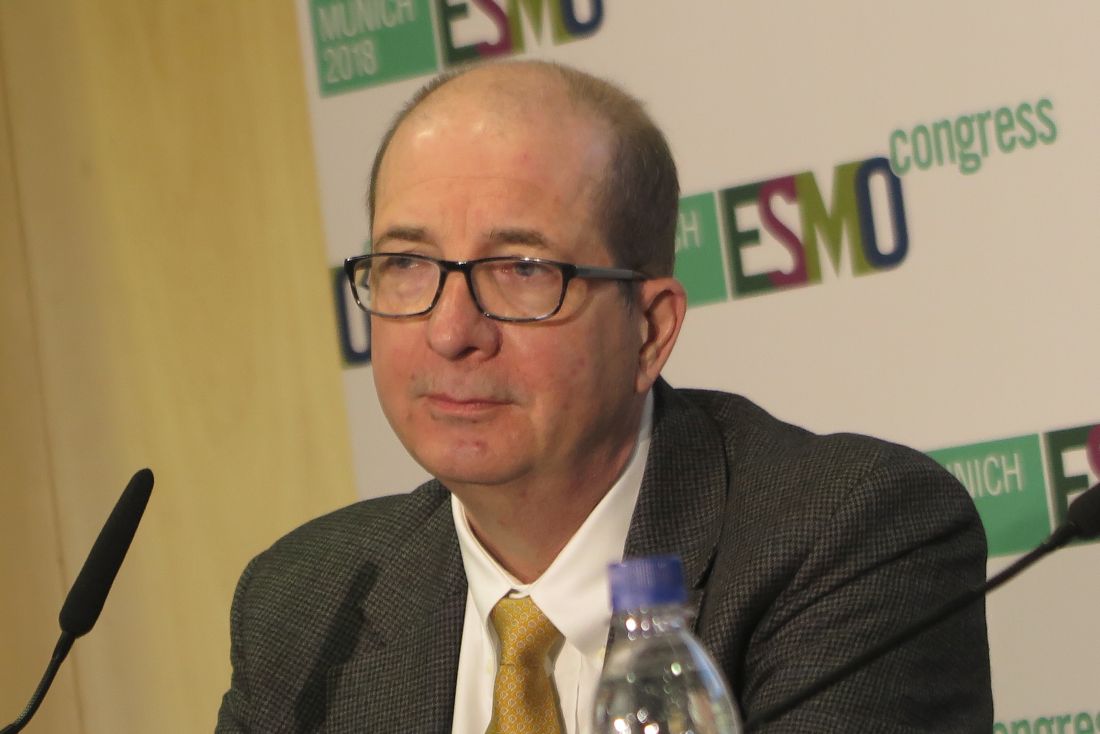
The progression-free survival (PFS) benefit of the combination was seen both in the subset of patients with tumors expressing programmed death-1 ligand 1 (PD-L1) on at least 1% of their cells as well as in the overall study population, reported Robert J. Motzer, MD, of Memorial Sloan Kettering Cancer Center, New York, on behalf of colleagues in the JAVELIN Renal 101 trial.
“This was very early on, at an interim analysis, showing a profound effect,” he said at a briefing prior to his presentation of the data in a presidential symposium at the European Society for Medical Oncology Congress.
“The results support this being a new first-line standard of care, and possibly a first-line option for advanced RCC based on these data,” he added.
Briefing discussant John Haanen, PhD, of the Netherlands Cancer Institute in Amsterdam, said that “based on preclinical data, it makes sense to combine angiogenesis inhibitors and immunotherapy, because we know angiogenesis, VEGF [vascular endothelial growth factor] especially impacts on the way the immune system can respond to the kidney cancer, and by taking away some of these negative effects of the VEGF by using an anti-VEGF drug, the immunotherapy may work better,” he said.

“This is the first study of a TKI plus and anti-PD-L1 drug showing an improved progression-free survival in this patient population,” he added.
On Oct. 18, the day before the start of ESMO 2018, Merck announced in a press release positive results of a phase 3 trial comparing axitinib in combination with a different checkpoint inhibitor, pembrolizumab (Keytruda), compared with sunitinib monotherapy. The press release, typically sparse on details, said that the trial met both primary endpoints of overall survival (OS) and PFS in the first-line treatment of advanced or metastatic RCC.
In the JAVELIN Renal 101 trial, investigators enrolled and randomized 886 patients, 873 of whom went on to treatment: 434 assigned to avelumab plus axitinib, and 439 to sunitinib.
A total of 560 patients were determined to be PD-L1-positive according to the Ventana assay: 270 assigned to the combination, and 290 assigned to sunitinib.
Avelumab was delivered 10 mg/kg intravenously every 2 weeks, and oral axitinib was given 5 mg twice daily over a 6-week cycle. Oral sunitinib was give 50 mg daily for 4 weeks, followed by 2 weeks off, for every cycle.
Median PFS by independent review in the PD-L1-positive patients, one of two primary endpoints, was 13.8 months in the avelumab/axitinib arm, vs. 7.2 months in the sunitinib arm. This translated into a stratified hazard ratio (HR) of 0.61 (P less than .001) favoring the combination.
The respective median PFS in the overall population was 13.8 vs. 8.4 months, respectively (HR, 0.69; P = .0001).
Objective response rates also were higher with the combination in both the PD-L1-positive population (55% vs. 26%), and in the overall population (51% vs. 26%). At the time of data cutoff, the median duration of response had not been reached in either treatment arm in either population.
The stratified odds ratio for response with avelumab/axitinib was 3.098 (P less than .001).
At the time of the data cutoff for this interim analysis, overall survival data were not mature. OS in the PD-L1-positive population, the second primary endpoint, will be reported at a later date, Dr. Motzer said.
The incidence of treatment-related adverse events was similar in the groups, at 95% of patients in the avelumab arm and 96% in the sunitinib arm. Grade 3 or 4 events occurred in 51% and 48% of patients respectively. Grade 3/4 hypertension was the highest-frequency event, occurring in 24% of patients on avelumab/axitinib vs. 15% on sunitinib.
Immune-related adverse events occurred in 38% of patients in the avelumab group, including hypothyroidism, liver function test abnormalities, adrenal insufficiency, acute kidney injury, colitis, and hepatotoxicity. Most of the events occurred in 1% or 2% of patients, except hypothyroidism, which occurred in 21%.
High-dose corticosteroids were administered to 11% of patients who experienced an immune-related adverse event.
“One of the beauties of this combination is really its tolerability,” said Viktor Grünwald, MD, of the West German Cancer Center in Essen, the invited discussant at the symposium.
“When it comes to toxicities, they are pretty much in the same range, which is really surprising,” he said.
He noted, however, that it’s still an open question whether the combination of avelumab and axitinib is better than sequencing of other agents, given the current absence of evidence of an OS or quality-of-life benefit for the combination.
At present, the best evidence supports the use of ipilimumab (Yervoy) and nivolumab (Opdivo), which provides a clinically relevant OS benefit in patients with intermediate and high-risk disease, and this therapy should remain the standard of care, Dr. Grünwald said.
“I do believe that there is a niche, in favorable-risk patients, for this specific combination [avelumab/axitinib],” he said.
The trial was sponsored by Pfizer as part of an alliance between Pfizer and Merck KGaA. Dr. Motzer disclosed consulting or advisory roles with Pfizer, Merck, and others, and research funding from Pfizer and others. Dr. Haanen disclosed financial compensation for advisory work he did for Pfizer, Merck, Sharpe & Dohme, and others, and grant support from Bristol-Myers Squibb, MSD, and Novartis. Dr. Grünwald disclosed honoraria for speaking and advising from MSD, and funding from Pfizer, MSD, and others.
MUNICH – The combination of the immune checkpoint inhibitor avelumab (Bavencio) and the tyrosine kinase inhibitor axitinib (Inlyta) was associated with longer progression-free survival and higher objective response rates than was sunitinib as frontline therapy for patients with advanced renal cell carcinoma, investigators found.
The progression-free survival (PFS) benefit of the combination was seen both in the subset of patients with tumors expressing programmed death-1 ligand 1 (PD-L1) on at least 1% of their cells as well as in the overall study population, reported Robert J. Motzer, MD, of Memorial Sloan Kettering Cancer Center, New York, on behalf of colleagues in the JAVELIN Renal 101 trial.
“This was very early on, at an interim analysis, showing a profound effect,” he said at a briefing prior to his presentation of the data in a presidential symposium at the European Society for Medical Oncology Congress.
“The results support this being a new first-line standard of care, and possibly a first-line option for advanced RCC based on these data,” he added.
Briefing discussant John Haanen, PhD, of the Netherlands Cancer Institute in Amsterdam, said that “based on preclinical data, it makes sense to combine angiogenesis inhibitors and immunotherapy, because we know angiogenesis, VEGF [vascular endothelial growth factor] especially impacts on the way the immune system can respond to the kidney cancer, and by taking away some of these negative effects of the VEGF by using an anti-VEGF drug, the immunotherapy may work better,” he said.
“This is the first study of a TKI plus and anti-PD-L1 drug showing an improved progression-free survival in this patient population,” he added.
On Oct. 18, the day before the start of ESMO 2018, Merck announced in a press release positive results of a phase 3 trial comparing axitinib in combination with a different checkpoint inhibitor, pembrolizumab (Keytruda), compared with sunitinib monotherapy. The press release, typically sparse on details, said that the trial met both primary endpoints of overall survival (OS) and PFS in the first-line treatment of advanced or metastatic RCC.
In the JAVELIN Renal 101 trial, investigators enrolled and randomized 886 patients, 873 of whom went on to treatment: 434 assigned to avelumab plus axitinib, and 439 to sunitinib.
A total of 560 patients were determined to be PD-L1-positive according to the Ventana assay: 270 assigned to the combination, and 290 assigned to sunitinib.
Avelumab was delivered 10 mg/kg intravenously every 2 weeks, and oral axitinib was given 5 mg twice daily over a 6-week cycle. Oral sunitinib was give 50 mg daily for 4 weeks, followed by 2 weeks off, for every cycle.
Median PFS by independent review in the PD-L1-positive patients, one of two primary endpoints, was 13.8 months in the avelumab/axitinib arm, vs. 7.2 months in the sunitinib arm. This translated into a stratified hazard ratio (HR) of 0.61 (P less than .001) favoring the combination.
The respective median PFS in the overall population was 13.8 vs. 8.4 months, respectively (HR, 0.69; P = .0001).
Objective response rates also were higher with the combination in both the PD-L1-positive population (55% vs. 26%), and in the overall population (51% vs. 26%). At the time of data cutoff, the median duration of response had not been reached in either treatment arm in either population.
The stratified odds ratio for response with avelumab/axitinib was 3.098 (P less than .001).
At the time of the data cutoff for this interim analysis, overall survival data were not mature. OS in the PD-L1-positive population, the second primary endpoint, will be reported at a later date, Dr. Motzer said.
The incidence of treatment-related adverse events was similar in the groups, at 95% of patients in the avelumab arm and 96% in the sunitinib arm. Grade 3 or 4 events occurred in 51% and 48% of patients respectively. Grade 3/4 hypertension was the highest-frequency event, occurring in 24% of patients on avelumab/axitinib vs. 15% on sunitinib.
Immune-related adverse events occurred in 38% of patients in the avelumab group, including hypothyroidism, liver function test abnormalities, adrenal insufficiency, acute kidney injury, colitis, and hepatotoxicity. Most of the events occurred in 1% or 2% of patients, except hypothyroidism, which occurred in 21%.
High-dose corticosteroids were administered to 11% of patients who experienced an immune-related adverse event.
“One of the beauties of this combination is really its tolerability,” said Viktor Grünwald, MD, of the West German Cancer Center in Essen, the invited discussant at the symposium.
“When it comes to toxicities, they are pretty much in the same range, which is really surprising,” he said.
He noted, however, that it’s still an open question whether the combination of avelumab and axitinib is better than sequencing of other agents, given the current absence of evidence of an OS or quality-of-life benefit for the combination.
At present, the best evidence supports the use of ipilimumab (Yervoy) and nivolumab (Opdivo), which provides a clinically relevant OS benefit in patients with intermediate and high-risk disease, and this therapy should remain the standard of care, Dr. Grünwald said.
“I do believe that there is a niche, in favorable-risk patients, for this specific combination [avelumab/axitinib],” he said.
The trial was sponsored by Pfizer as part of an alliance between Pfizer and Merck KGaA. Dr. Motzer disclosed consulting or advisory roles with Pfizer, Merck, and others, and research funding from Pfizer and others. Dr. Haanen disclosed financial compensation for advisory work he did for Pfizer, Merck, Sharpe & Dohme, and others, and grant support from Bristol-Myers Squibb, MSD, and Novartis. Dr. Grünwald disclosed honoraria for speaking and advising from MSD, and funding from Pfizer, MSD, and others.
MUNICH – The combination of the immune checkpoint inhibitor avelumab (Bavencio) and the tyrosine kinase inhibitor axitinib (Inlyta) was associated with longer progression-free survival and higher objective response rates than was sunitinib as frontline therapy for patients with advanced renal cell carcinoma, investigators found.
The progression-free survival (PFS) benefit of the combination was seen both in the subset of patients with tumors expressing programmed death-1 ligand 1 (PD-L1) on at least 1% of their cells as well as in the overall study population, reported Robert J. Motzer, MD, of Memorial Sloan Kettering Cancer Center, New York, on behalf of colleagues in the JAVELIN Renal 101 trial.
“This was very early on, at an interim analysis, showing a profound effect,” he said at a briefing prior to his presentation of the data in a presidential symposium at the European Society for Medical Oncology Congress.
“The results support this being a new first-line standard of care, and possibly a first-line option for advanced RCC based on these data,” he added.
Briefing discussant John Haanen, PhD, of the Netherlands Cancer Institute in Amsterdam, said that “based on preclinical data, it makes sense to combine angiogenesis inhibitors and immunotherapy, because we know angiogenesis, VEGF [vascular endothelial growth factor] especially impacts on the way the immune system can respond to the kidney cancer, and by taking away some of these negative effects of the VEGF by using an anti-VEGF drug, the immunotherapy may work better,” he said.
“This is the first study of a TKI plus and anti-PD-L1 drug showing an improved progression-free survival in this patient population,” he added.
On Oct. 18, the day before the start of ESMO 2018, Merck announced in a press release positive results of a phase 3 trial comparing axitinib in combination with a different checkpoint inhibitor, pembrolizumab (Keytruda), compared with sunitinib monotherapy. The press release, typically sparse on details, said that the trial met both primary endpoints of overall survival (OS) and PFS in the first-line treatment of advanced or metastatic RCC.
In the JAVELIN Renal 101 trial, investigators enrolled and randomized 886 patients, 873 of whom went on to treatment: 434 assigned to avelumab plus axitinib, and 439 to sunitinib.
A total of 560 patients were determined to be PD-L1-positive according to the Ventana assay: 270 assigned to the combination, and 290 assigned to sunitinib.
Avelumab was delivered 10 mg/kg intravenously every 2 weeks, and oral axitinib was given 5 mg twice daily over a 6-week cycle. Oral sunitinib was give 50 mg daily for 4 weeks, followed by 2 weeks off, for every cycle.
Median PFS by independent review in the PD-L1-positive patients, one of two primary endpoints, was 13.8 months in the avelumab/axitinib arm, vs. 7.2 months in the sunitinib arm. This translated into a stratified hazard ratio (HR) of 0.61 (P less than .001) favoring the combination.
The respective median PFS in the overall population was 13.8 vs. 8.4 months, respectively (HR, 0.69; P = .0001).
Objective response rates also were higher with the combination in both the PD-L1-positive population (55% vs. 26%), and in the overall population (51% vs. 26%). At the time of data cutoff, the median duration of response had not been reached in either treatment arm in either population.
The stratified odds ratio for response with avelumab/axitinib was 3.098 (P less than .001).
At the time of the data cutoff for this interim analysis, overall survival data were not mature. OS in the PD-L1-positive population, the second primary endpoint, will be reported at a later date, Dr. Motzer said.
The incidence of treatment-related adverse events was similar in the groups, at 95% of patients in the avelumab arm and 96% in the sunitinib arm. Grade 3 or 4 events occurred in 51% and 48% of patients respectively. Grade 3/4 hypertension was the highest-frequency event, occurring in 24% of patients on avelumab/axitinib vs. 15% on sunitinib.
Immune-related adverse events occurred in 38% of patients in the avelumab group, including hypothyroidism, liver function test abnormalities, adrenal insufficiency, acute kidney injury, colitis, and hepatotoxicity. Most of the events occurred in 1% or 2% of patients, except hypothyroidism, which occurred in 21%.
High-dose corticosteroids were administered to 11% of patients who experienced an immune-related adverse event.
“One of the beauties of this combination is really its tolerability,” said Viktor Grünwald, MD, of the West German Cancer Center in Essen, the invited discussant at the symposium.
“When it comes to toxicities, they are pretty much in the same range, which is really surprising,” he said.
He noted, however, that it’s still an open question whether the combination of avelumab and axitinib is better than sequencing of other agents, given the current absence of evidence of an OS or quality-of-life benefit for the combination.
At present, the best evidence supports the use of ipilimumab (Yervoy) and nivolumab (Opdivo), which provides a clinically relevant OS benefit in patients with intermediate and high-risk disease, and this therapy should remain the standard of care, Dr. Grünwald said.
“I do believe that there is a niche, in favorable-risk patients, for this specific combination [avelumab/axitinib],” he said.
The trial was sponsored by Pfizer as part of an alliance between Pfizer and Merck KGaA. Dr. Motzer disclosed consulting or advisory roles with Pfizer, Merck, and others, and research funding from Pfizer and others. Dr. Haanen disclosed financial compensation for advisory work he did for Pfizer, Merck, Sharpe & Dohme, and others, and grant support from Bristol-Myers Squibb, MSD, and Novartis. Dr. Grünwald disclosed honoraria for speaking and advising from MSD, and funding from Pfizer, MSD, and others.
REPORTING FROM ESMO 2018
Key clinical point: Progression-free survival was superior with avelumab and axitinib vs. sunitinib regardless of PD-L1-status.
Major finding: Median PFS by independent review in PD-L1-positive patients was 13.8 months with avelumab/axitinib vs. 7.2 months with sunitinib.
Study details: Prospective randomized phase 3 trial of 560 patients with advanced RCC.
Disclosures: The trial was sponsored by Pfizer as part of an alliance between Pfizer and Merck KGaA. Dr. Motzer disclosed consulting or advisory roles with Pfizer, Merck, and others, and research funding from Pfizer and others. Dr. Haanen disclosed financial compensation for advisory work he did for Pfizer, Merck, Sharpe & Dohme, and others, and grant support from Bristol-Myers Squibb, MSD, and Novartis. Dr. Grünwald disclosed honoraria for speaking and advising from MSD, and funding from Pfizer, MSD, and others.
Source: Motzer RJ et al. ESMO 2018. Abstract LBA6_PR.
Neoadjuvant TKI for advanced NSCLC falls short
MUNICH – Neoadjuvant erlotinib for patients with stage IIIA (N2) non–small cell lung cancer (NSCLC) increased progression-free survival (PFS), compared with gemcitabine and cisplatin, according to results from the recent CTONG 1103 trial.

Despite beating chemotherapy, erlotinib, an epithelial growth factor receptor (EGFR)–mutant tyrosine kinase inhibitor (TKI), fell short of benchmarks set by adjuvant therapy, so it is unlikely that neoadjuvant erlotinib will see clinical use anytime soon.
Lead author Wen-Zhao Zhong, MD, PhD, of Guangdong Lung Cancer Institute and Guangdong General Hospital in Guangzhou, China, presenting at the European Society for Medical Oncology Congress, said that the recent findings support further investigation into biomarker-guided neoadjuvant therapy for stage IIIA (N2) NSCLC, as identifying patient subgroups could potentially improve outcomes.
Principal investigator Yi-Long Wu, MD, described the impetus for CTONG 1103 in an interview. “Recently, the CTONG 1104 trial showed for the first time that adjuvant EGFR-TKI gefitinib could improve disease-free survival ... compared to adjuvant chemotherapy ... in N1N2-resected NSCLC. This raises the possibility that EGFR-TKIs may play a beneficial role in the neoadjuvant setting for this subgroup,” he said.
CTONG 1103 is an ongoing, phase 2, open-label trial. Out of 386 patients screened, 72 were enrolled based on treatment naivety and EGFR mutation positivity (exon 19 or 21). Following randomization, patients received either erlotinib 150 mg daily for 42 days or gemcitabine 1,250 mg/m2 (days 1 and 8) and cisplatin 75 mg/m2 (day 1) every 3 weeks for two cycles. After surgery, patients in the erlotinib group continued therapy for 1 year, while patients in the chemotherapy cohort received two more cycles of treatment.
The primary endpoint was objective response rate, and secondary endpoints included PFS, pathological lymph node downstaging, overall survival, safety measures, and complete pathological response. The investigators also highlighted major pathological response (less than 10% viable cancer cells after preoperative therapy).
The results showed that about half of the patients receiving erlotinib had an objective response (54.1%), compared with approximately one-third in the chemotherapy group (34.3%); however, this difference was not statistically significant (P = .092). Erlotinib also provided a median PFS nearly twice that of chemotherapy (21.5 months vs. 11.9 months; P = .003) and more frequent lymph node downstaging (10.8% vs. 2.9%), but no patients achieved complete pathological response. The number of patients achieving major pathological response with erlotinib was limited but still more than chemotherapy (10.7% vs. 0%). The investigators are awaiting an overall survival rate.
Erlotinib showed similar adverse events to previous trials, most commonly, rash, diarrhea, cough, and oral ulcers, compared with chemotherapy, which was associated with GI issues, hematologic disturbances, and fatigue.

In response to these findings, Suresh S. Ramalingam, MD, invited discussant and deputy director of the Winship Cancer Institute of Emory University, Atlanta, first discussed relevant efficacy measures. “The best predictor of long-term outcomes in these patients is nodal downstaging,” Dr. Ramalingam said. In previous studies, “patients who had clearance of the nodes had the best outcomes, and that continues to be an important prognostic marker.”
While major pathological response is valuable, and previous studies have revealed prognostic value, evidence is too limited to suggest that this is equivalent with cure, and it should not be considered as significant as complete pathological response, he said.
Considering that “only 11% of the patients” treated with erlotinib had nodal downstaging and/or major pathological response, and none achieved complete pathological response, Dr. Ramalingam suggested that the results were modest at best.
“While erlotinib seems to be doing better than chemo, I feel that the chemo group here is underperforming, compared to historical controls,” Dr. Ramalingam said, noting higher benchmark objective response rates (61% vs. 34%) and complete pathological response rates (4% vs. 0%).
Instead of focusing on neoadjuvant studies, Dr. Ramalingam suggested that ongoing adjuvant trials (ALCHEMIST and ADAURA) hold more promise and are more likely to serve as inroads for TKIs like erlotinib.
“Adjuvant care has withstood the test of time,” Dr. Ramalingam said. “Neoadjuvant EGFR-TKI in N2 disease I don’t think is ready for center stage.”
CTONG 1103 was sponsored by CTONG and Roche. The authors reported financial affiliations with AstraZeneca, Pfizer, Roche, and others. Dr. Ramalingam reported compensation from Amgen, Bristol-Myers Squibb, Loxo Oncology, and others.
MUNICH – Neoadjuvant erlotinib for patients with stage IIIA (N2) non–small cell lung cancer (NSCLC) increased progression-free survival (PFS), compared with gemcitabine and cisplatin, according to results from the recent CTONG 1103 trial.
Despite beating chemotherapy, erlotinib, an epithelial growth factor receptor (EGFR)–mutant tyrosine kinase inhibitor (TKI), fell short of benchmarks set by adjuvant therapy, so it is unlikely that neoadjuvant erlotinib will see clinical use anytime soon.
Lead author Wen-Zhao Zhong, MD, PhD, of Guangdong Lung Cancer Institute and Guangdong General Hospital in Guangzhou, China, presenting at the European Society for Medical Oncology Congress, said that the recent findings support further investigation into biomarker-guided neoadjuvant therapy for stage IIIA (N2) NSCLC, as identifying patient subgroups could potentially improve outcomes.
Principal investigator Yi-Long Wu, MD, described the impetus for CTONG 1103 in an interview. “Recently, the CTONG 1104 trial showed for the first time that adjuvant EGFR-TKI gefitinib could improve disease-free survival ... compared to adjuvant chemotherapy ... in N1N2-resected NSCLC. This raises the possibility that EGFR-TKIs may play a beneficial role in the neoadjuvant setting for this subgroup,” he said.
CTONG 1103 is an ongoing, phase 2, open-label trial. Out of 386 patients screened, 72 were enrolled based on treatment naivety and EGFR mutation positivity (exon 19 or 21). Following randomization, patients received either erlotinib 150 mg daily for 42 days or gemcitabine 1,250 mg/m2 (days 1 and 8) and cisplatin 75 mg/m2 (day 1) every 3 weeks for two cycles. After surgery, patients in the erlotinib group continued therapy for 1 year, while patients in the chemotherapy cohort received two more cycles of treatment.
The primary endpoint was objective response rate, and secondary endpoints included PFS, pathological lymph node downstaging, overall survival, safety measures, and complete pathological response. The investigators also highlighted major pathological response (less than 10% viable cancer cells after preoperative therapy).
The results showed that about half of the patients receiving erlotinib had an objective response (54.1%), compared with approximately one-third in the chemotherapy group (34.3%); however, this difference was not statistically significant (P = .092). Erlotinib also provided a median PFS nearly twice that of chemotherapy (21.5 months vs. 11.9 months; P = .003) and more frequent lymph node downstaging (10.8% vs. 2.9%), but no patients achieved complete pathological response. The number of patients achieving major pathological response with erlotinib was limited but still more than chemotherapy (10.7% vs. 0%). The investigators are awaiting an overall survival rate.
Erlotinib showed similar adverse events to previous trials, most commonly, rash, diarrhea, cough, and oral ulcers, compared with chemotherapy, which was associated with GI issues, hematologic disturbances, and fatigue.
In response to these findings, Suresh S. Ramalingam, MD, invited discussant and deputy director of the Winship Cancer Institute of Emory University, Atlanta, first discussed relevant efficacy measures. “The best predictor of long-term outcomes in these patients is nodal downstaging,” Dr. Ramalingam said. In previous studies, “patients who had clearance of the nodes had the best outcomes, and that continues to be an important prognostic marker.”
While major pathological response is valuable, and previous studies have revealed prognostic value, evidence is too limited to suggest that this is equivalent with cure, and it should not be considered as significant as complete pathological response, he said.
Considering that “only 11% of the patients” treated with erlotinib had nodal downstaging and/or major pathological response, and none achieved complete pathological response, Dr. Ramalingam suggested that the results were modest at best.
“While erlotinib seems to be doing better than chemo, I feel that the chemo group here is underperforming, compared to historical controls,” Dr. Ramalingam said, noting higher benchmark objective response rates (61% vs. 34%) and complete pathological response rates (4% vs. 0%).
Instead of focusing on neoadjuvant studies, Dr. Ramalingam suggested that ongoing adjuvant trials (ALCHEMIST and ADAURA) hold more promise and are more likely to serve as inroads for TKIs like erlotinib.
“Adjuvant care has withstood the test of time,” Dr. Ramalingam said. “Neoadjuvant EGFR-TKI in N2 disease I don’t think is ready for center stage.”
CTONG 1103 was sponsored by CTONG and Roche. The authors reported financial affiliations with AstraZeneca, Pfizer, Roche, and others. Dr. Ramalingam reported compensation from Amgen, Bristol-Myers Squibb, Loxo Oncology, and others.
MUNICH – Neoadjuvant erlotinib for patients with stage IIIA (N2) non–small cell lung cancer (NSCLC) increased progression-free survival (PFS), compared with gemcitabine and cisplatin, according to results from the recent CTONG 1103 trial.
Despite beating chemotherapy, erlotinib, an epithelial growth factor receptor (EGFR)–mutant tyrosine kinase inhibitor (TKI), fell short of benchmarks set by adjuvant therapy, so it is unlikely that neoadjuvant erlotinib will see clinical use anytime soon.
Lead author Wen-Zhao Zhong, MD, PhD, of Guangdong Lung Cancer Institute and Guangdong General Hospital in Guangzhou, China, presenting at the European Society for Medical Oncology Congress, said that the recent findings support further investigation into biomarker-guided neoadjuvant therapy for stage IIIA (N2) NSCLC, as identifying patient subgroups could potentially improve outcomes.
Principal investigator Yi-Long Wu, MD, described the impetus for CTONG 1103 in an interview. “Recently, the CTONG 1104 trial showed for the first time that adjuvant EGFR-TKI gefitinib could improve disease-free survival ... compared to adjuvant chemotherapy ... in N1N2-resected NSCLC. This raises the possibility that EGFR-TKIs may play a beneficial role in the neoadjuvant setting for this subgroup,” he said.
CTONG 1103 is an ongoing, phase 2, open-label trial. Out of 386 patients screened, 72 were enrolled based on treatment naivety and EGFR mutation positivity (exon 19 or 21). Following randomization, patients received either erlotinib 150 mg daily for 42 days or gemcitabine 1,250 mg/m2 (days 1 and 8) and cisplatin 75 mg/m2 (day 1) every 3 weeks for two cycles. After surgery, patients in the erlotinib group continued therapy for 1 year, while patients in the chemotherapy cohort received two more cycles of treatment.
The primary endpoint was objective response rate, and secondary endpoints included PFS, pathological lymph node downstaging, overall survival, safety measures, and complete pathological response. The investigators also highlighted major pathological response (less than 10% viable cancer cells after preoperative therapy).
The results showed that about half of the patients receiving erlotinib had an objective response (54.1%), compared with approximately one-third in the chemotherapy group (34.3%); however, this difference was not statistically significant (P = .092). Erlotinib also provided a median PFS nearly twice that of chemotherapy (21.5 months vs. 11.9 months; P = .003) and more frequent lymph node downstaging (10.8% vs. 2.9%), but no patients achieved complete pathological response. The number of patients achieving major pathological response with erlotinib was limited but still more than chemotherapy (10.7% vs. 0%). The investigators are awaiting an overall survival rate.
Erlotinib showed similar adverse events to previous trials, most commonly, rash, diarrhea, cough, and oral ulcers, compared with chemotherapy, which was associated with GI issues, hematologic disturbances, and fatigue.
In response to these findings, Suresh S. Ramalingam, MD, invited discussant and deputy director of the Winship Cancer Institute of Emory University, Atlanta, first discussed relevant efficacy measures. “The best predictor of long-term outcomes in these patients is nodal downstaging,” Dr. Ramalingam said. In previous studies, “patients who had clearance of the nodes had the best outcomes, and that continues to be an important prognostic marker.”
While major pathological response is valuable, and previous studies have revealed prognostic value, evidence is too limited to suggest that this is equivalent with cure, and it should not be considered as significant as complete pathological response, he said.
Considering that “only 11% of the patients” treated with erlotinib had nodal downstaging and/or major pathological response, and none achieved complete pathological response, Dr. Ramalingam suggested that the results were modest at best.
“While erlotinib seems to be doing better than chemo, I feel that the chemo group here is underperforming, compared to historical controls,” Dr. Ramalingam said, noting higher benchmark objective response rates (61% vs. 34%) and complete pathological response rates (4% vs. 0%).
Instead of focusing on neoadjuvant studies, Dr. Ramalingam suggested that ongoing adjuvant trials (ALCHEMIST and ADAURA) hold more promise and are more likely to serve as inroads for TKIs like erlotinib.
“Adjuvant care has withstood the test of time,” Dr. Ramalingam said. “Neoadjuvant EGFR-TKI in N2 disease I don’t think is ready for center stage.”
CTONG 1103 was sponsored by CTONG and Roche. The authors reported financial affiliations with AstraZeneca, Pfizer, Roche, and others. Dr. Ramalingam reported compensation from Amgen, Bristol-Myers Squibb, Loxo Oncology, and others.
REPORTING FROM ESMO 2018
Key clinical point: Neoadjuvant erlotinib for patients with stage IIIA (N2) non–small cell lung cancer may increase progression-free survival, compared with gemcitabine and cisplatin, but clinical benefits fall short of current standards.
Major finding: Median progression-free survival for erlotinib was 21.5 months, compared with 11.9 months for gemcitabine and cisplatin (P = .003).
Study details: CTONG 1103 is an ongoing, phase 2, open-label study involving 72 patients with stage IIIA (N2) epithelial growth factor receptor–mutant non–small cell lung cancer
Disclosures: The study was sponsored by CTONG and Roche. The authors reported financial affiliations with AstraZeneca, Pfizer, Roche, and others. Dr. Ramalingam reported affiliations with Amgen, Bristol-Myers Squibb, Loxo Oncology, and others.
States act to safeguard young cancer patients’ chances to have children
When Katherine Frega was diagnosed with Hodgkin lymphoma 8 years ago at the age 17 years, she was so sick that all she could focus on was starting chemotherapy to treat her aggressive blood cancer. It was her dad who thought to ask the oncologist, “How is this treatment going to affect her ability to have children?”
The oncologist discussed the risks but stressed that Ms. Frega needed to start treatment right away.
The question of fertility is often overlooked when young cancer patients are battling a life-threatening illness. And since health insurance doesn’t typically cover fertility preservation care, patients and their families may be deterred by the cost.
But a growing number of states now require plans to cover such services when medically necessary treatment jeopardizes fertility.
Treatment for cancer and other serious conditions involves toxic chemotherapy drugs, radiation, and surgery that can cause infertility in women and men.
The cost to freeze patients’ healthy eggs, sperm, or embryos for future use can be a major barrier, said Eden Cardozo, MD, a reproductive endocrinologist and director of the fertility preservation program at the Women & Infants Fertility Center in Providence, R.I. Dr. Cardozo was instrumental in getting Rhode Island’s law passed last year.
“[Patients] have to move quickly,” she said. “They don’t have time to raise funds from family and friends. They don’t have time to petition their insurance company.”
Reproductive health advocates argue that fertility preservation should be viewed as a core component of cancer care in younger people, not as an optional infertility offering. Some compare this type of coverage with the federal Women’s Health and Cancer Rights Act, which requires plans that cover a patient’s mastectomy to also provide for breast reconstruction.
New laws in Delaware, Illinois, and Maryland require plans to include this benefit. The Delaware law applies to plans issued or renewed after June of this year; the requirement in the other two states starts in 2019. Connecticut and Rhode Island passed similar laws last year. New Jersey lawmakers are considering a bill and advocates in New York plan to make another attempt after both legislative chambers passed fertility preservation bills in the last session but failed to reconcile them.
The state measures don’t apply to companies that are self-funded, meaning they pay their employee claims directly rather than buying state-regulated insurance policies for that purpose. They also don’t apply to government-funded programs such as Medicaid or Tricare.
Although freezing sperm and embryos has been common medical practice for decades, egg freezing was considered experimental by professional groups until 2012. As the technology has improved, the need for insurance coverage has grown, said Joyce Reinecke, executive director of the Alliance for Fertility Preservation, an advocacy group for cancer patients.
When Ms. Frega’s cancer didn’t respond to chemotherapy, her doctors recommended a bone marrow transplant in January 2012. Even if her eggs hadn’t been damaged by the chemotherapy, the transplant would likely cause permanent infertility, she was told. So she took hormones to stimulate her ovaries to produce more eggs, among other things, and seven were retrieved during an outpatient procedure days before her transplant.
Ms. Frega’s parents paid $10,000 for the medications and egg retrieval, a significant amount but less than what many pay. They were aided by Livestrong Fertility, a nonprofit group that provides access to discounted fertility preservation services for cancer patients who meet income guidelines.
Ms. Frega has good insurance through her mother’s employer plan. “They covered everything else, except for this,” she said. “They considered it not medically necessary.”
Cancer-free following two bone marrow transplants, Ms. Frega, now 25 years old, is a third-year medical student at the Upstate Medical University in Syracuse, N.Y. She plans to specialize in oncology.
Between 20% and 70% of cancer patients experience some degree of fertility impairment, according to Dr. Cardozo in Rhode Island. Though they make up the largest at-risk group, the complication isn’t unique to cancer patients. People with other conditions such as lupus and rheumatoid arthritis who are treated with chemotherapy drugs may be affected, as may patients with conditions such as endometriosis who require surgery.
Despite the much-ballyhooed examples of tech companies like Facebook, Apple, and Google that offer egg freezing as an employee perk, cryopreservation, as it’s called, isn’t a typical employee benefit.
Only 6% of large companies with 500 or more workers offer egg freezing for employees or their spouses, according to the 2017 annual employer survey by benefits consultant Mercer. About a quarter cover in vitro fertilization (IVF). About 44% of large employers don’t offer any infertility services, the survey found.
Men face the same infertility risk when they need cancer treatment.
When Blake Hornbrook, an Army medic at Fort Campbell, Ky., had surgery to remove a cancerous testicle in the fall of 2015, he and his wife, Kelsey, were stationed in Germany. Mr. Hornbrook, then 26 years old, looked into fertility preservation while overseas, but the annual storage fee of 1,000 euros (about $1,150) deterred the couple.
He required a second surgery several months later to see if the cancer had spread to his lymph nodes. The couple returned to the United States and drove directly from the airport to a sperm bank in Fairfax, Va. It cost roughly $400 for the initial appointment to provide a sperm specimen and store it, Mr. Hornbrook said.
Tricare covered Mr. Hornbrook’s cancer treatment, but it didn’t pay for fertility preservation or for IVF, which he estimated cost the couple $6,500 in clinic fees. Tricare provided discounts on some of the fertility drugs.
Their daughter, Harper, was born 7 months ago, and Mr. Hornbrook’s cancer remains in remission.
For young cancer patients, the cost of storing the eggs or sperm that have been preserved can add up. Even if a state has a fertility preservation law, it typically doesn’t cover those costs, Ms. Reinecke said.
The Hornbrooks pay $480 annually to store his sperm and $375 to store their remaining embryos. Ms. Frega pays $1,000 annually to store her eggs.
Ms. Frega hopes to be able to conceive naturally and knowing she has frozen eggs available is “relieving, but also anxiety producing,” she said. If she can’t get pregnant later on, she may have to pay $10,000 or more for IVF as well. “That’s what lies ahead,” she said.
A total of 16 states require insurers to offer or cover infertility services to some extent, according to infertility advocacy organization Resolve. Requirements vary: Insurers may have to cover diagnosis or testing for infertility, for example, but not treatments like IVF or fertility medications, said Barbara Collura, president and CEO of Resolve.
Typically, state infertility coverage laws require couples to try to get pregnant for a year or two before they’re eligible for insurance coverage of IVF or other treatments.
That requirement makes little sense for patients trying to preserve their fertility before undergoing medically necessary cancer or other treatment.
“These people aren’t infertile,” said Ms. Collura. “They need to undergo some sort of intervention that is going to impair their future fertility, and what we say is that if it’s medically necessary, they should have a right to have it covered.”
KHN’s coverage of women’s health care issues is supported in part by The David and Lucile Packard Foundation. Kaiser Health News is a nonprofit national health policy news service. It is an editorially independent program of the Henry J. Kaiser Family Foundation that is not affiliated with Kaiser Permanente.
When Katherine Frega was diagnosed with Hodgkin lymphoma 8 years ago at the age 17 years, she was so sick that all she could focus on was starting chemotherapy to treat her aggressive blood cancer. It was her dad who thought to ask the oncologist, “How is this treatment going to affect her ability to have children?”
The oncologist discussed the risks but stressed that Ms. Frega needed to start treatment right away.
The question of fertility is often overlooked when young cancer patients are battling a life-threatening illness. And since health insurance doesn’t typically cover fertility preservation care, patients and their families may be deterred by the cost.
But a growing number of states now require plans to cover such services when medically necessary treatment jeopardizes fertility.
Treatment for cancer and other serious conditions involves toxic chemotherapy drugs, radiation, and surgery that can cause infertility in women and men.
The cost to freeze patients’ healthy eggs, sperm, or embryos for future use can be a major barrier, said Eden Cardozo, MD, a reproductive endocrinologist and director of the fertility preservation program at the Women & Infants Fertility Center in Providence, R.I. Dr. Cardozo was instrumental in getting Rhode Island’s law passed last year.
“[Patients] have to move quickly,” she said. “They don’t have time to raise funds from family and friends. They don’t have time to petition their insurance company.”
Reproductive health advocates argue that fertility preservation should be viewed as a core component of cancer care in younger people, not as an optional infertility offering. Some compare this type of coverage with the federal Women’s Health and Cancer Rights Act, which requires plans that cover a patient’s mastectomy to also provide for breast reconstruction.
New laws in Delaware, Illinois, and Maryland require plans to include this benefit. The Delaware law applies to plans issued or renewed after June of this year; the requirement in the other two states starts in 2019. Connecticut and Rhode Island passed similar laws last year. New Jersey lawmakers are considering a bill and advocates in New York plan to make another attempt after both legislative chambers passed fertility preservation bills in the last session but failed to reconcile them.
The state measures don’t apply to companies that are self-funded, meaning they pay their employee claims directly rather than buying state-regulated insurance policies for that purpose. They also don’t apply to government-funded programs such as Medicaid or Tricare.
Although freezing sperm and embryos has been common medical practice for decades, egg freezing was considered experimental by professional groups until 2012. As the technology has improved, the need for insurance coverage has grown, said Joyce Reinecke, executive director of the Alliance for Fertility Preservation, an advocacy group for cancer patients.
When Ms. Frega’s cancer didn’t respond to chemotherapy, her doctors recommended a bone marrow transplant in January 2012. Even if her eggs hadn’t been damaged by the chemotherapy, the transplant would likely cause permanent infertility, she was told. So she took hormones to stimulate her ovaries to produce more eggs, among other things, and seven were retrieved during an outpatient procedure days before her transplant.
Ms. Frega’s parents paid $10,000 for the medications and egg retrieval, a significant amount but less than what many pay. They were aided by Livestrong Fertility, a nonprofit group that provides access to discounted fertility preservation services for cancer patients who meet income guidelines.
Ms. Frega has good insurance through her mother’s employer plan. “They covered everything else, except for this,” she said. “They considered it not medically necessary.”
Cancer-free following two bone marrow transplants, Ms. Frega, now 25 years old, is a third-year medical student at the Upstate Medical University in Syracuse, N.Y. She plans to specialize in oncology.
Between 20% and 70% of cancer patients experience some degree of fertility impairment, according to Dr. Cardozo in Rhode Island. Though they make up the largest at-risk group, the complication isn’t unique to cancer patients. People with other conditions such as lupus and rheumatoid arthritis who are treated with chemotherapy drugs may be affected, as may patients with conditions such as endometriosis who require surgery.
Despite the much-ballyhooed examples of tech companies like Facebook, Apple, and Google that offer egg freezing as an employee perk, cryopreservation, as it’s called, isn’t a typical employee benefit.
Only 6% of large companies with 500 or more workers offer egg freezing for employees or their spouses, according to the 2017 annual employer survey by benefits consultant Mercer. About a quarter cover in vitro fertilization (IVF). About 44% of large employers don’t offer any infertility services, the survey found.
Men face the same infertility risk when they need cancer treatment.
When Blake Hornbrook, an Army medic at Fort Campbell, Ky., had surgery to remove a cancerous testicle in the fall of 2015, he and his wife, Kelsey, were stationed in Germany. Mr. Hornbrook, then 26 years old, looked into fertility preservation while overseas, but the annual storage fee of 1,000 euros (about $1,150) deterred the couple.
He required a second surgery several months later to see if the cancer had spread to his lymph nodes. The couple returned to the United States and drove directly from the airport to a sperm bank in Fairfax, Va. It cost roughly $400 for the initial appointment to provide a sperm specimen and store it, Mr. Hornbrook said.
Tricare covered Mr. Hornbrook’s cancer treatment, but it didn’t pay for fertility preservation or for IVF, which he estimated cost the couple $6,500 in clinic fees. Tricare provided discounts on some of the fertility drugs.
Their daughter, Harper, was born 7 months ago, and Mr. Hornbrook’s cancer remains in remission.
For young cancer patients, the cost of storing the eggs or sperm that have been preserved can add up. Even if a state has a fertility preservation law, it typically doesn’t cover those costs, Ms. Reinecke said.
The Hornbrooks pay $480 annually to store his sperm and $375 to store their remaining embryos. Ms. Frega pays $1,000 annually to store her eggs.
Ms. Frega hopes to be able to conceive naturally and knowing she has frozen eggs available is “relieving, but also anxiety producing,” she said. If she can’t get pregnant later on, she may have to pay $10,000 or more for IVF as well. “That’s what lies ahead,” she said.
A total of 16 states require insurers to offer or cover infertility services to some extent, according to infertility advocacy organization Resolve. Requirements vary: Insurers may have to cover diagnosis or testing for infertility, for example, but not treatments like IVF or fertility medications, said Barbara Collura, president and CEO of Resolve.
Typically, state infertility coverage laws require couples to try to get pregnant for a year or two before they’re eligible for insurance coverage of IVF or other treatments.
That requirement makes little sense for patients trying to preserve their fertility before undergoing medically necessary cancer or other treatment.
“These people aren’t infertile,” said Ms. Collura. “They need to undergo some sort of intervention that is going to impair their future fertility, and what we say is that if it’s medically necessary, they should have a right to have it covered.”
KHN’s coverage of women’s health care issues is supported in part by The David and Lucile Packard Foundation. Kaiser Health News is a nonprofit national health policy news service. It is an editorially independent program of the Henry J. Kaiser Family Foundation that is not affiliated with Kaiser Permanente.
When Katherine Frega was diagnosed with Hodgkin lymphoma 8 years ago at the age 17 years, she was so sick that all she could focus on was starting chemotherapy to treat her aggressive blood cancer. It was her dad who thought to ask the oncologist, “How is this treatment going to affect her ability to have children?”
The oncologist discussed the risks but stressed that Ms. Frega needed to start treatment right away.
The question of fertility is often overlooked when young cancer patients are battling a life-threatening illness. And since health insurance doesn’t typically cover fertility preservation care, patients and their families may be deterred by the cost.
But a growing number of states now require plans to cover such services when medically necessary treatment jeopardizes fertility.
Treatment for cancer and other serious conditions involves toxic chemotherapy drugs, radiation, and surgery that can cause infertility in women and men.
The cost to freeze patients’ healthy eggs, sperm, or embryos for future use can be a major barrier, said Eden Cardozo, MD, a reproductive endocrinologist and director of the fertility preservation program at the Women & Infants Fertility Center in Providence, R.I. Dr. Cardozo was instrumental in getting Rhode Island’s law passed last year.
“[Patients] have to move quickly,” she said. “They don’t have time to raise funds from family and friends. They don’t have time to petition their insurance company.”
Reproductive health advocates argue that fertility preservation should be viewed as a core component of cancer care in younger people, not as an optional infertility offering. Some compare this type of coverage with the federal Women’s Health and Cancer Rights Act, which requires plans that cover a patient’s mastectomy to also provide for breast reconstruction.
New laws in Delaware, Illinois, and Maryland require plans to include this benefit. The Delaware law applies to plans issued or renewed after June of this year; the requirement in the other two states starts in 2019. Connecticut and Rhode Island passed similar laws last year. New Jersey lawmakers are considering a bill and advocates in New York plan to make another attempt after both legislative chambers passed fertility preservation bills in the last session but failed to reconcile them.
The state measures don’t apply to companies that are self-funded, meaning they pay their employee claims directly rather than buying state-regulated insurance policies for that purpose. They also don’t apply to government-funded programs such as Medicaid or Tricare.
Although freezing sperm and embryos has been common medical practice for decades, egg freezing was considered experimental by professional groups until 2012. As the technology has improved, the need for insurance coverage has grown, said Joyce Reinecke, executive director of the Alliance for Fertility Preservation, an advocacy group for cancer patients.
When Ms. Frega’s cancer didn’t respond to chemotherapy, her doctors recommended a bone marrow transplant in January 2012. Even if her eggs hadn’t been damaged by the chemotherapy, the transplant would likely cause permanent infertility, she was told. So she took hormones to stimulate her ovaries to produce more eggs, among other things, and seven were retrieved during an outpatient procedure days before her transplant.
Ms. Frega’s parents paid $10,000 for the medications and egg retrieval, a significant amount but less than what many pay. They were aided by Livestrong Fertility, a nonprofit group that provides access to discounted fertility preservation services for cancer patients who meet income guidelines.
Ms. Frega has good insurance through her mother’s employer plan. “They covered everything else, except for this,” she said. “They considered it not medically necessary.”
Cancer-free following two bone marrow transplants, Ms. Frega, now 25 years old, is a third-year medical student at the Upstate Medical University in Syracuse, N.Y. She plans to specialize in oncology.
Between 20% and 70% of cancer patients experience some degree of fertility impairment, according to Dr. Cardozo in Rhode Island. Though they make up the largest at-risk group, the complication isn’t unique to cancer patients. People with other conditions such as lupus and rheumatoid arthritis who are treated with chemotherapy drugs may be affected, as may patients with conditions such as endometriosis who require surgery.
Despite the much-ballyhooed examples of tech companies like Facebook, Apple, and Google that offer egg freezing as an employee perk, cryopreservation, as it’s called, isn’t a typical employee benefit.
Only 6% of large companies with 500 or more workers offer egg freezing for employees or their spouses, according to the 2017 annual employer survey by benefits consultant Mercer. About a quarter cover in vitro fertilization (IVF). About 44% of large employers don’t offer any infertility services, the survey found.
Men face the same infertility risk when they need cancer treatment.
When Blake Hornbrook, an Army medic at Fort Campbell, Ky., had surgery to remove a cancerous testicle in the fall of 2015, he and his wife, Kelsey, were stationed in Germany. Mr. Hornbrook, then 26 years old, looked into fertility preservation while overseas, but the annual storage fee of 1,000 euros (about $1,150) deterred the couple.
He required a second surgery several months later to see if the cancer had spread to his lymph nodes. The couple returned to the United States and drove directly from the airport to a sperm bank in Fairfax, Va. It cost roughly $400 for the initial appointment to provide a sperm specimen and store it, Mr. Hornbrook said.
Tricare covered Mr. Hornbrook’s cancer treatment, but it didn’t pay for fertility preservation or for IVF, which he estimated cost the couple $6,500 in clinic fees. Tricare provided discounts on some of the fertility drugs.
Their daughter, Harper, was born 7 months ago, and Mr. Hornbrook’s cancer remains in remission.
For young cancer patients, the cost of storing the eggs or sperm that have been preserved can add up. Even if a state has a fertility preservation law, it typically doesn’t cover those costs, Ms. Reinecke said.
The Hornbrooks pay $480 annually to store his sperm and $375 to store their remaining embryos. Ms. Frega pays $1,000 annually to store her eggs.
Ms. Frega hopes to be able to conceive naturally and knowing she has frozen eggs available is “relieving, but also anxiety producing,” she said. If she can’t get pregnant later on, she may have to pay $10,000 or more for IVF as well. “That’s what lies ahead,” she said.
A total of 16 states require insurers to offer or cover infertility services to some extent, according to infertility advocacy organization Resolve. Requirements vary: Insurers may have to cover diagnosis or testing for infertility, for example, but not treatments like IVF or fertility medications, said Barbara Collura, president and CEO of Resolve.
Typically, state infertility coverage laws require couples to try to get pregnant for a year or two before they’re eligible for insurance coverage of IVF or other treatments.
That requirement makes little sense for patients trying to preserve their fertility before undergoing medically necessary cancer or other treatment.
“These people aren’t infertile,” said Ms. Collura. “They need to undergo some sort of intervention that is going to impair their future fertility, and what we say is that if it’s medically necessary, they should have a right to have it covered.”
KHN’s coverage of women’s health care issues is supported in part by The David and Lucile Packard Foundation. Kaiser Health News is a nonprofit national health policy news service. It is an editorially independent program of the Henry J. Kaiser Family Foundation that is not affiliated with Kaiser Permanente.
Researchers consider R/R ALL drugs in the first-line setting
CHICAGO – Novel antibodies are improving outcomes in relapsed and refractory acute lymphoblastic leukemia (ALL), and the hope is that they will also show benefit in the up-front treatment setting and thereby improve overall outcomes, according to Anjali Advani, MD.
“It has been a really exciting time in ALL because several drugs have now been FDA approved: blinatumomab, inotuzumab, and now – for patients who are less than 26 years of age – we actually have CAR [chimeric antigen receptor] T cells that have been approved,” Dr. Advani, a hematologist and director of the inpatient leukemia program at the Cleveland Clinic said at the American Society of Hematology Meeting on Hematologic Malignancies.
At the time of relapse, however, the only known cure is allogeneic bone marrow transplant. That may change as more data regarding CAR T cells become available, but the typical goal at this time is to get patients into remission and then to transplant, she said.
Blinatumomab
“Blinatumomab is a very interesting antibody,” Dr. Advani said, explaining that it is a bispecific, T cell–engaging antibody with an anti-CD3 arm that engages the T cell and an anti-CD19 antibody that engages the B lymphoblast.
“Basically this drug then acts as a bridge between the lymphoblast and the T cell to lead to proliferation of the cytotoxic T cell and apoptosis of the lymphoblast,” she said. “It’s interesting because it’s an antibody but it actually works through the immune system through the T cells.”
The largest study to date of blinatumomab in the relapsed/refractory ALL setting showed a 43% complete remission (CR) or CR with partial hematological recovery of peripheral blood counts (CRi) in 189 treated patients with Philadelphia chromosome–negative ALL. It also demonstrated and a 39% rate of salvage status 2 or higher, she said, noting that the response was impressive given that about 30% of participants had a prior transplant (Lancet. 2015 Jan 1;16[1]:57-66).
Of the responders, 40% went on to allogeneic transplant. This was a “fairly impressive” rate given the 30% prior-transplant rate, Dr. Advani said.
“There also was a high minimal residual disease response in those patients achieving CR,” she said, adding that the only significant predictor of response was bone marrow blast count; patients with 50% or more blasts in the bone marrow had a reduced likelihood of responding to blinatumomab.
The agent was approved by the Food and Drug Administration in December 2014 based on these phase 2 findings.
Adverse events mainly included toxicities that are expected in leukemia patients; the most frequent were febrile neutropenia, neutropenia, and anemia. Two patients developed cytokine release syndrome, and about half of the blinatumomab-treated patients experienced neurological events, although the majority of those were grade 1 or 2 and were easily manageable, she noted.
Blinatumomab was further evaluated in the phase 3 TOWER study (NCT02013167), which compared it with standard-of-care chemotherapy regimens. This study showed much higher response rates with blinatumomab than with the chemotherapy regimens (CR with full, partial, or incomplete hematologic recovery, 44% vs. 25%, respectively), Dr. Advani said (N Engl J Med. 2017 Mar 2;376[9]:836-47).
“The main things to remember [are that blinatumomab is] generally very well tolerated and it has been shown to be superior over standard chemotherapy,” she said. “I think it’s a very good drug to use as a bridge to transplant.”
One setting where blinatumomab perhaps should not be used is in patients with central nervous system disease, she noted.
“There is some concern, at least theoretically, that if you have to use concurrent intrathecal chemo along with blinatumomab, there could be some neurotoxicity,” Dr. Advani said, adding that there are no clear data in that setting because patients with CNS disease were not included in the trials.
Patients with high tumor burden may also be poor candidates for blinatumomab because they tend to have lower response rates.
“That doesn’t mean you can’t use it, but you have to kind of think about what the best option would be,” she said.
Additionally, patients treated with CAR T-cell therapy may develop CD19 loss or CD19-negative disease, and blinatumomab should be avoided in these patients.
“The nice thing ... is you don’t have to worry about veno-occlusive disease [VOD] in patients who are proceeding to transplant,” she said, explaining that no increased risk of VOD was seen in these trials.
Inotuzumab
Inotuzumab, which was approved in 2017, differs from blinatumomab in that it is an anti-CD22-calicheamicin conjugate; however, it also showed high response rates in the initial phase 2 trial in relapsed/refractory ALL. The overall response rate was 57%, with 18% achieving a complete response and 63% achieving complete molecular remission.
Of 49 treated patients, 22 patients proceeded to allogeneic transplant, and 5 of those developed VOD.
“Interestingly, four out of five of these patients had received a clofarabine-based preparative regimen, and this likely explains why there was a higher risk of VOD in this study,” she said, noting that the VOD risk has been lower in subsequent studies of inotuzumab.
The international INO-VATE ALL study (NCT01564784) that led to FDA approval was similar in design to the TOWER study in that it compared inotuzumab with standard chemotherapy regimens, and response rates were clearly higher (81% vs. 33%) with inotuzumab (N Engl J Med. 2016 Aug 25;375[8]:740-53).
The VOD risk in the INO-VATE trial was 11%, and it seemed to be higher in those who received dual alkylator–conditioning regimens, which are commonly used in Europe.
Longer-term outcomes after transplant in INO-VATE participants show that median survival has not been reached.
“It’s encouraging that with longer follow-up these patients actually look like they’re doing well,” Dr. Advani said, adding that inotuzumab is a good treatment option for relapsed patients with high disease burden or with CNS disease.
The continuous hookup required for this treatment may be problematic for some younger and older patients, but it is generally not an issue, she noted.
It is important, though, to give as few cycles prior to transplant as possible and to “really think about the preparative regimen to decrease the risk of VOD.”
CAR T-cell therapy
As for CAR T-cell therapy in the relapsed/refractory ALL setting, tisagenlecleucel was approved in 2017 for those up to age 25 years with B-cell precursor ALL that is refractory or in second or later relapse.
Approval was based on a single-arm trial of 63 patients with relapsed or refractory pediatric precursor B-cell ALL, including 35 patients who had prior transplant. The confirmed overall remission rate was 82%, with a 63% CR rate and 19% CRi rate.
“This is a very exciting area,” Dr. Advani said. “There are multiple trials being done in adults with ALL to really look at the older subgroup of patients.”
Overall outcomes
“These treatments we have now really seem to be effective in the relapse setting, but the problem is that once patients relapse and then go to transplant, their overall survival is still poor,” Dr. Advani said. “So the question is how can we improve the up-front treatment of patients so that hopefully they don’t relapse, and hopefully we also can send a smaller number of patients to transplant.”
Two trials seek to address this, she said.
The A041501 study (NCT03150693) is comparing C10403 chemotherapy with C10403 induction followed by two cycles of inotuzumab before continuing with chemotherapy in adults under age 40 years with previously untreated B ALL.
The primary objective is improved 3-year event-free survival, she said, adding that minimal residual disease (MRD) testing will be used and that CD20-positive patients will receive rituximab, as is now standard.
The phase 3 E1910 study (NCT02003222) is evaluating up-front blinatumomab in patients aged 30-70 years with newly diagnosed BCR-ABL–negative B-lineage ALL. This trial was complicated by the recent approval of blinatumomab for MRD-positive disease, which rendered randomization of MRD-positive patients unethical. MRD-negative patients will be randomized, however.
“The hope is that, by incorporating blinatumomab up front, this will again improve outcomes for patients,” she said.
Dr. Advani reported consultancy for Pfizer; research funding from Genzyme, Novartis, Pfizer, and Sigma Tau; and honoraria from Genzyme, Pfizer, and Sigma Tau. She is also on the speakers bureau for Sigma Tau.
CHICAGO – Novel antibodies are improving outcomes in relapsed and refractory acute lymphoblastic leukemia (ALL), and the hope is that they will also show benefit in the up-front treatment setting and thereby improve overall outcomes, according to Anjali Advani, MD.
“It has been a really exciting time in ALL because several drugs have now been FDA approved: blinatumomab, inotuzumab, and now – for patients who are less than 26 years of age – we actually have CAR [chimeric antigen receptor] T cells that have been approved,” Dr. Advani, a hematologist and director of the inpatient leukemia program at the Cleveland Clinic said at the American Society of Hematology Meeting on Hematologic Malignancies.
At the time of relapse, however, the only known cure is allogeneic bone marrow transplant. That may change as more data regarding CAR T cells become available, but the typical goal at this time is to get patients into remission and then to transplant, she said.
Blinatumomab
“Blinatumomab is a very interesting antibody,” Dr. Advani said, explaining that it is a bispecific, T cell–engaging antibody with an anti-CD3 arm that engages the T cell and an anti-CD19 antibody that engages the B lymphoblast.
“Basically this drug then acts as a bridge between the lymphoblast and the T cell to lead to proliferation of the cytotoxic T cell and apoptosis of the lymphoblast,” she said. “It’s interesting because it’s an antibody but it actually works through the immune system through the T cells.”
The largest study to date of blinatumomab in the relapsed/refractory ALL setting showed a 43% complete remission (CR) or CR with partial hematological recovery of peripheral blood counts (CRi) in 189 treated patients with Philadelphia chromosome–negative ALL. It also demonstrated and a 39% rate of salvage status 2 or higher, she said, noting that the response was impressive given that about 30% of participants had a prior transplant (Lancet. 2015 Jan 1;16[1]:57-66).
Of the responders, 40% went on to allogeneic transplant. This was a “fairly impressive” rate given the 30% prior-transplant rate, Dr. Advani said.
“There also was a high minimal residual disease response in those patients achieving CR,” she said, adding that the only significant predictor of response was bone marrow blast count; patients with 50% or more blasts in the bone marrow had a reduced likelihood of responding to blinatumomab.
The agent was approved by the Food and Drug Administration in December 2014 based on these phase 2 findings.
Adverse events mainly included toxicities that are expected in leukemia patients; the most frequent were febrile neutropenia, neutropenia, and anemia. Two patients developed cytokine release syndrome, and about half of the blinatumomab-treated patients experienced neurological events, although the majority of those were grade 1 or 2 and were easily manageable, she noted.
Blinatumomab was further evaluated in the phase 3 TOWER study (NCT02013167), which compared it with standard-of-care chemotherapy regimens. This study showed much higher response rates with blinatumomab than with the chemotherapy regimens (CR with full, partial, or incomplete hematologic recovery, 44% vs. 25%, respectively), Dr. Advani said (N Engl J Med. 2017 Mar 2;376[9]:836-47).
“The main things to remember [are that blinatumomab is] generally very well tolerated and it has been shown to be superior over standard chemotherapy,” she said. “I think it’s a very good drug to use as a bridge to transplant.”
One setting where blinatumomab perhaps should not be used is in patients with central nervous system disease, she noted.
“There is some concern, at least theoretically, that if you have to use concurrent intrathecal chemo along with blinatumomab, there could be some neurotoxicity,” Dr. Advani said, adding that there are no clear data in that setting because patients with CNS disease were not included in the trials.
Patients with high tumor burden may also be poor candidates for blinatumomab because they tend to have lower response rates.
“That doesn’t mean you can’t use it, but you have to kind of think about what the best option would be,” she said.
Additionally, patients treated with CAR T-cell therapy may develop CD19 loss or CD19-negative disease, and blinatumomab should be avoided in these patients.
“The nice thing ... is you don’t have to worry about veno-occlusive disease [VOD] in patients who are proceeding to transplant,” she said, explaining that no increased risk of VOD was seen in these trials.
Inotuzumab
Inotuzumab, which was approved in 2017, differs from blinatumomab in that it is an anti-CD22-calicheamicin conjugate; however, it also showed high response rates in the initial phase 2 trial in relapsed/refractory ALL. The overall response rate was 57%, with 18% achieving a complete response and 63% achieving complete molecular remission.
Of 49 treated patients, 22 patients proceeded to allogeneic transplant, and 5 of those developed VOD.
“Interestingly, four out of five of these patients had received a clofarabine-based preparative regimen, and this likely explains why there was a higher risk of VOD in this study,” she said, noting that the VOD risk has been lower in subsequent studies of inotuzumab.
The international INO-VATE ALL study (NCT01564784) that led to FDA approval was similar in design to the TOWER study in that it compared inotuzumab with standard chemotherapy regimens, and response rates were clearly higher (81% vs. 33%) with inotuzumab (N Engl J Med. 2016 Aug 25;375[8]:740-53).
The VOD risk in the INO-VATE trial was 11%, and it seemed to be higher in those who received dual alkylator–conditioning regimens, which are commonly used in Europe.
Longer-term outcomes after transplant in INO-VATE participants show that median survival has not been reached.
“It’s encouraging that with longer follow-up these patients actually look like they’re doing well,” Dr. Advani said, adding that inotuzumab is a good treatment option for relapsed patients with high disease burden or with CNS disease.
The continuous hookup required for this treatment may be problematic for some younger and older patients, but it is generally not an issue, she noted.
It is important, though, to give as few cycles prior to transplant as possible and to “really think about the preparative regimen to decrease the risk of VOD.”
CAR T-cell therapy
As for CAR T-cell therapy in the relapsed/refractory ALL setting, tisagenlecleucel was approved in 2017 for those up to age 25 years with B-cell precursor ALL that is refractory or in second or later relapse.
Approval was based on a single-arm trial of 63 patients with relapsed or refractory pediatric precursor B-cell ALL, including 35 patients who had prior transplant. The confirmed overall remission rate was 82%, with a 63% CR rate and 19% CRi rate.
“This is a very exciting area,” Dr. Advani said. “There are multiple trials being done in adults with ALL to really look at the older subgroup of patients.”
Overall outcomes
“These treatments we have now really seem to be effective in the relapse setting, but the problem is that once patients relapse and then go to transplant, their overall survival is still poor,” Dr. Advani said. “So the question is how can we improve the up-front treatment of patients so that hopefully they don’t relapse, and hopefully we also can send a smaller number of patients to transplant.”
Two trials seek to address this, she said.
The A041501 study (NCT03150693) is comparing C10403 chemotherapy with C10403 induction followed by two cycles of inotuzumab before continuing with chemotherapy in adults under age 40 years with previously untreated B ALL.
The primary objective is improved 3-year event-free survival, she said, adding that minimal residual disease (MRD) testing will be used and that CD20-positive patients will receive rituximab, as is now standard.
The phase 3 E1910 study (NCT02003222) is evaluating up-front blinatumomab in patients aged 30-70 years with newly diagnosed BCR-ABL–negative B-lineage ALL. This trial was complicated by the recent approval of blinatumomab for MRD-positive disease, which rendered randomization of MRD-positive patients unethical. MRD-negative patients will be randomized, however.
“The hope is that, by incorporating blinatumomab up front, this will again improve outcomes for patients,” she said.
Dr. Advani reported consultancy for Pfizer; research funding from Genzyme, Novartis, Pfizer, and Sigma Tau; and honoraria from Genzyme, Pfizer, and Sigma Tau. She is also on the speakers bureau for Sigma Tau.
CHICAGO – Novel antibodies are improving outcomes in relapsed and refractory acute lymphoblastic leukemia (ALL), and the hope is that they will also show benefit in the up-front treatment setting and thereby improve overall outcomes, according to Anjali Advani, MD.
“It has been a really exciting time in ALL because several drugs have now been FDA approved: blinatumomab, inotuzumab, and now – for patients who are less than 26 years of age – we actually have CAR [chimeric antigen receptor] T cells that have been approved,” Dr. Advani, a hematologist and director of the inpatient leukemia program at the Cleveland Clinic said at the American Society of Hematology Meeting on Hematologic Malignancies.
At the time of relapse, however, the only known cure is allogeneic bone marrow transplant. That may change as more data regarding CAR T cells become available, but the typical goal at this time is to get patients into remission and then to transplant, she said.
Blinatumomab
“Blinatumomab is a very interesting antibody,” Dr. Advani said, explaining that it is a bispecific, T cell–engaging antibody with an anti-CD3 arm that engages the T cell and an anti-CD19 antibody that engages the B lymphoblast.
“Basically this drug then acts as a bridge between the lymphoblast and the T cell to lead to proliferation of the cytotoxic T cell and apoptosis of the lymphoblast,” she said. “It’s interesting because it’s an antibody but it actually works through the immune system through the T cells.”
The largest study to date of blinatumomab in the relapsed/refractory ALL setting showed a 43% complete remission (CR) or CR with partial hematological recovery of peripheral blood counts (CRi) in 189 treated patients with Philadelphia chromosome–negative ALL. It also demonstrated and a 39% rate of salvage status 2 or higher, she said, noting that the response was impressive given that about 30% of participants had a prior transplant (Lancet. 2015 Jan 1;16[1]:57-66).
Of the responders, 40% went on to allogeneic transplant. This was a “fairly impressive” rate given the 30% prior-transplant rate, Dr. Advani said.
“There also was a high minimal residual disease response in those patients achieving CR,” she said, adding that the only significant predictor of response was bone marrow blast count; patients with 50% or more blasts in the bone marrow had a reduced likelihood of responding to blinatumomab.
The agent was approved by the Food and Drug Administration in December 2014 based on these phase 2 findings.
Adverse events mainly included toxicities that are expected in leukemia patients; the most frequent were febrile neutropenia, neutropenia, and anemia. Two patients developed cytokine release syndrome, and about half of the blinatumomab-treated patients experienced neurological events, although the majority of those were grade 1 or 2 and were easily manageable, she noted.
Blinatumomab was further evaluated in the phase 3 TOWER study (NCT02013167), which compared it with standard-of-care chemotherapy regimens. This study showed much higher response rates with blinatumomab than with the chemotherapy regimens (CR with full, partial, or incomplete hematologic recovery, 44% vs. 25%, respectively), Dr. Advani said (N Engl J Med. 2017 Mar 2;376[9]:836-47).
“The main things to remember [are that blinatumomab is] generally very well tolerated and it has been shown to be superior over standard chemotherapy,” she said. “I think it’s a very good drug to use as a bridge to transplant.”
One setting where blinatumomab perhaps should not be used is in patients with central nervous system disease, she noted.
“There is some concern, at least theoretically, that if you have to use concurrent intrathecal chemo along with blinatumomab, there could be some neurotoxicity,” Dr. Advani said, adding that there are no clear data in that setting because patients with CNS disease were not included in the trials.
Patients with high tumor burden may also be poor candidates for blinatumomab because they tend to have lower response rates.
“That doesn’t mean you can’t use it, but you have to kind of think about what the best option would be,” she said.
Additionally, patients treated with CAR T-cell therapy may develop CD19 loss or CD19-negative disease, and blinatumomab should be avoided in these patients.
“The nice thing ... is you don’t have to worry about veno-occlusive disease [VOD] in patients who are proceeding to transplant,” she said, explaining that no increased risk of VOD was seen in these trials.
Inotuzumab
Inotuzumab, which was approved in 2017, differs from blinatumomab in that it is an anti-CD22-calicheamicin conjugate; however, it also showed high response rates in the initial phase 2 trial in relapsed/refractory ALL. The overall response rate was 57%, with 18% achieving a complete response and 63% achieving complete molecular remission.
Of 49 treated patients, 22 patients proceeded to allogeneic transplant, and 5 of those developed VOD.
“Interestingly, four out of five of these patients had received a clofarabine-based preparative regimen, and this likely explains why there was a higher risk of VOD in this study,” she said, noting that the VOD risk has been lower in subsequent studies of inotuzumab.
The international INO-VATE ALL study (NCT01564784) that led to FDA approval was similar in design to the TOWER study in that it compared inotuzumab with standard chemotherapy regimens, and response rates were clearly higher (81% vs. 33%) with inotuzumab (N Engl J Med. 2016 Aug 25;375[8]:740-53).
The VOD risk in the INO-VATE trial was 11%, and it seemed to be higher in those who received dual alkylator–conditioning regimens, which are commonly used in Europe.
Longer-term outcomes after transplant in INO-VATE participants show that median survival has not been reached.
“It’s encouraging that with longer follow-up these patients actually look like they’re doing well,” Dr. Advani said, adding that inotuzumab is a good treatment option for relapsed patients with high disease burden or with CNS disease.
The continuous hookup required for this treatment may be problematic for some younger and older patients, but it is generally not an issue, she noted.
It is important, though, to give as few cycles prior to transplant as possible and to “really think about the preparative regimen to decrease the risk of VOD.”
CAR T-cell therapy
As for CAR T-cell therapy in the relapsed/refractory ALL setting, tisagenlecleucel was approved in 2017 for those up to age 25 years with B-cell precursor ALL that is refractory or in second or later relapse.
Approval was based on a single-arm trial of 63 patients with relapsed or refractory pediatric precursor B-cell ALL, including 35 patients who had prior transplant. The confirmed overall remission rate was 82%, with a 63% CR rate and 19% CRi rate.
“This is a very exciting area,” Dr. Advani said. “There are multiple trials being done in adults with ALL to really look at the older subgroup of patients.”
Overall outcomes
“These treatments we have now really seem to be effective in the relapse setting, but the problem is that once patients relapse and then go to transplant, their overall survival is still poor,” Dr. Advani said. “So the question is how can we improve the up-front treatment of patients so that hopefully they don’t relapse, and hopefully we also can send a smaller number of patients to transplant.”
Two trials seek to address this, she said.
The A041501 study (NCT03150693) is comparing C10403 chemotherapy with C10403 induction followed by two cycles of inotuzumab before continuing with chemotherapy in adults under age 40 years with previously untreated B ALL.
The primary objective is improved 3-year event-free survival, she said, adding that minimal residual disease (MRD) testing will be used and that CD20-positive patients will receive rituximab, as is now standard.
The phase 3 E1910 study (NCT02003222) is evaluating up-front blinatumomab in patients aged 30-70 years with newly diagnosed BCR-ABL–negative B-lineage ALL. This trial was complicated by the recent approval of blinatumomab for MRD-positive disease, which rendered randomization of MRD-positive patients unethical. MRD-negative patients will be randomized, however.
“The hope is that, by incorporating blinatumomab up front, this will again improve outcomes for patients,” she said.
Dr. Advani reported consultancy for Pfizer; research funding from Genzyme, Novartis, Pfizer, and Sigma Tau; and honoraria from Genzyme, Pfizer, and Sigma Tau. She is also on the speakers bureau for Sigma Tau.
EXPERT ANALYSIS FROM MHM 2018