User login
Mitchel is a reporter for MDedge based in the Philadelphia area. He started with the company in 1992, when it was International Medical News Group (IMNG), and has since covered a range of medical specialties. Mitchel trained as a virologist at Roswell Park Memorial Institute in Buffalo, and then worked briefly as a researcher at Boston Children's Hospital before pivoting to journalism as a AAAS Mass Media Fellow in 1980. His first reporting job was with Science Digest magazine, and from the mid-1980s to early-1990s he was a reporter with Medical World News. @mitchelzoler
Bivalirudin edges unfractionated heparin for PCI in acute coronary syndrome patients
SAN DIEGO– The antithrombin drug bivalirudin received a boost, compared with unfractionated heparin, as the safer drug for preventing ischemic events in patients with acute coronary syndrome undergoing percutaneous coronary intervention in results from a multicenter, randomized trial with more than 7,000 patients.
Although the two primary endpoints from this head-to-head comparison showed no statistically significant differences between the two agents, prespecified secondary endpoints showed that treatment with bivalirudin (Angiomax) during percutaneous coronary intervention (PCI) resulted in significantly fewer deaths after 30 days and significantly fewer major bleeding events, compared with unfractionated heparin (UFH), Dr. Marco Valgimigli said at the annual meeting of the American College of Cardiology. Participating physicians administered the UFH with an antiplatelet glycoprotein IIb/IIIa inhibitor (at the operator’s discretion) 26% of the time.

In the antithrombin-randomization analysis of the MATRIX (Minimizing Adverse Hemorrhagic Events by Transradial Access Site and Systemic Implementation of Angiox) trial, which included 7,213 of the 8,404 acute coronary syndrome patients enrolled in MATRIX, treatment with bivalirudin or UFH led to similar combined rates of all-cause death, myocardial infarction, or stroke, as well as similar rates of death, MI, stroke, and major bleeds, said Dr. Valgimigli, an interventional cardiologist at Erasmus University Medical Center in Rotterdam, the Netherlands. A separate analysis of MATRIX focused on PCI outcomes with transradial vs. transfemoral access (Lancet 2015 [doi:10.1016/S0140-6736(15)60292-6]).
But treatment with bivalirudin cut the 30-day rate of all-cause death by an absolute 0.6%, driven by a concurrent cut in cardiovascular death by 0.7%, which meant that treatment with bivalirudin reduced 30-day cardiovascular deaths by one event for about every 150 patients treated, compared with patients treated with UFH, he reported. Another secondary-endpoint analysis showed that bivalirudin treatment cut the 30-day rate of major bleeding events by an absolute 1.1%, but also increased the rate of definite stent thrombosis by an absolute 0.4%, both statistically significant differences. These important differences got diluted in the primary, combined endpoints by a relatively large number of periprocedural MIs that occurred at an equal rate in both arms of the study, Dr. Valgimigli said.

The antithrombin results from MATRIX followed mixed results in several prior comparisons of bivalirudin and UFH for percutaneous coronary intervention acute coronary syndrome patients (JAMA 2015 [doi:10.1001/jama.2015.2345]). A year ago, results from the HEAT-PCI (Unfractionated Heparin Versus Bivalirudin in Primary Percutaneous Coronary Intervention) trial (Lancet 2014;384:1849-58), which enrolled 1,829 ST-elevation MI patients at one U.K. center, showed a significant reduction in ischemic events and no increased bleeding in patients treated with UFH, compared with those who received bivalirudin, a finding that experts now say seemed to lead to increased use of UFH in both U.S. and global practice relative to the more expensive bivalirudin. But the MATRIX results, as well as results published on the same day as the MATRIX report from the Chinese BRIGHT (Bivalirudin vs. Heparin With or Without Tirofiban During Primary Percutaneous Coronary Intervention in Acute Myocardial Infarction) study (JAMA 2015 [doi:10.1001/jama.2015.232]) that also compared bivalirudin and UFH, seemed to throw the balance of evidence back in bivalirudin’s favor.
MATRIX “was a win for bivalirudin,” commented Dr. Sanjit S. Jolly, an interventional cardiologist at McMaster University in Hamilton, Ont. “Clearly mortality is the most important endpoint, and the totality of data from all the trials suggest that bivalirudin reduced mortality, compared with UFH. I think that physicians who stopped using bivalirudin after HEAT-PCI may go back to bivalirudin,” he said during a press conference at the meeting.
“Following HEAT-PCI there was a shift to greater use of UFH and more selective use of bivalirudin, even in the United States, and especially for patients with ST-elevation MI,” commented Dr. David E. Kandzari , director of interventional cardiology at the Piedmont Heart Institute in Atlanta. The new MATRIX findings “will probably prompt clinicians to revisit this given that MATRIX was the largest study to compare bivalirudin and UFH. That is not to discount the HEAT-PCI findings, but that was a much smaller trial and at a single center.”

Bivalirudin treatment results in additional expense, compared with UFH, and physicians are “under pressure to cut costs, so following the HEAT-PCI results, there was a big reduction in bivalirudin use. But with the subsequent BRIGHT results and now the MATRIX results, I think there will be an uptick again in bivalirudin use,” commented Dr. Cindy L. Grines, an interventional cardiologist at the Detroit Medical Center. The MATRIX results make her “more confident about the benefit from bivalirudin,” she said in an interview.
MATRIX was an investigator-initiated study that received grant support from Terumo and the Medicines Co. Dr. Valgimigli had no disclosures. Dr. Jolly has been a consultant to AstraZeneca, a speaker on behalf of St. Jude, and received research grants from Medtronic. Dr. Kandzari has been a consultant to Medtronic and Boston Scientific and has received research support from Abbott Vascular, Biotronik, Boston Scientific, and Medtronic. Dr. Grines has been a consultant to and received honoraria from Abbott Vascular, the Medicines Co., Merck, and the Volcano Group.
On Twitter @mitchelzoler
SAN DIEGO– The antithrombin drug bivalirudin received a boost, compared with unfractionated heparin, as the safer drug for preventing ischemic events in patients with acute coronary syndrome undergoing percutaneous coronary intervention in results from a multicenter, randomized trial with more than 7,000 patients.
Although the two primary endpoints from this head-to-head comparison showed no statistically significant differences between the two agents, prespecified secondary endpoints showed that treatment with bivalirudin (Angiomax) during percutaneous coronary intervention (PCI) resulted in significantly fewer deaths after 30 days and significantly fewer major bleeding events, compared with unfractionated heparin (UFH), Dr. Marco Valgimigli said at the annual meeting of the American College of Cardiology. Participating physicians administered the UFH with an antiplatelet glycoprotein IIb/IIIa inhibitor (at the operator’s discretion) 26% of the time.
In the antithrombin-randomization analysis of the MATRIX (Minimizing Adverse Hemorrhagic Events by Transradial Access Site and Systemic Implementation of Angiox) trial, which included 7,213 of the 8,404 acute coronary syndrome patients enrolled in MATRIX, treatment with bivalirudin or UFH led to similar combined rates of all-cause death, myocardial infarction, or stroke, as well as similar rates of death, MI, stroke, and major bleeds, said Dr. Valgimigli, an interventional cardiologist at Erasmus University Medical Center in Rotterdam, the Netherlands. A separate analysis of MATRIX focused on PCI outcomes with transradial vs. transfemoral access (Lancet 2015 [doi:10.1016/S0140-6736(15)60292-6]).
But treatment with bivalirudin cut the 30-day rate of all-cause death by an absolute 0.6%, driven by a concurrent cut in cardiovascular death by 0.7%, which meant that treatment with bivalirudin reduced 30-day cardiovascular deaths by one event for about every 150 patients treated, compared with patients treated with UFH, he reported. Another secondary-endpoint analysis showed that bivalirudin treatment cut the 30-day rate of major bleeding events by an absolute 1.1%, but also increased the rate of definite stent thrombosis by an absolute 0.4%, both statistically significant differences. These important differences got diluted in the primary, combined endpoints by a relatively large number of periprocedural MIs that occurred at an equal rate in both arms of the study, Dr. Valgimigli said.
The antithrombin results from MATRIX followed mixed results in several prior comparisons of bivalirudin and UFH for percutaneous coronary intervention acute coronary syndrome patients (JAMA 2015 [doi:10.1001/jama.2015.2345]). A year ago, results from the HEAT-PCI (Unfractionated Heparin Versus Bivalirudin in Primary Percutaneous Coronary Intervention) trial (Lancet 2014;384:1849-58), which enrolled 1,829 ST-elevation MI patients at one U.K. center, showed a significant reduction in ischemic events and no increased bleeding in patients treated with UFH, compared with those who received bivalirudin, a finding that experts now say seemed to lead to increased use of UFH in both U.S. and global practice relative to the more expensive bivalirudin. But the MATRIX results, as well as results published on the same day as the MATRIX report from the Chinese BRIGHT (Bivalirudin vs. Heparin With or Without Tirofiban During Primary Percutaneous Coronary Intervention in Acute Myocardial Infarction) study (JAMA 2015 [doi:10.1001/jama.2015.232]) that also compared bivalirudin and UFH, seemed to throw the balance of evidence back in bivalirudin’s favor.
MATRIX “was a win for bivalirudin,” commented Dr. Sanjit S. Jolly, an interventional cardiologist at McMaster University in Hamilton, Ont. “Clearly mortality is the most important endpoint, and the totality of data from all the trials suggest that bivalirudin reduced mortality, compared with UFH. I think that physicians who stopped using bivalirudin after HEAT-PCI may go back to bivalirudin,” he said during a press conference at the meeting.
“Following HEAT-PCI there was a shift to greater use of UFH and more selective use of bivalirudin, even in the United States, and especially for patients with ST-elevation MI,” commented Dr. David E. Kandzari , director of interventional cardiology at the Piedmont Heart Institute in Atlanta. The new MATRIX findings “will probably prompt clinicians to revisit this given that MATRIX was the largest study to compare bivalirudin and UFH. That is not to discount the HEAT-PCI findings, but that was a much smaller trial and at a single center.”
Bivalirudin treatment results in additional expense, compared with UFH, and physicians are “under pressure to cut costs, so following the HEAT-PCI results, there was a big reduction in bivalirudin use. But with the subsequent BRIGHT results and now the MATRIX results, I think there will be an uptick again in bivalirudin use,” commented Dr. Cindy L. Grines, an interventional cardiologist at the Detroit Medical Center. The MATRIX results make her “more confident about the benefit from bivalirudin,” she said in an interview.
MATRIX was an investigator-initiated study that received grant support from Terumo and the Medicines Co. Dr. Valgimigli had no disclosures. Dr. Jolly has been a consultant to AstraZeneca, a speaker on behalf of St. Jude, and received research grants from Medtronic. Dr. Kandzari has been a consultant to Medtronic and Boston Scientific and has received research support from Abbott Vascular, Biotronik, Boston Scientific, and Medtronic. Dr. Grines has been a consultant to and received honoraria from Abbott Vascular, the Medicines Co., Merck, and the Volcano Group.
On Twitter @mitchelzoler
SAN DIEGO– The antithrombin drug bivalirudin received a boost, compared with unfractionated heparin, as the safer drug for preventing ischemic events in patients with acute coronary syndrome undergoing percutaneous coronary intervention in results from a multicenter, randomized trial with more than 7,000 patients.
Although the two primary endpoints from this head-to-head comparison showed no statistically significant differences between the two agents, prespecified secondary endpoints showed that treatment with bivalirudin (Angiomax) during percutaneous coronary intervention (PCI) resulted in significantly fewer deaths after 30 days and significantly fewer major bleeding events, compared with unfractionated heparin (UFH), Dr. Marco Valgimigli said at the annual meeting of the American College of Cardiology. Participating physicians administered the UFH with an antiplatelet glycoprotein IIb/IIIa inhibitor (at the operator’s discretion) 26% of the time.
In the antithrombin-randomization analysis of the MATRIX (Minimizing Adverse Hemorrhagic Events by Transradial Access Site and Systemic Implementation of Angiox) trial, which included 7,213 of the 8,404 acute coronary syndrome patients enrolled in MATRIX, treatment with bivalirudin or UFH led to similar combined rates of all-cause death, myocardial infarction, or stroke, as well as similar rates of death, MI, stroke, and major bleeds, said Dr. Valgimigli, an interventional cardiologist at Erasmus University Medical Center in Rotterdam, the Netherlands. A separate analysis of MATRIX focused on PCI outcomes with transradial vs. transfemoral access (Lancet 2015 [doi:10.1016/S0140-6736(15)60292-6]).
But treatment with bivalirudin cut the 30-day rate of all-cause death by an absolute 0.6%, driven by a concurrent cut in cardiovascular death by 0.7%, which meant that treatment with bivalirudin reduced 30-day cardiovascular deaths by one event for about every 150 patients treated, compared with patients treated with UFH, he reported. Another secondary-endpoint analysis showed that bivalirudin treatment cut the 30-day rate of major bleeding events by an absolute 1.1%, but also increased the rate of definite stent thrombosis by an absolute 0.4%, both statistically significant differences. These important differences got diluted in the primary, combined endpoints by a relatively large number of periprocedural MIs that occurred at an equal rate in both arms of the study, Dr. Valgimigli said.
The antithrombin results from MATRIX followed mixed results in several prior comparisons of bivalirudin and UFH for percutaneous coronary intervention acute coronary syndrome patients (JAMA 2015 [doi:10.1001/jama.2015.2345]). A year ago, results from the HEAT-PCI (Unfractionated Heparin Versus Bivalirudin in Primary Percutaneous Coronary Intervention) trial (Lancet 2014;384:1849-58), which enrolled 1,829 ST-elevation MI patients at one U.K. center, showed a significant reduction in ischemic events and no increased bleeding in patients treated with UFH, compared with those who received bivalirudin, a finding that experts now say seemed to lead to increased use of UFH in both U.S. and global practice relative to the more expensive bivalirudin. But the MATRIX results, as well as results published on the same day as the MATRIX report from the Chinese BRIGHT (Bivalirudin vs. Heparin With or Without Tirofiban During Primary Percutaneous Coronary Intervention in Acute Myocardial Infarction) study (JAMA 2015 [doi:10.1001/jama.2015.232]) that also compared bivalirudin and UFH, seemed to throw the balance of evidence back in bivalirudin’s favor.
MATRIX “was a win for bivalirudin,” commented Dr. Sanjit S. Jolly, an interventional cardiologist at McMaster University in Hamilton, Ont. “Clearly mortality is the most important endpoint, and the totality of data from all the trials suggest that bivalirudin reduced mortality, compared with UFH. I think that physicians who stopped using bivalirudin after HEAT-PCI may go back to bivalirudin,” he said during a press conference at the meeting.
“Following HEAT-PCI there was a shift to greater use of UFH and more selective use of bivalirudin, even in the United States, and especially for patients with ST-elevation MI,” commented Dr. David E. Kandzari , director of interventional cardiology at the Piedmont Heart Institute in Atlanta. The new MATRIX findings “will probably prompt clinicians to revisit this given that MATRIX was the largest study to compare bivalirudin and UFH. That is not to discount the HEAT-PCI findings, but that was a much smaller trial and at a single center.”
Bivalirudin treatment results in additional expense, compared with UFH, and physicians are “under pressure to cut costs, so following the HEAT-PCI results, there was a big reduction in bivalirudin use. But with the subsequent BRIGHT results and now the MATRIX results, I think there will be an uptick again in bivalirudin use,” commented Dr. Cindy L. Grines, an interventional cardiologist at the Detroit Medical Center. The MATRIX results make her “more confident about the benefit from bivalirudin,” she said in an interview.
MATRIX was an investigator-initiated study that received grant support from Terumo and the Medicines Co. Dr. Valgimigli had no disclosures. Dr. Jolly has been a consultant to AstraZeneca, a speaker on behalf of St. Jude, and received research grants from Medtronic. Dr. Kandzari has been a consultant to Medtronic and Boston Scientific and has received research support from Abbott Vascular, Biotronik, Boston Scientific, and Medtronic. Dr. Grines has been a consultant to and received honoraria from Abbott Vascular, the Medicines Co., Merck, and the Volcano Group.
On Twitter @mitchelzoler
AT ACC 15
Key clinical point: In acute coronary syndrome patients undergoing percutaneous coronary intervention, bivalirudin led to significantly fewer deaths and major bleeds than did unfractionated heparin.
Major finding: Treatment with bivalirudin cut all-cause, 30-day mortality by an absolute 0.6%, compared with unfractionated heparin.
Data source: MATRIX, a multicenter, randomized trial that enrolled 7,213 acute coronary syndrome patients undergoing percutaneous coronary intervention.
Disclosures: MATRIX was an investigator-initiated study that received grant support from Terumo and the Medicines Co. Dr. Valgimigli had no disclosures. Dr. Jolly has been a consultant to AstraZeneca, a speaker on behalf of St. Jude, and received research grants from Medtronic. Dr. Kandzari has been a consultant to Medtronic and Boston Scientific and has received research support from Abbott Vascular, Biotronik, Boston Scientific, and Medtronic. Dr. Grines has been a consultant to and received honoraria from Abbott Vascular, the Medicines Co., Merck, and the Volcano Group.

CoreValve receives first TAVR valve-in-valve indication
The U.S. Food and Drug Administration on March 30 expanded its approved use of the CoreValve transcatheter aortic-valve replacement (TAVR) system to include patients who already have undergone aortic valve replacement and need a second valve replacement done as a valve-in-valve placement.
With this action, CoreValve became the first TAVR system to receive U.S. approval for valve-in-valve use. The CoreValve System received FDA approval for TAVR performed on native aortic valves in January 2014 in patients at “extreme risk,” and in June 2014 for those at “high risk,” for surgical aortic valve replacement.* Valve-in-valve TAVR is only feasible in patients with a failing bioprosthetic aortic valve: It is not an option for patients with a failing mechanical aortic valve.

“The CoreValve System offers a less-invasive treatment option for a significant number of patients with failed tissue aortic valves whose medical teams determine that the risks associated with repeat open-heart surgery are high or extremely high,” Dr. William H. Maisel, deputy center director for science and chief scientist in the FDA’s Center for Devices and Radiological Health, said in a written statement. “The approval is an important expansion of the authorized use of the transcatheter aortic valve replacement technology.”
The CoreValve, which is designed to sit in a supra-annular location 12 mm above the aortic valve annulus, is well suited for valve-in-valve replacement because the only portion of the CoreValve that actually fills the annular space and the ring of the existing valve is the CoreValve’s sealer. This results in a tight seal that produces less paravalvular leak than when the sealer sits in a native annulus that is often deformed with calcium, noted Dr. Michael J. Reardon, professor of cardiothoracic surgery at Methodist Hospital in Houston.
In addition, because the sealer exerts pressure on the old valve ring in the annulus instead of on myocardium, placing the CoreValve as a valve-in-valve produces much less conduction disruption and results in fewer patients who need a pacemaker following TAVR, he said.

The CoreValve as a valve-in-valve “works quite well, and is not hard to position,” said Dr. Reardon, who added that he has now performed several valve-in-valve TAVRs using the CoreValve.
Similar TAVR procedures are usually not possible using the balloon-expandable SAPIEN System because the SAPIEN valve is designed to sit directly in the annulus and, in most patients, the existing valve ring does not provide enough space to accommodate a SAPIEN valve.
Dr. Reardon anticipates that many U.S. patients now in their 80s with a failing bioprosthetic aortic valve will be interested in nonsurgical TAVR replacement. These patients often do not want conventional open-heart surgery, he said in an interview.
To evaluate the safety and efficacy of the CoreValve System for aortic valve-in-valve replacement, the FDA reviewed clinical data collected from a U.S. clinical trial with 143 patients, an agency representative said in the statement. In the clinical trial, the estimated rate of 30-day survival without major stroke was 96%, and 89% after 6 months. “This compares well to the corresponding rates reported previously for trial participants who received the same device to replace their own, native diseased or damaged aortic valve,” the agency’s statement said.
According to the agency, aortic valve-in-valve use of the CoreValve System should be limited to patients who need replacement of a failed tissue aortic valve but are at extreme or high risk of death or serious complications from traditional open-heart surgery. A decision as to whether the product and procedure are appropriate for a patient “should involve careful evaluation by the patient’s heart medical team, including a cardiologist and a cardiac surgeon.”
The FDA said that the CoreValve System should not be used in patients who have any infection, have a mechanical aortic heart valve, cannot tolerate anticoagulant drugs, or have sensitivity to titanium, nickel, or contrast media.
Dr. Maisel had no disclosures. Dr. Reardon has served as an advisor to Medtronic, the company that markets the CoreValve.
On Twitter @mitchelzoler
*Correction, 4/1/2015: An earlier version of this article misstated the device’s approval history.
The U.S. Food and Drug Administration on March 30 expanded its approved use of the CoreValve transcatheter aortic-valve replacement (TAVR) system to include patients who already have undergone aortic valve replacement and need a second valve replacement done as a valve-in-valve placement.
With this action, CoreValve became the first TAVR system to receive U.S. approval for valve-in-valve use. The CoreValve System received FDA approval for TAVR performed on native aortic valves in January 2014 in patients at “extreme risk,” and in June 2014 for those at “high risk,” for surgical aortic valve replacement.* Valve-in-valve TAVR is only feasible in patients with a failing bioprosthetic aortic valve: It is not an option for patients with a failing mechanical aortic valve.
“The CoreValve System offers a less-invasive treatment option for a significant number of patients with failed tissue aortic valves whose medical teams determine that the risks associated with repeat open-heart surgery are high or extremely high,” Dr. William H. Maisel, deputy center director for science and chief scientist in the FDA’s Center for Devices and Radiological Health, said in a written statement. “The approval is an important expansion of the authorized use of the transcatheter aortic valve replacement technology.”
The CoreValve, which is designed to sit in a supra-annular location 12 mm above the aortic valve annulus, is well suited for valve-in-valve replacement because the only portion of the CoreValve that actually fills the annular space and the ring of the existing valve is the CoreValve’s sealer. This results in a tight seal that produces less paravalvular leak than when the sealer sits in a native annulus that is often deformed with calcium, noted Dr. Michael J. Reardon, professor of cardiothoracic surgery at Methodist Hospital in Houston.
In addition, because the sealer exerts pressure on the old valve ring in the annulus instead of on myocardium, placing the CoreValve as a valve-in-valve produces much less conduction disruption and results in fewer patients who need a pacemaker following TAVR, he said.
The CoreValve as a valve-in-valve “works quite well, and is not hard to position,” said Dr. Reardon, who added that he has now performed several valve-in-valve TAVRs using the CoreValve.
Similar TAVR procedures are usually not possible using the balloon-expandable SAPIEN System because the SAPIEN valve is designed to sit directly in the annulus and, in most patients, the existing valve ring does not provide enough space to accommodate a SAPIEN valve.
Dr. Reardon anticipates that many U.S. patients now in their 80s with a failing bioprosthetic aortic valve will be interested in nonsurgical TAVR replacement. These patients often do not want conventional open-heart surgery, he said in an interview.
To evaluate the safety and efficacy of the CoreValve System for aortic valve-in-valve replacement, the FDA reviewed clinical data collected from a U.S. clinical trial with 143 patients, an agency representative said in the statement. In the clinical trial, the estimated rate of 30-day survival without major stroke was 96%, and 89% after 6 months. “This compares well to the corresponding rates reported previously for trial participants who received the same device to replace their own, native diseased or damaged aortic valve,” the agency’s statement said.
According to the agency, aortic valve-in-valve use of the CoreValve System should be limited to patients who need replacement of a failed tissue aortic valve but are at extreme or high risk of death or serious complications from traditional open-heart surgery. A decision as to whether the product and procedure are appropriate for a patient “should involve careful evaluation by the patient’s heart medical team, including a cardiologist and a cardiac surgeon.”
The FDA said that the CoreValve System should not be used in patients who have any infection, have a mechanical aortic heart valve, cannot tolerate anticoagulant drugs, or have sensitivity to titanium, nickel, or contrast media.
Dr. Maisel had no disclosures. Dr. Reardon has served as an advisor to Medtronic, the company that markets the CoreValve.
On Twitter @mitchelzoler
*Correction, 4/1/2015: An earlier version of this article misstated the device’s approval history.
The U.S. Food and Drug Administration on March 30 expanded its approved use of the CoreValve transcatheter aortic-valve replacement (TAVR) system to include patients who already have undergone aortic valve replacement and need a second valve replacement done as a valve-in-valve placement.
With this action, CoreValve became the first TAVR system to receive U.S. approval for valve-in-valve use. The CoreValve System received FDA approval for TAVR performed on native aortic valves in January 2014 in patients at “extreme risk,” and in June 2014 for those at “high risk,” for surgical aortic valve replacement.* Valve-in-valve TAVR is only feasible in patients with a failing bioprosthetic aortic valve: It is not an option for patients with a failing mechanical aortic valve.
“The CoreValve System offers a less-invasive treatment option for a significant number of patients with failed tissue aortic valves whose medical teams determine that the risks associated with repeat open-heart surgery are high or extremely high,” Dr. William H. Maisel, deputy center director for science and chief scientist in the FDA’s Center for Devices and Radiological Health, said in a written statement. “The approval is an important expansion of the authorized use of the transcatheter aortic valve replacement technology.”
The CoreValve, which is designed to sit in a supra-annular location 12 mm above the aortic valve annulus, is well suited for valve-in-valve replacement because the only portion of the CoreValve that actually fills the annular space and the ring of the existing valve is the CoreValve’s sealer. This results in a tight seal that produces less paravalvular leak than when the sealer sits in a native annulus that is often deformed with calcium, noted Dr. Michael J. Reardon, professor of cardiothoracic surgery at Methodist Hospital in Houston.
In addition, because the sealer exerts pressure on the old valve ring in the annulus instead of on myocardium, placing the CoreValve as a valve-in-valve produces much less conduction disruption and results in fewer patients who need a pacemaker following TAVR, he said.
The CoreValve as a valve-in-valve “works quite well, and is not hard to position,” said Dr. Reardon, who added that he has now performed several valve-in-valve TAVRs using the CoreValve.
Similar TAVR procedures are usually not possible using the balloon-expandable SAPIEN System because the SAPIEN valve is designed to sit directly in the annulus and, in most patients, the existing valve ring does not provide enough space to accommodate a SAPIEN valve.
Dr. Reardon anticipates that many U.S. patients now in their 80s with a failing bioprosthetic aortic valve will be interested in nonsurgical TAVR replacement. These patients often do not want conventional open-heart surgery, he said in an interview.
To evaluate the safety and efficacy of the CoreValve System for aortic valve-in-valve replacement, the FDA reviewed clinical data collected from a U.S. clinical trial with 143 patients, an agency representative said in the statement. In the clinical trial, the estimated rate of 30-day survival without major stroke was 96%, and 89% after 6 months. “This compares well to the corresponding rates reported previously for trial participants who received the same device to replace their own, native diseased or damaged aortic valve,” the agency’s statement said.
According to the agency, aortic valve-in-valve use of the CoreValve System should be limited to patients who need replacement of a failed tissue aortic valve but are at extreme or high risk of death or serious complications from traditional open-heart surgery. A decision as to whether the product and procedure are appropriate for a patient “should involve careful evaluation by the patient’s heart medical team, including a cardiologist and a cardiac surgeon.”
The FDA said that the CoreValve System should not be used in patients who have any infection, have a mechanical aortic heart valve, cannot tolerate anticoagulant drugs, or have sensitivity to titanium, nickel, or contrast media.
Dr. Maisel had no disclosures. Dr. Reardon has served as an advisor to Medtronic, the company that markets the CoreValve.
On Twitter @mitchelzoler
*Correction, 4/1/2015: An earlier version of this article misstated the device’s approval history.

AHA/ACC updates hypertension guidelines for CAD patients
The first update to U.S. guidelines for managing hypertension in adult patients with coronary artery disease in 8 years reset the target blood pressure for most of these patients to less than 140/90 mm Hg, and highlighted beta-blockers, renin-angiotensin-aldosterone system blockers, and thiazide diuretics as the mainstays of drug treatment for these patients.
The main messages in the new scientific statement from the American Heart Association, American College of Cardiology, and American Society of Hypertension, released on March 31 in an article published online (Hypertension 2015 [doi:10.116/HYP.0000000000000018]) are the blood pressure targets set for patients with coronary artery disease (CAD) and the designations of the preferred drugs to use to achieve the blood pressure goals when lifestyle measures alone prove inadequate, said Dr. Clive Rosendorff, chair of the panel that wrote the new statement.
But the statement also highlighted that a blood pressure target of less than 130/80 mm Hg “could be considered” and was reasonable for selected CAD patients whom physicians judge capable of achieving this lower blood pressure level safely and who are at especially high risk for cerebrovascular events.
“We felt the best evidence [to prevent future cardiovascular events] was to reduce pressure below 140/90 mm Hg, but a goal pressure of less than 130/80 mm Hg may be appropriate in some cases; we left it to the discretion of physicians to decide which blood pressure target to choose,” said Dr. Rosendorff, professor of medicine at Mount Sinai Hospital in New York.
The default blood pressure goal of less than 140/90 for most CAD patients represented an increase from the less than 130/80 mm Hg goal set by the prior edition of this guideline, issued in 2007 (Circulation 2007;115:2761-88). Current evidence for the lower blood pressure target of less than 130/80 mm Hg “was not as strong,” Dr. Rosendorff said in an interview. He suggested that physicians consider using the lower target for patients who are younger, reasonably healthy, able to tolerate a regimen that brings them to a lower blood pressure without an increase in angina or other significant effects caused by the drugs themselves, do not experience compromised renal function with reduced blood pressure, and have an increased risk for cerebrovascular events.
“These guidelines are not rigid, and should involve a discussion with the patient of the benefits and risks,” he said.
The new statement targets a blood pressure goal of less than 150/90 mm Hg for CAD patients who are more than 80 years old.
The new target for CAD patients represents something of a response to the blood pressure target of less than 150/90 mm Hg for people at least 60 years old recommended last year in recommendations made by the panel originally assembled as the Eighth Joint National Committee (JNC 8) (JAMA 2014;311:507-20). Although the JNC 8 recommendations aimed at the general population in a primary prevention setting, as opposed to CAD patients for whom secondary prevention is the goal, the target of less than 150/90 mm Hg became “highly controversial” and was a factor in composing the new recommendation, Dr. Rosendorff said. He also stressed that the AHA, ACC, and ASH have assembled a group that is formulating new recommendations for diagnosing and managing hypertension for the general population in a primary prevention setting that will come out sometime in the future.
The new hypertension guideline for CAD patients and the 2014 statement from the JNC 8 panel should be seen as distinct recommendations because they targeted different patient populations and because they were based on different ground rules for evidence, said Dr. Suzanne Oparil, one of three people who served on both writing groups. The JNC 8 group focused exclusively on findings from randomized, controlled trials that used hard cardiovascular disease endpoints. The writing committee for the new guidelines targeted specifically at CAD patients also considered evidence from epidemiologic studies. In addition, the new guidelines is targeted at primarily a cardiologist audience, while the 2014 JNC 8 guidelines were written primarily for primary care physicians, she said in an interview.
“I do not believe that the new CAD guidelines will change practice. They reflect what most cardiologists already do,” said Dr. Oparil, professor of medicine and director of the vascular biology and hypertension program at the University of Alabama, Birmingham.
Regarding antihypertensive drug selection the new statement endorses a focus on treating hypertensive patients with established CAD with a beta-blocker, a renin-angiotensin-aldosterone system blocker such as an ACE inhibitor or angiotensin-receptor blocker, and a thiazide or thiazide-like diuretic. Hypertensive patients with CAD should immediately start on all three drug classes, Dr. Rosendorff said.
“For patients with established CAD, a treatment with a beta-blocker moves from the limbo they are in for treating uncomplicated hypertension to center stage,” he said. The statement gives more detailed guidance on which specific drugs from the beta-blocker class have the best evidence for efficacy in various types of patients with CAD.
Dr. Rosendorff had no disclosures. Dr. Oparil has been a consultant to Bayer, Daiichi Sankyo, and Pfizer, and has received research grants from Medtronic, Merck, Novartis, and Takeda.
On Twitter @mitchelzoler
The new statement on treating hypertension in patients with established coronary artery disease clears up what had been a confusing situation for U.S. physicians during the past year.
In early 2014, the panel that had originally been assembled as the Eighth Joint National Committee (JNC 8) issued a statement that called for a blood pressure target of less than 150/90 mm Hg for people 60 years or older (JAMA 2014;311:507-20). People were very confused about that, and may have erroneously believed that this recommendation applied to patients with CAD. I and many of my colleagues believe that having a recommendation to treat to just less than 150/90 mm Hg potentially put millions of CAD patients at risk, especially at risk for stroke. The new statement highlights the high risk faced by CAD patients who need special attention to their blood pressure.

|
| Mitchel L. Zoler/Fronbtline Medical News Dr. Elliott M. Antman |
The epidemiologic evidence clearly shows that increased blood pressure relates to an increased risk for cardiovascular events across a blood pressure range from 115/75 mm Hg to 185/115 mm Hg.
The new recommendations for CAD patients also say that a target blood pressure of less than 130/80 mm Hg may be preferred for selected patients, although the statement does not offer clear steps on how to identify these patients. Physicians must use their clinical judgment.
In my practice, I make sure not to drop a patient’s creatinine clearance to an unacceptably low level, and I would especially consider the lower target for patients with a history of heart failure or left ventricular dilatation or hypertrophy. I believe that in the past, physicians have been too conservative about blood pressure reduction in CAD patients, in part out of a concern about reducing perfusion pressure too much. I believe that if a CAD patient can tolerate a lower blood pressure and the treatment it takes to achieve it, then it is better to be more aggressive.
We also must always remember that the lifestyle modifications, including less dietary sodium, weight loss, and exercise, are the first steps to reducing blood pressure.
Dr. Elliott M. Antman is professor of medicine at Harvard University in Boston and president of the American Heart Association. He had no relevant disclosures. He made these comments in an interview.
The new statement on treating hypertension in patients with established coronary artery disease clears up what had been a confusing situation for U.S. physicians during the past year.
In early 2014, the panel that had originally been assembled as the Eighth Joint National Committee (JNC 8) issued a statement that called for a blood pressure target of less than 150/90 mm Hg for people 60 years or older (JAMA 2014;311:507-20). People were very confused about that, and may have erroneously believed that this recommendation applied to patients with CAD. I and many of my colleagues believe that having a recommendation to treat to just less than 150/90 mm Hg potentially put millions of CAD patients at risk, especially at risk for stroke. The new statement highlights the high risk faced by CAD patients who need special attention to their blood pressure.
|
|
| Mitchel L. Zoler/Fronbtline Medical News Dr. Elliott M. Antman |
The epidemiologic evidence clearly shows that increased blood pressure relates to an increased risk for cardiovascular events across a blood pressure range from 115/75 mm Hg to 185/115 mm Hg.
The new recommendations for CAD patients also say that a target blood pressure of less than 130/80 mm Hg may be preferred for selected patients, although the statement does not offer clear steps on how to identify these patients. Physicians must use their clinical judgment.
In my practice, I make sure not to drop a patient’s creatinine clearance to an unacceptably low level, and I would especially consider the lower target for patients with a history of heart failure or left ventricular dilatation or hypertrophy. I believe that in the past, physicians have been too conservative about blood pressure reduction in CAD patients, in part out of a concern about reducing perfusion pressure too much. I believe that if a CAD patient can tolerate a lower blood pressure and the treatment it takes to achieve it, then it is better to be more aggressive.
We also must always remember that the lifestyle modifications, including less dietary sodium, weight loss, and exercise, are the first steps to reducing blood pressure.
Dr. Elliott M. Antman is professor of medicine at Harvard University in Boston and president of the American Heart Association. He had no relevant disclosures. He made these comments in an interview.
The new statement on treating hypertension in patients with established coronary artery disease clears up what had been a confusing situation for U.S. physicians during the past year.
In early 2014, the panel that had originally been assembled as the Eighth Joint National Committee (JNC 8) issued a statement that called for a blood pressure target of less than 150/90 mm Hg for people 60 years or older (JAMA 2014;311:507-20). People were very confused about that, and may have erroneously believed that this recommendation applied to patients with CAD. I and many of my colleagues believe that having a recommendation to treat to just less than 150/90 mm Hg potentially put millions of CAD patients at risk, especially at risk for stroke. The new statement highlights the high risk faced by CAD patients who need special attention to their blood pressure.
|
|
| Mitchel L. Zoler/Fronbtline Medical News Dr. Elliott M. Antman |
The epidemiologic evidence clearly shows that increased blood pressure relates to an increased risk for cardiovascular events across a blood pressure range from 115/75 mm Hg to 185/115 mm Hg.
The new recommendations for CAD patients also say that a target blood pressure of less than 130/80 mm Hg may be preferred for selected patients, although the statement does not offer clear steps on how to identify these patients. Physicians must use their clinical judgment.
In my practice, I make sure not to drop a patient’s creatinine clearance to an unacceptably low level, and I would especially consider the lower target for patients with a history of heart failure or left ventricular dilatation or hypertrophy. I believe that in the past, physicians have been too conservative about blood pressure reduction in CAD patients, in part out of a concern about reducing perfusion pressure too much. I believe that if a CAD patient can tolerate a lower blood pressure and the treatment it takes to achieve it, then it is better to be more aggressive.
We also must always remember that the lifestyle modifications, including less dietary sodium, weight loss, and exercise, are the first steps to reducing blood pressure.
Dr. Elliott M. Antman is professor of medicine at Harvard University in Boston and president of the American Heart Association. He had no relevant disclosures. He made these comments in an interview.
The first update to U.S. guidelines for managing hypertension in adult patients with coronary artery disease in 8 years reset the target blood pressure for most of these patients to less than 140/90 mm Hg, and highlighted beta-blockers, renin-angiotensin-aldosterone system blockers, and thiazide diuretics as the mainstays of drug treatment for these patients.
The main messages in the new scientific statement from the American Heart Association, American College of Cardiology, and American Society of Hypertension, released on March 31 in an article published online (Hypertension 2015 [doi:10.116/HYP.0000000000000018]) are the blood pressure targets set for patients with coronary artery disease (CAD) and the designations of the preferred drugs to use to achieve the blood pressure goals when lifestyle measures alone prove inadequate, said Dr. Clive Rosendorff, chair of the panel that wrote the new statement.
But the statement also highlighted that a blood pressure target of less than 130/80 mm Hg “could be considered” and was reasonable for selected CAD patients whom physicians judge capable of achieving this lower blood pressure level safely and who are at especially high risk for cerebrovascular events.
“We felt the best evidence [to prevent future cardiovascular events] was to reduce pressure below 140/90 mm Hg, but a goal pressure of less than 130/80 mm Hg may be appropriate in some cases; we left it to the discretion of physicians to decide which blood pressure target to choose,” said Dr. Rosendorff, professor of medicine at Mount Sinai Hospital in New York.
The default blood pressure goal of less than 140/90 for most CAD patients represented an increase from the less than 130/80 mm Hg goal set by the prior edition of this guideline, issued in 2007 (Circulation 2007;115:2761-88). Current evidence for the lower blood pressure target of less than 130/80 mm Hg “was not as strong,” Dr. Rosendorff said in an interview. He suggested that physicians consider using the lower target for patients who are younger, reasonably healthy, able to tolerate a regimen that brings them to a lower blood pressure without an increase in angina or other significant effects caused by the drugs themselves, do not experience compromised renal function with reduced blood pressure, and have an increased risk for cerebrovascular events.
“These guidelines are not rigid, and should involve a discussion with the patient of the benefits and risks,” he said.
The new statement targets a blood pressure goal of less than 150/90 mm Hg for CAD patients who are more than 80 years old.
The new target for CAD patients represents something of a response to the blood pressure target of less than 150/90 mm Hg for people at least 60 years old recommended last year in recommendations made by the panel originally assembled as the Eighth Joint National Committee (JNC 8) (JAMA 2014;311:507-20). Although the JNC 8 recommendations aimed at the general population in a primary prevention setting, as opposed to CAD patients for whom secondary prevention is the goal, the target of less than 150/90 mm Hg became “highly controversial” and was a factor in composing the new recommendation, Dr. Rosendorff said. He also stressed that the AHA, ACC, and ASH have assembled a group that is formulating new recommendations for diagnosing and managing hypertension for the general population in a primary prevention setting that will come out sometime in the future.
The new hypertension guideline for CAD patients and the 2014 statement from the JNC 8 panel should be seen as distinct recommendations because they targeted different patient populations and because they were based on different ground rules for evidence, said Dr. Suzanne Oparil, one of three people who served on both writing groups. The JNC 8 group focused exclusively on findings from randomized, controlled trials that used hard cardiovascular disease endpoints. The writing committee for the new guidelines targeted specifically at CAD patients also considered evidence from epidemiologic studies. In addition, the new guidelines is targeted at primarily a cardiologist audience, while the 2014 JNC 8 guidelines were written primarily for primary care physicians, she said in an interview.
“I do not believe that the new CAD guidelines will change practice. They reflect what most cardiologists already do,” said Dr. Oparil, professor of medicine and director of the vascular biology and hypertension program at the University of Alabama, Birmingham.
Regarding antihypertensive drug selection the new statement endorses a focus on treating hypertensive patients with established CAD with a beta-blocker, a renin-angiotensin-aldosterone system blocker such as an ACE inhibitor or angiotensin-receptor blocker, and a thiazide or thiazide-like diuretic. Hypertensive patients with CAD should immediately start on all three drug classes, Dr. Rosendorff said.
“For patients with established CAD, a treatment with a beta-blocker moves from the limbo they are in for treating uncomplicated hypertension to center stage,” he said. The statement gives more detailed guidance on which specific drugs from the beta-blocker class have the best evidence for efficacy in various types of patients with CAD.
Dr. Rosendorff had no disclosures. Dr. Oparil has been a consultant to Bayer, Daiichi Sankyo, and Pfizer, and has received research grants from Medtronic, Merck, Novartis, and Takeda.
On Twitter @mitchelzoler
The first update to U.S. guidelines for managing hypertension in adult patients with coronary artery disease in 8 years reset the target blood pressure for most of these patients to less than 140/90 mm Hg, and highlighted beta-blockers, renin-angiotensin-aldosterone system blockers, and thiazide diuretics as the mainstays of drug treatment for these patients.
The main messages in the new scientific statement from the American Heart Association, American College of Cardiology, and American Society of Hypertension, released on March 31 in an article published online (Hypertension 2015 [doi:10.116/HYP.0000000000000018]) are the blood pressure targets set for patients with coronary artery disease (CAD) and the designations of the preferred drugs to use to achieve the blood pressure goals when lifestyle measures alone prove inadequate, said Dr. Clive Rosendorff, chair of the panel that wrote the new statement.
But the statement also highlighted that a blood pressure target of less than 130/80 mm Hg “could be considered” and was reasonable for selected CAD patients whom physicians judge capable of achieving this lower blood pressure level safely and who are at especially high risk for cerebrovascular events.
“We felt the best evidence [to prevent future cardiovascular events] was to reduce pressure below 140/90 mm Hg, but a goal pressure of less than 130/80 mm Hg may be appropriate in some cases; we left it to the discretion of physicians to decide which blood pressure target to choose,” said Dr. Rosendorff, professor of medicine at Mount Sinai Hospital in New York.
The default blood pressure goal of less than 140/90 for most CAD patients represented an increase from the less than 130/80 mm Hg goal set by the prior edition of this guideline, issued in 2007 (Circulation 2007;115:2761-88). Current evidence for the lower blood pressure target of less than 130/80 mm Hg “was not as strong,” Dr. Rosendorff said in an interview. He suggested that physicians consider using the lower target for patients who are younger, reasonably healthy, able to tolerate a regimen that brings them to a lower blood pressure without an increase in angina or other significant effects caused by the drugs themselves, do not experience compromised renal function with reduced blood pressure, and have an increased risk for cerebrovascular events.
“These guidelines are not rigid, and should involve a discussion with the patient of the benefits and risks,” he said.
The new statement targets a blood pressure goal of less than 150/90 mm Hg for CAD patients who are more than 80 years old.
The new target for CAD patients represents something of a response to the blood pressure target of less than 150/90 mm Hg for people at least 60 years old recommended last year in recommendations made by the panel originally assembled as the Eighth Joint National Committee (JNC 8) (JAMA 2014;311:507-20). Although the JNC 8 recommendations aimed at the general population in a primary prevention setting, as opposed to CAD patients for whom secondary prevention is the goal, the target of less than 150/90 mm Hg became “highly controversial” and was a factor in composing the new recommendation, Dr. Rosendorff said. He also stressed that the AHA, ACC, and ASH have assembled a group that is formulating new recommendations for diagnosing and managing hypertension for the general population in a primary prevention setting that will come out sometime in the future.
The new hypertension guideline for CAD patients and the 2014 statement from the JNC 8 panel should be seen as distinct recommendations because they targeted different patient populations and because they were based on different ground rules for evidence, said Dr. Suzanne Oparil, one of three people who served on both writing groups. The JNC 8 group focused exclusively on findings from randomized, controlled trials that used hard cardiovascular disease endpoints. The writing committee for the new guidelines targeted specifically at CAD patients also considered evidence from epidemiologic studies. In addition, the new guidelines is targeted at primarily a cardiologist audience, while the 2014 JNC 8 guidelines were written primarily for primary care physicians, she said in an interview.
“I do not believe that the new CAD guidelines will change practice. They reflect what most cardiologists already do,” said Dr. Oparil, professor of medicine and director of the vascular biology and hypertension program at the University of Alabama, Birmingham.
Regarding antihypertensive drug selection the new statement endorses a focus on treating hypertensive patients with established CAD with a beta-blocker, a renin-angiotensin-aldosterone system blocker such as an ACE inhibitor or angiotensin-receptor blocker, and a thiazide or thiazide-like diuretic. Hypertensive patients with CAD should immediately start on all three drug classes, Dr. Rosendorff said.
“For patients with established CAD, a treatment with a beta-blocker moves from the limbo they are in for treating uncomplicated hypertension to center stage,” he said. The statement gives more detailed guidance on which specific drugs from the beta-blocker class have the best evidence for efficacy in various types of patients with CAD.
Dr. Rosendorff had no disclosures. Dr. Oparil has been a consultant to Bayer, Daiichi Sankyo, and Pfizer, and has received research grants from Medtronic, Merck, Novartis, and Takeda.
On Twitter @mitchelzoler
FROM HYPERTENSION

Cardiologists honor a fallen colleague
It’s extremely unusual for a cardiologist or cardiac surgeon to die in the line of duty, but that tragedy occurred last January in Boston when the enraged son of a patient mortally shot Dr. Michael J. Davidson while he was on the job as director of endovascular cardiac surgery at Brigham and Women’s Hospital in Boston.
Dr. Davidson had been an active coinvestigator in the PARTNER study since it began in 2007 to make the first direct comparison of a transcatheter aortic valve replacement (TAVR) system against aortic-valve replacement with conventional heart surgery.
Because of Dr. Davidson’s long and active involvement with the PARTNER trial, his colleagues decided to dedicate the study’s 5-year follow-up findings to him, making the announcement during the first public release of the 5-year results in mid-March at the annual meeting of the American College of Cardiology.

“On behalf of the PARTNER team, we would like to dedicate this study – the 5-year outcomes – to Mike Davidson,” said Dr. Michael J. Mack as he finished his podium presentation of the report.
Preceding Dr. Mack’s talk, the session began with brief remarks about Dr. Davidson from Dr. Martin B. Leon, coleader of the PARTNER trial, and then the airing of a 6-minute video featuring several of Dr. Davidson’s colleagues recalling his unique career and accomplishments.
Notable in their comments was the outline they provided of the unusual training and career path Dr. Davidson forged for himself, based on his remarkably prescient realization a decade or more ago that the future of cardiology and cardiac surgery lay in fusing the two into a hybrid discipline.
Dr. Davidson’s colleagues cited the training he undertook to become both a fully qualified cardiac surgeon and a skilled interventional cardiologist, turning himself into an embodiment of the “heart team.” Several in the video called him “visionary” for recognizing this fusion as an important step toward the future of treating heart disease.
The poignancy of the moment did not stop there.
After the video ended and before Dr. Mack delivered the session’s first talk, ACC president Dr. Patrick T. O’Gara presented a posthumous distinguished-service award from the ACC to Dr. Davidson – with Dr. O’Gara handing the award to the fallen surgeon’s parents, including his father, Dr. Robert M. Davidson, a long-time ACC fellow and former clinical chief of cardiology at Cedars-Sinai Medical Center in Los Angeles.
Following the award, Dr. Athena Poppas, chair of the meeting’s program committee and cochair for the latebreaker session on heart valve replacement, stressed that the entire session was dedicated to honor Dr. Michael Davidson.
Perhaps most moving of all were the small white buttons that Dr. O’Gara, Dr. Davidson’s parents, and others wore on their lapels during the session, featuring a blue heart and the initials MJD. It combined for an affecting tribute to someone who had played a central role in transforming heart-valve replacement and then was murdered for doing this work.
On Twitter @mitchelzoler
It’s extremely unusual for a cardiologist or cardiac surgeon to die in the line of duty, but that tragedy occurred last January in Boston when the enraged son of a patient mortally shot Dr. Michael J. Davidson while he was on the job as director of endovascular cardiac surgery at Brigham and Women’s Hospital in Boston.
Dr. Davidson had been an active coinvestigator in the PARTNER study since it began in 2007 to make the first direct comparison of a transcatheter aortic valve replacement (TAVR) system against aortic-valve replacement with conventional heart surgery.
Because of Dr. Davidson’s long and active involvement with the PARTNER trial, his colleagues decided to dedicate the study’s 5-year follow-up findings to him, making the announcement during the first public release of the 5-year results in mid-March at the annual meeting of the American College of Cardiology.
“On behalf of the PARTNER team, we would like to dedicate this study – the 5-year outcomes – to Mike Davidson,” said Dr. Michael J. Mack as he finished his podium presentation of the report.
Preceding Dr. Mack’s talk, the session began with brief remarks about Dr. Davidson from Dr. Martin B. Leon, coleader of the PARTNER trial, and then the airing of a 6-minute video featuring several of Dr. Davidson’s colleagues recalling his unique career and accomplishments.
Notable in their comments was the outline they provided of the unusual training and career path Dr. Davidson forged for himself, based on his remarkably prescient realization a decade or more ago that the future of cardiology and cardiac surgery lay in fusing the two into a hybrid discipline.
Dr. Davidson’s colleagues cited the training he undertook to become both a fully qualified cardiac surgeon and a skilled interventional cardiologist, turning himself into an embodiment of the “heart team.” Several in the video called him “visionary” for recognizing this fusion as an important step toward the future of treating heart disease.
The poignancy of the moment did not stop there.
After the video ended and before Dr. Mack delivered the session’s first talk, ACC president Dr. Patrick T. O’Gara presented a posthumous distinguished-service award from the ACC to Dr. Davidson – with Dr. O’Gara handing the award to the fallen surgeon’s parents, including his father, Dr. Robert M. Davidson, a long-time ACC fellow and former clinical chief of cardiology at Cedars-Sinai Medical Center in Los Angeles.
Following the award, Dr. Athena Poppas, chair of the meeting’s program committee and cochair for the latebreaker session on heart valve replacement, stressed that the entire session was dedicated to honor Dr. Michael Davidson.
Perhaps most moving of all were the small white buttons that Dr. O’Gara, Dr. Davidson’s parents, and others wore on their lapels during the session, featuring a blue heart and the initials MJD. It combined for an affecting tribute to someone who had played a central role in transforming heart-valve replacement and then was murdered for doing this work.
On Twitter @mitchelzoler
It’s extremely unusual for a cardiologist or cardiac surgeon to die in the line of duty, but that tragedy occurred last January in Boston when the enraged son of a patient mortally shot Dr. Michael J. Davidson while he was on the job as director of endovascular cardiac surgery at Brigham and Women’s Hospital in Boston.
Dr. Davidson had been an active coinvestigator in the PARTNER study since it began in 2007 to make the first direct comparison of a transcatheter aortic valve replacement (TAVR) system against aortic-valve replacement with conventional heart surgery.
Because of Dr. Davidson’s long and active involvement with the PARTNER trial, his colleagues decided to dedicate the study’s 5-year follow-up findings to him, making the announcement during the first public release of the 5-year results in mid-March at the annual meeting of the American College of Cardiology.
“On behalf of the PARTNER team, we would like to dedicate this study – the 5-year outcomes – to Mike Davidson,” said Dr. Michael J. Mack as he finished his podium presentation of the report.
Preceding Dr. Mack’s talk, the session began with brief remarks about Dr. Davidson from Dr. Martin B. Leon, coleader of the PARTNER trial, and then the airing of a 6-minute video featuring several of Dr. Davidson’s colleagues recalling his unique career and accomplishments.
Notable in their comments was the outline they provided of the unusual training and career path Dr. Davidson forged for himself, based on his remarkably prescient realization a decade or more ago that the future of cardiology and cardiac surgery lay in fusing the two into a hybrid discipline.
Dr. Davidson’s colleagues cited the training he undertook to become both a fully qualified cardiac surgeon and a skilled interventional cardiologist, turning himself into an embodiment of the “heart team.” Several in the video called him “visionary” for recognizing this fusion as an important step toward the future of treating heart disease.
The poignancy of the moment did not stop there.
After the video ended and before Dr. Mack delivered the session’s first talk, ACC president Dr. Patrick T. O’Gara presented a posthumous distinguished-service award from the ACC to Dr. Davidson – with Dr. O’Gara handing the award to the fallen surgeon’s parents, including his father, Dr. Robert M. Davidson, a long-time ACC fellow and former clinical chief of cardiology at Cedars-Sinai Medical Center in Los Angeles.
Following the award, Dr. Athena Poppas, chair of the meeting’s program committee and cochair for the latebreaker session on heart valve replacement, stressed that the entire session was dedicated to honor Dr. Michael Davidson.
Perhaps most moving of all were the small white buttons that Dr. O’Gara, Dr. Davidson’s parents, and others wore on their lapels during the session, featuring a blue heart and the initials MJD. It combined for an affecting tribute to someone who had played a central role in transforming heart-valve replacement and then was murdered for doing this work.
On Twitter @mitchelzoler

VIDEO: Data support switching to transradial PCI access
SAN DIEGO – Cardiologists should switch from transfemoral to transradial access in acute coronary syndrome patients undergoing percutaneous coronary intervention, given the reduced mortality rates associated with the transradial approach in the MATRIX study and other studies, Dr. Cindy L. Grines said at the annual meeting of the American College of Cardiology.
Because U.S. interventionalists are “under the clock” when treating patients with ST-elevation myocardial infarction, “many physicians have been unwilling to risk having a difficult transradial case that would take too much time,” explained Dr. Grines, an interventional cardiologist at the Detroit Medical Center.
The video associated with this article is no longer available on this site. Please view all of our videos on the MDedge YouTube channel
For that and other reasons, American interventionalists have been “slow adopters” of the transradial approach, currently using it for about 20% of PCIs, compared with a worldwide rate of about 70%.
It may take instituting incentives to get U.S. cardiologists to change their practice, Dr. Grines suggested in an interview. That could involve increased reimbursement for PCIs done transradially, an increased allowance on acceptable door-to-balloon times for STEMI patients treated transradially, or imposition of new standards for quality assurance that mandate use of transradial in a certain percentage of PCI cases, she said.
The MATRIX study included a second, independent, prespecified analysis that compared outcomes in patients randomized to treatment with two different antithrombin drugs, either bivalirudin (Angiomax) or unfractionated heparin.
That part of the study showed that while treatment with either of the two drugs resulted in no statistically significant difference in the study’s two primary endpoints, treatment with bivalirudin led to statistically significant reductions in all-cause death and cardiovascular death, as well as in major bleeding events, compared with patients treated with unfractionated heparin (Lancet 2015 [doi:10.1016/S0140-6736(15)60292-6]).
Although bivalirudin has generally been the more commonly used antithrombin drug in this clinical setting by U.S. interventionalists in recent years, results reported last year from the HEAT-PCI trial (Lancet 2014;384:1849-58) that showed better outcomes with unfractionated heparin have led to reduced use of bivalirudin, Dr. Grines said.
The new results from MATRIX coupled with results from other trials that compared those drugs can make clinicians “more confident about the benefit of bivalirudin,” she said.
Dr. Grines has been a consultant to and received honoraria from the Medicines Company, which markets Angiomax, and from Abbott Vascular, Merck, and the Volcano Group.
On Twitter @mitchelzoler
SAN DIEGO – Cardiologists should switch from transfemoral to transradial access in acute coronary syndrome patients undergoing percutaneous coronary intervention, given the reduced mortality rates associated with the transradial approach in the MATRIX study and other studies, Dr. Cindy L. Grines said at the annual meeting of the American College of Cardiology.
Because U.S. interventionalists are “under the clock” when treating patients with ST-elevation myocardial infarction, “many physicians have been unwilling to risk having a difficult transradial case that would take too much time,” explained Dr. Grines, an interventional cardiologist at the Detroit Medical Center.
The video associated with this article is no longer available on this site. Please view all of our videos on the MDedge YouTube channel
For that and other reasons, American interventionalists have been “slow adopters” of the transradial approach, currently using it for about 20% of PCIs, compared with a worldwide rate of about 70%.
It may take instituting incentives to get U.S. cardiologists to change their practice, Dr. Grines suggested in an interview. That could involve increased reimbursement for PCIs done transradially, an increased allowance on acceptable door-to-balloon times for STEMI patients treated transradially, or imposition of new standards for quality assurance that mandate use of transradial in a certain percentage of PCI cases, she said.
The MATRIX study included a second, independent, prespecified analysis that compared outcomes in patients randomized to treatment with two different antithrombin drugs, either bivalirudin (Angiomax) or unfractionated heparin.
That part of the study showed that while treatment with either of the two drugs resulted in no statistically significant difference in the study’s two primary endpoints, treatment with bivalirudin led to statistically significant reductions in all-cause death and cardiovascular death, as well as in major bleeding events, compared with patients treated with unfractionated heparin (Lancet 2015 [doi:10.1016/S0140-6736(15)60292-6]).
Although bivalirudin has generally been the more commonly used antithrombin drug in this clinical setting by U.S. interventionalists in recent years, results reported last year from the HEAT-PCI trial (Lancet 2014;384:1849-58) that showed better outcomes with unfractionated heparin have led to reduced use of bivalirudin, Dr. Grines said.
The new results from MATRIX coupled with results from other trials that compared those drugs can make clinicians “more confident about the benefit of bivalirudin,” she said.
Dr. Grines has been a consultant to and received honoraria from the Medicines Company, which markets Angiomax, and from Abbott Vascular, Merck, and the Volcano Group.
On Twitter @mitchelzoler
SAN DIEGO – Cardiologists should switch from transfemoral to transradial access in acute coronary syndrome patients undergoing percutaneous coronary intervention, given the reduced mortality rates associated with the transradial approach in the MATRIX study and other studies, Dr. Cindy L. Grines said at the annual meeting of the American College of Cardiology.
Because U.S. interventionalists are “under the clock” when treating patients with ST-elevation myocardial infarction, “many physicians have been unwilling to risk having a difficult transradial case that would take too much time,” explained Dr. Grines, an interventional cardiologist at the Detroit Medical Center.
The video associated with this article is no longer available on this site. Please view all of our videos on the MDedge YouTube channel
For that and other reasons, American interventionalists have been “slow adopters” of the transradial approach, currently using it for about 20% of PCIs, compared with a worldwide rate of about 70%.
It may take instituting incentives to get U.S. cardiologists to change their practice, Dr. Grines suggested in an interview. That could involve increased reimbursement for PCIs done transradially, an increased allowance on acceptable door-to-balloon times for STEMI patients treated transradially, or imposition of new standards for quality assurance that mandate use of transradial in a certain percentage of PCI cases, she said.
The MATRIX study included a second, independent, prespecified analysis that compared outcomes in patients randomized to treatment with two different antithrombin drugs, either bivalirudin (Angiomax) or unfractionated heparin.
That part of the study showed that while treatment with either of the two drugs resulted in no statistically significant difference in the study’s two primary endpoints, treatment with bivalirudin led to statistically significant reductions in all-cause death and cardiovascular death, as well as in major bleeding events, compared with patients treated with unfractionated heparin (Lancet 2015 [doi:10.1016/S0140-6736(15)60292-6]).
Although bivalirudin has generally been the more commonly used antithrombin drug in this clinical setting by U.S. interventionalists in recent years, results reported last year from the HEAT-PCI trial (Lancet 2014;384:1849-58) that showed better outcomes with unfractionated heparin have led to reduced use of bivalirudin, Dr. Grines said.
The new results from MATRIX coupled with results from other trials that compared those drugs can make clinicians “more confident about the benefit of bivalirudin,” she said.
Dr. Grines has been a consultant to and received honoraria from the Medicines Company, which markets Angiomax, and from Abbott Vascular, Merck, and the Volcano Group.
On Twitter @mitchelzoler
EXPERT ANALYSIS FROM ACC 15

U.S. lagging on transradial PCI endangers patients
Why are American cardiologists so far behind the worldwide curve in performing percutaneous coronary interventions by the radial-artery route?
The degree to which ACS patients suffer needlessly when they undergo percutaneous coronary intervention (PCI) via their femoral artery and not with transradial access was finally, definitively demonstrated in results from the MATRIX Access trial, presented earlier this week at the annual meeting of the American College of Cardiology. The MATRIX results showed in more than 8,000 patients that using a transradial approach for PCI was linked with a statistically significant improvement in 30-day patient survival, a 0.6% absolute difference. For every 167 patients treated by the transradial route, an additional patient lived, compared with similar patients treated with transfemoral access.
The radial approach also cut serious access-site bleeding episodes by an absolute 0.7%, and it was this difference that appeared to mainly drive the difference in patient survival. As study discussant Dr. Roxana Mehran declared from the dais following the MATRIX report, “Bleeding matters! Here is where it’s been proven.”
Results from a second, unrelated trial reported at the meeting, TOTAL, showed that during 2010-2014, in more than 10,000 patients with ST-elevation myocardial infarction treated by PCI in 20 different countries, 68% of patients underwent their procedure via a transradial route.
In contrast, cardiologists I spoke with at the meeting said that recent estimates of PCI use by U.S. interventionalists indicated that they perform roughly 20% of PCIs transradially. That level substantially jumped over the past decade; 10 years ago U.S. transradial use stood at about 3% of all PCIs, my sources said. But 20% still lags woefully behind a worldwide rate of 68%, especially when access site can make a life-or-death difference.
Interventionalists at the meeting also told me some reasons why transfemoral access remains favored. First, it’s the approach many operators first trained in, so they are more familiar and comfortable with it. Second, transradial PCI can take longer, result in higher radiation exposure, and in some patients it’s simply impossible, which means crossover to transfemoral anyway. Finally, transfemoral PCI is just plain easier, they said.

Most of these reasons fall flat when contrasted with causing significantly fewer serious bleeds and improved survival. Of course, when transradial proves impossible there is no choice other than going with transfemoral, but as proponents of transradial said at the meeting, it is a matter of making transradial the initial, default strategy and only resorting to transfemoral when absolutely necessary.
The MATRIX results had another very important finding: To get the best outcomes, centers that offer PCI to acute coronary syndrome patients can’t simply dabble with the transradial approach; they need to be all in. A subanalysis of the MATRIX mortality benefit for transradial procedures showed a striking and statistically significant link between operator commitment to the transradial approach and the ability to give patients a mortality benefit by using the transradial approach. This analysis subdivided the patients into three categories depending on the frequency at which the center where they were treated performed transradial PCI. The three subgroups were centers that did 64% or fewer of their cases transradially, centers that did 65%-79% of their patients transradially, and centers that did 80% or more of their cases via the radial artery.
The data showed that patients treated at centers that used the transradial approach in no more than 64% of their cases actually had a small trend toward better 30-day survival rates when they underwent a transfemoral procedure, although it was not a statistically significant difference. Among the subgroup of patients treated at centers that fell into the middle range of transradial use in everyday practice there was a trend toward better survival with transradial treatment, compared with transfemoral, but again not a statistically significant difference.
It was only among the patients treated at centers that used transradial access nearly all the time, for 80% or more of cases, where transradial use made a statistically significant difference in survival. In this subgroup, patients treated transradially had a 52% relative survival advantage compared with similar patients treated at the same center but via a transfemoral approach.
In other words, when a center in the MATRIX trial did at least 80% of cases with the transradial approach, the patients treated there that way had less than half the 30-day mortality rate, compared with similar patients treated at the same center but by PCI that used a transfemoral approach.
Choosing the PCI access site has moved beyond physician preference and convenience. It’s a matter of patient well-being.
On Twitter @mitchelzoler
Why are American cardiologists so far behind the worldwide curve in performing percutaneous coronary interventions by the radial-artery route?
The degree to which ACS patients suffer needlessly when they undergo percutaneous coronary intervention (PCI) via their femoral artery and not with transradial access was finally, definitively demonstrated in results from the MATRIX Access trial, presented earlier this week at the annual meeting of the American College of Cardiology. The MATRIX results showed in more than 8,000 patients that using a transradial approach for PCI was linked with a statistically significant improvement in 30-day patient survival, a 0.6% absolute difference. For every 167 patients treated by the transradial route, an additional patient lived, compared with similar patients treated with transfemoral access.
The radial approach also cut serious access-site bleeding episodes by an absolute 0.7%, and it was this difference that appeared to mainly drive the difference in patient survival. As study discussant Dr. Roxana Mehran declared from the dais following the MATRIX report, “Bleeding matters! Here is where it’s been proven.”
Results from a second, unrelated trial reported at the meeting, TOTAL, showed that during 2010-2014, in more than 10,000 patients with ST-elevation myocardial infarction treated by PCI in 20 different countries, 68% of patients underwent their procedure via a transradial route.
In contrast, cardiologists I spoke with at the meeting said that recent estimates of PCI use by U.S. interventionalists indicated that they perform roughly 20% of PCIs transradially. That level substantially jumped over the past decade; 10 years ago U.S. transradial use stood at about 3% of all PCIs, my sources said. But 20% still lags woefully behind a worldwide rate of 68%, especially when access site can make a life-or-death difference.
Interventionalists at the meeting also told me some reasons why transfemoral access remains favored. First, it’s the approach many operators first trained in, so they are more familiar and comfortable with it. Second, transradial PCI can take longer, result in higher radiation exposure, and in some patients it’s simply impossible, which means crossover to transfemoral anyway. Finally, transfemoral PCI is just plain easier, they said.
Most of these reasons fall flat when contrasted with causing significantly fewer serious bleeds and improved survival. Of course, when transradial proves impossible there is no choice other than going with transfemoral, but as proponents of transradial said at the meeting, it is a matter of making transradial the initial, default strategy and only resorting to transfemoral when absolutely necessary.
The MATRIX results had another very important finding: To get the best outcomes, centers that offer PCI to acute coronary syndrome patients can’t simply dabble with the transradial approach; they need to be all in. A subanalysis of the MATRIX mortality benefit for transradial procedures showed a striking and statistically significant link between operator commitment to the transradial approach and the ability to give patients a mortality benefit by using the transradial approach. This analysis subdivided the patients into three categories depending on the frequency at which the center where they were treated performed transradial PCI. The three subgroups were centers that did 64% or fewer of their cases transradially, centers that did 65%-79% of their patients transradially, and centers that did 80% or more of their cases via the radial artery.
The data showed that patients treated at centers that used the transradial approach in no more than 64% of their cases actually had a small trend toward better 30-day survival rates when they underwent a transfemoral procedure, although it was not a statistically significant difference. Among the subgroup of patients treated at centers that fell into the middle range of transradial use in everyday practice there was a trend toward better survival with transradial treatment, compared with transfemoral, but again not a statistically significant difference.
It was only among the patients treated at centers that used transradial access nearly all the time, for 80% or more of cases, where transradial use made a statistically significant difference in survival. In this subgroup, patients treated transradially had a 52% relative survival advantage compared with similar patients treated at the same center but via a transfemoral approach.
In other words, when a center in the MATRIX trial did at least 80% of cases with the transradial approach, the patients treated there that way had less than half the 30-day mortality rate, compared with similar patients treated at the same center but by PCI that used a transfemoral approach.
Choosing the PCI access site has moved beyond physician preference and convenience. It’s a matter of patient well-being.
On Twitter @mitchelzoler
Why are American cardiologists so far behind the worldwide curve in performing percutaneous coronary interventions by the radial-artery route?
The degree to which ACS patients suffer needlessly when they undergo percutaneous coronary intervention (PCI) via their femoral artery and not with transradial access was finally, definitively demonstrated in results from the MATRIX Access trial, presented earlier this week at the annual meeting of the American College of Cardiology. The MATRIX results showed in more than 8,000 patients that using a transradial approach for PCI was linked with a statistically significant improvement in 30-day patient survival, a 0.6% absolute difference. For every 167 patients treated by the transradial route, an additional patient lived, compared with similar patients treated with transfemoral access.
The radial approach also cut serious access-site bleeding episodes by an absolute 0.7%, and it was this difference that appeared to mainly drive the difference in patient survival. As study discussant Dr. Roxana Mehran declared from the dais following the MATRIX report, “Bleeding matters! Here is where it’s been proven.”
Results from a second, unrelated trial reported at the meeting, TOTAL, showed that during 2010-2014, in more than 10,000 patients with ST-elevation myocardial infarction treated by PCI in 20 different countries, 68% of patients underwent their procedure via a transradial route.
In contrast, cardiologists I spoke with at the meeting said that recent estimates of PCI use by U.S. interventionalists indicated that they perform roughly 20% of PCIs transradially. That level substantially jumped over the past decade; 10 years ago U.S. transradial use stood at about 3% of all PCIs, my sources said. But 20% still lags woefully behind a worldwide rate of 68%, especially when access site can make a life-or-death difference.
Interventionalists at the meeting also told me some reasons why transfemoral access remains favored. First, it’s the approach many operators first trained in, so they are more familiar and comfortable with it. Second, transradial PCI can take longer, result in higher radiation exposure, and in some patients it’s simply impossible, which means crossover to transfemoral anyway. Finally, transfemoral PCI is just plain easier, they said.
Most of these reasons fall flat when contrasted with causing significantly fewer serious bleeds and improved survival. Of course, when transradial proves impossible there is no choice other than going with transfemoral, but as proponents of transradial said at the meeting, it is a matter of making transradial the initial, default strategy and only resorting to transfemoral when absolutely necessary.
The MATRIX results had another very important finding: To get the best outcomes, centers that offer PCI to acute coronary syndrome patients can’t simply dabble with the transradial approach; they need to be all in. A subanalysis of the MATRIX mortality benefit for transradial procedures showed a striking and statistically significant link between operator commitment to the transradial approach and the ability to give patients a mortality benefit by using the transradial approach. This analysis subdivided the patients into three categories depending on the frequency at which the center where they were treated performed transradial PCI. The three subgroups were centers that did 64% or fewer of their cases transradially, centers that did 65%-79% of their patients transradially, and centers that did 80% or more of their cases via the radial artery.
The data showed that patients treated at centers that used the transradial approach in no more than 64% of their cases actually had a small trend toward better 30-day survival rates when they underwent a transfemoral procedure, although it was not a statistically significant difference. Among the subgroup of patients treated at centers that fell into the middle range of transradial use in everyday practice there was a trend toward better survival with transradial treatment, compared with transfemoral, but again not a statistically significant difference.
It was only among the patients treated at centers that used transradial access nearly all the time, for 80% or more of cases, where transradial use made a statistically significant difference in survival. In this subgroup, patients treated transradially had a 52% relative survival advantage compared with similar patients treated at the same center but via a transfemoral approach.
In other words, when a center in the MATRIX trial did at least 80% of cases with the transradial approach, the patients treated there that way had less than half the 30-day mortality rate, compared with similar patients treated at the same center but by PCI that used a transfemoral approach.
Choosing the PCI access site has moved beyond physician preference and convenience. It’s a matter of patient well-being.
On Twitter @mitchelzoler
Transradial PCI outperforms transfemoral for acute coronary syndromes
SAN DIEGO – The unshakable grip that transfemoral access has held on coronary artery catheterization for the U.S. practice of interventional cardiology may finally loosen with results from an 8,000-patient, multinational controlled trial.
MATRIX showed that transradial access for coronary catheterization of patients with acute coronary syndrome (ACS) produced significantly fewer access-site bleeding events and significantly improved patient survival, compared with transfemoral access.
“Our results, in conjunction with the updated meta-analysis, suggest that the radial approach should become the default access for patients with acute coronary syndrome undergoing invasive management,” Dr. Marco Valgimigli said at the annual meeting of the American College of Cardiology. “Access site does matter, and a reduction in access-site bleeding complications seems to translate into a mortality benefit,” said Dr. Valgimigli, an interventional cardiologist at Erasmus University Medical Center in Rotterdam, the Netherlands.

The MATRIX (Minimizing Adverse Haemorrhagic Events by Transradial Access Site and Systemic Implementation of Angiox) trial enrolled 8,404 ACS patients at 78 sites in four European countries: Italy, Spain, Sweden, and the Netherlands. The study randomized patients undergoing percutaneous coronary intervention (PCI) to catheterization via either the patient’s radial or femoral artery. After 30 days, the combined rate of death, myocardial infarction, stroke, and major bleeding was reduced by an absolute rate of 1.9% among the patients treated with transradial access, a 17% relative risk reduction that was statistically significant for one of the study’s two primary endpoints.
This outcome difference seemed driven primarily by significant reductions in major bleeds and specifically major access-site bleeds, and this led to a statistically significant reduction in all-cause death by 0.6%, a 28% relative risk reduction in 30-day mortality tied to transradial access, Dr. Valgimigli said.
“I think this will be the study that helps change guidelines, to make radial artery access the default approach,” commented Dr. Sanjit S. Jolly, an interventional cardiologist at McMaster University in Hamilton, Ont.
“The United States is very behind in the use of transradial access; it’s used in about 20% of coronary PCIs,” noted Dr. Cindy L. Grines, an interventional cardiologist at the Detroit Medical Center. “We need to make a concerted effort in the United States to retrain practitioners to do transradial procedures. This approach is initially more time consuming, involves more radiation exposure, and can be frustrating, so we probably need to incentivize physicians by increasing their reimbursement for transradial PCIs and by making it part of quality assurance programs. Unless we do something like that, transradial use may not change,” Dr. Grines said in an interview.

The significant superiority of transradial over transfemoral access for both patient survival and for one of the study’s primary endpoints contrasted with the neutral result seen in an earlier major study that compared the two access approaches, RIVAL (Radial Versus Femoral Access for Coronary Angiography and Intervention in Patients With Acute Coronary Syndromes; Lancet 2011;377:1409-20).
Dr. Valgimigli also reported results from a meta-analysis that combined the MATRIX and RIVAL results as well as data from a few additional much smaller trials. This combined analysis, which involved a total of more than 19,000 ACS patients randomized to PCI via one of the two access sites, further confirmed that transradial catheterization linked with statistically significant reductions in death, in major bleeds not associated with coronary artery surgery, and in the combined endpoint of death, myocardial infarction, and stroke, he said. Concurrent with his report at the meeting, the MATRIX results as well as the updated meta-analysis results, appeared in an article published online (Lancet 2015 [doi:10.1016/S0140-6736(15)60292-6]).
The MATRIX study used only highly experienced interventionalists who had extensive familiarity with performing PCI using both types of access. They successfully used transradial access in 94% of patients randomized to that approach, but in the other 6% technical difficulties resulted in a crossover to the transfemoral route. Among patients randomized to transfemoral access, 2% required crossover to a transradial procedure.
MATRIX was an investigator-initiated study that received grant support from Terumo and the Medicines Co. Dr. Valgimigli had no relevant financial disclosures. Dr. Jolly has been a consultant to AstraZeneca, has been a speaker on behalf of St. Jude, and has received research grants from Medtronic. Dr. Grines has been a consultant to and received honoraria from Abbott Vascular, the Medicines Co., Merck, and the Volcano Group.
mzoler@frontlinemedcom.com
On Twitter @mitchelzoler
U.S. interventionalists have lagged in adopting transradial access for percutaneous coronary interventions. I reviewed the status within the past year and found that about 17% of all U.S. percutaneous coronary interventions were done by transradial access, and this level jibes with recent results from a survey of U.S. interventionalists.

|
Dr. David E. Kandzari |
American use of transradial access grew markedly over the last decade. Ten years ago, the rate stood at about 3%. But it remains well behind most other countries. Results reported at the ACC meeting from another large international study of coronary interventions in ST-elevation myocardial infarction patients showed a 68% worldwide rate of transradial access (N. Engl. J. Med. 2015 [doi:10.1056/NEJMoa1415098])
I believe that the MATRIX results will help further fuel change in U.S. practice. Soon, quality assurance programs at many U.S. hospitals may incorporate transradial access as a performance measure.
The accumulated evidence, now including the MATRIX results, supports transradial access as the default approach for vascular access during coronary procedures. However, in some patients transradial access is impossible, especially in some women, in the elderly, and in patients with a high body mass index.
Dr. David E. Kandzari, director of interventional cardiology at the Piedmont Heart Institute in Atlanta, made these comments in an interview. He has been a consultant to Medtronic and Boston Scientific and has received research support from Abbott Vascular, Biotronik, Boston Scientific, and Medtronic.
U.S. interventionalists have lagged in adopting transradial access for percutaneous coronary interventions. I reviewed the status within the past year and found that about 17% of all U.S. percutaneous coronary interventions were done by transradial access, and this level jibes with recent results from a survey of U.S. interventionalists.
|
|
Dr. David E. Kandzari |
American use of transradial access grew markedly over the last decade. Ten years ago, the rate stood at about 3%. But it remains well behind most other countries. Results reported at the ACC meeting from another large international study of coronary interventions in ST-elevation myocardial infarction patients showed a 68% worldwide rate of transradial access (N. Engl. J. Med. 2015 [doi:10.1056/NEJMoa1415098])
I believe that the MATRIX results will help further fuel change in U.S. practice. Soon, quality assurance programs at many U.S. hospitals may incorporate transradial access as a performance measure.
The accumulated evidence, now including the MATRIX results, supports transradial access as the default approach for vascular access during coronary procedures. However, in some patients transradial access is impossible, especially in some women, in the elderly, and in patients with a high body mass index.
Dr. David E. Kandzari, director of interventional cardiology at the Piedmont Heart Institute in Atlanta, made these comments in an interview. He has been a consultant to Medtronic and Boston Scientific and has received research support from Abbott Vascular, Biotronik, Boston Scientific, and Medtronic.
U.S. interventionalists have lagged in adopting transradial access for percutaneous coronary interventions. I reviewed the status within the past year and found that about 17% of all U.S. percutaneous coronary interventions were done by transradial access, and this level jibes with recent results from a survey of U.S. interventionalists.
|
|
Dr. David E. Kandzari |
American use of transradial access grew markedly over the last decade. Ten years ago, the rate stood at about 3%. But it remains well behind most other countries. Results reported at the ACC meeting from another large international study of coronary interventions in ST-elevation myocardial infarction patients showed a 68% worldwide rate of transradial access (N. Engl. J. Med. 2015 [doi:10.1056/NEJMoa1415098])
I believe that the MATRIX results will help further fuel change in U.S. practice. Soon, quality assurance programs at many U.S. hospitals may incorporate transradial access as a performance measure.
The accumulated evidence, now including the MATRIX results, supports transradial access as the default approach for vascular access during coronary procedures. However, in some patients transradial access is impossible, especially in some women, in the elderly, and in patients with a high body mass index.
Dr. David E. Kandzari, director of interventional cardiology at the Piedmont Heart Institute in Atlanta, made these comments in an interview. He has been a consultant to Medtronic and Boston Scientific and has received research support from Abbott Vascular, Biotronik, Boston Scientific, and Medtronic.
SAN DIEGO – The unshakable grip that transfemoral access has held on coronary artery catheterization for the U.S. practice of interventional cardiology may finally loosen with results from an 8,000-patient, multinational controlled trial.
MATRIX showed that transradial access for coronary catheterization of patients with acute coronary syndrome (ACS) produced significantly fewer access-site bleeding events and significantly improved patient survival, compared with transfemoral access.
“Our results, in conjunction with the updated meta-analysis, suggest that the radial approach should become the default access for patients with acute coronary syndrome undergoing invasive management,” Dr. Marco Valgimigli said at the annual meeting of the American College of Cardiology. “Access site does matter, and a reduction in access-site bleeding complications seems to translate into a mortality benefit,” said Dr. Valgimigli, an interventional cardiologist at Erasmus University Medical Center in Rotterdam, the Netherlands.
The MATRIX (Minimizing Adverse Haemorrhagic Events by Transradial Access Site and Systemic Implementation of Angiox) trial enrolled 8,404 ACS patients at 78 sites in four European countries: Italy, Spain, Sweden, and the Netherlands. The study randomized patients undergoing percutaneous coronary intervention (PCI) to catheterization via either the patient’s radial or femoral artery. After 30 days, the combined rate of death, myocardial infarction, stroke, and major bleeding was reduced by an absolute rate of 1.9% among the patients treated with transradial access, a 17% relative risk reduction that was statistically significant for one of the study’s two primary endpoints.
This outcome difference seemed driven primarily by significant reductions in major bleeds and specifically major access-site bleeds, and this led to a statistically significant reduction in all-cause death by 0.6%, a 28% relative risk reduction in 30-day mortality tied to transradial access, Dr. Valgimigli said.
“I think this will be the study that helps change guidelines, to make radial artery access the default approach,” commented Dr. Sanjit S. Jolly, an interventional cardiologist at McMaster University in Hamilton, Ont.
“The United States is very behind in the use of transradial access; it’s used in about 20% of coronary PCIs,” noted Dr. Cindy L. Grines, an interventional cardiologist at the Detroit Medical Center. “We need to make a concerted effort in the United States to retrain practitioners to do transradial procedures. This approach is initially more time consuming, involves more radiation exposure, and can be frustrating, so we probably need to incentivize physicians by increasing their reimbursement for transradial PCIs and by making it part of quality assurance programs. Unless we do something like that, transradial use may not change,” Dr. Grines said in an interview.
The significant superiority of transradial over transfemoral access for both patient survival and for one of the study’s primary endpoints contrasted with the neutral result seen in an earlier major study that compared the two access approaches, RIVAL (Radial Versus Femoral Access for Coronary Angiography and Intervention in Patients With Acute Coronary Syndromes; Lancet 2011;377:1409-20).
Dr. Valgimigli also reported results from a meta-analysis that combined the MATRIX and RIVAL results as well as data from a few additional much smaller trials. This combined analysis, which involved a total of more than 19,000 ACS patients randomized to PCI via one of the two access sites, further confirmed that transradial catheterization linked with statistically significant reductions in death, in major bleeds not associated with coronary artery surgery, and in the combined endpoint of death, myocardial infarction, and stroke, he said. Concurrent with his report at the meeting, the MATRIX results as well as the updated meta-analysis results, appeared in an article published online (Lancet 2015 [doi:10.1016/S0140-6736(15)60292-6]).
The MATRIX study used only highly experienced interventionalists who had extensive familiarity with performing PCI using both types of access. They successfully used transradial access in 94% of patients randomized to that approach, but in the other 6% technical difficulties resulted in a crossover to the transfemoral route. Among patients randomized to transfemoral access, 2% required crossover to a transradial procedure.
MATRIX was an investigator-initiated study that received grant support from Terumo and the Medicines Co. Dr. Valgimigli had no relevant financial disclosures. Dr. Jolly has been a consultant to AstraZeneca, has been a speaker on behalf of St. Jude, and has received research grants from Medtronic. Dr. Grines has been a consultant to and received honoraria from Abbott Vascular, the Medicines Co., Merck, and the Volcano Group.
mzoler@frontlinemedcom.com
On Twitter @mitchelzoler
SAN DIEGO – The unshakable grip that transfemoral access has held on coronary artery catheterization for the U.S. practice of interventional cardiology may finally loosen with results from an 8,000-patient, multinational controlled trial.
MATRIX showed that transradial access for coronary catheterization of patients with acute coronary syndrome (ACS) produced significantly fewer access-site bleeding events and significantly improved patient survival, compared with transfemoral access.
“Our results, in conjunction with the updated meta-analysis, suggest that the radial approach should become the default access for patients with acute coronary syndrome undergoing invasive management,” Dr. Marco Valgimigli said at the annual meeting of the American College of Cardiology. “Access site does matter, and a reduction in access-site bleeding complications seems to translate into a mortality benefit,” said Dr. Valgimigli, an interventional cardiologist at Erasmus University Medical Center in Rotterdam, the Netherlands.
The MATRIX (Minimizing Adverse Haemorrhagic Events by Transradial Access Site and Systemic Implementation of Angiox) trial enrolled 8,404 ACS patients at 78 sites in four European countries: Italy, Spain, Sweden, and the Netherlands. The study randomized patients undergoing percutaneous coronary intervention (PCI) to catheterization via either the patient’s radial or femoral artery. After 30 days, the combined rate of death, myocardial infarction, stroke, and major bleeding was reduced by an absolute rate of 1.9% among the patients treated with transradial access, a 17% relative risk reduction that was statistically significant for one of the study’s two primary endpoints.
This outcome difference seemed driven primarily by significant reductions in major bleeds and specifically major access-site bleeds, and this led to a statistically significant reduction in all-cause death by 0.6%, a 28% relative risk reduction in 30-day mortality tied to transradial access, Dr. Valgimigli said.
“I think this will be the study that helps change guidelines, to make radial artery access the default approach,” commented Dr. Sanjit S. Jolly, an interventional cardiologist at McMaster University in Hamilton, Ont.
“The United States is very behind in the use of transradial access; it’s used in about 20% of coronary PCIs,” noted Dr. Cindy L. Grines, an interventional cardiologist at the Detroit Medical Center. “We need to make a concerted effort in the United States to retrain practitioners to do transradial procedures. This approach is initially more time consuming, involves more radiation exposure, and can be frustrating, so we probably need to incentivize physicians by increasing their reimbursement for transradial PCIs and by making it part of quality assurance programs. Unless we do something like that, transradial use may not change,” Dr. Grines said in an interview.
The significant superiority of transradial over transfemoral access for both patient survival and for one of the study’s primary endpoints contrasted with the neutral result seen in an earlier major study that compared the two access approaches, RIVAL (Radial Versus Femoral Access for Coronary Angiography and Intervention in Patients With Acute Coronary Syndromes; Lancet 2011;377:1409-20).
Dr. Valgimigli also reported results from a meta-analysis that combined the MATRIX and RIVAL results as well as data from a few additional much smaller trials. This combined analysis, which involved a total of more than 19,000 ACS patients randomized to PCI via one of the two access sites, further confirmed that transradial catheterization linked with statistically significant reductions in death, in major bleeds not associated with coronary artery surgery, and in the combined endpoint of death, myocardial infarction, and stroke, he said. Concurrent with his report at the meeting, the MATRIX results as well as the updated meta-analysis results, appeared in an article published online (Lancet 2015 [doi:10.1016/S0140-6736(15)60292-6]).
The MATRIX study used only highly experienced interventionalists who had extensive familiarity with performing PCI using both types of access. They successfully used transradial access in 94% of patients randomized to that approach, but in the other 6% technical difficulties resulted in a crossover to the transfemoral route. Among patients randomized to transfemoral access, 2% required crossover to a transradial procedure.
MATRIX was an investigator-initiated study that received grant support from Terumo and the Medicines Co. Dr. Valgimigli had no relevant financial disclosures. Dr. Jolly has been a consultant to AstraZeneca, has been a speaker on behalf of St. Jude, and has received research grants from Medtronic. Dr. Grines has been a consultant to and received honoraria from Abbott Vascular, the Medicines Co., Merck, and the Volcano Group.
mzoler@frontlinemedcom.com
On Twitter @mitchelzoler
AT ACC 15
Key clinical point: ACS patients randomized to transradial access for PCI had significantly better survival at 30 days, compared with those treated via the transfemoral route.
Major finding: Thirty-day all-cause death occurred in 0.6% fewer patients using transradial access, a 28% relative risk reduction.
Data source: MATRIX, a multicenter, randomized controlled trial with 8,404 patients.
Disclosures: MATRIX was an investigator-initiated study that received grant support from Terumo and the Medicines Co. Dr. Valgimigli had no relevant financial disclosures. Dr. Jolly has been a consultant to AstraZeneca, has been a speaker on behalf of St. Jude, and has received research grants from Medtronic. Dr. Grines has been a consultant to and received honoraria from Abbott Vascular, the Medicines Co., Merck, and the Volcano Group.

VIDEO: SAPIEN and CoreValve provide complementary TAVR options
SAN DIEGO – Long-term outcome results from the trials that compared the first-generation SAPIEN system and the CoreValve system for transcatheter aortic valve replacement (TAVR) have shown that both devices had excellent performance, compared with surgical aortic valve replacement.
The SAPIEN system continued to show similar performance, compared with surgery after 5-year follow-up, and the CoreValve showed even better superiority to surgery after 2 years, compared with first-year results.
But the performance of the two systems for TAVR should not be interpreted to suggest that CoreValve outperforms the SAPIEN system, cautioned Dr. Stephen Ramee during an interview at the annual meeting of the American College of Cardiology.
The CoreValve study began 4 years after the PARTNER trial that studied the SAPIEN valve, and during that intervening period, the cardiologists and cardiac surgeons who collaborate on TAVR learned important lessons on how to better select patients and how to avoid other risks during the procedure, said Dr. Ramee, an interventional cardiologist and director of the John Ochsner Heart and Vascular Institute in New Orleans.
As a consequence, the SAPIEN valve (currently the XT system) remains a very viable option, and Dr. Ramee said he generally used the SAPIEN XT system for about 60% of his cases. The major patient group best suited for CoreValve TAVR are patients with a highly calcified aortic-valve annulus, which is better suited to the self-expanding CoreValve because of a reduced risk for rupture of the annulus during balloon expansion with the SAPIEN valve.
Dr. Ramee has received honoraria from Edwards and Medtronic, the companies that respectively market the SAPIEN and CoreValve systems. He also has a financial interest in several companies developing new TAVR devices.
The video associated with this article is no longer available on this site. Please view all of our videos on the MDedge YouTube channel
On Twitter mitchelzoler
SAN DIEGO – Long-term outcome results from the trials that compared the first-generation SAPIEN system and the CoreValve system for transcatheter aortic valve replacement (TAVR) have shown that both devices had excellent performance, compared with surgical aortic valve replacement.
The SAPIEN system continued to show similar performance, compared with surgery after 5-year follow-up, and the CoreValve showed even better superiority to surgery after 2 years, compared with first-year results.
But the performance of the two systems for TAVR should not be interpreted to suggest that CoreValve outperforms the SAPIEN system, cautioned Dr. Stephen Ramee during an interview at the annual meeting of the American College of Cardiology.
The CoreValve study began 4 years after the PARTNER trial that studied the SAPIEN valve, and during that intervening period, the cardiologists and cardiac surgeons who collaborate on TAVR learned important lessons on how to better select patients and how to avoid other risks during the procedure, said Dr. Ramee, an interventional cardiologist and director of the John Ochsner Heart and Vascular Institute in New Orleans.
As a consequence, the SAPIEN valve (currently the XT system) remains a very viable option, and Dr. Ramee said he generally used the SAPIEN XT system for about 60% of his cases. The major patient group best suited for CoreValve TAVR are patients with a highly calcified aortic-valve annulus, which is better suited to the self-expanding CoreValve because of a reduced risk for rupture of the annulus during balloon expansion with the SAPIEN valve.
Dr. Ramee has received honoraria from Edwards and Medtronic, the companies that respectively market the SAPIEN and CoreValve systems. He also has a financial interest in several companies developing new TAVR devices.
The video associated with this article is no longer available on this site. Please view all of our videos on the MDedge YouTube channel
On Twitter mitchelzoler
SAN DIEGO – Long-term outcome results from the trials that compared the first-generation SAPIEN system and the CoreValve system for transcatheter aortic valve replacement (TAVR) have shown that both devices had excellent performance, compared with surgical aortic valve replacement.
The SAPIEN system continued to show similar performance, compared with surgery after 5-year follow-up, and the CoreValve showed even better superiority to surgery after 2 years, compared with first-year results.
But the performance of the two systems for TAVR should not be interpreted to suggest that CoreValve outperforms the SAPIEN system, cautioned Dr. Stephen Ramee during an interview at the annual meeting of the American College of Cardiology.
The CoreValve study began 4 years after the PARTNER trial that studied the SAPIEN valve, and during that intervening period, the cardiologists and cardiac surgeons who collaborate on TAVR learned important lessons on how to better select patients and how to avoid other risks during the procedure, said Dr. Ramee, an interventional cardiologist and director of the John Ochsner Heart and Vascular Institute in New Orleans.
As a consequence, the SAPIEN valve (currently the XT system) remains a very viable option, and Dr. Ramee said he generally used the SAPIEN XT system for about 60% of his cases. The major patient group best suited for CoreValve TAVR are patients with a highly calcified aortic-valve annulus, which is better suited to the self-expanding CoreValve because of a reduced risk for rupture of the annulus during balloon expansion with the SAPIEN valve.
Dr. Ramee has received honoraria from Edwards and Medtronic, the companies that respectively market the SAPIEN and CoreValve systems. He also has a financial interest in several companies developing new TAVR devices.
The video associated with this article is no longer available on this site. Please view all of our videos on the MDedge YouTube channel
On Twitter mitchelzoler
EXPERT ANALYSIS FROM ACC 15

Long-term DAPT offers ongoing post-MI benefit
SAN DIEGO – The idea that patients with established coronary disease can derive important, secondary-prevention benefit from prolonged dual-antiplatelet therapy received a major boost with the results of a major, international, controlled trial with more than 21,000 patients.
Results from the PEGASUS-TIMI 54 (Prevention of Cardiovascular Events in Patients with Prior Heart Attack Using Ticagrelor Compared to Placebo on a Background of Aspirin-Thrombolysis in Myocardial Infarction 54) showed putting post-myocardial infarction patients on dual-antiplatelet therapy (DAPT) with aspirin and the thienopyridine ticagrelor (Brilinta) for a median of 33 months cut the combined incidence of cardiovascular death, MI, or stroke by a relative 15%, compared with patients on aspirin alone as well as the other standard treatments used for post-MI patients, Dr. Marc S. Sabatine reported at the annual meeting of the American College of Cardiology.
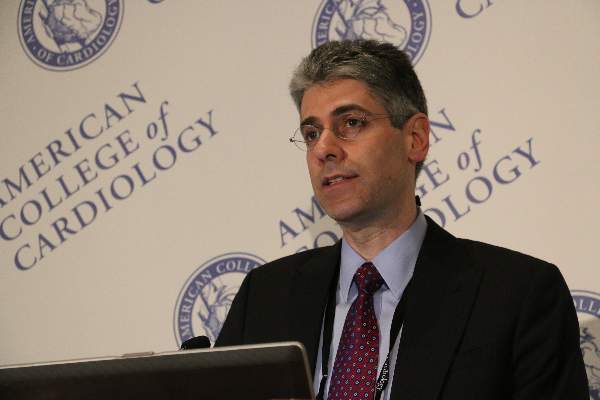
The findings added to the growing body of evidence that long-term – and possibly lifelong – DAPT is a key part of secondary prevention. Last year, results from the DAPT (Dual Antiplatelet Therapy) trial (N. Engl. J. Med. 2014;371:2155-66) supplied evidence for this in acute coronary syndrome patients who had undergone percutaneous coronary intervention (PCI). The PEGASUS-TIMI 54 trial did not require that enrolled post-MI patients had undergone PCI, but the reality is that this is the way most MI patients get managed, and in PEGASUS-TIMI 54 roughly 83% of the patients had a PCI history.
The new findings also highlighted the risk-benefit trade-off that DAPT means for patients. In PEGASUS-TIMI 54 the increased incidence of major bleeding events roughly matched the decreased rate of major cardiovascular events prevented. But while the incidence of bleeds categorized as TIMI major bleeds more than doubled in the patients randomized to DAPT compared with those on aspirin only, the prolonged treatment with ticagrelor did not result in an increase in fatal bleeds or in intracranial hemorrhages, the two most feared types of TIMI major bleeds.
“I’d much rather prevent cardiovascular deaths, MIs, and strokes even at the expense of causing reversible, nonfatal bleeding events,” said Dr. Sabatine, professor of medicine at Harvard Medical School in Boston and chairman of the TIMI Study Group at Brigham and Women’s Hospital.
Another notable adverse effect from ticagrelor treatment was a roughly threefold increased incidence of dyspnea, which led to drug discontinuation in 5%-7% of patients, depending on whether they received ticagrelor at 60 mg b.i.d. or 90 mg b.i.d. The study results showed a reduced rate of both bleeding and dyspnea in patients randomized to receive the 60-mg b.i.d. dosage, compared with those who received the 90-mg b.i.d. dosage, which is the standard ticagrelor dosage and the formulation now sold. At the same time, the efficacy of the 60-mg b.i.d. dosage for preventing ischemic events equaled that of the higher dosage. But as of today, it is impossible for a physician to prescribe a 60-mg formulation of ticagrelor because the manufacturer does not sell it.

Several cardiologists PEGASUS-TIMI 54 at the meeting said that they agreed with Dr. Sabatine and felt that the benefits from prolonged DAPT with ticagrelor outweighed the downside of an increased bleeding risk.
“I think that the benefit is greater than the risk. None of us wants to see patients experience bleeding, but I was encouraged that fatal bleeds and intracranial hemorrhages were no different,” commented Dr. Elliott M. Antman, a professor of medicine at Harvard.
“The benefits outweigh the bleeding risk, but I wouldn’t trivialize the bleeding risk. Assessing a patient’s bleeding risk is really important,” commented Dr. Robert Harrington, professor of medicine at Stanford (Calif.) University.
But others at the meeting said that the elevated bleeding risk gave them pause. “There clearly is a price to be paid even if extended-duration DAPT reduces MI and stent thrombosis. I believe only the highest risk patients – those with acute coronary syndrome and ST-elevation MI – are the ones for whom I’d even consider it. Unless we can reduce bleeding risk, maybe with even lower doses [of ticagrelor], stopping aspirin, or using a reversal agent, we will be causing bleeds that are very relevant to patients,” commented Dr. Ajay J. Kirtane, an interventional cardiologist at Columbia University in New York.

Dr. Kirtane also questioned whether TIMI major bleeds was the appropriate measure of bleeding risk in the context of a study like PEGASUS-TIMI 54. “Historically, TIMI major bleeding was derived from studies of acute heart attack patients getting fibrinolytic therapy. That is a very different population from this one. In my mind, the combination of TIMI major and minor bleeding would be more encompassing, and for patients the bleeding risks of these therapies are real and have been associated with bad sequelae,” he said in an interview.
When placed in the context of prior reports the new findings also raise the possibility that the generic, and hence much cheaper, thienopyridine clopidogrel might provide roughly the same long-term benefit as more expensive ticagrelor, especially for patients without a genetic profile that makes them poor clopidogrel metabolizers. This may be an attractive option for patients who have a problem paying for ticagrelor long term.
“I’d rather prescribe a patient a cheaper medication that might be a bit less effective than create an economic hardship,” Dr. Harrington said in an interview. The results from the DAPT trial, which included some post-PCI patients who received long-term DAPT with clopidogrel plus aspirin “give you a certain comfort” with the idea of substituting clopidogrel for ticagrelor when affordability is a major concern, Dr. Harrington noted.
PEGASUS-TIMI 54 enrolled 21, 162 patients who were 1-3 years out from a prior myocardial infarction at 1,161 sites in 31 countries. Enrolled patients also had to be at least 50 years old, and have at least one additional risk factor for ischemic events such as age 65 years or older, diabetes, multivessel coronary artery disease, or chronic renal dysfunction. The enrolled patients averaged 1.7 years out from their index MI. Randomization assigned patients to treatment with 90 mg ticagrelor b.i.d., 60 mg ticagrelor b.i.d., or placebo, and all patients also received daily treatment with 75-150 mg aspirin.
After a median follow-up of 33 months on treatment, the combined rate of cardiovascular death, myocardial infarction, or stroke – the study’s primary endpoint – occurred in 7.85% of patients on the 90-mg ticagrelor dosage, 7.77% of those on the 60-mg dosage, and in 9.04% of patients on placebo receiving aspirin only, statistically significant differences for the study’s primary endpoint for each of the two ticagrelor dosages. Concurrent with the report at the meeting the results also appeared online (N. Engl. J. Med. 2015; [doi:10.1056/nejmoa1500857]). This translated into hazard ratios of 0.85 for the 90 mg dosage and 0.84 for the 60 mg dosage compared with placebo.
The study’s primary safety outcome was the incidence of TIMI major bleeding events, which occurred in 2.60% of patients on the higher ticagrelor dosage, 2.30% of those on the 60 mg dosage, and in 1.06% of those on placebo, which converted into hazard ratios of 2.69 for the 90-mg dosage and 2.32 for the lower dosage for TIMI major bleeds compared with aspirin alone.
On Twitter @mitchelzoler
The results from PEGASUS-TIMI 54 provide a powerful message for secondary prevention: Patients who have had a prior myocardial infarction remain at an increased risk for subsequent ischemic events, even when maintained on what is currently standard therapy and even when they are several years out from their event.

|
Dr. Richard C. Becker |
We have no perfect antiplatelet drugs. Treating patients like those enrolled in the trial with an agent like ticagrelor further reduced their risk for ischemic events, but at the price of increasing their risk for major bleeds. The good news was that the rates of fatal bleeds and intracranial hemorrhages did not increase with ticagrelor treatment. Selecting the right patients to treat with prolonged dual antiplatelet therapy (DAPT) requires good judgment as well as understanding the patient’s values and preferences. From the clinician’s perspective it is the fatal bleeds or intracranial hemorrhages that are most comparable to cardiovascular deaths, myocardial infarctions or strokes. Although I do not want to minimize the impact of other major or minor bleeds that might require transfusions, these are not considered as important for patient well being as the ischemic events that ticagrelor treatment reduced.
I believe that the findings from PEGASUS-TIMI 54 will work their way into everyday practice with clinicians increasingly keeping patients on prolonged DAPT following percutaneous coronary interventions or a myocardial infarction. Problems with bleeding or dyspnea usually appear relatively early for patients on DAPT. The new findings give us increased confidence that once these patients get to a year out from the onset of treatment they can safely continue treatment and derive ongoing benefit from it, especially higher-risk patients, even though the 60-mg formulation of ticagrelor is not currently available. The new results complement those reported last year from the DAPT trial, which also addressed the safety and incremental value of more prolonged DAPT for higher-risk MI and acute coronary syndrome patients.
Richard C. Becker, M.D. is professor and director of the University of Cincinnati Heart, Lung and Vascular Institute. He has been a consultant to and received research grants from AstraZeneca, the company that sponsored PEGASUS-TIMI 54 and that markets ticagrelor (Brilinta). He made these comments in an interview.
The results from PEGASUS-TIMI 54 provide a powerful message for secondary prevention: Patients who have had a prior myocardial infarction remain at an increased risk for subsequent ischemic events, even when maintained on what is currently standard therapy and even when they are several years out from their event.
|
|
Dr. Richard C. Becker |
We have no perfect antiplatelet drugs. Treating patients like those enrolled in the trial with an agent like ticagrelor further reduced their risk for ischemic events, but at the price of increasing their risk for major bleeds. The good news was that the rates of fatal bleeds and intracranial hemorrhages did not increase with ticagrelor treatment. Selecting the right patients to treat with prolonged dual antiplatelet therapy (DAPT) requires good judgment as well as understanding the patient’s values and preferences. From the clinician’s perspective it is the fatal bleeds or intracranial hemorrhages that are most comparable to cardiovascular deaths, myocardial infarctions or strokes. Although I do not want to minimize the impact of other major or minor bleeds that might require transfusions, these are not considered as important for patient well being as the ischemic events that ticagrelor treatment reduced.
I believe that the findings from PEGASUS-TIMI 54 will work their way into everyday practice with clinicians increasingly keeping patients on prolonged DAPT following percutaneous coronary interventions or a myocardial infarction. Problems with bleeding or dyspnea usually appear relatively early for patients on DAPT. The new findings give us increased confidence that once these patients get to a year out from the onset of treatment they can safely continue treatment and derive ongoing benefit from it, especially higher-risk patients, even though the 60-mg formulation of ticagrelor is not currently available. The new results complement those reported last year from the DAPT trial, which also addressed the safety and incremental value of more prolonged DAPT for higher-risk MI and acute coronary syndrome patients.
Richard C. Becker, M.D. is professor and director of the University of Cincinnati Heart, Lung and Vascular Institute. He has been a consultant to and received research grants from AstraZeneca, the company that sponsored PEGASUS-TIMI 54 and that markets ticagrelor (Brilinta). He made these comments in an interview.
The results from PEGASUS-TIMI 54 provide a powerful message for secondary prevention: Patients who have had a prior myocardial infarction remain at an increased risk for subsequent ischemic events, even when maintained on what is currently standard therapy and even when they are several years out from their event.
|
|
Dr. Richard C. Becker |
We have no perfect antiplatelet drugs. Treating patients like those enrolled in the trial with an agent like ticagrelor further reduced their risk for ischemic events, but at the price of increasing their risk for major bleeds. The good news was that the rates of fatal bleeds and intracranial hemorrhages did not increase with ticagrelor treatment. Selecting the right patients to treat with prolonged dual antiplatelet therapy (DAPT) requires good judgment as well as understanding the patient’s values and preferences. From the clinician’s perspective it is the fatal bleeds or intracranial hemorrhages that are most comparable to cardiovascular deaths, myocardial infarctions or strokes. Although I do not want to minimize the impact of other major or minor bleeds that might require transfusions, these are not considered as important for patient well being as the ischemic events that ticagrelor treatment reduced.
I believe that the findings from PEGASUS-TIMI 54 will work their way into everyday practice with clinicians increasingly keeping patients on prolonged DAPT following percutaneous coronary interventions or a myocardial infarction. Problems with bleeding or dyspnea usually appear relatively early for patients on DAPT. The new findings give us increased confidence that once these patients get to a year out from the onset of treatment they can safely continue treatment and derive ongoing benefit from it, especially higher-risk patients, even though the 60-mg formulation of ticagrelor is not currently available. The new results complement those reported last year from the DAPT trial, which also addressed the safety and incremental value of more prolonged DAPT for higher-risk MI and acute coronary syndrome patients.
Richard C. Becker, M.D. is professor and director of the University of Cincinnati Heart, Lung and Vascular Institute. He has been a consultant to and received research grants from AstraZeneca, the company that sponsored PEGASUS-TIMI 54 and that markets ticagrelor (Brilinta). He made these comments in an interview.
SAN DIEGO – The idea that patients with established coronary disease can derive important, secondary-prevention benefit from prolonged dual-antiplatelet therapy received a major boost with the results of a major, international, controlled trial with more than 21,000 patients.
Results from the PEGASUS-TIMI 54 (Prevention of Cardiovascular Events in Patients with Prior Heart Attack Using Ticagrelor Compared to Placebo on a Background of Aspirin-Thrombolysis in Myocardial Infarction 54) showed putting post-myocardial infarction patients on dual-antiplatelet therapy (DAPT) with aspirin and the thienopyridine ticagrelor (Brilinta) for a median of 33 months cut the combined incidence of cardiovascular death, MI, or stroke by a relative 15%, compared with patients on aspirin alone as well as the other standard treatments used for post-MI patients, Dr. Marc S. Sabatine reported at the annual meeting of the American College of Cardiology.
The findings added to the growing body of evidence that long-term – and possibly lifelong – DAPT is a key part of secondary prevention. Last year, results from the DAPT (Dual Antiplatelet Therapy) trial (N. Engl. J. Med. 2014;371:2155-66) supplied evidence for this in acute coronary syndrome patients who had undergone percutaneous coronary intervention (PCI). The PEGASUS-TIMI 54 trial did not require that enrolled post-MI patients had undergone PCI, but the reality is that this is the way most MI patients get managed, and in PEGASUS-TIMI 54 roughly 83% of the patients had a PCI history.
The new findings also highlighted the risk-benefit trade-off that DAPT means for patients. In PEGASUS-TIMI 54 the increased incidence of major bleeding events roughly matched the decreased rate of major cardiovascular events prevented. But while the incidence of bleeds categorized as TIMI major bleeds more than doubled in the patients randomized to DAPT compared with those on aspirin only, the prolonged treatment with ticagrelor did not result in an increase in fatal bleeds or in intracranial hemorrhages, the two most feared types of TIMI major bleeds.
“I’d much rather prevent cardiovascular deaths, MIs, and strokes even at the expense of causing reversible, nonfatal bleeding events,” said Dr. Sabatine, professor of medicine at Harvard Medical School in Boston and chairman of the TIMI Study Group at Brigham and Women’s Hospital.
Another notable adverse effect from ticagrelor treatment was a roughly threefold increased incidence of dyspnea, which led to drug discontinuation in 5%-7% of patients, depending on whether they received ticagrelor at 60 mg b.i.d. or 90 mg b.i.d. The study results showed a reduced rate of both bleeding and dyspnea in patients randomized to receive the 60-mg b.i.d. dosage, compared with those who received the 90-mg b.i.d. dosage, which is the standard ticagrelor dosage and the formulation now sold. At the same time, the efficacy of the 60-mg b.i.d. dosage for preventing ischemic events equaled that of the higher dosage. But as of today, it is impossible for a physician to prescribe a 60-mg formulation of ticagrelor because the manufacturer does not sell it.
Several cardiologists PEGASUS-TIMI 54 at the meeting said that they agreed with Dr. Sabatine and felt that the benefits from prolonged DAPT with ticagrelor outweighed the downside of an increased bleeding risk.
“I think that the benefit is greater than the risk. None of us wants to see patients experience bleeding, but I was encouraged that fatal bleeds and intracranial hemorrhages were no different,” commented Dr. Elliott M. Antman, a professor of medicine at Harvard.
“The benefits outweigh the bleeding risk, but I wouldn’t trivialize the bleeding risk. Assessing a patient’s bleeding risk is really important,” commented Dr. Robert Harrington, professor of medicine at Stanford (Calif.) University.
But others at the meeting said that the elevated bleeding risk gave them pause. “There clearly is a price to be paid even if extended-duration DAPT reduces MI and stent thrombosis. I believe only the highest risk patients – those with acute coronary syndrome and ST-elevation MI – are the ones for whom I’d even consider it. Unless we can reduce bleeding risk, maybe with even lower doses [of ticagrelor], stopping aspirin, or using a reversal agent, we will be causing bleeds that are very relevant to patients,” commented Dr. Ajay J. Kirtane, an interventional cardiologist at Columbia University in New York.
Dr. Kirtane also questioned whether TIMI major bleeds was the appropriate measure of bleeding risk in the context of a study like PEGASUS-TIMI 54. “Historically, TIMI major bleeding was derived from studies of acute heart attack patients getting fibrinolytic therapy. That is a very different population from this one. In my mind, the combination of TIMI major and minor bleeding would be more encompassing, and for patients the bleeding risks of these therapies are real and have been associated with bad sequelae,” he said in an interview.
When placed in the context of prior reports the new findings also raise the possibility that the generic, and hence much cheaper, thienopyridine clopidogrel might provide roughly the same long-term benefit as more expensive ticagrelor, especially for patients without a genetic profile that makes them poor clopidogrel metabolizers. This may be an attractive option for patients who have a problem paying for ticagrelor long term.
“I’d rather prescribe a patient a cheaper medication that might be a bit less effective than create an economic hardship,” Dr. Harrington said in an interview. The results from the DAPT trial, which included some post-PCI patients who received long-term DAPT with clopidogrel plus aspirin “give you a certain comfort” with the idea of substituting clopidogrel for ticagrelor when affordability is a major concern, Dr. Harrington noted.
PEGASUS-TIMI 54 enrolled 21, 162 patients who were 1-3 years out from a prior myocardial infarction at 1,161 sites in 31 countries. Enrolled patients also had to be at least 50 years old, and have at least one additional risk factor for ischemic events such as age 65 years or older, diabetes, multivessel coronary artery disease, or chronic renal dysfunction. The enrolled patients averaged 1.7 years out from their index MI. Randomization assigned patients to treatment with 90 mg ticagrelor b.i.d., 60 mg ticagrelor b.i.d., or placebo, and all patients also received daily treatment with 75-150 mg aspirin.
After a median follow-up of 33 months on treatment, the combined rate of cardiovascular death, myocardial infarction, or stroke – the study’s primary endpoint – occurred in 7.85% of patients on the 90-mg ticagrelor dosage, 7.77% of those on the 60-mg dosage, and in 9.04% of patients on placebo receiving aspirin only, statistically significant differences for the study’s primary endpoint for each of the two ticagrelor dosages. Concurrent with the report at the meeting the results also appeared online (N. Engl. J. Med. 2015; [doi:10.1056/nejmoa1500857]). This translated into hazard ratios of 0.85 for the 90 mg dosage and 0.84 for the 60 mg dosage compared with placebo.
The study’s primary safety outcome was the incidence of TIMI major bleeding events, which occurred in 2.60% of patients on the higher ticagrelor dosage, 2.30% of those on the 60 mg dosage, and in 1.06% of those on placebo, which converted into hazard ratios of 2.69 for the 90-mg dosage and 2.32 for the lower dosage for TIMI major bleeds compared with aspirin alone.
On Twitter @mitchelzoler
SAN DIEGO – The idea that patients with established coronary disease can derive important, secondary-prevention benefit from prolonged dual-antiplatelet therapy received a major boost with the results of a major, international, controlled trial with more than 21,000 patients.
Results from the PEGASUS-TIMI 54 (Prevention of Cardiovascular Events in Patients with Prior Heart Attack Using Ticagrelor Compared to Placebo on a Background of Aspirin-Thrombolysis in Myocardial Infarction 54) showed putting post-myocardial infarction patients on dual-antiplatelet therapy (DAPT) with aspirin and the thienopyridine ticagrelor (Brilinta) for a median of 33 months cut the combined incidence of cardiovascular death, MI, or stroke by a relative 15%, compared with patients on aspirin alone as well as the other standard treatments used for post-MI patients, Dr. Marc S. Sabatine reported at the annual meeting of the American College of Cardiology.
The findings added to the growing body of evidence that long-term – and possibly lifelong – DAPT is a key part of secondary prevention. Last year, results from the DAPT (Dual Antiplatelet Therapy) trial (N. Engl. J. Med. 2014;371:2155-66) supplied evidence for this in acute coronary syndrome patients who had undergone percutaneous coronary intervention (PCI). The PEGASUS-TIMI 54 trial did not require that enrolled post-MI patients had undergone PCI, but the reality is that this is the way most MI patients get managed, and in PEGASUS-TIMI 54 roughly 83% of the patients had a PCI history.
The new findings also highlighted the risk-benefit trade-off that DAPT means for patients. In PEGASUS-TIMI 54 the increased incidence of major bleeding events roughly matched the decreased rate of major cardiovascular events prevented. But while the incidence of bleeds categorized as TIMI major bleeds more than doubled in the patients randomized to DAPT compared with those on aspirin only, the prolonged treatment with ticagrelor did not result in an increase in fatal bleeds or in intracranial hemorrhages, the two most feared types of TIMI major bleeds.
“I’d much rather prevent cardiovascular deaths, MIs, and strokes even at the expense of causing reversible, nonfatal bleeding events,” said Dr. Sabatine, professor of medicine at Harvard Medical School in Boston and chairman of the TIMI Study Group at Brigham and Women’s Hospital.
Another notable adverse effect from ticagrelor treatment was a roughly threefold increased incidence of dyspnea, which led to drug discontinuation in 5%-7% of patients, depending on whether they received ticagrelor at 60 mg b.i.d. or 90 mg b.i.d. The study results showed a reduced rate of both bleeding and dyspnea in patients randomized to receive the 60-mg b.i.d. dosage, compared with those who received the 90-mg b.i.d. dosage, which is the standard ticagrelor dosage and the formulation now sold. At the same time, the efficacy of the 60-mg b.i.d. dosage for preventing ischemic events equaled that of the higher dosage. But as of today, it is impossible for a physician to prescribe a 60-mg formulation of ticagrelor because the manufacturer does not sell it.
Several cardiologists PEGASUS-TIMI 54 at the meeting said that they agreed with Dr. Sabatine and felt that the benefits from prolonged DAPT with ticagrelor outweighed the downside of an increased bleeding risk.
“I think that the benefit is greater than the risk. None of us wants to see patients experience bleeding, but I was encouraged that fatal bleeds and intracranial hemorrhages were no different,” commented Dr. Elliott M. Antman, a professor of medicine at Harvard.
“The benefits outweigh the bleeding risk, but I wouldn’t trivialize the bleeding risk. Assessing a patient’s bleeding risk is really important,” commented Dr. Robert Harrington, professor of medicine at Stanford (Calif.) University.
But others at the meeting said that the elevated bleeding risk gave them pause. “There clearly is a price to be paid even if extended-duration DAPT reduces MI and stent thrombosis. I believe only the highest risk patients – those with acute coronary syndrome and ST-elevation MI – are the ones for whom I’d even consider it. Unless we can reduce bleeding risk, maybe with even lower doses [of ticagrelor], stopping aspirin, or using a reversal agent, we will be causing bleeds that are very relevant to patients,” commented Dr. Ajay J. Kirtane, an interventional cardiologist at Columbia University in New York.
Dr. Kirtane also questioned whether TIMI major bleeds was the appropriate measure of bleeding risk in the context of a study like PEGASUS-TIMI 54. “Historically, TIMI major bleeding was derived from studies of acute heart attack patients getting fibrinolytic therapy. That is a very different population from this one. In my mind, the combination of TIMI major and minor bleeding would be more encompassing, and for patients the bleeding risks of these therapies are real and have been associated with bad sequelae,” he said in an interview.
When placed in the context of prior reports the new findings also raise the possibility that the generic, and hence much cheaper, thienopyridine clopidogrel might provide roughly the same long-term benefit as more expensive ticagrelor, especially for patients without a genetic profile that makes them poor clopidogrel metabolizers. This may be an attractive option for patients who have a problem paying for ticagrelor long term.
“I’d rather prescribe a patient a cheaper medication that might be a bit less effective than create an economic hardship,” Dr. Harrington said in an interview. The results from the DAPT trial, which included some post-PCI patients who received long-term DAPT with clopidogrel plus aspirin “give you a certain comfort” with the idea of substituting clopidogrel for ticagrelor when affordability is a major concern, Dr. Harrington noted.
PEGASUS-TIMI 54 enrolled 21, 162 patients who were 1-3 years out from a prior myocardial infarction at 1,161 sites in 31 countries. Enrolled patients also had to be at least 50 years old, and have at least one additional risk factor for ischemic events such as age 65 years or older, diabetes, multivessel coronary artery disease, or chronic renal dysfunction. The enrolled patients averaged 1.7 years out from their index MI. Randomization assigned patients to treatment with 90 mg ticagrelor b.i.d., 60 mg ticagrelor b.i.d., or placebo, and all patients also received daily treatment with 75-150 mg aspirin.
After a median follow-up of 33 months on treatment, the combined rate of cardiovascular death, myocardial infarction, or stroke – the study’s primary endpoint – occurred in 7.85% of patients on the 90-mg ticagrelor dosage, 7.77% of those on the 60-mg dosage, and in 9.04% of patients on placebo receiving aspirin only, statistically significant differences for the study’s primary endpoint for each of the two ticagrelor dosages. Concurrent with the report at the meeting the results also appeared online (N. Engl. J. Med. 2015; [doi:10.1056/nejmoa1500857]). This translated into hazard ratios of 0.85 for the 90 mg dosage and 0.84 for the 60 mg dosage compared with placebo.
The study’s primary safety outcome was the incidence of TIMI major bleeding events, which occurred in 2.60% of patients on the higher ticagrelor dosage, 2.30% of those on the 60 mg dosage, and in 1.06% of those on placebo, which converted into hazard ratios of 2.69 for the 90-mg dosage and 2.32 for the lower dosage for TIMI major bleeds compared with aspirin alone.
On Twitter @mitchelzoler
AT ACC 15
Key clinical point: Myocardial infarction patients 1-3 years out from their event who took long-term dual-antiplatelet therapy with aspirin and ticagrelor had significantly fewer major ischemic events but also significantly more major bleeding events.
Major finding: Treatment with ticagrelor plus aspirin for 3 years cut major ischemic events by a relative 15% compared with aspirin alone.
Data source: PEGASUS-TIMI 54, a multicenter, randomized trial with 21,162 patients.
Disclosures: PEGASUS-TIMI 54 was sponsored by AstraZeneca, the company that markets ticagrelor (Brilinta). Dr. Sabatine has received research support from AstraZeneca and from several other companies, and has been a consultant to several drug companies. Dr. Antman has received research support from AstraZeneca, Eli Lilly, and Daiichi Sankyo. Dr. Harrington was an investigator for the trial that led to ticagrelor’s marketing approval and received research support from AstraZeneca and several other companies. Dr. Kirtane has received research support from AstraZeneca and six other companies.
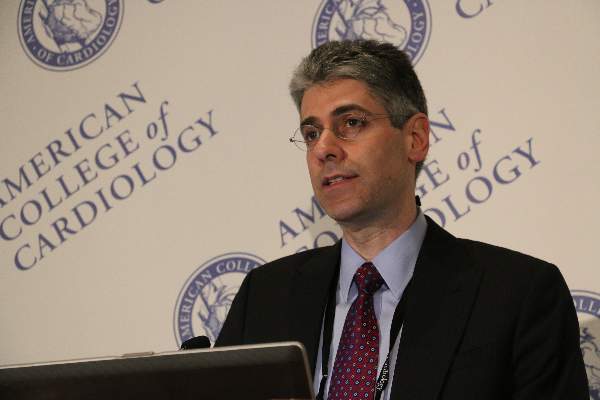
VIDEO: Growing evidence supports prolonged DAPT for ACS
SAN DIEGO – Current guidelines call for treating acute coronary syndrome patients with dual antiplatelet therapy (aspirin plus a thienopyridine) for at least 1 year following their event, but results from recent large, randomized trials suggest that many patients continue to benefit from treatment that extends beyond the first year, Dr. Richard C. Becker said during an interview at the annual meeting of the American College of Cardiology.
New results reported at the meeting from the PEGASUS-TIMI (Prevention of Cardiovascular Events in Patients with Prior Heart Attack Using Ticagrelor Compared to Placebo on a Background of Aspirin-Thrombolysis in Myocardial Infarction) 54 trial highlight the long-term risk for ischemic events faced by patients following an acute coronary syndrome (N. Engl. J. Med. 2025;[doi: 10.1056/NEJMoa0904327]. The results also underscore the importance of risk assessment, and the importance of tailoring treatment to ACS patients based not only on their long-term risk from their cardiovascular disease but also their risk for adverse bleeding events secondary to prolonged, aggressive antiplatelet therapy. The PEGASUS-TIMI 54 results complement the findings reported last year from the DAPT (Dual Antiplatelet Therapy) trial (N. Engl. J. Med. 2014;371:2155-66), he said.
The video associated with this article is no longer available on this site. Please view all of our videos on the MDedge YouTube channel
Based on the accumulated evidence, ACS patients who have done well clinically on DAPT after 1 year and are deemed at low risk for bleeding and other complications are good candidates for more prolonged DAPT treatment, said Dr. Becker, professor and director of the University of Cincinnati Heart, Lung & Vascular Institute.
PEGASUS-TIMI 54 ws sponsored by AstraZeneca, which markets ticagrelor (Brilinta). Dr. Becker has been a consultant to and received research support from AstraZeneca.
On Twitter @mitchelzoler
SAN DIEGO – Current guidelines call for treating acute coronary syndrome patients with dual antiplatelet therapy (aspirin plus a thienopyridine) for at least 1 year following their event, but results from recent large, randomized trials suggest that many patients continue to benefit from treatment that extends beyond the first year, Dr. Richard C. Becker said during an interview at the annual meeting of the American College of Cardiology.
New results reported at the meeting from the PEGASUS-TIMI (Prevention of Cardiovascular Events in Patients with Prior Heart Attack Using Ticagrelor Compared to Placebo on a Background of Aspirin-Thrombolysis in Myocardial Infarction) 54 trial highlight the long-term risk for ischemic events faced by patients following an acute coronary syndrome (N. Engl. J. Med. 2025;[doi: 10.1056/NEJMoa0904327]. The results also underscore the importance of risk assessment, and the importance of tailoring treatment to ACS patients based not only on their long-term risk from their cardiovascular disease but also their risk for adverse bleeding events secondary to prolonged, aggressive antiplatelet therapy. The PEGASUS-TIMI 54 results complement the findings reported last year from the DAPT (Dual Antiplatelet Therapy) trial (N. Engl. J. Med. 2014;371:2155-66), he said.
The video associated with this article is no longer available on this site. Please view all of our videos on the MDedge YouTube channel
Based on the accumulated evidence, ACS patients who have done well clinically on DAPT after 1 year and are deemed at low risk for bleeding and other complications are good candidates for more prolonged DAPT treatment, said Dr. Becker, professor and director of the University of Cincinnati Heart, Lung & Vascular Institute.
PEGASUS-TIMI 54 ws sponsored by AstraZeneca, which markets ticagrelor (Brilinta). Dr. Becker has been a consultant to and received research support from AstraZeneca.
On Twitter @mitchelzoler
SAN DIEGO – Current guidelines call for treating acute coronary syndrome patients with dual antiplatelet therapy (aspirin plus a thienopyridine) for at least 1 year following their event, but results from recent large, randomized trials suggest that many patients continue to benefit from treatment that extends beyond the first year, Dr. Richard C. Becker said during an interview at the annual meeting of the American College of Cardiology.
New results reported at the meeting from the PEGASUS-TIMI (Prevention of Cardiovascular Events in Patients with Prior Heart Attack Using Ticagrelor Compared to Placebo on a Background of Aspirin-Thrombolysis in Myocardial Infarction) 54 trial highlight the long-term risk for ischemic events faced by patients following an acute coronary syndrome (N. Engl. J. Med. 2025;[doi: 10.1056/NEJMoa0904327]. The results also underscore the importance of risk assessment, and the importance of tailoring treatment to ACS patients based not only on their long-term risk from their cardiovascular disease but also their risk for adverse bleeding events secondary to prolonged, aggressive antiplatelet therapy. The PEGASUS-TIMI 54 results complement the findings reported last year from the DAPT (Dual Antiplatelet Therapy) trial (N. Engl. J. Med. 2014;371:2155-66), he said.
The video associated with this article is no longer available on this site. Please view all of our videos on the MDedge YouTube channel
Based on the accumulated evidence, ACS patients who have done well clinically on DAPT after 1 year and are deemed at low risk for bleeding and other complications are good candidates for more prolonged DAPT treatment, said Dr. Becker, professor and director of the University of Cincinnati Heart, Lung & Vascular Institute.
PEGASUS-TIMI 54 ws sponsored by AstraZeneca, which markets ticagrelor (Brilinta). Dr. Becker has been a consultant to and received research support from AstraZeneca.
On Twitter @mitchelzoler
AT ACC 15