User login
Hypochlorite wash may help pediatric atopic dermatitis
DENVER – A sodium hypochlorite wash significantly improved symptoms and quality of life for children who had atopic dermatitis with bacterial colonization, in a small study.
Staphylococcus aureus colonization occurs in the lesional and nonlesional skin of many atopic dermatitis patients, and bleach baths at a concentration of approximately 0.005% sodium hypochlorite are a common treatment, but not always an easy or convenient one, Dr. Benjamin R. Bohaty noted in a poster at the annual meeting of the American Academy of Dermatology.

In an open-label study, Dr. Bohaty of the University of Texas Health Science Center in Houston and his colleagues tested a gel cleanser containing a dilute concentration of 0.006% sodium hypochlorite wash that could be used in the bath or shower. The product is designed to be lathered onto the skin and rinsed off after 1-2 minutes. The study population included 40 children, average age 9 years, with a diagnosis of moderate to severe atopic dermatitis and S. aureus colonization. The children were instructed to use the wash once daily for 6 weeks, and they were assessed at three office visits during this period.
At 2 weeks and 6 weeks, the patients had improved an average of 34% and 44% from baseline, respectively, on the Eczema Area and Severity Index, and 23% and 34% from baseline on the Investigator’s Global Assessment scale score.
The average improvement in pruritus visual analog scale score was 31% at 2 weeks and 37% at 6 weeks.
Quality of life measures also improved during the study period. The average change in the Children’s Dermatology Life Quality Index was 41% at 2 weeks, dropping to 32% at 6 weeks, but both were significant improvements from baseline. The average improvement in the Family Dermatology Life Quality Index score was 13% at 2 weeks and 43% at 6 weeks, compared with baseline.
The significant decreases and lack of reported adverse events suggest that the wash is "a simple alternative to bleach baths," Dr. Bohaty reported.
The product is available in the United States under the label CLn Skin Care, a trademark of TopMD Skin Care, which funded the trial through research grants to the universities of the investigators.
DENVER – A sodium hypochlorite wash significantly improved symptoms and quality of life for children who had atopic dermatitis with bacterial colonization, in a small study.
Staphylococcus aureus colonization occurs in the lesional and nonlesional skin of many atopic dermatitis patients, and bleach baths at a concentration of approximately 0.005% sodium hypochlorite are a common treatment, but not always an easy or convenient one, Dr. Benjamin R. Bohaty noted in a poster at the annual meeting of the American Academy of Dermatology.
In an open-label study, Dr. Bohaty of the University of Texas Health Science Center in Houston and his colleagues tested a gel cleanser containing a dilute concentration of 0.006% sodium hypochlorite wash that could be used in the bath or shower. The product is designed to be lathered onto the skin and rinsed off after 1-2 minutes. The study population included 40 children, average age 9 years, with a diagnosis of moderate to severe atopic dermatitis and S. aureus colonization. The children were instructed to use the wash once daily for 6 weeks, and they were assessed at three office visits during this period.
At 2 weeks and 6 weeks, the patients had improved an average of 34% and 44% from baseline, respectively, on the Eczema Area and Severity Index, and 23% and 34% from baseline on the Investigator’s Global Assessment scale score.
The average improvement in pruritus visual analog scale score was 31% at 2 weeks and 37% at 6 weeks.
Quality of life measures also improved during the study period. The average change in the Children’s Dermatology Life Quality Index was 41% at 2 weeks, dropping to 32% at 6 weeks, but both were significant improvements from baseline. The average improvement in the Family Dermatology Life Quality Index score was 13% at 2 weeks and 43% at 6 weeks, compared with baseline.
The significant decreases and lack of reported adverse events suggest that the wash is "a simple alternative to bleach baths," Dr. Bohaty reported.
The product is available in the United States under the label CLn Skin Care, a trademark of TopMD Skin Care, which funded the trial through research grants to the universities of the investigators.
DENVER – A sodium hypochlorite wash significantly improved symptoms and quality of life for children who had atopic dermatitis with bacterial colonization, in a small study.
Staphylococcus aureus colonization occurs in the lesional and nonlesional skin of many atopic dermatitis patients, and bleach baths at a concentration of approximately 0.005% sodium hypochlorite are a common treatment, but not always an easy or convenient one, Dr. Benjamin R. Bohaty noted in a poster at the annual meeting of the American Academy of Dermatology.
In an open-label study, Dr. Bohaty of the University of Texas Health Science Center in Houston and his colleagues tested a gel cleanser containing a dilute concentration of 0.006% sodium hypochlorite wash that could be used in the bath or shower. The product is designed to be lathered onto the skin and rinsed off after 1-2 minutes. The study population included 40 children, average age 9 years, with a diagnosis of moderate to severe atopic dermatitis and S. aureus colonization. The children were instructed to use the wash once daily for 6 weeks, and they were assessed at three office visits during this period.
At 2 weeks and 6 weeks, the patients had improved an average of 34% and 44% from baseline, respectively, on the Eczema Area and Severity Index, and 23% and 34% from baseline on the Investigator’s Global Assessment scale score.
The average improvement in pruritus visual analog scale score was 31% at 2 weeks and 37% at 6 weeks.
Quality of life measures also improved during the study period. The average change in the Children’s Dermatology Life Quality Index was 41% at 2 weeks, dropping to 32% at 6 weeks, but both were significant improvements from baseline. The average improvement in the Family Dermatology Life Quality Index score was 13% at 2 weeks and 43% at 6 weeks, compared with baseline.
The significant decreases and lack of reported adverse events suggest that the wash is "a simple alternative to bleach baths," Dr. Bohaty reported.
The product is available in the United States under the label CLn Skin Care, a trademark of TopMD Skin Care, which funded the trial through research grants to the universities of the investigators.
FROM THE AAD ANNUAL MEETING
Key clinical point: A gel cleanser appeared to be a potentially effective and convenient alternative to bleach baths for children with atopic dermatitis.
Major finding: A gel cleanser with 0.006% sodium hypochlorite improved symptoms and quality of life by at least 20% from baseline in children with moderate to severe atopic dermatitis.
Data source: An open label study of 40 children, average age 9 years.
Disclosures: The product is available in the United States under the label CLn Skin Care, a trademark of TopMD Skin Care, which funded the trial through research grants to the universities of the investigators.
Arthritis drug restores hair in man with alopecia universalis and psoriasis
A 25-year-old man with plaque psoriasis and virtually no hair of any sort now sports a full head of hair plus body hair after treatment with the arthritis drug tofacitinib, according to Dr. Brittany G. Craiglow and Dr. Brett A. King of Yale University, New Haven, Conn.
The treatment has been so successful that Dr. King has submitted a proposal for a clinical trial involving a cream form of tofacitinib as a treatment for alopecia areata, according to a statement from the university.
Tofacitinib is approved only for the treatment of adult patients with moderately to severely active rheumatoid arthritis who have had an inadequate response or intolerance to methotrexate, but it is in clinical development for the treatment of psoriasis.
Dr. Craiglow and Dr. King began treating the patient with 10 mg oral tofacitinib (Xeljanz) daily. At baseline, the patient had been diagnosed with plaque psoriasis and alopecia universalis. His only body hair was a small amount of hair within the psoriasis plaques on his head, the researchers said (J. Invest. Dermatol. 2014 June 18 [doi:10.1038/jid.2014.260]).
After 2 months of tofacitinib dosed at 5 mg twice daily, the psoriasis on the patient’s scalp, torso, and elbows showed some improvement, and there was some hair growth on his face and scalp. The researchers increased the dose to 10 mg in the morning and 5 mg at night. After 3 more months, the patient had complete regrowth of scalp hair, as well as some growth of eyebrows, eyelashes, armpit hair, and pubic hair. After 8 months, the patient had full regrowth of all body hair, with the exception of hair on the arms and legs (which had been sparse prior to his alopecia diagnosis, the researchers said).
Although the hair growth has been dramatic, improvements in the patient’s psoriasis have been slower, likely because of the dosage.
“While we considered increasing the dose of tofacitinib, the patient is so pleased with the regrowth of his hair (and is not particularly bothered by the remaining psoriasis) that he has chosen to continue at the present dose,” the researchers noted.
The researchers considered using tofacitinib to treat the patient’s alopecia universalis based on the research of Angela M. Christiano, Ph.D., of Columbia University, New York, in which the drug reversed hair loss in a mouse model of alopecia areata.
The patient has reported no side effects, and lab testing has shown no abnormalities in complete blood count, serum creatinine, electrolytes, liver function, glucose, or lipids, the researchers noted.
The researchers had no financial conflicts to disclose.
hsplete@frontlinemedcom.com
A 25-year-old man with plaque psoriasis and virtually no hair of any sort now sports a full head of hair plus body hair after treatment with the arthritis drug tofacitinib, according to Dr. Brittany G. Craiglow and Dr. Brett A. King of Yale University, New Haven, Conn.
The treatment has been so successful that Dr. King has submitted a proposal for a clinical trial involving a cream form of tofacitinib as a treatment for alopecia areata, according to a statement from the university.
Tofacitinib is approved only for the treatment of adult patients with moderately to severely active rheumatoid arthritis who have had an inadequate response or intolerance to methotrexate, but it is in clinical development for the treatment of psoriasis.
Dr. Craiglow and Dr. King began treating the patient with 10 mg oral tofacitinib (Xeljanz) daily. At baseline, the patient had been diagnosed with plaque psoriasis and alopecia universalis. His only body hair was a small amount of hair within the psoriasis plaques on his head, the researchers said (J. Invest. Dermatol. 2014 June 18 [doi:10.1038/jid.2014.260]).
After 2 months of tofacitinib dosed at 5 mg twice daily, the psoriasis on the patient’s scalp, torso, and elbows showed some improvement, and there was some hair growth on his face and scalp. The researchers increased the dose to 10 mg in the morning and 5 mg at night. After 3 more months, the patient had complete regrowth of scalp hair, as well as some growth of eyebrows, eyelashes, armpit hair, and pubic hair. After 8 months, the patient had full regrowth of all body hair, with the exception of hair on the arms and legs (which had been sparse prior to his alopecia diagnosis, the researchers said).
Although the hair growth has been dramatic, improvements in the patient’s psoriasis have been slower, likely because of the dosage.
“While we considered increasing the dose of tofacitinib, the patient is so pleased with the regrowth of his hair (and is not particularly bothered by the remaining psoriasis) that he has chosen to continue at the present dose,” the researchers noted.
The researchers considered using tofacitinib to treat the patient’s alopecia universalis based on the research of Angela M. Christiano, Ph.D., of Columbia University, New York, in which the drug reversed hair loss in a mouse model of alopecia areata.
The patient has reported no side effects, and lab testing has shown no abnormalities in complete blood count, serum creatinine, electrolytes, liver function, glucose, or lipids, the researchers noted.
The researchers had no financial conflicts to disclose.
hsplete@frontlinemedcom.com
A 25-year-old man with plaque psoriasis and virtually no hair of any sort now sports a full head of hair plus body hair after treatment with the arthritis drug tofacitinib, according to Dr. Brittany G. Craiglow and Dr. Brett A. King of Yale University, New Haven, Conn.
The treatment has been so successful that Dr. King has submitted a proposal for a clinical trial involving a cream form of tofacitinib as a treatment for alopecia areata, according to a statement from the university.
Tofacitinib is approved only for the treatment of adult patients with moderately to severely active rheumatoid arthritis who have had an inadequate response or intolerance to methotrexate, but it is in clinical development for the treatment of psoriasis.
Dr. Craiglow and Dr. King began treating the patient with 10 mg oral tofacitinib (Xeljanz) daily. At baseline, the patient had been diagnosed with plaque psoriasis and alopecia universalis. His only body hair was a small amount of hair within the psoriasis plaques on his head, the researchers said (J. Invest. Dermatol. 2014 June 18 [doi:10.1038/jid.2014.260]).
After 2 months of tofacitinib dosed at 5 mg twice daily, the psoriasis on the patient’s scalp, torso, and elbows showed some improvement, and there was some hair growth on his face and scalp. The researchers increased the dose to 10 mg in the morning and 5 mg at night. After 3 more months, the patient had complete regrowth of scalp hair, as well as some growth of eyebrows, eyelashes, armpit hair, and pubic hair. After 8 months, the patient had full regrowth of all body hair, with the exception of hair on the arms and legs (which had been sparse prior to his alopecia diagnosis, the researchers said).
Although the hair growth has been dramatic, improvements in the patient’s psoriasis have been slower, likely because of the dosage.
“While we considered increasing the dose of tofacitinib, the patient is so pleased with the regrowth of his hair (and is not particularly bothered by the remaining psoriasis) that he has chosen to continue at the present dose,” the researchers noted.
The researchers considered using tofacitinib to treat the patient’s alopecia universalis based on the research of Angela M. Christiano, Ph.D., of Columbia University, New York, in which the drug reversed hair loss in a mouse model of alopecia areata.
The patient has reported no side effects, and lab testing has shown no abnormalities in complete blood count, serum creatinine, electrolytes, liver function, glucose, or lipids, the researchers noted.
The researchers had no financial conflicts to disclose.
hsplete@frontlinemedcom.com
Arthritis drug restores hair in man with alopecia universalis and psoriasis
A 25-year-old man with plaque psoriasis and virtually no hair of any sort now sports a full head of hair plus body hair after treatment with the arthritis drug tofacitinib, according to Dr. Brittany G. Craiglow and Dr. Brett A. King of Yale University, New Haven, Conn.
The treatment has been so successful that Dr. King has submitted a proposal for a clinical trial involving a cream form of tofacitinib as a treatment for alopecia areata, according to a statement from the university.
Tofacitinib is approved only for the treatment of adult patients with moderately to severely active rheumatoid arthritis who have had an inadequate response or intolerance to methotrexate, but it is in clinical development for the treatment of psoriasis.
Dr. Craiglow and Dr. King began treating the patient with 10 mg oral tofacitinib (Xeljanz) daily. At baseline, the patient had been diagnosed with plaque psoriasis and alopecia universalis. His only body hair was a small amount of hair within the psoriasis plaques on his head, the researchers said (J. Invest. Dermatol. 2014 June 18 [doi:10.1038/jid.2014.260]).
After 2 months of tofacitinib dosed at 5 mg twice daily, the psoriasis on the patient’s scalp, torso, and elbows showed some improvement, and there was some hair growth on his face and scalp. The researchers increased the dose to 10 mg in the morning and 5 mg at night. After 3 more months, the patient had complete regrowth of scalp hair, as well as some growth of eyebrows, eyelashes, armpit hair, and pubic hair. After 8 months, the patient had full regrowth of all body hair, with the exception of hair on the arms and legs (which had been sparse prior to his alopecia diagnosis, the researchers said).
Although the hair growth has been dramatic, improvements in the patient’s psoriasis have been slower, likely because of the dosage.
“While we considered increasing the dose of tofacitinib, the patient is so pleased with the regrowth of his hair (and is not particularly bothered by the remaining psoriasis) that he has chosen to continue at the present dose,” the researchers noted.
The researchers considered using tofacitinib to treat the patient’s alopecia universalis based on the research of Angela M. Christiano, Ph.D., of Columbia University, New York, in which the drug reversed hair loss in a mouse model of alopecia areata.
The patient has reported no side effects, and lab testing has shown no abnormalities in complete blood count, serum creatinine, electrolytes, liver function, glucose, or lipids, the researchers noted.
The researchers had no financial conflicts to disclose.
hsplete@frontlinemedcom.com
A 25-year-old man with plaque psoriasis and virtually no hair of any sort now sports a full head of hair plus body hair after treatment with the arthritis drug tofacitinib, according to Dr. Brittany G. Craiglow and Dr. Brett A. King of Yale University, New Haven, Conn.
The treatment has been so successful that Dr. King has submitted a proposal for a clinical trial involving a cream form of tofacitinib as a treatment for alopecia areata, according to a statement from the university.
Tofacitinib is approved only for the treatment of adult patients with moderately to severely active rheumatoid arthritis who have had an inadequate response or intolerance to methotrexate, but it is in clinical development for the treatment of psoriasis.
Dr. Craiglow and Dr. King began treating the patient with 10 mg oral tofacitinib (Xeljanz) daily. At baseline, the patient had been diagnosed with plaque psoriasis and alopecia universalis. His only body hair was a small amount of hair within the psoriasis plaques on his head, the researchers said (J. Invest. Dermatol. 2014 June 18 [doi:10.1038/jid.2014.260]).
After 2 months of tofacitinib dosed at 5 mg twice daily, the psoriasis on the patient’s scalp, torso, and elbows showed some improvement, and there was some hair growth on his face and scalp. The researchers increased the dose to 10 mg in the morning and 5 mg at night. After 3 more months, the patient had complete regrowth of scalp hair, as well as some growth of eyebrows, eyelashes, armpit hair, and pubic hair. After 8 months, the patient had full regrowth of all body hair, with the exception of hair on the arms and legs (which had been sparse prior to his alopecia diagnosis, the researchers said).
Although the hair growth has been dramatic, improvements in the patient’s psoriasis have been slower, likely because of the dosage.
“While we considered increasing the dose of tofacitinib, the patient is so pleased with the regrowth of his hair (and is not particularly bothered by the remaining psoriasis) that he has chosen to continue at the present dose,” the researchers noted.
The researchers considered using tofacitinib to treat the patient’s alopecia universalis based on the research of Angela M. Christiano, Ph.D., of Columbia University, New York, in which the drug reversed hair loss in a mouse model of alopecia areata.
The patient has reported no side effects, and lab testing has shown no abnormalities in complete blood count, serum creatinine, electrolytes, liver function, glucose, or lipids, the researchers noted.
The researchers had no financial conflicts to disclose.
hsplete@frontlinemedcom.com
A 25-year-old man with plaque psoriasis and virtually no hair of any sort now sports a full head of hair plus body hair after treatment with the arthritis drug tofacitinib, according to Dr. Brittany G. Craiglow and Dr. Brett A. King of Yale University, New Haven, Conn.
The treatment has been so successful that Dr. King has submitted a proposal for a clinical trial involving a cream form of tofacitinib as a treatment for alopecia areata, according to a statement from the university.
Tofacitinib is approved only for the treatment of adult patients with moderately to severely active rheumatoid arthritis who have had an inadequate response or intolerance to methotrexate, but it is in clinical development for the treatment of psoriasis.
Dr. Craiglow and Dr. King began treating the patient with 10 mg oral tofacitinib (Xeljanz) daily. At baseline, the patient had been diagnosed with plaque psoriasis and alopecia universalis. His only body hair was a small amount of hair within the psoriasis plaques on his head, the researchers said (J. Invest. Dermatol. 2014 June 18 [doi:10.1038/jid.2014.260]).
After 2 months of tofacitinib dosed at 5 mg twice daily, the psoriasis on the patient’s scalp, torso, and elbows showed some improvement, and there was some hair growth on his face and scalp. The researchers increased the dose to 10 mg in the morning and 5 mg at night. After 3 more months, the patient had complete regrowth of scalp hair, as well as some growth of eyebrows, eyelashes, armpit hair, and pubic hair. After 8 months, the patient had full regrowth of all body hair, with the exception of hair on the arms and legs (which had been sparse prior to his alopecia diagnosis, the researchers said).
Although the hair growth has been dramatic, improvements in the patient’s psoriasis have been slower, likely because of the dosage.
“While we considered increasing the dose of tofacitinib, the patient is so pleased with the regrowth of his hair (and is not particularly bothered by the remaining psoriasis) that he has chosen to continue at the present dose,” the researchers noted.
The researchers considered using tofacitinib to treat the patient’s alopecia universalis based on the research of Angela M. Christiano, Ph.D., of Columbia University, New York, in which the drug reversed hair loss in a mouse model of alopecia areata.
The patient has reported no side effects, and lab testing has shown no abnormalities in complete blood count, serum creatinine, electrolytes, liver function, glucose, or lipids, the researchers noted.
The researchers had no financial conflicts to disclose.
hsplete@frontlinemedcom.com
Desonide hydrogel improved itching in atopic dermatitis
Twice-daily application of 0.05% desonide hydrogel significantly improved clinical symptoms of itching and quality of life scores in 100% of patients with mild to moderate atopic dermatitis after 7 days in a small preliminary study.
"Increasingly, researchers and clinicians recognize that disrupted barrier function contributes not only to the xerotic and pruritic manifestations of AD, but also to the inflammatory cascade that underlies the disease," wrote Dr. Leon Kircik of Indiana University, Indianapolis.
Data from previous studies have shown the effectiveness of desonide hydrogel 0.05% for atopic dermatitis in children, but few studies have examined the effectiveness of the gel on itching in particular. In this study, patients applied the gel twice daily, with assessments at baseline, day 3, and day 7 (J. Drugs Dermatol. 2014;13:725-8).
At day 7, all patients achieved the primary endpoint of at least a 50% reduction in pruritus. The average Investigator’s Global Assessment (IGA) scale score was .55 (down from 2.35 at baseline), which translated to a 76% improvement from baseline. The visual analog score decreased by an average of 6.4 points, for an average reduction of 85%. Statistically significant improvements from baseline in both IGA and visual analog scores also were noted at day 3, when the average IGA score improved 27% from baseline, and the mean visual analog score showed a 53% reduction.
The study included 20 atopic dermatitis patients ranging in age from 8 to 68 years, with an average age of 25 years; 60% were black, 40% were white, and 75% were female.
The results suggest that hydrogel is an appropriate option to relieve itchiness in AD patients, and a large, randomized, double-blind controlled trial would be helpful to further study effectiveness, Dr. Kircik said.
Dr. Kircik disclosed receiving funding as an investigator, consultant, or speaker for Bayer Dermatology, manufacturer of the product tested.
Twice-daily application of 0.05% desonide hydrogel significantly improved clinical symptoms of itching and quality of life scores in 100% of patients with mild to moderate atopic dermatitis after 7 days in a small preliminary study.
"Increasingly, researchers and clinicians recognize that disrupted barrier function contributes not only to the xerotic and pruritic manifestations of AD, but also to the inflammatory cascade that underlies the disease," wrote Dr. Leon Kircik of Indiana University, Indianapolis.
Data from previous studies have shown the effectiveness of desonide hydrogel 0.05% for atopic dermatitis in children, but few studies have examined the effectiveness of the gel on itching in particular. In this study, patients applied the gel twice daily, with assessments at baseline, day 3, and day 7 (J. Drugs Dermatol. 2014;13:725-8).
At day 7, all patients achieved the primary endpoint of at least a 50% reduction in pruritus. The average Investigator’s Global Assessment (IGA) scale score was .55 (down from 2.35 at baseline), which translated to a 76% improvement from baseline. The visual analog score decreased by an average of 6.4 points, for an average reduction of 85%. Statistically significant improvements from baseline in both IGA and visual analog scores also were noted at day 3, when the average IGA score improved 27% from baseline, and the mean visual analog score showed a 53% reduction.
The study included 20 atopic dermatitis patients ranging in age from 8 to 68 years, with an average age of 25 years; 60% were black, 40% were white, and 75% were female.
The results suggest that hydrogel is an appropriate option to relieve itchiness in AD patients, and a large, randomized, double-blind controlled trial would be helpful to further study effectiveness, Dr. Kircik said.
Dr. Kircik disclosed receiving funding as an investigator, consultant, or speaker for Bayer Dermatology, manufacturer of the product tested.
Twice-daily application of 0.05% desonide hydrogel significantly improved clinical symptoms of itching and quality of life scores in 100% of patients with mild to moderate atopic dermatitis after 7 days in a small preliminary study.
"Increasingly, researchers and clinicians recognize that disrupted barrier function contributes not only to the xerotic and pruritic manifestations of AD, but also to the inflammatory cascade that underlies the disease," wrote Dr. Leon Kircik of Indiana University, Indianapolis.
Data from previous studies have shown the effectiveness of desonide hydrogel 0.05% for atopic dermatitis in children, but few studies have examined the effectiveness of the gel on itching in particular. In this study, patients applied the gel twice daily, with assessments at baseline, day 3, and day 7 (J. Drugs Dermatol. 2014;13:725-8).
At day 7, all patients achieved the primary endpoint of at least a 50% reduction in pruritus. The average Investigator’s Global Assessment (IGA) scale score was .55 (down from 2.35 at baseline), which translated to a 76% improvement from baseline. The visual analog score decreased by an average of 6.4 points, for an average reduction of 85%. Statistically significant improvements from baseline in both IGA and visual analog scores also were noted at day 3, when the average IGA score improved 27% from baseline, and the mean visual analog score showed a 53% reduction.
The study included 20 atopic dermatitis patients ranging in age from 8 to 68 years, with an average age of 25 years; 60% were black, 40% were white, and 75% were female.
The results suggest that hydrogel is an appropriate option to relieve itchiness in AD patients, and a large, randomized, double-blind controlled trial would be helpful to further study effectiveness, Dr. Kircik said.
Dr. Kircik disclosed receiving funding as an investigator, consultant, or speaker for Bayer Dermatology, manufacturer of the product tested.
FROM JOURNAL OF DRUGS IN DERMATOLOGY
Key clinical point: Many atopic dermatitis patients object to applying ointments, and a water-based gel offered a nongreasy, effective alternative that improves itching and achieved high levels of patient satisfaction.
Major finding: Desonide hydrogel 0.05% improved pruritus by at least 50% based on investigator and patient assessment scales.
Data source: An open-label pilot study of 20 individuals with mild to moderate atopic dermatitis.
Disclosures: Dr. Kircik disclosed receiving funding as an investigator, consultant, or speaker for Bayer Dermatology, manufacturer of the product tested.
Desonide hydrogel improved itching in atopic dermatitis
Twice-daily application of 0.05% desonide hydrogel significantly improved clinical symptoms of itching and quality of life scores in 100% of patients with mild to moderate atopic dermatitis after 7 days in a small preliminary study.
"Increasingly, researchers and clinicians recognize that disrupted barrier function contributes not only to the xerotic and pruritic manifestations of AD, but also to the inflammatory cascade that underlies the disease," wrote Dr. Leon Kircik of Indiana University, Indianapolis.
Data from previous studies have shown the effectiveness of desonide hydrogel 0.05% for atopic dermatitis in children, but few studies have examined the effectiveness of the gel on itching in particular. In this study, patients applied the gel twice daily, with assessments at baseline, day 3, and day 7 (J. Drugs Dermatol. 2014;13:725-8).
At day 7, all patients achieved the primary endpoint of at least a 50% reduction in pruritus. The average Investigator’s Global Assessment (IGA) scale score was .55 (down from 2.35 at baseline), which translated to a 76% improvement from baseline. The visual analog score decreased by an average of 6.4 points, for an average reduction of 85%. Statistically significant improvements from baseline in both IGA and visual analog scores also were noted at day 3, when the average IGA score improved 27% from baseline, and the mean visual analog score showed a 53% reduction.
The study included 20 atopic dermatitis patients ranging in age from 8 to 68 years, with an average age of 25 years; 60% were black, 40% were white, and 75% were female.
The results suggest that hydrogel is an appropriate option to relieve itchiness in AD patients, and a large, randomized, double-blind controlled trial would be helpful to further study effectiveness, Dr. Kircik said.
Dr. Kircik disclosed receiving funding as an investigator, consultant, or speaker for Bayer Dermatology, manufacturer of the product tested.
Twice-daily application of 0.05% desonide hydrogel significantly improved clinical symptoms of itching and quality of life scores in 100% of patients with mild to moderate atopic dermatitis after 7 days in a small preliminary study.
"Increasingly, researchers and clinicians recognize that disrupted barrier function contributes not only to the xerotic and pruritic manifestations of AD, but also to the inflammatory cascade that underlies the disease," wrote Dr. Leon Kircik of Indiana University, Indianapolis.
Data from previous studies have shown the effectiveness of desonide hydrogel 0.05% for atopic dermatitis in children, but few studies have examined the effectiveness of the gel on itching in particular. In this study, patients applied the gel twice daily, with assessments at baseline, day 3, and day 7 (J. Drugs Dermatol. 2014;13:725-8).
At day 7, all patients achieved the primary endpoint of at least a 50% reduction in pruritus. The average Investigator’s Global Assessment (IGA) scale score was .55 (down from 2.35 at baseline), which translated to a 76% improvement from baseline. The visual analog score decreased by an average of 6.4 points, for an average reduction of 85%. Statistically significant improvements from baseline in both IGA and visual analog scores also were noted at day 3, when the average IGA score improved 27% from baseline, and the mean visual analog score showed a 53% reduction.
The study included 20 atopic dermatitis patients ranging in age from 8 to 68 years, with an average age of 25 years; 60% were black, 40% were white, and 75% were female.
The results suggest that hydrogel is an appropriate option to relieve itchiness in AD patients, and a large, randomized, double-blind controlled trial would be helpful to further study effectiveness, Dr. Kircik said.
Dr. Kircik disclosed receiving funding as an investigator, consultant, or speaker for Bayer Dermatology, manufacturer of the product tested.
Twice-daily application of 0.05% desonide hydrogel significantly improved clinical symptoms of itching and quality of life scores in 100% of patients with mild to moderate atopic dermatitis after 7 days in a small preliminary study.
"Increasingly, researchers and clinicians recognize that disrupted barrier function contributes not only to the xerotic and pruritic manifestations of AD, but also to the inflammatory cascade that underlies the disease," wrote Dr. Leon Kircik of Indiana University, Indianapolis.
Data from previous studies have shown the effectiveness of desonide hydrogel 0.05% for atopic dermatitis in children, but few studies have examined the effectiveness of the gel on itching in particular. In this study, patients applied the gel twice daily, with assessments at baseline, day 3, and day 7 (J. Drugs Dermatol. 2014;13:725-8).
At day 7, all patients achieved the primary endpoint of at least a 50% reduction in pruritus. The average Investigator’s Global Assessment (IGA) scale score was .55 (down from 2.35 at baseline), which translated to a 76% improvement from baseline. The visual analog score decreased by an average of 6.4 points, for an average reduction of 85%. Statistically significant improvements from baseline in both IGA and visual analog scores also were noted at day 3, when the average IGA score improved 27% from baseline, and the mean visual analog score showed a 53% reduction.
The study included 20 atopic dermatitis patients ranging in age from 8 to 68 years, with an average age of 25 years; 60% were black, 40% were white, and 75% were female.
The results suggest that hydrogel is an appropriate option to relieve itchiness in AD patients, and a large, randomized, double-blind controlled trial would be helpful to further study effectiveness, Dr. Kircik said.
Dr. Kircik disclosed receiving funding as an investigator, consultant, or speaker for Bayer Dermatology, manufacturer of the product tested.
FROM JOURNAL OF DRUGS IN DERMATOLOGY
Key clinical point: Many atopic dermatitis patients object to applying ointments, and a water-based gel offered a nongreasy, effective alternative that improves itching and achieved high levels of patient satisfaction.
Major finding: Desonide hydrogel 0.05% improved pruritus by at least 50% based on investigator and patient assessment scales.
Data source: An open-label pilot study of 20 individuals with mild to moderate atopic dermatitis.
Disclosures: Dr. Kircik disclosed receiving funding as an investigator, consultant, or speaker for Bayer Dermatology, manufacturer of the product tested.
Foundation turns spotlight on psoriatic arthritis
The National Psoriasis Foundation has relaunched its psoriatic arthritis program to aggressively address the disparities in diagnosis and treatment for psoriatic arthritis patients in the United States.
"There are significantly fewer resources for people with psoriatic arthritis than for those with rheumatoid arthritis," despite similar symptoms and prevalence, according to a press release issued by the foundation June 26.
The National Psoriasis Foundation PsA Project states four goals: Reduce the time to diagnosis of PsA; improve clinician understanding of PsA symptoms, treatment options, and the effect of the disease on quality of life; reduce barriers to treatment; and help patients better manage their disease.
Specifically, the foundation aims to reduce from 4 years to 1 year the average time to diagnosis for PsA patients, reduce from 50% to 30% the percentage of patients who report PsA is a problem in their everyday lives; and double the number of PsA patients receiving proper treatment, the number of National Institutes of Health scientists studying psoriatic disease, and the health resources available for PsA patients.
The National Psoriasis Foundation has relaunched its psoriatic arthritis program to aggressively address the disparities in diagnosis and treatment for psoriatic arthritis patients in the United States.
"There are significantly fewer resources for people with psoriatic arthritis than for those with rheumatoid arthritis," despite similar symptoms and prevalence, according to a press release issued by the foundation June 26.
The National Psoriasis Foundation PsA Project states four goals: Reduce the time to diagnosis of PsA; improve clinician understanding of PsA symptoms, treatment options, and the effect of the disease on quality of life; reduce barriers to treatment; and help patients better manage their disease.
Specifically, the foundation aims to reduce from 4 years to 1 year the average time to diagnosis for PsA patients, reduce from 50% to 30% the percentage of patients who report PsA is a problem in their everyday lives; and double the number of PsA patients receiving proper treatment, the number of National Institutes of Health scientists studying psoriatic disease, and the health resources available for PsA patients.
The National Psoriasis Foundation has relaunched its psoriatic arthritis program to aggressively address the disparities in diagnosis and treatment for psoriatic arthritis patients in the United States.
"There are significantly fewer resources for people with psoriatic arthritis than for those with rheumatoid arthritis," despite similar symptoms and prevalence, according to a press release issued by the foundation June 26.
The National Psoriasis Foundation PsA Project states four goals: Reduce the time to diagnosis of PsA; improve clinician understanding of PsA symptoms, treatment options, and the effect of the disease on quality of life; reduce barriers to treatment; and help patients better manage their disease.
Specifically, the foundation aims to reduce from 4 years to 1 year the average time to diagnosis for PsA patients, reduce from 50% to 30% the percentage of patients who report PsA is a problem in their everyday lives; and double the number of PsA patients receiving proper treatment, the number of National Institutes of Health scientists studying psoriatic disease, and the health resources available for PsA patients.
Psoriasis patients on adalimumab show significant improvement by body region
Roughly half of psoriasis patients on adalimumab showed complete resolution in specific body regions after 16 weeks, according to an analysis of the phase III CHAMPION trial reported in the May issue of the Journal of Drugs in Dermatology.
Breaking down the Psoriasis Area Severity Index (PASI) scores by body regions allows for a more clinically relevant assessment of the outcomes, said Dr. Alexander A. Navarini of King’s College, London, and his colleagues.
Adalimumab patients averaged significant improvements in PASI scores from baseline for each body region, compared with scores with methotrexate and placebo. The average improvements for the head were 81%, 57%, and 27% for the adalimumab, methotrexate, and placebo groups, respectively. Improvements for the trunk were 86%, 51%, and 20%, respectively; improvements for the upper extremities were 79%, 53%, and 15%; and improvements for the lower extremities were 78%, 53%, and 15%.
Overall, 50% of adalimumab patients achieved a PASI 100 for the head and trunk regions, compared with 23% of methotrexate patients and 17% of placebo patients (J. Drugs Dermatol. 2014;13:554-62).
The complexity of calculating a PASI score makes it difficult to interpret, said Dr. Navarini and his colleagues.
"The score has difficulty expressing a significant reduction of erythema, scaling, and infiltration of the lesions when no modification of the affected area is observed," they wrote. "Body area is the last parameter to be affected by treatment." In a post-hoc analysis of the CHAMPION study, which showed the safety and effectiveness of adalimumab, compared with methotrexate and placebo, the researchers calculated PASI scores by body regions and by PASI components (J. Drugs Dermatol. 2014;13:554-62).
The study included adults aged 18 years and older with stable, moderate to severe chronic plaque psoriasis. A total of 108 patients were randomized to adalimumab, 110 to methotrexate, and 53 to placebo.
The researchers also reviewed data based on PASI component scores for erythema, induration, desquamation, and surface area.
"For all PASI components, the mean percent improvement in PASI score was significantly greater (P less than .05) for adalimumab-treated patients, compared with methotrexate and placebo-treated patients, at all time points, with the exception of week 1," the researchers wrote.
In addition, improvements in disease quality of life scores correlated with improvements in PASI body region scores and PASI component scores.
The analysis of PASI body region scores and PASI component scores has not been published for other treatments, the researchers noted. However, this strategy "allows for a more thorough evaluation and tracking of a patient’s disease severity as well as response to treatment, no matter how extensive or localized the disease manifestations may be," they added.
Roughly half of psoriasis patients on adalimumab showed complete resolution in specific body regions after 16 weeks, according to an analysis of the phase III CHAMPION trial reported in the May issue of the Journal of Drugs in Dermatology.
Breaking down the Psoriasis Area Severity Index (PASI) scores by body regions allows for a more clinically relevant assessment of the outcomes, said Dr. Alexander A. Navarini of King’s College, London, and his colleagues.
Adalimumab patients averaged significant improvements in PASI scores from baseline for each body region, compared with scores with methotrexate and placebo. The average improvements for the head were 81%, 57%, and 27% for the adalimumab, methotrexate, and placebo groups, respectively. Improvements for the trunk were 86%, 51%, and 20%, respectively; improvements for the upper extremities were 79%, 53%, and 15%; and improvements for the lower extremities were 78%, 53%, and 15%.
Overall, 50% of adalimumab patients achieved a PASI 100 for the head and trunk regions, compared with 23% of methotrexate patients and 17% of placebo patients (J. Drugs Dermatol. 2014;13:554-62).
The complexity of calculating a PASI score makes it difficult to interpret, said Dr. Navarini and his colleagues.
"The score has difficulty expressing a significant reduction of erythema, scaling, and infiltration of the lesions when no modification of the affected area is observed," they wrote. "Body area is the last parameter to be affected by treatment." In a post-hoc analysis of the CHAMPION study, which showed the safety and effectiveness of adalimumab, compared with methotrexate and placebo, the researchers calculated PASI scores by body regions and by PASI components (J. Drugs Dermatol. 2014;13:554-62).
The study included adults aged 18 years and older with stable, moderate to severe chronic plaque psoriasis. A total of 108 patients were randomized to adalimumab, 110 to methotrexate, and 53 to placebo.
The researchers also reviewed data based on PASI component scores for erythema, induration, desquamation, and surface area.
"For all PASI components, the mean percent improvement in PASI score was significantly greater (P less than .05) for adalimumab-treated patients, compared with methotrexate and placebo-treated patients, at all time points, with the exception of week 1," the researchers wrote.
In addition, improvements in disease quality of life scores correlated with improvements in PASI body region scores and PASI component scores.
The analysis of PASI body region scores and PASI component scores has not been published for other treatments, the researchers noted. However, this strategy "allows for a more thorough evaluation and tracking of a patient’s disease severity as well as response to treatment, no matter how extensive or localized the disease manifestations may be," they added.
Roughly half of psoriasis patients on adalimumab showed complete resolution in specific body regions after 16 weeks, according to an analysis of the phase III CHAMPION trial reported in the May issue of the Journal of Drugs in Dermatology.
Breaking down the Psoriasis Area Severity Index (PASI) scores by body regions allows for a more clinically relevant assessment of the outcomes, said Dr. Alexander A. Navarini of King’s College, London, and his colleagues.
Adalimumab patients averaged significant improvements in PASI scores from baseline for each body region, compared with scores with methotrexate and placebo. The average improvements for the head were 81%, 57%, and 27% for the adalimumab, methotrexate, and placebo groups, respectively. Improvements for the trunk were 86%, 51%, and 20%, respectively; improvements for the upper extremities were 79%, 53%, and 15%; and improvements for the lower extremities were 78%, 53%, and 15%.
Overall, 50% of adalimumab patients achieved a PASI 100 for the head and trunk regions, compared with 23% of methotrexate patients and 17% of placebo patients (J. Drugs Dermatol. 2014;13:554-62).
The complexity of calculating a PASI score makes it difficult to interpret, said Dr. Navarini and his colleagues.
"The score has difficulty expressing a significant reduction of erythema, scaling, and infiltration of the lesions when no modification of the affected area is observed," they wrote. "Body area is the last parameter to be affected by treatment." In a post-hoc analysis of the CHAMPION study, which showed the safety and effectiveness of adalimumab, compared with methotrexate and placebo, the researchers calculated PASI scores by body regions and by PASI components (J. Drugs Dermatol. 2014;13:554-62).
The study included adults aged 18 years and older with stable, moderate to severe chronic plaque psoriasis. A total of 108 patients were randomized to adalimumab, 110 to methotrexate, and 53 to placebo.
The researchers also reviewed data based on PASI component scores for erythema, induration, desquamation, and surface area.
"For all PASI components, the mean percent improvement in PASI score was significantly greater (P less than .05) for adalimumab-treated patients, compared with methotrexate and placebo-treated patients, at all time points, with the exception of week 1," the researchers wrote.
In addition, improvements in disease quality of life scores correlated with improvements in PASI body region scores and PASI component scores.
The analysis of PASI body region scores and PASI component scores has not been published for other treatments, the researchers noted. However, this strategy "allows for a more thorough evaluation and tracking of a patient’s disease severity as well as response to treatment, no matter how extensive or localized the disease manifestations may be," they added.
FROM THE JOURNAL OF DRUGS IN DERMATOLOGY
Key clinical point: The rate of PASI 100 response by body region in patients on adalimumab was more than twice that of patients on methotrexate or placebo.
Major finding: Half of patients on adalimumab attained a PASI 100 response in the head and trunk after 16 weeks.
Data source: A post hoc analysis of data taken from the CHAMPION study, a randomized phase III trial of adults with moderate to severe psoriasis.
Disclosures: The study was funded by AbbVie, and one of the authors is employed by AbbeVie. The other researchers had no financial conflicts to disclose.
Protein may link psoriasis to metabolic comorbidities
The concentration of a protein known to be involved in insulin resistance was significantly higher in serum of both lean and obese psoriasis patients, based on data from 80 adults.
The protein – known as wingless-type MMTV integration site Family, Member 5a (wnt5a) – also is upregulated in psoriatic skin lesions, noted Dr. Sascha Gerdes of the University Medical Center Schleswig-Holstein, Kiel, Germany, and colleagues.
"We investigated whether wnt5a and its counterpart, secreted frizzled-related protein 5, are altered in the circulation of lean and obese patients with psoriasis compared with lean and obese healthy volunteers by measuring serum concentrations of both proteins," they wrote (Experimental Dermatology 2014;23:439-40).
The mean serum concentration of wnt5a was significantly higher in 20 lean psoriasis patients, compared with 20 lean healthy controls (0.096 ng/mL vs. 0.020 ng/mL, respectively, P less than or equal to .01). The difference was even more pronounced in the serum samples from 20 obese psoriasis patients, compared with 20 obese healthy controls (0.177 ng/mL vs. 0.011 ng/mL, respectively, P less than or equal to .001).
There was no significant difference in the mean serum concentration of secreted frizzled-related protein 5 (sFRP5) in lean psoriasis patients, compared with lean controls. However, obese psoriasis patients had significantly higher concentrations of sFRP5, compared with obese controls (14.358 ng/mL vs. 6.389 ng/mL, respectively).
A second set of experiments on the serum samples of 50 psoriasis patients ranging from lean to obese showed that wnt5a levels increased as body mass index increased and was statistically significant in patients with a body mass index between 35 and less than 40 kg/m2, compared with lean patients who had a BMI between 20 and less than 25 kg/m2 (0.337 ng/mL vs. 0.125 ng/mL, respectively).
"We hypothesize that the expression of wnt5a in psoriatic lesions subsequently leads to an increase in wnt5a in the circulation, which could partly explain why metabolic comorbidity such as insulin resistance and diabetes mellitus type 2 develops in psoriasis patients with and without obesity," the researchers noted.
Although the findings suggest a role for wnt5a in the interaction of psoriasis and metabolic comorbidities, additional studies are needed to determine how psoriasis treatment and/or weight management might impact both wnt5a and sFRP5 in psoriasis patients, they added.
The researchers had no financial conflicts to disclose.
The concentration of a protein known to be involved in insulin resistance was significantly higher in serum of both lean and obese psoriasis patients, based on data from 80 adults.
The protein – known as wingless-type MMTV integration site Family, Member 5a (wnt5a) – also is upregulated in psoriatic skin lesions, noted Dr. Sascha Gerdes of the University Medical Center Schleswig-Holstein, Kiel, Germany, and colleagues.
"We investigated whether wnt5a and its counterpart, secreted frizzled-related protein 5, are altered in the circulation of lean and obese patients with psoriasis compared with lean and obese healthy volunteers by measuring serum concentrations of both proteins," they wrote (Experimental Dermatology 2014;23:439-40).
The mean serum concentration of wnt5a was significantly higher in 20 lean psoriasis patients, compared with 20 lean healthy controls (0.096 ng/mL vs. 0.020 ng/mL, respectively, P less than or equal to .01). The difference was even more pronounced in the serum samples from 20 obese psoriasis patients, compared with 20 obese healthy controls (0.177 ng/mL vs. 0.011 ng/mL, respectively, P less than or equal to .001).
There was no significant difference in the mean serum concentration of secreted frizzled-related protein 5 (sFRP5) in lean psoriasis patients, compared with lean controls. However, obese psoriasis patients had significantly higher concentrations of sFRP5, compared with obese controls (14.358 ng/mL vs. 6.389 ng/mL, respectively).
A second set of experiments on the serum samples of 50 psoriasis patients ranging from lean to obese showed that wnt5a levels increased as body mass index increased and was statistically significant in patients with a body mass index between 35 and less than 40 kg/m2, compared with lean patients who had a BMI between 20 and less than 25 kg/m2 (0.337 ng/mL vs. 0.125 ng/mL, respectively).
"We hypothesize that the expression of wnt5a in psoriatic lesions subsequently leads to an increase in wnt5a in the circulation, which could partly explain why metabolic comorbidity such as insulin resistance and diabetes mellitus type 2 develops in psoriasis patients with and without obesity," the researchers noted.
Although the findings suggest a role for wnt5a in the interaction of psoriasis and metabolic comorbidities, additional studies are needed to determine how psoriasis treatment and/or weight management might impact both wnt5a and sFRP5 in psoriasis patients, they added.
The researchers had no financial conflicts to disclose.
The concentration of a protein known to be involved in insulin resistance was significantly higher in serum of both lean and obese psoriasis patients, based on data from 80 adults.
The protein – known as wingless-type MMTV integration site Family, Member 5a (wnt5a) – also is upregulated in psoriatic skin lesions, noted Dr. Sascha Gerdes of the University Medical Center Schleswig-Holstein, Kiel, Germany, and colleagues.
"We investigated whether wnt5a and its counterpart, secreted frizzled-related protein 5, are altered in the circulation of lean and obese patients with psoriasis compared with lean and obese healthy volunteers by measuring serum concentrations of both proteins," they wrote (Experimental Dermatology 2014;23:439-40).
The mean serum concentration of wnt5a was significantly higher in 20 lean psoriasis patients, compared with 20 lean healthy controls (0.096 ng/mL vs. 0.020 ng/mL, respectively, P less than or equal to .01). The difference was even more pronounced in the serum samples from 20 obese psoriasis patients, compared with 20 obese healthy controls (0.177 ng/mL vs. 0.011 ng/mL, respectively, P less than or equal to .001).
There was no significant difference in the mean serum concentration of secreted frizzled-related protein 5 (sFRP5) in lean psoriasis patients, compared with lean controls. However, obese psoriasis patients had significantly higher concentrations of sFRP5, compared with obese controls (14.358 ng/mL vs. 6.389 ng/mL, respectively).
A second set of experiments on the serum samples of 50 psoriasis patients ranging from lean to obese showed that wnt5a levels increased as body mass index increased and was statistically significant in patients with a body mass index between 35 and less than 40 kg/m2, compared with lean patients who had a BMI between 20 and less than 25 kg/m2 (0.337 ng/mL vs. 0.125 ng/mL, respectively).
"We hypothesize that the expression of wnt5a in psoriatic lesions subsequently leads to an increase in wnt5a in the circulation, which could partly explain why metabolic comorbidity such as insulin resistance and diabetes mellitus type 2 develops in psoriasis patients with and without obesity," the researchers noted.
Although the findings suggest a role for wnt5a in the interaction of psoriasis and metabolic comorbidities, additional studies are needed to determine how psoriasis treatment and/or weight management might impact both wnt5a and sFRP5 in psoriasis patients, they added.
The researchers had no financial conflicts to disclose.
FROM EXPERIMENTAL DERMATOLOGY
Key clinical point: Expression of the protein wnt5a in psoriatic lesions may increase wnt5a in the circulation, which might contribute to the development of metabolic comorbidities in psoriasis patients.
Major finding: The mean serum concentration of wnt5a was significantly higher in serum samples from 20 obese psoriasis patients, compared with 20 obese healthy controls (0.177 ng/mL vs. 0.011 ng/mL, respectively, P less than or equal to .001).
Data source: 40 adults with psoriasis and 40 controls.
Disclosures: The researchers had no financial conflicts to disclose.
Seven percent of patients with life-threatening skin reactions have another episode
Patients who survived Stevens-Johnson syndrome or toxic epidermal necrolysis had a 7% incidence of recurrence, based on data from a 10-year population study of more than 500 Canadian patients.
The findings were published June 4 in a research letter in JAMA.
Overall, 42 of 581 patients (7%) were hospitalized for a recurrent episode of either Stevens-Johnson syndrome (SJS) or toxic epidermal necrolysis (TEN), with a median time to first recurrence of 315 days. Eight patients (1%) had multiple recurrences (JAMA 2014;311:2231-2).
Given the rare incidence of SJS and TEN in the general population (fewer than 8 cases per million people per year), "the observed recurrence risk in our population (greater than 7%) is several thousand–fold higher than would be expected if subsequent episodes were probabilistically independent of the first SJS or TEN episode," wrote Dr. Yaron Finkelstein of the Hospital for Sick Children, Toronto, and colleagues.
"We speculate that this increased risk reflects individual susceptibility," they added. "Genetic predisposition has been identified for several medications in association with specific genotypes," and recurrence also has been reported after exposure to medications, including carbamazepine and zonisamide, they said.
The study included 708 patients hospitalized for an initial episode of SJS or TEN; 127 died following the initial episode. The researchers followed the remaining patients for approximately 10 years, which yielded data for 2,621 person-years.
Approximately 18% of the patients with an initial episode were younger than 18 years, but 21% of the patients who had a recurrence were younger than 18 years (9 of 42 patients). Adult patients who developed recurrence were significantly younger at the time of the first episode than those who didn’t have recurrences, the researchers noted. Other factors significantly associated with recurrence of SJS or TEN included male gender, rural residence, and treatment of the first episode at an academic hospital.
The results were limited by the lack of access to patient data about medication exposures, the researchers noted. But the findings confirm the need to review the pros and cons of drug therapy in patients with a history of SJS or TEN, keeping in mind the risk of drug-induced recurrence, they added.
The study was funded by a grant from the Canadian Institutes of Health Research, the Canadian Drug Safety and Effectiveness Research Network, and the Institute for Clinical Evaluative Sciences. The researchers had no financial conflicts to disclose.
Patients who survived Stevens-Johnson syndrome or toxic epidermal necrolysis had a 7% incidence of recurrence, based on data from a 10-year population study of more than 500 Canadian patients.
The findings were published June 4 in a research letter in JAMA.
Overall, 42 of 581 patients (7%) were hospitalized for a recurrent episode of either Stevens-Johnson syndrome (SJS) or toxic epidermal necrolysis (TEN), with a median time to first recurrence of 315 days. Eight patients (1%) had multiple recurrences (JAMA 2014;311:2231-2).
Given the rare incidence of SJS and TEN in the general population (fewer than 8 cases per million people per year), "the observed recurrence risk in our population (greater than 7%) is several thousand–fold higher than would be expected if subsequent episodes were probabilistically independent of the first SJS or TEN episode," wrote Dr. Yaron Finkelstein of the Hospital for Sick Children, Toronto, and colleagues.
"We speculate that this increased risk reflects individual susceptibility," they added. "Genetic predisposition has been identified for several medications in association with specific genotypes," and recurrence also has been reported after exposure to medications, including carbamazepine and zonisamide, they said.
The study included 708 patients hospitalized for an initial episode of SJS or TEN; 127 died following the initial episode. The researchers followed the remaining patients for approximately 10 years, which yielded data for 2,621 person-years.
Approximately 18% of the patients with an initial episode were younger than 18 years, but 21% of the patients who had a recurrence were younger than 18 years (9 of 42 patients). Adult patients who developed recurrence were significantly younger at the time of the first episode than those who didn’t have recurrences, the researchers noted. Other factors significantly associated with recurrence of SJS or TEN included male gender, rural residence, and treatment of the first episode at an academic hospital.
The results were limited by the lack of access to patient data about medication exposures, the researchers noted. But the findings confirm the need to review the pros and cons of drug therapy in patients with a history of SJS or TEN, keeping in mind the risk of drug-induced recurrence, they added.
The study was funded by a grant from the Canadian Institutes of Health Research, the Canadian Drug Safety and Effectiveness Research Network, and the Institute for Clinical Evaluative Sciences. The researchers had no financial conflicts to disclose.
Patients who survived Stevens-Johnson syndrome or toxic epidermal necrolysis had a 7% incidence of recurrence, based on data from a 10-year population study of more than 500 Canadian patients.
The findings were published June 4 in a research letter in JAMA.
Overall, 42 of 581 patients (7%) were hospitalized for a recurrent episode of either Stevens-Johnson syndrome (SJS) or toxic epidermal necrolysis (TEN), with a median time to first recurrence of 315 days. Eight patients (1%) had multiple recurrences (JAMA 2014;311:2231-2).
Given the rare incidence of SJS and TEN in the general population (fewer than 8 cases per million people per year), "the observed recurrence risk in our population (greater than 7%) is several thousand–fold higher than would be expected if subsequent episodes were probabilistically independent of the first SJS or TEN episode," wrote Dr. Yaron Finkelstein of the Hospital for Sick Children, Toronto, and colleagues.
"We speculate that this increased risk reflects individual susceptibility," they added. "Genetic predisposition has been identified for several medications in association with specific genotypes," and recurrence also has been reported after exposure to medications, including carbamazepine and zonisamide, they said.
The study included 708 patients hospitalized for an initial episode of SJS or TEN; 127 died following the initial episode. The researchers followed the remaining patients for approximately 10 years, which yielded data for 2,621 person-years.
Approximately 18% of the patients with an initial episode were younger than 18 years, but 21% of the patients who had a recurrence were younger than 18 years (9 of 42 patients). Adult patients who developed recurrence were significantly younger at the time of the first episode than those who didn’t have recurrences, the researchers noted. Other factors significantly associated with recurrence of SJS or TEN included male gender, rural residence, and treatment of the first episode at an academic hospital.
The results were limited by the lack of access to patient data about medication exposures, the researchers noted. But the findings confirm the need to review the pros and cons of drug therapy in patients with a history of SJS or TEN, keeping in mind the risk of drug-induced recurrence, they added.
The study was funded by a grant from the Canadian Institutes of Health Research, the Canadian Drug Safety and Effectiveness Research Network, and the Institute for Clinical Evaluative Sciences. The researchers had no financial conflicts to disclose.
FROM JAMA
Key clinical point: Recurrence may be linked to genetic susceptibility and/or drug exposure; thus the benefits of drug therapy for SJS or TEN patients should be weighed against the risk of recurrence.
Major finding: The recurrence rate was 7% in patients hospitalized for a first episode of SJS or TEN.
Data source: 10-year population-based study including 708 individuals.
Disclosures: The study was funded by a grant from the Canadian Institutes of Health Research, the Canadian Drug Safety and Effectiveness Research Network, and the Institute for Clinical Evaluative Sciences. The researchers had no financial conflicts to disclose.
Teenage blistering sunburns increased melanoma risk by 80% in white women
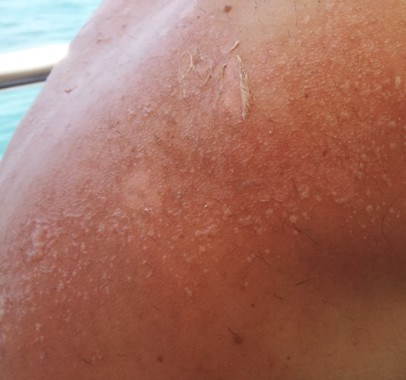
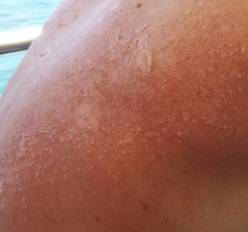
Melanoma risk increased by 80% among women who had five or more severe sunburns as teenagers, based on a review of data from more than 100,000 white women.
The findings were published online May 29 in Cancer Epidemiology, Biomarkers and Prevention, a journal of the American Association for Cancer Research.
"We investigated the relationship between a number of potential risk factors, including chronic sun exposure over long durations in adulthood and sun exposure in early life, and risk of different types of skin cancer," wrote Dr. Shaowei Wu of Brigham and Women’s Hospital, Boston, and colleagues.
Diagnoses of 6,955 basal cell carcinomas (BCCs), 880 squamous cell carcinomas (SCCs), and 779 melanomas were identified during 2.05 million person-years of follow-up. The relative risk of skin cancer was 68% higher for both BCC and SCC, and 80% higher for melanoma in women who reported five or more blistering sunburns between ages 15 and 25 years, compared with those who reported no such sunburns (Cancer Epidemiol. Biomarkers Prev. 2014;23:1080-9).
The study included 101,916 nurses participating in the Nurses’ Health Study II. The women enrolled between the ages of 25 and 42 years, and were followed for 20 years between 1989 and 2009. The eligible participants had no baseline history of any cancer and were diagnosed with incident BCC, SCC, or melanoma between baseline and the last follow-up.
Cumulative ultraviolet radiation exposure in adulthood, measured over long durations using a composite estimate called UV flux, also was associated with an increased risk of BCC and SCC, but not with melanoma. This suggests that "melanoma may have a more complicated relationship with sun exposure than SCC and BCC," the researchers said.
The study was limited by the approximate estimates of UV radiation exposure, incomplete information about personal behaviors such as sunscreen use, and the fact that BCC cases were not independently validated as SCC and melanoma. However, the findings "support heterogenous associations between sun exposure, other potential risk factors, and risk of different types of skin cancer, and thus may have potential implications for the prevention of skin cancers," the researchers noted.
Also, "our participants consisted entirely of white women, and thus the generalizability of the results to men and other ethnicities may be limited," they said.
The study was supported by the department of dermatology at Brigham and Women’s Hospital, and by a grant from the National Institutes of Health. Corresponding author Dr. Abrar A. Qureshi has served as a consultant and/or advisory board member for multiple pharmaceutical companies. The other authors had no financial conflicts to disclose.
Melanoma risk increased by 80% among women who had five or more severe sunburns as teenagers, based on a review of data from more than 100,000 white women.
The findings were published online May 29 in Cancer Epidemiology, Biomarkers and Prevention, a journal of the American Association for Cancer Research.
"We investigated the relationship between a number of potential risk factors, including chronic sun exposure over long durations in adulthood and sun exposure in early life, and risk of different types of skin cancer," wrote Dr. Shaowei Wu of Brigham and Women’s Hospital, Boston, and colleagues.
Diagnoses of 6,955 basal cell carcinomas (BCCs), 880 squamous cell carcinomas (SCCs), and 779 melanomas were identified during 2.05 million person-years of follow-up. The relative risk of skin cancer was 68% higher for both BCC and SCC, and 80% higher for melanoma in women who reported five or more blistering sunburns between ages 15 and 25 years, compared with those who reported no such sunburns (Cancer Epidemiol. Biomarkers Prev. 2014;23:1080-9).
The study included 101,916 nurses participating in the Nurses’ Health Study II. The women enrolled between the ages of 25 and 42 years, and were followed for 20 years between 1989 and 2009. The eligible participants had no baseline history of any cancer and were diagnosed with incident BCC, SCC, or melanoma between baseline and the last follow-up.
Cumulative ultraviolet radiation exposure in adulthood, measured over long durations using a composite estimate called UV flux, also was associated with an increased risk of BCC and SCC, but not with melanoma. This suggests that "melanoma may have a more complicated relationship with sun exposure than SCC and BCC," the researchers said.
The study was limited by the approximate estimates of UV radiation exposure, incomplete information about personal behaviors such as sunscreen use, and the fact that BCC cases were not independently validated as SCC and melanoma. However, the findings "support heterogenous associations between sun exposure, other potential risk factors, and risk of different types of skin cancer, and thus may have potential implications for the prevention of skin cancers," the researchers noted.
Also, "our participants consisted entirely of white women, and thus the generalizability of the results to men and other ethnicities may be limited," they said.
The study was supported by the department of dermatology at Brigham and Women’s Hospital, and by a grant from the National Institutes of Health. Corresponding author Dr. Abrar A. Qureshi has served as a consultant and/or advisory board member for multiple pharmaceutical companies. The other authors had no financial conflicts to disclose.
Melanoma risk increased by 80% among women who had five or more severe sunburns as teenagers, based on a review of data from more than 100,000 white women.
The findings were published online May 29 in Cancer Epidemiology, Biomarkers and Prevention, a journal of the American Association for Cancer Research.
"We investigated the relationship between a number of potential risk factors, including chronic sun exposure over long durations in adulthood and sun exposure in early life, and risk of different types of skin cancer," wrote Dr. Shaowei Wu of Brigham and Women’s Hospital, Boston, and colleagues.
Diagnoses of 6,955 basal cell carcinomas (BCCs), 880 squamous cell carcinomas (SCCs), and 779 melanomas were identified during 2.05 million person-years of follow-up. The relative risk of skin cancer was 68% higher for both BCC and SCC, and 80% higher for melanoma in women who reported five or more blistering sunburns between ages 15 and 25 years, compared with those who reported no such sunburns (Cancer Epidemiol. Biomarkers Prev. 2014;23:1080-9).
The study included 101,916 nurses participating in the Nurses’ Health Study II. The women enrolled between the ages of 25 and 42 years, and were followed for 20 years between 1989 and 2009. The eligible participants had no baseline history of any cancer and were diagnosed with incident BCC, SCC, or melanoma between baseline and the last follow-up.
Cumulative ultraviolet radiation exposure in adulthood, measured over long durations using a composite estimate called UV flux, also was associated with an increased risk of BCC and SCC, but not with melanoma. This suggests that "melanoma may have a more complicated relationship with sun exposure than SCC and BCC," the researchers said.
The study was limited by the approximate estimates of UV radiation exposure, incomplete information about personal behaviors such as sunscreen use, and the fact that BCC cases were not independently validated as SCC and melanoma. However, the findings "support heterogenous associations between sun exposure, other potential risk factors, and risk of different types of skin cancer, and thus may have potential implications for the prevention of skin cancers," the researchers noted.
Also, "our participants consisted entirely of white women, and thus the generalizability of the results to men and other ethnicities may be limited," they said.
The study was supported by the department of dermatology at Brigham and Women’s Hospital, and by a grant from the National Institutes of Health. Corresponding author Dr. Abrar A. Qureshi has served as a consultant and/or advisory board member for multiple pharmaceutical companies. The other authors had no financial conflicts to disclose.
FROM CANCER EPIDEMIOLOGY, BIOMARKERS AND PREVENTION
Key clinical point: Increased melanoma risk was mainly associated with greater sun exposure in early life, while greater sun exposure in both early life and adulthood were predictive of increased BCC and SCC risk.
Major finding: Skin cancer risk was 68% higher for BCC and SCC, and 80% higher for melanoma in women who reported five or more blistering sunburns between ages 15 and 25 years.
Data source: 101,916 nurses enrolled in the Nurses’ Health Study II (1989-2009).
Disclosures: The study was supported by the department of dermatology at Brigham and Women’s Hospital, and by a grant from the National Institutes of Health. Corresponding author Dr. Qureshi has served as a consultant and/or advisory board member for multiple pharmaceutical companies. The other authors had no financial conflicts to disclose.