User login
The year in osteoarthritis
MAUI, HAWAII – One of the major happenings in the field of osteoarthritis in the past year was a disturbing report of dramatically increased risk of acute MI for at least 6 months after total knee replacement, panelists agreed at the 2016 Rheumatology Winter Clinical Symposium.
“What they found borders on frightening,” according to Dr. Martin J. Bergman of Drexel University, Philadelphia, and chief of rheumatology at Taylor Hospital in Ridley Park, Pa.

Dr. Bergman and copanelist Dr. Orrin M. Troum of the University of Southern California in Los Angeles highlighted key developments in osteoarthritis during the past year, including two major studies on total knee replacement, the Food and Drug Administration’s updated stronger warning on the cardiac and stroke risks of NSAIDs, a randomized trial which effectively takes hydroxychloroquine (Plaquenil) off the treatment menu for hand osteoarthritis, and a reassuring report on the safety of repeated intra-articular corticosteroid injections in patients with synovitic knee osteoarthritis.
Acute MI risk after total knee replacement
British investigators utilizing the U.K. National Health Service database retrospectively identified 13,849 patients who underwent total knee replacement (TKR) and an equal number of nonsurgical controls propensity-matched for cardiovascular risk factors. These two very large groups were followed for 5 years.
During the first month after TKR, the acute MI risk was 8.75-fold greater than in the matched controls. The elevated risk gradually declined thereafter, but it remained significantly higher than in controls until 1 year after surgery. At 3 months post surgery the TKR group was at fourfold increased risk of MI, compared with controls, and at 6 months their risk was still nearly double that of controls (Arthritis Rheumatol. 2015 Oct;67[10]:2771-9).
The British investigators also found a prolonged postsurgical elevated risk of MI in a large group of patients who underwent total hip replacement, although the magnitude of the increased risk, compared with matched controls, wasn’t as large as that seen after TKR.
Dr. Troum commented that the increased risk of MI during the first year after TKR identified in this study is something physicians now need to bring up in the risk/benefit discussion with patients considering TKR.
“Also, this study underscores that it may behoove us to make sure that these presurgical patients are really well worked up by a cardiologist or their primary care physician to mitigate that coronary risk as much as possible,” he added.
Another key finding in the U.K. study was that unlike the acute MI risk, the risk of venous thromboembolism following TKR remained elevated throughout the full 5 years of follow-up.
“Once you’ve had that surgery, you are at increased risk for venous thromboembolism. I think that’s something we have to keep in mind when a patient comes in with a history of total knee replacement and a complaint of calf pain or swelling – at that point, you have to think about deep venous thrombosis,” Dr. Bergman said.
TKR – Why wait?
In a Danish trial of 100 knee osteoarthritis patients deemed eligible for TKR, participants were randomized to prompt TKR followed by a 3-month regimen of exercise, dietary weight loss, physical therapy, and pain medication or to the nonsurgical regimen alone. At 12 months of follow-up, the prompt TKR group showed significantly greater improvement in a standardized score encompassing pain, symptoms, quality of life, and activities of daily living, even though one-quarter of patients in the nonsurgical treatment group bailed and underwent TKR before 12 months was up (N Engl J Med. 2015 Oct 22;373[17]:1597-606).
“My conclusion is that once you’ve determined that a patient needs and wants a total knee replacement, the patient should probably get it. Delaying – trying other modalities in an effort to lose weight and improve function – is really not going to buy you much in the way of time,” Dr. Bergman observed.
Hydroxychloroquine for hand osteoarthritis
At the 2015 European League Against Rheumatism (EULAR) meeting in Rome, Dutch investigators presented a randomized, double-blind trial in which 196 patients with symptomatic hand osteoarthritis received 6 months of hydroxychloroquine at 400 mg/day or placebo. Unlike in mild rheumatoid arthritis or lupus, hydroxychloroquine had no beneficial effect on hand osteoarthritis pain, disability, or quality of life measures.
“Plaquenil [Hydroxychloroquine] is not a good choice for patients with osteoarthritis of the hand. I think it’s a dead therapy,” Dr. Troum declared.
FDA expands warning on NSAIDs’ cardiovascular risk
On July 9, 2015, the FDA announced updated labels for NSAIDs. The new warning states that MI and stroke risk can increase as early as in the first week of NSAID use and appear to be dose- and duration-related. The agency also warned that patients who take an NSAID after a first MI are more likely to die within 1 year.
“This really brought a lot of folks to my office,” Dr. Troum recalled.
“Absolutely, this was big stuff,” Dr. Bergman agreed. “This became a nightmare for many of us because all of a sudden patients were scared to death about taking their NSAIDs.”
Intra-articular corticosteroids for knee osteoarthritis don’t accelerate cartilage deterioration
At last fall’s American College of Rheumatology meeting in San Francisco, Jeffrey B. Driban, Ph.D., of Tufts Medical Center, Boston, presented a double-blind, randomized trial of intra-articular injections of triamcinolone hexacetonide 40 mg versus saline quarterly for 2 years in 140 patients with symptomatic knee osteoarthritis with ultrasound evidence of synovitis. Participants underwent annual evaluation of periarticular bone and cartilage changes via MRI and dual-energy x-ray absorptiometry.
After 2 years, there was no difference between the two groups in terms of pain scores, walk time, or other functional measures. The injections – eight in total over 2 years – were safe, with new-onset hypertension and hyperglycemia rates of 3% in this obese population. And most important of all, there were no major differences between the two groups in terms of quantitative or semiquantitative structural endpoints; in other words, the injections didn’t increase the rate of structural disease progression. The intra-articular steroid group showed a modestly greater rate of loss of cartilage thickness, which the investigators deemed of uncertain clinical significance.
“The structural changes were minimal,” Dr. Troum noted. “This is only a 2-year study, but I can say that I now feel more comfortable giving these injections in patients who for whatever reason can’t get surgery.”
Dr. Bergman said that many orthopedic surgeons talk up the potential risk that intra-articular steroid injections will accelerate cartilage damage. They place an arbitrary limit on the number of injections a patient can receive.
“I think this study really helps us push back and say, ‘No, I think you’re fine in getting this procedure,’” the rheumatologist commented.
Dr. Bergman and Dr. Troum reported having no financial conflicts regarding their presentation.
MAUI, HAWAII – One of the major happenings in the field of osteoarthritis in the past year was a disturbing report of dramatically increased risk of acute MI for at least 6 months after total knee replacement, panelists agreed at the 2016 Rheumatology Winter Clinical Symposium.
“What they found borders on frightening,” according to Dr. Martin J. Bergman of Drexel University, Philadelphia, and chief of rheumatology at Taylor Hospital in Ridley Park, Pa.
Dr. Bergman and copanelist Dr. Orrin M. Troum of the University of Southern California in Los Angeles highlighted key developments in osteoarthritis during the past year, including two major studies on total knee replacement, the Food and Drug Administration’s updated stronger warning on the cardiac and stroke risks of NSAIDs, a randomized trial which effectively takes hydroxychloroquine (Plaquenil) off the treatment menu for hand osteoarthritis, and a reassuring report on the safety of repeated intra-articular corticosteroid injections in patients with synovitic knee osteoarthritis.
Acute MI risk after total knee replacement
British investigators utilizing the U.K. National Health Service database retrospectively identified 13,849 patients who underwent total knee replacement (TKR) and an equal number of nonsurgical controls propensity-matched for cardiovascular risk factors. These two very large groups were followed for 5 years.
During the first month after TKR, the acute MI risk was 8.75-fold greater than in the matched controls. The elevated risk gradually declined thereafter, but it remained significantly higher than in controls until 1 year after surgery. At 3 months post surgery the TKR group was at fourfold increased risk of MI, compared with controls, and at 6 months their risk was still nearly double that of controls (Arthritis Rheumatol. 2015 Oct;67[10]:2771-9).
The British investigators also found a prolonged postsurgical elevated risk of MI in a large group of patients who underwent total hip replacement, although the magnitude of the increased risk, compared with matched controls, wasn’t as large as that seen after TKR.
Dr. Troum commented that the increased risk of MI during the first year after TKR identified in this study is something physicians now need to bring up in the risk/benefit discussion with patients considering TKR.
“Also, this study underscores that it may behoove us to make sure that these presurgical patients are really well worked up by a cardiologist or their primary care physician to mitigate that coronary risk as much as possible,” he added.
Another key finding in the U.K. study was that unlike the acute MI risk, the risk of venous thromboembolism following TKR remained elevated throughout the full 5 years of follow-up.
“Once you’ve had that surgery, you are at increased risk for venous thromboembolism. I think that’s something we have to keep in mind when a patient comes in with a history of total knee replacement and a complaint of calf pain or swelling – at that point, you have to think about deep venous thrombosis,” Dr. Bergman said.
TKR – Why wait?
In a Danish trial of 100 knee osteoarthritis patients deemed eligible for TKR, participants were randomized to prompt TKR followed by a 3-month regimen of exercise, dietary weight loss, physical therapy, and pain medication or to the nonsurgical regimen alone. At 12 months of follow-up, the prompt TKR group showed significantly greater improvement in a standardized score encompassing pain, symptoms, quality of life, and activities of daily living, even though one-quarter of patients in the nonsurgical treatment group bailed and underwent TKR before 12 months was up (N Engl J Med. 2015 Oct 22;373[17]:1597-606).
“My conclusion is that once you’ve determined that a patient needs and wants a total knee replacement, the patient should probably get it. Delaying – trying other modalities in an effort to lose weight and improve function – is really not going to buy you much in the way of time,” Dr. Bergman observed.
Hydroxychloroquine for hand osteoarthritis
At the 2015 European League Against Rheumatism (EULAR) meeting in Rome, Dutch investigators presented a randomized, double-blind trial in which 196 patients with symptomatic hand osteoarthritis received 6 months of hydroxychloroquine at 400 mg/day or placebo. Unlike in mild rheumatoid arthritis or lupus, hydroxychloroquine had no beneficial effect on hand osteoarthritis pain, disability, or quality of life measures.
“Plaquenil [Hydroxychloroquine] is not a good choice for patients with osteoarthritis of the hand. I think it’s a dead therapy,” Dr. Troum declared.
FDA expands warning on NSAIDs’ cardiovascular risk
On July 9, 2015, the FDA announced updated labels for NSAIDs. The new warning states that MI and stroke risk can increase as early as in the first week of NSAID use and appear to be dose- and duration-related. The agency also warned that patients who take an NSAID after a first MI are more likely to die within 1 year.
“This really brought a lot of folks to my office,” Dr. Troum recalled.
“Absolutely, this was big stuff,” Dr. Bergman agreed. “This became a nightmare for many of us because all of a sudden patients were scared to death about taking their NSAIDs.”
Intra-articular corticosteroids for knee osteoarthritis don’t accelerate cartilage deterioration
At last fall’s American College of Rheumatology meeting in San Francisco, Jeffrey B. Driban, Ph.D., of Tufts Medical Center, Boston, presented a double-blind, randomized trial of intra-articular injections of triamcinolone hexacetonide 40 mg versus saline quarterly for 2 years in 140 patients with symptomatic knee osteoarthritis with ultrasound evidence of synovitis. Participants underwent annual evaluation of periarticular bone and cartilage changes via MRI and dual-energy x-ray absorptiometry.
After 2 years, there was no difference between the two groups in terms of pain scores, walk time, or other functional measures. The injections – eight in total over 2 years – were safe, with new-onset hypertension and hyperglycemia rates of 3% in this obese population. And most important of all, there were no major differences between the two groups in terms of quantitative or semiquantitative structural endpoints; in other words, the injections didn’t increase the rate of structural disease progression. The intra-articular steroid group showed a modestly greater rate of loss of cartilage thickness, which the investigators deemed of uncertain clinical significance.
“The structural changes were minimal,” Dr. Troum noted. “This is only a 2-year study, but I can say that I now feel more comfortable giving these injections in patients who for whatever reason can’t get surgery.”
Dr. Bergman said that many orthopedic surgeons talk up the potential risk that intra-articular steroid injections will accelerate cartilage damage. They place an arbitrary limit on the number of injections a patient can receive.
“I think this study really helps us push back and say, ‘No, I think you’re fine in getting this procedure,’” the rheumatologist commented.
Dr. Bergman and Dr. Troum reported having no financial conflicts regarding their presentation.
MAUI, HAWAII – One of the major happenings in the field of osteoarthritis in the past year was a disturbing report of dramatically increased risk of acute MI for at least 6 months after total knee replacement, panelists agreed at the 2016 Rheumatology Winter Clinical Symposium.
“What they found borders on frightening,” according to Dr. Martin J. Bergman of Drexel University, Philadelphia, and chief of rheumatology at Taylor Hospital in Ridley Park, Pa.
Dr. Bergman and copanelist Dr. Orrin M. Troum of the University of Southern California in Los Angeles highlighted key developments in osteoarthritis during the past year, including two major studies on total knee replacement, the Food and Drug Administration’s updated stronger warning on the cardiac and stroke risks of NSAIDs, a randomized trial which effectively takes hydroxychloroquine (Plaquenil) off the treatment menu for hand osteoarthritis, and a reassuring report on the safety of repeated intra-articular corticosteroid injections in patients with synovitic knee osteoarthritis.
Acute MI risk after total knee replacement
British investigators utilizing the U.K. National Health Service database retrospectively identified 13,849 patients who underwent total knee replacement (TKR) and an equal number of nonsurgical controls propensity-matched for cardiovascular risk factors. These two very large groups were followed for 5 years.
During the first month after TKR, the acute MI risk was 8.75-fold greater than in the matched controls. The elevated risk gradually declined thereafter, but it remained significantly higher than in controls until 1 year after surgery. At 3 months post surgery the TKR group was at fourfold increased risk of MI, compared with controls, and at 6 months their risk was still nearly double that of controls (Arthritis Rheumatol. 2015 Oct;67[10]:2771-9).
The British investigators also found a prolonged postsurgical elevated risk of MI in a large group of patients who underwent total hip replacement, although the magnitude of the increased risk, compared with matched controls, wasn’t as large as that seen after TKR.
Dr. Troum commented that the increased risk of MI during the first year after TKR identified in this study is something physicians now need to bring up in the risk/benefit discussion with patients considering TKR.
“Also, this study underscores that it may behoove us to make sure that these presurgical patients are really well worked up by a cardiologist or their primary care physician to mitigate that coronary risk as much as possible,” he added.
Another key finding in the U.K. study was that unlike the acute MI risk, the risk of venous thromboembolism following TKR remained elevated throughout the full 5 years of follow-up.
“Once you’ve had that surgery, you are at increased risk for venous thromboembolism. I think that’s something we have to keep in mind when a patient comes in with a history of total knee replacement and a complaint of calf pain or swelling – at that point, you have to think about deep venous thrombosis,” Dr. Bergman said.
TKR – Why wait?
In a Danish trial of 100 knee osteoarthritis patients deemed eligible for TKR, participants were randomized to prompt TKR followed by a 3-month regimen of exercise, dietary weight loss, physical therapy, and pain medication or to the nonsurgical regimen alone. At 12 months of follow-up, the prompt TKR group showed significantly greater improvement in a standardized score encompassing pain, symptoms, quality of life, and activities of daily living, even though one-quarter of patients in the nonsurgical treatment group bailed and underwent TKR before 12 months was up (N Engl J Med. 2015 Oct 22;373[17]:1597-606).
“My conclusion is that once you’ve determined that a patient needs and wants a total knee replacement, the patient should probably get it. Delaying – trying other modalities in an effort to lose weight and improve function – is really not going to buy you much in the way of time,” Dr. Bergman observed.
Hydroxychloroquine for hand osteoarthritis
At the 2015 European League Against Rheumatism (EULAR) meeting in Rome, Dutch investigators presented a randomized, double-blind trial in which 196 patients with symptomatic hand osteoarthritis received 6 months of hydroxychloroquine at 400 mg/day or placebo. Unlike in mild rheumatoid arthritis or lupus, hydroxychloroquine had no beneficial effect on hand osteoarthritis pain, disability, or quality of life measures.
“Plaquenil [Hydroxychloroquine] is not a good choice for patients with osteoarthritis of the hand. I think it’s a dead therapy,” Dr. Troum declared.
FDA expands warning on NSAIDs’ cardiovascular risk
On July 9, 2015, the FDA announced updated labels for NSAIDs. The new warning states that MI and stroke risk can increase as early as in the first week of NSAID use and appear to be dose- and duration-related. The agency also warned that patients who take an NSAID after a first MI are more likely to die within 1 year.
“This really brought a lot of folks to my office,” Dr. Troum recalled.
“Absolutely, this was big stuff,” Dr. Bergman agreed. “This became a nightmare for many of us because all of a sudden patients were scared to death about taking their NSAIDs.”
Intra-articular corticosteroids for knee osteoarthritis don’t accelerate cartilage deterioration
At last fall’s American College of Rheumatology meeting in San Francisco, Jeffrey B. Driban, Ph.D., of Tufts Medical Center, Boston, presented a double-blind, randomized trial of intra-articular injections of triamcinolone hexacetonide 40 mg versus saline quarterly for 2 years in 140 patients with symptomatic knee osteoarthritis with ultrasound evidence of synovitis. Participants underwent annual evaluation of periarticular bone and cartilage changes via MRI and dual-energy x-ray absorptiometry.
After 2 years, there was no difference between the two groups in terms of pain scores, walk time, or other functional measures. The injections – eight in total over 2 years – were safe, with new-onset hypertension and hyperglycemia rates of 3% in this obese population. And most important of all, there were no major differences between the two groups in terms of quantitative or semiquantitative structural endpoints; in other words, the injections didn’t increase the rate of structural disease progression. The intra-articular steroid group showed a modestly greater rate of loss of cartilage thickness, which the investigators deemed of uncertain clinical significance.
“The structural changes were minimal,” Dr. Troum noted. “This is only a 2-year study, but I can say that I now feel more comfortable giving these injections in patients who for whatever reason can’t get surgery.”
Dr. Bergman said that many orthopedic surgeons talk up the potential risk that intra-articular steroid injections will accelerate cartilage damage. They place an arbitrary limit on the number of injections a patient can receive.
“I think this study really helps us push back and say, ‘No, I think you’re fine in getting this procedure,’” the rheumatologist commented.
Dr. Bergman and Dr. Troum reported having no financial conflicts regarding their presentation.
EXPERT ANALYSIS FROM RWCS 2016
Reslizumab especially effective in eosinophilic asthma with nasal polyps
LOS ANGELES – The interleukin-5 inhibitor reslizumab showed particularly strong efficacy in patients with severe eosinophilic asthma accompanied by chronic sinusitis and nasal polyps, as well as in patients age 65 and older, in separate analyses presented at the annual meeting of the American Academy of Allergy, Asthma, and Immunology. Both presentations were post hoc, pooled analyses of two published 52-week, double-blind, pivotal phase III randomized trials of IV reslizumab at 3.0 mg/kg or placebo every 4 weeks on top of standard background therapy. The trials included a combined total of close to 1,000 patients aged 12-75 years with baseline blood eosinophil counts of at least 400 cells/mcL and inadequately controlled asthma despite being on at least moderate-dose inhaled corticosteroids. The primary endpoint – frequency of clinical asthma exacerbations – was positive in both trials, with a reduction of 54% with reslizumab compared to placebo (Lancet Respir Med. 2015 May;3[5]:355-66).
Reslizumab is a humanized monoclonal antibody of the IgG4/K isotype. On the basis of the phase III trials and other data, last December the Food and Drug Administration’s Pulmonary-Allergy Drug Advisory Committee voted 11-3 to recommend approval of the biologic in 18- to 75-year-olds with inadequately controlled eosinophilic asthma. A decision by the federal agency is expected imminently.
The two post hoc analyses were conducted to highlight the biologic’s performance in clinically important but previously understudied patient subgroups, according to investigators.
Dr. Steven F. Weinstein compared 52-week outcomes in 250 patients with chronic sinusitis, including 150 who also had nasal polyps, in juxtaposition to the total two-study population of 953 eosinophilic asthma patients. Of note, aspirin sensitivity was present in 37% of those with chronic sinusitis with nasal polyps (CSwNP) compared to 11% of total participants in the two phase III trials. The CSwNP group had higher blood eosinophil levels, too: an average of 884 cells/mcL, compared with 655/mcL in the study population as a whole.
The frequency of clinical asthma exacerbations was 3.22 episodes in 52 weeks in CSwNP patients on placebo and 0.56 in those given reslizumab, for an 83% reduction in the active treatment arm. In the overall study population, the frequency was 1.81 episodes with placebo versus 0.84 with reslizumab, for a less robust but still highly significant 54% reduction. The reduction in exacerbations among all subjects with chronic sinusitis who received reslizumab was intermediate at 70%, going from 2.81 episodes in controls to 0.83 with biologic therapy.
Clinical asthma exacerbations were defined as the use of systemic steroids by patients not already on such medication or at least a twofold increase in doses of inhaled or systemic corticosteroids for at least 3 days.
The placebo-subtracted improvement in lung function from baseline to 52 weeks in reslizumab-treated patients was 326 mL in the CSwNP group, 235 mL in all patients with chronic sinusitis, and 109 mL in the overall study population, according to Dr. Weinstein, an allergist-immunologist practicing in Huntington Beach, Calif.
A 0.5-point improvement on the validated Asthma Quality of Life Questionnaire (AQLQ) is accepted by researchers as the minimum for demonstrating clinically significant benefit. The 52-week placebo-subtracted improvement on this measure was 0.69 points in the reslizumab-treated CSwNP group, 0.47 in the total cohort of asthmatics with chronic sinusitis, and 0.27 points in the overall reslizumab-treated population.
Similarly, the average placebo-subtracted improvement on the Asthma Control Questionnaire–6 was 1.45 points in reslizumab-treated patients with CSwNP, a sixfold greater response than seen in the total study population, Dr. Weinstein noted.
The same pattern of greater-than-average efficacy on both primary and secondary study endpoints was seen with reslizumab in the 77 patients aged 65 years and older included in the two phase III trials compared with those age 18-64, according to Dr. David Bernstein, professor of medicine and environmental health at the University of Cincinnati.
Although older patients made up only a small fraction of total subjects in the two trials, it was important to examine how reslizumab performed in such patients because asthma affects an estimated 7% of Americans age 65 and up, and rates of both asthma hospitalization and mortality are higher than in younger patients, he noted.
Older and younger asthma patients in the two trials had comparable baseline characteristics. Yet in the older cohort the reduction in frequency of asthma exacerbations with reslizumab as compared to placebo was 67%, while in the younger patients it was only 53%.
Improvements in symptoms and quality of life as measured on the AQLQ, the Asthma Control Questionnaire–7, and the Asthma Symptom Utility Index were consistently larger in the reslizumab-treated older as compared to younger patients. On all three measures, only the older reslizumab-treated group successfully hurdled the bar defining minimal clinically significant improvement.
The two post hoc analyses were funded by Teva Pharmaceuticals. Both investigators serve on advisory boards for Teva and multiple other pharmaceutical companies.
LOS ANGELES – The interleukin-5 inhibitor reslizumab showed particularly strong efficacy in patients with severe eosinophilic asthma accompanied by chronic sinusitis and nasal polyps, as well as in patients age 65 and older, in separate analyses presented at the annual meeting of the American Academy of Allergy, Asthma, and Immunology. Both presentations were post hoc, pooled analyses of two published 52-week, double-blind, pivotal phase III randomized trials of IV reslizumab at 3.0 mg/kg or placebo every 4 weeks on top of standard background therapy. The trials included a combined total of close to 1,000 patients aged 12-75 years with baseline blood eosinophil counts of at least 400 cells/mcL and inadequately controlled asthma despite being on at least moderate-dose inhaled corticosteroids. The primary endpoint – frequency of clinical asthma exacerbations – was positive in both trials, with a reduction of 54% with reslizumab compared to placebo (Lancet Respir Med. 2015 May;3[5]:355-66).
Reslizumab is a humanized monoclonal antibody of the IgG4/K isotype. On the basis of the phase III trials and other data, last December the Food and Drug Administration’s Pulmonary-Allergy Drug Advisory Committee voted 11-3 to recommend approval of the biologic in 18- to 75-year-olds with inadequately controlled eosinophilic asthma. A decision by the federal agency is expected imminently.
The two post hoc analyses were conducted to highlight the biologic’s performance in clinically important but previously understudied patient subgroups, according to investigators.
Dr. Steven F. Weinstein compared 52-week outcomes in 250 patients with chronic sinusitis, including 150 who also had nasal polyps, in juxtaposition to the total two-study population of 953 eosinophilic asthma patients. Of note, aspirin sensitivity was present in 37% of those with chronic sinusitis with nasal polyps (CSwNP) compared to 11% of total participants in the two phase III trials. The CSwNP group had higher blood eosinophil levels, too: an average of 884 cells/mcL, compared with 655/mcL in the study population as a whole.
The frequency of clinical asthma exacerbations was 3.22 episodes in 52 weeks in CSwNP patients on placebo and 0.56 in those given reslizumab, for an 83% reduction in the active treatment arm. In the overall study population, the frequency was 1.81 episodes with placebo versus 0.84 with reslizumab, for a less robust but still highly significant 54% reduction. The reduction in exacerbations among all subjects with chronic sinusitis who received reslizumab was intermediate at 70%, going from 2.81 episodes in controls to 0.83 with biologic therapy.
Clinical asthma exacerbations were defined as the use of systemic steroids by patients not already on such medication or at least a twofold increase in doses of inhaled or systemic corticosteroids for at least 3 days.
The placebo-subtracted improvement in lung function from baseline to 52 weeks in reslizumab-treated patients was 326 mL in the CSwNP group, 235 mL in all patients with chronic sinusitis, and 109 mL in the overall study population, according to Dr. Weinstein, an allergist-immunologist practicing in Huntington Beach, Calif.
A 0.5-point improvement on the validated Asthma Quality of Life Questionnaire (AQLQ) is accepted by researchers as the minimum for demonstrating clinically significant benefit. The 52-week placebo-subtracted improvement on this measure was 0.69 points in the reslizumab-treated CSwNP group, 0.47 in the total cohort of asthmatics with chronic sinusitis, and 0.27 points in the overall reslizumab-treated population.
Similarly, the average placebo-subtracted improvement on the Asthma Control Questionnaire–6 was 1.45 points in reslizumab-treated patients with CSwNP, a sixfold greater response than seen in the total study population, Dr. Weinstein noted.
The same pattern of greater-than-average efficacy on both primary and secondary study endpoints was seen with reslizumab in the 77 patients aged 65 years and older included in the two phase III trials compared with those age 18-64, according to Dr. David Bernstein, professor of medicine and environmental health at the University of Cincinnati.
Although older patients made up only a small fraction of total subjects in the two trials, it was important to examine how reslizumab performed in such patients because asthma affects an estimated 7% of Americans age 65 and up, and rates of both asthma hospitalization and mortality are higher than in younger patients, he noted.
Older and younger asthma patients in the two trials had comparable baseline characteristics. Yet in the older cohort the reduction in frequency of asthma exacerbations with reslizumab as compared to placebo was 67%, while in the younger patients it was only 53%.
Improvements in symptoms and quality of life as measured on the AQLQ, the Asthma Control Questionnaire–7, and the Asthma Symptom Utility Index were consistently larger in the reslizumab-treated older as compared to younger patients. On all three measures, only the older reslizumab-treated group successfully hurdled the bar defining minimal clinically significant improvement.
The two post hoc analyses were funded by Teva Pharmaceuticals. Both investigators serve on advisory boards for Teva and multiple other pharmaceutical companies.
LOS ANGELES – The interleukin-5 inhibitor reslizumab showed particularly strong efficacy in patients with severe eosinophilic asthma accompanied by chronic sinusitis and nasal polyps, as well as in patients age 65 and older, in separate analyses presented at the annual meeting of the American Academy of Allergy, Asthma, and Immunology. Both presentations were post hoc, pooled analyses of two published 52-week, double-blind, pivotal phase III randomized trials of IV reslizumab at 3.0 mg/kg or placebo every 4 weeks on top of standard background therapy. The trials included a combined total of close to 1,000 patients aged 12-75 years with baseline blood eosinophil counts of at least 400 cells/mcL and inadequately controlled asthma despite being on at least moderate-dose inhaled corticosteroids. The primary endpoint – frequency of clinical asthma exacerbations – was positive in both trials, with a reduction of 54% with reslizumab compared to placebo (Lancet Respir Med. 2015 May;3[5]:355-66).
Reslizumab is a humanized monoclonal antibody of the IgG4/K isotype. On the basis of the phase III trials and other data, last December the Food and Drug Administration’s Pulmonary-Allergy Drug Advisory Committee voted 11-3 to recommend approval of the biologic in 18- to 75-year-olds with inadequately controlled eosinophilic asthma. A decision by the federal agency is expected imminently.
The two post hoc analyses were conducted to highlight the biologic’s performance in clinically important but previously understudied patient subgroups, according to investigators.
Dr. Steven F. Weinstein compared 52-week outcomes in 250 patients with chronic sinusitis, including 150 who also had nasal polyps, in juxtaposition to the total two-study population of 953 eosinophilic asthma patients. Of note, aspirin sensitivity was present in 37% of those with chronic sinusitis with nasal polyps (CSwNP) compared to 11% of total participants in the two phase III trials. The CSwNP group had higher blood eosinophil levels, too: an average of 884 cells/mcL, compared with 655/mcL in the study population as a whole.
The frequency of clinical asthma exacerbations was 3.22 episodes in 52 weeks in CSwNP patients on placebo and 0.56 in those given reslizumab, for an 83% reduction in the active treatment arm. In the overall study population, the frequency was 1.81 episodes with placebo versus 0.84 with reslizumab, for a less robust but still highly significant 54% reduction. The reduction in exacerbations among all subjects with chronic sinusitis who received reslizumab was intermediate at 70%, going from 2.81 episodes in controls to 0.83 with biologic therapy.
Clinical asthma exacerbations were defined as the use of systemic steroids by patients not already on such medication or at least a twofold increase in doses of inhaled or systemic corticosteroids for at least 3 days.
The placebo-subtracted improvement in lung function from baseline to 52 weeks in reslizumab-treated patients was 326 mL in the CSwNP group, 235 mL in all patients with chronic sinusitis, and 109 mL in the overall study population, according to Dr. Weinstein, an allergist-immunologist practicing in Huntington Beach, Calif.
A 0.5-point improvement on the validated Asthma Quality of Life Questionnaire (AQLQ) is accepted by researchers as the minimum for demonstrating clinically significant benefit. The 52-week placebo-subtracted improvement on this measure was 0.69 points in the reslizumab-treated CSwNP group, 0.47 in the total cohort of asthmatics with chronic sinusitis, and 0.27 points in the overall reslizumab-treated population.
Similarly, the average placebo-subtracted improvement on the Asthma Control Questionnaire–6 was 1.45 points in reslizumab-treated patients with CSwNP, a sixfold greater response than seen in the total study population, Dr. Weinstein noted.
The same pattern of greater-than-average efficacy on both primary and secondary study endpoints was seen with reslizumab in the 77 patients aged 65 years and older included in the two phase III trials compared with those age 18-64, according to Dr. David Bernstein, professor of medicine and environmental health at the University of Cincinnati.
Although older patients made up only a small fraction of total subjects in the two trials, it was important to examine how reslizumab performed in such patients because asthma affects an estimated 7% of Americans age 65 and up, and rates of both asthma hospitalization and mortality are higher than in younger patients, he noted.
Older and younger asthma patients in the two trials had comparable baseline characteristics. Yet in the older cohort the reduction in frequency of asthma exacerbations with reslizumab as compared to placebo was 67%, while in the younger patients it was only 53%.
Improvements in symptoms and quality of life as measured on the AQLQ, the Asthma Control Questionnaire–7, and the Asthma Symptom Utility Index were consistently larger in the reslizumab-treated older as compared to younger patients. On all three measures, only the older reslizumab-treated group successfully hurdled the bar defining minimal clinically significant improvement.
The two post hoc analyses were funded by Teva Pharmaceuticals. Both investigators serve on advisory boards for Teva and multiple other pharmaceutical companies.
AT 2016 AAAAI ANNUAL MEETING
Fresh evidence of methotrexate efficacy in psoriatic arthritis
MAUI, HAWAII – The effectiveness of methotrexate in psoriatic arthritis is a matter of debate, but Dr. Arthur Kavanaugh is a believer based in part upon a recent subanalysis of the TICOPA study.
Moreover, his new 5-year follow-up analysis from the GO-REVEAL study of golimumab (Simponi) with or without concomitant methotrexate suggests that methotrexate plus the tumor necrosis factor inhibitor provided synergistic efficacy, he said at the 2016 Rheumatology Winter Clinical Symposium.
The 5-year analysis doesn’t provide definitive proof of synergistic benefit because it wasn’t designed or powered with that endpoint in mind (Arthritis Care Res. 2016;68[2]:267–74). No randomized trial completed to date has been. But the first-ever trial set up to test the synergistic efficacy hypothesis is underway. It’s a 52-week, double-blind, multicenter, randomized trial of etanercept (Enbrel) and methotrexate versus either alone in combination with placebo. And while the Amgen-sponsored study won’t be completed until 2018, Dr. Kavanaugh is ready to predict the outcome based in part upon the message contained in his GO-REVEAL findings.
“I’m placing my bet down now that there will be synergy for the X-ray outcome of change in SHS [Sharp/van der Heijde Score] for sure, and maybe for clinical efficacy as well, both joints and skin,” declared Dr. Kavanaugh, the conference director and professor of medicine at the University of California, San Diego.
He pointed to a new subanalysis of the Tight Control of Psoriatic Arthritis (TICOPA) study reported by rheumatologists at the University of Leeds (England) as evidence that methotrexate is effective in psoriatic arthritis. Of the 188 patients in the tight control arm who received methotrexate in the first 12 weeks of the trial, 41% had an ACR 20 response, meaning a 20% improvement in disease signs and symptoms at 12 weeks. A total of 19% had an ACR 50 response. And 27% had at least a 75% improvement in Psoriasis Area and Severity Index, or PASI 75. A 63% reduction in the proportion of patients with dactylitis and a 26% decrease in the proportion of patients with enthesitis was observed in the early methotrexate group. There was a suggestion of a dose-response effect, with better outcomes seen in the 108 participants who received a mean dose greater than 15 mg/week (J Rheumatol. 2016 Feb;43[2]:356-61).
This is a more impressive result than earlier reported from the Methotrexate In Psoriatic Arthritis (MIPA) trial, where the ACR 20 response rate was only 34% (Rheumatology [Oxford]. 2012;51[8]:1368-77). That may well be because methotrexate was given at only 15 mg/week in MIPA, in Dr. Kavanaugh’s view.
“I think methotrexate can work for the peripheral arthritis. This TICOPA analysis gives us a sense of the extent of the improvement, and also the extent of improvement in the skin,” the rheumatologist commented.
Turning to the week 256 results of GO-REVEAL, he said there was no difference in clinical response between psoriatic arthritis patients on golimumab alone or golimumab plus methotrexate at baseline. But among patients who were doing well clinically, with an assessment of minimal disease activity (MDA) on three or more consecutive clinic visits, only those on golimumab plus methotrexate at baseline showed radiologic improvement. The 57 patients on combination therapy who achieved MDA on at least three consecutive visits showed a mean 1.29-point improvement in SHS; the 48 rated as having MDA on four or more consecutive occasions similarly had a mean 1.24-point improvement.
In contrast, the 59 participants who achieved MDA on three or more consecutive visits but were on golimumab without methotrexate at baseline had a 0.25-point increase in SHS, and the 47 who had MDA on at least four consecutive visits had a 0.38-point SHS bump.
Dr. Kavanaugh reported having financial relationships with roughly a dozen pharmaceutical companies
MAUI, HAWAII – The effectiveness of methotrexate in psoriatic arthritis is a matter of debate, but Dr. Arthur Kavanaugh is a believer based in part upon a recent subanalysis of the TICOPA study.
Moreover, his new 5-year follow-up analysis from the GO-REVEAL study of golimumab (Simponi) with or without concomitant methotrexate suggests that methotrexate plus the tumor necrosis factor inhibitor provided synergistic efficacy, he said at the 2016 Rheumatology Winter Clinical Symposium.
The 5-year analysis doesn’t provide definitive proof of synergistic benefit because it wasn’t designed or powered with that endpoint in mind (Arthritis Care Res. 2016;68[2]:267–74). No randomized trial completed to date has been. But the first-ever trial set up to test the synergistic efficacy hypothesis is underway. It’s a 52-week, double-blind, multicenter, randomized trial of etanercept (Enbrel) and methotrexate versus either alone in combination with placebo. And while the Amgen-sponsored study won’t be completed until 2018, Dr. Kavanaugh is ready to predict the outcome based in part upon the message contained in his GO-REVEAL findings.
“I’m placing my bet down now that there will be synergy for the X-ray outcome of change in SHS [Sharp/van der Heijde Score] for sure, and maybe for clinical efficacy as well, both joints and skin,” declared Dr. Kavanaugh, the conference director and professor of medicine at the University of California, San Diego.
He pointed to a new subanalysis of the Tight Control of Psoriatic Arthritis (TICOPA) study reported by rheumatologists at the University of Leeds (England) as evidence that methotrexate is effective in psoriatic arthritis. Of the 188 patients in the tight control arm who received methotrexate in the first 12 weeks of the trial, 41% had an ACR 20 response, meaning a 20% improvement in disease signs and symptoms at 12 weeks. A total of 19% had an ACR 50 response. And 27% had at least a 75% improvement in Psoriasis Area and Severity Index, or PASI 75. A 63% reduction in the proportion of patients with dactylitis and a 26% decrease in the proportion of patients with enthesitis was observed in the early methotrexate group. There was a suggestion of a dose-response effect, with better outcomes seen in the 108 participants who received a mean dose greater than 15 mg/week (J Rheumatol. 2016 Feb;43[2]:356-61).
This is a more impressive result than earlier reported from the Methotrexate In Psoriatic Arthritis (MIPA) trial, where the ACR 20 response rate was only 34% (Rheumatology [Oxford]. 2012;51[8]:1368-77). That may well be because methotrexate was given at only 15 mg/week in MIPA, in Dr. Kavanaugh’s view.
“I think methotrexate can work for the peripheral arthritis. This TICOPA analysis gives us a sense of the extent of the improvement, and also the extent of improvement in the skin,” the rheumatologist commented.
Turning to the week 256 results of GO-REVEAL, he said there was no difference in clinical response between psoriatic arthritis patients on golimumab alone or golimumab plus methotrexate at baseline. But among patients who were doing well clinically, with an assessment of minimal disease activity (MDA) on three or more consecutive clinic visits, only those on golimumab plus methotrexate at baseline showed radiologic improvement. The 57 patients on combination therapy who achieved MDA on at least three consecutive visits showed a mean 1.29-point improvement in SHS; the 48 rated as having MDA on four or more consecutive occasions similarly had a mean 1.24-point improvement.
In contrast, the 59 participants who achieved MDA on three or more consecutive visits but were on golimumab without methotrexate at baseline had a 0.25-point increase in SHS, and the 47 who had MDA on at least four consecutive visits had a 0.38-point SHS bump.
Dr. Kavanaugh reported having financial relationships with roughly a dozen pharmaceutical companies
MAUI, HAWAII – The effectiveness of methotrexate in psoriatic arthritis is a matter of debate, but Dr. Arthur Kavanaugh is a believer based in part upon a recent subanalysis of the TICOPA study.
Moreover, his new 5-year follow-up analysis from the GO-REVEAL study of golimumab (Simponi) with or without concomitant methotrexate suggests that methotrexate plus the tumor necrosis factor inhibitor provided synergistic efficacy, he said at the 2016 Rheumatology Winter Clinical Symposium.
The 5-year analysis doesn’t provide definitive proof of synergistic benefit because it wasn’t designed or powered with that endpoint in mind (Arthritis Care Res. 2016;68[2]:267–74). No randomized trial completed to date has been. But the first-ever trial set up to test the synergistic efficacy hypothesis is underway. It’s a 52-week, double-blind, multicenter, randomized trial of etanercept (Enbrel) and methotrexate versus either alone in combination with placebo. And while the Amgen-sponsored study won’t be completed until 2018, Dr. Kavanaugh is ready to predict the outcome based in part upon the message contained in his GO-REVEAL findings.
“I’m placing my bet down now that there will be synergy for the X-ray outcome of change in SHS [Sharp/van der Heijde Score] for sure, and maybe for clinical efficacy as well, both joints and skin,” declared Dr. Kavanaugh, the conference director and professor of medicine at the University of California, San Diego.
He pointed to a new subanalysis of the Tight Control of Psoriatic Arthritis (TICOPA) study reported by rheumatologists at the University of Leeds (England) as evidence that methotrexate is effective in psoriatic arthritis. Of the 188 patients in the tight control arm who received methotrexate in the first 12 weeks of the trial, 41% had an ACR 20 response, meaning a 20% improvement in disease signs and symptoms at 12 weeks. A total of 19% had an ACR 50 response. And 27% had at least a 75% improvement in Psoriasis Area and Severity Index, or PASI 75. A 63% reduction in the proportion of patients with dactylitis and a 26% decrease in the proportion of patients with enthesitis was observed in the early methotrexate group. There was a suggestion of a dose-response effect, with better outcomes seen in the 108 participants who received a mean dose greater than 15 mg/week (J Rheumatol. 2016 Feb;43[2]:356-61).
This is a more impressive result than earlier reported from the Methotrexate In Psoriatic Arthritis (MIPA) trial, where the ACR 20 response rate was only 34% (Rheumatology [Oxford]. 2012;51[8]:1368-77). That may well be because methotrexate was given at only 15 mg/week in MIPA, in Dr. Kavanaugh’s view.
“I think methotrexate can work for the peripheral arthritis. This TICOPA analysis gives us a sense of the extent of the improvement, and also the extent of improvement in the skin,” the rheumatologist commented.
Turning to the week 256 results of GO-REVEAL, he said there was no difference in clinical response between psoriatic arthritis patients on golimumab alone or golimumab plus methotrexate at baseline. But among patients who were doing well clinically, with an assessment of minimal disease activity (MDA) on three or more consecutive clinic visits, only those on golimumab plus methotrexate at baseline showed radiologic improvement. The 57 patients on combination therapy who achieved MDA on at least three consecutive visits showed a mean 1.29-point improvement in SHS; the 48 rated as having MDA on four or more consecutive occasions similarly had a mean 1.24-point improvement.
In contrast, the 59 participants who achieved MDA on three or more consecutive visits but were on golimumab without methotrexate at baseline had a 0.25-point increase in SHS, and the 47 who had MDA on at least four consecutive visits had a 0.38-point SHS bump.
Dr. Kavanaugh reported having financial relationships with roughly a dozen pharmaceutical companies
EXPERT ANALYSIS FROM RWCS 2016
Expert examines secukinumab’s role in ankylosing spondylitis treatment strategies
MAUI, HAWAII – The most important development within the past year in the treatment of ankylosing spondylitis was the Food and Drug Administration approval of secukinumab (Cosentyx) as the first non-tumor necrosis factor inhibitor biologic for this condition – but the interleukin-17A inhibitor is not going to immediately step into a role as a first-line therapy, Dr. Eric M. Ruderman predicted at the 2016 Rheumatology Winter Clinical Symposium.
“In all likelihood nobody’s going to use this as a first-line drug right out of the gate. It’s a drug you’re going to potentially go to in people who haven’t responded to the things that you’ve been comfortable using for the last 10 or 15 years. So the big practical issue becomes, ‘How does secukinumab perform in TNF inhibitor-naive patients versus prior TNF inhibitor inadequate responders?’ ” according to the rheumatologist, who is professor of medicine at Northwestern University in Chicago.

This question has been addressed in secondary analyses of the pivotal phase III MEASURE 1 and MEASURE 2 trials which have been presented at the annual European League Against Rheumatism and American College of Rheumatology meetings. The bottom line was that the therapeutic response rate in both trials was markedly lower in TNF inhibitor inadequate responders than in TNF inhibitor-naive subjects.
“But there still is a significant response rate in the inadequate responders. It’s clearly better than placebo. So this is a drug that may have a role in your practice at the point where patients have failed on one or two anti-TNF biologics,” according to Dr. Ruderman.
The difference between MEASURE 1 and MEASURE 2 is that MEASURE 1 entailed three intravenous loading doses of the biologic at 2-week intervals before switching to monthly subcutaneous dosing, while MEASURE 2 featured subcutaneous loading doses given weekly for 4 weeks before moving to monthly administration. Interestingly, the FDA approval of secukinumab at 150 mg doesn’t call for a loading dose, even though both pivotal trials relied on them, the rheumatologist observed.
At 16 weeks in MEASURE 1, 66% of TNF inhibitor-naive subjects on secukinumab 150 mg had at least a 20% improvement from baseline in ankylosing spondylitis signs and symptoms, or Assessment of Spondyloarthritis International Society (ASAS) 20, compared with 46% of TNF inhibitor inadequate responders. The week 16 ASAS 20 rate in MEASURE 2 was 68% in TNF inhibitor-naive patients and 50% in those with a prior inadequate response to TNF inhibitor therapy.
How should rheumatologists expect secukinumab to perform in daily clinical practice? In the 181 ankylosing spoindylitis patients who completed 52 weeks in the MEASURE 2 extension study, 74% of those on secukinumab at 150 mg had an ASAS 20 response. In both trials, the secukinumab side effect profile was “reasonably clean,” in Dr. Ruderman’s view, with serious adverse events that were similar to placebo.
Serial MRI scans showed rapid resolution of bone marrow edema and inflammation by 16 weeks, an effect sustained through 52 weeks.
The big unanswered question is whether secukinumab prevents radiographic progression of the disease. Serial cervical and spinal X-rays rated using the modified Stoke Ankylosing Spondylitis Spinal Score showed a mean increase of just 0.30 points at 2 years from a baseline of 10.22, with 80% of patients demonstrating no change over time. But there were no untreated controls for comparison in this analysis, so it’s not possible to say whether the drug actually slowed disease progression or that’s the natural history of disease in those subjects, Dr. Ruderman noted.
Effect of NSAID dosing frequency on progression
On the topic of preventing radiographic progression in ankylosing spondylitis, the rheumatologist highlighted a prospective study presented at last year’s EULAR meeting and published online last summer (Ann Rheum Dis. 2015 Aug 4. doi: 10.1136/annrheumdis-2015-207897) that demonstrated that continuous use of diclofenac didn’t do any better at preventing radiographic spinal disease progression than on-demand use of the nonsteroidal anti-inflammatory drug (NSAID) over the course of 2 years.
“There’s been a lot of noise in the ankylosing spondylitis community about the potential benefit of NSAIDs in preventing structural progression. Previous information suggested that staying on them continuously actually reduced radiographic progression. This diclofenac study has shaken things up a little. It raises the question of whether there is any added benefit for NSAIDs in terms of structural progression,” he commented.
Current ACR/SAA/SPARTAN guidelines, which predate the study, feature a conditional recommendation that patients with active ankylosing spondylitis stay on continuous NSAID therapy.
Secukinumab is also approved for treatment of psoriasis and psoriatic arthritis.
Dr. Ruderman reported serving as a consultant to and/or receiving research grants from numerous pharmaceutical companies, including Novartis, which markets secukinumab.
MAUI, HAWAII – The most important development within the past year in the treatment of ankylosing spondylitis was the Food and Drug Administration approval of secukinumab (Cosentyx) as the first non-tumor necrosis factor inhibitor biologic for this condition – but the interleukin-17A inhibitor is not going to immediately step into a role as a first-line therapy, Dr. Eric M. Ruderman predicted at the 2016 Rheumatology Winter Clinical Symposium.
“In all likelihood nobody’s going to use this as a first-line drug right out of the gate. It’s a drug you’re going to potentially go to in people who haven’t responded to the things that you’ve been comfortable using for the last 10 or 15 years. So the big practical issue becomes, ‘How does secukinumab perform in TNF inhibitor-naive patients versus prior TNF inhibitor inadequate responders?’ ” according to the rheumatologist, who is professor of medicine at Northwestern University in Chicago.
This question has been addressed in secondary analyses of the pivotal phase III MEASURE 1 and MEASURE 2 trials which have been presented at the annual European League Against Rheumatism and American College of Rheumatology meetings. The bottom line was that the therapeutic response rate in both trials was markedly lower in TNF inhibitor inadequate responders than in TNF inhibitor-naive subjects.
“But there still is a significant response rate in the inadequate responders. It’s clearly better than placebo. So this is a drug that may have a role in your practice at the point where patients have failed on one or two anti-TNF biologics,” according to Dr. Ruderman.
The difference between MEASURE 1 and MEASURE 2 is that MEASURE 1 entailed three intravenous loading doses of the biologic at 2-week intervals before switching to monthly subcutaneous dosing, while MEASURE 2 featured subcutaneous loading doses given weekly for 4 weeks before moving to monthly administration. Interestingly, the FDA approval of secukinumab at 150 mg doesn’t call for a loading dose, even though both pivotal trials relied on them, the rheumatologist observed.
At 16 weeks in MEASURE 1, 66% of TNF inhibitor-naive subjects on secukinumab 150 mg had at least a 20% improvement from baseline in ankylosing spondylitis signs and symptoms, or Assessment of Spondyloarthritis International Society (ASAS) 20, compared with 46% of TNF inhibitor inadequate responders. The week 16 ASAS 20 rate in MEASURE 2 was 68% in TNF inhibitor-naive patients and 50% in those with a prior inadequate response to TNF inhibitor therapy.
How should rheumatologists expect secukinumab to perform in daily clinical practice? In the 181 ankylosing spoindylitis patients who completed 52 weeks in the MEASURE 2 extension study, 74% of those on secukinumab at 150 mg had an ASAS 20 response. In both trials, the secukinumab side effect profile was “reasonably clean,” in Dr. Ruderman’s view, with serious adverse events that were similar to placebo.
Serial MRI scans showed rapid resolution of bone marrow edema and inflammation by 16 weeks, an effect sustained through 52 weeks.
The big unanswered question is whether secukinumab prevents radiographic progression of the disease. Serial cervical and spinal X-rays rated using the modified Stoke Ankylosing Spondylitis Spinal Score showed a mean increase of just 0.30 points at 2 years from a baseline of 10.22, with 80% of patients demonstrating no change over time. But there were no untreated controls for comparison in this analysis, so it’s not possible to say whether the drug actually slowed disease progression or that’s the natural history of disease in those subjects, Dr. Ruderman noted.
Effect of NSAID dosing frequency on progression
On the topic of preventing radiographic progression in ankylosing spondylitis, the rheumatologist highlighted a prospective study presented at last year’s EULAR meeting and published online last summer (Ann Rheum Dis. 2015 Aug 4. doi: 10.1136/annrheumdis-2015-207897) that demonstrated that continuous use of diclofenac didn’t do any better at preventing radiographic spinal disease progression than on-demand use of the nonsteroidal anti-inflammatory drug (NSAID) over the course of 2 years.
“There’s been a lot of noise in the ankylosing spondylitis community about the potential benefit of NSAIDs in preventing structural progression. Previous information suggested that staying on them continuously actually reduced radiographic progression. This diclofenac study has shaken things up a little. It raises the question of whether there is any added benefit for NSAIDs in terms of structural progression,” he commented.
Current ACR/SAA/SPARTAN guidelines, which predate the study, feature a conditional recommendation that patients with active ankylosing spondylitis stay on continuous NSAID therapy.
Secukinumab is also approved for treatment of psoriasis and psoriatic arthritis.
Dr. Ruderman reported serving as a consultant to and/or receiving research grants from numerous pharmaceutical companies, including Novartis, which markets secukinumab.
MAUI, HAWAII – The most important development within the past year in the treatment of ankylosing spondylitis was the Food and Drug Administration approval of secukinumab (Cosentyx) as the first non-tumor necrosis factor inhibitor biologic for this condition – but the interleukin-17A inhibitor is not going to immediately step into a role as a first-line therapy, Dr. Eric M. Ruderman predicted at the 2016 Rheumatology Winter Clinical Symposium.
“In all likelihood nobody’s going to use this as a first-line drug right out of the gate. It’s a drug you’re going to potentially go to in people who haven’t responded to the things that you’ve been comfortable using for the last 10 or 15 years. So the big practical issue becomes, ‘How does secukinumab perform in TNF inhibitor-naive patients versus prior TNF inhibitor inadequate responders?’ ” according to the rheumatologist, who is professor of medicine at Northwestern University in Chicago.
This question has been addressed in secondary analyses of the pivotal phase III MEASURE 1 and MEASURE 2 trials which have been presented at the annual European League Against Rheumatism and American College of Rheumatology meetings. The bottom line was that the therapeutic response rate in both trials was markedly lower in TNF inhibitor inadequate responders than in TNF inhibitor-naive subjects.
“But there still is a significant response rate in the inadequate responders. It’s clearly better than placebo. So this is a drug that may have a role in your practice at the point where patients have failed on one or two anti-TNF biologics,” according to Dr. Ruderman.
The difference between MEASURE 1 and MEASURE 2 is that MEASURE 1 entailed three intravenous loading doses of the biologic at 2-week intervals before switching to monthly subcutaneous dosing, while MEASURE 2 featured subcutaneous loading doses given weekly for 4 weeks before moving to monthly administration. Interestingly, the FDA approval of secukinumab at 150 mg doesn’t call for a loading dose, even though both pivotal trials relied on them, the rheumatologist observed.
At 16 weeks in MEASURE 1, 66% of TNF inhibitor-naive subjects on secukinumab 150 mg had at least a 20% improvement from baseline in ankylosing spondylitis signs and symptoms, or Assessment of Spondyloarthritis International Society (ASAS) 20, compared with 46% of TNF inhibitor inadequate responders. The week 16 ASAS 20 rate in MEASURE 2 was 68% in TNF inhibitor-naive patients and 50% in those with a prior inadequate response to TNF inhibitor therapy.
How should rheumatologists expect secukinumab to perform in daily clinical practice? In the 181 ankylosing spoindylitis patients who completed 52 weeks in the MEASURE 2 extension study, 74% of those on secukinumab at 150 mg had an ASAS 20 response. In both trials, the secukinumab side effect profile was “reasonably clean,” in Dr. Ruderman’s view, with serious adverse events that were similar to placebo.
Serial MRI scans showed rapid resolution of bone marrow edema and inflammation by 16 weeks, an effect sustained through 52 weeks.
The big unanswered question is whether secukinumab prevents radiographic progression of the disease. Serial cervical and spinal X-rays rated using the modified Stoke Ankylosing Spondylitis Spinal Score showed a mean increase of just 0.30 points at 2 years from a baseline of 10.22, with 80% of patients demonstrating no change over time. But there were no untreated controls for comparison in this analysis, so it’s not possible to say whether the drug actually slowed disease progression or that’s the natural history of disease in those subjects, Dr. Ruderman noted.
Effect of NSAID dosing frequency on progression
On the topic of preventing radiographic progression in ankylosing spondylitis, the rheumatologist highlighted a prospective study presented at last year’s EULAR meeting and published online last summer (Ann Rheum Dis. 2015 Aug 4. doi: 10.1136/annrheumdis-2015-207897) that demonstrated that continuous use of diclofenac didn’t do any better at preventing radiographic spinal disease progression than on-demand use of the nonsteroidal anti-inflammatory drug (NSAID) over the course of 2 years.
“There’s been a lot of noise in the ankylosing spondylitis community about the potential benefit of NSAIDs in preventing structural progression. Previous information suggested that staying on them continuously actually reduced radiographic progression. This diclofenac study has shaken things up a little. It raises the question of whether there is any added benefit for NSAIDs in terms of structural progression,” he commented.
Current ACR/SAA/SPARTAN guidelines, which predate the study, feature a conditional recommendation that patients with active ankylosing spondylitis stay on continuous NSAID therapy.
Secukinumab is also approved for treatment of psoriasis and psoriatic arthritis.
Dr. Ruderman reported serving as a consultant to and/or receiving research grants from numerous pharmaceutical companies, including Novartis, which markets secukinumab.
EXPERT ANALYSIS FROM RWCS 2016

Don’t overlook topical tazarotene for psoriasis
WAIKOLOA, HAWAII – Tazarotene remains an important and effective albeit greatly underutilized topical therapy in psoriasis – but it’s on its way to becoming an even better drug, Dr. Linda Stein Gold said at the Hawaii Dermatology Seminar provided by the Global Academy for Medical Education/Skin Disease Education Foundation.
The topical retinoid has been formulated together with the superpotent steroid halobetasol propionate 0.01% in an investigational fixed combination lotion known for now as IDP-118. This medication, under development by Valeant, is in an ongoing, phase III multicenter, double-blind randomized trial with the vehicle lotion serving as control in adults with moderate to severe plaque psoriasis. A year-long, open-label, phase III safety study is also in progress, according to Dr. Stein Gold of Henry Ford Hospital in Detroit.

Tazarotene (Tazorac) is approved by the Food and Drug Administration as a 0.05% and 0.1% cream or gel for psoriasis and in the 0.1% cream or gel for acne. But when Dr. Stein Gold asked her large Hawaii audience for a show of hands as to who is prescribing tazarotene for their psoriasis patients, not a hand went up.
“Tazarotene carries some baggage,” she observed. “It’s pregnancy category X, and it also is quite irritating. If you use tazarotene on psoriatic skin, you’ll get a lot of irritation. But if you do so in combination with a potent or superpotent topical steroid, you’re not only able to increase the efficacy, but you also minimize the tolerability issues.
These dual benefits are the result of the two treatments’ differing mechanisms of action. This has been known for a long time. Indeed, it was demonstrated in a randomized trial nearly 2 decades ago (J Am Acad Dermatol. 1998 Oct;39[4 Pt 2]:S139-43). But only with the recent appreciation that 80% of psoriasis patients treat their disease exclusively with topical therapies has a pharmaceutical company moved to take advantage of these synergistic effects.
Dr. Stein Gold, director of dermatology research at Detroit’s Henry Ford Health System, said that the pharmaceutical industry has finally noted the considerable unmet need for additional topical psoriasis therapies that will be more effective and/or cosmetically elegant or have a novel mechanism of action. A slew of novel topical agents are now in the developmental pipeline in phase II studies for psoriasis. Among these new molecules are a topical formulation of methotrexate in a proprietary vehicle; the Janus kinase (JAK) 1 and 2 inhibitor ruxolitinib (Jakafi) in a cream for treatment of both psoriasis and atopic dermatitis; a tyrosine kinase inhibitor cream and ointment; an integrin inhibitor cream, and a phosphodiesterase-4 inhibitor ointment.
In addition, in October 2015, the FDA approved an aerosol foam fixed combination of calcipotriene 0.005% and betamethasone dipropionate 0.064% (Enstilar) for psoriasis. It’s more effective and cosmetically elegant than the fixed-combination ointment, she noted.
“Topical therapy is still going strong. I think there is always going to be a need for topical psoriasis therapies,” the dermatologist declared.
She reported serving as a consultant to and/or scientific advisory board member for numerous pharmaceutical companies.
SDEF and this news organization are owned by the same parent company.
WAIKOLOA, HAWAII – Tazarotene remains an important and effective albeit greatly underutilized topical therapy in psoriasis – but it’s on its way to becoming an even better drug, Dr. Linda Stein Gold said at the Hawaii Dermatology Seminar provided by the Global Academy for Medical Education/Skin Disease Education Foundation.
The topical retinoid has been formulated together with the superpotent steroid halobetasol propionate 0.01% in an investigational fixed combination lotion known for now as IDP-118. This medication, under development by Valeant, is in an ongoing, phase III multicenter, double-blind randomized trial with the vehicle lotion serving as control in adults with moderate to severe plaque psoriasis. A year-long, open-label, phase III safety study is also in progress, according to Dr. Stein Gold of Henry Ford Hospital in Detroit.
Tazarotene (Tazorac) is approved by the Food and Drug Administration as a 0.05% and 0.1% cream or gel for psoriasis and in the 0.1% cream or gel for acne. But when Dr. Stein Gold asked her large Hawaii audience for a show of hands as to who is prescribing tazarotene for their psoriasis patients, not a hand went up.
“Tazarotene carries some baggage,” she observed. “It’s pregnancy category X, and it also is quite irritating. If you use tazarotene on psoriatic skin, you’ll get a lot of irritation. But if you do so in combination with a potent or superpotent topical steroid, you’re not only able to increase the efficacy, but you also minimize the tolerability issues.
These dual benefits are the result of the two treatments’ differing mechanisms of action. This has been known for a long time. Indeed, it was demonstrated in a randomized trial nearly 2 decades ago (J Am Acad Dermatol. 1998 Oct;39[4 Pt 2]:S139-43). But only with the recent appreciation that 80% of psoriasis patients treat their disease exclusively with topical therapies has a pharmaceutical company moved to take advantage of these synergistic effects.
Dr. Stein Gold, director of dermatology research at Detroit’s Henry Ford Health System, said that the pharmaceutical industry has finally noted the considerable unmet need for additional topical psoriasis therapies that will be more effective and/or cosmetically elegant or have a novel mechanism of action. A slew of novel topical agents are now in the developmental pipeline in phase II studies for psoriasis. Among these new molecules are a topical formulation of methotrexate in a proprietary vehicle; the Janus kinase (JAK) 1 and 2 inhibitor ruxolitinib (Jakafi) in a cream for treatment of both psoriasis and atopic dermatitis; a tyrosine kinase inhibitor cream and ointment; an integrin inhibitor cream, and a phosphodiesterase-4 inhibitor ointment.
In addition, in October 2015, the FDA approved an aerosol foam fixed combination of calcipotriene 0.005% and betamethasone dipropionate 0.064% (Enstilar) for psoriasis. It’s more effective and cosmetically elegant than the fixed-combination ointment, she noted.
“Topical therapy is still going strong. I think there is always going to be a need for topical psoriasis therapies,” the dermatologist declared.
She reported serving as a consultant to and/or scientific advisory board member for numerous pharmaceutical companies.
SDEF and this news organization are owned by the same parent company.
WAIKOLOA, HAWAII – Tazarotene remains an important and effective albeit greatly underutilized topical therapy in psoriasis – but it’s on its way to becoming an even better drug, Dr. Linda Stein Gold said at the Hawaii Dermatology Seminar provided by the Global Academy for Medical Education/Skin Disease Education Foundation.
The topical retinoid has been formulated together with the superpotent steroid halobetasol propionate 0.01% in an investigational fixed combination lotion known for now as IDP-118. This medication, under development by Valeant, is in an ongoing, phase III multicenter, double-blind randomized trial with the vehicle lotion serving as control in adults with moderate to severe plaque psoriasis. A year-long, open-label, phase III safety study is also in progress, according to Dr. Stein Gold of Henry Ford Hospital in Detroit.
Tazarotene (Tazorac) is approved by the Food and Drug Administration as a 0.05% and 0.1% cream or gel for psoriasis and in the 0.1% cream or gel for acne. But when Dr. Stein Gold asked her large Hawaii audience for a show of hands as to who is prescribing tazarotene for their psoriasis patients, not a hand went up.
“Tazarotene carries some baggage,” she observed. “It’s pregnancy category X, and it also is quite irritating. If you use tazarotene on psoriatic skin, you’ll get a lot of irritation. But if you do so in combination with a potent or superpotent topical steroid, you’re not only able to increase the efficacy, but you also minimize the tolerability issues.
These dual benefits are the result of the two treatments’ differing mechanisms of action. This has been known for a long time. Indeed, it was demonstrated in a randomized trial nearly 2 decades ago (J Am Acad Dermatol. 1998 Oct;39[4 Pt 2]:S139-43). But only with the recent appreciation that 80% of psoriasis patients treat their disease exclusively with topical therapies has a pharmaceutical company moved to take advantage of these synergistic effects.
Dr. Stein Gold, director of dermatology research at Detroit’s Henry Ford Health System, said that the pharmaceutical industry has finally noted the considerable unmet need for additional topical psoriasis therapies that will be more effective and/or cosmetically elegant or have a novel mechanism of action. A slew of novel topical agents are now in the developmental pipeline in phase II studies for psoriasis. Among these new molecules are a topical formulation of methotrexate in a proprietary vehicle; the Janus kinase (JAK) 1 and 2 inhibitor ruxolitinib (Jakafi) in a cream for treatment of both psoriasis and atopic dermatitis; a tyrosine kinase inhibitor cream and ointment; an integrin inhibitor cream, and a phosphodiesterase-4 inhibitor ointment.
In addition, in October 2015, the FDA approved an aerosol foam fixed combination of calcipotriene 0.005% and betamethasone dipropionate 0.064% (Enstilar) for psoriasis. It’s more effective and cosmetically elegant than the fixed-combination ointment, she noted.
“Topical therapy is still going strong. I think there is always going to be a need for topical psoriasis therapies,” the dermatologist declared.
She reported serving as a consultant to and/or scientific advisory board member for numerous pharmaceutical companies.
SDEF and this news organization are owned by the same parent company.
EXPERT ANALYSIS FROM SDEF HAWAII DERMATOLOGY SEMINAR

When toenail onychomycosis can turn deadly
WAIKOLOA, HAWAII – Toenail onychomycosis is a common condition in the general population, but it’s three- to fourfold more prevalent in certain at risk populations where it can have serious and even life-threatening consequences, Dr. Theodore Rosen observed at the Hawaii Dermatology Seminar provided by the Global Academy for Medical Education/Skin Disease Education Foundation.
He cited a recent systematic review led by Dr. Aditya K. Gupta, professor of dermatology at the University of Toronto, whom Dr. Rosen hailed as one of the world’s great fungal disease authorities. Dr. Gupta and coworkers concluded that while the prevalence of dermatophyte toenail onychomycosis is 3.2% worldwide in the general population, it climbs to 8.8% in diabetics, 10.2% in psoriatics, 10.3% in the elderly, 11.9% in dialysis patients, 5.2% in renal transplant recipients, and 10.4% in HIV-positive individuals. The highest prevalence of onychomycosis due to non-dermatophyte molds was seen in psoriasis patients, at 2.5%, while elderly patients had the highest prevalence of onychomycosis caused by yeasts, at 6.1% (J Eur Acad Dermatol Venereol. 2015 Jun;29[6]:1039-44).

“Onychomycosis is especially important in those who are immunocompromised and immunosuppressed, for two reasons. One is that really odd organisms that aren’t Trichophyton rubrum or T. interdigitale can be involved: saprophytes like Scopulariopsis, Acremonium, Aspergillus, and Paecilomyces. And some of these saprophytes, like Fusarium, can get from the nail and nail bed into the bloodstream and can kill,” explained Dr. Rosen, professor of dermatology at Baylor College of Medicine in Houston.
“Onychomycosis, aside from the fact that it looks bad and often leads to pain, can also lead to breaks in the skin which then result in secondary bacterial infections. In fact, after motor vehicle accidents, onychomycosis and tinea pedis combined are the most common cause of lower extremity cellulitis leading to hospitalization in the United States,” he continued.
The go-to treatments for onychomycosis in patients with a bad prognostic factor are oral itraconazole (Sporanox) and terbinafine. Don’t be unduly swayed by the complete cure rates reported in clinical trials and cited in the product package inserts; they don’t tell the full story because of important differences in study design, according to Dr. Rosen.
He recommended that physicians familiarize themselves with posaconazole (Noxafil) as an antifungal to consider for second-line therapy in difficult-to-cure cases of onychomycosis in immunosuppressed patients. This is off-label therapy. The approved indications for this triazole antifungal agent are prophylaxis of invasive Aspergillus and Candida infections in severely immunocompromised patients, as well as treatment of oropharyngeal candidiasis. But this is a potent agent that provides broad-spectrum coverage coupled with a favorable safety profile. It performed well in a phase IIb randomized, placebo- and active-controlled, multicenter, investigator-blinded study of 218 adults with toenail onychomycosis (Br J Dermatol. 2012 Feb;166[2]:389-98).
Dr. Rosen reported serving on scientific advisory boards for Anacor, Merz, and Valeant.
SDEF and this news organization are owned by the same parent company.
WAIKOLOA, HAWAII – Toenail onychomycosis is a common condition in the general population, but it’s three- to fourfold more prevalent in certain at risk populations where it can have serious and even life-threatening consequences, Dr. Theodore Rosen observed at the Hawaii Dermatology Seminar provided by the Global Academy for Medical Education/Skin Disease Education Foundation.
He cited a recent systematic review led by Dr. Aditya K. Gupta, professor of dermatology at the University of Toronto, whom Dr. Rosen hailed as one of the world’s great fungal disease authorities. Dr. Gupta and coworkers concluded that while the prevalence of dermatophyte toenail onychomycosis is 3.2% worldwide in the general population, it climbs to 8.8% in diabetics, 10.2% in psoriatics, 10.3% in the elderly, 11.9% in dialysis patients, 5.2% in renal transplant recipients, and 10.4% in HIV-positive individuals. The highest prevalence of onychomycosis due to non-dermatophyte molds was seen in psoriasis patients, at 2.5%, while elderly patients had the highest prevalence of onychomycosis caused by yeasts, at 6.1% (J Eur Acad Dermatol Venereol. 2015 Jun;29[6]:1039-44).
“Onychomycosis is especially important in those who are immunocompromised and immunosuppressed, for two reasons. One is that really odd organisms that aren’t Trichophyton rubrum or T. interdigitale can be involved: saprophytes like Scopulariopsis, Acremonium, Aspergillus, and Paecilomyces. And some of these saprophytes, like Fusarium, can get from the nail and nail bed into the bloodstream and can kill,” explained Dr. Rosen, professor of dermatology at Baylor College of Medicine in Houston.
“Onychomycosis, aside from the fact that it looks bad and often leads to pain, can also lead to breaks in the skin which then result in secondary bacterial infections. In fact, after motor vehicle accidents, onychomycosis and tinea pedis combined are the most common cause of lower extremity cellulitis leading to hospitalization in the United States,” he continued.
The go-to treatments for onychomycosis in patients with a bad prognostic factor are oral itraconazole (Sporanox) and terbinafine. Don’t be unduly swayed by the complete cure rates reported in clinical trials and cited in the product package inserts; they don’t tell the full story because of important differences in study design, according to Dr. Rosen.
He recommended that physicians familiarize themselves with posaconazole (Noxafil) as an antifungal to consider for second-line therapy in difficult-to-cure cases of onychomycosis in immunosuppressed patients. This is off-label therapy. The approved indications for this triazole antifungal agent are prophylaxis of invasive Aspergillus and Candida infections in severely immunocompromised patients, as well as treatment of oropharyngeal candidiasis. But this is a potent agent that provides broad-spectrum coverage coupled with a favorable safety profile. It performed well in a phase IIb randomized, placebo- and active-controlled, multicenter, investigator-blinded study of 218 adults with toenail onychomycosis (Br J Dermatol. 2012 Feb;166[2]:389-98).
Dr. Rosen reported serving on scientific advisory boards for Anacor, Merz, and Valeant.
SDEF and this news organization are owned by the same parent company.
WAIKOLOA, HAWAII – Toenail onychomycosis is a common condition in the general population, but it’s three- to fourfold more prevalent in certain at risk populations where it can have serious and even life-threatening consequences, Dr. Theodore Rosen observed at the Hawaii Dermatology Seminar provided by the Global Academy for Medical Education/Skin Disease Education Foundation.
He cited a recent systematic review led by Dr. Aditya K. Gupta, professor of dermatology at the University of Toronto, whom Dr. Rosen hailed as one of the world’s great fungal disease authorities. Dr. Gupta and coworkers concluded that while the prevalence of dermatophyte toenail onychomycosis is 3.2% worldwide in the general population, it climbs to 8.8% in diabetics, 10.2% in psoriatics, 10.3% in the elderly, 11.9% in dialysis patients, 5.2% in renal transplant recipients, and 10.4% in HIV-positive individuals. The highest prevalence of onychomycosis due to non-dermatophyte molds was seen in psoriasis patients, at 2.5%, while elderly patients had the highest prevalence of onychomycosis caused by yeasts, at 6.1% (J Eur Acad Dermatol Venereol. 2015 Jun;29[6]:1039-44).
“Onychomycosis is especially important in those who are immunocompromised and immunosuppressed, for two reasons. One is that really odd organisms that aren’t Trichophyton rubrum or T. interdigitale can be involved: saprophytes like Scopulariopsis, Acremonium, Aspergillus, and Paecilomyces. And some of these saprophytes, like Fusarium, can get from the nail and nail bed into the bloodstream and can kill,” explained Dr. Rosen, professor of dermatology at Baylor College of Medicine in Houston.
“Onychomycosis, aside from the fact that it looks bad and often leads to pain, can also lead to breaks in the skin which then result in secondary bacterial infections. In fact, after motor vehicle accidents, onychomycosis and tinea pedis combined are the most common cause of lower extremity cellulitis leading to hospitalization in the United States,” he continued.
The go-to treatments for onychomycosis in patients with a bad prognostic factor are oral itraconazole (Sporanox) and terbinafine. Don’t be unduly swayed by the complete cure rates reported in clinical trials and cited in the product package inserts; they don’t tell the full story because of important differences in study design, according to Dr. Rosen.
He recommended that physicians familiarize themselves with posaconazole (Noxafil) as an antifungal to consider for second-line therapy in difficult-to-cure cases of onychomycosis in immunosuppressed patients. This is off-label therapy. The approved indications for this triazole antifungal agent are prophylaxis of invasive Aspergillus and Candida infections in severely immunocompromised patients, as well as treatment of oropharyngeal candidiasis. But this is a potent agent that provides broad-spectrum coverage coupled with a favorable safety profile. It performed well in a phase IIb randomized, placebo- and active-controlled, multicenter, investigator-blinded study of 218 adults with toenail onychomycosis (Br J Dermatol. 2012 Feb;166[2]:389-98).
Dr. Rosen reported serving on scientific advisory boards for Anacor, Merz, and Valeant.
SDEF and this news organization are owned by the same parent company.
EXPERT ANALYSIS FROM SDEF HAWAII DERMATOLOGY SEMINAR

Itraconazole targets basal cell carcinoma
WAIKOLOA, HAWAII – The familiar oral triazole antifungal agent itraconazole (Sporanox) is under active investigation for an unexpected use: as adjunctive therapy in patients with locally advanced or metastatic basal cell carcinoma.
“The promise of this drug is that the use of itraconazole with vismodegib or sonidegib may actually enhance the effectiveness of those drugs and also reduce the frequency of grade 2 toxicities by perhaps allowing a lower dose of vismodegib or sonidegib,” Dr. David L. Swanson said at the Hawaii Dermatology Seminar provided by the Global Academy for Medical Education/Skin Disease Education Foundation.

“Be looking for this drug that we use to treat toenail fungus as a potential drug for locally advanced or metastatic basal cell carcinoma,” advised Dr. Swanson, a dermatologist at the Mayo Clinic in Scottsdale, Ariz.
Vismodegib (Erivedge) has been a game changer for patients with inoperable locally advanced or metastatic breast cancer. “The response to this drug was amazing,” Dr. Swanson said of the landmark study which led to its approval in 2012 (N Engl J Med. 2012; 366[23]:2171-9).
Sonidegib (Odomzo), which like vismodegib inhibits the essential Hedgehog signaling pathway component known as Smoothened, was approved by the Food and Drug Administration in 2015 as the second oral drug in this novel class.
While the clinical benefits of these two drugs in patients with the most horrific basal cell carcinomas are extremely impressive, vismodegib and sonidegib have two major drawbacks: The tumors eventually develop resistance and commence growing again, and onerous grade 2 side effects requiring dose reduction are extremely common. The most frequent of these limiting side effects are a disturbed sense of taste, muscle spasms, alopecia, and weight loss.
The hope is that itraconazole may be of help with both issues, according to Dr. Swanson. It turns out that the antifungal agent is also an inhibitor of the Hedgehog pathway, and via a different mechanism than that of vismodegib and sonidegib.
He pointed to an international open-label exploratory phase II study led by Dr. Jean Y. Tang of Stanford (Calif.) University. The investigators treated 19 patients with a total of 90 basal cell carcinomas with oral itraconazole at 200 mg twice a day for 1 month or 100 mg twice a day for an average of 2.3 months.
The treatment reduced Hedgehog signaling pathway activity by 65%, Ki67 tumor cell proliferation by 45%, and tumor area by 24% (J Clin Oncol. 2014 Mar 10;32[8]:745-51).
These results aren’t as dramatic as what’s achieved using vismodegib or sonidegib. As stand-alone therapy, itraconazole doesn’t compare with those agents. However, the hope is that when itraconazole is prescribed in conjunction with vismodegib or sonidegib it will permit the latter drugs to be used at lower doses with no drop-off in efficacy, which would mean less grade 2 toxicity. Moreover, since itraconazole inhibits Hedgehog signaling through a mechanism that is different from that of the more potent agents, combination therapy might delay onset of tumor resistance, Dr. Swanson explained.
He reported having no financial conflicts of interest regarding his presentation.
SDEF and this news organization are owned by the same parent company.
WAIKOLOA, HAWAII – The familiar oral triazole antifungal agent itraconazole (Sporanox) is under active investigation for an unexpected use: as adjunctive therapy in patients with locally advanced or metastatic basal cell carcinoma.
“The promise of this drug is that the use of itraconazole with vismodegib or sonidegib may actually enhance the effectiveness of those drugs and also reduce the frequency of grade 2 toxicities by perhaps allowing a lower dose of vismodegib or sonidegib,” Dr. David L. Swanson said at the Hawaii Dermatology Seminar provided by the Global Academy for Medical Education/Skin Disease Education Foundation.
“Be looking for this drug that we use to treat toenail fungus as a potential drug for locally advanced or metastatic basal cell carcinoma,” advised Dr. Swanson, a dermatologist at the Mayo Clinic in Scottsdale, Ariz.
Vismodegib (Erivedge) has been a game changer for patients with inoperable locally advanced or metastatic breast cancer. “The response to this drug was amazing,” Dr. Swanson said of the landmark study which led to its approval in 2012 (N Engl J Med. 2012; 366[23]:2171-9).
Sonidegib (Odomzo), which like vismodegib inhibits the essential Hedgehog signaling pathway component known as Smoothened, was approved by the Food and Drug Administration in 2015 as the second oral drug in this novel class.
While the clinical benefits of these two drugs in patients with the most horrific basal cell carcinomas are extremely impressive, vismodegib and sonidegib have two major drawbacks: The tumors eventually develop resistance and commence growing again, and onerous grade 2 side effects requiring dose reduction are extremely common. The most frequent of these limiting side effects are a disturbed sense of taste, muscle spasms, alopecia, and weight loss.
The hope is that itraconazole may be of help with both issues, according to Dr. Swanson. It turns out that the antifungal agent is also an inhibitor of the Hedgehog pathway, and via a different mechanism than that of vismodegib and sonidegib.
He pointed to an international open-label exploratory phase II study led by Dr. Jean Y. Tang of Stanford (Calif.) University. The investigators treated 19 patients with a total of 90 basal cell carcinomas with oral itraconazole at 200 mg twice a day for 1 month or 100 mg twice a day for an average of 2.3 months.
The treatment reduced Hedgehog signaling pathway activity by 65%, Ki67 tumor cell proliferation by 45%, and tumor area by 24% (J Clin Oncol. 2014 Mar 10;32[8]:745-51).
These results aren’t as dramatic as what’s achieved using vismodegib or sonidegib. As stand-alone therapy, itraconazole doesn’t compare with those agents. However, the hope is that when itraconazole is prescribed in conjunction with vismodegib or sonidegib it will permit the latter drugs to be used at lower doses with no drop-off in efficacy, which would mean less grade 2 toxicity. Moreover, since itraconazole inhibits Hedgehog signaling through a mechanism that is different from that of the more potent agents, combination therapy might delay onset of tumor resistance, Dr. Swanson explained.
He reported having no financial conflicts of interest regarding his presentation.
SDEF and this news organization are owned by the same parent company.
WAIKOLOA, HAWAII – The familiar oral triazole antifungal agent itraconazole (Sporanox) is under active investigation for an unexpected use: as adjunctive therapy in patients with locally advanced or metastatic basal cell carcinoma.
“The promise of this drug is that the use of itraconazole with vismodegib or sonidegib may actually enhance the effectiveness of those drugs and also reduce the frequency of grade 2 toxicities by perhaps allowing a lower dose of vismodegib or sonidegib,” Dr. David L. Swanson said at the Hawaii Dermatology Seminar provided by the Global Academy for Medical Education/Skin Disease Education Foundation.
“Be looking for this drug that we use to treat toenail fungus as a potential drug for locally advanced or metastatic basal cell carcinoma,” advised Dr. Swanson, a dermatologist at the Mayo Clinic in Scottsdale, Ariz.
Vismodegib (Erivedge) has been a game changer for patients with inoperable locally advanced or metastatic breast cancer. “The response to this drug was amazing,” Dr. Swanson said of the landmark study which led to its approval in 2012 (N Engl J Med. 2012; 366[23]:2171-9).
Sonidegib (Odomzo), which like vismodegib inhibits the essential Hedgehog signaling pathway component known as Smoothened, was approved by the Food and Drug Administration in 2015 as the second oral drug in this novel class.
While the clinical benefits of these two drugs in patients with the most horrific basal cell carcinomas are extremely impressive, vismodegib and sonidegib have two major drawbacks: The tumors eventually develop resistance and commence growing again, and onerous grade 2 side effects requiring dose reduction are extremely common. The most frequent of these limiting side effects are a disturbed sense of taste, muscle spasms, alopecia, and weight loss.
The hope is that itraconazole may be of help with both issues, according to Dr. Swanson. It turns out that the antifungal agent is also an inhibitor of the Hedgehog pathway, and via a different mechanism than that of vismodegib and sonidegib.
He pointed to an international open-label exploratory phase II study led by Dr. Jean Y. Tang of Stanford (Calif.) University. The investigators treated 19 patients with a total of 90 basal cell carcinomas with oral itraconazole at 200 mg twice a day for 1 month or 100 mg twice a day for an average of 2.3 months.
The treatment reduced Hedgehog signaling pathway activity by 65%, Ki67 tumor cell proliferation by 45%, and tumor area by 24% (J Clin Oncol. 2014 Mar 10;32[8]:745-51).
These results aren’t as dramatic as what’s achieved using vismodegib or sonidegib. As stand-alone therapy, itraconazole doesn’t compare with those agents. However, the hope is that when itraconazole is prescribed in conjunction with vismodegib or sonidegib it will permit the latter drugs to be used at lower doses with no drop-off in efficacy, which would mean less grade 2 toxicity. Moreover, since itraconazole inhibits Hedgehog signaling through a mechanism that is different from that of the more potent agents, combination therapy might delay onset of tumor resistance, Dr. Swanson explained.
He reported having no financial conflicts of interest regarding his presentation.
SDEF and this news organization are owned by the same parent company.
EXPERT ANALYSIS FROM SDEF HAWAII DERMATOLOGY SEMINAR

Maximizing bang in topical onychomycosis therapy
WAIKOLOA, HAWAII – Two recent studies highlight several key points regarding topical therapy for onychomycosis: Treat it early for best results, and if concomitant tinea pedis is present, be sure to treat that, too, Dr. Theodore Rosen said at the Hawaii Dermatology Seminar.
The studies were separate secondary analyses of the pooled results of two large, double blind, vehicle-controlled, 48-week, phase III randomized trials of efinaconazole 10% topical solution (Jublia) for onychomycosis. But the same lessons probably apply to any topical antifungal, according to Dr. Rosen, professor of dermatology at Baylor College of Medicine, Houston.

Early treatment: This makes a big difference in outcome, as demonstrated in Dr. Phoebe Rich’s analysis of 1,655 patients in the phase III studies. Dr. Rich, director of the nail disorders clinic at Oregon Health and Science University, Portland, divided participants into three groups based upon disease duration: less than a year, 1-5 years, or more than 5 years. The complete cure rate was much better in the group with less than 1 year of onychomycosis, even though the extent of nail involvement of the target toenail didn’t differ significantly between the three groups (J Drugs Dermatol. 2015;Jan 14[1]:58-62).
“Now we have data: Don’t wait to treat until it has been there for 35 years. It’s easier to treat if it’s early,” Dr. Rosen commented at the seminar provided by Global Academy for Medical Education/Skin Disease Education Foundation.
When onychomycosis and tinea pedis coexist, treat both: Dr. Leon H. Kircik of Indiana University, Indianapolis, and associates reported in a poster at the Hawaii Dermatology Seminar that one in five participants in the two phase III trials had tinea pedis as well as onychomycosis, and nearly half of them were treated for their athlete’s foot using their physician’s choice of topical antifungals.
The primary endpoint in the two trials was the week 53 complete cure rate, defined as no clinical involvement of the target toenail, a negative potassium hydroxide exam, and a negative fungal culture. Among subjects with concomitant onychomycosis and tinea pedis, the onychomycosis complete cure rate was 28.2% if they received efinaconazole for their onychomycosis and got treatment for their tinea pedis, compared with 20.9% if they got efinaconazole but no treatment for their tinea pedis. The complete/almost complete cure rate was 35.5% with dual therapy versus 29.6% if they only received efinaconazole. Both differences were significant.
“Doesn’t that make logical sense? If you leave the fungus on the foot or between the toes, it’s going to say, ‘Wow, that’s steak up there on the nail. That’s real food. I’m just going to crawl back onto the nail because all my brothers up there are dead and there’s wide-open space,” Dr. Rosen explained.
He added that the reverse is also true: if a patient presents seeking treatment for athlete’s foot but also has onychomycosis, the best treatment results for the tinea pedis are obtained by also treating the nail infection.
Dr. Rosen offered a money-saving tip for effective OTC therapy for tinea pedis. Two words: Lotrimin Ultra. That’s the brand name for butenafine cream 1%, not to be confused with plain old Lotrimin, which is clotrimazole.
“Clotrimazole has been around since the dawn of man, and it’s not very effective. Many of the fungi are actually resistant to it. But they’re not resistant to butenafine, which is a very good topical antifungal now available over the counter. It costs $9 or $10 dollars for a tube the size of a baseball bat. It’s a good, effective, cheap way of treating concomitant tinea pedis,” he said.
Dr. Rosen reported serving on scientific advisory boards for Anacor, Merz, and Valeant.
SDEF and this news organization are owned by the same parent company.
WAIKOLOA, HAWAII – Two recent studies highlight several key points regarding topical therapy for onychomycosis: Treat it early for best results, and if concomitant tinea pedis is present, be sure to treat that, too, Dr. Theodore Rosen said at the Hawaii Dermatology Seminar.
The studies were separate secondary analyses of the pooled results of two large, double blind, vehicle-controlled, 48-week, phase III randomized trials of efinaconazole 10% topical solution (Jublia) for onychomycosis. But the same lessons probably apply to any topical antifungal, according to Dr. Rosen, professor of dermatology at Baylor College of Medicine, Houston.
Early treatment: This makes a big difference in outcome, as demonstrated in Dr. Phoebe Rich’s analysis of 1,655 patients in the phase III studies. Dr. Rich, director of the nail disorders clinic at Oregon Health and Science University, Portland, divided participants into three groups based upon disease duration: less than a year, 1-5 years, or more than 5 years. The complete cure rate was much better in the group with less than 1 year of onychomycosis, even though the extent of nail involvement of the target toenail didn’t differ significantly between the three groups (J Drugs Dermatol. 2015;Jan 14[1]:58-62).
“Now we have data: Don’t wait to treat until it has been there for 35 years. It’s easier to treat if it’s early,” Dr. Rosen commented at the seminar provided by Global Academy for Medical Education/Skin Disease Education Foundation.
When onychomycosis and tinea pedis coexist, treat both: Dr. Leon H. Kircik of Indiana University, Indianapolis, and associates reported in a poster at the Hawaii Dermatology Seminar that one in five participants in the two phase III trials had tinea pedis as well as onychomycosis, and nearly half of them were treated for their athlete’s foot using their physician’s choice of topical antifungals.
The primary endpoint in the two trials was the week 53 complete cure rate, defined as no clinical involvement of the target toenail, a negative potassium hydroxide exam, and a negative fungal culture. Among subjects with concomitant onychomycosis and tinea pedis, the onychomycosis complete cure rate was 28.2% if they received efinaconazole for their onychomycosis and got treatment for their tinea pedis, compared with 20.9% if they got efinaconazole but no treatment for their tinea pedis. The complete/almost complete cure rate was 35.5% with dual therapy versus 29.6% if they only received efinaconazole. Both differences were significant.
“Doesn’t that make logical sense? If you leave the fungus on the foot or between the toes, it’s going to say, ‘Wow, that’s steak up there on the nail. That’s real food. I’m just going to crawl back onto the nail because all my brothers up there are dead and there’s wide-open space,” Dr. Rosen explained.
He added that the reverse is also true: if a patient presents seeking treatment for athlete’s foot but also has onychomycosis, the best treatment results for the tinea pedis are obtained by also treating the nail infection.
Dr. Rosen offered a money-saving tip for effective OTC therapy for tinea pedis. Two words: Lotrimin Ultra. That’s the brand name for butenafine cream 1%, not to be confused with plain old Lotrimin, which is clotrimazole.
“Clotrimazole has been around since the dawn of man, and it’s not very effective. Many of the fungi are actually resistant to it. But they’re not resistant to butenafine, which is a very good topical antifungal now available over the counter. It costs $9 or $10 dollars for a tube the size of a baseball bat. It’s a good, effective, cheap way of treating concomitant tinea pedis,” he said.
Dr. Rosen reported serving on scientific advisory boards for Anacor, Merz, and Valeant.
SDEF and this news organization are owned by the same parent company.
WAIKOLOA, HAWAII – Two recent studies highlight several key points regarding topical therapy for onychomycosis: Treat it early for best results, and if concomitant tinea pedis is present, be sure to treat that, too, Dr. Theodore Rosen said at the Hawaii Dermatology Seminar.
The studies were separate secondary analyses of the pooled results of two large, double blind, vehicle-controlled, 48-week, phase III randomized trials of efinaconazole 10% topical solution (Jublia) for onychomycosis. But the same lessons probably apply to any topical antifungal, according to Dr. Rosen, professor of dermatology at Baylor College of Medicine, Houston.
Early treatment: This makes a big difference in outcome, as demonstrated in Dr. Phoebe Rich’s analysis of 1,655 patients in the phase III studies. Dr. Rich, director of the nail disorders clinic at Oregon Health and Science University, Portland, divided participants into three groups based upon disease duration: less than a year, 1-5 years, or more than 5 years. The complete cure rate was much better in the group with less than 1 year of onychomycosis, even though the extent of nail involvement of the target toenail didn’t differ significantly between the three groups (J Drugs Dermatol. 2015;Jan 14[1]:58-62).
“Now we have data: Don’t wait to treat until it has been there for 35 years. It’s easier to treat if it’s early,” Dr. Rosen commented at the seminar provided by Global Academy for Medical Education/Skin Disease Education Foundation.
When onychomycosis and tinea pedis coexist, treat both: Dr. Leon H. Kircik of Indiana University, Indianapolis, and associates reported in a poster at the Hawaii Dermatology Seminar that one in five participants in the two phase III trials had tinea pedis as well as onychomycosis, and nearly half of them were treated for their athlete’s foot using their physician’s choice of topical antifungals.
The primary endpoint in the two trials was the week 53 complete cure rate, defined as no clinical involvement of the target toenail, a negative potassium hydroxide exam, and a negative fungal culture. Among subjects with concomitant onychomycosis and tinea pedis, the onychomycosis complete cure rate was 28.2% if they received efinaconazole for their onychomycosis and got treatment for their tinea pedis, compared with 20.9% if they got efinaconazole but no treatment for their tinea pedis. The complete/almost complete cure rate was 35.5% with dual therapy versus 29.6% if they only received efinaconazole. Both differences were significant.
“Doesn’t that make logical sense? If you leave the fungus on the foot or between the toes, it’s going to say, ‘Wow, that’s steak up there on the nail. That’s real food. I’m just going to crawl back onto the nail because all my brothers up there are dead and there’s wide-open space,” Dr. Rosen explained.
He added that the reverse is also true: if a patient presents seeking treatment for athlete’s foot but also has onychomycosis, the best treatment results for the tinea pedis are obtained by also treating the nail infection.
Dr. Rosen offered a money-saving tip for effective OTC therapy for tinea pedis. Two words: Lotrimin Ultra. That’s the brand name for butenafine cream 1%, not to be confused with plain old Lotrimin, which is clotrimazole.
“Clotrimazole has been around since the dawn of man, and it’s not very effective. Many of the fungi are actually resistant to it. But they’re not resistant to butenafine, which is a very good topical antifungal now available over the counter. It costs $9 or $10 dollars for a tube the size of a baseball bat. It’s a good, effective, cheap way of treating concomitant tinea pedis,” he said.
Dr. Rosen reported serving on scientific advisory boards for Anacor, Merz, and Valeant.
SDEF and this news organization are owned by the same parent company.
EXPERT ANALYSIS FROM SDEF HAWAII DERMATOLOGY SEMINAR

AAAAI: Albuterol Dry Powder Inhaler Offers Simplified Approach for Young Kids
LOS ANGELES – Young asthmatic children on bronchodilator therapy may soon gain access to a novel albuterol multidose dry powder inhaler that’s already proved popular with teen and adult patients with reversible obstructive airway disease because of its ease of use.
A phase III randomized, double-blind multicenter trial of the albuterol multidose dry powder inhaler (MDPI) versus placebo in 184 asthmatic children aged 4-11 years not on systemic corticosteroids met its primary and secondary lung function endpoints, with safety and tolerability similar to placebo, Dr. Tushar P. Shah reported at the annual meeting of the American Academy of Allergy, Asthma, and Immunology.

The albuterol MDPI is already marketed by Teva Pharmaceuticals as the ProAir RespiClick in patients aged 12 and older. The purpose of this phase III clinical trial was to obtain an expanded indication in 4- to 11-year-olds. The company has submitted its request to the Food and Drug Administration and anticipates smooth sailing based upon the new data, according to Dr. Shah, senior vice president for global respiratory research and development at Teva in Frazer, Pa.
The albuterol MDPI fills an unmet need for a simplified approach to rescue medication, the allergist said in an interview.
“This is a breath-actuated inhaler. Many patients – especially kids – have a hard time coordinating a conventional multidose inhaler actuation with inhalation. They have trouble getting the timing right, so the drug doesn’t get to the distal lung. That’s why this albuterol MDPI has been very well received in adults. For kids, I think it’s going to be even better because this is a very simple and intuitive device. All they do is open the cap, inhale, [and] close the cap,” he explained.

The young study participants used the albuterol MDPI at two inhalations four times daily, with a total daily albuterol dose of 720 mcg.
The primary study endpoint was the short-term improvement in lung function seen during testing performed after the very first study dose and again after the final dose of medication 3 weeks later. This was expressed as the area under the baseline-adjusted percent-predicted forced expiratory volume in 1 second effect-time curve from predose to 6 hours post dose. On both occasions, a sharp jump in opening of the airways was demonstrated within 5 minutes of dosing, with the effect remaining significantly better than with placebo for more than 2 hours.
Moreover, the maximum change from baseline in peak expiratory flow rate seen within 2 hours after dosing was a 26% increase with the albuterol MDPI, a significantly better result than the 14% increase with placebo.
No adverse events attributable to the study drug were seen.
The study was sponsored by Teva Pharmaceuticals. The presenter is a senior company employee.
LOS ANGELES – Young asthmatic children on bronchodilator therapy may soon gain access to a novel albuterol multidose dry powder inhaler that’s already proved popular with teen and adult patients with reversible obstructive airway disease because of its ease of use.
A phase III randomized, double-blind multicenter trial of the albuterol multidose dry powder inhaler (MDPI) versus placebo in 184 asthmatic children aged 4-11 years not on systemic corticosteroids met its primary and secondary lung function endpoints, with safety and tolerability similar to placebo, Dr. Tushar P. Shah reported at the annual meeting of the American Academy of Allergy, Asthma, and Immunology.
The albuterol MDPI is already marketed by Teva Pharmaceuticals as the ProAir RespiClick in patients aged 12 and older. The purpose of this phase III clinical trial was to obtain an expanded indication in 4- to 11-year-olds. The company has submitted its request to the Food and Drug Administration and anticipates smooth sailing based upon the new data, according to Dr. Shah, senior vice president for global respiratory research and development at Teva in Frazer, Pa.
The albuterol MDPI fills an unmet need for a simplified approach to rescue medication, the allergist said in an interview.
“This is a breath-actuated inhaler. Many patients – especially kids – have a hard time coordinating a conventional multidose inhaler actuation with inhalation. They have trouble getting the timing right, so the drug doesn’t get to the distal lung. That’s why this albuterol MDPI has been very well received in adults. For kids, I think it’s going to be even better because this is a very simple and intuitive device. All they do is open the cap, inhale, [and] close the cap,” he explained.
The young study participants used the albuterol MDPI at two inhalations four times daily, with a total daily albuterol dose of 720 mcg.
The primary study endpoint was the short-term improvement in lung function seen during testing performed after the very first study dose and again after the final dose of medication 3 weeks later. This was expressed as the area under the baseline-adjusted percent-predicted forced expiratory volume in 1 second effect-time curve from predose to 6 hours post dose. On both occasions, a sharp jump in opening of the airways was demonstrated within 5 minutes of dosing, with the effect remaining significantly better than with placebo for more than 2 hours.
Moreover, the maximum change from baseline in peak expiratory flow rate seen within 2 hours after dosing was a 26% increase with the albuterol MDPI, a significantly better result than the 14% increase with placebo.
No adverse events attributable to the study drug were seen.
The study was sponsored by Teva Pharmaceuticals. The presenter is a senior company employee.
LOS ANGELES – Young asthmatic children on bronchodilator therapy may soon gain access to a novel albuterol multidose dry powder inhaler that’s already proved popular with teen and adult patients with reversible obstructive airway disease because of its ease of use.
A phase III randomized, double-blind multicenter trial of the albuterol multidose dry powder inhaler (MDPI) versus placebo in 184 asthmatic children aged 4-11 years not on systemic corticosteroids met its primary and secondary lung function endpoints, with safety and tolerability similar to placebo, Dr. Tushar P. Shah reported at the annual meeting of the American Academy of Allergy, Asthma, and Immunology.
The albuterol MDPI is already marketed by Teva Pharmaceuticals as the ProAir RespiClick in patients aged 12 and older. The purpose of this phase III clinical trial was to obtain an expanded indication in 4- to 11-year-olds. The company has submitted its request to the Food and Drug Administration and anticipates smooth sailing based upon the new data, according to Dr. Shah, senior vice president for global respiratory research and development at Teva in Frazer, Pa.
The albuterol MDPI fills an unmet need for a simplified approach to rescue medication, the allergist said in an interview.
“This is a breath-actuated inhaler. Many patients – especially kids – have a hard time coordinating a conventional multidose inhaler actuation with inhalation. They have trouble getting the timing right, so the drug doesn’t get to the distal lung. That’s why this albuterol MDPI has been very well received in adults. For kids, I think it’s going to be even better because this is a very simple and intuitive device. All they do is open the cap, inhale, [and] close the cap,” he explained.
The young study participants used the albuterol MDPI at two inhalations four times daily, with a total daily albuterol dose of 720 mcg.
The primary study endpoint was the short-term improvement in lung function seen during testing performed after the very first study dose and again after the final dose of medication 3 weeks later. This was expressed as the area under the baseline-adjusted percent-predicted forced expiratory volume in 1 second effect-time curve from predose to 6 hours post dose. On both occasions, a sharp jump in opening of the airways was demonstrated within 5 minutes of dosing, with the effect remaining significantly better than with placebo for more than 2 hours.
Moreover, the maximum change from baseline in peak expiratory flow rate seen within 2 hours after dosing was a 26% increase with the albuterol MDPI, a significantly better result than the 14% increase with placebo.
No adverse events attributable to the study drug were seen.
The study was sponsored by Teva Pharmaceuticals. The presenter is a senior company employee.
AT 2016 AAAAI ANNUAL MEETING
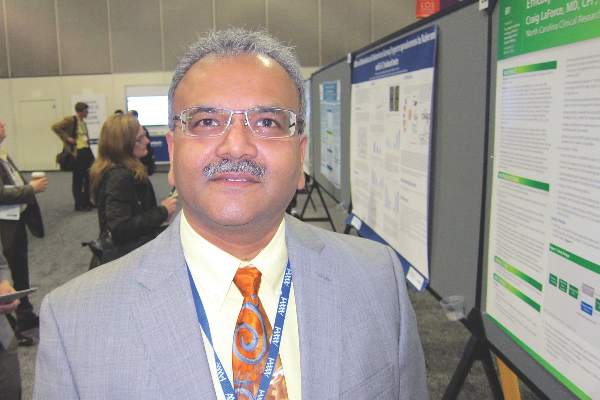
AAAAI: Albuterol Dry Powder Inhaler Offers Simplified Approach for Young Kids
LOS ANGELES – Young asthmatic children on bronchodilator therapy may soon gain access to a novel albuterol multidose dry powder inhaler that’s already proved popular with teen and adult patients with reversible obstructive airway disease because of its ease of use.
A phase III randomized, double-blind multicenter trial of the albuterol multidose dry powder inhaler (MDPI) versus placebo in 184 asthmatic children aged 4-11 years not on systemic corticosteroids met its primary and secondary lung function endpoints, with safety and tolerability similar to placebo, Dr. Tushar P. Shah reported at the annual meeting of the American Academy of Allergy, Asthma, and Immunology.
The albuterol MDPI is already marketed by Teva Pharmaceuticals as the ProAir RespiClick in patients aged 12 and older. The purpose of this phase III clinical trial was to obtain an expanded indication in 4- to 11-year-olds. The company has submitted its request to the Food and Drug Administration and anticipates smooth sailing based upon the new data, according to Dr. Shah, senior vice president for global respiratory research and development at Teva in Frazer, Pa.
The albuterol MDPI fills an unmet need for a simplified approach to rescue medication, the allergist said in an interview.
“This is a breath-actuated inhaler. Many patients – especially kids – have a hard time coordinating a conventional multidose inhaler actuation with inhalation. They have trouble getting the timing right, so the drug doesn’t get to the distal lung. That’s why this albuterol MDPI has been very well received in adults. For kids, I think it’s going to be even better because this is a very simple and intuitive device. All they do is open the cap, inhale, [and] close the cap,” he explained.
The young study participants used the albuterol MDPI at two inhalations four times daily, with a total daily albuterol dose of 720 mcg.
The primary study endpoint was the short-term improvement in lung function seen during testing performed after the very first study dose and again after the final dose of medication 3 weeks later. This was expressed as the area under the baseline-adjusted percent-predicted forced expiratory volume in 1 second effect-time curve from predose to 6 hours post dose. On both occasions, a sharp jump in opening of the airways was demonstrated within 5 minutes of dosing, with the effect remaining significantly better than with placebo for more than 2 hours.
Moreover, the maximum change from baseline in peak expiratory flow rate seen within 2 hours after dosing was a 26% increase with the albuterol MDPI, a significantly better result than the 14% increase with placebo.
No adverse events attributable to the study drug were seen.
The study was sponsored by Teva Pharmaceuticals. The presenter is a senior company employee.
LOS ANGELES – Young asthmatic children on bronchodilator therapy may soon gain access to a novel albuterol multidose dry powder inhaler that’s already proved popular with teen and adult patients with reversible obstructive airway disease because of its ease of use.
A phase III randomized, double-blind multicenter trial of the albuterol multidose dry powder inhaler (MDPI) versus placebo in 184 asthmatic children aged 4-11 years not on systemic corticosteroids met its primary and secondary lung function endpoints, with safety and tolerability similar to placebo, Dr. Tushar P. Shah reported at the annual meeting of the American Academy of Allergy, Asthma, and Immunology.
The albuterol MDPI is already marketed by Teva Pharmaceuticals as the ProAir RespiClick in patients aged 12 and older. The purpose of this phase III clinical trial was to obtain an expanded indication in 4- to 11-year-olds. The company has submitted its request to the Food and Drug Administration and anticipates smooth sailing based upon the new data, according to Dr. Shah, senior vice president for global respiratory research and development at Teva in Frazer, Pa.
The albuterol MDPI fills an unmet need for a simplified approach to rescue medication, the allergist said in an interview.
“This is a breath-actuated inhaler. Many patients – especially kids – have a hard time coordinating a conventional multidose inhaler actuation with inhalation. They have trouble getting the timing right, so the drug doesn’t get to the distal lung. That’s why this albuterol MDPI has been very well received in adults. For kids, I think it’s going to be even better because this is a very simple and intuitive device. All they do is open the cap, inhale, [and] close the cap,” he explained.
The young study participants used the albuterol MDPI at two inhalations four times daily, with a total daily albuterol dose of 720 mcg.
The primary study endpoint was the short-term improvement in lung function seen during testing performed after the very first study dose and again after the final dose of medication 3 weeks later. This was expressed as the area under the baseline-adjusted percent-predicted forced expiratory volume in 1 second effect-time curve from predose to 6 hours post dose. On both occasions, a sharp jump in opening of the airways was demonstrated within 5 minutes of dosing, with the effect remaining significantly better than with placebo for more than 2 hours.
Moreover, the maximum change from baseline in peak expiratory flow rate seen within 2 hours after dosing was a 26% increase with the albuterol MDPI, a significantly better result than the 14% increase with placebo.
No adverse events attributable to the study drug were seen.
The study was sponsored by Teva Pharmaceuticals. The presenter is a senior company employee.
LOS ANGELES – Young asthmatic children on bronchodilator therapy may soon gain access to a novel albuterol multidose dry powder inhaler that’s already proved popular with teen and adult patients with reversible obstructive airway disease because of its ease of use.
A phase III randomized, double-blind multicenter trial of the albuterol multidose dry powder inhaler (MDPI) versus placebo in 184 asthmatic children aged 4-11 years not on systemic corticosteroids met its primary and secondary lung function endpoints, with safety and tolerability similar to placebo, Dr. Tushar P. Shah reported at the annual meeting of the American Academy of Allergy, Asthma, and Immunology.
The albuterol MDPI is already marketed by Teva Pharmaceuticals as the ProAir RespiClick in patients aged 12 and older. The purpose of this phase III clinical trial was to obtain an expanded indication in 4- to 11-year-olds. The company has submitted its request to the Food and Drug Administration and anticipates smooth sailing based upon the new data, according to Dr. Shah, senior vice president for global respiratory research and development at Teva in Frazer, Pa.
The albuterol MDPI fills an unmet need for a simplified approach to rescue medication, the allergist said in an interview.
“This is a breath-actuated inhaler. Many patients – especially kids – have a hard time coordinating a conventional multidose inhaler actuation with inhalation. They have trouble getting the timing right, so the drug doesn’t get to the distal lung. That’s why this albuterol MDPI has been very well received in adults. For kids, I think it’s going to be even better because this is a very simple and intuitive device. All they do is open the cap, inhale, [and] close the cap,” he explained.
The young study participants used the albuterol MDPI at two inhalations four times daily, with a total daily albuterol dose of 720 mcg.
The primary study endpoint was the short-term improvement in lung function seen during testing performed after the very first study dose and again after the final dose of medication 3 weeks later. This was expressed as the area under the baseline-adjusted percent-predicted forced expiratory volume in 1 second effect-time curve from predose to 6 hours post dose. On both occasions, a sharp jump in opening of the airways was demonstrated within 5 minutes of dosing, with the effect remaining significantly better than with placebo for more than 2 hours.
Moreover, the maximum change from baseline in peak expiratory flow rate seen within 2 hours after dosing was a 26% increase with the albuterol MDPI, a significantly better result than the 14% increase with placebo.
No adverse events attributable to the study drug were seen.
The study was sponsored by Teva Pharmaceuticals. The presenter is a senior company employee.
AT 2016 AAAAI ANNUAL MEETING