User login
FDA Approves Boceprevir for Chronic Hepatitis C
The Food and Drug Administration on May 13 approved boceprevir for select patients with chronic hepatitis C infection.
The agency said that the drug will be indicated for use in treating patients who have some liver function and either have not previously been treated with drug therapy or have failed previous therapy. Boceprevir (Victrelis, Merck) is a protease inhibitor and is approved for use in combination with peginterferon alfa and ribavirin, the current standard of care.
Describing boceprevir as an "important new advance," Dr. Edward Cox, director of the FDA’s Office of Antimicrobial Products said in a statement, "This new medication provides an effective treatment for a serious disease, and offers a greater chance of cure for some patients’ hepatitis C infection compared to currently available therapy."
Approval was based on two pivotal trials that showed that two-thirds of patients treated with boceprevir combined with peginterferon alfa and ribavirin had a significantly increased sustained virologic response. Such a response can lead to a decrease in cirrhosis and liver disease complications, according to the FDA.
Some 3.2 million Americans have chronic hepatitis C, the agency said, citing statistics from the Centers for Disease Control and Prevention. Hepatitis C is one of the leading causes for liver transplantation in the United States.
Boceprevir was unanimously supported for approval by an FDA advisory panel in April. The committee members said that the benefits far outweighed the risks, which include anemia. They also suggested that once boceprevir and another, similar protease inhibitor, telaprevir, were approved, that triple therapy would become the norm in treating chronic hepatitis C.
Telaprevir approval is anticipated.
The FDA said that in addition to anemia, the most commonly reported side effects with boceprevir used in combination with peginterferon and ribavirin include fatigue, nausea, headache, and taste distortion.
The Food and Drug Administration on May 13 approved boceprevir for select patients with chronic hepatitis C infection.
The agency said that the drug will be indicated for use in treating patients who have some liver function and either have not previously been treated with drug therapy or have failed previous therapy. Boceprevir (Victrelis, Merck) is a protease inhibitor and is approved for use in combination with peginterferon alfa and ribavirin, the current standard of care.
Describing boceprevir as an "important new advance," Dr. Edward Cox, director of the FDA’s Office of Antimicrobial Products said in a statement, "This new medication provides an effective treatment for a serious disease, and offers a greater chance of cure for some patients’ hepatitis C infection compared to currently available therapy."
Approval was based on two pivotal trials that showed that two-thirds of patients treated with boceprevir combined with peginterferon alfa and ribavirin had a significantly increased sustained virologic response. Such a response can lead to a decrease in cirrhosis and liver disease complications, according to the FDA.
Some 3.2 million Americans have chronic hepatitis C, the agency said, citing statistics from the Centers for Disease Control and Prevention. Hepatitis C is one of the leading causes for liver transplantation in the United States.
Boceprevir was unanimously supported for approval by an FDA advisory panel in April. The committee members said that the benefits far outweighed the risks, which include anemia. They also suggested that once boceprevir and another, similar protease inhibitor, telaprevir, were approved, that triple therapy would become the norm in treating chronic hepatitis C.
Telaprevir approval is anticipated.
The FDA said that in addition to anemia, the most commonly reported side effects with boceprevir used in combination with peginterferon and ribavirin include fatigue, nausea, headache, and taste distortion.
The Food and Drug Administration on May 13 approved boceprevir for select patients with chronic hepatitis C infection.
The agency said that the drug will be indicated for use in treating patients who have some liver function and either have not previously been treated with drug therapy or have failed previous therapy. Boceprevir (Victrelis, Merck) is a protease inhibitor and is approved for use in combination with peginterferon alfa and ribavirin, the current standard of care.
Describing boceprevir as an "important new advance," Dr. Edward Cox, director of the FDA’s Office of Antimicrobial Products said in a statement, "This new medication provides an effective treatment for a serious disease, and offers a greater chance of cure for some patients’ hepatitis C infection compared to currently available therapy."
Approval was based on two pivotal trials that showed that two-thirds of patients treated with boceprevir combined with peginterferon alfa and ribavirin had a significantly increased sustained virologic response. Such a response can lead to a decrease in cirrhosis and liver disease complications, according to the FDA.
Some 3.2 million Americans have chronic hepatitis C, the agency said, citing statistics from the Centers for Disease Control and Prevention. Hepatitis C is one of the leading causes for liver transplantation in the United States.
Boceprevir was unanimously supported for approval by an FDA advisory panel in April. The committee members said that the benefits far outweighed the risks, which include anemia. They also suggested that once boceprevir and another, similar protease inhibitor, telaprevir, were approved, that triple therapy would become the norm in treating chronic hepatitis C.
Telaprevir approval is anticipated.
The FDA said that in addition to anemia, the most commonly reported side effects with boceprevir used in combination with peginterferon and ribavirin include fatigue, nausea, headache, and taste distortion.
FDA Approves Boceprevir for Chronic Hepatitis C
The Food and Drug Administration on May 13 approved boceprevir for select patients with chronic hepatitis C infection.
The agency said that the drug will be indicated for use in treating patients who have some liver function and either have not previously been treated with drug therapy or have failed previous therapy. Boceprevir (Victrelis, Merck) is a protease inhibitor and is approved for use in combination with peginterferon alfa and ribavirin, the current standard of care.
Describing boceprevir as an "important new advance," Dr. Edward Cox, director of the FDA’s Office of Antimicrobial Products said in a statement, "This new medication provides an effective treatment for a serious disease, and offers a greater chance of cure for some patients’ hepatitis C infection compared to currently available therapy."
Approval was based on two pivotal trials that showed that two-thirds of patients treated with boceprevir combined with peginterferon alfa and ribavirin had a significantly increased sustained virologic response. Such a response can lead to a decrease in cirrhosis and liver disease complications, according to the FDA.
Some 3.2 million Americans have chronic hepatitis C, the agency said, citing statistics from the Centers for Disease Control and Prevention. Hepatitis C is one of the leading causes for liver transplantation in the United States.
Boceprevir was unanimously supported for approval by an FDA advisory panel in April. The committee members said that the benefits far outweighed the risks, which include anemia. They also suggested that once boceprevir and another, similar protease inhibitor, telaprevir, were approved, that triple therapy would become the norm in treating chronic hepatitis C.
Telaprevir approval is anticipated.
The FDA said that in addition to anemia, the most commonly reported side effects with boceprevir used in combination with peginterferon and ribavirin include fatigue, nausea, headache, and taste distortion.
The Food and Drug Administration on May 13 approved boceprevir for select patients with chronic hepatitis C infection.
The agency said that the drug will be indicated for use in treating patients who have some liver function and either have not previously been treated with drug therapy or have failed previous therapy. Boceprevir (Victrelis, Merck) is a protease inhibitor and is approved for use in combination with peginterferon alfa and ribavirin, the current standard of care.
Describing boceprevir as an "important new advance," Dr. Edward Cox, director of the FDA’s Office of Antimicrobial Products said in a statement, "This new medication provides an effective treatment for a serious disease, and offers a greater chance of cure for some patients’ hepatitis C infection compared to currently available therapy."
Approval was based on two pivotal trials that showed that two-thirds of patients treated with boceprevir combined with peginterferon alfa and ribavirin had a significantly increased sustained virologic response. Such a response can lead to a decrease in cirrhosis and liver disease complications, according to the FDA.
Some 3.2 million Americans have chronic hepatitis C, the agency said, citing statistics from the Centers for Disease Control and Prevention. Hepatitis C is one of the leading causes for liver transplantation in the United States.
Boceprevir was unanimously supported for approval by an FDA advisory panel in April. The committee members said that the benefits far outweighed the risks, which include anemia. They also suggested that once boceprevir and another, similar protease inhibitor, telaprevir, were approved, that triple therapy would become the norm in treating chronic hepatitis C.
Telaprevir approval is anticipated.
The FDA said that in addition to anemia, the most commonly reported side effects with boceprevir used in combination with peginterferon and ribavirin include fatigue, nausea, headache, and taste distortion.
The Food and Drug Administration on May 13 approved boceprevir for select patients with chronic hepatitis C infection.
The agency said that the drug will be indicated for use in treating patients who have some liver function and either have not previously been treated with drug therapy or have failed previous therapy. Boceprevir (Victrelis, Merck) is a protease inhibitor and is approved for use in combination with peginterferon alfa and ribavirin, the current standard of care.
Describing boceprevir as an "important new advance," Dr. Edward Cox, director of the FDA’s Office of Antimicrobial Products said in a statement, "This new medication provides an effective treatment for a serious disease, and offers a greater chance of cure for some patients’ hepatitis C infection compared to currently available therapy."
Approval was based on two pivotal trials that showed that two-thirds of patients treated with boceprevir combined with peginterferon alfa and ribavirin had a significantly increased sustained virologic response. Such a response can lead to a decrease in cirrhosis and liver disease complications, according to the FDA.
Some 3.2 million Americans have chronic hepatitis C, the agency said, citing statistics from the Centers for Disease Control and Prevention. Hepatitis C is one of the leading causes for liver transplantation in the United States.
Boceprevir was unanimously supported for approval by an FDA advisory panel in April. The committee members said that the benefits far outweighed the risks, which include anemia. They also suggested that once boceprevir and another, similar protease inhibitor, telaprevir, were approved, that triple therapy would become the norm in treating chronic hepatitis C.
Telaprevir approval is anticipated.
The FDA said that in addition to anemia, the most commonly reported side effects with boceprevir used in combination with peginterferon and ribavirin include fatigue, nausea, headache, and taste distortion.
FDA Approves Boceprevir for Chronic Hepatitis C
The Food and Drug Administration on May 13 approved boceprevir for select patients with chronic hepatitis C infection.
The agency said that the drug will be indicated for use in treating patients who have some liver function and either have not previously been treated with drug therapy or have failed previous therapy. Boceprevir (Victrelis, Merck) is a protease inhibitor and is approved for use in combination with peginterferon alfa and ribavirin, the current standard of care.
Describing boceprevir as an "important new advance," Dr. Edward Cox, director of the FDA’s Office of Antimicrobial Products said in a statement, "This new medication provides an effective treatment for a serious disease, and offers a greater chance of cure for some patients’ hepatitis C infection compared to currently available therapy."
Approval was based on two pivotal trials that showed that two-thirds of patients treated with boceprevir combined with peginterferon alfa and ribavirin had a significantly increased sustained virologic response. Such a response can lead to a decrease in cirrhosis and liver disease complications, according to the FDA.
Some 3.2 million Americans have chronic hepatitis C, the agency said, citing statistics from the Centers for Disease Control and Prevention. Hepatitis C is one of the leading causes for liver transplantation in the United States.
Boceprevir was unanimously supported for approval by an FDA advisory panel in April. The committee members said that the benefits far outweighed the risks, which include anemia. They also suggested that once boceprevir and another, similar protease inhibitor, telaprevir, were approved, that triple therapy would become the norm in treating chronic hepatitis C.
Telaprevir approval is anticipated.
The FDA said that in addition to anemia, the most commonly reported side effects with boceprevir used in combination with peginterferon and ribavirin include fatigue, nausea, headache, and taste distortion.
The Food and Drug Administration on May 13 approved boceprevir for select patients with chronic hepatitis C infection.
The agency said that the drug will be indicated for use in treating patients who have some liver function and either have not previously been treated with drug therapy or have failed previous therapy. Boceprevir (Victrelis, Merck) is a protease inhibitor and is approved for use in combination with peginterferon alfa and ribavirin, the current standard of care.
Describing boceprevir as an "important new advance," Dr. Edward Cox, director of the FDA’s Office of Antimicrobial Products said in a statement, "This new medication provides an effective treatment for a serious disease, and offers a greater chance of cure for some patients’ hepatitis C infection compared to currently available therapy."
Approval was based on two pivotal trials that showed that two-thirds of patients treated with boceprevir combined with peginterferon alfa and ribavirin had a significantly increased sustained virologic response. Such a response can lead to a decrease in cirrhosis and liver disease complications, according to the FDA.
Some 3.2 million Americans have chronic hepatitis C, the agency said, citing statistics from the Centers for Disease Control and Prevention. Hepatitis C is one of the leading causes for liver transplantation in the United States.
Boceprevir was unanimously supported for approval by an FDA advisory panel in April. The committee members said that the benefits far outweighed the risks, which include anemia. They also suggested that once boceprevir and another, similar protease inhibitor, telaprevir, were approved, that triple therapy would become the norm in treating chronic hepatitis C.
Telaprevir approval is anticipated.
The FDA said that in addition to anemia, the most commonly reported side effects with boceprevir used in combination with peginterferon and ribavirin include fatigue, nausea, headache, and taste distortion.
The Food and Drug Administration on May 13 approved boceprevir for select patients with chronic hepatitis C infection.
The agency said that the drug will be indicated for use in treating patients who have some liver function and either have not previously been treated with drug therapy or have failed previous therapy. Boceprevir (Victrelis, Merck) is a protease inhibitor and is approved for use in combination with peginterferon alfa and ribavirin, the current standard of care.
Describing boceprevir as an "important new advance," Dr. Edward Cox, director of the FDA’s Office of Antimicrobial Products said in a statement, "This new medication provides an effective treatment for a serious disease, and offers a greater chance of cure for some patients’ hepatitis C infection compared to currently available therapy."
Approval was based on two pivotal trials that showed that two-thirds of patients treated with boceprevir combined with peginterferon alfa and ribavirin had a significantly increased sustained virologic response. Such a response can lead to a decrease in cirrhosis and liver disease complications, according to the FDA.
Some 3.2 million Americans have chronic hepatitis C, the agency said, citing statistics from the Centers for Disease Control and Prevention. Hepatitis C is one of the leading causes for liver transplantation in the United States.
Boceprevir was unanimously supported for approval by an FDA advisory panel in April. The committee members said that the benefits far outweighed the risks, which include anemia. They also suggested that once boceprevir and another, similar protease inhibitor, telaprevir, were approved, that triple therapy would become the norm in treating chronic hepatitis C.
Telaprevir approval is anticipated.
The FDA said that in addition to anemia, the most commonly reported side effects with boceprevir used in combination with peginterferon and ribavirin include fatigue, nausea, headache, and taste distortion.
Telemedicine Pilot Helps Solve Derm Access Issue
A program that electronically connects primary care physicians with dermatologists for consultations has been a winning combination and may eventually be employed as a strategy to help more patients access basic dermatology.
The telemedicine dermatology pilot project was launched in September 2010, with backing from the American Academy of Dermatology (AAD). It was developed over a period of a few years, with leadership from AAD past-president Dr. William D. James.

The idea was to take the experience gained internationally, particularly in Africa, and apply it to shortage areas in America, said Dr. Carrie Kovarik, cochair of the AAD’s ad hoc task force on teledermatology for underserved communities.
“We thought we’d start with a core of dermatologist volunteers across the U.S. who would partner with a local clinic who served the underinsured or uninsured” – basically people who have trouble accessing dermatology care in a reasonable time frame, Dr. Kovarik said in an interview.
The idea was tested in Philadelphia, where 75 patients were successfully given consults through a Web portal–based application.
Now, the service is available in 26 primary care clinics nationally – in urban, suburban, and rural areas. The majority are in inner cities, however. Since its launch in September, the volunteer dermatologists have provided 370 consults, said Dr. Kovarik, an assistant professor of dermatology at the University of Pennsylvania, Philadelphia.
The Smartphone Evolution. The consults started out on a basic cell phone with a camera, according to Philip Miller, chief executive officer of Click Diagnostics, the company that developed the software for the AAD.
The company’s first project was a teledermatology program in Egypt that is now being expanded. Of 30 initial cases in the Egyptian project, Dr. Kovarik and her colleagues showed that there was agreement an average of 75% of the time between on-site dermatology consults and the telemedicine dermatologists (J. Am. Acad. Dermatol. 2011;64:302-9). The most common reasons for diagnostic nonagreement were incorrect diagnosis by the on-site physician (who was a junior physician) and insufficient history taken.

After the Egyptian pilot project, the company went on to develop teledermatology and telemedicine projects in Botswana, Kenya, and Ghana.
Click Diagnostics developed an Android-based application for the AAD project because cell phone access is more widespread than Internet access, said Mr. Miller in an interview. The AAD bought a phone for each clinic participant that came preloaded with the teledermatology application.
If the primary care physician wants a consult with a dermatologist, he or she first asks the patient’s permission. They then use the app to take a picture of the condition. The physician also answers a series of questions, as prompted by the app. The photo and history are bundled and sent to a Web portal maintained by the AAD.
The consulting dermatologist who is paired with that clinic gets an email that a case is waiting. When the dermatologist gives the consult, it is sent back to the phone and to the primary care physician’s account on the Web portal.
The local pairings are crucial, because if the consulting dermatologist believes a biopsy or follow-up with a dermatologist is required, the patient will be referred to a local specialist. Of course, there may still be a wait for an appointment. But the turnaround time on consults has been very short, said Dr. Kovarik. “It’s actually been pretty amazing,” she said, adding that 90% of cases are answered within 24 hours of receipt. The rest get responses within 72 hours, she said.
“The first group [of dermatologists] we enlisted have been really motivated … people,” she said. At the University of Pennsylvania, there are five attending physicians and one resident assigned to answer cases. “It’s a race to see who picks it up first,” said Dr. Kovarik.
Solution in Somerville. Dermatologist Karen McKoy said that taking on consults with Somerville (Mass.) Hospital Primary Care has been a pleasure. It has been personally satisfying to help others, said Dr. McKoy of the dermatology department at the Lahey Clinic in Burlington, Mass. She also said she enjoys helping her primary care partners learn more about dermatology.
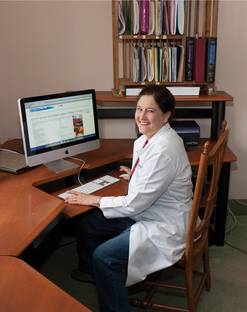
Telemedicine was not a new concept for her, as she has been working on a volunteer basis with an international dermatology case-sharing website for the past 8 years. She is also the secretary of the International Society of Teledermatology.
“When the opportunity to do it through AAD came up, I jumped,” she said. There are difficulties in the United States that have not been encountered overseas: Physicians cannot practice across state lines, they have to be credentialed to provide consults to their primary partners, and there is no reimbursement for providing the consults.
Dr. McKoy had to join the hospital staff at Cambridge Health Alliance, which owns Somerville Hospital Primary Care.
But once the referrals started, she was happy to help out. Since September, she has provided 44 consults to Somerville and 9 to another site she is paired with, Boston Health Care for the Homeless. The low caseload means it “really has not been a burden,” said Dr. McKoy.
She has been eschewing the phone-based app, preferring instead to do everything over the Internet. Mostly what she sees are the basic dermatology problems encountered in daily practice: acne, dermatitis, pigmentary problems, and solitary lesions. Only one case stumped her, which led her to recommend a biopsy and an in-person consultation with a dermatologist.
Those appointments are very hard to come by for patients at Somerville, where there are no dermatologists on staff, said Dr. Erica Ross, an internist at the clinic. The majority of her patients are insured through Mass Health, the state-run plan. So only Massachusetts General Hospital will take her referrals, and the waits are months long, she said.
The consults with Dr. McKoy have been a great help, said Dr. Ross. The consults have helped her select the right treatments for her patients, and she is able to take care of almost all cases without having to refer.
It has “been phenomenal for me in terms of my own growth,” said Dr. Ross. “I feel like my skills for diagnosing things have grown a lot.”
Completing the telemedicine process still takes longer than writing a referral. “But I know if I write a referral, nothing is going to happen,” she said.
Room for Growth? Dr. Ross and Dr. McKoy said they think the teledermatology consult model has the potential to gain in popularity, but that a number of things would have to happen.
Not everyone will be comfortable with smartphone technology, said Dr. McKoy. She is hoping for a more user-friendly app in the next iteration. She also does not think it will spread until consults are reimbursed.
The AAD and the American Telemedicine Association have been talking to the Centers for Medicare and Medicaid Services about getting paid for dermatology consults. California’s Medicaid program does provide some reimbursement, as does the Indian Health Service in Alaska, said Dr. McKoy.
“It’s not perfect. It’s not the gold standard. But for me, it’s better than nothing,” she said.
The AAD is not looking to expand the program yet, in part because the society has been paying for the phone and the phone service, said Dr. Kovarik. Click Diagnostics is building apps that can run on the iPhone and Android platform, so clinicians could use their own phones. The AAD will continue to maintain the Web portal.
The AAD “feels like this is really a way to handle patients who have no access to care,” she said.
CMS and Credentialing. Just recently, the CMS issued a final rule to simplify the credentialing process for hospitals and nonhospital partners providing telemedicine. In announcing the new policy in early May, Dr. Donald Berwick, CMS administrator, said, “Today’s final rule is the result of close collaboration with hospital and telemedicine care experts.”
In the past, the CMS has required hospitals and critical access hospitals to go through a credentialing process for a physician providing telemedicine, even if the physician had privileges at the remote site where they were practicing. To provide telemedicine, the physicians had to be privileged at their home institution as well as the facility where they would deliver the telemedicine.
Now, a hospital that provides telemedicine to its patients can rely on the credentialing information provided by the physician’s home facility. According to the CMS, the final rule was developed to address concerns about continuing access to telemedicine.
The agency sees telemedicine as a critical way to deliver care to patients in rural or remote areas, according to the CMS statement.
A program that electronically connects primary care physicians with dermatologists for consultations has been a winning combination and may eventually be employed as a strategy to help more patients access basic dermatology.
The telemedicine dermatology pilot project was launched in September 2010, with backing from the American Academy of Dermatology (AAD). It was developed over a period of a few years, with leadership from AAD past-president Dr. William D. James.
The idea was to take the experience gained internationally, particularly in Africa, and apply it to shortage areas in America, said Dr. Carrie Kovarik, cochair of the AAD’s ad hoc task force on teledermatology for underserved communities.
“We thought we’d start with a core of dermatologist volunteers across the U.S. who would partner with a local clinic who served the underinsured or uninsured” – basically people who have trouble accessing dermatology care in a reasonable time frame, Dr. Kovarik said in an interview.
The idea was tested in Philadelphia, where 75 patients were successfully given consults through a Web portal–based application.
Now, the service is available in 26 primary care clinics nationally – in urban, suburban, and rural areas. The majority are in inner cities, however. Since its launch in September, the volunteer dermatologists have provided 370 consults, said Dr. Kovarik, an assistant professor of dermatology at the University of Pennsylvania, Philadelphia.
The Smartphone Evolution. The consults started out on a basic cell phone with a camera, according to Philip Miller, chief executive officer of Click Diagnostics, the company that developed the software for the AAD.
The company’s first project was a teledermatology program in Egypt that is now being expanded. Of 30 initial cases in the Egyptian project, Dr. Kovarik and her colleagues showed that there was agreement an average of 75% of the time between on-site dermatology consults and the telemedicine dermatologists (J. Am. Acad. Dermatol. 2011;64:302-9). The most common reasons for diagnostic nonagreement were incorrect diagnosis by the on-site physician (who was a junior physician) and insufficient history taken.
After the Egyptian pilot project, the company went on to develop teledermatology and telemedicine projects in Botswana, Kenya, and Ghana.
Click Diagnostics developed an Android-based application for the AAD project because cell phone access is more widespread than Internet access, said Mr. Miller in an interview. The AAD bought a phone for each clinic participant that came preloaded with the teledermatology application.
If the primary care physician wants a consult with a dermatologist, he or she first asks the patient’s permission. They then use the app to take a picture of the condition. The physician also answers a series of questions, as prompted by the app. The photo and history are bundled and sent to a Web portal maintained by the AAD.
The consulting dermatologist who is paired with that clinic gets an email that a case is waiting. When the dermatologist gives the consult, it is sent back to the phone and to the primary care physician’s account on the Web portal.
The local pairings are crucial, because if the consulting dermatologist believes a biopsy or follow-up with a dermatologist is required, the patient will be referred to a local specialist. Of course, there may still be a wait for an appointment. But the turnaround time on consults has been very short, said Dr. Kovarik. “It’s actually been pretty amazing,” she said, adding that 90% of cases are answered within 24 hours of receipt. The rest get responses within 72 hours, she said.
“The first group [of dermatologists] we enlisted have been really motivated … people,” she said. At the University of Pennsylvania, there are five attending physicians and one resident assigned to answer cases. “It’s a race to see who picks it up first,” said Dr. Kovarik.
Solution in Somerville. Dermatologist Karen McKoy said that taking on consults with Somerville (Mass.) Hospital Primary Care has been a pleasure. It has been personally satisfying to help others, said Dr. McKoy of the dermatology department at the Lahey Clinic in Burlington, Mass. She also said she enjoys helping her primary care partners learn more about dermatology.
Telemedicine was not a new concept for her, as she has been working on a volunteer basis with an international dermatology case-sharing website for the past 8 years. She is also the secretary of the International Society of Teledermatology.
“When the opportunity to do it through AAD came up, I jumped,” she said. There are difficulties in the United States that have not been encountered overseas: Physicians cannot practice across state lines, they have to be credentialed to provide consults to their primary partners, and there is no reimbursement for providing the consults.
Dr. McKoy had to join the hospital staff at Cambridge Health Alliance, which owns Somerville Hospital Primary Care.
But once the referrals started, she was happy to help out. Since September, she has provided 44 consults to Somerville and 9 to another site she is paired with, Boston Health Care for the Homeless. The low caseload means it “really has not been a burden,” said Dr. McKoy.
She has been eschewing the phone-based app, preferring instead to do everything over the Internet. Mostly what she sees are the basic dermatology problems encountered in daily practice: acne, dermatitis, pigmentary problems, and solitary lesions. Only one case stumped her, which led her to recommend a biopsy and an in-person consultation with a dermatologist.
Those appointments are very hard to come by for patients at Somerville, where there are no dermatologists on staff, said Dr. Erica Ross, an internist at the clinic. The majority of her patients are insured through Mass Health, the state-run plan. So only Massachusetts General Hospital will take her referrals, and the waits are months long, she said.
The consults with Dr. McKoy have been a great help, said Dr. Ross. The consults have helped her select the right treatments for her patients, and she is able to take care of almost all cases without having to refer.
It has “been phenomenal for me in terms of my own growth,” said Dr. Ross. “I feel like my skills for diagnosing things have grown a lot.”
Completing the telemedicine process still takes longer than writing a referral. “But I know if I write a referral, nothing is going to happen,” she said.
Room for Growth? Dr. Ross and Dr. McKoy said they think the teledermatology consult model has the potential to gain in popularity, but that a number of things would have to happen.
Not everyone will be comfortable with smartphone technology, said Dr. McKoy. She is hoping for a more user-friendly app in the next iteration. She also does not think it will spread until consults are reimbursed.
The AAD and the American Telemedicine Association have been talking to the Centers for Medicare and Medicaid Services about getting paid for dermatology consults. California’s Medicaid program does provide some reimbursement, as does the Indian Health Service in Alaska, said Dr. McKoy.
“It’s not perfect. It’s not the gold standard. But for me, it’s better than nothing,” she said.
The AAD is not looking to expand the program yet, in part because the society has been paying for the phone and the phone service, said Dr. Kovarik. Click Diagnostics is building apps that can run on the iPhone and Android platform, so clinicians could use their own phones. The AAD will continue to maintain the Web portal.
The AAD “feels like this is really a way to handle patients who have no access to care,” she said.
CMS and Credentialing. Just recently, the CMS issued a final rule to simplify the credentialing process for hospitals and nonhospital partners providing telemedicine. In announcing the new policy in early May, Dr. Donald Berwick, CMS administrator, said, “Today’s final rule is the result of close collaboration with hospital and telemedicine care experts.”
In the past, the CMS has required hospitals and critical access hospitals to go through a credentialing process for a physician providing telemedicine, even if the physician had privileges at the remote site where they were practicing. To provide telemedicine, the physicians had to be privileged at their home institution as well as the facility where they would deliver the telemedicine.
Now, a hospital that provides telemedicine to its patients can rely on the credentialing information provided by the physician’s home facility. According to the CMS, the final rule was developed to address concerns about continuing access to telemedicine.
The agency sees telemedicine as a critical way to deliver care to patients in rural or remote areas, according to the CMS statement.
A program that electronically connects primary care physicians with dermatologists for consultations has been a winning combination and may eventually be employed as a strategy to help more patients access basic dermatology.
The telemedicine dermatology pilot project was launched in September 2010, with backing from the American Academy of Dermatology (AAD). It was developed over a period of a few years, with leadership from AAD past-president Dr. William D. James.
The idea was to take the experience gained internationally, particularly in Africa, and apply it to shortage areas in America, said Dr. Carrie Kovarik, cochair of the AAD’s ad hoc task force on teledermatology for underserved communities.
“We thought we’d start with a core of dermatologist volunteers across the U.S. who would partner with a local clinic who served the underinsured or uninsured” – basically people who have trouble accessing dermatology care in a reasonable time frame, Dr. Kovarik said in an interview.
The idea was tested in Philadelphia, where 75 patients were successfully given consults through a Web portal–based application.
Now, the service is available in 26 primary care clinics nationally – in urban, suburban, and rural areas. The majority are in inner cities, however. Since its launch in September, the volunteer dermatologists have provided 370 consults, said Dr. Kovarik, an assistant professor of dermatology at the University of Pennsylvania, Philadelphia.
The Smartphone Evolution. The consults started out on a basic cell phone with a camera, according to Philip Miller, chief executive officer of Click Diagnostics, the company that developed the software for the AAD.
The company’s first project was a teledermatology program in Egypt that is now being expanded. Of 30 initial cases in the Egyptian project, Dr. Kovarik and her colleagues showed that there was agreement an average of 75% of the time between on-site dermatology consults and the telemedicine dermatologists (J. Am. Acad. Dermatol. 2011;64:302-9). The most common reasons for diagnostic nonagreement were incorrect diagnosis by the on-site physician (who was a junior physician) and insufficient history taken.
After the Egyptian pilot project, the company went on to develop teledermatology and telemedicine projects in Botswana, Kenya, and Ghana.
Click Diagnostics developed an Android-based application for the AAD project because cell phone access is more widespread than Internet access, said Mr. Miller in an interview. The AAD bought a phone for each clinic participant that came preloaded with the teledermatology application.
If the primary care physician wants a consult with a dermatologist, he or she first asks the patient’s permission. They then use the app to take a picture of the condition. The physician also answers a series of questions, as prompted by the app. The photo and history are bundled and sent to a Web portal maintained by the AAD.
The consulting dermatologist who is paired with that clinic gets an email that a case is waiting. When the dermatologist gives the consult, it is sent back to the phone and to the primary care physician’s account on the Web portal.
The local pairings are crucial, because if the consulting dermatologist believes a biopsy or follow-up with a dermatologist is required, the patient will be referred to a local specialist. Of course, there may still be a wait for an appointment. But the turnaround time on consults has been very short, said Dr. Kovarik. “It’s actually been pretty amazing,” she said, adding that 90% of cases are answered within 24 hours of receipt. The rest get responses within 72 hours, she said.
“The first group [of dermatologists] we enlisted have been really motivated … people,” she said. At the University of Pennsylvania, there are five attending physicians and one resident assigned to answer cases. “It’s a race to see who picks it up first,” said Dr. Kovarik.
Solution in Somerville. Dermatologist Karen McKoy said that taking on consults with Somerville (Mass.) Hospital Primary Care has been a pleasure. It has been personally satisfying to help others, said Dr. McKoy of the dermatology department at the Lahey Clinic in Burlington, Mass. She also said she enjoys helping her primary care partners learn more about dermatology.
Telemedicine was not a new concept for her, as she has been working on a volunteer basis with an international dermatology case-sharing website for the past 8 years. She is also the secretary of the International Society of Teledermatology.
“When the opportunity to do it through AAD came up, I jumped,” she said. There are difficulties in the United States that have not been encountered overseas: Physicians cannot practice across state lines, they have to be credentialed to provide consults to their primary partners, and there is no reimbursement for providing the consults.
Dr. McKoy had to join the hospital staff at Cambridge Health Alliance, which owns Somerville Hospital Primary Care.
But once the referrals started, she was happy to help out. Since September, she has provided 44 consults to Somerville and 9 to another site she is paired with, Boston Health Care for the Homeless. The low caseload means it “really has not been a burden,” said Dr. McKoy.
She has been eschewing the phone-based app, preferring instead to do everything over the Internet. Mostly what she sees are the basic dermatology problems encountered in daily practice: acne, dermatitis, pigmentary problems, and solitary lesions. Only one case stumped her, which led her to recommend a biopsy and an in-person consultation with a dermatologist.
Those appointments are very hard to come by for patients at Somerville, where there are no dermatologists on staff, said Dr. Erica Ross, an internist at the clinic. The majority of her patients are insured through Mass Health, the state-run plan. So only Massachusetts General Hospital will take her referrals, and the waits are months long, she said.
The consults with Dr. McKoy have been a great help, said Dr. Ross. The consults have helped her select the right treatments for her patients, and she is able to take care of almost all cases without having to refer.
It has “been phenomenal for me in terms of my own growth,” said Dr. Ross. “I feel like my skills for diagnosing things have grown a lot.”
Completing the telemedicine process still takes longer than writing a referral. “But I know if I write a referral, nothing is going to happen,” she said.
Room for Growth? Dr. Ross and Dr. McKoy said they think the teledermatology consult model has the potential to gain in popularity, but that a number of things would have to happen.
Not everyone will be comfortable with smartphone technology, said Dr. McKoy. She is hoping for a more user-friendly app in the next iteration. She also does not think it will spread until consults are reimbursed.
The AAD and the American Telemedicine Association have been talking to the Centers for Medicare and Medicaid Services about getting paid for dermatology consults. California’s Medicaid program does provide some reimbursement, as does the Indian Health Service in Alaska, said Dr. McKoy.
“It’s not perfect. It’s not the gold standard. But for me, it’s better than nothing,” she said.
The AAD is not looking to expand the program yet, in part because the society has been paying for the phone and the phone service, said Dr. Kovarik. Click Diagnostics is building apps that can run on the iPhone and Android platform, so clinicians could use their own phones. The AAD will continue to maintain the Web portal.
The AAD “feels like this is really a way to handle patients who have no access to care,” she said.
CMS and Credentialing. Just recently, the CMS issued a final rule to simplify the credentialing process for hospitals and nonhospital partners providing telemedicine. In announcing the new policy in early May, Dr. Donald Berwick, CMS administrator, said, “Today’s final rule is the result of close collaboration with hospital and telemedicine care experts.”
In the past, the CMS has required hospitals and critical access hospitals to go through a credentialing process for a physician providing telemedicine, even if the physician had privileges at the remote site where they were practicing. To provide telemedicine, the physicians had to be privileged at their home institution as well as the facility where they would deliver the telemedicine.
Now, a hospital that provides telemedicine to its patients can rely on the credentialing information provided by the physician’s home facility. According to the CMS, the final rule was developed to address concerns about continuing access to telemedicine.
The agency sees telemedicine as a critical way to deliver care to patients in rural or remote areas, according to the CMS statement.
AAD Backed Telemedicine Project Helps More Patients Access Care
A program that electronically connects primary care physicians with dermatologists for consultations has been a winning combination and may eventually be employed as a strategy to help more patients access basic dermatology.
The telemedicine dermatology pilot project was launched in September 2010, with backing from the American Academy of Dermatology (AAD). It was developed over a period of a few years, with leadership from AAD past-president Dr. William D. James.

The idea was to take the experience gained internationally, particularly in Africa, and apply it to shortage areas in America, said Dr. Carrie Kovarik, cochair of the AAD's ad hoc task force on teledermatology for underserved communities.
"We thought we'd start with a core of dermatologist volunteers across the U.S. who would partner with a local clinic who served the underinsured or uninsured" – basically people who have trouble accessing dermatology care in a reasonable time frame, Dr. Kovarik said in an interview.
The idea was tested in Philadelphia, where 75 patients were successfully given consults through a Web portal–based application.
Now, the service is available in 26 primary care clinics nationally – in urban, suburban, and rural areas. The majority are in inner cities, however. Since its launch in September, the volunteer dermatologists have provided 370 consults, said Dr. Kovarik, an assistant professor of dermatology at the University of Pennsylvania, Philadelphia.
The Smartphone Evolution. The consults started out on a basic cell phone with a camera, according to Philip Miller, chief executive officer of Click Diagnostics, the company that developed the software for the AAD.
The company's first project was a teledermatology program in Egypt that is now being expanded. Of 30 initial cases in the Egyptian project, Dr. Kovarik and her colleagues showed that there was agreement an average of 75% of the time between on-site dermatology consults and the telemedicine dermatologists (J. Am. Acad. Dermatol. 2011;64:302-9). The most common reasons for diagnostic nonagreement were incorrect diagnosis by the on-site physician (who was a junior physician) and insufficient history taken.

After the Egyptian pilot project, the company went on to develop teledermatology and telemedicine projects in Botswana, Kenya, and Ghana.
Click Diagnostics developed an Android-based application for the AAD project because cell phone access is more widespread than Internet access, said Mr. Miller in an interview. The AAD bought a phone for each clinic participant that came preloaded with the teledermatology application.
If the primary care physician wants a consult with a dermatologist, he or she first asks the patient's permission. They then use the app to take a picture of the condition. The physician also answers a series of questions, as prompted by the app. The photo and history are bundled and sent to a Web portal maintained by the AAD.
The consulting dermatologist who is paired with that clinic gets an email that a case is waiting. When the dermatologist gives the consult, it is sent back to the phone and to the primary care physician’s account on the Web portal.
The local pairings are crucial, because if the consulting dermatologist believes a biopsy or follow-up with a dermatologist is required, the patient will be referred to a local specialist. Of course, there may still be a wait for an appointment. But the turnaround time on consults has been very short, said Dr. Kovarik. "It's actually been pretty amazing," she said, adding that 90% of cases are answered within 24 hours of receipt. The rest get responses within 72 hours, she said.
"The first group [of dermatologists] we enlisted have been really motivated … people," she said. At the University of Pennsylvania, there are five attending physicians and one resident assigned to answer cases. "It's a race to see who picks it up first," said Dr. Kovarik.
Solution in Somerville. Dermatologist Karen McKoy said that taking on consults with Somerville (Mass.) Hospital Primary Care has been a pleasure. It has been personally satisfying to help others, said Dr. McKoy of the dermatology department at the Lahey Clinic in Burlington, Mass. She also said she enjoys helping her primary care partners learn more about dermatology.
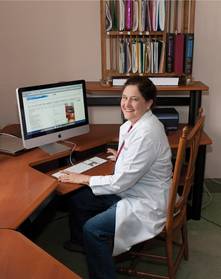
Telemedicine was not a new concept for her, as she has been working on a volunteer basis with an international dermatology case-sharing website for the past 8 years. She is also the secretary of the International Society of Teledermatology.
"When the opportunity to do it through AAD came up, I jumped," she said. There are difficulties in the United States that have not been encountered overseas: Physicians cannot practice across state lines, they have to be credentialed to provide consults to their primary partners, and there is no reimbursement for providing the consults.
Dr. McKoy had to join the hospital staff at Cambridge Health Alliance, which owns Somerville Hospital Primary Care.
But once the referrals started, she was happy to help out. Since September, she has provided 44 consults to Somerville and 9 to another site she is paired with, Boston Health Care for the Homeless. The low caseload means it "really has not been a burden," said Dr. McKoy.
She has been eschewing the phone-based app, preferring instead to do everything over the Internet. Mostly what she sees are the basic dermatology problems encountered in daily practice: acne, dermatitis, pigmentary problems, and solitary lesions. Only one case stumped her, which led her to recommend a biopsy and an in-person consultation with a dermatologist.
Those appointments are very hard to come by for patients at Somerville, where there are no dermatologists on staff, said Dr. Erica Ross, an internist at the clinic. The majority of her patients are insured through Mass Health, the state-run plan. So only Massachusetts General Hospital will take her referrals, and the waits are months long, she said.
The consults with Dr. McKoy have been a great help, said Dr. Ross. The consults have helped her select the right treatments for her patients, and she is able to take care of almost all cases without having to refer.
It has "been phenomenal for me in terms of my own growth," said Dr. Ross. "I feel like my skills for diagnosing things have grown a lot."
Completing the telemedicine process still takes longer than writing a referral. "But I know if I write a referral, nothing is going to happen," she said.
Room for Growth? Dr. Ross and Dr. McKoy said they think the teledermatology consult model has the potential to gain in popularity, but that a number of things would have to happen.
Not everyone will be comfortable with smartphone technology, said Dr. McKoy. She is hoping for a more user-friendly app in the next iteration. She also does not think it will spread until consults are reimbursed.
The AAD and the American Telemedicine Association have been talking to the Centers for Medicare and Medicaid Services about getting paid for dermatology consults. California's Medicaid program does provide some reimbursement, as does the Indian Health Service in Alaska, said Dr. McKoy.
"It's not perfect. It's not the gold standard. But for me, it's better than nothing," she said.
The AAD is not looking to expand the program yet, in part because the society has been paying for the phone and the phone service, said Dr. Kovarik. Click Diagnostics is building apps that can run on the iPhone and Android platform, so clinicians could use their own phones. The AAD will continue to maintain the Web portal.
The AAD "feels like this is really a way to handle patients who have no access to care," she said.
CMS and Credentialing. Just recently, the CMS issued a final rule to simplify the credentialing process for hospitals and nonhospital partners providing telemedicine. In announcing the new policy in early May, Dr. Donald Berwick, CMS administrator, said, "Today’s final rule is the result of close collaboration with hospital and telemedicine care experts."
In the past, the CMS has required hospitals and critical access hospitals to go through a credentialing process for a physician providing telemedicine, even if the physician had privileges at the remote site where they were practicing. To provide telemedicine, the physicians had to be privileged at their home institution as well as the facility where they would deliver the telemedicine.
Now, a hospital that provides telemedicine to its patients can rely on the credentialing information provided by the physician’s home facility. According to the CMS, the final rule was developed to address concerns about continuing access to telemedicine.
The agency sees telemedicine as a critical way to deliver care to patients in rural or remote areas, according to the CMS statement.
A program that electronically connects primary care physicians with dermatologists for consultations has been a winning combination and may eventually be employed as a strategy to help more patients access basic dermatology.
The telemedicine dermatology pilot project was launched in September 2010, with backing from the American Academy of Dermatology (AAD). It was developed over a period of a few years, with leadership from AAD past-president Dr. William D. James.
The idea was to take the experience gained internationally, particularly in Africa, and apply it to shortage areas in America, said Dr. Carrie Kovarik, cochair of the AAD's ad hoc task force on teledermatology for underserved communities.
"We thought we'd start with a core of dermatologist volunteers across the U.S. who would partner with a local clinic who served the underinsured or uninsured" – basically people who have trouble accessing dermatology care in a reasonable time frame, Dr. Kovarik said in an interview.
The idea was tested in Philadelphia, where 75 patients were successfully given consults through a Web portal–based application.
Now, the service is available in 26 primary care clinics nationally – in urban, suburban, and rural areas. The majority are in inner cities, however. Since its launch in September, the volunteer dermatologists have provided 370 consults, said Dr. Kovarik, an assistant professor of dermatology at the University of Pennsylvania, Philadelphia.
The Smartphone Evolution. The consults started out on a basic cell phone with a camera, according to Philip Miller, chief executive officer of Click Diagnostics, the company that developed the software for the AAD.
The company's first project was a teledermatology program in Egypt that is now being expanded. Of 30 initial cases in the Egyptian project, Dr. Kovarik and her colleagues showed that there was agreement an average of 75% of the time between on-site dermatology consults and the telemedicine dermatologists (J. Am. Acad. Dermatol. 2011;64:302-9). The most common reasons for diagnostic nonagreement were incorrect diagnosis by the on-site physician (who was a junior physician) and insufficient history taken.
After the Egyptian pilot project, the company went on to develop teledermatology and telemedicine projects in Botswana, Kenya, and Ghana.
Click Diagnostics developed an Android-based application for the AAD project because cell phone access is more widespread than Internet access, said Mr. Miller in an interview. The AAD bought a phone for each clinic participant that came preloaded with the teledermatology application.
If the primary care physician wants a consult with a dermatologist, he or she first asks the patient's permission. They then use the app to take a picture of the condition. The physician also answers a series of questions, as prompted by the app. The photo and history are bundled and sent to a Web portal maintained by the AAD.
The consulting dermatologist who is paired with that clinic gets an email that a case is waiting. When the dermatologist gives the consult, it is sent back to the phone and to the primary care physician’s account on the Web portal.
The local pairings are crucial, because if the consulting dermatologist believes a biopsy or follow-up with a dermatologist is required, the patient will be referred to a local specialist. Of course, there may still be a wait for an appointment. But the turnaround time on consults has been very short, said Dr. Kovarik. "It's actually been pretty amazing," she said, adding that 90% of cases are answered within 24 hours of receipt. The rest get responses within 72 hours, she said.
"The first group [of dermatologists] we enlisted have been really motivated … people," she said. At the University of Pennsylvania, there are five attending physicians and one resident assigned to answer cases. "It's a race to see who picks it up first," said Dr. Kovarik.
Solution in Somerville. Dermatologist Karen McKoy said that taking on consults with Somerville (Mass.) Hospital Primary Care has been a pleasure. It has been personally satisfying to help others, said Dr. McKoy of the dermatology department at the Lahey Clinic in Burlington, Mass. She also said she enjoys helping her primary care partners learn more about dermatology.
Telemedicine was not a new concept for her, as she has been working on a volunteer basis with an international dermatology case-sharing website for the past 8 years. She is also the secretary of the International Society of Teledermatology.
"When the opportunity to do it through AAD came up, I jumped," she said. There are difficulties in the United States that have not been encountered overseas: Physicians cannot practice across state lines, they have to be credentialed to provide consults to their primary partners, and there is no reimbursement for providing the consults.
Dr. McKoy had to join the hospital staff at Cambridge Health Alliance, which owns Somerville Hospital Primary Care.
But once the referrals started, she was happy to help out. Since September, she has provided 44 consults to Somerville and 9 to another site she is paired with, Boston Health Care for the Homeless. The low caseload means it "really has not been a burden," said Dr. McKoy.
She has been eschewing the phone-based app, preferring instead to do everything over the Internet. Mostly what she sees are the basic dermatology problems encountered in daily practice: acne, dermatitis, pigmentary problems, and solitary lesions. Only one case stumped her, which led her to recommend a biopsy and an in-person consultation with a dermatologist.
Those appointments are very hard to come by for patients at Somerville, where there are no dermatologists on staff, said Dr. Erica Ross, an internist at the clinic. The majority of her patients are insured through Mass Health, the state-run plan. So only Massachusetts General Hospital will take her referrals, and the waits are months long, she said.
The consults with Dr. McKoy have been a great help, said Dr. Ross. The consults have helped her select the right treatments for her patients, and she is able to take care of almost all cases without having to refer.
It has "been phenomenal for me in terms of my own growth," said Dr. Ross. "I feel like my skills for diagnosing things have grown a lot."
Completing the telemedicine process still takes longer than writing a referral. "But I know if I write a referral, nothing is going to happen," she said.
Room for Growth? Dr. Ross and Dr. McKoy said they think the teledermatology consult model has the potential to gain in popularity, but that a number of things would have to happen.
Not everyone will be comfortable with smartphone technology, said Dr. McKoy. She is hoping for a more user-friendly app in the next iteration. She also does not think it will spread until consults are reimbursed.
The AAD and the American Telemedicine Association have been talking to the Centers for Medicare and Medicaid Services about getting paid for dermatology consults. California's Medicaid program does provide some reimbursement, as does the Indian Health Service in Alaska, said Dr. McKoy.
"It's not perfect. It's not the gold standard. But for me, it's better than nothing," she said.
The AAD is not looking to expand the program yet, in part because the society has been paying for the phone and the phone service, said Dr. Kovarik. Click Diagnostics is building apps that can run on the iPhone and Android platform, so clinicians could use their own phones. The AAD will continue to maintain the Web portal.
The AAD "feels like this is really a way to handle patients who have no access to care," she said.
CMS and Credentialing. Just recently, the CMS issued a final rule to simplify the credentialing process for hospitals and nonhospital partners providing telemedicine. In announcing the new policy in early May, Dr. Donald Berwick, CMS administrator, said, "Today’s final rule is the result of close collaboration with hospital and telemedicine care experts."
In the past, the CMS has required hospitals and critical access hospitals to go through a credentialing process for a physician providing telemedicine, even if the physician had privileges at the remote site where they were practicing. To provide telemedicine, the physicians had to be privileged at their home institution as well as the facility where they would deliver the telemedicine.
Now, a hospital that provides telemedicine to its patients can rely on the credentialing information provided by the physician’s home facility. According to the CMS, the final rule was developed to address concerns about continuing access to telemedicine.
The agency sees telemedicine as a critical way to deliver care to patients in rural or remote areas, according to the CMS statement.
A program that electronically connects primary care physicians with dermatologists for consultations has been a winning combination and may eventually be employed as a strategy to help more patients access basic dermatology.
The telemedicine dermatology pilot project was launched in September 2010, with backing from the American Academy of Dermatology (AAD). It was developed over a period of a few years, with leadership from AAD past-president Dr. William D. James.
The idea was to take the experience gained internationally, particularly in Africa, and apply it to shortage areas in America, said Dr. Carrie Kovarik, cochair of the AAD's ad hoc task force on teledermatology for underserved communities.
"We thought we'd start with a core of dermatologist volunteers across the U.S. who would partner with a local clinic who served the underinsured or uninsured" – basically people who have trouble accessing dermatology care in a reasonable time frame, Dr. Kovarik said in an interview.
The idea was tested in Philadelphia, where 75 patients were successfully given consults through a Web portal–based application.
Now, the service is available in 26 primary care clinics nationally – in urban, suburban, and rural areas. The majority are in inner cities, however. Since its launch in September, the volunteer dermatologists have provided 370 consults, said Dr. Kovarik, an assistant professor of dermatology at the University of Pennsylvania, Philadelphia.
The Smartphone Evolution. The consults started out on a basic cell phone with a camera, according to Philip Miller, chief executive officer of Click Diagnostics, the company that developed the software for the AAD.
The company's first project was a teledermatology program in Egypt that is now being expanded. Of 30 initial cases in the Egyptian project, Dr. Kovarik and her colleagues showed that there was agreement an average of 75% of the time between on-site dermatology consults and the telemedicine dermatologists (J. Am. Acad. Dermatol. 2011;64:302-9). The most common reasons for diagnostic nonagreement were incorrect diagnosis by the on-site physician (who was a junior physician) and insufficient history taken.
After the Egyptian pilot project, the company went on to develop teledermatology and telemedicine projects in Botswana, Kenya, and Ghana.
Click Diagnostics developed an Android-based application for the AAD project because cell phone access is more widespread than Internet access, said Mr. Miller in an interview. The AAD bought a phone for each clinic participant that came preloaded with the teledermatology application.
If the primary care physician wants a consult with a dermatologist, he or she first asks the patient's permission. They then use the app to take a picture of the condition. The physician also answers a series of questions, as prompted by the app. The photo and history are bundled and sent to a Web portal maintained by the AAD.
The consulting dermatologist who is paired with that clinic gets an email that a case is waiting. When the dermatologist gives the consult, it is sent back to the phone and to the primary care physician’s account on the Web portal.
The local pairings are crucial, because if the consulting dermatologist believes a biopsy or follow-up with a dermatologist is required, the patient will be referred to a local specialist. Of course, there may still be a wait for an appointment. But the turnaround time on consults has been very short, said Dr. Kovarik. "It's actually been pretty amazing," she said, adding that 90% of cases are answered within 24 hours of receipt. The rest get responses within 72 hours, she said.
"The first group [of dermatologists] we enlisted have been really motivated … people," she said. At the University of Pennsylvania, there are five attending physicians and one resident assigned to answer cases. "It's a race to see who picks it up first," said Dr. Kovarik.
Solution in Somerville. Dermatologist Karen McKoy said that taking on consults with Somerville (Mass.) Hospital Primary Care has been a pleasure. It has been personally satisfying to help others, said Dr. McKoy of the dermatology department at the Lahey Clinic in Burlington, Mass. She also said she enjoys helping her primary care partners learn more about dermatology.
Telemedicine was not a new concept for her, as she has been working on a volunteer basis with an international dermatology case-sharing website for the past 8 years. She is also the secretary of the International Society of Teledermatology.
"When the opportunity to do it through AAD came up, I jumped," she said. There are difficulties in the United States that have not been encountered overseas: Physicians cannot practice across state lines, they have to be credentialed to provide consults to their primary partners, and there is no reimbursement for providing the consults.
Dr. McKoy had to join the hospital staff at Cambridge Health Alliance, which owns Somerville Hospital Primary Care.
But once the referrals started, she was happy to help out. Since September, she has provided 44 consults to Somerville and 9 to another site she is paired with, Boston Health Care for the Homeless. The low caseload means it "really has not been a burden," said Dr. McKoy.
She has been eschewing the phone-based app, preferring instead to do everything over the Internet. Mostly what she sees are the basic dermatology problems encountered in daily practice: acne, dermatitis, pigmentary problems, and solitary lesions. Only one case stumped her, which led her to recommend a biopsy and an in-person consultation with a dermatologist.
Those appointments are very hard to come by for patients at Somerville, where there are no dermatologists on staff, said Dr. Erica Ross, an internist at the clinic. The majority of her patients are insured through Mass Health, the state-run plan. So only Massachusetts General Hospital will take her referrals, and the waits are months long, she said.
The consults with Dr. McKoy have been a great help, said Dr. Ross. The consults have helped her select the right treatments for her patients, and she is able to take care of almost all cases without having to refer.
It has "been phenomenal for me in terms of my own growth," said Dr. Ross. "I feel like my skills for diagnosing things have grown a lot."
Completing the telemedicine process still takes longer than writing a referral. "But I know if I write a referral, nothing is going to happen," she said.
Room for Growth? Dr. Ross and Dr. McKoy said they think the teledermatology consult model has the potential to gain in popularity, but that a number of things would have to happen.
Not everyone will be comfortable with smartphone technology, said Dr. McKoy. She is hoping for a more user-friendly app in the next iteration. She also does not think it will spread until consults are reimbursed.
The AAD and the American Telemedicine Association have been talking to the Centers for Medicare and Medicaid Services about getting paid for dermatology consults. California's Medicaid program does provide some reimbursement, as does the Indian Health Service in Alaska, said Dr. McKoy.
"It's not perfect. It's not the gold standard. But for me, it's better than nothing," she said.
The AAD is not looking to expand the program yet, in part because the society has been paying for the phone and the phone service, said Dr. Kovarik. Click Diagnostics is building apps that can run on the iPhone and Android platform, so clinicians could use their own phones. The AAD will continue to maintain the Web portal.
The AAD "feels like this is really a way to handle patients who have no access to care," she said.
CMS and Credentialing. Just recently, the CMS issued a final rule to simplify the credentialing process for hospitals and nonhospital partners providing telemedicine. In announcing the new policy in early May, Dr. Donald Berwick, CMS administrator, said, "Today’s final rule is the result of close collaboration with hospital and telemedicine care experts."
In the past, the CMS has required hospitals and critical access hospitals to go through a credentialing process for a physician providing telemedicine, even if the physician had privileges at the remote site where they were practicing. To provide telemedicine, the physicians had to be privileged at their home institution as well as the facility where they would deliver the telemedicine.
Now, a hospital that provides telemedicine to its patients can rely on the credentialing information provided by the physician’s home facility. According to the CMS, the final rule was developed to address concerns about continuing access to telemedicine.
The agency sees telemedicine as a critical way to deliver care to patients in rural or remote areas, according to the CMS statement.
House Members Seek Recall of Formaldehyde-Containing Hair Straighteners
Ten members of Congress have written to the Food and Drug Administration asking that the agency recall several brands of hair-straightening products that they say contain formaldehyde.
In a May 6 letter to FDA Commissioner Margaret Hamburg, U.S. House of Representative members wrote that the Brazilian Blowout Solution and Acai Professional Smoothing Solution both contain formaldehyde, but the chemical is not listed on the product labels as an ingredient.
Rep. Earl Blumenauer (D-Ore.) had written to the agency last fall outlining complaints from Oregon hair stylists who had been experiencing acute reactions, such as nosebleeds, while working with the hair straighteners. The congressman also noted testing conducted by the Oregon Occupational Safety and Health Division and by Oregon Health and Science University found the two products contained between 6% and 12% formaldehyde.
He said that the federal Occupational Safety and Health Administration (OSHA) subsequently issued a hazard alert warning salons to steer clear of formaldehyde-based straighteners.
Formaldehyde has been recognized as a possible carcinogen and has been the subject of 47 complaints to the Environmental Working Group, members of Congress noted in the letter.
"It is clear that the FDA needs to take decisive action," they wrote.
In addition to a recall, they are seeking a warning for products that contain formaldehyde, an investigation into the companies that are claiming their products are formaldehyde free, and a review of whether the chemical should be banned from hair straighteners.
According to the May 6 letter to Dr. Hamburg, the FDA responded in late November to Rep. Blumenauer’s initial letter and said that it was investigating whether the products were being marketed directly to consumers. "If so, failure to comply with the ingredient declaration requirement would constitute misbranding," responded the agency.
Ten members of Congress have written to the Food and Drug Administration asking that the agency recall several brands of hair-straightening products that they say contain formaldehyde.
In a May 6 letter to FDA Commissioner Margaret Hamburg, U.S. House of Representative members wrote that the Brazilian Blowout Solution and Acai Professional Smoothing Solution both contain formaldehyde, but the chemical is not listed on the product labels as an ingredient.
Rep. Earl Blumenauer (D-Ore.) had written to the agency last fall outlining complaints from Oregon hair stylists who had been experiencing acute reactions, such as nosebleeds, while working with the hair straighteners. The congressman also noted testing conducted by the Oregon Occupational Safety and Health Division and by Oregon Health and Science University found the two products contained between 6% and 12% formaldehyde.
He said that the federal Occupational Safety and Health Administration (OSHA) subsequently issued a hazard alert warning salons to steer clear of formaldehyde-based straighteners.
Formaldehyde has been recognized as a possible carcinogen and has been the subject of 47 complaints to the Environmental Working Group, members of Congress noted in the letter.
"It is clear that the FDA needs to take decisive action," they wrote.
In addition to a recall, they are seeking a warning for products that contain formaldehyde, an investigation into the companies that are claiming their products are formaldehyde free, and a review of whether the chemical should be banned from hair straighteners.
According to the May 6 letter to Dr. Hamburg, the FDA responded in late November to Rep. Blumenauer’s initial letter and said that it was investigating whether the products were being marketed directly to consumers. "If so, failure to comply with the ingredient declaration requirement would constitute misbranding," responded the agency.
Ten members of Congress have written to the Food and Drug Administration asking that the agency recall several brands of hair-straightening products that they say contain formaldehyde.
In a May 6 letter to FDA Commissioner Margaret Hamburg, U.S. House of Representative members wrote that the Brazilian Blowout Solution and Acai Professional Smoothing Solution both contain formaldehyde, but the chemical is not listed on the product labels as an ingredient.
Rep. Earl Blumenauer (D-Ore.) had written to the agency last fall outlining complaints from Oregon hair stylists who had been experiencing acute reactions, such as nosebleeds, while working with the hair straighteners. The congressman also noted testing conducted by the Oregon Occupational Safety and Health Division and by Oregon Health and Science University found the two products contained between 6% and 12% formaldehyde.
He said that the federal Occupational Safety and Health Administration (OSHA) subsequently issued a hazard alert warning salons to steer clear of formaldehyde-based straighteners.
Formaldehyde has been recognized as a possible carcinogen and has been the subject of 47 complaints to the Environmental Working Group, members of Congress noted in the letter.
"It is clear that the FDA needs to take decisive action," they wrote.
In addition to a recall, they are seeking a warning for products that contain formaldehyde, an investigation into the companies that are claiming their products are formaldehyde free, and a review of whether the chemical should be banned from hair straighteners.
According to the May 6 letter to Dr. Hamburg, the FDA responded in late November to Rep. Blumenauer’s initial letter and said that it was investigating whether the products were being marketed directly to consumers. "If so, failure to comply with the ingredient declaration requirement would constitute misbranding," responded the agency.
House Members Seek Recall of Formaldehyde-Containing Hair Straighteners
Ten members of Congress have written to the Food and Drug Administration asking that the agency recall several brands of hair-straightening products that they say contain formaldehyde.
In a May 6 letter to FDA Commissioner Margaret Hamburg, U.S. House of Representative members wrote that the Brazilian Blowout Solution and Acai Professional Smoothing Solution both contain formaldehyde, but the chemical is not listed on the product labels as an ingredient.
"It is clear that the FDA needs to take decisive action," they wrote.
Rep. Earl Blumenauer (D-Ore.) had written to the agency last fall outlining complaints from Oregon hair stylists who had been experiencing acute reactions, such as nosebleeds, while working with the hair straighteners. The congressman also noted testing conducted by the Oregon Occupational Safety and Health Division and by Oregon Health and Science University found the two products contained between 6% and 12% formaldehyde.
He said that the federal Occupational Safety and Health Administration (OSHA) subsequently issued a hazard alert warning salons to steer clear of formaldehyde-based straighteners.
Formaldehyde has been recognized as a possible carcinogen and has been the subject of 47 complaints to the Environmental Working Group, members of Congress noted in the letter.
"It is clear that the FDA needs to take decisive action," they wrote.
In addition to a recall, they are seeking a warning for products that contain formaldehyde, an investigation into the companies that are claiming their products are formaldehyde free, and a review of whether the chemical should be banned from hair straighteners.
According to the May 6 letter to Dr. Hamburg, the FDA responded in late November to Rep. Blumenauer’s initial letter and said that it was investigating whether the products were being marketed directly to consumers. "If so, failure to comply with the ingredient declaration requirement would constitute misbranding," responded the agency.
Ten members of Congress have written to the Food and Drug Administration asking that the agency recall several brands of hair-straightening products that they say contain formaldehyde.
In a May 6 letter to FDA Commissioner Margaret Hamburg, U.S. House of Representative members wrote that the Brazilian Blowout Solution and Acai Professional Smoothing Solution both contain formaldehyde, but the chemical is not listed on the product labels as an ingredient.
"It is clear that the FDA needs to take decisive action," they wrote.
Rep. Earl Blumenauer (D-Ore.) had written to the agency last fall outlining complaints from Oregon hair stylists who had been experiencing acute reactions, such as nosebleeds, while working with the hair straighteners. The congressman also noted testing conducted by the Oregon Occupational Safety and Health Division and by Oregon Health and Science University found the two products contained between 6% and 12% formaldehyde.
He said that the federal Occupational Safety and Health Administration (OSHA) subsequently issued a hazard alert warning salons to steer clear of formaldehyde-based straighteners.
Formaldehyde has been recognized as a possible carcinogen and has been the subject of 47 complaints to the Environmental Working Group, members of Congress noted in the letter.
"It is clear that the FDA needs to take decisive action," they wrote.
In addition to a recall, they are seeking a warning for products that contain formaldehyde, an investigation into the companies that are claiming their products are formaldehyde free, and a review of whether the chemical should be banned from hair straighteners.
According to the May 6 letter to Dr. Hamburg, the FDA responded in late November to Rep. Blumenauer’s initial letter and said that it was investigating whether the products were being marketed directly to consumers. "If so, failure to comply with the ingredient declaration requirement would constitute misbranding," responded the agency.
Ten members of Congress have written to the Food and Drug Administration asking that the agency recall several brands of hair-straightening products that they say contain formaldehyde.
In a May 6 letter to FDA Commissioner Margaret Hamburg, U.S. House of Representative members wrote that the Brazilian Blowout Solution and Acai Professional Smoothing Solution both contain formaldehyde, but the chemical is not listed on the product labels as an ingredient.
"It is clear that the FDA needs to take decisive action," they wrote.
Rep. Earl Blumenauer (D-Ore.) had written to the agency last fall outlining complaints from Oregon hair stylists who had been experiencing acute reactions, such as nosebleeds, while working with the hair straighteners. The congressman also noted testing conducted by the Oregon Occupational Safety and Health Division and by Oregon Health and Science University found the two products contained between 6% and 12% formaldehyde.
He said that the federal Occupational Safety and Health Administration (OSHA) subsequently issued a hazard alert warning salons to steer clear of formaldehyde-based straighteners.
Formaldehyde has been recognized as a possible carcinogen and has been the subject of 47 complaints to the Environmental Working Group, members of Congress noted in the letter.
"It is clear that the FDA needs to take decisive action," they wrote.
In addition to a recall, they are seeking a warning for products that contain formaldehyde, an investigation into the companies that are claiming their products are formaldehyde free, and a review of whether the chemical should be banned from hair straighteners.
According to the May 6 letter to Dr. Hamburg, the FDA responded in late November to Rep. Blumenauer’s initial letter and said that it was investigating whether the products were being marketed directly to consumers. "If so, failure to comply with the ingredient declaration requirement would constitute misbranding," responded the agency.
House Members Seek Recall of Formaldehyde-Containing Hair Straighteners
Ten members of Congress have written to the Food and Drug Administration asking that the agency recall several brands of hair-straightening products that they say contain formaldehyde.
In a May 6 letter to FDA Commissioner Margaret Hamburg, U.S. House of Representative members wrote that the Brazilian Blowout Solution and Acai Professional Smoothing Solution both contain formaldehyde, but the chemical is not listed on the product labels as an ingredient.
Rep. Earl Blumenauer (D-Ore.) had written to the agency last fall outlining complaints from Oregon hair stylists who had been experiencing acute reactions, such as nosebleeds, while working with the hair straighteners. The congressman also noted testing conducted by the Oregon Occupational Safety and Health Division and by Oregon Health and Science University found the two products contained between 6% and 12% formaldehyde.
He said that the federal Occupational Safety and Health Administration (OSHA) subsequently issued a hazard alert warning salons to steer clear of formaldehyde-based straighteners.
Formaldehyde has been recognized as a possible carcinogen and has been the subject of 47 complaints to the Environmental Working Group, members of Congress noted in the letter.
"It is clear that the FDA needs to take decisive action," they wrote.
In addition to a recall, they are seeking a warning for products that contain formaldehyde, an investigation into the companies that are claiming their products are formaldehyde free, and a review of whether the chemical should be banned from hair straighteners.
According to the May 6 letter to Dr. Hamburg, the FDA responded in late November to Rep. Blumenauer's initial letter and said that it was investigating whether the products were being marketed directly to consumers. "If so, failure to comply with the ingredient declaration requirement would constitute misbranding," responded the agency.
Ten members of Congress have written to the Food and Drug Administration asking that the agency recall several brands of hair-straightening products that they say contain formaldehyde.
In a May 6 letter to FDA Commissioner Margaret Hamburg, U.S. House of Representative members wrote that the Brazilian Blowout Solution and Acai Professional Smoothing Solution both contain formaldehyde, but the chemical is not listed on the product labels as an ingredient.
Rep. Earl Blumenauer (D-Ore.) had written to the agency last fall outlining complaints from Oregon hair stylists who had been experiencing acute reactions, such as nosebleeds, while working with the hair straighteners. The congressman also noted testing conducted by the Oregon Occupational Safety and Health Division and by Oregon Health and Science University found the two products contained between 6% and 12% formaldehyde.
He said that the federal Occupational Safety and Health Administration (OSHA) subsequently issued a hazard alert warning salons to steer clear of formaldehyde-based straighteners.
Formaldehyde has been recognized as a possible carcinogen and has been the subject of 47 complaints to the Environmental Working Group, members of Congress noted in the letter.
"It is clear that the FDA needs to take decisive action," they wrote.
In addition to a recall, they are seeking a warning for products that contain formaldehyde, an investigation into the companies that are claiming their products are formaldehyde free, and a review of whether the chemical should be banned from hair straighteners.
According to the May 6 letter to Dr. Hamburg, the FDA responded in late November to Rep. Blumenauer's initial letter and said that it was investigating whether the products were being marketed directly to consumers. "If so, failure to comply with the ingredient declaration requirement would constitute misbranding," responded the agency.
Ten members of Congress have written to the Food and Drug Administration asking that the agency recall several brands of hair-straightening products that they say contain formaldehyde.
In a May 6 letter to FDA Commissioner Margaret Hamburg, U.S. House of Representative members wrote that the Brazilian Blowout Solution and Acai Professional Smoothing Solution both contain formaldehyde, but the chemical is not listed on the product labels as an ingredient.
Rep. Earl Blumenauer (D-Ore.) had written to the agency last fall outlining complaints from Oregon hair stylists who had been experiencing acute reactions, such as nosebleeds, while working with the hair straighteners. The congressman also noted testing conducted by the Oregon Occupational Safety and Health Division and by Oregon Health and Science University found the two products contained between 6% and 12% formaldehyde.
He said that the federal Occupational Safety and Health Administration (OSHA) subsequently issued a hazard alert warning salons to steer clear of formaldehyde-based straighteners.
Formaldehyde has been recognized as a possible carcinogen and has been the subject of 47 complaints to the Environmental Working Group, members of Congress noted in the letter.
"It is clear that the FDA needs to take decisive action," they wrote.
In addition to a recall, they are seeking a warning for products that contain formaldehyde, an investigation into the companies that are claiming their products are formaldehyde free, and a review of whether the chemical should be banned from hair straighteners.
According to the May 6 letter to Dr. Hamburg, the FDA responded in late November to Rep. Blumenauer's initial letter and said that it was investigating whether the products were being marketed directly to consumers. "If so, failure to comply with the ingredient declaration requirement would constitute misbranding," responded the agency.
Appeals Court May Reject Health Reform Challenge
The 4th U.S. Circuit Court of Appeals seems poised to reject Virginia's challenge to the constitutionality of the individual mandate in the Affordable Care Act, observers noted after oral arguments at the court on May 10.
In a press conference after the arguments, both Ron Pollack, executive director of Families USA, and Walter Dellinger, a constitutional scholar, said that they believed that the court's three appellate judges would find that the state does not have standing to proceed with its case against the federal government.
Virginia Attorney General Ken Cuccinelli (R), filed the state's challenge soon after the Affordable Care Act (ACA) was enacted, claiming that the federal government did not have the legal authority to require individual citizens to buy health insurance. He cited a new Virginia statute revoking the so-called individual mandate as the basis for his claim, saying that the federal government could not broach the state's sovereignty on that issue. A district court agreed; the federal government appealed.
The three judges, who were randomly selected from the 4th Circuit bench to hear the case, seemed to "disparage" Mr. Cuccinelli’s reasoning that the state had standing, Mr. Pollack said.
Mr. Dellinger, a former U.S. Solicitor General, agreed that the judges seemed dubious of Virginia's claims to sovereignty on this issue. If the court agreed with Mr. Cuccinelli's arguments, the judges said, then states could pass laws refusing to allow its residents to participate in Social Security or the Selective Service System, said Mr. Dellinger, who currently leads Harvard Law School's Supreme Court and Appellate Litigation Clinic. "The court saw no limit whatsoever on the challenges that could be lodged in federal court."
Mr. Cuccinelli said that he viewed the situation differently. In a separate press conference, he said that the federal government was making a bid for "unlimited authority," and that "the questions from the panel today indicated the judges struggled with this unprecedented exercise of authority."
The Virginia attorney general added that he continued to believe that the federal government could not override state laws. "That is not how our system of government is set up. The founders set it up so the states were a check on potentially overreaching federal authority," he said.
In the opinion of both Mr. Dellinger and Mr. Pollack, if the appellate panel ruled against the Virginia challenge, it would put all the state suits filed to this point to rest. "I do believe that the Attorney General of Virginia will not have a role in court after this, nor will the other state attorney generals," Mr. Dellinger said.
Mr. Cuccinelli, however, said he expected to continue his battle. "We hope to hear from the 4th Circuit sometime this summer. Then, we hope to move on to the Supreme Court," he said.
The second case heard May 10 by the appeals court, Liberty University vs. Timothy Geithner, may proceed, however, according to Mr. Dellinger. That appeal is more focused on the merits of the case – basically whether Congress is regulating activity or inactivity when it is requiring purchase of insurance or payment of a penalty, he said.
Mr. Dellinger said it was his belief that the appeals court judges showed that they believed that Congress had the right to ask individuals earning $18,000 a year to participate in the health insurance market, just as they are required to pay Social Security and Medicare taxes. The judges said that no one can choose not to participate in the health care market, he said. They used an example of four young people in a car accident who are evacuated to a hospital; gravely injured, they will not have the ability to say they don’t want to get health care.
The three judges all happened to be Democratic appointees. But Mr. Dellinger said he did not think a panel of Republican appointees would have acted any differently. Both he and Mr. Pollack said they still expect one of the 31 legal challenges to make its way to the U.S. Supreme Court.
Several more judicial challenges to the ACA will be heard in appeals courts around the country within the month: one on June 1 at the 6th Circuit and one on June 8 at the 11th Circuit.
The 4th U.S. Circuit Court of Appeals seems poised to reject Virginia's challenge to the constitutionality of the individual mandate in the Affordable Care Act, observers noted after oral arguments at the court on May 10.
In a press conference after the arguments, both Ron Pollack, executive director of Families USA, and Walter Dellinger, a constitutional scholar, said that they believed that the court's three appellate judges would find that the state does not have standing to proceed with its case against the federal government.
Virginia Attorney General Ken Cuccinelli (R), filed the state's challenge soon after the Affordable Care Act (ACA) was enacted, claiming that the federal government did not have the legal authority to require individual citizens to buy health insurance. He cited a new Virginia statute revoking the so-called individual mandate as the basis for his claim, saying that the federal government could not broach the state's sovereignty on that issue. A district court agreed; the federal government appealed.
The three judges, who were randomly selected from the 4th Circuit bench to hear the case, seemed to "disparage" Mr. Cuccinelli’s reasoning that the state had standing, Mr. Pollack said.
Mr. Dellinger, a former U.S. Solicitor General, agreed that the judges seemed dubious of Virginia's claims to sovereignty on this issue. If the court agreed with Mr. Cuccinelli's arguments, the judges said, then states could pass laws refusing to allow its residents to participate in Social Security or the Selective Service System, said Mr. Dellinger, who currently leads Harvard Law School's Supreme Court and Appellate Litigation Clinic. "The court saw no limit whatsoever on the challenges that could be lodged in federal court."
Mr. Cuccinelli said that he viewed the situation differently. In a separate press conference, he said that the federal government was making a bid for "unlimited authority," and that "the questions from the panel today indicated the judges struggled with this unprecedented exercise of authority."
The Virginia attorney general added that he continued to believe that the federal government could not override state laws. "That is not how our system of government is set up. The founders set it up so the states were a check on potentially overreaching federal authority," he said.
In the opinion of both Mr. Dellinger and Mr. Pollack, if the appellate panel ruled against the Virginia challenge, it would put all the state suits filed to this point to rest. "I do believe that the Attorney General of Virginia will not have a role in court after this, nor will the other state attorney generals," Mr. Dellinger said.
Mr. Cuccinelli, however, said he expected to continue his battle. "We hope to hear from the 4th Circuit sometime this summer. Then, we hope to move on to the Supreme Court," he said.
The second case heard May 10 by the appeals court, Liberty University vs. Timothy Geithner, may proceed, however, according to Mr. Dellinger. That appeal is more focused on the merits of the case – basically whether Congress is regulating activity or inactivity when it is requiring purchase of insurance or payment of a penalty, he said.
Mr. Dellinger said it was his belief that the appeals court judges showed that they believed that Congress had the right to ask individuals earning $18,000 a year to participate in the health insurance market, just as they are required to pay Social Security and Medicare taxes. The judges said that no one can choose not to participate in the health care market, he said. They used an example of four young people in a car accident who are evacuated to a hospital; gravely injured, they will not have the ability to say they don’t want to get health care.
The three judges all happened to be Democratic appointees. But Mr. Dellinger said he did not think a panel of Republican appointees would have acted any differently. Both he and Mr. Pollack said they still expect one of the 31 legal challenges to make its way to the U.S. Supreme Court.
Several more judicial challenges to the ACA will be heard in appeals courts around the country within the month: one on June 1 at the 6th Circuit and one on June 8 at the 11th Circuit.
The 4th U.S. Circuit Court of Appeals seems poised to reject Virginia's challenge to the constitutionality of the individual mandate in the Affordable Care Act, observers noted after oral arguments at the court on May 10.
In a press conference after the arguments, both Ron Pollack, executive director of Families USA, and Walter Dellinger, a constitutional scholar, said that they believed that the court's three appellate judges would find that the state does not have standing to proceed with its case against the federal government.
Virginia Attorney General Ken Cuccinelli (R), filed the state's challenge soon after the Affordable Care Act (ACA) was enacted, claiming that the federal government did not have the legal authority to require individual citizens to buy health insurance. He cited a new Virginia statute revoking the so-called individual mandate as the basis for his claim, saying that the federal government could not broach the state's sovereignty on that issue. A district court agreed; the federal government appealed.
The three judges, who were randomly selected from the 4th Circuit bench to hear the case, seemed to "disparage" Mr. Cuccinelli’s reasoning that the state had standing, Mr. Pollack said.
Mr. Dellinger, a former U.S. Solicitor General, agreed that the judges seemed dubious of Virginia's claims to sovereignty on this issue. If the court agreed with Mr. Cuccinelli's arguments, the judges said, then states could pass laws refusing to allow its residents to participate in Social Security or the Selective Service System, said Mr. Dellinger, who currently leads Harvard Law School's Supreme Court and Appellate Litigation Clinic. "The court saw no limit whatsoever on the challenges that could be lodged in federal court."
Mr. Cuccinelli said that he viewed the situation differently. In a separate press conference, he said that the federal government was making a bid for "unlimited authority," and that "the questions from the panel today indicated the judges struggled with this unprecedented exercise of authority."
The Virginia attorney general added that he continued to believe that the federal government could not override state laws. "That is not how our system of government is set up. The founders set it up so the states were a check on potentially overreaching federal authority," he said.
In the opinion of both Mr. Dellinger and Mr. Pollack, if the appellate panel ruled against the Virginia challenge, it would put all the state suits filed to this point to rest. "I do believe that the Attorney General of Virginia will not have a role in court after this, nor will the other state attorney generals," Mr. Dellinger said.
Mr. Cuccinelli, however, said he expected to continue his battle. "We hope to hear from the 4th Circuit sometime this summer. Then, we hope to move on to the Supreme Court," he said.
The second case heard May 10 by the appeals court, Liberty University vs. Timothy Geithner, may proceed, however, according to Mr. Dellinger. That appeal is more focused on the merits of the case – basically whether Congress is regulating activity or inactivity when it is requiring purchase of insurance or payment of a penalty, he said.
Mr. Dellinger said it was his belief that the appeals court judges showed that they believed that Congress had the right to ask individuals earning $18,000 a year to participate in the health insurance market, just as they are required to pay Social Security and Medicare taxes. The judges said that no one can choose not to participate in the health care market, he said. They used an example of four young people in a car accident who are evacuated to a hospital; gravely injured, they will not have the ability to say they don’t want to get health care.
The three judges all happened to be Democratic appointees. But Mr. Dellinger said he did not think a panel of Republican appointees would have acted any differently. Both he and Mr. Pollack said they still expect one of the 31 legal challenges to make its way to the U.S. Supreme Court.
Several more judicial challenges to the ACA will be heard in appeals courts around the country within the month: one on June 1 at the 6th Circuit and one on June 8 at the 11th Circuit.
Appeals Court May Reject Health Reform Challenge
The 4th U.S. Circuit Court of Appeals seems poised to reject Virginia’s challenge to the constitutionality of the individual mandate in the Affordable Care Act, observers noted after oral arguments at the court on May 10.
In a press conference after the arguments, both Ron Pollack, executive director of Families USA, and Walter Dellinger, a constitutional scholar, said that they believed that the court’s three appellate judges would find that the state does not have standing to proceed with its case against the federal government.
Virginia Attorney General Ken Cuccinelli (R), filed the state’s challenge soon after the Affordable Care Act (ACA) was enacted, claiming that the federal government did not have the legal authority to require individual citizens to buy health insurance. He cited a new Virginia statute revoking the so-called individual mandate as the basis for his claim, saying that the federal government could not broach the state’s sovereignty on that issue. A district court agreed; the federal government appealed.
The three judges, who were randomly selected from the 4th Circuit bench to hear the case, seemed to "disparage" Mr. Cuccinelli’s reasoning that the state had standing, Mr. Pollack said.
Mr. Dellinger, a former U.S. Solicitor General, agreed that the judges seemed dubious of Virginia’s claims to sovereignty on this issue. If the court agreed with Mr. Cuccinelli’s arguments, the judges said, then states could pass laws refusing to allow its residents to participate in Social Security or the Selective Service System, said Mr. Dellinger, who currently leads Harvard Law School’s Supreme Court and Appellate Litigation Clinic. "The court saw no limit whatsoever on the challenges that could be lodged in federal court."
Mr. Cuccinelli said that he viewed the situation differently. In a separate press conference, he said that the federal government was making a bid for "unlimited authority," and that "the questions from the panel today indicated the judges struggled with this unprecedented exercise of authority."
The Virginia attorney general added that he continued to believe that the federal government could not override state laws. "That is not how our system of government is set up. The founders set it up so the states were a check on potentially overreaching federal authority," he said.
In the opinion of both Mr. Dellinger and Mr. Pollack, if the appellate panel ruled against the Virginia challenge, it would put all the state suits filed to this point to rest. "I do believe that the Attorney General of Virginia will not have a role in court after this, nor will the other state attorney generals," Mr. Dellinger said.
Mr. Cuccinelli, however, said he expected to continue his battle. "We hope to hear from the 4th Circuit sometime this summer. Then, we hope to move on to the Supreme Court," he said.
The second case heard May 10 by the appeals court, Liberty University vs. Timothy Geithner, may proceed, however, according to Mr. Dellinger. That appeal is more focused on the merits of the case – basically whether Congress is regulating activity or inactivity when it is requiring purchase of insurance or payment of a penalty, he said.
Mr. Dellinger said it was his belief that the appeals court judges showed that they believed that Congress had the right to ask individuals earning $18,000 a year to participate in the health insurance market, just as they are required to pay Social Security and Medicare taxes. The judges said that no one can choose not to participate in the health care market, he said. They used an example of four young people in a car accident who are evacuated to a hospital; gravely injured, they will not have the ability to say they don’t want to get health care.
The three judges all happened to be Democratic appointees. But Mr. Dellinger said he did not think a panel of Republican appointees would have acted any differently. Both he and Mr. Pollack said they still expect one of the 31 legal challenges to make its way to the U.S. Supreme Court.
Several more judicial challenges to the ACA will be heard in appeals courts around the country within the month: one on June 1 at the 6th Circuit and one on June 8 at the 11th Circuit.
The 4th U.S. Circuit Court of Appeals seems poised to reject Virginia’s challenge to the constitutionality of the individual mandate in the Affordable Care Act, observers noted after oral arguments at the court on May 10.
In a press conference after the arguments, both Ron Pollack, executive director of Families USA, and Walter Dellinger, a constitutional scholar, said that they believed that the court’s three appellate judges would find that the state does not have standing to proceed with its case against the federal government.
Virginia Attorney General Ken Cuccinelli (R), filed the state’s challenge soon after the Affordable Care Act (ACA) was enacted, claiming that the federal government did not have the legal authority to require individual citizens to buy health insurance. He cited a new Virginia statute revoking the so-called individual mandate as the basis for his claim, saying that the federal government could not broach the state’s sovereignty on that issue. A district court agreed; the federal government appealed.
The three judges, who were randomly selected from the 4th Circuit bench to hear the case, seemed to "disparage" Mr. Cuccinelli’s reasoning that the state had standing, Mr. Pollack said.
Mr. Dellinger, a former U.S. Solicitor General, agreed that the judges seemed dubious of Virginia’s claims to sovereignty on this issue. If the court agreed with Mr. Cuccinelli’s arguments, the judges said, then states could pass laws refusing to allow its residents to participate in Social Security or the Selective Service System, said Mr. Dellinger, who currently leads Harvard Law School’s Supreme Court and Appellate Litigation Clinic. "The court saw no limit whatsoever on the challenges that could be lodged in federal court."
Mr. Cuccinelli said that he viewed the situation differently. In a separate press conference, he said that the federal government was making a bid for "unlimited authority," and that "the questions from the panel today indicated the judges struggled with this unprecedented exercise of authority."
The Virginia attorney general added that he continued to believe that the federal government could not override state laws. "That is not how our system of government is set up. The founders set it up so the states were a check on potentially overreaching federal authority," he said.
In the opinion of both Mr. Dellinger and Mr. Pollack, if the appellate panel ruled against the Virginia challenge, it would put all the state suits filed to this point to rest. "I do believe that the Attorney General of Virginia will not have a role in court after this, nor will the other state attorney generals," Mr. Dellinger said.
Mr. Cuccinelli, however, said he expected to continue his battle. "We hope to hear from the 4th Circuit sometime this summer. Then, we hope to move on to the Supreme Court," he said.
The second case heard May 10 by the appeals court, Liberty University vs. Timothy Geithner, may proceed, however, according to Mr. Dellinger. That appeal is more focused on the merits of the case – basically whether Congress is regulating activity or inactivity when it is requiring purchase of insurance or payment of a penalty, he said.
Mr. Dellinger said it was his belief that the appeals court judges showed that they believed that Congress had the right to ask individuals earning $18,000 a year to participate in the health insurance market, just as they are required to pay Social Security and Medicare taxes. The judges said that no one can choose not to participate in the health care market, he said. They used an example of four young people in a car accident who are evacuated to a hospital; gravely injured, they will not have the ability to say they don’t want to get health care.
The three judges all happened to be Democratic appointees. But Mr. Dellinger said he did not think a panel of Republican appointees would have acted any differently. Both he and Mr. Pollack said they still expect one of the 31 legal challenges to make its way to the U.S. Supreme Court.
Several more judicial challenges to the ACA will be heard in appeals courts around the country within the month: one on June 1 at the 6th Circuit and one on June 8 at the 11th Circuit.
The 4th U.S. Circuit Court of Appeals seems poised to reject Virginia’s challenge to the constitutionality of the individual mandate in the Affordable Care Act, observers noted after oral arguments at the court on May 10.
In a press conference after the arguments, both Ron Pollack, executive director of Families USA, and Walter Dellinger, a constitutional scholar, said that they believed that the court’s three appellate judges would find that the state does not have standing to proceed with its case against the federal government.
Virginia Attorney General Ken Cuccinelli (R), filed the state’s challenge soon after the Affordable Care Act (ACA) was enacted, claiming that the federal government did not have the legal authority to require individual citizens to buy health insurance. He cited a new Virginia statute revoking the so-called individual mandate as the basis for his claim, saying that the federal government could not broach the state’s sovereignty on that issue. A district court agreed; the federal government appealed.
The three judges, who were randomly selected from the 4th Circuit bench to hear the case, seemed to "disparage" Mr. Cuccinelli’s reasoning that the state had standing, Mr. Pollack said.
Mr. Dellinger, a former U.S. Solicitor General, agreed that the judges seemed dubious of Virginia’s claims to sovereignty on this issue. If the court agreed with Mr. Cuccinelli’s arguments, the judges said, then states could pass laws refusing to allow its residents to participate in Social Security or the Selective Service System, said Mr. Dellinger, who currently leads Harvard Law School’s Supreme Court and Appellate Litigation Clinic. "The court saw no limit whatsoever on the challenges that could be lodged in federal court."
Mr. Cuccinelli said that he viewed the situation differently. In a separate press conference, he said that the federal government was making a bid for "unlimited authority," and that "the questions from the panel today indicated the judges struggled with this unprecedented exercise of authority."
The Virginia attorney general added that he continued to believe that the federal government could not override state laws. "That is not how our system of government is set up. The founders set it up so the states were a check on potentially overreaching federal authority," he said.
In the opinion of both Mr. Dellinger and Mr. Pollack, if the appellate panel ruled against the Virginia challenge, it would put all the state suits filed to this point to rest. "I do believe that the Attorney General of Virginia will not have a role in court after this, nor will the other state attorney generals," Mr. Dellinger said.
Mr. Cuccinelli, however, said he expected to continue his battle. "We hope to hear from the 4th Circuit sometime this summer. Then, we hope to move on to the Supreme Court," he said.
The second case heard May 10 by the appeals court, Liberty University vs. Timothy Geithner, may proceed, however, according to Mr. Dellinger. That appeal is more focused on the merits of the case – basically whether Congress is regulating activity or inactivity when it is requiring purchase of insurance or payment of a penalty, he said.
Mr. Dellinger said it was his belief that the appeals court judges showed that they believed that Congress had the right to ask individuals earning $18,000 a year to participate in the health insurance market, just as they are required to pay Social Security and Medicare taxes. The judges said that no one can choose not to participate in the health care market, he said. They used an example of four young people in a car accident who are evacuated to a hospital; gravely injured, they will not have the ability to say they don’t want to get health care.
The three judges all happened to be Democratic appointees. But Mr. Dellinger said he did not think a panel of Republican appointees would have acted any differently. Both he and Mr. Pollack said they still expect one of the 31 legal challenges to make its way to the U.S. Supreme Court.
Several more judicial challenges to the ACA will be heard in appeals courts around the country within the month: one on June 1 at the 6th Circuit and one on June 8 at the 11th Circuit.