User login
Beyond Residency: No more black and white
The obstetrics and gynecology written board exam made everything seem cut and dry. A patient with fibroids causing heavy bleeding? Management options include hormone treatment, minor surgical procedures, or major surgical procedures like myomectomy or hysterectomy. A pregnant patient in labor with a fetal heart rate deceleration? The next step is to shut off the oxytocin infusion, turn the patient on her left side, administer intravenous fluids, and give her oxygen via a nasal cannula. A patient who has ruptured her membranes at 28 weeks? That’s an easy one: magnesium for neuroprotection, latency antibiotics, prenatal steroids, neonatalogy consult. Straightforward.
At the end of June, I was grateful for my residency experience – even though some of it seemed hectic and haphazard – because it ensured that I understood the reasoning behind these multiple-choice questions. But then I started my maternal-fetal medicine fellowship this past July. I was learning the names of new residents, attendings, and nurses, and having to orient myself to an entirely different hospital system. Even labor and delivery board sign-out was completely different. I reassured myself by thinking: Obstetrics is obstetrics. The rules and guidelines of obstetrics are universal, practiced at every level, and always make sense, right?
One day I had a patient come in with chronic, refractory immune thrombocytopenia. Her plan for delivery was induction at 37 weeks after our hematology colleagues used medications we had never heard of to finally get her platelets into the 100s. But upon admission, her platelets were down to the 70s. I wondered, should we induce anyway because her platelets are likely to drop even further if we wait? Or do we give her the slew of medications that didn’t completely work initially as a last-ditch effort to boost her platelets again before delivery? I looked at practice bulletins, hematology guidelines, and numerous other publications and still I could not find a protocol for this specific kind of patient. After discussion with anesthesiologists, hematologists, maternal-fetal medicine specialists, labor and delivery nurses, and the patient herself, we came up with a plan. We gave her additional doses of thrombopoietic agents and steroids and continued to monitor her platelet count. Within a week, she had an uncomplicated vaginal delivery with an epidural.*
Taking a lead role in the decision-making process and organizing a management plan made me feel like I was the quarterback of a football team, with a healthy mother and baby substituting for a game-winning touchdown. The decisions we make in maternal-fetal medicine are not supposed to be easy. However, I’ve heard over and over that when our colleagues ask for our input, the guidance they want to hear is “deliver” or “don’t deliver.” Over the last several months, I’ve learned that there is so much more to it than that. I now examine the entire patient and fetus in two ways: as one physiologically inseparable unit, and as two patients, weighing the neonatal risks of delivery against the maternal risks of the pregnancy itself. Determining an appropriate time for delivery is just part of it.
There are also the questions about antepartum fetal testing. Should we do additional monitoring for patients with isolated polyhydramnios? What about patients who are at advanced maternal age? What about patients whose fetuses have “decreased growth velocity” but not growth restriction? Should these patients get umbilical artery Dopplers, too? ACOG and the SMFM often do not give us specific monitoring guidelines, which forces us to make a plan based on each individual clinical scenario.
In other words, we must practice in that ever-changing, ever-frustrating, and confusing gray area. I hope in fellowship I learn to not only navigate through this area effectively, but to one day confidently hold out my hand to others to help guide them through it, too.
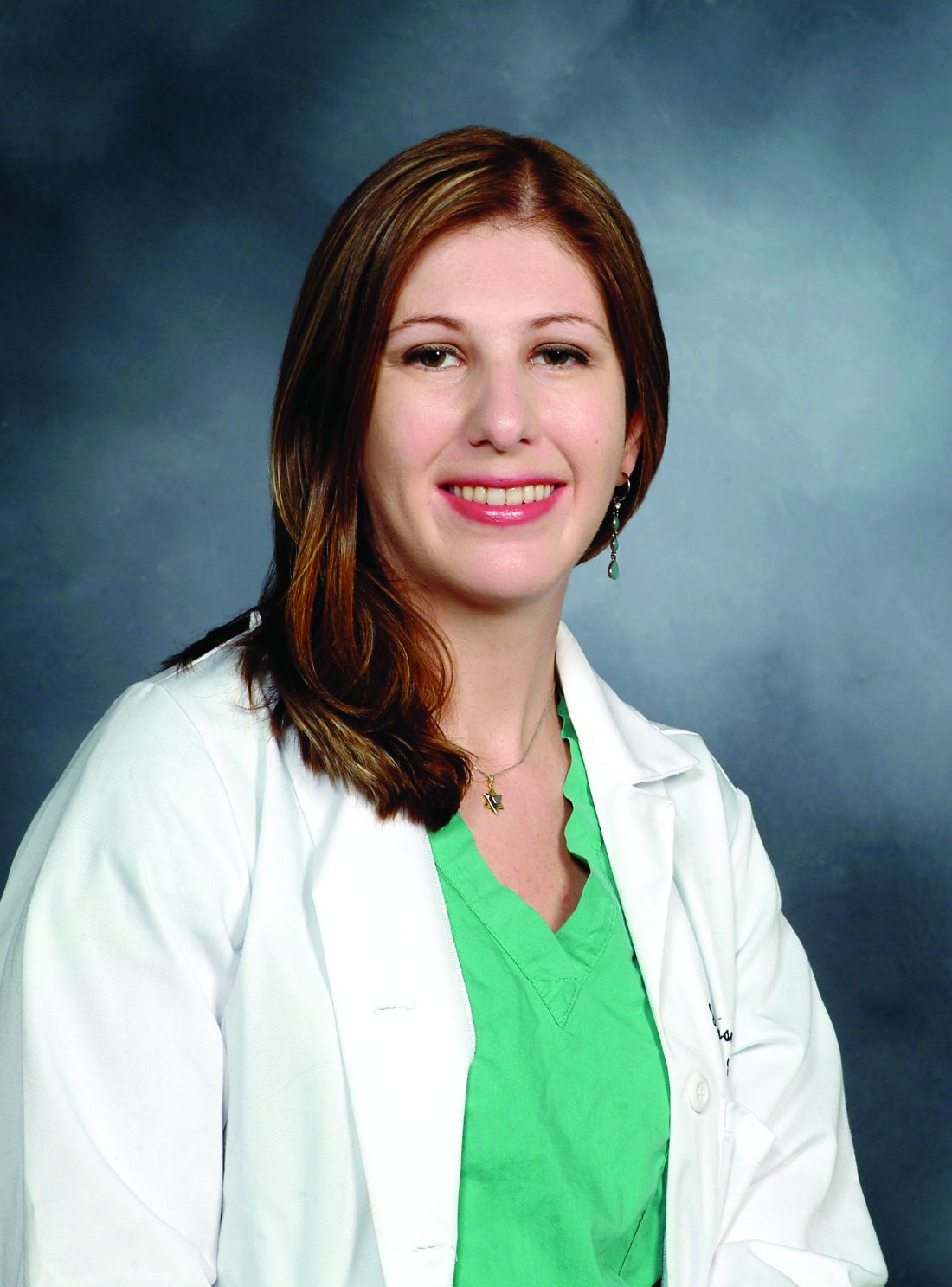
Dr. Grossman recently completed her residency in obstetrics and gynecology at Albert Einstein College of Medicine–Montefiore Hospital in the Bronx, N.Y., and is currently a first-year maternal-fetal medicine fellow at Weill Cornell Medical College in New York. She reported having no financial disclosures.
*This article was update April 21, 2107.
The obstetrics and gynecology written board exam made everything seem cut and dry. A patient with fibroids causing heavy bleeding? Management options include hormone treatment, minor surgical procedures, or major surgical procedures like myomectomy or hysterectomy. A pregnant patient in labor with a fetal heart rate deceleration? The next step is to shut off the oxytocin infusion, turn the patient on her left side, administer intravenous fluids, and give her oxygen via a nasal cannula. A patient who has ruptured her membranes at 28 weeks? That’s an easy one: magnesium for neuroprotection, latency antibiotics, prenatal steroids, neonatalogy consult. Straightforward.
At the end of June, I was grateful for my residency experience – even though some of it seemed hectic and haphazard – because it ensured that I understood the reasoning behind these multiple-choice questions. But then I started my maternal-fetal medicine fellowship this past July. I was learning the names of new residents, attendings, and nurses, and having to orient myself to an entirely different hospital system. Even labor and delivery board sign-out was completely different. I reassured myself by thinking: Obstetrics is obstetrics. The rules and guidelines of obstetrics are universal, practiced at every level, and always make sense, right?
One day I had a patient come in with chronic, refractory immune thrombocytopenia. Her plan for delivery was induction at 37 weeks after our hematology colleagues used medications we had never heard of to finally get her platelets into the 100s. But upon admission, her platelets were down to the 70s. I wondered, should we induce anyway because her platelets are likely to drop even further if we wait? Or do we give her the slew of medications that didn’t completely work initially as a last-ditch effort to boost her platelets again before delivery? I looked at practice bulletins, hematology guidelines, and numerous other publications and still I could not find a protocol for this specific kind of patient. After discussion with anesthesiologists, hematologists, maternal-fetal medicine specialists, labor and delivery nurses, and the patient herself, we came up with a plan. We gave her additional doses of thrombopoietic agents and steroids and continued to monitor her platelet count. Within a week, she had an uncomplicated vaginal delivery with an epidural.*
Taking a lead role in the decision-making process and organizing a management plan made me feel like I was the quarterback of a football team, with a healthy mother and baby substituting for a game-winning touchdown. The decisions we make in maternal-fetal medicine are not supposed to be easy. However, I’ve heard over and over that when our colleagues ask for our input, the guidance they want to hear is “deliver” or “don’t deliver.” Over the last several months, I’ve learned that there is so much more to it than that. I now examine the entire patient and fetus in two ways: as one physiologically inseparable unit, and as two patients, weighing the neonatal risks of delivery against the maternal risks of the pregnancy itself. Determining an appropriate time for delivery is just part of it.
There are also the questions about antepartum fetal testing. Should we do additional monitoring for patients with isolated polyhydramnios? What about patients who are at advanced maternal age? What about patients whose fetuses have “decreased growth velocity” but not growth restriction? Should these patients get umbilical artery Dopplers, too? ACOG and the SMFM often do not give us specific monitoring guidelines, which forces us to make a plan based on each individual clinical scenario.
In other words, we must practice in that ever-changing, ever-frustrating, and confusing gray area. I hope in fellowship I learn to not only navigate through this area effectively, but to one day confidently hold out my hand to others to help guide them through it, too.
Dr. Grossman recently completed her residency in obstetrics and gynecology at Albert Einstein College of Medicine–Montefiore Hospital in the Bronx, N.Y., and is currently a first-year maternal-fetal medicine fellow at Weill Cornell Medical College in New York. She reported having no financial disclosures.
*This article was update April 21, 2107.
The obstetrics and gynecology written board exam made everything seem cut and dry. A patient with fibroids causing heavy bleeding? Management options include hormone treatment, minor surgical procedures, or major surgical procedures like myomectomy or hysterectomy. A pregnant patient in labor with a fetal heart rate deceleration? The next step is to shut off the oxytocin infusion, turn the patient on her left side, administer intravenous fluids, and give her oxygen via a nasal cannula. A patient who has ruptured her membranes at 28 weeks? That’s an easy one: magnesium for neuroprotection, latency antibiotics, prenatal steroids, neonatalogy consult. Straightforward.
At the end of June, I was grateful for my residency experience – even though some of it seemed hectic and haphazard – because it ensured that I understood the reasoning behind these multiple-choice questions. But then I started my maternal-fetal medicine fellowship this past July. I was learning the names of new residents, attendings, and nurses, and having to orient myself to an entirely different hospital system. Even labor and delivery board sign-out was completely different. I reassured myself by thinking: Obstetrics is obstetrics. The rules and guidelines of obstetrics are universal, practiced at every level, and always make sense, right?
One day I had a patient come in with chronic, refractory immune thrombocytopenia. Her plan for delivery was induction at 37 weeks after our hematology colleagues used medications we had never heard of to finally get her platelets into the 100s. But upon admission, her platelets were down to the 70s. I wondered, should we induce anyway because her platelets are likely to drop even further if we wait? Or do we give her the slew of medications that didn’t completely work initially as a last-ditch effort to boost her platelets again before delivery? I looked at practice bulletins, hematology guidelines, and numerous other publications and still I could not find a protocol for this specific kind of patient. After discussion with anesthesiologists, hematologists, maternal-fetal medicine specialists, labor and delivery nurses, and the patient herself, we came up with a plan. We gave her additional doses of thrombopoietic agents and steroids and continued to monitor her platelet count. Within a week, she had an uncomplicated vaginal delivery with an epidural.*
Taking a lead role in the decision-making process and organizing a management plan made me feel like I was the quarterback of a football team, with a healthy mother and baby substituting for a game-winning touchdown. The decisions we make in maternal-fetal medicine are not supposed to be easy. However, I’ve heard over and over that when our colleagues ask for our input, the guidance they want to hear is “deliver” or “don’t deliver.” Over the last several months, I’ve learned that there is so much more to it than that. I now examine the entire patient and fetus in two ways: as one physiologically inseparable unit, and as two patients, weighing the neonatal risks of delivery against the maternal risks of the pregnancy itself. Determining an appropriate time for delivery is just part of it.
There are also the questions about antepartum fetal testing. Should we do additional monitoring for patients with isolated polyhydramnios? What about patients who are at advanced maternal age? What about patients whose fetuses have “decreased growth velocity” but not growth restriction? Should these patients get umbilical artery Dopplers, too? ACOG and the SMFM often do not give us specific monitoring guidelines, which forces us to make a plan based on each individual clinical scenario.
In other words, we must practice in that ever-changing, ever-frustrating, and confusing gray area. I hope in fellowship I learn to not only navigate through this area effectively, but to one day confidently hold out my hand to others to help guide them through it, too.
Dr. Grossman recently completed her residency in obstetrics and gynecology at Albert Einstein College of Medicine–Montefiore Hospital in the Bronx, N.Y., and is currently a first-year maternal-fetal medicine fellow at Weill Cornell Medical College in New York. She reported having no financial disclosures.
*This article was update April 21, 2107.
DTC genetic health risk tests: Beware
The Food and Drug Administration recently authorized 23andMe to provide consumers with results of germline DNA sequence variants associated with risk for 10 health conditions, among them hereditary hemochromatosis, alpha-1 antitrypsin deficiency, celiac disease, Alzheimer’s disease, and Parkinson’s disease. After they submit a saliva sample and pay a test fee, customers ordering the online test will receive a report delineating their ancestry markers and informing them whether they carry any of the genetic variants associated with selected health risks included on the targeted DNA sequencing panel.

As more consumers partake in “recreational genomic testing,” clinicians should understand the limitations of DTC genetic tests and should be prepared to discuss with patients why these should not supersede clinical diagnostic evaluations.
Dr. Stoffel is a gastroenterologist, assistant professor of internal medicine, and director of the cancer genetics clinic at the University of Michigan, Ann Arbor. She has no disclosures.
The Food and Drug Administration recently authorized 23andMe to provide consumers with results of germline DNA sequence variants associated with risk for 10 health conditions, among them hereditary hemochromatosis, alpha-1 antitrypsin deficiency, celiac disease, Alzheimer’s disease, and Parkinson’s disease. After they submit a saliva sample and pay a test fee, customers ordering the online test will receive a report delineating their ancestry markers and informing them whether they carry any of the genetic variants associated with selected health risks included on the targeted DNA sequencing panel.
As more consumers partake in “recreational genomic testing,” clinicians should understand the limitations of DTC genetic tests and should be prepared to discuss with patients why these should not supersede clinical diagnostic evaluations.
Dr. Stoffel is a gastroenterologist, assistant professor of internal medicine, and director of the cancer genetics clinic at the University of Michigan, Ann Arbor. She has no disclosures.
The Food and Drug Administration recently authorized 23andMe to provide consumers with results of germline DNA sequence variants associated with risk for 10 health conditions, among them hereditary hemochromatosis, alpha-1 antitrypsin deficiency, celiac disease, Alzheimer’s disease, and Parkinson’s disease. After they submit a saliva sample and pay a test fee, customers ordering the online test will receive a report delineating their ancestry markers and informing them whether they carry any of the genetic variants associated with selected health risks included on the targeted DNA sequencing panel.
As more consumers partake in “recreational genomic testing,” clinicians should understand the limitations of DTC genetic tests and should be prepared to discuss with patients why these should not supersede clinical diagnostic evaluations.
Dr. Stoffel is a gastroenterologist, assistant professor of internal medicine, and director of the cancer genetics clinic at the University of Michigan, Ann Arbor. She has no disclosures.

Management of chronic insomnia in adults
Most adults experience problems with sleep from time to time, and 6%-10% meet diagnostic criteria for chronic insomnia. Many of these patients present to their primary care clinicians looking for help. This clinical practice guideline from the American College of Physicians provides recommendations based on a review of studies published during the previous decade, which were assessed in terms of the strength of the recommendation and the quality of evidence. The guideline resulted in two recommendations:
1: All adult patients should receive cognitive behavioral therapy for insomnia (CBT-I) as the initial treatment for chronic insomnia. (strong recommendation)
2: Clinicians should use a shared decision-making approach discussing the benefits, harms, and costs of short-term use of medications, to decide whether to add pharmacological therapy in adults with chronic insomnia in whom cognitive behavioral therapy for insomnia (CBT-I) alone was unsuccessful. (weak recommendation)
Cognitive behavioral therapy for insomnia (CBT-I)
Cognitive behavioral therapy for insomnia encompasses a variety of measures that aim to change patients’ habits and beliefs associated with sleep. These measures include general “sleep hygiene” interventions, as well as stimulus control, sleep restriction, relaxation training, and cognitive reframing. With sleep hygiene, patients are educated about environmental factors that affect sleep, such as avoiding caffeine late in the day, limiting alcohol intake, having a regular sleep schedule, avoiding napping, the importance of exercise, and the importance of a quiet dark room in which to sleep. Examples of stimulus control include going to bed only when sleepy, and avoiding reading and watching TV in the bedroom. Sleep restriction limits the time in bed with strict sleep and wake-up times, gradually increasing time in bed as sleep efficiency improves.
Clinicians may find it surprising that this guideline makes such a strong, clear case for the primacy of behavioral measures in the treatment of chronic insomnia. The authors make a number of points in support of this position.
First, the effects of behavioral interventions appear to be robust – at least comparable to the short-term effects of medications – and often significantly better. For example, various studies of CBT-I show a decrease in sleep onset latency (how long it takes to fall asleep after going to bed) of between 12 and 31 minutes and an increase in total sleep time of 40 minutes. This compares favorably to the short-term effects of commonly used sleep medications.
Second, the effects of behavioral interventions are long-lasting compared with medications, which are usually approved for only short-term use, lose effectiveness over time, and have no benefit at all once they’re no longer being taken. Finally, there appear to be no harms associated with CBT-I, compared with significant adverse effects of medications.
One challenge is that access to effective behavioral interventions for insomnia can be an issue. On the other hand, a number of behavioral delivery methods were examined, and found to be effective, including in-person individual or group therapy, telephone- or Web-based modules or apps, and self-help books. An editorial accompanying the guidelines calls for efforts to increase the availability of behavioral modalities for insomnia.
Pharmacologic therapy
The recommendation to use pharmacologic therapy for insomnia is much more qualified than that for CBT-I, with language about shared decision-making, discussion of risks and benefits, emphasis on short-term use, and a provision that it be used only after an unsatisfactory trial of CBT-I alone. In addition, this recommendation is classified as “weak,” and the associated evidence “low-quality.” Medications reviewed included eszopiclone, zaleplon, zolpidem, orexin receptor antagonist, melatonin, ramelteon, and benzodiazepines.
There are several reasons why pharmacologic therapy is deemphasized. First, as noted above, the effects of commonly used medications are modest. As an example, typical patients with chronic insomnia will have sleep-onset latency of 60-70 minutes. Medications reviewed for this guideline decreased this time by approximately 10-20 minutes in short-term studies, so patients still took 40-60 minutes to fall asleep. Similar modest short-term effects were seen in terms of increasing total sleep time.
A second issue with pharmacologic therapy is that while many patients with chronic insomnia seek to use medications long term, the available studies have tended to look only at short-term use, and those studies with longer duration show a diminution of medication effect over time.
Finally, there are significant adverse effects associated with sedative-hypnotic medications, including somnolence, anxiety, confusion, and disturbance in attention. This is problematic, considering that these are precisely the symptoms that patients may be hoping to avoid when they take medications to help them sleep. Even patients who may not feel impaired often show demonstrable deficits in attention and performance following use of sleep medications; this issue is reflected in the boxed warnings that accompany several commonly prescribed agents.
It is noted in the evidence reviews that there are differences among the available medications. The nonbenzodiazepine hypnotics eszopiclone and zolpidem as well as the orexin receptor antagonist suvorexant improved short-term sleep quality, though the effect was small and there was significant evidence of harm as described above. Benzodiazepine hypnotics, melatonin agonists, and antidepressants studied had little or low-quality evidence to support efficacy on improving sleep. For melatonin and ramelteon, the evidence review notes that adverse effects did not differ between the medication and the placebo groups, though two open-label longer-term studies showed evidence of adverse effects with ramelteon. It is also important to note that patients studied in medication trials were mostly healthy middle-aged individuals; it is possible that the side effects of sleep medications may be greater in those who are older or more infirm.
Bottom line
This guideline from the American College of Physicians strongly endorses the use of tailored cognitive behavioral therapy modalities for the initial treatment of patients with chronic insomnia. Medications are given a weak recommendation for a limited back-up role.
Dr. Clark is associate director of the family medicine residency program at Abington (Pa.) Jefferson Health. Dr. Skolnik is professor of family and community medicine at Sidney Kimmel Medical College, Thomas Jefferson University, Philadelphia, and associate director of the family medicine residency program at Abington Jefferson Health.
References
Qaseem A, et al. Management of Chronic Insomnia Disorder in Adults: A Clinical Practice Guideline From the American College of Physicians. Ann Intern Med. 2016;165:125-33.
Brasure M. Psychological and Behavioral Interventions for Managing Insomnia Disorder: An Evidence Report for a Clinical Practice Guideline by the American College of Physicians. Ann Intern Med. 2016;165:113-24.
Wilt TJ, et al. Pharmacologic Treatment of Insomnia Disorder: An Evidence Report for a Clinical Practice Guideline by the American College of Physicians. Ann Intern Med. 2016;165:103-12.
Most adults experience problems with sleep from time to time, and 6%-10% meet diagnostic criteria for chronic insomnia. Many of these patients present to their primary care clinicians looking for help. This clinical practice guideline from the American College of Physicians provides recommendations based on a review of studies published during the previous decade, which were assessed in terms of the strength of the recommendation and the quality of evidence. The guideline resulted in two recommendations:
1: All adult patients should receive cognitive behavioral therapy for insomnia (CBT-I) as the initial treatment for chronic insomnia. (strong recommendation)
2: Clinicians should use a shared decision-making approach discussing the benefits, harms, and costs of short-term use of medications, to decide whether to add pharmacological therapy in adults with chronic insomnia in whom cognitive behavioral therapy for insomnia (CBT-I) alone was unsuccessful. (weak recommendation)
Cognitive behavioral therapy for insomnia (CBT-I)
Cognitive behavioral therapy for insomnia encompasses a variety of measures that aim to change patients’ habits and beliefs associated with sleep. These measures include general “sleep hygiene” interventions, as well as stimulus control, sleep restriction, relaxation training, and cognitive reframing. With sleep hygiene, patients are educated about environmental factors that affect sleep, such as avoiding caffeine late in the day, limiting alcohol intake, having a regular sleep schedule, avoiding napping, the importance of exercise, and the importance of a quiet dark room in which to sleep. Examples of stimulus control include going to bed only when sleepy, and avoiding reading and watching TV in the bedroom. Sleep restriction limits the time in bed with strict sleep and wake-up times, gradually increasing time in bed as sleep efficiency improves.
Clinicians may find it surprising that this guideline makes such a strong, clear case for the primacy of behavioral measures in the treatment of chronic insomnia. The authors make a number of points in support of this position.
First, the effects of behavioral interventions appear to be robust – at least comparable to the short-term effects of medications – and often significantly better. For example, various studies of CBT-I show a decrease in sleep onset latency (how long it takes to fall asleep after going to bed) of between 12 and 31 minutes and an increase in total sleep time of 40 minutes. This compares favorably to the short-term effects of commonly used sleep medications.
Second, the effects of behavioral interventions are long-lasting compared with medications, which are usually approved for only short-term use, lose effectiveness over time, and have no benefit at all once they’re no longer being taken. Finally, there appear to be no harms associated with CBT-I, compared with significant adverse effects of medications.
One challenge is that access to effective behavioral interventions for insomnia can be an issue. On the other hand, a number of behavioral delivery methods were examined, and found to be effective, including in-person individual or group therapy, telephone- or Web-based modules or apps, and self-help books. An editorial accompanying the guidelines calls for efforts to increase the availability of behavioral modalities for insomnia.
Pharmacologic therapy
The recommendation to use pharmacologic therapy for insomnia is much more qualified than that for CBT-I, with language about shared decision-making, discussion of risks and benefits, emphasis on short-term use, and a provision that it be used only after an unsatisfactory trial of CBT-I alone. In addition, this recommendation is classified as “weak,” and the associated evidence “low-quality.” Medications reviewed included eszopiclone, zaleplon, zolpidem, orexin receptor antagonist, melatonin, ramelteon, and benzodiazepines.
There are several reasons why pharmacologic therapy is deemphasized. First, as noted above, the effects of commonly used medications are modest. As an example, typical patients with chronic insomnia will have sleep-onset latency of 60-70 minutes. Medications reviewed for this guideline decreased this time by approximately 10-20 minutes in short-term studies, so patients still took 40-60 minutes to fall asleep. Similar modest short-term effects were seen in terms of increasing total sleep time.
A second issue with pharmacologic therapy is that while many patients with chronic insomnia seek to use medications long term, the available studies have tended to look only at short-term use, and those studies with longer duration show a diminution of medication effect over time.
Finally, there are significant adverse effects associated with sedative-hypnotic medications, including somnolence, anxiety, confusion, and disturbance in attention. This is problematic, considering that these are precisely the symptoms that patients may be hoping to avoid when they take medications to help them sleep. Even patients who may not feel impaired often show demonstrable deficits in attention and performance following use of sleep medications; this issue is reflected in the boxed warnings that accompany several commonly prescribed agents.
It is noted in the evidence reviews that there are differences among the available medications. The nonbenzodiazepine hypnotics eszopiclone and zolpidem as well as the orexin receptor antagonist suvorexant improved short-term sleep quality, though the effect was small and there was significant evidence of harm as described above. Benzodiazepine hypnotics, melatonin agonists, and antidepressants studied had little or low-quality evidence to support efficacy on improving sleep. For melatonin and ramelteon, the evidence review notes that adverse effects did not differ between the medication and the placebo groups, though two open-label longer-term studies showed evidence of adverse effects with ramelteon. It is also important to note that patients studied in medication trials were mostly healthy middle-aged individuals; it is possible that the side effects of sleep medications may be greater in those who are older or more infirm.
Bottom line
This guideline from the American College of Physicians strongly endorses the use of tailored cognitive behavioral therapy modalities for the initial treatment of patients with chronic insomnia. Medications are given a weak recommendation for a limited back-up role.
Dr. Clark is associate director of the family medicine residency program at Abington (Pa.) Jefferson Health. Dr. Skolnik is professor of family and community medicine at Sidney Kimmel Medical College, Thomas Jefferson University, Philadelphia, and associate director of the family medicine residency program at Abington Jefferson Health.
References
Qaseem A, et al. Management of Chronic Insomnia Disorder in Adults: A Clinical Practice Guideline From the American College of Physicians. Ann Intern Med. 2016;165:125-33.
Brasure M. Psychological and Behavioral Interventions for Managing Insomnia Disorder: An Evidence Report for a Clinical Practice Guideline by the American College of Physicians. Ann Intern Med. 2016;165:113-24.
Wilt TJ, et al. Pharmacologic Treatment of Insomnia Disorder: An Evidence Report for a Clinical Practice Guideline by the American College of Physicians. Ann Intern Med. 2016;165:103-12.
Most adults experience problems with sleep from time to time, and 6%-10% meet diagnostic criteria for chronic insomnia. Many of these patients present to their primary care clinicians looking for help. This clinical practice guideline from the American College of Physicians provides recommendations based on a review of studies published during the previous decade, which were assessed in terms of the strength of the recommendation and the quality of evidence. The guideline resulted in two recommendations:
1: All adult patients should receive cognitive behavioral therapy for insomnia (CBT-I) as the initial treatment for chronic insomnia. (strong recommendation)
2: Clinicians should use a shared decision-making approach discussing the benefits, harms, and costs of short-term use of medications, to decide whether to add pharmacological therapy in adults with chronic insomnia in whom cognitive behavioral therapy for insomnia (CBT-I) alone was unsuccessful. (weak recommendation)
Cognitive behavioral therapy for insomnia (CBT-I)
Cognitive behavioral therapy for insomnia encompasses a variety of measures that aim to change patients’ habits and beliefs associated with sleep. These measures include general “sleep hygiene” interventions, as well as stimulus control, sleep restriction, relaxation training, and cognitive reframing. With sleep hygiene, patients are educated about environmental factors that affect sleep, such as avoiding caffeine late in the day, limiting alcohol intake, having a regular sleep schedule, avoiding napping, the importance of exercise, and the importance of a quiet dark room in which to sleep. Examples of stimulus control include going to bed only when sleepy, and avoiding reading and watching TV in the bedroom. Sleep restriction limits the time in bed with strict sleep and wake-up times, gradually increasing time in bed as sleep efficiency improves.
Clinicians may find it surprising that this guideline makes such a strong, clear case for the primacy of behavioral measures in the treatment of chronic insomnia. The authors make a number of points in support of this position.
First, the effects of behavioral interventions appear to be robust – at least comparable to the short-term effects of medications – and often significantly better. For example, various studies of CBT-I show a decrease in sleep onset latency (how long it takes to fall asleep after going to bed) of between 12 and 31 minutes and an increase in total sleep time of 40 minutes. This compares favorably to the short-term effects of commonly used sleep medications.
Second, the effects of behavioral interventions are long-lasting compared with medications, which are usually approved for only short-term use, lose effectiveness over time, and have no benefit at all once they’re no longer being taken. Finally, there appear to be no harms associated with CBT-I, compared with significant adverse effects of medications.
One challenge is that access to effective behavioral interventions for insomnia can be an issue. On the other hand, a number of behavioral delivery methods were examined, and found to be effective, including in-person individual or group therapy, telephone- or Web-based modules or apps, and self-help books. An editorial accompanying the guidelines calls for efforts to increase the availability of behavioral modalities for insomnia.
Pharmacologic therapy
The recommendation to use pharmacologic therapy for insomnia is much more qualified than that for CBT-I, with language about shared decision-making, discussion of risks and benefits, emphasis on short-term use, and a provision that it be used only after an unsatisfactory trial of CBT-I alone. In addition, this recommendation is classified as “weak,” and the associated evidence “low-quality.” Medications reviewed included eszopiclone, zaleplon, zolpidem, orexin receptor antagonist, melatonin, ramelteon, and benzodiazepines.
There are several reasons why pharmacologic therapy is deemphasized. First, as noted above, the effects of commonly used medications are modest. As an example, typical patients with chronic insomnia will have sleep-onset latency of 60-70 minutes. Medications reviewed for this guideline decreased this time by approximately 10-20 minutes in short-term studies, so patients still took 40-60 minutes to fall asleep. Similar modest short-term effects were seen in terms of increasing total sleep time.
A second issue with pharmacologic therapy is that while many patients with chronic insomnia seek to use medications long term, the available studies have tended to look only at short-term use, and those studies with longer duration show a diminution of medication effect over time.
Finally, there are significant adverse effects associated with sedative-hypnotic medications, including somnolence, anxiety, confusion, and disturbance in attention. This is problematic, considering that these are precisely the symptoms that patients may be hoping to avoid when they take medications to help them sleep. Even patients who may not feel impaired often show demonstrable deficits in attention and performance following use of sleep medications; this issue is reflected in the boxed warnings that accompany several commonly prescribed agents.
It is noted in the evidence reviews that there are differences among the available medications. The nonbenzodiazepine hypnotics eszopiclone and zolpidem as well as the orexin receptor antagonist suvorexant improved short-term sleep quality, though the effect was small and there was significant evidence of harm as described above. Benzodiazepine hypnotics, melatonin agonists, and antidepressants studied had little or low-quality evidence to support efficacy on improving sleep. For melatonin and ramelteon, the evidence review notes that adverse effects did not differ between the medication and the placebo groups, though two open-label longer-term studies showed evidence of adverse effects with ramelteon. It is also important to note that patients studied in medication trials were mostly healthy middle-aged individuals; it is possible that the side effects of sleep medications may be greater in those who are older or more infirm.
Bottom line
This guideline from the American College of Physicians strongly endorses the use of tailored cognitive behavioral therapy modalities for the initial treatment of patients with chronic insomnia. Medications are given a weak recommendation for a limited back-up role.
Dr. Clark is associate director of the family medicine residency program at Abington (Pa.) Jefferson Health. Dr. Skolnik is professor of family and community medicine at Sidney Kimmel Medical College, Thomas Jefferson University, Philadelphia, and associate director of the family medicine residency program at Abington Jefferson Health.
References
Qaseem A, et al. Management of Chronic Insomnia Disorder in Adults: A Clinical Practice Guideline From the American College of Physicians. Ann Intern Med. 2016;165:125-33.
Brasure M. Psychological and Behavioral Interventions for Managing Insomnia Disorder: An Evidence Report for a Clinical Practice Guideline by the American College of Physicians. Ann Intern Med. 2016;165:113-24.
Wilt TJ, et al. Pharmacologic Treatment of Insomnia Disorder: An Evidence Report for a Clinical Practice Guideline by the American College of Physicians. Ann Intern Med. 2016;165:103-12.
Clearer heads are a fuzzy subject
Those of you who were in high school or middle school in 1987, when the DSM II-R first included “Attention Deficit Disorder With and Without Hyperactivity” for the first time, missed out on the “discovery,” and subsequent commercialization, of a condition that had been percolating under physicians’ noses for hundreds of years.
You may have wondered what primary care physicians did with their time before they were inundated with requests for evaluations and medications to treat ADHD. You may not realize that we didn’t always have ADHD specialists to help us or several dozen stimulant concoctions from which to choose. In the beginning, ADHD specialists had to invent themselves while the pharmaceutical companies scrambled to meet the demand for drugs that were longer lasting and more palatable.

The increasing popularity of professional contact sports is probably what we have to thank for sharpening this focus on head injury. I suspect that, for the general population, there are no more concussions occurring today than there were 50 years ago. However, in the subgroup of professional and elite college athletes, the players’ increasing speed, size, and flagrant ignorance of the rules have resulted in more significant head injuries. When a highly paid megastar athlete must sit out key games, the management of his head injury generates a lot of attention and discussion.
I am sure that there also has been an increase in concussions among young women who now have more opportunities to participate in contact sports. However, I suspect that most of the apparent increase in the diagnosis among high school and younger athletes of both sexes is primarily the result of heightened awareness. I don’t know of data to support or refute this opinion.
I may be wrong about lack of a real increase in concussion injuries, but there can be no arguing about the explosion in the number of clinics and providers who advertise themselves as concussion specialists. Neurologists, psychologists, chiropractors, orthopedists, and sports medicine practitioners and trainers all have climbed on the bandwagon to satisfy the demand generated by this country’s new concussion awareness.
The problem is that, just as in the early days after the “discovery” of ADHD, the science behind much of the advice and management strategies for concussion just isn’t there. For example, resting the brain after a head injury sounds like a good idea. After all, it works for a torn hamstring. However, “sounds like” and “is” are two very different things.
In an excellent article in this publication (“Spotlight shifts to active treatment for concussions,” by Christine Kilgore), I found some comforting news that concussion management may be taking some baby steps into the realm of evidence-based decision management. The original results came from a pediatric population, but it now appears that prolonged rest, which is routinely recommended, can be counterproductive in many concussed patients. The physicians quoted in this article suggest that their experience is pointing to the need for active management in patients with a variety of postconcussion symptoms. Brian Hainline, MD, a clinical professor of neurology at New York University and Indiana University, Indianapolis, observes, “It’s rare that prolonged rest is the answer. Look at stroke – you don’t have patients resting indefinitely. You have to get their nervous systems re-engaged.”
Of course, the science is still lagging behind and the observations by the physicians quoted in this article are based on small series, but their agreement deserves our attention. I urge you to take a look at this article to get an idea of where the management of concussion appears to be going. Not surprisingly, no two concussion patients are the same, and their management should be tailored to their needs. Reliance on overly simplistic guidelines not only doesn’t work but can do harm. It’s that old Hippocratic Oath thing again.
Dr. Wilkoff practiced primary care pediatrics in Brunswick, Maine, for nearly 40 years. He has authored several books on behavioral pediatrics, including “How to Say No to Your Toddler.” Email him at pdnews@frontlinemedcom.com.
Those of you who were in high school or middle school in 1987, when the DSM II-R first included “Attention Deficit Disorder With and Without Hyperactivity” for the first time, missed out on the “discovery,” and subsequent commercialization, of a condition that had been percolating under physicians’ noses for hundreds of years.
You may have wondered what primary care physicians did with their time before they were inundated with requests for evaluations and medications to treat ADHD. You may not realize that we didn’t always have ADHD specialists to help us or several dozen stimulant concoctions from which to choose. In the beginning, ADHD specialists had to invent themselves while the pharmaceutical companies scrambled to meet the demand for drugs that were longer lasting and more palatable.
The increasing popularity of professional contact sports is probably what we have to thank for sharpening this focus on head injury. I suspect that, for the general population, there are no more concussions occurring today than there were 50 years ago. However, in the subgroup of professional and elite college athletes, the players’ increasing speed, size, and flagrant ignorance of the rules have resulted in more significant head injuries. When a highly paid megastar athlete must sit out key games, the management of his head injury generates a lot of attention and discussion.
I am sure that there also has been an increase in concussions among young women who now have more opportunities to participate in contact sports. However, I suspect that most of the apparent increase in the diagnosis among high school and younger athletes of both sexes is primarily the result of heightened awareness. I don’t know of data to support or refute this opinion.
I may be wrong about lack of a real increase in concussion injuries, but there can be no arguing about the explosion in the number of clinics and providers who advertise themselves as concussion specialists. Neurologists, psychologists, chiropractors, orthopedists, and sports medicine practitioners and trainers all have climbed on the bandwagon to satisfy the demand generated by this country’s new concussion awareness.
The problem is that, just as in the early days after the “discovery” of ADHD, the science behind much of the advice and management strategies for concussion just isn’t there. For example, resting the brain after a head injury sounds like a good idea. After all, it works for a torn hamstring. However, “sounds like” and “is” are two very different things.
In an excellent article in this publication (“Spotlight shifts to active treatment for concussions,” by Christine Kilgore), I found some comforting news that concussion management may be taking some baby steps into the realm of evidence-based decision management. The original results came from a pediatric population, but it now appears that prolonged rest, which is routinely recommended, can be counterproductive in many concussed patients. The physicians quoted in this article suggest that their experience is pointing to the need for active management in patients with a variety of postconcussion symptoms. Brian Hainline, MD, a clinical professor of neurology at New York University and Indiana University, Indianapolis, observes, “It’s rare that prolonged rest is the answer. Look at stroke – you don’t have patients resting indefinitely. You have to get their nervous systems re-engaged.”
Of course, the science is still lagging behind and the observations by the physicians quoted in this article are based on small series, but their agreement deserves our attention. I urge you to take a look at this article to get an idea of where the management of concussion appears to be going. Not surprisingly, no two concussion patients are the same, and their management should be tailored to their needs. Reliance on overly simplistic guidelines not only doesn’t work but can do harm. It’s that old Hippocratic Oath thing again.
Dr. Wilkoff practiced primary care pediatrics in Brunswick, Maine, for nearly 40 years. He has authored several books on behavioral pediatrics, including “How to Say No to Your Toddler.” Email him at pdnews@frontlinemedcom.com.
Those of you who were in high school or middle school in 1987, when the DSM II-R first included “Attention Deficit Disorder With and Without Hyperactivity” for the first time, missed out on the “discovery,” and subsequent commercialization, of a condition that had been percolating under physicians’ noses for hundreds of years.
You may have wondered what primary care physicians did with their time before they were inundated with requests for evaluations and medications to treat ADHD. You may not realize that we didn’t always have ADHD specialists to help us or several dozen stimulant concoctions from which to choose. In the beginning, ADHD specialists had to invent themselves while the pharmaceutical companies scrambled to meet the demand for drugs that were longer lasting and more palatable.
The increasing popularity of professional contact sports is probably what we have to thank for sharpening this focus on head injury. I suspect that, for the general population, there are no more concussions occurring today than there were 50 years ago. However, in the subgroup of professional and elite college athletes, the players’ increasing speed, size, and flagrant ignorance of the rules have resulted in more significant head injuries. When a highly paid megastar athlete must sit out key games, the management of his head injury generates a lot of attention and discussion.
I am sure that there also has been an increase in concussions among young women who now have more opportunities to participate in contact sports. However, I suspect that most of the apparent increase in the diagnosis among high school and younger athletes of both sexes is primarily the result of heightened awareness. I don’t know of data to support or refute this opinion.
I may be wrong about lack of a real increase in concussion injuries, but there can be no arguing about the explosion in the number of clinics and providers who advertise themselves as concussion specialists. Neurologists, psychologists, chiropractors, orthopedists, and sports medicine practitioners and trainers all have climbed on the bandwagon to satisfy the demand generated by this country’s new concussion awareness.
The problem is that, just as in the early days after the “discovery” of ADHD, the science behind much of the advice and management strategies for concussion just isn’t there. For example, resting the brain after a head injury sounds like a good idea. After all, it works for a torn hamstring. However, “sounds like” and “is” are two very different things.
In an excellent article in this publication (“Spotlight shifts to active treatment for concussions,” by Christine Kilgore), I found some comforting news that concussion management may be taking some baby steps into the realm of evidence-based decision management. The original results came from a pediatric population, but it now appears that prolonged rest, which is routinely recommended, can be counterproductive in many concussed patients. The physicians quoted in this article suggest that their experience is pointing to the need for active management in patients with a variety of postconcussion symptoms. Brian Hainline, MD, a clinical professor of neurology at New York University and Indiana University, Indianapolis, observes, “It’s rare that prolonged rest is the answer. Look at stroke – you don’t have patients resting indefinitely. You have to get their nervous systems re-engaged.”
Of course, the science is still lagging behind and the observations by the physicians quoted in this article are based on small series, but their agreement deserves our attention. I urge you to take a look at this article to get an idea of where the management of concussion appears to be going. Not surprisingly, no two concussion patients are the same, and their management should be tailored to their needs. Reliance on overly simplistic guidelines not only doesn’t work but can do harm. It’s that old Hippocratic Oath thing again.
Dr. Wilkoff practiced primary care pediatrics in Brunswick, Maine, for nearly 40 years. He has authored several books on behavioral pediatrics, including “How to Say No to Your Toddler.” Email him at pdnews@frontlinemedcom.com.
Fat City
“Honey, does this town make me look fat?”
“Yes, Dear, I’m afraid it does.”
No, that really wasn’t a typo in the first line. I intended to type “town” and not “gown.” A recent article by Dionysus Powell in healthcareinamerica.us has prompted me to think a bit more about the relationship between obesity and the communities we inhabit (“Fit Cities vs. Fat Cities – What available data can tell us about the difference in lifestyle and obesity between cities,” by Dionysus Powell, March 28, 2017). The author is a biotech researcher who has collected readily available Centers for Disease Control and Prevention data on body mass index (BMI) and self-reported sedentary behavior in almost 200 U.S. cities. He then sliced and diced these numbers with each cities’ walkability score, which is a crude measure of how easily citizens and visitors on foot can reach a variety of destinations such as shops, schools, churches, libraries, and municipal offices. You can easily find your own town’s score by going to walkscore.com.
Not surprisingly, the author discovered that “differences in obesity rates between cities can largely be explained by differences in physical activity.” Of course, there is a point at which a community has sufficient walkable infrastructure so that its obesity rate is a result of the citizens choosing not to walk rather than the community’s failure to provide pedestrians with enough connectivity to do their daily errands on foot. That threshold point appears to be a walkability score of 50, yet Mr. Powell observes that most American cities fail to reach even that minimum.
Although rich people tend to have better health outcomes than poor people, and there is a “general trend for richer cities to be more physically active than poorer cities,” Mr. Powell could not find a relationship between a city’s median income and its walkability.
If, like most of us, you have been frustrated in your efforts to lower the BMI of your patients, it may be time to emerge from the confines of your office and take a look at your town’s walkability score. If it is less than 50, you and your fellow concerned citizens and officials have some work to do. It may mean advocating for improved pedestrian infrastructure and/or dismantling the physical and zoning barriers to pedestrian connectivity. For example, maybe your community should be adding more pedestrian-activated crossing signals or tapping into federal and state safe routes to school programs or adopting zoning ordinances that require sidewalks in all new developments.
Here in Brunswick, we have a very enviable walkability score of 87, meaning “most errands can be accomplished on foot.” We have a bicycle and pedestrian advisory committee that reports to the town council and works with the town engineer to advocate for infrastructure improvements that encourage pedestrian connectivity. However, funding these improvements in walkability is always a challenge. But as the analysis in this recent study suggestions, our biggest challenge continues to be encouraging our citizens to take advantage of our existing pedestrian infrastructure.
Dr. Wilkoff practiced primary care pediatrics in Brunswick, Maine for nearly 40 years. He has authored several books on behavioral pediatrics, including “How to Say No to Your Toddler.” Email him at pdnews@frontlinemedcom.com.
“Honey, does this town make me look fat?”
“Yes, Dear, I’m afraid it does.”
No, that really wasn’t a typo in the first line. I intended to type “town” and not “gown.” A recent article by Dionysus Powell in healthcareinamerica.us has prompted me to think a bit more about the relationship between obesity and the communities we inhabit (“Fit Cities vs. Fat Cities – What available data can tell us about the difference in lifestyle and obesity between cities,” by Dionysus Powell, March 28, 2017). The author is a biotech researcher who has collected readily available Centers for Disease Control and Prevention data on body mass index (BMI) and self-reported sedentary behavior in almost 200 U.S. cities. He then sliced and diced these numbers with each cities’ walkability score, which is a crude measure of how easily citizens and visitors on foot can reach a variety of destinations such as shops, schools, churches, libraries, and municipal offices. You can easily find your own town’s score by going to walkscore.com.
Not surprisingly, the author discovered that “differences in obesity rates between cities can largely be explained by differences in physical activity.” Of course, there is a point at which a community has sufficient walkable infrastructure so that its obesity rate is a result of the citizens choosing not to walk rather than the community’s failure to provide pedestrians with enough connectivity to do their daily errands on foot. That threshold point appears to be a walkability score of 50, yet Mr. Powell observes that most American cities fail to reach even that minimum.
Although rich people tend to have better health outcomes than poor people, and there is a “general trend for richer cities to be more physically active than poorer cities,” Mr. Powell could not find a relationship between a city’s median income and its walkability.
If, like most of us, you have been frustrated in your efforts to lower the BMI of your patients, it may be time to emerge from the confines of your office and take a look at your town’s walkability score. If it is less than 50, you and your fellow concerned citizens and officials have some work to do. It may mean advocating for improved pedestrian infrastructure and/or dismantling the physical and zoning barriers to pedestrian connectivity. For example, maybe your community should be adding more pedestrian-activated crossing signals or tapping into federal and state safe routes to school programs or adopting zoning ordinances that require sidewalks in all new developments.
Here in Brunswick, we have a very enviable walkability score of 87, meaning “most errands can be accomplished on foot.” We have a bicycle and pedestrian advisory committee that reports to the town council and works with the town engineer to advocate for infrastructure improvements that encourage pedestrian connectivity. However, funding these improvements in walkability is always a challenge. But as the analysis in this recent study suggestions, our biggest challenge continues to be encouraging our citizens to take advantage of our existing pedestrian infrastructure.
Dr. Wilkoff practiced primary care pediatrics in Brunswick, Maine for nearly 40 years. He has authored several books on behavioral pediatrics, including “How to Say No to Your Toddler.” Email him at pdnews@frontlinemedcom.com.
“Honey, does this town make me look fat?”
“Yes, Dear, I’m afraid it does.”
No, that really wasn’t a typo in the first line. I intended to type “town” and not “gown.” A recent article by Dionysus Powell in healthcareinamerica.us has prompted me to think a bit more about the relationship between obesity and the communities we inhabit (“Fit Cities vs. Fat Cities – What available data can tell us about the difference in lifestyle and obesity between cities,” by Dionysus Powell, March 28, 2017). The author is a biotech researcher who has collected readily available Centers for Disease Control and Prevention data on body mass index (BMI) and self-reported sedentary behavior in almost 200 U.S. cities. He then sliced and diced these numbers with each cities’ walkability score, which is a crude measure of how easily citizens and visitors on foot can reach a variety of destinations such as shops, schools, churches, libraries, and municipal offices. You can easily find your own town’s score by going to walkscore.com.
Not surprisingly, the author discovered that “differences in obesity rates between cities can largely be explained by differences in physical activity.” Of course, there is a point at which a community has sufficient walkable infrastructure so that its obesity rate is a result of the citizens choosing not to walk rather than the community’s failure to provide pedestrians with enough connectivity to do their daily errands on foot. That threshold point appears to be a walkability score of 50, yet Mr. Powell observes that most American cities fail to reach even that minimum.
Although rich people tend to have better health outcomes than poor people, and there is a “general trend for richer cities to be more physically active than poorer cities,” Mr. Powell could not find a relationship between a city’s median income and its walkability.
If, like most of us, you have been frustrated in your efforts to lower the BMI of your patients, it may be time to emerge from the confines of your office and take a look at your town’s walkability score. If it is less than 50, you and your fellow concerned citizens and officials have some work to do. It may mean advocating for improved pedestrian infrastructure and/or dismantling the physical and zoning barriers to pedestrian connectivity. For example, maybe your community should be adding more pedestrian-activated crossing signals or tapping into federal and state safe routes to school programs or adopting zoning ordinances that require sidewalks in all new developments.
Here in Brunswick, we have a very enviable walkability score of 87, meaning “most errands can be accomplished on foot.” We have a bicycle and pedestrian advisory committee that reports to the town council and works with the town engineer to advocate for infrastructure improvements that encourage pedestrian connectivity. However, funding these improvements in walkability is always a challenge. But as the analysis in this recent study suggestions, our biggest challenge continues to be encouraging our citizens to take advantage of our existing pedestrian infrastructure.
Dr. Wilkoff practiced primary care pediatrics in Brunswick, Maine for nearly 40 years. He has authored several books on behavioral pediatrics, including “How to Say No to Your Toddler.” Email him at pdnews@frontlinemedcom.com.
If you ask me ...
In a feature article in Pediatric News entitled “What do doctors want from health reform,” Alicia Gallegos reports on the results of a recent online Frontline Medical News poll of 390 physicians who were asked what one thing about the ACA they would change. The answers were scattered, but “Stabilize premiums and out of pocket expenses for patients” garnered 50% of the votes.
I suspect that this result was an anguished cry for some leadership in Washington. It could come from the left or the right or, even better, from a coalition. But please, we just need some clear leadership, some direction, and a plan that would allow all of us – physicians, patients, hospitals, and insurance companies – to get on with our various missions.
The cost of medication is another major driver of health care cost. Any new plan or adjustments to the ACA should more forcefully rein in or outright eliminate the pharmacy benefit managers who needlessly add cost to medication. Although most of us grumble when faced with cookbook recipes for care that constrain our prescribing choices, we must accept that, in most cases, these evidence-based guidelines are necessary evils. At the same time, we should vigorously support and cooperate with the efforts to discipline the flagrant overprescribers in our midst.
It is not surprising that the ACA has had difficulty attracting young healthy people to buy health insurance that is costly even at a discount. Offering a lower price, no frills, catastrophic care option might be more appealing to young people who still see themselves as invincible. While, as pediatricians, we can see the benefit of immunizations and preventive care in the first year of life, it may be time for a more critical look at the cost benefit ratio for other preventive initiatives in older age groups that may sound good but are making health insurance more expensive.
Finally, an improved ACA should make reduction of the administrative burden of prior authorizations a high priority. Michael L. Munger, MD, president-elect of the American Academy of Family Physicians, suggests that a standard process for both private and publicly funded patients would allow physicians to focus their time and talents on more efficient patient care. The failure of the ACA to mandate even basic standardization for electronic health records has left us with a nonsystem made up of mini-systems that are neither user friendly nor capable of effectively communicating with one another.
It appears that this country doesn’t yet have the stomach for a single payer model. While I usually believe that compromise will yield a good result, the ACA is an example of when a leadership vacuum can result in a collection of bad compromises.
Dr. Wilkoff practiced primary care pediatrics in Brunswick, Maine for nearly 40 years. He has authored several books on behavioral pediatrics, including “How to Say No to Your Toddler.” Email him at pdnews@frontlinemedcom.com.
[polldaddy:9708248]
In a feature article in Pediatric News entitled “What do doctors want from health reform,” Alicia Gallegos reports on the results of a recent online Frontline Medical News poll of 390 physicians who were asked what one thing about the ACA they would change. The answers were scattered, but “Stabilize premiums and out of pocket expenses for patients” garnered 50% of the votes.
I suspect that this result was an anguished cry for some leadership in Washington. It could come from the left or the right or, even better, from a coalition. But please, we just need some clear leadership, some direction, and a plan that would allow all of us – physicians, patients, hospitals, and insurance companies – to get on with our various missions.
The cost of medication is another major driver of health care cost. Any new plan or adjustments to the ACA should more forcefully rein in or outright eliminate the pharmacy benefit managers who needlessly add cost to medication. Although most of us grumble when faced with cookbook recipes for care that constrain our prescribing choices, we must accept that, in most cases, these evidence-based guidelines are necessary evils. At the same time, we should vigorously support and cooperate with the efforts to discipline the flagrant overprescribers in our midst.
It is not surprising that the ACA has had difficulty attracting young healthy people to buy health insurance that is costly even at a discount. Offering a lower price, no frills, catastrophic care option might be more appealing to young people who still see themselves as invincible. While, as pediatricians, we can see the benefit of immunizations and preventive care in the first year of life, it may be time for a more critical look at the cost benefit ratio for other preventive initiatives in older age groups that may sound good but are making health insurance more expensive.
Finally, an improved ACA should make reduction of the administrative burden of prior authorizations a high priority. Michael L. Munger, MD, president-elect of the American Academy of Family Physicians, suggests that a standard process for both private and publicly funded patients would allow physicians to focus their time and talents on more efficient patient care. The failure of the ACA to mandate even basic standardization for electronic health records has left us with a nonsystem made up of mini-systems that are neither user friendly nor capable of effectively communicating with one another.
It appears that this country doesn’t yet have the stomach for a single payer model. While I usually believe that compromise will yield a good result, the ACA is an example of when a leadership vacuum can result in a collection of bad compromises.
Dr. Wilkoff practiced primary care pediatrics in Brunswick, Maine for nearly 40 years. He has authored several books on behavioral pediatrics, including “How to Say No to Your Toddler.” Email him at pdnews@frontlinemedcom.com.
[polldaddy:9708248]
In a feature article in Pediatric News entitled “What do doctors want from health reform,” Alicia Gallegos reports on the results of a recent online Frontline Medical News poll of 390 physicians who were asked what one thing about the ACA they would change. The answers were scattered, but “Stabilize premiums and out of pocket expenses for patients” garnered 50% of the votes.
I suspect that this result was an anguished cry for some leadership in Washington. It could come from the left or the right or, even better, from a coalition. But please, we just need some clear leadership, some direction, and a plan that would allow all of us – physicians, patients, hospitals, and insurance companies – to get on with our various missions.
The cost of medication is another major driver of health care cost. Any new plan or adjustments to the ACA should more forcefully rein in or outright eliminate the pharmacy benefit managers who needlessly add cost to medication. Although most of us grumble when faced with cookbook recipes for care that constrain our prescribing choices, we must accept that, in most cases, these evidence-based guidelines are necessary evils. At the same time, we should vigorously support and cooperate with the efforts to discipline the flagrant overprescribers in our midst.
It is not surprising that the ACA has had difficulty attracting young healthy people to buy health insurance that is costly even at a discount. Offering a lower price, no frills, catastrophic care option might be more appealing to young people who still see themselves as invincible. While, as pediatricians, we can see the benefit of immunizations and preventive care in the first year of life, it may be time for a more critical look at the cost benefit ratio for other preventive initiatives in older age groups that may sound good but are making health insurance more expensive.
Finally, an improved ACA should make reduction of the administrative burden of prior authorizations a high priority. Michael L. Munger, MD, president-elect of the American Academy of Family Physicians, suggests that a standard process for both private and publicly funded patients would allow physicians to focus their time and talents on more efficient patient care. The failure of the ACA to mandate even basic standardization for electronic health records has left us with a nonsystem made up of mini-systems that are neither user friendly nor capable of effectively communicating with one another.
It appears that this country doesn’t yet have the stomach for a single payer model. While I usually believe that compromise will yield a good result, the ACA is an example of when a leadership vacuum can result in a collection of bad compromises.
Dr. Wilkoff practiced primary care pediatrics in Brunswick, Maine for nearly 40 years. He has authored several books on behavioral pediatrics, including “How to Say No to Your Toddler.” Email him at pdnews@frontlinemedcom.com.
[polldaddy:9708248]
The psychiatric care system of the future
Yogi Berra once said, “It’s tough to make predictions, especially about the future.” It is particularly difficult to talk about the future of psychiatric care and the profession of psychiatry given the current state of affairs and the dysfunction of the mental health services system in America today.
The current system is broken. Needs are not being met. Care is underfunded and uncoordinated. Patients fall through the cracks and are criminalized or homeless. And although there are some early signs of reform, such as the push for integration of psychiatry in medical care systems, it is unclear with the potential repeal of the Affordable Care Act and the undoing of parity whether the situation for our patients and the profession might get even worse.

In the year 2067, most physicians will be employees of one out of four major health care nonprofit corporations that are vertically or horizontally integrated systems of care. All Americans will be enrolled through a government-financed universal single payer plan of care, as employer-based health insurance will have disappeared for the last 25 years. Americans will choose which of the four health systems they wish to join during an annual open season and be able to select their primary and specialty care physicians. Many of the services provided will be in the home or workplace through broad and interactive computing and telemedicine capacity and high-tech centers. Hospitals will provide sophisticated gene therapy, organ transplantation, and biomedical engineering. Approximately 30% of the gross national product will be spent on health care.
Americans will live to an average age of 125 years, but it would not be unusual to find some individuals living to age 150. These Americans will have had many of their organs replaced by either genetically programmed animal organs or harvested organs from special banks. However, the brain is the only irreplaceable organ, and psychiatrists will be prominently involved in the interface of brain and behavior as they have been for the past 200 years.
In the year 2067, an expanded specialty of psychiatric physicians will be certified in one of four major categories of practice. Those certifications will be in neuroscience, medical psychiatry, psychotherapy, and social psychiatry.
The neuroscience psychiatrists will combine an MD with a PhD, and will be the most highly technical and specialized and the most highly compensated psychiatrists. They will be the clinician scientists. The neuroscience psychiatrist will be an expert on the human genome, sophisticated brain imaging and mapping, and the differential use of a variety of neurochemicals, as well as the application of technology such as magnetic fields for the treatment of mental illness and direct intervention into the brain with psychosurgery.
The medical psychiatrists will most resemble the early 21st century psychiatrists with subspecialties in geriatrics, adult, child and adolescent, and substance use. The medical psychiatrists will be integrated with other medical colleagues in many ambulatory as well as residential settings. Geriatrics will be the specialty for the treatment of the very old working with the neuroscience psychiatrist in the treatment of dementias and similarly, the child psychiatrist will work with the neuroscience psychiatrists in early preventive interventions at the intrauterine level with genetic abnormalities being corrected before birth. The medical psychiatrist will be a very popular area for all physicians, with more than 20% of all medical graduates specializing in medical psychiatry.
The psychotherapy psychiatrists will combine the MD degree with psychology education, religion, and the humanities. This psychotherapist will work one to one and in group settings on the age-old problems of individuation, separation, grief, loss, insight, and self-actualization.
The social psychiatrists will combine the MD degree with a degree in sociology or criminology and/or a law degree. They will focus on the social control issues of the day. Forensic prisons will be an area of government-sponsored treatment and will dominate the criminal justice system with interventions in an effort to reduce criminal behavior.
Managed care will not exist 50 years from now. It will be perceived as a regrettable experiment of the late 20th century ending in the first part of the 21st century. With the enactment of a universal single payer system of care, the high-cost intrusive middle management of carve-out behavioral health care companies will become moot.
Human progress comes in many forms. By the year 2067, psychiatry will have made significant advances that will make the prior 200 years of psychiatric care seem crude, quaint, and absurd.
Dr. Sharfstein, a past president of the American Psychiatric Association, is president emeritus of the Sheppard Pratt Health System, Baltimore. This essay is based on a presentation he made in February 2017 at the annual meeting of the American College of Psychiatrists in Scottsdale, Ariz.
Yogi Berra once said, “It’s tough to make predictions, especially about the future.” It is particularly difficult to talk about the future of psychiatric care and the profession of psychiatry given the current state of affairs and the dysfunction of the mental health services system in America today.
The current system is broken. Needs are not being met. Care is underfunded and uncoordinated. Patients fall through the cracks and are criminalized or homeless. And although there are some early signs of reform, such as the push for integration of psychiatry in medical care systems, it is unclear with the potential repeal of the Affordable Care Act and the undoing of parity whether the situation for our patients and the profession might get even worse.
In the year 2067, most physicians will be employees of one out of four major health care nonprofit corporations that are vertically or horizontally integrated systems of care. All Americans will be enrolled through a government-financed universal single payer plan of care, as employer-based health insurance will have disappeared for the last 25 years. Americans will choose which of the four health systems they wish to join during an annual open season and be able to select their primary and specialty care physicians. Many of the services provided will be in the home or workplace through broad and interactive computing and telemedicine capacity and high-tech centers. Hospitals will provide sophisticated gene therapy, organ transplantation, and biomedical engineering. Approximately 30% of the gross national product will be spent on health care.
Americans will live to an average age of 125 years, but it would not be unusual to find some individuals living to age 150. These Americans will have had many of their organs replaced by either genetically programmed animal organs or harvested organs from special banks. However, the brain is the only irreplaceable organ, and psychiatrists will be prominently involved in the interface of brain and behavior as they have been for the past 200 years.
In the year 2067, an expanded specialty of psychiatric physicians will be certified in one of four major categories of practice. Those certifications will be in neuroscience, medical psychiatry, psychotherapy, and social psychiatry.
The neuroscience psychiatrists will combine an MD with a PhD, and will be the most highly technical and specialized and the most highly compensated psychiatrists. They will be the clinician scientists. The neuroscience psychiatrist will be an expert on the human genome, sophisticated brain imaging and mapping, and the differential use of a variety of neurochemicals, as well as the application of technology such as magnetic fields for the treatment of mental illness and direct intervention into the brain with psychosurgery.
The medical psychiatrists will most resemble the early 21st century psychiatrists with subspecialties in geriatrics, adult, child and adolescent, and substance use. The medical psychiatrists will be integrated with other medical colleagues in many ambulatory as well as residential settings. Geriatrics will be the specialty for the treatment of the very old working with the neuroscience psychiatrist in the treatment of dementias and similarly, the child psychiatrist will work with the neuroscience psychiatrists in early preventive interventions at the intrauterine level with genetic abnormalities being corrected before birth. The medical psychiatrist will be a very popular area for all physicians, with more than 20% of all medical graduates specializing in medical psychiatry.
The psychotherapy psychiatrists will combine the MD degree with psychology education, religion, and the humanities. This psychotherapist will work one to one and in group settings on the age-old problems of individuation, separation, grief, loss, insight, and self-actualization.
The social psychiatrists will combine the MD degree with a degree in sociology or criminology and/or a law degree. They will focus on the social control issues of the day. Forensic prisons will be an area of government-sponsored treatment and will dominate the criminal justice system with interventions in an effort to reduce criminal behavior.
Managed care will not exist 50 years from now. It will be perceived as a regrettable experiment of the late 20th century ending in the first part of the 21st century. With the enactment of a universal single payer system of care, the high-cost intrusive middle management of carve-out behavioral health care companies will become moot.
Human progress comes in many forms. By the year 2067, psychiatry will have made significant advances that will make the prior 200 years of psychiatric care seem crude, quaint, and absurd.
Dr. Sharfstein, a past president of the American Psychiatric Association, is president emeritus of the Sheppard Pratt Health System, Baltimore. This essay is based on a presentation he made in February 2017 at the annual meeting of the American College of Psychiatrists in Scottsdale, Ariz.
Yogi Berra once said, “It’s tough to make predictions, especially about the future.” It is particularly difficult to talk about the future of psychiatric care and the profession of psychiatry given the current state of affairs and the dysfunction of the mental health services system in America today.
The current system is broken. Needs are not being met. Care is underfunded and uncoordinated. Patients fall through the cracks and are criminalized or homeless. And although there are some early signs of reform, such as the push for integration of psychiatry in medical care systems, it is unclear with the potential repeal of the Affordable Care Act and the undoing of parity whether the situation for our patients and the profession might get even worse.
In the year 2067, most physicians will be employees of one out of four major health care nonprofit corporations that are vertically or horizontally integrated systems of care. All Americans will be enrolled through a government-financed universal single payer plan of care, as employer-based health insurance will have disappeared for the last 25 years. Americans will choose which of the four health systems they wish to join during an annual open season and be able to select their primary and specialty care physicians. Many of the services provided will be in the home or workplace through broad and interactive computing and telemedicine capacity and high-tech centers. Hospitals will provide sophisticated gene therapy, organ transplantation, and biomedical engineering. Approximately 30% of the gross national product will be spent on health care.
Americans will live to an average age of 125 years, but it would not be unusual to find some individuals living to age 150. These Americans will have had many of their organs replaced by either genetically programmed animal organs or harvested organs from special banks. However, the brain is the only irreplaceable organ, and psychiatrists will be prominently involved in the interface of brain and behavior as they have been for the past 200 years.
In the year 2067, an expanded specialty of psychiatric physicians will be certified in one of four major categories of practice. Those certifications will be in neuroscience, medical psychiatry, psychotherapy, and social psychiatry.
The neuroscience psychiatrists will combine an MD with a PhD, and will be the most highly technical and specialized and the most highly compensated psychiatrists. They will be the clinician scientists. The neuroscience psychiatrist will be an expert on the human genome, sophisticated brain imaging and mapping, and the differential use of a variety of neurochemicals, as well as the application of technology such as magnetic fields for the treatment of mental illness and direct intervention into the brain with psychosurgery.
The medical psychiatrists will most resemble the early 21st century psychiatrists with subspecialties in geriatrics, adult, child and adolescent, and substance use. The medical psychiatrists will be integrated with other medical colleagues in many ambulatory as well as residential settings. Geriatrics will be the specialty for the treatment of the very old working with the neuroscience psychiatrist in the treatment of dementias and similarly, the child psychiatrist will work with the neuroscience psychiatrists in early preventive interventions at the intrauterine level with genetic abnormalities being corrected before birth. The medical psychiatrist will be a very popular area for all physicians, with more than 20% of all medical graduates specializing in medical psychiatry.
The psychotherapy psychiatrists will combine the MD degree with psychology education, religion, and the humanities. This psychotherapist will work one to one and in group settings on the age-old problems of individuation, separation, grief, loss, insight, and self-actualization.
The social psychiatrists will combine the MD degree with a degree in sociology or criminology and/or a law degree. They will focus on the social control issues of the day. Forensic prisons will be an area of government-sponsored treatment and will dominate the criminal justice system with interventions in an effort to reduce criminal behavior.
Managed care will not exist 50 years from now. It will be perceived as a regrettable experiment of the late 20th century ending in the first part of the 21st century. With the enactment of a universal single payer system of care, the high-cost intrusive middle management of carve-out behavioral health care companies will become moot.
Human progress comes in many forms. By the year 2067, psychiatry will have made significant advances that will make the prior 200 years of psychiatric care seem crude, quaint, and absurd.
Dr. Sharfstein, a past president of the American Psychiatric Association, is president emeritus of the Sheppard Pratt Health System, Baltimore. This essay is based on a presentation he made in February 2017 at the annual meeting of the American College of Psychiatrists in Scottsdale, Ariz.
Unforgiveness
Her visit seemed uneventful enough. Back for the semester break of her senior year, Jenna came in for acne follow-up.
She seemed to be doing pretty well: just a couple of active papules on each cheek, as well as some residual fading red marks from old lesions. Still, Jenna was not happy with her situation.

“Some of the marks you have just haven’t had time to fade away yet,” I said. “But since you’re still getting new ones, perhaps we should change antibiotics. After 4 months, it’s not likely that the one you’re taking will clear you up as fully as you want. Perhaps a different one will, although complete clearing can be a hard goal to reach.”
I discussed alternative choices with Jenna, settling on one as being most likely to help and unlikely to cause problems while she was away at school. I encouraged her to continue the same topical treatment she was on – she had had “reactions” to several previous topical tries – to contact me with any problems, and to return in May.
As I wrote up her prescriptions, I asked her about her academic major.
“Electrical engineering,” she said. “My goal is to work for a couple of years, then get advanced degrees in both engineering and law. I want to fuse both disciplines in a business context.”
I congratulated her on her clarity of vision. Few college seniors have more than a vague notion of where they’re headed. I wished her well and left the room.
Because the encounter seemed pleasant and innocuous, I was taken aback when my secretary came in a couple of hours later.
“Jenna’s father has called twice,” she said. “He says he’s furious that you didn’t spend enough time with his daughter or answer all of her questions.”
Sighing inwardly, I sat down during a break and called her.
“This is Dr. Rockoff,” I said. “I understand that you were unhappy with your visit.”
“That’s right,” she said, evenly. “Very unhappy. You only spent five minutes with me. I forgot to ask you all my questions.”
“I’m sorry,” I said. “What questions did you forget to ask me?”
“I have marks on my back where the acne used to be, and they haven’t gone away.”
“I see,” I said. “I thought we had covered that in connection with the marks still on your face, but I’m sorry if I didn’t make that clear. The marks need to fade on their own, and they will, though it will probably take a few more months.”
“You didn’t give me enough time at my previous visit,” she said. “I give people the benefit of the doubt, so I gave you a second chance, and again you kept me waiting, and then you didn’t spend enough time with me.”
“I’m very sorry that I didn’t meet your expectations,” I said. “If you come back to see me, I will try to do a better job. If you decide you want to get care elsewhere, of course I’ll be happy to forward your records to another physician.”
“I gave you a second chance,” Jenna said, “and again you failed to spend adequate time or deliver satisfactory service.”
“Again, my apologies,” I said. I wished her luck and ended the call.
After all these years, I think I’m pretty good at picking up physical and verbal cues of anger and dissatisfaction, but clearly I missed them all in Jenna’s case. Like everyone else, I’ve had my share of unhappy patients, but I’m hard put to remember being laid out in lavender with such gusto before.
When I finally hang up my spurs, there are a lot of things about practicing medicine that I will miss. Being dressed-down by unforgiving kids less than a third my age will not be one of them.
Dr. Rockoff practices dermatology in Brookline, Mass., and is a longtime contributor to Dermatology News. He serves on the clinical faculty at Tufts University, Boston, and has taught senior medical students and other trainees for 30 years. His second book, “Act Like a Doctor, Think Like a Patient,” is available at amazon.com and barnesandnoble.com. Write to him at dermnews@frontlinemedcom.com.
Her visit seemed uneventful enough. Back for the semester break of her senior year, Jenna came in for acne follow-up.
She seemed to be doing pretty well: just a couple of active papules on each cheek, as well as some residual fading red marks from old lesions. Still, Jenna was not happy with her situation.
“Some of the marks you have just haven’t had time to fade away yet,” I said. “But since you’re still getting new ones, perhaps we should change antibiotics. After 4 months, it’s not likely that the one you’re taking will clear you up as fully as you want. Perhaps a different one will, although complete clearing can be a hard goal to reach.”
I discussed alternative choices with Jenna, settling on one as being most likely to help and unlikely to cause problems while she was away at school. I encouraged her to continue the same topical treatment she was on – she had had “reactions” to several previous topical tries – to contact me with any problems, and to return in May.
As I wrote up her prescriptions, I asked her about her academic major.
“Electrical engineering,” she said. “My goal is to work for a couple of years, then get advanced degrees in both engineering and law. I want to fuse both disciplines in a business context.”
I congratulated her on her clarity of vision. Few college seniors have more than a vague notion of where they’re headed. I wished her well and left the room.
Because the encounter seemed pleasant and innocuous, I was taken aback when my secretary came in a couple of hours later.
“Jenna’s father has called twice,” she said. “He says he’s furious that you didn’t spend enough time with his daughter or answer all of her questions.”
Sighing inwardly, I sat down during a break and called her.
“This is Dr. Rockoff,” I said. “I understand that you were unhappy with your visit.”
“That’s right,” she said, evenly. “Very unhappy. You only spent five minutes with me. I forgot to ask you all my questions.”
“I’m sorry,” I said. “What questions did you forget to ask me?”
“I have marks on my back where the acne used to be, and they haven’t gone away.”
“I see,” I said. “I thought we had covered that in connection with the marks still on your face, but I’m sorry if I didn’t make that clear. The marks need to fade on their own, and they will, though it will probably take a few more months.”
“You didn’t give me enough time at my previous visit,” she said. “I give people the benefit of the doubt, so I gave you a second chance, and again you kept me waiting, and then you didn’t spend enough time with me.”
“I’m very sorry that I didn’t meet your expectations,” I said. “If you come back to see me, I will try to do a better job. If you decide you want to get care elsewhere, of course I’ll be happy to forward your records to another physician.”
“I gave you a second chance,” Jenna said, “and again you failed to spend adequate time or deliver satisfactory service.”
“Again, my apologies,” I said. I wished her luck and ended the call.
After all these years, I think I’m pretty good at picking up physical and verbal cues of anger and dissatisfaction, but clearly I missed them all in Jenna’s case. Like everyone else, I’ve had my share of unhappy patients, but I’m hard put to remember being laid out in lavender with such gusto before.
When I finally hang up my spurs, there are a lot of things about practicing medicine that I will miss. Being dressed-down by unforgiving kids less than a third my age will not be one of them.
Dr. Rockoff practices dermatology in Brookline, Mass., and is a longtime contributor to Dermatology News. He serves on the clinical faculty at Tufts University, Boston, and has taught senior medical students and other trainees for 30 years. His second book, “Act Like a Doctor, Think Like a Patient,” is available at amazon.com and barnesandnoble.com. Write to him at dermnews@frontlinemedcom.com.
Her visit seemed uneventful enough. Back for the semester break of her senior year, Jenna came in for acne follow-up.
She seemed to be doing pretty well: just a couple of active papules on each cheek, as well as some residual fading red marks from old lesions. Still, Jenna was not happy with her situation.
“Some of the marks you have just haven’t had time to fade away yet,” I said. “But since you’re still getting new ones, perhaps we should change antibiotics. After 4 months, it’s not likely that the one you’re taking will clear you up as fully as you want. Perhaps a different one will, although complete clearing can be a hard goal to reach.”
I discussed alternative choices with Jenna, settling on one as being most likely to help and unlikely to cause problems while she was away at school. I encouraged her to continue the same topical treatment she was on – she had had “reactions” to several previous topical tries – to contact me with any problems, and to return in May.
As I wrote up her prescriptions, I asked her about her academic major.
“Electrical engineering,” she said. “My goal is to work for a couple of years, then get advanced degrees in both engineering and law. I want to fuse both disciplines in a business context.”
I congratulated her on her clarity of vision. Few college seniors have more than a vague notion of where they’re headed. I wished her well and left the room.
Because the encounter seemed pleasant and innocuous, I was taken aback when my secretary came in a couple of hours later.
“Jenna’s father has called twice,” she said. “He says he’s furious that you didn’t spend enough time with his daughter or answer all of her questions.”
Sighing inwardly, I sat down during a break and called her.
“This is Dr. Rockoff,” I said. “I understand that you were unhappy with your visit.”
“That’s right,” she said, evenly. “Very unhappy. You only spent five minutes with me. I forgot to ask you all my questions.”
“I’m sorry,” I said. “What questions did you forget to ask me?”
“I have marks on my back where the acne used to be, and they haven’t gone away.”
“I see,” I said. “I thought we had covered that in connection with the marks still on your face, but I’m sorry if I didn’t make that clear. The marks need to fade on their own, and they will, though it will probably take a few more months.”
“You didn’t give me enough time at my previous visit,” she said. “I give people the benefit of the doubt, so I gave you a second chance, and again you kept me waiting, and then you didn’t spend enough time with me.”
“I’m very sorry that I didn’t meet your expectations,” I said. “If you come back to see me, I will try to do a better job. If you decide you want to get care elsewhere, of course I’ll be happy to forward your records to another physician.”
“I gave you a second chance,” Jenna said, “and again you failed to spend adequate time or deliver satisfactory service.”
“Again, my apologies,” I said. I wished her luck and ended the call.
After all these years, I think I’m pretty good at picking up physical and verbal cues of anger and dissatisfaction, but clearly I missed them all in Jenna’s case. Like everyone else, I’ve had my share of unhappy patients, but I’m hard put to remember being laid out in lavender with such gusto before.
When I finally hang up my spurs, there are a lot of things about practicing medicine that I will miss. Being dressed-down by unforgiving kids less than a third my age will not be one of them.
Dr. Rockoff practices dermatology in Brookline, Mass., and is a longtime contributor to Dermatology News. He serves on the clinical faculty at Tufts University, Boston, and has taught senior medical students and other trainees for 30 years. His second book, “Act Like a Doctor, Think Like a Patient,” is available at amazon.com and barnesandnoble.com. Write to him at dermnews@frontlinemedcom.com.
Don’t forget HIPAA
In the struggle to understand and comply with new regulations, it’s easy to neglect older ones. Recently, I suggested reviewing your practice for potential Occupational Safety and Health Administration violations, which can be far more costly than anything MACRA has in store.
The same goes for HIPAA since HIPAA violations can be just as costly, in view of renewed governmental enforcement and some disturbing trends in completely unrelated government agencies.

Your most basic review should be a yearly examination of every part of your office where patient information is handled to identify potential violations. Examples discovered in my office included computers at our front desk whose screens were visible to patients checking in or out; laptops that were left on counters overnight; emails between staff involving patients or their care; and documents slated for shredding that remained in a “to shred” bin for days. All of these issues were easily solved at minimal cost – respectively, screen protectors, locking all laptops after hours, new email rules, and eliminating the “to shred” bin, forcing immediate shredding of all sensitive documents. Make sure you correct any problems you find before the OCR auditors come calling. You can compare your office’s compliance status against the recommendations listed on the OCR website.
Where safeguarding protected health information is concerned, you must now assume the worst-case scenario: Previously, when protected health information was compromised, you would have to notify the affected patients (and the government) only if there was a “significant risk of financial or reputational harm.” But now, any incident involving patient records is assumed to be a breach, and must be reported. Failure to do so could subject your practice to significant fines.
The biggest vulnerability in most practices is probably mobile devices carrying patient data; and that’s where the disturbing new trend comes in: Governments, both foreign and domestic, have developed an interest in the personal data on your devices. Travelers, including American citizens, now are being pressured into giving Customs and Border Protection officers access to their cellphones and laptops at airports.
As a physician, you can invoke HIPAA in such situations, since your devices likely contain patient data in some form. But rules may vary depending on where you are traveling to or from, and officials in other countries are not bound by U.S. HIPAA constraints.
So, how do you protect patients’ (and your personal) information from invasive searches? First, encrypt all of your data; encryption software is cheap, readily available, and easy to use. (I recently posted a list of inexpensive encryption applications on the website.) Desktop apps such as BitLocker or Apple’s FileVault let you encrypt your entire hard drive, requiring a password for decryption. (As always, I have no financial interest in anything I mention here.) To avoid surrendering the password, write it down and give it to a friend, then contact that person after crossing the border. It is easier to say you didn’t memorize it, as opposed to refusing to provide it – and nobody can compel you to reveal a password you don’t know.
Experts also recommend disabling the fingerprint sensor on your smartphone; customs officials have successfully used warrants to compel people to unlock their cellphones with a fingerprint. Because of your right to remain silent, it would be difficult (but not impossible) for them to force you to share your phone’s passcode.
A better alternative, in my view, is to travel with devices that have never contained any of your patient or personal data in the first place. Invest in a cheap phone and computer to use only when you are abroad; you don’t want your nice equipment lost or stolen, anyway. A budget Android phone that works with foreign SIM cards can be had for about $100; basic laptops run $500 or less.
Dr. Eastern practices dermatology and dermatologic surgery in Belleville, N.J. He is the author of numerous articles and textbook chapters, and is a longtime monthly columnist for Dermatology News. Write to him at dermnews@frontlinemedcom.com.
In the struggle to understand and comply with new regulations, it’s easy to neglect older ones. Recently, I suggested reviewing your practice for potential Occupational Safety and Health Administration violations, which can be far more costly than anything MACRA has in store.
The same goes for HIPAA since HIPAA violations can be just as costly, in view of renewed governmental enforcement and some disturbing trends in completely unrelated government agencies.
Your most basic review should be a yearly examination of every part of your office where patient information is handled to identify potential violations. Examples discovered in my office included computers at our front desk whose screens were visible to patients checking in or out; laptops that were left on counters overnight; emails between staff involving patients or their care; and documents slated for shredding that remained in a “to shred” bin for days. All of these issues were easily solved at minimal cost – respectively, screen protectors, locking all laptops after hours, new email rules, and eliminating the “to shred” bin, forcing immediate shredding of all sensitive documents. Make sure you correct any problems you find before the OCR auditors come calling. You can compare your office’s compliance status against the recommendations listed on the OCR website.
Where safeguarding protected health information is concerned, you must now assume the worst-case scenario: Previously, when protected health information was compromised, you would have to notify the affected patients (and the government) only if there was a “significant risk of financial or reputational harm.” But now, any incident involving patient records is assumed to be a breach, and must be reported. Failure to do so could subject your practice to significant fines.
The biggest vulnerability in most practices is probably mobile devices carrying patient data; and that’s where the disturbing new trend comes in: Governments, both foreign and domestic, have developed an interest in the personal data on your devices. Travelers, including American citizens, now are being pressured into giving Customs and Border Protection officers access to their cellphones and laptops at airports.
As a physician, you can invoke HIPAA in such situations, since your devices likely contain patient data in some form. But rules may vary depending on where you are traveling to or from, and officials in other countries are not bound by U.S. HIPAA constraints.
So, how do you protect patients’ (and your personal) information from invasive searches? First, encrypt all of your data; encryption software is cheap, readily available, and easy to use. (I recently posted a list of inexpensive encryption applications on the website.) Desktop apps such as BitLocker or Apple’s FileVault let you encrypt your entire hard drive, requiring a password for decryption. (As always, I have no financial interest in anything I mention here.) To avoid surrendering the password, write it down and give it to a friend, then contact that person after crossing the border. It is easier to say you didn’t memorize it, as opposed to refusing to provide it – and nobody can compel you to reveal a password you don’t know.
Experts also recommend disabling the fingerprint sensor on your smartphone; customs officials have successfully used warrants to compel people to unlock their cellphones with a fingerprint. Because of your right to remain silent, it would be difficult (but not impossible) for them to force you to share your phone’s passcode.
A better alternative, in my view, is to travel with devices that have never contained any of your patient or personal data in the first place. Invest in a cheap phone and computer to use only when you are abroad; you don’t want your nice equipment lost or stolen, anyway. A budget Android phone that works with foreign SIM cards can be had for about $100; basic laptops run $500 or less.
Dr. Eastern practices dermatology and dermatologic surgery in Belleville, N.J. He is the author of numerous articles and textbook chapters, and is a longtime monthly columnist for Dermatology News. Write to him at dermnews@frontlinemedcom.com.
In the struggle to understand and comply with new regulations, it’s easy to neglect older ones. Recently, I suggested reviewing your practice for potential Occupational Safety and Health Administration violations, which can be far more costly than anything MACRA has in store.
The same goes for HIPAA since HIPAA violations can be just as costly, in view of renewed governmental enforcement and some disturbing trends in completely unrelated government agencies.
Your most basic review should be a yearly examination of every part of your office where patient information is handled to identify potential violations. Examples discovered in my office included computers at our front desk whose screens were visible to patients checking in or out; laptops that were left on counters overnight; emails between staff involving patients or their care; and documents slated for shredding that remained in a “to shred” bin for days. All of these issues were easily solved at minimal cost – respectively, screen protectors, locking all laptops after hours, new email rules, and eliminating the “to shred” bin, forcing immediate shredding of all sensitive documents. Make sure you correct any problems you find before the OCR auditors come calling. You can compare your office’s compliance status against the recommendations listed on the OCR website.
Where safeguarding protected health information is concerned, you must now assume the worst-case scenario: Previously, when protected health information was compromised, you would have to notify the affected patients (and the government) only if there was a “significant risk of financial or reputational harm.” But now, any incident involving patient records is assumed to be a breach, and must be reported. Failure to do so could subject your practice to significant fines.
The biggest vulnerability in most practices is probably mobile devices carrying patient data; and that’s where the disturbing new trend comes in: Governments, both foreign and domestic, have developed an interest in the personal data on your devices. Travelers, including American citizens, now are being pressured into giving Customs and Border Protection officers access to their cellphones and laptops at airports.
As a physician, you can invoke HIPAA in such situations, since your devices likely contain patient data in some form. But rules may vary depending on where you are traveling to or from, and officials in other countries are not bound by U.S. HIPAA constraints.
So, how do you protect patients’ (and your personal) information from invasive searches? First, encrypt all of your data; encryption software is cheap, readily available, and easy to use. (I recently posted a list of inexpensive encryption applications on the website.) Desktop apps such as BitLocker or Apple’s FileVault let you encrypt your entire hard drive, requiring a password for decryption. (As always, I have no financial interest in anything I mention here.) To avoid surrendering the password, write it down and give it to a friend, then contact that person after crossing the border. It is easier to say you didn’t memorize it, as opposed to refusing to provide it – and nobody can compel you to reveal a password you don’t know.
Experts also recommend disabling the fingerprint sensor on your smartphone; customs officials have successfully used warrants to compel people to unlock their cellphones with a fingerprint. Because of your right to remain silent, it would be difficult (but not impossible) for them to force you to share your phone’s passcode.
A better alternative, in my view, is to travel with devices that have never contained any of your patient or personal data in the first place. Invest in a cheap phone and computer to use only when you are abroad; you don’t want your nice equipment lost or stolen, anyway. A budget Android phone that works with foreign SIM cards can be had for about $100; basic laptops run $500 or less.
Dr. Eastern practices dermatology and dermatologic surgery in Belleville, N.J. He is the author of numerous articles and textbook chapters, and is a longtime monthly columnist for Dermatology News. Write to him at dermnews@frontlinemedcom.com.
Sneak Peak: The Hospital Leader Blog “The Impact of Hospital Design on Health – for Patients AND Providers”
I was rounding on the inpatient general medicine teaching service last weekend and offered to meet my team of students and residents in the “resident library” on Saturday morning. (Although it holds the name “library,” there were no books or periodicals to be seen.) I had not been in the library for many months and was struck by a few things as I entered.
It is a dimly lit space, lined on three of the four walls with rickety desks and desktop computers all facing the walls. The walls are painted an off-white color with innumerable dings and nicks, presumably accumulated over the course of years. There was a string of garland in the shape of a Christmas tree pinned to the wall (P.S. It is March), the entire left side of which was sagging and misshapen. There were various tattered and coffee-stained papers scattered haphazardly throughout the room, including what appeared to be progress notes and test results printed from the EHR; a few worn ECGs; a telemetry strip; even a few (REALLY old, no doubt) chest x-ray films. Lining the fourth wall was a large foldable table, topped with crumbs and food scraps, a half-eaten chocolate Bundt cake, and scattered napkins and utensils, some of which appeared to be used. The one exterior-facing wall had a row of windows with crinkled blinds, some completely closed, others opened at awkward angles and seemingly stuck in place. There was a cadre of chairs in the room, none matching, all in various stages of disrepair, with one completely missing an armrest and another tucked in the corner, probably needing the addition of a handwritten sign “BRokEn.”
This library is a place where the students, interns, and residents go for a bit of a safe haven. They can take their coats off, sit down, have their own computer space, answer pages, and complain about their woes. They can bounce questions off each other, vent frustrations, find the humor in a situation, and just be themselves. So,But what struck me about their sanctuary is that it is totally and utterly depressing. And it was as if they didn’t even notice the chaos and filth laying everywhere around them. I find it impossible to believe that it does not have an effect on their mood and outlook. Although we are all social animals, and we have a real need to congregate and connect with one another, is this really the best environment to do that?
Read the full text of this blog post at hospitalleader.org.
Dr. Scheurer is a clinical hospitalist and the medical director of quality and safety at the Medical University of South Carolina in Charleston.
Also on The Hospital Leader…
- Should Overuse Be Considered an Adverse Event By Chris Moriates, MD
- Pulling the Welcome Mat Out from Under Our Colleagues By Brett Hendel-Paterson, MD
- The Upside of Anger By Tracy Cardin, ACNP-BC, SFHM
- Does Your Onboarding Process Really Get Folks on Board? By Leslie Flores, MH, SFHM
- A GIF Is Worth 3000 Words: Introducing #Visual Abstract for #JHMChat By Charlie Wray, DO
I was rounding on the inpatient general medicine teaching service last weekend and offered to meet my team of students and residents in the “resident library” on Saturday morning. (Although it holds the name “library,” there were no books or periodicals to be seen.) I had not been in the library for many months and was struck by a few things as I entered.
It is a dimly lit space, lined on three of the four walls with rickety desks and desktop computers all facing the walls. The walls are painted an off-white color with innumerable dings and nicks, presumably accumulated over the course of years. There was a string of garland in the shape of a Christmas tree pinned to the wall (P.S. It is March), the entire left side of which was sagging and misshapen. There were various tattered and coffee-stained papers scattered haphazardly throughout the room, including what appeared to be progress notes and test results printed from the EHR; a few worn ECGs; a telemetry strip; even a few (REALLY old, no doubt) chest x-ray films. Lining the fourth wall was a large foldable table, topped with crumbs and food scraps, a half-eaten chocolate Bundt cake, and scattered napkins and utensils, some of which appeared to be used. The one exterior-facing wall had a row of windows with crinkled blinds, some completely closed, others opened at awkward angles and seemingly stuck in place. There was a cadre of chairs in the room, none matching, all in various stages of disrepair, with one completely missing an armrest and another tucked in the corner, probably needing the addition of a handwritten sign “BRokEn.”
This library is a place where the students, interns, and residents go for a bit of a safe haven. They can take their coats off, sit down, have their own computer space, answer pages, and complain about their woes. They can bounce questions off each other, vent frustrations, find the humor in a situation, and just be themselves. So,But what struck me about their sanctuary is that it is totally and utterly depressing. And it was as if they didn’t even notice the chaos and filth laying everywhere around them. I find it impossible to believe that it does not have an effect on their mood and outlook. Although we are all social animals, and we have a real need to congregate and connect with one another, is this really the best environment to do that?
Read the full text of this blog post at hospitalleader.org.
Dr. Scheurer is a clinical hospitalist and the medical director of quality and safety at the Medical University of South Carolina in Charleston.
Also on The Hospital Leader…
- Should Overuse Be Considered an Adverse Event By Chris Moriates, MD
- Pulling the Welcome Mat Out from Under Our Colleagues By Brett Hendel-Paterson, MD
- The Upside of Anger By Tracy Cardin, ACNP-BC, SFHM
- Does Your Onboarding Process Really Get Folks on Board? By Leslie Flores, MH, SFHM
- A GIF Is Worth 3000 Words: Introducing #Visual Abstract for #JHMChat By Charlie Wray, DO
I was rounding on the inpatient general medicine teaching service last weekend and offered to meet my team of students and residents in the “resident library” on Saturday morning. (Although it holds the name “library,” there were no books or periodicals to be seen.) I had not been in the library for many months and was struck by a few things as I entered.
It is a dimly lit space, lined on three of the four walls with rickety desks and desktop computers all facing the walls. The walls are painted an off-white color with innumerable dings and nicks, presumably accumulated over the course of years. There was a string of garland in the shape of a Christmas tree pinned to the wall (P.S. It is March), the entire left side of which was sagging and misshapen. There were various tattered and coffee-stained papers scattered haphazardly throughout the room, including what appeared to be progress notes and test results printed from the EHR; a few worn ECGs; a telemetry strip; even a few (REALLY old, no doubt) chest x-ray films. Lining the fourth wall was a large foldable table, topped with crumbs and food scraps, a half-eaten chocolate Bundt cake, and scattered napkins and utensils, some of which appeared to be used. The one exterior-facing wall had a row of windows with crinkled blinds, some completely closed, others opened at awkward angles and seemingly stuck in place. There was a cadre of chairs in the room, none matching, all in various stages of disrepair, with one completely missing an armrest and another tucked in the corner, probably needing the addition of a handwritten sign “BRokEn.”
This library is a place where the students, interns, and residents go for a bit of a safe haven. They can take their coats off, sit down, have their own computer space, answer pages, and complain about their woes. They can bounce questions off each other, vent frustrations, find the humor in a situation, and just be themselves. So,But what struck me about their sanctuary is that it is totally and utterly depressing. And it was as if they didn’t even notice the chaos and filth laying everywhere around them. I find it impossible to believe that it does not have an effect on their mood and outlook. Although we are all social animals, and we have a real need to congregate and connect with one another, is this really the best environment to do that?
Read the full text of this blog post at hospitalleader.org.
Dr. Scheurer is a clinical hospitalist and the medical director of quality and safety at the Medical University of South Carolina in Charleston.
Also on The Hospital Leader…
- Should Overuse Be Considered an Adverse Event By Chris Moriates, MD
- Pulling the Welcome Mat Out from Under Our Colleagues By Brett Hendel-Paterson, MD
- The Upside of Anger By Tracy Cardin, ACNP-BC, SFHM
- Does Your Onboarding Process Really Get Folks on Board? By Leslie Flores, MH, SFHM
- A GIF Is Worth 3000 Words: Introducing #Visual Abstract for #JHMChat By Charlie Wray, DO