User login
Release nears for revised U.S. hypertension guidelines
Authoritative U.S. guidelines for managing high blood pressure have traveled a rocky and serpentine path ever since the expert group originally constituted as the Eighth Joint National Committee (JNC 8) released its controversial report in early 2014, when it relaxed the target blood pressure for most adults aged 60-79 years from less than 140 mm Hg to under 150/90 mm Hg (JAMA. 2014 Feb 5;3311[5]:507-20). A few months before those recommendations came out, the National Heart, Lung, and Blood Institute, which since 1977 had organized seven preceding iterations of U.S. blood pressure guidelines, handed off oversight of the project and any future updates to the American Heart Association, the American College of Cardiology, and the American Society of Hypertension. A year later, an expert panel organized by those three groups reset the blood pressure target for most U.S. adults with coronary artery disease back to a pressure of less than 140/90 mm Hg (Hypertension. 2015 Jun;65[6]:1372-1407), and that has been the prevailing U.S. standard in the 2-plus years since.
A few months later, in September 2015, data from the SPRINT trial in more than 9,000 patients with high cardiovascular risk first came out and showed that treating to a target systolic blood pressure of less than 120 mm Hg led to a significant 25% reduction in cardiovascular disease events, compared with controls treated to a systolic pressure of less than 140 mm Hg (N Engl J Med. 2015 Nov 26;373[22]:2103-16). Ever since, the big question surrounding blood pressure targets in U.S. practice has been, when would new official guidelines emerge that took the SPRINT findings into consideration? It now looks like it will finally happen in September 2017.
That’s when the ASH and the AHA’s Hypertension Council will for the first time hold a joint annual meeting, after many years when each organization had its own, individual annual meeting. The ASH’s traditional spring meeting didn’t happen this year; early fall has traditionally been when the AHA’s Hypertension Council meets.
The Council’s posted preliminary program for the September meeting showed, as of late July, an opening session the morning of September 14 called a “Review of AHA Scientific Statement 2017.” On the ASH’s website is a virtual flier for a session the afternoon of September 15 on the “2017 Guidelines for Adult and Pediatric Hypertension.”

“I know that something will be discussed on September 14,” he told me recently. “I am not sure the full report will be ready then, but I think something will be presented that will at least describe the ‘attitude’ of the guidelines, if not the whole report. There will be more presented at the AHA Sessions in November.” Of course, there will also be “an accompanying evidence document describing the studies and evidence that generated the report, but I don’t know the release date,” he added.
Some of the suspense is already gone from the new guidelines, because the punch line – the new target blood pressure to treat toward for most U.S. adults with hypertension – is already known to be less than 130/80 mm Hg. That was the treatment goal set in April in updated guidelines for treating patients with heart failure by a panel of the ACC, the AHA, and the Heart Failure Society of America (J Am Coll Cardiol. 2017 Apr 30. doi: 10.1016/j.jacc.2017.04.025). Among the heart failure patients subject to this blood pressure target are adults with stage A heart failure, which the panel defined as any adult diagnosed with hypertension, as well as those with diabetes, coronary artery disease, or other risk factors that clearly predispose patients to develop heart failure.
Last April, the heart failure panel’s vice-chair, Mariell Jessup, MD, told me that the group chose a treatment target of less than 130/80 mm Hg to “harmonize” with the target that the hypertension guideline group had already selected.
So, in truth, an official U.S. hypertension treatment target of less than 130/80 mm Hg is already on the books for clinicians to follow that’s endorsed by the ACC and AHA. Unless the hypertension group throws a real curve ball its target will be identical.
But just knowing this lower target leaves important questions unanswered that presumably the hypertension panel will address. Questions like the best drug combinations to use to get blood pressures this low, and how aggressively to treat older patients with comorbidities who may need upward of four drugs to achieve a systolic blood pressure in this target range.
“I suspect some will say that the heart failure guidelines are for patients with heart failure, and thus the hypertension guidelines will complement them,” said Dr. Lackland. On the other hand, the SPRINT evidence is so persuasive that at least “some physicians will move to 130/80 mm Hg” readily, he predicted. “Others will probably wait and see, and some will wait even longer for follow-up comments” to come out.
Dr. Lackland also stressed the usual caveat about any medical guideline, that both the heart failure and hypertension statements simply give clinicians the recommended approach but “should not override clinical judgment for specific patients.”
But before the medical community can embrace or question the new hypertension guidelines it needs to at least see them. That finally seems ready to happen in September, and perhaps in November too.
mzoler@frontlinemedcom.com
On Twitter @mitchelzoler
Authoritative U.S. guidelines for managing high blood pressure have traveled a rocky and serpentine path ever since the expert group originally constituted as the Eighth Joint National Committee (JNC 8) released its controversial report in early 2014, when it relaxed the target blood pressure for most adults aged 60-79 years from less than 140 mm Hg to under 150/90 mm Hg (JAMA. 2014 Feb 5;3311[5]:507-20). A few months before those recommendations came out, the National Heart, Lung, and Blood Institute, which since 1977 had organized seven preceding iterations of U.S. blood pressure guidelines, handed off oversight of the project and any future updates to the American Heart Association, the American College of Cardiology, and the American Society of Hypertension. A year later, an expert panel organized by those three groups reset the blood pressure target for most U.S. adults with coronary artery disease back to a pressure of less than 140/90 mm Hg (Hypertension. 2015 Jun;65[6]:1372-1407), and that has been the prevailing U.S. standard in the 2-plus years since.
A few months later, in September 2015, data from the SPRINT trial in more than 9,000 patients with high cardiovascular risk first came out and showed that treating to a target systolic blood pressure of less than 120 mm Hg led to a significant 25% reduction in cardiovascular disease events, compared with controls treated to a systolic pressure of less than 140 mm Hg (N Engl J Med. 2015 Nov 26;373[22]:2103-16). Ever since, the big question surrounding blood pressure targets in U.S. practice has been, when would new official guidelines emerge that took the SPRINT findings into consideration? It now looks like it will finally happen in September 2017.
That’s when the ASH and the AHA’s Hypertension Council will for the first time hold a joint annual meeting, after many years when each organization had its own, individual annual meeting. The ASH’s traditional spring meeting didn’t happen this year; early fall has traditionally been when the AHA’s Hypertension Council meets.
The Council’s posted preliminary program for the September meeting showed, as of late July, an opening session the morning of September 14 called a “Review of AHA Scientific Statement 2017.” On the ASH’s website is a virtual flier for a session the afternoon of September 15 on the “2017 Guidelines for Adult and Pediatric Hypertension.”
“I know that something will be discussed on September 14,” he told me recently. “I am not sure the full report will be ready then, but I think something will be presented that will at least describe the ‘attitude’ of the guidelines, if not the whole report. There will be more presented at the AHA Sessions in November.” Of course, there will also be “an accompanying evidence document describing the studies and evidence that generated the report, but I don’t know the release date,” he added.
Some of the suspense is already gone from the new guidelines, because the punch line – the new target blood pressure to treat toward for most U.S. adults with hypertension – is already known to be less than 130/80 mm Hg. That was the treatment goal set in April in updated guidelines for treating patients with heart failure by a panel of the ACC, the AHA, and the Heart Failure Society of America (J Am Coll Cardiol. 2017 Apr 30. doi: 10.1016/j.jacc.2017.04.025). Among the heart failure patients subject to this blood pressure target are adults with stage A heart failure, which the panel defined as any adult diagnosed with hypertension, as well as those with diabetes, coronary artery disease, or other risk factors that clearly predispose patients to develop heart failure.
Last April, the heart failure panel’s vice-chair, Mariell Jessup, MD, told me that the group chose a treatment target of less than 130/80 mm Hg to “harmonize” with the target that the hypertension guideline group had already selected.
So, in truth, an official U.S. hypertension treatment target of less than 130/80 mm Hg is already on the books for clinicians to follow that’s endorsed by the ACC and AHA. Unless the hypertension group throws a real curve ball its target will be identical.
But just knowing this lower target leaves important questions unanswered that presumably the hypertension panel will address. Questions like the best drug combinations to use to get blood pressures this low, and how aggressively to treat older patients with comorbidities who may need upward of four drugs to achieve a systolic blood pressure in this target range.
“I suspect some will say that the heart failure guidelines are for patients with heart failure, and thus the hypertension guidelines will complement them,” said Dr. Lackland. On the other hand, the SPRINT evidence is so persuasive that at least “some physicians will move to 130/80 mm Hg” readily, he predicted. “Others will probably wait and see, and some will wait even longer for follow-up comments” to come out.
Dr. Lackland also stressed the usual caveat about any medical guideline, that both the heart failure and hypertension statements simply give clinicians the recommended approach but “should not override clinical judgment for specific patients.”
But before the medical community can embrace or question the new hypertension guidelines it needs to at least see them. That finally seems ready to happen in September, and perhaps in November too.
mzoler@frontlinemedcom.com
On Twitter @mitchelzoler
Authoritative U.S. guidelines for managing high blood pressure have traveled a rocky and serpentine path ever since the expert group originally constituted as the Eighth Joint National Committee (JNC 8) released its controversial report in early 2014, when it relaxed the target blood pressure for most adults aged 60-79 years from less than 140 mm Hg to under 150/90 mm Hg (JAMA. 2014 Feb 5;3311[5]:507-20). A few months before those recommendations came out, the National Heart, Lung, and Blood Institute, which since 1977 had organized seven preceding iterations of U.S. blood pressure guidelines, handed off oversight of the project and any future updates to the American Heart Association, the American College of Cardiology, and the American Society of Hypertension. A year later, an expert panel organized by those three groups reset the blood pressure target for most U.S. adults with coronary artery disease back to a pressure of less than 140/90 mm Hg (Hypertension. 2015 Jun;65[6]:1372-1407), and that has been the prevailing U.S. standard in the 2-plus years since.
A few months later, in September 2015, data from the SPRINT trial in more than 9,000 patients with high cardiovascular risk first came out and showed that treating to a target systolic blood pressure of less than 120 mm Hg led to a significant 25% reduction in cardiovascular disease events, compared with controls treated to a systolic pressure of less than 140 mm Hg (N Engl J Med. 2015 Nov 26;373[22]:2103-16). Ever since, the big question surrounding blood pressure targets in U.S. practice has been, when would new official guidelines emerge that took the SPRINT findings into consideration? It now looks like it will finally happen in September 2017.
That’s when the ASH and the AHA’s Hypertension Council will for the first time hold a joint annual meeting, after many years when each organization had its own, individual annual meeting. The ASH’s traditional spring meeting didn’t happen this year; early fall has traditionally been when the AHA’s Hypertension Council meets.
The Council’s posted preliminary program for the September meeting showed, as of late July, an opening session the morning of September 14 called a “Review of AHA Scientific Statement 2017.” On the ASH’s website is a virtual flier for a session the afternoon of September 15 on the “2017 Guidelines for Adult and Pediatric Hypertension.”
“I know that something will be discussed on September 14,” he told me recently. “I am not sure the full report will be ready then, but I think something will be presented that will at least describe the ‘attitude’ of the guidelines, if not the whole report. There will be more presented at the AHA Sessions in November.” Of course, there will also be “an accompanying evidence document describing the studies and evidence that generated the report, but I don’t know the release date,” he added.
Some of the suspense is already gone from the new guidelines, because the punch line – the new target blood pressure to treat toward for most U.S. adults with hypertension – is already known to be less than 130/80 mm Hg. That was the treatment goal set in April in updated guidelines for treating patients with heart failure by a panel of the ACC, the AHA, and the Heart Failure Society of America (J Am Coll Cardiol. 2017 Apr 30. doi: 10.1016/j.jacc.2017.04.025). Among the heart failure patients subject to this blood pressure target are adults with stage A heart failure, which the panel defined as any adult diagnosed with hypertension, as well as those with diabetes, coronary artery disease, or other risk factors that clearly predispose patients to develop heart failure.
Last April, the heart failure panel’s vice-chair, Mariell Jessup, MD, told me that the group chose a treatment target of less than 130/80 mm Hg to “harmonize” with the target that the hypertension guideline group had already selected.
So, in truth, an official U.S. hypertension treatment target of less than 130/80 mm Hg is already on the books for clinicians to follow that’s endorsed by the ACC and AHA. Unless the hypertension group throws a real curve ball its target will be identical.
But just knowing this lower target leaves important questions unanswered that presumably the hypertension panel will address. Questions like the best drug combinations to use to get blood pressures this low, and how aggressively to treat older patients with comorbidities who may need upward of four drugs to achieve a systolic blood pressure in this target range.
“I suspect some will say that the heart failure guidelines are for patients with heart failure, and thus the hypertension guidelines will complement them,” said Dr. Lackland. On the other hand, the SPRINT evidence is so persuasive that at least “some physicians will move to 130/80 mm Hg” readily, he predicted. “Others will probably wait and see, and some will wait even longer for follow-up comments” to come out.
Dr. Lackland also stressed the usual caveat about any medical guideline, that both the heart failure and hypertension statements simply give clinicians the recommended approach but “should not override clinical judgment for specific patients.”
But before the medical community can embrace or question the new hypertension guidelines it needs to at least see them. That finally seems ready to happen in September, and perhaps in November too.
mzoler@frontlinemedcom.com
On Twitter @mitchelzoler
The right choice? Surgical ethics and the history of surgery
In the almost 30 years since I started surgical residency, the attention to ethical issues in surgery has dramatically changed. Although surgeons still faced ethical dilemmas decades ago, there was little specific attention paid to highlighting these ethical issues in the past. Today, for many reasons, specific attention to the ethical issues in the care of surgical patients is a widespread phenomenon. We see articles in surgical journals about ethical issues and it is commonplace to find sessions devoted to various surgical ethics topics at many surgical society meetings. The American College of Surgeons is even publishing a textbook of surgical ethics in the upcoming months.
This contemporary attention to ethics in surgery seems to be a recent phenomenon. One of my senior colleagues, in commenting on how much more specific attention we pay to ethical issues today, once jokingly stated that he had trained in surgery “before there was ethics.” Although we laughed at the idea that there was a time before ethics, my own experience and my discussions with many retired surgeons, including my father, have led me to believe that things are very different today than several decades ago. I thought that although there were certainly ethically challenging cases in the past that demanded surgeons to make tough choices, such cases I thought were unlikely to be called out as ethics cases.

According to the short publication, the address was given to the Meath Hospital and County Dublin Infirmary at the “opening of the session” on Monday, Oct. 8, 1894. Dr. Stokes’ words on that date seem to have been addressed primarily to medical students, but many of the topics he touched upon resonate with ongoing ethical issues in the care of patients today.
When addressing the innovative ideas of antisepsis, Dr. Stokes wrote: “…it might be that in the minds of some zealous operators, it may have had a tendency to beget an overweening confidence in the powers of our art. The result has been that the ethical principles which should always guide us in our operative work have, at times, I think, been neglected, and operations undertaken that, in the present state of our knowledge, have, I fear, overleaped the pale of legitimate surgery.” In these sentences, Dr. Stokes is addressing the worry that overconfident surgeons might recommend operations that may put their patients at significant risk. Here, he is addressing an issue that remains problematic today as surgeons must often temper their enthusiasm for an innovative operation in the context of the potential complications that the patient will be put at risk for.
Later, Dr. Stokes goes on to use the term “surgical ethics” for perhaps the first time in the surgical literature when he writes: “A consideration of surgical ethics that frequently exercises the mind of the operating surgeon is the question of the principles that should guide him in dealing with cancerous growths. The question as to what constitutes justification in dealing with them in an operative way is ever present and surrounded with difficulty, as the result of such interference must end in weal or woe, satisfaction or regret to the patient as to the operator.” Although the language is somewhat different, Dr. Stokes is challenging surgeons to address a central question in the care of every patient with cancer:
Do the risks of the operation outweigh the potential benefits to the patient?
Although this question is central to all surgical decision making, Dr. Stokes’ specific attention to this question in relation to cancer surgery is a reflection of the understanding, even in the 1890s, that cancers most frequently led to death with or without aggressive surgical intervention. Although patients commonly are willing to put themselves at significant risk for even a small chance of benefit when the alternative is death, surgeons must carefully weigh risks and benefits when deciding when to offer surgery to such vulnerable patients.
The words of Sir William Stokes seem strangely modern in their emphasis on surgeon judgment. The question of “what should we offer to our patient?” is one that apparently is not new. The overarching question of whether the risks outweigh the benefits of innovative operations or challenging cancer procedures are as relevant to surgeons today as they were to a thoughtful surgeon in 1894. The questions that Dr. Stokes raised could have been lifted directly from the M & M discussion at any number of surgical departments today. This early work in surgical ethics should remind us of the importance of carefully considering when we should offer risky surgery to vulnerable patients who often believe that surgery is their only option for cure.
Dr. Angelos is the Linda Kohler Anderson Professor of Surgery and Surgical Ethics; chief, endocrine surgery; and associate director of the MacLean Center for Clinical Medical Ethics at the University of Chicago.
In the almost 30 years since I started surgical residency, the attention to ethical issues in surgery has dramatically changed. Although surgeons still faced ethical dilemmas decades ago, there was little specific attention paid to highlighting these ethical issues in the past. Today, for many reasons, specific attention to the ethical issues in the care of surgical patients is a widespread phenomenon. We see articles in surgical journals about ethical issues and it is commonplace to find sessions devoted to various surgical ethics topics at many surgical society meetings. The American College of Surgeons is even publishing a textbook of surgical ethics in the upcoming months.
This contemporary attention to ethics in surgery seems to be a recent phenomenon. One of my senior colleagues, in commenting on how much more specific attention we pay to ethical issues today, once jokingly stated that he had trained in surgery “before there was ethics.” Although we laughed at the idea that there was a time before ethics, my own experience and my discussions with many retired surgeons, including my father, have led me to believe that things are very different today than several decades ago. I thought that although there were certainly ethically challenging cases in the past that demanded surgeons to make tough choices, such cases I thought were unlikely to be called out as ethics cases.
According to the short publication, the address was given to the Meath Hospital and County Dublin Infirmary at the “opening of the session” on Monday, Oct. 8, 1894. Dr. Stokes’ words on that date seem to have been addressed primarily to medical students, but many of the topics he touched upon resonate with ongoing ethical issues in the care of patients today.
When addressing the innovative ideas of antisepsis, Dr. Stokes wrote: “…it might be that in the minds of some zealous operators, it may have had a tendency to beget an overweening confidence in the powers of our art. The result has been that the ethical principles which should always guide us in our operative work have, at times, I think, been neglected, and operations undertaken that, in the present state of our knowledge, have, I fear, overleaped the pale of legitimate surgery.” In these sentences, Dr. Stokes is addressing the worry that overconfident surgeons might recommend operations that may put their patients at significant risk. Here, he is addressing an issue that remains problematic today as surgeons must often temper their enthusiasm for an innovative operation in the context of the potential complications that the patient will be put at risk for.
Later, Dr. Stokes goes on to use the term “surgical ethics” for perhaps the first time in the surgical literature when he writes: “A consideration of surgical ethics that frequently exercises the mind of the operating surgeon is the question of the principles that should guide him in dealing with cancerous growths. The question as to what constitutes justification in dealing with them in an operative way is ever present and surrounded with difficulty, as the result of such interference must end in weal or woe, satisfaction or regret to the patient as to the operator.” Although the language is somewhat different, Dr. Stokes is challenging surgeons to address a central question in the care of every patient with cancer:
Do the risks of the operation outweigh the potential benefits to the patient?
Although this question is central to all surgical decision making, Dr. Stokes’ specific attention to this question in relation to cancer surgery is a reflection of the understanding, even in the 1890s, that cancers most frequently led to death with or without aggressive surgical intervention. Although patients commonly are willing to put themselves at significant risk for even a small chance of benefit when the alternative is death, surgeons must carefully weigh risks and benefits when deciding when to offer surgery to such vulnerable patients.
The words of Sir William Stokes seem strangely modern in their emphasis on surgeon judgment. The question of “what should we offer to our patient?” is one that apparently is not new. The overarching question of whether the risks outweigh the benefits of innovative operations or challenging cancer procedures are as relevant to surgeons today as they were to a thoughtful surgeon in 1894. The questions that Dr. Stokes raised could have been lifted directly from the M & M discussion at any number of surgical departments today. This early work in surgical ethics should remind us of the importance of carefully considering when we should offer risky surgery to vulnerable patients who often believe that surgery is their only option for cure.
Dr. Angelos is the Linda Kohler Anderson Professor of Surgery and Surgical Ethics; chief, endocrine surgery; and associate director of the MacLean Center for Clinical Medical Ethics at the University of Chicago.
In the almost 30 years since I started surgical residency, the attention to ethical issues in surgery has dramatically changed. Although surgeons still faced ethical dilemmas decades ago, there was little specific attention paid to highlighting these ethical issues in the past. Today, for many reasons, specific attention to the ethical issues in the care of surgical patients is a widespread phenomenon. We see articles in surgical journals about ethical issues and it is commonplace to find sessions devoted to various surgical ethics topics at many surgical society meetings. The American College of Surgeons is even publishing a textbook of surgical ethics in the upcoming months.
This contemporary attention to ethics in surgery seems to be a recent phenomenon. One of my senior colleagues, in commenting on how much more specific attention we pay to ethical issues today, once jokingly stated that he had trained in surgery “before there was ethics.” Although we laughed at the idea that there was a time before ethics, my own experience and my discussions with many retired surgeons, including my father, have led me to believe that things are very different today than several decades ago. I thought that although there were certainly ethically challenging cases in the past that demanded surgeons to make tough choices, such cases I thought were unlikely to be called out as ethics cases.
According to the short publication, the address was given to the Meath Hospital and County Dublin Infirmary at the “opening of the session” on Monday, Oct. 8, 1894. Dr. Stokes’ words on that date seem to have been addressed primarily to medical students, but many of the topics he touched upon resonate with ongoing ethical issues in the care of patients today.
When addressing the innovative ideas of antisepsis, Dr. Stokes wrote: “…it might be that in the minds of some zealous operators, it may have had a tendency to beget an overweening confidence in the powers of our art. The result has been that the ethical principles which should always guide us in our operative work have, at times, I think, been neglected, and operations undertaken that, in the present state of our knowledge, have, I fear, overleaped the pale of legitimate surgery.” In these sentences, Dr. Stokes is addressing the worry that overconfident surgeons might recommend operations that may put their patients at significant risk. Here, he is addressing an issue that remains problematic today as surgeons must often temper their enthusiasm for an innovative operation in the context of the potential complications that the patient will be put at risk for.
Later, Dr. Stokes goes on to use the term “surgical ethics” for perhaps the first time in the surgical literature when he writes: “A consideration of surgical ethics that frequently exercises the mind of the operating surgeon is the question of the principles that should guide him in dealing with cancerous growths. The question as to what constitutes justification in dealing with them in an operative way is ever present and surrounded with difficulty, as the result of such interference must end in weal or woe, satisfaction or regret to the patient as to the operator.” Although the language is somewhat different, Dr. Stokes is challenging surgeons to address a central question in the care of every patient with cancer:
Do the risks of the operation outweigh the potential benefits to the patient?
Although this question is central to all surgical decision making, Dr. Stokes’ specific attention to this question in relation to cancer surgery is a reflection of the understanding, even in the 1890s, that cancers most frequently led to death with or without aggressive surgical intervention. Although patients commonly are willing to put themselves at significant risk for even a small chance of benefit when the alternative is death, surgeons must carefully weigh risks and benefits when deciding when to offer surgery to such vulnerable patients.
The words of Sir William Stokes seem strangely modern in their emphasis on surgeon judgment. The question of “what should we offer to our patient?” is one that apparently is not new. The overarching question of whether the risks outweigh the benefits of innovative operations or challenging cancer procedures are as relevant to surgeons today as they were to a thoughtful surgeon in 1894. The questions that Dr. Stokes raised could have been lifted directly from the M & M discussion at any number of surgical departments today. This early work in surgical ethics should remind us of the importance of carefully considering when we should offer risky surgery to vulnerable patients who often believe that surgery is their only option for cure.
Dr. Angelos is the Linda Kohler Anderson Professor of Surgery and Surgical Ethics; chief, endocrine surgery; and associate director of the MacLean Center for Clinical Medical Ethics at the University of Chicago.
The surgical sky may not be falling
Unlike Dr. Elsey (“Surgery can be demanding work: Grit needed,” Letter to the Editor, May 2017, p. 6) and many others in various surgical publications, I have NOT enjoyed recent discussions about my generation’s perceived lack of readiness for independent practice following general surgery residency. Having been subjected to another round this month of “Why The Surgical Sky Is Falling,” I would like to take a moment to offer a different viewpoint.
I graduated from Tufts Medical Center’s general surgery residency in June 2014. After taking the written board exams, I started practice in a hospital-based group in Maine that same summer. My partners, both with 20+ years of experience, instituted a probationary period for observation of skill (ostensibly, and with good-natured teasing, to ensure I would not harm their patients, though I suspect such a thing is fairly universal for a new grad to receive institutional privileges), and, after convincing them I was not a reckless maniac, within a few months I was “on my own” in the operating room. I relied heavily on colleagues those first 18 months in practice, and ,if they ever grew weary of my asking advice about hemorrhoids, biliary colic, and diverticular disease, they never displayed perceptible annoyance. They were, and are, the best mentors I could have had.
Metrics and studies that rely on resident self-evaluation – and conversely, ones that rely on “objective” identification of resident strengths and weaknesses by faculty – are subject to the very bias that has dominated this argument for years. If you tell us we are not good enough or lacking in some capacity, often enough, we inevitably will start to believe it. Then, you will reinforce that same belief in your perception of us, which drives the wedge further into an increasingly irreconcilable situation.
I had a decent self-opinion of my surgical skill as a chief resident, but, on any given day, the number I would have assigned to my own “readiness” for independence would have varied greatly for any number of reasons. I did not contend with much in the way of spirited discouragement or admonishment regarding my skill progression over 5 years, but, in keeping with the “gritty” surgical personality espoused by Dr. Elsey in his letter, I’m not sure I would have let that stop me. Honestly though, it’s impossible to say how it would have affected my confidence to leave residency straight for attendinghood had I been subjected to daily thrashings over 5 years regarding my lack of attending-level skill.
It seems to me, some of the current teaching generation has displayed an inability to connect with their pupils. The majority of surgical residents in 2017 are millennials, and the “good old ways” of effective teaching through guilt, embarrassment, and punitive action will not work. Browbeaters need not apply, for you already have lost this war. For better or worse, educators must find a way to engage these residents on a positive emotional level at the same time as they engage on a higher intellectual plane.
Before the coffee spurts across your OR lounge and the surgical hats start flying fast and furious, let me clarify: In no way do I support the notion that general surgery residents should be coddled, pampered, or emotionally shielded from the gut-wrenching difficulty of practicing surgery. It was imperative in my education that I learned how to be wrong, how to admit it, and how to take ownership of my actions, whether right or wrong. Thankfully, I had a few good examples in Boston, and I’ll never forget the impact they made on my education. But, those lessons were reinforced in a way that made me WANT to weave them into the fabric of my surgical life. Never a heavy-handed dictum; without ego or audience; lacking the morose condescension associated with “those giants” of classical surgical training – what I received in my training was a whole-person engagement that fulfilled my desire to succeed and allowed me the room to grow up as an adult learner without feeling too akin to a 16-year-old, grounded and without car keys, when I had the audacity to make a mistake. Some tried this tack, but my grit won. Somewhere in Lawrenceville, Ga., I hope Dr. Elsey is smiling.
Those who taught best in my residency did so by example. They did it by letting me drive the ship, by giving credit when I did well, by educating when I did not. They did it by making me understand a patient is not a statistic, that you can be honest and kind and a giver of hope all at the same time and that a true surgeon does not need to brag and boast about her accomplishments, nor does he imperiously tear down those lower than himself on the “hierarchy.” The best of the best at Tufts Medical Center showed me what it means when a good person sits in an exam room with a hurting human being and starts the healing process with a kind smile, a gentle touch, words of reassurance, and confidence in his ability to change that patient’s life for the better.
Could it be that we need more of that – and less devotion to metrics – in surgical education? What might training become if we focus entirely on the patient and stop worrying about how the statistics make us all look? What would happen if educators traded nostalgia for engagement with their pupils? It may just be me, but all that sounds suspiciously ... old school, no?
So, before I have to choke down another article explaining how my contemporaries and I represent a kind of global warming to the long-established surgical polar ice caps, let me assure you that at least one young whippersnapper made it out of modern (read: postduty hours) surgical training and actually found a little success – and more than a bit of professional satisfaction – in the unforgiving world of independent general surgery by adhering to the same principles that guided Zollinger and DeBakey, Graham and Fisher: Do what is right for the patient, every single time, to the very best of your God-given and man-made ability. Those are some time-tested lessons I am very proud to have learned.
And, if you want the real story about my 3 years in practice, talk to my partners here in Maine. There is no critique quite like daily proximity. For what it’s worth, they have tolerated me splendidly.
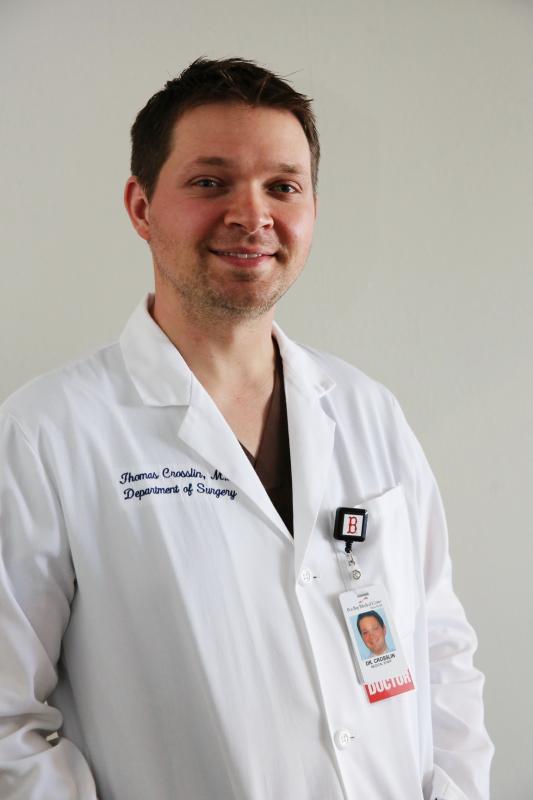
Dr. Crosslin is a general surgeon practicing in Rockport, Maine, and an FACS Initiate, October 2017.
Unlike Dr. Elsey (“Surgery can be demanding work: Grit needed,” Letter to the Editor, May 2017, p. 6) and many others in various surgical publications, I have NOT enjoyed recent discussions about my generation’s perceived lack of readiness for independent practice following general surgery residency. Having been subjected to another round this month of “Why The Surgical Sky Is Falling,” I would like to take a moment to offer a different viewpoint.
I graduated from Tufts Medical Center’s general surgery residency in June 2014. After taking the written board exams, I started practice in a hospital-based group in Maine that same summer. My partners, both with 20+ years of experience, instituted a probationary period for observation of skill (ostensibly, and with good-natured teasing, to ensure I would not harm their patients, though I suspect such a thing is fairly universal for a new grad to receive institutional privileges), and, after convincing them I was not a reckless maniac, within a few months I was “on my own” in the operating room. I relied heavily on colleagues those first 18 months in practice, and ,if they ever grew weary of my asking advice about hemorrhoids, biliary colic, and diverticular disease, they never displayed perceptible annoyance. They were, and are, the best mentors I could have had.
Metrics and studies that rely on resident self-evaluation – and conversely, ones that rely on “objective” identification of resident strengths and weaknesses by faculty – are subject to the very bias that has dominated this argument for years. If you tell us we are not good enough or lacking in some capacity, often enough, we inevitably will start to believe it. Then, you will reinforce that same belief in your perception of us, which drives the wedge further into an increasingly irreconcilable situation.
I had a decent self-opinion of my surgical skill as a chief resident, but, on any given day, the number I would have assigned to my own “readiness” for independence would have varied greatly for any number of reasons. I did not contend with much in the way of spirited discouragement or admonishment regarding my skill progression over 5 years, but, in keeping with the “gritty” surgical personality espoused by Dr. Elsey in his letter, I’m not sure I would have let that stop me. Honestly though, it’s impossible to say how it would have affected my confidence to leave residency straight for attendinghood had I been subjected to daily thrashings over 5 years regarding my lack of attending-level skill.
It seems to me, some of the current teaching generation has displayed an inability to connect with their pupils. The majority of surgical residents in 2017 are millennials, and the “good old ways” of effective teaching through guilt, embarrassment, and punitive action will not work. Browbeaters need not apply, for you already have lost this war. For better or worse, educators must find a way to engage these residents on a positive emotional level at the same time as they engage on a higher intellectual plane.
Before the coffee spurts across your OR lounge and the surgical hats start flying fast and furious, let me clarify: In no way do I support the notion that general surgery residents should be coddled, pampered, or emotionally shielded from the gut-wrenching difficulty of practicing surgery. It was imperative in my education that I learned how to be wrong, how to admit it, and how to take ownership of my actions, whether right or wrong. Thankfully, I had a few good examples in Boston, and I’ll never forget the impact they made on my education. But, those lessons were reinforced in a way that made me WANT to weave them into the fabric of my surgical life. Never a heavy-handed dictum; without ego or audience; lacking the morose condescension associated with “those giants” of classical surgical training – what I received in my training was a whole-person engagement that fulfilled my desire to succeed and allowed me the room to grow up as an adult learner without feeling too akin to a 16-year-old, grounded and without car keys, when I had the audacity to make a mistake. Some tried this tack, but my grit won. Somewhere in Lawrenceville, Ga., I hope Dr. Elsey is smiling.
Those who taught best in my residency did so by example. They did it by letting me drive the ship, by giving credit when I did well, by educating when I did not. They did it by making me understand a patient is not a statistic, that you can be honest and kind and a giver of hope all at the same time and that a true surgeon does not need to brag and boast about her accomplishments, nor does he imperiously tear down those lower than himself on the “hierarchy.” The best of the best at Tufts Medical Center showed me what it means when a good person sits in an exam room with a hurting human being and starts the healing process with a kind smile, a gentle touch, words of reassurance, and confidence in his ability to change that patient’s life for the better.
Could it be that we need more of that – and less devotion to metrics – in surgical education? What might training become if we focus entirely on the patient and stop worrying about how the statistics make us all look? What would happen if educators traded nostalgia for engagement with their pupils? It may just be me, but all that sounds suspiciously ... old school, no?
So, before I have to choke down another article explaining how my contemporaries and I represent a kind of global warming to the long-established surgical polar ice caps, let me assure you that at least one young whippersnapper made it out of modern (read: postduty hours) surgical training and actually found a little success – and more than a bit of professional satisfaction – in the unforgiving world of independent general surgery by adhering to the same principles that guided Zollinger and DeBakey, Graham and Fisher: Do what is right for the patient, every single time, to the very best of your God-given and man-made ability. Those are some time-tested lessons I am very proud to have learned.
And, if you want the real story about my 3 years in practice, talk to my partners here in Maine. There is no critique quite like daily proximity. For what it’s worth, they have tolerated me splendidly.
Dr. Crosslin is a general surgeon practicing in Rockport, Maine, and an FACS Initiate, October 2017.
Unlike Dr. Elsey (“Surgery can be demanding work: Grit needed,” Letter to the Editor, May 2017, p. 6) and many others in various surgical publications, I have NOT enjoyed recent discussions about my generation’s perceived lack of readiness for independent practice following general surgery residency. Having been subjected to another round this month of “Why The Surgical Sky Is Falling,” I would like to take a moment to offer a different viewpoint.
I graduated from Tufts Medical Center’s general surgery residency in June 2014. After taking the written board exams, I started practice in a hospital-based group in Maine that same summer. My partners, both with 20+ years of experience, instituted a probationary period for observation of skill (ostensibly, and with good-natured teasing, to ensure I would not harm their patients, though I suspect such a thing is fairly universal for a new grad to receive institutional privileges), and, after convincing them I was not a reckless maniac, within a few months I was “on my own” in the operating room. I relied heavily on colleagues those first 18 months in practice, and ,if they ever grew weary of my asking advice about hemorrhoids, biliary colic, and diverticular disease, they never displayed perceptible annoyance. They were, and are, the best mentors I could have had.
Metrics and studies that rely on resident self-evaluation – and conversely, ones that rely on “objective” identification of resident strengths and weaknesses by faculty – are subject to the very bias that has dominated this argument for years. If you tell us we are not good enough or lacking in some capacity, often enough, we inevitably will start to believe it. Then, you will reinforce that same belief in your perception of us, which drives the wedge further into an increasingly irreconcilable situation.
I had a decent self-opinion of my surgical skill as a chief resident, but, on any given day, the number I would have assigned to my own “readiness” for independence would have varied greatly for any number of reasons. I did not contend with much in the way of spirited discouragement or admonishment regarding my skill progression over 5 years, but, in keeping with the “gritty” surgical personality espoused by Dr. Elsey in his letter, I’m not sure I would have let that stop me. Honestly though, it’s impossible to say how it would have affected my confidence to leave residency straight for attendinghood had I been subjected to daily thrashings over 5 years regarding my lack of attending-level skill.
It seems to me, some of the current teaching generation has displayed an inability to connect with their pupils. The majority of surgical residents in 2017 are millennials, and the “good old ways” of effective teaching through guilt, embarrassment, and punitive action will not work. Browbeaters need not apply, for you already have lost this war. For better or worse, educators must find a way to engage these residents on a positive emotional level at the same time as they engage on a higher intellectual plane.
Before the coffee spurts across your OR lounge and the surgical hats start flying fast and furious, let me clarify: In no way do I support the notion that general surgery residents should be coddled, pampered, or emotionally shielded from the gut-wrenching difficulty of practicing surgery. It was imperative in my education that I learned how to be wrong, how to admit it, and how to take ownership of my actions, whether right or wrong. Thankfully, I had a few good examples in Boston, and I’ll never forget the impact they made on my education. But, those lessons were reinforced in a way that made me WANT to weave them into the fabric of my surgical life. Never a heavy-handed dictum; without ego or audience; lacking the morose condescension associated with “those giants” of classical surgical training – what I received in my training was a whole-person engagement that fulfilled my desire to succeed and allowed me the room to grow up as an adult learner without feeling too akin to a 16-year-old, grounded and without car keys, when I had the audacity to make a mistake. Some tried this tack, but my grit won. Somewhere in Lawrenceville, Ga., I hope Dr. Elsey is smiling.
Those who taught best in my residency did so by example. They did it by letting me drive the ship, by giving credit when I did well, by educating when I did not. They did it by making me understand a patient is not a statistic, that you can be honest and kind and a giver of hope all at the same time and that a true surgeon does not need to brag and boast about her accomplishments, nor does he imperiously tear down those lower than himself on the “hierarchy.” The best of the best at Tufts Medical Center showed me what it means when a good person sits in an exam room with a hurting human being and starts the healing process with a kind smile, a gentle touch, words of reassurance, and confidence in his ability to change that patient’s life for the better.
Could it be that we need more of that – and less devotion to metrics – in surgical education? What might training become if we focus entirely on the patient and stop worrying about how the statistics make us all look? What would happen if educators traded nostalgia for engagement with their pupils? It may just be me, but all that sounds suspiciously ... old school, no?
So, before I have to choke down another article explaining how my contemporaries and I represent a kind of global warming to the long-established surgical polar ice caps, let me assure you that at least one young whippersnapper made it out of modern (read: postduty hours) surgical training and actually found a little success – and more than a bit of professional satisfaction – in the unforgiving world of independent general surgery by adhering to the same principles that guided Zollinger and DeBakey, Graham and Fisher: Do what is right for the patient, every single time, to the very best of your God-given and man-made ability. Those are some time-tested lessons I am very proud to have learned.
And, if you want the real story about my 3 years in practice, talk to my partners here in Maine. There is no critique quite like daily proximity. For what it’s worth, they have tolerated me splendidly.
Dr. Crosslin is a general surgeon practicing in Rockport, Maine, and an FACS Initiate, October 2017.
From the Editors: A crisis of confidence?
As today’s surgical residents complete their residencies and enter practice, we are compelled to ask, Is their level of confidence and independence different from that of, say, the class of 1978? Have circumstances of training changed to such a degree that graduating residents’ beliefs in their own judgment have been undermined?
The answer is yes: The conditions and circumstances of training have changed substantially. Our attendings were strong role models, but they were not as omnipresent as are today’s faculty, particularly in the operating room. We, therefore, felt a greater sense of autonomy than do today’s trainees.

It is unquestionably true that our medical and surgical world has become so much more complex that mastery of the broad range of knowledge and skills encompassing general surgery has become daunting. It is indeed too much to ask that a graduating surgeon be a master at biliary surgery, foregut surgery, head and neck surgery, trauma, critical care, and all the rest.
If we are honest with ourselves, Was our confidence really that much greater in 1978? I think that most of us were scared to death that we would make wrong decisions or encounter a problem that we would be unable to handle in those first few years of practice. That is why most of us chose to enter a practice with a senior partner or partners whose brains we could pick if need be. Of course, it wasn’t fashionable to admit it because surgeons were supposed to behave as though they always had everything under control and had the utmost confidence. Mostly we did, but it was most helpful to run a sticky, complicated patient problem by our all-wise senior partner. Even then, with all our clinical experience and independence, we weren’t as polished or confident as surgeons on graduation day from residency than we would become after 8 or 10 years of practice.
So, what’s different now? From the time that they are pups, today’s residents somehow get the impression that they can’t become good surgeons in the 80-hour work week, that they lack stamina and resolve of past generations, and that they need to do a fellowship to get respect or know enough to do a good job. Although the cause of these problems is placed at the feet of the ACGME, hospital administration, American Board of Surgery, or the residents themselves, surgical faculty should shoulder some of the responsibility. Faculty can and should make changes to their teaching and assessment techniques to better address the realities of today’s generation and today’s surgical realities.
I would maintain that it is possible to produce competent surgeons in five years of training but only if training is revised to reflect the changed circumstances of surgical practice. It must be intentional and evidence-based, much like the surgical practice we wish to promote. It should include simulation supervised by expert surgeons who can immediately correct errors, mandated practice at skills until the resident has passed a competency exam in that skill before taking it into the human operating skill, specific and honest but respectful assessment of the resident’s operative skills, and graduated responsibility with eventual autonomy as the goal. This kind of training can’t happen if the faculty feel bound more by demands of the clock and the pressure to generate more relative value units than by their responsibility to their trainees to coach them in clinical decision-making and technical skills. It is possible as an intending to be present but not make all the decisions. Instead of “Do this!” one need only ask, “What do you want to do?” and then pause for the trainee to respond.
Whenever it isn’t a dire and pressing emergency, what can follow is an honest interchange of ideas. For that to happen, the relationship requires mutual trust and respect. On the faculty’s part, there should be an understanding that there is often more than one acceptable way to proceed and that the resident is not only smart and diligent but usually just as motivated to do the best for his or her patient as is the faculty member. On the resident’s part, there should be the expectation that the faculty member will engage the resident in thoughtful discussion in response to his or her question, even if the answer was not the faculty’s favored way of handling the problem.
Having been a surgical faculty member for almost 40 years and a general surgery program director for 20, I would argue that today’s surgical residents are every bit as dedicated and conscientious as we were. Since there is more to learn and less time to learn it, we faculty need to be more efficient in our teaching and assessment, which means using every opportunity we have to help them become as competent and confident as possible by June 30 of their chief residency year.
Dr. Deveney is professor of surgery and vice chair of education in the department of surgery, Oregon Health & Science University, Portland. She is the coeditor of ACS Surgery News.
As today’s surgical residents complete their residencies and enter practice, we are compelled to ask, Is their level of confidence and independence different from that of, say, the class of 1978? Have circumstances of training changed to such a degree that graduating residents’ beliefs in their own judgment have been undermined?
The answer is yes: The conditions and circumstances of training have changed substantially. Our attendings were strong role models, but they were not as omnipresent as are today’s faculty, particularly in the operating room. We, therefore, felt a greater sense of autonomy than do today’s trainees.
It is unquestionably true that our medical and surgical world has become so much more complex that mastery of the broad range of knowledge and skills encompassing general surgery has become daunting. It is indeed too much to ask that a graduating surgeon be a master at biliary surgery, foregut surgery, head and neck surgery, trauma, critical care, and all the rest.
If we are honest with ourselves, Was our confidence really that much greater in 1978? I think that most of us were scared to death that we would make wrong decisions or encounter a problem that we would be unable to handle in those first few years of practice. That is why most of us chose to enter a practice with a senior partner or partners whose brains we could pick if need be. Of course, it wasn’t fashionable to admit it because surgeons were supposed to behave as though they always had everything under control and had the utmost confidence. Mostly we did, but it was most helpful to run a sticky, complicated patient problem by our all-wise senior partner. Even then, with all our clinical experience and independence, we weren’t as polished or confident as surgeons on graduation day from residency than we would become after 8 or 10 years of practice.
So, what’s different now? From the time that they are pups, today’s residents somehow get the impression that they can’t become good surgeons in the 80-hour work week, that they lack stamina and resolve of past generations, and that they need to do a fellowship to get respect or know enough to do a good job. Although the cause of these problems is placed at the feet of the ACGME, hospital administration, American Board of Surgery, or the residents themselves, surgical faculty should shoulder some of the responsibility. Faculty can and should make changes to their teaching and assessment techniques to better address the realities of today’s generation and today’s surgical realities.
I would maintain that it is possible to produce competent surgeons in five years of training but only if training is revised to reflect the changed circumstances of surgical practice. It must be intentional and evidence-based, much like the surgical practice we wish to promote. It should include simulation supervised by expert surgeons who can immediately correct errors, mandated practice at skills until the resident has passed a competency exam in that skill before taking it into the human operating skill, specific and honest but respectful assessment of the resident’s operative skills, and graduated responsibility with eventual autonomy as the goal. This kind of training can’t happen if the faculty feel bound more by demands of the clock and the pressure to generate more relative value units than by their responsibility to their trainees to coach them in clinical decision-making and technical skills. It is possible as an intending to be present but not make all the decisions. Instead of “Do this!” one need only ask, “What do you want to do?” and then pause for the trainee to respond.
Whenever it isn’t a dire and pressing emergency, what can follow is an honest interchange of ideas. For that to happen, the relationship requires mutual trust and respect. On the faculty’s part, there should be an understanding that there is often more than one acceptable way to proceed and that the resident is not only smart and diligent but usually just as motivated to do the best for his or her patient as is the faculty member. On the resident’s part, there should be the expectation that the faculty member will engage the resident in thoughtful discussion in response to his or her question, even if the answer was not the faculty’s favored way of handling the problem.
Having been a surgical faculty member for almost 40 years and a general surgery program director for 20, I would argue that today’s surgical residents are every bit as dedicated and conscientious as we were. Since there is more to learn and less time to learn it, we faculty need to be more efficient in our teaching and assessment, which means using every opportunity we have to help them become as competent and confident as possible by June 30 of their chief residency year.
Dr. Deveney is professor of surgery and vice chair of education in the department of surgery, Oregon Health & Science University, Portland. She is the coeditor of ACS Surgery News.
As today’s surgical residents complete their residencies and enter practice, we are compelled to ask, Is their level of confidence and independence different from that of, say, the class of 1978? Have circumstances of training changed to such a degree that graduating residents’ beliefs in their own judgment have been undermined?
The answer is yes: The conditions and circumstances of training have changed substantially. Our attendings were strong role models, but they were not as omnipresent as are today’s faculty, particularly in the operating room. We, therefore, felt a greater sense of autonomy than do today’s trainees.
It is unquestionably true that our medical and surgical world has become so much more complex that mastery of the broad range of knowledge and skills encompassing general surgery has become daunting. It is indeed too much to ask that a graduating surgeon be a master at biliary surgery, foregut surgery, head and neck surgery, trauma, critical care, and all the rest.
If we are honest with ourselves, Was our confidence really that much greater in 1978? I think that most of us were scared to death that we would make wrong decisions or encounter a problem that we would be unable to handle in those first few years of practice. That is why most of us chose to enter a practice with a senior partner or partners whose brains we could pick if need be. Of course, it wasn’t fashionable to admit it because surgeons were supposed to behave as though they always had everything under control and had the utmost confidence. Mostly we did, but it was most helpful to run a sticky, complicated patient problem by our all-wise senior partner. Even then, with all our clinical experience and independence, we weren’t as polished or confident as surgeons on graduation day from residency than we would become after 8 or 10 years of practice.
So, what’s different now? From the time that they are pups, today’s residents somehow get the impression that they can’t become good surgeons in the 80-hour work week, that they lack stamina and resolve of past generations, and that they need to do a fellowship to get respect or know enough to do a good job. Although the cause of these problems is placed at the feet of the ACGME, hospital administration, American Board of Surgery, or the residents themselves, surgical faculty should shoulder some of the responsibility. Faculty can and should make changes to their teaching and assessment techniques to better address the realities of today’s generation and today’s surgical realities.
I would maintain that it is possible to produce competent surgeons in five years of training but only if training is revised to reflect the changed circumstances of surgical practice. It must be intentional and evidence-based, much like the surgical practice we wish to promote. It should include simulation supervised by expert surgeons who can immediately correct errors, mandated practice at skills until the resident has passed a competency exam in that skill before taking it into the human operating skill, specific and honest but respectful assessment of the resident’s operative skills, and graduated responsibility with eventual autonomy as the goal. This kind of training can’t happen if the faculty feel bound more by demands of the clock and the pressure to generate more relative value units than by their responsibility to their trainees to coach them in clinical decision-making and technical skills. It is possible as an intending to be present but not make all the decisions. Instead of “Do this!” one need only ask, “What do you want to do?” and then pause for the trainee to respond.
Whenever it isn’t a dire and pressing emergency, what can follow is an honest interchange of ideas. For that to happen, the relationship requires mutual trust and respect. On the faculty’s part, there should be an understanding that there is often more than one acceptable way to proceed and that the resident is not only smart and diligent but usually just as motivated to do the best for his or her patient as is the faculty member. On the resident’s part, there should be the expectation that the faculty member will engage the resident in thoughtful discussion in response to his or her question, even if the answer was not the faculty’s favored way of handling the problem.
Having been a surgical faculty member for almost 40 years and a general surgery program director for 20, I would argue that today’s surgical residents are every bit as dedicated and conscientious as we were. Since there is more to learn and less time to learn it, we faculty need to be more efficient in our teaching and assessment, which means using every opportunity we have to help them become as competent and confident as possible by June 30 of their chief residency year.
Dr. Deveney is professor of surgery and vice chair of education in the department of surgery, Oregon Health & Science University, Portland. She is the coeditor of ACS Surgery News.
From the Washington Office: Ensuring an adequate surgical workforce in underserved areas
Increasing evidence indicates a current and growing shortage of surgeons available to serve our nation’s population. As Fellows, we clearly recognize that a shortage of general surgeons is a critical component of this crisis in our nation’s health care workforce. Accordingly, the American College of Surgeons (ACS) is urging policy makers to take appropriate action to recognize that surgeons are uniquely trained and qualified to provide certain necessary, lifesaving procedures through the designation of a formal surgical shortage area.
The ACS is pleased that the Ensuring Access to General Surgery Act of 2017 (S.1351 and H.R.2906) was recently introduced in both the Senate and the House of Representatives. The text of the bill, which is the same in both the Senate and House versions, can be found here: https://www.grassley.senate.gov/sites/default/files/constituents/surgery%20bill.pdf. The legislation has bipartisan sponsorship in both legislative bodies by Senators Charles Grassley (R-IA) and Brian Schatz (D-HI) and Representatives Larry Bucshon, MD, FACS (R-IN) and Ami Bera, MD (D-CA) in the House. This legislation directs the Secretary of the Department of Health and Human Services (HHS), through the Health Resources Services Administration (HRSA), to conduct a study on general surgery workforce shortage areas and provide a general surgery shortage area designation.

Senator Grassley’s office issued a press release on June 15, 2017, in which he, Senator Schatz, Representative Bucshon, and Representative Bera individually delineate the reasons why it is critically important to define and designate general surgery shortage areas. For those interested, that press release can be found here: https://www.grassley.senate.gov/news/news-releases/bipartisan-bill-grassley-schatz-bucshon-bera-would-help-document-areas.
Fellows who visited the offices of their representatives and senators in May as part of the ACS Leadership and Advocacy Summit were able to personally discuss this initiative with members and their staff at that time. Now that the legislation has been officially introduced in both houses of Congress, I would respectfully ask that all Fellows take the 3 minutes necessary to make their voice heard by logging on to www.surgeonsvoice.org and clicking on the Take Action tab on the right side of the landing page to send an e-mail message urging support of the Ensuring Access to General Surgery Act by their individual representatives and both senators.
Until next month …
Dr. Bailey is a pediatric surgeon and Medical Director, Advocacy, for the Division of Advocacy and Health Policy in the ACS offices in Washington, DC.
Increasing evidence indicates a current and growing shortage of surgeons available to serve our nation’s population. As Fellows, we clearly recognize that a shortage of general surgeons is a critical component of this crisis in our nation’s health care workforce. Accordingly, the American College of Surgeons (ACS) is urging policy makers to take appropriate action to recognize that surgeons are uniquely trained and qualified to provide certain necessary, lifesaving procedures through the designation of a formal surgical shortage area.
The ACS is pleased that the Ensuring Access to General Surgery Act of 2017 (S.1351 and H.R.2906) was recently introduced in both the Senate and the House of Representatives. The text of the bill, which is the same in both the Senate and House versions, can be found here: https://www.grassley.senate.gov/sites/default/files/constituents/surgery%20bill.pdf. The legislation has bipartisan sponsorship in both legislative bodies by Senators Charles Grassley (R-IA) and Brian Schatz (D-HI) and Representatives Larry Bucshon, MD, FACS (R-IN) and Ami Bera, MD (D-CA) in the House. This legislation directs the Secretary of the Department of Health and Human Services (HHS), through the Health Resources Services Administration (HRSA), to conduct a study on general surgery workforce shortage areas and provide a general surgery shortage area designation.
Senator Grassley’s office issued a press release on June 15, 2017, in which he, Senator Schatz, Representative Bucshon, and Representative Bera individually delineate the reasons why it is critically important to define and designate general surgery shortage areas. For those interested, that press release can be found here: https://www.grassley.senate.gov/news/news-releases/bipartisan-bill-grassley-schatz-bucshon-bera-would-help-document-areas.
Fellows who visited the offices of their representatives and senators in May as part of the ACS Leadership and Advocacy Summit were able to personally discuss this initiative with members and their staff at that time. Now that the legislation has been officially introduced in both houses of Congress, I would respectfully ask that all Fellows take the 3 minutes necessary to make their voice heard by logging on to www.surgeonsvoice.org and clicking on the Take Action tab on the right side of the landing page to send an e-mail message urging support of the Ensuring Access to General Surgery Act by their individual representatives and both senators.
Until next month …
Dr. Bailey is a pediatric surgeon and Medical Director, Advocacy, for the Division of Advocacy and Health Policy in the ACS offices in Washington, DC.
Increasing evidence indicates a current and growing shortage of surgeons available to serve our nation’s population. As Fellows, we clearly recognize that a shortage of general surgeons is a critical component of this crisis in our nation’s health care workforce. Accordingly, the American College of Surgeons (ACS) is urging policy makers to take appropriate action to recognize that surgeons are uniquely trained and qualified to provide certain necessary, lifesaving procedures through the designation of a formal surgical shortage area.
The ACS is pleased that the Ensuring Access to General Surgery Act of 2017 (S.1351 and H.R.2906) was recently introduced in both the Senate and the House of Representatives. The text of the bill, which is the same in both the Senate and House versions, can be found here: https://www.grassley.senate.gov/sites/default/files/constituents/surgery%20bill.pdf. The legislation has bipartisan sponsorship in both legislative bodies by Senators Charles Grassley (R-IA) and Brian Schatz (D-HI) and Representatives Larry Bucshon, MD, FACS (R-IN) and Ami Bera, MD (D-CA) in the House. This legislation directs the Secretary of the Department of Health and Human Services (HHS), through the Health Resources Services Administration (HRSA), to conduct a study on general surgery workforce shortage areas and provide a general surgery shortage area designation.
Senator Grassley’s office issued a press release on June 15, 2017, in which he, Senator Schatz, Representative Bucshon, and Representative Bera individually delineate the reasons why it is critically important to define and designate general surgery shortage areas. For those interested, that press release can be found here: https://www.grassley.senate.gov/news/news-releases/bipartisan-bill-grassley-schatz-bucshon-bera-would-help-document-areas.
Fellows who visited the offices of their representatives and senators in May as part of the ACS Leadership and Advocacy Summit were able to personally discuss this initiative with members and their staff at that time. Now that the legislation has been officially introduced in both houses of Congress, I would respectfully ask that all Fellows take the 3 minutes necessary to make their voice heard by logging on to www.surgeonsvoice.org and clicking on the Take Action tab on the right side of the landing page to send an e-mail message urging support of the Ensuring Access to General Surgery Act by their individual representatives and both senators.
Until next month …
Dr. Bailey is a pediatric surgeon and Medical Director, Advocacy, for the Division of Advocacy and Health Policy in the ACS offices in Washington, DC.
... The mother of direction
If you weren’t a young male living in the United States in the 1960s, it may be hard for you to understand my situation. It was a little more than 6 months from my college graduation. Because I couldn’t think of anything else to do, I had applied for and been accepted in a postgraduate fellowship in art history. However, it was clear that this country was becoming entangled in a confusing, unpopular – and from my personal perspective – a dangerous war.
While I was in college I was protected from the draft. But upon graduation, if I were to pursue my studies in something as unrelated to the war effort as art history, I would be ripe for the picking. I’m not sure why, but luckily I had been banking science credits for a rainy day. And in the winter of 1965-1966, it was raining big time.

I was not alone. Even if the term “gap year” had been coined, taking a year off to “find oneself” was not an option for young American males on the verge of high school or college graduation. I share this unflattering anecdote as evidence that there are times when circumstances can provide a floundering young person with a much needed sense of direction.
In May 2017, the Chicago Board of Education approved a plan sponsored by Mayor Rahm Emanuel that will require all high school students planning to graduate to provide evidence that they have secured a job or have been accepted by a college, trade apprenticeship, structured gap year program, or the military. (“Chicago won’t allow high school students to graduate without a plan for the future,” by Emma Brown, the Washington Post, July 3, 2017). Critics of the plan complain, probably with good reason, that the cash-strapped school system with more than 300,000 students doesn’t have the resources to provide its students with the counseling they will need to create the required post-graduation plans.
Even if there are too many devils in too many details in the Chicago plan, the principle underlying it is worth a try and deserves consideration by other school systems. It is not a universal military service requirement. Although, I wonder at times if this country should consider such a thing. It also is not a scheme cooked up by the business community to provide itself with cheap labor, although, it probably will.
In my mind, . Hopefully something that is productive or creative or at least something that improves your chances of living a life that is more likely to provide you with some degree of happiness. It offers a broad enough range of choices so that it is not overly prescriptive. If well administered, the plan would send the message to the graduating student that you must at least have a Plan A.
Regardless of whether a student’s patients come from affluent families with a myriad of post-graduation opportunities or from an economically challenged neighborhood in Chicago, I suspect that many of them would benefit from an artificial dose of necessity in the form of a message that doing nothing is not going to be an option.
Dr. Wilkoff practiced primary care pediatrics in Brunswick, Maine for nearly 40 years. He has authored several books on behavioral pediatrics, including “How to Say No to Your Toddler.” Email him at pdnews@frontlinemedcom.com.
If you weren’t a young male living in the United States in the 1960s, it may be hard for you to understand my situation. It was a little more than 6 months from my college graduation. Because I couldn’t think of anything else to do, I had applied for and been accepted in a postgraduate fellowship in art history. However, it was clear that this country was becoming entangled in a confusing, unpopular – and from my personal perspective – a dangerous war.
While I was in college I was protected from the draft. But upon graduation, if I were to pursue my studies in something as unrelated to the war effort as art history, I would be ripe for the picking. I’m not sure why, but luckily I had been banking science credits for a rainy day. And in the winter of 1965-1966, it was raining big time.
I was not alone. Even if the term “gap year” had been coined, taking a year off to “find oneself” was not an option for young American males on the verge of high school or college graduation. I share this unflattering anecdote as evidence that there are times when circumstances can provide a floundering young person with a much needed sense of direction.
In May 2017, the Chicago Board of Education approved a plan sponsored by Mayor Rahm Emanuel that will require all high school students planning to graduate to provide evidence that they have secured a job or have been accepted by a college, trade apprenticeship, structured gap year program, or the military. (“Chicago won’t allow high school students to graduate without a plan for the future,” by Emma Brown, the Washington Post, July 3, 2017). Critics of the plan complain, probably with good reason, that the cash-strapped school system with more than 300,000 students doesn’t have the resources to provide its students with the counseling they will need to create the required post-graduation plans.
Even if there are too many devils in too many details in the Chicago plan, the principle underlying it is worth a try and deserves consideration by other school systems. It is not a universal military service requirement. Although, I wonder at times if this country should consider such a thing. It also is not a scheme cooked up by the business community to provide itself with cheap labor, although, it probably will.
In my mind, . Hopefully something that is productive or creative or at least something that improves your chances of living a life that is more likely to provide you with some degree of happiness. It offers a broad enough range of choices so that it is not overly prescriptive. If well administered, the plan would send the message to the graduating student that you must at least have a Plan A.
Regardless of whether a student’s patients come from affluent families with a myriad of post-graduation opportunities or from an economically challenged neighborhood in Chicago, I suspect that many of them would benefit from an artificial dose of necessity in the form of a message that doing nothing is not going to be an option.
Dr. Wilkoff practiced primary care pediatrics in Brunswick, Maine for nearly 40 years. He has authored several books on behavioral pediatrics, including “How to Say No to Your Toddler.” Email him at pdnews@frontlinemedcom.com.
If you weren’t a young male living in the United States in the 1960s, it may be hard for you to understand my situation. It was a little more than 6 months from my college graduation. Because I couldn’t think of anything else to do, I had applied for and been accepted in a postgraduate fellowship in art history. However, it was clear that this country was becoming entangled in a confusing, unpopular – and from my personal perspective – a dangerous war.
While I was in college I was protected from the draft. But upon graduation, if I were to pursue my studies in something as unrelated to the war effort as art history, I would be ripe for the picking. I’m not sure why, but luckily I had been banking science credits for a rainy day. And in the winter of 1965-1966, it was raining big time.
I was not alone. Even if the term “gap year” had been coined, taking a year off to “find oneself” was not an option for young American males on the verge of high school or college graduation. I share this unflattering anecdote as evidence that there are times when circumstances can provide a floundering young person with a much needed sense of direction.
In May 2017, the Chicago Board of Education approved a plan sponsored by Mayor Rahm Emanuel that will require all high school students planning to graduate to provide evidence that they have secured a job or have been accepted by a college, trade apprenticeship, structured gap year program, or the military. (“Chicago won’t allow high school students to graduate without a plan for the future,” by Emma Brown, the Washington Post, July 3, 2017). Critics of the plan complain, probably with good reason, that the cash-strapped school system with more than 300,000 students doesn’t have the resources to provide its students with the counseling they will need to create the required post-graduation plans.
Even if there are too many devils in too many details in the Chicago plan, the principle underlying it is worth a try and deserves consideration by other school systems. It is not a universal military service requirement. Although, I wonder at times if this country should consider such a thing. It also is not a scheme cooked up by the business community to provide itself with cheap labor, although, it probably will.
In my mind, . Hopefully something that is productive or creative or at least something that improves your chances of living a life that is more likely to provide you with some degree of happiness. It offers a broad enough range of choices so that it is not overly prescriptive. If well administered, the plan would send the message to the graduating student that you must at least have a Plan A.
Regardless of whether a student’s patients come from affluent families with a myriad of post-graduation opportunities or from an economically challenged neighborhood in Chicago, I suspect that many of them would benefit from an artificial dose of necessity in the form of a message that doing nothing is not going to be an option.
Dr. Wilkoff practiced primary care pediatrics in Brunswick, Maine for nearly 40 years. He has authored several books on behavioral pediatrics, including “How to Say No to Your Toddler.” Email him at pdnews@frontlinemedcom.com.
Nomadic Mongolian skin care practices
In a large country of only 3 million people (where wild horses outnumber people), with an estimated 2 million who live in the capital and 1 million who live a traditional nomadic lifestyle, traditional skin care and beauty practices can still be found.
In the capital city of Ulaanbaatar, women practice many of the same beauty regimens as those of women in other parts of mainstream Asia, with access to department store beauty counters and shopping malls found in major cities throughout the world. With the influx of movies and media into Mongolia from South Korea in the late 1990s, South Korean beauty regimens and standards have weaved their way into the urban culture. However, in rural Mongolia, where a nomadic way of life still predominates, certain beauty and cultural practices remain intact without the influence of mainstream culture.

Homemade yogurt, a staple in rural Mongolia, is used on the face to help brighten the skin. In rural Mongolia, the yogurt is made and eaten fresh, thus lasts for 1-2 days if not refrigerated. The yogurt comes from cows and goats (rarely from other animals) that graze on open land without pesticides and are not fed hormones and grains. My personal diet doesn’t consist of much dairy, but I can say firsthand that in my opinion, it is delicious there. Yogurt is also applied to the skin to treat acne, but for acne the yogurt is fermented more than usual, so there is more acid to reduce the skin inflammation. (Lactic acid is typically what is found in fermented yogurt.)

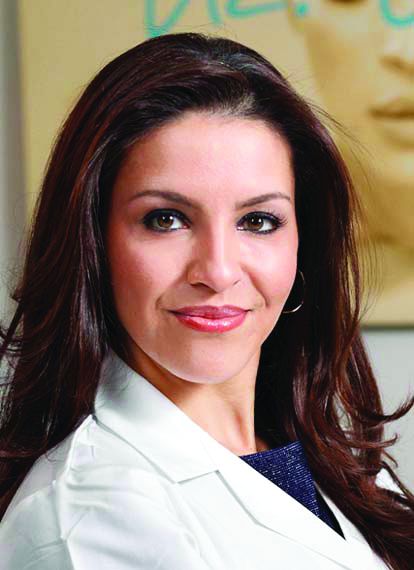
Dr. Wesley and Dr. Talakoub are co-contributors to this column. Dr. Wesley practices dermatology in Beverly Hills, Calif. Dr. Talakoub is in private practice in McLean, Va. This month’s column is by Dr. Wesley. Write to them at dermnews@frontlinemedcom.com. They had no relevant disclosures.
Resource:
In a large country of only 3 million people (where wild horses outnumber people), with an estimated 2 million who live in the capital and 1 million who live a traditional nomadic lifestyle, traditional skin care and beauty practices can still be found.
In the capital city of Ulaanbaatar, women practice many of the same beauty regimens as those of women in other parts of mainstream Asia, with access to department store beauty counters and shopping malls found in major cities throughout the world. With the influx of movies and media into Mongolia from South Korea in the late 1990s, South Korean beauty regimens and standards have weaved their way into the urban culture. However, in rural Mongolia, where a nomadic way of life still predominates, certain beauty and cultural practices remain intact without the influence of mainstream culture.
Homemade yogurt, a staple in rural Mongolia, is used on the face to help brighten the skin. In rural Mongolia, the yogurt is made and eaten fresh, thus lasts for 1-2 days if not refrigerated. The yogurt comes from cows and goats (rarely from other animals) that graze on open land without pesticides and are not fed hormones and grains. My personal diet doesn’t consist of much dairy, but I can say firsthand that in my opinion, it is delicious there. Yogurt is also applied to the skin to treat acne, but for acne the yogurt is fermented more than usual, so there is more acid to reduce the skin inflammation. (Lactic acid is typically what is found in fermented yogurt.)
Dr. Wesley and Dr. Talakoub are co-contributors to this column. Dr. Wesley practices dermatology in Beverly Hills, Calif. Dr. Talakoub is in private practice in McLean, Va. This month’s column is by Dr. Wesley. Write to them at dermnews@frontlinemedcom.com. They had no relevant disclosures.
Resource:
In a large country of only 3 million people (where wild horses outnumber people), with an estimated 2 million who live in the capital and 1 million who live a traditional nomadic lifestyle, traditional skin care and beauty practices can still be found.
In the capital city of Ulaanbaatar, women practice many of the same beauty regimens as those of women in other parts of mainstream Asia, with access to department store beauty counters and shopping malls found in major cities throughout the world. With the influx of movies and media into Mongolia from South Korea in the late 1990s, South Korean beauty regimens and standards have weaved their way into the urban culture. However, in rural Mongolia, where a nomadic way of life still predominates, certain beauty and cultural practices remain intact without the influence of mainstream culture.
Homemade yogurt, a staple in rural Mongolia, is used on the face to help brighten the skin. In rural Mongolia, the yogurt is made and eaten fresh, thus lasts for 1-2 days if not refrigerated. The yogurt comes from cows and goats (rarely from other animals) that graze on open land without pesticides and are not fed hormones and grains. My personal diet doesn’t consist of much dairy, but I can say firsthand that in my opinion, it is delicious there. Yogurt is also applied to the skin to treat acne, but for acne the yogurt is fermented more than usual, so there is more acid to reduce the skin inflammation. (Lactic acid is typically what is found in fermented yogurt.)
Dr. Wesley and Dr. Talakoub are co-contributors to this column. Dr. Wesley practices dermatology in Beverly Hills, Calif. Dr. Talakoub is in private practice in McLean, Va. This month’s column is by Dr. Wesley. Write to them at dermnews@frontlinemedcom.com. They had no relevant disclosures.
Resource:

Prenatal SSRI exposure’s effect on development
Unfortunately, the bottom line for most of these important questions is that we really don’t know as much as we probably should.
Just when we’ve read a convincing finding from a reputable journal that establishes a link between prenatal SSRI use and an untoward outcome, we see it disputed the next month. Why is this always happening, and why can’t we really know anything with certainty? Much of the confusion can be attributed to research methods and the obvious difficulty of using randomized, controlled trials to control for potential confounding factors. While statistical techniques have become increasingly sophisticated in addressing these confounding factors, they remain imperfect. For example, one of the most difficult challenges that remains is separating any effects of a medication from any effects caused by the condition it was designed to treat. Comparing women with the same underlying condition, some of whom are treated with a medication and some of whom are not, is a step forward, but there may be important reasons that one group decides to seek treatment and the other doesn’t. One clever research design that was employed to look at congenital anomalies in the offspring of women taking SSRIs accounted for siblings of these children who were born when their mother was not taking an SSRI. This study demonstrated that these women were more likely to have children with congenital malformations even when they weren’t taking the SSRIs.1 Other factors that render this literature difficult to interpret include small sample sizes when looking at specific SSRIs (many studies cluster them all), dose effects, timing (which trimester), duration of treatment, and method of recording compliance.
The potential link between SSRIs and autism has received a fair amount of attention lately, especially after a very well-designed study in 2016 suggested a significantly increased risk.10 However, as with many of the findings, this study was quickly disputed by other high-quality, well-powered research that found no increased risk after controlling for maternal illness.11,12
ADHD generally has not been found to be related to maternal SSRI use, although one study did find a link between ADHD and tricyclic antidepressants.12,13
In terms of other neurodevelopmental outcomes, there have been many negative studies examining IQ, nonverbal communication, as well as speech and motor skills.14,15,16 However, as with so many other outcomes, some other studies contradict these negative results. According to a recent, large cohort study, there may be some concern regarding SSRI exposure prenatally and an increase in speech disorders by age 14 years, as well as lower language competence at age 3 years.17,18 Likewise, mild motor abnormalities have been observed, with maternal depression severity as an independent but contributing factor.19
Several studies demonstrate a connection between prenatal SSRI exposure and childhood internalizing symptoms, such as depression and anxiety, independent of maternal depression.12,20 These findings must be balanced with our knowledge of the serious mental health conditions in offspring that are associated with untreated maternal illness, including both internalizing and externalizing disorders.21,22
How does one come to any firm conclusions to guide a primary care clinician’s practice and recommendations? Hopefully, the evidence will become clearer over time as we adopt more sophisticated designs and accumulate observations. A larger number of observations would allow us to decrease heterogeneity by studying subgroups according to type of SSRI and duration of exposure. Enhanced understanding of the role of genetic factors also may shed some light on individual variation as the serotonin transporter gene has been suggested as a potential moderator of sensitivity.23

Dr. Guth is an assistant professor in the department of psychiatry at the University of Vermont Medical Center and the University of Vermont Robert Larner College of Medicine, both in Burlington. She works with children and adolescents as well as women in the perinatal period. She has no relevant financial disclosures.
References
1. BMJ. 2015 Apr 17;350:h1798.
2. Can J Clin Pharmacol. 2009 Winter;16(1):e66-7.
3. J Matern Fetal Neonatal Med. 2008 Oct;21(10):745-51.
4. PLoS ONE. 2014 Nov; 9(11): e111327.
5. Pediatr Res. 2017 Jun 30. doi: 10.1038/pr.2017.156. [Epub ahead of print].
6. J Clin Psychiatry. 2017 May;78(5):605-11.
7. Acta Psychiatr Scand. 2010 Jun;121(6):471-9.
8. Am J Psychiatry. 2016 Feb 1;173(2):147-57.
9. J Perinatol. 2011 Sep;31(9):615-20.
10. JAMA Pediatr. 2016 Feb;170(2):117-24.
11. JAMA. 2017 Apr 18;317(15):1544-52.
12. J Am Acad Child Adolesc Psychiatry. 2016 May;55(5):359-66.
13. Paediatr Perinat Epidemiol. 2017 Jul;31(4):363-73.
14. Acta Obstet Gynecol Scand. 2015 May;94(5):501-7.
15. J Psychopharmacol. 2017 Mar;31(3):346-55.
16. CNS Drugs. 2005;19(7):623-33.
17. JAMA Psychiatry. 2016 Nov 1;73(11):1163-70.
18. BJOG. 2014. doi: 10.1111/1471-0528.12821.
19. BJOG. 2016 Nov;123(12):1908-17.
20. Pediatr Res. 2015 Aug;78(2):174-80.
21. Neuroscience. 2017 Feb 7;342:154-66.
22. Depress Anxiety. 2014 Jan;31(1):9-18.
23. Neuroscience. 2017 Feb 7;342:212-31.
Unfortunately, the bottom line for most of these important questions is that we really don’t know as much as we probably should.
Just when we’ve read a convincing finding from a reputable journal that establishes a link between prenatal SSRI use and an untoward outcome, we see it disputed the next month. Why is this always happening, and why can’t we really know anything with certainty? Much of the confusion can be attributed to research methods and the obvious difficulty of using randomized, controlled trials to control for potential confounding factors. While statistical techniques have become increasingly sophisticated in addressing these confounding factors, they remain imperfect. For example, one of the most difficult challenges that remains is separating any effects of a medication from any effects caused by the condition it was designed to treat. Comparing women with the same underlying condition, some of whom are treated with a medication and some of whom are not, is a step forward, but there may be important reasons that one group decides to seek treatment and the other doesn’t. One clever research design that was employed to look at congenital anomalies in the offspring of women taking SSRIs accounted for siblings of these children who were born when their mother was not taking an SSRI. This study demonstrated that these women were more likely to have children with congenital malformations even when they weren’t taking the SSRIs.1 Other factors that render this literature difficult to interpret include small sample sizes when looking at specific SSRIs (many studies cluster them all), dose effects, timing (which trimester), duration of treatment, and method of recording compliance.
The potential link between SSRIs and autism has received a fair amount of attention lately, especially after a very well-designed study in 2016 suggested a significantly increased risk.10 However, as with many of the findings, this study was quickly disputed by other high-quality, well-powered research that found no increased risk after controlling for maternal illness.11,12
ADHD generally has not been found to be related to maternal SSRI use, although one study did find a link between ADHD and tricyclic antidepressants.12,13
In terms of other neurodevelopmental outcomes, there have been many negative studies examining IQ, nonverbal communication, as well as speech and motor skills.14,15,16 However, as with so many other outcomes, some other studies contradict these negative results. According to a recent, large cohort study, there may be some concern regarding SSRI exposure prenatally and an increase in speech disorders by age 14 years, as well as lower language competence at age 3 years.17,18 Likewise, mild motor abnormalities have been observed, with maternal depression severity as an independent but contributing factor.19
Several studies demonstrate a connection between prenatal SSRI exposure and childhood internalizing symptoms, such as depression and anxiety, independent of maternal depression.12,20 These findings must be balanced with our knowledge of the serious mental health conditions in offspring that are associated with untreated maternal illness, including both internalizing and externalizing disorders.21,22
How does one come to any firm conclusions to guide a primary care clinician’s practice and recommendations? Hopefully, the evidence will become clearer over time as we adopt more sophisticated designs and accumulate observations. A larger number of observations would allow us to decrease heterogeneity by studying subgroups according to type of SSRI and duration of exposure. Enhanced understanding of the role of genetic factors also may shed some light on individual variation as the serotonin transporter gene has been suggested as a potential moderator of sensitivity.23
Dr. Guth is an assistant professor in the department of psychiatry at the University of Vermont Medical Center and the University of Vermont Robert Larner College of Medicine, both in Burlington. She works with children and adolescents as well as women in the perinatal period. She has no relevant financial disclosures.
References
1. BMJ. 2015 Apr 17;350:h1798.
2. Can J Clin Pharmacol. 2009 Winter;16(1):e66-7.
3. J Matern Fetal Neonatal Med. 2008 Oct;21(10):745-51.
4. PLoS ONE. 2014 Nov; 9(11): e111327.
5. Pediatr Res. 2017 Jun 30. doi: 10.1038/pr.2017.156. [Epub ahead of print].
6. J Clin Psychiatry. 2017 May;78(5):605-11.
7. Acta Psychiatr Scand. 2010 Jun;121(6):471-9.
8. Am J Psychiatry. 2016 Feb 1;173(2):147-57.
9. J Perinatol. 2011 Sep;31(9):615-20.
10. JAMA Pediatr. 2016 Feb;170(2):117-24.
11. JAMA. 2017 Apr 18;317(15):1544-52.
12. J Am Acad Child Adolesc Psychiatry. 2016 May;55(5):359-66.
13. Paediatr Perinat Epidemiol. 2017 Jul;31(4):363-73.
14. Acta Obstet Gynecol Scand. 2015 May;94(5):501-7.
15. J Psychopharmacol. 2017 Mar;31(3):346-55.
16. CNS Drugs. 2005;19(7):623-33.
17. JAMA Psychiatry. 2016 Nov 1;73(11):1163-70.
18. BJOG. 2014. doi: 10.1111/1471-0528.12821.
19. BJOG. 2016 Nov;123(12):1908-17.
20. Pediatr Res. 2015 Aug;78(2):174-80.
21. Neuroscience. 2017 Feb 7;342:154-66.
22. Depress Anxiety. 2014 Jan;31(1):9-18.
23. Neuroscience. 2017 Feb 7;342:212-31.
Unfortunately, the bottom line for most of these important questions is that we really don’t know as much as we probably should.
Just when we’ve read a convincing finding from a reputable journal that establishes a link between prenatal SSRI use and an untoward outcome, we see it disputed the next month. Why is this always happening, and why can’t we really know anything with certainty? Much of the confusion can be attributed to research methods and the obvious difficulty of using randomized, controlled trials to control for potential confounding factors. While statistical techniques have become increasingly sophisticated in addressing these confounding factors, they remain imperfect. For example, one of the most difficult challenges that remains is separating any effects of a medication from any effects caused by the condition it was designed to treat. Comparing women with the same underlying condition, some of whom are treated with a medication and some of whom are not, is a step forward, but there may be important reasons that one group decides to seek treatment and the other doesn’t. One clever research design that was employed to look at congenital anomalies in the offspring of women taking SSRIs accounted for siblings of these children who were born when their mother was not taking an SSRI. This study demonstrated that these women were more likely to have children with congenital malformations even when they weren’t taking the SSRIs.1 Other factors that render this literature difficult to interpret include small sample sizes when looking at specific SSRIs (many studies cluster them all), dose effects, timing (which trimester), duration of treatment, and method of recording compliance.
The potential link between SSRIs and autism has received a fair amount of attention lately, especially after a very well-designed study in 2016 suggested a significantly increased risk.10 However, as with many of the findings, this study was quickly disputed by other high-quality, well-powered research that found no increased risk after controlling for maternal illness.11,12
ADHD generally has not been found to be related to maternal SSRI use, although one study did find a link between ADHD and tricyclic antidepressants.12,13
In terms of other neurodevelopmental outcomes, there have been many negative studies examining IQ, nonverbal communication, as well as speech and motor skills.14,15,16 However, as with so many other outcomes, some other studies contradict these negative results. According to a recent, large cohort study, there may be some concern regarding SSRI exposure prenatally and an increase in speech disorders by age 14 years, as well as lower language competence at age 3 years.17,18 Likewise, mild motor abnormalities have been observed, with maternal depression severity as an independent but contributing factor.19
Several studies demonstrate a connection between prenatal SSRI exposure and childhood internalizing symptoms, such as depression and anxiety, independent of maternal depression.12,20 These findings must be balanced with our knowledge of the serious mental health conditions in offspring that are associated with untreated maternal illness, including both internalizing and externalizing disorders.21,22
How does one come to any firm conclusions to guide a primary care clinician’s practice and recommendations? Hopefully, the evidence will become clearer over time as we adopt more sophisticated designs and accumulate observations. A larger number of observations would allow us to decrease heterogeneity by studying subgroups according to type of SSRI and duration of exposure. Enhanced understanding of the role of genetic factors also may shed some light on individual variation as the serotonin transporter gene has been suggested as a potential moderator of sensitivity.23
Dr. Guth is an assistant professor in the department of psychiatry at the University of Vermont Medical Center and the University of Vermont Robert Larner College of Medicine, both in Burlington. She works with children and adolescents as well as women in the perinatal period. She has no relevant financial disclosures.
References
1. BMJ. 2015 Apr 17;350:h1798.
2. Can J Clin Pharmacol. 2009 Winter;16(1):e66-7.
3. J Matern Fetal Neonatal Med. 2008 Oct;21(10):745-51.
4. PLoS ONE. 2014 Nov; 9(11): e111327.
5. Pediatr Res. 2017 Jun 30. doi: 10.1038/pr.2017.156. [Epub ahead of print].
6. J Clin Psychiatry. 2017 May;78(5):605-11.
7. Acta Psychiatr Scand. 2010 Jun;121(6):471-9.
8. Am J Psychiatry. 2016 Feb 1;173(2):147-57.
9. J Perinatol. 2011 Sep;31(9):615-20.
10. JAMA Pediatr. 2016 Feb;170(2):117-24.
11. JAMA. 2017 Apr 18;317(15):1544-52.
12. J Am Acad Child Adolesc Psychiatry. 2016 May;55(5):359-66.
13. Paediatr Perinat Epidemiol. 2017 Jul;31(4):363-73.
14. Acta Obstet Gynecol Scand. 2015 May;94(5):501-7.
15. J Psychopharmacol. 2017 Mar;31(3):346-55.
16. CNS Drugs. 2005;19(7):623-33.
17. JAMA Psychiatry. 2016 Nov 1;73(11):1163-70.
18. BJOG. 2014. doi: 10.1111/1471-0528.12821.
19. BJOG. 2016 Nov;123(12):1908-17.
20. Pediatr Res. 2015 Aug;78(2):174-80.
21. Neuroscience. 2017 Feb 7;342:154-66.
22. Depress Anxiety. 2014 Jan;31(1):9-18.
23. Neuroscience. 2017 Feb 7;342:212-31.
Time for dermatologists in nine states to start submitting CPT code 99024
The Centers for Medicare & Medicaid Services survey period is upon us, and it’s time for dermatologists in nine test states to act.
In my April column, I discussed the CMS survey, which is intended to gather data on when follow-up visits for surgical procedures take place. Reporting started July 1st and will continue for several months, at least, possibly for a year.
All of you in these nine test states recently received a two-page letter from CMS telling you that, if you are in a practice with fewer than 10 dermatologists, you don’t have to report. That’s correct – you don’t have to – but is not reporting in the best interest of dermatology? I contend it is not; you can and must report!
Simply put, you need to generate and append code 99024 to your claims whenever possible. The 99024 code is a “no charge” code that informs CMS you did some follow-up work, either in person or on the phone.
That’s right, generate a 99024 after every visit when you or your staff do not bill for an evaluation and management code – and whenever you, or your physician assistant, nurse practitioner, nurse, medical assistant, or receptionist even speak to a patient on the phone. Yes, phone contacts count for a 99024.
So, when you or a member of your staff call back biopsy or lab results after a procedure, or call to schedule or change a postop appointment, speak to a relative, give instructions to the visiting nurse, or provide reassurance after a procedure, you or your staff member should generate a very brief note in the chart, plug in the working diagnosis, put that 99024 in there, and make sure the billing company posts it. Some of your billing systems may require that a physician finalize the receptionist note or that you charge a penny to get the software to cooperate, but you should still put in 99024.
(And I tell you what, I am personally good to cover all the 1-cent charges that get generated and you don’t want to write off. Just have the patients send the bill to good ole “Hotsteel” here in Cincinnati!)
Some of you may say, “Hey, a skin biopsy is a 0-day global, so why report a follow-up? Here’s why. How often do you do a skin biopsy using a shave code, or without freezing an actinic keratosis? Reporting the 99024 when you call back with the biopsy results correctly documents the actinic keratosis and shave-embedded follow-up visit, so you should do it.
When you see that patient back to remove her sutures after an excision, submit the 99024.
When you see him to inject a hypertrophic scar from an electrodessication, submit the 99024.

I know we see our patients at follow-up visits and communicate with them by phone – sometimes for years after a procedure, at no charge. I hope to see hundreds of thousands of 99024 codes generated from small groups and solo dermatologists. You need to make sure these services are acknowledged and that dermatologists get credit when credit is due. The future of our specialty depends on your doing so.
Dr. Coldiron is in private practice but maintains a clinical assistant professorship at the University of Cincinnati. He cares for patients, teaches medical students and residents, and has several active clinical research projects. Dr. Coldiron is the author of more than 80 scientific letters, papers, and several book chapters, and he speaks frequently on a variety of topics. He is a past president of the American Academy of Dermatology. Write to him at dermnews@frontlinemedcom.com.
The Centers for Medicare & Medicaid Services survey period is upon us, and it’s time for dermatologists in nine test states to act.
In my April column, I discussed the CMS survey, which is intended to gather data on when follow-up visits for surgical procedures take place. Reporting started July 1st and will continue for several months, at least, possibly for a year.
All of you in these nine test states recently received a two-page letter from CMS telling you that, if you are in a practice with fewer than 10 dermatologists, you don’t have to report. That’s correct – you don’t have to – but is not reporting in the best interest of dermatology? I contend it is not; you can and must report!
Simply put, you need to generate and append code 99024 to your claims whenever possible. The 99024 code is a “no charge” code that informs CMS you did some follow-up work, either in person or on the phone.
That’s right, generate a 99024 after every visit when you or your staff do not bill for an evaluation and management code – and whenever you, or your physician assistant, nurse practitioner, nurse, medical assistant, or receptionist even speak to a patient on the phone. Yes, phone contacts count for a 99024.
So, when you or a member of your staff call back biopsy or lab results after a procedure, or call to schedule or change a postop appointment, speak to a relative, give instructions to the visiting nurse, or provide reassurance after a procedure, you or your staff member should generate a very brief note in the chart, plug in the working diagnosis, put that 99024 in there, and make sure the billing company posts it. Some of your billing systems may require that a physician finalize the receptionist note or that you charge a penny to get the software to cooperate, but you should still put in 99024.
(And I tell you what, I am personally good to cover all the 1-cent charges that get generated and you don’t want to write off. Just have the patients send the bill to good ole “Hotsteel” here in Cincinnati!)
Some of you may say, “Hey, a skin biopsy is a 0-day global, so why report a follow-up? Here’s why. How often do you do a skin biopsy using a shave code, or without freezing an actinic keratosis? Reporting the 99024 when you call back with the biopsy results correctly documents the actinic keratosis and shave-embedded follow-up visit, so you should do it.
When you see that patient back to remove her sutures after an excision, submit the 99024.
When you see him to inject a hypertrophic scar from an electrodessication, submit the 99024.
I know we see our patients at follow-up visits and communicate with them by phone – sometimes for years after a procedure, at no charge. I hope to see hundreds of thousands of 99024 codes generated from small groups and solo dermatologists. You need to make sure these services are acknowledged and that dermatologists get credit when credit is due. The future of our specialty depends on your doing so.
Dr. Coldiron is in private practice but maintains a clinical assistant professorship at the University of Cincinnati. He cares for patients, teaches medical students and residents, and has several active clinical research projects. Dr. Coldiron is the author of more than 80 scientific letters, papers, and several book chapters, and he speaks frequently on a variety of topics. He is a past president of the American Academy of Dermatology. Write to him at dermnews@frontlinemedcom.com.
The Centers for Medicare & Medicaid Services survey period is upon us, and it’s time for dermatologists in nine test states to act.
In my April column, I discussed the CMS survey, which is intended to gather data on when follow-up visits for surgical procedures take place. Reporting started July 1st and will continue for several months, at least, possibly for a year.
All of you in these nine test states recently received a two-page letter from CMS telling you that, if you are in a practice with fewer than 10 dermatologists, you don’t have to report. That’s correct – you don’t have to – but is not reporting in the best interest of dermatology? I contend it is not; you can and must report!
Simply put, you need to generate and append code 99024 to your claims whenever possible. The 99024 code is a “no charge” code that informs CMS you did some follow-up work, either in person or on the phone.
That’s right, generate a 99024 after every visit when you or your staff do not bill for an evaluation and management code – and whenever you, or your physician assistant, nurse practitioner, nurse, medical assistant, or receptionist even speak to a patient on the phone. Yes, phone contacts count for a 99024.
So, when you or a member of your staff call back biopsy or lab results after a procedure, or call to schedule or change a postop appointment, speak to a relative, give instructions to the visiting nurse, or provide reassurance after a procedure, you or your staff member should generate a very brief note in the chart, plug in the working diagnosis, put that 99024 in there, and make sure the billing company posts it. Some of your billing systems may require that a physician finalize the receptionist note or that you charge a penny to get the software to cooperate, but you should still put in 99024.
(And I tell you what, I am personally good to cover all the 1-cent charges that get generated and you don’t want to write off. Just have the patients send the bill to good ole “Hotsteel” here in Cincinnati!)
Some of you may say, “Hey, a skin biopsy is a 0-day global, so why report a follow-up? Here’s why. How often do you do a skin biopsy using a shave code, or without freezing an actinic keratosis? Reporting the 99024 when you call back with the biopsy results correctly documents the actinic keratosis and shave-embedded follow-up visit, so you should do it.
When you see that patient back to remove her sutures after an excision, submit the 99024.
When you see him to inject a hypertrophic scar from an electrodessication, submit the 99024.
I know we see our patients at follow-up visits and communicate with them by phone – sometimes for years after a procedure, at no charge. I hope to see hundreds of thousands of 99024 codes generated from small groups and solo dermatologists. You need to make sure these services are acknowledged and that dermatologists get credit when credit is due. The future of our specialty depends on your doing so.
Dr. Coldiron is in private practice but maintains a clinical assistant professorship at the University of Cincinnati. He cares for patients, teaches medical students and residents, and has several active clinical research projects. Dr. Coldiron is the author of more than 80 scientific letters, papers, and several book chapters, and he speaks frequently on a variety of topics. He is a past president of the American Academy of Dermatology. Write to him at dermnews@frontlinemedcom.com.
Firing
Last month’s column on good hiring practices, which stressed the importance of replacing marginal employees with excellent ones, triggered an interesting round of discussion. “Isn’t it true,” asked one contributor, “that most physicians tolerate marginal employees because it’s less painful than firing them?”
Indeed it is. Firing someone is never easy, and it is particularly tough on physicians. Sometimes, however, it is unavoidable if you want to preserve the efficiency and morale of your other employees, as well as your own.
Before you do it, however, be sure that you have legitimate grounds, and assemble as much documentation as you can. Record all terminatable transgressions in the employee’s permanent record, and document all verbal and written warnings. This is essential. You must be prepared to prove that your reasons for termination were legal.
Former employees will sometimes charge that any of a number of their civil rights was violated. For example, federal law prohibits you from firing anyone because of race, gender, national origin, disability, religion, or age (if the employee is over 40). You cannot fire a woman because she is pregnant or recently gave birth. Other illegal reasons include assertion of antidiscrimination rights, refusal to take a lie detector test, and report of OSHA violations.
You also can’t terminate someone for refusing to commit an illegal act, such as filing false insurance claims, or for exercising a legal right, such as voting or participating in a political demonstration. You cannot fire an alcohol abuser unless he or she is caught drinking at work, but many forms of illegal drug use are legitimate cause for termination. Other laws may apply, depending on where you live. When in doubt, contact your state labor department or fair employment office.
If a fired employee alleges that he or she was fired for any of these illegal reasons and you do not have convincing documentation to counter the charge, you may find yourself defending your actions in court. If you anticipate such problems, you can ask the employee to sign a waver of future litigation in exchange for a concession from you – such as extra severance pay or a promise not to contest an unemployment application. Also, consider adding employment practices liability insurance (EPLI) to your umbrella policy, since lawsuits are always a possibility despite all efforts to prevent them.
Once you have all your legal ducks in a row, don’t procrastinate. Get it over with first thing on Monday morning. If you wait until Friday afternoon (as many do), you will worry about the dreaded task all week long, and the fired employee will stew about it all weekend.
Explain the performance you have expected, the steps you have taken to help correct the problems you have seen, and the fact that the problems persist. Try to limit the conversation to a minute or two, have the final paycheck ready, and make it clear that the decision has already been made, so begging and pleading will not change anything.
I’ve been asked to share exactly what I say, so, for what it’s worth: “I have called you in to discuss a difficult issue. You know that we have not been happy with your performance. We are still not happy with it, despite all the discussions we have had, and we feel that you can do better elsewhere. So, today, we will part company, and I wish you the best of luck in your future endeavors. Here is your severance check. I hope there are no hard feelings.”
There will, of course, be hard feelings, but that cannot be helped. The point is to be quick, firm, and decisive. Get it over with and allow everyone to move on.
Be sure to get all your office keys back – or change the locks if you cannot. Back up all important computer files, and change all your passwords. Most employees know more of them than you would ever suspect.
Finally, call the staff together and explain what you have done. They should hear the real story from you, not some distorted version via the rumor mill. You don’t have to explain your reasoning or divulge every detail, but do explain how the termination will affect everyone else. Responsibilities will need to be shifted until a replacement can be hired, and all employees should understand that.
If you are asked in the future to give a reference or write a letter of recommendation for the terminated employee, be sure that everything you say is truthful and well documented.

Last month’s column on good hiring practices, which stressed the importance of replacing marginal employees with excellent ones, triggered an interesting round of discussion. “Isn’t it true,” asked one contributor, “that most physicians tolerate marginal employees because it’s less painful than firing them?”
Indeed it is. Firing someone is never easy, and it is particularly tough on physicians. Sometimes, however, it is unavoidable if you want to preserve the efficiency and morale of your other employees, as well as your own.
Before you do it, however, be sure that you have legitimate grounds, and assemble as much documentation as you can. Record all terminatable transgressions in the employee’s permanent record, and document all verbal and written warnings. This is essential. You must be prepared to prove that your reasons for termination were legal.
Former employees will sometimes charge that any of a number of their civil rights was violated. For example, federal law prohibits you from firing anyone because of race, gender, national origin, disability, religion, or age (if the employee is over 40). You cannot fire a woman because she is pregnant or recently gave birth. Other illegal reasons include assertion of antidiscrimination rights, refusal to take a lie detector test, and report of OSHA violations.
You also can’t terminate someone for refusing to commit an illegal act, such as filing false insurance claims, or for exercising a legal right, such as voting or participating in a political demonstration. You cannot fire an alcohol abuser unless he or she is caught drinking at work, but many forms of illegal drug use are legitimate cause for termination. Other laws may apply, depending on where you live. When in doubt, contact your state labor department or fair employment office.
If a fired employee alleges that he or she was fired for any of these illegal reasons and you do not have convincing documentation to counter the charge, you may find yourself defending your actions in court. If you anticipate such problems, you can ask the employee to sign a waver of future litigation in exchange for a concession from you – such as extra severance pay or a promise not to contest an unemployment application. Also, consider adding employment practices liability insurance (EPLI) to your umbrella policy, since lawsuits are always a possibility despite all efforts to prevent them.
Once you have all your legal ducks in a row, don’t procrastinate. Get it over with first thing on Monday morning. If you wait until Friday afternoon (as many do), you will worry about the dreaded task all week long, and the fired employee will stew about it all weekend.
Explain the performance you have expected, the steps you have taken to help correct the problems you have seen, and the fact that the problems persist. Try to limit the conversation to a minute or two, have the final paycheck ready, and make it clear that the decision has already been made, so begging and pleading will not change anything.
I’ve been asked to share exactly what I say, so, for what it’s worth: “I have called you in to discuss a difficult issue. You know that we have not been happy with your performance. We are still not happy with it, despite all the discussions we have had, and we feel that you can do better elsewhere. So, today, we will part company, and I wish you the best of luck in your future endeavors. Here is your severance check. I hope there are no hard feelings.”
There will, of course, be hard feelings, but that cannot be helped. The point is to be quick, firm, and decisive. Get it over with and allow everyone to move on.
Be sure to get all your office keys back – or change the locks if you cannot. Back up all important computer files, and change all your passwords. Most employees know more of them than you would ever suspect.
Finally, call the staff together and explain what you have done. They should hear the real story from you, not some distorted version via the rumor mill. You don’t have to explain your reasoning or divulge every detail, but do explain how the termination will affect everyone else. Responsibilities will need to be shifted until a replacement can be hired, and all employees should understand that.
If you are asked in the future to give a reference or write a letter of recommendation for the terminated employee, be sure that everything you say is truthful and well documented.
Last month’s column on good hiring practices, which stressed the importance of replacing marginal employees with excellent ones, triggered an interesting round of discussion. “Isn’t it true,” asked one contributor, “that most physicians tolerate marginal employees because it’s less painful than firing them?”
Indeed it is. Firing someone is never easy, and it is particularly tough on physicians. Sometimes, however, it is unavoidable if you want to preserve the efficiency and morale of your other employees, as well as your own.
Before you do it, however, be sure that you have legitimate grounds, and assemble as much documentation as you can. Record all terminatable transgressions in the employee’s permanent record, and document all verbal and written warnings. This is essential. You must be prepared to prove that your reasons for termination were legal.
Former employees will sometimes charge that any of a number of their civil rights was violated. For example, federal law prohibits you from firing anyone because of race, gender, national origin, disability, religion, or age (if the employee is over 40). You cannot fire a woman because she is pregnant or recently gave birth. Other illegal reasons include assertion of antidiscrimination rights, refusal to take a lie detector test, and report of OSHA violations.
You also can’t terminate someone for refusing to commit an illegal act, such as filing false insurance claims, or for exercising a legal right, such as voting or participating in a political demonstration. You cannot fire an alcohol abuser unless he or she is caught drinking at work, but many forms of illegal drug use are legitimate cause for termination. Other laws may apply, depending on where you live. When in doubt, contact your state labor department or fair employment office.
If a fired employee alleges that he or she was fired for any of these illegal reasons and you do not have convincing documentation to counter the charge, you may find yourself defending your actions in court. If you anticipate such problems, you can ask the employee to sign a waver of future litigation in exchange for a concession from you – such as extra severance pay or a promise not to contest an unemployment application. Also, consider adding employment practices liability insurance (EPLI) to your umbrella policy, since lawsuits are always a possibility despite all efforts to prevent them.
Once you have all your legal ducks in a row, don’t procrastinate. Get it over with first thing on Monday morning. If you wait until Friday afternoon (as many do), you will worry about the dreaded task all week long, and the fired employee will stew about it all weekend.
Explain the performance you have expected, the steps you have taken to help correct the problems you have seen, and the fact that the problems persist. Try to limit the conversation to a minute or two, have the final paycheck ready, and make it clear that the decision has already been made, so begging and pleading will not change anything.
I’ve been asked to share exactly what I say, so, for what it’s worth: “I have called you in to discuss a difficult issue. You know that we have not been happy with your performance. We are still not happy with it, despite all the discussions we have had, and we feel that you can do better elsewhere. So, today, we will part company, and I wish you the best of luck in your future endeavors. Here is your severance check. I hope there are no hard feelings.”
There will, of course, be hard feelings, but that cannot be helped. The point is to be quick, firm, and decisive. Get it over with and allow everyone to move on.
Be sure to get all your office keys back – or change the locks if you cannot. Back up all important computer files, and change all your passwords. Most employees know more of them than you would ever suspect.
Finally, call the staff together and explain what you have done. They should hear the real story from you, not some distorted version via the rumor mill. You don’t have to explain your reasoning or divulge every detail, but do explain how the termination will affect everyone else. Responsibilities will need to be shifted until a replacement can be hired, and all employees should understand that.
If you are asked in the future to give a reference or write a letter of recommendation for the terminated employee, be sure that everything you say is truthful and well documented.